Author: Amanda Cartey

  • Zero-Covid China asks: Is World Cup on another planet?


    Chinese state media have given huge attention to the World Cup this week, but the matches are fuelling frustrations that people in the country are being left out of the celebrations.

    On top of China’s men’s national team not qualifying for the event, scenes of maskless celebrations and raucous gatherings in Qatar have irritated viewers, who have been discouraged from gathering to watch the games.

    Many have used the World Cup to complain online about China’s existing strategies. The country maintains a zero-Covid policy, where entire communities are locked down over single cases of the virus, in order to prevent it from spreading.

    China is currently experiencing its worst outbreak in six months, and localised lockdowns have surged over the last couple of weeks. In the past 24 hours, China has recorded more than 28,000 new cases; these are in every single provincial-level region.

    Football is very popular in China. President Xi Jinping is known for being a lover of the sport, and he has spoken previously of it being a dream for the country to win the World Cup.

    As a result, matches are being shown on national broadcaster CCTV, and state media have sought to amplify China’s “presence”. The Global Times has reported on how China-made products “ranging from buses to the [Lusail] stadium, and even air conditioning units are well represented at the event”.

    Leading outlets such as CCTV have also promoted the presence of Chinese flagbearers at the opening ceremony, and how two giant pandas arrived in Qatar to “meet” visitors arriving for the event.
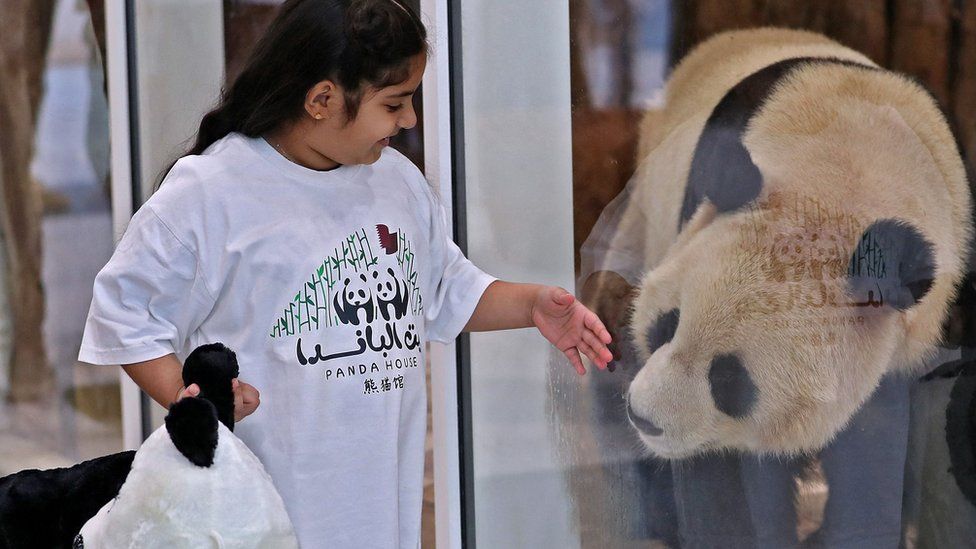
    A child interacting with a Chinese giant panda through glassImage source, Getty Images
    Image caption, A child plays with one of the Chinese giant pandas given to Qatar to mark the start of the World Cup

    But it is evident that Covid-19 has put a damper on the celebrations. In major cities, outbreaks have resulted in non-essential businesses once again closing, and people being urged to limit their movements.

    With no bars to go to, the Global Times newspaper says some fans are “choosing to watch the games at home with their families”. Others have also reportedly taken to camping sites.

    Flights between Qatar and China also remain severely limited for those hoping to watch the event in person.
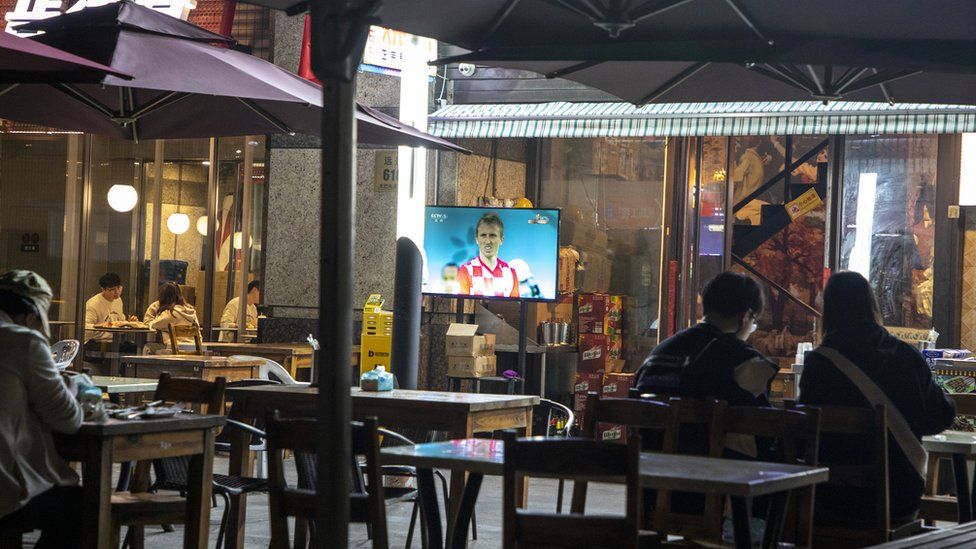
    People in Shanghai sitting in a near-empty pub watching a screen showing Croatian footballer Luka ModricImage source, Getty Images
    Image caption, This was the scene in a sparsely filled pub in Shanghai for the opening ceremony of the tournament

    Many are feeling acute isolation watching this year’s event.

    An open letter questioning the country’s continued zero-Covid policies and asking if China was “on the same planet” as Qatar quickly spread on mobile messenger WeChat on Tuesday, before being censored.

    Comments on the Twitter-like Weibo social network are rife from viewers who speak about how watching this year’s matches is making them feel divided from the rest of the world.

    Some speak of their perception that it is “weird” to see hundreds of thousands of people gathering, without wearing masks or needing to show evidence of a recent Covid-19 test. “There are no separate seats so people can maintain social distance, and there is nobody dressed in white and blue [medical] garb on the sidelines. This planet has become really divided.”

    “On one side of the world, there is the carnival that is the World Cup, on the other are rules not to visit public places for five days,” one says.

    Some say they have had difficulty explaining to their children why the scenes from the World Cup are so different to those people face at home.

    There are many in China, though, who have been critical of countries overseas opening up while the World Health Organization still calls the Covid-19 virus an “acute global emergency”.

    However, there is no end in sight to China’s existing measures. This week, the National Health Commission spokesman “warned against any slacking in epidemic prevention and control” and urged “more resolute and decisive measures” to bring cases under control.

    Local governments in major cities have reintroduced mass testing and travel restrictions and ultimately delivered a message that people should try to stay at home.

    But after three years of such measures, people are frustrated, resulting in protests in the last month in both the cities of Guangzhou and Zhengzhou.


    Source: BBC
  • China Covid: Record number of cases as virus surges nationwide

    China has recorded its highest number of daily Covid cases since the pandemic began, despite stringent measures designed to eliminate the virus.

    There are outbreaks with several major cities including the capital Beijing and southern trade hub Guangzhou.

    On Wednesday, the country recorded 31,527 cases – higher than the about 28,000 peak recorded in April, when its largest city Shanghai was locked down.

    It comes as strict lockdowns continue to spark episodes of unrest.

    China’s zero-Covid policy has saved lives in the country of 1.4 billion people but also dealt a punishing blow to the economy and ordinary people’s lives.

    However the rising wave of cases also comes weeks after the country slightly relaxed some of its Covid restrictions.

    It cut quarantine for close contacts from seven days in a state facility to five days and three days at home, and stopped recording secondary contacts which allowed many more people to avoid having to quarantine.

    Officials have also sought to avoid enforcing blanket lockdowns of the kind endured by Shanghai earlier this year.

    But faced with a renewed surge in cases in Beijing, as well as the first deaths from the virus in months, officials have already implemented some restrictions in several districts, with shops, schools and restaurants closed.

    The central city of Zhengzhou is also to enforce an effective lockdown for 6 million residents from Friday, officials announced.

    It follows violent protests at a vast industrial complex belonging to iPhone manufacturer Foxconn. The firm has apologised for a “technical error” in its payment systems.

    Media caption, WATCH: Chinese protesters clash with riot police at giant iPhone factory

    Other stories of suffering and desperation have also been shared online where they’ve fuelled public resentment.

    China is the last major economy still pursuing a Covid eradication process with mass testing and lockdown rules.

    However virus cases are now being recorded in 31 provinces.

    President Xi Jinping has said strict curbs are needed to protect the country’s large elderly population. However vaccination levels are lower than other developed nations, and only half of people aged over 80 have their primary vaccinations.

    While China is seeing an increase in infections now, the rate is still far lower than many other advanced economies at their pandemic peak.

    China’s official death toll has remained low at just over 5,200 deaths since the pandemic began.

    That equates to three Covid deaths in every million in China, compared with 3,000 per million in the US and 2,400 per million in the UK.


    Source: BBC

  • Factory fire kills 38 people in central China – State media reports

    A fire at a factory in central China killed dozens of people on Monday, November 21, 2022, according to Chinese state media, the latest in a string of fatal industrial accidents to hit the country in recent years.

    State run-newspaper Henan Daily reported Tuesday that two people previously reported missing had been found dead following the blaze at the factory in Anyang, Henan province, bringing the death toll to 38.

    Two others were being treated for minor injuries, state broadcaster CCTV reported Tuesday.

    Police have detained an unspecified number of suspects in connection with the blaze, which took firefighters nearly seven hours to put out, according to CCTV.

    According to preliminary findings, the fire was caused by violations of electrical welding protocols, Henan Daily reported, citing authorities.

    China has seen a spate of industrial accidents in recent years that have left scores dead, raising concerns about public safety.

    In 2015, at least 173 people died after a series of explosions at a chemical warehouse in the northern port city of Tianjin.

    Last October, at least three people were killed and more than 30 injured in a powerful explosion at a restaurant in the north-eastern city of Shenyang. The gas explosion took place in a mixed-use residential and commercial building.

    And in June this year, at least one person was killed after a fire broke out at a petrochemical complex in Shanghai.


    Source:

  • Scotland blocked from holding independence vote by UK’s Supreme Court

    Britain’s Supreme Court has ruled that Scotland’s government cannot unilaterally hold a second referendum on whether to secede from the United Kingdom, in a blow to independence campaigners that will be welcomed by Westminster’s pro-union establishment.

    The court unanimously rejected an attempt by the Scottish National Party (SNP) to force a vote next October, as it did not have the approval of Britain’s parliament.

    But the decision is unlikely to stem the heated debate over independence that has loomed over British politics for a decade.

    Scotland last held a vote on the issue, with Westminster’s approval, in 2014, when voters rejected the prospect of independence by 55% to 45%.

    The pro-independence SNP has nonetheless dominated politics north of the border in the intervening years, at the expense of the traditional, pro-union groups. Successive SNP leaders have pledged to give Scottish voters another chance to vote, particularly since the UK voted to leave the European Union in 2016.

    The latest push by SNP leader Nicola Sturgeon involved holding an advisory referendum late next year, similar to the 2016 poll that resulted in Brexit. But the country’s top court agreed that even a non-legally binding vote would require oversight from Westminster, given its practical implications.

    “A lawfully held referendum would have important political consequences in relation to the Union and the United Kingdom Parliament,” Lord Reed said as he read the court’s judgment.

    “It would either strengthen or weaken the democratic legitimacy of the Union and of the United Kingdom Parliament’s sovereignty over Scotland, depending on which view prevailed, and would either support or undermine the democratic credentials of the independence movement,” he said.

    Sturgeon said she accepted the ruling on Wednesday, but tried to frame the decision as another pillar in the argument for secession. “A law that doesn’t allow Scotland to choose our own future without Westminster consent exposes as myth any notion of the UK as a voluntary partnership & makes (a) case” for independence,” she wrote on Twitter.

    “Scottish democracy will not be denied,” she said. “Today’s ruling blocks one route to Scotland’s voice being heard on independence – but in a democracy our voice cannot and will not be silenced.”

    England and Scotland have been joined in a political union since 1707, but many Scots have long bristled at what they consider a one-sided relationship dominated by England. Scottish voters have historically rejected the ruling Conservative Party at the ballot box and voted heavily – but in vain – against Brexit, intensifying arguments over the issue in the past decade.

    Since 1999, Scotland has had a devolved government, meaning many, but not all, decisions are made at the SNP-led Scottish Parliament in Holyrood, Edinburgh.


    Source: edition.cnn.com

  • Gunmen shoot dead three policemen at checkpoint in Enugu State

    Some gunmen have attacked and killed about three policemen at a checkpoint in Agbani, headquarters of Nkanu West Local Government Area of Enugu State.

    The incident, SaharaReporters gathered, happened on Saturday morning.

    SaharaReporters had reported that some gunmen had on Friday evening killed Enugu State’s former Commissioner, Gab Onuzulike and his elder brother Elvis at Nkpokolo-Achi, their hometown in the Oji-River Council area of the state.

    However, the attack on policemen at the checkpoint came barely 12 hours after the Achi attack occurred.

    According to sources, the hoodlums stormed the checkpoint located around the railway crossing at Agbani town which is also less than two poles from Agbani police station around 8 am and shot three policemen dead.

    “The policemen were caught unaware because they were busy extorting commercial motorcycle riders and lost sense of why they were in the checkpoint in the first place.

    “Unfortunately, these criminals took advantage of their lousiness and attacked them. After shooting three dead, the rest ran away and they collected their guns and took Ugboka – Nara Unateze road and escaped,” an eyewitness told SaharaReporters.


    Source: Sahara Reporters

  • DRC: Two die from lightning strikes at displaced persons camp

    Two people died from lightning strikes on Monday in a displaced persons camp in the eastern Democratic Republic of Congo.

    More than 260,000 people have been forced to flee their homes due to recent fighting between government forces and M23 rebels, according to assessments by the United Nations.

    The camp Kanyaruchinya, just north of Goma city, is only 20 kilometres (12 miles) from the frontlines of the fighting. One of the victims was a pregnant woman who had stepped out from her tent when she was struck. Another was a young child.

    The bodies of the victims have been brought to the provincial morgue in Goma to await the funeral.

    Grieving families of the victims asked for help from the government.

    “May the government help us with assistance because we are suffering a lot, the displaced are suffering, we have no food, and the suffering is getting worse every day,” said Byamungu Sigrezambo, father of one of the victims.

    Other displaced people living in this site remain worried about tough living conditions.

    The fresh fighting between the M23 rebels and the Congolese army and its allies in the territory of Rutshuru, has forced tens of thousands to take refuge in informal sites in Kanyaruchinya and in the surrounding localities.

    Aid workers said an urgent international response is needed and are looking for 50-million US dollars to fund its work here for the next six months.


    Source: Africa News

  • Malians express support towards ban on all NGOs linked to France


    The move by the Malian authorities to ban all organisations supported or financed by France has elicited mixed reactions.

    The ban has added up on the tension that has existed between Mali and France following the withdrawal of all French forces from its territory.

    A number of Malians have supported the move indicating that this will usher in a new begin for self dependence without foreign interference.

    “On the contrary, it is us who are helping France, it is of no help here. I wonder in which sector France helps Mali. Not only with the NGOs, that they don’t set foot here again. We are autonomous,” a Bamako resident said.

    “You have to get rid of the idea of addiction. The Malian has become hybrid here is the whole problem. We can indeed do without French funding. On the contrary, all the raw materials come from us, then these products are transformed at home and then come back to help us with them. If we manage to hold on, it will be up to France to come and ask for help,” another resident said.

    Frances foreign minister had last week said they would maintain its humanitarian aid as well as financing for “civil society organisations” in Mali, a decision that now sits in limbo.

    The West African nation’s interim Prime Minister Colonel Abdoulaye Maiga justified the move in a statement on social media, calling it a response to France’s recent halt to development aid for Mali.

    The French foreign ministry said last week it had made the decision, which came three months after finalising its pull-out of anti-jihadist forces from the country, over Bamako’s alleged use of paramilitaries from Russian group Wagner.

    Bamako denies this, acknowledging only the support of Russian military “instructors”.

    Maiga spoke in his statement of “fanciful allegations” and “subterfuge intended to deceive and manipulate national and international public opinion for the purpose of destabilising and isolating Mali”.

    “As a result, the transitional government has decided to ban, with immediate effect, all activities carried out by NGOs operating in Mali with funding or material or technical support from France, including in the humanitarian field,” it said.


    Source: African News

  • Eddy Kenzo, Uganda’s first Grammy nominee

    Eddy Kenzo doesn’t know precisely when he was born, a quirk of personal history that goes to the heart of how the Ugandan singer sees himself: a humble man who’s sometimes anxious about what happens next.

    And yet Kenzo, who became the first Uganda-based singer to earn a Grammy nomination, keeps scaling heights that defy his expectations and those of his fans and rivals in this east African country where his work is sometimes questioned.

    Some Ugandans dismiss his musical style as rather playful, saying he’s not that much of a singer. But others see in his experimentation the creative potential that marks him as an artiste with original gifts.

    For Kenzo, any recognition of his work is a reminder of how far he’s come.

    “Honestly speaking, I am so overwhelmed. I am so nervous at the same time,” Kenzo said in an interview with The AP, speaking of his nomination. “I thank God that we made it.”

    Kenzo’s “Gimme Love,” a collaboration with the American singer Matt B that began with a fortuitous meeting in Los Angeles, is nominated for a Grammy in the category of best global music performance.

    Recalling their meeting, Kenzo says he felt a connection with Matt B’s own commitment to success, finding the “Gimme Love” refrain when the American singer brought his family with him to the recording studio.

    “I looked at these kids and I’m like, man, everyone deserves love. You know, these people deserve support and love so their dreams can come true,” he said “That’s why I told him that you know what? Let’s do give me love. Yeah. And then I started that intro, ‘gimme love’.”

    Kenzo, whose real name is Edirisa Musuuza, won a BET award in 2015 as the viewers’ choice for best new international artiste, the first and only Ugandan so honored to date. The accolade followed his breakout song “Sitya Loss,” accompanied by a video featuring dancing kids whose energetic performance captured the attention of global stars like Ellen DeGeneres.

    That song was a nod to Kenzo’s own humble beginnings in a remote part of central Uganda, as a barely literate child who didn’t know from where his next meal would come. By his own account, Kenzo spent 13 years in the streets after losing his mother when he was only 4. He didn’t know who his father was, and he only discovered some of his siblings as a grown man.

    He wanted to become a soccer player and even won a scholarship to boarding school based on his talent, but he later dropped out and returned to the hustling that he says made him a man.

    He recorded his first single in 2008 and achieved stardom in 2010 with the song “Stamina,” beloved by politicians, lovers, and others for its praise of youthful energy. In addition to winning awards, Kenzo is frequently invited to perform across the world.

    Three days before he found out he had been nominated for a Grammy, Kenzo held a festival in Kampala that was attended by thousands, including Uganda’s prime minister. It was a proud moment for a singer whose music is often ignored by local FM stations, which can make or break a song with the choices DJs make.

    There’s a sense even for Kenzo that he’s more appreciated abroad than at home.

    “My biggest fanbase is outside Uganda, because the world is bigger than Uganda,” he said thoughtfully. “Uganda is just a small country.”


    Source: African News

  • Tunisian fans celebrate draw in World Cup opening match

    Fans gathered in Tunis Tuesday (Nov to watch the national football team kick off their World Cup tournament. The Carthage Eagles will face Australia Saturday (Nov 26).

    Tunisia held European Championship semifinalist Denmark to a 0-0 draw.

    Football lovers were over the moon.

    ”We didn’t play badly. We were able to score, but the referee canceled a penalty kick for us”, Charfeddine Ben Osman passionately explains.

    “We did a good job. Now, we have to do more against France and Australia. I hope God will be with us. Only make us happy in this country.”

    Despite the draw at the Education City Stadium in Qatar, both teams produced 13 shots with several goal chances. And they each secure a precious point in group D. France is leading with 3 points after a win against Australia.

    “How courageous, how strong, how willing they were!”, this other Tunisian supporter exclaimed.

    “This is the determination that we want. This is the strength of the Tunisian players that we want. That’s why all the world is talking about us. These players are the “Italian-Arab “players. We have the strongest determination and will in the Arab world. With this determination, we will win,” Oussama Dridi predicted.

    Before a stadium filled almost entirely with Tunisia’s red-clad supporters, midfielder Aïssa Laïdouni set the tone in the very first minute when he stripped emblematic Denmark playmaker, Christian Eriksen of the ball, with an aggressive sliding tackle — then stood up and pumped his arms menacingly, gesturing to the crowd to get even more fired up.

    Tunisia likely deserved more but an expert save shortly before halftime by goalkeeper Kasper Schmeichel helped Denmark preserve the draw.

    Having already gone down to the grass after Tunisia broke through the defense.

    Assuming his customary playmaker position, Dane Christian Eriksen produced a dangerous long-distance shot on goal in the second half that Tunisia goalkeeper Aymen Dahmen had to bat away.

    And on the ensuing corner, Denmark hit the post.

    After a lack of atmosphere at several of the opening matches, the huge number of Tunisian fans inside Education City Stadium made it feel like a home match for the North African team.

    The fans chanted, banged drums, and blew air horns when their squad had the ball — then hissed and whistled loudly whenever Denmark had possession.

    Tunisia seeks to reach the knockout stage for the first time in its sixth World Cup appearance.


    Source: African News

  • Dengue fever outbreak kills 26 in Sudan – Officials

    Sudanese health officials on Wednesday said at least 26 people have died from Dengue fever in one of the worst outbreaks the country has seen in recent years.

    Dengue fever is a mosquito-borne disease that occurs in tropical areas of the world, usually spreading near stagnant sources of water.

    As of Monday, November 21, 460 cases of the disease and a further 3,436 suspected cases had been recorded, the Sudanese Health Ministry announced on social media.

    Around 20 of the deaths were recorded in the southern Kordofan region, one of the areas where the outbreak was first reported by the Sudanese Doctors Committee in early November. Several local media outlets put the official number of cases as much higher.

    Dengue fever has flu-like symptoms and can often lead to organ failure and death. In 2019, an outbreak in Sudan was responsible for five deaths according to the World Health Organization.

    At the height of Sudan’s rainy season in August and September, flash flooding killed at least 144 people and destroyed tens of thousands of homes, along with roads and other vital infrastructure.


    Source:

  • DR Congo-Rwanda peace talks resume in Luanda

    Democratic Republic of Congo leader Felix Tshisekedi and Rwandan Foreign Minister Vincent Biruta went into talks on Wednesday in Angola amid heightened tensions in eastern DRC.

    Tshisekedi and Biruta were received at a hotel in the capital, Luanda, by Angolan President Joao Lourenco, who is acting as a mediator between the two neighbours, according to an AFP correspondent.

    Rwanda’s President Paul Kagame was not in attendance and the reason for his absence was not immediately clear.

    The volatile eastern DRC has witnessed fierce fighting in recent months between Congolese troops and the M23 rebel group, prompting the East African Community (EAC) bloc to deploy a joint regional force to quell the violence.

    Kenyan soldiers arrived in the country earlier in November and Uganda said it would deploy around 1,000 troops before the end of the month.

    The EAC’s chair, Burundian President Evariste Ndayishimiye, and former Kenyan president Uhuru Kenyatta, the EAC’s “facilitator” in efforts to restore peace and security in the mineral-rich region, were also in Luanda.

    The fighting has reignited regional tensions, with the DRC accusing its smaller neighbour Rwanda of backing the M23, something that UN experts and US officials have also said in recent months.

    Kigali denies this and accuses Kinshasa of colluding with the FDLR — a former Rwandan Hutu rebel group established in the DRC after the 1994 genocide of mainly Tutsis in Rwanda.

    The M23, a largely Congolese Tutsi militia, has seized swathes of territory across North Kivu province, edging towards the region’s main city of Goma.

    DR Congo and Rwanda agreed to a de-escalation plan in July, but clashes resumed the very next day.

    On Tuesday, Kinshasa said it would not sit down for talks with M23 rebels until the group withdrew from the areas it controlled.

    The M23 first leapt to prominence 10 years ago when it captured Goma, before being driven out and going to ground.

    It re-emerged late last year, claiming the DRC had failed to honour a pledge to integrate its fighters into the army, among other grievances.


    Source: African News

  • Uganda now seeks commercial loans from global market

    Uganda is back to the global market hunting for commercial loans to pay soldiers’ salaries, finance classified expenditures and meet other financial obligations.

    Topping the priority list is paying Uganda Peoples Defence Forces salary enhancement which was supposed to start July 1. Other public servants too want money. In the second week of November, the intern medical staff went on strike as had local government workers earlier, who also demanded the government honour promises made regarding salary increases. A few months ago, the teachers were on strike over a pay dispute when the government offered to raise the salaries of only science teachers.

    In what some interpret as signs of a broke government, even Parish Development Model, which President Yoweri Museveni has touted as a model that will transform Uganda from a peasant economy to middle-income status, has suffered the same fate: Lack of funds.

    The government did not release adequate funds in the first quarter of the current financial year, resulting in government agencies going without enough funds for their projects, except for payment of salaries and funding for defence and security projects.

    Workers not fully paid

    Many public servants were also not fully paid by the end of the quarter. The Finance Ministry has indicated that it seeks to borrow Ush3.7 trillion ($986.2 million) from commercial lenders — a major shift from concessional credit options that the country has been depending on to finance its budget deficit.

    “We are looking for loans with favourable terms,” Finance Minister Matia Kasaija told The EastAfrican on November 16 without delving into the loan terms.

    Mr Kasaija said with an economy that has been battered by Covid-19, inflation, and prolonged drought, the pressure was high, confirming that he was worried.

    On November 7, Mr Kasaija placed a notice calling lenders to express interest in advancing Uganda Ush1,948.2 billion ($519.6 million) loan. The government asked private sector lenders to advance €500 million (Ush1.9 trillion) to close a 2022/2023 budget gap.

    “Due to strict implementation guidelines, we request you to submit your expression of interest by the closure of November 18,” Mr Kasaija’s wrote.

    Uganda’s budget

    In the same week, on November 2, 2022, Uganda lawmakers approved a request by the government to borrow $464 million (about Ush1.7 trillion).

    Uganda’s 2022/23 budget is Ush48 trillion ($12.8 billion), with about 71 per cent allocated for recurrent expenditure and 29 per cent planned for development.

    Some experts have argued that the rush to borrow from private lenders, despite the availability of bilateral and multilateral lenders could be because the country is avoiding scrutiny, especially at a point where the previously borrowed money has ended up in consumption expenditure rather than development.

    Opposition politicians such as leader of opposition Mathias Mpuuga say the government should reduce politically motivated public expenditure, make money cheaply available to the critical sectors, to ensure that jobs are sustained.


    Source: Ghanaweb

  • Zanzibar to pay Thai company $69m for rice bought in 1988

    A court has ordered the government of Zanzibar to pay a Thai company $69 million (about TSh159 billion) for rice bought in 1988.

    If Zanzibar had settled the payment in time, it would have paid $12.9 million (about TSh30 billion) 37 years ago.

    The Court of Appeal recently quashed a highly questionable ruling of the Registrar of the High Court of Zanzibar who had reduced the bill in 2017 to $5.7 million (about TSh13.1 billion).

    Three justices of appeal, Stella Mugasha, Ignas Kitusi and Sam Rumanyika could not hide their displeasure over the three-decade delay in paying Laemthong Rice Co. Ltd, which supplied rice to the Zanzibar government.

    “This matter does not speak very well of timely justice,” said the justices in their recent decision.

    The Court of Appeal also rejected the government’s attempts to lower the amount and insisted they go by a December 2000 High Court order for the Zanzibar government to pay the rice supplier $69 million.

    Aware of the case

    Zanzibar Minister of State in the President’s Office responsible for Finance and Planning, Saada Salum Mkuya, admitted she was aware of the case but could not give the ministry’s position because she has not seen the judgment.

    “I know about the issue but I have not seen that judgment, so I cannot say anything,” said the minister.

    The transaction of what would later turn to be one of the longest delayed cases was made on July 23, 1985 when the Zanzibar government ordered for 39,900 tonnes of rice at $12.9 million, with a 25 percent annual interest.

    According to court records, it took quite a long time for the Zanzibar government to fulfil its contractual obligation as it delayed to make full payment for the rice.

    Left with no option, the Bangkok-based company sued the Zanzibar government in efforts to have the authorities settle the debt.

    The reason the dispute dragged in courts for many years was because of the Zanzibar government’s refusal to pay the $69 million and wanted it reduced to $45.7 million.

    There were also issues on how the execution should be carried out.


    Source:  thecitizen.co.tz

  • At least 37 dead in Nigerian bus crash

    At least 37 people were killed Tuesday in a multi-bus crash in northeastern Nigeria, authorities said.

    The accident occurred near the city of Maiduguri when two commercial buses collided head-on and burst into flames.

    A third bus then crashed into them, Utten Boyi, head of the road safety agency for Borno state, said in a statement.

    “Thirty-seven people have been confirmed dead, most of them burnt beyond recognition,” Boyi said.

    A burst tire on the first bus, coupled with “excessive speed,” according to the official, was the cause of the tragedy.

    Road accidents are common in Nigeria, where road conditions have deteriorated in recent weeks following heavy rains and flooding, the worst in a decade in the country.

    Earlier Tuesday, 17 people were killed and four injured when their bus crashed into a truck near Abuja, Nigeria’s capital, local media reported.

    On Saturday, nine people drowned when their overloaded vehicle plunged into a dam after a tire burst near the northern city of Kano, local officials said.


    Source:

  • Aid worker killed in ambush by armed group in Mozambique

    A humanitarian worker for the French NGO Solidarités International was killed in an ambush by an armed group in northern Mozambique, which has been plagued by jihadist violence for more than five years, the organization said Tuesday.

    Solidarités International “is shocked by the news of the death of one of their colleagues, a victim of an attack by an armed group” on Sunday on a road in the district of Muidumbe in the direction of Palma, in the province of Cabo Delgado, wrote the NGO in a statement.

    The impoverished, Muslim-majority northern province bordering Tanzania has been plagued by jihadist violence that has killed more than 4,400 people, including nearly 2,000 civilians, since October 2017, according to the NGO Acled, which collects data in conflict zones. The violence has also caused one million people to flee, according to the UN.

    The victim aged about 30 years was a Mozambican national, a spokeswoman for the Paris-based organization, which operates in 23 countries, told AFP. Other people were killed, she added, not having more details at this stage.

    The generally well-informed Mozambican news website Zitamar reported a total of five dead, including the head of operations of the Palma police, his wife and nephew, as well as the aid worker.

    The aid worker was on his way back to Palma from the provincial capital Pemba after a weekend break when his car was targeted, Solidarités International said.

    In March 2021, a carefully planned murderous raid devastated the port city of Palma, population 75,000. The natural gas megaproject of the French group TotalEnergies, only a few kilometers away, was stopped dead in its tracks.

    Solidarités International, regularly present in Mozambique and back since last year, was preparing distributions of food in the region.

    “The murder of our colleague and the civilians traveling with him shocks and disgusts us,” said the director of the NGO, Kevin Goldberg, quoted in the statement.


    Source: African News

  • South Africa’s crime stats reveal rape at day care centres

    Eighty-three rape incidents were recorded at South Africa’s educational institutions, including day care centres, in the last three months, according to the latest crime records.

    The youngest victim was only six weeks old, the Minister of Police, Gen Bheki Cele said during a live broadcast.

    “As a ministry, we remain extremely concerned about rapes at educational premises”, he said, adding that the location of the reported rapes, “should not be interpreted to imply that all perpetrators and all victims were pupils or students.”

    He said 68 rapists had been sentenced to life in prison in the last six months, proving that the authorities were “sending a strong message of zero tolerance on rape through steep sentences”.

    The newly-released figures also show an increase in contact crimes – categorised as murder, attempted murder and assault – against women and children, rose by 16.9% and 13%, respectively.

    The murder rate also increased by 10.8% in the same period, marking an average of 76 killings per day.

    • Kidnapping went up all 10 provinces with the rate of incident rocketing in Gauteng by 164.3%
    • Carjacking went down in two provinces but was up overall in the country by 23.6%
    • Robberies at residential premises increased by 8.4%


    Source: BBC

  • Burkina Faso: at least 14 dead in two attacks in the north

    At least fourteen people, including eight civilian army replacements, were killed Monday in two separate attacks by jihadist groups in northern Burkina Faso, security and local sources told AFP on Tuesday.

    “Armed individuals attacked in the early hours of Monday the village of Safi, located in the Boala commune, near Kaya (central north). The Volunteers for the Defense of the Fatherland (VDP, civilian auxiliaries to the army) who were directly targeted lost eight members,” a security source told AFP.

    Several other elements were also injured in the attack, the same source said.

    A local VDP official, contacted in Kaya, confirmed the attack, citing a toll of “7 dead, 10 wounded and significant material damage”.

    “On the same day, near Markoye, in the northeastern province of Oudalan, armed individuals killed six civilians and took away vehicles and other property,” the security source added.

    “The terrorists kidnapped three young people on the Salmossi-Markoye road, who was later found dead in the bush during the day (Monday),” said a relative of the victims contacted by AFP.

    “They stripped several people who fell on them on the axis, and took away vehicles,” added this source.

    Since 2015, Burkina Faso has been regularly plunged into mourning by increasingly frequent jihadist attacks that have killed thousands and forced some two million people to flee their homes.

    These attacks have increased in recent months, mainly in the north and east of the country.

    Captain Ibrahim Traoré, who led a military coup on September 30 against Lieutenant-Colonel Paul-Henri Sandaogo Damiba, was sworn in as president of the transitional government by the Constitutional Council on October 21.

    This was the second coup d’état in Burkina Faso in eight months, and each time the coup leaders cited a deteriorating security situation.

    On January 24, soldiers led by Lieutenant-Colonel Damiba overthrew President Roch Marc Christian Kaboré, who was accused of laxity in the face of jihadist attacks.

    On October 25, the new government launched the recruitment of 50,000 Volunteers for the Defense of the Fatherland (VDP), civilian auxiliaries to the army, who are to “reinforce the ranks of the army in the fight against terrorism.


    Source: African News

  • German to withdraw troops from Mali by mid 2024

    The German government said Tuesday that it plans to wind down the country’s participation in a U.N. military mission in Mali by the middle of 2024.

    Tensions have grown between Mali, its African neighbors and the West after Mali’s government allowed Russian mercenaries from the Wagner Group to deploy on its territory.

    “The Malian soldiers who were so well trained then went out and fought with Russian forces, I don’t know 100 percent if it was Wagner’s forces every time or not, but they fought with Russian forces and there were also human rights violations. And that can’t be what we’re about.

    Not just training, no matter what happens afterwards, but acting on principles. And that is why we have ended the training mission,” said German Defense Minister Christine Lambrecht at a discussion in Berlin.

    Chancellor Olaf Scholz’s spokesman, Steffen Hebestreit, had said in a brief statement that the government will propose to parliament granting a final one-year extension to the mission in Mali in May “to allow this deployment to be phased out in a structured way after 10 years.”

    The idea is to take account of elections in Mali that are expected in February 2024, he said.

    German military missions overseas require a mandate from parliament, which is typically granted on an annual basis.

    The current mandate for Germany’s participation in the U.N. mission known as MINUSMA allows for the deployment of up to 1,400 troops.

    Britain announced last week that it would withdraw its troops from the U.N. mission in Mali, saying that the West African country’s growing reliance on Russian mercenaries is undermining stability.

    Britain did not give a timeline for its withdrawal.

    France announced earlier this year it was withdrawing its own, much larger force from Mali after relations deteriorated with a junta that seized power in 2020.

    France, the former colonial power in Mali, led a nine-year mission and had at its peak 5,500 troops in the country to combat Islamic militants.


    Source: African News

  • Sahel Security Summit: W.Africa, European partners bolster ties against jihadist threat

    West African nations met with European leaders on Tuesday for talks on “homegrown” ways to prevent jihadist conflict in the Sahel threatening to “engulf” countries on the Gulf of Guinea.

    Coastal states Ghana, Benin, Togo and Ivory Coast face increasing threats and attacks from Islamist militants across their northern borders with Burkina Faso and Niger.

    The summit in Ghana’s capital Accra also comes as more Western nations have withdrawn peacekeepers from Mali after its military junta strengthened cooperation with Russia.

    Ghana’s President Nana Akufo-Addo said worsening Sahel security was “threatening to engulf the entire West African region”.

    “Terrorist groups, emboldened by their apparent success in the region are looking (for) new operational grounds, a development that has triggered a southward drift of the menace,” he said.

    Under the so-called Accra Initiative, heads of state from the Gulf of Guinea and leaders from Niger and Burkina Faso met in Ghana with representatives from the West African bloc ECOWAS, the EU, Britain and France.

    Akufo-Addo called for a “home-grown initiative” to answer the threat as well as a comprehensive approach involving economic and social development to tackle the roots of jihadism.

    “We remain firm in our commitment to shoulder a greater part of the responsibility.”

    – Sahel spill over –

    The Sahel conflict began in northern Mali in 2012, spread to Burkina Faso and Niger in 2015 and now states on the Gulf of Guinea are suffering sporadic attacks.

    Ghana has beefed up security along its northern frontier and has so far escaped any cross-border attacks.

    But Benin and Togo in particular have faced threats from across their northern borders with Burkina Faso.

    Benin has recorded 20 incursions since 2021 while Togo has suffered at least five attacks, including two deadly assaults, since November 2021.

    “For years we have been talking about the risk of contagion of the terrorist threat from the Sahel to the coastal states. Today this is not a risk anymore, it is a reality,” EU Council president Charles Michel told the summit.

    French and other peacekeeping missions had been operating in Mali for almost a decade as a bulwark against the spread of violence.

    But after two coups in Mali, the military junta increased cooperation with Moscow and allowed what Western countries call Russian mercenaries into the country.

    That prompted France to pull out its troops deployed under its Barkhane anti-jihadist mission. Britain and Germany last week said they would also end peacekeeping missions.

    British Armed Forces Minister James Heappey last week said the UK would be “rebalancing” its deployment though he did not give details about what form that would take.

    He said Accra Initiative countries would likely need different capabilities than the British long-range reconnaissance forces currently in Mali.

    “The United Kingdom’s armed forces already enjoy great relationships with many of the countries within the Accra Initiative and we stand ready to build on that,” he said in Accra.

    “But this is a regional problem that you have here in West Africa and it’s right that you seek to provide the solution.”

    Across the three Sahel nations, thousands of people have been killed, more than two million displaced and devastating damage has been inflicted to three of the poorest economies in the world.


    Source: African News

  • World Cup 2022: Choupo-Moting says Cameroon need teamwork to qualify from group

    Forward Eric Maxim Choupo-Moting says teamwork will be more important than his own individual form if Cameroon are to qualify for the knock-out stages of the World Cup in Qatar.

    The 33-year-old comes into the tournament with 10 goals in his past 9 games for club side Bayern Munich, and he netted in Cameroon’s final warm-up match.

    The Indomitable Lions face a tricky draw in Group G alongside five-time winners Brazil, Serbia and Switzerland, who they play in their first game on Thursday (10:00 GMT).

    “Expectations are high. Of course, that’s normal,” Choupo-Moting told BBC Sport Africa.

    “To have success, we have to do it all together. And I believe in us because we have good quality, so we have to put it all together on the pitch.

    “Me personally, I will give my best as I do always. I know it can help the team a lot.

    “I know I have a lot of qualities and with my team-mates around, everyone can perform well.”

    Despite his fine form, Choupo-Moting is not assured of a place in Cameroon’s starting line-up.

    He spent most of the Africa Cup of Nations earlier this year on the bench – as Indomitable Lions captain Vincent Aboubakar was preferred and won the golden boot with eight goals – and Choupo-Moting came on at half-time in the Central African’s friendly against Panama last week, which ended in a 1-1 draw.

    Cameroon are making their eighth appearance at the World Cup finals, but have only qualified for the knock-out stages once, when they became the first African side to reach the quarter-finals in 1990.

    Despite that record and their tough draw, Choupo-Moting has faith in the quality of coach Rigobert Song’s squad.

    “Of course we want to qualify for the next round. That’s definitely our goal,” the former Stoke City and Paris Saint-Germain forward added.

    “We have a tough group – good teams, good opponents. But we have also a lot of quality and we believe in ourselves.

    “We will give our best to bring all of this on the pitch. And if we do it all together, I’m very positive that we will have good results.”

    First group opponents Switzerland lost their final warm-up match against Ghana 2-0, but Choupo-Moting is wary of their quality.

    “It’s always important to start a tournament positively and we want to win this match at all costs,” he said.

    “But it will be difficult, we are aware of that. The Swiss have a good team. They have had very good results recently in the Nations League.

    “They have individual talent as well, but we look at ourselves and we have a lot of quality too.”

    Source: BBC

  • ‘Proud’ Liberian president dines in Qatar with his son who plays for the US

    President of Liberia George Manneh Weah, has spoken of his delight in having a son playing at the greatest level of football in the globe.

    Weah was in Qatar on business and on November 21 he watched his son Timothy play for the United States of America in their opening match despite Liberia’s exclusion from the FIFA World Cup.

    “Just had dinner with my son Timothy Weah. Proud daddy,” the one-time world best footballer wrote on Twitter.

    His post was accompanied by photos of the Weah family – himself, Timothy and his mother Clar.

    The US drew one-all with Wales in their first match at the World Cup, Timothy grabbed the first goal which was canceled by Welsh forward Gareth Bale, who scored late to grab an important point in Group B’s opening fixture at the Ahmed bin Ali Stadium on Monday night.

    Weah scored the team’s first goal at a World Cup since Julian Green against Belgium in 2014, after connecting a pass from Christian Pulisic to power the Americans ahead.

    The Stars and Stripes of the USA made their intention known from the blast of the referee’s whistle, with excessive pressure on the opponent’s defense and dominating play.

    This yielded positive results when 22-year-old Weah coolly finished off a brilliant pass from Chelsea’s Pulisic.

    The Dragons came back strong in the second stanza fighting for at least a point, but USA’s goalkeeper Matt Turner pulled some fantastic saves to keep his side in the lead.

    USA was cruising to a resounding victory until defender Walker Zimmerman brought down Bale in the 18-yard box.


    Source: Ghana


  • South African mob kills patient inside ambulance

    A South African mob attacked and killed a patient in an ambulance on suspicion of committing a crime, according to the Gauteng province health department.

    The mob also attacked paramedics who were attending to the patient in Atteridgeville area and damaged the ambulance.

    Paramedics had responded to calls for medical assistance after the man was injured in a mob attack. At the scene, they initiated treatment and prepared to transport the patient to the nearest hospital.

    “As the ambulance was getting ready to leave the scene, community members started throwing stones and barricaded the road to prevent the ambulance leaving… they demanded justice on the spot,” the health department said in a statement.

    It added: “Unfortunately the patient was further fatally assaulted while on an ambulance stretcher. The ambulance was extensively damaged and medical equipment was stolen.”

    Source: BBC

  • Elon Musk to negotiate severance with laid-off Africa staff after legal threat

    Lawyer for Twitter employees who were fired by Elon Musk has revealed that the company has reached out to the former employees after a threat to sue over discrimination.

    An international reporter reporter, Larry Madowo received confirmation from the anonymous lawyer that the business had “finally agreed to talk with the laid-off Africa staff.”

    Madowo, who has been keenly reporting on the story, reiterated in a November 22 tweet, that the redundant staff “weren’t offered severance until CNN reported” their plight and that they weren’t “allowed to negotiate their separation terms until” CNN report was aired.

    Africa office closed down four days after opening

    The Africa office was closed four days after employees who had over the last year been working remotely converged at the Africa Headquarters located in Ghana.

    They initiated legal action against the new owner of the platform, Elon Musk, over discrimination and the imbalance in the severance pay they were offered compared to others who were laid off in the United States and Europe upon his takeover.

    Madowo revealed the contents of their termination emails in his earlier reports, which read in part: “The company is reorganizing its operations as a result of a need to reduce costs. It is with regret that we’re writing to inform you that your employment is terminating as a result of this exercise.

    “Your last day of employment will be 4th December 2022. You will be placed on garden leave until your termination date,” the November 4 letter read.

    Watch the GhanaWeb Excellence Awards nominees reveal video below:

    The staff hired a lawyer who was on the verge of suing the world’s richest man, Elon Musk, over this matter. They also reported Twitter to the Chief Labour Officer in Ghana over breaches in the way their appointments were terminated.

    “It is clear that Twitter, under Elon Musk, is either deliberately or recklessly flouting the laws of Ghana, is operating in bad faith and in a manner that seeks to silence and intimidate former employees into accepting any terms unilaterally thrown at them.

    “Without pressure from higher authorities, they are clearly not willing to provide a fair or just package in order to minimize the hardship of this takeover and the resulting loss of jobs on their workforce in Africa.”


  • Trump taxes: Supreme Court clears Democrats to see returns

    The US Supreme Court has cleared the way for ex-President Donald Trump’s tax forms to be released to a Democratic-controlled congressional committee.

    The justices rejected Mr Trump’s bid in October to block a lower court’s ruling that granted the panel’s request for his financial records.

    The move is a blow to Mr Trump, who has for years kept his returns sealed.

    Mr Trump became the first president in 40 years not to release his taxes after announcing his first presidential run.

    The House of Representatives Ways and Means Committee has been seeking access to his records since 2019.

    Mr Trump, who launched his third campaign for the White House last week, is facing several investigations related to his business practices. He denies any wrongdoing.

    The Supreme Court’s brief response on Tuesday did not note dissent from any of the judges.

    The decision means the US treasury department can deliver the tax returns from 2015-20 for Mr Trump and some of his businesses to the Democratic-controlled committee.

    It comes just before the Republicans take control of the House after this month’s midterm elections.

    Donald Trump was almost able to run out the clock on the congressional request to view his tax returns.

    With just over a month left of Democratic control of the House of Representatives, the Supreme Court has given the green light for the treasury department to provide the documents to the Ways and Means Committee.

    Given that the treasury department is run by the Biden administration, the process of handing over the documents should proceed expeditiously.

    Democrats won’t have long to review them before Republicans take over on 3 January, however.

    And coming up with any proposed changes to federal law regarding presidential tax returns – the stated purpose of the congressional request – seems a pointless effort with the little time remaining before congressional adjournment.

    But a few weeks may be long enough to unearth evidence of any unusual or potentially improper accounting by Mr Trump – and for those details to leak to the public.

    And that, many assume, was the real motive behind the request.

    Mr Trump has notched two other defeats this year from the conservative-dominated Supreme Court, three of whose justices he appointed.

    In October, the court refused to weigh in on the legal fight over the FBI search of Mr Trump’s Mar-a-Lago home. Agents served a warrant at the estate in August on suspicion that the former president improperly handled classified documents.

    In January, the court refused to act to stop the National Archives from handing over documents to the committee investigating the 6 January 2021 riot by Trump supporters at the US Capitol.

    Mr Trump has rejected the Ways and Means Committee’s hunt for his taxes as politically motivated.

    The chairman of the committee, Congressman Richard Neal, said in a statement that lawmakers “will now conduct the oversight that we’ve sought for the last three and a half years”. He did not say whether the committee plans to publicly release Mr Trump’s tax statements.

    Last year, a Trump-appointed judge on the court of appeals in Washington DC ruled that the House did have a legitimate need to review the forms.

    The committee argued it needed to see Mr Trump’s records to determine if tax officials were properly auditing presidential candidates, and whether any new legislation was necessary.

    They had argued to the lower court that Mr Trump’s refusal blocked Congress from conducting oversight of the executive and judicial branches.


    Source: BBC

  • Walmart shooting: What do we know so far?

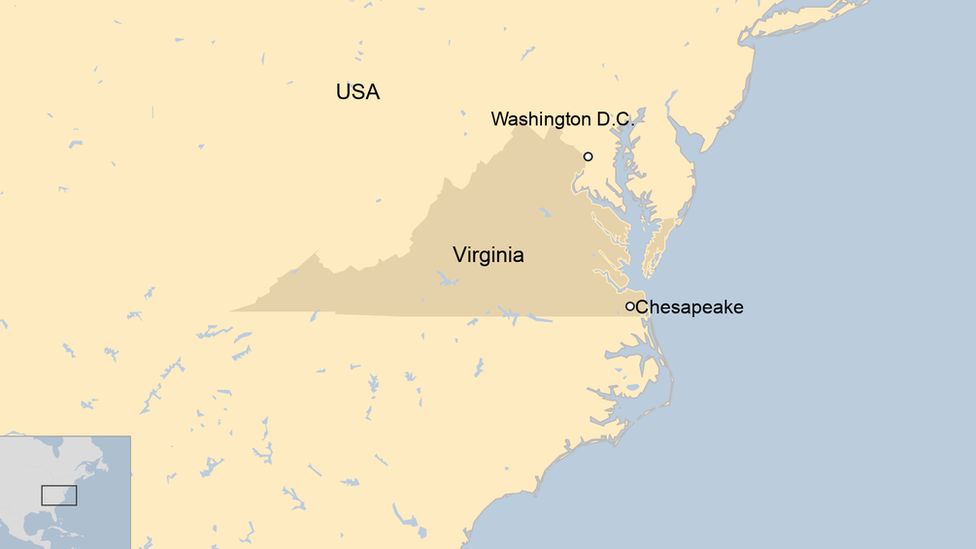
    Several people were killed and others were injured in a shooting at a Walmart in Virginia, on Tuesday night. Here’s what we know about the attack so far:

    • Police responded to a report of a shooting inside a Walmart in Chesapeake at 22:12 local time (03:12 GMT)
    • It’s understood that the attack took place when a store manager turned a gun on some of his co-workers
    • The attacker is dead, Chesapeake police said

    • Chesapeake Police officer Leo Kosinski told reporters rapid response officers entered the store “immediately” after arriving on the scene
    • Kosinski said police believed no more than 10 people were killed
    • Walmart issued a statement on Wednesday saying it’s “shocked at this tragic event”


    Source: BBC

  • Walmart ‘shocked’ by fatal shooting at Virginia store

    Walmart said it was “shocked” at the shooting at its Chesapeake store in the US state of Virginia.

    “We’re praying for those impacted, the community and our associates. We’re working closely with law enforcement, and we are focused on supporting our associates,” the company said on Twitter.

    Source: BBC

  • Virginia state Senator ‘heartbroken’

    Democratic Virginia state Senator L. Louise Lucas said that she was “absolutely heartbroken” over the shooting in Chesapeake.

    “I will not rest until we find the solutions to end this gun violence epidemic in our country that has taken so many lives,” she said on Twitter.

    Mark Warner, another Democratic Senator for the state of Virginia, tweeted that he was “sickened by reports of yet another mass shooting”.

    Source: BBC

  • China Covid: Angry protests at giant iPhone factory in Zhengzhou

    Protests have erupted at the world’s biggest iPhone factory in the Chinese city of Zhengzhou, according to footage circulated widely online.

    Videos show hundreds of workers marching, with some confronted by people in hazmat suits and riot police.

    Those livestreaming the scene claimed workers had been beaten by police.

    Last month, a surge in Covid cases saw the company lock down the campus, prompting some workers to break out and return home.

    The company then recruited new workers with the promise of generous bonuses.

    Footage shared on a livestreaming site showed workers shouting: “Defend our rights! Defend our rights!” Other workers were seen smashing surveillance cameras and windows with sticks.

    Several clips also showed workers complaining about food they had been given and saying they had not received bonuses as promised.

    “They changed the contract so that we could not get the subsidy as they had promised. They quarantine us but don’t provide food,” said one Foxconn worker during his live stream.

    “If they do not address our needs, we will keep fighting.”

    He also claimed to have seen a man “severely injured and [who] might die” after a beating from police.

    One employee who recently started working at the Zhengzhou plant also told the BBC workers were protesting because Foxconn had “changed the contract they promised”.

    He said some newly recruited workers also feared getting Covid from staff who had been there during the earlier outbreak.

    “Those workers who are protesting are wanting to get a subsidy and return home,” the staff member said.

    There was a heavy police deployment to the plant on Wednesday morning, he said.

    Other livestreamed videos also showed crowds of armed police at the site.

    Another newly recruited employee told the BBC he visited the protest scene on Wednesday where he saw “one man with blood over his head lying on the ground”.

    “I didn’t know the exact reason why people are protesting but they are mixing us new workers with old workers who were positive,” he told the BBC.

    Foxconn has not yet commented. It is Apple’s main subcontractor and its Zhengzhou plant assembles more iPhones than anywhere else in the world.

    In late October many workers fled the plant amid rising Covid cases and allegations of poor treatment of staff, their escape captured on social media as they rode lorries back to their hometowns elsewhere in the central Chinese province.

    Foxconn then attempted to convince workers to stay and to recruit new staff by offering higher salaries and bonuses.

    The firm has since enacted so-called closed loop operations at the plant – keeping it isolated from the wider city of Zhengzhou because of a Covid outbreak there.

    Earlier this month Apple said it expected lower shipments of iPhone 14 models because of the disruption to production in Zhengzhou.


    Source: BBC

  • US shooting: Man kills up to 10 in Virginia Walmart store

    A gunman has killed up to 10 people in a Walmart supermarket in Chesapeake, in the US state of Virginia, police say.

    A man believed to be the store manager opened fire then turned the gun on himself, and is now dead.

    The City of Chesapeake tweeted “police confirm an active shooter incident with fatalities at the Walmart”.

    There are few details, but a police officer spoke of no more than 10 people killed and multiple injured. No motive has emerged.

    Police told reporters that the attack happened at 22:12 local time (03:12 GMT).

    Pictures on social media showed a heavy police presence at the scene.

    Spokesperson Leo Kosinski said the shooting was believed to have happened inside the store, and that the suspect acted alone.

    Walmart said it was “shocked at this tragic event” and that it was “working closely with law enforcement”.

    Following the incident, footage appeared online which appeared to show an eyewitness – wearing Walmart uniform – describing what happened.

    He said he had left a staff room, which a manager then entered and opened fire.

    “Sadly we lost a few of our associates,” the man said, clarifying that he did not know how many of his colleagues were shot.

    A woman named Joetta Jeffery told CNN that her mother had been inside the building when the attack took place, and had managed to send text messages.

    Ms Jeffrey said her mother was not hurt but was in shock.

    Mark Warner, a Democratic senator for the state of Virginia, tweeted that he was “sickened by reports of yet another mass shooting”.

    Virginia state Senator L. Louise Lucas, also a Democrat, added that she was “absolutely heartbroken”.

    She wrote on Twitter: “I will not rest until we find the solutions to end this gun violence epidemic in our country.”

    Tuesday evening’s attack comes just days after a gunman opened fire at a LGBT nightclub in the US state of Colorado, killing five people and injuring 17 others.

    In 2019, a mass shooting at a Walmart in the city of El Paso in Texas left 23 dead.

    Virginia map


    Source: BBC

  • Britain’s King Charles III hosts South Africa president for first state visit of his reign

    Britain’s King Charles III on Tuesday welcomed South African President Cyril Ramaphosa to London for the first state visit of his reign.

    After the two men inspected the guard of honour together, they travelled to Buckingham Palace in a carriage procession escorted by mounted soldiers from the Household Cavalry.

    Climate change, trade, and the Commonwealth are expected to be on the agenda in discussion between the two.

    Ramaphosa will also visit parliament for an address to both the upper and lower houses, attend a state banquet at Buckingham Palace, and hold talks with Prime Minister Rishi Sunak during his stay.

    At the start of the visit, the two governments announced the launch of the next phase of the UK-South Africa Infrastructure Partnership.

    ‘South Africa is already the UK’s biggest trading partner on the continent, and we have ambitious plans to turbocharge infrastructure investment and economic growth together,’ Sunak said.

    Britain’s Foreign Secretary, James Cleverly, said the choice of Ramaphosa for Charles’ first state visit was a sign of the country’s ‘enduring commitment’ to Africa, even as it eyes new partners in Asia.


    Source: African News

  • Equatorial Guinea: Incumbent president takes lead in election

    Equatorial Guinea’s President has taken the lead in Sunday’s presidential election.

    The Interior Minister unveiled the provisional results Monday (Nov 21).

    In this race for a sixth seven-year term, Teodoro Obiang Nguema Mbasogo has so far obtained 44.2 % of the votes cast in nearly half of the country’s polling stations.


    He is Africa’s longest-serving president and the world longest serving head of state today except for monarchs.

    His contenders Andrés Esono Ondo of the CPDS party and former ally Buenaventura Monsuy Asumu of the PCSD each got 1.34% and 0.35% of the vote.

    The final results of the one-round election will be announced on November 26.

    Obiang’s ruling Democratic Party of Equatorial Guinea (PDGE) holds 99 of the 100 seats in the outgoing National Assembly and all 55 seats in the Senate, which are also up for re-election. Sunday’s polls included municipal elections.

    Over 400,000 people registered to vote in the country of about 1.5 million.

    Teodoro Obiang Nguema Mbasogo aged 80 took the reins of the country in a coup in 1979.


    Source: African News

  • Malawi gets $88.3M from IMF under ‘food shock’ loan window

    The Executive Board of the International Monetary Fund approved on Monday (Nov 21) a disbursement of US$88.327 million to Malawi under the Food Shock Window of the Rapid Credit Facility.

    The country became the first low-income nation to receive financing under this new mechanism.

    It provides, for a year, a channel for emergency Fund financing to member countries that have urgent balance of payment needs due to acute food insecurity, a sharp increase in their food import bill, or a shock to their cereal exports.

    Malawi is one of the 48 countries the IMF identified as worst affected by the global food crisis aggravated by the war in Ukraine.

    The news comes days after the IMF Executive Board approved a Staff-Monitored Program.

    This informal agreement with the IMF should enable the Malawian authorities to build a track record of policy implementation before it possibly implements an IMF-supported program.

    The deputy managing director and acting chair of the IMF executive board strongly invited the authorities to “to swiftly implement [its] debt restructuring strategy”, with the aim “to bring Malawi back to moderate risk of debt distress in the medium term.”


    Source: Africa News

  • South Africa’s Ramaphosa leads in two-horse race for ANC presidency

    South Africa’s President Cyril Ramaphosa appears to be firmly ahead in the race to head the ruling African National Congress (ANC) for the next five years.

    The outcome of nominations for the ANC’s top six positions, announced on Tuesday, has seen Ramaphosa garnering more than double his nearest rival for the top job.

    In his bid for a second term as party president, he will face off against Zweli Mkhize, a former health minister who resigned during Covid-19 amid graft allegations. Ramaphosa polled 2,037 nominations from party branches to Mkhize’s 916.

    Outgoing ANC treasurer general, Paul Mashtile, leads the deputy presidential race, which will pit him against two other contestants.

    With the nominations finalised, members will vote on the top six posts during the party’s 55th National Elective Conference in December.

    Party branch nominations are indicative of the final outcome, as the votes will be cast in person by branch representatives on the first day of the conference.

    The new ANC president will be South Africa’s head of state, should the party win the 2024 national elections.


    Source: Africa News

  • Chad: ‘A dozen soldiers’ killed by jihadists in the west

    A “dozen soldiers” were killed Tuesday by jihadists who attacked an army post in western Chad, a presidential spokesman told AFP.

    The attack also caused “injuries”, said in a statement Brah Mahamat.

    It was perpetrated “in the early morning” near Ngouboua, in the Lake Chad region, on the borders of Chad, Niger, Cameroon and Nigeria, where the jihadist groups Boko Haram and its dissident branch Islamic State in West Africa (Iswap) regularly attack armies and civilians in the four countries.

    An army unit, “dispatched as a precursor to set up an outpost on the island of Bouka-Toullorom,” was “attacked by elements of the Boko Haram sect,” Mahamat said. The Chadian authorities indiscriminately call “Boko Haram” the group of the same name or the Iswap.

    “The ten dead and wounded are all elements of the defense forces,” the spokesman told AFP.

    Lake Chad is a vast expanse of water and swamps dotted with hundreds of islets, some of which serve as hideouts for Boko Haram and Iswap jihadists.

    “Today, Boko Haram no longer has the strength to attack the barracks” in the lake area and is now targeting “the population and their property,” said Chadian President General Mahamat Idriss Déby Itno 10 days ago while traveling in the area.

    His transitional government has vowed to more than double the size of its army by the end of 2022 to deal with security challenges, including threats from Islamist militants linked to al Qaeda and the Islamic State.

    The Boko Haram insurgency, which erupted in northeast Nigeria in 2009, has killed more than 350,000 people and forced millions to flee their homes.


    Source: African News

  • Ivory Coast and Ghana note progress in making buyers pay cocoa premiums

    The two biggest producers of cocoa in the world, Ivory Coast and Ghana, on Monday identified some manufacturers  who have made “efforts” to improve producer payments after giving them an ultimatum earlier this month.

    In a joint statement, the national cocoa management bodies of the two countries, as well as the Ivory Coast-Ghana Cocoa Initiative (CIGCI), created to guarantee a minimum income to farmers, “noted the efforts made by some companies and their willingness to find solutions together for a sustainable production of cocoa that places producers at the heart of this strategy.

    They “encourage all manufacturers to take action and show that they sincerely believe in sustainable cocoa production”.

    For several weeks, Côte d’Ivoire and Ghana reproached the chocolate manufacturers for not paying the decent income differential (DRD), a premium of 400 dollars (390 euros) per ton, introduced in 2019 to ensure a decent income for farmers.


    They had given the industry until November 20 to meet their commitments, threatening to “ban access to plantations to make crop forecasts” and “suspend sustainability programs.

    These programs, aimed at fighting deforestation and child labor, allow manufacturers to claim that their chocolate is sustainably produced, a criterion often favored by consumers.

    But Monday, the producer countries announced to continue discussions and the establishment of “a working group of experts” who will provide “recommendations by the end of the first quarter of 2023 to find sustainable solutions.

    Questioned on the subject at a press conference, Ivorian Prime Minister Patrick Achi hoped that an “intelligent compromise” would be found.

    “The solution is to process 100% of our cocoa” in Côte d’Ivoire, he continued. Currently, about a quarter of Ivorian cocoa is processed locally.

    Ivory Coast’s cocoa, which accounts for 45% of global production, accounts for 14% of the country’s GDP and feeds 24% of the population of this country of about 27 million people.

    Côte d’Ivoire is also considered a major regional destination for child trafficking from neighboring countries to work on its crops.

    Many farm families still face persistent poverty on less than a dollar a day, a situation that is one of the factors contributing to child labor on cocoa farms.

    But according to Matthias Lange, executive director of the International Cocoa Initiative (ICI), a Swiss foundation created by the chocolate industry to fight child labor, “a lot of progress has been made.”

    Mr. Lange praised the establishment of the Child Labor Monitoring and Remediation System (CLMS), “a mechanism that has reduced child labor by 35% in three years and has helped remove several tens of thousands of children from the plantations,” he said.


    Source: African News

  • Tanzania frees 24 Maasais accused of killing policeman

    A Tanzanian court on Tuesday ordered the release of 24 Maasai after prosecutors dropped murder charges against them for the death of a policeman during a protest against a government-protected area project, their lawyer said.

    The Loliondo Maasai are opposed to Tanzanian authorities, who they accuse of trying to evict them from part of their historic habitat area in northern Tanzania to make it a private safari and hunting area, a claim the governmentdenies.

    The government says it wants to protect 1,500 square kilometres of the 4,000 square kilometer area near the Serengeti Park from human activity, leaving 2,500 square kilometres for Maasai herders.

    In June, a police officer was killed in clashes with the local Maasai community during an operation to place “markers” separating human and wildlife habitats.

    Twenty-five protesters were charged with murder, one of whom has since been released.

    On Tuesday, the 24 defendants “were released,” Yonas Masiaya, one of their lawyers, told AFP, adding that “the prosecutor’s office said (it) had no intention of pursuing the case.”

    “There was no tangible evidence to justify their prosecution,” he said.

    Another defense lawyer, Jebra Kambole, told AFP: “We are happy that they are finally free. “These people were detained even before the investigations and remained in detention (…) without any clear reason,” he said.

    In September, the Maasai community filed a complaint against the Tanzanian government, challenging its decision to “tag” land to protect wildlife.

    Tanzania has historically allowed communities like the Maasai to live in nature reserves and parks. But the population and its herds have increased dramatically in recent years.

    The authorities have launched relocation programs, particularly out of the famous Ngorongoro Reserve, a Unesco World Heritage Site. These relocations are voluntary, according to the government.

    In June, UN experts said they were “concerned about Tanzania’s plans to relocate nearly 150,000 Maasai from Ngorongoro and Loliondo without their free, prior and informed consent.

    In 2009, thousands of Maasai families were relocated from Loliondo to allow an Emirati safari company, Ortelo Business Corporation, to conduct hunting expeditions there.

    The government canceled this agreement in 2017 after accusations of corruption.


    Source: African News

  • Ugandan lecturer who allegedly slapped student arrested

    Police in Uganda have arrested a lecturer at the country’s leading Makerere University for alleged physical assault.

    Bernard Wandera of the College of Humanities and Social Sciences is being investigated for allegedly slapping a female student in a lecture hall last Friday.

    It is reported that the student was among a group that kept interrupting the lecturer by talking while he was teaching.

    A video of the incident has been widely shared online and Makerere has suspended the lecturer.

    In a clip shared by police

    , a man is seen on one end of a lecture room slapping a young woman several times and yelling at her.

    “We firmly condemn the instructor’s conduct because it goes against several university policies. The conduct of the faculty is unacceptable and portrays an abuse of authority entrusted to him to nurture and guide students as they pursue knowledge at our great university,” the university said in a tweet

    on Saturday.

    Mr Wandera is yet to be produced in court and has not commented on the allegations.

    In the past, Makerere, the oldest and largest university in Uganda, has been in the spotlight over sexual harassment and “sex for marks” allegations.

    Source:

  • Liberia president’s son scores for US at World Cup

    Timothy Weah, the son of Liberia’s President George Weah, scored for the US in their World Cup opener against Wales that ended in a draw.

    Tim Weah finished smartly after a surging run and pass by Christian Pulisic.

    Gareth Bale rode to Wales’ rescue with a late penalty.

    President Weah is in Qatar for nine days to watch his American-born son play in the World Cup.

    His trip has sparked controversy back home after the country’s finance minister said the president was “entitled” to $2,000 (£1,700) daily allowance during his stay in Qatar.

    Critics say awarding Mr Weah such a huge amount a day goes against his promise to reduce public spending in favour of his “pro-poor agenda”.

    Source: BBC

  • Uganda denies Ebola spreader link to Kampala marathon

    Uganda’s health ministry has denied claims that a running event held last weekend at the capital, Kampala, was an Ebola super-spreading event.

    In a statement, the ministry said no participant at the marathon presented any symptom of the deadly virus.

    It added that no Ebola case had been registered in the capital city beyond those already under quarantine.

    The country is grappling with an Ebola outbreak that has so far killed over 50 people. Schools have been closed and a lockdown imposed in two districts thought to be the epicentre of outbreak.

    The authorities say efforts have been made to prevent exportation of the virus to other parts of the country.

    Source: BBC

  • Owner of collapsed Kenyan building to face murder charges

    Police have announced that murder charges would be brought against owner of the five-story building, which was under construction when it fell last week on the outskirts of Nairobi, the capital of Kenya.

    The building collapsed on a neighbouring home and killed a couple.

    Police say the owner of the building was arrested on Monday at the city’s main airport while attempting to flee the country.

    She will answer to the offences of criminal negligence and murder, police said.

    Four county government officials from the planning department will also face similar charges

    The owner of another building that collapsed on Monday morning after tenants had been evacuated will be charged for the offence of constructing a building without requisite approvals.

    Source: BBC


  • Kenya halts baobabs export amid ‘biopiracy’ concerns

    Kenyan authorities have cancelled a licence issued to a foreign company to uproot and export baobab trees from the coastal region amid concern by environmental experts.

    The environment ministry said authorisation for the uprooting of the giant trees was not obtained regularly.

    In a statement, it said that the process needed “adequate authorisation and a clear and transparent benefit sharing formula for the community”.

    The ministry has now ordered the transport and forest authorities to cancel the movement permit that allowed the transportation of the trees as well as the export, pending a reassessment of the deal.

    “We have agreed that the baobab trees should not be exported until the agreements between the parties are properly regularised,” Environment and Forestry Minister Soipan Tuya said.

    She said the ministry would also take action against people found not to have followed due process.

    The government actions follow “biopiracy” concerns by environmental experts about the export of the trees to Georgia.

    Source: BBC

  • DR Congo crisis: Kagame, Tshisekedi invited for talks

    Angolan President João Lourenço has invited the leaders of Democratic Republic of Congo and Rwanda for talks on Wednesday to discuss rebel activity in eastern DR Congo.

    The talks in Luanda will also be attended by Burundian President Evariste Ndayishimiye and former Kenyan president Uhuru Kenyatta, the state-owned new agency, Angop, says.

    Kinshasa accuses Kigali of supporting the M23 rebels that now control a significant area of North Kivu province in eastern Congo. Kigali has continuously denied the allegations.

    Two previous meetings this year between Congolese Congolese President Félix Tshisekedi and his Rwandan counterpart Paul Kagame had no remarkable results as tensions continue to grow.

    President Ndayishimiye, the current chair of the East African Community, has told France24 that “agreeing to sit together is a big step”.

    “So far we haven’t made a decision on a regional level, or my-self” about Kinshasa allegations against Kigali, Mr Ndayishimiye told the French broadcaster, adding that they will have an “opportunity to analyse” them in Luanda.

    Regional leaders have been calling for peace talks between the Congolese government and armed groups operating in eastern Congo.

    Kinshasa has said it will not negotiate with M23 rebels unless they lay down arms and withdraw from areas they have captured.

    An M23 spokesperson has told the BBC the group “will not withdraw an inch” from their positions.

    Source: BBC

  • China factory blaze kills 38

    A fire at a factory in the Chinese city of Anyang in Henan province has killed 38 people, state media People’s Daily reported on Tuesday.

    The fire started at 16:22 local time (08:22 GMT) on Monday at Kaixinda Trading in the city’s “high-tech” district, and was completely extinguished around 11pm, according to local government’s release.


    The notice also said police had detained a suspect.

    Two other people have been hospitalised for minor injuries.


    Source: BBC

  • Indonesia earthquake: Many school children killed in building collapses

    Children who were in school when a significant earthquake struck the Indonesian island of Java made up a large portion of the dead and injured, according to rescuers.

    Aprizal Mulyadi, 14, said he was trapped after “the room collapsed and my legs were buried under the rubble”.

    He said he was pulled to safety by his friend Zulfikar, who then later died after himself becoming trapped.

    Search teams are scrambling to find survivors after more than 100 people died and thousands were left homeless.

    The 5.6 magnitude quake struck a mountainous region on Monday, causing landslides that buried entire villages near the West Java town of Cianjur.

    Victims were crushed or trapped after walls and roofs caved in. “It all happened so fast,” Aprizal told AFP news agency.

    A representative of the National Search and Rescue Agency also confirmed that many of the dead were young people.

    “Most of the casualties are children because at 1pm, they were still at school,” said Henri Alfiandi.

    A collapsed school building in Cianjur, West JavaImage source, Reuters
    Image caption, A collapsed school building in Cianjur

    The earthquake, which struck at a shallow 10km depth, was followed by dozens of aftershocks which caused more damage to the area where poorly built homes quickly collapsed.

    In the village of Cibereum, a family was trying to retrieve the body of their eldest son – a 28-year-old man who had been crushed to death when the other levels of the home fell on him.

    Rescuers struggled to sift the rubble.

    “We have to dig through the concrete of the second floor that crushed the victim. But we have seen the body,” a military official, First Sergeant Payakun told the BBC.

    Authorities say at least 2,200 homes have been flattened and more than 13,000 people evacuated.

    People at an evacuation site
    Image caption, People at an evacuation site

    President Joko Widodo visited the remote disaster zone on Tuesday where he was pictured with responders.

    “My instruction is to prioritise evacuating victims that are still trapped under rubble,” he said.

    Authorities have deployed hundreds of police and other rescuers to region to help the rescue effort.

    Mr Jokowi also pledged emergency resources and compensation to affected communities.

    Indonesia’s national disaster response agency, the BNPB, earlier on Tuesday said the number of confirmed deaths had risen to 103 with 31 people missing. This number is expected to grow, they have warned.

    Earlier, the region’s governor Ridwan Kamil had tweeted that 162 people had died and at least 300 were injured – however that figure could not yet be verified by the national agency.

    Earthquakes are common in Indonesia, which sits on the “ring of fire” area of tectonic activity in the Pacific.

    The country has a history of devastating earthquakes and tsunamis, with more than 2,000 people killed in a 2018 earthquake on the island of Sulawesi.

    Map showing location of earthquake in Indonesia


    Source: BBC

  • Canada: Why the country wants to bring in 1.5m immigrants by 2025

    Canada is betting big on immigration to fill the gap in its economy left by aging Baby Boomers leaving the workforce – but not everyone is on board with bringing in so many people from abroad.

    Earlier this month, the federal government announced an aggressive plan to take in 500,000 immigrants a year by 2025, with almost 1.5 million new immigrants coming to the country over the next three years.

    This plan would see Canada welcome about eight-times the number of permanent residents each year – per population – than the UK, and four-times more than its southern neighbour, the United States.

    But a recent poll shows that there is also anxiety about welcoming in so many newcomers.

    Canada bets big

    For many years, Canada has tried to attract permanent residents – landed immigrants who have the right to stay in the country indefinitely but who are not citizens – to keep the population and the economy growing. Last year, the country took in 405,000 permanent residents – the most in its entire history.

    The reasons are in, some ways, about simple math. Like many western nations, Canada has an aging population with a lower birth rate. What that means is that if the country wants to grow, instead of shrink, it will have to bring in immigrants.

    Immigration already accounts for practically all of the country’s labour force growth, and by 2032, it is expected to account for all of the country’s population growth too, according to a government news release.

    Earlier this month, the government announced that by 2025, they hope to bring in 500,000 new immigrants a year, up about 25% from 2021 numbers.

    A unique place in the world

    Today, about one in four Canadians have come to the country as an immigrant, the highest among G7 nations. Compare that to the US, known colloquially as the world’s melting pot, where only 14% are an immigrant.

    The UK also has an immigrant population of about 14%.

    Madeleine Sumption, director of the Migration Observatory at Oxford University, said these numbers do not mean the UK is behind in immigration, but rather than Canada is a bit of an “outlier”.

    The UK, a small island with twice the population of Canada, already has high population density, while Canada, which has a population of just over 38 million and one of the largest land masses in the world, has room to grow.

    “Generally the UK has not had an objective of increasing population in the same way that Canada (has) done,” she said.

    Geoffrey Cameron, a political scientist at McMaster University, said that while many countries, like Canada, face lower birth rates and an aging population, the success of any immigration system relies on popular support.

    “The limiting factor for most countries is public opinion,” he said.

    In the US, where the number of migrants entering the country through the southern border has reached an all-time high, there is overall a concern about having more immigrants than there are jobs.

    Pre-Brexit, a wave of European Union migrants from eastern Europe moving to the UK created a backlash against migration. But over the past several years, Ms Sumption said, popular opinion for immigration has risen, in part because people believe the country has better control over who comes in than they did before.

    Canada, meanwhile, has historically had very high support for immigration.

    “I think part of the reason for that is that there is a degree of public trust that immigration to Canada is well-managed by the government and also is managed in a way that serves Canada’s interests,” Mr Cameron said.

    But that does not mean that there are no immigration concerns.

    In recent years, an influx of migrants at the US border has caused some controversy, and the emergence of a new fringe right-wing party in 2018, the People’s Party of Canada, kept the topic in the national conversation in the lead-up to the 2019 federal election.

    Different parts of Canada also have different attitudes towards immigration.

    When the government announced its aggressive targets of up to 500,000 new immigrants a year, the province of Quebec, which gets to set its own immigration limits, said it would not take in more than 50,000 a year. That would mean that Quebec, which has 23% of the country’s population, would only be taking in 10% of the country’s immigrants.

    Quebec Premier Francois Legault said he is concerned more immigrants would weaken the French language in the province.

    “Already at 50,000 it is difficult to stop the decline of French,” he said.

    And while it’s true that Canada may have more room to grow, some places are still feeling the crunch. Major cities like Toronto and Vancouver – where about 10% of the population currently lives – have affordable housing crises.

    In a poll of 1,537 Canadians conducted by Leger and the Association of Canadian Studies, three out of four said they were somewhat or very concerned about the affect the new plan would have on housing and social services. Almost half, 49%, said the targets were too high, while 31% said that they were the right number.

    The Canadian approach


    Another way that Canada is unique in the western world is its emphasis on economic immigration – about half of Canada’s permanent residents are welcomed because of their skills, not under family reunification.

    By 2025, the government hopes to make that 60%.

    This is partly because of how the Canadian system was designed, said Mr Cameron. In the 1960s, Canada shifted from a system of quotas, where different countries were assigned different targets, to a points-based system that gave preference to highly-skilled immigrants who would more easily contribute to Canada’s economy.

    “The same kind of principles guide the system today,” he told the BBC.

    Globally, this is unique, although Australia and New Zealand have similar systems in place.

    New Canadian citizensImage source, Getty Images

    In the UK, a bit over one in four permanent residents are welcomed through the economic stream. In the US, only about 20% of green cards are issued for economic reasons. Both countries have signalled they hope to increase the proportion of economic immigrants entering their respective countries, but a big difference for both countries is that most economic immigrants must be sponsored by their employers.

    In Canada, a job offer can count towards your total points, but it is not necessary.

    While the UK recently switched to a points-based system, Ms Sumption said that in effect, it remains similar to their old system, which gave preference to immigrants who had job offers in place.

    Can Canada meet its targets?

    Not only does Canada take in more economic-class immigrants than other major nations, the country is also one of the top for refugee resettlement, accepting 20,428 refugees in 2021.

    But while the country has set ambitious targets for the future, history has shown it does not always meet its own expectations. In 2021, Canada had a target of resettling about 59,000 refugees – almost three times as many as the country took in.

    In an interview with the CBC, immigration minister Sean Fraser said the gap was largely due to Covid-related border closures both in Canada and around the globe.

    By 2023, Canada aims to help resettle 76,000 refugees.


    Source: BBC

  • Okocha is a master of the game – Asamoah Gyan praises Nigeria legend

    Ghanaian football star, Asamoah Gyan has landed in South Africa where he will serve as a commentator for SuperSport for the 2022 FIFA World Cup.

    The well-known striker and his Nigerian brother Jay Jay Okocha arrived in South Africa over the weekend.

    Caught on camera, the pair were seen having a good time as they walked and shared smiles while talking.

    In a word of praise, former Ghana captain Asamoah Gyan described the Nigeria legend as a master of the game.

    “That’s the master of the game,” Asamoah Gyan shared.

    The 2022 FIFA World Cup officially kicked off on Sunday, November 20.

    In the opening game, Ecuador defeated Qatar 2-0 after the host nation served the world with a stunning opening ceremony.

    Jay Jay Okocha made his first appearance for the coverage of the World Cup for SuperSport during that first match.

    Asamoah Gyan is expected to make multiple appearances this week and has already been billed for Ghana’s first match against Portugal on Thursday, November 24.

    Okocha and Gyan will be working with football experts including former players not only from the continent but from Europe.


    Source: Footballghana

  • World’s longest-ruling leader looks set to secure new term after 43 years in power

    Preliminary election results released by Equatorial Guinea’s government on Monday, November 21 showed the ruling party winning over 99% of votes counted so far in presidential, legislative, and municipal elections held on Sunday, November 20.

    The tiny, authoritarian, oil-producing Central African state is run by President Teodoro Obiang, the world’s longest-ruling head of state, who is seeking to extend his 43 years in office.

    “What you sow is what you reap,” said Obiang, 80, who has regularly won more than 90 percent of the votoverducted over the course of five terms since he seized power from his uncle in a coup in 1979.

    “I am sure that the victory is for PDGE,” he said, referring to his party.

    Two opposition candidates are standing: Buenaventura Monsuy Asumu, who has already stood in the previous five elections, and Andrés Esono Ondo, who is running for the first time.

    Early, partial results showed Obiang’s ruling Democratic Party of Equatorial Guinea (PDGE) and coalition with 67,012 votes out of 67,196 counted so far. The count will continue on Monday, said a statement on the government website.


    More than 400,000 people registered to vote in the country of about 1.5 million, which is split between the island of Bioko in the Gulf of Guinea and a coastal mainland sandwiched between Cameroon and Gabon.

    “It is a total fraud,” Esono Ondo told Reuters by phone, saying his party would challenge the result in court.

    He said some semblance of fair voting was taking place in the island capital Malabo, but his party had evidence that officials elsewhere were casting ballots on voters’ behalf or forcing them to votThe governmentruling party.

    Government and officials of Equatorial Guinea’s election directorate could not be reached for comment.

    Maja Bovcon, a senior Africa analyst at risk intelligence company Verisk Maplecroft, said the election outcome was in no doubt: “The closure of the borders and the harassment and arrests of opposition supporters have been paving the way for the extension of Obiang’s 43-year rule.”

    The United States and the European Union called for a free and fair election and raised concern over reports of harassment and intimidation of the opposition and civil society groups. The government ofjected the accusations as interference in its electoral process.

    Closing his campaign on Friday, Obiang said he decided to bring the presidential election forward by several months and hold it together with the legislative and municipal elections, to save money due to the economic crisis.

    Oil and gas producthree-quartersfor around three quarters of revenues in the OPEC member state. But output has dwindled in recent years to aroundBPD,000 barrels per day (bBPD, from around 160,000 bpd in 2015, as oil fields mature.


    Source:

  • Kosovo-Serbia flare-up fears over car number plate row

    The EU and Serbia have warned that violence could erupt in Kosovo after EU-mediated talks failed to resolve a dispute over Serbian car number plates.

    The Kosovan authorities want the ethnic Serb minority to surrender their Serbian-issued plates. Serbia does not recognise Kosovan independence.

    Kosovo police plan to issue fines of €150 (£130; $154), starting Tuesday, to holders of Serbian-issued plates.

    The US wants that move delayed and has urged concessions to maintain peace.

    Kosovo argues that licence plates predating the territory’s 1999 war for independence from Serbia can no longer be valid. It says the 50,000 Serbs in northern Kosovo, who only accept local Serb institutions, must now use Kosovo plates issued in Pristina.

    EU foreign policy chief Josep Borrell said many hours of talks had failed to resolve the long-running dispute.

    “I think that there is an important responsibility on the sides of both leaders for the failure of the talks today and for any escalation and violence that might occur,” he said.

    Serbia’s President Aleksandar Vucic said the situation “is literally on the verge of conflict”. He too has urged Kosovo’s special police not to attempt to enforce the fines. Ethnic Serb police officers resigned en masse earlier this month in protest at Pristina’s number plate ruling.

    Mr Vucic was speaking after talks on the dispute with Kosovo Prime Minister Albin Kurti in Brussels.

    Later Mr Kurti blamed the EU for the talks’ failure, and Mr Borrell said the Kosovo leader had rejected an EU compromise proposal, though Serbia had accepted it.

    Mr Vucic said Serbia would stop issuing and renewing its own car number plates for the Serbs in northern Kosovo.

    US State Department spokesman Ned Price said both sides “will need to make concessions to ensure that we do not jeopardise decades of hard-won peace in an already fragile region”.

    About 3,700 Nato peacekeeping troops remain deployed in Kosovo – the KFor force – to prevent any flare-up in the former Serbian province. Nato chief Jens Stoltenberg tweeted: “Now is the time for responsibility and pragmatic solutions. Escalation must be avoided.”


    Source: BBC

  • Indonesia: Java quake kills scores and injures hundreds

    An earthquake on the main Indonesian island of Java has killed scores of people and injured hundreds, say officials.

    The 5.6 magnitude quake struck Cianjur town in West Java, at a shallow depth of 10km (6 miles), according to US Geological Survey data.

    Scores of people were taken to hospital, with many treated outside.

    Rescuers have worked through the night to try to save others thought to still be trapped under collapsed buildings.

    The area where the quake struck is densely populated and prone to landslides, with poorly built houses reduced to rubble in many areas.

    The exact number of people killed so far remains unclear. Indonesia’s National Disaster Mitigation Agency (BNPB) has said their official death toll was 103, adding that another figure given by regional governor Ridwan Kamil – 162 – remains unverified.

    BNPB said another 390 people were wounded and that 7,000 people had taken shelter in various locations in the area.

    Mr Kamil has claimed that a total of 13,000 had been displaced by the disaster, and that more remained “trapped in isolated places”. He said officials were “under the assumption that the number of injured and deaths will rise with time”.

    A collapsed school building in Cianjur, West JavaImage source, Reuters
    Image caption, A collapsed school building in Cianjur
    A damaged classroom in Cianjur, West JavaImage source, Reuters
    Image caption, A damaged classroom in Cianjur

    Herman Suherman, the head of administration in Cianjur town, said most injuries were bone fractures sustained from people being trapped by debris in buildings.

    “The ambulances keep on coming from the villages to the hospital,” he was quoted by AFP news agency as saying earlier in the day. “There are many families in villages that have not been evacuated.”

    Many of the injured were treated outside in a hospital car park after the hospital was left without power for several hours following the quake, West Java’s governor said.

    On Monday night, Mr Kamil wrote on Twitter that it could take up to three days for power to be fully restored to the area. He added that mobile phone reception remained poor and was causing “a lot of problems” for officials.

    Map showing location of earthquake in Indonesia
    1px transparent line

    The tremor could also be felt in the capital Jakarta about 100km away, where people were evacuated from high-rise buildings.

    Office workers rushed out of buildings in the civic and business district during the tremor, which started at 13:21 Western Indonesian time (WIT) on Monday, the agency said.

    “I was working when the floor under me was shaking. I could feel the tremor clearly. I tried to do nothing to process what it was, but it became even stronger and lasted for some time,” lawyer Mayadita Waluyo told AFP.

    An office worker named Ahmad Ridwan told news agency Reuters: “We are used to this [earthquakes] in Jakarta, but people were so nervous just now, so we also panicked.”

    Earthquakes are common in Indonesia, which sits on the “ring of fire” area of tectonic activity in the Pacific. The country has a history of devastating earthquakes and tsunamis, with more than 2,000 killed in a 2018 Sulawesi quake.


    Source: BBC

  • World Cup 2022: Iran players decline to sing national anthem

    Iran declined to sing their national anthem before their World Cup match with England in an apparent expression of support for anti-government protests in their home country.

    Some fans shouted and jeered during the anthem and others held up signs saying “Woman, Life, Freedom”.

    Iran state TV cut its coverage of the anthem and switched to a previously shown wide shot of the stadium.

    Mass protests have been met with a fierce crackdown in recent months.

    They have been sparked by the death in custody in September of Mahsa Amini, a 22-year-old woman who was detained by morality police for allegedly breaking the strict rules around head coverings.

    Human rights activists have said more than 400 protesters have been killed and 16,800 others arrested in a crackdown by Iran’s security forces.

    Iran’s leaders say the protests are “riots” orchestrated by the country’s foreign enemies.

    Iranian fans could also be heard chanting “Ali Karimi” in the first-half in reference to the former footballer who is one of the most outspoken critics of the Islamic Republic and one of the most popular faces of the protest movement.

    The fans could also be heard chanting “Be-Sharaf”, which means dishonourable in Persian. This is an adjective that protesters have used against security forces in Iran.

    Many opponents of the Islamic Republic have criticised the football team for not openly supporting the protests and for meeting with President Ebrahim Raisi last week.

    Speaking before the game, Iran captain Ehsan Hajsafi said the players “support” those who have died.

    Manager Carlos Queiroz has said his players were “free to protest” over women’s rights in their home country as long as it “conforms with the World Cup regulations and is in the spirit of the game”.

    Iran’s players also covered up their national team badge when they played two warm-up internationals in September.

    Let the kids play football – Queiroz

    After Monday’s 6-2 defeat in Group B, Queiroz said the political unrest at home had taken a toll on his squad.

    “To those who come to disturb the team with the issues that are not only about the football opinions, they’re not welcome because our boys, they’re just simple football boys,” the Portuguese said.

    “Let the kids play the game. Because this is what they’re looking for. They wanted to represent the country, to represent the people, as any other national team that are here. And all the national teams, there are issues at home.”

    The former Manchester United assistant added: “It is not right to come to this World Cup and ask them to do things that are not their responsibility. They want to bring pride and joy for the people.

    “You don’t even imagine behind the scenes what these kids have been living in the last few days, just because they want to express themselves as footballers.”

    Speaking about the incident at half-time, BBC Match of the Day presenter Gary Lineker said: “It was a powerful and very, very significant gesture.

    “Football is trying to use its power for good.”

    The Iran players lining up for the national anthem
    All the Iran players stood in silence as their national anthem played at the Khalifa International Stadium in Doha


    ‘It was a lively football game, but it was much more than that’ – Analysis

    Shaimaa Khalil, BBC News, Doha

    It was impossible to escape the symbolic gestures in the game. All of Iran’s players refused to sing the national anthem as it sounded across the Khalifa International Stadium.

    A fan I spoke to was in tears as he heard it in the stands. “For my people…” he told me, his voice breaking. “They’re killing my people.”

    Cheers for the Iranian side were loud and relentless. “Iran. Iran” sounded with the beat of a drum, adorned with the colours, the name and map of the country painted on it.

    Women with their hair fully on display were wrapped with the Iranian flag, and screamed every time their team got close to the net. It was a lively football game, but it was much more than that.

    In the sea of Iranian and English flags, a woman stood with a small poster saying “Woman, Life, Freedom” in solidarity with the protesters back in her home country. She didn’t want to show her face or share her name, but she did want her message to get across.

    As I walked through the stands, another Iranian fan whispered to me: “Please tell our story. No pictures please. I want to go back to the country one day and I don’t want problems.”

    Source: BBC