There has been opposition to a proposal by South Africa’s department of basic education to install gender-neutral or unisex restrooms in classrooms.
A group of worried residents started an online petition against the proposal; some claim it is pointless, while others say it will lead to social problems.
The petition, as at mid-November, had been signed by over 60,000 people.
“Toilets are private and suggesting that girls and boys share toilets will bring about many social ills,” the petition read in part.
The plan was contained in a leaked report from the department that also contains a proposal on the abolishment of gender-specific pronouns, the BBC Africa LIVE page reported.
The issue has also taken a political twist among opposition parties. Whiles The National Freedom Party (NFP), insists there are weightier things for the authorities to prioritize, an official of the Democratic Alliance, the largest opposition party – a largely pro-white party – said the move “would allow for education on gender diversity.”
The National Professional Teachers Organisation of South Africa (Naptosa) has urged the government to consult teachers and parents before the plan is implemented, the BBC report added.
“What’s for breakfast this morning, I just woke up and I’m hungry.” One may get away with this statement early in the morning after waking up from bed in just about any home, but not African. Greetings are an important aspect of African culture and apart from opening doors to cordial relationships, their meaning goes deeper and beyond being a gateway to cordial relationships.
In a traditional African home, such a comment might be met with a “Wham!” If you were lucky, you might receive a slap, but even worse, you might endure a tirade and torrent of insults all day long because you failed to extend a hand of greeting.
Generally, a salute, fist bump, bow and curtsy and others are the way men and women greet each other. Among the French, there’s the exchange of pecks, but in Africa, greetings vary from tribe to tribe and from community to community. In different countries and among different tribes in Africa, prostrating and kneeling are the ways men and women greet respectively and they all have different meanings.
South Africa
The most common greeting form in South Africa is a handshake, followed by eye contact and a smile. This is acceptable among the majority of South Africans. Handshakes may be light or firm dependent on the individual you are making small talk with and your relationship with them. Many people in rural villages greet with two hands.
When shaking hands with people of the opposite gender, it is customary for women to extend their hands first. Usually, men hesitate for women to extend their hands first. If people know each other well, they may greet with a hug. It is polite to engage with people by their titles and last name until they indicate otherwise.
Baganda tribe
Kneeling is practiced in a wide variety of contexts in Uganda. It is primarily practiced by the Baganda tribe, the country’s largest. When greeting and serving her husband, a Muganda woman must kneel. Women also get down on their knees to say hello to other men and the elderly. In most cases, this occurs wherever there is an encounter at home, in the garden, on the way to work, and in the bank.
However, this practice is extremely frowned upon because it is perceived as forced humility and a form of discrimination against women. Women are culturally compelled to kneel during traditional wedding ceremonies in order to place a special identifier (flower) on the lapel of the groom-to-be jacket.
Yoruba
Prostrating as a way of greeting is termed Idobale, which means to meet the earth. It is seen as a symbol of planting and fertility. Yoruba men prostate as a way of greeting and it is done before an older person. The custom denotes honoring or giving respect to a higher authority. A young person who bows to an elderly person is regarded as having received good training. Prostrating helps tame the societal ego’s irrational tendency and promotes social humility.
Idobale is performed in different aspects of culture. A fundamental feature of a Yoruba traditional wedding is Idobale. The groom and his buddies are required to bow before the bride’s family and in-laws at the traditional wedding. This demonstrates the groom’s regard for his future in-laws. Additionally, it shows how much he adores and cherishes his future bride.
When someone is submitting to a monarch or other authority figure, another aspect of idolatry is revealed. According to the cultural convention, you cannot bow or stand while addressing a crowned monarch. No matter your age or social standing, you must kneel to welcome the king because it is improper to shake his hand or just bend. King’s respect is demonstrated by bowing down to greet him. It is thought that doing so will incur the King’s blessings.
But all of this is for men, for women, when greeting, kneeling is the right way and it is termed as Ikunle, which means to fill the earth and like Idobale, it is also a symbol of fertility. It signifies harvest too. Women kneel to greet when speaking to their husbands and older people. Again, during traditional Yoruba weddings, women kneel when greeting their in-laws and parents and before they sit with their husbands.
There is another aspect of Ikunle known as Ikunle Abiyamo. Ikunle Abiyamo is either just the traditional Yoruba act of giving birth while the pregnant mother is on her knees or a combination of acts in the latter stages of labor. Abiyamo means “mother” in the Yoruba language and during childbirth, Ikunle is mostly the preferred position. So for women, the greeting position is not just for greeting, but for childbirth too.
A professor from the Universityof the Free State (UFS) in South Africa has been ranked as the second-best mathematician in the world and No 188 in all of science, technology, and engineering in Stanford University’s Top 2% Scientists in the World.
Abdon Atangana is a Professor of Applied Mathematics at the Institute for Groundwater Studies at the UFS.
Stanford University created the list of the top 2% of world-class researchers based on citations over their full careers, according to UFS. The list was published in September and highlights 195 605 researchers who make up the top 2%.
The UFS added that Stanford “has developed a database of highly cited scientists that is freely accessible to the public and offers standardised data on citations, h-index, co-authorship adjusted hm-index, citations to publications in various authorship positions, and a composite indicator (c-score). Data for impact across a lifetime and impact in a single recent year are displayed separately.”
37-year-old Atangana is originally from Cameroonbut Bloemfontein has been his home for 12 years now, IOL reported. In 2020, he was recognized as one of 10 South African scientists in the top 1% of scientists on the global Clarivate Web of Science list, the outlet added.
Atangana is also famous for developing a new fractional operator used to model real-world problems arising in the fields of engineering, science and technology.
“It is always encouraging to see a researcher from a developing nation at the top of the list in a difficult scientific field like physics, chemistry, or mathematics,” Atangana said of Stanford’s list. “Many academics from the global South made it into this list, dispelling the myth that only researchers in the global north are capable of doing high-quality research.
“Being an African Black individual and the second-ranked mathematician in the world shows that the subject of mathematics is not limited by geography or race; as David Hilbert stated. Mathematics is a subject that transcends all national boundaries. The No 1 in general mathematics is from Stanford, however his real speciallity is computer science,” he added.
The UFS said Atangana being placed 188th in the world in all of science, technology, and engineering is very instrumental as it shows that the influence of his study can be compared to other fields that are still ranked among the top 200 in the world and is not limited to mathematicians.
“I am the author of various crucial mathematical ideas that are applied and pure mathematics. For instance, I created the Atangana-Baleanu fractional derivatives and integrals, which constitute a novel calculus and are based on the general Mittag-Leffler kernels. Since its inception in 2016, this fractional calculus has been employed in various fields of science, technology, and engineering,” the professor said.
“I am the creator of various concepts in epidemiological modelling, numerical analysis, and integral transformations. I am also the pioneer of the fractal-fractional calculus, which is employed in all domains of applied sciences. I developed the most recent ideas known as piecewise differentiation and integration.”
Besides Atangana, some 22 researchers from the UFS also made the list, including Prof Ivan Turok (Research Chair in City-Region Economies in the Department of Economics and Finance and the Centre for Development Support, ranked 21,680), Prof Jorma Hölsä (Research Fellow: Department of Physics, ranked 84 593), Prof Melanie Walker (NRF Chair in Higher Education and Human Development: Centre for Development Support, ranked 67 313), Prof Maxim Finkelstein (Faculty of Natural and Agricultural Sciences, ranked 76 745), Prof Hendrik Swart (Department of Physics, ranked 49 504), Prof Deborah Posel (Department of Sociology, 151 656), Prof Ted Kroon (Physics, 162 769), Prof David Motaung (Physics, ranked 150,223), Prof Maryke Labuschagne (Plant Breeding and SARChI chair in disease resistance and quality in field crops, 133 124), Prof Jeanet Conradie (Chemistry, ranked 89 746), and Prof Johan Grobbelaar (Plant Sciences, ranked 82 692) amongst others, the UFS said.
Sahara reporters learnt that Kenneth, a mother of seven is a self-acclaimed prayer warriorwho consults for people with diseases and spiritual conditions.
The Nigeria police have arrested a 37-year-old female pastor, Ruth Kenneth for allegedly providing information about congregants to kidnappers in Adamawa state.
SaharaReporters learnt that Kenneth, a mother of seven is a self-acclaimed prayer warrior who consults for people with diseases and spiritual conditions.
She was arrested after the police tracked her conversations with kidnappers who threatened to kidnap one of her patients if he failed to pay a ransom of N10 million.
As gathered, a patient suffering from an undisclosed ailment visited her prayer house along Numan Road in Yola, the state capital. After a prayer session, she claimed that it was revealed to her that kidnappers were after him.
The man, who spoke on condition of anonymity, said, “When my children and son-in-law took me to her prayer house for healing, she told me that she saw in a vision during prayers that my name was given to kidnappers, and that to avert being kidnapped I should buy a two-year-old ram without bargaining (over) its price.
“According to her, she needed the ram for a sacrifice to keep the kidnappers away from me. That after slaughtering the ram, she will pull one of its horns, remove something from its heart and mix it with some herbs.
“That after completing the concoction, she will bury the horn within my compound, after which no man would be able to attack my house or harm me and my family members.”
“I told her I needed to return home to raise the money. Surprisingly four days after I got back home in early November 2022, I got a strange phone call from someone demanding N10 million, else I risk being kidnapped with some members of my family,” he added.
The spokesperson for the state police command, SP Suleiman Nguroje has confirmed her arrest, saying “operatives of the Command apprehended her and investigation is ongoing”.
“The Commissioner of Police, Sikiru Akande, has ordered Criminal Investigation Department to conduct a discreet investigation into the matter as well as to ensure the prosecution of whoever is found wanting.
“The CP has also advised the public to be very careful while carrying out their daily activities and report suspicious characters around them,” he said.
The suspect was arrested on Sunday, November 20, 2022, according to Ogun State Police Command in a statement issued on Monday, and signed by its spokesman, SP Abimbola Oyeyemi.
A 45-year-old man, Segun Omotosho Ebenezer, has been arrested by the Nigeria Police Force for allegedly beating his wife, Bukola, 42 to death in Ogun State.
The suspect was arrested on Sunday, November 20, 2022, according to Ogun State Police Command in a statement issued on Monday, and signed by its spokesman, SP Abimbola Oyeyemi.
His arrest, according to the statement followed a complaint lodged at Kemta Divisional Headquarters on November 14, 2022, by the elder sister of the deceased, who reported that the deceased was beaten and seriously injured by her husband over a minor disagreement.
Oyeyemi stated that the deceased was subsequently rushed to the Federal Medical Centre, Idi-Aba Abeokuta, by the suspect for medical attention, but that she died while receiving treatment.
“Unknown to the husband, the deceased had sent a voice note to her family members informing them that her husband has used a padlock to hit her on the head while beating her, and that if she died, they should be aware that it was her husband that killed her.
“As soon as the voice note was played to his hearing, the husband took to his heels having realised that his evil deed had been exposed,” Oyeyemi said.
The police spokesman noted that following the report and the recording evidence, the Divisional Police Officer of Kemta Division, CSP Adeniyi Adekunle, detailed his detectives to go after the husband and fish him out.
“He was subsequently traced to Akinseku village, Abeokuta where he has been hibernating, and was promptly apprehended.”
The statement further said, “Preliminary investigation has revealed that their incessant quarrel was because the deceased built a private school in the name of herself and the husband, but the husband who is a carpenter had wanted to take control of the school which the deceased wife who was an NCE graduate refused.
“This is the reason why the suspect has been beating the deceased, until that fateful day when he used an iron padlock to hit her on the head, which eventually led to her untimely death.”
Oyeyemi, however, noted that the police commissioner, CP Lanre Bankole, had directed that the suspect should be transferred to the homicide section of the State Criminal Investigation and Intelligence Department for further investigation and diligent prosecution.
The city of Kherson is still without electricity, an official in the office of President Volodymyr Zelensky said on Ukrainian television on Monday.
“There is no electricity in Kherson city. We are working on it,” Kyrylo Tymoshenko, deputy head of the Office of the President of Ukraine, said. “This is the number one task for sure.”
Ukrainian forces swept into the city and Russian troops retreated to the east on November 11 following a months-long Russian occupation.
Tymoshenko said the government had established a network of tents and buildings that had generators — so-called “invincibility points” — where people could access hot water and heat up food. Some 1,600 people accessed these facilities on Sunday, the State Emergency Service said on Telegram.
On Sunday, the Kherson city council also published a list of four water distribution points where residents could get water this week.
The party stakeholders have accused the state party chairman of pocketing a lion’s share of the funds realised from the sale of nomination forms to aspirants.
Although the national convention and presidential primary election of the ruling All Progressives Congress (APC) had since come and gone, the rumpus in some state chapters of the party over the alleged pocketing of the largesse allegedly doled out by presidential aspirants is far from being over.
In the Enugu State chapter of the party, a crisis looms as delegates in the last convention as well as party stakeholders are set for a showdown with the state party chairman, Ugochukwu Agballa, and the governorship candidate, Uche Nnaji.
The party stakeholders have accused the state party chairman of pocketing a lion’s share of the funds released for the purchase of nomination forms for various offices for Enugu APC members.
Available information from sources privy to happenings in the Enugu APC shows that delegates, numbering 51, are plotting to demonstrate at the party’s secretariat in the state to compel their chairman, Agballa and Uche Nnaji to release over $1.5 million dollars allegedly collected in their names from various aspirants at the presidential convention.
“Greed is a general phenomenon in Nigerian politics, but that of Ugo Agballa has no equals. They collected various sums amounting to over $1.5 million in our names, but pocketed the funds out of greed.
“Enugu had 51 delegates for the national convention. Senator Ahmed Lawan brought $10,000. But Agballa and Nnaji gave $5,000 to each delegate and pocketed $5,000. It means that they shared $255,000 and took $255,000.
“Both men also coordinated Vice President Yemi Osibanjo’s outreach to delegates. Osibanjo brought $5,000 for each delegate, totalling $255,000, but they pocketed all.
“Did you know that Ogun delegates rejected Osibanjo’s $5,000, maybe because Tinubu gave them $25,000 each? But in our own case, we didn’t even see Osibanjo’s largesse. We would probably not have known if his direct national coordinators did not inform us.
“Tinubu gave $10,000 to each Enugu delegate. That was a total of $510,000 from Tinubu pocketed by Agballa till date and he is accusing other people of corruption.
“Now, add the monies brought by (Godswill) Akpabio, (Tein) Jack-Rich and others, and then you know how much we were short-changed by greedy men. It is well over $1.5 million.
“The only money we got in full was the $5,000 shared by Rotimi Amaechi to each of the 51 delegates from Enugu. Eugene Odo and Ayogu Eze coordinated for him and everyone got $5,000 each. Even the same Ugo Agballa and Uche Nnaji, the governorship candidate that should be giving money to us all got their $5,000 from Amaechi.
“We heard that while Agballa is using our money to build an estate, Nnaji quickly bought himself a house overseas.
“So, did we go to Abuja just to view the Aso Rock? Virtually all of us had seen that rock many times over. We were no tourists to Abuja,” an aggrieved party member said.
He continued, “As you know, we have never been lucky in Enugu State as a party. So, we were given a total of N238 million to ensure we fielded candidates for all the House of Assembly, House of Representatives, Senate, and governorship seats. That way, you have people who have something at stake mobilising for the party at all levels. That way, we can at least hope for 25 per cent votes in the presidential election in Enugu.
“In Aninri/Awgu/Oji River Federal Constituency, they gave the ticket to one Madam Claire Ilo. She is from Oji River, based in the USA and does not even have a clue as to what goes on in Nigerian or Enugu politics.
“Expression of Interest form for the House of Representatives is N1 million, but the nomination fee, which should have been N10 million, is free for women. So, that is another N10 million sidestepped.
“By the way, what is the wisdom in giving both the senatorial and House of Representatives tickets to the same Oji River?
“The surrogate they brought in as the candidate for Nkanu East/Nkanu West Federal Constituency where the governorship candidate comes from, is one office cleaner at the party’s office somewhere around Nza Street Enugu, Independence Layout, Enugu. Her name is Uchime Ogbu. That is another N10 million expression of interest form skipped and retired.
“In Enugu South/Enugu North Federal Constituency, they fielded Mrs. Juliet Egbo, wife of John Egbo, a major PDP stakeholder from Enugu South LGA. Is that not laughable?
“In her own case, she even bought her nomination form by herself. In other words, Agballa did not spend a dime as the expression of interest, which is supposed to be N1 million or N10 million for the nomination form, which is free for women.
“The entire Enugu West and Enugu North Senatorial District National Assembly candidates bought their forms by themselves. In some places like Igboeze North/Udenu, we don’t even have House of Representatives candidates. For any federal constituency, we didn’t field a candidate, that is N11 million not spent.
“So, where is all the money? How can Agballa not account for a whooping $238 million or over $1.5 million national convention money? As things stand now, if the party leadership in Abuja refuses to prevail on Agballa to cough out both, then he, his governorship candidate, and their master in Imo State should be ready to deliver APC alone.
“Even at that, we are ready to give them a fight of their lives since they think we are all fools as well as weak men and women. We are mobilising to the party office this week because we are not all fools.”
Meanwhile, Agballa has been having running battles with party chieftains in the state since his emergence.
In August, a delegation of the state’s APC stakeholders led by former Senate President and member of the defunct national caretaker committee, Senator Ken Nnamani, stormed the national secretariat of the party where they met with the national leadership to call for Agballa’s removal and the appointment of a caretaker committee.
Apart from Nnamani, the petition was signed by Minister of Foreign Affairs, Geoffrey Onyeama; former governor of Enugu State, Sullivan Chime; former Speaker of the state’s House of Assembly, Hon. Eugene Odoh; former state chairman, Dr. Ben Nwoye; Director-General of the Voice of Nigeria, Osita Okechukwu; member of the Police Service Commission, Onyemuche Nnamani, Member of the Federal Character Commission, Ginika Tor; Member of National Deposit Insurance Company, NDIC, Gen JOJ Okoloagu; Former Governorship Candidate of the party, Senator Ayogu Eze; and former Attorney-General, Enugu State, Barr. Ifeanyi Nwoga, among others.
Others include former governorship candidate and National Secretary of the United Nigeria Congress Party, Chief Gbazuagu Nweke Gbazuagu; Ambassador of Nigeria to Poland, Ambassador Christian Ugwu.
Efforts made to get Agballa’s reaction were unsuccessful as he did not immediately respond to questions from SaharaReporters.
The suspended lawmakersare Jamiu Akeem, Arobasoye Adeoye, Bode Adeoye, Lateef Adeoye, Lukas Akanle, Lukas Toyin, Deji Ajayi and Demola Ojo.
At least eight members of the Ekiti State House of Assembly have been suspended indefinitely over the illegal impeachment of the Assembly Speaker, Gboyega Aribisogan on Monday.
The suspended lawmakers are Jamiu Akeem, Arobasoye Adeoye, Bode Adeoye, Lateef Adeoye, Lukas Akanle, Lukas Toyin, Deji Ajayi and Demola Ojo.
This was confirmed by the Speaker of the House, Aribisogan after the illegal impeachment.
Mr Aribisogan said the suspended lawmakers held a plenary session today (Monday) with some other hired people to institute an impeachment process against him, amid tight security.
He said, “As I speak with you, the principal officers of the Ekiti State House of Assembly have just concluded our meeting. Going by what has happened in the Assembly this morning, and the illegality that took place, we have decided that those who perpetrated this heinous crime against the state should be suspended forthwith.
“And the names of members that are affected are Hon. Jamiu Akeem, Hon Arobasoye Adeoye, Hon Bode Adeoye, Hon Lateef Adeoye, Hon. Lukas Akanle, Lukas Toyin, Hon Deji Ajayi, Hon Demola Ojo from Ijero, all these that I have mentioned, have been suspended forthwith for bringing in the police and harassing the Clerk and everybody to institute that illegal impeachment.”
Speaking further on the fifteen members of the House that voted for him as the Speaker last Tuesday to defeat former Governor Kayode Fayemi’s candidate, Olubunmi Adelugba, he said, “Yes. I have them intact. What they did this morning was to go and rent some people to equate the number to meet 14. They are not true representatives of the people. They are a rented crowd led by Olugbemi, former Speaker of the House.”
The leadership squabble has been rocking the house since last week.
Last Wednesday, SaharaReporters reported that the police invaded the Ekiti State House of Assembly over an alleged security threat to prevent Aribisogan from taking charge.
Aribisogan was elected as the new Speaker of the House of Assembly following the death of the late Speaker, Funminyi Afuye.
The invasion of the Assembly complex by the police last Wednesday over an alleged security threat was a ruse to prevent Aribisogan from taking charge, sources had told SaharaReporters.
On Sunday night, in an interview on Channels TV, Aribisogan said there were plans to impeach him on Monday (today) and that Fayemi had lodged seven lawmakers he wanted to use in a Guest House.
Aribisogan also accused Fayemi of being behind the crisis in the House of Assembly and sponsoring some disgruntled lawmakers and armed thugs to impeach him.
“The majority of members of Assembly voted for me but few of them who felt perhaps I did not follow the directive of the former governor, Dr Fayemi, thought that they would make the state ungovernable for even the administration,” Aribisogan had said.
“I didn’t have any quarrel with him (Fayemi). I sent a message to him even last night asking, ‘What is happening? Am I no longer one of your loyalists? Why did you not congratulate me?’
“Up till now that I’m speaking with you, he has not done anything. Otherwise, he has been going around calling our members to go and impeach me tomorrow. That is the truth.”
Some lawmakers in the House of Assembly were in a closed-door session in the Assembly complex earlier on Monday.
The Assembly complex was under tight security while the impeachment was going on as armed police officers were on Monday stationed around the legislative building.
The governor gave the ultimatum through the Anambra State Signage and Advertising Agency (ANSAA), warning that any political party or candidate who fails to meet the given deadline will have the billboards defaced. He said such politicians or parties will also be made to face legal action.
Governor Charles Soludo of Anambra State has given politicians and political parties contesting for various positions in the 2023 general elections two weeks to complete payment for their campaign posters mounted on billboards across the state.
The governor gave the ultimatum through the Anambra State Signage and Advertising Agency (ANSAA), warning that any political party or candidate who fails to meet the given deadline will have the billboards defaced. He said such politicians or parties will also be made to face legal action.
Governor Soludo earlier made it compulsory for candidates and their political parties to pay the sum of N10 million for the presidential campaign, N7.5 million for the senatorial campaign, N5 million for the Federal House of Representatives campaign and N1 million for the State House of Assembly campaign.
According to a statement by the Managing Director and Chief Executive Officer of ANSAA, Mr. Tony Ujubuonu, the ultimatum will end on December 5, 2022.
The statement made available to newsmen in Awka, the state capital read, “Anambra State Signage and Advertisement Agency through a letter dated 14th November, 2022, urged all Out-Of-Home Advertising Practitioners in the State to revalidate and register all their billboards in the State.
“According to a letter addressed to both OAAN and registered Non-OAAN Practitioners, the agency has taken major steps towards sanitizing outdoor advertising practice in the State through ban on individuals, clients and government agencies ownership of billboards in the State.
“Having done this, the Agency expected maximum cooperation from the practitioners in terms of registering their billboards and payment of campaigns but are yet to get such.
“As a result of the above, the Agency has directed all billboard owners to provide the information required to register each billboard and also pay up for any campaign on them.
“Through this release, the entire political party candidates for the upcoming general elections are urged to make sure those handling their campaigns have made payments to the government to avoid ANSAA defacing their campaign materials.
“The Agency has also been given a two weeks grace to make such payments or face a legal enforcement.
“It has also gotten to the knowledge of the Agency that some political party candidates are erecting billboards on their own ignorantly. The Agency wants to state that this is not only wrong but illegal and any such billboard would be brought down without any notice, the structure seized permanently and auctioned.
“This lasts between 14th November and 5th of December.
“It’s the wish of the Agency that by the 5th of December 2022, all billboards in the State must have been duly registered and paid for, as legal enforcement starts immediately.”
The assembly complex is under tight security as armed police officers were on Monday stationed around the legislative building.
Some lawmakers in the Ekiti State House of Assembly have commenced a closed-door session in the Assembly complex.
The assembly complex is under tight security as armed police officers were on Monday stationed around the legislative building.
The closed-door session is connected to the leadership crisis in the House of Assembly. However, the number of lawmakers in the complex could not be ascertained at the time of filing this report.
Last Wednesday, SaharaReporters reported that the police invaded the House of Assembly over an alleged security threat to prevent the new Speaker of the House, Gboyega Aribisogan, from taking charge.
But featuring on a Channels TV programme ‘Sunday Politics’, Aribisogan confirmed that the police invasion of the House was part of the plot to impeach him.
SaharaReporters also earlier reported that Aribisogan accused former Governor Kayode Fayemi of lodging seven lawmakers in a hotel to plot his impeachment.
Aribisogan also accused Fayemi of being behind the crisis in the House of Assembly and sponsoring some disgruntled lawmakers and armed thugs to impeach him.
The newly elected Speaker said seven out of the 26 lawmakers in the Assembly loyal to Fayemi would move to impeach him on Monday (today).
SaharaReporters had reported that Aribisogan was elected as the new Speaker of the Assembly last Tuesday after defeating Mrs. Olubunmi Adelugba from Emure-Ekiti in a keenly contested election.
However, following an alleged intelligence report over a planned invasion by some unidentified thugs, the Commissioner of Police (CP), Adesina Moronkeji, reportedly ordered the Assembly to be shut while workers were ordered to return home, the day after Aribisogan was elected as Speaker.
Armed policemen were stationed at strategic locations in the House to prevent the purported invasion and breakdown of law and order.
SaharaReporters also earlier reported that sources identified Fayemi as being behind the crisis because his candidate, Adelugba lost to Aribisogan, the candidate of the state governor, Oyebanji. It was reported that Fayemi had hoped Adelugba would win so that he could have control of the legislature even while he is out of office.
Regarding the police invasion of the Assembly complex last Wednesday, a source told SaharaReporters that it was all a ploy to disrupt Aribisogan’s reign as the Speaker.
“Fayemi has prevented Aribisogan from taking charge using the police,” a source said last Wednesday.
“The commissioner of police claimed they were checking the building for ‘bombs’ and that there was a threat. A certain Superintendent of Police, Marcus Ogundola is the main man Fayemi is using to prevent the Speaker from taking charge,” another source had said.
Ogundola was the commander of the notorious unit of the Nigeria Police Force, the Special Anti-Robbery Squad (SARS) before it was disbanded in 2020 after #EndSARS protests.
SARS was notorious for brutality, extrajudicial killings, and human rights abuses.
Former Inspector General of Police, Mohammed Adamu, on October 11, 2020, announced the disbandment of the police unit following nationwide protests over the police unit’s atrocities.
SaharaReporters also reported that last Sunday, Fayemi summoned top politicians in the state to his house and categorically told them to support Adelugba for the vacant position. He, however, failed to invite the governor to the gathering where the plot was being made to technically give himself a third term in office by retaining control of the House.
Fayemi and Oyebanji, whom he supported to succeed him in office are already at loggerheads less than a month after the latter took the oath of office.
“Fayemi summoned Ekiti politicians to his house on Sunday and imposed a speaker on them, Adelugba. In fact, the speaker he selected took a priest to the House of Assembly, dry-cleaned her Speaker’s robe and fumigated the Assembly complex.
“But Fayemi did not invite the governor who is now at loggerheads with him over the messy state he left the state’s treasury,” a source told SaharaReporters after Fayemi’s plot to impose Adelugba on the lawmakers failed.
In his interview with Channels TV, Aribisogan said, “When Fayemi called us to his residence and said he wanted us to support Hon Adelugba, I stood up to say that could not be done by fiat or by imposition; that we had leaders that we had to consult and that we would get back to them. Ordinarily, we should be looking at the constitution and the standing order of the House.”
He said Fayemi has not congratulated him since his emergence as the new Speaker and that he did not reply to a text message he sent to him at the weekend.
Aribisogan was elected as the new Speaker of the House of Assembly following the death of the late Speaker, Funminyi Afuye.
The Office of the First Lady did not respond to inquiries at the time of filing the report.
Nigeria’s First Lady Aisha Buhari has been rushed to an Abuja hospital after suffering a leg fracture at the weekend.
According to DAILY NIGERIAN, sources said Aisha “fell down and suffered a leg fracture” but details of the incident leading to the injury were sketchy at the time of filing of the report. The name of the hospital where she was taken to was also not disclosed.
According to the report, the first lady was expected to host a wedding reception in honour of Bilkisu Rimi, the daughter of Nigerian Ambassador to the United Arab Emirates (UAE), Mohammed Rimi, on Sunday night at the Presidential Villa.
The Office of the First Lady did not respond to inquiries at the time of filing the report.
In October, Aisha tendered an apology to Nigerians over the performance of her husband, President Muhammadu Buhari and the ruling All Progressives Congress in government.
Aisha, however, carefully failed to admit that her husband’s administration had been a failure.
Aisha made the apology during an exclusive interview with BBC Pidgin, saying that her reason for apologising to Nigerians was because Buhari’s administration might have not performed to the satisfaction and expectations of Nigerians.
In the interview monitored by SaharaReporters, the First Lady said Nigerians had high expectations from the Buhari government but it was possible that the government fell short of the expectations, hence, her apologies.
She said, “The expectation on us was too high. People were expecting so much from us, and maybe after seven years, we haven’t done to their expectations. Only God knows what is in somebody’s mind or as a human being, you cannot say that you are right or we have done what we should do.
“The government has really tried. The administration has done its best but maybe it is still not the best for others. To them, they have done their best, only God knows, so we must apologise to them, to Nigerians; whether we have made up their expectations or not.”
Rocking the runway with trash and recycled materials on. Young models took part in the 2022 edition of the annual trashion show in Lagos, Nigeria.
The event celebrates creative fashion design and promotes waste reduction and sustainability.
Since its inception in 2012, models grace the runway wearing outfits made from items we would normally throw in the garbage.
Greenfingers Wildlife Initiative, a non-profit conservation group funded by donations, works with young people as an advocate for a better environment.
“I invest in teenagers and kids because it’s not just about this Trashion Show, it’s not just about now, it’s about the future that these kids and teenagers will live in long after we are gone”, founder Chinedu Mogbo explained.
“It’s about the advocacies they are raising now, the things they… whatever they are talking about now to prepare that future that will create a sustainable planet for them during their time, we are seeing the damage, we are seeing the problems, we are seeing chaos, they are already worried that they may not have a safe environment to live in, so, they are making the right choices now”
The environmental activists have been partnering with teenagers in their drive for a better, cleaner environment.
It organizes regular trash clean-ups across communities, at drainage ditches and beaches. The plastic litter is then used to create fabrics for the fashion show.
Manage garbage disposal
Despite several efforts by succeeding governments and commercial organizations in that regard, managing garbage disposal remains a problem in Lagos.
With an estimated population of 25 million, generates at least 12,000 metric tons of waste daily, authorities say.
In collaboration with young activists and models, the Greenfingers Wildlife Initiative says it’s out to recycle as many plastics as possible, one community at a time.
Upcycling some of it could be a solution to managing garbage disposal, according to the designer for this year’s Trashion Show.
“All the products we’ve used in designing all these trashion dresses, they can be recycled for something else, so that’s the essence of the whole thing”, Joy Udoka-Obi said.
Together with her team, she designed and created dress pieces out of the mounting plastic pollution they find on the streets, beaches, and waterways of Nigeria’s booming cultural megacity.
Model Nethaniel Edegwa believes her involvement in the show is about making a difference.
“I decided to take part in this year’s Trashion Show because I really want to make a change and we can see that we are all being affected by the climate change, so I really want to make a difference,” the 16-year-old said.
“My advice to people living in Lagos and Nigeria is in treatment of their waste, they shouldn’t treat waste anyhow, reduce, reuse, recycle is the thing they should go for like they should not find a way…they should find a way to reuse what they have like this is a very good way to reuse your trash and you should also discard them properly not on the floor lying around”, Eyeoyibo Joyce, a 15-year-old model pleaded.
On November 20, one day following the show, the United Nations COP27 climate summit backed the creation of a fund to cover the damages suffered by nations worst affected by the climate crisis.
In Nigeria, more and more young people are joining the push for change as the effects of climate crisis worsen with each passing year.
The head of state Faustin Archange Touadéra has appointed by decree a new presidentof the Constitutional Court in the Central African Republic to replace the incumbent, whom he had dismissed after decisions invalidating several of his decrees and draft laws.
The opposition accuses Mr Touadéra of an “institutional coup” after he dismissed Danièle Darlan as head of the supreme court on 25 October, which had invalidated in particular his presidential decrees setting up a committee to draft a new fundamental law.
The opposition and part of civil society, in this country among the poorest in the world and in civil war since 2013, suspect him of wanting to modify the current Constitution which prohibits him from serving more than two terms, in order to remain in power at the next presidential election in 2025.
In a decree dated Friday, a copy of which was obtained by AFP on Sunday, Mr Touadéra “ratified the election” by the judges of the court of Jean Pierre Waboé, until then vice-president, to head the institution.
He had already been acting in the position since the dismissal of Ms. Darlan, which the opposition and legal experts consider “unconstitutional” because, according to them, the current Constitution “enshrines the irremovability of Supreme Court judges” and their independence from the executive.
Ms. Darlan was regularly violently attacked verbally, even threatened, on social networks by the pro-Touadéra camp and in pro-power demonstrations, because the Court had invalidated several draft laws dear to the head of state and the decrees installing in late August the committee responsible for drafting a new constitution.
Mr Touadéra was re-elected for five years in December 2020 with 53.16% of the vote, but in an election strongly contested by the opposition and for which less than one in three registered voters had the opportunity to go to the polls in a country that was then two-thirds occupied by armed groups and the scene of a major rebel offensive.
Since then, after calling on Moscow to come to the rescue, which sent hundreds of mercenaries from the private security company Wagner, the government has pushed the armed groups out of a large part of the territory they controlled.
Kenyan President William Rutosays a new East African Community force will ‘impose’ peace on warring groups in the eastern Democratic Republic of Congo.
He was speaking after holding talks with his Congolese counterpart, Felix Tshisekedi, while on a one-day official visit to the DRC amid efforts to try to bring peace to the country.
‘There are a lot of (UN) peacekeeping troops in the region,’ he said, ‘but we think there is not much peace to keep.’
Ruto suggested that the East African troops would be more forceful, saying the regional force would ‘impose peace on those who are hellbent on creating instability’.
Contributing troops
Kenya is one of several nations that are contributing troops to a, tasked with trying to calm deadly tensions fuelled by armed groups in the troubled eastern DRC. The region has been plagued by violence from multiple armed groups for nearly 30 years.
The first of over 900 Kenyan soldiers have already arrived in Goma, the capital of North Kivu, which is under threat from an offensive by M23 rebels. The largely Congolese Tutsi militia has seized large swathes of territory in the region.
Ruto and Tshisekedi were also expected to discuss various other areas of mutual interest, including trade and investments, and regional integration.
The Norwegian Refugee Council (NRC) has said that nearly 150,000 children displaced by the conflict in Mali do not have birth certificates and are at risk of exclusion and disenfranchisement because they cannot prove their identity.
“Thousands of children are excluded from society when they should be in school,” said Maclean Natugasha, NRC’s director for Mali, in a statement released by the NGO to AFP.
These 148,000 children are among the 422,620 people displaced by the war in Mali, according to August figures from a joint UN and Malian monitoring tool.
In this country of about 20 million people, 7.5 million people are in need of emergency humanitarian assistance, according to the UN.
These 148,000 children have either lost their birth certificates when they fled their homes or “never had them because of the limited functioning of civil registry services in some regions”, says the NRC.
Since 2012, Mali has been in the grip of a security crisis that has left thousands dead and of which civilians are the main victims. The state has only a limited presence in the vast bush where jihadist fighters affiliated to Al-Qaedaand the Islamic State, bandits and traffickers of all kinds, armed militias and politico-military groups that have signed a peace agreement are active.
If this problem of civil status “is not resolved before these children reach adulthood”, the NRC warns, “they risk being deprived of their freedom of movement, the right to vote and the possibility to own or rent property”.
The International Monetary Fund (IMF) has hinted on a possible food crises in Nigeria by the year 2023.
This it said is as a result of recent flooding and expensive fertilizer.
The National Bureau of Statistics reports sated that, food inflation reached 23.72 percent in October 2022, with inflation on some food items reaching by 50 to 100 percent anually
Despite this, the IMF has forecasted that food prices would worsen in 2023 as the floods reduces agricultural productivity.
The report further stated that the Federal Government’s continuous reliance on the Central Bank of Nigeria to finance its budget deficit and the effects of climate change were additional risk concerns.
Meanwhile the value of the naira is as well prone to fluctuation.
This information was provided by the Washington-based lender in a report titled “Nigeria: Staff Concluding Statement of the 2022 Article IV Mission,”
It said, “The effects of recent flooding and high fertilizer prices could become more entrenched impacting negatively both agricultural production and food prices in 2023.
“Similarly, further volatility in the parallel market exchange rate and continued dependence on central bank financing of the budget deficit could exacerbate price pressures. In the medium term, there are downside risks to the oil sector from possible price and production volatility, while climate-related natural disasters pose downside risks to agriculture.”
It added that despite Nigeria’s limited direct exposures, the war in Ukraine was affecting the nation through higher domestic food prices. The IMF said high food insecurity was compounding the pandemic’s effect on Nigeria’s vulnerable.
It stated that the nation’s headline inflation should moderate by the end of 2022 because of the start of the harvest season, although it also projected an increase in rice prices caused by recent flooding.
The IMF further stated that over the next 10 years, the nation would have to create about 25 million additional jobs. It said, “Strengthening the performance of the agricultural sector is key to job creation, food security, and social cohesion.
“Over the next decade, an estimated 25 million additional jobs will be needed to employ the new labor market entrants. For agriculture to continue playing a strong role in employment and ensure food security, boosting production and yields through improved input usage, especially through affordable fertilizers and higher quality seeds, better storage facilities and more coordinated policy support across government agencies are recommended.”
The NBS disclosed last Thursday that 133 million Nigerians were multidimensionally poor, with a significant portion of them lacking access to food security, healthcare, and education.
Fighting deadly Ebolain rural Uganda has been hampered by belief in witchcraft or witchdoctors, ignorance, misconceptions and failure to observe hygiene protocols, Health minister Dr Jane Ruth Aceng explained.Talking to the media on Friday, Dr Aceng said a village celebrity caught the virus, went to a bar where he interacted with revellers, and by the time the disease put him down, he had more than 40 contacts.The area being an opposition stronghold, people held the view that there was no Ebola and that the government was only saying its the epicentre of the disease to get money from development partners.
Dr Aceng further said some villagers, believing Ebola was a result of witchcraft, ran away to a neighbouring village, spreading the disease.
The rough terrain, poor roads, and the rainy season have compounded the Ebola response challenge. The minister said ambulances have been getting stuck and unable to move in various parts of the affected districts.
Christmas lockdown?
Explaining the challenge Ebola is causing to the country, she said Kampala had been marked as a hotspot due to the high population density, congestion and movement, warning that once the disease hits the capital, it was likely to spread to neighbouring countries such as Kenya, Rwanda, and South Sudan.
“I don’t want a lockdown, but Ebola can devastate a nation and bring it to its knees like the situation was in West Africa,” she said, adding that hotels were refusing or charging exorbitant amounts to host the quarantined people.
According to the minister, Uganda is considering restricting movement during the Christmas festivities to contain the spread. Ugandans often travel more during the celebrations, mainly from the cities to villages. At the same time, village traders move to cities to buy commodities for the festivities, actions that could cause an Ebola explosion, according to health officials.
The Ebola virus has killed 55 people since it was declared in Uganda over 60 days ago, according to World Health Organisation (WHO). Over 141 cases have been confirmed, while 76 have recovered after treatment as the health officials monitor the 764 contacts.
Officials say there has been a success with a drop in average daily cases recorded from 10 to about two in the last week.
Vaccine trials
Next week Uganda is expected to receive three Ebola vaccine candidates for clinical trials, WHO Director-General Tedros Adhanom Ghebreyesus said on Wednesday.
The vaccine trials were approved by Uganda and the UN health agency, which is working with the ministry and Makerere University for the trial preparations.
Health workers and people who were in contact with Ebola patients will be among the first to be inoculated, the ministry said.
Ebola has spread to nine districts, including Kampala, Masaka, and Jinja.
To support Uganda, the WHO has deployed more than 200 experts, including over 60 epidemiologists. The agency has also launched an $ 88.2 million appeal for the Ebola response, including in neighbouring countries, of which about $17 billion or 20 percent has been received.
The strain, the Sudan Ebola virus, is the fifth outbreak since it was identified in 1976.
The Chinese may yet be involved in more business in Kenya’s infrastructure rebuilding, even as Western countries jostle for the ear of the new administration under President William Ruto.
This week, Roads, Transport and Public Works Cabinet Secretary Kipchumba Murkomen hosted China’s ambassador to Kenya Zhou Pingjian with whom they discussed continuation of infrastructure projects. Some observers say this indicated Beijing was still keen on using Kenya as a launch pad into the hinterlands of Africa, a long-held ambition under the Belt and Road Initiative.
“We consider China a close friend and a great partner owing to their active involvement in the transformation of Kenya’s infrastructure landscape over the past 20 years resulting in cheaper, faster and a more efficient movement of people and goods between cities and towns,” Murkomen said Tuesday.
Focus on infrastructure
They discussed projects in the aviation sector, Mr Murkomen said, “including expansion of airports starting with the Jomo KenyattaInternational Airport (JKIA). We look forward to continued collaboration in infrastructure development and attracting more investment into the sector.”
The meeting was significant, coming just days after he released what he called contract details of the controversial Standard Gauge Railway, the Chinese built and is, to date, Kenya’s biggest infrastructure project ever built. It is also one of those projects blamed for raising debt.
On Tuesday, Nairobi insisted it was not abandoning China yet. In fact, Mr Murkomen had signalled last month, he would consider re-negotiating the airport projects, some of which had been cancelled by the former administration.
“If approved, my priority will be to relook at the Greenfield terminal tender which was cancelled in 2016 after the contractor had been paid Ksh4.2 billion ($34 million),” Mr Murkomen told legislators at a vetting session last month.
Case out of court
“I will use my legal background and other available resources to take this case out of court, renegotiate the contract and possibly rebuild the Greenfield terminal.”
In 2014, Anhui Civil Engineering Group and China Aero Technology Engineering International Corporation were awarded a Ksh56 billion ($460 million) contract to build a terminal expected to handle 20 million passengers a year. It was cancelled in 2016.
But the Chinese firm slapped Kenya Airports Authority with a Ksh17.6 billion ($14 million) bill for breach of contract in a case now under arbitration.
At the JKIA, China Jiangxi International Economic and Technical Cooperation last month finished refurbishing terminal 1B and C with newer screening facilities. Other projects include the Nairobi Expressway, Kipevu Oil Terminal, Likoni Floating Bridge and a series of roads.
“The closed loop system of project implementation means that Kenya doesn’t have to go through different partners for design, financing and construction of infrastructure projects,” Dr Cavince Adhere, a Kenyan academic and analyst on Sino-Africa relations told The EastAfrican, explaining the advantage of Chinese funding, over debt complaints.
“China doesn’t send money to partner governments. It ring-fences the resources to ensure they are only spent in project implementation. Because of this, you barely hear money or resources from China meant for construction of roads, ports or dams stolen,” he stated.
Focus more on technology
The Chinese, however, say their investments in Africa will change to focus more on technology, even though he downplayed fears Kenya was looking away from Beijing.
“We have [a] new resolution in sharing technological advances with our African friends. “How we implement projects depends on the specific approvals [by the host country],” Mr Zhou said at a briefing on plans of the Chinese Communist Party in the next five years.
According to him, the SGR will not just be a figure of infrastructure, but a point of learning by others such as Uganda where the line is expected to reach in future on railway technology and logistics, while having operations of the railway fully run by locals after training.
Beijing, he argued, was advising all its enterprises on the continent to adopt digital diffusion through partnership with local universities while also engaging in corporate social responsibility.
China, nonetheless, is fighting back criticism of debt trap, arguing multilateral lenders, in fact, have tougher conditions and have loaned more to African countries than Beijing according to a press bulletin last week by the China Ministry of Foreign Affairs.
China has been part of Kenyan airports upgrade from the time of President Mwai Kibaki. China Overseas Engineering Company in 2008 during the Grand Coalition government.
With urbanisation, Kenya’s capitalpopulation has grown rapidly, doubling over the last 20 years. In 2019, nearly 4.5 million people lived in Nairobi.
This population density means that buildings have been built very close to each other. For this supermarket manager, it’s a problem.
“The building is quite big and we have to use the electricity throughout the day because we can not manage to do anything here without the lights. So when the power is out, we opt to turn on the generator because that is the immediate alternative that we have and we can’t use the solar panels because the building here is much congested,” says Samuel Mburu.
Over-population has led to the creation of many new satellite neighbourhoods that sprawl around the capital with very little planning or regulation. The density of buildings means natural light struggles to reach residents — who have to turn on the lights most of the day.
“Here where I live, there is a problem with light, even if you open the window it does not let the light in because of the congestion. There is a problem when it rains because we don’t collect rainwater, we use borehole water and there is a problem with sewage,” says Angela Mutuku, a Nairobi resident.
Rainwater is left to run down the streets, causing floods and overwhelming sewage systems. One of the solutions being considered is to build satellite cities from scratch, with the environment in mind.
One such project already under construction is Konza Technopolis.
Just 64 kilometres (40 miles) south of Nairobithe upcoming smart city is supported by the Kenyan government with architectural designs that factor in rainwater collection and utilisation, as well as use of solar power.
According to the developers, affordable residential homes, universities and student accommodation will be built in the new city as well as commercial buildings, technology hubs, offices, hotels and entertainment centres.
The city will occupy 5,000 acres and will be developed in four phases. Phase one – covering 400 acres – is estimated to create 12,960 residential units housing about 30,000 residents.
Developers say the housing project will cater for both ends of the market through provision of affordable housing units, although the majority will be targeted towards professional middle-income families.
For sustainability, construction materials used in the city must be green with low embodied energy. The technopolis has set aside green spaces and adopts green building practices geared at reducing greenhouse gas emissions within the city and ensuring a clean environment, sustainable use of water, clean, efficient and renewable energy, clean sanitation and waste management.
Announced in 2008, the city was expected to be completed by 2019. According to promotional material still available on its website it was set to contribute $1.3 billion to Kenya’s GDP by 2020.
Running behind schedule, the developers of the project are not losing hope, and are going all in on eco-friendly features.
This building features double-glazed windows, solar panels, smart lighting, sensored toilet flushes and rainwater collection.
“For ensuring that water is consumed adequately, we ensure that the buildings are designed with sensors in the flushing of toilets and also in the washing of hands. For this, we also encourage water harvesting especially during rainy seasons we have storage tanks under there so that you can pump them up and they can be used for flushing of toilets,” explains Beryl Omollo, environmental and sustainability officer, Konza Technopolis.
The developers are fully aware of the environmental cost of building these offices and encourage to source as many materials as possible locally.
“In construction, there is so much material that are produced in terms of waste, I can give you an example, there is a lot of timber that is used for shuttering for use for construction of scaffold. Our approach to ensure that is sustainable, we have multiple use of a simple resource such as timber. So that rather than using it for a single use, it is reused for a different application as mentioned. In doing so, you find that we do not have to go and cut additional trees for different applications of timber used in construction. Other waste that is generated at Konza is segregated primarily for recycling,” says Antony Sang, engineer and chief manager of construction operations, Konza Technopolis.
Real estate contributes up to 30 percent of global greenhouse gas emissions according to the United Nations Environmental Programme.
“We look at the building through its entire life cycle from the design, construction, to the use of the building and the demolition,” says Nickson Otieno, architect and environmental design consultant, Niko Green.
“All those phases of the development of the built environment have an impact on the environment. So we are looking at the impacts serrated to extraction of materials, manufacturing, transporting these materials and putting them up in the building. They contribute to environmental degradation if not properly managed and we use a lot of energy to be able to extract, process materials and use them in the building. And depending on which type of energy is used that energy used in the processing of materials and construction contributes significantly to climate change.”
The Kenyan government allocated $73,840,680 this financial year (2022) towards the development of Konza city. The project also received a $6 million grant from South Korea in March to help fund the Kenya Advanced Institute of Science and Technology (KAIST) planned for the site.
Neighbourhoods like Konza which are planned from the outset to allow for energy efficiency, space and quality of life are very rare, but the Kenya government says it wants to build more.
Another five-storey residential building collapsed on Monday in Ruiru on the outskirts of Kenya’s capital, Nairobi, hours after its over 100 tenants were evacuated.
The evacuation was witnessed by the local governor, Kimani Wamatangi, on Sunday afternoon after the building developed cracks.
The National Construction Authority was earlier reported to have found it to be structurally unsound, according to local media reports.
“Tenants can no longer stay in this house because its columns- which are supposed to support it have cracked. It cannot stand for long. If not for the neighbouring house that is supporting it, it could already be down,” Wamatangi said while leading the rescue operations on Sunday, Local television station Citizen TV quoted.
This is the second building to collapse in Kiambu within one week. On November 17, another 5-storey building collapsed in Ruaka, Kiambu County.
These past few days have seen a flurry of activities from heads of states meetings and phone calls to diplomatic pronouncements and deployment of boots on the ground, all toward making the DR Congo peace process work.
But the most telling movement of the process came to light on Friday via a brief media release by the Office of the EAC Facilitator Nairobi-Process.
It says that in a telephone conversation with the facilitator Kenya’s retired president, Uhuru Kenyatta, Rwanda’s President Paul Kagame ‘‘agreed to assist [Kenyatta] to urge M23 to ceasefire and withdrawal from captured territories in line with the proposals given by the regional Chiefs of Defence Forces in Bujumbura.’’
President Kagame’s pledge is the closest the process has come to having a breakthrough in the push for peace in eastern DR Congo, and all that Kenyatta needed to make gainful moves with other players in the process.
On the ground, the East African Regional Force (EARF) is slowly taking shape, ready to take over roles of the United Nation’s Mission in the Democratic Republic of Congo (Monusco), in an ambitious programme by East African Community leaders to bring peace to eastern DR Congo.
This week, Kenya’s second batch of troops to the EARF arrived in Goma, part of a contingent made up of forces from Uganda, Burundi and South Sudan, forming EAC’s first enforcement mission in the DR Congo.
Monusco, the French acronym for the United Nations Organisation Stabilisation Mission in the DR Congo, is due to exit next year, but currently, its presence in the country is causing more unrest that peace, with civilians accusing the soldiers of not doing enough to stop rampant killings by militias.
Military officials in charge of the EARF have therefore been quick to say that they would want to avoid Monusco’s mistakes.
In a plan seen by The EastAfrican, the EARF will address the problem of clashing mandates with Monusco, first by working together on guidelines and collaborating on security backup before finally taking over its roles.
On Wednesday, EACRF’s Commander, Maj-Gen Jeff Nyagah said the Force’s immediate plan is to secure the strategic city of Goma — which is also the Force’s headquarters — from rebels as they await the completion of the Nairobi and Luanda process; two related diplomatic pushes by the EAC and the African Union respectively, to open dialogue.
Priority
“Our priority first is to the political process of Luanda and Nairobi,” Maj-Gen Nyagah told a media briefing on Wednesday in Goma. “The disarmament and mobilisation of armed groups will follow and the reintegration of displaced persons displaced in North and South Kivu in addition to opening up of humanitarian aid routes to the affected populations.
“In the event of the failure of these schemes, we will call on force action. We have deployed more capabilities so that we are able to undertake operations as the situation may dictate,” he said.
The Force says it will stay impartial and observe international law but ensure that “everybody complies with the mandate as provided.”
Develop framework
EARF and Monusco are to develop a framework to guide on modalities of airspace control, sharing of intelligence, communication, air capabilities and designating areas of operation to avoid a clash of mandate as multiple battalions meet in DRC for the peace enforcement mission.
Already, the DR Congo has warmed up to the EARF.
Congolese Foreign Affairs minister Christophe Lutundula said the government was intent on fast-tracking Monusco’s withdrawal from the country hinting at a probable withdrawal before the 2024 initially set deadline.
“A good neighbour is one that attends to your call for help. We are happy and grateful to Kenya Defence Forces for agreeing to join hands with us in this fight for the sake of our country and citizens,” Lt Col Njike Kaiko Guillaume, the Congolese army chief said while welcoming KDF soldiers last Saturday. The first move will be to secure the Rutshuru area in North Kivu, which has been invaded by M23 rebels forcing civilians to flee.
As EACRF kicks off its mandate there is also the question of whether a common force command with Monusco should be established after the retirement of Lt-Gen Marcos De sa Affonso Da Costa of Brazil whose term is coming to an end.
Should the entire eastern DR Congo come under the command of the EARF, it could be the first direct security obligation from the region with direct political, social and economic interests.
Military strength
Monusco’s current military strength stands at 14,000 soldiers according to UN data release in June this year, making it one of the largest UN peace-keeping missions in the world.
Initially, Monusco’s mandate was limited to protecting civilians and consolidating, however, it has since been extended to include the use of force with the establishment of the Force Intervention Brigade (FIB) under the UN flag.
Bad reputation
Monusco’s mission has been tainted by protests in DR Congo with both Congolese politicians and civilians accusing it of inaction.
EACRF will, therefore, be judged by its ability to end current hostilities, facilitate a peaceful electoral process next year as well as its humanitarian response.
Uganda, Burundi and South Sudan are sending two battalions each, Kenya one battalion of 900 soldiers. The Force will face over 120-armed rebel groups. So far, only Burundi, Uganda and Kenya have signed the Status of Force agreement that includes the mission’s Rules of Engagement.
Timetable classified,
The timetable for full deployment is classified, but Burundi and Kenyan forces are already on the ground. The Force’s overall mandate is peace but there are also national interests ranging from the need to stop terrorist groups from setting base here, opening up of new markets and stopping displacement that creates refugees.
Tanzania’s commitment in deploying troops has been unclear but it also harbours interests of realising its project of having the 1,457km-lomg standard gauge railway connect DR Congo via Burundi.
Rwanda’s strained relationship with DR Congo following claims by Kinshasa that it has been supporting M23 rebels, has not in any way stopped it from wanting to participate in the mission to control the situation with its nemesis, Defence Forces for the operation of Rwanda, Ex-Armed Forces of Rwanda, Hutu affiliated rebels and Interharamwe militia from destabilising the country.
Rwanda constantly denies the oft repeated Kinshasa charge that it supports M23, but this week, US Secretary of State Antony Blinken of State called on Kigali “to take steps to facilitate de-escalation” in eastern DR Congo where Congolese forces are fighting M23.
Private talks
Mr Blinken and Rwanda’s Minister for Foreign Affairs Vincent Biruta engaged in private talks on the margins of the G20 Summit in Bali, Indonesia.
“I underscored the United States’ deep concern about the continuing violence in eastern DRC, and called on Rwanda to take active steps to facilitate de-escalation,” Mr Blinken tweeted.
Mr Biruta said, “I reiterated Rwanda’s commitment to the regional Nairobi and Luanda mechanisms to bring peace and stability to Eastern DRC and the region, and the need for all concerned parties to work towards a political solution to the crisis.”
The M23 rebels captured key cities in north Kivu last month, and they have clashed with Congolese forces as they advance towards the key town of Goma that borders Rwanda.
Constant reviews
EACRF’s first six months of operation will be under constant reviews to monitor if it is achieving the desired milestone of returning normalcy to DRC.
As the rebels advanced, Angolan President João Lourenço jetted to Rwanda last week where he held private talks with President Paul Kagame over the rising tensions with DRC.
President Lourenço is the chair of the International Conference on the Great Lakes Region (ICGLR), which developed the so-called Luanda Roadmap that calls for both countries to respect each other’s territorial integrity and stop supporting rebels.
The meeting, however, ended in unclear circumstances and the two leaders did not host a press conference as is customary when heads of state visit Rwanda, while Rwanda did not issue a statement about what the two leaders discussed. The Angolan leader also visited Kinshasa to seek de-escalation with President Felix Tshisekedi.
It is generally presumed in the EAC that lower tensions between Rwanda and DRC could refocus leaders on the eastern Congo Problem. Kenya’s former President Uhuru Kenyatta, the facilitator for the Nairobi process toured Kinshasa and Goma this week asking that all “foreign armed groups voluntarily surrender and return to their countries of origin” or are forcefully ejected.
Spare civilians
Kenyatta called on political leaders to have mercy on civilians and “called upon all local armed groups to unconditionally disarm, embrace dialogue and join the EAC-led Nairobi process in the quest for a lasting solution to the insecurity in the eastern DRC,” according to a communique issued on Wednesday.
The DRC conflict also touches on Uganda whose forces are in DRC to fight off the Allied Defence Forces (ADF). However, countries in the region have seen the eastern DRC conflict derail past cooperation agreements meant to improve interconnectivity, for example between Burundi and Rwanda via Ruzizi river, and the proposed Gitega-Uvira-Kindu railway as well as the pending construction of two major highways connecting Uganda and DRC.
Despite courting controversy over its selection to host the 2022 World Cup tournament, Qatar has spent about $300 billion in 12 years toward infrastructure to host the global football event.
The Middle-East nation, with its capital in Doha, had earlier earmarked an official budget of $10 billion but had to splurge further funds to build seven new stadiums and refurbish an existing one to make it 8 stadiums to host the football tournament.
To place the cost into further context, the most expensive World Cups previously were the 2014 tournament in Brazil and the 2018 edition in Russia, which both cost less than $15 billion.
But oil-rich country Qatar is now ready to host visitors in about 20,000 new hotel rooms, a new railway metro and more than 1,100 miles of new roads constructed for the event, according to a Bloomberg report.
Although the selection of Qatarhas been marred with concerns about human rights abuses, labour conditions, and weather temperatures, millions of fans have geared up to witness the world’s best footballers take center stage.
In hopes of efforts to redeem its image on the global stage, officials in Qatar are expected to also face major pushback from groups over their culture and moral standings.
FIFA president, Gianni Infantino, has however defended the decision to host the World Cup in Qatar. According to him, suggestions that the tournament should not go ahead are merely ‘hypocritical and racist’ on the part of Western critics.
At a press conference held on Saturday, November 19, Gianni Infantino said, “We are taught many lessons from Europeans, from the Western world. What we Europeans have been doing for the last 3,000 years, we should be apologizing for the next 3,000 years before starting to give moral lessons.”
Ghana’s expenditure at 2022 World Cup in Qatar
Ghana’s Minister for Youth and Sports, Mustapha Ussif, on November 4, 2022, presented the country’s budget for the 2022 World Cup to Parliament.
The address which was delivered before lawmakers highlighted the possible financial, sporting, tourism, and economic benefit of the World Cup tournament.
Mustapha Ussif disclosed that the government has budgeted $14 million for the Black Stars’ campaign in the 2022 FIFA World Cup in Qatar.
A breakdown of the budget indicates that Ghana is targeting a semi-final finish at the World Cup.
However, the budget for the semi-final is pegged at $14,184,100 million should the national team finish in the top four of the competition.
Mustapha Ussif said Ghana stands to gain between $27 million dollars to $42million in case it advances to the finals.
But the for the three group matches against Portugal, South Korea, and Uruguay, the government has budgeted US$8,166,200.00 million.
With the country already getting $1.5million and an additional $9 million for participating in the World Cup, Ghana stands to gain a profit of nearly $2 million by just participating in the group stages of the World Cup.
He also confirmed that the Ghana Football Association has received $1.5 million from FIFA to augment the Black Stars’ preparations for the tournament which begins on November 20, 2022.
According to him, part of the $1.5 million they received from FIFA was “useful to organizing the team’s friendly matches to improve technical and managerial readiness for Qatar.”
The Black Stars of Ghana will begin their 2022 FIFA World Cup with an opening game against Portugal on Thursday, November 24 at the 974 Stadium in Doha, Qatar.
In 2010, the government reportedly budgeted US$19 million for the tournament in South Africa.
In 2014 when the country’s participation was rocked with chaos and disgrace, the government then reportedly spent $9,622,170 million on three matches the country participated in.
The world’s French-speaking leaders gathered in Tunisia, ended Sunday (Nov 20) their two-day meeting.
The conference took place against the backdrop of growing instability in the Sahel, the Great Lakes regions and popular discontent in francophone Africa.
The secretary general of the International Organisation of La Francophonie (IOF) was elected for a second term. She promised to do more to resolve crises.
“We are headed towards a Francophonie of the future, modernised, much more relevant in the midst of change which is not easy”, Louise Mushikiwabo said.
“We feel an obligation to offer our fellow Francophones the fruits of the organisation’s work. We feel an obligation to give more hope to Francophone youth.”
The head of the 88-member IOF bloc, said Sunday that “all the conflict zones were the subject of long debates”.
“The IOF is an organisation that can support and catalyse (efforts) to mediate between parties in conflict,” she added.
But tensions crept into the International Organisation of La Francophonie (IOF) conference itself when the Prime Minister of the Democratic Republic of Congo, Jean-Michel Sama Lukonde, refused to pose for a photo next to Paul Kagame, President of Rwanda.
The DRC accuses Rwanda of supporting M23 rebels who have seized swathes of territory in its eastern region, displacing tens of thousands of people and igniting regional tensions.
The IOF founded was in 1970, aims to promote the French language, develop economic cooperation and help mediate international conflicts.
Many African leaders have expressed dismay at the West’s rapid response to the war in Ukraine, in contrast to conflicts in their own countries.
The organisation, whose annual budget is under 100 million euros, has been accused of being “powerless” in the face of fraudulent elections, power grabs and coups in many of its member states.
French president Macron said the IOF should reclaim its diplomatic role, moments before Paris announced that it would seek to take on the organisation’s rotating presidency from 2024.
Polling stations closed in Equatorial Guinea on Sunday (Nov. 20), to begin the counting of the votes.
Millions of voterswere expected to cast their ballots for the presidential, legislative and municipal elections.
According to some members of the voting centre, the day was calm and without incidents, with high participation of people in the elections, while the opposition has suggested voting irregularities.
A member of the Independent National Electoral Commission described a calm election day.
“In all the polling stations, we did not find too many anomalies, people voted normally”, Antonio Ndong said.
“The small disturbances are because of the lack of communication between the instructors and the members of the polling station. So there was not much that we can find that could have stopped the voting. Everything went normally.”
Opposition candidate Andres Esono told journalists that his party had been receiving complaints all day from across the Central African nation, with many voters saying they were forced to cast ballots publicly rather than in secret.
Esono was one of only two candidates running against Obiang in Sunday’s election.
The other was Buenaventura Monsuy Asumu, from the Social Democrat Coalition Party, that in the past was an ally of the government.
43-year rule
President Teodoro Obiang Nguema Mbasogo has never received less than 90% of the vote in his 43-year tenure.
Fourteen of the seventeen country’s opposition parties joined an alliance with the PDGE (Democratic Party of Equatorial Guinea) whose candidate is Obiang, accused of leading an authoritarian regime that his critics have long accused of intimidation, torture and corruption.
The incumbent president expressed optimism about the election’s outcome after voting alongside his wife, Constancia Mangue de Obiang.
The final results of the presidential, legislative and municipal elections that took place on Sunday are expected to be announced in the coming days.
Despite its oil and gas riches, Equatorial Guinea has a dramatic gap between its privileged ruling class and much of the population, which lives mainly on subsistence farming.
The Obiang family has long been accused of living in opulence and using money from state coffers to fund their lifestyle.
A clergyman named Sofiu Amolegbe and his son Aliyu were kidnapped by gunmen on Saturday in Oko-Olowo, Kwara State’s Ilorin region.
The cleric’s brother, Fasasi, was reportedly shot by the gunmen who broke into the cleric’s home to carry out the crime.
His father described the situation, claiming that the kidnappers took his son and grandson to a secret place after believing Fasasi had passed away.
Mr. Amolegbe added that his son, Fasasi was taken to an undisclosed hospital where he had been recovering after the kidnappers left.
Now a N100m ransom is being demanded by the abductors to release the captives according to the clergyman.
He indicated that, “The kidnappers have gotten in touch with us and are demanding a N100 million ransom even though we don’t have the money.”
“I am appealing to the state government and men of goodwill to assist us in getting my two sons out of the den of the kidnappers,” the grandfather, he explained.
State police public relations officer, SP Okasanmi Ajayi has also reported that two suspects had been detained in relation to the incident.
Citizens and civil society activists took to the streets outside the Police Directorate in the Albanian capital Tirana over the rape of a girl from Kenya.
22-year-old Joy Aoko was found unconscious under the building where she lived in Tirana on August 13 and campaigners are now demanding justice and accusing the police of not doing enough.
Speaking to the crowds, activist Xheni Karaj said: “Does justice only work for bad people? Covering up this crime sets a precedent against the vulnerable in the whole country.
“We demand a stronger investigationand demand that the perpetrators are brought to justice.
We demand that the institutions pay the bills for her treatment abroad.”
Lawyer Idajet Beqiri was part of the protest and said he was outraged at the concealment of the incident by the police adding that hiding the case was a crime in itself.
“I consider it a great shame for Albanian institutions,” he said. “This incident happened on August 14 and the police did not notify the citizens.
“The state police hid the crime. Is this all about racism or are there other reasons? Covering up a crime is a crime in itself.”
Joy’s mother, Ruth Aoka, was not part of the protest but in an interview for Euronews Albania, she said the girl was being chased by a casino driver for a long time and that she felt threatened and unsafe.
“She told me that a driver was following her and that he wanted to have a romantic relationship with her, but she didn’t want him,” she explained.
“She told me that she was been threatened. I met the driver and started a normal conversation with him and asked him why he doesn’t take no for an answer from my daughter”
The 22-year-old has been in hospital for three months in a serious condition.
The prosecutor’s office has started investigations into the incident but there is still no answer as to what really happened to Joy.
When the International African American Museumopens in January in Charleston, South Carolina, it will tell the story of slavery in the US – going all the way back to 300 BCE.
Michael Boulware Moore grew up listening to his grandmother’s story about a 23-year-old enslaved man named Robert Smalls, who seized a Confederate ship in the Charleston harbour during the US Civil War and sailed to freedom. He rescued other enslaved people, including his young family. Later, he became a statesman, serving five non-consecutive terms in the US House of Representatives.
This war hero-cum-politician was Moore’s great-great-grandfather.
So when Moore was hired in 2016 as the founding CEO of the widely heralded International African American Museum (slated to open in Charleston, South Carolina, in January 2023), he felt especially connected to its mission to honour the stories of African American journey.
Charleston was once one of the most prolific slave-trading ports in the US (Credit: TMarantette/Getty Images)
Smalls’ experience is one of many that will be shared in the $100m museum built on the site of Gadsden’s Wharf on the Cooper River, once one of the most prolific slave-trading ports in the US. Historians estimate that of the approximately 388,000 Africans brought to America as enslaved people, 40% of them entered through Charleston between 1783 and 1808. (In 1808, the United States banned the international importation of slaves, but the trade continued domestically until 1865.)
Africans who survived the gruelling Atlantic crossing awaited their fate in the warehouses surrounding the wharf before being sold on the auction block. Sometimes they were held for months, and hundreds froze to death. This site is ground zero for the experience of Africans in America. In the soon-to-open museum, their history will unfold across nine galleries and a memorial garden.
“The mission of the International African American Museum is to elevate the voices, contributions and history of the enslaved people who – more than any other place in America – landed on the very spot of the museum,” Moore said. “It is to create a more truthful and honest articulation of American history – of what happened in Charleston, in America and in the world.”
In recent years, Charleston has made efforts to reckon with its past: the Charleston City Council formally apologised for its role in the slave trade in 2018; the Confederate flag, the most divisive symbol of the Old South, was removed from the South Carolina State House in 2015 following the shooting of nine black churchgoers at Charleston’s Emanuel A.M.E Church; and a monument to slavery supporter and former vice president John C Calhoun was removed from a public square in 2020. The museum is a symbol of that progress, and, Moore hopes, a catalyst for further change.
A mile south from the new museum, the Old Slave Mart hosted human auctions until the 1860s (Credit: Joanne Dale/Alamy)
“[The mission] is to create an experience that will be historically and emotionally important for all, but to particularly inspire those young people who may have never seen someone on the walls of a museum that looks like them, and who, as a result of seeing many, many examples of black achievement, will be inspired to think more expansively about the arc of their aspirations,” he said.
According to Tonya Mathews, who succeeded Moore as president and CEO in 2021, the museum provides a broad context for the African American experience, a narrative that starts with ancient African civilisations and goes through modern times.
“Slavery is not the beginning or the end of the African American journey,” Mathews said. “It’s in the middle. The museum goes back to 300 BCE, the earliest documentation of rice cultivation on the African continent. Africans were enslaved specifically for that knowledge.”
Cotton was king in most of the South, but Carolina Gold rice (a variety of rice, also known as golden seed) was the cash crop that made Charleston one of the richest cities in the world before the Civil War (1861-1865). The museum’s Carolina Gold Gallery will examine the roots of the plantation system in the Lowcountry, the region along the South Carolina coast, and illustrate how Charleston’s wealth was facilitated by the knowledge and labour of enslaved people from West Africa where wetland rice farming was common.
Black labour and rice production made Charleston one of the richest cities in the world (Credit: North Wind Picture Archives/Alamy)
Today, Charleston’s economic engine is tourism, not rice. Visitors come to walk through antebellum mansions, enjoy horse-and-carriage rides along cobblestone streets, and marvel at the historical churches that give Charleston its nickname, the Holy City.
If the museum inspires visitors to go even further, Charleston has many African American history tours to choose from. One is Frankly Charleston, which hits landmarks like the Citadel, the military college of South Carolina, but also takes a deep dive into lesser-known neighbourhoods off the usual tourist track. Another option is Slavery to Civil Rights, a private walking tour led by Charleston historian and author Ruth Miller, which includes stops at the Blake-Grimke House, home of 19th-Century abolitionist sisters Sarah and Angelina Grimke, and the former Kress & Co. department store where, in 1960, students from a local all-black high school staged a sit-in at the lunch counter that barred black customers.
However, tourism can be a double-edged sword for African Americans, said Michael Allen, a civic activist who recently won South Carolina’s Order of the Palmetto honour for his African-American heritage work, and is a founding board member of the International African American Museum.
“The impact of tourism and the challenges of the 21st Century have disproportionately affected the lives of African American families and businesses in downtown Charleston,” Allen said. “Gentrification, along with new business investment, has resulted in the near erosion of the African American presence on the historic peninsula city.”
Tourism and gentrification has disproportionately affected African Americans in Charleston (Credit: Katie Dobies/Getty)
A retired National Park Service professional, Allen started his career in 1980 as a park ranger at Fort Sumter, where the first shots of the Civil War were fired. He noticed there was virtually no representation of African Americans in the exhibits, and he spent much of his career striving for the inclusion of black history in historic sites run by the park service.
Allen is Gullah, a descendant of a community of West African enslaved people who lived on South Carolina’s sea islands for generations after the Civil War. Because of this cloistered existence, they retained many of their indigenous African traditions and language, more than any other group of African Americans. (In Georgia and Florida, they are called Geechee).
Through the National Park Service, Allen helped develop the Gullah Geechee Cultural Heritage Corridor, a four-state National Heritage Area that extends from Wilmington, North Carolina, to Jacksonville, Florida. The goal is to shine a light on the music, crafts, food and religious practices that comprise this vibrant culture.
The historical Charleston City Market is one of many Charleston sites that offer a glimpse of Gullah traditions. Visitors can observe Gullah artisans sewing sweetgrass baskets, objects that are now one of the most recognised icons of their culture.
The Charleston City Market offers visitors a glimpse of Gullah Geechee traditions (Credit: Emerson Pate and Charleston Area CVB)
Allen is pleased the International African American Museum will feature a Gullah Geechee Gallery dedicated to their language and cultural practices. “I have seen and experienced first-hand the challenges and struggles to bring inclusion and respect to the Gullah Geechee community,” Allen said. He calls the museum “a beacon of hope and a vehicle of change in the lives of Gullah Geechee people throughout the Low Country and this nation.”
While Allen has concerns about tourism and other issues that predominantly affect African Americans, he acknowledges the city has taken vital steps toward inclusivity. “The greater Charleston area, in my opinion, has made great strides to tell a more inclusive, diverse and holistic African American narrative,” he said.
For one thing, antebellum mansions have eschewed what Allen calls “the hoop skirt experience,” tours that focused solely on the white homeowners and largely ignored the enslaved. “This glorification and romanticism of the past was due in part to the desire to honour the slaveholding past,” Allen said.
In the 1990s, these historical sites started taking a more inclusive and balanced approach. Gloria Barr Ford has been a part of the change. A Gullah interpreter of enslaved life at Boone Hall Plantation & Gardens, she tells stories and sings spirituals outside of the nine brick cabins that used to be slave quarters. It’s fitting because she’s also a reverend at the Dickerson AME Church in Georgetown, the seaport town north of Charleston where she was born and raised.
Historical interpreters tell stories outside the nine cabins that were once the slave quarters at Boone Hall Plantation & Gardens (Credit: Planetpix/Alamy)
Ford’s ancestors were enslaved on Hilton Head Island, about 150km south of Charleston. Over the years, her family experienced Jim Crow laws (state and local statutes that enforced racial segregation in the American South after the end of the Civil War) and the civil rights movement of the 1960s.
“You can never forget slavery or Jim Crow,” Ford said, “but [the museum] can bring people together on a higher level, a moral level.” She hopes visitors will come from all over the world “to see what was”.
And, as Mathews noted, to see what else could be. “The museum is a launching pad for folks’ courageous curiosity,” the museum’s CEO said. “I’m a fan of raised eyebrows. I don’t want people to visit and think they’ve completed their black history journey in a single museum visit. What success looks like is people thinking, ‘there’s a lot I don’t know, so I’m going to grab a book and learn more’.”
Rediscovering America is a BBC Travel series that tells the inspiring stories of forgotten, overlooked or misunderstood aspects of the US, flipping the script on familiar history, cultures and communities.
The squad and the coach of Africa’s reigning championshad to come to terms with the absence of star winger Sadio Mané and find a new strategy to realize their ambitions and advance in the competition.
“It’s not easy to win the World Cup. We know that all of the games are going to be difficult. We’re going to have to take them one by one,” Aliou Cissé told journalists.
“It’s true that 20 years ago, 35 years ago, African football was very different. Today, we have players who play in the best leagues in the world, in the best leaguesin Europe”, he concluded.
The Senegalese team indeed remains resourceful without Mané. AS Monaco winger Ismael Jakobs was called to join the squad but is facing administrative issues delaying his participation.
Forward Krepin Diatta insisted on cohesion, a much-needed strength.
“He [Sadio Mané] is our technical leader. Of course, we would have liked him to be here, but God decided otherwise. We do though keep a very strong mentality”, he said during a press conference.
“We are comfortable being together and we are strong as a team. Of course it’s a big loss, but we have a strong mentality. We show teamwork and we’re good together and I’m sure we’re going to get some good results at this World Cup.”
After playing the Netherlands on November 21, the Teranga Lions will face Ecuador and hosts Qatar in Group A.
Mané who was ruled out of the tournament after picking up a leg injury, took to Instagram Sunday to cheer on his teammates. He said he was sure the team would fight “as one man”.
“I didn’t seek asylum. I told them I was an economic migrant,” said Artan. “They gave us plastic bags with our belongings; I was told tomorrow morning you will arrive in Tirana.”
Unlike many other Albanians who have entered the UK illegally on small boats, he was quickly sent home on a rapid deportation flight.
He had paid Kurdish people smugglers around £3,500 ($4,169) for the perilous trip across the English Channel, borrowing the money from friends and family.
We met Artan in an industrial suburb of the Albanian capital. It isn’t his real name as his identity needs protecting for fear of reprisals. In his early 30s, he cut a downbeat figure.
“The traffickers were armed with knives and pistols. They were repeatedly threatening us, saying not to film anything and not even to smoke cigarettes as the light would give away our location.”
Despite the threat, he managed to record a few shots from his journey across the Channel.
Leaving Albania, especially for the UK or Germany, is an aspiration shared by many young people here. More than 12,000 Albanians have arrived in the UK on small boats this year, the largest group of migrants to try to enter the country that way. On average more than half of Albanians are given asylum.
“The journey across the Channel was torture,” Artan remembered. It was cold, stormy and incredibly scary.
“A French police boat appeared 20 minutes into our journey. They accompanied us from a distance of maybe 200m, just observing, which reassured us. They stayed for three hours, maybe more. Then we crossed into UK waters and called British police.”
Artan recalls how the British authorities helped them get to shore safely. “They told us they were coming to get us, that we mustn’t panic. They behaved well and seemed very welcoming and polite. We jumped to the UK police boat where we got life vests.”
Like the thousands of others who have crossed the Channel on small boats this year, he ended up in the Manston reception centre in Kent.
At the peak of the small-boat crisis in October, 4,000 people were being housed on a site where the safe occupancy level is 1,600. The numbers were so high that the Home Secretary Suella Braverman controversially denounced the arrival of Channel-crossing migrants as an “invasion”.
Artan rejected that characterisation but made no secret of why he had travelled to the UK.
“I said to the woman interviewing me: ‘I know I have entered illegally, but I have not come here for fun. I have come because I want to work. I didn’t seek asylum.’
“I told them I was an economic migrant. My father is disabled. For 15 years he’s been living on a disabled person’s pension, not enough to buy his own medication.”
I put it to him that he knew he’d reached the UK illegally.
“Yes, of course I did. If you enter a foreign country without proper documentation, visas, stamps, of course you are entering illegally.”
Most Albanians we have met in Albania complain that legal routes of entry into the UK are too difficult to access.
He added: “Yes there are legal ways, but I was in a hurry. I went for the quickest and cheapest way. The visa should be cheaper but I needed help with the application and people charge more for that than the dinghy journey.”
One of the reasons Artan was deported was that he was honest about his reasons for travelling to the UK. He did not try to claim asylum, he insisted he was there to work.
He had little notice he was being flown home: “They took us out, we were surrounded by police.”
“At that moment I was so upset I can’t describe it. I felt like my brain was exploding and I could do nothing about it all.”
Image caption, Artan recorded videos as he crossed the English Channel on a small dinghy
Artan readily admits he broke UK law and that was why he was deported. As well as being flown home, he is now banned from other European nations for the next three years.
He said: “I cried for the entire journey, from the moment I got on that bus and realised I was being deported, until I arrived in Albania.”
The issue of small boat crossings has led to furious debate in the UK, with some claiming the problem has been overstated, while others think it is a full-blown crisis.
The one thing that almost everyone agrees on, is that the only people really benefiting from the status quo are the smuggling gangs, making huge profit from risking the lives of others.
Artan’s own journey has left him thousands of pounds of debt and he bitterly regrets going.
He now believes that anyone else considering such a trip would be better off not leaving at all.
“It was an unimaginable terror. For certain I’d say don’t choose the dinghy. If there is a legal way, with a visa, then yes leave, but please never think about leaving on a dinghy.”
Source: BBC
DISCLAIMER: Independentghana.com will not be liable for any inaccuracies contained in this article. The views expressed in the article are solely those of the author’s, and do not reflect those of The Independent Ghana
In the week since Russia pulled out of the southern city of Kherson,visceral relief has been replaced with an optimistic busyness.
As an acoustic band plays Western covers, queues of people snake around the city’s main square.
There are tents where residents can get a hot drink or first aid. Many gather at mobile phone masts like bees around honey.
“We’re calm now,” Kostiantyn tells me as he queues for food donations with his daughter on his shoulders. “No water or power is fine.”
The port city was captured by Russia in March, just days after forces invaded Ukraine. It was the only regional capital Russia managed to seize since February, but its military was forced to withdraw last week.
Image source, Moose Campbell Image caption, Russian soldiers used to threaten Kostiantyn Belitskyi’s family with their weapons
Also happy to chat was Olena, who admits to getting used to the Russian occupation.
“Ukrainian forces make us calm,” she says.
“Now we can tell who is shelling and from where. If it’s the Ukrainians that makes us happy, we’re free now.”
Image source, Moose Campbell Image caption, Olena Hatylo says she was collecting food donations for her disabled neighbours
“We have no light, no water but we have freedom!” exclaims Hryhorii Mykolayovych, who works in his local community kitchen.
He’s frying sliced courgette over a log stove outside a block of flats.
After I ask him how he is, he takes a deep swallow and says: “The shelling is a bit of a problem, but things will get better. All of this is temporary.”
The city’s governor hopes so too. Yaroslav Yanushevych says his priority is “making everyone feel safer”. He also wants every Russian collaborator to be “punished”.
Image source, AFP
In a picture of “cause and effect”, bread is handed out under pro-Moscow billboards which read “Together with Russia”.
They were plastered across the city by Russian occupiers. Most have been torn down, but not all.
These humanitarian efforts are being gratefully received. It’s clear they’re desperately needed after Kherson was cut off by Russia’s grasp for eight months.
However, for the estimated 75,000 people who chose to stay in Kherson, a lot more is needed for this city to get back on its feet.
It is, though, slowly reconnecting with Ukraine.
Lorries instead of tanks now move into the city along damaged roads. Train services between Kyiv and Kherson have also resumed.
While there is relief Kherson wasn’t destroyed like other occupied cities, such as Mariupol, no one is thinking the danger has gone away.
Image source, Moose Campbell Image caption, Russian-occupied territory in the eastern bank of the Dnipro River
The sandy banks of the Dnipro River in Kherson are now the front line in this part of Ukraine.
Six hundred metres across is territory occupied by Russia. The thuds of artillery and whistling shells overhead illustrate how dangerous this part of the city has become.
Despite its appearance, this boundary is far from clear. In pulling out, the Russians left thousands of soldiers and collaborators behind.
It’s also not clear whether Ukraine’s counteroffensives will stop here, despite winter being round the corner.
For Kherson, liberation has not brought calm. But for the majority, it is “better than before”.
Two prominent Iranian actresseshave been arrested for publicly supporting mass anti-government protests, the country’s state-run media reports.
Hengameh Ghaziani and Katayoun Riahi are accused of collusion and acting against Iran’s authorities, Irna news agency says.
Both women earlier appeared in public without their headscarves – a gesture of solidarity with demonstrators.
The protests erupted in September after the death of a woman in police custody.
Mahsa Amini, 22, was detained by morality police in the capital, Tehran, for allegedly breaking the strict hijab rules. She died on 16 September, three days later.
There were reports that officers beat her with a baton and banged her head against a vehicle, but police denied that she was mistreated and said she suffered a heart attack.
Ms Ghaziani and Ms Riahi – both multiple-award winning actresses – were detained on Sunday on the orders of Iran’s prosecutor’s office, Irna says.
Before the arrest, Ms Ghaziani wrote on social media that “whatever happens, know that as always I will stand with the people of Iran”.
“This maybe my last post,” she added.
The actresses are among a number of high-profile Iranian public figures to have expressed support for the protesters rallying against the country’s clerical establishment.
Earlier on Sunday, Ehsan Hajsafi, captain of Iran’s national football team at the World Cup in Qatar, said that “we have to accept that the conditions in our country are not right and our people are not happy”.
Separately, the head of Iran’s boxing federation, Hossein Soori, announced that he would not be returning home from a tournament in Spain due to the violent suppression of the protests in his home country.
Human rights activists have said that some 400 demonstrators have been killed and 16,800 others arrested in a crackdown by security forces.
Iran’s leaders say the protests are “riots” orchestrated by the country’s foreign enemies.
At least five protesters have been sentenced to death in connection with the demonstrations.
People at a gay club in the USstate of Colorado have been hailed as heroes for subduing a gunman and preventing a deadly shooting from being even worse.
Colorado Springs Mayor John Suthers said one patron grabbed the attacker’s own gun and hit him with it during the shooting in Club Q on Saturday night.
Another club-goer reportedly helped to keep the gunman pinned down until police arrived.
The gunman killed five people and injured 25 more before being arrested.
The suspect, named by police as 22-year-old Anderson Lee Aldrich, is now in police custody.
Mayor Suthers described the intervention of several club-goers as an “incredible act of heroism”.
“The call came into the police at 11:57pm. Police were on the scene by 12:00 – an amazingly quick response,” he told CNN.
“This incident was over by 12:02, and that’s largely because of the intervention of at least one, possibly two, very heroic individuals who subdued this guy… appears to have taken his handgun with them… and used it to disable him… not shoot but hit him with the gun, and disable him.
“But for that, as tragic as this incident is… it could have been much, much worse but for these heroic actors,” the mayor added.
Praise also came from the governor of Colarado, as well as the owner of the club – who noted “dozens and dozens of lives” had been saved.
Police are still trying to confirm exactly how many people were injured, adding that some people took themselves to hospital.
An investigation is now under way to determine whether the shooting was a hate crime, and if more than one person was involved.
Questions are also being asked about the suspect, who had previously come to police attention over a bomb threat in 2021.
According to a police report at the time, his mother had called emergency services saying “he was threatening to cause harm to her with a homemade bomb, multiple weapons, and ammunition”.
‘Why did this have to happen?’
A statement on the Club Q Facebook page said it was “devastated by the senseless attack on our community”.
The venue was hosting a dance party at the time of the attack, and had planned to hold a performance event on Sunday evening to celebrate Transgender Day of Remembrance.
Joshua Thurman, 34, was in the club at the time of the shooting.
At first he thought the shots were part of the music, he told the Colorado Sun, but he later ran to take shelter in the club dressing room.
“When I came out there were bodies on the floor, shattered glass, broken cups, people crying,” he said.
“There was nothing keeping that man from coming in to kill us. Why did this have to happen? Why? Why did people have to lose their lives?”
Mr Thurman, who lives near the club, said it was an important part of the local gay community. He believes he knows one person who was killed.
Bartender Michael Anderson said he heard three bangs and saw the “outline of a gun” in the suspect’s hands.
“What I can’t stop thinking about is the visuals of the evening. Of the bodies, of the blood, of the broken glass, of the carnage in the wreckage and seeing a safe place turned into a war zone,” he told KKTV.
President Joe Biden said Americans “cannot and must not tolerate hate”.
“Places that are supposed to be safe spaces of acceptance and celebration should never be turned into places of terror and violence. Yet it happens far too often,” he said in a statement from the White House.
In 2016, 49 people were killed in a shooting at the Pulse gay club in Orlando, Florida. At the time it was the deadliest mass shooting in US history.
Recognisable by some of the most iconic music in cinema and on stage, “The Lion King” is marking its 25th year on Broadway.
Dancer and choreographer Ray Mercer has been there for 20 years and has been speaking about the experience of playing to packed out audiences for two decades.
“I think it’s just amazing what people take from it. You know what I mean?,” says Mercer.
“Art is kind of like that, you know, it’s kind of subjective and it attracts people in different ways, but it really does. You know, everybody, of course, the ‘Circle of Life’ is the thing for them. You know, it’s that beginning.
“And you look out into the audienceand you see grown men in tears. It is that kind of visceral effect that it has on people, that it’s really incredible.”
Mercer plays the iconic giraffe, which requires him to don a giant costume that attaches to his head, with his arms and his legs on stilts as he majestically walks across the stage. Moving in the 14-foot costume requires intense core strength and makes him feel “powerful.”
But he says it is often the energy of the audiences which keeps him going.
“I always promised myself the minute that I get burned out that, you know, it would be time for me to go. I get that question a lot. You know, what helps for me is the audiences.
“Who gets to come to a show eight times, you know, eight shows a week and to sold out audiences. There’s 1700 people every single night for 25 years. It’s it’s just it’s mind boggling.”
Another of the reasons Mercer is still motivated to continue his long run is the audience reaction to the beauty and creativity of the show.
And he says he is seeing a lot of positive change on Broadway and believes it is becoming much more reflective of wider society.
“I think it’s important now as we continue to grow and Broadway continues to develop and change. I think diversity is so important that everybody sees themselves on stage.
“You know, that’s what art is, that’s what life is. And I hope that we are pushing towards that direction where anybody can go to the theatre and see themselves on stage.”
The Lion King is currently playing at the Minscoff Theatre in New York City. But also in cities around the world.
The Ukrainian defence ministry has shared its daily update on the number of Russian losses, but today the figures have been posted alongside a Helen Keller quote.
“Never bend your head. Always hold it high. Look the world straight in the eye,” the ministry wrote, which is a quote often attributed to the deaf and blind American author.
The authority reported that 330 Russian soldiers have been “eliminated” in the last 24 hours, taking the total to 84,210.
A total of 2,886 tanks, 278 jets and 5,817 armoured combat vehicles have also been destroyed since the war began, it claimed.
Sky News has not been able to independently verify these figures.
“Never bend your head. Always hold it high. Look the world straight in the eye.”
Helen Keller
More now on the shelling attack that has struck the Zaporizhzhia nuclear power plant in Ukraine.
As we told you earlier, Russia initially reported the bombardment, blaming Ukraine, and the UN nuclear watchdog then confirmed explosions had been recorded at the site.
Ukraine’s nuclear energy company Energoatom has now commented on the attack, saying there were at least 12 hits on the plant’s facilities and accusing Moscow of being behind the strike.
It added that the list of damaged equipment indicated the attackers “targeted and disabled exactly the infrastructure” needed for the restoration of power production.
The nuclear power plant, which is Europe’s biggest, has come under several attacks since the war began, causing it to be disconnected from the grid and sparking fears of a nuclear incident.
Both Ukraine and Russiahave repeatedly blamed each other for the attacks.
As we have been reporting, the UN’s nuclear watchdog has called for an immediate halt to attacks on Europe’s largest nuclear power plant in Ukraine.
The International Atomic Energy Agency has warned those responsible for shelling the Zaporizhzhia plant that they’re “playing with fire”.
Russia has accused Ukraine of being behind the latest attacks on the facility, which is under Russian control, but Ukraine has blamed Moscow.
Retired Air Vice Marshal Sean Bell has been explaining the latest developments on the ground.
“Yesterday evening and this morning, there were a series of powerful explosions that rocked the Zaporizhzhia nuclear facility.
“It’s probably worth remembering, though, that the International Atomic Energy Agency is on the ground at the moment, so we’re probably going to hear more than we would otherwise because they are getting nervous.
“This is one of the biggest nuclear reactors in Europe and it was seized by the Russians in right at the start of the war in March.
“And while Russiablames Ukrainians for this shelling, and buildings and equipment have been damaged, we’ve been reassured by all parties that there are no critical nuclear security or safety issues.
“This is strategically important to Russia. It provides a significant proportion of power across the whole of Ukraine, and if you recall, Russia’s been targeting Ukrainian critical national infrastructure for the last month or so.
“They will not want it to fall into Ukrainian hands. The Russians have been hiding their military equipment there and then firing out from there at the Ukrainian forces, which inevitably provokes a response.
“The real question is why is it happening now?
“The Russians are unsure whether the Ukrainians are going to continue their attack or pause and what looks likely now is that while the Dnipro river provides quite an effective barrier for the Ukrainian forces to come across, they have been looking to come round to the southwest, but also all around the north to attack to the east of Zaporizhzhia.
“Now, Russia is paranoid about Ukraine counterattacks and counteroffensive. They are bolstering their defences of the Crimea. They’re also bolstering their defences in the Donbas.
“But if the Ukrainian forces are successful with some of their counterattacks. The Russian forces in Zaporizhzhia will become increasingly isolated.”
A baby boywho managed to escape a Russian attack on a convoy of cars is now “safe and well”, a Ukrainian authority has said.
The parents of the young child, who has not been named, were killed in the attack, which took place in a village in the city of Kharkiv back in September.
Law enforcement officials discovered the young boy after a convoy of six cars were shot at by the Russian Air Force, killing 26 people, the Kharkiv Regional Prosecutor’s Office said.
“Now the child lives with his grandmother. The boy is safe and well,” it said.
Local officialsfrom the Kupyan district, which is in Kharkiv, paid the family a visit, bringing them medicine, warm clothes, nappies and baby food.
“The Russian occupiers are trying to deprive the youngest Ukrainians of their childhood, and adults of their future,” said the prosecutor’s office.
“But together we will stand and win, and everyone guilty of war crimes against our people will surely be punished.”
New Zealand has vowed to continue its “unwavering” support for Ukraine after its defence minister visited Kyiv.
Peeni Henare took a trip to the Ukrainian capital to reaffirm the Pacific nation’s support for the country’s battle against Russia and to meet his counterpart, Oleksii Reznikov.
“We discussed New Zealand’s recent extension of the infantry training support mission in the UK for Ukrainian troops out to July 2023,” Mr Henare said in a statement.
“Visiting Kyiv sends a strong message that … our support for the Ukrainian defensive effort against Russia’s illegal invasion is unwavering.”
Mr Henare also visited Kyiv’s Wall of Remembrance of the Fallen
for Ukraine to pay respects to victims of the war.
Last week, New Zealand said it would send a further 66 defence personnel to Britain to help trainUkrainian soldiers.
Since Russia’s attack on Ukraine, New Zealand has sanctioned more than 1,200 Russian individuals and entities and provided the country with millions of pounds worth of assistance.
Policeare appealing for witnesses following the incident, which happened just before 3pm, next to the River Cam in Cambridge.
Two 14-year-olds are among three teenagers arrested after a boy, 17, was stabbed to death in a “targeted attack” in Cambridge.
A 17 year-old was also arrested after the attack at Logan’s Meadow, a small nature reserve next to the River Cam.
Police were called to the scene by the ambulance service just before 3pm.
Despite the efforts of emergency workers, the teenager was declared dead, Cambridgeshire Constabulary said.
Detective Superintendent Carl Foster, from the Bedfordshire, Cambridgeshire and Hertfordshire Major Crime Unit, said police are following several leads but believe the attack was “targeted”.
Appeal to public
He said: “We believe there were members of the public at the scene who spoke with paramedics but left before our officers arrived. I am directly appealing for these people to make contact with us please.
“I would appeal to anyone with information to get in touch with us as a matter of urgency.”
Police are appealing for anyone with information to get in touch by calling 101.
A global team of humanitarian activists is working together on the front lines of today’s biggest crises to create a future of possibility, where everyone can prosper.
Mercy Corps has a mission to alleviate suffering, poverty and oppression by helping people rebuild secure and productive and just communities.
The group is part of the “Feed the Future Nigeria Rural Resilience Activity” of the U.S. Government’s global hunger and food security initiative and recently held a field trip on food security and agribusiness in a complex market system in North East Nigeria.
Margrata Aswani is the Chief of the Party of Rural Resilience Activity and says they focus on women, youth and men and look at the different needs of the different participants to try and deploy appropriate products.
“We want to see how products can be appropriately packaged for the rural and urban poor in the North East,” she says.
“We have been able to reach 334,000 individuals through the work that we do directly mostly through our partners.”
Since 2019, the group has partnered with communities to help them recover and rebuild while addressing root causes of conflict, insecurity and inequality. Every month, their work impacts the lives of over 600,000 people across Nigeria.
“So while we are increasing the revenue of our farmers, livestock producers, micro enterprise owners, there are factors in the economy that are happening at the global level and in Nigeria that are affecting the cost of food, the cost of fuel, cost of inputs and now we have floods affecting productivity,” Aswani added.
A female IDP Farmer, Hanatu Bartholomew says the project has helped her relatives and appeals to the authority for more seedlings and input to uplift her farm.
“The farm is helping me even my family, this is where I am living and getting everything I need,” she said.
Head of Asmau Farm, Tukur Muazu says they are so lucky the last flood in the country, which destroyed many farms, did not affect them. He adding that the region has faced insecurity.
“Availability of foundation seeds that is one,” he explains. “Secondly availability of funds, for our contract farmers. “We have to secure the basic things for them to start, you must make fertiliser, insecticides, pesticides, available. You must make sure the tractors are in place and all these require a lot of money and it’s a major challenge.”
The Feed the future Nigeria Rural Resilience activity is a five year, $45 million program by the US agency for International Development (USAID) to facilitate economic growth in vulnerable, conflict-affected areas, by promoting systemic change in market systems.
The project is implemented by Mercy Corps, in partnership with the International Fertilizer Development Center (IFDC) and Save the Children (SCI), in the Northeast states of Adamawa, Bornu, Gombe and Yobe.
For women in the small Kenyan town of Mwingi, donkeys have become an important means of creating economic empowerment.
Mwingi is partly semi-arid with less developed road networks compared to other regions in the country. Donkeys are therefore playing a great role in the transport sector and this is being spearheaded by women.
Animal support organisation Brooke East Africa and Catholic development group Caritas Kitui have been at the forefront of helping the women maximise benefits from donkeys while ensuring the working animals are kept in good health.
Caritas beneficiary, Pricilla Mutheya, says: “I have used my donkey to sell water, firewood and sand.
“In a day, I make about five dollars but on a good day I can make up to 10 dollars. The proceeds enable me to get all my basic needs and also educate my children.”
Director of Caritas-Kitui, Florence Ndeti, believes her organisation has helped people to appreciate the donkeys more.
“Based on our observation, most of the donkeys were not being taken care of the right way,” says Ndeti.
“People were just taking them as beasts of burden, so we realised there was a gap and we decided to get into that and bring all the stakeholders that is donkey owners and users, larger community and also professionals to begin to appreciate the economic value of the donkey in the region and ensure that we promote their welfare in their daily operations.”
In the village, Josprinta Mwemdwa heads a group of women who pool resources from donkey proceeds to make economic milestones while promoting personal growth of members.
She says: “When I get a contract to supply water, I do call the women in my group so that we can get money to buy food and take care of our families.
“From the proceeds of the work, we do use our donkeys; we have been able to pool funds to pay school fees for our children.”
The number of women embracing the use of donkeys to facilitate transportation and income generation is on the increase with success stories being the motivating factor.
Project leader at Caritas, Ambrose Musyimi, says they have some ambitious targets.
“We aim to reach 18,250 women in a year and as well we target to reach 35,000 donkeys every year,” she says.
As much as the donkeys are being used to economically empower the women, concerns have been raised by Caritas on the dwindling number of donkeys due to the setting up of a slaughter house in the region.
The concerned parties fear the revenue streams of the women will be interrupted as donkey theft is on the rise.
Five people have been killedand at least 18 injured in a shooting at a gay nightclub in Colorado Springs in the US.
In a statement, the club – Club Q – called the shooting a “hate attack” and said customers overpowered the gunman.
It said: “Club Q is devastated by the senseless attack on our community.
“Our prayers and thoughts are with all the victims and their families and friends. We thank the quick reactions of heroic customers that subdued the gunman and ended this hate attack.”
The initial phone call reporting the active shooting came in at 11.57pm local time, Colorado Springs police lieutenant Pamela Castro told a news conference.
Eleven ambulances and 34 firefighters attended the scene, with the incident described as “a mass casualty event”.
Lt Castro said officers were able to immediately enter the venue, and located one individual they believe to be the suspect.
More on Colorado
Man attacked by bear in Colorado survives after managing to grab his gun
Major League Baseball reporter Kelsey Wingert in hospital after being hit in head by 95mph ball
Climate activist Wynn Alan Bruce dies after setting himself on fire outside US Supreme Court on Earth Day
They are now in custody and being treated for injuries at a local hospital.
She declined to say what kind of firearm was used in the shooting.
Police have not said how the suspect was stopped, or the motivation for the attack.
The area around the nightclub, which is located in a shopping centre on the outskirts of Colorado Springs, has now been closed off.
The FBI are on the scene and assisting with investigations.
Image:Colorado Springs shooting
Club Q describes itself as an “adult-oriented gay and lesbian nightclub hosting theme nights”, with events including karaoke, drag shows and DJ sets.
A DJ set and dancing was listed as taking place from 9pm local time on Saturday night, following karaoke, and had been due to carry on until 2am.
In 2016, a gunman opened fire in a gay nightclub in Orlando, Florida, killing 49 people before he was shot dead by police. Over 50 others were also injured.
Treated as an act of terrorism, the shooter Omar Mateen, 29, had claimed allegiance to Islamic State.
At the time it was the worst mass shooting in recent US history.
It is four-in-a-row for Angola. The Palancas Negras has won the 2022 Africa Cup of Nations women’s handball tournament.
As in 2021, they beat Cameroon in the final on Saturday 19 November at Dakar Arena, in Senegal.
Their victory of 29-19 confirms their undisputed continental dominance.
But they are far from satisfied. Team coach, Catito Nelson, said: “It’s the fruit of a lot of hard work. Angola has taken the lead over other African teams.
“We must continue to work hard to improve our handball and keep this dominance so that this group of athletes continues to play at the highest level and win titles for Angola.”
On the Cameroonian side, the disappointment remains great as at home in 2021.
However, the Angolans are still far from weakening. Their thirst for titles reinforces their status as undisputed masters of African handball. It is a thirst for titles that got the better of the Cameroonians’ desire for revenge.
The Indomitable Lionesses can only note the huge gap that separates Angola from the other nations of the continent.
“Faced with a team like Angola with so many qualities: physical qualities, technical qualities, mental qualities and a great tactical sense, it does not forgive,” suggests Cameroon coach Serge Guebogo.
“The message is simply that we have to go back to our roots and work to close the gap between Angola and the other nations.”
It will therefore have to go back and work hard to dethrone the Angolan giant. Nothing could prevent Palancas Negras from lifting their 15th continental crown this year, the fourth in a row.
The Angolans, who, as in Yaoundé a little more than a year ago, were able to resist in the most complicated moments of this 25th edition of the women’s handball ACN.
Earlier Congo beat the host country Senegal to finish on the podium and return with the bronze medal. The next tournament of the ACN Women’s Handball will be held in Cape Verde.
It has been a long few days, and years some would argue, to get this deal over the line.
And UN Secretary General António Guterres has praised the work of those who have been working and pushing from the sidelines.
In a tweet he said he wanted: “to pay tribute to the women, youth, indigenous people and all members of civil society“.
I want to pay tribute to the women, youth, indigenous people and all members of civil society pushing leaders for real #ClimateAction – here at #COP27 and around the world.
Let’s keep up the fight for climate justice, ambition & a greener, sustainable future for all. pic.twitter.com/Qlk7J01zEg
Despite praise for their role, BBC analysis conducted earlier this week, found that the participation of women in the negotiations still remains very low and was down on last years’ summit in Glasgow.
Of the 110 world leaders that attended at the beginning of week one – just seven were women.
The sun has come up again here, ending long two nights in Sharm el-Sheikh.
There have been exhausted negotiators, high peaks of drama and low moments of confusion.
Talks were deadlocked until Thursday when the EU put forward a proposal that rich nations would pay for climate damage in poor countries.
But progress was slow on Friday, and the 1800 deadline slowly ticked by – cue the start of bets on how late this COP would go.
Saturday
Suddenly on Saturday, the EU, quickly followed by other nations, dramatically revealed they were willing to walk away from COP without a deal. I spent the morning lurking around country offices trying to find out what was happening. The New Zealand delegation office kindly supplied me with an excellent coffee – but the important questions was – is COP collapsing?
We’ve been hearing a lot about keeping the global temperature rise to 1.5C to avoid the worst impacts of climate change – but what does it mean?
The figure refers to how much higher, on average, global temperatures are than in the 19th Century, before the industrial revolution.
The planet has already warmed about 1.1C since then. The IPCC, the UN’s panel of climate scientists says many impacts of global warmingare already “irreversible”, with 40% of the world’s population now “highly vulnerable” to climate change.
Also, the IPCC and Nasa say a rise of 2C, compared to 1.5C would mean:
10 million more people would be at risk of coastal flooding
Up to twice as many people would struggle to access water because of climate change
More than a third of the world’s population would be exposed to severe heatwaves once every five years – compared to a seventh at 1.5C
The Arctic would be free of sea-ice once a decade – compared to once per century at 1.5C
Coral reefs would become virtually non-existent, compared to declining by 70-90% at 1.5C
Also, small island states have long argued that keeping temperatures below 1.5C is critical to their survival.
As the dust settles, it’s becoming a little bit clearer what has been agreed to here.
Developing nations are pleased their vulnerability to climate impacts has been recognised by the fund for climate loss and damage, but many rich nations will be disappointed about fossil fuels.
As my colleague Justin Rowlatt said a little earlier, new language was in the final political statement that included “low emissions“ energy alongside renewable power as the energy sources of the future.
That could be used to justify new fossil fuel development – which is exactly what global climate scientists in the UN’s Intergovernmental Panel on Climate Change (IPCC) and the International Energy Agency advise against.
It could refer to gas, which is often cleaner than oil and coal, but not a renewable fuel like wind or solar.
The summit also seems to have moved the commitment to try to limit the average rise in global temperatures to 1.5C by 2100 – that’s the crucial temperature threshold scientists say we cannot go above if we are to avoid the worst of climate change.
Leaders warned about this from the beginning, and it will be deeply disappointing for rich nations if there is now less global ambition to urgently cut fossil fuel use.
As you’ll appreciate, we’re reporters and not lawyers – the UN is full of legal, technical language – so we’re still poring over everything and talking to experts and analysts for their views. We’ll bring you more when we get it.
TheEuropean Union’s climate policychief has just criticised the commitment of some countries towards efforts to limit rising temperatures.
Frans Timmermans says there is a “yawning gap” between climate policies and climate science adding that the mitigation programme agreement allows for some parties to “hide from their commitments”.
“This is the make or break decade,” he says. “But what we have in front of us is not enough of a step forward for people and planet.
Before finishing his speech to applause from delegates, Timmermans urged countries to acknowledge the deal reached in Egypt had fallen short.
He adds: “Too many parties are not ready to make progress in the fight against the climate crisis.
“Some are afraid of the transition ahead and the cost of change.”
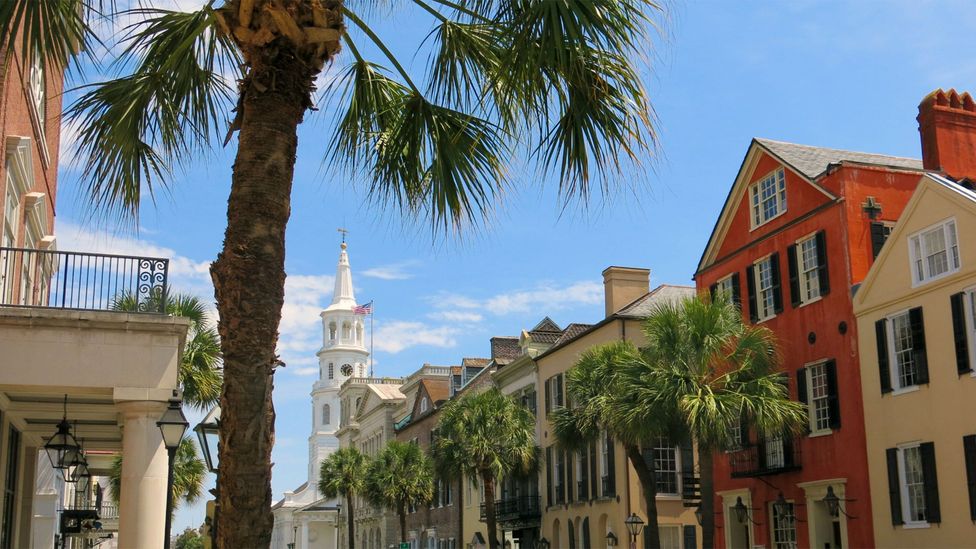
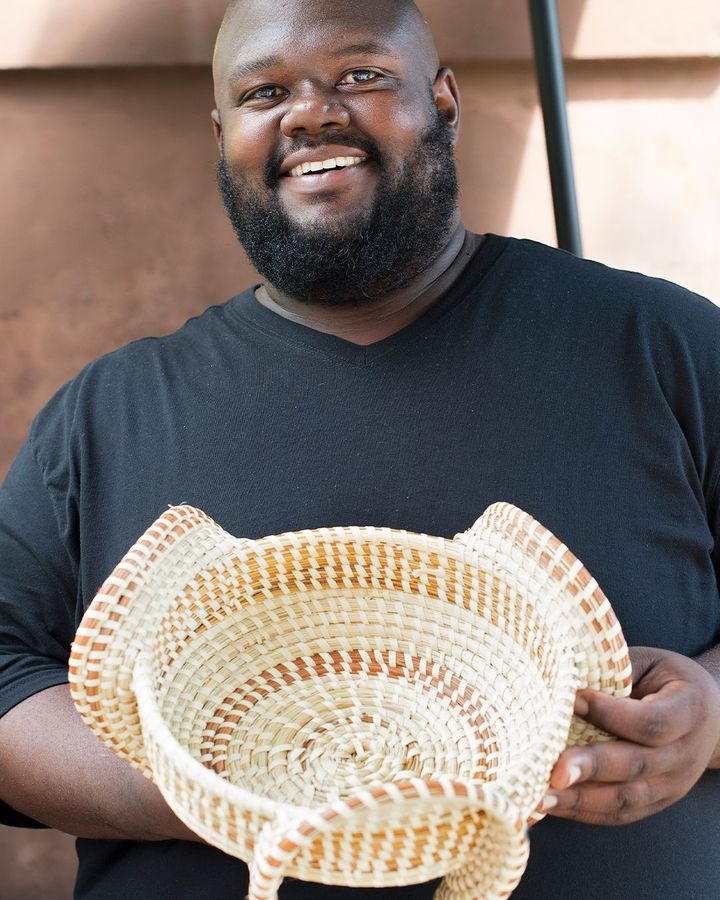
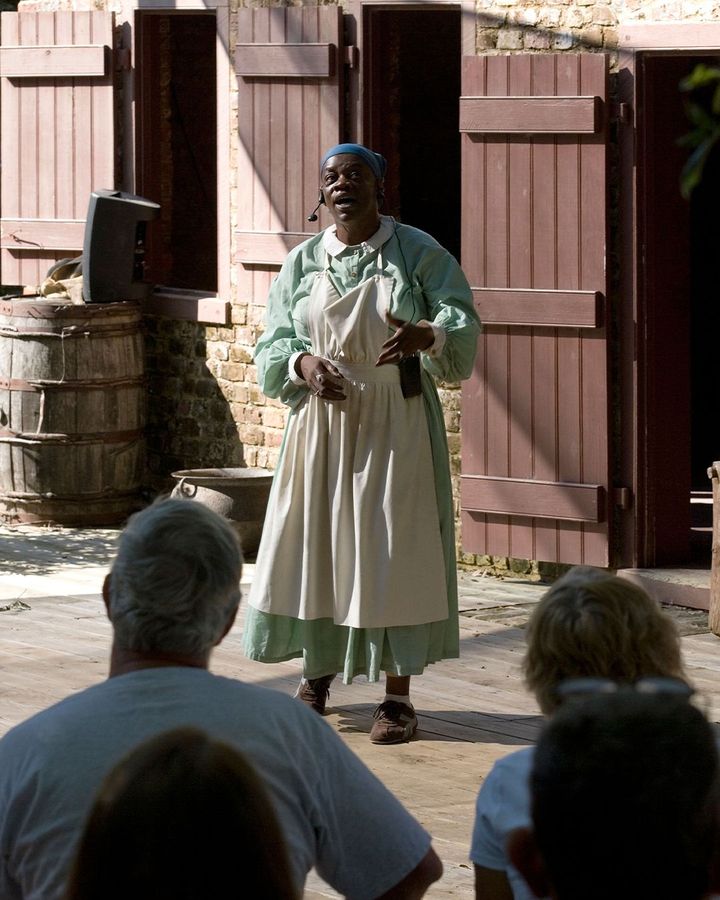
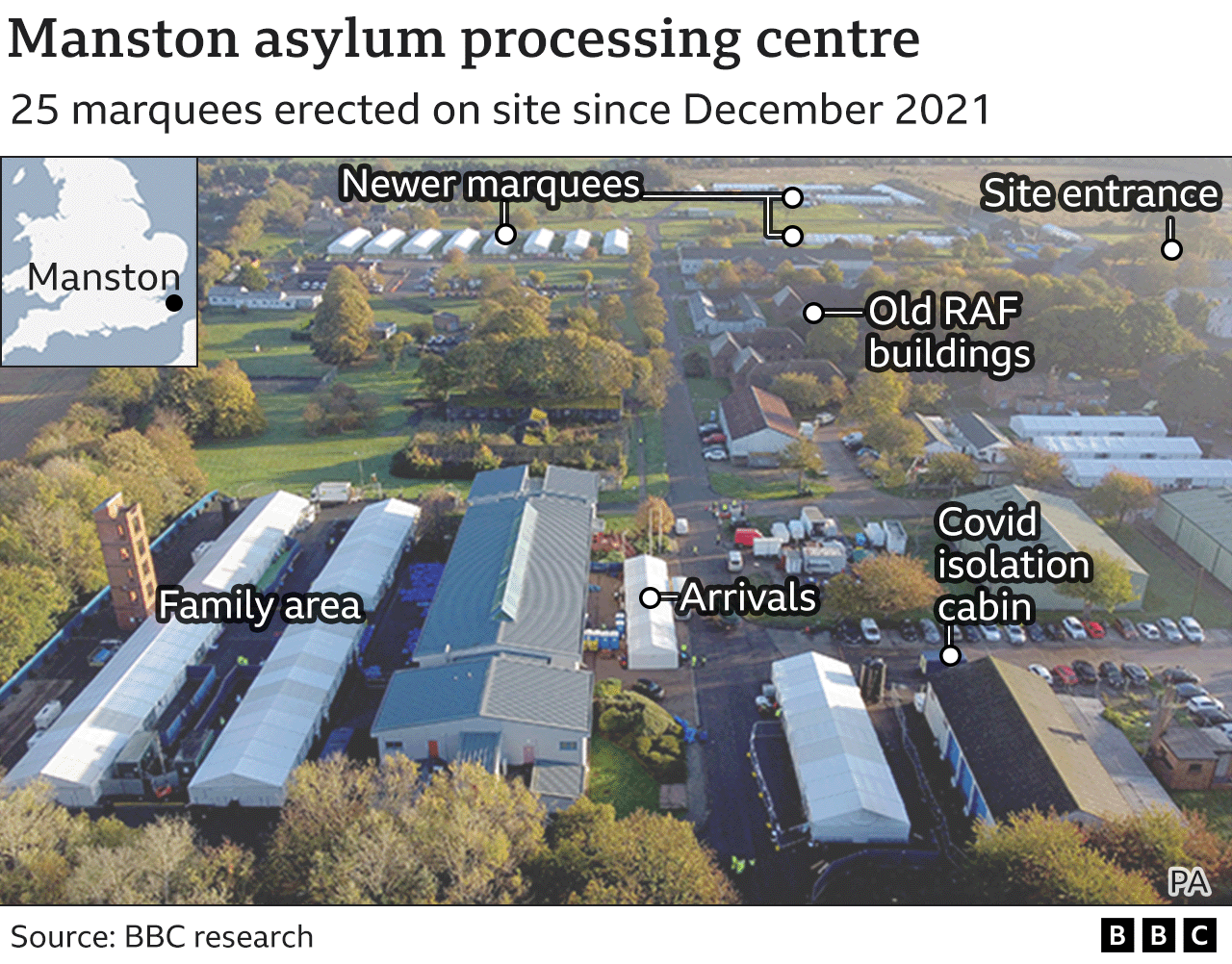

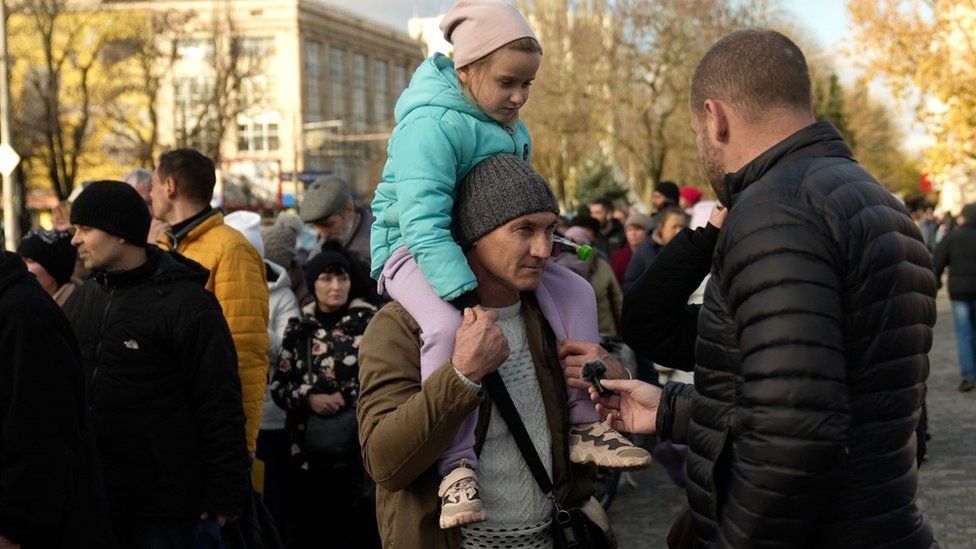
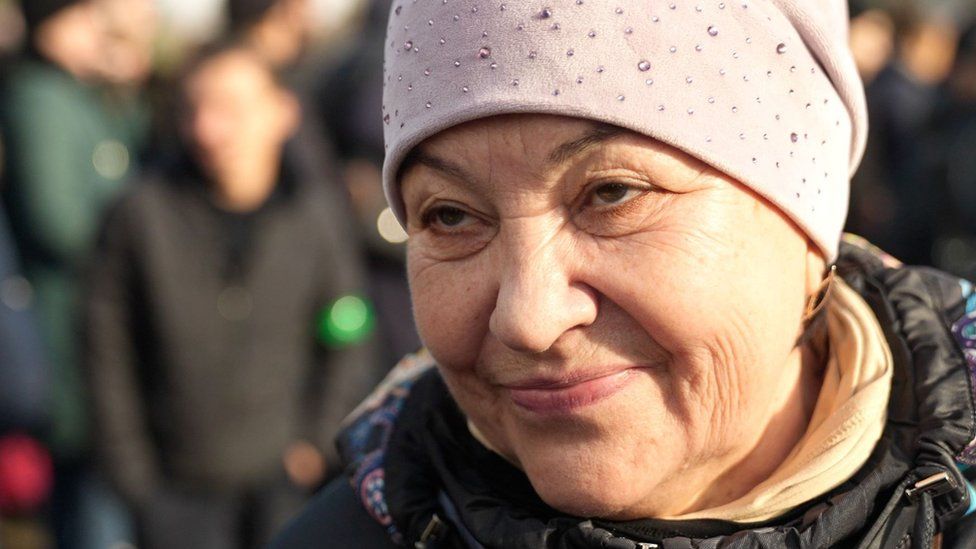
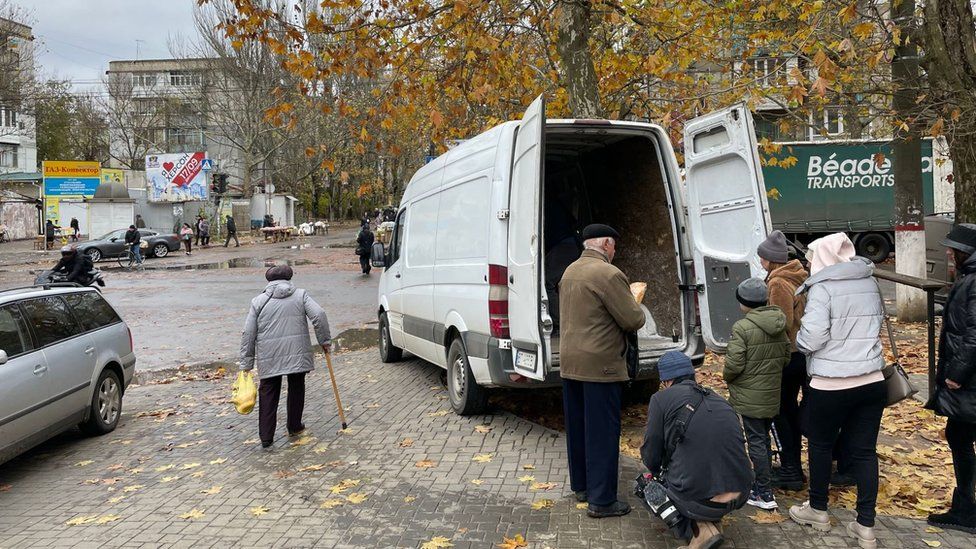
 Man attacked by bear in Colorado survives after managing to grab his gun
 Major League Baseball reporter Kelsey Wingert in hospital after being hit in head by 95mph ball
 Climate activist Wynn Alan Bruce dies after setting himself on fire outside US Supreme Court on Earth Day