We’re using the word historic, but what will this fund actually do and how will it work?
Well, we are still trying to get more details on what exactly has been agreed here.
We know it is a decision to set up a fund that should start delivering money next year – money which should go to developing nations and come from developed nations.
Poor nations have called for this for so long because they suffer the worst of climate impacts, but historically caused little to none of the greenhouse gas emissions that warm Earth’s atmosphere.
Take the UK – it has emitted these gases for around 150-200 years since the industrial revolution, burning coal, then oil and gas to fuel economic growth.
But, while climate change will affect the UK, it will not hit as badly as low-lying nations which could be almost wiped out by sea level rise.
Yet those nations barely contribute to emissions. It’s that imbalance that this commitment is trying to address.
At the start of this summit, I reported on some very powerful speeches from leaders of nations most vulnerable to climate change.
Time to pay the climate bill, they demanded.
“We will not give up… the alternative consigns us to a watery grave,” Bahamas Prime Minister Philip Davis said in a powerful opening speech.
Now, two weeks later, one of the groups leading this charge – the Alliance of Small Island States (Aosis) – is calling the “loss and damage” fund “a mission 30 years in the making”.
Quote Message: Today, the international community has restored global faith in this critical process that is dedicated to ensuring no one is left behind. The agreements made at COP27 are a win for our entire world. We have shown those who have felt neglected that we hear you, we see you, and we are giving you the respect and care you deserve” from Molwyn Joseph Environment minister for Antigua and Barbuda and chair of Aosis
Today, the international community has restored global faith in this critical process that is dedicated to ensuring no one is left behind. The agreements made at COP27 are a win for our entire world. We have shown those who have felt neglected that we hear you, we see you, and we are giving you the respect and care you deserve”
Molwyn JosephEnvironment minister for Antigua and Barbuda and chair of Aosis
We’ve now spoken to James Shaw, New Zealand’s climate changeminister, outside the plenary hall.
He says he is delighted that the deal on loss and damage was achieved.
But, asked about weakening of agreements on fossil fuels, he admits “it’s not great.”
“I’m pretty disappointed we haven’t moved much further than what we got in Glasgow,” he says.
He argues that developed countries “held the line on 1.5C” in the face of “strong attempts by the petrol states to roll back”.
Shaw is likely referring to countries like Russia and Saudi Arabia who reportedly attempted to weaken language on urgently reducing curbing climate change.
He has now released a full and more detailed statement emphasising our planet is “still in the emergency room”.
He adds: “We need to drastically reduce emissions now – and this is an issue this COP did not address.
“A fund for loss and damage is essential – but it’s not an answer if the climate crisis washes a small island state off the map – or turns an entire African country to desert.
#COP27 has taken an important step towards justice.
I welcome the decision to establish a loss and damage fund and to operationalize it in the coming period.
Clearly this will not be enough, but it is a much-needed political signal to rebuild broken trust. pic.twitter.com/5yhg5tKXtJ
“The world still needs a giant leap on climate ambition. The red line we must not cross is the line that takes our planet over the 1.5C temperature limit.”
The UK’s negotiator Alok Sharma, who of course presided over COP26 in Glasgow last year, has given his reaction to journalists here in Sharm el-Sheikh.
“I’m incredibly disappointed that we weren’t able to go further,” he told us.
He came here wanting to raise global ambition on urgently cutting the use of fossil fuels to limit global warming. That has not happened.
“We had to fight incredibly hard, relentlessly, it was like a battle, to make sure that we preserved what we got over the line in Glasgow,” he said.
There was strong push back from some countries, Sharma said. He said he’d told those countries they need to look climatevulnerable countries “in the eye”.
But he said developed nations wanted to keep the commitment to a loss and damage deal, which he calls historic.
The commitment to limiting global warming to 1.5C by 2100 remains in the agreement, but has slipped down the priority list in the cover text – the overarching agreement from the summit.
Sharma says: “I said in Glasgow that the pulse of 1.5C was weak. Unfortunately, it remains on life support.”
A new report published by Oxford University is predicting that no African team at the World Cup will progress beyond the group stages.
The report based on the Oxford mathematical model predicts route to the men’s FIFA World Cup whcih kicks off this weekend in Qatar.
It also predicts that the final of the tournament will be between Brazil and Belgium with the South Americans expected to prevail.
Africa’s representatives at the World Cup include Ghana, Cameroon, Tunisia, Senegal and Morocco.
Ghana in Group H along with Portugal, Uruguay and South Korea (Portugal, Uruguay to qualify). Senegal in Group A with Netherlands, Ecuador and hosts Qatar (Netherlands, Ecuador to qualify). Tunisia in Group D with Australia, Denmark and France (France, Denmark to qualify).
Morocco is in Group F with Belgium, Croatia and Canada (Belgium, Croatia to qualify) whiles Cameroon will take on Brazil, Switzerland and Serbia in Group G (Switzerland and Brazil to qualify).
The model – created by Oxford Mathematics researcher Joshua Bull – forecasts among others:
Wales to go out in the group stages
England to lose in the quarter-final
Argentina vs Brazil in the semi-final
Brazil to beat Belgium in the final
“The model simulated the group stages one million times and took the most common outcomes. The algorithm then simulated each knockout game 100,000 times,” part of the University’s post on social media read.
The model has been created by analysing team rating data from http://eloratings.net, focusing on every first-team international game since 2018, the post added.
Environmental charities and campaign groups are starting to react to the climate agreement.
On the whole they seem to be welcoming the deal on loss and damage. Greenpeace have called it “an important foundation in building towards climate justice“.
But there have been strong concerns raised that promised fund could be undermined by the lack of progress on getting agreement to reduce emissions.
Katie White, executive director of advocacy, at the World Wildlife Fund (WWF) said the loss and damage deal “risks becoming a downpayment on disaster unless emissions are urgently cut in line with the 1.5°C goal”.
There was talk at one point that there could be a new pledge to “phase down” oil and gas – adding to the commitment last year to phase down coal.
Failure to get this included WWF said will: “put our health and security at risk.”
Greenpeace went further – accusing the Egyptians of being influenced by the fossil fuel industry.
Yeb Saño, executive director at Greenpeace Southeast Asia said: “a large number of countries from north and south voiced their strong support for phasing out all fossil fuels…but they were ignored by the Egyptian COP Presidency. Petro-states and a small army of fossil fuel lobbyists were out in force in Sharm el-Sheikh to make sure that it did not happen.”
A war in far-away Ukraine has worsened Zimbabwe’s decades old multi-layered economic crisis with the southern African country’s agriculture industry being the hardest hit amid heightened food insecurity and rising cost of living, United Nations agencies have warned.
In a report titled: Impact of the Ukraine Crisis in Zimbabwe that covers the period between February 2022 and when Russia invaded its neighbour and October, the World Food Programme (WFP), International Organisation for Migration (IOM) and Food and Agriculture Organisation (FAO) painted a gloomy picture of the situation in Zimbabwe.
Before the war between Russia and Ukraine broke out, Zimbabwe’s economy was already saddled with rising inflation, low foreign direct investments, unsustainable foreign debt levels and corruption, among a litany of problems.
Zimbabwe was also emerging from a devastating Covid-19 pandemic that led to unprecedented economic disruptions globally.
The outbreak of the war led to a spike in prices, supply chain disruptions and a general deterioration of macro-economic and living conditions.
UN agencies that have been feeding more than half of Zimbabwe’s population for years fear that the Russia-Ukraine conflict will make things even harder for the southern African country.
“The faraway war has had direct effects on increasing food, fuel and fertiliser prices and disrupted supply chains and trade, leading to fiscal tightening and a widening of inequalities and governance issues,” the agencies said in the report.
“Poor households have further fallen into food insecurity emanating from the increased cost of living.
“While some of these factors cannot be directly linked to the Ukraine crisis, analysis shows that the conflict in Europe has exacerbated vulnerability and migration as a coping mechanism.”
The WFP, IOM and FAO have been jointly monitoring the impact of the Ukraine-Russia conflict on rising food prices, food security, access to essential needs and agricultural inputs, and migration patterns in Zimbabwe.
They concluded that the situation was “precarious because inflation still remains very high, the lean season has begun earlier than usual, high costs for agricultural inputs— particularly fertiliser are being observed, and there is possibility of a delayed start of the rainy season in the primary crop-producing northern regions of the country.”
Zimbabwe’s inflation, which is pegged at more than 280 percent, remains one of the highest globally and the only country in southern Africa with headline inflation above 50 percent.
The country is expected to struggle to get fertiliser for the forthcoming season.
Zimbabwe uses around 800 000 tonnes of fertiliser a season and over half of it is imported from Russia and Belarus.
“Zimbabwe depends heavily on fertiliser imports (ammonium nitrate, urea, potash, and ammonia gas) from Russia and Belarus and the conflict has far reaching consequences on availability and affordability,” the UN agencies added.
“In fact, 70 percent of the fertilisers used in Zimbabwe are imported as raw materials and or finished products and this exposes the market to the effects of global shortages and price volatility.
“These higher prices are making fertilisers unaffordable and out of reach to communal farmers and will have a negative effect on productivity of maize, soya beans and other crops in the main 2022/23 cropping season.”
Globally, the conflict has had a significant impact on the supply of fertiliser raw materials – creating a shortage and leading to all-time high price increases of over 100 percent.
“The rise in logistical costs by over 100 percent due to increased demand and a shortage of shipping vessels and fuel, has increased the landed fertiliser prices in Zimbabwe and other import dependent countries,” the agencies added.
Zimbabwe has also been struggling with fuel imports. The country gets most of its fuel from Mozambique, South Africa and Singapore.
The price of fuel, which was already on an upward trend prior to the start of the Ukraine-Russia conflict, experienced a sharp increase immediately after the start of the Ukraine crisis.
Fuel prices rose by 17 percent for petrol from US$ 1.51 a litre in March to US$1.77 a litre in June, while diesel rose by 25 percent from US$1.51 a litre in March to US$ 1.88 a litre in June.
“This upward trend was also observed on the global market and is largely attributed to the effects of the Ukraine-crisis,” the report added.
“In June, the government of Zimbabwe enacted measures to stabilise the price of fuel, resulting in a reduction of the average cost by 10 percent.
“However, the current price remains 18 percent higher than it was during the pre-crisis period.
“The rising costs of fuel contributed to the increase in the price of basic food and non-food commodities.”
During the same period, Zimbabwe also recorded a 15 percent decrease in the supply of vegetable oil.
The decrease was attributed to the Ukraine crisis as Zimbabwe imports 96 percent of its sunflower oil from abroad, making it vulnerable to the effects of the disruption in global supply chains.
Russian and Ukrainian exports account for nearly a quarter of the global total for the commodity.
The sharp rise in prices has seen the cost of a basic food basket in Zimbabwe increasing by an average of seven percent between January and September this year.
The price of bread increased by more than 100 percent from US$1 a loaf in January to about US$2.10 a loaf in May.
There was also a slight decrease in remittances, which the UN agencies said could be attributed “partially to the impact of the crisis in countries where remittances originate from.”
“Among those who received remittances, 90 percent reported that these were not adequate to cover essential needs,” the report added.
“Of the households who reported receiving remittances, between 62 and 75 percent use the remittances mainly for food, followed by education (17 to 21%) and health services (four to seven percent.”
Zimbabwe’s economy has been lurching from one crisis to another for the past two decades.
The economic problems started surfacing in 1997 when the regime of the late Robert Mugabe paid unbudgeted pensions to veterans of the country’s 1970s liberation war, leading to a currency collapse.
The situation got worse in 1999 when Zimbabwe sent its troops to fight in Democratic Republic of Congo civil war that also drew armies from Uganda, Rwanda and Angola.
A violent land reform programme that displaced nearly 5 000 commercial farmers precipitated the e
Disputed elections and human rights violations led to the country’s economic isolation, which has taken a serious toll on the economy.
Zimbabwe is one of the few African countries that have been vocal in their support of Russia’s excursion into Ukraine.
As the attempts to restore peace in the Democratic Republic of Congo(DRC) by the East African Community regional leaders continue, rebels from the March 23 Movement have advanced to capture territories in the eastern DRC.
The Congolese government still claims Rwanda is orchestrating the clashes between the two countries by supporting the M23 rebels.
In the past couple of months, many Kinyarwanda speaking Congolese also known as Banyamurenge and Tutsi have been announced killed in the DRC as they were suspected of being allies of the M23.
Congolese people make up over 60 percent of the total refugee population in Rwanda.
Living and doing businesses in country, they shared with Africanews their experiences of being Congolese in Rwanda in times like these and amidst the political war between the two countries.
Congolese business man, Vianney Saidi said: “We are not facing any issues in Rwanda, we the Congolese, we are not affected by the war at all.
“We are doing well and progressing with our businesses here in Rwanda, most technicians, hairstylists and tailors here in Rwanda are Congolese and they have no complaints at all.”
But Julien Mulatwe, a Congolese businesswoman has had a different experience.
“I used to import my jewellery products from Congo, now I have no way of importing them,” she explains.
“I can’t travel to Congo, I could get killed, my business has been affected badly, I have had to put it on hold.”
Kenyan forces have been deployed in the DRC with a mandate to create a buffer zone between the DRC forces and the M23 rebels so fighting can halt.
On Wednesday this week, Kenya Defence Forces (KDF) vowed to protect the strategic Goma Airport in eastern DRC from possible attacks.
Jean Baptiste Gasominari is a Political Lawyer in Rwanda.
“There have been a lot of issues between Rwanda and DRC and mostly they originate from the genocide perpetrated against the Tutsi in Rwanda,” he explains. “And those perpetrators that fled to Rwanda were welcomed with their weapons and ideologies, they were never disarmed, their military capabilities increased because they were being armed by the Congolese government.
“The involvement of Uganda, Kenya and Burundi are aimed at bringing peace and security, but if those root causes of the conflict are not addressed, then the conflict will never end.”
As the M23 rebels advance to control more regions in eastern DRC, over 89 refugees have crossed over the Kabuhanga border to seek refuge in Rwanda.
The Ghana Statistical Service (GSS) has disclosed that about 1.5 million Ghanaian households do not have access to a toilet facility.
According to GSS, these households still practise open defecation.
GSS stated that “the 1.5 million figure represents 17.7% of the household population with the prevalence of open defecation in rural areas (31.3%) being more than three times higher than that of urban areas (8.9%).
This information is contained in GSS’s 2021 Population and Housing Census General Report on Water and Sanitation.
“Point of defecation for households without access to a toilet facility is predominantly bush/open field/gutter (1,380,720 households) followed by beach/water bodies (61,401 households),” GSS added.
The Service made this revelation as the world commemorates World Toilet Day on November 19th, 2022.
It added that with the figure recorded this year, there has been a reduction as compared to previous years.
“The percentage of households without access to toilet facilities was 19.3% in 2010 and 20.2% in 2000 indicating a reduction of 2.5 percentage points in the prevalence of open defecation over the 21-year period.”
However, the regions with the highest proportion of households without access to toilet facilities are; the Upper East – 80.0% and North East -79.7% regions, adding that eight in every 10 households practise open defecation.
The GSS noted that there are six regions where more than 100,000 households are practising open defecation: Northern (242,034), Upper East (180,797), Ashanti (111,306), Greater Accra (105,717), Volta (102,997) and Bono East (102,442).
United Nations officials announced on Friday, 18 November, a second shipment of Russian fertiliser will go to West Africa after a first attempt was blocked in European ports because of sanctions imposed due to the conflict in Ukraine.
The move follows talks between Moscow and the UN .
Secretary General of UN’s trade and development agency UNCTAD, Rebeca Grynspan, told journalists: “There are around 300,000 tonnes of fertiliser in the different European ports.
“The first shipping will get out of a Netherlands port going to Malawi, the vessel is loading right now. And the date that has been established for the vessel to go is on the 21st of November, to Malawi through Mozambique.”
As part of the implementation of the two agreements signed on 22 July in Istanbul to ensure unhindered access to food and fertiliser from Ukraine and Russia, the WFP earlier announced it would facilitate the donation of 260,000 tonnes of fertiliser by the Russian fertiliser company Uralchem-Uralkali to the neediest countries in Africa, with Malawi as its first destination.
Grynspan added: “Beyond Malawi, with the help again with the donation from Uralchem/Uralkali, the intervention of WFP, and the help of the World Bank and France, we hope that the next destination of the fertilisers will be West Africa. That has been very affected by the affordability crisis of fertilisers.”
Agricultural products and fertilisers do not fall under the sanctions against Russia, but because of the risks linked to the conflict in the Black Sea, shipowners no longer wanted to hire their ships because they could not find insurance.
After intensive discussions, Russiaand the UN have established a framework for insurance, financial transactions and other matters which is compatible with the three existing sanctions systems (US, UK and EU) put in place following the Russian invasion of Ukraine on 24 February.
Last week, the Black Sea Grain Initiative, signed on 22 July between Turkey, Ukraine, Russia and the UN allowing Ukrainian grain exports from Ukrainian ports, was extended for 120 days from 19 November.
Tunisian police used tear gas on hundreds of demonstrators on Friday as they clashed when protesters tried to reach the southern island of Djerba where the 18th Francophonie summit is due to take place.
The crowds were trying to establish the fate of Tunisian migrants who have been missing for nearly two months.
A makeshift boat carrying 18 Tunisian migrants en route to the Italian coast disappeared during the night of 20-21 September after leaving Zarzis in the south-east. Only eight bodies have since been found since.
Police units were deployed at the entrance to Djerba, an island in southern Tunisia, to prevent the protesters, who came in dozens of cars and motorbikes, from entering.
Ali Kenis is a fisherman from Zarzis and says he is determined to keep the protests going: “We will launch civil disobedience, and close all entry and exit points to Zarzis, and all public and private establishments, so we can isolate the city,” he says.
Families and relatives of the missing migrants, supported by the inhabitants and fishermen of Zarzis, organised several demonstrations gathering thousands of people to push the authorities to intensify the search for those still missing.
A general strike was held in the city on 18 October to demand an investigation into the sinking of the boat and the hasty burial of some of the bodies in a private cemetery (“Jardin d’Afrique”), usually reserved for sub-Saharan migrants.
Hundreds of journalists and political activists demonstrated Friday, 18 November, in Senegal’s capital to demand the release of a Senegalese journalist and government critic detained earlier this month.
Journalist union representatives marched along a boulevard near the Dakar city centre, chanting “Free Pape Ale Niang”.
Niang, who runs the online news website “Dakar Matin” and has been critical of President Macky Sall’s government, was arrested on November 6.
He was charged and placed under a detention order on November 9.
He is accused of having broadcast confidential messages about security arrangements surrounding the November 3 interrogation of opposition politician Ousmane Sonko over allegations of rape.
vice-president of the convention of young reporters of Senegal, Migui Marame Ndiaye, said: “We mobilised this afternoon to demand his release.
“Pape Alé Niang’s place is not in prison but in the newsroom. That is why we will lead the fight. We are going to fight for the release of our colleague Pape Alé Niang who has only done a service to Senegalese democracy, he has only done his job normally.”
Authorities also accused Niang of “spreading false news”.
His detention has sparked a wave of criticism from the press and civil society against the Senegalese president.
journalist and activist, Nina Penda Faye, said: “We have also made it known to the State of Senegal, to the Senegalese government, that it was out of the question that in 2022 there are still Senegalese, journalists precisely who are imprisoned for press offences.
“We want this to stop and we ask the State of Senegal, we ask mainly our leaders to release all hostages including Pape Alé Niang who was detained for press offences.”
Senegal has been ranked 73rd out of 180 countries on this year’s World Press Freedom Index compiled by Reporters Without Borders, down 24 places from last year.
The Ghana Statistical Service (GSS) has disclosed that about 1.5 million Ghanaian households do not have access to a toilet facility.
According to GSS, these households still practise open defecation.
GSS stated that “the 1.5 million figure represents 17.7% of the household population with the prevalence of open defecation in rural areas (31.3%) being more than three times higher than that of urban areas (8.9%).
This information is contained in GSS’s 2021 Population and Housing Census General Report on Water and Sanitation.
“Point of defecation for households without access to a toilet facility is predominantly bush/open field/gutter (1,380,720 households) followed by beach/water bodies (61,401 households),” GSS added.
The Service made this revelation as the world commemorates World Toilet Dayon November 19th, 2022.
It added that with the figure recorded this year, there has been a reduction as compared to previous years.
“The percentage of households without access to toilet facilities was 19.3% in 2010 and 20.2% in 2000 indicating a reduction of 2.5 percentage points in the prevalence of open defecation over the 21-year period.”
However, the regions with the highest proportion of households without access to toilet facilities are; the Upper East – 80.0% and North East -79.7% regions, adding that eight in every 10 households practise open defecation.
The GSS noted that there are six regions where more than 100,000 households are practising open defecation: Northern (242,034), Upper East (180,797), Ashanti (111,306), Greater Accra (105,717), Volta (102,997) and Bono East (102,442).
DISCLAIMER: The Views, Comments, Opinions, Contributions and Statements made by Readers and Contributors on this platform do not necessarily represent the views or policy of Multimedia Group Limited.
Diesel carscan no longer be imported or made in Algeria, and local car manufacturers are now required by law to start producing at least one range of electric vehicles if they’ve been trading for five years or more.
The ban is for environmental and regulatory reasons.
When the Algerian government banned imports of assembly lines kits two years ago, a number of car businessmen were successfully prosecuted and jailed for fraud and money laundering.
Those strict importation measures caused a nationwide shortage of cars and led to an unprecedented surge in prices.
There are more than 6.5m licensed vehicles in Algeria, according to latest data from the office for national statistics.
At the last count in 2019, World Bank data listed Algeria’s carbon dioxide emissions per capita at 3.98 metric tons. That’s almost half of South Africa’s 7.51 metric tons per capita, but both countries are eclipsed by the US whose carbon dioxide emissions are an estimated 14.67 metric tons per capital
I’m that kind of woman who doesn’t give up. I feel when I need something I have to push, I have to work hard to get what I need.
Quote Message: I love music so I said to myself ‘why can’t I start singing?’ No-one was there to support me, so I said to myself ‘I have to prove to people that this is what I’m doing’ and for them to love my music.
I love music so I said to myself ‘why can’t I start singing?’ No-one was there to support me, so I said to myself ‘I have to prove to people that this is what I’m doing’ and for them to love my music.
Quote Message: So I sat down and started writing songs – and I reached out to one of the musicians back in Malawi to gave him the songs and he was like, ‘this is amazing’.”
So I sat down and started writing songs – and I reached out to one of the musicians back in Malawi to gave him the songs and he was like, ‘this is amazing’.”
Queen Sheba says she was quite a wild child, going partying and modelling from a young age, much to her mother’s consternation, They came to blows and in the video for one of her songs, Zikomo Mama, Queen Sheba tells the story of how her mother once dragged her to the police station:
Quote Message: Looking back I think she meant well for me so I decided to come out with something to say ‘thank you for bringing me up’.”
Looking back I think she meant well for me so I decided to come out with something to say ‘thank you for bringing me up’.”
One song the star is particularly proud of is Chiwanda. It tells the story of a woman who likes to wear revealing clothes.
Queen Sheba herself often appears very scantily clad, and has received a lot of criticism because of this:
Quote Message: Our culture is all about covering yourself up and wearing long stuff but I’m a woman who appreciates myself and wants to show my body. Women should be comfortable with who they are, and accept who they are.”
Our culture is all about covering yourself up and wearing long stuff but I’m a woman who appreciates myself and wants to show my body. Women should be comfortable with who they are, and accept who they are.”
Queen Sheba intends to continue wearing as little or as much as she wants: “I’m not going to change for anybody because this is me.”
South Africa‘s state power company, Eskom, has warned the public to expect worse power cuts because it is ramping up load shedding.
The country has experienced rolling blackouts for several years now, with load shedding – the distribution of demand for electrical power across multiple power sources – used regularly to manage the supply.
Eskom announced the move from stage three to four on Friday, saying it may continue at this level indefinitely, and that “changes in the stages of load shedding will be more erratic”.
There are eight stages of load shedding. The move to stage four means that South Africanscan expect outages – either 12 times over a four-day period for two hours at a time, or 12 times over an eight-day period for four hours at a time.
At the highest level of load shedding, stage eight, residents can expect to be without power for up to 12 hours a day.
Kenya’s former leader, Uhuru Kenyatta, and Rwandan President Paul Kagame have agreed on the need for a ceasefire in the east of the Democratic Republic of Congo and for rebels to withdraw.
Mr Kenyatta – who is acting as a mediator to try to stop the conflict – has just returned from North Kivu where the M23 rebel group has launched several offensives this year displacing more than a quarter of a million people.
In public, President Kagame has always denied backing the M23 in eastern Congo.
But according to a statement from Mr Kenyatta’s office, the Rwandan leader has now agreed to use his influence to get the rebels to cease fire and withdraw from recently captured areas.
This week the conflict has escalated with the Congolese military attacking M23 positions using fighter jets and tanks.
This international push for a ceasefire brings some hope.
Much will depend on the outcome of regional peace talks which are due to begin in Kenya on Monday.
Years of fighting in eastern Congo have been fuelled by the thirst for the region’s minerals.
It was summer 1984. Grace, a recent college graduate in her early 20s, had put all her savings towards a long distance flight from her home in Washington DC to visit her Australian boyfriend, John Hiron.
The couple met at a party earlier that year, a few days before John was supposed to be leaving town. The early days of their relationship were a whirlwind — after falling for Grace, John extended his trip for as long as possible.
They were, as Grace puts it, “super head-over-heels madly in love.” But eventually John’s visa ran out, and he had to go home. After that, Grace and John’s relationship was confined to letters. Their snail mail took weeks to travel overseas, and the physical distance between them created an emotional distance that was hard to bridge.
As her departure date approached, Grace started to worry.
“I had a dream that I was making a huge mistake,” Grace tells CNN Travel today. “I just had a really bad gut feeling I shouldn’t go.”
It didn’t help that Grace, “was not an adventure taker,” as she puts it. Looking for reassurance, Grace spontaneously called John. The couple rarely spoke on the phone due to the hefty long-distance charges, but she was feeling increasingly desperate.
“I needed him to say, ‘You’re doing the right thing,’” she recalls. “But he wasn’t home.”
They fell in love in the 1980s but married other people. 23 years later they reconnected
Grace and John, pictured here in 1984, struggled to navigate a long-distance relationship.
Instead, John’s mother answered and said she’d pass on the message. It was over 36 hours before John phoned Grace back. In the interim, Grace’s anxiety only increased.
“Should I come?” Grace asked, when John eventually returned the call.
“If you want to,” was John’s response.
For Grace, this apparent nonchalance sealed the deal.
“I didn’t get on the plane,” she says. “And so he went to the airport to get me, to pick me up, and I didn’t get off — I wasn’t on the plane.”
“I said the wrong thing, without a doubt,” says John, who blames his immaturity. He wanted her to come, he says now, he just didn’t know how to express it and the long distance was tough.
When Grace didn’t turn up, John and his friends went straight from the airport to the pub. Over beers, his friends told John he’d meet someone else and move on. But John knew he’d lost something not easily replaced.
A few days later, he called Grace to ask her what went wrong. Over the grainy connection, Grace and John both struggled to articulate how they felt. Achieving a sense of closure felt impossible.
“I know we’re going to date other people, but we shouldn’t marry anyone else,” said Grace eventually, sensing the call — and their relationship — was coming to an end.
“Why?” asked John, thousands of miles away in his parent’s house in Perth.
“Because we’re never going to love someone the way we love each other,” said Grace.
Different directions
They fell in love in the 1980s but married other people. 23 years later they reconnected
Grace and John, pictured here in 1984, went their seperate ways after she decided not to get on the plane to be with him.
For months afterward, Grace says she felt “devastated.” But she tried not to imagine what life would be like if she’d boarded her flight. Instead, she “set about trying to move forward.”
“I bought a car with the money that I was going to go to Australia with, so that I couldn’t be tempted to change my mind later,” she says.
Months turned into years and John and Grace remained on the periphery of each other’s lives.
“I would call periodically,” says John. “One year I called, and she got married. And then I called again and her parents had died.”
Sometimes, John would phone and wouldn’t get through — Grace would have moved, and he’d struggle to track her down. There was no social media or email to aid this quest, and one time John phoned an international directory in the US to find Grace.
For Grace, these intermittent calls were bittersweet.
“I would swear, ‘l am not going to talk to him anymore. What is the point?’ along the way. Because it would stir up emotions,” she says.
“But every time he would call, I would take the call, of course. But I would swear this is the last time we’re going to talk.”
They fell in love in the 1980s but married other people. 23 years later they reconnected
Grace kept all of John’s letters.
The decades rolled on. Grace and John dated and then married other people, and later had children.
“Twenty-two years later, I’d long moved on from this relationship,” says Grace.
Even so, she’d kept all of John’s letters.
“I always had them wherever I went, whoever I was with, however many times I moved, the things that he gave me came along with me.”
Then, one day in January 2007, John called Grace out of the blue. The two hadn’t been in touch for some time. In the interim, they’d both been going through trying times — by coincidence, Grace had recently separated from her husband and John and his wife had also recently split.
“I said, ‘We’ve broken up and I’m not married anymore.’ And Grace said the same thing,” recalls John.
“That was really surprising that we were both separated,” says Grace.
The two talked for a short while, sharing how they were both feeling about their marriage breakdowns.
John mentioned a device called a webcam was becoming more commonplace — maybe they could video call sometime?
“I went to the local Staples, and I bought an external webcam, and I plugged it in and had to figure out how to use it,” says Grace. “And we saw each other for the first time in 22 years.”
The image was slightly pixelated, Grace took a moment to adjust to John’s gray hair — but despite the years, they both recognized one another right away.
“It’s funny how your mind tricks your eye, and you see the person from age 22, you don’t see the person who’s 45, in your mind, you see the young person,” says Grace. “And so from the minute we actually saw each other, it was super emotional — this almost visceral reaction.”
It was also a bit awkward.
“We didn’t really have a lot to talk about at first because what is there to talk about?” says Grace. “Just — ‘how are you doing with the divorce? How are the kids? How are you handling it?’ And helping each other through that, and kind of catching up on our lives and where we were and what was going on.”
Still, they arranged to speak again and over the next few months, they connected frequently by video call. Grace and John felt drawn to one another and their calls became a bright spot in both their lives.
“I’d get home from work, and we’d sit down and I’d be watching TV and the webcam was on and we’d talk for the night,” says John.
After a while, John suggested he could come to the US and they could reunite in person.
Grace was hesitant — was this a terrible idea? She raised the question with her marriage counselor, who suggested seeing John could bring about some much needed closure.
“She said, ‘This will be good for you to see each other, and you’ll never see each other again. So it’s kind of a very safe thing to do. You’re not going to get into something complicated, because how could you? You’re so far away.’ That was her advice. And that backfired…”
Reunited in the US
They fell in love in the 1980s but married other people. 23 years later they reconnected
Here’s Grace and John in 2008, when they were reunited in the US.
Grace picked John up from Newark Airport in March 2008. Waiting in a taxi with a bottle of champagne and chocolate covered strawberries, she found herself thinking about the day, all those years ago, that she didn’t get on the airplane.
When she saw John again, Grace says “it was like getting back a missing piece of myself that I hadn’t realized was lost for so long.”
“It was amazing. Very emotional,” says John of their reunion. “It was just about like no time had passed, it was all very familiar and comfortable.”
Before John’s arrival, Grace was worried there would be awkward silences. She’d prepared conversation topics, but these prompts turned out to be unnecessary. After just a few days together, the decades did seem to melt away. Grace and John started to discuss maybe meeting again in a year’s time.
But as they spent more time together, the two realized they were more than just old friends. The connection they’d felt in 1984 was still there, and waiting a year to reunite felt impossible.
“We were like, ‘Well, what are we going to do? Because now we can’t ever be apart again. We made a mistake — maybe we were young, maybe it was the right mistake and things worked out the way they were supposed to. But we can’t just go back to now being apart again,’” says Grace.
One evening, they reread the letters Grace had kept for all those years.
“It literally made us cry, to see the depth of emotion then, and that we could have let it slip away,” says Grace.
Then they found themselves recalling the phone conversation they’d had in 1984, right after Grace didn’t get on the plane.
“I said, ‘Wow, 22 years ago, I said we shouldn’t marry someone else.’ And he finished the sentence ‘….because we’ll never love somebody the way we love each other,’” says Grace,
“He remembered that — and that was like a stab in the heart of, ‘Okay, now, what are we going to do?’ This is going to be difficult and complicated.”
Grace and John lived on opposite sides of the globe. They were both going through divorces. They both had children they loved, and they wanted to be part of their lives. Following their hearts was complicated.
Still, several months later, Grace visited John in Australia, and less than a year after that, John moved to the US and the couple eloped.
“I was very emotional because we waited a lifetime, really, to say those words,” says Grace of their wedding day.
They fell in love in the 1980s but married other people. 23 years later they reconnected
The couple eloped, and 10 years later celebrated their wedding anniversary in Hawaii, pictured.
Falling in love again, 23 years later, was as bittersweet and complicated, as much as it was “euphoric.”
Some loved ones were hurt by their reunion. Some friends thought they were both going through midlife crises. For John, moving across the world from his children was particularly tough.
“It was extremely hard, extremely emotional,” he says.
“It was a couple of years of really difficult times with that move,” says Grace.
But as the dust settled, John and Grace were able to spend significant time in Australia, as well as in the US.
They became a cross-continental blended family, bringing their children together whenever they could. Some of John’s children have since studied and worked in the US.
“What’s amazing is all the five kids get on pretty well together,” says John. “We can take them on a vacation and everyone gets on well, we have a good time.”
“We like to think that in the end, when you get past the pain, we made all of our kids’ lives so much bigger, and set a great example for love,” says Grace.
Making up for lost time
They fell in love in the 1980s but married other people. 23 years later they reconnected
Grace and John say they are trying to make the most of every day together, and travel a lot — including to the Taj Mahal in India, pictured here.
Today, 15 years since their reunion, John and Grace still live together in the US, where they’re “making up for lost time.”
“It almost feels like we’d never been apart,” says John.
They try to enjoy, as Grace puts it, “a lot of traveling and adventures and experiences to create a lifetime of memories in a shorter, compressed period of time.”
Loved ones who were originally naysayers have come round in the interim. And as for Grace and John, they’ve both come to believe things happened the way they should have.
“It’s worked out the way it was meant to work out,” says John, who says the decision to be together wasn’t easy, but it’s always been worth it.
“If we tried to carry on from 1984, we probably wouldn’t have been mature enough to get through that period to get to where we are now,” says Grace. “So I feel sad, but I know that I have the best of it now. So it can’t really be sad, because it all worked out the way it was supposed to — despite all of our mistakes that we made, including me not getting on the plane.”
DISCLAIMER: The Views, Comments, Opinions, Contributions and Statements made by Readers and Contributors on this platform do not necessarily represent the views or policy of Multimedia Group Limited.
Taylor Swiftsays it was “excruciating” to watch fans struggle to buy tickets for her upcoming US tour, after sales descended into chaos this week.
Ticketmaster was criticised over its handling of the sales – which saw widespread site crashes in the presale and then cancellation of the main sale.
It blamed unprecedented demand, saying it worked quickly to fix issues.
But responding on Instagram, US pop star Swift said she had been assured that Ticketmaster could handle demand.
“We asked them, multiple times, if they could handle this kind of demand and we were assured they could,” she wrote, in her first public statementaddressing the fiasco.
In the statement on Instagram, Swift wrote: “Over the years, I’ve brought so many elements of my career in house. I’ve done this SPECIFICALLY to improve the quality of my fans’ experience by doing it myself with my team who care as much about my fans as I do.
“It’s really difficult for me to trust an outside entity with these relationships and loyalties, and excruciating for me to just watch mistakes happen with no recourse.”
Swift said it was “truly amazing that 2.4 million people got tickets” but annoyed her that “a lot of them feel like they went through several bear attacks to get them”. Many fans in the presale complained the website crashed repeatedly after waiting hours in the queue.
She added she was “trying to figure out how this situation can be improved moving forward”.
On Friday evening, Ticketmaster issued a statement to apologise and explain what went wrong.
“First, we want to apologize to Taylor and all of her fans – especially those who had a terrible experience trying to purchase tickets,” the statement said.
It said that usually its website is able to handle huge volumes of users: “However, this time the staggering number of bot attacks as well as fans who didn’t have codes drove unprecedented traffic on our site, resulting in 3.5 billion total system requests – 4x our previous peak.”
“The biggest venues and artists turn to us because we have the leading ticketing technology in the world – that doesn’t mean it’s perfect, and clearly for The Eras Tour it wasn’t.”
The problems have refocused the debate in the US on Ticketmaster’s dominance, which has long faced complaints that it abuses its power over the industry, with US Democratic Senator Amy Klobuchar announcing there will be a Congressional hearing to investigate the website.
Meanwhile the US Justice Department has opened an investigation into Ticketmaster’s parent company, Live Nation Entertainment, according to the BBC’s US partner CBS. Two people familiar with the matter confirmed the investigation – originally reported in The New York Times on Friday – but said the inquiry predates this week’s chaos.
And last month, US President Joe Biden – who has expressed concern that monopolies have become more common across the economy – said his administration would look into fees on concert tickets.
Ticketmaster is already subject to government monitoring, oversight that was imposed when a 2010 merger with Live Nation – which runs many of the country’s event venues and has an artist management business – was approved. The oversight was extended a few years ago after regulators found the firm had violated the terms of the agreement.
Swift’s US tour will kick off in March next year in Arizona. She has not yet announced an international tour.
This week, Hashir Ali and 11 of his friends will make a long trip – from Kozhikode city in the southern state of Kerala to Doha, the capital of Qatar.
Mr Ali, 55, a football-crazy civil engineer, and his friends are travelling to Doha for the World Cup, where they will stay for 10 days to watch the matches live.
Mr Ali bought tickets for the matches six months ago through a friend in Doha and has been waiting for the “big moment” ever since.
He is among several fans in India, who are gung-ho about football. Along with Kerala, Kolkata city in the eastern state of West Bengal and Kolhapur district in the western state of Maharashtra also have a large number of football fans.
With the world’s second largest population, many feel India is under-represented in the world’s most popular sport – the national team languishes in 106th spot in Fifa’s rankings.
Though India qualified in 1950, they have never actually made it to the World Cup. They refused to participate, partly because it would have meant their normally barefoot team having to wear football boots.
But every time the World Cupis held, India’s football fans do crazy things to express their love for the sport, and their favourite international team.
They save up for months to travel to watch the games; hold mock-matches sporting their favourite team’s jerseys; predict who will win the championship and take out colourful processions to celebrate their team’s victories.
Image source, Arun chandra boseImage caption, Fans erected large cut-outs of their favourite footballers in a river in Kerala
Recently, fans erected a 30ft-tall cut-out of Lionel Messi in a river in Kozhikode. Not to be one-upped, fans of Christiano Ronaldo and Neymar soon erected cut-outs of their idols. These outlandish additions to the river invited a lot of media attention, and even Fifa tweeted about them.
For many Keralites, Qatar is also like a second home, as thousands work or have set up businesses in the middle-eastern country. Several of them have worked for firms who have built stadia for the World Cup.
“It’s a dream come true to watch my favourite players in action,” Mr Ali told the BBC as he was packing for his flight.
Along with sundry items needed for the trip, his bags also contains gifts for his favourite footballers – miniature dhows, or sailing boats.
The dhow, also known as uru in Kerala, has its origins in India’s ancient maritime trade. Craftsmen in Beypore – an ancient port town in Kozhikode – have been engaged in dhow-making for generations and their handcrafted luxury dhows are popular among Qatari millionaires.
A thousand handcrafted miniature dhows made by the traditional shipbuilders of Beypore have been shipped to Qatar as merchandise for the World Cup. A life-sized dhow is also set to be on display.
Image source, ARUN CHANDRA BOSEImage caption, Kerala has a huge number of football fans
Mr Ali is also taking a gift for the organisers – a dhow with flowers of participating countries drawn on its mast.
“We have drawn pictures of all the eight stadiums and flags of the participating countries on a football along with other icons,” Meghna Unnikrishnan, the creator of the artwork, told the BBC.
“It took almost a month for the artisans to build the dhow, carved from teakwood, and I and three other artists finished the drawings in two days,” she adds.
An ardent fan of Lionel Messi, “of course after Diego Maradona”, Mr Ali is going to watch the World Cup matches live for the first time.
“Thank God [the World Cup in being held in] Doha this time and all the eight stadiums are in a 10km (6 miles) radius. Otherwise, I could not even dream of doing so,” he says.
He says he would like to stay back and watch more matches, but “that’s too expensive” for him and it’ll take a “heavy toll” on his work back home.
Last week, Indian fans gathered in large numbers in Doha to cheer the arriving England team by beating drums and blowing horns.
Image source, Hashir Ali / Gudam Art GalleryImage caption, Hashir Ali and Meghna Unnikrishnan with a miniature dhow they are carrying to Doha
TV networks in Kerala have also captured expatriate fans of teams from other countries, celebrating on the street, wearing the team’s colours and waving their national flag.
“Football is in our blood and we make every match a celebration. There’s no permanent loyalty,” Mr Ali says.
In the neighbouring Malappuram district, the World Cup craze started six months ago, with seven football matches representing prominent local teams.
The players donned jerseys of their favourite countries – France, England, Argentina, Brazil, Holland, Germany and Portugal – in the seven-a-side matches.
Image source, Getty ImagesImage caption, Jerseys on sale in Kolkata city in the state of West Bengal
Abdul Nazar, a footballer from Vengara village in Malappuram is also readying to fly to Doha early next month.
Along with him, around 25 fans from the village are also travelling to Doha to cheer their favourite teams. They’ve arranged for drums to beat and flags to wave whenever their chosen team scores a goal, he says.
“We have fans for all major teams, although Argentina and Brazil are favourites,” Mr Nazar told the BBC.
The White House is set to host its first wedding in nearly a decade – just the 19th such celebration at the ultimate venue since 1812. The site has also hosted four wedding receptions.
President Joe Biden’s eldest granddaughter, Naomi Biden – the daughter of Hunter Biden and his former wife Kathleen Buhle – is marrying fiancé Peter Neal at a ceremony on Saturday.
The White House is clearly a desired wedding location – and one not available to the average citizen.
Sarah Fling, with the White House Historical Association, explained to the BBC how often such events take place – and who even gets to throw a White House wedding.
Image source, Getty ImagesImage caption, Tricia Nixon’s Rose Garden wedding was nearly ruined by rain
Image source, Getty ImagesImage caption, Richard Nixon’s daughter Tricia Nixon gave out 700 press credentials according to the White House Historical Association
There are very few people who can sign off on hosting nuptials at the official residence and workplace of the president of the United States, said the historian.
“It’s exciting because really there’s no hard and fast rule about who can or cannot be married at the White House. It’s essentially up to the President and First Lady.”
Image source, Getty ImagesImage caption, Lyndon Johnson’s daughter, Luci, held her reception at the White House. The ceremony was held at a Catholic church
Image source, Getty ImagesImage caption, In December 1967, Lynda Johnson, Lyndon Johnson’s daughter, married Captain Charles S. Robb in the East Room.
While most past weddings have been held for close family members of the president, some White House staff members have had the rare privilege.
“In 1942, Harry Hopkins, who was a really close adviser to President Franklin Roosevelt, was able to have his wedding on the second floor of the White House in the Oval Room, which was at that time, President Roosevelt’s private study,” Ms Fling said.
Most recently in 2013, Barack Obama allowed White House photographer Pete Souza to get married in the Rose Garden, which borders the building’s West Wing.
Image source, Hulton ArchiveImage caption, Woodrow Wilson’s youngest daughter, Eleanor, married the Secretary of the Treasury in 1914
Image source, Library of CongressImage caption, Jessie Wilson (middle), the eldest daughter of Woodrow Wilson, with her bridesmaids. She married in the East Room in 1914
The size of the wedding – and the publicity surrounding it – is up to the couple getting married.
There is no size cap, but different White House rooms accommodate different size events.
For instance, the Blue Room, which has hosted receptions since the early 1800s, is on the smaller side.
The first and only president to get married at the White House was Grover Cleveland, who said his vows in that room to the much younger – by 27 years – Frances Folsom in 1886.
Image source, Library of CongressImage caption, Grover Cleveland was the first and only US president to get married at the White House
The South Lawn, where Naomi Biden’s wedding will be held, has more space, so expect a potentially longer guest list. The White House kitchen is able to serve 140 dinner guests and hors d’oeuvres for up to 1,000 people.
This will be the first wedding at the South Lawn location – the same site as the famous White House Easter Egg Roll – but the very first outdoor wedding at the executive mansion was in 1971 for Tricia Nixon, President Richard Nixon’s daughter.
It was a rainy day, but the sun came out in time and the ceremony continued in the Rose Garden.
Image source, Print CollectorImage caption, Alice Roosevelt, Theodore Roosevelt’s daughter, had quite the guest list – nearly 800-1,000 people were invited. She was married in the East Room
In the 19th Century, weddings at the White House were often quite private affairs.
The first media event was Alice Roosevelt’s wedding in 1906, which was front page news in all the papers and had people lining up at the White House for a glimpse.
There were between 800 and 1,000 guests, according to Ms Fling.
Still, the amount of desired privacy varies.
Tricia Nixon gave out 700 press credentials for her wedding. Ms Fling says Naomi Biden’s will probably be a more intimate affair.
A recent wave of Russian missileand drone strikes have crippled almost half of Ukraine’s energy system, Ukraine’s prime minister has said.
The damage comes as temperatures drop below freezing and the capital Kyiv experiences its first winter snow.
One official in Kyiv warned that the city could face a “complete shutdown” of its power grid.
President Volodymyr Zelensky earlier said that 10 million Ukrainians have been left without power.
And in his video address on Friday night, Mr Zelensky said “the difficult situation with energy supply persists in a total of 17 regions and in the capital”, but added that there were “significantly fewer emergency shutdowns” during the day as energy industry workers were racing to restore power.
“Unfortunately Russia continues to carry out missile strikes on Ukraine’s civilian and critical infrastructure. Almost half of our energy system is disabled,” Prime Minister Denys Shmyhal told a news conference on Friday.
Mykola Povoroznyk, deputy head of the Kyiv administration, said that the city is “preparing for different scenarios, including a complete shutdown”.
He did not say what would happen in the event of the grid completely shutting down, but officials have said they are not considering evacuating any cities.
Ukraine’s national grid operator Ukrenergo posted on Telegram: “The aggressor country has officially recognised that its goal is to destroy our energy infrastructure and leave Ukrainians without electricity and heat.”
Maksym Tymchenko, the CEO Ukraine’s biggest private energy company DTEK, told the BBC that “the situation is getting worse”.
“Unfortunately, after each attack we have less and less reliable and stable energy system. That’s reality,” he said.
Image source, Getty ImagesImage caption, The first snow of winter has hit Ukraine, including the western city of Lviv
On Thursday, Russia hit more energy installations and civilian buildings less than two days after one of its heaviest bombardments yet.
This has been a recent Russian tactic following setbacks on the battlefield, and its impact is starting to be felt more acutely. Moscow says the attacks are a response to Kyiv’s “unwillingness” to hold peace talks.
Those suffering power outages are mainly in the Kyiv, Odesa, Vinnytsia and Ternopil regions.
The government has urged people to save energy by reducing use of domestic appliances such as ovens, washing machines, electric kettles and irons.
In the recently liberated city of Kherson, the deputy head of Mr Zelensky’s office posted photos of people using electricity in designated tents due to there still being no power, adding that the government hopes to have electricity restored in the city “by the end of this week”.
Ethiopia, which made global headlines in 2019 when it launched an ambitious campaign to plant 20 billion trees by the end of this year, says that goal has already been exceeded – and its arboreal mission is set to continue.
But in a country battling drought, conflict and a rising population, it is unclear how effective and successful the mass tree-planting has been.
Supporters of the Green Legacy Initiative (GLI), championed by the country’s Prime Minister Abiy Ahmed, say it has restored greenery, tackled climate change and improved local livelihoods.
It has certainly raised awareness about deforestation and garnered mass engagement, with 20 million Ethiopians reportedly taking part.
How many survived?
The government-backed GLI Technical Committee puts the average survival rate of seedlings at 83.4% in 2019 and 79% in 2020.
Image source, Getty ImagesImage caption, The Green Legacy Initiative is Prime Minister Abiy’s pet project
However, those figures may not be reliable, warns James Mayers from the International Institute of Environment and Development (IIED), a London-based think tank.
He told the BBC that the GLI had yet to introduce a formal process for the trees post-planting.
“It’s only been a few years and trees take a long time to grow. Survival in the long-term is what matters,” he said.
Around the world, similar initiatives have struggled. A study by a group of scientists, published this week by a Royal Society journal, shows that half of all trees planted in reforestation projects in Asia do not survive for more than five years.
But Adefires Worku, who co-ordinates the GLI Technical Committee, has faith in their figures, collected from local communities.
“We’re hoping to get these verified by independent international bodies,” he told the BBC.
Types count
Ethiopia is home to Africa’s second-largest population and implementing a countrywide tree-planting operation has not been a simple task.
Image source, ReutersImage caption, The planting of native trees is often recommended by forestry experts
A variety of seedlings were used, including agroforestry trees and fruit trees, like avocado and papaya.
“Putting the right species, in the right places, for the right purposes is essential,” says forestry expert Lars Graudal from the Kenya-based World Agroforestry Centre, which provides training to the local nurseries in Ethiopia that supply the GLI with seeds.
The GLI did come in for criticism for poor planning in its first year of operation.
Some farmers were only given one day’s notice to attend sites and trees were planted in rocky and unsuitable conditions, according to a joint report by IIED and Ethiopia-based Echnoserve Consulting.
It said eucalyptus trees, for example, were “reportedly being planted in areas that could damage the environment”.
Eucalyptus trees grow fast and produce more timber and were therefore favoured by some farmers. However, they require a lot of water and can drain soil of vital nutrients, making it harder to grow other crops.
Agroforestry organisations around the world prefer the use of indigenous trees. Essentially, they should be either native, or non-invasive, meaning they benefit the biodiversity of the area.
Exotic trees like eucalyptus can have benefits, but need to be thoughtfully planted and managed.
The GLI has made an effort to introduce more indigenous species like bamboo in recent years.
But exact progress is difficult to measure, as official statistics on the number of exotic versus native trees planted is still not available – though this is something the GLI Technical Committee says it is working on as part of its next analysis.
“Diversification cannot be achieved overnight,” Mr Graudal told the BBC, stressing that it would be wrong to focus on the negatives.
“It takes time to get this right. But that should not prevent people from taking action. Ethiopia is building up its resource base to use more native species.”
Tom Skirrow, from the charity Tree Aid, says it is important to plant trees that provide actual value, like timber or food, for a local community. This gives farmers an incentive and encourages long-term management.
Another issue that has caused complication for the GLI is the drought – the region’s worst in more than 40 years. Some areas have not seen rainfall for more two years affecting the survival of seedlings.
Beyond that, foresters have had to think carefully about planting drought-resistant trees.
“We need to grow trees that are right, not only for today – but also for tomorrow’s climate conditions,” Mr Skirrow told the BBC.
While using the wrong type of trees can be detrimental to already stretched water supplies, the right ones can lead to long-term gains.
‘Rainmakers’
Jens Kanstrup, a senior adviser at Denmark-based Forests of the World, says re-establishing tree cover helps to maintain humidity.
“At the end of the dry season, communities in agroforestry areas will find that the soil is humid and thriving. Those living in open fields will be completely dried out,” he told the BBC.
Image source, Getty Images
Image caption, Trees need to be planted to help, not hinder, farmers
If the right trees are planted they can also increase rainfall in the long-term, says Mr Graudal, citing an Australian study which showed the benefits for water supplies of restoring greenery.
The brutal two-year war in Tigray, in northern Ethiopia, has affected the tree-planting scheme.
A peace deal was recently signed, but the GLI has no data for Tigray since 2021 – as the region was blockaded for much of the conflict.
Mr Adefires, who was assigned to launch the GLI in Tigray, remains hopeful.
“Tigray was home to many successful landscape restoration activities, even before the GLI,” he said.
“If the deal goes through, I’ll be the first man to return to Tigray and check on our nurseries.”
The Great Green Wall
The GLI also forms part of another ambitious scheme – the pan-African Great Green Wall project.
The initiative was launched in 2007 by the African Union, with the aim of creating an 8,000km (nearly 5,000-mile) tree barrier stretching from Senegal to Djibouti by 2030, to halt the southward spread of the Sahara desert.
Despite receiving mass-funding from foreign donors, it has struggled to achieve quick success. By 2017 best estimates suggested it had only reached 15% of its target – the worst put it at 4%.
According to the UN, the aim of the Green Wall project has now changed from planting a giant structure to creating a “mosaic of restoration projects across the continent”.
To this end, Ethiopia has now made the largest pledge, promising to produce five billion seeds over 58 districts.
Tree Aid, which works with both the Green Wall and the GLI, say both projects show high-level political backing must work alongside low-level community engagement for long-term success.
“There are many pitfalls with mass tree-planting. But we need to come together to support ambitious projects like the GLI,” says Mr Skirrow.
“We must share learnings, learn from our failings and improve together.”
Mention deadly cold and I think of polar explorers with icicles dangling from their beards and mountaineers tackling the heights of Everest; of fingers turning black with frostbite and the chilling clutch of hypothermia.
So I was sceptical when I was asked to take part in a cold experiment that took place at just 10 degrees Celsius. Yes, 10C.
To me that’s mild, nowhere near freezing and certainly no Arctic blast. Surely we’d have to go much colder before putting a strain on the body? I was wrong.
“It sounds mild, but it is a real physiological challenge,” Prof Damian Bailey, from the Universityof South Wales, tells me.
He’s invited me to his laboratory to explore the impact of cold homes on our bodies and why such seemingly mild temperatures can become deadly.
“Ten degrees is the average temperature that people will be living in, if they can’t afford to heat their homes,” said Prof Bailey.
And as I was about to find out, 10C has a profound impact on the heart, lungs and brain.
I’m led into the environmental chamber in the corner of the laboratory – it’s all shiny metal walls and thick, heavy doors. In this air-tight room, scientists can precisely set the temperature, humidity and oxygen levels.
I’m hit with a blast of warm 21C air. The plan is to start at 21C, drop the temperature down to 10C and chart how my body responds to the chill.
First, I am wired up to countless state-of-the-art gizmos for the most in-depth analysis my body has ever faced.
My chest, arms and legs are dotted with monitors to track my body temperature, heart rate and blood pressure.
“You will look like something out of Star Wars,” says Prof Bailey as another sensor and trailing cable is attached to my body.
A headset is fitted to monitor the blood flow in my brain just as the first beads of sweat breakout on my brow; an ultrasound inspects the carotid arteries in my neck (hearing the rhythmic whoosh of blood going to my brain is oddly reassuring) and I breathe into a huge tube that analyses the air I exhale.
Image source, James GallagherImage caption, The outfit was not a choice – the scientists needed direct access to the skin to conduct the experiment
The measurements are done. The scientists know how my body performs in a pleasant 21C. So the fans kick in and a cool breeze gradually lowers the temperature in the chamber.
“Your brain is tasting your blood as we speak and it’s tasting the temperature and the brain is now sending signals to the rest of your body,” Prof Bailey tells me.
The goal is to keep my core – that’s my major organs including my heart and liver – at around 37C.
I was still unaware of the profound changes happening inside my body, but there were already clues on the outside.
By the time the room has dropped to 18C I was no longer sweating and the hairs on my arms were starting to stand up to help insulate my body.
“Science tells us that 18 degrees is the tipping point… the body is now working to defend that core temperature,” Prof Bailey shouts over the droning fans.
Next my fingers turn white and they feel cold. The blood vessels in my hands are being closed off – known as vasoconstriction – in order to keep my warm blood for my critical organs.
This would happen even more quickly if I were a different gender.
“Women do tend to feel the cold more, because of hormones (oestrogen) their blood vessels in their hands and feet are more likely to constrict… and that makes us feel cold,” says Dr Clare Eglin from the University of Portsmouth.
My first shiver kicks in at 11.5C as my muscles begin to shake to generate heat.
At 10C the fans shut down. I’m feeling uncomfortable, but not freezing as we repeated all the bodily measurements again at the lower temperature and it soon became clear I was wrong to doubt that 10C would affect me.
“The body is working jolly hard at 10 degrees,” says Prof Bailey.
What shocks me is the change in blood flow to the brain and how much longer it takes me to complete a shape-sorting game.
I wouldn’t want to be trying to do school homework in a cold room or to have this compound something like dementia.
“You’re delivering less blood to the brain, so there’s less oxygen and less glucose [sugar] getting into the brain and the downside of that is it’s having a negative impact on your mental gymnastics,” Prof Bailey says.
But my body is achieving its main goal of keeping my core body temperature stable – it’s just having to do more work.
I’m pumping warm blood around my body more intensely with my heart beating faster and blood pressure also shooting up.
“That increasing blood pressure is a risk factor for a stroke, it’s a risk factor for a heart attack,” Prof Bailey tells me.
The blood itself is also changing “so it becomes a bit like treacle”, says Prof Bailey, and this thicker gloopier blood also adds to the risk of a dangerous blockage.
It’s why heart attacks and strokes are more common in the winter.
Image source, James GallagherImage caption, Prof Damian Bailey says “the evidence clearly suggests that cold is more deadly than the heat”
Fortunately, I started off with “fabulous vasculature”, Prof Bailey tells me, but these internal changes are a risk to those who already have poor heart health and the elderly.
“The evidence clearly suggests that cold is more deadly than the heat, there are a higher number of deaths caused through cold snaps than there are through the heat snaps,” says Prof Bailey.
“So I really do think that more recognition needs to be paid for the dangers associated with cold.”
Cold favours viruses too
The cold also lends a helping hand to many infections that thrive in the winter months such as flu. Pneumonia, when there is inflammation in the lungs because of an infection, is more common after cold weather.
It is easier for viruses to spread because we’re more likely to meet up indoors with the windows shut and no fresh air to blow viruses away.
Cold also makes it easier for viruses to survive outside the body and cold air contains less virus-trapping moisture.
Dry air allows viruses to travel further distances, says Prof Akiko Iwasaki, an immunobiologist from Yale University. She has also performed experiments showing breathing in cold air affects how the immune system works in the nose.
Prof Iwasaki tells me: “At these cooler temperatures, your immune response becomes less active and this can allow virus to grow better within your nose.”
What can you actually do about it?
In an ideal world we’d all heat the room we’re in to at least 18C. When that is not possible, Prof Bailey says “it’s like preparing for a mountaineering expedition”.
focus on clothes that provide good insulation such as those made of wool
gloves and warm socks are more important than a hat (but a woolly hat will help too)
switch foods to a higher carbohydrate diet
generate more body heat by moving around and not just sitting in a chair and watching TV.
A video has emerged from the front line in eastern Ukraine showing the surrender of a group of soldiers in an incident that appears to end in their deaths.
Russia has reacted to the footage, accusing Ukraine of executing Russian prisoners of war, which would be a war crime. Ukraine has not yet responded to the allegations.
The BBC has not been able to establish Russia’s assertions from the video alone, but we’ve been studying the footage, trying to piece together what might have happened.
Warning: This piece contains graphic images which some may find upsetting.
The incident happened on or before Saturday 12 November in Makiyivka, a village on the front line in Luhansk region.
Drone footage appeared later that day and on Sunday on pro-Ukrainian sites showing the bodies of a number of uniformed soldiers lying on the ground in a farmyard.
Part of the footage from this scene also appears in a video posted online by the Ukrainian Ministry of Defence about military operations in the Makiyivka area.
Some social media posts suggest a mortar strike was responsible.
But that version of events has been challenged by pro-Russian outlets who claim the soldiers were shot by personnel from Ukraine’s 80th airborne assault brigade.
Then on 17 November more video footage emerged, this time filmed from ground level by someone present at scene, and shouting can be heard in Ukrainian for anyone hiding inside a shed to come out.
They emerge one by one and lie down on the ground.
Image source, TwitterImage caption, The captured soldiers were ordered to lie face down on the ground
Voices can be heard asking if everyone is out.
The captors speak Ukrainian in the video, while the uniforms of the captives look Russian not Ukrainian. The Russian defence ministry and media has also said the prisoners are Russian.
This video then shows a man dressed in dark clothing emerging. He appears to be armed and to open fire as he steps forward.
We are unable to tell from the video whether the man is Russian or Ukrainian and exactly what he’s firing at.
Image caption, This is the moment a man dressed in a darker uniform bursts out of the building and opens fire
The camera then falls away as gunfire rings out. The video ends in blurred confusion.
The aerial footage (from the drone) and the video filmed on the ground appear to match the same scene.
An entrance doorway – with what looks like a pole lying on it – is visible in both (highlighted in purple) as well as what looks like a red toy car in the farmyard (highlighted in orange).
Image caption, Two videos have emerged showing the scene from the ground and the air
Russia’s defence ministry has denounced what happened as a “deliberate and methodical murder” by shots to the head of more than 10 immobilised Russian servicemen. It goes on to say that it is “not the first and not the only war crime” by Ukrainian forces.
Killing or wounding a combatant who has laid down their arms and surrendered is a war crime.
Russia has been accused of multiple war crimes, including the killing of civilians in Bucha – which we have also investigated.
Surrender and exchanges of prisoners of war have become a significant factor in this war that has lasted almost nine months.
In a report this week, a UN mission in Ukraine reported abuses of prisoners by both sides. The vast majority of released Ukrainian prisoners they spoke to said they were tortured and ill-treated and nine people died.
Unlike Russia, Ukraine allowed access to detained prisoners. Some told the mission of summary executions and several cases of torture and ill-treatment.
Last weekend a gruesome video emerged that appeared to show the death of a mercenary at the hands of his own Russian Wagner group.
Unverified footage showed Yevgeny Nuzhin, 55, being hit on the head with a sledgehammer. Wagner boss Yevgeny Prigozhin later accused him of betraying Russia and his comrades.
Image source, Yuri Butusov/YouTube
Nuzhin, a convicted killer, had appeared in a Ukrainian video after he was captured, announcing he had changed sides. Just how he ended up in Russian hands is not clear but Ukrainian officials said he had not surrendered voluntarily so was not considered somebody who could be exchanged.
An exchange of prisoners of war took place on 11 November but Nuzhin was not one of them. He appears to have been attacked in Kyiv before being captured by the men who killed him.
Theranos founder ElizabethHolmes has been sentenced to over 11 years in prison for defrauding investors in her blood testing start-up that was once valued at $9bn (£7.5bn).
The former Silicon Valley star falsely claimed the technology could diagnose disease with just a few drops of blood.
Holmes, 38, who is pregnant, tearfully told the court she felt “deep pain” for those misled by the scam.
She was found guilty in January after a three-month trial.
Holmes is expected to appeal against the sentence, which was handed down on Friday in a California court.
Once hailed as the “next Steve Jobs”, she was at one time said to be the world’s youngest self-made billionaire.
She launched Theranos after dropping out of Stanford University at age 19, and its value rose sharply after the company claimed it could bring about a revolution in disease diagnosis.
But the technology Holmes touted did not work and – awash in lawsuits – the company was dissolved by 2018.
At Holmes’ trial in San Jose, California, prosecutors said she knowingly misled doctors and patients about Theranos’ flagship product – the Edison machine – which the company claimed could detect cancer, diabetes and other conditions using just a few drops of blood.
They also accused Holmes of vastly exaggerating the firm’s performance to its financial backers.
Jurors ultimately found her guilty on four counts of fraud, with a maximum sentence of 20 years in prison. But they found her not guilty on four other charges, and failed to reach a verdict on three more.
Before Judge Edward Davila issued his sentence on Friday, Holmes read a speech to the court in which she tearfully apologised to investors and patients.
The rise and fall of Elizabeth Holmes
“I am devastated by my failings. I have felt deep pain for what people went through, because I failed them,” she said.
“I regret my failings with every cell of my body,” she continued.
The judge referred to Holmes as a “brilliant” entrepreneur, and told her: “Failure is normal. But failure by fraud is not OK.”
Silicon Valley is a place where fortunes can be made and squandered. It’s not unusual for investors to lose big sums of money.
It’s also not unusual for founders to make grandiose claims about their tech.
What is different about Holmes’ case, though, is that Theranos’ unwinding actually led to fraud charges that stuck.
It is notoriously difficult to get successful prosecutions in cases of white-collar fraud in the US.
When investors lose money, they often simply write it off, or pursue compensation privately.
Holmes’ punishment is a warning for Silicon Valley executives that there are real consequences for misleading investors.
This isn’t a slap on the wrist, it’s significant time in prison.
She is required to surrender to begin serving her sentence on 27 April.
Holmes and Ramesh “Sunny” Balwani, her former business partner and lover, were charged in 2018 with wire fraud and conspiracy to commit wire fraud. Balwani, who was tried separately, was found guilty of fraud this summer. He will be sentenced next month.
Prosecutors requested that she face 15 years in prison and pay some $800m in restitution to investors, including several high-profile figures such as former US Secretary of Defense James Mattis, who testified against her at the trial, and software tycoon Larry Ellison.
But Holmes’ defence team – who argued she was well-intentioned and trying to help people – said she should spend 18 months under house arrest.
The judge on Friday determined that she had caused $121m in losses to investors, including Rupert Murdoch and the family that owns Walmart. The amount she will be required to repay will be determined at a later court hearing.
Over 130 friends, family and former Theranos employees wrote to the judge to appeal for clemency.
The group noted that Holmes is a young mother. She had a son in July 2021 and is currently pregnant with her second child.
It is not known when she is due to give birth. Her lawyers are expected to try to keep her from entering prison until after the baby is born.
Her partner Billy Evans, in his sentencing memo to the court, told the judge that he fears for “a future in which my son grows up with a relationship with his mother on the other side of glass armed by guards”.
Eileen Lepera, a Silicon Valley secretary who lost a chunk of her life savings by investing in Theranos, told the BBC she was “happy” with the sentence.
“I think it’s fair, considering all the facts of the case,” Ms Lepera said. “She [Holmes] knew it was fraud, and she put people’s lives at risk.”
Do we really believe in that statement or it is just a saying?
Globally, disability is a great concern due to the exclusion of persons with disability from mainstream society and the attendant consequences of inequality in all spheres of life.
Persons with disability represent the world’s largest minority group (United Nations Enable, 2016).
They are estimated to be about 10 percent (about 650 million people) of the world’s population, and about 80 percent of all persons with disability live in developing countries (World Health Organization, 2016).
The global literacy rate for adults with disability is at three percent and that of women with disability is one percent (United Nations Enable, 2016).
In developing countries, about 90 percent of children with disability are not in school (United Nations Enable, 2016).
The world’s working age people with disability are estimated around 386 million people but the majority are unemployed (United Nations Enable, 2016). Persons with disability are likely to receive lower wage (Mitra, Posarack & Vick, 2011).
Consequently, persons with disability are estimated to be 20 percent of the world’s poorest people (United Nations Enable, 2016).
The proponents of the social model, who are persons with disability, posit that persons with disability are disabled because they are prevented from full involvement within mainstream society due to the existence of physical, organizational, transportation, architectural, and attitudinal barriers (Carson, 2009; Sullivan, 2011). This means if these barriers are broken then persons with disability can have maximum involvement within the society.
There are countless stories of persons with disability who have made it in life.
Some of the stories which I have heard personally from the Helping Hand TV Show, a credible and authentic television show in Ghana, hosted by Bishop Dr. Charles Cofie Hackman.
These are stories where some persons with disability surmounted their challenges and became successful in life.
I am looking forward to see more persons with disability have such successful experiences in life.
However, as we wait for persons with disability to overcome these challenges, we can also help in breaking down, if not all, some of the barriers for them.
This can be done by initiating a move to make sure that public buildings are accessible to persons with disability by providing disability-friendly walkways, reducing or stopping certain attitudes we show towards them like discrimination and stigmatization and let us stop believing that they are cursed and having a negative notion about their competencies.
Also, sidewalks can be provided on main roads so that they can use the roads without risking their lives. Providing them with the necessary tools and assistance at their workplaces will be very helpful.
Having access to transportation can also aid in their movements.
Employing persons with disability with the requisite skills and competencies will help promote their economic rights.
Allowing them to air their views will also help in promoting their freedom of expression.
Let us all be part of the move from a non-disability-friendly world to a more disability-friendly world and see the changing society will experience when more persons with disability live a better life.
As H4P is celebrating their 11th anniversary, we appreciate Bishop Dr. Charles Cofie Hackman, the Chief Executive Officer for initiating the move from a non-disability-friendly world to a more disability-friendly world, I hope we will all join in their efforts to promote and ensure the continuity of the other side of the well-known story because disability is not inability.
A Member of the 8th Council of State representing the Oti Region, Richard K. Atikpo, is pushing for an ‘Operation Feed Yourself’ agenda in the Oti Region.
He was speaking at the inauguration of the Jasikan Municipal Assembly on Wednesday 16th November, 2022 at the Assembly forecourt. The Assembly was inaugurated as a result of coming into force of a Legislative Instrument (L.I) 2437, which elevated the Assembly’s status from a District to a Municipal.
In his observation as the Chairman of the occasion, he bemoaned the need to revisit the ‘Operation Feed Yourself’ initiative by having backyard gardens to produce the basic foodstuffs we need at home. He added that, that’s the only way to ensure food security in the area.
He also appealed to the Assembly to partner and support the locals to venture into agriculture.
He thanked the chiefs and the people for the peace and unity that the District continue to enjoy.
The Jasikan and the Kete-Krachi Districts were part of the Districts that were elevated into Municipality status on Tuesday and Wednesday in the Oti Region.
Also, in attendance were the Oti Regional Minister, MP for Buem Constituency, the MDCEs in Oti Region, Heads of Departments, Chiefs, the Clergy, Assembly Members, students and all stakeholders in the District.
If the discussion is limited to Nigeria’sversion of the world’s wonders, it would be unfair to leave out the ancient city of Sungbo’s Eredo.
Sungbo’s Eredo is said to be Africa’s largest single pre-colonial monument (or ancient fortification). It is now located in Ijebu-Ode, Ogun State, and it was built a millennium ago.
This ancient city’s construction required more sand to be moved than that used to build the Great Pyramid of Giza (one of the Seven Wonders of The Ancient World).
The most amazing fact is that when Sungbo’s Eredo was built, it was the largest cityin the world (larger than Rome and Cairo).
Anyone familiar with these historical cities would know that Rome and Cairo were both civilisational centers and world powers at the time.
It is thus astonishing and a source of great pride that a Nigerian city can outclass them in terms of size and magnificence.
The city was built in honor of the Ijebu noblewoman Oloye Bilikisu Sungbo between 800-1000 AD. The location is now on Nigeria’s preliminary list of potential UNESCO World Heritage Sites.
According to biblical and Quranic accounts, Oloye Bilikisu Sungbo was actually the Queen of Sheba. She built this monument as a personal memorial for herself, a wealthy and industrious widow who was greatly revered by her people.
It is located near her grave in Oke-Eiri, a town north of the Eredo that pilgrims continue to visit today.
Since its discovery in 1999 by the late British archaeologist Dr Patrick Darling, it has sparked both mystery and curiosity. Since then, there has been much discussion and debate about its existence and, indeed, its purpose.
Some of the richest men in the world today are tech billionaires and business leaders from the West and China. However, the title of “richest man who ever lived” goes to a little-known ancient ruler from a part of the world that is more often associated with poverty than with unimaginable wealth.
Mansa Musa was the king of the large Mali Empire in 1312. He took the throne when his predecessor, Abu-Bakr 11, who Mansa Musa had been a deputy for, went missing while looking for the edge of the Atlantic Ocean.
Musa took over as leader during a hard time when European countries were being destroyed by never-ending civil wars and a lack of resources. The Mali Empire, on the other hand, was thriving because it had a lot of gold and salt and other natural resources.
Under this leader, the empire grew to cover a large part of West Africa, from the Atlantic coast to Timbuktu, a trading center in the middle of the country, and even some parts of the Sahara. Just like the area he controlled grew, so did his money and wealth.
The rest of the world didn’t fully understand how much wealth King Musa controlled in his land until 1324. Musa was a religious Muslim who lived in a kingdom where most of the people were also Muslims. He went on pilgrimage to Mecca, but he didn’t go alone.
Musa went to the Holy Land with a caravan of tens of thousands of soldiers, slaves, and heralds. They were all dressed in expensive Persian silk and carried golden staffs. Even though there is a lot of disagreement about how many people were in his group, the convoy that went with him was a big deal. It included camels and horses carrying hundreds of pounds of gold.
This show of wealth caught the attention of the people who lived in the areas he traveled through, since such a large caravan would be hard to miss. When he went through Egypt, he had an effect on the people that would last for more than a decade.
When he got to Cairo, the capital of Egypt, and was forced to meet with al-Malik al-Nusar, the ruler of Cairo, his true character was shown. Ancient historian Shihab al-detailed Umari’s writings say that Musa was met in Cairo by a junior official of al-Nasir, who invited him to meet with other royals. Musa turned down the offer, saying he was just on his way to the holy land to make a pilgrimage.
His reason became clear as time went on. He didn’t want to see the sultan because he would have to kiss the ground and the sultan’s hand. After much doubt and persuasion, he finally agreed to the meeting.
During the meeting, Musa still wouldn’t kiss the sultan’s feet, and things didn’t go well until he gave in to tradition and kissed the sultan’s feet. But because he was in Egypt, he shared his huge wealth with the people who lived there. He also bought from local traders and gave them gold in exchange.
Then, news of Musa’s wealth spread to all parts of the world, not just in Africa. Even after he had died, which was between 1332 and 1337. By the end of the 14th century, Musa was shown on the Catalan Atlas of 1375, which was an important tool for sailors in medieval Europe. Abraham Cresques, a famous Spanish cartographer, made the atlas. In it, Musa was shown sitting on a golden throne with a golden sceptre, crown, and gold nugget in his hand.
From the huge amount of natural resources he controlled to the growth and development of the communities he left behind, Musa was a true legend whose wealth dwarfs that of today’s billionaires. Even by today’s standards, it’s hard to say what his wealth was like.
It is still one of the facts supporting the claim that early humans in Africatwo million years ago used fire. Despite being an unintentional discovery, archaeologists say the Wonderwerk Cave has revealed new information about how early humans controlled fire.
The layers of soil excavated by Boston University researchers over millions of years revealed that the early men were able to light fires in the cave using dry leaves and branches.
This discovery has put to rest a decade-long debate about whether early men appreciated using fire to prepare food after hunting and gathering, as chronicled by Discover magazine.
According to the journal, the researchers were initially looking for signs of prehistoric fires to determine the age of the earth’s layers.
After analyzing it, the team discovered the remains of million-year-old campfires, putting an end to the age-old debate. According to Paul Goldberg, an archaeologist at Boston University, the research team discovered the layers of earth after digging chunks of soil from the site.
He claims that they dried it in the sun and then soaked it in a polyester resin to allow the particles to solidify.
He recalled how they were overjoyed when the results of their scientific analysis revealed the presence of ashes.
Paul stated that after further investigation, they discovered leaf and stick fragments as well as animal bones. He believes the features of the bones, such as sharp edges and leaves, indicate that the early humans lit fires in the cave rather than out in the open.
Further archaeological analysis of the layers of earth revealed that the flames burned at temperatures between 750 and 1,300 degrees Fahrenheit, which was typical of small fires made of bushes and sticks.
There were some who questioned whether early men were capable of undertaking such a task. Archaeologists believed that early humans had larger brains as they walked, hunted, and created their own world space.
Some schools of thought have advanced arguments in support of early humans lighting fire, claiming that it was done to ward off predators, sleep comfortably, and make their hunt easier to feed on.
Archaeologists who opposed this viewpoint claimed that the only environment in which early humans could light fire was a controlled environment such as a cave. They frequently dismissed that possibility because such evidence was unavailable.
Early excavations of possible fire evidence revealed fungus and minerals on the rock layers. The Wonderwerk cave discoveries, on the other hand, put an end to this debate.
Paul and his team claim to be digging deeper and analyzing layers of earth dating back 1.8 million years in order to consolidate their evidence on early humans’ use of fire in Africa.
Senegalese TikTok star, Khaby Lame has been announced as the Qatar national Bank’s official FIFA World Cup brand ambassador throughout the tournament.
The Qatar National Bankis one of the largest financial institution in the Middle East.
Khaby, who has over 150 million followers on Tiktok and over 80 million followers on Instagram will have a “dreaming big” themed television commercial with Qatar National Bank.
According to QNB Spokesperson, “Lame was selected as a perfect representative of QNB Group’s values and Qatar’s can-do spirit. His ambitions have been achieved through a combination of hard work, determination, and imagination, much like the country of Qatar.”
Early in the year, Lame was listed as the top earners in the 2022 Forbes list of Under 30 Europe Art and Culture list. With this new contract as a brand ambassador, his earnings are expected to shoot up to $10 million by the end of this year.
Most of his earnings come from endorsement deals and content from social media especially Tiktok and Instagram.
Archaeological discoveries and historical documents indicate that the ancient city of Meroe served as the capital of the kingdom of Kush, which is now located in Sudan.
Kush was a northern African kingdom whose influence spanned approximately 1069 BCE to 350 CE. Although the region around Kush, later known as Nubia, had been inhabited since around 8,000 BCE, the kingdom of Kush rose later. Findings also indicate that, while early Egyptians and the Kushite were in contact as early as c. 3150 – c. 2613 BCE during Egypt’s Early Dynasty Period, the Kushite civilization most likely evolved from this early cultural contact and was heavily influenced by the Egyptians.
Kush, which was rich in gold, was the Egyptians’ main source of this precious commodity, and it is widely assumed that the later name, Nubia, was derived from the Egyptian word for gold, ‘nub.’ Because of the Kushite kingdom’s vast wealth, it quickly ruled over Egypt and dominated its politics, with its kings ruling over Egypt.
Egypt’s weakness benefited Kush, and Kushite kings reigned without reference to Egyptian monarchs or policies around 1069 BCE. As the kingdom expanded steadily, it reached the point where it could take whatever it wanted from Egypt without deferring to Egyptian kings. They rose to power in Egypt over time, not to conquer, but to preserve Egyptian culture and heritage.
Meroe, the Great City
He was succeeded by a puppet king named Necho 1 after the 25th Dynasty ended with Tantamani. His son, Psammetcus 1, also known as Psamtik 1, c. 665-610 BCE, ended Assyrian rule and established Egypt’s 26th Dynasty. Psammeticus and his successor, Necho 11, ruled successfully. Nonetheless, Psammeticus 11, Necho 11’s successor, led an expedition against Kush, destroying towns, temples, monuments, stele, and finally the capital city of Napata before calling it quits and returning to Egypt due to boredom.
For safety reasons, the capital city of the Kushite kingdom was relocated further south to the town of Meroe around 590 BCE. Meroe’s rulers continued to imitate Egyptian customs and fashion, as well as Egyptian policies and religious rituals, until the reign of King Arkamani.
Arkamani 1 had some education in Greek philosophy and resisted being controlled by priestly superstitions, according to historian DIodorus Sirculus (1st century BCE). As a result, he led a band of men to the temple, slaughtered all the priests, and ended their reign over the monarchy. In their place, he implemented a new policy and practice that included abandoning Egyptian cultural practices in favor of Kushite practices.
Arkamani, for example, replaced Egyptian hieroglyphic script with Meroitic, which has yet to be deciphered. He also changed the fashion sense from Egyptian to Meroitic, and Egyptian gods such as Aperdemak were assimilated into Kushite ones. Burial customs were also altered, with royalty now buried in Meroe rather than Napata, where they had previously been interred.
Meroe, on the Nile’s banks, thus became the capital of the Kingdom of Kush. Its ironwork and trade brought it great wealth as an agricultural and industrial center. Agricultural products such as grains and cereals were exported, as were iron weapons and tools, and the city was overrun with livestock.
Meroe became legendary, and King Cambyses 11 of Persia (525-522) is said to have launched an unsuccessful expedition to plunder. If the expedition was ever launched, legend has it that Cambyses 11’s army was defeated by the treacherous and inhospitable terrain they crossed, as well as the weather.
The Axumites, however, invaded and sacked Meroe around 330 CE. Even though the city will survive for another 20 years, it has been effectively destroyed. Meroe was doomed even before the invasion and would have imploded. For one thing, the iron industry required a large amount of wood to produce charcoal and fuel the furnaces used in iron smelting. Because of the high demand, a large portion of the city has been deforested. Furthermore, due to the city’s large livestock population, the fields around the city were heavily overgrazed and overused for crop production, depleting the soil.
Meroe was already in decline and on the verge of abandonment before the Axumites arrived. The once prosperous and wealthy Kingdom of Kush had effectively come to an end by the time the last of the people walked away from the city around 350 CE.
With this year’s Thanksgiving the third since the onset of the pandemic, there are now many tools to help manage Covid-19risk, including safe and widely available vaccines. But this coronavirus still presents a danger, especially to older people and those with chronic medical conditions. There are also other viruses circulating across the United States, including influenza and RSV (respiratory syncytial virus) that are causing some pediatric hospitals to be overwhelmed.
What are steps people can take to protect themselves and their loved ones against Covid-19 during Thanksgiving dinners and other gatherings over the coming holidays? Is it still important to require vaccines for attendees at such events? Does a mini-quarantine period help to reduce risk? If people are testing before gathering together, when should they test, and with what tests? And what’s the best way to protect against other circulating viruses?
To help us with these questions, I spoke with CNN Medical Analyst Dr. Leana Wen, an emergency physician, public health expert, and professor of health policy and management at the George Washington University Milken Institute School of Public Health. She is also author of “Lifelines: A Doctor’s Journey in the Fight for Public Health.”
CNN: What can people do to reduce the risk of catching Covid-19 and becoming severely ill when gathering over Thanksgiving and other winter holidays?
Dr. Leana Wen: The same mitigation measures we were discussing last Thanksgiving still apply.
The most important thing we can all do to reduce the likelihood of becoming severely ill is be up-to-date with the Covid-19 vaccine. This is particularly important for individuals who are 65 and older and adults who are immunocompromised or have other chronic medical conditions that predispose them to severe disease. Note that it takes about two weeks to reach optimal protection from the vaccine, so it’s best not to wait until just before a gathering to get inoculated. And don’t forget the flu vaccine, and for those eligible, the pneumonia vaccine, too.
The virus that causes Covid-19 is airborne, and good ventilation is key to reducing its spread. Gathering outdoors remains much safer than indoors. It’s already getting very cold in some parts of the country, though, and we know indoor settings can be made safer by opening windows and doors, using fans and HEPA filters, and limiting capacity.
The more people attend a gathering, the higher likelihood that someone could be infected and not know it. The risk can be lowered if everyone agrees to take a Covid test the day of the gathering.
Of course, masking is a precaution that will reduce risk, though it’s harder to do when attending events with food and drink. Some individuals who are particularly vulnerable and really want to avoid Covid-19 may wish to wear a high-quality N95 or equivalent mask during indoor gatherings, and only take the mask off when they are outdoors. They should also eat and drink outdoors; that way, they keep their mask on at all times while indoors around others.
CNN: If someone in the family is vulnerable, should everyone else mask and reduce their risk for several days before gathering — in essence, enter a “mini-quarantine”?
Wen: Some families will want to take additional precautions and essentially enter a bubble with one another over the holidays. This is a sensible thing to do if there are vulnerable familymembers to consider, and when it’s not practical to only see them outdoors.
What I advise in this mini-quarantine period is for everyone to reduce their own exposures as much as possible. For about 5 days prior to the gathering, everyone participating in the mini-quarantine should wear a high-quality mask when going to indoor spaces like offices, schools, grocery stores and onboard buses and trains. They should not dine indoors in restaurants or gather with others not in their households. And just before the gathering, everyone should take a Covid-19 test.
This mini-quarantine plus testing doesn’t guarantee that everyone in attendance will be free from the coronavirus, but it will help to reduce exposure and risk.
CNN: For those testing before gatherings, when should they test, and with what tests?
Wen: It’s best to test as close to the get-together as possible. The test should definitely be taken the same day as the gathering.
In general, PCR tests are more accurate for picking up early infections compared with antigen tests. The problem is that PCR tests are much less available, especially for same-day results. A home rapid antigen test, if done just before attending an event, can be a helpful tool — with the understanding that there’s still a chance someone could test negative and be carrying the coronavirus.
CNN: Last year, the prevailing advice was to require the vaccine for all attendees at holidays. Is this still important?
Wen: The primary purpose of vaccination is to reduce the likelihood of severe illness. The Covid-19 vaccines are very good at doing this, and that’s the main reason we should all get vaccinated — and that those at risk remain up to date on their shots.
But people who are vaccinated can still carry Covid-19, so vaccination alone is probably not enough of a protection against infection. If you are really worried about contracting the coronavirus, you should take additional steps to protect yourself regardless of whether others you’ll be gathering with are vaccinated.
CNN: The coronavirus isn’t the only virus that families may be worried about. What’s the best way to protect against other currently circulating viruses, like influenza and RSV?
Wen: If there are going to be vulnerable people in attendance, those who have symptoms such as a cough and runny nose should stay home. Viruses like influenza and RSV are spread primarily through droplets, so people should keep washing their hands frequently, including after touching high-contact surfaces. The other mitigation measures that help reduce the risk of Covid-19, including ventilation and masking, will also help to reduce other virus transmission.
CNN: Many Americans have stopped coronavirus mitigation measures. Why might they want to resume them for the holidays?
Wen: The main reason is if they are getting together with a loved one who wants to continue to be cautious. Many people may not be actively avoiding Covid-19 themselves, and if they are gathering only with others who all feel this way too, that’s one thing. But many people may be getting together with family who are elderly and people with underlying medical conditions. Gatherings are generally planned by taking into the account the needs of the most vulnerable. There are steps we can take to reduce risk and allow for happy, in-person reunions over Thanksgiving and other upcoming holidays
There were more than 50,000 home births in the United States in 2021, an increase of 12% over the year before and the highest level since at least 1990, according to a report released Thursday from the US Centers for Disease Control and Prevention’s National Center for Health Statistics.
This follows a 22% increase in home births between 2019 and 2020, “corresponding with the initial surge of COVID-19cases in the United States,” the report says.
Home births increased 21% for Black women, 15% for Hispanic women and 10% for White women in 2021.
Among the 30 states that reported more births at home, West Virginia had the highest increase: 49% between 2020 and 2021.
Despite the rise, home births still remain rare, accounting for 1.26% of all births in the US, according to the report.
Data for home births before 1990 is not available.
Planned home birth in the United States has been associated with an absolute risk increase of about 1 to 2 fetal or newborn deaths per 1,000 live births, according to the American Academy of Pediatrics. Infants born at home in the US also have an increased incidence of low Apgar scores and neonatal seizures.
The pediatrician group generally doesn’t recommend planned home births, but it does recognize a woman’s right to choose one.
The academy’s guidelines say a home birth is best for women who have no preexisting or maternal disease and who can plan to have two medical providers present with the necessary skills and equipment.
Providers should have the training, skills and equipment needed for infant resuscitation, as some babies have difficulty breathing, and the nearest hospital should be at maximum 20 minutes away, according to the guidelines.
Turning down the racket isn’t just for disgruntled parents — a new study has shown it could protect more than 1 billion people at risk for hearing loss.
When it comes to phones, music, movies and shows, it’s common for adolescents and young adults to listen too loud and too long, according to the study published Tuesday in the journal BMJ Global Health.
“We estimated that 0.67 to 1.35 billion individuals aged 12-34 years worldwide likely engage in unsafe listening practices,” and are therefore at risk for hearing loss, said lead study author Lauren Dillard via email. Dillard is a consultant to the World Health Organization and a postdoctoral fellow at the Medical University of South Carolina.
Exposure to sound at too high a volume can fatigue the sensory cells and structures in the ear, Dillard said. If that goes on for too long, they can become permanently damaged, resulting in hearing loss, tinnitus or both.
Researchers conducted a meta-analysis of scientific articles regarding unsafe listening practices published between 2000 and 2021 across three databases, the study said.
The unsafe practices were tracked according to use of headphones as well as attendance at entertainmentvenues, such as concerts, bars and clubs, according to the study.
The US Centers for Disease Control and Prevention limits safe noise levels at around 85 decibels over 40 hours a week. If you are listening for only 2½ hours over a day, that is the equivalent of about 92 decibels, the study said.
Plugged into a smartphone downloaded with MP3 audio files, listeners often choose volumes as high as 105 decibels, and venues often range from 104 to 112 decibels, the study said.
Fortunately, policies, businesses and individuals can put measures into place to encourage safe listening and protect hearing from damage over time, Dillard said.
The analysis of the study was rigorous, and the evidence is compelling that hearing loss should be a public health priority, said De Wet Swanepoel, professor of audiology at the University of Pretoria in South Africa. Swanepoel was not affiliated with the study.
“Music is a gift to be enjoyed for a lifetime,” said Swanepoel, who is also editor in chief of the International Journal of Audiology. “The message is to enjoy your music but safely.”
Whether listening on your own device or at a concert, Dillard cautioned that ringing ears is a good sign that the music was too loud.
There are ways to prevent the damage before you notice the effects, however. Some devices allow people to monitor their listening levels in the device settings, she said. Some even will alert you when you’ve been listening too loud for too long.
“If your device says you are listening at unsafe levels, turn down the volume and listen to music for shorter periods of time,” Dillard said via email.
Experts cannot conclusively say which headphones are the safest for listening, Dillard said, but she did recommend using ones that reduce background noise, which may help keep the volume at lower levels since you don’t need to drown out the noise around you.
But you don’t always have control of the volume dial. If you are at a loud concert or venue, you can protect your hearing by standing further away from speakers and taking breaks away from the noise, if possible, Dillard said.
And it always helps to use some ear protection — even the foam ear plugs will do, she added.
“Hearing is the sense that connects us to the people we love,” Swanepoel said in an email. “Taking care of our hearing is key to maintaining healthy relationship(s) and general health and well-being. Primary prevention in early adults is critical to avoid earlier onset and accelerated age-related hearing loss.”
We include products we think are useful for our readers. If you buy through links on this page, we may earn a small commission. Here’s our process.
For women who are trying to gracefully transition into later stages of life, the sheer number of diet options are dizzying — and not all of them are good for your health.
Many women over 50 are looking for diets to support heart or brain function, help control menopause symptoms, or boost their overall health.
The diets in this article were chosen based on the following criteria:
Easy to follow. Aside from offering clear guidelines and simple shopping lists, the diet doesn’t require supplements.
Adaptable. You can make changes according to your personal preferences and nutritional needs.
Not overly restrictive. You won’t need to eliminate large groups of foods from your eating plan.
Nutritionally balanced. You’ll eat plenty of healthy fats and protein, plus quality carb sources and micronutrients.
Evidence-based. Scientific studies back the diet’s health benefits.
Here are 5 of the best diets for women over 50.
The Mediterranean diet is consistently rated as one of the healthiest eating patterns for almost anyone, including women over 50.
Based on the eating patterns of peoplein Greece and Southern Italy in the 1960s, this diet is characterized by its low saturated fat content. It primarily comprises vegetables, legumes, fruit, nuts, and whole grains, and it features olive oil as the primary source of added fat (1Trusted Source).
Although the Mediterranean diet is predominantly plant-based, it also includes moderate amounts of fish and dairy, as well as small quantities of eggs, poultry, and red meat.
Decades of research demonstrate that this diet reduces your risk of various chronic, age-related illnesses like heart disease, diabetes, cancer, and mental decline (2Trusted Source).
One study also associated the Mediterranean diet with a 30% reduced risk of obesity in peri- and postmenopausal women (3Trusted Source).
The Mediterranean diet outshines many other popular diets because of its flexibility. No foods or food groups are off-limits — even treats and red wine are allowed sparingly.
If you’re interested in trying it, check out “The 30-Minute Mediterranean Diet Cookbook” by Serena Ball, RD, and Deanna Segrave-Daly, RD.
Shop for this book online.
According to the Centers for Disease Control and Prevention (CDC), heart disease is one of the leading causes of death for women over 50 (4Trusted Source).
What’s more, rates of high blood pressure — a major risk factor for heart disease — increase significantly after the onset of menopause (5).
The Dietary Approaches to Stop Hypertension (DASH) diet is designed to prevent and treat high blood pressure, also called hypertension (6Trusted Source).
It’s characterized by its low sodium content and emphasis on foods rich in calcium, potassium, and magnesium, which are known to help reduce blood pressure.
Sodium restrictions vary depending on your personal needs. While some people limit their sodium intake to no more than 2,300 mg per day, others go as low as 1,500 mg. Both numbers align with the American Heart Association’s sodium recommendations (6Trusted Source, 7Trusted Source).
The DASH diet mainly comprises vegetables, fruit, and low fat dairy, followed by moderate amounts of whole grains, legumes, nuts, seeds, fish, and poultry. Red meat and sweets are generally discouraged but allowed occasionally, and processed or cured meats are banned.
Limiting salty, ultra-processed foods in favor of nutrient-dense, whole foods offers additional benefits, such as reduced cholesterol and improved blood sugar control (6Trusted Source).
To get started, check out “DASH Diet for Two” by Rosanne Rust, MS, RDN, LDN.
Shop for this cookbook online.
The Flexitarian diet is a semi-vegetarian plan that’s predominantly plant-based but occasionally includes meat, eggs, dairy, and fish (8Trusted Source).
This eating pattern is currently most popular among women who are reducing their intake of meat for health, animal welfare, or environmental reasons (8Trusted Source).
The Flexitarian diet is a great option for anyone interested in boosting their intake of fiber and plant protein who also recognizes the nutritional value of animal products and wants to eat them as needed.
The Australian Longitudinal Study on Women’s Health suggested that strict vegetarians and vegans are at a greater risk of insufficient intake of nutrients like iron and omega-3 fats, which are important for women’s health (9Trusted Source).
Compared with such strict diets, the Flexitarian diet provides more iron and omega-3s from foods like red meat and fish. It also tends to be higher in calcium — an important nutrient for preserving bone health in postmenopausal women (8Trusted Source).
Early research suggests that this eating pattern offers additional benefits for body weight, heart health, and diabetes prevention (8Trusted Source).
To try it yourself, check out the Flexitarian cookbook “Mostly Plants” by Tracy, Dana, Lori, and Corky Pollan.
Shop for this book online
Age and sex are primary risk factors for dementia, the prevalence of which is significantly greater in women than men. In fact, roughly two-thirds of people with Alzheimer’s disease — the most common form of dementia — are women (10Trusted Source).
The MIND diet was developed to reduce the risk of Alzheimer’s disease and other types of age-related mental decline.
MIND is an acronym for “Mediterranean-DASH Intervention for Neurodegenerative Delay.” As the name implies, it combines elements of the Mediterranean and DASH diets that have been shown to support brain health.
It emphasizes foods like whole grains, berries, leafy greens, beans, olive oil, and fatty fish. Fried foods, red meat, butter, cheese, and sweets are discouraged.
Multiple studies have found that the MIND diet reduces dementia risk. While people who follow the diet closely have the greatest reduced risk, even those who adhere only moderately may still experience a slower rate of mental decline (11Trusted Source, 12Trusted Source, 13Trusted Source).
To get started, check out “The MIND Diet Plan and Cookbook” by Julie Andrews, MS, RDN, CD.
Shop for this book online.
If you’ve tried countless fad diets and are ready to ditch the dieting cycle for good, intuitive eating may be the perfect fit.
Chronic restrictive dieting may lead to a variety of adverse effects, including bone loss, rebound weight gain, disordered eating, and diminished quality of life (14Trusted Source, 15Trusted Source, 16).
Intuitive eating is an anti-diet program designed to reform your diet mentality and build a positive relationship with your body and the foods you eat. It was created by dietitians who claim that chronic dieting causes physical and psychological harm.
Intuitive eating comprises 10 foundational principles based on concepts like making peace with food, honoring your health, and coping with your emotions without the use of food.
No foods are banned, and no rules regulate portion sizes or meal timing. Instead, the goal is to help you relearn how to listen to your body’s natural hunger and fullness cues so that you no longer depend on a particular diet to nourish yourself mentally or physically.
A recent study tied intuitive eating to improved psychological health and a reduced risk of disordered eating (17Trusted Source).
Additional research suggests that those who follow this plan may be more likely to maintain a healthy weight, though it’s worth noting that weight loss is not the goal(18Trusted Source, 19Trusted Source).
If you’re interested in this approach, you can check out the official guidebook “Intuitive Eating” by Evelyn Tribole, MS, RDN, and Elyse Resch, MS, RDN.
Shop for this book online.
If you’re a woman over 50, the best diet is one that you can maintain long term — and it may not look the same as the best diet for your friend, sister, or neighbor.
Your diet should include foods that you enjoy, help you feel your best, and provide all of the nutrients your body needs.
When choosing between diets on this list, consider your personal needs.
If your primary goal is to reduce your blood pressure, opt for the DASH diet. If you want to focus on self-care and a healthy relationship with food, try intuitive eating. If you’re simply aiming for a healthier, more balanced diet, the Mediterranean or Flexitarian diets may be best.
You may notice that the aforementioned diets overlap significantly. Each emphasizes nutrient-dense, minimally processed foods that are rich in vitamins, minerals, fiber, healthy fats, lean protein, and antioxidants — all of which are key factors for any diet you’re considering.
Women over 50 should pay special attention to their intake of specific nutrients, such as calcium, vitamin D, protein, and B vitamins. If you don’t think you’re getting adequate amounts of these nutrients, simple dietary adjustments or supplements may be warranted (20Trusted Source, 21Trusted Source).
Remember that you don’t need to make drastic changes to your diet. Small, incremental steps may still provide significant health benefits, even if you’re not following your chosen eating pattern perfectly.
Before making any major changes to your diet or adding any supplements to your routine, consult your healthcare provider to ensure it aligns with your needs.
If you’re a woman over 50, it’s often difficult to know which diet is best, especially as you’re experiencing physical changes associated with aging.
The Mediterranean, Flexitarian, DASH, and MIND diets, alongside intuitive eating, provide a variety of benefits for your heart, brain, and overall health.
Choosing the one that’s right for you requires thoughtful consideration of your personal goals and nutritional needs. The right choice is the diet that you can maintain long term and keeps you feeling your best.
The thirty or so days between Thanksgiving and the New Year are filled with opportunities to overindulge in food. Unfortunately, the foods you’re likely to encounter are often high in calories and fat.
It’s possible to enjoy your favorite holiday treats without packing on the pounds. By focusing on realistic goals and new traditions, you can make sure this holiday season has you feeling healthy and happy.
It’s almost inevitable that you will be presented with many food temptations between mid-November and the New Year. Instead of starting off the holiday season determined to avoid all temptation, set realistic goals. Have one slice of pie at Thanksgiving or try one cookie at your office cookie swap, but balance those indulgences with sensible portions and healthy choices the rest of the day.
Instead of trying to lose weight during the holidays, focus on maintaining your weight. You can still eat your favorite holiday treats. Just remember to keep your portions in check and to be active.
Instead of avoiding your favorite holiday foods, look for ways to make those favorites healthier. This is a lot easier than it sounds. For example, if you’re baking something that calls for oil or butter, you can replace up to half of that ingredient with applesauce. If the recipe calls for ½ cup of oil, use ¼ cup applesauce and ¼ cup oil instead. This will yield an identical product in terms of taste, texture, and appearance. Plus no one will know except you!
Another easy substitution is to replace all-purpose flour with whole-wheat flour. Or sweeten your recipe with honey instead of granulated sugar. If a recipe calls for full-fat sour cream or whole milk, try using a low-fat version instead. You can also substitute Greek yogurt for sour cream or mayo in many recipes.
There are many online resources that can help you determine the appropriate substitute and the correct ration.
Beverages can add a lot of empty calories. Alcoholic beverages aren’t the only ones to blame for holiday weight gain. Hot chocolate, peppermint mochas, or eggnog are also packed with calories and fat.
You don’t have to avoid your favorite holiday beverages. Instead, drink them in moderation.
If you want to enjoy a festive drink that’s low in calories, try squeezing a lemon or lime into club soda. Or brew a cup of mint tea instead of drinking another peppermint coffee drink.
Starving yourself of all your holiday favorites is a recipe for disaster. Instead, decide which foods really bring you joy or make your holiday season feel complete. Continue to enjoy those foods in moderation.
Food tends to play a big role in many holiday parties and traditions, but it doesn’t have to. You can still enjoy your holiday meal, but look for other ways to enjoy the holidays. Here are some food-free ideas you can try:
Play a game of flag football with your friends and family on Thanksgiving.
Sign your family up to volunteer for a charity.
Host a giftwrapping party.
Walk or drive around your neighborhood to see everyone’s holiday decorations.
Sign up for a fun run or a turkey trot.
Creating new traditions is as easy as finding something that is meaningful to you and your family, and deciding to do it every year. There’s no reason to stop all of your food traditions, but you can celebrate by doing other things as well.
Instead of saying no to parties so that you can avoid food temptations, just plan ahead to keep your healthy habits in tact. For example, you could bring a fruit and vegetable platter to a party so that you’re guaranteed to have a healthy option.
Some people might get ready for a big night of festivities by fasting during the day to save the calories. Restricting yourself will only make it more likely for you to overeat.
Instead, snack on small bites throughout the day, which can be especially helpful if you have diabetes. This will help keep your blood sugar from spiking. Try some of these healthy snacks:
raw vegetables with a yogurt-based dip or hummus
roasted nuts
whole grain cereal
fresh fruit are also healthy snack options
Just remember to watch your serving sizes. Healthy snacks still have calories.
Before reaching for the second helping of chicken wings or a slice of pie, take a moment to ask yourself if you’re actually hungry. It’s easy to overeat while watching a football game or hanging out near the snack table at a party. By accessing your hunger level, you can keep yourself from eating just for the sake of having something to do.
If you’re watching a football game, try keeping the snacks away from the sofa. You will be more likely to avoid overeating if you have to get up to grab another handful of chips. When you’re at a party, consider holding a glass of water. This will keep your hands busy and keep you hydrated. Avoid hanging out near the snacks, where you will be tempted to eat.
In addition to making smarter food choices, you can also try to incorporate healthy lifestyle choices into your holiday season.
Exercise
Getting outside during the holidays can be difficult if you live in a cold climate. Physical activity can help you to keep your energy up, though, which may help you to make healthier food choices. There are many ways you can incorporate exercise into your winter routine. Try taking a walk during your lunch break, or consider taking up a winter sport, like skiing or snowshoeing. Take your family ice-skating or, for a warmer option, try speed walking around an indoor mall.
You don’t have to lock yourself away from holiday celebrations to stick to your healthy eating goals. Instead, remember to:
Enjoy sweets in moderation.
Plan ahead.
Stock up on healthy snacks.
Start new, food-free traditions.
Remain physically active.
If you’re still having a hard time sticking to your holiday healthy goals, don’t be afraid to speak openly with your friends and family. Let them know that you’re trying to find healthier ways to enjoy the holidays. Having a support group in place can help you successfully reach your goals.
Finding affordable healthcarewithout insurance may seem daunting, but there are more options than you may think. Here are more than 18 resources that can provide assistance.
It’s no secret that accessing healthcare can be very expensive. If you don’t have insurance, those costs are even higher. In fact, 85% of uninsured people in the United States reported that paying for healthcare was difficult in 2022.
Fortunately, there are resources that can help you find and pay for medical care without insurance. You can find care at low or no cost with a variety of programs designed to help people without health insurance get the care they need.
Yes, you can get medical care if you don’t have health insurance.
In the United States, hospital emergency rooms are required to provide treatment regardless of insurance or ability to pay.
Additionally, there are many medical facilities that provide routine care to people who don’t have insurance. You will be asked to pay for any care you receive, but there are ways to find healthcare at a lower cost.
There are a variety of options for seeking care if you don’t have insurance. Many of these options are designed to be affordable. In some cases, you might be able to get certain healthcare services for free.
You can find low cost or free care in several locations:
Community health centers
Community health centers are nonprofit health clinics that offer low cost or free care. Often, fees are set on an income-based sliding scale, and staff will work with you to determine your costs.
The exact services offered by a community health center depend on the location but generally include:
preventive healthcare
basic healthcare
family planning services
vaccinations
chronic condition management
Some communityhealth centers also offer prescription medications and dental care. You can search for community health centers near you by checking here.
State or county departments of health
Your state or county department of health might cover certain healthcare services for eligible residents. Often, this includes access to preventive care, such as vaccines or screenings.
You might need to register in advance and prove that you reside in the county or state to receive free care.
You can search for your local department of health here.
Urgent care and walk-in clinics
Urgent care centers and walk-in clinics offer care without an appointment. Often, these facilities offer reduced cost care for people who don’t have insurance. Some urgent care centers list costs for standard services on their websites.
You can also call ahead to talk with a representative about fees and possible cost reductions for people without insurance.
Pharmacy care clinics
Pharmacies, including the pharmacies inside major national chains such as Walmart, often provide preventive care services for free. These services are normally provided during health clinics held on specific days.
Services offered can vary but typically include:
blood pressure screenings
blood sugar readings
vital sign checks
screenings for certain conditions
You can check with your local pharmacy about any upcoming clinics, or search online for pharmacy clinics in your area.
Teaching hospitals
If you have a teaching hospital in your area, you might be able to receive care at a reduced rate. The exact care you can access at a reduced rate depends on the hospital and the needs of the medical students.
You can call the teaching hospital and ask whether they offer any reduced cost care.
Employer-sponsored wellness programs
Some employers offer wellness programs to their employees. In many cases, this includes preventive healthcare, such as annual vaccines and healthcare screenings.
You can check in with your human resources department if you’re not sure what healthcare benefits are part of your employer’s wellness program.
The National Association of Free & Charitable Clinics
You can use the National Association of Free & Charitable Clinics website to search for health clinics and pharmacies in your area that offer free or low cost services.
The association is dedicated to caring for people who are uninsured or underinsured. There are more than 1,400 clinics and pharmacies in the association.
If you need assistance paying for care, you have a handful of options:
Charity care
Some states offer charity care that reduces the cost of medical care for people who meet income requirements. If you qualify, you can receive low cost or free medical care.
In certain states, people are screened automatically. In other states, you will need to apply for the program.
Medicaid
Medicaid is a federal program that provides healthcare for people who meet income requirements. Each state oversees its own Medicaid program. Income limits and exact coverage vary by state.
You can find your state’s Medicaid website here.
Children’s Health Insurance Program (CHIP)
The Children’s Health Insurance Program (CHIP) is a federal program that provides healthcare for children. Just like Medicaid, qualifying for the program depends on income level. Each state sets its own income limits and coverage varies.
You can read about CHIP in your state here.
The Hill-Burton program
The Hill-Burton program provides funds to participating hospitals and healthcare facilities in exchange for offering a set amount of free or low cost care to people who meet income requirements.
You will need to apply for the Hill-Burton program with the admissions or business department of the healthcare facility. You can find a directory of Hill-Burton facilities here.
Aunt Bertha
Aunt Bertha is a social and human services database you can search to find programs in your area. This includes programs that can help you pay for healthcare.
You can enter your ZIP code and a category to find programs that will meet your needs.
Keeping prescription costs low is a great way to lower your overall healthcare costs. Here are some options:
Prescription drug manufacturer programs
The makers of many prescription drugs offer programs to help people afford their medications. You can often join these programs to get your medication at low or no cost. You might need to meet certain income requirements to qualify.
You can use RXAssist to search a database of manufacturer programs.
GoodRx
GoodRx is a website that will show you the prices of your medication at stores in your local area. It can also show prices at online and mail-order pharmacies. By comparing pharmacies, you can find the lowest price.
Plus, GoodRx will even help you find coupons and manufacturer discounts.
Pharmacy memberships
Walmart, CVS, and other pharmacies have membership programs that can save you money. By signing up for these programs, you can get access to discounts on your medication. You can also earn discounts to use on other pharmacy purchases.
Grants for charitable organizations can cover your medical costs. Some examples include:
The PAN Foundation
The PAN Foundation helps uninsured people who have received a diagnosis of a life threatening, chronic, or rare disease pay for their medical care. You can see a list of conditions the foundation currently provides assistance for on its website.
If you have a condition listed on the site, you can instantly check your eligibility and can then apply online for a grant.
The HealthWell Foundation
The HealthWell Foundation helps uninsured people with certain medical conditions pay for their medical expenses. You can see their list of covered conditions on its website.
If you have a condition covered on the site, you can apply for a grant that will cover your medical expenses.
Good Days
Good Days is an organization that can help people with chronic and acute conditions pay for their medical treatments. You can check out the list of covered conditions here.
Applications for assistance are available in both English and Spanish.
0 seconds of 0 secondsVolume 0%
There are a few additional options you can explore to get access to lower cost or free healthcare. If you haven’t already, consider doing the following:
Ask the hospital or doctor’s office about installment payment programs.
Search for programs specific to a health condition you have.
Apply for low cost health insurance on the Health Insurance Marketplace.
If you’re a veteran, apply for VA benefits.
Sign up for clinical trials in your area to help researchers study new treatments.
Consider telehealth for conditions that don’t need in-person care.
You can learn more about accessing medical care without insurance by reading answers to common questions.
When can I enroll in Medicaid?
If you qualify for Medicaid, you can enroll at any time. Check out your state’s Medicaid website for income limits and other details.
What if I can’t pay an emergency room bill?
In an emergency, getting care is your No. 1 priority. But this can leave you with a bill that is outside of your budget, especially if you don’t have insurance.
However, medical bills are often negotiable. In many cases, you can call the hospital’s billing department to work out a plan.
If you’re unable to work out a plan with the hospital, there are nonprofit organizations that can help you apply for debt forgiveness.
Will healthcare professionals treat me if I don’t have insurance?
It’s illegal for healthcare professionals to refuse care in an emergency.
This isn’t the case for nonemergency care. Most healthcare professionals will list payments they accept on their websites.
If private pay is listed, you can get treatment without insurance. If it’s not, it’s best to call in advance to make sure the healthcare professional accepts patients who don’t have insurance.
You have options for receiving medical care even when you don’t have health insurance. There are several sources you can turn to for care, prescriptions, payment help, and more. Some programs are limited to certain states or certain health conditions.
Additionally, you will need to meet income requirements to qualify for some of these programs. If you don’t, options like telehealth and urgent care can help you cut costs.
You can also look into getting affordable insurance through the Health Insurance Marketplace.
RSV is a respiratory infection that is common and sometimes serious in babies. Some symptoms include difficulty breathing, lethargy, cough, and more. Recognizing the symptoms and when to get help can keep your baby safe.
Respiratory syncytial virus (RSV) is a serious respiratory infection that can affect people of all ages.
But RSV is most serious when it occurs in babies. That’s because babies’ airways aren’t as well-developed, so they cannot cough up mucus like older children or adults. Also, their airways are smaller, so they can experience airway blockage easily, causing trouble breathing.
In many people, RSV causes cold symptoms, often with a cough. In babies, RSV can cause a more serious illness called bronchiolitis. Babies with bronchiolitis have wheezing along with their cough.
RSV can lead to other severe infections, including pneumonia. In some cases, babies may need to receive treatment at a hospital.
RSV is a virus, so there are currently no medications that can cure it to shorten the course of the illness. Instead, doctors will often recommend treatments or remedies to help manage symptoms until the infection passes.
People can often transmit RSV from November to April, when cooler temperatures bring people indoors and when they’re more likely to interact with others. People can also transmit RSV earlier in the year. For example, in 2022, the RSV season started earlier, with a high number of cases in October.
Keep reading to learn more about this virus, including symptoms to watch out for and when to get medical help.
In older children, RSV can cause symptoms similar to that of a cold. But in babies, the virus causes more severe symptoms.
RSV tends to follow a timeline of symptoms. Symptoms often appear 4 to 6 daysTrusted Source after exposure to the virus. However, a baby may start experiencing symptoms earlier or later.
Symptoms a baby may have with RSV include:
faster than usual breathing
difficulty breathing and feeding
cough
fever
irritability
lethargy or behaving sluggishly
runny nose
sneezes
labored breathing using chest muscles
wheezing
Some babies are more likely to experience RSV symptoms, includingTrusted Source those born prematurely or babies with heart problems or a history of wheezing or breathing issues.
RSV vs. COVID-19
RSV and COVID-19 are both respiratory infections and share many similar symptoms. Both conditions can cause fever, cough, runny nose, and sneezing. Upset stomach, vomiting, or diarrhea may also occur in babies with COVID-19.
If your child has any of the above symptoms, their pediatrician may recommend testing them for both RSV and COVID-19, depending on cases in your area and their exposure risk to either of these viruses.
RSV cases can range from mild cold symptoms to those of severe bronchiolitis. Even if symptoms are mild, it’s important to call your pediatrician if you suspect your baby has RSV. Always get emergency medical care if your baby appears to have trouble breathing.
Emergency symptoms to watch out for include:
dehydration, including a sunken fontanel (soft spot), dry diaper, or no tear production when they cry
difficulty breathing, which can include rib lines showing through the skin (retraction) as they breathe
blue fingernails or mouth, which is cyanosis, an indication that they are not getting enough oxygen and are in severe distress
fever greater than 100°F (38°C), rectally obtained, in babies younger than 3 months
fever greater than 104°F (39°C) in children of any age
thick nasal discharge that makes it hard for the child to breathe
In the most severe cases, RSV may require the help of a breathing machine known as a mechanical ventilator. This machine can help to inflate your baby’s lungs until the virus goes away.
Doctors used to routinely treat many cases of RSV with bronchodilators. Some doctors still use bronchodilators for RSV treatment, but experts no longer recommend this for the most part.
Doctors prescribe bronchodilators for people with asthma or COPD to help open up the airways and treat wheezing, but they don’t help the wheezing that comes with RSV bronchiolitis.
If your baby has dehydration, their doctor may also provide intravenous fluid.
Antibiotics won’t help your baby’s RSV because antibiotics treat bacterial infections. RSV is a viral infection.
If your doctor gives you the OK to treat RSV at home, you’ll likely need a few tools. These will keep your baby’s secretions (mucus) as thin as possible so they don’t affect their breathing.
A bulb syringe
You can use a bulb syringe to clear thick secretions from your baby’s nose.
To use the bulb syringe:
Compress the bulb until the air is out.
Place the tip of the bulb in your baby’s nose and release the bulb. This will pull mucus into the bulb.
When you remove the bulb, squeeze it onto a cloth or paper towel to clear the bulb.
After clearing your baby’s nose, wash the bulb with warm soapy water, rinse it, and allow it to dry well between uses to prevent mold.
It is especially important to use the bulb syringe before your baby’s feeding. A clear nose makes it easier for your baby to eat. Combine the tool use with over-the-counter saline drops, which you can place into each nostril and suction out afterward.
Cool mist humidifier
A humidifier can introduce moisture into the air, helping thin your baby’s secretions. Make sure to clean and care for the humidifier properly.
Hot water or steam humidifiers could be harmful to your baby because they can cause scalding.
You can talk with your child’s doctor about treating any fevers with acetaminophen. Your doctor will suggest a dose based on your baby’s weight. Do not give your baby aspirin, as this can harm their health.
Providing fluids, such as breast milk or formula, can prevent dehydration in your baby. You can also ask your doctor about potentially giving your baby an electrolyte-replacing solution, like Pedialyte.
Keep your baby in an upright position, which makes it easier for them to breathe. You can keep your baby more upright in a stable and secure car seat or baby seat while they are awake during the day.
Except while in a car, never put a baby to sleep in a car seat due to the risk of suffocation. If using a car seat to prop your baby up while they are awake, place the car seat on a stable, secure, low surface with direct supervision at all times.
Limiting your baby’s exposure to cigarette smoke is also vital to keeping them healthy. Cigarette smoke can make your baby’s symptoms worse.
When an otherwise healthy baby has RSV, they can pass on the infection to someone for 3 to 8 daysTrusted Source. Try to keep the child with the infection separate from other siblings or children to prevent transmission.
RSV is transmissible through direct and indirect contact with a person who has an active infection. Transmission can involve touching a person’s hand after they sneeze or cough, and then rubbing your eyes or nose.
Frequent handwashing with warm, soapy water for at least 20 seconds per time is the best way to reduce the risk of RSV. It’s also important to help your baby cover sneezes and coughs.
The virus can also live on hard surfaces, such as a crib or toys, for several hours. If your baby has RSV, regularly clean toys and surfaces where they play and eat to help reduce the spread of germs.
Babies can make a full recovery from RSV in 1 to 2 weeksTrusted Source. Most babies can recover from RSV without receiving treatment in a hospital setting. However, if you think your baby has dehydration or is in moderate to severe distress, get emergency medical care.
You might think hydration is something that only people with dry or dehydrated skin need to worry about.
But hydrating your skin is just like hydrating your body: Your body needs hydration to look and feel its best — and, no matter your skintype, so does your skin.
But what, exactly, is hydration? Is it the same as moisture? And with so many different products claiming to give you the hydrated skin you crave — oils and creams and gels, oh my! — how do you choose one that actually gives your skin the potent dose of moisture it needs?
Scientifically, moisturizer is an umbrella term for moisturizer types:
emollients (fats and oils)
squalene (oil)
humectants
occlusive
But in the world of marketing and the world in which we buy products, the terminology has gone through a makeover.
“[Hydrator and moisturizer] are marketing terms and can be defined by the brandspretty much however they want,” says Perry Romanowski, cosmetic chemist and co-founder of The Beauty Brains.
But while there’s no gold standard for what defines a hydrator and a moisturizer, for the most part, brands use these terms to differentiate how your skin gets the moisture it needs.
Is water a good moisturizer?
Water alone isn’t a strong enough ingredient to keep your skin moisturized. It’s also likely by the time you leave the bathroom, it’s evaporated away — along with your skin’s natural oils. In fact, the more you wash your skin without applying a moisturizer or hydrator, the more likely your skin will dry out.
The technical terms are occlusives, which you may see labeled as moisturizers and hydrators (humectants).
“Moisturizers … are oil-based ingredients, including occlusive agents, such as petrolatum or mineral oil, and emollients like esters and plant oils. They work by creating a seal on the surface of skin that prevents water from escaping. They also make the skin feel smoother and less dry,” says Romanowski.
“Hydrators are ingredients called humectants, such as glycerin or hyaluronic acid, that absorb water from the atmosphere or your skin and hold it in place on your skin.”
It’s important to recognize that they work very differently because what you choose can make or break your skin health. The end goal might be the same — better hydrated skin — but the game plan to get there depends on your skin type.
There are a ton of different products on the market, from balms to oils to creams, gels to ointments to hydrators — but the truth is, most of them do the same thing.
“Most skin lotions [and products] will contain both occlusive and emollient ingredients and humectant ingredients — so they moisturize and hydrate at the same time,” says Romanowski.
“The particular form that a product takes, gel, balm, oil, cream, etc., doesn’t really affect the performance of the product. It’s the ingredients that matter. The form just affects the experience of applying the ingredients.”
That being said, read the ingredients and experiment. Sometimes your skin might do better with only a moisturizer or hydrator, not both. By learning exactly how your skin likes to drink, you maximize your way to hydrated skin.
If you have dry skin, try a thicker moisturizer
If your skin is naturally dry year-round and tends to flake or peel, chances are, it’s not weather-related dehydration that’s causing your dryness — your skin just has a hard time retaining moisture.
For that, you’ll need to moisturize to create a protective seal on the surface to lock in moisture. A thick, emollient moisturizer will help prevent water from leaving your skin and, with the right formula, will provide the nutrients and nourishment your complexion needs to thrive all winter long.
If your skin is really dry, what’s the best solution? Good, old-fashioned petroleum jelly, also known as petrolatum. “For really dry skin, occlusive agents are the best — something with petrolatum works the best,” says Romanowski.
“But if someone wants to avoid petrolatum, [then] shea butter or canola oil or soybean oil can work. In reality, petrolatum is the best, however.”
Ingredients you’ll definitely want to try: petrolatum, oils including plant oils, like jojoba oil, and nut oils, like coconut oil
If you have dehydrated skin, try a hydrating serum
If your skin is dehydrated, you need to actively add water back into the skin. Look for a hydrating serum with hyaluronic acid, which retains an impressive 1,000 times its weight in water — and will add a healthy dose of hydration back into the skin.
Aim to drink plenty of water. A good goal is at least half of your body weight in ounces of water every day. So, if you weigh 150 pounds, shoot for 75 ounces of water per day.
Add water-rich foods such as watermelon, strawberries, and cucumber. These can help give your skin and body the hydration it needs to look and feel its best.
If you have oily skin, try water-based hydrators and moisturizers
Just because you have an oily skin type doesn’t mean your skin isn’t dehydrated. And if your skin is dehydrated, it can actually exacerbate your oil issues.
People with oily skin often have compromised barrier function, which makes it hard for their skin to retain moisture. As moisture leaves the skin, it becomes dehydrated, causing the skin to produce more oil.
It’s a vicious cycle, and the only way to break it is to give your skin the proper hydration and moisture it needs.
Look for water-based, non-comedogenic hydrators and moisturizers. Water-based products will feel lighter on the skin and won’t clog your pores.
So, final verdict, when it comes to keeping your skin hydrated, which is better: hydrator or moisturizer?
The answer is probably both.
As we mentioned above, it all depends on your skin type and most common creams do both. But if you’re a skin care aficionado who’s dabbling in single ingredients and 10-step routines, you could be doing it wrong.
Here’s a handy table to help determine whether you’re keeping your skin healthy with the right ingredients.
It also doesn’t hurt to use both a moisturizer and hydrator. Just hydrate by applying humectants like hyaluronic acid first, then follow up with an occlusive like plant oils to lock it in.
Or, if you want to keep things simple, look for a product that does both. Face masks are a great option to get the one-two punch to hydrate and moisturize your skin with a single product.
If you want a plump, hydrated complexion year-round, the answer is never just one or the other. After all, there’ll definitely be some point, like winter, where you’ll need to hydrate and moisturize — the key is knowing when.
Someone with extreme eating or exercise habits may be experiencing an ED. Symptoms can vary depending on the condition, including binging or purging food, restricting food, overexercising, and more.
Heather Russo, LMFT, CEDS-S, chief clinical officer with Alsana, an eating disorder recovery program, tells us that holidays are especially triggering for people in recovery from an ED because many traditions and celebrations are food and relationship-focused.
“An eating disorder can be triggered by difficult relationship dynamics as well as the shame and self-criticism that may result from struggling with a mental health disorder,” Russo says.
She explains that facing large amounts of food on the table or recognizing that you’ll have to eat in front of others can cause worry and anxiety. “On top of this, the stress of wondering how to respond if someone comments on how you look or what you’re eating can feel heightened this time of year,” Russo says.
Julia, a member of the Alsana team who received treatment for an eating disorder and is currently in recovery, says the foods used to celebrate can be challenging for people experiencing eating disorders.
“There’s also an amplification of diet culture from everyone around us, echoing anxieties that certain foods are ‘bad,’ ‘sinful,’ ‘guilty,’ ‘unclean,’ ‘toxic,’ ‘cheat,’ ‘junk,’ ‘garbage,’ etc.”
Julia adds that complicated family dynamics, “clean your plate” generational expectations, and New Year’s anticipatory diet talk are also especially challenging for recovery.
According to Russo, food cues and relationship dynamics can send someone with an ED into a reactive state, making them feel vulnerable to unhealthy coping mechanisms and compulsive behaviors. Depending on the eating disorder, this may mean:
Binging, or extreme overeating
Purging
Not eating prior to or after an event
“That’s why it’s important to recognize how these cues impact you and have a plan when an event or situation brings them to the surface, even if that means leaving a holiday gathering,” she says.
Our experts’ advice may help you prepare for stressful moments, get a plan in place, and stay present during your gatherings.
Managing Anticipatory Anxiety Leading Up to the Holidays
“Anticipatory stress is a real thing,” says Kiana Shelton LCSW with Mindpath Health.
This is the type of anxiety someone may feel ahead of certain events or activities. However, according to Shelton, mindfulness is a great way to combat this anxiety.
“Recognizing you are feeling anxious and going over your plan can be a great way to stay grounded. It’s also a great opportunity to wrap tools around these specific stressors,” she says.
Russo adds that being proactive with stress management is key. She suggests some activities that may help ease feelings of anticipatory anxiety, such as:
Getting plenty of rest. Set a good sleep schedule and stick with it best you can.
Participating in activities you enjoy — spending time outside, taking a walk, or reading a good book.
Practicing mindfulness, meditation, or yoga.
Creating a go-to playlist to listen to when you feel anxious or overwhelmed.
Making sure to schedule time for self-care every day. This can look different for everyone. Maybe it means applying a face mask, making a call to a good friend, or heading to the spa for a massage.
For Julia, planning ahead has proved a powerful strategy.
“I used to go into events or gatherings hoping I would just suddenly and magically put my eating disorder on a shelf and hope for zero triggers — and then feel like a failure when I wasn’t able to refrain from disordered behaviors.”
Instead, she suggests thinking of a trigger or challenge that may come up, being specific with where, when, and how, and then pair that possibility with a small, recovery-minded action.
“For example, if you anticipate a family member saying, ‘[something triggering or uncomfortable],’ that would be your cue to try taking a few intentional breaths or excuse yourself to practice a predetermined coping skill.”
Build a Support System
Julia says surrounding yourself with support is also a vital step.
“If possible, connect with an eating disorder-specialized professional, such as a therapist or dietician, so they can help you navigate this time of year with your unique situation in mind.”
Although navigating insurance, waitlists, and more can be frustrating and even exhausting, Julia stresses that it’s worth the effort. “There are resources out there to help with access to care, and even just confiding in a trusted loved one to support with making those first calls,” she says.
“There are quite a few virtual support groups now, and it can be healing to connect with a community as another way to surround yourself with support. All support groups are a little bit different, so try checking out a few until you find one that feels like a good fit.”
Keeping Care Plans in Place
According to Russo, the most important thing that you can do for your health this season is to keep your standing appointments with your care team if you have one.
Although this time of year is often so busy, it can be tempting to put a pause on your recovery, but Russo tells us that’s risky. “I encourage my clients to continue to meet with their dietitian and attend therapy as usual. If you’re going home for the holidays, make a meeting with your care team via phone or video chat a priority.”
Shelton reminds us that maintaining healthy behaviors during the holidays can take a little bit of work.
“Remembering to eat regularly — which includes eating before attending a gathering — will prevent you from being too hungry at the event. Also, eating mindfully, such as remembering to put the fork down between bites, can keep you focused while you’re eating,” she says.
Navigating Comments About Food
Comments about the amount of food on your plate are very common during holiday gatherings.
According to Russo, discussions around food can go sideways and create more stress.
“These kinds of comments are best redirected to another subject or addressed directly.
She suggests saying things like:
“Thanks for your concern. I’m feeling equipped to manage my food today,”
“I’m adhering to my meal plan today. I’m all set, thanks.”
Russo adds that it’s okay to remind loved ones that what you’re eating is not open for discussion but is being well managed by you and your care team.
Of course, many questions or comments may come from well-meaning people in your life. Shelton points out that within the Black, Indigenous, and People of Color (BIPOC) community, questions about what and how much food is on your plate are often signs of endearment.
She tells us while it’s important to consider the person making the uncomfortable or triggering comments, some of these go-to phrases below can be very effective:
“I’m happy with what’s on my plate; it all looks so good.”
“Thanks for thinking of me. I have enough right now.”
It may be helpful to practice these sayings or jot them down in your phone before the event, that way it won’t feel brand-new and you can easily pull them out in the moment.
Staying present and focusing on connection during gatherings
While food may be one of the main attractions at these holiday gatherings, Shelton tells us it’s important to remember that coming together with family and friends is the main reason.
“Connect with those around you, and make it a point to reach out to all in the room. This socialization can help keep you present and actively aware of the true reason for gathering,” she says.
According to Russo, being patient with yourself is also important, even if you feel out of control.
“Practice gratitude in the moment –— it can make you happier. In other words, your attitude can influence your outlook, especially when you’re feeling triggered.”
Here are some steps she suggests:
Take a pause from the situation, even if that means moving to a different room — then sit down and close your eyes.
Take deep breaths and think about the things (and people) you’re thankful for daily.
Try to remember what’s valuable to you and how you want to engage with the moment, as well as any others that might come your way during the holiday season.
If you find yourself activated during your social event, remember your plan.
Shelton encourages clients to put their plans in the note section of their phones.
“Since we live in a digital age, and many have their phone on them, it can be an easy way to take a quick glance at your plan and remember your coping strategies,” she says.
Setting Boundaries and Honoring Your Needs
Shelton says meeting your own needs is one of the greatest forms of self-love, and sometimes no is the best answer. “Depending on how safe you feel, sharing more with the host about why you cannot attend may combat any potential feelings of shame or guilt for not attending,” she says.
It’s also important you don’t lean into people-pleasing behaviors.
“If you don’t think attending a holiday event or gathering makes sense for where you are at in your recovery, don’t go,” Russo says.
She adds that it’s best to avoid playing the shame game if you opt-out — this could lead to a spiral, which can only make things more difficult. “Your focus should remain on your recovery and life-affirming events, even if that means setting boundaries for which festivities you attend.”
Aftercare Post-Holidays
Just like it’s important getting in touch with your support system, dietitian, or therapist before the holidays, it’s also important to touch base after they end.
“If you find yourself dysregulated or struggling to return to your daily routine, aftercare may look like seeking professional support,” Shelton says. She also mentions that a call with the NEDA Helpline could prove helpful.
Russo agrees, saying aftercare might include following up with your care team and using your meal plan as the foundation of your recovery.
“This means not skipping breakfast because you plan on having a big holiday lunch. You’ve gained valuable lessons in treatment, so even if you’re feeling overwhelmed by all the hustle and bustle, try to stick to what you know but give yourself some flexibility.”
Russo stresses to her clients that recovery is not linear. “Try not to look at slip-ups as deviations from your path but rather vital opportunities to grow in your recovery.”
She tells us that because eating disorders can stem from feeling out of control, especially when it comes to self-regulating emotions, it makes sense that underlying psychological issues like low self-esteem can be contributing factors.
Julia adds that taking perfectionism out of recovery is important.
This can look like making the recovery action as small as it needs to be realistic. “It can be simply to experiment with a recovery strategy to see if it works in this situation — because even if it doesn’t ‘work,’ being willing to give it a try is still a success.”
She suggests staying away from “all or nothing” thinking. Instead of viewing an event as either a “success” or “failure,” see it as somewhere in the middle.
“What worked well? What didn’t? It’s okay to give yourself compassion to learn from both. Progress, not perfection.”
It’s also important to keep track of the small victories.
“Every time you make a call to get connected with support, every time you attempt a new recovery skill (even if it doesn’t work the way you wanted), every time you face a challenge and practice courage and self-compassion — it’s important to notice and give yourself some credit. This is hard work,” Julia says.
Being mindful of your friends or family members with an eating disorder during the holidays can make a big difference. In fact, you can even ask them how you may be a part of their support system if they are comfortable with that.
“If you have a loved one that is in recovery, remember to be compassionate to their continued healing,” Russo says.
“Reinforce that you are there for them and will continue to support them in every way — whether that means frequent check-ins to talk about their recovery or emotional state or providing space if they want to share about the work they’re doing with their therapist and dietitian.”
Shelton adds that being an “emotional wingman” can also make a big difference. This can include:
Making a code word to check in with your loved one
Offering non-food centering activities, such as board/card games
Engaging in simple activities, like taking a walk
“When loved ones know they have even one person in their corner to offer additional support on these days, it can be extremely helpful,” Shelton says.
Keep in mind, some people gathered around your table may be privately dealing with an eating disorder, and Julia suggests avoiding comments or questions on food or bodies (or giving nutrition or diet advice) as a general best practice.
“The most effective way to support is encouraging your loved one to connect with a professional specializing in eating disorders,” she says.
“The next most effective way to support is to join a family/friend support group or two, so that you can continue to learn how best to offer support.”
Holidays can be especially stressful for people living with eating disorders. Feeling pressure or unease around friends and family during meal-based events can also be triggering.
Staying present, being prepared to face difficult comments around food, and scheduling care for yourself are important.
For those supporting others, Julia says, “Educating yourself on eating disorders is incredibly powerful, and often support groups are a great place to get reading recommendations and plug into other resources.”
Julia says she’s experienced the holiday season both in an ED and in recovery, and encourages people to keep fighting to get the support they need.
“It gets better…I can tell you recovery is worth it. The holidays used to be such a dreaded couple of months with a pile of complicated mixed feelings, including shame, failure, hope, hopelessness, stress, fear, and sadness — it doesn’t have to be that way. Holidays now feel much simpler and more joyous.”
Keep your support system in place and make plans before, during, and after the holidays, which can include seeing your therapist and dietitian. You can also contact the NEDA Helpline or other hotlines for support.
A ground-breaking new stage production of Frenchauthor Antoine de Saint-Exupery’s “The Little Prince” features a boy with an afro.
The musical, which opened in September in Sao Paulo, is the first production of “The Little Prince” in Brazil to cast a black actor in the title role.
“I find it super cool [to be a black actor playing the Little Prince] because I am representing black people. I’ve heard the sad story of black people who used to be enslaved, and that made me sad. But now, people must respect my crown!”, beamed Levi Asaf, main actor playing in “The Little Prince”.
The main character in “The Little Prince” has golden hair; for members of the audience, seeing a black actor playing the main role in a classic play is very important.
“If you watch old movies, or even more recent ones, you’ll see that there are not many black people in them, maybe just one or two. Now, for a nine year-old boy to play the leading part of such a classic tale… It’s very important, you know?”, said student Alex Imoto Mendes.
“I think that many children identified themselves [with Levi’s Little Prince portrayal, Ed.], I saw a lot of kids with sparkles in their eyes, and that’s very important, because it’s something we didn’t have a while ago, when I was a child”, admitted procurement manager, Naira Ribeiro.
The actor’s career started in 2018 when he was six years-old. Since then he has done modelling, some commercials and a Netflix film. But even at this young age, racism remains a challenge.
“[About having experienced racism, Ed.] At my school they used to say that my hair was messy, steel wool, but I didn’t care. Now, look where I’m at with that messy hair”, said the actor.
Brazil, a country of 215 million people, abolished slavery in 1888, the last country in the Americas to do so.
More than half of the population is black or mixed-race.
Voters are going to the polls this Sunday November 20th to elect a new President of the Republic.
The candidate of the ruling party Teodoro Obiang Nguema will be running for a sixth term as head of state.
He will face Buenaventura Monsuy, candidate of the Social Democratic Coalition party and Essono Ondo Andress, president of the opposition Convergence for Social Democracy.
“These elections, which will take place on 20 November, are taking place in a formal atmosphere….. of international observers, civil society is coming as you yourself have seen in town”, said Equatoguinean journalist Luciano Ndong Alberto.
On the ground, the two opposition partiesare not very visible. The campaign is dominated by the meetings and posters of the outgoing president who has teamed up with 14 opposition parties for these elections.
These are combined elections where deputies, senators and mayors will also be elected.
The opposition believes that the time for change has arrived
“We are convinced that Equatoguineans want to listen to a different message than the one conveyed by the ruling party. They need a message of hope and we can give it to them. They need a message of hope and we can give it to them. We are saying through this election that staying at home will not help to solve our problems” said opposition candidate, Essono Ondo Andress, president of the Convergence for Social Democracy.
This presidential election was brought forward by five months.
The government had justified the anticipation of the elections in Equatorial Guinea by the concern to reduce the costs of organization in a context of economic crisis.
Africanews reporter in Malabo Lambert Ngouanfo adds:
“The electoral campaign is in its final stretch. The closing meetings will be organised this Friday, because Saturday is not a campaign day. On Sunday, the day of the elections, a little more than 427,000 registered voters are expected to go to the polls”.
Tonnes of coal waste are thrown away each year in Douala, the economic capitalof Cameroon.
The waste can pollute both the air and water supplies and is also a fire hazard.
Eric Tankeu came up with a environmentally-friendly solution – recycling the charcoal and turning it into a usable “green gas”.
Tankeu is no stranger to going green – for years he worked on different projects to help protect the environment.
He says the “gas” project has helped to repurpose many hectares of forest by reusing the discarded charcoal waste.
Tankeu explains that the “gas” is a synthetic gas, produced from carbon-containing materials. Not only charcoal waste, but also biomass, plastics, household waste or similar materials.
The end product is bottled in a cylinder that can be used for a household stove.
Tankeu explains that his “gas” stove offers a safer and more sustainable way of cooking food or heating water.
A large part of Cameroon’s population has no access to electricity and domestic gas is expensive or even unavailable in some areas.
As a result, many Cameroonians rely on firewood and coal for cooking and covering basic needs.
According to Global Forest Watch (GFW), Cameroon’s forests are feeling the pressure.
The platform provides data and tools for monitoring forests online.
It says Cameroon lost 1.7 million hectares (4.2 million acres) of tree cover between 2002 and 2021, more than 5% of its total.
The main causes were harvesting wood for fuel, logging, and conversion of forests into agricultural land, GFW reported.
A Kenyan member of parliament has blamed corruption for the collapse of a multi-story building that was under construction in Nairobi.
The building collapsed onto a neighbouring home, killing two people on Thursday.
This is the second building collapse in the Kenyan capital in one week.
“It is all about corruption because no one wants to touch such a property because probably the owners are known, they have the power, they have the money to bribe their way everywhere. But we really need to amend, even empower and make sure we empower the National Construction Authority because they also have no power to bring down such a building”, denounced Njuguna Kawanjiku, Member of Parliament for Kiambaa constituency.
Three other people were rescued alive from the rubble of a family home that was next to the collapsed building located in the Ruaka suburb.
Building collapses are common in Nairobi, where housing is in high demand and unscrupulous developers often bypass regulations.
Kili Paul, a Maasai TikToker who went viral in India last year, finally got his chance to visit the country, and has shared highlights from the trip on his YouTube channel.
It was his first time on a plane and he said he was initially nervous but had to do it because of his love for India.
Wearing traditional Maasai clothes, Kili Paul appeared on some of the country’s most-watched television shows, including Bigg Boss, and a dance reality show, Jhalak Dikhhla Jaa.
He also spent time with one of Bollywood’s most famous actors, Ranveer Singh, singing with him at an event in Mumbai.
Plus he shared videos of him trying traditional Indian snacks.
Originally from a small village in Mindu Tulieni, in eastern Tanzania, Kili Paul became a social media sensation last year with his lip-syncing videos to Hindi songs.
They amassed millions of views in India, catching the attention of some of the biggest Bollywood stars. He and his sister, Neema Paul, are most known for their performance of Raataan Lambiyan, from the film Shershaah.
Kili Paul has continued to entertain fans in India and worldwide with his music videos. He currently has 4.2 million followers on Instagram.
Resources at scale are needed to provide communities in fragile settings with access to safe water, core to foster climate resilience, say African Development Bank and UNICEFduring ongoing COP27 in Egypt
According to a recent report by Oxfam, Hunger in a Heating World[1], 7 of the 10 countries most vulnerable to climate risks are in Africa. One of these is Zimbabwe, which has been facing extreme climate episodes including droughts and storms, with increasing frequency and intensity over the last twenty years. Zimbabwe is ranked second in the 2021 Global Climate Risk Index(link is external)[2], and the latest evidence indicates that the country will continue to warm through 2080.
Harare, Zimbabwe’s capital and its most populous city, with a population of 2.4 million people, has not been spared the effects of climate change. Its natural water supply, Lake Chivero, which is fed by the Manyame river, has registered a general decline in the available stored water and increased variability of inflows due to changing rainfall patterns.
Environmental degradation in the catchment area of Chivero and Manyame has increased surface runoff, soil erosion and siltation, resulting in volume reductions of 6% and 10%, respectively of the original design capacity. In addition, increased pollution in the catchment spurred greater need for water treatment chemicals to make it safe for human consumption.
The impacts of climate change are further compounding complex and multidimensional challenges to secure water service delivery to Harare. The city has been facing a profound challenge to keep services in line with rapid population growth and to fund the maintenance of an outdated and dilapidated network that is inadequate to current and future demands.
Water scarcity leaves residents reliant on unsafe water sources, and compels them to queue for hours to fetch freshwater from safer sources. Water rationing is still a reality for many, who go for days or weeks without potable water due to climate change-related water scarcity.
Fault Shumba, his wife, Marvelous, and their children, aged 3 and 5, who live in Mabvuku, a suburb east of Harare, know this daily struggle. Accessing clean and reliable water became an impossible task after the municipal water supply to their house ran dry three years ago.
Marvelous says: ‘’Water has always been a challenge in my neighborhood. For drinking water, my family and surrounding community members relied on a few boreholes that were always congested due to high demand. Desperation also caused my family to fetch water, a task often left to children, at unsafe sources like shallow wells, which sometimes dried up.”
Fault Shumba, Marvelous and their two children.
She added that she woke up as early as 2 am to queue at the borehole. “A borehole near my home was particularly congested because it served many people and the shopping centre, clinic and people from neighboring wards. The bush pump could no longer meet the high demand. Disorder, fights and bullying characterized the situation around the manual borehole,” Marvelous said. In response, community health clubs are being set up to enhance the social cohesion in the suburbs and prevent conflicts around the piped water system.
The Harare Water Department supplies an estimated 4.5 million people in Harare Metropolitan province, Chitungwiza and other satellite towns nearby.
The estimated demand is 800 megalitres/day against current production of 500 megalitres/day and a design capacity of 704 megalitres/day at the two water treatment plants (Morton Jaffray and Prince Edward).
Further, power cuts have reduced the effectiveness of water treatment systems. Communities have too often resorted to using unsafe water sources, which exposes them to water-borne diseases.
In response, the Government of Zimbabwe and UNICEF, with financial support from the African Development Bank, partnered to improve access to climate resilient water services. Harare has faced cholera and typhoid outbreaks in the past but the COVID-19 pandemicsharpened the need for access to basic services, including water, especially for vulnerable households.
The introduction of a locally-based solarized piped water scheme in Mabvuku, has provided a pumped supply of safe water close to the community. “We appreciate the solar-powered piped water scheme that was installed as alternative water supply systems to combat COVID-19 and other WASH-related diseases in our suburb, Mabvuku”, says Fault.
The Shumba are among the 850,000 people that have benefited from the introduction of solarized piped water schemes in Harare Province.
In recognition of the growing impact of climate change on the vulnerable, the African Development Bank has partnered with UNICEF, the Zimbabwean government, and civil society organizations including Oxfam, Welthungerhilfe, GOAL, Africa Ahead and the Zimbabwe Red Cross Society) to mount a response to COVID-19.
The African Development Bank, through its Transition Support Facility (TSF), has supported the funding and implementation of renewable sources of energy to power alternative water sources for vulnerable communities, reducing the need for children to fetch water and the risk of such diseases as diarrhea.
As a result of the initiative, 61 solar-powered piped water schemes have been established, 164 boreholes rehabilitated, and 15 new water points constructed, reaching over 854,975 people. The communities also benefited from 10,000 WASH hygiene kits, including to people living with a disability or with HIV/AIDS. In total, over 1.8 million people were reached with health and hygiene messages, among other project activities.
The Nigerian authoritiessay that 133 million people in the country are living in poverty – that is more than six out of every 10 Nigerians.
The National Bureau of Statistics
(NBS) has come up with the figure by looking at what is known as multidimensional poverty – where how much money someone has is considered alongside their access to education and basic infrastructure.
It was the first time a Nigerian government institution had used this method to measure poverty levels.
The NBS said among the key problems were lack of access to health and education as well as a lack of clean energy for cooking.



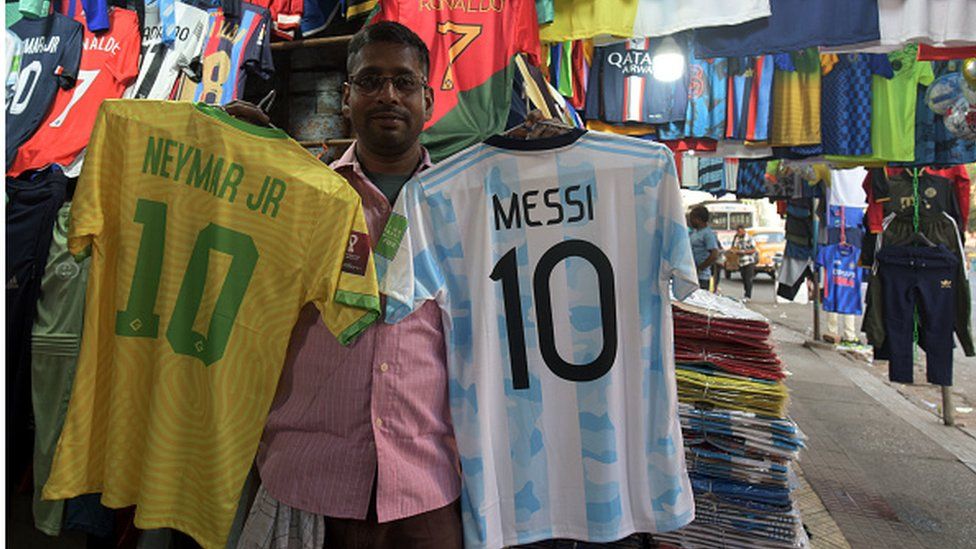
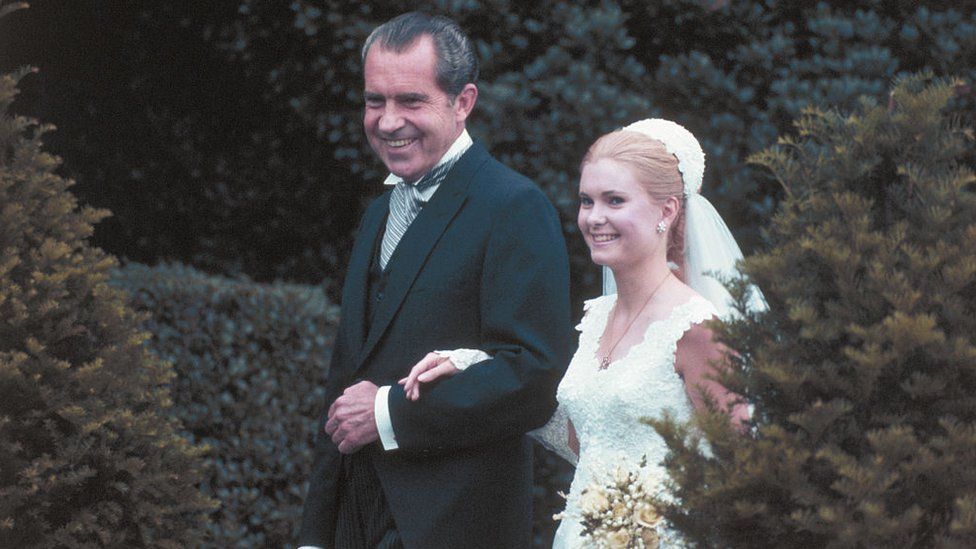

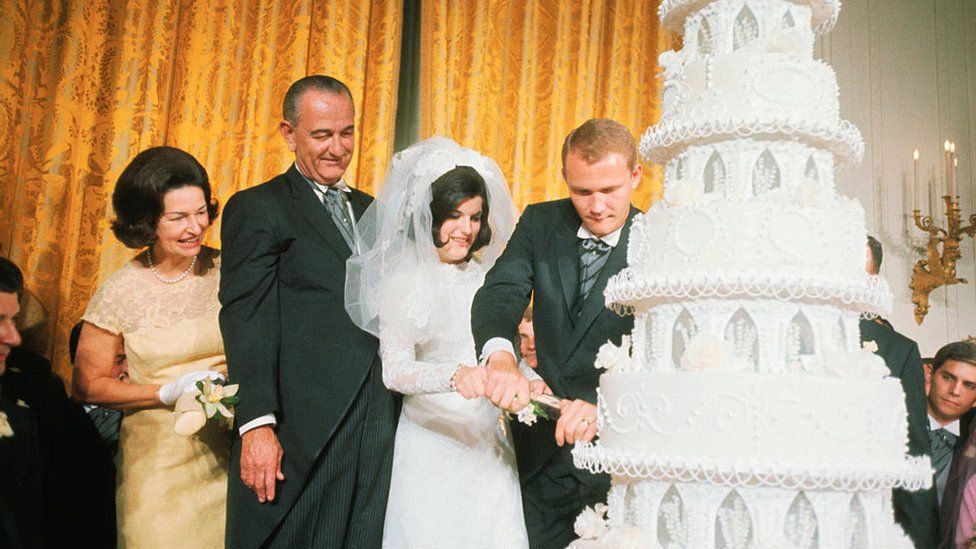

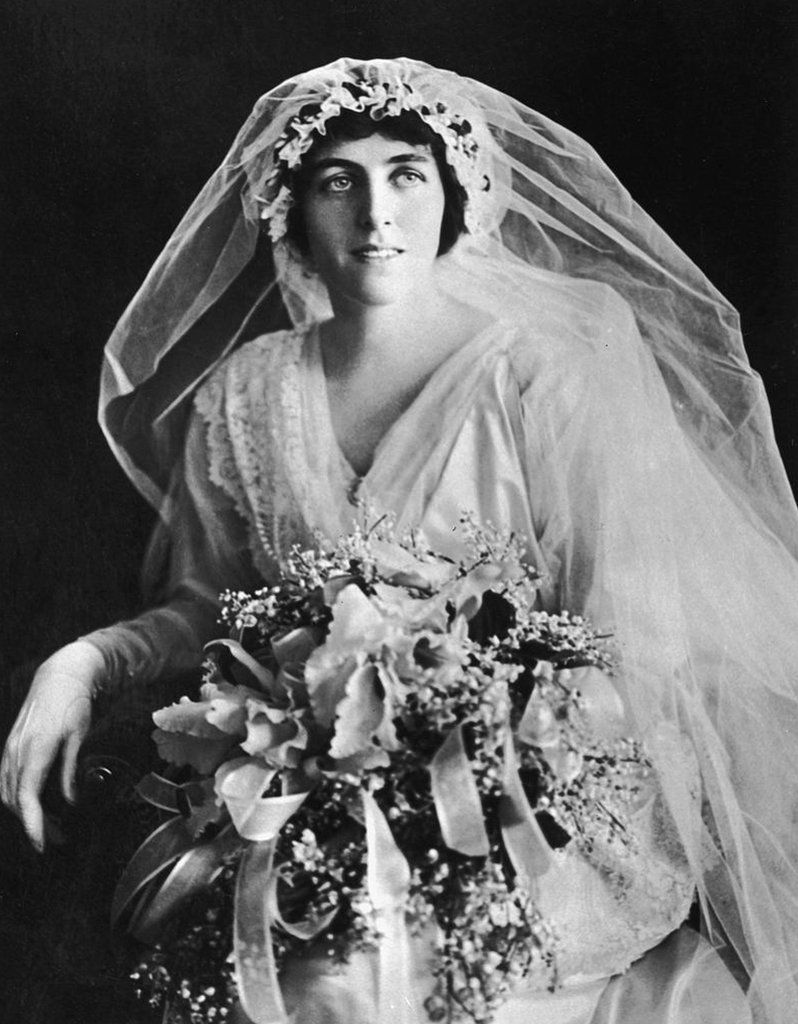
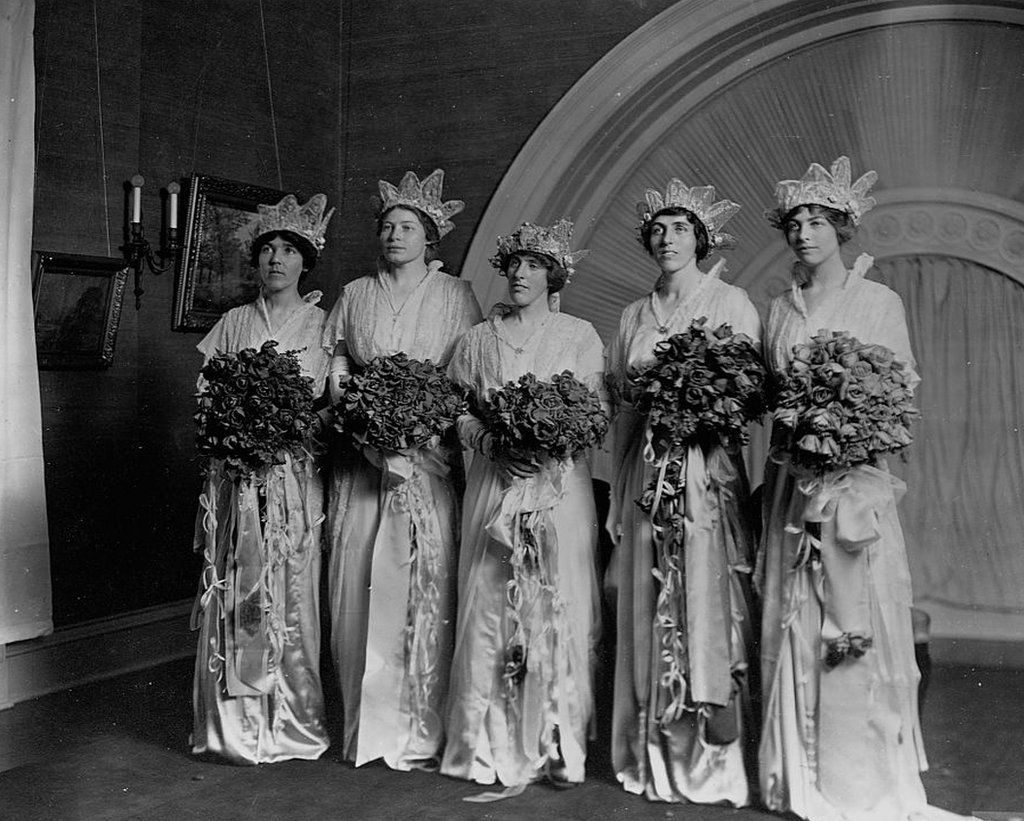
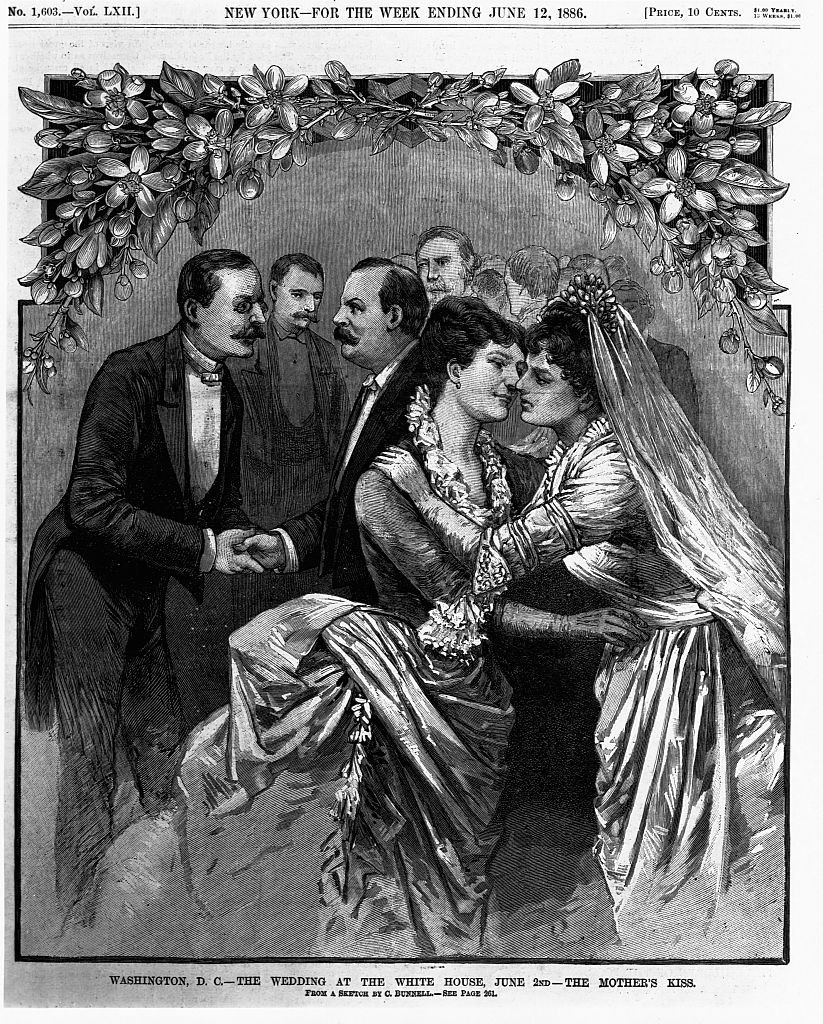
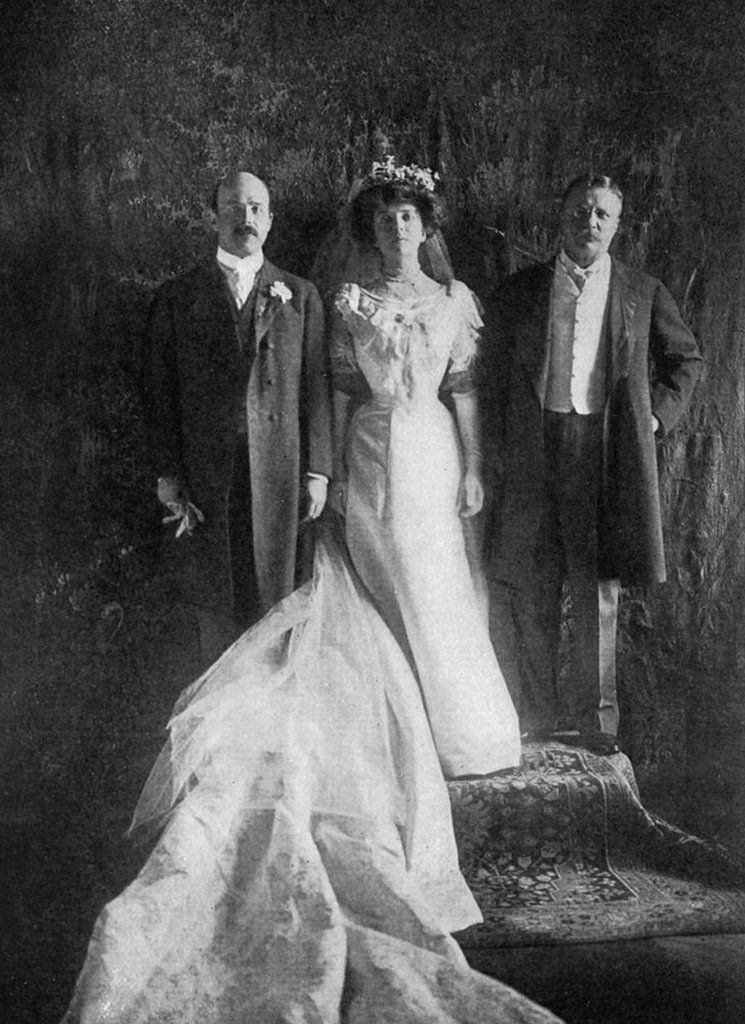
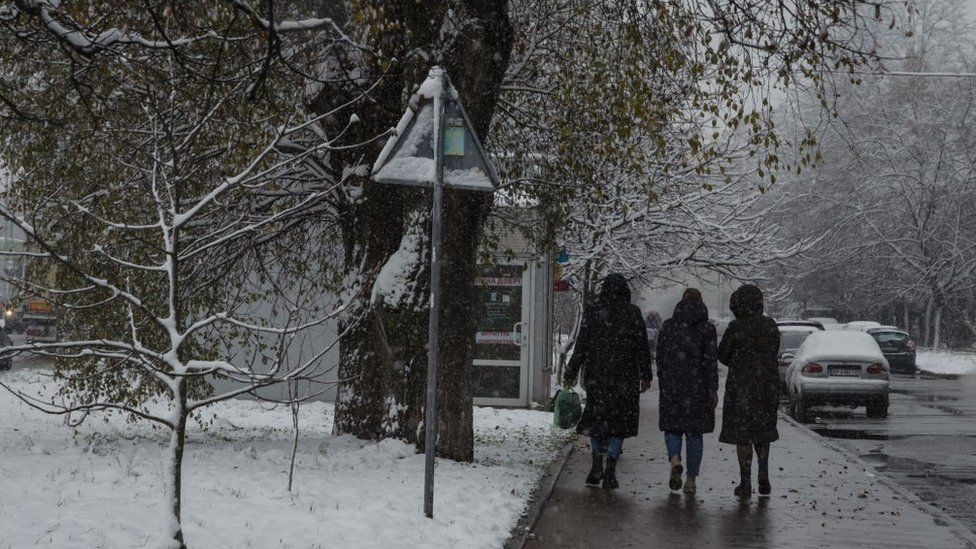
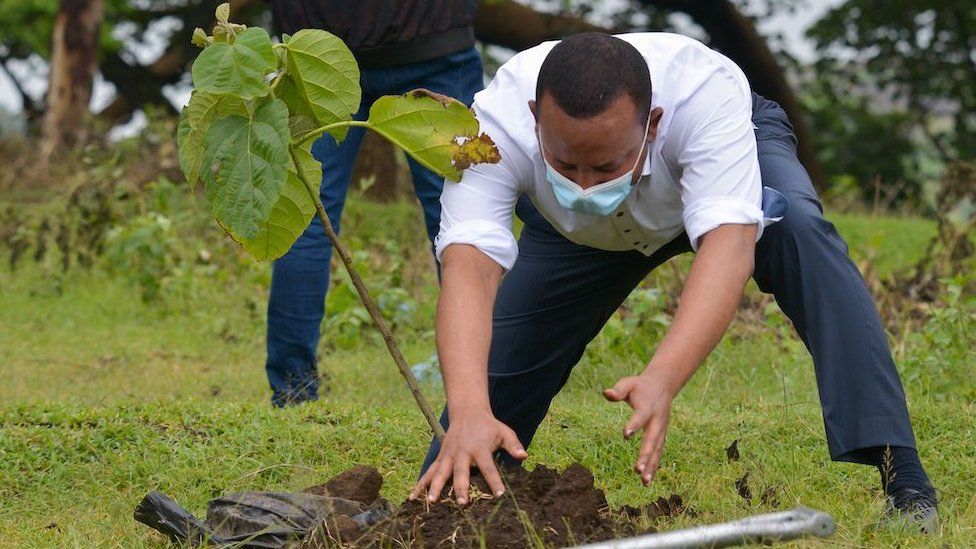
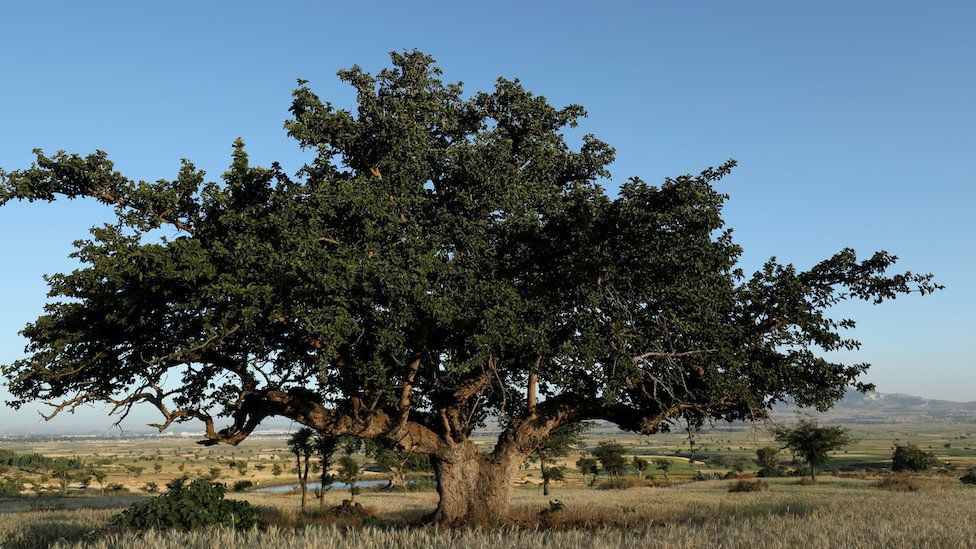
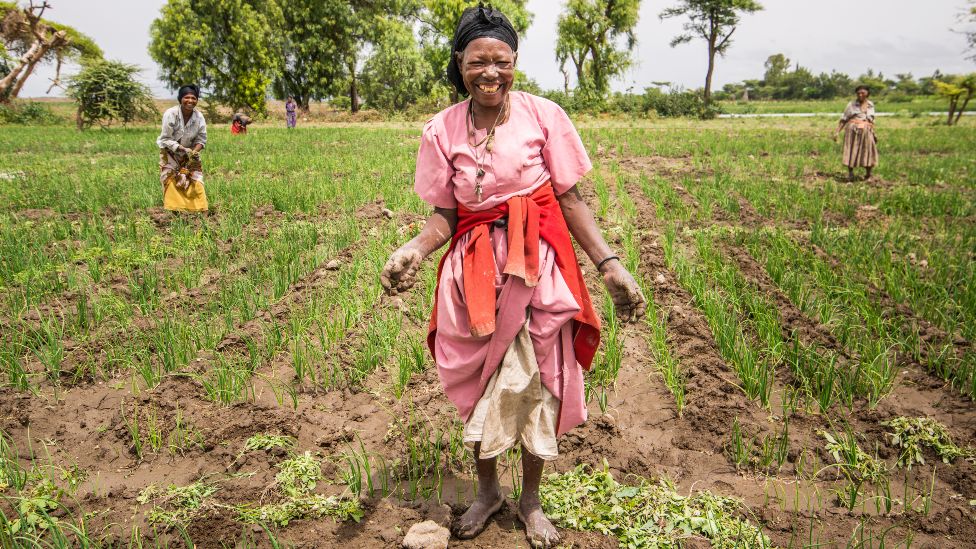
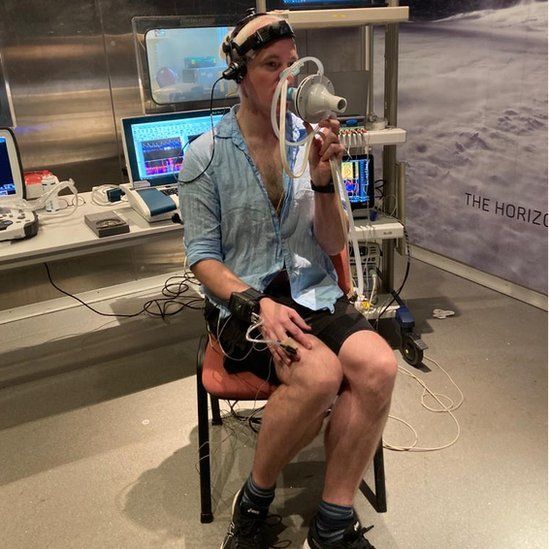
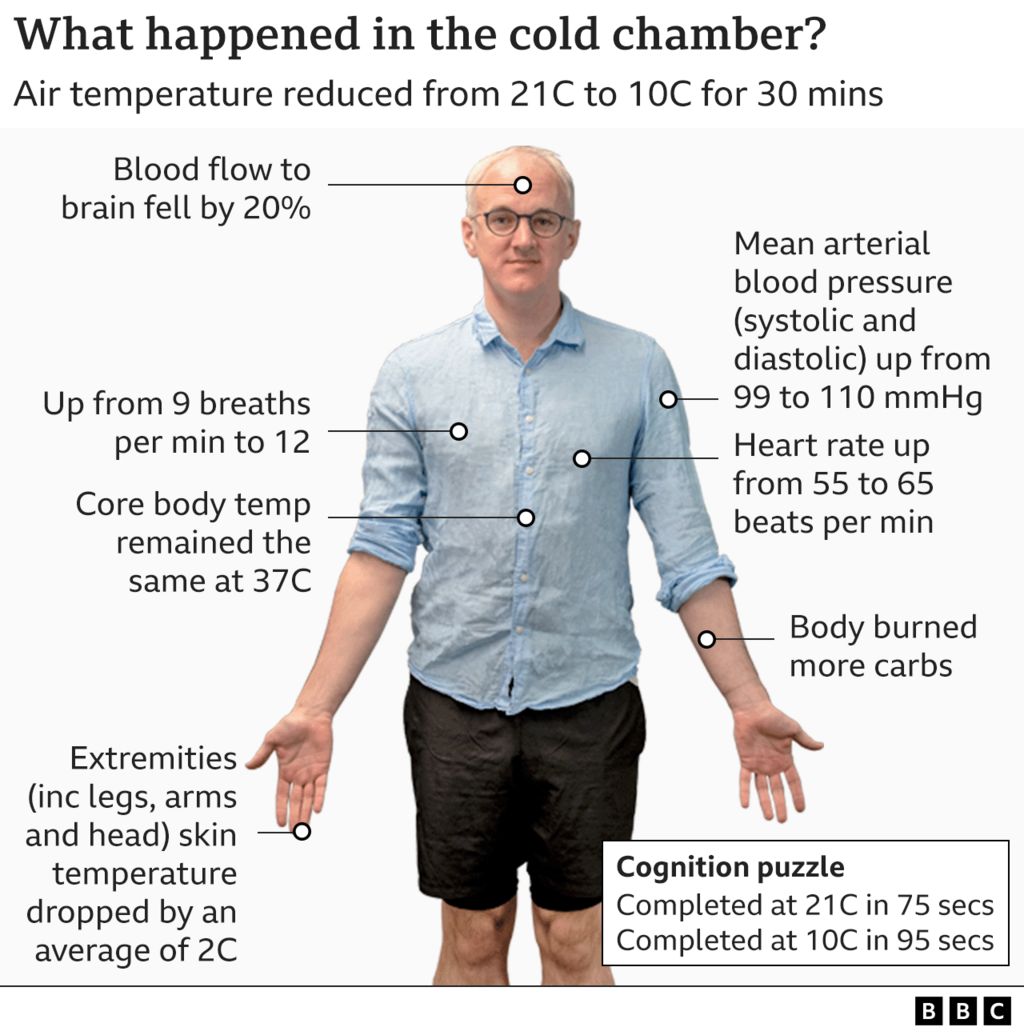

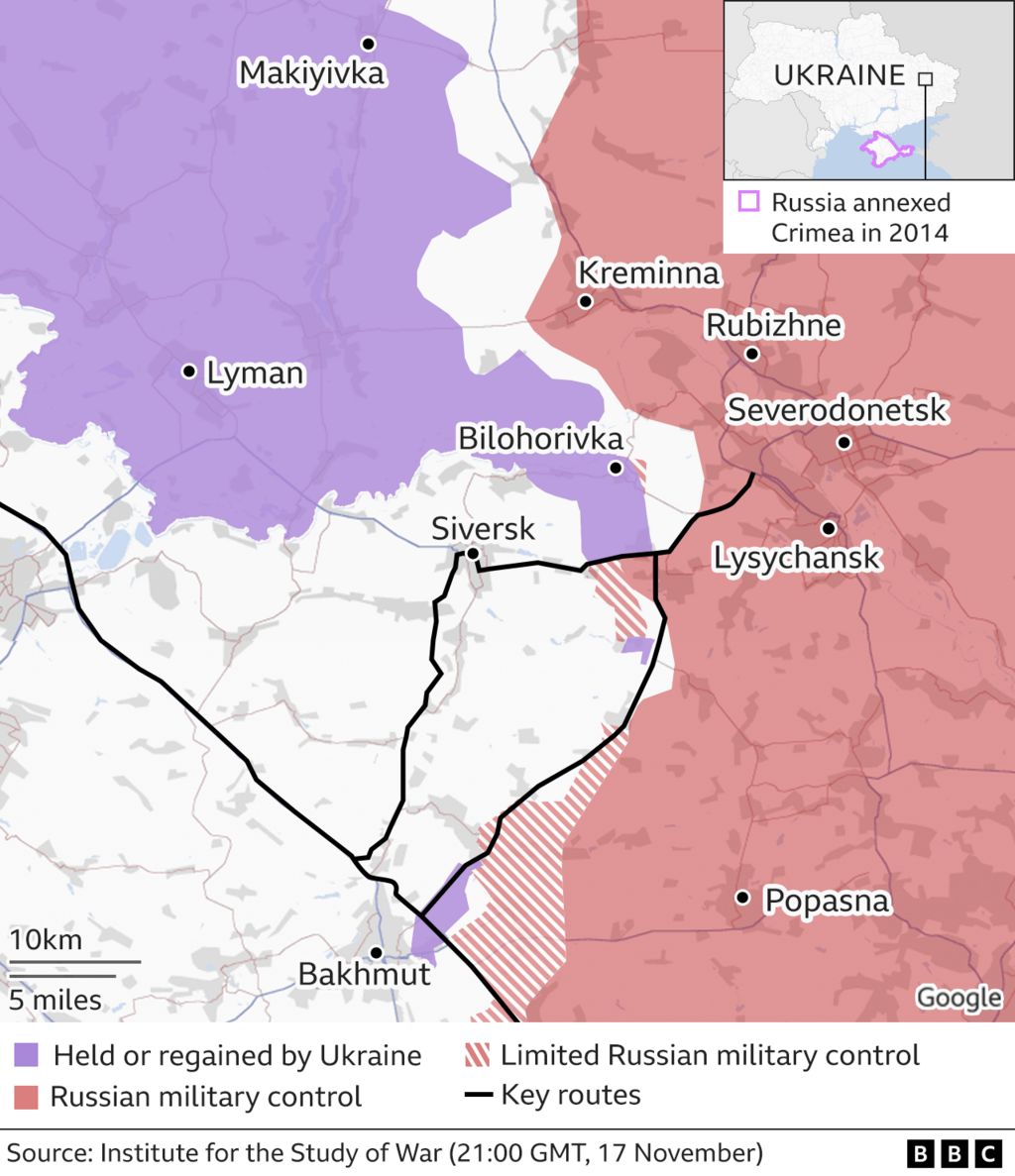

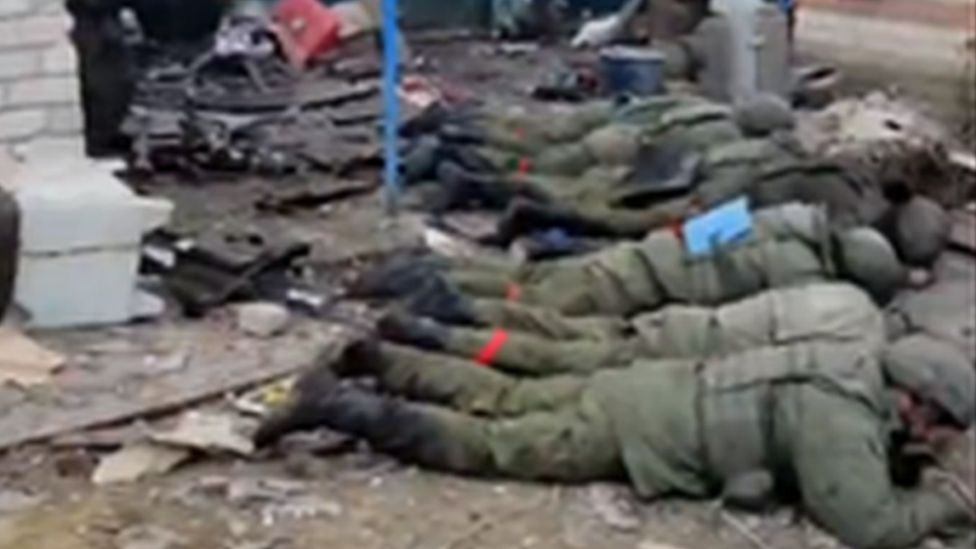


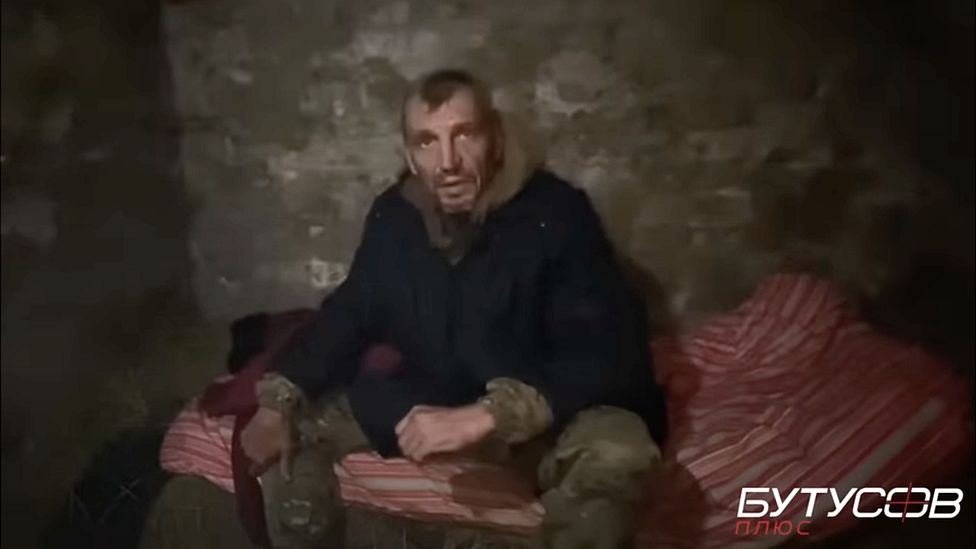

 Fault Shumba, Marvelous and their two children.