Ghana plans to purchase oil using gold instead of U.S. dollars following weeks of depreciation of the Ghanaian currency, according to a Facebook post by the country’s Vice President, Dr. Mahamadu Bawumia.
Data from the Government of Ghana show the country’s Gross International Reserves stood at around $6.6 billion at the end of September 2022, down from around $9.7 billion at the end of 2021. The international reserves figure also amounts to less than three months of import cover.
In a Facebook post, the Vice President said the move seeks to tackle dwindling foreign currency reserves affected by high demand for dollars by oil importers. He further noted that if the plan is implemented in the first quarter of 2023, the new policy “will fundamentally change our balance of payments and significantly reduce the persistent depreciation of our currency.”
How this entrepreneur capitalized on thepandemic to create a thriving e-commerce business
According to him, using gold will no longer directly impact fuel or utility prices since all domestic sellers would no longer need foreign exchange to import oil products. He added that the move, which he calls the ‘barter of gold for oil’, represents a major structural change.
“The demand for foreign exchange by oil importers in the face of dwindling foreign exchange reserves results in the depreciation of the cedi and increases in the cost of living with higher prices for fuel, transportation, utilities, etc,” he said. “To address this challenge, the Government is negotiating a new policy regime where our gold (rather than our US dollar reserves) will be used to buy oil products.”
Reuters reports that the move by Ghana is uncommon, adding that such deals typically involve an oil-producing nation receiving non-oil goods rather than the opposite. Ghana is one of the oil-producing countries in the world but largely depends on imported refined cruel.
Ghana is currently negotiating with the International Monetary Fund for a bailout pack of $3 billion. The country is hoping to secure a staff-level agreement by the end of the year.
Rituals are characteristic of most cultures. They are passed down from generation to generation. Different actions explain why some rituals are sacred while others may not. Traditional Africansused varied rituals to keep things running smoothly, bring people together, and help the community grow.
Fishing is only allowed in this little, sacred lake once a year, during the special ceremony known as Antogo, which takes place in the town of Bamba in the northern area of the Dogon region in Mali. Bamba was built among the rubble at the base of a 500-meter cliff. During the peak of the dry season, everything here except for a single sacred pond full of fish dries up. Antogo, a centuries-old fishing ceremony, is performed annually on the lake, and it is a sight to behold for anybody interested in history.
Even though fishing in the lake is technically illegal every other day of the year, hundreds of men ignore that on the day of Antogo to catch fish with their bare hands. In total, the turmoil lasts for around fifteen minutes. Reports say that the size, scope, and seriousness of the event are just too much to handle.
Legend says that fishing well will bring good luck in many ways, such as a good harvest, a happy marriage, the recovery of sick family members, and more. Men who go through the fishing season without catching anything are considered unlucky for the next 12 months. They won’t find a spouse or have a successful harvest, among other things, in that particular year, and the most they can do is wait for better fortune next year.
The fishing ritual is performed in May, which is traditionally the sixth month of the dry season, but the council of wise men determines the exact day. In Bamba, Saturdays are market days, and on the first three market days of each month, wooden sticks are positioned in the middle of the lake as a signal that the ceremony is drawing near.
On the day of Antogo, a lot of Dogon people from all over Mali gather around the lake. The most important and well-known families from different Dogon communities make up the three largest groups. The groups watch the wise men recite spells and praise gods while remaining mute. Once they have finished speaking, the ritual itself and all the magic that goes along with it start.
After the sound of a gunshot, hundreds of men and children—women are not allowed to take part—jump into the lake while carrying fishing baskets, trying to catch as many fish as possible as quickly as they can.
Even though females are barred from participating in the festivities, folklore has it that a young woman first learned of the lake and its miracle fish. Whatever the case may be, the Antogo event is unlike any other world fishing opener, observers say.
A junior Somali police officer, Mohamed Abdulkadir Sheikh Ibrahim, has been sentenced to death by the Somali military court after he was accused of killing a civillian over a cigarette lighter.
He was booked for a firing squad for the murder he committed in April.
He served in South West as one of the five Federal Member States in Somalia.
Ibrahim, who served in the police force in Afgoye town, 30 km southwest of Mogadishu, was found guilty by the court for the killing of Abdifatah Abdullahi Ali, a trader, on April 25, 2022.
Ibrahim reportedly stabbed Ali to death after the two argued over a cigarette lighter.
Firing squad
Ali’s relatives were present in the army court when Ibrahim was sentenced to face a firing squad as pronounced by Major Mohamed Abdi Mumin.
The community in Afgoye district has been stunned by incidents where locals are killed in quarrels over items worth about 10,000 Somali shillings (less than half a US dollar).
In recent incidents, a man killed another over a cigarette while another was killed over a cup of tea.
However, as the rebuilding of Somalia continues, people have been saying that killings by members of the armed forces have gone down.
Gospel singer, Sammie Okposo has slumped and died.
SaharaReporters learnt from a source in the entertainment industry that the 51-year-old music producer slumped on Friday morning and died.
He was the CEO of Zamar Entertainment and collaborated with many gospel artists.
His most recent album, The Statement was produced by a Grammy Award winner, Kevin Bond.
Okposo was recently involved in a controversy after he admitted he was involved in an extramarital affair.
He apologised to his wife, Ozioma, on his Instagram page on January 24, 2022, for his infidelity after a lady known only as African Doll, accused him of impregnating her and abandoning her.
The gospel musician told his fans that he would focus on restoration and seek forgiveness.
A new day beckons for Senegal at the World Cup. Beaten by the Netherlands in their first match in Qatar, the Lions of Teranga must react this Friday against the host nation.
Like Edouard Mendy, the African champions were unusually feeble in defensive last Monday. For this second game, they will have to do without their key player Cheikou Kouyate.
This should be the only initial change in the starting line-up of the Lions of Teranga.
Senegal’s power just as with Ecuador is physically no match for Qatar who were totally outclassed in their opening match.
Akram Afif and Almoez Ali, the stars of Al Annabi did not prove to be any threat even if their coach, the Spaniard, Felix Sanchez, preferred to field them on account of pressure.
A defeat against Senegal would mean elimination and humiliation for the Qataris.
Senegal will also have an eye on the clash between the two leaders of the group, the Netherlands and Ecuador, where they hope to get and secure qualification from their group against the South Americans next week.
Motorcycle taxis are a popular and cheap form of transportation in West Africa. But increasingly in Benin and Togo, drivers and customers are swapping gasoline-powered motorcycles for electric models that are more environmentally friendly and, above all, less expensive. Oloufounmi Koucoi, 38, company is delivering the models to Cotonou.
“We have thousands of electric motorcycles in circulation and we are also in several African countries. Environmentally, as you know, electric motorcycles do not pollute the environment. Economically, we’ve been able to reduce the cost of electric motorcycles by doing the assembly locally.”**Oloufounmi JP Koucoï, director of Zed-Motors.
In Lome, capital of neighbouring Togo, Octave de Souza parades proudly through the streets on his brand-new green electric motorcycle.
“The new electric bike is a very good bike” he says. “It is very economical and there is no need to do an oil change, there is no need to replace the engines and other parts. Just change the battery.” Souza adds.
In African cities, pollution caused in particular by heavily clogged road traffic is one of the leading causes of death and a major public health issue. But for many drivers, electric motorcycles are more a question of cost than climate.
**”One of the things we’re concerned about is the charging point issue. In that regard, you can have a stressful drive because you don’t know where to find a charging point so you don’t break down. This sometimes leads us to exchange (batteries) with 10 or 15% of remaining charge so as not to have any bad surprises along the way.”**Koffi Abotsi, electric motobike driver
Local authorities also are encouraging the switch to electric in a bid to replace old, highly polluting motorcycles. Many taxi drivers are thus lured by flexible credit or loan deals that they pay off monthly, weekly or even daily.– instead of making a hefty one-off purchase.
The demonstration took place one day after a meeting in Luanda where the DRC, Burundi, Rwanda as well as the East African Community envoy called for a cease-fire to take effect Friday.
“I mean, we are satisfied with this agreement signed (ceasefire signed in Angola on Wednesday), but we are still pessimistic about its implementation, especially since this is not the first agreement’, Jean Claude Mbambaze, the president of the civil society of Rutshuru said.
“There have been many summits, but the decisions have not been implemented.”
After the summit in Angola, the participants released a statement calling for a cease-fire to begin Friday evening in eastern Congo, followed by a rebel withdrawal from the major towns it holds – Bunagana, Rutshuru and Kiwanja.
Some protesters carried banners in support of the Congolese armed forces who are fighting M23 rebels. Other placards were hostile to the recent agreement.
Demonstrators marched to the French and British consulate.
“We do not understand, when there are rebels who call themselves Congolese, they ask for negotiations, and it is Rwanda and Uganda who represent them. That is why we protest about this complicity, …And there is a notorious silence of the international community, the EAC (East African Countries bloc), the African Union, all are accomplices”, demonstrator Jack Sizahera shouted.
The protestors delivered a letter to both French and Britishconsulates with grievances including an end to the international community’s ambiguous response in the face of the M23 aggression.
“We demand the international community – as a whole – to ask the Rwandan and Ugandan heads of state to urgently withdraw their fighters camouflaged under the label of M23/RDF/UPDF (rebel groups)”, John Banyene, the president of the civil society of Nord-Kivu read.
Adding, we demand the international community “to sanction Rwanda and Uganda for the aggression against DRC for more than 25 years”.
In August, U.N. experts said they had “solid evidence” that members of Rwanda’s armed forces backed the M23 rebels. Kigali denied the allegations.
They flinched at every threat from the opposition and rued missed opportunities.
Cameroonian fans gathered in Yaounde in big numbers to watch their team take on Switzerland in the first game of Group G at the Qatar World Cup on Thursday (Nov. 24).
Despite a Breel Embolo goal handing the Swiss victory, the Cameroonians remain unfazed.
“We saw some excellent soccer in the first half, but in the second half it was not the case. We got sloppy and that’s why Embolo had the opportunity to put that first goal. We don’t blame him, he is a compatriot, he only played for his federation and we congratulate him.”
Cameroon were the better side in the opening half and might have had the lead as Karl Toko Ekambi, Eric-Maxim Choupo-Moting and Martin Hongla all missed good chances as the Swiss struggled to find their footing.
“Impossible is not Cameroonian. The presidentof the federation, Samuel Eto’o, said that we would come back with the cup. We lost the first game but there is still the second and third game. We are sure we will win them.
Cameroon’s loss means no African country has won a match at the World Cup. Group G also has Brazil and Serbia.
In Ghana, all eyes were set on the Black Stars world Cup Opener on Thursday November, 24.
Vice-President Mahamudu Bawumia and other public figures watched the group H opening thriller in Accra.
Despite a solid fight, André Ayew’s teammates lost to Cristiano Ronaldo’s squad 2-3.
Ghanaian fans were still proud in defeat.
“Our players have really done well. Just that some few lapses that made us lose the game but I hope that Insha Allah, the next match, we are going to make it,” Alhaji Said Mutaka said.
“There’s no need for us to be angry or mad at them, not at all”, Black Stars fan Jessica Selikplim insisted.
“They did well, it wasn’t easy. The game was actually tough but they did well, scoring two, they have done well, like Kudos. They’ve done well, like.”
At the Stadium 974 in Doha, All the goals came in a wild final half-hour. Ronaldo scored on a contested penalty, Ayew then equalized for Ghana.
Joao Felix regained the lead for Portugal, and Rafael Leao added a third. Osman Bukari reduced Ghana’s deficit in the 89th.
Ghana will play South Korea on Monday and will count on its fans.
Coach Otto Addo said the Black stars proved Thursday they could “compete with the opponent”.
For now, they sit at the bottom of group H. The group comprises of Ghana, Portugal, South Korea, and Uruguay.
Ghanaian player Osman Bukari has defended his imitation of Cristiano Ronaldo’s iconic ‘Siuuu’ celebrations after scoring a late consolation in the team’s 2-3 loss to Portugal.
It follows concerns on social media that the celebration was disrespectful towards Ronaldo – who usually celebrates his goals by jumping up while rotating in mid-air and lands shouting “siuuu”.
I have noticed my celebration today has generated comments claiming I was disrespectful towards Ronaldo
This is incorrect. I was overcome by the emotion of the moment of scoring for my country on my World Cup debut leading to my celebration.
The M23 rebels in the Democratic Republic of Congo have said they will not retreat from their positions after regional leaders set a 18:00 Friday local time deadline for them to cease fire and retreat or face a regional force.
Canisius Munyarugerero has told the BBC Great Lakes that the group is ignoring Wednesday’s decisions in the Angolan capital, Luanda, because “we were not invited to that meeting” to discuss the DR Congo conflict.
Leaders from DR Congo, Burundi, Rwanda, and the former Kenyan president Uhuru Kenyatta – who’s a mediator to the conflict – had convened in Luanda in the meeting hosted by the Angolan president.
“We M23 are not Burundians, we are not Rwandans, we are not Kenyans, not even Angolans. We are Congolese, and we are home, they are telling us to withdraw to where?” Mr Munyarugerero posed.
The M23 now occupies a big area in North Kivu province and is threatening to capture Goma, the main city in eastern Congo.
Before the war began afresh, they held positions at Sabinyo Volcano near the border with Rwanda.
The Luanda meeting decided that if M23 did not abide by the deadline, regional forces being deployed to the eastern DR Congo would enforce it.
Asked if they were ready to face a regional force, Mr Munyarugerero said: “Just know that we won’t retreat.”
An Algerian court has sentenced 49 people to death after they were found guilty of lynching a man wrongly suspected of starting forest fires last year ,the state news agency says.
The sentences are likely to be reduced to life in prison as there is a moratorium on executions.
In 2021, Algeria experienced the worst fires in the country’s history, with multiple blazes killing 90 people.
The lynching victim, Djamel Ben Ismail, had gone to help fight the fires.
After the fires broke out in August last year, the 38-year-old tweeted saying he would travel over 320km (200 miles) from his home to “give a hand to our friends” fighting the blazes in the Kabylie region, east of the capital Algiers, which was the worst-hit area.
Soon after he arrived, locals falsely accused him of starting fires himself.
On 11 August, graphic footage began circulating purportedly showing Ben Ismail being attacked. People tortured and burned him before taking his body to the village square.
The videos caused national outrage.
Mr Ben Ismail’s brother urged social media users to delete the footage of the attack. His mother, he said, still did not know how her son had died.
His father, Noureddine Ben Ismail, said he was “devastated”. “My son left to help his brothers from Kabylie, a region he loves. They burned him alive,” he said.
The AFP news agency reports that the father’s calls for calm and “brotherhood” were praised by Algerians.
The fires took place amid dry conditions and very high temperatures, but authorities also blamed “criminals” for the blazes.
The court sentenced 28 others to between two and 10 years for other offences related to the lynching, the AFP quotes the state news agency as reporting.
The finance ministers of Ghana and Zimbabwe have been delivering their annual budgets amid the cost-of-living crisis that has hit the whole world.
And both announced an increased in Value Added Tax (VAT), which you pay when you buy goods.
In Ghana, Finance Minister Ken Ofori Atta – who is under pressure to resign because of the deepening economic crisis – pushed it up from 12.5% to 15%.
But in some good news for Ghanaians, the finance minister cut the tax on all electronic transactions from 1.5% to 1%, barely a year after its introduction.
In Zimbabwe, the tax on foreign currency transactions has been halved to 2% while a banking tax for the purchase of wheat has been dropped to keep bread prices low.
The M23 rebels in eastern Democratic Republic of Congo have said that a ceasefire supposed to take hold on Friday evening “does not concern” the group.
They called on the DR Congo government for direct dialogue.
The rebels’ spokesman, Lawrence Kanyuka, said that as they had no representatives at Wednesday’s mini-summit in the Angolan capital Luanda, they were not included in the accord.
The signatories – from Rwanda, the DR Congo, Angola and Burundi – said that under the cessation of hostilities, if the rebels did not withdraw from the area an East African regional force would attack their positions.
Kinshasa has refused to engage with the M23, calling them terrorists.
DR Congo accuses Rwanda of backing the rebels, who have been advancing on the regional capital, Goma.
Ghanaian President Nana Akufo-Addo has praised the national team’s “gutsy performance” in their World Cup opener against Portugal which ended in a 2-3 loss.
The Black Stars became the first African team to score a goal at this year’s tournament, but lie at the bottom of Group H. They will next play South Korea on November 28.
Gutsy performance by the @GhanaBlackstars in today’s match against Portugal. Very proud of the entire team. They live to fight another day, & have shown they have what it takes to mix it up against any team in the tournament. Looking forward to the next game against South Korea. pic.twitter.com/FiDWm5fO4b
Thirteen people were killed and 12 others are reported missing following fierce fighting between two rival factions of the rebel Sudanese Liberation Movement-Nur (SLM-Nur) group in Central Darfur state, western Sudan, the UN has said.
In a statement issued on Thursday, the UN humanitarian agency (OCHA) in Sudan said the clashes started on 19 November in the Umu and Arshin areas of Shamal Jebel Marra locality.
Six people were abducted and four others wounded, privately-owned Al-Intibaha news site reported.
The fighting later spread to the villages of Daya, Wara, and Kia, in the same locality, with an estimated 5,600 people reportedly fleeing their homes and moving to displaced people’s camps, OCHA said.
The situation remains tense as there are reports that both parties are mobilising their forces for fresh attacks, according to the UN.
In October, similar clashes between the two groups left at least 13 people killed and 15 others wounded.
SLM-Nur is one of the few rebel groups that did not sign the 2020 Juba peace agreement, which the government signed with former rebel groups in Darfur and southern regions.
There has been division within SLM-Nur in recent months, as some factions have defected.
Former German Chancellor Angela Merkel has defended her policy towards Russia prior to the February invasion of Ukraine, saying she had run out of power to influence Vladimir Putin.
She said she had tried to convene European talks with the Russian president and French President Emmanuel Macron in the summer of 2021.
“But I didn’t have the power to get my way,” she told Spiegel news.
“Really everyone knew: in autumn she’ll be gone,” she said.
After four terms as chancellor Mrs Merkel left office in December. She paid a final visit to Moscow in August 2021, and told the German news magazine that “the feeling was very clear: ‘In terms of power politics you’re finished’.”
She added that “for Putin, only power counts”.
It was significant that, for their final meeting, Mr Putin brought Foreign Minister Sergei Lavrov with him, she said. Previously they had met one-to-one, she noted.
In light of President Putin’s invasion – preceded by weeks of massive military build-up on Ukraine’s borders – many have argued that Mrs Merkel and other EU leaders should have adopted a tougher approach to the Kremlin.
A foreign policy expert in her Christian Democrat (CDU) party, MP Roderich Kiesewetter, is among those who say she knew that Mr Putin was trying to split and weaken Europe, but she believed “soft power” was the right approach. He argued before the invasion that Germany was too dependent on Russian gas.
In the Spiegel interview, Mrs Merkel said her stance on Ukraine in the Minsk peace talks had bought Kyiv time to defend itself better against the Russian military.
A ceasefire deal was reached in Minsk after Russia’s 2014 annexation of Ukraine’s Crimea peninsula and during its proxy war in the Donbas region. But key points, including disarmament and international supervision, were not implemented.
Mrs Merkel said she did not regret leaving office in December, because she felt her government was failing to make progress not only on the Ukraine crisis, but also on the conflicts in Moldova, Georgia, Syria and Libya, all of which involved Russia.
She and Mr Putin both had direct experience of life in communist East Germany – she grew up there and he served there as a Soviet KGB officer, doing secret intelligence work. Mr Putin speaks fluent German and Mrs Merkel speaks some Russian.
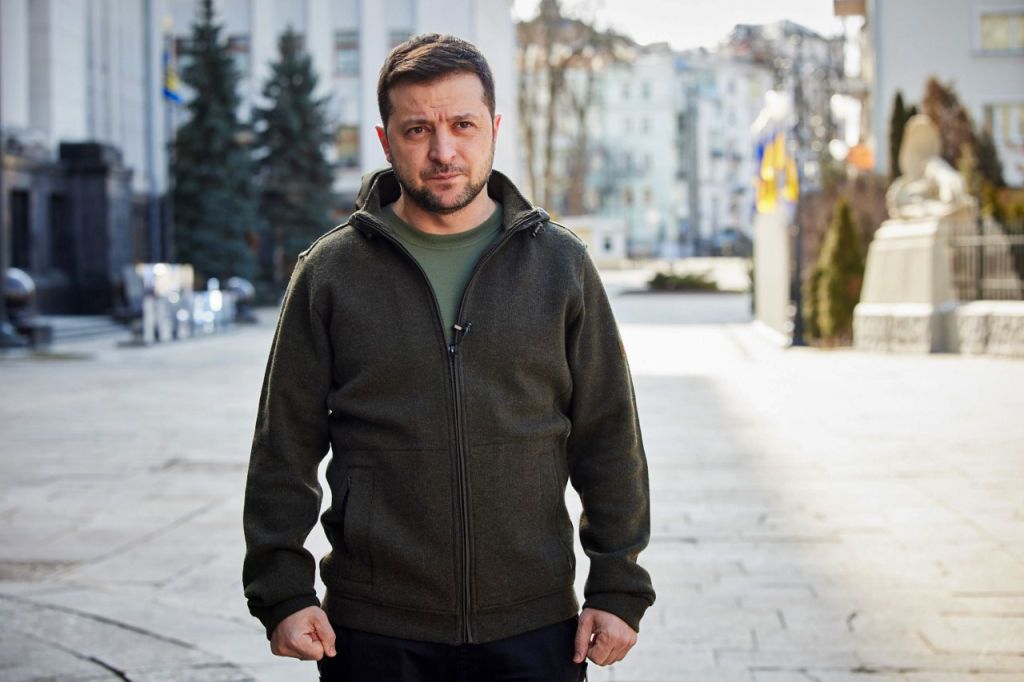
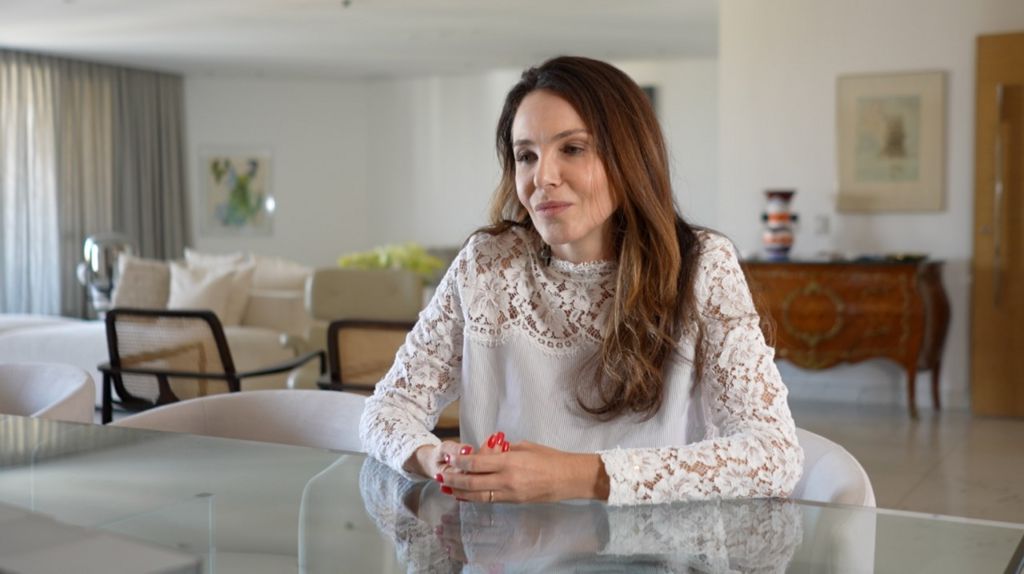
Ukrainian first lady Olena Zelenska tells the BBC that Ukraine will endure this coming winter despite the cold and the blackouts caused by Russian missiles, and will keep fighting what she describes as a war of world views, because “without victory there can be no peace”.
We meet in a storied city where a winter’s chill is biting, where charming street lamps are dimmed, where buildings are going dark and cold in the midst of blackouts as Russia keeps striking Ukraine’s energy grid. The Ukrainian people have won plaudits for standing their ground against Russia’s blistering assault. But this is yet another painful test of fortitude.
“We are ready to endure this,” Olena Zelenska asserts when we sit down in a heavily secured compound tucked inside a sandbagged labyrinth of buildings in Kyiv.
“We’ve had so many terrible challenges, seen so many victims, so much destruction, that blackouts are not the worst thing to happen to us.” She cites a recent poll where 90 % of Ukrainians said they were ready to live with electricity shortages for two to three years if they could see the prospect of joining the European Union.
That seems like an awfully long cold road, and she knows it.
“You know, it is easy to run a marathon when you know how many kilometres there are,” she says. In this case, though, Ukrainians don’t know the distance they have to run. “Sometimes it can be very difficult,” she says. “But there are some new emotions that help us to hold on.”
All Ukrainians will become stronger because of this war, Ukraine’s first lady stoically predicts.
Image source, Getty ImagesImage caption, President Zelensky now lives at 10 Bankova Street (left), opposite the House of Chimaeras (right)
Our wide-ranging almost hour-long interview, recorded for the BBC’s annual 100 Women season, takes place in the iconic House of Chimaeras, adorned with elephant-head gargoyles and sculptures of mythical creatures, facing 10 Bankova Street – Ukraine’s version of 10 Downing Street. The building formed the backdrop for President Zelensky’s famous 26 February speech to rally Ukrainians, filmed on his phone two days after Russian tanks rolled across the border. “I’m here. We won’t lay down our arms,” he declared.
The night before, in one of what became nightly addresses, he had announced in another selfie video that Russia “has designated me as target number one, and my family as target number two”.
“And so it was from the first day and it continues now,” Olena Zelenska recalls, her words barely hiding the enormous strain that her family, like all Ukrainian families now ripped apart, are going through.
Media caption, Olena Zelenska says her family misses spending time together
A few walls of sandbags and circles of security checks away, President Zelensky carries on, around the clock. So close and yet so far. She won’t give an exact date for when they last had dinner together with their children, 18-year-old Oleksandra and nine-year-old Kyrylo. “It’s very rare nowadays. Very rare,” she says.
“I live separately with my children and my husband lives at work,” she explains. “Most of all, we miss simple things – to sit, not looking at the time, as long as we want.”
Every Ukrainian’s life has been turned inside out – from engineers to ballerinas now fighting on front lines, to some eight million, mainly women and children, forced to flee into new lives across the border.
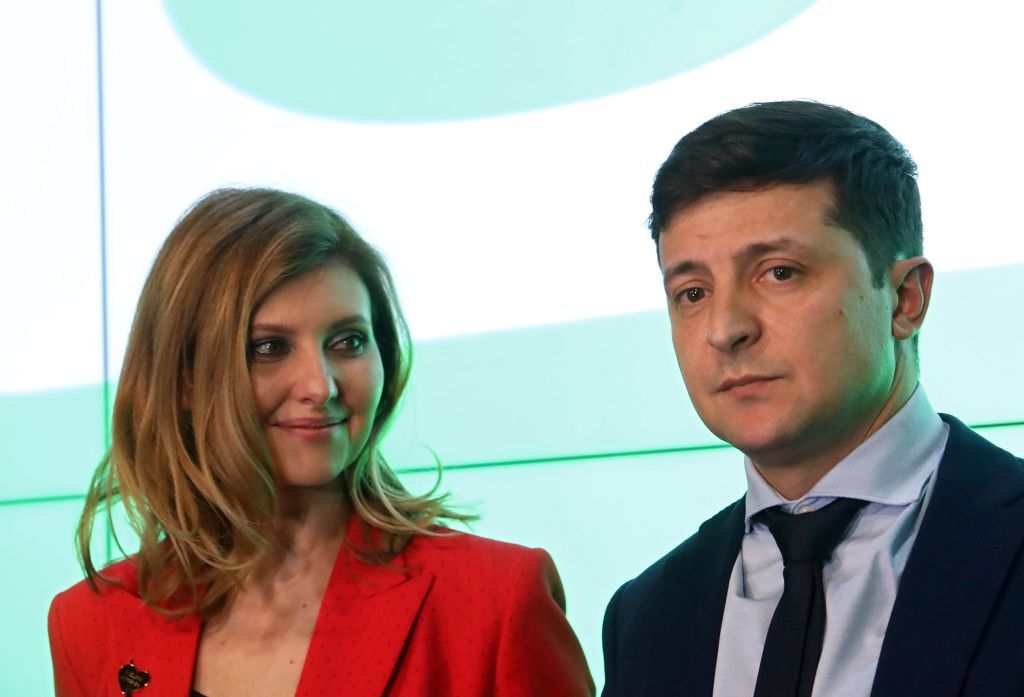
The president and first lady’s lives have long been entwined. High school sweethearts, they went on to work together in a comedy troupe and TV studio, he a comic actor and she, backstage, a scriptwriter. When he ran for president three years ago, she made it clear this wasn’t a life she wanted. But this war has thrust her into the spotlight, on a global stage.
Image source, Getty ImagesImage caption, Olena Zelenska advised her husband not to run for president
After Russia missiles started whistling into Kyiv in the early hours of 24 February, Olena Zelenska spent months in hiding in secret locations with her children. She emerged on 8 May – Mothers’ Day this year in Ukraine, and many other countries – when she joined the US First Lady Jill Biden at a shelter for the displaced in the relatively safe western Ukrainian city of Lviv.
Now she keeps popping up in speeches on zoom, or at times in person, with her smartly styled hair and classic shirts or jackets, with a shy smile which gives way to strongly worded speeches which come from “a mother, a daughter, a first lady”.
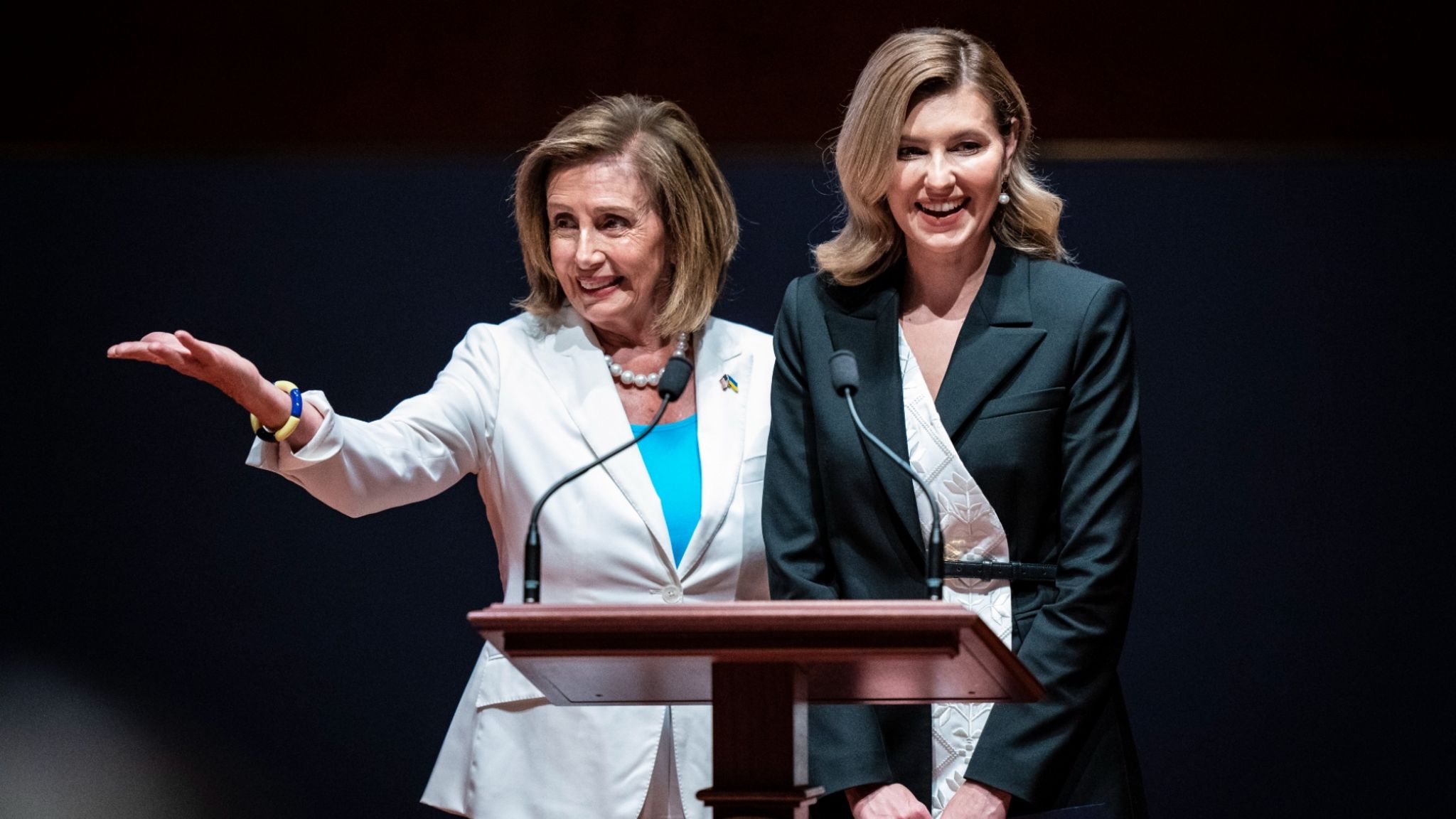
When the US Congress gave a standing ovation, twice, for a Ukrainian leader in July, it wasn’t President Zelensky at the podium – he hasn’t travelled since Russia invaded – it was his wife. And the first foreign first lady granted the privilege of addressing the US legislature never liked public speaking.
In an exclusive interview in Kyiv, Ukraine’s first lady talks to the BBC’s Lyse Doucet about the impact of war on mental health, the new roles Ukrainian women are taking on, and what victory would look like.
“I was scared,” she admits. “But I understood this mission… it was impossible to miss this chance.”
She emphasised, as she always does, the profound suffering of Ukrainian children, condemning what she called Russia’s “hunger games”. Then, she went much further, asking the US Congress to send weapons.
Had a first lady, without official powers, crossed a line? “It was not politics, it was what I had to say,” she says. “I asked for weapons, not to attack, but to prevent our children from being killed in their homes.”
Image source, Getty ImagesImage caption, Olena Zelenska – pictured with House speaker Nancy Pelosi – never liked public speaking
The year before these momentous months, Olena Zelenska had already established a Summit of First Ladies and Gentlemen. Now it’s a powerful global network which has helped evacuate Ukrainian children needing cancer treatment and provide opportunities for education. It has arranged access to Ukrainian books in the countries that have welcomed millions of Ukrainian women and children forced to flee – without their husbands, who are barred from leaving in a time of war.
I ask whether she now senses a certain “fatigue” in other capitals, as this crisis pushes up energy and food prices beyond the borders. “I don’t feel they are tired of us. They all understand that this is not just a war in Ukraine. It is a war of world views.”
Her prominent role makes her the most visible face of a shattered society where women are taking up new roles everywhere, from fighting on front lines to taking charge as single parents. Check any UN document about Ukrainian society pre-war and it uses language like “patriarchal”, “traditional”, with women’s roles limited by gender.
Olena Zelenska is adamant that Ukrainian society was changing even before war overwhelmed everything, and that this change is now accelerating. “Kitchen, children, church – this is not for our society any more. A woman who has lived through this will not take a step back.”
Her newly formed Olena Zelenska Foundation deals with the toughest of challenges including mental health and domestic violence. As much as war can toughen individuals, it can also tear them apart.
In a reflection of the hardening public view as allegations and evidence of Russian war crimes keep emerging, as entire cities and towns are pummelled to the ground, she insists, “We cannot betray those who are now in occupied territories. We cannot leave people who are waiting for liberation.”
She hastens to add: “This is not a political position of the president or the government. This is the position of Ukrainians.”
Carefully stepping through this political minefield, the first lady is categorical. “We all understand that without victory, there will be no peace. It would be a false peace and wouldn’t last long.”
And what does “victory” mean to her?
She answers without hesitation. “A return to a normal life… sometimes it seems we have put everything on pause.” That includes a different kind of life with her husband. “We’re not just spouses. I can safely say we are best friends,” she says.
My first question to the first lady had been, “How are you?” She replied that, for all Ukrainians, their answer was, “We are holding on.”
But, for how long? It’s a question no-one can answer.
Olena Zelenska is one of the BBC’s 100 Women for 2022 – the others will be announced at the launch of the season on Tuesday 6 December
Elon Musk says Twitter will provide a “general amnesty” to some suspended accounts from next week.
This came after he started a poll on Wednesday asking Twitter users whether accounts that had “not broken the law or engaged in egregious spam” should be let back on the social media platform.
Several accounts, such as that of former US President Donald Trump, have already been reinstated by Mr Musk.
The world’s richest man bought Twitter for $44bn (£36.3bn) last month.
More than 3.1m Twitter users responded to Mr Musk’s poll, with 72.4% of them voting “Yes”.
“The people have spoken. Amnesty begins next week,” Mr Musk, who has 118.7m followers on the platform, later tweeted.
He also used a Latin phrase which translates to “the voice of the people is the voice of God”.
Mr Musk did not give details on how the amnesty process would be carried out.
On Saturday, he reinstated the account of Donald Trump, after running a poll in which users narrowly backed the move.
But the former US president may not return to the platform, as he said “I don’t see any reason for it”.
He has announced plans to run again for the US presidency in 2024.
His Twitter account was suspended in 2021 on grounds that it risked inciting violence, after Trump supporters had stormed the US Capitol.
Mr Musk has also reactivated the Twitter accounts of rapper Ye (formerly Kanye West) and influencer Andrew Tate.
Infowars host Jones has been forced to pay $1.44bn in damages after falsely and repeatedly claiming that the 2012 Sandy Hook school shooting in the US, in which 20 children and six adults were killed, was a hoax.
Mr Musk wrote that his own child had died, and that he “had no mercy” for anyone who “would use the deaths of children for gain, politics or fame”.
Previously he said no decision about banned accounts would be made until a moderation board had been appointed.
Mr Musk completed his $44bn purchase of Twitter on 28 October after months of wrangling.
He has since laid off half of the firm’s 7,500-strong workforce, and hundreds more staff are believed to have left, following an email saying that long hours and “hardcore” work would be required of those who remained.
Daisy Ankunda expects to give birth soon. During this trimester, she must constantly monitor her baby.
But she doesn’t have to go to the hospital for the checks, thanks to a digital fetal monitoring tool developed by a team of Ugandan engineers.
With the Wekebere device, she can personally tell whether the baby is in distress, as she sees the signals of its heartbeat and rhythm transmitted on her phone.
“When I was three months pregnant, I decided to start my antenatal care and went to a certain hospital but I went back home unworked and this was because of overcrowding of pregnant mothers and the long queue that was there”, Daisy Ankunda, the expectant mother explains her shift to using the app.
And on that day she says, “the nurses were very few to work upon all of us”, a common scene in hospitals in developing countries where patients outweigh health workers in number.
As the name of the system suggests, Wekebere means check yourself. It is more effective in the last trimester.
The innovation was birthed when software engineer Stephen Tashobya lost his sister to pregnancy complications.
“Combining this pain and passion, we were able now to start as a team to see what kind of solution can we be able to develop to help other mothers who are pregnant, who don’t have access to care so that they can a smooth transition during the pregnancy period of time”, Tashobya, software engineer and CEO of Wekebere.
Statistics show that in Uganda 40 babies out of 1000 die due to complications during pregnancy and the maternal mortality ratio is estimated at 336 deaths per 100,000 live births.
Dr. Sam Ononge has led the Wekebere clinical trial with 15 mothers at Kawampe National Referral Hospital in the capital, Kampala.
The intervention means they can handle more mothers even remotely.
“We use what ordinarily a midwife puts in their ear to listen to the heartbeat and that is the same instrument we use during labor – the time of delivering. Now the challenge with that is that you need to come and listen more often. You will come and listen to the baby’s heartbeat and record it. Now the Wekebere system is beautiful in such a way that you have now something that is attached to the tummy of the mother and is able to pick out the senses of the heartbeat of the baby inside and also able to monitor the labor pains”, Dr. Ononge explains.
Wekebere is rented out at $10 or can be purchased at $200.
But the majority of mothers, who need it, can’t afford this price. It is a gap the developers are working to bridge.
That being said, the innovation is being touted as one that could save thousands of babies, especially in a country where sophisticated medical technology is lacking.
Tanzania has begun rationing electricity due to a drop in hydroelectric output after a severe drought, the national power companysaid Wednesday (November 24), with some areas facing nine-hour blackouts.
The East African country can produce nearly 1,695 megawatts of power from hydroelectricity and natural gas, among other sources.
But it is currently facing a shortfall of 300 to 350 megawatts, said Maharage Chande, managing director of Tanesco, the national power company.
“There are two main reasons for the drop in production: a prolonged drought and ongoing maintenance of certain sites,” he told reporters in the economic capitalDar es Salaam.
The site of Kihansi for example, in the region of Morogoro (south-east), has seen its production capacity fall from 180 megawatts to only 17 megawatts.
Tanzania has been trying to increase its hydroelectricity production in recent years, thanks in particular to the construction of the controversial Julius Nyerere Dam in the Selous Reserve, which was supposed to produce around 2,100 megawatts.
Like its neighbors, the country has experienced low rainfall and a delayed rainy season, forcing authorities to impose water rationing in Dar es Salaam last month.
The situation is even more dramatic in Kenya, Ethiopia, and Somalia, which are facing the worst drought in decades.
A four-year-old Tunisian girl who arrived in Italy in early October without her parents on a makeshift boat carrying illegal migrants was repatriated to Tunisia on Thursday, authorities said.
“A delegate of the Tunisian childprotection accompanied the four-year-old girl in her journey back from Italy and handed her over to her family on their arrival at Tunis-Carthage airport,” said in a statement the Ministry of Women, Family, Children and the Elderly.
The return of the girl, “in good health” comes after a decision of the Italian judiciary allowing its repatriation, at the request of the Tunisian authorities, added the ministry.
A Tunisian diplomatic delegation had traveled to Sicily in late October to meet with the Italian family court judge in charge of this case.
The whole family of this girl — the father, mother, the girl, and her brother of 7 years — had planned to embark from the coastal town of Sayada (east) to illegally reach the Italian coast.
During this clandestine operation, the father had handed over his daughter to the smuggler on the boat to help his wife and son who were far behind, without realizing that the boat had left for Lampedusa, according to the Tunisian Forum for Economic and Social Rights(FTDES), an organization that monitors migration issues.
The girl’s parents, and street vendors, were taken into custody before being released.
According to FTDES, about 2,600 Tunisian minors, more than two-thirds of whom were unaccompanied by their parents, managed to reach the Italian coast between January and August 2022.
Tunisia, whose coastline is only 130 km from Sicily, is going through a serious political and economic crisis, with four million poor people out of a population of nearly 12 million. This situation is precipitating mass departures to Europe.
More than 22,500 migrants, including Tunisians and sub-Saharans, have been intercepted off the Tunisian coast since the beginning of the year, according to official figures.
South African President Cyril Ramaphosa has played down the threat of impeachment over accusations that he attempted to cover up a multi-million-dollar cash theft at his luxury cattle farmhouse.
Speaking at a press conference at the end of a state visit to the United Kingdom, Ramaphosa also discusses his government’s response to ongoing power cuts in his home country and praises the new vision for the Commonwealth of King Charles III.
The scandal erupted in June when South Africa’s former national spy boss filed a complaint with the police alleging that robbers broke into Phala Phala and stole $4m in cash stashed in furniture at the president’s farm in the northeast of the country.
It alleged that Ramaphosa hid the robbery from the authorities and instead organised for the robbers to be kidnapped and bribed into silence. The scandal is believed to pose a threat to Ramaphosa’s bid for a second term as president of the African National Congress (ANC) as the ruling party heads to contested internal polls in December.
Ramaphosa’s office responded in written answers in testimony to a parliamentary panel on Sunday, November 6 that he has always made it a point “to abide by his oath of office and set an example in his respect for the constitution”.
More than 5,700 schools have been closed in Burkina Faso due to the security situation marked by jihadist attacks, depriving one million students of access to education, the NGO Save The Children warned Wednesday.
“Burkina has just crossed the dramatic threshold of one million children affected by the closure of schools due to the security crisis,” the NGO wrote in a statement, noting that 5,709 schools are closed. This is twice as many as the figures announced by the government earlier this year.
Since 2017, armed Islamist groups have targeted teachers and schools in Burkina Faso, citing their opposition to Western education and government institutions.
“These closures represent about 22% of educational structures in Burkina Faso. They affect 1,008,327 students,” the NGO said, citing the latest report from the Technical Secretariat for Education in Emergencies, a government body.
According to the Ministry of Education, more than 28,000 teachers are also affected by the school closures.
“In the immediate future, and given the urgency, it is essential that governments, donors, and the humanitarian community find and fund immediate alternative solutions to mitigate the risks associated with this situation,” said Save the Children’s Burkina director Benoit Delsarte, calling it a “dramatic situation.
“In addition to depriving children of their right to education and intellectual development, the closure of classes exposes them to many other risks that permanently compromise their well-being and their future,” he said.
For more than seven years, civilians and soldiers in Burkina Faso have been regularly plunged into mourning by increasingly frequent jihadist attacks, particularly in the north and east, which have killed thousands and forced some two million people to flee their homes.
Captain Ibrahim Traoré, who led a military coup on September 30 against Lieutenant Colonel Paul-Henri Sandaogo Damiba, was appointed transitional president by the Constitutional Council on October 21 and has set himself the goal of “recapturing the territories occupied by the terrorist hordes.
This is the second coup in Burkina Faso in eight months, and each time the coup plotters cite the deteriorating security situation.
The Indomitable Lions of Cameroon have lost their first match against Switzerland in the Qatar 2022 World Cup. Karl Toko Ekambi and his team mates fell short to a lone goal in their Group G opener interestingly from a Cameroonian born Swiss player Breel Embolo.
The 25 year old Swiss international, born in Yaoundé scored the only goal of the game in the second half. Embolo would not celebrate the goal even as excited team mates gathered around him. He instead raised his hand and pointed in the direction of Swiss fans and then to Cameroonian fans at the opposite corner of Al Janoub stadium.
Cameroon with an impressive display in the first, would feel hard done by the result. The central African side were the better side in the first half having dominated possesion but the attacking line of Mbeumo Choupo Toko had to face an outstanding Swiss keeper.
This result does not make the business of the Indomitable Lions easier as they will still have to face two tough opponents : Serbia in the next game and the eternal favorites Braziland its 5 stars.
For Switzerland, their win against Cameroon was a hard fought victory extending once again their record of not losing a World Cup opening game in their past five appearances on football’s biggest stage.
Authorities in Namibia’s capital Windhoek on Wednesday took down and relocated a statue of a controversial German colonial officerfollowing pressure from local activists.
The monument commemorated Curt von Francois, a German army commissioner who has been credited with founding Windhoek — something local campaigners and historians dispute.
The statue, which stood on a high pedestal outside municipal buildings, depicted von Francois in a military uniform with a moustache, a large hat, and holding a sword.
“This moment is a recollection of dignity, our city has been white-washed,” Hildegard Titus, an activist with the A Curt Farewell movement that pushed for the statue’s removal, told AFP.
“There is an emotional tie to the statue being taken down but it also has to do with historical accuracy”.
The city council said the statue, which A Curt Farewell described as “a reminder of genocide”, will now be kept at the Windhoek City Museum.
There it will be displayed with an explanation of the historical context, said Aaron Nambadi, a curator at the museum.
“We as historians and curators were involved in this project to correct the false narrative that von Francois was the founder of the city,” Nambadi told AFP.
Germany colonised Namibia from 1884 to 1915.
Between 1904 and 1908, German settlers killed tens of thousands of indigenous Herero and Nama people between in massacres historians have called the 20th century’s first genocide.
Germany acknowledged the genocide last year after lengthy, bitter negotiations.
It promised more than one billion euros ($1 billion) in financial support to descendants of the victims, whom many Namibians argue were not sufficiently involved in the negotiations.
Last month Namibia asked to renegotiate the terms of the agreement.
The removal of von Francois’ statue comes two years after the statue of Cecil Rhodes, a British colonialist, was beheaded by activists at the University of Cape Town in neighbouring South Africa during protests sparked by the death of George Floyd.
The contentious Electronic Transfer Levy will drop from 1.5 percent to 1 percent in Ghana.
But the GHS 100 daily barrier intended to protect vulnerable individuals will be eliminated as part of the e-levy legislation revision.
Finance Minister, Ken Ofori-Atta made this announcement during the 2023 budget reading in parliament on Thursday (November 24) adding that this review was part of a “seven-point agenda aimed at restoring macroeconomic stability and accelerating our economic transformation.”
The minister admitted that the levy which was introduced in the 2022 budget “has not yielded the resources as expected.” The introduction of the electronic levy was to help the government mobilise domestic revenue.
Mr. Ofori-Atta also noted that the government received several proposals for a review of the E-Levy “and is working closely with all stakeholders to evaluate the impact of the Levy.”
He said these could include the revision of the various exclusions.
“As a first step, however, the headline rate will be reduced to one percent of the transaction value alongside the removal of the daily threshold,” Mr. Ofori-Atta stated.
The government reduced expectations for revenue collection from the levy after an initial projection of GHS 7 billion.
In July 2022, projections were reduced by about ten-fold to GHS 611 million.
The levy faced stiff opposition from the Minority in Parliament and was generally unpopular with Ghanaians.
An Afro-Barometer survey showed that three-fourths of Ghanaians disapproved of the e-levy, including 67 percent who “strongly disapproved” of it, local media house, citinewsroom reported.
This review is the second for the levy, after initially being pegged at 1.75 percent before the government reduced it in a compromise amid protests against it.
This is Boyé Gôh, the first edition of a cultural festival in Guiglo, Ivory Coast.
The event celebrates the culture of Wés, a people living across western Ivory Coast and neighbouring Liberia.
Wés speak their own languages, and include numerous subgroups like Bété, Nyabwa, and Guéré.
They are believed to have been living in the region since the 13th century.
Boyé Gôh is a way to showcase the traditions, crafts and culture, promote peace and tourism, according to the organisers.
Wés are known for wearing traditional masks called Glaes.
“The Glaes are a secret society, they are spirits, they are our cultural values, and when we do events they have to come out,” says Félix Le Kpahi Dehe, organiser.
“Their outings make it a craze in everything we do. And after them it’s joy and prosperity in the families, that’s why we love the Glaes very much.”
And attendees are enjoying this live cultural display.
“I think it is a very beautiful culture, I myself am from the region, I am Wé,” says Doué Sedjem Bon, former public servant.
“I think it is interesting to meet very often, so that we can get back into our habits and customs. I take my hat off to the organisers, so that this festival can be perpetuated.”
On the road to Zelfen, Tunisia, fields of prickly pear trees stretch as far as the eye can see: this plant is a “godsend” for this deprived region thanks to the anti-wrinkle oil that is extracted from it, which is very popular in cosmetics.
“Here is the capital of the prickly pear,” says Mohamed Rochdi Bannani proudly. It is one of the first in Tunisia to have invested in the processing of the seeds of the fruits of this cactus, to produce the precious and expensive oil – 350 euros per liter – increasingly sought after internationally for its anti-aging properties.
Owner of 420 hectares of certified organic fair trade prickly pear trees in Zelfen (central west), he produces 2,000 liters per year of oil from fig seeds, 95% of which is exported.
“This fruit has changed my life and that of the region. It has created wealth in an area where the prickly pear was a symbol of poverty,” confided to AFP Mr. Bannani, 52, surveying his field at the end of the harvest period.
Zelfen, in the heart of the governorate of Kasserine characterized by a poverty rate of 33% and 20% unemployment, has found with this fruit a source of local development.
About 30,000 hectares, including 3,000 hectares of organic fig trees, are cultivated in this small town bordering Algeria.
The sector employs more than 5,000 people, according to Boubaker Raddaoui, in charge of the sector for the Market Access Project for Agri-Food and Terroir Products (PAMPAT), supported by the United Nations Industrial Development Organization (UNIDO).
“Attractiveness”
Tunisia ranks fifth in the world in terms of area cultivated prickly pear for commercial purposes with 117,771 ha, behind Brazil, Mexico, Ethiopia and Morocco.
The North African country,
Nearly 8,000 liters were exported in 2021 for a turnover of 5 million euros, according to PAMPAT, which, since 2013, trains producers and helps them to organize in professional circuits.
“Exports jumped by 50% between 2019 and 2021, which shows us the attractiveness of the sector and the increase in demand from one year to another,” Raddaoui said.
The dynamism of the sector is such that the country has gone from five processing companies (mainly focused on oil) in the early 2000s to 55 in 2021, including 11 in the region of Zelfen, organized into cooperatives.
“Before, everyone wanted to leave (the region). Today, it is history thanks to the oil,” says Hamza Rochdi, a young farmer who cultivates the 40 hectares of family land.
“Thanks to the growing interest in this fruit, our working conditions have improved,” says Hanane Messaoudi, who has been picking figs for seven years and is now paid the minimum wage (nearly 500 dinars per month, about 150 euros).
“Not very demanding”
The prickly pear has the added advantage of not fearing the arid soil, for a country where water is becoming rarer, as in the entire region.
Tunisia has fallen well below the threshold of water shortage, estimated at 1,700 m3 per capita, with only 428 m3 per capita per year, according to the latest official figures dating from 2004.
“The prickly pear is undemanding, adapts to several types of soil and consumes little water. It is an ecological boon,” said Raddaoui.
In the footsteps of Zelfen, other regions are interested in this culture, like Nabeul (northeast) and Kairouan (center).
This craze has its limits, however, because of difficulties in entering very dynamic markets such as Japan or South Korea.
For the moment, Mohamed Rochdi Bannani transforms only 20% of his annual production (20,000 tons of fruit) into oil because of “marketing problems. “The markets are not 100% open,” he regrets.
In addition, even if it is sold at a high price in the form of cosmetics, “the oil of prickly pear is expensive to produce,” notes Salim Benmiled, who created in 2020 a processing plant in Thala, near Zelfen.
American actor Morgan Freeman hit global headlines when he headlined the opening ceremony of the Qatar 2022 World Cup on Sunday. The veteran Hollywood actor has carved a niche for himself as one of the most talented actors to ever grace the screen.
The octogenarian, whose deep, unique voice is one of the main attributes that make him stand out, has also amassed a huge fan base and a huge fortune. According to Celebrity Net Worth, he currently has a net worth of $250 million dollars but could have been much more. Here’s why.
Early life
Freeman was born on June 1, 1937, in Memphis, Tennesee, to Mayme Edna and Morgan Porterfield Freeman. He was the youngest of five children. He was raised by his maternal grandmother in Charleston, Mississippi after his parents relocated to Chicago to find work. However, he later joined his mother in Chicago following the demise of his grandmother, the same period his parents separated.
Schooling
Freeman attended Street High School and graduated in 1955. He was subsequently enlisted into the United States Air Force. After his time in the military, he moved to Los Angeles where he started acting lessons at the Pasadena Playhouse.
Acting career
His acting career started in the mid-1960s when he appeared in an off-Broadway production of a play titled The Niggerlovers and Pearl Bailey in an all-African-American Broadway production of Hello, Dolly!
His debut film appearance was in Who Says I Can’t Ride a Rainbow! in 1971. Since then, he has been featured in a number of high-profile movies, including Street Smart, Seven, Robin Hood: Prince of Thieves, Deep Impact, and Unforgiven. However, it was his role in The Shawshank Redemption that catapulted him into A-list fame.
Awards
His acting career has seen him win several awards. In 1980, he received the Obie Award for his starring role in Coriolanus. He also won an award for his lead role in Driving Miss Daisy. He got an Oscar Nomination for Best Supporting Actor in the movie the 1987 film Street Smart as Fast Black. He won the Best Supporting Actor Oscar for his work in Clint Eastwood’s Million Dollar Baby at the 77th Academy Awards.
Personal life
Morgan Freeman has been in and out of marriages. He first married Jeanette Adair Bradshaw and divorced in 1979. He later married Myrna Colley-Lee in 1984, and they divorced in September 2010.
Freeman has four children from his past marriages. His stepdaughter from his first marriage was murdered in 2015 in New York City at the age of 33.
Celebrity net worth reports that his net worth could have been more than $250 million had Freeman not been forced to pay his ex-wife a $100 – $200 million divorce settlement in 2010.
There are certain things you don’t share with your partner until you’re together for about a year or two. Think of passing gas, for example. Would you do this when your partner is around? No? We totally get that.
Yet the conversation topic that makes couples happier actually does have to do with that.
We’re going to have to get used to this idea.
Brownie
You’ve probably been there: you’re over at your partner’s house and then you feel it… you have to poop! Oh, dear… what now? You’d prefer to hold it until you’ve gotten home, but what if you’re staying the night? You can’t hold your brownie forever.
It might even start to hurt! At moments like these, you should simply go to the toiletand do your number two. It turns out that that helps to create more trust and a stronger bond between you and your partner.
Trust
Research shows that couples who talk about their number two with each other are happier in their relationship, generally speaking.
It creates a type of trust and that trust is exactly what’s important in a relationship. You’re sharing something very intimate with the other person and they will usually really appreciate that.
Now, we don’t suggest talking about your poop at the kitchen table, but it won’t hurt to call it by its name every now and then. Happy pooping, we call that!
Holiday feasting can leave you feeling bloated and uncomfortable.
Experts share ways to ease your stomach discomfort this holiday season.
Knowing your triggers, swapping foods, and limiting alcohol can all help make holiday meals more pleasant.
A full and heavy belly can mean great things were just consumed, but it can also mean uncomfortable things are about to happen.
For many Americans, that feeling is just par for the course during holiday celebrations.
According to research from the Calorie Control Council, a typical Thanksgiving dinner is packed with over 3,000 calories. That’s almost double the recommended calorie intake for adult women based on the 2020-2025 Dietary Guidelines for AmericansTrusted Source.
And stomachs can only hold so much food before they hit their capacity.
For instance, on average, an adult’s stomach is similar in size to a clenched fistTrusted Source. It can hold about 2.5 ounces if it’s emptyTrusted Source and expand to hold around 1 quart.
As you fill your stomach up to its capacity, doing so can cause discomfort, including indigestion and even nausea.
To help banish that overfed, lethargic, bloated feeling, nutrition experts say the following 5 tips can help reduce intestinal discomfort during the holiday season.
As a guest of a party, you might find yourself at the mercy of what the host is serving, which can mean you might not know exactly what ingredients they are using to prepare their food.
However, knowing ahead of time what ingredients trigger discomfort can help eliminate bloat.
“Whether it’s dairy, gluten, or some other food, being aware of food intolerances and other triggers is important so you can avoid or limit them in order to prevent digestive issues like bloating,” Michael Hartman, PhD, nutrition expert, told Healthline.
He suggested asking the host before the party what they intend on serving and what ingredients are in the food.
“The last thing they want is for you to feel unwell,” said Hartman.
To identify foods that trigger bloat, Erin Palinski-Wade, registered dietitian and author of Belly Fat Diet For Dummies, recommended keeping a daily food record and looking for patterns.
“It is best to track the food you eat, the portions, the timing, emotions at the time (happy, stressed, etc.) as well as any symptoms you feel,” she told Healthline. “This can allow you to look for patterns to identify foods that may cause bloat as well as help you to see if other factors such as stress may be aggravating your symptoms.”
Eating consistently throughout the day can help keep you from over-eating at the party.
“Waiting too long in-between meals until you are ravenous can often lead to eating too fast and too much, which can trigger an increase in bloating,” said Palinski-Wade.
Instead of “saving” all your calories for a big meal, she said to eat consistent meals and snacks to support digestion throughout the day.
“Watch out for foods that may trigger bloat, such as large amounts of cruciferous vegetables at one sitting, eating more fiber than you generally would without building up, or eating meals with large amounts of fats, sodium, and added sugar,” she said.
Whether you’re the host or know what the host will be serving at the party, you can provide alternative options to choose from.
“If you’re trying to build a healthy relationship with food, there are simple healthy holiday food swaps you can make,” said Hartman.
For instance, if dairy-filled cheese balls and crackers are a typical appetizer at your holiday dinner table, he said to try mixing it up this year with hummus, pita, and fresh veggies.
Instead of buttery mashed potatoes, consider switching to a sweet potato alternative.
“And, rather than going for a rice dish that’s high in starch, reach for legumes which are rich in potassium, a mineral that helps flush out excess bloat-causing sodium,” Hartman said.
Palinski-Wade suggested using milk in replacement of heavy cream to cut the fat in recipes and reduce large amounts of salt by using flavorful spices like cinnamon and nutmeg.
If swapping feels overwhelming or like too much work, she said to stick to eating in moderation. Her favorite strategy for doing this at holiday meals is to review all food offerings first before adding them to her plate.
“Then build a balanced plate filling 1/3 with produce, 1/3 with lean protein, and the remaining 1/3 with any favorite side dishes,” she said. “This allows you to enjoy all the offerings without overdoing it, which can help reduce bloat.”
Vegetables like spinach, kale, bok choy, asparagus, and chard have a high-water content and are also low in calories and packed with vitamins, minerals, and fiber. “[They] work well to reduce bloating,” said Hartman.
While eating vegetables regularly is a great way to add fiber to the diet, Palinski-Wade cautioned that increasing fiber gradually is the best way to promote healthy bowel movements and reduce bloat.
“If you increase your vegetable intake quickly without adjusting to an added fiber intake, this may result in more bloat,” she said. “Also, if you do not increase your water intake as you increase fiber, this can lead to bloat and constipation as well.”
She recommended adding an extra half cup of leafy greens every 3 days to slowly increase your intake to improve digestion without the bloat.
“Cruciferous vegetables like broccoli can cause more gas as well, so these are often best to enjoy cooked versus raw to lessen the impact on bloat,” said Palinski-Wade.
While alcoholic drinks are often part of celebrating the holidays, drinking alcohol after eating heavy meals can make a swollen stomach worse.
“Alcohol is an inflammatory substance that can slow digestion and increase water retention, making you feel lethargic. It can also lead to swelling in the body, which can result in gas, discomfort, and bloating,” said Hartman.
To prevent dehydration and up your water intake, Palinski-Wade said to leave visual reminders like setting your water bottle out where you can see it during the day. She also suggested setting an alarm on your phone to encourage you to sip on water or use an app to track your intake.
“Spacing water out helps to prevent bloat, but don’t try to chug water all at once since that may increase bloat as well,” she said.
To moderate alcohol intake, Palinski-Wade said it’s best to keep to drinking one glass of an alcoholic beverage for women and two glasses for men per day. Plus, for every glass of alcohol you consume, drink at least one glass of water.
“During holiday celebrations, try incorporating fun mocktails made with sparkling water and 100% juice as a delicious way to enjoy the celebration without the added bloat the next day,” she said.
Her favorite go-to concoction is 1 cup of seltzer water with ¼ cup tart cherry juice and a slice of lime “for an antioxidant-rich drink that looks just like a fancy glass of wine.”
Hartman suggested ditching the mulled wine and spiked eggnog and opting for a nonalcoholic cider or punch instead.
The world has gathered for the world’s biggest festival in Qatar, the FIFA World Cup 2022 which is witnessing 32 teams from across the world battle it out for the heavyweight undisputed title as the world cup winner.
Like every other four years, the spotlight is on the players, the technical staff, officiating departments, referees, and assistants, not forgetting the various fans who also play a very integral role in the tournament.
In all of this, presidential diplomacy plays a major role.
According to reports, over 20 heads of state were present at the opening event on Sunday (November 20) at Al Bayt stadium where the opening match between host Qatarand Ecuador took place with the host looking to 2-0, Ghanaweb.com reported.
This article narrows down on the number of African presidents that are currently present in Qatar to witness the global event.
Ghana’s president Nana Akufo Addo is the latest African president to have arrived in Qatar ahead of the Black Stars’ opening game with Portugal.
According to reports, presidents Paul Kagame of Rwanda and Mack Sall of Senegal were officially invited by the Qatari government to take part in the opening event.
Macky Sall was reported to have stayed to witness the Monday, November 21 game between Senegal and Netherlands which the African champions lost after two late goals.
President George Weah had announced his trip to Qatar to spend some nine days. He was at the stadium to watch the game between the United States and Wales. For him, his interest was to watch his American son play at the tournament.
On Wednesday (Nov 23), Zimbabwean president Emmerson Mnangagwa officially opened the Fifth Session of the Ninth Parliament of Zimbabwe.
He delivered his State of the Nation address in a newly built Parliament. The multimillion-dollar building was gifted by the Asian economic giant China.
Mnangagwa called for peace as the country prepares for general elections.
“Political players seeking the people’s mandate during the upcoming 2023 harmonized general elections must maintain and consolidate the current peace, unity, harmony, and love that we have built.”
In late October, Zimbabwe’s ruling party, ZANU-PF, endorsed the president as the sole party candidate ahead of next year’s polls.
80-year-old, Emmerson Mnangagwa, came to power in 2017 after toppling long-time ruler Robert Mugabe in a coup backed by the army.
Speaking before lawmakers, Mnangagwa also reiterated calls for an end to economic sanctions.
“The need for the unconditional removal of sanctions which have constrained socio-economic growth for decades remains urgent and imperative,” he pleaded.
The UN Special Rapporteur on the negative impact of unilateral coercive measures on the enjoyment of human rights issued a report in October recommending: the “lifting unilateral sanctions in line with the principles of international law”.
As well as “avoiding de-risking policies and over compliance in accordance with the due diligence rule; and engaging in meaningful structured discussions on political reform, the rule of law and human rights.”
Ethiopian distance runner Tirunesh Dibaba made history at the 2008 Beijing Olympics when she became the first woman to win gold in both the 5,000-metre and 10,000-metre races. She defended her gold medal title in the 10,000 metres at the 2012 London Olympics, becoming the first woman to win the event at two consecutive Olympics.
She was inspired by a family of runners. In fact, she and her sisters have been amazing in the field of distance running. The Dibaba sisters — Tirunesh, Genzebe, Anna, and Melat — are the only siblings in recorded history to hold concurrent world records, and they are a fiercely competitive family from a humble background.
They were raised in a round mud hut in the Ethiopian capital, Addis Ababa, without electricity. Their parents were subsistence farmers who grew wheat, barley and teff. As a matter of fact, the Dibaba siblings are seven in all, and all of them run. Tirunesh, however, is the most decorated, having three Olympic gold medals. She had wanted to enroll in school but opted for the Corrections (Prisons Police) sports club.
At age 15, she debuted internationally on Ethiopia’s junior squad at the 2001 world cross-country championships, where she placed fifth.
She continued with junior-level silver medals in cross-country and on the track in 2002. She won the world junior cross-country title in 2003, set a 5,000-metre junior world record and won gold in the 5,000 metres at the International Association of Athletics Federations (IAAF) world track and field championships, making her the youngest-ever world champion in her sport.
Her sister, Genzebe, is not doing badly in sports. Ejegayehu, who is their older sister, is also an Olympian who won silver from Athens. Their cousin, Derartu Tulu, was the first Black Africanwoman to win Olympic gold in the 1992 games. She won another Olympic gold medal in Sydney in 2000.
“It’s not a stretch to say they are the world’s fastest family”, Ato Boldon, NBC’s track analyst, told Vogue in 2016. The sisters have remained a household name in Ethiopia, a country that has produced some of the world’s greatest runners, alongside Kenya.
The mother of the Dibaba sisters told Vogue that the siblings are successful thanks to the environment they were raised in, especially the ready supply of milk they get from the family cows. According to Vogue, author David Epstein has said that much of Ethiopia and Kenya lies in an altitude “sweet spot” high enough to cause physiological changes but not so high that the air is too thin for hard training.
The runners’ feat is also attributed to their diet — especially teff rich in iron and calcium — and their “small lightweight frame”. The Dibaba sisters have the body type good for sports, analysts say. Boldon said in 2016 that if one compares the sisters to a car, they would be a Ford Focus with a Ferrari engine.
The Dibabas are good at sports but they don’t really like watching sports. They prefer movies, especially Amharic films, said Tirunesh, who in 2008 married fellow track-and-field Olympic medalist Sileshi Sihine in a nationally televised wedding ceremony.
And just like other successful athletes, the Dibabas have invested their monies back into their communities. The sisters, alongside their in-laws, are real estate moguls owning several buildings in Addis Ababa. Still, the sisters continue to shine brightly in the sports world.
A brawl broke out in Sierra Leone’s parliament in Freetown Wednesday (Nov 23) as MPs were in session.
They debated a proposed change to the electoral system to allow for proportional representation in next year’s election.
In video footage, representatives from the ruling Sierra Leone People’s Party (SLPP) and the opposition All People’s Congress (APC) party are seen fighting and throwing chairs.
The West African nation’s electoral commission advised switching to a proportional representation system for next year’s local and parliamentary elections excluding presidential polls.
The opposition claims the move would be unconstitutional when the government backs the plan.
The fight erupted around 1100 GMT and had quieted down by afternoon. According to local reports, the police intervened to calm down the riotous scene and expel disruptive MPs from the chamber.
The June 2023 vote will see President Julius Bio, who was first elected in 2018, contest a second term in office.
Last week, lawmakers passed legislation to introduce a gender quota in all elected and appointed positions ahead of next year’s election, which had been a major campaign promise by the president in 2018.
A journalist said security then threw out some MPs.
Members from the governing and opposition parties were pitted against each other over a plan to bring in proportional representation for next year’s local and general elections.
The proposals from the electoral commission require parliamentary approval.
African leaders have declared a cessation of hostilities to start on Friday in eastern Democratic Republic of Congo where M23 rebels have been making substantial gains in recent months.
The statement was signed at the end of a mini-summit in Angola’s capital, Luanda, attended by the Rwandan foreign minister and the presidents of the DR Congo, Angola and Burundi.
The signatories agreed an East African regional forcewould attack M23 positions if the rebels did not withdraw immediately from occupied areas.
There has been no word so far from the M23.
The US has welcomed the roadmap
outlined in the Luanda summit and urged Rwanda to end its support to the M23.
DR Congo accuses Rwanda of backing the rebels, who have been advancing on the regional capital, Goma. Rwanda denies involvement.
The Luanda summit saw leaders from DR Congo and Rwanda meeting for the first time following a diplomatic fallout sparked by the raging conflict in the mineral-rich region.
The global head of the Anglican Church says that there are victims of violence in Mozambiquewho believe that jihadist attacks are a divine punishment.
The Archbishop of Canterbury Justin Welby, who has been visiting displaced people in the northern Cabo Delgado province, urged churches to help the victims of jihadist attacks to overcome the trauma.
The archbishop said the victims needed not just monetary help but also emotional support.
“People think they did something wrong. The church helps them to realise that what they have been through is not their fault, but it is a tragedy resulting from the cruelty of some people,” he said.
He said the church has been helping them to overcome the traumas and comforting them.
“So, there are no limits to what churches can do as they come together in one purpose.”
The archbishop’s visit to the country ended on Wednesday.
Jihadist attacksin northern Mozambique, mostly in Cabo Delgado, have displaced nearly a million people, according to the United Nations High Commissioner for Refugees.
The Nigerian parliament has passed a bill seeking to establish a bank that can grant loans to students in higher institutions of learning – which include universities and colleges.
The bill is the first of its kind in Nigeria. It was passed by the two chambers of the National Assembly on Tuesday and will be forwarded to President Muhammadu Buhari for final approval.
The sponsor of the bill and speaker of the House of Representatives, Femi Gbajabiamila, said that the Nigerian Education Bank will offer interest-free loans to higher education students in Nigeria.
If signed into law, it is expected to enable students get more financial support from the government.
The bill says the bank “shall have the powers to approve and disburse the loan to qualified applicants. It will also monitor the students’ loan account/fund and ensure compliance in respect of disbursement”.
The loan beneficiaries are expected to start paying back the loan as soon as they gain employment, on completion of their studies and a mandatory national service.
Nigerian banks have been giving student loans only to the students’ parents, with very stringent conditions including a very short tenure.
Needy students have had to drop out of school or engage in odd jobs to pay their way through school.
South Africa’s prison service has said it will challenge a court decision that sent former president Jacob Zuma back to jail.
“Having carefully studied the judgement, Correctional Services is convinced that another court may arrive at a different conclusion,” the Department of Correctional Services (DCS) said in a statement
The Supreme Court of Appeal had on Monday ordered Mr Zuma to return to prison after upholding an earlier ruling that his medical parole had been unlawful.
The 80-year-old was given a 15-month sentence last year for contempt of court over his refusal to testify during an investigation into corruption.
But he was released after two months in jail, after his lawyers argued that he had an undisclosed terminal illness and needed medical care that could not be provided in prison.
UN Secretary-General Antonio Guterres held a meeting with Morocco’s King Mohammed VI on Wednesday, where they discussed the disputed Western Sahara region.
Western Sahara – a former Spanish colony – is considered a “non-self-governing territory” by the United Nations.
Morocco controls 80% of the territory and the rest is held by the Polisario movement – which fought with Morocco for years after Spanish forces withdrew in 1975.
🔴Statement by the Royal Office: His Majesty King Mohammed VI, may God assist him, received, today at the Rabat Royal Palace, the Secretary General of the United Nations, Mr. António Guterres.
The two leaders met on Wednesday on the side-lines of the United Nations Alliance of Civilizations held in the Moroccan city of Fez.
King Mohammed reaffirmed Morocco’s position that the dispute be resolved “on the basis of the autonomy initiative, within the framework of the sovereignty and territorial integrity of the Kingdom”.
Somaliahas launched a new TV channel named Daljir to counter al-Shabab’s propaganda as the government intensifies its media campaign against the al-Qaeda-allied militant group.
The state media reported that President Hassan Sheikh Mohamud inaugurated the SNTV Daljir (Somali National TV Daljir) channel – which “will focus on anti-Khawarij (al-Shabab) operations”.
Days earlier, the government said it had shut down over 500 social media accounts spreading al-Shabab’s ideologies.
Al-Shabab has a sophisticated media machinery that includes several affiliated media outlets and dozens of accounts across social mediaplatforms.
On 8 October, the government banned local media from disseminating “extremist ideology messages” that would “endanger national security”.
The information ministry said the crackdown on pro-militant media was part of “an all-out war” against al-Shabab that President Mohamud declared in August.
A few days after South Africa’s top courtordered the release on parole of Janusz Walus, the ruling continues to cause outrage.
Groups, the family of late Chris Hani and political parties have slammed the decision.
Walus has served over two decades of a life sentence for the murder in 1993 of Hani, an anti-apartheid leader.
“It took the country to the to the edge of civil war, Faizel Moosa, a former South African ambassador to Qatar says.
“If it wasn’t for Mandela making that statement that he did asking for calm and forcing the de Klerk government to come up with a date for elections. I mean, de Klerk couldn’t even do that. I mean, it took Mandela to calm down the situation.”
Polish-born Janusz Walus shot dead Chris Hani in the driveway of his house on April 10, 1993, in Boksburg, a suburb east of Johannesburg.
51-year-old Hani was the general secretary of the South African Communist Party (SACP) and chief of staff of Umkhonto we Sizwe, the armed wing of the ruling African National Congress (ANC).
Open wound
In a 47-page long judgement, the Constitutional Court detailed how it came to rule in the application opposing Walusz, the minister of Justice and Correctional Services and Others.
Still, Hani’s widow called the ruling “diabolical” and Solly Mapaila, leader of the SACP, a political ally of the ruling ANC, said it was unjust.
In a statement, the communist party said Hani’s murder “left a gaping wound in his family, the SACP and the ranks of the working class. The judgment has rubbed salt granules to the wound.”
Walus “was convicted of very serious crime… cold blooded murder”, said Constitutional Court judge Chief Justice Raymond Zondo, adding “his conduct nearly plunged this country into civil unrest”, but he was entitled under law to parole.
“The fact that he never apologised not only to the Hani family to the, to the political parties, but to South Africans”, is still outrageous for Faizel Moosa.
“He derailed, it firstly took us to the to the edge of civil war, like I said, and then it derailed the future of our country.”
1993 was indeed a pivotal year in South Africa’s modern history. Negotiations to end apartheid had entered their final phase.
In assassinating Chris Hani, Walus “seemed to have been intent on derailing the attainment of democracy by this country”, said Zondo.
Hani’s murder led to protests and rioting in black townships. Every April 10, South Africans remember the communist stalwart at commemorative events and lay flowers at his grave in the east of Johannesburg.
Unrelenting
Janusz Walus was convicted for the murder of Chris Hani on 15 October 1993 on charge of murder and the illegal possession of firearm. He was sentenced to death for the murder, and given five years for the illegal possession of the firearm.
The death sentence was commuted to life imprisonment on 7 November 2000 after the Rainbow nation abolished death penalty.
His accomplice, Clive Derby-Lewis, who supplied the gun that shot Hani, was released in 2015 on medical parole after 22 years in jail. He died of lung cancer in 2016, aged 80.
Walus and him appealed to the Truth and Reconciliation Commission which did not grant them amnesty.
At that time Walus said that he was driven by political, anti-communist motives to kill Hani, a claim he repeated before a Polish journalist (Cezary Lazarewicz) in 2018. According to Lazarewicz, Walus said he “he was very sorry for killing Lindiwe’s father [daughter of Hani]. But he never regretted [killing a] communist leader.”
Speaking to the BBC Lazarewicz added: “He [Walus] told me, in 1993, there was a war in South Africa and he felt like a soldier… he still believes in the system of racial segregation and that whites and blacks should live apart.”
Grey areas
Janusz Walus made numerous applications for parole which “were all refused for various reasons”, the Constitution Court judgement read.
One of them in 2020 was strongly opposed by the SACP. In a statement published at the time, the South African Communist Party argues that “there must be full disclosure of the truth towards justice and closure.”
Adding: “The murder weapon used by Waluś was taken from military armoury. Details pertaining to who took the gun, whose hands did it go through until it was used in the final stage of the assassination, and all other connected details, remain part of the hidden truth.”
South Africa’s former ambassador to Qatar, Faizel Moosa, doubles down: “everybody wants to know who gave the order, and we didn’t get out to the truth.”
Moosa fears Monday’s ruling is an “indictment” on the country’s constitution and legal system
“And I think this is where we’re stuck. [The] judgment was an indictment on our constitution and our law.”, he regretted.
“It proves that in certain aspects, the judiciary is willing to interpret the law very strictly. And in other aspects, I’m thinking of the St James massacre and those APLA guys that’s still languishing in jail.”
According to the court judgement, Walus must be released on parole within 10 calendar days from Monday.
Nigeria has launched new banknotes today in an effort to fight counterfeiting and the financing of Islamist groups.
The president, Muhammadu Buhari on Wednesday said the new naira bank notes would help to control liquidity in an economy where most money is held outside the bank.
The 200, 500 and 1000 naira notes are the ones being replaced. The redesigned notes which are produced in Nigeria by the Nigeria Security Printing and Minting have new security features, the president said during the introduction of the new notes at the presidential Villa.
The central bank of Nigeria is reported to announce plans of issuing the new notes to the public from December 15, 2022.
Members of the public have till January 31, 2023, to hand in their old notes.
Digital travel scams are a growing “systemic and global” problem, according to the World Travel Organisation, a branch of the UN. Dozens of Brazilian women have been finding this out the hard way, after paying for luxury holidays from a man whose Instagram account sparkles with opulent hotels and exotic locations.
Last December Maria (not her real name) decided to have a break from the heat of the Australian summer, and to take her family on a skiing holiday to Europe.
It was her first trip since the pandemic and she wanted it to be special. So she paid $20,000 to a travel agent, Rafael Bessa, a fellow Brazilian who had been recommended by a friend, and made the long flight north.
To begin with, everything was perfect, but as Maria checked out of the third hotel the manager told her the room had not been paid for.
Two further shocks came in quick succession. When Maria contacted Rafael Bessa to ask for help, she noticed he was unable to talk to the hotel manager in French, despite his claim to have attended an exclusive boarding school in the Alps. Then, when the family boarded a train to their next destination, there was a problem with the tickets: he had provided two tickets with the same purchase number, meaning that only one was valid.
At the next hotel it was a similar story: Maria had to settle the bill, even though she had paid in full already.
Initially she had assumed Rafael Bessa was simply incompetent. “Then I said, ‘No, this is not a mistake, this is on purpose. This is in bad faith.’”
Altogether, Maria says she paid $30,000 for the holiday – the $20,000 she had paid in advance, plus an extra $10,000 for just one of the hotels. Maria says that as well as telling her he’d paid for the room, Rafael Bessa had said he’d got her a free upgrade – but he hadn’t, and the hotel charged the staggering full price for the super de luxe room.
Rafael Bessa’s promises of reimbursement came to nothing, Maria says. Although he sent her various “proofs” of money transfers, the cash never actually arrived in her account.
Then, when she posted about her experiences on social media, she says his lawyer got in touch, offering to reimburse $20,000 as long as she signed a non-disclosure agreement. She refused.
The BBC asked Rafael Bessa to comment on Maria’s allegations. He replied that there had been an unspecified “problem” with the price of one of the hotels, and that the room at this price had not been included in the package. He also sent copies of the train bookings – which, as Maria said, both bore the same purchase number.
Image caption, Ana Jalenna’s first trip with Rafael Bessa was “fantastic” – but not the second
Another Brazilian woman, Ana Jalenna, booked an Alpine skiing trip and also an Italian summer holiday with Rafael Bessa, after he had organised a “fantastic” family holiday for her in Brazil.
She paid part of the bill in cash, and the plan was that he would put the rest on her credit card. Some time later, she was surprised to see a payment to British Airways appear on her card account and called him to ask about it.
It was the payment for her Italian hotel, he told her. Finding this hard to believe, she emailed the hotel and was told no payment had been made.
Ana decided to ask Rafael Bessa for proof that he had at least made the bookings at the ski resort. He gave her two reservation numbers, but the hotel told her they were invalid.
“I lost the money, the dream, the trip. I lost everything,” she says.
She later spoke to other dissatisfied clients of Rafael Bessa’s, and noticed a pattern.
“The first trip was fantastic and everything is OK,” she says. “And then he does a longer trip, a better trip with expensive hotels, and he does this to people.”
Rafael Bessa insisted to the BBC that he booked the Italian hotel. He said Ana cancelled the skiing trip, and he paid her back the money.
But Ana said she didn’t cancel it – and wasn’t reimbursed.
Social media is tempting people to sample the luxury holiday lifestyle, but what happens when it all goes wrong? This is the story of one Brazilian travel agent with a trail of unhappy clients around the world.
Maria and Ana were angry and scarred by their experience, but neither suffered financial hardship as a result.
For Adriane Trofin, a Brazilian working mother of two who lives in London, the failure of her dream family holiday to Greece this year was more traumatic.
She first came across Rafael Bessa on Facebook, captivated by his posts from beautiful locations, and struck up an online friendship.
She explained that she couldn’t afford that kind of holiday herself, but he replied that there were trips for every budget, and she ended up booking a dream holiday to Greece for 14 people in total – members of her family and a number of friends.
They had paid Rafael Bessa in advance for the stay at a four-star Club Med resort, but the cars that should have met them at Athens airport didn’t arrive.
Adriane messaged Rafael Bessa for help. He reassured her that everything had been booked, and gave her three telephone numbers for the car company, but she couldn’t get through on any of them.
The group was stranded for hours. Eventually, the airport operations manager for Club Med, David Doepfer, came to their assistance. He quickly established that there was no Club Med booking in Adriane’s name. Rafael Bessa had once reserved rooms, he learned, but had not paid for them before the expiry date.
David called the travel agent and asked him to book a different hotel in Athens for the group, which he agreed to do. But David says that when he called the new hotel to check Rafael Bessa had stuck to his word he was told the rooms had not been paid for.
In the end Adriane’s husband paid for the entire group to stay in another hotel, at a cost of $12,000.
“I spent that week, those seven days, discussing with Rafael day and night on the phone, trying to make him send at least a part of the money. He started to mock me,” Adriane says. He also harassed other members of the group, she says, convincing some of them that the problem was Adriane’s fault and that she owed him money.
“I was in hell. I had never faced a worse situation in my life, I never had anything worse in my life than those seven days in Greece.
“My marriage is still badly shaken by that. For me, it’s a lot of money, you see? But it’s no longer just about the money.”
She says the experience left her “emotionally destroyed”.
Despite having assured Adriane, as she waited at the airport, that everything would be fine, Rafael Bessa told the BBC he had cancelled the hotel booking because Adriane had failed to pay everything she owed him.
But Adriane showed the BBC evidence of money transfers made before the trip covering the full cost of the hotel. She had agreed with Rafael Bessa to pay for three plane tickets in instalments, and was up to date with these payments – which Mr Bessa confirmed in screengrabs of messages he sent to the BBC.
The BBC has spoken to 10 other clients of Rafael Bessa. Together with Maria, Ana and Adriane they say they paid him $90,000 for services that were not provided.
We also spoke to Brazilian lawyer Victor Penido Machado, who is bringing a case against Rafael Bessa on behalf of nearly 50 clients. They paid a total of $183,000 for hotel bookings and other services that were not delivered, he says.
A similar pattern is repeated again and again, the lawyer says. Clients arrive at their destinations, find a hotel has not been paid for, and are unable to get Rafael Bessa to pay them back.
Approached by the BBC, Mr Bessa denied the allegations made by his former clients, saying he was “shocked”.
“I’m really surprised by the amount of errors, 90% of your facts are false,” he wrote.
The UN’s World Tourism Organization (UNWTO) says social media is increasingly being used by travel agents to persuade customers to buy a dream holiday – one that they too can look forward to posting on social media.
“Because they are being displayed on social media, tourists may have the perception that these services are more reliable than if they would find them on any regular website,” says UNWTO legal counsel, Alicia Gomez.
At the same time, digital travel scams are on the rise all over the world, Ms Gomez says.
“This has become a global and systemic problem. Many national consumers and authorities are reporting an increase in online scams, and the number may be even higher as the shame and the guilt of tourists that fall for them discourage reporting.”
The UNWTO has developed a code for the protection of tourists, which it says clarifies the responsibilities of social media companies, governments and consumers and describes how governments and private companies can best work together.
Seven countries have signed up to the code so far, making it part of their national legislation, while others, including Brazil, are in the process of doing so.
Meta, owner of Instagram and Facebook, told the BBC: “We don’t allow fraudulent activity on our platforms and work closely with law enforcement to support investigations and keep scammers out.
“We continue to invest in new technologies and spent approximately $5bn last year alone on safety and security.”
Qatar hosting the World Cup has drawn widespread criticism over its record on rights for women, LGBTQ+ groups and migrant workers. The attendance of officials, teams, even fans has been questioned. But our connection with Qatar goes way beyond the current tournament, touching most of our lives.
Some may query if we are right to foster such ties with a regime whose values may appear to be at odds with British ones.
At the core of that relationship is gas. Qatar is a tiny country about the size of Yorkshire but it has one of the largest natural reserves on the planet – and the UK is a key customer.
About half our gas is imported and about half of that comes via a pipeline from Norway. But Qatar is second on that list supplying about 9% of our energy imports. In theory, that’s the amount needed to power the boilers of around a million British homes. In the space of less than 20 years, Qatar has become a vital part of our energy mix.
The UK and Qatar may have few historical links – but the latter has channelled its booming gas-based wealth into embedding itself into the UK’s corporate and property landscape, and cementing a relationship with the top tiers of British establishment.
Its monarch, the Emir, was one of the few Gulf leaders to attend the Queen’s funeral. The current King accepted a donation for his charitable foundation worth over £2m (part of which was allegedly handed over in Fortnum and Mason’s carrier bags) from a former Qatari political leader in 2015.
Highly unusually, our nations’ air forces have formed two joint squadrons – one of which is patrolling the skies above World Cup venues.
And in September, Qatar took ownership of 24 fighter jets built in Lancashire, part of a £5bn deal with BAE systems.
Image source, Getty ImagesImage caption, Emir of Qatar, Sheikh Tamim bin Hamad Al Thani and King Charles pictured at Royal Ascot in 2014
On the ground, the Qatari government has been recycling some of its cash by investing in the UK. It’s not one of our largest investors – but its holdings are strategically chosen to maximise profile and influence. It is among the dozen biggest property owners in Britain.
Central to its property empire is the Canary Wharf Group which owns landmarks including 20 Fenchurch Street, nicknamed the Walkie Talkie, and the Shell Centre redevelopment on London’s South Bank.
The Qatari government also owns luxury department store Harrods and 5* hotel Claridge’s in London.
And in our day-to-day life it has significant shareholdings some of our biggest brands. Bank with Barclays, shop at Sainsburys or use Heathrow airport, and Qatar benefits. Turn on the tap as a Severn Trent water customer, and your bill adds to its profits.
In total, Qatar’s state investment arm has invested about £40bn, in areas which touch millions of British lives, and designed to ensure the influence of that tiny country punches far above its weight on British soil.
And its funds our government has welcomed – and is keen to boost. In May, then Prime Minister Boris Johnson trumpeted an agreement for Qatar to invest up to £10bn over the next five years in the UK in sectors from cybersecurity to life sciences.
Meanwhile, our reliance on Qatari gas could rise in the future. The UK government has been nurturing the relationship with Doha, to ensure security of supply as North Sea reserves dwindle.
Britain in recent months has succeeded in cutting out imports from Russia. That was only about 4% of the UK total – but it makes the gas we source from Qatar even more crucial.
The EU is far more reliant on Russian gas so securing alternatives is even more pressing.
Overall, the EU only got 5% of its gas from Qatar – but that could change. Olaf Scholz, chancellor of the bloc’s biggest gas guzzler – Germany – has said that Qatar will play a central role in the country’s strategy to diversify away from Russian gas. But it won’t happen overnight.
Contract negotiations have been tricky. Qatar likes to supply gas under long-term deals, lasting 15-20 years, which may not be consistent with Western nations aims to decarbonise.
By contrast, China, with its less ambitious net-zero plans, has unveiled a 27-year agreement to buy a massive $60bn worth of Qatari gas. And Germany needs to boost its infrastructure, the terminals which receive the liquified natural gas – known as LNG, in order to take on more supplies.
The UK is ahead of the game in the latter – thanks to cooperation from Qatar. The country is a majority owner of the South Hook terminal in Wales, where LNG is offloaded into special containers. It’s claimed the site can hold a fifth of the UK’s daily gas needs – the Qatari government is investing millions to up that capacity by a quarter by 2025.
And by that point, Qatar is expecting to double its LNG output – with no shortage of customers. Many Asian nations are vying with Europe to tie down supplies to ensure energy security – and Qatar is seen as a relatively reliable and geopolitically tame option. The alternatives may not be attractive: for example, while part of the world’s largest gas field falls in Qatari water, the rest lies in Iran’s (the two countries produce gas independently).
Some of us may not be able to locate the country on a map but our relationship with Qatar seems set only to become closer in the years to come.
Afghans are giving their hungry children medicines to sedate them – others have sold their daughters and organs to survive. In the second winter since the Taliban took over and foreign funds were frozen, millions are a step away from famine.
“Our children keep crying, and they don’t sleep. We have no food,” Abdul Wahab said.
“So we go to the pharmacy, get tablets and give them to our children so that they feel drowsy.”
He lives just outside Herat, the country’s third largest city, in a settlement of thousands of little mud houses that has grown over decades, filled with people displaced and battered by war and natural disasters.
Abdul is among a group of nearly a dozen men who gathered around us. We asked, how many were giving drugs to their children to sedate them?
“A lot of us, all of us,” they replied.
Ghulam Hazrat felt in the pocket of his tunic and pulled out a strip of tablets. They were alprazolam – tranquilisers usually prescribed to treat anxiety disorders.
Image caption, Five alprazolam pills now cost the same as a piece of bread
Ghulam has six children, the youngest a year old. “I even give it to him,” he said.
Others showed us strips of escilatopram and sertraline tablets they said they were giving their children. They are usually prescribed to treat depression and anxiety.
Doctors say that when given to young children who do not get adequate nutrition, drugs such as these can cause liver damage, along with a host of other problems like chronic fatigue, sleep and behaviour disorders.
Image caption, The men in this area outside Herat are struggling to find work
At a local pharmacy, we found that you can buy five tablets of the drugs being used for 10 Afghanis (about 10 US cents), or the price of a piece of bread.
Most families we met were sharing a few pieces of bread between them each day. One woman told us they ate dry bread in the morning, and at night they dipped it in water to make it moist.
The UN has said a humanitarian “catastrophe” is now unfolding in Afghanistan.
A majority of the men in the area outside Herat work as daily wage labourers. They have been leading difficult lives for years.
But when the Taliban took over last August, with no international recognition for the new de-facto government, foreign funds flowing into Afghanistan were frozen, triggering an economic collapse which left the men with no work on most days.
On the rare day they do find work, they make roughly 100 Afghanis, or just over $1 (£0.83).
Everywhere we went, we found people being forced to take extreme steps to save their families from hunger.
Ammar (not his real name) said he had surgery to remove his kidney three months ago and showed us a nine-inch scar – stitch marks still a bit pink – running across his abdomen from the front of his body to the back.
He’s in his twenties, in what should have been the prime of his life. We’re hiding his identity to protect him.
“There was no way out. I had heard you could sell a kidney at a local hospital. I went there and told them I wanted to. Some weeks later I got a phone call asking me to come to the hospital,” he said.
“They did some tests, then they injected me with something that made me unconscious. I was scared but I had no option.”
Image caption, Ammar said he had his kidney removed for payment three months ago
Ammar was paid about 270,000 Afghanis ($3,100) for it, most of which went into repaying money he had borrowed to buy food for his family.
“If we eat one night, we don’t the next. After selling my kidney, I feel like I’m half a person. I feel hopeless. If life continues like this, I feel I might die,” he said.
Selling organs for money is not unheard of in Afghanistan. It used to happen even before the Taliban takeover. But now, even after making such a painful choice, people are finding that they still cannot find the means to survive.
In a bare, cold home we met a young mother who said she sold her kidney seven months ago. They also had to repay debt – money they had borrowed to buy a flock of sheep. The animals died in a flood a few years ago and they lost their means of earning a living.
The 240,000 Afghanis ($2,700) she got for the kidney are not enough.
“Now we are being forced to sell our two-year-old daughter. The people we have borrowed from harass us every day, saying give us your daughter if you can’t repay us,” she said.
“I feel so ashamed of our situation. Sometimes I feel it’s better to die than to live like this,” her husband said.
Over and over again, we heard of people selling their daughters.
“I sold my five-year-old daughter for 100,000 Afghanis,” Nizamuddin said. That’s less than half what a kidney goes for, according to what we found on the ground. He bit his lip, and his eyes welled up.
The dignity that people here led their lives with has been broken by hunger.
“We understand it’s against Islamic laws, and that we’re putting our children’s lives in danger, but there’s no other way,” Abdul Ghafar, one of the heads of the community, said.
Image caption, Nazia is still living with her family but has been sold to be married when she is 14
In one home we met four-year-old Nazia, a cheerful little girl who made funny faces as she played with her 18-month-old brother Shamshullah.
“We have no money to buy food, so I announced at the local mosque that I want to sell my daughter,” her father Hazratullah said.
Nazia has been sold to be married to a boy from a family in the southern province of Kandahar. At 14, she will be sent away. So far Hazratullah has received two payments for her.
“I used most of it to buy food, and some for medicine for my younger son. Look at him, he’s malnourished,” Hazratullah said, pulling up Shamsullah’s shirt to show us his bloated belly.
The staggering rise in malnutrition rates is evidence of the impact that hunger is already having on children under the age of five in Afghanistan.
Médecins Sans Frontières (MSF) has seen the rate of admissions at their facilities treating malnutrition across the country increase by as much as 47% this year over the last.
MSF’s feeding centre in Herat is the only well-equipped malnutrition facility catering not just to Herat, but also to the neighbouring provinces of Ghor and Badghis, where malnutrition rates have gone up by 55% over the last year.
Since last year, they’ve increased the number of beds they have to cope with the number of sick children they’re having to admit. But even so, the facility is almost always more than full. Increasingly the children arriving have to be treated for more than one disease.
Omid is malnourished, and has hernia and sepsis. At 14 months, he weighs just 4kg (9lb). Doctors told us a normal baby at that age would weigh at least 6.6kg. His mother Aamna had to borrow money to make the journey to the hospital when he began to vomit profusely.
Image caption, Omid is 14 months old but weighs much the same as a newborn baby
We asked Hameedullah Motawakil, spokesman of the Taliban’s provincial government in Herat, what they were doing to tackle hunger.
“The situation is a result of international sanctions on Afghanistan and the freezing of Afghan assets. Our government is trying to identify how many are in need. Many are lying about their conditions because they think they can get help,” he said. It’s a stance he persisted with despite being told that we have seen overwhelming evidence of how bad the situation is.
He also said the Taliban were trying to create jobs. “We are looking to open iron ore mines and a gas pipeline project.”
It’s unlikely that will happen soon.
People told us they felt abandoned, by the Taliban government and the international community.
Hunger is a slow and silent killer, its effects not always immediately visible.
Away from the attention of the world, the scale of the crisis in Afghanistan might never truly come to light, because no one is counting.