Burkina Faso government spokesman Lionel Bilgo has told the AFP news agency that the country is facing an “internal crisis in the army”.
“Talks are continuing to try to reach a settlement without trouble,” Mr Bilgo continued.
The Reuters news agency is reporting that fresh gunfire has been heard near Burkina Faso’s presidential palace, amid reports of either a mutiny or an attempted coup.
Earlier this morning there were reports of gunfire and a large blast around the same area.
The country’s military ruler, Lt-Col Paul-Henri Sandaogo Damiba has urged people to remain calm.
Source: BBC
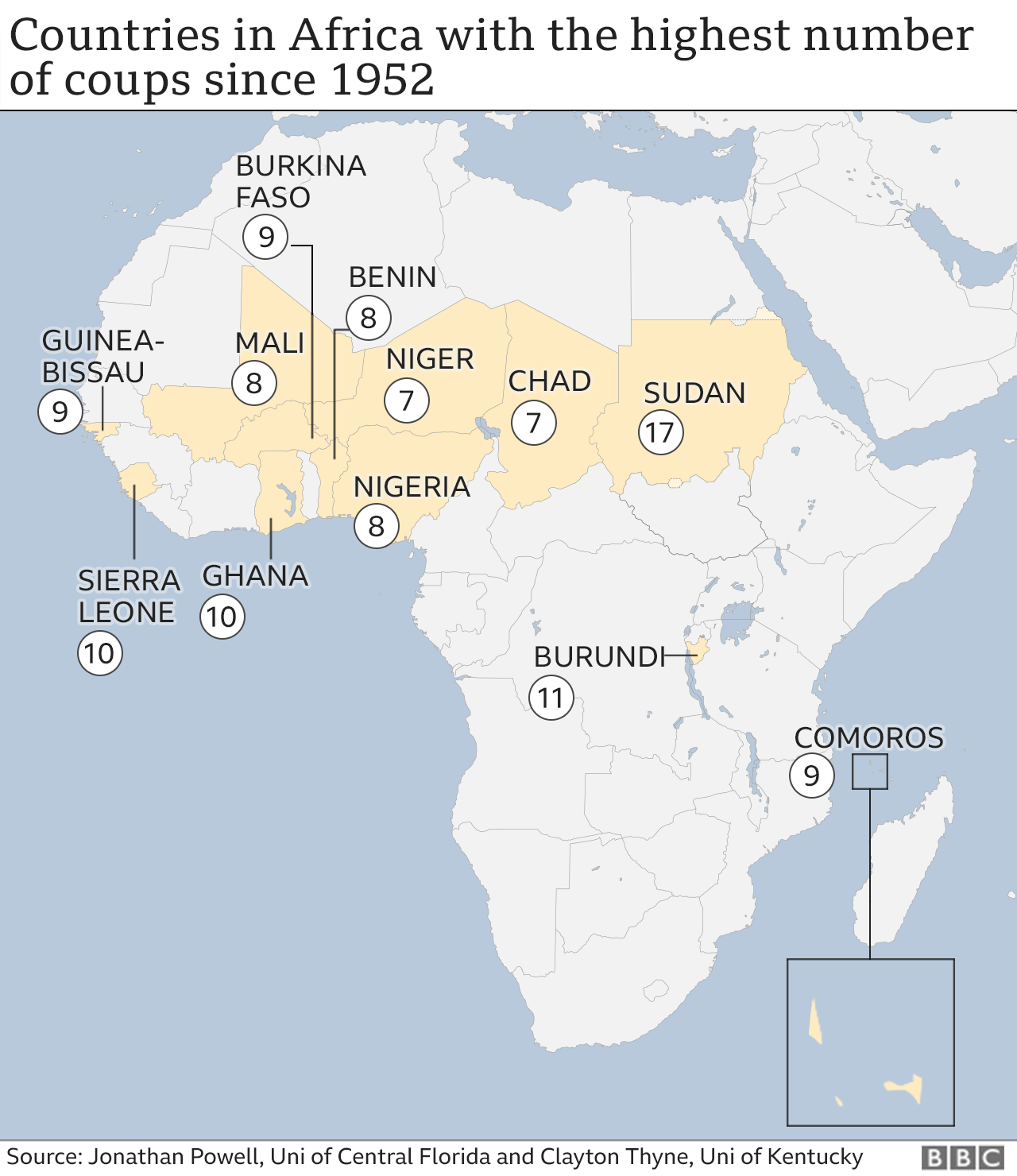
Burkina Faso has had a series of coups in the not-too-distant past, with a total of nine in its history – only three African countries have had more.
There are reports that the current unrest in the capital might be a coup attempt, although a government source told the BBC it was a mutiny.
The last coup was in January 2022, when Lt Col Paul-Henri Sandaogo Damiba took over from former President Roch Kaboré amid concerns in the country about a jihadist insurgency.
Despite West Africa’s security and political volatility, Burkina Faso had, in the past, enjoyed a fragile stability.
Of late, there has been a wave of coups in West Africa, including in Mali and Guinea, as the region battles Islamist violence.
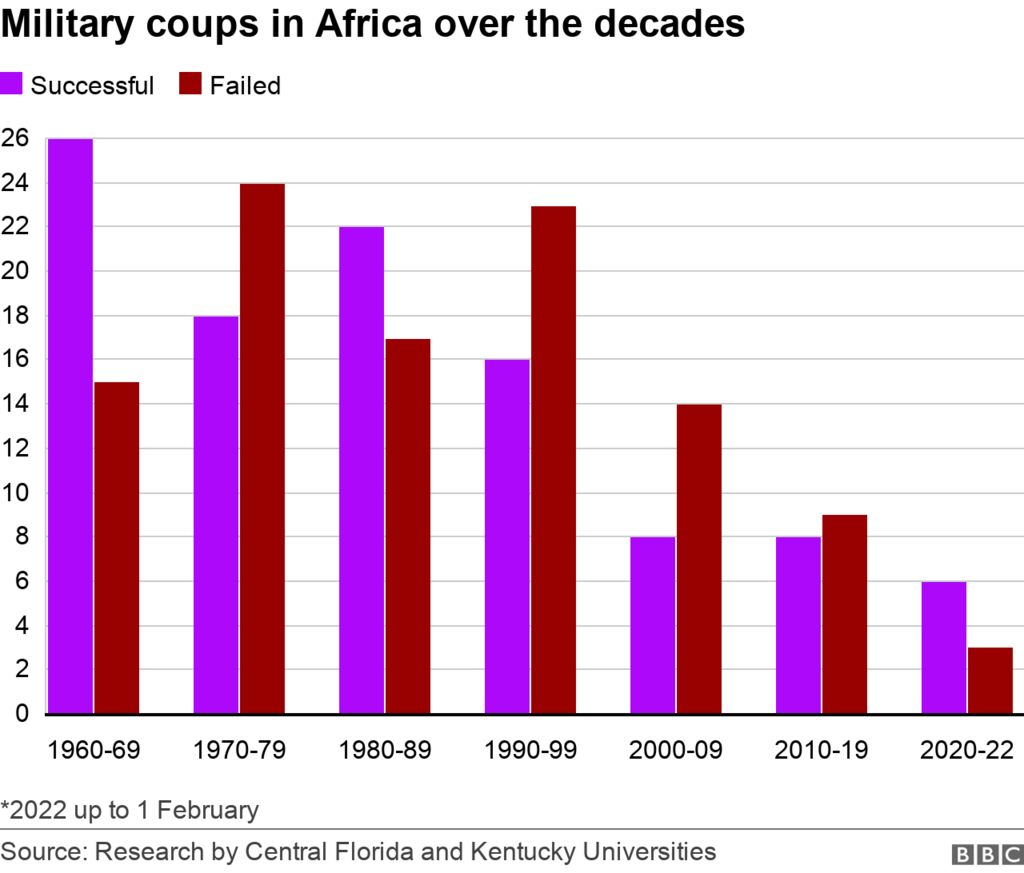
Military coups were a regular occurrence in Africa in the decades that followed independence and there is concern they are starting to become more frequent.
This year has already seen two – a takeover by the army in Burkina Faso and the other a failed coup attempt in Guinea Bissau.
And 2021 witnessed a higher number of coups in Africa compared with previous years.
One definition used is that of an illegal and overt attempt by the military – or other civilian officials – to unseat sitting leaders.
A study by two US researchers, Jonathan Powell and Clayton Thyne, has identified over 200 such attempts in Africa since the 1950s.
About half of these have been successful – defined as lasting more than seven days.
Burkina Faso, in West Africa, has had the most successful coups, with eight takeovers and only one failed coup.
Image source, Getty ImagesSometimes, those taking part in such an intervention deny it’s a coup.
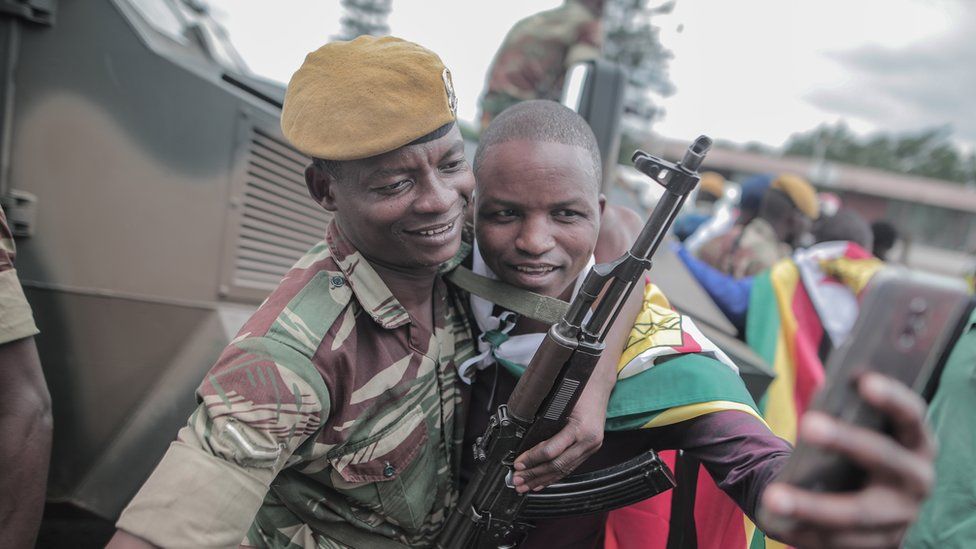
In 2017 in Zimbabwe, a military takeover brought Robert Mugabe’s 37-year rule to and end. One of the leaders, Maj Gen Sibusiso Moyo, appeared on television at the time, flatly denying a military takeover.
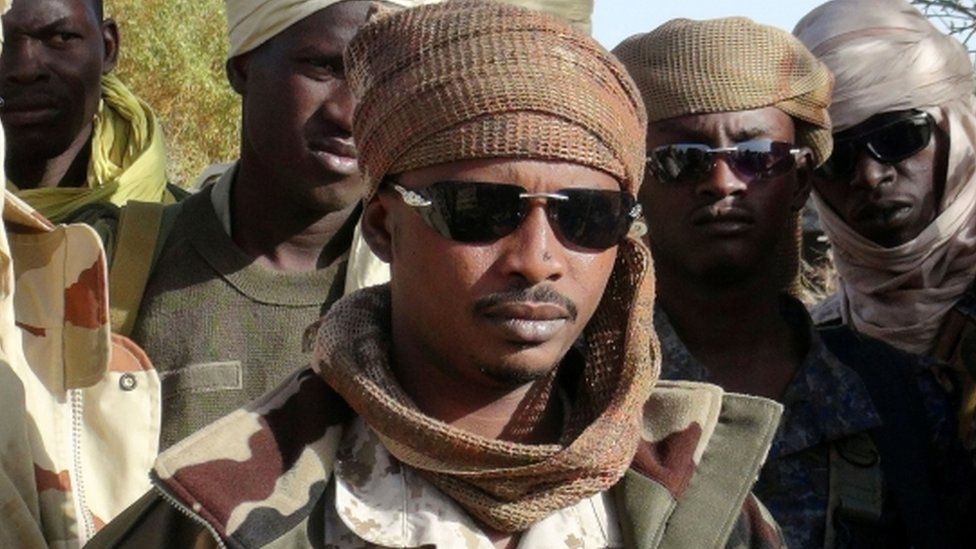
In April last year after the death of the Chadian leader, Idriss Déby, the army installed his son as interim president leading a transitional military council. His opponents called it a “dynastic coup”.
“Coup leaders almost invariably deny their action was a coup in an effort to appear legitimate,” says Jonathan Powell.
The overall number of coup attempts in Africa remained remarkably consistent at an average of around four a year in the four decades between 1960 and 2000.
Jonathan Powell says this is not surprising given the instability African countries experienced in the years after independence.

“African countries have had conditions common for coups, like poverty and poor economic performance. When a country has one coup, that’s often a harbinger of more coups.”
Coups dropped to around two a year in the two decades up to 2019.
We are only three years into the current decade and while in 2020 only one coup was reported in Mali, there was a noticeably higher than average number in 2021 with six coups or attempted coups recorded .
There were successful coups in Chad, Mali, Guinea and Sudan and failed military takeovers in Niger and Sudan.
In September 2021, the UN Secretary-General António Guterres voiced concern that “military coups are back,” and blamed a lack of unity amongst the international community in response to military interventions.
“Geo-political divisions are undermining international co-operation and… a sense of impunity is taking hold,” he said.
Judd Devermont from the US-based Center for Strategic and International Studies, believes a “lenient” approach by regional and international bodies “has enabled coup leaders to make minimal concessions while preparing for longer stays in power”.
Image source, ReutersNdubuisi Christian Ani from the University of KwaZulu-Natal says popular uprisings against long-serving dictators have provided an opportunity for the return of coups in Africa.
“While popular uprisings are legitimate and people-led, its success is often determined by the decision taken by the military,” he says.
Sudan has had the most coups and attempted takeovers amounting to 17 – six of them successful.
In 2019, long-serving leader Omar al-Bashir was removed from power following months of protests.
Bashir had himself taken over in a military coup in 1989.
Nigeria had a reputation for military coups in the years following independence with eight between January 1966 and the takeover by Gen Sani Abacha in 1993.

However, since 1999 transfers of power in Africa’s most populous nation have been by democratic election.
Burundi’s history has been marked by eleven separate coups, mostly driven by the tensions between the Hutu and Tutsi communities.
Sierra Leone experienced three coups between 1967 and 1968, and another one in 1971. Between 1992 and 1997, it experienced five further coup attempts.
Ghana has also had its share of military coups, with eight in two decades. The first was in 1966, when Kwame Nkrumah was removed from power, and in the following year there was an unsuccessful attempt by junior army officers.
Overall, Africa has experienced more coups than any other continent.
Of the 13 coups recorded globally since 2017, all but one – Myanmar in February 2021 – have been in Africa.
Source: BBC
Burkina Faso’s military junta seized power in January saying it was going to deal with the threat from Islamist militants – but the violence hasn’t stopped. This month has seen at least two deadly attacks:
Jihadists have even seized land and blockaded areas in the north of the country.
Groups allied to the Islamic State group and al-Qaeda operate in the Sahel.
The Sahel is a strip of semi-arid land beneath the Sahara Desert that stretches across the continent from east to west. It includes parts of Chad, Niger, Mali, Burkina Faso and Mauritania.
The graph below shows the level of violence between September 2021 and June this year:

You can read more about Islamist violence in the Sahel here.
A statement has been posted on the official Facebook page of the presidency of Burkina Faso, in which the country’s leader Lt Col Paul-Henri Sandaogo Damiba urges the population to “stay calm and be careful” amid reports of gunfire and a heavy military presence in the capital.
There are reports that a coup may be taking place, but a government source, who wished to remain anonymous, told the BBC some soldiers had mutinied.
Lt Col Damiba also said people should not panic over what they are reading on social media.
“Talks are under way to restore calm and serenity,” amid a “confused” situation caused by certain elements of the army, the statement said.
“The enemy attacking our country only wants division between Burkinabès to accomplish its destabilisation action”, it continued.
Source: BBC
Trained by the US and France in warfare, the young Lt-Col Paul-Henri Sandaogo Damiba turned on his political masters in Burkina Faso by seizing power in a coup.
He anointed himself president just three weeks after celebrating his 41st birthday, making him the latest man in camouflage to overthrow a government, and raising fears that what UN chief António Guterres last year called the “epidemic of coups” – in countries ranging from Sudan to Myanmar – could continue into the new year.
Sporting a red beret, Lt-Col Damiba sat impassively – as Reuters news agency put it – in a low-lit studio on Monday evening, leaving a captain to announce on state television that he had toppled President Roch Kaboré, a former banker who is now his prisoner.
Holding the grand title of “President of the Patriotic Movement for Safeguarding and Restoration”, Lt-Col Damiba forms the West African triumvirate of military rulers – along with Guinea’s charismatic Col Mamady Doumbouya, who was also born in 1981, and Mali’s bearded Col Assimi Goïta, who is the youngest of the trio, having been born in 1983.
Though they have become political pariahs in much of Africa and the West for seizing power through the barrel of the gun, the trio appear to have significant public support in their countries – all former French colonies.
“As far as we’re concerned, it’s not a coup,” school teacher Julienne Traore told AFP news agency as crowds celebrated in Burkina Faso’s capital Ouagadougou.
“It’s the liberation of a country, which was being governed by people who were incompetent,” the teacher added.
This view was expressed despite the fact that Lt-Col Damiba has neither addressed the nation nor granted media interviews since seizing power, suggesting he is, at the least, publicity-shy – not ideal for a president.
A well-connected West African security source told the BBC: “He is not very talkative but when he does talk, you should take him seriously.
“He is a born leader and is very close to the men he commands, rather than keeping his distance from them. For him, results on the grounds are what matters.”
He seems to have good political antennae, having refused to throw his weight behind a 2015 coup that proved to be so unpopular that the military relinquished power a mere seven days later, opening the way for Mr Kaboré to be elected to office about two months later.
Lt-Col Damiba also seems to be academically oriented, having authored West African Armies and Terrorism: Uncertain Responses? – a book on the biggest crisis facing Burkina Faso, the Islamist insurgency which has left about 2,000 people dead since 2015 and about 300,000 children without education after their schools were forced to close.
In the statement read on his behalf by the captain who announced the coup, Lt-Col Damiba cited the deteriorating security situation as the chief reason for overthrowing Mr Kaboré.
He turned on the president despite the fact that he had been promoted about seven weeks earlier to lead anti-terrorism operations in the volatile northern zone, which includes Ouagadougou, in what was seen as a military shake-up by Mr Kaboré to tighten his grip on power and to placate troops angered by the killing of more than 50 security force members in November.
The security source said that Lt-Col Damiba’s decision to strike against his former boss did not come as a surprise, as “he is someone who doesn’t do things by half-measures”.
“He sees the issue of jihadist insurgencies as a complex problem, which cannot be solved through military means alone.
“This isn’t an easy thing for a soldier to say but he is someone who says what he thinks,” the source said.

Lt-Col Damiba’s background is similar to that of many of Burkina Faso’s military elite – he studied in France at a military academy and a prestigious institution where he got a Master’s in criminal sciences, and served in the presidential guard of the now-exiled Blaise Compaoré, who maintained strong ties with the former colonial power when he ruled with an iron-hand from 1987 to 2014.
More recently, Lt-Col Damiba received military training from the US, as it increasingly turned its attention to West Africa to fight militant Islamists who have gained a foothold in the region.
The US Africa Command confirmed to The New York Times that Lt-Col Damiba took part in American military courses and exercises between 2010 and 2020, and received instruction on the law of armed conflict, and respect for human rights.
But the security source the BBC spoke to said they did not expect Lt-Col Damiba to be beholden to any foreign power.
“He believes that Africa should bear responsibility for its own problems, rather than relying on the West, or anyone else.”
The jury is out on that – some supporters of Lt-Col Damiba carried Russian flags as they celebrated the coup in Ouagadougou, calling on Russia to help in the fight against the militant Islamists.
They were taking their cue from Mali, where the junta is said to have brought in Russia’s controversial Wagner group to defeat the insurgents, to the chagrin of 15 European nations who – along with Canada – issued a statement in December saying they “deeply regret” the decision to use “already scarce public funds” to pay foreign mercenaries.
Source: BBC
A coup attempt appears to be under way in Burkina Faso.
Gunshots have been heard near the presidential palace and access to major buildings, including the national assembly, the national broadcaster and the residence of the prime minister have been blocked by military vehicles.
It was only in January that the current head of state, Lt-Col Paul-Henri Damiba, ousted President Roch Kaboré through a coup.
The democratically elected president was deposed for failing to contain violence by Islamist militants. Now Lt-Col Damiba may be facing a similar fate.
On Thursday hundreds of protesters took to the streets of the western city of Bobo Dioulasso to demand his resignation, blaming him for the ongoing insecurity in the country.
Eyewitnesses are reporting a heavy military presence around the city.
Schools are closed and residents are staying indoors, waiting for updates on the latest news.
Since 2015, authorities in Burkina Faso has been struggling to contain attacks by insurgent groups.
On Monday, 11 soldiers were killed in a militant attack in the northern Soum province, 50 civilians were reported missing.
After one report from a journalist in the region saying state TV was back on air showing cotton farming, there are now reports it is back off air.
One analyst from risk intelligence company Verisk Maplecroft, Eric Humphery-Smith, says “the closure of the national television station bodes ill”.
A short video shared by the Africa News site shows armed soldiers and military vehicles blocking a road in the mostly empty street of the capital, Ouagadougou.
Des tirs ont été entendus vendredi matin avant l’aube à #Ouagadougou dans le quartier abritant la présidence et le QG des militaires au pouvoir depuis janvier dernier, et le signal de la télévision nationale a été coupé.#BurkinaFaso pic.twitter.com/bEBnsoJ2GB
— Africanews Français (@africanewsfr) September 30, 2022
Picket lines have been mounted outside Royal Mail delivery and sorting offices in the United Kingdom after workers launched a 48-hour strike in a worsening dispute over pay.
Members of the Communication Workers Union (CWU) walked out on Friday, hitting postal deliveries across the country.
Talks between the two sides were held on Thursday, but there was no sign of any progress being made and the union is planning to step up industrial action in the coming weeks.
The union said the walkout by about 115,000 of its members is the biggest strike of the year amid long-running disputes in other sectors.
A further 19 days of strikes have been announced on different days throughout October and November in a significant escalation of the dispute.
Dave Ward, the CWU’s general secretary, said “this is a significant announcement, but it is one which matches the level of anger our members feel at the way Royal Mail Group has treated them”.
“The chief executive of Royal Mail Group is treating postal workers as if they are stupid. These are the same people that have kept the country connected and returned Royal Mail Group to record profit,” he said.
“Postal workers across the UK now face the fight of their lives to save their jobs and the service they provide to every household and business in the UK. We call on everyone to stand with their local postal worker,” Ward added.
Meanwhile, a Royal Mail spokesman said “the CWU can be in no doubt of the impact its reckless pursuit of 19 days of industrial action has on our weakened financial position and the job security of its members”.
“Royal Mail is losing 1 million pounds ($1.1m) a day. We operate in a competitive market, and our customers have choices. Continued strike action will force our customers to make those choices sooner rather than later,” the spokesman said.
“Our invitation to enter into talks through Acas remains open. Our people need the CWU leadership to recognise the reality of the situation Royal Mail faces as a business, and to engage urgently on the changes required to adapt to customer demands in a highly competitive market,” he added.
“We apologise to our customers for the inconvenience the CWU’s continued strike action will cause. We are doing all we can to minimise any delays and keep people, businesses and the country connected.”
Source: Aljazeera
Nabila works 10 hours or more a day, doing the heavy, dirty labour of packing mud into moulds and hauling wheelbarrows full of bricks. At 12 years old, she has been working in brick factories for half her life now, and she is probably the oldest of all her co-workers.
Already high, the number of children put to work in Afghanistan is growing, fuelled by the collapse of the economy after the Taliban took over the country and the world cut off financial aid just more than a year ago.
A recent survey by Save the Children estimated that half of Afghanistan’s families have put children to work to keep food on the table as livelihoods crumbled.
Nowhere is it clearer than in the many brick factories on the highway north of the capital, Kabul. Conditions in the furnaces are tough even for adults. But in almost all of them, children as young as four or five labour alongside their families from early morning until dark.
Children do every step of the brickmaking process. They haul canisters of water, and carry the wooden brick moulds full of mud to put in the sun to dry. They load and push wheelbarrows full of dried bricks to the kiln for firing, then push back wheelbarrows full of fired bricks.

Only a few have been to school. Nabila, the 12-year-old, has been working in brick factories since she was five or six. Like many other brick workers, her family works part of the year at a kiln near Kabul, the other part at one outside Jalalabad, near the Pakistani border.
“We can’t think about anything else but work,” she said.
Mohabbat, a nine-year-old boy, stopped for a moment with a pained expression as he carried a load of charcoal. “My back hurts,” he said.
Asked what he wished for, he first asked: “What is a wish?”
Once it was explained, he was quiet for a moment, thinking. “I wish to go to school and eat good food,” he said, then added: “I wish to work well so that we can have a house.”
The landscape around the factories is bleak and barren, with the kilns’ smokestacks pumping out black, sooty smoke. Families live in dilapidated mud houses next to furnaces, each with a corner where they make their bricks. For most, a day’s meal is bread soaked in tea.
Rahim has three children working with him at a brick kiln, ranging from five to 12 years. He said he had no choice. “There’s no other way,” he said. “How can they study when we don’t have bread to eat? Survival is more important.”

Workers get the equivalent of $4 for every 1,000 bricks they make. One adult working alone cannot do that amount in a day, but if the children help, they can make 1,500 bricks a day, workers said.
According to surveys by Save the Children, the percentage of families saying they had a child working outside the home grew from 18 percent to 22 percent from December to June. That would suggest more than one million children nationwide were working. Another 22 percent of the children said they were asked to work on the family business or farm.
In June, 77 percent of the surveyed families reported they had lost half their income or more compared with a year ago, up from 61 percent in December.
At one of the kilns, it begins to rain. At first, the children were cheerful, thinking it would be a refreshing drizzle in the heat. Then the wind kicked up. A blast of dust hit them, coating their faces. The air turned yellow with dust. Some of the children could not open their eyes, but they kept working. The rain opened up into a downpour.
The children were soaked. One boy had water and mud pouring off of him, but like the others, he said he could not take shelter without finishing his work.
“We are used to it,” he said. Then he told another boy, “Hurry up, let’s finish it.”
Source: Aljazeera
Pakistani Prime Minister Shehbaz Sharif has ordered the formation of a committee to investigate the leaking of several audio files released over the past week and a review of cybersecurity at the prime minister’s office (PMO).
The National Security Committee, comprising Sharif himself, top military and government officials met on Wednesday to discuss the audio leaks and ways to ensure fool-proof security at the PMO and other important government offices.
Interior Minister Rana Sanaullah will lead the committee, according to a statement released after the meeting.
The leaks started on September 24 when multiple files of purported conversations, allegedly recorded in the PMO, emerged online. They apparently showed Sharif and other ministers talking about official matters. In at least one instance, the ruling Pakistan Muslim League-Nawaz party’s vice president Maryam Nawaz Sharif could also be heard.
As soon as the files came began circulating on Pakistani social media, Information Minister Marriyum Aurangzeb played down the matter, saying the files have nothing incriminating or illegal in them.
At a news conference on Tuesday, however, Sharif called the leaks a “very serious lapse” and announced the formation of a high-powered committee to probe the incident.
“This is a big question mark. Who will now come to Pakistan to meet the PM in the PM House? Be it a friend or a sympathiser, they will think twice about if they should mention anything sensitive or not. They will think 100 times, wondering if these conversations will be recorded,” the prime minister said.
At least four different audio files purportedly recorded in the PMO have been leaked so far.
The first file included a conversation between Sharif and an unnamed government official, discussing the importation of industrial machinery from India.
Another file contains a purported conversation between Maryam and Sharif, discussing the performance of former Finance Minister, Miftah Ismail, who resigned earlier this week.
In that audio file, Maryam could be apparently heard complaining about Ismail’s performance and expressing her wish for the return from exile of Ishaq Dar, who has now replaced Ismail as the finance minister.
Dar, a 72-year-old veteran politician, returned last week from London where he lived since 2017 in a self-imposed exile following corruption allegations against him. He is close to the ruling Sharif family.
There has been no official statement on how the audio files were leaked or who recorded them in the first place.
In a tweet on September 24, Fawad Chaudhry of the opposition Pakistan Tehreek-e-Insaf party hinted at a Twitter thread by an unidentified user.
The user, OSINT Insider, claimed the files were leaked online in August by a hacker who allegedly asked for $340,000 to release the complete material.
In another tweet the next day, Chaudhry attacked the intelligence agencies for their failure to find the source of the files. He also asked why the government was not responding to the leak.
“More than 100 hours of conversation from PMO is available for sale since August/September. But our agencies will only look at sensitive issues once they get free from their political tasks,” he tweeted.
On Wednesday, a new audio file purportedly featuring opposition leader Imran Khan surfaced on social media when he was the prime minister.
In the audio file lasting just over 100 seconds, Khan is talking to a top bureaucrat about a “cypher” or secret cable sent to Islamabad by the then Pakistani envoy to the US.
“We only have to play it up. We don’t have to name America. We only have to play with this,” he could be heard saying.
Days before he lost a no-confidence vote in parliament in April this year, Khan had alleged a “foreign conspiracy” being hatched by the US to overthrow his government. Islamabad and Washington have denied the allegations.
It is unclear if the file about Khan is part of the same tranche of the PMO leaks aimed at incriminating the incumbent government.
Khan’s PTI party has not denied the authenticity of the audio tape so far, but the politician alleged the government itself had leaked it.
“This was leaked by Shehbaz Sharif at al. They did a good thing by leaking this,” Khan told reporters in Islamabad on Wednesday. “I say the whole cypher should be leaked. It should be apparent to everybody that what a huge foreign conspiracy this was.”
Khan’s PTI was also the target of two other leaks last month when purported telephone conversations between former Finance Minister Shaukat Tarin and two of his provincial counterparts were released.
Tarin, who confirmed the authenticity of the conversation, could be heard discussing the International Monetary Fund bailout package with the two ministers.
Source; Aljazeera
A suicide bomber has attacked an educational institute in the Afghan capital, killing at least 19 people.
As many as 27 others were wounded in the blast early on Friday, which occurred in the Dasht-e-Barchi neighbourhood of western Kabul, a predominantly Shia Muslim area home to the minority Hazara community, according to police spokesman Khalid Zadran.
“Students were preparing for an exam when a suicide bomber struck at this educational centre. Unfortunately, 19 people have been martyred and 27 others wounded,” he said.
Videos posted online and photos published by local media showed bloodied victims being carried away from the scene.
The victims included high school graduates, both girls and boys, who were taking a practice university entrance exam at the Kaj education centre when the blast went off, Zadran said. Schools are typically closed in Afghanistan on Fridays.
“Attacking civilian targets proves the enemy’s inhuman cruelty and lack of moral standards,” he said, without specifying who was believed to be behind the attack.
One wounded student said the victims were mostly girls.
“We were around 600 (students) in the classroom, but most of the casualties are among girls,” the male student told the AFP news agency from the hospital where he was being treated.
No group immediately claimed responsibility.

Families rushed to area hospitals where ambulances were arriving with victims and lists of those confirmed dead and wounded were posted to the walls.
“We didn’t find her here,” said a distressed woman looking for her sister at one of the hospitals. “She was 19 years old.”
Resident Ghulm Sadiq said he was at home when he heard a loud sound. He went outside to see smoke rising from the education centre where he and neighbours rushed to help.

“My friends and I were able to move around 15 wounded and nine dead bodies from the explosion site … Other bodies were lying under chairs and tables inside the classroom,” he said.
Further details of the attack were not immediately available, although the official death toll was expected to rise.
Ethnic Hazara have alleged years of persecution by the ruling Taliban, which returned to power in the country following the withdrawal of United States-led forces in August 2021, and have been the victims of several attacks claimed by the rival ISIL (ISIS) group.
The Dasht-e-Barchi neighbourhood has witnessed some of the worst attacks in Afghanistan in recent years.
In 2021, before the Taliban takeover, at least 85 people – mostly female students – were killed and about 300 others wounded when three bombs exploded near their school in Dasht-e-Barchi.
No group claimed responsibility for that attack, but a year earlier, ISIL claimed responsibility for a suicide attack on an educational centre in the same area that killed 24, including students.
In April of this year, two deadly bomb blasts at separate education centres in the area killed six people and wounded 20 others.
Since taking control, the Taliban government has emphasised that it is securing the nation following decades of war, but a series of attacks on mosques and civilian areas in recent months has challenged that narrative.
Education also remains a flashpoint issue in Afghanistan with the Taliban blocking many girls from returning to secondary education. ISIL also stands against the education of women and girls.
Source: Aljazeera
Throughout his eight months in an Israeli prison, 26-year-old Palestinian artist Mohammad al-Azeez Atef found refuge in the calligraphy skills he developed from a young age.
In his seven-by-four-metre (23-by-13-foot) rectangular room in Israel’s Ofer prison, where he lived with seven other men, Atef would spend his nights drawing from evening to dawn.
“Art was my rescuer in a place that is designed to destroy you mentally,” Atef told Al Jazeera. “Prison is a fascinating machine in its creativity and expertise and ability to achieve frustration and submission among Palestinian prisoners.”
With meagre tools consisting of paper, black and red pens, a handmade paper ruler, and coffee, he produced what he believes to be approximately 170 pieces of artwork. Some of them were gifts for other prisoners, and 50 others he managed to smuggle out throughout the eight months he was in prison, between November 2021 and June 2022.
“They [the drawings] were born in prison and they escaped out of prison – some of them suffered, they were ripped, some of them faded from the number of rooms and sections that they moved through in prison,” said Atef.
More than 40 pieces of Atef’s artwork were put on display in his first-ever art exhibition, titled, “Room 14”, at the Khalil Sakakini Cultural Centre in Ramallah, in the central Israeli-occupied West Bank, between September 19 and 25.
The pieces are visually appealing, with the meaning of the text often hidden behind beautifully drawn calligraphy with embellishments on coffee-stained paper.
Monther Jawabreh, a visual artist who attended the exhibition, said, “It is very important because it is bringing back the idea of Arabic calligraphy to the visual art scene in Palestine.”
“While [modern] calligraphy developed in Iraq and other countries in the Arab world, in Palestine, they did not invest in calligraphy in a serious way – there were limited efforts in the ’70s and ’80s,” the 46-year-old told Al Jazeera. “Now, we are seeing a calligrapher, presenting his pieces in the context of art, which is tied to his personal experience in prison.”
“Mohammad Atef has a lot of awareness, and he is able to invest it in his struggle and his artwork,” he continued, adding that he “is a rising artist – I see a bright future for him.”
Source: Aljazeera
After beginning as a murmur early in the year, warnings of an incoming global recession are growing louder by the day.
During the past week, high-profile figures from the head of the World Trade Organization (WTO) to American Nobel Prize-winning economist Paul Krugman have sounded the alarm about the likelihood of a global downturn.
In a survey released by the Switzerland-based World Economic Forum on Wednesday, seven out of 10 respondents in a sample of 22 leading private and public sector economists said they believed a global recession was at least somewhat likely in 2023.
Meanwhile, Ned Davis Research, a Florida-based research firm known for its Global Recession Probability Model, raised the likelihood of a global recession next year to 98.1 percent, the highest since the COVID-19 pandemic-related downturn of 2020 and the global financial crisis of 2008-2009.
While the war in Ukraine, China’s draconian pandemic policies, and runaway inflation are all clouding the economic outlook, investors are particularly concerned about the prospect of the United States Federal Reserve raising interest rates so aggressively that the world’s largest economy tips into recession — taking much of the rest of the world with it.
Historically, the US and other central banks have found it difficult to manage the task of raising rates — which raises the cost of borrowing and investment for businesses and households — without dealing a severe blow to economic growth. Past recessions, which are usually defined as two consecutive quarters of negative growth, have been blamed on the Fed’s efforts to cool high inflation, including back-to-back downturns in the early 1980s.
Critics, including renowned economists such as Jeremy Siegel, have accused the US Fed this time around of waiting too long to begin raising rates, only to resort to drastic hikes of late to make up for its prior inaction.
Despite holding out hope for a “soft landing” for the economy, US Fed Chair Jerome Powell acknowledged last week that central bank officials “don’t know” whether their efforts to rein in inflation will lead to a recession or how severe a recession would be.

“For the US, if inflation does not show signs of cooling in the last few months of 2022, and measures of inflation expectations start to climb, it would force the Federal Reserve to continue with aggressive rate hikes beyond 2022 into the spring of 2023 — in my opinion that’s when the economy will tip into a recession,” Pao-Lin Tien, an assistant professor of economics at George Washington University, told Al Jazeera.
“I think a similar situation would apply to other countries as well, if central banks are forced to increase rates aggressively and persistently, either to defend their currency or to tame inflation, then a recession is inevitable.”
Campbell R Harvey, a professor at Duke University’s Fuqua School of Business who pioneered the use of US bond market yields to predict recessions, said the Fed’s actions could “easily push the economy into recession — and a recession would be very effective in reducing inflation.”
“However, recessions are very painful,” Harvey told Al Jazeera. “No one wants to be laid off or be forced to collect government assistance for a prolonged period of time.”
Harvey said, however, that the yield curve indicator he has used to predict the last eight recessions did not indicate an imminent downturn, as the curve had yet to invert for a full quarter.
“When an inversion happens, it is very bad news and is associated with a recession,” he said.
Outside the US, economic headwinds offer little cause for optimism.
Germany, Italy and the United Kingdom, three of Europe’s largest economies, are expected to undergo lengthy recessions next year, largely due to the energy supply issues caused by Russia’s invasion of Ukraine, the Organisation for Economic Co-operation and Development (OECD) said on Monday.
The OECD expects the eurozone to grow just 0.3 percent in 2023, indicating that many of the bloc’s economies will be in recession throughout periods of the year.
While the Asia Pacific is expected to avoid contraction, China’s “zero-COVID” lockdowns and border restrictions are becoming a serious drag on the region’s growth potential.
On Tuesday, the World Bank slashed its economic forecast for the Asia Pacific to 3.2 percent, down from 5 percent in April, and nearly halved its forecast for China to 2.8 percent.
Trinh Nguyen, a senior economist for emerging Asia at Natixis in Hong Kong, said Asian economies would not be spared from the fallout of rising interest rates, although the region was looking at a “slowdown not a meltdown”.
“We think Asian growth will decelerate. For economies more exposed to the trade cycle, the impact of weakening external demand will feel worse, such as South Korea and Taiwan,” Nguyen told Al Jazeera.
“In emerging Asia excluding China, the tightening of financial conditions will push down investment. Consumption is expected to decelerate but remain sticky as they are mostly essentials in emerging Asia excluding China.”
Harvey, the Duke professor, said that although he had “much more confidence” that Europe would spend 2023 in recession than the US, the world was facing a precarious economic outlook.
“Inflation is a global phenomenon. Inflation surges are often associated with recessions,” he said. “Yes, if the US goes into recession, it would likely lead to a global recession — especially given that Europe is likely already in a recession.”
Source: Aljazeera
A United Nations tribunal in The Hague has opened the genocide trial of a Rwandan businessman captured two years ago after decades on the run, with judges saying the hearing must go on despite the suspect’s decision to boycott it from his jail cell.
Felicien Kabuga, a former businessman and radio station owner, is one of the last suspects sought by the tribunal prosecuting crimes committed in the 1994 genocide, when ruling Hutu majority fighters killed more than 800,000 minority Tutsis and Hutu moderates in 100 days.
“It is the understanding of the chamber that mister Kabuga is this morning well but has decided not to attend the hearing this morning either in person or via video link,” Judge Iain Bonomy said. “The trial must proceed” with the opening statement of the prosecutor, judges decided.
Kabuga is in his mid-to-late 80s, though his precise date of birth is disputed. He was arrested in May 2020 in Paris between COVID-19 lockdowns and extradited to The Hague where he has entered a not-guilty plea.
During his extradition hearings in France, he described the accusations against him as “lies”.
Prosecutors have charged the former coffee and tea tycoon with three counts of genocide and two counts of crimes against humanity, primarily for promoting hate speech through his broadcaster, Radio Television Libre des Milles Collines (RTLM).
He is also accused of arming ethnic Hutu militias.
“In support of the genocide, Kabuga did not need to wield a rifle or a machete at a road block. Rather, he supplied weapons in bulk and facilitated the training that prepared the Interahamwe [Hutu militias] to use them,” UN prosecutor Rashid Rashid said in his opening statement.
He added that similarly Kabuga did not need to pick up a microphone himself to call for the killing of Tutsi, but founded a radio station that “broadcast genocidal propaganda across Rwanda”.
Prosecutors said the genocide charges cover rapes and sexual assaults, as well as killings. Hutus were encouraged in RTLM broadcasts to “taste” Tutsi women, they said.
UN prosecutor Serge Brammertz told Reuters news agency the trial’s opening would bolster international justice.
“Even if it’s taken more than 20 years, justice can still be successful and that justice can be done,” he said.
UN prosecutor Serge Brammertz told Reuters news agency the trial’s opening would bolster international justice.
“Even if it’s taken more than 20 years, justice can still be successful and that justice can be done,” he said.
Source: Aljazeera
Soldiers are on the streets and heavy gunfire has been heard near the main military camp and residential areas of Burkina Faso’s capital.
A large blast also rang out on Friday near the presidential palace where soldiers took up positions.
Soldiers were seen along the main avenue leading to the presidential palace, administrative buildings and the national television station, which stopped broadcasting. Journalists said state television instead showed a blank screen saying “no video signal”.
Several main roads in Ouagadougou were blocked by troops. A spokesman for the military government that seized power in January was unreachable.
It was not clear yet if this was a coup attempt, but it bore the hallmarks of other power grabs that have swept across West and Central Africa over the past two years.
Reporting from Saint Louis in Senegal in West Africa, Al Jazeera’s Nicolas Haque said there was a sense of panic across the capital.
“All the streets leading to the presidential palace, the parliament, and the constitutional court are being manned by soldiers. People who have tried to approach these areas have been told to return and move away,” he said.
No public announcement about the motivation behind the troop movements in Ouagadougou was given.
Violence has raged in Burkina Faso since Lieutenant Colonel Paul-Henri Sandaogo Damiba seized power in a coup in January, toppling the West African country’s elected leader.
“Late at night, around 3am, gunfire erupted in the capital as the president of transition, who took over in January, was in the presidential palace. There is no word about him nor his whereabouts,” said Haque.
“There is a lot of confusion about who is in charge and who is behind what we are seeing in Ouagadougou.”
In his first statement after the January coup, Damiba, often seen in public in military fatigues and aviator sunglasses, pledged to restore security.
More than 40 percent of Burkina Faso, a former French colony, is now outside government control. In recent years, violence by armed groups has spilled over into the Ivory Coast and Togo.
The military takeover was largely celebrated by civilians fed up with former President Roch Kabore’s civilian government that was unable to rein in fighters who have killed thousands of civilians in recent years and taken over large parts of the north and east.
But attacks in the impoverished West African country have worsened and the army is in disarray. The rank and file, which gave Damiba their support in January, have grown frustrated at the lack of progress, security sources say.
Friday’s developments come two days after Burkina Faso’s government said at least 11 soldiers were killed and 50 civilians were missing after fighters attacked a 150-vehicle military-escorted convoy taking supplies to a northern town.
In a statement on Tuesday, the government said the assault took place on Monday in the commune of Gaskinde in Soum province, where armed groups linked to al-Qaeda and ISIL (ISIS) have escalated attacks and seized territory since 2015.
As in neighbouring countries, fighters affiliated with al-Qaeda and ISIL have stoked the unrest, even after Damiba earlier this month sacked his defence minister and assumed the role himself.
Fighters have blockaded areas of the north, leaving communities stranded. Government convoys and air drops deliver essential goods to trapped civilians.
Much of the country became ungovernable since 2018. Millions have fled their homes, fearing further raids by gunmen who frequently descend on rural communities on motorbikes. Thousands have been killed in attacks.
Burkina Faso has become the epicentre of the violence that began in neighbouring Mali in 2012 but which has since spread across the arid expanse of the Sahel region south of the Sahara Desert.
As well as Burkina Faso, Mali, Chad, and Guinea have all seen coups since 2020, raising fears about a backslide towards military rule in a region that has made democratic progress in recent decades.
Source: Aljazeera
Prize-winning Zimbabwean novelist and filmmaker Tsitsi Dangarembga has been fined and given a six-month suspended jail sentence after a court found her guilty of “inciting public violence” during a 2020 anti-government protest.
Dangarembga was tried alongside her friend and fellow protester Julie Barnes, who was also found guilty on Thursday.
The two were fined 70,000 Zimbabwean dollars ($193) and given a suspended sentence, which means they remain free provided they do not commit a similar offence in the next five years.
A vocal critic of President Emmerson Mnangagwa’s government, Dangarembga has been fighting for years against corruption and demanding reforms. She argued during the trial that Zimbabweans had the right to demonstrate.
“The two intended to incite violence and the accused are found guilty as charged,” Harare magistrate Barbara Mateko said.
Their lawyer Chris Mhike said the two women were first-time offenders and asked for leniency.
Outside court, 63-year-old Dangarembga said she was “not surprised” by the ruling.
“Our role as citizens is being changed into a role that is not an active citizen, but a subject, and we are not a monarchy,” she said, adding that she would appeal the conviction.
Dangarembga and Barnes were arrested at the end of July 2020 after they marched in the empty streets of Harare, holding a banner that read ‘We want better — reform our institutions’ before they were hauled into a police van. The novelist was freed on bail a day later.
Human rights lawyers said at the time that dozens of activists were arrested by security forces who had been sent to put down the protest. Rights lawyers also said there were cases of abductions and torture, which the government has denied.

Dangarembga told Al Jazeera shortly afterwards that the crackdown showed the right to peaceful protest had been “seriously eroded” in Zimbabwe.
“Zimbabwean citizens are expected to keep silent and docilely accept whatever the authorities decide to do, or face arrest for peacefully expressed differences of opinion,” she said.
Dangarembga won the African section of the Commonwealth Writers’ Prize in 1989 for her first novel, Nervous Conditions, the first book to be published in English by a Black woman from Zimbabwe.
She was nominated for the prestigious Booker Prize in 2020 for her book This Mournable Body. The two works are part of a trilogy that charts Zimbabwean politics through the eyes of Tambudzai Sigauke, known as Tambu, as she grows up. The second book in the series is The Book of Not, which was published in 2006.
Source: Aljazeera
The Kissi, Loma, and Bandi people who lived in the present-day border regions of Liberia, Sierra Leone, and Guinea introduced the “Kissi money” or “Kissi penny” around the end of the 19th century. Its use was fairly widespread in actual practice.
The Kissi coins have a peculiar form. Kissi’s distinctive shape is an iron rod that has been twisted and flattened at both ends, with a flat, hoe-like spatula at one end and a sharpened “T” at the other.
It ranges in length from 9 to more than 15 inches, with the longer ones having a higher value. Larger “denominations” might also be made by bundling or bundling many pieces together, then fastening the bundle with a cotton or leather strip.
Given that it was practically difficult to tamper with the metal content of the piece without being instantly obvious, the strange shape may have been created as a form of protection.
In the first part of the 20th century, West Africa was the main region that used Kissi pennies. They could be traded for local currency in the form of coins and bills.
While individual Kissi pennies could be used for small purchases, bigger payments were often made with bundles of 20. A cow cost between 30 and 40 bundles in the early 20th century, according to the National Museum of American History.
Legend has it that a traditional witch doctor known as Zoe, who is frequently the blacksmith, would repair the broken fragments of the iron rod and reincarnate the ‘escaped soul’ for a price, and could only restore the value of the broken iron rod through a particular ceremony. Kissi money was hence seen as “money with a soul.”
The Kissi currency served as a universal unit of exchange. Kissi coins were used for a variety of things and served as legal tender for goods and commodities.
French authorities abolished Kissi penny
The Kissi currency was the first to be outlawed in the French colony. In 1940, the British came next. Things moved a lot more slowly in Liberia. The Western Province of Liberia’s most northern District, Voinjama, which borders the British colony of Sierra Leone and the French colony of Guinea, attempted to forbid the use of Kissi money in 1936 in order to avoid the dreaded hut tax.
The U.S. Firestone Company had arrived in Liberia eight years previously, but its operations were concentrated in areas that were closer to the coast.
Tribal people in the northwest of the country continued to use traditional currency because the North American Rubber Company had little impact on their way of life.
Kissi money wasn’t really displaced by Liberia’s official currency, the US dollar, until the administrative reform of 1964 and the rise of modern employers in the 1960s as a result of President Tubman’s Open Door Policy.
President Edwin Barclay—18th president of Liberia—had declared the US dollar the only valid currency in the nation during that year, outlawing the British pound.
Kissi penny or “money with a soul”
Kissi money was used mostly for ritual celebrations, such as those marking the occasion of young people returning from the bush schools, sacrifices, and divination rituals, after being superseded by Western currencies.
Additionally, it is used to make fetishes for protection and to adorn the graves of deceased warriors. Many individuals continue to think that old money is magical. As a result, many indigenous Liberians still believe that Kissi “money has a soul.”
Source: face2faceafrica
It is no secret that Nigeria has a lot of tribes. Being the most populous West African country, indigenes of some native tribes prior to western civilization are bound to be forgotten, but not these people. The Gbagyi people are said to be the original land owners of the country’s capital, Abuja.
The name and language of the Gbagyi/Gbari ethnic group, which has roughly 1 million members and is primarily found in Central Nigeria, are Gbagyi or Gbari. Two dialects are spoken by the ethnic group’s members. While during pre-colonial Nigeria, both the Hausa Fulani and Europeans loosely referred to speakers of the languages as Gwari, they prefer to be called Gbagyi/Gbari. They reside in Niger, Kaduna State, and Abuja, the Federal Capital Territory.
They are also present in the Nasarawa region of central Nigeria. The Gbagyi/Gbari ethnic and indigenous group is the most populous in Nigeria’s central belt and Federal Capital Territory, and farming is their primary source of income. The women also engage in the practice of pottery. Central Nigeria is home to several Gbagyi communities. They live in western Abuja, in southern Niger State, and in the Chikun local government area, which has its administrative center at Kujama in Kaduna and Nassarawa states. While some local historians associate migration with the Gbagyi people’s need for agriculture, others disagree and contend that the Gbagyi were driven from their native settlements during the Fulani Jihad.
The Gbagyi have historically followed a patrilineal pattern of kinship. The extended family compound, which is run by the oldest male, has the lowest level of power. Small huts and rectangular buildings make up the compound. The Esu/Osu (king) is the highest tier of authority in a Gbagyi settlement and he is assisted by a group of elders. Gbagyi are skilled at combining clay to create attractive home goods like pots.
Oral tradition holds that the first inhabitant was a hunter who went hunting in Abuja’s dense Paikokun forest. The mountain where the first settler lived was called Paikokun. Before western civilization forced the majority of the Gbagyi people to relocate to the plain, they used to live on mountaintops because they thought they were safer there than on the plain.
The Gbagyi women’s practice of carrying objects, no matter how heavy, on their shoulders is very distinctive. They hold that since the head is said to be the ruler of the complete body, it shouldn’t be disturbed. They refer to the area of their body where they store their possessions as Bwapa. They also assert that they feel lighter than they do on their heads as a result of the load. Even today, it is still very much in use.
This tribe has a long history of tradition surrounding marriage. By their tradition, when a man expresses interest in a lady, he must work for seven years on the bride’s father’s farm, toiling and supplying the bride’s home with food so that she would be properly fed. However, today, instead of serving seven years in the bride’s father’s home, the groom now merely pays the bride’s price.
The Gbagyi people dress in Ajeside, a native woven and dyed tie-dye garment made of indigenous cotton. Some Gbagyi practice their traditional religion and belief in a God called Shekwoi, who existed before their forefathers, but they also focus on pacifying other gods’ deities, such as Maigiro. Knunu is their primary religion, and they feel that it shields them from the evil that permeates their society.
Ladi Dosei Kwali, who appears on the 20-naira note, is Gbagyi.
Source: face2faceafrica
Tinubu was absent at the event which was organised by the National Peace Committee at the International Conference Centre, Abuja, on Thursday.
Omoyele Sowore, the presidential candidate of the African Action Congress (AAC) on Thursday confronted Kashim Shettima, the running mate of the All Progressives Congress candidate, Bola Tinubu, over the absence of his principal at the signing of the peace accord for the 2023 elections in Abuja.
Tinubu was absent at the event which was organised by the National Peace Committee at the International Conference Centre, Abuja, on Thursday.
Abdulsalami Abubakar, chairman of NPC had said the accord was to promote peaceful electioneering.
Sowore; Peter Obi, candidate of the Labour Party, (LP); Atiku Abubakar, candidate of the Peoples Democratic Party (PDP); Rabiu Kwankwaso, flagbearer of the New Nigeria Peoples Party (NNPP) and others were present at the event.
Shettima was however at the event to represent Tinubu.
Sowore in a video posted on his social media page, which had now gone viral, narrated how he challenged the former Borno State governor over his sitting in the front when his principal was absent.
“VIDEO: At the Presidential “Peace Accord” signing ceremony event in Abuja, a chance to tell Abacha’s henchman Al-Mustapha some truths! … Kashim Shettima ought not be allowed to sit where Presidential candidates should sit…I challenged him too! #WeCantContinueLikeThis,” he captioned the video.
In the video, the AAC presidential candidate clashed with the politicians, saying, “I confronted him (Shettima) why is he sitting here when Tinubu is not here, if I was sitting there, I won’t stand up for him. Because Tinubu is the one who is supposed to be here. You can’t be running for Nigeria’s presidency in absentia.”
Sowore was also heard accusing Hamza Al-Mustapha, Chief Security Officer to Sani Abacha, the late Military Dictator of ruining the lives of many Nigerians with his principal.
He maintained that he stood for the truth for Nigeria unlike Mustapha.
Abacha, a native of Kano State forced interim President Ernest Shonekan to resign in 1993 and declared military rule across the country, having established the provisional ruling council (PRC).
Notable among the series of human rights abuses under the Abacha regime was the killing of Ken Saro-Wiwa and eight other Ogoni activists opposed to the exploitation of Nigeria’s resources. His regime also detained Moshood Abiola, touted winner of the 1993 presidential election; former President Olusegun Obasanjo, and the late Shehu Musa Yar’adua, brother of former President Umaru Musa Yar’adua. This was despite several pleas and condemnation by the international community.
Source: saharareports
The action is however against the provisions of Section 11 sub section 3 (b) of the Pension Reform Act (2014) which clearly states that: “the employer shall not later than seven (7) working days from the day the employee is paid his salary remit an amount comprising the employee’s contribution under paragraph ‘A’ of this sub-section and the employer’s contribution to the Pension Fund Custodian specified by the Pension Fund Administrator or the employee himself.”
The Lagos State Government has refused to remit contributory pensions, cooperative and loan deductions of the state government workers for the last two months, SaharaReporters has gathered.
The action is however against the provisions of Section 11 sub section 3 (b) of the Pension Reform Act (2014) which clearly states that: “the employer shall not later than seven (7) working days from the day the employee is paid his salary remit an amount comprising the employee’s contribution under paragraph ‘A’ of this sub-section and the employer’s contribution to the Pension Fund Custodian specified by the Pension Fund Administrator or the employee himself.”
A source told SaharaReporters on Thursday that the Lagos government had stopped remitting pension contributions into workers’ Retirement Savings Accounts with their respective Pension Fund Administrators.
He added that cooperative deductions were also not remitted by the government, making most of loan applications to be rejected.
“Most of the state governors now used pension monthly deduction from staff salary for their political ambition, especially Lagos state government,” the source told SaharaReporters.
“For over two months, the Lagos state government did not remit the pension deducted to pencom. I applied for a loan as a worker with the Lagos State Government, I couldn’t get the loan.
“I and others were told that the money was borrowed by politicians, and who could have done that if not the state government? We need to pay our bills now but we couldn’t. Why would the poor suffer this much?”
“I work under the state Ministry of Health and I have been working for 9 years. I’m not the only one affected sir. It was one of the cooperative society staff that gave us the information about why we didn’t get the loan we applied for, and that the cooperative management can not divulge the information.
“Meanwhile, I noticed that I haven’t received any alert from pension company that the Lagos state government have remitted the pension deducted from my salary for 2 months now.
“What need is for them to release the money belonging to cooperatives to them, and stop borrowing from pension deducted from staff salaries.”
The state government has yet to officially react to the complaints by the workers trying to access loans from their savings but who could not.
Neuromodulation has been a fast-growing area of medicine for at least a decade. Despite becoming an increasingly common way to treat chronic pain, neurological disorders, and even psychiatric conditions, it still represents a paradigmatic shift in the thinking of many clinicians for whom lifestyle changes, drug therapy, and psychotherapy had comprised the universe of treatment options available to our patients.
While this may remain true for now, advances in the development of neuromodulation devices suggest that they can offer another avenue of treatment that may provide relief to patients who experience intolerable side effects or limited benefits from drugs, therapy, and lifestyle changes.
Neuromodulation uses mechanical, electromagnetic, or electrical stimulation to modify the functioning of central, peripheral, or autonomic nervous systems. In some cases, procedures may require clinical expertise or involve the use of implants. In many cases, the treatment can be conducted with a handheld device that patients can operate within the comfort of their home.
Neuromodulation may seem like an experimental or alternative treatment, but its theoretical framework is the same as that which undergirds conventional drug treatments. All brain activity is a combination of electrical and chemical communication, and psychopharmacology concerns itself with modulating the chemical communication system. This affects electrical signaling in the central nervous system (CNS). Neuromodulation works the other way around. It modulates the electrical signaling within the CNS, thereby producing neurochemical changes.
Nolan Williams of Stanford University noted in a recent presentation that psychiatry might be entering a new era with a greater focus on targeting neural circuity to treat our patients. If psychotherapy defined Psychiatry 1.0 and psychopharmacology defined Psychiatry 2.0, Williams sees the modification of neural networks as being integral to Psychiatry 3.0. Rather than being a radical departure from the past, this new model is part of an inclusive and natural evolution that will give clinicians more precise tools to treat patients, particularly those who have not responded to medication and psychotherapy.
Though the therapeutic use of electricity dates back to Ancient Greece, modern brain stimulation techniques are rooted in research that began in the 1930s when psychiatrist Ladislas Meduna revealed that drug-induced seizures could help psychiatric patients manage their symptoms. Shortly after, Ugo Cerletti and Lucio Bini used electricity to induce convulsions and produced similar results. Their first human trial was conducted in 1938 on a schizophrenic patient with acute psychosis that resulted in quick remission from symptoms.
While effective, though, electroconvulsive therapy (ECT) was deeply unpleasant for patients. Many experienced anxiety prior to treatments, and bone fractures due to the intensity of the convulsions. Advances in anesthetics and the development of muscle relaxants in the 1950s eliminated these problems, but the growing sophistication of psychopharmacology made ECT look antiquated. Moreover, negative depictions in film and literature turned the public off to the idea of ECT and neuromodulation in general. To this day, many people may feel uncomfortable with the idea of treating mental illness with devices that can alter the electrical signaling within the brain. Some may find the very term “neuromodulation” to be dystopian.
Despite enduring public stigmas, ECT continues to be used because of its efficacy in treating catatonia and severe major depressive episodes associated with major depressive disorder or bipolar disorder. In addition, it can help treat treatment-resistant psychotic disorders.
More importantly, ECT is no longer the sole treatment that relies on neuromodulation. There are several other options, including minimally invasive and transcranial techniques such as transcranial magnetic stimulation, cranial electrotherapy stimulation, and transcranial direct current stimulation. More invasive and surgical techniques include vagus nerve stimulation and deep brain stimulation. In addition to the conditions already mentioned, these techniques may help treat attention deficit-hyperactivity disorder, posttraumatic stress disorder, and generalized anxiety disorder, as well as neuroticism pain and multiple neurological disorders.
Many of these techniques are still relatively new, and so, though it may well be the next phase of psychiatric care, neuromodulation still has a long way to go as a first-line treatment in everyday care. There are significant side effects to many of the more intensive procedures, even if they do not require implants, which carry their own set of difficulties and considerations. Conversely, many of the least intensive means of neuromodulation (like tDCS) may not be particularly effective.
This will likely change as these devices become more popular, though there are structural obstacles before these devices are widely adopted.
First, there is a considerable knowledge gap between researchers, clinicians, and the public. Information about current research at academic centers needs to be better disseminated to increase interest among physicians and patients.
Second, pharmaceutical treatments allow for the use of a placebo to compare effects between active and inactive agents and measure dose-response curves. These standardized methods of “blinding” participants during clinical trials are used to avoid bias. Randomized controlled trials for devices requires a different model that utilizes “sham/placebo treatment.” Consequently, it is challenging to do placebo-controlled trials, and available data suggest a lack of validity and replicability. New and standardized experimental methodologies for devices are being developed, though discrepancies persist about the standardized frequency and duration of trial sessions. Without consistency, it can be difficult to compare research.
Finally, while research suggests that these techniques enhance neuronal plasticity, the intercellular changes responsible for these interventions’ therapeutic effects need to be fully elucidated. Also, we need to better understand if these interventions have downstream effects.
None of these obstacles will be insurmountable, but they do need to be addressed before we can begin to consistently rely on these tools to better serve our patients.
We often hear about the power of positive thinking: Simply envision yourself acing the job interview, and the position is yours, or imagine driving the car of your dreams, and soon enough, it will materialize before you.
But, as you have probably experienced firsthand, human flourishing is rarely a wish away.
With a more nuanced understanding of how to moderate negative emotions, you can develop a skillset of learned optimism.

Source: Pexels by Tanya Gupta
In Strangers to Ourselves: Discovering the Adaptive Unconscious, cognitive psychologist Timothy Wilson notes how positive self-affirmations alone can actually make people feel worse about themselves and their abilities to achieve their goals. Similarly, studies have found that couples who claimed optimism about their future were more likely to experience marital strife. University graduates who fantasized about their success transferring into the real world earned less, received fewer job offers, and sent fewer job applications out in the first place.
Why might this be?
To illustrate, take for example, this tale of two college freshmen.
Based on their high school success and 4.0 GPAs, two freshmen enter college optimistic and assured of their abilities. Yet, after their first semester, both are lagging academically, and emotionally are a mess.
The first student thinks he’s the problem. He must be depressed. Stupid. Not trying hard enough. Maybe it has to do with when he was five years old and his parents divorced and he was left to fend for himself but never really adapted to that new situation well. Plus, his father never told him he was smart. He has a story.
The second student is given information. She’s shown statistics of how successful high school students typically suffer in their first year or two in college. It’s not just her. She gets testimonials from older students that college life can get better. She’s given strategies for studying differently. She’s shown how to change her environment so she can flourish.
The first student has a story but no plan to change his circumstances. The second student has a new tool: story editing. Story editing is one of Timothy Wilson’s breakthroughs. Since the 1970s, Wilson’s research consistently shows how we make decisions based on unconscious, irrational impulses—our often unfounded anxieties and fears—that we consciously rationalize with elaborate explanations for our behavior.
How does our brain make this leap?
Our brains are very good at envisioning imagined scenarios. So good, in fact, that we have trouble distinguishing between something that really happened and something that we just imagined. This is because imagining an object, situation, or action in vivid detail lights up the same neural pathways that the same object, situation, or action would trigger in real life.
Our ability to simulate reality so effectively means that we can actually learn from imagined events and alter our behavior accordingly. On the other hand, it means that our fantasies and wishful thinking can deliver us the same sense of reward as actually fulfilling our goals in real life.
If we feel as if we’ve already won, we could lose the motivation, the sharpness, and the grit it takes to pursue our goals. What’s more, if we feel buoyed up by our ego-boosting fantasies, the inevitable obstacles we face on the way to our goals will be that much more disheartening.
In this demoralized state, it’s easy to lapse into negative self-talk. We tell ourselves, “I failed because I’m a bad person,” or, “I’m not good enough.” Our brains internalize this narrative, and that becomes our story.
In my body of work, we call these cognitive patterns “downer patterns.” We normalize them because such patterns are profoundly common.
Recently, I spoke to a room full of college students. I told them a story about how New York Times best-selling novelist Neil Gaiman often feels like an imposter. When I asked them to raise their hands if they’ve ever felt like an imposter (not smart enough, talented enough, rich enough), they all, including the professors in attendance, raised their hands.
The problem is when we let these patterns dominate our sense of what’s real and true.
If, on the other hand, we can recognize that our shortcomings could be a result of our actions (not our inherent worth), we can learn from those actions and become the authors of our own stories.
So how do we strike a balance and rewrite the script? How do we walk the fine line between hope and despair, even in the face of crisis and change?
In my work with and studies of thousands of fulfilled innovators across fields and cultures, the ones who flourish almost all seek an alternative perspective to those patterns.
They seek out wonder, so to speak—an opportunity to disrupt these default patterns so they can see what is real and true more objectively, what is beautiful and possible.
Martin Seligman, a leading authority in the field of positive psychology, would suggest that we practice “learned optimism.”
There is an important distinction between wishful thinking and what Seligman termed “learned optimism.” While the former can easily lapse into escapist fantasies, the latter is the conscious practice of viewing the world from a positive perspective. It means understanding “failures” or misfortunes—and the negative emotions associated with them—as temporary setbacks and opportunities for growth.
Learned optimism is directly tied to hope. Hope is an expansive reaction spurred by unexpected experiences of wonder that occur amidst extreme difficulties and crises. Specifically, hope as a facet of wonder can arise from a surprising moment or sign that lets you see a glimmer of possibility toward an otherwise uncertain or dark future.
The trap of optimism is that, more often than not, we ignore the nuances and consume only what we want to hear. But learned optimism, like hope, is much more than a “glass half full” outlook on life. It is about acknowledging our struggles and reframing them in a way that empowers us to reclaim our agency and direct the course of our life.
To help us navigate this positive reframing process, Seligman designed the ABCDE model, which focuses on identifying the stories underlying our behaviors and challenging the limiting beliefs that perpetuate our negative storytelling. So, as you prepare for another year of rampant uncertainty, I invite you to try and practice learned optimism with this 5 step approach.
Hopefully, you will feel less hopeless than you did before, and more motivated to tackle the next challenge you face with more self-compassion.
My hope is that through these practices, you can flip the script when you find yourself telling those self-sabotaging stories. More importantly, I hope that learned optimism can help you find a deeper purpose in your work and lead a better life.
As Seligman said, “With a firm belief in a positive future you can throw yourself into the service of that which is larger than you are.”
Source: Psychologytoday
A Chicago man, who spent 25 years in prison after he was allegedly coerced to falsely confess to a murder he says he did not commit, will be paid $9 million by the City Council.
According to WTTW, the investigation into the 1991 shooting death of Edward Porter – for which Patrick Prince was convicted – was overseen by a Chicago Police detective accused of usually framing suspects.
The money awarded to Prince was unanimously approved by the Chicago City Council’s Finance Committee on Monday. The city council met on Wednesday to hold a final vote for the settlement.
Prince was 19 when he was handed a 60-year prison sentence after he was found guilty of first-degree murder. He was convicted in 1994. But Prince said Chicago Police Detective Kriston Kato forced him to falsely confess to the murder. The confession allegedly came after the detective physically assaulted Prince while he was in handcuffs.
In 2017, the Cook County State’s Attorney’s office moved to drop the charges against Prince after a judge granted him a new trial, per WTTW. He was released shortly after.
“This is a case that arose during the times, thinking, sentiments, customs and practices of the 1990s,” Cook County Circuit Court Judge Thaddeus Wilson said at the time. “Petitioner (Prince) was just 19 years old. There were no eyewitnesses to the actual shooting that testified at trial. No physical evidence connected (Prince) to the crime. No forensic evidence connects (Prince) to the crime. The only evidence against (Prince) was his confession.”
“Allegations and findings of past misconduct by police during questioning of suspects are now at an unprecedented high and we now better understand the psychology of false confessions,” Wilson added. “To ensure substantial justice be done, defendant should be granted a new trial.”
State officials also granted Prince a certificate of innocence. That decision was based on testimonies from four witnesses who claimed a different man fatally shot Porter.
Source: Face2faceafrica
Authorities in Florida have brought several child sex crime charges against a pastor who also owns and runs a kung fu training academy.
According to WESH, Palm Bay police said Roberson Douge – a pastor at Apostolic Church of Christ – was taken into custody on September 21 after two of the victims he allegedly abused reported him.
The arrest affidavit stated that the 42-year-old pastor admitted to sexually abusing the two victims during a recorded phone call that he had with them.
The call was recorded by police. The affidavit also stated that Douge abused his victims in the church as well as his dojo.
The accused pastor has since been charged with 10 counts of lewd and lascivious battery and 10 counts of unlawful sexual activity with minors. He is also being detained without bond.
Police said Douge, who runs the Tiger Claw Kung Fu Academy, likely abused more victims. They’re therefore calling on anyone he may have abused to get in touch with the Special Victims.
Source: Face2faceafrica
Several countries on the African continent have experienced wars and invasions from European powers in one way or the other, especially in the 19th and mid-20th centuries. From the period of colonization to modernization, it is worth noting that Africans have and continue to endure varied treatment from these world superpowers.
It was a great deal for chiefdoms and warriors to stand the test and defend their territory even with the last drop of their blood.
Kissi Kaba Keita was a warrior and a chief of the Kissi tribe—identified as the fourth largest ethnic group in Guinea—who led his people to battle in resistance to the French conquest in 1892. He was able to unify numerous Kissi chiefdoms under his rule and withstand French occupation for a protracted period of time.
Suleimani Leno, a descendant of Fadaka, was the father of Kissi Kaba Keita. In order to establish his claim to the throne as a purported descendant of Sundiata Keita, he took on a Mandinka name.
Kissi Kaba and Asana Leno, the son of Sépé of Korodou, came into direct combat as a result of throne-related intrigues. With the help of his adopted father Soulemani Savané, his accomplishments led to his coronation. As a result, he expanded his domain to include Soulemani Savané’s border.
The Kurankos of Morige and the Leles of Yombiro were united under his rule. When forced into combat, he would assemble an army with divisions under the command of their place of origin; the Faramayan troops from his place of origin, divisions from Buye and Nbelto, and the Kurankos under Kourani-Sori Mara.
Masa, Uri Mano from Bendu, and Bampo Tenkiano from Nende Lane served under his general Dawo Leno. He had mostly tried to conquer Bendu, Fermesadou, and Tenkin with this army.
He had to leave the largely independent chiefs of the various areas to defend themselves when the French invaded in 1892. Due to French technological supremacy, Kissi Kaba mostly used guerilla tactics.
His men would hide near rivers or in woodlands and wait for French troops, then surprise them by attacking with the primary objective of kidnapping or killing the French officers.
They would also destroy all liana bridges—a suspended bridge made from liana leaves—to impede the French advance.
However, Kissi Kaba is believed to have surrendered to the French in 1893 after realizing his fight would be futile.
The French identified him as the northern Kissi territory’s chief as a result. But as his relationship with the French deteriorated, the French began installing his competitors in a number of his chiefdoms, and eventually, he was put to death at Siguiri.
The cremated remains of Kissi Kaba were finally transported from Siguiri, where the French colonial authorities had shot him, to Kissidougou in 1978—eighty-five years after his assassination.
Kissi Kaba claimed to be related to Sundiata Keita, the ruler of Mali, despite being recognized as a Kissi (son of Suleimani Leno, son of Fadaka).
This relationship was recounted by some griots during the ritual for the return of his ashes. Other accounts said that Kissi Kaba was a descendant of Naré Maghann Konaté’s first son, Mansa Dankaran Touman.
Source: Face2faceafrica
Ghana has an illustrious soccer history and is a soccer superpower in Africa. Since the team’s formation, the men’s national football team of Ghana has served as the country’s representative in international competitions.
The Black Stars is the team’s moniker in honor of the Black Star of Africa found on the Ghanaian flag. Ohene Djan formed the team in 1957 and has taken home four Africa Cup of Nations championships.
Erik Andreas Sjoberg, one of the first coaches of the Black Stars, was unable to get his team into the 1960 World Cup. Ghana would eventually become a legitimate football powerhouse as a result of the reformers in football, led by Djan, rising to the occasion.
Ghana has earned acclaim in recent years as the first African country to produce a true soccer superstar. As the first African team to play in the World Cup semifinals, this team came very close to making history.
With almost one billion people that watched the 2010 World Cup, the Black Stars’ triumph helped the nation secure its place in the spotlight. The popularity of sports across the continent is a major factor in its growth.
The soccer superpower in Africa boasts a number of lower-level teams in addition to its main squad. The junior team for the Black Stars is the largest in the nation. Two times, the team’s under-20 sides finished second in the African World Cup. They defeated Brazil 4-3 on penalties in 2013 to win the FIFA U-20 World Cup, becoming the first African team to do it.
The Black Stars have finished second five times (1968, 1970, 1992, 2010, and 2015) and have won the Africa Cup of Nations four times (1963, 1965, 1978, and 1982).
They’ve placed third nine times overall and fourth five times. They have won the continental championship four times in the past two years.
They have gained prominence as the soccer powerhouse of Africa thanks to their success. And their supporters adore them. They serve as the continent’s spine.
Qatar 2022
Ghana is among the five nations representing the African continent in this year’s FIFA World Cup. Given the Black Stars’ dismal showing at the Cameroon 2021 AFCON, there was virtually little chance that the country would make its fourth participation at the World Cup later in the year.
But, surprise, magic has worked! Despite a string of subpar performances, the team will be in Qatar in November thanks to Chris Hughton’s technical guidance and the technical team of Otto Addo, George Boateng, and Masud Didi Dramani. Any of these are coaches in their own right, and they all have the credentials to lead the Black Stars by themselves.
Nevertheless, they decided to collaborate, even if it meant swallowing their pride and putting aside their differences in order to work for the good of the country, rebrand the squad, and reignite support for the Black Stars.
Despite the successes the senior national team has chalked in the past years, recent happenings give credence to the question of whether “Ghana is still a football powerhouse on the continent?”
The team hasn’t been able to win enough games after its struggle to qualify for the world cup. Football lovers were somewhat dissatisfied with the tactical decisions that were made in the match against Brazil.
Ghana lost 3-0 to the South American football giant. However, the team redeemed its deteriorating image with a 1-0 win over the Nicaraguan side.
Supporters from both home and abroad can only wish the team well in their quest to bring the coveted trophy to the continent for the first time.
Source: Face2faceafrica
Grammy award-winning rapper Coolio passed away on Wednesday at the age of 59, TMZ reported. The West Coast rapper, who is best remembered for his 1995 hit song Gangsta’s Paradise, died at the Los Angeles home of a friend he was visiting.
The manager of the deceased rapper told the news outlet that the 59-year-old had gone to his friend’s bathroom, but he remained there for a long period. His manager added that his friend later found him lying on the ground after he entered the bathroom. That was after efforts to call him proved futile.
“We are saddened by the loss of our dear friend and client, Coolio, who passed away this afternoon. He touched the world with the gift of his talent and will be missed profoundly,” Sheila Finegan, Coolio’s manager at Trinity Artists International, said in a statement to Variety.
“Thank you to everyone worldwide who has listened to his music and to everyone who has been reaching out regarding his passing. Please have Coolio’s loved ones in your thoughts and prayers.”
Real name Artis Leon Ivey Jr., Coolio was born in Pennsylvania on August 1, 1963. He relocated to Compton, California, where he became a member of the WC and the Maad Circle rap group in 1991. The deceased rapper rose to fame in the 90s with his Gangsta’s Paradise single. The 1995 hit song was the soundtrack for the Dangerous Minds film, and it took the number one spot on the Billboard Hot 100 for three weeks, per Variety. The song also earned the rapper a Grammy award for best rap solo performance.
Coolio also released several albums including his debut album It Takes a Thief, Gangsta’s Paradise, and My Soul. Outside music, the 59-year-old also featured in several movies and TV shows including Martin, Batman & Robin, Tyrone, Sabrina the Teenage Witch, Futurama, and Charmed.
Following the news of his death, several fellow rappers and other industry players took to social media to pay tribute to him. Michelle Pfeiffer, who featured in the Dangerous Minds film as well as the Gangsta’s Paradise video, said she was “heartbroken to hear of the passing of the gifted artist @coolio.”
“A life cut entirely too short. I remember him being nothing but gracious. 30 years later I still get chills when I hear the song,” she added in her Instagram post. “Sending love and light to his family. Rest in Power, Artis Leon Ivey Jr.”
Take a look at other reactions below:
View this post on Instagram
This is sad news. I witness first hand this man’s grind to the top of the industry. Rest In Peace @Coolio https://t.co/vCeyn08Vsi
— Ice Cube (@icecube) September 29, 2022
Rest in power my brother .@Coolio Love & Respect
— LLCOOLJ (@llcoolj) September 29, 2022
One of the nicest dudes I’ve known.
Good people. R.I.P. Coolio 🕊 🌹 🕊 pic.twitter.com/yQF9ZonbKA— MC HAMMER (@MCHammer) September 29, 2022
Rip coolio the legend
— juicy j (@therealjuicyj) September 29, 2022
Peaceful Journey Brother. #Coolio https://t.co/59sMVmQsU7
— Dr. Love (@questlove) September 29, 2022
RIP Coolio pic.twitter.com/Z53f3n6HDU
— Al Yankovic (@alyankovic) September 29, 2022
Also born on Aug 1st …Coolio was a @hiphopgods MC from LowProfile on up. We did a parody film Burn Hollywood Burn 1997 where I threw in acting because we sought the score & soundtrack. We were called the Brothers @Coolio had plenty funny real stories #RestInBeats pic.twitter.com/2y7BFBEG0M
— Chuck D (@MrChuckD) September 29, 2022
Rest in Gangsta’s Paradise Coolio https://t.co/O0uz0s15zS
— Denzel Curry (@denzelcurry) September 29, 2022
My deepest condolences and prayers go out to the family of @Coolio 🙏🏾 #rip pic.twitter.com/vH68qVolRy
— Martin Lawrence (@realmartymar) September 29, 2022
After the colonial masters formally began to exit Africa around the 1960’s, many of the newly independent African nations quickly and sadly descended into a series of protracted power struggles as popular personalities, competing ethnicities, or rival regions sought to control their nation’s future.
Most of those power struggles unraveled into bitter inter-tribal conflicts or full-blown civil wars. Often, those wars were brutal, intense, and characterized by widespread war crimes on both sides.
In general, most of Africa’s biggest conflicts can be considered to be the direct consequences of the actions by European colonial powers during their time of selfish misrule in Africa.
Many blame the divide-and-rule policies of colonial administrations for fostering mistrust, angst, and unnecessary rivalry among various ethnic groups within most countries.
Others point to the fact that the colonial powers hastily withdrew from Africa, leaving power behind in the hands of ill-prepared nationalists who knew little about governance.
Whatever your particular belief about the causes of instability, please join Face2Face Africa on this disturbing, sometimes painful review of some of Africa’s biggest conflicts: the principal actors, the casualty figures, duration, and possible reasons for the war. In all of the wars mentioned, the numbers of causalities are only estimates – conflicting figures abound.
Source: Face2face
One of the respected traditional symbols of the Mende people of the West African nation, Sierra Leone, in initiation ceremonies is the helmet or sowei mask.
In the Mende culture, the helmet mask is used to invoke the protection of the guardian spirits called Sowo by key figures of Sande, the women’s wing of the Mende people. The characteristic hairstyle which adorns the mask represents beauty, wealth and health.
The high forehead and iconic facial features, according to literature from the Herbert F. Johnson Museum of Art, signify the feminine beauty of the maidens, with the large neck rings standing for their physical wellbeing.
An irony of the helmet mask is, although it is worn by women, it is carved by men. It is made out of wood and given its dark color by immersing it in vegetable dye.
In Sierra Leone, the Mende tribe is the most dominant group with the Poro standing for men’s society and Sande representing the women’s society. These two sects are actively involved in the grooming and preparation of young teenagers for adulthood.
According to a paper by the Pacific Lutheran University, the girls are taught the roles of being a mother and a wife as well as their contribution to building a society. In all of this, the most important aspect is the ceremony performed for the girls when they ascend to adulthood.
The ceremony is performed the moment they have undergone and passed the tutelage offered by the elderly women of the Sande society. During this period, they are recognized as qualified for both marriage and motherhood.
The ceremony is heralded by dancing and singing traditional songs to usher young teenage girls to adulthood. It is during this period they wear the helmet mask, which represents the spirit of society. The mask is first placed on the head of the young teenage girl while the rest of her body is covered by black cloth and raffia fibers.
The sowei mask is considered a bridge between the physical and spiritual world, that’s why it is important for the wearer’s whole body to be concealed. By so doing, the young adult girl becomes one with the past and present of the Mende spirit.
The helmet mask is considered the embodiment of what the Mende tribe stands for and its authority, and among the elderly women, it’s added to the initiation ceremony to teach, heal and guide the ways of the young teenager.
It is also worn by the elderly women of Sande during the ceremony either to provide some sense of liveliness or scare a section of the gathering. The mask is usually made light when carving because it is worn as a helmet to make it easier on the shoulders of young adult girls.
The helmet mask, when carving, must weigh between two to four pounds and must be symmetrical in form. What makes the helmet mask stand out lies in the three major parts, which are the neck, face and coiffure. The neck often has two to three rings of flesh, which represent wealth and prosperity.
The face typically takes the form of downcast eyes, little ears, and a large rounded forehead.
The mouth is also small and closely fitted to represent the silence of the spirits. It is regarded that it’s only humans who speak in the physical world and not spirits.
The hair and other embellishments make up the coiffure, which stands for the symbol of a bird or snake.
Source: face2faceafrica
Most festivals in Africa are celebrated to remember key fathers of old who made significant changes and contributions to society. While most of these fathers of old are categorized as myths by science the belief in their power and the veracity of their power cannot be denied especially by their people who do not deem them as myths.
One such father of old is Aro, who came from Oyo town. He founded Ilaro in the 18th century. From Igbo Aje, a small hill in the middle of the town, he and his warriors could see enemies (mostly slave traders from the neighboring Benin republic known at the time as Dahomey) on the attack from a great distance. Aro himself was a formidable hunter and fighter. Ilaro’s name derives from “Ilu Aro,” which refers to the Aro settlement, and was later changed to Ilaro for pronunciation purposes. The ancient town of Ilaro was fortunate to have had superb farmers, hunters, and warriors.
Aro was a warrior who migrated to Igbo Aje with his Leopard and himself, where they were able to fight off his opponents, who were mainly slave merchants. This warrior left a legacy in Ilaro that is still evident today. When he became old, he not only brought peace back to his people but also plunged into the earth with his leopard to demonstrate the strength of his influence.
News had it that Oronna with his “Ekun” (Leopard) when he became old and wanted to demonstrate the magnitude of His power and authority entered into the ground and instructed his people to call upon him whenever there is a problem by simply pulling the rope attached to himself and the leopard.
The Ilaro Kingdom observes the ancient event known as the Oronna Festival. The Oronna festival is held every year by the Ilaro people to honor, preserve, and uphold the rich cultural history of the Ilaro Kingdom. The Ilaro people considered Oronna (Aro) to be a hero and a brave warrior who, during battle, is credited with bringing the land multiple wins, mostly against the Dahomean Army. He stood in the battle to protect the land from invaders and dedicated himself to its security and well-being.
The location where Oronna and his Leopard vanished into the earth is now known as the Oronna Shrine and has been refurbished and built as a benefit for history buffs and tourists. It is also the site of the ceremony that crowns each new traditional ruler of the town. Every year, the Oronna Ilaro Festival is held to honor the legendary warrior.
However, the Oronna Ilaro festival is most notable for luring travelers and fans of culture to the area. The festival that takes place in November every year lasts for one week. Numerous activities that highlight all aspects of Ilaro’s social and cultural life take place during this one week, including a talent hunt, medical check-up programs, a street carnival, tourism-related events, a cultural beauty pageant, masquerade shows, and festival dances.
Tens of thousands of Ilaro descendants, fans of traditional culture, and tourists from abroad and within the nation have attended the festival over the years due to its distinctive colors and splendor.
With its standing, the Oronna Ilaro festival is without a doubt a popular tourism destination for people in Nigeria and around the world. The festival was formally launched in 1992 and is sociocultural, with cultural roots that helped put Ilaro on the map of the world. The descendants of Ilaro come from all over the world to celebrate one of the biggest cultural festivals in the southwest area of Nigeria as a symbol of the communal link that was built twenty years ago.
Source: Face2faceafrica
Couple Amon and Christina Browning worked full-time for the U.S. government but decided to retire early. The Brownings retired in 2019 when Amon was 39 and Christina 41. The decision to retire early came when Amon received an award at work in 2011 acknowledging him for his 10 years of service.
At the same ceremony, an old man was given an award for 40 years of service but Amon said the distinction depressed him. He was simply unimpressed by the way the old man was celebrated and said to himself he wouldn’t want to find himself in the same situation in three decades.
So he and his wife decided to retire early. At the time, they earned less than $100,000 each in the San Francisco Bay Area. Christina earned around $70,000 as an attorney while Amon brought home around $98,000 as an urban planner.
In order to retire early, the couple decided to pursue the financial independence, retire early (FIRE), movement to supplement their salaries.
“I worked for the government for 17 years, and I couldn’t see myself working for the government for another 20 years,” Amon told CNBC Make It. “I couldn’t go into work every day, go to my cubicle, because there was so much more in life that I really wanted to do.”
To achieve financial independence, the couple ventured into real estate by flipping houses and also drove Uber in their spare time.
“We knew from our jobs, if we saved as much money as we could, for however many years, we still would not be able to retire early,” Christina said. “We had to go out and make extra money. So that was a huge focus for us.”
To help meet their financial goals, they also decided to live frugally as much as they can, while raising their two children.
“One way they saved was by selling extra home goods and other personal items on Facebook Marketplace. But living cheaply came easily to the duo, who met in college in line for free food,” according to CNBC Make It.
In addition to saving and working side hustles, the couple said investing was key in achieving their financial goals. The couple also noted that they have retired with enough investments that they would not have to work again.
“We put our money back into the stock market, back into real estate, so that we could get that compound effect,” said Christina. “That’s how you get to your financial independence.”
Christina and her family have lived in Japan and Spain but they decided to settle in Portugal largely due to the country’s nature and friendly people, they said, adding that they live comfortably on less than $2,000 per month in Portugal.
On weekdays, they spend time in their garden, growing some of the food they eat. “Every day feels like a Saturday for us,” Amon said.
Source: Face2faceafrica
It recently emerged that the route used in transporting enslaved Africans to North America was through the main ports in Bight of Benin and West-Central Africans.
Analysis of 2,000 samples from people in 57 settlements in sub-Saharan Africa by the Institut Pasteur and CNRS established the routes used by slave ships in transporting African Americans. The report published in the science journal put to rest the controversy surrounding the roots of African Americans who were transported to North America during the transatlantic slave trade.
The researchers analyzed the genomes of more than 5,000 African Americans to arrive at this conclusion. The findings also showed that African Americans’ lineage originated from the Bantu of Sub-Saharan Africa. Their genes mutated over the years following inter-marriages with other tribes and settling in new areas.
But, the mass exodus of the Bantu was intensified by the emergence of farming in the region and the search for fertile lands. They migrated from Cameroon and Nigeria to other settlements some 4,000 to 5,000 years ago. This was the genesis of the Bantu and their settlements across parts of Africa.
Scientists argue that the Bantu migrated to the East and South parts of Africa when they left their earlier location, while another school of thought posits that, the Bantu who were migrating from their homes only split after they got to present-day Gabon. The former is known as the early split while the latter is referred to as the late split.
The genomic analysis of the samples by the researchers show Bantu settlers from the East and Southern part of Africa are more connected to samples of populations taken from Gabon. This lends credence to the latter arguments that the Bantu began their mass exodus to the east and south of Africa after reaching Gabon.
Further analysis by the researchers showed that the Bantu intermarried with the settlers in West Central Africa, East Africa, and South Africa. This could only explain the identities of the populations in these regions.
The scientists claimed that these intermarriages enabled the Bantu to survive the weather conditions of the new areas they settled in. It favored the Bantu to mix with other tribes to enable them to flourish, strengthen their immune system and protect them from diseases which were not familiar to the Sub-Saharan region.
The researchers said the Bantu soon adopted the Eastern African culture of drinking cow milk to survive. Lead researcher on the team Lluis Quintana-Murci said they are happy they have been able to establish the routes used by the Bantu-speaking tribe of the Sahara and how over the years they have survived harsh environmental conditions.
The researcher explained that these assumptions existed, but, this is the first time scientists have been able to confirm them. The team said the slave trade made a lot of changes to the genes of the Bantu people who were disturbed by the transatlantic slave trade.
Lluis said the majority of Africa Americans residing in North America have some connection with the Bantu people. The researcher indicated that half of the samples taken show that the African Americans were connected to populations from the Bight of Benin, Gabon and Angola.
The genome analysis also showed that a small population of African Americans hailed from the basin of the Senegal and Gambia rivers while others were also transported from ports in Côte d’Ivoire.
Source: fce2faceafrica
One of the alleged masterminds and financiers of the 1994 Rwandan genocide has gone on trial at a UN tribunal in The Hague.
Prosecutors say Félicien Kabuga aided and abetted hit squads in the slaughter of ethnic Tutsis, and used a radio station to incite hatred against them.
Some 800,000 Tutsis and moderate Hutus were killed in the genocide.
Mr Kabuga’s lawyers have filed a not guilty plea for him but he has refused to attend the opening of the trial.
Mr Kabuga, in his late 80s, was once one of Rwanda’s richest men and for decades he was among the world’s most wanted fugitives.
He was arrested in France’s capital, Paris, two years ago after evading capture for about 26 years.
French investigators spied on Mr Kabuga’s children to track him down to his third-floor flat in the Paris suburb of Asnières-sur-Seine, where he had been living under a false identity using a passport from an unidentified African country.
He is alleged to have previously lived in several countries in East Africa, including Kenya, where he and his family had business interests.
Mr Kabuga is accused of setting up what prosecutors have described as the most powerful weapon in the genocide’s execution – a radio station that was used to mobilize one ethnic group, Hutus, to take up arms against another, Tutsis.
The radio station is alleged to have broadcast hateful messages, describing Tutsis as “cockroaches”.
He is also accused of using his status as one of Rwanda’s richest businessmen to procure machetes, and provide them to death squads to carry out killings.
“In support of the genocide, Kabuga did not need to wield a rifle or a machete at a road block, rather he supplied weapons in bulk and facilitated the training that prepared the Interahamwe [militia group] to use them,” prosecutor Rashid Rashid said.
During a first appearance at the tribunal in 2020, Mr Kabuga’s lawyers entered a not guilty plea.
They have argued that he is too frail to stand trial, but judges ruled that it should go ahead but with shorter court sessions.
At the trial’s opening, the presiding judge said Mr Kabuga was well but he had decided not to appear in court or to follow proceedings via video link from his detention centre.
Mr Kabuga issued a statement, saying the court had refused to let him choose his own lawyer and he had “no confidence” in his current legal representative.
He is one of the last alleged masterminds of the genocide to go on trial at an international tribunal.
The prosecutor told the BBC the trial showed international justice was often slow but could ultimately prevail.
The Tanzania-based International Criminal Tribunal for Rwanda sentenced more than 60 ringleaders of the genocide before closing down in 2015.
Remaining cases were taken over by the tribunal hearing Mr Kabuga’s case. Judges decided he should face trial in The Hague, rather than Tanzania, because the travel could jeopardise his health.
Prosecutors are expected to call more than 50 witnesses in a trial that could last for years.
Survivors of the genocide have called for swift justice, fearing he may die under the presumption of innocence.
Source: BBC
Campaigns for Presidential and National Assembly seats officially kicked off Wednesday, Sept 28, in Nigeria.
In accordance with Section 94(1) of the Electoral Act 2022, campaign in public by all political parties “commences 150 days before polling day [Editor’s note: Sept.28] and ends 24 hours prior to that day”.
On September 20, the Commission published the final list of candidates for national elections – Presidential, Senatorial and House of Representatives – as provided in Sec. 32(1) of the Electoral Act 2022 and the Timetable and Schedule of Activities released by the Commission.
18 candidates are vying to become Mohammadu Buhari’s successor and the 16th President of the Federal Republic of Nigeria.
Only one woman is among the 18 presidential candidates listed by Nigeria’s Independent National Electoral Commission, or INEC, on Tuesday.
The campaign for the governorship and State Houses of Assembly will start on October,12.
Speaking at a meeting organised the by Centre for Democracy and Development on Sept.1 st, the Chairman of the Independent National Electoral Commission (INEC) appealed “to all political parties and candidates to focus on issue-based campaigns”.
“This is the best way to complement our efforts to ensure transparent elections in which only the votes cast by citizens determine the winner”, Mahmood Yakubu added.
Upcoming challenges
The electoral commission projected that 95 million voters would participate in the February election. Security and economic crises have caused hardship for many of the more than 200 million citizens of Africa’s most populous country.
Despite being one of the continent’s top oil producers, Nigeria is grappling with a 33% unemployment rate and a 40% poverty rate, according to the latest government statistics.
The country has also battled an insurgency by Islamic extremist rebels in the northeast, as well as armed violence now spreading across parts of the northwest and southeast regions.
Source: gbcghanaonline
Fans of rapper Sarkodie on Thursday shared their experiences after he opened up about battling with “difficult situations” in his head.
According to Sarkodie, he mostly finds himself creating non-existing situations in his head and while he tries to wrap his head around such difficult circumstances, things rather get complicated.
He noted that all he does is sit and wonder how he will solve the problem he has mysteriously painted on his mind.
The tweet sighted by GhanaWeb read: “I randomly create difficult situations that don’t exist in my head then try to solve them and the moment I’m figuring it out I make it more complicated… don’t know who can relate and if it’s normal… happens almost daily.”
Following his tweet, a host of followers commented that they face similar struggles adding that it is quite normal.
Others blamed it on Sark’s supposed addiction to smoking of cigars.
I Randomly create difficult situations that don’t exist in my head then try to solve them and the moment I’m figuring it out I make it more complicated… don’t know who can relate and if it’s normal… happens almost daily
— Sarkodie (@sarkodie) September 29, 2022


Source: Ghanaweb
The agency at the center of Kirani Ayat and the Ghana Tourism Authority, GTA, feud, Samsal, has denied ever granting permission to the Authority to use the promotional video it produced with some part of the musician’s video.
In a September 28, 2022 statement, the agency explained that it entered into a Memorandum of Understanding (MoU) with GTA to promote Digital Wrist Band – a wrist band that granted access to highly sought after events slated for the Christmas season – to tourists and foreigners.
Per the MoU, the agency said GTA was to give it the needed support in terms of finances and logistics in order to produce video content to market Ghana to the world in that regard.
Consequently, Samsal said it put together a video reel (mood board) for the GTA that included parts of Ayat’s ‘GUDA’ video to demonstrate the vision it had for videos it intended to subsequently create for the campaign.
It stated emphatically that it did grant GTA the permission to share the mood board whiles also categorically denying that the video put out by the Authority and president was not the very one it had created.
“We put together a video reel (“mood board”) which we showed to the GTA as inspiration and creative direction for the videos we intended to produce during the campaign. The mood board was a mash up of scenes from different videos, including the video for Ayat’s “GUDA”, and other videos shot by David Nicol-Sey, a fellow creative who we have worked on several campaigns with (and who directed the campaign video for Discovery Bands).
“For the avoidance of doubt, the video which the President and the GTA have put in circulation is not the mood board we created. It contains snippets from the mood board. However, we never authorized the GTA to publish the mood board or sense from it. The signed MoU was explicit that our delivery obligations related to new content which would be financed by the GTA,” part of the statement read.
The Agency further revealed that following the failure of GTA to deliver on its financial obligation as agreed upon under the MoU, it used it own funds to create a video to promote Discovery Bands.
It stated that even though it submitted it to GTA, the Authority is yet to publish its works which it said contained ‘lovely scenes from Ghana’.
The agency maintained that it was therefore taken aback when it sighted the ‘repurposed’ publication of the earlier mood board it created on various platforms.
“Unfortunately, the GTA did not finance the creation of any work as agreed. Using our own funds, we created our own video (see enclosed) to promote Discovery Bands and submitted same to GTA. The GTA has not posted the Discovery Bands video (which also depicts lovely scenes from Ghana and which we worked with David Nicol-Sey to shoot) nor has it fulfilled any of its content financing obligations under our MoU.
“It, therefore, came as a surprise to us when we noticed that content from the mood board has been repurposed and put into circulation instead of the GTA fulling its obligations under the MoU by providing us with logistics and budgetary support for the creation of similar content to market Ghana,” the statement said.
The revelation by Samsal contradicts the stance of the Ghana Tourism Authority which claimed earlier during the brewing copyright saga that it legitimately acquired permission from an agency [later named Samsal] for the use of the promotional video which featured portions of Ayat’s ‘GUDA’ video.
It will be recalled that Kirani Ayat took to Twitter to express his displeasure at the use of his works without permission.
He was reacting to a tourism promotion video that was posted on President Akufo-Addo’s Twitter handle.
“The president of Ghana has used my video “GUDA” in this ad to promote Ghana. I was actively reaching out to the Ministry of Tourism in 2018/19 to use this video to push tourism in the North and got NO reply, yet today it’s in an ad and no one reached out to me for permission,” Kirani Ayat tweeted.
Read Below The Statement from Samsal Agency

Source: Ghanaweb
American R&B and Pop star, Usher Raymond IV, has shared three (3) key lessons fast rising artistes can adopt for a flourishing career.
The musician who has been in the industry for almost three decades has still remained relevant, producing hit albums throughout his time.
Usher who was in Ghana for the Global Citizens Festival told Y107.9FM’s Jonny Stone on the ‘Y Campus Express’ show, “number one on my three biggest lessons in music is that you need to decide on what you want to do and be unwavering about it no matter how complicated it gets. As long as you are connected to that dream and there is the passion, you will not give up.”
The vocalist believes every musician must have a voice of their own, especially in the midst of many voices trying to influence their path. He charged musicians to find their own way and tell their own stories with their own energy.
Taking a cue from the popular saying; “To whom much is given, much more is required”, Usher posited that young artistes must be ready and willing to put in the work. “Who you hang around is important, they can stop or aid you in achieving your goal so you must be well aware of your surroundings.”
Source: Ghanaweb
Ghana’s Highlife and Afrobeats singer KiDi has been in hot waters in the last 24 hours after Twitter users dug up old tweets including one where he described media personality, Deloris Frimpong Manso aka Delay as an ill start.
The 10-year-old tweet which reads: “I think Delay is an illiterate *shruggs*” has attracted a response from the victim who has schooled the famous singer.
Delay who interviewed KiDi in 2018 has explained that being tagged as an illiterate doesn’t stop one from achieving their goals in life.
“Illiteracy is not a crime. I guess the end justifies the means after all. I made it in life so that’s what matters!” she exclaimed.
Delay, an old Aburi Senior High School student, also obtained a degree from Methodist University College.
She is best known for her control over the Twi language and her ability to host top personalities in the country on her show.
Meanwhile, some have expressed concern over why netizens continue to dig up past tweets of KiDi when the singer apologised in 2020.
The Lynx Entertainment signee in a statement at the time rendered an unqualified apology to the general public and explained that his old tweets were made without considering the ‘negative impact’ on the victims.
“I’ve posted some things on social media when I was too young to understand how it would negatively affect those I talked about. But life has taught me to always appreciate people’s hustle, and never speak ill about someone else. Let’s take me as an example so we are more supportive of each other on social media.
“I apologise to those I offended with these actions from my past. I hope we can focus our energy on putting Ghana music on the map together. Love,” read KiDi’s statement in 2020.
Actress Yvonne Nelson on Thursday morning topped Twitter trends after it emerged she was part of the personalities KiDi had disrespected and insulted in his old tweets that have once again resurfaced.
It has however emerged that the said tweet which dates back to 2013 was only a retweet from the Lynx Entertainment signee who instead rose to the defense of the actress and movie producer.
The damning tweet reads: “This one dier I swear walaayi you dey lie! RT @D_GynEcoloGist: Funeral jollof over yvonne nelson’s vagina ….anyday.”
Several fans of the ‘Champagne’ singer have however risen to his defense over the allegation that Yvonne was part of his victims.
They explained that the singer only retweeted and rebutted the said post which has been purported to be one of his hateful comments to targeted personalities which included Sarkodie, Delay, and Nana Addo Dankwa Akufo-Addo.
Notwithstanding a section of the public has called out the famous singer over his derogatory tweets which witnessed an apology from him back in 2020.
Source: Ghanaweb
African music has been on a meteoric rise for the past few years and Oouu Divimba is certainly an artist to watch out for.
Originally from Congo but living in Halifax, Canada, her story as a young African refugee with big dreams to inspire young girls around the world has connected her to a Ghanaian producer and singer, Samuel G.
Samuel G has produced for a number of international artists around Asia, Europe, and North America.
Oouu Divimba has developed a unique sound by combing her culture and heritage with that of Samuel G and that has birthed a beautiful EP.
She cites Rihanna as her role model because of her music and entrepreneurial spirit.
Oouu Divimba wishes to reach the highest attainable heights in the business and inspire young girls around the world that if they dream and work hard, their dreams will never be too big.
Source: Ghanaweb
Ghanaian professional teacher who doubles as a media personality, Michael Owusu Afriyie, known chiefly as Teacher Kwadwo has narrated how a headmaster betrayed him leading to his dismissal by the Ghana Education Service (GES) back in 2021.
Teacher Kwadwo who is known to be a ‘people-person’ at the Akrofrom District Assembly Primary School in the Ashanti Region was sacked for insubordination and misconduct. He was also tagged as incompetent.
According to a GES statement, he was absent from school for 55 days in an academic year.
But explaining his side of the story once again, the dismissed teacher claimed that his headmaster whom he gave his name as Timothy, granted him permission to be absent from school on Fridays due to a programme he was running on television.
He maintained that authorities from his district hated him for no reason, leading them to plot evil against his career despite his service to the school.
“Some people from the district plotted against me when I started my donations to the school. I can’t tell if it was jealousy or maybe they were mad I was rather working… I was the one forcing to get the students better education but they claimed I was always absent from class. That was the genesis of all my woes.
“Every Saturday, I was on United Showbiz where I run my programme. After I close from teaching, I rush to Accra. On some days, I get to Kumasi at 12 am at dawn. I will sleep on the bus and get to Accra around 5 am. It was during the back and forth that my headmaster one time had a conversation with me. He talked about the help I give the children with the money I make and so he wanted to do something that can help release the stress and burden on me.
“He said that in my class, we had two teachers and so he said that Fridays will be given to me as off-days simply because the students lose nothing… We all had a meeting over that because it wasn’t bad even though it wasn’t a government decision… We made sure that the students were not going to lose… From there, I was travelling to Accra on Fridays… It went on for two months,” Teacher Kwadwo disclosed in an interview on Mahyease TV Show with Afia Amankwaah Tamakloe.
He continued: “Although I had Fridays off, I sometimes came to school to sort things out. Even my master was like okay if you will come on Friday, that’s up to you… On days when I asked for permission to be absent, he can say that the time wasn’t favourable so don’t go… I guess the district hated me for that and so they went into the Time Book where we signed. They accumulated it and said it all accounted for 51 days. I told them that I didn’t run from school but sought permission from my Master to be absent.”
Teacher Kwadwo received the shock of his life when his headmaster testified that he never consented to his decision to be outside the classroom on Fridays or any other day.
Speaking in the interview monitored by GhanaWeb, he noted that his headmaster feared losing his position, the reason he betrayed him despite having a teacher testify that indeed he consented to that arrangement.
“When my master was called, I guess he was afraid, he also denied ever permitting me to be absent. I screamed ‘Timothy, how could you?’ I have toiled for these students, I gave them laptops, supplied the school team with football boots, and 4 brand new TVs. I even renovated the school, so I asked why could Timothy do that to me. The authorities then said that my master claims not to have had anything to do with my absenteeism. One of my colleagues even testified that the master granted me permission after a meeting but that didn’t convince them,” he lamented.
Meanwhile, part of the GES letter that explained its decision to sack the popular teacher read: “He further even refused to respond to a query issued to him by the District Director and in addition refused to appear before a panel set up by the District Director to investigate his conduct.”
Read the statement below:


OPD/BB
Source: Ghanaweb
Robin Roberts, an anchor on ABC’s Good Morning America, was in Ghana to visit some tourist sites and had the privilege to interact with the Second Lady, Samira Bawumia.
Robin caught up with Mrs Samira and Black Panther star actress Danai Gurira at the Black Star Square in Accra.
“Welcome to Ghana; it is such a pleasure to meet you,” these were the words of Samira to the American broadcaster.
Selling the country to the rest of the world, Mrs Bawumia, who was adorned in an African print dress put together by a local designer, described the people of the West African state as the most hospitable on the continent.
“Where do I start from, a people make a nation, and Ghana has the warmest people. Ghana is really the star of Africa.”
Also, actress Danai who spoke highly of Ghana, noted that she loves the food and culture.
“I adore this nation…the fact that it was the first nation to gain independence from the British either than that, I love the food, the people and the fashion. I love the culture,” she told Robin Roberts.
In an Instagram post made on Wednesday, Samira wrote: “I had a discussion on Ghana’s history and unique heritage with @robinrobertsgma, host of ABC’s @goodmorningamerica; and @danaigurira celebrated American actress who played “Okoye” in the movie, Black Panther.”
Source: Ghanaweb
Popular Ghanaian singer, Mr. Drew, has described how he felt and the sort of conversations that went on during his encounter with Usher.
This comes after several attempts to fulfill his dream of meeting his idol while he (Usher) was in Ghana for the Global Citizen Concert.
Although Mr. Drew never had the chance to physically meet the American singer during his stay in Ghana, a virtual meeting was arranged for the two.
Mr. Drew narrating what ensued during the meeting said of all the things they spoke about, he succeeded in embedding his image in Usher’s memory.
He said they never had a conversation around a collaboration because he only intended to introduce himself and his craft.
“I was just there and I had a video call from Usher. Before that I had put a tweet out there because I know people had plugs, they could help me meet him and they made it happen. I was gased up, happy talking to him, my idol. We had a nice conversation and now he knows there’s a Mr. Drew out there.
“He knows there’s an artiste he has impacted so much. We didn’t talk about collaborations because that wasn’t part of my plan. I just wanted him to know I exist and I succeeded in doing that,” he stated in an interview with Zionfelix.
Touching on the fact that some netizens were disappointed in the fact that Ghanaian musicians didn’t get the chance to perform with Usher on stage and yet some Nigerian artistes like Oxlade, Tiwa Savage, and Pheelz were given the opportunity, Mr. Drew said;
“I know that these things just don’t happen. Usually, it has to do with record labels and stuff like that. It wasn’t just Usher’s decision. It was something bigger and I think Ghanaians need to understand that it’s business. There are also record labels involved.”
Source; Ghanaweb
Rapper, Sarkodie has thrown his weight behind Kirani Ayat in the latter’s bid to get the Ministry of Tourism and the Ghana Tourism Authority to compensate him for using his content without consent.
In a tweet, Sarkodie noted that creatives work tirelessly to sell the country to investors and tourists with no help whatsoever from the government.
The ‘Pizza and Bigger’ hitmaker stated that he would support Kirani Ayat to get his due especially since the musician reached out to the Tourism Ministry and did not get any help.
“We (creatives) do a lot to put our country out there, attracting a lot of tourists and investors that translates to money to help nation building yet that’s one sector with no support… I feel my brother and support him especially if he actually reached out and didn’t get help,” he wrote.
This comes after musician Kirani Ayat called out the Tourism Ministry and the Authority for copyright infringement.
A video shared on President Akufo-Addo’s social media handles promoting tourism used footage from his ‘Guda’ music video.
Kirani Ayat who was not pleased to see his work used without his consent noted that he spent money in making the video without aid from anyone and yet he was not compensated after his content was used.
“The president of Ghana has used my video “GUDA” in this ad to promote Ghana. I was actively reaching out to the Ministry of Tourism in 2018/19 to use this video to push tourism in the North and got NO reply, yet today it’s in an ad and no one reached out to me for permission,” he wrote.
But reacting to the musician, the Ghana Tourism Authority, dismissed claims that some footage used for the new tourism promotional video which features President Akufo-Addo was pirated.
In a press statement, the Authority stated that they procured the footage Kirani Ayat is claiming ownership of legitimately from a creative agency in 2019 as part of a project.
The GTA stated that the agency delivered the content to the Authority, and the Authority used the content in accordance with the terms of the MOU.
They however added that despite their stance, they have reached out to the agency to deal with the issue after Kirani Ayat aired his concerns.
“This is without prejudice to any legal options available to the Authority against the Artiste and/or Agency or vice versa. The Authority has been very supportive of the Arts and has created platforms for engagement and performances for our Artistes, and we will continue to do so in our quest to make Ghana the preferred tourism destination,” they added.
However, Kirani Ayat replied the Ghana Tourism Authority, stating that he has not given any agency the right to his intellectual property or given approval for any agency to use his content.
“As an independent artist and SOLE owner of the video used in the “visit Ghana” ad campaign I have NO agreement with any government or private entity to use my intellectual property,” he noted.
Kirani Ayat added that “the agency in question needs to be named, and signed documents made publically available to demonstrate clearly when, where and under whose authority the supposed agreement was signed.”
Source: Myjoyonline.com
Stars including Michelle Pfeiffer and Snoop Dogg have been paying tribute to the US rapper Coolio who has died at the age of 59.
He was found unresponsive on the bathroom floor of a friend’s LA house, his manager Jarez Posey told US media.
Coolio, whose real name is Artis Leon Ivey Jr, won a Grammy for the 1995 track Gangsta’s Paradise, which led the soundtrack for Dangerous Minds.
Pfeiffer, who starred in the movie, said she was “heartbroken” at the news.
The exact cause of his death on Wednesday has not yet been revealed.
However Mr Posey told TMZ, which first reported the news, that paramedics believed he may have had a cardiac arrest.
Pfeiffer said she thought Coolio’s track was the “reason our film saw so much success” and that she still gets “chills” whenever she hears it.
“Heartbroken to hear of the passing of the gifted artist Coolio,” she wrote on Instagram, sharing a clip from the famous music video, which sees her sitting across the table from Coolio as he raps.
“A life cut entirely too short,” she continued. “I remember him being nothing but gracious.”
View this post on Instagram
Dangerous Minds saw Pfeiffer play an ex-Marine who becomes a teacher working on a pilot programme for teenagers who are bright but underachieving, in a tough, inner-city school.
Coolio’s haunting track from it, which samples the Stevie Wonder song Pastime Paradise, continues to be widely listened to and has just passed a billion streams on Spotify, according to his official website.
It begins with Coolio reciting a line from the bible – “As I walk through the valley of the shadow of death” – before spinning off into a wide-ranging rap which finds him questioning the actions of those around him and wondering if he will “live to see 24”.
The film grossed nearly £85m (£78m) worldwide and the track became the biggest-selling record of the year in the US, in 1995, and Coolio was awarded the Grammy for best rap solo performance.
Snoop Dogg shared a picture of the two posing on the set of the music video for Gangsta Walk, a track they collaborated on in 2006.
Fellow rapper and actor Ice Cube said: “This is sad news. I witness first hand this man’s grind to the top of the industry,” while Vanilla Ice tweeted: “I’m freaking out I just heard my good friend Coolio passed away,”
Rapper MC Hammer described Coolio as “one of the nicest dudes I’ve known”.
“Good people. RIP Coolio,” he wrote, sharing a black and white picture of the rapper, and later posting a second picture of the pair together, along with Tupac and Snoop Dogg.
Oscar-winning musician Questlove simply tweeted: “Peaceful Journey Brother.”
View this post on Instagram
Rapper Flavor Flav said he and Coolio had been due to “perform together this Tuesday”, saying his friend was “the West Coast Flavor Flav… He loved telling everyone that.”
Singer Debbie Harry paid tribute by saying: “Rest in power”, while rapper LL Cool J wrote the same message, along with “Love & Respect”. Musician Al Yankovic posted a picture of himself with the late rapper.
Coolio started making music in the 80s, but he cemented his place in hip-hop history when he recorded Gangsta’s Paradise, which went on to become one of the most successful rap songs of all time.
A leading figure in the US West Coast rap music scene in the 90s, Coolio was born in Pennsylvania, but grew up in the LA suburb of Compton, where his career flourished.
RIP Coolio pic.twitter.com/Z53f3n6HDU
— Al Yankovic (@alyankovic) September 29, 2022
He rejected the label gangster rapper, and instead embraced the role of an all-round entertainer.
A talented producer and actor, he appeared in dozens of films and TV shows, including Celebrity Big Brother in the UK in 2009.
And he even found an outlet for his love of food with a book and internet series, Cooking with Coolio.

Over a career spanning four decades he recorded eight studio albums and won an American Music Award and three MTV Video Music Awards.
His other hits included Fantastic Voyage, Rollin’ With My Homies, 1, 2, 3, 4 (Sumpin’ New), and Too Hot.
He was active right up until his death – Coolio was in the middle of a tour with other 90s stars including Vanilla Ice and Young MC, and they performed in Texas just a few days ago.
Source: BBC
Major oil companies are not declaring a significant source of greenhouse gas emissions, a BBC News investigation has revealed.
The BBC found millions of tonnes of undeclared emissions from gas flaring at oil fields where BP, Eni, ExxonMobil, Chevron and Shell work.
Flaring of natural gas is the “wasteful” burning of excess gas released during oil production.
The companies said their reporting method was standard industry practice.
Flared gases emit a potent mix of carbon dioxide, methane and black soot which pollute the air and accelerate global warming.
The BBC has also found high levels of potentially cancer-causing chemicals in Iraqi communities near oil fields where there is gas flaring. These fields have some of the highest levels of undeclared flaring in the world, according to our findings.
In response, David Boyd, UN special rapporteur on human rights and the environment, compared these communities to “modern sacrifice zones, areas where profit and private interests are prioritised over human health, human rights and the environment”.
The deadly impact of the oil giants’ toxic air pollution on children and the planet is revealed in this BBC News Arabic investigation from the front line of climate change in Iraq.
The documentary is available to watch now on BBC iPlayer (UK only) and is also being broadcast on BBC World News at 08:10 GMT on Saturday 1 October.
Companies have long recognised the need to eliminate all but emergency flaring.
BP, Eni, ExxonMobil, Chevron and Shell are committed to a 2015 World Bank pledge to declare and end routine flaring by 2030 – in Shell’s case by 2025.
But the companies say that where they have contracted with another company to run day-to-day operations, it is that other firm’s responsibility to declare flaring emissions.
Such fields are a major part of oil production – accounting for 50% of these five companies’ portfolios, on average.
However, through months of analysis the BBC found dozens of oil fields where these operators are not declaring the emissions either, meaning no-one is.
Using World Bank flare-tracking satellite data, we were able to identify the emissions from each of these sites. We estimate that in 2021, almost 20 million tonnes of CO2 equivalent went unreported from these flares. That is equal to the greenhouse gas emissions 4.4 million cars would produce in a year.
In response, all five firms said that the approach to reporting emissions only from the sites they directly operate was standard industry practice.
Shell and Eni additionally said that they do give an overall emissions figure which includes flaring from non-operated sites, but said this is not broken down or included in their World Bank pledge to cut emissions.
A BBC News Arabic investigation indicates that flaring increases the risk of some cancers for people living near oil fields in Iraq.
People living in some of the world’s biggest oil fields in Basra, south-east Iraq – Rumaila, West Qurna, Zubair and Nahran Omar – have long suspected that childhood leukaemia is on the increase, and that flaring is behind it.

In the Basra region, new cases of all types of cancer rose by 20% between 2015 and 2018, according to a leaked Iraq Health Ministry report seen by BBC News Arabic. It blames air pollution.
BP and Eni are the lead contractors at Rumaila and Zubair oil fields respectively, but as they are not the operators they do not declare the emissions. Neither do the sites’ operators.
BBC News Arabic worked with environment and health experts near the four sites in 2021 to test for cancer-causing chemicals associated with flaring over two weeks.
The air tests indicated levels of benzene, linked to leukaemia and other blood disorders, reached or exceeded Iraq’s national limit in at least four places.
Urine samples we collected from 52 children indicated that 70% had elevated levels of 2-Naphthol, a form of the possibly cancer-causing substance naphthalene.
Dr Manuela Orjuela-Grimm, professor of childhood cancer at Columbia University, said: “The children have strikingly high levels … this is concerning for [their] health and suggests they should be monitored closely.”

When she was 11, Fatima Falah Najem was diagnosed with a type of blood and bone cancer called acute lymphoblastic leukaemia. Exposure to benzene can increase the risk of people developing this condition.
Fatima lived with her parents and six siblings near Zubair oil field, where Eni is the lead contractor.
Neither Eni nor Zubair’s operating company declare flaring emissions there.
For health reasons, Iraqi law prohibits flaring within six miles (10 km) of people’s homes.
But the flares in Zubair blaze almost continuously, just 1.6 miles from the family’s front door.
Fatima drew the “fiery flames” that surrounded her home, during her chemotherapy treatment.
She told us she enjoyed watching them at night, and came to normalise them.
But for her father, watching her get sick was “like being on fire without being able to extinguish it”.
Fatima died last November as her family desperately sought a bone marrow transplant. She was 13.

Asked for a response, Eni said it “strongly rejects any allegation that its own activities are endangering the health of the Iraqi people”.
Eni said that it does not contractually have responsibility for flaring in Zubair.
Rumaila oil field, 25 miles away, flares more gas than any other site in the world, according to BBC calculations – enough to power nearly three million UK homes a year.
BP is the lead contractor – it helped establish and now supervises the operator, Rumaila Operating Organisation (ROO). Neither declares any flaring from the oil field.
ROO’s operating standards, which BP signed, say: “Those who are impacted by pollution levels that exceed national limits are legally entitled to compensation.”
But Ali Hussein Julood, a 19-year-old leukaemia survivor, says that he and his father were met with silence when they sought compensation from BP in 2020 and 2021.
BP said: “We are extremely concerned by the issues raised by the BBC – we will immediately review those concerns.”
On the leaked report on cancer in the Basra area, Iraq’s Oil Minister Ihsan Abdul Jabbar Ismail told us: “We instructed all the contracted companies operating in the oil fields to uphold international standards.”
If all the natural gas flared globally were captured and used it could replace more than nine-tenths of Europe’s gas imports from Russia, based on figures from the International Energy Agency.

Capturing the gas can be initially expensive and technically difficult, according to the World Bank. It estimates that ending all routine flaring could cost as much as $100bn (£92bn).
But Mark Davis, chief executive of Capterio, which advises oil companies on capturing flared gas, told the BBC that countries like Norway have shown it is possible with the help of strong regulation.
Additional support from: Becky Dale and Christine Jeavans (Data & Analysis)
Source: BBC
Sweden has found a new leak in a major undersea pipeline carrying Russian natural gas to the EU – making it the fourth discovered this week.
Denmark and Sweden reported gas leaks in the Nord Stream 1 and 2 pipelines earlier this week, raising the possibility of a deliberate attack.
The EU blamed sabotage – but did not directly point the finger at Russia.
Russia dismissed suggestions that it had attacked its own pipelines as “predictable and stupid”.
Instead, the Kremlin’s foreign minister said the blasts had occurred in “zones controlled by American intelligence”.
The German ambassador to the UK, Miguel Berger, told the BBC it was clear that a non-state actor could not have been behind the incidents.
The attacks on the pipelines were a classic example from the playbook of a state actor, said the head of Finnish security intelligence service, Antti Pelttari, although he refused to speculate which state it was.
He added that it was “highly likely” that Russia would “turn to the cyber environment over the winter” since Russian diplomats and spies had been expelled from the West after its invasion of Ukraine.
The Swedish coast guard said they had found the fourth leak on Nord Stream 2, very close to a larger leak found earlier on Nord Stream 1.
The EU has repeatedly accused Russia of using gas supplies as a weapon against the West, in retaliation for its support for Ukraine.
It is “very obvious” who is behind the damage, said the head of the International Energy Agency, Fatih Birol, without elaborating.
Kremlin spokesperson Dmitry Peskov said he was “extremely concerned” about the leaks, adding that the possibility of a deliberate attack could not be ruled out.
EU leaders have said any attack on the continent’s energy infrastructure would be met with the “strongest possible response”.
Meanwhile, Norway – which is not in the EU – said it would deploy its military to protect oil and gas installations.
Neither Nord Stream 1 or 2 is transporting gas at the moment, although they both contain gas.
The Nord Stream 1 pipeline – which consists of two parallel branches – has not transported any gas since late August when Russia closed it down, saying it needed maintenance.
It stretches 1,200km (745 miles) under the Baltic Sea from the Russian coast near St Petersburg to north-eastern Germany. Its twin pipeline, Nord Stream 2, was halted after Russia invaded Ukraine in February.
Seismologists reported underwater blasts before the leaks emerged. Denmark’s Defence Command has released footage of the leaks which shows bubbles – the largest is 1km in diameter – at the surface of the Baltic Sea.
And Bjorn Lund of Sweden’s National Seismology Centre said there was “no doubt that these were explosions”.
However, Andrei Kortunov of the Russian International Affairs Council – a Moscow-based think tank – said a Russian attack didn’t make sense.
“They always point finger at Russia but I think since it’s the Russian property it would be not very logical for Russia to inflict damage upon it,” he told BBC Radio 4.
“There are other ways to make European lives harder. They can simply stop the gas deliveries without damaging the infrastructure.”
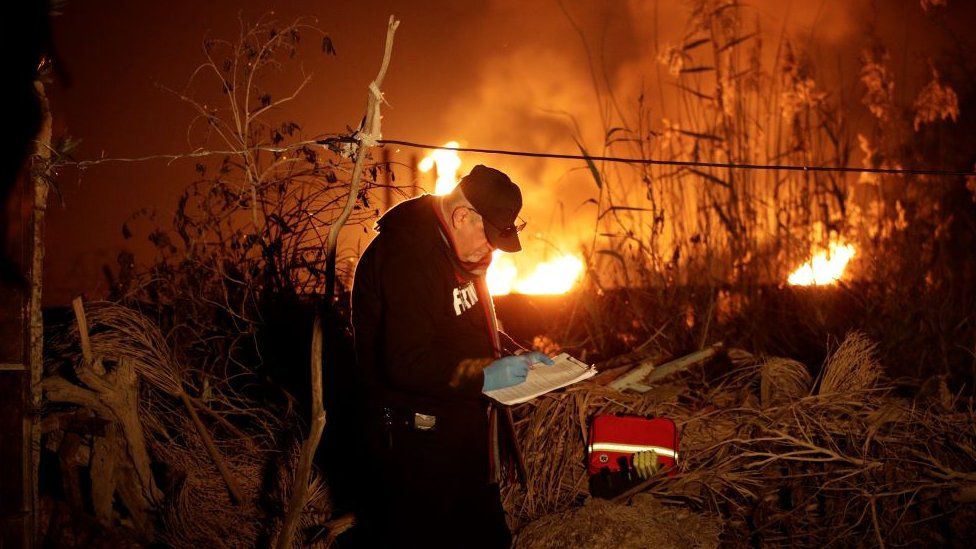
One of the most dangerous storms to hit the US in years has left 2.4 million homes and businesses in Florida without power and floodwaters surging inland.
Hurricane Ian made landfall at around 15:10 local time (19:10 GMT) on Wednesday, smashing into the coast with wind speeds of up to 241km/h (150mph).
Dramatic scenes saw a hospital roof blown off, cars submerged and trees ripped out of the ground.
The category four hurricane was later downgraded to a tropical storm.
However, Floridians were warned that the most dangerous 24 hours lay ahead and the mayor of Tampa urged people to shelter in place through the night into Thursday morning.
“We are going to get the majority of the rain and the higher winds starting about 20:00, and they are going to last throughout the night,” Jane Castor said during a Wednesday evening briefing.
In Lee County – the south-west region where Ian made landfall – police were prevented from responding to reports of looting at a petrol station because of the storm damage.
As a result, a curfew has been declared “until further notice”.
Lee County Manager Roger Desjarlais said that the Fort Myers community had “been – to some extent – decimated”. According to news agency AFP, some neighbourhoods in the city of 80,000 had been left resembling lakes.
State Governor Ron DeSantis described Ian as the “biggest flood event” south-west Florida had ever seen, and announced that 7,000 National Guard troops are ready to lead rescue operations in flood zones.
President Joe Biden will receive a briefing on Thursday from the Federal Emergency Management Agency.
Ian is now continuing to move north through Florida. Jacksonville International Airport, based in north-east Florida, cancelled all flights scheduled for Thursday.
The storm is forecast to emerge into the Atlantic by Thursday morning.
It is expected to reach Georgia and South Carolina on Friday. Virginia has also joined Georgia, North Carolina, South Carolina and Florida by declaring a state of emergency.
Cuba’s western coast was hit by Hurricane Ian on Tuesday. Power has now been restored in some areas after the island was plunged into a total blackout. Two people are understood to have been killed in Cuba and more than 20 Cuban migrants are believed to be missing at sea.
Source: BBC
European champions England will play their final two games of 2022 against Japan and Norway in November.
The Lionesses’ year began with victory in the inaugural Arnold Clark Cup in February, before winning Euro 2022 in the summer.
They will play Japan and Norway at the Pinatar Arena in Murcia, Spain.
Both countries have qualified for next year’s World Cup in Australia and New Zealand, and England will face Japan on 11 November, before facing Norway four days later.
Those matches will follow home friendlies against world champions the United States at a sold-out Wembley, before hosting the Czech Republic in Brighton in October.
“I am really pleased we can continue to test ourselves against strong opposition, especially as we are fully focused on our preparation for the World Cup,” said England head coach Wiegman.
“Japan are one of the best teams in Asia and offer a different style of play to what we are used to.
“Norway had a difficult summer, however they qualified directly for the World Cup and I am confident they will bounce back. They have always proven to be a strong opponent.”
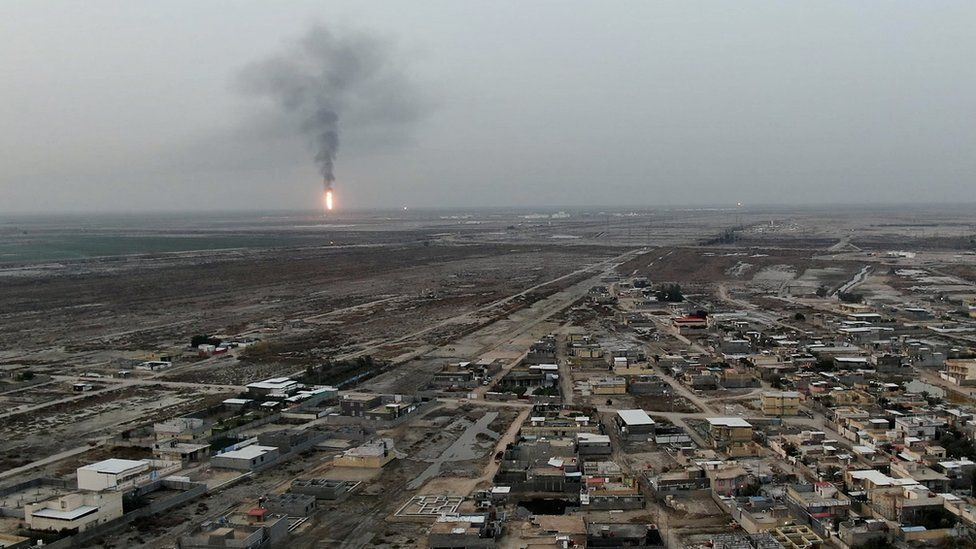
Norway manager Hege Risse was the England interim head coach in 2021 before Wiegman took charge.
And Wiegman added: “The staff and players will look forward to welcoming Hege again.
“With both teams wanting to make a good impression as they build towards a major tournament, it will be a great opportunity to see where we stand.
“Furthermore, I hope a change of scenery and good climate for that time of year can contribute to keeping the players fresh after what has been an exciting and at the same time intense year for all.”
Source: BBC