Time and time again, the horrifying experiences of enslaved Africans working on plantations in the Americas and other parts of the world are told over and over.
During the slave trade, which lasted for well over 400 years, Africans were captured and chained down, forced onto ships and taken into new lands against their will.
Through their harrowing experiences on the ships, many of the enslaved Africans died before reaching their new homes. For the many who survived, it was the beginning of sleepless nights, several hours of work on plantations on empty stomachs and the constant reminder that in their new lives they were nothing but a commodity to their owners.
To inform people about the black experience during the slavery years, much research has been done to help bring to light the accounts.
Revelations on how women were used as sex toys, forced to breastfeed white babies as well as experiences of slaves both on ships and in the fields just to mention a few have all been brought to light.
Related stories
However, it seems that much emphasis is either on the general enslavement or the experiences of women during slavery. Much focus has been drifted away from the experiences of the enslaved men who aside the harsh working hours had horrifying experiences if their own.
To start with, enslaved African men were sexually exploited by their owners as well as slave merchants. After some research, Face2Face Africa found these sexually abusive experiences faced by enslaved African men.
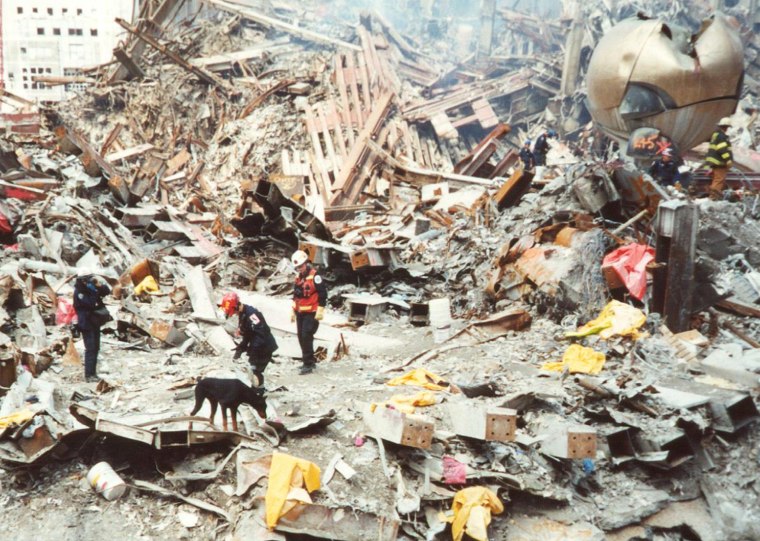
For 27 hours, as the world came to the reality of what is now one of the darkest moments in American history, her body lay in the rubble, pinned down in a single position, with only her left hand let loose, awaiting a miracle.
This miracle would come eventually but it would redefine the entire life of this Trinidadian-born woman, who was the last survivor to have been rescued from the unforgettable ruins of the terrorist attack on September 11, 2001. The attack claimed about 3,000 lives.
Genelle Guzman-McMillan believes that for her life to have been spared from death on that day, she must live the rest of it with a greater purpose in mind, searching for the greater good of others.
Related stories
From her office on the 64th floor of one of the two World Trade Center buildings, Genelle heard a loud, terrible noise from outside on that fateful day. Still unsure what had happened until she saw the news on the television in one of the conference rooms, her fears began taking the better of her.
Soon, along with other fourteen workers on the floor, they were immediately directed to evacuate the building, quickly making their ways down the long stairs.
From the 64th floor, they had arrived on the 13th floor already when she decided, only for a brief moment, to bend down to pick up her 4-inch high heel but that was when her worst nightmares took effect.
Almost immediately, the building crumbled in on her and the others, pinning and trapping her immediately, in what would be the longest wait of her entire life: 27 hours of waiting for a rescue, or what she best terms a miracle.
Miss Guzman-McMillan, 40, was an office assistant on the 64th floor of the North Tower. She was the last survivor to be pulled from rubble of the World Trade Centre, and was pictured soon afterwards in her hospital bed. She has published a book about her experience and gives talks in churches. She lives with her husband, Roger, their three daughters and Roger’s son. | Telegraph.co.uk
Those hours turned into moments of despair. They were not just long and frightening for Genelle, as she sat with her head pinned between two pieces of concrete, her legs sandwiched by pieces of a stairway – they became her moment of reconnecting spiritually to her creator.
It had become too obvious by a certain time that her toes had gone numb, with only her left hand left free to do anything with. She struggled to get her voice through the thick dust, hoping that someone would hear her. Her voice, as she described, would only be whispers in those attempts of crying for help.
But Genelle realized she could still have a communication with one person and so she called out to God.
“Please God, Just give me a second chance. I promise, I promise that I will do Your will.” As she communicated with God, unsure if He was listening or not, she had to bear all the excruciating pain weighed on her entire body, as weakness crippled gradually into her body.
The important work of search-and-rescue dogs is highlighted in the new Animal Planet documentary, “Hero Dogs of 9/11.” | Today
Yet, at that point, all she required of God was a sign; a sign that He had heard her cries and that He was able to save her. That was when her answer came but this saviour was walking on fours: a dog.
Although there were several humans equipped with special gear to search for survivors in the rubble, there were also some more than 300 specially trained search-and-rescue dogs that were deployed at Ground Zero in the days following the 9/11 terrorist attacks. One of those dogs found her.
Genelle Guzman-McMillan (in blue dress) was the last person to be pulled alive from the World Trade Center rubble in New York after the Sept. 11, 2001 terrorist attacks. She is pictured with husband, Roger, and daughters Kimberly, Kaydi and Kellie at their home in Long Island, N.Y., on Aug. 7, 2011 | Today
“It was dark and everything was rumbling. That’s when I felt a hand. It was a hand on my shoulder that said, ‘I’m right here. I’m not going to leave you’” she told CBN.com.
“It’s so awesome that the dogs could have this kind of sense, to find people buried under the rubble,” Guzman-McMillan told Animal Planet for the new documentary “Hero Dogs of 9/11.” “I felt total renewed life in me… That was the most joyful moment.”
Guzman-McMillan has lived till date to share her story, publishing a book entitled Angel In The Rubble, which catalogues her story under the rubble and all that happened to her in those 27 hours.
“This tragedy was a wake-up call for me because it transformed me into a much better, caring person and I’m just forever grateful to be part of this new life. I begged for it, I asked God, I begged and I pleaded with Him to give me that second chance, because I wanted to make that change, and I knew genuinely that I was going to make that change and I did.”
Over the last five centuries, the bata drums have been the lifeline of African and Caribbean culture and religious faithfuls. They are not considered ordinary musical instruments for those who revere the sacred drums and are aware of their significance.
In the early days of ancient civilization, the bata drums were considered to hold the coded language of the ancestors, monarchs and gods, while they also hold some spiritual bearings on the Nigerian Yoruba people. For the Yoruba, the bata drums form an intrinsic part of the worship of the Orishas, according to Naija biography.
For starters, the bata drum is a two-round shaped-headed wooden piece covered with hide with an hourglass form at its mid-section. Between the 1800s and 1950s, the Santera religious faithfuls in Cuba, Puerto Rico and the United States assimilated the bata drums into their tradition.
The drums still play a significant religious role in Yoruba culture. Aside from the religious contributions of the bata drums, they have spiced music of Cuban origin. Many genres of music adopt the rhythms produced by the drums into their composition.
The same is the case in Brazil, where composers of Candomble music dwell on the bata drums in producing their rhythms. Historians trace the origins of the drumbeats from the Caribbean to the enslaved Africans who were brought to Cuba and other islands in the region. The transatlantic slave trade exported the art of the bata drums to Cuba in the 1800s.
They were first used publicly on Cuban radio in 1935 as a part of the broadcast of traditional music. Since then, they have played several roles in the national discourse of the Cuban people.
Not only did the Nigerians bring their drums and knowledge along, but they also added religious practices such as Santera when they settled in Cuba. It is a religious custom that takes its inspiration from the Yoruba tradition, which incorporates drumming extensively in its activity.
The bata drums play the role of talking drums when kings want to communicate coded language to their subjects at public events. Priests use them in invoking prayers, while during social gatherings, they are used to hail the elite under the occasion.
In modern times, they have been popularized by secular artists such as Julito Collazo among others, raising Latin music to the world.
In recent times, the bata drums have been incorporated into several cultures and combined with other musical instruments to create authentic rhythms.
The mother of an 8-month-old baby who died of a suspected fentanyl overdose said her daughter likely ingested the drug while she was in her babysitter’s care. In an interview with FOX 2, baby J’ream’s mother said an autopsy report she received from the Wayne County Medical Examiner ruled her daughter’s cause of death as fentanyl overdose.
The minor is said to have accidentally overdosed on the drug while she was at her babysitter’s Dearborn Heights home on September 15. The babysitter was said to be a trusted person.
“Instead of planning our child’s first birthday we have to plan a funeral for our child,” she said. “We have been told several different stories from the babysitter herself.”
Related stories
A doctor’s report the deceased minor’s mother presented to the news outlet revealed that fentanyl was found in J’ream’s urine. And though she said she couldn’t tell how her daughter consumed the drug, she was adamant the babysitter was to blame.
“Pretty much there was nothing they [medics] could do. Her heart wasn’t pumping without the ventilator and there was no brain activity,” she said.
She also said her deceased daughter and 6-year-old son had a close relationship. “I was going to explain to him what happened, and he looked at me and said, ‘Mommy you know I already know J’ream is dead,’” she said. “It hurt my heart so bad.”
Dearborn Heights Police Chief Jarod Hart told FOX 2 that the department and the Wayne County Prosecutor’s Office are yet to bring any charges in connection with the minor’s death as they are waiting for the official autopsy report.
“It’s definitely something that could have been prevented had you kept an eye on her,” J’ream’s mother said.
A GoFundMe has since been set up to help raise funds to cover J’ream’s burial & funeral.
Rebellion was one of the means of protest employed by the enslaved to registertheir displeasure against the harsh working conditions and their desire to be free from the chains on the plantations.
Although many failed, one of the successful ones recorded in the history of the transatlantic era was in the Dutch-controlled plantations in Berbice, present-day Guyana. This rebellion was successful largely to the innovative approach adopted by the agitating slaves.
They worked out during the weekdays and launched their attacks on Sundays when slaveowners were fellowshipping at the church. Those that intended to escape did so on Sundays after burying their possessions at sites known to them.
Related stories
What fueled the desire to fight for freedom was the long working hours they were subjected to, poor treatment after taking ill and gross abuse of slaves including children, according to CBC News.
Author Marjoleine Kars, who wrote a paper on the rebellion, said many years after the Berbice worked on the plantations, their footprints are still visible in the pottery and artifacts buriedin the ground. She said the objective of the rebellion was to create a free slave colony that would trade with the Dutch in years to come.
But, unmet expectations and civil unrest among the escapees collapsed this vision. Kars indicated that it’s understandable why the slaves embarked on the deadly mission they undertook.
This is because slaves who attempted to flee the plantation were mistreated and abused. She said the enslaved retaliated when the slaveowners targeted and sexually assaulted women. The rebellion in Berbice was initiated by one enslaved leader called Cuffy.
He wanted to build a colony where the Black man would be respected by the colonial authority and initiate trade relations with them. But, the free slaves’ dream turned into a mirage when they could not meet the basic necessities of the escapees as well as provide the weaponry needed to push their campaign.
Instead of providing the escapees with comfort, the leaders were pushing their colleagues into forced labor. This sparked dissent because the free slave colony was mirroring life on the plantation.
When external support failed, the escapees began to dissent and rebelled against their leadership. Deliberations on establishing trade relations with the Dutch failed, further increasing the disenchantment among the free slaves and dampening the spirits of many.
A coup was staged and Cuffy was overthrown. Unable to stand the shame, he killed himself to save his face. He dreamed of a new world order that had less support from his comrades who couldn’t persevere to the end.
The Dutch launched an onslaught and recaptured the slaves with scores of them slaughtered.
Kars indicated that the slaves were tortured with their arms crushed with iron bars and left to die in pain. Some had their skulls struck several times leaving them to die from head injuries. The fortunate ones died by hanging but many were either burned alive or had their skin peeled.
Berbice, according to historians, never regained its glory under Dutch rule again.
A Jamaican woman was found dead after she reportedly consumed over 20 cups of an alcoholic beverage to celebrate her 21st birthday, The Gleaner reported. The deceased, identified as Shannoy Brown, was on Thursday found unresponsive in bed.
Authorities have since launched an investigation into the circumstances surrounding her death. The deceased Kentish District resident is said to have gone on the drinking spree on Wednesday. She was later found unresponsive after she went to bed.
A video that was shared on social media reportedly showed Brown drinking what appeared to be alcohol as she counted to 21.
In related news, a 23-year-old South African man collapsed and died after he partook in a drinking competition, Face2Face Africa reported in July.
Police spokesperson Brig Motlafela Mojapelo said the incident happened at a bar in the village of Mashamba, per Sowetan Live.
Mojapelo said the deceased man was part of a group of people who allegedly partook in a challenge to ascertain who could finish a full bottle of Jägermeister. The money on the table was R200 (around $11).
“One of them immediately collapsed thereafter and was taken to the local clinic, where he was certified dead,” Mojapelo said.
The chief executive of Alcohol Concern, Jackie Ballard, told the Huffington Post that “people need to remember that alcohol is a toxin and can have life-threatening and immediate effects if consumed in a large amount at once.”
“These challenges and fads show just how hard we have to work to warn people of the dangers of binge drinking,” Ballard added.
“Your body can only process one unit of alcohol an hour, and less in some people. Drink a lot in a short space of time and the amount of alcohol in the blood can stop the body from working properly,” Elaine Hindal, who is the chief executive at alcohol education charity Drinkaware, also said, per MEEAWW.
“The current ‘binge drinking’ culture is already bad enough with people downing bottles of wine before they start their night out, without now daring each other to do the same with spirits, which can be very strong,” another specialist, Dr. Helen Webberley, added.
“This is very dangerous for acute liver toxicity and alcohol poisoning, and then there is the worry of long-term liver damage.” She added, “Acute alcoholic hepatitis can be very nasty and fatal, and long-term complications of alcohol abuse can be irreversible and ultimately result in a painful death. No one should take this risk for a few likes on social media.”
Usher Raymond is an American singer, songwriter, actor and producer from Dallas who shot to fame following the release of his self-titled debut album in 1994. Scores of his albums also saw him top the US Billboard 200 chart.
Early career
His music career started in his local church as a choir member. However, his professional music started in Atlanta where he began recording professionally and making guest vocal appearances.
Related stories
Usher was discovered on the program Star Search and signed onto the record label LaFace Records after he auditioned with Boyz II Men’s “End of the Road.” He was subsequently sent to New York in 1994 to live with Puff Daddy as a singing/coaching “camp” prior to the release of his debut album.
He released his debut self-titled album when he was just 16 years and it peaked at No. 25 on the Billboard charts. His second album was also an instant hit, particularly the lead single, “You Make Me Wanna…” which reached No. 1 in the U.K and also became his first gold and platinum-certified single in the U.S.
Aside from his first two albums, he has gone on to release several albums, notable amongst them being “Confessions” which sold about 1.1 million units, “Here I Stand” (2008), “Raymond v. Raymond” (2010), “Looking 4 Myself”, and 2016’s “Hard II Love”.
Besides his own album, he has also featured on other songs, including “How Much” (Mariah Carey, Rainbow) “Same Girl” (R. Kelly, Double Up), and “First Dance” (Justin Bieber, My World).
Awards
Usher has several awards to his credit. He has won four American Music Awards, five Grammy Awards, and nineteen Billboard Awards.
Other business ventures
In addition to music, Usher has other side hustles. He is an actor and his notable movie appearances include Moesha, The Faculty, She’s All That and In the Mix. He owns US Records, co-owns the professional basketball team the Cleveland Cavaliers, and music streaming platform Tidal. Also, he co-owns Raymond Braun Media Group, also known as RBMG Record. He is also into real estate.
Net worth
The singer, songwriter, actor and producer has a net worth of $180 million, according to Celebrity Net Worth.
Personal life
Usher was born on October 14, 1978, in Texas but was raised in Chattanooga, Tennessee, by his mother Jonetta and his father Usher Raymond II. He attended North Springs High School where he later pursued his career as a singer. His ability to sing was discovered by his grandmother.
In 2007, Usher married stylist Tameka Foster and became a stepfather to her three children. The two of them also have two children together. However, they divorced in 2009.
In 2015, he got married to his long-time girlfriend and manager Grace Miguel but filed for divorce in December 2018.
Carnival Cruise Line has fired a White comedian accused of repeatedly using the N-word during a performance. According to MailOnline, the company said Rob O’Reilly will no longer be allowed to perform on its cruise ships.
A video snippet of O’Reilly’s performance was shared on TikTok. In the video, the White comedian is heard telling audience members who have issues with his use of the racial slur to “get the f**k out.” Most of the audience is also heard cheering him on after he makes that statement.
“So on Carnival Cruise right now and they are perfectly fine hiring someone who uses the N-Word multiple times in his show and when the issue was raised he said and I quote ‘if you’re offended get tf out,’” the text on the video read.
Related stories
The video was also shared on Twitter, and users on the platform quickly dug out old racially offensive tweets from O’Reilly, MailOnline reported.
“For me, people are like ski slopes. I’m scared of the black ones,” he wrote in one of his tweets.
Another tweet also read: “When I look at my fellow man, I don’t think ‘That guy’s black’ or ‘That guy’s Puerto Rican.’ I think, ‘That guy’s a felon.”
He also wrote in another: “Did you know 1 in 15 black men has HIV? That’s a pretty insane statistic. Every NBA team probably has one dude with AIDS.”
The White comedian has since taken down his Instagram and Twitter accounts. And though O’Reilly wasn’t heard using the N-word in the video, the user who shared it explained that it was a norm for comedy clubs to prohibit filming during live performances.
Responding to the incident in a statement to TMZ, Carnival said it does not condone O’Reilly’s actions. The company also said the comedian will no longer be allowed on any of its cruise ships.
“We do not tolerate this language or behavior. The person in question is no longer welcome on Carnival ships and the rest of his scheduled appearances have been cancelled,” the company also said in response to a tweet.
Fourteen-year-old Andrew Joseph III was struck and killed by a car while he was trying to cross a highway after Hillsborough County Sheriff’s deputies ejected him from a statefair. In the wake of his 2014 death, the teen’s family filed a wrongful death lawsuit against the Hillsborough County Sheriff’s Office.
On Thursday, a jury determined the sheriff’s office was 90% responsible for Joseph’s death and ordered the sheriff to pay $15 million to his parents, The Associated Press reported. The jury also determined the teen was 10% responsible for his death.
Joseph lost his life after deputies kicked him out of the Florida State Fair. The deputies reportedly took that action after they received a report about a group of teenagers causing a disturbance at the event. The deceased teen tried to cross Interstate 4 after he was ejected, but he was struck and killed by a car.
Related stories
The decision by the jury comes six years after Joseph’s parents filed the lawsuit. And following the verdict, Hillsborough County Sheriff Chad Chronister released a statement commiserating with Joseph’s family.
“Losing a child is a heartbreaking and eternal grief that no parent should have to face, and we continue to keep the Joseph family in our prayers,” Chronister said in Friday’s statement.
Joseph’s parents will equally share the awarded sum. But Chronister can still appeal the decision by the jury.
“That child didn’t do nothing wrong,” the deceased teen’s father, Andrew Joseph Jr. reportedly said after the decision. “Fifteen million (dollars) put some respect on it.”
“We are elated at this moment,” his mother Deanna Joseph also said.
Deputies said Joseph and other individuals were made to leave the fair because of an alleged physical altercation and theft, per The Associated Press.
And after he was ejected from the fair, attorneys for Joseph’s family said the teen’s football coach offered to give him a ride, adding that he turned that down and rather opted to attempt crossing the highway to get to the main gate.
“It was not foreseeable that someone would leave and enter the interstate,” attorney Robert Fulton said.
The attorneys for Joseph’s parents also said authorities shouldn’t have put the juvenile in such a position.
“A kid should never have been put in this position,” attorney for the plaintiffs Chris Anulewicz told the jury. “He should not have been put in the position of trying to do this on his own.”
When you think of Cape Town,what do you imagine? Perhaps you picture Table Mountain, penguins on the sand, or the stunning beaches that surround this city.
Cape Town is often considered one of the most Instagrammable cities in the world. For the past seven years, it has been voted the top tourist city in the world by the Telegraph Travel Awards.
But beyond the picture-perfect version of the city, a different, more complex reality exists — set against the backdrop of the world’s most unequal country.
Here we meet two of the photographers working to revealing a deeper, grittier and less publicized side of the city through their images.
Ismaiel Isaacs, the portrait photographer of the Cape Flats
Ismaiel Isaacs, 31, grew up in Manenberg, in the Cape Flats — a flat, sandy urban sprawl on the outskirts of Cape Town’s city center. Beginning in the early 1950s, under South Africa’s apartheid government, people of color were forcibly relocated there earning it the reputation of “apartheid’s dumping ground.”
Today, it is home to over a million people, most of whom are of mixed heritage.
Even after 26 years of democracy, it remains a notorious part of Cape Town, socio-economically marginalized from the city center and surrounding suburbs.
As Isaacs tells CNN, living here is a struggle; on a daily basis, people face gang violence, poverty and the risk of death due to ongoing drug wars.
“I try and convey a message of the beauty that’s in the struggle,” Issacs says. “[It’s] not only the struggles that we go through that make us stronger people, but people that live here — they are beautiful.”
His photographs focus mostly on portraits of people from these communities. He describes his aesthetic as raw, unfiltered and emotive.
“My story of Cape Town in my photography is the story of not just mountains and beaches, but there’s also an unpolished side of Cape Town that has been forgotten about,” he says. “And I feel that there’s a need for us to recognize it, because there’s a lot happening here. And actually, in the Cape Flats, we need support.”
Isaacs also says that he uplifts people through taking their photos.
“I’m trying to take the negatives and bring it into a positive, because as soon as I pick up my camera and ask someone, ‘Look, here, can I take a picture of you?’ What are they going to do? They’re going to smile,” he says.
“For that moment, I’m making them smile and that’s fulfilling enough for me.”
Barry Christianson, the documentary photographer
Barry Christianson, 38, grew up straddling two different worlds: during the week, he lived with his mom in the Cape Flats, while his weekends were spent with his dad in the middle-class suburbs of Cape Town.
“Cape Town is a fundamentally fractured city, as divided as it is beautiful,” Christianson says. “There are multiple cities existing side by side — some for the haves and others for the have-nots.”
For as long as he can remember, social and geographic disparity have impacted the way he has viewed the city he calls home. After spending 16 years as a computer programmer, he felt compelled to turn his photography hobby into a full-time job.
“From colonialism through apartheid to democracy, people of color have been dispossessed of land, livelihood and freedom of movement,” Christianson says.
“Having to navigate the two realities and all that came along with them made me acutely aware of spaces I inhabited,” he explains. “A lot of my photography deals with issues around space and how space is created, who’s in the space, who creates it and what happens to the space when different people occupy it.”
He brought CNN along for a tour of locations he’s captured that illustrate these themes — like Saunders’ Rocks, a former Whites-only beach. Today, Christianson believes it is one of the most racially integrated beaches in the city.
He took one of his favorite photos at this spot — a Muslim woman wearing a burkini, something he says you might not see in other parts of the city.
A lot of his work also focuses on people who have faced more recent eviction, especially in areas of inner-city gentrification.
“As developers buy and sell valuable properties in the city center, black and mixed-race South Africans who managed to stay in the inner city throughout the apartheid era are being evicted and forced into low-quality housing on the city’s outskirts”, Christianson says
“[Cape Town is a] city that keeps moving people around, a very specific group of people around, who are never really allowed to stay in one place permanently,” he added.
That legacy of forced removals remains a deeply sensitive and difficult issue in South Africa today, which has had the most profound effect on non-white communities.
He often pairs essays with his images and is one of a handful of documentarians committed to bringing these stories and the people behind them to light.
“Even though I photograph space,” he says, “I try to sort of bring out personal stories and personal histories, and how people relate to Cape Town.”
The Parliamentary Committee on Local Government and Rural Development has pledged its support for the Decriminalising Vagrancy Laws and Advocacy (DVLA)Project, a Crime Check Foundation (CCF) initiative geared towards reforming Ghana’s justice system.
As a result, the committee’s leadership promised to support advocacy and reform efforts targeted at stopping the incarceration of impoverished people who broke the by-laws of Ghana’s Metropolitan, Municipal, and District Assemblies (MMDAs).
The committee’s leaders made these comments at a meeting with a CCF team led by Mr Ibrahim Oppong Kwarteng, the Executive Director and a prison journalist.
The discussion focused on the findings and recommendations provided as part of the implementation of the CCF-OSIWA (Open Society Initiative for West Africa) DVLA Project.
The project, which strives to stop abuses and jailing of vagrants and other vulnerable individuals who break MMDA by-laws, directly contributes to poverty reduction and access to justice for the poor, in line with the SDGs.
The committee agreed that jailing vagrants and other poor people for minor offences under local government by-lawscould be reduced through nationwide awareness of MMDA by-laws to reduce violations, advocacy for the passage of the Non-Custodial Sentencing Bill into law, and rapid socio-economic development.
Mr Cosmos Kwame Akorli, the Project Officer, who presented the findings and recommendations to the Committee, stated that CCF was obliged to account to Parliament and the people of Ghana through timely input that fostered appropriate responses from the government and other stakeholders.
He emphasised that the Committee’s findings and recommendations would allow it to take appropriate steps to prevent harassment, arrests, fines, and incarceration of vagrants and other voiceless people under municipal by-laws, as these laws disproportionately harm the poor.
The key results provided were a lack of conscious mobilisation and education of residents on MMDA by-laws, as well as a lack of access to the laws by individuals.
Others included a lack of adequate social amenities such as restroom facilities, proper market centres, and parking terminals, which led to the harassment, arrest, fining, and imprisonment of impoverished people.
According to the findings, it exacerbated poverty for the impoverished people, their families, and the nation.
Mr Akorli mentioned, among other findings, the deliberate targeting and confiscation of ‘goods’ from poor people who sold them in “unauthorised places,’ which remained an alleged major source of extortion by MMDA Taskforces, and unjustified police swoop on homeless and unemployed youth.
He also listed the findings as physical abuses MMDA Taskforces subjected poor people to, thereby affecting human dignity and their socio-economic conditions.
“The lack of the Legal Aid Commission’s offices to provide legal support for poor and voiceless citizens facing prosecution for violating by-laws affects justice delivery,” he said.
Mr Kwarteng, the Executive Director, CCF, recommended increased knowledge of local government by-laws through adequate mobilisation and sensitisation to reduce violations of the laws resulting in harassment, abuse, arrests, fines, and imprisonment of poor people.
He added that under the current system, impoverished criminals who were unable to pay the penalties levied on them were detained, which exacerbated the already dreadful prison conditions and perpetuated poverty and urged the government to expedite the steps leading to the adoption of the Non-Custodial Sentencing Bill into law to provide for alternative sentencing regimes for minor offenders if enacted.
“For the time being, impoverished individuals who break local assembly by-laws are imprisoned and fed with government money, although they could be employed to clean the streets and choked gutters to improve sanitation in major cities and towns,” he said.
As a result, he urged the government to provide the MMDAs with enough logistical assistance to prevent abuses against the weak in society.
Mr Edwin Nii Lantey Vanderpuye, Ranking Member of the Committee and Member of Parliament for Odododiodo, stated that the issues identified by CCF affected his constituents and that it “presents a wonderful opportunity to collaborate to have the issues addressed because once your constituents have a headache, you have a fever.”
While admitting that certain abuses and arrests happened, he recognised that “application of the by-laws is a difficulty, because poor people are regarded as if they are not human beings.”
Mr Emmanuel Akwasi Gyamfi, Chairman of the Committee, praised CCF for creating a good agenda to enhance sensitization on by-laws and lobbying for changes, noting that many had not considered the consequences of local assembly by-laws.
He bemoaned the fact that impoverished people were imprisoned for small offences, even though MMDAs did not educate their citizenry on their by-laws.
“I further call for nationwide implementation of the project since increased awareness of the by-laws alone cannot prevent 50 per cent of offences,” he said.
He asked the Parliamentary Committee, the Ministry of Local Government and Rural Development, and CCF to work together to identify and remove unnecessary by-laws.
Mr Vanderpuye said pressure should be put on Parliament to play its role in getting the Non-Custodial Sentencing Bill enacted because “if the bill is not passed by the current Parliament, it will become stillborn.”
The Committee on Local Government and Rural Development has the authority to investigate and report to Parliament on local government and rural development problems in Ghana.
Mr Emmanuel Akwasi Gyamfi, Chairman of the Committee; Mr Suleman Adamu Sanid, Vice Chairman; Mr Edwin Nii Lantey Vanderpuye, Ranking Member and Mr Benjamin Komla Kpodo, Deputy Ranking Member, were present at the meeting.
Esports is the fast-growing, major money-making world of competitive video gaming. This global phenomenon is in a league of its own, where athletes may not look like your traditional sports stars – yet have huge earning potential, massive brand endorsements and even their own fans.
While many of the top players reside in Europe or the US, the African continent is looking to share in a global market that pulled in over $1 billion in 2019.
One consulting firm projects Africa’s gaming industry will increase by 12% in the next five years, with Egypt and South Africa leading the industry in revenue.
This year, South African esports athlete Thabo “Yvng Savage” Moloi made history by becoming the first-ever player from Africa to be sponsored by Red Bull. At just 18 years old, he is South Africa’s top-rated FIFA player on PS4 and is ranked 73rd in the world.
But some of the continent’s most promising stars are in East Africa. Meet two Kenyan gamers who are looking to help put Africanesports on the global map.
Law student by day and pro-gamer by night, Sylvia Gathoni – better known by her gaming handle “Queen Arrow” – is Kenya’s first female professional esports athlete. Her area of expertise is the fighting game “Tekken 7.”
While a 2019 study found that women account for 35% of all gamers worldwide, Gathoni says she is among only a handful of female esports players on the continent – which she is determined to help change.
“We don’t have many women, so you don’t have a support system from people who share the same gender,” Gathoni says. “I have to make sure that I’m an example to other women, and other people who aspire to be in the gaming industry.”
She has been a regular on the gaming scene since 2018 and today, at just 22 years old, is ranked 13th in Kenya. She is also the first woman in East Africa to be sponsored by a global brand.
But her rise to the top has not been without challenges; the biggest hurdle, she says, has been sexism in a male-dominated industry – an issue that is gaining more attention across the world of esports.
“There’s some men who do not like the idea that I’ve made it as far as I have,” Gathoni says. “They say that the only reason that I’ve gotten signed is because I’m a woman and it’s not because of my hard work and my skill.”
While she admits those comments are hurtful, Gathoni says she is determined not to let them get in the way of her plans, which include using her law degree to help shape the future of the industry itself.
“I hope to at least create some of the laws that are going to be used as the foundation for the gaming community,” she says, “and also create laws that regulate micro-transactions,” which are small in-game purchases of virtual items.
Gathoni also hopes to use her platform to prove that esports is a viable career path.
“Right now, for a lot of people, it seems like we are just wasting our time, resources and energy,” she says, adding that pressure remains to pursue a more “conventional career path … like law or medicine.”
“I really hope that will change in East Africa, and here in Kenya.”
Born and raised in the heart of Kibera, Kenya’s largest slum, Brian “Beast” Diang’a is one of the country’s most celebrated Mortal Kombat players. “If it wasn’t for gaming, I wouldn’t be here today,” he tells CNN. “I choose gaming instead of crime.”
His journey into esports began as a kid, spending all of his spare time in a Kibera gaming den called “After Homework,” where he says he would go to escape his reality.
“We would go without food for days, (and) no water,” Diang’a says of his life outside gaming. “The whole of high school I was wearing one pair of shoes.”
But through gaming, he found purpose. “The good thing about Kibera is you are low and you can’t go any lower than where it is,” he says. “The only place left for you to go is to go higher. So I just kept pushing myself and telling myself I don’t have limits.”
Unable to afford a console of his own, he honed his skills by watching YouTube tutorials and studying other players online. In 2014, he began entering local tournaments, where his professional career and infamous gaming handle “Beast” took off.
Since then, he has played a significant part in growing the local industry and developing esports in Kibera, where he still lives, and runs gaming dens for kids from the community.
“When the first tournament was held in Kenya, I think the registration at most was 12 people,” Diang’a says. “Currently I work with Pro Series Gaming and every week we host tournaments for different platforms – mobile, PC, and console,” adding that as many as 50 players will now register for those events.
Across Africa, the esports industry still faces significant challenges including slower internet connections, lack of infrastructure and heavy import duties on equipment – making them hard and expensive to come by.
But Diang’a takes it all in stride as he continues to work towards ensuring that Kenya in particular and Africa as a whole become global forces in this online arena.
“The reason I’m in this space is I want to improve or help improve on what has already been done by the ones before me,” he says. “And I feel it’s my duty to make it better for those who are coming after me.”
For 42-year-old Ghanaian Canadian artist Ekow Nimako, Lego is more than just a kids’ toy. A trickster deity in the form of a spider, a flower girl holding a giant bee and a Ghanaian kingdom in the year 3020 are all sculptures that he has built using only black Legos.
“I’m making art,” said Nimako. “This is fine art. It’s not a hobby, it’s not a toy, it’s not part of the Lego fandom, it’s not goofy. It doesn’t fall into a lot of categories that Lego creations fall into.”
He started making Lego sculptures in 2012 and his career took off two years later when he received a grant to exhibit his work in Canada during Black History Month. “I started realizing that not only did I enjoy making art with Lego, but it was important that I made Black art very specifically,” he said.
Nimako uses black Lego bricks specifically for three main reasons. The first is technical;black is one of the most common Lego colors, so there are many different pieces available for him to use.
The second is that he simply likes the color. “I think there’s something that is so sophisticated, something that is just expansive about black, and then there’s also something that is dark and sometimes foreboding or haunting about black. It has so much spectrum to it,” he explained.
However, the most important reason is that the beings that he creates are “unequivocally Black. Despite their features or what I may do with them, they’ll always be regarded as Black,” he said.
The building blocks of life
In 2014, Nimako made his first human sculpture, “Flower Girl,” which “spoke to the innocence lost of young Black girls that didn’t get a chance to be like traditional flower girls in the West — speaking to the girls that came here as a result of the transatlantic slave trade,” he said.
“Flower Girl” was the first human sculpture that Nimako made. Credit: Sam Engelking
The sculpture, which is now touring the UK, was initially the size of a six-year-old girl but as his technique developed and more Lego pieces were released, he aged her and enhanced her aesthetic. She is now the size of an average 10-year-old.
Meet the Nigerian visual artist turning coffee into fine art
“There’s an intrinsic essence of life in my work,” said Nimako. “The sculptures are inanimate objects made of plastic. There’s something that’s quite synthetic about them. But it’s that synthetic quality that I strive to transcend with life, (such as by) spending a lot of time developing the eyes of each sculpture.”
It takes between 50 to 800 hours to make each sculpture, according to the Lego artist, who is “never in a rush.” For a sculpture that he is currently working on, he spent two hours building one section of a jaw, trying to find the right angles and the right parts, and “still didn’t finish.”
Named “Kadeesa” by his wife, this cat sculpture draws on the griffin, a mythological creature that is both lion and eagle, creating what Nimako calls a “griffyx.” Credit: Sam Engelking
He expects that the building process could become longer with each artwork as he discovers more Lego pieces and tries new techniques to make his artworks more dynamic.
“It’s a constant process of evolution,” he said.
‘Resistance is rooted in imagination’
Nimako considers himself to be a “futurist” who blends Africanfuturism, Afrofuturism and Afrofantasy. While Africanfuturism focuses on the experience of those on the African continent, Afrofuturism is more focused on the African American experience of looking into the future, drawing from the past and connecting to the continent, according to the artist.
In his “Building Black: Civilizations” series, Nimako reimagines medieval sub-Saharan African narratives. His “Kumbi Saleh 3020 CE” piece, which is made up of around 100,000 Lego bricks and can be found in the Aga Khan Museum in Toronto, is named after the capital city of a medieval Ghanaian kingdom. The artist explores medieval West Africa and reimagines what it would look like 1,000 years in the future.
With a spotlight on sustainable fashion, this South African accountant-turned-designer is turning heads on the runway
Nimako hopes for an “inclusive future” that acknowledges the history of anti-Black racism and how “utterly disruptive” it is, and recognizes the role of Afrofuturism in allowing people to “envision a better world.”
“My wife always says, ‘all movements of resistance are rooted in that imagination.’ You have to imagine the freedom, the emancipation. You have to imagine this struggle being over.
You have to project that in order to rise up, in order to resist. What else are you resisting for, if not for that Promised Land?” he said. “Even art is a form of resistance and it’s been used as a form of resistance for a very long time.”
Each sculpture takes between 50 to 800 hours to create, and Nimako expects the building process to become longer as he tries new techniques to make his artworks more dynamic. Credit: Sam Engelking
He recently released online kits for his “Building Beyond” workshop, which helps people to imagine and build representations of their own descendants from Lego using facial templates called “legacies.” He thinks that “it can help to foster sensitivity and understanding of complex cultures and ethnic groups.”
A Lego documentary
His work is being recognized beyond the art world — including by Lego itself. A Lego documentary based on his work will also be released in February, according to the artist, who added that “the Lego Group has been really supportive of my work. After realizing what I do, there’s so much more that we’re going to be doing together.”
Nimako is currently building a sculpture called “The Great Turtle Race,” which depicts Black children racing on the backs of two mythological turtles to “capture the essence of childhood.”
“We’re Black artists when we’re making art,” he said. “You don’t get to just exist as an artist. There’s so much complexity and so much nuance and so much culture to explore. It fills me with so much joy … knowing that Black children are going to be able to engage with my work and see themselves reflected.”
As recently as 10 years ago, Africa’s technology industry was sparse. But as a result of advancements in mobile phone technology as well as better internet connections, the continent has transformed – unearthing countless innovators and entrepreneurs who make use of tech to solve everyday problems.
Out of 1.3 billion Africans, there are 477 million unique mobile subscribers, with the mobileindustry contributing $155 billion to the continent’s GDP in 2019, according to data from the Global Systems for Mobile Communications (GSMA).
Nigeria, Africa’s most populous country, has 90 tech hubs – the most on the continent. In 2019, one report found startups in Nigeria raised nearly $400 million, more than double the amount from the previous year.
In recent years, the West African nation has become an incubator for some of the continent’s biggest startups – including online marketplace place Jumia and Andela, a talent accelerator.
The result is a generation of tech entrepreneurs or “techpreneurs” whose startups and innovations are helping to improve the lives of people in Nigeria and beyond.
CNN spoke to three startup founders to understand how they are shaping the country’s technology ecosystem.
Bosun Tijani, Co-Creation Hub founder & CEO
Co-Creation Hub (CcHUB) is one of Africa’s largest networks of tech talent, with a presence in Nigeria, Kenya and Rwanda.
Bosun Tijani, founder of the innovation center, told CNN that he started CcHUB to create a space for Africans to develop life-changing tech. Since its creation in 2010, it has served as a meeting place for innovators and entrepreneurs to share their plans and execute ideas, especially in Lagos, Nigeria’s commercial center.
“Science and technology can leapfrog development across Africa … there are so many smart people on this continent, we just need to build a platform that will enable them to create,” Tijani said.
Through CcHUB, the entrepreneur has been able to provide tech startups with resources needed to grow their ideas into sustainable businesses.
Beginning in 2016, for example, through its 18-month incubation program, the hub helped provide the founder of Lifebank, a health logistics company in Nigeria, with a workspace, expert advice on how to incorporate tech into her business, and funding.
But for Tijani, it is not just about supporting other techpreneurs. He recently launched STEM Cafe, a learning center in Lagos, where kids can dream up big ideas through Science, Technology, Engineering and Math (STEM).
There, children engage in a series of activities and informal sessions including coding challenges, computer games and prototyping with 3D printers.
“I want to build a generation of people in Africa with strong belief in science, people that are comfortable in science that can apply science to change things,” Tijani said.
The cafe, he said, does not use regular school curriculums – instead, it applies a non-linear way of teaching that encourages kids to be creative and to innovate.
“It’s a free space, we don’t judge … what we want to achieve here is to build creative confidence in kids.”
Odunayo Eweniyi, PiggyVest co-founder
All over the world, women-led technology startups are in short supply.
In Africa, only 9% of startups have women in leadership positions, according to data from 2016. But even these grim numbers can’t deter Odunayo Eweniyi, co-founder and chief operating officer of PiggyVest, a financial technology company.
Eweniyi told CNN that despite experiencing microaggressions as a woman in a male-dominated space, she is focused on her job – teaching young people the value of their money by helping them save it.
PiggyVest is an automated savings and investment platform that helps Nigerians put aside small amounts of money daily, weekly or monthly.
“We’re targeting people that have smartphones and already have bank accounts. The ideal user of our platform would be young adults, mid-level professionals, not earning too much, not too little,” Eweniyi explained.
It works like a piggy bank but offers a variety of financial services, including investment options. According to Eweniyi, the company now has more than two million registered users.
The entrepreneur was inspired to start PiggyVest in 2016 when one of her co-founders, Joshua Chibueze, came across a viral tweet of a woman who had saved 1000 naira ($2.62) in a wooden box every day for an entire year.
“Joshua, actually brought the tweet to our group chat, like ‘Hey guys, is there a way we can innovate around this?’ So, with some modifications, that night, we came up with a working prototype of the product,” she explained.
Now, four years after that initial prototype, PiggyVest has helped its users save over $250 million, according to Eweniyi.
Chika Madubuko, Greymate Care co-founder & CEO
Another sector in the Nigerian startup space where techpreneurs are changing the game is health care.
In 2016, Chika Madubuko launched her health care technology company, Greymate Care, after a member of her family fell ill. The company provides on-demand care for vulnerable patients.
“Greymate Care was born out of personal pain, which was finding a caregiver for my grandmother when she was sick. It was pretty gruesome in my family then because my mom and sister would try to balance their own lives trying to move her between both houses, you know, trying to find a caregiver,” Madubuko told CNN.
Nigeria’s ‘Techpreneurs’ solving real-world problems with solution-based startups
According to Madubuko, Greymate Care now manages over 1,000 caregivers, all of whom are trained in food hygiene, principal care, health and safety, and emergency first aid.
It works as an online platform where patients in need of care can select the type of services they require and be matched with the appropriate caregivers.
For Madubuko, Greymate Care’s origins are personal. While studying at university in England, she volunteered in a hospital as a caregiver. “I learned to be a passionate and a very efficient caregiver,” she said. “And today I tell people that I am the best person to run Greymate Care because I have been on the supply side where I was a caregiver and demand side where I needed care.”
Embattled galamsey queen, Aisha Huang, and her three accomplices, currently on trial over illegal mining activities, have once again been denied bail
by an Accra circuit court. This is their third failed attempt at requesting bail, following their arrest earlier this month.
Prior to the recent bail application, the prosecution had requested more time to advance in their investigations. Due to this and several other reasons, the presiding judge, Samuel Bright Acquah, has insisted that Aisha Huang and her counterparts remain in custody while investigations are ongoing. They are, therefore, to remain in custody for a fortnight.
Aisha Huang’s return
The four, En Huang, Jong Li Hua, Huang Jei, and Huiad Hiahu, have been charged with engaging in the sale of minerals without a licence and mining without a licence. The Attorney General, Godfred Dame, on Friday, September 16, 2022, included fresh charges against Aisha Huang. The four (4)charges filed against her were in respect of offences
committed between 2015 and 2017. They are:
Count One: Undertaking a mining operation without a licence
contrary to section 99(2)(a) of the Minerals and Mining Act, 2006, Act 703 as amended by the Minerals
and Mining (Amendment) Act 2019, Act 995.
Count Two: Facilitating the participation of persons engaged
in a mining operation contrary to section 99 (2)(a) & (3) of the
Minerals and Mining Act, 2006, Act 703 as amended by the Minerals and Mining (Amendment) Act 2019, Act 995.
Count Three: Illegal employment of foreign nationals contrary to Section 24 of the Immigration Act, 2000 (Act 573).
Count Four: Entering Ghana while prohibited from re-entry contrary to section 20(4) of the Immigration Act, 2000, Act 573.
The Fight against galamsey
The laws of the country strictly prohibit illegal mining activities. The Minerals and Mining Act proscribes sanctions for people who engage in such activities.
The Act proscribes sanctions in the form of a fine and imprisonment of between 15 and 25 years for each of the following crimes: buying or selling minerals without a licence or authority; mining in breach of the law; abetting any breach of the mining law; contracting a non-Ghanaian to provide mining support services; abetting the breach of the mining laws by a foreigner; fabricating or manufacturing floating platforms or other equipment to be used for mining in our water bodies;
and providing an excavator for an illegal mining operation.
The Act further provides that a non-Ghanaian who illegally mines or abets illegal mining attracts a large fine and imprisonment of between 20 and 25 years, and shall be deported after serving the sentence.
However, this was not seen in the case of Aisha Huang when she was initially arrested in 2017 and supposedly deported in 2018.
However, the activities of illegal miners are still on the surge due to failure of authorities in charge to strictly enforce the laws.
Meanwhile, “Operation Halt,” an anti-galamsey task force launched by the government to curtail illegal mining activities in the country, is still in operation.
Recent arrests carried out in relation to galamsey.
Aside from Aisha Huang and her accomplices, the Operation Halt task force has also facilitated the arrest of some 164 persons, comprising Ghanaians and foreign nationals, after a three- day operation at Anyinam and Mampong.
The Judge’s call on the judiciary to help in the fight against galamsey.
Meanwhile, the judge, who presided over Aisha Huang’s case
on Tuesday, September 27, 2022, called on the judiciary to help in the fight against the canker.
On the shores of North Africa, ancient cities have stood for millennia. The columns of Carthage, in modern-day Tunisia, are a reminder of the once bustling Phoenician and Roman port, and along the coast in what’s now Libya, lie the majestic ruins of Sabratha’s Romanamphitheater close — perhaps too close — to the sea.
Africa’s iconic natural sites date back even further, such as the ancient coral reef of the Seychelles’ Aldabra Atoll in the Indian Ocean, thought to be around 125,000 years old.
But extreme weather events and rising sea levels mean that all three — and around 190 other spectacular heritage sites that line Africa’s coasts — will be at risk of severe flooding and erosion in the next 30 years, according to a recent study published in the journal Nature Climate Change.
Sea levels have been rising at a faster rate over the past three decades compared to the 20th century, the research says, and climate change hazards such as floods, heatwaves and wildfires are becoming more common.
It found that 56 sites are currently in danger if a “once in a century” flood struck, and that by 2050 — if greenhouse gas emissions continue on their current trajectory — this number could more than triple to 198 sites.
“There is a local value, an international value, an economic value … and an intrinsic value (to these heritage sites),” Nicholas Simpson, an author of the study and postdoctoral research fellow at the African Climate and Development Initiative at the University of Cape Town, tells CNN. “There are some monuments and sites and spaces that we don’t want lost for the next generation.”
Simpson believes the findings serve as an important wake-up call to increase climate adaptation measures and funding across the continent. “There’s an important message of loss and damage from climate change to heritage, which we hope will mobilize greater intent (and) action,” he says.
This is particularly pertinent in Africa, where the links between climate risk and heritage have been mostly ignored, says Simpson. Past scientific research has identified cultural sites endangered by climate change in the Mediterranean, Europe and North America, but this is the first continent-wide assessment of Africa.
“(The link between) climate change and heritage in Africa is gravely under-researched, and compared to other continents, we know very little,” he says, adding that a 2021 study found that between 1990 and 2019, research on Africa received just 3.8% of climate-related global research funding.
In this latest study, Simpson and his colleagues mapped out a total of 284 heritage sites that are recognized or under consideration by the UNESCO World Heritage Centre and the Ramsar Convention on Wetlands of International Importance, in the 39 countries that comprise the African coast.
They overlaid this geographic data with a highly intricate model projecting sea level rise and global warming levels under both a moderate and high emission scenario. The moderate scenario assumes global greenhouse gas emissions will stabilize before the end of the century, while in the high emission scenario — sometimes referred to as “business as usual” — they continue to rise, consistent with the current global pace, until 2100.
From there, the researchers calculated the likely percentage area of the site exposed to a “once-in-a-century” extreme coastal flooding event.
Emma Gatland grabbed her fish-eye lens and pointed it up towards the sky.
In her frame was a rhino, tied up by its snout and four feet, being airlifted by a helicopter – while suspended upside down.
It was a peculiar sight, but for Gatland, the photo she captured in that moment demonstrated a connection between nature and humans. It’s something the 39-year-old wildlifephotographer strives for with every click of the shutter.
“You want to get into a low angle, get the feeling of what is happening — the creature being unharmed, but given the opportunity to live a little bit longer — and documenting what conservation (is),” Gatland says.
The rhino she photographed was undergoing relocation due to security reasons from the Hluhluwe-Imfolozi Game Reserve in KwaZulu-Natal, South Africa. For these endangered animals, airlifts are the best option for their health, as being upside down opens their airways.
Born in Zimbabwe, Gatland grew up in South Africa and developed her love for nature after years of family holidays in diverse outdoor environments. “These became my ultimate happy places,” Gatland says, adding she was drawn to “the rawness, the beauty, the vastness (and) the quietness.”
She purchased her first camera for a trip to Morocco and says she quickly fell in love with the combination of “the technical and artistic.”
The first time she held that camera, “it just felt right,” Gatland recalls. “I remember this ecstatic feeling. Every time I pick up the camera, I still feel the same way.”
Pushing the boundaries
As Gatland’s camera equipment became more advanced, so did her creativity, attention to detail and technical knowledge.
“The ultimate privilege in life for me is of capturing a moment in time that is gone in a click, never to happen again,” Gatland says, “yet (giving it) a timeless acknowledgment and honoring that it was there.”
Patience is the key, particularly as a wildlife photographer waiting for something “epic,” she adds. Creating a composition that puts perspective on the subject while capturing it in a creative sense is the trickiest part, taking into account unpredictable factors such as lighting, weather and the animals themselves.
“It’s engaging in the place you’re located in … and documenting it in its rawest form that excites me, but it’s also a challenge at the same time,” Gatland says.
Inspired by photographers who bend the rules of conventional photography, Gatland has developed her own artistic sense by utilizing different techniques and playing with light and color.
She points to Chad Cocking, a local wildlife photographer based in Timbavati, in northeastern South Africa, as an example of someone who brings in all the proper camera gear and selects the appropriate settings, “and then put(s) his little creative spin on it,” she adds.
Her dream photograph is to capture something in epic lowlight, like “a lion breathing out in the morning mist of a coolish air in Kruger National Park with the sun rising behind it, or a leopard up in a marula tree with the moon setting behind it,” she says.
A bigger purpose
Gatland says she wants her photos to tell a story and hopes that they draw attention to some of the urgent issues that these animals face — particularly rhinos, which are under threat from poachers seeking their horns.
The white rhinoceros, which frequently appears in Gatland’s images, is classified as near threatened — with just 18,000 of the species left in the wild.
Gatland is also an example of the growing number of women in Southern Africa’s nature photography field.
There weren’t many female photographers in the business when she began her journey, Gatland says, but she finds that the the ones who are present “bring a softer side to the subject.”
She hopes her photography will achieve international recognition and inspire other female photographers, whether young or old, to share the way they see the world.
“Keep shooting and get to know your camera,” Gatland says. “Create something that’s not out there.”
Agriculture has a vital role to play in Africa, as enabling sustainable growth on the continent will require addressing the issue of food security. Because agriculture still remains a predominantly labour-intensive industry in many African countries, it can also provide much-needed employment opportunities for young people.
Absa Group, one of Africa’s largest diversified financial services groups with a presence in 14 countries, is the largest agricultural funder in South Africa, and has been working hard to grow its lending book in other African markets.
Roux Wildenboer, Sector Head: Agriculture at Absa Corporate and Investment Banking (CIB), says the continent currently relies heavily on food imports. This needs to change to improve food security and meet the needs of a fast-growing population. “There are countries with enormous production potential, such as Kenya, Tanzania, Zambia, and Mozambique,” he says.
While Kenya is famous for tea and horticultural products, Tanzania is a major producer of cashew nuts, Zambia’s largest crop is maize, and Mozambique produces a range of starch products (rice, maize, sorghum, and cassava). Ghana – the world’s top cocoa producer – is another country where Absa CIB is focusing its efforts, as Absa already has a presence there.
“The investment scenario in agriculture in these regions has traditionally been poor, but we’ve seen green shoots over the past 10 to 15 years,” says Wildenboer. “We’ve seen overall agricultural production in Africa increasing, but not nearly enough to become food secure. However, it is encouraging to see increasing investment from the private sector. What’s needed for further agricultural growth (beyond an enabling regulatory environment) is hard infrastructure, such as road and railway networks, and electricity.”
Roux says that financial institutions have a role to play in helping to fund agricultural and infrastructure projects (such as storage facilities or water and irrigation projects), but that technology is also an important consideration.
“Most of the production increases in Africa over the last 20 years have been obtained by increasing area under cultivation and not productivity. Technology is going to play an enormous role in boosting productivity,” he says. “For example, soil testing, data capturing and information analysis can assist small-scale farms with planting the right varieties for their conditions. Agricultural technology is also about what type of fertiliser you should use, and weather technology that helps to adapt planting schedules.”
Not all solutions are high-tech, however. Some smaller-scale farmers are making use of collective schemes where they share the cost and access to tools, such as tractors or harvesting equipment. Roux believes that partnerships that contribute to more inclusive agricultural development are key in establishing the agriculture economy of the future.
“Absa recognises a significant opportunity to finance the trade flows (import and export) of agricultural commodities regionally and internationally, and also to finance new and expanded food processing facilities in replacement of imported products and to enhance export earnings,” he says.
The drive towards localisation
Isana Cordier, Sector Head: Consumer Goods and Services at Absa CIB believes that localising food production is another priority for the continent. Covid-19 disrupted the sector and showed weaknesses in global supply chains, highlighting the need for countries to produce more of their own food. This also plays into trends like conscious consumerism, further driving localisation efforts.
“More and more, retailers are looking to source local and sustainably grown produce to meet consumer demands,” Cordier says. “Consumers are wanting products that are ethically sourced, locally produced, and organic, for example, which affects supply chains. There’s therefore a lot of pressure on retailers to really understand those supply chains. This is not only because people want to support conscious consumerism and job creation through localisation, but also because the pandemic has made countries aware of the need to be more self-sufficient. The shorter the supply chain, the less risk of products being stuck on the other side of a border. Given international geopolitical instabilities and rising fuel prices, localisation is likely to remain a priority.”
Another major trend affecting food supply chains is the surging demand for online shopping, buying directly from producers, and home deliveries. Changes in shopping patterns affect the retail environment, and in turn, the producers and suppliers in the food sector. On top of this, payments and cash management trends are shifting too.
While Cordier says this may not seem like it’s directly connected to agriculture, she believes that it’s important for financial institutions to take note of the ripple effect of consumer spending patterns and how they influence supply chain and investment decisions.
“We work hard to understand our data and our clients’ data to keep abreast with what is driving consumer behaviour, as this informs investment strategy,” she says. “Understanding our consumers and our clients influences everything we do from a banking perspective.”
Absa CIB’s understanding of the cyclical and seasonal nature of agriculture, coupled with its banking experience, enables it to sculpt custom solutions, tailored to individual projects and needs.
As Africacontinues with its Year of Nutrition, which was declared for 2022 by the African Union, two leading agronomists have said that the time is right for African countries to transform their food systems to tackle hunger.
Writing recently on the Devex website, a global media platform for the development community, Josefa Sacko, a leading agronomist and AU Commissioner for Agriculture, and Agnes Kalibata, President of the Alliance for a Green Revolution in Africa (AGRA), noted: “As the world scrambles to address the current crises, the continent is reminded that only Africans can take responsibility for building climate resilient, nutritious, and inclusive systems that leave no one behind — as envisioned by the Sustainable Development Goals.
“This is why the African Union declared 2022 as the Year of Nutrition and why we must implement the national food systems pathways agreed upon at the UN Food Systems Summit in 2021.
“Progress made to date will be undone if we fail to lead and fail to act now,’ Sacko and Kalibata argued.
Last week in New York, President Nana Akufo-Addo echoed this call when he addressed the UN General Assembly, urging investors to support the roll-out of Africa’s lucrative agro-industry to guarantee global food security.
In the wake of overlapping food systems shocks, such as climate-induced drought and floods, locust attacks, the Covid-19 pandemic, and conflict, the World Bank has warned that for each one percentage point increase in food prices, 10 million people are thrown into extreme poverty.
If food prices stay this high for a year, global poverty could go up by more than 100 million people, it added.
Sacko and Kalibata highlighted a number of achievements in African agricultural production after decades of stagnation, pointing out that the continent witnessed sustained agricultural growth of 4.73 per cent a year on average between 2000 and 2018.
But, currently, “Africa is struggling to achieve the SDGs”.
“The African Common Position and national food systems pathways will not happen without stakeholders at every stage of the food system taking ownership — governments, the private sector, finance institutions, producers, and civil society,” Sacko and Kalibata wrote.
The IMF, in a recent blog, also picked up on the issue of weak food systems in Africa, pointing out that “climate change is intensifying food insecurity across sub-Saharan Africa, where Russia’s war in Ukraine and the pandemic are also adding to food shortages and high prices”.
“One-third of the world’s droughts occur in sub-Saharan Africa, and Ethiopia and Kenya are enduring one of the worst in at least four decades.
“Countries such as Chad are also being severely impacted by torrential rains and floods,” the IMF said.
The multiple crises that have created rippling effects on Africa’s food systems were brought into sharp focus at this year’s Africa Green Revolution Forum (AGRF) in Kigali
The AGRF is Africa’s premier platform for discussing the continent’s food systems and agricultural transformation and managing food crisis.
“We have already heard from the governments of Ghana, Malawi and Rwanda at the AGRF on how they are implementing their food systems pathways to inspire other countries,” Sacko and Kalibata said.
In New York, President Akufo-Addo made a direct call for more investors in the continent’s agro-industry: “Africa is ready for business. Africa needs you and you need Africa.”
In Angola, Paramount Energy and Commodities has pumped $500 million into the country’s food sector, as it looks to develop the agro-industry in Africa.
It said that poor processing capacity in Africa was leading to post-harvest losses of fruit and vegetables of between 35-50 per cent or 15-25 per cent for grains.
The company said in a statement that sustainable, long-term, and self-sufficient solutions to the current global commodities crisis must be carried out rapidly, “otherwise even more people will face alarming levels of hunger and poverty”.
Paramount pointed out that by enabling access to affordable energy and food supply the economies of Africa could “flourish, economic activity is stimulated, and local entrepreneurship encouraged, ultimately leading to a more equal distribution of wealth and power”.
Sacko and Kalibata noted optimistically: “Farmers are increasingly using innovative approaches and scientific research combined with traditional knowledge to increase the productivity of their fields, diversify their crops, boost their nutrition, and build climate resilience.”
The people of Wuru, a deprived community in the Sissala East Municipality of the Upper West Region are not using the Ghana Cedis, the official currency of Ghana as its medium of exchange due to depreciation of the Ghana Cedi and other compelling factors.
The only way they accept the cedi as medium of exchange or legal tender is to receive the money in CFA equivalent when selling their products.
The community, with a population of more than 3,000, transacts business with neighbouring Burkina-Faso and accepts the CFA as the legal tender for convenience.
They trade in livestock, cereals and sheanut as well as fowls.
Maize, millet, and sesame are the major crops produced in the area.
Wurupio Mahama Bataachia Dawuri IV, the chief of the area speaking to the GNA, said there was nothing wrong with spending a foreign currency in the area since they do not recognize themselves as Ghanaians because they have been neglected, and do not benefit from government projects.
He attributed the problem to among other things, poor road infrastructure, depreciation of the Ghana cedi and increases in prices of petroleum products as well as Burkinabes being their only business partners.
Some people making payment with the CFA in the Wuru market.
The community, about 70 kilometres from Tumu borders Burkina-Faso and speaks only Kassem, the language of Navrongo and other Kassena Nankana communities of the Upper East Region.
It took the GNA more than three hours on a motorbike from Tumu to the community due to the deplorable nature of the road, which a vehicle cannot access.
The GNA visited the Sissala East Municipality to see problems facing the people and to report on them for assistance by state actors.
Wurupio Dawuri explained that the Ghana Cedi and the CFA were spent concurrently, but that the people stopped accepting the Ghanaian currency due to depreciation and high fuel prices.
The chief said the Wuru community is only remembered during elections, where politicians come to “deceive” them for their votes.
He said: “We consider ourselves as being in a neutral zone. We do not know whether we belong to Ghana or Burkina-Faso because nobody cares about us,” and that they appealed for support over the years that were ignored.
He explained that they have been compelled by circumstances to ignore the Ghana Cedi since they could not convey their produce to any of the Ghanaian communities for sale because of lack of roads and transportation.
“People come here to tell us that it is illegal for us to spend the CFA other than the cedis. We also tell them it is not our fault because the only way for us to survive is to accept the CFA since all the goods come from Burkina-Faso,” he said.
He expressed concern about the inability of the National Identification Authority (NIA) to register and get the Ghana Card for them due to lack of network service in the area for registration.
Wurupio Dawuri said it was important for the government to ensure that the Wuru community gets good roads to be linked to the rest of Ghana to ensure the people belong to Ghana and to enjoy the national cake.
He also appealed for water, communication network and security in the area since they cannot defend themselves from terrorists’ attacks.
Mr. Yakubu Fuseini Batong, the Sissala East Municipal Chief Executive (MCE) said the Tumu-Kunchokor-Wuru road had been awarded and that construction would soon start.
He said efforts were being made to construct and repair broken bridges on the Wuru road.
Ivory Coast will host the WAFU Zone B qualification tournament for the African Schools Championship from November 5 to 10, 2022.Boys and Girls from Offinso College of Education JHS and Maakro M/A JHS will represent Ghana in the maiden editions of the Male and Female Competitions respectively.
The two schools emerged as the winners of School-based U-16 competition which was staged from July 19, 2022 to Saturday, July 23rd in Kumasi.
They will compete in the sub-regional tournament for a slot to participate in the first ever CAF African Schools Championship
Ghana is part of six Countries from the West African Football Union (WAFU) Zone B committed to the idea from the continental football body and will partake in the maiden edition.
The other five countries making the zonal representation for the 2022/23 season includes Benin, Burkina Faso, Ivory Coast,Niger and Togo.
The CAF Pan-African Schools Football Championship is part of the new leadership under Dr. Patrice Motsepe’s plan of developing football from a Pan-African point of view from the grassroots, with the goal of fostering a new generation of African youths.
Axel Cox, a 23-year-old man, has been detained and charged with burning a cross in front of a Black family on the grounds of race and hurling racial epithets at them.
In order to intimidate his Black neighbors, the Mississippi man burned a cross in his front yard, according to a federal hate crime charge filed against him on Friday by the U.S. Justice Department.
Cox was accused of using fire to conduct a federal offense and one count of criminal interference with the right to fair housing.
Related stories
Records indicate that on December 3, 2020, Cox burned a cross in front of a Black family out of animosity. He allegedly used racial slurs when speaking to the family, the records indicate.
The Gulfport man, according to the prosecution, infringed on the housing rights of his neighbors. Cox is also charged with breaking provisions of the 1968 Civil Rights Act. According to the 1968 Rights Act, it is unlawful to interfere with anyone’s right to housing on the basis of race.
Cross burnings, according to Vangela M. Wade, head of the Mississippi Centre for Justice, are reminiscent of the open racism of the Jim Crow South.
A grand jury indicted Cox in September, according to AP. Prior to his initial court appearance on Friday, court documents were disclosed. Cox was ordered held without bond by Judge Robert Myers until the jury trial, which will begin on November 7.
If found guilty, Cox may be sentenced to several years in jail and pay a $250,000 fine for each offense.
Meet Ruth Iselema. She is the founder of Bitmama, a cryptocurrency trading platform with a presence in three African markets: Nigeria, Ghana, and Kenya.Iselema was inspired to start Bitmama after she got scammed for $1200 (in 2016) trying to sell bitcoin despite doing due diligence.At the time, there was no crypto-trading firm in Africa except those that operated on WhatsApp and Telegram communities.“I started learning about blockchain and cryptocurrencies earlier in 2015, through a friend and a couple of Telegram and WhatsApp groups I joined. Just as it is now, I turned out to be only one out of maybe two women in the space,” she told techpoint Africa.
Meet Ruth Iselema. She is the founder of Bitmama, a cryptocurrency trading platform with a presence in three African markets: Nigeria, Ghana, and Kenya.
Iselema was inspired to start Bitmama after she got scammed for $1200 (in 2016) trying to sell bitcoin despite doing due diligence. At the time, there was no crypto-trading firm in Africa except those that operated on WhatsApp and Telegram communities.
“I started learning about blockchain and cryptocurrencies earlier in 2015, through a friend and a couple of Telegram and WhatsApp groups I joined. Just as it is now, I turned out to be only one out of maybe two women in the space,” she told techpoint Africa.
Related stories
“Because most of the conversations happened online and nobody saw each other’s faces, people assumed I was an elderly woman. So they started calling me ‘Bitmama’ — a combination of bitcoin and mama — and the name stuck.”
Her first attempt to build a crypto exchange platform did not work out as she envisaged due to different views on how things should work by the team she assembled.
She decided to go solo and to do so, she left her comfort zone and migrated to Lagos to pursue her dreams. Migrating to Lagos was also influenced by the fact that most of the blockchain technologies she was interacting with were based there.
While in Lagos, she met Damilola Thompson, then of EchoVC, who introduced her to Tech in Heels, a women-focused pitch competition in which she participated but did not win.
Iselema persevered and applied to be among the inaugural cohort of Greenhouse Labs, a 3-month accelerator focused on early-stage female-led startups. She was subsequently accepted into Greenhouse Lab which solidified her decision to relocate to Lagos to focus solely on Bitmama.
Being among a handful of women to operate a blockchain in Africa has not been easy, Iselema said.
“Sometimes, people see a success story and assume everything happened overnight. There were times that I would cry, and there were times I would have sleepless nights. On some days, I would wake up staring at the ceiling, wondering how I was supposed to pay salaries that week,” she noted.
Iselema may be famed for her journey into the crypto world but she is also a trained pharmacist. She said that entrepreneurship has always been her first love.
“I remember I used to tell my dad how I saw myself sitting at the head of a company board and he would always respond, ‘yes, you can do it.’ He even started calling me ‘Your Excellency’ because of this,” she recalled.
Meet Ruth Iselema. She is the founder of Bitmama, a cryptocurrency trading platform with a presence in three African markets: Nigeria, Ghana, and Kenya.
Iselema was inspired to start Bitmama after she got scammed for $1200 (in 2016) trying to sell bitcoin despite doing due diligence. At the time, there was no crypto-trading firm in Africa except those that operated on WhatsApp and Telegram communities.
“I started learning about blockchain and cryptocurrencies earlier in 2015, through a friend and a couple of Telegram and WhatsApp groups I joined. Just as it is now, I turned out to be only one out of maybe two women in the space,” she told techpoint Africa.
Related stories
“Because most of the conversations happened online and nobody saw each other’s faces, people assumed I was an elderly woman. So they started calling me ‘Bitmama’ — a combination of bitcoin and mama — and the name stuck.”
Her first attempt to build a crypto exchange platform did not work out as she envisaged due to different views on how things should work by the team she assembled.
She decided to go solo and to do so, she left her comfort zone and migrated to Lagos to pursue her dreams. Migrating to Lagos was also influenced by the fact that most of the blockchain technologies she was interacting with were based there.
While in Lagos, she met Damilola Thompson, then of EchoVC, who introduced her to Tech in Heels, a women-focused pitch competition in which she participated but did not win.
Iselema persevered and applied to be among the inaugural cohort of Greenhouse Labs, a 3-month accelerator focused on early-stage female-led startups. She was subsequently accepted into Greenhouse Lab which solidified her decision to relocate to Lagos to focus solely on Bitmama.
Being among a handful of women to operate a blockchain in Africa has not been easy, Iselema said.
“Sometimes, people see a success story and assume everything happened overnight. There were times that I would cry, and there were times I would have sleepless nights. On some days, I would wake up staring at the ceiling, wondering how I was supposed to pay salaries that week,” she noted.
Iselema may be famed for her journey into the crypto world but she is also a trained pharmacist. She said that entrepreneurship has always been her first love.
“I remember I used to tell my dad how I saw myself sitting at the head of a company board and he would always respond, ‘yes, you can do it.’ He even started calling me ‘Your Excellency’ because of this,” she recalled.
It originated from the Congo tribes in Africa when the enslaved arrived in Jamaica in the 1850s. Kumina is a combination of dance and music rituals performed to appease the ancestors.
A feature of Kumina is the authenticity of the language and dances of the performers. The traditional dance was perfected when the immigrants from Congo settled in St. Thomas.
Historians said Kumina is a way the enslaved from Congo expressed themselves religiously and connected with their roots. The traditional dance has stood the test of time and survived influences from modernity as a result of its connection with customs and traditions.
Related stories
Another reason Kumina enjoys patronage among many Jamaicans is that it is believed that Kumina dances can help one to win court cases or woo a lover one has been pursuing without success.
The traditional dance is usually performed at burials, memorial services, or wakes but it isn’t limited to moments of bereavement but happy times as well.
In some circles, it is considered art among Jamaicans and is performed as entertainment by Kumina groups.
Despite these positives, Kumina is also perceived as a form of spiritual activity because of the trance some performers claim they find themselves in while performing it. This has been dismissed by die-hard Kumina fanatics who describe it as another attempt to dim its appreciation among Jamaicans.
Ephraim Bartley, one of the advocates of the traditional dance, said Kumina has been used for the good of society, that notwithstanding, it is sometimes abused by those grateful to learn the art and its power. He observed that some people have been healed as a result of participating in the Kumina dance.
Kumina has no restrictions on which gender can assume the lead role in performing the dance. The men are referred to as king or captain while the women are known as the queen or mother.
The role of the leader is to lead the chorus of members who are in trance in the rhythms, songs of a variety of spirits and dances.
Jamaican writers Stephane and Estime added that the instruments used during Kumina performance are bongo drums and shakers. They said there are types of clothing that are used during the traditional dance. The women wear turbans on their heads while the men wear turbans. The colors of the clothing are usually a mixture of red and other assorted colors but it must be traditional.
There are various adaptations to how Kumina is performed but it has its own rituals. Sometimes, people would either call up spirits, drink rum or spray it out their mouths for spiritual reasons, according to Stephane and Estime.
Some Christian denominations have adopted the Kumina dance on the basis that it connects Jamaicans irrespective of their religion to their ancestral roots.
Debris from a drone strike in northern Ethiopia’s Tigray region has damaged a truck carrying humanitarian aid and belonging to the World Food Programme (WFP) and injured the truck’s driver, the United Nations agency said on Monday.
The WFP said the drone strike on Sunday hit near an area called Zana Woreda in northwestern Tigray, as two trucks were delivering relief supplies to families displaced by the nearly two-year long conflict.
“Flying debris from the strike injured a driver contracted by WFP and caused minor damage to a WFP fleet truck,” the spokesperson said, adding it was not possible to say yet whether further distributions would be suspended in the area.
“WFP calls on all parties to respect and adhere to international humanitarian laws and to commit to safeguarding humanitarian workers, premises and assets.”
The WFP truck was delivering food to internally displaced people as hundreds of thousands have been uprooted by renewed fighting since August 24 after a five-month ceasefire broke down. Since then, no truck carrying food aid has entered Tigray, the WFP said.
It added that an estimated 13 million people in Tigray and the neighbouring regions of Amhara and Afar are in “desperate need of food assistance”.
According to Reuters, two humanitarian workers, who asked not to be named, said that other food distribution operations by other aid agencies had been disrupted by shelling in Tigray as well.
Ethiopia’s government had asked aid organisations to avoid working in areas where they are taking preventive actions against the Tigray People’s Liberation Front (TPLF) attacks, according to the government’s communication service.
The communication service also said that in the past, aid transport vehicles had been hijacked and that the TPLF had transported its combatants on trucks painted with UN logos.
The “TPLF has been appropriating trucks assigned to deliver humanitarian assistance … towards the purposes of transporting its fighters instead of aid delivery,” the government communications service said in a statement.
The latest news from around the world.Timely. Accurate. Fair.
“The government strongly advises aid organizations to ensure that the vehicles they use for aid are not used by terrorists,” it said, referring to the TPLF, which it considers a “terrorist” group.
The conflict pits Prime Minister Abiy Ahmed’s government against the TPLF, which used to dominate Ethiopia’s ruling coalition.
The government accuses the TPLF of trying to reassert Tigrayan dominance over Ethiopia. The TPLF accuses Abiy of over-centralising power and oppressing Tigrayans.
At least 17 people have died in air strikes on Tigray since fighting resumed on August 24 and halted aid into the stricken northern region.
The UN’s Commission of Human Rights Experts on Ethiopia last week said it had reasonable grounds to believe Abiy’s government was “using starvation as a method of warfare” in Tigray.
The government rejected the allegations, calling them “politically motivated”.
Unit commanders were asked to sensitise their personnel to the need to strictly and instructively adhere to the ban.
The Nigerian Armyauthorities have asked personnel to stop embarking on journey in military uniform over the security challenges confronting the country.
In a memo dated September 21, 2022 exclusively obtained by SaharaReporters, soldiers were also asked to stop displaying military accoutrements in their private vehicles.
Unit commanders were asked to sensitise their personnel to the need to strictly and instructively adhere to the ban.
“The current security environment across the country calls for more proactive measures to address the evolving threats, especially the personal security of NA personnel on leave or pass without military escorts.
Sequel to this, References A to C directed formations and units on the need to adhere to directives prohibiting personnel from traveling in NA uniforms,” the memo read.
“Accordingly, References D requested commanders at all levels to sensitise personnel under command to desist from dangerous practices of displaying military accoutrements in their vehicles.
“However, despite these series of warnings and enlightenments it has been observed that the NA personnel still embark on unofficial journeys dressed in NA regalia and sometimes display military accoutrements in their vehicles. It is instructive to state that this trend, aside being inimical to the provision of the NA Dress Regulations, could also endanger personnel lives and properties especially en-route.
“Consequently, I am directed to most respectfully request formations and unit commanders to sensitize their personnel on the need to strictly amd instructively adhere to the ban on personnel traveling in NA uniforms while on leave and pass without military escort.”
The action comes amid worsening security challenges the military is currently combating in most parts of the country.
This is coming a few weeks after gunmen suspected to be bandits killed a soldier in Kebbi State.
The deceased officer, Corporal Umaru Sanda was serving at the 13 Brigade, Nigerian Army unit in Calabar, Cross River State.
He was on his way to visit his parents in Zuru, Kebbi State when the gunmen ambushed a commercial vehicle he boarded.
The gunmen were said to have opened fire on Umaru, who was dressed in mufti, after they saw an army ID card with him. He died on the spot.
A United States District Court in Tacoma on Monday sentenced Abidemi Rufai, Special Assistant to the Governor of Ogun State, Dapo Abiodun, to five years in prison for wire fraud and aggravated identity theft.
Rufai, 45-year-old resident of Lekki, Nigeria, according to a statement issued by U.S. Attorney’s Office Western District of Washington signed U.S. Attorney Nick Brown, said was jailed for his attempt to steal nearly $2.4 million from the United States government, including approximately $500,000 in pandemic-related unemployment benefits.
According to the statement, Rufai admitted a long history of using stolen identities to defraud U.S. disaster programs, including aid for Hurricanes Harvey and Irma, and file fraudulent U.S. tax returns. At the sentencing hearing U.S. District Judge Benjamin H. Settle said, “The motivation was greed, unrestrained greed, and callousness towards those who have suffered.”
“Mr. Rufai was relentless in his scheme to use the stolen identities of Americans for fraud,” said U.S. Attorney Nick Brown.
“He orchestrated ‘mystery shopper’ scams, business email compromise attempts, and filed fake tax returns to financially harm individuals and businesses. But when disaster struck, so did Mr. Rufai. Whether it was hurricane disaster relief, small business loans, or COVID-19unemployment benefits, he stole aid that should have gone to disaster victims in the United States.”
”Abdemi Rufai chose to exploit the pandemic for personal gain, using stolen identities of Americans to support his lavish lifestyle overseas,” said Associate Deputy Attorney General Kevin Chambers, the Justice Department‘s Director of COVID-19 Fraud Enforcement.
“The U.S. Attorney’s Office and their law enforcement partners did exceptional work bringing this defendant to justice. The Department will continue to pursue fraudsters who abused these programs and seek to recover their ill-gotten gains, whether they are in the United States or overseas.”
According to records filed in the case, since 2017, Rufai stole the personal identifying information of more than 20,000 Americans to submit more than $2 million in claims for federally funded disaster relief benefits and fraudulent tax returns. The various agencies involved paid out more than $600,000.
The largest amount of fraud was committed against the Washington State Employment Security Department, which paid out $350,763 in fraudulent pandemic unemployment claims to accounts controlled by Rufai. Rufai also submitted fraudulent pandemic unemployment claims in at least 17 other states.
“The Employment Security Department deeply appreciates the tireless efforts of the Department of Justice, federal agencies and law enforcement in this matter,” said Cami Feek, Commissioner for the Employment Security Department. “We always stand ready to hold those accountable who steal public funds and we appreciate the partnership in catching and prosecuting this individual.”
Rufai also defrauded the Small Business Administration (SBA) by attempting to obtain Economic Injury Disaster loans (EIDL) tied to the COVID-19 pandemic. Between April 8, 2020, and June 26, 2020, he submitted 19 fraudulent EIDL applications. SBA paid out $10,000 based on the applications.
Between 2017 and 2020, Rufai attempted to obtain more than $1.7 million in IRS tax refunds by submitting 675 false claims. The IRS paid out $90,877 on these claims.
Rufai’s efforts to exploit disaster in the United States did not start with COVID-19. In September and October 2017, he submitted 49 disaster relief claims connected to Hurricane Harvey and Hurricane Irma. He filed $24,500 in false claims and was paid on 13 claims totaling $6,500.
In asking for a nearly six-year prison sentence Assistant United States Attorney Cindy Chang noted that Rufai’s scheme damaged real people who needed help. “In this case, Rufai successfully used the stolen identities of at least 238 real individuals who qualified for disaster aid and may have needed it urgently. This number does not account for the number of stolen identities Rufai attempted to use but failed.”
Rufai has agreed to pay full restitution of $604,260 to the defrauded agencies, however he has not fully cooperated with efforts to identify and forfeit assets that could be used for restitution.
“Mr. Rufai did not care if the disaster was the pandemic or a hurricane, or if the victim was a hard-working American taxpayer, a small business, or the U.S. government,” said Richard A. Collodi, Special Agent in Charge of the FBI Seattle Field Office. “He could have used his influence to be a role model in his community. Instead, he stole the identities of Washington state residents and money meant for those in need.”
“Mr. Rufai said, ‘The choices we make are ultimately our responsibility,’ and he is correct. This sentence is a result of the culmination of choices he made funding his luxurious lifestyle. His fraud schemes began with filing fraudulent tax returns from stolen identities to pilfering economic aid designed to help disadvantaged workers and families suffering through the COVID-19 pandemic,” said Seattle Field Office Special Agent in Charge Bret Kressin. “IRS-CI continues to provide our financial expertise to investigate large-scale fraud with our law enforcement partners.”
“Rufai used stolen personal identifying information of thousands of Americans in order to defraud more than $600,000 in government benefits, including approximately $350,000 from the Washington Employment Security Department. We will continue to work with our law enforcement partners to aggressively investigate and prosecute those who defrauded unemployment insurance programs during the global health crisis,” said Quentin Heiden, Special Agent-in-Charge of the U.S. Department of Labor, Office of Inspector General, Los Angeles Region.
Abidemi Rufai has been in custody since his arrest at New York’s JFK airport in May 2021. The Eastern District of New York U.S. Attorney’s Office assisted with detention hearings following Rufai’s arrest.
This case was investigated by the FBI, with assistance from the Department of Labor Office of Inspector General, Internal Revenue Service Criminal Investigations, Department of Homeland Security Office of Inspector General, and the United States Small Business Administration Office of the Inspector General, and the Washington Employment Security Department (ESD).
The case is being prosecuted by Assistant United States Attorneys Cindy Chang and Seth Wilkinson of the Western District of Washington.
On May 17, 2021, the Attorney General established the COVID-19 Fraud Enforcement Task Force to marshal the resources of the Department of Justice in partnership with agencies across government to enhance efforts to combat and prevent pandemic-related fraud. The Task Force bolsters efforts to investigate and prosecute the most culpable domestic and international criminal actors and assists agencies tasked with administering relief programs to prevent fraud by augmenting and incorporating existing coordination mechanisms, identifying resources and techniques to uncover fraudulent actors and their schemes, and sharing and harnessing information and insights gained from prior enforcement efforts. For more information on the department’s response to the pandemic, please visit https://www.justice.gov/coronavirus.
“Anyone with information about allegations of attempted fraud involving COVID-19 can report it by calling the Department of Justice’s National Center for Disaster Fraud (NCDF) Hotline via the NCDF Web Complaint Form at https://www.justice.gov/disaster-fraud/ncdf-disaster-complaint-form,” the statement partly read.
The group accused the military of killing and maiming innocent and harmless children, men and women, as well as the elderly, under the pretence of going after unrepentant militants and oil thieves.
The leadership of the umbrella body of Ijaw Youths in the Niger Delta region, Ijaw Youth Congress (IYC) Worldwide, has condemned the Nigerian military’s invasion and alleged genocide against Ijaw communities under the guise of hunting for oil thieves in the region.
The group accused the military of killing and maiming innocent and harmless children, men and women, as well as the elderly, under the pretence of going after unrepentant militants and oil thieves.
Speaking in a press conference over the weekend at Ijaw House Yenagoa, the National Spokesman for Ijaw Youth Council (IYC), Comrade Ebilade Ekerefe, said the military operation, which they had tagged “the Python dance” at a point, is visiting heinous genocide and decimation on unarmed, defenceless and hapless Ijaw communities.
He said, “These killings, maiming and burning down of communities by the Nigerian military at the slightest provocation of criminal elements is considered a threat to the peace and stability the region has enjoyed in recent years.”
“We want to place it on record that Nigeria’s Joint Task Force (JTF) has in the past 15 years decimated our defenceless population in more than 80 Ijaw villages, towns and cities.
“The communities that have fallen victim in the past include Gbaramatu in Delta State, Odi, Odioma, Gbaran, Ogboinbiri, Kaiama, Ndoro, Liama, Okpoama, Obioku, Yenagoa, Amarata, Ekeki, Opolo, Agudama, Epebu, Oluasiri, Okolobiri, Mbiama, Azuzuama, Ologoama Oboro, Ogodobiri, Peretorugbene, Warri Corner, Okerenkoko, Torugbene, Ogulagha, Odimodi, Okigbene, Olugbobiri, Olugboboro, Ikebiri, Nembe Town, Ferebaghagbene, Okokodiagbene, Oproza, Ogbe-Ijo, Burutu, Ekeremor Zion, Sagbama, Aven, Patani, Amabulu, Peremabiri, Obuama, Agge, Fishtown, Koluama, Okrika, Bonny, Ataba, Omelema, Degema, Kula, Soku Elem-Sangama, Opobo, Abula, Amadi-ama, Buguma and most recently, Letugbene, Azagbene, Bilabiri, Igbomotoru Bille, Touma and Odouda.
“These are just some of the Ijaw communities that the Nigerian State has razed in recent history for unjustifiable reasons. The relentless genocidal military campaign against our people will continue to remain a dark shadow in our heart.”
While emphasising that Touma community and Bille main town in the Degema Local Government Area of Rivers State have been decimated by the Nigerian Military, he said, “In September 2022, bloodthirsty Nigerian military embarked on a two-day sacking of these communities over the excuse of recovery of stolen firearms from two military personnel killed the same day pirates attacked a passenger boat and killed an indigene of Bille. The men of the 29 Battalion carried out these heinous crimes.
“Also in September, armed military men invaded Okobe community in Ahoada West Local Government area of Rivers State and killed three and arrested 10 persons under the alleged existence of a fuel dump in the area. It was, however, discovered to be false later. And who now pays for the lives of those killed?
“In the same September, the military bombarded the Udouda community in Ahoada West Local Government Area of Rivers State, killing yet-to-be-disclosed persons as several others sustained various degrees of bullet injury. Several houses in the community were also bombed to rubble.
“The excuse? Military air-raided the community over alleged bunkering activities in the area. Residents of the community fled to the nearby forest for safety and since had not returned. The attack was carried out by both land and air forces with several gunboats and fighter jets deployed in the brutal attack and survivors who scampered for safety have not returned to the community.”
The group, therefore, called on the Federal Government through the Economic and Financial Crimes Commission to investigate the bank accounts of Generals posted to the Niger Delta region and the complicity of their men in the heinous crime of illegal bunkering and theft, noting that they cannot be part of the crime and kill the innocent people for crimes they know nothing about.
The group called on the Nigerian government to “immediately withdraw all its military troops, submarines, gunboats and weaponry deployed to the region to the northern part of the country where it is needed the most to curtail the level of insecurity”.
Some retired military officers, on Monday, defied early morning downpour to stage the third phase of their protest at the headquarters of the Ministry of Defence, Abuja.
The protesters lamented the non-payment of their Security Debarment Allowance, among others.
The aggrieved protesters, joined by some relatives of the deceased personnel, blocked the access road to the Ministry located at Ship House on Olusegun Obasanjo Way in the Federal Capital Territory.
The military veterans under the aegis of the Retired Members of Nigerian Armed Forces and the Coalition of Concerned Veterans, accused the Minister of Defence, Maj.-Gen. Bashir Magashi (retd.), of being insensitive to their plight.
SaharaReporters on Monday had reported that the protesters defied the rain and hit the streets with mats and banners.
SaharaReporters had observed a banner which contained a comprehensive list of the protestors’ demands, reading, “Review the wide disparity in pay and pension across the ranks of servicing and retired personnel.”
In January, some retired soldiers under the aegis of the Coalition of Concerned Veterans had also protested against the non-payment of their pension arrears for 24 months.
The veterans who gathered at the Ministry of Finance headquarters, Abuja, insisted on getting answers to their demands, or else they would continue protesting and demanding their rights.
They were seen with placards on which various inscriptions were written. One of such placards reads, “CCV demands immediate payment of security debarment allowance.” Another reads, “Military veterans demand 24 months arrears of minimum wage approved.”
Addressing reporters during the protest, spokesman of the CVV, Abiodun Durowaiye-Herberts, vowed that they would not leave the defence ministry’s entrance until their demands were met.
He said they had already made arrangement to sleep overnight if the situation warranted it.
“We are here alongside our wives and children, and the widows of late military personnel and veterans who died in service, some of whom died fighting Boko Haram terrorists. We’ll be sleeping over at this place until the Minister of Defence, Magashi accede to our demands,” he said.
On his part, the National Secretary of RMNAF, Roy Okhidievbie, who explained that the demonstration was to demand the payment of their security debarment allowance owed them by the Federal Government.
He accused the Minister of refusing to disburse the allowances despite approval by President Muhammadu Buhari.
“We have had meetings with the Defence Minister, Magashi, but he appears to be headstrong, heartless, and unperturbed concerning the grievances of retired military officers, as he never paid nor showed any interest or concern to pay these allowances, especially the Security Debarment Allowance.”
“Interestingly, President Buhari-led administration has approved the payment of this allowance, but Magashi have refused to make disbursements,” Okhidievbie said.
Anna Nanven, whose husband, a Corporal, was killed by Boko Haram terrorists during an attack on a military barracks in Borno State, 2015, told Daily Trust that she had only received one allowance disbursement since her husband’s demise.
When contacted, the spokesman of the Minister, Mohammed Abdulkadir, directed enquiries to the Permanent Secretary of the Ministry, Ibrahim Kana.
However, several calls to the mobile phone of Kana were yet to be answered, and he was yet to reply to a text message sent to him as of the time of filing this report.
The national electricity grid as of 10am on Monday had 3,712MW generated from 21 Generation Companies (GenCos) before it dropped to 0MW one hour after.
The national grid crashed to zero megawatts (MW) at 10:51am on Monday, causing a nationwide outage.
The development occurred days after electricity consumers said they had enjoyed improved supply, Daily Trust reports.
The national electricity grid as of 10am on Monday had 3,712MW generated from 21 Generation Companies (GenCos) before it dropped to 0MW one hour after.
According to the information from the System Operations, only a section of the Transmission Company of Nigeria (TCN), Afam IV, was on the grid but with zero supply as of 12noon.
As of Sunday, the highest generation was 4,100MW while the lowest was 3,652MW with the frequency hovering between 49.04 Hertz (Hz) and 50.34Hz.
Since July 1 this year, consumers said power supply had increased in their various areas.
For instance, the Abuja Electricity Distribution Company (AEDC) recently confirmed increment in its daily allocation to over 500MW from the actual 300MW it had distributed before then.
Though the national grid had not cross 5,000MW, Daily Trust observed that level of load rejection especially around the DisCos’ networks had dropped significantly with some customers entitled to five-hour supply, recording over 12 hours daily.
The Nigerian Electricity Regulatory Commission (NERC) had attributed the improvement in power supply nationwide to the partial activation of contracts that seeks to hold sector operators liable for deliberate incompetence.
The national grid collapsed twice, in July and in August but was quickly restored and power supply improvement was sustained before the latest system collapse on Monday.
According to records, this is the seventh system collapse this year, much more than the three recorded last year.
Although TCN, the national grid manager was yet to establish the cause of the crash, some insiders said it could be as a result of a maintenance of the 330 kilovolts Jos – Bauchi transmission line maintenance slated for Monday.
Some DisCos including Kaduna Electric, Enugu, and Kano, had already communicated the nationwide outage to their customers noting that efforts were ongoing to restore supply.
This conception is statutorily rooted in Section 36(5) of the 1999 Constitution of the Federal Republic of Nigeria (FRN), which guarantees any person charged with an offence the presumption of innocence, until proven otherwise, hence the fulcrum for the grant of bail for an accused in a criminal trial.
At the forefront of the administration of criminal justice in Nigeria is the conception that every individual is presumed innocent until proven guilty by a duly constituted and competent Court of Law. This forms the legal foundation upon which the grant of bail is founded to ensure the liberty of an accused pending trial.
This conception is statutorily rooted in Section 36(5) of the 1999 Constitution of the Federal Republic of Nigeria(FRN), which guarantees any person charged with an offence the presumption of innocence, until proven otherwise, hence the fulcrum for the grant of bail for an accused in a criminal trial.
A critical appraisal of the Constitution shows that bail has footing with three (3) major rights under the constitution, to wit: right to freedom of movement; right to personal liberty; and the right to dignity of the human person. Consequently, in order to safeguard the rights of a defendant standing trial as guaranteed under the constitution, it behoves on the Court to entertain application for bail on behalf of the defendant, while judicially and judiciously exercising his discretion to grant bail under necessary circumstances and at most times on liberal terms.
It is essential to state that bail may be granted at different levels. It maybe granted by the administrative body during the investigation and may also be granted by the Court during the pendency of criminal trial. When granted by the Court, bail may also be categorized into two parts depending on the stages in a criminal proceeding; that is bail pending trial and post-conviction bail otherwise known as bail pending appeal. The aim of this discourse is to proffer adequate illumination on the circumstances that may warrant the grant of post-conviction bail.
Post-conviction bail is defined as the temporary release of a convict or an appellant after the conclusion of a trial and pending the determination of an appeal. Because of the nature of this bail involving a convict who has been sentenced by a court, the Court rarely grants post-conviction bail unless in the exceptional circumstances discussed hereunder. In order to do justice to the subject matter, the relevant laws including The Court of Appeal Act, Court of Appeal Rules, Supreme Court Act and Supreme Court Rules shall be examined critically to determine the grant of same both at the Court of Appeal and Supreme Court respectively.
Post-conviction Bail in the Court of Appeal
It should be noted that an accused person who has been convicted by the trial court has lost the benefits enriched in the principle of the presumption of innocence and must be able to show that he has a pending appeal before he can properly file an application for a post-conviction bail; and if he was granted bail during trial, he must also adduce evidence to show that he did not jump bail at the lower court. Failure to establish any of these facts will simply mean that the convicted person cannot successfully pursue an application for bail pending appeal.
The Court of Appeal by virtue of section 28 of the Court of Appeal Act is endowed with the power to grant bail. For ease of reference, section 28 is hereby reproduced below:
28(1) The Court of Appeal may if it thinks fit on the application of an appellant admit the appellant to bail pending the determination of the appeal.
(2) the time during which an appellant pending the determination of his appeal is admitted to bail shall not count as part of any term of imprisonment under his sentence and any imprisonment under the sentence of appellant, whether it is the sentence passes by the trial court or the sentence passed by the Court below on appeal or the sentence of the Court of Appeal, shall subject to any direction which may be given by the court of appeal be deemed to be resumed or to begin to run, as the case requires, from the day on which he is received into prison under the sentence.
The salient points deduced from the foregoing section are first and foremost that, the grant of bail at the court of appeal is purely at the discretion of the Court. This explains the use of the words “as it thinks fit” in subsection (1) above. By virtue of sub section (2), where the Court of Appeal grants bail to a convict pending the determination of the appeal, the period of his imprisonment is suspended for the time being and where his conviction is affirmed and he’s sent back to prison to serve the remaining term. The period of time during which the Appellant/convict was out of prison on bail will not be reckoned with in the calculation of the remaining period of his imprisonment.
In addition, the Court of Appeal Rules (2021) also recognizes the power of the court of appeal to grant bail to a convict pursuant to Order 17 rule 12. At any time where an appellant has been admitted to bail or where the appellant was released on bail by the Court below, the Court may if satisfied that it is in the interest of justice to so do, revoke the order admitting to bail by virtue of Order 6 Rule 3 which deals with applications refused by lower Courts
In making an application before the Court of Appeal, the appellant must show cogent and sufficient grounds persuasive enough to merit the grant of bail to the appellant because the discretion of the Court is only exercisable based on cogent, sufficient and verifiable facts and materials placed before the Court.
An application after conviction can be made first to the trial Court to grant bail pending the appeal, if the application is refused, a similar application can be made to the Court of Appeal for the grant of bail upon satisfying two conditions; that an appeal must have been filed before the Court of Appeal and the application for the grant of the bail to the convict upon refusal by the trial court must be done within fifteen days from the date of the refusal. It is not compulsory to make the application at the trial Court.
Conditions for Grant of Bail at the Court of Appeal
It is trite principle that upon conviction, the status of the Defendant/Appellant changes from a Defendant/Appellant whom the law seeks to protect, to a convict whom the law protected but for the bulk of ample evidence proving the guilt of the Defendant/Applicant beyond reasonable doubt. With this change in status, the imperative question to ask at this point is whether bail post-conviction is granted as a matter of right and the circumstances upon which the court may be moved to grant same?
Once a person is convicted, bail cannot be granted as a matter of course or as of right. It can only be granted on special and exceptional circumstances. See Jamal v. State (1996) 6 NWLR (Pt. 472) 352 at 366.
In Rex v. Theophilus Adenuga Tunwashe (1935) 2 WACA 236, it was held that:
“The principles upon which an Applicant will be admitted to bail pending his appeal have been well settled. In order to adjudicate on the question of bail, it is useful to see if there is any prospect of success of the appeal. It has frequently been laid down that the Court will not grant an application unless there are exceptional and unusual reasons”. The court cited Fawehinmi v. The State (1990) 1 NWLR (Pt.127) 486 at 494
In Tunwashe’s case (supra), the West African Court of Appeal (WACA) came to the conclusion after a careful consideration of reported cases that:
1. Bail will not be granted pending appeal save in exceptional circumstances or;
2. Where the hearing of the appeal is likely to be delayed;
3. In dealing with the latter class of the case, the court will have regard not only to the length of time which must elapse before the appeal can be heard, but also to the length of sentence to be appealed from and further that the two matters will be considered in relation to one another.
In order words, in the absence of special circumstances bail will not be granted unless a refusal would have the result of a considerable proportion of the sentence being served before the appeal can be heard. In the case of post conviction bail, the burden is on the applicant to prove why he should be granted bail and not on the prosecution as in the case of an application before conviction. It is thus squarely on the applicant to show that he is entitled to bail post conviction given the right of the presumption of innocence no longer avails he or she.
What Constitutes Exceptional Circumstances
In the case of Ogindimu Munir v. Federal Republic of Nigeria (2009) ALL FWLR (Pt.500) 775 per Jauro JCA the court held among other things that:
“… in the determining exceptional or special circumstances the Court will take into consideration the following:
1. If the applicant being a first time offender had previously been of good behaviour;
2. If substantial grounds of law are involved in the appeal, it is useful to see if there is any prospect of success on appeal or where a sentence is manifestly contestable as to whether or not it is a sentence known to law, bail should be granted; Obi v. The State (1992) 8 NWLR (Pt. 227)
3 Where having regard to the very heavy congestion of appeals pending in the Courts, a refusal of bail to the Appellant will have the result of the whole or a considerable potion of the sentence imposed on the Appellant being served before the Applicant’s appeal is heard…
4. Where the Applicant will be of assistance for the preparation of his appeal and where the appeal is so complex that there is obvious need for close consultation between the Applicant and his counsel. In determining the complex nature of the appeal, regards must also be had to the nature of the offence, number of witnesses taken and the quantum of documents admitted in the course of trial…
5. Where the application is based on ill health and the Applicant cannot get the necessary treatment in prison or where the machine used in treating the applicant is not moveable thus cannot be moved to the prison, in such circumstances and in order not to put the applicant’s health in serious jeorpardy bail will be granted: Fawehinmi v. The state (supra)”
What constitute special exceptional circumstances in bail application depends on the peculiar facts and circumstances of each and every application.
Whether the fact that appellant intends to represent himself constitutes special circumstances
Looking at the case of Fawehinmi v. The State (supra) in perspective, the defendant was convicted of contempt and sentenced to twelve (12) months imprisonment. He appealed against his conviction and filed an application for bail pending the determination of his appeal. Counsel to the Appellant/Applicant submitted that bail should be granted to the applicant for the following reasons. Firstly, that the Applicant was convicted for contempt of court during a judicial proceeding contrary to s. 133(4) of the Criminal Code which carries a maximum punishment of three (3) months imprisonment while the Applicant was sentenced to twelve (12) months imprisonment by the trial Court. Secondly, that the applicant wished to represent himself in person at the hearing of the appeal. Finally, that the applicant was a hypertensive patient who needed to see his doctor every other day and that the machine used for the examination of the appellant/applicant was normally immoveable.
The Court of Appeal held that the first and second grounds do not qualify as special or exceptional circumstances to warrant the exercise of the Court’s discretion to grant bail in favour of the Appellant. Kalgo JCA specifically held that the trial Court stated that the accused was being tried for contempt in the face of the Court under section 6 of the Criminal Code therefore the argument of counsel to the applicant that the applicant would have served a considerable potion of his sentence if bail was withheld was held to be irrelevant. The court also rejected the argument based on the fact that the applicant wished to represent himself and held that the offence of contempt not being a complicated offence there was no justification for granting bail on that ground.
It suffices to say that based on the decision of the Court of Appeal above, where the offence is not a serious one as in the case of contempt, the fact that the applicant wishes to represent himself may not be enough ground to constitute special circumstances for the grant of post conviction bail.
Application for Post-Conviction Bail at the Supreme Court
By virtue of section 31 of the Supreme Court Act, 2004, the Supreme Court has the power to grant bail. The section provides that the supreme court may if it thinks fit on the application of an appellant admit the appellant to bail pending the determination of his appeal and the time during which an appellant, pending the determination. The same rule that applies for the grant of bail at the Court of Appeal also applies for grant of post conviction bail at the Supreme Court. In furtherance of Section 31 of the Supreme Court Act, Order 9 of the Supreme Court Rules (as amended) 2014 also recognises the power of the Supreme Court to grant bail.
Conclusion
In as much as granting bail is important to the defendant, it becomes a subject of concern when the interest and safety of the state is brought to bear necessitating the need for considering several factors and special circumstances being the only ground for the grant of post-conviction bail.
Pelumi Olajengbesi Esq., is a Legal Practitioner and Managing Partner at Law Corridor, Abuja.
Pelumi@lawcorridor.com
Lawcorridor@gmail.com
Source: Sahara reports
DISCLAIMER: Independentghana.com will not be liable for any inaccuracies contained in this article. The views expressed in the article are solely those of the author’s, and do not reflect those of The Independent Ghana
The Tinubu/Shettima Presidential Campaign Council’s Director-General and the governor of Plateau State, Simon Lalong, made the announcement.
The All Progressives Congress, APC, Presidential Campaign Council announced on Tuesday that the start of its campaigns, scheduled to begin on Wednesday, has been postponed.
The Tinubu/Shettima Presidential CampaignCouncil’s Director-General and the governor of Plateau State, Simon Lalong, made the announcement.
According to the statement, the campaign council gave a face-saving excuse that the decision to broaden the campaign council list to include more stakeholders was what prompted the change in the timeline.
The governor noted that a new date for the kick-off would be announced soon.
SaharaReporters, however, gathered and reported on Monday that the campaign might not kick off due to Tinubu’s failing health and his departure from Nigeria at midnight on Saturday for London to seek medical attention.
The former Lagos governor was expected to see his doctors at a Central London Clinic on Monday.
“Our principal, Tinubu is sick and tired. He is expected to see his doctors in London today at a Central London Clinic,” a source had told SaharaReporters.
Meanwhile, the campaign council’s statement on Tuesday, read, “Recall that we had earlier earmarked a peace walk and prayers for Wednesday, September 28, 2022, to officially kick-off our campaigns for the 2023 Presidential Elections.
“We had also announced that the members of the Campaign Council report at the Campaign Headquarters on that day to collect their letters of appointments.
“However, due to the expansion of the list to accommodate more stakeholders and interests within the APC family, we have decided to adjust the time-table of these activities in order to ensure everyone is on board before activities officially commence.
“Consequently, the activities earlier announced for the 28th of September will no longer hold.”
SaharaReporters’ story already stated that the sudden shift may not be unconnected to the report that Bola TInubu has jetted out to London to seek medical attention.
“He left Nigeria 12 midnight on Saturday. He ought to have launched the Presidential Campaign Council today but it was postponed till Wednesday for President Muhammadu Buhari to return from the US. However, it has now been postponed indefinitely.
“There is mass disaffection within the party currently,” the source had further revealed.
Meanwhile, APC had postponed the inauguration of its 422- member presidential campaign council (PCC) earlier scheduled for Monday to Wednesday.
According to Bayo Onanuga, spokesperson for the council, members are also expected to participate in a “special prayer session” to usher in the presidential election campaign.
But sources had earlier told SaharaReporters that the inauguration would not hold on Wednesday with the latest developments.
In 2021 alone, Tinubu spent over 80 days patronising hospitals in France, the United States and the UK where he underwent surgeries amid the poorly equipped hospitals in Nigeria led by the APC government.
He was flown out of the country some days before Christmas in 2020 to Paris, France.
There were speculations that he tested positive for COVID-19 but his media aide later denied such reports. The APC leader returned to Nigeria on January 24, 2021, after an absence of about one month from Nigeria.
He then went for a medical check-up on Thursday, June 10, 2021, to France and was conspicuously absent from the one-day working visit of President Muhammadu Buhari to Lagos State.
“Tinubu is in Paris, France for a medical checkup. His health is deteriorating due to old age,” a top source had told SaharaReporters.
Tinubu, amid death rumours, was forced to return to the country on Tuesday, June 15, 2021.
SaharaReporters also reported that Tinubu was hospitalised in Maryland, the United States in July 2021 where he had knee surgery.
“Tinubu is hospitalised in Maryland, US. His health is failing. He couldn’t participate in launching his Arewa library, and he couldn’t participate in the Local Government Area elections last week. He could not attend today’s APC congress due to health reasons.
“He had surgery last week,” an authoritative source had disclosed at the time.
On August 9, 2021, Tinubu had another knee surgery at the John Hopkins University Hospital in Maryland, United States.
The APC chieftain, it was learnt, left the US for the United Kingdom on crutches, a few days after the surgery.
Tinubu currently toes the path of President Buhari, who himself has spent hundreds of days on medical leave in the United Kingdom since he assumed office in 2015.
Kanu’s health has recently got worse, according to the IPOB lawyer.
Ifeanyi Ejiofor, lawyer to the detained leader of the Indigenous People of Biafra, Nnamdi Kanu, has asked the Department of State Services (DSS), to allow family membersto donate money to enable the IPOB leader receive urgent medical care.
The call was made on Monday by the pro-Biafran group’s counsel, Ejiofor, who had just returned from a routine court-ordered visit to the DSS headquarters in Abuja, where Kanu had been detained in solitary confinement for more than 14 months.
Kanu’s health has recently got worse, according to the IPOB lawyer.
In a statement on Monday, Ejiofor said, “The DSS in a feeble attempt at improvisation, in order to cure a serious health condition such as the one confronting Kanu, only succeeded in procuring two doses, out of the full dosage of seven bottles of the prescribed medications”.
“The two doses were exhausted on Saturday, 24th September 2022. The effect of the prevailing situation is that the limited dosage of the prescription Onyendu was provided with; is just a drop in the ocean, which did not achieve the desired result.”
The lawyer claimed there was no longer any question that the DSS had exhausted all therapeutic alternatives for treating Kanu’s severe medical condition.
“Hence, our passionate plea is for the unconditional release of Onyendu to enable us to seek proper medical attention.
“Otherwise, we should be allowed to provide the required funding to the DSS to enable them to purchase the complete prescribed medications for Onyendu, or we could procure them ourselves in order to ensure that Onyendu leaves the DSS facility in good health condition upon regaining his freedom soon” Ejiofor added.
Meanwhile, the lawyer hinted that Kanu would not be appearing in Court on the 4th of October, 2022. “Umu Chineke will be informed vide this platform or other approved channels of communication, whenever Onyendu will appear in Court.”
“Kindly ignore the false rumour currently in circulation” Ejiofor advised. More so, the IPOB counsel disclosed that Kanu was profoundly elated by the outpouring of prayers, good wishes and solidarity on his special day on earth.
“He requested the expression of his heartfelt gratitude to you all, Umu Chineke, followers, friends, families, and all lovers of freedom across the globe for massively celebrating him on his birthday. He does not take this for granted.”
But let us begin with Nigeria’s 62nd anniversary. It would be correct to say that we have never had it so bad. The independence anniversaries of 2020 and 2021 were observed against the background of the COVID pandemic and the international public health crisis which redefined our lives as citizens and as human beings.
But there was hope that like all afflictions before it, since the pestilence of Biblical times, COVID-19 would one day be conquered and the world will regain its verve. It has not now disappeared completely, but indeed the world is alive again. As Nigeria celebrates its 62ndIndependence anniversary, we can joyfully look back on how our people survived the scourge, and can now openly sit together on Independence Day to reflect on the nation’s journey over the decades.
It is a sobering indication of the state of the nation, that as Nigeria prepares to mark the 62nd anniversary of its flag independence on October 1, the dominant discourse in the land among young Nigerians, apart from politics, and the continued closure of universities centres around such annoying subjects as something called the Big Brother Naijareality show and its annual elevation of unseriousness into a creative endeavour, and the unarguably silly controversy over whether a major priority for the Nigerian government should be the need to ban the consumption of cow skin, better known locally among Nigerians as ponmo, kpomo or kanda.
Arguments for and against the latter have consumed so much attention and energy in the last week in such an insufferable manner that recommends the whole exercise as a metaphor for the Nigerian condition.
But let us begin with Nigeria’s 62nd anniversary. It would be correct to say that we have never had it so bad. The independence anniversaries of 2020 and 2021 were observed against the background of the COVID pandemic and the international public health crisis which redefined our lives as citizens and as human beings. But there was hope that like all afflictions before it, since the pestilence of Biblical times, COVID-19 would one day be conquered and the world will regain its verve. It has not now disappeared completely, but indeed the world is alive again. As Nigeria celebrates its 62ndIndependence anniversary, we can joyfully look back on how our people survived the scourge, and can now openly sit together on Independence Day to reflect on the nation’s journey over the decades.
What we should be celebrating this year is the resilience of the Nigerian people in the face of afflictions – social, economic, governance and psychological. It is therefore appropriate that the Federal Government has chosen to hold a public lecture on the theme of “National Unity” on September 29. The hero of the story of Nigeria is truly none other than the common man and woman: the ordinary Nigerians who, since independence have been disappointed every step of the way by their own leaders. In 1960, as the British Union Jack was lowered, and the Nigerian green-white-green flag was hoisted to herald the birth of a new nation, Nigerians danced. School children marched to the sound of melodies of hope. The march was abbreviated, the dancing stopped; the walls cracked within barely six years later. A civil war occurred and for decades, the military controlled Nigeria, running a command-and-obey structure that further divided the country along the lines of ethnicity, geography and religion. Every measure that has been taken to reunite the country by the military and even their civilian successors has refused to work. Once upon a time, Nigeria was Africa’s richest and most beloved country, it soon became a shadow of its old self. In 2022, 62 years after independence, we seem sadly to have lost so much.
We once lived in a country where teachers, scholars, and students came from everywhere to study and work here. In my days as a young student, we had teachers from the UK, Pakistan, Sri Lanka, India, the United States, the West Indies and elsewhere who were happy to pursue their dreams in Nigeria. The country’s universities were among the best in Africa and the Commonwealth. The then University of Ife (now Obafemi Awolowo University – OAU) was rated as the most beautiful campus in Africa! The same university, along with the University of Ibadan, Ahmadu Bello University (ABU), University of Nigeria, Nsukka (UNN) and the University of Lagos (UNILAG) boasted of some of the best brains in their respective fields. Ibadan had one of the best science and research laboratories in Africa. The university zoo was a tourist attraction. The country’s university teaching hospitals were so good, so well-equipped that patients came from as far away as Saudi Arabia to receive treatment at the University College, Hospital, (UCH), Ibadan. Today, all that is lost. Our hospitals, from primary health care centres to tertiary hospitals have become mere consulting clinics. All the animals in the Ibadan Zoo have either died or have been used to prepare pepper soup. University teachers have been on strike since February 14. In the last three years alone, Nigerian university students have spent more time at home than in school.
In the 70s and 80s, even the country’s secondary schools were rated among the best in Africa. Today, they have become the target of kidnappers, bandits and rapists. When many old students visit their schools these days, they are shocked that a once beautiful citadel could become so terrible. A senior friend who visited my alma mater about a fortnight ago, called me frantically to tell me that he felt like weeping, because he knew what the school looked like in those days. An old classmate of mine who was with him, and who has lived in the US since we left school told me not to worry. He said there was nothing anybody could do. “This is not the school you and I attended, my brother,” he added. “Where is the government? If Nigerian leaders are not mad, sick and wicked, they would never allow this kind of thing to happen. Even if old students contribute money and re-build the school, who will sustain it? What do Nigerian leaders do with the education budget? In the States…” My old colleague has lived so long in the US, he obviously thinks the same standards can apply here. In those days, our teachers were proud of their chosen career. They were glad to help nurture the future generation. These days, teachers are so unhappy with their lot – no salaries, no promotion, no enabling work environment – they are not in any position to produce happy and capable students.
The oil boom of the 70s turned the fortunes of Nigeria around. The country became so rich, a former military ruler once boasted that the country did not know what to do with money. The emergent nouveaux riche became so wealthy, they left for Europe every Friday, after close of work, enjoyed their weekend in the most exotic haunts of London and Paris, and took the plane back just in time to be at work in Nigeria on Monday. There was Nigeria Airways: having some of the best trained pilots in the world. Return ticket to Europe was affordable. Today, Nigeria has no national airline. Its aviation industry is almost dead. Only the rich can still afford to travel abroad, but not with that old frequency of weekly indulgence. Oil boom brought a culture of indolence and doom. The world is witnessing yet another oil boom today, as a result of the Russia-Ukraine war, but Nigeria is not benefitting from that. Its refineries are not working. Major oil companies cannot function because of crude oil theft and insecurity. The country cannot even meet its OPEC production quota. The country is heavily indebted. Its debt burden is more than the budgets of all the 36 states of the country in one year. Next year, the country may not even be able to fund any capital project!
For those who like to quote data, the statistics on the state of the nation are frightening: inflation: 20.52%, food inflation: 23.12%, unemployment: 33%, measured in the reality of staggering poverty and exponential rise in crime. From being a country of giants, Nigeria has become a country of desperate men and women, in whose hearts the fires of hope die-aborning. This is why there is a more strident call for change now more than ever. There are those Nigerians who continue to blame the colonial masters for all of Nigeria’s woes, and such persons recently used the occasion of the death of Queen Elizabeth II to voice out their grievances. Their argument is that the British left bad leaders behind and structured the newly independent Nigeria to fail, after looting our treasures. The proponents of this argument ignore the fact that the British were colonial overlords in other countries too, where things work and progress has been made, and that the errors of our journey can be traced largely to the post-colonial leaders who simply replaced British colonialism with indigenous colonialism and fascism. It is therefore noteworthy that as Nigeria marks its 62nd anniversary, many young Nigerians are insisting that the country’s general elections in 2023 must provide a great opportunity for Nigerians to elect a new set of leaders who can make a difference, and stop the cycle of failure that seems to have become our lot. They want the glory of Nigeria restored. They are on the streets marching. They are in places of religious worship calling on God to come and help Nigeria as the people of Macedonia once cried out. They ask: why are we so blest, and yet so cursed? From whence will the messiah come? Many persons have had to leave the country to seek hope in other lands. I was at the airport a few days ago – quite unusually crowded – given the high cost of tickets. When I pointed this out to someone at the counter, I was told that most of the people boarding the aircraft to foreign destinations have no plans to return. The true heroes are the Nigerians who have refused to give up on this country and who still believe that Nigeria will be great again.
President Muhammadu Buhari will, of course, customarily use his Independence Day broadcast to reassure Nigerians at home and abroad that all is not lost. He will try to inspire the nation. He will tell us that his administration has laid a better foundation on all fronts and remains determined to deliver transparent and credible elections in 2023. He would most likely heap the blame for every problem on saboteurs and enemies of the people, who will be brought to justice before February 2023. He would also reassure us that the work ahead is a collective responsibility. It would not matter whether his listeners believe him or not. No President would use the occasion of the country’s National Day to accept blame for any omissions. For President Buhari, it would be his last Independence Day Broadcast as President. Expect some self-praise. As part of the farewell, the organizers of the 62nd Independence Anniversary have also announced that there would be a National Honours ceremony. This should not become a jamboree or chieftaincy title ceremony whereby every senior government official who has served in the last eight years, as well as traditional rulers, party chieftains and wives and girlfriends of privileged persons are the ones on the Honours list. There would be Ministers, Governors and political appointees all waiting to be decorated with medals for work not done. This year’s Honours List must convey a message of seriousness. Nigeria’s 62nd Independence Anniversary must not become another Big Brother Naija show! It must not come across like that distraction that I cited as the “ponmo controversy” – a classic case of blaming the victim and missing the point.
For the benefit of those who may not have followed the story, the ponmo controversy was triggered about a week ago when Muhammadu Yakubu, the Director General of the Nigerian Institute of Leather and Science Technology (NILEST) reportedly said his agency was going to propose to the National Assembly, a bill to ban the consumption of cow skin, because its heavy consumption is precisely the cause of the downslide in Nigeria’s leather industry. Cow hides that should be used by tanneries to produce leather, footwear, bags have been diverted into the food chain, and turned into a special delicacy. Yakubu added that “ponmo” has no nutritional value. Nothing represents the lack of seriousness at the highest levels in Nigeria’s governance and democracy than this. Not many have heard of NILET or its DG, and then the first time, anything would be heard, the DG puts his foot in his mouth. His declaration is not based on any data. What is the amount of cow hide that has been smuggled into the food chain to threaten the leather industry? And who told him kpomo has no nutritional value? And why of all things, a government agency is talking about ponmo in this country today?
Mr Yakubu should be reminded that ponmo, a regular sight at parties, usually marinated in well-curried pepper, is a gourmet’s delight particularly when the ponmo and the pepper touch the palate, the softer the ponmo the better, and best when supported with a cold glass of wine, or beer to wash it down the gut. It is a low fat, low-calorie food recommended for persons who want to lose weight. Dietitians tell us that “a 100 kg of boiled, thick cow skin contains essential amino acids, micronutrients and collagen – 224.65k calories of energy, 680g of carbohydrate, about 43.9g of water, 46.9 g of protein, 1.09 g of fat, 0.02 g of fibre, iron – 4.3 mg, magnesium -12 mg, zinc- 6.79 mg and calcium -6.1 mg.” Food inflation has taken ordinary sources of meat beyond the reach of the ordinary Nigerian: fish, meat and other sources of protein have become so expensive. Ponmo is not so cheap either, but it is the only kind of meat that is still within the reach of the common man, their only hope of chewing something during a meal. Yakubu, DG NILET says there should be legislation to ban its consumption and further punish the poor and rob people of jobs. Yakubu is not recommending bills to initiate policies that will make foreign exchange available for the tanneries, access to necessary raw materials, development of the livestock sector to increase supply of cow hide, training and research in the industry… no, he is blaming the victims.
He forgets that this country once had a thriving leather industry: Bata, Lennards, and flourishing tanneries in Kano, Kaduna…but even that failed because of this obsession with unserious matters by Nigerian leaders. The leather industry will not be revived by banning the consumption of kpomo. Wale Ojo-Lanre has dismissed Yakubu’s suggestion as a case of “shallow thinking, empty and gross laziness”. I agree. It is in addition, provocative. It could trigger a spontaneous million-man march in every state of the Federation, and evoke such anger similar to that of an old attempt to ban the sale and consumption of stockfish in Nigeria.
Nigerians deserve better leadership in 2023, a new cadre of governors at all levels who will focus on what is right, and learn to think straight.
Source: Sahara reports
DISCLAIMER: Independentghana.com will not be liable for any inaccuracies contained in this article. The views expressed in the article are solely those of the author’s, and do not reflect those of The Independent Ghana
The commission stated this while reacting to reports in some sections of the media that a Federal High Courtstruck out EFCC’s case against Metuh.
Nigeria’s anti-graft agency, the Economic and Financial Crimes Commission (EFCC) says the case it has against the former spokesman of the Peoples Democratic Party (PDP), Olisa Metuh, is at the Supreme Court, and not at the Federal High Court.
The commission stated this while reacting to reports in some sections of the media that a Federal High Court struck out EFCC’s case against Metuh.
The statement issued on Monday by EFCC’s Head, Media & Publicity, Wilson Uwujaren, was titled “Olisa Metuh’s Case Not Struck Out”.
The statement partly read, “The attention of the Economic and Financial Crimes Commission, EFCC, has been drawn to some reports in the media, alleging that, the Federal High Court, sitting in Abuja, on Monday, September 26, 2022, “struck out a suit filed by the Commission against former National Publicity Secretary of the People’s Democratic Party, PDP, Olisa Metuh, for retrial.
“We wish to state unequivocally that, there is no modicum of truth in those reports. Metuh’s case is presently pending before the Supreme Court, arising from the appeal by the Commission, as well as his own cross appeal, upon the judgment of the Court of Appeal which nullified the judgment of the trial court on alleged grounds of bias.
“There is, therefore, no pending case before the Federal High Court to warrant striking out of the same.
“It bears reiterating that, the EFCC, has no fresh application for retrial of Metuh before the court. There can be no striking out of a suit that was not initiated or filed before the court. Any report of striking out of a suit filed by the EFCC on Metuh, is a gross misrepresentation of the status of the case and the public is enjoined to ignore such reports.
“The EFCC is awaiting the judgment of the apex court, against the discharge of Metuh, by the Court of Appeal, in the N400 million money laundering charges instituted against him.”
Uwujaren however, assured that the commission would do nothing to abuse processes of the court, as it remained committed to total respect for the rule of law.
His Royal Highness Nanleng Gotus, the head of the Tal Chiefdom, had also been abducted by bandits in a separate attack in Pankshin LGA, Daily Trust reports.
Terrorists have attacked Jannaret Town, Mangu Local Government Area, Plateau State, killing one person while two others were injured.
His Royal Highness Nanleng Gotus, the head of the Tal Chiefdom, had also been abducted by bandits in a separate attack in Pankshin LGA, Daily Trust reports.
It was gathered that the deceased in Mangu LGA, identified as Mapack Linus and the two injured victims were shot by the bandits when they opened fire on the residents after arriving in the community on Sunday night.
The attack was confirmed by Yusuf Charles, a resident of Jannaret town in Jos on Monday.
He said, “It was on Sunday night that bandits arrived in Jannaret Town, around 7:30pm and just opened fire on people in the community.
“From what we got to know, the bandits were targeting leaders of vigilante groups who they believed were frustrating their nefarious activities. Fortunately, the vigilante leaders who used to visit the affected spot in the community were not present when the bandits opened fire at the spot but their friends were there.
“Sadly, the bullet fired by the bandits hit three persons, one of them died on the spot while two others sustained injuries and were rushed to a nearby hospital,” he added.
The resident called on the government and the security operatives to beam more search light on the community and the surrounding villages saying, “What our people want at this time is for the authorities to urgently address the constant threat to our lives by bandits. Some days back, one person was also shot dead in the nearby Chanso village. The situation should not be allowed to continue.”
In the Pankshin attack, residents said the armed bandits stormed the palace of the paramount ruler at about 1:00am on Monday, and whisked him to an unknown destination.
A resident said, “After the gunmen left with the traditional ruler, they made contact with the palace some hours later and demanded N50m ransom. Right now, the security agents including members of the vigilante in the community have been combing the hills if they would locate the traditional ruler or his abductors but so far there is no success. That is the situation for now.”
The Spokesman of the Plateau State Police Command, Alabo Alfred, did not pick his calls when contacted on the incidents as at the time of filing this report.
Meanwhile, the Peoples Democratic Party leadership has expressed dissatisfaction about the government’s inability to solve the security issues in the state.
After the party’s chairman in Bokkos LGA was freed on Monday, the state publicity secretary of the PDP, John Akans, released a statement saying, “The leadership of the party is grateful to God Almighty for His supernatural intervention and to the community for their vigilance. The chairman of the LGA has been saved.
“After he was rescued yesterday night from the terrorists the chairman is admitted and currently undergoing medical treatment in Bokkos.
“As a responsible party our heart is truly broken and saddened over the incessant killings and kidnappings ongoing across the state.
“We sympathise with Tangur Community and Bokkos Local Government and indeed Plateau State over this unprovoked attack and to the immediate family of Mapack Linus, who was shot dead last night by the terrorist. Please, accept our heartfelt sympathy.
“Our prayers and thoughts are with you.”
Tanzania has approved amendments to the local anti-human trafficking laws to include tougher penalties such as lifetime jail terms and fines of up to Tsh200 million ($86,000).
Attorney General Dr. Eliezer Feleshi said the country needed to implement punitive measures to effectively shut down the vice.
The Human Trafficking (Amendment) Bill fixes a minimum jail term at 30 years for offenders of trafficking and hands judges free rein to impose a life sentence depending on the nature of the case.
“We have amended section 5(4) which showed that a convict may be jailed for 10 to 20 years to a minimum imprisonment of 30 years depending on the nature of the case,” the AG said last week.
Tanzania has approved amendments to the local anti-human trafficking laws to include tougher penalties such as lifetime jail terms and fines of up to Tsh200 million ($86,000).
Attorney General Dr. Eliezer Feleshi said the country needed to implement punitive measures to effectively shut down the vice.
The Human Trafficking (Amendment) Bill fixes a minimum jail term at 30 years for offenders of trafficking and hands judges free rein to impose a life sentence depending on the nature of the case.
“We have amended section 5(4) which showed that a convict may be jailed for 10 to 20 years to a minimum imprisonment of 30 years depending on the nature of the case,” the AG said last week.
Serial human traffickers may be handed life sentences while first offenders would pay a Tsh100 million ($43,000) fine.
Najma Murtaza, the deputy chairperson for the Standing Committee on Constitutional and Legal Affairs had suggested a tougher punishment to repeat trafficking offenders (serial traffickers).
Another MP, Salome Makamba said human traffickers were wealthy people, hence the need to hit them hard with large sums in fines.
“I want us to slap bigger fines because these are people with no economic problems,” she said.
Human traffickers are paid between $5,000 and $15,000 to transport a single person, mostly from Ethiopia and Somalia, through Kenya, Tanzania, and Mozambique to southern African states, a bulletin by the International Organisation for Migration (IOM) indicates, suggesting the existence of networks in these countries who collude to traffic people.
The IOM estimates that over 15,000 illegal immigrants pass through Tanzania every year, mostly from Ethiopia, Somalia, Burundi, and Rwanda on transit to South Africa and its neighboring states.
Other key destinations for their human cargoes are Oman, Saudi Arabia, United Arab Emirates, India, and China, data from IMO showed.
Victims of serial traffickers are women and children for domestic work (household), crop farms, mines, and the informal business sector.
Tanzania is a leading transit route for trafficking due to its geographical position and longer and porous land borders and the Indian Ocean routes with pirate ports in Zanzibar, Tanga, and Mtwara.
Nigeria’s electricity national grid has collapsed again, the 6th time this year.
The last national system collapse was recorded on June 13, 2022.
The National System Operator’s data showed that as at 12 noon today no power generation plant was on the grid.
Further checks showed that as of 10 am, 19 plants were generating a combined 3,302 Megawatts with Shiroro Hydro at 573MW.
In a notice to its customers, the Enugu Electricity Distribution Company PLC, EEDC, informed its “esteemed customers of a system collapse which occurred at 10:51 am today, September 26, 2022. This has resulted in the loss of supply currently being experienced across the network.
“Due to this development, all our interface TCN stations are out of supply, and we are unable to provide service to our customers in Abia, Anambra, Ebonyi, Enugu, and Imo States.
“We are on standby awaiting detailed information of the collapse and restoration of supply from the National Control Centre (NCC), Osogbo”, the statement by Emeka Ezeh, Head, Corporate Communications, stated.
The Transmission Company of Nigeria, TCN, which manages the grid was yet to advance reasons for the latest collapse at the time of filing this report.
The industry regulator and a leading telecom company have sought to explain the relatively low internet speeds in Tanzania.
A survey by Ookla – a web service that provides free analysis of internet access performance metrics such as connection data rate and latency – analysed the performance of operator groups, including Airtel, Orange, MTN and Vodacom, in sub-Saharan Africaduring the second quarter of 2022.
MTN South Africa delivered the fastest median download speed at 65.95 megabits per second (Mbps), followed by Vodacom South Africa at 48.71 Mbps, according to the report.
Vodacom Tanzania was ranked 16th at 17.08 Mbps, while Airtel Tanzania was ranked 18th at 12.89 Mbps.
Vodacom Tanzania was ahead of only Airtel Rwanda (15.21 Mbps); Airtel Tanzania, Airtel DR Congo (11.15 Mbps); Vodacom DR Congo (8 Mbps) and MTN Guinea (2.89 Mbps) among operators involved in the survey.
“In Tanzania, there was no clear winner as Vodacom won the download speed and Airtel the upload,” the report said.
Airtel and Vodacom’s upload speed stood at 9.02 Mbps and 8.62 Mbps, respectively.
Tanzania’s mobile market is served by six operators, namely Vodacom, Airtel, Tigo, Halotel, TTCL and Smile, but only two featured in Ookla’s report.
Vodacom Tanzania accounted for 31 percent of the 56.2 million subscribers that were registered by June 2022, followed by Airtel at 27 percent, according the Tanzania Communications Regulatory Authority (TCRA).
Vodacom Tanzania network director Andrew Lupembe told The Citizen at the weekend that download speeds could be improved further by investment in capacity.
He said there are business challenges in the market where for a while the competition has centred on lowering the cost of services as a way of capturing market share.
This, added Mr Lupembe, necessitated the regulator’s intervention and introduce the data floor pricing, with price harmonisation coming into effect on August 1.
“We are not there yet and this is one of the most critical things to look at if this market is to have the speeds available in other countries such as Kenya.
“To address the speeds, we need to correct data pricing that will allow investment and build network capacity,” Mr Lupembe said.
At Vodacom, he added, there are ongoing engagements regarding tariffs that will open opportunities for accelerated investment in the country.
Mr Lupembe expressed the company’s commitment to continue investing in network expansion to address the communications need in the country.
To further increase its network reach, in May 2022, Vodacom Tanzania signed a deal with the National ICT Broadband Backbone (NICTBB), a national fiber optic cable network.
This will allow Vodacom to increase rural connectivity after an initial investment of €5.82 million ($6.22 million) in October 2021.
Furthermore, in September 2022, Vodacom launched 5G mobile service in Dar es Salaam with a target to expand to approximately 230 locations in other cities.
Asked on why the firm should not focus on improving their current 2G, 3G and 4G instead of rushing to launch 5G, Mr Lupembe said 5G has different use cases that prompted them to pursue it.
One of the use cases of 5G includes, Fixed Wireless Access (FWA) which corresponds to the internet needs of homes, small offices and businesses alike, he said.
Mr Lupembe added that 5G technology brings great benefits to the country by accelerating the 4th industrial revolution and promoting new services and products by new and existing investors.
“We continue to invest on 4G acceleration on coverage and capacity. Important to note is that it is not always the case that one has to fully cover one technology before moving to another. Different technologies use cases address different consumer needs when it comes to internet usage.”
Efforts to reach Airtel Tanzania for comment proved futile.
TCRA director general Jabiri Bakari said he was not aware of circumstances under which the Ookla’s study was carried out.
However, he said, as the regulator, they were creating an enabling business environment for telcos to do better when it comes to download speed.
“The kind of license that we issue to operators allows them to deploy any kind of technology they want,” Dr Bakari told The Citizen by telephone at the weekend.
“And now we are providing them with more spectrums for 4G and 5G so that they can broaden their coverage.”
Internet in Tanzania is ranked among the cheapest in Africa.
Not even the country with Africa’s top mobile internet speed is close to the global average. This is according to the 2022 Speedtest Global Index published by US-based internet speed analysis firm Ookla.
South Africa, the continent’s internet speed leader—with an average mobile internet download speed of 68.9 megabits per second (mbps) is way below the global average mobile download speed of 77.7 mbps.
South Africa takes position 46 globally, and in Africa it is followed by Togo, Mauritius, Morocco, Botswana at download speeds.
The world’s top mobile internet speeds are in the United Arab Emirates, South Korea, Qatar, Bulgaria, and Norway which have speeds of 258 mbps, 242.3 mbps, 241.7 mbps, 216.6 mbps, and 191.3 mbps respectively.
Internet speed in Africa and 5G
Ookla also compared mobile internet performance in the second quarter of
2022 on modern chipsets across 21 mobile network operators, with results showing that median download speeds were as low as 2.89 mbps in Guinea and as high as 65.95 mbps in South Africa.
“We can clearly see the impact that 5G has on overall performance as South African operators came first thanks to having 5G networks in place.
“MTN South Africa was well ahead of the rest of operators, despite facing challenges with load shedding, with median download speed of 65.95 mbps, followed by Vodacom South Africa with a median download speed of 48.70 mbps.
“If we take 5G out of the equation, Safaricom Kenya was the fastest operator among the analyzed operators,” Sylwia Kechiche, principal industry analyst, enterprise at Ookla says in the report.
While more than 13 nations are testing 5G networks, over 40 nations are yet to lay down groundwork for the creation of 5G spectrums. This could keep them locked out of the emerging global digital economy, which demands reliable and fast internet.
Airtel Uganda has Africa’s highest upload median mobile speed at 14.84 mbps while Guinea’s MTN Guinea has the lowest—1.55 mbps, meaning the continent is lagging behind in the social media video revolution.
Internet outages and shutdowns are slowing down internet speed
Internet outages are contributing to Africa’s low speed, with the survey revealing that during the second quarter of 2022, users reported 46,810 incidents for Vodacom and 34,882 for MTN which is present in 17 African countries.
“There were two top issues reported: no signal and no mobile internet: lack of signal accounted for the majority (46%) of Vodacom’s reported outages, followed by inability to access mobile internet (36%),” the study says.
But that was reversed for MTN where majority of the hitches were related to mobile internet (43%), followed by no signal (40%). “Noteworthy is the fact that there were reports of total blackouts: 7% for Vodacom and 5% for MTN.”
Close to half of the countries in Africa are notorious for internet censorship, with blackouts, total shutdowns, social media restrictions and throttling causing the continent to lose billions of dollars in the past four years.
The survey further notes that mobile internet performance is dependent on the reliability of the underlying infrastructure “such as access to fiber backhaul and reliable power supply, spectrum availability as well as end-user devices.”
Kenyan president, William Ruto, has disclosed that the East African country is open to buying fuel from Russia.
He told the BBC in an interview that Kenya will consider the option of turning to Moscow for fuel needs in order to drive down prices of the commodity at home.
“I am now going to move on to the agenda of making sure that we have government-to-government relationships that will progressively now begin the journey to bring the prices of fuel down,” President Ruto said.
“All options are available to us as a country.”
Most African countries have condemned Russian aggression of Ukraine with the African Union, AU, calling for a cessation of hostilities and commitment to peace talks.
Kenya, like most African countries, is facing an economic crisis partly blamed on the Russia-Ukraine conflict. The end result has been high cost of living especially with galloping inflation affecting food and fuel.
Ruto, barely two weeks in office, has removed subsidies on fuel and also subsidized fertilizers, two of the earliest moves by his administration.
Antonio Guterres, the United Nations secretary-general, has requested an “urgent report” detailing the actions taken by UN staff to ensure accountability after an investigation by The New Humanitarian and Al Jazeera revealed that sexual abuse allegations against aid workers at a UN-run camp in South Sudan have largely gone unchecked over the years.
The Protection of Civilians (PoC) site in Malakal opened its doors in late 2013 to offer refuge to people fleeing South Sudan’s ruinous civil war. Accounts of sexual abuse committed by aid workers first emerged in 2015, but the scale of the problem has since grown despite a UN-led task force charged with tackling it, according to aid workers, camp residents and victims interviewed by The New Humanitarian and Al Jazeera. Reporters also analysed several UN and NGO documents.
“The Secretary-General is appalled by these allegations of sexual exploitation and abuse which causes irreparable harm to victims and their families,” Guterres’s spokesperson said in a statement to The New Humanitarian and Al Jazeera after the publication of the report on Thursday.
The statement added that the UN chief “has asked for an urgent report on the immediate actions being taken by the UN Country team to address sexual exploitation and abuse across our operations in South Sudan and ensure accountability”.
The revelations suggest a litany of systemic failures and missed opportunities by the aid sector and a deep betrayal for vulnerable women and girls at the camp, which now hosts some 37,000 people.
Aid workers with organisations such as the International Organization of Migration, Doctors Without Borders (Medecins Sans Frontieres, or MSF), the World Food Programme and World Vision were among the alleged perpetrators, with allegations including rape and sexual abuse of minors, as well as pressuring women and girls to have sex for gifts, and other examples of exploitation.
“The people sexually exploiting and abusing women in [protection sites] are the very people meant to serve and protect them; their entire lives depend on services from these same aid workers,” said Aluel Atem, a South Sudanese development economist and feminist activist who has written about gender-based violence in the country.
The allegations tally with those of other camp residents – testimonies that were detailed in a UN Population Fund report sent to humanitarian agencies on October 5, 2020, and shared with The New Humanitarian and Al Jazeera. In the report, residents said sexual exploitation was experienced “on a daily basis”, mostly perpetrated by humanitarian workers; UN and NGO workers were renting houses in the camp to have sex with women, and UN peacekeepers were paying bribes to gain access to women.
Sara Beysolow Nyanti, deputy head of South Sudan’s UN peacekeeping mission – in a March 2022 letter sent to aid organisations working in the camp – expressed “greatest alarm” at “increased incidents of sexual abuse and exploitation”.
“I request a review of your internal arrangements to further enhance sensitisation of aid personnel on these international commitments and raise awareness on PSEA (prevention of sexual exploitation and abuse), policies, standards, and code of conduct on PSEA,” she wrote in the letter, which was not made public before the investigation by The New Humanitarian and Al Jazeera.
Guterres’s statement said Nyanti, who assumed her position in January, has been “upfront in addressing these allegations and concerns since her appointment”.
Some retired soldiers are protesting in Abuja over salary and pension gaps among the ranks of serving and retired military personnel.
The protesters who defied the rain hit the streets on Monday with mats and banners.
SaharaReporters observed a banner that contained a comprehensive list of the protestors’ demands, reading, “Review the wide disparity in pay and pension across the ranks of servicing and retired personnel.”
In January, some retired soldiers under the aegis of the Coalition of Concerned Veterans protested against the non-payment of their pension arrears for 24 months.
The veterans who gathered at the Ministry of Finance headquarters, Abuja, insisted on getting answers to their demands, or else they would continue protesting and demanding their rights.
They were seen with placards on which various inscriptions were written. One of such placards reads, “CCV demands immediate payment of security debarment allowance.” Another reads, “Military veterans demand 24 months arrears of minimum wage approved.”
The Economic Community of West African States (Ecowas) has decided to impose sanctions on individuals in the military government of Guinea in response to last year’s coup in Conakry.
The leaders from the bloc met in New Yorkwhere they were attending the UN General Assembly.
They agreed on “gradual sanctions” on a list of people linked to the Guinean junta who will be identified “very soon”, the AFP news agency reports.
Guinean leaders say they need three years to return the country to democracy and they are unhappy with Ecowas’ demands for a faster transition.
In a statement, the Guinean interim prime minister, Bernard Gomou, had earlier described the Ecowas chief and president of neighbouring Guinea-Bissau, Umaro Sissoco Embaló, as a “puppet” and an “overexcited” man who had “forced his way in” to lead the regional organisation.
Guinea was suspended from Ecowas following the coup in September last year.
The Economic Community of West African States, or ECOWAS, has announced more sanctions on Guinea’s military government after it failed to establish a new schedule for a transition to democracy.
In an extraordinary summit held on Thursday on the sidelines of the United Nations General Assembly in New York, leaders from West Africa’s main political and economic bloc agreed to freeze military government members’ financial assets and bar them from travelling to other countries in the region.
The regional bloc also gave Guinea until October 22 to establish a “reasonable” timetable or face additional sanctions.
“These sanctions were taken with a view to facilitating the process of an early return to constitutional order in Guinea, a prerequisite for peace, stability and development,” the bloc said in a statement following the summit.
Guinea has been ruled by the military since a coup in September 2021 removed President Alpha Conde, who had held power since 2010.
Guinea’s military-appointed prime minister, Bernard Gomou, earlier slammed ECOWAS chief Umaro Sissoco Embalo, describing him as a “puppet wearing the mantle of a statesman”.
It was not made clear who would be affected by the new sanctions, with much of the military leadership already under strict financial and travel restrictions since taking power.
The ECOWAS Development Bank said in a statement that it would suspend financing to Guinean development projects as part of the new sanctions. The bank currently supports at least two energy projects in the country.
ECOWAS first sanctioned Guinea’s military rulers and their families in the days following the September 2021 coup.
Interim President Mamady Dumbouya proposed a three-year transition schedule in May, which ECOWAS rejected in early July. They said the military rulers would face additional sanctions if no new date were set by the beginning of August.
In late July, Embalo said Guinea had agreed to cut the timeline of its planned transition to civilian rule from three to two years.
Embalo however warned on Wednesday that if the military rulers maintained that timetable, there would be sanctions.
Colonel Amara Camara, a senior military figure, responded by accusing Embalo of “lies” and “intimidation”.
The West Africa bloc has been struggling with a string of military coups in the region in the past two years.
ECOWAS leaders also used the summit as an opportunity to condemn the ongoing detention of 46 Ivorian soldiers in Mali, who have been held in the capital Bamako since July 10 on accusations of acting as mercenaries.
Ivory Coast, which has repeatedly called for their release, says the soldiers were deployed as part of a security and logistics support contract signed with the UN peacekeeping mission in Mali.
ECOWAS leaders condemned Malian authorities for using “blackmail” in their negotiations with Ivorian authorities and said the presidents of Ghana, Togo and Senegal will soon travel to Mali to negotiate for the soldiers’ unconditional release.
It was dark when Sadia*, 25, climbed from the Libyan beach into the little grey inflatable dinghy, together with her three small children, one night in April 2022. As the first to board, they sat at the bow, while the others squeezed in around them. Men straddled the dinghy’s sides, each with one leg dangling in the water.
Of the 101 passengers, seven were women and 44 were minors, 40 of whom were unaccompanied.
Sadia and her family had travelled from Benin in a bid to reach Europe. However, for this final leg of the journey, she would go alone with her children. She’d had to leave Agidigbi*, her husband – and love – behind.
As the boat headed north, each second putting more distance between her and Agidigbi, Sadia searched in vain for her bag containing water and food. The realisation that it was lost was her last memory on board the dinghy as she succumbed to the waves of nausea and vomiting from severe seasickness, while drifting in and out of consciousness.
Sadia and her children are among the 25,164 irregular sea border crossings registered by Frontex, the European Border Agency, between North Africa and Italy in the first half of this year, 23 percent more than in the first six months of 2021. With the increase in attempts has come a corresponding rise in deaths, according to the United Nations Refugee Agency (UNHCR).
Women make up a very small percentage of people who attempt this dangerous journey. Only 6 percent of the people who arrived in Italy by sea this year were adult women, reported the UNHCR.
Many of these crossings ended in fatalities, including 30 people who went missing in June 2022 from a partially sinking boat in the Mediterranean. A non-governmental search and rescue ship, the Geo Barents, operated by Doctors Without Borders (known by its French initials, MSF) arrived on the scene and was able to rescue 71 people, although a pregnant woman died despite attempts to resuscitate her.
In the Mediterranean Sea near Libya, Nejma Banks, far right, and two other rescuers help Sadia onto their rescue boat from her dinghy where she can be transferred to the Geo Barents [Lexie Harrison-Cripps/Al Jazeera]
Women, strong and calm
It was common for the smugglers and fellow passengers to direct women and children to sit in the middle of rubber boats or below deck on wooden boats. “This position seems safer from everyone’s perspective. They feel protected by the others surrounding them and less scared to fall in the water,” said Riccardo Gatti, one of MSF’s search and rescue coordinators onboard the Geo Barents.
However, as Gatti explained, this position can ultimately be more dangerous as they are far from a possible escape route, and could get trapped if the crowd panics. “The mix of seawater and fuel, generally running through the middle of the boat can also lead to chemical burns and asphyxiation,” he said.
Female refugees and migrants are often depicted in the media as especially vulnerable, according to Alarm Phone, a non-governmental organisation that relays distress calls from the Mediterranean to emergency services, NGOs and commercial vessels in the area. However, in reality, that is rarely the case.
Distress calls from boats leaving Libya are almost always made by male passengers, said Hela (who asked Al Jazeera not to publish her last name) an activist with Alarm Phone since 2018.
However, in Hela’s opinion, often the person calling is “too stressed” to communicate clearly – as they are travelling hundreds of kilometres in an overcrowded boat – so Alarm Phone staff will ask to speak to a female passenger.
They are “almost always the strongest and the calmest. They are so powerful that they always manage to actually calm down the people, explain the situation and the communication is usually much easier with women,” she said.
A few hours after Sadia’s boat had set off, a man on board placed a distress call to Alarm Phone – using a satellite phone given to him by the smugglers in Libya – that was then relayed to the Geo Barents. Sadia has no recollection of the two MSF rescue boats approaching them on April 23 at 7:45am when they were 37km (23 miles) from the coast of Libya. She doesn’t remember being transferred into a stretcher and heaved up through a door on the side of the multi-decked, 77-metre (253-foot) ship.
Nejma Banks, the Algerian-American cultural mediator onboard the Geo Barents and herself a mother of four, was part of the crew who rescued Sadia. She had seen survivors in that state before. “Travelling on a boat with the fuel smells, the crowd and, you’re prone to seasickness. The sea is merciless,” she said in a moment of calm after the rescue.
Two days later, treated for her seasickness and wearing an MSF-issued tracksuit instead of the wet, fuel-soaked clothes that she was rescued in, Sadia sat on a deck reserved for women and children, gently rocking her one-year-old daughter to sleep. Just a few metres away, her two sons, aged seven and two, played with plastic safari animals.
Banks sat cross-legged on the floor, quietly listening to Sadia’s story of love, determination and friendship in the face of unimaginable horror, occasionally reaching over to touch her wrist to clarify something before turning to translate.
Leaving Burkina Faso
Sadia hasn’t had the luxury of an education, so dates, times and place names are hazy, but her memories are clear.
Approximately a decade ago, she heard gunfire near her village in Burkina Faso. She and her brothers hid, but the gunmen shot her parents and sister in the head and destroyed their village, all of which Sadia saw from her hiding place.
She fled to Benin where she found work preparing food and shortly afterwards met the man who would become her husband and father to her three children.
“It was love at first sight,” she said, with a “very nice man”. She laughed as she said this and a huge smile lit up her face, divided by a striking tribal scar running down the centre of her forehead.
When Sadia’s employer stopped paying her wages, they had to move on. Sadia suggested Burkina Faso but her husband chose Libya. “Where I’m from, men decide,” she said. Despite being aware of how people suffer in Libya, she agreed to go.
Sadia, her husband and their two sons travelled by truck with dozens of others for weeks across the desert, as they made their way north initially to Agadez in Niger and then on to Tripoli via Sabha in Libya. At night, they slept at the side of the road, along with wild animals and poisonous snakes that were camouflaged in the sand.
While acknowledging the “steep rise” in the death toll of those crossing the Mediterranean, UNHCR spokesperson Shabia Mantoo also said that “even greater numbers may have died or gone missing along land routes through the Sahara Desert and remote border areas”.
Sadia herself has seen the dead along the land routes. As they balanced on the back of the truck without food and water, Sadia saw the bodies of those who had fallen. Some “who are very dry and those who have just died [including] a mother with a baby about my daughter’s age in her arms”, she said. She knew their driver would not stop for them if they fell.
The ‘camps’
When Sadia and her family arrived in Libya, they were held in a room with no windows, no food and no water, detained by three men who demanded money to take them to Europe – money that they didn’t have. They had already paid 1,800,000 West African francs ($2,760) to a smuggler to take them from Benin to Europe, but he had disappeared.
And that’s when the beatings began,” she said.
Ultimately, after six months, Sadia and her family were thrown out of the camp. They slept on the streets, before finding work for a Libyan family tending to their house and garden and saving to pay another smuggler.
The family’s first attempt to reach Europe did not end well. Their boat leaked, forcing them to return to Libya where waiting authorities caught and detained Agidigbi although Sadia and the children managed to hide. It was two weeks before she received a call from her husband from a detention centre.
“[He] said that you are so squeezed with people that the person seemed to be sleeping but in the morning we found them dead. All of these people were found intercepted in the water and [the guards] asked for money. Some of them find the money, others cannot pay,” she said.
The detention centre demanded 7,000 Libyan dinars ($1,440) for Agidigbi’s freedom, payable through a broker, who ultimately stole their money, forcing Sadia to borrow money from a friend in Libya – whom she met in Niger – and organise the payment through a different person.
Sadia and Agidigby’s experience is alarmingly common, and most of the survivors on board the Geo Barents spoke of similar camps.
“Most of the refugees and migrants returned [by the Libyan Coast Guard] are transferred from disembarkation points into detention centres, held under inhumane conditions without access to due process and humanitarian services,” reported the UN Office for the Coordination of Humanitarian Affairs.
Federico Soda, the Libya chief of mission for the United Nations’ International Organization for Migration (IOM), referred to conditions in official detention as “deplorable” where refugees and migrants are “either extorted or handed back to smugglers and traffickers”.
He said, “There is still no system in place in the country to safely and securely accommodate the most vulnerable, including women and children.”
Staying behind
With her husband free, they paid back the loan and Sadia tried again but this time – at her husband’s suggestion – he would stay behind, as it was cheaper for her to travel alone with the children. Unfortunately, she fared no better, as her boat was intercepted at sea by the Libyan Coast Guard although Sadia was so unwell from seasickness that she was transferred to hospital instead of a detention centre.
This year, 9,430 people have been “rescued or intercepted” by Libyan authorities, according to the UNHCR. Most of those people are then transferred to detention centres.
Sadia escaped detention when she managed to flee the hospital with her children. And so, almost nine months pregnant, she returned to her husband, where shortly afterwards she would give birth in a garden in Zawiya, Libya with no medical support as Agidigby tried to suppress her screams and then cut the cord.
As Sadia talked and Banks translated, Sadia would regularly repeat, “We suffered. I suffered. The children suffered. My husband suffered so much,” while also shaking her head.
But amid the horror, there were moments of kindness. Such as the “Arab man” who brought diapers and food into the camp when she was detained, the woman who lent her the money to free her husband and then – just three weeks after she gave birth – watched her children when Sadia returned to work.
Again they worked for Libyan families, with Sadia doing housework, and again they saved money for her and the children to try a third time. And that was when Sadia was rescued by the Geo Barents, without her husband.
Waiting to disembark
Survivors must wait on board the Geo Barents until they are offered a port of safety by a European government. Although Sadia didn’t know it at the time of the interview, she would be on board for another week, sleeping on a thin plastic mat under a scratchy brown blanket, with no access to internet or mobile phone signal, before she would be allowed to disembark in Augusta, Sicily, on May 2.
“I’m worried about my husband. What is he thinking? Did we drown? Were we intercepted? I cannot call from here,” said Sadia with a sad, resigned look.
I asked what she would like to say to him. She laughed a soft, warm laugh, as a huge smile transformed her face. “Too many things I want to tell him. He helped our children and me so much. We suffered so much, he could have abandoned me with the kids, but he didn’t,” she said. “He is a good man. He is the one who gives me courage to continue.”
Listening to the end of Sadia’s story, Banks was bathed in light from an opening in the partially drawn, canvas curtain at the aft (back) of the ship. Banks too smiled as she finished translating. “You can feel the love,” she said. “Her whole face brightens up. She is so in love with him.”
An MSF ship heads out to rescue asylum seekers from Libya who risk their lives by crossing one of the deadliest migrations routes in the world.
“This sea has become a graveyard, so every second, every minute is important,” says Fulvia Conte, a team leader on board the Geo Barents, a search-and-rescue ship operated by Doctors Without Borders (Medecins Sans Frontieres, or MSF) that sets out at sea searching for asylum seekers desperate to reach Europe.
The Mediterranean crossing remains the deadliest known migration route worldwide. Every day, six people die trying to reach Europe in vessels that are not seaworthy. “Imagine you put all your life in one bag, you put yourself and your family on a boat hoping not to lose your life at sea,” says Conte when describing the dire situation migrants face before making the treacherous crossing. “Many say that they would rather die at sea than go back to Libya.”
For years, Libya has been a transit country for refugees and economic migrants fleeing poverty, persecution and conflict in sub-Saharan Africa and the Middle East. Many arrive in Libya hoping for a better life in the sanctuary of Europe. But the lawlessness of the country means corruption, abuse, and torture by armed groups are prevalent, with human trafficking from Libya across the Mediterranean being a multimillion-dollar business.
As governments around Europe take a harsh stance on immigration, it is people like Conte and her team at MSF who take on the search-and-rescue responsibilities.
In this episode of Close Up, we follow Conte and her team on board Geo Barents as they work tirelessly to save lives at sea and navigate the crackdown on immigration by European governments.
The newly inaugurated President William Ruto discusses the challenges facing his country.
A chicken seller who became a successful businessman; a politician who rose to the presidency: William Ruto was officially declared president of Kenya after narrowly winning the election in August.
While it is widely considered Africa’s most stable democracy, the country has its fair share of burdens.
This week, we discuss some of the challenges facing Kenya – from deep ethnic divisions to a flailing economy, the threat of armed groups and the worst drought in decades.
The Kenyan president, William Ruto, talks to Al Jazeera.
As attacks by armed groups rise, new data shows that open dialogue — and dance — work in fighting hate.
Born from distorted interpretations of culture as well as from hatred and ignorance, violence by armed groups threatens the very foundations of our societies, tearing us apart and weakening collaboration between communities. Worryingly, the Global Peace Index 2022 reported a 17 percent increase in such attacks in 2021.
The Sahel region has been particularly affected. Fragile governance and instability, only furthered by recent coups in the region, have left spaces for armed groups and non-state actors to thrive. A complex network of such outfits operates in the Sahel – groups with official links to al-Qaeda or the ISIL (ISIS) armed group, others focused on local issues and still others emerging as responses to specific situations and events.
Citizens in the Sahel live with a very real and constant fear of armed attacks. According to the 2021 Afrobarometer (pdf), one in 10 citizens in Burkina Faso, Niger, Nigeria, Cameroon and Mali has personally experienced them. The region accounted for 35 percent of global “terrorism” deaths in 2021 with half of the 10 deadliest attacks last year occurring in Burkina Faso and Niger.
This violence compounds the region’s other challenges, with 1.6 million people experiencing a food security crisis and 1.9 million people internally displaced, according to the United Nations.
Fortunately, we know that there is a tool that can help combat hatred and ignorance and heal some of the wounds that, if left bleeding, can fracture societies. In addition to improving living conditions, we need to talk.
Intercultural Dialogue – when there is a commitment to engaging in meaningful and open communication – creates connections and breaks down barriers. It has been used around the world, particularly in the Sahel, in conflict zones. Now, for the first time, data has been established that this approach works. A new report based on UNESCO’s data – We Need To Talk’ – underscores just how effective dialogue can be.
Between 2015 and 2019, 69 percent of attacks by armed groups and 89 percent of deaths from such incidents globally occurred in countries where dialogue was stalling. Countries with higher levels of dialogue see greater peace and stronger protection of human rights.
Dance as dialogue
So what does intercultural dialogue really look like? There is perhaps no better example than Chadian choreographer Taïgué Ahmed’s initiative, Refugees on the Move (ROM). Launched by Ahmed and his association Ndam Se Na, which means “let’s dance together”, ROM uses dance as a tool for social and cultural mediation in refugee camps.
The idea is to help refugees deal with trauma, reduce violence in camps where different communities from possibly opposing sides reside and create links between them as well as with local populations. Today, ROM is supported by the African Artists for Development Fund and the UN High Commissioner for Refugees. ROM runs programmes in refugee camps across Africa, including in Burkina Faso and Chad in the Sahel.
In a recent interview on UNESCO’s Artlab podcast, Ahmed highlighted the transformative power of intercultural dialogue. “Refugees, when they dance, we see them as artists, which is already positive,” he said. “We see this exchange between them and the population … which creates a link of trust, decreasing conflicts and helping integration”.
The latest news from around the world.Timely. Accurate. Fair.
UNESCO’s Initiative for Enabling Intercultural Dialogue, launched in partnership with the Institute for Economics and Peace, is a testament to the agency’s belief in the power of intercultural dialogue. The new framework offers communities a guide on how to maximise change. If we take advantage of this important data, we will see improvements in our world.
When we stop talking, solutions to tensions and conflict become impossible. When we stop talking, hatred and ignorance thrive. Intercultural dialogue offers an alternative. As the new framework shows, it is effective, and ought to be expanded in the Sahel and beyond.
The views expressed in this article are the author’s own and do not necessarily reflect Al Jazeera’s editorial stance.
The massive monuments of Giza and the glorious temples of Thebes bear witness to the greatness of the African cities that built them. But other ancient places in Africa rivaled their greatness, yet traces of these magnificent urban centers have been harder to find. These once-thriving cities, located in present-day Egypt, Sudan, and Mali, slipped into obscurity, their splendor remaining lost to history until modern times, when archaeologists made some surprising finds.
Thonis-Heracleion, Egypt: a booming port
Ancient Egypt’s lost city of Thonis-Heracleion is one of the greatest submerged finds ever discovered by archaeologists. For thousands of years it lay hidden under water, with its existence recorded only in a few rare inscriptions and ancient texts. This port at the mouth of the Nile rose after Egypt’s power faded in the seventh century B.C. Known as Thonis to the Egyptians and Heracleion to the Greeks, it thrived as a vital center of trade and culture, and then disappeared.
In 2000, maritime archaeologist Franck Goddio of the European Institute of Underwater Archeology discovered why no trace of it was visible along those shores: The entire city had sunk beneath the Mediterranean Sea by the eighth century A.D. Searching some 4 miles off today’s coastline in Abu Qir Bay, under 33 feet of water, Goddio’s team found the remains of a temple to Amun and a system of canals that would have interlaced the city.
More than 70 sunken ships and hundreds of anchors revealed Thonis-Heracleion as a bustling trade center on par with Babylon and Pompeii. Underwater discoveries included figures of sphinxes and rulers, rings, coins, and a huge red granite statue of the Egyptian god Hapy, a symbol of abundance. Among other treasures were luxury Greek ceramics and 2,400-year-old wicker baskets filled with fruit.
How did this vibrant city vanish beneath the waves? Investigators believe a combination of earthquakes, accompanying tidal waves, and soft, liquefying soil led Thonis-Heracleion to sink under its own weight.
Alexandria, Egypt: epicenter of learning and culture
The Mediterranean port of Alexandria, on the edge of Egypt’s Nile Delta, was the most famous city founded by Alexander the Great, king of the ancient Greek kingdom of Macedon. Today, much of the old city has sunk into the wet ground and sits under roughly 20 feet of water. Established in 332 B.C. during Alexander’s travels, the city was accessible to Mediterranean trade, quickly becoming a crossroads of learning and culture. Greek, Egyptian, and Jewish scholars mingled among Alexandria’s temples of learning.
The Mouseion district included the Great Library, founded to collect, according to Aristeas, “all the books in the world.” (It was largely destroyed by fire during wars with Rome.) Some of the greatest minds of the ancient world made their homes in Alexandria, including Euclid, Archimedes, and Ptolemy. It was from Alexandria that the geographer Eratosthenes first measured the dimensions of the Earth. Hundreds of scholars there produced the first translation of the Old Testament from Hebrew to Greek. Alexandria flourished until the seventh century A.D., when it fell to Persian and then Arab conquerors.
(The Lighthouse of Alexandria shown brightly for more than a thousand years.)
A major tsunami in A.D. 365, among other things, wreaked havoc. Rather than being abandoned as so many other cities had been when disaster struck, ancient Alexandria was swallowed up as a new, modern city was built on top of it. The precise locations of some of Alexandria’s most famous monuments, such as the tombs of Alexander the Great and Cleopatra, still remain a mystery.
Meroë, Sudan: city of warrior queens
Not all powerful cities reigned in Egypt. Leaders of Kush, an ancient kingdom in Nubia along the southern Nile Valley, established a capital city at Meroë in the sixth century B.C. in present-day Sudan. Surrounded by fertile land and located amid African trading routes, the city supported a metalworking industry that produced beautifully shaped gold pieces.
Kushite culture blended Egyptian and other African influences. In some temples, carvings depict important Egyptian gods and goddesses such as Amun and Isis; in others, they portray lion-headed Apedemak, a Kushite war god often featured with a bow and arrow. Egyptian heritage shows up most strikingly in Meroë’s 200-plus steep pyramids and tombs, found in the city’s two main burial grounds. Here, kings, queens, and nobles were interred, sometimes accompanied by the bodies of sacrificed animals and servants.
(Rival to Egypt, the Nubian kingdom of Kush exuded power and gold.)
Kush was also famous for its strong female rulers. Known as kandakes, these queens and queen mothers were not averse to taking arms. Greek historian Strabo refers to Queen Amanirenas (referring to her mistakenly as Queen Candace), who battled the Romans in the first century B.C., as “a masculine sort of woman, and blind in one eye.” Queen Amanitore, who ruled early in the next century, is depicted on temple walls holding a long sword.
By the fourth century A.D., the kingdom waned, possibly after an incursion by the nearby kingdom of Aksum. A proud part of Sudanese history, Meroë was largely overlooked by the West until the 19th and 20th centuries, when tomb robbers and then archaeologists unearthed its riches.
Jenne-Jeno, Mali: home of artisans
The Sahara Desert sprawls across northern Africa, creating a barrier that, Western historians believed, blocked cities from thriving until the ninth century A.D., when merchants from the north set up trading routes through the formidable sands. The discovery of the vibrant ancient city of Jenne-Jeno, near Djenné in modern Mali, proved them wrong.
In the 1970s, aerial photography revealed the remains of a mounded settlement in fertile lands near the Niger River. On this site, archaeologists Susan and Roderick McIntosh uncovered what was once a crowded community dating to around 250 B.C., making it one of the oldest cities found in sub-Saharan Africa.
The inhabitants farmed rice, sorghum, and other cereals; crafted iron, copper, and bronze ornaments; and shaped fine pottery and expressive terra-cotta sculptures. Hundreds of little clay animals found there may have been crafted as toys to keep children amused.
Perhaps 7,000 to 13,000 people lived in its mud-brick dwellings and probably traded with towns clustered nearby. Its tightly woven layout, lacking palaces or other grand structures, suggests that the city’s inhabitants were relatively egalitarian. Jenne-Jeno hummed along for almost 1,000 years.
In the 11th and 12th centuries, the city declined, possibly as other cities, such as Timbuktu, began to boom and draw away the population. Today, Djenné and its neighboring sites are a UNESCO World Heritage site.