Author: Amanda Cartey

  • Popular Nigerian TikToker Odesanmi Opeyemi, killed in Lagos

    Popular Nigerian TikToker Odesanmi Opeyemi, killed in Lagos

    Popular TikTok influencer Odesanmi Opeyemi, known as Oloba Salo, was shot by an unknown attacker in the Lekki area of Lagos State on Thursday, October 10.

    Reports indicate that Salo was targeted while driving his white SUV near Tantalizer Junction in Lekki.

    A viral video captures the scene following the shooting, featuring a voice that claimed… “This is Salo’s car you can see it yourself. You think it is a joke. This is his blood here”.

    The footage displays the content creator’s car, where two bullet casings lie on the driver’s seat alongside bloodstains.

    Witnesses reported that a person pretending to be a beggar approached Salo’s vehicle and fired shots when he rolled down his window.

    In a statement, SP Benjamin Hundeyin, the spokesperson for the state police command, confirmed the incident and noted that Salo is currently receiving medical treatment.

    He also mentioned that authorities have launched an investigation into the case.

  • Shatta Wale receives $130,000 Audemars Piguet watch ahead of his 40th birthday

    Shatta Wale receives $130,000 Audemars Piguet watch ahead of his 40th birthday

    Ghanaian dancehall star Shatta Wale is preparing to celebrate his 40th birthday next Thursday, October 17, 2024.

    He hopped onto his Facebook page to connect with fans and share his excitement about his approaching milestone birthday.

    The SM Boss, fresh off the release of his SAFA album, revealed that he’s already started receiving gifts from friends and family ahead of the big day.

    Among the surprises, Shatta mentioned that a generous associate had sent him a luxurious Audemars Piguet watch as an early birthday gift.

    Expressing his appreciation for the thoughtful gesture, Shatta Wale also took a moment to wish himself a happy birthday in advance.

    In the social media post, he wrote, “Birthday gifts just started….My #AP watch just arrived 🙏Thank you boss !! ♎️ Happy birthday in advance shatta wale 🚀.”

  • Jackie Appiah’s mansion at East Legon allegedly razed by fire

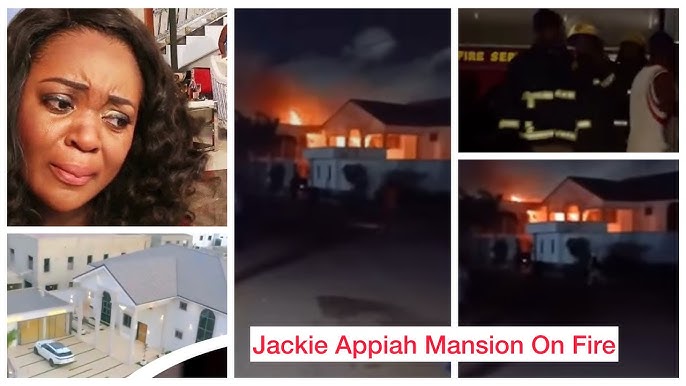
    Jackie Appiah’s mansion at East Legon allegedly razed by fire

    A video of a mansion engulfed in flames has surfaced online, sparking widespread attention.

    According to information shared by FameBugs on Instagram, the house belongs to actress Jackie Appiah, who is currently out of the country.

    The fire is believed to have been caused by an electrical fault.

    Meanwhile, nearby residents are seen in the video making efforts to put out the fire as it continues to spread.

    Watch the video below:

  • Where are the 200 soldiers deployed in 2021 to protect our water bodies? – Kent Mensah quizzes

    Where are the 200 soldiers deployed in 2021 to protect our water bodies? – Kent Mensah quizzes

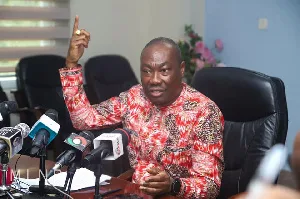
    International journalist Kent Mensah has raised questions about the whereabouts of the 200 soldiers deployed by the government in 2021 to safeguard the nation’s water bodies from the threat of illegal mining, known as galamsey.

    Mr. Mensah, a contributor to AFP, Al Jazeera, and Voice of America (VOA), made his remarks amid the country’s ongoing struggle with the destructive effects of galamsey.

    He expressed his curiosity about the fate of those soldiers, noting that the current situation suggests they have not fulfilled their mandate.

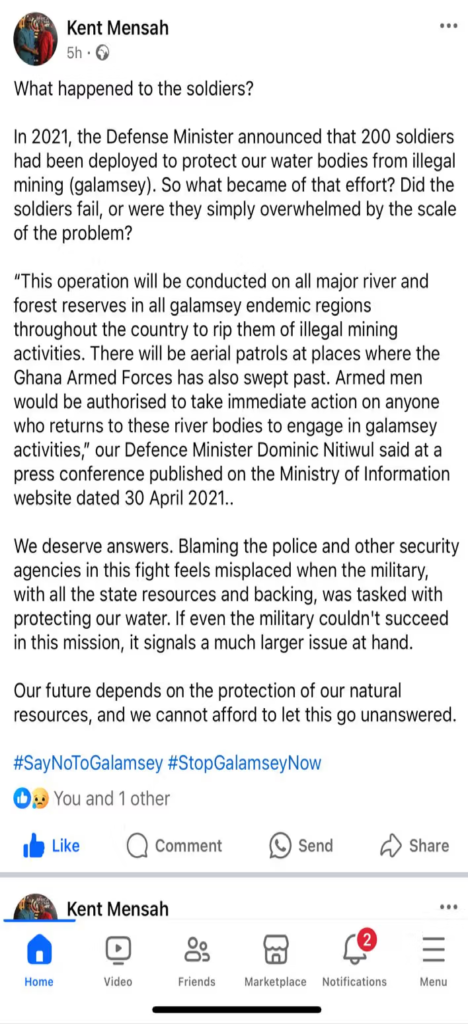
    “What happened to the soldiers? In 2021, the Defence Minister announced that 200 soldiers had been deployed to protect our water bodies from illegal mining (galamsey). So what became of that effort? Did the soldiers fail, or were they simply overwhelmed by the scale of the problem?” Mensah wrote in a Facebook post on Tuesday, 8th October 2024.

    He further questioned the prevailing narrative that tends to hold other security agencies, such as the police, responsible for failing to control galamsey. Mensah argued that attention should instead be directed at the military, which was specifically tasked and resourced to spearhead the battle against illegal mining.

    “We deserve answers. Blaming the police and other security agencies in this fight feels misplaced when the military, with all the state resources and backing, was tasked with protecting our water. If even the military couldn’t succeed in this mission, it signals a much larger issue at hand,” he added.

    In 2021, Ghana’s Defence Minister, Dominic Nitiwul, revealed the deployment of 200 soldiers to protect the nation’s water bodies from illegal mining activities. Nitiwul had promised the public that the initiative would focus on key rivers and forest reserves in regions heavily affected by galamsey.

    “This operation will be conducted on all major rivers and forest reserves in all galamsey-endemic regions throughout the country to rid them of illegal mining activities. There will be aerial patrols at places where the Ghana Armed Forces has also swept past. Armed men would be authorised to take immediate action on anyone who returns to these river bodies to engage in galamsey activities,” Nitiwul had said at the time.

    Despite these actions, the degradation of water bodies remains a major concern in Ghana. Mensah’s remarks echo the increasing public dissatisfaction with the seemingly ineffective government efforts to tackle galamsey.

    “Our future depends on the protection of our natural resources, and we cannot afford to let this go unanswered,” Mensah concluded.

    His comments come at a time of intense public outrage over the persistent environmental destruction caused by illegal mining, with many Ghanaians calling for more accountability and transparency in the fight against galamsey. As scrutiny on the military and other security agencies mounts, the pressing question is: what went wrong in the efforts to safeguard Ghana’s water bodies, and how can the nation recover from this ecological disaster?

  • Ghana is worth the sacrifice! Stay the course! – Barker-Vormawor speaks bail denial

    Ghana is worth the sacrifice! Stay the course! – Barker-Vormawor speaks bail denial

    One of the leaders of the Democracy Hub and organizer of a recent three-day #StopGalamsey protest, expressed his thoughts following the Accra High Court’s decision to deny him bail.

    The convener emphasized that the challenges he faces from protesting against illegal mining activities, commonly referred to as galamsey, are worthwhile for the benefit of the nation.

    He stated that he remains unfazed by his arrest and the court’s refusal to grant him bail, insisting that the sacrifice he is making is justified for the greater good of the country.

    “Ghana is worth the sacrifice! Stay the course!,” Barker-Vormawor wrote on X on October 8, 2024.

    Background:

    The bail application of Oliver Barker-Vormawor was denied by the Accra High Court, with Justice Comfort Tasiame presiding. The judge cited the necessity for further investigation and raised concerns about potential public unrest if he were released.

    Barker-Vormawor is facing charges of treason, which precludes him from being granted bail for another offense, according to the judge’s remarks.

    His legal team contended that his detention infringes on his constitutional rights to free expression and peaceful assembly, emphasizing that the protests were non-violent and aimed at highlighting the detrimental effects of illegal mining.

    Kwaku Asante shared the news of the bail denial on social media platform X on Monday, October 7, 2024. He noted, “The High Court has refused to grant Oliver Barker-Vormawor, Convenor of the protest, bail. According to the judge, Oliver is currently standing trial for treason, and what assurance is there that he won’t commit another offense if granted bail?”

    Barker-Vormawor was apprehended alongside 53 others, charged with offenses including unlawful assembly, unlawful damage, assaulting a public officer, and engaging in conduct that could breach the peace during the protest against illegal mining, commonly referred to as galamsey, held on Saturday, September 21, and Sunday, September 22, at the 37 Intersection in Accra. He was filmed during the protest taking the keys from a police van that was parked nearby.

    Read post below…

  • 58,000 farmers supported to restore degraded lands under GLRSSMP

    58,000 farmers supported to restore degraded lands under GLRSSMP

    Under the Ghana Landscape Restoration and Small-Scale Mining Project (GLRSSMP) led by the Ministry of Environment, Science, Technology, and Innovation (MESTI), over 58,000 farmers have received support to rehabilitate degraded lands and boost agricultural productivity across the nation.

    These farmers have managed to restore land areas ranging from three to 10 acres.

    This was revealed during a working tour last Wednesday, where the Minister, Ophelia Mensah Hayford, alongside her team, visited ongoing projects, including farms, in the Asante Akim South District of the Ashanti Region.

    Mrs. Hayford expressed her delight, emphasizing that the project would significantly contribute to the battle against climate change, particularly as farmers are planting trees alongside their cocoa farms.

    “I think they are excited too, because now they are doing mixed cropping and are calling for the extension of the programme,

    “We will look for more funds to assist the farmers to restore all the degraded lands to enhance the fight against climate change,” she underlined.

    She encouraged the farmers to plant more trees because “it will also contribute to the storage of carbon credit for sale for foreign exchange to boost the economy”.

    Ms. Hayford reassured farmers who had cut down their old trees for the initiative that the government was committed to compensating them for their contribution to the restoration project by the end of the month.

    The six-year Ghana Landscape Restoration and Small-Scale Mining Project (GLRSSMP), which aims to encourage responsible mining and rehabilitate Ghana’s landscapes for future generations, is a $103 million collaboration between the World Bank, the Global Environment Facility (GEF), and the Progreen Trust Fund, among others. The initiative commenced in 2022.

    Kingsley Kwarkoh Amoako, the project’s Agricultural Focal Officer, noted that 75% of the project’s funding was dedicated to field activities, and the compensation for participating farmers would soon be available.

    He also highlighted that other components of the project, including wildlife conservation and COCOBOD partnerships, were engaging more farmers to contribute to its goals.

    Mr Amoako indicated that the project was near the target of 582 communities “with the current 535 communities resulting in the 58,000 farmers benefiting”.

    In the Kwabeng Community of the Asante Akim South District, farmers praised the government for the initiative, noting that it has enabled them to implement crop rotation with vegetables and legumes on the rehabilitated lands.

    They urged the government to consider extending the project once it concludes and expressed gratitude for the provision of inputs such as rice, cocoa, and various tree seedlings, including emire and mahogany, as well as organic fertilizers to enhance soil quality.

    Mr. Ebenezer Agyin, Ashanti Regional Manager for COCOBOD, reported that 33,704 cocoa seedlings and plantain suckers have been distributed to farmers to date.

  • The law prohibits Kofi Jumah from sacking GIHOC staff who partake in Organised Labour’s strike

    The law prohibits Kofi Jumah from sacking GIHOC staff who partake in Organised Labour’s strike

    Public outrage was ignited by Managing Director Maxwell Kofi Jumah of GIHOC Distilleries Limited after he warned his employees against participating in a planned strike organized by Labour groups.

    According to investigations conducted by the media, Mr Jumah cannot terminate the contracts of employees who join the Labour Union’s strike, as such actions are prohibited by the Labour Act of 2003.

    The Act stipulates that any strike undertaken by a collective of workers in response to a dispute with their employer is considered legal and cannot lead to the dismissal of the participants.

    Furthermore, it states that individuals who express support for the group or assist them in addressing an issue with their employer are not violating labor laws.

    Therefore, since GIHOC is a member of the Organized Labour, Jumah would be acting unlawfully if he attempted to fire any employee for striking in support of their union.

    “Subject to sections 159 and 160, a strike or lockout is legal if it is in sympathy with or in support of a strike action taken by another worker or group of workers against their employer on account of an industrial dispute with the employer.

    “During any lawful strike or lockout, the employment relationship between the employer and the workers shall not be affected by the strike or lockout and any termination of the contract of employment as a result of the lawful strike or lockout is void,” portions of Section 63(2)I of the Labour Act 2003 stated.

    What Kofi Jumah said:

    Speaking in an interview with Oyerepa FM, Jumah warned that any staff of GIHOC who decides to join the Organized Labour’s strike will be dismissed with immediate effect.

    “I hope the GIHOC members are listening. If you like, don’t report to work. Anyone who joins them [Organized Labour’s strike] will be sacked. I am saying this on authority. There are labour laws in the country. Let the issue be a national concern, not GIHOC’s own.

    “If someone doesn’t sleep well and comes to say things, then you follow. So, if you like, follow them and see. They should not even waste our time because we are wise people at GIHOC,” he stressed.

    His remarks came after Organised Labour announced plans to initiate a strike on October 10, 2024, should the government not address their demands.

    The labor group has engaged with the government regarding their request for a nationwide ban on illegal mining activities, commonly referred to as galamsey, but no consensus has been reached.

    In response, some frustrated Ghanaians participated in a three-day strike, urging the government to take decisive action against galamsey.

  • Ghana’s Non-Traditional Exports near $4bn with 11.75% growth in 2023 – GEPA

    Ghana’s Non-Traditional Exports near $4bn with 11.75% growth in 2023 – GEPA

    The CEO of the Ghana Export Promotion Authority (GEPA), Dr. Afua Asabea Asare, has announced that Ghana earned $4 billion through Non-Traditional Exports (NTEs) in 2023, marking an 11.75% increase compared to 2022.

    In 2022, the value of Ghana’s Non-Traditional Exports increased to $3.5 billion from $3.3 billion in 2021. This update was shared by Dr. Afua Asabea Asare I at a press briefing held at the Ministry of Information Press Centre in Accra.

    “Ladies and gentlemen, Ghana’s Non-Traditional Export growth has been on a positive trajectory, even during COVID-19 when other countries were experiencing declines. We managed a 4% increase, though previously we had achieved 10% growth. During COVID-19, we dropped to 6%. But as I speak to you now, we have moved our exports to 11.75%. Despite everything happening globally, Ghana’s exports are growing,” Dr. Asabea Asare stated.

    The Non-Traditional Export sector consists of three sub-sectors including Agriculture, Manufactures and Semi- processed and industrial Art and Craft products.

    Last year’s growth is largely attributed to a surge in the export of key products such as iron and steel circles, rods, and billets, which generated $447.8 million. Other top performers included cocoa paste, which earned $340.6 million, cashew nuts at $263.5 million, and cocoa butter, bringing in $241.3 million.

    In 2022, cocoa paste emerged as the highest earner, contributing US$520.3 million, followed by cashew nuts with US$294.2 million. Shea oil ranked as the lowest earner with US$92.6 million.

    The manufactures/ semi-processed sub-sector contributed US$2.938 billion, while the agricultural sub-sector accounted for US$509.9 million of total NTEs earnings compared to US$476.01million earned in 2021, indicating a 4.61 % growth. This sub-sector contributed 14.47% share to total NTE earnings in 2022.

    The Industrial Art and Craft sub-sector increased by 79.73% over 2021, to US$81,235,108. The sub-sector contributed 2.30% to total non-traditional exports earnings.

    Ghana’s membership in the African Continental Free Trade Area (AfCFTA) has also positively impacted export earnings. In 2023 alone, exports to AfCFTA member countries accounted for $1.78 billion of the total NTE earnings.

  • It’s illegal for foreigners to work with small-scale miners operating legally in Ghana – Martin Ayisi

    It’s illegal for foreigners to work with small-scale miners operating legally in Ghana – Martin Ayisi

    Chief Executive Officer of the Minerals Commission, Martin Kwaku Ayisi, has affirmed that small-scale mining in Ghana is strictly for Ghanaians.

    While addressing the Assurance Committee of Parliament on Monday, October 7, 2024, he stressed that any participation by foreign nationals in small-scale mining activities is against the law.

    “The small-scale mining is open to Ghanaians only, so any foreigner who is involved in small-scale mining is illegal,” Mr. Ayisi asserted.

    He cited important laws, specifically Acts 900 and 995, that ban foreign involvement in this industry, emphasizing that even attempting to recruit foreigners for small-scale mining operations qualifies as illegal mining.

    “It is strictly for Ghanaians, whether a man, woman, or adult. The large-scale mining is open to everybody, including foreigners,” Mr. Ayisi clarified.

    In tackling the widespread problem of illegal small-scale mining, often referred to as “galamsey,” Mr. Ayisi disclosed that this activity has expanded to about 12 or 13 regions in Ghana.

    He offered background information by stating that at the time he became part of the commission, small-scale mining was limited to just five regions: Ashanti, Central, Eastern, Western, and Upper East.

    Highlighting the persistent challenges in regulating the sector, he stated: “To delve into our biggest challenge, I will be very blunt with the committee: until that problem is resolved, galamsey will not end.”

    Although multiple laws have been established since 1989 to regulate small-scale mining, he pointed out that their enforcement has been weakened over time.

    Mr. Ayisi also recounted the privatisation of state-owned mines during the Kwasi Botchwey era, saying: “We sold Tarkwa, we sold Prestea, we sold Dunkwa Continental, Akwatia mines, all of them were sold.”

    He stated that this historical mismanagement has played a major role in the ongoing issues plaguing the mining sector.

  • GMA withdraws from Organised Labour’s galamsey strike

    GMA withdraws from Organised Labour’s galamsey strike

    The Ghana Medical Association (GMA) has announced that it will not join the nationwide strike organized by Organised Labour, scheduled for October 10, despite supporting the ongoing fight against illegal small-scale mining, also known as galamsey.

    In a statement issued on October 8, GMA President Dr. Frank Serebour emphasized that while the association stands with Organised Labour’s concerns about the environmental and societal damage caused by galamsey, its members will not participate in the strike. 

    “The Ghana Medical Association (GMA) has not declared a roadmap for industrial action. Therefore, all members are expected to continue providing full services without interruption,” the statement read.

    The GMA’s decision follows an internal meeting, where the association highlighted the importance of uninterrupted medical care, especially given the challenges facing the healthcare system. However, it affirmed its full support for efforts to address the harmful effects of galamsey on the environment and livelihoods across the country.

    The statement also noted that the National Executive Council (NEC) of the GMA would provide further updates if necessary.

    This comes after a high-level meeting between President Nana Akufo-Addo and Organised Labour at Jubilee House, where both sides agreed on steps to tackle illegal mining.

     The key points of the discussion included stronger enforcement of laws banning mining in water bodies and forest reserves, the repeal of the Environmental Protection (Mining in Forest Reserves) Regulations, 2023 (L.I. 2462), and enhanced collaboration between the government, labour unions, and stakeholders to combat galamsey. 

    There was also a commitment from law enforcement agencies to intensify efforts to clear illegal miners from protected areas, alongside cooperation between the Attorney-General and the judiciary to fast-track the prosecution of illegal mining cases.

    Despite these initiatives, Organised Labour remains unsatisfied with the government’s actions and will proceed with its planned strike, calling for more aggressive measures against illegal mining.

    Meanwhile, Archbishop Bonaventure Kwofie, the Metropolitan Archbishop of Accra, has spoken out against the strike. He emphasized the need for a comprehensive, non-partisan approach to solving the galamsey crisis. 

    While acknowledging the legitimacy of Organised Labour’s concerns, Archbishop Kwofie called for greater dialogue to ensure that both the illegal mining issue and labor grievances are addressed constructively.

  • NCC to penalize Elon Musk’s Starlink for unapproved price increase

    NCC to penalize Elon Musk’s Starlink for unapproved price increase

    The Nigerian Communications Commission (NCC) has revealed its intention to take enforcement action against Elon Musk’s Starlink, a satellite internet provider, for increasing its subscription prices in Nigeria without regulatory approval.

    This information was shared in a statement on Tuesday by Reuben Muoka, the commission’s Director of Public Affairs.

    Last week, Starlink notified its customers about the price hike, which will impact both current and new subscribers.

    The monthly subscription fee has jumped by 97%, rising from N38,000 to N75,000.

    Moreover, the cost of the Starlink kit (the equipment needed for installation) has increased by 34%, with the new price now set at N590,000, up from the previous N440,000.

    Despite these changes, the NCC clarified that it had not authorized the price adjustments.

    “The decision by Starlink to unilaterally review its subscription packages upwards did not receive the approval of the Nigerian Communications Commission,” Muoka said.

    He stated that the commission was “surprised” when the company announced the price changes, even though it had submitted a request to the NCC for a price adjustment that had not yet been approved by the regulator.

    He added, “The action of the company appears to be a contravention of Sections 108 and 111 of the Nigerian Communications Act (NCA) 2003, and Starlink’s Licence Conditions regarding tariffs.

    “The commission will, therefore, take appropriate enforcement measures against any action by a licensee that is capable of eroding the regulatory stability of the telecommunications industry.”

    Section 108 of the NCA 2003 grants the NCC the power to regulate telecommunications tariffs, specifying that no licensee is allowed to implement service charges without securing tariff approval from the commission.

    Furthermore, Section 111 of the Act authorizes the NCC to enforce financial penalties on any licensee that surpasses the approved tariffs, irrespective of other legal provisions.

    “Notwithstanding any other provision of this Act, the commission shall prescribe and enforce appropriate financial penalties upon any holder of an individual licence who exceeds the tariff rates duly approved by the commission for the provision of any of its services,” the Act read.

  • Prophet Owusu Bempah has blessed Bawumia already and nothing will change – Dr Kwabena Kokofu

    Prophet Owusu Bempah has blessed Bawumia already and nothing will change – Dr Kwabena Kokofu

    Former Member of Parliament for Bantama and past Chief Executive Officer (CEO) of the Environmental Protection Agency, Dr. Henry Kwabena Kokofu, has expressed unwavering confidence in Dr. Mahamudu Bawumia’s electoral success. Bawumia is the flagbearer for the New Patriotic Party (NPP) in Ghana’s upcoming 2024 general elections.

    Dr. Kokofu’s comments follow a controversial prophecy by Rev. Isaac Owusu-Bempah, Founder of the Glorious Word Power Ministry International, who declared that opposition leader John Dramani Mahama would lead Ghana’s next government.

    During a special meeting with clergy, Rev. Owusu-Bempah laid hands on Mahama and proclaimed, “This is whom You [God] have elected to lead Ghana at a time like this. No power can stop it. It is through you that this country will see development.”

    This pronouncement raised eyebrows, given Owusu-Bempah’s past alignment with the NPP and previous prophecies that favored the party.

    However, Dr. Kokofu dismissed these prophecies, stating that the victory of Bawumia has already been sealed.

    Dr. Kokofu drew parallels between the biblical story of Jacob and Esau, suggesting that just as Esau lost his birthright to Jacob, Mahama’s chance to lead has been lost to Bawumia.

    He further emphasized, “So, the initial blessing has already been conferred on Dr. Mahamudu Bawumia.”

    Speaking during an interview on the “Ade Akye Abia” Show, Dr. Kokofu maintained that no prophecy or force can reverse what he believes is Bawumia’s divinely ordained victory.

  • Ghana earned close to $4bn in Non-Traditional Exports in  2023 – GEPA CEO

    Ghana earned close to $4bn in Non-Traditional Exports in 2023 – GEPA CEO

    Ghana’s Non-Traditional Exports (NTE) saw an impressive growth of 11.75% in 2023, raising its share of the nation’s overall exports to 24%, as announced by Dr. Afua Asabea Asare, Chief Executive Officer of the Ghana Export Promotion Authority (GEPA).

    This growth translated to approximately $447 million in additional export revenue.

    During her presentation at the Sunday edition of the Minister’s biweekly briefings organized by the Ministry of Information in Accra, Dr. Asare noted that the leading NTEs experienced a remarkable 78% increase between 2022 and 2023, with exports reaching around 156 countries.

    She highlighted that this marked the first time the country’s NTEs had achieved such significant and exponential growth, calling it an unprecedented milestone in the authority’s history.

    “As I’m talking to you, we have grown exports. For 2023, we grew exports to 11.75 per cent and contribution to the overall national export is about 24 per cent and this has been brought about by a number of interventions,” she emphasised.

    Dr Asare said GEPA was fo­cused on four major sectors includ­ing agribusiness, manufacturing, arts and crafts, and services, adding that “There was a time when we particularly didn’t focus on ser­vices, but for some years now, it’s become one of our exports.”

    She said GEPA had over 3,000 registered exporters and over 400 different non-traditional export products.

    Some of the agencies her outfit was in collaboration in achieving the recent success were the Ghana Export-Import Bank, the Ghana Investment Promotion Centre, Ghana Enterprises Agency, the Ghana Free Zones Authority, and some private organisations like the Association of Ghana Industries (AGI), and the Federation of Asso­ciation of Ghanaian Exporters.

    “All of these organisations are working with GEPA hand-in-hand to grow the exports of the country. The number one NTE earner, that is the non-traditional export earner, the highest earner comes from iron, steel circles, iron rods, and sheet billets,” she said.

    Dr Asare said even though the country had about 625 exportable products as part of the national export development strategy, 17 of these products had been priori­tised.

    She said the GEPA Impact Hub which had been established was a one-stop home for everything needed, be it information, technol­ogy, understanding how to export or meeting the organisations that collaborated with GEPA like the Standards Authority, the Food and Drugs Authority, or the Ministry of Agriculture.

    “If you come to the GEPA Market Hub, you will meet all of these organisations there, as well as the support we give you by way of information,” she said.

    She said GEPA had established a library, stressing we have an IT resource centre for you to use to achieve all that you want to achieve, and that is the GEPA Impact Hub.”

  • Free SHS will not permit Bawumia to be defeated in 2024 elections

    Free SHS will not permit Bawumia to be defeated in 2024 elections

    Gospel musician Diana Asamoah has voiced her strong belief in the New Patriotic Party’s (NPP) prospects of winning the 2024 general elections, despite contrary prophecies.

    Addressing recent predictions from several men of God, including Rev. Owusu-Bempah, who has prophesied a win for NDC’s flagbearer John Dramani Mahama, Diana Asamoah drew a parallel with the biblical story of King Hezekiah. In the story, Hezekiah’s fate of imminent death, foretold by Prophet Isaiah, was altered through prayer.

    She expressed confidence that the NPP could experience a similar turn of events.

    During an NPP campaign rally in the Ashanti Region on October 5, 2024, she highlighted the government’s accomplishments, such as the Free Senior High School (SHS) policy, as factors that would contribute to their victory.

    “2 Kings 2:1-7 tells us about how Isaiah prophesied to Hezekiah that he would die. Hezekiah cried out to the Lord to reverse it based on his service to God, and it was reversed; the Lord added 15 more years to his life.

    “So the NPP government, including Akufo-Addo, Bawumia, and NAPO, will not accept defeat based on our good works like the Free SHS. Any doom prophecy against us will not stand, we will win the 2024 general elections,” she declared in Twi.

    Her comments follow an incident where Rev. Owusu-Bempah prayed over Mahama during an NDC gathering with religious leaders on October 1, 2024.

    In his prayer, the prophet declared that Mahama’s compassionate nature would win him God’s favor, potentially leading to his return to the presidency.

    This prophecy has ignited a range of reactions on social media, with some users expressing surprise and skepticism over why Owusu-Bempah, who is widely associated with the NPP, would make such a prediction.

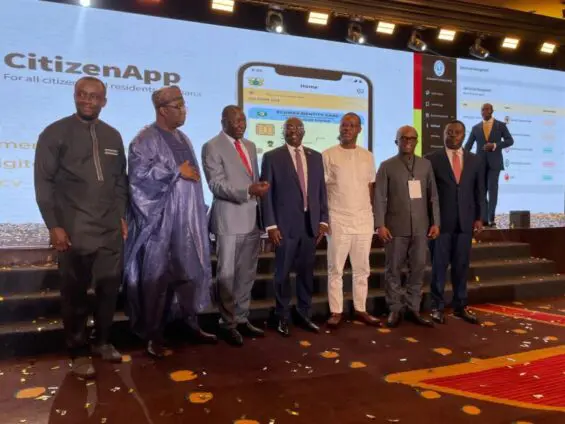
  • Bawumia launches “Citizen App” to trace all transactions by govt

    Bawumia launches “Citizen App” to trace all transactions by govt

    The Vice President, Dr. Mahamudu Bawumia, has unveiled the “Citizen App.”

    The Citizen App serves as a personalized platform for Ghanaians, aiming to enhance access to various government services while providing users with real-time information.

    Dr. Bawumia remarked that the platform will motivate citizens to adopt technology, as it eliminates the redundancy of data collection.

    “With this interoperability, you only need to input your data into the system once. After that, it can be accessed by the GRA, Drivers Vehicle and Licenses Authority, Insurers, Business Registrations, and others. What Ghana has accomplished, many developed countries have yet to achieve. Therefore, we are heading in a direction filled with numerous opportunities,” he stated.

    He added that streamlining the data will also help reduce costs and improve efficiency in the public sector.

    The Finance Minister, Dr. Mohammed Amin Adam, highlighted the significance of transparency in revenue collection, underscoring how the app could aid in achieving this objective.

    “With the Citizen APP, all government transactions will be fully traceable and accountable. This digital platform will allow us to track payments, services, and interactions in real time, greatly reducing the risk of financial mismanagement and corruption.”

    Julie Essiam, Commissioner General of the Ghana Revenue Authority, also endorsed the app’s potential, stating that Ghana is the first country to undertake such initiative in Africa.

    “Ghana is the only country that has launched this APP in Africa. We are now rubbing shoulders with the developed market; Estonia, US, Dubai and other developed markets.”

    The Data Interoperability System denotes the capacity of various applications, platforms, or systems to share and understand data effortlessly, irrespective of their foundational technologies.

    A key highlight of the CitizenApp is its Data Interoperability System.

    This system enables significant data exchange, interpretation, and application across different platforms and systems.

    By linking diverse technologies and formats, it promotes smooth communication across various sectors.

    In essence, the Citizen App will remove obstacles between formerly isolated data systems, enabling them to work together effectively.

  • 40-year-old air condition installer sentenced to 20 years over defilement

    40-year-old air condition installer sentenced to 20 years over defilement

    A 40-year-old air conditioning installer, Joshua Arhin, has been sentenced to 20 years of hard labor in prison by the Tarkwa Circuit Court for defiling a 13-year-old girl in Booboobo, located in the Tarkwa Nsuaem Municipality.

    He pleaded guilty and asked the court for mercy, vowing not to commit such a disgraceful act again.

    Superintendent Juliana Essel-Dadzie, who led the prosecution, informed the court, overseen by Mrs. Hathia Ama Manu, that the complainant is a mechanic and the father of the victim, who is a Junior High School student.

    She noted that both the complainant and the accused lived in Booboobo. On May 25, 2024, around 8:00 p.m., the victim visited her sister at a nearby drinking establishment and was later instructed to make her way home alone as it was getting late.

    After a while, the victim’s sister, who is a witness in the case, called their mother to check if the victim had returned home, but the answer was no.

    The prosecution stated that the complainant, along with the victim’s mother and sister, began searching for her. By approximately 9:30 p.m. that same evening, they spotted her emerging from behind an uncompleted school building in Booboobo. When they questioned her, she remained silent and went home.

    On June 1, 2024, the victim, suffering from intense abdominal pain, disclosed to the complainant that on May 25, while walking home, Arhin had called her from behind an uncompleted school building. After engaging her in conversation, he lured her into his bedroom and sexually assaulted her. Following the assault, he gave her two pills and instructed her to swallow them.

    The complainant then reported the incident to the Domestic Violence and Victim Support Unit (DOVVSU) in Tarkwa, where he was issued a police medical report form to take the victim to the hospital for examination and treatment.

    She explained that the complainant returned the form, duly signed by the medical officer who treated the victim at the Apinto Government Hospital.

    The court was informed that Arhin had gone into hiding after committing the crime, but he was apprehended on July 21, 2024, at the complainant’s house during a visit with some elders to offer an apology.

  • Voter register challenges could’ve been avoided with NIA database – Western North NPP SEC

    Voter register challenges could’ve been avoided with NIA database – Western North NPP SEC

    Deputy regional secretary for the New Patriotic Party (NPP) in the Western North Region, Kojo Monney, stated that the difficulties with Ghana’s voter register ahead of the upcoming elections could have been avoided if the National Identification Authority (NIA) database had been used as the basis for the register.

    During an appearance on Asaase Radio’s Big Bulletin on Saturday, 5 October, Monney contended that the current problems would not have arisen if the NIA database had been accepted and used as a reliable source.

    Monney stated: “If we had decided to use the NIA database as the basis as enshrined by law and then we were to do the voter register out of the NIA database, all these things wouldn’t have [arisen].”

    “Because the NIA database is linked to the death and births registry. So immediately somebody dies and then the person is recorded; it’s deleted within the NIA data.”

    He added that by the time individuals who were too young to register during the initial NIA enrollment reach the age of 18, they would already be part of the system, simplifying the voter registration process.

    “So if the system had been developed as I’m envisaging that on Monday, it will be talked about that when a person gets to 18 he gets a notification, he just walks to the EC and then takes the card and all these issues wouldn’t have been there,” Monney added.

    On the other hand, Nii Kpakpo Samoa Addo, a key member of the opposition National Democratic Congress (NDC), explained that there was no resistance to the use of the NIA database as the primary identification system for the country.

    He pointed out that Ghana is set to eventually integrate the NIA database into the voter register, following guidance from the Supreme Court.

    “I think that is a misconception; nobody has fought against the NIA being the mother database,” Addo said. “The Supreme Court, in its own decisions, has said that Ghana must come to the point where we have one central card for all manner of transactions; that’s a Supreme Court directive. It’s not something that anybody can argue against.”

  • Govt misses treasury bills target amid tight market liquidity

    Govt misses treasury bills target amid tight market liquidity

    The government has once again fallen short of its treasury bills target due to tight liquidity in the money market.

    Auction results from the Bank of Ghana revealed a 38.55% shortfall in the government’s T-bills auction.

    The government aimed to raise GH¢5.980 billion but secured only GH¢3.67 billion.

    All submitted bids were accepted, with the majority, approximately GH¢2.9 billion or 79.23%, coming from the 91-day T-bill.

    Around GH¢572 million came from the 182-day bill, while GH¢189.95 million was raised from the 364-day bill.

    At the same time, interest rates on the money market experienced a decline.

    This follows lower inflation rates compared to the previous year, although inflation in September 2024 rose slightly.

    The 91-day T-bill yield dropped by 19 basis points to 25.45%, the 182-day bill slipped to 26.80% from 26.92% the week before, and the 364-day bill decreased by 16 basis points to 28.51%.

    SECURITIESBIDS TENDERED (GH¢)BIDS ACCEPTED (GH¢)
    91 Day Bill2.911 billion2.911 billion
    182 Day Bill572.95 million572.95 million
    364 Day Bill189.95 million189.95 million
    Total3.674 billion
    Target5.980   billion

  • We can drive digital transformation if we share ideas with each other – Telecel CEO

    We can drive digital transformation if we share ideas with each other – Telecel CEO

    In order to address the obstacles hindering Ghana’s digital transformation, it is crucial to foster an environment where start-ups, corporations, governments, and non-profits collaborate rather than operate independently, according to Telecel Ghana’s CEO, Patricia Obo-Nai.

    She emphasized that collective effort and a mix of varied viewpoints are vital to advancing the nation’s digital transformation agenda.

    “Collaboration has the power to spark innovation because everyone brings a unique set of knowledge and skills to the table – propelling a solution to top of the market. It allows us to combine diverse perspectives, skills and experiences to create something greater than the sum of its parts.

    “One of the greatest challenges to digital transformation is overcoming the silo mentality – which is the unwillingness to share information and ideas with each other because we believe that gives us a competitive edge. The world has moved on,” she elaborated.

    She also highlighted that Ghana’s digital transformation should be inclusive, ensuring that opportunities are available to everyone. This, she noted, calls for investment in digital literacy programs, support for grassroots innovators, and the creation of platforms that elevate underrepresented voices.

    Ms. Obo-Nai made these remarks in a keynote address at the opening ceremony of Ghana Digital and Innovation Week (GDIW) 2024 in Accra on the theme ‘Innovate together: collaborating for digital transformation and impact’.

    Citing the GSMA Mobile Economy Report 2023, she indicated that only half of the global population are connected to the internet. She added that 41 percent are not using it, while 4 percent have no signal to even think of connecting.

    Also, she said that in sub-Saharan Africa, the gap is even wider, as less than a quarter of the population are connected – with 60 percent of the people not using it and 15 percent not having any signal at all.

    Additionally, she said the world needs over US$400billion to close the infrastructure gap – which requires partnership and collaboration.

    Touting efforts made by her outfit with respect to closing the gap, Ms. Obo-Nai mentioned that: “Through our partnership with government, we have been able to connect over 1,000 rural communities. Government provided the infrastructure and we as a telco brought our spectrum and transmission-reach to connect these communities with the internet”.

    She noted that the country’s youthful population, with a median age of 21 and nearly six million out of 33 million people active on social media, offers promising opportunities for growth.

    “We are one of the highest consumers of data – about 10gb per consumer. This presents a huge opportunity to accelerate our development through digital if we can tap into the interest, passion of our youth and direct their energies into digital skills that can drive productivity. The dividends are enormous and we should not miss out,” she also said.

    The GDIW 2024 is meant to inspire action, foster commitments, celebrate successes and encourage collaboration among stakeholders and partners within the country’s digital ecosystem.

    It is organised by the Entrepreneurship and Innovation Programme (NEIP) in partnership with the Ghana Hubs Network (GHN) and Impact Investing Ghana (IIGh).

    Other partners include the Deutsche Gesellschaft für Internationale Zusammenarbeit (GIZ) on behalf of the German Federal Ministry for Economic Cooperation and Development (BMZ), MASHAV (Israel’s Agency for International Development Cooperation) through the Embassy of Israel in Ghana, the Ministry of Environment, Science, Technology and Innovation, and Ministry of Communication and Digitalisation.

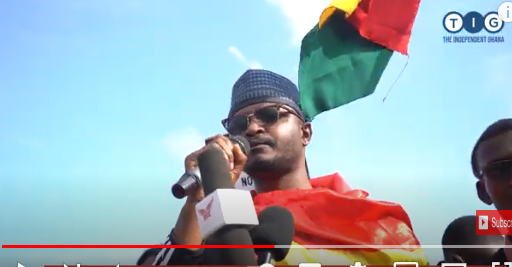
  • Video: Protestors boo at man campaigning for Alan at #StopGalamseyNow demo

    Video: Protestors boo at man campaigning for Alan at #StopGalamseyNow demo

    A three-day #StopGalamseyNow and #FreeTheCitizens demonstration was organized by a youth-led group known as Concerned Citizens Against Galamsey, advocating against the devastating impact of illegal mining activities.

    The demonstration commenced on October 3, 2024, as the group marched with a contingent of concerned Ghanaians from Legon, Okponglo in Accra to the Accra Sports Stadium.

    There, several individuals were given the platform to voice their concerns regarding the harmful impacts of galamsey and to call for the release of arrested protestors from the Democracy Hub protest, which also aimed to end illegal mining in the country.

    The organizers of the protest had previously made it clear that the demonstration was not affiliated with any political party but consisted of concerned citizens unhappy with the arrest of fellow protestors and the deteriorating state of Ghana’s natural resources.

    This message, however, was lost on one gentleman among the protestors.

    Taking the microphone, he infuriated the audience by launching into a campaign for Alan Kyerematen, the flagbearer of the Afrafranto political party.

    “Let me take this opportunity. Is there anybody celebrating their birthday here?… Well, there is a leader, a person who has done great things for the youth of this country, especially those who have been incarcerated. For your information, Honourable Alan Kojo Kyerematen paid for the legal fees of your fellow colleagues that have been incarcerated. He has been feeding them since they were remanded in police custody…”

    The protestor however did not complete his remarks when the crowd began chanting, “Away… away… away!” along with clapping, indicating they were not interested in what he was saying and did not support it.

    This reaction from the audience denied him the opportunity to continue with his remarks and had to shamefully step down.

    Watch the full video below:

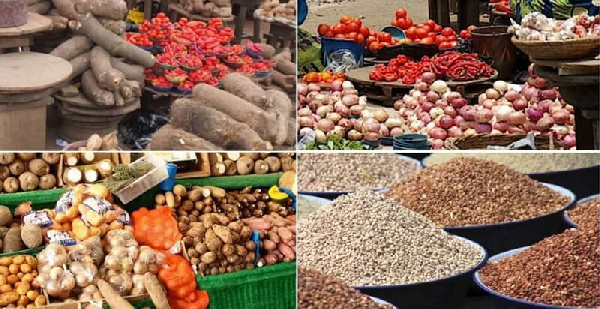
  • Heavy metals found in Yam, other food items exported from Ghana due to galamsey – US-based engineer

    Heavy metals found in Yam, other food items exported from Ghana due to galamsey – US-based engineer

    A US-based engineer, Dr. Juliet Ohemeng-Ntiamoah, has evealed that certain food products exported from Ghana have been discovered to have elevated levels of heavy metals.

    She stated that it is quite unreasonable for critics to claim that residents of Accra need not be concerned about the effects of illegal mining, simply because mining activities do not occur within the city.

    “Someone has told me before that, Juliet, you are US-based, so why are you talking about galamsey? I want to say and educate people that even the diaspora is not spared from the effects of galamsey. Why do I say so? The majority of us, and if you are a picky eater like me, although I’ve been in the US for about ten years, I still eat Ghanaian food. So I go to the African market and I buy yam, I buy groceries from there. I was talking to a friend who works at the Ghana Standards Board recently, and she told me that they tested yams being exported and they had high levels of heavy metals.

    “So this is a call to those in the diaspora who think that galamsey is only happening in Ghana. The effects of galamsey are coming to us even here in the US… So let alone you are in Accra and you think that galamsey is happening in the Western Region or Ashanti Region. For you, the effects are more prevalent than for those of us here,” she stated during a public discussion on galamsey on the Saturday, October 5, 2024, edition of Newsfile on Accra-based JoyNews.

    She emphasized that the current water treatment regime in Ghana does not deal with heavy metal concentrations in water sources, hence the basis to be concerned about the use of chemicals such as mercury, lead, and arsenic in galamsey activities.

    “This issue is bigger than the muddy water that we are seeing,” she noted.

    Ghana is presently undergoing a civil campaign aimed at combating illegal mining, which has contaminated numerous water sources nationwide, leaving them muddy and brown.

    In recent weeks, there have been multiple protests calling for the government’s prompt intervention to address galamsey activities, with more demonstrations expected in the future.

    Organised Labour has announced plans to initiate a strike starting October 10, 2024.

  • LPG supply delays due to inadequate tanks – NPA’s Abass Tasunti 

    LPG supply delays due to inadequate tanks – NPA’s Abass Tasunti 

    The National Petroleum Authority (NPA) has highlighted the difficulties surrounding the supply and storage of Liquefied Petroleum Gas (LPG) in Ghana.

    During an interview on Joy News’ PM Express Business Edition on Thursday, October 4, Abass Ibrahim Tasunti, the NPA’s Director of Regulation and Planning, pointed out that a significant factor contributing to occasional supply delays is the lack of adequate storage tanks for LPG.

    He clarified that the NPA’s responsibilities include continuously monitoring stock levels to ensure that the country maintains sufficient reserves. However, he acknowledged that while reserves do exist, they are not always enough to satisfy demand.

    “The issue was about access to the product. As I said, the reserve was in the tank. It was just signing off to say that we have agreed on the quantities that were discharged that caused a delay in selling the product today, for example,” he stated.

    A significant difference between LPG and other petroleum products, like petrol and diesel, is their storage capacity.

    While petrol and diesel can be stored for as long as seven weeks, LPG has a much shorter storage duration.

    Abass Tasunti revealed, “We don’t have adequate storage tanks for LPG, so LPG, you can go as far as maybe two weeks, three weeks to last.”

    He attributed the lack of sufficient storage infrastructure to minimal investment in LPG storage tanks.

    To tackle this issue, the NPA has implemented initiatives like the Tender Program, aimed at ensuring a consistent supply of LPG.

    Abass Tasunti noted that this program secures a reliable flow of the product by managing the timely importation process.

    “Last week, we did a tender for the supply for November and December. So already the process has come on for companies to deliver for November and December consumption,” he noted, assuring Ghanaians that the current stock would last for the rest of October.

    Private sector participation has been vital in expanding LPG storage capacity over the years. Tasunti acknowledged that several private companies have invested in new storage terminals, particularly in Tema.

    “In Tema, for example, two new ones came on board recently. So with time, companies are building, and we have had a request from other companies to build LPG terminals,” he shared.

    He also noted that, at one point, Ghana relied solely on Tema Oil Refinery (TOR), but now, there are five LPG terminals in the Tema area.

    “We can do with more,” he added, emphasizing the need for continued investment in this area.

    Tasunti also addressed recent disruptions in LPG supply, citing a delay caused by the discharge process.

    “We had product that was LPG which was going to last us about a month. The peculiar thing with LPG, unlike petrol and diesel, is that for petrol and diesel, you could have sometimes more than seven weeks to last of products,” he explained.

    He clarified that the delay was caused by the process of verifying and reaching agreements on the quantities being unloaded.

    In addition to the issues related to importation and storage, local production of LPG at Atuabo has played a vital role in ensuring a steady supply.

    Abass Tasunti recognized that there were recent challenges at Atuabo but assured the public that these have now been addressed.

    “We have Atuabo, which is producing… they had some challenge, but they have come on board now,” he stated.

    Abass Tasunti stressed the NPA’s ongoing commitment to monitoring LPG stocks and maintaining a reliable supply through investment and strategic planning.

    “Our work is to always monitor the stocks and ensure that we have a plan that ensures that we have continuous LPG coming into the system,” he affirmed.

    As Ghana continues to expand its LPG infrastructure, Abass Tasunti believes that further investment in storage will be critical to overcoming current supply challenges and ensuring energy security for the country.

  • What investors should know about BoG’s Ghana Gold Coin

    What investors should know about BoG’s Ghana Gold Coin

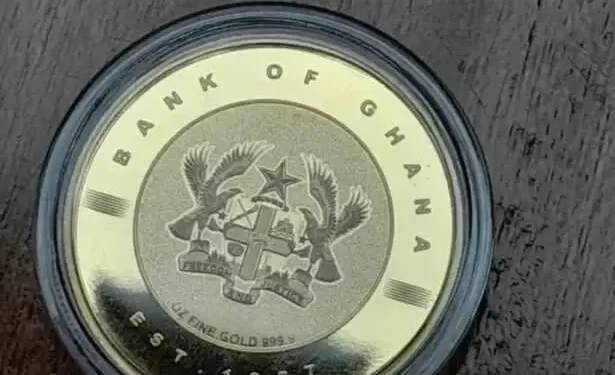
    The Bank of Ghana (BoG) has unveiled the Ghana Gold Coin, a notable addition to the domestic gold program, providing Ghanaians with a fresh investment option.

    This development arrives at a time when the cedi has weakened by 26% against key international currencies, as of September 2024.

    The Ghana Gold Coin is designed to mop up excess liquidity, discourage the hoarding of dollars, and bolster the local currency. While it offers investors a chance to broaden their portfolios, it also carries inherent risks that should not be underestimated.

    This article delves into the primary risks tied to investing in the Ghana Gold Coin and takes a closer look at its pricing structure to determine whether it is a prudent investment choice given the current economic conditions.

    Gold Coin Pricing Mechanism and Investment Feasibility

    Gold has traditionally been viewed as a safe-haven asset, especially during periods of economic instability. In 2024, international gold prices have surged by 12% year-to-date, reflecting robust demand for the metal.

    The Ghana Gold Coin, which comes in three denominations—one-ounce, half-ounce, and quarter-ounce—will be available for purchase at commercial banks nationwide. Its price will likely be influenced by global gold market trends, though local factors such as market dynamics and the strength of the cedi are also expected to impact its pricing.

    Price Volatility

    Although gold is often seen as a stable long-term investment, it is still subject to short-term price swings. Investors in the Ghana Gold Coin should be aware of potential volatility in both the global gold market and the local currency.

    One key consideration is whether the recent 12% rise in gold prices marks a peak. If global prices stabilize or fall, those buying the Ghana Gold Coin during this period of high prices could see their investment lose value.

    Additionally, while gold can serve as a safeguard against inflation, its success as a hedge depends significantly on market timing. Should global gold prices fall and the cedi continue to depreciate, the Ghana Gold Coin may not provide the level of security investors anticipate, potentially leading to losses. Therefore, investors must carefully consider market timing and the relationship between international gold prices and the cedi’s value.

    Cedi Depreciation Risk

    One of the primary goals of the Ghana Gold Coin initiative is to support the cedi, which has experienced significant depreciation. However, the cedi’s value fell by 26% against major currencies in September 2024, which presents a substantial risk for investors. Even though holding gold is often seen as a hedge against currency depreciation, there is no guarantee that the Ghana Gold Coin will be insulated from these effects, particularly if global gold prices decline.

    If the cedi continues to weaken, holding gold in any form could offer some protection, but it is important to note that any currency depreciation will also affect the purchasing power of Ghanaians who buy these coins. Therefore, while the gold coin could potentially serve as a store of value, the ongoing volatility of the cedi means that investors may need to weigh their options carefully.

    Liquidity and Accessibility Risks

    A major risk for investors in the Ghana Gold Coin is liquidity. The Bank of Ghana’s effort to absorb excess liquidity from the banking system presents a mixed outcome. While this move could help stabilize the cedi, it may also reduce liquidity in the secondary market for the coins. Investors should carefully assess how easily they will be able to sell their gold coins if they require fast cash.

    Limited Market for Resale

    Although the gold coin will be sold in commercial banks, there is no clear indication of how robust the secondary market for these coins will be. A lack of demand could lead to difficulty in reselling the coin at a favourable price. This poses a liquidity risk, particularly for those who may need to convert their gold investment back into cash quickly.

    For an investment to be truly effective, it must be easily accessible, both in terms of purchase and resale. If the Ghana Gold Coin does not achieve widespread adoption, investors could find themselves holding an asset that is difficult to sell, locking up capital at a time when it might be needed most.

    Demand-Driven Pricing

    The viability of the gold coin largely hinges on local demand. If demand for the Ghana Gold Coin falls short, its price could remain flat or decline, reducing its appeal as an investment. Investors should be mindful that the success of this initiative is uncertain, and demand for the coin may vary, especially if more attractive investment options emerge in the future.

    Economic and Institutional Stability

    Another major concern for investors in the Ghana Gold Coin is the broader economic and institutional stability of the Bank of Ghana. The BoG has experienced significant financial difficulties in recent years, reporting a loss of GH₵60.9 billion in 2022 and a further loss of GH₵10.50 billion in 2023. This has led to questions about the central bank’s solvency and its ability to manage the economy effectively.

    Bank of Ghana’s Insolvency

    The financial instability of the BoG raises concerns about its ability to guarantee the value of the Ghana Gold Coin. If the central bank is technically insolvent, there is a risk that it may struggle to support the gold coin initiative in the long term.

    This uncertainty could undermine investor confidence and limit the success of the program.

    In addition to its financial losses, the BoG’s broader policy instability raises questions about the effectiveness of its monetary strategies. Investors must ask whether the gold coin initiative is a well-thought-out strategy or merely a stopgap measure to shore up confidence in the currency and the economy especially going into elections.

    Uncertain Market Adoption

    The long-term success of the Ghana Gold Coin depends on widespread adoption among local investors and the broader Ghanaian market. If the coin is not embraced as a popular investment option, the demand could be low, negatively impacting liquidity and resale value.

    Although the BoG aims to absorb excess liquidity and reduce dollar hoarding, the question remains whether enough Ghanaians will view the gold coin as a viable alternative to more conventional investment options, such as fixed deposit or government bonds.

    Additionally, the gold coin’s success will rely on how well it is marketed and how accessible it becomes to the average investor. The coins will be available through commercial banks, but if they are perceived as too niche or are not sufficiently promoted, the market demand may not reach the levels required to ensure a robust and active secondary market.

    Competing Investment Options

    In the current economic environment, investors have other options to consider beyond the Ghana Gold Coin. For instance, the Government of Ghana (GoG) has issued USD-denominated bonds maturing in 2027 and 2028, with interest rates of 2.75% and 3.25%, respectively. These bonds offer a fixed return over 4 to 5 years, providing a more predictable outcome compared to gold, which can be highly volatile.

    Lower Yield, Higher Certainty

    While the returns on GoG bonds are relatively low, they offer stability and predictability, which are attractive to risk-averse investors. By contrast, the Ghana Gold Coin may offer the potential for capital appreciation, but its value is subject to global gold price fluctuations and local economic conditions. For investors seeking a safer, more predictable investment, government bonds may be a better option.

    Yield vs. Gold Returns

    Investors seeking higher returns might be drawn to gold due to its potential for appreciation, especially given the 12% y-t-d increase in global prices. However, the return on investment (ROI) for gold is uncertain, and the risks associated with price volatility and currency depreciation must be factored into any decision.

    Guarantee and Security Risks

    Although gold itself is a valuable and tangible asset, the Ghana Gold Coin comes with no explicit guarantee. The coins will be packaged in a wooden story box, along with a transparent coin holder and a certificate of ownership. While this adds an official layer of security, it is still subject to the risks associated with the BoG’s financial health.

    No Explicit Guarantee

    Without a clear guarantee from the BoG or another financial institution, investors in the Ghana Gold Coin are exposed to the risk that their investment may not retain its value, particularly if the central bank is unable to stabilize the cedi or manage its financial losses effectively.

    Monitoring Economic Indicators

    Investors in the Ghana Gold Coin should also pay close attention to key economic indicators in both the local and global markets. Keeping an eye on global gold prices, cedi exchange rates, inflation figures, and the BoG’s policy decisions will help investors make informed decisions about whether to hold or sell their coins.

    Conclusion

    The Ghana Gold Coin presents a unique investment opportunity for Ghanaians looking to diversify their portfolios and protect their savings against currency depreciation and inflation. However, it also comes with significant risks, including price volatility, liquidity concerns, and the financial instability of the Bank of Ghana.

    While gold can offer a hedge against economic uncertainty, investors must carefully weigh these risks and consider whether the Ghana Gold Coin is the right investment for their needs. The lack of an explicit guarantee, combined with the potential for further depreciation of the cedi, makes this a high-risk investment that may not be suitable for all investors.

  • Plan for your retirement – SSNIT to self employed individuals

    Plan for your retirement – SSNIT to self employed individuals

    Self-employed individuals are urged to prepare for their future to ensure they have financial resources during retirement.

    Due to their ongoing business income, many self-employed individuals may overlook the importance of joining the Social Security and National Insurance Trust (SSNIT) scheme.

    However, Mr. Joseph Poku, Chief Actuary of SSNIT, emphasized that regular contributions to the scheme can safeguard one’s future, noting that “It’s not everybody who can fend for himself, especially the self employed, who can plan, save and say, I’m going to go on retirement and go depend on this. “

    He added that “Most people, live within the now. They want to live now, hand to mouth and take care of themselves. Now they hardly plan for the future. So that is why we are here to provide that future guarantee for their income, so that when they go on retirement, it will be easy for them to get money to support themselves”.

    Mr. Joseph Poku spoke to the media in Tarkwa after SSNIT conducted a float through the main streets of the town, called “Operation-A-Thon (Ops-A-Thon),” aimed at raising awareness about its Self-Employed Enrolment Drive (SEED).

    This initiative is designed to expand pension coverage and provide social security protection for self-employed individuals and informal sector workers across the country.

    The event is part of the Trust’s ongoing campaign to educate self-employed individuals about the benefits and importance of the Scheme, while motivating them to sign up.

    As part of the Ops-A-Thon initiative, SSNIT staff are visiting various business areas and markets, parading through the main streets of selected towns in the regions, carrying placards and distributing flyers to encourage self-employed individuals to enroll in the SSNIT Scheme.

    The Chief Actuary said, “close to 65% of the working forces are from the informal sector and the self employed people. So it is important that we bring this scheme to the to their doorstep, let them know what is in for them, so that you see the need to join. And so, we went around town to put more ink into it for them to know that it is important to join SSNIT and enjoy the benefits that those we think are in suit and tie enjoy”.

    He encouraged Ghanaians to trust the scheme, asserting that it is the most reliable means of securing their future.

  • Many Eurobond holders choose disco option indebt restructuring agreement

    Many Eurobond holders choose disco option indebt restructuring agreement

    Many bondholders participating in the Eurobond Debt Exchange Programme chose the disco menu of new notes.

    As a result, these investors will incur a 37 percent haircut and will receive interest payments of 5 percent from 2024 until July 2028, increasing to 6 percent thereafter.

    They are set to receive three new bond instruments.

    Conversely, other bondholders selected the par menu, ensuring they will not face any nominal losses but will earn 1.5 percent interest on the new bonds that will mature in January 2037.

    These particulars were outlined in the consent document provided by the bondholders after agreeing to exchange their old bonds for new ones during the Eurobond Debt Exchange Programme.

    In the document, the bondholders noted that successfully completing this Eurobond Debt Exchange Programme is essential for Ghana’s debt restructuring efforts under its agreement with the International Monetary Fund.

    Investors are expected to swap their securities for new notes around October 9, with the full settlement process

    The Debt Exchange Programme

    Approximately 98.6 percent of bondholders subscribed to the Eurobond Debt Exchange Programme, part of the government’s initiative to restructure around $13 billion owed to external creditors.
    On September 5, 2024, the government launched the Eurobond Exchange Programme on the London Stock Exchange, inviting eligible Eurobond holders to exchange their existing notes for one or a combination of two new notes from the Republic.

    This initiative aims to assist Ghana in obtaining the International Monetary Fund’s approval for the third program review.

    Finance Minister Dr. Mohammed Amin Adam stated that this exercise will lead to a substantial reduction in Ghana’s overall debt stock.

    “Ghana is now on track to reach debt to GDP ratio of 55 percent by 2028, based on this development and other initiatives carried out by government”, Dr. Adam said. 

  • Politicians who pay you for your votes do not value your worth – Alan to Ghanaians

    Politicians who pay you for your votes do not value your worth – Alan to Ghanaians

    The Independent Presidential Candidate and leader of the Movement for Change, Mr. Alan John Kwadwo Kyerematen, has urged Ghanaians to turn down any political party that tries to bribe them with money for their votes in the upcoming elections on December 7.

    Speaking to passionate supporters in Obogu, located in the Asante Akim South Constituency, Mr. Kyerematen criticized politicians who seek to purchase votes after having ignored the needs of the people for many years.

    He highlighted that such behavior shows a lack of respect for voters.

    “They will come and share things for you to vote for them.

    They will come with money, but think about it twice,” Mr. Kyerematen cautioned.

    “If, after all these years, they didn’t come to you, and now they are offering money, it simply shows they don’t respect you.”

    In a stirring speech that resonated deeply with the residents of Obogu, Mr. Kyerematen emphasized the fundamental goal of politics: to enhance people’s lives.

    He encouraged voters to turn away from the ruling New Patriotic Party (NPP) if they feel there has been no advancement during their tenure in office.

    “Politics is about development. If the country has not moved forward under their leadership, then we need to change them,” he said.

    Mr. Kyerematen is presently engaged in a 19-day campaign tour across the Ashanti Region, aiming to make a substantial impact in the upcoming December 7 elections.

  • $1 equals GHS17.00 on online payment platforms

    $1 equals GHS17.00 on online payment platforms

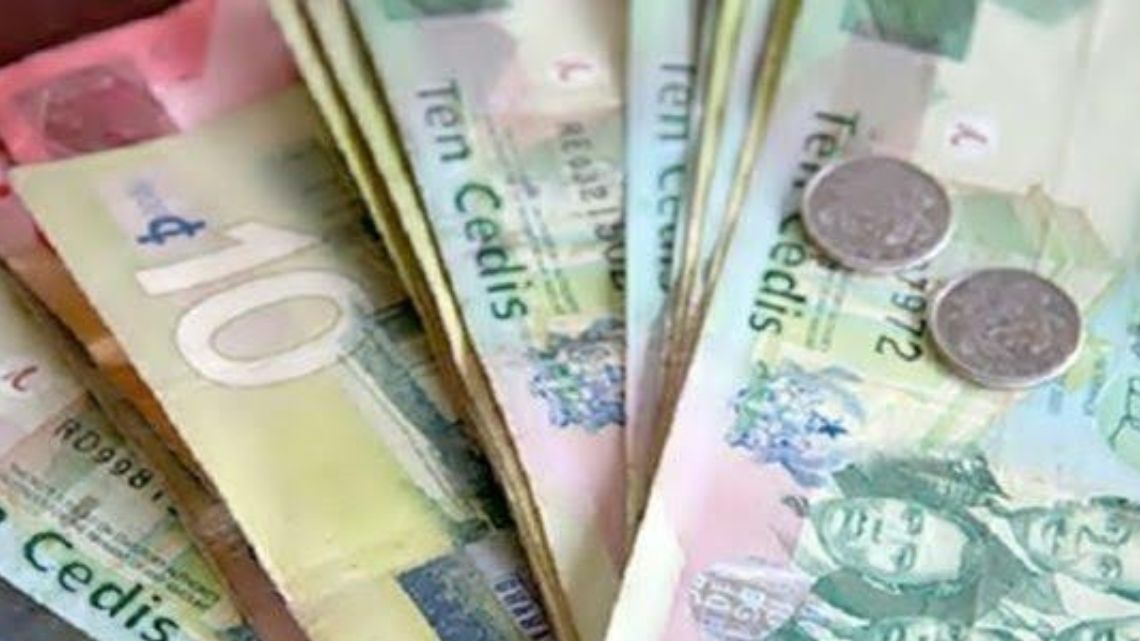
    Online card payment platforms are now charging GH¢17 to the dollar as of October 4, 2024, significantly increasing the cost of services like Netflix, Apple Music, Spotify, and X Premium subscriptions, even though their original prices remain unchanged.

    Ghana’s cedi has continued to depreciate against major currencies such as the US dollar.

    While the cedi experienced some stability in July amid easing inflationary pressures, recent checks by GhanaWeb Business reveal that, as of 10:00 AM on October 4, 2024, the cedi trades at GH¢16.40 to the dollar, with the pound at GH¢21.44 in prominent forex bureaus.

    The Euro is trading at GH¢17.97 in the retail market.

    Bloomberg also reported a 0.1% weakening of the cedi to GH¢15.67 per dollar, adding to the financial strain on the Ghanaian economy as businesses continue to adjust their pricing.

    Over the past month, the cedi has depreciated nearly 1% against the dollar, totaling a 24% decline for the year.

    Additionally, Bloomberg noted that Ghana’s dollar bonds, set to mature in 2032, rose by 0.2 cents to 52.36 cents on the dollar on September 11, 2024, at 11:38 AM in London.

  • 2024 polls: There is a wind of change, embrace it –  Mahama charges Ghanaians

    2024 polls: There is a wind of change, embrace it – Mahama charges Ghanaians

    Flagbearer of the National Democratic Congress (NDC), John Mahama, has urged Ghanaians to cast their votes for him in the upcoming election on December 7.

    The former President emphasized that a significant change is on the horizon that will become evident on election day, encouraging Ghanaians to support this transformation.

    He called upon all eligible voters to welcome this change, which aims to push the New Patriotic Party (NPP) back into opposition.

    While addressing voters in the Bunkpurugu constituency of the North East region, Mr. Mahama remarked that the 2024 elections represent a struggle between a small faction of the NPP and the vast majority of citizens who are frustrated with mismanagement, corruption, the abuse of power, state capture, and a blatant disregard for the views of the Ghanaian people.

    “A wind of change is blowing in this country and on 7th December, 2024, the elephant that came to town and has destroyed this country, it is time to drive back the elephant into the bush.

    “It is my hope that more people from the NPP are going to come out on that day and will vote for the NDC because a lot of people in the NPP are disappointed because the promises they were made have not been fulfilled but I don’t blame you because it is the whole of Ghana that is disappointed,” he said.

    The NDC and its leader John Mahama had a promising reception in the North East region.

    A region which fell for the ruling regime in the 2020 elections is expected to go back to the umbrella party, the NDC.

    Mr Mahama noted that, the failed leadership witnessed by Ghanaians in the last eight years will inform their decisions come December 7.

    John Mahama maintains that this year’s election is a make or break for the country, urging Ghanaians to take keen interests in his rescue proposals.

    He added that the Akufo-Addo/Bawumia government has extremely retrogressed the country.

  • More than 40 illegal miners reportedly swim across Birim River to evade arrest

    More than 40 illegal miners reportedly swim across Birim River to evade arrest

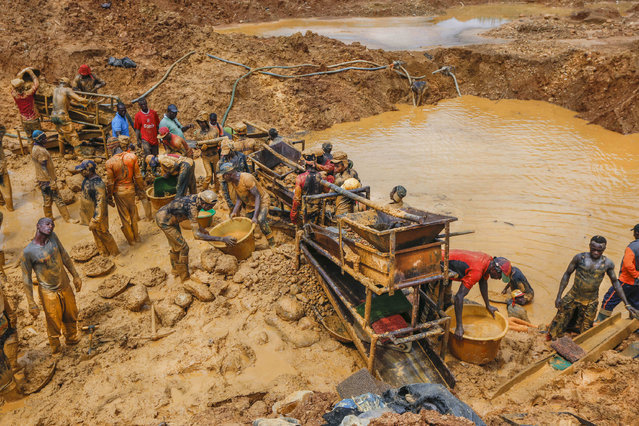
    More than 40 illegal miners evaded capture by swimming across the Birim River as a task force launched an operation against illegal mining, commonly referred to as galamsey, in the Atewa Forest.

    The task force successfully apprehended one Togolese national and destroyed 20 changfans utilized by the miners.

    Citi FM shared this update on its official Facebook page on Friday, October 4, 2024.

    The post stated, “Over 40 illegal miners escape arrest after swimming across the Birim River Over 40 illegal miners escaped arrest after swimming across the Birim River as a taskforce burned 20 chanfans polluting the river in Atewa West.

    “One Togolese national was arrested, and mining equipment was seized. The Ghana National Association of Small Scale Miners urges public help to locate illegal miners.”

    The actions of illegal miners are raising significant alarm, prompting numerous individuals, groups, and organizations to call for urgent government action to address the issue.

    Read the post below:

  • Organised Labour’s call for urgent action against galamsey gains Ablakwa support

    Organised Labour’s call for urgent action against galamsey gains Ablakwa support

    MP for North Tongu, Samuel Okudzeto Ablakwa, has emphasized the need for decisive measures against illegal mining, widely known as galamsey.

    During his appearance on Metro TV on Friday, October 4, 2024, Mr. Ablakwa praised organized labor for their efforts in urging the government to tackle the galamsey crisis, describing the meeting as a pivotal moment in the battle against illegal mining.

    He pointed out that labor unions are acting in the national interest by advocating for protective measures to safeguard Ghana’s natural resources, particularly its severely polluted water bodies due to galamsey activities.

    Although Ablakwa recognized the meeting between the president and labor leaders as a constructive development, he stressed that more tangible actions are required to effectively combat the issue.

    Organized labor has threatened a nationwide strike to protest the government’s handling of the galamsey crisis, which has had a devastating impact on water bodies and the environment throughout Ghana.

    In response, President Akufo-Addo convened with labor leaders to address their concerns and avert industrial action.

    One of the primary demands from Organized Labor is the immediate declaration of a state of emergency in mining regions to stop the environmental degradation caused by illegal mining.

    Mr Ablakwa condemned the Akufo-Addo administration for its perceived inaction regarding what he termed a “mass murder” caused by illegal mining activities.

    He pointed out the government’s inability to tackle the increasing turbidity levels in water sources, which the Ghana Water Company has cautioned could result in a future where Ghana may need to import water due to contamination.

    “The government appears to be complicit in this crisis, focusing more on retaining political power than on protecting the lives of Ghanaians,” he asserted.

    He proposed several immediate actions that he believes the government should take to effectively tackle the galamsey crisis. He urged an end to the harassment of anti-galamsey demonstrators and called for the removal of regional ministers and district chief executives who have not taken steps to stop illegal mining. Ablakwa also highlighted the necessity for military protection of essential rivers and forests from encroachment and advocated for a comprehensive health program for those impacted by the dangers posed by illegal mining activities.

    Nana Akomea, Vice Chairman of the Bawumia Campaign Team, acknowledged the urgency of the situation and reaffirmed the government’s commitment to addressing it.

    “The President is currently engaging with Organised Labour, and I am confident that tangible measures will soon be implemented,” Nana Akomea remarked, encouraging all stakeholders to refrain from politicizing the issue.

  • Street lights disappear on Accra-Tema motorway after 3 years of installation

    Street lights disappear on Accra-Tema motorway after 3 years of installation

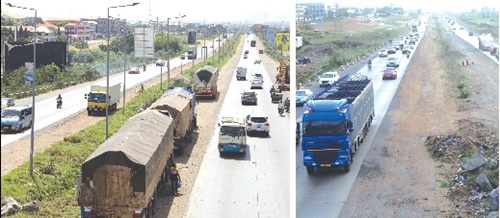
    Nearly three years after installation, most of the street lights along the 19-km Accra-Tema Motorway have vanished.

    A recent observation by a Daily Graphic team revealed that numerous street lights and poles, which were set up in 2021, are now missing, and the few remaining poles are damaged.

    The authorities are left scrambling to explain the situation. Despite the involvement of several public institutions in the project, none could clarify the disappearance of the street lights. The Ghana Highway Authority, the Ministry of Roads and Highways, and the Ministry of Energy have all shifted blame onto each other.

    An insider from the Ministry of Energy informed the Daily Graphic that maintaining the country’s street lighting system has been challenging due to various obstacles.

    A significant issue highlighted by the source is a lack of clarity among state agencies regarding ownership and maintenance responsibilities for the street lights.

    According to the source, while the Ministry of Energy oversaw their construction, the law stipulates that the lights must be handed over to local authorities with jurisdiction over the installation areas.

    Complicating matters further, the motorway falls under the authority of different local jurisdictions. The source added that officials from the Ghana Highway Authority have consistently advised the ministry that the street lights are part of the road infrastructure, thus falling under the authority’s purview.

    “There have been several arguments over who must be responsible for street lights over the years, and we need to come to an agreement on that as a nation,” the source said.

    According to the Street Lighting in Ghana Policy Framework (2011), the metropolitan, municipal and district assemblies (MMDAs) are responsible for the development, installation, maintenance, replacement and operation of street lights within their respective jurisdictions.

    The policy framework clarifies the roles and responsibilities of various stakeholders in ensuring effective street lighting across the country.

    “Consequently, all street lighting constructed by the public agencies— central government, the MMDAs, road authorities and the community—should be transferred to and owned by the local government authorities (MMDAs). Construction of community street lights shall be sanctioned by the MMDA,” it states.

    This aligns with the stipulations outlined in the Local Government (Departments of District Assemblies) (Commencement) Instrument, 2009, (Legislative Instrument 1961).

    In addition to the issues of ownership and maintenance, the source emphasized that preventing theft of road infrastructure, such as street lights, on the motorway has proven to be a significant challenge.

    In fact, contractors have reported incidents of theft occurring even while they were engaged in repairs on the street lights, leading to the replacement of three transformers before the project was completed.

    Situation

    Navigating the 19-kilometre Accra-Tema Motorway at night has become a daunting experience due to the absence of street lights, which are crucial for adequate visibility.

    Although solar-powered street lights were installed along approximately two-thirds of the route three years ago, motorists frequently raised concerns about inadequate illumination, particularly on the outer lanes, where many lights were faulty.

    In 2021, Professor Alex Dodoo, the Director-General of the Ghana Standards Authority, informed the Daily Graphic that these street lights failed to meet the national standards for roadway lighting.

    As a result, drivers now face complete darkness when traveling on this stretch at night.

    Globally, effective street lighting is essential in road construction to ensure the safety of nighttime road users.

    Street lights offer numerous benefits, including providing safe passage for pedestrians by lighting up footpaths and increasing their visibility to drivers.

    Additionally, they contribute to a sense of safety in the environment after dark and help to reduce crime rates.

  • Bad people will be scared of NDC’s next govt – Asiedu Nketiah

    Bad people will be scared of NDC’s next govt – Asiedu Nketiah

    Chairman of the National Democratic Congress, Johnson Asiedu Nketiah, has urged Ghanaians to demonstrate good conduct to steer clear of the potential repercussions from a future government led by John Dramani Mahama.

    He emphasized that this administration will focus on establishing standards and ensuring that corrupt individuals are held accountable.

    He stated that no one, whether affiliated with the government or the private sector, will escape facing the full extent of the law if found guilty of corruption or mismanagement of state resources, according to citinewsroom.com.

    Asiedu Nketiah shared these remarks while addressing party supporters in Sandema in the Upper East Region during his three-day tour of the area.

    “Let me assure you, the Mahama government is not scary for good people but certainly going to be scary for bad people in this country.”

    He added, “So wherever you are now, whether you’re in government work, whether you are in private business, make sure you conduct your life well according to the principles of a citizen of this country.

    “Because when we come to power, we must set standards that’ll be followed by generations yet unborn. And that is the surest way of ensuring development in this country,” he admonished.

  • UHAS student arrested for allegedly destroying posters of Amewu

    UHAS student arrested for allegedly destroying posters of Amewu

    A University of Health and Allied Sciences (UHAS) student has reportedly been detained by residents in Hohoe for allegedly vandalizing campaign posters of John Peter Amewu, the New Patriotic Party (NPP) parliamentary candidate for the Hohoe Municipality in the Volta Region.

    As reported by citinewsroom.com, the student was also accused of damaging several other posters in the vicinity.

    In response to the student’s actions, some local youths apprehended him and physically attacked him, an incident that was recorded on video.

    The New Patriotic Party in the Hohoe District stated that they are unaware of the arrest despite the occurrence. However, a reliable source, who requested anonymity for safety reasons, confirmed the student’s detention to citinews.

    This incident underscores the heightened tensions and conflicts that often arise during election periods, particularly in regions with fierce rivalries.

    Investigations into the matter are currently underway.

  • Video: Police clash with unaffiliated group during #FreeTheCitizen, #StopGalamseyNow protest

    Video: Police clash with unaffiliated group during #FreeTheCitizen, #StopGalamseyNow protest

    Tensions flared at the Kawukudi Intersection along the 37-Achimota Road in Accra as a confrontation erupted between a group of unaffiliated youth and police officers on the second day of the #FreeTheCitizen and #StopGalamseyNow protests.

    The group, predominantly Muslim youth reportedly part of the Chief Imam’s entourage, encountered a police roadblock that was set up for crowd control during the demonstrations.

    Riding mostly on motorcycles, the youth became frustrated with the blockade and demanded that it be taken down. When the police refused, the situation escalated into a confrontation.

    Ultimately, the group forcibly dismantled the barricade and rode through, ignoring police resistance, leaving the officers powerless to intervene.

    Some #FreeTheCitizens demonstrators expressed dissatisfaction with the police’s handling of the situation, accusing them of bias for not arresting any of the motorcyclists despite their use of force.

  • No MP’s should not be permitted to take ministerial appointments – Martin Kpebu

    No MP’s should not be permitted to take ministerial appointments – Martin Kpebu

    Private legal practitioner Martin Kpebu has urged the removal of Section 1 of Article 78 of the 1992 Constitution, which mandates the President to appoint the majority of ministers from Parliament.

    Kpebu expressed this view during an appearance on Joy FM’s Super Morning Show on Thursday, October 3, in support of the call for a constitutional review. He noted that the constitution requires significant amendments.

    He argued that MPs who also serve as ministers often use their influence to secure financial gains from private institutions to which they award contracts. He further claimed that ministers receive a cut of 10% or more from the payments made to contractors by the state.

    Kpebu suggested that this practice drives many MPs from the ruling government to seek ministerial appointments as a means to accumulate personal wealth.

    He said, “I hear nowadays it is becoming very clear that they don’t like deputy ministerial appointments because a deputy minister does not have much of a voice, doesn’t get much., right, so everybody wants to be a minister because that is where when you award contracts you will get 10% or more.”

    “The members of parliament go to parliament in the hope of being appointed ministers of state because that is where they will make money. So, this is the one we want to amend so that an MP cannot be a minister.”

    He further stated that Members of Parliament should not be appointed to serve on the governing boards of state institutions or organizations.

    He explained that MPs who sit on these boards often act as intermediaries for private companies seeking contracts from state institutions.

    “And number two, a very huge part- an MP cannot be a board member of the state-owned enterprises and institutions. Some of the MP’s when they [make] them chairman of let’s say National Petroleum Authority, just [as] board member alone, they become lobbyists for these institutions and that’s how they make money.”

    Martin Kpebu consequently urged the removal of this law, along with others, should the constitution undergo revision.

  • IMF, Ghana reaches staff-level agreement on 3 review of credit facility

    IMF, Ghana reaches staff-level agreement on 3 review of credit facility

    The International Monetary Fund (IMF) and Ghana have finalized a staff-level agreement concerning the third review of Ghana’s US$3 billion extended credit facility.

    This agreement follows Ghana’s recent achievement of 98% participation and consent from Eurobond holders in the restructuring of the country’s external debt.

    Stéphane Roudet, the IMF Mission Chief for Ghana, stated that overall performance under the IMF-supported program has been satisfactory.

    Furthermore, all quantitative targets set for the end of June 2024 have been met, and progress on essential structural reforms has continued, despite some delays in specific areas.

    Addressing the press on Friday, October 4, 2024, Stéphane Roudet said, “The IMF staff and Ghanaian authorities have reached a staff-level agreement on the third review of Ghana’s economic program under the Extended Credit Facility arrangement.”

    “Performance under the IMF-supported program has been generally satisfactory. All end-June 2024 quantitative targets were met, and progress on key structural reforms has continued notwithstanding delays in a few areas. The authorities’ policy and reform efforts under the program have continued to deliver encouraging results,” he added.

    To stabilize the economy and curb soaring inflation, the government announced its decision on July 1, 2022, to seek a $3 billion financial bailout from the International Monetary Fund (IMF).

    Following this, an IMF team visited Ghana from July 6 to July 13, 2022, to discuss a potential economic support program with Ghanaian authorities.

    In December 2022, a staff-level agreement was reached between the Government of Ghana and the IMF.

    On May 17, 2023, the IMF’s executive board approved Ghana’s $3 billion loan facility, with the first $600 million tranche disbursed to the Bank of Ghana (BoG) on May 19, 2023.

    In January 2024, the second tranche of $600 million was released after Ghana reached a debt restructuring agreement with bilateral creditors.
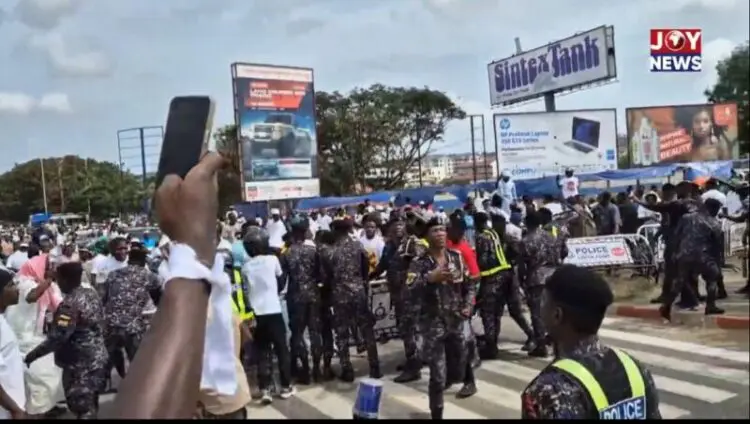
    By July 2024, the government received an additional $360 million as part of the third tranche, credited to the Central Bank’s account on July 2, 2024, following the IMF Executive Board’s approval of the second review.

    So far, Ghana has received a total of $1.56 billion from the $3 billion IMF bailout, aimed at restoring macroeconomic stability, safeguarding debt sustainability, and achieving broader economic goals.

  • #FreeTheCitizens, #SayNoToGalamsey demo is a desperate cry against distraction of our lands – Convener

    #FreeTheCitizens, #SayNoToGalamsey demo is a desperate cry against distraction of our lands – Convener

    The #FreeTheCitizens and #SayNoToGalamsey demonstration, according to convener Adatse Brownson, is a passionate and urgent call to action against the environmental destruction taking place in the country, particularly due to illegal mining, known as galamsey.

    Mr. Adatse’s statement aims to encourage other concerned citizens to participate in the ongoing three-day protest against galamsey.

    “This is not just any protest. It is not just a march. It is not just a stand to put our voices out there. It is a desperate cry for survival against a deliberate attempt to destroy our lands, our water, and our lives,” the convener of the #FreeTheCitizens and #SayNoToGalamsey demonstration stated.

    He further addressed the detained Democracy Hub protesters, who were reportedly denied food, water, and basic human rights by the police, who justified the arrests with charges of unlawful assembly, among other accusations.

    However, Mr. Adatse condemned the treatment of the detainees by the police, describing it as cruel and unjustified.

    “Look at how our comrades were abducted, kidnapped, detained, denied bail by the judiciary, and even denied food, water, and access to their legal representation. They moved people from their old cells to new cells just to create inconvenience for the lawyers. This is barbaric, this is tyrannical, and this is not a true democracy,” he sternly expressed.

    Activists are demanding the immediate release of the 53 anti-galamsey protesters arrested during the Democracy Hub demonstration.

    As a result, they have launched a three-day protest, which began on Thursday, October 3, 2024.

    Running until Saturday, October 5, 2024, the demonstration will follow an approved route, starting from Legon Okponglo and culminating at the Black Star Square.

    Participants will pass through key locations, including the Legon Stadium, Okponglo Traffic Light, Shiashie, Shangri-La, and Airport Traffic Light, with stops at the National Service Secretariat, the Electoral Commission Office, Parliament, and ending at Independence Square.

    With strong momentum on social media, thousands of supporters are expected to join the march, amplifying calls for the government to take decisive action against the illegal mining practices ravaging Ghana’s forests and water bodies.

  • #FreeTheCitizens demo: Violence will break out if changed is denied – Captain Smart quotes Nkrumah

    #FreeTheCitizens demo: Violence will break out if changed is denied – Captain Smart quotes Nkrumah

    Media practitioner with Accra-based Onua TV, Captain Smart, quoted the words of Osagyefo Dr. Kwame Nkrumah to emphasize the growing frustration and sense of urgency behind the #FreeTheCitizens and #StopGalamseyNow demonstration, which commenced on October 3, 2024.
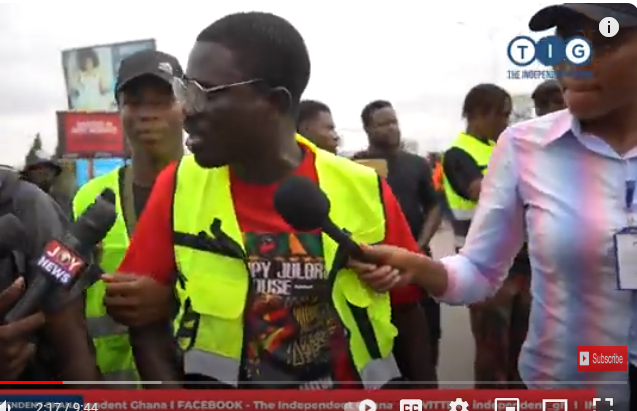
    He underscored the idea that if the public’s outcry against illegal mining and environmental destruction continues to be ignored, unrest could eventually erupt.

    “If change is denied, or too long delayed, violence will break out here and there. It is not that man planned or willed it, but it is their accumulated grievances that shall break out with volcanic fury,” Captain Smart warned the government, quoting Nkrumah.

    A three-day protest began on Thursday, October 3, in Accra, as activists demand the immediate release of 53 Democracy Hub protesters who were arrested during an anti-galamsey demonstration on September 21, 2024.

    The protest continues today and will run until October 5.

    It aims to capture the government’s attention to address the environmental destruction caused by illegal mining, locally known as galamsey, as well as to call for the release of the detained protesters.

    The demonstrators are marching from Legon Okponglo and will proceed to the Black Star Square, following a route approved by the police.

  • AfDB aims for 120m tonnes of food by 2025

    AfDB aims for 120m tonnes of food by 2025

    The African Development Bank (AfDB) aims to produce 120 million more tonnes of food by 2025.

    Dr. Abdul Kamara, Director-General of AfDB’s Nigeria Country Department, announced this at a side event during the 2024 West and Central Africa Regional Wheat Summit on Thursday in Abuja.

    The theme of the summit was: “Prioritising Policy, Innovative Technologies, and Investments in Wheat Transformation towards Sustainable Food Security and Economy in West and Central Africa”.

    Kamara stressed the urgent need to boost wheat production in West and Central Africa.

    He noted that rising demand for wheat is driven by population growth, urbanization, and changing dietary preferences.

    “However, in spite of this increasing demand, domestic production continues to lag far behind”

    “Today, the sub-region relies heavily on imports to meet its wheat needs, which exposes our countries to the vulnerabilities of the global market.”

    “Recent events, such as the conflict between Russia and Ukraine and India’s wheat export ban, have only further highlighted the fragility of relying on external wheat supplies.

    “The disruptions we have witnessed serve as a strong reminder that we must work towards reducing this import dependency and bolster local wheat production to secure our region’s food future,” he said.

    Kamara said that the AfDB’s response to these challenges was encapsulated in its Feed Africa initiative, launched in 2016.

    He said that the ten-year strategy was aimed at transforming agriculture across the continent into a competitive agribusiness sector.

    “The Feed Africa’s Technologies for African Agricultural Transformation (TAAT) is a major, continent-wide initiative that aims to boost agricultural productivity in all parts of Africa.

    “The TAAT contributes to Feed Africa’s objectives by improving agricultural productivity using the power of science, technology, innovation, and a knowledge-based agricultural approach.

    ‘The programme aims to double the productivity of crops, livestock, and fisheries by making proven technologies available to more than 40 million agricultural producers by 2025.

    “This will produce an additional 120 million tonnes of food and lift 130 million people out of poverty,” he said.

    Kamara encouraged stakeholders to engage in discussions aimed at building resilient agricultural systems capable of supporting Africa’s food security and economic growth.

    “Together, we can turn the challenges we face into opportunities and create a prosperous wheat sector that serves the needs of our people,” he said.

    Gov. Umar Namadi of Jigawa, who featured at the summit, shared the challenges and successes of wheat production in his state.

    “We believe in our land, our people, and our determination,” he said.

    Namadi, who reflected on efforts to allocate 40,000 hectares for wheat cultivation, said his administration had implemented programmes to support farmers.

    He said this had resulted in a significant increase in land dedicated to wheat production.

    Dr Solomon Gizaw, Head of the TAAT Clearinghouse, highlighted the pressing demand for wheat.

    Gizaw said that wheat consumption in Sub-Saharan Africa had surged by over 6 per cent in the past decade.

    He said that there was the need for strategic investments in the wheat value chain.

    Gizaw said that that nations like Nigeria and Cameroon were formulating National Wheat Road Maps to enhance domestic production.

    “Over the past six years, TAAT has successfully distributed heat-tolerant wheat varieties and other crops to over 12 million farmers, leading to an estimated increase in crop production of 25 million tonnes.”

    Mr Zubeir Ibrahim, Managing Director, Nile Sun Seed Company Ltd, and Chairman of the Sudan Seed Trade Association, Saudi Arabia, shared same views.

    He emphasised the opportunities presented by heat-tolerant wheat varieties and the growing market demand.

    “This demand creates a pathway for success that we can leverage,” he noted.

  • FreeTheCitizens demo: Disappointed Captain Smart goes hard on IGP

    FreeTheCitizens demo: Disappointed Captain Smart goes hard on IGP

    Media practitioner with Accra-based Onua TV, Captain Smart, has expressed grave disappointment in the Ghana Police Service, particularly the Inspector General of Police (IGP), Dr. George Akuffo Dampare, over his inaction regarding the recent arrest and detention of 53 protesters from the #StopGalamseyNow demonstration.

    He argued that the arrests were unwarranted, as those truly responsible for illegal mining and water pollution continue to operate freely in forest reserves.

    On Thursday, October 3, 2024, the first day of the planned three-day #FreeTheCitizens and #StopGalamseyNow demonstration, Captain Smart criticized the police for arresting peaceful protesters instead of targeting those actually responsible for destroying the country’s water bodies and forest reserves.

    “I’m disappointed in the Ghana Police Service, and I’m disappointed in the IGP. Those who are doing galamsey are in the forests, polluting our water bodies, yet the Ghana Police Service claims they are unaware of these illegal activities,” he remarked.

    Captain Smart emphasized that the police’s actions are misguided, as the real culprits behind environmental destruction continue their activities in the forests.

    He questioned, “Is the Ghana Police saying they are unaware of galamsey activities in Kyebi, River Ankobra, River Pra, and the like? And are they saying they cannot go to these areas to arrest the culprits? Yet, the IGP and the Ghana Police Service can arrest demonstrators on the streets of Accra,” he angrily expressed at the end of the first day of the protest.

  • Police service express preparedness to ensure security for 3-day protest against galamsey

    Police service express preparedness to ensure security for 3-day protest against galamsey

    The Ghana Police Service has affirmed its commitment to ensuring security for a three-day protest scheduled to take place in Accra, starting Thursday, October 3, and concluding Saturday, October 5.

    Organized by the group “Concerned Citizens Against Galamsey,” the demonstration aims to raise awareness and advocate for an end to illegal mining, locally referred to as “galamsey,” which has severely impacted Ghana’s water bodies, agricultural land, and forests.

    In a statement released on Wednesday, October 2, the police detailed the approved routes for the peaceful protest. Demonstrators are set to gather at Okponglo, close to the University of Ghana Sports Stadium, and will march each day to Independence Square.

    The march will pass several significant locations, including the Okponglo Traffic Light, Shiashie, Airport Traffic Light, Kawukudi Traffic Intersection, Kanda Highway, the Electoral Commission Office, Ridge Hospital, Parliament House, Osu Cemetery, and will conclude at the car park of the Accra Sports Stadium.

    “After an engagement with the organisers, the agreed routes for the demonstration shall begin from Okponglo, near the University of Ghana Sports Stadium, as their converging point, through the Okponglo Traffic Light, towards Shiashie/Standard Authority Traffic Light, through Shangrila to Airport Traffic Light and turn right to Association International School, through the National Service Secretariat and merge onto Kawukudi Traffic Intersection, through Kanda Highway to Accra High School Junction, through the Electoral Commission Office, Ridge to Ridge Hospital, through the AU Roundabout to the Parliament House, through Osu Cemetery, and finally end at the Accra Sports Stadium car park,” the statement read.

    The police reminded the organisers of their responsibilities under the Public Order Act. “The organisers were also reminded of Police responsibilities under the Public Order Act, which include taking all such steps reasonably necessary during the demonstration as follows: to assist in the proper conduct of any special event by directing the routes of such event to prevent obstruction of pedestrian or vehicular traffic.”

    Additionally, the police emphasised the need for maintaining order during the demonstration. “Any person taking part in the demonstration shall obey the directions of the Police safeguarding the proper movement of other persons and vehicles and generally maintain order,” the statement added, warning that participants could face consequences if disruptions occur.

    This protest follows closely on the heels of another demonstration organized by Democracy Hub, which escalated into violence, resulting in clashes with police and the arrest of 54 participants. Illegal mining, commonly known as galamsey, continues to be a major concern for Ghana. Despite the efforts of various governments, the issue remains unresolved, particularly under the current administration of Nana Addo Dankwa Akufo-Addo. Galamsey has caused significant damage to essential natural resources, including water bodies and agricultural land, while also posing serious health risks.

    Medical professionals and researchers have expressed concerns about the contamination of water sources by heavy metals, which can lead to severe health issues, such as birth defects. Additionally, the Ghana Water Company has faced challenges in providing clean water due to the pollution and turbidity affecting the nation’s water supplies.

    The Ghana Police Service has assured the public that adequate security measures are in place to maintain law and order during the protest and afterwards, emphasizing the need for peace while exercising the right to protest.

  • Ghana Armed Forces troops withdrawn from GBC, reportedly due to the 2024 elections

    Ghana Armed Forces troops withdrawn from GBC, reportedly due to the 2024 elections

    The Ghana Armed Forces (GAF), through its 64 Infantry Regiment, has allegedly declared the withdrawal of its personnel stationed at the Ghana Broadcasting Corporation (GBC).

    This withdrawal became effective on Wednesday, October 1, 2024.

    As reported by dailyguidenetwork.com, the rationale behind GAF’s decision remains unclear, leading to speculation, particularly regarding Ghana’s electoral environment.

    The security of GBC, a crucial organization for information dissemination in the country, has traditionally been managed by the Ghana Armed Forces.

    GAF’s actions carry significant implications, especially since no detailed explanation has been provided.

    The notice from management to staff of GBC dated September 30, 2024, read; “The Ghana Armed Forces acting by its agency, the 64 Infantry Regiment, has served the Corporation notice to withdraw its troops deployed to GBC with effect from Tuesday, October 1, 2024. All staff are to take note.”

  • EC hands over certificate to two new political parties

    EC hands over certificate to two new political parties

    Two newly registered political parties received their certificates from the Electoral Commission (EC) on Wednesday, 2nd October, 2024, at the Head Office of the EC.

    This brings the number of registered political parties to fourteen (14).

    The two new political parties are United 1 Ghana and Action Alliance Party.

    Madam Margaret O’Brien Sarfo, an Interim Executive Member, received the certificate on behalf United 1 Ghana, while Mr. Namuru Tahiru, an Interim Executive Member, received the certificate on behalf of Action Alliance Party.

    Mr. Namuru Tahiru of Action Alliance Party receiving Certificate from Mr. Benjamin Bano-Bioh, Director of Electoral Services of the EC

  • Miracles Aboagye condemns demands for the release of Democracy Hub protesters

    Miracles Aboagye condemns demands for the release of Democracy Hub protesters

    Communications Director for the 2024 Bawumia campaign, Dennis Miracles Aboagye, has condemned those calling for amnesty for participants in the Democracy Hub protest.

    The protest, which took place at the 37 Roundabout in Accra, descended into disorder as demonstrators blocked roads, removed police barricades, disrupted traffic, and caused property damage.

    Aboagye, who oversees communications for Dr. Bawumia’s campaign, voiced his concerns after the Circuit Court ordered the detention of 54 protesters, with nine currently imprisoned and the others still in police custody. The court’s decision has faced criticism from multiple organizations, including the National Democratic Congress (NDC), the primary opposition party.

    During his appearance on Asempa FM’s Ekosii Sen program on September 30th, 2024, Aboagye expressed bewilderment at the ongoing demands for the release of the detained protesters. He likened these demands to supporting the protesters’ destructive actions and road blockages, which hindered access to a nearby hospital.

    He remarked, “Those criticizing the police and demanding the release of the demonstrators should understand that the courts are simply performing their duties. Should we also ask for the release of rapists, armed robbers, and other criminals? Why should the lives of so many be disrupted by a mere protest of 50 people?”

    Mr Aboagye also took aim at Oliver, one of the protest leaders, for his conduct during the arrest, questioning the role model he presents to younger generations.

  • Nana Bediatuo Asante in a stable health condition – Presidency clarifies

    Nana Bediatuo Asante in a stable health condition – Presidency clarifies

    The Office of the President has confirmed that Nana Bediatuo Asante, the Secretary to the President, is currently undergoing treatment after being hospitalized in the United States.

    This announcement follows reports on social media suggesting that Nana Bediatuo fell ill and required hospitalization after attending the 79th United Nations General Assembly (UNGA) in New York, where he was a significant member of President Akufo-Addo’s delegation.

    In an official statement issued on October 2, 2024, the Office of the President noted that Nana Bediatuo was admitted to the hospital after feeling unwell. The statement further assured that he is responding positively to treatment and making good progress in his recovery.

    “Nana Bediatuo Asante stayed behind to conduct further government business. He then began to feel unwell and was subsequently admitted to hospital. He is currently in stable condition and responding well to treatment.

    “According to the medical team, Nana Bediatuo Asante’s recovery is on track, and we remain hopeful for his swift return to full strength,” the statement said.

    The statement also encouraged ongoing prayers and support for Nana Bediatuo and his family during this difficult time.

    “We ask for continued prayers and support for him and his family during this difficult period. Further updates will be provided when necessary,” the statement signed by the Director of Communications at the Office of the President, Eugene Arhin, concluded.

    See the full statement below:

    ID/ ADG

    Watch the latest episode of Moans and Cuddles below:

  • Islamic police crack down on betting shops without permit in northern Nigeria

    Islamic police crack down on betting shops without permit in northern Nigeria

    Islamic authorities in Kano, a northern city in Nigeria, have begun shutting down sports betting establishments, claiming they are operating without legal authorization.

    “As you know betting is forbidden in Islam,” Mujahid Aminudeen, deputy chief of the Sharia police force, known as the Hisbah, told the BBC.

    The enforcement action was triggered by concerns from community leaders and parents regarding the rising number of gambling addicts, according to him.

    On the first day of the operations, 30 shops in a single neighborhood were shut down, and their owners were sent away with a warning, the Sharia officer stated.

    Mr. Aminudeen cautioned that with the public now aware of the Hisbah’s crackdown on gambling, individuals violating the regulations would face arrest.

    Kano city serves as the capital of Kano state, which has a predominantly Muslim population and implements both the Islamic legal system—Sharia—and secular law.

    In Kano’s Christian neighborhoods, bookmakers and bars are generally permitted to operate, though they could also face consequences if the Hisbah believes that Muslims are patronizing them.

    Currently, the focus of the crackdown is on Muslim areas within Kano, a vast city and the economic center of northern Nigeria.

    Sports betting establishments are widespread throughout the city, with many featuring televisions for customers to watch the outcomes of international football matches or horse races they have bet on.

    Mr. Aminudeen mentioned that these bookmakers had managed to operate covertly by opening under false pretenses.

    “They don’t have licences to operate as they were given permission to run video games centres, which they later converted to betting shops,” he said.

    The sports betting sector has seen significant growth in recent years throughout the West African nation, which is primarily split between a predominantly Muslim north and a largely Christian south.

    Many individuals visit bookmakers for the social interaction with fellow gamblers, although mobile apps for wagering on events and teams have also gained popularity.

    Nigeria’s severe economic crisis has driven many to take risks with small amounts of money in hopes of achieving substantial winnings.

    However, this has resulted in widespread addiction, with parents expressing concerns that children are leaving school to engage in gambling, Mr. Aminudeen stated.

    “These economic issues we are facing in Nigeria is God telling us to change our ways by stopping sins,” he said.

    The raids on Tuesday had focused on Munjibir, considered a resort area in the north-east of the city – with visitors flocking there at weekends.

    “I am advising those running those betting shops to either shut down or we’ll arrest them and take them to [a Sharia] court,” Mr Aminudeen said.

    It is not clear what punishment they would face – often such infringements carry a fine.

    Sharia was introduced in Kano in 2000 – as it was in 11 other Muslim-majority northern states – and prostitution, gambling and the consumption of alcohol were banned.

  • Bawumia’s electric buses on their way to Ghana, projected to lower 40% transport cost – NEIP CEO

    Bawumia’s electric buses on their way to Ghana, projected to lower 40% transport cost – NEIP CEO

    Dr. Mahamudu Bawumia’s plan to bring electric buses to Ghana aims to transform the transportation sector and significantly lower commuting costs.

    Kofi Ofosu Nkansah, CEO of the National Entrepreneurship and Innovation Programme (NEIP), stated that the incoming electric buses are expected to reduce transportation costs by up to 40%.

    This initiative supports the government’s goal of promoting sustainable transport, addressing traffic congestion, and reducing pollution.

    The NEIP CEO highlighted that the electric buses will not only improve public transport efficiency but also help create a cleaner, greener environment in urban areas, according to a report by myjoyonline.com.

    “Dr Bawumia’s Electric Buses will be in by this month’s ending. No fuel cost, low maintenance. Public transport fares to be reduced by about 40%.”

    Alongside cost reductions, the electric buses are anticipated to enhance the overall travel experience for riders.

    Equipped with modern features and lower noise levels than conventional diesel buses, these vehicles will offer a more comfortable and environmentally friendly option for daily commuters.

  • Global food prices rise as inflation, insecurity worsen

    Global food prices rise as inflation, insecurity worsen

    The World Bank Group reports that domestic food price inflation remains elevated in many low and middle-income nations.

    In its recent update on food insecurity, the World Bank noted that 77.3% of low-income countries are experiencing inflation above 5%, a rise of 18.2 percentage points since June 27, 2024. Similarly, 54.3% of lower-middle-income nations, 44% of upper-middle-income countries, and 10.7% of high-income countries are facing significant food price inflation.

    In 55.6% of the 167 countries with available data, food price inflation has surpassed overall inflation rates. Since June 27, 2024, agricultural and export price indices have increased by 1% and 2%, respectively, with the cereal index remaining stable.

    Prices for maize and rice have dropped by 3% and 4%, respectively, while wheat prices rose by 8%. Year-on-year, maize prices are down by 17%, wheat by 4%, and rice by 3%, although rice prices remain 41% higher than in January 2020.

    The Global Report on Food Crises 2024 Mid-Year Update reveals worsening trends in acute food insecurity and malnutrition. The number of people facing Catastrophe-level food insecurity (IPC Phase 5) has escalated from 705,000 in 2023 to 1.9 million in 2024.

    The 2024 State of Food Insecurity and Nutrition in the World report highlights ongoing difficulties in achieving SDG 2—Zero Hunger. Between 713 million and 757 million people were affected by undernourishment in 2023.

    The Agricultural Market Information System (AMIS) Market Monitor for September 2024 points to severe impacts on global commodity markets, with 2024 poised to be one of the hottest years on record. Heatwaves have reduced maize production forecasts for the European Union, Mexico, and Ukraine, while soybean output is set to rise due to favorable conditions in the U.S.

    Additionally, trade restrictions imposed after Russia’s invasion of Ukraine have worsened the global food crisis. As of September 2024, 16 countries have enforced 22 food export bans, while 8 countries have introduced 15 export-limiting measures aimed at boosting domestic supplies and lowering prices.

  • Cedi depreciation worsens amid ongoing economic challenges

    Cedi depreciation worsens amid ongoing economic challenges

    Ghana’s local currency continues to face consistent depreciation against major trading currencies like the US dollar.

    Despite showing some stability in July, the cedi has remained under pressure throughout the year, even as inflation eased.

    As of 10:00 AM on September 16, 2024, checks by GhanaWeb Business revealed the cedi trading at GH¢16.40 to the dollar and GH¢21.60 to the pound at key forex bureaus nationwide. The Euro was trading at GH¢18.00 in the retail market.

    Meanwhile, Bloomberg recently reported that the cedi had weakened by 0.1%, now trading at GH¢15.67 per dollar, further exacerbating the economic challenges facing Ghana due to the pricing behaviors of businesses.

    Over the past month, the cedi has fallen nearly 1% against the dollar, with a total depreciation of almost 24% this year, according to Bloomberg.

    Additionally, Ghana’s dollar bonds maturing in 2032 increased by 0.2 cents, reaching 52.36 cents per dollar as of 11:38 AM on September 11, 2024, in London.

  • OMCs increase fuel prices amid global market pressures

    OMCs increase fuel prices amid global market pressures

    Some Oil Marketing Companies (OMCs) have begun raising fuel prices at the pumps as the first pricing window for October takes effect.

    This marks the first price hike after four consecutive reductions since August’s initial pricing window.

    Shell, which previously sold petrol (FuelSave Super) at GHS 13.49 per litre in September’s second pricing window, is now offering it at GHS 13.79. Diesel (FuelSave Diesel), previously priced at GHS 13.99 per litre, has risen to GHS 14.35.

    Market analysts attribute this increase to global factors, including escalating tensions in the Middle East, a 1.09% rise in the price of refined petroleum products like petrol, a 1.67% decrease in diesel prices, and the Cedi’s depreciation against key currencies like the US dollar.

    More OMCs are expected to adjust their prices upward in the coming days.