Author: Amanda Cartey

  • Inflation climbs to 21.5% in September 2024

    Inflation climbs to 21.5% in September 2024

    Inflation in September 2024 rose to 21.5%, up from 20.4% in August 2024.

    This increase was primarily driven by a rise in food inflation, which jumped from 19.1% in August to 22.1% in September.

    In contrast, non-food inflation decreased to 20.9% from 21.5% in August 2024.

    Over the past five months, inflation has consistently declined, dropping from over 50% recorded in 2022 to 20.4%.

    The Ghana Statistical Service (GSS) observed that inflation for both locally produced and imported goods has risen.

    Inflation for imported goods increased to 17.0% from 16.1% in August, while locally produced items experienced inflation of 23.4%, up from 22.2% in August 2024.

    Accommodation and restaurant services saw inflation at 27.9%, while alcoholic beverages, tobacco, and narcotics had an inflation rate of 27.6%.

    Housing, water, electricity, gas, and other fuels recorded an inflation rate of 26.4%.

    Education services experienced inflation of 23.7%, health services saw 22.3%, and food and non-alcoholic beverages had an inflation rate of 22.1%.

  • Nacasky reaches new revenue heights and important customer achievements

    Nacasky reaches new revenue heights and important customer achievements

    A prominent IT solutions provider, Nacasky Company Limited, has achieved remarkable milestones since collaborating with Intercity STC and other transportation organizations.

    The company has generated GHc775 million (around $53 million USD) in revenue and served 8.5 million customers through its IT platforms for state transport operators.

    The IT portal established by Nacasky for transportation companies has processed over 9 million transactions since its launch, demonstrating its strong infrastructure and efficiency.

    Nacasky management reports significant key statistics since partnering with ISTC.

    “The platform has generated a total revenue of GHc774,479,290.27 from transport operators, with luggage and parcels contributing GHc18,085,125,” stated management.

    “Notably, we’ve sold 7,731,168 seats, served 8,328,699 customers for bus tickets and parcels, and completed 307,205 bus trips since its inception,” management added.

    Nacasky Company Limited’s impressive performance underscores its commitment to revolutionising Ghana’s transportation sector.

    “We’re proud to have served millions of customers, providing convenient and efficient travel solutions,” the company said.

    As a key player in Ghana’s transportation sector, Nacasky offers ICT-based transport management solutions, including an administration module, accounting module, and reporting system, among others. The company has partnered with both private and public entities to provide IT services, drawing on its expertise in integrated business solutions, system applications, product development, Internet/Intranet applications, and communication and network management.

    Nacasky is poised for continued growth, fueled by the rising demand for digital transportation solutions in Ghana.

    In addition to its current collaboration with Intercity STC, Nacasky is now working with the Ghana Private Road Transport Union (GPRTU), Suntaba VIP, Joypee Transport, and the Ghana Road Transport Coordinating Council (GRTCC).

    Nacasky plans to launch similar platforms in Benin and Nigeria by the end of the year.

  • BoG reports liquidity decline in August 2024

    BoG reports liquidity decline in August 2024

    The Bank of Ghana reported that total liquidity decreased in August 2024 compared to the same period in 2023.

    The annual growth rate of M2+ fell to 37.1% in August 2024, down from 40.8% in August 2023, primarily due to a slowdown in the growth of net domestic assets held by depository institutions.

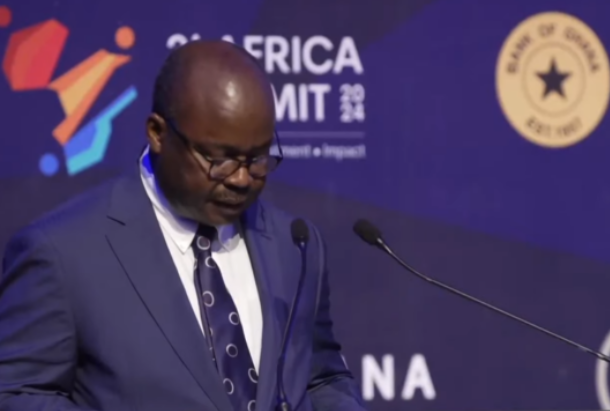
    BoG Governor Dr. Ernest Addison informed reporters on Friday, September 27, 2024, about the Monetary Policy Committee’s decision to reduce the policy rate from 29% to 27%.

    In contrast, Dr. Addison noted a significant increase in the net foreign assets of depository institutions, indicating a net accumulation of foreign assets.

    The decrease in the broad money supply was evident in the slower growth of demand deposits, savings and time deposits, as well as foreign currency deposits, according to Dr. Addison.

    He pointed out that, during the same period, the growth of currency held by the public actually rose.

  • Kenya’s vice president faces dismissal over involvement in anti-government protests

    Kenya’s vice president faces dismissal over involvement in anti-government protests

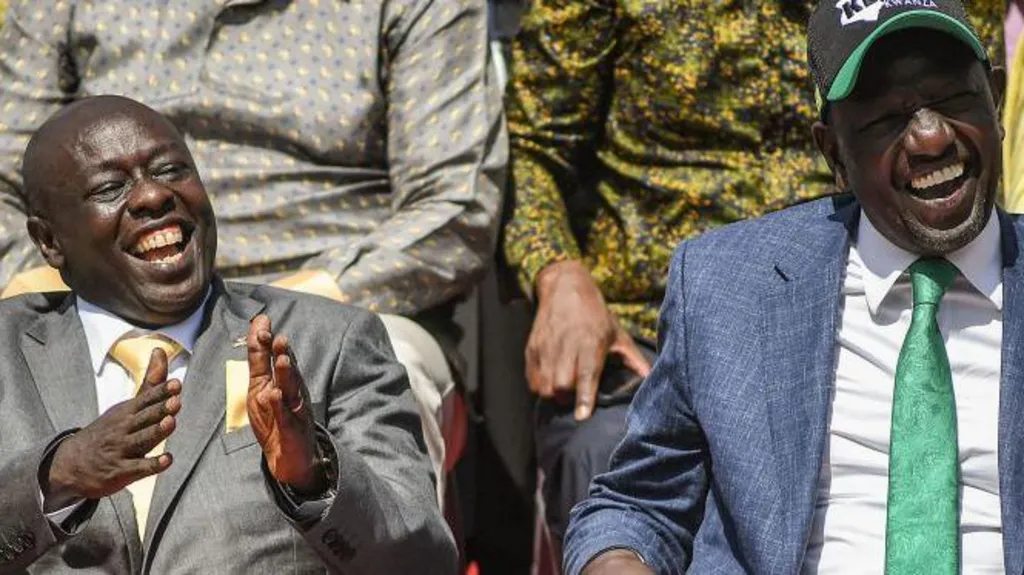
    Kenyan lawmakers have initiated the process to oust the country’s deputy president from office.

    Supporters of the move accuse Rigathi Gachagua of being involved in June’s anti-government protests, which turned violent, and allege his role in corruption, undermining the government, and promoting ethnic divisions.

    Gachagua has denied all the accusations.

    This marks the peak of a significant rift between Gachagua and President William Ruto.

    On Tuesday, the Speaker of the National Assembly gave the green light for impeachment proceedings after 291 MPs—far exceeding the required 117—supported the motion.

    The impeachment is expected to pass easily through both houses of parliament, especially after the main opposition teamed up with the president’s party in the wake of recent protests. However, no date has been set for the actual vote.

    Attempts to block the impeachment through legal channels have failed.

    The ongoing power struggle between the president and his deputy has sparked concerns about government instability, particularly as Kenya grapples with a severe economic and financial crisis.

    Ruto selected Gachagua as his running mate in the 2022 election, which saw him narrowly defeat former Prime Minister Raila Odinga in a contentious race.

    Gachagua, hailing from the vote-heavy Mount Kenya region, played a key role in securing support for Ruto.

    However, with members of Odinga’s party joining the government after the youth-led protests that forced Ruto to abandon a tax hike, the political landscape has shifted, leaving Gachagua increasingly isolated.

    Despite this, Gachagua has remained defiant, claiming he still has strong backing from voters in his home region of central Kenya.

    “Two-hundred [legislators] cannot overturn the will of the people,” he said.

    For the motion to pass, it needs the backing of at least two-thirds of the members of both the National Assembly and Senate, excluding nominated members.

    Supporters of the motion are optimistic it will gain approval.

    But Gachagua has made it clear that he will not go down without a fight.

    “The president can ask MPs to stop. So, if it continues, he’s in it,” he told media outlets before Tuesday’s parliamentary session.

    Ruto has previously pledged not to subject Gachagua to “political persecution,” similar to what he claims to have faced while serving as deputy to former President Uhuru Kenyatta.

    However, tensions between Ruto and Gachagua have become evident in recent months.

    The deputy president’s noticeable absence during Ruto’s departures for international trips and his returns has drawn attention.

    Interior Secretary Kithure Kindiki, a law professor trusted by the president, seems to be taking over some of Gachagua’s duties—a scenario reminiscent of Ruto’s fallout with Kenyatta.

    Like Gachagua, Kindiki hails from the Mount Kenya region, which represents Kenya’s largest voting bloc.

    Dozens of legislators have rallied behind Kindiki as the region’s preferred “mouthpiece”, intensifying speculation that they are pushing for him to succeed Gachagua.

    That has left the deputy president largely isolated with only a handful of elected politicians backing him.

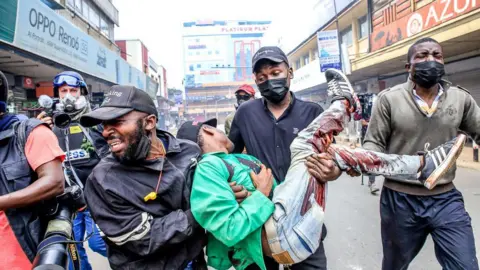
    Getty Images Angry youthful protesters help a man who was shot down during a demonstration over police killings of people protesting against Kenya's proposed finance bill in Nairobi  on 2 July
    Kenya’s security forces were accused of using excessive force to quell protests against higher taxes earlier this year

    In a further sign that he is in political trouble, the police’s Directorate of Criminal Investigations (DCI) recently recommended charges against two MPs, a staff member and other close allies of the deputy president, after accusing them of “planning, mobilising and financing violent protests” that occurred in June.

    Gachagua defended the accused, denouncing the charges as an “act of aggression” and an “evil scheme” to “soil” his name and lay the groundwork for his impeachment.

    In parliament last week, Kindiki – under whose ministry the DCI falls – pledged to remain neutral, but made it clear that “high-level individuals” will be prosecuted.

    “We are dealing with the aftermath of the attempted overthrow of the constitution of Kenya by criminal and dangerous people who almost burnt the parliament of Kenya. We have a job to do,” he said.

    But many of the young people who were at the forefront of the protests dismiss suggestions that Gachagua’s allies were behind it, and see the bid by lawmakers to oust him as an attempt to deflect attention from bad governance.

    They say that if the deputy goes, the president must go too.

    In the Senate, an opposition legislator has filed a censure motion against the president. It does not bear the same weight as impeachment and has no legal consequence.

    Ruto, who is expected to host legislators from his party later this week, will be weighing the political risks of moving against Gachagua, but some lawmakers say they do not want him to wade into the debate – a tough ask.

    For now, Gachagua’s fate rests with legislators, but one man might still extend him a renewed lease of political life – the president.

  • Freight forwarders, trade unions step up protests against unjust shipping line fees

    Freight forwarders, trade unions step up protests against unjust shipping line fees

    Several trade associations, including the Ghana Institute of Freight Forwarders (GIFF), are preparing to ramp up their protests against the exorbitant fees charged by shipping lines operating in Ghana.

    To maintain pressure, these groups are organizing to picket at the offices of various shipping companies in the coming days.

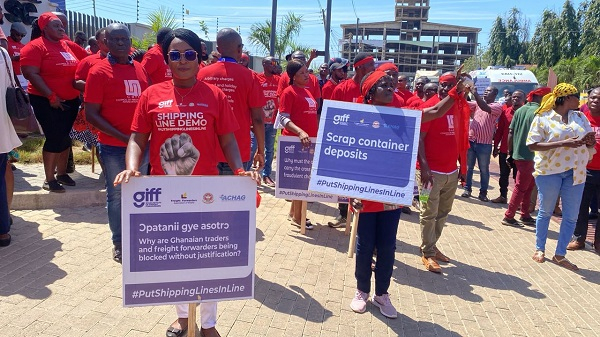
    This latest move follows their September 24, 2024, demonstration and media efforts to highlight the harmful effects of these exploitative fees on freight forwarders, importers, exporters, the broader business community, and consumers.

    Members of the associations, united in their fight, have been donning red attire in protest and taking part in marches to demand fairer practices from the shipping lines.

    However, circulating information suggests that shipping companies are attempting to involve law enforcement to block the planned picketing. Rumors indicate some shipping lines may be influencing the police to halt the protests, a strategy aimed at undermining the associations’ efforts.

    Despite these developments, the freight forwarders and their allied groups assert they remain resolute.

    They have vowed that their resolve will not be broken by any attempts to obstruct their peaceful actions.

    The leadership of the various groups has emphasized that their aim is to highlight the injustice of these fees and secure meaningful reforms.

    With momentum building, the associations have reassured their members that they will continue the fight until there is a resolution that addresses the exploitative fees, which have long burdened the industry.

    As tensions rise, the coming days will likely see an escalation in activities as the trade associations stand firm in their quest for fairness from the shipping lines.

  • Ivory Coast’s cocoa price hike heightens smuggling threat for Ghana

    Ivory Coast’s cocoa price hike heightens smuggling threat for Ghana

    Ghana faces an increased risk of cocoa smuggling after Ivory Coast’s recent decision to raise its farmgate cocoa price, overtaking Ghana’s rate. As the world’s top cocoa producer, Ivory Coast aims to curb illegal bean exports, but this move could significantly affect Ghana’s cocoa industry.

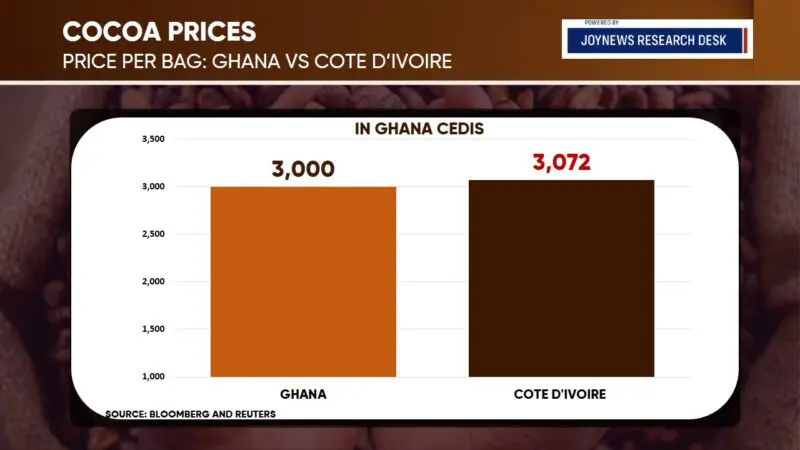
    Ivory Coast’s Agriculture Minister, Kobenan Kouassi Adjoumani, announced in Abidjan that the farmgate price will rise by 20%, from 1,500 CFA francs (around GH₵40) to 1,800 CFA francs (approximately GH₵48) per kilogram, starting on October 1, 2024.

    This increase means a 64 kg bag of cocoa will now cost about GHS 3,072, slightly higher than Ghana’s current price of GH₵3,000 per bag. The price adjustment is intended to deter cocoa smuggling into Ghana, though it may not entirely prevent illegal exports to other neighboring countries like Liberia and Guinea, where buyers offer prices closer to the global market rate.

    During the 2023/2024 season, Ivory Coast reportedly lost between 150,000 to 200,000 tons of cocoa to smuggling, according to Bloomberg.

    Implications for Ghana

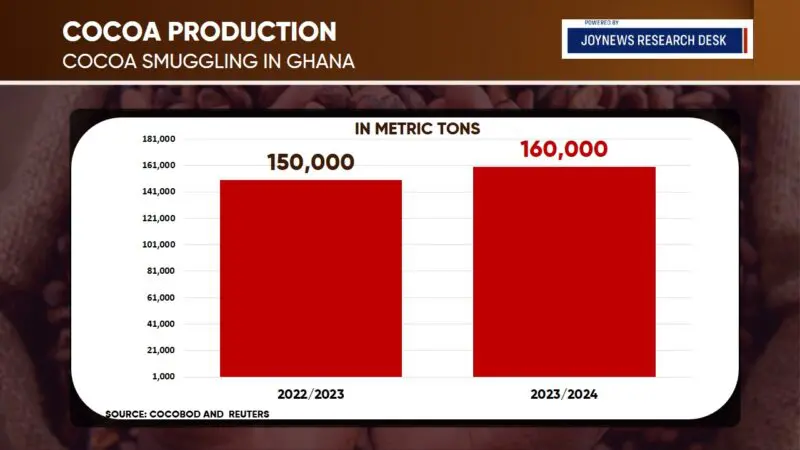
    Ghana, the second-largest cocoa producer globally, has faced similar challenges. According to Reuters, low domestic prices and delayed payments have pushed some farmers to sell their cocoa to well-organized smuggling networks. In the 2023/2024 season, the country lost around 160,000 metric tons to smuggling, up from 150,000 tons the prior season.

    Ghana’s lower cocoa prices, compared to neighboring countries like Côte d’Ivoire—where the price per bag was approximately GHS 2,560 in the 2023/2024 season, GHS 490 higher than Ghana’s rate—led to increased smuggling.

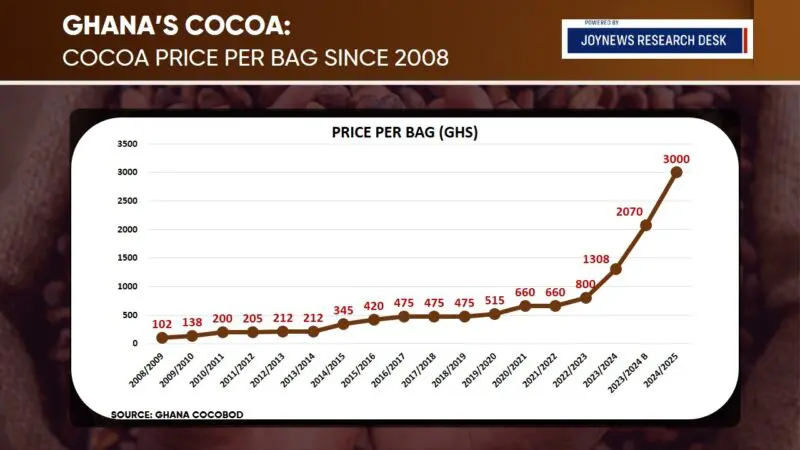
    In response, the Ghana Cocoa Board (Cocobod) raised the farmgate price by 45% for the 2024/2025 season, from GHS 2,070 to GHS 3,000 per 64 kg bag.

    Ghana’s effort to curb smuggling by raising farmgate prices may fall short, as Ivory Coast’s recent price hike could undermine these measures. Their rates still present a more attractive opportunity for smugglers.

    Ghana’s Production Dynamics

    Low yields in Ghana and Ivory Coast have led to a four-year global cocoa supply shortage, pushing up cocoa and chocolate prices. However, Ghana has been unable to capitalize on these higher international prices due to widespread smuggling.

    By June 2023, Ghana’s cocoa output had fallen to 429,323 metric tons, representing less than 55% of the average production for the same period in earlier seasons, marking the steepest decline in over 20 years.

  • It is a joke! – Dr Alhassan Andani on state of Ghana’s Agric sector

    It is a joke! – Dr Alhassan Andani on state of Ghana’s Agric sector

    Founder and Executive Chairman of LVSafrica Limited, Naa Dr. Alhassan Andani, has criticized the nation’s agricultural initiatives as ineffective.

    He pointed out that Ghana’s agricultural methods prioritize product consistency but overlook crucial data on weekly or monthly consumption levels.

    Moreover, he emphasized the absence of necessary frameworks to guarantee sustainable livestock and crop production for consumption, rather than merely pursuing short-term fixes.

    During an interview with Etsey Atisu, host of the Lowdown on GhanaWeb TV, Dr. Andani shared these insights on September 30, 2024.

    “Agriculture in Ghana is a joke. I can challenge the poultry farmers; if I put poultry farmers together and say ‘I need 20,000 dressed birds a day,’ I’m sure they will have a challenge. We can have 10,000 birds at Christmas or Easter but that’s not how to do business.

    “Every day people are eating. Birds must be there, fish and mutton must be there on a consistent basis but nobody is figuring out how much of it we consume per day, per week, per month and what kind of structures should we put in to produce that,” he said.

    Dr. Andani also said the country’s agricultural sector is not capitalising on or utilising the technology and skills needed to meet its monthly needs.

    He expressed frustration over the ongoing conversations about agriculture and the lack of action from stakeholders.

    The former banker also called on the government and agricultural stakeholders to adopt scientific methods and improve organization in crop production to enhance economic benefits.

    “We are all very seasonal so we have not really, as it was captured or not, used technology and skills to cultivate agriculture in such a way that it serves our daily, weekly, and monthly needs. We just follow the rain and if the rain is good, we have a bumper harvest, poor storage and we have not even thought about how to preserve.

    “Lots of wastage then we go into a lean season and the rains come again. Whether it’s crops, animals, or tree crops, we leave everything to chance. The evidence is there and we all saw the agricultural development of China, places like Ukraine. They are not deep or older than Ghana’s economy so, it’s just about focus, and putting the science and organisation into production on a consistent basis, but there’s a lot more talk around policy in agriculture than real action in agriculture,” he said.

  • Trust us to carry out our responsibilities fairly and transparently – Jean Mensa

    Trust us to carry out our responsibilities fairly and transparently – Jean Mensa

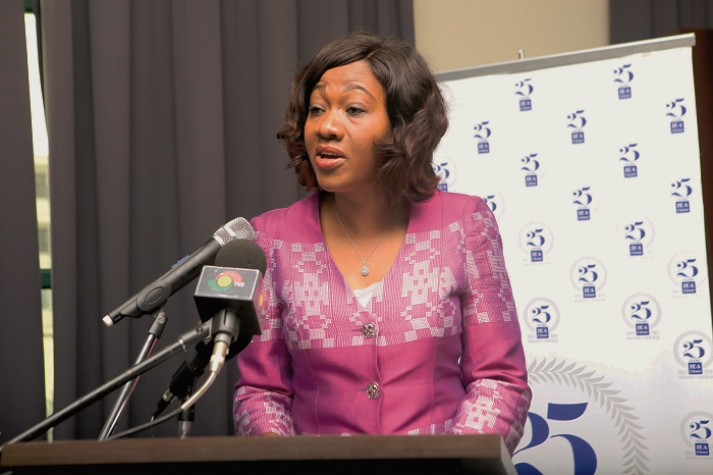
    The Chairperson of the Electoral Commission (EC), Jean Mensa, has declined the National Democratic Congress’ (NDC) demand for a forensic audit of the provisional voter’s register for 2024.

    At an Inter-Party Advisory Committee (IPAC) meeting on Tuesday, October 1, 2024, she reaffirmed the EC’s dedication to maintaining the integrity of the electoral process.

    Mrs. Mensa referenced the Commission’s constitutional mandate under Article 45(a) of the 1992 Constitution, which grants the EC the responsibility to oversee and manage all facets of elections in Ghana.

    “We have a long-standing record of delivering credible elections, and I urge stakeholders to trust us to carry out our responsibilities fairly and transparently,” she stated.

    The NDC’s request for a forensic audit arose from worries about purported inconsistencies in the provisional voter’s register.

    In her reply, Mrs. Mensa emphasized that the EC has strong systems in place to verify the register’s accuracy, which is currently being updated through established procedures, including online re-exhibition.

    “As a body mandated by Article 45(a) of the 1992 Constitution to compile the register of voters and to revise it as such periods as determined by law, we urge you all to trust us to perform our functions as enshrined in the constitution,” Mrs. Mensa reiterated.

    She also reassured political parties and the public of the EC’s commitment to a transparent and inclusive electoral process, encouraging input and collaboration from all stakeholders as the country prepares for the 2024 general elections.

    “The Commission has a track record and is globally respected for delivering free, fair, credible, and transparent elections and electoral processes, including the compilation of the provisional voter’s register,” she added.

    Mrs. Mensa also expressed confidence in the capabilities of the EC staff.

    “Our staff are well-trained and have the capacity and competencies to undertake the task of producing the final and credible voter’s register. We certainly do not require external assistance in our line of work,” she added.

  • Ghana’s T-bill auction falls short amid liquidity challenges

    Ghana’s T-bill auction falls short amid liquidity challenges

    Ghana’s money market is experiencing significant liquidity constraints, as the government fell short of its treasury bill target by GH₵2.6 billion in the most recent auction.

    The Bank of Ghana’s auction results revealed that the government successfully raised GH₵4.7 billion through short-term instruments, falling short of the GH₵7.4 billion target by about 35.9%.

    Among the treasury bills, the 91-day bill received the most attention, with all GH₵2.59 billion tendered accepted. Meanwhile, the 182-day bill attracted bids totaling approximately GH₵830 million, and the 364-day bill accounted for GH₵1.3 billion of the overall amount.

    Interest rates on treasury bills saw a modest increase, ranging from 25% to 28%.

    Market analysts link this trend to the high auction target along with persistent liquidity issues within the market.

    Looking ahead, the Treasury is projected to raise its borrowing target to GH₵5.98 billion for the upcoming T-bill auction.

  • Owusu-Bempah declares Mahama as God’s chosen leader for Ghana ahead of 2024 elections

    Owusu-Bempah declares Mahama as God’s chosen leader for Ghana ahead of 2024 elections

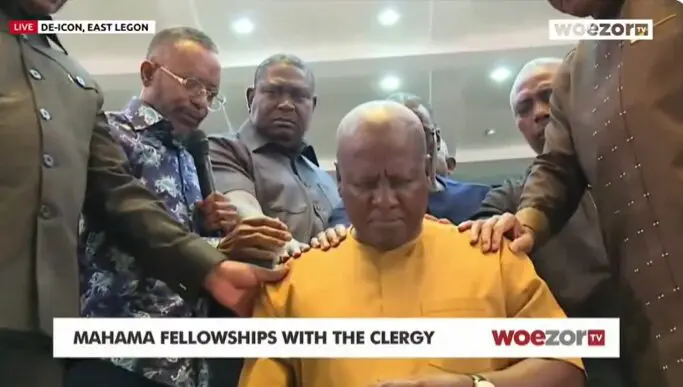
    A gathering of clergy members came together to pray for the flagbearer of the National Democratic Congress (NDC) John Mahama on Tuesday at the De Icon Event Centre in Accra.

    The occasion was designed for the former President to connect with Christian leaders from the region. It also served as a meaningful time for prayer, worship, and fellowship in a divine atmosphere.

    During his address, Mr. Mahama outlined his vision for the country and sought the guidance and prayers of the distinguished Christian leaders present.

    After his speech, several clergy members placed their hands on the kneeling Mahama, including Apostle Rev. Isaac Owusu-Bempah, founder of the Glorious Word Power Ministries International, who has faced criticism for his connections to the ruling New Patriotic Party (NPP).

    In his opening remarks, Mr. Mahama expressed gratitude to the attending pastors and extended special recognition to Owusu-Bempah, whom he referred to as a close friend. The prayers for the former President were led by Rev. Owusu-Bempah as the group laid hands on him.

    “This is whom you have elected to lead Ghana at a time like this. No power can stop it. It is through you that this country will see development,” the preacher prayed.

    Among those in attendance were Rev. Sam Korankye Ankrah, the founder and leader of Royal House Chapel International, Rev. Dr. Stephen Yenusom Wengam, the General Superintendent of the Assemblies of God Church, and Rev. Kwaku Agyei Antwi, widely known as Rev. Obofour.

    This gathering represents the NDC flagbearer’s inaugural significant engagement with clergy members in anticipation of the December 7 elections.

  • Close to 700k Ghanaian children at risk of Measles – WHO, CDC report

    Close to 700k Ghanaian children at risk of Measles – WHO, CDC report

    The World Health Organisation (WHO) and the Centers for Disease Control (CDC), have reported that around 700,000 children in Ghana are at risk of Measles and Rubella in 2023.

    For the past five years, Ghana’s coverage for the first dose of the Measles-containing vaccine has remained below 95 percent.

    Dr. Fred Adomako-Boateng, the Ashanti Regional Director of Health Services, shared this information to support the Integrated Measles-Rubella Vaccination and Vitamin A Supplementation Campaign being launched nationwide.

    During the media launch of the campaign in Kumasi, Dr. Adomako-Boateng emphasized the importance of collaboration among all stakeholders to reduce morbidity and mortality rates through vaccination efforts.

    The five-day initiative aims to boost population immunity against Measles and Rubella to 95 percent by vaccinating 903,973 children throughout all 43 districts in the region. The theme of the campaign is, “Measles and Rubella Kill, Vaccinate Your Child for Good Life.”

    From October 2 to October 6, vaccination teams will be going to schools, homes, and public areas to immunize children aged nine to 59 months (approximately five years).

    Mothers can also bring their children to designated vaccination points established in local communities, health centers, and hospitals.

    Additionally, the Regional Director revealed that the WHO/CDC Measles Risk Assessment Tool has identified 50 districts as being at high risk for a measles outbreak.

    4o mini“This accumulation of susceptible children creates a vulnerable population at risk of Measles and its severe consequences,” he pointed out.

    According to him, as the number of unvaccinated children rises, the likelihood of outbreaks increases.

    He gave a breakdown of confirmed Measles cases in the region for the last six years as 2018 -9, 2019 – 2, 2020 -1, 2021 -4, 2022 – 24, and 2023 -79.

    He said no parent or guardian should miss the chance to vaccinate their children between the recommended age brackets during the campaign period to protect them from the diseases.

    “As we stated, Measles and Rubella kill, the complications are something that you cannot really pay for, and you will never know who is going to be at risk,” Dr. Adomako-Boateng cautioned.             

  • New launch: The partnership for Global inclusivity on AI

    New launch: The partnership for Global inclusivity on AI

    A new venture – the Partnership for Global Inclusivity on AI (PGIAI) was launched on the sidelines of 79th Session of the United Nations General Assembly (UNGA), to harness the rapid advancement of AI in sustainable development globally.

    The PGIAI brings together the Department of State, Amazon, Anthropic, Google, IBM, Meta, Microsoft, Nvidia, and OpenAI.

    Together they will commit more than $100 million, leveraging their combined expertise, resources, and networks to unlock AI’s potential as a powerful tool for sustainable development and improved quality of life, particularly in developing countries, while maintaining an unwavering commitment to safety, security, and trustworthiness in AI systems.

    The scheme recognizes that effective and equitable AI solutions must be rooted in an understanding and respect for the diverse cultures, languages, and traditions of the communities they serve and as such, the PGIAI will focus on three areas: Firstly, to increase access to AI models, compute credit, and other AI tools.

    Secondly, to build human technical capacity; and thirdly to expand local datasets

  • Niger: Economic recovery predicted on the back of oil revenues

    Niger: Economic recovery predicted on the back of oil revenues

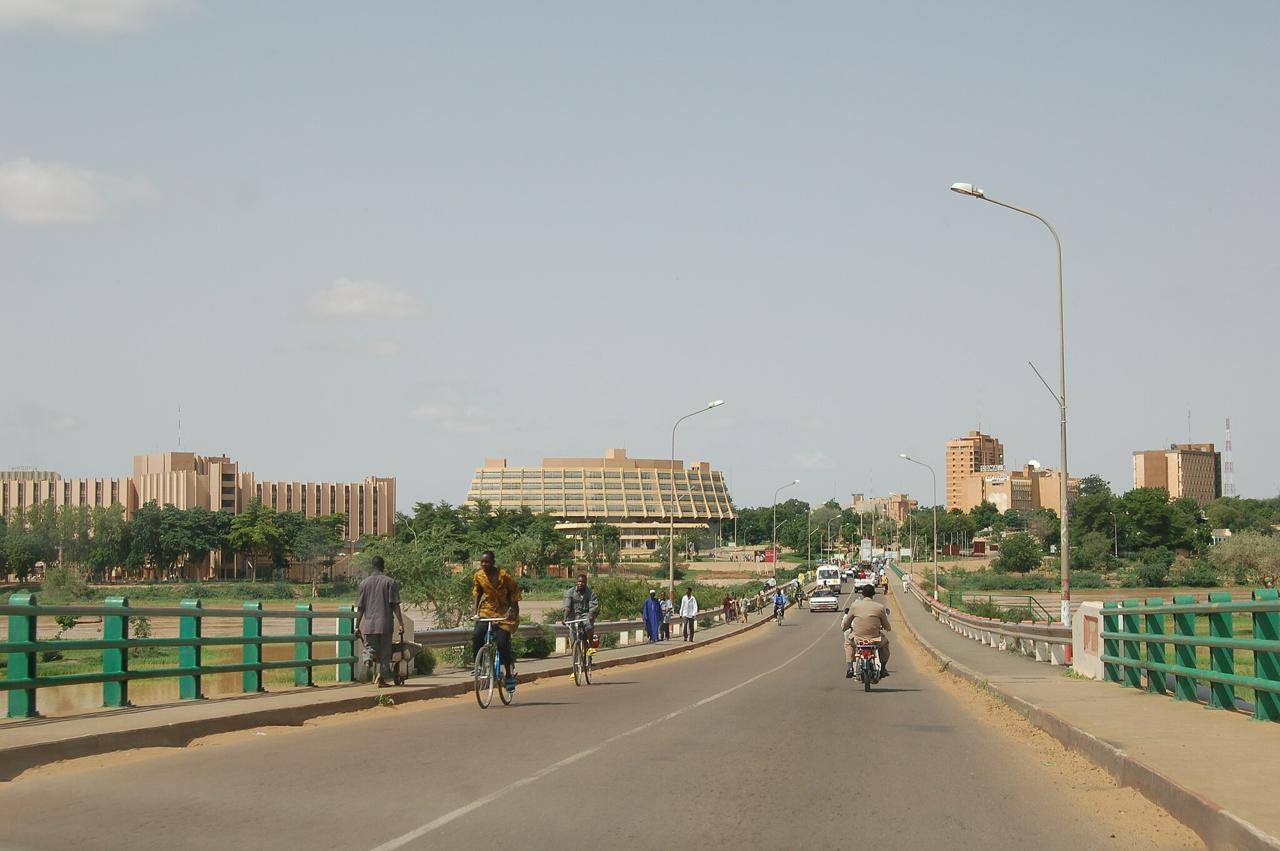
    Niger’s economy is set to rebound after a year marked by an unprecedented political crisis. However, the rebound is dependent on favourable security and climate conditions, and continued oil production for exports, according to the World Bank’s latest economic update for Niger, published today.

    The report analyses the country’s recent economic and poverty trends and provides a three-year outlook. In a dedicated chapter, it also analyses the costs of improving access to quality primary and secondary education and offers some policy recommendations.

    The report notes that the political crisis following the regime change on July 26, 2023, and the subsequent commercial and financial sanctions imposed by ECOWAS and WAEMU, significantly reduced GDP growth to 2%.

    Prior to the crisis, GDP growth had been projected at 6.9 % for 2023 and was expected to rise to 12 % in 2024, driven by large-scale oil exports through the pipeline that was commissioned at the end of 2023. Government spending fell due to asset freezes, loss of regional financing, and a significant reduction in external financing amounting to approximately 7.5 % of GDP.

    Private investment also sharply declined in 2023 due to uncertainty and a liquidity crisis in the banking sector caused by the financial sanctions.

    “Despite the heavy sanctions imposed by ECOWAS in 2023, Niger’s economy has shown resilience due in part to proactive measures taken by the authorities.

    These measures have enabled the government to continue paying public sector salaries and manage the energy crisis caused by the interruption of electricity imports from Nigeria. However, Niger’s economy remains fragile and largely dependent on rainfed agriculture, thus exposing it to climate shocks.

    Investing in human capital, particularly education, is crucial for achieving sustainable and inclusive growth,” said Han Fraeters, World Bank Country Manager for Niger.

    With the lifting of sanctions on February 24, 2024, and partial restoration of financing, growth could rebound to 5.7 % in 2024. This rebound would be driven by oil exports, while non-oil industries and service sectors, which suffered heavy losses in 2023, face a challenging recovery.

    The country’s poverty rate is expected to decline between 2024 and 2026, reaching 42.5 percent by the end of 2026, in line with projected growth rates. This assumes solid growth in agriculture output and the effective use of increased oil revenues for the benefit of the population.

    “While oil production and exports are expected to boost government revenues, it will also increase the volatility of growth. Plus, it is a finite resource, and Niger’s oil reserves are expected to begin declining in the mid-2030s if there are no new discoveries. It is therefore crucial to focus on increasing productivity by investing in sectors such as education,” said Mahama Samir Bandaogo, Senior Economist at the World Bank and co-author of the report. “The education sector faces many challenges and requires substantial investment.

    However, several options exist for financing the necessary additional expenditure without compromising fiscal sustainability. These include improving spending efficiency in the education sector and strengthening domestic revenue mobilization, both oil and non-oil, to create additional fiscal space sustainably.”

  • United States and Sierra Leone sign compact to transform energy sector

    United States and Sierra Leone sign compact to transform energy sector

    The United States and the Sierra Leone government have signed a landmark $480 million grant to boost the west African country’s access to electricity.

    The aim of the Millennium Challenge Corporation (MCC) grant is to foster sustainable economic growth and improve the quality of life of Sierra Leoneans, a US Department of State announced on Monday.

    This grant, coupled with a voluntary contribution of $14.2 million from the Government of Sierra Leone, will fund transformational energy sector investments to deliver affordable and reliable electricity for 4.6 million people.

    It will also substantially improve the operation of the electrical grid and increase the availability of affordable and reliable electricity for households, businesses, and social institutions – without adding to the country’s debt burden.

    “MCC’s partnership with the Government of Sierra Leone will help unlock the country’s economic potential, empower communities and businesses, and create a more prosperous and thriving Sierra Leonean citizenry,” reads the statement, adding:

    “As we work together to implement this transformational program, the United States welcomes Sierra Leone’s sustained commitment to democratic principles, including progress on implementation of the Agreement for National Unity, on electoral and constitutional reform, and on pursuit of justice and accountability for electoral violence…The U.S. government remains steadfast in its support of building a more robust and resilient energy sector, strengthening democracy, and ensuring a brighter future for all the people of Sierra Leone.”

  • Ghana Manganese Company plans to set up $450m refinery project, boost employment

    Ghana Manganese Company plans to set up $450m refinery project, boost employment

    The Ghana Manganese Company (GMC) is set to launch a phased refinery project, aimed at upgrading low-grade carbonate manganese into a more valuable product.

    This initiative seeks to improve market demand, boost revenue, and increase foreign exchange earnings.

    The first phase, costing $240 million and slated for completion in 24 months, will include the construction of a 45MW natural gas power plant and a two-million-ton annual refinery, introducing advanced industrial technology to the mining sector.

    In addition, the project will involve significant investments in a dedicated mineral railway and improvements at the Takoradi Port to optimize future manganese ore exports.

    Altogether, Phases 2 and 3 will bring the total investment in the refinery to $450 million.

    During a tour organized by the Ghana Chamber of Mines for Journalists for Business Advocacy, GMC General Manager Joseph Ampong expressed optimism about the project’s impact on the mine’s future.

    He highlighted that the refinery would generate over 1,000 direct jobs and significantly enhance the company’s revenue.

    The company plans to ramp up manganese production to 8 million tonnes annually, with 5 million tonnes to be refined locally.

    Mr Ampong added that the project had been delayed for years due to power supply issues, noting that the refinery would need about 45,000 megawatts of electricity.

    “I think at some point, they made an attempt to put up the gas plant to cast iron and manganese carbonate deposit so that it becomes very rich before we send it down. But due to power issues, it couldn’t materialize so now we are coming up with new interventions to make sure it works,” he added.

    Mr. Ampong stated that the company is relying on Genser Energy to supply the power for the project, utilizing gas sourced from Atuabo.

    He emphasized that the refinery would positively affect the economy in various ways, including boosting government revenue, increasing foreign exchange earnings, and creating jobs.

    “So definitely, we’re going to have a lot of advantages bringing the refinery on board. The grade we are mining now is low, we are currently selling at 26.5 per cent but when you upgrade it, you refine it, you can get it at 40 per cent and above,” he explained.

    Manganese plays a crucial role in the steel industry, representing 75% of global demand, with 20% used in batteries and 5% in fertilizers.

    Mr. Ampong noted that the ongoing transition from fossil fuels to renewable energy is advantageous for the company, particularly in the production of electric vehicles. He pointed out that the demand for manganese, lithium, and other essential minerals is expected to rise significantly in the future.

    “Manganese is part of the critical piece that forms electric vehicle batteries. So, if you read of late, you will see we are talking about green minerals, critical minerals, and manganese is part of it.

    Mr. Ampong stated that the Ukraine-Russia conflict significantly impacted GMC, as Ukraine was a major export market alongside China. He added that the company is actively seeking marketing opportunities globally to ensure the sustainability of its operations.

  • Ivory Coast’s Agric minister announces 20% increase in cocoa prices

    Ivory Coast’s Agric minister announces 20% increase in cocoa prices

    Ivory Coast has increased the price it offers cocoa farmers, surpassing what Ghana pays, despite growers in both nations still receiving significantly less than global market rates.

    As of October 1, the top cocoa producer in the world has raised the farmgate price by 20% to 1,800 CFA francs ($3.06) per kilogram, as announced by Minister of Agriculture Kobenan Kouassi Adjoumani in Abidjan.

    This price translates to $3,060 per ton, slightly higher than Ghana’s initial payment of $3,039 per ton for the start of its harvest season this month.

    This move could deter the smuggling of Ivorian cocoa beans to Ghana, though the risk of illegal exports to neighboring countries like Liberia and Guinea remains due to buyers there offering prices closer to the global market rate.

    A combination of adverse weather, diseases, and insufficient agricultural inputs limited cocoa production across West Africa last season, causing cocoa futures to reach an all-time high earlier this year, exceeding $11,000 per ton. Since then, futures have declined, trading around $7,700 per ton as of Monday in New York.

    The poor harvest has led to a global cocoa market deficit for the third consecutive year. While production is expected to rebound in the upcoming season, the surplus is projected to be modest, estimated at around 90,000 tons, according to a survey of 15 analysts and traders by Bloomberg.

    The pricing systems established by the governments of Ivory Coast and Ghana have hindered farmers from fully benefiting from the global price surge.

    This situation has limited sufficient investment in farms and encouraged smuggling to neighboring countries, where the market is less regulated and prices are considerably higher.

    According to Bloomberg’s report on September 19, Ivory Coast is estimated to have lost between 150,000 and 200,000 tons of cocoa beans to smuggling during the current crop year ending Monday.

    As part of a “strategic cooperation,” Ivory Coast from 2024-25 will begin to harmonize output control, pricing and marketing system with Ghana, Adjoumani said. The farmgate price of coffee was increased by 67% to 1,500 CFA francs per kilogram, he said.

  • Fitch forecasts Ghana’s economy to grow by 5.5% this year

    Fitch forecasts Ghana’s economy to grow by 5.5% this year

    Fitch Solutions has projected that Ghana’s economic growth will increase from 2.9% in 2023 to a three-year peak of 5.5% in 2024.

    The most recent data from the Ghana Statistical Service indicates that the economy expanded by a robust 6.9% year-on-year in the second quarter of 2024, following a solid 4.8% growth in the first quarter.

    The UK-based firm credited this acceleration in the second quarter primarily to stronger industrial output, particularly in mining and quarrying, along with a continued rebound in the construction sector.

    In terms of expenditure, growth was bolstered by an 8.5% rise in private consumption and a 12.6% increase in exports.

    Looking forward to the second half of 2024, Fitch anticipates that growth will remain strong, though it will slow from the high levels observed in the second quarter.

    This outlook is underpinned by two main factors. First, the robust export growth witnessed in the second quarter is not expected to persist in the latter half of the year.

    This surge was partially driven by a recovery in international oil sales, fueled by strong crude production in the first half of 2024.

    However, this recovery seems to have peaked, which may lead to slower export growth in the upcoming months.

    Secondly, Fitch predicts that the growth in private consumption will also moderate.

    In 2023, private consumption surged by 18.7% and 19.2% year-on-year in the third and fourth quarters, respectively, creating a high base that will likely result in slower growth during the second half of 2024.

    Despite this, Fitch noted that robust consumer fundamentals suggest that healthy spending will continue.

    Data from the Bank of Ghana revealed a 21.1% year-on-year increase in mobile money transactions in June 2024, along with a 42.5% rise in new payment card issuances.

  • Proposed merger in the energy sector not a solution  – VRA Union

    Proposed merger in the energy sector not a solution – VRA Union

    National Union Chairman of the Public Services Workers Union at the Volta River Authority (VRA), Fuseini Adjei, has expressed concerns over the proposed merger of power producers and distributors, stating it would not benefit the nation’s energy sector.

    The government is planning to introduce a bill to combine power producers and distributors, but this has sparked widespread opposition from workers in the energy sector.

    The bill seeks to merge the Bui Power Authority (BPA), NEDCo, and the Electricity Company of Ghana (ECG) into one entity.

    However, Mr. Adjei, speaking to the Ghana News Agency in Sunyani, argued that merging the power producers and distributors would not effectively address the country’s power challenges.

    Earlier, NEDCo staff staged a peaceful protest to express their dissatisfaction with the proposed bill.

    Mr. Adjei emphasized that it is crucial for the government to engage with stakeholders in the power sector thoroughly in order to find proper solutions to the issues in the energy industry.

    He said any move to privatise the nation’s power sector too would lead to increased power costs, saying “private entities always prioritise profit over public service”.

    Mr Adjei pointed out that currently the VRA was selling power at a reasonable price due to the Authority’s social contract and cautioned against measures that could “harm” the sector and thereby benefit private entities.

    He urged the government to involve stakeholders in the bill’s drafting process to incorporate their expertise as well.

    In a related interview, Mr Prince Mash-hud Abdulai, the Vice President of the NEDCo Senior Staff Association noted that, “At this stage of our operations, a merger is not the solution.”

    Instead, he urged the government to supply the essential resources and financial backing to energy sector participants, emphasizing that this support is vital for them to serve the public effectively and efficiently.

    Mr Abdulai said if proper care were not taken the power sector could fall into the “hands of the private sector” and that would allow private companies to “dictate prices and use of power which may not be in the best interest of the people.

  • Cedi remains stable in the retail market despite increased demand

    Cedi remains stable in the retail market despite increased demand

    The local currency remained stable in the retail market last week but faced pressure in the interbank market.

    The pressure was due to a renewed forex demand from traders and the manufacturing sector in anticipation of the upcoming festive season.

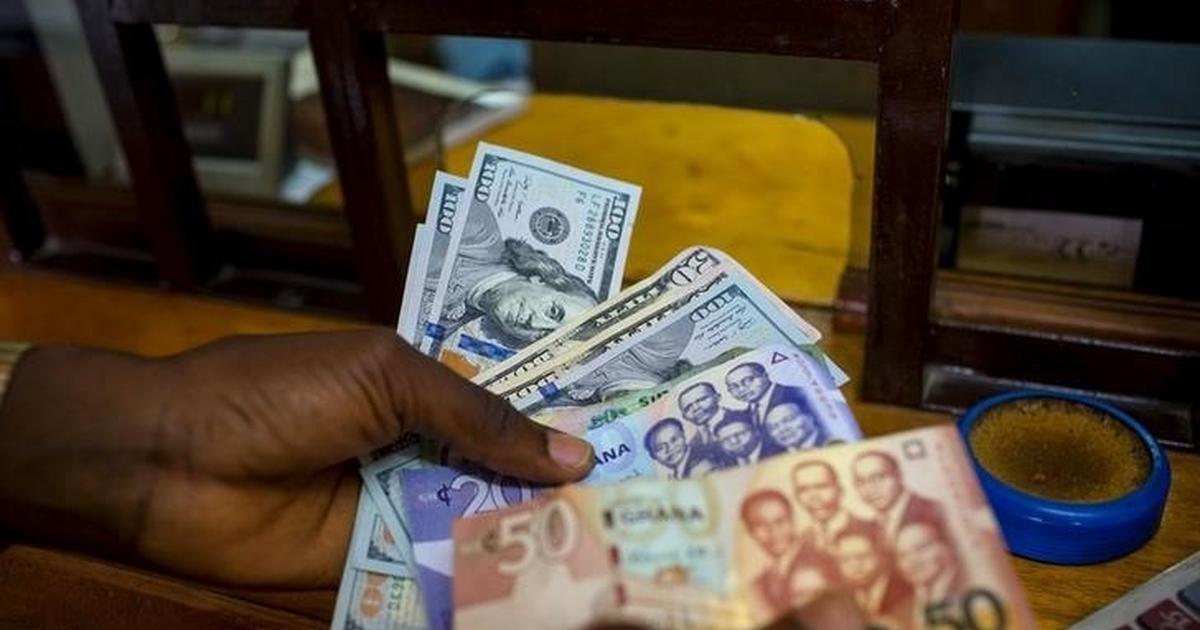
    Retail rates against the euro and pound closed unchanged at mid-rates of GH¢18.03/€ and GH¢21.35/£ repsectively.

    However, thee cedi recorded a marginal appreciation of 0.93% against the US dollar, with the mid-rate rising to GH¢16.20/US$, up from GH¢16.35/US$ the previous week.

    Analysts believe the stability of the cedi in the retail market indicates improved forex inflows and reduced speculative demand, as the market awaited the Monetary Policy Committee’s briefing on Friday, September 27, 2024.

    Following a 200-basis point cut to 27% from 29% and a strong assurance from Governor Dr. Ernest Addison regarding the Bank of Ghana’s (BoG) ability to meet forex demand, the dollar-cedi rate is expected to remain fairly stable due to reduced speculations.

    Additionally, the recently updated methodology for calculating the Bank of Ghana’s Foreign Exchange Market Reference Rate (MRR), which enhances foreign exchange data coverage would reduced short-term volatility, despite increasing demand ahead of the festive season.

    Cedi lost 24.3% to dollar in nine months of 2024 – BoG

    The Ghana cedi lost 24.3% to the US dollar on the interbank forex market as of September 2024, the Bank of Ghana has revealed in its Summary of Economic and Financial Data.

    This is lower than 22.9% depreciation recorded during the same period last year.

    According to the data, the cedi lost 7.7% in value to the dollar in March 2024 and depreciated by 18.6% in June 2024.

  • BoG reports ongoing disinflation as food and overall inflation decline

    BoG reports ongoing disinflation as food and overall inflation decline

    Bank of Ghana Governor, Ernest Addison, mentioned that domestic price trends have shown a steady disinflation process since the last Monetary Policy Committee meeting.

    According to Dr. Addison, this was primarily aided by the persistently tight monetary policy and the reduction in food inflation.

    He highlighted that headline inflation has been consistently falling since the last MPC meeting, reaching 20.4 percent in August, compared to 22.8 percent in June and 20.9 percent in July 2024, with food inflation playing a significant role.

    Dr. Addison explained that food inflation dropped to 19.1 percent in August, down from 24.0 percent in June and 21.5 percent in July, while non-food inflation saw a slight decrease to 21.5 percent from 21.6 percent in June 2024.

    The central bank’s primary inflation measure, which excludes energy and utility prices from the consumer index, eased to 19.4 percent in August from 22.1 percent in June 2024, according to Dr. Addison.

  • Nigeria’s Eurobond has increased to 9.6% – Report

    Nigeria’s Eurobond has increased to 9.6% – Report

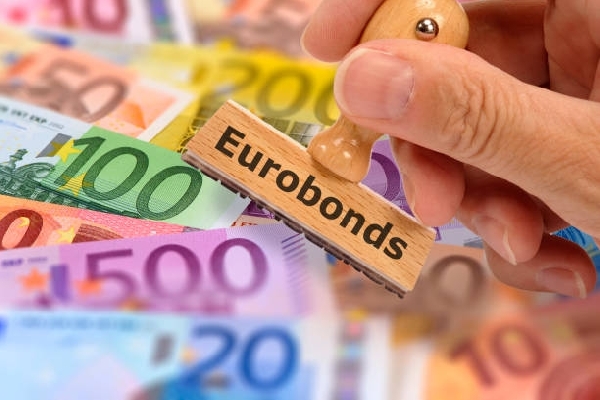
    Nigeria’s sovereign Eurobond market saw selling pressure across short, medium, and long maturities, pushing the average yield up by 0.13%, ending the week at 9.6%. This movement comes as the market adjusts to recent interest rate changes, with the U.S.

    Federal Reserve cutting rates while Nigeria’s central bank raised its benchmark rate to 27.25% in September, prompting a shift in investment strategies.

    Economic indicators suggest Nigeria is experiencing positive trends in disinflation and growth. However, sentiment-driven concerns weighed on Nigeria’s Eurobond market, dampening investor confidence.

    Despite this, analysts anticipate an increase in demand for Nigerian Eurobonds due to their attractive yields compared to U.S. Treasury bonds in the international capital markets.

    In the U.S., bond yields dipped on Friday after inflation data showed continued easing, raising the likelihood of another substantial rate cut by the Federal Reserve at its November meeting.

    Fixed income traders reported that optimism surrounding the U.S. Federal Reserve’s rate cut gave African Eurobond markets, including Nigeria’s, a strong start to the week.

    Analysts have started to project flood of hot monies coming to African economy in the coming months. Additionally, news of China’s stimulus package led to a significant rally in the Asian markets, impacting the African Eurobonds, AIICO Capital Limited said.

    The foreign bonds market ended negatively due to a substantial decline in oil prices caused by the possibility of increased oil supplies from Saudi Arabia, overshadowing China’s efforts to stimulate its economy and few profit takings.

    Overall, the average mid-yield on the Nigerian bond curve increased by 27 basis points week-on-week, reaching 9.6%.

    In the FGN bond market, the average yield across tenors rose 7 basis points to 18.5% owing to bearish repricing in the over the counter market.

    US 10-Year bonds offer a balance of higher interest rates and lower volatility, suitable for cautious investors seeking long-term gains and portfolio diversification.

    The yield on the 10-year US Treasury note held its recent decline to around 3.75% on Monday as soft US economic data reinforced expectations of further Federal Reserve rate cuts.

    China’s 10-year government bond yield surged to around 2.21%, reaching a three-week high, as investors reacted to the latest PMI reports.

    Australia’s 10-year government bond yield held steady at around 3.98% as investors continued to assess the Reserve Bank of Australia’s monetary policy outlook.

  • GS1 Ghana pushes for mandatory barcode legislation to Boost Trade

    GS1 Ghana pushes for mandatory barcode legislation to Boost Trade

    A non-profit organization dedicated to setting business standards, GS1 Ghana, is calling on the government to introduce legislation that would make it compulsory for all Ghanaian businesses to adopt barcodes. This move is seen as a way to transform the nation’s trade and commercial landscape by ensuring that every product from Ghana is uniquely identifiable, thereby boosting the country’s standing in international markets.

    Currently, the use of barcodes is voluntary in Ghana, leading to issues where some businesses use fake codes that cannot be read by scanners, tarnishing the country’s reputation. GS1 Ghana believes that making barcodes mandatory would significantly enhance Ghana’s visibility and credibility in global commerce.

    The organization’s mission is to create a business foundation by enabling the unique identification, capture, and sharing of product information. This initiative is expected to drive growth in various sectors by improving efficiency, safety, security, and sustainability.

    In a recent interview with the Ghana News Agency, Kofi Nagetey, the CEO of GS1 Ghana, emphasized the need for legislation to ensure compliance with GS1 standards. He explained that businesses in Ghana could greatly benefit from the global standards developed by GS1 Global, as these standards have already helped businesses worldwide increase their efficiency and market reach.

    Nagetey highlighted that barcodes on products not only make trade easier but also improve market access for Ghanaian exports. He urged the government to introduce legislation to help especially the informal sector expand its presence in international markets.

    Barcodes, which consist of 13 digits, provide valuable product data that can be accessed by a simple smartphone scan. This helps businesses with inventory management, product visibility, and traceability. The use of barcodes also gives consumers insights into product ingredients, sustainability efforts, and recall information, allowing for more informed purchasing decisions.

    Retailers benefit from barcodes by better managing their stock, ensuring they always have high-demand products available for customers. Globally, millions of companies, from large multinationals to small artisans, utilize GS1 standards to remain competitive.

    Nagetey further noted that businesses need barcodes to efficiently trade and get locally produced goods onto global shelves. Barcodes also offer full supply chain traceability, allowing companies to track products from production to the consumer, which helps reduce costs in inventory management.

    GS1 Ghana’s Board Chairman, Mr. Kofi Manso Essuman, shared that the organization has helped many companies get their products accepted by retailers both locally and for export. GS1 Ghana has also conducted training and awareness programs for small and medium-sized enterprises (SMEs) and provided global location numbers to numerous companies.

    With the introduction of mandatory barcode legislation, GS1 Ghana believes the future is bright for Ghanaian businesses, helping them expand both locally and globally.

    4o

    “We have also been helping supermarkets to improve efficiency, accurate pricing, inventory control & customer satisfaction while supporting traceability processes for cocoa-buying companies,” he added.

    GS1 has local Member Organisations in 145 countries, more than 2 million user companies, and 10 billion transactions every day. This helps ensure that GS1 standards create a common language that supports systems and processes across the globe.

  • Mixed trends in global market as price of oil, cocoa falls, gold surges

    Mixed trends in global market as price of oil, cocoa falls, gold surges

    The Bank of Ghana has indicated that global market prices for Ghana’s key export commodities showed mixed results, as stated during a media briefing on the Monetary Policy Committee’s recent decision to reduce the policy rate from 29% to 27%.

    Governor Ernest Addison highlighted that from January to August 2024, crude oil prices dropped by 2.1%, averaging US$78.92 per barrel, driven by reduced demand from China.

    In addition, U.S. cocoa prices softened to US$7,409.50 per tonne in August, after reaching a historic high of US$10,116.86 per tonne in April 2024.

    Conversely, gold prices saw a significant rise of 21.3% year-to-date, averaging US$2,469.39 per fine ounce, fueled by geopolitical tensions and anticipated interest rate cuts by the U.S. Federal Reserve.

  • MoMo transactions reach GHS1.775tn in first 8 months of 2024

    MoMo transactions reach GHS1.775tn in first 8 months of 2024

    The total value of mobile money transactions reached GH¢1.775 trillion during the first eight months of 2024, according to data from the Bank of Ghana.

    This represents a significant increase compared to GH¢1.031 trillion recorded during the same period in 2023.

    The impressive growth in mobile money transactions presents a key opportunity for the nation to enhance financial inclusion.

    However, it raises questions about why the country isn’t generating more revenue from the Electronic Transaction Levy.

    As per the Bank of Ghana’s September 2024 Summary of Economic and Financial Data, mobile money transactions in January 2024 were valued at GH¢198.4 billion, but slightly dropped to GH¢195.8 billion in February.

    The downward trend continued in March 2024, with transactions amounting to GH¢181.9 billion. However, they rebounded to GH¢203.0 billion in April, followed by an increase to GH¢234.3 billion in May, before dipping slightly to GH¢224.0 billion in June.

    Transactions then surged consistently to GH¢264.9 billion in July and further to GH¢273.6 billion in August 2024.

    MONTH20232024
    January130.1bn198.4bn
    February134.0bn195.8bn
    March147.5bn181.9bn
    April138.8bn203.0 bn
    May159.7bn243.4bn
    June149.4bn224.0bn
    July169.6bn264.9bn
    August161.8bn273.6bn
  • Marriage with Northern men is exceptionally difficult – Habiba Sinare

    Marriage with Northern men is exceptionally difficult – Habiba Sinare

    Actress Habiba Sinare has candidly discussed her marriage to Abdul Majeed Waris, revealing her struggles.

    She expressed that her experience with the footballer has made it clear to her that marrying a northern man is exceptionally challenging.

    “I’m a Northerner but I cannot marry a Northerner again and I’m not even joking. Dating them is something else, marrying them is horribly something else.

    “They are very difficult people. They don’t understand why you should work, they don’t understand why you should even have money more than your husband. Why?,” she said in an interview with MzGee

    Habiba added that her father-in-law doubted her son’s paternity with Majeed Waris, which deeply hurt her.

  • Composing political songs is a job, take money for it – MUSIGA president tells musicians

    Composing political songs is a job, take money for it – MUSIGA president tells musicians

    President of the Musicians Union of Ghana (MUSIGA), Bessa Simons, has encouraged musicians to charge politicians who engage them to write songs for their campaigns.

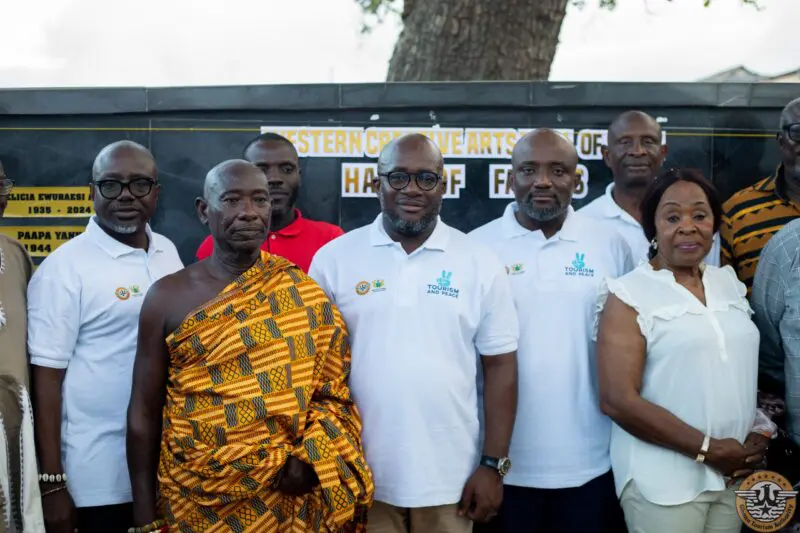
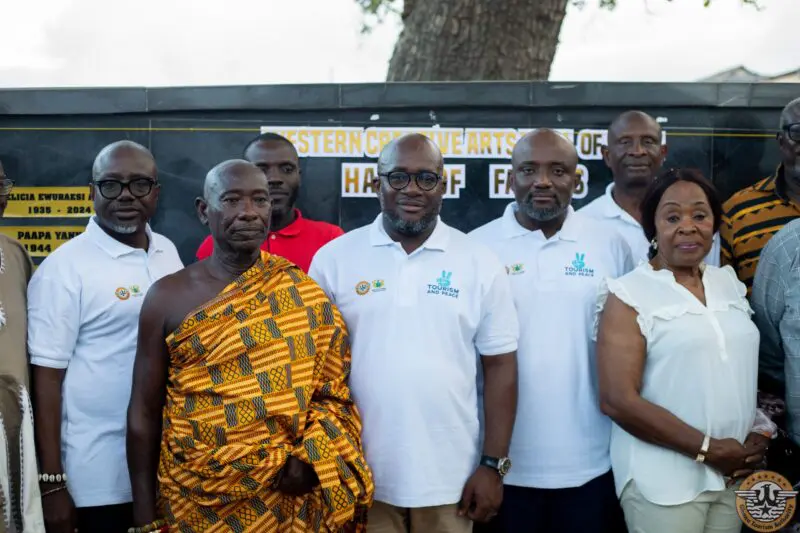
    During the national celebration of World Tourism Day at the Sekondi Youth Centre in the Western Region, Simons stressed that music production is a professional endeavor that deserves proper remuneration.

    “If you are a musician and a political party engages you or contracts you to write a song for them, please charge them, it’s a job you are doing. We make music, we sell it, and they pay us.”

    Simons acknowledged that some musicians may opt to create political songs driven by personal passion or affiliation without expecting compensation, a choice he also respects.

    “If it’s from your heart, you want to compose a song for a political party because of your affiliation or passion or anything it’s up to you but remember, keep the lyrics clean,” he advised.

    He emphasized the need for maintaining clean lyrics and fostering peace, particularly during election seasons.

    “We encourage all musicians to keep their lyrics clean; it means the words they use in their music should inspire people, and make them tolerant, open-minded, and understanding. Don’t use words that will bring confusion. No calling of names, no, we want peace with this election and musicians, we play a big role, especially when it comes to tourism. You know December in Ghana is very big and so we want to have peace this December so that more people can come to move this country forward,” Simons noted.

  • Osofo Moses debunks rumors of his arrest

    Osofo Moses debunks rumors of his arrest


    Well-known Kumawood actor Osofo Moses, whose real name is Charles Kofi-Ntim, has refuted allegations regarding his arrest and imprisonment that circulated on social media.

    He clarified that the claims are completely untrue, as he has never been arrested or jailed.

    In a conversation with actor Kwaku Manu, Osofo Moses revealed that the image of him in handcuffs and prison clothing was actually from a film shoot.

    However, a blogger altered the photo and shared it online with misleading captions, which led to the rapid dissemination of the false news.

    “I was never arrested, I never went to prison. The news was everywhere that I had been arrested. Everyone who knew me was shocked. Even when I saw the news, I was shocked.

    “What happened was that the picture of me in cuffs and prison attire was from a movie shoot. The storyline was that a director was trying to draft a story for a movie where I was arrested. We never even went to a real prison, it was a set, and the attire was fake. The prison officer was an actor. We just took a picture as a reference to use in the movie pitch.

    “A blogger had cropped out the picture and posted it on social media with a commentary behind it and the news blew up,” he explained.

    Osofo Moses mentioned that he was not particularly troubled by the rumors but was worried about the stress they caused his family and loved ones.

    “In this world, people are waiting for something bad to happen to you so that they run with it. I was never even bothered, what hurt me was the stress my family, especially my mother went through when the news broke out.

    “I had a friend who had travelled to China who saw the news and quickly called me, he was ready to fly back to Ghana for me. I was getting calls here and there, I couldn’t sleep properly for days,” he said.

    Despite the ordeal, he was touched by the outpouring of love and concern from friends and fans.

    “When something bad happens, you know those who love you and those who do not. And I saw that a lot of people loved me,” he said.

  • I almost lost the opportunity to feature in ‘Beast of No Nation’ movie – Ricky Adelayitar

    I almost lost the opportunity to feature in ‘Beast of No Nation’ movie – Ricky Adelayitar

    Seasoned actor, Ricky Adelayitar, has shared the story of how he almost missed the opportunity to appear in the blockbuster film “Beast of No Nation”.

    The veteran Ghanaian actor revealed in an interview on Showbiz 360 how he came to be part of the internationally acclaimed Hollywood movie.

    Initially, Ricky had no plans to take on the role due to the passing of a relative and the ongoing burial arrangements.

    However, his friend Mawuko repeatedly encouraged him to visit the shooting location, prompting him to “stop by” just to satisfy his friend’s request.

    Unbeknownst to him, this decision would lead to his involvement in the highly regarded film.

    “I wasn’t going to take the role but he [Mawuko] was forcing me. I had funeral at the time but he said just come and pass through and go.

    Ricky in Beast of No Nation movie

    “Every time he calls and worries me so I said let me just me go [ I didn’t know it was going to be a major Hollywood movie] so I say thank you to them,” he shared.

    Ricky also conveyed his appreciation to his wife for her unwavering care and support while he was away from home for filming.

    “And thank you to my wife. Days go by, several nights without me but she takes of the family, the kids and everything so I say I love you baby,” he said.

    Ricky starred as a ‘village constable’ in the 2015 movie which acclaimed international recognition and received many awards.

  • Categorizing music into specific genres can restrict creativity – American singer

    Categorizing music into specific genres can restrict creativity – American singer

    Ghanaian-American singer-songwriter Amaarae has discussed the constraints of musical genres and advocated for a more open-minded approach to music creation.

    In an interview with ABC News Live Prime, she stated that artists who confine themselves to one genre limit their own potential.

    “Genres can be so limiting. Once you love music, you want to be able to express it in every way possible,” she stated in a short-video shared by ABC News Live on X.

    Renowned for her diverse sound that fuses Afrobeat, R&B, and alternative music, Amaarae has continuously challenged the limitations of conventional genre labels.

    Her creative methods have attracted a worldwide audience, appealing to fans who value her distinctive style and bold experimentation.

    Her comments arrive at a time when the music industry is increasingly embracing genre fluidity.

    Today, many artists are exploring various influences and merging genres to create fresh, innovative sounds.

  • Is marriage for doom or bliss?

    Is marriage for doom or bliss?

    The answer to whether marriage brings doom or bliss ultimately lies with you. Your mindset, your beliefs, and your expectations shape the experience you’ll have in marriage. Put: What you put into it is what you get out of it.

    So, the real question is, are you entering a marriage with the intention of doom or bliss? Are you thinking of giving or simply taking? Are you marrying for sexual freedom? To have children? To escape loneliness, or do you have someone to provide for you? Or maybe because you’re financially stable and feel you can easily support another person? If your mindset is centered around your needs and happiness, then you’re likely headed for doom.

    Marriage isn’t about just you; it’s about serving your partner and committing to them, no matter what. It’s not about keeping score or constantly pointing out what your spouse isn’t doing right.

    The true purpose of marriage is companionship, procreation, mutual growth, and unwavering commitment—staying by each other’s side through thick and thin. It’s not a platform to flaunt your wedding ring or expect to be pampered.

    Marriage isn’t about control, social status, or having a sharp tongue. It’s about saying, “I’m here for you, no matter what,” through sickness and health, wealth or poverty until death parts you.

    Many people today quickly abandon the “till death do us part” promise at the first sign of trouble. But marriage requires work. It’s not all about romantic dinners and walks in the park.

    You’ll step on each other’s toes, but you must forgive, let go, communicate, and grow together. Ask those who’ve been married for decades—they’ll tell you they had to work through challenges and tough times to keep their marriage strong.

    If you’re young and single, and your view of marriage doesn’t align with these realities, it’s time to rethink your decisions before you potentially disrupt someone else’s life. The government didn’t invent marriage, nor is it some scientific experiment where you can add a few chemicals and expect things to change.

    You can’t simply vote out the bad parts or hope a counselor will magically make everything work. Marriage is an institution created by God, and He alone can guide you through the journey. Yes, “the two shall become one,” but that unity involves God, the husband, and the wife.

    Without God at the center, your marriage is destined for trouble. As single individuals looking forward to marriage, it’s essential to turn to God’s word for guidance. Men, remember that Adam was created without Eve present. Women were brought into the picture after Adam was put into a deep sleep.

    This tells us that neither man nor woman fully understands the other—it’s only through God’s guidance that we truly know who is meant for us. Single men, how do you prepare for marriage? Look at Adam: he spent his days in the presence of God, working diligently in the Garden of Eden, fulfilling his purpose.

    Before God gave him Eve Adam had already established himself in his work. Are you, as a man, pursuing your purpose in life? Are you earning an honest income and staying rooted in God’s presence? When you focus on your purpose and your relationship with God, He will recognize your needs, just as He did with Adam, and provide a suitable partner for you— even before you ask.

    Adam didn’t request a wife, but God saw that it wasn’t good for him to be alone, and He created Eve as a perfect match. This is how God operates: when you remain faithful to Him, He blesses you with the best. So, seek the kingdom of God first, and all else will follow. While you work on your spiritual life, take care of your physical well-being.

    Improve your character, emotions, hygiene, and health. When Adam declared Eve as “bone of my bones and flesh of my flesh,” he was making a lifelong commitment. Are you ready to love the woman you choose to marry, no matter the hardships that come your way? Men, don’t enter marriage expecting your wife to serve you by doing all the cooking, cleaning, and laundry. Marriage is a partnership, not servitude. Learn to handle these tasks yourself because your wife is coming to help you, not to be your servant.

    Now, to the single women: Eve didn’t meet Adam in a nightclub or a sketchy corner of town. She found herself in the presence of God, and that’s where she encountered her husband. Women, you attract what you are. If you’re dressing in skimpy clothes, smoking, or clubbing, you can’t expect to meet a godly man. Eve was in God’s presence and became attracted to a man who was also there.

    So, ask yourself, where do you find yourself? Where do you plan on meeting a godly man? Spend time with God so He can lead you to the right partner. Eve also came to Adam fully formed, with all her physical and spiritual qualities. As a woman, What are you made of? Are you made of gold, bronze, or something lesser? Do you possess pride, selfishness, or greed? Do you respect yourself or allow anyone who shows interest to take advantage of you? Pray to become the wife your husband will cherish—submissive, wise, and full of God’s grace.

    But remember, even Eve faltered when she decided without consulting Adam. Don’t make the same mistake in your marriage. Your husband is not your equal, no matter your social status or education. Once you choose to marry him, you come under his leadership, and that requires submission.

    That’s why it’s crucial for both men and women to seek God before entering into marriage. Marriage is not a game, and there’s no easy way out. The Bible only permits divorce in cases of adultery, not abuse or addiction. While separation can be necessary in extreme cases, the goal is always reconciliation, which is why patience and discernment are essential before making the commitment.

    The high divorce rates in today’s world are alarming, but that doesn’t mean God isn’t looking out for His people. Don’t rush into marriage because everyone else is doing it. Take your time, focus on yourself, and trust God to guide you to the right person.

    For those who are already married, remember that forgiveness, communication, and letting go of bitterness are key. Love each other, support each other, and work through your challenges.

    After all, it’s just the two of you on this journey. A fantastic resource to guide you through these topics is the book How Could I Have Known. It’s filled with practical advice for navigating singlehood, preparing for marriage, and building a successful, God-centered union. This book offers open, honest insights into the challenges and joys of marriage, Christian dating, and even the sensitive topic of divorce.

    Marriage is a beautiful thing when you approach it with the right attitude and mindset.

    Remember, it’s not just about finding the right person—it’s about becoming the right person. How Could I Have Known? Hmmm, a question many have been asking themselves for centuries.

    The antidote is in this book and in this masterpiece I dove into the intricate dynamics of relationships, offering a comprehensive exploration from the pain of broken marriages to the complexities of single life and the hopeful aspirations of marital bliss.

    In Part One, “Brokenness In Marriages,” the book examines why some marriages falter, from mismatched expectations and selfish behaviors to abuse and psychological trauma. It then shifts to “Everything Single,” addressing the challenges and misconceptions of single life, including the choice of love, defining relationships, and navigating personal desires versus societal pressures.

    Part Three, “Becoming One,” guides readers through essential preparation for marriage, exploring emotions, cultural influences, and the importance of counseling. Finally, “The Bliss of Marriage” outlines strategies for cultivating a lasting, fulfilling relationship, focusing on love, effective communication, and the profound significance of marriage.

    Whether you’re grappling with marital issues, navigating singlehood, or preparing for a lifelong partnership, this book provides valuable insights and practical advice to help you understand and enhance your journey through love and commitment.

    Source: GhanaWeb

    DISCLAIMER: Independentghana.com will not be liable for any inaccuracies contained in this article. The views expressed in the article are solely those of the author’s, and do not reflect those of The Independent Ghana

  • I have connected with Influential people despite unsuccessful GWR attempt – Chef Faila

    I have connected with Influential people despite unsuccessful GWR attempt – Chef Faila

    Ghanaian chef Failatu Abdul Razak, widely known as Chef Faila, has expressed that even though her attempt to set the Guinness World Record for the Longest Cooking Marathon by an individual was unsuccessful, she considers the experience a major breakthrough.

    In January 2024, Chef Faila committed 227 hours over the course of ten days to her cooking marathon, during which she prepared over 200 meals primarily for orphans and those in need.

    Unfortunately, she was disqualified by Guinness World Records (GWR) due to technical violations.

    In a report by graphic.com.gh, while launching her new cookbook, Authentic Ghanaian Cuisine, at the Accra Tourist Information Centre on September 2, 2024, Chef Faila revealed that her GWR attempt offered her valuable exposure and a platform to further her aspirations.

    She emphasized that prior to the marathon, she was a passionate young woman from Northern Ghana seeking to make a positive difference.

    Despite not breaking the record, the GWR attempt provided her with visibility, connections, and an opportunity to elevate her vision.

    “Prior to the cooking marathon, I was simply a young woman from Northern Ghana, driven by passion to make a meaningful impact in my community. My ultimate goal was to shine a spotlight on the north, showcasing its richness and potential, while elevating Ghana’s profile globally.

    “It was just a dream before my attempt. However, the GWR attempt proved to be a transformative experience, far exceeding my expectations. Although I didn’t break the record, I gained something more valuable in terms of visibility, connections and a platform to amplify my vision,” she said.

    Since then, she has established connections with key individuals and organizations, supporting her initiatives to tackle teenage pregnancy and address rural-urban migration in Northern Ghana.

    “The aftermath of the event introduced me to influential individuals who shared my passion for community development. I’ve had the privilege of connecting with key stakeholders, forging meaningful relationships, and presenting my proposals for community support to those who can make a tangible difference,” she said.

    Looking ahead, Chef Faila plans to establish a culinary school to empower young girls in Northern Ghana, addressing social issues like rural-urban migration and teenage pregnancy.

    “Education and skill development are key to unlocking the potential of our youth. By providing a platform for these girls to learn culinary arts, I am certain I will not only be equipping them with valuable skills but also offering a viable alternative to migrating down south and early marriage.”

    “The school will provide comprehensive training, focusing on traditional Northern Ghanaian cuisine with modern twists, as well as entrepreneurship and business management. There will also be mentorship and networking opportunities,” she stated.

    When it comes to future GWR attempts, Chef Faila mentioned that she has no immediate intentions, choosing instead to concentrate on the culinary school and its potential influence on the lives of young girls. For the time being, she feels fulfilled by the positive changes she is making in her community.

  • “His family didn’t understand why I just got in the marriage and I got pregnant” – Habiba Sinare on divorce with Majeed Waris

    “His family didn’t understand why I just got in the marriage and I got pregnant” – Habiba Sinare on divorce with Majeed Waris

    Footballer Majeed Waris’ Ex-wife Habiba Sinare has revealed that her in-law once questioned whether her son truly belonged to Abdul Majeed Waris.

    She shared that she discovered this belief when she reached out to her father-in-law to express concerns about her husband.

    According to her, it was surprising that her father-in-law could harbor such thoughts, given the bond they shared.

    “He used to call me princess and sweetheart because his wife is Habiba and he really liked me so much or that’s what I thought. I called him and I was so angry because he did something. My ex-husband did something and I was telling him, before I will end the thing he said you tell me, the child is not from him don’t worry. Are you the one to cover up for me?

    “They didn’t understand why I just got in the marriage and I got pregnant. Situations happen. It takes just less than a minute to conceive and people don’t even know,” she said.

  • Kumawood actress reveals how a friend’s juju ruined her life

    Kumawood actress reveals how a friend’s juju ruined her life

    Kumawood actress Awo Yaa has shared her painful experiences with alcoholism and spiritual attacks, offering a glimpse into the darker side of the Kumawood movie industry.

    Speaking in an interview with Emelia Brobbey, Awo Yaa shared how witchcraft and rivalries within the industry fueled her battle with alcohol addiction and contributed to her prolonged absence from Kumawood.

    She admitted to becoming dependent on alcohol, with cravings starting as early as 5:30 am.

    According to her, spiritual attacks intensified her addiction, making her irritable and prone to frequent clashes with others.

    Despite turning to several so-called men of God for help, she found no solution and ended up spending tens of thousands of cedis without relief.

    “There was a time when someone drank alcohol at the funeral and died from alcohol poisoning. People thought it was me. It was at that point that someone told me to be careful of those who call me to go and drink with them,” he said.

    She experienced a significant turning point when her friend, Michael Afranie, intervened on her behalf.

    Additionally, she shared that her mother had taken her to a church, where the pastor disclosed that a friend had used juju against her, resulting in lost opportunities, including a chance to travel abroad.

    “He told me that many of my issues were spiritual and were caused by a friend who had used juju on me,” she said.

    Awo Yaa has been sober for 10 years now.

    See the full interview below:

  • Video: Bishop David Oyedepo Gifted 2 Rolls Royce for his 70th birthday

    Video: Bishop David Oyedepo Gifted 2 Rolls Royce for his 70th birthday

    In honor of his 70th birthday, Bishop David Oyedepo, founder of Living Faith Church, received two luxurious Rolls Royce Cullinans as gifts.

    The celebration took place on Friday, September 27.

    It was an event commemorated with joyous celebrations alongside his family, friends, and close associates.Alex Abban disagrees with President Akufo-Addo’s view on Nkrumah’s role as Ghana’s founder

    Businessman Wale Jana shared that the luxurious cars were gifts from Bishop David Ibiyeomie, founder of Salvation Ministries, and Pastor Biodun Fatoyinbo, lead pastor of Commonwealth of Zion Assembly (COZA).

    Here’s a video from the scene below:

  • Shatta Wale gifts cash prize, brand new iPhone 13 to Dancegod’s mentee as Winner of “No Size” challenge

    Shatta Wale gifts cash prize, brand new iPhone 13 to Dancegod’s mentee as Winner of “No Size” challenge

    Shatta Wale has announced Lallipop, a promising talent from Dancegod Lloyd’s dance collective, as the winner of his recently launched challenge.

    In a surprise visit, the dancehall and Afropop superstar arrived in a convoy at Dancegod Lloyd’s dance studio to meet the young dancer, capturing the excitement in footage that has since gone viral on social media.

    The challenge, which aimed to promote “No Size,” a track from Shatta Wale’s latest album, encouraged participants to showcase their dance skills. Lallipop submitted a video that quickly gained traction, amassing over 100,000 views on TikTok within just a few hours.

    As the winner, Lallipop received an undisclosed cash prize along with a brand new iPhone 13.

    In a heartwarming moment captured on video, Shatta Wale visited the Legon City Mall, where Dancegod Lloyd and his mentees practice, arriving in his striking Lamborghini to celebrate Lallipop’s achievement.

    The young dancer was visibly emotional, shedding tears of joy as she interacted with the music icon. Shatta Wale’s thoughtful gesture resonated with fans, who flooded social media with praise for both him and Lallipop, highlighting the positive impact of mentorship in the dance community.

    @obinkrandaily

    Aww This Is Beautiful 🥹🥹❤️❤️❤️❤️ 1don @shattawalenima dashes @lallipop.__ some cash 💵 and an iPhone 13 📱for winning “No Size” Video Challenge for this week ❤️❤️👏🏼👏🏼👏🏼❤️❤️❤️❤️❤️ #shattawale #foryoupage #foryouu #viraltiktok #safalbum

    ♬ original sound – Obinkran Jr
  • Nana Ama McBrown dances to Fameye’s new track with DWP dancers

    Nana Ama McBrown dances to Fameye’s new track with DWP dancers

    Actress Nana Ama McBrown was recently spotted showcasing her dance moves on the street alongside DWP dancers Endurance Grand and Demzy Baye, as they grooved to the rhythm of Fameye’s newly released song, “Very Soon.”

    In an engaging video that has since gone viral, the trio was seen energetically dancing to the popular track, with McBrown later surprising the dancers by gifting them money for their spirited performance.

    The collaboration between the well-known actress and the talented dancers excited many social media users, who praised the impromptu interaction.

    The viral video was shared on the Instagram pages of Demzy Baye and Endurance Grand, where the DWP dancers clarified that the dance session was not pre-planned. They explained that their encounter with McBrown happened spontaneously while they were on the street, leading them to film a dance video as part of the official dance challenge for Fameye’s “Very Soon.”

    Fans have since flooded social media with positive reactions to the delightful collaboration, further solidifying the bond between Ghana’s entertainment icons and its vibrant dance community.

    “From Randomly meeting @iamamamcbrown to bringing you guys something beautiful and sweet.”
    In the video, after dancing, Demzy Baye and Endurance Grand saw McBrown off, and she gifted them a GH¢10 money bundle, which is GH¢1000.

    The DWP dancers received the money with joy as they sang the chorus of the song, which McBrown sang along with while they thanked her for the gift.

    Mrs McBrown Mensah commented on the video, saying she greatly loved them. She wrote, “Medo mo rufffffff ❤️❤️❤️ #BRIMM”

  • Ghanaians troll Sarkodie for promoting UK Concert over anti-galamsey fight

    Ghanaians troll Sarkodie for promoting UK Concert over anti-galamsey fight

    Rapper Sarkodie is facing criticism from netizens for not engaging in the ongoing conversations surrounding anti-galamsey efforts and the arrest of protesters.

    This backlash follows the rapper’s promotion of his upcoming performance at the Ghana Music Awards UK, scheduled for Saturday, October 19, 2024.

    In contrast, several celebrities have taken to social media to voice their opposition to the galamsey crisis and to advocate for the release of the arrested protesters.

    But for Sarkodie, he rather went on X to write “UK 🇬🇧 it’s that time … see y’all,” Sarkodie posted on X.

    Some X users unhappy with his post, reacted…

    @TechtalkC said: “We will protest against this tribal bigot!!! We’re waiting for him!! My friends in the UK 🇬🇧 let’s come together and demonstrate 🇬🇭🇬🇭🇬🇭 #FreeCitizens #NoGalamsey!!”

    @Brilly1084054 said: “@sarkodie You are FAKE! A hypocrite who cares only about himself. I regret being a fan ngl.”

    @KwesiHubert said: “Although most of us hate to see you do that but you have the right to comment or not comment on any issue.

    But you going ahead to announce your measly show at this moment is a huge disrespect to your fans. If dem organize Grammy for Tema sef you still no go win. 😆”

  • Kumchacha descends on Oboy Siki for calling staff members from Onua TV to Manhyia unwise

    Kumchacha descends on Oboy Siki for calling staff members from Onua TV to Manhyia unwise

    Renowned Ghanaian Pastor Kumchacha has addressed Oboy Siki’s assertion that all tose who accompained Afia Pokua to apologize at Manhyia are not wise.

    Kumchacha, along with several staff members from Onua TV, visited Manhyia to express their regrets over Afia Pokua’s remarks concerning Otumfuo, but their apology was rejected by the elders.

    Oboy Siki remarked that everyone who accompanied Afia Pokua to seek forgiveness from the elders for her critical comments about Otumfuo was lacking in wisdom.

    But in a recent interview, Prophet Kumchacha lashed out at Oboy Siki, referencing their long-standing rivalry and his determination to put the actor in his place.

    “If Oboy Siki were my father, I’d rather take medication and die. This is the same Oboy Siki who wakes up each day sporting a different hair color. His stomach resembles a toilet overflowing with animals, and he looks as crooked as a bent truck for carrying timber, like a crooked car carrying sand,” Kumchacha angrily expressed.

  • Ghana’s first Creative Arts Hall of Fame in Sekondi unveiled by Tourism Ministry

    Ghana’s first Creative Arts Hall of Fame in Sekondi unveiled by Tourism Ministry

    In a noteworthy celebration for World Tourism Day, Minister of Tourism, Arts, and Culture, Andrew Egyapa Mercer, inaugurated the inaugural Creative Arts Hall of Fame in Sekondi.

    This landmark event pays tribute to Sekondi’s rich cultural heritage as a musical center, honoring the outstanding talents that have contributed to Ghana’s creative industry.

    Situated in Duawusu, a neighborhood of Sekondi, the Hall is imbued with folklore, being the site where numerous Ghanaian music legends were first discovered.

    Inspired by prestigious institutions worldwide, the Creative Arts Hall of Fame celebrates the lifetime accomplishments of trailblazers in the creative arts.

    “These halls of fame stand as testaments to the power of creativity in shaping our world and driving economic growth,” stated Minister Egyapa Mercer during the unveiling.

    Highlighting the economic importance of the sector, the Minister remarked, “The creative arts sector is not only a vital contributor to our economy but also fuels tourism, stimulates export revenues, and creates numerous job opportunities.”

    The inaugural class of inductees includes some of Ghana’s most iconic figures in the creative arts, such as Paapa Yankson, AB Crentsil, Felicia Abban, Ebo Taylor, Kwaw Ansah, Jewel Ackah, Joris Watenburg, Mike Eghan, Ray Allen, Gyedu Blay Ambolley, CK Mann, and Nana Bosompra.

    “These legends, the first list of inductees have enriched our cultural heritage and elevated Ghana’s presence on the global stage,” the Minister said.

    Egyapa Mercer also shared plans to integrate the Hall of Fame into the ongoing renovations at the Centre for National Culture (CNC) in Sekondi, with intentions to replicate the initiative across the country, ensuring that every region has a platform to celebrate its unique creative talents.

    To keep the recognition ongoing, the Minister announced that new inductees will be added each year during the World Tourism Day celebrations, ensuring continuous acknowledgment of contributions by Ghana’s artists, musicians, filmmakers, and cultural icons.

    The CEO of the Ghana Tourism Authority, Akwasi Agyeman, expressed his gratitude to the various industry stakeholders who contributed to the project’s success. He also thanked the Sekondi community for their unwavering support. 

    “Together, let us celebrate our national heroes and continue to promote the arts and culture that make Ghana truly unique,” He said.

    The event was attended by industry leaders, traditional chiefs, religious leaders, and youth groups. An official induction ceremony is set for October 22, 2024.

  • Shatta Wale condemns approach of #StopGalamseyNow protestors

    Shatta Wale condemns approach of #StopGalamseyNow protestors

    Ghanaian dancehall artist Shatta Wale has reacted to online users encouraging him to participate in the #StopGalamseyNow protest, which seeks to address illegal mining in the country.

    In an intense Twitter post on September 26, 2024, Shatta Wale voiced his annoyance and rejected the requests for him to get involved.

    He condemned the tactics of the protesters, claiming they were preoccupied with trivial matters.

    “You people don’t know how to stop problems. You go there to play music and swim and do nonsense,” he stated.

    “Let people die! If you are going anywhere, go and fight! And stop the nonsense talking that you people are talking,” Shatta Wale added.

    He also challenged the impact of the music industry on these issues, arguing that the situation would remain the same no matter which government is in charge.

    “Do you think the people you’re playing with are small people? Any government that comes into power will do you the same thing,” he added.

    His remarks come as various celebrities are being urged to lend their voices to the #StopGalamseyNow campaign on social media, which calls for immediate action to address the galamsey crisis that has resulted in the destruction of farmlands across significant areas of the country.

    On Sunday, September 22, 2024, several Democracy Hub protestors, including socialite Ama Governor and model Glenn Samm, were detained on the second day of a three-day demonstration at the 37 Military Roundabout in Accra.

    In the meantime, an Accra Circuit Court has ordered that the protesters be held in custody.

    They face five charges, including conspiracy to commit a crime, unlawful assembly, causing unlawful damage, offensive conduct, breach of public peace, and assaulting public officers.

  • Getting married to a soccer player is not easy – Habiba Sinare advises women aspiring to marry one

    Getting married to a soccer player is not easy – Habiba Sinare advises women aspiring to marry one

    Actress and philanthropist Habiba Sinare, who was previously married to Black Stars striker Majeed Waris, has shed light on the struggles of being married to a footballer, advising women to brace themselves for the associated realities.

    In an interview with MzGee, Habiba candidly discussed the challenges she encountered during her marriage, explaining that it was not the idealized life many envision when marrying an athlete.

    She emphasized that, despite the glamorous facade, the experience of being married to a footballer can be quite difficult.

    “Getting married to a soccer player is not easy,” she admitted, explaining that her ex-husband’s demanding career meant he spent most of his time in training camps, leaving her to find ways to make herself happy and occupy her time.

    “There’s no time… either you make yourself happy by travelling or coming back to Ghana to enjoy yourself,” Habiba shared, emphasizing how the lifestyle demands great independence and emotional strength.

    A major factor contributing to the end of her marriage was the absence of attention and intimacy, which she linked to her ex-husband’s deep bond with his family.

    Habiba explained that her husband confided in his family more than he did with her and their child.

    “When we are outside, he still talks to them and tells them everything… I didn’t like that we couldn’t share anything intimate together,” she said, adding that despite his maturity, their marriage lacked the balance and emotional connection she longed for.

    Looking back on the circumstances, Habiba shared that she chose not to involve her own family in their marital problems until much later because she preferred to handle things on her own.

    “I am naturally that type of person, I like to keep to myself… even my mum didn’t know what I was going through until we had a sitting,” she revealed.

    Despite her young age, Habiba has managed to carry herself with grace and maturity, which often makes people underestimate how young she truly is.

    “I am very young, and people don’t know that. The way I carry myself, you will not know I am young,” she remarked.

  • Let’s rise up to stop this menace of greed before it stops our future – Nadia Buari on #StopGalamsey campaign

    Let’s rise up to stop this menace of greed before it stops our future – Nadia Buari on #StopGalamsey campaign

    Ghanaian actress Nadia Buari, known for her award-winning performances, has thrown her weight behind the public outcry and debates against illegal mining in Ghana.

    She pointed out that while in the past, Black people blamed the white man for ruining their future, today it is the Black man himself who is actively destroying it.

    She thus urged all persons, including those in leadership positions, to join the campaign against illegal mining, before it eventually destroys the unknown future.

    “Please, our fathers, our mothers, our religious leaders, and all reasonable people who have this nation at heart, let’s rise up to stop this menace of greed before it stops our future. Let’s forsake this evil act for the sake of our children. Stopping this, I believe, begins with public education to raise awareness of this dangerous pursuit. Our children must not only be taught about Ghana being a leading producer of gold in the world, but also the danger in abusing our land for such treasure,” she wrote in a post shared on X on September 27, 2024.

    She delved into the root causes of the galamsey issue, highlighting the involvement of national leaders in the illegal practice, which poses a serious threat to the country’s forests and water resources.

    “Ignorance, poverty, greed, and the desperation to be rich at once and at all costs seem to be the driving forces behind the pungent act of illegal mining, otherwise known as galamsey, destroying our dear country. All over the continent, politicians no longer just rob their nations, but also now flaunt their ill-acquired wealth in the faces of the same masses that put them in power through the open acquisition of public properties and other matters that really do not matter to the people.

    “This, I believe, over time has created the wrong hunger in the citizenry to take their own destinies into their own hands, to undertake activities detrimental to lands, farms, rivers, and other important areas of our various countries reserved for research,” the actress wrote.

    On the recent arrest of some citizens during a demonstration organized by Democracy Hub, Nadia condemned the arrest while urging support in demonstrating against all wrongs in society.

    “Finally, expressing our democratic rights for our rights is always right as long as how we express these rights is within our rights in the law. We therefore must support all forms of protests or demonstrations within our rights to fight these wrongs affecting our land.

    “And nobody exercising his or her right to protest against this wrong has done anything against the law to be arrested or detained for any reason,” she stated.

    The arrest and subsequent remand of over 40 Democracy Hub demonstrators has led to growing public uproar.

    Several public figures following the arrest of the suspects who have been accused by the police of engaging in acts of lawlessness have joined a growing social media campaign for their release.

  • Wanderlust Ghana’s road trip to Dubai hits a setback after robbery in Germany

    Wanderlust Ghana’s road trip to Dubai hits a setback after robbery in Germany

    A member of the Wanderlust Ghana team, Kwabena Peprah, traveling by road from Accra to Dubai in the United Arab Emirates, has reported being robbed.
    “In a Facebook post shared on Friday, September 27, 2024, Kwame Peprah revealed that they had been robbed in Krefeld, Germany, on the 13th day of their road trip to Dubai.

    He explained that thieves had broken into one of the vehicles they were using for the expedition, a Tacoma, stealing various items, including money and potentially important travel documents.”

    “I was dressing up when Saka knocked on my door that the receptionist had called him. The Tacoma has been burgled. Someone smashed the front window and took lots of stuff, including my wallet and possibly Kwame’s passport,” he wrote.

    Kwabena Peprah further mentioned that the robbery could disrupt their journey, as the loss of Kwame’s passport would likely mark the end of his trip.

    “We are not allowed to touch the car before the police have had their turn, and so at the moment, I’m sitting in a German police station waiting to file a report and go through the processes.

    “If Kwame’s passport was in the car, I’m sure we can get a new one issued at the embassy in Berlin, but the trip may be over for him because the other visas needed along the route will not be easy to reissue.”

    In a video shared by Asaase Radio, Kwame confirmed that his passport had been left in the Tacoma, suggesting that this could signal the end of his road trip to Dubai.

    “Our car has been broken into in the parking garage, the Tacoma has been broken into. I’m now going into the car to see what has happened with it.

    “Unfortunately, I was so tired that I left my passport in the car. I don’t know if that is intact. That is my biggest worry. If my passport is gone, that would probably be the end of the journey for me,” he said.

    About Wanderlust Ghana:

    Wanderlust Ghana is group of philanthropists and tourists who recently put Ghana in the spotlight by travelling from Accra to London in August 2023 by road.


    The core members of the group, numbering five, are embarking on another adventure from Accra to Paris, Dubai and Cape Town.

    Backed by the Ministry of Tourism and Culture and the Ghana Tourism Authority (GTA), the team is poised to market Ghana again in their over 30,000-kilometre expedition overland.


    The team is currently travelling on another epic journey from Accra to Dubai which will see them travel in 30 days through 30 countries.

  • My bad character is the reason I’m still not married  – Ahuofe Patricia

    My bad character is the reason I’m still not married – Ahuofe Patricia

    Ghanaian actress Ahuofe Patri has finally opened up about why she has remained single.

    In a brief video shared on her social media, the actress recounted a conversation where a man, interested in dating her, asked why she was still single despite her beauty.

    Ahuofe candidly responded, saying her own bad attitude was the reason she has stayed single.

    A brother is asking me out and he is asking why I am single? I told him its because of my bad character and he laughed, assuming I was joking,” Ahuofe Patricia said with the expression of happiness on her face.

    She also revealed that any man hoping to marry her must be wealthy, God-fearing, and completely devoted to her.

    During a recent interview, she clarified that her relationship with co-star Kalybos is purely platonic.

  • Businesses are still grappling with high exchange rates – Chamber of Commerce CEO 

    Businesses are still grappling with high exchange rates – Chamber of Commerce CEO 

    Chief Executive Officer (CEO) of the Ghana Chamber of Commerce and Industry, has voiced concerns over the prevailing foreign exchange rate and its effects on businesses.

    During his appearance on Joy News’ PM Express Business Edition on September 26, he emphasized that despite the cedi showing some level of stability, the exchange rate remains notably high, significantly impacting businesses, especially those involved in import activities across the nation.

    “Despite the stability, the rate is still relatively high. A year ago, we were looking at around ¢10 to the dollar. Now it’s between ¢15 and ¢16.80. If you’re importing or dealing in foreign currency, the impact is obvious,” he stated.

    Mr. Badu-Aboagye emphasized that numerous manufacturing firms in Ghana are heavily dependent on imported raw materials, and the weakening of the cedi significantly increases the cost of their operations.

  • LPG shortage in Accra leaves consumers struggling amid high demand

    LPG shortage in Accra leaves consumers struggling amid high demand

    Several Liquefied Petroleum Gas (LPG) consumers in Accra encountered difficulties at various gas stations due to an unexpected shortage of the product.

    Signs reading “No Gas” were displayed at station entrances, forcing customers to either go back home or try their luck at other outlets for LPG availability.

    The increased demand for LPG has resulted in long queues at the few stations where the fuel is still available.

    Meanwhile, industry experts have warned that the situation may escalate, potentially leading to widespread closures of gas stations if the shortage isn’t resolved.

    Gabriel Kumi, Vice President of the LPG Marketers Association (LPGMA), in an interview with Channel One TV, emphasized the gravity of the issue. He warned that if supply from Bulk Oil Distributors does not improve soon, stations may face complete shutdowns by the weekend.

    “My checks this morning indicate that about 70% of LPG outlets in the Greater Accra Metropolis have run out of gas. If the situation does not improve, this could rise to about 80%, and if the situation is not averted, by the close of tomorrow, we expect all LPG stations in Greater Accra to run out of gas,” he said.

    Reacting to this, the National Petroleum Authority (NPA) said it is working assiduously to avert the crisis.

  • Crude oil prices decline as global supply risks Ease

    Crude oil prices decline as global supply risks Ease

    Brent crude dropped 2.5%, settling at $71.19 per barrel, while the U.S. benchmark, West Texas Intermediate (WTI), also fell 2.5%, reaching $67.88 per barrel.

    Libya’s easing supply concerns, despite China’s persistent demand issues, contributed to the decline. Beijing’s efforts to stimulate its economy have yet to significantly impact oil consumption.

    Oil prices were further pressured by the potential rise in supply from Libya and Saudi Arabia, with market participants overlooking a sharp decline in U.S. inventory figures.

    Recent reports suggest that opposing factions in Libya have reached a compromise on the central bank’s leadership, which could lead to an increase in Libyan oil production.

    Moreover, Saudi Arabia may begin reversing voluntary production cuts from December, as it aims to regain market share, a move expected to restore normal oil production levels, putting downward pressure on prices.

    Analysts expressed concern that China’s latest economic stimulus efforts may not be sufficient to boost the sluggish demand for oil, especially given that China is the world’s largest oil importer.

    Experts noted that the People’s Bank of China needs to implement more substantial fiscal measures to stimulate the country’s economy.

    Meanwhile, a drop in U.S. crude oil reserves limited the downward pressure on prices, suggesting stronger domestic demand. Data from the U.S. Energy Information Administration (EIA) showed that U.S. crude inventories dropped by 4.5 million barrels to 413 million barrels in the week ending September 20, well above the forecasted decline of 1.3 million barrels.

  • Policy rate reduced from 29% to 27% – BoG

    Policy rate reduced from 29% to 27% – BoG

    The Bank of Ghana has lowered the monetary policy rate by 200 basis points, reducing it from 29 percent to 27 percent.

    Dr. Ernest Addison, who serves as the Chairman of the MPC and Governor of the BoG, explained that this decision is linked to the cedi’s relative stability, a downward trend in inflation moving towards a more balanced state, effective implementation of fiscal policies, and overall improved macroeconomic conditions.

    Additionally, he pointed out a notable enhancement in the reserves held by the Central Bank of Ghana.

    This announcement was made by Dr. Addison during a press conference on Friday, September 27, 2024, which coincided with the 120th meeting of the Monetary Policy Committee.

  • ‘Rape me instead my daughters – Women cry out in Sudan’s horrific war

    ‘Rape me instead my daughters – Women cry out in Sudan’s horrific war

    Seventeen months into a grueling civil war, Sudan’s army has initiated a major offensive in Khartoum, focusing on areas controlled by the Rapid Support Forces (RSF), its main rival.

    While the RSF took control of much of the capital early in the conflict, the military holds sway over Omdurman, the city across the Nile.

    However, despite the ongoing violence, civilians still cross between the two sides. One such crossing leads to a market on the outskirts of Omdurman, where women from RSF-occupied Dar es Salaam travel for food. Their husbands remain at home, avoiding RSF fighters who reportedly subject men to violence, theft, or detentions for ransom.

    Taking on the risks, the women explained their determination to feed their children, enduring the hardships of the journey for survival. “We need food,” one of them said, voicing the struggles they face daily. When asked if they feared for their safety, particularly regarding sexual violence, the group grew quiet before one woman passionately asked, “Where is the world? Why don’t you help us?”

    Reports from civilians crossing between territories reveal a chaotic situation marked by looting, lawlessness, and brutality, all in a conflict that has forced over 10.5 million people to flee their homes. Although sexual violence has become a grim hallmark of this conflict, a recent UN fact-finding mission highlighted that most of these atrocities are attributed to the RSF and its allied militias.

    One survivor recounted how RSF soldiers attempted to assault her daughters, with the woman offering herself instead to protect her children. Her story, like many others, paints a disturbing picture of the RSF’s actions despite their claims of enforcing measures to prevent such abuses. The accounts of widespread sexual violence highlight the ongoing human rights violations that have come to define the war in Sudan.

    “We endure this hardship because we want to feed our children. We’re hungry, we need food,” said one.

    I asked the women if they felt safer than the men in this war-torn environment. What about the threat of sexual violence?

    The collective response fell into a sudden silence.

    Then, one voice broke through.

    “Where is the world? Why don’t you help us?” she said, her words coming out in torrents as tears ran down her cheeks.

    “There are so many women here who’ve been violated, but they don’t talk about it. What difference would it make anyway?”

    “Some girls, the RSF make them lie in the streets at night,” she went on. “If they come back late from this market, the RSF keeps them for five or six days.”

    While she spoke, her mother sat beside her, head resting in her hand, quietly weeping. The sight moved other women around them to tears as well.

    “You in your world, if your child went out, would you leave her?” she demanded. “Wouldn’t you go look for her? But tell us, what can we do? Nothing is in our hands, no one cares for us. Where is the world? Why don’t you help us!”

    The crossing point was a window into a world of desperation and despair.

    Travellers described being subjected to lawlessness, looting and brutality in a conflict that the UN says has forced more than 10.5 million people to flee their homes.

    But it is sexual violence that has become a defining characteristic of the protracted conflict, which started as a power struggle between the army and the RSF but has since drawn in local armed groups and fighters from neighbouring countries.

    The UN’s High Commissioner for Human Rights, Volker Turk, has said rape is being used as “a weapon of war”.

    A recent UN fact-finding mission documented several cases of rape and rape threats from members of the army, but found that large-scale sexual violence was committed by the RSF and its allied militias, and amounted to violations of international law.

    One woman the BBC spoke to blamed the RSF for raping her.

    We met her in the market at the crossing, aptly named Souk al-Har – the Heat Market.

    Since the war began the market has expanded across the barren land on a desert road out of Omdurman, attracting the poorest of the poor with its low prices.

    Miriam, not her real name, had fled her home in Dar es Salaam to take refuge with her brother.

    She now works in a tea stall. But early in the war, she said, two armed men entered her house and tried to rape her daughters – one 17 years old and the other 10.

    “I told the girls to stay behind me and I said to the RSF: ‘If you want to rape anyone it has to be me,’” she said.

    “They hit me and ordered me to take off my clothes. Before I took them off, I told my girls to leave. They took the other children and jumped over the fence. Then one of the men laid on me.”

    their bodies, and their elder brother locked in one of the rooms.

    ChatGPT said:

    ChatGPT

    The RSF has informed international investigators that it has implemented all essential measures to avert sexual violence and other forms of human rights violations.

    Despite these claims, reports of sexual assaults are extensive and consistent, indicating a significant and enduring impact on the victims.

    In a shaded area beneath a row of trees, Fatima, a pseudonym for her real name, shared that she had arrived in Omdurman to give birth to twins and intended to remain in the area.

    She mentioned that one of her neighbors, a 15-year-old girl, also became pregnant after she and her 17-year-old sister were raped by four soldiers from the RSF.

    Fatima recounted how screams pierced the night, prompting locals to investigate, but the armed men threatened them, insisting they return to their homes or face death.

    The following morning, the community discovered both girls showing visible signs of abuse, while their elder brother was found locked awa

    “During the war, since the RSF arrived, immediately we started hearing of rapes, until we saw it right in front of us in our neighbours,” Fatima said. “Initially we had doubts [about the reports] but we know that it’s the RSF who raped the girls.”

    The other women are gathering to begin the trek back home to areas controlled by the RSF – they are too poor, they say, to start a new life like Miriam has done by leaving Dar es Salaam.

    For as long as this war goes on, they have no choice but to return to its horrors.

  • 2 prison officials suspended after Bobrisky’s release from jail

    2 prison officials suspended after Bobrisky’s release from jail

    Bribery allegations involving two senior Nigerian prison officials have led to their suspension in connection with the controversial transgender celebrity Bobrisky.

    These suspensions come after accusations from popular social media influencer, Martins Otse (known as VeryDarkMan), that certain anti-corruption officials accepted bribes to dismiss money laundering charges against Bobrisky—a claim Bobrisky has rejected.

    Idris Okuneye, known as Bobrisky, was freed from prison last month after completing a six-month sentence for mishandling the local currency, naira. However, a court threw out the money laundering charges against her.

    Last year, Nigeria was ranked 145th out of 180 countries on the Transparency International corruption index, with government offices identified as hotspots for bribery.

    Both the Nigerian Correctional Service (NCoS) and the Economic and Financial Crimes Commission (EFCC) have launched investigations into a viral video, which Bobrisky has labeled “false,” supposedly tying her to the bribery scandal.

    In the leaked footage, a voice claimed to be Bobrisky’s is heard saying that $9,000 (£7,000) was paid to EFCC officials to drop the money laundering case.

    Additionally, it was alleged that millions of naira were paid to secure a private apartment near the prison where Bobrisky supposedly served her sentence.

    In an Instagram post, Bobrisky, who has almost five million followers on the platform, vehemently denied these accusations.

    “I didn’t pay any EFCC money, which is a very big lie. I served my term in full, and I came out. Discard any false information.”

    In a Thursday statement, the Civil Defence, Correctional, Fire, and Immigration Services Board announced the suspension of two prison officers implicated in the bribery scandal, which has sparked widespread outrage across the nation.

    Additionally, two other high-ranking prison officials were suspended in connection with unrelated allegations.

    “The suspension of these officers is to allow for further investigation on the various allegations while assuring that the outcome would be made public when concluded,” the statement added.