Author: Amanda Cartey

  • Newmont pays GHS3.176bn tax to Ghana for quarter one of 2024

    Newmont pays GHS3.176bn tax to Ghana for quarter one of 2024

    Newmont Corporation, the world’s top gold producer and Ghana’s foremost gold mining company, continues to significantly impact the economy through its tax contributions.

    In the first half of 2024 alone, Newmont’s Ghanaian operations, including the Ahafo and Akyem mines, paid over GH¢3.176 billion in taxes, royalties, levies, carried interest, and property rates to the Ghanaian government.

    These payments were distributed to the Ghana Revenue Authority, Forestry Commission, Ministry of Finance, and various District Assemblies where Newmont operates. This substantial financial contribution highlights Newmont’s dedication to meeting its fiscal responsibilities and supporting Ghana’s economic growth.

    A recent company report detailed these fiscal payments, including GH¢1.727 billion in corporate tax, GH¢625 million in mineral royalties, and GH¢364 million in carried interest payments. Additional payments comprised GH¢253 million in PAYE tax, GH¢180 million in withholding tax, GH¢22 million in forestry levies for the Akyem mine, and GH¢5 million in property rates paid to district assemblies in Asutifi North and Birim North.

    By maintaining transparency and responsibility in its tax payments, Newmont underscores its commitment to regulatory compliance and good corporate governance. The company credits these accomplishments to its employees’ hard work and its effective operational systems.

    Beyond tax payments, Newmont is also involved in various social and community development projects, enhancing the well-being of local communities and promoting sustainable development through its foundations in Ahafo and Akyem. These initiatives focus on education, healthcare, social infrastructure, and environmental conservation.

    Newmont’s fiscal contributions illustrate the mining sector’s vital role in Ghana’s economy. In 2023, Newmont’s operations contributed a total of GH¢3.965 billion in fiscal payments, showcasing the significant economic impact of its responsible mining activities on local communities and the broader Ghanaian economy.

    As a leading industry player, Newmont sets high standards for corporate governance, environmental stewardship, and community engagement, affirming its role as a responsible corporate citizen in Ghana.

  • You are mad if you agree that GHS16 to $1 is better than GHS4 to $1 – Felix Kwakye

    You are mad if you agree that GHS16 to $1 is better than GHS4 to $1 – Felix Kwakye

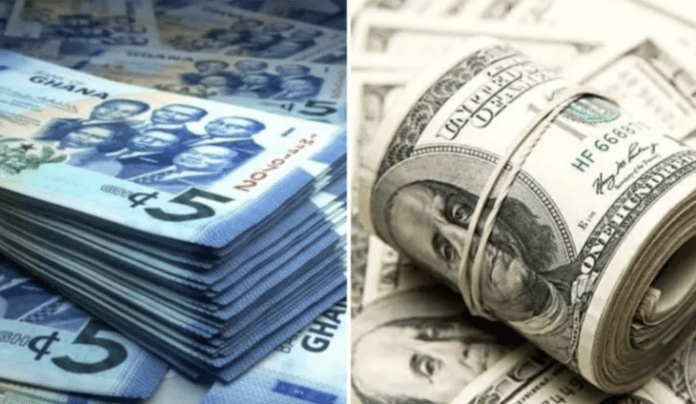
    Parliamentary candidate for Abura Asebu Kwamankese, Felix Kwakye Ofosu, has said that anyone who agrees with the assertion that GH¢16 to $1 is better than GH¢4 to $1 rate during the Mahama administration in 2016 is mentally unstable.

    He contended that such a comparison is unreasonable, given that the current rate is significantly higher than the rates seen during Mahama’s administration.

    During his appearance on the Good Morning Ghana show on August 29, 2024, he stated, “That senseless argument stems from Bawumia’s disrespect when he tells you that an exchange rate of GH¢16 to $1 in relation to the dollar is better than GH¢4 to $1. With the greatest respect, that is madness if you ever made that argument. Even if you calculate depreciation using the correct formula, the rate under Bawumia is still higher.”

    Health Minister Dr. Bernard Okoe-Boye refuted these claims, asserting that it is incorrect to imply that Ghana was a “banana republic” under John Mahama’s presidency.

    He argued that Mahama faced difficulties in sustaining economic stability, as inflation rose from single to double digits during his tenure.

    “When John Mahama took over from the late Evans Atta Mills, inflation was in single digits, but Mahama left with double digits,” he added.

  • Finance Ministry releases GHS700m of GHS1.5b bailout to investors affected by AMC collapse

    Finance Ministry releases GHS700m of GHS1.5b bailout to investors affected by AMC collapse

    The Ministry of Finance has begun disbursing GH¢700 million as the initial portion of a GH¢1.5 billion bailout for investors affected by the collapse of Asset Management Companies (AMCs), a measure announced in the 2024 mid-year budget review.

    Finance Minister Dr. Mohammed Amin Adam stated during the August 2024 Monthly Press Briefing on the Economy that this action represents a vital step in the government’s efforts to rebuild trust in the financial sector.

    The funds, which are part of a broader relief package approved by the Cabinet, are intended to assist thousands of investors whose assets have been tied up in failed fund management firms since the financial sector overhaul began in 2017.

    This initiative is particularly significant as the government faces increasing pressure to address the ongoing impacts of financial sector reforms.

    “This intervention is being done despite the tight fiscal space, evidence of government’s commitment to provide relief for investors in the defunct AMCs – especially the pensioners,” Dr. Adam stated during the briefing.

    He noted that prioritizing pensioners highlights the financial sector cleanup’s social impact on this vulnerable group.

    The Finance Minister explained that the GH¢1.5 billion package will be disbursed in three phases, with the initial GH¢700 million already prepared for release by the Controller and Accountant-General.

    This first disbursement is expected to substantially increase the number of investors fully compensated under the bailout plan.

    The Securities and Exchange Commission (SEC) will manage the distribution of funds, focusing particularly on Blackshield Fund Management Ltd., one of the largest affected asset management companies.

    The bailout is anticipated to fully resolve claims for 82,096 Blackshield investors, or 92% of its claimants, and 12,069 investors from other fund management firms, representing 78% of their claimants.

    Overall, the government expects this intervention to fully settle 94,165 investors, covering 90% of the 105,178 validated claims.

    An analyst with a fund management firm, who wished to remain anonymous due to his position in the market, said: “While this bailout is a positive step, it’s important to note that it comes nearly seven years after the initial financial sector reforms. The delay has caused considerable hardship for many investors, particularly retirees who relied on these funds for their daily sustenance”.

    The announcement has been received with cautious optimism within financial circles. Market observers are eager to assess how swiftly the funds will be distributed to affected investors and the potential effects on overall market confidence.

    Analysts note that, amidst ongoing economic challenges such as high inflation and the IMF programme, the government’s capacity to meet its financial obligations will be under close scrutiny.

    They also mentioned that effectively executing this bailout could be pivotal in rebuilding trust in the financial system and in drawing both domestic and international investments.

    “As of date, several bank depositors (savings and loans, microfinance and discount houses) whose claims were certified by the receiver in 2019 and 2020 have yet to be reimbursed. Are they among the GH¢700million…if not, when?

    “What has changed since Blackshield customers were first excluded from payments made to fund management companies? And are those fund management customers who received only 25% of their locked-up funds going to receive the rest of their monies?

    Korsi Dzokoto, an analyst, questioned, “What are the timelines for the government to complete these processes?”

    He also highlighted discrepancies in the government’s communication about the bailout program, noting: “How much does government’s clean-up of the banking system cost? We have heard amounts ranging from GH¢21billion to GH¢25billion.

    “In the main budget, government announced GH¢4billion to pay-off locked funds in the banking and fund management sectors, including GH¢2.3billion for NIB recapitalisation. In its mid-year budget, government mentioned GH¢1.5billion.”

    The MoF has however maintained that the bailout package’s remaining tranches will be released in due course, with the timeline to be communicated in subsequent briefings.

  • Ghana’s FDI for 2023 drops at 10% – Report

    Ghana’s FDI for 2023 drops at 10% – Report

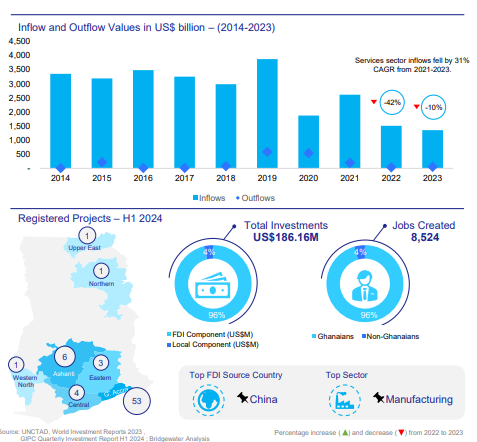
    Ghana experienced a 10.0% decline in Foreign Direct Investment (FDI) inflows in 2023 compared to 2022, marking the lowest level in the past decade and 28% below pre-pandemic figures.

    Bridgewater Advisors reported that FDI inflows to Ghana decreased by $1.4 billion in 2023, continuing a trend of poor performance from 2022.

    From 2014 to 2023, Ghana’s share of inflows into Africa and West Africa averaged 6.0% and 23.0%, respectively. However, outflows surged by 46% to $55.76 million in 2023.

    For the first half of 2024, Ghana’s estimated FDI components totaled $186.16 million, with 69 registered projects primarily in manufacturing, accounting for approximately 81.0% of the investment value.

    Greenfield projects

    Meanwhile, Ghana continued to rank second in West Africa for greenfield investment projects, trailing only Nigeria.

    The country has averaged 36 projects per decade, while Nigeria has averaged 56.

    In 2023, the value of announced greenfield projects in Ghana jumped by 92% to $1.3 billion, even though the number of projects fell from 39 to 29.

    Over the past decade (2014-2024), Ghana averaged 36 greenfield projects annually, with a peak of 47 projects in 2014, totaling over $4.9 billion.

    Project finance

    Additionally, the report noted that international project finance deals increased by $21 million in 2023, totaling $1.5 billion, with the number of projects doubling from two to four.

    This growth highlights the growing involvement of local banks in funding large-scale projects and the strengthened capacity of the Ghana Infrastructure Investment Fund to support medium- to long-term infrastructure financing, aided by recent contributions from development finance institutions such as the African Development Bank.

  • Farmers affected by dry spell to receive seeds, fertilizers from govt by mid-September – Agric Minister

    Farmers affected by dry spell to receive seeds, fertilizers from govt by mid-September – Agric Minister

    The government aims to finish distributing seeds and fertilizers to farmers impacted by the dry spell by mid-September 2024.

    Additionally, the government plans to complete the importation of certain food items by September 20, 2024.

    Dr. Bryan Acheampong, the Minister for Food and Agriculture, shared this information on PM Express Business Edition with host George Wiafe on August 29, 2024.

    He guaranteed that the government will take steps to prevent a food crisis in the country.

    “The dry spell that is currently being experienced in the North, should actually impact the country from the end of September. However, the measures that we are implementing should ensure that the situation is minimized and prevent us from getting into a crisis”, he said.

    Dr. Acheampong stated that the government has gained assurances from both domestic and international partners and stakeholders to prevent food crises.

    Background

    This year parts of the Northern Ghana has been dealing with dry spell destroying several farms in the part of the country.

    The governemnt associate the cause with climate change and not its inability to provide irrigation to aid all-year farming.

    Government plan

    Dr. Acheampong stated that the dry spell was worsened by some farmers’ failure to follow the advice of extension officers.

    “The farmers were told to delay planting because of the change in weather patterns”, he said.

    “Preliminary reports indicate that about 928,523 farmers and 1.86 million hectares of crops were at risk. Those farmers would lose an estimated investment of GH¢7.4 billion if there was total crop failure”, he added.

    He disclosed that maize, rice, groundnut, soybean, sorghum, millet, and yam were the crops most severely impacted in the Northern, Upper East, North East, Savannah, Upper West, Bono, Bono East, and Oti regions.

    Compensation for affected farmers

    The government is suggesting an initial compensation of GH¢1,000 per hectare for farmers affected by the crisis to offset their investment losses.

    Dr. Acheampong has reported that farmers have incurred approximately ¢7.4 billion in losses.

    Had the season been successful, the farmers would have earned around ¢22 billion in revenue.

    Some farmers have criticized the GH¢1,000 per hectare compensation as insufficient.

    However, Dr. Acheampong clarified that this amount is just part of the total compensation package the government plans to provide to the farmers.

    “The financial package, is just a fraction, of the total package, which will include other things as well. The government is committed to assisting the farmers in these times. What we have put forward as compensation was based on an extension on ground investments and the current state of Ghana’s financial position to meet all these obligations”, he clarified.

    He stated that the ministry has the support and commitment of the Finance Ministry.

    “Everyone is coming on board to support. The donor partners, we believe we can effectively deal with this challenge. The Agric Ministry has also set aside a significant portion of its budget to support this initiative “, he said.

    The government has proposed a GH¢8 billion ($500 million) plan to implement several measures, primarily aimed at assisting farmers impacted by drought and safeguarding the nation’s food security.

    The funding will come from a mix of the Contingency Fund, budget adjustments, and contributions from development partners.

  • GRA engages traders to expand tax base

    GRA engages traders to expand tax base

    A key obstacle to revenue collection in the country is the failure to include all individuals within the tax bracket.

    To tackle this long-standing issue, the Ghana Revenue Authority is launching new initiatives and developing strategies to promote tax compliance.

    Joseph Asare, Accra East Area Director of the Domestic Tax Revenue Division at the Ghana Revenue Authority, shared this information during a sensitization event in Tema.

    “As the Commissioner General said we’re partnering with civil society organisations, religious bodies, the Chief Imam among other opinion leaders and we at the local level are getting closer to the associations, market women, clubs, and the rest”.

    “By getting closer to them, it will enable us take concerns and feedback and address them appropriately,” he said.

    Mr. Asare also mentioned that to facilitate tax payments and enhance compliance, the Ghana Revenue Authority has implemented online payment options, e-invoicing, and other convenient methods.

    He mentioned that during the COVID-19 pandemic, payment duties were briefly paused to assist taxpayers, and returning to pre-pandemic payment practices might be new for some traders.

    Philip Kyei, Vice Chair of the Tema Central Market, urged all traders to meet their tax responsibilities to contribute to the country’s development.

    “How do you expect the government build schools, road, and address other challenges if you don’t pay tax. I will urge GRA to reach all corners with the education to ensure compliance”.

    Letitia Adjei who runs convenience shop is ready to pay tax but is unhappy over deplorable network in areas including Washington in the Kpone-Katamanso municipality.

    She also expressed worry over the number of fees being paid to Tema Metropolitan Assembly which negatively impacts business.

    According to her, GRA has deferred this year’s payment to next year.

    The event was in two parts, tax education and health screening at Community One lorry terminal.

  • Govt preparing to introduce a proposal aimed at adjusting its external debt – Finance Minister

    Govt preparing to introduce a proposal aimed at adjusting its external debt – Finance Minister

    Finance Minister Dr. Mohammed Amin Adam has revealed that the government will soon introduce an exchange offer to bondholders, marking a pivotal moment in the process of restructuring external debt.

    He noted that the exchange offer aligns with the terms provisionally agreed upon with bondholders on June 24th, which include key concessions from them.

    This move, according to the Minister, is designed to ensure an equitable distribution of the debt burden among domestic, official, and commercial external creditors.

    He made this announcement during a monthly press briefing on Ghana’s economy, where he outlined the latest developments in the government’s external debt restructuring efforts.

    Dr. Amin explained that the exchange will be available for 21 days, and the government is relying on strong participation from the bondholder community, both internationally and domestically.

    Under the exchange offer, investors have two options: one offering no nominal haircut with lower interest rates, and another providing a 37 percent nominal haircut but with higher interest rates.

    The Minister emphasized that the bond exchange is expected to save Ghana US$4.4 billion in debt servicing costs and lead to the cancellation of US$4.7 billion throughout the duration of the International Monetary Fund (IMF) programme.

    He added that these measures could help reduce Ghana’s debt-to-GDP ratio to 55 percent by 2028, aligning with the country’s debt reduction goals.

    The Minister also mentioned that progress in the external debt restructuring would help restore Ghana’s standing in international markets.

    However, he disclosed that the government has taken measures to ensure the completion of key infrastructure projects affected by the debt restructuring process.

    “Our efforts have enabled us to complete the Prempeh (I) International Airport, the Afari Military Hospital in Kumasi, as well as the Yakubu Tali International Airport in Tamale. 23. This week, the President cut sod for the Accra-Tema Motorway redevelopment project. Two (2) days ago, I also visited the Kasoa-Winneba Road, which is being fully funded from the national budget. Like many of you who ply that road, I am very impressed with the progress of work on this critical road,“ he said.

    Dr. Amin asserted that the government was working with development partners to implement the Economic Roads Improvement Programme, which includes the Accra-Kumasi Road.

    According to him, this is part of a broader strategy to open up the country for trade, tourism, and regional integration.

  • Major Cocoa processing companies to provide extra funds to syndicated loan – Agric Minister

    Major Cocoa processing companies to provide extra funds to syndicated loan – Agric Minister

    Minister of Food and Agriculture, Dr. Bryan Achaempong, has stated that major cocoa processors, as opposed to banks, will be the main providers of funding to address any possible financial gaps the Ghana Cocoa Board (Cocobod) could encounter ahead of the 2024/2025 season.

    In response to concerns regarding local banks’ readiness to finance the cocoa regulator’s bean purchases, he clarified that the “alternative funding” the government is pursuing will largely involve direct agreements with processing companies at prevailing market prices.

    “We are going to deal with them directly at world market price, which can bring more benefits to our farmers,” Dr. Acheampong stated during the monthly Economic Press Briefing for August held at the Ministry of Finance. He however declined to name specific companies due to ongoing negotiations.

    Dr. Achaempong’s remarks come as Cocobod announces a shift in its cocoa financing strategy for the 2024-2025 season, transitioning from a heavy dependence on syndicated loans to more direct, uncollateralized sales.

    Although this departure from over three decades of tradition by the cocoa regulator has been met with widespread skepticism regarding its motives and viability, the Agriculture Minister contended that the change is designed to leverage rising cocoa prices and enhance benefits for local farmers.

    Finance Minister Dr. Mohammed Amin Adam had earlier assured stakeholders that the country would continue using syndicated loans for cocoa financing in the upcoming 2024-2025 season, though with notable adjustments.

    He disclosed that while Cocobod initially aimed to secure up to US$1.5 billion through syndication, the actual figure is expected to be closer to US$600 million. This marks a considerable reduction from previous years, when syndicated loans typically ranged between US$1 billion and US$1.2 billion.

    The Minister for Food and Agriculture offered additional insights into this strategic change, explaining that Ghana intends to increase its reliance on uncollateralized sales, potentially raising them from the usual 10-30 percent of total sales to a significantly higher proportion.

    This shift is influenced by recent market dynamics, which have seen cocoa prices soar from US$2,800 per tonne to nearly US$10,000 per tonne.

    He noted that these substantial price hikes have created a disparity between committed sales prices and current market rates, underscoring the drawbacks of relying heavily on pre-season syndicated loans that lock in prices and can prevent farmers from benefiting from market upturns.

    “We are aiming to flip our sales model. Traditionally we’ve relied heavily on syndicated loans, which account for 70-90 percent of our sales. We are now looking to increase uncollateralised sales to 30 percent or more of total sales,” he explained.

    “We have committed to contracts at US$2,800, but the market is now at US$10,000. Our farmers see these high world market prices and demand more money, but earlier commitments bind us,” he added.

    This new strategy is anticipated to enable more flexible pricing and potentially greater earnings for Ghana’s cocoa farmers, who have frequently missed out on global price hikes due to prior commitments made through syndicated loans.

    By shifting away from fixed-price pre-season loans, the government aims to ensure that local producers reap more of the benefits from the rising global cocoa prices.

    The shift in financing strategy coincides with a period when Ghana is facing broader economic challenges. Dr. Adam noted that ongoing negotiations are taking place with private banks and contractors regarding an outstanding US$2.8 billion debt, adding that the government has directed its advisors to present proposals to commercial creditors.

  • Govt on course to develop newly discovered oil fields – Finance minister

    Govt on course to develop newly discovered oil fields – Finance minister

    Minister of Finance, Dr. Mohammed Amin Adam, has revealed that the government is working around the clock develop recently discovered oil fields to increase the country’s overall GDP.

    Addressing the Future of Energy Conference in Accra, Dr. Adam noted that the government has allocated around US$10.6 billion from crude oil revenues.

    He explained that the government aims to leverage these new oil reserves to enhance national revenue and fund essential capital projects.

    “We are working on developing new oil fields. It is expected that this will impact the growth rate of the country. We have so far distributed crude oil revenues of approximately US$10.6 billion as of today to the allowable designated accounts provided for in the Petroleum Revenue Management Acts”.

    The minister added that even though unworked oil receipts constitute a little over 1% of GDP in Ghana, there is still a vast potential in the sector.

    “We are thus working on developing the newly discovered fields with significant reserves to ensure that we generate additional revenues”.

    “All these fields, when developed, will increase Ghana’s revenues and allow us to implement government projects to help put in place the infrastructure required to advance our country’s sustainable”, he said.

  • 5 strategies to help you save money for difficult times

    5 strategies to help you save money for difficult times

    Amid the ongoing economic challenges in the country, saving money has become increasingly difficult.

    However, setting aside funds is not only wise but also essential for achieving financial stability.

    In 2022, Ghana experienced a surge in inflation to 54 percent, which significantly affected the incomes, salaries, and livelihoods of many. Although inflationary pressures have somewhat eased in 2024, with the rate at 20.9% as of July, saving remains a struggle for many people.

    Maximizing savings requires strategies to reduce expenses, optimize budgeting, and make informed financial choices. This involves steps such as smart investing, maintaining financial discipline, cutting back on non-essential spending, prioritizing debt repayment, and taking advantage of discounts.

    When effectively applied, these methods can help individuals build a financial cushion and enhance their financial stability, even in the face of economic uncertainty.

    GhanaWeb Business, in this article, provides a step-by-step guide that can help you develop a simple and realistic strategy for saving.

    1. Record your expenses

    One of the first steps to saving money is to figure out how much you spend. It is essential to track all expenses incurred, including regular utility bills, household purchases, and more. Keeping a record of your expenses on paper, a notebook, or a tracker app can help track your daily or monthly expenses.

    1. Create a budget and include savings

    Once you have enough information about how much expenses you incur within a month, you can begin to create a budget relative to your income. This can help you plan your spending and limit overspending.

    It is important to factor in expenses that occur regularly but not every month, such as miscellaneous or unplanned spending like car maintenance etc. Once you have a fair idea of this, you can eventually plan to save an amount that feels comfortable to you.

    You can also ramp up on your savings by setting aside about 15 to 20 percent of your income per month.

    1. Deliberately cut down on spending

    To maximise your saving goals and consolidate gains made, it is vital to trim down non-essential spending. This could include activities that are not immediately important as you look for ways to save on fixed monthly expenses such as water and electricity bills, car insurance, entertainment, etc.

    One major way of trimming down non-essential spending is to ‘Wait Before You Buy’ as you may realise that the item or activity was wanted rather than needed, giving you the space and time to plan towards it.

    1. Set realistic saving goals

    One of the surest ways of saving is by setting realistic saving goals in the short to long term (one to three years). Setting these goals could help you estimate how much money, time, and how long you will need to save towards that goal or purchase.

    1. Outline your key financial priorities

    Priorities they say differ for every individual as it is important to put things into perspective by order of priority and make the needed push for savings and investments towards that priority.

    Finally, you could put money aside for the future, but be sure to remember long-term goals and planning are important to give you a clear idea of how to allocate your savings.

  • Losses by SOEs decrease by GHS9m in 2023 – SIGA

    Losses by SOEs decrease by GHS9m in 2023 – SIGA

    The State Interest and Governance Authority (SIGA) has announced a reduction in the losses incurred by State-Owned Enterprises (SOEs) by GH¢9 million for the 2023 financial year.

    This reduction signifies an 83.13 percent decrease from the previous net loss of GH¢14,402,000 in 2022 to GH¢2,573,000 in 2023.

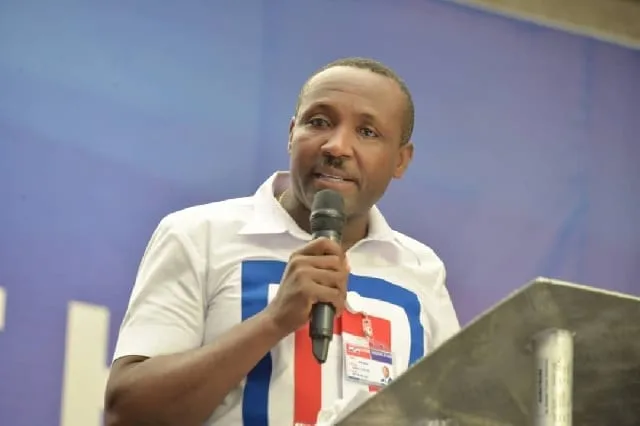
    At the launch of the 2023 State Ownership Report in Accra, SIGA’s Director General, John Boadu, highlighted that the Auditor General had also reported a 46 percent decrease in irregularities and infractions among Specified Entities (SE) in the 2023 audited accounts of public boards, corporations, and other statutory institutions.

    Boadu noted that although some losses were recorded in the 2023 fiscal year, 90 percent of these losses were deemed recoverable.

    He outlined that the Authority is implementing various reforms and measures to facilitate a net transfer of funds from SOEs to the government. Additionally, SIGA aims to safeguard and enhance the profitability of the government’s investments, totaling approximately GH¢800 billion, in Specified Entities (SE).

    While acknowledging that not all SOEs are designed to generate profits, Boadu emphasized the importance of their continued relevance and the need to ensure that any losses incurred are justifiable. He also pointed out that some losses stemmed from investments that would take time to yield returns.

    “For instance, if the Electricity Company of Ghana (ECG) should invest about GH¢5 million into a non-commercial area, it would take a very long time to recoup,” he intimidated.

    John Boadu detailed the data utilized in crafting the report, noting that it was based on 60 audited financial statements and 87 management accounts from the SOEs.

    He explained that the report was developed in alignment with the standards set by the World Bank-sponsored Public Financial Management for Service Delivery (PFM4SD) Programme. This effort aims to support the execution of the Government’s Public Financial Management Reform Strategy and enhance oversight, performance management, and fiscal discipline within the SOEs.

    Themed “Inclusive Growth and Value Addition: The Role of Specified Entities,” the 2023 SOR, underscores SIGA’s pledge to align the SOEs with the government’s 2023 agenda to restore and sustain macroeconomic stability through inclusive growth and value addition under the Post-COVID-19 Programme for Economic Growth (PC-PEG).

    Boadu noted that the theme captures the essence of SIGA’s mission to harness the potential of SOEs to contribute meaningfully to Ghana’s economic recovery and growth.

    “The Report reflects the Government’s commitment to transparency and accountability in the public financial management of our country,” he said.

    The report features dedicated sections on government transactions, fiscal risk exposures, climate-smart initiatives and investments, as well as gender representation, especially at the Management and Board levels.

    The 2023 report encompasses 147 entities, representing 84% of the 175 listed in the Cabinet-approved SIGA Entity List.

    These 147 entities include 53 State-Owned Enterprises (SOEs), 31 Joint Venture Companies (JVCs), and 63 Other State Entities (OSEs).

  • Price of cocoa futures continues to fall over predictions of rain in West Africa

    Price of cocoa futures continues to fall over predictions of rain in West Africa

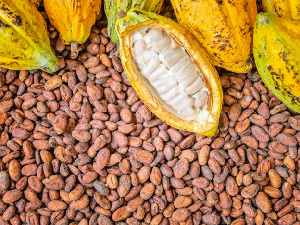
    Cocoa futures declined for the third consecutive day amid forecasts of rain in West Africa, reversing a weeklong rally driven by worries about dry conditions in major producers Ivory Coast and Ghana.

    Maxar weather reports indicated that Western Ivory Coast experienced moderate to heavy rainfall on Wednesday, with light, scattered showers occurring in other areas.

    “Ivory Coast growers expect harvest to begin next month, and the amount of rain the crop receives will determine the amount and duration of the harvest,” said Mark Bowman, senior global market analyst at ADM Investor Services.

    “Producers would like to see more rainfall in the south, but that may take another week, which could leave southern regions stressed,” he cautioned.

    The most actively traded cocoa contract dropped by up to 2.4% in New York and is on track for a 2.7% decrease for the week.

    Despite this, cocoa futures have risen by more than 80% this year, largely due to concerns about dry weather, disease, and insufficient fertilizers affecting production in major growing areas. Recently, Ghana’s industry regulator reduced the country’s 2024-25 crop harvest target by 20% due to weather-related issues.

  • Govt to launch first large-scale greenfield mine to enhance gold production – Report

    Govt to launch first large-scale greenfield mine to enhance gold production – Report

    In November this year, government will inaugurate the country’s first large-scale greenfield mine in over a decade, aiming to boost gold production with an anticipated annual output exceeding 350,000 ounces.

    The last large-scale greenfield mine in Ghana was commissioned in 2013 and was operated by Newmont.

    Mr Martin Ayisi, Chief Executive Officer of the Minerals Commission, revealed that the new mine, named ‘The Cardinal Namdini,’ will be managed by Cardinal Resources, a subsidiary of the Chinese-owned Shandong, which secured its operating license in 2020.

    Speaking the the International media, Mr Ayisi also mentioned that three additional mines are projected to commence operations by 2026, as part of the country’s strategy to leverage its natural resources for economic development.

    “First is Cardinal Namdini, which is a monster mine and it will produce an average of 358,000 ounces per year. Mid-year 2025, Newmont will commission another monster mine – Ahafo North.”Ayisi was quoted as saying by Reuters.

    He added that two more mines are expected to add approximately 600,000 ounces of gold to Ghana’s yearly production, while also generating additional employment opportunities.

    The CEO of the Minerals Commission mentioned that another gold mine, run by Azumah Resources and Atlantic Lithium, is scheduled to begin production in 2026.

    He stressed that the Commission will collaborate with the government to lower mining exploration taxes in order to attract more investors to the industry.

  • Ghana’s central govt debt rises to   GHS761.1bn

    Ghana’s central govt debt rises to GHS761.1bn

    Ghana’s central government debt has reached GHS761.1 billion (USD51.1 billion) by July 31, 2024, marking a substantial rise from the earlier level of GHS587.7 billion (USD53.5 billion).

    This information was shared by Finance Minister Dr. Mohammed Amin Adam.

    During the presentation of the latest monthly Economic Update at the Finance Ministry, Dr. Amin Adam emphasized that the increase in debt, when measured in cedis, is largely attributed to the cedi’s depreciation against the US dollar, among other contributing factors.

    4o“As of July 31, 2024, Ghana’s provisional nominal central government debt stood at GHS761.1 billion, equivalent to USD51.1 billion. This represents a nominal increase from the previous amount of GHS587.7 billion, equivalent to USD53.5 billion,” he said.

    Dr. Amin Adam further elaborated on how currency fluctuations have affected the debt profile, stating, “The increase in cedi terms and decrease in US dollar terms is attributed to a combination of factors, including cedi depreciation, disbursements from multilateral institutions, and domestic financing of the budget.”

  • Banks records GHS10.8bn increase in loans for 2nd quarter of 2024

    Banks records GHS10.8bn increase in loans for 2nd quarter of 2024

    The total amount of secured loans issued and recorded by banks and Specialised Deposit-Taking Institutions (SDIs) in Ghana reached GH¢10.8 billion in the second quarter of 2024.

    This figure represents an 83.1% increase compared to the GH¢5.9 billion reported during the same period last year, according to the Bank of Ghana’s Collateral Registry.

    Banks led the secured loans market with GH¢9.1 billion in Q2 2024, marking an 85.7% rise from GH¢4.9 billion in Q2 2023.

    In contrast, SDIs reported GH¢1.7 billion in secured loans for Q2 2024, which is a 75.1% increase from GH¢971.1 million in the same period of 2023.

    Banks held the largest share of the total secured loans in Q2 2024 at 83.8%, up slightly from 83.7% in Q2 2023.

    Savings and Loans Companies (S&Ls) saw their share decrease to 9.5% in Q2 2024, down from 9.8% in Q2 2023.

    Rural and Community Banks (RCBs) increased their share to 5.2% in Q2 2024, compared to 4.4% in the same period last year.

    The proportion of secured loans held by Microfinance Institutions slightly declined to 1.0% in Q2 2024 from 1.1% in Q2 2023, while Micro Credit Companies also saw a minor decrease from 0.3% in Q2 2023.

  • Delete all names registered secretly in voters’ register – NDC tells Ajumako Enyan Essiam EC

    Delete all names registered secretly in voters’ register – NDC tells Ajumako Enyan Essiam EC

    The National Democratic Congress (NDC) has asked the Electoral Commission (EC) in the Ajumako Enyan Essiam Constituency of the Central Region, to delete names of 3,017 non-resident it had secretly added to the constituency’s voter list.

    During a press briefing, Prof. Jonathan Annan, Chairman of the NDC in Ajumako Enyan Essiam, pointed out that there were inconsistencies between the voter data provided by the EC and the NDC’s records.

    He claimed that 3,868 voters originally from Ajumako Enyan Essiam had been relocated to another constituency, and that 829 names were missing from the voter list.

    Prof. Annan accused the EC, with support from the New Patriotic Party (NPP), of trying to influence the upcoming elections in the constituency.

    “The NDC in Ajumako Enyan Essiam is demanding that the Electoral Commission immediately delete all names registered secretly in the voters’ register,” he stated.

    The NDC has issued a five-day deadline for the EC to remove the so-called “foreign names” from the voter list or face protests.

    In media interviews, some NDC members voiced their resolve to oppose any efforts by the EC and the NPP to sway the election results.

    They pledged to defend the integrity of the voting process and warned those allegedly responsible for the secret transfers to correct the issue or face repercussions.

    “We are focused on winning the upcoming December General Elections with Ato Forson and John Dramani Mahama,” they added.

  • YEA to launch electric taxi programme for okada riders

    YEA to launch electric taxi programme for okada riders

    An innovative Electric Taxi Programme is set to be introduced by the Youth Employment Agency (YEA) to offer an alternative livelihood for interested Okada riders and other youth in the country.

    This development is intended to convert motorcycles to electric taxis that are environmentally friendly, offering a more secure and sustainable way to make a living.

    Through this programme, YEA aims to empower young people by offering them the opportunity to participate in the burgeoning electric vehicle sector, contributing to the country’s green energy goals while creating jobs.

    The electric taxis will be offered to those interested, especially Okada riders who seek a safer and more reliable source of income.

    This initiative aims to improve road safety and lessen the environmental footprint of transportation by encouraging the adoption of clean energy vehicles.

    Through this program, YEA continues to uphold its mission of generating job opportunities for young people, driving economic progress, and promoting sustainable development.

    Information on how to apply for the Electric Taxi Programme, including eligibility criteria, will be released soon. YEA urges all qualified youth to take advantage of this chance to enhance their livelihoods.

  • “We encourage Lydia Alhassan to sue John Dumelo” – Majority Women’s Caucus of Parliament

    “We encourage Lydia Alhassan to sue John Dumelo” – Majority Women’s Caucus of Parliament

    The Majority Women’s Caucus in Ghana’s Parliament has called on Lydia Seyram Alhassan, the Minister of Sanitation and Water Resources, to pursue legal recourse against the NDC parliamentary candidate for Ayawaso West Wuogon, John Dumelo, for his disparaging remarks.

    In a recent appearance on TV3, Dumelo made a provocative accusation, alleging that Alhassan played a role in her late husband’s death to facilitate her election to Parliament.

    In a statement to the Parliamentary Press Corps (PPC) in Accra on August 29, 2024, the Majority Women’s Caucus, under the leadership of Patricia Appiagyei, MP for Asokwa and Chairperson of the group, condemned Dumelo’s comments as unfounded, harmful, and a grave affront to women in positions of authority.

    “This outrageous and contemptible statement is not only a vicious attack on Hon. Lydia Seyram Alhassan but also an insult to all women who work tirelessly to serve their communities and the nation in positions of leadership”, she noted.

    She added “The Majority Women’s Caucus in Parliament stands resolutely with Hon. Lydia Seyram Alhassan. We fully support her decision to seek legal redress and encourage her to take this matter to a court of competent jurisdiction, where Mr. Dumelo will be compelled to prove his baseless and malicious allegations.”

    The Caucus holds that pursuing legal action will clearly demonstrate that women in politics will not tolerate harassment or threats from baseless and harmful accusations. They fully support Seyram Alhassan, the current MP for Ayawaso West Wuogon, in her quest for justice.

    “Hon. Alhassan has done nothing but serve her constituents and the nation with dedication and integrity”, said a member of the Women’s Caucus, adding that “We will not stand idly by while her reputation is tarnished by baseless accusations.

    Alarmed by the situation, the Majority Women’s Caucus is encouraging all women in politics to unite against such attacks and offer mutual support during challenging times.

    They are also appealing to all political figures to run their campaigns with integrity and respect, avoiding personal attacks that erode the democratic process.

    “The progress of our democracy depends on the ability of all participants to engage in meaningful debate on ideas and policies without descending into the gutter of unfounded and disrespectful allegations”, Appiagyei, known in the political circles as Mama Pat, asserted.

    The Majority Women’s Caucus in Parliament has issued a strong condemnation that mirrors a recent statement from the Widows Association of Ayawaso West Wuogon constituency.

    On Thursday, the Widows Association also voiced profound disappointment and disapproval of John Dumelo’s remarks targeting Lydia Seyram Alhassan.

    In their statement, the Widows Association described Dumelo’s comments as a grave insult to the dignity of widows, who already endure considerable emotional and societal difficulties after losing their partners.

    “His words are a painful reminder of the stigmatization and discrimination that widows often face in our society,” the statement in part read.

  • Election rigging is not a practice associated with the NPP – Akufo-Akufo

    Election rigging is not a practice associated with the NPP – Akufo-Akufo

    President Nana Addo Dankwa Akufo-Addo robustly addressed concerns about possible electoral misconduct in the 2024 general election in a compelling speech at the Wesley Cathedral in Kumasi during the 13th Biennial/51st Annual Conference of the Methodist Church of Ghana.

    As his presidency approaches its end this year, he assured Ghanaians of the government’s dedication to ensuring a transparent, equitable, and peaceful election.

    He highlighted the New Patriotic Party’s (NPP) steadfast adherence to democratic values and its longstanding commitment to fairness.

    Addressing the gathered Methodist clergy and congregation, President Akufo-Addo proclaimed,

    “The Akufo-Addo-led NPP Government is clear about its obligation and duty to ensure that the impending elections are conducted in an atmosphere of peace and security, in full transparency and respect for the electoral laws of our country.”

    He emphasized that the security agencies are fully equipped to ensure the elections accurately represent the will of the Ghanaian people, free from violence or coercion.

    Additionally, the President used the occasion to address and critique those, including certain clergy members, who have been voicing concerns about potential electoral misconduct.

    He expressed disappointment in those who, instead of promoting peace, have been predicting “election rigging and Kenyan-style blood-letting.” In a direct rebuke, he stated, “They will be disappointed. The 2024 elections, like the previous ones we have held in Ghana in the 4th Republic, will be conducted peacefully and in total compliance with the laws of the country.”

    Akufo-Addo underscored that the NPP, founded on the Danquah-Dombo-Busia political tradition, has always been a champion of democracy and a staunch opponent of authoritarian rule. “Rigging is not part of our DNA,” he asserted.

    “We are eternal democrats; we trust and accept the freely expressed judgement of the people.” He cited his personal experience of accepting electoral results, referencing the outcomes of the 2008 and 2012 elections, which he accepted despite losing.

    President Akufo-Addo underscored that the NPP’s approach for the upcoming elections is based on its governance record from the past eight years. He highlighted his administration’s accomplishments in various fields such as the economy, education, healthcare, infrastructure, and digital advancements.

    He also commended Vice President and NPP presidential candidate Dr. Mahamudu Bawumia for offering a “dynamic vision for Ghana’s future” and challenged the Opposition Leader, whom he accused of avoiding debates with Bawumia.

    In conclusion, President Akufo-Addo reaffirmed his dedication to a peaceful transition of power, maintaining the same principles on which he was elected.

    “I came out of a peaceful election, and I will leave in a peaceful election,” he affirmed, reinforcing his message of maintaining Ghana’s reputation as a beacon of democracy on the African continent.

    The President’s speech at the Methodist Conference served not only as a plea for unity and peace but also as a robust affirmation of confidence in Ghana’s democratic institutions and processes.

  • Mustapha Gbande warned to sue, expose Henry Quartey over alleged threats

    Mustapha Gbande warned to sue, expose Henry Quartey over alleged threats

    The National Democratic Congress (NDC)’s Deputy General Secretary in Charge of Operations, Mustapha Gbande has issued a stern warning to Interior Minister Henry Quartey over alleged threats.

    As reported by ghananewsguide.com, Mr Gbande alleged that Quartey threatened legal action against him following claims that the minister had secretly met with Deputy Inspector General of Police, Christian Tettey Yohuno, and others, to supposedly conspire to rig the 2024 elections.

    Gbande further noted that while the interior minister is making groundless accusations, he (Mr Quartey) is also accusing him (Mr Gbande) of forming a group to instigate violence during the December 7 elections.

    In response, Gbande not only threatened to counter-sue but also promised to expose some of the questionable actions Quartey has taken in his various roles within the Akufo-Addo administration.

    “I will not only counter-sue him for falsely accusing me of criminal activities and inciting state institutions against me personally, but I will also take the opportunity to expose malicious issues related to the minister and his previous roles as a regional minister involving him and his government,” the deputy general secretary is quoted to have said.

    He added, “How can you complain about something I said and then end that complaint by making such an empty, malicious allegation against me?”

    He also accused the ruling New Patriotic Party of resorting to “nefarious, fraudulent, and crooked” means to prepare for the next election.

    Gbande further warned the interior minister that any attempt to undermine the will of the people in the pending elections would be met with strong resistance.

    Gbande described Henry Quartey as the ‘most disliked’ Minister of the Interior because of his actions; accusing him of misusing his position, including demolishing structures under the guise of law enforcement while allegedly scouting for state lands and bungalows.

    He also accused the minister of interfering in the recruitment of personnel for the various security agencies in the country.

    “This is the first time an interior minister is fully and overtly involved in recruiting security personnel without following due process. Is that not an agenda intended to use internal security agencies to interfere in the elections?” Gbande asked.

  • Free SHS a trump card for Bawumia?

    Free SHS a trump card for Bawumia?

    Ghanaian electorates will head to the polls to elect the next leader who will run the affairs of the country for the next four years, as stipulated by the 1992 constitution, in less than 100 days.

    As the countdown to the elections continues, political parties are intensifying their campaigns to sway undecided voters and solidify their base.

    In their campaign efforts, the New Patriotic Party (NPP) has been particularly focused on promoting their achievements and future plans, with a strong emphasis on their educational policies.

    Among the key elements of their campaign is the promise of continuing and expanding the Free Senior High School (SHS) policy, a cornerstone of the party’s educational reform agenda.

    With this in mind The Independent Ghana interacted with some citizens regarding their voting choices come December 7 2024.

    It appears the Free SHS has become a trump card for Dr Bawumia and the NPP to win the 2024 presidential seat.

    Ghanaian truck driver Asmanu Yaya expressed that he has both enjoyed and continues to benefit from the Free SHS policy as his four children are beneficiaries.

    Two of them, he said are done with school and the others are yet to complete. Not having a formal education, Yaya says he would let the opportunity slip by his children. He will vote for a leader who has helped him lift the financial burden to see his children through school.

    “I’ve personally benefited from these policies. I have four children—two have finished school, and two are still attending. Without Free SHS, I might not have been able to afford their education. That’s why I’m voting for the NPP and Dr. Bawumia this year,” Mr Yaya indicated

    Food vendor at the Achimota station, Madam Asmawu said she has plans to vote again and for the the NPP because Free SHS has made it possible for families, regardless of their financial status, to send their children to school.

    “Free SHS has allowed both rich and poor families to send their children to school, which is a huge benefit. Despite the tough economy, this policy has made a real difference. So I have a reason to vote for them again,” Madam Asmawu stated.

    Another citizen by name Richard Osei, expressed his gratitude for the introduction of the Free SHS, Technical and Vocational Education and Training (TVET), and Science, Technology, Engineering, and Mathematics (STEM) schools. He noted that these initiatives have improved access to education and enhanced the quality of education.

    The Free Senior High School (Free SHS) education policy in Ghana is a government initiative introduced in the 2017 September Presidential administration of Nana Akufo-Addo.

    The policy’s origination began as part of the President’s presidential campaign during Ghana’s 2016 election period, and has become an essential part of Ghana’s educational system.

    And now, despite the hardship Ghanaians are facing in the country under the NPP, several Ghanaians seem to have no choice than to give the NPP another 4 years.

  • Payroll monitoring saved Ghana   GHS345m of taxpayer’s money in 2023 – Report

    Payroll monitoring saved Ghana GHS345m of taxpayer’s money in 2023 – Report

    The Employment, Labour Relations, and Pensions Minister, Ignatius Baffour Awuah has reported that the monitoring of public sector payroll in 120 institutions saved Ghana GH₵345 million in 2023.

    At a press briefing organized by the Ministry of Information in Accra, Mr Baffour Awuah stated that the initiative reduced the wage bill and increased transparency in public sector payment processes.

    Responding to questions from journalists during the briefing, Mr. Benjamin Arthur, Chief Executive of the Fair Wages and Salaries Commission, explained that the initiative aimed to ensure public sector employees received accurate salaries, allowances, and benefits, also revealed several discrepancies.

    He highlighted that the process led to the removal of ‘ghost’ workers.

    “Overall, the payroll monitoring exercise has contributed to a more efficient, transparent, and accountable public sector payroll management system,” he said.

    In February 2024, Mr. Kwasi Kwaning-Bosompem, the Controller and Accountant General, announced that his office would remove the names of individuals who had not linked their Ghana cards to the payroll system, as part of efforts to eliminate fictitious entries in the public sector.

    Speaking at the annual conference of the Controller and Accountant-General’s Department in Kumasi, Mr. Kwaning-Bosompem emphasized the need for innovative methods to manage public finances and ensure a reliable payroll system.

    He highlighted the launch of a two-year initiative that requires individuals on the payroll to connect their National Identification Authority (NIA) number to the payroll database.

    “If you don’t have an NIA card, very soon, your pay will be disconnected,” he cautioned, emphasising that even if the NIA card is missing, the individual’s number remains on the database. Verification can be conducted, and individuals may be invited for physical validation if doubts arise”.

  • Foreign buyers pay us better – Farmers react to ban on grain export

    Foreign buyers pay us better – Farmers react to ban on grain export

    Farmers in the Upper East Region have raised concerns that the government’s recent directive to ban the export of grains may not adequately address the challenges posed by the ongoing dry spell affecting agricultural activities in the area.

    They argue that the ban alone is insufficient without additional pragmatic measures from the government to reduce production costs and ensure fair prices for their produce.

    Robert Kwame Abokah, a commercial rice farmer from Navrongo, shared his frustrations in an interview with Class 91.3 FM’s reporter Moses Appiah.

    He highlighted the challenges farmers face, noting that their primary buyers are traders from Burkina Faso and Niger who typically arrive with cash and are willing to pay the farmers realistic prices.

    “If only the government could buy our products,” Mr. Abokah said.

    “These traders usually come with cash and will accept any price tag we offer them, so as a farmer, I’ll be looking at how I can make a profit.

    “The government needs to offer practical support, not just promises on paper, as it usually does.”

    Mr. Abokah criticized the government’s past promises of support, such as initiatives to bring in aggregators to purchase surplus rice.

    He recalled how, three years ago, farmers in the region faced significant post-harvest losses despite assurances from officials.

    “We went to the media to highlight our bumper harvest and the post-harvest losses we were experiencing.

    “Despite raising concerns multiple times and receiving assurances from a buffer stock official that aggregators would come to buy the rice and other produce, very little action was taken,” he recalled.

    Abokah emphasized that merely imposing a ban on grain exports won’t address the underlying problems unless the government puts in place a thorough plan for effectively buying and managing local produce.

  • Amasaman will be transformed into an industrial zone – Mahama pledges

    Amasaman will be transformed into an industrial zone – Mahama pledges

    2024 Presidential Candidate of the National Democratic Congress (NDC), John Mahama has stated that his leadership will move industrialisation to Amasaman outside Accra to accelerate development in the area as part of his 24-hour economy initiative,

    This, he made known, while he was speaking at a rally in the Amasaman area.

    The former president stated that it was time to relocate factories from Tema, the hub of industrialization, to other areas.

    He explained that this shift would create more job opportunities in the communities where the factories would be established.

    “When anyone wants to build a factory, they go to Tema. When the NDC comes into office we will properly structure this place so when anyone wants to build a factory, they could come to this stretch and put one up.

    “We will designate this place from Amasaman to Suhum as an industrial zone. Anyone who wants to build a factory should come and establish it here. When they come and build here, those factories will be registered under the 24-hour economy policy,” Mahama assured.

    The former president announced that, as part of the initiative, businesses will benefit from tax reductions to facilitate their expansion and increase employment opportunities for young people.

  • Ghanaian banks won’t fully digitize in 5 years due to slow adoption – PwC predicts

    Ghanaian banks won’t fully digitize in 5 years due to slow adoption – PwC predicts

    Professional Services firm, PriceWaterhouseCoopers (PWC) has forecasted that there is no tendency for Ghanaian banks to fully digitize in 5 years due to slow adoption.

    The firm believes that many customers in the country are gradually adapting to the transition and still opt for face-to-face interactions with bank staff.

    Speaking to the media, Country Senior Partner for PWC Ghana, Vish Ashiagbor said that achieving 95 percent of digital transition goals in the short term might not be feasible.

    “The demographics of a country like Ghana are such that we have a large population that is still coming to grips with the whole digital narrative,” he said after a meeting with stakeholders in the banking sector.

    He added that, “Beyond that, the reach of the networks. Let me say, if you look across the country, the networks are concentrated in the urban centre, right? But yet you have banking activity being done, for example, in agriculture or cocoa producing areas, for example, or in mining communities.”

    “Even those, Sometimes, the connectivity issues are less, but digital relies on a network of some kind of…so between education and infrastructure I think it will be difficult to get to the ninety-ninety five per cent mark.”

    At the meeting, PwC shared mian results from its Banking Customer Experience (CX) survey and introduced the mainden edition of the Ghana Banking Sentiment Index (GBSI).

    The survey, which collected inputs from over 4,700 banking customers, showed that banks need to invest in technology to provide 24/7 service and smooth digital experiences, no matter their target market.

    It also highlighted the importance of having friendly and helpful staff.

    The Country Senior Partner for PwC Ghana emphasized that banks should make delivering a great customer experience a top priority in their strategies.

  • Collateral registrations increase sharply in Q2 of 2024 – BoG

    Collateral registrations increase sharply in Q2 of 2024 – BoG

    Bank of Ghana has reported that the second quarter of 2024 has recorded 80,873 in collateral registrations in it latest Collateral Registry Quarterly Brief.

    This represents a 59.5% annual growth from the 50,695 registrations recorded during the same period in 2023.

    In Q2 2024, Savings and Loans Companies topped the registrations with a total of 69,328—a substantial 74.2% rise from the 39,796 recorded in the same period of 2023. Rural and Community Banks (RCBs) also saw an increase, with registrations growing by 28.7%, from 6,019 in Q2 2023 to 7,747 in Q2 2024.

    In contrast, banks saw a sharp decline in registrations, dropping by 43.4% from 2,534 in Q2 2023 to 1,433 in Q2 2024. Leasing Companies had the fewest registrations, with only four recorded during the period under review.

    The total number of searches conducted at the Collateral Registry in Q2 2024 increased by 10.1% compared to the previous year, reaching 15,617, up from 14,184 in Q2 2023. Savings and Loans Companies were responsible for the majority of searches, accounting for 74.1%, followed by RCBs at 17.6%, and banks at 4.6%.

    Microfinance Institutions and Micro Credit Companies conducted the fewest searches, representing 0.8% and 0.1%, respectively. Other lending institutions and the general public made up the remaining 2.7% of searches in the second quarter of 2024.

  • Close to GHS500m was lost due to ransomware attack – ECG boss confirms

    Close to GHS500m was lost due to ransomware attack – ECG boss confirms

    Managing Director Samuel Dubik Mahama, has clarified that Ghana’s power distribution company ECG, lost between GH¢400 and GH¢500 million due to a ransomware attack on its systems and operations

    Ransomware is a form of software that locks a victim’s sensitive data or device, demanding a ransom payment in exchange for releasing it.

    Mr Dubik described the attack as highly damaging, noting that it occurred at a crucial time when the power distribution company was in the midst of operational changes, including system upgrades.

    During an interview on the Point of View show on Accra-based Channel One TV, the Managing Director of ECG confirmed the Vice President’s earlier statements made in May regarding the ransomware attack on ECG’s operations and its significant effects.

    “Don’t forget that, within those periods, we were going through an operational turnaround, where we were fixing our systems… That was the same year within which we had the ransomware attack thing that we managed to take care of.

    “For me, what I will say to that is there’s an investigation going on, so maybe probably, the Vice President is privy to the final investigation report or has some inkling towards whatever is going on there. But I have not been furnished. There was an attack, there’s no two ways about that.

    “Looking at a company that has the potential of raising about GH¢50 million to GH¢60 million in a day, if you’re not able to vend for a week, how much have you lost? How are you going to bring yourself back into the game? So yes, we did lose a lot, we had a few good companies consult for us and advise us. And we have a quantity of the amount of money that was lost ranges between GH¢400 million to GH¢500 million within that period,” the ECG Managing Director explained.

    In May this year, Vice President Dr. Mahamudu Bawumia revealed how certain officials within ECG undermined the government’s revenue generation efforts by introducing ransomware into the company’s critical infrastructure.

    He emphasized that this attack significantly disrupted ECG’s revenue operations, hindering the efficient functioning of the power distribution system during that time.

  • What you couldn’t do in 8years, you can’t promise in 100 days – Haruna Iddrisu tells Bawumia

    What you couldn’t do in 8years, you can’t promise in 100 days – Haruna Iddrisu tells Bawumia

    Former Minority Leader Haruna Iddrisu has criticized the NPP and Dr. Bawumia, arguing that they cannot credibly promise to resolve issues in 100 days when they have already failed to address these problems over the past 8 years.

    Mr Iddrisu emphasized that Ghanaians deserve a fresh start, as proposed by the National Democratic Congress (NDC) flagbearer John Mahama, rather than continuing to endure ongoing hardships.

    During a time of engagement with the JoyNews’ The Pulse on Wednesday, August 28, the NPP cannot expect another opportunity to ruin the economy going forward.

    “For the NPP and Bawumia, it’s a lost opportunity. What you cannot do in eight years, you are now promising it in 100 days and promising it into the future, no. Ghanaians gave you a mandate and that mandate was for eight years … even in their manifesto for 2016 – the agenda for jobs, transforming Ghana from production to taxation said they will end the suffering of Ghanaians. Have they ended the suffering of Ghanaians?

    “It is not for them to say that President Mahama should not say reset. They even say upgrade – you cannot come and upgrade hardship, inflation which is already high, poor performance of economy, unsustainable debt,” he said.

    His remark comes in response to Dr. Bawumia’s dismissal of Mr. Mahama’s proposal to reset Ghana, with Bawumia arguing that the country needs an upgrade rather than a reset.

    Iddrisu contended that the NPP is aware of the mess they have created and is now waiting for the NDC to come in and address and rectify the situation.

    He indicated that the NPP had no reason to fail Ghanaians and to plunge the nation into crises noting that the “NPP got over GH500 billion additional money, the Bank of Ghana GH50 plus billion added to it, growth in revenue, you inherited ESLA which is generating billions of cedis.”

  • World Bank to release $830m to Ghana pending approval by parliament

    World Bank to release $830m to Ghana pending approval by parliament

    Some US$830 million will be approved by parliament and released by World Bank to Ghana to help with completing various projects before the year 204 comes to an end.

    According to The bank, this will be done in tangent of parliament passing three loan agreements before the House for consideration currently.

    Parliament failed to approve the bill before going on recess but there were also concerns raised by some members, which did not permit the house to agree on some terms.

    The Board of the World Bank has been waiting for the necessary approvals from parliament before the disbursement is done.

    Details of the loan agreement

    The agreement encompasses $250 million for the Ghana Financial Stability Fund and another $250 million for Energy Sector Reforms.

    Part of the loan will be allocated to support drainage projects in the Greater Accra region through the GAMA Water Project, while the rest will fund various initiatives outlined in the budget under the DPO program.

    World Bank Country Director Robert O’Brien stated that the funds will be disbursed based on the procurement procedures approved by the bank’s Board.

    “We have our portfolio and pipeline disbursement to Ghana, which some of these funds will come under. Ghana over the years had a very high disbursement rate, because of how they have handled their funds”, he said

    World Bank on disbursements

    In a conversation with JOYBUSINESS, Mr. O’Brien mentioned that the bank will begin disbursing the funds as soon as the approval is granted.

    “We are hopeful that these facilities will be approved quickly by Parliament so that the expected impact is felt on some critical sectors of the economy”.

    Mr. O’Brien emphasized the Bank’s dedication to assisting Ghana through these difficult times.

    He also announced that in June 2025, the World Bank will approve a billion dollars for Ghana to fund crucial projects that will be outlined in the budget.

  • NDC was never against Free SHS – Haruna Iddrisu

    NDC was never against Free SHS – Haruna Iddrisu

    Member of Parliament (MP) for Tamale South, Haruna Iddrisu, has said that the National Democratic Congress (NDC) never opposed the Free Senior High School (SHS) policy.

    Rather, the opposition was concerned about how it was going put beneficiaries in an uncomfortable environment as well as burden taxpayers.

    Mr Haruna’s explanation was a response to how academic fees for level 100 students was at variance with current Free SHS policy even though the new policy will also be introduced at a time when the economy was down on its knees in debt.

    During an appearance on JoyNews’ The Pulse on August 28, he stated that the party has evaluated the current economic conditions and aims to do its part in easing the burden on citizens.

    “Remember the argument was just between progressive Free Senior High School and Free Senior High School. The NDC never said no to Free Senior High School, get the words right.

    “President Mahama and even the NPP used the word that we promised progressive free senior high school,” he said.

    Meanwhile, the former Minority leader has assured that the NDC government would review the free SHS policy to serve the nation better.

    “The free senior high school policy will be reviewed in other to serve us better, serve parents better and serve students better under president Mahama,” he added.

  • Prison service to be renamed Correctional Service in 2025 – NDC

    Prison service to be renamed Correctional Service in 2025 – NDC

    Ghana Prisons Service to be renamed as Ghana Correctional Service in the year 205 if the National Democratic part (NDC) comes to power, pokesperson for the NDC, Peter Lanchene Toobu, disclosed..

    Mr Toobu, who is also the Member of Parliament for Wa West, explained in a media address on Tuesday, August 27, 2024, that the proposed change of name is aimed at changing the negation perception associated with prison service and convicted individuals.

    “Changing the name is not a mere change in nomenclature. We are changing the philosophy of the prisons service that from 2025, when we convict people, we are going to send them to correctional centers and not prisons.

    “I don’t want anybody in Ghana to go to a prison again, I want everybody to go to a correctional center that when we implement operation recover all loot and you are even jailed, we will send you to go and be corrected, be reformed,” he said.

    The lawmaker also revealed that a future NDC administration intends to set up fully equipped vocational and technical training facilities in all major prisons. He explained that this initiative is designed to offer inmates opportunities for rehabilitation and to help reduce recidivism.

    “We are going to create well equipped technical and vocational department in all major prisons and that is the purpose. It’s a reform center and not a punishment center. At least deterrence is enough if you don’t even see your family but you dint go there and come back and become worse off.

    “You go and steal a cow or a goat and you go back and come back and you graduate into an armed robber, that is not the way to go. We need to let that place be a correctional center so the change of name is the change of philosophy,” he stressed.

    Watch the video on below:

  • Mahama promises to transform Amasaman and Suhum into industrial hubs

    Mahama promises to transform Amasaman and Suhum into industrial hubs

    Former Ghanaian President John Dramani Mahama has promised to transform Amasaman and Suhum into industrial centers.

    He noted that it is impractical for all industries to be concentrated in Tema, as is currently the case.

    John Dramani Mahama made this announcement during his tour of the Greater Accra Region, addressing Ghanaians about his plans.

    “When everyone wants to build a factory he sends it to Tema. As a country, we can not put all our eggs in one basket like that. When I come to power I will ensure that Amasaman to Suhum becomes an industrial hub. Whoever wants to build a factory will be made to bring it to Amasaman. We will allow them to register for the 24-hour economy. If they register we will reduce taxes so that they will have enough money to expand their factories,” he said.

    He assured residents of the area of the needed security saying “police posts will be built here and the youth will be employed in the Ghana Police Service to provide the needed security so that they don’t have to deal with armed robbers”.

  • Shatta Wale receives YouTube’s esteemed Gold Creator Award after hitting 1m subscribers

    Shatta Wale receives YouTube’s esteemed Gold Creator Award after hitting 1m subscribers

    Celebrated Ghanaian Dancehall artist, Shatta Wale, has received YouTube’s esteemed Gold Creator Award for achieving over one million subscribers on the platform.

    Shatta Wale’s manager, Sammy Flex, revealed in a Facebook post, that while the award was received some time ago, it had been kept confidential.

    The update celebrated this achievement and expressed gratitude for the ongoing support.

    “This is for Shatta Wale’s YouTube page for clocking one million subscribers. My man has been hiding it somewhere in his room until I went to his apartment last weekend. Congratulations to all Shatta Movement fans globally for making this happen and kudos to our boss Shatta Wale for always working harder than even expected. The works bring the results we always enjoy,” he wrote.

    As one of Ghana’s most successful music artistes, Shatta Wale boasts an impressive record of hit songs and a collection of prestigious awards. 

    Looking ahead, his anticipated 14-track album, SAFA, is set to drop on September 20, 2024.

    The upcoming album promises to be a thrilling release, with already popular singles like ‘Killa Ji Mi’, ‘Minamino Sin’, and ‘Blessing’ (featuring Amerado) generating significant buzz and airplay.

  • Video: Nana Agraada spotted receiving prayers from Apostle Opoku Anyinah

    Video: Nana Agraada spotted receiving prayers from Apostle Opoku Anyinah

    Founder and lead pastor of Heavenway Champion International Ministries, Evangelist Patricia Oduro Asiedua, also known as Nana Agradaa, has been spotted interacting with former Chairman of The Church of Pentecost, Ghana, Apostle Opoku Anyinah.

    The video has since sparked as sparked conversations on social media.

    On August 28, 2024, Sika Official shared a video showing Nana Agradaa approaching Apostle Opoku Anyinah after an event.

    In the video, she greets him and then kneels to receive a prayer from him.

    The acclaimed Evangelist is seen later in the video laughing and engaging with her junior pastors.

    The video received mixed reactions online, with some viewers interpreting the interaction as a sign of the clergyman’s endorsement.

    Many expressed worries that this public display could encourage more people to place their trust in Nana Agradaa, who has been linked to multiple controversies

    Some comments from users on X included: “Endorsement be that. No be small cash out.”, “Sometimes I blame some of these pastors.”, “She’s going to take advantage of this to defraud more innocent people.”, “Another movie or skit??”, “Would take more than prayers.”, “Praying for her to continue fooling or continue lying to the public?? Cus this is not for repentance.”, “People will see this then run back to her for them to be scammed by her again.”, “Like joke like joke, endorsement be that,” were some of the comments by users on X.

    See the video below:

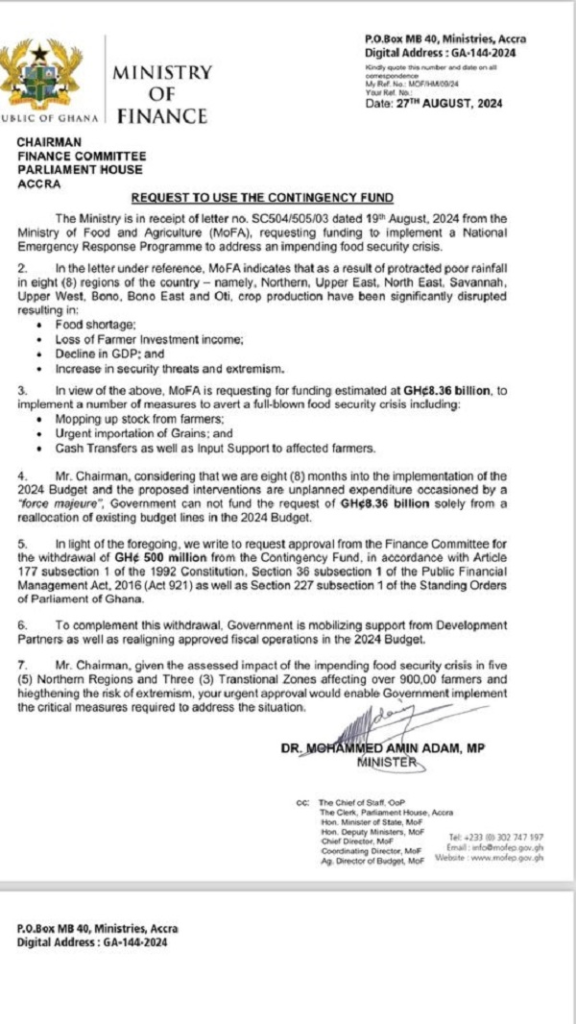
  • Approve GHS500m from Contingency Fund to tackle drought – Amin Adam

    Approve GHS500m from Contingency Fund to tackle drought – Amin Adam

    A sum of GH¢500 million from the Contingency Fund is yet to be approved as requested by the Finance ministry to tackle the drought in progression in the Northern regions of the country.

    In a letter to the Chairman of the Finance Committee of Parliament, Finance Minister Dr. Mohammed Amin Adam explained that this request is essential to help secure the over GH¢8 billion needed by the Ministry of Food and Agriculture to combat the drought and its effects, such as food shortages and loss of farmers’ income.

    The minister also stated that the government cannot depend on the 2024 budget to generate the GH¢8 billion required for the National Emergency Response Programme to tackle the impending food security crisis.

    “Mr. Chairman, considering that we are eight (8) months into the implementation of the 2024 Budget and the proposed interventions are unplanned expenditure occasioned by a “force majeure”, Government cannot fund the request of GH¢8.36 billion solely from a reallocation of existing budget lines in the 2024 Budget.

    “In light of the foregoing, we write to request approval from the Finance Committee for the withdrawal of GH¢500 million from the Contingency Fund, in accordance with Article 177 subsection 1 of the 1992 Constitution, Section 36 subsection 1 of the Public Financial Management Act, 2016 (Act 921) as well as Section 227 subsection 1 of the Standing Orders of Parliament of Ghana,” part of the letter which is dated August 28, 2024, reads.

    The minister added, “To complement this withdrawal, government is mobilising support from Development Partners as well as realigning approved fiscal operations in the 2024 Budget. Mr. Chairman, given the assessed impact of the impending food security crisis in five (5) Northern Regions and three (3) Transitional Zones affecting over 900,000 farmers and heightening the risk of extremism, your urgent approval would enable Government to implement the critical measures required to address the situation.”

    Read the full letter below:

  • IC securities projects August inflation to increase to 21.8%

    IC securities projects August inflation to increase to 21.8%

    IC Securities has forecasted that the inflation rate will rise to 21.8% in August 2024.

    “Although the sharper-than-expected deceleration in the July 2024 annual inflation significantly eases our concerns, we remain convinced that the August print will witness an upturn, stressing the need for caution in lower inflation and interest rate outlooks”, the investment firm said in its analysis.

    “We opine that even a slight increase in the August 2024 CPI will nudge annual inflation,” it noted.

    The firm added that it “foresees upside risk from the spill-over effect of the utility tariff hike in July 2024 although the relatively stable cedi could partly numb the impact.”

    “Consequently, we forecast annual inflation at 21.8% (+90bps) while the m/m [month-on-month] rate declines to 0.5% in August 2024.”

    Inflation in July dropped by 190 basis points to 20.9%, making it the fourth straight decline.

    IC Securities, however, noted: “The inflation outlook remains highly cautious amidst the lingering upside risk, especially with favourable base effect having been exhausted while election-related spending is expected in quarter 4, 2024.”

    “However, we estimate that the latest disinflation has widened the real interest rates with the ex-post real policy rate at 8.1% in July and the ex-ante real policy rate likely at 7.2% in August 2024.”

  • Information Ministry is a waste pipe, no matured economy has it – Alan

    Information Ministry is a waste pipe, no matured economy has it – Alan

    Independent presidential aspirant, Alan Kwadwo Kyerematen, has described the current Ministry of Information as an irrelevant venture.

    He argued that no developed nation includes such a ministry in their government structure.

    In his view, establishing a Ministry of Information is a wasteful use of time, money, and resources.

    When asked by a journalist why he chose to exclude the Ministry of Information in his proposed government restructuring, he explained,

    “What does the ministry of information do? what does it do? A whole ministry talking about government project and…what does it do?…You check all the matured economies, Have you heard any matured economy with a Minister for information? No. So it’s a waste pipe. That ministry does not add anything? Mr Kyermaten said during an encounter with the media this week.

    Also, in a social media post on Tuesday, the founder of the Movement for Change stated that “Ghana deserves fresh ideas and bold leadership!”

    He stressed that the Alliance for Revolutionary Change, under his leadership, is dedicated to transforming the nation from the ground up and urged Ghanaians to support his party in the upcoming December elections.

    The Alliance for Revolutionary Change is made up various movements who have selected Alan Kyerematen as the one to support to contest as an independent presidential aspirant.

    Watch video below:


  • Parliament to meet at Dome of ICC due to ongoing repairs in main chamber – Speaker

    Parliament to meet at Dome of ICC due to ongoing repairs in main chamber – Speaker

    Speaker of Parliament, Alban Bagbin, has announced that Parliament meetings will be conducted at the Dome of the International Conference Centre when sessions resume on September 3.

    He communicated this in a letter he signed on August 27, 2024, “In view of the notice of summons on August 7, 2024, and pursuant to Article 112 of the Constitution, I appoint the Dome of the International Conference Centre as the meeting place.”

    The venue change is necessitated by ongoing repairs to the main chamber for the 9th Parliament, which will not be finished in time for the scheduled return.

    During a recent inspection of the chamber, Speaker Bagbin reported that the repairs—covering updates to workstations, chairs, and other furnishings—are projected to cost €2.26 million.

    After Speaker Bagbin abruptly announced a sine die recess, the Majority Caucus called for the recall to address pressing national issues.

    The recall was brought about by the Majority Leader’s disapproval of the Speaker’s choice. It will deal with public matters, such as an ongoing lending facility and unpaid invoices.

  • GWCL to provide water to communities in need

    GWCL to provide water to communities in need

    Minister for Sanitation and Water Resources, Lydia Alhassan, has instructed the Ghana Water Company Limited (GWCL) to send water tankers to several communities in Accra that are experiencing water shortages.

    This directive follows the company’s explanation that the supply issues are due to a significant pipe burst in Dodowa, which affects the water distribution to the impacted areas.

    When she payed a visit to the site of the pipe burst, Mrs. Alhassan criticized GWCL for their lack of communication with customers and demanded clear explanations regarding the water shortages.

    She instructed the company to deliver temporary water supplies to the impacted communities while they work on resolving the issue.

    The GWCL assured her that the water supply problem would be resolved within 24 hours.

    Furtherance to this, the minister announced that nationwide measures would be implemented to ensure a reliable water supply.

  • Galamseyers takeover Draw River Forest Reserve in Western Region

    Galamseyers takeover Draw River Forest Reserve in Western Region

    An unknown miner has illegally entered the Draw River Forest Reserve, a significant protected area located at Gwira Banso in the Nzema East District of the Western Region.

    This could signal the onset of widespread forest degradation due to illegal mining activities. A portion of the forest has already been cleared, and excavators have been brought in, poised for operation.

    Betterland Ghana Services, the legal concession holders in the forest, have stated they were unaware of the encroachment.

    Erastus Asare Donkor visited the site to evaluate the situation.

    Dr. Opoku Prempeh took the opportunity to encourage people to check their names on the voters’ register and follow all the procedures outlined by the Electoral Commission (EC) to ensure they can vote in large numbers for the NPP.

  • John Mahama is desperate for power – Napo

    John Mahama is desperate for power – Napo

    The running mate of the New Patriotic Party (NPP), Dr. Matthew Opoku Prempeh, has slammed former President John Dramani Mahama for reportedly taking undeserving credit for the legacies of the late President John Evans Atta Mills.

    While visiting Mpasatia in the Atwima Mponua Constituency, Dr. Opoku Prempeh engaged with local chiefs, imams, and clergy to advocate for the Bawumia/Opoku Prempeh ticket.

    During a durbar, Dr. Opoku Prempeh criticized Mahama’s recent remarks and behavior, stating they reflect a lack of respect for the legacies of the late President Mills.

    He added that if Mahama takes credit for Mills’ achievements, he must also take responsibility for the administration’s failures.

    “John Mahama’s comments and actions show a blatant disregard for the legacies of President Atta Mills. If he wants to take credit for Mills’ achievements, he must also be ready to accept responsibility for the failures of Mills’ administration.” He added, “Mahama’s desperate bid for power is evident in his attempts to undermine the legacy of his former boss.”

    Dr. Opoku Prempeh took the opportunity to encourage people to check their names on the voters’ register and follow all the procedures outlined by the Electoral Commission (EC) to ensure they can vote in large numbers for the NPP.

  • You only act when it’s time for elections – Nigel Gaisie takes a swipe at Peace Council

    You only act when it’s time for elections – Nigel Gaisie takes a swipe at Peace Council

    A controversy erupted during the National Peace Council’s dialogue with prophets in the Greater Accra Region.

    The meeting on Tuesday took a dramatic turn when Prophet Nigel Gaisie, founder of the True Word Prophetic Fire Ministries, addressed the audience.

    He criticized the Council for seeming to be active only during elections, highlighting notable incidents where he believed the Council had remained silent, such as the Ayawaso West Wuogon by-election violence and the Techiman election killings, among others.

    “I live close to Ayawaso West Wuogon. We saw the happenings of Ayawaso West Wuogon. Still I don’t know when Peace Council is going to speak on it or release and communiqué to that effect,” he said.

    “We were in this country when our brothers and sisters in Techiman were killed. Till today, no word from Peace Council of the Republic of Ghana. Just last month or so… the Ghana Statistical Service brought a data or a survey suggested that the regular Ghanaian cannot afford three square meals, but we have an Agricultural Minister paid by the regular Ghanaian’s tax.

    He urged the Council to be proactive in addressing all issues, rather than what he described as selective action, stressing that peace cannot be built in a vacuum.

    “We should appreciate that peace is not found in a vacuum. There are certain conditions, there are certain tenets that must prevail before peace, as it were, can be established.”

    But in response to his charges, Rev. Dr. Ernest Adu Gyamfi, the Chairman of the National Peace Council, spoke.

    Ahead of the impending elections, Archbishop Nicholas Duncan-Williams, the founder and presiding archbishop of Action Chapel International, gave counsel to politicians and prophets alike.

  • Korle Bu shuts down surgical ward over lift malfunction

    Korle Bu shuts down surgical ward over lift malfunction

    The Korle Bu Teaching Hospital (KBTH), has shut down its surgical ward due to lift malfunction.

    According to a statement signed by Professor J. E. Mensah of the Surgical Department, the situation has disrupted the movement of patients within the surgical tower, which is severely affecting their capacity to conduct surgeries.

    For this reason, the facility has resorted to suspend activities and relocate to curb emanating challenges.

    “Given the current situation, we have decided to suspend all elective surgeries until further notice. During this period, we will focus solely on emergency cases to ensure that critical care is not compromised. 

    “To accommodate these changes, emergency surgeries will be carried out at the Ground Floor Surgical (Neuro), Accident Centre, Pediatric and Gynaecology theatres. Patients undergoing these procedures will be admitted to Ward G, Ward N, Ward A, and Ward B,” part of the statement read.

    It added that procurement processes are currently underway to replace the faulty elevators.

    KBTH assured that they are doing everything they can to expedite the completion of the work, minimize disruptions, and restore normal operations as soon as possible.

  • Minority slams Akufo-Addo for cutting sod for $338m project while GHS15bn owed to contractors

    Minority slams Akufo-Addo for cutting sod for $338m project while GHS15bn owed to contractors

    The Minority has questioned why President Akufo-Addo has initiated a $338 million project for the reconstruction of the Tema motorway when he still owes GH¢15 billion to contractors for completed and certified work.

    With only three months remaining in his term, the NDC believes that this move is an attempt to gain favor with voters for the New Patriotic Party ahead of the 2024 elections.

    “You cannot even fund the payment of salaries, statutory funds to District Assemblies, NHIA, GETFund, etc,” and, thus, “What is the point of cutting sod for a $338-million project 3 months before you are booted out of office?”  It is propaganda for votes,” the statement said, adding: “Ghanaians will not fall for this. NPP, not again.”

    The NDC has stated that while they are not opposed to the renovation project, they have a duty to ensure value for money and accountability from the New Patriotic Party.

    “Indeed, we support the principles behind the project and have demonstrated this in the past, but we will not shirk our responsibility to ensure value for money and accountability,” said the Minority’s spokesperson on infrastructure, Governs Agbodza.

    In May of this year, the Ghana Chamber of Construction Industry expressed serious concerns about the plight of its members due to an outstanding debt of GH¢15 billion owed by the government, which has been accumulating since 2014.

    The Chamber reported that this financial strain has resulted in the deaths of some members, left others incapacitated, and led to legal actions by financiers over delayed loan repayments.

    The government announced that it had spent about GH¢49 billion to pay contractors.

    However, Emmanuel Cherry, CEO of the Construction Chamber, denied knowledge of receiving such funds in an interview with the Ghana News Agency on Monday, May 27.

    Meanwhile, President Akufo-Addo emphasized the significance of the project as Ghana’s first Public-Private Partnership (PPP) in road infrastructure.

    “By uniting the expertise and resources of both the public and private sectors, and with the strategic backing of the Ghana Infrastructure Investment Fund (GIIF), we are not merely constructing a road; we are building a future,” he declared.

    Note that the reconstruction of the Accra-Tema Motorway will be carried out in three distinct phases: from the Accra-Tema Motorway Roundabout to the Tetteh Quarshie Interchange, from the Tetteh Quarshie Interchange to the Apenkwa Interchange, and from the Apenkwa Interchange to the Neoplan Junction on the Accra-Kumasi Road.

    President Akufo-Addo used the sod-cutting event to reiterate his administration’s commitment to modernizing Ghana’s infrastructure to meet the demands of the 21st century.

    “Already, we have made significant strides with ongoing projects such as the dualization of the Santasi-Ahiakwanta Road and the Adenta-Dodowa Road,” he said, adding that other key road projects, including the dualization of the Kasoa-Winneba Road and the Takoradi-Agona Junction Road, are progressing steadily.

    He also revealed that contractors are being mobilized for the Atsutsuare-Volivo-Aveyime and Dafor-Adidome-Asikuma Roads, which will feature an interchange at Asikuma Junction. Funded by the Government of Ghana and the African Development Bank, these projects are designed to enhance travel efficiency and reduce vehicle operating costs once completed.

    Below is Agbodza’s full statement:

    ACCRA-TEMA MOTORWAY PROJECT-PARLIAMENT DID NOT APPROVE $660m

    1. The NDC is not against improving the Accra-Tema Motorway. Indeed, we support the principles behind the project and demonstrated same in the past. But will not shirk our responsibility to ensure value for money and accountability.

    2. ⁠Parliament ONLY approved $339m Multi-Year funding for the project. We did not approve $660m. No one has the right to commit the country to future spending on the project without approval from Parliament.

    3. ⁠The source of funding for the project is NOT SUSTAINABLE. The NPP is claiming the source of funds for the project is Mahama’s Ghana Infrastructure Investment Fund (GIIF). The NPP said the same thing about how they were going to fund the so-called Agenda 111, housing projects etc. We all know the status of Agenda 111, etc today . The NPP has collapsed the Ghana Infrastructure Investment Fund (GIIF). Unlike the past when GIIF backed projects that are self-financing and sustainable, such as Kotoka Airport Terminal 3 etc, the NPP incompetently invested the funds in unproductive ventures like SKYTRIAIN, PULLMAN HOTEL etc.

    4. In any case, why is NPP not explaining why they cancelled the contract between the Road Ministry and Morta Engils and why they paid $2.5 million towards that unwholesome contract?

    5. The government currently OWES ROAD CONTRACTORS ABOUT GH¢15BILLION for works completed and certified and NOT PAID FOR.

    Currently, the government cannot even fund the payment of salaries, pay Statutory Funds to District Assemblies, NHIA, GETFund, etc. What is the point of cutting sod for $338 million project 3 months before you are booted out of office? IT IS PROPAGANDA FOR VOTES . Ghanaians will not fall for this . NPP, NOT AGAIN.


  • NDC will probe the ‘scandalous’ Gold for Oil policy” –  Isaac Adongo

    NDC will probe the ‘scandalous’ Gold for Oil policy” – Isaac Adongo

    The National Democratic Congress (NDC) has announced plans to closely examine several policies of the current government if it wins the December 7 election.

    One of the main policies under scrutiny is the Gold-for-Oil (G4O) programme, which Isaac Adongo, the spokesperson on the economy for NDC flagbearer John Mahama, has highlighted as a significant concern.

    In an interview on Joy News’ PM Express, Adongo accused the New Patriotic Party (NPP) flagbearer of misleading Ghanaians by promising to expand the G4O programme, even though the International Monetary Fund (IMF) has advised the government to discontinue it.

    “IMF says, transit from this arrangement, don’t do it again. Then you come and deceive us that you want to expand it,” Adongo remarked.

    Government introduced the Gold-for-Oil (G4O) initiative as a strategic effort to stabilize fuel prices and lessen dependency on foreign oil markets.

    The program involves purchasing gold in cedis to secure oil imports, with the Bank of Ghana (BoG) supplying the oil to the Bulk Oil Storage and Transportation Company (BOST) for distribution.

    However, the initiative has faced criticism, with allegations of mismanagement and corruption. Critics have raised concerns about the lack of transparency, the awarding of contracts, and the actual benefits of the program.

    Dr. Mahamudu Bawumia recently defended the G4O initiative, asserting that it has been essential in preventing the collapse of Ghana’s economy.

    He claimed that the policy has led to lower fuel prices at the pumps and facilitated the local purchase of ¢5 billion worth of gold, ensuring a stable supply of fuel commodities.

    “Without the gold purchase program and the gold-for-oil programme, this economy would have collapsed,” Bawumia stated.

    However, John Mahama has vowed to launch a thorough investigation into what he describes as the NPP government’s “opaque” Gold-for-Oil programme.

    “We will investigate NPP’s opaque Gold for Oil programme,” Mahama said.

    Echoing Mahama’s sentiments, Adongo added, “We are not only stopping it, we are investigating it. It is part of our manifesto promise. The Auditor-General says that they did not find any agreement covering the Gold for Oil arrangement.

    “What it means is that you have people who just go to Bank of Ghana, take gold, they go to buy oil, whether they bring the oil or not we don’t know. We don’t have any guarantee that if something goes bad, we’ll get our money back.

    “And you think that we should continue with this scam, this loot and share. We will investigate it. And there’s no way Gold for Oil will last one day.”

  • Investigate Gold for Oil programme – Parliament told

    Investigate Gold for Oil programme – Parliament told

    Concerns have been raised by the Ghana Extractive Industry Transparency Initiative (GHEITI), necessitating that Parliament probe the Gold for Oil policy due to its lack of transparency

    Vice President Dr. Mahamadu Bawumia revealed on Sunday new details about how he persuaded an unnamed businessman to buy gold worth GH₵3.1 billion from the Bank of Ghana’s vault.

    The Vice President explained that Ghana’s economy was on the brink of collapse, similar to the situation in Sri Lanka, which prompted him to urge the Governor of the Central Bank to begin purchasing gold “overnight.”

    However, despite this explanation, Dr. Steve Manteaw, co-chair of the Ghana Extractive Industry Transparency Initiative, stated in an interview with JoyNews that the government still needs to provide more information on the gold for oil policy.

    He emphasized that the intermediaries involved in the transactions remain unclear.

    “The whole Gold 4 Oil programme has been shrouded in secrecy, in ways that do not build public trust. If the Vice President can provide further details on this issue, it will help to build public trust and perhaps we will be able to confirm the assertions that he is making,” he said.

    Dr Manteaw noted that there is a need to understand the cost aspect of the transaction and not just the benefits, adding that it will be “beneficial in unearthing any acts of corruption in these transactions.”

    Owing to government’s failure to audit the programme, Dr Manteaw indicated that a parliamentary enquiry will be required to bring more clarity to the project.

    “…We wanted government on its own to make these disclosures but since the government has failed or refused to make these disclosures, I think a parliamentary probe will be in order,” he stated.

  • GHS3.5bn lost by farmers affected by drought in Northern Ghana

    GHS3.5bn lost by farmers affected by drought in Northern Ghana

    Four hundred thirty-five thousand eight hundred seventy-two (435,872) farmers working on nearly 871,745 hectares of land have been significantly affected by a prolonged dry spell in northern Ghana, as reported by Agriculture Minister Bryan Acheampong

    The hardest-hit crops are maize, rice, groundnut, soybean, sorghum, millet, and yam.

    In a Monday press briefing in Accra, Mr. Acheampong noted that these farmers have faced an estimated investment loss of GH₵3.5 billion, along with a potential revenue loss of GH₵10.4 billion.

    “As of 20th August, 435,872 farmers cultivating an estimated area of 871,745 hectares have been directly affected. Maize, rice, groundnut soybean, sorghum, millet, and yam are the most widely affected crops across these regions.”

    “The affected farmers have lost an estimated investment of GH3.5 billion with a corresponding potential revenue loss of GH10.4 billion,” he stated.

  • Ghana’s cedi continues to decline against major currencies

    Ghana’s cedi continues to decline against major currencies

    Ghana’s cedi has been steadily declining against major trading currencies, particularly the US dollar, in recent times.

    As of Tuesday, August 27, 2024, at 10:00 AM, checks by the media revealed that the cedi is trading at GH¢16.01 to $1 at several major forex bureaus in Accra.

    This decline is also noticeable against other major currencies like the British Pound and the Euro. The cedi is currently trading at GH¢21.12 to £1 and GH¢17.86 to €1 at forex bureaus across the country.

    Internationally, Bloomberg has recently ranked the Ghanaian cedi as the fourth-worst performing currency out of 150 currencies tracked globally. According to a Bloomberg survey, while the cedi lost nearly 23% of its value against the US dollar, it showed relative stability in July of this year.

    The cedi’s decline has been largely attributed to increased demand for the US dollar to finance imports of petroleum products, pharmaceuticals, and other goods.

  • $350m reconstruction of Tema-Motorway project by govt has began

    $350m reconstruction of Tema-Motorway project by govt has began

    President Nana Addo Dankwa Akufo-Addo has officially launched the reconstruction and expansion of the Accra-Tema Motorway.

    This $350 million project, undertaken through a Public-Private Partnership (PPP) with the fully Ghanaian-owned firm Messrs Maripoma Limited, aims to transform the motorway within 36 months.

    The project will include a 10-lane divided highway with fully access-controlled express lanes for through traffic and partially access-controlled urban lanes for local traffic.

    Key aspects of the project involve reconstructing the Tetteh Quarshie Interchange, building new interchanges at Teshie Link, Community 18, and Lashibi, and integrating existing interchanges at Flower Pot, Ashaiman, and Tema.

    Additionally, the project will see the construction of eight toll plazas, ten new footbridges, and the reconstruction of Poland Junction on Liberation Road and Emmanuel Eye Clinic Junction on JJ Rawlings Avenue.

    Improvements to drainage systems, street lighting, and street furniture are also planned.

    During the inauguration, President Akufo-Addo emphasized the significance of the motorway’s reconstruction, describing it as a symbol of progress with great importance for the nation. He noted that the Accra-Tema Motorway, originally commissioned in 1965 by Ghana’s first president, Kwame Nkrumah, has been a crucial development artery for nearly 60 years.

    “Designed with a 50-year lifespan, this iconic road has withstood the test of time, carrying an average of 45,000 vehicles per day, an extraordinary proof of its importance. However, the time has come for us to renew this legacy and ensure that it continues to serve the people of Ghana for generations to come,” he emphasised.

    President Akufo-Addo said the reconstruc­tion of the motorway marked the beginning of a bold and innovative approach to infra­structure development in the country through Public Private Partnership (PPP) in the history of the country’s road infrastructure.

    “By uniting the expertise and resources of both public and private sectors, and with the strategic backing of the Ghana Infrastructure Investment Fund (GIFT), we are not merely constructing a road, we are building a future,” he stated.

    The President noted that PPP model exem­plified the ideals of efficiency, sustainability, and fiscal responsibility while ensuring that world-class infrastructure was delivered.

    “The Accra-Tema Motorway, an extension of the PPP project, stands as a symbol of progress, demonstrating Ghana’s capacity to innovate and lead in the realm of infrastruc­ture development,” he said.

    He said the reconstruction would be exe­cuted in three distinct sections with section one comprising the Accra-Tema Motorway Roundabout to the Tetteh Quarshie Inter­change, while section two would include the Tetteh Quarshie Interchange to the Apenkwa Interchange with section three comprising the Apenkwa Interchange to Neoplan Junction on the Ac­cra-Kumasi Road.

    “Our purpose at this gathering is for the commencement of the construction of Sec­tion One, a critical segment that will pave the way for enhanced connectivity and economic growth,” he explained.

    The Minister of Finance, Mohammed Amin Adam, explained that the project was being delivered under a PPP arrangement between the Government of Ghana, acting through the Ghana Highways Authority on one hand, and AT Express Limited on the other hand, under a 30-year design finance build, operate, and maintain arrangement.

    He said this arrangements represented a new bold initiative of delivering world-class in­frastructure, leveraging the country’s sovereign wealth fund, the Ghana Infrastructure Invest­ment Fund, whilst ensuring value for money for the Ghanaian taxpayers.

    Mr Adam said through the strategic leadership of government and the Ghana Infrastructure Investment Fund, an amount of $380 million had been secured in equity and viability gap funding adding that “Moreover, by relying on a PPP approach, we can invite financial institutions and a wide range of investors to further contribute to financing our nation’s future.”

    The Minister of Roads and Highways, Francis Asenso Boakye on his part, said the project would be executed according to specifications and on time.

  • Inflation projected to rise to 21.8% in August 2024

    Inflation projected to rise to 21.8% in August 2024

    The recent depreciation of the Ghana cedi against major foreign currencies is expected to continue as foreign exchange liquidity remains limited.

    Last week, the cedi weakened against key trading currencies as foreign exchange availability remained constrained.

    Adding to market concerns, the Ghana Cocoa Board’s decision to potentially forgo its annual cocoa syndication loan has heightened uncertainty about the cedi’s near-term stability.

    Analysts also suggest that the recent Eurobond coupon payments by the government may have increased demand for foreign exchange funded by cedis, further contributing to the currency’s decline.

    During the past week, the cedi depreciated by 0.31% against the dollar, 1.82% against the pound, and 3.76% against the euro on the retail market. On August 26, 2024, the cedi traded at GH¢16.28 to the dollar, bringing its year-to-date loss to 24.57%.

    Meanwhile, Ghana is set to begin a 10-day Eurobond debt exchange this week, aiming to finalize the restructuring of its $13 billion Eurobond debt.

    According to Bloomberg, the exchange will allow investors to swap their existing bonds for two new options: DISCO and PAR.

    The DISCO option offers investors a haircut of up to 37%, with two new bonds maturing in July 2029 and 2035 at a 5% interest rate. The PAR option, on the other hand, provides a 1.5% interest rate on new bonds maturing in January 2037 without any haircut.

    Analysts anticipate that market uncertainties may ease following a successful exchange, which could alleviate some pressure on the cedi.