Author: Amanda Cartey

  • CDD-Ghana, 4 other groups sue govt over GHS1 billion payed to SML

    CDD-Ghana, 4 other groups sue govt over GHS1 billion payed to SML

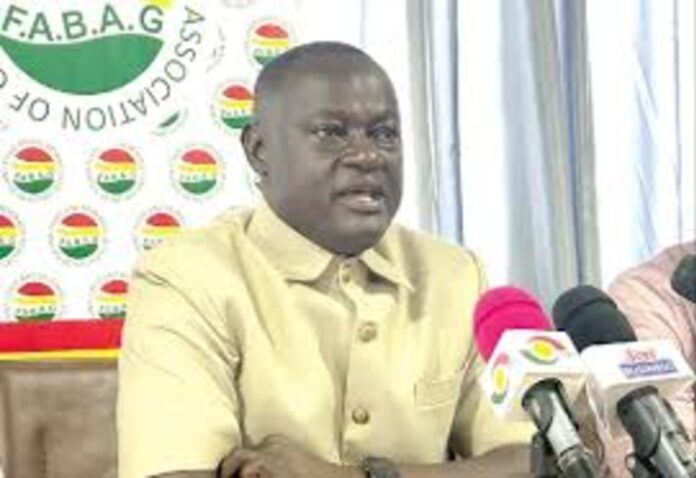
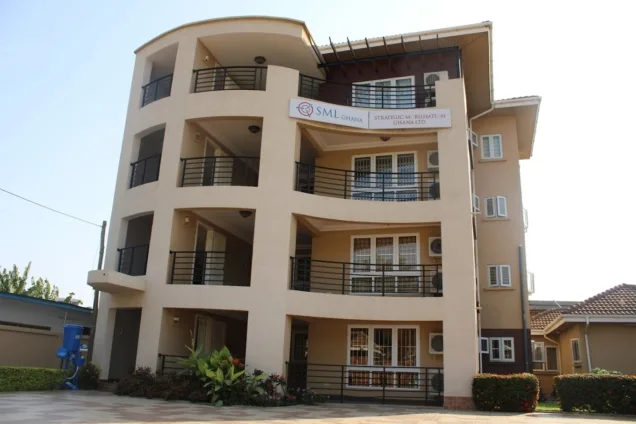
    A group of prominent Non-Governmental Organisations (NGOs), such as the Centre for Democratic Development (CDD-Ghana) and the Media Foundation for West Africa (MFWA), has dragged the Strategic Mobilisation Limited (SML) to court after allegedly misappropriating an amount of GHS1 billion.

    Joining them in this legal action are the Africa Centre for Energy Policy (ACEP), the Ghana Anti-Corruption Coalition (GACC), and the Human Rights and Governance Centre.

    This legal move follows an in-depth audit carried out by international firm KPMG, commissioned earlier this year by President Nana Addo Dankwa Akufo-Addo.

    The audit was launched to examine the contractual agreements between the Ghana Revenue Authority (GRA) and SML, with a particular focus on the procedures and approvals related to the contract.

    The original purpose of the GRA-SML contract was to boost revenue assurance in vital sectors of Ghana’s economy, including the downstream petroleum sector, upstream petroleum production, and the minerals and metals value chain.

    The goal was to streamline revenue collection, ensuring greater transparency and efficiency in these high-revenue sectors.

    However, the KPMG audit uncovered significant procedural errors and regulatory violations in awarding the contract. Specifically, the GRA did not obtain the required approvals from the Public Procurement Authority (PPA) and failed to seek parliamentary oversight before finalizing the agreement with SML.

    These oversights represent clear violations of Ghana’s public procurement laws, which are intended to ensure accountability, transparency, and fairness in the management of public funds.

    In light of these findings, the coalition of NGOs has taken legal action against the government, aiming to hold those responsible for the breaches accountable and to recover the substantial funds disbursed under the unlawful contract.

    The NGOs contend that the failure to follow due process and legal requirements not only undermines the rule of law but also leads to significant financial losses for the state, which could have been directed toward essential development projects and public services.

    The government and the GRA have yet to release official responses to the lawsuit.

  • Fire Service probes Kasoa building collapse that claimed 3 lives

    Fire Service probes Kasoa building collapse that claimed 3 lives

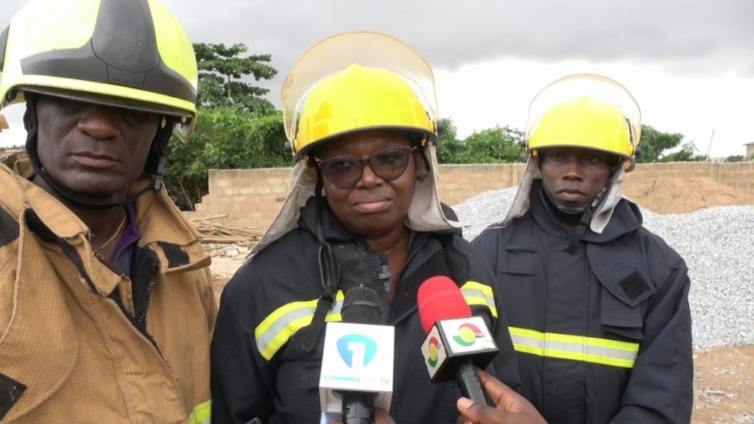
    The Ghana National Fire Service has initiated an inquiry into the collapse of a two-story dormitory building at Richmere Vocational Institute (RVI) near Kasoa in the Central Region.

    Assistant Divisional Officer 1 Alex King Nartey reported that the incident resulted in the deaths of three individuals: two females, aged 16 and 18, and a carpenter.

    In a statement to JoyNews on August 26, he noted that although 17 people were present in the Richmere Vocational Institute at the time of the collapse, only these three individuals were fatalities.

     “Unfortunately, three individuals—two females aged 18 and 16 and a carpenter—died at the hospital. The collapsed building was a dormitory under construction and was not yet inhabited.

    Residents reported that the incident happened while workers were pouring concrete for the first floor of a multi-story building.

    However, the Assistant Divisional Officer stated that this information has yet to be confirmed. He assured that the service is working diligently to determine the exact cause of the collapse.

    “Our investigation will ensure that all proper procedures were followed, including securing necessary permits and fire certificates. This incident underscores the need for strict adherence to building regulations, particularly for commercial properties.”

    Mr. Nartey also emphasized that, out of the 12 individuals affected, Fire Service personnel managed to rescue and assist several through their dedicated efforts.

    On August 25, it was reported that three construction workers died when the building they were working on collapsed.

    A survivor at the scene stated that a carpenter and two other workers were trapped beneath the rubble from the collapse.

  • Farmers risk losing GHC7.4bn over potential crop failure due to dry spell – Bryan Acheampong

    Farmers risk losing GHC7.4bn over potential crop failure due to dry spell – Bryan Acheampong

    The Minister for Food and Agriculture and Member of Parliament for Abetifi Constituency, Bryan Acheampong, has revealed that Ghanaian farmers could face a financial loss of GHC7.4 billion if the current dry spell persists.

    According to him, preliminary reports have it that, a total of 928,523 farmers who are cultivating 1,857,000 hectares of land are in danger of suffering negative impacts, such as crop failure.

    “Preliminary reports indicate that about 928,523 farmers cropping 1,857,000 hectares are at risk. These farmers will lose an estimated investment of GHS7.4 billion if there is total crop failure. The corresponding revenue loss is estimated at GHS 22.2 billion representing 10% of agriculture GDP of GHS 220 billion.”

    Mr Acheampong added that, as of August 20th, 435,872 farmers who are cultivating about 871,745 hectares of land have been directly impacted by the issue due to the adverse weather conditions.

    The most affected crops he mentioned were, include maize, rice, groundnut, soybean, sorghum, millet, and yam.

    “As at 20th August, 435,872 farmers cultivating an estimated area of 871,745 hectares have been directly affected. Maize, rice, groundnut, soybean, sorghum, millet and yam are the most widely affected crops across these regions. The affected farmers have lost an estimated investment of GHS 3.5 billion with a corresponding potential revenue loss of GHS10.4 billion,” the Agric minister added.

  • Akufo-Addo should ensure there’s tranquility and peace as he exits office – Chief of Aburi

    Akufo-Addo should ensure there’s tranquility and peace as he exits office – Chief of Aburi

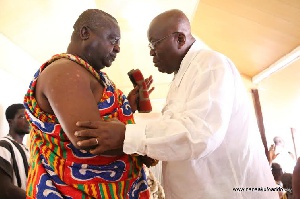
    The Chief of Aburi, Otoobuor Gyan Kwesi II, has urged President Akufo-Addo to ensure a peaceful transfer of power as he ends his presidency, thereby leaving a lasting legacy of tranquility.

    He highlighted that the upcoming 2024 elections will serve as a test of the president’s commitment to democratic principles, a quality that has been positively recognized by those around him.

    The chief delivered these comments at a durbar where Nana Kwamena Ansah was formally appointed as the Chief of Nsawam in the Eastern Region.

    “He should ensure there’s tranquility and peace as he exits office. He should prove to us that he’s a good leader, and loves the country as we also love him. He should exit without any acrimony and tension,” he admonished.

    While visiting the northern region of the country, President Akufo-Addo remarked that he could not pass on the presidency to someone he has defeated in elections twice, a position also supported by his Minister of Agriculture, Dr. Bryan Acheampong, during the party’s campaign.

    Nevertheless, President Akufo-Addo has since adjusted his position, pledging to ensure a peaceful and democratic transition at the end of his term.

    He highlighted that Ghana has a strong track record of conducting peaceful elections, having successfully done so eight times during the Fourth Republic.

  • Its time to regulate a scholarship law in Ghana – Okudzeto Ablakwa

    Its time to regulate a scholarship law in Ghana – Okudzeto Ablakwa

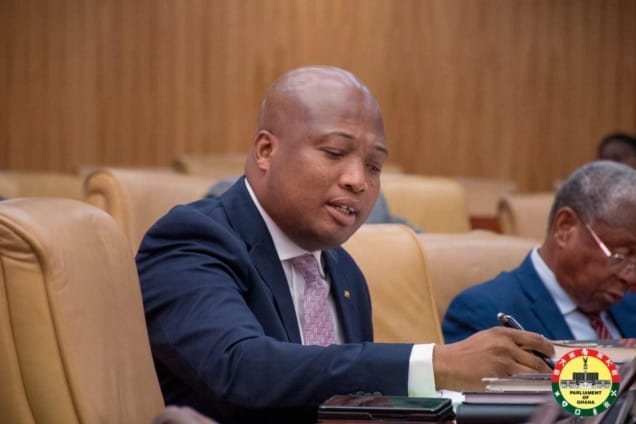
    Samuel Okudzeto Ablakwa, the Member of Parliament for the North Tongu Constituency, has called for the introduction of legislation to regulate scholarships in the country.

    He argued that the existing system has been undermined by certain officials who exploit their positions to secure scholarships for their own children.

    In an interview on Onua TV on Monday, August 26, 2024, which was followed by GhanaWeb, he emphasized that such a law is essential to guarantee that scholarships are awarded solely to deserving students who are both talented and in need.

    “For the first time in this country’s history, we are going to have a law on scholarships. So, the time has come for us to have a law on scholarships. The law will ban politicians, government officials, and politically-exposed persons from receiving scholarships.

    “Scholarships are supposed to be for brilliant but needy students. It has to be reserved for the vulnerable, but some privileged members of society, like ministers and MPs, are taking it for themselves, and they are not even ashamed, they come out to defend it,” he stated.

    He mentioned that the upcoming NDC administration will implement a merit-based scholarship system designed to align with the country’s development objectives.

    “As a country, where do we want to be in the next ten years or the next twenty years? Should we be giving scholarships to people to go and do courses that do not align with our development goals or with our human resource gaps?

    “There are some regions that do not have a single gynaecologist. In some regions, you will struggle to find an ophthalmologist or an engineer working with REGSEC or with the district assembly,” he added.

    He emphasized the importance of establishing a unified scholarship program across the country.

    “The NPP has created several avenues for scholarships because of cronyism. GETFUND has a scholarship, GNPC has a scholarship, the presidency has one, COCOBOD has one, and GOIL has one. We need to bring all the scholarships under one umbrella, and every year we will make the list of beneficiaries public.

    “People are granted scholarships, and they receive rent allowances yet they go and do intake courses and you wonder why? The abuse of scholarships will stop under the next NDC government. Under this current government, if you are not connected, you cannot get a scholarship,” he noted.

    Samuel Okudzeto Ablakwa also pointed out that the youth in Ghana are progressively losing trust in the country’s democratic process and overall progress.

    “We are saying that that must stop. There has be real opportunities for all people, and we are going to deal with that head-on,” he stated.

  • You can’t restore licenses of defunct banks – Bawumia challenges Mahama

    You can’t restore licenses of defunct banks – Bawumia challenges Mahama

    Vice President, Dr. Bawumia has voiced his confusion over the former president’s pledge to reinstate the licenses of defunct banks to enable their reopening.

    During a media briefing in Accra, Dr. Bawumia explained that restoring these licenses involves a complex legal procedure and cannot be resolved by simply overturning previous decisions.

    His remarks underscored the necessity for a careful and legally robust approach, rather than just offering a political commitment.

    “Now the banks were given capital to save the situation. They were given money by the Bank of Ghana, and they used that money to go and set up Capital Bank instead of rescuing the problem that they had,” he said.

    “Some took the money and went and invested in private property. So it was against this background when the governor came to report, and this was one of my nightmares in the last 8 years. I couldn’t sleep that night with the whole bank system. Most people didn’t understand how close we were to the collapse of the entire banking system, but we were this close,” Bawumia added.

    “Because all it would have taken was for a few depositors to go to UT Bank or UMT and they will tell you there is no money. What will happen? There would have been a complete run on the banking system in Ghana. We would have collapsed the banking system.”

    “When the Governor came to report that we were on the verge of collapsing, decisions had to be taken to save the banking system and to save depositors, and this is how we had to merge many of these banks into other banks.”

    “And we saved 4.6 million depositors. I will ask the former president if he hasn’t read to go and read the receiver’s report or to go and read the Bank of Ghana report and acquaint himself before making any comments on matters he clearly does not understand.”

    “And you cannot hand over a bank’s licence to them. This is subject to legal procedures. You have to go to court. You don’t have the power in our constitution to do that.”

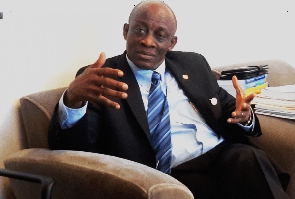
  • Consolidate tax systems to enhance revenue collection – Seth Terkper tells GRA

    Consolidate tax systems to enhance revenue collection – Seth Terkper tells GRA

    Former Finance Minister Seth Terkper has highlighted the importance of consolidating tax systems to enhance revenue collection.

    In a discussion on Morning Starr with Lantam Papanko, Mr. Terkper argued that combining the systems of the Ghana Revenue Authority (GRA) would help curb tax evasion and boost revenue.

    Mr. Terkper noted that the expiration of the High-Value Tax (HVT) represented a missed opportunity for revenue enhancement. He detailed how the HVT would have connected revenue collection with imports, simplifying the process of tracking and collecting taxes.

    The former finance minister also stressed the importance of re-attracting companies that left Ghana due to challenging investment conditions. He pointed out that creating a more investment-friendly environment in Ghana would result in increased revenue and economic growth.

    Mr. Terkper’s comments come amid Ghana’s significant economic challenges, including high levels of debt and revenue shortfalls. His critique of the government’s economic strategies has ignited discussions about the need for reforms to stimulate economic growth and reduce dependence on debt.

    Mr. Terkper assured that with a well-structured medium-term plan, it is possible to control debt and achieve economic growth, emphasizing that such commitments should be realized over the course of the term rather than in just one year.

  • Manasseh Azure Awuni apologizes, retracts references to Ibrahim Mahama in his new book

    Manasseh Azure Awuni apologizes, retracts references to Ibrahim Mahama in his new book

    Investigative journalist, Manasseh Azure Awuni, has rendered apologies to Ghanaian businessman, Ibrahim Mahama, for wrongfully accusing him in his latest book, ‘The President Ghana Never Got.’ 

    Mr Azure had alluded that the businessman owed a huge sum to Merchant Bank (now Universal Merchant Bank, UMB), which contributed to its eventual collapse in 2013.

    The claim, which was subsequently contested by Ibrahim Mahama, prompted the investigative journalist to respond to the businessman, maintaining that the information in his book was accurate.

    In a post shared on his X account on Monday, August 26, 2024, Manasseh Azure acknowledged the mistake made in his book and offered an apology to Ibrahim Mahama.

    The post, titled…, “RETRACTION AND APOLOGY,” the journalist wrote:

    “In providing a background to the Universal Merchant Bank (UMB) and the circumstances under which its new owners acquired it in 2013, I mentioned the controversy that arose when it emerged that one of the big debtors of the erstwhile Merchant Bank was Mr. Mahama.

    “The fact is that the $28 million debt I referenced was owed by his company, Engineers and Planners Company Limited, the legal entity, and not Mr. Mahama personally.

    “Consequently, I retract the said reference to Ibrahim Mahama as the debtor and apologise for any adverse effect that may have been occasioned by said publication.”

    Mr. Azure noted that he is working to correct the errors in both the online versions of his book and in the new copies that will be printed.

    Read his full apology below:

    RETRACTION AND APOLOGY

    Businessman Mr. Ibrahim Mahama has, through his lawyers, brought to my attention a fact that needs correction, and I hereby do so unreservedly.

    i. In my latest book, “The President Ghana Never Got”, I discussed the banking crisis under the Akufo-Addo administration and how some banks were saved from possible collapse.

    ii. In providing a background to the Universal Merchant Bank (UMB) and the circumstances under which its new owners acquired it in 2013, I mentioned the controversy that arose when it emerged that one of the big debtors of the erstwhile Merchant Bank was Mr. Mahama.

    iii. The fact is that the $28 million debt I referenced was owed by his company, Engineers and Planners Company Limited, the legal entity, and not Mr. Mahama personally.

    iv. Consequently, I retract the said reference to Ibrahim Mahama as the debtor and apologise for any adverse effect that may have been occasioned by said publication.

    v. It was a genuine oversight, which I am taking immediate steps to correct in the online version of the book and in subsequent reprints.

    Manasseh Azure Awuni
    August 26, 2024.

  • How Bawumia answered question on being “a liar”

    How Bawumia answered question on being “a liar”

    The New Patriotic Party flagbearer, Dr. Mahamudu Bawumia, has addressed critics from the opposition who have labeled him a liar through the hashtag #Bawuliar.

    He noted that while some may label him a liar, he finds solace in the fact that, unlike his boss Akufo-Addo, he’s not been accused of being a murderer.

    “Well..at least I’m not called a murderer as my boss was called or I’m not called a drug dealer or even I’m not called government official one,” Bawumia said while addressing the media yesterday August 25, at the Movenpick Ambassador Hotel Accra.

    The current Vice President commended Joy FM and AAOSI for their work which exposed the NDC, adding that on every proposal he made, which the NDC said he was lying, he successfully achieved them, thereby exposing the NDC.

    “Interestingly, whenever I come up with something and they say it is impossible and that I am lying, we prove them wrong… But when we do, they don’t come back,” he said.

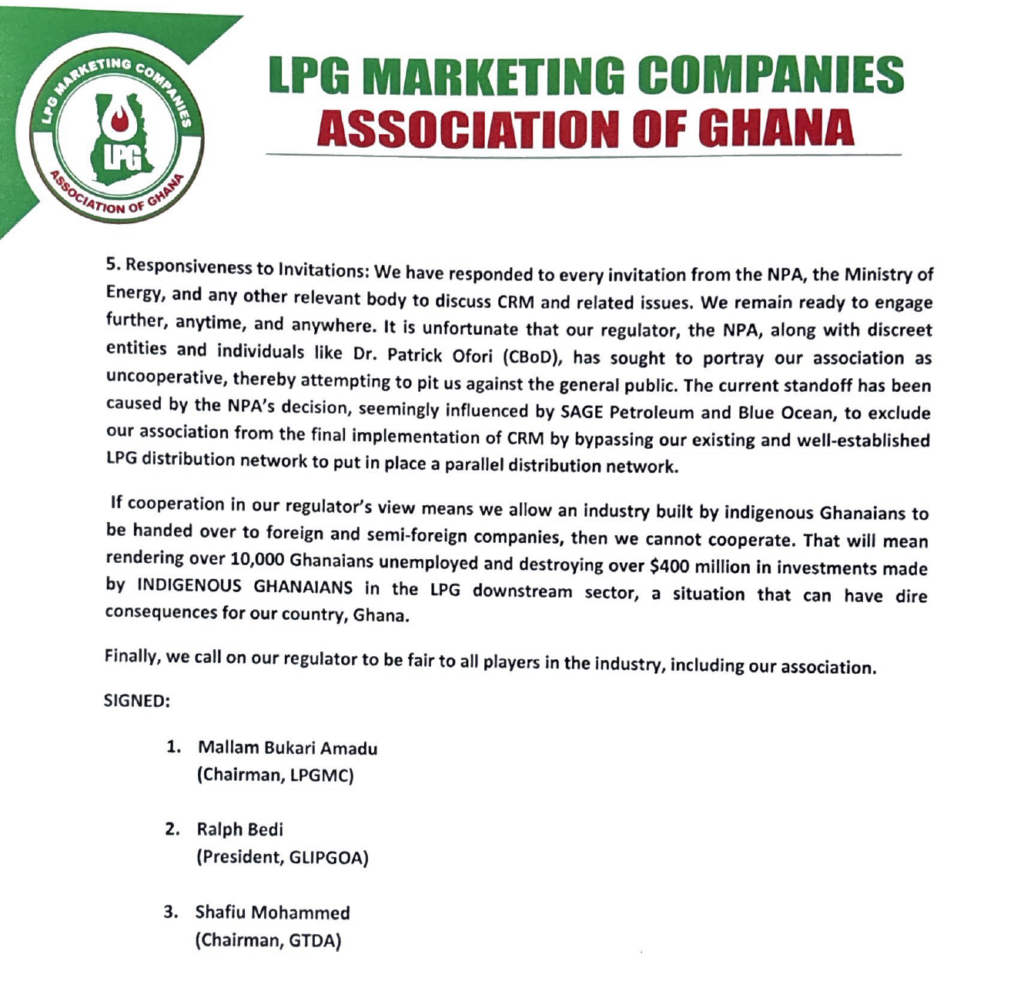
  • We cannot cooperate with NPA’s plan to hand over CRM to foreign companies – LPG marketing companies

    We cannot cooperate with NPA’s plan to hand over CRM to foreign companies – LPG marketing companies

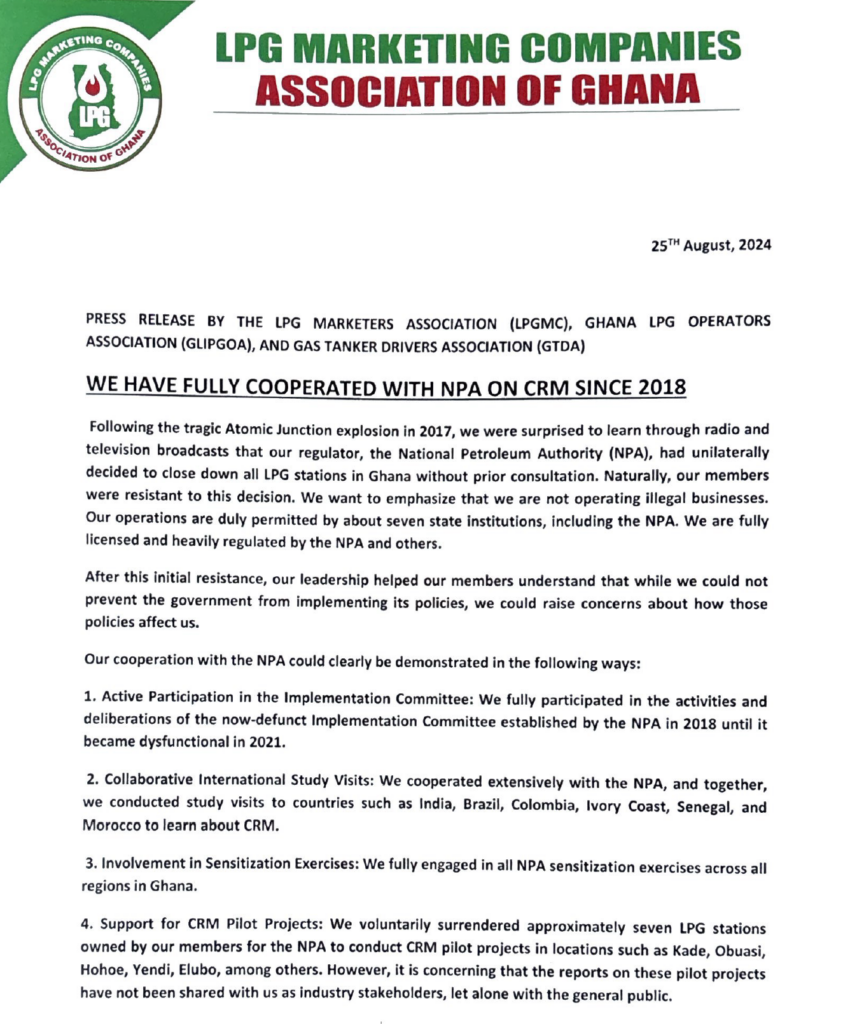
    The LPG Marketers Association (LPGMC), Ghana LPG Operators Association (GLIPGOA), and Gas Tanker Drivers Association (GTDA) have said that they will not cooperate with plans by the National Petroleum Authority’s (NPA) to handover Cylinder Recirculation Model (CRM) to foreign and semi-foreign companies.

    According to the organizations, this can render NPA’s decision to exclude them from the final implementation phase of the CRM, while allegedly favouring foreign and semi-foreign companies, threatens the livelihoods of thousands of Ghanaians.

    In a press release, the associations shared deep concern over what they consider as unfair treatment by the NPA to indigenous LPG businesses

    “If cooperation in our regulator’s view means we allow an industry built by indigenous Ghanaians to be handed over to foreign and semi-foreign companies, then we cannot cooperate,” the associations stated.

    They stressed that these developments could jeopardize over $400 million in investments from local businesses and lead to substantial job losses, potentially leaving more than 10,000 Ghanaians without employment.

    The groups reproached the NPA for its lack of transparency and engagement, noting that reports from CRM pilot projects—conducted at stations voluntarily relinquished by their members—have not been made available to industry stakeholders.

    The associations concluded by calling on the NPA to implement a more balanced approach, ensuring fair treatment for all participants in the LPG sector, including traditional LPG marketers, during the CRM rollout.

    Read the full statement below:

  • Ghana’s economy struggling because govt failed to replace used contingency funds – Seth Terkper tells govt

    Ghana’s economy struggling because govt failed to replace used contingency funds – Seth Terkper tells govt

    Former finance minister, Seth Terkper, has accused the government of implementing ineffective policies that has poorly affected the country’s economy.

    During a media engagement on Monday, August 26, 2024, Mr. Terkper explained that the government’s failure to replace the contingency funds withdrawn in 2015 and 2016, along with other funds, is a significant factor contributing to the current economic struggles.

    He also criticized the government’s management of the strategic funds, which has been exausted instead of paying off debts.

    The former finance minister highlighted that Ghana’s economic struggles stem from inadequate management. He observed that the government has been persistently borrowing without contributing to the sinking fund, causing it to dwindle further. Mr. Terkper argued that this strategy will only exacerbate the country’s economic problems.

    Mr. Terkper’s remarks come at a time when Ghana is grappling with major economic issues, such as substantial debt and revenue shortfalls. He emphasized that a reevaluation of economic policies is essential to stimulate growth and lessen reliance on debt.

    The former finance minister concluded by questioning whether Ghana should persist with “bankrupt policies” that could further damage the economy. He underscored the need for a change in economic strategies, echoing former President Mahama’s call for a reevaluation and reset of current policies.

  • Cedi now sells at GHS16 per dollar at forex

    Cedi now sells at GHS16 per dollar at forex

    Ghana’s currency continues to weaken against major international currencies.

    The cedi is approaching the GH¢16 level, currently trading at GH¢15.99 at various forex bureaus nationwide.

    As of Friday, August 23, 2024, the media reported that the cedi was exchanging at GH¢15.98 per US dollar.

    On Monday, August 26, 2024, the British Pound exceeded GH¢21, with the rate standing at GH¢21.07.

    For example, the local currency is trading at GH¢17.86 per Euro at leading forex bureaus.

    Recently, the international news portal Bloomberg listed the Ghanaian cedi as the fourth-worst performing currency out of 150 major currencies tracked worldwide.

    Although the cedi has depreciated by nearly 23% against the US dollar, it has shown some degree of relative stability, according to a Bloomberg survey.

    The cedi’s decline is largely attributed to heightened demand for the US dollar to purchase petroleum products, pharmaceuticals, and other imports.

  • Govt falls short of T-bill auction target by 1.66%

    Govt falls short of T-bill auction target by 1.66%

    Government has fallen short of its auction target for treasury bills for the seventh consecutive week.

    As per the Bank of Ghana’s auction results, the government missed its target by a slight 1.66 percent.

    The government raised GH¢5.203 billion, falling short of the GH¢5.319 billion target.

    All bids submitted for the short-term instruments were accepted. GH¢3.725 billion, accounting for 71.23%, was tendered for the 91-day bill.

    The uptake for the 182-day T-bill amounted to GH¢1.251 billion, representing approximately 23.93% of the total bids.

    For the 364-day bill, bids amounted to GH¢252.74 million.

    Meanwhile, interest rates eased across the yield curve, reflecting an expected decline due to the decreasing inflation rate.

    The yield on the 91-day bill dropped by 6.0 basis points to 24.78%.

    Interest on the 182-day bill also decreased to 26.68%, down from the previous week’s 26.74%.

    Similarly, the yield on the 364-day bill fell by 4.0 basis points to 27.81%.

    SECURITIESBIDS TENDERED (GH¢)BIDS ACCEPTED (GH¢)
    91 Day Bill3.725 billion3.725 billion
    182 Day Bill 1.251 billion1.251 billion
    364 Day Bill        252.74 million252.74 million
    Total5,230 billion5230 billion 
    Target              5.319 billion 


  • NDC’s fixed rate proposal on imports gains support from Abossey Okai spare parts dealers

    NDC’s fixed rate proposal on imports gains support from Abossey Okai spare parts dealers

    The Abossey Okai Spare Parts Dealers Association has shown support for the National Democratic Congress (NDC)’s proposal to implement a fixed rate system for imported spare parts.

    The NDC claims that this policy is designed to lower the cost of doing business, provided they are elected in the upcoming general elections.

    Takyi Addo, the Public Relations Officer of the Abossey Okai Spare Parts Dealers Association, welcomed the NDC’s proposal but noted that their members will continue to evaluate the policies presented in both the NPP and NDC manifestos before making a final decision.

    “Four months ago, former president [John Dramani] Mahama came to Abossey Okai to meet with the spare parts dealers, and we mentioned fixed rates. That is going to solve at least some of our challenges at the port. It [fixed rate] is a constant value.”

    “The 20-foot container, which we paid 5000 for, is fixed. It can remain there for 10 years, 15 years—it is fixed. It doesn’t change. So, I think fixed rates are going to solve some of our problems at the port,” Addo mentioned during an interview with Accra-based Citi FM.

    “So, we welcome it. It is very good, and we embrace it. So far, we are going through their [the NDC’s] manifesto. None of them [political parties] can solve our problem at once, but gradually, we will get there.

    “We are going to digest and go through all the two major political parties’ manifestos, and we will come out with strong statements,” he pointed.

    On August 24, 2024, John Dramani Mahama, the NDC’s Flagbearer, introduced this policy during the presentation of his party’s manifesto for the upcoming election.

    John Mahama explained that adopting a fixed rate system for spare parts imports would promote transparency in the fees applied to imported vehicle shipments into Ghana.

  • E-Levy will be canceled by March 2025 – Dr Bawumia assures

    E-Levy will be canceled by March 2025 – Dr Bawumia assures

    Flagbearer of the New Patriotic Party (NPP), Dr. Mahamudu Bawumia, stated that the contentious Electronic Transfer Levy (E-Levy) on mobile money transactions and other transfers will be included in his first budget submission to Parliament by March 2025.

    He mentioned that, barring any unforeseen circumstances, the E-Levy would be eliminated by the first quarter of next year under his leadership.

    Parliament passed the Electronic Transfer Levy Bill into law on Tuesday, March 29, 2022, despite opposition from the Minority Caucus in Parliament.

    The E-Levy was implemented starting May 1, 2022, which ignited widespread public debate and backlash due to the financial burden it imposed on Ghanaians.

    Many Ghanaians argued that the introduction of the E-Levy by the Akufo-Addo-Bawumia administration was counterproductive to the government’s digitalization efforts, which were led by Vice President Bawumia.

    The E-Levy has since become a focal point in political campaigns, with both the NDC and the NPP promising to abolish it if they come to power in 2025.

    In light of this, Dr. Bawumia, during a media engagement in Accra on Sunday, reaffirmed his commitment to abolishing the E-Levy if he becomes president.

    Dr. Bawumia also assured that new tax reforms, such as the flat rate and tax amnesty, would be introduced immediately as part of his plan to stimulate the growth of Ghanaian businesses and create jobs.

    He expressed confidence that these tax reforms would foster a business-friendly

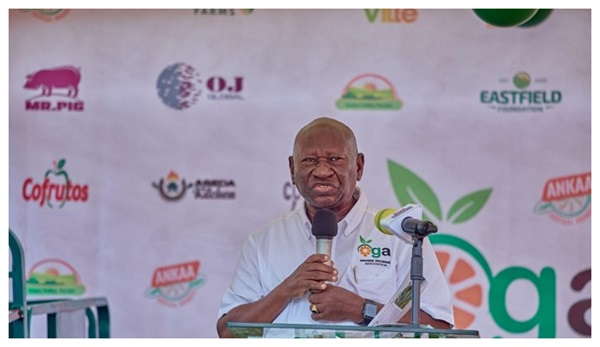
  • Orange Growers Association aims to expand the country’s presence in the global market

    Orange Growers Association aims to expand the country’s presence in the global market

    Chairman of the Orange Growers Association (OGA) of Ghana, Opanyin Nimo Ahinkorah, has said that the association is well-positioned to substantially boost Ghana’s share of the global orange market, leveraging its rapid expansion and innovative approaches.

    The global orange market is projected to reach $5.6 billion by 2032, driven largely by rising consumer awareness of the health benefits of oranges.

    Presently, Ghana ranks behind Africa’s leading orange exporters—South Africa and Egypt—which generated $807 million and $758 million, respectively, in 2022 from fresh and dried oranges, as reported by the Observatory of Economic Complexity (OEC).

    “Every part of the orange is valuable, but we have not fully taken advantage of it until now. Now, the Orange Growers Association of Ghana is on track to greatly expand our nation’s footprint in the global orange market,” Mr. Ahinkorah said during the inauguration of the organisation’s new head office in Akim Oda.

    He noted that Ghana’s geographical location offers more advantageous conditions compared to the leading market players, and the association plans to capitalize on this.

    Traditionally, orange farmers have encountered various challenges, such as significant post-harvest losses, pest infestations, diseases, fluctuating market conditions, low competitive pricing, and a lack of external support.

    “This led some farmers to abandon their farms and cut down the orange trees to grow other more profitable crops,” the board chair explained.

    The establishment of the OGA in 2020, spearheaded by Eastfield Farms, has significantly transformed the industry.

    The association was created to unite orange growers across the nation, with key objectives including establishing a quality standard for Ghanaian oranges, helping growers compete globally, embracing new technologies, and ensuring the long-term profitability of its members.

    Since its inception, the OGA has experienced remarkable growth, increasing its membership from 273 in 2020 to over 3,000 by 2024, now spanning 12 districts and 82 rural communities.

    “We have actively trained and resourced over 800 farmers, and our membership can largely be attributed to the strength of our partners and the programmes we undertake,” Mr. Ahinkorah said, adding that the development is contributing to a change in the perception around farming in the community.

    OGA’s partners, which include industry leaders such as GIZ, Sono Ghana, Ankaa, and Compass, have been instrumental in the association’s activities. Their support has ranged from providing logistics and personal equipment to conducting training seminars and introducing modern technologies.

    “Compass, our Ivorian partner, buys the fruits unripe, mitigating wastage and post-harvest losses, while Kofutus, a Spanish partner, is helping to introduce modern technologies and insights into orange farming and processing,” the OGA Board Chair said, citing one such example.

    To further boost the industry, the OGA will continue its resolve and aim to set up a Citrus Development and Extension Services Team to assist aged farmers, boost productivity, and ensure conformity to industry standards. This team will be equipped with technologies like drones to help monitor the fields and address issues like encroachment.

    The association’s commitment to sustainability and growth is evident in its focus on promoting sustainable agricultural practices, enhancing the quality and consistency of its produce, and adding value at every stage of the supply chain.

    “Through initiatives like the rehabilitation of old farms, the introduction of cutting-edge agronomic techniques, and the establishment of fair pricing and processing infrastructure, we are ensuring that orange farmers can achieve more than just subsistence,” Mr. Ahinkorah stated.

    The OGA Board Chairman acknowledged that the success of this endeavour cannot be achieved in isolation. He called upon all stakeholders, including the government, private sector partners, and international organisations, to join hands and collaborate with the association.

    “We need your support, your investment, and your expertise to fully realize the potential of our industry. Together, we can build productive partnerships that will bring new technologies to our farms, open new markets for our produce, and provide our farmers with the tools they need to succeed,” he noted.

    As a result, OGA has urged both local and international stakeholders to collaborate with them in enhancing orange production, increasing consumption, and ensuring sustainable livelihoods in Ghana.
  • Government to pay us GHS7.1bn including interest – Dr. Nduom

    Government to pay us GHS7.1bn including interest – Dr. Nduom

    Global President of Groupe Nduom, Dr. Papa Kwesi Nduom, has indicated that the Ghanaian government owes him more than GH¢7.1 billion.

    He asserted that this claim is irrefutable and that the total amount includes accrued interest.

    In a press conference held in Accra, Dr. Nduom stated, “Per our arithmetic, we are owed more than GH¢7.1 billion, including interests… They know they owe, and they can argue about interests; they can argue about that.”

    Dr. Nduom also revealed shared that he has chosen to halt the “Bring Back GN Bank” campaign in September.

    This pause is to facilitate a nationwide tour of the 300 former branches of GN Bank. The goal of this tour is to rally support from petitioners pushing for the reinstatement of the bank’s license, which was revoked in 2019.

    He indicated that he intends to resume the campaign in November, following a period dedicated to strategic planning and reflection.

  • Helping police during elections is not an attempt to incite coup – Ghana Armed Forces

    Helping police during elections is not an attempt to incite coup – Ghana Armed Forces

    The Ghana Armed Forces (GAF) have addressed concerns raised by Dr. Emmanuel Akwetey, Executive Director of the Institute for Democratic Governance (IDEG), regarding the potential threat of a military coup in Ghana, particularly if the upcoming general election turns violent.

    In a press release shared with GhanaWeb, the military dismissed the suggestion that its support for the Ghana Police Service during the elections could signal an attempt at a military takeover.

    The GAF clarified that it will only provide assistance to the police, who are responsible for election security, if formally requested to do so by the police.

    “Dr Akwetey is alleged to have said GAF has threatened to take over control of the country if elections in the country turn out violent beyond the control of the Ghana Police Service at press conferences held in 2016 and 2020. We wish to draw the attention of the public that GAF will only support the Ghana Police when the latter requests assistance and that does not constitute an overthrow of a government,” part of the release which was issued by Brigadier General E. Aggrey-Quashie, the Director General Public Relations of GFA on August 23, 2024, reads.

    The army also denied claims that it has publicly declared an intention to take control of the country if the elections become violent.

    “The allegation by Dr Akwetey cannot be true because the Ghana Armed Forces has not held any press conference at which it declared its intention to take over the country.”

    It added that it “has no intention to stage a coup and will prevent and resist any individual, group or organisation seeking to take over unlawfully the power of government either acting alone or in collaboration with any security agency.”

    The Ghana Armed Forces (GAF) called on the public to refrain from using its name to escalate political tensions as the 2024 elections approach.

    “GAF, like all peace-loving institutions and individuals, is looking forward to peaceful elections come December 2024. We therefore call on all institutions and groups not to associate GAF with anything that has the potential of heightening political tension in the country,” the release concludes.

    What the IDEG boss said:

    In an interview with JoyNews on Wednesday, August 21, 2024, Dr. Emmanuel Akwetey mentioned that the Ghana Armed Forces has, on more than two occasions, indicated that it would step in if election-related violence escalates beyond the control of the Ghana Police Service.

    He emphasized that these warnings from the military should be taken seriously, as they suggest the potential end of civil governance and the possibility of a military coup.

    “The Armed Forces of Ghana since 2016 have clearly and openly in press conferences threatened that if violence breaks out in the country over election disputes or whatever and the police cannot deal with it and it’s escalating or threatening, they will step in. And they said if they did so, it would be to protect the territorial integrity, our peace, and our national unity.

    “That would be a coup because the police cannot deal with nationwide violence. They are not equipped for that. It’s not about parliamentary elections, it’s about presidential elections because the president is elected throughout the country. And they have said that a second time in 2020 and probably even the third time they’ve even started talking about it so early,” he said.

    The IDEG boss added, “Read the papers, and you will see the threat is real in a sub-region where there is a drift towards the military or the return of military governments. And ECOWAS is facing some challenges in dealing with these issues.”

  • Mason allegedly takes his life after leaving note on Psalm 59:1-5

    Mason allegedly takes his life after leaving note on Psalm 59:1-5

    A 30-year-old mason, Samuel Gito, has been found dead by suicide in Yaayemma, Sunyani East, Bono Region.

    Gito was discovered hanging in his room, with a suicide note left behind.

    According to a report on Nyankonton Mu Nsem on Rainbow Radio 87.5FM by Nana Kwame, a friend of Gito’s had secured a new contract and attempted to contact him for assistance with the project.

    When Gito did not respond, the friend sent two workers to his apartment to inform him.

    After receiving no response to their knocks, the friend and his workers forcibly opened the door, only to find Gito hanging with a note beside him.

    An open Bible, marked at Psalm 59:1–5, was also found in the room, suggesting that he may have read it before his death.

  • I won’t vote again, the delegates take GHS5K and give us GHS200 to vote for NPP – Citizen

    I won’t vote again, the delegates take GHS5K and give us GHS200 to vote for NPP – Citizen

    A Ghanaian citizen, identified as Afia, has expressed frustration over the disillusion with voting processes.

    She has vowed not to vote again because she believe that delegates (who are typically party representatives or key decision-makers) receive GHS 5,000 as a bribe or incentive, while ordinary voters like herself only receive GHS 200 to vote for the New Patriotic Party (NPP).

    “Recently, Shirley informed us, the pure water vendors, that we would each receive GHS 500 to start our businesses. However, when some of us showed up, we were told that this isn’t our voting center. It seems that, even though we are all NPP members, Shirley is insisting that you must vote in his constituency to get the GHS 500.”

    “When they come, they try to sway your vote by offering GHS 200. Meanwhile, the delegates have already received GHS 5,000, along with fridges and other items, and then they approach me, trying to convince me to vote for the NPP,” Afia expressed.

  • Ibrahim Mahama did not owe Merchant Bank personally – Manasseh Azure clarifies

    Ibrahim Mahama did not owe Merchant Bank personally – Manasseh Azure clarifies

    Investigative journalist Manasseh Azure Awuni has addressed legal demands from Ibrahim Mahama, CEO of Engineers & Planners Limited, concerning statements made in Awuni’s latest book, The President Ghana Never Got.

    Mr. Mahama previously demanded an immediate retraction and an unreserved apology from the journalist, alleging that Awuni published false information about him.

    The book discusses the 2013 controversy surrounding the sale of Universal Merchant Bank (UMB), formerly known as Merchant Bank, to the private equity firm Fortiz.

    Awuni wrote that FirstRand Bank of South Africa had offered GH₵176 million for 75% of the bank’s shares, while Fortiz acquired 90% of the shares in the state-owned bank for GH₵90 million.

    “The controversy deepened when it emerged that a brother of President John Mahama, Ibrahim Mahama, was one of the big debtors of the then Merchant Bank, which resulted in the bank’s struggles.”

    Reacting to these allegations, Mr. Mahama, through his lawyers, demanded a retraction and an apology, insisting that the information was incorrect.

    However, Mr. Awuni countered by stating that Mr. Mahama’s claim of false reporting is unfounded.

    “His lawyers say it was a company owned by Ibrahim Mahama, Engineers and Planners, which owed the bank, not Ibrahim Mahama,” a portion of the author’s response to Myjoyonline.com read.

    Mr. Awuni emphasized that he is taking Mr. Mahama’s legal concerns seriously and has passed the demands on to his legal team for further review.

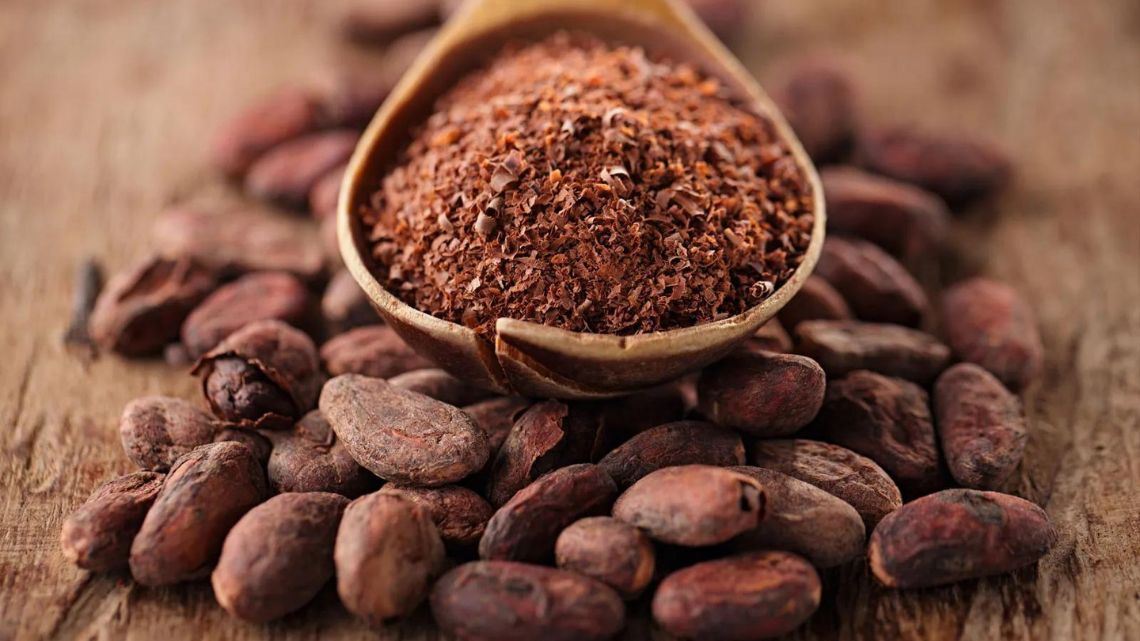
  • Increase cocoa prices to GHS6,000 – Farmers ‘cry out’

    Increase cocoa prices to GHS6,000 – Farmers ‘cry out’

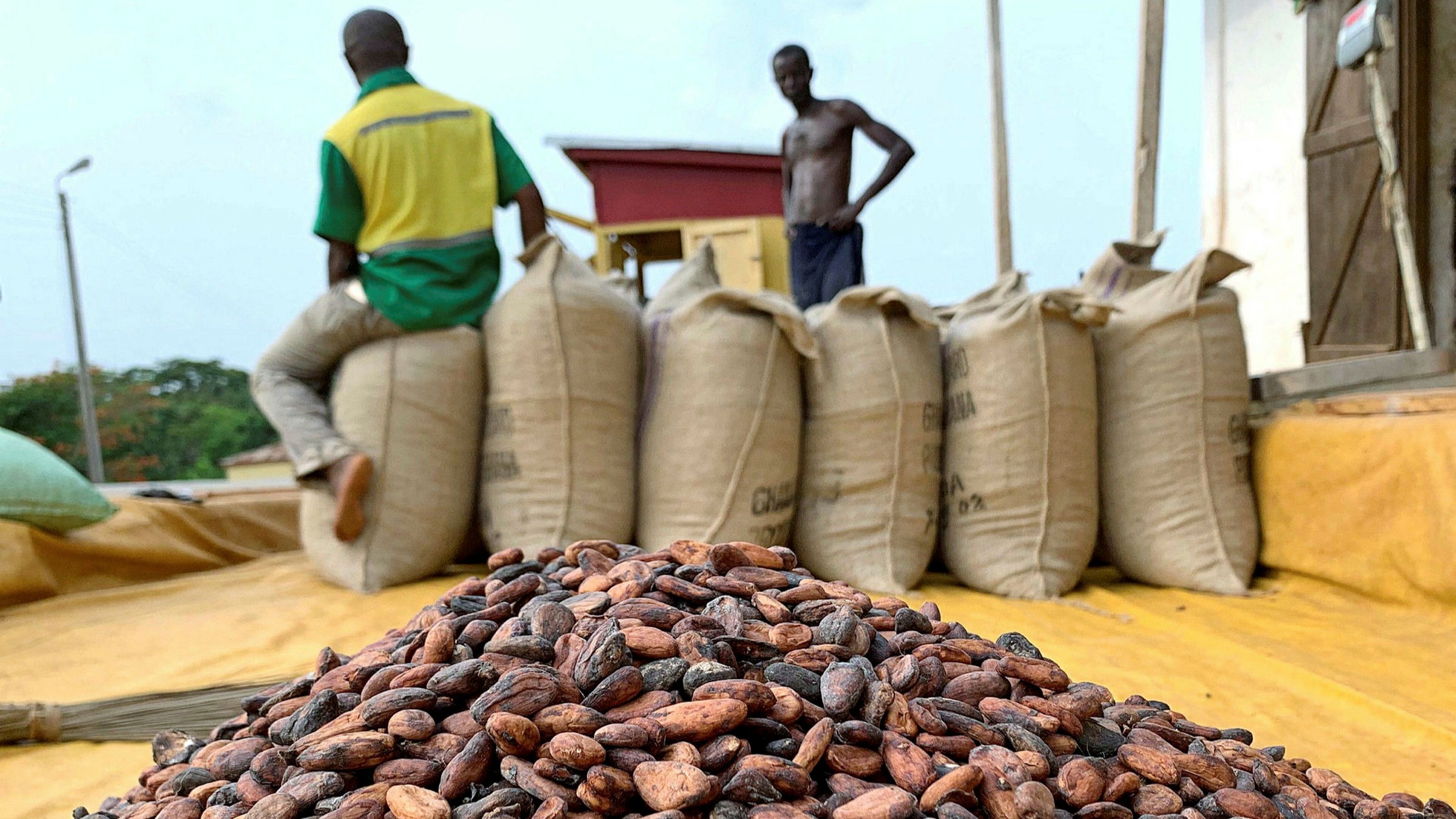
    The Ghana National Cocoa Farmers Association has called for an immediate increase in cocoa prices for the upcoming planting season.

    The Association insists that farmers will accept no less than GH¢6,000 per tonne and warns of serious consequences if their demands are not met, citing the currently low cocoa prices in Ghana.
    In a recent media interview, Stephenson Anane Boateng, National President of the Ghana National Cocoa Farmers Association, highlighted that Ghana has the lowest cocoa prices in the region. He pointed out that numerous challenges are making cocoa farming increasingly difficult.

    Boateng emphasized that their concerns are not politically motivated but are intended to benefit both the farmers and the nation. He noted that cocoa growers are facing difficulties in recruiting labor and are dealing with various other issues that complicate cocoa production.

    He warned that without government intervention to support cocoa farmers, the sector could face significant decline. Boateng made these statements during a farmers’ rally and press conference in Tarkwa.

    Nana Thomas Boakye, named the Best Cocoa Farmer in the Huni Valley District, added that many cocoa farmers who once managed multiple estates are now struggling due to the lack of government support. He urged the government to act swiftly to prevent the collapse of the cocoa industry.

  • Ban import, increase production and focus on exporting it – Nana Yaa Jantuah 

    Ban import, increase production and focus on exporting it – Nana Yaa Jantuah 

    Former General Secretary of the Convention People’s Party (CPP), Nana Yaa Jantuah is advocating for a strategy to boost Ghana’s cocoa industry.

    She suggests that the country should focus on increasing local cocoa production and exports, while implementing a ban on cocoa imports to enhance the industry.

    “We haven’t been able to promote our cocoa effectively as a country. In my opinion, considering that we have cocoa, we should ban the import of cocoa. We need to increase our cocoa production and focus on exporting it. The government should invest more in our local industries.”

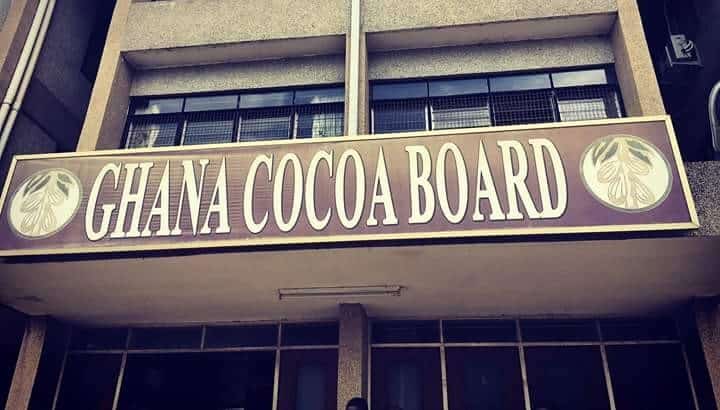
    Nana Yaa Jantuah’s remarks follow allegations from the Minority in Parliament that the Ghana Cocoa Board (COCOBOD) was rejected by international banks when attempting to secure a $1.5 billion loan for the 2024/2025 cocoa season.

    COCOBOD has denied these allegations, asserting that several banks have shown interest in the loan.

    In an appearance on Adom FM’s morning show, Dwaso Nsem, on Friday, Nana Yaa Jantuah argued that while borrowing from international banks is not inherently problematic, COCOBOD needs to prove its financial stability.

    “There is nothing wrong with borrowing from international banks, but if they claim it’s untrue, then they should demonstrate their financial capacity for making the decision not to borrow, which would sustain the industry. If not, it’s like saying you won’t need financial aid when your own country is at the IMF.”

  • Assent to Shippers’ Authority act – TAGG tells Akufo-Addo

    Assent to Shippers’ Authority act – TAGG tells Akufo-Addo

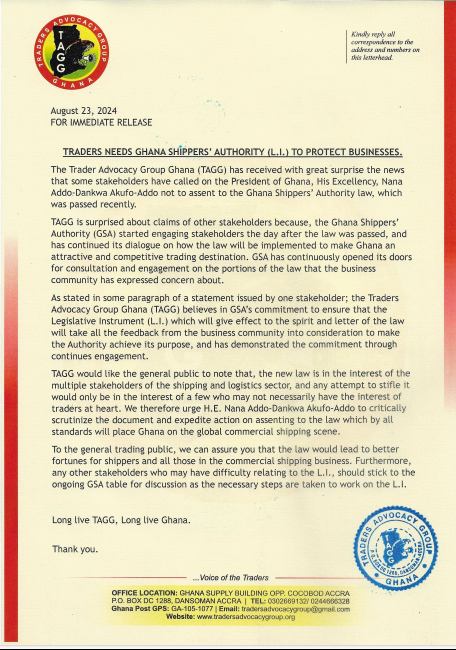
    The Traders Advocacy Group Ghana (TAGG), have asked President to critically assess and swiftly assent to the recently passed Ghana Shippers’ Authority Act.

    According to the group, there has been calls from certain stakeholders urging President Akufo-Addo not to assent to the law.

    However TAGG in a statement dated August 23, emphasized that the new law is crucial for the broader shipping and logistics sector in Ghana and cautioned that opposing it might only benefit a few at the expense of the majority.

    “TAGG would like the general public to note that, the new law is in the interest of the multiple stakeholders of the shipping and logistics sector, and any attempt to stifle it would only be in the interest of a few who may not necessarily have the interest of traders at heart. We therefore urge H.E. Nana Addo-Dankwa Akufo-Addo to critically scrutinize the document and expedite action on assenting to the law which by all standards will place Ghana on the global commercial shipping scene.”

    TAGG assured traders that the new law would enhance opportunities for everyone in the commercial shipping sector and urged stakeholders with concerns to keep engaging in dialogue with the GSA.

    Find the statement below:

  • Failure to settle $12M WAPCo debt will bring dumsor back after September

    Failure to settle $12M WAPCo debt will bring dumsor back after September

    Ranking Member of Parliament’s Mines and Energy Committee, John Jinapor, has cautioned that Ghana could experience extensive power outages by September unless a debt exceeding $12 million owed to the West Africa Gas Pipeline Company (WAPCo) is settled.

    He further explained that WAPCo is considering halting gas supplies from Nigeria by September 6 if the debt remains unpaid.

    “So, that is a threat we are facing, if we do not pay this 12 million by the 7th of September, they would shut down the pipeline completely for both gas from Nigeria and reverse flow of gas from the West to Tema”.

    The Minority in Parliament has announced its intention to summon the Ministries of Energy and Finance to address pressing questions about the escalating judgment debt issue between Ghana and the oil giant, Trafigura.

    This development follows Trafigura’s seizure of Regina House, one of Ghana’s key commercial properties in London, due to the government’s failure to settle a $134 million judgment debt.

    For the past four years, Trafigura has struggled to obtain payment from the Ghanaian government after the sudden termination of a power purchase agreement led to the debt. As a result, Trafigura secured another judgment in U.S. courts, which imposed an additional mandatory interest of $111.4 million, adding to the amount Ghana still owes.

  • Kadjebi SHS receives 300 mono desk, 100 pantry bowls from PTA

    Kadjebi SHS receives 300 mono desk, 100 pantry bowls from PTA

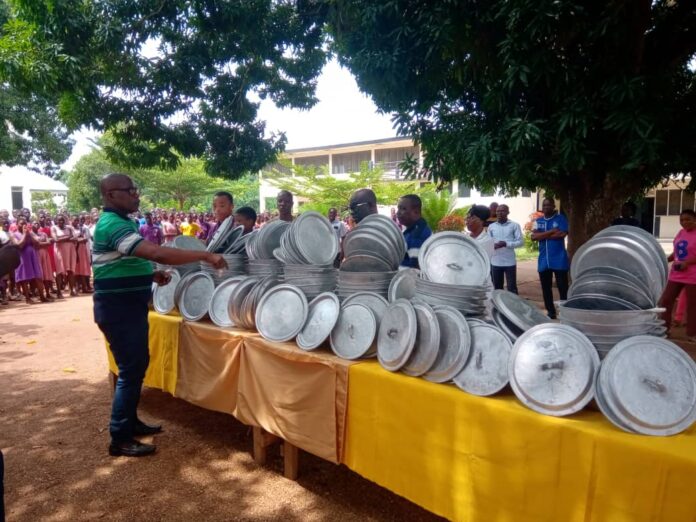
    Three hundred mono desks and 100 pantry bowls has been donated by the Parents Teacher Association (PTA) of Kadjebi Asato Senior High School (SHS) to bolster the school’s teaching and learning environment.

    This donation is also aimed at supporting better educational outcomes.

    During a brief handover ceremony, PTA Chairman Anane Aboagye emphasized the importance of providing students with essential learning tools.

    He highlighted that education is a collective responsibility, and by supplying these vital resources, the PTA is investing in the future of their children.

    Mr. Aboagye noted that the donation helps address the issue of overcrowded classrooms, where students often face challenges in finding adequate space for their studies.

    The addition of pantry bowls will also bolster the school’s feeding program, ensuring students have access to meals throughout the school day.

    He urged students and school staff to maintain the donated items properly to ensure their long-term usability.

    Headmaster Emmanuel Cole expressed deep appreciation to the PTA for their generous contribution, acknowledging it as a powerful example of how collaboration between parents and educators can foster a supportive learning environment.

  • NDC’s condition to sign peace pact unrealistic – Prof Agyeman-Duah

    NDC’s condition to sign peace pact unrealistic – Prof Agyeman-Duah

    Former UN Senior Governance Advisor, Professor Baffour Agyeman-Duah, has raised concerns about the conditions set by the opposition National Democratic Congress (NDC) before signing the election peace pact.

    He suggested that the NDC’s actions and demands appear to indicate an intention to disrupt the election process.

    During a media engagement on Wednesday, August 21, Prof. Agyeman-Duah expressed sympathy for the NDC’s concerns but described their demands as impractical.

    “Even though I have to say I do sympathise with the concerns raised by the NDC, I do sympathise with them because truly it’s not been fair that these incidents that happened in the past were not properly addressed especially if the president himself has set up a commission – and even if you rejected some aspects, what about those aspects that were not rejected.

    “So I seriously sympathise with the NDC but those conditions that were made, I think it’s very unrealistic. You want the Chief Justice to come and sign, you want the Attorney-General to sign, you want the IGP to sign,” he said.

    His remarks were in response to NDC Chairman Johnson Asiedu Nketia’s reaffirmation of the party’s refusal to sign any peace pact before the 2024 General Elections.

    During a meeting with the National Peace Council on Tuesday, August 20, 2024, Nketia presented six conditions, one of which called for the signatures of the President, the Inspector-General of Police, the Chief Justice, the National Security Coordinator, and the Attorney General.

    Despite this, the National Peace Council urged all political parties to set aside their differences and commit to peace as the elections draw near.

    Reacting to this, the former UN Senior Governance Advisor questioned the logic behind involving such high-ranking officials, suggesting that political parties should be able to reach an agreement independently.

    “If you think of the future, think of the implications of such a move that henceforth, we’re going to have a Chief Justice, the A-G and all these people come in to sign, I think that is a bit too farfetched so I do not subscribe to the conditions,” Prof Agyeman-Duah added.

  • Andrew Asiamah to become NPP’s 2024 candidate for Fomena

    Andrew Asiamah to become NPP’s 2024 candidate for Fomena

    The New Patriotic Party (NPP) will decide on the second deputy speaker of Parliament and independent Member of Parliament (MP) for Fomena, Andrew Asiamah Amoako, as its candidate for the 2024 general elections, Asaase news has gathered.

    A reliable source in the party is saying that this development is a turning point for the relationship between the NPP and Asiamah, who was sacked from the party under fraught conditions.

    This has also been proven by lawyer William Kusi, secretary of the Ashanti Regional NPP reconciliation committee.

    Mr Kusi explained that this move was in the best interest of the party, given the unique circumstances surrounding Asiamah’s exit and his subsequent role in supporting the NPP’s majority in Parliament.

    “Asiamah is coming and it is so because we need to secure the seat,” Kusi told Kumasi-based Oyerepa TV.

    “It is important for people to wait for others to go so that they can follow. And I am sure that whoever is nursing that ambition should not throw it away…But for the love of the party and the fact that we want to break the 8, there are certain things we have to do differently. What is most important is the victory”, he stated.

    “As a political party, people will always have concerns and so wisdom will tell you that call the people to resolve their concerns and let’s move on. And so these are some of the things we do as a political party to get everybody on board”, he further added.

    Mr Asiamah’s exit from the NPP before the 2020 elections was fraught with controversy. Following disputes with the party’s leadership over internal matters, he decided to run as an independent candidate, which resulted in his expulsion from the party.

    Nonetheless, he successfully secured the Fomena seat, a key win that left the NPP without a clear majority in Parliament.

    After his re-election as an independent, Asiamah chose to join the Majority Caucus, enabling the NPP to achieve a narrow majority and retain control of the legislative agenda.

    His decision to align with the NPP, despite his independent status, highlighted his dedication to the party’s broader objectives, even after being expelled.

  • Blogger allegedly jailed 30 days over spreading fake news

    Blogger allegedly jailed 30 days over spreading fake news

    A Ghanaian blogger has been sentenced to 30 days in prison by a circuit court in Accra after sharing false news n the internet.

    The false news, captioned “Dollar account holders to get cedi at BoG rate for bank withdrawal effective 31st Oct?” was published on reportghana.net.

    It was disseminated on several WhatsApp platforms which incited fear and panic among the public and leading to panic withdrawals at various banks.

    The prosecution informed the court that on October 27, 2022, the false news story was posted on the website www.reportghana.net.

    The blogger, Jeffrey Epprim Nyame, was found guilty and sentenced during a hearing presided over by Judge Isaac Addo. Meanwhile, IT professional Jeremiah Kobina Egyabeng, who faced charges of abetment, was acquitted.

    John Baptist Ayitse, acting as a friend of the court, sought leniency for Nyame, arguing he had learned his lesson. However, Judge Addo upheld the custodial sentence, stressing the importance of deterring the spread of misinformation on social media.

    Assistant Superintendent of Police (ASP) Seth Frimpong led the prosecution, revealing that Nyame admitted to posting the false news but claimed it was sourced from mynewsgh.com. Investigations, however, confirmed him as the author and publisher.

    The prosecution highlighted that the false news led to panic withdrawals by bank customers, complicating operations for financial institutions.

  • GRA supports calls by business Associations to review VAT policy

    GRA supports calls by business Associations to review VAT policy

    The Ghana Revenue Authority (GRA) is advocating for policy reforms to streamline the nation’s tax system.

    Commissioner General Julie Essiam, highlighted that the existing Value Added Tax (VAT) framework poses compliance challenges for both individuals and businesses.

    She emphasized the need for these reforms during the 12th Annual International Tax Conference hosted by the Chartered Institute of Taxation, Ghana.
    “These policies must be simple and easy to understand by everyone and all of us. As we look into the future as a revenue authority, we believe that the future tax policies should focus on the simplification of tax handles.”

    “For example, we must work towards having a simple rate for VAT and avoid the perceived cascaded effect of the simplicity of rates under the current regime,” she added.

    She furthered that a review of the policy will greatly enhance compliance among private-sector businesses.

    “Tax policies must therefore be flexible enough to grow and optimize tax revenues in tandem with private sector development.”

    Ghana is under pressure to improve its domestic revenue inflows. The current economic challenges and the country’s inability to raise funds from the international capital market have made it imperative to boost domestic revenue generation.

    The Ghana Revenue Authority (GRA) announced in July 2024 that it collected GH¢68.05 billion for the first six months of 2024, exceeding its mid-year target by GH¢138.69 million, representing 0.2 per cent excess collection by the authority.

    Businesses advocate review of VAT

    Business groups, such as the Ghana Union of Traders Association (GUTA) and the Association of Ghana Industries (AGI), have repeatedly advocated for a reassessment of the existing VAT system, arguing that it discourages private sector growth.

    GUTA has specifically pointed to the VAT system as a contributing factor to recent price increases in the market.

    CIT input

    George Ohene Kwatia, President of the Chartered Institute of Taxation, has proposed the development of a national tax policy to standardize sector activities.

    He argued that such a policy would bolster support for political parties and enhance the coherence of tax regulations.

    “If you have a true national policy, it will drive the tax agenda. This will serve as a guideline for every government that comes to power. This will avoid frequent changes in our tax regimes based on the government in power.”

    12TH Annual International Tax Conference

    The Chartered Institute of Taxation, Ghana, hosted the conference.

    The event seeks to provide a distinct forum for policymakers, academics, and tax professionals to exchange ideas on enhancing the nation’s tax system.

    It fosters discussions on developing and implementing tax reforms to create a supportive environment for business growth.

    The 3-day conference, which ends on August 23, 2024, is on the theme ‘Balance tax policy and private sector development’.

  • Dansoman, Weija Gbawe chiefs accused of selling flood-control gutters for construction

    Dansoman, Weija Gbawe chiefs accused of selling flood-control gutters for construction

    Some traditional leaders in Dansoman and Weija Gbawe are facing accusations of enabling construction activities that compromise critical flood-control infrastructure. 

    According to a UTV report, some chiefs have allegedly hired individuals to fill essential flood-control gutters with plastic waste, allowing them to sell the land for development.

    These gutters, which run from McCarthy South to Weija, play a crucial role in managing water flow and preventing flooding during heavy rains. Despite government efforts to clear these areas and invest in flood-control measures, the problem persists.

    “The town can get extremely congested from Mallam Junction to NCC and Dansoman. Leaders noticed that the area reserved for water drainage during rainfall, specifically where water flows from Mallam Market to Mallam Junction, was blocked,” UTV journalist Jacob Kubi, reported.

    “Despite the government’s efforts, including spending money to construct large gutters that run underneath the Kasoa-Winneba highway, the problem persists. When it rains, water still floods the road.”

    The Municipal Chief Executive (MCE) of Weija Gbawe, Michael Danquah, acknowledged the situation and indicated that steps were being taken to address it. He organised a visit to McCarthy South with journalists and soldiers, where they discovered the extent of the issue.

    “We were shocked by what we saw. The area, previously used for waste disposal, was now gated, restricting access to only those known as waste collectors. Once inside, we realised that the filling extended from McCarthy South to Dansoman, which is the same area meant for water drainage into the sea during rainfall,” the MCE noted. “When the MCE asked who was responsible, we were told that the chiefs of Dansoman and Weija Gbawe had instructed the work.”

    In May this year, the Weija-Gbawe Municipal Assembly announced plans to construct storm drains to address frequent traffic congestion on the Mallam-Weija Highway during rainy seasons. 

    The Municipal Engineer, Dr Daniel Sowah, explained that erosion, rather than sand winning, was the primary cause of the problem, with sediments washing down from the Broadcasting area to SCC and Old Barrier.

    Discussions have been initiated with Greater Accra Regional Minister,  Daniel Nii Kwatei Titus Glover to find a solution. The Minister has called for a roundtable discussion to strategise on resolving the issue.

  • Don’t be in a hurry to declare results, allow EC to do her job – Peace Council to the media

    Don’t be in a hurry to declare results, allow EC to do her job – Peace Council to the media

    The National Peace Council (NPC) has advised the media against calling results of the 2024 election before official declaration is made by the Electoral Commission (EC). 

    According to the council, the authority to declare who wins an election has only been accorded to the Electoral Commission by law.

    Thus, the media should consider it an unlawful act if they go ahead of the EC to make declarations.

    “Don’t be in a hurry to declare results, the results are declared by the Electoral Commission. No one can go ahead and declare election results because by law, no radio or TV station is entitled to that. It’s the preserve of the Electoral Commissioner for the presidential and then the Returning Officers in the constituencies for the parliamentary,” Chairman of the Peace Council, Reverend Dr Ernest Adu-Gyamfi, stated in an interview with the media.

    He added that the council is working tirelessly to ensure peaceful polls come December as well as protect the country’s democracy. 

    As part of their efforts in this regard, Reverend Dr Ernest Adu-Gyamfi explained that explained that the council had embarked on a number of activities since 2020, by engaging various stakeholders, including leadership of the political parties and state institutions, such as the EC, security agencies and the court, all geared towards a peaceful poll this year and ensure that the country’s democracy was sustained.  

    The chairman of the council further revealed that the council had set up a Political Party Trust Building Platform to promote dialogue and consensus building among the political parties and institutions of state to manage political tensions and violence ahead of election.

    “The Peace Council has set up the political party code of conduct committee to monitor the activities of the parties,” he said. 

    This, he said, would “free the Council” and enable it to give more attention to the over 700 cases it was currently handling

  • Secondhand failed President – Bawumia tags Mahama

    Secondhand failed President – Bawumia tags Mahama

    The flagbearer of the New Patriotic Party (NPP), Dr Mahamudu Bawumia has criticized NDC flagbearer John Dramani Mahama as a secondhand failed president.

    While campaigning in the Ofoase-Ayirebi constituency in the Eastern Region, he assured Ghanaians that, if elected, he would serve as a fresh, new president, in contrast to John Mahama, who would return as a recycled, failed leader.

    “If you vote for me, you are going to have a brand new tear rubber president, unlike John Mahama who will become your secondhand failed president if you give him your votes,” Bawumia told the constituents.

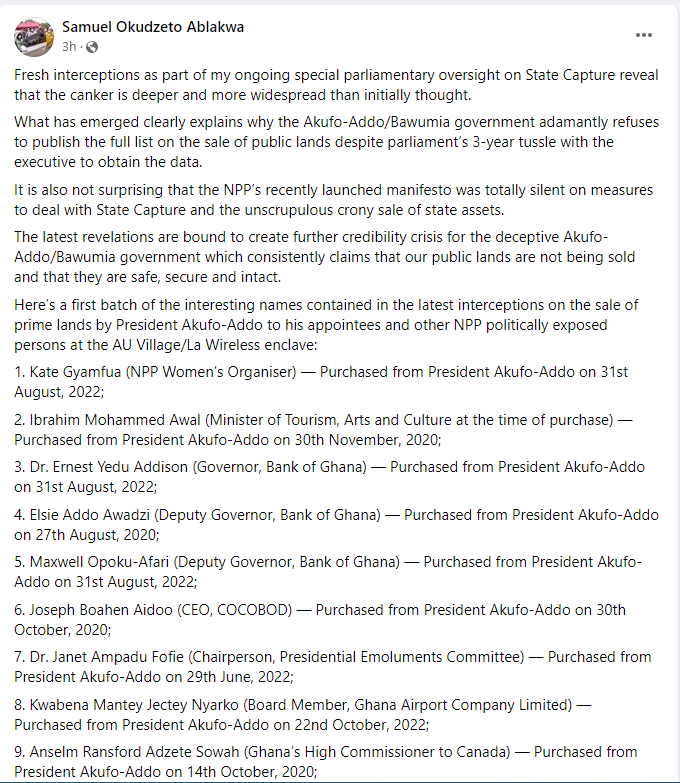
  • 10 NPP stalwarts fingered in Ablakwa’s new expose on land purchase at la wireless

    10 NPP stalwarts fingered in Ablakwa’s new expose on land purchase at la wireless

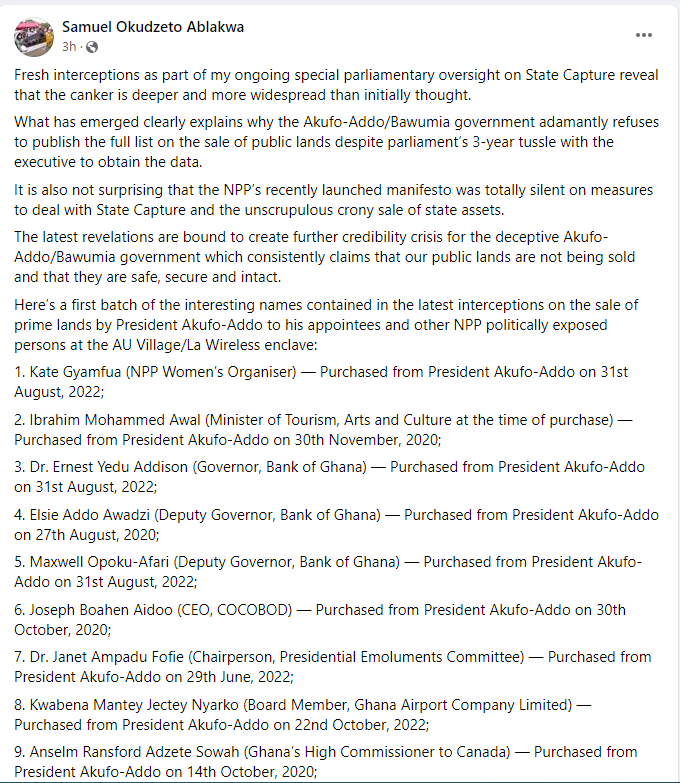
    North Tongu Member of Parliament, Okudzeto Ablakwa has revealed fresh intercepts from his ongoing special parliamentary oversight on State Capture, indicating that the issue is far more severe and pervasive than initially believed.

    He highlighted that these findings clarify why the Akufo-Addo/Bawumia government has steadfastly refused to release the full list of public land sales, despite a protracted three-year effort by Parliament to secure this information.

    Mr Ablakwa also noted that the NPP’s newly launched manifesto entirely omitted any plans to address State Capture or the unethical sale of state assets by cronies.

    These new revelations are expected to exacerbate the credibility crisis facing the Akufo-Addo/Bawumia administration, which has consistently denied that public lands are being sold, insisting that they remain safe and intact.

    Ablakwa then presented an initial list of notable names emerging from the latest findings concerning the sale of prime lands by President Akufo-Addo to his appointees and other politically exposed persons in the AU Village/La Wireless area.

    1. Kate Gyamfua (NPP Women’s Organiser) — Purchased from President Akufo-Addo on 31st August, 2022;
    2. Ibrahim Mohammed Awal (Minister of Tourism, Arts and Culture at the time of purchase) — Purchased from President Akufo-Addo on 30th November, 2020;
    3. Dr. Ernest Yedu Addison (Governor, Bank of Ghana) — Purchased from President Akufo-Addo on 31st August, 2022;
    4. Elsie Addo Awadzi (Deputy Governor, Bank of Ghana) — Purchased from President Akufo-Addo on 27th August, 2020;
    5. Maxwell Opoku-Afari (Deputy Governor, Bank of Ghana) — Purchased from President Akufo-Addo on 31st August, 2022;
    6. Joseph Boahen Aidoo (CEO, COCOBOD) — Purchased from President Akufo-Addo on 30th October, 2020;
    7. Dr. Janet Ampadu Fofie (Chairperson, Presidential Emoluments Committee) — Purchased from President Akufo-Addo on 29th June, 2022;
    8. Kwabena Mantey Jectey Nyarko (Board Member, Ghana Airport Company Limited) — Purchased from President Akufo-Addo on 22nd October, 2022;
    9. Anselm Ransford Adzete Sowah (Ghana’s High Commissioner to Canada) — Purchased from President Akufo-Addo on 14th October, 2020;
    10. Anna Asare Oduro (Former NPP Women’s Organiser, Holland Chapter) — Purchased from President Akufo-Addo on 25th February, 2021;

    I shall continue to serialize the unconscionable and opaque land grab by the Akufo-Addo/Bawumia government until they respond positively to the people’s legitimate demand for accountability by publishing the full and unredacted data on the sale and true status of public lands — after all, these lands belong to the Ghanaian people.

    This is another reason why I am delighted that we are making progress on our Private Member’s Bill seeking to ban all politicians, politically exposed persons and other top public officials from buying state assets.

    Watch out for Part 2.

    For God and Country.

    Ghana First

    Samuel Okudzeto Ablakwa

    Read post below as he shared on Facebook:

  • Chief praises NPP’s Free SHS policy for lifting financial burden

    Chief praises NPP’s Free SHS policy for lifting financial burden

    The Omanhene of the Domeabra Traditional Area, Nana Bafour Owusu, has lauded the New Patriotic Party’s (NPP) Free Senior High School (SHS) initiative for significantly reducing the financial burden on traditional leaders.

    He noted that the policy has relieved chiefs from the heavy responsibility of financing school fees and other educational expenses for their community members. Prior to this policy, chiefs and local leaders frequently faced the challenge of covering costs for tuition, library access, computers, and other educational needs for secondary school students.

    Nana Bafour Owusu expressed his pleasure that these financial challenges have been largely addressed since the policy’s implementation. He praised the government and specifically recognized Hon. Dr. Matthew Opoku Prempeh, the former Minister of Education, for his pivotal role in the successful launch of the Free SHS program.

    The chief highlighted that the policy has not only provided essential relief to many families but also opened doors for children from less privileged backgrounds to access education, thereby securing better futures for them.

    These remarks were made during a visit from Dr. Matthew Opoku Prempeh, who is now the NPP’s vice-presidential candidate. Dr. Prempeh visited Nana Bafour Owusu at his palace on Tuesday, August 20, as part of his campaign tour in the Asante Akyem North constituency in the Ashanti Region.

    Dr. Prempeh assured the traditional leaders that a future NPP government under Dr. Mahamudu Bawumia would continue to collaborate with traditional authorities to advance national development.

    During his tour, Dr. Prempeh also visited the Juansa and Agogo Palaces, spoke to students at the Presbyterian College of Education in Agogo, and addressed a large rally at the NPP Constituency Office in Agogo. At the rally, he introduced the party’s Parliamentary Candidate, Andy Appiah Kubi, and urged the voters to support him and Dr. Bawumia in the forthcoming elections.

    Accompanying Dr. Prempeh were Danquah Smith (1st National Vice Chairman), Henry Nana Boakye (National Organizer), and Bernard Antwi Boasiako, also known as Chairman Wontumi (Ashanti Regional Chairman).

  • 15 key takeaways from EC’s press conference regarding ongoing Provisional Voters Register Exhibition

    15 key takeaways from EC’s press conference regarding ongoing Provisional Voters Register Exhibition

    Date and Time of the Exhibition

    The EC commenced exhibition of the Provisional Voters Register on Tuesday, 20th August and plans to end on Tuesday, 27th August, from 7am to 6pm each day.

      The exercise is taking place at all Polling Stations (Exhibition Centres) in all the 268 District Offices nationwide.

      Purpose of the Exhibition

      The purpose of the exhibition is to afford Voters the opportunity to review registration details, check their Polling Stations,  make changes to their details, or make corrections. Registered Voters can verify their details, i.e., name, age, sex, polling station, and photograph as captured during the registration exercise and make requests for amendments/changes or insertions where necessary to their details in the Voters Register.

      The Exhibition Exercise also provides an avenue for qualified citizens to object to the names of minors, foreigners, and the deceased on the Voters Register. Additionally, qualified applicants can object to the names of persons who are not resident in the electoral areas where they registered and those who are not of sound mind.

      Any person who was not qualified to register as a voter can also go to the Exhibition Centre to have his/her name removed from the Voters Register. It is a crime to have your name on the register if you are not qualified.

      In the case of the deceased, Voters are required to produce the Voter ID of the deceased as well as proof of death, such as the Death Certificate or Burial Permit.

      Special Voters Register

      The Special Voters Register will also be displayed at all the District Offices of the Commission. All those who applied to be included in the Special Voters Register must go to the District Office of the Commission in their constituencies to ensure their names are in the Special Voters Register.

      Providing Political Parties with copies of the Provisional Voters Register

      Per Regulation 22 of C. I. 91 as amended by C. I. 126, the Commission is required to give the Provisional Voters Register to Political Parties not later than three months from the end of the registration period.

      The Limited Voters Registration Exercise ended on 29th May 2024, and the Mop-Up Registration Exercise ended on 3rd August 2024. On the basis of the Limited Voters Registration Exercise, the Commission has until the end of August 2024 to give the Provisional Register to the Political Parties.

      1. Nonetheless, the External Drives containing the Provisional Voters Register are ready for pick-up. The NDC has collected its External Drive, which contains the Provisional Voters Register.
      2. ⁠It is important to emphasise that this is a Provisional Register. At the end of the Exhibition Exercise, all corrections will be made before the Final Register is printed for the Elections.

      Exhibition Mechanism

      1. ⁠For the information of the General Public, Voters are advised to go to the Exhibition Centers with their Voter ID Cards to verify their details.
      2. ⁠However, Registered Voters who fail to bring along their Voter ID Cards could also verify their details, but they cannot request any amendments to their details.
      3. Registered Voters can also verify their details electronically via Short Code *711*51# on all networks, at a fee of 50 Pesewas. This option will be available during the Exhibition and beyond.
      4. If the information received contains any errors with respect to the details of the Voter, the Voter would be required to go to his/her Exhibition Centre to effect the necessary corrections.

      Source: Myjoyonline

    1. COCOBOD denied offshore loan request due to declined confidence in management – Minority

      COCOBOD denied offshore loan request due to declined confidence in management – Minority

      The Minority in Parliament have expressed worry over COCOBOD’s inability to secure funds offshore to purchase cocoa for the 2024/2025 crop season.

      According to the Minority, this development is a significant indicator of the declining confidence that global financial institutions have in COCOBOD under its current management.

      raised concerns over COCOBOD’s financial health, claiming that international banks have rejected the organisation’s request for a loan to purchase cocoa for the 2024/2025 crop season.

      However, the NDC MPs in a statement, emphasized that this situation could have serious repercussions for the cocoa sector, which is a crucial part of Ghana’s economy.

      They warned that without the necessary funding, COCOBOD might struggle to meet its cocoa purchasing targets for the upcoming season, potentially leading to a negative impact on cocoa farmers and the broader economy.

      “For the first time in 32 years, International Banks have rejected Ghana Cocoa Board’s (COCOBOD) request for a prepayment loan to finance the purchase of cocoa.”

      “In June 2024, COCOBOD issued a Request for Proposal of $1.5 billion loan to purchase up to 650,000 metric tonnes of cocoa for the 2024/2025 crop year. But this request did not attract any interest from the international banks due to the poor health of COCOBOD and the collapse of the cocoa sector under its present management.”

      “From a production level of 969,000 metric tonnes inherited from the NDC in the 2016/2017 crop year, cocoa production has declined to just a little over 400,000 metric tonnes for the 2023/2024 cocoa season. The significant decline in cocoa production in the last eight years and the mismanagement of the cocoa sector have impacted COCOBOD’s ability to meet its contractual obligations,” an excerpt of the statement said.

      The Minority called on the government to address the underlying issues that have led to this loss of confidence in COCOBOD, urging for a review of the current management practices and for measures to be put in place to restore the organisation’s credibility with international financial institutions, ensuring that the cocoa sector remains strong and stable.

      The Minority also believes that the refusal of the loan request highlights the mismanagement and poor financial decisions that have plagued COCOBOD in recent years.

      They noted that, COCOBOD has traditionally relied on offshore syndicated loans to finance the purchase of cocoa beans, but the rejection by international banks this time around points to a loss of trust in the organisation’s ability to manage its finances effectively.

    2. 19 presidential candidates have picked forms to contest December elections – EC

      19 presidential candidates have picked forms to contest December elections – EC

      Director of Training at the Electoral Commission,  Dr Serebour Quaicoe, has disclosed that 19 people have obtained nomination forms to stand as independent presidential candidates in the upcoming 2024 election.

      During an engagement with the media, Dr. Quaicoe noted that while there is no fee for collecting the forms, a payment is required upon submission of the completed forms.

      Consequently, some individuals may request forms without intending to pursue their candidacy.

      “We have 12 political parties and the last time I checked, I think we have 19 independent presidential candidates people who have picked the form,” he stated.

      He highlighted that although democracy can be expensive, it guarantees that every eligible person has the chance to participate.

      According to the constitution, candidates must be at least 40 years old, a taxpayer, and must not owe allegiance to any foreign country.

      “Once a person meets these qualifications, they are eligible to obtain the nomination forms,” Dr. Quaicoe said.

    3. BOST loses GHS60m levies to 44 non-traceable oil marketing companies – Auditor General report

      BOST loses GHS60m levies to 44 non-traceable oil marketing companies – Auditor General report

      National security is chasing after directors of 44 oil marketing companies that have vanished with almost GH₵60 million in levies owed to the Bulk Oil Storage and Transportation (BOST), currently bearing it new name as Bulk Energy Storage and Transportation Limited (BEST).

      These companies failed to transfer funds to BEST after receiving levies and margins from selling petroleum products.

      The Auditor General’s 2023 audited accounts confirmed this development, however, information gathered by JoyNews has it that the companies are not traceable.

      According to Chief Executive Officer of BEST, Dr. Edwin Provencal, national security is going after the directors of these companies for potential prosecution.

      He clarified that when petroleum products are bought, Oil Marketing Companies (OMCs) are responsible for collecting the BOST margin and forwarding it to the National Petroleum Authority (NPA), which then transfers it to BOST.

      However, these OMCs collected the funds but failed to transmit them.

      “When it goes on for a while, the company is closed down, you can’t find the directors. As we speak, those 44, we are in court with about 26 of them for them to pay the money. 

      “And then for the rest, the companies are dead. Hopefully, with the power of government, we can raise the veil and go after the directors. We have escalated to [Economic and Organised Crime Office] EOCO, we’ve had some debt collection company with us,” he said. 

      Dr Provencal said that BEST is working tirelessly to recover these funds, noting that since it is government money, there is a strong case for lifting the veil of incorporation to hold the directors personally accountable.

      “They set up companies, they rack up the BOST margin, they use it for their personal interest and they kill the company,” he added.  

    4. WAEC registers 460,611 candidates for 2024 WASSCE examination

      WAEC registers 460,611 candidates for 2024 WASSCE examination

      The West African Senior School Certificate Examination (WASSCE) which commenced Monday, August 19, 2024, has a total of 460,611 candidates, including 212,954 males and 247,657 females from 1,003 schools participating.

      It started in the aftermath of the completion of Visual Art Project work, which took place from August 5 to 16, 2024.

      Nonetheless, the examination period is said to come to an end on Friday, September 20, 2024.

      Meanwhile the 460,611 participants marks a 2.66% increase compared to the 2023 entry figure of 448,674.

      Additionally 1,000 centers nationwide are hosting students to write this year’s exams.

      Note that, WAEC has warned several Heads of Schools, Supervisors, and Invigilators to avoid unethical practices such as charged between GH¢200.00 and GH¢500.00 for assistance from invigilators, supervisors assigning teachers to oversee subjects they are currently teaching as well as enrolling individuals who are not their legitimate students.

      Furtherance to this, WAECcalls on all stakeholders, particularly supervisors and invigilators, to support efforts to uphold the examination’s integrity.

      They have as well encouraged candidates to strictly adhere to examination rules and be cautious of fraudulent websites that distribute fake questions.

      It is believed that these websites deceive candidates into subscribing to them, thereby distracting them from their studies.

    5. Artificial intelligence should not result in joblessness – Akufo-Addo cautions labour unions

      Artificial intelligence should not result in joblessness – Akufo-Addo cautions labour unions

      President Nana Addo Dankwa Akufo-Addo has entreated organized labor to push for policies that prevent technological advancements, such as Artificial Intelligence (AI), from causing job losses.

      He also encouraged labor unions to advocate for programs that focus on upskilling and reskilling the workforce, ensuring they are prepared for the future job market.

      During the 12th Quadrennial Delegates Congress of the TUC at Gomoa Fetteh in the Central Region, President Akufo-Addo called on Trade Unions to take the lead in promoting gender equality by advocating for equal pay for equal work, anti-discrimination policies, and support for working mothers, including provisions for maternity leave and childcare.

      He commended the TUC and its leadership for fostering industrial peace and harmony within the labor sector. The three-day Congress is particularly important as it will see the election of leaders who will guide the TUC for the next four years.

      President Akufo-Addo also paid tribute to the outgoing Secretary General, Dr. Yaw Baah, recognizing his efforts in championing workers’ rights, securing fair wages, and creating an environment where every Ghanaian can strive to reach their full potential.

      He urged the Trade Unions to continue being a voice of reason, advocating for policies that promote economic stability, job security, and social justice. He emphasized that the complexities of the global economy, along with the changing nature of work, require collaboration between governments and trade unions to enhance the welfare and well-being of citizens.

      President Akufo-Addo highlighted the importance of advocating for inclusive hiring practices, reasonable accommodations, and policies that promote diversity and inclusion across all employment levels.

      He pointed out that while the rapid pace of technological advancements presents opportunities for increased productivity and economic growth, it also poses challenges such as job disruption and widening inequality. He encouraged trade unions to proactively engage with these technological changes.

      “Additionally, trade unions should play a proactive role in shaping the future of work. The rise of automation, artificial intelligence and the gig economy represents both opportunities and challenges. Unions should advocate for policies that ensure these technological advancements do not lead to job losses or increased inequality,” President Akufo-Addo added.

      “Instead, they should push for initiatives that promote upskilling and reskilling, ensuring the workforce is prepared for the jobs of the future. Another critical area where trade unions can make a significant impact is in promoting gender equality and inclusion. Women constitute a substantial portion of the workforce, yet they often face discrimination, lower wages and limited opportunities for advancement.”

    6. Ghana to settle $111m judgment debt owed to Singapore’s Trafigura over GPGC Deal – U.S. court

      Ghana to settle $111m judgment debt owed to Singapore’s Trafigura over GPGC Deal – U.S. court

      A District of Columbia Court in the United States, which granted a Motion for Default Judgment in favor of Ghana Power Generation Company (GPGC), has directed government to pay $111,493,828.92 together with obligatory post-judgment interest

      This ruling was necessitated by Ghana’s disregard for a previous tribunal verdict from the United Kingdom

      In the aftermath of Ghana’s termination of a power purchase deal with Ghana Power Generation Company (GPGC) on February 18, 2018, a UK tribunal discovered in its Final Award, on January 26, 2021, that Ghana had breached it contractual obligations.

      Ghana stated that the contract was terminated because the foreign power company failed to meet certain contractual obligations.

      However, the tribunal disagreed and awarded GPGC $134,348,661 in damages, calculated using the Early Termination Payment formula outlined in the purchase agreement.

      The award also includes reimbursement of GPGC’s arbitration costs and expenses totaling $3,309,877.74, with interest at the three-month USD LIBOR rate, compounded quarterly, and an additional interest rate of six-month USD LIBOR + 6%.

      After unsuccessful attempts to collect the outstanding payment from Ghana, GPGC filed a lawsuit on January 19, 2024, in the U.S. District Court, seeking recovery of the growing debt under Chapter 2 of the Federal Arbitration Act and the New York Convention.

      Court records show that Ghana’s Minister of Foreign Affairs and Regional Integration, Shirley Ayorkor Botchwey, was served with the petition from the U.S. court on January 23, 2024.

      The signed certification of receipt indicated that the documents were delivered to Ghana on January 29, 2024.

      Despite this, Ghana did not appear in court or respond by the March 29, 2024, deadline.

      The court ruled that it had jurisdiction over the case, citing the New York Convention, which the United States has adopted and which recognizes arbitral awards made in the United Kingdom.

      The court also noted that in the power purchase agreement, Ghana had agreed to submit to international arbitration and had explicitly waived its sovereign immunity, according to a report by adomonline.com.

      In his memorandum ruling dated August 6, 2024, Chief Judge James E. Boasberg emphasized that the arbitral award between the non-U.S. parties stemmed from a commercial transaction, which is governed by the New York Convention.

      The Convention requires member states to recognize and enforce such awards, regardless of the parties’ nationality or residence.

      Although the judge did not grant GPGC pre-judgment interest, Ghana will still face a financial burden due to the court’s award of post-judgment interest at the rate specified by U.S. regulations.

    7. A dollar goes for GHS15.97, £1 at GHS20.77

      A dollar goes for GHS15.97, £1 at GHS20.77

      Ghana’s local currency, the cedi, has recently experienced a sharper decline against major trading currencies, particularly the US dollar.

      As of Wednesday, August 21, 2024, at 10:05 AM, checks by GhanaWeb Business revealed that the cedi is trading at GH¢15.97 to $1 at several key forex bureaus in Accra.

      This drop in the cedi’s value is also noticeable when compared to other currencies like the British Pound and Euro.

      For example, the cedi is being exchanged for GH¢20.77 per £1 and GH¢17.71 per €1 at major forex bureaus throughout the country.

      Bloomberg, an international news outlet, recently ranked the Ghanaian cedi as the fourth-worst performing currency among 150 major currencies monitored globally.

      Although the cedi has depreciated by nearly 23% against the US dollar, it has shown some relative stability this month [July], according to a Bloomberg report.

      The cedi’s weakening has been linked to a growing demand for US dollars to purchase petroleum products, pharmaceuticals, and other imports.

    8. “E Levy is working” – Nana Fredua

      “E Levy is working” – Nana Fredua

      A member of the New Patriotic Party (NPP) and Board Chairman of the National Theatre, Nana Fredua Agyeman Ofori-Atta has expressed that the Electronic Levy (E-Levy) policy introduced by the NPP is making strides in the economy.

      During an interview with Serwaa Amihere on GHOne TV, she asserted that… “The e-levy has rallied more than 1.9 billion in the last year. It’s working, and it’s not like it’s not working,” he said.

      Madam Ofori-Atta emphasized that Ghanaians should focus on the bigger picture, asking, “How do we want to develop? Do we want to develop piecemeal or holistically, with a projection into the future?” He stressed that the E-Levy is a law that has been implemented and is contributing to the economy.

      The NPP board chairman acknowledged that Ghanaians complain about various issues but urged for a more nuanced approach. “We complain, including me. All of us always find something wrong somewhere. But we know that, depending on how we see the thing, we should focus on whether the policy is working.”

      Ofori-Atta addressed concerns about the E-Levy, saying, “When the e-levy was being proposed, we were given the option of either the e-levy or we go to the IMF. And we are doing both. You don’t expect Ghanaians not to complain?” He emphasized the need to evaluate the policy’s impact and ensure that the collected resources are utilized effectively.

      The NPP leader clarified that the party is focused on the future, highlighting numerous planned developments under a Bawumia administration. He encouraged Ghanaians to consider development holistically, rather than concentrating solely on the burden of paying taxes.

      Ofori-Atta concluded, “It’s about where the resources go when it is collected, and whether it is of value to us. So, for now, it is the law. It is working. If we want to deal with it, we should find out whether the money they’ve been collecting from us has been going into the spaces it’s supposed to go into.”

    9. Watch footage of Nkrumah’s mock burial held in 1972 in Lagos

      Watch footage of Nkrumah’s mock burial held in 1972 in Lagos

      A symbolic burial took place in Lagos, Nigeria, to honor the late Dr. Kwame Nkrumah, the former President of Ghana, whose actual remains were still held by the Government of Guinea in May 1972,

      Dr. Nkrumah had passed away on April 27 in Romania, where he had been living in exile.

      His body was later flown to Conakry, Guinea, on April 30, where he had been granted asylum after being overthrown in a coup.

      Though his physical body remained in Guinea, the people of Lagos held a mock burial to pay tribute to the man who had been a towering figure in Africa’s fight for independence, symbolizing their deep respect and sorrow for the fallen leader.

      Watch the video below:

    10. We will not seek financial aid from international banks for 2024/25 cocoa crop season – COCOBOD

      We will not seek financial aid from international banks for 2024/25 cocoa crop season – COCOBOD

      The Ghana COCOBOD has revealed that, for the first time in 30 years, it will not pursue an offshore syndicated loan to fund the purchase of cocoa beans for the 2024/2025 crop season.

      Aiming to procure around 650,000 metric tonnes of cocoa beans for the season, COCOBOD stated that it will fund the purchases through its internal operations.

      During a press briefing, Chief Executive Joseph Boahen Aidoo revealed that there is a comprehensive plan to reduce COCOBOD’s reliance on high-interest loans from offshore lenders.

      He stressed that it is not financially wise for COCOBOD to continue depending on loans from international banks when it has the ability to raise funds domestically at a lower cost to purchase the beans.

      “For the first time in the history of Ghana COCOBOD, we want to wean COCOBOD off from offshore syndication. We want to be self-financing. Since 1992 COCOBOD has been going offshore to borrow from a consortium of banks. It is a good time to learn our lessons”.

      Mr. Boahen Aidoo insisted that COCOBOD can self-finance its operations and purchases, providing all the proceeds it will accrue to the government of Ghana for other developmental projects.

      “In the previous year, COCOBOD has paid interest of more than US$150 million. That money could have been used for other things in the country”, he said.

      Defending the decision, he stressed that move has received all the support of major stakeholders in the sector to make the farmer the ultimate beneficiary in the value chain.

      “We have always being looking out for the interest of the farmer. The farmer is the most important person. Ghana and Ivory Coast pushed for the Living Income Differential of 400 dollars per tonne for the farmer”, he recalled.

      Meanwhile Mr. Boahen Aidoo announced that the 2024/2025 crop season will start from 1st September this year.

    11. Political parties to sign MoU with GUTA to fulfill promises when they come to power

      Political parties to sign MoU with GUTA to fulfill promises when they come to power

      The Ghana Union of Traders Association (GUTA) has revealed it intention to sign a Memorandum of Understanding (MoU) with all prospective governments ahead of 2024 elections

      This initiative aims to safeguard the interests of its members and ensure that political parties fulfill their promises if they come into power.

      During an interview on Joy News’ PM Express, GUTA President Dr. Joseph Obeng noted that, unlike in previous elections, the association is insisting on having input in the development of party manifestos.

      “In the past, they would formulate their own manifesto, and at the end of the campaign, they’d come and show it to us. But this election, we demanded that we want to factor our input into their manifesto because they are all potential governments,” Dr Obeng stated.

      He emphasized the significance of this agreement, stating that GUTA is determined to ensure it is not overlooked.

      The Association intends to hold future governments responsible for adhering to the terms outlined in the MoU.

      “We are very serious about this so that we are not taken for granted and can call the government back to order when it fails to fulfil its end of the bargain,” he added.

      GUTA has actively voiced concerns over the economic difficulties its members are experiencing, particularly due to the cedi’s depreciation and escalating freight costs from Asia, which have made business operations increasingly challenging.

      The Association has called on the government to maintain the economic progress made since re-engaging with the IMF, stressing that these advancements are vital for the business community.

      Dr. Obeng also highlighted the importance of increased accountability, stating, “First, we were just building the manifesto. Then after you finish, we demand that let’s put a signature somewhere so that we can refer to it. I think it’s fair because we have to go beyond some of these red territories and then demand proper accountability.”

      GUTA’s move to establish formal agreements with political parties underscores its dedication to protecting traders’ interests and ensuring their input is considered in the policymaking process.

    12. Cocoa purchase for 2024/2025 crop season to commence September 1 – COCOBOD

      Cocoa purchase for 2024/2025 crop season to commence September 1 – COCOBOD

      Ghana Cocoa Board (COCOBOD) has stated that it will commence the purchase of cocoa for 2024/2024 main crop season on September 1.

      The Chief Executive Officer, Joseph Boahen Aidoo, revealed this during a press conference on Tuesday.

      ‘’We are still putting measures in place and if things go well, we start the season on 1st September” he said.

      Although he did not announce a new cocoa price, he assured that his organization is committed to providing the best possible rates for farmers.

      Mr. Aidoo highlighted that while international buyers largely influence cocoa prices, the Board is actively seeking ways to lessen the effects of external market pressures.

      He noted that COCOBOD had originally aimed for 800,000 tonnes, but unfavorable weather conditions, such as droughts in the Bono and Sefwi regions, have significantly affected cocoa production by damaging the cocoa flowers.

      The COCOBOD CEO explained that this has forced them to lower their initial target from 800,000 tonnes to 600,000 tonnes.


      Mr. Aidoo also refuted recent media reports claiming that Ghana’s cocoa industry is nearing collapse.

      ‘’ However, we take a serious exception to allegations that the sector will collapse in five years. This is an exaggeration and does not reflect the facts on the ground,” he said.

      The CEO further explained that, they have implemented various initiatives to address the challenge about pests and diseases, including the Cocoa Rehabilitation Programme which is aimed to replant diseased and unproductive cocoa trees.

      “Currently, more than 40,000 hectares of cocoa farms across the country have been successfully rehabilitated and ready to be officially handed over to beneficiary farmers. Tens of thousands of farms are also at various stages of the rehabilitation process. These farms are expected to add more than 200,000 tonnes to the nation’s annual production output in the next few years’’.

      Mr. Aidoo added that COCOBOD is actively engaged in international partnerships that promote the sustainability of the cocoa industry.

      Through collaborations with global organizations and chocolate manufacturers, we are advancing programmes that focus on responsible cocoa production, fair trade, environmental conservation and payment of remunerative farm-gate prices to farmers.

      ‘’ The Cote d’ Ivoire Ghana Cocoa Initiative is coordinating efforts aimed at putting measures in place to ensure permanently ensure improved and sustained livelihoods for cocoa farmers in the two countries.

      ‘’While recognizing that there is still more work to be done, we wish to assure our stakeholders of our commitment to ensuring the long-term sustainability of the cocoa sector. We urge stakeholders to support our efforts and work together to address the challenges facing the sector,” he concluded.

    13. FABAG urges the govt to eliminate duties on essential goods

      FABAG urges the govt to eliminate duties on essential goods

      Government have been asked by the Food and Beverages Association of Ghana (FABAG), to scrap duties on all essential commodities imported into the country.

      This is as a result of increasing worries about food insecurity, fueled by the persistent drought in northern Ghana and recent actions in Nigeria, where the government has lifted tariffs on key food imports.

      Nigeria’s move to introduce a duty-free policy on imported food items is part of its Presidential Accelerated and Stabilization Advancement Plan, aimed at controlling rising food prices. FABAG believes that Ghana should consider a similar strategy.

      The Association is pushing for the elimination of duties on crucial staples like rice, maize, and oil.

      This step is anticipated to ease the financial pressure on families, boost food availability, and lessen the harmful effects of malnutrition on at-risk communities.

      John Awuni, Executive Chairman of FABAG, also urged the government to make this initiative a priority to improve the quality of life for Ghanaians.

      “The government should be encouraged to take similar action by removing import duties on essential food items, allowing these goods to be imported, and ensuring they are not re-exported. This will lead to a significant reduction in the prices of essential food items in the market.

      “As it stands, the rate at which prices are increasing is unbearable, critically affecting the incomes and lives of people. The cost of living has become very challenging,” he stated.

    14. More than 250,000 retirees receive support from GHS447m embezzled by SSNIT

      More than 250,000 retirees receive support from GHS447m embezzled by SSNIT

      The Social Security and National Insurance Trust (SSNIT) has distributed a substantial GH¢447.07 million to 250,580 pensioners for August 2024.

      This payment, issued on Thursday, August 15, 2024, covers pension benefits under both PNDC Law 247 and Act 766, demonstrating SSNIT’s continued commitment to securing the financial stability of retirees across Ghana.
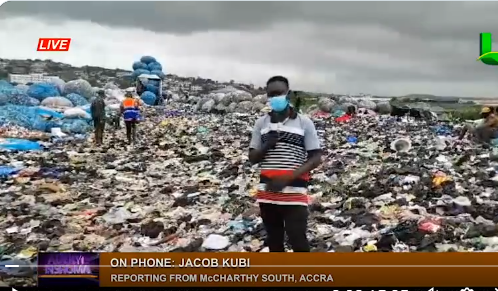
      SSNIT reported that the highest monthly pension under PNDC Law 247 reached GH¢186,777.58, while the maximum under Act 766 was GH¢26,509.66.
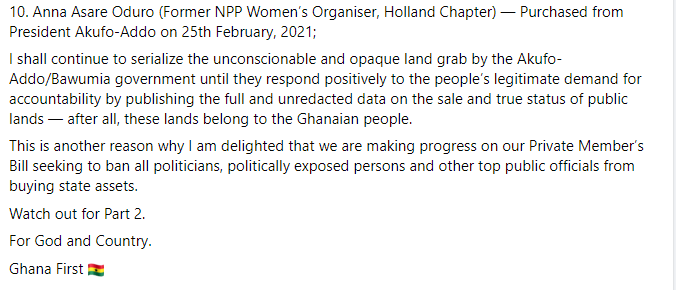
      The smallest monthly pension for current pensioners was GH¢409.10, while the minimum for new pensioners was established at GH¢300.00.

      The next pension distribution is scheduled for September 19, 2024.