Author: Amanda Cartey

  • 6 cocoa road projects cancelled over lack of funds

    6 cocoa road projects cancelled over lack of funds

    Ghana Cocoa Board (COCOBOD) has announced the discontinuation of six cocoa road projects due to financial challenges.

    These initiatives were among 14 road projects started by COCOBOD between 2015 and 2016, covering seven regions and estimated to cost 370 million Ghana cedis.

    After nearly ten years, none of these roads have been finalized.

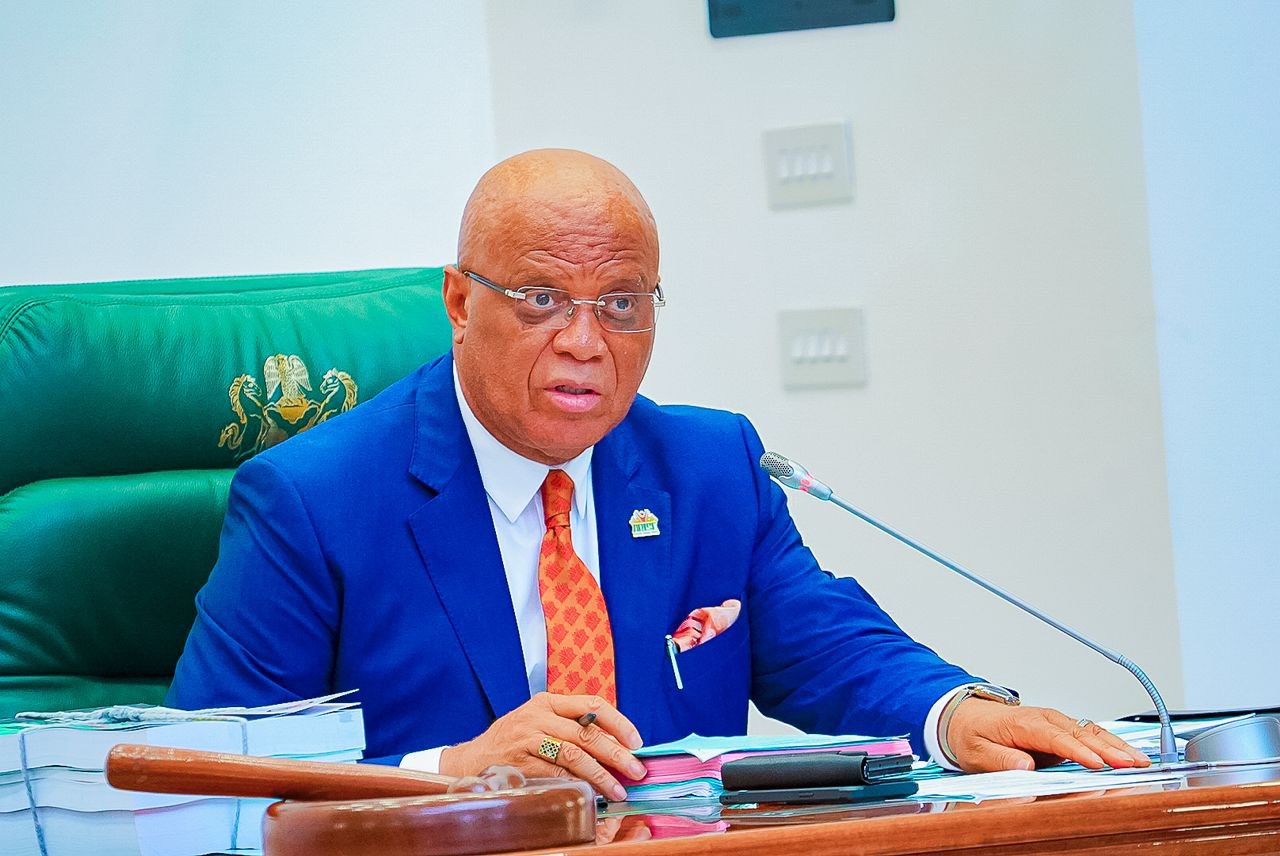
    In a presentation to the Public Accounts Committee, COCOBOD’s Chief Executive Officer, Joseph Boahen Aidoo, explained that the institution’s financial challenges have made it unfeasible to proceed with six of these initiatives.

    He added that a table provided to the committee outlines the official cessation of these six projects, while the remaining ones are being reorganized for completion.

    Mr Aidoo assured the committee that should resources become available in the future, the cancelled projects may be reconsidered. “But I give that assurance that one’s resources are available they would be definitely taken on board.”

    Regarding a separate matter involving an 8.3 million cedis rent debt noted by the Auditor-General, COCOBOD is facing difficulties in retrieving 6.8 million cedis owed by the Produce Buying Company (PBC). Ray Ankrah, COCOBOD’s Deputy CEO for Finance and Administration, offered an update on the issue.

    “The rent arrears for Jubilee House, amounting to 102,000 cedis, have been fully settled. Additionally, the outstanding rent for properties on Lake Road in Kumasi, totaling 263,307.06 cedis, has been recovered. The Sunyani Jubilee House rent of 74,771 cedis has also been collected. This accounts for approximately 67% of the total outstanding debt.

    “However, we are facing challenges with the PBC’s debt of 6,851,517.51 million cedis, which remains unpaid. Management has engaged with PBC to discuss and agree on a payment plan, and we are confident that as the new season begins, we will be able to recover these funds through their Credit to Revenue (C2R) arrangements,” Mr Ankrah explained.

  • EXPLAINER: Why COCOBOD has ditched plans to borrow from international banks after 32 years

    EXPLAINER: Why COCOBOD has ditched plans to borrow from international banks after 32 years

    Ghana’s cocoa regulator, COCOBOD, is breaking away from a 32-year tradition of seeking funds from international banks for the annual cocoa crop season to adopt a method of self-reliance at the start of the 2024/2025 cocoa crop season in September 2024.

    Cocoa, which is a key export commodity for Ghana, has generated significant revenue streams for the country over the years. 

    Cumulatively, Ghana and Ivory Coast account for about 60 percent of the global supply for cocoa beans. 

    While some argue that cocoa and gold are Ghana’s top exports, there is contention over the country’s ability to meet global supply and consumer demand like its counterpart Ivory Coast.

    Why is this transition necessary?

    Chief Executive Officer of COCOBOD, Joseph Boahen Aidoo, has explained that the decision to move away from seeking syndicated loans from external sources is part of a broader strategy towards self-reliance and reducing dependency. 

    Ghana’s cocoa production output reached 429,323 metric tons at the end of the harvest in June this year, according to data released by COCOBOD.

    This production output is less than 55 percent of the average seasonal output. The decline in output has been attributed to disastrous harvests caused by poor weather conditions, swollen pod disease, and illegal mining activities taking place in cocoa-growing areas.

    These developments have not only disrupted COCOBOD’s operations but have impacted the supply chain, pushing prices for cocoa beans up on the international market.

    Additionally, the COCOBOD CEO on Tuesday, August 21, 2024, told journalists that the regulator has often relied on these external funds to undertake activities in the cocoa crop season over three decades, a move which he says has strained its finances and operations with regards to loan repayment obligations.

    “Is it good that COCOBOD should always be heard going to borrow? Are we comfortable with that tag? Today, you have heard that COCOBOD is not going to borrow. It is quite a good time for any human being to learn his or her lessons.

    “In 32 years, we have learned our lessons and we think that it is high time we wean ourselves from the offshore international financial markets and then finance the crop ourselves here, and that is exactly what we are going to do. And I think it comes with a lot of projectory benefits,” he explained.

    The COCOBOD boss said the regulator is aiming to save more than $150 million as part of this self-reliance strategy during the upcoming 2024-2025 cocoa season.

    “We are looking for $1.5 billion this crop season, and looking at the interest rates last year, which were over 8 percent, plus the cost, it means that we can save more than $150 million by the decision not to go offshore,” he explained.

    How will COCOBOD fund itself?

    While Ghana’s cocoa regulator is yet to provide a more detailed insight into how it will fund its activities moving forward, it plans to tap from domestic sources to fund cocoa purchases from farmers in the new season.

    However, the absence of cocoa funding will mean that the Bank of Ghana will have to tap into revenue accrued from the sale of cocoa beans to build foreign reserves instead of relying on the bulk amount it receives every October when the harvesting season begins.

    “Whatever cocoa we sell is sold in dollars, and so the revenue from our cocoa will be paid in dollars. Our forward contracts will all be paid for in dollars when we deliver the cocoa so the dollars will come in to shore up the cedi,” the COCOBOD CEO briefly explained.

    Also, for the upcoming 2024-2025 cocoa crop season, production output has been cut by 20 percent to 650,000 tons on the back of poor weather concerns, lack of fertilizer, disease, and poor environmental practices in growing areas also known as galamsey.

    These disruptions have also placed Ghana in the second spot behind Ivory Coast, who is at the top spot of the summit.

    On the international market, demand and supply disruptions continue to impact cocoa prices, with futures rising above $11,000 per ton for the first time, according to Bloomberg Commodities. 

    What’s in it for farmers?

    Ghana’s COCOBOD says farmers will remain the topmost priorities during this transition, emphasizing that they will not be short-changed in pricing measures and decisions.

    “It is not true that COCOBOD is not giving the farmers a fair price. If you follow the narrative, you will notice that from 2017 on, COCOBOD has been even more than fair. The government had been more than fair to farmers because this was a time when prices had collapsed, but the government and COCOBOD did not reduce the farmers’ price,” the COCOBOD CEO stated.

    Conclusion

    Even as Ghana’s cocoa regulator will continue to remain under significant scrutiny as it embarks on a transition toward self-reliance, the success of this strategy is crucial for the country. 

    Cocoa is a significant contributor to the country’s economy, providing livelihoods for millions of farmers and being a major export commodity for Ghana.

    Source: Ghanaweb

  • Dafeamekpor questions EC on 50p fee for access to Voter Register

    Dafeamekpor questions EC on 50p fee for access to Voter Register

    South Dayi MP Rockson-Nelson Dafeamekpor has expressed concerns about the GH₵0.50 fee imposed on voters checking their details through the Electoral Commission’s (EC) new shortcode.

    The EC has launched the shortcode *71151# as a new method for voters to easily verify their information, starting from August 20, 2024.

    However, Mr. Dafeamekpor took to X to question the rationale behind the fee and to inquire about the destination of the funds collected.

    The MP pointed out that Parliament has already approved the budget for this exercise.

    “Why is the Electoral Commission levying a fee of GH₵0.50 on every registered voter before they can check their name in the provisional register using the shortcode 71151#? Who is getting these monies?” he asked.

    He contended that citizens should not have to pay extra fees to confirm their names on the voter register, regardless of whether the verification is done electronically.

    Read post below:

  • Akufo-Addo breaks silence on the sale of SSNIT hotels 

    Akufo-Addo breaks silence on the sale of SSNIT hotels 

    President Nana Addo Dankwah Akufo-Addo has for the first time commented on the raging debate on the sale of four hotels in which the Social Security and National Insurance Trust (SSNIT) holds majority shares. 

    Addressing the issue at the 12th Quadrennial National Delegates Congress of the Trades Union Congress on August 20, Akufo-Addo countered claims that SSNIT is mismanaged, highlighting that the pension scheme continues to achieve notable financial success.

    He added that the impressive financial performance of the Social Security and National Insurance Trust (SSNIT) in its 2023 report should settle concerns about the Trust’s decision to divest from certain underperforming assets.

    “Active contributors to the SSNIT scheme have increased from 1.35 million in 2016 to 2 million as of April 2024. The National Pensions Regulatory Authority has expanded its zonal offices from 2 in 2016 to 6 thereby enhancing visibility and bringing its services closer to the people.”

    “Coverage of pensions in the informal sector also increased from ninety-one thousand two hundred and fifty-three in 2016 to eight hundred and seventeen thousand four hundred and forty-four currently.”

    “Total assets under management have grown from 15.7 billion cedis in December 2016 to 71.6 billion cedis in March 2024,” the President stressed.”

    The President’s reaction is a direct response to a protest led by Member of Parliament for North Tongu, Samuel Okudzeto Ablakwa, and Organised Labour in June. The demonstrators had called for the immediate dissolution of the SSNIT Board and the resignation of senior management over the sale of 60% of SSNIT’s holdings in the four hotels.

    President Akufo-Addo has also labeled the controversies regarding the sale of the hotels to Rock City Hotels, owned by his Minister of Agriculture, Bryan Acheampong, as unwarranted.

    “I take note in particular of the improved performance of SSNIT which recently announced a surplus of 230 million cedis on its operation. This should be reassuring to Organised Labour and perhaps bring into sharp relief the unnecessary controversy that was recently generated by SSNIT’s efforts to offload none performing assets in its hotel portfolio.

    “It is my understanding that the transaction that was aborted represented the only occasion in recent history of SSNIT that external investors sort to invest in SSNIT’s holdings.

    “All of us need to be measured when it comes to making decisions and pronouncements that will affect the long-term interest of pensioners,” Akufo-Addo added.

  • Expanded sugarcane farms intended to supply to Komenda Sugar Factory in limbo

    Expanded sugarcane farms intended to supply to Komenda Sugar Factory in limbo

    Sugarcane farmers in the Central Region, who were directed by the management of the Komenda Sugar Factory to expand their farms with hopes of supplying to the factory have been disappointed.

    National Chairman of the Sugarcane Farmers Association, Samuel Mensah, voiced his dissatisfaction at a press conference, criticizing the factory’s management for persuading them to expand their farms with the promise of buying their sugarcane, only to leave them without a market.

    He has requested a detailed update on the actual status of the factory. This discontent follows the announcement by Minister of Trade and Industry, K.T. Hammond, about the government’s plan to lease the Komenda Sugar Factory to West African Agro Limited, an Indian company, for a renewable term of 15 to 20 years.

    In a previous press briefing, the sugarcane out-growers questioned the source of the company’s sugarcane and whether the factory is currently operational. They also sought information on when the company and the ministry would engage with them regarding their products.

    The out-growers manage over 15,000 acres of sugarcane in regions including Shama, Wassa East and West, Cape Coast, and Gomoa East and West districts.

    Mr. Mensah noted that in 2022, the out-growers entered into a contract with the Komenda Sugar Factory management to supply all their harvested sugarcane.

    The Association claims that the company now plans to import raw sugar from Brazil, contradicting their agreement with the ministry. The contract also specified that if the company placed an order for harvesting but did not purchase the sugarcane, it would be liable to pay the full cost. The company has not adhered to this or other terms of the agreement.

    As a result, the out-growers are demanding that the company fulfill its commitments to resolve the situation.

  • Local Govt minister sacks Some GSCSP contractors to who failed to work after receiving payment

    Local Govt minister sacks Some GSCSP contractors to who failed to work after receiving payment

    Contracts of several contractors involved in the Ghana Secondary Cities Support Programme (GSCSP) has been terminated by the Minister for Local Government, Decentralisation, and Rural Development, Martin Adjei Mensah Korsah.

    This decision comes due to the contractors’ failure to deliver despite having received payments.

    Mr. Adjei Mensah Korsah clarified that the Government of Ghana secured a loan from the World Bank to develop 35 municipalities through the GSCSP.

    Despite receiving the contracts and funds, some contractors have failed to meet their obligations.

    In an interview with Adom News, Mr. Mensah Korsah, who recently visited the Western and Central Regions to review GSCSP projects, disclosed that some contractors deliberately delayed their work and submitted inflated invoices to obtain extra funds from the government.

    He stated that his Ministry will not accept such conduct from contractors in the future.

    The Local Government Minister cautioned that remaining contractors must finish their projects by October, or they will not receive any additional funding from the government.

    He also acknowledged the contractors in the Awutu Senya East Municipality (Kasoa) for their commendable work.

    In the meantime, Anita Love Obo Amissah, the Municipal Chief Executive for Awutu Senya East, lauded the Minister for the development of the Kasoa-Jei River Road and other projects.

  • “I will prepare a sumptuous meal and eat on election day” – Ghanaian on plans ahead of 2024 election

    “I will prepare a sumptuous meal and eat on election day” – Ghanaian on plans ahead of 2024 election

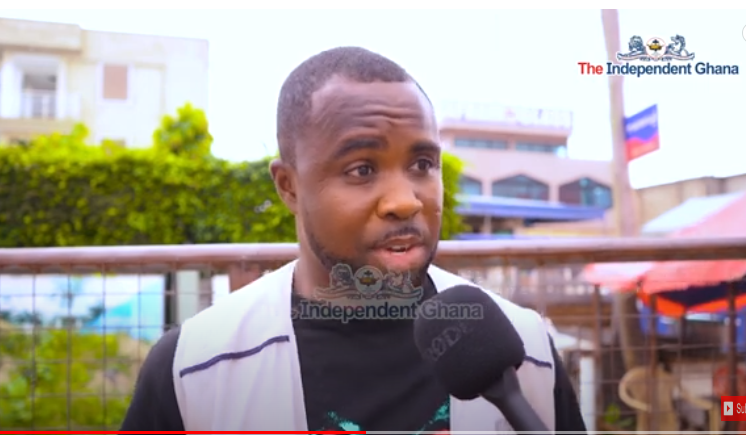
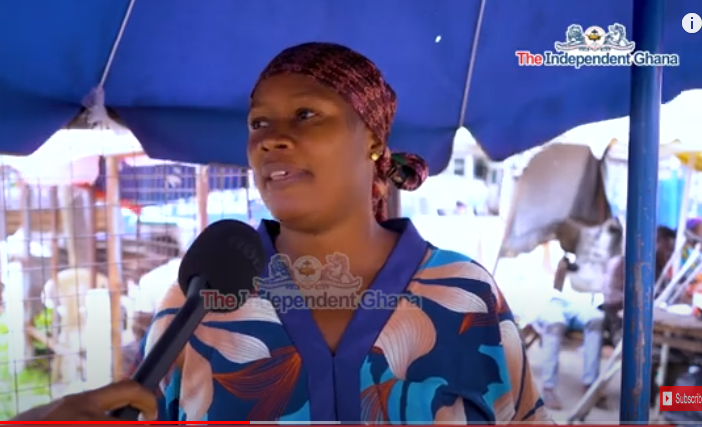
    Some Ghanaians have planned to stay at home and enjoy a good meal rather than participate in the voting process on election day.

    This is the intention of a young Ghanaian man named Fifi.

    He told The Independent Ghana during a vox pop session with citizens that he doesn’t see any difference his vote makes.

    He mentioned that he voted against Mahama, only for Akufo-Addo “to be presented as the same to us.”

    Therefore, this year, he will not exert his energy and time to cast votes for any candidate.

    “For me that day I will prepare a very sumptuous meal and enjoy. That is if I am in the country.”

    Ghana will soon be heading to the polls on December 7, 2024.

    The battle is set to ensue between the New Patriotic Party (NPP) and the National Democratic Congress (NDC).

    With both parties presenting strong candidates and a host of promises aimed at addressing the country’s pressing issues, the upcoming election is expected to be highly competitive.

    The NPP, currently in power, is campaigning on it achievements, such as the Free SHS program, while the NDC is as well focusing on offering an alternative vision, aimed to address the economic challenges facing Ghanaians.

  • Sugarcane farmers “cry out’ over unfair terms with management of Komenda Sugar factory

    Sugarcane farmers “cry out’ over unfair terms with management of Komenda Sugar factory

    Sugarcane out-growers in the Central Region have announced plans to protest, alleging “unfair treatment” by the management of the Komenda Sugar Factory and the Ministry of Trade and Industry.

    National Chairman of the Sugarcane Farmers Association, Samuel Mensah, voiced his dissatisfaction at a press conference, criticizing the factory’s management for persuading them to expand their farms with the promise of buying their sugarcane, only to leave them without a market.

    He has requested a detailed update on the actual status of the factory. This discontent follows the announcement by Minister of Trade and Industry, K.T. Hammond, about the government’s plan to lease the Komenda Sugar Factory to West African Agro Limited, an Indian company, for a renewable term of 15 to 20 years.

    In a previous press briefing, the sugarcane out-growers questioned the source of the company’s sugarcane and whether the factory is currently operational. They also sought information on when the company and the ministry would engage with them regarding their products.

    The out-growers manage over 15,000 acres of sugarcane in regions including Shama, Wassa East and West, Cape Coast, and Gomoa East and West districts.

    Mr. Mensah noted that in 2022, the out-growers entered into a contract with the Komenda Sugar Factory management to supply all their harvested sugarcane.

    The Association claims that the company now plans to import raw sugar from Brazil, contradicting their agreement with the ministry. The contract also specified that if the company placed an order for harvesting but did not purchase the sugarcane, it would be liable to pay the full cost. The company has not adhered to this or other terms of the agreement.

    As a result, the out-growers are demanding that the company fulfill its commitments to resolve the situation.

  • NPA to put an end to cheating at filling stations with intro of CRM

    NPA to put an end to cheating at filling stations with intro of CRM

    The National Petroleum Authority (NPA) has reassured the public that the risk of being shortchanged at gas filling stations will be eliminated with the introduction of the Cylinder Recirculation Model (CRM).

    This confidence stems from the use of automated machines to fill empty cylinders at various bottling plants, which reduces the chance of human error or tampering.

    NPA Communications Manager, Mohammed Abdul-Kudus, shared this during an interview on Accra-based Adom FM on Tuesday.

    He addressed worries about potential inconsistencies in the amount of gas in filled cylinders, stressing that the automated process guarantees precise measurements.

    “These concerns have been raised, but just as we trust the quantity in canned products because they are filled automatically, the same will apply to the gas cylinders. The cylinders will be sealed automatically, with no human intervention that could lead to cheating,” Abdul-Kudus explained.

    He further assured that customers who are still doubtful will have access to scales at the filling stations to weigh their cylinders and verify the correct measurements.

    “There will also be a scale available, so if you are in doubt, you can weigh your cylinder to verify the measurement. So we can give the assurance that there is no cause to doubt the quantity,” he added.

    The Cylinder Recirculation Model (CRM) seeks to ensure that by 2030, at least 50 percent of Ghanaians have access to safe, clean, and eco-friendly LPG.

  • Cedi falls to GHS15.97 per dollar amidst continued depreciation

    Cedi falls to GHS15.97 per dollar amidst continued depreciation

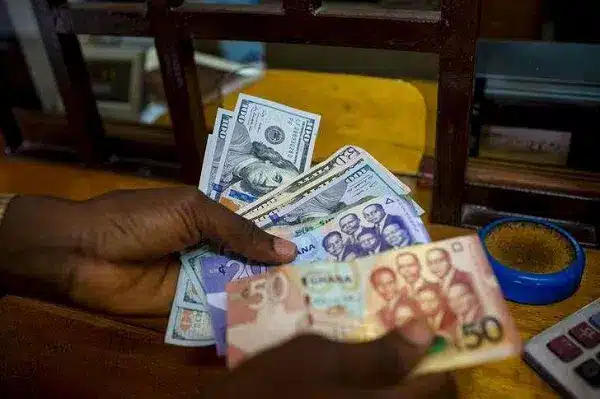
    Ghana’s local currency, the cedi, has recently seen a sharper depreciation against major trading currencies, particularly the US dollar.

    As of Tuesday, August 20, 2024, at 11:00 AM, checks by GhanaWeb Business revealed that the cedi is trading at GH¢15.97 to $1 at several key forex bureaus in Accra.

    This decline is also noticeable against other currencies like the British Pound and the Euro. The cedi is currently valued at GH¢20.74 to £1 and GH¢17.68 to €1 at major forex bureaus nationwide.

    Bloomberg recently ranked the Ghanaian cedi as the fourth-worst performing currency out of 150 top currencies monitored globally.

    Although the cedi has lost nearly 23% of its value against the US dollar, it has shown some relative stability this month [August], according to a Bloomberg survey.

    The cedi’s performance has been largely linked to the increased demand for US dollars to import petroleum products, pharmaceuticals, and other goods.

  • A gold bar now selling at $1m – Report

    A gold bar now selling at $1m – Report

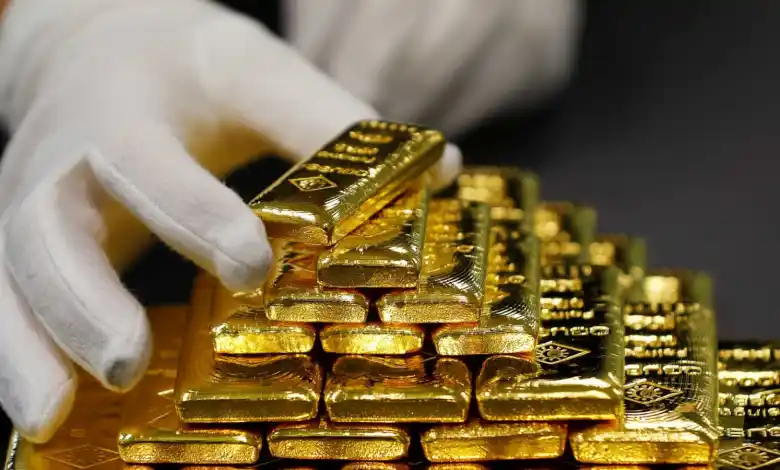
    For the first time, the value of a gold bar has surpassed one million dollars, driven by surging prices for the precious metal.

    Spot gold prices climbed above $2,500 per troy ounce on Friday, marking a new record high.

    Given that the average gold bar weighs 400 troy ounces, this equates to a value of one million dollars per bar.

    Bloomberg News was the first to report on this milestone.

    Spot gold prices have risen over 20% this year. The increase in gold prices often signals that investors anticipate the Federal Reserve will soon lower its benchmark interest rate. Additionally, central banks, particularly in China, are buying more gold to reduce their dependency on the US dollar.

    Central banks and investors consider gold a reliable long-term store of value during economic uncertainty. This is because gold prices typically rise when interest rates fall, making bullion more attractive than bonds.

    Gold is also viewed as a hedge against inflation, as investors believe it will maintain its value even when prices increase.

    It’s worth noting that not all gold bars weigh exactly 400 ounces. The United States Gold Bureau also pointed out that gold bars are typically traded internationally by central banks and bullion dealers, rather than by individuals.

  • Naira gains strength against US dollar in forex market

    Naira gains strength against US dollar in forex market

    The Nigerian naira strengthened against the US dollar in the foreign exchange market on Monday, as reported by data from the FMDQ Exchange platform.

    The naira appreciated by 0.04%, closing at ₦1,579.22 per US dollar in the Nigerian autonomous foreign exchange market, driven by relatively stable demand and supply of foreign currencies.

    In efforts to increase US dollar inflows into the economy, the Debt Management Office launched a $500 million domestic US dollar bond with a 9.75% coupon rate, targeting retail investors.

    This measure has become necessary as the foreign currency shortage has disrupted the naira’s price discovery in the FX market.

    Although Nigeria’s external reserves remain above $36.5 billion, a substantial portion is already committed, limiting the Central Bank’s ability to defend the local currency.

    Recent data show a continuous outflow of funds from the nation’s external reserves, with a decline of over $300 million last week. This followed the Central Bank’s purchase of more than $820 million worth of local currency from authorized dealer banks during its first retail Dutch auction in a long time.

    The CBN has yet to release a Dutch auction calendar, indicating that its support for the naira in the forex market will be sporadic.

    Meanwhile, the naira ended the day at an average of ₦1,580 per US dollar due to steady demand from informal FX users.

    On the global commodity market, Brent crude dropped by 0.68% to $79.14 per barrel, and West Texas Intermediate (WTI) crude decreased by 0.61% to $76.19 per barrel.

  • 148 companies in trouble with FDA over Ads on unapproved products, fined GHS25K each 

    148 companies in trouble with FDA over Ads on unapproved products, fined GHS25K each 

    The Food and Drugs Authority (FDA) has sanctioned at least 148 manufacturing companies nationwide for promoting unapproved products from January to the present.

    FDA’s Head of Investigations, Matthew Nkum, revealed that these companies face administrative fines of GH¢25,000 each, with amounts potentially increasing based on the frequency of the violation.

    In an interview with the Ghanaian Times on Friday, Nkum noted that some companies, including those producing cosmetics, herbal drugs, and media houses, have begun paying their fines. The FDA’s legal team is actively pursuing legal action against non-compliant companies.

    Additionally, another 48 entities, including three individuals, have been warned for similar infractions.

    Nkum emphasized that unapproved advertisements threaten public health and clarified that registering a product with the FDA does not automatically permit its advertisement.

    “After a product is regis­tered, an application or script must be submitted to the FDA for review by a committee, which typically takes a few days before approval for advertise­ment,”Mr Nkum explained.

    He said “the process for ad­vertisement is straight forward, with a fee of GH¢600.”

    To tackle the issue, Mr. Nkum stated that the FDA has ramped up its public awareness campaigns regarding the necessity of having products approved before they are advertised.

    He urged media outlets to secure approval letters from the FDA prior to advertising any products.

    Mr. Nkum reassured the public of the FDA’s ongoing commitment to ensuring safety and emphasized the need for public cooperation, advising that “consumers should always use prescribed medications and verify that products are approved before use.”

    Regarding a separate matter, Amenya initially agreed to refund the money after Ms. Bukaria expressed her disinterest in the equipment. However, Amenya later informed the complainant of available tractors for auction, which Ms. Bukaria was interested in.

    The court was informed that Amenya refunded GH¢23,000.00 into the MOFA/MOF ESCROW account at Ghana Commercial Bank.

    Subsequently, Amenya requested foodstuffs from Ms. Bukaria to cover the remaining balance of GH¢56,000.00. Ms. Bukaria provided foodstuffs worth GH¢32,300.00 and an additional GH¢23,510.00, and also transferred GH¢1,500.00 in cash for the tractors. Despite these payments, Amenya did not fulfill his promise.

  • SSNIT making gains, hotel sale debate “unnecessary” – Akufo-Addo

    SSNIT making gains, hotel sale debate “unnecessary” – Akufo-Addo

    President Nana Addo Dankwah Akufo-Addo has for the first time commented on the raging debate on the sale of four hotels in which the Social Security and National Insurance Trust (SSNIT) holds majority shares. 

    Addressing the issue at the 12th Quadrennial National Delegates Congress of the Trades Union Congress on August 20, Akufo-Addo countered claims that SSNIT is mismanaged, highlighting that the pension scheme continues to achieve notable financial success.

    He added that the impressive financial performance of the Social Security and National Insurance Trust (SSNIT) in its 2023 report should settle concerns about the Trust’s decision to divest from certain underperforming assets.

    “Active contributors to the SSNIT scheme have increased from 1.35 million in 2016 to 2 million as of April 2024. The National Pensions Regulatory Authority has expanded its zonal offices from 2 in 2016 to 6 thereby enhancing visibility and bringing its services closer to the people.”

    “Coverage of pensions in the informal sector also increased from ninety-one thousand two hundred and fifty-three in 2016 to eight hundred and seventeen thousand four hundred and forty-four currently.”

    “Total assets under management have grown from 15.7 billion cedis in December 2016 to 71.6 billion cedis in March 2024,” the President stressed.”

    The President’s reaction is a direct response to a protest led by Member of Parliament for North Tongu, Samuel Okudzeto Ablakwa, and Organised Labour in June. The demonstrators had called for the immediate dissolution of the SSNIT Board and the resignation of senior management over the sale of 60% of SSNIT’s holdings in the four hotels.

    President Akufo-Addo has also labeled the controversies regarding the sale of the hotels to Rock City Hotels, owned by his Minister of Agriculture, Bryan Acheampong, as unwarranted.

    “I take note in particular of the improved performance of SSNIT which recently announced a surplus of 230 million cedis on its operation. This should be reassuring to Organised Labour and perhaps bring into sharp relief the unnecessary controversy that was recently generated by SSNIT’s efforts to offload none performing assets in its hotel portfolio.

    “It is my understanding that the transaction that was aborted represented the only occasion in recent history of SSNIT that external investors sort to invest in SSNIT’s holdings.

    “All of us need to be measured when it comes to making decisions and pronouncements that will affect the long-term interest of pensioners,” Akufo-Addo added.

  • Nigeria faces $4.9bn fuel subsidy debt to State Oil Company

    Nigeria faces $4.9bn fuel subsidy debt to State Oil Company

    The government owes the Nigerian National Petroleum Corp. (NNPC) 7.8 trillion naira ($4.9 billion) in subsidy debts accumulated from January to July, according to NNPC’s Chief Financial Officer, Umar Ajiya. This debt represents a significant portion of the 19.4 trillion naira the government plans to collect in revenue this year.

    The gasoline subsidy, which was initially removed in May of last year by President Bola Tinubu to improve the state’s finances after debt-service costs surged to 96% of revenues, was reinstated in August to mitigate the impact of soaring inflation, currently at 33%, on Nigerians.

    To address this, the government will allow NNPC to offset about 2.2 trillion naira it owes the state against the subsidy debt, Ajiya said in an interview following the company’s results announcement in Abuja, the capital.

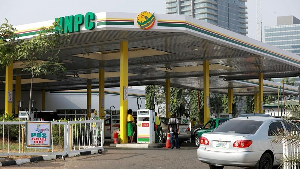
    The debt arose because NNPC is the sole importer of gasoline, which it sells to marketers at below-market prices to keep fuel costs low. At NNPC retail stations in Lagos, a liter of fuel sells for about 617 naira, significantly cheaper than the over 1,000 naira it fetches in neighboring countries, leading to cross-border smuggling.

    NNPC reported a profit of 3.3 trillion naira in 2023, up from 2.55 trillion naira the previous year. The company plans to invest $6.6 billion in its operations this year, largely through borrowing, according to Ajiya.

    The company also anticipates that crude oil and condensate production will rise to 2 million barrels per day by the end of the year, up from an average of 1.75 million barrels per day in August, thanks to improved security measures to curb oil theft, said Oritsemeyiwa Eyesan, the executive vice president of NNPC’s upstream division.
    4o

  • Cedi’s stability will influence us to reduce prices of fuel – Petrosol CEO

    Cedi’s stability will influence us to reduce prices of fuel – Petrosol CEO

    Some Oil Market Companies (OMCs) say they will reduce the prices of fuel at the pumps if the cedi continues to show signs of stability.

    This comes after the Institute for Energy Security projected stability in the prices of petroleum products in the second-pricing window of August due to the combined effects of the slowed depreciation of the local currency and the international market activities.

    Speaking to Joy Business at the 10th Anniversary of Petrosol Platinum Energy Limited, Chief Executive Officer, Michael Bozumbil dispelled claims of OMCs shortchanging consumers.

    “Anytime we assess the numbers and we see we can give discounts to consumers, we readily do that. When the cedi is stable we are always ready to reduce the price and Petrosol is always doing that”, he said.

    Addressing the ongoing dispute between the Liquefied Petroleum Gas Marketers Association and the National Petroleum Authority regarding the implementation of the Cylinder Recirculation Model, Mr. Bozumbil stated that the market would remain unaffected.

    He mentioned that the NPA has assured collaboration with all stakeholders in the sector on the Cylinder Recirculation Model.

    “I don’t think this will be blown out of proportion. The NPA has assured to resolve all issues confronting the sector. We know it’s not easy just as when we started, we had limited financial resources but with a strong network and reputation within the industry, we can leverage to grow. We aim to build a brand that exemplifies excellence in the oil and gas industry, despite the daunting challenges ahead”, he said.

    Crude oil prices continue to decline in the international market.

  • AG flags govt agencies for lack of transparency in 2023 gold export tax revenues

    AG flags govt agencies for lack of transparency in 2023 gold export tax revenues

    The Auditor General has raised concerns about the Controller and Accountant General, the Bank of Ghana, the Ghana Revenue Authority (GRA), and the Minerals Commission for not disclosing the amount of tax collected from gold exports in 2023.

    The Auditor General’s audit of nine gold mining companies found that these companies exported gold worth GH₵53.1 billion in 2023.

    However, there is no data available from the Bank of Ghana, GRA, the Controller, or the Minerals Commission to confirm the amount of royalties collected from these exports.

    Controller and Accountant General Kwasi Adjei acknowledged that accounting for gold-related revenues is an evolving issue but assured that the department is appropriately managing the funds received.

    He further stated that as long as the GRA successfully collects the funds and reports them to the Controller and Accountant General’s Department, the department can accurately account for them in the national financial records.

    “But when it comes to accounting for gold, there are some technicalities involved in getting the figures right, including provisions. So when the auditors brought this observation to our attention, we acknowledged it.

    “The way forward is to start establishing the systems and rules of engagement with all the relevant parties to ensure that we obtain the appropriate information on a timely basis for inclusion in the national accounts.”

    Mr. Adjei explained that the Controller and Accountant General’s Department uses the spot exchange rate and obtains the figures from the balance sheet provided in the bank statement.

    He explained that upon receiving instructions from the Ministry of Finance, the department requests the Bank of Ghana to manage the fund distribution.

    This procedure can take several days before the accounts are accurately allocated and debited.

    “We at the Controller’s office wait until the account is debited, and we use the spot rate at that time to do the computation. That is where the discrepancies are coming from.”

  • Communities affected by Jomoro Petroleum Hub Project to receive GHS200m from govt

    Communities affected by Jomoro Petroleum Hub Project to receive GHS200m from govt

    President Nana Addo Dankwa Akufo-Addo has instructed the Ministry of Finance to allocate GH¢200 million for compensating communities impacted by the initial phase of the Jomoro Petroleum Hub Development project, as reported by 3news.com.

    This directive was announced during the groundbreaking ceremony held at Nawuli in the Jomoro Municipality of the Western Region.

    During his address, President Akufo-Addo highlighted the importance of the project in tackling the challenges facing the nation’s energy sector.

    He expressed optimism that the Jomoro Petroleum Hub would emerge as a leading integrated petroleum complex in Africa, significantly enhancing both the upstream and downstream segments of the oil and gas value chain.

    The project, covering 20,000 acres, will include refineries, petrochemical plants, storage tanks, and other essential infrastructure.

    Its goal is to revolutionize the petrochemical industry across Africa, with projections of generating $1.56 billion in export taxes by 2030, boosting Ghana’s GDP by 70%, and creating over 780,000 jobs.

    However, some unrest persists among landowners, especially those represented by the Coalition of Concerned Nzema People.

    They have expressed dissatisfaction with the government’s approach to land acquisition, citing insufficient compensation and lack of adherence to proper procedures, according to the report.

    In response, President Akufo-Addo reassured the affected communities of the government’s commitment to resolving their concerns.

    “The chiefs and people of Jomoro have generously offered their lands for the development of these vital projects. In recognition of their contribution, I have instructed the Ministry of Finance to release an initial GH¢200 million to commence the payment of compensation for the affected lands,” he stated.

  • Policy analyst critiques Bawumia’s policies for lacking industry focus

    Policy analyst, Peter Tekper has criticized certain policies proposed by the New Patriotic Party (NPP) flagbearer, stating that they are not focused on benefiting industry.

    In a national address in Accra on February 7, Dr. Mahamudu Bawumia announced that Ghana would adopt a new “friendly” flat tax regime if he is elected President.

    The NPP flagbearer emphasized the importance of reforming the tax system to support businesses, particularly small and medium enterprises (SMEs). He highlighted the need to create a tax structure that favors the business community and encourages compliance with the new, business-friendly taxes.

    But speaking on JoyNews’ The Pulse on August 19, Mr Tekper said even after introducing these policies since the economic environment is not conducive for businesses, it will make no positive impact.

    “If you don’t deliberately bring a policy, that will have a homegrown solution in terms of developing businesses locally to generate revenue, you are still going to be an import-dependent economy.

    “If you look at the solutions that are being professed, yes, we need more tax revenues, business are struggling now. Look at it for instance, look at the VAT rate system is very expensive and so businesses are struggling.

    “High taxes at the port so even if someone is bringing raw materials there are categories, there are taxes that are still been paid.”

    In light of this, he stressed that “These policies are not targeting industries such that it will help Ghanaian businesses to be able to compete very well,” he added.

  • “We will implement a program to bridge housing gap within 10 years” – Bawumia

    “We will implement a program to bridge housing gap within 10 years” – Bawumia

    The Vice President and Flagbearer of the New Patriotic Party, Dr. Mahamudu Bawumia, has stated that his administration will address the housing deficit within a decade if elected.

    He outlined that the forthcoming NPP government will introduce a National Housing Programme designed to encourage private sector involvement, aiming to provide Ghanaians with access to quality, affordable housing in well-planned communities.

    Speaking at the launch of the NPP’s manifesto on August 18, 2024, he elaborated on this plan, saying: “Specifically, we will provide three broad options, including public and private sector housing, to meet various income levels”.

    These, he noted, include, “Social Housing including homeless shelters (overnight stay for the vulnerable) and an expanded Rental Assistance Scheme for low-income workers; affordable Housing including District Housing projects through incentives to the private real estate industry, as well as expanded services of State Housing Company (SHC), TDC, and National Homeownership Fund (NHF); and improving Housing Finance: through an expansion of the mortgage market, as well as rent-to-own schemes”.

    Bawumia further mentioned that his administration will employ multiple strategies to provide access to different types of housing options.

    “For example, for Social Housing, we will provide public lands within our main cities to private developers and make it mandatory for them to “set aside” between 20% to 30% for low-income social housing units with subsidised rents,” he said.

  • Non-Executive Director of ADB PLC resigns after 6 years of service

    Non-Executive Director of ADB PLC resigns after 6 years of service

    The Agricultural Development Bank PLC has announced that Hon. Mrs. Abena Osei Asare has resigned from her position as a Non-Executive Director, effective August 7, 2024, after six years of service.

    Mrs. Osei-Asare, who joined the ADB PLC Board of Directors in August 2018, played several key roles, including serving as the chair of the Risk Committee.

    Due to her recent appointments as a Board Member of the Bank of Ghana and the Financial Stability Council, Mrs. Osei-Asare is unable to continue as a Director of ADB PLC.

    On behalf of the Board, Management, and Staff, Board Chairman Daasebre Akuamoah Agyapong II expressed gratitude to Mrs. Osei-Asare for her contributions to the growth and development of ADB PLC.

    Founded in 1965, the Agricultural Development Bank PLC is the country’s leading bank in agribusiness financing, with one of the largest branch networks, consisting of 87 locations nationwide.

  • Govt misses out on up to $3m in surface rentals for 2023 – PIAC reveals

    Govt misses out on up to $3m in surface rentals for 2023 – PIAC reveals

    A member of the Public Interest and Accountability Committee (PIAC), Richard Ellimah, has stated that the Richard Ellimah, may have lost between $2 million and $3 million by the end of 2023 due to unpaid Surface Rentals from International Oil Companies (IOCs).

    The Surface Rentals, an important revenue source for the government, totaled $2,738,365.29.

    Mr. Ellimah revealed this information during a presentation at a media engagement in Ho on August 18, as part of PIAC’s project inspections in the Volta Region.

    He highlighted the importance of Surface Rentals as a critical revenue stream, explaining that all International Oil Companies operating in Ghana are mandated to pay these fees.

    However, he noted that some companies have defaulted on their payments, leading to substantial financial losses for the country.

    “All the International Oil Companies operating are required to pay Surface Rentals, but we’ve realized that some of the companies do not pay this amount, which is a loss to the government,” Mr. Ellimah stated.

    He further elaborated that some companies provide excuses for delaying their payments, often promising to settle their dues once production begins.

    However, in many instances, these payments are never made, and some companies even exit the country, leaving the government to absorb the financial loss. This has placed a considerable financial strain on the state.

    Looking forward, Mr. Ellimah recommended that the government implement stricter regulations to ensure Surface Rentals are paid either before production starts or during its course.

    He suggested integrating these payments into the companies’ social commitments related to their projects, thereby discouraging them from departing without meeting their financial responsibilities.

    Additionally, he emphasized the need for the Ghana Revenue Authority (GRA) to enhance its efforts to recover overdue Surface Rentals, applying standard default penalties to enforce compliance.

    The Public Interest and Accountability Committee (PIAC) is an independent statutory body established to promote transparency and accountability in the management of petroleum revenues in Ghana.

    Founded under Section 51 of the Petroleum Revenue Management Act (PRMA) 2011 (Act 815), PIAC is pivotal in ensuring that petroleum revenues are managed in a way that benefits the people of Ghana.

  • 1,000 WAEC centers to begin nationwide exams on August 19

    1,000 WAEC centers to begin nationwide exams on August 19

    The West Africa Examination Council (WAEC) has announced that it had commenced all the administration of practical and theory papers for candidates in this year’s exams.

    This was stated in a press release by the council declaring that the practical and theory exams will begin on August 19, 2024, at 1,000 centres across the country.

    Additional information also indicates that all necessary security have been put in place to ensure that the exams run smoothly and candidates were advised to abide by rules and regulations and avoid exam malpractices.

    See the full press release below:

  • I will vote for NPP because my children benefitted from free SHS – Citizen

    I will vote for NPP because my children benefitted from free SHS – Citizen

    A Ghanaian citizen identified as Asmanu Yaya has stated that he will continue to vote for the New Patriotic Party (NPP) because four of his children have benefited from the Free SHS program.

    During The Independent Ghana’s vox pop session with citizens to gather views on their voting preferences, Mr. Yaya mentioned that even though the economy is currently struggling, he cannot deny that this same government has relieved parents like him of the burden of paying school fees.

    “I will still vote for the NPP because I can testify that Free SHS has benefited four of my children,” Mr. Yaya indicated.

    In contrast, Emmanuel, another Ghanaian, expressed a different opinion, stating that he has no reason to vote for any candidate because he has personally not reaped any benefits.

    “I don’t see anything for my vote. They will come and deceive us and then go. So this time, I have learned you have to work for yourself because if you don’t work for yourself, they won’t give you food,” the young man indicated.

    Speaking to another young lady named Tiwa, she mentioned that she plans to vote in December 2024.

    Tiwa believes that she needs to exercise her right as a citizen.

    “I will vote because it is my right to vote as a citizen,” Tiwa stated confidently.

  • “What’s Gospel?” – Opanyin Agyekum asks after priest apologizes for singing King Paluta’s ‘Aseda’

    “What’s Gospel?” – Opanyin Agyekum asks after priest apologizes for singing King Paluta’s ‘Aseda’

    Professor of Linguistics, Kofi Agyekum, has raised a provocative question, asking, “What defines Gospel?”

    His question come after Father Peter Kusi Twumasi, rendered an unqualified apology for leading his congregation to sing King Paluta’s Aseda.

    In response to this, one of the three guests on Peace FM’s KOKROKOO show remarked that the priest’s apology was unnecessary, noting that some people go to extremes in the name of the gospel.

    At this point in the discussion, Opanyin Agyekum, who was also part of the show, posed the question, “What exactly is Gospel?”

  • Accra Mall, West Hills Mall, Kumasi City Mall were not sold at $200m – Bright Simons

    Vice President of IMANI Africa, Bright Simons, has debunked claims that the Accra Mall, West Hills Mall and Kumasi City Mall were sold at $200 million dollars.

    Reports came in days ago that these three major retail shopping malls operating in the country have now been taken-over by a South African real estate investment firm in a deal worth US$200 million.

    However, Mr Simons accuses the media of “giving free rein to PR agents to push fake news through at a worrying pace.”

    Given his ongoing investigation into the World Bank’s IFC investments in malls as part of a long-term project aimed at assessing whether these investments genuinely benefit local communities, his “antenna was immediately raised” when he noticed the heavily PR-driven media coverage on the issue.

    “When I saw the PR-heavy press coverage, my antenna jacked up since I have been investigating the World Bank’s IFC’s mall investments as part of a long-term project that seeks to understand how and if investments by the World Bank truly benefit people on the ground. First off (no prizes for guessing), the PR that the three Ghanaian malls were sold for $200 million was false. Newsrooms are very busy nowadays, giving free rein to PR agents to push fake news through at a worrying pace.”

    “And, yes, the World Bank’s IFC is somehow involved in this affair. The company (Lango) that bought the 4 malls began life as an Investec-Growthpoint entity that was funded by the IFC in May 2018 with a $40 million contingent-equity facility. Attacq’s and Hyprop’s stakes in the four malls actually all sold for a total of $60 million. Their stakes in the three Ghanaian malls fetched ~$27 million. Consider that in 2017, Sanlam valued the Accra Mall alone (the smallest of the 3 malls) at $129 million, up 100% in value from the $65 million it assessed in 2012 when, together with Attacq, it bought it from Actis.”

    Read post below for more details:

  • $2bn funds secured for the construction of Cape Coast Airport – Bawumia

    $2bn funds secured for the construction of Cape Coast Airport – Bawumia

    The flagbearer of the New Patriotic Party, Dr. Mahamudu Bawumia, has announced plans to develop and construct an airport in Cape Coast if he is elected president in the upcoming December elections.

    He stated that $2 billion in funding has already been secured from South Korean investors to initiate the Cape Coast Airport project.

    During the party’s manifesto launch on August 18, 2024, Dr. Bawumia also committed to building a new airport in the Upper East region to stimulate economic growth and enhance the country’s aviation infrastructure.

    “I will facilitate the establishment, by the private sector, of a Maintenance, Repair and Overhaul (MRO) facility at the Tamale Airport, to develop it into an aviation cargo, horticultural cargo, and logistics hub, commence the development of the Cape Coast Airport, for which funding has been secured under the Korean $2 billion facility, in collaboration with the private sector, and build an airport in the Upper East Region.”

    In 2023, the government carried out a feasibility study for a new airport in Cape Coast.

    The government emphasized that the proposed airport was crucial for improving air travel in the central and western regions of the country, with the goal of boosting tourism, trade, and domestic air connectivity.

    Aviation consultants Ayeh & Ayeh, who were commissioned by the government to conduct the study, have now completed and submitted their report.

  • Gov’t considers reintroducing VAT on electricity – Report

    Gov’t considers reintroducing VAT on electricity – Report

    The previously suspended 15 per cent value-added tax (VAT) on electricity could be reinstated as inflation continues to decrease.

    The Ghana Statistical Service (GSS) announced last week that annual inflation had dropped to a 28-month low of 20.9 per cent in July—the slowest rate since March 2022—down from 22.8 per cent in June this year.

    In its July 2024 Country Staff Report, the International Monetary Fund (IMF) acknowledged the readiness of local authorities to reintroduce the tax once inflation subsides.

    “On the revenue side, implementation of VAT on residential electricity (expected yield 0.17 per cent of GDP) was suspended due to strong social resistance. The authorities are committed to implementing this measure when the inflation dynamics are more conducive,” the IMF said on page 10 of the report.

    The VAT on residential electricity was originally introduced as a revenue-generating measure under the IMF-backed COVID-19 recovery program.

    In a letter dated January 1, 2024, and signed by former Finance Minister Ken Ofori-Atta, the Ministry of Finance instructed the Electricity Company of Ghana (ECG) and Northern Electricity Distribution Company (NEDCo) to apply the VAT to residential customers exceeding a specified consumption threshold.

    However, after significant public backlash led by organized labour, the government suspended the contentious tax in early February 2024 to allow for further discussions with stakeholders. The suspension followed strong opposition from the Trades Union Congress (TUC) and the general public.

    To address the anticipated GH¢1.8 billion revenue shortfall resulting from the suspension of electricity VAT, the government announced plans to tax the foreign incomes of resident Ghanaians, among other measures.

    During an economic update in April 2024, Finance Minister Dr. Mohammed Amin Adam stated that the government had to explore alternative revenue sources after dropping the VAT on electricity.

    “And so we had to look at alternative measures to generate more revenue to fill in that gap,” Dr. Adam said. “As for those alternative measures, some were announced in the Budget Statement of 2023 and also 2024 but were not effectively implemented. And so, now, we are determined to effectively implement these measures to generate the desired revenue and fill the gap created as a result of suspending the VAT.”

    Dr. Adam noted that the government’s decision to suspend the VAT on electricity had significant implications for the country’s fiscal framework. The new tax on foreign incomes is a measure aimed at ensuring that Ghana meets its key fiscal targets under the IMF program.

    “Now, what this means is that when we take a decision as a government which borders on our fiscal framework, there are consequences,” Dr. Adam said. “And the consequences could persist unless we are proactive enough to find ways to fill the gap and avoid those consequences. One of the consequences could be that you miss out on the fiscal target, and the IMF programme then suffers.”

  • NAPO halts campaign to focus on NPP manifesto launch

    NAPO halts campaign to focus on NPP manifesto launch

    The New Patriotic Party’s (NPP) running mate, Dr. Matthew Opoku Prempeh’s campaign team for the New Patriotic Party (NPP) has temporarily halted its activities to prepare for the party’s forthcoming manifesto launch.

    The NPP is set to unveil its “It is Possible” manifesto on Sunday in Takoradi in the Western Region.

    The upcoming manifesto is anticipated to focus on job creation and creating a favorable environment for the private sector.

    In a Friday interview on Joy News’ AM Show, Dennis Miracles Aboagye, Director of Communications for the Bawumia campaign, provided a preview of what Ghanaians can look forward to when the manifesto is unveiled on Sunday, August 18.

    “The manifesto is designed to ensure that the private sector not only thrives but also expands, increases production, and empowers citizens to access the opportunities generated. As businesses grow, they will naturally need to hire more people, leading to increased employment,” he explained.

    Dr. Prempeh, who has been vigorously campaigning in the Ashanti Region, has paused his campaign tours to prepare for this major event.

    Sources reveal that Dr. Prempeh is now in the Greater Accra Region to participate in meetings with the National Council and the National Executive Committee.

  • Alternative to NPP is dangerous for our Future – Kennedy Agyapong

    Alternative to NPP is dangerous for our Future – Kennedy Agyapong

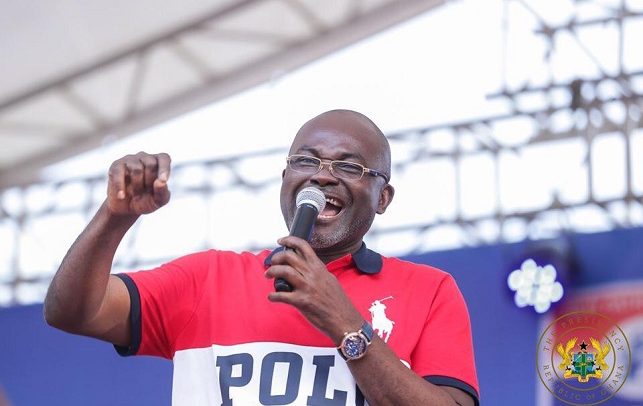
    The New Patriotic Party (NPP) Member of Parliament for Assin Central Constituency, Kennedy Ohene Agyapong has confidently claimed that Ghana thrives more under NPP’s leadership compared to any other political party.

    In a video shared on UTV’s X page, he urged Ghanaians to support the NPP to keep the party in power, highlighting the success of its flagship program, Free Senior High School.

    Although he did not win the party’s flagbearer race, losing to Dr. Mahamudu Bawumia, Agyapong emphasized that the future of many students is secure.

    He pointed out that parents can attest to the relief that the Free SHS policy has provided since the NPP implemented it.

    Young girls and boys today have the hope that because of Free SHS your future can be better than that of Kennedy Agyapong. So if you make the mistake of voting for any other party apart from the NPP, you will face the consequence. So I am pleading with the youth of this country to vote for Dr Bawumia. If for no other reason, then for the sake of stability,” Mr Agyapong said.

  • GTEC requests approval to hire 2,500 teachers

    GTEC requests approval to hire 2,500 teachers

    The Ghana Tertiary Education Commission (GTEC) has applied to the Ministry of Education for approval to hire 2,500 additional teaching staff.

    This request is intended to alleviate the current academic workload and ensure a swift restart of academic sessions.

    GTEC’s appeal follows a nationwide strike by the Colleges of Education Teachers Association of Ghana (CETAG), which began on June 14 in response to the government’s failure to fulfill agreed arbitral awards and other service conditions.

    Once financial clearance is granted, GTEC will swiftly initiate the recruitment process to deploy the new staff promptly.

  • Ken Agyapong ‘begs’ Ghanaians to pray for NPP’s victory

    Ken Agyapong ‘begs’ Ghanaians to pray for NPP’s victory

    A former contender for the New Patriotic Party (NPP) flagbearer, Kennedy Agyapong, has asked Ghanaians to pray for the NPP’s victory ahead of 2024 elections.

    The Assin Central MP emphasized that maintaining the NPP in government is crucial for the nation’s stability.

    Speaking at a campaign event for the NPP’s running mate, Dr. Matthew Opoku Prempeh (NAPO), in Konongo, Ashanti Region, Agyapong called on Ghanaians to support and pray for the party’s continued leadership.

    “When you go on your knees, pray for these leaders and the NPP so that they would be in power for long for Ghana to have stability,” he said in Twi.

    He has also urged the Asante Akyem Central Constituency to vote for their parliamentary candidate, Kwame Anyimadu Antwi, in the upcoming elections on December 7.

    Addressing a rally of chiefs and residents in Konongo, Asante Region, he emphasized the importance of unity within the constituency.

    “It is crucial that we come together as one. A united front will be our greatest strength in winning the election. Let us present a cohesive and strong effort. Only through unity can we secure victory in 2024” he said,” Kennedy Agyapng expressed.

  • World Bank to allocate $1bn to Ghana for economic stabilization

    World Bank to allocate $1bn to Ghana for economic stabilization

    The World Bank plans to allocate $1 billion over the next 12 years to support Ghana’s economic stabilization and assist private businesses.

    This is in addition to the $1.6 billion already provided since last year for economic support.

    The World Bank has expressed satisfaction with the government’s measures to stabilize the economy, which has influenced their decision to fund projects outlined in the budget and other poverty reduction initiatives.

    Robert O’Brien, the World Bank Country Director, shared these details on the PM EXPRESS BUSINESS Edition with George Wiafe on August 15, 2024.

    He also mentioned an additional $5 billion allocated under the World Bank Group for social intervention programs and infrastructure development.

    Additional Support

    He announced that the bank will soon convene to approve additional funding for Ghana to support key projects.

    Mr. O’Brien added that the Group will also soon review the second Development Policy Operations, which, if approved, could result in further financial support for Ghana.

    “We have our portfolio and pipeline project financing for Ghana, in terms of support” he affirmed.

    “In terms of the portfolio funding, there is an allocation of $4.4 billion of that over the past 12 months, just $1 billion dollars have been disbursed”, he stated.

    In June, the World Bank sanctioned an additional $800 million to bolster various sectors of the economy.

    Mr. O’Brien explained that this funding is intended to help Ghana address funding gaps resulting from the country’s challenges in securing capital from international markets.

    Is Ghana’s Recovery sustainable?

    Mr. O’Brien believes that to ensure sustained economic recovery, the government must exercise fiscal discipline, particularly concerning election-related expenditures.

    “Government must also work hard to grow the economy and create the required jobs for the population”, he advised.

    He emphasized that maintaining fiscal discipline could significantly contribute to sustaining the economic recovery.

    He also mentioned that the World Bank will provide Ghana with the essential technical support to help ensure the continued effectiveness of the ongoing reforms.

  • Nigeria enhances border security as Mpox cases reach 39

    Nigeria enhances border security as Mpox cases reach 39

    The Federal Government has enhanced its monitoring and screening measures at all entry points into Nigeria to address the Monkeypox outbreak.

    Prof. Muhammad Pate, the Coordinating Minister of Health and Social Welfare, announced this in a statement on Thursday, which was signed by his Special Adviser on Media and External Relations, Tashikalmah Hallah.

    The Nigeria Centre for Disease Control and Prevention reported on Thursday that there are 39 confirmed cases of mpox across 33 states and the Federal Capital Territory since the start of 2024, with no reported deaths.

    “The Coordinating Minister of Health and Social Welfare, Prof Muhammad Pate, emphasised that the country has intensified monitoring and screening procedures at all entry points in response to the threat of Mpox, Clade 1,” the SA said in the Thursday statement.
    Protesters lament the deteriorating situation of the country as hunger protest continue. | Punch
    0:00 / 0:00

    The statement quoted the minister as saying that the NCDC and Nigeria Ports Health Services, part of the Federal Ministry of Health and Social Welfare, had been strengthening Nigeria’s defenses even before mpox was officially declared a public health emergency.

    “This Mpox Clade 1 strain has caused fatalities in up to 10 per cent of individuals who have fallen ill in previous outbreaks. He added that the aim is to tackle and mitigate its impact by deploying measures similar to those used during the COVID-19 pandemic,” Pate noted.

    He went on to explain that the government had introduced a new requirement for all travelers to fill out an online health declaration form before arriving in the country.

    “This measure is being introduced alongside the activation of infectious disease centres in all 36 states and the Federal Capital Territory,” he added.

    The minister also encouraged the public to maintain good hygiene practices, including regular hand washing with soap and water or using an alcohol-based hand sanitizer, particularly after coming into contact with infected individuals or animals.

    On Tuesday, the Africa Centre for Disease Control declared a public health emergency due to the escalating mpox outbreak across the continent.

    The outbreak has spread across several African nations, with the Democratic Republic of Congo (DRC) being particularly affected.

    The DRC is experiencing a severe and expanding outbreak that has now crossed its borders.

    A new viral strain, first identified in September 2023, has been detected outside the DRC for the first time.

    The World Health Organisation highlighted concerns over this new virus strain, clade 1b, which has rapidly spread mainly through sexual networks, and its detection in neighboring countries, leading to the declaration of a Public Health Emergency of International Concern (PHEIC).

    In 2024 alone, approximately 2,863 confirmed cases and 517 deaths from mpox have been reported across 13 African countries.

    Mpox is a rare viral zoonotic disease, meaning it is transmitted from animals to humans, and is endemic in several African regions, including Central and West Africa’s tropical rainforests.

    The exact reservoir of the virus remains unknown, though rodents, squirrels, and monkeys are suspected to contribute to its transmission.

    In response, the Rivers State Government has provided 46 motorcycles to tuberculosis supervisors and their deputies in the 23 local councils of the state to enhance tracking and treatment efforts. This initiative, in partnership with the Federal Ministry of Health, aims to reach remote areas and work towards eliminating tuberculosis in the state.

    Dr. Adaeze Oreh, the state Commissioner for Health, presented the motorcycles in Port Harcourt, emphasizing that the move is intended to improve access to hard-to-reach areas and ultimately eradicate tuberculosis in the region.

    She stated, “Tuberculosis is one of those notorious infections that have been ravaging countries across the world, especially low and middle-income countries such as Nigeria.

    “In partnership with the Federal Ministry of Health, the National Tuberculosis and Leprosy Control Programme with immense support from the Global Fund, we are here gathered with these 46 motorcycles which will be supported for the 23 local government areas TB supervisors and their deputies.

    “We know that at the forefront of tackling this deadly infectious disease is active community surveillance. And these motorcycles will enable the TB Supervisors and the Deputies to go into the nook and crannies of our communities to identify those who may be infected and put them on the treatment that they need,” the health commissioner said.

  • Some OMCs reduce fuel prices; petrol sold at GHC14.22

    Some OMCs reduce fuel prices; petrol sold at GHC14.22

    Several Oil Marketing Companies (OMCs) have begun lowering petroleum prices at the pumps.

    Market leader GOIL is now offering a litre of petrol at ₵14.22, which reflects a 1.38 percent decrease from the price two weeks ago.

    The price of diesel has also decreased, now at ₵14.90 per litre, down by ₵0.90.

    Consumers are eagerly anticipating further reductions in prices from the over 100 OMCs.

    Reasons for the Price Reviews

    According to some market analysts who spoke to JOYBUSINESS, the recent price reductions may be attributed to the cedi’s ongoing recovery over the past few months.

    The cedi’s depreciation rate against the dollar has eased from 7 percent in May to just 1 percent in July, and the decline has slowed further in the first two weeks of August.

    These changes are believed to be significant factors in the recent adjustments in pump prices.

    Analysts suggest that if this trend continues, there could be additional price decreases in the upcoming pricing window.

    Additionally, crude oil prices have remained relatively stable on the international market despite geopolitical tensions in the Middle East.

  • Optimize natural resource revenue to overcome economic challenges – IFS

    Optimize natural resource revenue to overcome economic challenges – IFS

    The Institute for Fiscal Studies (IFS) has called on the government to focus on optimizing revenue from natural resources as a crucial approach to tackling the nation’s current economic difficulties.

    This advice comes in response to concerns about missed revenue targets and economic instability.

    In a recent policy brief, the IFS stressed the importance of harnessing the country’s natural resource wealth more effectively, given the ongoing challenges in revenue mobilization.

    The brief notes that, despite the nation’s significant resources such as gold and oil, these assets have not been fully leveraged for revenue generation.

    Dr. Said Boakye, Senior Research Fellow at IFS, stressed the importance of this approach. “Like gold and oil, it is imperative that we enjoy significant benefits from them as others do. This means that maximising revenue generation from natural resources should be central in the country’s quest and strategy to significantly increase government revenue mobilisation,” he stated.

    The IFS report follows the 2024 Mid-Year Fiscal Policy Review presented to parliament by Finance Minister Dr. Amin Adam. The review highlighted that total revenue and grants were GH¢1.4 billion short of the target, emphasizing the pressing need for improved revenue generation strategies.

    The total revenue and grants fell short of the target range of GH¢76.1 billion to GH¢74.7 billion, with domestic revenue and foreign grants missing their goals by GH¢221 million and GH¢1.2 billion, respectively.

    Dr. Boakye outlined specific recommendations for enhancing revenue from the natural resource sector. “Government should increase its ownership interests in the natural resource sector or adopt superior contractual arrangements like production-sharing agreements,” he advised.

    These measures, according to Dr. Boakye, have proven successful in other countries; helping them capture a larger share of earnings from their natural resource sectors.

    The policy brief also touched on the broader economic context, noting that the revised 2024 total revenue and grants target of 17.4 percent of GDP appears “out of sync with reality and is thus not achievable”.

    This assessment underscores the importance of exploring alternative revenue sources, with natural resources presenting a significant opportunity.

    Dr. Boakye emphasised that maximising natural resource revenue is not just about immediate financial gains, but also about long-term economic stability.

    “By optimising our approach to natural resource management and revenue collection, we can create a more robust fiscal foundation for Ghana’s future,” he explained.

    The IFS recommendations go beyond just focusing on natural resources; they also advocate for a thorough review of tax exemptions and advise against the politicization of economic policy decisions, particularly with the 2024 elections approaching.

    Nevertheless, the emphasis on leveraging natural resources is highlighted as a crucial strategy for enhancing Ghana’s fiscal health.

    “Government must recognise that our natural resources are a national treasure that, if properly managed, can significantly contribute to our economic recovery and growth,” Dr. Boakye added.

    He urged swift action in implementing these recommendations, noting that the temporary nature of recent debt relief measures makes it crucial to establish more sustainable revenue sources.

  • IES announce price stability for petrol, diesel, and LPG

    IES announce price stability for petrol, diesel, and LPG

    The Institute for Energy Security (IES) has forecasted that petroleum product prices will remain stable on the local fuel market during the second half of August 2024.

    This projection is attributed to a combination of the slowed depreciation of the cedi and recent international market trends observed in early August 2024.

    Petrol and diesel prices saw a positive shift, with decreases of 2.83% and 4.46%, respectively.

    Conversely, Liquefied Petroleum Gas (LPG) experienced a price increase of around 2.66%. Additionally, the Ghana cedi depreciated by 0.77% against the U.S. dollar.

    The IES emphasized that barring any regulatory or policy changes, fuel prices are expected to remain steady over the next two weeks.

    World Oil Market

    Rising instability in the Middle East, combined with weaker demand from China, has had a negative impact on oil prices.

    Both Brent Crude and WTI experienced additional price drops during the first pricing window of August 2024. While ongoing geopolitical tensions in the Middle East usually drive oil prices up, current concerns over demand are overshadowing the potential for supply disruptions.

    Local Fuel Market Performance

    In the first pricing window of August 2024, liquid fuel prices at the pumps dropped for the first time since May 2024.

    During this period, the price per litre of petrol and diesel fell by an average of GH₡0.20, according to performance data from local Oil Marketing Companies (OMCs).

    The Institute for Energy Security’s (IES) analysis of the national average prices for the three refined petroleum products during this window showed petrol selling at GH₡14.00 per litre, diesel at GH₡14.58 per litre, and LPG at GH₡15.22 per kilogram.

  • Cedi trades at GHS15.92 to $1, GHS20.50 to £1

    Cedi trades at GHS15.92 to $1, GHS20.50 to £1


    The cedi trades at GH¢15.92 to $1 at several major forex bureaus in Accra as of Friday, August 16, 2024,

    This depreciation is also reflected in other currencies, such as the British Pound and Euro. The cedi is currently valued at GH¢20.50 to £1 and GH¢17.52 to €1 at major forex bureaus nationwide.

    Recently, Bloomberg ranked the Ghana cedi as the fourth-worst performing currency among 150 leading currencies globally. While the cedi has lost nearly 23% of its value against the US dollar, Bloomberg noted that it has shown some relative stability this month [July].

    The cedi’s decline has been linked to a heightened demand for US dollars to purchase petroleum products, pharmaceuticals, and other imported goods.

  • Any investment in Komenda Sugar Factory would be waste of resources – Kyei-Mensah-Bonsu

    Any investment in Komenda Sugar Factory would be waste of resources – Kyei-Mensah-Bonsu

    Former Majority Leader and Suame MP, Osei Kyei-Mensah-Bonsu, has criticized any potential state investment in the Komenda sugar factory as a wasteful expenditure.

    He highlighted the severe operational issues facing the factory, noting the substantial loss of land originally designated for the project.

    “When the Komenda sugar factory was operational, about 20% of lands at the site is gone, the chiefs have taken over, leaving only about 75%”, he explained.

    Osei Kyei-Mensah-Bonsu noted that the out-growers who once supplied the factory have since transformed their lands into palm plantations, further decreasing the amount of available land.

    “When the factory came to a standstill, all the out-growers converted their lands into palm plantations, so the small land left cannot feed the factory”.

    In an interview with Kojo Marfo on AbusuaNkommo at ABUSUA 96.5 FM, Osei Kyei-Mensah-Bonsu mentioned that the factory’s dependence on irrigation water from River Pra is problematic because illegal mining has severely damaged the water sources.

    “If you go anywhere, they grow sugarcane, you will need irrigation water to feed the farms. When the factory was operational, they drew irrigation water from River Pra along the Cape Coast to Takoradi road.

    “What water are we going to use for this work? The water has been polluted by illegal mining. Are we going to make the water clean before we use it?”, he asked.

    Hon Osei Kyei-Mensah-Bonsu stressed that the pollution from illegal mining would necessitate water purification before it could be used, significantly increasing the project’s costs.

    He insisted “because of galamsey all the water bodies have been destroyed, and you need to purify it.”

    “There’s nowhere in the world where irrigation water is purified before you. Even if you do that, it will bring another cost”, he stressed.

    He also voiced serious concerns about the contamination of the Pra River, which is the factory’s water source, as a result of illegal mining activities.

    “The most dangerous thing is that all fishes in the Pra River are all dead because of poisonous chemicals in the river.

    “Even if you are able to purify the water at that huge cost for irrigation, the poisons which have killed the fishes are still in the water and will feed into the sugarcane”, Hon Osei Kyei Mensah stressed.

    He also noted that the existence of the Sugar Factory poses a significant threat to public health as the sugar produced would likely be deemed unwholesome by the Food and Drugs Authority.

    “When you’re done producing, the Food and Drugs Authority will come and tell you the sugar is not wholesome. Does it make sense to go ahead with this?”.

    Osei Kyei Mensah Bonsu clarified that his comments represent his personal opinion and not the stance of the government stating “I am not speaking for the government, but for myself”.

    The former Majority Leader noted that this is not the first instance he has voiced doubts about the project. He remembered having cautioned about its potential failure when the factory was first launched under the NDC administration.

    In related news, Minister for Trade and Industry KT Hammond has revealed that an Indian company, which is set to lease the Komenda Sugar Factory, will pay the government a minimum of $1 million annually in rent.

  • African experts demand US$5.9tn commitment before Baku climate summit

    African experts demand US$5.9tn commitment before Baku climate summit

    As global leaders prepare for the upcoming climate summit in Baku, Azerbaijan, African climate finance experts are advocating for a transformative shift in climate finance. They are calling on developed nations to pledge at least US$5.9 trillion by 2030.

    This appeal, made during a recent consultation ahead of the African Group of Negotiators meeting in Mombasa, Kenya, underscores Africa’s drive to reform the financial mechanisms supporting climate adaptation, mitigation, and equitable transitions.

    The consultation highlighted the need for Africa to actively influence the future of climate finance. The proposed financial target offers Africa a chance to assert its needs and align the financing goals with its actual requirements.

    Experts emphasized the urgency of addressing Africa’s escalating climate-related needs, focusing particularly on securing public funds from developed nations. However, they cautioned against linking these funds to debt instruments, which could further exacerbate the financial challenges of already debt-laden developing countries.

    They called for a commitment of at least US$5.9 trillion by 2030, reflecting the increasing needs and priorities of developing nations for financing adaptation, mitigation, a just transition, and addressing loss and damage.

    Additionally, the experts urged developed countries to avoid sidetracking this year’s climate negotiations with debates on the funding sources. Instead, they should honor the UN Climate Convention and the Paris Agreement, which place the responsibility for mobilizing and providing climate finance on these nations.

    “If the new climate finance goal is set based on the limited politics of today, the world will fail to rise to the climate challenge,” said Iskander Erzini Vernoit of the IMAL Initiative for Climate & Development.

    He emphasized that the commitment should surpass the US$100 billion pledged in earlier agreements, advocating for more than a trillion dollars annually in international public finance to meet scientific requirements.

    The African delegation’s position highlights a growing frustration with the existing climate finance system, which many feel inadequately addresses the challenges faced by vulnerable countries.

    Samson Mbewe from South South North warned against market-based loans being presented as climate finance, stressing the importance of grants, especially for adaptation initiatives.

    “The New Collective Quantified Goal (NCQG) must steer clear of debt instruments, especially those that masquerade as climate finance and yet are market-related loans,” Mbewe said. “Developing countries are in dire need of grants. Loans of any sort would need a higher degree of concessionality.”

    He asserted that with many developing countries already burdened by significant debt, more through ‘climate finance’ could deepen financial struggles rather than help. “It is essential that we find ways to support climate action without increasing debt. We also need to remember that developed nations have a responsibility to help those who have been most affected by climate change.”

    In light of this, he suggested that the NCQG should concentrate on equitable and sustainable solutions that genuinely bolster global efforts without imposing extra financial burdens.

    Supporting this view, Climate Finance Expert Julius Mbatia underscored the urgent need for a financial target that accurately addresses the needs of developing nations. He highlighted Africa’s call for US$6.5 trillion by 2030, arguing that falling short of this amount would demonstrate a lack of urgency and ambition.

    “A quantum that does not constitute public finance at scale in grants for adaptation, loss and damage will not resonate with the climate realities of developing and vulnerable countries,” Mbatia noted. He added “A quantum that insists on market rate loans will do more harm to already highly indebted vulnerable nations in regions such as Africa.”

    Eva Peace Gatwa of Loss and Damage Youth Collaboration also stressed the need for a common definition of climate finance. “There will always be mistrust when it comes to climate finance provided, and a high risk of humanitarian aid, ODA finance and other finance being reported as climate finance. Climate finance definition equals transparency and accountability,” she asserted.

    Julius Ng’oma of the Civil Society Network on Climate Change (CISONECC) in Malawi recognized the challenges associated with accessing funds raised through UNFCCC financial mechanisms. He attributed these difficulties to the intricate procedures, stringent requirements, and lengthy timelines, urging for immediate improvements.

    Adrian Chikowore from the Institute for Economic Justice emphasized that private sector-led financing should not be the primary focus of climate finance. He argued that such financing often neglects the needs of the most impacted communities, providing fragmented solutions that fail to address underlying systemic inequities.

  • FDA to appeal GHS93.9m judgment debt over unlawful drug destruction

    FDA to appeal GHS93.9m judgment debt over unlawful drug destruction

    The Food and Drugs Authority (FDA) has announced its plans to appeal the GH¢93,905,760.79 judgment debt recently levied against it by an Accra High Court.

    On July 29, 2024, the court ruled that the FDA must compensate Tobinco Pharmaceuticals Ltd. for the illegal destruction of unexpired drugs owned by the company.

    In 2014, the FDA had seized pharmaceutical products imported by Tobinco to Ghana, claiming they were unfit for consumption.

    Subsequently, in 2019, Tobinco filed a lawsuit against the FDA, seeking damages and challenging the legality of the FDA’s actions.

    The court, led by Justice Audrey Kocuvie-Tay, found that the FDA’s destruction of Tobinco’s unexpired products was unlawful as it was carried out without a court order.

    The court again declared that “the unlawful lockup of Tobinco’s warehouses by the FDA and bad media publicity by the FDA resulted in the massive expiration of Tobinco’s products between June 2014 and August 2015.”

    Justice Kocuvie-Tay also ruled that the FDA’s directive to halt the sale of Tobinco’s products without an Executive Instrument from the Minister of Health was unlawful.

    She further stated that the FDA’s and its CEO’s decision to bar Bliss GVS Pharma Limited from importing drugs into Ghana without the proper Executive Instrument (E.I.) from the minister was unlawful.

    The judge concluded that Tobinco had not imported counterfeit drugs into the Ghanaian market.

    In response, the FDA, through a statement from its Chief Executive Officer, Dr. Delese Darko, announced its intention to appeal the court’s decision to the Court of Appeal.

    “The FDA acknowledges the judgment delivered by the High Court. However, the authority respectfully disagrees with the decision and intends to exercise its right to appeal. The FDA remains committed to upholding the judicial process and adhering to the rule of law and will follow due process until the matter is fully resolved.”

    It also dismissed allegations circulating publicly that its CEO was negligent in her duties, leading to the Authority’s financial loss.

    “For the avoidance of doubt, the Authority informs the public that this case stems from actions taken in 2013. Despite the claims made against the then CEO, Dr. Stephen Opuni, by the applicant, Tobinco Pharmaceuticals Ltd., the current leadership of the organization has provided a defense to the courts at all material times. The action initiated against the FDA in 2019 has consistently and vigorously been responded to by the FDA,” the statement added.

  • ‘Politics’ at TOR deterring investors – Report

    ‘Politics’ at TOR deterring investors – Report

    Public Enterprises Minister Joseph Cudjoe has pinpointed the main reason behind the Tema Oil Refinery’s (TOR) challenges in securing and maintaining substantial investment.

    He noted that TOR has become a “political football,” creating an environment of instability that deters serious investors from committing their resources.

    “Anytime you have spoken to someone out there to bring investment to TOR, and I’m talking about serious investors in the refinery business, the response I have received is, TOR is a political football in Ghana. Therefore, which serious investor will come and expose his good money, corporate image, and personal reputation to a political football,” he stated.

    During his appearance at the Ministry of Information’s Meet-The-Press series in Accra, Joseph Cudjoe, who previously served as Deputy Minister of Energy for Finance and Infrastructure, disclosed that efforts to attract private investors to collaborate with the government in recapitalizing TOR frequently encounter obstacles due to worries about political interference.

    This, he said, serves as a major deterrent to potential investors who fear they “will be politically witch-hunted” or subjected to “unnecessary and uninformed public commentary,” ultimately risking their ability to conduct business elsewhere.

    “Private investors usually don’t want to be known. They want their names out of the public domain. But in Ghana, get close to a public asset and see what will happen to you. People have money to invest, but they don’t want their names to be dragged in public as if they are thieves,” he stressed.

    The minister criticized the current climate in which investors are frequently labeled as thieves when they express interest in revitalizing underperforming public assets.

    “We have a certain cultural environment in Ghana where when you have money and are getting close to a public asset to invest in, we start branding you a thief. So, it makes it difficult to attract serious private investment, good money into public assets. Because people don’t want their reputation to be soiled in Ghana when they have to go and invest in other countries like Norway, UAE when he comes here to invest his money in TOR, and it is as if he is stealing Ghana’s money, that’s the conversation among investors out there,” he indicated.

    Joseph Cudjoe pointed out that because of this perception, serious investors often prefer to steer clear of Ghana or choose to initiate their own new projects instead of risking their reputation by investing in existing public assets.

    “So don’t be surprised that directly opposite TOR and in the same industrial enclave, there is a certain Sentuo, that will rather come out and build another refinery but then we could have offered TOR to the same investor to put money in it. Don’t be surprised that the proposed Petroleum Hub development project will attract another serious refinery, and our TOR will be there because we’ve made TOR a political football,” the minister stated.

    However, he remains hopeful that “the President has put together a team to look into TOR and get a turnaround” to finally resolve the long-standing challenges of this strategic state asset.

  • Chinese mining firm in Ghana suffers $900,000 loss in major gold heist – Report

    Chinese mining firm in Ghana suffers $900,000 loss in major gold heist – Report

    A Chinese mining company has reported the loss of 12kg (26lbs) of gold, valued at US$900,000, during an armed robbery in Ghana earlier this year.

    Beijing Xiaocheng Technology Stock Co, a gold mining firm listed on the Shenzhen stock exchange, announced in its mid-year financial report on Wednesday that “five to six” suspects had been apprehended and are currently in police custody in Ghana.

    Security forces in the West African country were, “still searching for the whereabouts of the gold”, according to the company.

    Africa has long been a key investment destination for Chinese companies seeking minerals and resources abroad, but concerns over security risks are increasing. In response, Beijing has pledged to enhance the protection of its workers and assets overseas.

    Beijing Xiaocheng, a company involved in gold mining, production, processing, and sales, stated that Ghanaian security agencies had offered a reward for information leading to the arrest of those responsible for the robbery on April 18.

    The company reported that 11 individuals were suspected of participating in the armed attack on its subsidiary, Akroma Gold Mining Co, located in Esaase, in Ghana’s eastern Kwahu West municipality.

    Following the incident, Akroma implemented stricter security measures at the gold mine.

    According to local media reports from April, heavily armed assailants targeted the company’s processing area, seizing gold and assaulting several workers, including Chinese expatriates.

    Beijing Xiaocheng revealed that the masked attackers infiltrated the Akroma processing plant through an undeveloped section of the mine.

    Despite security personnel being overpowered, resulting in injuries to workers, including Chinese nationals, there were no fatalities.

    The robbers escaped with 12kg of gold that was scheduled for export that day, resulting in a direct economic loss of US$900,000, according to the company’s financial report.

    Beijing Xiaocheng, which operates three gold mines in Ghana, confirmed that the Akroma mine had resumed normal operations after the attack.

    The company also operates solar power generation projects, including a 20MW photovoltaic power station in Ghana that has been in operation for over a decade.

    Gold is Ghana’s leading export, generating US$9.53 billion in revenue in 2022, according to data from the Observatory of Economic Complexity. Nearly half of Ghana’s gold is exported to the United Arab Emirates, with Switzerland, India, and Hong Kong also being major buyers.

  • Polish engineers to return with parts for train repairs – Railway Authority

    Polish engineers to return with parts for train repairs – Railway Authority

    The Ghana Railway Development Authority (GRDA) has given an update on the recently acquired train that was involved in an accident on the Tema-Mpakadan rail line a few months back.

    In an interview on Asempa FM’s Ekosii Sen program on Thursday, Nana Ama Opoku, the Assistant Manager of Corporate Affairs at GRDA, stated that the train is currently being repaired at the Tema maintenance yard.

    She noted that engineers from the GRDA, along with experts from the manufacturers in Poland, are collaborating to resolve the issue.

    “The Polish engineers who assembled the train came to Ghana to assess the damage and perform some preliminary repairs. They have returned to Poland to procure the necessary parts, and they are expected to return by the end of the month to complete the repairs,” she said.

    Nana Ama also disclosed that, the second batch of 12 state-of-the-art trains from Poland is expected to arrive in Ghana by the end of October.

    “We are anticipating the arrival of the second train by the end of October, and President Nana Addo will commission the Tema-Mpakadan railway line in November. Once the commissioning is done, the new trains will be put into service” she disclosed.

    The accident took place on April 18, 2024, during a test run on the Tema-Mpakadan railway line in the Asuogyaman district of the Eastern Region.

    This 97 km standard-gauge railway, built from Tema to Mpakadan, is a component of a multi-transport network aimed at improving the movement of goods and people along Ghana’s Eastern corridor.

    The line links Tema port in the southern region to the inland port in the northern part of the country.

    Addressing any legal actions connected to the accident, Nana Ama Opoku indicated, “The matter is with the government, and I cannot provide an update on the prosecution at this time.”

  • ‘I will publish names of gov’t officials who profited from sold state lands’ – Ablakwa vows

    ‘I will publish names of gov’t officials who profited from sold state lands’ – Ablakwa vows

    Member of Parliament for North Tongu, Samuel Okudzeto Ablakwa, has pledged to reveal the names of government officials who allegedly profited from the sale of state lands during the New Patriotic Party (NPP) administration.

    Mr. Ablakwa’s decision comes in response to the Lands Minister, Samuel Jinapor, who dismissed allegations of land grabbing and the sale of state lands under the NPP government.

    The Lands Minister claimed that most of the lands in question were transferred to private individuals for development in the state’s interest.

    “The allegations of state capture and the narrative that this government is indiscriminately selling public lands, are all palpably false, without merit, and, obviously, actuated by political considerations given that we are nearing elections,” Lands Minister said.

    Responding to this, Mr. Ablakwa contested the Lands Minister’s stance, accusing the government of complicity in the issue.

    “We have come to the firm conclusion that the Akufo-Addo-Bawumia government is deliberately refusing to disclose the status of all public lands in our country because they are complicit. They know that when the full facts emerge, they will be exposed for the massive land grabs and unquestionable state capture they have engaged in,” he said.

    He threatened to expose the government on the matter should the minister dare him by failing to produce the data on all state lands.

    He said government “under the guise of we are returning lands to stools, individuals, government takes a share of state lands.”

    “We are revealing today and we are aware that government always takes a percentage of the land and then shares surreptitiously. If they dare us, we will publish in full the percentage they had in the Kumasi transfer and the people who are now beneficiaries,” he said.

    He added “The Accra transfer – La Wireless lands, the 12 per cent that they took and the people they have sold it to. We dare the Lands Minister that he should attempt again to rope the NDC into their filthy state capture and the exposure we will make, it would be difficult for them to stay in this country.”

    He claimed to be aware of the government’s dubious activities and urged them to halt the sale of state lands and safeguard any remaining assets.

  • Phase 3 of Upper East Regional hospital project opened by Akufo-Addo

    Phase 3 of Upper East Regional hospital project opened by Akufo-Addo

    President Nana Addo Dankwa Akufo-Addo has formally opened Phase 3 of the Upper East Regional Hospital rehabilitation project, marking a significant advancement in improving healthcare infrastructure in the region.

    This achievement is a key component of the government’s larger effort to enhance healthcare services throughout Ghana and has been funded by the Saudi Fund for Development.

    Phase 3 of the project encompasses the construction of several vital facilities aimed at increasing the hospital’s operational efficiency.

    Included in these developments are a modern mortuary facility, housing for doctors, a hostel for patient relatives, and a medical gas building.

    The project also involves the creation of a comprehensive perimeter wall, a cutting-edge kitchen, a Central Sterile Services Department (CSSD), and a laundry facility.

    At the inauguration event, Upper East Regional Minister Dr. Hafiz Bin Salih emphasized the profound impact the project will have on regional healthcare services.

    He noted that these new amenities will significantly boost the hospital’s ability to serve the community more effectively.

    Mohammed Al-Shammari, General Director of African Operations for the Saudi Fund for Development, remarked that the project aligns with a broader objective to enhance and provide universal healthcare access, ensuring that everyone receives high-quality care irrespective of their financial status.

  • Mahama vows to construct modern market in Aflao to enhance trade

    Mahama vows to construct modern market in Aflao to enhance trade

    Presidential Candidate of the National Democratic Congress (NDC), John Dramani Mahama, has promised to improve the livelihoods of market women in the Volta Region by upgrading the Ho-Dzodze-Aflao road and constructing a modern market in Aflao.

    Speaking to traders at the Ho central market during his campaign tour, Mahama assured them of a more seamless trading experience, with enhanced infrastructure to ease the flow of goods and services between Aflao and Ho.

    Mr. Mahama underscored the NDC’s dedication to development, stating that his next administration would prioritize building essential infrastructure to bolster local commerce.

    “Our party is known for its developmental and infrastructure works, and my government will prioritize the construction of the Ho-Dzodze-Aflao road and a new market in Aflao to provide comfort for trading activities,” he stated.

    Alongside these commitments, Mr. Mahama announced plans to open a branch of the National Women’s Bank in the Ho Central Market.

    This initiative seeks to offer financial support to women entrepreneurs, enabling them to expand their businesses and make a stronger impact on the local economy.

    “The National Women’s Bank will be here in Ho Central to support your businesses, ensuring that you have the financial resources needed to thrive,” Mr Mahama assured the market women.

  • WhatsApp account of Nigerian governor hacked by fraudsters

    WhatsApp account of Nigerian governor hacked by fraudsters

    Fraudsters have seized control of Umo Eno’s WhatsApp account, the governor of Nigeria’s oil-rich Akwa Ibom state, and are using it to solicit money from his contacts.

    Akwa Ibom, situated in southern Nigeria, is the country’s third-wealthiest state, with an annual gross domestic product of $19 billion (£15 billion).

    Eno, who assumed office last year, is also a pastor and founder of the All Nations Christian Ministry International.

    On Tuesday, many of the governor’s contacts received messages from his WhatsApp number, requesting transfers of specific amounts of money to an account with a promise of repayment later.

    Ekerete Udoh, the governor’s chief press secretary, confirmed that the account had been “cloned” by criminals aiming to defraud unsuspecting individuals. Law enforcement agencies have been notified of the incident.

    “We hereby warn that any message appearing to solicit funds by these imposters should be totally discountenanced by the general public as they do not emanate from the Governor,” the statement read.

    Less than a month ago, a phone number associated with Ademola Adeleke, the governor of Osun state and uncle of Afrobeats star Davido, was similarly compromised.

    Cybersecurity expert Bilal Abdullahi recommended that governors enhance the security of their phone numbers and WhatsApp accounts to prevent such incidents.

    “WhatsApp enables additional security layers whereby one can link the app to his email for authorisation before use and also there‘s what we call App Lock whereby one can lock the application and can only use it if he inserts a pin or passcode,” he told the BBC.

    Despite a significant crackdown in recent years, with the EFCC arresting thousands, cyber fraud, commonly known as “Yahoo-Yahoo,” continues to be a major issue in Nigeria.

    Uche Ifeanyi Henry, director of Nigeria’s National Cyber Crime Centre (NCCC), recently informed the BBC that the government has invested millions of pounds in a state-of-the-art cyber-crime center to demonstrate its commitment to combating cyber crime.

  • I have not bribed NDC MPs with security agency slots – Interior Minister

    I have not bribed NDC MPs with security agency slots – Interior Minister

    Minister of the Interior, Henry Quartey, has dismissed accusations that he tried to bribe opposition Members of Parliament by offering them opportunities to recruit their constituents into security services.

    During an interview with the media on Wednesday, August 15, Johnson Asiedu Nketia, the National Chairman of the National Democratic Congress (NDC), claimed that Quartey made the offer in an attempt to silence NDC MPs who were against the recruitment of around 10,000 party supporters into the police force.

    Asiedu Nketia, also known as General Mosquito, voiced serious concerns about the potential impact of such actions on the upcoming election, warning that it could threaten peace if the Interior Minister were secretly involved in these activities.

    However, Mr. Quartey has strongly denied these claims.

    He acknowledged informing his colleagues that recruitment portals for security services were open and advised them to inform their constituents to apply before the general announcement was made.

    The Interior Minister clarified that his actions were not intended to bribe opposition MPs but were instead meant as a goodwill gesture. He emphasized that he never asked them to submit lists of their constituents, as General Mosquito had alleged.

    “Of course, MPs have got constituents who may have also bought forms. Is it wrong to say that if there are forms, they should go through the same process?

    “I am not saying that bring me files so I can put you there. So this statement, first of all, let me say categorically that I did not bribe any Member of Parliament,” he said on JoyNew’s The Pulse with Kojo Braxce on Thursday.

    Mr. Quartey also stated that he brought it up during a private meeting with legislators, clarifying that his intention was not to bribe anyone for any reason.

    “I have not bribed any Member of Parliament by offering them two –two and all that.”

    The Interior Minister emphasized that the security service is a neutral entity, and he cannot jeopardize the country’s peace and stability by staffing these institutions with party loyalists.

    “We don’t have political police, political soldiers, and political fire. Why do I say so? I have always made this statement and asked them [security agencies] to come and speak to it, which they have not done,” he added.

    He therefore requested that Mr. Nketiah’s statement be ignored.

  • GSA CEO calls for unified effort to implement revolutionary Shipping Law

    GSA CEO calls for unified effort to implement revolutionary Shipping Law

    Chief Executive Officer (CEO) of the Ghana Shipping Authority (GSA), Kwesi Baffour Sarpong, has expressed that the revised Ghana Shippers’ Authority Law will transform the nation’s commercial shipping industry, but its success hinges on collaborative efforts.

    During a recent stakeholder gathering in Accra organized by the Ghana Institute of Freight Forwarders (GIFF), Baffour Sarpong emphasized that the effective execution of the law will require unified and coordinated actions from all industry stakeholders.

    The notable meeting brought together members from major industry bodies, including the Customs Brokers Association of Ghana (CUBAG), the Association of Customs House Agents Ghana (ACHAG), the Importers and Exporters Association of Ghana, and the Trade Advocacy Group (TAG).

    Baffour Sarpong highlighted the law’s key objectives, which include optimizing shipping operations, improving freight forwarding processes, and aligning with global trade standards. He urged stakeholders to work together in ensuring its successful implementation.

    “The Shippers’ Authority Law is designed to foster a more favourable trading environment, minimise shipping process bottlenecks, and ultimately reduce the cost of doing business in Ghana. The success of this law will depend on our collective effort and cooperation. We must work together to enhance market dynamics and strengthen Ghana’s trade competitiveness”, he noted.

    Baffour Sarpong emphasized the need to prepare for the development of a Legislative Instrument (L.I) to support the effective implementation of the law.

    He assured stakeholders that the law’s enforcement would be fair and would address the needs of the shipping industry, representing a crucial milestone in Ghana’s ambition to become the leading trade hub in West Africa.

    Kofi Ahenkorah Marfo, Deputy Minister of Trade and Industry, stated that the new law would bring order to the shipping sector by ensuring greater accountability in legal activities within the blue economy, both locally and internationally. He stressed the importance of collaboration and encouraged all associations to actively participate in drafting the Legislative Instrument that will guide the law’s successful implementation.

    Leaders from GIFF, CUBAG, ACHAG, the Importers and Exporters Association of Ghana, and TAG voiced their support for the new law, while also recognizing that its success hinges on their collective dedication.

    Stephen Adjokatcher, President of GIFF, expressed optimism that the new law would enhance transparency and accountability, leading to better revenue collection and contributing to national economic growth.

    Sampson Asaki Awingobit, Executive Secretary of the Importers and Exporters Association of Ghana, welcomed the amended law, hoping it would address longstanding demands for reform and help reduce shipping delays and associated costs.

    Prof. Paul Kuruk from the Ghana International Trade Advocacy highlighted the significance of ongoing dialogue and feedback in the law’s implementation, noting these elements are essential for its success.

    The meeting concluded with a unanimous commitment to work together, marking a significant step in Ghana’s path towards becoming a key trade hub in the region.