Author: Amanda Cartey

  • AG appeals acquittal of Ato Forson, Richard Jakpa in ambulance case at Supreme Court

    AG appeals acquittal of Ato Forson, Richard Jakpa in ambulance case at Supreme Court

    The Office of the Attorney General has appealed the Court of Appeal’s ruling that acquitted and cleared Minority Leader Dr. Cassiel Ato Forson and Richard Jakpa in the ambulance procurement case.

    In a Notice of Appeal filed on August 8, 2024, the AG argued that the majority decision incorrectly applied the standard of proof required to determine whether the accused should have been called to defend themselves.

    The appeal also challenges the majority’s conclusion that the letters of credit did not constitute payment under the contract, arguing that this finding contradicts the evidence presented and is unsupportable.

    Furthermore, the appeal criticizes the majority’s ruling that the Ministry of Health was to blame for the financial loss, claiming it contained significant errors and led to a serious miscarriage of justice.

    The Attorney General is requesting that the Supreme Court overturn the acquittal and discharge, and order the accused to proceed with their defence.

  • GNGC reports 60% completion of maintenance work on Ghana Gas Processing Plant

    The Asset Integrity and Maintenance Manager at Ghana National Gas Company (GNGC), Richmond Alamu, has reported that around 60% of the planned maintenance work on the company’s Gas Processing Plant (GPP) and offshore Gas Export Facilities has been completed.

    The facilities were taken offline on August 1 for the scheduled maintenance, with completion anticipated by August 17.

    Mr. Alamu provided an update to reporters following a tour of the facilities, where he assessed the progress of the ongoing maintenance by engineers at Atuabo in the Ellembelle District of the Western Region.

    He explained that the routine maintenance aims to improve the plant’s operational efficiency and ensure a continuous gas supply.

    He said: “The maintenance team has a lot of equipment which we do regular maintenance on them, but there are some that require that we shut down the plant, and that is what we are doing within this period.” 

    Dr. Robert Kofi Lartey, the Operations Manager at GNGC, stated that the engineers are diligently working to finish the scheduled maintenance on time.

    He noted that the shutdown was planned in 2023, following the manufacturer’s guidelines and scheduling, and was coordinated with the activities of other entities in the gas value chain.4o mini

    “This is a national asset and so, we work with international safety and health protocols, and also the integrity of the plant, and we do so by working with all agencies in the oil and gas value chain,” Dr Lartey added. 

    Head of Corporate Communications at GNGC, Ernest Kofi Owusu-Bempah, reaffirmed the company’s dedication to upholding top safety and operational standards at its facilities.

    He mentioned that during the maintenance period, the company and its partners organized for lean gas to be provided from the Sankofa-OCTP field to the Takoradi Distribution Station (TDS) for their clients.

  • GTEC rejects calls to close teacher trainee colleges amid CETAG strike

    GTEC rejects calls to close teacher trainee colleges amid CETAG strike

    The Ghana Tertiary Education Commission (GTEC) has dismissed suggestions from some Ghanaians to shut down all Teacher Trainee Colleges in light of the ongoing strike by the Colleges of Education Teachers Association of Ghana (CETAG).

    CETAG initiated a nationwide strike on June 14, citing the government’s failure to implement agreed-upon arbitration awards and other service conditions.

    The strike, now nearing two weeks, has disrupted academic activities, leaving many campuses empty of students.

    In an interview with Citi News, Professor Francis K. E. Nunoo, Deputy Director General of GTEC, emphasized that closing the colleges is not feasible due to the significant financial consequences it would entail for the institutions.

    “Closing the school has financial implications, as well as their staying in school, as you have said. But we were hoping that we have done quite a lot of work, and quite a lot of all their demands are virtually almost addressed.

    “So we were hoping that in the next few days, we will bring to a finality to the issues so that they can go back to school. Students are meanwhile doing their practical work so the practical work needs to be supervised. At least they are getting busy with their practical work.

    “We are hopeful that in the next few days, CETAG will see a reason to call off the strike. It is when all these do not yield fruit, and then we will consider it.”

  • Caterer to now apply for School Feeding Programme online at a GHS200 fee – Gender Minister

    Caterer to now apply for School Feeding Programme online at a GHS200 fee – Gender Minister

    The Ghana School Feeding Programme (GSFP) will soon shift from manual to digital operations, according to Gender Minister Darkoa Newman’s announcement in Accra today.

    This upgrade is intended to boost transparency, minimize delays, and optimize resource distribution within the programme.

    With the new digital system, prospective caterers will need to apply online and submit a non-refundable fee of GH¢200. The revamped information management system will oversee caterer selection, data collection, and payment processing.

    “This process is opening it up to every prospective caterer to apply online. They will have to pay GH¢ 200.00 Ghana. They’ll create a profile, they make payments, then they can work on the form,” she said at the Minister’s Press Briefing organised by the Ministry of Information to provide updates on the GSFP and Affirmative Action (Gender Equity) Act, 2024.

    “We’re going to be running an information management system to manage the entire process. To manage the caterer selection module, the data collection module, and to manage the payments section of it. Everything will be run online going forward,” she elaborated. 

    The system will undergo a pilot phase in the New Juaben South and Krachi East districts before being implemented nationwide for the 2024/2025 academic year.

    “Immediately, the pilot starts so that the rolling out of the national process will also start. You will see another publication for all 16 regions this time, not just for the two districts that have been advertised at this point,” she explained.

    Mrs. Newman emphasised that the digital platform will help to eliminate discrepancies and leakages that have plagued the programme in the past.

    However, she advised prospective caterers to ensure they meet certain criteria, such as having at least GH¢5,000 in their accounts for pre-financing their operations and possessing a valid health certificate, before submitting their applications.

  • Entrance exams to substitute BECE after passage of Free SHS Bill – Education Minister

    Entrance exams to substitute BECE after passage of Free SHS Bill – Education Minister

    Ghana’s Minister of Education, Dr. Yaw Osei Adutwum, has revealed that in the future, students at the basic level will no longer take the Basic Education Certificate Examination (BECE) but will instead sit for entrance exams to progress to Senior High School (SHS).

    In an exclusive interview on GTV’s Breakfast Show on Thursday, August 8, 2024, Dr. Yaw Osei Adutwum highlighted that, in the modern era, it is vital to complete senior high school, where certification exams will be held, rather than at the junior high level.

    Dr. Adutwum clarified that the Free Secondary Education Bill allocates government-funded resources to guarantee free, high-quality secondary education for all children.

    According to this bill, junior high school is designated as lower secondary and will no longer be considered part of basic education, effectively establishing a six-year secondary education system in Ghana.

    He mentioned that lower secondary schools may function independently but will provide the same learning opportunities as senior high schools.

    He explained that making secondary education mandatory removes the necessity for the BECE as a certification exam.

    In response to suggestions from Africa Education Watch to include a required subject on basic practical agriculture in the SHS curriculum reform, Dr. Adutwum proposed that this could be incorporated into the lower secondary curriculum, introducing students to agriculture and helping them decide whether to pursue it further in upper secondary school.

  • Over $270bn needed to expand roads – Finance Minister

    Over $270bn needed to expand roads – Finance Minister

    The country requires an estimated $271.7 billion to reach its goal of expanding the road network from 78,401 km in 2016 to 253,000 km by 2047.

    This goal, outlined in the Ghana Infrastructure Plan, also includes increasing the proportion of paved roads to 70 percent, connecting urban areas with multi-lane highways, and building long-span bridges over the Volta Lake.

    Finance Minister Mohammed Amin Adam, who made this announcement, said the targets would require roughly $9 billion annually. Additionally, $1.3 billion per year would be needed for road maintenance and upgrades.

    Speaking at a forum in Accra on road financing yesterday, Dr. Amin Adam mentioned that GH¢10 billion, or approximately $660 million, had been invested in the road network since January 2024, with another planned investment of GH¢7.6 billion, or around $509 million, on the way.

    Population

    As the nation’s population increases by roughly two percent each year, the minister emphasized the growing urgency to efficiently provide public services and dependable infrastructure, including affordable, quality housing and an improved transportation network.

    Dr. Amin Adam mentioned that the government had established a coordinated and integrated strategy for infrastructure development, outlined in the Ghana Infrastructure Plan 2018-2047, to provide the country with a structured framework for tackling its infrastructure challenges.

    “We have also programmed key initiatives such as the recently launched District Road Improvement Programme (DRIP) and the upcoming Economic Roads Improvement Initiative to ensure we intentionally fund roads that link pivotal productivity to enhance ventures such as agricultural enclaves and tourist sites,” he said.

    However, he added that despite efforts of the government, public sector funding and initiatives alone would not bridge the gap

    Commendation

    The minister commended the Ghana Highway Authority (GHA) for its unwavering commitment to delivering quality road infrastructure to support the growth agenda of the country, saying “we must overcome the habit of developing feasibility studies after feasibility studies without a clear path for implementation”.

    He said the solution lay in making significant room for private-sector participation, adding that the time had come for the country to do things differently, and gave an assurance that his outfit would work to ensure investors were sufficiently supported to deliver a pipeline of “bankable” projects without cumbersome processes.

    “We also want to look internally to leverage more predictable funding sources such as pension funds. I gather that pension assets under management reached almost GH¢50 billion last year,” the minister said.

    In that regard, Dr Adam said: “We want to work with the regulator of pension funds to ensure we structure a regime that allows our pension funds to co-invest in commercially attractive infrastructure projects that deliver stable Returns on Investment (ROI)”.

    He further said that the development of a revised framework for road and bridge tolls in 2025, for instance, was one measure to ensure that commercial risks were sufficiently mitigated to encourage more pension funds and private financing pools to participate in road and infrastructure programmes in the country.

    Road projects

    The Country Director of the World Bank, Robert Taliercio O’Brien, observed that Ghana had the second largest pipeline for roads in the sub-region and the 38th globally in terms of the US dollar value of all projects.

    He commended the country for its efforts in that regard. “There is a lot to celebrate on the hard-fought accomplishments which is a result of sustainable leadership, capable institutions and important financing flows,” he said.

    Dr O’Brien, however, said the nation was still faced with some challenges due to some macro economic challenges which had made the Roads Ministry unable to complete some ongoing road projects.

  • Ada Chiefs jubilate over McDan’s paralysis – Blakk Rasta alleges

    Ada Chiefs jubilate over McDan’s paralysis – Blakk Rasta alleges

    Ghanaian presenter Blakk Rasta has alleged that Dr. Daniel Mckorley, the Executive Chairman of McDan Group, a logistics conglomerate, has been struck by paralysis due to the actions of a deity in Ada.

    According to the presenter, he visited McDan’s hometown to inquire about his whereabouts after noticing his unusual absence from the public scene.

    To his utter dismay, Blakk Rasta claimed, “The chiefs were jubilating over an enchantment cast against McDan, which has led the gods to paralyze him for allegedly stealing the salt land from them.”

    Blakk Rasta further explained that some people in Ada have been unhappy with McDan, accusing him of being a bully. “So they have gone underground to pray and consult their gods… When I arrived in Ada just yesterday, they told me that McDan is paralyzed and that the gods have struck him.”

    The people of Ada, according to Blakk Rasta, provided evidence to support their claim, pointing out that McDan was supposed to attend the Asafotu festival but was notably absent.

    “He was also meant to sit in a palanquin, but the palanquin stool remained empty. When they consulted the gods, the response was that he had been struck and is now paralyzed,” Blakk Rasta concluded.

    Watch video below for more details

    https://www.tiktok.com/@blakk_empire_media/video/7400494081480215813?is_from_webapp=1&sender_device=pc
  • Farmers are heavily affected by cedi depreciation – Chamber of Agribusiness 

    Farmers are heavily affected by cedi depreciation – Chamber of Agribusiness 

    Some stakeholders in the agriculture sector report that smallholder farmers are not receiving farm inputs from the Ministry of Food and Agriculture.

    Anthony Morrison, the CEO of the Chamber of Agribusiness Ghana, has attributed the rising cost of staple foods to this issue, noting that the depreciation of the cedi has affected the prices of farm inputs like fertilizer and seeds.

    In an interview with Joy Business, Mr. Morrison called on the government to prioritize the provision of inputs to smallholder farmers in order to enhance crop yields. He made these comments during the Technical Stakeholders Breakfast Meeting in Accra.

    He also mentioned that in recent months, Ghana has experienced a noticeable increase in food prices, which has become a growing concern for both consumers and policymakers.

    “The cedi depreciation is a major issue that affects farmers because most of the inputs are imported from Europe. This means that farmers will have to grapple with the high cost of inputs”, he said.
    Mr. Morrison warned that farmers will become worse off if prices of basic farm inputs keep going up if the cedi depreciation continues.

    “Don’t forget productivity downstream depends on inputs, seeds, agrochemicals, and fertilizers. 70% to 80% of these are all imported. As far as our cedi continues to depreciate, where we import these commodities from, like Asia and Europe and in the US, we will continue to have a higher cost of food production”.

    He noted that the sector’s growth is hindered by its heavy dependence on imported agricultural inputs.

  • We will not protect you if you are caught worsening exchange rate regime – AGI to companies

    We will not protect you if you are caught worsening exchange rate regime – AGI to companies

    The Association of Ghana Industries (AGI) has expressed support for Finance Minister Mr. Amin Adam’s efforts to crack down on certain manufacturing companies contributing to exchange rate volatility.

    According to Mr. Amin, some companies sell their products and collect payment in cash. Afterward, they convert the cedi into dollars and deposit it in banks.

    This practice, he explained, is exacerbating the ongoing foreign exchange issues, and as a result, the government will begin taking action against these companies. The AGI should be aware of this.

    Backing the Finance Minister, the Chief Executive Officer of the Association of Ghana Industries (AGI), Seth Twum Akwaboah, stated that the association will not protect any member found guilty of this practice.

    “As an association we are very responsible, we work with high ethical standards and indeed if you are found to be in any kind of these situations, we will expose you and deal with you drastically. In fact we are not aware of this but I don’t doubt the minister for what he has said”

    “We all know in every society, there are the good ones and the bad ones. So for me what I will say is our member companies involved in this should put a stop to this. If you are caught AGI will not be there to speak for you and that we can assure you. Sometimes we have to look at the circumstances that led to that”, he stated

    Mr Akwaboah added that the association will investigate these matters further and advised AGI members to adhere to best practices.

  • 11th edition of Tehillah Experience 2024 unveiled with the theme ‘The Bethel’

    11th edition of Tehillah Experience 2024 unveiled with the theme ‘The Bethel’

    Esteemed Ghanaian gospel artist Ohemaa Mercy has announced that her annual Tehillah Experience is scheduled for Sunday, September 8, 2024, in Accra.

    This highly anticipated event, marking her 11th annual concert, is famed for its spiritually enriching atmosphere and powerful worship sessions, and will be held at the Oil Dome of Royalhouse Chapel International.

    As the main performer, Ohemaa Mercy, renowned for her dynamic stage presence and creativity, is set to deliver an exceptional performance.

    Ohemaa Mercy shared her enthusiasm for this year’s event, promising a memorable worship experience that will draw attendees closer to God.

    This year’s Tehillah Experience, themed “The Bethel,” aims to inspire believers to spread the gospel and fulfill their divine purpose.

    Ohemaa Mercy emphasised the importance of worship as a tool for evangelism and personal spiritual growth.

    She is known for several hit songs, including “Aseda,” “Wofiri Mu,” “Thank You,” “Obeye,” “Edin Jesus,” “Ma De Me,” “Wobeye Kese,” “Adom Bi,” and “Menmu.”

    Hosted by Ohemaa Mercy Ministries, the concert is designed to meet the spiritual needs of its attendees, attracting Christians and gospel music fans from various backgrounds.

    The event will showcase an array of renowned gospel artists from Ghana and abroad, including Piesie Esther, Mama Esther, Cece Twum, Nacee, Uncle Ato, Nigeria’s Ebuka Emmanuel Hillary, and many others.

    These performers are anticipated to lead uplifting worship sessions, creating a spiritually charged atmosphere that will leave a profound impact on those in attendance.

    The event promises a spiritually enriching experience through praise and worship.

    Attendees will enjoy inspirational live musical performances, with all artists ready to give their best on stage.

    In addition to Ohemaa Mercy, a selection of renowned gospel performers will also grace the event, adding to the excitement.

    Starting at 4 p.m., the concert will be broadcast live on social media platforms, including Facebook and YouTube.

    Since its inception in 2014, the Tehillah Experience has grown to become one of the most significant gospel music events in Ghana.

    Over the past decade, it has drawn thousands of worshippers, fostering a sens

  • OSP requests Interpol to revoke Red Notice for Samuel Mahama, others

    OSP requests Interpol to revoke Red Notice for Samuel Mahama, others

    The Office of the Special Prosecutor (OSP) has announced that it has requested the International Criminal Police Organisation (INTERPOL) to retract the Red Notice issued against Samuel Adam Foster, also known as Samuel Adam Mahama, in connection with his involvement in the Airbus bribery case.

    A Red Notice is an alert issued to law enforcement agencies worldwide, asking them to locate and temporarily detain an individual pending extradition, surrender, or other legal processes.

    INTERPOL stated that Mr. Adam Mahama was being sought on allegations of accepting a bribe from Airbus to influence public officials to expedite the deal.

    Speaking at a press briefing in Accra today, the Special Prosecutor, Kissi Agyebeng, explained that the request to withdraw the notice was made after no evidence of bribery or corruption was found against Adam Mahama, his brother, former President John Dramani Mahama, or their business associates.

    “The Special Prosecutor has also directed authorised officers of the OSP to rescind the 13 May 2020 warrants of arrest obtained from the Circuit Court, Accra for the arrest of Samuel Adam Foster (also known as Samuel Adam Mahama), Philip Sean Middlemiss, Leanne Sarah Davis, and Sarah Furneaux.

    “On 8 August 2024, the Special Prosecutor notified INTERPOL of the withdrawal of the Red Notice in respect of Samuel Adam Foster (also known as Samuel Adam Mahama), Philip Sean Middlemiss, Leanne Sarah Davis, and Sarah Furneaux,” Mr. Agyebeng said.

    Mr. Agyebeng also revealed that his office has decided to conclude the investigations into the alleged bribery of top Ghanaian officials by Airbus SE, carried out through intermediaries, concerning the sale of military transport aircraft to the Republic of Ghana between 2009 and 2015.

    According to him, the office will also not “institute criminal proceedings against any person in respect of this investigation”.

  • Team Eternity officially announces death of its member

    Team Eternity officially announces death of its member

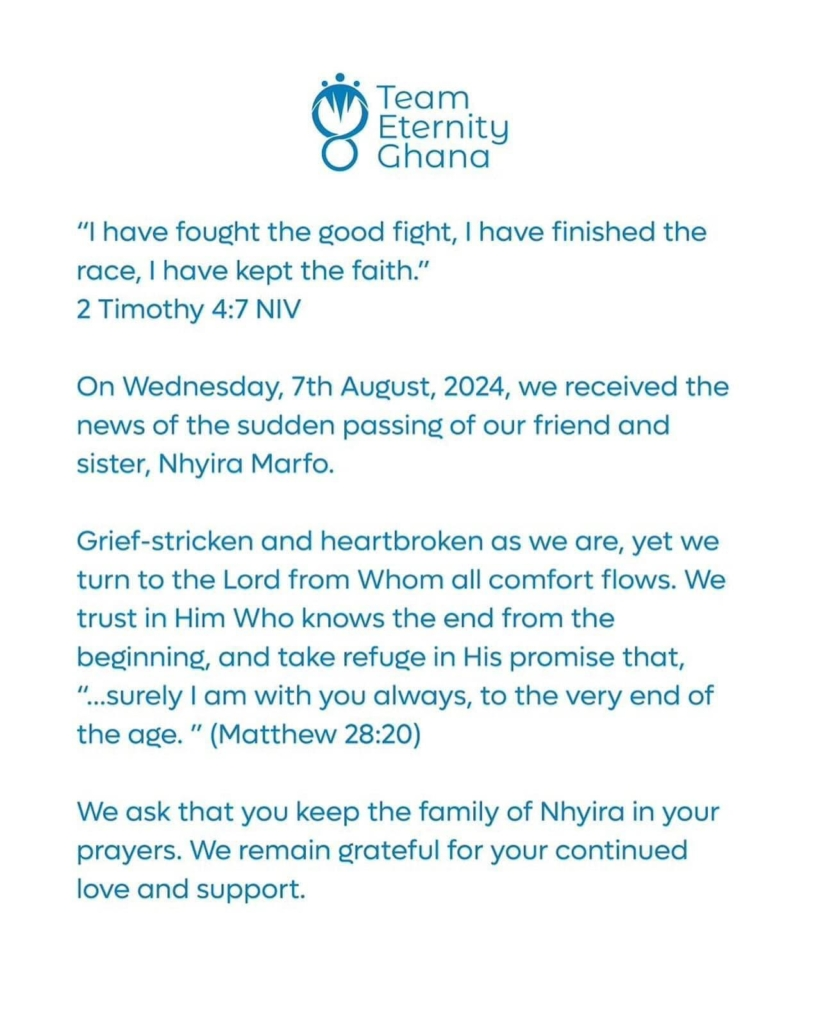
    Well-known gospel group Team Eternity Ghana has announced the sudden death of its member, Nhyira Marfo.

    In a statement, the group revealed that Nhyira, one of their lead vocalists, passed away on Wednesday, August 7, 2024.

    “Grief-stricken and heartbroken as we are, yet we turn to the Lord from Whom all comfort flows. We trust in Him Who knows the end from the beginning and take refuge in his promise that, ‘…surely I am with you always, to the very end of age (Matthew 28:20),” the statement read in parts.

    The group conveyed their gratitude to everyone for their support and requested continued prayers for the grieving family during this challenging period.

    Read Team Eternity’s full statement below:

  • What Mahama said about poverty, crisis and witchcraft

    What Mahama said about poverty, crisis and witchcraft

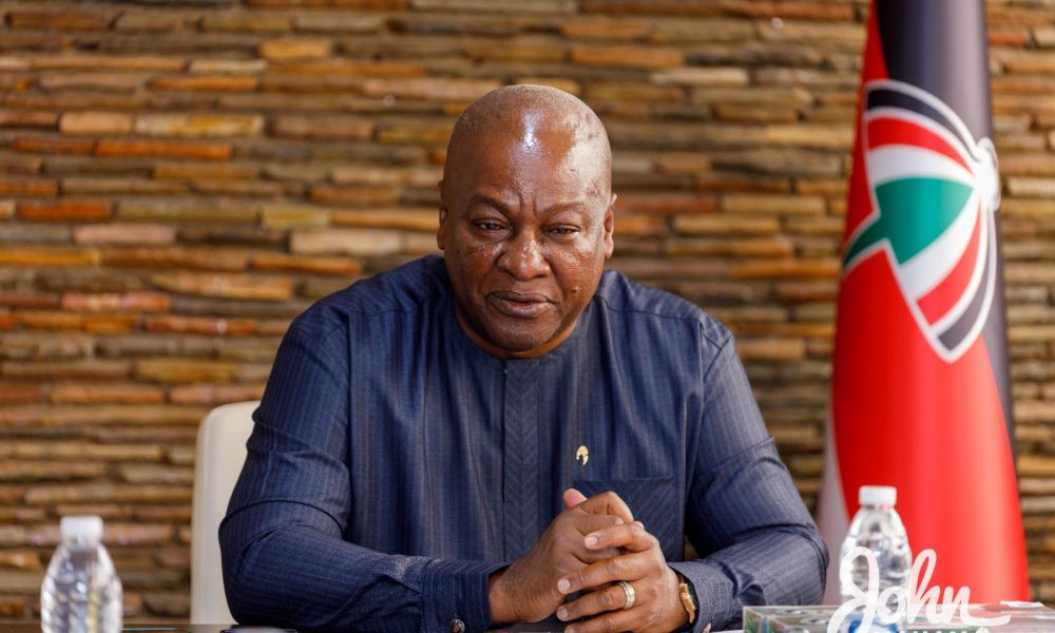
    Flagbearer of the National Democratic Congress, John Dramani Mahama has shared his perspective on the concept of witchcraft and poverty.

    As part of his remarks during his campaign tour, the former president explained that people often find a way to make sense of their problems by blaming it on supernatural forces, like witchcraft, which provide the tendency of failing to address the root causes of problems or take personal responsibility.

    “Whenever there’s poverty and crisis, there’s an increase in witchcraft . Because people dont tend to take responsibilities for themselves. They must find someone to blame for adversity. And so if they are not able to find the opportunity, they are not able to satisfy their full potential and there is hunger and all that, they must find somebody to blame. And normally they will look for the most vulnerable person in the society. And these are the poor old women and accuse them of witchcraft. And so its a direct correlation to the increase in poverty. The increase in the accusations of witchcraft, he told the media during his tour ahead of the 2024 election.”

    On Friday July 28 2023, Ghana’s parliament approved a bill designed to safeguard individuals accused of witchcraft, criminalizing their abuse or expulsion from communities.

    This new legislation was proposed following the lynching of a 90-year-old woman in Kafaba, East Gonja Municipality, Savannah Region, in July 2020, which led to widespread condemnation from both local and international human rights organizations.

    However president Akufo Addo is yet to assent to the proposed bill despite calls for concerned parties to do so.

    Watch video below:

  • Banking stocks lead gains on GSE with strong performance in Q1 2024

    Banking stocks lead gains on GSE with strong performance in Q1 2024

    Banking stocks remained prominent on the Ghana Stock Exchange (GSE) following a strong resurgence in the first quarter of 2024.

    They continued to be a key focus, significantly impacting market returns by the end of the second quarter of 2024.

    This underscored the sector’s persistent strength, as it experienced a notable recovery in profitability after facing setbacks from the Domestic Debt Exchange Programme.

    The Ghana Stock Exchange Financial Stock Index (GSE FSI) reflects this with an increase of approximately 114 points for the quarter, resulting in a Year-to-Date return of 11.23%.

    Ecobank Ghana emerged as the leading performer, skyrocketing 155.23% quarter-on-quarter to GHS6.10, fueled by factors such as a remarkable 2453% surge in net profit for the first quarter of 2024.

    Likewise, GCB Bank (GHS5.5, +60.35%), Access Bank (GHS4.8, +7.87%), and Standard Chartered Bank (GHS20, +2.90%) also saw significant gains, buoyed by their strong first-quarter results which demonstrated a full recovery from earlier impairment losses.

  • GSE poised to further performance in 2nd half of 2024 amidst economic stability

    GSE poised to further performance in 2nd half of 2024 amidst economic stability

    Stocks are anticipated to continue their strong performance on the Ghana Stock Exchange (GSE) as we move into the latter half of 2024.

    While non-financial stocks have largely fueled the recent market surge, the financial sector has also shown notable recovery, with many banks participating in the rally after positive financial results for the first quarter of 2024.

    Databank Research reports that Ghana’s economy is benefiting from a successful International Monetary Fund program, which has ensured stability and encouraged positive earnings growth projections across different sectors. This stability is expected to enhance investor confidence in equities.

    In the first half of 2024, the GSE-Composite Index exceeded expectations, rising above the initial forecast of 3,756 points to reach 4,490.80 points, marking a 43.47% increase Year-to-Date.

    “From a technical analysis standpoint, we expect the GSE-CI to close at 4,380 points, reflecting 40% (±500 basis points). We remain cautious of potential profit-taking and some volatility as elections draw nearer. Below are our sector-specific opinions”, it said.

    Robust earnings recovery to stimulate demand for banking stocks

    Likewise, strong earnings recovery in the banking sector is expected to drive increased interest in banking stocks.

    Considering the Domestic Debt Exchange Programme, it is anticipated that the banking sector will continue to gain from the attractive returns on short-term treasury securities as a means of capital preservation.

    By the end of the first quarter of 2024, the sector demonstrated substantial earnings recovery, showcasing a remarkable 53% year-on-year rise in net profits, primarily driven by a 31% increase in interest income and a 42% growth in investment securities.

    BOPP to lead non-banking stocks gains

    Analysts anticipate that the non-banking sector will remain robust, driven by the ongoing rebound in consumer demand and the improved profitability of companies like Benso Oil Palm Plantation (BOPP). BOPP’s attractive dividend policy has generated renewed interest in its stock, pushing it to a record high of GH¢23 per share.

    This surge underscores the confidence investors have in BOPP’s performance and future growth prospects.

    Despite the recent gains, Databank believes that BOPP’s agribusiness stock still holds considerable upside potential, though there may be occasional dips due to profit-taking.

    The Ghana Stock Exchange saw notable growth during the first half of 2024, maintaining the upward momentum that began early in the year.

    The Composite Index (GSE CI) added 373.41 points in the second quarter of 2024, ending at 3,829.61 points, which represents a Year-To-Date return of 22.34%.

  • GIPC, GNCCI organize collaborative B2B meeting to strengthen Ghana’s agric sector

    GIPC, GNCCI organize collaborative B2B meeting to strengthen Ghana’s agric sector

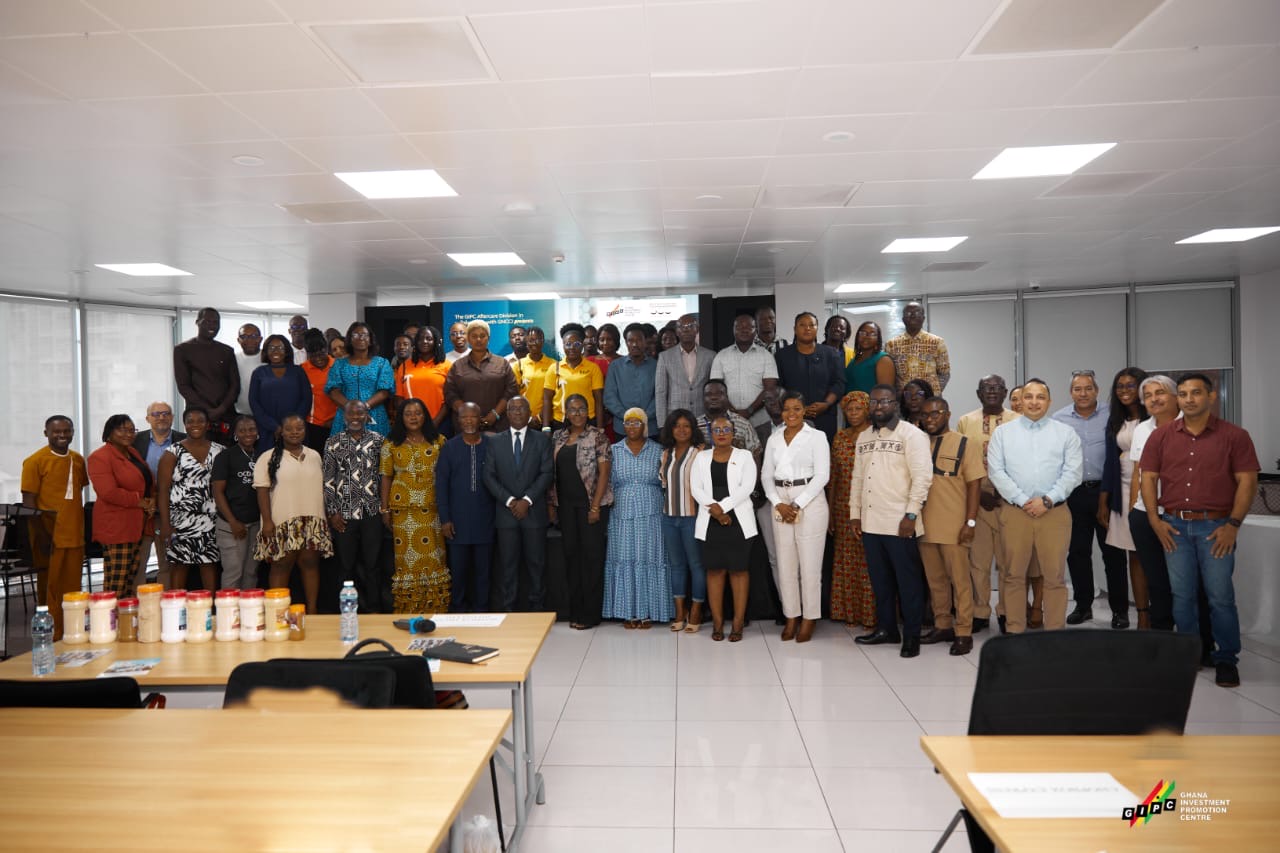
    The Ghana Investment Promotion Centre (GIPC), in partnership with the Ghana National Chamber of Commerce & Industry (GNCCI), recently organized a B2B meeting aimed at fostering growth in the agricultural sector.

    This gathering united Micro, Small, and Medium Enterprises (MSMEs) with Multinational Enterprises (MNEs), alongside stakeholders from both the public and private sectors, to explore strategies for strengthening Ghana’s agricultural industry and its value chains in light of recent economic shifts.

    Addressing the attendees, Mr. Edward Ashong-Lartey, Director of Investor Services at the Centre, highlighted the increased demand for value-chain services, particularly in agriculture, due to the disruptions caused by the COVID-19 pandemic, which negatively impacted businesses.

    GIPC and GNCCI host collaborative B2B meeting on enhancing Ghana’s agricultural industry

    As a result, he observed that many investment promotion agencies have taken steps to assist foreign companies and multinationals in adjusting to these new challenges. He also pointed out that the current situation has significantly impacted small-to-medium business operators. Therefore, a good way to support MSMEs and harness their potential will be to “….. integrate them into global or regional value chains.”

    He noted that while most value-chain analysis is performed by these companies themselves; the GIPC can help accelerate the process by matching foreign affiliates with local suppliers. He added that “one of the key things that GIPC does is fostering linkages; from joint-venture partners to identifying people who can provide the needed services”.

    GIPC, GNCCI hold joint B2B meeting on Ghana’s agricultural sector

    Mr Ashong-Lartey expressed optimism that the B2B meeting will facilitate meaningful interactions between MSMEs and multinationals and create a pathway for mutually beneficial economic ties. He then concluded by encouraging enterprises (both foreign and local) to reach out to GIPC’s Aftercare team to resolve their post-establishment issues. Taking her turn, the Head of Marketing at the Ghana National Chamber of Commerce and Industry (GNCCI), Mrs Grace Dzeble, mentioned that her outfit was focused on fostering partnerships for businesses within the country. This, according to her, was necessary to Calendar e effectively under the African Continental Free Trade Area (AfCFTA).

    “…We have to do this so that when the bigger African market is fully opened, we will be able to build on the synergies, to satisfy the [huge] regional demand” she said. Mrs Dzeble added that “…the [GNCCI] has been keen on building the capacity of businesses in Ghana, to prepare them for the bigger picture of the African market.”

    GIPC and GNCCI Host Collaborative B2B Event Focused on Ghana’s Agricultural Industry

    She emphasized that the B2B event was vital for stakeholders to forge connections and integrate subsidiary value chains. She encouraged the foreign companies attending to partner with local MSMEs, noting that these connections could significantly enhance their operations.

    GIPC and GNCCI Organize Joint B2B Meeting to Enhance Ghana’s Agriculture Sector

    Following the presentations, participants had the chance to pitch their businesses, paving the way for possible partnerships. The event then transitioned into a networking session, allowing businesses to engage with one another and establish the necessary links to advance their enterprises.

  • Nigeria’s apex bank endorses first banking merger under revised capital requirement

    Nigeria’s apex bank endorses first banking merger under revised capital requirement

    The Central Bank of Nigeria has given the green light for the merger between Providus and Unity Bank, with both institutions now awaiting the go-ahead from the Securities and Exchange Commission.

    This approval from the CBN marks the first merger endorsed following the apex bank’s directive for financial institutions to bolster their minimum capital reserves. According to the CBN’s recapitalization guidelines, international commercial banks are required to raise their capital base to N500 billion, national banks to N200 billion, and regional banks to N50 billion.

    The letter, titled “Re: Request for Merger Approval and Financial Support,” was a response to a previous correspondence dated June 19, 2024, in which permission for a merger and financial aid had been requested.

    In addition to granting approval for the merger, the central bank also authorized a financial package of N700 billion for the newly formed entity, to be repaid at an interest rate of six percent.

    According to the CBN, this financial support will be provided as a 20-year term loan, with repayment starting after a five-year grace period, though the source of the funds was not disclosed.

    The letter obtained by our correspondent on Tuesday read, “Following a review of your letter, we write to inform you that the Central Bank of Nigeria has approved your request as follows:

    “A financial accommodation totalling N700bn to the new entity, structured as a 20-year term loan. The loan will be priced at an interest rate of MPR minus 11 per cent, subject to a minimum of six per cent. Payments are to be made semi-annually, with a principal moratorium of five years. Beginning in the sixth year, the new entity will commence repayment in 15 equal instalments until maturity.

    “Total obligation of Unity Bank amounting to N303.7bn (comprising N92.00bn of First Bank of Nigeria exposure on clearing obligation, N51.70bn financial accommodation of the CBN, N25.00bn Anchor Borrowers programme obligation and N135.00 billion NIRSAL obligation) will be deducted from the N700bn financial accommodation. The obligations to the CBN and NIRSAL will be settled accordingly.

    “The balance of N396.30bn from the financial accommodation is to be invested in a 20-year Federal Government of Nigeria bond. The N396.30bn invested in the 20-year FGN bond will qualify as a Tier 2 capital instrument and component of the shareholders’ fund.

    “Unity Bank’s current Cash Reserve Ratio shortfall of N117.90bn is hereby waived from being debited. Providus Bank’s CRR balance, post-merger, will serve as the opening balance of the new entity.”

    The letter, however, noted that “These terms are subject to your acceptance and full compliance. Kindly confirm your acceptance of the outlined terms.”

    Verifying the correspondence, the interim Director of Corporate Communications at the CBN, Hakama Sidi, in a release on Tuesday, noted that the central bank had approved the merger to enhance the resilience of Nigeria’s financial sector, prevent potential systemic threats, and avoid an outcome similar to the recent collapse of Heritage Bank.

    The director, however, refrained from disclosing the financial support amount provided to the bank.

  • Death threats under Akufo-Addo gov’t forced Manasseh to elope

    Death threats under Akufo-Addo gov’t forced Manasseh to elope

    Award-winning Ghanaian broadcast journalist and author, Manasseh Azure Awuni, has provided a glimpse into his challenging journey as an investigative journalist during President Akufo-Addo’s administration.

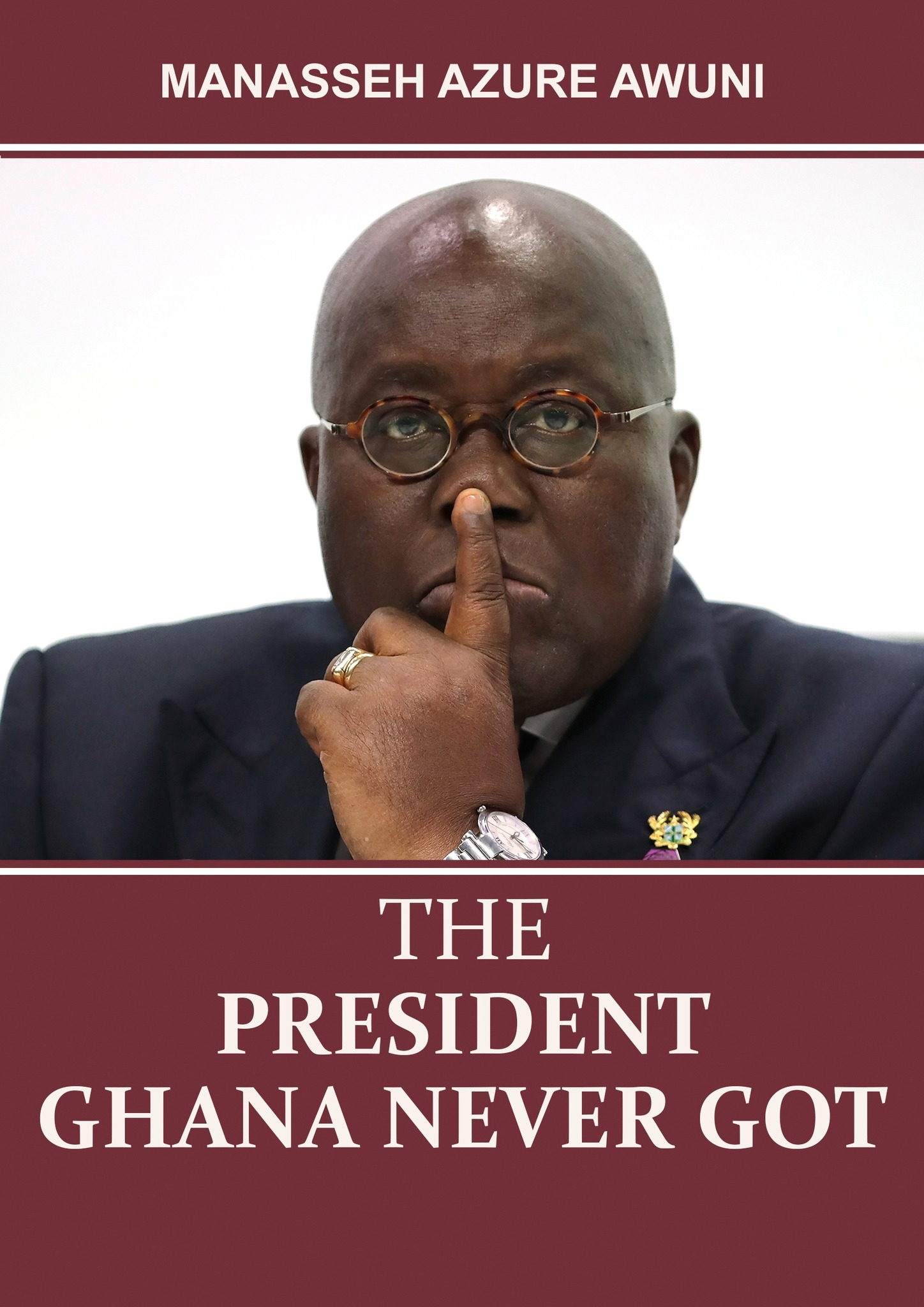
    These revelations come as he gears up to release his new book, “The President Ghana Never Got,” on Thursday, August 8.

    Mr. Awuni detailed the various obstacles he encountered, including life-threatening situations and the necessity.

    “I’ve personally encountered a lot of woes. If you look at the ‘fictional Agyapadie’ document, you’ll find my name in that document. I have not had it easy in this administration.

    “I had to go to South Africa in 2019. In 2020, I had to go to Germany. All these because of death threats,” he revealed.

    Sharing more insights on JoyNews’ AM Show on Wednesday, Mr. Awuni revealed that from 2019 to 2021, he had to drive with police escorts due to the severity of the threats against him.

    He mentioned that the immense pressure affected his mental well-being, prompting him to seek therapy from a clinical psychologist.

    Mr. Awuni also highlighted that his book discusses his attempts to communicate with President Akufo-Addo regarding his difficult situation.

    “Sometimes you find people asking, ‘Does the President even know what is happening behind the scenes?’ I had a personal experience where I had to take a step to let people within the Presidency know.

    “At a point when I felt that the message might not be getting to the President, I booked an appointment with his wife,” he recounted.

    According to him, Mrs. Rebecca Akufo-Addo was surprised that he was using her as a conduit, given his direct access to the President through other channels.

    “I replied, ‘Well, it is true, but for ABC reasons, I should let you know.’ So these are some of the things that have happened within the period that the average person may not know how these interactions happened and whether or not the highest official of our country is privy to some of the things that happened,” he explained.

    “The President Ghana Never Got” is a 400-paged and 40-chaptered book on the reign of President Akufo-Addo.

    Announcing the launch of the book, the journalist said it has “revealing and riveting content, which some may find explosive”.

    It would be launched on August 8, 2024, at the Christ the King Parish Hall, Opposite Jubilee House.

    This book is his latest project on successive governments. In 2016, when the country’s former President, John Dramani Mahama was preparing to leave office, Manasseh released a book on him titled “The Fourth John: Reign, Rejection & Rebound”.

    Similarly, the “The President Ghana Never Got” book promises to be a compelling read, offering nuances that influenced certain decisions of the current administration.

  • Govt resources alone are insufficient – Roads Minister re-emphasizes need for bringing back road tolls

    Govt resources alone are insufficient – Roads Minister re-emphasizes need for bringing back road tolls

    Government has unveiled plans to reinstate road tolls to address a considerable funding shortfall in road infrastructure, aiming to generate significant revenue for the sector.

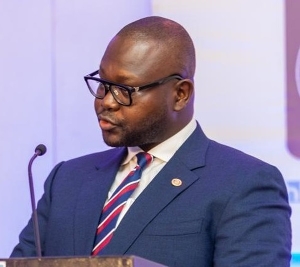
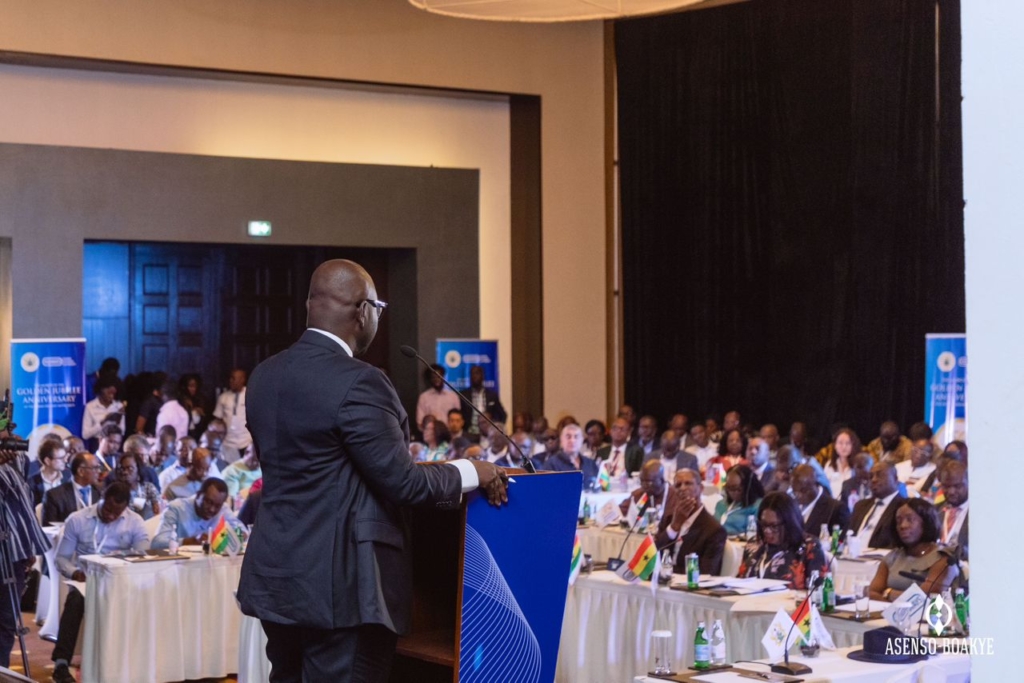
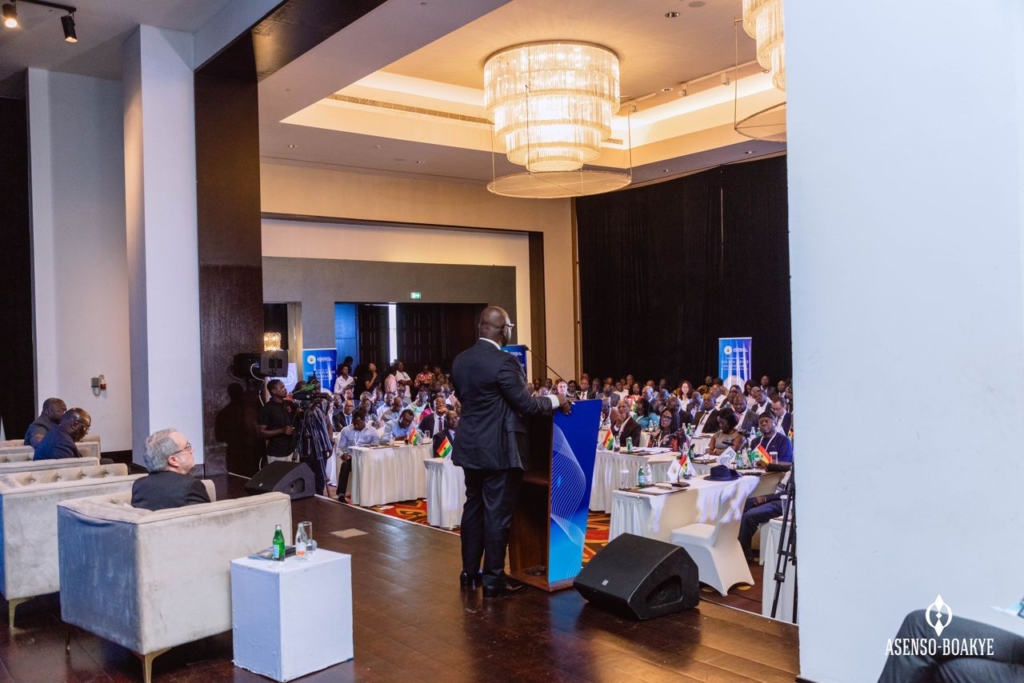
    This initiative was revealed by the Minister of Roads and Highways, Francis Asenso-Boakye, during a high-profile panel discussion commemorating the 50th anniversary of the Ghana Highways Authority (GHA).

    Mr. Asenso-Boakye emphasized the essential role of road infrastructure in the country’s socio-economic development, pointing out that road transport makes up around 95% of all transportation in Ghana.

    “The need for increased funding to the Road Sector is both urgent and evident,” the Minister emphasised, as the nation grapples with a road network where only 44% of roads are in good condition, against a target of 70% by 2025.

    Despite notable advancements under the present administration, which claims to have constructed 12,830 kilometers of roads compared to the previous administration’s 4,636 kilometers, the Minister conceded that substantial efforts are still required.

    “Government resources alone are insufficient to bridge this gap,” he stated, underscoring the importance of exploring innovative financing models and public-private partnerships.

    In light of the Finance Minister’s recent declaration to reintroduce road and bridge tolls in 2025, the Roads Minister stated that the Ministry of Roads and Highways has already initiated steps toward this goal, considering tolling as a viable revenue stream.

    Mr. Asenso-Boakye referenced the Korea Expressway Corporation, which generates $4 billion annually from tolls, illustrating the significant revenue potential of such measures.

    The Minister also emphasized the need for greater collaboration with private sector partners and international development agencies like the World Bank and the African Development Bank.

    These partnerships are crucial for securing additional funds and expertise, necessary for the ambitious road development initiatives Ghana is planning.

    As part of these initiatives, the government plans to create a National Roads Authority, merging the country’s three implementing agencies into one unified body.

    This new Authority aims to streamline operations, enhance efficiency, and foster a more coordinated approach to road management, ultimately improving infrastructure and maintenance services.

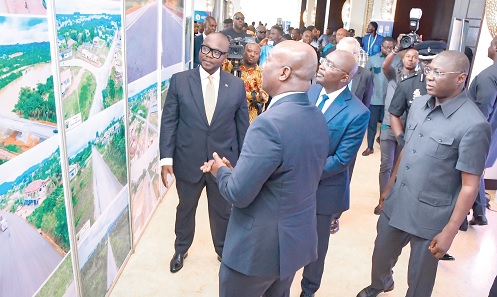
    Vice President Dr. Mahamudu Bawumia, the event’s guest speaker, emphasized the crucial role of road infrastructure in national development and reiterated the government’s commitment to addressing the financing gap.

    Recent estimates indicate that Ghana needs $12 billion to clear the maintenance backlog and optimize the network of approximately 94,203km. However, current funding levels meet only about 38% of this need, resulting in deteriorating roads, higher maintenance costs, and lost economic opportunities.

    The Vice President suggested several policy initiatives to tackle these challenges, including promoting Public-Private Partnerships (PPPs) to access new funding sources and leverage expertise in project implementation.

    He added that the government has proactively created a conducive environment for PPPs by streamlining regulatory processes and providing incentives to attract private investment.

    Innovative financing models, such as infrastructure bonds, road funds, and toll systems, were also recommended as ways to generate sustainable revenue streams. He affirmed the government’s commitment to expanding these initiatives and exploring new models to boost funding capacity.

    The Vice President underscored the importance of improving domestic revenue mobilization. By broadening the tax base and enhancing tax administration, additional funds can be raised for road projects.

    This strategy includes collecting property rates in affluent areas and issuing municipal bonds to raise capital.

    Finance Minister Dr. Mohammed Amin Adam highlighted that the District Road Improvement Programme (DRIP) and the forthcoming Economic Roads Improvement Initiative will ensure the funding of roads connecting key productivity-enhancing areas such as agricultural zones and tourist sites.

    However, he said, despite the government’s best-efforts, public-sector funding and initiatives alone will not bridge this gap.Adding “We believe that the solution lies in making significant room for private-sector participation. Therefore, PPPs offer a critical opportunity for us to close our road financing gap, and we have prioritised working toward streamlining the PPP process.”

  • Graphic Communications Group raided by armed policemen over an alleged GHS700,000 defamation suit

    Graphic Communications Group raided by armed policemen over an alleged GHS700,000 defamation suit

    Reports indicate that armed police have recently raided the headquarters of Graphic Communications Group Limited in Accra.

    The Ghana News Agency reports that the raid, which occurred on Wednesday, August 7, 2024, was conducted to confiscate equipment in connection with a GH¢700,000 defamation lawsuit.

    More to come…

  • Bawumia’s brother fingered in GHS52.2m Sunyani airport deal

    Bawumia’s brother fingered in GHS52.2m Sunyani airport deal

    National Communications Officer of the main opposition National Democratic Congress (NDC), Sammy Gyamfi, has condemned the governing New Patriotic Party (NPP) for awarding profitable contracts to Vice President and flagbearer Dr. Mahamudu Bawumia’s brother through sole-sourcing.

    Mr. Gyamfi pointed out that despite the NPP’s pledge to curb sole-sourcing contracts, they have allegedly awarded contracts to Dr. Bawumia’s brother’s company, Resource Access Limited, using this very method.

    He claimed that these contracts were not only granted without competitive bidding but were also heavily overpriced.

    Mr. Gyamfi alleged that many contracts awarded to Resource Access Limited, owned by Abraham Bawumia, were priced three times higher than the market rate.

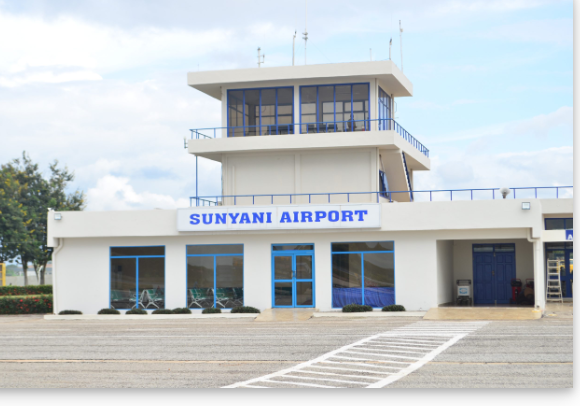
    Specifically, he highlighted the renovation of the phase two Sunyani airport project, stating that the contract awarded to Dr. Bawumia’s brother was valued at GH₵52.2 million.

    In comparison, the actual renovation of the Sunyani airport under former President John Dramani Mahama’s administration cost GH₵100,000.

    Despite this significant expenditure, Mr. Gyamfi observed that the frontage of the Sunyani airport remains in poor condition to this day.

    These revelations were made during the NDC’s communications directorate’s “Moment of Truth” series held in Accra and addressed by Mr. Gyamfi.

    Mr. Gyamfi underscored the hypocrisy of the NPP, stating, “This is a man in opposition who preached against sole-sourcing only to come to power and become an enabler of sole-sourcing, leading to his brother and wife benefiting heavily.

    He concluded that Dr. Bawumia’s brother has secured GHS 218 million from five excessively priced contracts granted through sole-sourcing.

  • Bawumia has cheated Ghanaians with works on Sunyani airport – NDC

    Bawumia has cheated Ghanaians with works on Sunyani airport – NDC

    Sammy Gyamfi, the National Communications Officer for the opposition National Democratic Congress (NDC), has criticized the Akufo-Addo-Bawumia administration for its mishandling of state resources.

    He claims that the renovation contract for Sunyani Airport was awarded to Dr. Mahamudu Bawumia’s brother without a proper competitive bidding process.

    Speaking at a recent Moment of Truth event, Gyamfi highlighted that the cost charged by the Vice President’s brother for the renovation was double the amount needed to build a new airport.

    “When one compares the cost of the mundane works that have been carried out at the Sunyani Airport by Bawumia’s brother’s company to the brand new ultra modern airports built by the nation builder John Dramani Mahama … it becomes clear that indeed Ghanaians have been shortchanged by Alhaji Bawumia,” he said on August 7.

    Sammy Gyamfi claimed that the contract for Phase 1 of the Sunyani Airport renovation was granted at a staggering GH₵52.25 million, labeling it as excessively priced.

    He criticized the awarding of this contract through sole-sourcing, which he finds unacceptable.

    Gyamfi highlighted that this practice contradicts Dr. Bawumia’s strong opposition to sole-sourcing during his time in the opposition.

  • ISSER tells BoG to take a decisive action against unregistered, unregulated forex businesses

    ISSER tells BoG to take a decisive action against unregistered, unregulated forex businesses

    The Institute of Statistical, Social and Economic Research (ISSER) has called on the Bank of Ghana (BoG) to implement strong measures against unregistered and unregulated foreign exchange (forex) businesses to maintain macroeconomic stability and reduce exchange rate volatility.

    This suggestion is included in ISSER’s 2024 Mid-Year Budget Review, titled “A Critical Assessment of the 2024 Mid-Year Budget by ISSER.”

    The review highlights some progress in Ghana’s macroeconomic conditions in 2024, as reflected by various monetary and financial sector indicators.

    Inflation rates have fallen, averaging 23.9% from January to June 2024, compared to 46.1% during the same period in 2023.

    The cedi’s cumulative depreciation rates have also shown improvement, with lower rates against major currencies compared to 2023.

    Specifically, the cedi depreciated by 20.9% against the US dollar and 20.23% against the pound sterling in the first half of 2024, compared to 27.8% and 34.1%, respectively, during the same period in 2023.

    ISSER attributes these favorable changes to the IMF Extended Credit Facility (ECF) program, which has required both monetary and fiscal authorities to adhere to a disciplined fiscal and monetary framework.4o

    The cedi’s overall depreciation rates have improved, exhibiting lower rates against major currencies compared to 2023.

    In particular, the cedi fell by 20.9% against the US dollar and 20.23% against the pound sterling in the first half of 2024, compared to declines of 27.8% and 34.1%, respectively, during the same period in 2023.

    ISSER credits these positive developments to the IMF Extended Credit Facility (ECF) program, which has mandated both monetary and fiscal authorities to maintain a disciplined fiscal and monetary framework.

    Despite these gains, ISSER emphasizes the need for further action to stabilize the exchange rate. The review states, “Assess the size of the informal forex market and institute efforts to reduce its dominance and activities that drive exchange rate instability. The Bank of Ghana, in collaboration with law enforcement agencies, should clamp down on unregistered and unregulated businesses.”

    The review also highlights the slower growth in money supply in 2024, attributed to lower growth in Net Domestic Assets (NDA). The growth in total liquidity has slowed compared to the same period in 2023, with money supply growing by 34% in 2024, down from 44.4% in 2023. This indicates a need for effective monetary and fiscal policy coordination to support continued macroeconomic stability and growth.

    ISSER recommends that the Bank of Ghana and fiscal authorities strengthen their partnerships with global and regional financial institutions, development partners, and the private sector to unlock resources for sustaining economic recovery. “Effective monetary and fiscal policy coordination is needed to support macroeconomic stability and growth. The Bank of Ghana and fiscal authorities should strengthen their partnerships and institutional coordination with global and regional financial and economic institutions, development partners, and the private sector to unlock resources to catalyse and sustain economic recovery,” the review suggests.

    Furthermore, ISSER advises that the Development Bank of Ghana should provide cheaper funding to the agricultural and light manufacturing sectors to enhance local industry’s capacity to produce import substitutes and improve export competitiveness. “The central bank and the fiscal authorities should ensure that the Development Bank of Ghana provides a cheaper source of funding to the agricultural and light manufacturing sectors to support higher value addition. This will significantly enhance local industry’s ability to produce import substitutes and improve export competitiveness,” the review recommends.

    By clamping down on unregistered and unregulated forex businesses and implementing these recommendations, ISSER believes that the Bank of Ghana can further stabilize the exchange rate, enhance price stability, and support sustainable economic growth.

  • Ato Forson and I speak the same kind of English – Chairman Wontumi

    Ato Forson and I speak the same kind of English – Chairman Wontumi

    Ashanti Regional Chairman of the New Patriotic Party (NPP), Bernard Antwi Boasiako, also known as Chairman Wontumi, has compared his prowess in speaking English to that of the Minority Leader in Parliament, Dr. Cassiel Ato Forson.

    According to him, Dr. Ato Forson is no better than him when it comes to the English language since they both make errors.

    He further teased the Minority Leader, suggesting that Dr. Forson does not directly generate money by speaking English.

    In an interview on Abusua FM, Chairman Wontumi said, “As for Ato Forson, he speaks no better English than my broken English. We all make the same grammatical mistakes. It’s just that when I speak my English, it brings money.”

    Chairman Wontumi has on several occasions made some basic errors when speaking English. Some Ghanaians believe the local dialect, Twi, suits Wontumi best.

  • Strengthen sinking fund to ensure repayment of restructured debts – ISSER tells gov’t

    Strengthen sinking fund to ensure repayment of restructured debts – ISSER tells gov’t

    The Institute of Statistical, Social and Economic Research (ISSER) has stressed the need to strengthen Ghana’s Sinking Fund to effectively manage the repayment of both restructured domestic and international debts.

    This advice is outlined in ISSER’s 2024 Mid-Year Budget Review, titled “A Critical Assessment of the 2024 Mid-Year Budget by ISSER.”

    The review underscores the concerning rise in Ghana’s debt levels.

    As of the end of June 2024, the provisional total central government debt reached GH¢742.0 billion (US$50.9 billion), accounting for 70.6 percent of GDP, up from GH¢608.4 billion at the end of December 2023.

    This 22.0 percent increase is largely attributed to ongoing depreciation of the exchange rate since 2022.

    The debt is composed of GH¢452.0 billion in external debt and GH¢290.0 billion in domestic debt, making up 60.9 percent and 39.1 percent of the total debt, respectively.

    To tackle this escalating debt burden, ISSER recommends several fiscal strategies, with a strong emphasis on enhancing the current Sinking Fund.

    The review states, “Build up the existing Sinking Fund to ensure sufficient for repaying restructured domestic and international debts when they fall due.”

    This initiative seeks to ensure that the government has sufficient resources to fulfill its debt commitments and prevent default.

    Furthermore, ISSER highlights the importance of the government providing support to banks and other private-sector entities negatively impacted by the Domestic Debt Exchange Programme (DDEP).

    “The government should fulfil its promise to support banks and other private sector corporate institutions adversely affected by the DDEP to minimize its costs,” the review advises.

    ISSER also advises working with bilateral and multilateral organizations to secure lower-cost funding, thereby decreasing dependence on costly capital market financing.

    The review proposes setting up guidelines to define the ideal proportions or limits for each category of debt.

    “The government should engage with bilateral and multilateral institutions to access cheaper funds while reducing reliance on expensive capital market funds. Guidelines should be established to clearly state the optimal proportions or ceiling on each type of debt,” the review states.

    Additionally, ISSER advocates for revising the fiscal responsibility law to incorporate a debt ceiling, aiming to keep deficits and debt within manageable limits.

    “Review the fiscal responsibility law to include legislation of a debt ceiling to ensure deficits and debt are contained within sustainable thresholds,” the review recommends.

    These recommendations are designed to strengthen Ghana’s fiscal discipline and keep the country’s debt levels under control.

    ISSER believes that by bolstering the Sinking Fund and adopting these fiscal strategies, Ghana can enhance its financial stability and sustain investor confidence.

  • Margins ID Group advises Ghanaians against photocopying Ghana Cards for transactions

    Margins ID Group advises Ghanaians against photocopying Ghana Cards for transactions

    Ghanaians are advised to prevent institutions from photocopying their Ghana Cards for transactions and instead demand the verification methods recommended by the National Identification Authority (NIA).

    This advisory aims to bolster personal data security and maintain the integrity of the national identification system as Ghana progresses toward a more secure digital economy.

    Moses K. Baiden, CEO of Margins ID Group, issued this warning during a visit from the Ministry of Communication and its associated agencies. The visit provided an opportunity for the Ministry and its agencies to observe the complex processes involved in producing the Ghana Card and to learn about the various functions of the secure database.

    The participating agencies included the Ghana Digital Centres, Cyber Security Authority, Data Protection Commission, Ghana Domain Names Registry, Ghana Post, National Communication Authority, National Information Technology Agency, Ghana Investment Fund for Electronic Communications, Ghana-India Kofi Annan Centre of Excellence in ICT, and the Postal and Courier Services Regulatory Commission.

    Mr. Baiden emphasized that misuse of the Ghana Card, such as photocopying or distributing digital copies, could enable criminals to exploit others’ identities for fraudulent activities and other crimes.

    “Any reproduction of the Ghana Card exposes the card owner to identity theft,” he noted, emphasizing the importance of adhering to NIA guidelines to protect citizens’ identities.

    He detailed that the NIA system requires individuals to present themselves in person and undergo fingerprint verification, which produces an audit code associated with each transaction. This approach guarantees a high level of security and authenticity in identity verification.

    Mr. Baiden also noted that the main issue in Ghana’s data protection and identification efforts lies not in data collection or technology, but in attitudinal and enforcement challenges.

    He advised institutions to thoroughly understand the NIA system to make informed decisions and adopt optimal practices.

    He explained that the system ensures a unique identity, as identity fraud typically involves duplicating someone’s identity. According to him, criminals need to disguise themselves, either digitally or physically, to exploit public and private resources.

    Thus, he stated that the government has prioritized identity verification as a crucial step in creating a trustworthy society.

    Mr. Baiden pointed out that the legal framework dictates the security of an ID, with technology needing to adhere to legal standards.

    In an era of rapid digital transformation, data has become vital for advancing the digital economy.

    Mr. Baiden referred to data as the new gold driving Ghana’s digital economy, emphasizing that a secure biometric database is essential for its success.

    He underscored that effective service digitization can alleviate citizen stress, reduce transaction costs, and improve government service delivery.

    During the visit, Mr. Baiden demonstrated how the secure biometric database not only facilitates identity verification but also supports various applications crucial for the country’s digital transformation.

    He stressed the importance of precision and security in data management, noting that digitizing services offers numerous advantages, including cost reductions and enhanced service efficiency.

    The officials from the participating agencies posed questions about the process, which were addressed by the company’s senior management.

  • Ghanaian cedi expected to strengthen against US dollar amidst economic shifts

    Ghanaian cedi expected to strengthen against US dollar amidst economic shifts

    The Ghanaian cedi is anticipated to experience some relief against the US dollar this week, given the recent weakening of the American currency amid potential recession concerns in the USA.

    Last week, the cedi managed to recover some ground against major currencies due to easing pressures from corporate demand.

    The Bank of Ghana allocated $20 million to the Bulk Oil Distributing Companies at a forward rate of GH¢15.56 per dollar.

    This intervention may have contributed to easing corporate demand.

    As a result, the Ghanaian cedi appreciated by 2.37% against the pound and 1.18% against the euro on a weekly basis, while maintaining stability at a mid-rate of GH¢15.88 per US dollar.

    Year-to-date, the cedi has depreciated by approximately 23.11% against the US dollar, currently trading at GH¢15.87 per dollar in the retail market.

    Additionally, the Government of Ghana plans to pay GH¢6.1 billion in coupons on restructured domestic bonds this month.

    Analysts suggest that this could stimulate demand for foreign exchange funded by the cedi, as some foreign investors might look to repatriate their funds.

    This situation, coupled with ongoing corporate demand pressures, could present some risks of further depreciation for the cedi.

  • Air travel demand increased by 9.1% in June – Report

    Air travel demand increased by 9.1% in June – Report

    Global passenger demand, measured by revenue passenger kilometers (RPK), increased by 9.1% compared to June 2023, according to the latest data from the International Air Transport Association (IATA) for June 2024.

    The report indicates that total capacity, assessed in available seat kilometers (ASK), rose by 8.5% year-on-year. The load factor for June stood at 85%, compared to the previous year.

    International passenger demand grew by 12.3% from June 2023. Capacity expanded by 12.7% year-on-year, and the load factor improved to 85.0%, though it was down 0.3 percentage points from June 2023.

    Domestic demand increased by 4.3% compared to June 2023, with capacity rising 2.1% year-on-year. The load factor reached 85.0%, up 1.7 percentage points from June 2023.

    Reflecting on the positive results, Willie Walsh, IATA’s Director General, said: “Demand grew across all regions as the peak Northern summer travel season began in June. And with overall capacity growth lagging demand we saw a very strong average load factor of 85% achieved in both domestic and international operations. Operating with such high load factors is both good and challenging. It makes it even more important for all the stakeholders to operate with equal levels of efficiency to minimize delays and get travelers to their destinations on schedule,” said.

    “As the Olympic Games unfold in Paris there is pride across the aviation industry for its continuing role in supporting the Olympic story by bringing many of the athletes, fans, and officials together. It is a great reminder of how aviation transforms our very big world into a global community. We wish France every success as the host of the games and cheer all the athletes who will demonstrate the best of human endeavor over the next weeks,” said Walsh.

  • My children aren’t in London because Ghana is better – Wontumi

    My children aren’t in London because Ghana is better – Wontumi

    The Ashanti Regional NPP Chairman, Bernard Antwi Boasiako, commonly known as Chairman Wontumi, has ignited a spirited discussion with his recent comments asserting that Ghana is more enjoyable than London.

    During an interview with the media, Wontumi revealed that he has moved his children to Ghana, praising the country’s pleasant environment and more affordable living costs.

    Wontumi argued that, “I always say Ghana is better than London. If I say so, am I a joker, or is this a joking platform that I would say such things?”

    He contended, “Ghana is better than London. My children are in Ghana here because Ghana is more enjoyable than London.”

    Wontumi emphasized Ghana’s advancements, pointing to initiatives such as free education and the Planting for Food and Jobs program.

    He said these efforts had led to decreased food prices, with tomatoes now costing Ghc5.

    He insisted, “Because of the Planting for Food and Jobs initiative, foodstuffs are now cheap. Tomatoes are now GH¢5. Pepper, plantains, and meat are not cheap in our markets.”

    Even the market prices reported by host Kojo Marfo failed to make Chairman Wontumi acknowledge the widespread public concerns about hardship.

    Instead, Wontumi accused Kojo Marfo, who claimed he had become a vegetarian to avoid buying meat, of pushing an agenda for the opposition National Democratic Congress.

    “If you have now adopted a vegetarian diet, then you’re not spending a lot. As a vegetarian, you can eat pawpaw leaves, kontomire, and cassava leaves; it’s okay for you.”

    “You are spreading NDC propaganda. If not for that, you wouldn’t say you can’t even buy meat,” Chairman Wontumi responded.

    Wontumi noted that food prices had dropped to the point where he could enjoy a satisfying meal of Gari and beans for just GH¢10.00.

  • End of year inflation rate expected to exceed 20%

    End of year inflation rate expected to exceed 20%

    The end of the year inflation rate is expected to exceed 20 percent, surpassing earlier market projections, despite indications of economic recovery.

    DataBank, a prominent financial services firm, predicts that inflation could reach as high as 23.5 percent due to rising fuel prices and a struggling cedi, with 19.5 percent being the best-case scenario.

    This forecast sharply contrasts with the Bank of Ghana’s (BoG) more optimistic January projection, which anticipated inflation decreasing to between 13 and 17 percent by the end of 2024.

    “We anticipate a sluggish decline in inflation, influenced by fluctuating fuel prices driven by external dynamics and a steady weakening of the domestic currency… We expect headline inflation to settle at approximately 21.5% ± 200 bps by the end of FY ’24,” Databank said in its Quarterly Strategy Report.

    The inflation rate has fluctuated since the beginning of 2024, varying from 23.1 percent to 25.8 percent year-on-year. Analysts attribute this trend to rising fuel prices and currency depreciation, which have disrupted the disinflation process. DataBank anticipates an increase in the August 2024 report.

    Following its 119th meeting, the Bank of Ghana’s Monetary Policy Committee (MPC) stated that some risks to the inflation outlook persist.

    “On domestic price developments, there is some uncertainty regarding the year’s inflation path given recent exchange rate pressures, upward adjustment in utility tariffs and increases in ex-pump fuel prices,” said BoG Governor Dr. Ernest Addison.

    He noted that these developments have resulted in a slightly elevated inflation profile for the year.

    “Even though inflation is expected to remain within the target year band, the risks are tilted slightly on the upside. This will require maintaining the strong monetary policy stance supported by strong fiscal consolidation efforts – including remaining vigilant to ensure that end-year inflation objectives are achieved,” he said.

    The cedi’s recent 7.57 percent monthly decline against the US dollar has increased import costs, leading to a sharp 3.2 percent rise in month-on-month inflation in May. This situation has compelled the central bank to keep its benchmark interest rate at a high 29 percent for the fourth consecutive period, despite early signs of economic recovery.

    The Composite Index of Economic Activity rose by 2.7 percent in the first quarter, up from 2.2 percent in the same period last year, while the Purchasing Managers’ Index also climbed, suggesting a gradual increase in demand-driven activities. However, these early signs of recovery are dampened by tight liquidity conditions, with broad money growth slowing to 31 percent from 43.1 percent year-over-year.

    The International Monetary Fund’s recent disbursement of US$360 million through its Extended Credit Facility has improved sentiment regarding Ghana’s debt restructuring efforts. Nevertheless, the Fund highlights the necessity for ongoing fiscal discipline and greater exchange rate flexibility.

    With the December 2024 general elections approaching, there are still concerns about the potential for spending-driven inflation. Analysts point out that the central bank is in a delicate position, needing to balance the risk of stifling economic growth with the need to control inflation expectations in a politically charged environment.

    The Bank of Ghana’s monetary policy committee is likely to maintain its cautious approach in the coming months. Economists predict the policy rate will stay at 29 percent to counter potential inflationary pressures from election-related spending.

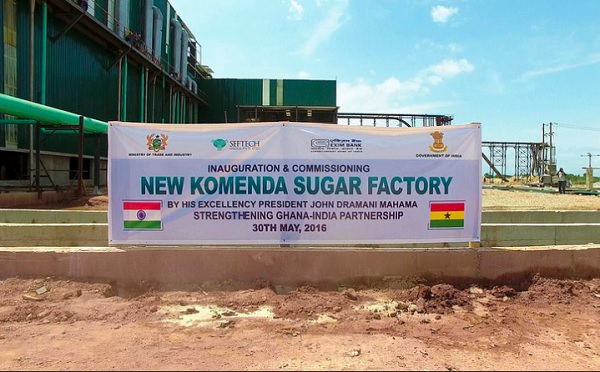
  • Komenda sugar factory can be managed by a Ghanaian – Concerned citizens of Komenda Traditional Area

    Komenda sugar factory can be managed by a Ghanaian – Concerned citizens of Komenda Traditional Area

    Convenor for the Concerned Citizens of Komenda Traditional Area, Samuel Awudza, has criticized the choice to lease the Komenda Sugar Factory to West Africa Agro Limited, calling it deceptive.

    He also expressed doubts about the company’s legitimacy, pointing out the lack of evidence indicating that West Africa Agro Limited has previous operations in Ghana.

    “The government claims this company will take over the factory, but they only visited here six months ago. If someone says they are now coming to work at the Komenda Sugar Factory, then the person doesn’t know. The company has no track record in Ghana,” he emphasized.

    Mr Awudza believes that local expertise is sufficient to manage the factory.

    “A Ghanaian can manage the Komenda Sugar Factory. We don’t need an outsider to come and work and give us a profit of 10 million dollars. We have the people in Ghana,” he stated in an interview on Adom FM’s morning show, Dwaso Nsem Tuesday.

    On a visit to the factory, the Minister of Trade and Industry, K.T. Hammond, announced a government-backed leasing initiative.

    The objective of the plan is to restart the factory’s operations and fulfill local sugar needs. The lease is proposed to last between 15 and 20 years with renewal options.

    Despite the government’s promises, local residents are still skeptical and are gearing up for protests, insisting that the factory should be managed by Ghanaians to benefit the local community.

    Watch the video below:

  • Armed robbers strike gold-buying shop, fleeing with cash and gold

    Armed robbers strike gold-buying shop, fleeing with cash and gold

    Violent scenes erupted in Wassa Dompoase, Amenfi East Municipality, Western Region, as seven armed robbers stormed a gold buyer’s shop, making off with two sacks filled with money and gold.

    Reports indicate that the armed group invaded Humble Gold Buying Enterprise around 1 p.m., where three shopkeepers were present.

    Brandishing guns and knives, they demanded the safe keys from the shopkeepers.

    One shopkeeper, suspected to hold the keys, was shot twice and is in critical condition at the hospital.

    The other two shopkeepers were injured by gunshots and knife wounds during the confrontation but are now reported to be stable.

    The robbers successfully obtained the keys and escaped with the gold and money in two sacks.

    Authorities have launched a manhunt to locate and arrest the suspects.

    Earlier this year, in June, the Tarkwa Circuit Court sentenced two soldiers and nine other individuals to a combined 252 years in prison for a similar robbery at a gold-buying company in Wassa Akropong.

    The convicted individuals included Emmanuel Tetteh, also known as ‘Rocky Study,’ a retired soldier working as a private security officer; Samuel Agbadoku, who is unemployed; Isaac Adjei, another private security officer; Frank Afavi, a fetish priest; Yaw Adzevi, a kente weaver; and Anthony Ayivie Kwame Senyo, alias ‘Shoto,’ a driver. Each of these six individuals received 17-year sentence.

    Additionally, Pascal Korku Atatsitsey, alias ‘Mezaya,’ and Dodzi Awali, both fetish priests; Dickson Kumedzro, also known as ‘Jaggar,’ a farmer; and Ruben Kportufe, alias ‘Offei,’ a self-proclaimed businessman, were each sentenced to 25 years. Mohammed Buzu, alias ‘Meme,’ an ex-convict, was sentenced to 50 years.

    All defendants faced charges of conspiracy and robbery but refuted the accusations related to the 2018 case. They requested leniency from the presiding judge, Mrs. Hathia Ama Manu.

    There have been growing worries about escalating crime rates, including a surge in robbery incidents.

    In response, the government and police have been taking steps to address the issue, including boosting patrols, enhancing community policing efforts, and launching public awareness campaigns.

  • Peace should be your goal – Peace council tells party flagbearers

    Peace should be your goal – Peace council tells party flagbearers

    The National Peace Council has pledged to uphold Ghana’s peace throughout the general elections.

    In an engagement with , Chairman Dr. Ernest Adu Gyamfi encouraged political figures to run their campaigns with an emphasis on maintaining national tranquility.

    “Everyone is campaigning to win the attention of Ghanaians. Let’s campaign with the intention to maintain the peace in the country.

    “It will be a disaster to win elections only to realize that the country is in chaos. How can you govern if the country is in chaos? The most important thing is to campaign and maintain our peace,” he noted.

    He added that the council has mapped out all hotspots for electoral violence and will pay critical attention to those areas to reduce political tensions during the elections.

    “The peace council has a map of all the hotspots of election violence in the country. We know where the hotspots are. We are given attention to these places all these are meant to minimise political tensions in the country,” he explained.

    He alleged that certain political figures use vigilante groups as a cover to incite unrest.

    “The challenge is that there is a disconnect between the grass roots and the political actors, some of the political actors hide behind vigilante groups to cause violence.

    “We need to get to the grass roots . The major problem is how to get to the grassroots for them to understand what misinformation and disinformation can lead to,” he noted.

    Dr. Adu Gyamfi stressed the need for Ghanaians to be aware of the effects of electoral violence.

    “It is important for the public to understand the concept of electoral violence, it is intended to manipulate the outcome of the electoral process.

    “It runs through the whole electoral process, it is done to manipulate the process, if we allow these things will continue, it will continue it is likely to lead to a more serious thing,” the report indicated.

  • More than 600 Nkwanta South farmers get fertilizers, ammonia, urea through govt’s PFJ II

    More than 600 Nkwanta South farmers get fertilizers, ammonia, urea through govt’s PFJ II

    In a major boost to agriculture, the Ministry of Food and Agriculture (MoFA) has provided over 600 farmers in Nkwanta South, Oti Region, with fertilizers, ammonia, urea, and improved seeds as part of the Planting for Food and Jobs Phase II initiative.

    This effort is aimed at improving food production and ensuring food security, demonstrating the government’s dedication to supporting farmers and advancing sustainable agricultural practices.

    During the distribution ceremony, Municipal Chief Executive (MCE) Felix Owusu-Gyimah highlighted the initiative’s significance. He stated that Planting for Food and Jobs is a key element of the government’s agricultural policy, intended to enhance food production and job creation in the sector.

    By supplying critical inputs such as fertilizers and seeds, the government seeks to increase food output, create employment, and improve the livelihoods of farmers.

    He encouraged farmers to make the most of the resources provided, as these inputs are expected to boost crop yields and productivity.

    Farmers at the event conveyed their deep appreciation to President Akufo-Addo and Vice President Bawumia for their support.

    In an interview with Adom News, they expressed concern over rising input costs and noted that this assistance arrives at a pivotal moment, helping to lower production costs and enhance yields.

  • Non-submission of annual returns could lead to GBA, CIB’s removal from company register

    Non-submission of annual returns could lead to GBA, CIB’s removal from company register

    The Ghana Bar Association (GBA), Chartered Institute of Bankers (CIB), and the Chartered Institute of Certified Tax Accountants and Auditors are among the 43 professional organizations listed as not being in good standing according to the Office of the Registrar of Companies (ORC).

    A press release from the ORC revealed that 40 professional bodies are currently in good standing, while 43 are not.

    The ORC also reported that 11 professional bodies have been newly registered, and 73 organizations lack contact information, making it difficult for the ORC to reach their executives for record updates.

    “Four Professional Bodies have however requested to be taken off the Register for having gained a Chartered status by an Act of Parliament”.

     Professional Bodies not in Good Standing as at July 31, 2024
    1. GEOLOGICAL SOCIETY OF GHANA

    2. GHANA REGISTERED NURSES AND MIDWIVES ASSOCIATION

    3. THE CHARTERED INSTITUTE OF BANKERS (GHANA)

    4. INSTITUTE OF HUMAN RESOURCES MANAGEMENT PRACTITIONERS

    5. MINING METALLURGICAL AND PERTOLEUM SOCIETY

    6. GHANA ASSOCIATION OF SOCIAL WORKERS

    7. GHANA CHEMICAL SOCIETY

    8. COMPUTING ASSOCIATION OF GHANA

    9. ASSOCIATION OF HEALTH SERVICE ADMINISTRATORS (GHANA)

    10. GHANA REGISTERED MIDWIVES ASSOCIATION

    11. ASSOCIATION OF RATING VALUERS (GHANA)

    12. GHANA SOCIETY OF ANIMAL PRODUCTION

    13. GHANA HOME ECONOMICS ASSOCIATION

    14. GHANA INSTITUTE OF SCIENCE TECHNOLOGY

    15. GHANA ASSOCIATION OF TRANSLATORS & INTERPRETORS

    16. GHANA INSTITUTE OF MANAGEMENT

    17. ASSOCIATION OF BUILDING TECHNICIANS

    18. GHANA INSTITUTE OF PROFESSIONAL FORESTERS

    19. THE GHANA INSTITUTE OF TAXATION

    20. GHANA INSTITUTE OF CONSTRUCTION

    21. GHANA ASSOCIATION OF THE INSTITUTE OF CHARTERED AND SECRETARIES & ADMINISTRATORS

    22. GHANA INSTITUTE OF HORTICULTURISTS

    23. GHANA INSTITUTE OF INFORMATION TECHNOLOGY

    24. DISPENSING TECHNOLOGISTS SOCIETY OF GHANA

    25. INSTITUTE OF INTERNAL AUDITORS (GHANA)

    26. GHANA OPTOMETRIC ASSOCIATION

    27. GHANA ACADEMY OF CHRISTIAN COUNSELLORS

    28. INTERNATIONAL ASSOCIATION OF CONSULTANTS, VALUERS & ANALYSTS

    29. GHANA QUALITY NSTITUTE

    30. CHARTERED INSTITUTE OF CERTIFIED TAX ACCOUNTANTS

    31. ASSOCIATION OF QUALITY ASSURANCE

    32. AVIATION SAFETY INSPECTORS ASSOCIATION OF GHANA

    33. GHANA ASSOCIATION OF CERTIFIED CONSULTANTS

    34. INSTITUTE OF CERTIFIED MANAGEMENT CONSULTANTS GHANA

    35. INTERNATIONAL INSTITUTE OF CERTIFIED FORENSIC INVESTIGATION

    36. PROFESSIONAL AGILE CERTIFICATION AFRICA

    37. GHANA ACADEMY OF FORENSIC SCIENCES

    38. GHANA COLLEGE OF SCIENTISTS

    39. GLOBAL ACADEMY OF FINANCE AND MANAGEMENT

    40. CHARTERED INSTITUTE OF CERTIFIED TAX ACCOUNTANTS AND AUDITORS

    41. CHARTERED INSTITUTE OF AGRICULTURE GHANA (CIA-GH)

    42. CHARTERED INSTITUTE OF LOCAL GOVERNANCE & DEVELOPMENT

    43. GHANA BAR ASSOCIATION

    Background 

    In May 2024, the Registrar of Companies issued a public notice requiring all Professional Bodies in default to submit their Annual Returns and update their Membership Certificates by June 30, 2024, as per Section 16 of the 1973 Professional Bodies Registration Act, NRCD 143.

    This directive followed a prior meeting with the Executives of these bodies last year. Despite this deadline, a recent review has shown that many Professional Bodies have not complied with these requirements, risking removal from the Register under Section 11 (b) of the NRCD 143.

    What is next for these Professional Bodies?
    The Registrar of Companies, in an official announcement, advised professional bodies currently non-compliant to rectify their status by December 30, 2024. Submissions must include the body’s Audited Accounts, an updated membership list, and any amendments to its Constitution.

    Additionally, the notice emphasized that professional bodies incorporating “CHARTERED” in their names must submit copies of their Charter issued by the Parliament of Ghana along with their Annual Returns and updated Membership Certificates.

    “All those who do not have the Charter granted by Parliament should take steps to have this done within the shortest possible time or in the alternative change their names” The Registrar of Companies added.

    The Registrar of Companies Jemima Oware however promised that the office will enforce its core mandate and values to ensure credible business and professional atmosphere for all stakeholders

    “The Office will continue its rigorous sensitization and engagement on the need for registered Professional Bodies and Businesses to be in good standing”.
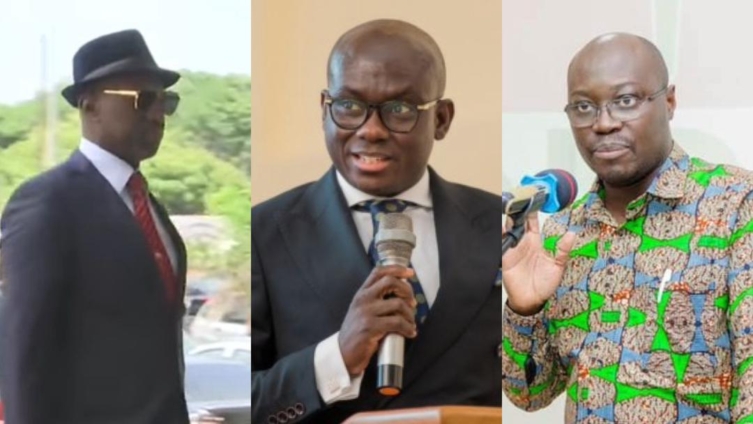
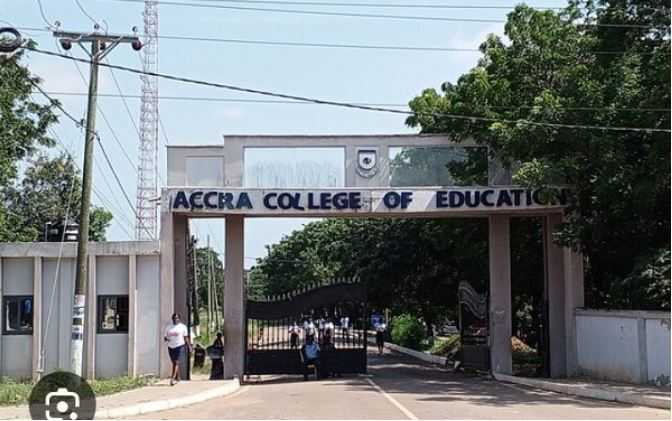
  • NPP rescued banks from collapsing completely – Prof. Boadi on Banking sector cleanup

    NPP rescued banks from collapsing completely – Prof. Boadi on Banking sector cleanup

    A professor of accounting and finance at the University of Professional Studies (UPSA), Isaac Boadi, stated that the banking sector clean-up benefited Ghanaian banks and financial institutions.

    He suggested that if the National Democratic Congress (NDC) had won the 2016 elections, the banking sector would have faced total collapse due to the absence of the clean-up.

    “Let me point out here that if the NDC had won the 2016 elections and they were not going to implement the cleanup as was done by this government, the banking sector would have collapsed completely,” he was quoted by the media.

    Prof. Boadi observed that the idea of banks needing financial assistance was irrelevant because, despite receiving some aid, there was no significant improvement.

    “The banks were supported by the central bank. They were given funds to resuscitate their operations and become profitable, but at the end of the day, those monies were misused. UniBank for instance was given GH¢6.1 billion, Beige Bank also got GH¢3.2 billion, UT Bank was a beneficiary of some GH¢860 million, yet they failed to live up to expectations,” he added.

    He clarified that the problems stemmed from inadequate corporate governance, inaccurate financial reporting, and insider trading.

    “Some of the banks gave loans to some of the clients without collaterals. Some owners gave themselves loans without due process, and all these worked against those banks and needed to be rescued by the government lest they would have crumbled, causing much devastation than we have seen when the cleanup was undertaken,” he also said.

    He clarified that the problems stemmed from inadequate corporate governance, inaccurate financial reporting, and insider trading.

    “Per what we have perused, per what we have seen, the banking sector is better off today than it used to be in 2015/2016. It might not be that all the indicators are pointing in the right direction, but most of them are positive and that’s a good thing. This government saved the banking sector and they didn’t collapse it,” he indicated.

  • Overhaul economic financing to stop cedi depreciation – Economist urges

    Overhaul economic financing to stop cedi depreciation – Economist urges

    Economist Patrick Asuming has recommended that the government overhaul economic financing to stop the depreciation of the cedi.

    In a media interview on Tuesday, August 6, he mentioned that the heavy dependence on foreign financing significantly contributes to the cedi’s high volatility.

    He also emphasized the need for the country to regulate certain imports

    “I think we should think a little longer term in addressing the cedi depreciation rather than the shorter-term measures implemented which have not solved the problem. In the past, we have relied on foreign inflows, but now is the time to reform the whole economy in terms of how it is financed,” he said.

    Dr. Asuming’s remarks follow the 2024 Mid-Year Budget Review by the Institute of Statistical, Social and Economic Research (ISSER), which highlighted that the depreciation of the cedi has profoundly affected the nation’s economy. The report noted that this has resulted in labor unrest, the shutdown of some businesses, and the migration of others to more favorable business environments.

    The economist stated that the relocation of businesses and the rise in labor unrest are not solely attributed to currency instability.

    However, “it is a reflection of the overall difficult economic environment.”

    “In addition to the problems brought on by currency depreciation, we have seen in the last few years the rising cost of doing business, an increasing number of taxes, and the uncertainty generated in our tax laws – those are major parts of the argument.”

    To address this, he suggested creating a more welcoming and predictable business climate, which includes implementing stable regulations in the country.

    He also highlighted the importance of developing the economy on a more proficient foundation.

  • 245 business entities, 47 individuals issuing dud cheques sanctioned by BoG

    245 business entities, 47 individuals issuing dud cheques sanctioned by BoG

    The Bank of Ghana has sanctioned 47 individuals and 245 businesses for issuing fraudulent cheques.

    According to a BoG statement dated August 6, 2024, these parties violated a directive that was issued in March 2021.

    “The affected bank customers issued dud cheques on at least three occasions between January 2022 and January 2024, despite warnings about the consequences of their actions”.
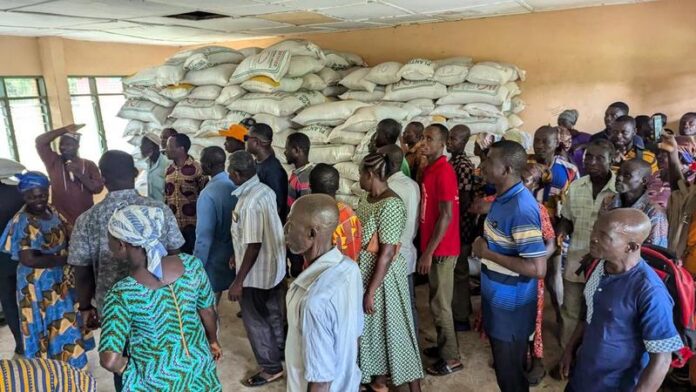
    “The offenders are accordingly banned from issuing cheques in Ghana for three years, effective 28th June 2024” it said adding that the offenders will also not be able to access new credit facilities from the banking system for three years with effect from 28th June 2024.

    The statement made it clear that these penalties do not exclude any legal measures that might be taken against the violators under Ghana’s criminal code.

    The BoG mentioned that banks and Specialised Deposit-Taking Institutions (SDIs) whose clients are involved in these infractions have been directed to notify the offenders of the ban and collect all unused cheque books from them.

    “They shall not issue new cheque books to the affected customers until the sanctions are lifted. The public is by this Notice, cautioned to desist from issuing dud cheques as the offence has both legal and regulatory consequences. Bank of Ghana will continue to monitor the payment system space closely and is committed to the promotion of the integrity and soundness of the financial system”, the statement concluded.

  • Global financial markets experiencing heightened instability over drop in stock prices

    Global financial markets experiencing heightened instability over drop in stock prices

    European stock markets remained unsettled on Tuesday despite a notable recovery in Japan that nearly reversed earlier record declines.

    London’s FTSE 100, along with indices in Paris and Frankfurt, initially rose but soon fell back.

    Japan’s Nikkei 225 index surged by 10.23%, or 3,217 points, in its largest single-day point gain following a sharp drop the previous day.

    Attention has now shifted to US stock markets, which are set to open in a few hours after several days of turbulent trading.

    The Nikkei’s 12% decline earlier in the week had a negative impact on global markets, leading to significant share price drops in the UK, Europe, and the US.

    Analysts attribute these movements to concerns about a potential US economic slowdown, with Japan’s rare interest rate cut also contributing to the volatility.

    On Tuesday, the FTSE 100 saw a slight initial increase of 0.33% before slipping, with French and German markets following a similar trend.

    Russ Mould, investment director at AJ Bell, noted that while there may be some relief in stock markets on Tuesday, the real test will be the US market’s performance when it opens later in the day.

    “Fears about a sharp recession in the US, engendered by weak jobs data, remain,” he added.

    US stock markets have declined following July’s disappointing employment report, which revealed an increase in the unemployment rate.

    Concerns have also emerged that shares in major technology firms, especially those heavily invested in artificial intelligence (AI), may be overvalued and facing challenges.

    The technology-focused Nasdaq index has experienced significant drops recently, although it managed to reduce its losses to end 3.4% lower on Monday.

    The S&P 500 fell by 3%, while the Dow Jones Industrial Average closed 2.6% down.

    The weaker-than-expected job data has fueled speculation regarding the timing and extent of potential interest rate cuts by the US Federal Reserve.

    Last week, the Fed decided to maintain current interest rates, unlike other central banks that opted to reduce theirs.

    “The Federal Reserve missed an important opportunity to cut interest rates last week like the Bank of England did,” said economist Mohamed El-Erian, who is also president of Queens’ College, Cambridge.

    The Fed had signalled that a rate cut in September was on the table. But Mr El-Erian told the BBC’s Today programme that waiting “risks tipping the economy further towards a higher probability of recession.”

    A number of experts have cautioned that it is premature to suggest the world’s largest economy is heading for a downturn.

    But if it does, it would have wider implications.

    “What happens in the US economically and financially does not stay in the US,” said Mr El-Erian.

    “The US has been the major driver of global economic growth, the US consumer is a very important engine of economic activity so the world as a whole would suffer if the US were to go into recession.”

    The wait for the Fed’s next meeting will also likely mean stock markets remain unsettled.

    “Markets are very volatile at the moment and will likely stay volatile until the Fed decision in September, so we wouldn’t rule out rapid swings in both directions,” said Stefan Angrick, a senior economist with Moody’s Analytics.

    ‘Strong’

    The Nikkei has swung wildly in recent days, following the Bank of Japan’s decision to raise interest rates for just the second time in 17 years.

    It sent the yen soaring against the dollar making Japanese stocks – and the country’s exports – more expensive for foreign investors and buyers.

    Commenting on the country’s outlook, Jesper Koll, executive director of Monex Group Japan, said he still had confidence in the country.

    “Japan’s fundamentals are strong, recession risks are nil and corporate leaders are dead-set on raising capital returns,” he told the BBC.

    In addition to Japan, stock markets in South Korea and Taiwan also recovered, with gains of approximately 3.5% following their record declines.

  • Organize more housing fairs to enrich knowledge on owning homes – Stakeholders to GREDA Housing

    Organize more housing fairs to enrich knowledge on owning homes – Stakeholders to GREDA Housing

    Attendees of the recently concluded Graphic-GREDA Housing Fair praised the organizers for the exhibition, noting that it provided valuable insights and information to help guide them in acquiring homes and commercial properties.

    They also encouraged other industry stakeholders to collaborate with the fair organizers to address the challenges facing the sector.

    “This fair offers a sense of enlightenment for those who don’t know about the real estate industry. For us at Broll Ghana, it affords us the privilege of getting closer to our customers and would-be clients,”  A manager at Broll Ghana, Laila Addae, said.

    Several attendees shared with the Daily Graphic that they initially came to browse but were captivated by the homes displayed through pictures and audio-visual presentations, along with the available financial services and assistance.

    For many visitors and potential buyers, the real estate fair proved to be an enlightening experience.

    “This is the first time I have seen so many real estate companies converge at one point to make offers to customers and it is good, they will beat down the price and you will get affordable homes to buy,” a customer told the media.

    The Graphic Communications Group Ltd (GCGL) and the Ghana Real Estate Developers Association (GREDA) organised the three-day fair at the Accra Mall.

    Panacea

    The President of GREDA, Patrick Ebo Bonful, described the just-ended three-day fair as a learning curve and must be sustained. “This is a good feature for our sector, GCGL is the most credible and read newspaper and news in the country, it transcends the length and breadth of the country and we are glad to partner it for such an educative and informative fair,” he stated.

    Mr Bonful stressed that it was only the building, construction and real estate industry that could cure Ghana’s anaemic under-development. He premised his assertion on the fact that all developed countries of the world adopted building and construction to develop and grow other industries, citing what the United States, Britain, Japan and Germany did with that sector after the Second World War.

    In an exclusive interview at the Climax of the three-day Graphic-GREDA Housing Fair last Saturday, Mr Bonful said the construction and real estate industry encompassed other sectors of the economy, including the artisans, labour, skilled labour, financial, food catering and energy industries.

    “The truth is when there is a major construction going on one needs the services of artisans such as masons, carpenters and bricklayers; you also need food and drinks, you need power to sustain the construction and you also need skilled labour, among others,’ he told the the media.
     

    Market penetration

    Mr Ebo Bonful disclosed to the Daily Graphic that Ghana’s building and real estate industry penetration was one of the lowest in the world which he said accounted for the nation’s under-development.

    “The building, construction and real estate industry in Ghana is not even up to one per cent of Gross Domestic Product (GDP); it is that low and there is a need for a real stakeholder brainstorming on how to tackle this,” he told the Daily Graphic.

    He noted that platforms such as the Graphic-GREDA fair was a very important feature and only needed more improvement. “This fair is very important for us, it will help us in many ways and we need to improve upon it,” he told the Daily Graphic.

    Housing fair

    The annual event featured everything from housing solutions to the final touches needed to complete a dream home. Key stakeholders in the housing sector, including the Lands Commission, SIC Insurance, Vanguard Assurance, ASHFOAM,  DEVTRACO, Waylead, CCAG, and Sedan Landbank have gathered to interact with the public.

    Other participants included Hollard Insurance, STL Superlock, Broll Ghana, Affordable Luxury Homes, Lakeside Estate, Star  Properties, Spotlight Homes, Latex Foam, First National Bank, Azar Chemical Industries Limited, Regimanuel Gray Limited, Cornerstone Developments, Emerald Properties and Swami India Ghana Limited.

    It offered prospective and existing homeowners, investors, real estate developers, financial advisors, interior decorators, regulators and other industry players the opportunity to make purchases agreements, finalise agreements and brainstorm innovative solutions.

    Participants gained first-hand knowledge on financing homes and properties to patrons of the fair and allowed them to explore financial instruments and funding options from companies selling houses, investment plans and insurance-related information.

    Additionally, they received education on land acquisition, effective building techniques and addressing issues such as flooding and fire outbreaks.

    Graphic’s responsibility/affordability

    The Managing Director (MD) of GCGL, Ato Afful, said the theme for the fair reflected the responsibility held by the company as a national brand to provide accurate, truthful and verifiable information daily to promote national development, and enhance the living standards and well-being of the population.

    He said the collaboration with GREDA on the fair aimed to fulfil the vision of growing the country’s real estate market.

    “The event provides insights into prevailing market dynamics, explores emerging trends in green housing and promotes the concept of green living. It guides existing homeowners and potential buyers on their investment journey, from land acquisition to opportunities in real estate as an investment portfolio,” he stated.

    Climatic factors

    Mr Afful said the importation of the majority of building materials was a critical issue to look at with regard to making them affordable. 

  • Fan Milk Ghana offers permanent jobs to 10 street vendors

    Fan Milk Ghana offers permanent jobs to 10 street vendors

    Fan Milk PLC (Ghana) has initiated a program to transition 10 street vendors into full-time agents, aiming to foster sustainable employment within its value chain.

    Named ‘Project Sankofa,’ this initiative is part of the company’s corporate social responsibility (CSR) efforts to rekindle the enthusiasm surrounding FanMilk products, celebrating 64 years of the brand.

    The company has launched the “Right to Dream” award scheme to honor dedicated street vendors whose efforts have significantly contributed to distributing its products to consumers.

    This effort aligns with the goals of FanMilk’s parent company, Danone, particularly with its Danone Impact Journey pillar focused on ‘Thriving with its People & Communities,’ which emphasizes equipping and empowering individuals with future-ready skills and capabilities.

    Personal engagement 

    Lionel Parent, Managing Director (MD) of Fan Milk PLC, stated in a press release from Accra that the initiative underscores the significance of direct interactions for grasping the business requirements of their commercial partners.

    “We are happy to bring back pride in our vendors and agents, who have been the key drivers of our business growth. For the first time, we have identified and rewarded ten street vendors by elevating them to the Agent category, making them business owners. 

    “By providing financial support and logistics, we are helping them become independent Agents. This confirms our heritage as a brand that grows alongside its partners. This is just the beginning of our plans to bring back pride through strategic engagements,” he said.

    Beneficiary 

    First female recipient of the 2024 ‘Right to Dream’ Award, Agartha Baidoo, conveyed her sincere gratitude to FanMilk for their empowering initiative, which helps her achieve her goal of increasing her income and providing for her family.

    She commented, ‘As a street vendor, it has always been my dream to save enough and own a shop. This support from FanMilk is a dream come true. I am excited and encouraged because selling Fan Milk products has been my only business for so many years.”

    The initiative 

    Over the past two months, Fan Milk PLC has engaged with over 555 agents across the country and 1,200 vendors in Accra to better understand their challenges. 

    This initiative aims to revive FanMilk’s ambition to support sustainable employment, protect its brand heritage, while providing refreshing snacks to its cherished customers.

  • Ghana Link pledges to enhance trade facilitation

    Ghana Link pledges to enhance trade facilitation

    Ghana Link Network Services Limited (Ghana Link) has reaffirmed its commitment to enhancing trade facilitation and driving economic growth through innovation.

    The company aims to play a key role in advancing Ghana’s economy by increasing trade volumes, drawing foreign investment, and generating job opportunities, which will contribute significantly to the nation’s socio-economic development.

    In a press release issued in Accra, Clyde Panyin Adjei Danso, the Deputy Managing Director (DMD) of Ghana Link, highlighted that “Our focus remains on innovating and improving trade facilitation in Ghana, contributing to the nation’s economic growth”.

    Recognition

    The comments were made in response to Ghana Link receiving multiple accolades at the 4th National Governance & Business Leadership Awards. At the event, the company was honored as Transformational Business of the Year, while several top executives also received individual awards.

    Mr. Danso was recognized as Exemplary Business Leader of the Year for the second year running. His leadership and successful track record in enhancing business growth and operational efficiency were pivotal to this achievement.

    His contribution in managing operations and cultivating strong stakeholder relationships has been crucial to the company’s success, notably in the deployment of the Integrated Customs Management System (ICUMS) at Ghana’s ports.

    “This award is a testament to our team’s dedication and hard work,” Mr Danso said.

    Exemplary finance leadership

    Mr. Grifford Kwarko Mensah, Director of Finance and Administration at Ghana Link, was awarded the title of Exemplary Finance Leadership Personality of the Year.

    This distinguished accolade highlights Mr. Mensah’s exceptional contributions to financial management and administrative excellence within the company.

    His strategic financial planning and innovative administrative methods have been essential in advancing Ghana Link’s growth and operational effectiveness.

    Mr. Mensah’s expertise has been particularly instrumental in overseeing the financial components of major projects, including the rollout of the Integrated Customs Management System (ICUMS).

    His prudent financial management has enabled the company to invest in advanced technologies while sustaining a robust financial standing.

    “I am deeply honored to receive this recognition,” said Mr. Mensah. “At Ghana Link, we believe that sound financial management is the backbone of any successful enterprise.

    “Our team’s commitment to financial transparency, operational efficiency, and strategic resource allocation has been key to our ability to deliver transformative solutions for Ghana’s trade facilitation. This award is a testament to the collective efforts of our entire finance and administration team, and it motivates us to continue pushing the boundaries of excellence in our field.”

    Under Mr. Mensah’s guidance, the finance and administration department has adopted numerous best practices in corporate governance, risk management, and financial reporting.

    These initiatives have bolstered the company’s internal controls and improved its reputation among stakeholders, including government bodies and international partners.

    Exemplary entrepreneur

    At the same ceremony, Dr. Nick Danso Adjei, the company’s Executive Chairman, was honored with the Exemplary Entrepreneur of the Year Award, showcasing the exceptional caliber of Ghana Link’s leadership team.

    These individual honors, alongside the company’s accolade as Transformational Business of the Year, emphasize Ghana Link Network Services Limited’s profound influence on Ghana’s trade and customs sector.

    The successful rollout of ICUMS has resulted in higher revenue collection by the Ghana Revenue Authority (GRA) and enhanced efficiency in the clearance of goods at the Tema and Takoradi ports.

    The National Governance & Business Leadership Awards, hosted by The Governance & Business Boardroom, recognize outstanding achievements in corporate governance, leadership, and economic development in Ghana.

    This year’s theme, “The Promise of Leadership: Transformation, Impact, Growth & Prosperity,” perfectly aligns with Ghana Link’s achievements and ongoing commitment to national development.

  • COCOBOD addresses loan default claims, clarifies debt status

    COCOBOD addresses loan default claims, clarifies debt status

    The Ghana Cocoa Board (COCOBOD) has addressed allegations of repeated loan defaults, providing clarity on its financial obligations and repayment status.

    As of December 31, 2022, COCOBOD’s total debt to the Bank of Ghana was reported at GH¢8.24 billion.

    This debt includes a GH¢1.99 billion loan facility with a 10-year term and an overdrawn Cocoa Bills Retirement Account totaling GH¢6.86 billion.

    COCOBOD clarified that the GH¢1.99 billion loan, secured in 2013, was meant to cover outstanding cocoa bills from the 2010/2011 season. The loan included a moratorium until 2018 due to cash flow issues worsened by low cocoa prices during the COVID-19 pandemic.

    Although there have been delays in repaying the principal, COCOBOD has consistently met interest payments and has set up a revised repayment plan to start in October 2024. The Board firmly denied any default on this loan.

    For the overdrawn Cocoa Bills Retirement Account, COCOBOD attributed the deficit to non-marketable cocoa bills from the 2016/2017 season, which were crucial for maintaining cocoa production amid falling international prices and changing agricultural trends.

    These bills were rolled over at elevated interest rates due to prevailing economic conditions.

    During the 2023 Domestic Debt Exchange Program, the government assumed a substantial portion of this debt, providing COCOBOD with a 50% discount. The remaining debt balance is still noted but does not reflect the initial amount claimed.

    COCOBOD’s Public Affairs Department emphasizes that the Board has not defaulted on its commitments and is managing its debt obligations responsibly.

    Read full response in the statement below:

  • Bank of Africa-Ghana, IFC launch innovative SME training program to empower 1,000 businesses

    Bank of Africa-Ghana, IFC launch innovative SME training program to empower 1,000 businesses

    The Bank of Africa (BOA)-Ghana, in collaboration with the International Finance Corporation (IFC) of the World Bank Group, has launched a groundbreaking initiative aimed at training approximately 1,000 Small and Medium-sized Enterprises (SMEs) across Ghana, with a particular emphasis on women-led businesses.

    This partnership between BOA, a leading SME banking service provider in Ghana, and the IFC, the world’s largest development institution focused on investment, advisory, and asset management to foster private sector growth in emerging markets, marks the first such initiative in Ghana aimed at empowering targeted groups economically.

    The inaugural BOA/IFC SME Seminar, hosted in Accra, brought together around 50 participants from various SMEs for an interactive and engaging two-day workshop.

    This year-long program is available to both existing and new customers of the bank, with a special focus on the women’s wing of the Ghana Union of Traders’ Association (GUTA) across all 16 regions.

    Abderrahmane Belbachir, Managing Director of BOA-Ghana, highlighted at the seminar that this training initiative is a key component of the bank’s broader strategy to support SMEs in Ghana.

    “We recognise that access to capital is crucial, but true empowerment goes beyond financial resources. That is why we have designed this programme to equip you with the essential skills and knowledge to propel your businesses forward.

    “This training is a great avenue to open doors to more opportunities with the Bank of Africa. We are prepared to support your growth with access to more loans, facilitation of your transfer requests, and other tailored financial solutions,” he said.

    Touching on the partnership with IFC, the MD reiterated that it exemplifies the power of shared vision and collective action in driving economic development. “To our partners, your continued trust and collaboration with the Bank of Africa Ghana have made this initiative possible,” he added.

    SME Coordinator, BOA-Ghana, Jacob Wilberforce highlighted that recognizing the pivotal role of SMEs in fueling economic growth here in Ghana, the bank has a dedicated segment that focuses on supporting these businesses and offering them very soft loans with interest lower than the Bank of Ghana’s reference rate.

    “Beyond financial assistance, we provide advisory services, business networking opportunities, and workshops to empower SMEs to thrive and expand their operations. This partnership further strengthens our commitment effort to impact more businesses,” he said.

    Mr. Wilberforce added that tailored financial services have been developed to meet the unique needs of these dynamic entities that will benefit from the partnership. “Through our SME Support Facility (SSF), we offer collateral-free loans from a minimum of GH¢20,000 to as high as the client capacity can handle,” he stressed.

    IFC-LPI Certified Assessor and Performance & Learning Specialist, Margaret Jackson, who was the main facilitator of the training highlighted that participants will be well equipped to describe how a business generates profits, measure business profitability, and develop strategies to enhance profitability after completing the course.

    “This two-day programme has been designed to equip entrepreneurs with hands-on experience in proper financial and business operational practices. Topics are carefully selected to deliver in-depth knowledge of business profitability improvement and cash flow management as well as effective working capital strategies.

    “The beneficial entrepreneurs would be able to make better financial and corporate decisions and adhere to standard bookkeeping practices to facilitate access to finance. These are the tools that will help entrepreneurs make informed decisions, navigate the challenges of entrepreneurship, and unlock their full potential,” she said.

    The initiative received positive feedback from participants, who praised the interactive and motivating approach, peer-to-peer learning, and networking opportunities.

    Participants shared their experiences about how they gained valuable insights into calculating profit margins and maintaining business profitability.

    A participant, Abugri Emmanuel, MBA Prime Limited, producer of detergents, shared his excitement for benefitting from the free programme that has taught him proper financial accounts management to access competitive funding.

    The seminar covered key learning areas, including credit management, improving profitability, effective working capital strategies, controlling business cash flow, savings strategy, and record-keeping for informed decision-making.

  • Dangote reclaims title as Africa’s richest man, surpassing Rupert

    Dangote reclaims title as Africa’s richest man, surpassing Rupert

    Nigerian businessman Aliko Dangote has regained his title as Africa’s richest individual, according to the most recent Bloomberg Billionaires Index.

    Dangote’s net worth has risen to $13.7 billion, surpassing South Africa’s Johann Rupert & family, who have a net worth of $13.3 billion.

    Earlier, reports had suggested that Johann Rupert had overtaken Dangote, with Rupert’s net worth reaching $13.6 billion. However, recent updates have restored Dangote to the top spot.

    The Bloomberg Billionaire Index ranks Johann Rupert as the 155th richest person in the world, while Dangote holds the 149th position.

    Dangote’s latest valuation change was an increase of $144 million, though his year-to-date (YTD) change shows a significant decrease of $1.38 billion. In contrast, Johann Rupert’s recent valuation decreased by $334 million, with a YTD increase of $875 million.

    Despite facing operational challenges with his new oil refinery and ongoing economic unrest in Nigeria, Dangote has managed to preserve his wealth. The refinery has faced numerous difficulties, prompting Dangote to consider transferring control to Nigeria’s state-owned energy company, NNPC.

    Recent fluctuations saw Dangote’s net worth dip from $13.8 billion to $13.6 billion between July 29th and August 2nd, while Rupert’s fortune rose from $13.4 billion to $13.6 billion. With the latest figures, Dangote has reclaimed the lead over Rupert.

    Other notable Africans on the list include South Africans Nicky Oppenheimer with $10.9 billion and Natie Kirsh with $8.74 billion, as well as Egyptians Nassef Sawiris with $8.63 billion and Naguib Sawiris with $6.94 billion.

  • BoG expresses confidence to handle external shocks

    BoG expresses confidence to handle external shocks

    The Bank of Ghana (BoG) is confident in its ability to protect the economy from external shocks due to a significant increase in reserves during the first half of the year.

    This advancement also enhances the bank’s capacity to stabilize the foreign exchange market.

    Governor Dr. Ernest Addison highlighted that the bank’s reserve levels have greatly improved, thanks to a favorable external payments balance and a surplus in the current account.

    As of June 2024, the bank’s gross international reserves rose by $947 million to reach $6.87 billion, covering 3.1 months of imports. Meanwhile, net international reserves increased by $1.31 billion to $4.50 billion.

    Dr. Addison attributed this strong reserve growth to the Domestic Gold Purchase Programme, which has accelerated the accumulation of reserves beyond what was projected under the IMF-supported initiative.

    Economic outlook
    The bank observed that global economic activity exceeded expectations in the first quarter of 2024, with the IMF’s growth projections for advanced economies indicating steady performance.

    Nonetheless, ongoing inflation in the services sector, driven by rising wages, may prompt central banks to maintain elevated interest rates for an extended period, potentially impacting growth outlooks.

    Domestic economy
    Ghana’s GDP growth for the first quarter of 2024 exceeded expectations, with economic activity proving resilient despite a restrictive policy approach.

    Job Openings

    High-frequency indicators point to stronger growth prospects, although consumer and business confidence has weakened due to exchange rate depreciation and elevated food prices.

    The bank anticipates a shift in these sentiments as the exchange rate stabilizes and macroeconomic stability improves, which should bolster economic activity.

    Fiscal front
    On the fiscal front, the bank said fiscal policy implementation so far has been on track and aligned with the IMF programme.

    However, it said staying on the course of the fiscal consolidation path for the rest of the year should lock in stability in the overall macroeconomic conditions.

    Banking sector performance
    Concerning the banking sector’s performance, the bank noted that in the first half of the year, the sector showed signs of continued recovery from the effects of the Domestic Debt Exchange Programme.

    Total assets in the banking sector increased by 33.3% to GH¢323.1 billion by the end of June 2024, compared to a 21.2% growth rate at the end of June 2023. Indicators of profitability, liquidity, and efficiency also saw improvements during this period.

    The Capital Adequacy Ratio (CAR), after accounting for reliefs, remained steady at 14.3% from June 2023 to June 2024. Without reliefs, the CAR was 10.6% in June 2024, up from 7.4% in June 2023.

    Despite these positive developments, the central bank highlighted that high credit risk continues to pose a challenge to the sector’s recovery.

    The industry’s Non-Performing Loans (NPL) ratio stood at 24.1% in June 2024, an increase from 18.7% in June 2023.

    Nevertheless, the bank expressed optimism that steady profit growth, adherence to recapitalization plans, and stringent credit underwriting standards would support the sector’s full recovery and resilience.

    Regarding domestic price trends, the bank noted some uncertainty about the inflation trajectory for the year due to recent exchange rate pressures, increases in utility tariffs, and rising ex-pump fuel prices.

    These factors have led to a slightly higher inflation outlook for the year. While inflation is expected to stay within the target range, there is a slight risk of it rising above the target.

    To address this, the bank emphasized the need for maintaining a strong monetary policy stance coupled with robust fiscal consolidation efforts to achieve the year-end inflation goals.

    Key statistics
    Gross International Reserves: US$6.87 billion (end-June 2024)- Net International Reserves: US$4.50 billion (end-June 2024)-

    Current Account Surplus: Significantly improved, aided by strong gold exports, robust remittances, and debt suspension.

  • Debt challenges persist despite Restructuring – Fitch reports

    Debt challenges persist despite Restructuring – Fitch reports

    A recent report by Fitch has highlighted that Ghana’s economy continues to grapple with substantial financing difficulties despite the government’s debt restructuring efforts.

    Consequently, the rating agency has maintained Ghana’s rating at a level that signifies the country is effectively in default on its foreign debts.

    The rating, termed ‘RD’ or ‘Restricted Default,’ indicates that Ghana has missed payments on certain international loans, notably its Eurobonds.

    Nevertheless, the report acknowledged that the country is striving to restructure its debts and collaborate with international creditors to enhance its financial standing.

    Approximately $478 million of this sum is projected to be paid to Eurobond holders with whom Ghana recently finalized a debt restructuring agreement. “We are fully aware of the upcoming payments, and our cash flow projections show that we have made provisions for this specific obligation.”

    Dr. Addison confirmed, “Indeed, we have built reserves to manage some of these substantial payments as part of our financial planning.”

    Ghana’s gross international reserves increased to $6.86 billion in the first half of the year, up from $5.34 billion during the same period in 2023. Fitch has also upgraded Ghana’s rating to ‘CCC’ for its capacity to repay debts in its local currency.

    This suggests that, while Ghana is struggling with international debts, it is somewhat better positioned to meet its domestic financial obligations.

    The report points out that Ghana is actively negotiating with its lenders and working on strategies to reduce its debt burden, which may enhance its financial stability in the future.

    As of June 2024, Ghana’s total debt was GH¢742.0 billion, equivalent to 70.6% of GDP.

    Ghana’s economy is burdened with unsustainable public debt, prompting the country to seek assistance from the International Monetary Fund (IMF).

    Under a three-year program with the IMF, the government has been tasked with restructuring both domestic and external debt, aiming to reduce the debt-to-GDP ratio to 55% by 2026.

    The Domestic Debt Exchange Programme, initiated in December 2022, involved swapping old bonds valued at approximately GH¢82 billion for 12 new bonds with lower coupon rates and extended tenors.

    Since then, the government has settled payments for all local individual bondholders who opted out of the DDEP, with payments to local institutional bondholders still ongoing.

    During the mid-year budget presentation, Finance Minister Dr. Mohammed Amin Adam reported that the government had paid around GH¢12 billion to bondholders participating in the DDEP, reflecting its commitment to the program.

    He noted that the government had completed two coupon payments and scheduled a third payment of GH¢6.1 billion for August. This contributed to Fitch’s improved rating on Ghana’s ability to service domestic debt.

    Externally, the government recently signed a Memorandum of Understanding with the Official Bilateral Committee to restructure about $5.1 billion in bilateral debts.

    The country is awaiting formal agreements from individual countries. On the commercial front, Ghana has reached a deal with the Eurobond holder committee to restructure approximately $13 billion in bonds, involving a 37% reduction in principal and a suspension of coupon payments until 2026.

    The debt restructuring involves $4.7 billion in cancellations and $4.4 billion in debt service savings from 2023 to 2026.

    Later this month, the government plans to launch a consent solicitation and exchange memorandum in the international capital market. This will allow it to seek Eurobond investors’ approval to amend the terms of the bonds.

    Two new bond options are available: the PAR bond, with a limit of $1.6 billion, and the DISCO bond, which offers three new instruments (Bond short, Bond long, and Down Payment Bond). Consenting holders will receive a PDI Bond and a consent fee.

    Fitch expects the consent solicitation to be launched soon and the Eurobond exchange to be completed by September 2024, though delays might occur due to ongoing negotiations regarding the International Development Association (IDA)-partially guaranteed bond.

    Fitch noted, “We anticipate the completion of the external debt restructuring by the end of 2024.”

    Regarding Eurobond repayments, Fitch’s affirmation of the LTFC IDR at ‘RD’ reflects that Ghana remains in default on its Eurobonds following the lapse of the grace period for a missed coupon payment in February 2023.

    At a recent Monetary Policy Committee press briefing, Bank of Ghana Governor Dr. Ernest Addison confirmed that the country has sufficient reserves to meet its Eurobond repayment obligations in the second half of the year.

    Despite the suspension of coupon payments until 2026 as a result of negotiations, Ghana is expected to make principal payments. IC Africa Research estimates that Ghana will make debt service payments between $600 million and $800 million this year.

    About $478 million of this amount is expected to be paid to Eurobond holders who the country recently concluded a debt restructuring deal with. “We are very much aware of the upcoming payments, if you look at the cash flow projections, you would see that provisions have been made for this particular payment.”

    So yes, we have built up reserves to meet some of these lumpy payments in the outlook,” Dr Addison said.

    Ghana’s gross international reserves increased to $6.86 billion in the first half of the year, up from $5.34 billion during the same period in 2023.

  • MTN’s half-year revenue climbs to GHS8.1bn, reflecting a 31.1% increase

    MTN’s half-year revenue climbs to GHS8.1bn, reflecting a 31.1% increase

    Telecommunications company MTN Ghana has reported revenue of ₵8.1 billion for the first half of 2024.

    This marks a 31.1 percent increase compared to the ₵6.1 billion recorded by the end of June 2023.

    The mobile operator disclosed this information in its financial report for the six months ending June 2024.

    Revenue Drivers

    In its financial statement, MTN attributed the revenue growth to increased data usage, mobile money, and digital revenue, bolstered by improved 4G connectivity and a 3.9 percent year-on-year rise in its subscriber base.

    The company reported a strong year-on-year increase in data revenue, which surged by 55.0 percent to ₵4.0 billion.

    This growth was driven by a 15.9 percent year-on-year rise in active data subscribers and a 7.2 percent year-on-year increase in megabytes consumed per active user each month, resulting in a 24.2 percent year-on-year growth in data traffic during the period. Consequently, the contribution of data revenue to total service revenue grew from 41.5 percent to 49.0 percent year-on-year.

    Contribution of Mobile Money

    Mobile Money is another service that significantly contributed to MTN’s strong revenue performance.

    Mobile Money revenue rose by 44.8 percent year-on-year to ₵1.9 billion. This growth was driven by a 16.2 percent increase in the active user base, as the company continued to enhance its digital financial solutions.

    As a result, advanced services grew by 73.3 percent year-on-year, while cash-out services and peer-to-peer transactions saw robust growth of 33.0 percent and 43.1 percent year-on-year, respectively. Consequently, Mobile Money’s contribution to total service revenue increased from 21.7 percent to 24.0 percent year-on-year.

    Digital revenue experienced significant growth, rising by 59.4 percent to ₵101.4 million. This increase was mainly driven by video, gaming, and ring-back tones. Enhancements in customer experience and a focus on providing relevant digital offerings both locally and internationally contributed to this growth. The number of ayoba users grew by 14.8 percent year-on-year, reaching 2.9 million.

    The MyMTN app also saw several enhancements and expanded its user base to 1.6 million, with over 0.4 million daily users. More improvements and new features are planned for the second half of the year to further enhance the digital experience for customers. The contribution of digital revenue to total service revenue increased from 1.0 percent to 1.3 percent year-on-year.

    MTN’s Profits ending June 2024

    These developments led to MTN reporting a Profit Before Tax of ₵3.3 billion, a 36.6 percent increase from the ₵2.4 billion posted in June 2023 by the Telecoms company.

    Investments by MTN for half year…

    These developments led to MTN reporting a Profit Before Tax of ₵3.3 billion, a 36.6 percent increase from the ₵2.4 billion posted in June 2023 by the Telecoms company.

    Regulatory Updates and localization of MTN

    MTN states that Mobile Money Limited is dedicated to localizing Scancom PLC.

    By the end of Q2, local ownership of Scancom PLC had reached 27.9%. Consequently, the regulator has verified that Scancom PLC has met the 25.0% localization requirement for its 4G license.

    “We are committed to further localise Scancom PLC and Mobile Money Limited, and we will continue to work closely with regulators and other relevant stakeholders towards achieving our goal”, it said.

    Dividend Payment

    Due to the significant revenue growth in the first half of 2024, MTN is proposing a 30.0 percent increase in the interim dividend to ₵0.065 per share, up from 5 pesewas in 2023.

    As a result, the ex-dividend date is scheduled for Wednesday, 14 August 2024. Therefore, investors who purchase MTNGH shares before this date will be eligible for the interim dividend. Conversely, investors who buy MTNGH shares on or after Wednesday, 14 August 2024 will not be eligible for the interim dividend.

    Outlook

    MTN stated that it will keep investing in the development of its platforms and the enhancement of its network and services to create value for stakeholders, in alignment with its Ambition 2025 strategy.

    “We continue to explore efficiency measures, preserve liquidity and strengthen the balance sheet against a backdrop of election-related and macroeconomic uncertainties”.

    MTN Ghana noted that it expects to keep its medium-term guidance of high twenties (in percentage terms) growth in service revenue.

  • Anyidoho reveals why Nii Lantey Vanderpuye and others are ‘jealous’ of him

    Anyidoho reveals why Nii Lantey Vanderpuye and others are ‘jealous’ of him

    Former deputy General Secretary of the National Democratic Congress (NDC), Koku Anyidoho, has explained why he believes Nii Lantey Vanderpuye and some other individuals feel envious of him.

    According to him, it all stemmed from his multiple influential roles and responsibilities during the era of late President John Evans Atta Mills.

    Mr Anyidoho explained that official duties on presidential trips were part of the roles that were only assigned to him.

    However Nii Lantey and others did not have official roles on these trips.

    He said they sometimes got their names on the list through state protocol, but the president would often remove them from the list.

    As a result, Mr Anyidoho added that he was seen as the favored individual, leading to envy from others.

    “A lot of the jealousy that came around me was that, I was the speech writer. I was the image manager. I was the PR person. I was the one managing the press call. So I had official duties to perform on those presidential trips. Nii Lantey and the other people had no official trip. Sometimes they will go through state protocol, get their names on the list, but the president will vet and take off their list. So the thing became ” Vice Koku now become the beloved son”. They knew I was not the one taking off the list.

    “So on this trip to china, we are there in China, then Nii Lantey arise with a huge business delegation. The president gets raid of it because Chief of Staff has called to say Nii Lantey has left the presidency without any permission. “Are you the one who gave him the permission? President says No. Some of the business men are alleging that he collected money from them before he brought them to the trip.” The president hears and he says “Koku because of your relationship with me, I am going to send you. Go and tell him how angry I am. He is not supposed to be here and he is here. If he doesn’t get on the next plane back to Ghana, I will make sure the Chief of Staff dismisses him and that will be the end of his political career.”

    “So I had this unpleasant duty of having to go and meet my brother and friend and pass on this information. Fast forward president Mills dies, and that what Nii Lantey uses to buy his way into the John Mahama camp. “That oh don’t mind Koku. He was ditching all of us to Mills.” That’s how wicked Nii Lantey is,” the former deputy General Secretary of the NDC told the media.

  • Some doctors enjoying free education under Akufo-Addo govt – Pro-NPP activist alleges

    Some doctors enjoying free education under Akufo-Addo govt – Pro-NPP activist alleges

    A Pro-NPP activist has alleged that doctors are now receiving free education to become specialists, with no tuition fees required under the Akufo-Addo’s administration.

    He stated that prior to the current NPP administration, students had to pay fees, but this is no longer the case.

    “Today, Doctors are receiving free education. You can walk from your studios to the college of physicians and surgeons. Every doctor receiving training to become a specialist in this country, the Akuffo-Addo NPP administration has made schooling free. They don’t face school fees. Hither to our administration, they were paying fees. They doctors who had car waver by motivation president Kufuor introduced, prof mills continued. Mr Mahama under his administration came to cancel them,” the Pro-NPP activist said.

    Meanwhile, in 2017, President Nana Akufo-Addo introduced Free Senior High School (Free SHS) policy in Ghana with the aim of provide providing free secondary education to all Ghanaian students who qualify for and are placed in public senior high schools.

    It is believed by a section of Ghanaians that the policy removes financial burdens on parents by absorbing all approved fees, making education accessible to more students.

    Thus, it implementation has led to a significantly increased enrollment in senior high schools over the years.