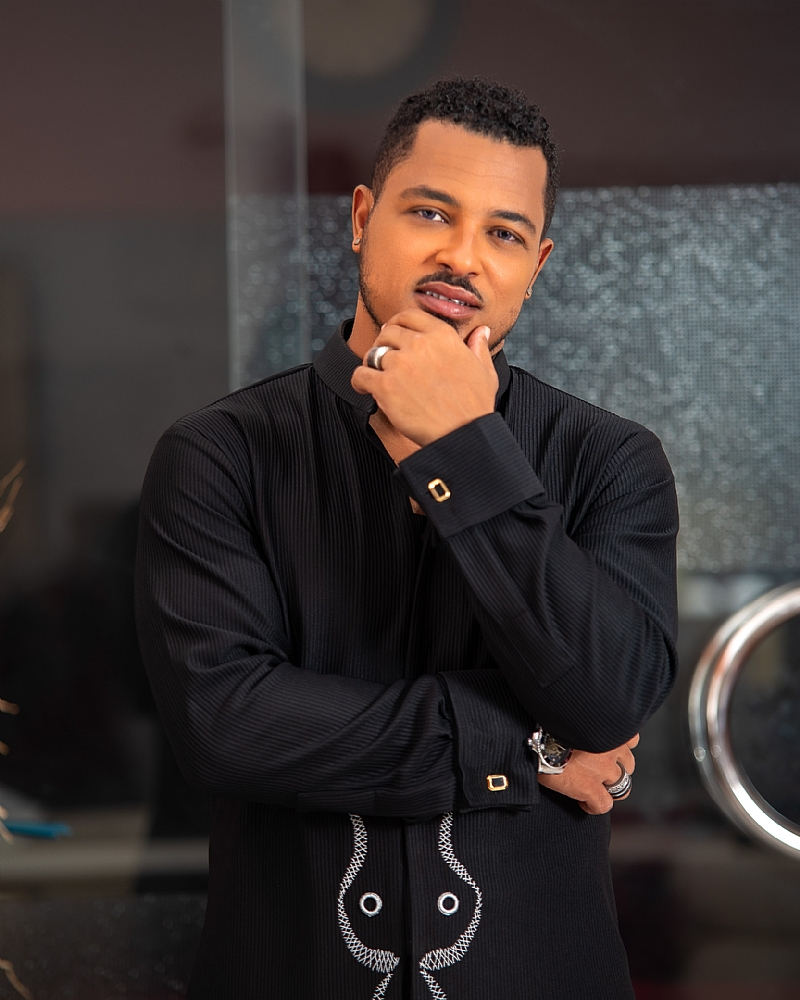
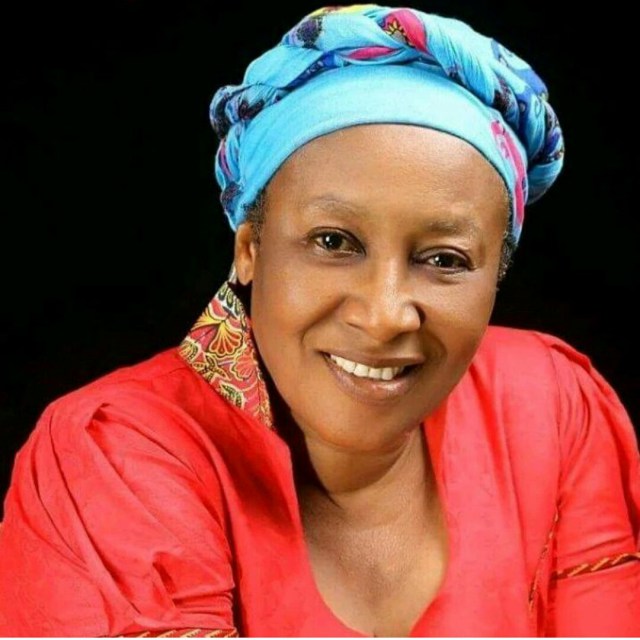
Priscilla Opoku Agyemang, widely known as Ahuofe Patri, has shared her struggles with family members who are excessively focused on her personal relationship.
In a recent interview with Felicia Osei, she discussed the challenges of dealing with this pressure, particularly during family events.
he Ghanaian actress, known for her role as Patricia in Kofi Asamoah’s The Adventures of Kalybos, is one of the most popular female celebrities in Ghana.
Ahuofe Patri recently opened up about her personal life, expressing her belief that the right man is out there for her.
Despite her hopes, the actress is determined not to be swayed by the expectations of her family members.
She revealed that many have urged her to lower her standards and accept any proposal so she can marry and start a family.
There were rumors suggesting she was dating her colleague Kalybos, who recently got married. Ahuofe Patri denied these rumors, clarifying that she was never romantically involved with him.
She also noted that if people thought she was linked with Kalybos, it would simply indicate that both had excelled in their roles.
The lady who went viral for her unusual way of eating beans and plantain known as “gobɛ” was this time seen eating fufu.
Afua Nash arrived at Aduanipa restaurant in a black flowing dress with long loose sleeves and was excitedly welcomed with a large earthenware bowl of fufu.
Her bowl of fufu was garnished with lots of meat of various kinds, boiled eggs, fish and other protein. Before diving into the famous Ghanaian delicacy, she danced.
Meanwhile, Afua Nash is not the only Ghanaian influencer to have enjoyed fufu in this manner. Comedian and foodie SDK Dele caused a frenzy online when he was served a large earthenware bowl of fufu at the second edition of The Chop Bar Experience.
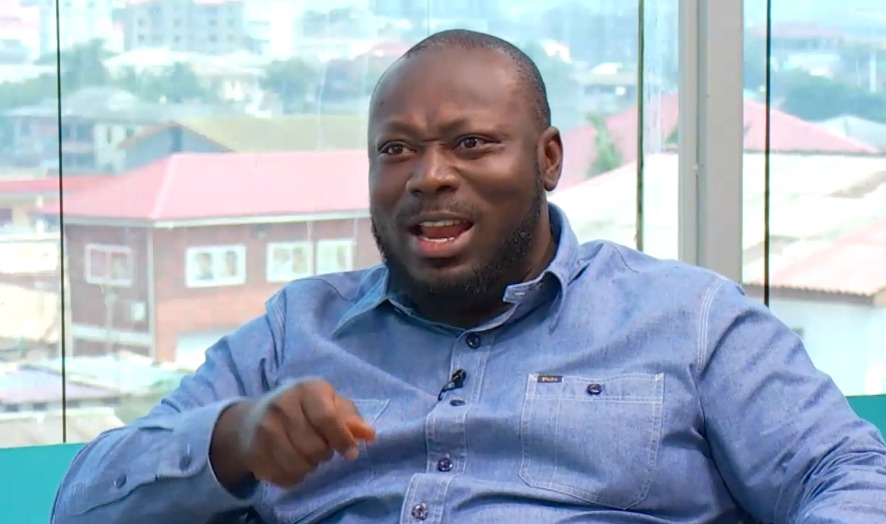
Ghanaian actor and comedian Kwadwo Nkansah, widely known as LilWin, has voiced his anguish over the smear campaign against him after a tragic accident in May claimed the life of a 3-year-old boy.
Addressing the audience at the Great Minds International School’s speech and prize-giving ceremony in Ahenkro, Ashanti Region, LilWin lamented the intentional negative stories circulating on social media.
He stated that he has never harmed anyone and would never purposely cause an accident that could risk his own life.
“With the recent issue that happened to me, people called me proud and disrespectful, yet I have never fought with anyone or stolen from anyone in Ghana before. I can’t tell if it’s because of the school I built, the house I live in, or the car I drive. There is no reason for me to intentionally orchestrate an accident that could kill me,” he cried.
Despite this, LilWin affirmed his dedication to his philanthropic work and his commitment to making a positive difference in society.
“Good deeds get good rewards. Several years after when I am old, I want to hear an MP say that he or she got his or her education from the school I built. May God bless everyone, especially those who sent their children to my school. Due to the overflow of students in my school, I have built another school two minutes away from the first building to accommodate more students,” he added.
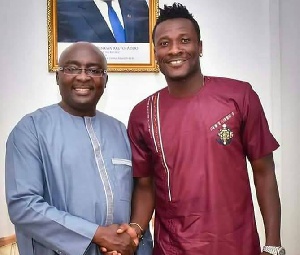
Former Black Stars captain Asamoah ‘Baby Jet’ Gyan has disclosed his political leanings by joining the campaign trail for Vice President Dr. Mahamudu Bawumia.
Gyan was seen at a campaign event in Akropong, where he tried to persuade attendees to support the NPP.
He stated that Dr. Bawumia had delivered on the promises made to him personally, which gives him confidence that Bawumia will honor his commitments to Ghanaians if elected.
Gyan was recently appointed as the chairman of the NPP manifesto committee for the Youth and Sports sector.
This role has impacted his decision, but social media users have criticized him as a sellout.
“This brother needs help 😢” one netizen wrote.
Another said: “The thing is,how can a rich man,that has everything tells the frustrated and poor youth to vote for someone? Asamoah got the help he needed from bawumia cos he’s rich and famous!”
The Ashanti Regional Chairman of the New Patriotic Party (NPP), Bernard Antwi Boasiako, widely recognized as Chairman Wontumi, was recently seen jaming to King Paluta’s track ‘Makoma.’
In a video posted on Instagram, Chairman Wontumi was visibly delighted, dancing energetically, and interacting with the music by bowing and waving his hands.
This took place at Akoma FM’s studios following an interview he had conducted.
He seized the moment to display his dance skills and express his admiration for King Paluta’s hit song.
Earlier, King Paluta had faced backlash after a video emerged showing him performing with NPP flagbearer Dr. Mahamudu Bawumia during a campaign event in the Ashanti Region.
‘Makoma’ has risen to prominence as one of Ghana’s trending songs, earning widespread acclaim from Ghanaians.
Abia State University, Uturu, has imposed a three-month suspension on Dr. Udochukwu Emmanuel Ndukwe, a lecturer in the Department of Mass Communication, following accusations of sexual harassment.
According to Punch, the lecturer has faced multiple allegations of sexually harassing, intimidating, and extorting female students within the department.
A video shared by LIB depicted the lecturer, naked and kneeling, being questioned by various individuals.
Reports indicate that Ndukwe was allegedly entrapped by a final-year female student, whom he is accused of sexually harassing for the past two years, at a well-known hotel.
LIB also reported that the lecturer married in 2022 and completed his PhD earlier this year.
A letter dated July 30, 2024, and signed by the school’s registrar, Dr Acho Elendu, described the suspended lecturer’s actions as an “embarrassment.”
According to the letter, a panel has been established to further investigate the suspended lecturer.
“Following the disturbing online video clip involving you, trending on social media, which has brought embarrassment to Abia State University, the Vice-Chancellor, on behalf of the Governing Authorities, has approved your immediate suspension from duty for three months, in the first instance, with half salary, in line with the University Conditions of Service pending the conclusion of the investigation for which a panel has been set up,” the letter read.
“You are to hand over any university property in your possession to your Head of Department.
“By this notice, all relevant authorities of the university are to note, for strict compliance.”
Ghanaian actor and media figure Akwasi Boadi, better known as Akrobeto, has shared his thoughts on the issue of women sharing their nude photos with men.
He expressed his confusion over why a woman would choose to send her naked images to a man in an attempt to attract him into a relationship or affair.
During his hosting of Real News on UTV, Akrobeto remarked that women who engage in this behavior are likely unsuitable for marriage, as they might display similar conduct with other men.
“Kweku Flick is advising women to stop sending their naked pictures to him. Where are we taking the world to? If you send your nude pictures to me and I develop an interest in you, I will tell you bluntly that you are not suitable for marriage, although I might have fun with you. No serious man will marry such a person because you could send your nude pictures to another man too,” he said in Twi.
His remarks were a reaction tomusicianKweku Flick’s grievances about women sending him nude photos on social media and his call for them to cease this behavior.
Akrobeto asserted that women who engage in such actions are unlikely to take their lives seriously and might encounter challenges in finding a spouse because of their behavior.
Akroboto has joined Kweku Flick in urging women to stand up for themselves and to stop sending naked pictures and videos#RealNewspic.twitter.com/p3f58XwNup
Ghanaian actress Yvonne Nelson has voiced her doubts about the promises made by political candidates ahead of the 2024 general elections.
Despite commitments from NDC flagbearer John Dramani Mahama and NPP flagbearer Dr. Mahamudu Bawumia to support the creative arts industry, Yvonne Nelson maintains that actions are more important than words.
In an interview with JoyNews, monitored by GhanaWeb, Nelson stressed her preference for focusing on growing her business and generating job opportunities rather than depending on political promises.
When questioned about Mahama and Bawumia’s campaign promises for the creative arts sector, including Mahama’s proposal to establish a film village and a dedicated TV channel, she stated, “they are all promising, but I just want to let my colleagues and the industry know that it’s just talk. Politicians love to talk, and you can believe them if you like. But for me and some of us, we would rather concentrate on our businesses and do what we can for Ghanaians, creating employment and helping the future generation.”
“As for the promises, I don’t even pay attention to them. It’s been said so many times, but their actions should show. Talk is cheap,” she bemoaned.
There has been persistent criticism regarding the failure of governments to enhance the creative arts sector after taking office.
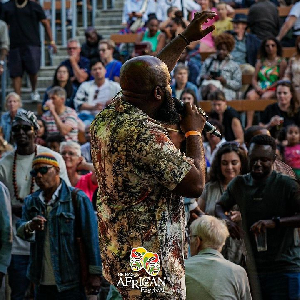
The Hague African Festival made a triumphant return on Friday, August, opening a new chapter under the energetic leadership of Augustina “MS.ABA” Austin and the Nteasee Foundation.
Hosted at the renowned Zuiderparktheater, the event attracted over 5,000 attendees, celebrating African culture and unity.
After a four-year break, the festival’s revival symbolizes a fresh beginning with the transition of leadership from the respected Sankofa Foundation, headed by George Duncan, to the Nteasee Foundation. This change heralds a renewed dedication to promoting the cultural and artistic expressions of the African diaspora.
A standout moment of the festival was the exhilarating performance by Ghanaian artist Trigmatic, marking his first appearance in the Netherlands.
His energetic presence and strong connection with the audience highlighted the festival’s goal of bridging cultural divides and honoring African artistry.
Trigmatic’s performance paved the way for future collaborations with Ghanaian artists, continuing the tradition established by the Sankofa Foundation, which has previously showcased talents such as Kyekyeku, Wiyaala, Fatoumata Diawara, Richard Bona, Werrason, and others.
Augustina “MS.ABA” Austin, an acclaimed musician, entrepreneur, and advocate for the African diaspora, has consistently championed African talent and promoted cross-cultural exchanges. With her Ghanaian heritage and upbringing in Delft, she offers a distinctive perspective and enthusiasm to her leadership role.
Her extensive collaboration with George Duncan has endowed her with the knowledge and expertise needed to steer the festival into a new phase. Under her direction, the Nteasee Foundation is committed to providing a stage for emerging artists and enhancing connections within the African cultural community, especially in Ghana.
“Taking over the festival is a tremendous honor and responsibility,” said Augustina. “Our goal is to continue the incredible work started by George Duncan and the Sankofa Foundation, while also introducing new elements that reflect the vibrant and diverse African cultures. We are committed to supporting upcoming talent and creating opportunities for artistic growth and cultural exchange.”
The festival showcased a diverse range of performances, including vibrant music, dynamic dance, and an inspiring fashion show.
Additionally, the event featured a talent program called ‘Upcoming.’ Looking ahead, the festival aims to become an annual celebration of African culture, creativity, and community.
The Nteasee Foundation is committed to preserving the festival’s legacy while cultivating new connections and opportunities within the African arts scene, particularly in Ghana.
The National Youth Organiser of the opposition National Democratic Congress (NDC), Mr. George Opare Addo, has asserted that the Okyenhene, Osagyefuo Amoatia Ofori Panin, lacks the moral authority to comment on the “Agyapadie” document.
A contentious 38-page document titled ‘Agyapadie,’ featuring the Okyenhene, President Nana Akufo-Addo, and his late father, has resurfaced, sparking renewed debate about its contents.
The Okyenhene, Osagyefuo Amoatia Ofori Panin, has strongly refuted the document’s validity, labeling it as “total fiction” meant to incite hatred and spread misinformation.
However, Mr. George Opare Addo, popularly referred to as Pablo, argues that if the Okyenhene could not address the governance issues under the Akufo-Addo administration as outlined in the “Agyapadie” document, which has taken place and is still unravelling, then he has no grounds to dismiss its authenticity.
He stressed that the Okyenhene, regardless of the document in circulation, should have advised the president to take pragmatic measures to address the many challenges facing the country.
“For all the events that have transpired during Akufo Addo‘s administration, he should have advised the president, letting him know that his governance is faltering. Even if it’s not true and we were the authors of the book, some of the things written in it are becoming a reality. They should take this into consideration and improve. If Nana has failed to do so, then I must say he has lost the moral authority to comment on this issue,” the NDC National Youth Organiser told the media.
On August 1, 2024, President Akufo-Addo addressed growing speculation about the document, which is purported to be a strategic plan of the Akyem faction within the ruling New Patriotic Party (NPP).
The president and the government New Patriotic Party (NPP) have dismissed the document as a fabrication, attributing its circulation to political adversaries aiming to discredit the party and its affiliates.
Ghanaian actress Nana Ama McBrown took to Instagram to honor her husband, Maxwell Mensah, on his birthday.
She posted a touching message along with a series of photos on August 3, 2024,.
Nana Ama McBrown celebrates her husband Maxwell Mensah on his special day. Photo credit: iamamamcbrown Source: Instagram
In her message, McBrown conveyed her deep love and admiration for Maxwell, wishing him longevity, good health, and success.
Her post quickly garnered attention, with many followers and fans joining in to extend their birthday wishes to Maxwell. In her caption, she wrote:
“Mawu HappyBirthdaytoU 🙏🏻 Mr Mensah. @maxmmens. I have told you many times that you are going to be more blessed. You will live long, you will be in good health and you will be rich. I wish you the best that you wish for. Enjoy your special day”
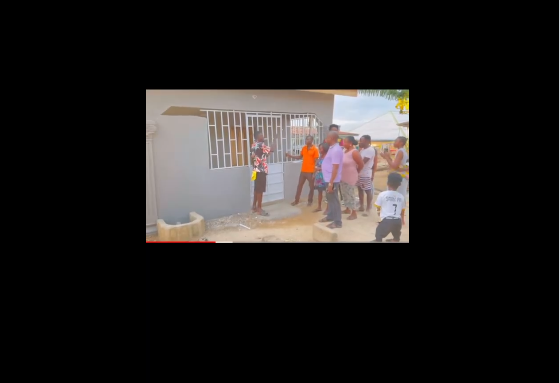
In a video, Lil Win gifted a house to his childhood friend, surrounded by her husband, family, and loved ones.
Lil Win shared that during one of their conversations, his friend confided in him about her marital difficulties and the substandard living conditions she faced.
He explained that her situation deeply affected him, motivating him to help her and her family. Consequently, he coordinated with local masons to build the beautiful house.
The Kumawood actor mentioned that although he was involved in a court case related to a car accident in Kumasi that tragically killed a 3-year-old boy, it didn’t impede the construction of the house.
He also noted that he was able to present the house because the court had rescheduled the proceedings to September 26, 2024, allowing him the time to make the presentation.
In the video, Lil Win handed over the keys to his friend and her family, moving her to tears and eliciting cheers from the assembled guests.
Kwadwo Nkansah moved Childhood friend from a deadly kiosk to a nice bedroom apart after she shared life struggles with her. God bless you Legend 🙏.
Rose Yeboah DeeMoney Agyapadie hawa koomson Mama Caro Prof Mills Lomo Lomo Shasta Wale Yvonne Nelson Drake Kendrick Ashanti pic.twitter.com/7nWwDlbw4D
Veteran Nollywood actress Patience Ozokwor, widely known as Mama G, recently spoke with Vanguard about the urgent need for improved healthcare practices in the Nigerian film industry.
Her heartfelt appeal follows the death of beloved comedian John Okafor, also known as Mr. Ibu, which has prompted her to raise her voice.
During Okafor’s funeral, Ozokwor, clearly moved, voiced her concerns about the concerning frequency of deaths among her peers.
She linked this issue to inadequate medical care, noting that many actors prefer self-medication from pharmacies over consulting professional healthcare providers.
“When you are doing something you are enjoying, you won’t bother to take care of your health. Once there is life in you, you keep doing what you are doing… And it’s something that pays back on your body,” Ozokwor stated.
She criticized her peers for opting for over-the-counter painkillers instead of seeking comprehensive medical evaluations from doctors.
Ozokwor’s statements highlight a larger issue in the Nollywood community, where the industry’s demands often lead to the neglect of personal health. Her message is clear: actors should prioritize their health by scheduling regular medical check-ups.
The actress’s remarks have ignited a broader conversation about the challenges Nollywood stars face and the need to cultivate a culture of health awareness within the industry. Ozokwor’s advocacy emphasizes the importance of systemic changes to ensure that those who entertain millions can also lead long, healthy lives.
Kuami Eugene’s lookalike, Steve Quamz, has stated that the lookalike enterprise has been highly advantageous, bringing significant recognition and connections.
“As for the lookalike thing, if I should stand anywhere and say that it brought no benefits to me, then I would be telling lies because it has done a lot for me,” he said in an interview with Amansan Krakye.
The singer, content creator, and YouTuber expressed his gratitude to Kuami Eugene for permitting him to use his name and for being widely recognized as ‘Rockstar Junior.’
“I would like to extend profound gratitude to Kuami Eugene because not everyone will allow you to claim to be his lookalike and use his name like the way I did,” he disclosed on Property FM in Cape Coast.
“The benefits from the lookalike enterprise have been enormous, and now when I’m outside, people recognize me through the lookalike and they used to call me Rockstar Junior.
“I’ve been able to create my own identity as Steve Quamz through the lookalike, and most people know me as Kuami Eugene’s lookalike, so we can’t stop doing it,” he claimed.
Ghanaian musician Camidoh has strongly defended his smoking habit, suggesting that it might not be inherently harmful.
He argues that “not everything that is portrayed as negative is negative.”
When asked to give a definitive answer on whether smoking is bad, he said, “If it’s bad for you, it is bad for you. The doctors have to detect that.”
He continued, “Generally, they say we shouldn’t smoke because it’s bad for our lungs. How about our parents who have been cooking kenkey? You see them when they are making kenkey, you see how smoky it gets?
I just want to tell you, you don’t have to dwell on that… It is not bad in my eyes because I’m telling a story,” he said.
A 27-year-old woman is embroiled in a legal dispute after refusing to become the second wife of a 55-year-old married man who has been financially supporting her.
During an appearance on TV3’s “Confessions,” a tell-all program, the woman disclosed that her wealthy benefactor, who gives her a weekly allowance of GH¢ 1,500, has threatened legal action if she does not agree to his marriage proposal.
Although the man, who is already married with children, professes to love her more than his wife and wishes to formalize their relationship, the woman disagrees.
“I am with this guy, and we have been together for a year and a half now; he is the type of man who will not even wait for me to ask him for money. He gives me an allowance of GH¢ 1500 a week. He has rented an apartment for me and helped me open a business. He has even got me a car. I am living a comfortable life without stress when it comes to money.
“But the issue is he is 55 years old and I am 27. He is married and his wife and kids live abroad. Now looking at how comfortable I have been my parents have been pressuring me to introduce them to my boyfriend but little did they know that this said boyfriend is their age mate.
“I genuinely do not love him that much. I am just with him because he makes life easy. I get the money, and I live comfortably,” she said.
Despite the financial perks, such as a rented apartment, a business, and a car, the woman hesitates to marry him because of their age difference and the potential ridicule from her friends and community.
“He called me one day and said he wanted us to get married, but this is not what I signed up for. I thought we were just going to chill and have fun and spend some money; then, he would go back to his wife and kids. So, where is this marriage thing coming from?
“He is telling me that he loves me more than his wife and wants to make me a second wife. look at his age, my friends will laugh at me.
“He is saying that if I do not marry him, he is going to take me to court and demand everything he has been giving me since day one.”
Rewu
A car, GHC1500 weekly, and a looming ultimatum: marry him or lose it all. This is the reality of a 27-year-old with a 55-year-old boyfriend 😥#Confessionspic.twitter.com/AvoZYggHN9
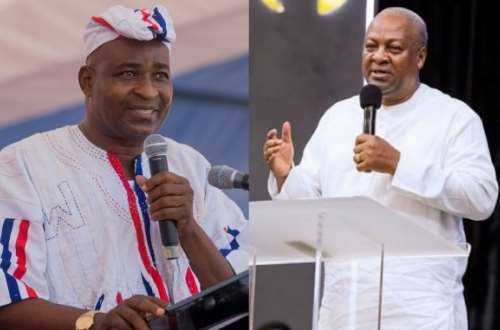
The Ashanti Regional chairman of the New Patriotic Party, Bernard Antwi Boasiako (alias Chairman Wontumi), has mistakenly urged Ghanaians to vote for John Mahama, John Dramani Mahama instaed of Dr Mahamudu Bawumia in the upcoming elections.
Chairman Wontumi was with the media in Kumasi to generate support for the NPP’s campaign, urging residents to vote overwhelmingly for Dr. Bawumia and the NPP as they aim for a historic 85% of the vote in the December 7 election.
During the interview, Wontumi promoted the NPP ticket of Dr. Mahamudu Bawumia and Dr. Matthew Opoku Prempeh as the best choice for the Asantes, while depicting Mahama as an adversary of the Ashanti Region.
Unfortunately for Wontumi, while attempting to endorse Dr. Bawumia as the ideal candidate for the Ashanti Region, he accidentally mentioned John Dramani Mahama. This slip has become the focal point of the interview, which lasted over an hour and a half.
“We are pleading with you all to vote for John Dramani ….” Wontumi said in the viral video.
Wontumi is the second high-profile NPP member to suffer a speech gaffe this year after President Nana Addo Dankwa Akufo-Addo mistakenly mentioned John Mahama as his vice instead of Dr. Mahamudu Bawumia.
President Nana Addo Dankwa Akufo-Addo was forced to ‘retract’ a statement he made at the launch of the District Road Improvement Programme (DRIP), a nationwide initiative to improve road conditions in all 275 constituencies.
The president, as he was touting the performance of his government in the road sector, mistakenly mentioned former President John Dramani Mahama instead of his vice, Dr. Mahamudu Bawumia.
“We’ve witnessed an extraordinary expansion and improvement in our road network throughout the country. From 2009 to 2016, that is the Mills-Mahama era, our nation completed 4,636 roads and five interchanges and overpasses. However, since January 2017 till date, i.e. the Akufo-Addo-Mahama era,” he said.
The president tried correcting his mistake, but before then, many in the audience reacted with an “Eiiii.”
The president could be seen covering his mouth, after which he said:
“That’s unforgivable. That’s unforgivable. I hope you will allow me to withdraw that statement; The Akufo-Addo-Bawumia era.”
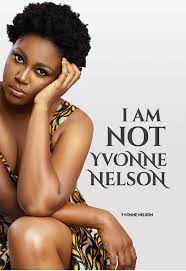
Actress Yvonne Nelson has revealed that publishing her book “I Am Not Yvonne Nelson” was a profoundly therapeutic experience.
She mentioned that creating the book took several years, describing the process as a remarkable journey.
During a graduation ceremony at her school, Nelson shared that everyone faces challenges and often keeps certain struggles private. For her, sharing her story through the book served as a form of therapy.
“It’s been a wonderful ride. It was something that I was working on for the longest time. That is what people don’t know, and they thought I woke up one day and used a week to write a book.
“We all have difficulties in our lives and things that we don’t talk to anybody about, and it’s been a big therapy for me to release the book. There is so much more I will want to share, but let’s see what happens,” she told Joy News.
In her book, Yvonne Nelson revealed that she does not know her biological father, as the man she believed to be her father was not.
The book details her childhood and the challenges she overcame to reach her current position.
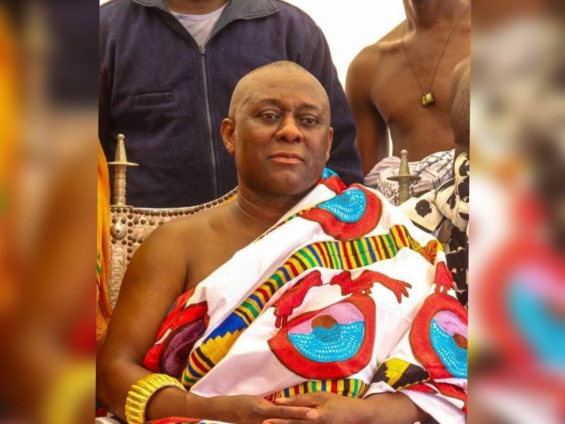
The Chief of Asamankese, Osabarima Adu Darko III, is calling on residents, particularly the locals of Asamankese, to stay calm and composed amidst the ongoing debate following the promotion of the Anum-Asamankese chief by the Okyenhene, Osagyefo Amoatia Ofori Panin.
A statement issued by Nana Oppong Adease II, Gyaasehene of the region, on behalf of the Asamankesehene, clarified that the promotion of the Asamankese-Anum Chief from Barima to Osabarima does not alter the traditional, customary, or legal boundaries of the stool land.
“We have taken note of the decision by His Majesty regarding the elevation of the Asamankese-Anum stool, and the subsequent tension and disquiet it has generated in the Asamankese Township and villages”.
“This elevation does not affect the stool lands boundaries as established by traditions customs and law in anyway, neither does the elevation convey nor cede any portion of the Asamankese stool lands to anybody as being speculated in certain quarters of Asamankese. Asamankese remains one unitary town fully committed to the development agenda of Osagyefo His Majesty,” parts of the statement read.
Reports suggest growing tension and a strained calm in Asamankese, Eastern Region, following the recent promotion of the Asamankese-Anum Chief by the Okyenhene, Osagyefo Amoatia Ofori Panin.
The elevation of Barima Essah Kwesi Mensah, a chief from the settler community, to the rank of Osabarima—on par with the Asamankese Chief, Osabarima Adu Darko III—has triggered controversy and unease within the local community.
Residents perceive this action as a challenge to the authority of the Asamankese Chief.
They criticize the Okyenhene for making a unilateral decision driven by personal motives, potentially leading to long-term conflict and unrest among the locals.
The community members are urging Nananom to take proactive steps to address the issue, warning that passivity could lead to severe historical judgment.
World Vision’s Kadjebi Reading Improvement and Skills Enhancement (RISE) Technical Programme has provided sewing machines to launch a youth apprenticeship program to strengthen community resilience and bolster support for children’s education,
The initiative focuses on adolescents and youths identified as Most Vulnerable Children (MVC), including those who have left school due to factors like teenage pregnancy, disability, or severe poverty.
A total of 50 youths, consisting of 37 females and 13 males, have received sewing machines and starter kits, and have been assigned to various trades across 7 communities.
At the handover event, Georgina Harriet Nyameke, the Kadjebi Area Manager, highlighted the significance of equipping young individuals with practical skills for sustainable employment.
Nyameke expressed that World Vision’s aim is not merely to provide tools but to open doors for youth to learn, develop, and build their futures.
She noted that this project aligns with World Vision’s mission to enhance the lives of vulnerable children and their families through educational and skill-building opportunities.
Mrs. Nyameke encouraged the beneficiaries to fully utilize the opportunity provided by the program, emphasizing that the skills gained could lead to self-employment and better livelihoods.
District Chief Executive (DCE) Wilson Agbanyo, representing the assembly and district education office, thanked World Vision for their timely support, which comes as many young people seek skill and employment opportunities.
Agbanyo stated that the initiative will help alleviate unemployment and inspire youth to tap into their creativity and entrepreneurial potential.
The DCE also remarked that the partnership between World Vision and local authorities exemplifies community-led development, demonstrating the benefits of targeted interventions in improving lives.
Wilson Agbanyo advised the recipients to use the provided items responsibly to enhance their future prospects rather than selling them.
Kennedy Amponsah-Cheremeh, Project Officer for Reading Improvement and Skills Enhancement at World Vision’s Kadjebi Area Programme, mentioned that in addition to the sewing machines, World Vision has provided head drinks (ɛtiri Nsa) to 48 Master Trainers and supplied all necessary tools for the 50 youths in the apprenticeship program.
He urged guardians, caregivers, and parents to ensure that their children have adequate food and shelter to support their learning in their chosen trades.
In an interview with the media, the beneficiaries expressed their appreciation to World Vision for the initiative, recognizing that effectively using the provided items is their best opportunity for a brighter future.
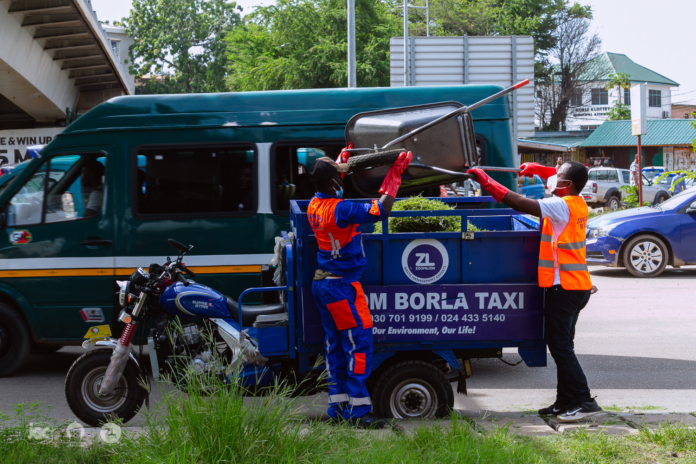
Workers from the Youth Employment Agency (YEA) employed by Zoomlion in the Kadjebi District of the Oti Region have given the agency a two-week deadline to settle their overdue allowances for the past 18 months or face a work stoppage.
The employees argue that the lack of payment is drastically impacting their financial stability, leading to severe personal hardships for many, including health issues.
Team leader Johnson Asiamah shared with Citi News that “We work for Zoomlion across the country, employed by the Youth Employment Agency, and our allowances for about 18 months have not been paid.
“We have been with the company for about 10, 15 to 18 years now. Some of our colleagues have died because they couldn’t afford medical treatment, others have been evicted from their homes due to unpaid rent, and many are currently bedridden.
“We’re pleading with management to consider our allowances so we can take care of ourselves and our children. We urge the YEA to facilitate our payments. If our allowances are not paid within two weeks, we will lay down our tools.”
Hassan Ayariga, the presidential candidate for the All People’s Congress (APC), has condemned the Electoral Commission (EC) for establishing a GH₵100,000 filing fee for the 2024 presidential election.
He contends that the fee is excessively high, particularly in light of the current economic challenges facing Ghana.
“What I am saying is that the economy is hard in Ghana nowadays, and it is not easy to come by GH₵10,000, not to talk of GH₵100,000. In the last election, when the EC declared that all Presidential candidates should pay GH₵100,000, I was strongly against it and I said that the economy of Ghana is so bad and that the salary of a Ghanaian citizen is less than GH₵10,000.
“That of a minister of state is less than GH₵15,000. So when you say ministers of state or candidates of any political party should pay GH₵100,000, it is outrageous because the economy of Ghana is tough now. How much is a Ghanaian earning compared to what the EC is asking for? What EC is trying to tell us is that Ghana is for the highest bidder.
“They are selling our electoral process to the highest bidder and they are telling us that they are looking for people with more money than more brains, more money than leadership, more money than competence. A high public earner like a minister of state takes home GH₵15,000.”
“When will a minister of state who is competent but not corrupt, a patriotic citizen of Ghana, save GH₵100,000 for just a filing fee? The bigger parties – the NDC and NPP are fine with it because they have been in power and embezzled funds and used government machinery to go around and campaign, and so for them, they don’t care if you fix the filing fee at GH₵1 million. Parliament must come out and tell the EC to justify the filing fee,” Hassan Ayariga stated.
According to the Commission’s statement, the nomination fee for male presidential candidates is set at GH₵100,000, while female candidates and those with disabilities will have a reduced fee of GH₵75,000.
“Candidates vying for the position of President will be required to make a payment of One Hundred Thousand Ghana Cedis (GH₵100,000.00) at the time of submitting their Nomination Forms. Payment shall be by Banker’s draft and addressed to the Chairperson of the Electoral Commission. Female Candidates and Persons with Disabilities are required to pay Seventy-Five Thousand Ghana Cedis (GH₵75,000),” part of the statement read.
The Commission has announced that nomination forms for the elections will be accessible on their website starting Friday, August 2, 2024. Candidates will have the window between Monday, September 9 and Friday, September 13, 2024, to submit their forms.
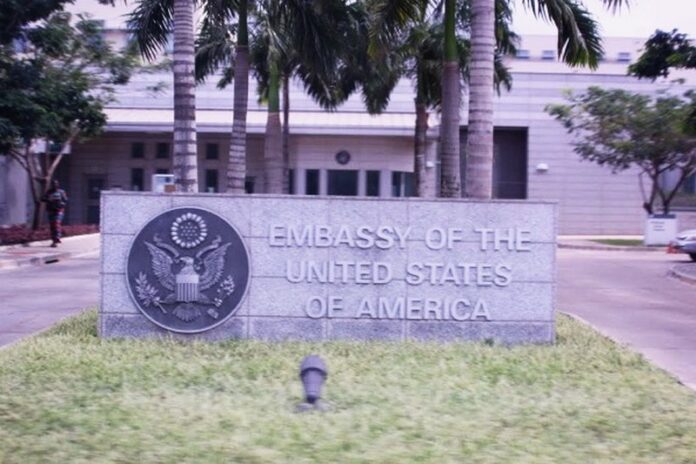
The United States Embassy in Accra reports a significant surge in the number of Ghanaians applying for visas to the US, with demand now exceeding the increased resources allocated for faster processing.
Despite acknowledging that increased travel between the two countries will strengthen people-to-people ties, the US mission is facing challenges due to the tripling of visa applications since 2019, resulting in a growing backlog.
These comments come as the US Embassy prepares to transition all visa applications to a new system, starting on August 16.
During a roundtable discussion at the US Embassy in Accra, American Consul General Elliot Fertik highlighted that the high demand is flattering for the US, as it suggests a strong interest among Ghanaians in visiting the United States temporarily.
“I’ve said before that if you look at the number of people who paid the visa application fee in 2019 before the pandemic and compare it to the number of people who did so in 2023, the number in 2023 is triple what it was in 2019. So certainly, we hope this new system will provide some additional enhancements and will be more efficient” Mr Fertik noted.
He added “We’re seeing it’s not just non-immigrant visas on the immigrant visa side. Diversity visa. Again, the numbers are through the roof. And, you know, we want to encourage as much legitimate travel between the United States and Ghana as we can. It is incredibly important to us. We want to encourage qualified students to study in the United States. And that’s why, as I said, that’s why we’ve had to bring more resources to doing interviews. Unfortunately, the demand is outstripping even the increased resources we’ve had and we’re going to continue increasing our resources”.
The U.S. Embassy in Accra will switch to a new visa services provider starting August 26, 2024, resulting in the current provider’s website and services being unavailable after August 16, 2024.
From August 16 to August 26, 2024, the U.S. Embassy in Accra’s current visa services provider will be inaccessible, as the transition to a new provider takes effect. During this time, applicants cannot schedule, cancel, or modify visa appointments, but existing nonimmigrant visa appointments will still be honored.
Key Details for Visa Applicants:
Interviews on or Before August 16:
No further action is required.
Continue to access your account at ustraveldocs.com to review appointment details and contact customer service as needed.
Interviews between August 16 and August 26:
No further action is required, but you will lose access to your ustraveldocs.com account after August 16. Print your appointment confirmation letter before August 16.
Attend your scheduled visa interview as rescheduling or cancellation will not be possible during this period. If you miss your interview, check the website after August 26 for rescheduling instructions.
Interviews on or After August 26:
No further action is required, but access to your ustraveldocs.com account will end on August 16. Print your appointment confirmation letter before August 16.
Beginning August 26, visit the new visa services website to create a new user account for managing appointments and accessing customer service.
For Applicants Who Have Paid the Visa Application Fee:
Schedule a visa appointment as soon as possible and follow the guidance based on your interview date.
For Those Planning to Travel to the U.S. in August or September:
Pay the visa application fee and schedule your appointment promptly. Note that appointment slots are limited during these months.
For Those Planning to Travel After September:
Consider waiting until after August 26 to begin the visa application process.
Important Dates to Remember:
August 16: Last day to access ustraveldocs.com for fee payments, appointment scheduling, and customer service.
August 21: Last day to drop off documents at Premium Delivery locations.
August 23: Last day to drop off documents at Ghana locations for Embassy delivery.
August 26: New visa appointment website goes live with updated services.
The U.S. Embassy encourages all applicants to take necessary actions before the transition to avoid any disruptions in their visa application process.
The Health Minister, Dr. Bernard Oko Boye, has informed Parliament that $312 million has been disbursed to contractors for the construction of the Agenda 111 hospital projects nationwide.
While no projects have been completed yet, Dr. Oko Boye noted that the initiative has been expanded to include two psychiatric hospitals and one national psychiatric hospital, increasing the total number of facilities to 114.
Dr. Oko Boye shared these details during his appearance before the Assurances Committee of Parliament.
The estimated total cost for the Agenda 111 projects is $1.756 billion.
He reported that the managing group, Hospital Infrastructure, has made varying degrees of progress on the projects, with completion ranging from 5% to over 80%.
Despite challenges like land acquisition, architectural designs, and project locations, the Minister assured that over 28 facilities are expected to be operational by the end of 2024, though specifics may vary.
The completed projects are anticipated to create employment for over 60,000 people.
Dr. Oko Boye reassured Parliament that theprojects will be completed as planned to benefit the public.
The Committee has requested the Minister to provide architectural plans and cost details, which are not immediately available.
The global prison population reached 11.5 million in 2022, following a decline during the COVID-19 pandemic.
Incarceration rates differ significantly by region, with 2022 data showing that individuals in the Americas are four times more likely to be imprisoned compared to those in Africa.
In honor of Nelson Mandela International Day, the UN Office on Drugs and Crime (UNODC) published its inaugural Prison Matters brief, which includes the latest global prison population estimates and trends, along with new information on prison rehabilitation efforts.
The brief highlights global prison trends and emphasizes rehabilitation efforts.
According to the brief, about 3.5 million inmates, or approximately 30% of the global prison population, were in pre-trial detention in 2022, indicating that one-third of the global prison population was still awaiting trial.
Regional disparities are notable, with Africa and Oceania reporting the highest proportion of pre-trial detainees (36% each) in 2022, while Europe had the lowest proportion at 18%.
Significant sub-regional variations exist, with Southern Asia particularly affected, where 63% of detainees were held without sentencing.
The brief noted that pre-trial detention should be used only when there is a proven risk of the accused fleeing, re-offending, or obstructing justice, yet its application and duration are often excessive in many countries.
“A disproportionate resort to pre-trial detention brings significant costs to the state, communities and families, and the individuals themselves, often impairing their ability to mount a proper legal defence and access legal counsel,” the brief said.
The report highlighted that overcrowding is a major issue in many prisons, with 60% of countries worldwide with available data operating their facilities at or above 100% of their official capacity.
Disturbingly, one in five countries is running their prisons at more than 150% of their intended capacity.
The report pointed out that prisons in Africa and the Americas are especially impacted, with over 75% of countries in these regions reporting severe overcrowding.
Prison overcrowding remains a critical human rights, health, and security issue and is the leading cause of violations of international minimum prison standards. The brief noted that the rate of intentional homicide among prisoners is significantly higher than in the general population in nearly all reporting countries.
Countries in the Americas with available data reported a significantly higher rate of deaths by intentional homicide (18.3 per 100,000 prisoners) compared to other regions, reflecting the influence of prison-based criminal groups in some areas.
In 2022, the suicide rate among prisoners was 34.2 per 100,000, substantially higher than the 9.2 deaths per 100,000 in the general population in 2019.
The report indicated that many prisoner deaths in custody are preventable and often reveal the difficulties that states face in meeting their duty to ensure prisoners’ health, safety, and well-being.
According to a new UNODC survey, four out of five prison administrations have implemented specific rehabilitation strategies for prisoners, and nearly half of those strategies involve engaging prisoners as stakeholders in the planning process.
Effective prison management includes promoting rehabilitation and the successful reintegration of prisoners into society.
Initiatives aimed at creating more rehabilitative prison environments are crucial from the beginning of a prison sentence, throughout incarceration, and during the preparation for release.
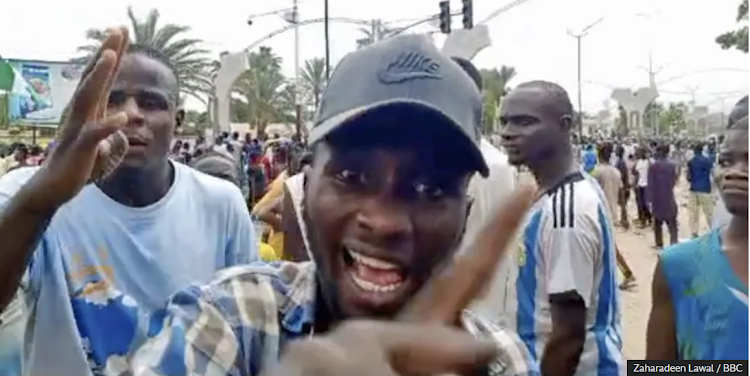
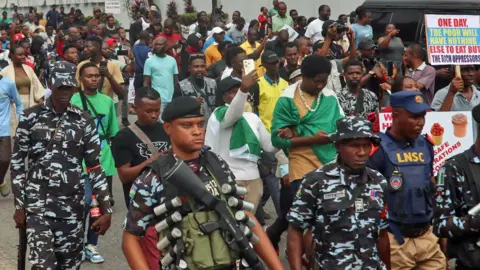
A curfew has been enacted in Kano, Nigeria’s second-largest state, following protests against the rising cost of living that were overtaken by criminals who engaged in extensive looting and property damage, according to the governor’s office.
Kano experienced the largest demonstrations on the initial day of nationwide protests, leading to the closure of many businesses.
In cities across the country, protesters took to the streets, chanting phrases like “We are hungry.”
In response, police deployed live ammunition, tear gas, and hot water to disperse the crowds in Kano city, resulting in four individuals being injured and hospitalized.
Earlier, protesters had burned tires to create a bonfire outside the residence of state governor Abba Kabir Yusuf.
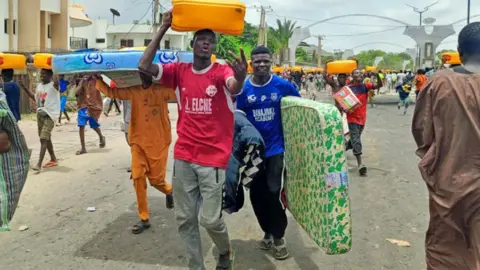
Additionally, looters raided a nearby warehouse, with people seen removing large cartons of cooking oil and mattresses.
Many people in Kano were seen with the big yellow cartons that contain vegetable cooking oil
The curfew effectively prevents further protests, mandating that all residents stay at home.
According to the last census conducted in 2006, Kano state’s population was recorded at 9.4 million, though unofficial estimates now suggest it has grown to approximately 20 million.
The 10-day protests, organized through social media, were motivated by the recent success of Kenyan demonstrators who pressured the government into canceling proposed tax hikes.
Mr Yusuf’s spokesman said the protests were peaceful in Kano, but the governor was forced to declare a curfew to “restore order and ensure the safety of our communities” because of “rampant looting, destruction of property and violence” unleashed by “thugs”.
On Wednesday evening, a court directed that protesters in the capital, Abuja, must confine their activities to the National Stadium, situated on the edge of the city.
But after gathering at the stadium’s gate on Thursday morning, the demonstrators – who have also been shouting the refrain “End bad governance” – began heading into the city centre.
This led the police to deploy tear gas canisters in an attempt to halt the procession, which disrupted traffic.
Security forces were stationed at key locations throughout the capital, including areas where banks have shut down, as well as in neighboring towns.
In Lagos, Nigeria’s economic center, protesters chanted “ole,” meaning “thief” in Yoruba, targeting President Bola Tinubu and his administration.
Many are infuriated by President Tinubu’s decision to remove the fuel subsidy, which he announced with immediate effect during his inauguration in May 2023.
The move, intended to reduce government spending, caused a surge in fuel prices and triggered a rise in the cost of other goods.
“Top on our demand is the subsidy removal. The government should reverse that decision,” Abuja protester Abiodun Sanusi told the BBC.
They also want the government to carry out wide-ranging reforms to the country’s electoral system and the judiciary.
Simi Jolaoso / BBC
You can’t beat a baby and ask the baby not to cry”
Before this so-called “day of rage”, the government appealed to Nigerians not to take to the streets and give the president time for policies to bear fruit.
But Lagos protester Kingsley Uadiale dismissed this saying, “Hunger is the reason why we’re all here. You can’t beat a baby and ask the baby not to cry.”
If the Tinubu administration wanted patience then, he said, they should lead by example.
“You can’t tell us to be patient and you’re acquiring a private jet,” he said, citing plans to buy new planes worth millions of dollars for Mr Tinubu and his deputy Kashim Shettima.
Dabiraoluwa Adeyinka, an activist also protesting in Lagos, said the aim of the demonstration was to get the price hikes on essential commodities reversed.
“If they don’t yield, we will continue to protest,” she told the BBC
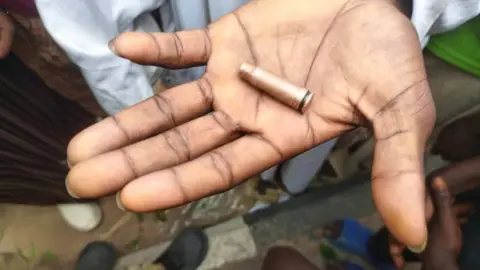
A protester held out a bullet cartridge in Kano after the shots were firedSecurity is tight in Lagos with officers escorting the marchers
The Country Senior Partner at Price Waterhouse Coopers (PwC) Ghana, Vish Ashiagbor, has endorsed the apprehensions some Ghanaians have regarding the state of the economy following the conclusion of the International Monetary Fund (IMF) program in 2027.
He emphasized that the current stability in Ghana is closely tied to the IMF program.
“What we are seeing today is because of the IMF programme, but can it be sustained going forward”, he queried.
He spoke on PM Express Business Edition on August 1, 2024 on the topic: Mid-Year Review and the Private sector with host George Wiafe
Mr. Ashiagbor added that “just like how it was captured in the Mid-Year Budget Review report. We are asking ourselves is that what will happen when restraints are removed?
“For us at PwC we don’t think that the necessary structural reforms are being implemented to ensure that the recovery will be sustained after the IMF programme”, he said.
He stated that it is not clear whether the fundamental issues have been addressed.
“It will be great if we get more updates about the IMF programme and what Government is doing when it comes to these reforms”.
Impact of IMF Programme on the Economy
Mr. Ashiagbor remarked that the IMF program has significantly enhanced business confidence regarding the economic outlook.
He pointed out that prior to the IMF’s involvement, there were major worries about the economic future, but these uncertainties have greatly diminished since Ghana joined the program.
The PwC Ghana Country Senior Partner also suggested that increasing transparency about the IMF program and the ongoing reforms could accelerate the economic recovery.
Negotiations with External Creditors and Ghana’s Economic Recovery
The IMF in its Staff report warned off some challenges for the economy if Government does not move fast to sign an agreement with the External Creditors on the restructuring of the country’s debts.
Government has announced that it has reached an Agreement in Principle with the Bilateral Creditors and the Eurobond Holders on how to restructure their debts.
But responding to these Mr. Ashiagbor noted that the concerns expressed by the IMF is not out of place.
“This is because Government must move fast to close this agreement to give investors some certainty going forward”, he said.
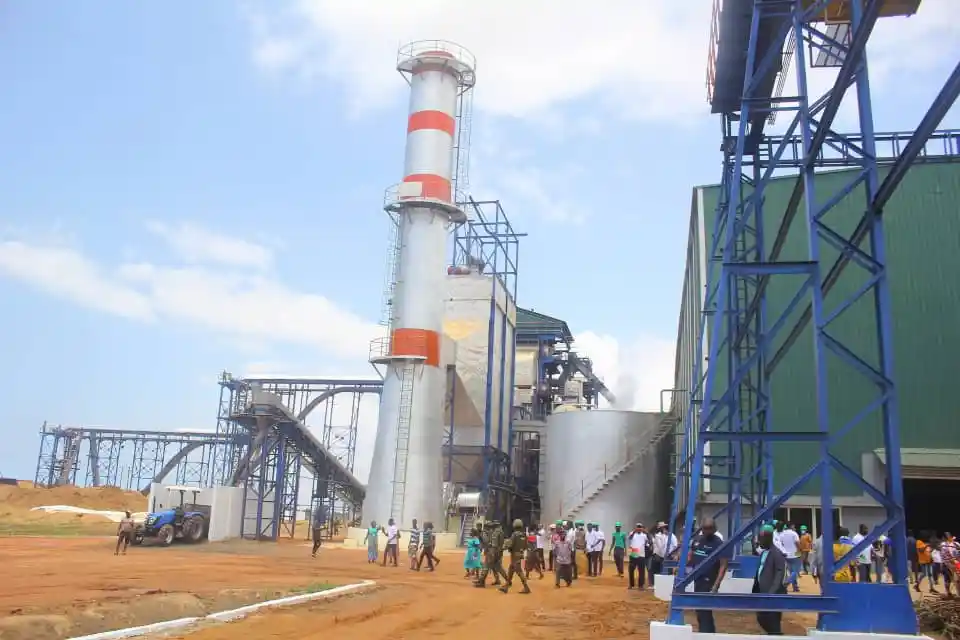
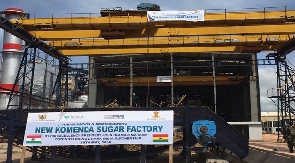
Ranking Member of Parliament’s Trade and Industry Committee and MP for Bole Bamboi, Yusif Sulemana, has expressed concerns over the government’s plan to lease the Komenda Sugar Factory to the Indian firm, West Africa Agro Limited, for up to 20 years.
The factory is currently in the test phase before it begins full-scale production.
Trade and Industry Minister Kobina Tahiru Hammond recently revealed that the government plans to lease the factory to West Africa Agro Limited for a period of 15 to 20 years, with options for renewal.
According to the government, this lease aims to revive the factory’s operations and address domestic demand.
The Komenda Sugar Development Company Limited, established in 1964, has struggled with operational issues and has paused production.
Despite investments from the Indian Export-Import Bank and previous government support, the factory has not yet met its goals.
In an interview with Citi FM, Mr. Sulemana highlighted that Parliament has not been briefed on this decision and called for Trade Minister K.T. Hammond to be summoned for clarification.
With Parliament in recess, Mr. Sulemana plans to issue a statement questioning the Trade Minister about the lease arrangement.
A section of Oil Marketing Companies (OMCs) have begun lowering petroleum product prices in line with anticipated adjustments at the pumps.
Star Oil is leading the charge, now offering petrol at ₵13.65 per litre, down from ₵13.93.
This marks a ₵0.28 reduction, which is a 2.01 percent decrease.
Diesel prices have dropped by over 3.17 percent, now selling at ₵14.02 per litre.
As a result, Star Oil customers will save ₵0.46 per litre.
The media has it that more OMCs are likely to adjust their prices
IES forecast
Earlier, the Institute for Energy Security (IES) forecasted a decrease in petroleum product prices ranging from 2% to 4% for petrol, diesel, and Liquefied Petroleum Gas, starting August 1, 2024.
This prediction comes in light of the Ghana cedi’s slower depreciation in the latter part of July 2024 and positive trends in the international market.
IES reported that petrol and diesel prices dropped by 2.99% and 4.59% respectively, while LPG saw a 1.10% reduction in the second half of July 2024.
“Precisely, the price of gasoline [petrol] fell by 2.99%, gasoil [diesel] by 4.59%, and LPG by 1.10% in the second half of July 2024. TheGhana cedialso recorded slowed depreciation (0.52%), the lowest since February 2024.
“Following the positive realised on the foreign fuel market coupled with the slowed depreciation of Ghana Cedi recorded on the domestic forex market, the Institute for Energy Security (IES) projects a fall in fuel prices in the coming days”.
World Oil Market
The second pricing window for July 2024 for the first time since the post-OPEC+ meeting saw Brent crude futures dropping below $80 per barrel.
This was driven lower by disappointing global demand as Chinese imports in July 2024 hit the lowest level in two years.
Brent Crude traded at $78.70 per barrel compared to $83.03 per barrel at the start of the pricing window.
Local Fuel Market Performance
In the second pricing window of July 2024, liquid fuel prices rose significantly at local fuel stations.
Oil Marketing Companies (OMCs) raised the per litre price of petrol by GH¢0.30 and Gasoil by GH¢0.20.
According to IES calculations, during the first pricing window of July 2024, the national average prices for refined petroleum products were GH¢14.23 per litre for petrol, GH¢14.70 per litre for diesel, and GH¢15.22 per kilogramme for LPG.
The government has announced plans to auction GH¢4.363 billion in treasury bills next. This auction is scheduled for August 2, 2024, with the issuance date set for August 6, 2024.
In the most recent treasury bill auction, the government raised GH¢4.062 billion, falling short of its target of GH¢4.779 billion.
During the July 24 auction, issued on July 15, 2024, GH¢2.404 billion was raised for the 91-day bill.
The government accepted GH¢1.179 billion for the 182-day bill and GH¢477.58 million for the 365-day bill.
Last week, the government sold a total of GH¢4.779 billion in treasury bills. The interest rates were 24.78% for the 91-day bill, 26.74% for the 182-day bill, and 27.85% for the 365-day bill.
According to the Bank of Ghana, all bids submitted in this week’s auction were accepted.
A resident of Winneba, identified as Awo Sagoe, has shared reasons why she believes the NPP flagbearer Dr Mahamudu Bawumia is unfit to to become Ghana’s next president.
The current Vice Presiden stated in his major speech as flagbearer of the New Patriotic Party (NPP) that “as Vice-President, I am like a driver’s mate. But if, by the Grace of God, you make me President, I will be in the driver’s seat with constitutionally mandated authority to pursue my vision and my priorities.”
However, Madam Awo Sagoe believes Ghanaians cannot place their trust in someone who views himself as the driver’s mate.
She argues that if the driver (Akufo-Addo) has been unable to manage the country effectively, there is little reason to expect the mate to perform any better.
“If the driver couldn’t drive properly, what would the mate do?” – Awo Sagoe told the media.
The La Community Bank reported a profit of GH¢1.29 million for the 2023 financial year, announced Chairperson Seth Nii Sodjah Quao on Thursday.
He noted that this represents an improvement over the previous year, during which the bank posted a profit of GH¢1.2 million.
The announcement was made by the chairperson at the bank’s 36th Annual General Meeting (AGM) in Accra.
Mr. Sodjah Quao highlighted that despite challenges such as the unstable macroeconomic environment, the Domestic Debt Exchange Programme (DDEP), and high inflation, the bank achieved notable success in operating income.
“Ladies and gentlemen, despite the hard economic conditions and continuous biting effects of the Domestic Debt Exchange(DDE) programme, the bank’s total operating income increased by 28 per cent from GH¢9.2 million in 2022 to GH¢11.9 million in 2023.
“High inflation within the year resulted in general hikes, resulting in a 24 per cent increase in operating expenditure from GH¢7.9 million in 2022 to GH¢9.7 million in 2023,” he said.
He mentioned that this progress was accomplished through several strategies endorsed by the board and executed by the management to enhance the bank’s performance.
The chairperson also pointed out some of the bank’s notable achievements, including increased loan disbursements to small and medium enterprises and a rise in total deposits.
“Ladies and gentlemen, during the year under review, loans and advances to customers increased by 64 per cent from GH¢ 6.7 in 2022 to GH¢11 million in 2023 due to the new strategic directions implemented by the board and management.”
“Total deposits increased by 18.9 per cent from GH¢7 million in 2022 to GH¢ 7 million in 2023, while total assets and equity increased by 12.3 per cent and 27.23 per cent, respectively,“ he said.
He disclosed that the DDEP resulted in GH¢2.4 million in losses for the bank, which will be amortized over four years starting in 2023, at GH¢608,000 per year.
The Chairperson noted that despite the bank achieving a modest profit in 2023, the board could not seek approval for dividend payments to shareholders.
Shareholders attended the AGM to discuss and vote on several financial decisions, including the approval of the 2023 financial statements.
Mr. Alex Kwasi Awuah, Managing Director of ARB APEX Bank, emphasized the importance of enhancing credit outreach in communities, highlighting that credit is crucial for rural and community banks (RCBs).
He stated that the increase in credit extensions underscored the bank’s dedication to supporting local businesses and individuals needing financial aid.
However, he urged the bank to implement rigorous loan monitoring and recovery measures to minimize loan defaults and maintain non-performing loan (NPL) ratios within acceptable industry standards.
The Ghana Shippers Authority recently engaged with various trade associations to discuss the operational framework of the newly enacted Ghana Shippers Authority Law.
The meeting aimed to explain the law’s provisions, address any concerns, and ensure a smooth implementation process that benefits all stakeholders.
The Ghana Shippers Authority pledged to work collaboratively and enforce the law fairly, ensuring a favorable business environment for all parties involved.
Deputy Minister of Trade and Industry, Kofi Ahenkora Marfo, stated that the law is intended to position Ghana as a preferred transit trade route for its landlocked neighbors and to boost national revenue.
He further mentioned that the new law enables the Ghana Shippers Authority to adapt to emerging trends and complexities in the shipping and logistics sector, safeguard the interests of shippers and service providers, and enhance its regulatory oversight of the industry.
Representatives from trade associations such as the Ghana Union of Traders and the Association of Ghana Industries have expressed optimism about the benefits the new law will bring to their businesses.
They anticipate that the law will reduce unfair charges, increase transparency in port fees, improve efficiency and competitiveness in the shipping industry, and enhance Ghana’s status as a preferred trade hub in the region.
Trade association representatives commended the Ghana Shippers Authority for its engagement and look forward to a collaborative implementation process that addresses their concerns and supports their interests.
MTN Ghana has earned a profit of GH¢2.33 billion in the first half of 2024, marking a 36% increase compared to the previous year.
The company’s unaudited financial report reveals a 31.2% year-on-year rise in service revenue, driven by increased earnings from data, Mobile Money, and digital services, along with improved 4G connectivity and a 3.9% growth in its subscriber base.
MTN Ghana also allocated GH¢2.8 billion in capital expenditures to sustain network quality, broaden coverage and capacity, and upgrade its IT systems.
This investment supported a nationwide customer base of 28.4 million, with an additional 0.6 million customers added in the second quarter.
Voice revenue falls by 3.1%
Voice revenue fell by 3.1% year-on-year to GH¢1.7 billion as customers opted for more affordable plans. However, this decline was offset by a 13.7% increase in voice usage minutes, thanks to the company’s efforts to boost customer engagement through its value management programs. These measures also played a role in decreasing customer churn.
The share of voice revenue in total service revenue dropped from 29.1% to 21.5% year-on-year, shifting towards faster-growing products and services.
Data revenue grew strongly
Data revenue continued to grow strongly, up by 55.0% year-on-year to GH¢4.0 billion. This was supported by a 15.9% year-on-year increase in active data subscribers and a 7.2% year-on-year rise in megabytes consumed per active user per month which underpinned a 24.2% year-on-year growth in data traffic during the period.
The contribution of data revenue to total service revenue increased from 41.5% to 49.0% year-on-year.
Mobile money growth increased by 44.8%
Mobile Money revenue surged by 44.8% year-on-year to GH¢1.9 billion.
This growth was driven by a 16.2% year-on-year rise in the active user base, reflecting enhancements in digital financial solutions.
As a result, advanced services saw a 73.3% year-on-year increase, with cash-out services growing by 33.0% year-on-year and peer-to-peer transactions rising by 43.1% year-on-year.
Mobile Money’s share of total service revenue grew from 21.7% to 24.0% year-on-year.
Digital revenue grew strongly
Digital revenue saw a substantial increase of 59.4% year-on-year, reaching GH¢101.4 million.
This growth was mainly fueled by gains in video content, gaming, and ring-back tones.
Improvements in customer experience and a sustained emphasis on delivering both locally and globally relevant digital services played a key role in this expansion. The number of ayoba users grew by 14.8% year-on-year, totaling 2.9 million.
The MyMTN app also underwent several upgrades, amassing a user base of 1.6 million, with over 0.4 million active daily users. Plans are in place for additional enhancements and new features in the second half of the year to further improve the digital experience for users.
The share of digital revenue in total service revenue increased from 1.0% to 1.3% year-on-year.
Commenting, MTN Ghana Chief Executive Officer, Stephen Blewett, said “MTN Ghana delivered strong results in the first half of 2024, despite the difficult macroeconomic conditions. This reflects the resilience of the business and our ability to provide essential connectivity solutions to our customers. We have also been able to increase financial inclusion, supporting the further development of the country”.
Outlook
MTN Ghana said it will continue to invest to develop its platforms and improve its network and services to unlock value for stakeholders in line with our Ambition 2025 strategy.
“We continue to explore efficiency measures, preserve liquidity and strengthen the balance sheet against a backdrop of election-related and macroeconomic uncertainties. MTN Ghana maintains its medium-term guidance of high twenties (in percentage terms) growth in service revenue”, it explained.
The Ministry of Energy has refuted allegations that more than $90 million of the $250 million World Bank loan allocated for the Ghana Energy Sector Recovery Programme (ESRP) will be spent on consultancy fees.
This statement follows Parliament’s decision to pause the loan approval process after Asawase MP Muntaka Mubarak expressed concerns about consultancy costs.
Deputy Minister of Energy and Chairman of the Energy Committee in Parliament, William Owuraku Aidoo, countered Mubarak’s claims.
In an interview with Joy News, he clarified that the $90 million is earmarked for various initiatives, such as acquiring and installing smart pre-paid meters, upgrading data management systems, and boosting ECG’s operational efficiency.
”Honestly, I don’t know where he got that from because there is a document that was circulated to all Members of Parliament and it is very clear that the 90 million was totally not for consultancy purposes.”
“The 90 million was for the procurement and installation of smart pre-paid meters along with its associated software, which was 2.5 million, that goes to ECG.”
“And then 10 million of that 90 million goes to NEDCo. In addition to that, part of the 90 million was for the enhancements to data management systems and that was 5 million US dollars.
”And then you have the strengthening of the commercial information system, 10 million. And then finally, associated ICT systems for improving the operational efficiency of ECG, that is 2.5 million. So this is what the 90 million comes to,” he said.
He, however, did not specify the exact amount allocated for consultancy fees.
“I don’t have the figure right now,” he said.
The Energy Sector Recovery Programme (ESRP) is a funding arrangement with the International Development Association (IDA) from the World Bank Group, designed to lower the costs of electricity purchases, boost revenue collection for distribution utilities, enhance ECG’s financial management system, and advance the National LPG Promotion Programme.
Gold exports reached an all-time high in the first half of 2024.
Martin Ayisi, Chief Executive Officer of the Minerals Commission, reported that gold made up 54% of the total exports, totaling US$5 billion out of the US$9.2 billion exported in the first half of 2024.
This increase was driven by a sharp rise in gold prices, particularly in the second quarter of 2024, along with a boost in production from both small- and large-scale mining operations.
In the second quarter, the average price of gold hit a record $2,338 per ounce, marking an 18% increase compared to the previous year and a 13% rise from the previous quarter.
The average gold price for July is approximately US$2,396 per ounce, with a record high of US$2,482 per ounce achieved on July 17, 2024.
Mr. Ayisi has forecasted that if gold prices remain at or near July’s average or the second quarter’s level, the annual gold export value could surpass US$10 billion.
He noted that small-scale mining exports for the first half of the year totaled around US$1.7 billion, representing roughly 36% of the gold exported by mid-year.
Mr. Ayisi anticipates that, driven by the record high prices, small-scale mining exports might exceed US$3 billion by year’s end.
According to Mr. Ayisi, the revenue from gold underscores the mining sector’s crucial role in Ghana’s economy.
He emphasized that the true economic benefits of mining come from value addition, citing examples such as lithium, bauxite, manganese, and local gold refining.
Mr. Ayisi expressed particular satisfaction with the government’s robust policy on value addition, including the planned $450 million refinery by Ghana Manganese Company, which aims to enhance manganese ore quality from 27% to 40%, create 350 additional jobs, and boost revenue.
He also highlighted new initiatives focused on local content and participation, ensuring that over US$2 billion spent by mining companies on local supplies and services directly benefits Ghanaians.
Additionally, he praised the government’s efforts to encourage mining companies to list on the Ghana Stock Exchange to raise capital for projects and lauded the Minerals Income Investment Fund’s role in securing equity stakes in mines, which supports increased state and Ghanaian involvement in the sector.
Mr. Ayisi urged improved environmental management for small-scale mining, which operates in about 12 regions and supports approximately three million livelihoods, to prevent environmental damage.
The Country Senior Partner at PwC Ghana, Vish Ashiagbor has provided insights into Ghana’s current economic climate, highlighting a sense of cautious optimism among private sector businesses.
“It is important to acknowledge that it is not all bad,” he remarked on Joy News’ PM Express Business Edition.
“There is cautious optimism because the private sector will always acknowledge that there has been a certain amount of stability emerging, and the prospects look reasonable,” he said on Thursday.
Nevertheless, he pointed out that despite the emerging stability, there is still lingering concern about its long-term sustainability.
He explained that businesses are shifting their focus from short-term effects to long-term stability.
“For example, if you take the exchange rate, you have to acknowledge there is relative stability in the last couple of months,” Mr Ashiagbor said.
“If you are a business person and you are thinking a year ahead, 18 months, or 5 years ahead, what is your outlook? That is still uncertain.”
Despite the uncertainty, the Country Senior Partner at PwC Ghana mentioned that he is not overly worried about the performance of the local currency.
Instead, he highlighted other significant concerns for businesses, particularly in an import-dependent economy like Ghana’s.
“The forex is a significant factor because of the nature of Ghana’s economy,” he said. “If you are a manufacturer and you have to import raw materials, the rate will be important to you; if you are in the service industry, some inputs like licensing fees for technology applications that you may deploy may be indexed to the dollar, because these are global products.”
Mr Ashiagbor pointed out that businesses are also concerned about consumer demands, which are affected by the elasticity of products.
He stated that business is a long-term venture and decisions should not be based solely on short-term indicators.
“Business has its ups and downs so if the exchange rate goes off track, it does not mean you go laying off people. By the same token, if the rates strengthen, you take the benefit.
“It is all in your bottom line and eventually into your cash flows, but when it becomes unsustainable, that is when you run into real difficulty,” he explained.
He noted that the relative stability in the exchange rate allows businesses to consider long-term investment decisions more carefully.
“The benefit of the relative stability is that businesses are thinking of how much they can rely on it and whether to link long-term investment decisions based on the stability or hold back a little bit and see what the outlook is. That is where most businesses are,” he stated.
Mr. Ashiagbor also found some reassurance in Ghana’s clear indicators set by the IMF program, which he believes the country is on track to meet.
The Electoral Commission (EC) and the Executive Committee of the Association of African Election Authorities (AAEA) will host a delegation of women Chairpersons from eight African Election Management Bodies (EMBs).
The goal of this meeting is to create a continental network of Senior Electoral Administrators and to encourage peer support among women leading Election Management in Africa.
Organized with the support of the United Nations Development Programme’s Regional Service Centre for Africa and the United Nations Electoral Assistance Division, the meeting is also in collaboration with International IDEA, the AAEA, and the Electoral Commission of Ghana.
A press release from Samuel Tettey, Deputy Chairman of Operations at the EC, announced that the event will take place on August 5 – 6, 2024, featuring leaders from electoral bodies in Cape Verde, Liberia, Ethiopia, Malawi, Namibia, Zambia, and Zimbabwe.
The gathering will also assess international and regional standards regarding women’s political participation in Africa.
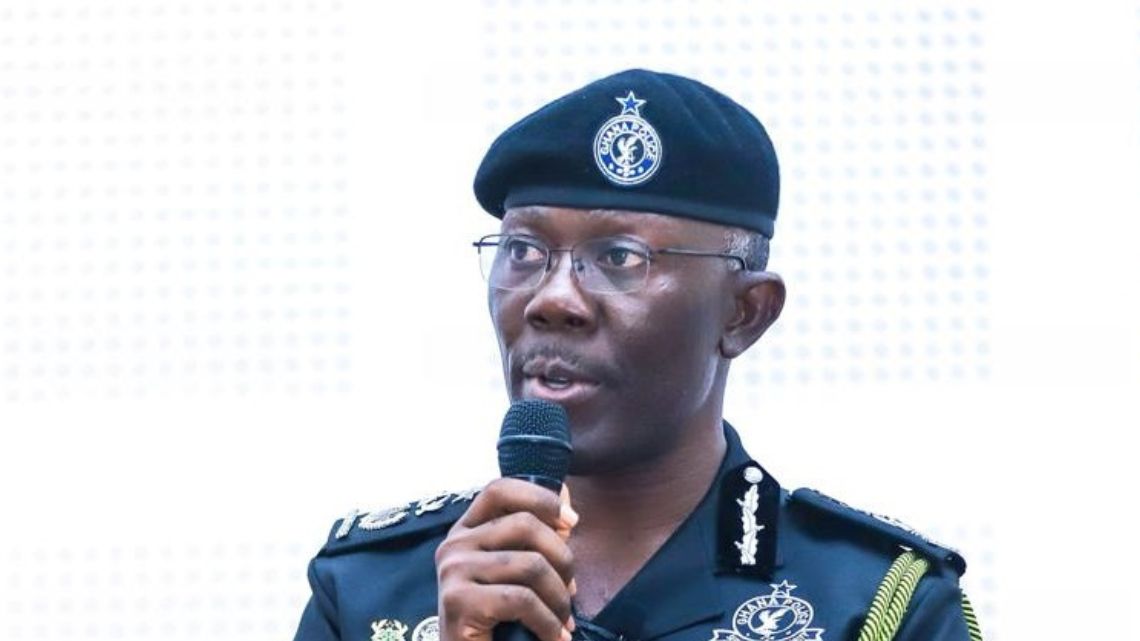
The Inspector-General of Police, Dr. George Akuffo Dampare, has called on the public to back the Police when they take measures against individuals spreading false information.
He emphasized that combating this contemporary issue necessitates the collective effort of all involved parties.
During a summit hosted by the Ghana Report, the IGP remarked that disinformation and misinformation are significant threats to national security and unity, underscoring the urgency to address them directly.
“Disinformation and misinformation are national security threats and we should see them in that perspective. We should walk out of this place changed, as people seeking to make a difference from these challenges that threaten the security of our nation.”
He expressed concern over the public’s tendency to oppose law enforcement actions, even though they demand solutions to the issue.
“What do we want as a people? Do we want to be on the side of right or wrong? We have to make a decision. We need everybody to be part of the solution in the fight against disinformation and misinformation. When people spread such disinformation or misinformation and you take action against them, you have some people attacking those who are fighting it.”
The IGP further stressed, “The time has come for us to have a mindset change. All the things we have said so far require us to have a mindset change. We have become so inhumane to each other that our happiness is derived from the pain of others. We are so happy when someone is in a bad situation, and we must yearn to change from that.”
Dr. Dampare’s plea highlights the importance of shared responsibility in tackling the widespread problem of disinformation and misinformation. By encouraging a collaborative approach and shifting our perspective, the public can aid law enforcement efforts and help protect national security and social harmony.
In Kumasi, the capital of the Ashanti Region, accommodation costs have risen sharply over the last two years due to increased prices of building materials, goods, and services.
Research by the B&FT reveals that rents have jumped between 50 and 130 percent. For example, a self-contained single-room apartment that cost GH¢150 per month in 2022 now rents for GH¢350 to GH¢400.
A single-room apartment with a shared toilet and bathroom, previously priced at GH¢60 to GH¢80, now ranges from GH¢100 to GH¢200.
Moreover, a two-bedroom house in Kumasi, which used to rent for about GH¢500, now ranges from GH¢600 to GH¢1,000.
This rise in rental prices has caused concern, as landlords often require rent payments for one or two years in advance, putting financial strain on tenants. Consequently, tenants are now paying between GH¢6,000 and GH¢24,000 for two years of accommodation, depending on the type of housing.
In an interview, Agnes Quaye, a landlady in Sokoban, Kumasi, who has been renting out rooms for nearly two decades, explained that the dramatic increase in building material costs since 2022 has led to higher rents.
“I do not charge exorbitant rates for my rooms. I take GH¢200 for my single-room with a shared bathroom and toilet, and GH¢600 for my two-bedroom house. Some landlords who do not have other sources of income often price their rates very high. I increased my rates in 2022 when goods and services on the market shot up significantly,” she explained.
Asked if she would reduce her rent should prices of goods and services decrease, Madam Quaye was quick to say: “I am not sure the price of cement will drop to GH₵50,” she stressed.
Meanwhile, some renters are expressing frustration over the rising rates and are urging for immediate action to ease their situation.
Kofi Osei, a 46-year-old courier with a family of six, has been renting a two-bedroom house in Brofoyedu, Atwima Kwanwoma Municipality near Kumasi, for more than nine years. He explained that his rent, which was GH¢4,800 for two years, was raised to GH¢10,000 last December when his lease ended.
He told B&FT that the rent hike has significantly impacted his budget, making it challenging for him to afford the increased amount.
“It’s just too much,” he lamented, adding that “I have a wife and four children, one of whom is in university. Other goods and services are equally expensive, and adding this rent is just too much. I plead with government to intervene and build more affordable houses for people like us to rent, or else these property owners will run us dry.”
A report from Parliament suggests that the expense for cleaning up the financial sector may increase to GH₵34 billion.
This development follows a recommendation from Parliament for the government to compensate 61,000 customers of the collapsed Gold Coast Fund Management, as requested in their petition.
Joe Ghartey, Chairman of the Special Committee investigating these customer claims, told the House that the government must fulfill its commitment to reimburse the investors.
“We urge government to do its part in terms of prosecuting the matter and following it in court so that the question of whether they should be liquidated or not will come to an end so that further payments can be made,” he said.
As a result of this recommendation, the government is anticipated to allocate GH₵9 billion to compensate these customers.
This would bring the total expenditure on the financial sector clean-up to GH₵25 billion, as stated by former Finance Minister Ken Ofori-Atta.
The Committee also suggested that insurance be incorporated into these financial measures to prevent the cost of institutional failures from becoming a financial strain on the government.
“We recognise the fact that this House passed the Ghana Deposit Protection Act 2016, and it was passed to protect depositors. We cannot continue at this rate where people set up financial institutions and then they collapse and the last resort is government.
“The government cannot continue being a guarantor between institutions and the people of Ghana. Therefore, one way to go around this is for us to insist that when you are making such investments you take insurance,” he noted.
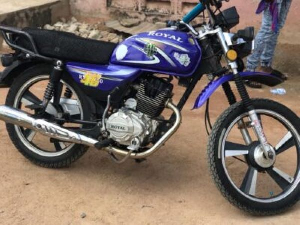
The Ghana Meteorological Agency is under scrutiny for reportedly buying 22 motorcycles, originally worth GH¢253,000, at an inflated price of GH¢1,656,000.
The Agency is said to have paid GH¢75,252 for each motorcycle, while Johnnie Hughes’ investigation reveals the true price of a royal motorcycle is around GH¢11,000.
Johnnie Hughes revealed these findings on 3FM in Accra and shared them on X (formerly Twitter) to assess how the funds allocated for these vehicles were used.
Hughes questioned the rationale behind the high purchase costs, suggesting potential corruption within the agency.
He also uncovered plans by the agency to acquire additional vehicles, including two 32-seater buses, eight cars for local travel, and three pickup trucks.
The report notes that the motorcycles were intended to support trips to remote out-stations.
The revelation has triggered public outrage, with calls for an investigation and audit to verify the actual costs and uncover any potential budget inflation.
Listen to the audio below:
Johnnie Hughes criticises the Ghana Meteorological Agency's acquisition of 22 motorcycles valued at GHC253,000 for GHC1,656,000, stating that one motorcycle does not costs GHC 75,272.#JohnniesBitepic.twitter.com/S6eG52M2Yf
Two farmer unions have urged the government to address the numerous issues within Ghana’s agricultural sector instead of depending on Genetically Modified Organism (GMO) seeds as a fix.
The Peasant Farmers Association Ghana (PFAG) and the Centre for Climate Change and Food Security (CCCFS) argue that introducing GMOs in the country will not solve food security problems.
They noted that many farmers in the northern and middle regions already produce substantial amounts of food but struggle with problems like lack of accessible markets, insufficient storage facilities, and inadequate road infrastructure.
The two organizations were responding to the launch of the pod borer-resistant cowpea, the first genetically modified crop developed in the country and approved for commercial cultivation in the Northern Region last Thursday.
In a statement released by Sulemana Issifu, Director of Research at CCCFS, and copied to the Ghanaian Times, the Centre raised concerns about claims that the cowpea can resist pod borers due to a gene that produces the CRY1A toxin.
“It is important to highlight that upon reviewing the application documents from the Savannah Agricultural Research Institute, we observed that the levels of toxin present are unusually high compared to other transgenic crops.
“Although we acknowledge the absence of evidence regarding the toxicity of these toxins to humans, this remains a concern for us, as the existing data on the issue is inconclusive,” it stated.
It also highlighted the absence of data on the crop’s impact on beneficial soil microorganisms and essential pollinators.
Furthermore, it stated that if the crop adversely affects these organisms, it could potentially change the soil productivity in such a way that future crops may struggle to grow.
“These and many more make it imperative that we resist the unholy intrusion of Ghana’s agroecosystem by GMOs. GMOs remain a tool of corporate control of food production—a gamble we cannot take,” it stress.
In an interview with the Ghanaian Times, an advisory board member of the PFAG, Dr Charles Nyaaba, urged the government to continue investing in local seeds and supporting institutions like the Council for Scientific and Industrial Research to improve local varieties that can withstand climatic conditions, rather than relying on donor support.
Dr Nyaaba, who is a former Executive Director of the PFAG, reminded stakeholders in agriculture that GMOs were false solutions and do not address the challenges of food security in Ghana.
He advised CSOs, farmers, and other stakeholders to work together to promote local seeds for planting and consumption.
Dr Nyaaba further said the government’s flagship programme, Planting for Food and Jobs, was a great initiative but faced many challenges that did not favour farmers.
He called on the government to allow the private sector to lead in the programme’s inputs distribution and implementation.
Four schoolchildren in South Africa are to face a disciplinary hearing over a viral video in which black students are seen being auctioned off as slaves, the authorities in Cape Town have told the BBC.
The footage, showing pupils in a cage while other students bid for them, caused outrage when it was shared on social media last Friday.
It was filmed at Pinelands High School and involved students in grade eight, which is the first year of secondary school when pupils are aged around 14.
The South African Human Rights Commission (SAHRC) has said it has opened its own investigation into the incident.
It comes as two other schools in the country – where white-minority rule ended three decades ago with the election of anti-apartheid fighter Nelson Mandela as president – are dealing with alleged racist incidents.
“It is disturbing that these incidences continue to occur 30 years into democracy,” the SAHRC said, adding it was even more distressing that they had occurred in schools.
The four Pinelands High School students believed to be behind the mock auctionare currently suspended.
“The investigation is ongoing and nearing completion with 24 learners having been interviewed in the first two [school days] since the allegations were made,” Bronagh Hammond, spokesperson for the Western Cape Education Department, said on Wednesday in a statement sent to the BBC.
“Steps will also be taken against other learners who may have transgressed certain provisions within the code of conduct,” she added.
The incident first came to light after one of the pupils showed the footage to his mother, Merle Potgieter, who then told the school’s management and local media.
She says her son, who is 14, fought off boys who were attempting to force him into the caged enclosure alongside other black boys who were already inside it.
According to Ms Potgieter the alleged perpetrators were coloured – which is a South African term meaning mixed-race.
In the footage of the mock auction, children can be heard calling out various bids of up to 100,000 rand ($5,400; £4,200).
“Going once… going twice… sold!” one boy can be heard shouting.
Counselling support had been prioritised for those affected – and all grade eight pupils had had debriefing sessions, Ms Hammond said.
Slavery in Cape Town dates back to the 1650s when the Dutch colonised the peninsula and thousands of enslaved people were brought to the region from south-east Asia, Madagascar and Mozambique.
Today Cape Town is considered one of the most racially segregated and unequal cities in South Africa, despite its multi-ethnic mix.
This is due to the legacy of apartheid, when the white regime in the 1950s pushed black and mixed-raced communities into segregated townships outside the city.
The apartheid government also entrenched a racial hierarchy, which put black people right at the bottom.
On Tuesday, MP Makhi Feni, chair of the parliamentary committee on education, urged the schools at the heart of the latest scandals to “consider meaningful programmes that will foster social cohesion and South African-ness”.
“The question we all ought to ask genuinely is what emboldens a person, hardly a teenager, with no knowledge of where we come from as a country, to act in a manner that points to racism. Surely, our children are not and should not be racist,” he said.
Meanwhile, the opposition Economic Freedom Fighters (EFF) party is demanding that the pupils be suspended for at least two years and perform “community service in black areas”.
It has threatened to call protests and shut down the school if it finds the authorities’ ultimate handling of the incident less than satisfactory.
The UK Department for Business and Trade has wrapped up its “Build and Construction” Trade Mission to Ghana and Nigeria, which took place from July 21-25.
According to a statement from the British High Commission in Accra, shared with the Ghana News Agency on Wednesday, the mission provided UK companies with a chance to explore business opportunities and establish important connections in the West African construction industry.
“The primary objectives of the trade mission were to explore new market opportunities in Nigeria and Ghana, facilitate high-level networking, and identify potential projects and partnerships,” it stated.
The statement also noted that the mission was designed to provide valuable market insights and highlight UK expertise in various construction fields.
The delegation included prominent figures from the UK construction sector, showcasing its renowned expertise.
Among the delegates were Emeka Okorocha, Managing Director of iStrat Consulting; Phil Dowrick, Client Director at AtkinsRéalis; Thomas Farmer, Director at Dowen Farmer Architects; and Gerald Madondo, Country Director – Nigeria at Turner and Townsend.
Other participants were Kwabena Asante-Poku, Coverage Director for Ghana and Côte d’Ivoire at BII-Ghana, and Kyle J. Schofield, Managing Director of QA Venue Solutions (QAVS).
According to the statement, the mission began in Abuja, Nigeria, where UK delegates held a series of high-level meetings with key government officials and private developers.
This initial phase provided essential insights and set the stage for the following activities in Ghana, the statement added.
In Ghana, the mission commenced on July 24 with a roundtable discussion with professionals from the built environment, followed by a cocktail reception at the British High Commissioner’s Residence.
The statement highlighted that UK companies were effectively introduced to new opportunities in both the Nigerian and Ghanaian construction markets.
Delegates had the opportunity to directly interact with potential partners and explore a range of business possibilities.
The statement mentioned that the mission facilitated meaningful interactions between UK delegates and industry leaders, government officials, and private sector representatives in both countries.
These interactions are expected to foster new partnerships and collaborative projects.
The statement also noted that delegates identified potential projects and partnerships, paving the way for expanded business activities in the region.
Participants gained valuable knowledge about the regulatory and business environments in Nigeria and Ghana, which will guide their future strategies and decisions.
UK companies showcased their capabilities and innovative solutions to a targeted audience, demonstrating their value to potential partners and buyers.
In Accra, the welcome cocktail reception served as a platform for further networking opportunities.
Mr. Kojo Oppong-Nkrumah, Minister of Works and Housing, and Mr. Pascal Kanbonnabah, Director for Commercial Services at Bui Power Authority, gave presentations.
These sessions provided delegates with insights into significant project opportunities and underscored the strong potential for future collaboration.
Giselle Agyare, Country Director for Ghana at the Department of Business and Trade, emphasized the importance of continuing to build synergies between the UK and Ghanaian industries to enhance mutual trade.
The Department for Business and International Trade supports businesses in investing, growing, and exporting, offering expert advice and practical assistance to ensure successful development in both the UK and Ghana.
This trade mission was organized by Radwa Sultan, Infrastructure Sector Director for Africa at the UK Department for Business and Trade, in close cooperation with teams in Nigeria and Ghana.
The mission aimed to strengthen trade relations between the UK and Africa, providing British businesses with direct access to key industry stakeholders and emerging opportunities in the construction sector.
The LPG Marketers Association has denied claims of a product shortage in the market.
During an interview with Channel One News, the Association’s president, Gabriel Kumi, stated that there is sufficient gas to meet consumer demand despite the scheduled maintenance shutdown of Atuabo Gas starting next Monday.
He clarified that all marketers have been notified about the upcoming shutdown of the Atuabo Gas plant, but alternative bulk distributors in Tema have adequate supply for the upcoming weeks.
Kumi assured consumers that there will be no shortage of LPG in the weeks and months ahead.
“To the best of our knowledge, there’s no shortage of LPG in the system. I’m sure when you go around to the gas stations in the country, you’ll realise that all the gas stations are having products, we are serving consumers. What has really happened is that you know we take our 50% of our LPG from Atuabo Gas Processing Plant.”
“We had information from our regulator that the Gas Processing Plant is going to shut down for about 2–3 weeks for routine maintenance and so that’s going to be done from Monday [August 5]. But we have more than enough stock in Tema. So consumers should be rest assured, there’s not going to be any shortage of LPG in the system in the coming weeks and months.”
To revive the defunct Komenda Sugar Factory in the Central Region, Minister of Trade and Industry Kobina Tahir Hammond announced the government’s plan to lease the facility to Indian investors for approximately 20 years.
He mentioned that the lease agreement could be renewed once the contract is finalized.
Speaking to journalists after touring the Komenda Sugar Factory on Wednesday, July 31, 2024, K.T. Hammond stated that the factory is entirely owned by the Government of Ghana, with the investors only managing the assets and making payments to the government.
He clarified that the government does not hold any shares in the sugar produced.
The Minister of Trade and Industry in an interview with the media said, “That whole thing belongs to Government of Ghana. The asset is ours; we are leasing it and there’s a board in place. It’s a company which has a board. We just put them in charge.”
“We’re not going to have shares in their products but the company is 100% Ghana owned,” he stated.
In response to the question regarding the lease period to West Africa Agro-tech Limited, the trade minister stated, “I am thinking of giving it to them 15 or 20 years with an option of an extension or some sort of renewal after the initial lease.”
K.T Hammond stated that GH¢45million was expended by government to keep the Komenda Sugar Factory running.
He mentioned that West Africa Agro-tech Limited, the investors in the Komenda sugar factory, imported 1,000 tonnes of raw sugar for a test run.
This test was conducted to see if white sugar could be produced.
The Government of Ghana transferred the Komenda Sugar Factory to a strategic investor in November 2019 after a three-and-a-half-year hiatus.
The $35 million factory, which was inaugurated under former president John Dramani Mahama, has been non-operational since May 2016.
In September 2018, President Nana Addo Dankwa Akufo-Addo revealed that the factory’s sale was due to several issues, including a lack of sufficient sugarcane in the surrounding area.
The High Court, under Justice Nana Brew, rejected a judicial review application filed by George Smith-Graham, a former director of UMB Bank, against the Bank of Ghana (BoG).
This ruling was issued on July 10, 2024.
In delivering the judgment in favor of the BoG, the Court noted that the aim of the Banks and Specialized Deposit-Taking Institutions Act, Act 930, and the Corporate Governance Directive 2018, is to strengthen the Bank’s supervisory powers to maintain order in the banking sector.
The Court highlighted that it considered Section 102 of Act 930 and concluded that this section grants the BoG broad authority to address any violations of its laws and regulations by banks and specialized deposit-taking institutions, allowing the BoG to act upon receiving information about such breaches.
The Court held that the Applicant’s argument that the BoG could not remove a bank director who had violated its laws without first granting a hearing was untenable. The Court further explained that Section 102 (3) of Act 930 includes the removal of a director as a permissible remedial action by the BoG.
Additionally, the Court found that correspondence between the parties indicated that the BoG had provided the Applicant and UMB with an opportunity to be heard. The Court believed that the Applicant, who served as both a director and Chairperson of UMB, could not claim ignorance of the communications exchanged between the parties.
Finally, the Court ruled that the Companies Act, 2019 (Act 992), does not limit the extensive powers granted to the BoG under Act 930 to address breaches of its directives. The Court emphasized that Act 930, which specifically governs the conduct of banks, overrides the general provisions of Act 992 concerning the removal of directors by the BoG.
Therefore, the Court dismissed the application, deeming it unmeritorious, and found that the Applicant had failed to demonstrate that the BoG’s power was exercised corruptly, with malicious intent, or in an irrational, capricious, and unreasonable manner.
Background
On 22nd July 2022, the BoG, pursuant to its powers, under the Banks and Specialised Deposit-Taking Institutions Act, Act 930 and the Corporate Governance Directive 2018, issued a directive on the appointment and redesignation of directors and key management personnel. This required all commercial banks [including Universal Merchant Bank Ltd (UMB)] to obtain a prior written “No Objection” from BoG before redesignating an existing non-executive director to any other position.
UMB on 5th July 2023 purported to appoint Mr. Smith-Graham (a non-executive director) as its board chair at an emergency meeting of its Board. UMB did not comply with the BoG’s Directive of July 2022 by failing to obtain BoG’s prior written “No Objection” to the purported appointment.
The BoG informed UMB about its violation of the Directive and instructed UMB to seek the BoG’s “No Objection” for appointing Mr. Smith-Graham as its Board Chair. UMB responded by stating that their lawyers advised them that they did not need BoG’s “No Objection” to appoint Mr. Smith-Graham as Board Chair, so they would not seek such approval. Due to UMB’s refusal, the BoG used its powers under the Banks and Specialized Deposit-Taking Institutions Act, 2016 (Act 930), to revoke its approval of Mr. Smith-Graham’s appointment as UMB’s director.
Unhappy with the BoG’s decision, Mr. Smith-Graham (Applicant) filed an application for judicial review of the revocation of his appointment as a director. The Applicant argued that the BoG’s power under Section 102 of Act 930 did not include the authority to revoke his appointment as a director of UMB Bank. He further claimed that even if the BoG had the authority to revoke his appointment, it was legally required to give him a hearing. The BoG, however, asserted that it had the power to revoke the Applicant’s appointment under Section 102 of Act 930.
The Court had to determine whether the BoG could revoke the Applicant’s appointment under Section 102 of Act 930 based on information obtained through its own investigations.
On Alan Kyerematen’s recent visit to the Bosoma Market in the Sunyani Municipality of the Bono Region, he made two major promises to improve the economic prospects of traders and the youth.
Addressing a large and enthusiastic crowd of traders, the presidential candidate for the Movement for Change/Alliance for Revolutionary Change, announced his plan to create a dedicated traders’ bank.
This bank aims to provide vital capital to traders, helping them expand their businesses, invest in new opportunities, and improve their livelihoods.
The envisioned traders’ bank is seen as a key tool for encouraging entrepreneurship and boosting local economies. By providing access to financial resources, the bank will play a crucial role in strengthening domestic trade and supporting the country’s economic growth.
In addition to the traders’ bank, Kyerematen also promised to build modern markets for traders in Ghana to enhance their trading activities.
He stated, “I will build modern markets to facilitate domestic trade for our traders.” These markets will feature state-of-the-art clinics and schools for traders’ children, as well as modern car parks to ease transportation.
Furthermore, Kyerematen emphasized that such infrastructure would significantly improve working conditions, enhance the health and education of traders and their children, reduce transportation costs, boost productivity, and overall economic growth, creating a more vibrant trading environment.
Highlighting his track record in job creation, Kyerematen promised, “I will also work hard to create jobs for your children.” Job creation is essential for increasing income levels, boosting consumer spending, and reducing poverty.
By focusing on providing employment opportunities for the children of traders, Alan Kyerematen’s plan addresses the critical issue of unemployment. His experience and dedication to job creation indicate a strategic approach to fostering a prosperous future for the youth and ensuring economic stability.
Alan Kyerematen’s pledges are grounded in his extensive experience and proven track record in economic development and job creation. His detailed plans for market infrastructure, financial empowerment, job creation, and economic stability demonstrate his capability to address critical issues facing traders and the broader economy.
His commitment to these initiatives, coupled with past successes, makes a compelling case for him as a trustworthy leader capable of delivering on his promises.
Alan Kyerematen’s vision for the economic empowerment of traders and their families offers a promising future for the Sunyani Municipality and beyond. His strategic initiatives aimed at creating a thriving and resilient economy.