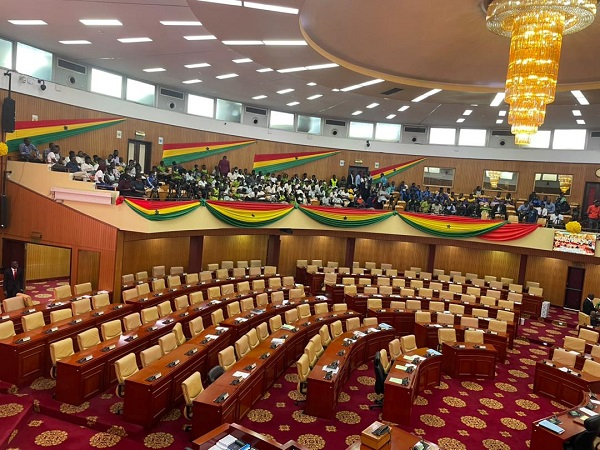
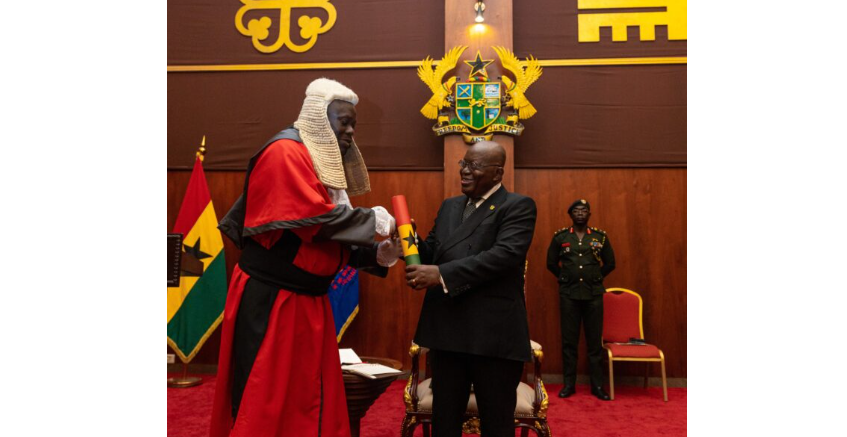
The Sixth Mid-Year Coordination Meeting of the African Union (AU), held on July 21, 2024, in Accra, Ghana, represented a major advancement in the continent’s economic integration initiatives.
The prominent gathering, which included Heads of State and Government from various African nations, featured the endorsement of a crucial proposal by Ghana’s President, H.E. Nana Addo Dankwa Akufo-Addo, aimed at enhancing mobile money interoperability across the continent.
In his role as the AU Champion for AU Financial Institutions, President Akufo-Addo highlighted the essential contribution of mobile money to economic integration and trade facilitation within Africa. His proposal, “Scaling up Interoperability for Economic Integration: Using Mobile Money to Buy and Sell Across Africa,” was enthusiastically endorsed by the AU Assembly.
The approval of this initiative marks a significant achievement in the AU’s larger plan to boost intra-African trade and economic collaboration. By facilitating seamless mobile money transactions across various countries and financial systems, the AU seeks to reduce transaction costs, broaden financial inclusion, and streamline trade processes among African nations.
During the meeting, chaired by H.E. Mohamed Cheikh El Ghazouani, President of the Islamic Republic of Mauritania and AU Chairperson, the importance of aligning national and regional policies to enhance socio-economic development across Africa was emphasized. The endorsement of the mobile money interoperability plan supports the AU’s goals of improving economic stability and strengthening connections among member states.
In his speech, President Akufo-Addo emphasized how mobile money interoperability could revolutionize operations for small and medium-sized enterprises (SMEs) and informal sector vendors, who are crucial to many African economies.
“By leveraging mobile technology, we can break down barriers to trade, boost economic activities, and empower millions of Africans to participate in the continental and global economy,” he stated.
The meeting’s declaration also called on member states to allocate sufficient financial resources to ensure the successful implementation of the integration agenda.
The AU Commission, working with regional economic communities (RECs) and the African Development Bank (AfDB), has been assigned the task of producing a biennial Integration Report starting in 2025 to monitor progress and highlight areas needing improvement.
As Africa navigates the complexities of globalization, the adoption of mobile money interoperability signifies a major step towards using technology to drive sustainable economic growth. The AU’s decision is anticipated to spur further advancements in financial services and strengthen the continent’s integration into the global economy.
The 2023 Auditor General’s report disclosed that 44 Oil Marketing Companies owed the Bulk Energy Storage and Transportation (BOST) Company a total of GH¢59.525 million in margin levies as of December 31, 2022.
The report advised BOST’s management to take the necessary legal actions to recover the owed amount and to provide the required evidence for audit verification.
Additionally, the Auditor General’s review of procurement transactions at BOST revealed that the company spent GH¢886,771 on goods and services from five different suppliers/service providers.
It also noted that Tax Clearance Certificates (TCC) with identical serial numbers were issued from four different Taxpayer Service Centres, each bearing the same serial number but different issuing dates.
Consequently, the A-G report recommended that sanctions under Section 92 of the Public Procurement Act, 2003 (Act 663) as amended, be imposed on the officers responsible for the noted infraction.
The report further found that management had paid GH¢1,049 million for goods and services, which included a VAT component of GH¢146,799.
However, it was discovered that the suppliers/service providers had issued Value Added Tax (VAT) invoices for their goods and services from the same VAT invoice booklet.
The Auditor General recommended that BOST’s management ensure that the respective suppliers/service providers provide proof of payment of the GH¢146,799 VAT amount to the Ghana Revenue Authority.
Reports have indicated that ten state institutions, such as the Electricity Company of Ghana (ECG) and the Ghana Airports Company Limited (GACL), owe the Ghana Revenue Authority (GRA) over GH¢1 billion in unpaid taxes.
Government revenue officials stated that some of these viable institutions have pledged to settle their tax debts.
This information emerged when GRA officials testified before the Public Accounts Committee on Monday, July 29, 2024.
“GACL and Graphic Corporation currently have cash flow challenges. They have informed us that we need to grant them a moratorium to allow them to repay us. Therefore, they are willing to settle their dues once their cash flow situation improves,” the GRA official is quoted as saying by citinewsroom.com.
During the meeting, Minister of State at the Finance Ministry, Abena Osei-Asare, stated, “Mr. Chairman, we have done this before. We presented it to parliament, went through a process, and some were written off by parliament. If it becomes necessary after exhausting all efforts to collect these funds, we will follow that process and seek permission from parliament.”
The Public Accounts Committee voiced concerns about non-operational state entities such as the Tema Oil Refinery (TOR) and urged measures to restore their viability and prevent additional financial losses.
Founder and President of IMANI Africa, Franklin Cudjoe, has condemned the government’s decision to maintain the COVID-19 levy, despite significant pressure from the business sector to eliminate it.
The government insists that the levy remains essential to mitigate the ongoing financial repercussions of the pandemic.
Prior to the mid-year budget review, business leaders had advocated for the removal of several outdated taxes, including the COVID-19 levy.
However, the government has stood by its choice to retain the levy.
During a Public Accounts Committee meeting on Wednesday, Abena Osei-Asare, Minister of State at the Finance Ministry, explained that although the immediate threat of COVID-19 has diminished, the economic impacts persist.
Mr. Cudjoe highlighted the heavy tax burden on Ghanaians.
He urged the Akufo-Addo administration to abolish the COVID-19 levy promptly and voiced his frustration over the lack of infrastructure development despite the government’s significant tax revenues.
The banking industry’s Non-Performing Loans (NPLs) ratio increased to 24.1% in June 2024, up from 18.7% in June 2023.
Despite improvements in the banking sector’s performance, the Bank of Ghana notes that high credit risk threatens the sector’s recovery process.
However, the Bank believes that the consistent profit recovery, adherence to recapitalization plans, and enforcement of stringent credit underwriting standards will help banks stay on the path to full recovery and resilience.
In its Monetary Policy release, the Bank stated that the banking sector’s performance in the first half of the year indicates continued recovery from the impact of the Domestic Debt Exchange Programme.
Total banking sector assets rose by 33.3% to GH¢323.1 billion by the end of June 2024, compared to a 21.2% growth at the end of June 2023.
Profitability, liquidity, and efficiency indicators also showed improvement during this period.
The Capital Adequacy Ratio (CAR), adjusted for reliefs, remained steady at 14.3% between June 2023 and June 2024.
Without reliefs, the CentralBank reported the CAR at 10.6% in June 2024, up from 7.4% in June 2023.
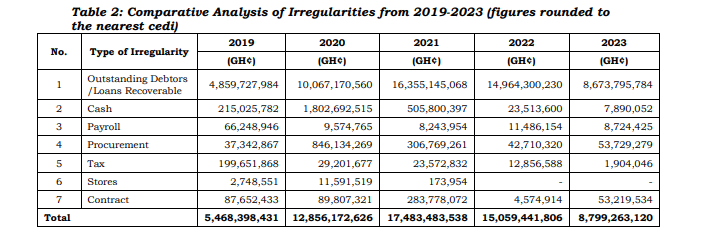
The 2023 Auditor General Report revealed total irregularities amounting to ¢8.799 billion across Public Boards, Corporations, and other Statutory Institutions.
This represents a significant decrease from the ¢15.059 billion in irregularities reported in 2022, a drop of approximately 41.6%.
The total irregularities included US$4,585,776, converted to Ghana cedis at the exchange rate of GH¢11.88 to US$1 as of December 31, 2023.
Overall, apart from procurement and contract irregularities, all other types of irregularities decreased in 2023 compared to the 2022 financial year, despite 135 institutions being audited in 2023, compared to 113 in 2022.
The report stated that the 2023 total irregularities of GH¢8.799 billion included a recoverable amount of GH¢8.732 billion and administrative infractions totaling GH¢66.807 million.
These administrative irregularities involved procurement and procedural lapses in public financial management, which did not indicate a loss of funds.
The report highlighted that the recoverable amount consists of inter-governmental agency debts, overdue receivables, locked-up investments, unpaid taxes, unretired imprest, and advances and loans given to employees of various institutions.
Similarly, administrative irregularities include issues stemming from procurement violations, overdue payables, and penalties incurred due to delayed payments to suppliers.
From the total irregularities of GH¢8.799 billion, GH¢8.732 billion is recoverable, accounting for 99.24%.
The irrecoverable administrative portion of GH¢66.807 million, representing 0.76%, consisted of procurement and other procedural infractions.
The Auditor General advised rigorous enforcement of recommendations to maintain financial discipline in managing public resources.
The Defence and Interior Committee of Parliament has summoned the Minister of the Interior, Mr. Henry Quartey, and the Director General of the Ghana Prisons Service to address controversies surrounding certain state lands in the Cantonments area of Accra.
The committee’s investigation will focus on matters concerning the Ghana Prisons Service Barracks at Cantonments and the Prisons Service land at Roman Ridge in Accra.
The summons, set for Monday, July 29, follows recent announcements by the Coalition of La Associations and the GaDangme Coalition Against Land Injustice about their plans to hold street protests over the Cantonments lands.
The demonstrations, starting on Tuesday, July 30, aim to highlight alleged unethical land seizures by political entities in the Greater Accra Region.
These groups have voiced significant concern about the Prisons Service lands at Cantonments, where a private developer plans to redevelop the facilities.
A portion of the Cantonments land is slated for private business ventures, which protesters argue undermines the public interest.
The Coalitions are demanding greater transparency and fairness in managing these lands.
The parliamentary session will address these concerns, with the Interior Minister and Prisons Director expected to clarify the current status and future plans for the disputed lands.
Dr. Edward Omane Boamah, the Director of Elections and IT for the National Democratic Congress (NDC), has strongly criticized the Electoral Commission (EC) as the general election approaches.
He alleges that the EC has not sufficiently prepared for the upcoming elections.
Dr. Omane Boamah’s critique highlights what he sees as shortcomings in the EC’s IT and statistics departments.
He contends that these deficiencies could compromise both the integrity and effectiveness of the electoral process.
The former Communications Minister pointed to recent typographical errors in the EC’s data from the last voter registration exercise as evidence of the Commission’s failures.
He voiced significant concerns that such issues might affect the accuracy of the election results.
In a Facebook post on Monday, July 29, Dr. Omane Boamah urged the EC to address these problems without delay.
He emphasized the urgent need for corrective measures to be implemented before the general election.
“I submit to you that the IT and Statistics outfits of the Electoral Commission of Ghana remain the weakest links going into the 2024 elections.”
“Think about the numerous EC’s incorrect figures that the National Elections and IT Directorate of the NDC has corrected over the past few months,” he said.
The National Democratic Congress (NDC) flagbearer, John Mahama, has announced that the party will vigilantly oversee every stage of the 2024 general election, from the lead-up to the aftermath.
He emphasized that the NDC is committed to thoroughly scrutinizing all aspects to uphold the integrity of the electoral process.
“I wish to assure all the people of Ghana, who intend to vote for the National Democratic Government (NDC), that we will protect every single vote,” Former President John Mahama, Flagbearer of the party, said on Saturday.
He mentioned that the party would leverage the tools available within the electoral process to ensure that its members oversee the December elections for transparent results.
Former President Mahama noted that the NDC had faced challenges with the Electoral Commission (EC) in past elections.
Nevertheless, he said the party had remained relatively composed, extending the EC the benefit of the doubt.
During the launch of the NDC’s 2024 election campaign in Tamale, the Flagbearer declared that no party member would rest until the votes were counted.
“Until all the ballots have been counted, none of us will sleep for 48 hours,” he said.
“This is an election like no other, and if you say you are NDC, you better get prepared. Everybody is going to volunteer.”
The former President pointed out that according to EC regulations, once ballot counting is finished and the pink sheets are completed, these sheets should be displayed on a wall at the polling station.
In light of this, he advised NDC polling station officials and members to ensure that returning officers post copies of the pink sheets on the walls of polling stations.
He also urged party supporters to photograph the pink sheets to serve as evidence for future reference.
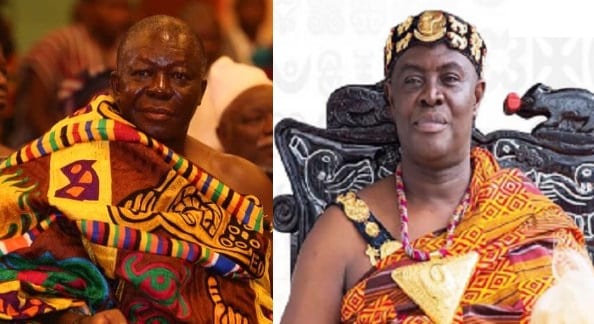
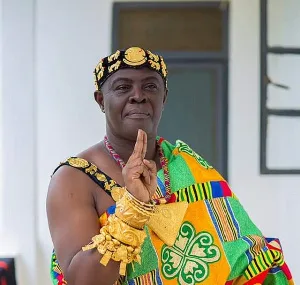
Dormaahene, Osagyefo Oseadeeyo Agyeman Badu II, has said that he has always shown respect towards Asantehene, Otumfuo Osei Tutu, however, he believes that Otumfuo should not claim authority over territories that are not rightfully within his jurisdiction.
This comes on the back of the decision by Fiaprehene, Obrempong Professor Kyem Amponsah II, to join the Asanteman Traditional Council.
Osagyefo Oseadeeyo Agyeman Badu II, explained that Fiaprehene owes allegiance to the paramount chief of Odumase and that the paramount chief of Odumase exercises control over Fiapre and not Otumfuo.
“Fiapre is not under the authority of Otumfuo. It is not Otumfuo’s blood. What I know is that he is from Denkyira and ended up at Kumasi Number 1 due to wars. I cannot make him a paramount chief. The only person who can do that is the paramount chief of Dumase Number One.
There are people staying elsewhere and causing trouble in Dormaa land. I have never disrespected Otumfuo, but he shouldn’t fight for what does not belong to him,” this he said while addressing his community members over the weekend.
Dormaahene, Osagyefo Oseadeeyo Agyeman Badu II, has stated that the responsibility does not lie on the Asantehene, Otumfuo Osei Tutu, to elevate the Fiaprehene to the status of a paramount chief.
Oseadeeyo Agyeman Badu II explained that although the Asantehene is recognized as a paramount chief according to Ghana’s constitution, he is not entitled to appoint another paramount chief in an area beyond his jurisdiction.
“The final authority in the chieftaincy rank is the paramount chief. There is no authority beyond the paramount chief. Otumfuo is a paramount chief, so he cannot lord over another paramount chief.”
“So, I want to plead with the Fiaprehene that Otumfuo cannot make him a paramount chief. As long as I remain president of the Bono Regional House of Chiefs, Otumfuo cannot install a paramount chief. It is not possible. Even if the court says otherwise, I will not obey and I’m willing to go to jail for that.”
“The Fiaprehene is on Bono land, so he should come to us so that we seek forgiveness from the ancestors for him. Fiapre is not under the authority of Otumfuo. It is not Otumfuo’s blood. What I know is that he is from Denkyira and ended up at Kumasi Number 1 due to wars. I cannot make him a paramount chief.”
“The only person who can do that is the paramount chief of Dumase Number One. There are people staying elsewhere and causing trouble in Dormaa land. I have never disrespected Otumfuo, but he shouldn’t fight for what does not belong to him,” he said this while addressing his community over the weekend.
The Dormaahene, Osagyefo Oseadeeyo Agyeman Badu II, has asserted that the Asantehene, Otumfuo Osei Tutu, does not wield the power to appoint a paramount chief in Fiapre, a town in the Sunyani West Municipality of the Bono Region of Ghana.
Addressing his community over the weekend, Nana Agyeman Badu II emphasized that while the Asantehene is acknowledged as a paramount chief under Ghana’s constitution, he does not have the right to appoint another paramount chief in a territory outside his domain.
The Dormaahene condemned Otumfuo Osei Tutu’s actions, arguing that they show a lack of respect for the customs of the people of Fiapre and should not be tolerated.
He explained that the Fiaprehene owes allegiance to the paramount chief of Odumase, who has authority over Fiapre.
Nana Agyeman Badu II pledged to resist any efforts by Otumfuo to install a chief in Fiapre, even if it means risking his life.
He urged Otumfuo Osei Tutu to reconsider his actions, warning that they are causing divisions among the chiefs in the Bono Region and could lead to further conflicts
“The final authority in the chieftaincy rank is the paramount chief. There is no authority beyond the paramount chief. Otumfuo is a paramount chief, so he cannot lord over another paramount chief.”
“So, I want to plead with the Fiaprehene that Otumfuo cannot make him a paramount chief. As long as I remain president of the Bono Regional House of Chiefs, Otumfuo cannot install a paramount chief. It is not possible. Even if the court says otherwise, I will not obey and I’m willing to go to jail for that.”
“The Fiaprehene is on Bono land, so he should come to us so that we seek forgiveness from the ancestors for him. Fiapre is not under the authority of Otumfuo. It is not Otumfuo’s blood. What I know is that he is from Denkyira and ended up at Kumasi Number 1 due to wars. I cannot make him a paramount chief.”
“The only person who can do that is the paramount chief of Dumase Number One. There are people staying elsewhere and causing trouble in Dormaa land. I have never disrespected Otumfuo, but he shouldn’t fight for what does not belong to him,” he said.
Nana Agyeman Badu’s assertion supports the stance of the Odumase No.1 Traditional Council that the Fiaprehene, Obrempong Professor Kyem Amponsah II, cannot be made a paramount chief by the Asantehene.
At a press conference held on Friday, June 28, 2024, the Kontirehene of Odumase No. 1, Nana Godlove Kwaku Boateng, stated that Odumase was never conquered by the Ashanti Kingdom, and therefore, the Asantehene has no authority to install a paramount chief on their land.
He strongly warned Fiaprehene Kyem Amponsah II against aligning with the Asanteman Council and added that the chief is free to leave their territory if he chooses.
“He can leave for any town he wishes. He can serve anybody he wants. But he cannot take our property because he came to meet our land, which belongs to our ancestors. He should leave our land because it is for the children of Fiapre.”
“I spoke to our family head and he agreed with me that the Asantehene cannot leave Asante and install a paramount chief in Fiapre because when he (the Fiaprehene) needed land to settle on, it was his (the family head’s) father who gave him the land. And so no one can live on his father’s land and serve another person,” he said in Twi.
He added, “You (Fiaprehene) are saying you are your own man and you can do what you want. But our land does not belong to the Asantehene. Odumase is not one of the lands conquered by the Asante.”
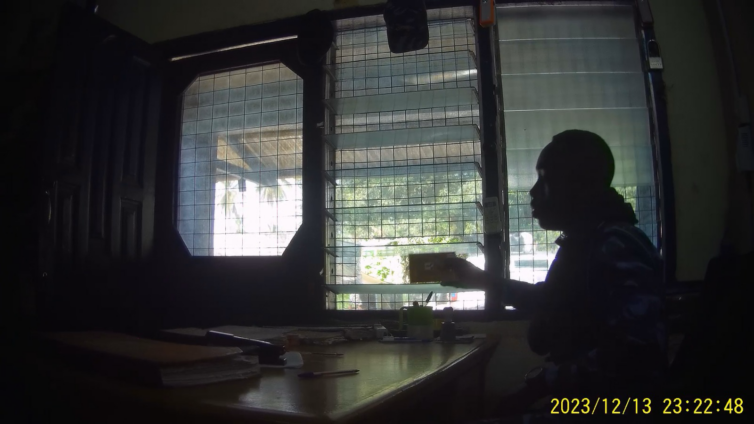
An investigation by the media has revealed that customs officials accept bribes to permit traders to transport smuggled goods from neighboring countries into local markets.
These officials accept bribes ranging from ¢20 to ¢200, allowing traders to evade taxes on their goods and avoid penalties.
In the latest hotline documentary, ‘Porous Borders,’ investigative journalist Kwetey Nartey exposes how the country’s inland borders are turning into hubs for smuggled goods transit.
This comes on the heels of reports that every year, a significant volume of products ranging from fake hair products, flavoured water, cement, refined petroleum and palm oil from Togo end up on the country’s domestic markets.
According to the Organisation for Economic Cooperation and Development (OECD), over $400 million worth of these products were imported from Togo between 2017 and 2021.
However, anecdotal evidence suggests that what is smuggled through the country’s porous borders to the local markets surpasses what has been documented by the OECD.
This phenomenon has become one of the major concerns of the newly appointed Finance Minister, Dr. Mohammed Amin Adam.
He did not mince words over its impact on revenue generated by the state when he met customs officials on his first working engagement with them at the Tema port.
“Smuggling is on the rise, particularly on the Eastern corridor of our country.”
But, he felt short of addressing one of the enablers of smuggling. The porous borders.
This is an undercover investigation to infiltrate the ranks of the smugglers transporting many cartons and gallons of oil, assorted drinks, and bags of rice from Togo to Aflao Cote d’ Ivoire to Elubo, and the Northern regions and Oti regions.
In this story, customs officials who take bribes to allow these products into the country are exposed.
This daring broad-day attempt to circumvent the approved border posts manned by customs officials has a reason.
The unscrupulous business operators and smugglers want to escape paying the right duties and penalties on their goods.
Delali, a trader in his late thirties who runs a retail outlet in Aflao, indicated that many of the goods he sells in his store were illegally brought from Togo.
“ They are without the tax stamps embossed on the goods as directed by the Ghana Revenue Authority.”
Despite admitting falling foul of the law, he has a justification behind this business move.
“Every businessman is in this trade to make a profit,” he explains.
The practice of bringing goods from Togo through unapproved routes to the local markets isn’t easy.
Aside from using winding routes, it comes with its own costs and risks. But, for these smugglers and traders, the business rewards cannot be compared to the cumbersome process they have to go through when using the approved routes.
As a result of this, Delali takes the risks of carting these unstamped goods from Togo to Aflao and manages to manoeuvre his way around customs officials stationed at the checkpoints.
The success of this operation is largely dependent on middlemen who operate tricycles that operate on these routes.
The fear of having his goods seized and the need to escape the laborious paperwork at the approved border posts are the reasons why he continues to rely on smugglers to protect his business interests.
Favour, a man who operates a popular pub in Kadjebi in the Oti region, also loads of the consignment he sells are bought from Togo.
He says one needs only GHc100 cedis to pay off customs officials who would want to confiscate the contraband goods.
Knowing this, the team is advised to change a few notes of CFA Francs for the purchase of products across the border.
Even before we pass through one of the beats into Togo, some immigration officials and men wearing civilian clothes from the Togo side are asking us to pay cash.
Investigative journalist Kwetey Nartey indicated that as he was heading into one of Togo’s busy business districts, he found out that one can buy anything from this business hub.
From clothes, drinks, T-rolls, and fabrics to anything you can think of in shades and colours.
But, for purposes of this investigative assignment, he settled on purchasing assorted and canned drinks without the tax stamps.
These are goods that are already manufactured in Ghana. But, as I would soon learn, it is cheaper to buy them here.
At the time of investigation, a carton of malt sold at ¢92 in Togo while in Ghana it was retailed for ¢160. A carton of coke went for 101 cedis in Togo and sold for 150 cedis in Ghana. While Vody sold at 169 cedis in Togo, in Ghana it was priced at 270 cedis per box.
Any of these goods he bought should ordinarily be confiscated by customs officials or he should have been made to pay the right taxes on them, but, if this is not done, the profit margins of these traders can be anyone’s guess.
But, having driven through several checkpoints with these goods without tax stamps from Aflao through to Dabala to Sogakope, it wasn’t flagged.
The movement through these checkpoints was smooth until a customs official in her mid-thirties flagged us to stop at the Sogakope checkpoint.
The investigative team assumed this customs official who stopped the team to inspect these goods would get us to pay taxes on the assorted drinks, but we were in for a shocker.
She demanded the team pay a bribe of ¢400, she allowed us to pay ¢200 after some minutes of negotiations.
This was no different at Ghana’s border town in the Western region, Elubo.
Many bags of rice are brought through the border post and are allowed to pass without paying the right taxes.
Some of these traders who bring rice from the Ivory Coast have become familiar with customs officials demanding bribes from them and allowing them to go with their booty.
Despite its toll on their profits, they prefer dealing in such transactions to paying the right duties.
They claim they are not issued with invoices or receipts to cover these payments they make to unscrupulous customs officials.
Drivers who cart these goods to the marketing centres are not spared when transporting these bags of rice.
According to this driver who gave his name as Kweku, the officials demanded nothing less than ¢350 to allow them to transport smuggled bags of rice to Takoradi or Tarkwa.
The investigative team succeeded in meeting one of the smuggling kingpins in Elubo who identified himself as Error.
For every box of rice he brings from Ivory Coast to Ghana, he charges GHc20 cedis. It is this amount, he pays off to customs officials he works with to facilitate his business.
If he can transport 500 bags of rice to Elubo he would earn GHc10,000 cedis.
The investigative team decided to test these claims made by the traders and commercial drivers.
The team bought several boxes of rice from neighbouring Ivory Coast. At the Elubo border post, this Customs official who was identified as Cudjoe allowed our boxes of rice bought from Ivory Coast into Ghana.
The investigative team did not pay the statutory taxes.
When the team got to the customs checkpoint at Samir, our vehicle was inspected by two customs officials.
They asked the reporter to follow them to their office. They demanded I pay a bribe of GHc20 cedis and left me to go with the boxes of rice.
But cartons of drinks and bags of rice are not the only products that are illegally brought into the country without paying the approved fees.
At Kadjebi in the Oti region, I feigned interest in wanting to purchase a vehicle from Togo.
This middle-aged man whom we decide to call Efo Koffi walks us through the modus operandi of bringing cars into the country without paying the right taxes.
He claims to have collaborators within the security agencies who aid him in carrying out this work.
When there is a surge in the prices of fuel at the pumps, a new trade emerges in most border communities.
The smuggling of fuel into Ghana. Imoro Awudu is a tabletop fuel operator he knows all about this business.
It is becoming an uphill task to decisively deal with smuggling at the country’s porous borders.
But, if the actors in this menace are held in check, the loopholes in the revenue basket can be sealed.
This investigation received support from the Ghana Integrity Initiative and Global Financial Integrity.
Interior Minister Henry Quartey has cautioned police officers against transferring their disorderly habits from the barracks to the newly provided government housing facility.
He stressed that the government will not accept the unkempt conditions often observed in police barracks.
At the handing-over ceremony held at the depot in Accra on Tuesday, Mr. Quartey issued a firm public warning, stating that officers must maintain the facility diligently at all times.
“Often times you go to police barracks, and you see fridges, freezers, bicycles—all manner of things hanging around the buildings,” Quartey said.
He instructed the Inspector General of Police (IGP) to ensure that these new buildings remain well-maintained.
Meanwhile, on Tuesday, President Akufo-Addo inaugurated 320 housing units for the Ghana Police Service at the Police Training School in Tesano, Accra.
These units, part of the Security Services Housing Project Phase Three, consist of 112 two-bedroom and 208 three-bedroom apartments.
The development also includes an officers’ mess, a social center, two multipurpose courts, and a kindergarten.
This project is anticipated to enhance the lives of police officers and their families, reflecting the government’s commitment to supporting the security services.
The Alternative Force for Action (AFA), under the leadership of independent presidential candidate Dr. Sam Ankrah, has committed to deploying a comprehensive strategy to tackle the nation’s waste management challenges if elected in the forthcoming general elections.
During an interview with the media on Thursday, Dr. Ankrah stated that his initial action upon taking office would be to enforce a mandatory recycling policy aimed at converting waste into useful resources.
He emphasized the need for strong systems and frameworks to handle waste efficiently.
“We have a special programme as to how we would address waste, the Alternative Force for Action (AFA Group) promises Ghanaians that there is going to be compulsory recycling of waste from day one that we are elected into office.
“Systems and structures will be put in place to tackle this because waste is money, and we need to harness it,” he stated.
Emphasizing the economic advantages of effective waste management, Dr. Ankrah outlined the diverse applications of recycled materials.
“We will get clean water out of waste, we will generate power out of it and we can even produce building materials from it. So there is a whole lot of use from this waste that we have left to engulf us and cause all sorts of outbreaks in our cities and towns.”
He also lamented the severe condition of waste management inGhana, highlighting that the nation’s urban areas are inundated with waste because of inadequate waste processing or disposal systems.
“Our country is engulfed to the brim with dirt, rubbish, and waste everywhere. There is no serious waste processing structure or disposal structure, and it is serious,” he remarked.
Dr. Ankrah expressed concern about the open drainage system, especially in the rainy season, warning that it could result in a public health crisis.
He urged for a more integrated approach between health and environmental issues, stressing that the unsanitary conditions in Ghana could cause major disease outbreaks.
“There has to be a correlation between health and the environment, and I don’t think we have gotten it. At the national level, these are critical things that we have to look at.”
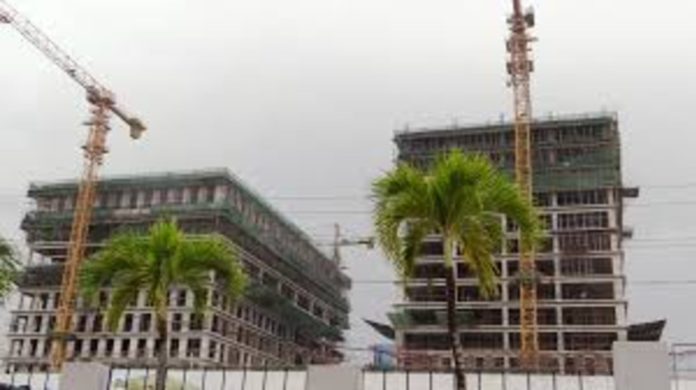
The Bank of Ghana (BoG) has defended its choice to persist with the new head office construction, despite facing a substantial loss of 10.50 billion cedis in 2023.
Last year, the Central Bank allocated $82 million to contractors for the ongoing project, even while grappling with financial difficulties.
The decision to continue with the project has been questioned, with MP Yusif Suleman challenging its practicality given the bank’s financial situation. Mr. Suleman voiced these concerns during a Public Accounts Committee session on Friday.
Stephen Opasa, Special Advisor to the BoG Governor, justified the continuation of the construction, arguing that the project is too advanced to be stopped now.
He pointed out that the bank’s losses were attributable to multiple factors, not just the construction costs.
Mr. Opasa acknowledged Mr. Suleman’s concerns but contended that halting the project at this stage would be inefficient and costly, given the contractors already engaged.
“The alternative was to stop the project. While we understand the perspective of minimizing losses, the losses in 2023 and 2022 were not solely due to this project. Halting it might not have been the best decision given the circumstances, with contractors actively engaged and the project significantly advanced.”
The Bank of Ghana’s defense arises as the institution is pursuing a government bailout to bolster its capital and advance its policy goals.
Ghana Revenue Authority as of June 2024, amassed GH¢56.4 billion via the Ghana Integrated Financial Management Information System (GIFMIS) platform.
This indicates a 34.6% rise compared to the amounts collected through the platform during the same period the previous year.
Finance Minister Dr. Mohammed Amin Adam revealed this information during the Mid-Year Budget Review 2024 presentation in Parliament, Accra.
“In line with commitment to ensuring full disclosure of retained internal generated funds by public institutions, government has deployed theGhana.Gov platform to over 1,500 public institutions and also rolled out the Ghana Integrated Financial Management Information System (GIFMIS) to 287 IGF-reliant public institutions.
“As at the end of June, 140 public institutions, including GRA, had gone live and received payments through the platform, totalling GH¢56.4billion, an increase of 34.6 percent compared to the same period last year,” he said.
Dr. Adam pointed out that this progress aligns with the government’s initiatives for increasing domestic revenue and managing expenditures.
In the 2024 Budget Statement and Economic Policy, the government detailed a range of revenue strategies in line with the Medium-Term Revenue Strategy (MTRS). According to the minister, these initiatives demonstrate the government’s dedication to raising the tax-to-GDP ratio from the current 14.1% to a target range of 18% to 20% by 2027.
“In the 2024 budget, government amended existing legislation to give effect to the revenue measures. These measures also aim to broaden the tax base and improve tax compliance for a more equitable and efficient revenue system.
“Mr. Speaker, while not all the measures were implemented in the first half of the year, through enhanced compliance and enforcement, the Ghana Revenue Authority (GRA) exceeded its mid-year target by 0.2 percent. Similarly, Non-Tax Revenue (NTR) performance as at the end of June exceeded the target by 14.0 percent,” the minister further explained.
Outlook
For the remainder of 2024 (from July to December), Dr. Adam stated that the Ministry of Finance will enhance collaboration with the Ghana Revenue Authority (GRA) and other key stakeholders to effectively enforce policy, administrative, and regulatory measures to achieve the revenue targets set by the government.
To expand the tax base, he mentioned that a user-friendly digital platform for implementing the revised tax scheme will be introduced, along with an electronic record-keeping system.
Furthermore, he anticipated that an additional 2,000 taxpayers would be integrated into the electronic invoicing system (e-VAT) by the end of the year.
“GRA will also continue with the cleaning of the taxpayer register and on-board more taxpayers onto its electronic systems to improve the taxpayer experience and compliance. In addition, GRA will continue to enhance data sharing with other tax jurisdictions to boost revenue mobilisation.
“The ministry will continue the deployment of the Ghana.Gov payment platform to remaining public institutions and ensure that all those already on-boarded go live. Additionally, the outstanding activities for the full roll-out and utilisation of the GIFMIS for the processing of IGF expenditures will be completed by the end of the year,” he added.
The Finance Minister also highlighted various actions the government has undertaken over the past two years to steer the country’s economy towards fiscal stability, economic recovery, and growth. He emphasized that these measures have been put into practice and are producing the anticipated outcomes.
To further the digitalization efforts and broaden the national identification system, he mentioned that the government has invested approximately GH¢135 million in the national identification initiative since January 2024.
“This significant progress has been underpinned by an environment of enhanced and inclusive engagements with key stakeholders. These engagements have provided useful feedback, improved understanding and bolstered cooperation.
“We are determined to stay the course on our fiscal consolidation programme. Increased attention will continue to be given to prudent management of approved expenditures and improved revenue mobilisation,” he added.
The Monetary Policy Committee of the Bank of Ghana has opted to hold the policy rate steady at 29% after its 119th regular meeting.
This decision represents the third time in a row that the BoG has kept the policy rate at 29% this year.
Central Bank Governor Dr. Ernest Addison pointed out that inflation risks are skewed towards the upward direction.
“On domestic price developments, there is some uncertainty regarding the inflation path for the year, given recent exchange rate pressures, upward adjustment in utility tariffs and increases in ex-pump fuel prices,” the governor said.
“The above developments have resulted in a slightly elevated inflation profile for the year. Even though inflation is expected to remain within the target year band, the risks are tilted slightly on the upside. This will require maintaining the strong monetary policy stance supported by strong fiscal consiolidation efforts including remaining vigilant to ensure that the end year inflation objectives are achieved,” he explained.
Ghana’s overall international reserves remained robust in the first half of 2024.
According to the Bank of Ghana, the total Gross International Reserves rose by $275 million to $6.865 billion in June 2024, up from $5.344 billion in the same month of 2023.
This amount provided 3.1 months of import coverage.
The Gross International Reserves (excluding encumbered and petroleum assets) also grew to $4.522 billion in June 2024, compared to $4.32 billion in April 2024.
However, the net international reserves were slightly reduced to $4.500 billion, in contrast to $2.332 billion a year earlier.
Trade balance records higher surplus of $1.805bn
In the meantime, the trade balance showed a higher surplus of $1.805 billion for the first half of 2024, up from $1.602 billion during the same period last year.
Total exports rose by 13.33% year-on-year to $9.22 billion in June 2024, primarily due to significant growth in gold exports and a moderate increase in crude oil exports.
Revenue from gold exports surged by 46.3% year-on-year to $5.041 billion in June 2024.
The value of crude oil exports rose by 19.38% to $1.981 billion, driven by increases in both volume and price.
Cocoa exports, including beans and products, fell by 47.7% to $760.0 million in June 2024.
Other exports, such as non-traditional exports, slightly declined to $1.445 billion in June 2024.
Total imports grew to $7.423 billion in June 2024, compared to $6.538 billion in June 2023.
Broadcaster Dr. Randy Abbey has criticized those promoting a credit scoring system as a transformative fix for Ghana’s economic challenges.
He argued that while a credit scoring system has its merits, it is not a standalone solution as it primarily benefits those who are economically active.
During his appearance on Good Morning Ghana on Thursday, July 25, 2024, he elaborated that without employment, a credit card system becomes ineffective since people wouldn’t have the means to repay their credit card purchases.
“Nobody should create the impression that it (credit scoring system) is some magic wand. I think that it’s good to have a system like that. It could help people. But we don’t proceed on the premise that that is the panacea.
“First of all, there must be an environment where people are productive. They are able to earn and therefore they can take up credits and be able to pay when it is due. That is the only way you can build your credit,” he said.
He also highlighted that despite the numerous advantages of a credit system, it presents several challenges.
He mentioned that in developed nations like the USA, the credit card system has led to significant debt for many individuals.
“But the mere fact that a credit score system exists does not mean that you can have everything, everything you want. If you go abroad today and you go to the churches, one of the prayer points is debt cancellation for individuals, their credit card debts and others.
“… Look, people are in serious debt. So, I’m saying that there’s absolutely nothing wrong with the scoring system and all that. But people shouldn’t create the impression that is what makes life comfortable for people. You must be in a position to service your debt,” he added.
Meanwhile, Dr. Mahamudu Bawumia, the flagbearer for the New Patriotic Party, has ridiculed the opposition National Democratic Congress for what he deems their unrealistic attitudes and misunderstanding of the proposed credit scoring system.
Dr. Bawumia has outlined plans to implement a national individualized credit scoring system, which would enable Ghanaians to purchase items such as mobile phones on credit and pay in installments based on their credit score.
In response, NDC representatives have derided the policy, questioning its practicality, especially following Bawumia’s example of purchasing a mobile phone on credit and paying in installments.
Dr. Bawumia has responded by mocking the NDC, arguing that their lack of understanding reflects their unfamiliarity with a system that is widely used among the working class in developed nations.
“When we say we want to do something, they always say it is not possible. But it is possible,” Dr. Bawumia said in Hamile during his campaign tour.
“When I said a few days ago that Ghanaians suffer a lot because everything we want to buy, we have to use cash to buy everything. In developed countries like the UK, Germany, Japan, and the United States, workers buy most things on credit. You buy a fridge, you buy a television, you buy a car, and you buy a mobile phone, you pay small, small, small. But in Ghana, you have to pay it all. So I said Ghana has reached a stage where we are going to introduce a credit scoring system that allows our workers to also pay small, small, small,” he said
He added “When I said it, they couldn’t understand. They don’t understand some of these things and we are going to do it and you can buy your mobile phone and pay small, small, small until you finish paying. And we will be introducing the credit scoring system.”
Ghana launched the initial phase of its 1000 megawatts rooftop solar project on July 25, 2024, aimed at supplying power to companies in the free zone enclave.
When fully completed, this solar project will become the largest in Africa and the second largest globally, facilitating companies’ access to the European market (EU). The operational system is expected to generate 24,750 MWh of clean, stable, and sustainable electricity annually.
Mr. Seth Mahu, the Director of Renewable Energy at the Ministry of Energy, informed the Ghana News Agency that the rooftop project holds significant importance, as it will boost the nation’s renewable energy capacity to over 200 megawatts of installed capacity, accounting for 4.2 percent.
“From where I sit at the Ministry, I know that between the years 2024 and 2035, the country will attract not less than two billion dollars in investment in that sector,” he said.
“In the last decade, the cost of solar has dropped, making it cheaper to produce electricity from solar than from other plants. If this trend continues, the cost of production will reduce, which will scale down the unit price of products.”
The Director of Renewable Energy pointed out that the initiative will help lower the nation’s carbon emissions as per the nationally determined contributions and promote ‘green’ manufacturing, which is a prerequisite for the EU market.
Mr. Mahu said the project would provide different levels of sustainable jobs over the next 20 years, which would help grow the economy.
“Solar is now very competitive. The advent of the battery energy storage system is addressing unstable power in the solar sector,” he said.
Helios Solar Company (Helios), a division of LMI Holdings, owns the solar rooftop project that will deliver 16.82 megawatts of power to Helios and its affiliates.
The cutting-edge solar system is financed by the International Finance Corporation (IFC) as part of a comprehensive $30 million clean energy and water agreement with LMI Holdings, aimed at fostering job creation and promoting greener, more sustainable, and competitive industrial growth in the country.
The Ghana Energy and Investment Plan indicates that the nation is poised to play a significant role in the energy mix.
The plan predicts that solar energy could constitute the bulk of capacity, exceeding 150 gigawatts by 2060. However, it also notes that this swift expansion of solar capacity will need substantial technical, financial, and policy support to streamline and expedite project development.
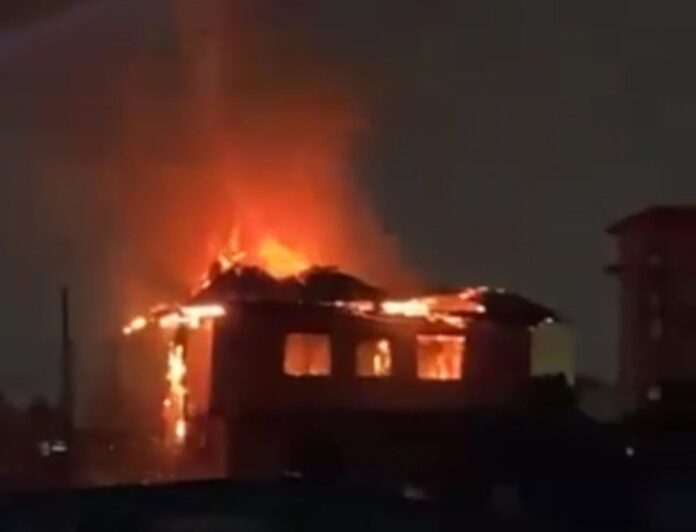
A catastrophic blaze destroyed the three-storey “Father Hostel” at Kwame Nkrumah University of Science and Technology (KNUST).
The origin of the fire is still unknown, but the blaze has caused extensive damage to the building, which was used as a student hostel.
At least nine rooms have been reduced to debris, leaving the affected individuals devastated and students in nearby buildings alarmed.
Fortunately, there have been no reported injuries. However, nine students have lost all their possessions, leaving them without a place to stay.
Witnesses reported that the fire began in one room and rapidly spread through the entire building, engulfing their belongings in minutes.
Eyewitnesses also mentioned that there was a 30-minute delay in the response from the KNUST Fire Department due to difficulties reaching their emergency contact number.
The remaining sections of the building are now considered unsafe due to severe structural damage.
In response, the KNUST Students’ Representative Council (SRC) has organized temporary lodging for the affected students at the SRC hostel.
The council is also urging all students to follow safety guidelines to avoid similar incidents in the future.
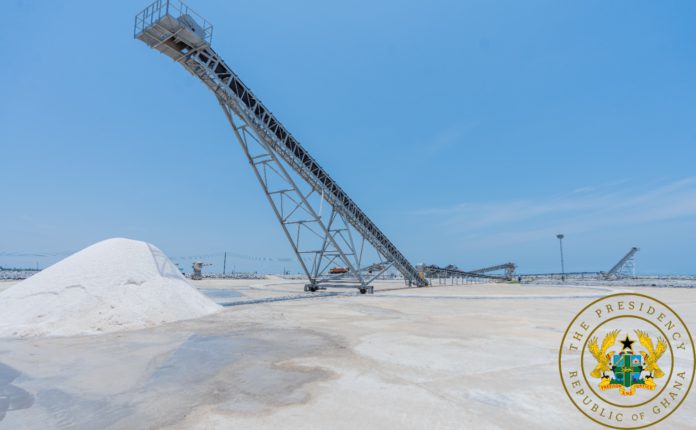
The Committee on Mines and Energy, alongside the Committee on Lands and Forestry, after carefully reviewing feedback from all stakeholders regarding ElectroChem Mining’s operations, has instructed ElectroChem Ghana Limited to enhance their community engagement efforts.
This directive follows several recommendations made by the Committee.
The Committee suggests that ElectroChem Ghana Limited should persist in designating a portion of the concession area for local miners, establishing a mutually advantageous arrangement that benefits both the company and the local communities to encourage local involvement in the salt mining project.
“The local mining so permitted should be undertaken according to the environmental laws and practices as sanctioned by the Minerals Commission and the Environmental Protection Agency. ElectroChem Ghana Limited should assist the indigenes in the deployment of best salt mining practices in order not to devalue the concession area and lower production.
“There is the necessity for a continuous stakeholder engagement to persuade those who are fighting the roll-out of a national resource under the mistaken belief that the indigenes owned the mineral called salt,” it states.
The Committee also emphasized the necessity for the National Commission for Civic Education (NCCE) to launch a large-scale awareness campaign in the Salt Mining Area to help locals understand that salt is a natural resource, comparable to gold in the Ashanti Region, petroleum in the Western Region, and bauxite in the Eastern Region, rather than merely a local source of income.
“The Members of Parliament of this Joint Committee should organise local education tours and durbars to further achieve the object. Political pandits should desist from making political capital out of the use of national assets for the development of the nation Ghana rather than inciting indigenes to believe that they are being robbed by the Government of the day.
“There should be a serious security engagement in the communities for them to come to terms with the fact that it is in the best interests of Ghana and the local communities to desist from any form of lawlessness to pave the way for a national undertaking with export benefits to function at full throttle.
“Parliament and NCCE should be the arrowheads in this regard. The indigenes should be educated by their chiefs. stakeholders and the police that the Nation Ghana has a stake in ElectroChem Ghana Limited and its salt mining business in Ada Songhor and any acts of lawlessness against the Company is a direct confrontation with Law Enforcement Agencies in Ghana.
“All national undertakings over the country including the gold mining business of Ashanti Goldfields are operational because of this basic understanding. The police should continue with the investigation of the death of Numo Korletey Agormedah who was allegedly killed on the 6th day of November 2023 and prosecute the perpetrator(s) of the said crime.
“All minor criminal complaints associated with the salt mining business which can be resolved between the complainants and the culprits to tone down tension in the salt producing environment.
“The chiefs should take up such peaceful initiatives. Any survey challenge relating to the extent of the concession should be brought to the attention of the Minerals Commission for investigations.
“ElectroChem Ghana Limited should enlarge their social intervention activities as their fortunes improve to bankroll poverty in the communities. ElectroChem Ghana Limited in the roll-out of this immensely significant national project should desecrate cemeteries, fetish houses and places within the concession area,” the committee stated.
Imagine dedicating 30 years to your career, only to retire with a meager pension.
This is the reality for numerous retirees who have invested their hard work and effort into the nation’s progress.
Such is the case for a cousin of Balbir Naa Densua Allan, who herself is a retiree.
Describing the challenges faced by retirees, she mentioned that she considers herself somewhat fortunate because her husband, a foreign national, receives approximately £150 in weekly pension, which is their main source of income. This amount is about 10% less than what he would receive if he were residing in the UK.
In contrast, her cousin, who worked in Ghana, receives only GH₵300. While this used to meet her needs, the recent depreciation of the cedi and rising medical costs have left her reliant on support from her family and children.
She recounted how her cousin’s situation would have been even more dire without her help, noting, “Life will be very, very awful because look at the cost of electricity, look at the cost of the utilities , gas, water, the cost of a ball of kenkey and you want a person, she worked with Ghana Broadcasting Cooperation, and you want this person to survive on GH₵300 a month.
“When somebody like my husband has brought his pension in Ghana and he is earning like GH₵12,000 a month, he is at the base because he did the basic job and he is on GH₵12,000 a month and he can save some of his money,” she said.
She recounted that upon moving to Ghana, she sold her family property and invested the proceeds in microfinance and government bonds to provide for her family.
Unfortunately, due to the banking sector crisis, much of this money has been lost.
Balbir Naa Densua Allan mentioned that she now struggles to support her family members in need as she once did.
The Ghanaian cedi has weakened by roughly 19.6% against the US dollar on the interbank foreign exchange market as of July 2024, according to the Bank of Ghana.
This figure is less than the approximate 21% depreciation against the US dollar in the retail market.
According to the Central Bank’s July 2024 Summary of Financial and Economic Data, the cedi depreciated by 7.7% against the dollar in March 2024 and by 10.5% in April 2024. In June 2024 and July 2024, it further declined by 15.9% and 18.6%, respectively, against the US dollar.
While the cedi is trading at an average of GH¢15.60 per dollar on the retail market, the Bank of Ghana quotes one dollar at GH¢14.78.
Against the British pound, the cedi has depreciated by 20.8% so far, trading at GH¢19.10.
It has also fallen 18.4% in value against the euro, with a current rate of GH¢16.09.
Cedi Stabilized Against Dollar
Last week, the Ghana cedi continued its upward trend against the US dollar amid increasing corporate demand.
The market’s expectation of a potential rate cut by the US Federal Reserve soon has weakened the American dollar.
As a result, the local currency appreciated by 0.29% week-on-week against the dollar, ending the week’s trades at a mid-rate of GH¢15.64/$ on the retail market.
This marks the second consecutive week the cedi has gained value against the US dollar.
Two individuals who swindled a Kumasi businessman out of GH¢1,700,000 have been sentenced to 10 years in prison each in absentia by an Adentan Circuit Court.
Prince Kyei Bennett and Samuel Nutsugah deceived the complainant, Eric Coffie, by pretending to sell him a bottle of schnapps filled with mercury.
The two were sentenced after they stopped attending court proceedings.
Bennett, a 48-year-old businessman, and Nutsugah, a 58-year-old unemployed man, were charged with conspiracy and fraud by false pretenses. They both denied the charges.
Judge Mrs. Sedinam Awo Kwadam found them guilty after the prosecution, led by Chief Inspector Maxwell Lanyo, presented evidence and witnesses.
The court sentenced Bennett and Nutsugah to five years for conspiracy and ten years each for fraud by false pretenses, with the sentences to run concurrently.
The prosecution previously informed the court that Bennett lived in Adjen Kotoku, while Nutsugah resided in Kumasi, Ashanti Region.
In April 2017, Nutsugah approached Coffie, claiming he was selling schnapps bottles containing mercury.
Nutsugah introduced Bennett as his business partner during this encounter.
Nutsugah later informed Coffie that he had secured the bottle with mercury and suggested that rituals were necessary to activate its full potential.
Nutsugah promised Coffie that if he helped with the spiritual cleansing and the bottle reached its full mercury level, he would receive five million US dollars and a four-bedroom house.
The prosecution revealed that Bennett and Nutsugah successfully extracted various sums of money from Coffie, totaling GH¢1,700,000.
The court learned that Bennett and Nutsugah later delivered a bag to Coffie, claiming it contained money.
The two told Coffie they had sold the bottle to a spiritualist and that the money in the bag needed to undergo rituals before it could be used.
Coffie took them to a guesthouse in Adjiriganor, where the bag was stored.
The prosecution stated that Bennett and Nutsugah demanded additional funds from Coffie to purify the money bag.
After receiving the money, they conducted several spiritual purification rites.
They also requested a white dove, a black-and-white ram, and other items, which Coffie provided.
However, the convicts failed to perform the promised rituals, dismissing the dove as painted.
The bag of money was left at the hotel when Coffie could not complete the purification process.
Police learned of the situation, went to the hotel, and retrieved the bag.
When the bag was opened in the presence of the convicts, only sawdust was found inside.
In his caution statement, Bennett admitted to receiving GH¢800,000 from Coffie, while Nutsugah claimed he could not recall the exact amount he had taken.
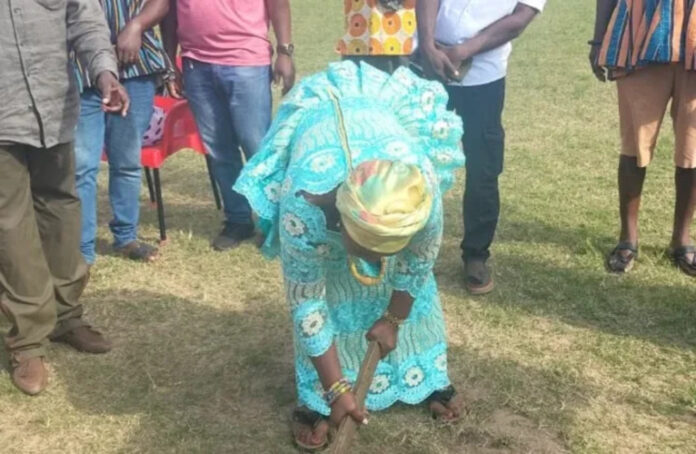
The Director General of the National Lottery Authority and the New Patriotic Party (NPP) parliamentary candidate for the Akuapim South constituency in the Eastern Region, Sammi Awuku, has officially inaugurated the reconstruction of the Mampong Coronation Park.
The renovated facility will feature a FIFA-standard football pitch measuring 96 by 66 meters, along with 400 spectator seats and designated VIP areas for prominent guests, including traditional leaders.
The upgraded park will also include dressing rooms for both home and visiting teams. To facilitate evening matches, four large floodlights will be positioned at each corner of the pitch, and the entire area will be enclosed with panel mesh fencing to enhance security and restrict unauthorized access.
The project, with an estimated cost of around four million Ghana cedis, is anticipated to be completed within three months.
After the ceremony on Thursday, July 25, 2024, Sammi Awuku told reporters that the reconstruction was initiated at the request of local traditional leaders to modernize the facility and enhance recreational options for the Mampong community.
He also encouraged the contractor to stick to the project timeline.
Historically, the Mampong and Sunyani Coronation Parks are among the few football pitches established by Ghana’s first President, Dr. Kwame Nkrumah, in district capitals to foster football development.
The Okyeame of Mampong noted that the Mampong Coronation Park was used as a training ground for the Black Stars and was the last pitch they trained on before their victory in the 1982 African Cup of Nations.
The World Health Organization (WHO) has emphasized the necessity for Ghana and other African nations to adopt comprehensive policies and strategies aimed at reducing road crashes, injuries, and fatalities by 50% by 2030, in line with Target 3.6 of the Sustainable Development Goals (SDGs).
The international health body noted that these policies should foster sustainable transportation systems, enhance legislative frameworks for road safety, invest in data management systems, improve post-crash response, and conduct research addressing the continent’s specific issues.
Additionally, WHO highlighted that the policies must address a range of factors contributing to road accidents, including inadequate enforcement of traffic laws, deteriorated road conditions, speeding, drunk driving, and insufficient safety education for road users.
This call was part of the recommendations from its 2023 road safety status report for the African region, which was presented in Nairobi, Kenya, last Tuesday.
Findings
The report highlighted that Africa has become a major hotspot for road traffic fatalities, placing significant pressure on the continent’s public health systems and jeopardizing progress toward SDG 3.6, which aims to cut global road traffic deaths and injuries in half by 2030.
For example, the report showed that although Africa represents 15 percent of the world’s population and has just three percent of the global vehicle fleet, it accounts for 20 percent of all road traffic deaths worldwide.
Additionally, the report noted that road traffic death rates in Africa have risen sharply over the past decade, with nearly 250,000 fatalities occurring on the continent’s roads in 2021 alone.
From 2010 to 2021, road crash deaths in Africa increased by 17 percent, whereas global death rates declined by five percent.
The report also pointed out that men aged 15 to 64 years are the primary victims of road traffic accidents, with particularly vulnerable road users, such as motorcyclists, cyclists, and pedestrians, suffering the most.
Lapses
The report attributed the rise to multiple factors, including inadequate road safety laws and standards, indicating: “no country in the region currently has laws that meet the best practice standards for the five key road safety behavioural risk factors – speeding, drink driving, non-use of motorcycle helmets, seatbelts and child restraints.” It added that limited investments in alternative modes of transport, including cycling and walking, had fuelled road-related fatalities on the continent, with 13 per cent of countries having national strategies to promote walking or cycling.
“These so-called multimodal transport systems have been determined to be more equitable and environmentally friendly, and safer for road users,” the report added.
The report added that post-crash care services in the region were inadequate or unavailable in most countries – fewer than one-third have services that met recommended levels of access to pre-hospital care, emergency care, and treatment and rehabilitation services.
The WHO Regional Director for Africa, Dr Matshidiso Moeti, said the findings of the report pointed to a serious public health concern for African countries, “with hundreds of thousands of lives being lost unnecessarily”.
“As WHO, we’re committed to working hand in hand withcountriesto tackle this preventable threat and continue to fully support all efforts to make our roads safer for motorists and pedestrians alike,” he said.
Action
The WHO representative in Kenya, Abdourahmane Diallo, stated that for Africa to reduce the burden of road accidents, countries needed to revamp transport infrastructure, retrain motorists, and promote safety education targeting motorists, pedestrians and cyclists.
The Electricity Company of Ghana (ECG) faced a staggering loss of GH¢10.21 billion in 2022, a sharp increase from the GH¢1.91 billion loss recorded in 2021.
This represents an over 433 percent surge in losses for 2022, primarily driven by exchange rate losses due to the depreciation of the cedi and rising costs of power distribution.
At the same time, many consumers across the country reported sporadic power outages, leading to extended periods of darkness and disruptions in their daily routines.
These financial losses were detailed in the most recent Auditor General’s Report covering public boards, corporations, and statutory institutions for 2023.
During the review period, ECG’s revenue rose by 24.1 percent to GH¢15.03 billion in 2022, up from GH¢12.10 billion in 2021, due to increased internal funds and government grants.
These grants were payments made by the government to energy-producing companies on behalf of ECG.
Total expenditures surged by 80 percent to GH¢25.23 billion in 2022 from GH¢14.02 billion in 2021, primarily due to increased direct costs and foreign exchange losses.
The rise in direct costs was mainly due to higher costs of power purchases and transmission expenses.
Non-current assets saw a 45.6 percent increase to GH¢32.71 billion in 2022 from GH¢22.46 billion in 2021, attributed to asset revaluations and new acquisitions of property, plant, and equipment.
Current assets also grew by 23.1 percent to GH¢10.14 billion in 2022 from GH¢8.24 billion in 2021, driven by an increase in trade and other receivables.
The company’s liabilities rose by 66.3 percent to GH¢29.43 billion in 2022 from GH¢17.69 billion in 2021, mainly due to higher trade and other payables. Non-current liabilities increased by 16.4 percent to GH¢6.37 billion in 2022 from GH¢5.47 billion in 2021.
The report noted a decline in the current ratio to 0.3:1 in 2022 from 0.5:1 in 2021, indicating ongoing challenges in meeting short-term financial obligations.
The Obuasi East District Education Directorate has introduced a new initiative named the Pad Bank Project to enhance the education and welfare of girls in the district.
This project is designed to tackle menstrual hygiene management, a major obstacle that has hindered many girls’ education.
The initiative was officially launched at Christ the King Catholic Senior High School in Akaporiso, Obuasi East District, within the Ashanti Region.
Gifty Sarpong Achampong, the Girls Education Officer for the district, highlighted the troubling rate of teenage pregnancies, linking it to economic struggles that push young girls into exploitative relationships with miners and motorcycle riders for as little as GHC 10 to GHC 20.
She urged the community to support the Pad Bank Project by donating sanitary pads to help maintain its effectiveness.
Gifty Sarpong stressed that many teenage pregnancies result from girls seeking financial means to buy menstrual products and avoid missing school.
Students from various junior and senior high schools in the district shared their personal struggles, including the financial difficulties they face.
One student described how she often has to find alternative solutions due to the high cost of sanitary pads, while another mentioned the stigma that prevents her from going to school.
The pressure to obtain money from boyfriends for menstrual supplies was also discussed.
The Pad Bank Project seeks to address these challenges by providing a consistent supply of sanitary pads, ensuring that girls can stay in school and avoid engaging in harmful behaviors.
The General Secretary of the Public Services Workers Union (TUC) has expressed concerns regarding the inadequate pensions received by public sector employees, citing various contributing factors.
During an interaction with the media on pension reforms on Thursday, July 25, Bernard Adjei highlighted that Public Services Workers Union members are receiving minimal pensions. He attributed this to poor investment returns and fund mismanagement by the Social Security and National Insurance Trust (SSNIT).
He noted that the absence of spending limits for SSNIT results in a significant portion of the funds being used for fund management rather than being invested for the members’ benefit. He pointed to this as a regulatory issue.
He added that “low pensions in the public sector are also partly due to low salaries because single spine has woefully failed.”
He also pointed to the government’s late pensions contributions to SSNIT as another issue impacting the amount of pension funds received.
Additionally, Mr Adjei criticized the regulator for failing to apply sanctions to ensure that interest is paid on delayed payments, further reducing the pension funds available to retirees.
Adjei emphasized the importance of a stable and well-functioning pension system, stating, “Whether planned or not, we will all be pensioners. Therefore, it is better we ensure that the pension system we have is stable and works well so that it can guarantee a source of funds to meet workers’ financial needs.”
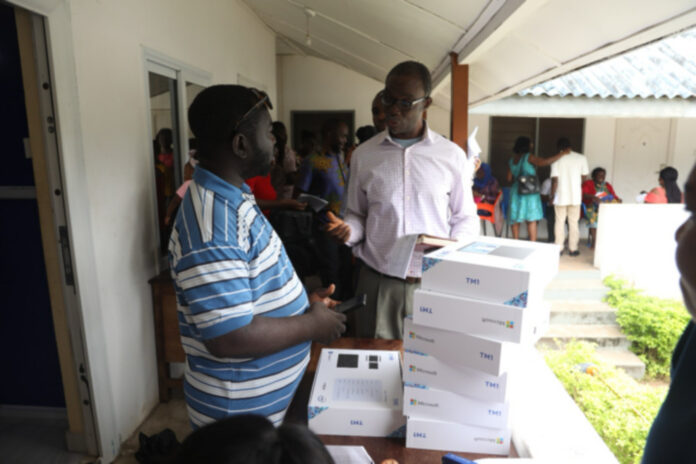
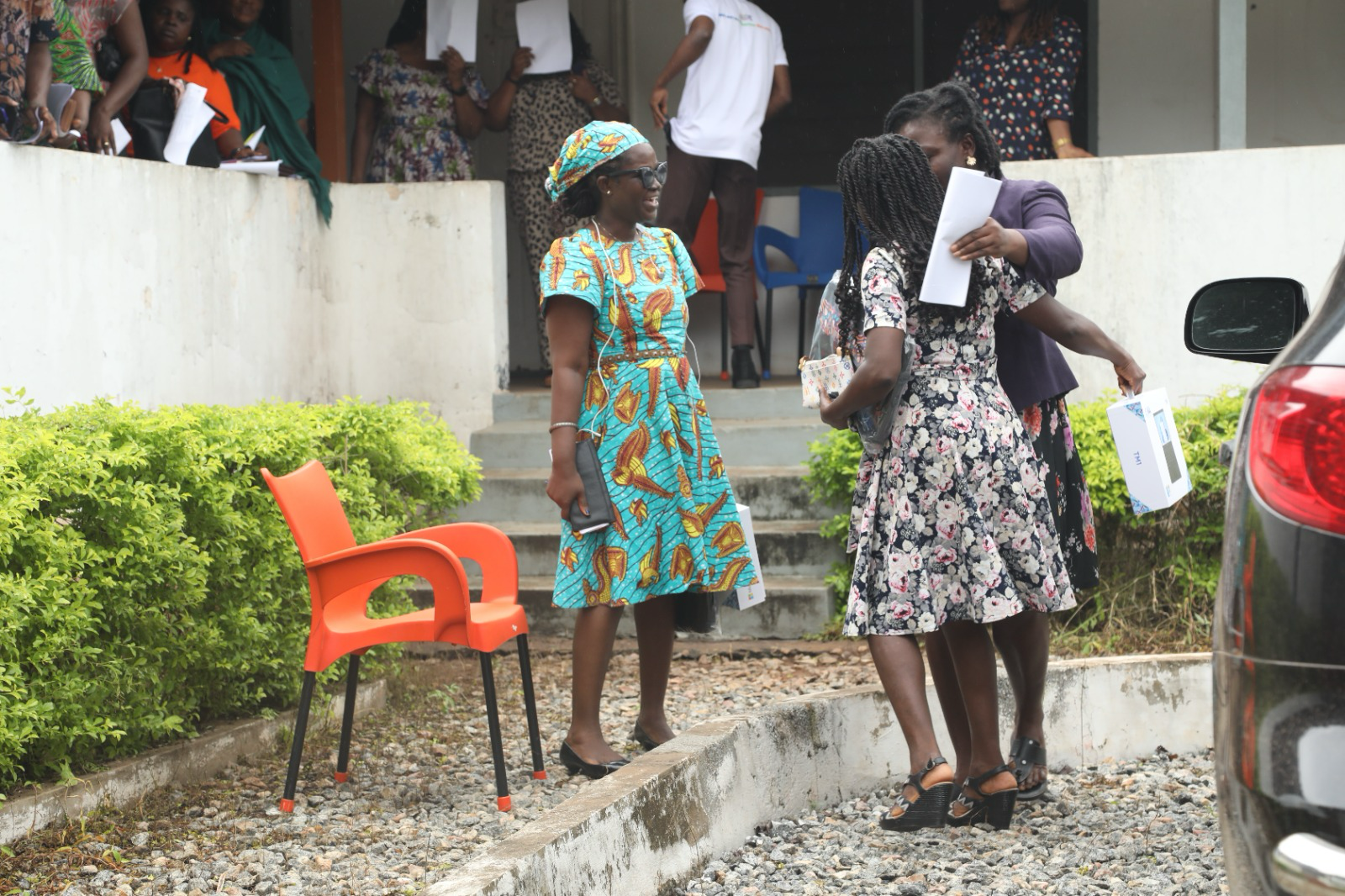
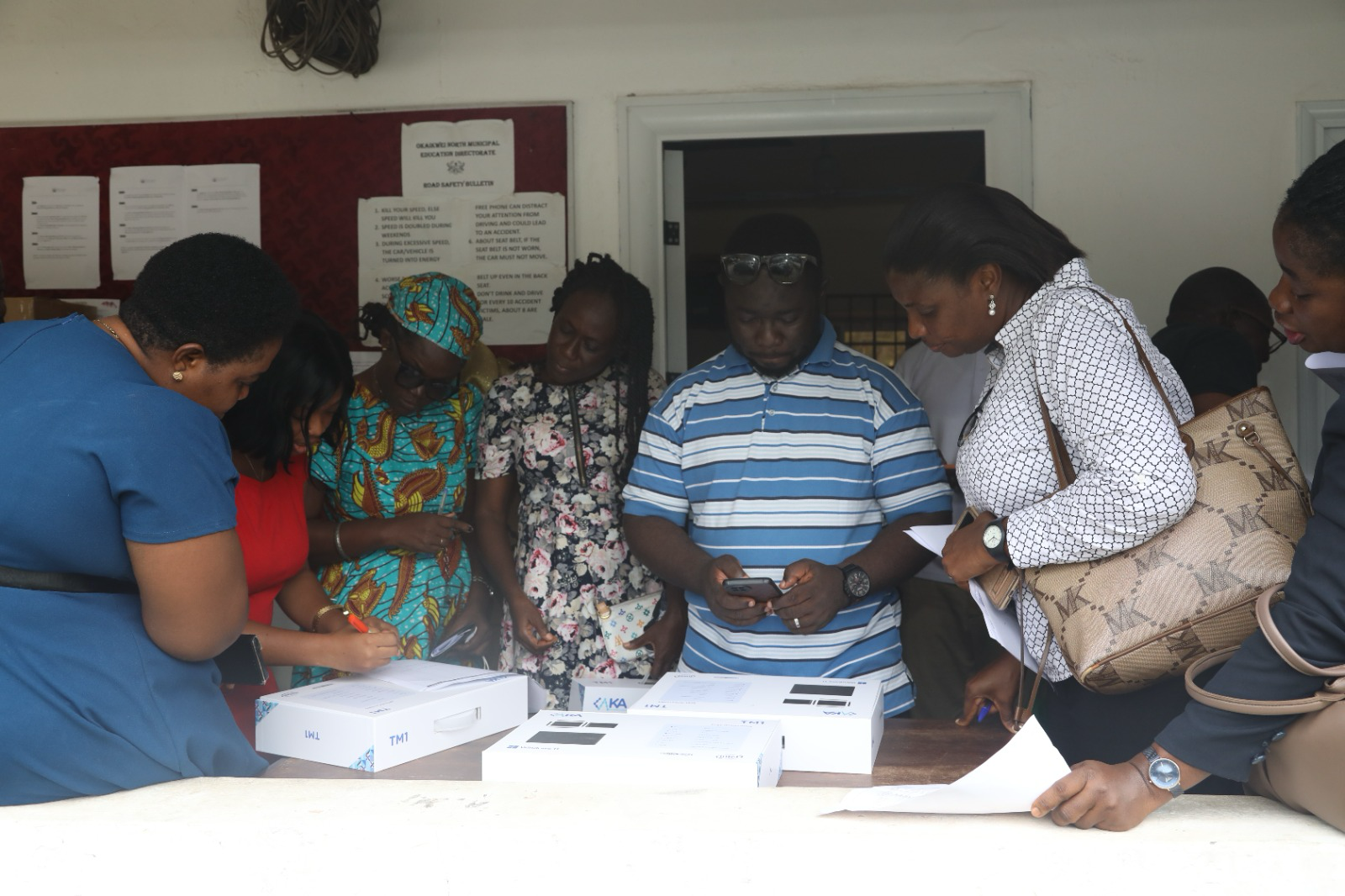
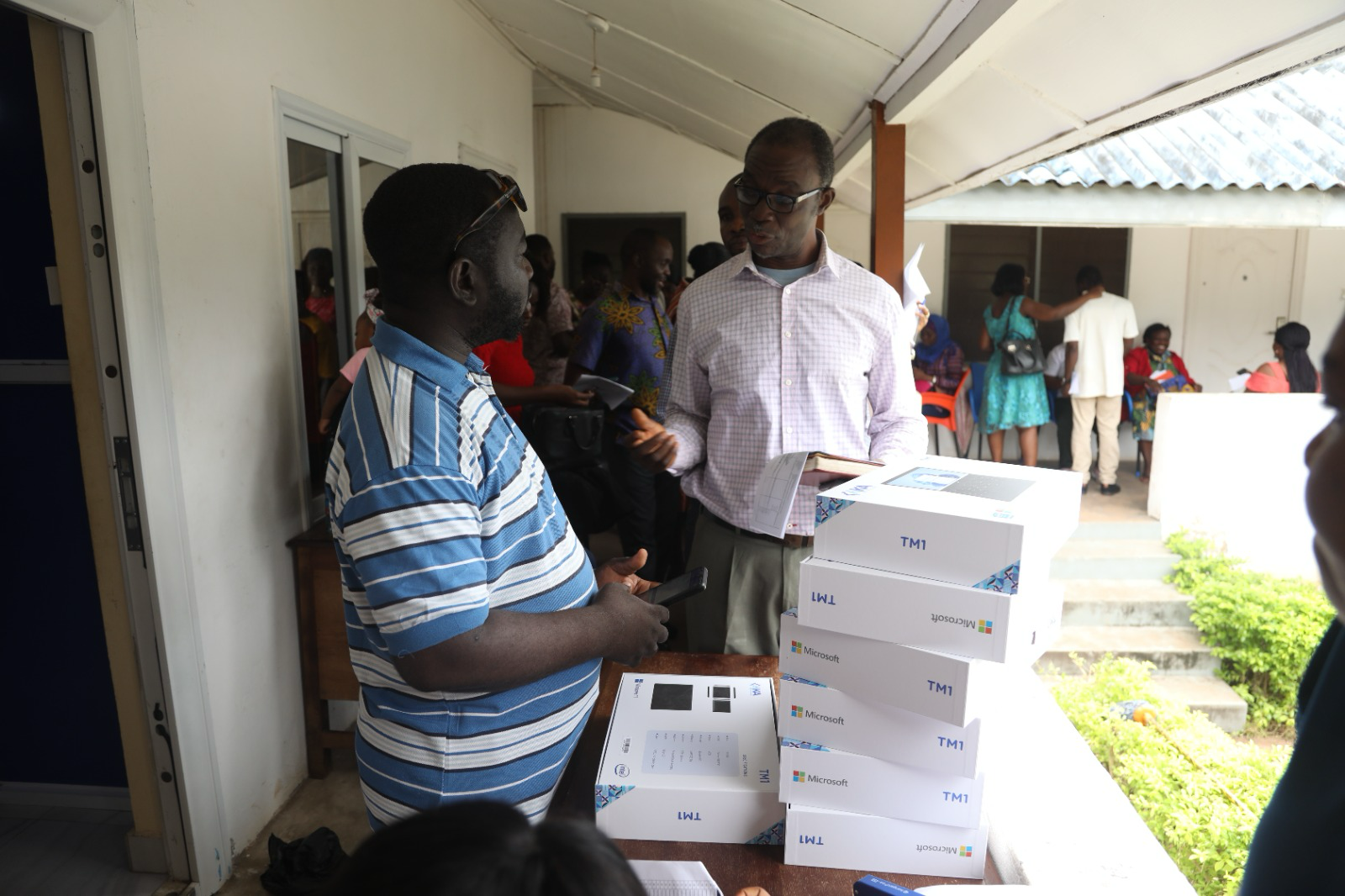
The Ghana Education Service (GES) has allocated laptops to 233 teachers and select non-teaching personnel in the Okaikwei North Municipality within the Greater Accra Region.
This laptop distribution is part of the government’s One Teacher, One Laptop initiative.
The distribution event was held at the Municipal Education Directorate in Achimota, where recipients completed validation steps, including presenting their Ghana Cards, before receiving their laptops and bags.
Teachers conveyed their appreciation to both the government and their union leaders for the prompt rollout of the program.
One teacher noted, “The trend in education is driven purely by ICT, and devices such as computer laptops come in handy to enhance the teacher’s efforts.”
Recent reports indicate that pre-tertiary teachers across all five Northern regions of the country have also benefited from the program.
The regions covered are Northern, North East, Savannah, Upper East, and Upper West.
A mop-up operation is currently in progress to ensure that primary school teachers, those on study leave, and GES office staff in these areas obtain their laptops.
Staff members, both teaching and non-teaching, who have yet to receive their laptops can create a collection code by dialing 790555# and reaching out to their ICT Coordinators for support.
In a statement released on Wednesday, the manufacturing company based in Accra urged all remaining beneficiaries to use the provided shortcode and contact their ICT Coordinators.
The company reported that almost 96 percent of eligible GES staff have already received their laptops. They are now focusing on completing the distribution to ensure all remaining beneficiaries get theirs, marking the end of the nationwide rollout. The shortcode has been introduced to streamline this final phase of distribution.
Teachers in the Ashanti, Greater Accra, North East, Upper West, Upper East, Northern, and Savannah Regions can activate their shortcode and reach out to their ICT Coordinators starting Friday, July 26, to collect their laptops.
Teachers and non-teaching staff in the remaining 10 regions will follow the same process starting Wednesday, July 31, 2024.
The One Teacher, One Laptop programme, launched in September 2021, aims to improve teaching and learning outcomes in pre-tertiary educational institutions nationwide.
Under the programme, every public school teacher from kindergarten to senior high school is to receive a laptop to aid in lesson preparation, research, and learning.
The government covers 70 per cent of the laptop cost, with teachers contributing the remaining 30 per cent through their unions.
These laptops also enable teachers to access digital online training through National Teaching Council-approved modules, ensuring that teaching aligns with National Teachers Standards across the country.
The Tumu Magistrate Court within the Sissala East Municipality of the Upper West Region has detained four people on accusations of allegedly robbing a mobile money vendor.
The individuals had been monitored by police in Tumu due to a series of thefts targeting travelers in the Sissala East Municipality.
Their capture stemmed from an inquiry into an assault on the mobile money vendor.
The detainees, Sumaila Tembieru (a mechanic), Hamidu Muniru (a farmer), Sumaila Issahaku (also a mechanic), and Salifu Abu (a farmer), were taken into custody on July 19 after extensive police investigations in Tumu concerning a robbery in the Kong community.
The mobile money vendor had his cash and two mobile phones taken during the incident.
A fatal rodent-borne illness with no known cure has claimed several lives in the US, leading to a health advisory.
The Arizona Department of Health Services reports an increase in hantavirus cases, transmitted to humans via viral droplets from contact with rodent urine, saliva, or feces.
There have been seven confirmed instances of Hantavirus Pulmonary Syndrome in Arizona, three of which have been fatal.
The syndrome “is a severe and sometimes fatal respiratory illness caused by the infection with hantavirus,” the Arizona Department of Health Services stated in an advisory.
Additionally, California has reported two hantavirus cases, resulting in one death.
Symptoms such as fever, headache, and muscle aches rapidly progress to severe respiratory difficulties.
In the Grand Canyon state, hantavirus is primarily found in deer mice and is not transmitted between humans. However, it is not limited to a specific area.
“It can be present in many areas in the southwestern region of the United States where there is rodent activity, even if mice are never seen,” the advisory states.
Prior to the recent hantavirus incidents, Coconino County’s last reported case occurred in 2016.
The syndrome was first identified in 1993 after affecting a Navajo tribe living along the Arizona-New Mexico border, resulting in a roughly 80% mortality rate among the population at the time.
Commercial drivers at Doctor Mensah in Kumasi, Ashanti Region, have shown support for Finance Minister Dr. Mohammed Amin Adam’s plan to reintroduce road toll taxes.
Dr. Mohammed Amin Adam unveiled the road toll reintroduction during the mid-year budget review on Tuesday, July 23, 2024, with implementation slated for 2025.
The drivers believe that this toll system will benefit them by funding better road infrastructure and promoting trade development.
In an interview with OTEC NEWS reporter Maame Akosuah Gyamfuaa on Sunday, July 24, 2024, they emphasized the need for the government to address potential traffic delays that could arise from toll collection.
Concerns were also raised about potential corruption among tax collectors, with suggestions for an electronic payment system to ensure transparency and proper handling of funds.
The drivers called on the government to use the additional toll revenue for road construction and maintenance to ensure that the funds effectively improve the road network.
The Minister of Finance, Dr. Mohammed Amin Adam, during the presentation of the 2024 Mid-Year Budget Review statement in Parliament, announced that Ghana’s national debt stock stood at GH¢742 billion as of June 2024, which is more than 70% of the country’s Gross Domestic Product (GDP).
This means that Ghana is so indebted that the country would need 70% of the value of all goods and services it produces to settle its debts.
This also means that given Ghana’s population of approximately 31 million, every Ghanaian owes about GH¢24,000.
But how did we get here? Were all the debts accumulated under this current government?
Here is a breakdown of Ghana’s debt
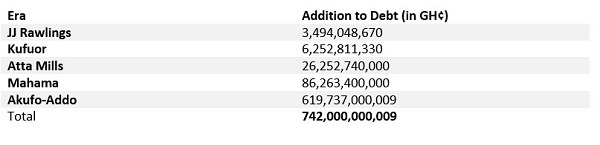
Ghana’s total debt accumulation stood at almost $10 billion, which translated to more than GH¢3.5 billion (using the 2008 exchange rate stated in the 2009 budget – ¢3,500.70 per $1) under the first president of the 4th Republic, the late Jerry John Rawlings. These debts included those accumulated in his 8 years of democratic rule (1993 to 2000), his 12 years of military rule, and possibly the country’s debt accumulated before his coup.
Then came the John Agyekum Kufuor government under which the country’s debt rose from the $10 billion (GH¢3.5 billion) to more than $8 billion, which translates to more than GH¢9.7 billion using the exchange rate at that time. Ghana’s debt level rose to this height under Kufuor’s regime despite the fact that about 66% of the country’s debt, which translates to almost $6.3 billion, was cancelled through the Highly Indebted Poor Country (HIPC) programme the government entered into, which also came with a lot of grants and other benefits.
Under the late John Evans Atta Mills administration, whose later years were completed by John Dramani Mahama, Ghana’s debt stock rose from GH¢9.7 billion to nearly GH¢36 billion.
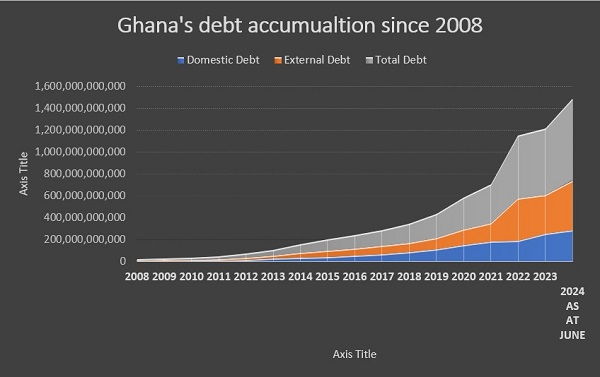
As can be gleaned from the diagram above, the country’s debt started increasing by huge margins after the late Prof. Atta Mills era.
Data from the Ministry of Finance:
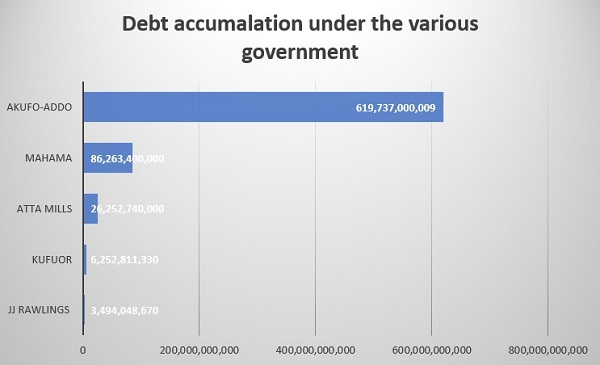
Under the John Dramani Mahama administration, Ghana’s debt stock rose from GH¢36 billion to more than GH¢122 billion, meaning more than GH¢86 billion was added to the country’s debt stock under Mahama’s administration.
The debt stock has increased from GH¢122 billion to over GH¢742 billion under the Nana Addo Dankwa Akufo-Addo government, as announced by the current finance minister. This shows that nearly GH¢620 billion has been added to Ghana’s debt stock under the Akufo-Addo government.
Addition to Ghana’s debt stock in the various eras:
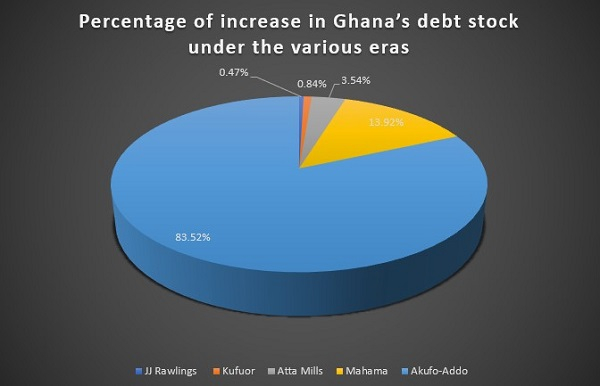
The figures above indicate that more debts have been accumulated under the Akufo-Addo government than any other government, nearly 84 percent of Ghana’s total debt stock. The next government to see more debt accumulation was that of Mahama, with nearly 14% of the country’s debt accumulated under it.
It is instructive to note that the accumulation of debts under the various regimes does not necessarily mean that they borrowed more to reach the debt levels recorded. In other words, the debt stock levels recorded under the regimes are not made up of only new funds borrowed.
Other important factors affect a country’s debt stock, including the depreciation of the country’s currency, which in itself is a function of economic management. This is because the external debts of a country are denominated in foreign currency, and if its currency depreciates, the debt level would go up. So, if the economy is performing badly and a nation’s currency continues to depreciate, its debt level would go up.
The accumulation of arrears for debts incurred by previous regimes also adds to a country’s debt stock.
Also, as economic theory has it that borrowing or accumulating debt is not necessarily a bad thing because public debt can be vital for economic development. It can help countries grow faster by financing productive investment – and the keyword here is ‘productive investment’.
Advanced countries, including the United States of America (USA), all borrow and have huge debt stock. The national debt for the USA, for instance, is more than $32 trillion, and that of Germany is nearly $3 trillion. What matters is the kind of investment this money goes into to propel the needed development for the betterment of the lives of the citizenry.
In addition, borrowing and accumulating debt beyond what a country would be able to service is likely to lead to a debt crisis, which would have serious consequences on the economy and the livelihood of the citizenry.
Vendors at Kejetia Market have voiced serious concerns over the recent rise in inflation, which has caused a dramatic increase in the cost of goods.
They argue that this inflationary trend is impacting consumer purchasing power and reducing their business profitability.
In a conversation with OTEC News reporters Adwoa Adobea and Maame Serwaa, the vendors expressed frustration that inflation has unsettled the economy, making it hard to maintain their market enterprises.
They also criticized the elevated taxes on goods and services, urging the government to act to ease their difficulties.
The vendors have requested government intervention, highlighting the unpredictable nature of inflation, which complicates their business planning and investment.
They are calling for actions to stabilize the economy and lessen the tax burden.
Deputy Finance Minister Dr. Stephen Amoah emphasized that the government is putting significant effort into improving the country’s economic conditions.
His remarks respond to the Minority’s critique of Finance Minister Dr. Mohammed Amin Adam, who had shown concern for Ghanaians facing economic challenges.
The Minority countered that genuine empathy from the government would have led to more decisive measures to address the worsening economic situation.
According to myjoyonline.com on July 23, 2024, Dr. Stephen Amoah defended the choice to avoid new taxes in the mid-year budget review as a positive move, recognizing the struggles of Ghanaians.
“The fact that we did not introduce or increase any new tax, we are spending within our appropriation. So what kind of relief do they want?” Amoah questioned.
Highlighting initiatives like launching SMEs and investing around GH¢8.2 billion to generate employment and assist entrepreneurs, Dr. Amoah asserted that the government is concentrating on various social measures to offer relief.
He also emphasized that since 2004, the government has allocated roughly GH¢5.4 billion to the Livelihood Empowerment Against Poverty (LEAP) programme and the school feeding initiative to alleviate the strain on citizens.
According to the Deputy Finance Minister, the government’s top priority is to stabilize the economy, citing the current inflation rate as a sign of progress towards economic stability.
The Ghana Association of Savings and Loans Companies (GHASALC) has linked the persistent rise in Non-Performing Loans (NPL) to public sector employees who take out loans, default on payments, and then leave the country.
Tweneboah Koduah Boakye, the Executive Secretary of the Association, stated that this trend is creating significant operational difficulties for savings and loan institutions.
In an interview with Joy Business during the 14th Annual General Meeting of the Association, he noted that while some members have achieved notable success, many are struggling with liquidity challenges.
“What we have realized is that some people will come to us and they are teachers, nurses, doctors or work in the government sector. They want loans and they qualify so we give it to them, but immediately after taking it, they leave the country. We are now constantly monitoring these people because they are part of the non-performing loan issues we have been facing”, he said.
Mr. Koduah Boakye also urged the embassies in the country to assist the Association in monitoring these workers as they leave the country.
He suggested that government employees traveling overseas should have their credit reports reviewed before they are issued visas.
“We want to suggest to other stakeholders especially the embassies that if someone is a government worker and relocating to a different country, there should be evidence that you don’t owe and if you owe, there should be evidence that you have made reasonable provisions with your company”, he added.
The Association warned that it may have to halt issuing loans to public sector workers if this issue persists.
Fitch Solutions has upheld its 2024 growth forecast for Ghana at 4.3%.
This estimate significantly surpasses the 2.9% forecasted by the International Monetary Fund and the 3.1% revised GDP growth figure provided by the government.
The London-based firm predicts that Ghana’s economy will expand more vigorously than previously expected.
It noted that consumer spending has remained strong since the beginning of 2024, and the outlook for the extractive sector is optimistic.
Mike Kruiniger, Associate Director of Country Risk at Fitch Solutions, highlighted in the Mid-Year Review for Sub-Saharan Africa that Ghana’s economic growth will be propelled by the extractive sector, especially oil and gas, as well as by consumer spending.
“We except economic growth to remain stronger than what we have seen in the past couple of years with the economic forecasters predicting 4.3% in 2024 and 4.5% next year”.
“And obviously key reasons why we hold in more positive outlook for the Ghanaian economy are after years of decline, Ghana’s oil sector appears to be recovering. Our oil and gas team are attributing the recovery to large oil drilling companies at the Jubilee and Ten fields [oil]”, he explained.
“While inflation remained sticky in Q1 [quarter one] 2024, averaging 24.2%, we expect that it will trend downward and reach 19.5% by the end of the year, primarily facilitated by statistical base effects. Slowing inflation, combined with stronger government spending ahead of the December general elections, will support consumer activity and boost domestic demand”, it added.
Meanwhile, Fitch Solutions expects that fixed investment will continue to recover in 2024.
Experts are alerting that a recent software update from cybersecurity firm CrowdStrike, which triggered a worldwide technology outage affecting businesses and institutions, including Microsoft, could also pose risks to local banks.
The Africa Center for Digital Transformation (ACDT) warns that domestic banks are vulnerable to cyber threats due to the extensive global tech disruption that has affected numerous industries, such as banking, healthcare, and aviation. This underscores the importance of heightened vigilance against cybercrime to protect depositors’ funds.
According to ACDT, CrowdStrike has acknowledged the technical failure, attributing it to an update intended to enhance antivirus protection for Microsoft Windows devices, which inadvertently caused widespread system failures impacting various sectors globally, including banking, aviation, and healthcare.
ACDT also alerts that during this crisis, a phishing site is circulating a fraudulent CrowdStrike hotfix that installs the Remcos RAT, disguised as a BBVA intranet portal. The malicious archive includes instructions advising banks to install the update to avoid connectivity issues with their internal networks, representing a serious threat to financial institutions’ data.
The Africa Center for Digital Transformation advises all banks, savings and loans institutions, and rural banks in Ghana to be wary of this cyber threat.
Executive Director – ACDT, Kwesi Atuahene, said: “The defect in CrowdStrike’s software update had a massive impact on Windows systems at numerous organisations, making it too good an opportunity for cyber-criminals to pass. Microsoft confirmed on their website that the faulty update affected 8.5 million Windows devices worldwide. The damage happened in 78 minutes between 04:09 UTC and 05:27 UTC”.
He noted that although only a small percentage of systems were affected and CrowdStrike is working to resolve the issue swiftly, the overall impact was substantial. The computerfailures led to thousands of flight cancellations and significant disruptions at various banks.
The Cyber Security Unit of ACDT has also discovered a new group of cybercriminals spreading a data-wiping malware disguised as an update from CrowdStrike. This malware destroys systems by replacing files with zero bytes and then erases them.
Financial institutions using antivirus solutions from CrowdStrike and Microsoft Azure should be aware that several threat actors are mimicking CrowdStrike in emails used by banks to distribute this data-wiping malware.
These attackers are pretending to be CrowdStrike by sending emails from the domain ‘crowdstrike.com.vc’, claiming that a tool has been developed to restore Windows Systems.
While CrowdStrike and Microsoft are using multi-faceted approach to address the challenge, ACDT has outlined several reactive measures to mitigate the impact and enhance their resilience, including: to activate back-up systems and redundancies; switch to back-up servers and data centres if primary systems are affected, ensure that critical operations can continue using alternate systems or manual processes if necessary; implement business continuity plans (BCP); and activate predefined business continuity plans that include steps for maintaining operations during IT outages, among others.
Invest in IT resilience
ACDT has advised financial institutions to explore investing in enhanced IT resilience strategies, including stronger disaster recovery solutions and a range of cloud service providers.
“ACDT strongly recommends that by taking these steps, banks in Ghana can mitigate the impact of the outage, maintain customer trust and improve their preparedness for future incidents,” he reiterated.
Tax experts have emphasized the urgent need for reforms to Ghana’s Value Added Tax (VAT) system, which has become excessively complex and obstructs business operations.
During the launch of a recent World Bank report titled ‘Strengthening Domestic Revenue Systems for Fiscal Sustainability’ at the 8th Ghana Economic Update, Abeku Gyan-Quansah, a Tax Partner at PwC, noted that Ghana’s VAT system features a variety of rates and categories, ranging from 0 to 15 percent.
He pointed out that this complexity is creating challenges for businesses in adhering to tax regulations and is consequently leading to a loss of government revenue.
“The VAT system is troubling. Why should we have a law that at a minimum, excluding levies should have about six different rates, which I guess probably a number of you have not paid particular attention to? The law has a zero, 3, 5, 12.5, 15, and 7 percent withholding VAT rates. Of course, I am not saying they all apply at the same time on all transactions but it creates complexities, which are very difficult to do business with,” he said.
Exemptions Act of 2022
Mr. Gyan-Quansah highlighted the unutilized opportunities within the Exemptions Act of 2022. This law permits the government to acquire equity interests in companies that receive tax exemptions. He believes that effectively applying this provision could substantially enhance government revenue.
“The Exemptions Act provides a unique opportunity for the government to secure equity stakes in businesses benefiting from tax exemptions,” the speaker stated. “This approach could create a new revenue stream, fostering a more sustainable economic environment.”
The expert called on parliamentarians to ensure the proper implementation of this law, highlighting that it offers a balanced approach by supporting businesses while safeguarding government interests.
Regarding the issue of compliance Tax expert and consultant, Abdallah Ali-Nakyea said it is a persistent problem among businesses and traders.
He underscored the need for stricter enforcement and clearer guidelines to ensure that VAT invoices are consistently issued, thereby reducing discrepancies and increasing overall tax compliance.
“We still have businesses and traders asking whether you want a VAT invoice or not. This practice poses a significant challenge and contributes to what is known as the tax gap,” he said.
He mentioned the implications of decoupling strict levies from the VAT system, which has significantly impacted business operations and compliance.
African Development Bank President Akinwumi Adesina has challenged critics accusing Aliko Dangote of trying to dominate the oil sector to build their refineries in Nigeria instead of importing petrol and diesel.
On Monday, Adesina addressed the dispute between federal oil regulators and Aliko Dangote, CEO of Dangote Group.
Regulators recently accused Dangote of trying to monopolize the energy sector.
In response, Adesina said that seeking federal government protection and support for a $19 billion investment in Nigeria is not an attempt at monopolization.
He also mentioned that those wishing to compete should establish their refineries in Nigeria, as this would be fair, enhance local productivity, and boost the economy.
“In a nation that has been importing refined petroleum products for several decades, the abnormal simply became very normal. No smart investor would make a $19.5 billion investment and want it to be undermined by importers.
“To manufacture is extremely expensive and risky. This is even more so in Nigeria, given the very challenging business and economic environment, fraught with policy uncertainties and policy reversals, and where the self-defeating default mode of “simply import it” is always so easily rationalized and chorused to solve any problem.
“Competition is good for everyone. But are Dangote refineries anti-competitive? What is the evidence? Has Dangote Refineries prevented any other company from setting up refineries? Why have others not done so? How come they have not done so for several decades? Was it Dangote that held them back? But Dangote refineries surely cannot be asked to ‘compete’ with importers of petroleum products.
“That is not competition. Let the importers set up local refineries and compete by refining in Nigeria. That is fair and justified competition. We cannot and must not undermine, disparage or kill local industries, talk less of one that is of this scale — a jewel of industrialisation in Nigeria,” Adeshina said.
Controversy with Nigeria Oil Authorities Recently, the Dangote Refinery has encountered disputes with Nigeria’s oil regulatory authorities, notably the Nigerian Midstream and Downstream Petroleum Regulatory Authority (NMDPRA).
Farouk Ahmed, NMDPRA’s leader, accused the refinery and other domestic refineries of having high sulfur content, up to 650 parts per million (ppm). He also suggested that Aliko Dangote, the refinery’s CEO, might be attempting to dominate the industry, which he believes could jeopardize the nation’s energy security.
In response to these allegations, Dangote invited the regulatory bodies to inspect his Lagos facility and verify the quality of their products, asserting that they provide the highest quality products in Nigeria.
Dangote also decided to pause his plans to invest in Nigeria’s steel industry to prevent any perceptions of monopolistic intentions.
It is notable that Nigeria’s steel industry has historically been underdeveloped and inadequately invested in. Dangote stated that other wealthy Nigerians could enter the steel sector, as his company’s board has advised him against further investments in that field.
What you should know The Dangote Refinery, situated in the Lekki Free Zone near Lagos, Nigeria, ranks among the world’s largest oil refineries. Established by the Dangote Group, its goal is to fulfill Nigeria’s domestic refined petroleum needs, thereby cutting the nation’s reliance on imported fuel.
With an expected capacity of 650,000 barrels per day, the refinery aims to shift Nigeria from being an importer to a net exporter of refined petroleum products.
The refinery’s construction commenced in 2016, encompassing intricate engineering and substantial investments. It features a petrochemical plant and a fertilizer plant, establishing it as a key industrial center in the area.
The Dangote Refinery’s influence reaches beyond the oil industry. It is expected to generate thousands of jobs and drive economic growth in Nigeria. By producing excess refined products, the refinery intends to stabilize fuel prices and guarantee a consistent supply for local markets, enhancing energy security.
Cocoa output is anticipated to drop under 500,000 metric tons in the 2023/2024 crop season because of the swollen-shoot disease, per the World Bank’s 8th Ghana Economic Update.
In the previous 2022/2023 crop season, cocoa production dropped to approximately 670,000 tons.
The World Bank reported that cocoa prices rose from $2.39 per kilogram in 2022 to an unprecedented $5.56 per kilogram in February 2024, and the rollover of presale contracts for unfulfilled volumes over the past two seasons complicates COCOBOD’s ability to pre-sell future production.
Additionally, COCOBOD has incurred substantial losses in recent years due to high rollover costs of outstanding cocoa bills, elevated operational expenses, fertilizer provision, and rural road development.
In the 2020/2021 crop season, Ghana achieved a record cocoa production of over one million metric tonnes.
Reuters previously reported that Ghanaian cocoa farmers anticipate an increase in the 2024/2025 season beginning in October 2024, after a significant decline in production this season pushed global cocoa prices to record highs.
This season’s poorest harvest in a decade in Ghana is attributed to severe weather conditions due to El Niño, widespread smuggling, and the swollen shoot disease.
A rise in cocoa production would benefit Ghana’s economy and alleviate the global chocolate industry’s supply constraints.
Economist, Dr. Theo Acheampong is of the view that exchange rate volatilities could cause government to miss its end of year inflation target of 15 percent.
Analyzing some of the revised macro-targets in the Mid-Year Budget Review, he expressed optimism that the country may be able to achieve the Overall Real GDP Growth rate which has been revised upwards from 2.8 percent to 3.1 percent, but could miss the inflation target.
He noted that duties and taxes on imported goods are typically indexed in dollars, which unnecessarily raises the prices of these items.
“Most of the charges on the ICUMS platform are charged in dollars. This means that when the cedi depreciates, importers will pay more at the ports”.
Dr. Acheampong contended that this situation will consistently affect the prices of goods, resulting in inflation.
“The importers will not bear that cost and will pass on the extra cost at the ports to consumers. This means consumers will pay more”, he said.
He asserted that these factors might undermine the progress achieved in lowering inflation, eventually causing the government to miss its target.
Revised macro targets
The government has revealed significant updates to the country’s macroeconomic fiscal targets for 2024.
During the Mid-year Budget presentation to Parliament on July 23, 2024, Finance Minister Mohamed Amin Adam announced that the Overall Real GDP Growth rate has been adjusted upward from 2.8 percent to 3.1 percent.
He also noted that the government will keep the year-end inflation target steady at 15 percent.
Additionally, the Non-Oil Real GDP Growth rate has been increased from 2.1 percent to 2.8 percent.
“Nominal overall GDP has been revised from ₵1,050 billion to ₵1,020 billion. Non-Oil GDP has been revised from ₵979 billion to ₵977,093 billion”.
Dr. Amin Adam said that Primary Balance on Commitment basis has also been maintained at a surplus of 0.5 percent; while Gross International Reserves (including oil funds and encumbered/pledged assets) is expected to cover not less than 3.0 months of imports.
Announcing some revision to the 2024 fiscal framework, he explained that the primary balance on a commitment basis remains unchanged at the targeted surplus of 0.5% of GDP, in line with the IMF-supported PC-PEG objectives.
According to him, Total Revenue and Grants have been revised upward by 0.5 percent to ¢177,220 million (17.4% of GDP) in 2024, from the 2024 Budget target of ¢176,414 million (16.8% of GDP).
This, he pointed out largely reflects the increase in Non-Oil Non-Tax Revenue which has been increased from ¢14,837 million (1.4% of GDP) to GH¢15,638 million (1.5% of GDP) to reflect dividends from interest accrued in the ESLA accounts.
Ghana’s oil revenue soared to $840 million in the first half of 2024, reflecting a 36% increase from the $540 million reported during the same period in 2023.
This total revenue includes earnings from oil liftings, corporate taxes, surface rentals, and interest on the Petroleum Fund account.
The Petroleum Holding Fund report from the Bank of Ghana indicates that the bulk of the revenue—$470 million—came from oil liftings across six fields.
Corporate taxes contributed $350 million, surface rentals amounted to $580,000, and interest earnings were $7 million.
During this period, allocations to the Ghana Petroleum Funds included $91 million to the Ghana Stabilization Fund and $39 million to the Ghana Heritage Fund, totaling around $130 million.
The report, issued in accordance with section 28 of the Petroleum Revenue Management Act, 2011 (Act 815), offers a comprehensive breakdown of Ghana’s crude oil liftings and the distribution to the Ghana Petroleum Funds.
The Bank of Ghana is legally responsible for receiving and managing the country’s petroleum revenue.
Two Chief Executives in the Bono Region narrowly avoided death when they were involved in a robbery on the Fetentaa section of the Berekum-Drobo highway.
The Ghana News Agency (GNA) reported that Mr. Andrews Bediako, the Jaman South Municipal Chief Executive, and Mr. Solomon Owusu, the Jaman North District Chief Executive, were on their way back from a meeting in Sunyani when they encountered a gang of armed robbers.
Mr. Bediako told GNA that the attack occurred on Tuesday, July 16, 2024, between 4:30 PM and 5:00 PM.
He explained that the robbers, around five in number and heavily armed, had targeted market vendors and travelers returning from Drobo and Sampa to Berekum and Sunyani, near the Fetentaa Refugee Camp in the Berekum West District.
“They just appeared from the shoulder of the stretch, fired gunshots sporadically, and signaled us to stop. They even hit and broke my windscreen with lumber; however, we managed to speed off from the terrible scene,” he said.
In the process of the attack, Mr. Bediako said the engine of the vehicle of his colleague DCE broke down, but they all managed to escape the robbery scene unhurt.
“We quickly rang the police and signaled all the vehicles which were coming from the opposite direction. Sensing danger, the robbers fled into the bush,” Mr. Bediako said. “We later got the information that the robbers apprehended and robbed a motor rider of his mobile phone and money and subjected him to severe beatings.”
Bediako voiced alarm over the increasing number of armed robberies along sections of the Berekum-Drobo highway, attributing the problem to the deteriorating state of the road, and urged for its repair.
He also appealed to the police to enhance their patrols along the route to safeguard traders and other travelers.
The Peasant Farmers Association of Ghana (PFAG) has verified that the ongoing maize shortage in the country has forced feed mills and processors to depend significantly on imports to satisfy demand.
“As we speak, there is no maize in the system. What we have produced in the last few seasons have entirely been consumed and there is no buffer. Consumers and processors now have to rely on imports from the Sahel regions to meet local demands,” former Executive Director-PFAG, Dr. Charles Nyaaba, told B&FT.
Dr. Nyaaba remarked on the government’s investment in the Planting for Food and Jobs initiative, stating that the policy had not yielded any beneficial effects on the production and availability of the intended crops.
“The main objective of PFJ to ensure that we have enough raw materials for industry; specifically with maize, it has not happened,” he added.
The PFAG is concerned that maize prices on the local market continue to soar, with a 50kg bag now priced at GH¢300 or higher in some areas.
The Association questioned the purpose of PFJ 2.0 when the initial phase of the policy failed to address fundamental issues it was intended to resolve.
The Greater Accra Poultry Farmers Association (GAPFA) and other feed mills in the capital have voiced their frustration over the maize shortage affecting poultry feed production.
A representative from GAPFA (not authorized to speak on behalf of the company) informed B&FT about the company’s ongoing struggle to obtain sufficient maize for processing over the past several weeks.
Despite the shortages, the government has reported spending nearly GH¢2.9 billion on the first phase of the PFJ policy from 2017 to 2022.
This expenditure, according to the government, primarily covered the supply of improved seeds and fertilizers to boost farmer productivity.
In addition, GH¢1 billion has been allocated for the implementation of the second phase – PFJ 2.0.
This funding is part of efforts to enhance the nation’s food security, reduce escalating food import costs, and tackle youth unemployment.
In the wake of the chaos at the 12th-anniversary commemoration ceremony on July 24, 2024, the family of the late Ghanaian president, Professor John Evans Fiifi Atta Mills, has announced potential legal action against Samuel Koku Anyidoho, the former Deputy General Secretary of the National Democratic Congress and a close associate of the late president.
The wreath-laying ceremony at Asomdwee Park, organized by the late president’s family and the National Democratic Congress (NDC), descended into disorder when Koku Anyidoho exceeded his allotted time.
In an interview with JoyNews, Samuel Atta Mills, the late president’s brother, claimed that Koku Anyidoho feels emboldened to act because he has the state’s backing.
He also cautioned that the NPP government, which he accuses of protecting and enabling Koku Anyidoho, will not remain in power indefinitely.
“When they advise you and you don’t listen, this is what happens. But Koku Anyidoho should know that hiding behind political power has an expiration date.
“A day will come when the political power he is hiding behind will expire,” he said on Wednesday.
“You’re not related to this man, and anybody could come here and celebrate him. He [Atta Mills] is for the country, so why would you want to clash with us? And as a coward as he is, he ran away and left the people here – the fake family over here.
“… We didn’t intimidate anybody, but when persuasion fails, force is applied. Indeed, we are at Asomdwee Park, but when we talk to you and you don’t understand, sometimes a little bit of encouragement will make you move,” he said.
Mercy Araba Ahema Quarshie, a sister of the late president, said that the family has become fed up with Koku Anyidoho’s shenanigans and will take him on.
She protested that Koku Anyidoho has no blood relation with the late president and therefore lacks the legitimacy to do the things he is doing.
“People with Koku Anyidoho, pretending to be the real relatives of Atta Mills. That is never true. We don’t know them from anywhere, and they were here. He has schooled them, telling them that the rest of us are paternal brothers and sisters and they are the real Atta Mills family.
“It was so disgusting to find an 80-year-old woman, pouring libation and hitting her thigh, saying that she gave birth to Atta Mills. I was wondering if she gave birth as a baby.”
“I want to make it clear to everyone that Koku Anyidoho has stepped on the wrong foot by tampering with our brother’s grave without our knowledge. That is totally unacceptable, and now we are going to deal with him because it is a taboo in our family to do that.”
Prominent High Court Justice Alexander Osei Tutu has been promoted to the Court of Appeals.
He was among 16 justices whose nominations were presented to Parliament by President Nana Addo Dankwa Akufo-Addo, in accordance with the authority vested by the 1992 Constitution of Ghana.
Justice Osei Tutu was officially sworn in during a vibrant ceremony at Jubilee House in Accra.
The newly appointed justices, including 12 men and four women, took their oaths of office, secrecy, and allegiance after receiving the Judicial Council’s recommendations.
About Alexander Osei Tutu
He earned his LLB from the University of Ghana in 2000 and was admitted to the bar in 2002.
After spending eight years in private practice, he was appointed as a circuit court judge in 2010.
He was elevated to the position of High Court Judge in 2013.
Justice Alexander Osei Tutu has an LLM in International Human Rights from Fordham University and a Diploma in Transnational Criminal Law from the International Law Enforcement Academy in Roswell, USA.