Author: Amanda Cartey

  • CETAG’s national council will convene today to determine the future of the current strike

    CETAG’s national council will convene today to determine the future of the current strike

    The Colleges of Education Teachers Association of Ghana (CETAG) is set to convene with its national council on Thursday, July 25, to deliberate on the potential conclusion of its ongoing strike.

    This strike, which has been in effect for over a month, was launched due to the government’s failure to enforce the National Labour Commission’s Arbitral Award Orders designed to enhance teachers’ working conditions.

    Recent negotiations between CETAG and the government have resulted in notable agreements.

    These agreements are viewed as progress towards addressing the issues that prompted the strike.

    CETAG President, Prince Obeng Himah, stated that while advancements have been made, a final decision on the strike will be made after the national council meeting on Thursday.

    The results of this meeting will be pivotal in determining whether teachers will return to work or continue with the strike, contingent on the full implementation of the agreed terms.

    “We have had a series of discussions, we have had a significant progress, a lot of proposals have been put on the table. We’re going to touch base with our members.”

    “What I can say for now is that we have made a lot of significant progress based on the proposals that have been put on the table,” the President of the Colleges of Education Teachers Association of Ghana stated.

  • Demand reasonable terms in negotiations with IMF – Afreximbank President advises African nations

    Demand reasonable terms in negotiations with IMF – Afreximbank President advises African nations

    The head of the African Export-Import Bank (Afreximbank), Prof. Benedict Oramah, has encouraged African heads of state to secure more favorable terms in discussions with the International Monetary Fund (IMF).

    He emphasized that African nations must leverage their membership in the IMF to seek improved treatment when requesting assistance from the fund.

    At the unveiling of the Alliance of African Multilateral Financial Institutions in Accra, Prof. Oramah highlighted the importance of African countries uniting to tackle issues impacting the financial sectors of their respective economies.

    “It’s either you go there or quit. Because we are members of the IMF. The only problem is that when they go, they must make sure that they treat us the way they treat the European or Asian countries. I think that’s what we have to demand”, he said.

    “African countries must demand a change in the quota. We cannot have a continent with a 17 percent population of the world and have a five percent quota of an institution that have to bring stability in the micro-economies of these countries. They must know that African countries are members and not an outsiders. We shouldn’t expect anybody to dictate for us”, he stressed.  

    Offering some suggestions, Professor Oramah emphasized the necessity of a united effort among African countries to create their own credit rating agency.

    He pointed out that setting up a rating agency within Africa is a long-awaited initiative.

    Elaborating further, he mentioned that an African Credit Rating Agency is crucial for intra-continental integration, allowing African nations to access capital and connect with global financial markets.

    “It is institutions like ours that can force the IMF to recognize an African rating agency. When we go to China and Japan, they tell us to go to their own agencies to be rated but for us when we always want to issue papers we have to be rated by Fitch and whatever. We are just doing ourselves ill so charity begins at home so we need to do it” he said.

    The Alliance of African Multilateral Institutions seeks to work together and share information on innovative joint strategies and frameworks to meet Africa’s development challenges.

    Additionally, it aims to advance and uphold collective stances on shared concerns in international forums, including advocating for Africa’s interests in global financial matters.

  • Kusi Boafo begs for Kufuor’s intervention to unite divided NPP members

    Kusi Boafo begs for Kufuor’s intervention to unite divided NPP members

    The head of Public Sector Reforms, Thomas Kusi Boafo, has urged former President John Agyekum Kufuor to actively engage in mediating for the New Patriotic Party (NPP) as it works to strengthen its support base before the 2024 elections.

    Boafo emphasized the importance of Kufuor’s involvement to help re-engage members who have become distant or hesitant to back the party’s efforts to maintain power.

    He described Kufuor as a pivotal figure in the Fourth Republic of Ghana.

    “Now we are left with few people to come and join the campaign team because Bawumia is involving everybody. For today, I will say this: Kufuor has to put his feet on the ground. It has been ringing in my head for a long time.

    “He has to start calling certain people. That is how I see it, for him to talk to them in secrecy because no matter what we do in this Fourth Republic, Kufuor was the shine for everybody.

    “He gave Nana Addo Dankwa Akufo-Addo the position to become Attorney General and Minister of Justice, and the experience he had is the one that is helping him in his presidency,” he said in an interview on Wontumi TV.

    He encouraged Kufuor to hold private discussions with key individuals.

    “Look at the lawhouse that he has built; I am not sure we can see a similar one in any of the African countries. And from the Attorney General, he made him Foreign Minister. So, Nana Akufo-Addo is also a Kufuor breed. He also promoted Bawumia until he became the Deputy Governor of the Bank of Ghana for Akufo-Addo to see him and make him his running mate.

    “So, look, the Fourth Republic, everything surrounds Kufuor. So, based on what is going on, he has to wake up because the few people left, want to come,” he added.

  • BoG revocation of UniCredit license revoked – Supreme Court affirms

    BoG revocation of UniCredit license revoked – Supreme Court affirms

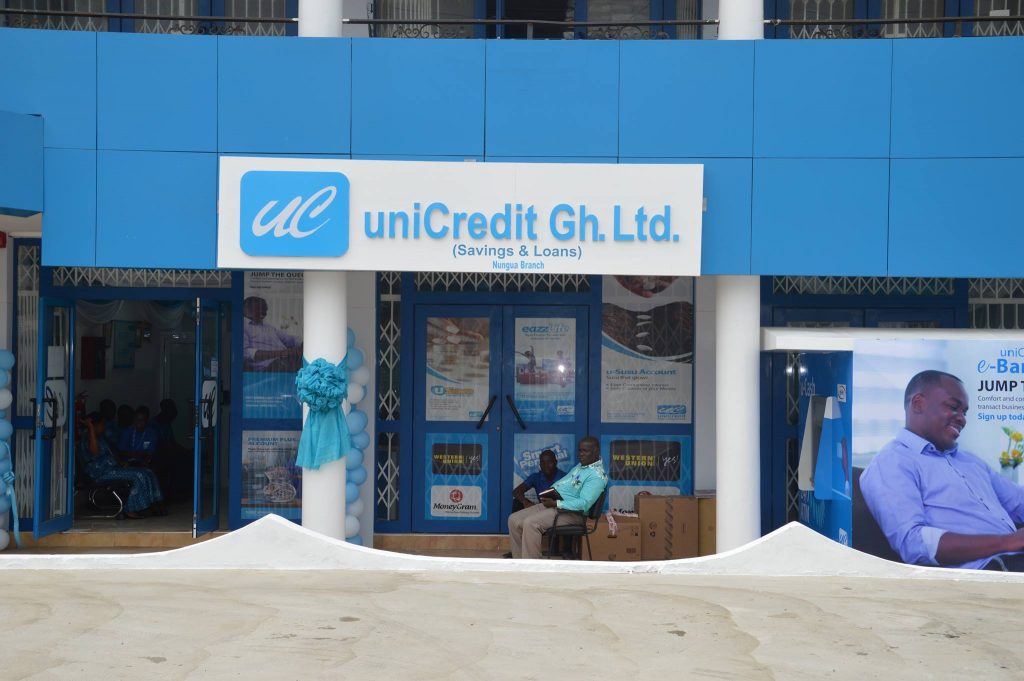
    The Supreme Court has validated the Bank of Ghana’s (BoG) decision to cancel Unicredit Ghana Limited’s operating license.

    In a unanimous ruling, the court overturned the Court of Appeal’s decision and confirmed the High Court’s verdict in Accra, which determined that the BoG did not err in revoking the license, having strictly adhered to legal procedures.

    On August 16, 2019, the BoG declared UniCredit Ghana Limited insolvent and rescinded its license to operate as a savings and loans company, in accordance with section 123 of the Banks and Specialized Deposit Taking Institutions Act of 2016 (Act 930).

    Hoda Holdings Limited, the majority shareholder of UniCredit, subsequently filed a petition with the Human Rights Division of the High Court, requesting a judicial review of BoG’s decision to revoke UniCredit’s license and an injunction to prevent the bank from disrupting UniCredit’s operations.

    Justice Gifty Agyei Addo, presiding over the High Court, ruled that the notice of Unicredit’s license revocation was lawful since it cited section 123 of Act 930 and was based on insolvency, as specified by the same section.

    The court further determined that the BoG’s action in revoking Unicredit’s license was reasonable and neither arbitrary nor capricious, as the records supported BoG’s claim of capital insufficiency.

    Court of Appeal

    Not satisfied with the decision, Hoda Holdings proceeded to the Court of Appeal to challenge the decision, and the court reversed the decision of the High Court.

    The Court of Appeal comprising Justices Janapare A. Bartels-Kodwo, Merley Wood and Gbiel Suurbaareh had held that the Bank of Ghana in revoking the license of UniCredit under section 123 of Act 930 should have followed the steps provided in section 16(3&4) of Act 930.

    It also held that the failure of the Bank of Ghana to comply with the procedure in section 16(3&4) of Act 930 meant that UniCredit was not given a hearing before its license was revoked.

    Supreme Court

    Unhappy with the Court of Appeal’s ruling, the BoG took their case to the Supreme Court, contending that the decision was not supported by the evidence and that the court had misinterpreted the meaning of section 16(7) of Act 930.

    A five-judge panel of the Supreme Court, led by Chief Justice Gertrude Torkornoo and including Justices Mariama Owusu, Prof. Henrietta Mensa-Bonsu, Ernest Yao Gaewu, and Yaw Darko Asare, concluded that extensive communications indicated that UniCredit had received written notice regarding capital deficiencies and liquidity issues, along with proposed actions and a chance to respond in writing.

    The Supreme Court stated it was convinced that the records clearly showed a hearing between UniCredit and the BoG occurred before UniCredit’s license was revoked.

    “We are also satisfied that the revocation of UniCredit’s license was done in accordance with the stipulated law appearing on the face of the record, and therefore reversed the decision of the Court of Appeal while upholding that of the High Court.”

  • Herbert Krapa unveils plan to revitalize Tema Oil Refinery labs

    Herbert Krapa unveils plan to revitalize Tema Oil Refinery labs

    Minister of State at the Ministry of Energy, Herbert Krapa, has announced the government’s intention to promptly rejuvenate the laboratories at the Tema Oil Refinery (TOR) to bolster its revenue-generating capabilities.

    He shared this update with journalists on July 23 during his inaugural official visit to TOR, aimed at familiarizing himself with the refinery’s operations since taking on his new role.

    Krapa emphasized the importance of collective effort in revitalizing TOR’s operations.

    “TOR is a strategic national asset and urgently needs a strategic partner to get back on its feet,” he noted.

    The Minister of State highlighted that, with proper upgrades and equipment, the refinery’s laboratories have the potential to offer advanced and innovative services. These improvements could enhance the refinery’s reputation and significantly increase its revenue.

    “The government is giving this its utmost urgent attention,” Krapa stressed.

    The Minister of State was joined by top representatives from the Ministry of Energy and the National Petroleum Authority (NPA), who oversee the downstream petroleum sector.

    He conferred with Kofi Mocumbi Tagoe, the Managing Director of TOR, and his executive team to receive updates on the company’s status and discuss the government’s viewpoint in preparation for a comprehensive tour of the facility, including its laboratories.

    Established on December 12, 1960, as the Ghanaian Italian Petroleum (GHAIP) Company, Tema Oil Refinery (TOR) is Ghana’s leading crude oil processing plant. Initially owned by Italians, the Ghanaian government assumed full ownership in April 1977, and the refinery was renamed TOR in 1991.

  • Nigerians unite to donate over ₦6m for quadruplet family

    Nigerians unite to donate over ₦6m for quadruplet family

    Nigerians have rallied to raise over ₦6 million to assist a couple who recently welcomed quadruplets.

    The Oloyede family, overwhelmed with joy and gratitude, has received an outpouring of support from compassionate citizens across the nation.

    Already facing financial difficulties, the couple found the arrival of four additional children created a substantial strain, with the costs of medical care, baby supplies, and other essentials quickly becoming overwhelming.

    The couple’s story was shared on social media by an X user, highlighting their urgent need for financial aid.

    The post gained rapid attention and went viral, capturing the empathy and generosity of many Nigerians.

    In a heartening show of solidarity, both individuals and organizations began contributing generously.

    Donations came in various amounts, reflecting widespread public support.

    Additional social media users joined the effort, using their platforms to raise awareness and encourage contributions.

    Within less than 24 hours, the total donations exceeded ₦6 million, offering significant relief to the Oloyede family.

    According to the X user, the father expressed profound thanks for the immense support, a sentiment echoed by his wife.

    The couple intends to use the funds for medical bills, essential baby items, and to secure a larger home for their expanding family.

    This uplifting story highlights the strength of community and the significant impact of collective kindness.

  • MzVee thrills fans with photos abraod looking ageless

    MzVee thrills fans with photos abraod looking ageless

    Ghanaian singer MzVee has thrilled her fans with a collection of gorgeous new photos.

    The artist showcased her timeless beauty in a sleeveless orange top teamed with jeans.

    Her recent Instagram photos featured a backdrop suggesting she was abroad, possibly in Dallas, Texas. This guess aligns with her recent announcement to her followers about an upcoming US trip.

    MzVee’s outfit combined casual and stylish elements. The photos depicted her against a picturesque expanse of grassy plains, with the singer striking poses in the center for the camera.

    In the comments section of her post, social media users praised MzVee for her timeless beauty. Many Ghanaians pointed out how ageless she looked, with some even expressing disbelief at how she managed to maintain such a youthful glow despite her age.

  • Ghana secures USD 8bn in debt relief after major restructuring

    Ghana secures USD 8bn in debt relief after major restructuring

    Ghana has reached a significant financial milestone by securing USD 8 billion in debt relief through the completion of its comprehensive debt restructuring programme.

    Finance Minister Dr. Mohammed Amin Adam revealed this achievement during his mid-year budget review presentation to Parliament on Tuesday, July 23, 2024.

    Dr. Amin Adam provided details on the success of the Debt Restructuring Programme, which successfully addressed USD 5.1 billion in debt with the Official Creditor Committee (OCC).

    “We have completed the Debt Restructuring programme with the Official Creditor Committee (OCC), covering USD5.1 billion dollars resulting in approximately USD8 billion of debt relief.

    “This means that we will not service our debt to our official creditors from 2023 to 2026,” he revealed.

    In addition to this major relief, Dr. Adam disclosed that the government has obtained approximately USD 1.6 billion in credit facilities from the International Monetary Fund (IMF).

    This financial injection is anticipated to provide further stability to Ghana’s economic environment.

    The Finance Minister also announced the successful conclusion of negotiations with Eurobond holders, which has resulted in an extra USD 13.1 billion for the country.

    This negotiation will “lead to a cancellation of USD4.7 billion of our debt and provide debt service relief of USD4.4 billion between 2023 and 2026,” Dr. Amin Adam explained.

    The Minister also emphasized additional savings from renegotiated Purchasing Power Agreements (PPAs) with Independent Power Producers, which are expected to save Ghana USD 6.6 billion over the duration of the agreements.

    “We have concluded negotiations with five of the seven Independent Power Producers, leading to substantial savings,” he noted.

  • Fella continues with flat tommy advert despite criticisms

    Fella continues with flat tommy advert despite criticisms

    Actress and business mogul Fella Makafui went viral and received backlash after a video of her promoting Simply Snatched products surfaced online.

    Fella Makafui flaunts flat tummy

    In the video, Fella Makafui wore a cropped tank top and sweatpants, accentuating her sculpted abdomen. She angled her body and leaned in closer to the camera to display various perspectives of her abs.

    She promoted weight loss products she attributed to her flat stomach, which were from Simply Snatched, a brand owned by her estranged husband, Medikal.

    The issue emerged after Medikal claimed in a Snapchat video that he financed the actress’s surgery to improve her curves for marketing purposes, allowing her to promote the weight loss products as an ambassador.

  • Are you aware that babies are born without these 5 bones?

    Are you aware that babies are born without these 5 bones?

    When it comes to the incredible journey of human development, the transformation from infancy to adulthood is nothing short of miraculous.

    One fascinating aspect of this process is the skeletal system, which undergoes significant changes as we grow. Surprisingly, there are several bones that babies are born without.

    Here’s a closer look at some of these bones and the intriguing reasons behind their absence at birth.

    The patella

    Commonly known as the kneecap, the patella is one bone that newborns lack. Instead of a fully formed patella, babies are born with a cartilage structure in its place.

    As the child grows, this cartilage gradually ossifies, typically forming a bony patella by the age of three to five years. This delayed formation allows for greater flexibility and protection during the early stages of crawling and walking.

    The coccyx

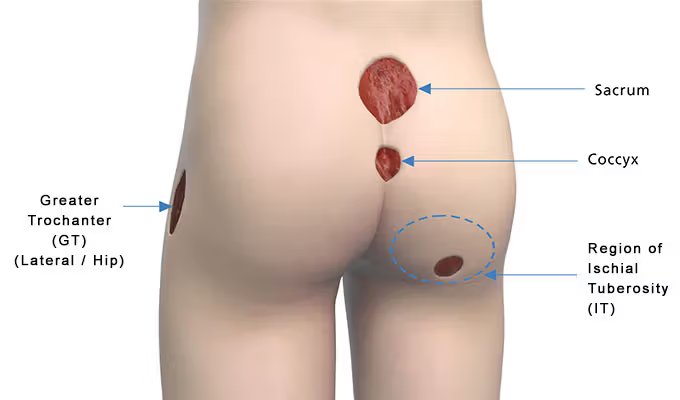
    The coccyx, or tailbone, is another structure that undergoes significant development postnatally. While a basic structure is present at birth, it consists largely of cartilage.

    Over time, this cartilage undergoes ossification, eventually forming a solid bony structure by adulthood. This gradual development helps protect the delicate spinal column and supports the body’s weight as the child begins to sit and eventually walk.

    The carpal bones

    The wrist is composed of several small bones known as carpals. Newborns typically have a few of these bones fully formed, but many of them are still in a cartilaginous state at birth.

    The carpal bones gradually ossify over the first few years of life, allowing for the fine motor skills required for tasks such as gripping and manipulating objects.

    The clavicle

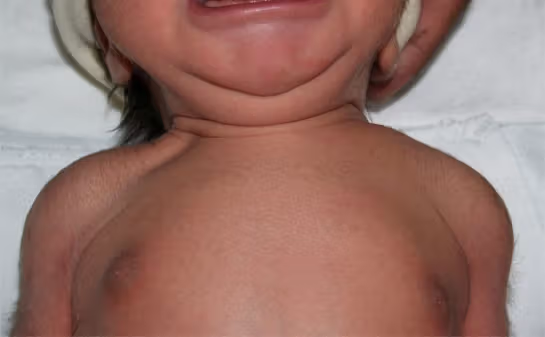
    While the clavicle, or collarbone, is present at birth, it is not fully ossified. This bone, which connects the arm to the body, undergoes further development during childhood.

    The clavicle is essential for shoulder stability and movement, and its gradual ossification ensures that it can withstand the physical demands placed on it as the child grows.

    The fontanelles

    Although not bones, the fontanelles are critical to understanding infant skull development. These soft spots on a baby’s head are gaps between the cranial bones, allowing for flexibility during birth and rapid brain growth during early life.

    The fontanelles gradually close as the bones of the skull ossify and fuse together, typically by the age of two.

    The absence of certain bones at birth highlights the remarkable adaptability and resilience of the human body. This developmental strategy provides the necessary flexibility and protection during the early stages of life, ensuring that babies can grow and thrive.

    Understanding these fascinating aspects of human development not only deepens our appreciation for the complexity of our bodies but also underscores the importance of supporting healthy growth and development from infancy through adulthood.

    Source: Pulse News Ghana

  • Economist praises govt for not requesting additional funds in budget review

    Economist praises govt for not requesting additional funds in budget review

    Economist and Political Risk Analyst Dr. Theo Acheampong praised the government for not seeking extra funds in the supplementary mid-year budget.

    He attributed this decision to deferred expenditures and interest savings.

    During his speech to Parliament on Tuesday, the Finance Minister highlighted significant accomplishments and detailed the government’s objectives for the remainder of the year.

    Dr. Amin Adam recognized the global economic difficulties but remained optimistic about Ghana’s economic prospects.

    Speaking to the media, Mr. Acheampong remarked, “So revenues were down, if you look at the numbers that were accompanying the mid-year budget in paragraphs 57 and 58 of the documents, you see that there is a bigger cut in expenditures vis-à-vis the revenue.”

    The economist expressed concern when examining the actual deficit financing details.

    Dr. Acheampong highlighted that, according to paragraphs 22 and 60 of the mid-year budget, 72% of the funds (7 out of every 10 cedis) needed to address the deficit will be drawn from the domestic market.

    He noted that the government’s continued issuance of treasury bills and other financial instruments will result in higher borrowing costs.

    “Not only that, but it actually also means that businesses would have to compete with the government for the same liquidity or capital to do their business, and that is very challenging for businesses in terms of getting access to capital.”

  • Ghana’s public debt reached GHS742bn by June 2024, representing 70.6% of GDP

    Ghana’s public debt reached GHS742bn by June 2024, representing 70.6% of GDP

    Finance Minister Dr. Mohammed Amin Adam has announced that, as of the end of June 2024, the provisional total central government debt stood at GH¢742.0 billion (US$50.9 billion), which equates to 70.6 percent of GDP.

    This represents a 22.0 percent increase, driven by the depreciation of the Cedi and continued disbursements from creditors.

    “The stock consists of external debt of GH¢452.0 billion and domestic debt of GH¢290.0 billion, representing 60.9 percent and 39.1 percent of the total debt stock, respectively. As a percentage of GDP, external and domestic debt represented 43.0 percent and 27.6 percent, respectively,” he added.

    The Bank of Ghana’s May 2024 Summary of Economic and Financial Data reports a notable rise in the country’s public debt, which surged by GH¢47.4 billion in the first two months of 2024, reaching GH¢658.6 billion.

    This amount represents 62.7% of the Gross Domestic Product (GDP) as of February 2024. The external debt totals GH¢380 billion, or 36.1% of GDP.

  • Every citizen owes GHS19k due to external debt – Mahama explains

    Every citizen owes GHS19k due to external debt – Mahama explains

    Nearly eight years after transferring power to the ruling New Patriotic Party (NPP), John Mahama claims that Ghana’s external debt has increased fourfold.

    The National Democratic Congress’ presidential candidate asserts that this surge in debt, coupled with rising unemployment, has worsened the hardships faced by ordinary Ghanaians.

    Speaking to the media on July 24, he illustrated that “In 2016, if you shared the public debt of GH₵120 billion among 30 million Ghanaians, each Ghanaian owed GH₵4,000. Today if you divide the debt of GH₵577 billion by 30 million Ghanaians all of us sitting here owe GH₵19,000.”

    Ghana’s soaring debt levels have alarmed economists, raising concerns about the country’s financial stability and debt management for future administrations.

    With the debt increasing to GH₵742 billion from GH₵680 billion in 2023, experts warn that without effective interventions and sound fiscal policies, Ghana’s economic progress, particularly under the International Monetary Fund, could be jeopardized.

    Mr. Mahama is concerned that Ghana’s debt repayment difficulties have led to downgrades by credit rating agencies.

    Furthermore, escalating inflation has forced many Ghanaians to adopt the “001” approach, where “0” signifies no meals and “1” indicates having had a meal.

    The NDC flagbearer also expressed concern that the high debt levels are problematic, as they impede investment in social and economic development projects across the country.

  • Ablakwa aims to halt additional $24.9m payment in ‘suspicious’ ambulance spare parts deal

    Ablakwa aims to halt additional $24.9m payment in ‘suspicious’ ambulance spare parts deal

    The Member of Parliament for North Tongu, Samuel Okudzeto Ablakwa, stated that the primary goal of his petition to the Office of the Special Prosecutor (OSP) is to prompt the office to prevent the forthcoming payment of $24.9 million in a disputed ambulance spare parts transaction involving Service Ghana Auto Group Limited.

    During an interview on Joy FM’s Super Morning Show on Monday, July 24, Mr. Ablakwa confirmed that he has submitted his petition to the OSP, including all letters, information, and documentation related to the deal.

    This follows the MP’s allegations of potential corruption and conflict of interest involving President Akufo-Addo’s two daughters, who are allegedly connected to Service Ghana Auto Group Limited, the company at the heart of the $34.9 million deal, of which $10 million has already been authorized by former Finance Minister Ken Ofori-Atta.

    “I can confirm to you that all the letters, information, and documentation we have gathered on this matter and conflict of interest links have been added to the petition that we have submitted to the Office of the Special Prosecutor. And we hope that the OSP will be allowed the free hand to look into this matter,” he said on Wednesday.

    Mr Ablakwa emphasised the urgency of stopping the additional payment of $24.9 million, following an initial payment of $10 million.

    “What we are aiming to achieve immediately is to stop that imminent additional payment,” he said. “At the end of the day, it is to protect the public purse,” he emphasised.

    Emphasizing the critical requirements in the health sector, the legislator contended that the funds could be more effectively used.

    “If it is about spending $34.9 million in the health sector, there are so many other priorities; lack of MRIs, lack of X-rays, lack of incubators, we still have the no-bed syndrome, and many hospitals are struggling to cope.

    “Health practitioners are complaining about the total neglect of hospitals in terms of equipping them. So this is money we can save for our doctors and nurses to have the equipment and tools they need to save lives,” he said.

  • GUTA president calls for a stable cedi

    GUTA president calls for a stable cedi

    The President of the Ghana Union of Traders’ Associations (GUTA), Dr. Joseph Obeng, stated that the association’s main focus is on maintaining the stability of the local currency.

    He called on the government to continue supporting economic progress, which is essential for the business sector.

    Dr. Obeng highlighted that GUTA has played a role in the growth of small and medium-sized enterprises (SMEs) by providing funding as a mitigating measure.

    He noted that directing these funds to specific areas has a beneficial effect on the economy.

    In his mid-year budget review presented to Parliament on July 23, the Finance Minister reported that the economy is experiencing strong recovery, with a 4.7% growth in the first quarter of 2024.

    Dr. Adam credited this positive outcome to effective policy measures, strong economic management, and the steadfast resilience of the Ghanaian people.

    Speaking to the media, the GUTA President said, “We think that overall, if we look at most of the figures, even with the debt restructuring and all that, we have come this far, and it can be said that it is inspiring some hope and confidence into the system.”.

    The GUTA president emphasized the need for the government to make every effort to maintain this growth, bolster the local currency, and further reduce inflation to help businesses prosper once more.

  • ACDT warns Ghanaian banks of cyber threats following global software glitch

    ACDT warns Ghanaian banks of cyber threats following global software glitch

    The Africa Centre for Digital Transformation (ACDT) has alerted banks in Ghana to potential cybercrime threats following a global software failure.

    On July 19, 2024, a problematic update from cybersecurity firm CrowdStrike affected millions of Microsoft Windows devices worldwide.

    The glitch, which lasted for 78 minutes, caused disruptions across various sectors, including banking, aviation, and healthcare. Microsoft confirmed that the faulty update impacted 8.5 million Windows devices, leading to significant system failures.

    Despite CrowdStrike’s swift efforts to address the issue, extensive damage ensued, resulting in numerous flight cancellations and banking operational disruptions.

    In response to these events, the ACDT issued a warning today to Ghanaian financial institutions about a fraudulent CrowdStrike update being promoted through a phishing site (portalintranetgrupobbva[.]com).

    This fake update installs the Remcos Remote Access Trojan (RAT), which poses serious security threats. The phishing site pretends to be a BBVA intranet portal, tricking banks into downloading malicious software that can compromise their systems.

    This fraudulent update installs the Remcos Remote Access Trojan (RAT), posing significant security risks. The phishing site masquerades as a BBVA intranet portal, misleading banks into downloading malicious software that can compromise their systems.

    Additionally, the ACDT’s Cyber Security unit has identified a new group of cyber attackers distributing a data-wiping malware under the guise of a CrowdStrike update. This malware overwrites files with zero bytes, rendering systems inoperable and reporting the damage back to the attackers.

    The ACDT urges banks, savings and loans institutions, and rural banks in Ghana to be vigilant, especially those using CrowdStrike and Microsoft Azure antivirus solutions. Threat actors are impersonating CrowdStrike by sending emails from the domain ‘crowdstrike.com.vc’, claiming to offer a tool to restore Windows systems.

    To mitigate these risks, the ACDT recommends several proactive measures:

    Activate Backup Systems and Redundancies: Switch to backup servers and data centres if primary systems are affected.

    Implement Business Continuity Plans (BCP): Ensure all employees understand their roles during IT outages.

    Enhance Communication: Maintain clear communication with customers regarding outages and resolutions.

    Engage Incident Response Teams: Deploy dedicated teams to address and resolve the outage.

    Monitor Systems and Security: Continuously check IT systems for anomalies or threats.

    Conduct Post-Outage Analysis: Perform thorough analysis and reporting of the outage’s cause and impact.

    Customer Support and Assurance: Provide additional support to reassure customers about data security.

    Review and Update Contingency Plans: Regularly update contingency plans based on lessons learned.

    Collaborate with Industry Partners: Share information and best practices within the industry.

    Invest in IT Resilience: Enhance IT resilience through robust disaster recovery solutions and diversified cloud services.

    The statement said by taking these steps, banks in Ghana can safeguard their operations, maintain customer trust, and bolster their preparedness for future incidents.

  • GPHA labels ex-casual workers’ compensation claims baseless

    GPHA labels ex-casual workers’ compensation claims baseless

    The Ghana Ports and Harbours Authority (GPHA) has declared that a group of former casual workers threatening to protest over alleged unpaid severance compensation has no legitimate case and is misleading the public.

    Moses Kwanayah, a spokesperson for the aggrieved workers, stated that over 4,000 individuals were affected by a World Bank program to restructure port operations between 2001 and 2002.

    He claimed that despite a Supreme Court ruling and subsequent address by the President, these workers have yet to receive a severance package commensurate with their service.

    However, the GPHA asserts that this group resurfaces during election years with similar threats, aiming to pressure the government into paying compensation after the Supreme Court resolved the matter in 2014.

    In response to the planned demonstration, the GPHA described the group’s claims and threats as unfounded.

    They emphasized that while demonstrating is a constitutional right, it comes with corresponding legal and statutory responsibilities.

    The Supreme Court’s decisions remain unchallenged, and the GPHA cautioned that the port area is a security zone, warning that any attempt to disrupt operations could have serious security consequences.

    Below is the full statement by the GPHA:

    Press Release

    THREAT OF PUBLIC DEMONSTRATION, PICKETING AND RELATED MATTERS BY SOME “EX-CASUAL WORKERS” OF GPHA: POSITION OF GPHA

    Following threats of an impending public demonstration and picketing at the premises of Ghana Ports and Harbours Authority made by some ex-casual workers through videos and interviews circulating in the social and main media, ostensibly on grounds of an alleged failure or refusal or neglect by the Authority to pay a certain compensation sum to them upon a declaration of redundancy some 20 years ago, the Ghana Ports and Harbours Authority (hereinafter, “the GPHA/Authority”) wishes to state the facts and clarify all issues relating to the above so that the public is not misinformed.

    The facts are as follows:

    1. In 2001, the government of Ghana, upon advice from the World Bank, decided to reform the Ports to improve service delivery and to take advantage of regional growth in shipping. In doing so, a large share of Port operations, which were hitherto handled by the Port Authority were ceded to private operators with the needed resources to provide quality service to customers.
    2. The Authority, having ceded most of its operations to private operators, had to reduce its staff numbers immediately. Some of these staff opted to join some of the private operators, while others elected to go home. Not all of them were permanent staff though: some were permanent staff, while others were casual staff. Yet, each of these personnel was given huge sums of money as compensation.
    3. For the permanent staff, two options were tabled for their consideration: (a) An early voluntary retirement, and (b) compulsory retirement. The beneficiaries considered the package for early voluntary retirement for permanent workers as more attractive that it was over-subscribed to the extent that no worker was compulsorily relieved of his or her responsibility as a condition for the second option.
    4. As has been stated, in the maritime industry and in the ports in particular, two categories of workers exist, namely; (a) Permanent workers who are employed with established Conditions of Service, and (b) Casual workers (Dockers) whose employment is daily. In other words, they only work and get paid when there is a job available to be executed for that day. This category of workers at the time were paid cash after work on a daily basis and therefore had no rights to claims for permanency of work or any long service or retirement benefits no matter how long they worked in the ports as casual labourers.
    5. During the restructuring exercise, on the issue of casual workers, to which this group alleged as “ex-workers of GPHA” belonged, the Authority, out of its magnanimity decided to pay them a certain sum out of goodwill (a handshake in our parlance) for their service. Please note that the Authority was not under any obligation to do so as compared to permanent workers. Aside that, a well-structured Port casual labour company was formed to assimilate them seamlessly to continue their work as casual dockers.
    6. However, the group after receiving the “handshake” was not satisfied and instituted an action at the High Court against the Authority. The matter travelled to the Supreme Court and they lost. However, not satisfied, they invoked the review jurisdiction of the Supreme Court and again lost. (See Bonney & Ors (No.l) v. Ghana Ports and Harbours Authority (No.l) [2013- 2014] SCGLR 436 and Bonney & Ors (No.2) v. Ghana Ports and Harbours Authority (No.2) [2013-2014] SCGLR 457.
    7. It is instructive to note that this group almost always surfaces in every election year with the intention to blackmail the Authority to pay to them what they do not deserve even though finality was brought to the matter by the Supreme Court as far back as May 29, 2014.
    8. We would like to indicate that GPHA adheres strictly to labour laws and regulations concerning employee severance benefits. Each case of separation from service is handled with due diligence and in accordance with the terms and conditions outlined in the employment contracts and relevant labour legislation. The recent assertions made by the aforementioned group and their threats of intended demonstration are baseless and not supported by factual evidence.
    9. In conclusion, in as much as demonstrations are constitutional rights, they come with equal constitutional and other statutory obligations. The judgements of the Supreme Court have not been over-turned. We would like to remind the members of this group that the Port enclave is a security zone and, any attempt to unduly disrupt operations will have security implications.

    Please be advised.

    Thank you.

    SIGNED

    ESTHER GYEB1-DONKOR (MRS.)

    GENERAL MANAGER, MARKETING AND CORP. AFFAIRS

  • Economic improvements not experienced by businesses – Hotels Association, GUTA

    Economic improvements not experienced by businesses – Hotels Association, GUTA

    President of the Ghana Hotels Association, Dr. Edward Ackah-Nyamike Jnr, stated that while the government is seeing positive results with some economic indicators like inflation, these do not benefit businesses.

    During an interview with Evans Mensah on Joy News’ PM Express, he explained that the current economic conditions are diminishing business profits.

    Despite the sustainability claims made by the Finance Minister during the Mid-year budget review in Parliament on Tuesday, he said the situation on the ground tells a different story. “there is a mismatch between what is happening on the macro level and the ground.”

    “Even when you try to get those macro figures right, we are still dealing with variables like the exchange rate because a lot of our hotels import several kinds of stuff as they are not available here.

    “You have to deal with import duty, exchange rate and the cost of borrowing and other factors. When you compare this and what is being said about the bigger picture, there is a mismatch.”

    Edward Ackah-Nyamike Jnr explained that the Association had a wish list of expectations, hoping that the Finance Minister’s presentation in Parliament on Tuesday would tackle key concerns within the sector. However, these expectations were not met.

    “His presentation has come with a mixed bag of excitement and disappointment,” Mr. Ackah-Nyamike Jnr said on Tuesday.

    “At the macro level, the debt restructuring, expanding the tax net through the invoice system, and plans to upgrade some roads are positive steps.”

    He acknowledged signs of stabilisation, noting the upward adjustment of real GDP.

    “These are signs that things are stabilising; however, when it comes to the real deal, which is how we face the economy, that is where we have challenges,” he added.

    According to Dr. Joseph Obeng, president of the Ghana Union of Traders’ Association (GUTA), the cost of doing business remains elevated due to the multitude of taxes.

    For him, “the status quo remains the same, especially with taxes. Even though new taxes were not announced, we still have to contend with the taxes we pay, and that is impacting negatively on our business.”

    Regarding the exchange rate’s “seeming stability, we plead that whatever measures they put in place to stem the high rise of the dollar should still be adopted so that we can sustain this gain.”

  • Akufo-Addo to deliver key lecture on foreign policy at Accra ICC

    Akufo-Addo to deliver key lecture on foreign policy at Accra ICC

    President Nana Addo Dankwa Akufo-Addo is set to give a lecture on various foreign policy and global affairs topics at the Accra International Conference Centre.

    Scheduled for tomorrow, the lecture is organized by the Council on Foreign Relations-Ghana, the nation’s leading think tank on foreign policy and international relations.

    The lecture marks the culmination of the council’s fifth anniversary celebrations. President Akufo-Addo, with his extensive public service experience, is expected to offer valuable insights and perspectives on international affairs, Africa’s role in promoting global peace, security, and development.

    He will also discuss his longstanding advocacy for reforms in the international order. The President has been a significant figure in contemporary international affairs, serving as Ghana’s Foreign Minister, two-term Chairman of ECOWAS, and holding several key positions on the global stage.

    The foreign policy and international relations think tank, established in 2008, is modeled after renowned institutions like the Council of Foreign Relations in the US and Chatham House in the UK.

    Founding members include Kabral Blay-Amihere, Ghana’s former Ambassador to Cote d’Ivoire; Ambassador D. K. Osei, a career diplomat and former Secretary to the President from 2001 to 2009; and J. K. Mensah, a former Director-General of the Research Department of the Ministry of Foreign Affairs and International Relations.

    The first Executive Council members included Messrs. Osei, Blay-Amihere, the late legal practitioner Kojo Bentsi-Enchill, and Abraham Agbozo. Other members were Brigadier-General Francis Asiedu Agyemfra, communications consultant Kwaku Sakyi-Addo, Egbert Faibille Jnr, Lawrence R. A. Satuh, and Dr. Linda Akua Opongmaa Darkwa.

  • MIIF aims to support 1,000 women in engineering, STEM with mining scholarships

    MIIF aims to support 1,000 women in engineering, STEM with mining scholarships

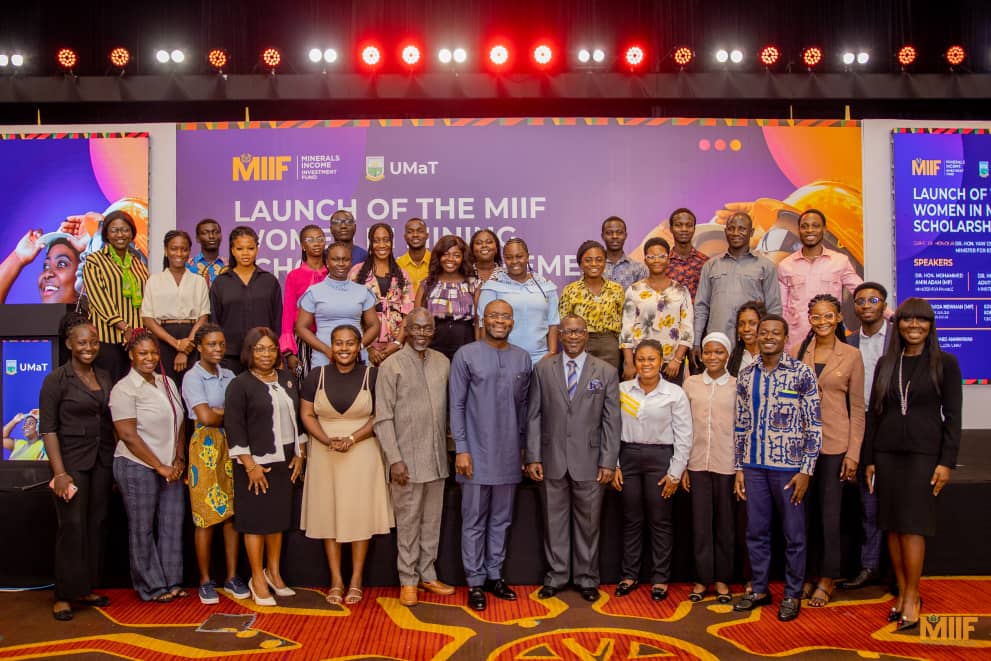
    The Minerals Income and Investment Fund (MIIF) has introduced a scholarship program designed to educate 1,000 women from mining communities across the country.

    The scholarship, offered through the George Grant University of Mines and Technology in Tarkwa (UMAT), is exclusively for women from mining communities pursuing studies in mining engineering and STEM-related mining courses.

    Named the MIIF-WomCom scholarship, the program will run for a decade, with 100 women receiving awards each year.

    The aim of the MIIF-WomCom scholarship is to boost female participation in the mining sub-sector, which currently stands at below 8%. This initiative aligns with the Fund’s ESG policy.

    Critical Intervention

    Edward Nana Yaw Koranteng, the Chief Executive Officer of MIIF, stated that the organization decided to make this crucial intervention to bolster human capital development in the mining industry, viewing it as the most significant investment in the mining value chain.

    He stressed that for Ghana to truly benefit from its mineral resources, it is essential to not only have sound policies but also intentionally develop the human resources needed to support the sector.

    “We believe that just investing in equity, investing in the value chain etc. without investing in human development will really just take us nowhere; you know, we will hit a wall at a point in time,” Mr. Koranteng stated.

    Edward Nana Yaw Koranteng, the Chief Executive Officer of MIIF, stated that the organization decided to make this crucial intervention to bolster human capital development in the mining industry, viewing it as the most significant investment in the mining value chain.

    He stressed that for Ghana to truly benefit from its mineral resources, it is essential to not only have sound policies but also intentionally develop the human resources needed to support the sector.

    Research and ESG

    The Evironment, Social and Governance framework that underpins every decision of MIIF is also fed by extensive research in the mining sub-sector that identified more value with women participation in the mining.

    The Head of Corporate Affairs and External Relations, Kojo Frempong said, “The research is pretty conclusive, the more you invest in women in the sector, the more value is created for the sector as there is greater retention in the communities”.

    For us at MIIF, this WomCom scholarship scheme is a strategic investment that will inure to the benefit of the country as a whole and create more advocates for environmental, social and governance issues” said the Head of ESG at MIIF, Ms Sharon Addo.

    Ghana is blessed with natural resources, but we have seen the dangers in other jurisdictions when there is policy failure and a lack of investment in the mining value delivery process.

    Mr Koranteng stressed that, resources are not infinite making it crucial to leverage the resources cleverly in a sustainable manner, this gives meaning to the fact that, resources do not develop a nation, brains do.

    Scholarship Expansion

    Though UMaT is the first university to administer the scholarship, MIIF plans to extend the opportunity to students from the Kwame Nkrumah University of Science and Technology and the University of Energy and Natural Resources in Sunyani in an expandable drive for the scholarship.

    “We are modeling the WomCom scholarship scheme with UMaT. 100 female students will be selected every year. Some of the beneficiaries will be undergraduate while others will be involved in the postgraduate category. We have great expectations of the various cohorts for the next ten years. Once we see the success of the program we will replicate it in the other universities, I am deeply inspired by the saying of the great Ghanaian educationist, Dr. Kwegyir Aggrey who said; if you educate a woman, you educate a nation. Imagine the impact hundreds of qualified women engineers will have on the mining sub-sector only a few years after this program takes off”, Mr. Korateng added.

    Framework Agreement with UMaT

    The Women in Mining Communities Scholarship scheme (WomCom Scholarship) is part of a five-part collaboration framework between MIIF and UMaT. The other four areas of collaboration are; an annual thought leadership event dubbed the MIIF Speaker Series which is in its third year, The MIIF Technical Training and Jewellery Training Making Centre which will be completed in December 2024, a continuous training and technical assistance from UMaT to MIIF under which the University provides consultancy to MIIF and the proposed Ghana Mining Museum and Mining Research Center which is also supported by the Chamber of Mines and will be partly funded by MIIF.

    The Minister of Finance, Dr. Mohammed Amin Adams has described the collaborative agreement between MIIF and UMaT as the foundational stone which clearly makes the partnership between academia and practicing institutions possible.

    “The structural relationship is firmly anchored on collaboration. MIIF is guided by the research from UmaT while the university also gets support from the Fund. An important area that bears out this collaboration is in the Small-Scale Mining Incubation Program (SSMIP) where MIIF intends to help formalise some small-scale mining firms by investing capital, installing a rigorous financial reporting and environmental compliance regime as well as an off-taker agreement for gold produced under the programme”.

    Support of the Chamber of Mines

    The Chamber of Mines has expressed its support for MIIF’s initiatives.

    Dr Sulemanu Koney, the CEO of the Chamber indicated that the MIIF / UMAT Collaboration and the scholarship scheme exemplifies what is possible for the sector if things are done well.

    A number of mining companies such as Atlantic Lithium which has discovered lithium in Ewoyaa and set to start production in 2025 have indicated their readiness to support the scholarship scheme when it takes off in October 2024.
  • IMF has forced govt to cut spending – Economist

    IMF has forced govt to cut spending – Economist

    Economist Dr. Theo Acheampong recognizes the government’s evident dedication in the Mid-year budget review to reduce expenditures, shaped by the International Monetary Fund (IMF) program.

    “Were the IMF not around in any other year, especially with the election around the corner, government would have been spending and this is a positive development,” he stated.

    Dr. Acheampong emphasized the relative stabilization in the macroeconomic landscape, observing various signs that suggest ongoing recovery.

    Nonetheless, he stressed the importance of addressing micro-level concerns, such as the cost of living, for this recovery to be meaningful.

    During his appearance on Joy News’ PM Express on Tuesday, he noted that both the Mid-year budget and the upcoming November budget are designed to steer the economy towards growth.

    “There’s talk about roads and potentially bringing back even road tolls, then there’s a big emphasis on housing and a few other things on trying to collect a little bit more revenue,” he said.

    Dr Theo Acheampong, Petroleum Economist and Political Risk Analyst

    “But I think overall, the story for me is relatively positive. And compared to other supplementary budgets or mid-year budgets, where the government normally comes to ask for more money, this time around, they’re not asking for more money and spending is within the parameters that had been set.”

    Last month, the IMF’s executive board sanctioned the second assessment of Ghana’s $3 billion loan agreement, leading to the immediate release of approximately $360 million.

    This approval came after Ghana reached an agreement with its official creditor committee, a necessary step for accessing the second tranche.

    With this new disbursement, the total IMF funds released under the three-year bailout plan intended to address Ghana’s severe economic crisis now amount to $1.56 billion.

    In a statement, the IMF acknowledged that Ghana’s performance under the programme has been largely robust.

    “The authorities’ strategy aimed at restoring macroeconomic stability and reducing debt vulnerabilities is paying off, with clear signs of stabilisation emerging,” said IMF Deputy Managing Director Kenji Okamu.

  • Martin Kpebu makes appearance on TV3 with a yam to affirm economic hardship

    Martin Kpebu makes appearance on TV3 with a yam to affirm economic hardship

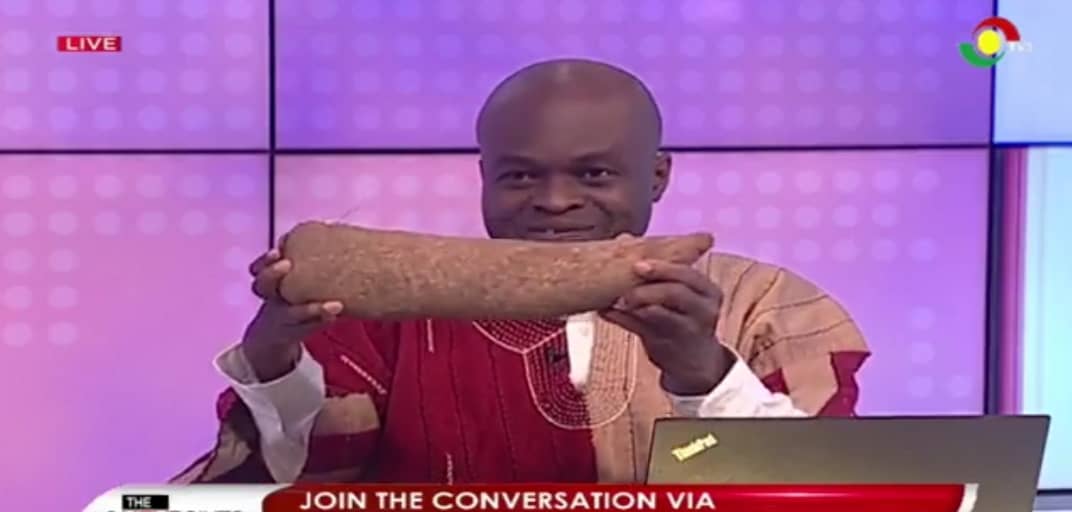
    Private legal practitioner Martin Kpebu brought a yam to a live TV panel discussion to highlight the increasing cost of living in Ghana.

    During the segment on TV3’s Key Points, Kpebu used the yam as a metaphor to discuss the economic challenges facing the average Ghanaian.

    Kpebu disclosed that he bought the yam for 40 cedis at the Central Accra business hub, Tema Station. Holding it up, he noted that the price of this staple food item varies greatly between different markets.

    He mentioned that the same yam could cost up to 50 cedis in North Legon.

    The discussion then broadened to cover the varying prices of other essential goods.

    Another panelist recounted his experience of buying tomatoes for 70 cedis, underscoring the widespread issue of fluctuating prices and their impact on household expenses.

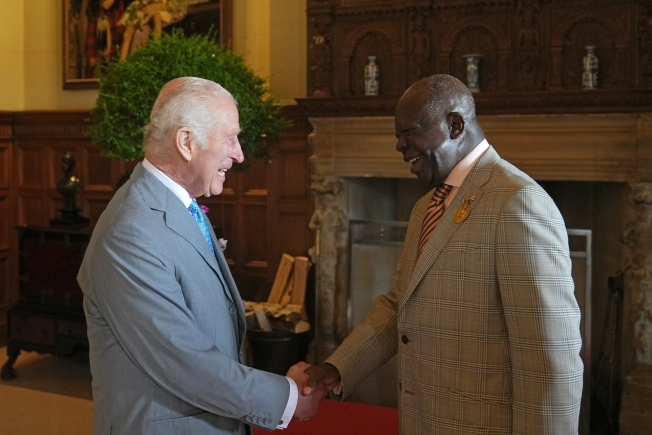
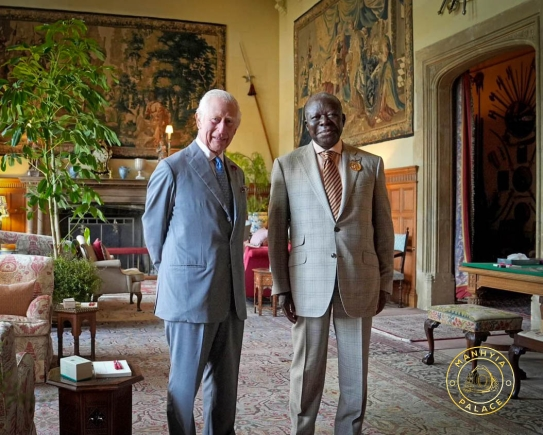
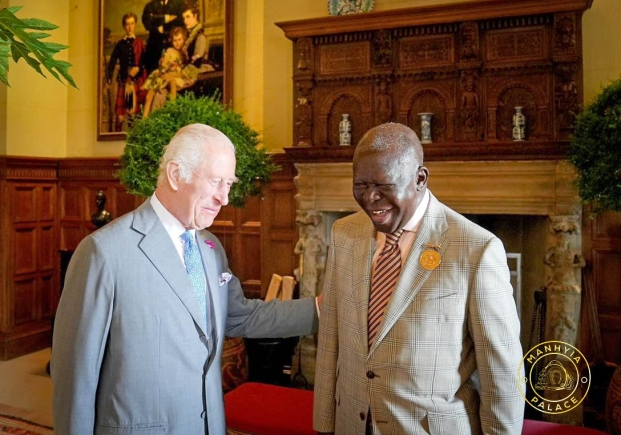
  • King Charles III hosts Asantehene, Otumfuo Osei Tutu II for the first time after coronation

    King Charles III hosts Asantehene, Otumfuo Osei Tutu II for the first time after coronation

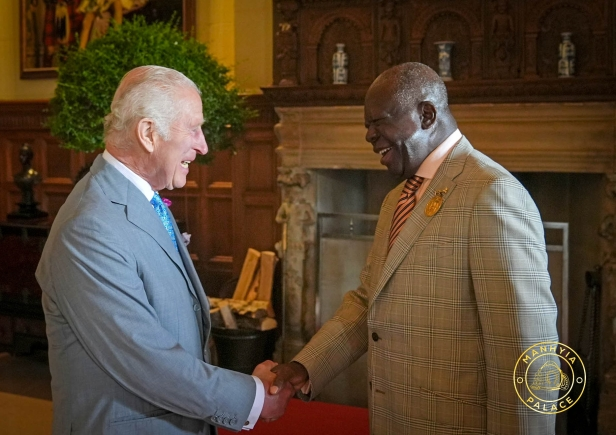
    King Charles III received the Asantehene, Otumfuo Osei Tutu III, at Sandringham House in the UK on Tuesday.

    Otumfuo Osei Tutu II is presently in the UK for his Silver Jubilee festivities.

    This marks the first meeting between the Asantehene Otumfuo Osei Tutu II and the King of England since King Charles III’s coronation in March 2023.

    The visit coincides with the Asantehene’s presence in the United Kingdom (UK) for a lecture at the British Museum, among other engagements.

    The visit occurred at King Charles’ Sandringham estate, which spans 20,000 acres within the Norfolk Coast Area of Outstanding Natural Beauty.

    On August 4, 2024, the Asantehene will celebrate his 25th Anniversary on the Golden Stool by hosting the sixth Akwasidae Festival of the year in London.

    As part of his working visit to the UK, he held talks with the Victoria and Albert Museum, delivered a lecture at the British Museum and celebrated the Awukudae festival there.

    The Asantehene left Ghana on Saturday, July 13, 2024.
  • NPP forms committee to vet documents ahead of elections

    NPP forms committee to vet documents ahead of elections

    In preparation for the upcoming parliamentary nominations, the New Patriotic Party (NPP) has formed a nine-member committee to ensure all candidates meet the necessary Electoral Commission (EC) requirements.

    This initiative is part of the party’s efforts to uphold high standards and ensure a seamless and compliant filing process.

    The committee consists of the following members:

    Mr. Frank Davies (Chairman), Mr. Gary Nimako, Madam Sophia Korkor, Madam Nana Adjoa Adobea Asante, Hon. O. B. Amoah, Hon. Ben Abdallah, Madam Joyce Opoku Boateng, Mr. Evans Nimako and Mr. Michael Kwadwo Nketiah

      The committee is tasked with verifying all documents submitted by candidates, ensuring compliance with the EC’s regulations, and compiling comprehensive reports on each candidate’s compliance status.

      Additionally, the committee will communicate with candidates to resolve any issues identified during the screening process.

      The committee’s work begins immediately, starting today, Tuesday, July 23, 2024.
      General Secretary Justin Kodua Frimpong expressed confidence in the committee members’ diligence, emphasizing that only the most qualified and compliant candidates will be selected.

      “We trust that the members of this committee will execute their duties with diligence, ensuring that our party fields only the most qualified and compliant candidates,” Frimpong stated.

      The NPP values the dedication and cooperation of its members during this essential vetting process as they prepare for the upcoming elections.


    1.  I have no doubt COP Yohuno will be efficient to the  police service – Akufo-Addo

       I have no doubt COP Yohuno will be efficient to the police service – Akufo-Addo

      President Nana Addo Dankwa Akufo-Addo has addressed his recent appointment of Commissioner of Police (COP) Christian Tetteh Yohuno as the new Deputy Inspector-General of Police (IGP) responsible for Operations.

      The appointment of COP Yohuno to oversee Operations has stirred debate, with some critics claiming it was an attempt to undermine the authority of the current IGP, Dr. George Akuffo Dampare.

      At the inauguration of 320 new homes for Ghana Police Service personnel, President Akufo-Addo commended COP Yohuno.

      He affirmed that COP Yohuno would oversee Operations and conveyed his full confidence in his abilities.

      “I would like to take this opportunity to congratulate the long-serving and respected law enforcement officer, Commissioner of Police Mr. Christian Tetteh Yohuno, on his promotion to the office of Deputy Inspector General of Police with responsibility for operations.

      “I have no doubt that, as in the past, Deputy Yohuno will be a valuable team player and will contribute fully to the success of an effective and efficient police service,” he said.

      On the subject of the housing units, the president highlighted that fulfilling the construction of 320 homes was a commitment he had made.

      He emphasized that completing these homes is part of his broader initiative to enhance the working conditions for police officers.

      “This morning, we are witnessing the fulfillment of our promise, a vision that has been in progress for some time.

      “… I am delighted to be here today to commission 320 housing units for the police service in Tessano, Accra. This milestone not only demonstrates our commitment to improving the living standards of our security personnel but also marks a significant step forward in our national efforts to enhance security and safety.”

    2. Ethiopia landslide rescuers pull out 157 corpses from debris

      Ethiopia landslide rescuers pull out 157 corpses from debris

      Rescue teams have recovered the bodies of 157 individuals from two landslides in southern Ethiopia, according to a local official who spoke to the BBC.

      The landslides took place on Sunday evening and Monday morning following intense rainfall in a remote mountainous region of the Gofa zone.

      The local authorities have reported that the search for survivors is ongoing and expressed concern that the death toll might rise.

      Videos from the scene show hundreds of people gathered and others digging through the earth in an attempt to find those trapped.

      In the footage, a hillside appears partially collapsed, exposing a large area of red soil.

      Dagmawi Ayele, the chief administrator of Goza zone, informed the BBC that both adults and children were among the deceased, and ten survivors are currently receiving medical care in a hospital.

      Mr. Dagmawi explained that the initial landslide occurred on Sunday, and while police, teachers, and local villagers were engaged in rescue efforts on Monday, a second landslide struck, burying them as well.

      “We are still digging,” he told the BBC.

      Gofa is situated in Southern Ethiopia, approximately 320km (199 miles) southwest of the capital, Addis Ababa.

      According to the UN’s Office for the Coordination of Humanitarian Affairs (OCHA), Southern Ethiopia has recently experienced particularly severe rainfall and flooding.

      However, landslides and floods have been recurring issues for some time. In May 2016, severe rains caused floods and landslides that resulted in the deaths of at least 50 people in the southern region of the country.

      Various factors contribute to flooding, but climate change-induced warming increases the likelihood of extreme rainfall.

      Since the onset of the industrial era, global temperatures have risen by about 1.2°C, and they are expected to continue increasing unless substantial reductions in emissions are achieved globally.

    3. Kumasi Central Market project cannot be completed before elections – Sam Pyne

      Kumasi Central Market project cannot be completed before elections – Sam Pyne

      Chief Executive Officer of Kumasi Metropolitan Assembly (KMA), Samuel Pyne, has announced that the government has allocated funds to restart the paused central market project.

      The construction company, Contrata, had vacated the site and dismissed employees, retaining only security personnel and senior management.

      However, he stated that the project will not be completed before the 2024 general elections.

      “We had a recommencement meeting last week Thursday, 18 July 2024, in Kumasi. Since they left about 13 months ago, there’s a need for them to re-engage workers. Re-engaging them, there’s the need for them to go through medical tests so they have given themselves three weeks, that is about 3rd to 4th August 2024, to conclude the process,” he said.

      He explained that the firm will resume full operation next month. The primary focus will be to complete the portions where they didn’t finish with the floor concrete works and the installation of the stores.

      “At the moment, they have all the materials for the shops ready so they are doing a re-assessment of the materials that they left on site to confirm if they are fit for purpose on the project because the finance minister has given them a comfort letter, assurance letter and assurance of prompt payment.”

      The €248 million project, which began in May 2019, was expected to be finished within 48 months. But, due to the government’s debt restructuring program with the International Monetary Fund (IMF), the project has been delayed for 13 months.

      Traders affected by the project had protested against the government, threatening to vote against the ruling party in the 2024 Presidential and Parliamentary elections.

      After successful renegotiation with the IMF, funds have been released for the project to resume.

      The completed project will feature 6,500 leasable commercial spaces, 5,400 closed stores, 800 kiosks, 50 restaurants, and other essential facilities such as a fire service office, police station, and mini theater.

      Despite the resumption of work, the KMA Boss Sam Pyne stated that the project is unlikely to be completed within the next five months, before the 2024 elections.

      “The project should have been ready by February this year. We have wasted or delayed about 13 months and therefore, if there’s even going to be a crash of the program on-site, I know it is not going to be 3, or 4 months’ work. The work will go beyond 5 months so I can’t give the exact time that the program will end but to be honest with you, we can’t conclude the work on site before the elections.”

    4. Your ill-health is a topic of concern – Group petitions Mahama to step down

      Your ill-health is a topic of concern – Group petitions Mahama to step down

      A faction known as the Comrades Coalition has made a contentious request for former president John Dramani Mahama to step down from his political aspirations.

      In a letter penned by the group’s executive chair, NewTown Abeiku Hagan, they compare Mahama’s situation to recent occurrences in the United States involving Joe Biden.

      The coalition expresses worries about Mahama’s health, arguing that he is not in peak physical condition to govern the country.

      “It is no secret that your health has been a topic of concern, and it is evident that you are not in the best physical condition to lead our nation. Just as Joe Biden made the selfless decision to prioritize the well-being of his country over his personal ambitions, l urge you to consider doing the same,” a part of the statement indicated.

      They suggest that Naana Jane Opoku Agyemang, Mahama’s running mate, is fully capable of steering the National Democratic Congress (NDC) to success.

      The letter appeals to Mahama’s leadership qualities and humility, urging him to place the party’s success above his personal ambitions. This request for Mahama to step down has probably sparked debate within Ghana’s political sphere, especially among NDC supporters.

      The comparison to Joe Biden’s scenario and the focus on Opoku Agyemang’s qualifications add complexity to the ongoing discourse on leadership and succession in Ghanaian politics.

      Read more details below:

    5. Finance Minister requests $12bn investment from Saudi Arabia

      Finance Minister requests $12bn investment from Saudi Arabia

      Finance Minister Dr. Mohammed Amin Adam has urged Saudi investors to help raise $12 billion over the next three years.

      He emphasized that this funding is crucial for restoring the country to its pre-COVID economic state.

      The request was presented at a significant meeting with the Arab Bank for Economic Development in Africa (BADEA), themed ‘Ghana: Unleashing Opportunities through Strategic Investments’.

      Dr. Adam highlighted the importance of foreign investment in Ghana’s post-COVID recovery efforts, stating: “If you can help us raise US$12billion over the next three years to finance our recovery and finance our growth to the pre-COVID era, you will have your names written in golden ink as sustainable partners of Ghana”.

      The minister emphasized the government’s dedication to social programs, pointing out substantial increases in funding across different sectors.

      He mentioned that the budget for the Livelihood Empowerment Against Poverty (LEAP) program has risen from GH¢49 million in 2016 to nearly GH¢500 million now.

      Similarly, the school feeding program has expanded from serving 1.6 million children in 2016 to reaching 4 million children today.

      Healthcare funding has also grown significantly, with the National Health Insurance Scheme budget increasing from GH¢1.1 billion in 2016 to an anticipated GH¢6.5 billion this year.

      Dr. Adam highlighted that these funding increases demonstrate the government’s commitment to fostering inclusive growth.

    6. It is possible for credit facility to buy phones  for citizens to pay in installment – Miracles Aboagye

      It is possible for credit facility to buy phones for citizens to pay in installment – Miracles Aboagye

      Director of Communications for Dr. Bawumia’s campaign, Dennis Miracles Aboagye, clarified the New Patriotic Party flagbearer’s promise to create a credit facility for citizens to purchase smartphones and pay in monthly installments of GH¢1 and GH¢2.

      Dr. Bawumia’s pledge has stirred significant debate and controversy, particularly among the youth.

      In his clarification on Atinka FM, Dennis Aboagye explained that the credit facility for smartphones is a common practice in more developed nations.

      He pointed out that some telecommunications companies in Ghana already implement this policy to promote smartphone usage, which benefits the telecom providers.

      “It’s a way the smartphone companies encourage their customers to patronize their products. It’s nothing new, and it’s highly possible. Don’t be deceived by the NDC’s propaganda. Dr. Bawumia is determined to implement this policy,” he opined.

    7. Jamestown Fishing Harbour construction done

      Jamestown Fishing Harbour construction done

      The Jamestown Fishing Harbour has been completed on time, with operations set to start before the end of the year. Funded by a 50-million-dollar grant from the Chinese government, the harbour was built over four years.

      Covering 60,000 square meters, the new facility is equipped with state-of-the-art features, including an ice-making plant with a daily production capacity of 60 tons, a cold store with a 200-ton fish capacity, two workshops, a fish market with space for 200 vendors per day, additional stalls, an administrative building, and a crèche for children.

      Before the official handover and commissioning later this year, the Ghana Ports and Harbours Authority (GPHA) leadership, including Director General Michael Achagwe Luguje, visited the site to review the completed work.

      Pleased with the results, Director Luguje expressed confidence that GPHA will leverage its expertise in managing fishing ports for this new facility. He also encouraged the fishing community to collaborate with GPHA to ensure the harbour is well-maintained for the benefit of all Ghanaians.

      “Naturally, the fishing ports themselves by nature are not huge income-generating facilities and will continue to be expensive to maintain, but we have to add that as part of our collective GPHA responsibility. We see the fishing harbours more as welfare projects that are supposed to at least enhance the community and livelihoods, so that is the angle we are looking at. We have that responsibility to make sure that they are efficiently managed. Definitely, users of the facility will use them at a fee. They will make some contribution towards covering the operating cost. We can only just be grateful to the government and, of course, to the Chinese government for this partnership that has led to this facility,” he said.

      The General Manager of Engineering at GPHA, Ing. Komla Ofori, provided Eye on Port with additional details about the facility’s features and benefits.

      “Approximately 4,000 people will work here on a daily basis, making the site quite crowded. We have used the site optimally to get the best facilities in this small space. I believe that even the land facilities far exceed what the sea can bring, so if you’re expecting canoes bringing fish here, the volume of fish that will come in here will not be enough for the land facilities that we have. Ice, for example, may have to be sold to people on land who may need ice for other things or fish brought from elsewhere for storage, depending on what the situation will be,” he said.

      In 2019, the Ghanaian government, through the Ministry of Transport and the Ministry of Fisheries and Aquaculture Development, initiated the construction and upgrade of fishing harbours and landing sites in twelve coastal towns across Ghana.

      These towns include Axim, Dixcove, Moree, Mumford, Winneba, Senya Breku, Gomoa Fete, Ekumfi, Elmina, Teshie, Jamestown, and Keta.

      The aim of these projects is to ensure a sanitary environment for fish processing and handling while reducing and managing post-harvest losses for local fishermen.

      The Ghana Ports and Harbours Authority is overseeing the development of these twelve fishing ports and landing sites, fulfilling its role as the national body responsible for the construction, management, and operation of all ports and related infrastructure in Ghana.

    8. Ghana’s lithium mining agreement is advantageous – NRGI report

      Ghana’s lithium mining agreement is advantageous – NRGI report

      As Parliament reviews the contentious Barari lithium deal, a report by the Natural Resource Governance Institute (NRGI) suggests that the government may have secured a favorable arrangement.

      The initial lithium lease with Barari DV Ghana Limited, a subsidiary of Atlantic Lithium Limited, was granted by the government following the discovery of lithium at Ewoyaa in the Mfantseman municipality of the Central Region.

      The Minerals Commission reported that the company has been exploring lithium resources in the Ewoyaa area since 2012, investing around $58 million in the process.

      According to Atlantic Lithium, the Ewoyaa project features a spodumene pegmatite resource of 35.3 million metric tonnes with 1.25 percent Lithium Oxide (Li₂O).

      The 15-year lease, covering roughly 42.63 square kilometers, provides the company with exclusive rights to mine and produce lithium and related minerals, adhering to the nation’s mining regulations. This followed the company’s completion of exploration, feasibility studies, and negotiations with the state.

      The government asserts that the agreement includes ‘improved’ conditions designed to maximize national benefits, such as a higher royalty rate, state and local participation, and enhanced value addition.

      Nonetheless, there has been significant opposition and debate since the announcement, given lithium’s crucial role in the global transition to cleaner energy.

      Contrary to claims that the deal is unfavorable to the state, NRGI’s analysis indicates that Ghana’s position is relatively strong compared to other global lithium producers.

      NRGI’s evaluation shows that the government has secured a more substantial revenue share compared to other lithium-producing countries like Australia, the Democratic Republic of Congo, and Zimbabwe.

      Based on Atlantic Lithium’s feasibility study, NRGI’s model estimates an average effective tax rate (AETR) of 58 percent, excluding state equity. The AETR reflects government revenue as a proportion of mine profits.

      However, NRGI highlighted that 70 percent of these revenues depend on Atlantic Lithium’s reported profits. To reduce tax avoidance risks, NRGI proposed several measures:

      Pricing Benchmark: Setting a pricing benchmark for tax calculations to reduce the risk of undervaluation.

      Interest Deduction Limits: Limiting interest deductions from taxable income to prevent profit shifting.

      Non-Dilutable Equity: Including provisions in the mining lease to ensure equity remains non-dilutable and avoid dilution from new share issues.

      Shareholder Agreement Rules: Establishing clear rules in the shareholder agreement to prevent underpayment of state dividends and ensure transparency.

      Capacity Building: Strengthening the ability of tax and regulatory bodies to effectively audit project costs.

      Despite the high tax rates, the fiscal framework is expected to enable Barari to achieve substantial profits. NRGI projects an after-tax internal rate of return (IRR) of approximately 102 percent, post-debt financing, prompting discussions about negotiating a higher government share.

      NRGI also recommended that as Parliament examines the deal, it should weigh the benefits of renegotiating key tax terms against potential delays from extended negotiations. The government could also consider negotiating a higher share for future profitable mines, with suggestions from civil society including a variable royalty rate that increases with higher prices.

      “Another approach to capturing more windfall profits from highly profitable future mines is the introduction of a resource rent tax or additional profit tax. However, this would necessitate significant investment in strengthening the capacity of regulatory and tax authorities to monitor costs and assess profits accurately, as higher taxes could incentivise tax avoidance.”

      NRGI stressed the need to enhance institutional capacity for effective cost audits. Furthermore, the report noted that the future of establishing a lithium refinery in Ghana is uncertain due to the government’s failure to release the scoping study.

      “To enhance the chances of establishing a refinery, government should mandate a rigorous feasibility study by Atlantic Lithium, ensure its publication and engage in multi-stakeholder consultations to determine the next steps.”

      The NRGI report stated that by implementing these measures, government can better realise the benefits it anticipates from the Ewoyaa mine and broader lithium sector – potentially positioning Ghana as a benchmark for lithium deals in Africa.

    9. UN Member States pledge $661.9m to Loss and Damage Fund for climate change relief

      UN Member States pledge $661.9m to Loss and Damage Fund for climate change relief

      To counteract the adverse impacts of climate change in impoverished and low-income nations, some United Nations Member States have committed $661.9 million to the Loss and Damage Fund.

      The governing framework for the Loss and Damage Fund was established by governments during COP 28 in Dubai, United Arab Emirates, in 2023.

      This Fund is designed to aid poor and low-income countries suffering from climate-related disasters such as floods, droughts, wildfires, hurricanes, and storms.

      In a media briefing in Accra during the 6th AU Mid-Year Coordination Meeting, Ibrahima Cheikh Diong, the UN Assistant Secretary-General and Director-General of the African Resilience Capacity Secretariat on Climate Change in Africa, stated that the Fund will become operational this year to assist vulnerable nations.

      In 2023, approximately 165 million people in Africa experienced climate-related disasters including floods, wildfires, and droughts.

      Mr. Diong noted that while Africa contributes less than four percent of global carbon emissions, the continent suffers significantly from the adverse effects of greenhouse gases.

      He mentioned that the UN is working to secure additional funding from global governments to support countries affected by climate-induced disasters.

      He also highlighted that Africa will advocate for increased funding for the Loss and Damage Fund at the upcoming G20 meeting in the United States this September.

      Mr. Diong emphasized that climate change remains a major focus on the UN’s annual agenda due to severe climate challenges faced by Africa.

      This concern has led to the creation of the African Humanitarian Agency Secretariat in Kampala, Uganda, to address the continent’s pressing issues.

      He urged African nations to adhere to their Nationally Determined Contributions to help reduce the impacts of climate change.

      Mr. Diong also called for an end to environmentally harmful practices, including rampant deforestation, land degradation, illegal mining, and detrimental farming techniques.

    10. 14-year-old detained for 5 months despite court’s release order

      14-year-old detained for 5 months despite court’s release order

      An inquiry has been initiated to investigate the situation surrounding the detention of a 14-year-old for five months, even though a Circuit Court in Nkawie had already released him.

      A report by the media revealed that the case of the 14-year-old was uncovered during an in-prison session conducted by the Justice For All Program on July 22 at the Kumasi Central Prisons.

      The organization reviewed the cases of 31 pre-trial detainees.

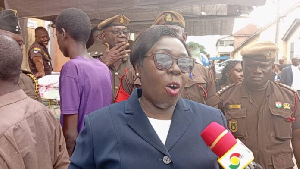
      Commenting on the matter, Justice Angelina Mensah Homiah, Chairperson of the Steering Committee for the Justice For All Program, called it an unfortunate incident.

      She noted that the case of the 14-year-old might have remained unnoticed if her organization had not conducted the prison review.

      “This is very unfortunate and we will ensure that this prisoner who has overstayed for five months leaves the Kumasi Central Prisons today before we also leave the premises. Had it not been the Justice For All program, we would not have uncovered this event,” she insisted.

      CSP Alex Adjei, the acting officer in charge of the Ashanti Region Prison Command, was astonished by the incident and reported that the investigator handling the case had provided him with a signed court warrant.

      “I am surprised by this Nkawie case but it is not our fault. So far as the warrant is genuine, we don’t know any other thing until the police come for you,” he explained.

      In the meantime, Justice Angelina Mensah Homiah guaranteed that the investigator accountable for this situation will be held responsible and required to account for why the teenager was incarcerated for five months.

      “I continue to ask who signed the warrant for the investigator to bring the accused person back to prison? In this case, he was discharged by the court. You have told me he has been released now but I am still probing for further answers. The Justice for All program needs more answers,” she stressed, the report added.

    11. Ghana aims to restrict certain cocoa purchases amid ongoing shortages

      Ghana aims to restrict certain cocoa purchases amid ongoing shortages

      Ghana is looking to restrict certain cocoa purchases for the upcoming season, indicating that the severe shortages affecting the market and driving futures prices to unprecedented levels might not be resolved soon.

      In a communication to buyers this week, the world’s second-largest cocoa producer announced that it will decide the amount of the next crop that can be sold as specialty cocoa based on overall production. The regulator will distribute the beans “fairly” among buyers. Specialty cocoa beans include those with certifications like Fairtrade, UTZ, and Rainforest Alliance, as well as traceable beans.

      This decision to limit some purchases suggests concerns that Ghana’s next cocoa crop may not rebound as much as anticipated by some market observers, despite favorable weather conditions and timely access to pesticides and fertilizers. Cocoa futures in New York set multiple records this year but have since fallen by more than 30% after reaching their peak in April.

      “Volumes to be traded as specialty during the 2024-25 cocoa year will be determined as a percentage of total production and allocated equitably” to registered buyers, Emmanuel A. Opoku, deputy chief executive responsible for operation at the Ghana Cocoa Board, said in the letter dated July 16 and seen by Bloomberg.

      A representative from the Ghana Cocoa Board did not respond to phone calls or a text message requesting comments.

      Ghana has been forced to delay the delivery of at least 250,000 metric tons of cocoa to the 2024-25 season, which begins in October, due to a drop in production. Both Ghana and its neighboring country, Ivory Coast— the largest global producer— have been struggling with the spread of swollen shoot disease.

      Despite these challenges, Ivory Coast anticipates its 2024-25 harvest will recover to 2 million tons, up from an estimated 1.8 million tons for the current season. Conversely, Ghana projects an increase in production to 700,000 tons from approximately 425,000 tons.

      The Ghana Cocoa Board is now asking buyers interested in specialty cocoa for the next season to submit details including off-take agreements, shipment plans, and specific information on the quantity and type of specialty beans they intend to purchase, as outlined in the letter.

      The regulator, known as Cocobod, “will provide the approved tonnage for specialty cocoa for each” registered buyer “after the submission of their projections for the season,” Opoku said.

    12. I bowed to the speaker as a sign of respect and acknowledgement of parliamentary protocol – Wiawso MP

      I bowed to the speaker as a sign of respect and acknowledgement of parliamentary protocol – Wiawso MP

      The Member of Parliament for Sefwi Wiawso, Dr. Kwaku Afriyie, has addressed the situation that resulted in his removal from Parliament by Speaker Alban Bagbin.

      Footage of the event depicted Dr. Kwaku Afriyie bowing to the Speaker shortly before being led out by the parliamentary marshal.

      In an interview on Okay FM on Tuesday, July 23, the former Minister of Environment, Science, Technology and Innovation clarified that his bow was a gesture of respect toward the Speaker and an acknowledgment of parliamentary procedure, aiming to counter any claims of arrogance.

      He stated that reports suggesting he defied the Speaker’s order were incorrect.

      Dr. Kwaku Afriyie revealed that he had already packed his belongings before the marshal began to escort him, showing his willingness to adhere to the Speaker’s request to exit the chamber.

      “When the marshal was escorting me out, I told him to allow me to bow to the speaker because I foresaw that this matter will be discussed in the country for some time. That is why I bowed before him and his chair before heading out.

      “My bowing out did not even convince him to rescind on his directive. Some people were misinterpreting that I was resisting to be walked out. Actually, when he (the Speaker) first gave the order, I had already started packing my belongings so there was no resistance. It was the marshal who tried to hold my hand to push me out as if I had committed a crime,” he clarified.

      Watch the video below:

    13. Don’t pay July salaries of Colleges of Education Teachers – Govt

      Don’t pay July salaries of Colleges of Education Teachers – Govt

      Government has collaborated with Ghana Tertiary Education Commission (GTEC), to instructed the Controller and Accountant General’s Department to halt the salaries of all instructional staff at Colleges of Education for July.

      In a letter dated July 22, 2024, the Commission indicated that this order, prompted by the Minister for Education, Dr. Yaw Osei Adutwum, is due to the Colleges of Education Teachers Association Ghana (CETAG) not ending their current strike, which began in June.

      “At the instance of the Minister for Education on the non-adherence of CETAG members to call off an illegal strike from June 2024, you are by this letter requested to stop the salaries of all teaching staff of the Colleges of Education (CETAG) except for the College Principals for July 2024. By this letter, the College Principals are not to validate the July 2024 salaries of all teaching staff,” the letter signed by the Head of IPP at GTEC, Prof. Ahmed Jinapor Abdulai, stated.
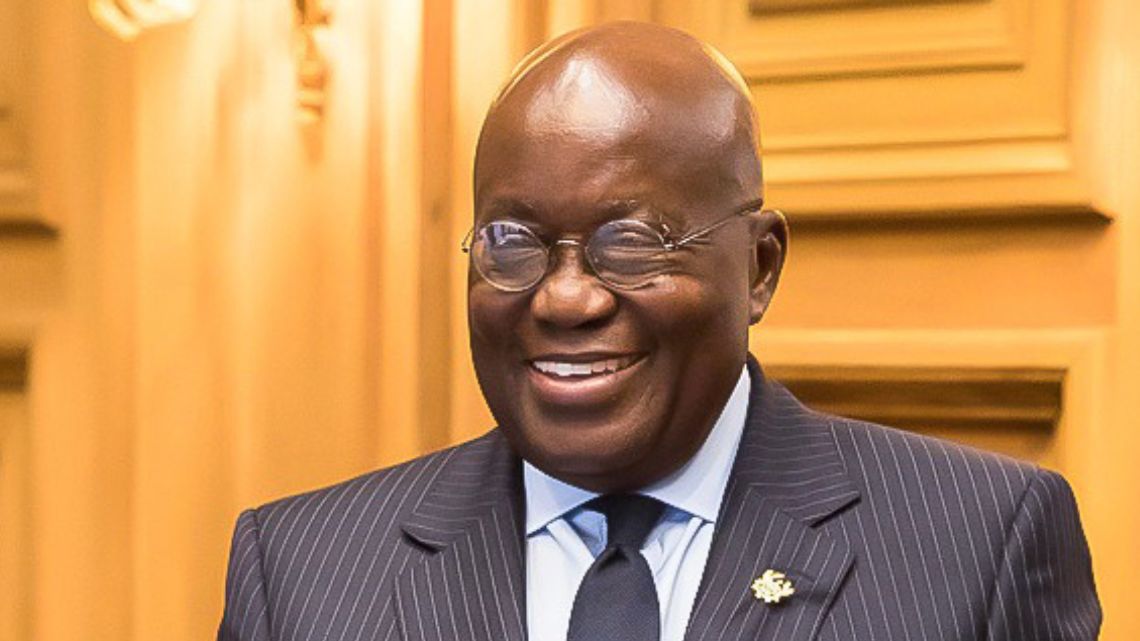
      Meanwhile, CETAG, which has maintained that its strike action over the non-implementation of the outstanding arbitration award by the National Labour Commission (NLC) is legal, has warned of legal action against any attempt by the government to freeze their salaries.

    14. Pastor warns Cheddar to quit his presidential ambitions because he is young

      Pastor warns Cheddar to quit his presidential ambitions because he is young

      Apostle Kofi Nkansah-Sarkodie, widely known as St. Sark and the head of Open Arms Ministry in Kumasi, has cautioned New Force leader Nana Kwame Bediako, known as Cheddar, to forgo his intention to run in this year’s presidential election.

      St. Sark has warned that ignoring this advice could lead to significant setbacks for Cheddar’s political ambitions.

      “I did a press conference and I advised him that he is young, in terms of politics and everything. So, if he wants to enter politics and become a president in Ghana, he should give himself 10 years.

      “I told him but he didn’t listen and is still actively aiming to be president,” he said.

      In a media briefing held at his church auditorium on Friday, July 19, 2024, St. Sark stated, “This is my last warning to him. If he doesn’t comply, his political career will come to an end on the 23rd of August because the kind of things I will say, it may affect his life throughout. I am telling him because I know where he is coming from.”

      He emphasized that he has repeatedly advised Nana Kwame Bediako to reconsider his decision but to no avail.

      “I know where he is coming from. I know everything about him, and that is why I am advising him to step down. I have advised that he is too young and too raw for the presidential seat,” he added.

    15. “Teach me about diplomacy” – KT Hammond’s response to critics after sacking members of GCMA

      “Teach me about diplomacy” – KT Hammond’s response to critics after sacking members of GCMA

      The Minister of Trade and Industry, Kobina Tahir Hammond (KT Hammond), has defended his choice to expel members of the Ghana Cement Manufacturers Association from a meeting he conducted with the Ghana Chamber of Construction Industry (GCCI).

      The minister explained that he removed the manufacturers from the meeting because they did not attend a previously arranged session, which was due to his demand for media presence during the discussion.

      “Let it not be said that I never invited them or consulted them. When I called them, they said they wouldn’t leave the fourth floor of the ministry to the conference room. I personally pleaded with them, but they said they wouldn’t come because of the journalists. I even suggested that if the details of the meeting were their concern, we could let the media leave after our introduction.

      However, their reply was that I should handle my media obligations first before they would join the meeting. Some are suggesting I should have been more diplomatic, but I don’t see what was diplomatic about their response to me,” he remarked on Asempa FM’s Ekosii Sen.

      He stated that it would have been hypocritical on his part to have allowed the manufacturers to stay in a later meeting where the media was present after declining to meet him earlier on such grounds.

      “The same people who said they wouldn’t meet me were sitting in the room, this time with cameras and lights glaring at them… You know me, I am not a hypocrite. I address issues plainly. If you tell me it’s not diplomatic, teach me about diplomacy. That is why I cannot be a diplomat,” he said.

      The minister alluded that the actions of the cement manufacturers following his attempt to get a law passed to regulate the cement industry are indicative of some cabal activities in the industry.

      KT Hammond dominated news headlines recently after viral videos captured him sacking members of the Cement Manufacturers Association from a meeting.

      A video from the event captured Minister Hammond insisting that the cement manufacturers leave the room before the meeting commenced. “I was invited by the Chamber of Construction. I wasn’t invited by the Association of Cement Manufacturers. I wasn’t invited by them. Can they leave?” the minister asked.

      He explained that he had already met with the manufacturers and that the purpose of this meeting was specifically to engage with the Chamber of Construction.

      “It’s either I leave or they leave,” the minister firmly stated, despite efforts from representatives of both associations to justify the manufacturers’ presence.

    16. We raised £400,000 funds were raised from NPP’s UK fundraising event, not £1.2m – Nana Akomea

      We raised £400,000 funds were raised from NPP’s UK fundraising event, not £1.2m – Nana Akomea

      Vice Chair of the New Patriotic Party (NPP) Flagbearer’s Campaign Team, Dr. Mahamudu Bawumia, has revealed that £400,000 was gathered from the fundraising event hosted by the party in the United Kingdom on June 22, 2024.
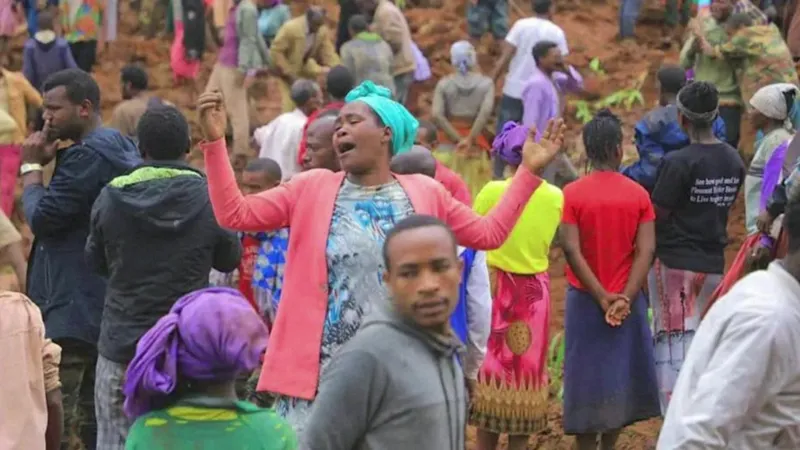
      Party leaders and the Young Executives Forum organized a fundraising dinner in London on that date to support Dr. Mahamudu Bawumia’s 2024 election campaign.

      Reports from the event indicated an impressive £1.2 million was raised, with attendees including Dr. Mahamudu Bawumia, his wife, Samira Bawumia, and other prominent NPP members.

      However, during an appearance on Metro TV’s Good Morning Ghana show, Nana Akomea disclosed a significantly different amount.

      In a discussion with the show’s host, Dr. Randy Abbey, about his time in the UK, Nana Akomea denied socializing there.

      Nana Akomea stated that his visit was to assist in the successful organization of the fundraising dinner for the party’s 2024 election campaign and expressed satisfaction with the funds raised from the event.

      “We were campaigning. We were raising funds for the campaign. We had about £400,000,” he told Dr. Abbey, who hit him with a barrage of questions about the event.

      During the fundraiser, Dr. Bawumia sincerely thanked the NPP-UK and YEF for their steadfast support. He reiterated his dedication to running a strong campaign, with the goal of achieving a landmark victory for the NPP, often called “breaking the 8.”

      Dr. Bawumia highlighted his aim to instill a mindset of possibilities among Ghanaians, shifting away from the common attitude of impossibilities.

      He mentioned that the initial phase of his campaign had been effective, and he plans to escalate his efforts as the election approaches.

      “The campaign has started in earnest. We have done a tour of the 16 regions, and we just finished with Ashanti. I would like to thank the Ashanti regional chairman and all the campaign team in Ashanti for the massive show of force that everybody saw when we got there,” Dr. Mahamudu Bawumia remarked.

      “I think going through the 16 regions, it is clear that the narrative is changing. There were people who, six months ago, did not believe that the NPP was going to win the 2024 elections, but I think that after talking about our record and talking about our vision for this country, minds have changed dramatically and NPP is in the position to win the 2024 elections.

      “We are not going to be complacent. We are just beginning. This first tour of the 16 regions is the first gear of the campaign. We are going to go into the second gear in July, the third and fourth gear by November, and I believe at every stage, we are going to up the ante,” Dr. Bawumia remarked.

    17. Leader, 7 others receive GHS100,000 bail for dismantling Bawumia sign post

      Leader, 7 others receive GHS100,000 bail for dismantling Bawumia sign post

      Eight individuals, accused of taking down a shared billboard featuring Vice President Mahamudu Bawumia and Hannah Asamoah, the NPP parliamentary candidate for Agona East, have received bail from the Agona Swedru Magistrate’s Court.

      The court, led by Victor Kusi, set bail at GH¢10,000 for six of the accused.

      Among the eight was Nana Amoako Ababio II, the Regent of Mankrong-Junction. Each is required to provide three guarantors, and the case was postponed to Tuesday, August 6, 2024.
      Earlier, two individuals in their eighties were granted bail of GH¢40,000 each when they appeared in court on Tuesday, July 16, 2024.
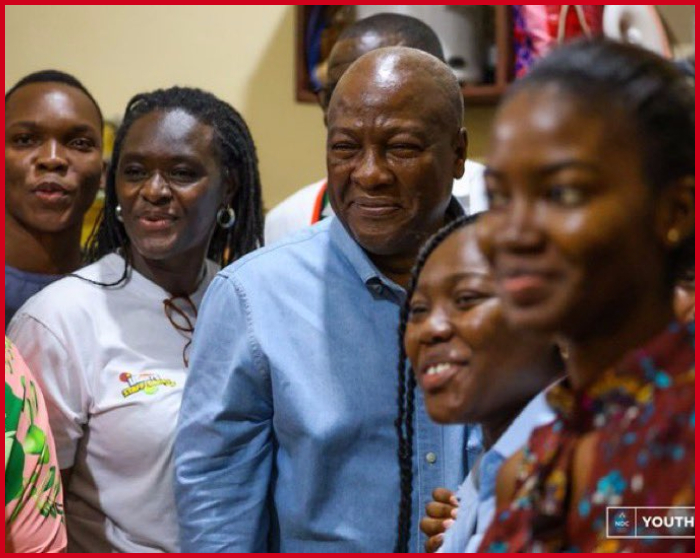
      Additionally, the court instructed them to reinstall the billboard at its original location to maintain peace and order.

      After the hearing, Asamoah urged party members to refrain from dismantling or defacing opponents’ posters and billboards to prevent legal action.

      She mentioned that this behavior had become a recurring issue in Agona East during election years and encouraged supporters to stop it to avoid political disputes.

      “The arrest and prosecution of these people must serve as a warning to all political party supporters,” she said. She implored leaders to adopt issue-based campaigns to convince the electorate and stop inciting conflict among supporters.

    18. Take him out of the House – Speaker’s reaction to rude Sefwi Wiawso MP

      Take him out of the House – Speaker’s reaction to rude Sefwi Wiawso MP

      Head of the legislative body, Alban Sumana Kingsford Bagbin, has criticized the lawmaker from Sefwi Wiawso, Kwaku Afriyie, for challenging his position.

      While announcing the president’s selection of two new individuals for the role of Supreme Court Justices, the Speaker emphasized the necessity for the House to deliberate on legislation to limit the maximum number of judges appointed to the highest court.

      Nevertheless, the parliamentarian from Sefwi Wiawso opposed the Speaker’s remark, basing his objection on his role as the representative of his constituency’s citizens.

      “Mr. Speaker, with all due respect to your chair, this preliminary comment you are making is prejudicial, and I believe that as representing the good people of Sefwi-Wiawso, it doesn’t lie in your mouth to remind us of the things that you have said, thank you,” he remarked.

      The remark by the legislator, however, did not please the Speaker, who considered it disrespectful.

      In reaction, Speaker Bagbin proclaimed his position as higher than that of the legislator and proceeded to command his prompt ejection from the hall.

      “This is a completely rude remark, and I can send you out of the House now. It lies in my authority to do so. You represent the good people of Sefwi-Wiawso; I represent the whole country. Please, Marshal, take him out of the House. I will not entertain such disrespect,” he ordered.

      The Majority Chief Whip, Frank Annoh-Dompreh, in response to the Speaker’s directive, offered an apology to Mr. Bagbin on behalf of his associate and the group.

      “Speaker, we acknowledge the wisdom you have guided us with and how you have navigated us to this point. We have had moments of tension; we have had some tense moments in the House, and through all that, you have shown leadership, and it is incumbent upon us as leaders to help you right now. What happened a moment ago was unfortunate,” he told the Speaker.

      Yet, Mr. Kwaku Afriyie, in a discussion on Monday night, insisted that he was never inappropriate with his dissent and rejected the apology made for him.

      “He (Hon. Frank Annoh-Dompreh) does not have my permission to apologize to the Speaker. And this one you can put on record: I haven’t done anything wrong; why should I apologize?

      “Whatever happens, I will advise myself. I will not be prejudicial in saying some things. That will be very unfortunate on my part, so you let the issue unfold, and then we shall see. So far, I haven’t done anything wrong; I haven’t insulted the Speaker; I haven’t disrespected him; where’s the disrespect?” he stated in an interview on Citi FM.

      “Actually, it was with a lot of humility that I acted, and that was why I told the Marshal to let me bow to the chair. I was raised in the palace. That is all. I have not done anything wrong to apologize for,” he added.

      Watch video below:


    19. Submission of Annual Returns and Renewals extended to September 30 – ORC

      Submission of Annual Returns and Renewals extended to September 30 – ORC

      The Office of the Registrar of Companies (ORC) has extended the deadline for filing Annual Returns and Renewals to September 30, 2024.

      This extension allows businesses, including Companies, Churches, Associations, Civil Society Organizations, Think Tanks, Schools, Foundations, and other entities, to submit their filings if they missed the original July deadline.

      The ORC cited the recent nationwide strike as a major factor, which disrupted both in-office and electronic filing processes, necessitating the deadline extension.

      “With the extension of the deadline, the ORC aims to facilitate a smoother process for businesses, promote transparency and compliance with the Companies Act, 2019 (Act 992) and other enactments governing the various registration entities”, the statement said.  

      It noted that, as of now, only 6,760 out of more than 530,000 Business Names (Sole Proprietorships) have completed their renewals. Additionally, out of 10,734 Companies, 8,890 that were sampled remain non-compliant with their Annual Returns filing.

      “These Companies in default are made up of Companies Limited by Shares and Companies Limited by Guarantee (Schools, Association, Churches, Foundations, Charity Organizations, Fun Clubs, NGOs etc.). Unlimited and External Companies are advised to file their Annual Returns and Group Accounts by the end of September 2024 respectively”.

      “In this view, officials of the affected Companies are kindly reminded that, as per Section 289 (5) of the Companies Act 2019 (Act 992), a company that has its name struck off from the Register is not permitted to conduct business under the Company Name for twelve (12) years”, it added.

      The ORC cautioned that a company removed from the Register can only be reinstated through a Court Order directed to the Registrar of Companies, in accordance with Section 289 (7) of the Companies Act, 2019 (Act 992).

      “Hence, Company officials are to visit our website, www.orc.gov.gh or  check in the national dailies to find published names of affected companies to be struck off”.

    20. Duties on building materials should be removed – Building contractors to govt

      Duties on building materials should be removed – Building contractors to govt

      The President of the Association of Building and Civil Engineering Contractors of Ghana (ABCECG), Mr. Anthony Klutsey, has called on the government to either eliminate or substantially reduce taxes and levies on construction materials to cut costs.

      He suggested that the mid-year budget review scheduled for Tuesday, July 23, 2024, would be an ideal opportunity for the government to address this issue.

      Mr. Klutsey pointed out that the soaring prices of essential construction materials are hampering both the government’s affordable housing projects and individual homeownership ambitions. He also stressed the need for the government to clear outstanding payments to contractors and to develop targeted affordable housing programs.

      In an interview following an urgent National Executive Meeting of the Association, Mr. Klutsey described the current cost of building materials as a crisis.

      He mentioned that research shows approximately 30% of the cost of cement, steel rods, and other essential materials is attributed to government-imposed taxes and levies.

      He added that eliminating these taxes and stabilizing the cedi are key steps that could significantly lower building material prices and keep them manageable.

      “In the past, building materials were tax-free in Ghana, resulting in relatively low housing costs. However, the current situation is dire with numerous taxes imposed on these materials. The government needs to act swiftly to save the industry and its affordable housing initiative,” he stressed.

      Mr. Klutsey emphasized that without reducing the cost of building materials, the government’s affordable housing plans would remain unattainable.

      “Investors in affordable housing projects will walk away if building costs put houses beyond the reach of many workers,” he added.

      He also criticized the concentration of affordable housing projects in Accra, noting that it is self-defeating. He argued that affordable housing projects should be decentralized to the districts, allowing those who truly need affordable housing to access them.

      “Placing affordable housing projects in Accra, Kumasi, and other cities only benefits the wealthy who buy additional houses. We need to decentralize these projects to the districts and price them appropriately to attract those in need,” he said.

      Mr. Klutsey also highlighted the ongoing issue of delayed and unpaid invoices for completed projects, which has created substantial difficulties for contractors, some of whom are facing severe financial and health problems as a result. He urged the government to address all outstanding payments promptly and to only award contracts when there are available funds to cover them.

      The ABCECG President also conveyed the Association’s readiness to collaborate with the government to develop long-term solutions to the numerous challenges plaguing the construction sector. He emphasized that solving these issues could create substantial job opportunities for young people, thereby helping to reduce youth unemployment.

      He consequently called on the government to give these matters serious attention to avoid them escalating into a national emergency with potential implications for national security.

    21. Mid-year budget review to be presented tomorrow in parliament

      Mid-year budget review to be presented tomorrow in parliament

      Finance Minister Dr. Mohammed Amin Adam is set to deliver the 2024 Mid-Year Budget Review in Parliament on Tuesday, July 23, 2024.

      Deputy Majority Leader Patricia Appiagyei revealed that the Finance Minister will adjust the government’s yearly projections in light of the recently declared IMF balance of payment support.

      This presentation will detail the updated financial strategies and economic forecast for Ghana.

      “Mr Speaker, the business committee has programmed the minister for finance to present a statement on the Mid-Year Review of Budget Statement and Economic Policy of the government for the 2024 financial year on Tuesday, July 23, 2024,” the Deputy Majority Leader said.

    22. Legon-Pentagon’s biggest “dbee” gives room tour

      Legon-Pentagon’s biggest “dbee” gives room tour

      A student reputed to be the wealthiest at the University of Ghana has offered a look into her “luxurious” campus room.

      The young woman, residing in Pent Hall, considered the residence for the elite, conducted a tour of her room, displaying her bed, wardrobe, shoes, and various decorative items.

      She mentioned that the room was originally designed for two occupants, but she paid extra to have it to herself.

      In response, some social media users have expressed doubt about her claims of coming from a wealthy background.

      Watch video below:

    23. GRA finalizes process to capture 2m potential informal sector taxpayers into tax system

      GRA finalizes process to capture 2m potential informal sector taxpayers into tax system

      The Ghana Revenue Authority (GRA) has announced that it is nearing the completion of processes to bring approximately two million potential informal sector taxpayers into the tax system.

      At a media briefing in Accra, Mr. Edward Gyambrah, Commissioner of the Domestic Tax Revenue Division of the GRA, stated that advanced plans are in place to launch the Modified Taxation System, aiming to incorporate about two million small and medium taxpayers from the informal sector.

      “This system will capture everyone who earns income in the country, and we envision roping-in about two million before end of year. We’ve been working on it over the last three months and its roll-out is scheduled for August this year,” he said.

      The informal sector is often elusive in tax mobilization, with tax evasion and avoidance being widespread.

      Despite the rapid growth of the informal economy, GRA data indicate a consistent decline in tax collection from this sector in recent years.

      For example, the Vehicle Income Tax, a major contributor from the informal sector, decreased from 8.3 percent in 2017 to 7.3 percent in 2020; similarly, the Tax Stamp contribution fell from 1.4 percent to 1.3 percent over the same period.

      Tax experts find this decline alarming, given that the informal sector makes up more than 85 percent of the national workforce.

      Good Governance Africa estimates that Ghana’s informal sector accounts for about 35.6 percent of the economy, roughly equivalent to US$66 billion at GDP purchasing power parity.

      Discussing the sector’s potential, Mr. Gyambrah mentioned that the Modified Taxation System will aid the GRA in expanding the current tax base.

      In fact, the GRA has surpassed its target by registering over 600 taxpayers in the Large Taxpayer Office into the Commissioner-General’s invoicing system.

      Mr. Gyambrah noted that the Authority has onboarded 614 taxpayers so far and is prepared to implement additional key strategies, including the Modified Taxation System.

      “These are key strategies that will be replicated in implementing the modified system to increase collection and enable us to meet the GH¢146billion tax target for the 2024 revenue year,” he said.

    24. Govt misses treasury bills target by GHS1.44bn for second consecutive week

      Govt misses treasury bills target by GHS1.44bn for second consecutive week

      The government fell short of its treasury bills target by GH¢1.44 billion for the second consecutive week.

      As per the auction results from the Bank of Ghana, the government accepted all the bids for short-term instruments.

      It raised GH¢3.86 billion from selling these financial instruments.

      The shortfall could be attributed to efforts to maintain lower interest rates. GH¢2.904 billion was obtained for the 91-day bills.

      The 182-day bills brought in approximately GH¢698.50 million. The 364-day bill gathered GH¢261.30 million.

      Meanwhile, interest rates stayed stable across the yield curve. The yield on the 91-day bill remained at 24.78%.

      For the 182-day bill, the yield was 26.71%, slightly down from the previous week’s 26.74%. The one-year bill had a yield of 27.80%, marginally up from the prior 27.78%.

      It appears that the government might miss its 17.4 billion treasury target for this month.

      SECURITIESBIDS TENDERED (GH¢)BIDS ACCEPTED (GH¢)
      91 Day Bill2.904 billionGH¢ 2.904 billion
      182 Day Bill698.50 million698.50 million
      364 Day Bill261.30 million261.30 million
      Total3.863 billion
      Target5.310 billion
    25. NPA agrees to export petroleum products from Ghana Senegal and Gambia

      NPA agrees to export petroleum products from Ghana Senegal and Gambia

      The National Petroleum Authority (NPA) has reached an agreement with Senegal and Gambia to export petroleum products from Ghana.

      This expands the list of countries already importing petroleum products from Ghana, including Mali, Niger, Burkina Faso, Côte d’Ivoire, and Togo.

      In 2023, the total volume of petroleum products re-exported and transited to these neighboring countries was 385,154,100 liters.

      Delivering his opening speech at the Ghana International Petroleum Conference (GhiPCon), with the theme: “The Petroleum Industry:  Building a Future for Growth, Efficiency, and Sustainability”,

      Dr. Mustapha Abdul-Hamid stated that the rise in export volumes is evidence of the NPA’s significant achievements in tackling illicit fuel activities in the country.

      At present, the industry has over 3,000 service providers with substantial local involvement, collectively supplying over four million metric tonnes of petroleum products each year, both domestically and internationally.

      This progress has enabled the industry to become a major contributor to the growth of Ghana’s gross domestic product (GDP).

      “We estimate that the sector had a monetary value of over Ghc 71 billion, representing about 84% of the country’s 2023 GDP. In the past seven years the industry returned an average annual value of over Ghc 35  billion”, he said.

      The NPA emphasized its commitment to leveraging technology and innovation to stay relevant in the evolving downstream petroleum industry. By developing and implementing forward-thinking strategies and policies, the NPA aims to ensure the industry’s efficiency and profitability while providing consumers with optimal value for their money.

      The authority highlighted that the new transparent automatic price adjustment formula has transitioned from an annual regulated price with unpaid subsidies to a more frequent bi-weekly and daily pricing model.

      Dr. Abdul-Hamid underscored the NPA’s zero-tolerance stance on toxic fuels, noting that Ghana, Kenya, Tanzania, Uganda, and Morocco now use low-sulphur fuels with typical imports below 50 ppm, and local refineries are on track to meet compliance standards.

      He also pointed out that the NPA has introduced technology-driven initiatives such as the petroleum marking scheme, bulk road vehicle tracking project, electronic cargo tracking system, and enterprise relational database management software to ensure the quality and quantity of petroleum products delivered to consumers.

      Meanwhile, the Minister of Energy, delivering a speech on behalf of Vice President Dr. Mahamudu Bawumia, praised the NPA for its effective management of the “Gold for Oil” program and the Cylinder Recirculation Model (CRM), which has increased investor confidence in the sector.

      He noted that these efforts, combined with a strong policy framework, have encouraged private sector investment and significantly contributed to achieving Ghana’s goal of 50% LPG penetration by 2030.

      He urged the NPA to continue investing in infrastructure, adopting cutting-edge technology, and strengthening the supply chain to secure Ghana’s energy future.

      He said with the  geopolitical tensions to technological advancements and environmental concerns, “our strategies must be robust, innovative, and adaptable.”

      He also pledged the government’s ongoing dedication to advancing and exploring policies that boost Ghanaian content, support capacity building, and create opportunities for the Ghanaian population.

      He believes that such efforts can ensure that the advantages of our resources are broadly distributed while fostering the growth of our local workforce and businesses.

    26. Ghana cedi ranked as 4th-worst performing currency globally – Report

      Ghana cedi ranked as 4th-worst performing currency globally – Report

      Ghana’s local currency continues to depreciate against major foreign currencies, particularly the US dollar.

      As of Monday, July 22, 2024, at 8:00 AM, the media reports that the cedi is trading at GH¢15.75 per $1 at various forex bureaus.

      This decrease in the cedi’s value is also noticeable with other major currencies, such as the British Pound and the Euro.

      For example, the cedi is exchanging at GH¢20.13 per £1 and GH¢16.95 per €1 at major forex bureaus nationwide.

      Bloomberg recently listed the Ghana cedi as the fourth-worst performing currency out of 150 global currencies it tracks.

      Since the start of the year, the cedi has fallen in value by 21% against the US dollar.

      The cedi’s record-low performance has been linked to the rising demand for US dollars to purchase petroleum products, pharmaceuticals, and other imported items.