Author: Amanda Cartey

  • Mahama, Bawumia advocate for simplified tax reforms

    Mahama, Bawumia advocate for simplified tax reforms

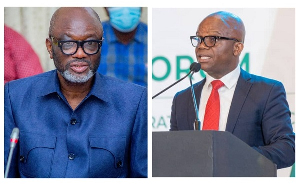
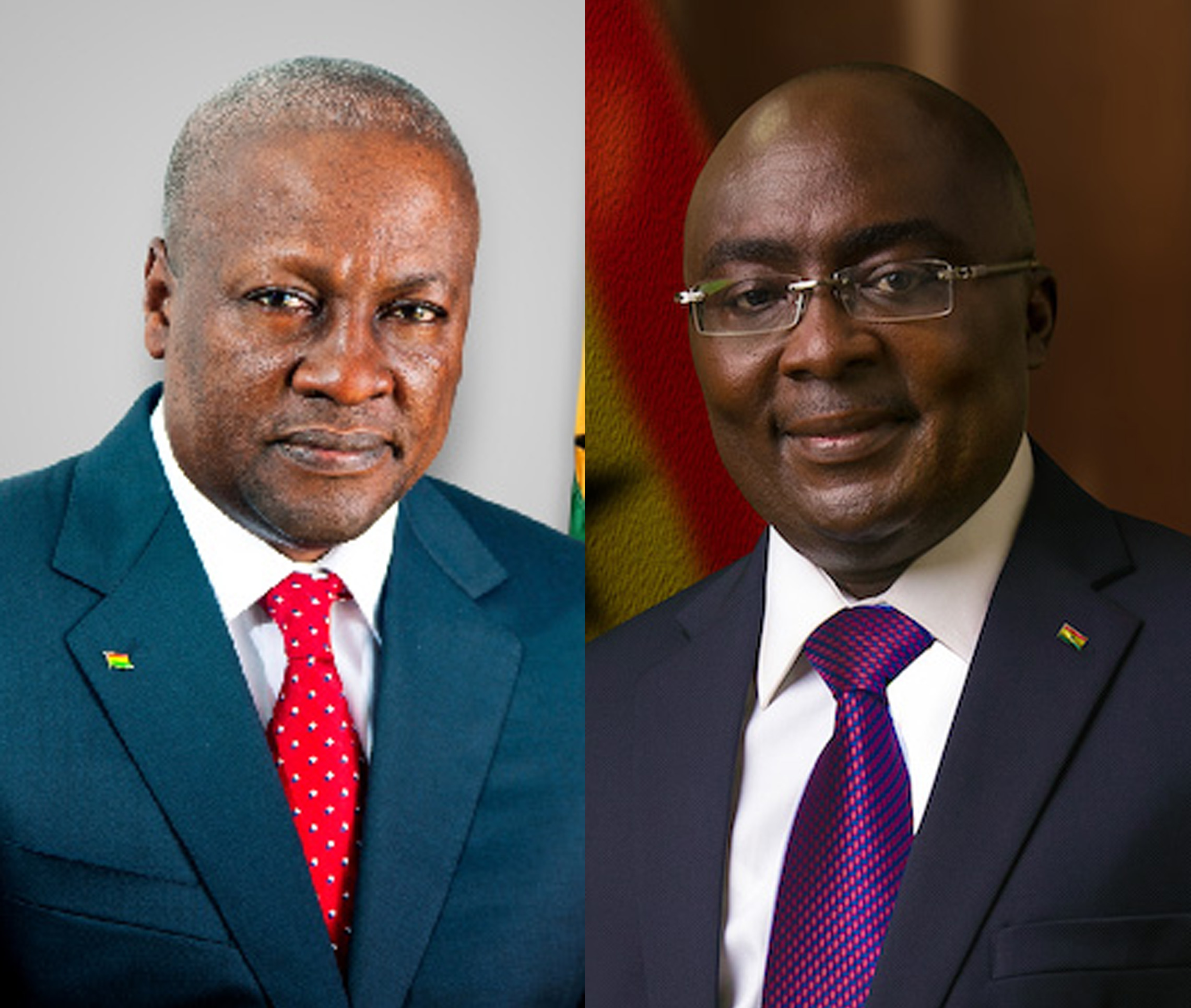
    Vice President Dr. Mahamudu Bawumia and former President John Dramani Mahama have both advocated for a simplified tax structure to facilitate easier calculation and adherence.

    As the standard-bearers of the New Patriotic Party (NPP) and the National Democratic Congress (NDC) respectively, they expressed their intention to implement new tax frameworks aimed at alleviating the burden on businesses should they assume office.

    These sentiments on tax reform were shared during their addresses to business leaders and investors at the 8th CEO Summit, themed “Reigniting Business and Economic Growth: Charting a Path Forward.”

    Dr. Bawumia highlighted that many Ghanaian businesses struggle with understanding the computation and components of taxes paid to the Ghana Revenue Authority, often resulting in disputes between tax authorities and business proprietors.

    “I believe Ghana would benefit from a flat tax system as it makes it very easy, makes it very transparent and easy to comply and understand,” he said.

    He pledged to introduce a tax amnesty that would write off tax obligations of businesses and households within a certain period so “we start afresh on a clean slate.”

    “I also want to realign our import duty regime towards flat taxes in cedis on import duty so that there is predictability on our import duties. And I also want to realign our Ghana import regime to what persist with our nearest competitor, thus the port of Lome,” he said.

    Mr. Mahama stressed the importance of establishing a reasonable threshold for taxation to avoid overburdening law-abiding citizens and businesses while ensuring full compliance with tax obligations to the state.

    He promised that if elected president, he would simplify the Value Added Tax (VAT) and modernize its collection through the use of Point of Sale (POS) devices to enhance transparency.

    “We will abolish the e-levy and some taxes that have become a burden on businesses and households. And we will not burden you with endless tax audits and harass you with the Economic and Organised Crime Office,” he said.

  • Mahama plans to create a new administrative city outside congested Accra to improve govt services

    Mahama plans to create a new administrative city outside congested Accra to improve govt services

    NDC’s presidential candidate, John Dramani Mahama, has unveiled proposals for the creation of a new administrative center beyond the confines of the Greater Accra Region.

    This endeavor seeks to elevate the quality of government services and alleviate the significant traffic congestion gripping the nation’s capital.

    During a session with the European Union Ambassador and the EU Chamber of Commerce on May 28, 2024, Mr. Mahama stressed the critical importance of this undertaking, highlighting the adverse effects of Accra’s overcrowding on both commercial expansion and governmental efficacy.

    The proposed new city is envisaged as a strategic, enduring remedy to these issues.

    “We will commence a feasibility study with a plan to construct a new city. Accra is gridlocked, and the time has arrived for us to relocate certain parts of the government services from Accra,” Mr. Mahama stated.

    He emphasised that while Accra will remain the capital, the plan involves transferring some government functions to the new city. 

    “Accra will remain the capital, but we will transfer a portion of it elsewhere. There is already available land on the Accra Plains and opposite the bank of the Volta Lake,” he explained.

    Mr. Mahama emphasized the ambitious scale of the project, estimating a 20-year timeframe for its completion.

    This extended duration demonstrates a thorough and future-oriented strategy aimed at ensuring the new city fulfills its intended objectives.

    “Moreover, we are establishing a port terminal in Mpakadan to transport cargo to the northern part of the country,” Mr. Mahama added, illustrating the broader infrastructural improvements accompanying the new city initiative.

  • Akufo-Addo praises NEIP’s contribution to reshaping Ghana’s startup environment

    Akufo-Addo praises NEIP’s contribution to reshaping Ghana’s startup environment

    The President of Ghana, Nana Addo Dankwa Akufo-Addo, commended the significant influence of the National Entrepreneurship and Innovation Programme (NEIP) on the entrepreneurial landscape of the country.

    He made these remarks during the 3rd Applied Research Conference of Technical Universities in Ghana (ARCTUG 2024) in Sunyani.

    Established in 2017, NEIP has played a pivotal role in promoting entrepreneurship and innovation in Ghana by offering vital assistance to startups through financing, training, and guidance.

    President Akufo-Addo highlighted NEIP’s achievements, enabling 15,000 startups to expand their activities and generating 103,871 employment opportunities by the conclusion of 2023, thus aiding economic diversification and empowering the youth.

    He recognized the foundational contributions of the late John Kumah, the inaugural CEO of NEIP, and the former Minister for Business Development, Mohammed Awal Ibrahim, in establishing the initiative.

    The President stressed NEIP’s significance in curbing unemployment and nurturing a spirit of self-sufficiency and ingenuity by equipping young entrepreneurs with essential skills and resources.

    He also emphasized the proliferation of innovative enterprises across diverse sectors, propelling sustainable economic progress and enhancing citizens’ welfare.

    President Akufo-Addo reiterated the government’s dedication to fostering entrepreneurship and innovation beyond NEIP, including substantial investments in education and research.

    He highlighted the administration’s emphasis on STEM education and endeavors aimed at cultivating top-tier STEM institutions and programs.

    Additionally, the President urged all stakeholders to sustain their backing for initiatives like NEIP and collaborate to propel Ghana’s development through innovation and entrepreneurship, striving for a brighter future characterized by innovation, inclusivity, and prosperity.

  • Fuel prices to go up in first half of June 2024 – IES predicts

    Fuel prices to go up in first half of June 2024 – IES predicts

    The Institute for Energy Security (IES) has predicted another fuel price hike in the first half of June 2024.

    This forecast is based on recent trends in the international fuel market and the weakening performance of the Cedi in the domestic forex market.

    “Gasoline [petrol], Gasoil [diesel], and Liquefied Petroleum Gas (LPG) all recorded a decrease of about 4.17%, 0.87%, and 3.44%, respectively over the last two weeks. Given the favourable price changes recorded on the international market for these products, prices at the local pumps should ordinarily reflect a reduction to relieve consumers. However, the massive fall (4.17%) of the Ghana cedi against the U.S. dollar may prevent a realisation of the full gains made on the world fuel market on the local fuel market”, it pointed out.

    World Fuel Market

    IES monitoring of the global Standard & Poor’s (S&P’s) Platts on petroleum products performance in the world fuel market shows that the prices of petrol, diesel and LPG have all decreased.

    Published data for the second pricing window of May 2024 indicate that petrol closed at $851.73 per metric tonne, diesel closed at $749.70 per metric tonne, and LPG closed at $444.80 per metric tonne.

    The net changes indicate that the price of petrol has fallen by 4.17%, diesel by 0.87%, and LPG by 3.44%.

    Local Fuel Market

    During the second pricing window of May 2024, the anticipated price reductions at local pumps were hindered by the stagnation in the value of the local currency.

    Analyzing the performance of refined petroleum products during this period, it was noted that diesel and petrol prices remained relatively steady across most Oil Marketing Companies (OMCs) monitored.

    According to calculations by the Institute for Energy Security (IES), the national average prices for petrol and diesel during the second pricing window of May 2024 were GH₡14.22 and GH₡14.00 per litre respectively, while LPG was priced at GH₡15.63 per kilogramme.

  • Bawumia will fix the cedi – Stephen Amoah asserts

    Bawumia will fix the cedi – Stephen Amoah asserts

    Deputy Minister for Finance, Dr. Stephen Amoah, attributes the depreciation of the cedi to the ritual problem stemming from the import-driven economy.

    Addressing the media on Wednesday, he emphasized that the demand for the dollar due to importation exacerbates the depreciation of the cedi, necessitating national attention beyond the capacity of any single government.

    He assured that if elected, Vice President Dr. Mahamudu Bawumia would implement a long-term framework to tackle the cedi’s depreciation.

    “Cedi depreciation is a ritual problem, I agree with you. It’s not because of one particular government…It’s an issue that has nationalistic or that needs nationalistic attention,” Dr Amoah said.

    The Deputy Finance Minister added “so far as we keep on being an importer-driven economy, we’ll be having problems with the cedi because we import almost everything. But Inshallah, Alhaji Dr. Mahamudu Bawumia, next year if he comes, we’re going to design a long-term framework to deal with the cedi.”

    Over the past month, the Ghanaian cedi has experienced further weakening against the US dollar and other major foreign currencies.

    While many attribute this to importation, Joe Jackson, the Director of Operations at Dalex Finance, holds a different view. He argues that Ghana’s exports have surpassed its imports in recent years.

    During an appearance on JoyNews’ PM Express on Thursday, Jackson explained that curbing the depreciation of the Ghanaian cedi hinges on the country’s ownership of its exports.

    Despite Ghana’s favorable export-import balance, Jackson contends that the cedi’s depreciation persists due to foreign ownership of exports. He notes that while Ghana exports goods, the profits are often repatriated by foreign entities, depriving the country of the financial benefits.

    Citing statistics from other nations, Jackson underscored the contrast in how export earnings are retained within Ghana compared to countries like Botswana and Nigeria.

    “Botswana, when they export oil, 51.8% come back into the country. In Nigeria, when they export oil, 51% of the money comes back to the country. Check out Ghana. I’m telling you that the problem is the ownership. In fact, for our non-oil, it’s as low as 6.5%. This is the problem.”

    Mr. Jackson underscored the importance of Ghana keeping more of its export earnings within the country to stabilize the currency.

    In a separate development, Finance Minister Dr. Mohammed Amin Adam, on May 24, provided assurance that the Ministry of Finance, in collaboration with the Bank of Ghana, is implementing strategies to combat the depreciation of the cedi.

    These strategies involve expediting the fiscal consolidation process by streamlining expenditures and improving revenue generation. Additionally, they include intensifying the gold-for-oil program and implementing appropriate foreign exchange interventions by the Bank of Ghana, among other measures.

    Furthermore, on Monday, May 27, the Bank of Ghana (BoG) responded to regulatory concerns by establishing a dedicated task force to oversee all foreign exchange bureaus and ensure compliance with regulatory standards.

    The primary aim of this task force is to address the activities of illicit operators in the foreign exchange market and promote greater transparency in the market.

  • Bawumia vows support for labor institutions in safeguarding workers

    Bawumia vows support for labor institutions in safeguarding workers

    Vice-President and New Patriotic Party presidential candidate, Dr Mahamudu Bawumia, assured the Trades Union Congress (TUC) on Wednesday (29 May) that he would strengthen the National Labour Commission (NLC) under his Presidency by establishing offices across the country.

    He emphasized that this step would ensure the NLC’s effective and full-time operation.

    Dr Bawumia made these remarks during a meeting with the TUC membership in Accra.

    He also stated that if the new Labour Act is not reviewed by the end of this year, he would ensure its review and passage under his administration to safeguard workers’ rights.

    The Labour Act, 2003 (Act 651) governs employment and labour matters in Ghana, consolidating all related laws.

    The National Labour Commission (NLC) is responsible for administering these laws.

    Dr Bawumia reiterated his intention to implement a flat tax rate in 2025 after granting tax amnesty to all individuals in the country.

    Regarding stabilizing the cedi’s value, he mentioned that the Bank of Ghana (BoG), with sufficient gold reserves, would provide the needed stability to prevent frequent depreciation of the Ghanaian currency.

    To achieve this, Bawumia stated that his government would ensure all gold concessions are owned by Ghanaians, and gold processed in the country is sold to the central bank to bolster reserves.

    He also pledged to support the Geological Survey Authority and technical universities in exploring the country’s seven gold belts to ensure positive outcomes from the gold concessions.

    Dr Bawumia restated his plan to establish a Minerals Development Bank to assist small-scale miners in securing funding, noting that the sector could generate three billion dollars annually.

    In terms of fiscal discipline improvement, the NPP presidential candidate assured that his administration would ensure the Fiscal Responsibility Council operates independently, overseeing the Ministry of Finance.

    He promised to reduce government expenditure by 3% of the gross domestic product (GDP), equivalent to about GHc30 billion annually.

    Dr Bawumia reaffirmed his commitment not to appoint more than 50 Ministers under his administration.

    Regarding constitutional matters, the NPP Flagbearer pledged to review Article 87 of the 1992 Constitution and the National Development Planning Commission Act (Act 479) to align with the nation’s development aspirations.

    Dr Anthony Yaw Baah, the general secretary of TUC, welcomed Dr Bawumia and expressed confidence in the presidential candidates’ plans for the nation, noting that ideas, systems, and institutions are crucial for transforming a country.

    He suggested that the two major political parties, the NDC and NPP, could even form an alliance to implement a “24-hour Economy with Digitisation,” which elicited laughter from the audience.

    Dr Baah presented the TUC’s manifesto, which focuses on six key thematic areas: social and human development, economic policy, labour market policy, energy and power, governance policy, and climate change and environmental policy.

    He emphasized that these thematic areas are crucial for transforming the nation.

    The TUC presented Dr Bawumia with 10 copies of its manifesto.

    Accompanying the NPP presidential candidate were Osei-Kyei Mensah Bonsu, the chairman of the NPP manifesto committee; Joseph Cudjoe, Minister of Public Enterprises; and Ignatius Baffour Awuah, the Minister of Employment and Labour Relations.

  • Professor Agyemang-Duah advocates for decentralization in our developmental approach

    Professor Agyemang-Duah advocates for decentralization in our developmental approach

    Co-founder of the Ghana Center for Democratic Development (CDD-Ghana), Prof. Baffour Agyemang-Duah, has advocated for a more decentralized approach to Ghana’s development strategy.

    His remarks follow the unveiling of a new 40-year development plan by the National Development Planning Commission (NDPC).

    Speaking on JoyNews’ PM Express, he noted that while Ghana has made strides in administrative decentralization, it has fallen short in fiscal and political decentralization, posing a significant challenge to the country’s development.

    Prof. Agyemang-Duah emphasized the importance of placing people at the forefront of Ghana’s development process, especially in a democratic nation like Ghana.

    “But then at the same time, you hear something that sounds like a command economy plan, a centralised economy, because everything seems to be built around the central government. There’s a contradiction there.”

    “We should be looking at how we decentralize our development processes. So while I appreciate the fact that we should have a development planning for the nation, we should also be seriously considering having a decentralized political system that will enable development in the country to be driven more at the community or the district level.”

    Prof. Agyemang-Duah conceded that a comprehensive framework was needed at the national level to guarantee that succeeding administrations would know where the nation is headed for the next thirty years or more.

    However, “that is different from getting the districts to identify their needs, their priorities, and working at that level with the support from central government for it to be driven at the district level. I’m saying this in the context of decentralisation, which the constitution provides, which no government has seriously pursued,” he told the host Evans Mensah.

    Meanwhile, Dr. Kodjo Esseim Mensah–Abrampa, the Director-General of the National Development Planning Commission (NDPC), emphasized that the development plan actualizes the nation’s vision.

    Speaking on JoyNews’ PM Express, he elaborated that after extensive consultations with diverse stakeholders, the NDPC delineated key objectives, visions, aspirations, and pathways necessary for sustained developmental progress over the next four decades.

  • Labour Minister tasked by Akufo-Addo to tackle issues associated with sale of four SSNIT hotels

    Labour Minister tasked by Akufo-Addo to tackle issues associated with sale of four SSNIT hotels

    President Akufo-Addo has instructed the Minister of Employment and Labour Relations, Ignatius Baffour Awuah, to collaborate with Organised Labour to address concerns regarding the sale of four hotels owned by the Social Security and National Insurance Trust (SSNIT) to Rock City Hotel.

    The president’s directive was confirmed by Dr. Yaw Baah, the general secretary of the Trades Union Congress (TUC), during a media briefing in Accra.

    Organised Labour has petitioned President Akufo-Addo to intervene and halt the sale of the four SSNIT hotels to Rock City Hotel.

    The president aims to facilitate a resolution that satisfies all parties involved, ensuring that the interests of all stakeholders are taken into consideration, stated the TUC general secretary.

    He said, “We wrote to the president that we needed to engage him on this [sale of the four SSNIT hotels]. He has referred it to the minister to start the engagement with us.”

    “We are hoping that these engagements will help all of us to find a solution to what we think is a problem.”

    “We are going to meet with the SSNIT board. Organised Labour leaders are going to meet with the SSNIT board and also with the Employment and Labour Relations Minister who is also in charge of pensions,” Baah added.

  • Finance Minister entreats investors to join Ghana’s economic recovery efforts

    Finance Minister entreats investors to join Ghana’s economic recovery efforts

    Ghana’s Finance Minister, urges investors to aid the nation’s economic recovery as growth exceeds forecasts.

    Stressing Ghana’s commitment to fostering a favorable business climate, he advocates for practical policies and engaging stakeholders actively to address business challenges.

    Addressing investors from Rand Merchant Bank at the 2024 African Development Bank Annual Meetings in Nairobi, Kenya, the Minister reaffirms Ghana’s pledge to uphold fiscal discipline, especially ahead of the forthcoming elections.

    Dr. Amin Adam highlights the government’s resolve to adhere to spending limits, considering it vital for successful IMF engagement.

    “Inflation is trending downwards from 54 percent in 2022 to 25 percent today and expected to go to 15 percent by the end of the year and as a government, the interest rate has also gone down, we are holding the line in this election year so we don’t overspend,” he said.

    Dr. Adam reiterated that the government has put in place focused initiatives to strengthen Small and Medium Enterprises (SMEs), acknowledging their significance in job creation and their substantial contributions to Ghana’s GDP.

    He delineated several support measures tailored to assist SMEs, including enhancing access to finance, providing market opportunities, initiating digital marketing campaigns, and offering managerial capacity-building programs.

    “The growth we are looking at requires sustainable investment and that is why we continue to count on your esteemed partnership,” he added.

  • CODEO lauds EC for a successful limited voter registration exercise

    CODEO lauds EC for a successful limited voter registration exercise

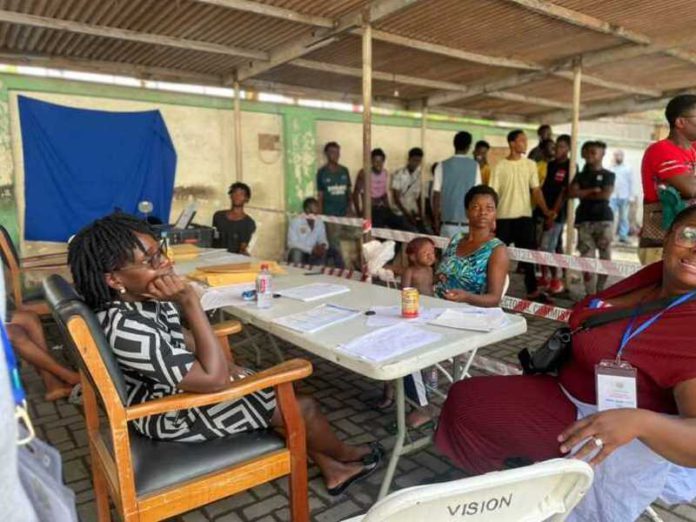
    The Coalition of Domestic Election Observers (CODEO) has praised the Electoral Commission (EC) for successfully conducting the limited voter registration exercise.

    Albert Arhin, the National Coordinator, noted that despite initial challenges at some registration centers, the EC effectively managed the process overall.

    “My verdict is that the EC did well. It has done well and why I am saying this is that yes, we had problems at the initial stages, especially with the first two days. We had this problem of some machines not working well and we also had this network problem.

    “So, if you remember at a point in time,  they said they could go offline and be doing the registration. But I think the EC listened to advice so they were able to cope. And so, after the first two days where we had these problems, the exercise stabilised and it went on smoothly,” he lauded in an interview on Accra-based Citi FM.

    The 21-day exercise, starting on May 7 and originally set to conclude on May 27, 2024, has been extended.

    In response to requests for more time, the EC extended the deadline to May 29, a day marked by long queues in various regions of the country.

    Additionally, starting today, May 30, the EC will begin replacing missing ID cards at a fee of GH₵ 10.

  • 47-year-old man arrested on suspicion of defiling a 3-year-old girl

    47-year-old man arrested on suspicion of defiling a 3-year-old girl

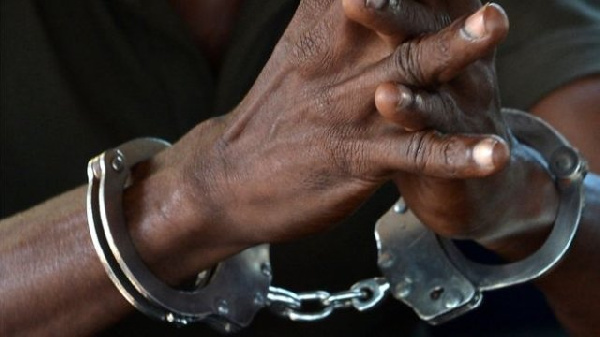
    A 47-year-old man has been arrested in Kuwait, a community in the Ga South Municipality of the Greater Accra Region, on suspicion of defiling a three-year-old girl.

    Locals apparently captured the culprit, named as Efo Emma, in the act and brought her to the Tuba Police Station, where she was placed under arrest.

    Reporting on “Nyankonton Mu Nsem” on Rainbow Radio 87.5FM, Oheneba Ademah stated that Efo Emma allegedly lured the minor into his room and defiled her on Wednesday, May 29, 2024. The incident occurred while the victim’s mother was at the market.

    According to the report, another tenant in the house heard the minor crying from Efo Emma’s room. Despite knocking, there was no response, and the door was locked from the inside.

    Ademah reported that the tenant questioned Efo Emma about why he had the girl in his room and refused to open the door while she was crying. When the suspect did not respond, the tenant raised an alarm, prompting other residents to rush to the scene.

    They forced open Efo Emma’s door and discovered him naked, having smeared the victim’s private parts with pomade. Ademah further revealed that the suspect had also applied pomade to his genitalia.

    Efo Emma was arrested and taken to the Tuba Police Station, where he is currently being held. The minor, who is in pain, has been transported to the hospital for a medical examination.

  • KNUST students remanded for sextortion by Takoradi Circuit Court – Report


    A Takoradi Circuit Court has remanded two students from the Kwame Nkrumah University of Science and Technology (KNUST) into police custody for conspiring to commit the crime of ‘sextortion’.

    The students, Jerome Enyam, aged 19, from Fijai, and Ebenezer Adam, aged 19, from Kojokrom, are both second-year students at KNUST, Kumasi.

    Their actions violated the Criminal Offenses Act and the Cyber Security Act.

    During prosecution, D/SGT Robert Mensah informed the Court, presided over by Her Ladyship Harriet Charway, that the accused were friends and classmates of the victim, Rhyndolf Owusu Hammond, aged 20, a former KNUST student and son of the complainant, Stephen Owusu Hammond.

    The prosecutor explained that in early 2023, the complainant’s son recorded a video of an intimate encounter with his girlfriend and saved it on his laptop.

    His close friend, Ekow Wilson, who is a key witness in this case, transferred the video onto his personal phone.

    Subsequently, without Wilson’s knowledge and consent, one of the accused airdropped the video onto his phone and shared it with his accomplices.

    In Takoradi, within the jurisdiction of this Court, the two accused, in possession of sexually explicit images of Rhyndolf Owusu Hammond and his girlfriend, harassed, threatened, and coerced him, eventually extorting GHC1,800.00 from him under the threat of releasing the video on social media.

    On November 7, 2023, the prosecutor stated that the accused, using disguises, sent a text message to the victim from an anonymous Vodafone number, 0203224110. They claimed to possess an intimate video of the victim and his girlfriend, demanding GHC 2,500 in exchange for not releasing it.

    The victim reported the matter to his father, who is now the complainant. His father subsequently reported the case to the Police Intelligence Directorate in Takoradi, leading to the arrest of the accused individuals.

    Police retrieved a cell phone from each accused person, both containing the intimate video. After a thorough investigation, the accused were charged with the appropriate offences.

  • Ghanaian A-G Austin Amissah who resigned in 1979 amid plea bargaining scandal

    Ghanaian A-G Austin Amissah who resigned in 1979 amid plea bargaining scandal

    Calls for the resignation of Attorney-General Godfred Yeboah Dame are intensifying due to allegations of his involvement in irregular out-of-court negotiations with an accused individual.

    Since last week, Dame has remained silent regarding accusations from Richard Jakpa, who claims that the Attorney-General urged him to provide evidence implicating another accused person, Cassiel Ato Forson, in a high-profile financial crime trial. Forson is the Minority Leader in Parliament and a former Deputy Finance Minister.

    One prominent voice calling for Dame’s resignation is Kwaku Ansa-Asare, a former director of the Ghana School of Law. Ansa-Asare argues that Dame has a moral obligation to resign and notes that he would not be the first Attorney-General to step down amid scandal.

    Speaking on Joy FM’s Newsnight programme on May 28, Ansa-Asare recalled an incident from the 1970s when Austin Ammissah, Ghana’s ninth Attorney-General, resigned after misconducting himself in a plea bargain negotiation involving a murder case.

    Ansa-Asare narrated: “Dr. Ohene Gyan had been accused of participating in the murder of one of his security officials, in the course of the trial, when the issue of plea bargain came up.”

    Plea bargaining, he explained, “is simply an informal procedure usually conducted in the chambers of the Attorney-General or the chambers of the trial judge whereby the accused person could agree to plead guilty as an exchange for the prosecution to drop the case against him.”

    He stated that in the Ohene Gyan case, it was claimed that during the course of the case, Ohene Gyan communicated with the judge, the senior prosecutor, and Gyeke Darko, indicating his preference for a guilty plea in exchange for the prosecution withdrawing its charges against him rather than going through with a full trial.

    “Austin Amissah, who was not only the A-G but Dean of the Faculty of Law of the University of Ghana misconducted himself and was made to resign,” he stressed without going into the details.

    “This was during the era of the National Redemption Council under General Kutu Acheampong,” he added.

    “History has repeated itself, Dame is an A-G, he knows what the process of plea bargaining involves,” he submitted stressing that President Nana Addo Dankwa Akufo-Addo will likely refer the matter to the Special Prosecutor, who is likely to clear Dame of any wrongdoing.

    Amissah, Ghana’s ninth Attorney-General, was born in Accra on October 3, 1930. He studied at Jesus College, Oxford, and was called to the bar at Lincoln’s Inn in 1955.

    From 1962 to 1966, he served as Ghana’s Director of Public Prosecutions. Following this, he became a judge on the Court of Appeal, serving from 1966 to 1976. During this period, he was seconded to the University of Ghana, where he was a professor and Dean of the Law Faculty from 1969 to 1974. Additionally, he chaired the Ghana Law Reform Commission from 1969 to 1975.

    In 1979, Amissah was appointed Attorney General and Minister of Justice. Later, he served as a judge of the Court of Appeal in Botswana from 1981 to 2001, including a term as President of the Court of Appeal.

    Amissah was also a prolific writer, with notable works including “Criminal Procedure in Ghana” (1982, winner of the Noma Award), “The Contribution of Courts to Government: A West African View” (1981), and “Arbitration in Africa” (1996). He passed away in London on January 20, 2001, where he had resided since 1982.

  • Residents of Congo community raise concerns about pollution stemming from a lead factory

    Residents of Congo community raise concerns about pollution stemming from a lead factory

    Amidst smoking chimneys, lead-laden dust, and noxious odors, the inhabitants of this factory nestled in the heart of a working-class community appear to have grown accustomed to the hazardous blend they’ve been exposed to for years.

    Yet among them are individuals—men, women, and children—whose medical examinations have revealed distressing levels of lead in their bloodstream, rendering their health increasingly fragile with each passing day.

    “This factory makes our lives unbearable. Whenever they release the smoke, our stomachs ache, and my child and I end up contaminated with lead,” lamented one resident.

    The company in question, Metssa Congo, a Congolese-registered Indian enterprise, ranks among the world’s top recyclers of used batteries and lead, one of the most perilous metals known to man.

    Cyrille Ndembi, along with his fellow residents, spearheads a legal campaign against the company, striving to secure the closure and relocation of the factory.

    Since their arrival in the neighborhood in 2019, he and his family have grappled with chronic pneumonia, attributing their health woes to the factory’s operations.

    “We consulted a laboratory, which took samples, the analyses were carried out in France at the CERBA laboratory and it turned out that we were intoxicated with lead. And that’s on a sample of 26 people. As we speak, the administrative summary judgment judge has ordered the temporary suspension of the plant’s activities, pending a ruling on the merits. But as long as they continue to work we remain exposed and continue to inhale these toxic gases that are making us sicker and sicker,” said Cyrille.

    “Indeed, the blood lead levels we found were significant enough for there to be no scientific doubt that it did come from this plant, because of the radio concentration, i.e., those closest to the plant had the highest levels,” said Fréderic Mavoungou, a pharmacist and a biologist.

    In defense against these allegations, Arun Goswami, the head of the METSSA Group, asserted that the company adhered rigorously to international industrial standards.

    While lead poisoning has only been substantiated in a portion of the population, the responsibility now falls on the court to determine whether the factory is indeed the source of the contamination. Meanwhile, additional cases may emerge as the investigation unfolds.

  • Godfred Dame will not resign – Nana B to MPs calling for his resignation

    Godfred Dame will not resign – Nana B to MPs calling for his resignation

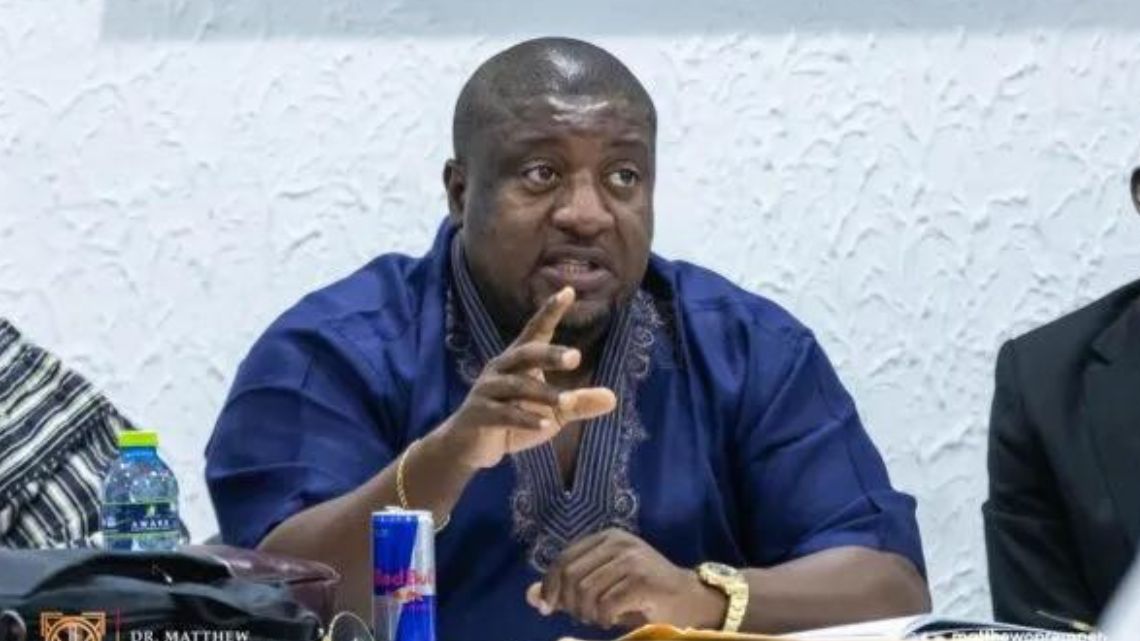
    National Organizer of the New Patriotic Party (NPP), Henry Nana Boakye, has reiterated the party’s backing for Attorney-General Godfred Yeboah Dame amidst recent controversies.

    The National Democratic Congress (NDC) released an alleged phone conversation on May 28, implicating Dame in discussions related to the ambulance procurement case.

    In the leaked conversation, Richard Jakpa, the third accused in the case, discusses matters involving the first accused, meetings at a Supreme Court Justice’s residence, and concerns regarding the ambulance contract.

    Responding to the NDC’s press conference, Nana Boakye, also known as Nana B, emphasized that Dame was continuing his duties as Attorney-General. He asserted that issues concerning financial losses related to the ambulance procurement would be addressed in court, not in the media.

    “He won’t resign today or tomorrow, he will continue in his role as is fit as an Attorney-General.

    “Your doctored, fake, cut-and-paste tape is headed nowhere. He will continue his job, we would meet in court to discuss the case not in public,” he stressed.

    Following NDC’s release of the alleged tape, Nana B addressed the matter, echoing the sentiments expressed by Frank Davies, the NPP’s head of legal affairs.

    Davies dismissed the tape’s credibility and affirmed that Godfred Yeboah Dame remained in his position as Attorney-General.

    He emphasized that the NDC’s actions would not hinder the prosecution of Ato Forson, the Minority Leader, who is the primary accused in the case.

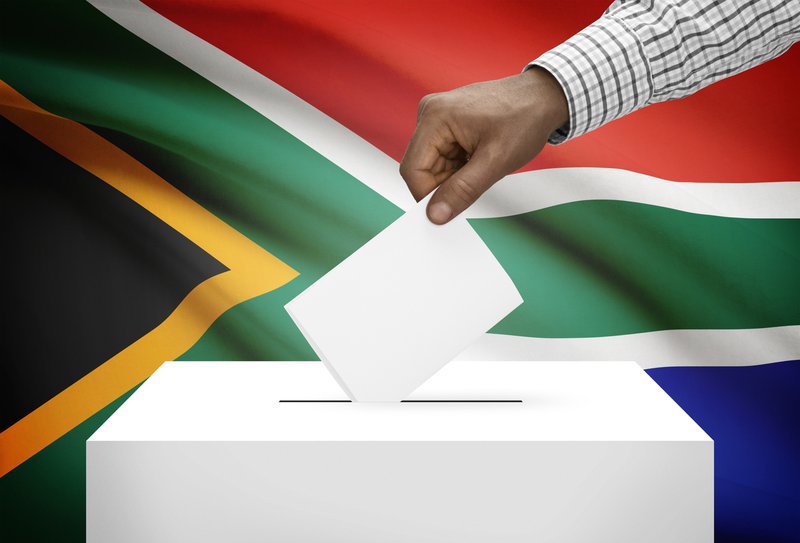
  • Several leaders participate in South Africa’s fiercely contested election

    Several leaders participate in South Africa’s fiercely contested election

    Voting commenced Wednesday at educational institutions, community hubs, and expansive white marquees erected in open fields for what’s considered South Africa’s most crucial election in three decades.

    This event might thrust the fledgling democracy into unfamiliar terrain.

    In Johannesburg’s Soweto township, President Cyril Ramaphosa and his wife, Tshepo Motsepe, participated in the voting process.

    The African National Congress (ANC), which steered South Africa away from apartheid’s harsh white minority rule in 1994, faces a significant challenge after three decades of dominance.

    A new wave of discontent among the 62 million citizens, half of whom are believed to be impoverished, imperils the ANC.

    With a staggering unemployment rate of 32%, South Africa, Africa’s most developed economy, grapples with profound socioeconomic issues.

    Persistent inequality, with Blacks bearing the brunt of poverty and joblessness, jeopardizes the party that pledged to dismantle apartheid with the promise of a better life for all.

    Despite clinching victory in six consecutive national elections, pre-election polls indicate dwindling support for the ANC, possibly leading to a historic loss of its parliamentary majority.

    While it’s widely anticipated to secure the most seats, the ANC’s hold on power might be weakened.

    Ramaphosa, the ANC’s leader, vows to “improve,” while the party appeals for additional time and understanding.

    Opposition from the Democratic Alliance (DA) emerges.

    In Durban, the DA’s leader exercised his voting rights in an election pivotal for South Africa, marking its most significant in three decades.

    The ANC’s longstanding dominance, pivotal in dismantling apartheid, now faces challenges from a dissatisfied populace in a nation where half the population lives in poverty.

    South Africa, boasting Africa’s most advanced economy, grapples with severe socioeconomic dilemmas, including a staggering 32% unemployment rate.

    Persistent disparities, disproportionately affecting the Black majority, threaten the ANC’s grip on power, despite its pledge to end apartheid and ensure a better life for all.

    John Steenhuisen, leader of a major opposition party, cast his ballot in Durban.

    While the Democratic Alliance collaborates with smaller parties to challenge the ruling ANC, a complete overthrow seems improbable.

    Zuma, a former president, voted.

    Disenchanted South Africans explore various opposition factions; over 50 parties vie for national representation, many of them novel.

    One such party, led by Zuma, has distanced itself from its former ANC connections.

    Although disqualified from parliamentary candidacy, Zuma’s MK Party remains in contention, presenting an unpredictable element.

    The ANC’s three-decade dominance is on the line.

    Having steered South Africa through apartheid’s demise in 1994, it now confronts a fresh wave of discontent in a nation of 62 million.

    While expressing confidence in maintaining its majority, the ANC faces an uncertain electoral landscape, though its extensive experience in governance and grassroots campaigning could prove advantageous.

    Despite waning support, particularly among younger demographics, the ANC still commands significant backing, notably among older voters and those in rural regions.

    Final election results are anticipated by Sunday.

  • Govt must address discrimination and neglect of children with disabilities in schools

    Govt must address discrimination and neglect of children with disabilities in schools

    A recent study conducted by the Educate Africa Institute (EAI) has revealed alarming challenges faced by children with disabilities in educational institutions.

    The research highlights systemic discrimination from colleagues, teachers, and non-teaching staff, compounded by inadequate governmental planning and policies tailored to the needs of these children.

    EAI’s findings have prompted a call for immediate intervention from the government to address these pressing issues.

    Discrimination in educational settings.

    The EAI study paints a concerning picture of the daily realities for children with disabilities in schools.

    These students frequently encounter various forms of discrimination, which not only hinder their academic progress but also affect their psychological well-being. The research found that discriminatory attitudes from peers often manifest as bullying and social exclusion, creating an unwelcoming and hostile environment.

    Moreover, the attitudes of teachers and non-teaching staff significantly contribute to the problem. Despite some educators showing commendable support, a substantial number demonstrate a lack of understanding or empathy toward children with disabilities.

    This lack of support can result in these children being overlooked in classroom activities and denied the necessary accommodations to facilitate their learning.

    Education policy and program shortcomings.

    A critical finding of the study is the insufficient governmental planning and implementation of policies and programs aimed at supporting children with disabilities.

    Current measures are either inadequately enforced or fundamentally flawed, failing to address the unique challenges faced by these students.

    The lack of specialized training for teachers on how to effectively support children with disabilities is a glaring gap. Additionally, infrastructure in many schools remains inaccessible, further marginalizing these students.

    The EAI highlights that existing policies do not sufficiently prioritize inclusivity, nor do they allocate adequate resources to ensure that all children, regardless of their physical or mental capabilities, receive quality education.

    This neglect not only contravenes basic human rights but also stifles the potential of children who could contribute significantly to society if given the right support.

    EAI’s call for government action!

    In light of these findings, the Educate Africa Institute is urging the government to take immediate action. EAI’s recommendations include:

    1. Comprehensive policy reform: Developing and implementing inclusive education policies that explicitly address the needs of children with disabilities. This includes mandatory accessibility standards for all educational institutions and ensuring that these standards are met.

    2. Teacher training and awareness programs: Introducing specialized training programs for teachers and school staff to equip them with the skills and knowledge needed to support children with disabilities effectively. Sensitivity training should also be mandated to foster a more inclusive and supportive school environment.

    3. Resource allocation: Increasing funding for schools to ensure they have the necessary resources to accommodate children with disabilities. This includes adaptive technologies, accessible infrastructure, and learning materials designed for various disabilities.

    4. Monitoring and evaluation: Establishing robust mechanisms to monitor the implementation of inclusive education policies and programs. Regular assessments and feedback loops should be in place to identify areas of improvement and ensure accountability.

    5. Community engagement: Promoting awareness and understanding of disabilities within the broader community to combat stigma and foster a culture of inclusion.

    Conclusion.

    The plight of children with disabilities in schools is a critical issue that demands urgent attention.

    The findings of the EAI study underscore the need for a comprehensive and inclusive approach to education reform.

    By addressing discrimination and improving support structures, the government can help ensure that all children, regardless of their abilities, have the opportunity to thrive academically and socially. The time for action is now, and the well-being and future of countless children depend on it.

    Source: GhanaWeb

    DISCLAIMER: Independentghana.com will not be liable for any inaccuracies contained in this article. The views expressed in the article are solely those of the author’s, and do not reflect those of The Independent Ghana

  • Experts list 5 things a child never owes their parents

    Experts list 5 things a child never owes their parents

    Owe is only one letter from own and evolved directly from the word own. Let that sink in. To owe someone implies an obligation.

    Children don’t owe their parents anything, parents owe their children safety, growth, nurturing, and support. If you already think your child owes you, you are off to a tumultuous journey.

    Here are 5 things a child never, ever owes their parents, according to YourTango experts:

    Unquestioning obedience

    A child never owes a parent an apology for their existence. While respect and care are important in a parent-child relationship, children are not indebted to give unquestioning obedience or loyalty at the expense of their well-being, autonomy, values, or happiness.

    Obliged loyalty

    An adult does not owe parents loyalty and devotion if/when their parents did not show it to them as children. You may still be loyal and devoted to them, but it isn’t something you owe them — it’s more of a gift you choose to give them for your reasons. As long as you are aware it’s your gift — not your obligation —it makes it a little easier on your spirit.

    Unconditional love

    A child never owes their parents unconditional love. Love inherently has conditions; it does not grant the right to abuse or neglect someone simply due to familial ties. While a child may need to obey household rules for safety and to maintain certain privileges, they are not obligated to sustain love in the face of abuse or neglect. Accepting such conditions sets a harmful precedent that equates love with enduring mistreatment, which is not the essence of genuine love.

    Their future

    I gave my daughter life, and I’m raising her the best way I know how, but I have no expectations as to how our relationship should be when she is old enough to make her own choices, and I think it would be cruel of me to start.

    I wouldn’t dare attempt to place an agenda on her life, even by planting seeds that one day I should become her responsibility. (I shouldn’t, by the way. I’m an adult. I’m my responsibility. Frankly, the best gift I could give my daughter is to never burden her with trying to manage my care when I have plenty of forewarning that time in my life is approaching.)

    Similarly, she does not owe me companionship, emotional support, grandchildren, or a marriage under that antiquated lie that settling down means she’s taken care of for the rest of her life.

    My daughter doesn’t owe me any of those things. She deserves a life of freedom and choice, and while that’s sometimes a challenge, I owe it to her to do my part to facilitate that.

    The right to their autonomy and life choices

    Just because parents provide for their children’s basic needs doesn’t mean they should be able to control their children’s decisions or make them feel obligated to follow a certain path and express gratitude to them.

    Kids don’t owe debts to parents. Let me say that again. Kids don’t owe debts to parents. Debt is from the world of finance and business. Debt ignores the collective and compassion. Though we live in an age of capitalism, your children are not property, clients, or in your employ. 

    DISCLAIMER: Independentghana.com will not be liable for any inaccuracies contained in this article. The views expressed in the article are solely those of the author’s, and do not reflect those of The Independent Ghana

  • Is Nigeria on the right track after a year of Tinubu?

    Is Nigeria on the right track after a year of Tinubu?

    Nigerians love their football but it is no longer the main topic of conversation for many.

    On the first anniversary of the Bola Tinubu presidency, Abubakar Sheka, who sells bread on the streets of the northern city of Kano, says that his customers’ primary focus is now on what they can afford to buy.

    “Football talk is only sweet when the tummy is full but at the moment a lot of Nigerians are finding it difficult to feed, which makes people always talk about the economy when they meet,” the 36-year-old tells the BBC above the noise of the morning traffic.

    He has also noticed that fewer people are buying bread as the price has more than doubled since last May, reflecting the increase in the cost of flour, cutting off many families from one of the country’s basic staples.

    Inflation, coupled with the falling value of the currency, the naira, has been the major theme for many of the past 12 months.

    Though Nigeria has been hit by the same harsh economic winds as much of the rest of the world, some of what has happened is a direct result of the policies of President Tinubu, sworn in to office exactly a year ago.

    The new president, 71 at the time, had won a bruising election with 37% of the vote – a result that was then disputed in court. His task was to bring the country back together.

    He also faced a challenging financial situation, along with concerns about kidnapping and corruption.

    Amid the pomp and lofty sentiments on inauguration day, the president let slip a major announcement.

    “Fuel subsidy is gone,” he told Nigerians without giving a timetable for when the policy would be in place, or any measures that might cushion the inevitable blow.

    The decades-old subsidy was costing the nation huge sums of money which Mr Tinubu argued would be better spent elsewhere.

    “President Bola Tinubu’s inauguration speech began at around 10:00 and by 11:00 there are already fuel queues across Nigeria,” public affairs analyst Hashim Abubakar says.

    “That statement sent prices of fuel and other items skyrocketing immediately.”

    Annual inflation was already at an 18-year high of 22% and, partly as a result of getting rid of the fuel subsidy, it has risen to nearly 34%. Wages have not kept up.

    The government has also ended the policy of pegging the value of the naira to the US dollar, allowing it to dramatically depreciate. Whereas 10,000 naira would have bought $22 last May, it will now only purchase $6.80.

    This has made anything that is imported more expensive.

    And all this has pushed more people into poverty.

    Abubakar Ameer hands out food to those in need in Kano. He said that over the past year the number of people coming for help has more than doubled.

    “We had to reduce the ration we normally give to others so that everyone can get something to eat,” he tells the BBC.

    The government has given cash transfers amounting to $54 (£42) over three months to the very poorest families, but this has not helped everyone.

    Mr Tinubu’s ministers are aware of the hardships that many are now experiencing.

    Last week, Minister of Economic Planning Atiku Bagudu apologised “for the pains that [the policies] may occasion”, but, he added, “they are necessary”.

    He characterised the measures as part of an overdue economic restructuring which would result in long-term stability.

    The hugely expensive fuel subsidy and the over-valued naira was damaging the economy, it is argued.

    “This administration has implemented significant economic reforms aimed at stabilising our economy and fostering sustainable growth,” an official in the Tinubu administration, George Akume, said when presenting the government’s one-year progress report.

    The reforms were also aimed at boosting the confidence of foreign investors. The amount of investment money flowing into the country reached a peak just over a decade ago and has been relatively low since then.

    “I believe things are beginning to pick up in terms of foreign investment in the country due to the government’s economic policies,” says Victor Aluyi, senior vice-president of financial firm Sankore.

    “The improvements are not massive but there are improvements nonetheless compared to when things were really low in the past years.”

    One of the other big challenges facing the president in his first year in power was security, with violent attacks and abductions plaguing parts of the country under his predecessor.

    When it came to kidnapping, the north-west of the country was particularly badly hit. But from a peak at the beginning of last year up to March, the number of incidents of abductions fell in the region, according to Acled, which monitors conflict and violence.

    Nevertheless, two high-profile mass abductions in March and another one last week in different parts of the country have shown that more needs to be done to ensure people’s safety.

    The government has defended its record.

    Defence Minister Mohammed Badaru recently said that security forces had killed over 9,300 “bandits” and insurgents while 7,000 had been arrested in the past year.

    As for the battle against corruption, the president has come in for some praise.

    “So far, the Tinubu-led administration, has not been quiet over the issue and has displayed the political will to confront the hydra-headed monster,” says Kola Adeyemi chairman of NGO Anti-Corruption Awareness.

    The suspension in January of Humanitarian Affairs Minister Betta Edu over the alleged diversion of public money was seen as a bold move. An investigation is under way and the minister has denied any wrongdoing.

    A former top official from the Economic and Financial Crimes Commission, speaking to the BBC on condition of anonymity, says that the president needs to do more despite good early signs.

    “Corruption has been a huge problem for decades so it will be unfair to score him based on a year in office – a lot needs to be done to wipe it out.”

    In all areas of policy, the administration will insist that more time is needed for the people to feel the benefits if its policies.

    But for Mr Sheka the bread-seller, time is running out.

    “If things don’t improve economically then I’ll either get something else alongside this to bring in more money or abandon bread-selling altogether and find something else to do as there are needs to take care of.”

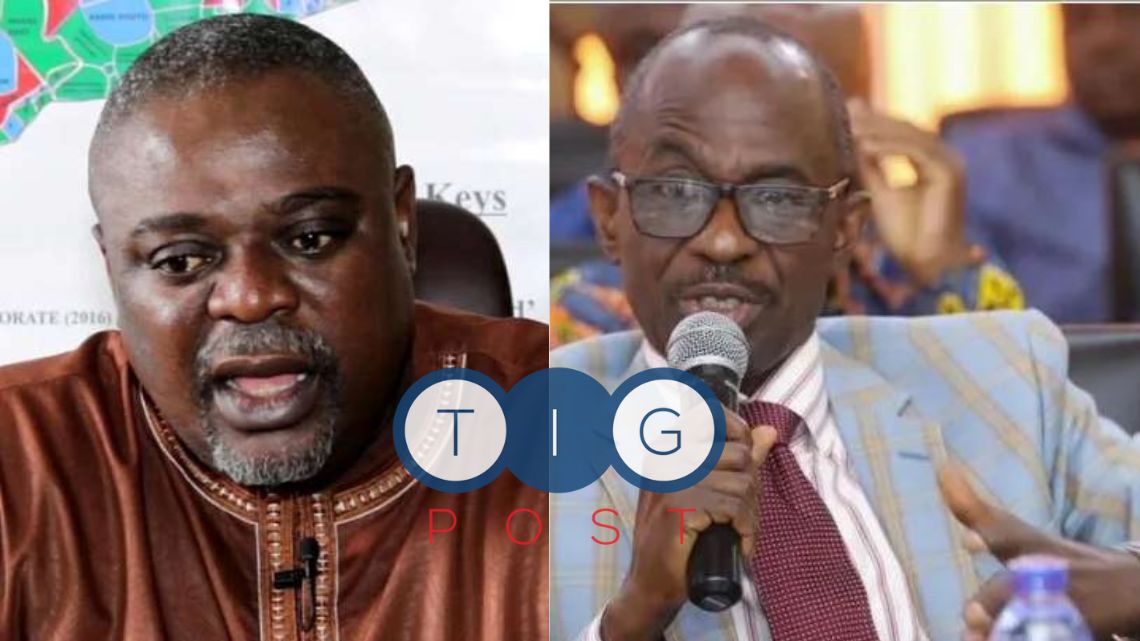
  • “Despicable” Asiedu-Nketiah also wants to be president – Anyidoho claims

    “Despicable” Asiedu-Nketiah also wants to be president – Anyidoho claims

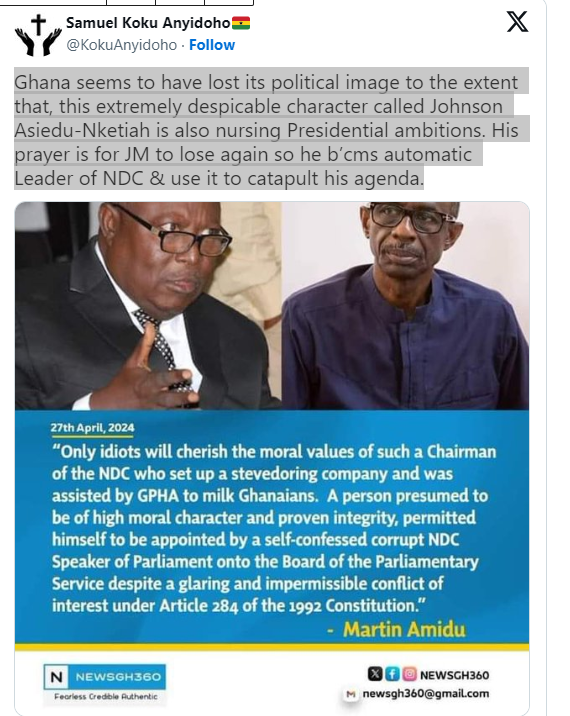
    Former NDC Deputy General Secretary, Samuel Anyidoho, has expressed support for Martin Amidu’s criticism towards NDC’s top members, including Chairman Asiedu Nketiah.

    Martin Amidu accused Asiedu Nketiah of engaging in numerous illegal activities, including his role on the Parliamentary Service Board.

    “Only idiots will cherish the moral values of such a Chairman of the NDC. In any case, Asiedu Nketiah and John Mahama, have you ever heard that as a politically exposed person, I set up a stevedoring company and was assisted by GPHA to milk Ghanaians during the regime of any of the Governments under which I served? Did I publicize the facts about Asiedu Nketiah’s stevedoring business at Tema as the Special Prosecutor before I sent Joshua Hamidu Akamba to warn him about attacking my integrity?” he reportedly said.

    In support of Mr Amidu’s allegations, Mr Anyidoho also took to X is write that Asiedu Nketia is praying for John Mahama’s defeat in the elections.

    “Ghana seems to have lost its political image to the extent that, this extremely despicable character called Johnson Asiedu-Nketiah is also nursing Presidential ambitions. His prayer is for JM to lose again so he b’cms automatic Leader of NDC & use it to catapult his agenda,”

  • Stop taking energy drinks, eat  healthy ‘gobɛ,’ koko and koose to stay healthy – Prof Akosa advises

    Stop taking energy drinks, eat healthy ‘gobɛ,’ koko and koose to stay healthy – Prof Akosa advises

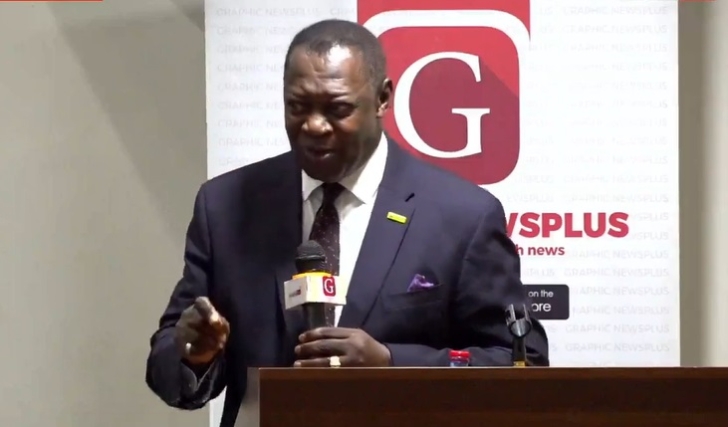
    A respected cellular pathologist and lifestyle wellness consultant, Professor Agyeman Badu Akosa, emphasized the significance of consuming local Ghanaian foods to combat numerous communicable diseases, which currently top the list of health concerns and mortality causes in Ghana.

    During a discussion on practical strategies to enhance public health in Ghana held at the Ghana Shippers Authority Hall in Ridge, Accra, on Tuesday, Professor Akosa, former Director-General of the Ghana Health Service (GHS), highlighted the association between the consumption of sugar-sweetened beverages, fried foods, and processed foods with non-communicable diseases like hypertension, heart diseases, and diabetes.

    He stressed the importance of health promotion and, along with health policy and management expert Professor Aaron Abuosi, served as the main speakers on the topic “Quality Health for All” at the recent edition of the Graphic National Dialogue Series.

    Organized by the Graphic Communications Group Ltd, this event serves as a platform for discussing developmental issues with an emphasis on achieving national consensus in a non-partisan setting.

    Additionally, the aim is to compile ideas into a document to influence policymaking across various social strata. The upcoming Graphic National Development Series will feature a plenary session during which expert speakers will present papers on specific topics derived from various perspectives on the theme.

    Watch a video of Prof Akosa’s presentation

    Emphasizing the importance of consuming Ghanaian local foods, Prof. Akosa highlighted that prioritizing locally sourced foods over Western and fast foods could lower the incidence of non-communicable diseases in Ghana.

    He noted that Ghanaians have shifted away from nutritious local foods to imported, highly processed options with elevated sugar content during processing.

    “I will urge us all to go back to our former ways of eating kontomire or cocoyam leaves, garden eggs, okro, ‘abedru’, and all that keep us healthy and also minimise the dependence on the pizzas, noodles and fried foods,” he advised.

  • Ghana, Singapore agree on a carbon credit deal tax liabilities

    Ghana, Singapore agree on a carbon credit deal tax liabilities


    Ghana and Singapore have inked a pact enabling companies to purchase carbon credits from Ghana-based projects to offset a portion of their carbon tax liabilities.

    Singaporean firms can buy carbon credits, offsetting up to 5% of their taxable emissions if the invested projects meet Singapore’s eligibility standards.

    In 2024, the carbon tax has surged to $25 per tonne of CO2 emissions, a hike from the previous $5 per tonne, with plans to escalate to $50 to $80 by 2030.

    The collaboration aims to bolster climate ambitions for both nations and channel funds into climate mitigation endeavors, as per Singapore’s National Climate Change Secretariat, Ministry of Trade and Industry, and Ministry of Sustainability and the Environment.

    Carbon credit projects endorsed by the agreement will foster sustainable development, benefiting Ghana’s communities by creating jobs, enhancing water access, bolstering energy security, and curbing environmental pollution.

    Project developers are obliged to allocate 5% of proceeds from carbon credits to climate adaptation in Ghana, aiding the nation in preparing for climate change impacts.

    Additionally, developers must annul 2% of carbon credits upon issuance to aid in global greenhouse gas emission mitigation.

    This agreement coincides with Temasek-backed investment platform GenZero’s involvement in a forest restoration project in Ghana’s Kwahu region.

    The initiative, conducted alongside Singapore-based AJA Climate Solutions, aims to replenish degraded forest reserves and sustainably cultivate cocoa trees in shaded farms, fortifying against climate risks such as floods, heat stress, and pests.

    Verification of carbon credits from the Ghanaian project is slated to commence in 2028.

  • Ghanaians to pay GHS10 voter ID cards replacement – EC

    Ghanaians to pay GHS10 voter ID cards replacement – EC

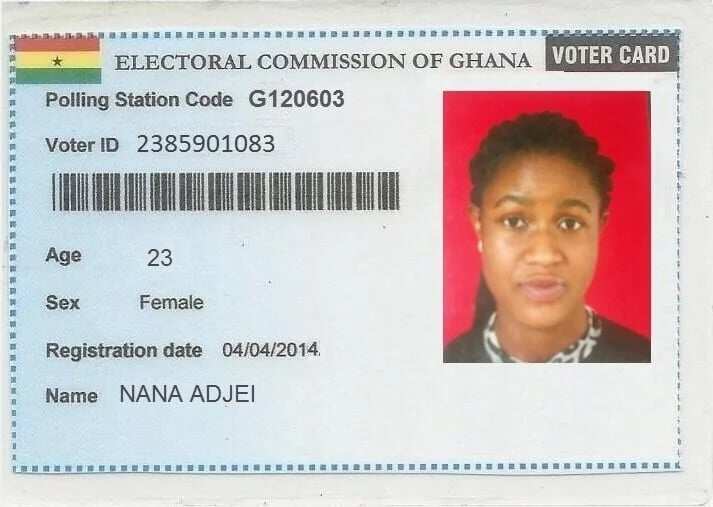
    The Electoral Commission (EC) has stated that the replacement of Voter ID Cards will begin on Thursday, May 30, and run until Friday, June 14, 2024.

    This service is intended for those who have misplaced their Voter ID Cards in readiness for the upcoming December 7 general elections.

    In a statement released on Tuesday, May 28, 2024, the EC encouraged all voters requiring replacements to make payments using the shortcode 2221067#.

    “The cost for replacement is GH¢10 only,” the statement read.

    The EC also directed applicants to furnish the District Officer with the reference code obtained after payment to expedite the card replacement process.

    This endeavor aligns with the Commission’s goal of enabling all eligible voters to engage in the upcoming elections seamlessly. Voters are urged to reach out to their local EC offices for additional information and support.

  • Lawyers, state prosecutors will learn their lessons from the ambulance trial – Lawyer

    Lawyers, state prosecutors will learn their lessons from the ambulance trial – Lawyer

    In the ongoing ambulance trial, Legal Practitioner Mr. Alex Quartey has advised practicing lawyers and state prosecutors to refrain from contacting accused individuals in pending cases without the permission of their legal representatives.

    He stressed that it is inappropriate to directly communicate with a colleague’s client when a case is pending.

    Mr. Quartey highlighted the ethical implications of such actions, referencing the accusations of witness tampering leveled against Attorney-General and Minister for Justice Godfred Yeboah Dame by the third accused, Mr. Richard Jakpa.

    These allegations arose from purported conversations between Mr. Dame and Mr. Jakpa, raising significant ethical concerns within the legal community.

    “This case serves as a crucial lesson for lawyers and state prosecutors: you should not engage with an accused person in a pending matter without their counsel’s consent, regardless of your intentions,” Mr Quartey stated. 

    He underscored that despite good intentions, such behaviors have the potential to compromise the legal proceedings and professional ethics.

    Mr. Quartey imparted these observations during an interview on the Ghana Yensom morning show, facilitated by Otafrigya Kaayire Kwesi Apea-Apreku, aired on Accra 100.5 FM on Wednesday, May 29, 2024.

    Additionally, he recommended exercising caution when visiting a colleague who assumes a judicial role to preserve professional boundaries and uphold the legal profession’s integrity.

    “To help safeguard the integrity of our profession, it is essential to adhere to these ethical guidelines and ensure that our actions do not compromise the justice system,” Mr Quartey concluded

  • Criminals sell sextortion guides online – BBC investigation reveals

    Criminals sell sextortion guides online – BBC investigation reveals

    Criminals are selling guides on social media on how to conduct sextortion, BBC News has discovered.

    The guides teach individuals to pose as young women online, deceive victims into sending explicit material, and then blackmail them.

    On Tuesday, Olamide Shanu appeared in a London court, accused of being part of a gang that extorted £2 million from adults and children online.

    Last month, the National Crime Agency issued a warning to UK schools about the dangers of sextortion.

    Experts note a significant increase in children falling victim to sextortion by gangs based primarily in Nigeria and other parts of West Africa.

    In the UK, two British teenagers have taken their own lives since October 2022 after being targeted by sextortionists.

    Paul Raffile, an intelligence professional and expert on sextortion, describes it as a “massive threat” to children.

    “Internet scammers over these past two years have found out that they can get very rich very quickly by scamming an untapped market.

    “And that’s teenagers,” he said.

    Mr. Raffile said that adults have long been the target of sextortion, with teenage boys currently being among the most susceptible.

    “They are finding their victims by going on social media platforms and searching for high schools and youth sports teams, and then ‘following’ or ‘friending’,” he said.

    BBC News has found that guides on how to carry out the crime are openly for sale in videos posted online.

    It is described in detail how to set up untraceable phone numbers, create fake social media profiles and use secure payment methods.

    Some boast about the number of people they have blackmailed – one wrote that a victim paid him regularly, “every Friday”.

    Lucy’s 14-year-old son fell victim to a sextortion gang this year.
    Although he had not sent any images himself, the blackmailers mocked up a compromising picture and in a text threatened to share it.

    “It was a message, basically saying, ‘don’t shut us down. If you don’t send us money in 24 hours, we’ll send a picture to all your contacts’,” she said.
    “He was shell-shocked. And he was literally physically shaking.”

    The teenager had already paid the blackmailers £100, but with his parents’ help he shut down the account and the phone. He never heard from the blackmailers again.

    “If he hadn’t been at home that morning, and I hadn’t been in the kitchen, and if he hadn’t talked to me, I don’t know how it would have played out for him,” said Lucy.

    The US authorities have applied to extradite Mr Shanu, who appeared at Westminster Magistrates’ Court.

    The 33-year-old is wanted in the state of Idaho on charges of extortion, money laundering and cyberstalking.

    The charges relate to four victims, one of whom was a child.

    Investigators believe there may be hundreds of victims over three years.

    Mr Raffile says the big Tech Companies are not doing enough to stop sextortion.

    “This crime has really exploded on Instagram and Snapchat over these past two years… these platforms need to aggressively go after these criminals,” he said.

    Snapchat told the BBC: “We’ve been ramping up our efforts to combat it including a reporting option specifically for threats to leak sexual content, and in-app education for teens.”

    In a statement Meta, which owns Instagram, said it offered “a dedicated reporting option so people can report anyone threatening to share private images”.

    “We default teens under 18 in the UK into private Instagram accounts at sign-up, which hides their follower and following lists, and into stricter default messaging settings,” it added.

    TikTok said the platform was designed “to be inhospitable for that intent on causing harm to teens and we do not tolerate any content or behaviour promoting sextortion”.

  • South Africans cast ballots in most competitive election since apartheid

    South Africans cast ballots in most competitive election since apartheid

    South Africans began voting Wednesday, potentially shifting politics if the ruling ANC loses its majority as polls predict.

    Queues formed in major cities like Johannesburg, Cape Town, and Durban starting at 7 a.m. (0500 GMT), with lines also seen in chilly townships and rural areas.

    Voters are electing nine provincial legislatures and a new national parliament, which will then choose the next president.

    If the ANC receives less than 50% of the national vote, it will need to form a coalition, the first in 30 years since Nelson Mandela led the party to power after apartheid.

    Voting stations opened at 0500 GMT and will close at 1900 GMT, with over 27 million registered voters out of a population of about 62 million.

    South Africa’s electoral commission is expected to release partial results within hours of polls closing and has seven days to announce the final results.

  • Trade surplus dips from $1.39bn to $744m from January to April

    Trade surplus dips from $1.39bn to $744m from January to April

    Bank of Ghana Governor Ernest Addison informed reporters during a press conference on Monday, May 27, 2024, following the 118th Monetary Policy Committee meeting, that Ghana’s major exports, including cocoa, gold, and crude oil, experienced gains on the global commodities market in April 2024.

    Dr. Addison highlighted that cocoa prices continued to rise, reaching $10,116.9 per tonne in April 2024, compared to $4,235.60 per tonne in December 2023, indicating a year-to-date increase of 138.9 percent.

    Additionally, he noted that crude oil prices rose by 15.2 percent year-to-date to $89.00 per barrel in April, up from $77.26 per barrel in December 2023. Gold prices also saw a 14.7 percent increase at the start of the year, reaching $2,334.2 per fine ounce.

    However, Dr. Addison mentioned that the balance of trade recorded a reduced surplus of $744.3 million for the first four months of the year, compared to a surplus of $1.39 billion in the same period last year.

    Total exports increased by 4.9 percent to $5.83 billion, primarily driven by.

    “significant growth” in gold exports and a modest increase in crude oil exports. 

    Dr Addison added that earnings from gold exports increased by 37.0 per cent to US$2.97 billion, “due to higher volumes of exports 

    from small-scale gold production.” 

    In contrast, the value of crude oil exports surged by 9.4 percent to $1.27 billion, fueled by both volume and price upticks.

    Meanwhile, cocoa exports, encompassing both beans and products, saw a significant decline of 49.0 percent, plummeting to $599.3 million.

    Other exports, including non-traditional items, also experienced a decrease of 6.0 percent, amounting to $981.8 million.

    On the import front, total imports spiked by 22.2 percent, reaching $5.08 billion, primarily propelled by non-oil imports, which surged by 31.2 percent to $3.53 billion, whereas oil imports saw a more modest increase of 5.6 percent, totaling $1.55 billion.

    Read the MPC’s full address below:

    Good morning, Ladies and Gentlemen of the Media and welcome to the press briefing for the 118th Monetary Policy Committee (MPC) meetings which took place last week. The Committee deliberated and assessed global and domestic macroeconomic developments for the first 4-months of the year, and the balance of risks to the outlook. A summary of the assessments and key considerations that informed the Committee’s decision on the positioning of the monetary policy rate is as follows:

    A. Global Developments and Conditions

    1. Global economic activity remains resilient despite sustained monetary policy tightening across advanced economies and Emerging Market and Developing Economies. The global growth outturn of 3.2 percent in 2023, largely reflected stronger consumption spending due to employment growth, particularly in advanced economies, and policy support in China, U.S, and some larger Emerging Market and Developing Economies (EMDEs). Other factors that further supported global activity in 2023, were additions to the stock of capital, a rebound in the manufacturing and services sector, improved trade, and resolution of pandemic era supply chain disruptions. In the outlook, IMF growth projections point to global growth remaining resilient at 3.2 percent in 2024 and 2025. Downside risks to the growth outlook include the observed slowdown in the disinflation process since early 2024, geopolitical uncertainty, and elevated debt burdens.

    2. Global headline inflation remains above target in most countries. Progress towards inflation targets has somewhat stalled since the beginning of the year due to a resurgence in crude oil prices as OPEC+ slashed production and increasing prices in the services sector. This notwithstanding, inflation is projected to decline steadily on the back of tighter monetary policy, softening labour market conditions, and fading effects of past shocks.

    3. Central Banks have remained cautious in lowering policy rates due to sluggishness of the disinflation process. Policy rates have been kept elevated to anchor inflation expectations and further drive down long-term inflation rates. Consequently, global financial conditions have generally remained restrictive. Longer-term bond yields have also risen, due to the expectation of maintenance of a still tight policy stance in the near-term. In the outlook, financial conditions are expected to ease in 2024 as the disinflation process continues and oil prices decline, amid well-anchored inflation expectations.

    B. Domestic Macroeconomic Conditions

    In the domestic economy, high frequency real sector indicators point to a sustained pickup in economic activity through the first quarter of 2024. The updated real Composite Index of Economic Activity recorded an annual growth of 2.1 percent in March 2024, compared to a contraction of 6.4 percent in the corresponding period of 2023. The pick-up in the index was driven mainly by increased imports, private sector contributions to SSNIT, and tourist arrivals. Ghana’s Purchasing Managers’ Index (PMI) signalled an improvement in business activity. As the index rose to 51.3 in April 2024 from 50.9 in March due to improved consumer demand.

    4. The latest confidence surveys conducted in April 2024 point to a softening of sentiments. Both Business and Consumer confidence dipped. On the part of consumers, these sentiments were on account of uncertainties about future economic conditions, while businesses expressed concern that recent exchange rate volatility and unstable intermittent power supply situation could significantly raise their operational costs moving forward.

    5. The disinflation process remained sluggish over the first quarter of the year. Inflation which declined to 23.1 percent in December 2023, moved up to 25.8 percent by the end of the first quarter of 2024. This slowdown in the disinflation process was driven in large part by rising food inflation, mainly seasonal food crop items. In April, however, inflation eased to 25 percent on account of improvements in the supply of seasonal food crops which seem to have been countered by increasing non-food inflation from the exchange rate pass through effects. Food inflation declined to 26.8 percent in April 2024 from the high of 29.6 percent recorded in March 2024, while non-food inflation increased to 23.5 percent from 22.6 percent over the same comparative period.

    6. Notwithstanding the sluggishness of the disinflation process, underlying inflationary pressures are well contained. All the core measures of inflation monitored by the Bank continued to ease. Isolating price increases of energy and utility items from the consumer basket, core inflation moderated to 24.8 percent in April 2024 from 26.3 percent in March.

    7. Fiscal performance is broadly in line with targets agreed under the International Monetary Fund (IMF)-supported programme. Provisional data on the execution of the budget shows that the primary balance (commitment basis) was a deficit of 0.6 percent compared with a target deficit of 0.2 percent. The overall broad budget balance (commitment basis) was a deficit of 1.8 percent of GDP compared with a deficit target of 1.7 percent of GDP. Total revenue and grants for the period amounted to GH¢30.4 billion (2.9 percent of GDP) compared with a programmed target of GH¢37.7 billion (3.6 percent of GDP). Total expenditures (on commitment basis, including other outstanding payments) for the period amounted to GH¢49.0 billion (4.7 percent of GDP) compared with a target of GH¢55.5 billion (5.3 percent of GDP).

    8. Growth in monetary aggregates slowed down considerably, reflecting the Bank’s liquidity management operations to tighten liquidity. Total liquidity (M2+) grew by 29.9 percent in April 2024, on year-on-year basis, compared with a growth of 45.6 percent in April 2023. The 3 PUBLIC relatively lower growth in M2+ was reflected in all its components, namely, currency with the public, demand deposits, savings and time deposits, and foreign currency deposits. Commercial banks’ reserves with the Central Bank surged following implementation of the dynamic Cash Reserve Requirement (CRR). As at the end of April, 2024 reserve money growth, on a year-on year basis, had increased to 51.9 percent (mainly due to the changes in regulatory reserves) relative to a growth of 46.5 percent in April 2023.

    9. Growth in private sector credit continued to remain weak. Private sector credit growth slowed to 10.8 percent in April 2024 from 19.8 percent in April 2023. In real terms, credit to the private sector contracted by 11.4 percent relative to a 15.2 percent contraction recorded over the same comparative period.

    10. Short-term interest rates on the money market broadly showed upward trends. The 91- day and 182-day Treasury bill rates increased to 25.68 percent and 28.03 percent respectively, in April 2024, from 19.67 percent and 22.29 percent respectively, in the corresponding period of 2023. The rate on the 364-day instrument increased to 28.64 percent in April 2024 from 27.04 percent in April 2023.

    11. The interbank weighted average rate remained within the policy corridor. The rate increased to 28.68 percent in April 2024 from 25.89 percent in April 2023. In contrast, the average lending rates of banks declined marginally to 31.25 percent in April 2024 from 31.66 percent, recorded in the corresponding period of 2023.

    12. Banking sector indicators point to a recovery from the impact of the domestic debt exchange programme. Total assets increased by 28.8 percent to GH¢306.8 billion at the end of April 2024 driven by domestic currency deposits and other funding sources. Banks also reported higher profits for the first four months of 2024, relative to the same comparative period in 2023.

    13. Key financial soundness indicators generally improved during the review period. The capital adequacy ratio adjusted for reliefs increased to 15.5 percent in April 2024 from 14.7 percent in April 2023, reflecting the rebound in profits. Capital adequacy ratio without relief for the banking system was 11.5 percent at the end of April 2024 compared to 7.6 percent in April 2023. Liquidity and efficiency indicators also improved in April 2024, compared to the same period last year. The non-performing loan ratio, on the other hand, increased to 25.7 percent in April 2024 from 18.0 percent in April 2023, due to the lagged effect of COVID-19 pandemic and the economic crisis of 2022 which has led to the downgrading of several large exposures of banks. The sector is expected to be strengthened as banks recapitalise and enforce stringent credit underwriting standards.

    14. On the international commodities market, prices of Ghana’s major exports (cocoa, gold, and crude oil), recorded gains in April 2024. Cocoa prices continued to increase, reaching US$10,116.9 per tonne in April 2024, from US$4,235.60 per tonnes in December 2023, representing a year-to-date gain of 138.9 percent. Crude oil prices increased by 15.2 percent on a year-to-date basis to US$89.00 per barrel in April, compared to US$77.26 per barrel in December 2023. Gold prices also increased by 14.7 percent at the beginning of the year to US$2,334.2 per fine ounce.

    15. The balance of trade recorded a lower surplus of US$744.3 million for the first four months of the year, compared to a surplus of US$1.39 billion in the corresponding period of last year. Total exports increased by 4.9 percent to US$5.83 billion driven mainly by significant growth in gold exports and a modest increase in crude oil exports. Earnings from gold exports increased by 37.0 percent to US$2.97 billion, due to higher volumes of exports from small-scale gold production. The value of crude oil exports, in comparison, increased by 9.4 percent to US$1.27 billion, on the back of both volume and price increases. Exports of cocoa, both beans and products, dropped by 49.0 percent to US$599.3 million. Other exports, including non-traditional exports, also decreased by 6.0 percent to US$981.8 million. Total imports increased by 22.2 percent to US$5.08 billion, driven mainly by non-oil imports which went up by 31.2 percent to US$3.53 billion, while oil imports increased by 5.6 percent to US$1.55 billion.

    16. Provisional data for the first quarter of the year resulted in a current account surplus of US$372.12 million. This represented a 40.8 percent decline from the surplus of US$629.01 million recorded in the first quarter of 2023. The lower surplus was driven mainly by higher imports, and increased income payments. Net income payment was US$727 million for the first quarter of 2024, compared to net income payment of US$508 million in 2023. Remittances inflows increased sharply to US$1.44 billion, compared with net inflows of US$980 million over the same comparative period.

    17. The Capital and Financial account recorded a net outflow of US$113 million, lower than a net outflow of US$998.40 million recorded in the same period in 2023. The reduced capital outflows were largely driven by significant inflows from the IMF and World Bank, as well as improved FDI flows to the economy.

    18. These developments resulted in an overall Balance of Payment surplus of US$84.74 million in the first quarter of 2024, compared to a deficit of US$586.99 million in 2023.

    19. Gross international reserves position remained strong. At the end of April 2024, the stock of Gross International Reserves increased to US$6.59 billion representing 3.0 months of import cover, compared with US$5.91 billion (2.7 months of import cover) at end-December 2023. Gross International Reserves (excluding encumbered and petroleum assets) also increased to US$4.32 billion, compared with US$3.66 billion at end-December 2023.

    20. The exchange rate has recently come under some pressure, especially in the forex bureaux market. The pressure in the foreign exchange market reflected increased demand for higher imports, energy sector payments, and uncertainty surrounding the progress of debt restructuring negotiations with external creditors. These conditions have fed into sentiments and contributed to additional pressures. On a year-to-date basis, the Ghana cedi depreciated by 14.6 percent against the US dollar as at 22nd May, 2024 compared to 21.8 percent depreciation for the first five months of 2023.

    C. Summary and Outlook

    21. Global growth remains relatively strong, bolstered by an expansion of economic activity in large economies, despite the tight monetary policy stance. For the year so far in 2024, progress toward attaining inflation targets globally has somewhat stalled as oil prices have risen due to escalating geopolitical tensions. For emerging markets and developing economies, the strengthening of the US dollar and the tight monetary policy stance of the U.S. Fed have induced more headwinds to the disinflation process. Due to these developments, central banks have mostly been cautious to loosen their tight monetary policy stance. In the outlook, however, central banks are expected to start the easing cycle when inflation begins to steadily decline towards targets.

    22. The Bank of Ghana’s high-frequency real sector indicators pointed to steady improvement in economic activity evidenced by continued steady growth in the CIEA. Similarly, the Purchasing Managers’ Index (PMI) firmed up, driven by resilient consumer demand. On the contrary, real private sector credit remains generally weak, while business and consumer confidence softened, reflecting concerns about high cost of raw materials and foreign exchange market pressures.

    23. Ghana’s external sector position remains strong although the current account surplus nearly halved in the first quarter of the year. The performance in the current account reflects a rebound in imports and net income payments. Accumulation of reserve buffers remains on course and set to exceed the programme expectation in June, largely due to the domestic gold purchase programme. The Bank’s reserve at end-April 2024 currently stands at 3.0 months of import cover.

    24. The exchange rate pressures witnessed in recent weeks reflect a weakening of the current account surplus, due to higher import demand and lower export revenue, especially a sharp fall in cocoa export earnings. The foreign exchange market pressures also reflect robust public spending on IPP arrears payment, and capital expenditure outlays. There are also indications of increased pressures from importers diverting foreign exchange demand requirements into informal markets, increasing speculative demand for foreign exchange. The Bank of Ghana, however, has adequate reserves to manage these shocks to the foreign exchange market, having added over US$600.0 million to the current foreign exchange reserve levels over the first five months of the year. The improved reserves position is also backed by strong liquid monetary gold levels of over 26.6 tonnes (estimated at US$2.1 billion) as a result of the very successful domestic gold purchase programme.

    25. The Bank of Ghana remains fully committed to provide stability in the exchange rate for the cedi. The Bank has enough foreign exchange reserves to support the market and economic agents should stop engaging in speculative purchases as they will suffer economic losses when the correction occurs.

    26. The Bank of Ghana is taking measures to improve market conduct and instill sanity in the market for foreign exchange. To this end, the Bank has worked with the Ghana Association of Banks to streamline documentation requirements for foreign payments to 6 PUBLIC minimise the incentives to resort to the informal markets. To deal with the high demand pressures on the foreign exchange market, the Bank has taken steps in the past few weeks to directly absorb foreign exchange needs of some corporate institutions, and this has led to a reduced pipeline demand for foreign exchange from the commercial banks. The Bank is fully aware of the operations of illegal operators in the foreign exchange market and is working with the Financial Intelligence Centre to sanitise the foreign exchange market. Foreign exchange bureaux monitoring will be stepped up to ensure compliance with their regulatory framework. In line with this, all foreign exchange bureaus advertising rates outside their premises and on social media platforms must immediately desist from the practice. The Bank has set up a task force to monitor all the foreign exchange bureaux to ensure compliance. The foreign exchange market is also affected by sentiments and pronouncements made in this election year and we urge all to manage pronouncements which weakens confidence in the local economy.

    27. On fiscal policy, expenditures outpaced revenue growth in the first quarter, reflecting the frontloading of IPP arrears payments. Maintaining strict fiscal discipline for the rest of the year will be crucial to strengthen confidence in the economy.

    28. On general macroeconomic conditions, the committee was of the view that while implementation of policies—at the macro and structural reform level — are consistent and align well with the tenets of the IMF-supported programme, there is the need to ensure that the recent depreciation of the currency does not become embedded into the pricing behaviour of businesses and on inflation expectations. The strong reserve build-up of about US$2.0 billion since the beginning of the IMF programme, the strong disinflation process, significant progress on fiscal policy consolidation, positive current account balances, and the good progress on the external debt restructuring process, have all worked together in concert to deliver enough buffers to support the exchange rate.

    29. The latest forecast shows a slightly elevated inflation profile on account of recent exchange rate pressures and adjustments in transportation fares. However, the projections show that inflation will remain within the monetary policy consultation clause of 13-17 percent at the end of the year. These forecasts are contingent on sustaining the tight monetary policy stance, including aggressive liquidity management operations.

    30. Given these considerations, the Committee decided to maintain the Monetary Policy Rate at 29.0 percent.
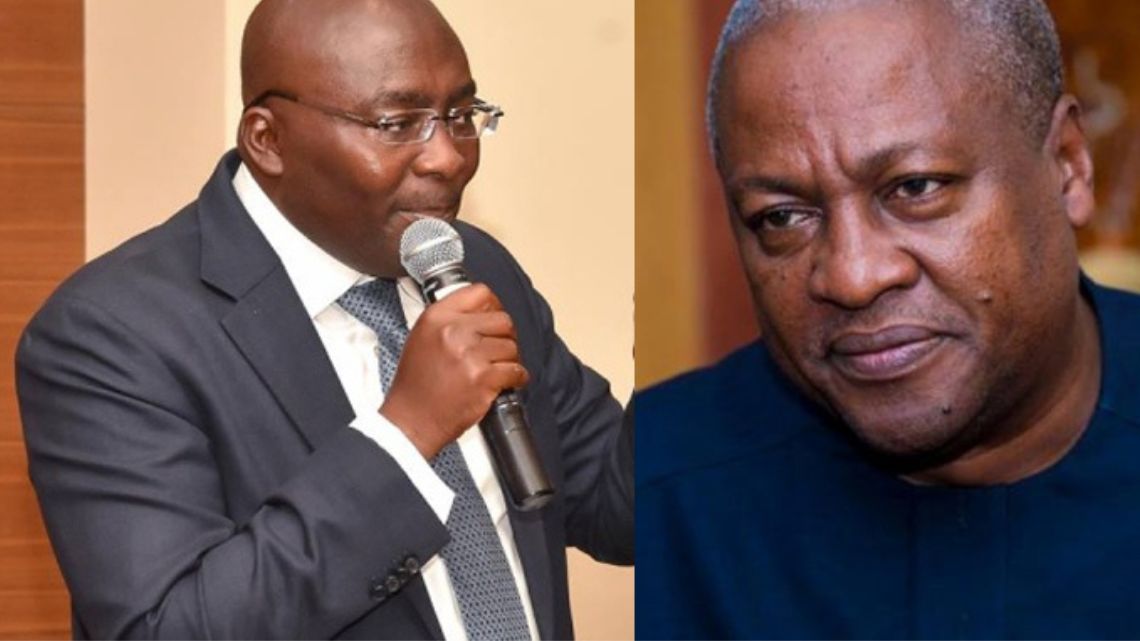
  • NPL ratio surge to 25.7% despite financial soundness improvement – BoG

    NPL ratio surge to 25.7% despite financial soundness improvement – BoG

    Bank of Ghana Governor Ernest Addison has indicated that key financial soundness indicators showed general improvement in the first four months of 2024, despite an increase in non-performing loans.

    Speaking at a press conference on Monday, May 27, 2024, following the 118th Monetary Policy Committee meeting, Dr. Addison informed reporters that the capital adequacy ratio, adjusted for reliefs, rose to 15.5 percent in April 2024, up from 14.7 percent in April 2023, reflecting a “rebound in profits.”

    Furthermore, the capital adequacy ratio without relief for the banking system stood at 11.5 percent at the end of April 2024, compared to 7.6 percent in April 2023.

    Dr. Addison also noted improvements in liquidity and efficiency indicators in April 2024 compared to the same period last year.

    However, he pointed out that the non-performing loan ratio increased to 25.7 percent in April 2024 from 18.0 percent in April 2023, attributed to the lagged effect of the COVID-19 pandemic and the economic crisis of 2022, resulting in the downgrading of several large exposures of banks.

    “The sector is expected to be strengthened as banks recapitalise and enforce stringent credit underwriting standards,” he added.

    Read the full MPC’s press statement below:

    Good morning, Ladies and Gentlemen of the Media and welcome to the press briefing for the 118th Monetary Policy Committee (MPC) meetings which took place last week. The Committee deliberated and assessed global and domestic macroeconomic developments for the first 4-months of the year, and the balance of risks to the outlook. A summary of the assessments and key considerations that informed the Committee’s decision on the positioning of the monetary policy rate is as follows:

    A. Global Developments and Conditions

    1. Global economic activity remains resilient despite sustained monetary policy tightening across advanced economies and Emerging Market and Developing Economies. The global growth outturn of 3.2 percent in 2023, largely reflected stronger consumption spending due to employment growth, particularly in advanced economies, and policy support in China, U.S, and some larger Emerging Market and Developing Economies (EMDEs). Other factors that further supported global activity in 2023, were additions to the stock of capital, a rebound in the manufacturing and services sector, improved trade, and resolution of pandemic era supply chain disruptions. In the outlook, IMF growth projections point to global growth remaining resilient at 3.2 percent in 2024 and 2025. Downside risks to the growth outlook include the observed slowdown in the disinflation process since early 2024, geopolitical uncertainty, and elevated debt burdens.

    2. Global headline inflation remains above target in most countries. Progress towards inflation targets has somewhat stalled since the beginning of the year due to a resurgence in crude oil prices as OPEC+ slashed production and increasing prices in the services sector. This notwithstanding, inflation is projected to decline steadily on the back of tighter monetary policy, softening labour market conditions, and fading effects of past shocks.

    3. Central Banks have remained cautious in lowering policy rates due to sluggishness of the disinflation process. Policy rates have been kept elevated to anchor inflation expectations and further drive down long-term inflation rates. Consequently, global financial conditions have generally remained restrictive. Longer-term bond yields have also risen, due to the expectation of maintenance of a still tight policy stance in the near-term. In the outlook, financial conditions are expected to ease in 2024 as the disinflation process continues and oil prices decline, amid well-anchored inflation expectations.

    B. Domestic Macroeconomic Conditions

    In the domestic economy, high frequency real sector indicators point to a sustained pickup in economic activity through the first quarter of 2024. The updated real Composite Index of Economic Activity recorded an annual growth of 2.1 percent in March 2024, compared to a contraction of 6.4 percent in the corresponding period of 2023. The pick-up in the index was driven mainly by increased imports, private sector contributions to SSNIT, and tourist arrivals. Ghana’s Purchasing Managers’ Index (PMI) signalled an improvement in business activity. As the index rose to 51.3 in April 2024 from 50.9 in March due to improved consumer demand.

    4. The latest confidence surveys conducted in April 2024 point to a softening of sentiments. Both Business and Consumer confidence dipped. On the part of consumers, these sentiments were on account of uncertainties about future economic conditions, while businesses expressed concern that recent exchange rate volatility and unstable intermittent power supply situation could significantly raise their operational costs moving forward.

    5. The disinflation process remained sluggish over the first quarter of the year. Inflation which declined to 23.1 percent in December 2023, moved up to 25.8 percent by the end of the first quarter of 2024. This slowdown in the disinflation process was driven in large part by rising food inflation, mainly seasonal food crop items. In April, however, inflation eased to 25 percent on account of improvements in the supply of seasonal food crops which seem to have been countered by increasing non-food inflation from the exchange rate pass through effects. Food inflation declined to 26.8 percent in April 2024 from the high of 29.6 percent recorded in March 2024, while non-food inflation increased to 23.5 percent from 22.6 percent over the same comparative period.

    6. Notwithstanding the sluggishness of the disinflation process, underlying inflationary pressures are well contained. All the core measures of inflation monitored by the Bank continued to ease. Isolating price increases of energy and utility items from the consumer basket, core inflation moderated to 24.8 percent in April 2024 from 26.3 percent in March.

    7. Fiscal performance is broadly in line with targets agreed under the International Monetary Fund (IMF)-supported programme. Provisional data on the execution of the budget shows that the primary balance (commitment basis) was a deficit of 0.6 percent compared with a target deficit of 0.2 percent. The overall broad budget balance (commitment basis) was a deficit of 1.8 percent of GDP compared with a deficit target of 1.7 percent of GDP. Total revenue and grants for the period amounted to GH¢30.4 billion (2.9 percent of GDP) compared with a programmed target of GH¢37.7 billion (3.6 percent of GDP). Total expenditures (on commitment basis, including other outstanding payments) for the period amounted to GH¢49.0 billion (4.7 percent of GDP) compared with a target of GH¢55.5 billion (5.3 percent of GDP).

    8. Growth in monetary aggregates slowed down considerably, reflecting the Bank’s liquidity management operations to tighten liquidity. Total liquidity (M2+) grew by 29.9 percent in April 2024, on year-on-year basis, compared with a growth of 45.6 percent in April 2023. The 3 PUBLIC relatively lower growth in M2+ was reflected in all its components, namely, currency with the public, demand deposits, savings and time deposits, and foreign currency deposits. Commercial banks’ reserves with the Central Bank surged following implementation of the dynamic Cash Reserve Requirement (CRR). As at the end of April, 2024 reserve money growth, on a year-on year basis, had increased to 51.9 percent (mainly due to the changes in regulatory reserves) relative to a growth of 46.5 percent in April 2023.

    9. Growth in private sector credit continued to remain weak. Private sector credit growth slowed to 10.8 percent in April 2024 from 19.8 percent in April 2023. In real terms, credit to the private sector contracted by 11.4 percent relative to a 15.2 percent contraction recorded over the same comparative period.

    10. Short-term interest rates on the money market broadly showed upward trends. The 91- day and 182-day Treasury bill rates increased to 25.68 percent and 28.03 percent respectively, in April 2024, from 19.67 percent and 22.29 percent respectively, in the corresponding period of 2023. The rate on the 364-day instrument increased to 28.64 percent in April 2024 from 27.04 percent in April 2023.

    11. The interbank weighted average rate remained within the policy corridor. The rate increased to 28.68 percent in April 2024 from 25.89 percent in April 2023. In contrast, the average lending rates of banks declined marginally to 31.25 percent in April 2024 from 31.66 percent, recorded in the corresponding period of 2023.

    12. Banking sector indicators point to a recovery from the impact of the domestic debt exchange programme. Total assets increased by 28.8 percent to GH¢306.8 billion at the end of April 2024 driven by domestic currency deposits and other funding sources. Banks also reported higher profits for the first four months of 2024, relative to the same comparative period in 2023.

    13. Key financial soundness indicators generally improved during the review period. The capital adequacy ratio adjusted for reliefs increased to 15.5 percent in April 2024 from 14.7 percent in April 2023, reflecting the rebound in profits. Capital adequacy ratio without relief for the banking system was 11.5 percent at the end of April 2024 compared to 7.6 percent in April 2023. Liquidity and efficiency indicators also improved in April 2024, compared to the same period last year. The non-performing loan ratio, on the other hand, increased to 25.7 percent in April 2024 from 18.0 percent in April 2023, due to the lagged effect of COVID-19 pandemic and the economic crisis of 2022 which has led to the downgrading of several large exposures of banks. The sector is expected to be strengthened as banks recapitalise and enforce stringent credit underwriting standards.

    14. On the international commodities market, prices of Ghana’s major exports (cocoa, gold, and crude oil), recorded gains in April 2024. Cocoa prices continued to increase, reaching US$10,116.9 per tonne in April 2024, from US$4,235.60 per tonnes in December 2023, representing a year-to-date gain of 138.9 percent. Crude oil prices increased by 15.2 percent on a year-to-date basis to US$89.00 per barrel in April, compared to US$77.26 per barrel in December 2023. Gold prices also increased by 14.7 percent at the beginning of the year to US$2,334.2 per fine ounce.

    15. The balance of trade recorded a lower surplus of US$744.3 million for the first four months of the year, compared to a surplus of US$1.39 billion in the corresponding period of last year. Total exports increased by 4.9 percent to US$5.83 billion driven mainly by significant growth in gold exports and a modest increase in crude oil exports. Earnings from gold exports increased by 37.0 percent to US$2.97 billion, due to higher volumes of exports from small-scale gold production. The value of crude oil exports, in comparison, increased by 9.4 percent to US$1.27 billion, on the back of both volume and price increases. Exports of cocoa, both beans and products, dropped by 49.0 percent to US$599.3 million. Other exports, including non-traditional exports, also decreased by 6.0 percent to US$981.8 million. Total imports increased by 22.2 percent to US$5.08 billion, driven mainly by non-oil imports which went up by 31.2 percent to US$3.53 billion, while oil imports increased by 5.6 percent to US$1.55 billion.

    16. Provisional data for the first quarter of the year resulted in a current account surplus of US$372.12 million. This represented a 40.8 percent decline from the surplus of US$629.01 million recorded in the first quarter of 2023. The lower surplus was driven mainly by higher imports, and increased income payments. Net income payment was US$727 million for the first quarter of 2024, compared to net income payment of US$508 million in 2023. Remittances inflows increased sharply to US$1.44 billion, compared with net inflows of US$980 million over the same comparative period.

    17. The Capital and Financial account recorded a net outflow of US$113 million, lower than a net outflow of US$998.40 million recorded in the same period in 2023. The reduced capital outflows were largely driven by significant inflows from the IMF and World Bank, as well as improved FDI flows to the economy.

    18. These developments resulted in an overall Balance of Payment surplus of US$84.74 million in the first quarter of 2024, compared to a deficit of US$586.99 million in 2023.

    19. Gross international reserves position remained strong. At the end of April 2024, the stock of Gross International Reserves increased to US$6.59 billion representing 3.0 months of import cover, compared with US$5.91 billion (2.7 months of import cover) at end-December 2023. Gross International Reserves (excluding encumbered and petroleum assets) also increased to US$4.32 billion, compared with US$3.66 billion at end-December 2023.

    20. The exchange rate has recently come under some pressure, especially in the forex bureaux market. The pressure in the foreign exchange market reflected increased demand for higher imports, energy sector payments, and uncertainty surrounding the progress of debt restructuring negotiations with external creditors. These conditions have fed into sentiments and contributed to additional pressures. On a year-to-date basis, the Ghana cedi depreciated by 14.6 percent against the US dollar as at 22nd May, 2024 compared to 21.8 percent depreciation for the first five months of 2023.

    C. Summary and Outlook

    21. Global growth remains relatively strong, bolstered by an expansion of economic activity in large economies, despite the tight monetary policy stance. For the year so far in 2024, progress toward attaining inflation targets globally has somewhat stalled as oil prices have risen due to escalating geopolitical tensions. For emerging markets and developing economies, the strengthening of the US dollar and the tight monetary policy stance of the U.S. Fed have induced more headwinds to the disinflation process. Due to these developments, central banks have mostly been cautious to loosen their tight monetary policy stance. In the outlook, however, central banks are expected to start the easing cycle when inflation begins to steadily decline towards targets.

    22. The Bank of Ghana’s high-frequency real sector indicators pointed to steady improvement in economic activity evidenced by continued steady growth in the CIEA. Similarly, the Purchasing Managers’ Index (PMI) firmed up, driven by resilient consumer demand. On the contrary, real private sector credit remains generally weak, while business and consumer confidence softened, reflecting concerns about high cost of raw materials and foreign exchange market pressures.

    23. Ghana’s external sector position remains strong although the current account surplus nearly halved in the first quarter of the year. The performance in the current account reflects a rebound in imports and net income payments. Accumulation of reserve buffers remains on course and set to exceed the programme expectation in June, largely due to the domestic gold purchase programme. The Bank’s reserve at end-April 2024 currently stands at 3.0 months of import cover.

    24. The exchange rate pressures witnessed in recent weeks reflect a weakening of the current account surplus, due to higher import demand and lower export revenue, especially a sharp fall in cocoa export earnings. The foreign exchange market pressures also reflect robust public spending on IPP arrears payment, and capital expenditure outlays. There are also indications of increased pressures from importers diverting foreign exchange demand requirements into informal markets, increasing speculative demand for foreign exchange. The Bank of Ghana, however, has adequate reserves to manage these shocks to the foreign exchange market, having added over US$600.0 million to the current foreign exchange reserve levels over the first five months of the year. The improved reserves position is also backed by strong liquid monetary gold levels of over 26.6 tonnes (estimated at US$2.1 billion) as a result of the very successful domestic gold purchase programme.

    25. The Bank of Ghana remains fully committed to provide stability in the exchange rate for the cedi. The Bank has enough foreign exchange reserves to support the market and economic agents should stop engaging in speculative purchases as they will suffer economic losses when the correction occurs.

    26. The Bank of Ghana is taking measures to improve market conduct and instill sanity in the market for foreign exchange. To this end, the Bank has worked with the Ghana Association of Banks to streamline documentation requirements for foreign payments to 6 PUBLIC minimise the incentives to resort to the informal markets. To deal with the high demand pressures on the foreign exchange market, the Bank has taken steps in the past few weeks to directly absorb foreign exchange needs of some corporate institutions, and this has led to a reduced pipeline demand for foreign exchange from the commercial banks. The Bank is fully aware of the operations of illegal operators in the foreign exchange market and is working with the Financial Intelligence Centre to sanitise the foreign exchange market. Foreign exchange bureaux monitoring will be stepped up to ensure compliance with their regulatory framework. In line with this, all foreign exchange bureaus advertising rates outside their premises and on social media platforms must immediately desist from the practice. The Bank has set up a task force to monitor all the foreign exchange bureaux to ensure compliance. The foreign exchange market is also affected by sentiments and pronouncements made in this election year and we urge all to manage pronouncements which weakens confidence in the local economy.

    27. On fiscal policy, expenditures outpaced revenue growth in the first quarter, reflecting the frontloading of IPP arrears payments. Maintaining strict fiscal discipline for the rest of the year will be crucial to strengthen confidence in the economy.

    28. On general macroeconomic conditions, the committee was of the view that while implementation of policies—at the macro and structural reform level — are consistent and align well with the tenets of the IMF-supported programme, there is the need to ensure that the recent depreciation of the currency does not become embedded into the pricing behaviour of businesses and on inflation expectations. The strong reserve build-up of about US$2.0 billion since the beginning of the IMF programme, the strong disinflation process, significant progress on fiscal policy consolidation, positive current account balances, and the good progress on the external debt restructuring process, have all worked together in concert to deliver enough buffers to support the exchange rate.

    29. The latest forecast shows a slightly elevated inflation profile on account of recent exchange rate pressures and adjustments in transportation fares. However, the projections show that inflation will remain within the monetary policy consultation clause of 13-17 percent at the end of the year. These forecasts are contingent on sustaining the tight monetary policy stance, including aggressive liquidity management operations.

    30. Given these considerations, the Committee decided to maintain the Monetary Policy Rate at 29.0 percent.

  • Avoid making statements that could provoke trading community – GUTA warns Stephen Amoah

    Avoid making statements that could provoke trading community – GUTA warns Stephen Amoah

    The Ghana Union of Traders Association (GUTA) warned Deputy Minister of Finance, Dr. Stephen Amoah, against statements that could incite the trading community.

    Dr. Joseph Obeng, the Union’s President, expressed disappointment with the deputy minister’s recent comments, blaming GUTA members for the cedi’s decline.

    During an interview on Accra-based Onua FM, Dr. Amoah accused certain GUTA members of using illicit currency exchange services, which he attributed to the cedi’s instability against the US dollar.

    In response, GUTA President Dr. Joseph Obeng urged the deputy finance minister to collaborate with his sector counterpart, Dr. Amin Adam, to address the cedi’s depreciation against major trading currencies.

    “I believe the deputy minister’s comments are misguided and unfortunate, and he should avoid making statements that could provoke the trading community. Many traders’ resort to forex bureaus or black market currency exchange services to purchase their goods and this is by choice,” Dr. Obeng told GhanaWeb Business.

    “GUTA strongly disagrees with the deputy minister’s attempt to shift blame for the cedi’s instability. This deflects attention from the government’s responsibility to address the issue. The situation is complex and requires a comprehensive approach,” he stressed.

    Dr. Obeng highlighted South Africa as a case study of a nation with a steady currency, attributing it to factors like robust governance, efficient policies, institutional strength, and cooperation between the government and stakeholders in tackling currency issues.

    “The trading community in Ghana is already struggling with high taxes, duties, and the economic downturn. My advice is for the deputy minister to help find lasting solutions to this ongoing problem,” Dr. Obeng emphasized.

    “The government should also implement a policy to tackle the depreciation issue once and for all and provide clarity on black market currency exchange services and forex bureaus,” he added.

    The GUTA president affirmed the willingness of its members to aid the government in addressing the persistent depreciation of the cedi against key trading currencies.

    Meanwhile, the Bank of Ghana attributes the cedi’s depreciation and recent developments in the foreign exchange market primarily to sentiments and public statements.

    As of May 29, 2024, the domestic currency is trading at GH¢15.00 to $1 in the forex market and selling at GH¢14.02 on the BoG interbank market.

  • A dollar goes for GHS15.00 at forex, BoG interbank rate at GHS14.02

    A dollar goes for GHS15.00 at forex, BoG interbank rate at GHS14.02

    Today, May 29, 2024, the Interbank forex rates released by the Bank of Ghana indicate that the Ghana Cedi is trading against the dollar at a buying price of 14.0080 and a selling price of 14.0220.

    In Accra’s forex bureaus, the dollar is bought at 14.80 and sold at 15.00.

    Against the Pound Sterling, the Cedi is traded at a buying price of 17.9008 and a selling price of 17.9201.

    In Accra’s forex bureaus, the pound sterling is bought at 19.00 and sold at 19.70.

    The Euro’s buying price stands at 15.2347, and its selling price at 15.2512.

    In Accra’s forex bureaus, the Euro is bought at 16.20 and sold at 16.80.

    The South African Rand’s buying price is 0.7657, and its selling price is 0.7665.

    In Accra’s forex bureaus, the South African Rand is bought at 0.40 and sold at 1.30.

    The Nigerian Naira is bought at 98.2854 and sold at 101.8516.

    In Accra’s forex bureaus, the Nigerian Naira is bought at 9.00 for every 1 Cedi and sold at 13.00.

    As for the CFA, it’s bought at 43.0102 and sold at 43.0568.

    In Accra’s forex bureaus, the CFA is bought at 23.00 for every 1 Cedi and sold at 25.50 for every 1 Cedi.

    Our forex bureau rates are provided by Afriswap Bureau De Change in Osu, Accra.

    Note that these rates may differ at a forex bureau near you. Our forex bureau rates are provided by Afriswap Bureau De Change in Osu, Accra.

  • MOMO transactions experience 41.55% surge in first 4 months of 2024 despite E-Levy deductions

    MOMO transactions experience 41.55% surge in first 4 months of 2024 despite E-Levy deductions

    In the first four months of 2024, the total value of mobile money transactions hit an all-time high of GH¢779.1 billion, marking a 41.55% year-on-year increase.

    This surge contrasts sharply with the GH¢330.9 billion recorded during the same period in 2023.

    Notably, this remarkable growth persists despite the presence of the Electronic Transactions Levy.

    According to the March 2024 Summary of Economic and Financial Data by the Bank of Ghana, January 2024 saw transactions valued at GH¢198.4 billion, which slightly declined to GH¢195.8 billion in February 2024.

    However, there was a rebound to GH¢203.0 billion in April 2024 after a dip to GH¢181.9 billion in March 2024.

    This notable achievement is in the face of the Electronic Transaction Levy (E-Levy).

    The total number of transactions peaked at 631 million in March 2024, with January and February recording 618 million and 609 million transactions, respectively.

    Although there was a slight decrease to 630 million transactions in April, the active mobile money accounts continued to rise, reaching 23.9 million in April 2024 compared to 22.9 million in January 2024.

    The total value of mobile money transactions in 2023 soared to a record GH¢1.912 trillion, surpassing the GH¢1.07 trillion recorded in 2022.

    MONTH2023 (GH¢ billion)2024 (GH¢ billion)
    January130.1198.4
    February134.0195.8
    March147.5181.9
    April138.8203.0
    Total550.4779.1
  • Ansa-Asare accuses Akufo-Addo of heading Ghana’s most corrupt govt

    Ansa-Asare accuses Akufo-Addo of heading Ghana’s most corrupt govt

    Former Director of the Ghana School of Law, Kwaku Ansa-Asare, has stated that the Akufo-Addo government is the most corrupt in Ghana’s history.

    “I don’t have the statistics but watching the political terrain, and the various approaches to the fight against corruption, I would say that this is the worst government we have ever had to combat corruption,” he told Accra-based Citi FM in an interview.

    He continued: “I have said it before. I granted an interview and I said: ‘Any government that will come and shout from the rooftop, ‘I’m going to fight corruption’, will be the worst in terms of fighting corruption. That will be the most corrupt government.’”

    “Akufo-Addo’s government is the worst ever, the most corrupt government we have ever had,” Mr Ansa-Asare asserted.

    Comparing this government to others in the Fourth Republic, Mr Ansa-Asare scored it ‘F’ as far as corruption fight is concerned.

    “At least, I have witnessed Rawlings, Kufuor, Mills and Mahama. If I have to score them and award them marks, the last and worst will be the current government, followed by John Mahama’s government. Mills will be first, Kufuor second, Rawlings third, Akufo-Addo last, in terms of grade one to four.”

    “We’re all witnesses to scandal after scandal. The latest is the [Pwalugu] dam. We don’t even know where the dam is. We don’t know what has happened, but there’s a dam.” “One-District-One-Factory: the monies. We want to build the Cathedral, so, we take the monies. They used the Cathedral to milk us. the government is milking the ordinary Ghanaian,” he complained.

  • Voter ID cards replacement to commence on May 30, till Friday, June 14

    Voter ID cards replacement to commence on May 30, till Friday, June 14

    The Electoral Commission (EC) has stated that the replacement of Voter ID Cards will begin on Thursday, May 30, and run until Friday, June 14, 2024.

    This service is intended for those who have misplaced their Voter ID Cards in readiness for the upcoming December 7 general elections.

    In a statement released on Tuesday, May 28, 2024, the EC encouraged all voters requiring replacements to make payments using the shortcode 2221067#.

    “The cost for replacement is GH¢10 only,” the statement read.

    The EC also directed applicants to furnish the District Officer with the reference code obtained after payment to expedite the card replacement process.

    This endeavor aligns with the Commission’s goal of enabling all eligible voters to engage in the upcoming elections seamlessly. Voters are urged to reach out to their local EC offices for additional information and support.

  • “This movie will kill someone on Friday!” – Lil Win’s words before fatal accident in Kumasi

    “This movie will kill someone on Friday!” – Lil Win’s words before fatal accident in Kumasi

    A video has surfaced online showing actor Kwadwo Nkansah, popularly known as Lil Win, declaring that his movie premiere, ‘A Country Called Ghana,’ would be so impactful that it would lead to someone’s death.

    “Herh, Friday… We will cut someone’s head, [with an expression of joy on his face]… this movie will kill someone on Friday,” he stated, as echoed by the person filming. It is unknown when or where this video was recorded.

    Tragically, on Saturday morning, May 25, 2024, Lil Win was involved in an accident in the Amakom area of Kumasi, Ashanti region. He sustained injuries, and a three-year-old boy lost his life.

    The actor’s previous statement has however sparked speculation among Ghanaians, with some suggesting a connection between his words and the accident.

    “@the_marcoli_boy,” who posted the video, cautioned, “Kwadwo Nkansah Lil Win will be in serious trouble with this video, we should watch our words carefully herrrr.”

    Others, however, believe it was a mere coincidence, with “@0panaa_1” commenting, “I feel it is just a coincidence he didn’t mean he will kill somebody you guys for relax.”

    The debate continues as the community grapples with this unfortunate event.

    Watch and listen to the video below:

  • Employees of Samsung electronics to embark on a first-ever strike in South Korea

    Employees of Samsung electronics to embark on a first-ever strike in South Korea


    A union representing thousands of workers at Samsung Electronics has announced the first strike in the South Korean technology giant’s 55-year history.

    The National Samsung Electronics Union plans a one-day protest on June 7, urging all its members to use their paid leave, and has not ruled out a future full-scale strike.

    The union, with approximately 28,000 members, represents over a fifth of Samsung’s total workforce.

    Samsung Electronics has stated it will continue negotiations with the union.

    “We can’t stand persecution against labour unions anymore. We are declaring a strike in the face of the company’s neglect of labourers,” a union representative said during a live-streamed news conference.

    Samsung Electronics’ management has been in talks with the union since the start of this year over wages, but the two sides have so far failed to strike a deal.

    The union has demanded a 6.5% pay rise and a bonus pegged to the company’s earnings.

    Samsung Electronics is the world’s largest maker of memory chips, smartphones and televisions.

    Analysts have warned that a full-scale strike could affect the firm’s computer chip manufacturing and impact the global supply chains of electronics.

    Samsung Electronics is the flagship unit of South Korean conglomerate Samsung Group. It is the biggest of the country’s family-controlled businesses that dominate Asia’s fourth-largest economy.

    Samsung Group was known for not allowing unions to represent its workers until 2020 when the company came under intense public scrutiny after its chairman was prosecuted for market manipulation and bribery.

    Samsung Electronics’ shares were trading about 2% lower in Seoul after the announcement.

  • Govt draining pockets of ordinary Ghanaians in the name National Cathedral – Ansa-Asare

    Govt draining pockets of ordinary Ghanaians in the name National Cathedral – Ansa-Asare

    The Akufo-Addo administration is squeezing the last drop from every Ghanaian to fund the President’s National Cathedral dream, according to former Ghana School of Law Director Kwaku Ansa-Asare.

    Mr. Ansa-Asare described the Akufo-Addo government as the most corrupt in Ghana’s history, highlighting the substantial amount of taxpayers’ money invested in the President’s personal pledge to build a national cathedral.

    “We want to build the Cathedral, so, we take the monies. They used the Cathedral to milk us. the government is milking the ordinary Ghanaian,” he complained.

    In January 2023, Dr. Paul Opoku Mensah, the Executive Director of the National Cathedral Secretariat, denied that any government-allocated funds for the cathedral project had gone missing.

    At the project site, he informed President Nana Akufo-Addo and the media on Tuesday, January 2, 2023, that:

    “For purposes of clarity, I want to report a verbatim memo I sent on this issue dated 19th January 2022 and addressed to the Clerk of Parliament.”

    “The indication was that the government has given us GHS339 million and we could account for GHS225 million leaving GHS114 million missing.”

    ”Here, I quote what I wrote to the Clerk. ‘As we indicated to the Committee on Thursday, December 15, 2022, the total amount paid by the government of Ghana to the National Cathedral project is GHS339 million. This total is made up of the following: the amount paid directly to the National Cathedral Secretariat is GHS225 million. The amount paid directly to the Consultant, Adjaye Associates & Design Team is GHS113.040.54.67 million. The two payments total GHS339.003.064.86’.”

    Dr Opoku Mensah, thus, dispelled claims that some monies allocated for the construction of the cathedral cannot be accounted for.

    “So, there are no missing funds that could not be accounted for. Secondly, the detailed account for these funds was provided to Parliament on December 15, 2022, by the Secretariat. In the case of the accounting from the Secretariat, this involves among others, total payments made to the contractor, and total payments made to the Bible Museum and Biblical Gardens Design Team.”

    He also conveyed the secretariat’s dissatisfaction with certain Members of Parliament for, in his words, misrepresenting the project’s realities.

    “While projects of this nature will always have discontent, we are nonetheless concerned about the misrepresentations particularly when it comes from Members of Parliament.”

    “For instance, the continued misrepresentation of the contract to the consultants is worrying as none of the amount bandied around comes anywhere near the contract amount.”

    “Rather than 34% that they said we’d paid the architect, actually, the contract figure is 12.5% when the Ministry of Works and Housing allows for 15.5%. And the 12.5% will not change irrespective of what happens to the total cost.”

    “More critically, the contract is not for an architect, but for a set of consultants’ services involving 15 international and Ghanaian firms of which Sir David Adjaye Associates is the lead consultant,” he said.

    In January 2023, Dr. Paul Opoku Mensah, the Executive Director of the National Cathedral Secretariat, denied that any government-allocated funds for the cathedral project had gone missing.

    At the project site, he informed President Nana Akufo-Addo and the media on Tuesday, January 2, 2023, that:

    “For purposes of clarity, I want to report a verbatim memo I sent on this issue dated 19th January 2022 and addressed to the Clerk of Parliament.”

    “The indication was that the government has given us GHS339 million and we could account for GHS225 million leaving GHS114 million missing.”

    ”Here, I quote what I wrote to the Clerk. ‘As we indicated to the Committee on Thursday, December 15, 2022, the total amount paid by the government of Ghana to the National Cathedral project is GHS339 million. This total is made up of the following: the amount paid directly to the National Cathedral Secretariat is GHS225 million. The amount paid directly to the Consultant, Adjaye Associates & Design Team is GHS113.040.54.67 million. The two payments total GHS339.003.064.86′.”

    Dr Opoku Mensah, thus, dispelled claims that some monies allocated for the construction of the cathedral cannot be accounted for.

    “So, there are no missing funds that could not be accounted for. Secondly, the detailed account for these funds was provided to Parliament on December 15, 2022, by the Secretariat. In the case of the accounting from the Secretariat, this involves among others, total payments made to the contractor, and total payments made to the Bible Museum and Biblical Gardens Design Team.”

    He also expressed the secretariat’s displeasure over what he described as a misrepresentation of facts on the project by some Members of Parliament.

    “While projects of this nature will always have discontent, we are nonetheless concerned about the misrepresentations particularly when it comes from Members of Parliament.”

    “For instance, the continued misrepresentation of the contract to the consultants is worrying as none of the amount bandied around comes anywhere near the contract amount.”

    “Rather than 34% that they said we’d paid the architect, actually, the contract figure is 12.5% when the Ministry of Works and Housing allows for 15.5%. And the 12.5% will not change irrespective of what happens to the total cost.”

    “More critically, the contract is not for an architect, but for a set of consultants’ services involving 15 international and Ghanaian firms of which Sir David Adjaye Associates is the lead consultant,” he said.

    In the 2023 budget, government allocated a sum of GHS80million towards the construction of the cathedral, however, the Minority succeeded in disapproving it.

    In the view of Mr Ansa-Asare, scandals like the cathedral saga, are a testament to how endemic corruption has been in the Akufo-Addo government.

    “I don’t have the statistics but watching the political terrain, and the various approaches to the fight against corruption, I would say that this is the worst government we have ever had to combat corruption,” he told Accra-based Citi FM in an interview.

    “I don’t have the statistics but watching the political terrain, and the various approaches to the fight against corruption, I would say that this is the worst government we have ever had to combat corruption,” he told Accra-based Citi FM in an interview.

    He continued: “I have said it before. I granted an interview and I said: ‘Any government that will come and shout from the rooftop, ‘I’m going to fight corruption’, will be the worst in terms of fighting corruption. That will be the most corrupt government.’”

    “Akufo-Addo’s government is the worst ever, the most corrupt government we have ever had,” Mr Ansa-Asare asserted.

    Comparing this government to others in the Fourth Republic, Mr Ansa-Asare scored it ‘F’ as far as corruption fight is concerned.

    “At least, I have witnessed Rawlings, Kufuor, Mills and Mahama. If I have to score them and award them marks, the last and worst will be the current government, followed by John Mahama’s government. Mills will be first, Kufuor second, Rawlings third, Akufo-Addo last, in terms of grade one to four.”

    “We’re all witnesses to scandal after scandal. The latest is the [Pwalugu] dam. We don’t even know where the dam is. We don’t know what has happened, but there’s a dam.” “One-District-One-Factory: the monies.”

  • KATH CEO files GHS3m defamation lawsuit against former legal counsel

    KATH CEO files GHS3m defamation lawsuit against former legal counsel

    The Chief Executive Officer of the Komfo Anokye Teaching Hospital (KATH), Prof. Otchere Addai-Mensah, has initiated a defamation lawsuit against private legal practitioner Kwame Adofo, seeking GHS 3 million in damages.

    The lawsuit follows allegations made by Mr. Adofo, the former legal counsel for KATH, who accused Prof. Addai-Mensah of financial impropriety and procurement violations.

    Mr. Adofo, who served until December 31, 2023, claimed in a petition to President Akufo-Addo that he had substantial evidence of the CEO’s financial mismanagement and incompetence.

    In response to these allegations, labor unions at KATH have strongly opposed the petition calling for Prof. Addai-Mensah’s dismissal.

    In a joint statement, the unions defended the CEO, dismissing Mr. Adofo’s accusations as baseless and inaccurate.

    “The unions dismiss the allegations, describing the petition as groundless and fraught with inaccuracies,” the statement read.

    Prof. Addai-Mensah’s lawsuit seeks not only financial compensation but also a public retraction and apology from Mr. Adofo.

    The CEO is asking the court to order Mr. Adofo to retract his statements in both newspaper and online publications and to issue an apology for the defamation.

    “An order of the Court directed at the Defendant to publish on three consecutive occasions, on the same platform that they published the defamatory words i.e. Facebook Timeline and in the Daily Graphic, an unqualified retraction and an apology, with the same prominence as given to the issuance of the defamatory words,” the lawsuit stipulates.

  • Govt appointees will no longer enjoy free utility bills, fuel, DSTV, others when I become president – Mahama

    Govt appointees will no longer enjoy free utility bills, fuel, DSTV, others when I become president – Mahama

    Flagbearer of the National Democratic Congress (NDC), John Dramani Mahama, has pledged to eliminate free fuel and other non-essential benefits for government officials if elected president in the upcoming December elections.

    During a meeting with the EU Ambassador to Ghana, Mr. Mahama outlined several cost-saving measures his administration plans to implement to reduce the financial burden on the state.

    These measures include terminating free DSTV subscriptions, utility bill payments, and fuel allowances currently provided to government officials.

    “We will discontinue the payment of utility bills, fuel, DSTV, etc. as conditions of service for top government officials, directors, and the political class. We believe that people should take up paying their own electricity bills and water bills like every other Ghanaian does,” Mr. Mahama stated.

    He emphasized that these benefits are excessive and unnecessary, arguing that government officials should bear the cost of such services just like ordinary citizens.

    Mr. Mahama stressed the need for equality and fiscal responsibility, noting that the state’s finances could be better allocated.

    “Unless you are using a government vehicle or on government assignment, you should buy your fuel if you are using your own car and so we are going to discontinue that,” he added.

  • Martin Amidu lists 8 pointers in disclaiming that he wrote petition to remove Kissi Agyebeng

    Martin Amidu lists 8 pointers in disclaiming that he wrote petition to remove Kissi Agyebeng

    On May 17, 2024, widespread reports emerged that former Special Prosecutor Martin Amidu had filed a petition seeking the removal of his successor, Kissi Agyebeng.

    Initial reports suggested that President Nana Addo Dankwa Akufo-Addo had forwarded the petition to the Chief Justice.

    However, neither the petition nor the transmission letter from the executive to the judiciary has been publicly seen.

    On the same day the report was published, a letter allegedly from the Chief Justice to the Special Prosecutor circulated. In this letter, the Chief Justice asks Agyebeng to respond to the contents of the supposed petition to determine if there is a prima facie case.

    In a May 26, 2024, letter addressed to his political and media detractors, Amidu listed eight points denying authorship of the said petition.

    Below are the points raised:

    Firstly, I am not familiar with the signature of the Chief Justice – with reference to the purported letter from the CJ to SP, which is the only evidence he has sighted.

    Secondly, the document attributed to the Chief Justice has no reference number as required by public records administration to avoid forgery of official documents.

    Thirdly, as a former student of the Tamale Commercial Institute, the first commercial institute in Northern Ghana, I cannot fathom a Chief Justice writing and signing a document in which she will refer to herself as “the Honourable Chief Justice”.

    Fourthly, I do not think that the Chief Justice would have written and signed the document attributed to her and have it published in the media or leaked
    to the media.

    Fifth, the alleged document was addressed to only Kissi Agyebeng, the Special
    Prosecutor, whose media house, Joy FM, broke the supposed news at 6:00 am on 17 May 2024 when the Chief Justice’s document was dated the previous day, 16 May 2024.

    Sixth, I cannot fathom that the Chief Justice if she is the author of the document attributed to her gave the addressee a fiat to source the document to Joy FM.

    Seventh, Joy FM and the NDC have refused or failed to publish the letter from the Presidency to the Chief Justice or the alleged petition for purposes of authentication to enable a reasoned response from me as the Joy FM’s accused in its trial in the court of public opinion.

    Finally, it is impossible for me to have written a petition under my signature and referred to Kissi Agyebeng as “Honourable Kissi Agyebeng” as alleged in the document attributed to the Chief Justice.

    He stressed: “I expect the Chief Justice, if she really wrote the document making the rounds and did not publish or authorize its publication in the media, to react to the authenticity of the letter or the memorandum and its contents to put the public mind at rest or take such steps as will restore the integrity of the Judicial Service as not being part of my trauma resulting form my trial by
    Kissi Agyebeng, Joy FM, and the NDC in the court of public opinion.”

  • Protecting our elections in Cybersphere: EC alone cannot ensure the security and integrity of our elections

    Protecting our elections in Cybersphere: EC alone cannot ensure the security and integrity of our elections

    This article aims to emphasise that the Electoral Commission (EC) alone cannot protect our elections in 2024 due to the sophisticated and varied cyber threats we face. As cyber-attack techniques have become increasingly advanced, the geopolitical interest in West Africa has also intensified. Given the current context, world powers would understandably seek to exploit elections in former colonial countries, particularly in the West Africa subregion, to achieve their national interests.

    Moreover, the intense competitive nature of our internal politics makes it difficult to unite key stakeholders especially the political parties to act from a unified front, as actions of nation-state actors may benefit one party over another. This complexity underscores that the EC alone cannot ensure the integrity of the elections. Therefore, the EC should not appear to be dismissive when key stakeholders, particularly parliament, political parties, or CSOs, raise concerns about its conduct. The EC needs the buy-in of all stakeholders if we, as a nation, want to have a chance against determined nation-state actors. We also need to be able to recover quickly from a possible cyber-attack, and this can only be done calmly if there is a united stakeholder group behind the EC.

    The EC should reach out to key stakeholders particularly the dominant political parties, the NCCE, the Council of State, the Forces, relevant Ghanaian CSOs, Ghanaian Private Security Firms, Parliament, Ghanaian security researchers and others to solicit their assistance and cooperation. The EC should set up an Elections RISK Management Task Force incorporating the stakeholders with the single purpose of protecting our elections against nation-state actors in 2024. This is the year when cyber-attack techniques reach a sophisticated level never seen before and geopolitical competition for influence is at the most aggressive and dangerous. At the same time, our politics has never been as partisan. A comprehensive Risk Register should be developed and published even if with some redactions. In my view, our electoral system appears to be vulnerable to cyber-attacks as are many other systems worldwide.

    BVDs and the Reference Threshold issue

    The introduction of biometric devices into Ghana’s electoral framework in 2012 was a response to numerous challenges that had plagued the electoral process in previous elections. Before their introduction, allegations of voter register inflation, double voting, vote suppression, procedural opacity, and ballot stuffing seriously undermined the integrity of our elections.

    The integration of biometric devices aimed to address these concerns, ushering in an era of enhanced scrutiny and technological advancement in Ghana’s electoral processes. Despite this significant milestone effort, the efficacy of the biometric system in resolving these perennial issues has been mixed.

    Notably, before 2012, to my knowledge, the Supreme Court had not been involved in settling election petitions. However, since the adoption of biometric technology, two out of the three elections (2012 and 2020) have required Supreme Court intervention, highlighting ongoing challenges within the electoral process.

    While it’s crucial not to solely attribute dissatisfaction with election outcomes to biometric devices, their implementation hasn’t entirely mitigated pre-existing grievances. Moreover, as computer devices, these biometric devices natively inherit vulnerabilities common to all computing devices. Contextual factors surrounding their usage also introduce additional vulnerabilities, necessitating a comprehensive evaluation of their efficacy and security in Ghana’s electoral framework.

    The introduction of biometric devices has opened new avenues for exploitation by various criminals, especially those who are adept in digital manipulation or those who have access to skilled hackers. For instance, vote suppression can be facilitated by manipulating the device’s reference threshold. By adjusting this threshold, perpetrators can influence the False Acceptance Rate (FAR) or False Rejection Rate (FRR) of the device.

    The reference threshold is a critical factor in the biometric verification process and plays a significant role in determining a device’s effectiveness. This threshold is also a key consideration in the bidding process for such devices, but it presents a potential attack vector for cybercriminals. A high FRR leads to prolonged verification processes, resulting in voter frustration and potentially causing voters to leave polling stations without casting their votes due to long queues and slow processing times. Conversely, manipulating the reference threshold to produce a high FAR could allow ineligible individuals to vote by reducing the number of rejections, thus enabling those who should have been rejected to cast votes.

    To mitigate these risks, the threshold should be configured to balance security and convenience. An optimally balanced FAR and FRR, known as the Equal Error Rate (EER), ensures that the system is both secure and user-friendly. However, if the verification function of the biometric verification device (BVD) system is disabled, it provides maximum convenience for voters but poses a significant fraud risk. While not necessarily malicious, disabling or manipulating this function undermines the security of the voting process, highlighting the need for a careful balance between ease of use and robust security measures.

    Vulnerabilities and Threats

    Some examples of the potential vulnerabilities and threats that need to be considered due to the integration of biometric devices into the electoral process include:

    1. Disgruntled or Criminal Insiders
       Individuals with legitimate access to the systems, such as election officials or IT personnel, could potentially tamper with BVD verification if they have the necessary permissions and access rights. Malicious configuration of a BVD can be executed either centrally over the network or at the endpoint. Employees with administrative or system privileges can manipulate devices or cause them to malfunction. Samuel Adams and William Asante of GIMPA, in their June 2019 paper “Biometric Election Technology, Voter Experience And Turnout In Ghana,” indicate that “machine malfunction facilitated election fraud, including overvoting and ballot stuffing, especially where election observers were not present.” This was with reference to the 2012 elections. Other sources similarly associate device malfunction with higher incidences of election fraud, but readers are encouraged to verify these claims independently.Insiders can also act on behalf of external sponsors (Ghanaian or foreign). These insiders can exfiltrate data or perform actions on behalf of their sponsors. For example, they might plant malware that provides access to the EC systems, allowing the manipulation of voter data and interference with the configuration settings of devices and software. Insider attackers may not always be criminals but could be disgruntled individuals with political or personal grievances, akin to Edward Snowden and Chelsea Manning, who leaked classified US data.  IT consultants on hire by the EC also fall into the category of insiders and could maliciously infect the EC’s systems on behalf of their sponsors.

    2. Supply Chain Attacks
    A particularly insidious type of attack is the supply chain attack, where vulnerabilities are introduced through compromised equipment and software supplied by third parties. A notable example was the SolarWinds Orion platform attack, which affected numerous US government departments and major technology companies, including Microsoft and Intel. The recent XZ Utils attack is another example of a supply chain attack. XZ Utils is a suite of software tools which includes a very popular software compression tool.

    3. Denial of Service (DoS) Attacks

    Criminal attackers could overwhelm the EC verification system with excessive requests, causing it to crash or become unresponsive, effectively disabling biometric verification. Attackers could also throttle internet bandwidth. These acts could engineer forced device failure, facilitating election fraud associated with machine malfunctions.

    4. Power Outages and Internet Infrastructure Breakdown
    The reliance on biometric devices means that power outages and internet infrastructure breakdowns, such as damage to subterranean fibre optic cables, pose significant risks to the electoral process.

    5. Activities of Political Parties

    Political parties might employ hackers or leverage sympathizers with the necessary skills to infiltrate the EC’s systems, steal data or deploy malware that grants remote access. This access could be used to manipulate biometric verification templates or manipulate devices in specific electoral areas. Additionally, political parties could steal voter names and contact details to launch targeted deepfake attacks. If a political party acquires the full voter register and with contact details well ahead of official publication, that political party acquires an unfair advantage. In addition, a successful attack could also be deliberately publicised by the attackers as a tactic to undermine confidence in the election process.

    6. Hacktivists

    Hacktivists are local or international groups who use hacking to promote political or social causes. While their actions are often driven by ideological motivations rather than personal gain, their actions are considered illegal. Hacktivists may target countries with poor human rights records or organizations engaging in unethical behaviour. One of the most well-known hacktivist groups is the Anonymous group, which conducts cyber-attacks to advance various political and social causes, often targeting government entities and corporations. Anonymous is believed to have supported political activists in Tunisia and Egypt and supported WikiLeaks in the past.

    7. Nation-State Actors

    West Africa, particularly the Sahel region, has experienced a series of coups in recent years, leading to significant shifts in geopolitical influence. Countries such as Mali, Burkina Faso, Niger and Guinea have seen their governments overthrown, disrupting established political dynamics and creating opportunities for imperialist powers to lose or assert their influence. This geopolitical shift appears to have benefited Russia and China, while traditional Western powers such as the US and France have seemingly lost some of their foothold in the region.

    Elections in the neighbourhood of these countries are therefore of considerable interest to external actors, as they seek opportunities to shape political outcomes in favour of their strategic interests. Nation-state actors may seek to influence our elections through various means, including cyber-attacks, disinformation campaigns, and financial or political support for certain candidates or parties.

     Nation-state actors can target digital grids used to manage critical infrastructure such as traffic light systems, electricity networks, banking operations, air traffic control systems, military systems, and electoral systems. These attacks aim to steal sensitive data and sabotage systems to malfunction. In the case of the Stuxnet attack in Iran, physical damage to centrifuges was also caused.

    Nation-state actors pose the greatest threat to our democracy through their dominance in cyberspace. For example, cyber experts believe that no other threat-actor group could have pulled off the SolarWinds Orion, XZ Utils, or Iran Stuxnet attacks due to the substantial resources, time, and effort required for these operations. These attacks are usually executed by malware that is implanted over a prolonged period and can stay in apparent incubation over long periods sometimes lasting years. This long-term gameplay known as Advanced Persistent Threat (APT) is mostly associated with nation-state actors. Could our systems already have APTs lurking in them?

    8. Global Context of Elections Cybercrime

    There have been cyber-attacks against elections worldwide, highlighting the global nature of this issue. For instance, the 2016 US presidential election saw significant interference attributed to foreign actors from Russia by Western analysts. Similarly, the 2017 French presidential election experienced cyber-attacks targeting Emmanuel Macron’s campaign. The 2019 European Parliament elections were also subjected to various cyber threats, partially attributed to North Korea.

    This year, cyber-attack techniques appear to have reached a new level of sophistication and are being deployed with unprecedented aggression. For example, the ongoing 2024 general elections in India have been marred by sophisticated phishing attacks and ransomware targeting election officials and critical infrastructure. During the Brazilian municipal elections in November 2020, coordinated denial-of-service attacks disrupted voter registration systems, leading to significant delays in announcing results and causing considerable confusion. The failure of some election computers in the 2023 elections in Nigeria led to allegations of forced server malfunction to aid in the fraudulent tallying of results.

    Cybersecurity experts have also warned of increasing attempts to exploit vulnerabilities in online voting systems, as happened in the Estonian local elections in 2021 where attackers tried to manipulate digital voting platforms. These incidents underscore the evolving nature of cyber threats, with attackers employing more advanced techniques such as deepfake videos to spread disinformation. For example, in recent election campaigns, deepfake videos have been used to create realistic but fake speeches or statements from political candidates, aimed at misleading voters and undermining trust in the electoral process. These sophisticated cyber-attacks highlight the urgent need for robust security measures and public awareness to protect the integrity of elections and the democratic process.

    The maturation of these cyber-attack techniques means that election security must now contend with not only traditional threats but also highly sophisticated, coordinated digital assaults. This calls for robust cybersecurity measures, continuous monitoring, extensive logging and above all stakeholder cooperation to safeguard the integrity of our elections.

    The EC and Stakeholders

    It should not be left to only the EC to ensure the integrity of our elections, nor should the EC seek to exclude key stakeholders from the security planning processes towards the 2024 elections.

    The EC alone cannot defend our electoral system against cyber-attacks mounted by cyber criminals, especially nation-state actors.

    So, what should we, as a nation, do to protect Ghana’s electoral system and our elections, especially in this year of heightened international interest for geopolitical reasons? This year, in 2024, it can be assumed with high confidence that the so-called world powers would seek to influence every election for geopolitical reasons.

    In my view, it is a question of protecting our sovereignty. Our mindset should be as if we were facing a physical military threat or as if we were confronting a more aggressive form of COVID. However, unlike a military threat, which would automatically unite all citizens in comradely cooperation, the cyber enemy is invisible, lacks a clear name and its aims are difficult to explain.

    However, the seriousness of the threat remains. Our biggest shield against this threat in my view lies in our ability and willingness to cooperate. We should defend in great depth as we ensure that all our flanks are covered. In my view, it is the EC that can act to bring about this cooperation. Involving stakeholders in the planning and implementation of election security measures is vital for ensuring the integrity, transparency, and trustworthiness of the electoral process. By leveraging the diverse expertise, perspectives, and resources of various stakeholders, the EC can develop comprehensive and effective security strategies that address the full spectrum of potential threats and vulnerabilities. This collaborative approach not only enhances the security of biometric verification devices but also strengthens the overall resilience of the election digital infrastructure, fostering public confidence and trust in our democratic processes.

    Poor Cyber Hygiene

    As a final point, in my view, the Electoral Commission (EC) has been compelled to disclose extensive details about the election devices and their integration into the election process when responding to public demands for accountability. Consequently, the public including security researchers of the nefarious kind has confirmed that the EC hires generators to address power outages. Listeners and viewers of any news channel in the past few weeks also now know that the EC uses USB drives for temporary data processing and server synchronisation. Additionally, we have learned that biometric verification devices (BVDs) require activation before use, necessitating an activation code. We even know that the serial number of a BVD is a required input to generate the activation code. This code can be generated elsewhere on another EC system and then applied to the device in question. Most of this information was gratuitously provided by the EC and is not harmless from a cyber security perspective. This article neither touches on the baffling issue of the auctioned BVDs, nor the amazing, forced admission by the EC that some BVD kits are missing or lost and are believed stolen.

    In my view, the hygiene in the EC’s cyberspace could be better. Noticeably poor cyber hygiene within an organization is often seen as an open invitation for hackers, especially nation-state actors, to probe for vulnerabilities.

    Detailed information that could be exploited by hackers should remain confidential and be shared only on a need-to-know basis to protect the security and integrity of the electoral process.

    The reader may note that I am aware of the existence of IPAC, the stakeholder group.

    Ensuring that critical operational details remain secure while upholding transparency and accountability is a balance that the EC must strive to achieve. This balance is essential to protect our electoral process from potential threat actors while maintaining public trust and confidence. The most efficient and sensible way to achieve this is through stakeholder cooperation and participation in the security arrangements of the electoral processes. The spectre of the nation-state actors must concern all Ghanaians, but the most efficient and effective way for nation-state actors to achieve their goals is to compromise insiders into doing their bidding. The existence of a united stakeholder group will help mitigate some exploitative possibilities for would-be nation-state actors.

    So, the EC must properly engage the NPP and NDC, the only two parties with seats in parliament that have realistic chances of producing a winning presidential candidate in the 2024 elections.

    Finally

    The EC must acknowledge the challenging historical context in which it operates. Recognising these difficulties will be a positive first step.

    The maturity of the EC will be judged, in part, on its ability to bring key stakeholders together. The nation’s elections, democracy, and perhaps its future once again depend on the EC, as they did in March 1978 when the UNIGOV referendum was held. On that occasion, in the opinion of most Ghanaians, the EC despite all the odds, rose to the challenge and acted impartially in the interest of Ghana and showed no bias towards any of the two sides in that contest.

    Source: Myjoyonline.com | Daniel Alolga Akata Pore 

  • Public service delivery to go fully cashless by 2028 – Mahama

    Public service delivery to go fully cashless by 2028 – Mahama

    Flagbearer of the National Democratic Congress (NDC), John Mahama, has revealed plans to shift all government institutions to a cashless system by 2028 if he is elected in the upcoming elections.

    He mentioned that while the Electricity Company of Ghana (ECG) has already implemented a cashless system, this initiative will also be expanded to other government agencies and certain private institutions.

    Mr. Mahama aims to eliminate cash payments for goods and services, encouraging the use of electronic payment methods such as mobile money.

    “We want to phase out cash as a form of all payments by 2028 and so for any payment that you have to do, for any service that has to do with the public sector and some to do with the private sector, by 2028, we will no longer receive cash.”

    “So in the hospital and other places, you would have to use your mobile money to pay, electronic forms of payments,” he said.

    A few months ago, the NDC flagbearer pledged to establish a 24-hour economy to accelerate the country’s development.

    He believes that this 24-hour system will help achieve his vision of revitalizing the struggling economy, maximizing productivity and efficiency, and ultimately creating a dynamic and vibrant environment that benefits both workers and businesses.

  • Dr. Nduom initiates efforts to retrieve Banking license to operate throughout Ghana

    Dr. Nduom initiates efforts to retrieve Banking license to operate throughout Ghana


    Groupe Nduom (GN) has begun efforts to reclaim its banking license to restart operations throughout Ghana.

    At an event held on Sunday, May 26, 2024, at the former branches of the defunct bank in Brewa and Agona in the Central Region, Dr. Paa Kwesi Nduom, CEO of Groupe Nduom, assured attendees that the bank would resume operations soon.

    “I am here to assure you all that sooner or later the bank will begin operations for you all. We are currently taking steps to access our license from the Bank of Ghana. We are the bank for the people, so we will do everything in our power to commence operations for you people, “he said. 

    On August 16, 2019, the Bank of Ghana revoked the licenses of 23 savings and loans companies and finance companies.

    GN Savings and Loans was among those affected.

    The central bank made this decision under Section 123(1) of the Banks and Specialised Deposit-Taking Institutions Act.

    This Act empowers the central bank to revoke the license of a bank or specialised deposit-taking institution if it is deemed insolvent.

    However, Dr. Nduom stated during his visit to the communities that the decision was unjust.

    He argued that the insolvency was caused by the government’s failure to pay contractors, which in turn affected the bank.

    Dr. Nduom claimed that if the government had settled its debts to contractors, the bank would have been financially stable at the time of the license revocation.

    He urged residents to pressure their leaders and parliamentary representatives to compel the central bank to reinstate the bank’s license.

    Previously, the bank operated 300 branches nationwide and employed 7,000 staff.

    The license recovery initiative included visits to various branches and communities of the defunct bank.

    Dr. Nduom mentioned that the bank would soon engage in advocacy efforts to highlight the “unjust” revocation of its license by the Bank of Ghana.

    The “Bring Back GN Bank” campaign featured multiple activities, including a tour of the company’s assets and meetings with former staff.

    Dr. Nduom visited the bank’s former and proposed branches in Afransie, Awutu Senya, Potsin, and Ngleshi Amanfrom.

    He noted that the Amanfrom and Awutu Senya branches had been converted into churches, while the Potsin branch was destroyed.

  • Nana B speaks on “damning” secret recording associated with ambulance purchase trial

    Nana B speaks on “damning” secret recording associated with ambulance purchase trial

    National Organiser of the New Patriotic Party (NPP), Henry Nana Boakye, also known as Nana B, is anticipating the disclosure of evidence by the National Democratic Congress (NDC) in an upcoming press conference regarding the alleged conduct of Attorney-General Godfred Dame Yeboah in the ongoing ambulance purchase trial.

    Nana B claims that the NDC’s ‘damning evidence’ consists of a secret recording made by the third accused, Richard Jakpa, at the residence of a Supreme Court judge.

    The third accused stated openly in court that Godfred Dame had approached him on multiple occasions, soliciting his help to incriminate the first accused person, Dr. Ato Forson.

    Dr. Forson, a former Deputy Finance Minister and current Minority Leader, is facing charges brought by the state for his alleged involvement in the procurement of defective ambulances for Ghana.

    In a Facebook post on Monday, May 27, the National Organiser of the NPP stated that the Attorney-General attended the meeting at the request of Justice Emmanuel Yonny Kulendi, which took place at his residence.

    He argued that the complete recording would demonstrate that the Attorney-General never asked Richard Jakpa to distort his testimony.

    “We are reliably informed that NDC is trying every means to maliciously ‘doctor’ the said tape to exclude portions of the conversation and particularly the voice of the Supreme Court Justice, whose invitation the AG honoured out of courtesy. The full-length recording will reveal the AG never requested Richard Jakpa to skew his testimony in any manner as bandied around by the NDC.”

    Nana B indicated that “No amount of scheming by the NDC and its affiliates will exonerate any person who participated in misrepresenting ordinary vans as ambulances to the Ghanaian populace.”

    Sammy Gyamfi, the National Communications Officer of the NDC, has issued a warning to the public, warning them not to trust pro-NPP communicators and media outlets that claim to have “incontrovertible evidence” on their hands.

    Below is Nana B’s full post

    On the dishonorable and discredited Ato Forson’s trial:

    The NDC has since the commencement of the prosecution of Ato Forson employed every rule in the book to frustrate, manipulate and curtail bringing Ato Forson to justice for the huge financial loss occasioned by Ghana at the expense of much-needed emergency health services for the Ghanaian populace.

    The latest in this charade is the claim of possessing some damning evidence which has been found out to be a recording by Richard Jakpa at a meeting the AG was invited to by a Supreme Court judge, Justice Emmanuel Yonny Kulendi without being informed Richard Jakpa will be present.

    We are reliably informed that NDC is trying every means to maliciously ‘doctor’ the said tape to exclude portions of the conversation and particularly the voice of the Supreme Court Justice, whose invitation the AG honoured out of courtesy.

    The full-length recording will reveal the AG never requested Richard Jakpa to skew his testimony in any manner as bandied around by the NDC.

    Justice they say must be done even if the heavens fall and no amount of scheming by the NDC and its affiliates will exonerate any person who participated in misrepresenting ordinary vans as ambulances to the Ghanaian populace.

  • Dr Bawumia “clashes” with Mahama at CEO summit

    Dr Bawumia “clashes” with Mahama at CEO summit

    Former President John Dramani Mahama and Vice President Dr. Mahamudu Bawumia engaged in a spirited debate at the 8th Ghana CEO Summit in Accra on Monday, May 27, 2024.

    This lively exchange, a notable event during the summit, featured two influential figures in Ghanaian politics deliberating on crucial matters impacting the nation’s economy and progress.

    Present at the summit, Former President Mahama delivered a pointed assessment of the prevailing economic conditions, capturing the audience’s attention.

    He stated, “Unemployment has jumped to 14.7 percent from 8.5 percent in 2017, the highest level recorded in the history of the 4th Republic.” Mahama also highlighted that inflation was above 25 percent, with current interest rates ranging between 30 and 50 percent.

    He expressed concern over the exchange rate, noting, “The exchange rate, which was previously at 4.00 Ghana Cedis to the US dollar, has crossed the 15 Ghana Cedi threshold, and there appears to be no end in sight to the deterioration of the cedi.”

    Mahama charged that the administration was indifferent to these problems.

    “The government remains unconcerned, unwilling to cut expenditures, and continues to spend more on creature comforts instead of investing in the transformational infrastructure that will propel this nation forward.”


    Vice President Bawumia participated in the debate remotely through the Internet, offering a rebuttal to Mahama’s stance and underlining the accomplishments of the present administration.

    Dr. Bawumia made a compelling argument for the government’s initiatives, emphasizing advancements in digitalization, financial inclusivity, and infrastructure.

    He highlighted several social welfare programs that, he asserted, have benefited millions of Ghanaians, such as Free SHS and trainee allowances.

    The Ghana CEO Summit serves as a platform for business executives, policymakers, and experts to convene and influence the trajectory of Ghana’s economy.

    Watch video below:

  • Banks prioritizing cash reserves over private-sector lending despite CRR directive

    Banks prioritizing cash reserves over private-sector lending despite CRR directive

    Recent data from the regulator suggests that banks are showing a greater inclination to maintain a significant portion of their deposits as reserves with the Bank of Ghana (BoG) rather than extending loans to businesses and households.

    The latest figures reveal a notable slowdown in private sector credit growth. Year-on-year growth decreased from nearly 19.8 percent in April 2023 to 10.8 percent in April 2024. Even after adjusting for inflation, credit to businesses has declined by 11.4 percent, compared to a 15.2 percent decline recorded over the same period last year.

    Meanwhile, the proportion of deposits that commercial banks hold with the apex bank has increased from 46.5 percent in April 2023 to 51.9 percent this year, primarily attributed to the new cash reserve ratio directive.

    “Commercial banks’ reserves with the central bank surged following implementation of the dynamic Cash Reserve Requirement (CRR). As at end-April 2024 reserve money growth, on a year-on-year basis, had increased to 51.9 percent (mainly due to the changes in regulatory reserves) relative to a growth of 46.5 percent in April 2023,” BoG Governor Dr. Ernest Addison said during a press briefing for the 118th Monetary Policy Committee (MPC) meetings.

    The central bank implemented this measure to discourage banks from prioritizing investments in government securities, particularly Treasury bills, over extending credit to the private sector. It also aimed to absorb excess liquidity in the financial system.

    Under the new CRR system, banks are subject to a tiered structure where they maintain a lower CRR if they exhibit a higher loan-to-deposit (L/D) ratio. In essence, banks that extend more loans are required to hold less money in reserves with the BoG.

    Starting April 1, 2024, banks with loan-to-deposit ratios (LDR) exceeding 55 percent must maintain 15 percent of their deposits as reserves (CRR), while those with ratios below 40 percent are obligated to hold at least 25 percent of deposits in reserves. This policy change coincided with a notable decrease in private-sector lending, as reported by Dr. Ernest Addison.

    In February 2024, credit growth to businesses plummeted to 5.1 percent, a stark decline from 29.5 percent recorded a year earlier. During this period, banks increasingly directed their investments towards government bonds, which surged to GH¢53.6 billion, marking a substantial year-on-year rise of 67.6 percent compared to the previous year’s increase of 36.9 percent.

    This trend persisted despite a significant uptick in deposits witnessed by banks, attributed to the Domestic Debt Exchange Programme. Deposits surged by 25.5 percent year-on-year to GH¢224.4 billion in February 2024.

    While analysts caution against drawing definitive conclusions at this stage, some suggest that banks are exploring alternatives to lending to the private sector.

    “Let us be serious; banks are not going to increase lending in this high-risk environment and risk raising their NPLs (non-performing loan ratio), which will only invite more scrutiny from the central bank,” an analyst who sought anonymity said.

    This comes as BoG data showed that the industry’s NPL ratio stood at 25.7 percent in April 2024 versus 18 percent a year ago, with the central bank attributing this to “the lagged effect of COVID-19 pandemic and economic crisis of 2022 which led to the downgrading of several large exposures of banks”.

    The industry remained on the path to recovery, the BoG stated, as total assets increased by 28.8 percent to GH¢306.8billion at the end of April 2024 driven by domestic currency deposits and other funding sources.
    Banks also reported higher profits for the first four months of 2024 compared to the same period in 2023.

    “Key financial soundness indicators generally improved during the review period. The capital adequacy ratio adjusted for reliefs increased to 15.5 percent in April 2024 from 14.7 percent in April 2023, reflecting the rebound in profits. The capital adequacy ratio without relief for the banking system was 11.5 percent at the end of April 2024 compared to 7.6 percent in April 2023. Liquidity and efficiency indicators also improved in April 2024 compared to the same period last year,” Governor Addison further stated.

    The central bank implemented this measure to discourage banks from prioritizing investments in government securities, particularly Treasury bills, over extending credit to the private sector. It also aimed to absorb excess liquidity in the financial system.

    Under the new CRR system, banks are subject to a tiered structure where they maintain a lower CRR if they exhibit a higher loan-to-deposit (L/D) ratio. In essence, banks that extend more loans are required to hold less money in reserves with the BoG.

    Starting April 1, 2024, banks with loan-to-deposit ratios (LDR) exceeding 55 percent must maintain 15 percent of their deposits as reserves (CRR), while those with ratios below 40 percent are obligated to hold at least 25 percent of deposits in reserves. This policy change coincided with a notable decrease in private-sector lending, as reported by Dr. Ernest Addison.

    In February 2024, credit growth to businesses plummeted to 5.1 percent, a stark decline from 29.5 percent recorded a year earlier. During this period, banks increasingly directed their investments towards government bonds, which surged to GH¢53.6 billion, marking a substantial year-on-year rise of 67.6 percent compared to the previous year’s increase of 36.9 percent.
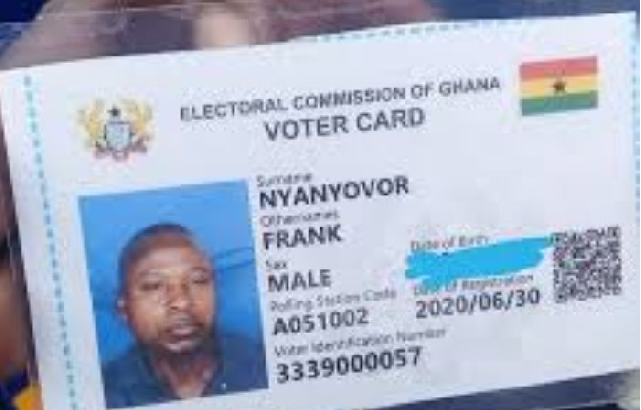
    This trend persisted despite a significant uptick in deposits witnessed by banks, attributed to the Domestic Debt Exchange Programme. Deposits surged by 25.5 percent year-on-year to GH¢224.4 billion in February 2024.

    While analysts caution against drawing definitive conclusions at this stage, some suggest that banks are exploring alternatives to lending to the private sector.

  • Naira strengthens as Central Bank offloads dollars amidst liquidity worries

    Naira strengthens as Central Bank offloads dollars amidst liquidity worries

    The naira surged to its strongest level in over a month as Nigeria’s central bank intervened in the foreign exchange market by selling dollars.

    On Monday, the naira strengthened by 9.7% to reach 1,339.33 per dollar, marking its highest level since April 26 and recording its most significant one-day increase since mid-January.

    However, it retreated above 1,400 per dollar in intra-day trading on Tuesday, as reported by two traders in Lagos via the currency platform operated by the FMDQ Exchange.

    According to two individuals familiar with the situation, authorities intervened on both Monday and Tuesday. The central bank has yet to respond to requests for comment.
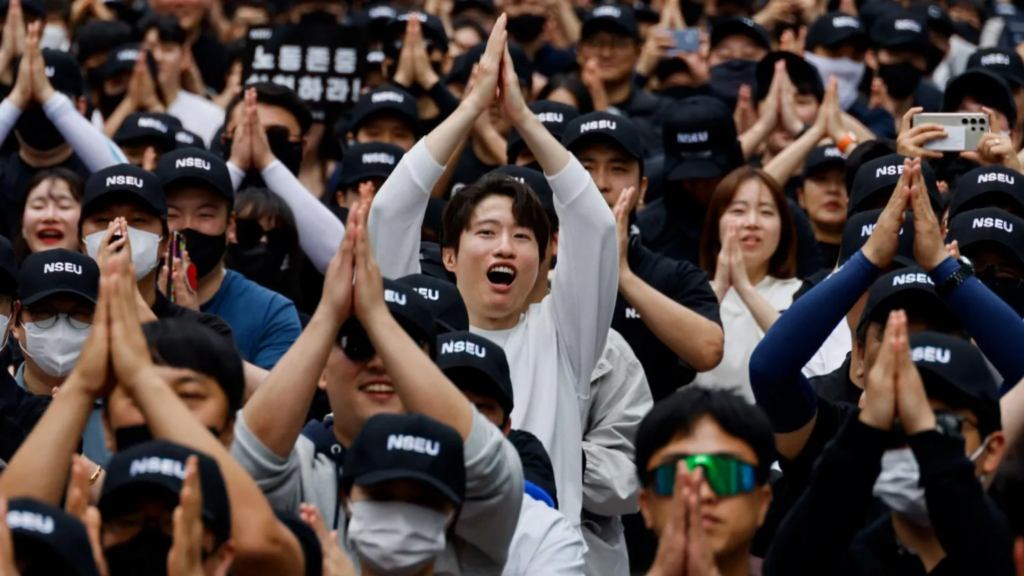
    “The central bank dollar sales and OMO auction” helped to strengthen the naira, said Olaolu Boboye, an analyst at asset manager CardinalStone in Lagos, referring to the central bank’s open market operations.

    On Friday, there was a significant increase in dollar liquidity after the central bank auctioned one-year treasury bills, attracting substantial inflows.

    The auction, which amounted to 1.143 trillion naira ($800 million) worth of bills at a yield of 22.49%, more than doubled liquidity in the foreign exchange market to $556 million. However, this surge in liquidity did not persist into Monday, as the volume of dollars sold in the market declined to $181 million despite central bank interventions.

    Samir Gadio, head of Africa strategy at Standard Chartered Bank, stated that the central bank is currently selling dollars at rates ranging from 1,260 to 1,320 per dollar, which is significantly lower than the current exchange rate of below 1,400. These sales are occurring in anticipation of the maturity of a $1.3 billion naira futures contract scheduled for Wednesday.

    “The rationale may be to contain and pre-empt a potential increase in dollar demand in the coming days,” Gadio said. It is also “conceivable” that there could be another bill sale to offset the impact of the expiring contract, he said.

    Since mid-April, the naira has experienced significant volatility, undoing much of the progress it made in March due to increased dollar inflows. It has emerged as one of the weakest currencies tracked by Bloomberg over the past month, despite being the strongest performer in March.

    Last week, the central bank hiked its benchmark interest rate to a record high of 26.25% in an effort to lure dollar inflows and combat inflation, which surged in April to a 28-year peak of 33.7%.

    “The Nigerian naira’s dizzying swings — sharpest among liquid currencies globally since the start of the year — are driven by capital flows and may persist at least until inflation peaks, likely in the coming months,” Bloomberg Intelligence analyst Sergei Voloboev said in a note last week.

  • Debt resolution in Africa challenging – AfDB President

    Debt resolution in Africa challenging – AfDB President


    The African Development Bank expresses concerns regarding the sluggish and challenging debt resolution mechanism for Ghana and other debt-distressed African countries.

    According to the Development Bank, although the G20 framework on debt resolution has helped alleviate the crisis by aligning official creditors and other commercial lenders, the debt treatment process has been arduous.

    During a press briefing at the 59th AfDB Annual Meetings in Nairobi, Kenya, Dr. Akinwumi Adesina, President of the African Development Bank Group, advocated for a reform in the global financial architecture to enhance debt resolution mechanisms for Africa.

    “I understand it takes a long, it’s a very difficult process because you have Paris club members, you have non Paris club members, and you have commercial lenders and their needs are quite different from those of official creditors. But it’s helped, it’s helped with Chad, it’s helped with Zambia, it’s helped with Ghana, and it’s working also on Ethiopia in putting together the various credit committees that said that process, everybody agrees, is too slow,” Dr. Akinwumi Adesina said.

    Expanding on his point, the President of the African Development Bank referenced a historical event from the 1990s. During this time, numerous African nations participated in multilateral debt relief initiatives like the Highly Indebted Poor Countries (HIPC) initiative.

    However, due to their inability to effectively negotiate debt treatment options, many of these countries lost a decade of economic progress.

    Using his personal analogy of hemorrhage, Dr. Adesina intimated that “You know, if you’re going to, if you have to help somebody that is bleeding and you want to save their life, stop the bleeding faster, because by the time that you actually do it, they may be dead.”

    “So what you find African countries asking for is a speedier implementation and execution of those global mechanisms to deal with the issue of debt.”

    The 59th annual meeting of the African Development Bank is focusing on “Africa’s Transformation, the African Development Bank Group, and the Reform of the Global Financial Architecture” which AfDB belives will create a platform to dialogue on the issues confronting the many African economies while examining the structural reforms required in the International Financial Architecture.

    In the upcoming days, leaders of governments, central banks, and various multilateral institutions will gather here to discuss pressing issues facing the African economy.

    This meeting, mandated by the African Development Bank, will also involve stakeholders assessing the Bank’s performance in the past year and strategizing for the future, potentially making crucial decisions supported by resolutions. Climate concerns will be prominent on the agenda, with the AFDB emphasizing the importance of climate adaptation and increased financing for agriculture to foster sustainable growth.

  • A dollar goes for GHS15.00 at forex, GHS19.70 for £1 at major forex bureaus

    A dollar goes for GHS15.00 at forex, GHS19.70 for £1 at major forex bureaus

    Today’s Interbank forex rates from the Bank of Ghana, dated May 27, 2024, indicate that the Ghana Cedi is currently trading against the dollar at a buying price of 13.9480 and a selling price of 13.9620.

    At a forex bureau in Accra, the dollar is being purchased at a rate of 14.80 and sold at 15.00.

    Against the Pound Sterling, the Cedi’s current rates stand at a buying price of 17.7712 and a selling price of 17.7904.

    At a forex bureau in Accra, the pound sterling is being bought at 19.00 and sold at 19.70.

    The Euro’s trading figures show a buying price of 15.1360 and a selling price of 15.1498.

    At a forex bureau in Accra, the Euro is purchased at 16.20 and sold at 16.80.

    The South African Rand’s current rates indicate a buying price of 0.7571 and a selling price of 0.7578.

    At a forex bureau in Accra, the South African Rand is bought at 0.40 and sold at 1.20.

    Regarding the Nigerian Naira, it’s trading at a buying price of 105.7191 and a selling price of 105.7915.

    At a forex bureau in Accra, the Nigerian Naira is bought at 9.00 Naira per 1 Cedi and sold at 13.00 Naira per 1 Cedi.

    For the CFA, the current rates show a buying price of 43.2981 and a selling price of 43.3375.

    At a forex bureau in Accra, the CFA is bought at 23.00 CFA per 1 Cedi and sold at 25.50 CFA per 1 Cedi.

    Note that these rates may differ at a forex bureau near you. Our forex bureau rates are provided by Afriswap Bureau De Change in Osu, Accra.

    Our forex bureau rates are provided by Afriswap Bureau De Change in Osu, Accra.

  • Oil prices stabilize as OPEC+ supply cuts offset interest rate worries

    Oil prices stabilize as OPEC+ supply cuts offset interest rate worries

    Global oil prices stabilized on Tuesday, with the potential for OPEC+ to maintain supply cuts at its June 2 meeting and expectations of robust U.S. summer fuel demand counterbalancing concerns over prolonged high U.S. interest rates.

    On Monday, oil prices rose over 1% in subdued trading due to public holidays in Britain and the United States. The start of the U.S. summer driving and vacation season bolstered hopes for strong fuel demand.

    By 0810 GMT, the July contract for Brent, the global benchmark, increased by 17 cents, or 0.2%, to US$83.27 a barrel. U.S. West Texas Intermediate (WTI) crude reached US$78.79, up US$1.07, or 1.4%, from Friday’s close, having traded through the U.S. Memorial Day holiday without a settlement.
    “Despite the indisputably brighter mood seen in the last two days, interest rate concerns will most plausibly act as a (brake) on further attempts to send oil prices meaningfully higher in the immediate future,” said Tamas Varga of broker PVM.

    “It is a fair assumption that no changes in production levels will be forthcoming,” he added regarding the OPEC+ meeting.

    Concerns about prolonged high U.S. interest rates contributed to crude’s weekly loss last week. Elevated rates increase borrowing costs, which can reduce economic activity and oil demand.

    Despite expectations that high interest rates might weaken oil demand growth, UBS analyst Giovanni Staunovo noted in a client report that “real-time mobility data indicates oil demand growth is still broadly healthy.”

    In the air travel sector, U.S. domestic flight seat numbers for May rose by 5% month-on-month and nearly 6% year-on-year to just over 90 million, according to flight analytics firm OAG, exceeding 2019 levels.

    Looking ahead, OPEC+ producers will hold an online meeting on Sunday. Traders and analysts anticipate that the 2.2 million barrels per day of voluntary production cuts will remain in place, potentially boosting prices further.

    “We expect oil prices to move higher in the coming days,” said Satoru Yoshida, a commodity analyst with Rakuten Securities, who cited anticipated continued voluntary output cuts by producers.

    Yoshida also stated that assistance will come from the start of the driving season in the United States.

  • Lands Minister inspects progress work on Minerals C’ssion’s ultra-modern office in Ashanti regional

    Lands Minister inspects progress work on Minerals C’ssion’s ultra-modern office in Ashanti regional

    The nearly finished ultra-modern, multi-purpose office complex being erected by the Minerals Commission for its Ashanti Regional office is approaching completion.

    Expectations are high that this impressive eight-story structure will be ready for commissioning by October 2024.

    This assurance was provided by the Project Consultant, Mr. Osei Tutu, during a site visit by the Minister for Lands and Natural Resources, Hon. Samuel A. Jinapor, MP, to inspect the progress of the project.
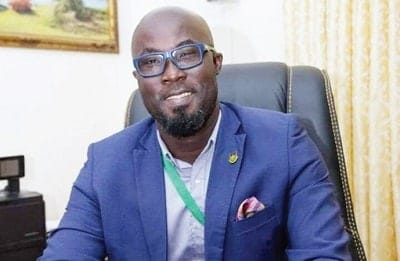
    On Monday, May 27, 2024, the Lands Minister conducted an inspection tour of the facility to assess the progress of the work on the office complex.

    Once finished, it will serve as the central hub for the Minerals Commission’s regulatory and oversight activities in the Ashanti Region and the middle belt of the country.

    Speaking to the press after his tour, Samuel A. Jinapor emphasized the significance of having a fully operational and well-staffed Minerals Commission office to carry out regulatory duties, not only in the Ashanti Region but also across the entire middle belt, including the Western North and Central Regions.

    The Minister highlighted the government’s commitment to decentralizing the Minerals Commission, with the construction of the cutting-edge Ashanti Regional Minerals Commission office serving as evidence of this dedication to developing the mining sector.

    “I have to commend the CEO of the Minerals Commission, the consultants, the contractors, and everyone who has worked so diligently to ensure that we put up this extraordinary office for the Ashanti Regional Minerals Commission. If we are going to come to grips with mining, particularly large-scale mining, which contributes significantly to the national economy, as well as small-scale mining, then the Minerals Commission must have the requisite structure, personnel, and operational capacity to regulate the mining sector. This government has taken the initiative to ensure that the regulation of mining activities is decentralized, and we are on course”, he said.

    “This is a major investment by the government of Nana Addo Dankwa Akufo-Addo. I have been told that it is going to be the tallest building in Kumasi. It will be a place where we can conduct rigorous investigations of the mining sector and the products of the mining sector in the country”, he added.

    “The contractors have given us the assurance that it will be handed over to the government by the end of September, and I’m going to hold them to it. I will be knocking on the doors of Manhyia to seek the concurrence of His Royal Majesty Asantehene, Otumfuo Osei Tutu, to commission this project in the first week of October,” he said. 

    The Chief Executive Officer of the Minerals Commission, Mr. Martin Kwaku Ayisi, disclosed that the project was initially estimated to cost GH₵80 million and that the commission already has plans to let out some offices in the edifice to generate revenue.

    Mr. Martin Ayisi also elaborated on the maintenance plan crafted by the commission, assuring that the facility will bring in significant benefits for the commission.

    Mr. Osei Tutu, the consultant, expressed confidence that the project, which is 71% complete, will be ready by the end of September 2024.

    Breaking down the completion rate, Mr. Osei Tutu said, “Preliminaries are at 60%, the soft structure for the main building is 100%, the ground floor for the main building is at 63%, but the overall progress of work for the seven-story is at 63%. We have the laboratory and main block. The laboratory and main block are about 71% complete, so cumulatively, we are about 71%.”

    Since 2021 the Minerals Commission has embarked on a massive infrastructural development drive nationwide, which has seen a number of edifice being constructed across ten (10) mining regions as part of decentralization drive to bring the services of the commission to the door step of all Stakeholders and also help in governments quest to among others streamline the operations of the mining sector.

    “I have to commend the CEO of the Minerals Commission, the consultants, the contractors, and everyone who has worked so diligently to ensure that we put up this extraordinary office for the Ashanti Regional Minerals Commission. If we are going to come to grips with mining, particularly large-scale mining, which contributes significantly to the national economy, as well as small-scale mining, then the Minerals Commission must have the requisite structure, personnel, and operational capacity to regulate the mining sector. This government has taken the initiative to ensure that the regulation of mining activities is decentralized, and we are on course”, he said.

    “This is a major investment by the government of Nana Addo Dankwa Akufo-Addo. I have been told that it is going to be the tallest building in Kumasi. It will be a place where we can conduct rigorous investigations of the mining sector and the products of the mining sector in the country”, he added.

    “The contractors have given us the assurance that it will be handed over to the government by the end of September, and I’m going to hold them to it. I will be knocking on the doors of Manhyia to seek the concurrence of His Royal Majesty Asantehene, Otumfuo Osei Tutu, to commission this project in the first week of October,” he said. 

    The Chief Executive Officer of the Minerals Commission, Mr. Martin Kwaku Ayisi, revealed that the project was originally projected to cost GH₵80 million, with plans in place to lease some of the offices in the building to generate revenue.

    Mr. Ayisi also detailed the commission’s maintenance strategy, emphasizing the substantial advantages the facility will offer.

    Project consultant Mr. Osei Tutu expressed optimism that the construction, currently 71% complete, will be finished by the end of September 2024.

    Breaking down the completion rate, Mr. Osei Tutu said, “Preliminaries are at 60%, the soft structure for the main building is 100%, the ground floor for the main building is at 63%, but the overall progress of work for the seven-story is at 63%. We have the laboratory and main block. The laboratory and main block are about 71% complete, so cumulatively, we are about 71%.”

    Since 2021, the Minerals Commission has launched an extensive infrastructure development initiative across the country. This effort has resulted in the construction of several buildings in ten mining regions as part of a decentralization strategy to make the commission’s services more accessible to stakeholders. Additionally, this initiative supports the government’s objective to streamline operations within the mining sector.