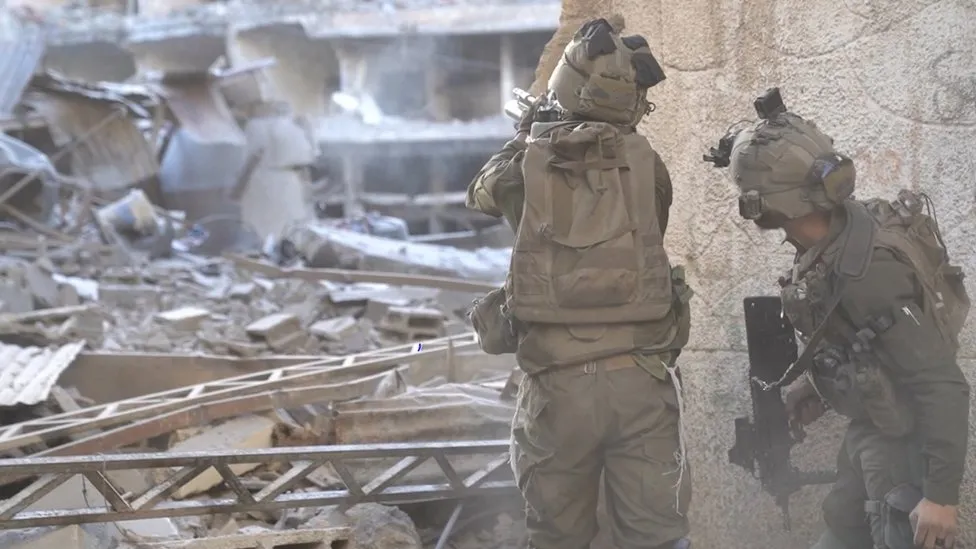
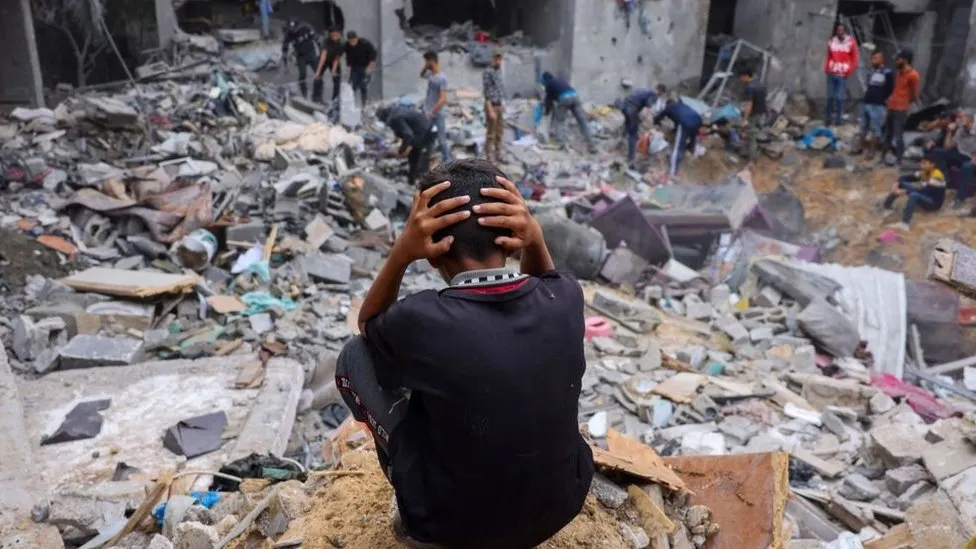
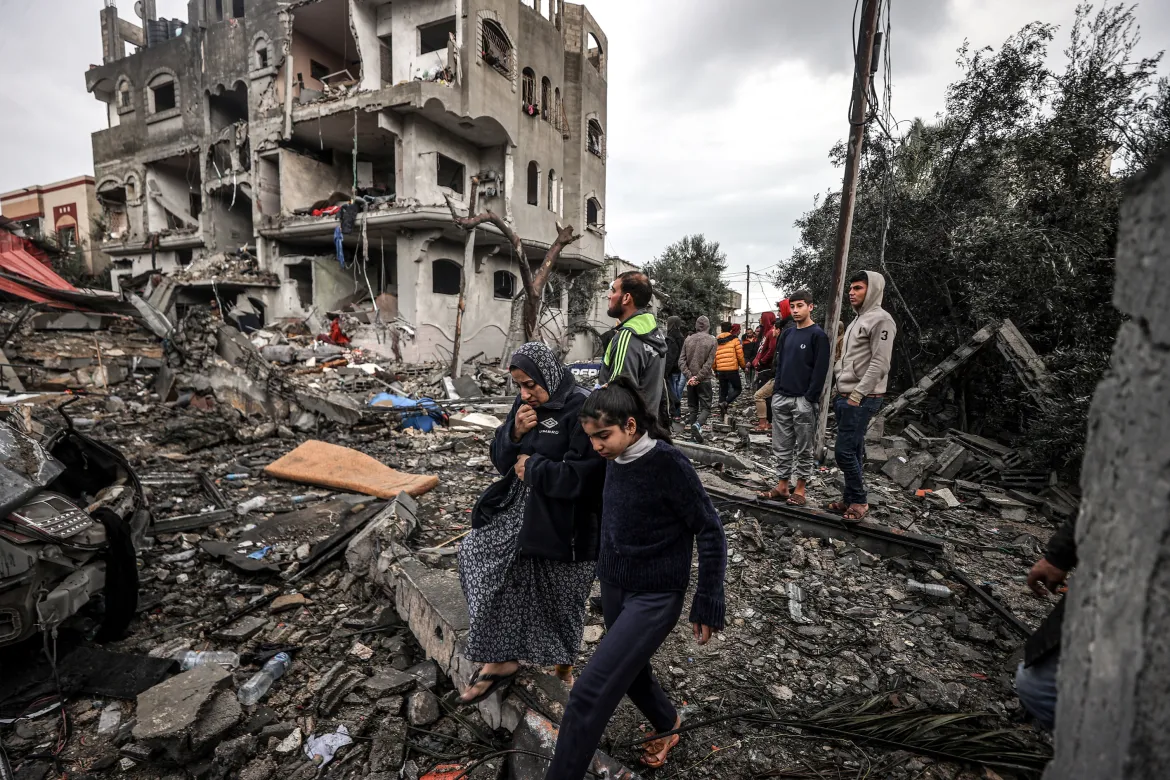
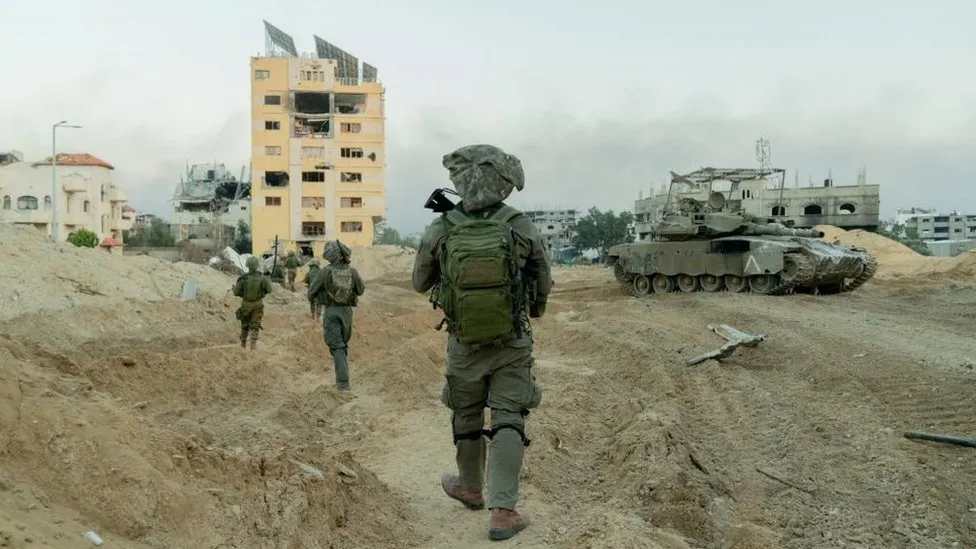
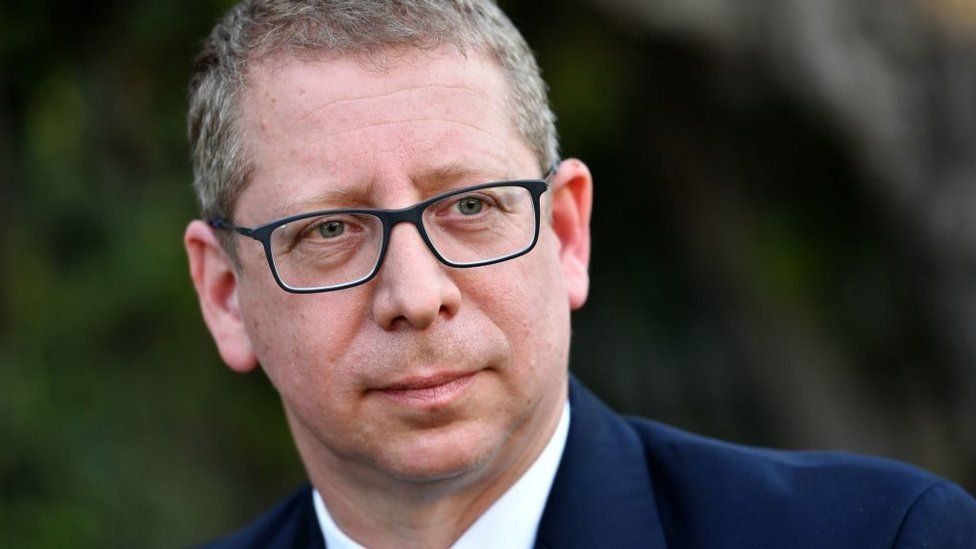
“There is no magic solution,” Herzi Halevi told reporters. On Monday, Prime Minister Benjamin Netanyahu warned that the campaign is “not over yet. ” Israel said it attacked more than 100 locations on Tuesday.
It appears to be expanding its ground operations into central Gaza. Gaza’s Hamas-run Health Ministry says 20,915 Palestinians have been killed in more than 11 weeks of fighting.
The war began on October 7 after Hamas carried out a wave of deadly attacks targeting communities in Israel.
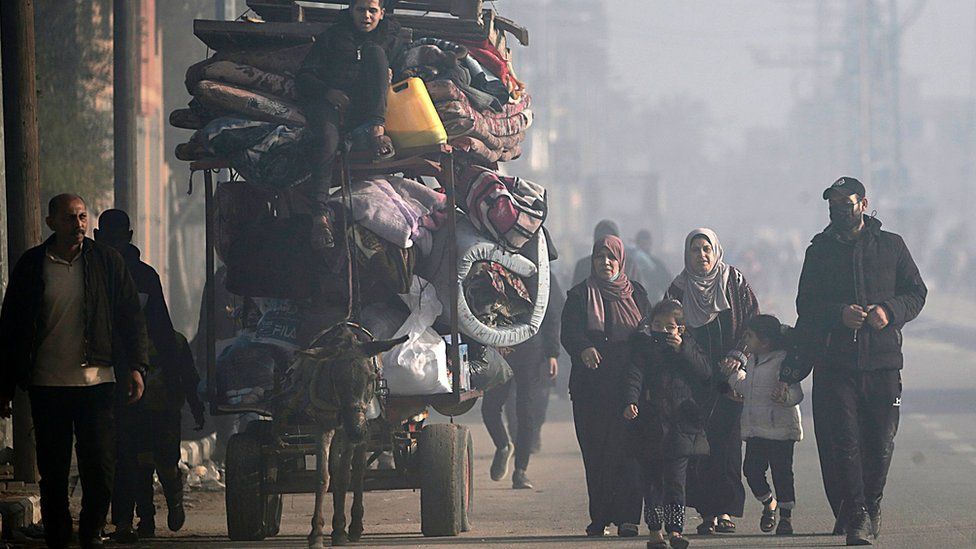
Since then, about 1. 9 million people have been displaced by Israeli bombing, according to the United Nations.
Juliette Touma, spokeswoman for the United Nations agency for Palestinian refugees (Unwra), told the BBC: “We are seeing very worrying reports of famine in some places, while there is war.
The fighting continues, displacement continues and the UN shelters are overcrowded and overwhelmed. ” ” Last week, US Secretary of State Anthony Blinken called on Israel to reduce the intensity of its attacks to limit “harm to civilians”.
On Tuesday, Herzi Halevi, chief of staff of the Israel Defense Forces (IDF), told a news conference that the war would “continue for several more months” to ensure that “our interests are protected” over a long period of time”. He added.
“There is no shortcut to completely destroy a terrorist organization, other than being stubborn and determined to fight.
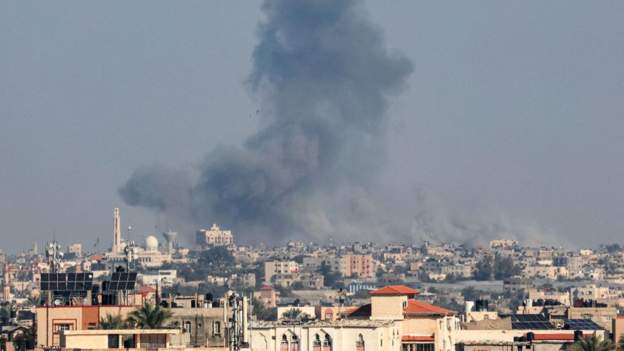
” The Israeli military said Tuesday’s airstrikes hit 100 targets, from Jabaliya in northern Gaza to Khan Yunis and Rafah in the south.
He reportedly launched a ground attack on refugee camps in central Gaza after ordering residents to evacuate.
Internet and phone services were again cut across the Gaza Strip. About 1,200 people, mostly civilians, were killed in the October 7 attack.
About 240 people were sent back to Gaza as hostages. Israel said 132 people remained detained.
On Monday, Netanyahu told parliament: “We will not be able to release all the abductees without military pressure. we will not stop fighting.
” Israeli and Arab media said Egypt has proposed a ceasefire plan.
The plan reportedly calls for the gradual release of all Israeli hostages and an unspecified number of Palestinian prisoners held in Israeli prisons, ending with Israel calling off the offensive.
A previous temporary ceasefire negotiated by Qatar allowed the release of dozens of hostages from Gaza in exchange for Palestinian prisoners.
Israel and Hamas have so far resisted calls for a permanent ceasefire.
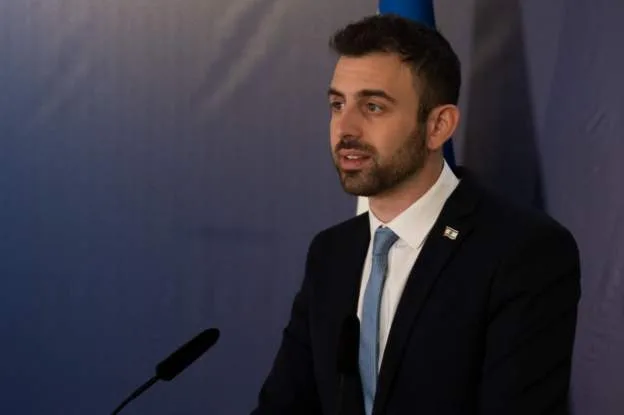
Meanwhile, Israeli Strategic Affairs Minister Ron Dermer is in Washington to hold talks with Mr. Blinken and national security adviser Jake Sullivan.
National Security Council spokeswoman Adrienne Watson said the discussions would focus on “issues related to the conflict in Gaza and the return of hostages held by Hamas. ”
The Israeli military said it expected the conflict in Gaza to continue until 2024.
In his New Year’s message, Israeli military spokesman Daniel Hagari said troop deployments were being adjusted to prepare for “protracted fighting. ”
He said some soldiers, including reservists, would be withdrawn to regroup.
“These adjustments are intended to ensure planning and preparation for the continuation of the war into 2024,” he said.
“The Israeli army must plan ahead, knowing that there will be additional missions and fighting will continue for the rest of the year.
” He said some reservists will leave Gaza “as early as this week” so they can “recharge their batteries in preparation for future operations.”
According to the Hamas-run Health Ministry, more than 21,800 people have been killed in Gaza – mostly children and women – in 11 weeks of fighting.
The latest war was sparked by an unprecedented cross-border attack by Hamas gunmen into southern Israel on October 7, in which 1,200 people were killed – mostly civilians – and about 240 others. taken hostage Israel continued to bomb Gaza until the end of a dark year for the region.
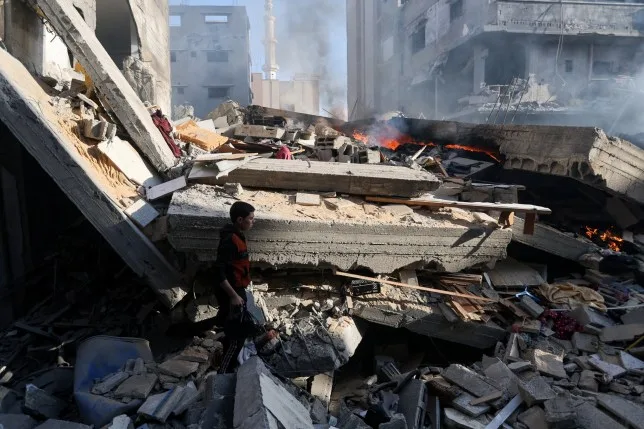
At least 48 Palestinians were killed in overnight bombings in Gaza City on Sunday, with many still buried under rubble, the Gaza Health Ministry said.
Another attack killed 20 people taking shelter at Al-Aqsa University, west of Gaza City, witnesses told AFP news agency. The BBC cannot verify the latest information.
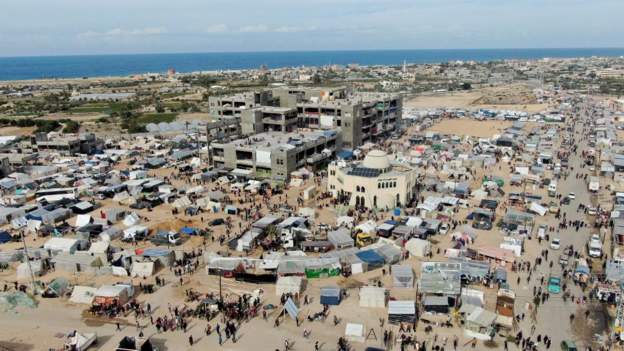
The United Nations says 85% of Gaza’s 2. 4 million residents – nearly 2 million people – are now displaced. “Tonight, the skies of countries around the world will be lit up with fireworks and joyful laughter will fill the air.
Zainab Khalil, 57, a northern Gaza resident currently in Rafah, told Reuters: “In Gaza, our skies are now filled with Israeli rockets and tank shells targeting innocent and homeless civilians residence”
Netanyahu declared on Saturday that “the war is reaching its climax. ” “We are fighting on all fronts,” he said.
“We have had great successes but also painful situations. It will take time to achieve victory. “As the (Israeli army) chief of staff said, the war will continue for many more months.
” Earlier on Sunday, further Israeli attacks were reported in central Gaza, with reports of airstrikes in al-Maghazi and al-Bureij.
On Sunday morning, the Hamas-run Health Ministry said 150 people had died in the past day. Far-right Israeli Finance Minister Bezalel Smotrich called on Palestinians to leave Gaza and make way for Israelis who can “make the desert bloom”.
The Israeli government’s official statement is that Gaza residents will eventually be able to return home, although it remains unclear how and when this might be possible.
AFP reported that air raid sirens sounded in Tel Aviv and southern Israel, similar to what happened in the new year, when Israel’s missile defense systems intercepted rockets fired from Gaza.
A man in Tel Aviv celebrating the New Year with friends said: “I was very scared, like the first time I saw a rocket, it was terrifying. » Hamas’s military wing, the Ezzedine al-Qassam Brigades, claimed responsibility for both attacks in a video posted on social media.
They said they used M90 missiles to “respond to the massacres of civilians” carried out by Israel.
In a remarkable rescue operation in Rafah, southern Gaza, rescuers pulled a baby girl named Mariam Abu Akel alive from the rubble following an Israeli air strike.
People on the scene used their hands to free Mariam from the debris, and a rescuer swiftly transported her to a nearby hospital, where doctors attended to her cuts.
Tragically, Mariam had been sheltering in a house with her family during the air strike, which claimed the lives of her mother and sister. Fortunately, her father and young brother survived the incident.
The same air strike resulted in the death of 20 people and left 55 others injured, according to a spokesperson from the Hamas-run health ministry.
The ongoing conflict has led to more than 21,500 casualties, predominantly children and women, in Israeli retaliatory attacks on Gaza.
Many are still believed to be trapped under the wreckage of buildings destroyed by air and artillery strikes.
Israel initiated its military campaign in Gaza in response to a Hamas attack on southern Israel on October 7, causing widespread casualties and hostage situations.
The UN Human Rights Office reports that over 50 airstrikes were conducted by the Israeli Air Force across central Gaza, including the Maghazi refugee camp, on Sunday and Monday.
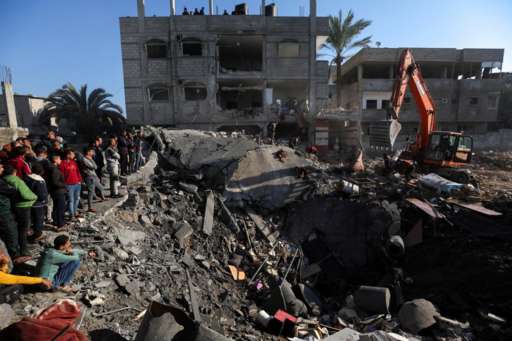
These strikes resulted in the destruction of seven residential buildings in Maghazi, causing an estimated 86 Palestinian deaths and injuring many others.
Additionally, there are reports of people possibly trapped under the rubble. Other UN organizations identified the destroyed houses as belonging to the Qandil, Abu Ahed, Abu Hamida, Abu Rahma, Si-Salem, and al-Nawasra families.
Médecins Sans Frontières (MSF) stated that a hospital in Deir al-Balah treated 209 injured and 131 deceased individuals following the bombings in Maghazi and the adjacent Bureij refugee camp on Sunday night.
Photographic evidence from the scene showed significant damage, including at least one completely destroyed building and four others severely affected.
Maghazi, located in the heart of Gaza, is a smaller refugee camp known for its narrow alleys and high population density.
Spanning just 0.6 sq km, it housed more than 33,000 UN-registered refugees prior to the conflict.
Member of Parliament for North Tongu, Samuel Okudzeto Ablakwa, has urged the government to take a more active role in putting an end to Israel’s continuous massacre of Palestinians in Gaza.
Mr. Ablakwa asserts that Ghana has, ever since its independence, been a moral voice for world peace and stability, and that this reputation needs to continue, particularly in light of the thousands of deaths occurring in Gaza.
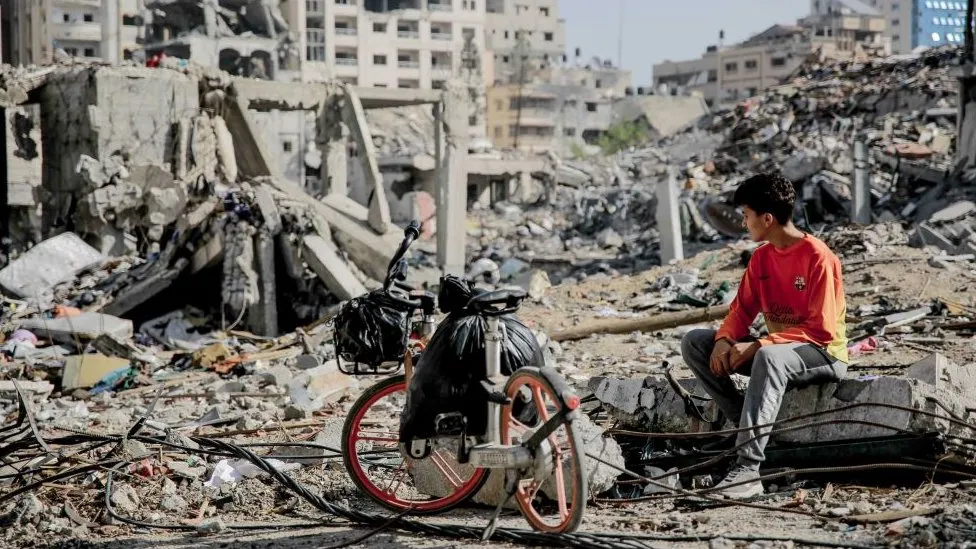
“To say that because some people have come to engage in that terrorist act all Palestinians is fair game; children, mothers, innocent civilians, hospitals, schools, kindergartens; I mean everywhere is being bombed and I’ve been there. I’ve been to the Middle East area on numerous occasions. These are holy lands which have been reduced to rubble.
“This must stop and I think that we must add our voice. We sit on the security council even though our tenure is coming to an end and we must go back to that iconic role that the likes of Kwame Nkrumah used to play in being a moral voice for peace and global stability,” he said.
Following the massacre on October 7th and the kidnapping of a number of Israelis by the Gaza-based terrorist organization Hamas, Israel launched a massive bombardment and invasion of the Gaza strip.
Since then, Israel has disregarded international laws pertaining to war with impunity, despite calls for it to show some restraint.
Speaking on the situation on Joy FM’s Super Morning Show, Mr. Ablakwa said Ghana must be firm in calling for an end to the massacre.
“As the Ranking Member on the Foreign Affairs Committee, I’m deeply appalled at the massacre going on in Gaza. Look, Ghana has always been a stalwart, a nation that is respected in the comity of nations when it comes to international matters, when it comes to our demand for peace.
“That’s why we were the first country to deploy peacekeeping operation in the Congo in 1960, we pioneered the non-aligned movement in the Cold War; we were a force for peace.
“I want to re-echo the Pope’s Christmas message, those killings, the massacre must stop. More than 20,000 Palestinians have been killed. Of course I also condemn the October 7th killings but you see they should look out for the perpetrators and deal with them,” he added.
Israel has broadened its ground offensive, targeting Palestinian refugee camps in central Gaza, signaling a prolonged conflict with Hamas.
The United Nations has expressed deep concern as recent Israeli strikes in Bureij, Nuseirat, and Maghazi camps reportedly resulted in numerous casualties. The conflict has intensified in southern Gaza, particularly in the city of Khan Younis.
Amid the escalating violence, the Palestinian president has characterized the situation in Gaza as “beyond a war of annihilation.” The Hamas-run health ministry reports a grim toll, with at least 195 people killed in the past 24 hours and a total of over 21,100 casualties, predominantly children and women, during the 11-week-long conflict.
The conflict was triggered by a cross-border attack by Hamas gunmen on southern Israel on October 7, resulting in significant casualties and hostage-taking.
Palestinian media cited local officials and witnesses as saying dozens of civilians were killed as Israel kept up its strikes across Gaza overnight.
Heavy bombardment was reported in the Middle Area, particularly in Bureij, Maghazi and Nuseirat camps.
In Nuseirat, Israeli warplanes targeted the homes of the Nasser and Hazouqi families, killing a number of people and wounding dozens more, according to the official Wafa news agency.
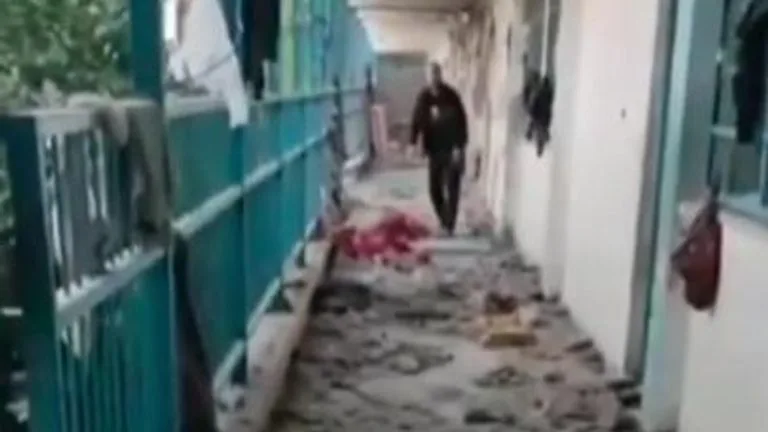
Hamas-affiliated Safa news agency also reported that five had been killed in a strike on a girls school in Maghazi.
Residents meanwhile told Reuters news agency that there was heavy fighting east and north of Bureij district and in the nearby village of Juhr al-Deek.
Image caption,Israel has ordered the evacuation of areas of central Gaza where the UN says more than 150,000 people are living
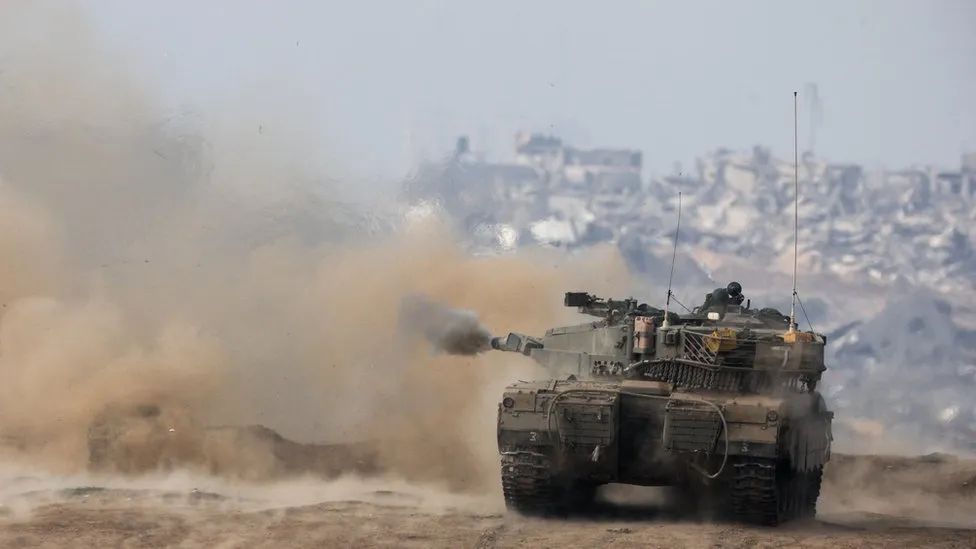
There was no immediate comment from the Israel Defense Forces (IDF), but spokesman Rear Admiral Daniel Hagari told reporters on Tuesday evening that its forces had “expanded the combat to the area known as the Central Camps”.
The IDF also reiterated on Tuesday its order for residents to leave more than a dozen central areas running from the Gaza-Israel perimeter to the coast, including Bureij and Nuseirat camps.
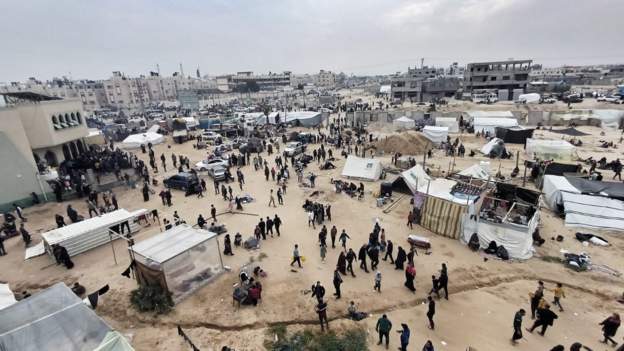
According to the UN, the affected areas were home to nearly 90,000 people before the war. They also now include six shelters hosting about 61,000 displaced people, mostly from the north.
The residents have been told to move immediately to shelters in the nearby town of Deir al-Balah, which is already struggling to cope with several hundred thousand displaced people.
The UN human rights office said on Tuesday that it was gravely concerned about the continued bombardment of the Middle Area and its densely populated camps, citing a report from Médecins Sans Frontières (MSF) that Deir al-Balah’s al-Aqsa hospital had admitted 131 dead following Israelistrikes on Maghazi and Bureij on Sunday.
It also warned of a “deepening and already catastrophic humanitarian situation”, saying that all roads connecting the three camps had been destroyed and that any shelters and hospitals still operating were critically overcrowded and under-resourced.
A Palestinian woman living in the UK, Alaa, told the BBC that her family had been in Maghazi during Sunday’s strikes and were “having to live with… constant loss, constant fear”.
“Pulling people from under the rubble and losing friends, losing family members, being displaced, losing homes,” she said. “My four-year-old nephew, he had to evacuate with my family the other day and he was crying, asking for his dad who was killed a month ago.”
Watch: Drone shots show Palestinians buried in mass grave
The IDF’s chief of staff, Lt Gen Herzi Halevi, warned that the fighting with Hamas was taking place in “a complex area” and would therefore “continue for many more months”.
“There are no magic solutions or shortcuts in the fundamental dismantling of a terrorist organisation, except persistent and determined fighting, and we are very, very determined,” he added.
“We will also get to the Hamas leadership, whether it takes a week or months.”
He was speaking amid new signs of rising regional tensions with incidents linked to Iran-backed groups in the Red Sea, on the Lebanese border and in Iraq.
In his first interview since the start of the war, the Palestinian President Mahmoud Abbas – a political rival of Hamas who is based in the Israeli-occupied West Bank – said it was unprecedented in Palestinian history.
“What’s happening in the Palestinian territories is far beyond a disaster and far more than a genocide. The Palestinians have never seen anything like this,” he told Egypt’s ON TV.
“Even during the Nakba catastrophe in 1948. What’s happening today is far worse,” he added, referring to the Middle East war that followed Israel’s declaration of independence in 1948, when hundreds of thousands of Palestinians fled or were forced out of their homes.
Mr Abbas also warned that the West Bank could implode at any time.
On Wednesday, six Palestinians, including a 17-year-old boy, were killed in a drone strike during an Israeli raid on a refugee camp near the western West Bank town of Tulkarm, according to the Palestinian health ministry.
The IDF said six “armed terrorists” were killed in an air strike after they threw explosive devices at troops carrying out an operation to arrest wanted people.
At least 70 individuals were reported killed in an Israeli air strike on the Al-Maghazi refugee camp in central Gaza, as confirmed by Gaza’s Hamas-run health ministry.
The death toll is expected to rise due to the significant number of families residing in the area. The Israeli military is investigating the reports of the strike.
Simultaneously, there are indications from Israeli and Arab media that Egypt, sharing a border with the Gaza Strip, has proposed a new ceasefire between Israel and Hamas.
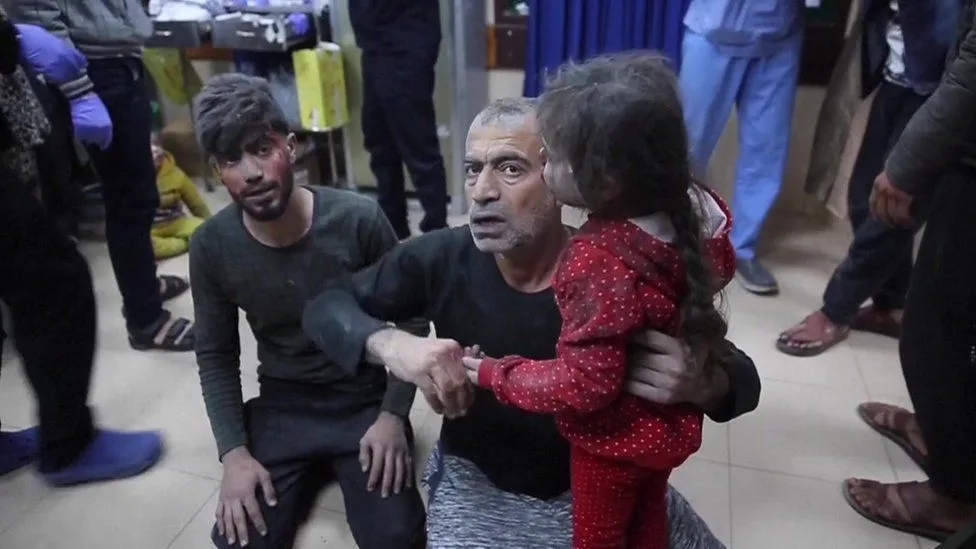
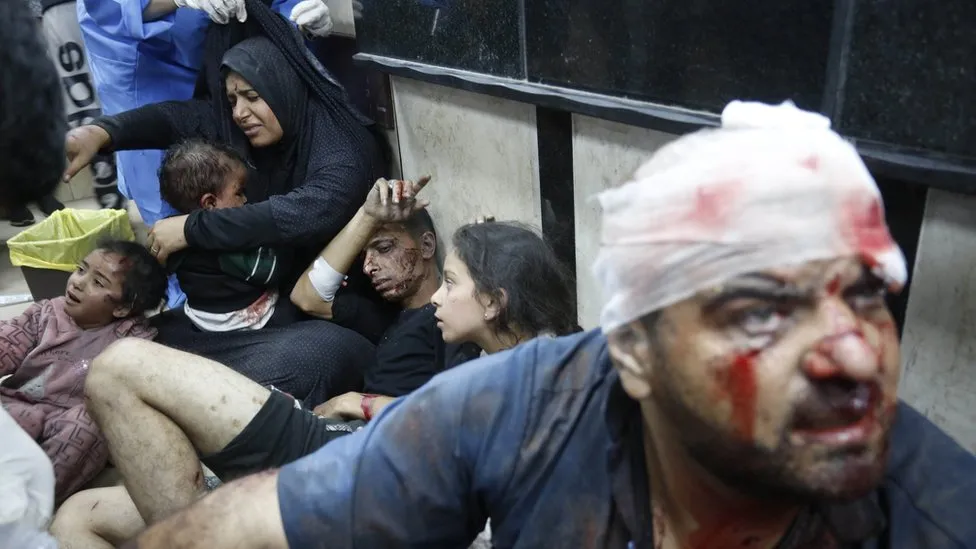
Numerous injured individuals, including children, were swiftly transported from Maghazi to Al-Aqsa Hospital, with distressing scenes of bloodied faces and body bags outside.
The health ministry stated that three houses were struck in the late Sunday attack, resulting in the destruction of a densely populated residential block.
A father said he had lost his daughter and grandchildren, adding that his family had fled from the north for safety in central Gaza.
“They lived on the third floor of one of the buildings,” he said. “The wall collapsed on them. My grandchildren, my daughter, her husband – all gone.
“We are all targeted. Civilians are targeted. There is no safe place. They told us to leave Gaza City – now we came to central Gaza to die.”
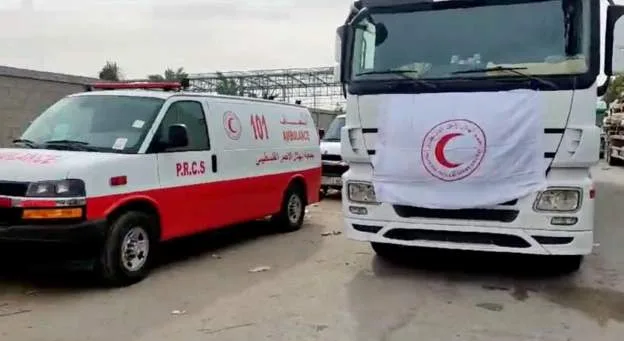
The Palestine Red Crescent Society says “intense” Israeli air strikes have led to the closure of main roads between Maghazi and two other refugee camps, Al-Bureij and Al-Nuseirat, “hindering the work of ambulances and rescue teams”.
In a statement to the BBC, the Israeli military said it had received “reports of an incident in the Maghazi camp”.
“Despite the challenges posed by Hamas terrorists operating within civilian areas in Gaza, the IDF [Israeli Defense Forces] is committed to international law including taking feasible steps to minimize harm to civilians,” it added.
According to the health ministry, more than 20,000 people have been killed – mostly children and women – and 54,000 injured in Gaza since 7 October, when Hamas and other Palestinian groups attacked Israel, killing 1,200 people and taking about 240 hostages.
According to the Israeli military, over a dozen soldiers have lost their lives in Gaza since Friday, bringing the total number of casualties from the ground offensive that began on October 7 to 156.
Despite Saturday being one of the deadliest days, Mr. Netanyahu insisted that there was “no choice” but to continue the conflict.
The new ceasefire proposal by Egypt would be implemented in three parts:
The first phase of the ceasefire would see a humanitarian pause of seven to ten days during which Hamas would release all civilian hostages in exchange for some Palestinian prisoners from Israeli jails
In the week-long second phase, Hamas would release all Israeli female soldiers in return for more prisoners and the exchange of corpses held since 7 October
The third phase, which would last a month, would see the release of the remaining hostages and a number of Palestinian prisoners and Israel withdrawing from the Gaza Strip and suspension of all aerial activities.
Indirect negotiations would be held in Egypt with Qatari and US participation.
An Israeli source told Maariv newspaper that the Egyptian initiative could lead to negotiations. Hamas says it is studying the proposal.
Meanwhile, the Danish shipping giant, Maersk, says it is preparing to resume shipping operations through the Red Sea and Gulf of Aden.
The announcement came after an international military operation, led by the US, was deployed to prevent the targeting of commercial ships by drones from areas of Yemen controlled by Houthi rebels. The Houthis have declared their support for Hamas and have said they would target any ship travelling to Israel.
Maersk and other shipping companies stopped sending ships through the Red Sea and the Suez Canal earlier this month as a result of drone attacks. US Central Command said two days ago that a US navy destroyer had shot down four drones in the Red Sea launched from Yemeni territory.
In another development, Pope Francis appealed for peace in the Middle East as he presided over a Christmas Eve Mass at Saint Peter’s Basilica in the Vatican.
Referring to the war between Israel and Hamas, the Pope said Jesus’s message of peace was being drowned out by the “futile logic of war” in the very land where he had been born.
Hamas, the governing group in the Gaza Strip, has declared a halt to any further hostage releases, stipulating that Israel must agree to a “full cessation of aggression” before any such actions will be considered.
Israel asserts it has eliminated over 2,000 Hamas fighters in Gaza since a truce earlier this month, coinciding with the release of more than 100 hostages.
Around 120 people abducted from Israel on 7 October are believed to be still in captivity in Gaza.
Efforts continue at the United Nations to pass a resolution on the war.
The US has said it still has serious concerns over the draft UN Security Council resolution, with voting now postponed to Friday.
Fighting continues in Gaza, with Israel bombarding the north and south of the territory and Hamas firing rockets at Tel Aviv.
Among the Palestinians reported killed were the director of the police station in the southern city of Khan Younis and a daughter of the head of the Gaza health ministry.
The week-long truce this month brought an increased flow of aid into Gaza, where the UN has warned that the population is at risk of famine if the war between Israel and Hamas continues.
Negotiations on a new truce have been taking place in Cairo, Egypt, though initial talks on Wednesday bore no agreement.
In a statement, Hamas said: “There is a Palestinian national decision that there should be no talk about prisoners or exchange deals except after a full cessation of aggression.”
It is unclear to which other Palestinian factions the statement was referring. Islamic Jihad, a smaller group in the Gaza Strip, is among those known to also be holding Israeli hostages.
The Hamas statement puts the Israeli government in a very difficult position.
It has said it thinks the best way to get the release of hostages is military pressure on Hamas and by staging rescue operations.
But so far that approach has not really worked. Only one hostage – Ori Megidish – has actually been rescued.
The government is also under huge pressure from the relatives of the hostages still being held, with some telling it the strategy of force is not working.
Hamas is putting pressure on Israel to stop the war altogether but without any guarantee that the group is going to stop its armed actions.
So the Israeli government is extremely reluctant to stop fighting until it feels it has completely degraded Hamas capability and it has not done that yet.
Media caption,
Watch: Hostage says she was ”shown off like a trophy” by Hamas
This will be a huge disappointment for the people of Gaza, who are desperate for this war to stop.
Early on Friday, the territory’s Hamas-run health ministry put the overall death toll there since 7 October at 20,057, including at least 8,000 children and 6,200 women.
When Hamas and their allies broke through the heavily guarded perimeter with Israel on 7 October they killed 1,200 people.
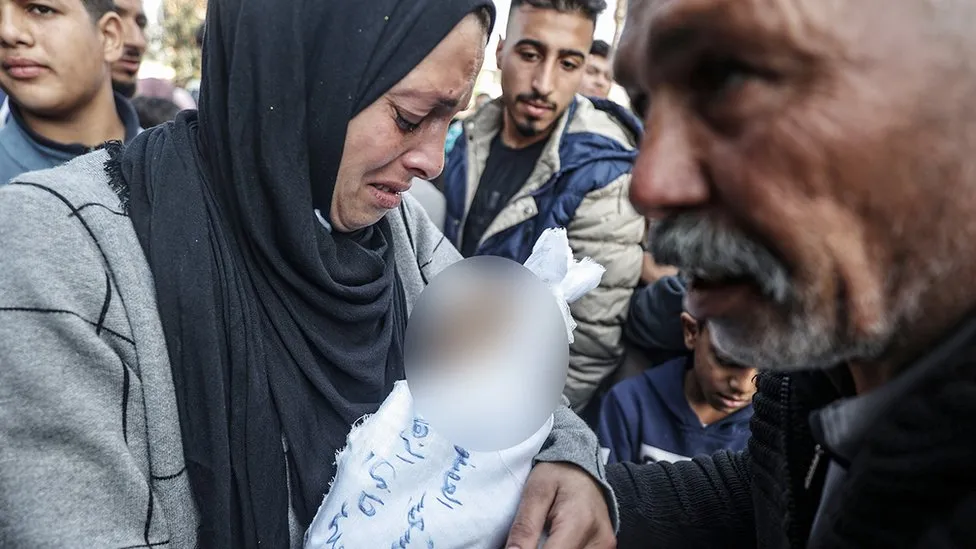
On the onset of December, during the renewed hostilities in Gaza, the family of five-month-old Palestinian infant Muhammad Hani al-Zahar experienced a tragic loss.
In the wake of this heartbreaking event, images circulated online showing Muhammad’s mother and grandfather cradling his lifeless body outside a hospital.
These poignant scenes, however, were met with skepticism on social media, where numerous users incorrectly asserted that Muhammad was not a real child but a doll.
This misinformation gained further traction when the Jerusalem Post, a prominent Israeli newspaper, published an article featuring an image of Muhammad in a post-mortem state, erroneously claiming it as evidence of him being a doll.
Following significant criticism, the Jerusalem Post retracted the article and acknowledged the mistake on X (formerly Twitter), citing unreliable sources for the report.
In a separate incident, a video of Israeli siblings Rotem Mathias, 16, and his sisters, Shakked and Shir, became widely shared.
The video emerged after the tragic death of their parents, who were killed by Hamas gunmen on October 7th while seeking shelter in their home near the Gaza border.
The footage, which included edited excerpts from the siblings’ interviews with American media outlets ABC and CNN, was misleadingly used to promote the false narrative that they were “crisis actors” pretending to grieve and struggling to suppress laughter during the interviews.
In the digital landscape of the Israel-Gaza conflict, the proliferation of social media has become a battleground for divergent perspectives, with denial of atrocities and human suffering taking center stage in the online discourse.
One prominent term contributing to this phenomenon is “Pallywood,” a portmanteau of “Palestine” and “Hollywood.” Proponents of this term allege that staged or fake footage, featuring Palestinian “crisis actors” posing as genuine civilian casualties, is regularly disseminated online to shape public opinion and mislead global media. According to a BBC Verify analysis, the term “Pallywood” has experienced a significant surge in mentions on X over the past decade.
During previous escalations of the Israeli-Palestinian conflict in 2014, 2018, and 2021, “Pallywood” consistently peaked at either 9,500 or 13,000 mentions in a single month on X. However, after the Hamas attack on October 7, the term reached a peak of 220,000 mentions in November.
The analysis also revealed that among those sharing the term “Pallywood” on social media platforms, including X, Facebook, and Instagram, were Israeli officials, celebrities, and popular bloggers from Israel and the United States.
Conversely, supporters of the Palestinian cause lack a singular term to deny atrocities committed by Hamas on October 7 in Israel. However, posts making such claims routinely garner millions of views on social media, falsely asserting that Hamas did not kill civilians on that day or exaggerating the scale of civilian casualties. Some go as far as making unfounded claims that most victims were actually killed by the Israel Defense Forces, not Hamas.
Experts specializing in reconciliation efforts express concern that the viral dissemination of disinformation, which denies the suffering of the other side, can be dehumanizing. They fear that this may have lasting impacts on the prospects of rebuilding relations between the affected communities in the long term.
“The biggest risks, I think, are the erosion of trust and the erosion of empathy,” said Harriet Vickers, programme lead at the Tim Parry and Johnathan Ball Foundation for Peace, a charity that supports victims of conflict, political violence and acts of terror.
“It undermines the ability to even begin approaching reconciliation efforts.”
She added that false narratives and dehumanising rhetoric can also “have a profound effect beyond those that are directly impacted by violence, and can actually further the hurt that is being done to those individuals”.
False narratives about “crisis actors” or atrocity denial are not new to those who study disinformation.
The concept of “crisis actors” in particular – that is people who pretend or are paid to act out some particular tragedy or disaster – has been popular among promoters of conspiracy theories for years.
But the volume of dehumanising rhetoric posted during this war has surprised even those who deal with such content on a daily basis.
Eliot Higgins, the founder of the investigative website Bellingcat that has covered the wars in Syria and Ukraine in recent years, says the volume of disinformation in the current Israeli-Gaza war is “unique to this conflict”.
“I’ve seen the kind of same intensity of toxicity and vile responses and disinformation, the way they treat women and children and that kind of stuff, with Syria, with Ukraine and so many different topics – just there are more people doing it,” he told the BBC.
Image caption,Images of a child actor in behind-the-scenes footage of a Lebanese video were used to discredit claims of Palestinian suffering
Mr Higgins added that because many people have had very strong opinions about either side of the conflict for years, “there are more people who are sharing stuff because it is resonating with them emotionally”.
“They don’t really care if it’s true or not, it just feels true to them.”
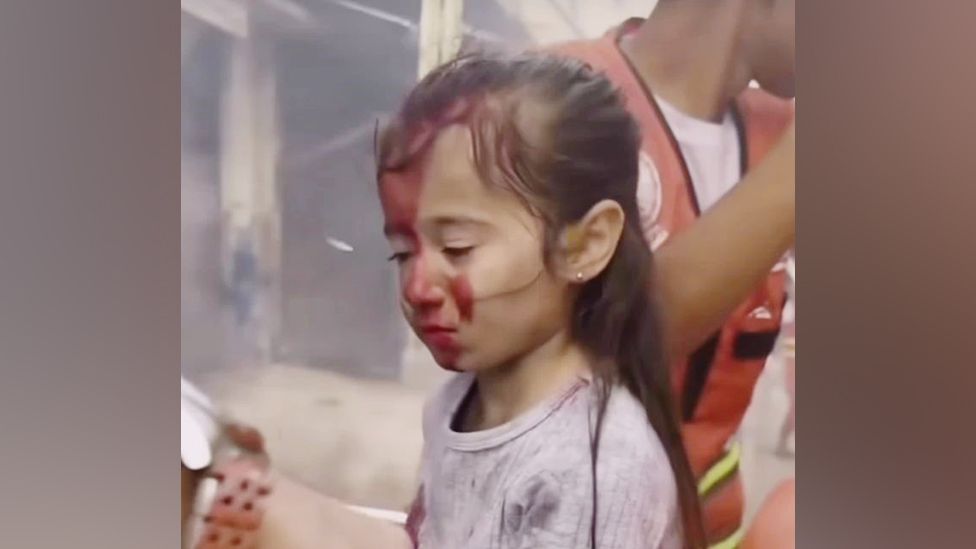
Back in November, a video showing makeup and fake blood being applied to a child actor’s face was posted on X by Ofir Gendelman, the Israeli prime minister’s spokesperson to the Arab world.
“See for yourselves how they fake injuries and evacuating ‘injured’ civilians, all in front of the cameras. Pallywood gets busted again,” Mr Gendelman said in a post that was viewed millions of times before being deleted.
The video was, in fact, behind-the-scenes footage from a 45-second Lebanese film made in tribute to Gazans and posted online in October.
Director Mahmoud Ramzi, who took to Instagram to personally debunk the false claim made about his film, told the BBC that in the end, the misinformation might have backfired, with the controversy helping his film reach a much bigger audience.
The BBC approached Mr Gendelman for comment but he has not responded.
Image caption,Israeli spokesman Ofir Gendelman initially shared footage of a Lebanese film claiming it showed Palestinian injuries were faked
Others have expressed concern for the real people who find themselves in the middle of online disinformation wars. James Longman, the ABC correspondent who interviewed Rotem and his sisters, says watching Rotem recount the death of his parents brought him and his cameraman to tears.
“He was in tears, his sister was in tears, their grandfather, who was with us. Our cameraman, the hospital porters, the nurses, the doctors, and I was in tears. I mean all of us sitting there listening to what he had to say,” he told the BBC.
“It was extraordinary to hear him say it, to watch his reactions as he explained what had happened.”
Mr Longman said he was shocked when he saw false claims about the siblings being shared online and took to X to debunk it. His post was shared widely, and led to at least one of the viral messages about the siblings being subsequently deleted by the person who posted it.
“But it doesn’t make it any less horrible for Rotem’s family,” Mr Longman said
Israel’s military has reported the discovery of a new network of tunnels in Gaza City, linked to the residences of senior Hamas leaders.
These tunnels, covering around 300 miles (500 kilometers) under Gaza, are believed to be up to 260 feet (80 meters) below the surface with entrances located on the bottom floors of houses and public buildings.
The Israel Defense Forces assert that these tunnels serve as hideouts for Hamas to plan operations against Israel.
Initially used for smuggling goods, the construction began before Israel’s withdrawal of troops and settlers in 2005.
A convoy of 46 trucks, carrying over 750 metric tons of food, successfully reached Gaza today, marking the first direct aid delivery from Jordan since the onset of hostilities.
Previously, aid had only been possible through Egypt.
The UN’s World Food Programme (WFP) and the Jordan Hashemite Charity Organization organized the convoy, which crossed through the Kerem Shalom crossing between Israel and Gaza.
With half of Gaza’s population reportedly facing starvation, WFP calls for an immediate ceasefire and the opening of all border crossings.
Rather than focusing on teaching their children the proper discipline, he held certain parents accountable for their excessive use of social media.
“There is no water and no food to eat,” she told the charity ActionAid, which has shared her story.
“My little girl has a rash on her skin due to the lack of cleanliness here. Our situation is very difficult. How do you drink water? Is it enough for you and the baby? Of course not! There is no water to drink. There is no clean water. We barely quench our thirst.”
“Have been wanting to eat since the morning but there is no bread,” Khitam reported of her other four children.
She gave birth during the conflict and related how, just two days after giving birth, Israeli bombing forced her to leave her home.
“I was carrying my daughter and running. We were walking under missiles and shelling, sitting for a while to rest on the pavement and in the streets.”
Tens of thousands of pregnant women, according to ActionAid, are going without food, and mothers are so undernourished that they are unable to breastfeed their newborns.
Spokesperson Riham Jafari, said: “Mothers are being forced to watch helplessly as their children scream and cry with hunger, while they are utterly powerless to do anything.”
Malaysia has taken a significant step by prohibiting cargo ships displaying Israeli flags from docking at its ports, citing Israel’s actions in Gaza as a violation of basic humanitarian principles.
This move extends to banning all ships destined for Israel from loading cargo at ports within the Muslim-majority country.
Malaysia, which lacks formal diplomatic ties with Israel, faced pressure from groups within the government to enforce this ban.
Prime Minister Anwar Ibrahim, in a statement, announced the immediate revocation of the permit allowing Israel’s largest shipping company, ZIM, to utilize Malaysian ports.
He said: “These sanctions are a response to Israel’s actions that ignore basic humanitarian principles and violate international law through the ongoing massacre and brutality against Palestinians.”
ZIM and the Israeli government have not yet responded to the announcement.
In today’s Daily Telegraph, former UK Defense Minister Ben Wallace issues a warning that Israel’s current strategies in Gaza may “fuel the conflict for another 50 years” and have the potential to radicalize Muslim youth globally.
Wallace clarifies that he is not advocating for an immediate ceasefire, stating, “You can’t have a ceasefire with Hamas unless they are prepared to declare one.” However, he emphasizes the need for Israel to halt its “crude and indiscriminate method of attack.”
While Wallace acknowledges the legitimacy of targeting Hamas, he strongly criticizes the widespread destruction in Gaza, stating, “Obliterating vast swathes of Gaza is not.”
Expressing unwavering condemnation for Hamas, Wallace accuses the group of using Palestinians as “cannon fodder” and asserts that Hamas is both anti-Semitic and anti-democratic, showing no interest in peaceful coexistence with Israel.
In assessing the current generation of Israeli politicians, Wallace argues that they are acting “like a bull in a China shop.”
Simply making it through the day and staying alive at night seems like a miracle in the Gaza Strip. Palestinians are asking for help to stay safe in Gaza. The head of the main UN aid agency in Gaza called the situation an ongoing and worsening tragedy, like living in hell on earth.
It must be really terrible for the people taken by Hamas and for the families of their victims. War is very painful and hard for people to go through. But the heat can create changes that seemed not possible.
It happened in the Western part of Europe after the second World War. Former enemies who had been fighting each other for centuries decided to make peace. Can the fighting in Gaza make Israelis and Palestinians finally stop their long conflict over the land between the Mediterranean Sea and the Jordan river.
Muhammad Abu Shaar’s wife after he died.
I watched a video of a very sad woman sitting next to her dead husband, Muhammad Abu Shaar. Israel and Egypt are not letting reporters go into Gaza, so I haven’t seen her. I can’t figure out her name because it wasn’t with the names of her husband and children who died.
In the video, she seems to believe that if she grieves hard enough, it will bring him back.
“I promise that we agreed to die together. ” You passed away and you’re not here anymore. What should we do, God. Muhammad, wake up. My love, I promise I love you. Please, get up, for God’s sake. Our kids Nour and Aboud are here with you. Wake
The father and his two children were together because they were all just killed by Israel. A big bomb destroyed the house they were hoping to stay in in Rafah.
Yonatan Zeigen is a person’s name.
I went to Yonatan Zeigen’s apartment in Tel Aviv. The house was cozy and had a lot of toys belonging to his children. I saw a photo of his mother, Vivian Silver, who worked to make peace between Israel and the Palestinians. Vivian was at her family’s house in kibbutz Be’eri, near Gaza, when Hamas attacked on October 7th.
I met Yonatan for the first time after his kibbutz was attacked. He was hoping that his mother was taken to Gaza as a hostage.
He called Vivian when he heard the air raid sirens in Tel Aviv. They started using WhatsApp when they heard gunshots and explosions in the kibbutz, hoping that if they stayed quiet, Hamas would not come to the house.
He read the messages they sent each other. At first, they were joking around, but then they got serious and filled with love when she realized there was a massacre happening.
“She wrote to me and said they are in the house. She thinks it’s time to stop joking around and say goodbye,” he tells me.
“I wrote back saying ‘I love you, Mom. ‘” I can’t express how much I’m with you. She says, ‘I understand how you’re feeling’. And that was the end, that’s the final message.
The next day, I went to her house in the kibbutz and saw that it was burned. It took a long time for the investigators to find Vivian Silver’s body in the ash that was left in the safe room. Yonatan stopped being a social worker so he could work for peace.
“They entered my land and murdered my mother because we didn’t have peace. ” “So, to me, this just shows that we need it,” he says.
“It could go in one direction or the other. ” Disasters like this make societies in the world change. And I think it can make the future better.”
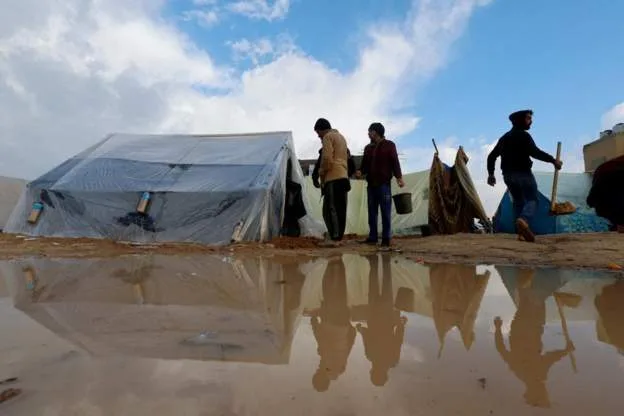
There was a lot of heavy rain in Gaza last night that made it even harder for people living in tents.
The rain came from a low area in northeast Africa moving over the eastern Mediterranean.
This has made the air cooler over the warm seas. The sea is still around 20 degrees Celsius. This makes the air in the atmosphere unstable, causing rain showers and thunderstorms.
The rain amount will be different in different places.
More rain will keep coming to Gaza all day today. A strong area of high pressure will bring sunny and dry weather, with temperatures much higher than usual by Friday. This warm weather will continue into next week.
It seems like it will rain again at the end of next week.
Gaza gets most of its rain from November to February. There will be more cool and wet weather in the coming weeks and months.
Israel’s army said that 10 soldiers died in a battle in northern Gaza yesterday, making it the worst day for the military since they started their attack on Hamas.
Nine people were killed, and they were fighting in Shejaiya, which is to the east of Gaza City. Among them were a battalion commander and a colonel.
It is said that they were attacked in a planned way.
One hundred and fifteen soldiers have died.
Benny Gantz, a member of the Israeli War Cabinet and a former military leader, said that the war was causing a lot of pain and was hard to deal with.
Most Israelis still think the war is right and needed, but when soldiers die, it affects everyone in the country because most Jewish people, and also some from other religions, serve in the army.
Some Israelis on social media are asking if the increase in fighting on the ground could be because the US is pushing for less air strikes.
Israeli airstrikes hurt fewer Israeli soldiers but have caused many Palestinian civilians to die.
“He wants to know about his family but I don’t know what to say. ” Instead, I breathe deeply and try to avoid the question by talking about something else like a child would do.
Moein Abu Rezk is the only family member left for his nephew, Omar, who is very sick at the Al-Aqsa Martyrs hospital in Deir al-Balah, in the central Gaza Strip.
Omar’s left hand was cut off and he had big cuts on his right leg, smaller cuts on his chest and face, and a jaw that was not in the right place after an Israeli attack that Moein says killed 35 of his family members, including his mom, dad, and grandma.
Up until now, Moein has chosen not to tell Omar about their deaths because he’s concerned it might make his condition worse. He’s hoping to get Omar to Egypt for medical treatment with the help of the United Arab Emirates government and the Emirates Red Crescent.
“He needs to be given the information carefully so he doesn’t get shocked or lose control,” Moein told BBC Arabic in a series of voice messages on Sunday night.
“He hasn’t seen anyone, but he wants to know where his mom and grandma are. ”
But, Omar might not be able to get to the Egyptian border in an ambulance because there is a lot of fighting and bombing in Gaza’s Middle Area.
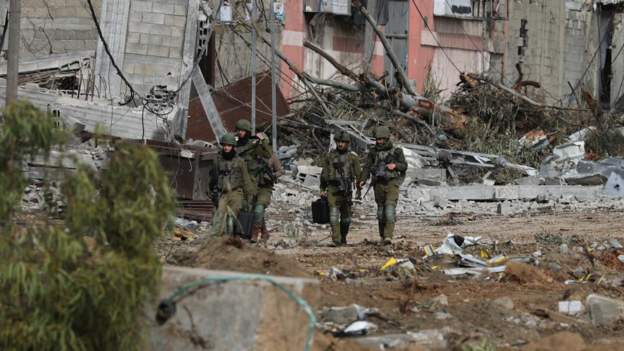
Israeli soldiers have split Gaza into two parts and surrounded Gaza City. They did this in the first two months of fighting against Hamas, which Israel, the UK, and other Western countries consider a terrorist group.
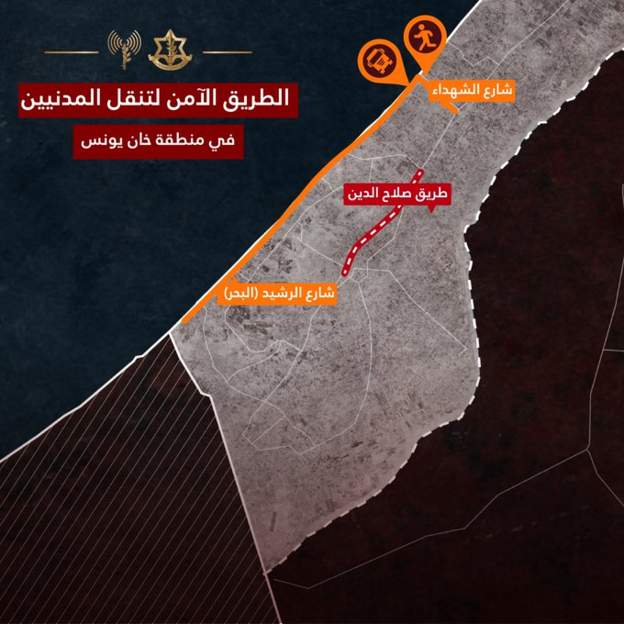
Soldiers and tanks are moving far into the southern city of Khan Younis. The main road from Deir al-Balah is now a “battlefield”, so people in the Middle Area can only use one supposedly safe route along the Mediterranean coast to evacuate.
A lot of people from the north of Gaza went to the Middle Area because the Israeli military told them to leave their homes and go south of the Wadi Gaza river two months ago.
The war began when Hamas attacked southern Israel on October 7th. 1,200 people were killed and about 240 others were taken hostage. This led to the order to start the war.
Since that time, over 18,200 people have died in Gaza according to the area’s Hamas-controlled health department. Omar is one of over 49,000 people who have been reported injured.
The Israeli army is working to find and destroy terrorists and their weapons. They have targeted more than 22,000 sites since the war began. Omar is with his uncle Moein Abu Rezk at a hospital in Deir al-Balah, in the middle of the Gaza Strip.
Moein told BBC Arabic that Omar and his family were at his grandmother’s house in Nuseirat camp, near Deir al-Balah, when it was bombed by the Israeli military without any warning.
“We have never seen missiles like these before. ” He remembered the missile falling and destroying all the houses in the area.
“Thankfully, the house had a hole and Omar fell through it. ” But his left arm was very badly hurt and had to be cut off right away.
“On Saturday, he lost a lot of blood and his haemoglobin levels dropped, so he needed to go to surgery to get a blood transfusion. ”
Moein said the hospital was really bad. They couldn’t find a bed for Omar even though he was very hurt. He had to wait in a hallway while doctors and nurses did their best to help him.
“We don’t have enough medical equipment and tools, so we have to find practical solutions to deal with the situation instead of using the best medical methods. ”
“We don’t have any medicine for the pain, so we’re trying to make him laugh to help him feel better. ”
Moein agreed that this way only worked sometimes but said, “We don’t have any other choice. ”
He said he hopes that Omar will go to the Rafah border with Egypt next Thursday. Then he will go to a special hospital for treatment.
Lena Shakora, her husband, and three young sons have managed to stay safe from the Israeli bombing, but she said they are still going through a very scary and difficult time.
They left their home in Sheikh Radwan district in Gaza City and are now staying in a house in a farming area near Deir al-Balah with their family.
Every morning, I remember that there is a war and that people don’t have enough food to eat. It’s really hard to be forced out of your home and have no food,” Lena told BBC Arabic on Sunday night.
My family and I are in a room with 40 people and all the windows are broken because of the bombing. We are essentially sitting outside. It’s really cold and people feel embarrassed.
Lena said her sons hurt their backs from carrying heavy containers of water. Furthermore, the water is not clean because the treatment plants and pumps are not working due to a shortage of fuel, which makes the situation even more difficult.
The family had to eat bad food because the stores were empty and they didn’t get any help.
We really hope to have some flour to make bread, and we also want to use clean wood to bake it.
“Many people search for wood wherever they can find it. ” She said the bread is not safe to eat because it was made using wood from a bombing site.
The UN said they couldn’t give things to people outside the city of Rafah because it’s too dangerous and they are not allowed to move around freely.
“The situation for people in Gaza is really bad and aid groups are saying they urgently need more help. Not enough aid is reaching the area. ” Recently, only 20% of the aid needed has been able to reach the area. A lot of it cannot be given out because of the big Israeli bombings, according to Melanie Ward from Medical Aid for Palestinians.
She said that the help coming in is very little, and it is the worst disaster that anyone working in Gaza has ever seen.
The only border crossing that is open right now is at Rafah, which is on the border of Egypt. The UN’s humanitarian agency, OCHA, said that they are giving out some aid to people there, but only a small amount.
Hardly any help has been able to reach the northern part of Gaza because of the heavy fighting and restrictions on the main road.
Help organizations gave more food and supplies to people in Gaza during a pause in fighting that ended on December 1st. Some hostages were also let go during this time. But things have gotten even worse since the fighting started again.
Israel is not working and taking time off for a break. Schools are closed, and the shopping centers away from the areas of conflict are busy. Jewish people like to eat doughnuts during Hanukkah, and cake shops have a lot of them right now.
The fighting looks different when you are up close. Next to the Gaza border, in an area called the “envelope” by Israelis, there are tanks and soldiers moving around. Most civilians are not there and it looks like a place where there is a war happening.
In the north, near Lebanon, people have been moved out of their communities and the military is still fighting with Hezbollah, Iran’s powerful friend.
Casual visitors might think that life in central Israel, the area between Jerusalem and Tel Aviv, has gone back to normal.
As I drove to Tel Aviv, I got a clear reminder that my impression was totally wrong.
The loud sirens went off, and the red alert app on Israeli phones warned people to take cover. Cars pulled over so the people inside could find a safe place. Other drivers went fast to leave the area. Three cars got into a crash because they were confused.
We stopped our car and saw a group of women hugging each other tightly, looking very scared.
In the sky, the Iron Dome system shot down rockets from Gaza with big explosions. A man got hurt in Holon near the highway.
The Israelis are very hurt and upset.
Hamas can still attack Israel, which shows that they are not defeated yet. The drivers’ reaction shows how much pain Hamas has caused Israel, which is good for Hamas leaders. Israel thinks they are in a tunnel under Gaza.
“Before 7 October, forget everything you thought you knew about Israel. ” “It’s all different now,” said Amos Yadlin, a retired high-ranking military officer, as we prepared for an interview in his office in Tel Aviv, with a view of Israel’s defense ministry. Yadlin was a pilot who flew planes in wars for a long time. Then, he stopped and became the boss of Israel’s military information.
We wanted to talk to him to understand how Israel plans for war. In the end, everything he said was fascinating because it showed how people in Israel felt.
MrYadlin often talked about how Israel’s fight against Hamas was similar to World War Two. He was saying that Israel had killed a lot of Palestinian people in the Gaza Strip, but he thinks it was necessary. He also said that getting rid of Hamas was really important for Israel’s future.
Mr Yadlin talked about how the RAF bombed Dresden in Germany in 1945, killing many people, including women and children. We are trying not to harm other things. We tell them to go away. We want them to go to the south of Gaza.
I told him that Israel was bombing the places they said Palestinians could be safe in. Yadlin said that Israel was attacking Hamas, not innocent people.
“No, we didn’t explode any bombs on them. We attacked the Hamas areas with bombs. Hamas uses people as a shield and only targets them.
He ignored complaints from the Biden administration in the US that Israel was causing the deaths of many Palestinian civilians. He said Israel tries harder to not hurt innocent people when they bomb jihadist groups in Syria and Iraq compared to the US and UK.
Former generals who were part of the wars in Iraq and Afghanistan do not agree with his interpretation. “A high-ranking British officer told me he was shocked by Israel’s disregard for the rules of war that require the safety of civilians. ” He said that it would not be okay to do in the British army.
Amos Yadlin helps the current leaders of the Israeli military and thinks that Israel needs more time to achieve its big goals in Gaza. It wants to save its prisoners, take out the Hamas leaders, eliminate them as a threat to Israel and remove their ability to control.
I said that even though the US said no to the latest peace agreement, it was warning Israel to finish its plans in a few weeks, not longer.
“Mr Yadlin said just reaching the goal is not sufficient. ” “If the remaining hostages are not returned, there won’t be a ceasefire. ” Rewrite this sentence in simpler words: line
Israel has a very strong army and support from the United States. However, it is finding out that despite its strong belief that it must destroy Gaza to get rid of Hamas, both supporters and opponents are shocked by the way it has killed over 18,000 Palestinians, with about half of them being children.
Israel has learned that fighting a strong enemy in a city is very difficult, just like the Americans and others said it would be.
Amos Yadlin said that even though people are criticizing them, the Israelis are determined to achieve their goals. Then comes the difficult problem of how to manage and rebuild Gaza.
Mr Yadlin said that Israel won’t stay in Gaza for a long time. But if the current leaders keep wanting to control it for a long time, then it seems like Israel will stay there.
Israel said it is not true that they are trying to make a lot of people from Gaza go to Egypt, as the head of the UN agency for Palestinian refugees has claimed.
An article in the Los Angeles Times written by someone expressing their thoughts.
UNRWA boss Philippe Lazzarini said the Israeli military told people in north Gaza to move south, and then fighting forced them even closer to the border with Egypt.
Lazzarini said that if things kept going this way, Palestinians might not be able to live in Gaza anymore.
Israel denies the accusation and says it is not true. A person from the defence ministry told the AFP news agency that Israel does not have a plan to move the people from Gaza to Egypt.
Israel said that Jordan’s claim is not true. The Reuters news agency says that an official denied the claim that they had a plan to force Palestinians out of the Gaza Strip.
A person saw a lot of scary and dangerous things in the middle of Gaza’s southern city Khan Younis. There were loud sounds of bombing and intense fighting.
Israel told people to leave the middle of the city and the military leader wants to increase the campaign.
On Saturday, a hospital leader in Khan Younis said they had too many injured people – and Israel said it was fighting against Hamas in homes.
The UN said that many people in Gaza don’t have enough food to eat. About half the people there are starving, and nine out of ten can’t eat every day.
Video has shown people giving up to Israeli soldiers in the northern part of Gaza. But there are two different videos of the same situation and people are unsure if it’s real or not.
Nine weeks ago, Hamas attacked Israel and killed 1,200 people. They also took 240 hostages, but some of them were released during a short break in the fighting.
Hamas leaders in Gaza say Israel killed over 17,700 people in its revenge attacks, including more than 7,000 children.
UN leader António Guterres has talked about the “serious danger to keeping peace around the world” in the Gaza conflict. He said the fighting could spread to other places like the West Bank, Lebanon, Syria, Iraq, and Yemen.
He used Article 99 to make the UN Security Council vote on Friday because he thinks this is a very important matter that the council needs to know about right away.
The Israeli government strongly dislikes the UN and the secretary general.
The Israelis disagreed with what he said. They think Mr. Guterres is the one causing problems by trying to stop the fighting before they can get rid of Hamas.
The bad feeling will not get better because the secretary general also said that there is a risk that many Palestinians might have to leave Gaza and go to Egypt. This is a big worry for the Egyptian government.
Mr Guterres said there is a big chance that the humanitarian help in Gaza could completely fail. The Palestinians believe that Israel wants to force them out of Gaza.
I can’t go to Gaza because Israel won’t let journalists in, but from what I can see in the pictures and videos and what people are telling me, what the secretary general is saying seems accurate.
The situation for the people there is really bad because the military is attacking them without stopping. Israel says they are trying to save the lives of innocent people, but they believe that Hamas is using civilians to protect themselves.
At the UN, the Americans voted against the resolution asking for a stop to fighting. For those worried about the many people who died, it doesn’t seem sincere when the Americans say the Israelis promise to follow the rules of war and not harm innocent civilians. However, according to them, Israel does not always do what it says.
I believe the secretary general planned to make a decision for a vote, even though he knew it would most likely get rejected. He wanted to speed up the time when the Americans will tell Israel to stop fighting and agree to a ceasefire. They’ve been fighting for too long and causing too much harm. It’s time to stop.
Some diplomats I talked to said they might give Israelis more time. I think Mr. Guterres wants to try to make that shorter. He will do this by putting more pressure on the international community and also by making the Americans feel ashamed for holding this position, which is becoming less and less acceptable.
Today, there is more pressure because a video was released showing prisoners in Gaza being taken away by the Israel Defense Forces in their underwear. Seeing so many men in a picture of war is very sad. Local reports on social media say there could be as many as 700 men in the picture.
The family members of the men say that they were taken from a UN school where they were staying, and some people who tried to escape were killed.
Yesterday, a terrible video was shared showing six people dead in the street. They were said to be from the same area and near the same school. One of them was lying on top of a white flag, and there was blood.
The IDF is trying to figure out who is responsible for the attacks on October 7 and determine who is a suspect while following international conflict laws.
But for people who don’t care about what Israel is doing, or who have stopped caring because of all the killing in Gaza, they say that Israel doesn’t care about the dignity and health of Palestinians.
It’s cold outside, so having to walk around in underwear on the streets, some blindfolded as we saw in the video, and some with their hands tied behind their back, is not a good experience.
The Israelis say they cannot escape it – others say it is very brutal.
The UN Security Council will decide on a resolution proposed by the UAE for a quick ceasefire in Gaza to provide humanitarian help.
Two days later, UN chief Antonio Guterres used his power to bring up a matter to the council that is not often used. may cause problems for keeping peace around the world.
The US does not want to stop the fighting and is expected to vote against the decision to stop it.
The US Secretary of State, Antony Blinken, has asked Israel to do better at keeping civilians safe. He said there is a difference between what Israel promises and what is really happening.
At the same time, the Palestinian health ministry in the occupied West Bank reports that six Palestinians died in an Israeli attack on al-Fara refugee camp.
Hamas attacked Israel in October. They killed 1,200 people and took 240 hostages. Some hostages were released when there was a short break in the fighting.
Hamas leaders in Gaza say that Israel has killed over 17,177 people in its counterattack, including around 7,000 children.
In his statement, Mr Netanyahu said: “Our brave soldiers did not die for nothing. We will keep fighting until we win.
Gadi Eisenkot, age 63, is a retired military leader who was in charge of Israel’s military from 2015 to 2019.
A politician from the National Unity party, he is also a member of Mr Netanyahu’s temporary government formed after Hamas attacked Israel on 7 October, causing the death of about 1,200 people and taking about 240 hostages.
Israel has attacked Gaza by dropping bombs from planes and sending soldiers in on the ground. Hamas people in Gaza say they have killed over 17,000 people, mostly regular people, and a lot more are still trapped under collapsed buildings.
Mr Eisenkot found out about his son’s injuries while he was visiting the Israel Defense Forces’ Southern Command, according to local media.
Several Israeli government officials and lawmakers also expressed their sadness and sympathy for the Eisenkot family.
Yair Lapid, the leader of the opposing party, put up a picture of Gal and Gadi Eisenkot wearing military clothes and hugging each other.
This picture This hug is nice. A dad and his son. Both wearing the same clothes. Both soldiers in this country,” Mr Lapid wrote. Mr Lapid wrote that both soldiers in this country. “They both answer the call and come when they are needed, doing whatever is necessary. ” One hug can decide the future of a whole country.
The IDF also said that another soldier, Sgt Maj Jonathan David Deitch, aged 34, was killed in southern Gaza on Thursday.
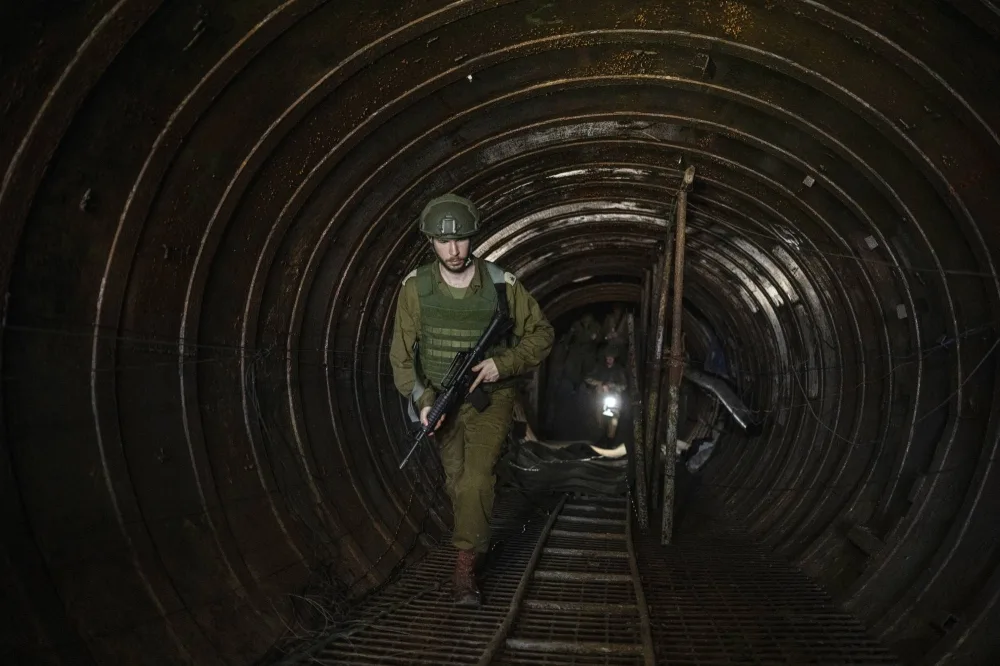
Israeli soldiers are getting ready to fill the tunnels under Gaza with water from the sea. These tunnels are used by the Hamas group.
New photos show IDF soldiers putting in five pumps near Al-Shati refugee camp. The pumps can move a lot of water into the tunnels every hour.
Israel wants to fill the tunnels with water to force Hamas to leave them and stop them from doing bad things.
The IDF released pictures that seem to show many soldiers putting black pipes on Gaza’s beaches that go into the Mediterranean Sea.
American officials said on Monday that Israel has set up big pumps that could flood Hamas’s many tunnels under the Gaza Strip with sea water.
The plan would help Israel to find and destroy tunnels, and to catch and stop any Hamas fighters inside. Officials said this to the Wall Street Journal.
It was not sure if Israel would use the pumps before freeing their hostages from Hamas. Flooding the tunnels could harm people inside and damage underground buildings.
Hamas said they have hidden the hostages in safe places and tunnels.
Israeli media show video of Israeli soldiers filling up pipes and working on pumps underground.
The head of the IDF, Lt. General Aviv Kochavi Rewrite this text in simple words:Gen. Army leader Herzi Halevi seemed to agree that Israel wants to flood Hamas’s tunnels and thinks it’s a good plan.
He said: ‘We are finding many tunnels and other structures beneath the surface in Gaza, which is what we expected. ‘ We want to wreck this infrastructure.
We have different ways to deal with the tunnels. I can’t talk about all the details, but we use explosives to destroy them and other methods to stop Hamas from using the tunnels to hurt our soldiers.
So, we are considering using any method that helps us beat the enemy who uses tunnels. This will take away their advantage of using the tunnels. This is a good idea, but I won’t talk about the details.
The United Nations said that there is nowhere safe for Palestinians in Gaza because Israeli troops are moving into more areas.
The UN officials say the situation is very bad in the besieged area because there is a lot of fighting and bombing.
The IDF told people to leave a part of Khan Younis because there were airstrikes there.
UN emergency relief official Martin Griffiths said that every time we think things can’t get worse in Gaza, they do.
People are being told to move, but they don’t have much to live on and are forced to make really tough decisions.
“He said that we need to stop being so disrespectful to each other as human beings. ”
Israel is attacking Hamas more and sending soldiers to more areas in the territory.
The Israeli military surrounded the Jabalia refugee camp in the northern part of the Gaza Strip, near the border with Israel.
The place has seen lots of fighting lately after a break of one week.
Trucks full of help have gone into Gaza in the last two days, but they have had trouble moving because of the fighting.
At the same time, a soldier named Binyamin Needham from Britain and Israel was mentioned by the IDF as one of three troops who died on Sunday while the military continued its ground attack in the southern area of the Strip.
People are honoring the soldier who was seriously hurt and died two days after going to the frontline with the 401st Brigade.
Reports say he died while Israel keeps attacking Gaza and killing lots of innocent people since the break ended on December 1.
Israel has taken over some of the Hamas military posts in northern Gaza. A top government spokesperson shared his thoughts on the progress of the war.
Earlier today, Eylon Levy told the reporters that “We are now starting the second stage. ” The next part is going to be hard for the military.
Israel is ready for tough fighting in the next part of the war in Gaza. They are willing to listen to advice on how to protect civilians, as long as it helps them defeat Hamas.
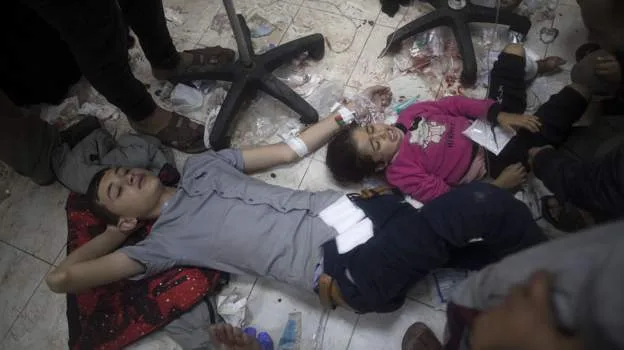
At Nasser hospital in Khan Younis, Gaza, pictures show patients lying on a bloody floor after Israeli bombs hit the area.
The person who speaks for the health ministry in Gaza, which is run by Hamas, says the situation is really bad. Ashraf al-Qudra says that 43 people have died and their bodies have been taken to the hospital just this morning.
We have been talking to Palestinians who had to leave their homes in the al-Mawasi area. Israeli officials say it is a safe place for them to stay.
They say the narrow piece of land on the south of Gaza’s coast is very bad, like a desert, and has too many people.
Reem Abd Rabu lives with 16 other people in one tent. She left her home in northern Gaza with her family in October because the Israeli military said it was not safe to stay there.
She says al-Mawasi is a place with no amenities for people, and thinks it should hold 10,000 people but now has over 100,000.
One of the people in a tent with Reem is Dr. Mona Al Astal. She says their situation is really bad, and many people in the makeshift al-Mawasi communities are getting sick with skin and breathing problems.
“She says people have no water, food, or electricity. They have nothing. ”
“This morning, some people forcefully entered a UNRWA storage to take food. “
Israel bombed heavily in the Gaza Strip overnight.
Salah Al-Arja, who lives in Rafah in the south of the territory, said his house was destroyed while they were sleeping even though he thought they were in a safe place.
“We were sleeping and thought we were safe in Rafah. But at 10:20, they attacked with barrels and destroyed everything. There were children, women, and people who died,” he told Reuters.
“No place is safe in Rafah, Khan Younis, Gaza, or Dier. They lied about it being safe and made us leave, but then they bombed us anyway, even in crowded areas. ”
“They say it’s safe here, but it’s not. The whole Gaza strip is dangerous, and they’re lying to us. ”
Israeli soldiers are moving into more areas of the Gaza Strip and telling people to leave, especially in the middle and south.
One way it is giving out these instructions is by using a map on the internet.
that separates the Gaza Strip into many smaller sections.
People who live in the area are asked to pay attention to what is happening and to do what the IDF tells them through the news and other media.
Today, it posted on social media to tell people in 20 areas in southern Gaza to leave their homes.
The map showed arrows pointing to the south, telling people to go there.
The IDF has told people to leave an area by dropping flyers and making phone calls with warnings. They sometimes use QR codes on the flyers to show a map of safe places.
Many people have criticized its way of doing things.
Sari Bashi from Human Rights Watch said Israel wants people without electricity or internet to scan a barcode to find out where they should go.
She also said Israel is telling people to run away “when there’s nowhere safe to go” and no safe way to get there.
The UN says that most people in Gaza had to leave their homes because of the war. The US told Israel to keep civilians safe, and Israel says it is doing its best to do that.
The Gaza health ministry, run by Hamas, said that 15,899 people have died since Israel started its military campaign in response to the 7 October attacks.
349 people have died in Israeli attacks since they last told us on Sunday.
Hamas says that 70% of the people who died are women and children.
Israel wants to get rid of Hamas from the Gaza Strip because some Palestinian gunmen crossed into Israel, killed 1,200 people, and took 240 captive.
Over 100 people who were held captive were set free during a ceasefire that lasted for seven days. But the ceasefire ended last Friday.
The situation of getting people out of Gaza is very tricky.
The Israeli military made maps of Gaza, dividing it into 2,400 blocks. This has caused confusion for the people living there about where they should go.
The map has been shared on the internet, on X (formerly Twitter), and on leaflets with QR codes. However, this supposes that you have a functioning smartphone to use.
They wanted to encourage people to go to al-Muwasi by the sea. I talked to some people and they said there are no services available, so now people are being sent to other places.
It’s really hard for me to understand the orders in Jerusalem, and I can imagine it’s even harder for people in Gaza.
These people don’t have a car and have been forced to leave their homes. They also have family members with them, which makes it difficult to travel quickly to a place that may not be safe.
The US is telling Israel to stop hurting and killing Palestinian people. That’s why it’s in this plan that it says will save lives.
It seems too hard and relies too much on working smartphones to be a good solution in the chaos of Gaza under attack.
James Elder, who speaks for an agency that helps children, says he is worried about how the Israeli military action in southern Gaza will affect the people who live there.
“Important people are saying that the terrible things that happened in the north should not happen in the south. ” “Yes, that’s definitely true,” Elder said.
He guessed that bombs drop “every 10 minutes”.
People in southern Gaza are not only in danger, but they are also very tired. They have been forced to leave their homes multiple times because of bombings. This has made them feel very worn out and they are trying their best to stay strong for their children, but they don’t have anywhere else to go.
“I see a lot of children being brought in on stretchers with their parents screaming because they got hurt in the war. It makes me think that hospitals and shelters are not safe for them. ” He said
“I don’t feel safe, and no one else does either. “
The Israeli military is now attacking more areas in Gaza where they believe Hamas is located. This is according to their spokesperson Rear Admiral Daniel Hagari.
Hagari said that soldiers were meeting Palestinian fighters directly.
This morning, the Israeli military told people in Gaza to leave 20 areas in the middle of Gaza. They put up a map on social media to show which areas to leave.
With arrows pointing to places in the south where people should go.
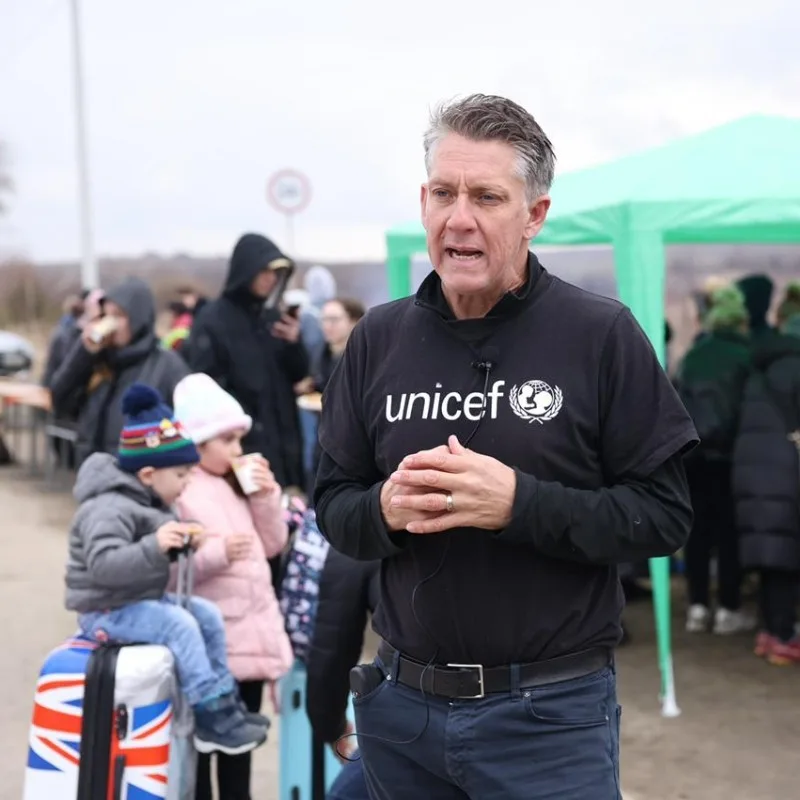
A person who speaks for Unicef, the group that helps children all over the world, said he’s having a hard time finding new words to describe how bad things are for children in Gaza because the fighting there keeps going.
“Right now in south Gaza, this is the worst attack of the war,” said James Elder.
During the weekend, there was a video of people running away from Hamad City in Khan Younis because of Israeli air strikes. Smoke was rising from the air strikes. Many apartment buildings were completely destroyed and turned into blackened rubble.
Qatar knows that this is important, especially because they couldn’t help make the temporary truce between Israel and Hamas last longer.
Qatar paid for and built the smart housing project, including a big mosque and gardens. It was named after the old leader of Qatar, who started the project when he visited 11 years ago. He was the first leader to visit the Palestinian area after it was controlled by Hamas.
The first apartments in the complex were given to Palestinians whose homes were destroyed in the 2014 war between Israel and Hamas. Many people have lost their houses once more.
Islam al-Farah, a local government worker, told the BBC that the population of Hamad City has doubled from 15,000 to over 30,000 in the past few weeks. This is because people who were forced to leave their homes in northern Gaza are now living there.
“He said that many people are living on the streets, in tents, or in parking areas. ”
“Recently, we got a notice telling us to leave Hamad City because it’s going to be attacked,” he said.
It said Blinken repeated the US’s support for “Israel’s right to defend itself from terrorist violence” while following international humanitarian rules.
But it also says: “The secretary emphasized the need to consider the needs of civilians and humanitarian aid in southern Gaza before starting any military actions there. ”
Since the war started, the health ministry in Gaza run by Hamas has reported that more than 14,800 people have been killed in Israel’s retaliation, including around 6,000 children.
As our reporter mentioned before, it seems like the US is telling Israel to change their tactics.
Eylon Levy, a spokesperson for the Israeli government, said that there are about 161 people who are being held against their will in the Gaza Strip.
That number is made up of 146 Israelis and 15 people from other countries. There were 126 men and 35 women.
Levy said there are still four kids younger than 18 and 10 adults older than 75 being held. He doesn’t know how many of the hostages are soldiers.
“We promise to bring all the hostages home and we are determined to do so. We will not leave anyone behind,” Levy said at a press conference. He also said that if there is a good offer, they will think about extending the ceasefire to get more hostages released.
We are in the last day of the truce between Israel and Hamas, and people hope that the agreement will continue.
For those who are just starting to pay attention, we are now on the sixth and last day of the current peace agreement between Israel and Hamas.
We hope the agreement can continue, but we’re still waiting to find out if the discussions in Qatar were successful.
Twelve more people who were being held captive were set free last night. Ten of them were citizens of Israel and two were from Thailand. That means a total of 81 people who were taken hostage by Hamas on 7 October have been set free.
Right now, there are over 160 people who are still being held captive, including a 10-month-old baby.
Israel got a list of the people being held in Gaza and they will be released today. We don’t have the list right now, but we will give you more information when we can.
When the first agreement was made, Israel said that they would stop fighting for one more day for every 10 hostages that were released. It’s not clear if those terms will stay the same in any future deal.
In return, Israel has released 180 Palestinians from jail, and 30 of them were let go last night. According to the truce agreement, for each Israeli person set free, three Palestinian prisoners held in Israeli prisons will also be released.
The ceasefire in Gaza has been going on for six days and will end soon. Israel and Hamas are talking about extending the ceasefire. Israel thinks there is a chance to make a deal, and Hamas has shown that they are willing to discuss it.
Top officials from Israel, the United States, and Egypt are talking in Qatar about making a new agreement. Qatar helped mediate the first peace deal. This could mean that the first men or soldiers who were taken by Hamas during the attack on 7 October might be set free.
Israeli leaders have said that they want to keep the current system, where three Palestinian women and teenagers are set free from Israeli prisons for every Israeli hostage that is returned.
I wonder if Hamas will ask for anything else to release Israeli officers.
Over 160 people are still being held captive, including a 10-month-old baby who is the youngest hostage. Hamas says it does not have all of them, and that some are with other groups. It’s not clear where the others are.
A longer period of peace will help the people in Gaza by bringing more supplies like food, water, and medicine that they really need.
However, some people in Israel might not agree with a longer ceasefire. Prime Minister Benjamin Netanyahu promised to start attacking Gaza again to “get rid of Hamas”. Some people are worried that if there is a long break, Hamas will have time to get stronger and plan how to defend themselves.
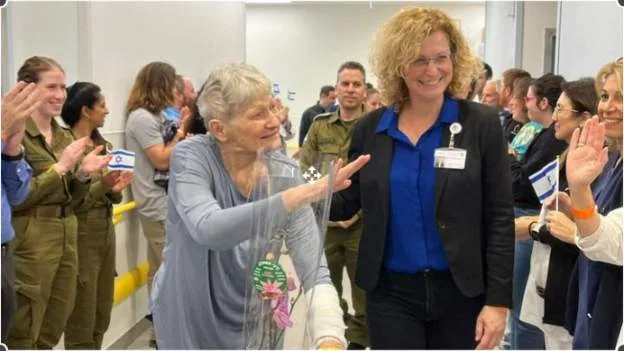
Yafa Adar, an 85-year-old woman from Israel, who was one of the first hostages taken by Hamas, has left the hospital.
The place posted a picture on social media of Adar holding flowers and saying goodbye to the hospital staff. They clapped and waved Israeli flags as she left.
Adar was taken from kibbutz Nir Oz and there was a video of him being taken to Gaza in a golf cart by armed men, and a lot of people saw it.
Her granddaughter told the media yesterday that she thought many family members had been killed. It was emotional for her when she saw them and realized they were alive after being released.
The son of Ada Sagi, who is from Britain and Israel, talked to the media after his 75-year-old mother was freed from Gaza last night.
Noam Sagi talked about what happened when they were reunited on BBC Radio 4’s Today show.
“It was an amazing night,” Noam says. “So many ideas and dreams and concerns and effort – everything led up to that moment. ”
To feel my mom – just to feel her breathing, her heartbeat, and to look into her eyes and see that she is okay and herself. “is really amazing in lots of ways. ”
Noam spent a long night with Ada, her other kids, and grandkids just holding hands and reconnecting on a deep level.
He says that after being held captive for 53 days without the freedom to make her own choices, the idea that she has more control over her life is amazing to Ada.
“Noam says she is very positive. She was concerned about us. ”
He doesn’t want to talk about what happened to Ada because his family is more focused on helping her get better. They are working with psychologists to understand what happened to her on 7 October.
Apart from discussing if the truce will continue, let’s remember the hard times people in Gaza are going through.
Here in Deir al-Balah, there are many people as far as you can see. It is meant to be a “safe” city in contrast to the destroyed north, where lots of people who had to leave their homes now live.
Many people are waiting in a long line for cooking gas. Some have been waiting for three days, sleeping outside in the cold, hoping to be able to cook food.
As many people wait, some get angry while sitting on their gas cylinders.
“Where are all the Arab and Muslim people. ” a woman in her middle years yells angrily while waiting in line for gas. “Where are the people who protect human rights. You have abandoned the Palestinians and left them to suffer, starve, and be harmed. “
There is a chance that the agreement to stop fighting between Israel and Hamas could continue. They are having discussions in Qatar to try and make a new deal.
Israel says it got a list of people held captive in Gaza and they might be set free on Wednesday, which is the sixth day of the current truce.
On Tuesday, Hamas let go of 12 hostages and Israel released 30 more Palestinian prisoners.
Ada Sagi’s son said he was very happy when his mom, who turned 75 while in Gaza, was released. He told the BBC he was “over the moon” about it.
Palestinian prisoners say they were treated badly in Israeli jails. A 14-year-old boy said he saw people being hit. Israel has not said anything about it.
Hamas went over the border and killed 1,200 people in Israel on 7 October. They also took about 240 people as hostages.
From that time, Gaza’s Hamas-led health department reports that over 14,800 people have been killed in Israel’s campaign to strike back, including around 6,000 children.