Kfir Bibas is 10 months old and has spent over a fifth of his life as a captive. His cute face and red hair show the pain and suffering of Israel’s hostage families.
Kfir was taken by Hamas militants from his home in southern Israel over 50 days ago. His family still doesn’t know if he is safe or even alive.
“We are very worried about him,” said Eylon Keshet, a family member, as he held a picture of the baby boy.
“We don’t know if he can do it. ” Every day he stays there, his life is in real danger.
Kfir, his little brother Ariel (who is 4 years old), their mom Shiri and maybe their dad Yarden were taken from Nir Oz, an Israeli kibbutz that was really hurt when it was attacked by Hamas fighters on October 7th. The attackers killed many people and kidnapped many others. They also destroyed homes and stole things.
Hamas killed about 1,200 people in southern Israel, most of them were not soldiers. This was the biggest attack on Israel since the country was created in 1948.
A scary video of the Bibas family being taken away was one of the first shocking moments of the day. Shiri held her children tightly, and Ariel was still using his pacifier. The kids are quiet and not crying while their mom, who is scared, is being surrounded by Hamas fighters. She has a blanket around her. Keshet said their grandparents died in the attack.
The boys’ dad was hit by a hammer, his sister said. We don’t know how he is or where he is right now. Yarden’s cousin Keshet says that the family thinks Yarden was taken away from his wife and kids, because they saw some videos.
Keshet said it doesn’t make sense for anyone to let this continue. That’s wrong and cruel. “I’m really frightened. ”
Hamas had more than 200 people they were keeping as captives in Gaza before they were released through talks with Israel. Groups of Israeli citizens and other people, mostly women and children, have been released every day since last Friday because of a new peace agreement.
In Gaza, more than 14,800 Palestinians have been killed, including 6,000 children, since Israel started attacking in response to Hamas terror attacks on October 7. These figures come from the Palestinian Ministry of Health in the West Bank, which gets its information from health authorities in Gaza run by Hamas.
As part of an agreement to stop fighting, Israel has let go of Palestinian women and children who were in jail. Many of them were never accused or given a punishment.
The first four-day break from fighting was made longer by two more days on Monday. This gave the families of the hostages who were released a chance to share their experiences of being held captive.
On Monday, a spokesperson for the Israel Defense Forces said that the Bibas family is not currently being held captive by Hamas. This makes it harder to free them.
Hamas is in charge of Gaza, but there are also other groups like Palestinian Islamic Jihad that do things there.
Kfir, Ariel, and Shira are not on the list of people who will be let go. About eight children are still being kept by Hamas, and their sad faces have made the country mourn and ask for them to come back.
More than 100 people met in Tel Aviv and released orange balloons into the sky to remember the two Bibas boys and their mother. Photos from the agency show the event.
Kfir’s young age has gotten a lot of attention and concern in Israel. The baby boy was still drinking milk from a bottle and couldn’t eat solid food yet when he was taken.
“Keshet said she needs baby formula and is very worried about Ariel’s health. ”
“Ariel is a very delicate child and has a lot of medical problems,” he explained. “She is four years old and has a skin condition that requires treatment. ” “He is a very energetic kid who really enjoys playing with cars and tractors,” he said.
Shiri’s cousin, Yifat Zailer, has been feeling sad and worried recently.
“The small bit of hope we have helps us keep going,” she told CNN. We are begging for our family to be set free.
Every day, Zailer wants her family to be on the list of hostages who will be set free.
A 10-month-old baby is still being kept against their will. He is in danger of losing his life. She said that children should not be used as tools or held hostage. Her face looked thin and her eyes looked sad.
“I hope this will end soon, and we can start to fix our completely broken life here. “
Tag: Gaza
-

10-month-old allegedly missing or held captive in Gaza
-
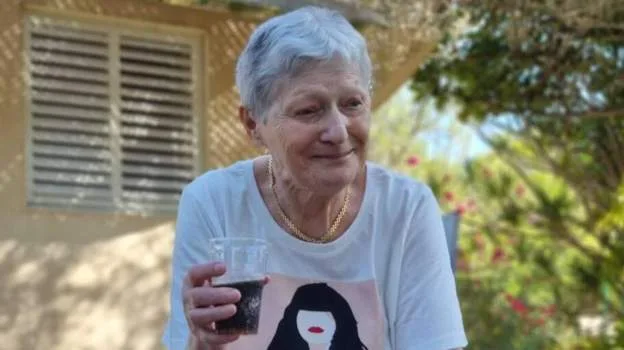
Grandmother breaks out as she sees relatives she assumed were dead
Yafa Adar, who was kidnapped from Nir Oz kibbutz, was one of the hostages who was released early in the exchange deal. A video of her being taken to Gaza in a small car by armed men became very popular on social media.
Her granddaughter, Adva Ardar, says the 85-year-old coming home was like a dream coming true.
“We waited for 50 days just to hug her and smell her,” she tells BBC Radio 4’s Today show.
”Even after all the hard times, she is still the same funny, positive, and strong woman we know”.
You see her after everything she’s been through, and she’s still the funniest, most hopeful, and strongest woman we’ve ever known.
Adva’s grandmother is really strong and healthy. She’s been talking and asking about what’s been happening in the community.
Yafa thought all her family had died in Nir Oz. But then her grandmother saw them and realized they were actually alive. It was a very emotional moment. Yafa’s oldest grandson, Tamir, who is 38 years old and works as a farmer, is one of the people still being kept as a hostage. He has two young daughters. -
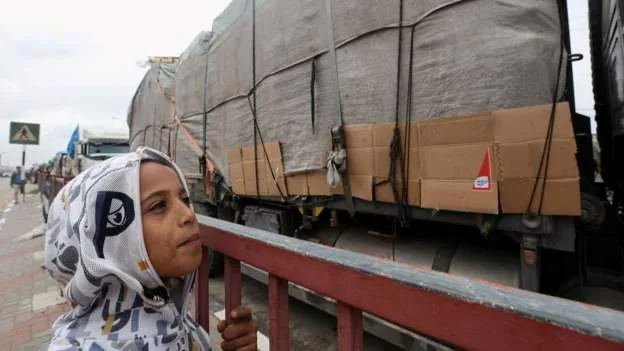
Basic aid reaches northern Gaza; more needed – Charity
The ceasefire has allowed 200 trucks a day to bring aid to Gaza, compared to 45 a day during the war. This information was reported by the Palestine Red Crescent to the media.
Nebal Farsakh, who works for the Red Crescent, told our news-team that they have been able to give supplies to northern Gaza, where there has been a lot of fighting. Before, they were not allowed to give help there.
Farkash thinks the help is only a little bit of help for people in need, but more help is necessary. However, he believes it can still make a difference for the many people in northern Gaza.
”The situation is really bad and we really need help right now.” -
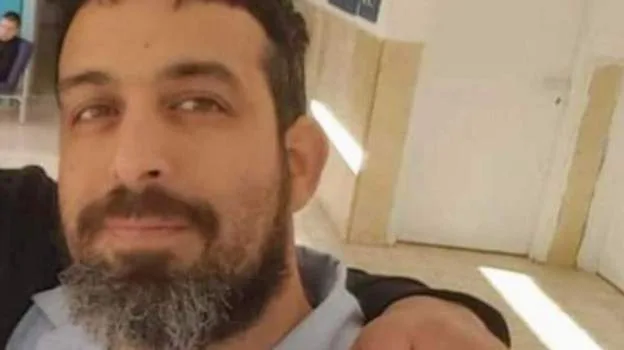
Israeli man who was allegedly held captive by Hamas passed away on October 7 – Family
In the past hour, we received news that one of the men who was believed to have been captured by Hamas on October 7th was actually killed in the attack.
Ravid Katz, who is 51 years old, was not at Kibbutz Nir Oz after he went to fight against Hamas with the security team of the kibbutz, as reported by the Times of Israel.
Yoni Asher, who is the brother-in-law of Katz, posted on social media that he has been told Katz was killed on October 7th. Hamas let go of Asher’s wife and two daughters on Friday as part of the truce deal in Gaza.
Asher said, “Ravid lived in Kibbutz Nir Oz and was a well-educated man from Israel. He was a great father to Shahar, Shira, and a six-month-old baby named Alma, and a partner to Revital. ” We will never forget him. -
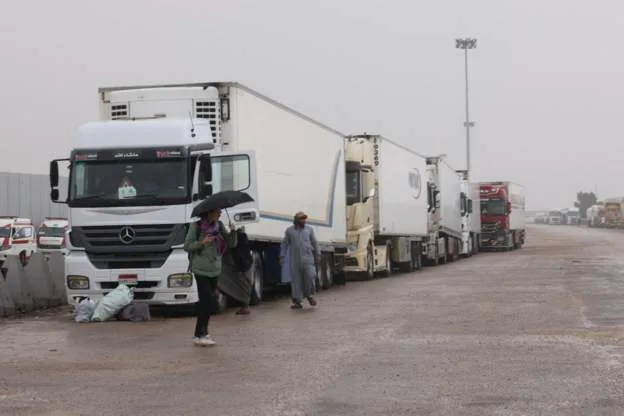
Help reaching Gaza far less than it was prior to the conflict – Authorities
The agreement between Israel and Hamas means that more people being held captive in Gaza will be released, and that more help will be given to the area where people are in urgent need.
The peace agreement has made it possible for some trucks to bring in medicine, food, and water to the area. But it’s still only a small amount compared to the aid that used to come in every day before the war.
Important help is reaching the northern part of Gaza. For weeks, this area was the target of Israel’s attack on Hamas, which caused a lot of damage.
However, people who had to leave their homes say they need more assistance.
“My children are not feeling well, and they don’t have any clothes to wear. ” We arrived wearing light clothes in the summer and didn’t bring any mattresses, food, or anything else. Every day we look for food, but we can’t find any. “Every day, we search for clothes, but we can’t find any,” said a man named Mahmoud in Gaza. “My situation is really bad. ” “My situation is really bad. ” My children are getting sicker every day and it’s making me very sad.
We hope that the ceasefire, which has been going on for five days, can continue for even longer. -
Other armed organisations allegedly hold hostages – Hamas
Hamas asked for a truce to be extended for four days but Israel wanted it extended one day at a time.
According to a leader in Hamas in Qatar, not all of the civilian hostages are held by Hamas.
Some of them are in smaller groups like Palestinian Islamic Jihad. They found 20 people. Ten will come out today and 10 will come out tomorrow.
If they find more hostages, the ceasefire might last for two more days.
Hamas says it needs more time to gather information and talk to people on the ground.
Communication is hard because the telecoms infrastructure in Gaza is broken. -

Israeli-linked tanker attackers apprehended by US Navy
A United States Navy ship caught armed men who took control of a tanker linked to Israel off the coast of Yemen on Sunday, according to US defense officials.
The attackers tried to get away on a boat, but the US warship followed them.
The US Central Command said that rebels from Houthi-controlled territory in the country fired two missiles at the warship.
The Houthis have said they will attack Israel because of its fighting with Hamas in Gaza.
Israel started fighting back after the attack on October 7th in southern Israel. 1,200 people died and over 240 were taken as hostages.
Since that time, over 14,500 people have died in the Gaza Strip. About 40% of them were children, according to the health ministry run by Hamas.
The Houthis say they are part of a group of countries and organizations that resist Iran.
The Central Park was the tanker that was targeted on Sunday, according to the ship’s company.
Zodiac Maritime Ltd, a company owned by the Ofer family from Israel, is in charge of taking care of Central Park. They are based in London and manage ships internationally.
Zodiac Maritime announced that the 22 crew members were from Russia, Vietnam, Bulgaria, India, Georgia, the Philippines, and the captain was from Turkey.
The rebels might attack the tanker that was carrying phosphoric acid unless it changes course and goes to a port in Yemen.
According to a statement from the US military, the USS Mason asked that the assailants free the commercial ship with assistance from other ships.
Five people with weapons tried to run away on a fast boat, but the USS Mason followed them and they gave up in the end.
The US said that two missiles were shot at the warship but missed and landed far away.
The recent attacks were done by the Houthis, who have been carrying out a series of attacks.
They shot many missiles and drones at Israel after Israel started its operation.
The US said that its warship in the Red Sea stopped all the missiles and drones.
Houthi rebels said they took control of an Israeli cargo ship in the Red Sea last week. Israel said the boat was not from Israel, and no people from Israel were on board.
The Houthis have been fighting a long war with Yemen’s government, supported by Saudi Arabia, since 2014. -
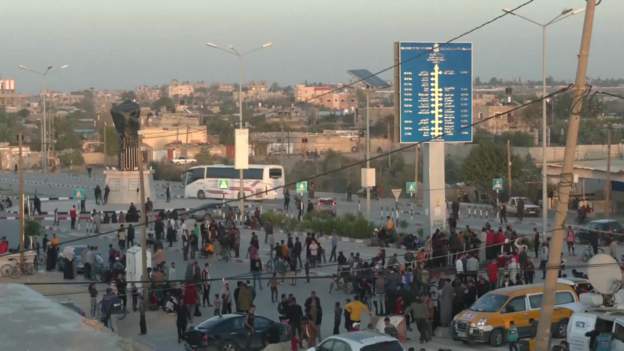
Hostage release agreement: When will it take place?
Here’s what is expected to happen in the next few minutes and hours:
At 2:00 PM GMT (4:00 PM local time), Hamas is going to let go of 13 hostages in Gaza. The International Committee of the Red Cross (ICRC) will then take them to Egypt at the Rafah border.
The Israeli military will arrive in Israel around 16:00 GMT and will get a medical checkup at an airbase.
The 13 people will go to the hospital in a helicopter and see their families there.
We don’t know their names yet, but we do know they will all be women and children.
After the prisoners are moved, 39 Palestinians are going to be let go from Israel’s Ofer prison, which is in the West Bank, and given to the ICRC.
We now know the names of 24 women and 15 men on the list.They will be taken to an Israeli military checkpoint in the West Bank and then allowed to go back home, according to Israel’s prison service.
The buses are prepared to pick up the Palestinians who are going to be released from prison. Israeli ambulances have been sent to the Kerem-Shalom border area in southern Israel. -
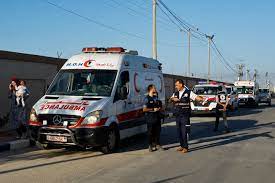
Red Cross in Gaza has reportedly received hostages – Israeli media
Israeli news sources say that a bunch of Israeli people who were taken by Hamas on October 7th, have been given to the Red Cross in Gaza.
The reports say they are going towards the border of Egypt – but the Israeli government has not said this officially.
They were set free after 12 people from Thailand were also rescued by Hamas.Later today, 39 Palestinian people who were held in Israeli jails are going to be set free and sent to the West Bank.
Israel and Hamas made an agreement to release 50 hostages and 150 Palestinians over four days.
Qatar helped make an agreement to stop the fighting for four days.
Additional help is also coming into Gaza – 60 trucks carrying medicine, fuel, and food came in today from Egypt.
The health ministry in Gaza, which is controlled by Hamas, says that over 14,000 people have been killed in Israel’s campaign of revenge. -
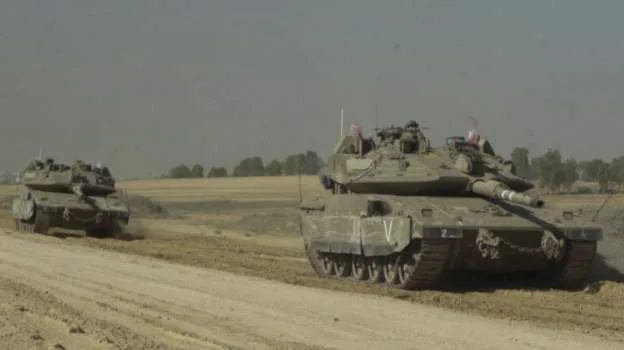
IDF soldiers and tanks seen in video departing northern Gaza
Some Israel army tanks and vehicles have been spotted leaving northern Gaza while a break in fighting is happening for four days.
In a video of the soldiers leaving, some were smiling, holding the Israeli flag, giving a thumbs-up or raising their fists.
It is not known if this was part of Israeli soldiers switching with others.
The Israel army says that north Gaza is still a dangerous place with fighting. -
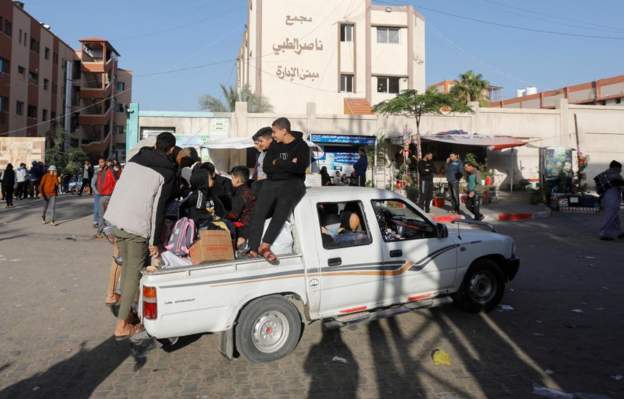
Numerous obstacles to arise if Palestinians attempt to return northward
First, as we’ve been observing, the fighting didn’t stop at 07:00 in Gaza. In fact, there was very intense fighting just before this deadline.
Now we need to see what’s happening on the ground. Israel is strict about people moving back to the north after being told to relocate to the south.
Many Palestinians in Gaza want to go back to their homes and see if they can find anything that wasn’t destroyed. They want to check if their houses are still there and if they can find their belongings.
Some people want to have the ability to bury their deceased loved ones.
Movement inside Gaza is being controlled very strictly and it’s not clear how Israeli forces will handle it if they face resistance. -
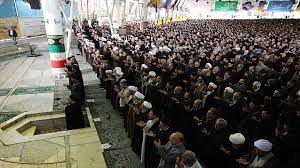
First Friday prayers held in public in Khan Younis
Things are calmer now in southern Israel after many weeks of chaos. It seems like the ceasefire is working well based on what we can see and hear.
That is really impacting the people living in Gaza. We have heard that the first public Friday prayers since the war started on October 7th will be held at a football stadium in Khan Younis.
The Israeli army has been dropping papers in Gaza to tell people not to go north. It’s quiet now, so people might try to go back home to get their things and see if their homes are still there.
The IDF told them to stay in the south of the Gaza strip. They say the northern part is still a war zone and advise people not to go back there during the break in fighting. -
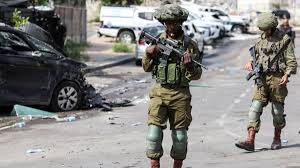
Palestinian shot dead for attempting to get to north Gaza few hours after ceasefire
Several videos on social media show Palestinians getting shot at while trying to go from the south to the north of Gaza.
In some places, there are lots of people running away because they hear gunshots. At least one man has been killed by a gun and several others are badly hurt.
The Israeli army is checking the reports and will reply to me soon.
The IDF said that Palestinians cannot travel from the bottom to the top of Gaza during the truce.More update on this story soon…
-

Intense exchange of fire, bombs precede Gaza true
In the lead-up to the scheduled truce, Gaza experienced both sides exchanged fire and bombs until the last minute before the pause in hostilities took effect.
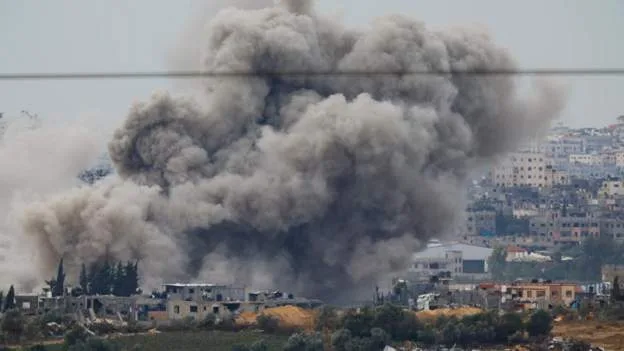
Israeli planes conducted bombing raids, resulting in billows of smoke engulfing the region. The tumultuous atmosphere was punctuated by the cacophony of gunfire and cannon blasts, creating a distressing backdrop.
In Israeli villages near Gaza, sporadic gunshots and sirens served as harbingers of incoming missiles or mortar fire, alerting residents to potential threats.
While the recent escalation is disconcerting, historical patterns indicate that this has been the trend preceding truces or longer ceasefires in past wars.
-

“War not over yet” – Israeli military warns
Just before the temporary ceasefire began, the Israeli army put up a video.
On social media telling people in Gaza that “the war is still happening”.
“The humanitarian pause will only last for a short time,” said Avichay Adraee, the spokesman for the Israel Defense Forces, while speaking in Arabic.
“The northern Gaza Strip is a very dangerous place because of the war, so it’s not safe to go there. “ -
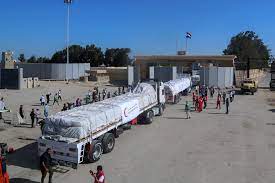
Relief trucks beginning to enter Gaza
We have been informed that around 200 trucks will deliver medical supplies, food, water, and fuel every day for the next four days as part of this agreement.
Israel said no fuel should go into Gaza for many days. They thought Hamas was keeping a lot of fuel and if they sent more in, militants would use it against Israeli forces.
In this agreement made by Qatar, they will send four fuel tankers every day to places like hospitals. They have promised that the fuel will not be given to Hamas.
Right now, we can see trucks carrying important aid starting to cross into Gaza at the Rafah crossing. -
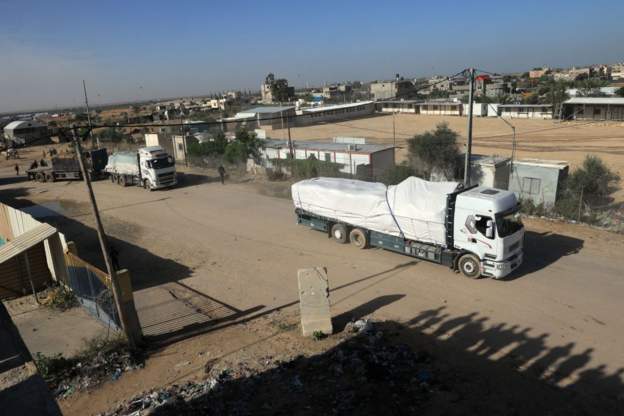
More aid won’t be sufficient – Oxfam
More help is coming to Gaza because of a deal made by Qatar to stop the fighting.
The World Food Programme has over 100 trucks ready to bring food to people.
Egypt will send 130,000 liters of diesel and four truckloads of gas every day.
However, Laila Barhoum from Oxfam told BBC News that the amount of aid deliveries suggested would not be enough to meet the level of need.
“Two million people in Gaza rely on aid. For four days, 200 trucks will bring in food, fuel, and gas to help them. ” “It’s definitely not enough,” she says. -
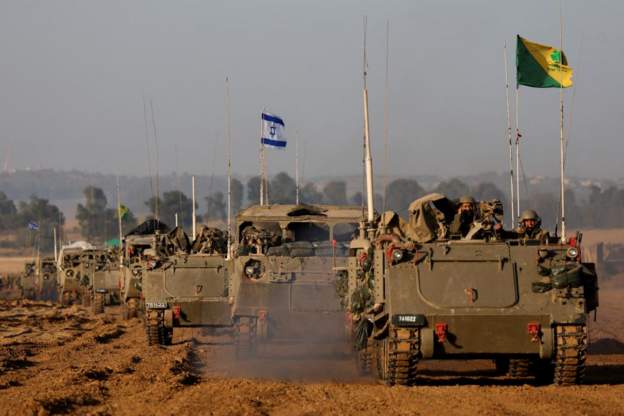
Pictures from cease-fire scenes
It has been almost two hours since a four-day break in fighting between Israel and Hamas started, and we are starting to receive the first photos from Israel and Gaza.
Both sides have agreed that the break in fighting will not last long.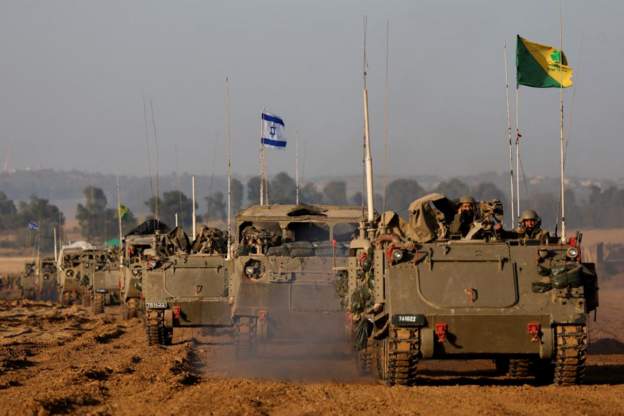
And a convoy of Israeli military vehicles arrives back in Israel after leaving the Gaza Strip 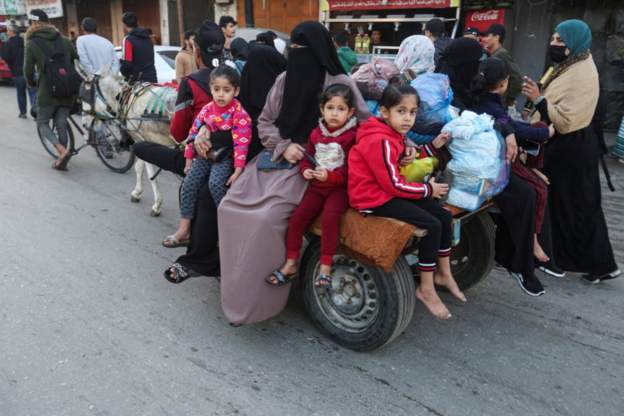
A group of Palestinians ride on a donkey cart as they return to their homes 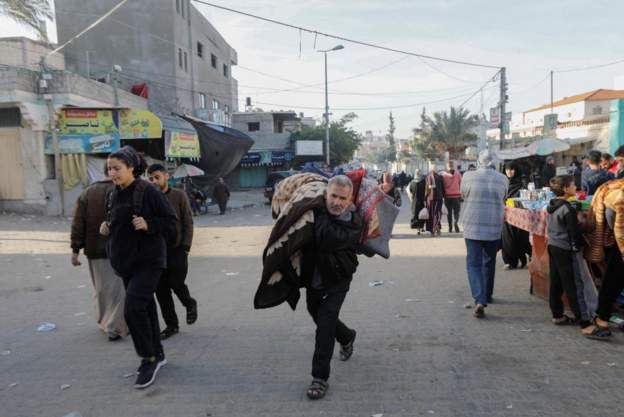
A displaced Palestinian man makes his way back home after leaving due to the conflict 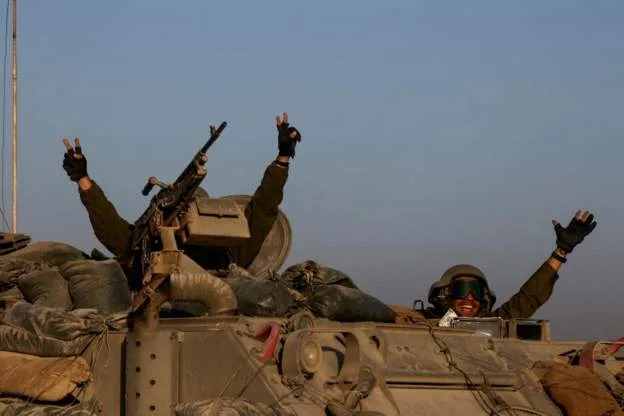
Israeli soldiers gesture from an armoured vehicle as the temporary truce takes hold -

Fighting in Gaza will halt on Thursday at 10 a.m – Hamas
Hamas says there will be no fighting between Israel and them for four days starting at 10am on Thursday.
Israel has not said when the break will start, but Foreign Minister Eli Cohen thinks the first hostages will arrive on Thursday.
According to the agreement, Hamas will let go of 50 Israeli hostages and Israel will release 150 Palestinian women and teenagers from jail.Families of people held in Gaza say that every person who is captive needs to come home, and that every hour is very important.
An additional 150 Palestinians and 50 hostages from Gaza could be set free after the first four-day break.Israel said that its military operation in Gaza is still going on, even before the break begins.
The Israeli government says the war isn’t over yet. They promise to finish off Hamas completely.
Israel started fighting against Gaza after fighters from Hamas came across the border on 7 October. They killed 1,200 people and captured around 240 others.
The health ministry in Gaza, which is controlled by Hamas, says that over 14,000 people, including more than 5,000 children, have been killed in Israel’s campaign.
More update on this story soon…
-

World leaders applaud agreement reached between Hamas and Israel
Now let’s talk about how countries are responding to the agreement between Israel and Hamas. This agreement will stop the fighting that has been happening since October 7th and will also include the release of 50 hostages from Gaza.
The prime minister of Qatar, Sheikh Mohammed bin Abdulrahman bin Jassim Al Thani, helped make the truce happen. He said in a statement that he hopes the truce will lead to an end to the war.
The UK’s Foreign Secretary David Cameron said the agreement was an important move towards freeing hostages and giving aid to people in Gaza. French President Emmanuel Macron said that efforts are being made non-stop to free all hostages.
The truce made Palestinian Authority leader Mahmoud Abbas, the EU, and countries like the US, Jordan, Russia, China, Egypt, France, and Germany happy.More update on this story soon…
-
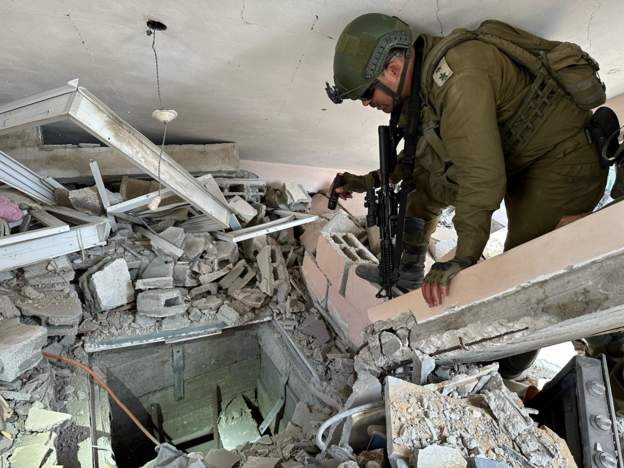
IDF claims to have discovered and demolished 400 tunnel shafts in Gaza
The Israel Defense Forces (IDF) said they found and destroyed about 400 Hamas tunnels since the fighting began on October 7th.
It says that lots of the tunnels are under hospitals, schools, and homes where regular people live.
The IDF showed videos and pictures of tunnels to prove their claims, but the BBC couldn’t confirm it on their own.
Israel says that Hamas in Gaza is using civilians to protect themselves. Hamas says that this is not true.More update on this story soon…
-
What will the halt bring about in Gaza?
As we have been telling you, Israel and Hamas have agreed to release 50 hostages and stop fighting for a while so that essential supplies can be sent to Gaza.
Hamas talked about how the break in fighting might happen in Gaza.
It says that drone and Israeli planes will not fly for four days in the southern area.
In the north, this will only happen from 10:00 am to 4:00 pm every day.
Israeli soldiers and tanks will stay in the area and not attack or arrest anyone, according to Hamas.
The agreement will also let 200 trucks with aid, four trucks with fuel, and four trucks with gas go into Gaza through Egypt’s Rafah crossing for four days.More update on this story soon…
-

Relatives of hostages hold press conference after meeting with Pope Francis
We’re going to talk briefly about what happened in Rome. The family members of hostages had a news conference after meeting with Pope Francis this morning.
Karina Ariev’s 19-year-old sister Alexandra also spoke at the event. Karina was working at an Israeli army base close to Gaza when she was taken by force.
Alexandra says that every minute and every hour are really important for the hostages. She also says that every one of them needs to come back home. Not in boxes. They need to return home and share the stories of the people who were killed, so we can learn from them and have a better future.
After Nimrod Cohen, who is 19, comes his father. He says that when Hamas attacked Israel on 7 October, our lives changed a lot. We don’t think about day and night, we just wait for him to come back and for others to return to Israel.
Rachel, Hersh Goldberg-Polin’s mom, says her son and his friends hid in a bomb shelter at the Supernova music festival in California. It was attacked by Hamas militants.
“Many people died, but a few survived and were able to tell us what happened. Rachel says Hersh lost his left arm from the elbow down. ”
She said it was 47 days ago that her heart was buried in Gaza.
Finally, someone from Kibbutz Be’eri came. His sister, Raaya Rotem, 45, and niece, Hila Rotem Shoshani, 13, were taken into Gaza.
He hasn’t heard from Raaya since 12:05 on October 7th and doesn’t know what’s happening. -

Global leaders hope agreement will make war in Gaza end
As we’ve been saying, the fighting will stop tomorrow morning at 10:00 local time.
In the past few hours, we’ve received more responses from diplomats about the deal. Here are some important people’s opinions.
Tedros Adhanom Ghebreyesus, the head of the World Health Organization, says he is happy about the truce, but thinks it won’t stop people from suffering. He wants the effort to free the rest of the hostages to keep going and for fighting to stop in Gaza.
The UN Secretary General Antonio Guterres thinks it’s a good start, but there’s still a lot more work to do.
The Turkish government hopes the agreement will help stop the war and start a process for a fair and lasting peace with two separate states.
In another place, King Abdullah of Jordan is going to meet with Egyptian President Abdel Fattah al Sisi to discuss how to stop the fighting between Israel and the Palestinians, according to a statement from the palace. -

How are the infants taken out of Al-Shifa hospital doing?
The World Health Organization (WHO) has provided new information about the babies who were moved from Gaza’s Al-Shifa hospital during the weekend.
Israeli soldiers entered the hospital where 33 premature babies were being taken care of.
WHO spokesperson Christian Lindmeier told reporters in Geneva that two babies died before they were moved to safety on Sunday.
He says it was because they didn’t have enough care.
The WHO said that the babies were all very sick and still need medical care.
31 people were moved from Al-Shifa hospital, and 28 of them were then brought to Egypt. Unicef said that 20 of these children were alone and had no one to take care of them.
James Elder, a person speaking for the group, said that many parents couldn’t go to Egypt with their kids, and some kids didn’t have any parents. -

Good Signs but no deal has been announced yet – Hamas official
Qatar and Washington both like the idea of a peace deal.
The Hamas leader, who lives in Qatar, said this after meeting with the President of the International Committee of the Red Cross (ICRC) in Doha.
The ICRC assisted in bringing the four hostages to safety after they were released last month.
A Hamas leader told Al Jazeera that they are talking about an agreement that would free Israeli women and children held by Palestinians, and Palestinian women and children held by Israel.
More help would also be permitted to enter Gaza.
It is expected that the fighting will stop for a little while so that hostages can leave and get help.
Israel has not answered yet.
But let’s be clear, no agreement has been made and previous efforts have not been successful even though there was reportedly some progress.
Israeli diplomats said this weekend that they want a lot of hostages to be let go.
Some families of the kidnapped people were mad after meeting with the Israeli war Cabinet in Tel Aviv last night. They said that finding their loved ones should be more important than trying to destroy Hamas.
Prime Minister Netanyahu says if we weaken the enemy, we have a better chance of bringing the hostages home. -

Unicef ready to help in case of ‘humanitarian ceasefire’
Toby Fricker from Unicef says they would like it if Hamas and Israel would agree to stop fighting, so hostages can be set free.
Even though we don’t know all the details yet, a Hamas official told Al Jazeera that they have been talking about how long the agreement would last, bringing aid into Gaza, and trading prisoners and hostages.
Fricker, speaking from Amman, Jordan, told the BBC that if there is a ceasefire for helping people in Gaza, supplies should be brought in quickly to shelters and to people in need all over the area.
Fricker said the help would be very important for saving lives and stopping another disaster with diseases spreading in the winter. -

Gaza-Israel conflict shouldn’t split us apart in South Africa – Ramaphosa
President Cyril Ramaphosa said on Monday that South Africans should not let the Israel-Gaza conflict cause more disagreements.
Last week, there was a protest in Cape Town where people supporting Israel and Palestine argued with each other.
The president talked about the incident in his weekly letter and said it was concerning and not okay.
President Ramaphosa and the ANC support the Palestinians.
He said “It’s not the same thing to support the Palestinian cause as it is to be against Jewish people”.
Mr Ramaphosa criticized an Israeli newspaper for saying that his government’s support for the Palestinians could lead to violence against the South African Jewish community.
The letter asked South Africans to stay united as this conflict continues.
Last week, South Africa told the International Criminal Court (ICC) about what Israel’s government did during the fighting in Gaza. -

31 infants taken out of Al-Shifa Hospital as many remain in severe condition
On Sunday, 31 babies were taken out of Al-Shifa Hospital in Gaza. Many international groups helped get the babies to safety in ambulances, even though there was fighting going on. People are worried about the babies’ health and safety.
The PCRS helped other groups take the babies to a hospital in southern Gaza. A source from the Egyptian government said the babies will go to Egypt on Monday.
Al-Shifa, the biggest hospital in Gaza, is now a focus of conflict in Israel’s war in the blockaded area. Hamas and people working at the hospital said that Israel’s claims are not true.
A group from the United Nations visited the hospital and said it was a very dangerous place.
The hallways and outside areas of the hospital were full of garbage and medical waste, which made it more likely for people to get sick. The patients and health workers they talked to were really scared for their safety and health, and they asked to be rescued.
For many days, the hospital was under constant attack, trapping thousands of people inside. This caused a lot of anger from the public, especially when we found out that even newborn babies were in danger.
Palestinian leaders said that some babies died because there was no electricity and not enough medical supplies. The hospital workers had to carry the babies from the machines that keep them warm and use foil to keep them from getting too cold.
The 31 babies that were moved are now in the southern city of Rafah in Gaza. Rafah is near the border with Egypt and has a crossing that has been used to bring in some aid and take out people from other countries.
We thought parents of the newborns could travel safely with their babies, but the WHO said not many babies had their family with them.
Gaza officials didn’t have much information and couldn’t locate their close family members, the WHO reported.
Ali Sbeiti, a father, was able to be with his young son Anas, who was born just three days before the war started.
“Thank you, God. ” We’re happy to know our son is safe after not seeing him for over two weeks. “We weren’t sure if he was alive or dead, especially when we couldn’t reach the doctors,” Sbeiti added.
The heavy fighting between Israel and Hamas and the lack of fuel for communication has made it harder to deliver aid and for Palestinians to get help.
The WHO said that the 31 babies who were moved to Rafah hospital have serious infections and are getting treated by the doctors there.
Eleven babies are very sick at Al-Shifa Hospital because there aren’t enough medical supplies, according to the WHO.
The doctor said they are doing tests on all the babies and giving them fluids and medicine based on how they are feeling.
Right now, they are in a tough but steady condition. This could get worse because we might run out of electricity soon if fuel doesn’t come into Gaza.
They had to leave because it was very dangerous. Some babies died and the hospital couldn’t help anyone anymore.
WHO’s leader, Tedros Adhanom Ghebreyesus, said they are planning more missions to take the remaining patients and staff from Al-Shifa, as long as they are given reassurances by the groups fighting in the area that it will be safe. -
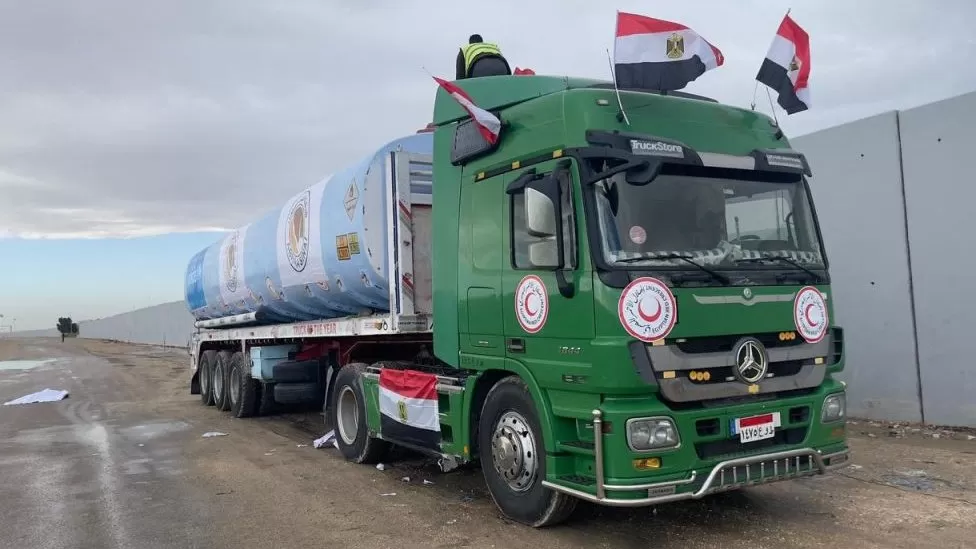
Israel claims to permit entry of two fuel trucks into Gaza each day
Israel will now let two fuel trucks go into Gaza each day because the US asked them to.
A person from the US State Department said that they will let 140,000 liters of fuel come in every two days.
Most of the supplies are for trucks that bring help, and also for helping the UN provide water and clean facilities, the official stated.
The remaining money is for phone and internet services, but they got shut off because there was no more fuel.
On Friday, the company that gives Gaza’s internet and phone services said that they are working again after getting some fuel from Unrwa, the UN’s agency for Palestinian refugees.
The US government told Israel to sign the fuel agreement by putting a lot of pressure on them.
The agreement was made weeks ago, but Israel delayed it for two reasons. Israeli leaders told the US that there was still fuel in southern Gaza, and they also wanted to see if they could make a deal to release a hostage before taking action.
Biden is dealing with disagreement within his own group over Israel’s attack on Gaza.
The leader of Unrwa said on Thursday that the agency might have to stop all its work because it doesn’t have enough fuel.
In its latest report, the agency said it needs “160,000 litres of fuel every day for basic humanitarian operations” – more than twice what was agreed upon.
Before, an Israeli official said that they would give fuel to the people in southern Gaza through the UN at the Rafah crossing, as long as it doesn’t go to Hamas.
The Israeli official said the fuel would help support water, sewage, and sanitation systems to prevent the outbreak of diseases in the area.
Many groups from different countries are very worried about the difficult situation for people in Gaza.
The World Health Organization (WHO) has said that there are serious problems with the spread of illness in Gaza. The healthcare system and sanitation facilities have been greatly affected by the lack of fuel and Israeli bombing.
On Friday, Richard Peeperkorn from the WHO in the Palestinian Territories said that more than 70,000 people have gotten very sick with breathing problems and over 44,000 have had diarrhea. These numbers are much higher than what was expected.
Gaza needs fuel to power the desalination plant, supply electricity to homes and hospitals, and for sanitation, transportation, and communication systems.
It is also very important for getting help to people all over the area.
Israel stopped fuel from going into Gaza because they think Hamas might take it and use it for war.
Before the recent war, Israel gave most of the electricity to Gaza. The rest of the electricity came from the only power plant in Gaza, but it is not working now.
On Saturday, the leader of Nasser hospital in Khan Younis, Gaza, said it got the bodies of 26 people and 23 others who were badly hurt after a bomb hit a home in Hamad city.
The Israeli army has not said anything about the report yet.
At the same time, the Red Crescent reported that five Palestinians died in an Israeli air attack on a building in the Balata refugee camp in Nablus, West Bank.
The Israeli military said it was looking into the reports.
The US Secretary of State, Antony Blinken, has told Israel to quickly do something to calm down the situation in the West Bank. This includes dealing with increasing levels of violent behavior by settlers.
The strike happened a day later the Israeli military said it killed at least seven fighters in two separate fights in the West Bank.
Israel started a new attack and military operation because Hamas attacked on 7th October, killing about 1,200 people and taking more than 230 people hostage. Hamas is considered a terrorist group by the UK and US.
At least 12,000 people have died in the area since Israel started attacking, according to the health ministry in the Palestinian territory. -

Socceroos to give portion of their match fees to support humanitarian initiatives in Gaza
Australia is set to donate a substantial portion of their match fees from the World Cup 2026 qualifier against Palestine in Kuwait City to support humanitarian efforts in Gaza.
The Socceroos’ contribution, a five-figure sum, will be channelled through the Professional Footballers Australia Footballers’ Trust and will be directed to Oxfam.
Additionally, Football Australia will match this donation. Originally scheduled to take place in the West Bank, the venue was changed to the Jaber Al-Ahmad International Stadium in Kuwait following Israeli forces’ attacks on Gaza in response to an October 7 assault by Hamas militants on southern Israel.
Israel claims that Hamas is responsible for the deaths of 1,200 people and the taking of about 240 hostages. In contrast, Gaza health authorities assert that over 11,000 Palestinians have been killed in the Israeli counteroffensive.
In terms of football, Australia, ranked 27th globally and fourth in Asia, leads their qualifying group after a decisive 7-0 victory over Bangladesh.
Meanwhile, Palestine, ranked 96th globally, holds the third position following a draw with Lebanon.
-
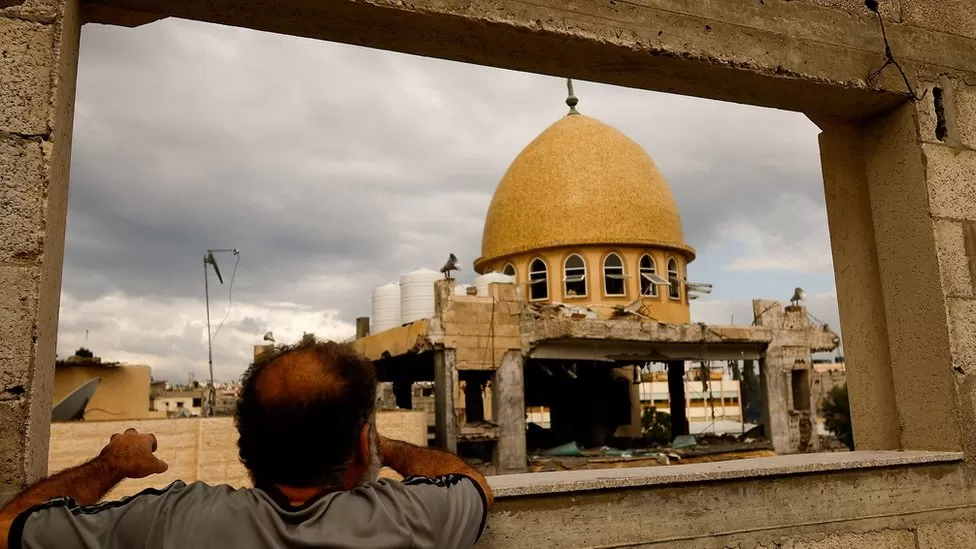
Lack of fuel causes communications blackout in Gaza
Cell phones and the internet are not working in Gaza because there is not enough fuel to run the backup generators, according to Palestinian telecom companies.
Paltel and Jawwal telecom companies said they ran out of energy for their networks, and an internet monitor confirmed a big internet problem.
Israel stopped almost all fuel deliveries to Gaza during its war with Hamas that started five weeks ago. Only one delivery was allowed to go through.
The UN said a power outage could cause chaos and make it harder to help people in need.
“We are sorry to say that the phone and internet services in Gaza Strip are not working because the power that runs the network has run out, and they would not let more fuel in,” Paltel said in a statement on Thursday.
At the same time, the internet monitoring group NetBlocks said that live data showed Gaza was experiencing a big internet problem. Most people probably won’t have access to phone or internet services.
Israel started a big war in the Gaza Strip to destroy a group called Hamas, which it thinks is a bad group, because of an attack by many gunmen on October 7th. Hamas attacked Israel and killed over 1,200 people, and also took about 240 people as hostages.
Ever since Israel began attacking, the health ministry in Gaza, which is run by Hamas, has reported that 11,000 people have been killed. The United Nations has also warned that there could be a “humanitarian disaster” in the area.
The Israeli government stopped sending fuel because they are worried that Hamas might take it and use it for fighting.
On Wednesday, a truck with 23,000 liters of diesel fuel came from Egypt. But Israel said it could only be used to fill up UN aid trucks.
Other important services have also closed because of the same problems. This means places like hospitals, water pumps, plants that turn saltwater into drinking water, places that clean dirty water, and places that make bread.
The BBC’s Rushdi Abu Alouf, who is in the southern city of Khan Younis, said that all phone and internet services in Gaza were not working on Thursday night.
He said it would be really hard to find out what was happening in other places like Al-Shifa Hospital in Gaza City, where Israeli forces were doing an operation for the second day.
Our reporter has not been able to communicate again since then.
The person in charge of the UN agency that helps Palestinian refugees, Unrwa, is worried that the power outage in Gaza could make things worse and cause more problems in the community.
These signs show when you suddenly cannot talk to anyone anymore because of a blackout. “The UN leader, Philippe Lazzarini, said that it makes people even more anxious and panicked,” at a news conference in Geneva.
“This could cause more trouble or speed up the end of the last bit of peace in the Gaza Strip. ” And if this completely falls apart, we will have trouble working in a place without some order.
Human Rights Watch said that if there is no communication for a long time, it could make it easier for bad things to happen and allow people to get away with doing bad things. It could also make it harder to help people and put their lives in danger.
Mr Lazzarini also said that he thought someone was trying to stop or slow down Unrwa’s work in Gaza. He cautioned that the agency might have to completely stop its operations if it ran out of fuel.
Unrwa is taking care of 813,000 people who don’t have a place to live. They need 160,000 litres of fuel every day to keep things running.
“If we don’t get more fuel, people will die,” Mr.
I don’t know when it started. “It will happen soon. “ -

Man drives car fueled by vegetable oil from Gaza to Egypt
Ibrahim AlAgha, a man from Ireland and Palestine, has been talking to the BBC for the last month while stuck in Gaza.
Today, he sent a message to say he was safely taken to Cairo through the Rafah crossing. He will soon fly back to Dublin with his wife Hamida and their three children who were born in Dublin.
The trip to the border was hard. He says it was very costly to find a driver willing to take them there.
The driver said he put a mix of vegetable oil in the diesel car because there’s not enough fuel in Gaza. “Ibrahim said it stank, but it was fine. ” “They combine it with other oils and it works well. ”
Ibrahim’s children sat in the trunk with the suitcase while he, his wife, her parents, and his brother sat in the front seats.
When they arrived at the border, they went into Egypt and waited for 11 hours to be checked by the officials.
“When I left Palestine and came to Egypt, I was crying because everyone’s lives are in danger and I was also thinking about all the good times in the city that has been destroyed,” he says. “Saying goodbye was really, really sad. “ -
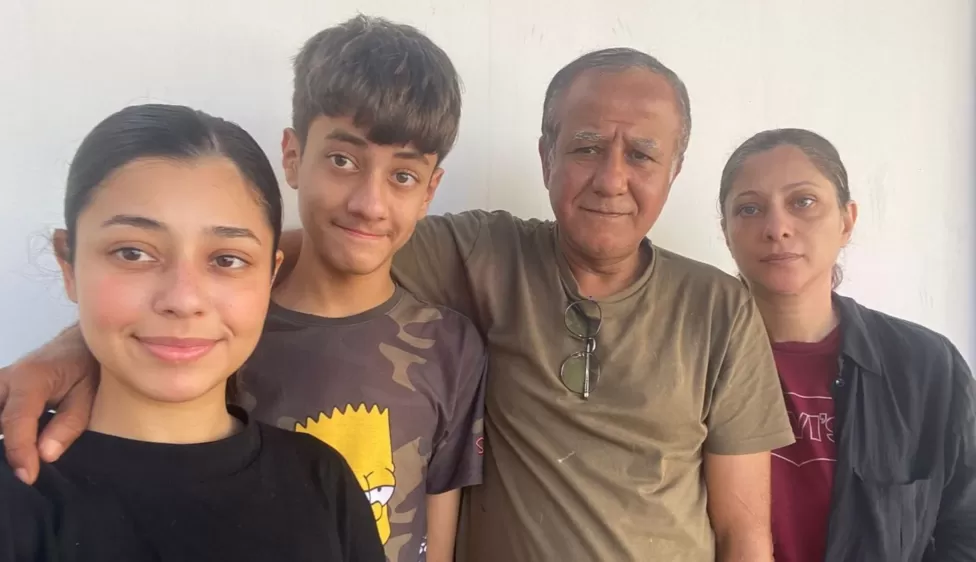
Palestinian-Irish family ready to escape ‘Gaza hell’
A father of two who says it seems “like God chose you to survive” is among the Irish-Palestinians whose family is on a list of those who must leave Gaza.
Along with his wife, daughter, and son, Aymen Shaheen hopes to escape the conflict zone by entering Egypt through the Rafah crossing.
He claimed that the Irish Department of Foreign Affairs was providing assistance to the family.
He described Gaza as “a hell” and expressed gratitude for his ability to escape.
“We are fortunate to be able to cross the border, but this nightmare will continue for the 2.3 million Palestinians living in Gaza,” Mr. Shaheen said to RTÉ, an Irish network.
The family is one of about 40 Irish people in Gaza.
The first group and their family members started crossing over the Rafah border early on Wednesday.
Mr Shaheen was told by the Irish government that his family can cross from Gaza to Egypt.
“They did well,” he said.
He wants to travel 4 kilometers (2. 5 miles) to the border with his wife Suha, his 19-year-old daughter Rawan, and 12-year-old son Ibrahim.
“It’s risky, but we have to go. We don’t have a choice,” he said.
The Irish Deputy Prime Minister and Minister for Foreign Affairs Micheál Martin said it was “good news” that the crossings started, but he didn’t know exactly how many people would make the journey.
He said the situation is still changing, but they will keep working hard to get the rest of the Irish citizens out of Gaza.
Mr Shaheen said that life in Gaza became very difficult when Israel started bombing the area in early October.
The bombing started after Hamas attacked and killed over 1,400 Israelis in the southern part of the country on October 7th.
Hamas runs Gaza’s health ministry. They say over 11,000 people were killed in the Israeli attack, including more than 4,500 children.
“It’s really tough to be honest – tough to find food, tough to find water, tough to find bread. ” “It’s tough for everyone to be in this situation,” Mr.
He said someone told him to bring his family to Rafah. Officials from the Irish Embassy will be there to help them at the Egyptian border.
“He said we only have three days in Egypt and they will also arrange our trip to Ireland. ”
On Wednesday, Mr Martin is visiting Egypt as part of a short diplomatic tour of the Middle East.
He will go to Israel and the areas it controls on Thursday.
His department said: “We think more Irish citizens and their family members in Gaza will be added to the list in the next few days. ”
“We are working very hard to make sure that everyone who wants to leave can do so as quickly as possible. “ -
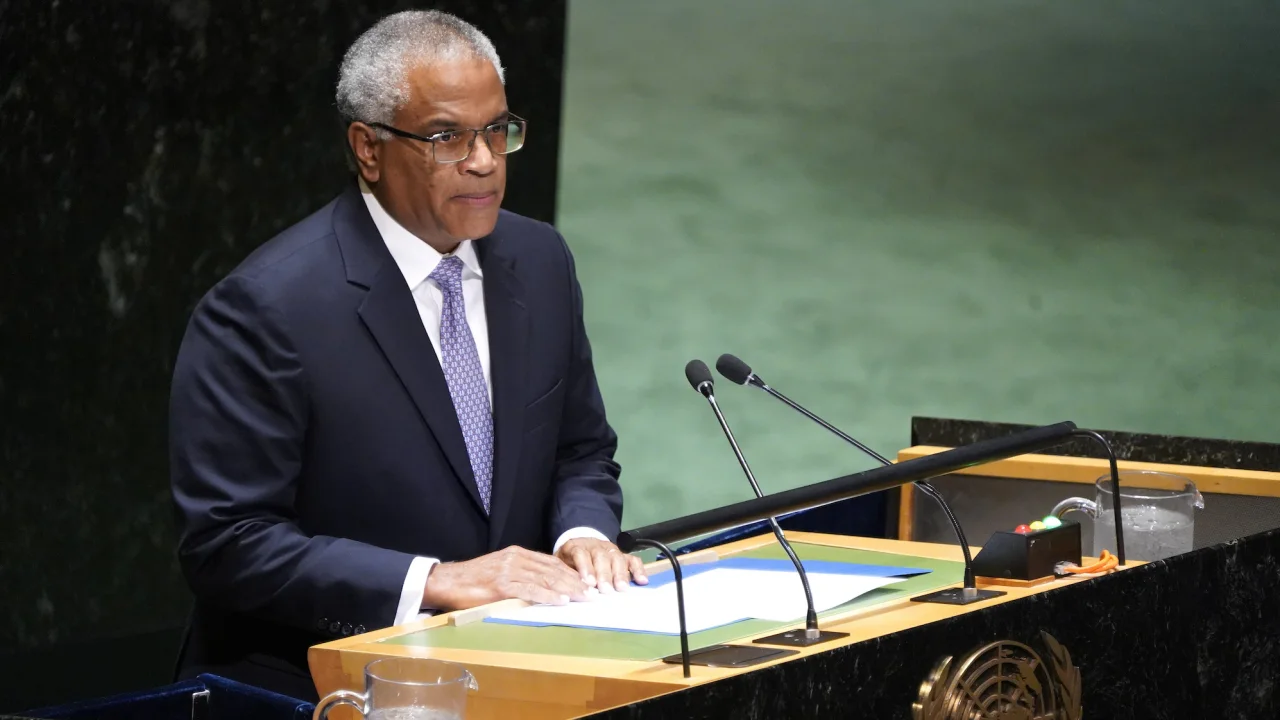
Israel and Belize sever diplomatic ties
In response to Israel’s unwillingness to carry out a ceasefire in Gaza, the government of Belize has decided to sever diplomatic ties with it, joining other Western Hemisphere nations that are incensed about the Israeli government’s conduct during the conflict.
“The Belizean government has consistently denounced the IDF’s activities in Gaza. We have pleaded with Israel to immediately establish a ceasefire and to permit humanitarian goods to enter Gaza without hindrance. Israel has not stopped breaking international humanitarian law or permitted relief workers to lessen the suffering of millions of Gazans, despite our demands, according to a statement released by Belize on Tuesday. “Belize reiterates its demand for all hostages to be released, an immediate ceasefire in Gaza, and unhindered entry for humanitarian supplies.”
The Central American country has also pulled back its accreditation for Israel’s minister there, and suspended its possess discretionary exercises in Tel Aviv.
Belize takes after a few territorial neighbors, counting Colombia, Chile, and Bolivia, that have separated discretionary ties or reviewed ministers to Israel. A number of nations over the Center East and Africa, counting Turkey, Jordan, and South Africa, have too reviewed envoys in later weeks.
Israel pronounced war on Hamas, the Palestinian activist gather that controls Gaza, and propelled a “complete siege” of the enclave taking after Hamas’ fear assaults in Israel on October 7. An assessed 1,200 individuals were slaughtered in Hamas’ assaults, and 240 taken prisoner, most of whom stay captive in Gaza.
Since at that point, Israeli assaults have slaughtered at slightest 11,180 Palestinians – counting 4,609 children and 3,100 ladies – agreeing to the Palestinian Wellbeing Service in Ramallah, which draws on therapeutic sources in Gaza.
Universal weight on the Israeli government has taken off in later days in the midst of accounts of frantic circumstances at Gaza’s fuel-starved healing centers, and serious deficiencies of nourishment and water. Joined together Countries Secretary Common Antonio Guterres on Tuesday rehashed his calls for a ceasefire in Gaza “in the title of humanity.”
But Israeli Prime Serve Benjamin Netanyahu has ruled out a ceasefire without the discharge of prisoners held by Hamas.
Israeli Outside Serve Eli Cohen said Monday that the nation has as it were a two to three week window until overwhelming universal weight for a ceasefire in Gaza started, telling writers that that many nations have secretly encouraged Israel to endeavor for a ceasefire. -
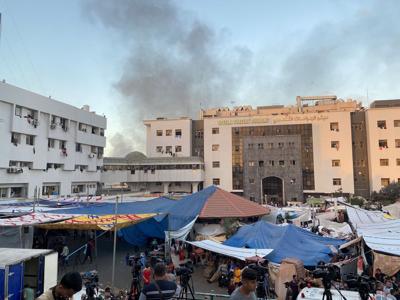
Israeli tanks and soldiers storm Al-Shifa Hospital in Gaza
The largest hospital in Gaza, Al-Shifa, is said to be the shelter for thousands of Palestinians. Israel claimed that early on Wednesday morning, its forces launched a “targeted” strike against Hamas there.
Doctors are warning of a “catastrophic” situation for patients, workers, and displaced persons still inside the hospital, which has run out of fuel and is no longer deemed operable. Fighting has caused conditions at the hospital to drastically worsen in recent days.
In an online statement, the Israel Defence Forces declared that they had started “a precise and targeted operation against Hamas in a specified area in the Shifa Hospital.”
IDF representative Dwindle Lerner told CNN afterward Wednesday that the operation at Gaza’s Al-Shifa clinic was “ongoing.” Israeli radio detailed that, so distant, the armed force had found no sign of prisoners interior the clinic.
Israeli tanks and military vehicles were “inside the patio of Al-Shifa Hospital,” Khader Al Za’anoun, a columnist for the Palestinian news organization, Wafa, told CNN.
Israeli officers, he said, were within the buildings “conducting look and cross examination operations with the youthful men in the midst of seriously and rough gunfire interior the hospital.” He included that the Israeli armed force “is calling on the youthful men through megaphones to raise their hands, come out, and yield themselves.”
Prior, he said gunfire was traded over the healing center yard.
In its articulation Wednesday, Israel once more blamed Hamas of proceeding to utilize the expansive healing center complex for military purposes which, it said, “jeopardizes the hospital’s ensured status beneath worldwide law.”
Hamas and healing center authorities have reliably rejected Israel’s claims that Hamas has built a command center beneath the clinic.
The frantic circumstance at Al-Shifa clinic has activated new universal objection over Israel’s activities in Gaza. Worldwide weight on the Israeli government has too solidified in later days in the midst of accounts of critical circumstances at Gaza’s other fuel-starved healing centers, and extreme deficiencies of nourishment and water.
United Nations Secretary Common Antonio Guterres on Tuesday rehashed his calls for a ceasefire in Gaza “in the title of humanity.”
A specialist interior Al-Shifa told CNN they were given 30 minutes’ caution some time recently the Israeli operation started.
“We were inquired to remain clear of the windows and the overhangs. We will listen the armored vehicles, they are exceptionally near to the entrance of the complex,” Dr. Khaled Abu Samra said.Hundreds of staff and patients are still interior Al Shifa, concurring to the foremost later reports from the clinic, together with a few thousand who have looked for shield from Israel’s discuss and ground hostile.
The Israeli statement said, “The IDF is conducting a ground operation in Gaza to vanquish Hamas and protect our prisoners. Israel is at war with Hamas, not with the civilians in Gaza.”
A statement from Hamas faulted both Israel and the Joined together States for the Israeli armed force strike on the healing center. By supporting what it called Israel’s “false narrative” – that Hamas was utilizing Al-Shifa as a command and control base – it said the US had given Israel, “a green light … to commit more slaughters against civilians.”
Hours some time recently Israel’s strike, the White House and the Pentagon said that Hamas is putting away weapons and working a command center from the healing center.
The Pentagon said the US has recently declassified insights that claims to appear that Hamas and the Palestinian Islamic Jihad were utilizing clinics — counting Al-Shifa — as a “way to conceal and bolster their military operations and hold hostages.”
Palestinian Wellbeing Serve Dr. Mai Al-Kaila said the Israeli armed force strike speaks to, “a unused wrongdoing against humankind, restorative staff, and patients” and might have “catastrophic consequences” for patients and restorative staff.
Israel announced war on Hamas, the Palestinian activist bunch that controls Gaza, and propelled a “complete siege” of the enclave taking after Hamas’ fear assaults in Israel on October 7. An assessed 1,200 individuals were murdered in Hamas’ assaults, and around 240 taken prisoner, most of whom stay captive in Gaza.
Since at that point, the Israeli reaction has slaughtered at slightest 11,180 Palestinians – counting 4,609 children and 3,100 ladies – concurring to the Palestinian Wellbeing Service in Ramallah, which draws on restorative sources in Gaza.
Specialists and writers have portrayed disastrous conditions interior Al-Shifa, counting frantic endeavors to keep untimely babies lively and constrained strategies taking put by candlelight.
“There is no more water, nourishment, drain for children and babies … the circumstance within the healing center is catastrophic,” healing center executive Mohammad Abu Salmiya told CNN on Monday.
Writer Al Za’anoun said individuals interior the clinic “are starving, there’s no nourishment or drinkable water, we scarcely get tap water for one hour a day.”
He said handfuls of bodies are set to be buried in a mass grave within the yard of the healing center complex, as relatives cannot take off to bury their cherished ones.
“The scene is alarming, the scent of the dead individuals is terrible, most of the bodies are of ladies and children,” Al Za’anoun told CNN.
Abu Salmiya told Al Jazeera there are plans to bury more than 150 bodies, but he was stressed the grave would not be huge sufficient. -

Premature babies wrapped in foil to keep them alive in Gaza
In the face of ongoing Israeli firepower and depleting fuel reserves, premature infants at Gaza’s largest hospital are now being swathed in foil and positioned near hot water in a desperate attempt to sustain their lives, according to a dire warning from the hospital director.
As the facility struggles to function due to the relentless attacks and dwindling resources, staff at Al-Shifa hospital are engaged in a battle to keep newborns alive.
The dire situation forced them to manually transfer infants from the neonatal unit’s incubators to another section of the hospital after running out of oxygen supplies.
“I was with them a while ago. They are now exposed because we have taken them out of the incubators. We wrap them in foil and put hot water next to them so that we can warm them,” the medical center’s director Dr. Muhammad Abu Salmiya told Al-Araby TV on Sunday.
Photographs reveal a distressing scene where multiple newborns, removed from their incubators, are huddled together in a single bed at the hospital.
The doctor reported that several children have lost their lives in the intensive care unit and nursery within the past day due to the sustained Israeli bombardment and blockade of Gaza.
This already impoverished and densely populated territory has faced escalating challenges since the October 7 attack by Hamas militants.
Palestinian health officials estimate that Israeli airstrikes have claimed the lives of more than 11,000 people. The imposition of a fuel blockade has exacerbated the humanitarian crisis, leading to the shutdown of essential services such as hospitals, water systems, and bakeries that depend on electricity.
Conditions at Al-Shifa have rapidly deteriorated into a “catastrophic” state over the weekend. Heavy fighting has trapped staff, patients, and thousands of sheltering residents inside.
While aid agencies and Hamas health officials describe the situation as dire, Israel maintains that individuals can safely leave the hospital by utilizing an evacuation corridor to the east of the complex.
-

Expelled Gaza labourers accuses Israeli officials with mistreatment including beatings
Palestinian workers who were sent back to Gaza from Israel last week say that Israeli authorities treated them very badly. They claim that they were forced to remove their clothes, kept in cages, severely beaten, and one worker even said they were given electric shocks.
“They hurt us and hit us with batons and metal sticks. they made us feel embarrassed. they made us suffer from hunger and thirst,” said Muqbel Abdullah Al Radia, another worker, to CNN.
Most people from Gaza who have jobs work in building things or growing crops. They usually stay away from home for weeks instead of traveling back and forth, which is why many of them were in Israel when Hamas carried out a terrorist attack on Saturday, October 7th.
Al Radia said that when the war started, he and some of the other workers from Gaza ran away to Rahat, a city mostly inhabited by Arab Bedouins in the south of Israel. He claims that the local people gave them to the Israeli army.
“They took away our phones and money, so we couldn’t talk to our families. They gave us food on the ground in plastic bags,” he explained.
When the attack by Hamas on Israel happened on October 7, the Israeli media initially worried that the attackers were among the workers who had permits to be in the country. However, a security official from Israel later said to CNN that the men were actually detained because their work permits were taken away, not because they were suspected of being terrorists.
The security official said that sometimes, they kept certain people in detention to keep them safe because they were in danger of being harmed by Israeli communities.
Six groups in Israel that protect people’s rights have asked a court to review and decide if these detentions were done against the law and without a good reason.
Gisha, an organization in Israel that helps Palestinians move freely, said last week in a statement that it believes the conditions for people held in these facilities were very bad. They think the detainees were treated badly, including being hurt physically and emotionally, and that the conditions were not humane.A lot of the workers are saying they didn’t know where they were being brought to. The Palestinian Prisoners Society, a human rights group in the occupied West Bank, said that a lot of people were kept in two detention places – one in Ofer near Ramallah and another in Salem near Jenin.
Another worker from Beit Lahiya, Mahmoud Abu Darabeh, said that he was beaten by Israeli forces.
Abu Darabeh said that he was captured on the second day of the war. “He said that we were locked up in cages like dogs. They hurt us, said mean things to us, and didn’t care if we were sick or not. Some of us got hurt, and our feet became infected because we didn’t receive any medical help. ”
The men had to answer a lot of questions every day from the Israeli authorities about their houses and family.
If one of your family members is a police officer of Hamas, you might get physically hurt. I know some people whose rib cage was completely broken, and sadly, some people even died because they were tortured. ” He shared this with CNN.
He also explained how some of the workers died while they were in detention or when they were trying to cross into Gaza.
“Abu Darabeh mentioned that a few individuals passed away while coming here because they were physically attacked and given electric shocks. ” He said he saw other people being shocked while they were detained.
A person from Israel said to CNN that the Israeli Defense Forces (IDF) knew about some cases where IDF soldiers treated Gazan workers badly.
There have been incidents of mistreatment of people who are being held outside of the authorized detention centers. These incidents were taken very seriously, and the people responsible were punished,” the official said using a translator. They told us that four soldiers were fired from the IDF because of abusive behavior, and two soldiers were put in military prison for their actions.
When the official was asked if any of the prisoners died because they were treated badly, they said that they knew about two deaths of workers from Gaza who were held in custody. However, they explained that these deaths were not caused by mistreatment, but by existing health problems that the workers had before they came to Israel.
The official said that, as far as he knew, these abuses did not involve electric shocks.
CNN watched some of the videos that show the claimed mistreatment, but they are not able to confirm if they are true or not. They have videos of people who are being kept somewhere against their will, with their hands and feet bound, sitting under the hot sun, and being hurt and moved forcefully. There is a video where a lot of people on a bus are blindfolded and their hands are tied.
The security official told CNN that the IDF is looking into these videos. They confirmed that two of the videos are real. One video shows IDF soldiers kicking someone who was detained, and another video shows a big group of detainees who were tied up, blindfolded, and treated badly. The IDF punished soldiers who were in these videos, according to the official.
The army says that the behavior shown in the video is terrible and goes against their rules. The text says that some soldiers and reserve soldiers in the videos have been temporarily stopped from doing their jobs.
The people that CNN talked to were some of the workers from Gaza who had permission to work in Israel. Hamas attacked Israel and killed many people, including kidnapping others.
As a reaction to the attacks, Israel started a non-stop bombing on Gaza. The defense minister, Yoav Gallant, also ordered a total blockade on the area.
Before the October 7 attacks, around 18,000 people from Gaza had permission to go to Israel for work. This is because the wages in Israel are much higher, sometimes ten times more, than in Gaza.
Before anyone was given a permit, the Israeli authorities would have made sure they were thoroughly checked for security purposes.
Right after the attack, Israel took away the workers’ permits from Gaza. This made it against the law for them to stay in the country. Because they couldn’t go back to Gaza, many people attempted to escape to the occupied West Bank.
“They stopped us from doing what we needed to do. We tried to go to the West Bank, but they stopped us and kept us in unknown places. They tied our arms, covered our eyes, and took us on buses. There were around 200 to 300 of us trapped between metal fences. They hurt us and questioned us every day and night,” said one worker who spoke to CNN. Another man, who did not give his name, shared a similar story of mistreatment.
Many workers told CNN that they were forced to have their eyes covered and their hands tied up for a long time. Some people said they were kept in a separate area that was enclosed by a fence. They mentioned that this made the weather extremely hot during the day and very cold during the night.
The security official said that in the beginning, some places didn’t have shade, but they fixed this within a few days. The person in charge said that the detainees were only held down when moving from one place to another.
On Friday, when they went into Gaza, a lot of men seemed very filled with strong feelings. When CNN asked people questions, many were too afraid to share their personal information because they were worried about being treated badly.
One man, who lives in the Al-Maghazi refugee camp, cried as he explained how they were forced into small metal enclosures and not allowed to sleep, which is a well-known type of torture.
Every so often, they approached us and requested us to get up. “Get up, sit down, get up, sit down, get up,” he said. In one spot, there were about 150 of us inside a metal box. It had a strong, unpleasant smell. I believe it was previously used for raising chickens or rabbits.
Another worker from Al-Zaytun Quarter in Gaza City also told CNN that he and other detainees were forced to repeatedly stand up and sit down.
“They harmed us, stole our money, removed our clothes, and left us naked. ”
He said that he had been wearing only his underwear for more than 20 days.Dehumanization and Insults
Amani Sarahneh, who speaks for the Palestinian Prisoners Society, said that some of these men were taken into custody while traveling to the West Bank, while others were detained within the West Bank itself.
The men wanted to go to the occupied West Bank, but Israel took away their permits. This made their stay in Israel illegal, but it was difficult for them to go back to Gaza because the border crossings were closed by both Israel and Egypt. They thought it would be safer for them to be in an area controlled by Palestinians instead of needing permits for the West Bank.
Sarahneh told CNN that the organization doesn’t know how many men were held, even though they tried many times to get information from the Israeli authorities.
Sarahneh told CNN that many of the workers shared similar experiences.
She said that many people talked about being very hungry and getting hurt every day. They were tied up and kept away from others. Some videos have been shared online, showing how the Palestinians in jail are treated badly and not like humans.
“They were not accused of any wrongdoing, but they were questioned and subjected to severe torture, abuse, and physical violence. They were treated inhumanely and were insulted,” she explained.
Dror Sadot, who speaks for B’Tselem, an organization that advocates for human rights in the areas under Israeli control, stated that the recent attacks by Hamas on October 7th have resulted in a significant increase in violence against Palestinians.
She said on CNN that the mistreatment of Palestinians is happening from the highest authority, with important people not considering Palestinians as human.
She said that the strong words and the intense anger about the crimes committed by Hamas slowly affects the individual soldiers, who then treat any Palestinian with extreme anger.
Sadot said that they are not convinced by the IDF’s handling of abuse cases based on their long-term experience.
“She said that we have been looking into this for a long time. The military system of enforcement acts as a way to cover up wrongdoing, hardly leading to any charges. ” “So people might argue that those cases are rare and not typical, but if soldiers keep getting away with their actions, and if the military policy itself allows this, without any consequences for their actions, then things will just keep happening,” she said.
Tired and hurt, but extremely happy to be back
Some people look old, tired, and very sweaty, while others seem to be hurt.
At least three people have serious cuts on their wrists that look like they were caused by being tied up.
Most of the men don’t have any personal items except for the clothes they’re wearing.
A 58-year-old man named Mohamed Atallah was wearing a plastic tag on his wrist.
He showed CNN a list of his things taken away in prison that were never given back to him.
Some workers who returned to Gaza on Friday said that Israeli authorities put them on buses that took them to the crossing into Gaza, where they were left.
They had no choice but to walk for about three hours in order to enter the enclave, according to some people who spoke to CNN.
The workers went into the Gaza Strip, and a video from CNN showed that some of them knelt down and began to pray.
They knelt down and pressed their foreheads against the ground, expressing gratitude to God for returning to Gaza. It has become an unbearable place since they were last here.
We were in a very bad condition, I promise. Bilal Aysha said to CNN that every day felt awful and scary. I’m so grateful to be home again. “He said that he hopes God will bring happiness back for everybody. “ -
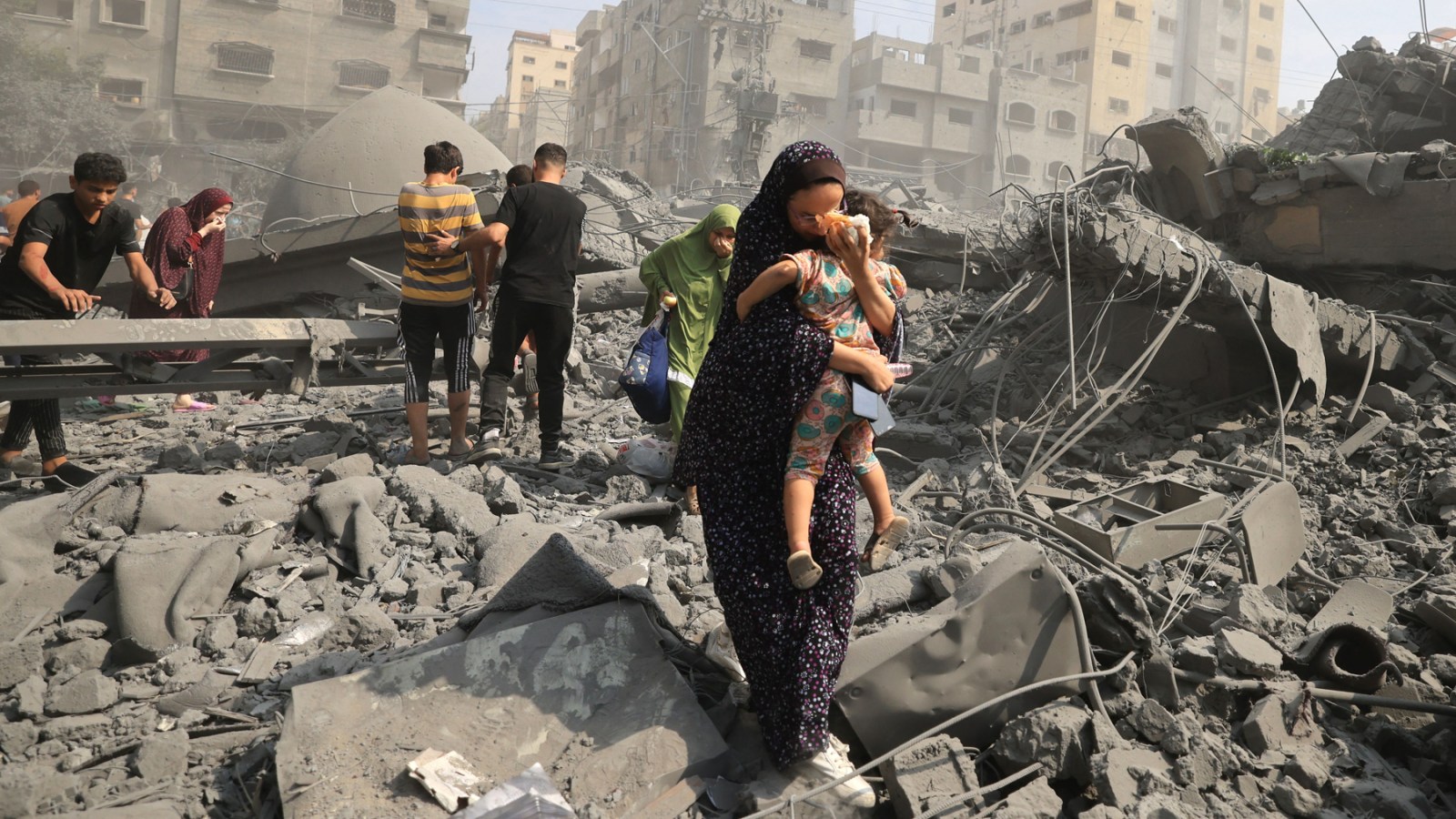
10,000 people killed in Gaza – Hamas health ministry
The health department in Gaza, which is controlled by Hamas, reported that over 10,000 individuals have died in the Palestinian area since Israel began bombing it a month ago.
The ministry reported that over 4,000 children were among the people who died.
The number of people killed in Gaza during Israel’s conflicts with Hamas since 2007 is higher than the United Nations’ estimate of around 5,400.
Israel started attacking Gaza after Hamas murdered 1,400 individuals and took over 200 hostages on October 7th.
It means that it is breaking down Hamas’ buildings and killing its soldiers in order to stop Hamas from being able to harm Israel anymore.
US President Joe Biden has doubted the correctness of the health ministry’s statistics, while the Israel Defense Forces (IDF) caution against trusting information from a terrorist organization.
But, last week, Richard Brennan, who works for the World Health Organization (WHO) and is in charge of emergencies in the region, said that he trusted the numbers given by the health ministry. He is based in Cairo.
“We believe that the systems for managing information that the health ministry has implemented are effective,” he stated, also noting that the data gathered over the years has been reliable.
On Sunday night, the Israeli military attacked the Gaza Strip very intensely. They have now said that in the last 24 hours, they hit 450 places.
The health ministry controlled by Hamas said that over 200 people were killed in the overnight attacks.
The head of Al-Shifa hospital in Gaza City said to the BBC that due to communication problems, people were using donkeys and their own cars to transport dead bodies instead of using ambulances.
The Palestinian Red Crescent Society (PRCS) said that there has been no communication in Gaza for the third time since the war started, and they have lost contact with their teams.
On Monday morning, communication was fixed, but it is still hard to get information from Gaza City.
The Israeli military has said that its soldiers have now reached the coast in the southern part of Gaza City. This means that they have effectively split the territory into two separate parts.
The leaders of important UN groups have made a rare statement together. They are asking for a quick ceasefire to help people in need. They are saying that the situation has gone on for too long and needs to stop now.
“For nearly a month, the entire world has been closely observing the situation in Israel and the occupied Palestinian area with shock and horror. The increasing number of lives lost and families torn apart has been deeply distressing,” explained the leaders of the United Nations. -

Christians in Gaza fear they won’t survive war
In the past month, there has been a lot of fighting in Gaza City. Pope Francis has been calling the priest and people who go to Holy Family Church to make sure they are okay.
He prays and feels very sorry for the person.
George Anton is staying in the church with his wife and three daughters. They feel a bit better when they hear from someone, but they don’t think it will help them stay safe.
“We have faith in Pope Francis, but we feel discouraged because we doubt that other people will listen to the message of peace,” he says sadly. I can’t explain how I feel. It is extremely frightening. You feel like you are just sitting and waiting for it to be your turn to die. You don’t know the time, the way, or the reason.
George, who works for the Roman Catholic charity Caritas, has had difficult discussions with his young daughters who are 8, 10, and 12 years old.
I am explaining everything honestly to them. I tell people that we support Jesus, but I also inform them that they are in a fight. Sometimes, I leave to go buy bread, bring medicine or clothes. I always say “Goodbye” when I go. If I come back, everything is okay. If not, then that’s the end.
He says that his girls cannot avoid or escape the terrible experiences of death and destruction.
This is what 600 people in the church and on the internet are listening to. This is what they can see from the constant bombing in the area. They are too scared to sleep at night. The noise from the rockets is very loud and scary.
When Israeli soldiers told over a million people living in the top part of the Gaza Strip to go to the bottom part, hundreds of thousands of them did not listen.
A lot of people from the small group of Christians, around 1,000 people, decided to bring their families and stay in their churches. They believed that staying there would keep them safe, as they have been during previous conflicts between Israel and the Palestinian armed groups.
After the church building was hit by a powerful Israeli air strike, the feeling of safety was completely gone.
The Greek Orthodox Patriarchate of Jerusalem said the attack was a very serious crime like a war. Israel’s military said it attacked a Hamas base that was close by and used to launch rockets.
In a sad setting, the bodies of people who were crushed to death were placed in white sheets in the church courtyard for a funeral on October 20th. 18 Christian women, men, and children were murdered.
In the West Bank, churches have held special prayers to support and stand with the people in Gaza who are going through difficult times. They also remember those who have lost their lives. Many Christian people from Gaza have family here, but it has been difficult for them to see each other because of the permit system in Israel.
At a church in Beit Sahour, Shireen Awwad lights a candle for her aunt who died in St Porphyrius.
I feel extremely sad and upset. “I can’t think, I can’t move,” she says.
Shireen has relatives in Gaza City, including cousins, uncles, and an aunt. Sadly, her aunt got injured in a church explosion and had to undergo hip replacement surgery without anesthesia at Shifa Hospital. This was because there weren’t enough medical supplies available.
She says her family members are proud people from Gaza who have lived there even during multiple wars.
Every time we asked them if they wanted to leave, they would say no because these are our roots. “This is the place we were born,” Shireen says. However, this time is different because, for the first time, they are uncertain about whether they want to continue staying or if they will even survive.
The small coastal strip has had a Christian population for a very long time. Porphyrius was a bishop in the fifth century. He is buried under the church.
A lot of Christians have left, especially after Hamas took over Gaza in 2007. Israel, just like many other countries, considers the Islamist movement to be a terrorist group. Egypt and another country put a very severe restriction on what can go in and out of Gaza after the takeover.
Reverend Munther Isaac, who is a pastor in Bethlehem, feels very shocked and emotionally hurt after witnessing events in Gaza.
He is also worried about what will happen to one of the oldest Christian communities in the world.
“He says that there were people from the Church in Gaza in the first council of Churches. ” We care about everyone’s life, but our biggest worry is that the long-standing Christian tradition in Gaza might stop.
Pope Francis wants the fighting to stop, but Palestinian Christians are upset with what other Church leaders, like Justin Welby, have said about the war. Justin Welby is the leader of the Church of England and the spiritual leader of millions of Anglicans.
In Gaza City, there was a building called the Greek Orthodox Cultural Centre. It was destroyed by Israeli shelling last week. A person named George Anton is very sad and feels hopeless as he watches the destruction.
We are good people who have done nothing wrong. We don’t have anything to do with politics or military actions at all. We are regular people. “Why would anyone want to target us. What are they targeting us for. ” He wonders
We have had many friends who are not our friends anymore. Some people moved to Khan Younis to live with their family members, but unfortunately, they all died. They were hit by a rocket and all the buildings fell down on top of them. They are all gone, but we don’t have time to be upset.
Every day, you hear that someone died, a family and a home were destroyed, and an institution was eliminated. We cannot take all of this.
Finally, he promises to remain in the church with his loved ones.
“He said we’ve been getting many calls to leave, but we won’t go. ” This is our rightful place. This is where we live. -

9,770 dead in Gaza – Hamas
The most recent data on the number of deaths in Gaza has been made public by the health ministry, which is governed by Hamas.
9,770 Palestinians, including over 4,000 children, are said to have died since Israel started bombing the region on October 7 in retaliation for Hamas’s historic onslaught on Israel, which resulted in 1,400 deaths and about 240 hostages.
Our reporter says the Maghazi camp is located in an area where Israel told people in the northern part of the Gaza Strip to leave for safety.
He says that they have found 50 dead bodies under the broken buildings.
The Israeli military is looking into whether their air strikes caused the explosion.US Secretary of State Antony Blinken visits Palestinian President Mahmoud Abbas in the West Bank, which is currently under Israeli contr
President Abbas is in charge of the Palestinian Authority. They are responsible for the areas of the West Bank that Israel do not control.More update on this story soon…
-
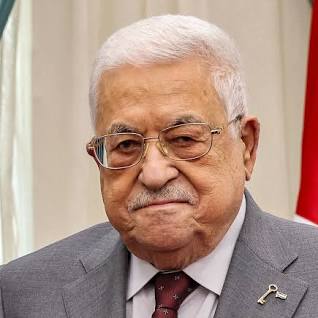
Abbas call for quick end to Gaza conflict
During their meeting, the President of the Palestinian Authority, Mahmoud Abbas, told the US Secretary of State, Antony Blinken, that they need an “immediate stop to the fighting” and for help to be given to the people in Gaza, as reported by his spokesperson Nabil Abu Rudeineh to Reuters news agency.
The person told Blinken that they cannot find words to explain the terrible killings and damage that the Palestinian people in Gaza have endured because of Israel’s war machine. They believe that Israel did not follow the rules of international law.
This means that Arab countries have made similar requests.
On Saturday, Blinken said no to stopping the fighting for now because it would give Hamas a chance to gather their strength. Instead, he suggested taking a break to help people in need.More update on this story soon…
-
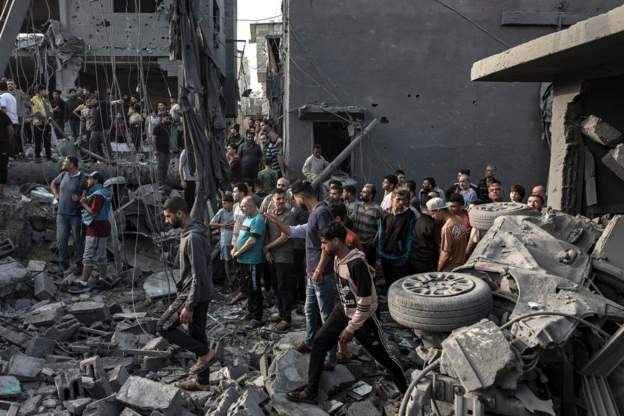
‘I wish I had died with them’ – Man laments
On a small road in the middle of Al-Maghazi camp, which is the smallest and most crowded of the refugee camps, there is a big bulldozer that is working hard to clear away the debris from four houses that have been completely destroyed.
Over a hundred people were present during the explosion. The Gaza health ministry believes it happened because of an attack by Israel. The leader of Al-Aqsa hospital states that 52 people died and some others were hurt.
People who lived there tried to use their hands to break through layers of hard cement to save the people stuck under the collapsed building.
Muhammad Al-Alul, a person who takes pictures for the news, lost his wife and four of his kids (three girls and one boy). He only has one son remaining.
“He says he wishes he could have been with them and died together with them,” he tells me.
I was, like always, telling about the quickly developing situation at Al-Aqsa Hospital. All of a sudden, I found out that a raid happened at Al-Maghazi camp. I didn’t think that my children could be trapped in the rubble.
Al-Maghazi is a small place in Gaza where Israel told people in the north to go to be safe from the fighting. However, there are still ongoing airstrikes in the southern region.
Muhammad, a civil defence officer who quickly went to assist, says that there is nowhere safe in Gaza. “They tell the Palestinians to move to the south, but they attack and hurt them all over the place – on the streets, in schools where people go for safety, and even in hospitals. ”
On the street close to where the bomb went off, the people moving around the main market in the camp seem almost like usual. People want to buy the rest of canned food and vegetables that farmers collect from nearby farms.
You see that people walking by look very sad, scared, and unhappy. A lot of people haven’t been able to change their clothes or take a shower for a long time.
An elderly lady yelled at me to stop recording her with a camera. We are good people, but the situation is very hard.
We don’t have any water, bread, or money anymore.
Our regular daily activities have not been happening since October 7th. People here can’t find a simple or fast solution to this problem. -
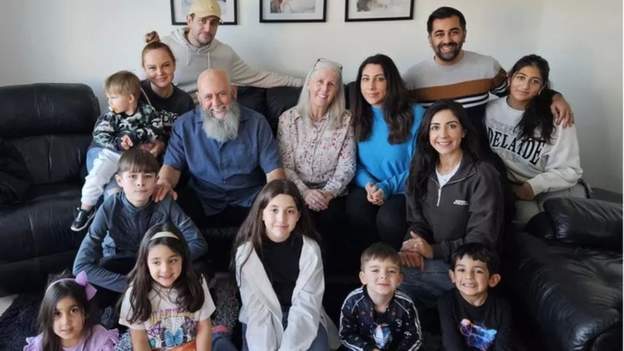
Family of Scottish first minister returns home from Gaza
In the UK, it has been confirmed that the family of Scotland’s first minister has returned home after being stuck in Gaza for over three weeks.
Humza Yousaf’s family members were able to enter Egypt on Friday.
Elizabeth El-Nakla and her husband Maged, who are Nadia’s parents, were given permission to leave Gaza using the Rafah crossing.More update on this story soon…
-

Israeli cease-fire in Gaza rejected by Blinken
Secretary of State Antony Blinken of the United States said that if Israel agrees to stop fighting in Gaza, it would give Hamas the opportunity to come together again and launch more attacks.
But he said that Israel needs to do everything it can to avoid hurting innocent people in the area.
Mr Blinken said these things on Saturday in Jordan after having discussions with Arab leaders, who are requesting the fighting to stop right away.
Israel has been accused of doing bad things during the war.
Jordan’s Foreign Minister, Ayman Safadi, said at a press conference with Mr. Blinken that they do not believe it was an act of self-defense. The conference also included representatives from Saudi Arabia, Qatar, the United Arab Emirates, and Egypt.
The US still stands by Israel’s ability to protect itself from Hamas.
Mr Safadi said that the conflict is like a very intense war that is causing harm to regular people, destroying their houses, hospitals, schools, mosques, and churches.
“This action cannot be justified for any reason, and it will not make Israel safe or bring peace to the area. ”
People are worried that the war could involve other nearby countries and make the Middle East less stable.
MrBlinken believes that temporary breaks in the fighting, instead of a total stoppage, are necessary to help people in need. He mentioned that although the US and Arab leaders may not agree on certain ways to bring lasting peace to the area, their ultimate objective is the same.
“He said that we all know that it is not only our desire, but also our duty to do everything we can together to find a better way for the future. ”
Israel started attacking Gaza after Hamas murdered over 1,400 individuals in Israel through unexpected assaults on October 7th. Over 200 people were taken by force and most of them are still believed to be held captive.
More than 9,488 people have died in Gaza, as reported by the health ministry controlled by Hamas.
MrBlinken’s visit to Jordan happened the day after he went to Israel to talk with Benjamin Netanyahu, the Prime Minister of Israel. Netanyahu said there would be no temporary break for help until all the Israeli people who were taken captive are freed.
The Israeli military has been attacking an area in the northern part of Gaza, after telling people many times to leave for their safety.
Around 400,000 regular people are still in the area, as said by David Satterfield, an important person from the US who cares about helping people in the Middle East.
The Israeli military has been attacking areas in the southern Gaza Strip, and the United Nations has stated that there is no safe place in Gaza.
MrBlinken mentioned that it’s important to greatly increase the amount of assistance that is being sent to the enclave through the Rafah crossing in Egypt.
Currently, only a small number of deliveries are going to Gaza after Israel blocked supplies of power, food, and water several weeks ago.
The US Secretary of State also met with Lebanon’s temporary Prime Minister, Najib Mikati, to talk about the fighting happening near Lebanon’s border with Israel. There has been a lot of fighting between a group called Hezbollah and the Israeli military.
Hassan Nasrallah, the head of Hezbollah, has not yet demanded more attacks on Israel but has indicated that there may be room for future actions.
MrBlinken is going to Turkey on Sunday for two days to talk with President Erdogan about the conflict.
The visit is happening because Ankara has brought back its ambassador from Israel and stopped talking to Mr. Netanyahu to show they are angry about the violence. -
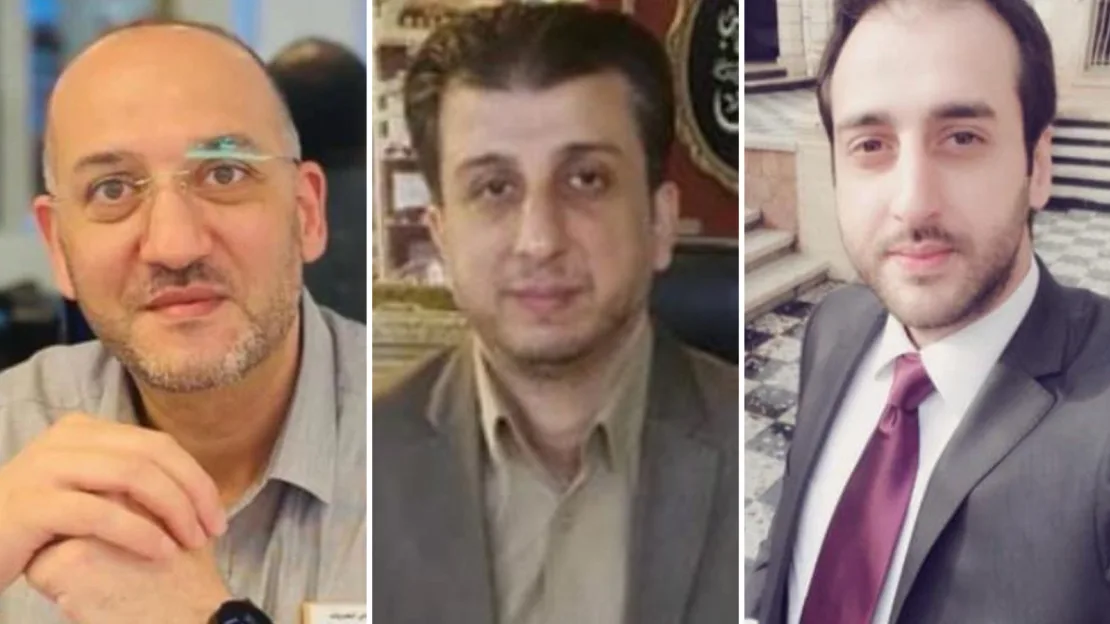
Palestinian American family grieves 42 relatives slain in Gaza in single day
Tariq Hamouda and his wife Manal are very sad because their family members from three different generations have died. They are not near the war in Gaza.
The Palestinian Americans, living in Maple Grove, Minnesota, are finding it hard to believe that their 42 relatives were killed in the ongoing war between Israel and Hamas. They have been struggling to understand this news for over a week now.
Hamouda tells us that his wife, who used to be called Saqallah before they got married, had a very sad experience. On October 19, their family home in the Sheikh Ejleen area of Gaza City was destroyed by two explosions. As a result, they lost four of her brothers, one sister, and many of their children.
Hamouda and his family believe that the attack was carried out by the Israeli air force. Israel has attacked Gaza City many times since October 7, including several attacks in that area on the same day.
CNN cannot verify or prove on its own that the strike was from Israel. The Israel Defense Forces (IDF) said they can’t say anything unless they know the exact location of the house. The family did not give CNN the coordinates because they were afraid of getting in trouble or being harmed.
A neighbor captured a video that shows the remains of a family’s home. The buildings were burned and destroyed, while the neighboring houses were not damaged.
“Yesterday, Hamouda told CNN that Manal is still refusing to admit what happened. ” However, the sadness that they are experiencing in their home in the Midwest is genuine.
She really loves everyone in her family. Hamouda said that his wife and he are from Gaza but have been living in Minnesota since 2004. His wife spent the summer with them.
There has been fear and lots of fights between Israel and militant groups in Gaza since then, but not like this, he says.
Israel started a war against Hamas on October 7. This was because Hamas broke through the barrier between Gaza and Israel and killed over 1,400 people, including civilians and soldiers. They also kidnapped more than 220 people. Israeli authorities reported this information.
In reaction, Israel carried out very destructive attacks on Gaza. It wants to get rid of Hamas, which is in charge of the land near the coast. However, the situation is difficult for the 2. 2 million Palestinians living there because they are unable to leave due to the Israeli and Egyptian border closures. They are stuck in the middle of the conflict.
According to recent information from the Palestinian Ministry of Health in Ramallah, Israeli bombings have caused the death of over 8,485 Palestinians and injured more than 21,000 others. These numbers were gathered from sources in the Hamas-controlled area. According to the United Nations Office for the Coordination of Humanitarian Affairs, another 1. 4 million people have been forced to leave their homes within the country. This happened after the Israeli Defense Forces (IDF) advised people in northern Gaza to relocate to the southern part of the region.
But Hamouda doesn’t have enough time to properly grieve for the deceased, he explains, because he is still concerned about what will happen to the people who are still alive.
In South Florida, Manal’s cousin Eyad Abu Shaban is also very upset. “It feels as if everything around you suddenly freezes,” he explained.
“It’s not a small number like one, two, three, or four – it is a group of 42 members, and it’s extremely difficult to handle. ”Abu Shaban says that the people who died were between three months and 77 years old. They were all living together in one place. His uncle, Essam Abu Shaban, his wife Layla Saqallah, and their son Ahmed were among the people who died. To stay safe from Israeli airstrikes, they had moved out of the nearby Tel El Hawa neighborhood and found shelter in Saqallah’s home, according to Abu Shaban.
Surviving family members told Hamouda that before the airstrikes, the IDF told them there might be military activity in the area. However, they were never instructed to leave their home.
“He said that they have destroyed houses both with and without giving people a warning. He feels upset and worried because there is a lot of fear and confusion among the people, and they have no safe place to go. ”
Hamouda says that his mother-in-law was on a balcony when the first attack happened. She managed to escape with the assistance of a family member who also made it out alive.
He said that the compound was destroyed again and many family members were killed.
A video, taken by family members who survived, and given to CNN, shows many dead bodies being put into a large grave covered in white cloth.
Hamouda said that his mother-in-law told him that his sons tried to leave quickly, but they didn’t have enough time. He also said that his family is not involved in any violent or dangerous activities and that they have no connection to anything.
Abu Shaban, a person who works in real estate in Boca Raton, said that his family were regular people who are not involved in any military or official roles, and some of them are medical workers.
Manal has four brothers named Saed, Omar, Ameed, and Khorsheed. Three of them are eye doctors, and the other one is an ENT doctor. Hamouda says they ran the biggest group of eye clinics owned by families in Gaza.
“We don’t have any members of Hamas in our family. ” They are normal people. Doctors, grandparents, uncles, aunts, and children,” Abu Shaban said.
“I think, if you want to get rid of Hamas, you should find the root cause. ”
The Maple Grove community has come together to show love and support to the Hamouda family.
Last week, people from the community went to the Brooklyn Park Islamic Center to pray for the family. A person who works for a Senator. The Minnesota office of Amy Klobuchar reached out to express sympathy and provide help, according to Hamouda.
But all Hamouda and Abu Shaban want is for the killing to end.
In today’s world, it’s unusual for everyone to witness innocent people being harmed. Families, complete families, were completely destroyed,” Abu Shaban said.
I want everyone to understand that the people of Gaza are just like everyone else. They feel pain, they bleed, they have families, and they have emotions.
He says that there are too many photos and videos of the conflict on social media, and they are overwhelming to see.
Activists, human rights groups, and international officials have asked for a stop to the fighting, but the war continues and has entered a new phase with risky ground operations.
Abu Shaban says that his family is still suffering until the killings come to an end. He feels like he is still trapped in a never-ending bad dream. I am still sleeping. -

Israel closing in on Gaza City
It appears that the Israeli military wants to go into the western and eastern parts of the Gaza Strip and move the civilian people to the central neighborhoods of Sabra, Ziton, Daraj, and Askoula.
There are five places where people are fighting, and both sides say the fighting is really intense.
The biggest problem is in the northwest, where many tanks and armored vehicles have entered Gaza from Israel along the coast and gone about six to seven kilometers into Gaza.
Then they moved to the east, seemingly wanting to isolate Gaza City, which is the biggest city in the Strip in terms of size and population.
Israeli military planes are now attacking the al-Quds hospital more often. The hospital is a shelter for many people who ran there to stay safe.
Many people think these strikes are intended to make civilians move to the south and away from Gaza City.
The Palestinian Red Crescent Society said today that there was a bombing near the hospital and it hurt 21 people.
The BBC saw videos that revealed the large amount of damage to buildings and roads near the hospital. -
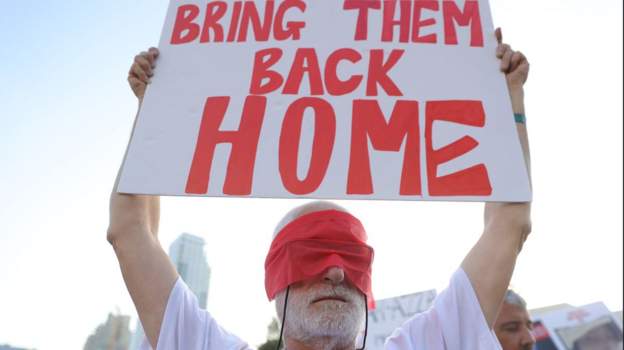
Israelis to protest in favour of relatives of hostages
People are going to come together in big cities in Israel tonight to show that they support the families of the people who are being held captive by Hamas in Gaza.
Protests will happen in many towns and cities like Haifa, Tel Aviv, Jerusalem, Be’er Sheva, and Eilat, as reported by Haaretz newspaper.
Four weeks have passed since the attack on Israel on 7 October. Hamas is still keeping 241 people captive, which includes children, grandparents, civilians, and soldiers.
Israeli Prime Minister Benjamin Netanyahu told US Secretary of State Antony Blinken that Israel will continue to attack Gaza and won’t allow humanitarian aid to enter the area until the hostages are released.
Haaretz newspaper says that some protesters want Netanyahu to be removed from his position. -

‘Disperse’ Israeli attacks in Gaza — Martin
The foreign minister of Ireland said that Israel’s bombing of Gaza was not fair or needed.
Micheál Martin, who is the deputy prime minister of Ireland, spoke at his party’s yearly meeting on Saturday.
Over 9,000 people have died in Gaza because Israel is attacking in response to an unprecedented attack by Hamas gunmen on 7 October.
Mr Martin said that the continuing attacks in the area were not right and agreed with Taoiseach Leo Varadkar’s statement that the attacks seemed like a form of revenge.
MrMartin said that there was a lot of anger in Israel, but he believes that the size of the bombing on Gaza was not justified.
I think that what Israel is doing is not fair and is more than what is needed.
“I think this goes against the basic rules of international humanitarian law, where the ideas of needing something and making it fair are important. ”
Mr Martin said that many children and innocent people are dying. He said Israel is going after Hamas, but they are doing it in a very cruel way.
Israeli Prime Minister Benjamin Netanyahu said on Friday that there won’t be a temporary break in fighting with Hamas in Gaza until all Israeli hostages are set free, as more and more innocent people are getting hurt.
The deputy prime minister stated again that the Irish government wants the fighting to stop right away so that urgent help like medicine can be sent to Gaza.
MrMartin did not outright say that any of Israel’s actions are war crimes. He said that the International Criminal Court will make the final decision on this matter.
Israeli ambassador will not be sent away or removed from their position.
He also said that Ireland will not kick out the Israeli ambassador.
On Friday, the Republic of Ireland’s main opposition party Sinn Féin called the ambassador’s position unmanageable and said they should not have diplomatic status anymore.
Mr Martin said that the decision was aimed at pleasing the general public or gaining their support.
“He said that it is very important to keep connections and ways of communication with other countries in international diplomacy. ”
“Diplomatic relations are important for foreign policy, even though they don’t imply support for another country’s policies. It is crucial to maintain open communication, especially during disputes or conflicts, such as a big war. ”
The Irish government is trying to bring back Irish people who are currently in Gaza. There are around 30 to 40 Irish citizens in Gaza, along with their family members.
“I don’t understand how we can effectively try to get our people out of Gaza,” he said.
If we remove the Israeli ambassador. This means that the Irish ambassador, who is currently working and staying in touch with Irish citizens in Gaza, would have their actions and information documented right away.
I believe it’s an agenda that aims to please the majority of people, but it’s not a serious way to manage our relations with other countries.
MrMartin said that although there are different opinions in the European Union, it would be very difficult to get everyone to agree on punishing Israel. -

US admits using unarmed drones over Gaza
The US has recently admitted that they have been flying unarmed surveillance drones over Gaza.
The Pentagon spokesperson, Brig Gen Pat Ryder, said that the drones were being used to help in the efforts to rescue hostage.
“He mentioned that these unmanned aerial vehicle flights started after the attack carried out by Hamas on Israel on October 7th,” he said in a short statement.
The acknowledgment happened when journalists noticed unmanned flying devices (like drones) on websites that track flights.
The United States is flying small aircrafts without weapons over Gaza. They are also giving advice and help to Israel in their efforts to rescue hostages. This was said in a statement from the Pentagon on Friday.
The confirmation comes after journalists noticed MQ-9 Reapers, which are usually used by American special forces, flying around Gaza on a website called Flightradar24 that shows public flight information.
Reaper drones have been used for airstrikes in Afghanistan before, but they are mainly used for surveillance because they can stay in one area for more than 20 hours at a time.
Unnamed US military officials told the New York Times that the drones were not being used to coordinate Israeli military action in and around Gaza. Officials spoke to the newspaper and said that they were sharing information about how to rescue hostages with the Israelis.
There are more American military vehicles that are remote-controlled in the area.
On Thursday, the US Navy said that they had used a remote-controlled speed boat to shoot dangerous weapons in the ocean near the Arabian Peninsula.
The Navy said that on October 23rd, they tested firing weapons from a remote-controlled boat in the Middle East for the first time.
The US Navy is happy because this development makes their military abilities in the region even better.
Last month, the US Navy announced that it had successfully destroyed many drones and rockets that were launched from Yemen and seemed to be headed towards Israel.
The United States has sent two big warships to the eastern Mediterranean Sea. They say they sent these ships to stop the fighting between Hamas and Israel from spreading further.
The leader of Lebanon’s Hezbollah gave a strong speech on Friday, warning the US not to attack their group using ships.
Hassan Nasrallah said, “We are not afraid and will never be afraid of your military ships in the Mediterranean. “