Tag: Ghana

  • Ghanaian father of four gunned down in shocking Canada shooting

    Ghanaian father of four gunned down in shocking Canada shooting

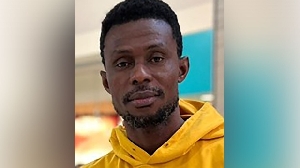
    A 39-year-old Ghanaian, Adu Boakye, who recently relocated to Canada just three months ago, has been fatally shot in what authorities have confirmed as a random shooting incident.

    The shooting occurred in the North York area in northwest Toronto, with Adu Boakye becoming one of two victims in this senseless act of violence. The incident took place at Jane Street and Driftwood Avenue, prompting a swift response from the police.

    According to a police statement on the matter, the incident unfolded on Saturday, February 17, 2024, around 3:05 p.m. Upon receiving a call reporting the shooting, police rushed to the scene.

    Adu Boakye was found with gunshot wounds, and despite life-saving measures and immediate transportation to the hospital, he succumbed to his injuries and was pronounced dead.

    The victim, identified as Adu Boakye, had recently moved to Canada, leaving behind a life in Ghana to seek new opportunities in his adopted country.

    Detective Phillip Campbell, in a subsequent media interview, revealed that Adu Boakye and another unnamed 16-year-old boy fell victim to indiscriminate shootings less than 24 hours apart while waiting for a bus in the Jane Street and Driftwood Avenue area.

    “Our investigation thus far has revealed there is no relationship between Mr. Boakye and the individual, or individuals, who shot him,” said Det. Phillip Campbell. He emphasized that both victims were innocently going about their business when they were shot.

    The police have released some details about the assailant, describing the incident as a gang attack. They are urging the public to come forward with any information that could lead to the arrest of the perpetrator. The shocking incident highlights the need for heightened awareness and community cooperation to ensure the safety of residents in the North York area and beyond.

  • Ghana, 27 developing countries broke; no escape anytime soon – World Bank

    Ghana, 27 developing countries broke; no escape anytime soon – World Bank

    The World Bank has revealed that 28 developing economies, including Ghana, with the weakest credit ratings, are currently trapped in a cycle of debt with little prospect of breaking free in the near future.

    The Bretton Woods institution noted that these countries had an average debt-to-Gross Domestic Product ratio of nearly 75% by the end of 2023, which is 20 points higher than the average for developing economies.

    In an article, “A silent debt crisis is engulfing developing economies with weak credit ratings”, however, it said some developing economies are finally seeing the light at the end of the tunnel, global inflation is receding and global interest rates appear to have peaked, prompting a bond-issuance rush by these economies to refinance their debt before the opportunity vanishes.

    “In early January, Mexico, Indonesia, and several other developing economies easily raised more than $50 billion from bond investors. Yet 28 developing economies—those with the weakest credit ratings— remain stuck in a debt trap with no hope of escape anytime soon. Their average debt-to-GDP ratio was nearly 75% at the end of 2023—20 points greater than the typical developing economy”.

    “They account for a quarter of all developing economies with credit ratings and 16.0% of the global population. However, their collective economic activity constitutes a mere 5.0% of global output, which makes it easy for the rest of the world to ignore their predicament. Their debt crisis, as a result, is silent—and it could intensify”, it added. 

    The World Bank emphasized that these economies require urgent assistance from the international community.

    This assistance should include debt relief for some countries and an improvement in the global debt restructuring framework, as the current framework has provided little relief to the countries most in need.

    “A good start would be to build the fiscal space necessary for economic growth and resilience. Overlapping crises of the past five years deepened the debt challenges, but fiscal imprudence was often the original cause of their troubles. Before they lost access to capital markets, their governments had borrowed too much, especially in foreign currencies—the equivalent of nearly 30% of their GDP on average”, it added. 

    Meanwhile, Ghana, one of the affected countries, remains in debt distress, according to the Debt Sustainability Analysis. Additionally, the analysis by the World Bank and the International Monetary Fund indicates that Ghana’s debt is unsustainable.

    “Given the ongoing debt restructuring and large and protracted breaches to the DSA thresholds, Ghana is currently in debt distress and the debt sustainability analysis shows that debt is unsustainable.”

    It continued that “Ghana lost international market access in late 2021, and the macroeconomic situation became more challenging in 2022, with large losses in international reserves, sharp depreciation of the exchange rate, and soaring inflation. The deterioration of market sentiment widened Eurobond spreads to above 2900 basis points at end-December 2022, and they have remained in distressed territory”.

    However, with the existence of the IMF program, there are expectations that Ghana’s debt situation will change and become sustainable by 2026.

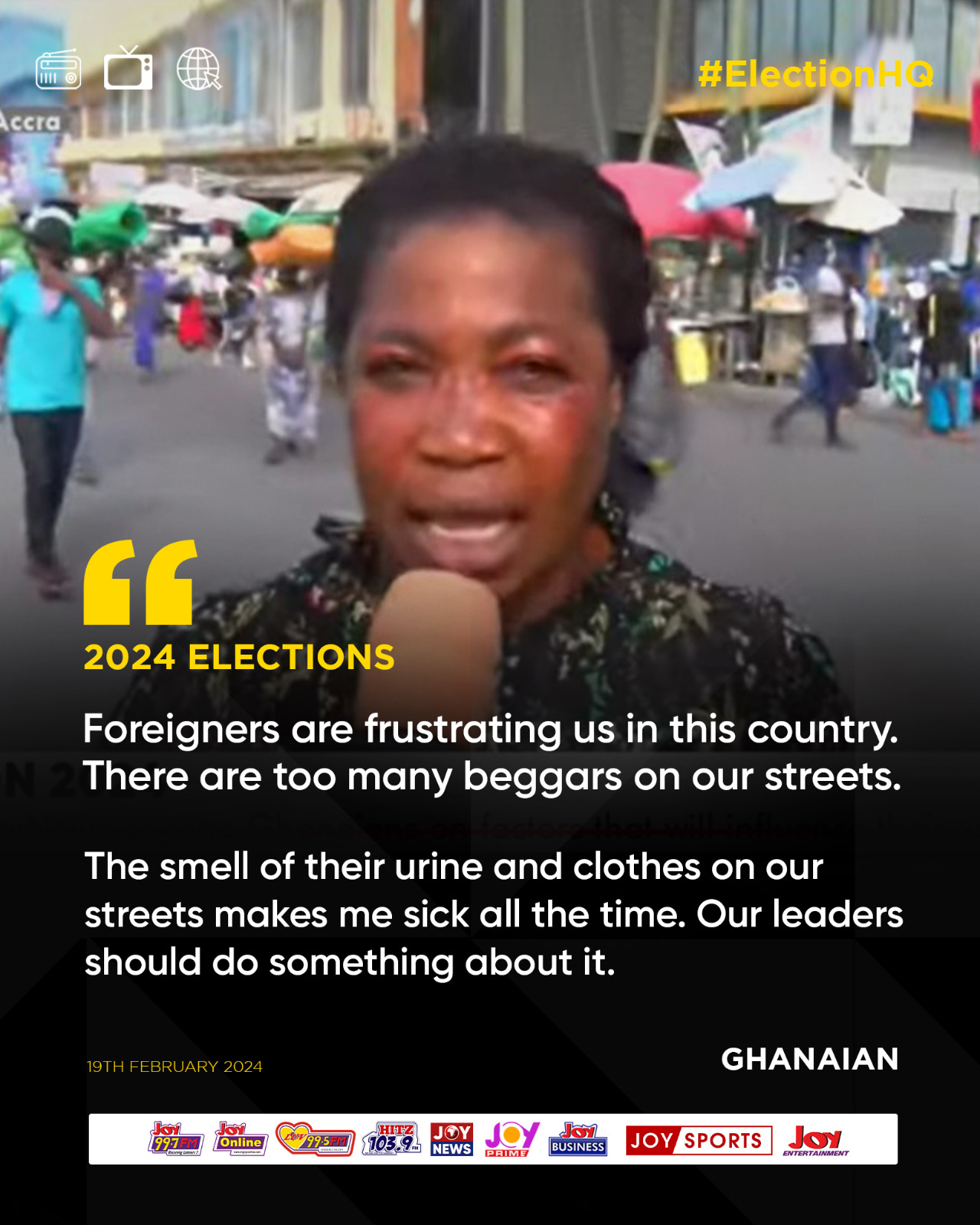
  • Unpleasant smell from foreign beggars’ clothes, urine makes me sick – Ghanaian woman

    Unpleasant smell from foreign beggars’ clothes, urine makes me sick – Ghanaian woman

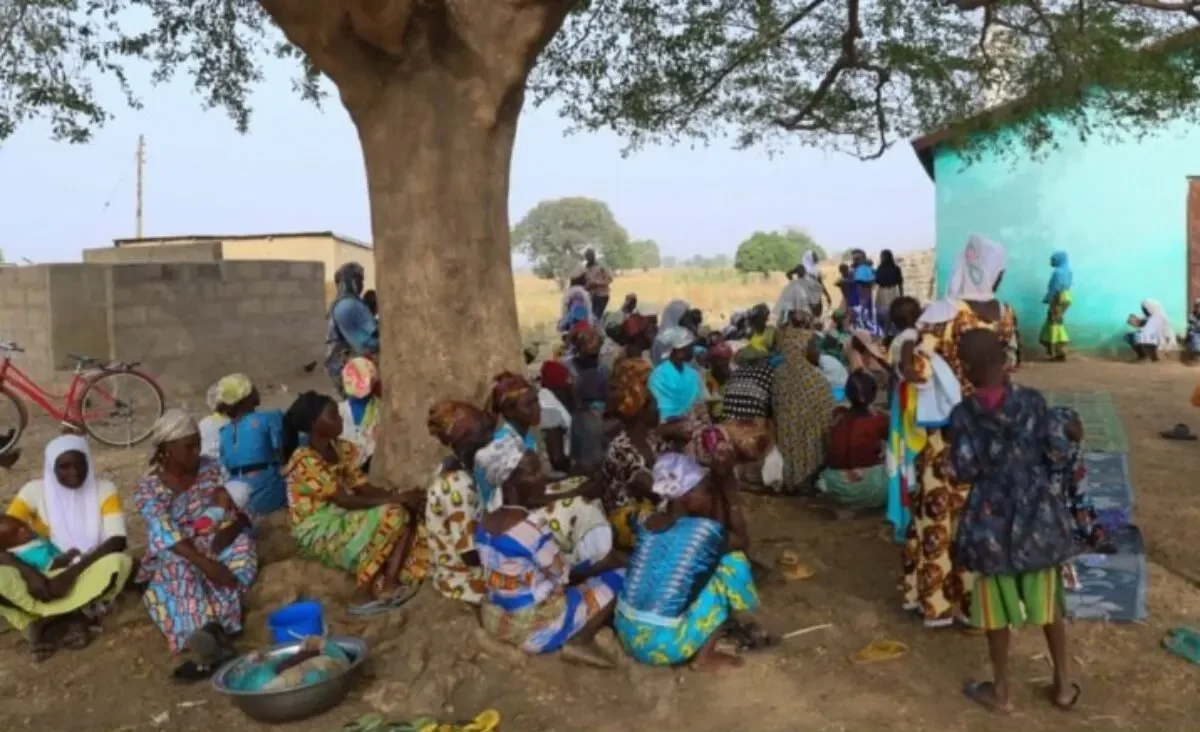
    A Ghanaian woman has openly expressed her frustrations regarding what she perceives as the negative impact of refugees in the country.

     Her concerns primarily center around hygiene and behavior issues attributed to some non-native residents.

    The woman shared her sentiments, particularly highlighting her discomfort with the perceived unpleasant smell of refugees’ urine and clothes on the streets, asserting that it makes her feel sick.

    In a statement, she conveyed her perspective, stating, “Foreigners are frustrating us in this country. The smell of their urine and clothes on our streets makes me sick all the time.”

    Reports indicate that the refugee population has seen a steady increase, prompting heightened apprehension within the country.

     In 2023, approximately 500 individuals from Burkina Faso communities migrated to Fufulso, a suburb in the Central Gonja District of the Savannah Region.

    The influx of migrants has sparked fear among local residents, who now worry about the safety of their lives and property.

     Sources within Fufulso reveal that these foreigners often arrive during the night and have been gradually integrating into the community as residents since their arrival.

  • Why Ghana’s capital city was moved from Cape Coast to Accra

    Why Ghana’s capital city was moved from Cape Coast to Accra


    A Ghanaian historian has elaborated on the reasons behind the relocation of Ghana’s capital from Cape Coast to Accra.

    According to him, the relocation is a historical event deeply rooted in the colonial era, shaped by the colonialists’ strategic decisions and their perceptions of the socio-political landscape.

    In a video shared by an X user, Scottbolshevik, the historian indicated that, during colonial rule, the British administrators found themselves grappling with a perceived challenge arising from educational advancements among the Fante people in the South.

    The introduction of education to the Fante population resulted in a rapid sophistication of the community.

    In a short span, the Fante people began producing professionals such as lawyers, doctors, and engineers, leading to increased assertiveness and resistance against the colonial powers, particularly in Cape Coast.

    “The colonialists drew an imaginary boundary between the North and the South. And their reason was this, that when they gave education to the Fante people they became sophisticated and within a short time they started producing lawyers, doctors, engineers, etc, and they started fighting the Whites over lands and anything you can imagine in Cape Coast,” he sated.

    The escalating conflicts between the Fante people and the colonial authorities over land and various issues compelled the colonialists to make a strategic decision – relocating the capital from Cape Coast to Accra.

    By moving the administrative center to Accra, the colonial rulers aimed to mitigate the challenges posed by the educated Fante populace, avoiding confrontations and disputes that had become more frequent in Cape Coast.

    The decision to draw an imaginary boundary between the North and the South was driven by a desire to prevent a recurrence of the situation witnessed in Cape Coast.

    The colonialists believed that restricting education in the North would ensure a steady supply of labor for the mining and cocoa industries without the potential for educated individuals in the North to challenge their authority.

    “That was what forced them to move the capital from Cape Coast to Accra and they felt they should not make that mistake anywhere else. So in the North they made sure there will be no education for the Northerners so that they will get Northern labor for the mining industry and the cocoa industry,” he added.

  • Influx of foreign beggars is frustrating – Ghanaian woman

    Influx of foreign beggars is frustrating – Ghanaian woman

    A Ghanaian woman has voiced her frustration over what she perceives as the negative impact of refugees in the country, citing concerns about the hygiene and behavior of some non-natives.

    She expressed her sentiments, particularly addressing what she described as the unpleasant smell of refugees’ urine and clothes on the streets, which she claims makes her sick.

    In a statement, the woman shared her perspective, stating, “Foreigners are frustrating us in this country. The smell of their urine and clothes on our streets makes me sick all the time.”

    The number of immigrants appears to be steadily growing, causing heightened apprehension within the country.


    According to reports, in 2023, approximately 500 individuals from Burkina Faso communities migrated to Fufulso, a suburb located in the Central Gonja District of the Savannah Region.

    The influx of migrants has stirred fear among the residents, who are now concerned about the safety of their lives and property.

    Sources within Fufulso have disclosed that these foreigners typically arrive during the night and have been integrating into the community as residents since their arrival.


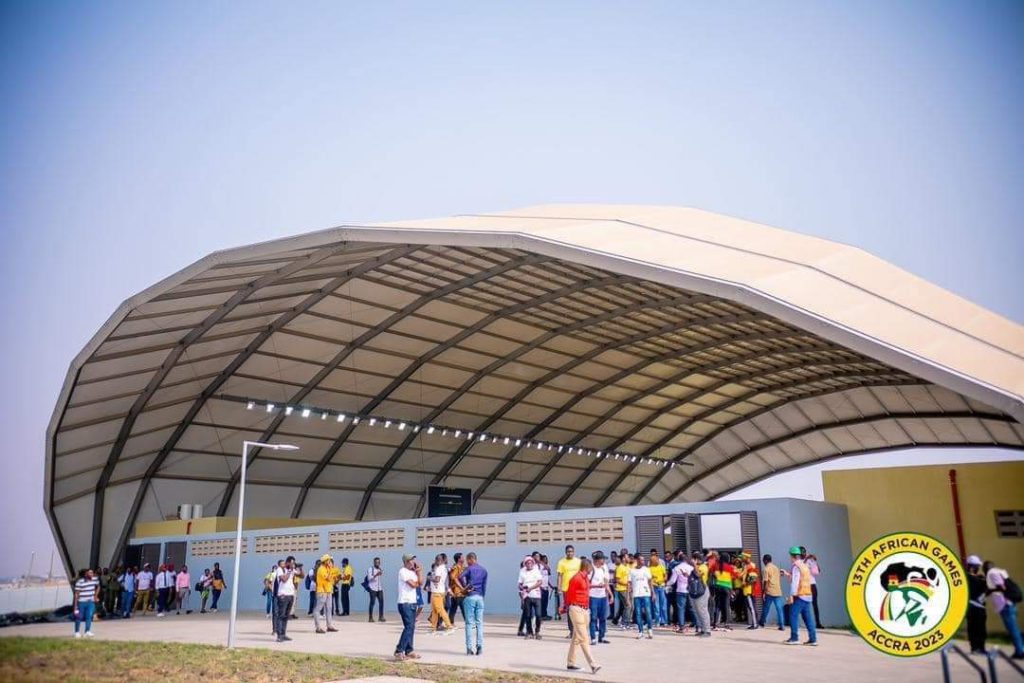
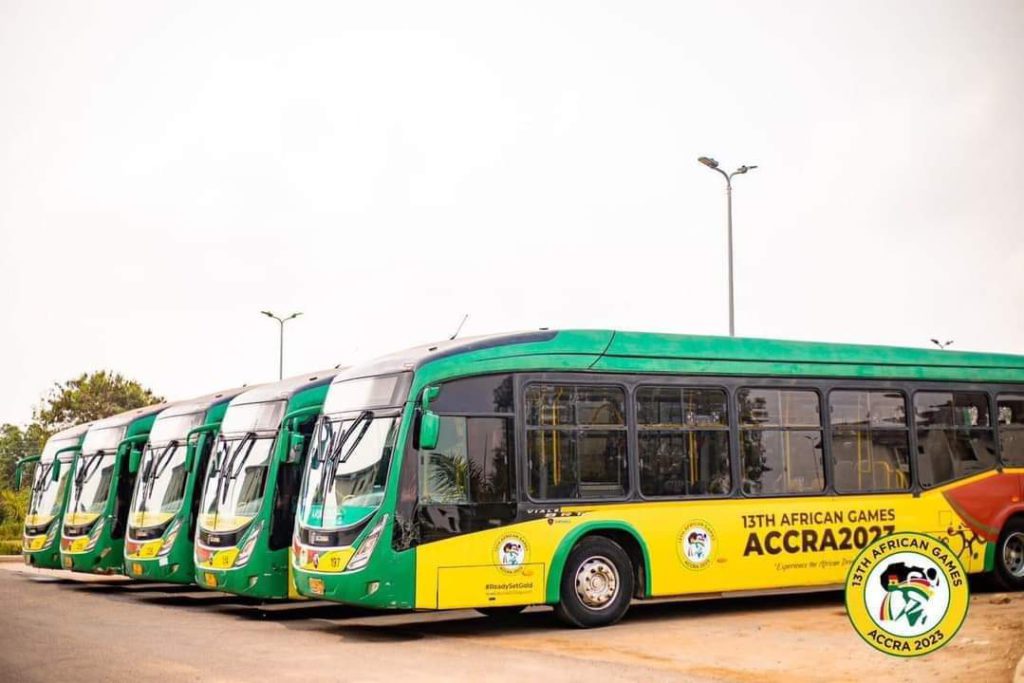
  • Borteyman for handball, UG for rugby: Check out all venues for the 13th African Games

    Borteyman for handball, UG for rugby: Check out all venues for the 13th African Games

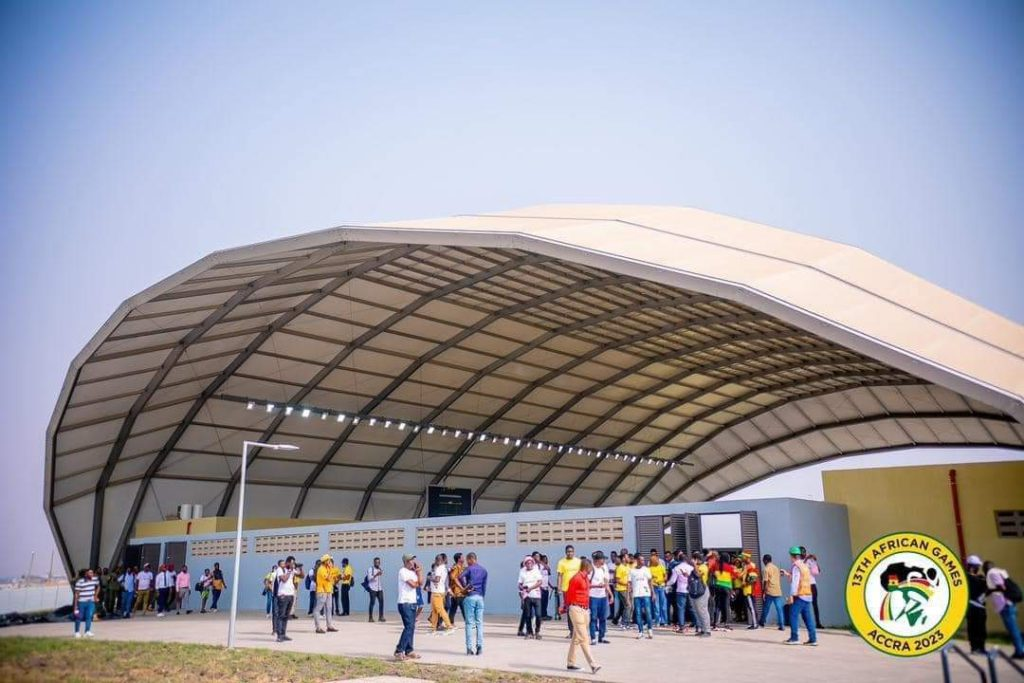
    As the scheduled date for the 13th African Games, to be hosted in Ghana, draws near, the venues for the various competitions have been revealed.

    This 15-day tournament is set to occur between March 8 and March 23, 2024.

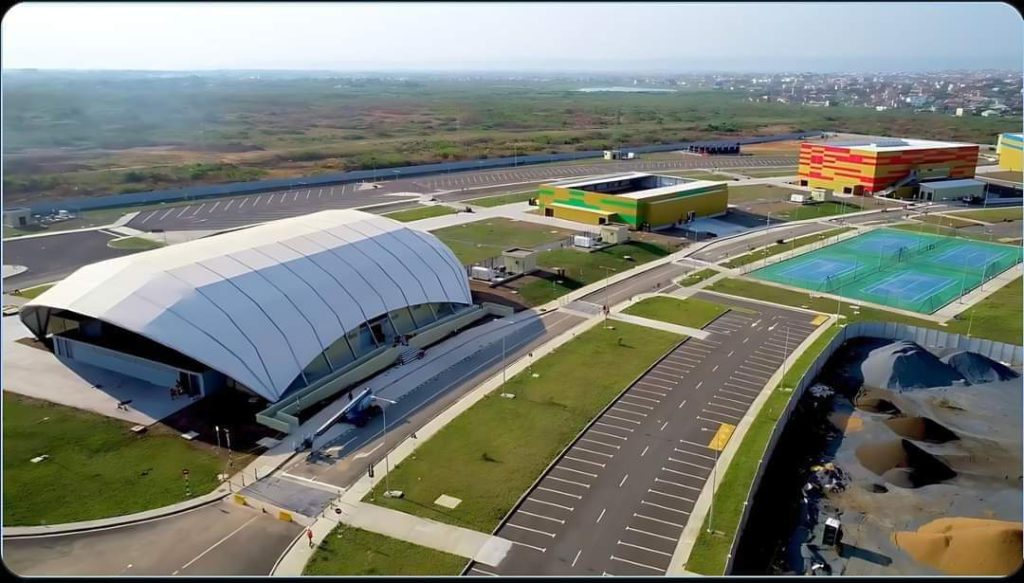
    The Borteyman Sports Complex will host Badminton, handball, weightlifting, basketball, volleyball, table tennis, fencing and tennis, along with combat sports like Karate, Judo, Taekwondo, MMA and wrestling.

    The new aquatic center will be for swimming and triathlon.

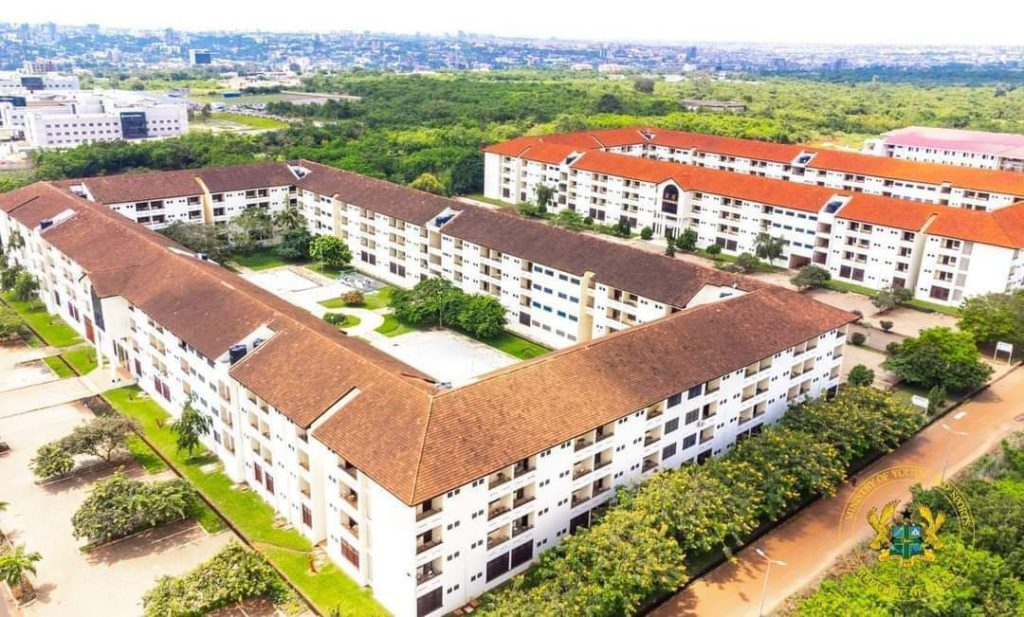
    The University of Ghana (Legon) stadium will be used as a games village, serving as the main games centre for accreditation, transport and other administrative issues, as well as a venue for arm wrestling, athletics (track and field events), squash and rugby.

    Meanwhile, 49 nations have officially declared their intention to compete in the eagerly awaited competition.

    However, five countries, namely Cape Verde, Senegal, Sao Tome and Principe, Sudan, and South Sudan, are yet to confirm their presence.

  • Ghana’s growth to hit 2.8% in 2024 – AfDB

    Ghana’s growth to hit 2.8% in 2024 – AfDB

    The African Development Bank (AfDB) has projected a modest growth rate of 2.8% for Ghana in 2024, a slight improvement from the estimated 1.5% forecast in 2023.

    This anticipated growth is expected to be the lowest in West Africa for the year.

    The Bank attributes Ghana’s modest growth to the ongoing fiscal consolidation efforts and the impact of high inflation on household budgets.
    The disclosure was made on February 16, 2024, in Addis Ababa, Ethiopia, during the presentation of Africa’s Macroeconomic Performance and Outlook for 2024 by the AfDB.

    “In Ghana, growth is projected to rise from an estimated 1.5% in 2023 to 2.8% in 2024, with modest growth reflecting the ongoing fiscal consolidation and high inflation weighing on household budget”.

    The forecast aligns with the expectations of the Government of Ghana.

    The AfDB emphasizes that the ongoing International Monetary Fund program will have repercussions on the private sector and household consumption, leading to limitations on spending. Additionally, it foresees that the prices of goods and services will remain elevated.

    In the West African region, Ghana and Nigeria are projected to experience growth below the regional average of 4.0%, with Nigeria’s economy expected to expand by 2.9%.

    Meanwhile, Niger is anticipated to record the highest growth rate in Africa for 2024, reaching 11.2%, driven by hydrocarbon production and exports.

  • Akufo-Addo is one of Ghana’s best presidents – Alfred Thompson

    Akufo-Addo is one of Ghana’s best presidents – Alfred Thompson

    A member of the communications team for the New Patriotic Party (NPP), Alfred Thompson, has expressed the belief that President Akufo-Addo will be remembered as one of the best presidents in the 4th republic.

    Thompson’s statement came in response to the recent ministerial reshuffle on February 14, 2024, where certain ministers were dismissed and others were reassigned.

    Addressing concerns about the timing of the reshuffle, Thompson drew an analogy to a critical moment in a football match and emphasized that even a few minutes hold significance in politics.

    “Coming back to your question about isn’t it too late, what is too late? When Ghana was going to be kicked out in the AFCON, how many minutes, in less than 4 minutes, that was when they scored the two. But let me give you even extra; in less than 4 minutes. Anything in politics, even 5 minutes is very dear in politics. If you believe that I have some fresh blood coming in, some energy coming in to make sure that I make a mark that I want to do, I don’t see anything wrong with that.

    “… and he can decide even by June to make another reshuffle, he can decide by September to do another reshuffle; it depends on what the president wants and makes sure that he leaves a mark of excellence… and I believe that Nana Addo Dankwa Akufo-Addo will be remembered in this 4th republic as the best or one of the best presidents Ghana has ever had!” he claimed during TV3’s New Day programme on Friday, February 16, 2024.

    He defended the decision, stating that injecting fresh energy into the government is a positive move. He further noted that the president could opt for additional reshuffles in the future to ensure excellence and leave a lasting impact.

    Thompson shared his perspective during an appearance on TV3’s New Day program on Friday, February 16, 2024.

    On the same date, President Akufo-Addo made significant changes to his administration by dismissing key ministers in areas such as roads, finance, and health, while reassigning others.

    The vacant ministerial positions were promptly filled with new appointees as part of the reshuffle.

  • Ghanaian students in Canada surged by 167% in 2023 – Report

    Ghanaian students in Canada surged by 167% in 2023 – Report

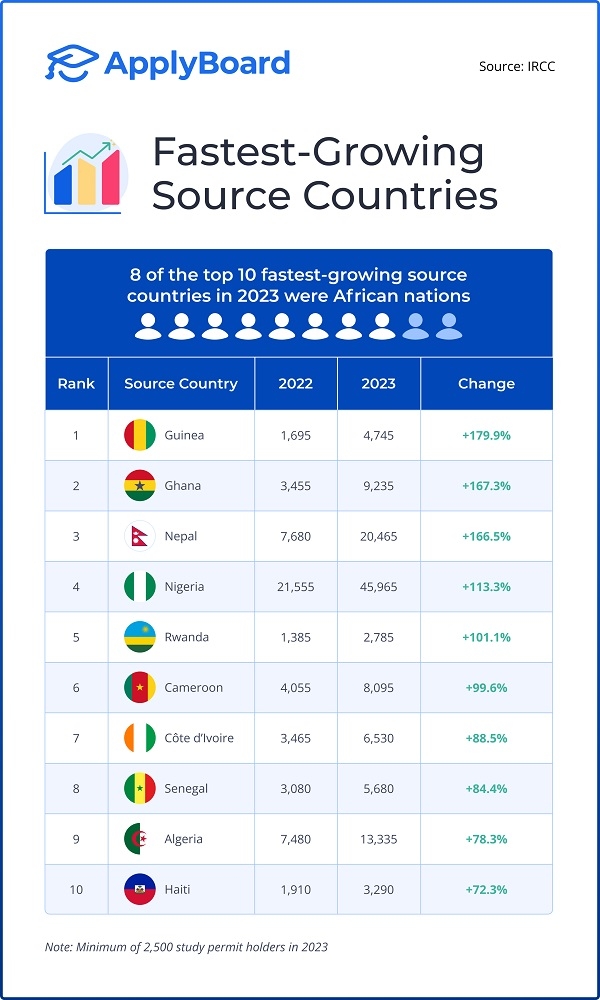
    A study conducted by ApplyBoard, a prominent technology platform for international student mobility, reveals a remarkable 167% surge in the population of Ghanaian students in Canada in 2023.

    The analysis, based on data from Immigration, Refugees and Citizenship Canada (IRCC), indicates a significant rise from 3,455 Ghanaian student permit holders in 2022 to 9,235 in 2023.

    Ghana secured the second position, following Guinea, in terms of countries experiencing the highest growth in student population in Canada, with an impressive 179% increase in 2023.

    The brief by ApplyBoard highlights that among student populations with over 2,500 valid study permits, Guinean, Ghanaian, and Nepali students demonstrated the most rapid growth.

    “Of the student populations with over 2,500 valid study permits, Guinean, Ghanaian, and Nepali students were the fastest-growing in 2023.

    “The total number of Ghanaian students grew by 167% compared to 2022, making it Canada’s second fastest-growing student population. In 2023, there were 9,235 Ghanaian study permit holders in Canada, up from 3,455 in 2022,” part of a brief by ApplyBoard on its findings reads.

    The breakdown of the surge in Ghanaian student numbers in Canada reveals a notable increase of 107% in students studying health and sciences.

    Additionally, the number of Ghanaian students pursuing computing and IT witnessed a 137% rise, while those studying engineering experienced a 67% increase in Canada.

  • Ghana stands to make $1bn revenue annually from salt production – MIIF CEO reveals

    Ghana stands to make $1bn revenue annually from salt production – MIIF CEO reveals

    Chief Executive Officer of the Mineral Income Investment Fund (MIIF), Edward Nana Yaw Koranteng, has disclosed that Ghana is poised to generate approximately $1 billion in revenue annually from salt production. 

    Koranteng emphasized the significant potential of this natural resource, envisioning Ghana as the leading salt producer in Sub-Saharan Africa.

    In an interview with Oxford Business Economics Africa, Koranteng highlighted the multifaceted benefits of salt mining, including the creation of sustainable employment opportunities and the generation of domestic revenue.

    “Ghana is positioning itself as the number one salt producer in Sub-Saharan Africa. There’s the potential for Ghana to make about $1 billion every year from salt alone. The country is investing $30 million in salt production since salt cannot only rake in revenue for the country but can also feed the pharmaceutical and textile industries,” Koranteng affirmed.

    He further elaborated on the diverse applications of salt, emphasizing its role in various industries such as pharmaceuticals, food preservation, textiles, and aluminum castings. 

    Koranteng underscored MIIF’s commitment to expanding the salt value chain through investments in Electrochem, an indigenous mining company managing a 41,000-acre salt-rich land in the Ada Songor area.

    According to Koranteng, Ghana possesses the capacity to produce approximately 2.2 million tonnes of salt annually, catering to both domestic consumption and export markets.

    The revelation comes amidst Ghana’s concerted efforts to capitalize on its abundant salt resources, leveraging them for economic growth and industrial development. 

    With strategic investments and a focus on value addition, Ghana aims to maximize the potential of its salt industry, contributing significantly to the country’s revenue generation and economic prosperity.

  • Ghanaian Ambassador urges businesses to leverage China’s booming economy, pushes for direct flight

    Ghanaian Ambassador urges businesses to leverage China’s booming economy, pushes for direct flight

    Ghana’s Ambassador Extraordinary and Plenipotentiary, Dr Winfred Nii Okai Hammond, has emphasized the need for Ghanaian businesses to capitalize on the burgeoning commercial and industrial opportunities in China. 

    Dr Hammond urged businesses to seize the moment amidst efforts to establish a direct flight route from Guangzhou, China to Accra, Ghana.

    Highlighting the exponential growth in trade volumes between the two nations, Dr Hammond revealed that trade figures have surged from US$7 billion to US$10 billion in the last three to four years. 

    However, he underscored the challenge of limited travel options between Ghana and China, with currently only a few airlines servicing the route.

    Dr. Hammond emphasized the strategic importance of establishing a direct flight route between Accra and Guangzhou, citing the latter’s significance as a hub for Ghanaian and West African traders. He emphasized that such a connection would not only facilitate trade but also enhance economic cooperation, particularly with the African Continental Free Trade Area (AfCFTA) Secretariat based in Ghana.

    The ambassador stressed the time-saving benefits of a direct flight, highlighting the potential reduction in transit times by 6 to 8 hours, which could significantly enhance business efficiency and productivity.

    Acknowledging ongoing discussions supported by Ghana’s Finance and Transport Ministries, Dr. Hammond expressed optimism about the imminent realization of a direct flight route. He disclosed that talks have progressed significantly, with the involvement of relevant government agencies and potential airline partners like China Southern.

    Dr. Hammond underscored the pivotal role of collaboration with China in Ghana’s economic development, noting China’s support in securing loans from the International Monetary Fund (IMF). He urged Ghanaian businesses to recognize the efforts made by the Ghanaian government in strengthening ties with China and encouraged them to leverage the favorable business climate in China to expand their enterprises legitimately.

    Dr. Hammond reiterated the importance of fostering stronger economic cooperation between Ghana and China, emphasizing the mutual benefits it could bring to both nations. He expressed confidence in Ghana’s ability to capitalize on China’s economic boom for its own advancement, urging businesses to seize the opportunities presented by this burgeoning partnership.

  • Stop proposing to men; it’s embarrassing – Efia Odo advises women

    Stop proposing to men; it’s embarrassing – Efia Odo advises women

    Ghanaian socialite and actress Andrea Owusu known popularly as Efia Odo expressed her disapproval of women who take the initiative to propose to men, labelling it as both embarrassing and senseless.

    The budding singer and influencer questioned the rationale behind women kneeling down to propose and pondered whether this act also implies they would bear the expenses of the wedding.

    Odo highlighted the traditional social norms in Africa, emphasizing that it has historically been the man’s role to kneel down and propose love and marriage to a woman.

    However, she acknowledged that modern trends appear to be challenging these traditional gender roles.

    “Women stop proposing to men, Stop proposing to men, what is that, it’s embarrassing, does it mean you will pay the wedding bills, it’s stupidity,” Efia Odo stated.

    Efia was a U.S based assistant nurse who relocated to Ghana.

    She was born on the 18th of July 1993 and hails from Juaben in the Ashanti region of Ghana and is currently pursuing her passion in acting.

    Watch video below:

  • I will contribute my quota to drive Ghana’s tourism to greater heights – Egyapa Mercer

    Member of Parliament for Sekondi, Lawyer Egyapa Mercer, has asserted his dedication to actively contribute and play a pivotal role in propelling the country’s tourism to unprecedented heights.

    Egyapa Mercer, recently appointed as the Minister-designate for Tourism, emphasized his determination to significantly elevate the industry, pledging a focused and proactive effort to foster growth, development, and global recognition within the realm of Ghana’s tourism.

    He also conveyed his gratitude to President Akufo-Addo for selecting him to lead the Ministry for Tourism, Arts, and Culture.

    He also extended appreciation to his constituents for entrusting him with the parliamentary mandate, a role that enabled the President, in accordance with the Constitution, to nominate him for this new position.

    During an interview with Nhyiraba Paa Kwesi Simpson on Connect FM’s Omanbapa Morning Show, Egyapa Mercer emphasized that his nomination underscored the President’s unwavering commitment to position Ghana as the premier tourism destination in Africa.

    Expressing his gratitude, he stated, “I’m extremely grateful to the President for this new role and to my constituents because they voted for me to be in Parliament. It is because of them that I have been nominated to this position. I have worked with the President in various capacities, and he appointed me as a Deputy Minister at the Energy Ministry. He has seen my work and wants me to lead another Ministry, and I’m very grateful for that.”

    Egyapa Mercer shares the President’s vision of prioritizing tourism for national development, citing the sector’s substantial potential in job creation and revenue generation.

    “I’m going there to put up my best as I did in the Energy Ministry. We are all aware of the tremendous growth in the tourism industry under the leadership of Nana Addo Dankwa Akufo-Addo. We also know the potentials of tourism and its traditional benefits to the country. I’m going there to see what is there and what we can also add. At all times, I try to put up my best wherever I find myself and I believe with the help of God, I will contribute my quota to the sector,” he affirmed.

    Egyapa Mercer’s elevation to a substantive ministerial position comes from his current role as Deputy Energy Minister.

    The appointment is subject to parliamentary approval, which is expected in the coming weeks.

  • Only 8% Ghanaian politicians are sensible – Nana Aba Anamoah

    Only 8% Ghanaian politicians are sensible – Nana Aba Anamoah

    A  prominent figure in Ghanaian media, Nana Aba Anamoah, has expressed the view that a maximum number of politicians in Ghana are deficient in both sensitivity and patriotism.

    Participating in a live discussion on 3Music TV on February 15, 2024, Nana Aba Anamoah claimed that a mere 8% of Ghana’s politicians exhibit sensitivity and diligence, attributing the majority to a motivation centered on exploiting the state for personal gain.


    She also underscored the prevalent pattern of politicians seizing opportunities without a sincere commitment to the nation, expressing apprehension about their underlying motivations.

    “I’m looking at some of our politicians. I think we have only 8% of the politicians in Ghana who are sensible. Across the board, only 8%.”The rest of them are just there, not by dint of hard work, not because they are so passionate about this country.

    “They just see the opportunity to milk the state. And they are doing everything possible to get there. They’re the loud ones, always insulting,” she said.

    Nevertheless, Nana Aba emphasized her reluctance to dwell on the negative traits of politicians, expressing a preference for focusing on the positive developments taking place in the country.

    Driven by a deep love for Ghana, she reiterated her fervent wish to witness the nation flourish and advance.

    “I am optimistic that we can achieve better. Positive shifts are happening, and that’s why I applaud this generation for surpassing the previous one,” she asserted.

  • Foreign Minister signs MoUs to strengthen ties with Zambia

    Foreign Minister signs MoUs to strengthen ties with Zambia

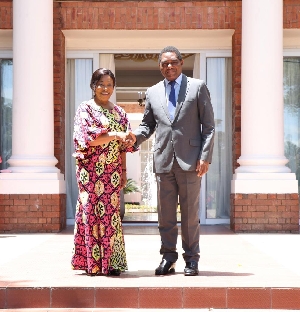
    Ghana and Zambia have committed to enhancing collaboration in trade and investment, as confirmed during the visit of Ghana’s Foreign Minister, Shirley Ayorkor Botchwey, to Lusaka, where she was welcomed by President Hakainde Hichilema.

    President Hichilema emphasized the significance of economic stability and development for political stability during their meeting at the State House.

    As part of the visit, Minister Botchwey signed two Memoranda of Understanding (MoU) with her Zambian counterpart, Mr. Mulambo Haimbe, covering various aspects of cooperation between the two nations.

    The first MoU encompasses mechanisms for fostering commercial, economic, cultural, technical, scientific, and political cooperation. The second MoU focuses on defense cooperation, encompassing training and development initiatives.

    During closed-door discussions, Minister Botchwey and President Hichilema also addressed her candidacy for the position of Commonwealth Secretary-General. Ghana and Zambia share a historical bond, dating back to their independence struggles led by Presidents Nkrumah and Kaunda.

    Reflecting on the historical ties, Ms. Botchwey highlighted the potential for a robust business relationship, especially with the presence of the African Continental Free Trade Area (AfCFTA).

    Ghanaian diplomats in Lusaka acknowledged the enduring affinity for Ghana in Zambia, with a legacy established by Ghanaian professionals and academics settling in the country from the post-independence years through the eighties.

    Ms. Botchwey, in a recent comprehensive lecture, outlined her vision for a “new Commonwealth,” focusing on trade and investment, leveraging ICT for skills and innovation, a Commonwealth-wide migration compact, and advocating for concerted action against climate change to benefit all member states, particularly small island developing states. The Commonwealth Heads of Government are set to choose a new leader in October, replacing the current Secretary-General, Baroness Patricia Scotland.

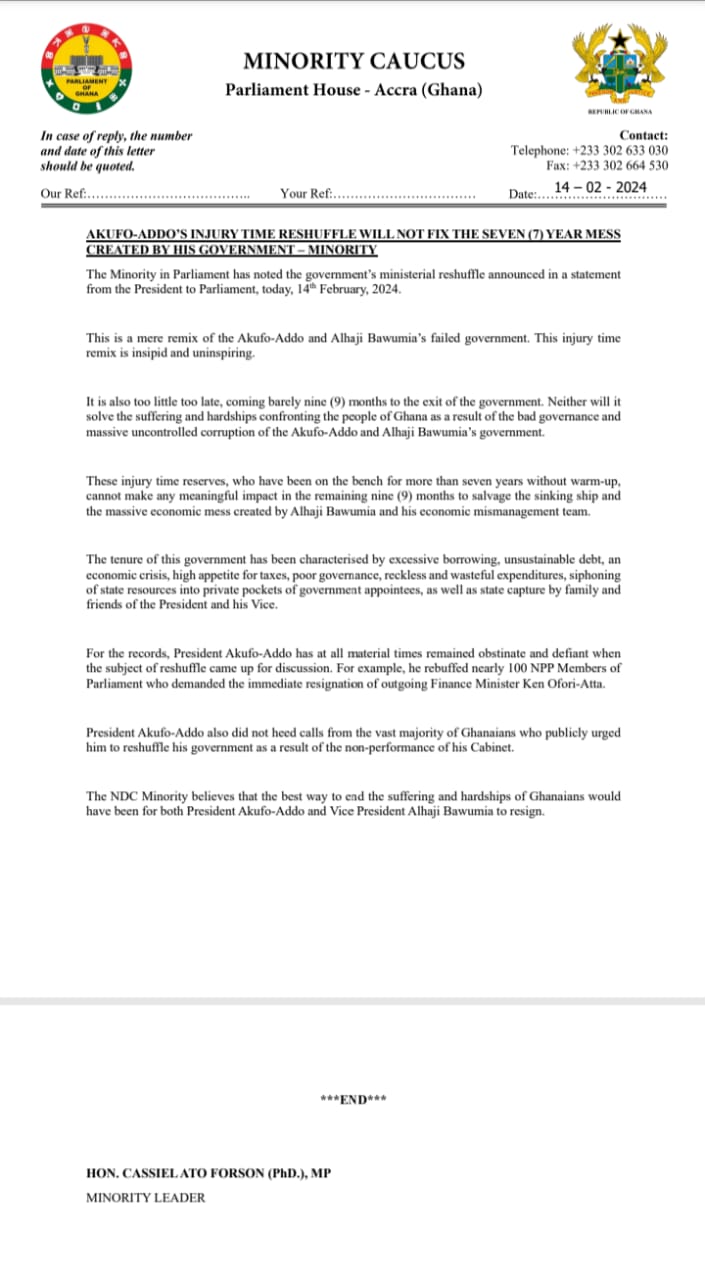
  • Your ministerial reshuffle will not end hardship in Ghana – Minority to Akufo-Addo

    Your ministerial reshuffle will not end hardship in Ghana – Minority to Akufo-Addo

    The recent ministerial reshuffle by President Akufo-Addo has faced staunch criticism from the Minority in Parliament, with accusations of being uninspiring and lacking substance.

    In a released statement, Minority Leader Dr. Cassiel Ato Forson described the reshuffle as nothing more than a “mere remix of the Akufo-Addo and Alhaji Bawumia’s failed government.”

    Expressing skepticism, Dr. Forson asserted that the reshuffle, occurring just nine months before the government’s departure, would not alleviate the suffering caused by what he labeled as bad governance and rampant corruption within the Akufo-Addo and Alhaji Bawumia administration.

    He questioned the potential impact of the newly appointed officials in the remaining nine months, highlighting economic challenges and alleged mismanagement by Alhaji Bawumia and his economic team.

    Dr. Forson stated, “It is also a little too late, coming barely nine (9) months before the exit of the government. Neither will it solve the suffering and hardships confronting the people of Ghana as a result of the bad governance and massive uncontrolled corruption of the Akufo-Addo and Alhaji Bawumia’s government.”

    The Minority further criticized the government’s track record, citing excessive borrowing, unsustainable debt, economic crises, high tax appetite, poor governance, wasteful expenditures, and alleged siphoning of state resources into private pockets.

    Dr. Forson concluded by expressing the belief that President Akufo-Addo and Vice President Alhaji Bawumia should resign to truly address the hardships faced by Ghanaians.

    “The tenure of this government has been characterised by excessive borrowing, unsustainable debt, an economic crisis, high appetite for taxes, poor governance, reckless wasteful expenditures, siphoning of state resources into private pockets of government appointees, as well as state capture by family and friends of the President and
    his Vice.”

    “For the records, President Akufo-Addo has at all material times remained obstinate and defiant when the subject of reshuffle came up for discussion. For example, he rebuffed nearly 100 NPP Members of Parliament who demanded the immediate resignation of outgoing Finance Minister Ken Ofori-Atta,” he stated.

    “The NDC Minority believes that the best way to end the suffering and hardships of Ghanaians would have been for both President Akufo-Addo and Vice President Alhaji Bawumia to resign,” he added.

  • Val’s day: How various tribes and ethnic groups in Ghana express their love

    Val’s day: How various tribes and ethnic groups in Ghana express their love

    Valentine’s Day, often referred to as Val’s Day, is a celebration observed on February 14 each year. It’s a day people express their affection and love for one another through gestures like giving gifts, sending cards, or spending quality time together. 

    It’s named after Saint Valentine, a Christian martyr who is associated with love and romance. 

    While it’s traditionally a day for couples, many people also celebrate by showing appreciation for friends and family. TIGPost went on the streets to sample the perspectives of Ghanaians on how love is expressed in their various tribes and ethnic groups. This is a taste of love brewed in Ghana! Enjoy!

    A Fante woman’s perspective 

    Maame Aba, said Fantes like her love to cook. As such, they love to express their love by cooking for their loved ones. 

    “Fante women love cooking so that is one of the ways we show love to our families and our significant others. And we also love words of motivation like telling you ‘you’re beautiful,’ ‘you are doing well so keep it up’ and we are also just caring. We are serviceable as well.

    “Generally, we want to make sure you’re okay, find out if you need any assistance, very helpful. We always want to assist if you need any help,” she said. 

    A Ga woman’s perspective 

    Naa Quaye, a Ga, also said expressing love ‘the Ga way’ is no different from how other ethnic groups in Ghana do. She said the people of Ga love surprises and love it when their significant others express their love by surprising them with gifts and others. 

    “So among the Ga people, we love surprises. If you love someone, one way you can express it is by buying the person gifts and providing the needs of the person because like i said, we love surprises,” she said. 

    A Sandema woman’s perspective 

    Sandra Balami hails from Sandema, situated in the Upper East Region. According to her, the people of Sandema are known for their remarkable generosity and penchant for expressing affection through acts of kindness.  

    “The people of Sandema are very generous. We love expressing love by giving to others; so we cook and give some to our neighbors, we gift people goats, foodstuff, and others and I think this has really impacted me in a way. 

    “So on Val’s day I’ll get you [my partner] a thoughtful gift, it could be anything at all – a watch, clothes, shoes – or anything. We could go out, sit somewhere and spend some quality time together,” she said. 

    A Bolgatanga man’s perspective 

    Benard Atanga, also from Bolgatanga in the Northern region, said people from where he hails from, express their love by gifting items to loved ones and going out as well. He said he would prefer to climax the day with a romantic night out with their partner.

    An Akuapem woman’s perspective 

    “Akuapems love showing off. They are the type who can announce to everyone that ‘this is my husband’ or ‘this is my wife.’ They really like showing off and on a day like this, my mum [an Akuapem] would throw a party for my dad. She would also prepare a special meal for him,” Akua Asabea recounted. 

    A Kwahu man’s perspective

    As an Akan precisely from Kwahu, Kwasi Odame, said: “We find difficulty in showing love to our loved ones even though we love them dearly. Mostly we show love by providing everything our loved ones love. But for affections, we hardly show them.”

  • Over 1.1m untracked small arms and light weapons pose security threat in Ghana

    Over 1.1m untracked small arms and light weapons pose security threat in Ghana

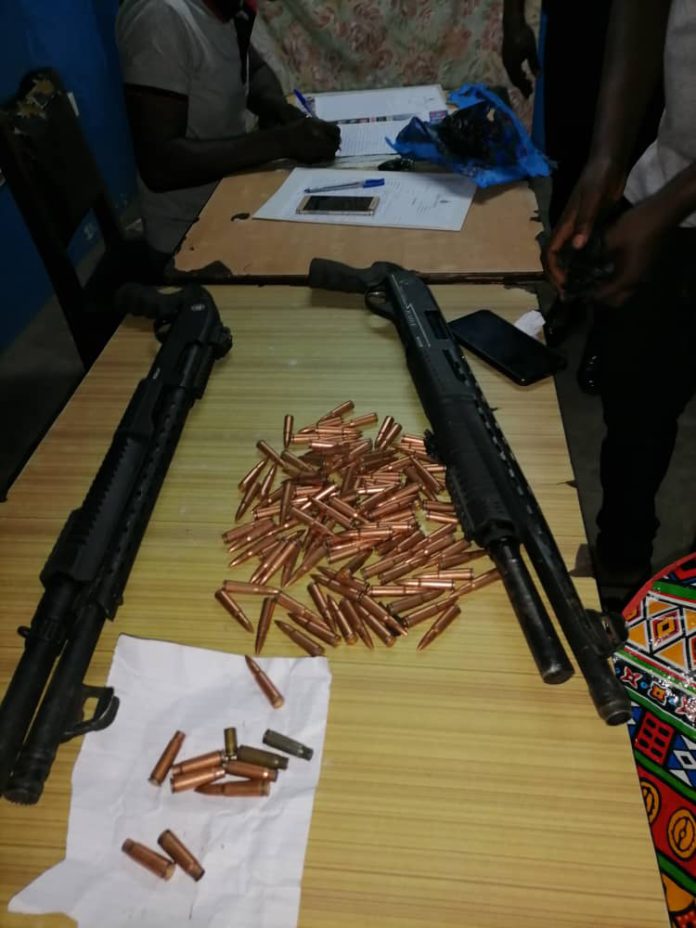
    The National Commission on Small Arms and Light Weapons has raised alarm over the alarming number of untraceable small arms and light weapons circulating in Ghana, posing a significant threat to national security. 

    According to the commission, out of the total 2.3 million small arms and light weapons currently in circulation, over 1.1 million cannot be adequately tracked or monitored.

    Speaking at a regional conference addressing the humanitarian impact of improvised anti-personnel mines, Frank Boateng Asumani, the Head of the National Arms Marking Programme at the Commission, highlighted the urgency of addressing the proliferation of these unaccounted weapons. 

    He disclosed that efforts are underway to curb their circulation and enhance security measures.

    “Presently, there are 2.3 million small and light weapons in circulation, with only 1.2 million being legally registered. The remaining 1.1 million are unaccounted for, prompting the commission to seek funding to assess the extent of proliferation within the system. These include AK47s, pistols, pump-action guns, and locally manufactured firearms,” stated Asumani.

    The revelation underscores the need for robust measures to address illegal arms trafficking and strengthen monitoring mechanisms to prevent these weapons from falling into the wrong hands. 

    The unchecked proliferation of small arms and light weapons poses a grave threat to public safety and stability, as they can fuel armed conflicts, criminal activities, and undermine peace and security efforts.

    In response to the growing concerns, Vice President Dr Mahamudu Bawumia has urged nations, including Libya, Egypt, and Morocco, to prioritize ratifying the convention banning anti-personnel mines. 

    Dr Bawumia emphasized the importance of preventing the humanitarian consequences associated with these weapons, underscoring the need for international cooperation to address shared security challenges.

    The Ghanaian government, in collaboration with regional and international partners, is expected to intensify efforts to combat illicit arms trafficking, enhance border security, and strengthen legal frameworks to regulate the possession and transfer of firearms. 

    Such initiatives are crucial to safeguarding national security and promoting peace and stability in the region.

  • Bawumia calls for international action to combat humanitarian threat of improvised mines

    Bawumia calls for international action to combat humanitarian threat of improvised mines

    Ghana’s Vice President, Dr Mahamudu Bawumia, has highlighted the pressing need for concerted efforts to address the humanitarian and security challenges posed by improvised mines in conflict-affected regions.

    Speaking at the opening ceremony of a three-day conference on the Humanitarian Impact of Improvised Anti-Personnel Mines , Dr Bawumia underscored the grave threat posed by landmines, which indiscriminately maim and kill innocent civilians, exacerbating already dire humanitarian crises. 

    “The presence of improvised mines exacerbates the already  grave humanitarian and security challenges faced by these nations, necessitating urgent and concerted efforts towards effective mine clearance and risk mitigation strategies,” he said.

    He added that these insidious weapons not only inflict lasting physical and psychological harm but also disrupt livelihoods, impede socio-economic development, and hinder efforts to achieve sustainable peace and security.

    Recognizing the urgency of the situation, the Vice President reaffirmed Ghana’s steadfast commitment to promoting a world free from the scourge of landmines and explosive remnants of war. 

    Furthermore, Dr Bawumia urged all states that are not parties to the convention on landmines to strive towards ratification, emphasizing the critical role of international cooperation in addressing this pressing humanitarian issue.

    About the conference 

    Ghana, through the National Commission on Small Arms and Light Weapons (NACSA), is hosting a 3-day regional conference on the need to address the humanitarian impact of improvised anti-personnel mines in West Africa and the Sahel Region within the framework of the Convention.

    This event is being held in partnership with the Implementation Support Unit (ISU) of the Convention on the Prohibition of the Use, Stockpiling, Production, and Transfer of Anti-Personnel Mines and on Their Destruction.

    The Convention is the international community’s comprehensive response to the humanitarian impact caused by anti-personnel mines which are indiscriminate weapons that remain dangerous for decades after conflicts have ended.

    In 2019, the Convention took a significant step by adopting the Oslo Declaration on a Mine-Free World.

    While recognizing achievements, the Declaration emphasised persistent challenges, particularly the increasing threat posed by anti-personnel mines, including the use of improvised ones by armed non-state actors, and their impact on human life and sustainable development.

    Scheduled to take place from February 13-15, 2024 in Accra, the upcoming conference offers a platform for a technical discussion on best practices and lessons learned within the framework of the Convention.

    The conference will be attended by representatives from States Parties to the Convention in West Africa and the Sahel Region, as well as leading UN agencies, the International Committee of the Red Cross and experts working in mine action.

  • MoMo operator shot in Walewale; police commence hunt for attackers

    MoMo operator shot in Walewale; police commence hunt for attackers

    A Mobile Money operator identified as Rabiu sustained gunshot wounds and was promptly transported to the Walewale Government Hospital for urgent medical care on Monday evening in the North East Region of Ghana.

    According to reports from eyewitnesses, the attack unfolded at a bustling bus station near Nalerigu Junction, located along the Tamale-Bolga Road, within the heart of Walewale township. 

    Witnesses recounted that three assailants arrived at the scene on motorcycles, initiating the assault with warning shots before directing gunfire at the young operator.

    Confirming the incident, Aremeyaw Somo Lucky, the Municipal Chief Executive, acknowledged the severity of the situation and confirmed that the police had initiated a search for the perpetrators. 

    “I have just received this information about 5 minutes ago,” stated the MCE, emphasizing the urgency of the matter.

    While the motive behind the attack remains unclear, authorities are actively investigating the circumstances surrounding the shooting. 

    The incident has sparked concerns about the safety of individuals employed in the Mobile Money sector, underscoring the need for enhanced security measures to protect their well-being.

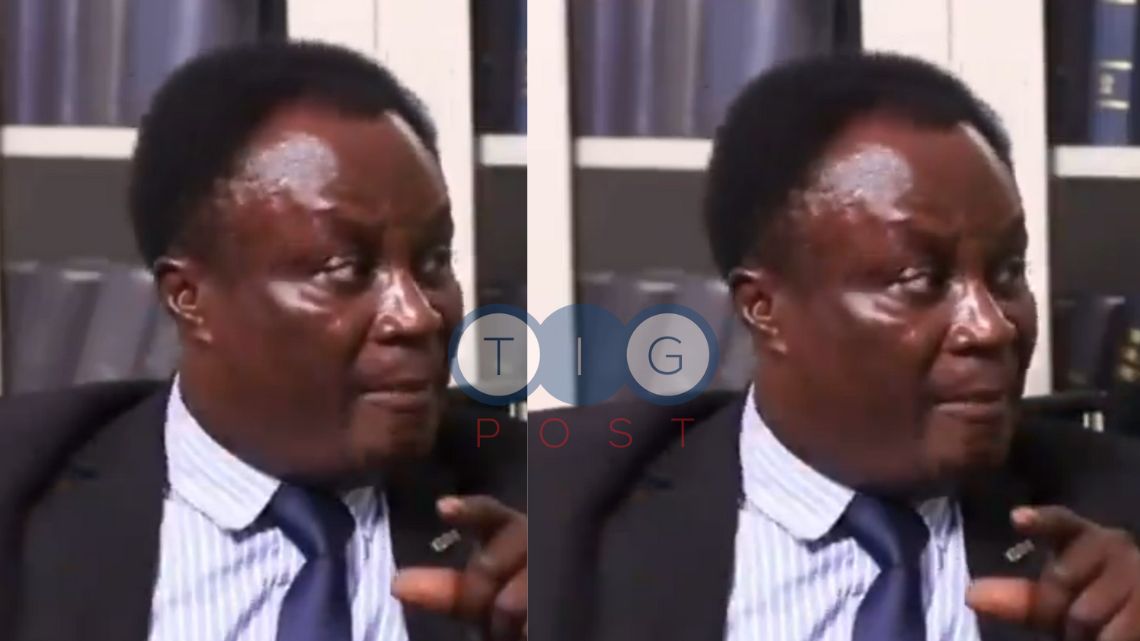
  • STU sex scandal: He sleeps with them, rapes them, and threatens them with ‘juju’ – Ex-SRC prez exposes lecturer

    A former Student Representative Council (SRC) president of Sunyani Technical University (STU) has come forward with disturbing allegations against an unnamed lecturer, accusing him of sexually abusing and harassing female students.

    The former SRC president, now a doctor in the British army, revealed these shocking revelations in a viral video on social media. The accusations include claims that the lecturer preyed on vulnerable female students, coercing them into sexual relationships.

    “If you ever attended STU please come close and let’s talk about something. If you are still a student of Sunyani Polytechnic, come and let’s have a conversation. Not just them, but anyone else who has been able to have a tertiary education, please come close and let’s have a conversation.

    There was a lecturer in the school who disrespected women. Not only women but also men. But he mostly demeaned the vulnerable ladies. When he proposes love to you, and you reject him, he will fail you. He sleeps with the students, forces himself on them, and has sex with them,” he said.

    While refraining from disclosing the lecturer’s identity, the former SRC president provided hints about his department and history within the institution.

    “There was a time when this lecturer became a dean. He was in the marketing department.  And that lecturer, I know you are listening to me now. You are watching me,” he noted.

    Additionally, he alleged that the lecturer sent explicit content, made uninvited nighttime visits to female students’ hostels, and exhibited violent and abusive behaviour towards male students, especially during exams.

    “Some of our sisters are suffering and this particular lecturer I am talking about, he was the worst of all. If you are a woman, and he professes love to you, and you reject him, he will disgrace you. He used to send nudes to students. He goes after female students by visiting them late in the night at their hostels. Paying unannounced visits.”

    According to the former SRC president, the lecturer boasted about possessing charms and amulets, which he allegedly used to intimidate and manipulate both students and staff. He highlighted an incident involving an alleged rape during a school excursion, asserting that the lecturer’s purported use of charms contributed to a lack of accountability in that case.

    “This same lecturer, there was a time in school when a group went for an excursion and there was an alleged rape case and nobody could say anything about it. Nothing came out of it because the lecturer has amulets around his wrists and waist, and he keeps claiming he has charms, he has charms. Many would be saying as for this person, he deals with charms and so if you cross him, he will cast a spell on you. He fights with men on campus. He fails some and even has the guts to publicly tell them during exams, that “you, I will fail you, animal, fool!” he claimed.

    Despite the serious nature of the allegations, the former SRC president challenged the lecturer to refute the claims, promising to provide video, pictures, and voice evidence to substantiate his accusations. He further dared any other lecturer or institution in Ghana to dispute the allegations, emphasizing his readiness to expose more misconduct.

    Expressing concern for the affected students, the former SRC president called on authorities, including the board of governors, the vice chancellor, the Ministry of Education, and the police, to investigate the matter thoroughly and take appropriate action against the accused lecturer.

    “I dare you to come out and challenge me and I dare any lecturer all over Sunyani Polytechnic now Sunyani Technical University, to come out and dare me. Like you will see, video pictures and voice evidence. This is against the ethics of a lecturer. He is currently still at the school as I speak. I dare you, come out and chase me now, and you will see video evidence. All the way from 2012. Then you will know that yes, we still keep records. Ghanaian women are suffering. Akufo-Addo, Ministry of Education, IGP, investigate into these matters, some ladies are suffering,” he mentioned.

    Acknowledging the negative publicity generated, the former SRC president apologized to his alma mater, commending the current vice-chancellor, Professor Ing. Kwadwo Adinkrah-Appiah, for transforming the school and restoring its image.

    “Sunyani Ploy, today this video I am recording is not meant to disgrace you. Prof. Ing. Adinkrah-Appiah, you have done great work. You have elevated the school to a great level because there was a time when the school was sinking. But today, the school has regained its strength. God bless you and make you great. May all your workers continue to help you so that you can continue the good work that you are doing.”

    He concluded by speaking on behalf of the victims, urging authorities to address the trauma and injustice experienced by those affected by the lecturer’s alleged misconduct.

    “The reason I am so eagerly speaking is because 5 female students have contacted me telling that “Doc, because of what this man did to us, we have no interest in men and so now we are lesbians.” two of them are telling me that “Doc because of what this man did, we have never had a stable relationship”.  We commit that lecturer into God’s hands and the gods of our land,” he noted.

  • The Ghana-Nigeria ‘bond’ making us jealous – Senegalese declares

    The Ghana-Nigeria ‘bond’ making us jealous – Senegalese declares

    A Senegalese individual has expressed admiration for the “bond” between Ghana and Nigeria, as observed through the banter and camaraderie exhibited by citizens of both nations during the 2023 AFCON tournament.

    This sentiment arose from the playful teasing exchanged between Ghanaians and Nigerians following their respective performances in the tournament. Ghana faced an early elimination in the group stages, leading to Nigerians poking fun at their misfortune.

    However, Nigeria’s journey to the final stage ended in defeat against Ivory Coast, prompting Ghanaians to reciprocate with jests directed at their neighbors.

    This dynamic exchange of banter on social media has caught the attention of other Africans, who find themselves impressed by the mix of friendly rivalry and mutual respect displayed between Ghana and Nigeria.

    Many are intrigued by the origins of this unique relationship between the two countries, which oscillates between playful teasing and solidarity during sporting events.

    “As a Senegalese. I want to ask. How did the vibe between Ghana and Nigeria start. U make us and other countries jealous of the bond. You guys make it look like Africa is made up of only Ghana and Nigeria. Why?” one @bontiyaka asked.

  • Asantehene recounts Asanteman’s role in Ghana’s Independence struggle 

    Asantehene recounts Asanteman’s role in Ghana’s Independence struggle 

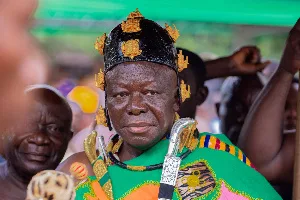
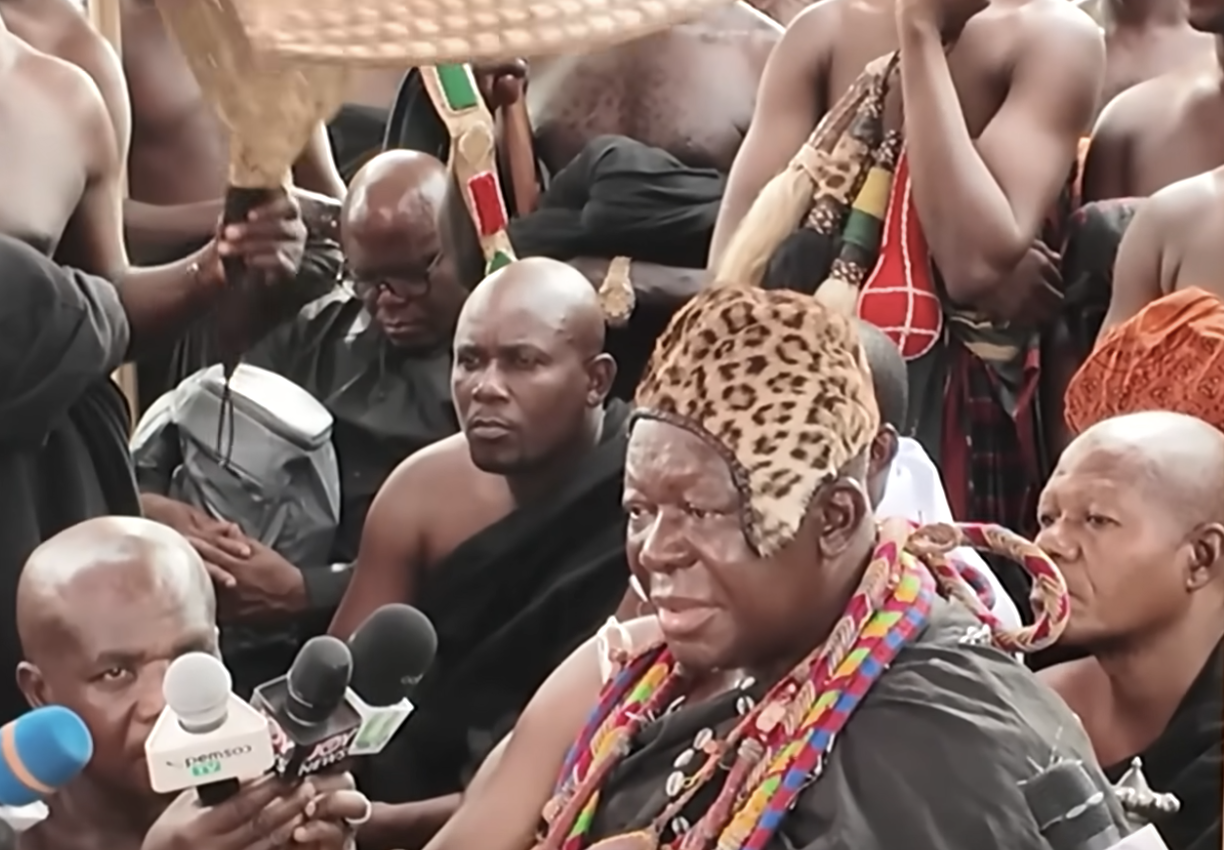
    The Asantehene, Otumfuo Osei Tutu II, has shed light on the significant role played by Asanteman in Ghana’s independence struggle during a commemorative durbar dubbed “Kuntunkuni.” 

    The event marked the 150th anniversary of the renowned Sagrenti War, held on February 8, 2024.

    During his address, the Asantehene recounted how Asantes, though initially not involved in the fight for independence, were later invited to join the cause. He emphasized that Ashanti existed as its own nation before becoming part of Ghana.

    Otumfuo Osei Tutu II elaborated on the historical context, highlighting the involvement of his uncle, Osei Agyemang Prempeh II, who was approached by leaders of the independence movement. They proposed making him a king akin to foreign queens if he joined their cause.

    “Ashanti was its own nation, we moved and found ourselves in Ghana. Also, before Ghana came, Ashanti was already a nation,” Otumfuo Osei Tutu II explained, speaking in Twi. “During the fight for independence, we (Asantes) were not part. It is there that they came to say that ‘Nana, come and join us to become a unitary state. So that when we succeed, we will make you (Osei Agyemang Prempeh II) like the foreign queen, and we will be the prime minister.”

    The Asantehene emphasized the importance of remembering Ghana’s history, stating, “We all know the history of Ghana but it looks as if we have forgotten them.”

  • US museum returns pilfered artefacts to Ghana

    US museum returns pilfered artefacts to Ghana

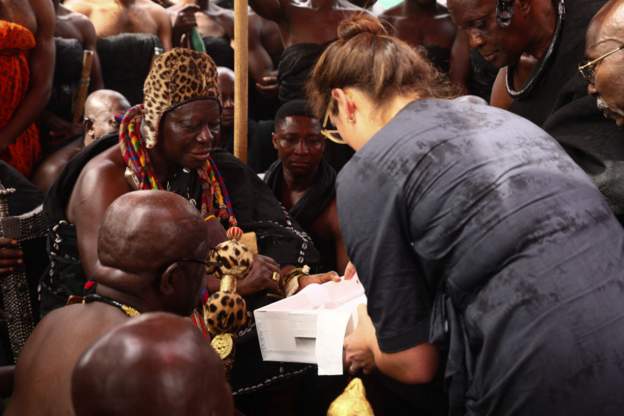
    The king of the Asante kingdom in Ghana, also known as the Asantehene, has been given back seven royal objects that were stolen from the kingdom almost 150 years ago.

    The things were brought back from the Fowler Museum at the University of California in the US and given to King Otumfuo Osei Tutu II in a ceremony on Thursday.

    They have a gold necklace, a fancy chair, two gold decorations for stools, and two bracelets.

    An important person’s elephant tail whisk, a special ceremonial item, was given back, according to Erica P Jones, who works with African art at Fowler Museum.

    The items have been at Fowler Museum since 1965, but were taken by British forces from the Asantehene’s Manhyia Palace in the city of Kumasi, southern Ghana, in 1874.

    The items were returned to the kingdom less than two weeks after the British Museum and Victoria and Albert Museum loaned back 32 items that had been stolen from there in the 19th Century.

  • So far as the Golden Stool remains, no one can touch Asanteman – Otumfuo

    So far as the Golden Stool remains, no one can touch Asanteman – Otumfuo

    The Asantehene, Otumfuo Osei Tutu II, has emphatically stated that any conspiracy against the Ashanti Kingdom, whether from the government, politicians, or other tribes in Ghana, will ultimately meet failure.

    This resolute declaration took place during a durbar on Thursday, February 8, 2024, concluding the 150 years celebration of the Sagranti War, known as the Kuntunkuni festival, held in Manhyia.

    Otumfuo, in his address, called for national unity and emphasized the crucial role of fostering peace for the growth of the entire nation. He traced the historical evolution of the Ashanti Kingdom from a distinct entity to an integral part of the Gold Coast, now governed by Ghana’s 1992 constitution.

    Expressing concern about perceived hostility towards the Ashanti people, Otumfuo questioned the foundation of any anti-Ashanti sentiments.

    He reiterated the Kingdom’s commitment to living within the legal framework of the country and urged an end to divisive schemes.

    In commemorating the resilience of Asanteman, Otumfuo highlighted the Golden Stool as the symbolic soul of the Kingdom, emphasizing its indestructibility.

    Recalling the historical significance of the Sagrenti War of 1874, he emphasized how the Golden Stool withstood challenges, solidifying Asanteman’s invincibility.

    “Asante is alive. 150 years ago, the whites destroyed this city, but the Golden Stool remained. Various kinds of guns came to Kumasi, but the Golden Stool remained untouched. So far as the Golden Stool remains, no one can touch Asanteman. It is the soul of Asanteman and Nananom used their blood to protect it.”

    “You will be overcome if you decide to take out Asante. All those who plot against the kingdom must stop. We live here in love…Politicians must know that power is transient. Use love to rule. If you rely on your power, remember that your time will end soon.”

    “The Zongos are on our land, we live in peace. Ewes are here and we have Anloga here as well as Fantes New Town for Fantes. Why is our love being reciprocated with hatred? Let’s be united. All political parties must know that without Asante, Ghana cannot stand. We are not above anyone; we are equals but I won’t allow anyone to cheat us.”

  • 165 Ghanaians voluntarily repatriated from Libya under VHR program

    165 Ghanaians voluntarily repatriated from Libya under VHR program

    The Ghanaian Embassy in Tripoli, in partnership with the International Organization for Migration (IOM), has facilitated the repatriation of 165 Ghanaian nationals from Libya to Ghana.

    According to a press statement from the Information Ministry, the group is scheduled to arrive at Kotoka International Airport (KIA) at 1500 hours GMT on Thursday, February 8.

    This recent repatriation effort follows previous initiatives coordinated by the Embassy and IOM. Last October, the fourth batch of 169 Ghanaian nationals was successfully repatriated from Tripoli to Accra under the Voluntary Humanitarian Return (VHR) program for 2023.

    Additionally, on October 10, 2023, a third batch of 134 Ghanaian nationals was voluntarily repatriated from Misrata to Ghana under the same program. In total, 629 Ghanaians have benefited from the VHR program in 2023.

    Priority for repatriation was given to individuals in detention centers, those in need of medical assistance, families with children, stranded individuals, and destitute individuals requiring assistance to return to Ghana.

  • A guide to becoming a Law student in Ghana

    A guide to becoming a Law student in Ghana

    To embark on the journey of becoming a law student in Ghana, the first step is to acquire a degree, typically spanning four years.

    Any degree from a recognized institution qualifies, where “recognized” denotes acknowledgment by institutions offering law degrees such as UG, KNUST, GIMPA, Zenith, and Mount Crest.

    Private arrangements leading to a ‘London Law Degree’ exist, but details are not provided.

    Following the completion of the initial degree, one can seek admission to institutions like UG, KNUST, GIMPA, Zenith, or Mount Crest for a two-year LLB (Bachelor of Laws) program.

    Upon successful completion of the LLB, with certain conditions met, one becomes eligible to enroll in the Ghana School of Law for the two-year Professional Law Course. The entire journey, from non-graduate to a qualified lawyer, typically takes about eight years.

    An alternative route, referred to as Route 2, allows students with secondary school certificates to directly enroll in the LLB program at certain universities like UG and KNUST. This option shortens the overall duration of study, spanning approximately five years from university to the Ghana School of Law.

    Route 3 involves students pursuing the LLB program at a foreign university in a Commonwealth heritage country such as Britain, the USA, Canada, or Australia. Upon obtaining the LLB, successful application to the Ghana School of Law may secure a place in the full two-year program.

    Alternatively, those admitted as lawyers in foreign countries with Commonwealth heritage may undergo a “conversion” process to the Ghana bar.

    This involves enrolling in a three-month program, subject to potential changes, at the Ghana School of Law after meeting post-qualification conditions in the foreign country.

  • Ghana suspends contentious power tax following commotion

    Ghana suspends contentious power tax following commotion

    The government of Ghana has stopped its plan to put a 15% tax on power because people were very angry about it and thought it would make living expenses even higher.

    The government wanted to charge VAT on people who use electricity at home.

    The worker’s unions didn’t like the new tax and said they will have protests all over the country next week.

    Officials now say that the plan has been postponed until discussions are held to solve the argument.

    A few days after the government started charging a fee for fuel emissions, people had different reactions to it.

    Ghanaians must now pay a yearly fee for the carbon emissions that come from their cars or trucks that run on petrol or diesel.

    Critics worry that the extra taxes could make the economy even worse, making it harder for people to afford things like gas that they need to live.

    The finance ministry told the two main power companies to stop adding the new tax for now.

    This is to talk a lot and to get support from people in the industry and labor unions, because there are serious concerns about how this will affect consumers and businesses. “The government wants the electricity companies ECG and NEDCO to stop charging VAT for now. They need to talk to important people like organized workers before they can start again. ”

    The TUC said the government has not told them officially about its decision.

    So, the protests that are supposed to happen next Wednesday are still happening according to Joshua Ansah, who is the TUC’s deputy secretary general. He told the media.

    Trade unions believe that adding more taxes will make it harder for families and companies, making the cost of doing business even more expensive.

    “We told the government that we can’t afford to pay VAT on electricity. We want the tax to be removed right away,” Mr Ansah said.

    Ghana is facing its worst economic problem in a long time, and the government is working hard to make more money.

    It agreed to a $3 billion (£2. 4 billion) rescue plan with the International Monetary Fund (IMF) to help with the crisis.

    For many years, Ghana has not had enough electricity, causing frequent power outages called “dumsor” in the Akan language.

    The country in West Africa gets a lot of its power from water and heat, but these sources are not always taken care of well.

    In recent years, the country has started depending a lot on gas for making electricity, and if there is not enough gas, then there are power cuts.

  • Camido, King Promise woo crowd at MOBO awards (video)

    Camido, King Promise woo crowd at MOBO awards (video)

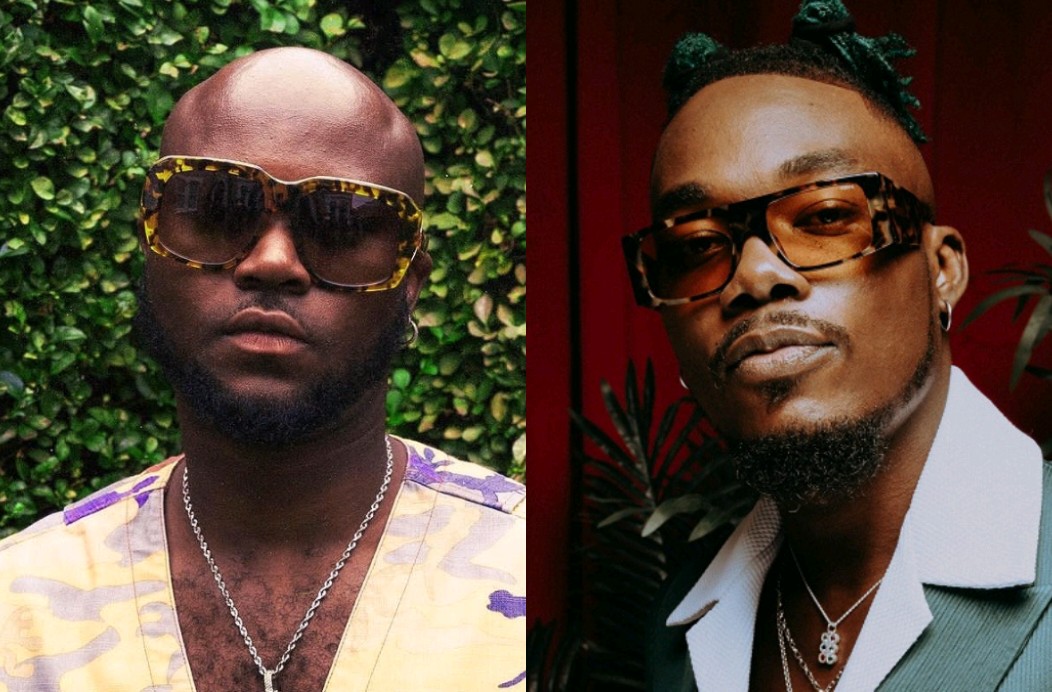
    Ghanaian music sensations Camidoh and King Promise left an indelible mark on the prestigious MOBO Awards in the United Kingdom on February 7, 2024, captivating the audience with their sensational joint performance.

    The dynamic duo, celebrated as top Afrobeat exports from Ghana, stole the spotlight with a mesmerizing showcase, featuring hit collaborations like ‘Sugarcane’ and ‘Terminator.’

    The electrifying stage presence of Camidoh and King Promise, marked by infectious smiles, dynamic dance energy, and seamless chemistry, had the crowd in awe.

    Their stellar vocals, combined with the irresistible beats of their songs, kept the audience dancing and singing along throughout the unforgettable set.

    As ambassadors of Ghanaian Afrobeat music, Camidoh and King Promise not only wowed the MOBO Awards audience but also showcased the rich musical heritage of their country to the world, solidifying their status as prominent figures in the global music scene.

    Watch video here:

  • Dr Bawumia’s 70 point Agenda (Vision) for Ghana

    Dr Bawumia’s 70 point Agenda (Vision) for Ghana

    1. A growth mindset curriculum to help students build critical skills such as problem solving, risk-taking, opportunity spotting, and design thinking.

    2. Enhance the repositioning of the education system towards STEM, Robotics, Artificial Intelligence, and vocational skills to cope with the demands of the fourth Industrial Revolution and job creation.

    3. Expand infrastructure at medical schools as well as the Ghana Law School to support an increase in admission for students for medical and legal studies.

    4. Enhance fiscal discipline through an independent fiscal responsibility council enshrined in the Fiscal Responsibility Act, 2018 (Act 982).

    5. Reduce the number of Ministers to 50

    6. The Fiscal responsibility Act will also be amended to add a fiscal rule that requires that budgeted expenditure in any year does not exceed 105% of the previous years tax revenue.

    7. Reduce the fiscal burden on government by leveraging the private sector.

    8. Introduce a very simple, citizen and business friendly flat tax regime. A flat tax of a % of income for individuals and SMEs (which constitute 98% of all businesses in Ghana) with appropriate exemption thresholds set to protect the poor.

    9. Tax amnesty

    10. Electronic and faceless audits by GRA

    11. No taxes on digital payments. The e-levy will therefore be abolished.

    12. No VAT on electricity (if still on books)

    13. No emissions tax and

    14. No betting tax

    15. Tema port will be fully automated.

    16. A new policy of aligning the duties and charges at Tema port to the duties and charges at Lome Port

    17. Spare parts importers duties will be at a flat rate per container (20 or 40 foot).

    18. Collaboration with the private sector, we will train at least 1,000,000 youth in IT skills, including software developers to provide job opportunities worldwide.
    19. Empower the private sector to create modern,  sustainable and well-paying  jobs for the youth.

    20. Reduce the cost of Data by working with industry players in setting clear policy guidelines that will remove any investor uncertainty and difficulties in business planning.

    21. Expeditious allocation of spectrum.

    22. Make it easy for Ghanaians to obtain passports, under my government, any Ghanacard holder will only have to pay a fee for a passport.

    23. an e-visa policy for all international visitors to Ghana to enable visas to be obtained in minutes subject to security and criminal checks.

    24. Attain food security through the application of technology and irrigation to commercial large-scale farming.

    25. Promote the use of agricultural lime to reduce the acidity of our soils, enhance soil fertility and get more yield from the application of fertilizers.

    26. Prioritize the construction of the Pwalugu Dam by using private sector financing to crowd in grant financing.

    27. Adoption of electric vehicles for public transportation.

    28. Partner with the private sector to build large housing estates without the government having to borrow or spend.

    29. National Rental Assistance scheme (which is working so well) will be enhanced to deal with the problem of demands for rent advance of two years and more.

    30. Diversify the generation mix by introducing 2000MW of solar power and additional wind power through independent power producers.

    31. More private sector participation in generation and retail.

    32. No import duty on solar panels.

    33. License all miners doing responsible mining.

    34. As long as miners mine within the limits of their licenses (e.g No mining in river or water bodies), there will no longer be any seizure or burning of excavators.

    35. Fully decentralize the minerals commission as well as Environmental Protection Agency (EPA) and ensure that they are present in all mining districts.

    36. Collaborate with the large mining companies, convert abandoned shafts into community mining schemes.

    37. Open more new community mining schemes.

    38. District mining committees should be responsible for reclamation and replanting.

    39. Pension scheme for small scale miners like we have done for cocoa farmers.

    40. Introduce vocational and Skills training on sustainable mining for small scale miners in the curriculum of TVET institutions.

    41. Provide equipment to government authorities in mining communities to undertake reclamation of land.

    42. We will set up state of the art common user gold processing units in mining districts in collaboration with the private sector.

    43. Conduct an audit of all concessions with various licenses and new applications.

    44. Abolish the VAT on exploration services (like assaying) to encourage more exploration.

    45. Establish, in collaboration with the private sector, a Minerals Development Bank to support the mining industry.

    46. Establish (through the private sector) a London Bullion Market Association (LBMA) certified gold refinery in Ghana within four years.

    47. All responsibly mined small scale gold produced will be sold to the central bank, PMMC or MIIF and will be required to be refined before export

    48. Engage exploration experts from the universities and geological Institutions to assist in exploring our seven gold belts.

    49. Provide the Geological Survey Department and our universities with resources annually to undertake a mapping of areas where we have gold reserves.

    50. Build Ghana’s gold reserves appreciably to reach a point when we have sufficient gold reserves to keep our external payments position sustainably strong.

    51. Protect local industry from smuggled imports that evade import duties.

    52. Special Economic Zones ( Free Zones) will also be created in collaboration with the private sector at Ghana’s major border  towns such as Aflao, Paga, Elubo, Sankasi and Tatale to enhance economic activity, increase exports, reduce smuggling and create jobs.

    53. Individualized credit scoring

    54. Digitalization of land titling and transfer

    55. Propose to amend Article 87 of the 1992 Constitution as well as the NDPC Act (Act 479) to mandate political party manifestoes, and consequently Economic and Social policies of governments, as well as budgets, to be aligned to the agreed on broad contours in specific sectors.

    56. Amend the 1992 Constitution with key emphasis on issues such as reducing the power of the President and empower other institutions, ex gratia, the rights of dual citizens, election of MMDCEs to deepen decentralization, among others with extensive public consultation.

    57. Prioritise the creation of incentives for corporate sponsorship as a sustainable module of financing sports development and promotion for our national teams.

    58. Establish the Ghana School Sports Secretariat, which will be an agency under the ministry responsible for sports, in collaboration with other stakeholders such as the GES and sports federations.

    59. Leverage technology, data and systems to improve healthcare.

    60. Expand infrastructure at medical schools and improve human capital development.

    61. Introduce digital and streaming platforms for our artists to make tourism and the creative arts a growth pole in Ghana.

    62. Tax incentives will also be provided for film producers and musicians.

    63. Implement a visa-on-arrival policy for all international visitors to Ghana as has recently been implemented by Kenya.

    64. Recruit 1,000 special education teachers and retrain teachers on how to work with special needs students.

    65. Train more speech and language therapists and occupational and behavioural therapists.

    66. Fiscal and administrative decentralization

    67. Empower the private sector to build roads, hospitals, and schools.

    68. Prioritize the full implementation of the Affirmative Action Act as should hopefully have been passed by January 2025.

    69. After completion of their education, those that can secure jobs would be exempted from national service. National service will no longer be mandatory.

    70. Seek school-level collaboration with international sports bodies like the NBA and NFL to make Ghana a hub for these emerging sports in Africa, to create more opportunities for young people. Collaboration with the private sector, we will train at least 1,000,000 youth in IT skills, including software developers to provide job opportunities worldwide.
  • I am interested in participating developmental debates , not political propaganda – Deputy Minister of Food and Agriculture

    I am interested in participating developmental debates , not political propaganda – Deputy Minister of Food and Agriculture

    Deputy Minister of Food and Agriculture and Member of Parliament for Nhyiaeso Constituency, Dr. Stephen Amoah, is advocating for a transformative shift in the approach of opposition parties towards challenging government policies.

    Expressing weariness with the cyclical nature of partisan disputes, especially regarding taxation and public spending, Dr. Amoah emphasized the need for politicians to prioritize policies that benefit the nation over engaging in political rhetoric.

    In an interview on TV3, Dr. Amoah urged a departure from the traditional pattern where opposition parties reflexively oppose policies introduced by the sitting government.

    “It is crystal clear that anytime there is an introduction or increment or taxes, these things do happen. When the NDC were in power and they wanted to increase or introduce a new tax, the NPP would sometimes hide behind or start arguments opposing it and the public would follow. It is the same way when NPP is bringing a new tax, the NDC would start arguments and the public will follow. No matter where on this earth people want to release funds from their company or their pocket, it’s a natural instinct.

    “But for how long should we continue this? Do we ask ourselves if we really need to take taxes or not? What is the situation of our fiscal space today? If we don’t take, what happens and if we take taxes also, what happens? What will be the resultant effect on the economy? Is it going to be adverse in the short, medium or long term for us as a country? People are calling for the increment of salaries and allowances to satisfy a lot of needs. As a country, how do we fund them? Do we take taxes? So, I think there should be a paradigm shift, we should come to a point that the idea of recycling NPP, NDC opposing every good thing or bad thing because we want to come to power, must stop, in my opinion.

    “… I mean anybody can do politics with it but I am trying to have a shift personally. I know once in a while I can come. But I am trying to move myself from anything you have to defend in the name of politics to get to the point where all of us come to a new point of convergence, enough of these things,” he said.

    He stressed the importance of finding solutions that enhance the country’s well-being rather than perpetuating political propaganda.The Deputy Agric Minister questioned the sustainability of the current practice, emphasizing the need for a paradigm shift.

    He urged a collective reassessment of the nation’s fiscal space, contemplating the consequences of both imposing and not imposing taxes.

    Dr. Amoah called for a fresh perspective that transcends the habitual opposition and support based on political affiliation.

    Citing the persistence of the same variables in opposition complaints since the inception of the Fourth Republic, Dr. Amoah prompted a reflection on the nation’s objectives, focus, and long-term goals.

    He called for a collective pause to ponder whether Ghana should continue the existing pattern of challenges or redirect its efforts towards a more cohesive and goal-oriented approach for national development.

    “All the complaints, the challenges, oppositions from the late JJ Rawlings through to Nana Addo’s time, they are the same variables.

    “When former President Rawlings was there, the very things Ghanaians were complaining about in terms of variables are the same even up until now. With this, do we continue this thing as a country or we should pull the brakes and ask ourselves what we want to attain. We have to ask ourselves what our focus is, our long term goals and also if we really want to build this country,” he asked.

  • Cheddar advocates railways development to revolutionize Ghana’s transport system

    Cheddar advocates railways development to revolutionize Ghana’s transport system

    Aspiring presidential candidate, and founder of #TheNewForce, Nana Kwame Bediako, popularly known as Cheddar, has highlighted the urgent need for infrastructure development in Ghana, particularly emphasizing the expansion of railways as a priority.

    During a media engagement, Cheddar expressed his dismay over the current state of transportation infrastructure in the country, noting that in 2024, the primary mode of transporting goods remains limited to roads. 

    He emphasized the absence of alternative modes such as waterways and railways, which he believes are essential for efficient and sustainable transportation.

    Outlining the projects he intends to implement, he noted that:”We also have infrastructure development and the infrastructure development of course there are  a lot of things that we need to do in this country. Expansion of railways is one of the most important things to me. I don’t see why we are in 2024 and the only way of transporting goods in our country is by road.”

    Highlighting the environmental impact of overreliance on road transportation, Cheddar raised concerns about pollution and emphasized the need for sustainable solutions to modernize Ghana’s transportation system.

    “You can’t even put anything on any water and you can’t move containers by railways. So we can move a 100 containers from the harbor to go to one place but everyone of these containers is going on a truck and is driving on a road and is polluting the environment and it makes us think that we are not thinking to be with the modern world,” he added.

    As Ghana prepares for upcoming elections, Cheddar’s focus on infrastructure development and sustainable transportation solutions adds a unique perspective to the political discourse.

  • Ghana is like California – Davido

    Ghana is like California – Davido

    Nigerian superstar Davido has offered intriguing insights into the cultural differences between Ghana and Nigeria, shedding light on why many prefer the former over the latter.

    Drawing parallels between the two West African nations and iconic American states, Davido likened Nigeria to New York and Ghana to California.

    He highlighted Ghana’s charm, describing it as a preferred destination for those seeking a more serene and laid-back atmosphere, along with ample vacation opportunities.

    “People tend to go to Ghana more because there are fewer people and space. There is more vacation,” Davido remarked in an interview.

    However, Davido also acknowledged Nigeria’s unique dynamic, which offers a blend of both positive and negative aspects.

    “But if you are trying to eat everything in one; you want to see the bad part, great part, and everything. Go to Lagos. Everything is in that Lagos,” he added.

  • Ghana’s parliament is one of three countries in the world with highest attrition rate – Majority Leader

    Ghana’s parliament is one of three countries in the world with highest attrition rate – Majority Leader

    Majority Leader, Osei Kyei-Mensah-Bonsu, has disclosed that the country ranks among the top three nations globally with the highest attrition rate in its legislature.

    Expressing concern over the departure of experienced lawmakers either voluntarily or through electoral defeat, the Majority Leader emphasized that this characterization has subjected Ghana to global ridicule, prompting reflections on the impact of such a trend on the nation’s international reputation.

    “I am very much worried. Let us face it, we are becoming a laughing stock in the world because as I said, Ghana is one of three countries in the world with the highest attrition rate in our parliament, it is not a good description at all,” the Suame lawmaker who is also exiting Parliament voluntarily told Johnnie Hughes on the Sunrise show on 3FM Wednesday February 7.

    The Speaker of Parliament, Alban Bagbin, also shared apprehensions about the exit of seasoned Members of Parliament from the House. Notable departures include First Deputy Speaker Joseph Osei Owusu, Cletus Avoka, ABA Fuseini, and Edward Bawa.

    Speaking in Parliament, Speaker Bagbin highlights the loss of 28 MPs through the NPP primaries and an additional 17 MPs through the NDC primaries.

    He emphasized the negative implications of voluntary discontinuance and deselection, stating that such occurrences are not favorable for the legislature and Ghana’s democratic development.

    Bagbin called for serious consideration by political parties, stressing the importance of experience in the House and the substantial investment made in each MP by the nation.

    “Honourable members, the primaries are part of the process for the electorates to determine who represents them in parliament. But the case of voluntary discontinuance of five and 19, followed by deselection of 17 and 28, is not a good signal for the legislature and for Ghana’s democratic development. Experience, as we all know, counts in this House, but the endorsement of your party is equally important.”

    He added “Honourable members, the haemorrhage and cost to the nation, however, are matters of great concern worth considering by all stakeholders, and I want to appeal to the political parties to take this up seriously, because the investment that is made in an individual MP is so huge for the nation just to go to waste after every four years.”

  • Ghana is California and Nigeria is New York – Davido draws differences

    Ghana is California and Nigeria is New York – Davido draws differences

    In a recent interview, Nigerian superstar Davido offered his unique perspective on the cultural distinctions between Ghana and Nigeria, likening them to two iconic American states: New York and California.

    He went on to elaborate on the appeal of Ghana, describing it as a preferred destination for those seeking a more laid-back atmosphere and ample vacation opportunities.

    “The difference between Nigerian and Ghana. Let me just explain. Nigeria is New York, Ghana is calm, California.”

    “So what happens is that people tend to go to Ghana more because there are fewer people and space. There is more vacation,” Davido said.

    He, however, noted that Nigeria sort of plays the devil’s advocate, providing a mixture of both the good stuff and bad stuff.

    But you are trying to eat everything in one; you want to see the bad part, great part and everything. Go to Lagos. Everything is in that Lagos,” he said.

  • UK Prime Minister’s Trade Envoy calls for mutual cooperation and growth in UK-Ghana trade relations

    UK Prime Minister’s Trade Envoy calls for mutual cooperation and growth in UK-Ghana trade relations

    The United Kingdom Prime Minister’s Trade Envoy to Ghana, Baroness Catherine Hoey of Lylehill and Rathlin, has emphasized the importance of mutually beneficial cooperation and balance in trade between the UK and Ghana. Speaking at the launch of the INEOS Grenadier, an off-roader 4×4 vehicle, into the Ghanaian automobile market, Baroness Hoey highlighted the need for increased exports from Ghana to the UK and vice versa.

    Total trade in goods and services between the UK and Ghana saw a significant increase, reaching £2.1 billion in the four quarters ending Q2 2023, marking a 44.6 percent rise compared to the previous year. This included £1 billion worth of exports from the UK to Ghana and £1.2 billion worth of imports from Ghana to the UK.

    Baroness Hoey underscored the significance of enhancing trade relations between the two nations, particularly in light of the economic challenges faced globally. She emphasized that increased trade between Ghana and the UK would benefit both countries and strengthen their longstanding relationship.

    Expressing delight at the launch of the British-designed INEOS Grenadier in Ghana, Baroness Hoey commended the innovation and diversification by INEOS Group. She noted that such initiatives not only showcase British design prowess but also contribute to strengthening relations between Ghana and the UK.

    Vice President Dr. Mahamudu Bawumia also highlighted the strong trade relations between the UK and Ghana, particularly noting improvements in commerce and construction since the inception of the UK-Ghana Business Council in 2018. He emphasized Ghana’s attractiveness as an investment hub, especially with the presence of the African Continental Free Trade Area (AfCFTA) secretariat in Accra.

    The UK-Ghana Business Council, established to deepen trade and investment and strengthen strategic partnerships, has facilitated investments across various sectors, including agro-processing, garments, pharmaceuticals, and infrastructure development.

    The meeting between representatives from the UK and Ghana aimed to further enhance bilateral economic relations and strengthen strategic partnerships. It provided a platform for discussions on boosting economic and commercial ties, fostering mutual growth, and exploring new avenues for collaboration between the two nations.

  • Video: MPs recite national pledge in Parliament

    Video: MPs recite national pledge in Parliament

    Ghana’s Parliament on Tuesday, February 6, 2024, introduced new Standing Orders, ushering in significant changes to the proceedings. 

    Among the key amendments are the implementation of a roll call of all Members of Parliament (MPs) at the beginning of each sitting, along with the recitation of the National Pledge of Ghana.

    The National Pledge, which states, “I promise on my honour, to be faithful and loyal to Ghana my motherland,” will now be recited at the commencement of every sitting week, following the morning prayers.

    In addition to these changes, several amendments have been made to the structure of parliamentary committees. The Finance Committee, previously consisting of 25 members, has been divided into three separate entities: the Committee on Economy, the Committee on Finance, and the Committee on Planning. Each committee will now focus on specific areas of expertise, such as the economy, finance, and planning.

    Similarly, the Committee of Defence and Interior has also been divided to enhance specialization and efficiency in addressing relevant matters.

    Addressing the House, the Speaker of Parliament, Alban Bagbin, highlighted the importance of these changes in upholding parliamentary procedure and fostering a sense of national unity. He emphasized the significance of reciting the National Pledge as a symbol of allegiance and patriotism to Ghana.

    “Order 69 enjoins the house to recite the National Pledge at the first sitting of every week of a meeting,” Speaker Bagbin stated. 

    Following his remarks, MPs stood up, placing their right hands over their chests, and fervently recited the pledge, affirming their commitment to the nation.

    The implementation of these new Standing Orders reflects the Parliament’s commitment to promoting accountability, efficiency, and national pride in its proceedings. 

    As MPs continue their legislative duties, these changes are expected to contribute to a more organized and cohesive parliamentary environment in Ghana.

  • Akufo-Addo’s economic team responsible for Ghana’s problems – Mahama

    Akufo-Addo’s economic team responsible for Ghana’s problems – Mahama

    The 2024 flagbearer of the opposition National Democratic Congress (NDC), John Dramani Mahama, has once again criticized the state of Ghana’s economy under President Nana Addo Dankwa Akufo-Addo.

    Mahama asserted that President Akufo-Addo did not inherit a problematic situation, attributing the current challenges to what he described as the “clueless economic management team and finance minister” of the current administration.

    Encouraging Ghanaians to vote against the New Patriotic Party (NPP) in the upcoming December general elections, Mahama highlighted the achievements of his administration before the NPP took office in 2016.

    Expressing disappointment that the Akufo-Addo-led administration continued to blame his previous government for their failures, Mahama defended his term, stating that the state of the economy during his leadership was far better than the current situation under the Nana Akufo-Addo-Bawumia administration.

    Mahama stated, “You didn’t inherit a mess; it is your clueless economic management team and finance minister that created the mess we are experiencing today.”

    Emphasizing his economic successes, Mahama positioned himself as the most qualified candidate for leading the nation after the December general elections.

    He urged Ghanaians to reject what he considers the NPP’s rhetoric, emphasizing that the country has not made substantial progress as recently portrayed.

  • Ghana is Africa’s undisputed mining hub, invest in us – Lands Minister at Indaba

    Ghana is Africa’s undisputed mining hub, invest in us – Lands Minister at Indaba

    The Minister for Lands and Natural Resources, Samuel Abu Jinapor, delivered a compelling address at the 30th anniversary of the Investing in African Mining Indaba in Cape Town on Monday, February 5.

    With a resounding call to “Invest in the number one mining destination of Africa,” the Minister positioned Ghana as the undisputed mining hub of the continent.

    Highlighting Ghana’s mining legacy of over a century, Minister Jinapor underscored the diverse mineral wealth the country possesses, including gold, diamond, bauxite, manganese, lithium, iron ore, copper, zinc, nickel, chrome, lead, and salt.

    “We have three (3) new gold mines currently under construction, one by Newmont in the middle belt of the country, and two in Northern Ghana, by Cardinal Namdini and Azumah Resources, with Cardinal Namdini’s Project expected to pour its first gold this year. With these new mines, and the expansion of existing ones, we expect to increase gold output to some four point five million ounces (4,500,000 oz), annually,” he explained.

    Emphasizing Ghana’s leadership in gold production on the continent, he reported an unprecedented four million ounces produced last year, with plans for expansion and the addition of three new gold mines.

    The Minister invited investors to explore new gold deposits in the Savannah Region, challenging the conventional notion that gold was exclusive to the southern part of Ghana.

    Minister Jinapor detailed Ghana’s commitment to value addition in mineral resources, including the construction of a 400kg capacity gold refinery. Progress toward securing a London Bullion Market Association (LBMA) certification with South Africa’s Rand Refinery was disclosed.

    Beyond gold, the Minister highlighted Ghana’s strategic leverage of over nine hundred million metric tonnes of bauxite resources to build an integrated aluminum industry. Initiatives such as the construction of a $450 million manganese refinery and the establishment of the Ghana Integrated Iron and Steel Development Corporation (GIISDEC) were emphasized for harnessing iron ore resources.

    Addressing the lithium market, the Minister affirmed Ghana’s commitment to value addition, echoing a firm stance against the raw export of lithium resources in alignment with Ghana’s Green Minerals Policy.

    Minister Jinapor emphasized Ghana’s dedication to using mining as a catalyst for sustainable development, citing policy and legislative reforms since 2017 prioritizing efficient exploitation, environmental protection, value addition, local content, and local participation.

    The government aims to shift from the traditional “dig and ship” model to a new era of beneficiation.

    Highlighting opportunities across the entire mining value chain, the Minister presented Ghana’s strategic location and the benefits of the Africa Continental Free Trade Area (AfCFTA) as key advantages for investors.

    “And if we have not said it loud enough, permit me to repeat, Ladies and Gentlemen, under NO circumstance will we export our lithium resources in their raw state,” he stressed.

    Assuring the global investor community of Ghana’s readiness for business, Minister Jinapor positioned Ghana as an attractive investment destination with ease of access to geological information, transparent governance institutions, and highly skilled mining personnel.

    He wooed investors on the global scale to join in the exciting journey towards sustainable and mutually beneficial mining ventures in Ghana.

  • We won’t support you if you fail to implement programme – IMF ‘warns’ Ghana

    We won’t support you if you fail to implement programme – IMF ‘warns’ Ghana

    The International Monetary Fund (IMF) has emphasized the significance of Ghana adhering to the support program it is currently implementing over the next three years.

    Director of the African Regional Department at the IMF, Abebe Aemro Selassie, stressed the importance of Ghana’s full implementation of the program while addressing the press.

    Selassie highlighted the necessity for Ghana to fully implement the program, indicating that the IMF will maintain its support for the country only in alignment with the implementation of the program.

    “What I can say is that going forward would be really really important that Ghana continues to implement the programme that they have developed as envisaged. That is really critical”.

    “These programmes are designed to be implemented over three to four years. And it is important that you stick…Ghana’s sticks the course and see the programme being implemented over the next three years. So, we look forward to continuing to support Ghana, consistent with program implementation”, he explained.

    He emphasized that official creditors have indicated their willingness to provide debt relief in line with Ghana’s requirements. He assured support from his organization to ensure that Ghana avoids prolonged negotiations with external creditors due to their insistence on equal terms.

    The government is actively engaged in negotiations to finalize a deal with bilateral and commercial creditors for debt restructuring. However, there are concerns that the insistence on equal treatment for all creditors could prolong the process and have adverse effects on Ghana’s program and economy.

    Ghana has already received a $1.2 billion bailout package from the IMF as part of the three-year program.

  • Ghana is the second-safest country in Africa – Report

    Ghana is the second-safest country in Africa – Report

    A 2024 crime index and safety report by Numbeo, a Serbian crowd-sourced online database, ranks Ghana as the second-safest country on the continent.

    Numbeo, relying on user-contributed data and perceptions, which may differ from official government statistics, assigned Ghana a low crime index of 56.1 percent.

    Rwanda topped the list with a low crime index of 73.2 percent.

    Numbeo’s Crime Index considers various factors, including survey responses on the general perception of crime levels, feelings of safety while walking during daylight and at night, concerns about mugging, robbery, car theft, physical attacks, harassment in public places.

    The others include discrimination based on factors like skin color, ethnicity, gender, or religion. It also assesses property-related crimes such as burglary, theft, vandalism, and evaluates perceptions of violent crimes, including assault, homicide, sexual offenses, among others.

    Numbeo recognizes that several African nations have undertaken commendable efforts to dispel harmful stereotypes and enhance stability and safety by addressing and reducing crime.

    This positive change not only contributes to an improved standard of living for the local population but also enhances the appeal of these countries to visitors, investors, and international experts.

    RankCountrySafety index
    1.Rwanda73.2
    2.Ghana56.1
    3.Tunisia55.6
    4.Sudan54.6
    5.Zambia53.6
    6.Morocco53.3
    7.Egypt52.7
    8.Mauritius52.2
    9.Ethiopia49.2
    10.Botswana47.8

  • Ghanaian traders at risk in Burkina Faso, Niger, Mali over potential border closure

    Ghanaian traders at risk in Burkina Faso, Niger, Mali over potential border closure

    A potential diplomatic tension is on the horizon as Burkina Faso’s military leader, Ibrahim Traoré, has revealed that his country will engage in consultations with Mali and Niger before making a final decision on whether to permit Ghanaian traders and other West African nationals to conduct business in their countries.

    The military leader stated that a conclusive decision would be reached after leaders from Niger, Mali, and Burkina Faso engage in consultations on the matter.

    ”We remain pan-African. Anyone in Africa or an African who wants to come to Burkina is welcome. We will decide what measures to take in due course regarding traders coming from Ghana, Nigeria, and other West African countries,” he said.

    The three nations, Mali, Burkina Faso, and Niger, officially declared last week their decision to exit the sub-regional ECOWAS trading bloc.

    The Ghana Union of Traders Association (GUTA) has expressed concerns about potential disruptions to its supply chain within West Africa following the recent announcement.

    According to the President of the Association, Dr. Joseph Obeng, the departure of these countries could create more hurdles in doing business.

    “It will surely have an impact, and we do not know how it’s going to affect the free flow of traffic and humans. The earlier we try to find a solution to this better,” he said.

    On his part, President Akufo-Addo has expressed regret over the unfortunate decision made by Mali, Niger, and Burkina Faso to withdraw their membership from ECOWAS.

    As the former ECOWAS Chair, President Akufo-Addo noted that this decision would have repercussions for the citizens of these nations.

    He mentioned that discussions were pending to assess the consequences of their withdrawal and determine the next steps forward.

    In 2021, Burkina Faso exported $50.3M to Ghana. The main products that Burkina Faso exported to Ghana are Other Oily Seeds ($21.2M), Other Pure Vegetable Oils ($5.95M), and Coconuts, Brazil Nuts, and Cashews ($5.41M). During the last 26 years, the exports of Burkina Faso to Ghana have increased at an annualized rate of 10.3%, from $3.95M in 1995 to $50.3M in 2021.

  • Asantehene to receive first batch of looted ornaments on Feb. 8

    Asantehene to receive first batch of looted ornaments on Feb. 8

    The first batch of seven objects looted during the third Anglo-Asante War of 1874 has been returned to Ghana, according to a CitiNews report.

    The objects, arriving on a United Airlines flight, are set to be officially presented to the Asantehene, Otumfuo Osei Tutu II, on February 8th during the commencement durbar marking the 150th anniversary of the war at Dwaberem, Manhyia Palace.

    The delegation responsible for the official presentation is led by Dr. Silvia Forni, Director of the Fowler Museum at the University of California, Los Angeles, where the objects resided for nearly 60 years.

    Other members of the delegation include Dr. Rachel Raynor, Director of Registration and Collections, Dr. Erica Jones, Curator of the Africa Department, and Professor Kwesi Ampene, Chair of the Music Department at Tufts University.

    The returned objects were acquired by the Fowler Museum in 1965 from the Wellcome Trust, and discussions about their repatriation to the Manhyia Palace have been ongoing for several years. The repatriation has been facilitated by a change in University policy regarding looted items, allowing for their return to their original owners.

    Historian Ivor Agyeman-Duah confirmed the return, announcing the development of a new form of cultural cooperation. This collaboration will involve the Fowler Museum and UCLA, the Manhyia Palace Museum, and the College of Art and Built Environment at Kwame Nkrumah University of Science and Technology, as envisioned by the Asantehene, who also serves as Chancellor of the University.

    The seven returned objects date back to the period before Asantehene Kofi Karkari in the 1840s and include an ornamental chair, large beads, a strand of seed or bug-shaped beads, gold of an elephant hair, a royal stool ornament, a royal necklace, and another royal stool ornament.

  • Ghana receives first batch of looted regalia from UK

    Ghana receives first batch of looted regalia from UK

    The first batch of seven objects looted during the third Anglo-Asante War of 1874 has been returned to Ghana and will be formally presented to the Asantehene, Otumfuo Osei Tutu II, on Thursday, February 8th.

    Arriving on a United Airlines flight, the objects will be presented at the commencement durbar marking the 150th anniversary of the war at Dwaberem, Manhyia Palace. Dr. Silvia Forni, Director of the Fowler Museum at the University of California, Los Angeles, will lead the delegation making the official presentation.

    The objects were acquired by the Fowler Museum in 1965 from the Wellcome Trust, and discussions for their return have been ongoing for several years.

    The Wellcome Collection was established in memory of Sir Henry Wellcome. Permission for the objects’ departure from California was granted in December under a CITES permit, allowing for their repatriation.

    The returned objects include an ornamental chair, large beads, a strand of seed or bug-shaped beads, gold of an elephant hair, a royal stool ornament, a royal necklace, and a royal stool ornament, all dating back to the period before Asantehene Kofi Karkari in the 1840s.

    This repatriation is part of a new cultural cooperation initiative involving the Fowler Museum, UCLA, the Manhyia Palace Museum, and the College of Art and Built Environment at Kwame Nkrumah University of Science and Technology, envisioned by the Asantehene.

  • Exploring the rich history of Ghana

    Exploring the rich history of Ghana

    Ghana, located on the west coast of Africa, has a fascinating and rich history that spans centuries. From ancient civilizations to colonial rule and independence, the country’s past is filled with significant events, powerful leaders, and cultural heritage. In this blog post, we will delve into the captivating history of Ghana, exploring its key milestones and highlighting its unique contributions to Africa and the world.

    The Ancient Kingdoms

    Long before European contact, Ghana was home to several powerful and prosperous kingdoms. One of the most renowned was the Ghana Empire, which existed from the 6th to the 13th century. The empire was known for its wealth, as it controlled the lucrative trade routes of gold and salt. Another influential kingdom was the Ashanti Empire, which rose to prominence in the 17th century. The Ashanti people were skilled warriors and traders, and their empire played a crucial role in the transatlantic slave trade.

    The Arrival of Europeans

    In the 15th century, European explorers, including the Portuguese, Dutch, and British, began to establish trading posts along the coast of Ghana. These posts eventually evolved into colonial settlements as European powers vied for control over the region’s resources. The British, in particular, gained dominance and established the Gold Coast colony in the late 19th century. During this time, Ghana became a major exporter of cocoa, rubber, and timber.

    The Fight for Independence

    In the early 20th century, Ghanaian nationalism began to rise, fueled by the desire for self-governance and an end to colonial rule. One of the key figures in the independence movement was Kwame Nkrumah, who became Ghana’s first prime minister and later its first president. On March 6, 1957, Ghana became the first country in sub-Saharan Africa to gain independence from colonial rule, setting the stage for the decolonization movement across the continent.

    Post-Independence Challenges and Progress

    After gaining independence, Ghana faced numerous challenges, including economic instability and political turmoil. However, the country made significant strides in education, healthcare, and infrastructure development. Ghana also played a crucial role in the Pan-African movement, hosting the historic All-African People’s Conference in 1958, which brought together leaders from across the continent to discuss the future of Africa.

    Ghana Today

    Today, Ghana is a vibrant and thriving nation with a diverse cultural heritage. It has experienced steady economic growth and political stability, making it a beacon of progress in the region. The country is known for its friendly people, vibrant festivals, and beautiful landscapes, including the stunning beaches of Cape Coast and the wildlife-rich national parks.

    Preserving the Past

    Ghana recognizes the importance of preserving its history and heritage. The country is home to numerous historical sites and museums that showcase its rich past, including the Cape Coast Castle, Elmina Castle, and the National Museum of Ghana. These sites serve as reminders of the struggles and triumphs of the Ghanaian people and offer visitors a chance to learn about the country’s history in a tangible way.

    In conclusion, Ghana’s history is a tapestry woven with the threads of ancient kingdoms, colonialism, and independence. It is a story of resilience, cultural diversity, and progress. By exploring and understanding Ghana’s past, we gain a deeper appreciation for its present and a clearer vision for its future.

  • Ghana’s Growth Investment Partners fuels rise of BPO industry, attracts global attention

    Ghana’s Growth Investment Partners fuels rise of BPO industry, attracts global attention

    Growth Investment Partners (GIP) Ghana is spearheading initiatives that are attracting attention and investments from around the world

    The strategic efforts of GIP are contributing to the country’s emergence as an increasingly attractive hub for BPO operations, offering a compelling alternative to the traditional Asian landscape.

    GIP Ghana has been at the forefront of fostering the growth of the BPO sector, leveraging the country’s skilled workforce, stable political environment, and robust technological infrastructure. With a focus on accelerating the migration of BPO operations from Asia to Africa, the investment firm is paving the way for new opportunities and economic development in Ghana.

    The move comes at a time when global businesses are reevaluating outsourcing strategies, seeking new and resilient locations to diversify their operations. Ghana, with its rapidly growing economy and favorable business environment, is becoming a beacon for companies looking to establish or expand their BPO operations.

    According to sources, GIP Ghana’s proactive measures include targeted investments in technology infrastructure, talent development, and collaborative partnerships with international BPO firms. These investments aim to enhance the overall competitiveness of Ghana’s BPO industry and position it as a preferred destination for outsourcing services.

    In a statement, the CEO of GIP Ghana, Mr Kwame Asante, expressed optimism about the country’s potential in the BPO sector, stating, “Ghana possesses all the essential elements to become a global BPO hub. Our strategic investments and collaborations are geared towards creating an environment that fosters innovation, provides high-quality services, and generates significant employment opportunities.”

    Industry experts have lauded the efforts of GIP Ghana, noting that the country’s skilled workforce, proficiency in English, and cultural affinity with Western markets make it an ideal destination for BPO activities. The shift towards Ghana is seen not only as a business decision but also as a socio-economic catalyst, contributing to the creation of jobs and skill development.

    As Ghana continues to position itself on the global stage as a BPO powerhouse, the nation’s economic landscape stands to benefit significantly. The positive ripple effect is expected to extend beyond the business realm, impacting various sectors and solidifying Ghana’s reputation as a dynamic and competitive player in the international outsourcing arena.

  • Entering Ghana’s Parliament 10 times more expensive than securing a seat in the US Congress – Bright Simons  

    Entering Ghana’s Parliament 10 times more expensive than securing a seat in the US Congress – Bright Simons  

    Ghanaian entrepreneur and social advocate, Bright Simons, has drawn attention to the significant disparities in the costs associated with running for political office in Ghana compared to the United States. 

    According to Simons, the relative expenses involved in securing a seat in the Ghanaian Parliament could be at least ten times higher than those associated with entering the US Congress.

    He noted that while the average cost of running for a US congressional seat (House of Representatives) stands at about $445,000, the equivalent average cost for a Ghanaian parliamentary seat is estimated at approximately $120,000, up from around $101,000 in 2016.

    These figures bring to light the financial challenges candidates face in the Ghanaian political landscape.

    Bright Simons also highlighted the economic context, pointing out that the per capita income in purchasing power parity (PPP) terms in the United States exceeds $70,000, whereas Ghana’s per capita income in PPP terms is just above $5,800. 

    The nominal income disparity further underscores the financial hurdles faced by political aspirants in Ghana.

    The population comparison between an average US congressional district, with over 760,000 people, and an average Ghanaian constituency, with just above 120,000 people, raises questions about the systemic factors contributing to the higher political costs in Ghana. 

    Simons emphasised the potential relevance of audience size as a factor in outreach cost, a theory fundamental to the $740 billion global digital advertising industry.

    Simmons’ analysis suggests that, in relative terms, and considering various factors in aggregate, entering the Ghanaian Parliament could be at least ten times more expensive than securing a seat in the US Congress.

  • Former president of  Ghana against LGBTQ activities

    Former president of Ghana against LGBTQ activities

    Ghana’s former president John Dramani Mahama does not support LGBTQ practices because they go against his Christian beliefs.

    Mr Mahama said he can’t accept men marrying men and women marrying women because of his faith, according to Reuters news agency.

    “I don’t think anyone can just decide to change their gender from female to male,” he said, talking to a group of religious leaders in Ghana on Wednesday.

    Gay rights are a big issue in Ghana.

    The government in West Africa is thinking about a new law that could make life harder for LGBTQ people. If it passes, LGBTQ people could face tougher punishments.

    The law says that people in Ghana can’t say they are LGBTQ. It also makes the punishment for same-sex activities longer, from three years to five years.

    The bill also stops people from promoting LGBTQ rights.

    Mr Mahama was the president of Ghana from 2012 to 2017. He wanted to be president again in 2016, but he lost to Nana Akufo-Addo.

    The 65-year-old is running for president again in the December elections for the National Democratic Congress.

  • Renowned Scientist, Prof Einstein, pays historic visit to Ghana  

    Renowned Scientist, Prof Einstein, pays historic visit to Ghana  

    Founder of the Einstein Medical Institute in Florida, USA, Professor George Einstein, has touched down in Ghana.

    The Professor arrived in Ghana on Wednesday, January 24, 2024, marking his maiden voyage to the African continent.

    This landmark visit, orchestrated by Relevant Achievers Impacting Nations, holds immense significance as it paves the way for the prelaunch of two transformative initiatives – the Einstein Memorial Institute and The Einstein Lectures (TEL) Africa. Scheduled to officially debut in Ghana, Kenya, and South Africa this September, these initiatives are poised to reshape the educational and scientific landscape of the continent.

    Professor George Einstein, a distinguished figure in the medical field, brings with him not only a rich legacy as a member of the Einstein family but also a wealth of knowledge accumulated through the establishment of the Einstein Medical Institute. 

    The Einstein Memorial Institute, first of its kind in Africa will be officially launched on 21st September during the Ghana edition of TEL Africa.

    Speaking to Author Ralph Antwi, the founding President of Relevant Achievers Impacting Nations at the prelaunch on Saturday 27th January, he outlined three key objectives of EMI.

    “The Einstein Memorial Institute aims at serving Africa in the areas of Education and Health. This establishment will engage the imaginative potential of the African brain, activate the creative powers of this indispensable human asset, and precipitate the quality and longevity of life on earth, through educational and health interventions,” Author Ralph said.

    The official prelaunch was attended by dignitaries from various sectors of society, including medical practitioners, media personality, clergymen, and security experts.

    Professor George Einstein and other authorities in Education and Health will deliver high-impact lectures in September themed, ‘Securing Tomorrow Today’.

  • Meet Salamatu, Dakota and Afia, Ghana’s Solar ‘grandmas’ powering communities in Ghana

    Meet Salamatu, Dakota and Afia, Ghana’s Solar ‘grandmas’ powering communities in Ghana

    Three remarkable women, Salamatu, Dakota, and Afia, fondly known as the “Solar Grandmothers,” are lighting up their communities by harnessing the power of the sun. 

    These inspirational women have become the driving force behind a sustainable energy revolution, bringing hope and power to previously underserved areas.

    Armed with resilience and a commitment to make a difference, these grandmothers have embarked on a journey to bring solar energy to their communities. 

    They joined two other women to successfully electrify 150 households in their off-grid communities, and are championing a renewable energy revolution.

    The ‘solar grandmothers’, five in five villages in the region, received training in Barefoot College in India, with support from the United Nations Development Programme (UNDP) through the Global Environment Facility Small Grant Programmme (UNDP GEF-SGP). The Barefoot College trains rural women to install and maintain solar lighting and power in their villages.

    Overcoming the Odds

    Traditionally, Dupari, Zikpuri and other communities without electricity in Ghana mostly use kerosene lanterns to light their homes.

    When they selected us to go to India, we were afraid because we have never travelled abroad before. Our biggest fear was that we only speak our local language and haven’t been to school, so going to school in another country sounded odd”, Dakota noted.

    With the desire to light-up their homes and communities, Dakota, Salamatu, and Afia took up the challenge to honour the confidence the communities reposed in them by selecting them. They embarked on the “unknown” journey with the hope of exchanging darkness with light in return.

    Leaving their region and country for the first time in their lifetime, the women joined other women from different countries at the Barefoot College for a six-month practical training in applied solar technology. Given that they have no formal education, they were taught with sign language and color-coded circuits to build solar-powered lamps and chargers, and to install solar power in their communities.

    Everyone is happy with us because we have connected several homes to electricity. It is such a great joy to have light, charge our phones, watch TV, and do other basic things with the power”, Salamatu stated.

    Solar grandmas powering communities in Ghana

    Why older women solar engineers?

    The Sustainable Development Goal (SDG) 5 calls for gender equality and empowerment of all women and girls at all levels. In line with this, the UNDP GEF-SGP solar power initiative falls under a bigger forest conservation project. This project prioritizes women empowerment with different initiatives including women dry season vegetable farming and shea butter processing.

    Moreover, women are the focus of solar power projects that Barefoot College runs. They believe that men and young people are likely to migrate from their village in search of other opportunities after training. Older women, on the other hand, have their roots in the communities and mostly remain to serve.

    “We have been installing solar power for houses who need it and maintain it. Maintenance mostly requires change of fuse or batteries”, said Afia.

    The women have since imparted the knowledge particularly to their children who support them with the installation.

    Solar grandmas powering communities in Ghana

    ‘I trained my youngest son who used to help me but now he is gone to school in the city. He supports when he comes for vacation, Salamatu added.

    Ghana’s electricity access rate per World Bank’s 2021 data, stands at 86.63 percent, with 74 percent of rural residents and 95 percent of urban residents connected to the electricity grid. Though Ghana’s electricity access is said to be the highest in Sub Sahara Africa, there is the need to bridge the remaining gap, particularly the rural-urban divide.

    The success story of the ‘solar grandmothers’ is an inspiration and can be replicated. The use of solar energy in the communities is contributing to the reduction of fossil fuel use and pollution. It is estimated that about 3,000 litres of kerosene that were consumed monthly by the people, have been replaced with solar lights. Not only is this healthier for the people in the communities but also good for the planet. Moreover, mobile phones usage has increased, and school children are able to learn in the evening with the solar light.

    To lift out remaining communities living in the dark, public-private partnerships remain critical. This way, we can unlock more investments to ensure access to affordable, reliable, sustainable, and modern energy for all.