Tag: Ghana

  • Ghana holds top spot for highest interest rates in Africa – Latest report

    Ghana holds top spot for highest interest rates in Africa – Latest report

    Ghana has maintained the top position for the highest interest rates in Africa over the last two years.

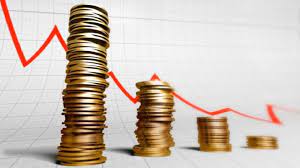
    Despite a decline in rates after receiving the first tranche of the IMF loan and completing the debt exchange program, recent reports indicate that rates for the 91-day and 182-day Treasury bills remain relatively high at about 29.24% and 31.88%, respectively.

    Even with decreases of 6.12% and 4.10% in yields for the 91-day and 182-day bills in 2023, current interest rates hover around 32%, placing Ghana at the forefront of African countries with the highest rates.

    Egypt closely follows as the second-highest, with rates of 25.68% for the 91-day bill and 25.95% for the 182-day bill.

    Meanwhile, Cape Verde and the Seychelles have recorded the lowest interest rates in Africa.

  • FBI probes Nigerian man arrested in Ghana over alleged $7.5m charity scam

    FBI probes Nigerian man arrested in Ghana over alleged $7.5m charity scam

    Authorities in the United States have initiated legal proceedings against Olusegun Samson Adejorin, a Nigerian national. He faces federal charges related to an alleged $7.5 million business email compromise scheme targeting two charitable organizations.

    According to a report from graphic.com.gh, the suspect linked to the $7.5 million charity scam was apprehended in Ghana on December 29, 2023.

    Olusegun Samson Adejorin is yet to make his initial court appearance in Ghana, as indicated by an eight-count indictment unsealed in Maryland. The charges outline his alleged operations between June and August 2020, involving the infiltration of accounts belonging to two organizations in the United States.

    According to the report, the said Nigerian national operated by gaining unauthorized access to employee email accounts at two charities, one in Maryland and the other in New York. Posing as authorized personnel, he allegedly deceived the institutions into transferring funds.

    In total, he got the organisations to transfer over US$7.5 million from the New York charity’s investment funds held by the Maryland organisation, the report added.

    “The indictment details a sophisticated scheme. Adejorin allegedly used a credential harvesting tool to steal login information, created fake domain names to mask his tracks, and even manipulated email accounts to hide his activity.

    “If convicted, Adejorin faces a maximum sentence of 20 years per count of wire fraud, an additional five years for unauthorised computer access, and mandatory two-year sentences for aggravated identity theft,” the report stated.

    It added that since Adejorin misused a domain name, the potential penalty he is facing could rise further.

    The report also indicated that the FBI, along with international partners in Ghana, played a crucial role in apprehending Adejorin and bringing him to justice.

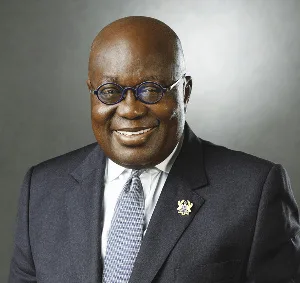
  • Ghana will get there, just work hard – Akufo-Addo tells Ghanaians

    Ghana will get there, just work hard – Akufo-Addo tells Ghanaians

    President Nana Akufo-Addo has openly acknowledged that Ghana continues to grapple with challenges, highlighting the nation’s ongoing journey towards overcoming obstacles and fostering growth.

    Underlining the economic hardships endured in the preceding two years, President Nana Akufo-Addo shed light on the formidable challenges that have shaped Ghana’s fiscal landscape in a compelling address.

    In the face of these challenges, President Nana Akufo-Addo voiced assurance in Ghana’s ongoing recovery and resilience, articulating his optimism for the nation’s future.

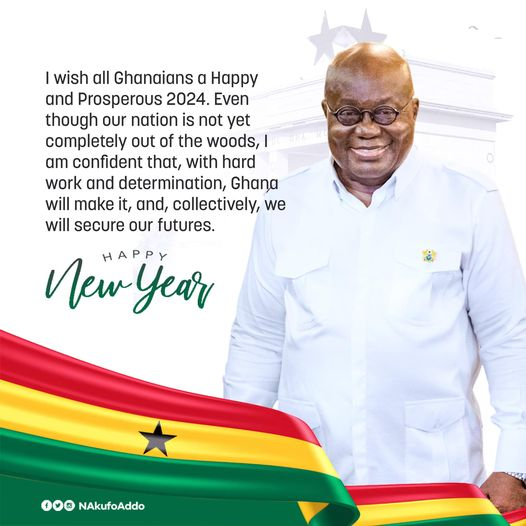
    He stated, “I wish all Ghanaians a Happy and Prosperous 2024. Even though we are not completely out of the woods, I am confident that, with hard work and determination, Ghana will make it, and collectively, we will secure our futures.”

    This message underscores the acknowledgement of the hurdles the nation has faced, coupled with the determination to overcome them.

    President Akufo-Addo’s assurance reflects a commitment to fostering a spirit of unity and perseverance among the Ghanaian people.

    The President’s New Year message resonates with the ongoing efforts to address economic challenges and pave the way for a brighter future.

    As the country continues its journey of recovery, the message serves as a call to action for citizens to contribute to the collective effort of building a prosperous Ghana.

    In the backdrop of these sentiments, President Akufo-Addo also referenced the financial support received last year, with a tranche of $600 million credited to government account.

    This acknowledgement highlights the collaborative efforts made to navigate economic challenges and strengthen Ghana’s position.

    As the nation steps into the new year, President Akufo-Addo’s message echoes the belief that, with concerted efforts, hard work, and determination, Ghana will overcome its current challenges and emerge victorious.

    The call to secure the future collectively emphasizes the importance of unity and resilience in building a prosperous nation.

  • PNC commemorates 43rd anniversary of Dr Hilla Limann’s overthrow

    PNC commemorates 43rd anniversary of Dr Hilla Limann’s overthrow


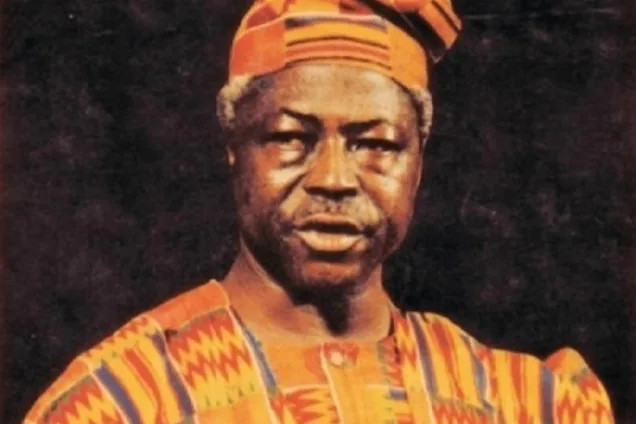
    The People’s National Convention (PNC) commemorated the 43rd anniversary of the overthrow of President Dr. Hilla Limann of the Third Republic of Ghana on December 31.

    According to the party, the democratically-elected People’s National Party (PNP) government was ousted by the PNDC government in a military coup.

    In a press statement released by the General Secretary of PNC, Janet Asana Nbla, on Sunday, it was emphasized that Dr. Limann, who governed for 27 months, stood for moral values and strongly condemned selfishness, greed, and corruption, considering them the greatest “social evil.”

    The party expressed its dissatisfaction with how Dr. Limann was treated, especially considering his principled stance.

    The statement noted,“Interestingly, the PNDC government that removed him from office on allegations of corruption never found any evidence against President Hilla Limann or his appointees, or immediate family members acquiring wealth at the expense of the taxpayers”.

    The PNC clarified in the statement that the 1981 coup that led to Dr. Limann’s overthrow resulted in a decline in the quality of life for Ghanaians and brought immense hardship to the entire country.

    It emphasized that Ghanaians lost their “dignity and sense of importance due to this coup.”

    Calling on Ghanaians to celebrate Dr. Limann’s remarkable and selfless leadership, the PNC stated, “His exemplary life must inspire and serve as a form of education to the younger generation about the true nature of politics as a means to serve and not to be served.”

    The party urged individuals to strive to exemplify the values exhibited by Dr. Limann, ensuring that the pursuit of political power is driven by a genuine desire to uplift the pride and well-being of Ghanaians, rather than selfish motives.

    Additionally, the PNC revealed plans to introduce ‘Limannism’ as a subject at all levels of education in a future PNC government, aiming to instill in the younger generation principles of selflessness, morality, and compassion.

    The statement concluded by asserting that the PNC would serve as the “Biblical David” to confront and eliminate the “Goliath” of corruption from the country.

    “His exemplary life must inspire and serve as a form of education to the younger generation about the true nature of politics as a means to serve and not to be served.

    “We should strive to exemplify the values exhibited by Dr Limann, ensuring our pursuit of political power is not driven by selfish motives but rather by a genuine desire to uplift the pride and well-being of Ghanaians,” the statement further said.

    The party added that “A future PNC government would introduce ‘Limannism’ as a subject at all levels of education to help instil in the younger generation principles of selflessness, morality, and compassion.

    “It will require the PNC to serve as the Biblical David to confront and eliminate the Goliath (corruption) from this country.”

  • 2024 elections will foster economic growth – Economist

    2024 elections will foster economic growth – Economist


    Economist Professor, Godfred Alufar Bokpin has suggested that Ghana’s economy will witness notable growth in 2024 due to election-related activities.

    Prof. Bokpin explained that the elections would lead to increased usage of hospitality services, particularly hotels and car rentals, injecting more liquidity into the economy and providing relief to Ghanaians.

    In an exclusive interview with the Ghana News Agency reflecting on the 2023 fiscal year and the country’s economic outlook for the coming year, he emphasized the importance of policies aimed at enhancing productivity and stability.

    The economist highlighted the positive impact of election-year spending by politicians on businesses such as car rentals and the hotel industry.

    However, he cautioned the government to implement measures preventing inflation from rising due to increased liquidity from political expenditures.

    “There’s some good news next year because it’s an election year; politicians are going to spend, including travels across all the regions, and that in itself, would inject some liquidity into the system,” he stated.

    “This means that there are some related businesses that will also pick up next year – car rentals and the hotel industry, and some Ghanaians whose lifestyles are indexed to political activities, this will be their harvest season,” he noted.

    While acknowledging potential benefits for some Ghanaians, Prof. Bokpin advised caution, as excessive liquidity without a corresponding rise in production could lead to inflation.

    Looking ahead, he predicted a reduction in external funds flowing into the country from the second half of 2024, potentially putting pressure on the Ghanaian Cedi. Prof. Bokpin explained that investors tend to adopt a “wait and see” approach during election periods.

    “That pickup can benefit some Ghanaians, but we should be mindful that the same situation could cause inflation to go up, because there may be a lot more liquidity injection without a corresponding increase in production,” Prof Bokpin said.

    He urged Ghanaians to moderate their growth expectations for 2024, emphasizing that challenges still exist and a sustained recovery requires careful management.

    Regarding the government, Prof. Bokpin called for expeditious agreements with bilateral and commercial creditors for the second tranche of the $600 million loan from the International Monetary Fund (IMF) and the syndicated cocoa loan.

    He emphasized that such agreements would mitigate economic uncertainty, support the Cedi, and maintain overall economic stability.

    “The election fever begins from the second half of the year as experienced in all previous competitive elections, and many investors would not like to bring their funds into the country, but adopt the attitude of wait and see.

    “We should be moderate with our expectations because we’re not entirely out of the woods and there’s still some considerable price that we have to pay to sustain the recovery.We need to conclude doing so, in addition to the syndicated cocoa loan,” the economist explained.

  • Ghana-Botswana friendly scrapped after backlash

    Ghana-Botswana friendly scrapped after backlash

    The anticipated pre-AFCON friendly between Ghana and Botswana has been canceled following public disapproval.

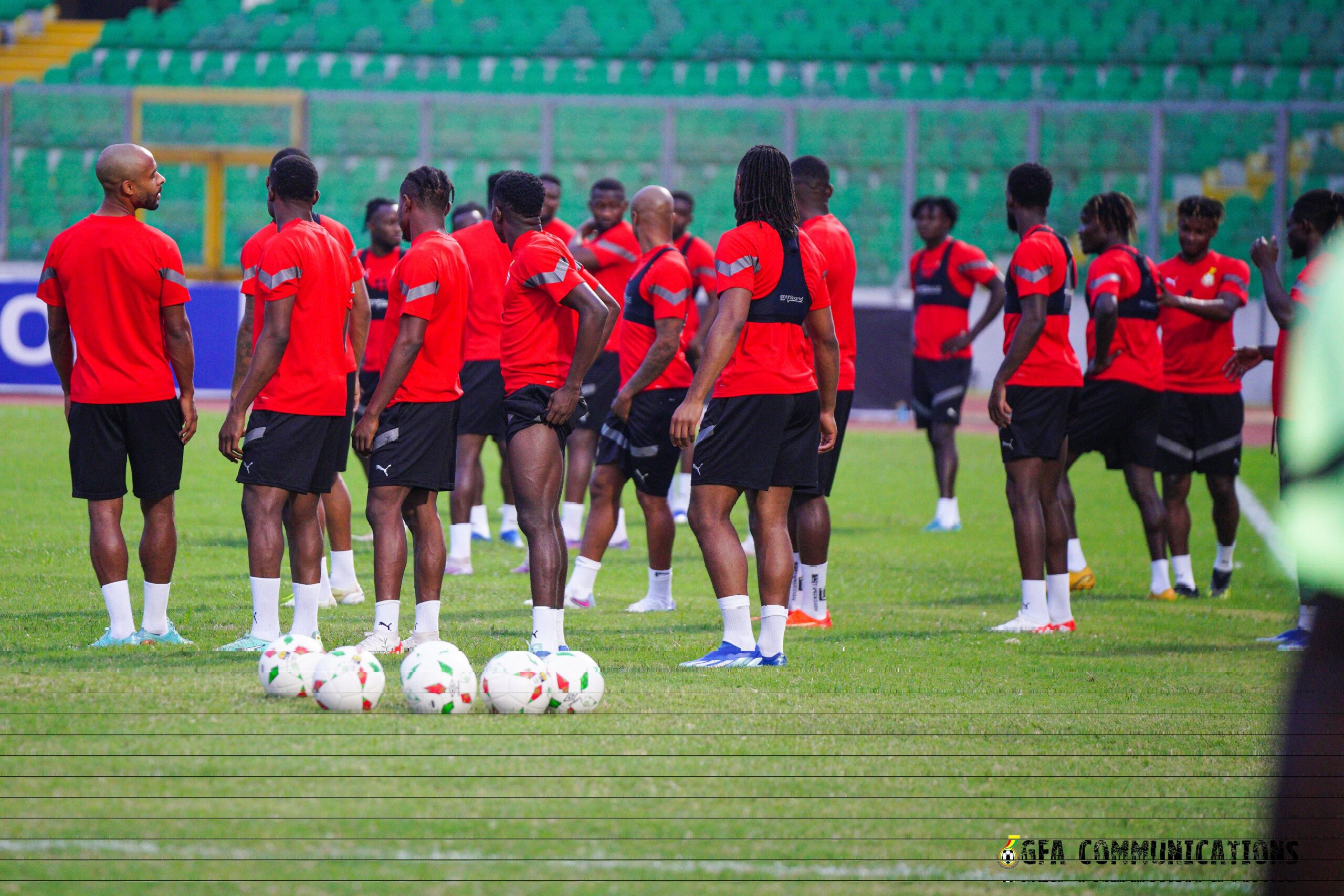
    The Ghana Football Association (GFA) had initially confirmed a Johannesburg camp and a friendly match against Botswana, which faced backlash from fervent football enthusiasts in the country.

    Responding to public sentiment, the Sports Ministry, in collaboration with the Ghana Football Association, has altered course and is now considering a training camp in Kumasi.

    Additionally, Ghana is set to play a friendly game with Namibia as part of its preparations for the 2023 Africa Cup of Nations (AFCON).

  • USA authorities deport Ghanaian woman over legal document infraction

    USA authorities deport Ghanaian woman over legal document infraction

    A Ghanaian woman known as Frimpongmaa has been repatriated from the United States of America (USA) after her roommate reported her to authorities for using someone else’s legal documents.

    According to Freda Afriyie, who shared the story on social media, Frimpongmaa had earned over $70,000 but was unable to access her money.

    In an effort to retrieve the funds from the document owner, she was accused of assault, leading to her reported arrest and subsequent investigation.

    Due to a lack of proper documentation for her stay in the USA, Frimpongmaa was processed for court and eventually deported to Ghana. Presently, she works as a dishwasher at a local eatery to sustain herself after the deportation.

  • Ghana-led resolution on financing peace operations adopted by UN Security Council

    Ghana-led resolution on financing peace operations adopted by UN Security Council

    The United Nations Security Council has approved an African Resolution spearheaded by Ghana, calling for support and funding for operations addressing all threats to global peace and security in Africa.

    According to an official release to the Ghana News Agency on Thursday night, this innovative Peace Support funding model goes beyond the traditional United Nations peacekeeping operations.

    As outlined in the resolution, all peace support operations led by the African Union and mandated by the UN Security Council will receive funding from UN assessed contributions, covering up to 75% of their annual budgets.

    The remaining funds are expected to be jointly mobilized by the United Nations and the African Union from the international community as extra-budgetary resources.

    In the face of significant shortfalls in resource mobilization, the Security Council has committed to exploring all feasible options, the release noted.

    “The dramatic outcome of the complex and difficult negotiations comes 10 days before the end of Ghana’s term as a non-permanent member of the UN Security Council,“ said the release.  

    “When Ghana announced its priorities at the beginning of its term in January 2022 to secure agreement of the Security Council to change its traditional response to international peace and security, especially in Africa, where violent extremism and terrorism had overtaken traditional conflicts that attracted UN peacekeeping, many had expressed skepticism.”

    “Attempts in the past to agree on the use of UN assessed contributions to support African-led operations had failed in the face of opposition from some Permanent Members of the Council and other large contributors to the UN.” 

    During its two-year term, Ghana aspired to achieve these goals. As the President of the Council in November 2022, both President Nana Addo Dankwa Akufo-Addo and Foreign Minister Shirley Ayorkor Botchwey conducted high-level signature debates on the escalating threats of violent extremism and terrorism in Africa, focusing on the Sahel and coastal West Africa.

    The release indicated that the leaders advocated for the funding of Africa-led operations through UN assessed contributions. Additionally, they recommended a balanced approach to funding, addressing both military operations and tackling the socio-economic and climatic root causes of conflicts.

    “One key objective was to starve terrorists of conditions for radicalisation and recruitment from vulnerable communities,” the release emphasised. 

    “With the adoption of the framework resolution, it is understood that the plans of ECOWAS and relevant security initiatives in our region, such as the Accra Initiative and the Multi National Joint Task Force, battling Boko Haram, will potentially benefit from the needed resources and international support to defeat terrorism and violent extremism in the ECOWAS region.”

    Commenting on the adoption of the Resolution, the Minister for Foreign Affairs and Regional Integration, Madam Shirley Ayorkor Botchwey declared: “Today is a great day for Africa and for diplomacy. 

    “Working with our partners around the world, we have taken a giant step to end the many threats to international peace and security in our region. 

    “Our people deserve the peace, stability and progress that successful peace support operations will bring. The distractions to our regional integration project and the pressure on development resources from our security needs would ease as we go forward. 

    “I congratulate President Akufo-Addo for his leadership. I also commend our team in NewYork, my own Ministry and the Multi-Stakeholder Working Group on the United Nations Security Council, which I set up to advise me.”

  • Rising food prices in Ghana due to unfair practices – CACCI

    Rising food prices in Ghana due to unfair practices – CACCI

    A recent study on food prices in Ghana, conducted by a Consumer Advocacy Centre and Consumer International, has revealed unfair pricing practices leading to financial strain and food insecurity for consumers.

    The Fair Food Price Monitor, a tool developed by consumer organizations, highlights the risks of unjust food prices driven by insufficient competition in national and global food supply chains.

    The tool, using data from sources like the UN World Food Programme and UN Food and Agriculture Organization, shows that retail and consumer prices for certain food items have risen substantially faster than wholesale or market prices.

    This has sparked calls for immediate action to ensure fair pricing, with suggestions including regulating cartels, introducing consumer protection and competition laws, and collaborating with local producers to enhance competitiveness.

    The General Agriculture Workers’ Union emphasizes the importance of strong dedication to implementing suggested solutions, echoing concerns raised by the UNCTAD in its 2023 Trade and Development Report about the growing risks to food security and profiteering by corporations.

    The Consumer Advocacy Centre urges the government and stakeholders to prioritize addressing these shortcomings urgently.

  • Ghana, Togo set to sign agreement ending Maritime Boundary dispute

    Ghana, Togo set to sign agreement ending Maritime Boundary dispute


    Ghana and Togo are on the verge of finalizing a Maritime Boundary Delimitation Agreement, aiming to resolve the longstanding dispute over the ocean boundary between the two nations.

    Currently, a delegation from Togo is meeting with the Ghana Boundary Commission in Accra to determine the signing dates for the agreement by the Presidents of both countries.

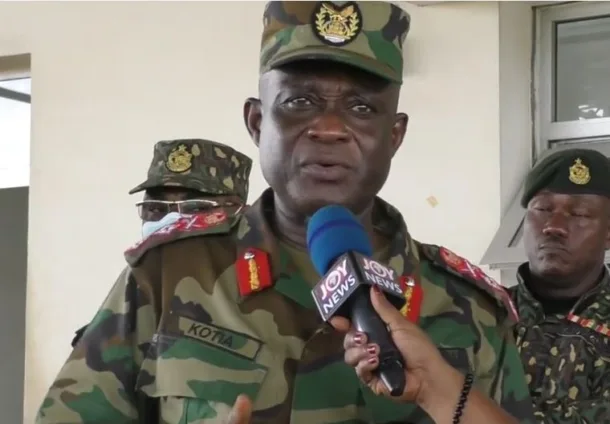
    The disputed area has seen restrictions on fishing and economic activities. The National Coordinator for the Ghana Boundary Commission, Major General Emmanuel Kotia, emphasizes that the signed agreement will unlock economic opportunities in the region, offering a favorable environment for investors.

    Major General Kotia points out that the negotiated resolution stands in contrast to the Ghana-Cote d’Ivoire situation, where international legal mechanisms were involved.

    “We have been able to solve a maritime barrier through negotiation and mediation so going to the International Tribunal of the Law of the Sea is unlike what happened between Ghana and Cote d’Ivoire.”

    Negotiations between Ghana and Togo regarding their maritime boundary have been ongoing since 2018. Concurrently, the Ghana Boundary Commission Bill is undergoing parliamentary consideration.

    Major General Kotia anticipates that once passed, the bill will empower the Commission to not only address external boundary disputes but also play a crucial role in resolving internal boundary and electoral boundary disagreements.

    Speaking at the Commission’s annual retreat in the Eastern Region, Major General Kotia expressed optimism about the expanded responsibilities, emphasizing the potential for the Commission to contribute significantly to the resolution of internal disputes through negotiation and mediation.

    “This is a major development so far as the bill is concerned. The new area that we may be seeing ourselves performing is to help resolve internal boundary disputes, including electoral boundaries where they are deferred to us or where we have problems so far as internal boundaries are concerned. We are not going to be responsible for demarcating internal boundaries, but just to assist in amicably resolving this dispute through negotiation and mediation. It is going to enhance the tasks of the Boundary Commission,” Major General Kotia states.

  • Ghana to record nearly 70m population in 2057 – Kwame Pianim projects

    Ghana to record nearly 70m population in 2057 – Kwame Pianim projects

    Renowned economist Andrews Kwame Pianim has underscored the importance of population control for Ghana’s development in an interview on JoyNews’ PM Express.

    Mr. Pianim highlighted the repercussions of uncontrolled population growth, emphasizing its impact on education, infrastructure, and more, stating, “If you don’t modulate your population, you’ll have more mouths to feed.”

    With the current annual population growth rate at 2.1%, he projects that Ghana’s population could reach 69 million by 2057, expressing concerns about accommodation.

    However, he suggests that strategic management could help Ghana aim for a more sustainable figure.Emphasizing that high population growth impedes development, Mr. Pianim points out the correlation between wealth, education, and lower fertility rates.

    “You cannot develop with a high population growth rate.

    That is impossible. No nation has developed with an annual population growth rate of 2 percent or more,” he said on Wednesday.

    “The problem is this, if you don’t modulate your population, you have more mouths to feed, education, and infrastructure for the people. And when I tried to do our population, 2057, how big will we be? If we go on the trend that we are on, a 2.1 per cent annual rate of growth, we will be almost 70 million, 69 million people. Where are we going to put all these 69 million people?

    He stressed the need for controlled population growth to achieve development goals.Drawing parallels between economic challenges faced by households with many children and the national scenario, Mr. Pianim concludes by cautioning that initiatives like Free Senior High School (SHS) could strain the national budget without addressing population growth.

    He called for proactive measures to modulate population growth, asserting its integral role in Ghana’s sustainable development.

    To alter the current trajectory, Mr. Pianim emphasizes the need to lower the annual rate of population growth and reduce the average number of children per woman.

  • Ghana in search of the True Leader/President (Part 2)

    Ghana in search of the True Leader/President (Part 2)

    Fellow citizens of Ghana, it is always a great honor and privilege to share my views about our dear motherland with you. I am a member of the Diaspora (I have lived over half a Century away from motherland, Ghana), and my heritage remains my most precious treasure because it was won for us through the blood and toil of our fathers.

    By virtue of this treasure, it is very significant for every Ghanaian to exhibit steadfastness towards the building of a great and strong nation worthy of emulation not only by our sister African nations but also the entire world. We should forge ahead as in unity we stand and divided we fall. It is imperative that we design and implement those attributive features that attract us to the whole world. This will make us live a fulfilling life in our motherland. We must be faithful and loyal to Ghana, and uphold and defend her good name.

    With these characteristics in mind, it is important to remember our forefathers who have exhibited exemplary lives in the past for the Black Star of hope and honor. They were real leaders with great leadership qualities. These qualities include selflessness, honesty, vision, integrity, compassion, transformation, and incorruptibility.

    We remember most of these great men and women like Osagyefo Dr. Kwame Nkrumah, Dr. James E. K. Aggrey, Dr. Kofi Abrefa Busia, Dr. Joseph Boakye Danquah, Mr. Simon Diedong Dombo, Tetteh Quarshie, Yaa Asantewaa (the Queenmother of Ejisu) and many others.

    This article seeks to address the way and manner bribery and corruption raise serious moral and political concerns in our motherland. This is because they do not exhibit victimless crimes but rather involve very heavy economic, social and environmental costs.

     Whereas bribery may involve money or favor given or promised in order to influence the judgement of conduct of a person in a position of trust, the corruption of public or private officials and decision makers raise serious moral and political concerns because both of them create an unlevelled playing field for honest business, and cut deep into the social fabric of developed and developing countries alike. Corruption has a significant negative impact on the economy and society overall. It weakens the confidence of people in democratic institutions and processes in extreme circumstances.

    Corruption affects good governance, competitive markets, and healthy public fiscal management. It weakens the confidence of people in democratic institutions and processes in extreme circumstances.

    This article draws me to the report from the United States Department of Justice (DoJ) under the title “Airbus Agrees to Pay over $3.9 Billion in Global Penalties to Resolve Foreign Bribery and International Traffic in Arms Regulation (ITAR) Case” in which only one African country, Ghana, was cited (Reference: https://www.justice.gov/opa/pr/airbus-agrees-pay-over-39-billion-global-penalties-resolve-foreign-bribery-and-itar-case).

    According to admissions and court documents, beginning in at least 2008 and continuing until at least 2015, Airbus engaged in and facilitated a scheme to offer and pay bribes to decision makers and other influencers, including to foreign officials, in order to obtain improper business advantages and to win business from both privately owned enterprises and entities that were state-owned and state-controlled.

    In its attempt to resolve this evil behavior globally, the Airbus Company entered into a deferred prosecution agreement with the United Kingdom’s Serious Fraud Office (SFO) over bribes paid in Malaysia, Sri Lanka, Taiwan, Indonesia and Ghana.

    Ghana is underlined because that is our country, the only country in Africa to be cited in this scandal.

    The Airbus Company has admitted hiring the brother of a top elected Ghanaian official as its consultant in the sale of the aircraft. The Company also confessed to paying the said consultant through a third party when its Compliance Unit raised red flags about the close relationship between the consultant and the top elected official who was a key decision-maker in the purchase of the military aircraft.

    In fact, this Airbus corruption constitutes the biggest corruption case ever, and indeed, payment of bribes was made and received. The biggest beneficiary as alleged was codenamed GOVERNMENT OFFICIAL ONE in the US Court documents. Furthermore, documents were falsified in making the payments to disguise the payment of bribes to GOVERNMENT OFFICIAL ONE. GOVERNMENT OFFICIAL ONE is on the record of the Court as the recipient of the corrupt proceeds from this transaction. And the most disgraceful statement established in Paragraph 136 of the US Court document actually describes Government Official ONE as having a reputation for bribe-taking.

    Dear citizens of Ghana, it is an extreme disgrace and contempt to our beloved motherland for a trusted official in our country to behave and be described this way. Besides, it exposes the weaknesses of our governance system which allows greedy government officials to behave in such manner.

    Osagyefo Dr. Kwame Nkrumah, Dr. James E. K. Aggrey, Dr. Kofi Abrefa Busia, Dr. Joseph Boakye Danquah, Mr. Simon Diedong Dombo, Tetteh Quarshie, Yaa Asantewaa (the Queenmother of Ejisu) and others, did not sell their conscience to foreigners as we all remember from our history. They cherished fearless honesty, and resisted oppressors’ rule with all their will and might every time.

    The pertinent question I wish to ask my fellow Ghanaians is simply this: are we proud to hire this Government Official ONE again into office to demonstrate to the entire world that we, as Ghanaians, always opt for corrupt people to lead us? Are we ready and desperate to inaugurate into office on 7th January 2025 an official described worldwide as having a reputation for bribe-taking?

    I would opt for the leader who would serve the best interests of the people and who possesses goals greater than achieving his parochial interest. I would opt for the leader that is willing to accept responsibility and the ability to inspire our citizens. He must exhibit honesty, love for his heritage, vision, intellect, competence, incorruptibility, and above all, he should be transformational leader.

    Our motherland needs a true leader who would establish flagship programs towards developments in the infrastructure, education, health, security, and the general economy of our great nation. Fellow citizens of Ghana, let us look closely at those candidates from the various political parties that are vying for the presidency of Ghana to determine which of them exhibits those enumerated qualities of a leader, and who the world would respect, cherish and hold in high esteem.

    The True Leader in Ghana from January 7th ,2025, should be based on honesty, vision, incorruptibility, inspirational, and transformational.

    I SHALL RETURN.

    God bless our Homeland Ghana and make us great and strong!

    Prof. Dr.-Ing. Eur Ing. Thompson Sarkodie-Gyan, D.Sc., VDI, FInstMC

    Retired Tenured Professor of Electrical & Computer Engineering

    College of Engineering

    University of Texas, USA                                                   

    Email: tsarkodi@utep.edu

    DISCLAIMER: Independentghana.com will not be liable for any inaccuracies contained in this article. The views expressed in the article are solely those of the author’s, and do not reflect those of The Independent Ghana

  • Ghana’s tourist arrivals surge by 17.8% in Q3 2023 – BoG

    Ghana’s tourist arrivals surge by 17.8% in Q3 2023 – BoG


    The Bank of Ghana (BoG) has released data indicating a significant surge in tourist arrivals, recording 304,171 individuals in the third quarter of the current year.

    This marks a notable increase from the 258,246 visitors recorded in 2022, reflecting an impressive annual growth rate of 17.8%. The central bank attributes this rise to a boost in tourism-related activities during the specified review period.

    In contrast, a recent report from Joynews reveals a decline in international trade at Ghana’s principal harbors, Tema and Takoradi.

    The decline is specifically observed in laden container traffic for both inbound and outbound containers during the third quarter of 2023.

    The total container traffic witnessed a decrease of 2.1%, dropping from 158,514 in the second quarter of 2023 to 155,146.

    “Total container traffic for inbound and outbound containers decreased by 2.1% to 155,146, from 158,514 recorded in Q2 2023,” the news portal said.

    Analysts link this downturn in port activities to subdued international trade dynamics and point to ongoing geopolitical tensions as additional contributing factors during the review period.

  • IMF meeting to decide on payment of second tranche to Ghana moved to Jan. 2024 – Report

    IMF meeting to decide on payment of second tranche to Ghana moved to Jan. 2024 – Report

    The International Monetary Fund (IMF) has reportedly rescheduled the board meeting to review Ghana’s second review under the Fund program and consider the disbursement of $600 million to January 11, 2024.

    This decision follows significant progress made by Ghana with its external bilateral creditors, particularly with China, regarding the terms of restructuring the bilateral debt.

    Negotiations with China, one of the Co-Chairs of the Official Creditor Committee (OCC), have advanced, leading to optimism that all outstanding issues will be addressed before the new board meeting date.

    A draft Memorandum of Understanding (MoU) from the Official Creditor Committee would have been issued by now, but a concern from one of the members reportedly caused a delay.

    Earlier challenges in reaching an agreement with China had led to the rescheduling of the IMF board meeting dates, with the latest being January 11, 2024.

    The rescheduled date is expected to provide sufficient time for the resolution of any remaining issues and for the Official Creditor Committee to issue the necessary MoU on Ghana’s debt restructuring.

  • List of things Ghana produced during Nkrumah’s era

    List of things Ghana produced during Nkrumah’s era

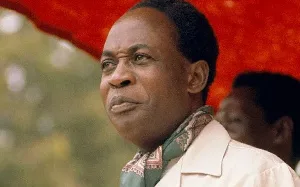
    In the era of Ghana’s first president, Dr. Kwame Nkrumah, a slew of industrialization projects were launched with the goal of boosting local production, manufacturing, and creating avenues for export.

    Within a mere six years of gaining independence in 1957, Ghana swiftly transformed into a manufacturing hub for boats, car tires, television sets, refrigerators, and various other products catering to both domestic needs and international markets.

    A survey featured in the state-owned Daily Graphic, dated November 30, 1962, shed light on the flourishing state of Ghana’s local industries under Nkrumah’s leadership.

    The survey highlighted Ghana’s self-sufficiency in producing safety matches, paints, alcoholic beverages, biscuits, canned fruits, roofing materials, cooking utensils, meat, and fish within the short span since gaining independence.

    The newspaper clippings, titled ‘Made in Ghana: A Survey of Local Industries,’ also revealed the establishment of Ghana’s own chemical factory dedicated to producing insecticides and various chemicals.

    The report proudly stated, “We also have a brewery, a milk processing plant, and a lorry and bicycle assembly plant. Overall, we can take pride in over ninety industries thanks to the government’s comprehensive industrial program. This program comprises five main sectors: state-owned enterprises, enterprises owned by foreign private interests, enterprises jointly owned by the state and foreign private interests, cooperatives, and finally, small-scale Ghanaian enterprises.”

    See the full list of items Ghana was producing locally below:

    • Safety matches

    • Paints

    • Alcoholic drinks

    • Biscuits

    • Canned fruits

    • Roofing materials

    • Cooking utensils

    • Meat and Fish

    • Boats

    • Tyres

    • Television Sets

  • Global cybercrime damages expected to surge by 2025 – Expert warns

    Global cybercrime damages expected to surge by 2025 – Expert warns


    Cybercrime inflicted a $6 trillion cost on the world in 2021, and it is projected to surpass $10 trillion in annual damages by 2025, as reported by the World Economic Forum.

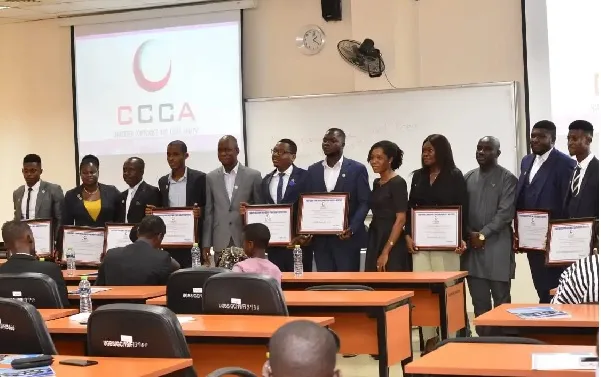
    A lecturer at the Department of Management Sciences and School of Business at the University of Education, Winneba, Dr. Vera Akafo Ayitey, shared these insights during the Chartered Compliance and Cyber Analyst (CCCA) Institute’s graduation ceremony at the University of Ghana Business School Graduate Campus in Legon.

    Speaking on “Organisational Culture and Fraud Prevention,” Dr. Ayitey emphasized the increasing frequency of cyberattacks, underscoring the critical need for attention to curb this trend.

    She highlighted the significance of fostering a cyber-secure culture within organizations at both the management and employee levels.

    “In Ghana we can talk about data breaches at ECG and the University of Ghana where peoples’ scholastic financial results were all over the place online. So the question is what happened? Was it systemic failure or human error? she queried.

    “There are things that we do privately or things that are confidential which should not come out but through cybercrime, sometimes we hear of such confidential issues. Someone somewhere may be keeping tabs on what we are doing.  So issues of confidentiality can be breached,” she said.

    Addressing specific instances in Ghana, such as data breaches at ECG and the University of Ghana, where confidential information was exposed online, Dr. Ayitey raised questions about systemic failures or human errors leading to such incidents.

    She stressed the leadership role in ensuring organizational resilience to cyberattacks by adhering to cybersecurity protocols and implementing strategies to promote a cybersecurity culture.

    Financial losses, damage to reputation, and operational disruptions were cited as consequences of cybercrime, underscoring the need for organizations to prioritize cybersecurity.

    Dr. Ayitey also mentioned the broader impact on stakeholders and regulatory scrutiny following cyberattacks.

    She emphasized that the fight against cybercrime extends beyond the IT department to include people, processes, and culture, urging collaboration with the IT department to build resilient organizational cultures.

    At the graduation ceremony, certificates were awarded to four students who successfully completed the 14 requisite papers.

    The awardees included Lance Corporal Apoore Jude Azur of the Ghana Armed Forces Command and Staff College, Mark Gyan of the Bank of Ghana, Sydney Kwakye also of the Bank of Ghana, and Oppong Daniel, formerly of Legacy Capital.

    Dr. Theophilus Kwadjo Odjer-Bio, Director at the CCCA Institute, chaired the event and conferred the awards on the graduands.

  • Ghana experiencing deflation due to govt’s efforts in restoring macroeconomic stability – Ofori-Atta

    Ghana experiencing deflation due to govt’s efforts in restoring macroeconomic stability – Ofori-Atta

    Finance Minister Ken Ofori-Atta has attributed the persistent decline in inflation to the government’s unwavering commitment to restoring macroeconomic stability.

    This marks the fourth consecutive decrease, with the November rate standing at 26.4 percent.

    During the dividend presentation of 30.89 million cedis by the Board of Twifo Oil Palm Plantation Limited to the government, Ofori-Atta underscored the tangible impact of these dedicated efforts on the economic landscape.

    He highlighted the impressive performance, noting that inflation has been halved from 54 points at the end of the previous year.

    “We saw yesterday inflation came down to 26.4% which is literally where we were at 54 points some time at the end of last year. So it is quite an impressive performance. And I know we have been through difficult times, but you look at inflation being halved. We see our growth which was expected to be 1.5% double to 3%. And we look at currency depreciation which since February has been about 7.2% declined a bit.”

    “The inflation also indicated that Greater Accra had the slowest growth inflation and that is good. Food inflation is still problematic but even that was down considerably from 44% to 32% this time. So the supply is not the problem but the logistical movement is what we need to get efficient about,” he said.

    Despite challenging times, the country has experienced notable achievements, with economic growth doubling from the expected 1.5% to 3%, and a slight decline in currency depreciation, which stood at about 7.2% since February.

    Mr Ofori-Atta further delved into the details, stating that Greater Accra exhibited the slowest growth in inflation, a positive development.

    While acknowledging the lingering issue of food inflation, he pointed out a considerable improvement from 44% to 32%. He identified the need to focus on logistical efficiency to address the challenges in the supply chain.

    Deputy Minister of Finance, Abena Osei-Asare, echoed the sentiment by encouraging State-Owned Enterprises to strive for profitability.

    She emphasized the government’s ongoing efforts to enhance the business environment for sustained growth.

    Madam Osei-Asare stressed the importance of collaboration between the government and these enterprises, noting that the government’s investment cannot continue indefinitely without returns, and mutual efforts are essential for maintaining the observed growth.

    “The government cannot continue to invest in these companies, and whatever is due to the government won’t be given to the government. So we appreciate what you have done, and we ask that we will continue to work with you in partnership to make sure you sustain this growth that we are seeing at your end,” she said.

  • Ghana sees about 10% decline in inflation

    Ghana sees about 10% decline in inflation

    Ghana has witnessed a continued decline in its inflation rate for the fourth consecutive month, reaching 26.4% in November. 

    This marks a notable 8.8-percentage-point decrease from the 35.2% recorded in October 2023. 

    The month-on-month reduction of 8.8% stands as the most significant drop in the past 13 months in the country, primarily attributed to a decrease in food inflation. 

    Notably, items such as fish, other seafood, water, and soft drinks experienced deflation during this period.

    According to the recently released Consumer Price Index (CPI) data on December 14, year-on-year food inflation was reported at 32.2%, while non-food inflation stood at 21.7%. 

    Professor Samuel Kobina Annim, the Government Statistician, emphasised the regional disparities in inflation rates, pointing out that the national inflation rate’s 19-month low was influenced by base-effect comparisons.

    Breaking down the regional data, the Western region recorded the highest inflation rate at 39.8%, while the Greater Accra region registered the lowest inflation rate at 19.8%. 

    The overall trend suggests positive economic development with a significant decline in inflation rates, particularly in the food sector, contributing to the nation’s economic stability.

    Since 2022, Ghana has grappled with persistently high inflation, primarily attributed to the effects of the COVID-19 pandemic, the devaluation of the cedi, rising fuel costs, and supply shocks in the agricultural sector.

    Ghana  experienced a peak in its inflation rate, reaching an alarming 53.6% in January 2023, positioning it as the second-highest in Africa, following Zimbabwe.

    Throughout the majority of 2023, Ghana’s inflation rate consistently hovered above 40%, reflecting the economic challenges it faced. 

    However, there was a noteworthy shift in August 2023, when the inflation rate began to decline. 

    This change marked a significant turning point, indicating potential improvements in the economic landscape and efforts to address the factors contributing to high inflation.

  • Don’t rig the elections for me or any other party – Mahama tells EC

    Don’t rig the elections for me or any other party – Mahama tells EC

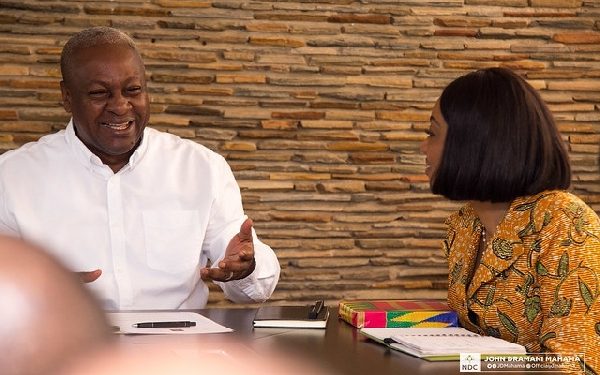
    Former President John Dramani Mahama has emphasized the importance of a fair and transparent electoral process in the upcoming 2024 general election.

    Speaking during his “Building Ghana Tour” in the Western North Region, Mr Mahama directly appealed to EC officers during a speech delivered to students at Wiawso College of Education and the Nursing Training College. He urged them to adhere strictly to the rules, emphasizing the need for the genuine aspirations of voters to be reflected in the outcomes of the elections.

    “They should do their duty to God and country. They shouldn’t cheat for anybody. I don’t want them to cheat for me, and they shouldn’t rig the election for anybody; they [EC] should let the wishes of the Ghanaian people prevail,” Mahama asserted, as reported by myjoyonline.com.

    Drawing from his experience as Ghana’s President from 2012 to 2016, Mahama stressed that the credibility of the election rests on the integrity of the Electoral Commission. He spoke passionately about his commitment to a just electoral process, emphasizing that the EC should not manipulate the results in favor of any political party, including his own.

    “I have that experience; I have been President of Ghana before, and you all know the work that I did when I was President. I know that on 7th December 2024, insha Allah [God willing], NDC will win the election,” Mahama confidently declared.

    The former President, who previously ran against and lost to President Akufo-Addo in the 2016 and 2020 elections, respectively, has expressed unwavering confidence in his ability to secure victory in the upcoming 2024 election. Mahama is determined to bring about the changes he believes Ghana needs, underlining his commitment to a democratic and transparent electoral process.

    As the nation gears up for the 2024 elections, Mahama’s plea to the Electoral Commission echoes the broader call for a fair, credible, and transparent electoral system that truly reflects the will of the Ghanaian people.

  • Ghana tops China’s debt list with $31.1B

    Ghana tops China’s debt list with $31.1B

    Ghana has been identified as the country with the highest total debt owed to the Chinese government and its institutions, according to a report submitted to the US Congress by the US-China Economic and Security Review Commission.

    Since being declared a Highly Indebted Poor Country (HIPC) in 2004, Ghana has accumulated a total of $31.1 billion in loans from China. The ranking places Ghana at the top, followed by Guinea ($21.9 billion), Ethiopia ($14.8 billion), Tanzania ($12.6 billion), Democratic Republic of Congo ($12.1 billion), Mozambique ($7.9 billion), Sudan ($6.7 billion), Zambia ($4.6 billion), Bolivia ($4.1 billion), Chad ($3.2 billion), Senegal ($3.1 billion), Niger ($2.7 billion), Mali ($2.6 billion), and Cameroon ($1.8 billion).

    Economist Dr. Theo Acheampong likened the situation to the debt distress experienced by African nations from the 1970s to the early 2000s.

    He noted that 60% of China’s debtor nations were in financial distress in 2022, up from 5% in 2010.

    Mr Acheampong emphasized the similarities with the debt distress of previous decades, such as the HIPC/MDRI initiatives.

    This report follows recent data placing Ghana as the seventh African country with the highest debts to the International Monetary Fund (IMF), amounting to $1,644,377,000 as of December 6, 2023.

    The economic challenges faced by Ghana since late 2019, including inflation, exchange rate hikes, and increased living costs, have been attributed by the government to the impact of the COVID-19 pandemic and the Russia-Ukraine war. Critics, however, cite mismanagement among other factors for the country’s economic challenges.

  • First Lady Rebecca Akufo-Addo desires to witness a female President in her lifetime

    First Lady Rebecca Akufo-Addo desires to witness a female President in her lifetime

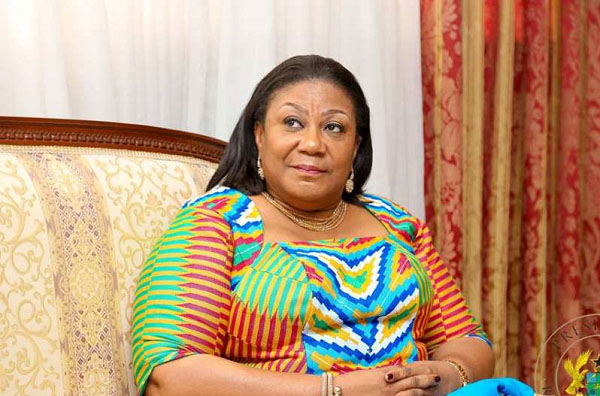
    First Lady Rebecca Akufo-Addo has shared her aspiration to witness the historic moment when a woman ascends to the presidency within her lifetime. 

    Addressing the 5th session of the 15th Congregation at the University of Professional Studies, Accra, the First Lady, honored with a doctorate degree from the institution, conveyed contentment with the remarkable achievements women have attained across various domains.

    Expressing optimism, she looked forward to witnessing more women shatter the glass ceiling and ascend to prominent positions.

    In accepting her doctorate, she thanked her husband, President Akufo-Addo for his unflinching support for her endeavours.

    “it has been quite a journey with its challenges and triumphs. Through it all, my dear husband the president, His Excellency Nana Akufo-Addo has been my rock and greatest cheerleader. His mentorship and insightful suggestions have presented me with opportunities to learn and grow. My success is his success as well. I am truly grateful to my husband.”

    She added that all that she had been concerned about with her philanthropy was how to improve the daily lives of people in the country, particularly women and children.

    “I simply wanted to make a difference in the lives of those who needed assistance,” she said.

    She dedicated her honorary doctorate to the women and children of Ghana whose resilience, she said, continues to inspire her.

    She added that she was honoured by being honoured amongst two other illustrious women of the country and prayed that in the near-future a woman will hold the highest honour in the country by being named president.

    “Like Martin Luther King, I also have a dream. I dream that one day there will be a woman president in Ghana. And the title Madam President will be as easy as Mr. President.

    Other honorary doctorate degree recipients were the former Chief Justice, Georgina Wood and former Speaker of Parliament, Joyce Bamford Addo who were honoured for their roles in shaping Ghana’s political and legal spheres.

    The fifth session of the 15th congregation saw the graduation of students from Ph.D. Marketing, MA in Peace, Security, and Intelligence Management, MSc. Pensions Management, MA in Brands Management Postgraduate Diploma in Leadership and Organisational Development programmes.

  • IMF urges swift agreement for release of $600m tranche in Ghana, stresses positive economic signs

    IMF urges swift agreement for release of $600m tranche in Ghana, stresses positive economic signs

    The International Monetary Fund (IMF) has disclosed that discussions are currently underway between Ghanaian authorities and the Official Creditor Committee.

    The focal point of these discussions is the release of the second $600 million tranche as part of the three-year $3-billion Extended Credit Facility program. This development holds significance for Ghana‘s economic trajectory and underscores the collaborative efforts required to navigate the challenges and opportunities outlined in the program.

    “We certainly hope that an agreement can be reached soon so that we can rapidly bring the programme to the Board”, Director of the IMF’s Communications Department, Julie Kozack, said at a recent press conference.

    She pointed out that the Ghanaian authorities’ “strong policy and reform commitments under the three-year, $3-billion programme with the IMF is starting to bear fruit”.

    “There are signs of economic stabilisation”, she observed, adding: “Growth in 2023 has proven more resilient than initially envisaged” while “inflation has come down, and the fiscal and external positions have improved”.

    “Moreover, exchange rate volatility has declined”, Ms Kozack added.

    She said on October 6, 2023, “our IMF team reached a staff-level agreement on the first review under the programme, and once this review was completed by the Board, Ghana would have access to $600 million in financing.

    “To ensure timely completion of the review, official creditors and the Ghanaian authorities will need to reach agreement on a debt treatment, consistent with the objectives of the programme, and in line with the financing assurances that creditors provided in May of 2023”, she mentioned.

  • Poverty in Ghana reduced by 50% over the past 20 years – NDPC boss says 

    Poverty in Ghana reduced by 50% over the past 20 years – NDPC boss says 

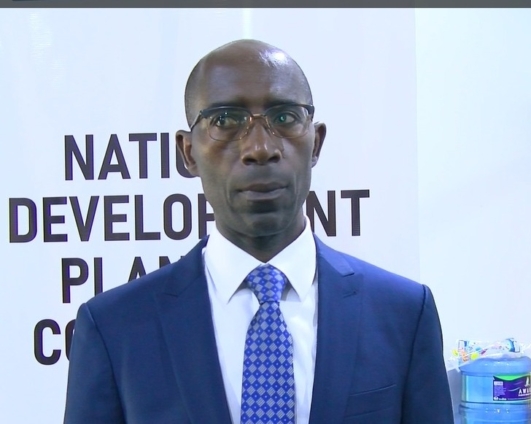
    Director-General of the National Development Planning Commission (NDPC), Dr Esseim Mensah-Abrampa, has disclosed that poverty in Ghana has been cut in half over the last two decades. 

    This remarkable development signals a positive transformation in the nation’s efforts towards sustainable development and improved living standards.

    During an interview on Accra-based TV3, he emphasized that Ghana, as a lower middle-income economy, should not be considered a poor country.

    Speaking to Kemmini Amanor, host of the Hot Issues program, he conveyed, “Ghana is not impoverished; we are classified as a lower-middle-income country. By employing various global indicators for development assessment, we can distinguish between the least developed countries, developing countries, lower-middle-income, upper-middle-income, and fully developed nations.”

    “So it tells you that if you are going by these five graduations, we are right in the middle.”

    He elucidated why the lower-middle-income status didn’t manifest in the lives of the majority of Ghanaians, stating that: “It does reflect in the lives of the people because per capita income, how much you earn, and the sophistication in our lives and our well-being are far higher than the average in the world.”

    He added “Definitely, we cannot live on the same income bracket which means that definitely there are some people who are poor but there is a process which has gone on for a very long time within twenty years.

    “We have been able to half that, it means we have been able to move half of the people who are poor right into a higher range of well being and satisfaction. So it is a process,” he stressed.

    The World Bank defines lower-middle-income economies as those with a Gross National Income (GNI) per capita between $1,036 and $4,045; and upper-middle-income economies – as those with a GNI per capita between $4,046 and $12,535 (2021).

    Middle-income countries are home to 75% of the world’s population and 62% of the world’s poor.

  • Reach agreement on debt treatment soon to aid completion of review – IMF tells Ghana

    Reach agreement on debt treatment soon to aid completion of review – IMF tells Ghana


    The International Monetary Fund (IMF) has conveyed optimism regarding the ongoing negotiations between the Ghanaian government and the Official Creditor Committee.

    The successful resolution of these discussions is seen as a crucial step toward convening the Board of the Fund to review Ghana’s program.

    Once an agreement is reached, it would pave the way for unlocking the $600 million bailout package, which constitutes the second tranche of the $3 billion Extended Credit Facility.

    “Discussions between the Ghanaian authorities and the Official Creditor Committee are ongoing, and we certainly hope that an agreement can be reached soon so that we can rapidly bring the programme to the Board, said at a press conference.

    “To ensure timely completion of the review, official creditors and the Ghanaian authorities will need to reach agreement on a debt treatment, consistent with the objectives of the programme, and in line with the financing assurances that creditors provided in May of 2023”, she added.

    She also stated that the government’s robust policy and reform commitments, as outlined in the three-year, $3 billion program with the IMF are beginning to yield positive results.

    “On Ghana, the authorities’ strong policy and reform commitments under the three-year, $3 billion program with the IMF is starting to bear fruit. There are signs of economic stabilization. Growth in 2023 has proven more resilient than initially envisaged, inflation has come down, and the fiscal and external positions have improved”.

    “Moreover, exchange rate volatility has declined. On October 6, 2023, our IMF team reached a staff-level agreement on the first review under the program, and once this review was completed by the Board, Ghana would have access to $600 million in financing”, she alluded.

    “To ensure timely completion of the review, official creditors and the Ghanaian authorities will need to reach agreement on a debt treatment, consistent with the objectives of the programme, and in line with the financing assurances that creditors provided in May of 2023”, she added.

    In December 2022, Ghana sought assistance from the IMF to address economic challenges, particularly related to public finances and debt management.

  • Large delegations at COP28 defended by African nations

    Large delegations at COP28 defended by African nations

    Many African governments are explaining their choice to send a lot of people to the COP28 climate conference in Dubai, even though many people are not happy about it.

    The UN’s list showed that Nigeria, Morocco, Kenya, Tanzania, Ghana, and Uganda sent the most people.

    Nigeria sent 1,411 people, Morocco sent 823, and Kenya sent 765.

    Officials from Nigeria and Kenya said that some of their delegates were not paid for by the government because they were representing the media, non-profit organizations, and private companies.

    Both countries also said that some of the people on the list are joining in from a different location.

    Nigeria is the largest country in Africa and has the biggest economy. Because it has a lot of natural resources, it is important for Nigeria to take action on climate change. That’s why they will have more delegates at a meeting than any other African country. This was said by an adviser to Nigeria’s President Bola Tinubu.

    Kenya’s State House spokesperson Hussein Mohammed said on a TV station that the number of people at the event was not as high as reported because it included those who signed up but didn’t actually go.

    He said that the national government had only approved 51 important representatives and the other ones had been supported by different groups.

    The Tanzanian government said that over 90% of its delegations were paid for by private companies.

  • Ghanaian MP extends regrets to football player Harry Maguire

    Ghanaian MP extends regrets to football player Harry Maguire

    A politician from Ghana said sorry to English soccer player Harry Maguire for saying he was not good at his job. The politician had compared Maguire to the vice president of Ghana.

    Last year, the MP said that Vice-President Mahamudu Bawumia did a bad job with Ghana’s economy and compared him to a soccer player who scores goals for the other team.

    But Isaac Adongo, a member of parliament, said on Tuesday that the Manchester United defender’s luck had improved.

    “Sorry, Harry Maguire. I apologize” Today, Harry Maguire has improved a lot and become a really good football player,” he said in parliament while talking about money.

    He complained about Mr. Bawumia’s work as vice-president and head of Ghana’s Economic Management Team. He said it has made the country owe more money and could harm its economy.

    Harry Maguire is an important player for Manchester, but our Maguire, Mr. Bawumia, is now working at the IMF with a cup in hand,” he said.

    Ghana is facing its worst economic crisis in a long time.

    “Inflation went up to 54% last year, and is still at more than 35% now. “

  • Ghana anticipates signing debt-relief agreement to access $600 million from IMF

    Ghana anticipates signing debt-relief agreement to access $600 million from IMF

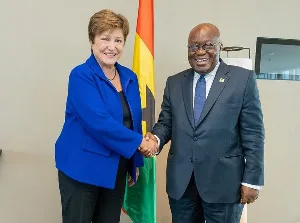
    Ghana hopes to get a deal to lower its debt in the next week so it can get more money from a $3 billion loan program from the International Monetary Fund. Finance Minister Ken Ofori-Atta said this.

    “Ofori-Atta said that a basic agreement on the restructuring details should be reached next week,” during his annual budget speech in Accra. “We think the creditor committee will make a plan with France and China to give an agreement to the IMF. ”

    Ghana’s bonds that need to be paid back in 2049 dropped a little bit in value, to 41. 18 cents on the dollar.

    The IMF and Ghana agreed on a plan last month for the first review of the program that began in May. The lender in Washington has said they will give West Africa $600 million more if the country’s lenders agree to specific debt conditions that were promised a few months ago.

    Ghana is making changes to almost all of its $50 billion debt to make it manageable under the IMF program. The government has finished making changes to its loans within the country. The next move is to improve $13 billion in eurobonds.

    Discussions are ongoing with people who have eurobonds and the government is looking at ideas from two groups about how to deal with the debt.

    “He said that in the next few weeks, we will have long discussions with both groups to make sure we reach the goals set by the IMF/World Bank Debt Sustainability Framework. ” “We think things will get better by the end of the year. ”

    This month, Fitch Ratings said that Ghana’s credit score got better because the government finished making changes to its debt. This saved them a lot of money.

    Ofori-Atta’s budget did not include measures that voters might like because there will be an election next year.

    The finance minister explained how they are going to make the economy grow, reduce prices from going up, and make the budget better next year. They said that these plans are starting to work because of the strict rules from the IMF agreement.

    He predicted that the economy will grow by at least 2. 8% next year and by 5% in 2027, compared to 2. 3% in 2023 The central bank’s plans to control high prices should reduce inflation to 15% by the end of 2024. In October, the percentage was 35. 2%

    “Ghana is improving and getting back on course,” Ofori-Atta said. He said Ghana is committed to keeping the economy stable by being disciplined, kind, and creative.

    Other things to know about the budget:

    The economy is expected to make 1 trillion cedis for the first time in 2024.

    We expect the non-oil economy to grow by at least 2. 1%

    Next year, it is expected that we will have a surplus of 0. 5% in our budget.

    In 2024, it is predicted that the amount of foreign currency saved will be enough to pay for at least three months worth of imports.

    More taxes will be added on plastic packaging, and emissions from factories and vehicles to protect the environment.

    The government will look at how much money people can earn without paying taxes.

    The government wants to stop charging taxes on electric buses and other public transportation vehicles for eight years.

    A 5% flat tax rate will be applied to all commercial properties instead of the current 15% standard rate.

    Source: The Independent Ghana
  • Inaki Williams finally ends goal drought in Ghana as he scores in seconds before end of Ghana- Madagaska clash

    Williams, who switched his allegiance from Spain to Ghana in 2022, made a significant impact in the 2026 World Cup qualifiers.

    After scoring two goals in four matches at the 2022 World Cup, he continued to showcase his talent in a crucial match against Madagascar on November 17, 2023.

    The game was characterised by tight defences and limited chances for both teams. With the match seemingly heading for a goalless draw, Williams entered the game in the 85th minute.

    https://www.youtube.com/watch?v=ZXG0_iBwZZI

    Utilising his speed and strength, he disrupted the Madagascar defence and created opportunities for his teammates.

    In the 93rd minute, receiving a pass from Gideon Mensah, Williams unleashed a powerful free-header from outside the box that found the top corner of the net.

    The late goal not only secured a dramatic 1-0 victory for Ghana but also earned them three crucial points in the Group I opener. Ghana is now tied with Mali, who also secured a victory in their first game against Comoros.

    The upcoming match against Mali on November 21, 2023, holds significant importance as it could determine the group’s leader.

    Williams’ celebration with teammates reflected the relief and joy of breaking the deadlock and contributing to Ghana’s successful start in the qualifiers.

  • Akufo-Addo envisions Ghana as a leading exporter of agricultural products

    Akufo-Addo envisions Ghana as a leading exporter of agricultural products

    President Nana Addo Dankwa Akufo-Addo is optimistic about Ghana’s potential to emerge as a global leader in agricultural exports.

    Despite current economic challenges, he highlighted the country’s progress in recent years and projected transformative economic growth.

    During the commissioning of new Gentry Cranes and Works at the Tema Harbour, the president emphasized the government’s focus on the agriculture sector as a key driver for improving and revitalizing the Ghanaian economy.

    “In the face of global upheaval and disruptions in world food supply systems, Ghana has become resilient due to the measures that we have put in place. I firmly believe that Ghana has the potential to become a world-leading exporter of agricultural produce, thanks in part to favourable weather conditions, ample water supply, and fertile lands.”

    “However, what we have lacked over the years is a modernized and robust logistics channel infrastructure required to help realize this potential,” the president added.

    Additionally, he said that the Cedi’s stability and the decline in inflation are unmistakable signs that the government is trying to boost the economy.

  • Details on McDan’s salt mining company and Ada youth clash

    Details on McDan’s salt mining company and Ada youth clash

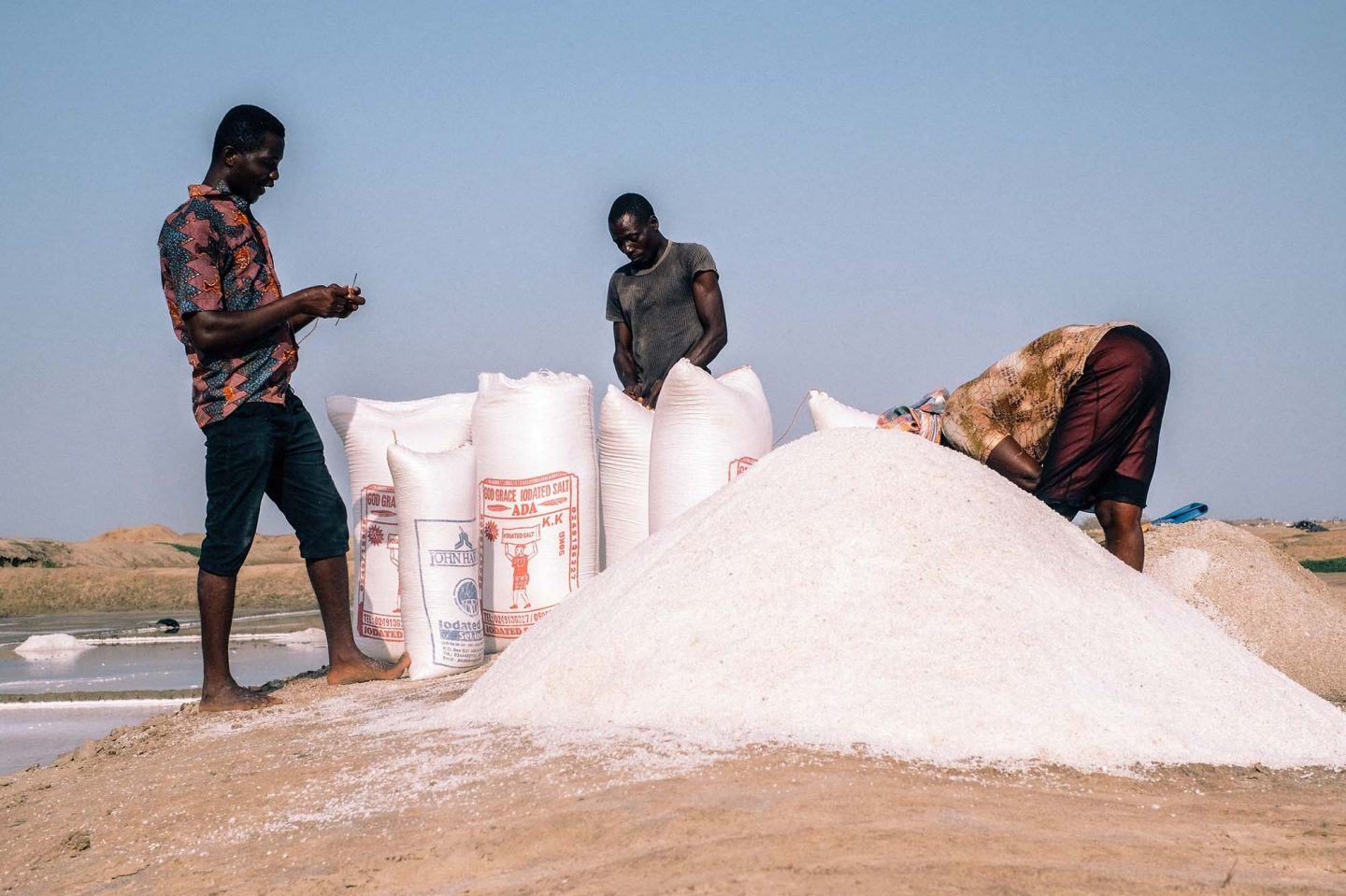
    For nearly three years, Electrochem Ghana Limited, a salt mining company owned by Ghanaian businessman Daniel Mckorley, also known as McDan, has been embroiled in an ongoing dispute with the people of Ada.

    The conflict emerged in 2020 when Electrochem obtained a lease from traditional leaders and government approval to mine salt in the Ada-Songor lagoon.

    The company asserted that the lease would bring developmental opportunities to the area, including job prospects for local youth.

    However, opinions among the Ada people were divided. While some believed in the project’s positive impact, others viewed the privatization of the lagoon as a threat to their livelihoods, as they relied on the lagoon for their own salt mining activities.

    Despite numerous protests and demonstrations by the youth of Ada, the project persisted. Electrochem proceeded with the mining activities and the project was officially commissioned by President Akufo-Addo on August 30, 2023.

    In response, the Chief of Terkpebiawe Clan in Ada and a prominent member of the Ada Songor Lagoon Association (ASLA) emphasized in a press briefing in January that the residents would not consent to the company mining salt extensively in the lagoon.

    “McDan has been given a place to work in the Lagoon and we entreat him to focus on his territory because we will not vacate our vast portion for him to operate. He alone cannot feed us and our subjects; this is the source of livelihood of the people. You McDan have no right to be here, your presence in Ada is illegitimate and you cannot give us any ultimatum,” he asserted.

    In a rekindled feud, a shooting between Ada residents and Electrochem Ghana Limited resulted in one confirmed death and multiple injuries.

    Following the incident, local journalist Isaac Ofei spoke with CitiNews and stated: “Today, these alleged land guards went to Toflokpo. The chief of the town informed me that when the landguards arrived, they began attacking anyone in sight. The people of Toflokpo retaliated as well. Some residents of Ada stated that this is their source of livelihood, so if Electrochem takes over all the land, where will they find their source of income and livelihood?” he asked.

    Nonetheless, Electrochem has refuted any role it played in the conflict. Ghanaians are waiting for government action to guarantee a peaceful resolution to the long-running dispute.

  • U.S. Global Water Strategy High Priority Country Plan for Ghana launched
    U.S. Global Water Strategy High Priority Country Plan for Ghana launched
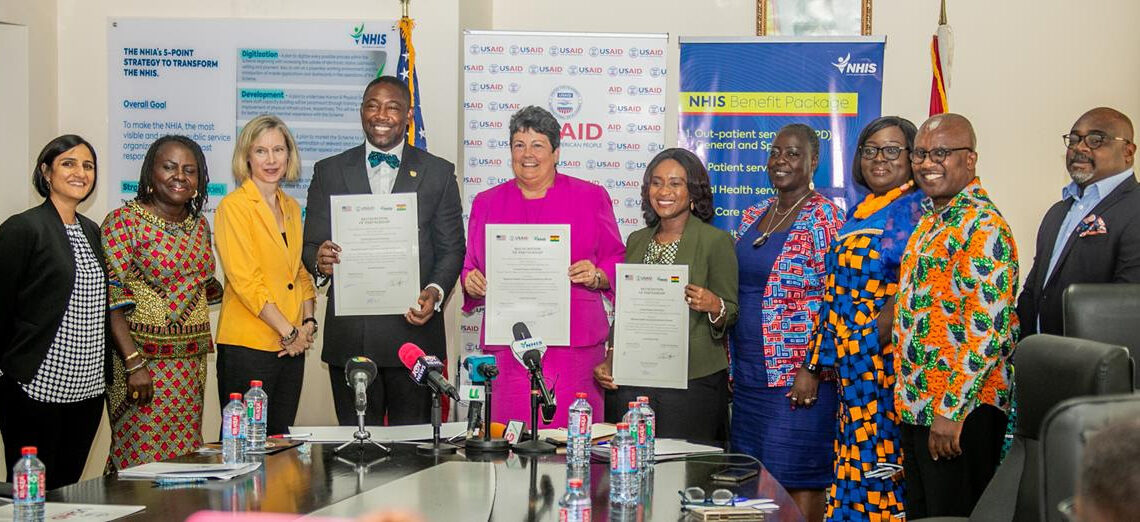
    On October 27, the U.S. Ambassador to Ghana, Virginia Palmer, alongside Ghana’s Minister for Sanitation and Water Resources, Dr. Freda Prempeh, officially launched the U.S. Global Water Strategy High Priority Country Plan for Ghana.

    The United States, through the United States Agency for International Development (USAID), has outlined plans to invest around $100 million in Ghana’s water, sanitation, and hygiene (WASH) sector over the upcoming five years.

    This commitment is in addition to the $89 million that USAID has already allocated since 2009. The Country Plan for Ghana aims to raise an additional $20 million from both public and private sectors within the next five years.
    Inadequate WASH services have adverse effects on health, education, and economic development, and there are notable regional disparities in Ghana.

    For instance, as per the 2021 Population and Housing Census, access to clean water varies from 98% in the Greater Accra Region to 55% in the North East Region. Furthermore, while the national average for open defecation in rural areas stands at slightly over 30%, the five regions in northern Ghana report an open defecation rate exceeding 50%.

    During the launch, Ambassador Palmer reaffirmed the U.S. support to Ghana’s WASH sector, saying; “The United States Government looks forward to continuing our partnership to ensure that everyone in Ghana has access to clean water, sanitation, and hygiene to improve health and promote economic development.  Together, we’ll ensure clean water and sanitation for all.”

  • Web4Africa: Empowering Ghana’s digital transformation with superior web hosting

    Web4Africa: Empowering Ghana’s digital transformation with superior web hosting

    In the era of digitalization, Ghana finds itself on the brink of a substantial transformation. With businesses in the country steadily shifting to the online realm, web hosting stands as the foundation upon which this digital ecosystem prospers. Superior hosting isn’t just a nicety; it’s an essential requirement.

    Amid Ghana’s digital renaissance, Web4Africa takes center stage as the leading provider of top-tier web hosting services. It is bolstered by its enterprise-class servers located in Ghana and a strategic linkage to the local internet exchange point, positioning it as a guiding light in the field of web hosting.

    The need for quality web hosting in a digital Ghana

    A website’s performance becomes the differentiator as businesses vie for online visibility. This is the reason why having a reliable hosting provider is essential:

    1. Speed: In the online world, speed is of the essence. Slow-loading websites deter potential customers and rank lower on search engine results. High-quality web hosting ensures your website loads swiftly, offering an optimal user experience.
    2. Uptime: A website that’s frequently down is akin to a shop that’s often closed. Reliable hosting guarantees high uptime, ensuring your business is always accessible.
    3. Security: With the rise of cyber threats, robust hosting solutions are critical to protect sensitive data and maintain website integrity.
    4. Scalability: As businesses grow, their digital requirements evolve. A premier hosting service allows for effortless scaling, accommodating the business’s expanding needs.

    Web4Africa: Pioneering excellence in web hosting

    Web4Africa isn’t just another name in the vast sea of web hosting providers. Here’s why it stands apart in bolstering Ghana’s digital growth:

    1. NVMe driven speed: The NVMe (Non-Volatile Memory Express) drives are the future of storage technology. Offering speeds multiple times faster than conventional storage, NVMe ensures lightning-fast data retrieval and processing. With Web4Africa’s servers equipped with NVMe drives, Ghanaian businesses can offer blazing-fast websites, outpacing competitors and ensuring customers enjoy a seamless digital experience.
    2. Local server presence: Web4Africa’s strategic decision to host servers in Ghana drastically reduces the data transfer time. The result? Faster website load times, lower latency, and a marked improvement in overall website performance.
    3. Connection to local internet exchange point: This connection ensures that local traffic remains within Ghana, further enhancing speed and reducing costs. It’s a testament to Web4Africa’s commitment to providing the best for Ghanaian businesses.
    4. Robust security measures: In addition to speed, Web4Africa also prioritises security. By understanding global and local cyber threats, they’ve curated strong security measures, ensuring that Ghanaian businesses operate in a secure digital environment.
    5. Tailored solutions: Every business and its digital needs are unique. Web4Africa recognises this diversity and offers bespoke hosting solutions tailored to suit the specific requirements of Ghanaian businesses, be it a bustling e-commerce platform or a budding blog.

    Ghanaian Businesses: The time is now!

    The trajectory of Ghana’s digital landscape is clear: upward and forward. As the nation embarks on this exciting digital journey, businesses must ensure they’re not left behind. Quality web hosting is no longer just a technical requirement; it’s a strategic investment—an investment in speed, reliability, security, and scalability.

    Web4Africa, with its world-class services, localised solutions, and pioneering technology, offers Ghanaian businesses the perfect launchpad. By choosing Web4Africa, businesses aren’t just selecting a hosting provider but partnering with a stakeholder invested in their digital success.

    As Ghana continues its digital surge, the need for quality web hosting becomes more critical. And in this domain, Web4Africa emerges as the undisputed leader. For Ghanaian businesses eyeing digital dominance, the message is clear: Invest in quality web hosting. Choose Web4Africa. Embrace the future.

  • Capital flight cost Ghana’s gold, cocoa sectors $50b for the past 50years

    Capital flight cost Ghana’s gold, cocoa sectors $50b for the past 50years

    A report by Professor Léonce Ndikuma from the University of Massachusetts Amherst reveals that Ghana suffered a massive $50 billion loss over the past five decades due to capital flight.

    This research focused on several African countries rich in natural resources, including Ghana, Cameroon, and Zambia.

    The $50 billion loss primarily stems from companies in the gold mining and cocoa industries misreporting trade values.

    In the case of gold, Ghana’s reported export values didn’t match the actual value received by the destination country, exemplified by a $15 billion discrepancy in 2020-2021 when exporting gold to South Africa.

    Concerning cocoa, losses were relatively low due to the government’s significant involvement in the trade. Nonetheless, Ghana only controls 4% of the cocoa value chain, while the processing and distribution sector holds a substantial 79%.

    The report also revealed a combined private wealth of approximately $56 billion, with 110 wealthy Ghanaians possessing over $10 million each. As a solution, the report recommended that Ghanaian business owners invest in developing these sectors’ value chains.

    Overall, the report sheds light on a staggering total capital flight of $2 trillion from Africa between 1971 and 2018. The report, titled “Capital Flight from Africa and Perverse Global Connections: Analysis and Possible Solutions,” underscores the need for action on this critical issue.

  • Ghana and OCC to finalize external debt swap by 2023

    Ghana and OCC to finalize external debt swap by 2023

    By the end of 2023, the Ghanaian government, the Official Creditor Committee, and the Paris Club are expected to reach a consensus on an external debt restructuring plan, according to predictions made by global rating agency Fitch.

    However, Fitch believes that by mid-year [2024], the government and private creditors will have reached a comparable debt swap agreement.

    “We expect the OCC and authorities to agree on the debt treatment parameters by end-2023, before an agreement with private creditors on comparable terms is expected for mid-2024, paving the way for Ghana moving out of default,” Fitch pointed out in its comprehensive analysis of Frontier Markets.

    Fitch also noted that these agreements with external creditors will be instrumental in helping Ghana exit its default status and taking steps to tackle its unsustainable debt burden.

    A recent example of such a resolution is Zambia’s agreement with its external creditors on a debt restructuring plan. Currently, Ghana is in the process of obtaining approval from the IMF’s Executive Board for the second portion of a $3 billion bailout package, including $600 million.

    This extended credit facility aims to restore macroeconomic stability over a three-year period.

  • Ghana needs industrial strategy to address problems with waste management – Nana-Osei Mainoo

    Ghana needs industrial strategy to address problems with waste management – Nana-Osei Mainoo

    Ghana must use an industrial strategy to solve its waste management problems, according to Nana-Osei Mainoo, the founder of the multinational advising firm Finance and Industrial Machinery Africa (FIMA).

    He stated that doing so necessitated the use of heavy-duty waste collection vehicles equipped with cutting-edge technologies throughout the nation’s major cities and villages.

    Additionally, it was essential for the government and other private businesses to invest in waste management equipment and labour for staffing the avalanche of garbage collection inside the towns.

    According to Nana-Osei Mainoo, FIMA and its German partner, FAUN, were prepared to provide financial support to Ghanaian waste management companies so they could purchase cutting-edge garbage collection vehicles.

    He made this announcement at the 11th West African Clean Energy and Environment Trade Fair and Conference (WACEE23) in Accra, where FIMA and FAUN debuted their “Rotopress” as their flagship product to the West African market.

    A distinctive vehicle for collecting home, commercial, and municipal waste is the Rotopress.

    The truck could empty any container, from small 60-liter bins to big 1,100-liter bins, with the right lift.

    The organic waste is immediately homogenised and compacted in the rotary drum, making it perfect for removal.

    Low maintenance costs, large payload, agility due to a small overhang, and optimal axle load distribution make this vehicle environmentally benign.

    It has a revolving drum that empties completely without leaving any residue and has very watery waste fractions.

    When speaking with the media, Nana-Ose Mainoo stated that the Jospong Group of Companies (Zoomlion) had already received 30 of the trash vehicles from them.

    According to Mr. Lucas Dorr, an FAUN spokesman, the cars have been around for 170 years.

    Former minister of state and chair of the Appiatse Support Fund Committee Dr. Joyce Aryee encouraged metropolitan, municipal, and district assembly to acquire them so they may manage their garbage effectively. She cut the ribbon to officially outdoor the vehicle.

    The audience witnessed a live demonstration of how to operate the vehicle.

  • Ghana’s crude oil production falls by 13.2% year

    Ghana’s crude oil production falls by 13.2% year

    With a 13.2% semi-annual decline in oil production, Ghana’s crude oil production is still on the decline.

    In comparison to the 25.9 million barrels produced during the same period last year, 22.5 million barrels (bbls) of crude oil were produced in the first half of 2023.

    The fall is a result of lower output on all three producing fields, Jubilee, TEN, and SGN Fields, which decreased by 13%, 17.5%, and 12.9%, respectively.

    Since its start, year-over-year (y-o-y) crude oil production levels have decreased four times in a row, according to the Public Interest Accountability Committee’s (PIAC) semi-annual report on the use and management of petroleum revenue.

    The research states that Jubilee’s output fell from 14.9 million bbls in the first half of 2022 to 13.1 million bbls in the same period of 2023, with a fall in the average daily oil production of 82,560 bbls from 2022 to 2023.

    The first half of 2023 saw a drop in TEN productions from 4.4 million bbls in the first half of 2022 to 3.6 million bbls. In the first half of 2022, the average daily oil production was 24,263.00 bbls; in the second half, it was

    In the first half of 2023, there will be 20,032.24 bbls, the report noted.

    The average daily output of SGN decreased from 36,206.76 bbls in 2022 to 31,562.9 bbls in 2023, falling from 6.6 million bbls in the first half of 2022 to 5.7 million bbls in the first half of 2023.

    Gas output from all three fields, including both associated and non-associated gas, totaled 130,065.22 Million Standard Cubic Feet (MMSCF) during the period under review.

    According to the study, 14 liftings totaling 13,273,962 bbls were made by the Jubilee Partners during the first half of the year, compared to 15 liftings during the same period in 2022, for a total of 22 liftings.

    The TEN partners lifted 2.9 million bbls altogether in the first half of 2023 as opposed to 4 liftings totaling 3.9 million bbls in the same period in 2022.

    In comparison to seven parcels totaling 6.6 million bbls during the same period in 2022, SNG partners hoisted five parcels of crude oil totaling 4.7 million bbls.

  • Banana firm loses $500,000 as result of Akosombo Dam disaster

    Banana firm loses $500,000 as result of Akosombo Dam disaster

    The largest banana exporting company in Ghana, Golden Exotic Limited, claims that they have suffered a $500,000 infrastructure loss due to excessive water spillage from the Akosombo Dam, according to the company’s authorities.

    The floods have affected a big area of farmlands, covering 45 hectares. It is estimated that around 44,528 bunches of bananas have been underwater because of the floods.

    Mr Benedict Rich, who is in charge of Golden Exotics Limited, said to the Ghana News Agency that the spillage has caused problems with their supplies.

    We have around 4000 employees, and a lot of them struggle to come to work. He said that the roads are covered with water, so we can’t collect the harvest.

    This is the time of year when we gather the most crops, and we thought we would send over 2000 tons every week to other countries. The spilled water caused big floods that destroyed our farms.

    In the meanwhile, Mr. Rich reported that the business had started constructing a dam along the river to stop water from accessing certain farmlands and pumping some water so that the workers could rescue what they could.

    The plantation had not experienced floods of that size since it was founded, he claimed, adding that management was not given enough time to prepare for the spill.

    “The discharge of water from the dams occurs every other year, typically rising two to three metres beyond the normal level. It has advanced by around five metres this year.

    “These are new farms, and we have lost almost 45 hectares to the flood,” he added, adding that bananas could not survive in water for more than 72 hours.

    The company’s Corporate Affairs and Administration Manager, Mr. Mark Achel, said that management was aware of the struggles residents were facing and had provided them with aid.

    On September 15, 2023, the VRA began the controlled spillage at the Akosombo and Kpong dams in the Eastern Region due to excess water in both reservoirs.

    A rough estimate of 26,000 people had been relocated as of October 17, 2023, as a result of the leak. Since the construction of the Akosombo Dam, which receives water from six separate tributaries, this is the biggest magnitude of displacement and volume recorded.

    The VRA has previously let water pour out of the Dam. It did leak in the following years: 1966, 1967, 1968, 1969, 1970, 1971, 1972, 1974, and 1991, with 2010 being the most recent.

    The Saharan countries are seeing above-average rainfall distribution, according to data from the Ghana Meteorology Agency (GMet).

    The above-average rainfall that happened in the country’s northeast, which flows into the White Volta, is the other occurrence that has contributed to the huge amounts of water input.

  • GACC criticizes Ghana’s oil fund spending as inefficient

    GACC criticizes Ghana’s oil fund spending as inefficient

    The Ghana Anti-Corruption Coalition (GACC) criticizes Ghana’s utilization of oil funds, citing inefficient allocation to projects that fail to address people’s needs.

    GACC’s analysis of petroleum revenue-funded projects (ABFA-funded projects) reveals that Ghana expended over GHC 1,303,419,796.26 on more than 500 projects spanning 17 thematic areas.

    Madam Beauty Emafa Narteh, the GACC’s Executive Secretary, shared this during an interview with the Ghana News Agency regarding the “From disclosure to impact: mobilizing local civil society to verify published extractive data and advocate for equitable, accountable spending of funds” project.

    This initiative, supported by the Africa Centre for Energy Policy (ACEP), ran from September 2022 to September 2023. Its core premise was that informed citizens could demand accountability, transparency, and improved processes for extractive revenue utilization.

    Mrs. Narteh noted that the Coalition’s Local Accountability Networks (LANets) conducted pre-monitoring, mid-term, terminal, and post-monitoring activities for these projects, some of which began as early as 2011. Unfortunately, these projects often failed to meet the intended community needs, primarily because the local communities were unaware of their existence.

    She added that LANets monitored 33 petroleum-revenue-funded projects across 18 districts in six regions, employing a monitoring tool devised by the GACC Project Implementation Team.

    “Compared to other oil-rich countries in Scandinavia and the Gulf region, Ghana’s expenditure of its oil funds could be more efficient and strategic,” she said

    Mrs. Narteh revealed that citizens residing in areas where petroleum-revenue-funded projects were underway lacked information about project specifics, including cost, duration, and contractor details. This information gap stemmed from minimal engagement between the government, contractors, and the local population concerning these projects.

    Furthermore, the GACC identified a phenomenon referred to as “protocol or parachute projects.” These were projects and contracts initiated at the national level but intended for execution at the district level. Frequently, neither the district assemblies nor the local communities were informed about these projects, which were purportedly awarded for political gain.

    “The district assemblies do not have any project documents and do not have any authority to oversee project construction. Furthermore, they are unable to hold the contractors accountable in the event of any mishap,” she added.

    The GACC Executive Secretary explained that project implementation encountered significant delays due to various challenges. Although the project commenced in September 2022, monitoring activities didn’t begin until April, approximately eight months later. These delays primarily resulted from difficulties in accessing information about oil-funded projects and obtaining introductory letters from relevant state agencies.

    These letters were intended for presentation by the LANets to their respective Municipal, Metropolitan, and District Assemblies (MMDAs) before conducting monitoring. Despite substantial efforts by the GACC, formal acquisition of the list of ABFA-funded projects from the Ministry of Finance proved unattainable.

    The GACC also faced challenges in obtaining technical input from the Contractors’ Association and the Chamber of Construction, as they did not respond to GACC’s requests.

    Another challenge pertained to the lack of cooperation from the Ellembele District Assembly in the Western Region, which cited prior monitoring by the Public Interest and Accountability Committee (PIAC) as a reason not to provide the needed information to the LANet.

    As a recommendation for future projects, the GACC suggested that implementers initiate projects with monitoring of the procurement process and involve the Public Procurement Authority (PPA) in initial data collection.

    Additionally, they stressed the importance of regular monitoring of oil-funded projects to ensure the collection of up-to-date information, which can be used to support monitoring efforts and policy advocacy.

  • Ghana, Zimbabwe need more cooperation on commerce – Prof. Dodoo

    Ghana, Zimbabwe need more cooperation on commerce – Prof. Dodoo

    Professor Alex Dodoo, the Director General of the Ghana Standards Authority, has urged both Ghana and Zimbabwe to make use of the trade and investment opportunities provided by the General Cooperation Agreement.

    This agreement, signed between the two countries in June of this year, aims to leverage the favorable trade conditions facilitated by the African Continental Free Trade Area (AFCFTA).

    During the 2023 World Standards Day Celebrations in Zimbabwe last week, Professor Alex Dodoo emphasized that the GCA offers a unique chance to generate wealth and enhance the quality of life.

    He further mentioned that the GCA is expected to lay the foundation for the establishment of a Ghana-Zimbabwe Permanent Joint Commission for Cooperation, which will focus on key areas of development.

    “The areas of collaboration include Trade; Transport; Agriculture; Fisheries; Livestock Breeding; Industry; Mining; Culture; Education; Health; Environmental Protection; Water Engineering; Sports; ICT among others,” the GSA boss explained.

    As a result, he emphasized the need for robust trade connections between Ghana and Zimbabwe to drive economic growth and improve the lives of their respective populations.

    This year’s World Standards Day theme was “Shared Vision for a Better World: Incorporating SDG3 – Good Health and Well-being.” This annual event, observed on October 14th, serves as a tribute to the collaborative work of numerous global experts who create voluntary technical agreements published as International Standards.

    GCA signing

    The General Cooperation Agreement was signed in June of this year in the presence of Presidents Emmerson Dambudzo Mnangagwa and Nana Addo Dankwa Akufo-Addo.

    Deputy Minister of Foreign Affairs and Regional Integration Kwaku Ampratwum Sarpong and Zimbabwe’s Minister of Finance and Economic Development Professor Mthuli Ncube signed the agreement on behalf of Ghana.

  • Ghana is making progress towards achieving  inflation rate in single digits by 2028 – Amin Adam

    Ghana is making progress towards achieving inflation rate in single digits by 2028 – Amin Adam

    Minister of State at the Finance Ministry, Dr. Mohammed Amin Adam, has expressed confidence in the country’s ability to attain its growth objectives, including achieving single-digit inflation by 2028.

    He pointed out that the economy is progressing at a rate exceeding the projections made by the International Monetary Fund.

    Dr. Adam also highlighted the reduction in inflation from 54% to 40% in recent months as a positive indicator of the attainability of the growth targets.

    “The IMF actually projected that we would grow at 1.5% this year, and if half into the year we are already growing at 3.2%, with some of the recovery policies yet to mature, it’s indicative of the fact that by the end of the year, we should be doing far more than what the IMF projected. And that is a great sign of recovery,” Dr. Amin Adam said on Accra-based Citi TV’s Point of View.

    “Inflation which is a very important indicator for attracting investments and for improving domestic investment has also been decelerating from 54% in December 2022 to date. It is about 40% and it’s going to continue because 40% is still high and so we will expect that this disinflationary path we have been following will continue until we reach single-digit inflation by 2028 as per the IMF programme,” he added.

    Apart from the growth metrics and inflation, the minister also noted that the exchange rate has exhibited a degree of stability this year. Consequently, he holds a positive outlook that Ghana’s rebound will surpass initial expectations.

  • GNPC recognized as Ghana’s ‘Most Compliant State-Owned Enterprise’

    GNPC recognized as Ghana’s ‘Most Compliant State-Owned Enterprise’

    The Ghana National Petroleum Corporation (GNPC) has been recognized as the “Most Compliant State-Owned Enterprise” in Ghana, as acknowledged by the Ministry of Public Enterprises.

    This honor was presented at the Public Enterprises League Table (PELT) Awards held in Accra on October 11, 2023, organized in collaboration with the Ministry of Finance and the State Interests and Governance Authority (SIGA).

    The organizers praised GNPC for its steadfast dedication to maintaining the highest standards of regulatory compliance and ethical business conduct, deeming it deserving of the title “Most Compliant State-Owned Enterprise (SOE).”

    This recognition, along with GNPC’s ranking as the third Best Performing Entity on the PELT, resulted from an impartial assessment conducted by the multinational Accounting and Auditing firm, PricewaterhouseCoopers (PwC).

    The award ceremony aimed to foster healthy competition among State Owned Enterprises (SOEs), Joint Venture Companies (JVCs), and State Entities, and it garnered attendance from industry leaders, government officials, and other distinguished guests.

    “This achievement is a testament to the hard work of our staff whose efforts have now positioned GNPC as a trailblazer in the realm of corporate compliance, setting an inspiring example for other state-owned enterprises and businesses across the nation,” he remarked.

    The outstanding compliance culture at GNPC has not only brought the company praise from the business community, but it has also fostered confidence and trust among partners and stakeholders.

    Mr. Albert Akowuah, Manager of Corporate Strategy, and Mr. Albert Longdon Nyewan, Deputy Manager, Compliance at GNPC, attended the ceremony on behalf of the Corporation.

  • Partey accompanied to Black Star camp in US by Arsenal physio, Simon Murphy

    Partey accompanied to Black Star camp in US by Arsenal physio, Simon Murphy

    Thomas Partey and Arsenal physiotherapist Simon Murphy have traveled to Ghana’s training facility in America as the Black Stars get ready for friendlies against Mexico and the USA.

    On Thursday, Murphy was seen in training alongside Ghana’s in-house medical staff and Dr. Prince Pambo, the Black Stars’ team doctor.

    His presence is believed to be associated with monitoring Thomas Partey, who has recently recovered from a groin injury.

    Partey had been sidelined for six weeks between late August and early October, and he made his comeback as a substitute in Arsenal’s 1-0 victory against Manchester City the previous Sunday.

    This isn’t the first time that Murphy has accompanied Partey to the Ghana camp for international duty. In March 2022, the Arsenal physiotherapist also joined the midfielder for the World Cup playoffs against Nigeria.

    In the upcoming fixtures, Partey will take on the role of captain for Ghana, filling in for Andre Ayew.

    The Black Stars will face Mexico at the Bank of America Stadium in Charlotte on Saturday, October 14, and then take on the USA on Tuesday, October 17, 2023, in Nashville, Tennessee.

  • Africa Data Centres and DFC partner to build $50M data center in Ghana

    Africa Data Centres and DFC partner to build $50M data center in Ghana

    The USA’s International Development Finance Corporation (DFC) has designated a $300 million investment to facilitate the establishment of data centers in Africa, including Ghana.

    The Africa Data Centres (ADC) project aligns with the US government’s efforts to support Ghana’s digital transformation and government’s digitalization agenda.

    During the signing of a Memorandum of Understanding (MoU) involving ADC, Cassava Technologies, and DFC in Accra on October 12, the CEO of DFC, Scott Nathan, emphasized that the establishment of a data center in Ghana will serve as a crucial hub for secure, reliable, and trusted ICT networks and infrastructure.

    He revealed that Ghana, South Africa, and Kenya will be the main locations for the data centers.

    “Data centres can help attract data-driven companies looking for a foothold or to expand their operations in growing African economies. Markets with trusted technology and dependable data storage are magnets for businesses that create jobs and opportunity,” Nathan said.

    “When the data centre becomes operational, it will help enable development and economic growth here in Accra, for communities, across the country and in the wider region of Africa,” he added.

    Additionally, Scott Nathan underlined the significance of open, safe, and secure information technology networks as the cornerstone for the growth of any thriving economy.

    “They are a vital part of the infrastructure that allows a dynamic private sector to grow and thrive,” the DFC CEO concluded.

    According to Finhai Munzara, chief financial officer of Africa Data Centres, the project will leverage up to 15%, or US$50 million, for the data center in Ghana to further support the government’s objective to fully utilize the potential of the nation’s technological industry.

    “We have secured a site in Ghana within the Trade Fair which is also around the landing stations. We know from internet statistics that Ghana is becoming a hub for internet connectivity and we are seeing today that Ghana is using 20 percent of the West Africa regions internet and we believe that will continue to grow further upwards”.

    Following the recent visit to Ghana by US Vice President Kamala Harris, US Ambassador to Ghana Virginia Palmer reaffirmed the US government’s commitment to assisting Ghana in its attempts to undergo a digital revolution.

    “Ghana is harnessing the potential of the digital economy and we applaud its vision and commitment to building a strong digital ecosystem,” Ambassador Palmer noted.

    The Memorandum of Understanding (MoU) also emphasizes their shared commitment to enhancing the ICT infrastructure in Africa.

    Additionally, it enables ADC to leverage a portion of its current $300 million DFC finance commitment to build Ghana’s first data center of its sort.

  • World Bank allocates $70b for digital development in Ghana and other nations

    World Bank allocates $70b for digital development in Ghana and other nations

    The World Bank has allocated approximately $70 billion to support digital infrastructure development in Ghana and other developing nations.

    The Bank is actively engaging in research and communication with African and other developing countries to identify investment needs and provide necessary assistance.

    During a panel discussion at the WBG/International Monetary Fund (IMF) Annual Meetings in Marrakech on the topic “Building foundations for an inclusive digital future,” Mr. Axel Van Trostsenburg, Senior Managing Director, Development Policy and Partnership at the World Bank, emphasized the importance of bridging the digital divide between advanced and low-income countries. He stressed that a financial commitment is essential, as digital infrastructure cannot be built on hope alone.

    In response to this need, the International Development Association (IDA), a subsidiary of the World Bank, is making $70 billion of its $93 billion replenishment available to Africa to support digital infrastructure and other developmental projects.

    Trostsenburg highlighted the importance of developing physical digital infrastructure and connecting it to the objectives of the African Continental Free Trade Area (AfCFTA), emphasizing the potential for significant economic growth through regional integration under AfCFTA.

    He called for a multifaceted approach, including regulatory support, infrastructure development, and mobilizing private sector finance to foster digital development.

    Ursula Owusu-Ekuful, Ghana’s Minister of Communications and Digitalisation, shared Ghana’s challenges in digital acceleration, citing insufficient access to finance due to global economic difficulties. The government is exploring Private-Private Partnerships (PPPs) to increase high-speed internet access.

    Despite challenges, Ghana has launched various programs to benefit people of all backgrounds, from students to the working population, including farmers and individuals with disabilities. These initiatives have led to remarkable progress, with individuals who had never encountered computers now becoming software and robotic engineers.

    Ghana is set to host the first global cybersecurity capacity-building conference in November 2023, aimed at strengthening capacities in the global south and reducing reliance on costly consultants for managing digital infrastructure.

  • ‘Ghana Airlines’ flight availability problematic for Ashanti Airlines – Report

    ‘Ghana Airlines’ flight availability problematic for Ashanti Airlines – Report

    Over a year has passed since Ashanti Airlines, in partnership with the Government of Ghana (GoG), won the bid to establish a new domestic carrier for Ghana. However, Ashanti Airlines, along with its financial partner, Zotus Group, has made little tangible progress in bringing this project to fruition.

    Despite missed target dates in 2022, the government had provided assurances that the new airline, named Ghana Airlines, would initiate ticket sales in April and May 2023, with commercial flights commencing by June or July of the same year.

    Ashanti Airlines, initially holding an Air Carrier License (ACL) but not yet a full-fledged airline at the time of the bid, secured the contract ahead of strong competitors such as Ethiopian Airlines, EgyptAir, and JNH Group, a company with a group net worth exceeding $1.5 billion but lacking an Air Carrier License (ACL) and an Air Operator’s Certificate (AOC).

    Although Ashanti Airlines had demonstrated early enthusiasm in the acquisition of an AOC from the aviation sector regulator, the Ghana Civil Aviation Authority (GCAA), it has faced prolonged delays in the process, stretching back to the previous year, according to a well-informed source cited by Aviationghana.com.

    With just around 14 months remaining in the Nana Akufo-Addo-led government’s tenure, there is a growing urgency to address the nearly seven-year-long pursuit of a new national flag carrier.

    Kwame Governs Agbodza, the Minority Chief Whip and Member of Parliament for Adaklu Constituency in the Volta Region, feels his earlier skepticism is justified: “When it was awarded to Ashanti Airlines, I warned them that this would not succeed because they lack the expertise. Running an airline is not akin to buying an expensive car and parking it in your driveway.”

    Ghana has been without a national airline since the collapse of Ghana International Airlines in 2010, following the earlier demise of Ghana Airways in 2004. Successive governments since 2010 have attempted, albeit unsuccessfully, various approaches to establish a new flag carrier.

    Given Ghana’s reputation as one of Africa’s stable democracies and business-friendly nations, the quest for potential partners in this venture has garnered interest from some of the industry’s most reputable names over the past decade.

    Lufthansa, Qatar Airways, Ethiopian Airlines, EgyptAir, Airbus, Boeing, South Africa Airways, Embraer, and others have all, at one point or another, expressed interest in collaborating with the GoG on this project.

    Ethiopian Airlines, set to become the largest international carrier servicing Accra’s Kotoka International Airport with 14 weekly flights starting from October 29, 2023, may offer a mutually beneficial solution to Ghana’s quest for a new flag carrier. Mr. Lemma Gudeta, the Chief Commercial Officer of Ethiopian Airlines, indicated in an interview with AviationGhana.com in Accra, Ghana, that his company would be open to revisiting discussions about the project if the Government of Ghana invites them back to the table.

    “Yes, we used to engage with the Government of Ghana for the establishment of a national carrier here. We participated in a bid and we were one of the companies shortlisted to go for further discussion. There were issues that happened in between, but Ethiopian Airlines feels that it is our national obligation as an African carrier to support any start-up national carriers in Africa.

    Therefore, whenever the Ghanaian government is ready, and if they believe that Ethiopian Airlines can make a difference, we will be more than happy to assist, because it’s not about business or commercial venture. It is all about making Africa self-sufficient in air transport, therefore it is strongly our obligation, and we will be more than happy to be part of the journey that the Ghanaian government is going to do in establishing the national carrier.”

  • United States allocates $60m to enhance education accountability in Ghana

    United States allocates $60m to enhance education accountability in Ghana

    The United States Government, in collaboration with the U.S. Agency for International Development (USAID), has introduced a $60 million initiative aimed at enhancing educational accountability in Ghana.

    Referred to as the “Strengthening Accountability in Ghana’s Education System” (SAGES) initiative, this program aims to enhance the provision of primary education services throughout a new five-year duration.

    The official launch of this initiative took place in Accra and was led by Kimberly Rosen, the Director of USAID Ghana Mission, and Rev John Ntim Fordjour, the Deputy Minister for Education.

    Its primary objective is to assist the Ministry of Education, its associated bodies, and collaborators in reinforcing the framework for educational accountability within the primary education sector.

    “It would also improve the performance of education system actors and improve the effectiveness of their interactions with each other, in support of education accountability,” the statement said.  

    Madam Rosen said: “A strong educational foundation opens doors for young people. Education is the cornerstone of progress and development, and it is with immense pride that we join hands with our Ghanaian partners to enhance accountability within the educational system,” she said.   

    The SAGES initiative will also enhance education management and community engagement in 17 districts spanning the Northern, North East, Upper East, and Upper West regions.

    This comprehensive SAGES effort comprises two interrelated components that center on accountability. The $60 million grant, spanning five years, includes $10 million in direct assistance to the Ministry of Education for the implementation of Ghana’s Education Accountability for Learning Framework.

    CARE Ghana, with financial backing from the United States Agency for International Development (USAID), will offer technical support to the Ministry of Education, its affiliated organizations, and partners to ensure effective accountability and improved learning outcomes in Ghana’s primary schools.

    The implementation of the SAGES System Strengthening Activity by CARE Ghana involves collaboration with five sub-awardees: AfriKids, Community Development Alliance (CDA), Crown Agents (CA), Ghana National Education Campaign Coalition (GNECC), and School for Life (SfL).

    https://www.youtube.com/watch?v=lVYLhgP4KvA
  • Only 14 registered dialysis centers are in Ghana – HeFRA

    Only 14 registered dialysis centers are in Ghana – HeFRA

    The Health Facilities Regulatory Agency (HeFRA) has revealed that there are only 14 registered dialysis centers in the country. Out of these, seven are publicly owned, and the remaining seven are privately operated.

    These facilities include Riverwoods Medical Equipment and Dialysis Company, Accra Kidney Clinic Limited, Sahel Health Ghana Limited, Kidney Specialist Center LTD, Eastern Regional Hospital, Effia Nkwanta Regional Hospital, Central Dialysis, Komfo Anokye Teaching Hospital, Korle-Bu Teaching Hospital, Tamale Teaching Hospital, Maritime Hospital Ghana Limited, First Dialysis, Sage Medic Center, and Peace & Love Hospitals.

    Among these, eight are located in the Greater Accra Region, three in the Ashanti Region, and one each in the Northern, Eastern, and Western Regions.

    Dialysis is a medical procedure that helps remove excess fluid and waste products from the blood when the kidneys are unable to do so.

    Patients typically require three dialysis sessions per week for a normal life. Ms. Christabel Nuhoho, the Head of Public Relations at HeFRA, confirmed that these licensed facilities provide dialysis services in the country.

    “We have some facilities that are registered, but yet to be licensed. It is also possible some are not known to us at all,” she added.

    Ghana reportedly has approximately 15,400 patients in need of dialysis treatment. However, only about 1,195 individuals, which accounts for 7.8 percent of the estimated number, are currently receiving this critical medical treatment. Despite the significant number of individuals suffering from End Stage Renal Disease (ESRD) or kidney failure in the country, there are only ten nephrologists—medical specialists who diagnose and treat kidney conditions—in Ghana, according to Medpages online, a research platform.

    Ms. Nuhoho further explained that to obtain a license for operating dialysis services, a facility is required to meet specific minimum requirements.

    These include having a minimum of two dialysis machines, two dialysis beds, a water treatment plant, a blood pressure apparatus per machine, and an emergency trolley equipped with essential emergency medications.

  • Ghana to unlock IMF’s $600m loan with official creditors agreement pact

    Ghana to unlock IMF’s $600m loan with official creditors agreement pact

    The International Monetary Fund said that Ghana will need a debt relief agreement from its official creditors to qualify for further disbursements under a $3 billion extended credit facility program.

    The Washington-based lender reached a staff-level deal with Ghana on the first review of the program that started in May, Stéphane Roudet, IMF mission chief, said in a statement Friday.

    Ghana’s dollar bonds rose and were among the best performers in emerging markets. Notes maturing in 2049 gained 0.2 cents to 41.07 cents on the dollar by 2:14 p.m. in London.

    To complete the review, which will give the West African nation access to another $600 million disbursement, bilateral creditors must agree on specific terms of debt treatment, in line with the financing assurances they provided five months ago, he said.

    The financing assurance enabled IMF to approve Ghana’s program, with an initial $600 million disbursement.

    “We’re now in the first review so we’re moving from a general commitment to a specific credit commitment on terms of debt restructuring,” Roudet said at a press conference in the capital, Accra. This will also inform the specific terms for external commercial creditors, he said.

    The lender is treating Ghana like Zambia, which also has an IMF program.

    Earlier this year, the IMF insisted that Zambia’s official creditor committee sign a memorandum of understanding to unlock the next disbursement, but later backed down and approved the payment after the bilateral lenders in June announced an agreement in principle to restructure $6.3 billion of debt.

    “We are confident that the official creditor committee agreement will come through in time for the executive board’s approval in November,” Minister of Finance Ken Ofori-Atta said in an interview, on the sidelines of the press conference.

    Ghana’s policy reform commitment under the program is bearing fruit, Roudet said. Economic growth has proven more resilient than earlier thought, fiscal and external positions have improved, the exchange rate has stabilized and the inflation rate has declined, he said.

    Ghana’s inflation slowed to 40.1% in August, its lowest level in 10 months. The cedi, which weakened as much as 21% earlier this year has pared its losses against the dollar to 13%.

    The country is restructuring almost all of its $50 billion debt to make it sustainable under the IMF program. It has successfully completed its domestic debt rework. The next step is to revamp about $13 billion in Eurobonds.

    Ghana sought IMF help in July 2022 after its dollar bonds plunged and spending cuts failed to convince investors it will be able to repay debt.

  • Professor Frimpong-Boateng predicts economic turbulence in 2024

    Professor Frimpong-Boateng predicts economic turbulence in 2024

    Former Minister of Environment, Science Technology, and Innovation, Professor Kwabena Kwabena Frimpong-Boateng, has issued a warning that the upcoming year, 2024, is poised to bring significant economic challenges to Ghana.

    In an opinion piece authored by the distinguished cardiologist and member of the ruling New Patriotic Party, he emphasized that, “prominent and credible economists have predicted that considering the miserable and near hopeless state of the national economy, it might take Ghana at least 30 years to witness any semblance of recovery”.

    He further noted that given the current challenges posed by the economic crisis, other knowledgeable and equally credible economists have suggested “no country has witnessed an economic recovery from a malaise similar to what the NPP has visited on the country.”

    “The year 2024 will be turbulent economically, I am told,” he added.

    He however bemoaned the posture of the current government [NPP] which seems certain it will be given the nod in the upcoming general elections in 2024 despite the economy in disarray.

    “Instead of addressing the challenges confronting us, the government appears to have resigned itself as if it had finished its job and Ghanaians should wait for the next administration to address the myriad of problems facing the country. NPP, HOW DID WE GET HERE?” he questioned.

    Meanwhile, Ghana’s economy is presently operating within the framework of a three-year IMF-supported program known as the Extended Credit Facility.

    Additionally, the ruling NPP has been facing extensive protests regarding living conditions and has been contending with demands from labor unions, civil society organizations, and a broad spectrum of Ghanaian citizens.

  • Ghana unequivocally condemns attacks against Israel – Foreign Affairs Ministry

    Ghana unequivocally condemns attacks against Israel – Foreign Affairs Ministry

    Amidst the recent escalation of tensions between Israel and Palestine concerning the Gaza Strip, the Ghanaian government has reiterated its support for Israel following a deadly attack by Hamas militants on southern Israel.

    Hamas militants from the Gaza Strip reportedly crossed into southern Israel, launching an assault on innocent Israeli civilians.

    Israel has reported over 600 casualties and 100 abductions in the wake of these attacks.

    Meanwhile, in Gaza, Palestinian officials have stated that at least 313 people have lost their lives due to retaliatory Israeli airstrikes.

    In a statement released on Sunday, October 8 by Ghana’s Foreign Affairs Ministry, the government said, “Ghana unequivocally condemns the attacks and calls on the Hamas leadership to immediately cease the attacks and withdraw its militants from southern Israel.”

    “While Ghana affirms its support for Israel’s right to exist and defend itself, it calls on the Israeli government to exercise restraint in its response to Hamas attacks” the statement noted.

    However, the government of Ghana has issued a call for both sides involved in the Israeli-Palestinian conflict to come back to the negotiating table.