Tag: IMF

  • Our commitment to supporting Ghana’s recovery remains strong – IMF

    Our commitment to supporting Ghana’s recovery remains strong – IMF

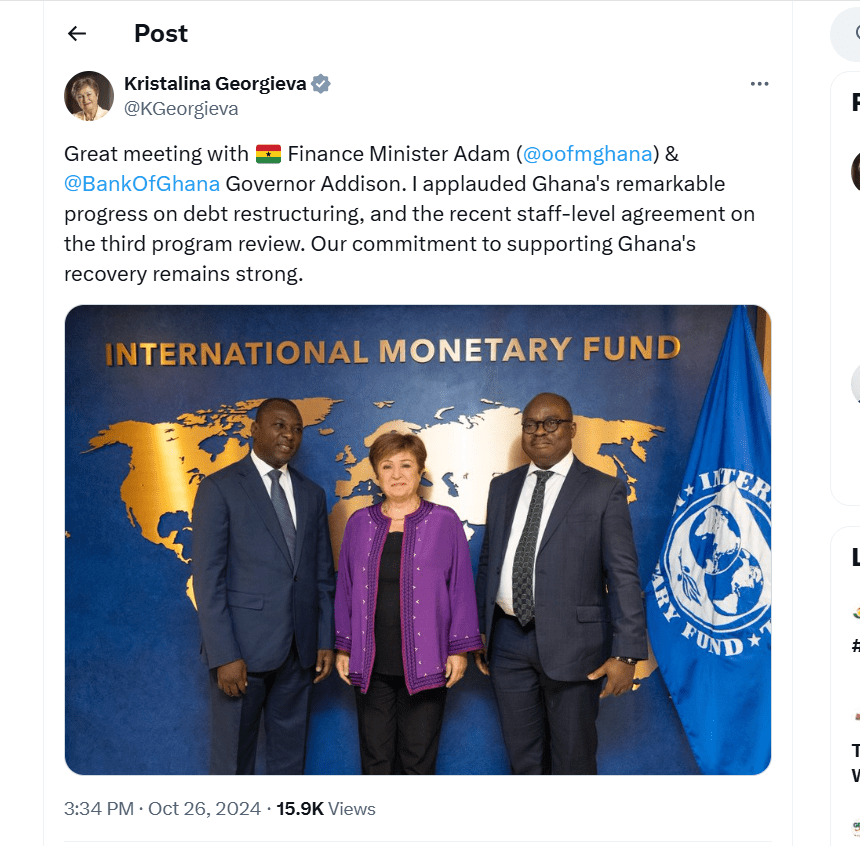
    The Managing Director of the International Monetary Fund (IMF), Kristalina Georgieva, has reaffirmed the Fund’s dedication to supporting Ghana’s robust economic recovery.

    She praised the Ghanaian government for its achievements in debt restructuring.

    This statement was made in a post on her X page following the 2024 Annual Meetings of the IMF and the World Bank Group, which took place last week.

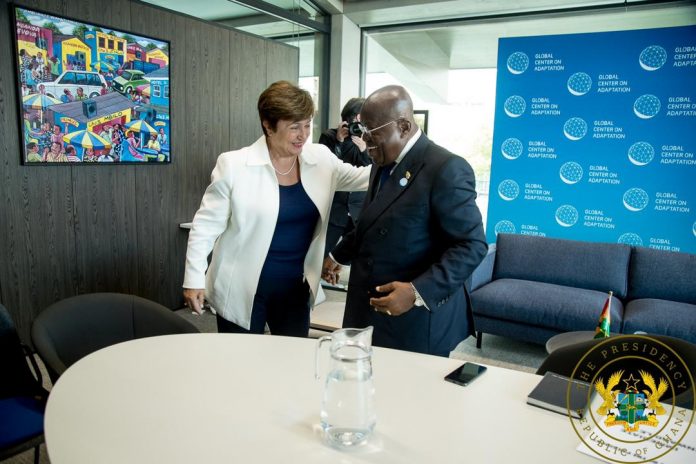
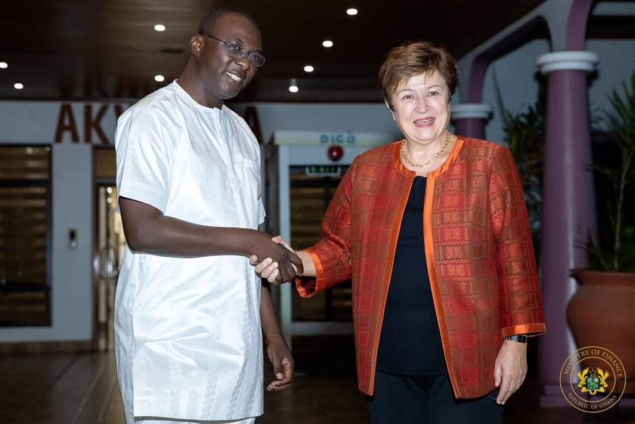
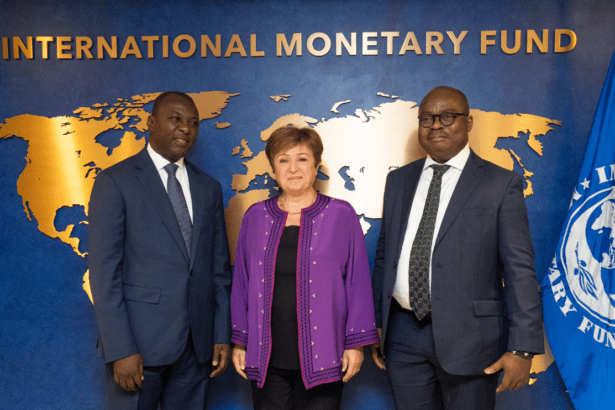
    she said “Great meeting with Finance Minister Adam (@oofmghana) & @BankOfGhana  Governor Addison.

    “I applauded Ghana’s remarkable progress on debt restructuring and the recent staff-level agreement on the third programme review. Our commitment to supporting Ghana’s recovery remains strong.”

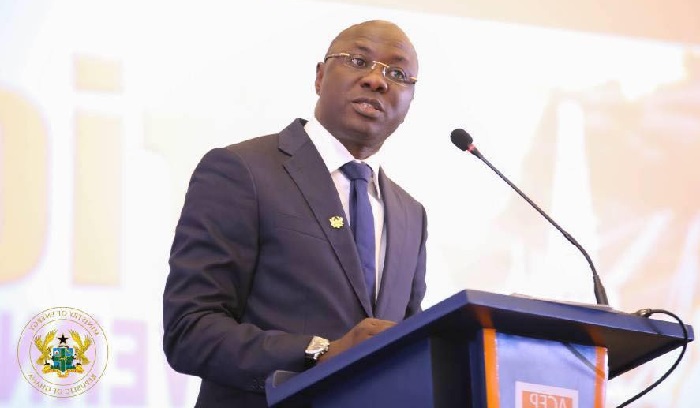
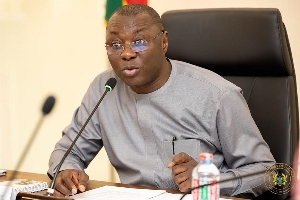
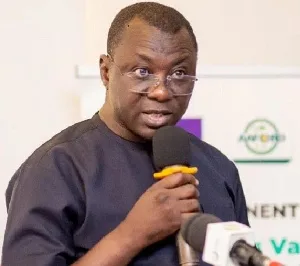
    Finance Minister Dr. Mohammed Amin Adam announced that the Domestic Debt Exchange Programme (DDEP) has saved Ghana an impressive $12 billion.

    During a panel discussion at the 2024 Annual Meetings on Wednesday, October 23, he highlighted that the DDEP has been a crucial policy tool in tackling Ghana’s financial challenges and reducing its debt burden, thereby fostering a more sustainable fiscal environment.

    Dr. Amin Adam emphasized that the DDEP, initiated in December 2022, was a significant success that established a foundation for more extensive debt restructuring initiatives.

    “The DDEP was a great success, and we followed that with the restructuring of our bilateral debt, which was also very successful. This led to significant savings of about $2.8 billion. Following this, the restructuring of our Eurobonds, which is about $13 billion, was concluded in the first week of this month, marking another great success.

    “The benefits we have derived from this so far include an outright debt cancellation of about $5 billion and another debt service relief of about $4.3 billion. So, between the bilateral creditors and the Eurobonds, we are talking about savings of about $12 billion. We think this is a great success, and we are still working on restructuring our commercial creditors involving about $2.7 billion, which we are working very hard to conclude,” he said.

  • Disbursement of IMF’s $360m to BoG to be reviewed on Dec 2 – Finance Minister

    Disbursement of IMF’s $360m to BoG to be reviewed on Dec 2 – Finance Minister

    Finance Minister Dr. Mohammed Amin Adam has announced that the International Monetary Fund (IMF) Board is set to meet on December 2, 2024, to assess Ghana’s Third Programme Review.

    A successful review could see the release of $360 million to the Bank of Ghana, aiding the Government’s budget and balance of payment needs.

    This upcoming board discussion follows a staff-level agreement reached with the Ghanaian government earlier this month after an IMF team visited to evaluate data up to June 2024. “This disbursement by the IMF Board will bring the total funds received since Ghana signed up for the IMF programme to $1.92 billion,” Dr. Amin Adam stated at a press briefing in Washington, DC, during the Annual IMF/World Bank Meetings.

    The Finance Minister confirmed that Ghana has met all the necessary criteria for approvals and disbursements under the IMF programme.

    Dr. Amin Adam expressed optimism regarding the $360 million from the IMF and an additional $300 million anticipated from the World Bank, highlighting that these funds would boost Ghana’s reserves and contribute to the stability of the Ghanaian cedi in the coming year. “We must remember that the Bank of Ghana already has strong reserves, and these additional inflows will put the Central Bank in a solid position to stabilize the Ghana cedi,” he remarked.

    He reassured the business community, “There is no need for businesses to panic regarding the availability of foreign exchange to meet their demands.” For Dr. Amin Adam, the importance of the IMF funds lies not just in the financial support but in the positive signal it sends to investors, reflecting the government’s efforts to stabilize the economy.

    Investor sentiment was a key topic during the Annual IMF/World Bank meetings in Washington, DC, with Dr. Amin Adam noting a favorable response to Ghana’s economic reforms. “Some investors are considering re-entering the domestic bond market, but we are still reviewing those requests,” he revealed.

    Responding to concerns about economic management, the Finance Minister highlighted Ghana’s progress: “Ghana’s economy has strongly recovered compared to two years ago. We’ve seen tremendous progress in growth, exchange rate stability, and inflation,” he asserted. He emphasized, “We have performed exceptionally well in managing the economy.”

    The IMF recently adjusted its 2024 growth projection for Ghana from 3 percent to 4 percent, a move welcomed by Dr. Amin Adam. “We appreciate the IMF’s explanation that their latest World Economic Outlook was based on data as of mid-April 2024, and they expect improvements by the end of the year,” he noted.

    Confident in the country’s trajectory, Dr. Amin Adam added, “We believe Ghana will outperform the revised 4 percent target based on recent investments that are starting to yield results.” Nonetheless, the government plans to maintain the initial 3 percent growth projection in the upcoming 2024 Budget.

  • IMF projects 3% growth rate for Ghana despite economic challenges

    IMF projects 3% growth rate for Ghana despite economic challenges

    The International Monetary Fund (IMF) has projected a 3% growth rate for Ghana in 2024, as highlighted in the World Economic Outlook Report released in Washington D.C. on Tuesday. This forecast coincides with the government’s own estimate of a 3.1% GDP growth rate mentioned in the 2024 Budget.

    However, some IMF officials have suggested that these growth projections may be subject to revision by year-end, as recent economic events have not been fully reflected in the report.

    A senior official from the IMF remarked, “We are optimistic that Ghana will perform better in terms of growth by the end of the year than we previously estimated.”

    Meanwhile, the World Bank’s Africa Pulse Report, issued earlier this month, has set a more optimistic growth forecast for Ghana, predicting a potential increase to 4% by the end of 2024.

    This revision comes in light of a notable boost in economic activity observed in the latter half of the year.

    The World Bank had initially anticipated a growth rate of 3.1% for Ghana, but has adjusted its outlook based on the latest developments.

    In terms of inflation, the IMF’s report anticipates a rate of 19.5% for Ghana by the end of this year, which exceeds the Bank of Ghana’s target range of 13-17%.

    Nevertheless, the IMF forecasts a decline in inflation to 11.5% by the end of 2025, indicating a potential move towards single-digit inflation rates. Similarly, the World Bank’s Africa Pulse Report aligns with this projection, expecting inflation to also reach 11.5% by the close of 2025.

  • IMF anticipates a 3% growth rate for Ghana by year-end

    IMF anticipates a 3% growth rate for Ghana by year-end

    The International Monetary Fund projects that Ghana’s economy will grow by 3 percent by the end of 2024, according to the World Economic Outlook Report released in Washington, D.C., on Tuesday.

    This forecast, shared during the IMF and World Bank meetings, is close to the government’s own projection of 3.1 percent GDP growth as outlined in the 2024 Budget.

    Nonetheless, some IMF representatives hinted that these figures might be updated before year-end, as the World Economic Outlook had not entirely factored in recent economic changes.

    A senior IMF official stated that, “We are optimistic that Ghana will perform better in terms of growth by the end of the year than we previously estimated.”

    In its Africa Pulse Report released earlier this month, the World Bank estimated that Ghana’s growth rate may hit 4 percent by the end of 2024.

    This expected growth is linked to an increase in economic activities observed in the last two quarters of the year.

    Initially, the World Bank had anticipated a growth rate of 3.1 percent for Ghana in 2024, but recent events prompted a revision of this forecast.

    According to the same report, the IMF projected that Ghana’s inflation rate would reach 19.5 percent by year-end, which is notably above the Bank of Ghana’s target range of 13-17 percent.

    Nevertheless, the IMF forecasts a decrease in inflation to 11.5 percent by the close of 2025, suggesting a move towards achieving single-digit inflation.

    The World Bank’s Africa Pulse Report also predicts that inflation will reach 11.5 percent by the end of 2025.

  • Hope for Ghana as IMF projects 4.2% economic growth for Sub-Saharan Africa by 2025

    Hope for Ghana as IMF projects 4.2% economic growth for Sub-Saharan Africa by 2025

    The International Monetary Fund (IMF) has forecasted a 4.2% economic growth for Sub-Saharan Africa by 2025, suggesting a brighter outlook for Ghana.

    This projection was detailed in the IMF’s October 2024 World Economic Outlook, released during the ongoing Annual Meetings in Washington, DC.

    According to the report, the region’s growth is expected to rise from a steady 3.6% in 2023 to 4.2% by the end of 2025.

    IMF Chief Economist Pierre-Olivier Gourinchas stated, “The Sub-Saharan African region is one that is seeing growth rates that are fairly steady this year, compared to last year, at about 3.6 per cent, and then expected to increase to about 4.2 per cent next year”.


    “We’re seeing some pickup in growth from this year to next year. But now, this is certainly a region that’s been adversely impacted by weather shocks and, in some cases, conflict. So, the growth remains subdued and somewhat uneven, and that’s certainly something that we are concerned about”.

    However, he also highlighted ongoing challenges, such as weather-related disruptions and conflicts, that could hinder more robust growth.


    Division Chief of the IMF’s Research Department, Jean-Marc Natal, echoed these sentiments, noting that while there has been some progress, growth remains “uneven and too low.”

    He pointed out that inflation is stabilising in some areas but continues to pose challenges for many countries.

    “Inflation [is] stabilising in some countries… and reaching levels close to the target, but half of them are still at a large distance from the target, and a third of them are still having double digit inflation,” he said.  

    Additionally, high debt levels in the region were flagged, with Natal urging countries to adopt tighter monetary policies and pursue fiscal consolidation, particularly where inflation remains elevated.

    The IMF emphasised the need for targeted support for vulnerable populations during these consolidations.
    On a global scale, the IMF forecasts steady economic growth of 3.2% for 2024 and 2025, with advanced economies showing signs of recovery while emerging markets, including Sub-Saharan Africa, slowly rebound from previous shocks.


    As Ghana aligns itself with these regional trends, the IMF’s optimistic growth projection could herald a period of economic recovery and development in the years ahead.

  • IMF reduces annual borrowing expenses by $1.2bn, offering financial relief to member nations

    IMF reduces annual borrowing expenses by $1.2bn, offering financial relief to member nations

    IMF’s Executive Board has completed a review of its surcharge and lending policies, resulting in a reduction in borrowing costs.

    In a statement, IMF Managing Director Kristalina Georgieva highlighted that, amidst the current global economic challenges and rising interest rates, member countries have agreed on a comprehensive plan to significantly lower borrowing costs.

    This initiative aims to maintain the IMF’s ability to assist countries in need while offering relief to borrowers by reducing financial pressures.

    She said: “The approved measures will lower IMF borrowing costs for members by 36 percent, or about US$1.2 billion annually,” explaining: “The expected number of countries subject to surcharges in fiscal year 2026 will fall from 20 to 13.”

    “This is achieved by reducing the margin over the SDR interest rate, raising the threshold for level-based surcharges, lowering the rate for time-based surcharges, and increasing the thresholds for commitment fees,” Ms Georgieva noted.

    The approved package will take effect on November 1, 2024.

    “While substantially lowered, charges and surcharges remain an essential part of the IMF’s cooperative lending and risk management framework, where all members contribute and all can benefit from support when needed,” she pointed out.

    She said: “Together, charges and surcharges cover lending intermediation expenses, help accumulate reserves to protect against financial risks, and provide incentives for prudent borrowing.”

    “This provides a strong financial foundation that allows the IMF to extend vital balance of payments support on affordable terms to member countries when they need it most,” explained the MD.

    “This reform helps ensure that the IMF can continue serving our members in a changing world,” she mentioned.

  • IMF projects global public debt to reach $100tr by end of 2024

    IMF projects global public debt to reach $100tr by end of 2024

    A new analysis by the International Monetary Fund, has it that global public debt is projected to reach $100 trillion by the end of this year, equivalent to 93% of the world’s gross domestic product, primarily driven by the economic activities of the US and China.

    In its latest Fiscal Monitor, which provides an overview of global public finance trends, the IMF anticipates that debt levels could approach 100% of GDP by 2030. The report cautions that governments will face challenging decisions to stabilize their borrowing practices.

    The IMF also highlights that debt is expected to rise in countries such as the US, Brazil, France, Italy, South Africa, and the UK, urging governments to take measures to control their debt levels.

    “Waiting is risky: country experiences show that high debt can trigger adverse market reactions and constrains room for budgetary maneuver in the face of negative shocks,” it said.

    With little political appetite to cut spending amid pressures to fund cleaner energy, support aging populations and bolster security, the “risks to the debt outlook are heavily tilted to the upside,” the IMF said.

    Nations where debt stabilization is not anticipated account for more than half of the world’s total debt and approximately two-thirds of global GDP.

    Using a “debt-at-risk” framework, the IMF found that the level of future debt in an extreme adverse scenario could reach 115% of GDP in three years, almost 20 percentage points higher than in the baseline projections.

    “This is because high debt levels today amplify the effects of weaker growth or tighter financial conditions and higher spreads on future debt levels,” it said.

    The debt-at-risk metric for advanced economies has decreased from its pandemic highs and is currently estimated at 134% of GDP, while it has increased to 88% for emerging market and developing economies.

    Although slowing inflation and declining interest rates provide governments with an opportunity to improve their fiscal situations, the IMF noted that there is little indication of any urgency to take action.

    “Current fiscal adjustment plans fall far short of what is needed to ensure that debt is stabilized (or reduced) with high probability,” it said.

  • IMF slashes borrowing fees by 36% for debt-laden countries

    IMF slashes borrowing fees by 36% for debt-laden countries

    The International Monetary Fund (IMF) has reduced borrowing costs for some of the world’s most debt-burdened countries, following mounting criticism that its fees were overly harsh amid rising global interest rates.

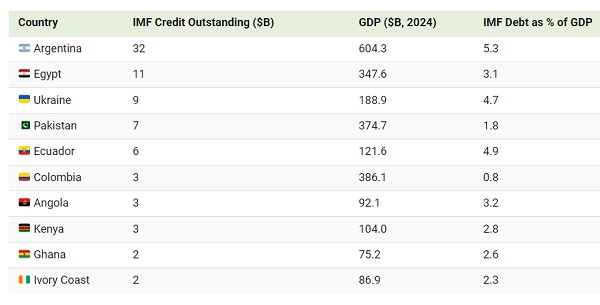
    The IMF’s executive board approved a cut to surcharges, which are additional fees levied on top of regular interest for countries borrowing beyond their quota or taking longer to repay. This decision primarily affects major borrowers like Argentina, Egypt, Ukraine, and Ecuador, who have borne the brunt of these fees.

    Kristalina Georgieva, the IMF’s Managing Director, announced on Friday that the reform would lower IMF borrowing costs by 36%, saving countries $1.2 billion annually. The number of nations paying surcharges is expected to drop from 20 to 13 by fiscal year 2026.

    However, it’s uncertain whether this concession will satisfy critics. Leaders from countries like Argentina and Brazil have called for a complete suspension of surcharges, arguing that the relief is minimal compared to the broader $1.62 trillion of dollar-denominated debt in emerging markets, with $132 billion due next year.

    Georgieva, ahead of hosting global financial leaders in Washington this month, emphasized the need to address the concerns of indebted nations. The reform includes raising the threshold for surcharge imposition and lowering the margin over the prevailing interest rate.

    The IMF has traditionally used surcharges to deter excessive dependence on its financial assistance. Despite calls to eliminate them entirely, the executive board upheld the fees, with Georgieva stressing that they are essential to encouraging responsible borrowing.

    The surcharges have contributed to the IMF’s precautionary reserves, which are meant to safeguard against potential losses. With the fund reaching its $34 billion target for these reserves earlier this year, the need for continued surcharge collection has diminished.

  • Ghana’s credit rating climbs to Caa2

    Ghana’s credit rating climbs to Caa2

    Moody’s Ratings has upgraded Ghana’s long-term issuer ratings in both local and foreign currencies from Caa3 and Ca to Caa2, while also changing the outlook from stable to positive.

    The upgrade to Caa2 reflects significant progress in Ghana’s debt treatment, which has alleviated the government’s financial strain.

    “Since seeking relief through the G20 common framework for debt treatment in 2022, the government of Ghana restructured local currency debt and debt owed to bilateral official-sector creditors and concluded the exchange of Eurobonds on 9 October rating”, the rating note said.

    Moody’s highlighted that since seeking assistance through the G20 common framework for debt treatment in 2022, the Ghanaian government has successfully restructured its local currency debt and the debt owed to bilateral official-sector creditors. This restructuring included an exchange of Eurobonds completed on October 9.

    According to Moody’s, the government’s debt burden has decreased from a peak of 93% of GDP in 2022 to an anticipated 81% in 2024. However, the agency cautioned that challenges remain, such as the resumption of debt service payments, fiscal risks leading up to the December elections, and reliance on costly short-term debt, which contribute to ongoing liquidity risks that constrain the rating.

    The positive outlook indicates potential for an easing of liquidity risk, bolstered by ongoing fiscal consolidation efforts supported by an International Monetary Fund (IMF) program. Analysts suggest that if the identified risk factors diminish, Ghana’s rating could further improve. Despite setbacks in institutional credibility due to financial difficulties, the country’s remaining institutional capacity presents opportunities for a relatively rapid recovery in credit trends. The IMF program is expected to enhance policy credibility and improve Ghana’s access to affordable funding from official sources.

    Moody’s has also upgraded Ghana’s local and foreign currency senior unsecured Medium-Term Note (MTN) program ratings to (P)Caa2 from (P)Caa3 and (P)Ca, respectively. Additionally, a Caa2 rating was assigned to senior unsecured instruments issued as part of the recent debt exchange.

    No changes were made to outstanding debt instruments; however, Moody’s plans to withdraw ratings for these obligations once they are settled. Furthermore, the agency raised Ghana’s local currency (LC) and foreign currency (FC) country ceilings by one notch to B2 and B3, respectively, reflecting the upgrade of the sovereign local currency ratings.

    Moody’s notes that non-diversifiable risks are incorporated in the LC ceiling, which stands three notches above the sovereign rating. This assessment considers factors such as predictable institutions and government actions, limited domestic political risk, and low geopolitical risk, balanced against a significant government presence in the economy and financial system, as well as external imbalances.

    The FC country ceiling, which is one notch below the LC ceiling, takes into account the authorities’ historical access to foreign exchange, despite limitations on capital account openness and ineffective policy measures.

    Moody’s emphasizes that Ghana’s comprehensive debt restructuring has considerably alleviated the government’s financial burdens, which was a key reason for the ratings upgrade. Since the debt treatment began in December 2022 under the Common Framework, it has addressed 55% of the total outstanding debt, including a 37% principal haircut on most Eurobonds, representing 20% of total debt. Local currency debt (excluding Treasury Bills) and bilateral official-sector debt were also restructured through extended maturities and reduced coupon rates.

    To enhance financial stability, the government utilized a Financial Stability Fund to support local financial institutions involved in the debt exchange. Analysts project that, following the restructuring and the debt service moratorium, the government’s debt will drop to an estimated 81% of GDP in 2024, down from 93% in 2022.

    Despite this positive trajectory, foreign exchange risks remain significant, with nearly half of the government debt denominated in foreign currencies. The fiscal outlook is contingent on the government’s ability to maintain its consolidation efforts, ensuring continued access to funding. With the upcoming elections in December 2024, the possibility of fiscal arrears accumulating poses a risk.

    Assuming no significant arrears occur, Moody’s forecasts a balanced primary budget for 2024 and a return to a primary surplus of approximately 1.3% of GDP in 2025, similar to the surplus achieved in 2023. The government primarily relies on issuing Treasury Bills, with rates closely aligned to the central bank’s policy rate of 27%, which is notably higher than the inflation rate of 21%. Consequently, elevated liquidity risks continue to constrain the rating.

    The positive outlook indicates that liquidity risk may decrease as ongoing fiscal consolidation progresses under the IMF program. The combination of significant fiscal risks ahead of the December elections, resumption of debt service payments, reliance on costly short-term debt, and downward currency pressures represent ongoing challenges. Should these risks dissipate, Ghana’s rating could be elevated.

    Moody’s anticipates that gradual disinflation and fiscal improvements will pave the way for a normalization of interest rates on local currency debt, which is the primary borrowing source for the government. This shift would address Ghana’s debt affordability issues and alleviate liquidity risks.

    Additionally, with the IMF program in place, official-sector funding may improve, and recent robust gold exports could contribute to a more stable currency, according to the rating note.

    Despite Ghana’s recent default undermining institutional credibility, the country’s institutional capacity remains strong enough to potentially reverse the credit trend quickly. The prompt and transparent management of the debt restructuring has bolstered the authorities’ credibility. Current fiscal data for 2024 indicate improved revenue and spending performance compared to the years preceding the restructuring.

    Overall, Ghana’s rankings under the Worldwide Governance Indicators for policy effectiveness, rule of law, and control of corruption continue to be relatively strong. Moody’s asserts that the IMF program will help strengthen policy credibility and facilitate Ghana’s access to affordable funding from official-sector sources, thereby mitigating liquidity risks that are constraining the rating.
  • Ghana must stick to reform agenda – IMF cautions as elections approach

    Ghana must stick to reform agenda – IMF cautions as elections approach

    The International Monetary Fund (IMF) has urged the Ghanaian government to continue implementing its reform agenda to fully restore macroeconomic stability and debt sustainability, especially in light of the upcoming 2024 elections. The IMF has recognized Ghana’s progress in restructuring its debt but emphasized that the country must stay on course with the reforms.

    The IMF’s remarks were made after a staff team, led by Mission Chief Stéphane Roudet, visited Accra from September 24 to October 4, 2024. The visit was part of discussions around the third review of Ghana’s three-year program under the Extended Credit Facility (ECF), which was approved by the IMF Executive Board in May 2023, amounting to SDR 2.242 billion (US$3 billion).

    Roudet noted, “The IMF staff and Ghanaian authorities have reached a staff-level agreement on the third review of Ghana’s economic program under the Extended Credit Facility arrangement. This staff-level agreement is subject to IMF Management approval and Executive Board consideration.”

    Should the IMF’s Executive Board approve the agreement, Ghana will receive an additional SDR 269.1 million (US$360 million), bringing the total disbursement under the program to SDR 1,441 million (US$1.92 billion).

    The IMF acknowledged that Ghana’s economic performance has been satisfactory so far, meeting key targets by the end of June 2024. Economic growth in the first half of 2024 was higher than anticipated, driven by sectors such as mining, construction, and information and communication. However, Roudet highlighted concerns over the ongoing drought in the northern regions, which could negatively affect agricultural output and put pressure on food prices.

    Despite these challenges, the Bank of Ghana has pledged to maintain a tight monetary policy to curb inflation. “Inflation has continued to decline,” Roudet confirmed, while acknowledging that the dry spell could impact price stability in the second half of the year.

    The Ghanaian government has made significant strides in restructuring its debt. Following a successful domestic debt restructuring in 2023, the country is now preparing to restructure its Eurobonds. Additionally, Ghana reached an agreement with its Official Creditors Committee under the G20 Common Framework in June 2024.

    The IMF emphasized that the government must continue its efforts to secure agreements with external commercial creditors to ensure consistency with the program’s parameters. “The authorities are committed to pursuing good-faith efforts to reach an agreement with other commercial external creditors,” Roudet said.

    The mission also focused on discussions around enhancing the sustainability of the energy sector, as well as measures to strengthen revenue collection and expenditure controls, particularly as the December 2024 elections approach. The IMF highlighted the importance of protecting the most vulnerable groups through social protection programs amid the country’s economic challenges.

    “The government’s policy response should help mitigate these risks,” Roudet added, referring to the impact of the drought and the pressures on food prices.

    Despite some emerging risks, the IMF remains optimistic about Ghana’s fiscal outlook. The country is expected to achieve a primary surplus of 0.5% of GDP by the end of the year, despite the spending pressures caused by the drought and the energy sector challenges.

    The external sector has also seen improvements, with strong exports—particularly gold and oil—and higher remittances contributing to the accumulation of international reserves beyond program targets.

    IMF staff met with key officials, including Finance Minister Dr. Mohammed Amin Adam and Bank of Ghana Governor Dr. Ernest Addison, as well as representatives from various government agencies. The team also engaged with other stakeholders to discuss the country’s progress and challenges in implementing the reform agenda.

  • IMF, Ghana reaches staff-level agreement on 3 review of credit facility

    IMF, Ghana reaches staff-level agreement on 3 review of credit facility

    The International Monetary Fund (IMF) and Ghana have finalized a staff-level agreement concerning the third review of Ghana’s US$3 billion extended credit facility.

    This agreement follows Ghana’s recent achievement of 98% participation and consent from Eurobond holders in the restructuring of the country’s external debt.

    Stéphane Roudet, the IMF Mission Chief for Ghana, stated that overall performance under the IMF-supported program has been satisfactory.

    Furthermore, all quantitative targets set for the end of June 2024 have been met, and progress on essential structural reforms has continued, despite some delays in specific areas.

    Addressing the press on Friday, October 4, 2024, Stéphane Roudet said, “The IMF staff and Ghanaian authorities have reached a staff-level agreement on the third review of Ghana’s economic program under the Extended Credit Facility arrangement.”

    “Performance under the IMF-supported program has been generally satisfactory. All end-June 2024 quantitative targets were met, and progress on key structural reforms has continued notwithstanding delays in a few areas. The authorities’ policy and reform efforts under the program have continued to deliver encouraging results,” he added.

    To stabilize the economy and curb soaring inflation, the government announced its decision on July 1, 2022, to seek a $3 billion financial bailout from the International Monetary Fund (IMF).

    Following this, an IMF team visited Ghana from July 6 to July 13, 2022, to discuss a potential economic support program with Ghanaian authorities.

    In December 2022, a staff-level agreement was reached between the Government of Ghana and the IMF.

    On May 17, 2023, the IMF’s executive board approved Ghana’s $3 billion loan facility, with the first $600 million tranche disbursed to the Bank of Ghana (BoG) on May 19, 2023.

    In January 2024, the second tranche of $600 million was released after Ghana reached a debt restructuring agreement with bilateral creditors.

    By July 2024, the government received an additional $360 million as part of the third tranche, credited to the Central Bank’s account on July 2, 2024, following the IMF Executive Board’s approval of the second review.

    So far, Ghana has received a total of $1.56 billion from the $3 billion IMF bailout, aimed at restoring macroeconomic stability, safeguarding debt sustainability, and achieving broader economic goals.

  • Ghana ranks fourth in Africa for the highest debt owed to the IMF

    Ghana ranks fourth in Africa for the highest debt owed to the IMF

    Ghana has been reported as the fourth highest debtor to the International Monetary Fund (IMF) in Africa, according to the Fund’s 2024 Quarterly Financial Statement.

    The nation owes a total of 2.275 billion Special Drawing Rights (SDR), which translates to approximately $3.068 billion.

    Egypt holds the top position in Africa, with a staggering debt of SDR 10.050 billion owed to the IMF.

    Angola and Kenya follow in second and third places, with debts of SDR 2.989 billion and SDR 2.566 billion, respectively.

    Notably, Nigeria and Morocco have fallen out of the top ten debtors, making room for Cameroon and Ethiopia to enter the list.

    While IMF loans can offer temporary financial assistance to member countries, they can also lead to significant debt challenges.

    Increased borrowing from the IMF contributes to the overall debt load of a country, necessitating careful fiscal oversight.

    Additionally, these loans typically come with specific conditions, which can further restrict the government’s financial flexibility.

  • Continued implementation of ECF programme will reduce poverty – IMF to Ghana

    Continued implementation of ECF programme will reduce poverty – IMF to Ghana

    The International Monetary Fund (IMF) has urged Ghana to maintain its commitment to the Economic Credit Facility (ECF) programme to support long-term growth and tackle poverty.

    In a press briefing on September 12, 2024, Julie Kozack, IMF’s Director of Communications, applauded the Ghanaian government and the Bank of Ghana for their steadfast dedication to the ECF initiative.

    The IMF also welcomed Finance Minister Dr. Mohammed Amin Adams’ confirmation of the government’s ongoing support for ECF policies.

    “Steadfast policy and reform implementation are vital to durably restore macroeconomic stability and debt sustainability in Ghana.

    “It will be crucial for the government to continue to implement the programme as envisaged to ensure sustainable growth and poverty reductions. The authorities have so far demonstrated a strong commitment to the programme at all levels. And we welcome Minister Adams signalling of the government’s continued commitment to policies under the programme,” she said.

    Under the three-year programme, Ghana has accessed $1.6 billion of the allocated $3 billion, including a recent $360 million tranche received in July 2024.

    The IMF has observed that the government’s extensive reform efforts and strong policy measures, supported by the Bank of Ghana, are producing encouraging results. Growth in 2023 surpassed initial projections, inflation is on the decline, and international reserves are on the rise.

  • Vote for me and Ghana won’t rely on IMF – Cheddar urges

    Vote for me and Ghana won’t rely on IMF – Cheddar urges

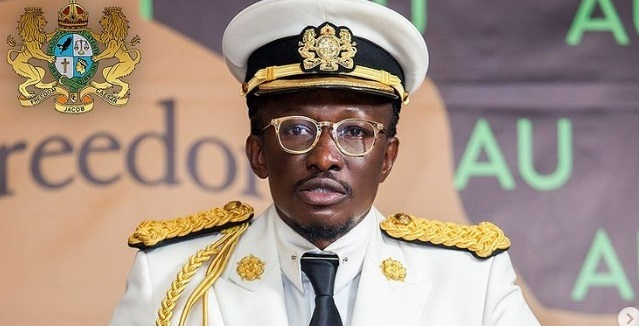
    The founder and leader of the New Force Movement, Nana Kwame Bediako (Cheddar), has declared that if elected in the 2024 general election, he will create a National Sovereign Wealth Fund.

    Cheddar described this fund as the future backbone of Ghana’s economy, intended to safeguard the nation’s wealth and resources.

    He highlighted that the new fund would rival the International Monetary Fund (IMF), aiming to reduce Ghana’s dependency on the traditional Bretton Woods system.

    During the New Force Key Policy Launch on Sunday, September 1, Bediako stressed the transformative potential of this initiative for the country’s economic future.

    Cheddar also condemned the long-standing practice of exporting Ghana’s minerals for minimal returns, vowing to end such exploitation if given the mandate.

    “We are going to create the National Sovereign Wealth Fund; this is the new IMF. Well, at this very point, Ghana will help me launch the new IMF. Because verbally it is said but physically and mentally, we are about to implement it. This pillar is a new policy and it will disrupt and dissolve but eventually, it will rebuild our heritage value.

    “In the past, our minerals have been extracted and exported for pennies, we are ending it. The National Sovereign Wealth Fund is the new IMF, independent and autonomous. It will collect every reserve and will keep it and protect it.”

  • Govt misses T-Bills target for the sixth time

    Govt misses T-Bills target for the sixth time

    For the sixth time in a row, the government has missed its treasury bills target, recording an undersubscription of about 6.91% in the latest auction.

    The Bank of Ghana’s recent data indicates a continued lack of investor interest in treasury bills.

    The auction attracted GH¢4.6 billion in bids, falling short of the GH¢4.9 billion target.

    Of the bids received, GH¢3.6 billion were allocated to the 91-day bill, representing 78.26% of the total, and these were all accepted. Additionally, bids totaling GH¢733.59 million for the 182-day bill and GH¢284.92 million for the 364-day bill were also fully accepted.

    Interest rates on the money market remain steady, ranging from 24% to 27%.

    Analysts suggest that the shortfall is due to the government’s high auction targets and tight liquidity conditions, which have been worsened by recent cash reserve ratio requirements.

    The government has communicated to the International Monetary Fund that its immediate goal is to issue enough treasury bills to cover the budget deficit. In the short term, the focus will be on securing adequate domestic financing, with structural market improvements planned for the medium term.

  • IMF to hand over new board seat to Sub-Saharan Africa on Nov. 1

    IMF to hand over new board seat to Sub-Saharan Africa on Nov. 1

    The IMF Board of Governors, the highest authority within the International Monetary Fund, has passed a resolution to expand its Executive Board by adding a 25th seat specifically for Sub-Saharan Africa.

    This decision comes in response to a recommendation from the International Monetary and Financial Committee during the 2023 Annual Meetings in Marrakech, which advocated for a new chair to enhance Sub-Saharan Africa’s representation and to improve the overall regional balance on the Board.

    “The Board of Governors have taken an important step towards creating an additional 25th chair at our Executive Board to increase Sub-Saharan Africa’s representation in IMF decision making, to make our Board more inclusive, and to reflect the region’s role in the global economy,” stated IMF Managing Director Kristalina Georgieva.

    To adjust the size of the Executive Board, the resolution required approval from 85 percent of the total voting power of the Fund’s membership. The resolution successfully surpassed this requirement.

    The expanded Executive Board, featuring 25 Executive Directors, will commence its duties on November 1, 2024.

  • I will review Ghana’s deal with IMF when I become President – Mahama

    I will review Ghana’s deal with IMF when I become President – Mahama

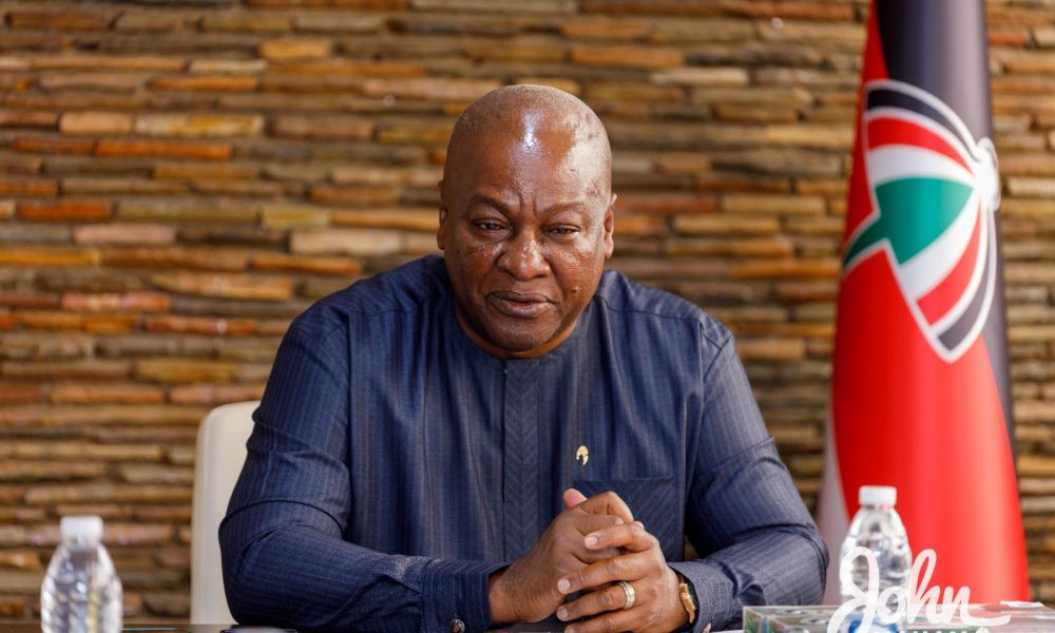
    Former President John Mahama plans to renegotiate the terms of the International Monetary Fund (IMF) bailout and increase local ownership of future oil and mining projects if he wins the upcoming December election.

    Mahama, who served from 2012 to 2016, will challenge the ruling party’s candidate, Vice President Mahamadu Bawumia, and has a strong chance of success due to the current severe economic crisis.

    Having previously managed an IMF program during his presidency, Mahama, 65, believes the IMF is open to discussions and renegotiations.

    “I’ve been in an IMF programme before when I was president, and I know that the IMF is not averse to sitting and talking and renegotiating issues,” he said in an interview with Reuters.

    Ghana defaulted on most of its $30 billion external debt in 2022, worsened by the COVID-19 pandemic, the Ukraine war, and rising global interest rates.

    The country secured a $3 billion IMF bailout in May 2023 and restructured its debts, with repayments frozen until 2025. The IMF has already disbursed $1.56 billion, with an additional $360 million expected by December. Mahama plans to seek further IMF funds to aid in resuming debt repayments.

    Mahama intends to amend the public finance management law to enforce a debt-to-GDP ceiling of 60-70% to prevent excessive borrowing.

    Additionally, he aims to respect existing production contracts without raising taxes, instead focusing on obtaining higher royalties from future projects. “I think we are at the upper range of taxes on profit … But I do think that in some cases the level at which we locked in the royalties is low,” he noted.

    He also envisions higher government stakes in future projects through the Minerals Income and Investment Fund, a sovereign wealth facility.

    Mahama ascended to the presidency in 2012 following the death of John Evans Atta-Mills and won his own mandate later that year.

    He lost the 2016 and 2020 elections to Nana Akufo-Addo, who is stepping down after two terms. Mahama’s tenure saw significant infrastructure investments but faced criticism for power shortages, economic instability, and allegations of political corruption, although he was not personally implicated. Critics argue these issues have persisted or worsened under Akufo-Addo.

    Both Mahama and Bawumia hail from northern Ghana, where the NDC has traditionally been strong but where the NPP has gained ground. Abdul-Wakil Neindow, a 30-year-old who lost his construction job in 2017, expressed the frustrations of many Ghanaians at Mahama’s campaign launch: “We the youth are hopeless, we don’t have jobs. How to eat, pay bills and feed our families is very hard.”

    Ghana, known for its stable democracy and peaceful power transitions, has never seen a party win more than two consecutive terms.

    The last election faced opposition accusations of government influence, which were denied. Mahama has urged his supporters to remain vigilant against vote-rigging by staying awake for 48 hours after voting.
  • You can’t settle for less when dealing with IMF – Afreximbank Boss to African leaders

    You can’t settle for less when dealing with IMF – Afreximbank Boss to African leaders

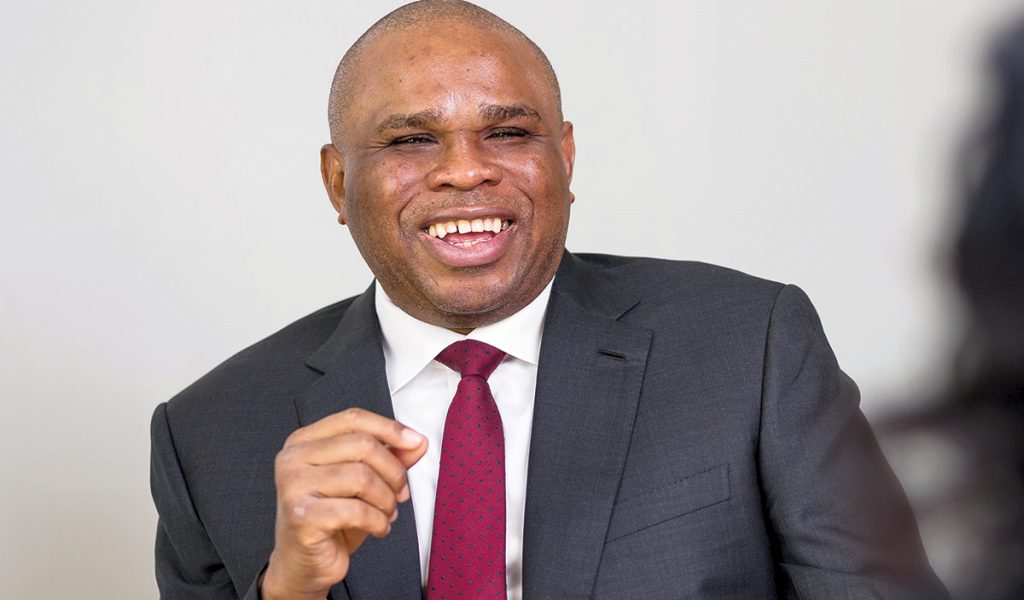
    President of the African Export-Import Bank (Afreximbank), Professor Benedict Oramah, has called on African leaders to negotiate for improved conditions when engaging with the International Monetary Fund (IMF).

    Speaking at the launch of the Alliance of African Multilateral Financial Institutions in Accra, Prof. Oramah emphasized the importance of African countries leveraging their membership in the IMF to secure better treatment and support.

    Prof. Oramah highlighted the disparity in how African nations are treated compared to their European and Asian counterparts, stressing the need for African countries to demand equitable treatment.

    “It’s either you go there or quit. Because we are members of the IMF. The only problem is that when they go, they must make sure that they treat us the way they treat the European or Asian countries. I think that’s what we have to demand,” he asserted.

    He also pointed out the need to revise the quota system within the IMF, which currently does not reflect Africa’s significant population and economic contributions.

    “African countries must demand a change in the quota. We cannot have a continent with a 17 percent population of the world and have a five percent quota of an institution that has to bring stability in the micro-economies of these countries. They must know that African countries are members and not outsiders. We shouldn’t expect anybody to dictate for us,” Prof. Oramah emphasized.

    In addition to calling for better IMF terms, Prof. Oramah recommended that African nations collaborate to establish a continental credit rating agency.

    He argued that an African Credit Rating Agency is long overdue and would facilitate better access to capital for African governments while integrating the continent with global financial markets.

    “It is institutions like ours that can force the IMF to recognize an African rating agency. When we go to China and Japan, they tell us to go to their own agencies to be rated but for us when we always want to issue papers we have to be rated by Fitch and whatever. We are just doing ourselves ill so charity begins at home so we need to do it,” he explained.

    The newly launched Alliance of African Multilateral Financial Institutions aims to foster collaboration and exchange information on joint strategies to address Africa’s development needs.

    It will also promote and defend unified positions on issues of common interest in international forums, advocating for Africa’s interests on global financial matters.

    The formation of this alliance marks a significant step towards enhancing Africa’s collective bargaining power and ensuring that the continent’s financial sector can thrive in a globalized economy.

  • Work resumes on Dome-Berekusu-Kitaase road

    Work resumes on Dome-Berekusu-Kitaase road

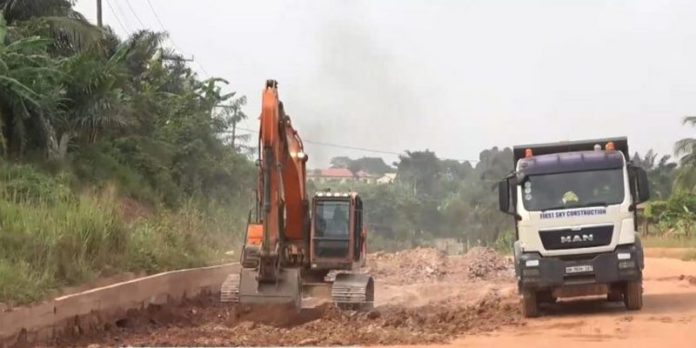
    Construction work on the Dome-Berekusu-Kitaase road project has recommenced after a temporary suspension due to Ghana’s IMF bailout program.

    Reports suggest that there is an ongoing activity along the 23 km stretch, which aims to connect the Greater Accra Region with the Eastern Region.

    Initially budgeted at GH¢195 million and funded by the Kuwait Fund for Arab Economic Development (KFAED) and the Government of Ghana, the project was originally slated for completion within 24 months after President Akufo-Addo initiated it in July 2022.

    However, the government’s IMF bailout request and subsequent debt restructuring caused a pause in construction, impacting local residents and commuters.

    Local residents have expressed relief at the project’s resumption but emphasize the need for swift completion to alleviate health and economic challenges posed by the road’s poor condition.

    Commuters have voiced concerns about health risks due to the road’s uneven surface and inadequate drainage.

    Nicholas Tieku, the project site engineer, confirmed that funding has been secured from the construction firm, enabling work to resume. He also provided updated timelines for project completion and outlined the ongoing scope of activities.

  • IMF attributes disbursement of 3rd tranche of bailout to Ghana’s economic progress

    IMF attributes disbursement of 3rd tranche of bailout to Ghana’s economic progress

    IMF Mission Chief for Ghana, Stephane Roudette, has lauded Ghana’s impressive economic achievements despite global adversities, the chief mentioned in a press conference on July 1, 2024.

    He highlighted the country’s substantial progress under the IMF-backed Post-COVID-19 Programme for Economic Growth (PC-PEG).

    “Ghana’s performance under the PC-PEG has been commendable,” Roudette stated. “The country has surpassed expectations with a strong GDP growth of 4.7% in the first quarter of 2024, demonstrating resilience and effective implementation of fiscal policies.”

    He mentioned that Ghana has shown strong overall performance under the program, meeting all quantitative performance criteria for the second review and nearly all indicative targets. One exception was noted.

    He highlighted significant advancements in crucial structural reforms, such as improving revenue generation and rationalizing non-priority expenditures, which are expected to bolster the economy upon realization.

    Last Friday, the IMF approved the release of the third tranche amounting to $360 million, bringing the total IMF disbursements under Ghana’s three-year bailout program to approximately $1.6 billion.

    This decision follows Ghana’s successful negotiation with its Official Creditor Committee, a crucial step required to unlock the third tranche.

    Finance Minister Mohammed Amin Adam emphasized the effectiveness of robust measures implemented, attributing them to the recent revitalization of the economy.

    “Growth is proving to be more resilient and robust than initially programmed and the economy continues to show strong signs of recovery in Q1 of 2024.

    Overall Real GDP growth for Q1 2024 was 4.7%, the highest since Q1 of 2022.

    This growth performance is better than the 3.1% growth recorded in the same period in 2023. Industry grew the most at 6.8%, followed by Agriculture at 4.1% and Services at 3.3%. The 2024 Q1 GDP growth rate for industry is the highest since Q4 of 2020,” he said.

    Minister Amin Adam also noted the progress in managing inflation and stabilizing the exchange rate. “Headline inflation declined to 23.1% in May 2024 from 25.0% in April 2024, after peaking at 54.1% in December 2022.

    The Cedi has also stabilized, with year-to-date depreciation against the US dollar at 18.4%, compared to 22.0% in the same period in 2023.”

    The Minister highlighted significant achievements in debt restructuring, noting that Ghana successfully negotiated with the Official Creditor Committee (OCC) to restructure $5.1 billion of its official bilateral loans.

    This agreement is expected to provide $2.8 billion in debt service relief from 2023 to 2026.

    Furthermore, negotiations with Eurobond holders resulted in restructuring $13.1 billion, leading to the cancellation of $4.7 billion in debt and providing $4.4 billion in debt service relief over the same period.

    The Minister reiterated the government’s commitment to maintaining fiscal discipline and implementing ongoing structural reforms aimed at ensuring sustained economic recovery and growth.

    “We are committed to sustaining our macroeconomic policy adjustment and reforms to fully restore macroeconomic stability and debt sustainability while fostering a sustainable increase in economic growth and poverty reduction,” he concluded.

  • IMF expresses concerns over Ghana’s economic stability ahead of 2024 elections

    IMF expresses concerns over Ghana’s economic stability ahead of 2024 elections

    The International Monetary Fund (IMF) has raised concerns that the upcoming general elections in December 2024 could potentially threaten the progress achieved under its program with Ghana.

    According to the IMF, “the medium-term outlook remains favourable but subject to downside risks—including those related to the upcoming general elections”.

    It added that “keeping the domestic revenue mobilization agenda on track and tightening expenditure commitment controls is critical to avoid policy slippages ahead of the December 2024 general elections”.

    Following the approval of Ghana’s second program review and the disbursement of $360 million, the IMF emphasized in a statement the importance of the government adhering to the program’s objectives.

    It underscored the necessity of maintaining sustainable growth and reducing poverty through consistent implementation.

    Additionally, the IMF highlighted the critical need to uphold macroeconomic policy adjustments and reforms to achieve lasting stability and debt sustainability.

    “These efforts should be supported by continued progress in improving tax administration, strengthening expenditure control and management of arrears, enhancing fiscal rules and institutions”, the IMF advised.

    Ghana’s Performance under the IMF Programme

    The IMF however stated that despite the elections related concerns, “Ghana’s performance under the programme has been generally strong, both in terms of meeting the quantitative objectives (for example on budgetary performance), and also in implementing structural reforms”.

    The statement emphasized that the reforms aim to enhance economic resilience, achieve sustained improvements in public finances, and establish the groundwork for robust and inclusive growth.

    “The authorities have so far demonstrated a strong commitment to the programme objectives, and we welcome Finance Minister Adam’s signaling of the government’s continued commitment to the policies under the programme”.

    The Deputy Managing Director of the IMF, Gita Gopinath, commended the government and the Bank of Ghana for their decisive actions in controlling inflation and strengthening foreign reserve buffers.

    However, she emphasized the importance of maintaining a suitably tight monetary policy and improving exchange rate flexibility.

    Does the IMF see signs of success under the Programme?

    Despite a challenging global economic climate, the IMF noted that Ghana’s reforms are yielding positive results, with indications of economic stabilization becoming evident.

    The IMF also highlighted that growth has shown greater resilience than originally anticipated, and inflation is decreasing significantly from its peak in 2022.

    Furthermore, the IMF pointed out improvements in fiscal and external positions, underscored by the growth in the Bank of Ghana’s international reserves.

    Debt Restructuring and the IMF Programme

    The IMF applauded Ghana for providing the financing assurances necessary for the second review under the ECF Arrangement to be completed.

    “The authorities have also recently reached an agreement in principle with representatives of Eurobond holders on a restructuring consistent with program parameters, subject to confirmation on comparability of treatment by the OCC”.

    Background

    In May 2023, Ghana entered into an IMF program aimed at bolstering the country’s post-COVID economic recovery.

    The program focuses on three main objectives:

    Firstly, implementing substantial and front-loaded measures to restore fiscal sustainability. This involves increasing domestic revenue mobilization and enhancing the efficiency of public spending, with a strong emphasis on safeguarding vulnerable groups.

    Secondly, undertaking ambitious structural reforms to support fiscal adjustments and strengthen resilience against economic shocks. These reforms target tax policies, revenue administration, and public financial management, alongside addressing weaknesses in the energy and cocoa sectors.

    Thirdly, implementing measures to curb inflation, including raising interest rates by the Bank of Ghana and discontinuing monetary financing of the budget. A flexible exchange rate policy aims to rebuild international reserves.

    These efforts require continued improvements in tax administration, stricter control over expenditures and arrears management, enhancement of fiscal rules and institutions, and better management of state-owned enterprises. Strengthening targeted social protection programs is crucial to mitigate the impact of fiscal adjustments on vulnerable populations.

  • IMF upgrades Ghana’s 2024 growth rate projection to 3.1%

    IMF upgrades Ghana’s 2024 growth rate projection to 3.1%

    The International Monetary Fund (IMF) has upgraded Ghana’s growth projection for the 2024 fiscal year from 2.8% to 3.1%.

    Stephane Roudet, the IMF’s Mission Chief, announced the revision, attributing it to emerging signs of economic stabilization in Ghana.

    Speaking at a joint press conference with the IMF, Bank of Ghana (BoG), and Finance Ministry on July 1, Roudet noted that Ghana’s current growth rate has demonstrated greater resilience than previously anticipated.

    “Signs of economic stabilization are emerging; for example, economic growth has proven more resilient than initially envisaged, therefore we are revising our growth projection up from 2.8% to 3.1% for 2024,” Roudet said.

    “Inflation is declining rapidly from 54% in December 2022 to 23% in May 2024, and Ghana’s International Reserve has been increasing,” he added.

    The latest update on Ghana’s growth projection coincides with the IMF’s approval of the second review of the country’s US$3 billion Extended Credit Facility program on June 28, 2024.

    As a result of this approval, the third tranche of US$360 million is expected to be disbursed into the Bank of Ghana’s account by the close of Monday, July 1, 2024.

    This disbursement will bring Ghana’s total disbursements under the IMF ECF arrangement to approximately US$1.6 billion since its initial approval in May 2023.

    Prior to this development, Ghana successfully concluded negotiations on debt restructuring with Eurobond investors, involving approximately $13 billion of debt. Eurobond holders have agreed to a nominal haircut of 37%.

    Furthermore, creditors now have the choice between two payment options: one with an initial 5% interest rate and the other with a 1.5% interest rate.

    3.5

  • Ghana’s economic growth has proven more resilient than expected – IMF

    Ghana’s economic growth has proven more resilient than expected – IMF

    Ghana’s economic growth has shown remarkable resilience, exceeding initial expectations, according to the International Monetary Fund (IMF).

    The IMF’s Executive Board recently completed the second review of Ghana’s $3 billion, 36-month Extended Credit Facility (ECF) Arrangement, first approved in May 2023.

    This milestone allows for an immediate disbursement of SDR 269.1 million (approximately $360 million), bringing the total disbursements to about $1.6 billion under the arrangement.

    The IMF highlighted that Ghana’s economic reform program is delivering on its objectives. Despite acute economic and financial pressures in 2022, the Fund-supported program has provided a credible framework for the government to adjust macroeconomic policies and implement crucial reforms.

    These measures are aimed at restoring macroeconomic stability and debt sustainability while laying the foundation for higher and more inclusive growth. The positive outcomes of these efforts are clear: growth is more robust than initially projected, inflation is decreasing rapidly, and both fiscal and external positions are improving.
    The IMF commended Ghana’s strong performance under the program, noting that all quantitative performance criteria for the second review and almost all indicative targets were met. Significant progress has also been made on key structural reforms, despite some delays.

    In their comprehensive debt restructuring efforts, the Ghanaian authorities have made notable advancements. On June 11, 2024, an agreement was reached with Ghana’s Official Creditor Committee (OCC) under the G20’s Common Framework, formalizing a debt treatment agreement. This agreement provided the necessary financing assurances for the completion of the second ECF review. Additionally, an agreement in principle was reached with Eurobond holders on a restructuring plan, subject to confirmation of comparability of treatment by the OCC.

    Ghana’s primary fiscal balance improved by over 4 percent of GDP last year. Looking ahead, the authorities are committed to further fiscal consolidation, aiming for primary fiscal surpluses of ½ percent of GDP this year and 1½ percent of GDP in 2025.

    These efforts are supported by reforms to enhance revenue mobilization, streamline non-priority expenditures, and expand social protection programs to mitigate the impact of fiscal adjustments on vulnerable populations.

    Measures are also being taken to strengthen tax administration, expenditure controls, arrears management, fiscal rules and institutions, and the management of state-owned enterprises (SOEs), particularly in the energy and cocoa sectors.

    The Bank of Ghana (BoG) has maintained a prudent monetary policy stance to support rapid inflation reduction and has taken steps to rebuild international reserves.

    The BoG has also strengthened measures to ensure financial sector stability, including the implementation of banks’ recapitalization plans. The Ministry of Finance has initiated the recapitalization of state-owned banks in line with available resources.

    Ambitious structural reforms aimed at creating a more conducive environment for private sector investment and enhancing governance and transparency are gaining prominence. These reforms are crucial for boosting the economy’s potential and supporting sustainable job creation.

    Sustaining macroeconomic policy adjustments and reforms is essential for fully restoring macroeconomic stability and debt sustainability, especially during the upcoming electoral period. These efforts are vital for fostering sustainable economic growth and reducing poverty.

  • Ghana’s economy to grow by 3.1% in 2024 – IMF

    Ghana’s economy to grow by 3.1% in 2024 – IMF

    The International Monetary Fund’s (IMF) Mission Chief for Ghana, Stéphane Roudet, has noted that his outfit has revised its projection for Ghana’s economic growth this year.

    The Fund earlier projected that Ghana’s economy will grow 2.8 per cent this year and 4.4 per cent next year on the back of on-going reforms. 

    Stéphane Roudet has however noted that due to the sustained growth in the economy, the Fund projects a 3.1% growth for the country in 2024.

    He made this known when he announced that the IMF Executive Board has completed the second review of Ghana’s 36-month Extended Credit Facility Arrangement.

    This allows for the immediate disbursement of SDR 269.1 million (about US$360 million).

    Ghana’s performance under the program has been generally strong, according to the Fund.

    “All quantitative performance criteria for the second review and almost all indicative targets were met. Good progress is being made on the debt restructuring, and key structural reforms are advancing.”

    “The authorities’ reform efforts are paying off. Growth has proven more resilient than expected, inflation has declined rapidly from its 2022 highs, and the fiscal and external positions have improved significantly,” the IMF noted.

    On June 11, 2024, the authorities reached agreement with Ghana’s Official Creditor Committee (OCC) under the G20’s Common Framework on a Memorandum of Understanding (MoU) formalizing the agreement in principle on a debt treatment, which was reached in January 2024.

    This agreement on a debt treatment, consistent with program parameters, provided the financing assurances necessary for the second review under the ECF Arrangement to be completed.

    The authorities have also recently reached agreement in principle with representatives of Eurobond holders on a restructuring consistent with program parameters, subject to confirmation on comparability of treatment by the OCC. 

    Ghana’s primary fiscal balance improved by over 4 percent of GDP last year. Looking ahead, the authorities are committed to further advancing fiscal consolidation, including by achieving primary fiscal surpluses of ½ percent of GDP this year and 1½ percent of GDP in 2025.

    These efforts are underpinned by reforms to bolster revenue mobilization and streamline non-priority expenditures, while expanding social protection programs to mitigate the impact of fiscal adjustment on the most vulnerable.

    The authorities are also taking steps to strengthen tax administration, expenditure controls and management of arrears, fiscal rules and institutions, and SOEs management—including in the energy and cocoa sectors. 

  • Ghana anticipates arrival of 3rd tranche of IMF bailout amounting to US$360m today

    Ghana anticipates arrival of 3rd tranche of IMF bailout amounting to US$360m today

    Ghana is set to receive a third tranche of US$360 million by Monday, July 1st, 2024, bringing the total disbursement to US$1.56 billion, following the International Monetary Fund’s (IMF) approval of the second review of the country’s Extended Credit Facility (ECF) Arrangement.

    This milestone underscores Ghana’s progress in economic reform and provides a substantial impetus to the nation’s ongoing recovery efforts.

    Dr. Mohammed Amin Adam, Ghana’s Finance Minister, confirmed the upcoming disbursement.

    “This is yet an important positive development in our journey towards macroeconomic stability.”

    The minister’s remarks followed the IMF Executive Board’s approval to finalize the second review of Ghana’s US$3 billion, 36-month Extended Credit Facility (ECF) Arrangement, originally endorsed in May 2023.

    The IMF has provided a favorable assessment of Ghana’s progress under the program. According to the Fund,

    “Ghana’s performance under the IMF-supported program has been generally strong. All quantitative performance criteria for the second review and almost all indicative targets were met.”
    This strong performance has paved the way for the immediate disbursement of SDR 269.1 million, equivalent to about US$360 million.

    The IMF highlighted that Ghana’s economic reform program is delivering on its objectives. Following acute economic and financial pressures in 2022, the Fund-supported program has provided a credible anchor for the government to adjust macroeconomic policies and implement reforms. These efforts aim to restore macroeconomic stability and debt sustainability while laying the foundations for higher and more inclusive growth.

    Deputy Managing Director of the IMF, Kenji Okamura, praised Ghana’s progress, stating, “The authorities’ strategy aimed at restoring macroeconomic stability and reducing debt vulnerabilities is paying off, with clear signs of stabilization emerging.”

    He noted that growth has proven more resilient than initially expected, inflation is declining at a faster pace, and both fiscal and external positions have shown significant improvement.

    Significant strides have been achieved across several critical sectors. Ghana’s primary fiscal balance saw an improvement of more than 4 percent of GDP last year, with a continued commitment from authorities towards further fiscal consolidation. The Bank of Ghana has maintained a prudent monetary policy stance, leading to a swift decrease in inflation rates and initiatives aimed at bolstering international reserves.

    Regarding debt restructuring, Ghana finalized an agreement with its Official Creditor Committee under the G20’s Common Framework on June 11, 2024. This agreement provided crucial financial assurances, facilitating the completion of the second ECF review. Moreover, authorities have recently reached a preliminary agreement with Eurobond holders on restructuring terms aligned with program guidelines.

    Despite a positive outlook, the IMF advises caution due to potential risks, notably those associated with the upcoming general elections in December 2024.

    “Going forward, perseverance in macroeconomic policy adjustment and reforms is essential to fully restore macroeconomic stability and debt sustainability, while fostering a sustainable increase in economic growth and poverty reduction.”

    The IMF recommends that Ghana continue to focus on mobilizing domestic revenue, streamlining public spending, and finalizing its comprehensive debt restructuring. The Fund also stresses the importance of maintaining a tight monetary stance, enhancing exchange rate flexibility, and implementing banks’ recapitalization plans to ensure financial sector stability.
  • IMF releases $360m to Ghana for post-COVID economic recovery

    IMF releases $360m to Ghana for post-COVID economic recovery

    Ghana has obtained approval from the International Monetary Fund (IMF) Board for the second review of the IMF-supported Program for Economic Growth (PC-PEG) post-COVID-19.

    This approval enables the immediate disbursement of SDR 269.1 million (approximately US$360 million) to Ghana.

    The IMF praised Ghana’s overall performance under the program, noting that all quantitative performance criteria for the second review and nearly all indicative targets were met. The institution also highlighted significant progress in debt restructuring and advancing key structural reforms.

    According to the IMF’s statement on Friday, Ghana’s reform efforts are yielding positive results, with stronger-than-expected growth resilience, rapid inflation decline from 2022 highs, and substantial improvements in fiscal and external positions.

    In a statement on X, Finance Minister Dr. Mohammed Amin Adam affirmed Ghana’s steadfast commitment to implementing robust reform measures aimed at ensuring macroeconomic stability.

    Dr. Adam expressed gratitude to President Akufo-Addo for his strong leadership and acknowledged the IMF’s unwavering support for Ghana’s economic goals.

    “Ghana has today secured IMF Board Approval for the 2nd review of the IMF-supported PC-PEG. This will trigger the release of the third tranche of $360million under the ECF. We remain committed to implementing our strong reform programme, towards ensuring macroeconomic stability.”

    “I thank the President for his strong leadership; the IMF for their commitment to Ghana; our bilateral & development partners for their staunch support;& all the hardworking staff of the @MoF_Ghana for their tireless efforts to entrench Ghana’s economic stability #GhanaRising,” he stated.

  • Ghana’s economy will grow bigger and better this year – Finance Minister

    Ghana’s economy will grow bigger and better this year – Finance Minister

    Finance Minister, Dr. Mohammed Amin Adam, has confidently announced that Ghana’s economy is set for a strong recovery this year, despite recent challenges.

    He highlighted that the economy is surpassing expectations, demonstrating robust growth rates that have surprised international organizations like the IMF and World Bank.

    For instance, Ghana exceeded growth projections of 1.5% last year, achieving 2.9%, and surpassed this year’s forecasted growth of 3.1% with an impressive 4.7% growth in the first quarter.

    “This year, our economy is going to surprise the world.

    Dr. Amin Adam emphasized, “I can tell you that this economy is rebounding strongly. We are rebounding strongly, and it is surprising the world, even the IMF, the World Bank. They are all surprised. Last year, they projected our economy would grow at 1.5%, but we grew at 2.9%. In the first quarter of this year, they projected we would grow at 3.1%, but we grew at 4.7%,” Dr. Amin Adam said during a Town Hall meeting held in the UK over the weekend.

    He further stated, “This economy will grow, and it will grow faster than everyone thinks.”

    Addressing concerns about the Ghana cedi’s depreciation against the US dollar, he assured that measures are in place for the cedi to strengthen, aiming for a comeback after a challenging period where it depreciated by 20.1% in 2024.

    Currently trading at approximately GH¢15.50 per dollar in major forex bureaus, the finance minister remains optimistic about the currency’s future performance.

  • Ghana’s debt restructuring is over – Finance Minister

    Ghana’s debt restructuring is over – Finance Minister

    Finance Minister Dr. Mohammed Amin Adam has announced the successful completion of Ghana’s debt restructuring program with its official creditors.

    According to the Karaga Member of Parliament, the government has restructured $5.1 billion in debt with these creditors and has also finalized the restructuring of $13.1 billion with Eurobond holders.

    Speaking at a UK Town Hall meeting, Dr. Amin Adam emphasized that these efforts have led to savings of $8 billion for the country.


    “Last two weeks, we concluded negotiations with the official creditors, and we have agreed to restructure 5.1 billion dollars, I am telling you that the government is good in negotiations and of this amount, we are going to make savings of $2 billion.”

    “As I speak to you, tomorrow morning, there will be an announcement that we have also concluded our negotiations with the Eurobond Holders of $3.1 billion and ladies and gentlemen when we announce it, please read the details. We have negotiated a good deal for Ghana and that is $8 billion,” he said.

    “Ideally, government should not be held responsible for the investment decisions of individuals, but this government is so caring.

    “Mistakes were made and people were not well-informed, and they didn’t know who to consult to be advised, but we also know that the people who are affected are suffering, and we have heard that some people have died and others had to commit suicide.”


    “This government is so caring that in the first place, we granted some bailout to all the affected and I want to tell you again that the President has directed that we do another bailout. So between now and October, we will release ¢1.5 billion to the affected people.”

    The government recently secured a deal with bilateral creditors to delay interest payments and postpone the maturity date of restructured debt.

    To meet its IMF target, Ghana, with an economy valued at $77 billion, must reduce its debt to 55% of GDP by 2028, down from a projected 109% before restructuring began.

    The current agreement with bondholders would leave the debt slightly above this target. However, Ghana’s economy performed better than expected in 2023, growing by 2.9% compared to the IMF’s initial target of 1.5%.

    This improved performance means a revised Debt Sustainability Analysis (DSA) can accommodate the bondholder agreement, according to Finance Minister Dr. Mohammed Amin Adam.

    Ghana started its debt restructuring efforts over a year ago as part of an IMF deal, reaching a preliminary agreement in January to restructure $5.4 billion in obligations under the Group of 20 Common Framework for Debt Treatment. This set the stage for restructuring Eurobond debt.

  • IMF will approve our second review – Finance Minister expresses optimism

    IMF will approve our second review – Finance Minister expresses optimism

    Finance minister, Dr. Amin Adam is optimistic about the approval of the third tranche funding support of $360 million from the International Monetary Fund (IMF) after its review.

    His confidence stems from the government’s attainment of a significant milestone in its debt restructuring process with bilateral creditors.

    According to Dr. Amin Adam, Ghana has fulfilled all the necessary criteria for the Fund to endorse the third tranche funding.

    He foresees no obstacles in the days ahead.

    “We are very confident they will approve our second review because we have met all the requirements. The last hurdle was the agreement. We needed to meet with the bilateral creditors which we have now met. We do not anticipate any challenges,” the finance minister said in a report on myjoyonline.com.

    By the end of June 2024, the country’s proposal for the second review program, seeking a third tranche funding of $360 million, is set to be presented to the Executive Board of the IMF.

    During this meeting, decisions will be made regarding the approval and distribution of additional funds within the framework of the country’s Extended Credit Facility (ECF) program with the IMF, aimed at promoting economic recovery and stability.

    The government has successfully negotiated a Memorandum of Understanding (MoU) with its Official Creditor Committee.

    This MoU agreement is instrumental in facilitating the IMF’s evaluation of Ghana’s progress within a 3-year economic support program.

  • MoU from Official Creditors’ will expedite IMF Board’s approval of US$360m – IMF MD

    MoU from Official Creditors’ will expedite IMF Board’s approval of US$360m – IMF MD

    Managing Director of the International Monetary Fund (IMF), Kristalina Georgieva, stated that the agreement between Ghana and its Official Creditor Committee (OCC) will facilitate the approval of the country’s third tranche of $360 million.

    In a social media post on Wednesday, she congratulated the country on reaching an agreement with the OCC, saying, “this will support the IMF Executive Board’s consideration of the programme’s second review later this month.”

    This development follows the Ministry of Finance’s announcement regarding the restructuring of approximately US$13 billion in external debt, marking a critical step towards restoring Ghana’s long-term debt sustainability.

    Dr. Mohammed Amin Adam, the Minister of Finance, explained that the agreement would strengthen the ongoing discussions with private creditors, aiming to reach a comparable agreement as soon as possible.

    “This landmark agreement marks an extraordinary milestone in Ghana’s debt restructuring journey and will further strengthen our ambitious reform agenda with the strong support of our development partners,” he said.

    In an interview with the Ghana News Agency, Professor Godfred Alufar Bokpin, an Economist, described the agreement reached as a “major breakthrough” in the country’s debt restructuring process.

    “From all indications, the MoU would be finalised by the end of this month, and the IMF Executive Board would approve the second review, which would occasion the release of the third tranche of US$360 million,” he said.

    “There’s reasonable certainty that by the end of the month, we should be getting the third tranche, and it’s good news, but that’s not what will solve all the problems,” he added.

    He called for intensified reforms to address key structural benchmarks, such as inflation and exchange rate pressures, in order to consolidate and sustain the gains made.

    Reflecting on previous IMF loan support programs, Prof. Bokpin cautioned against easing efforts ahead of the third review of the current program. He urged the media, academia, and Civil Society Organisations (CSOs) to take a leading role in this endeavour.

    “The third review, which will happen towards the latter part of this year and happen within the hot season of the election, is where the risk is; and that’s where we need to focus our attention on.”

    He said it was because the country’s history has indicated that in almost all presidential cycles, under an IMF programme, the government tended not to take the review that happened at the peak of the election seriously.

    He urged the government to work towards structural benchmarks for the third review, including fiscal responsibilities, and make policies in that regard tighter as a restraint on “excessive expenditure.”

  • IMF assures Ghana of receiving third tranche of funds by the end of June 2024

    IMF assures Ghana of receiving third tranche of funds by the end of June 2024

    The International Monetary Fund (IMF) has announced that Ghana is expected to receive the third installment of $360 million by the end of this month, as the nation grapples with the depreciation of its cedi against the strengthening US dollar.

    During its most recent press briefing on June 6, the IMF stated that its goal is to help Ghana secure Board approval for the disbursement of $360 million by the end of this month. This announcement was made by Julie Kozack, the IMF’s Director of Communication.

    “Our aim is to bring the review to the IMF’s Executive Board for approval before the end of June. This would give Ghana access to $360 million in financing, bringing the total to about $1.6 billion in disbursements since May of 2023,” she indicated.

    According to the Fund, Ghana’s “strong policy and reform efforts under the three-year programme are bearing fruit and signs of economic stabilisation are emerging. For example, growth in 2023 was higher than we had initially envisaged.”

    The IMF also indicated that the authorities are also making good progress on their comprehensive debt restructuring. “The domestic debt exchange was completed last year, and in January 2024 the government reached an agreement in principle with its official bilateral creditors. Ghana is also engaging its external private creditors to seek their support,” the Fund stressed.

    Looking ahead

    Ghana is currently in dire need of dollars! Despite reaching an IMF Staff-Level Agreement nearly two months ago, the country has not yet fulfilled all the required conditions to unlock the third tranche of its IMF loan. However, sources familiar with the debt restructuring talks indicate that negotiations and agreements are nearing completion at the bilateral level.

    Consequently, the ongoing monetary policy tightening in the US, coupled with Ghana’s ever-increasing import bill, has put immense pressure on the cedi, which has depreciated by more than 20% against the US dollar since the start of the year.

    Looking ahead, the IMF believes “steadfast policy and reform implementation will be crucial to fully and durably restore macroeconomic stability and debt sustainability in Ghana” and that the “government has committed to continue implementing the programme as envisaged to ensure sustainable growth and support poverty reduction.”

    Debt Sustainability

    Recent data from the Bank of Ghana reveals that the nation’s total public debt has surged to GHS658.6 billion, nearly double the amount recorded in December 2022 prior to the implementation of the Domestic Debt Exchange Programme (DDEP).

    According to the IMF, “at each review, including this one, that is in progress, the IMF does provide not only a full update of the economic situation and the macroeconomic projections, but also the debt sustainability analysis. The latest DSA will be published with the Staff Report after the Board considers the second review of the programme. And of course, also just to reiterate that it is now important for the government to continue to make progress, as it has been doing with its creditors, to ultimately restore debt sustainability for the country.”

  • Ghana’s $360m third tranche to be approved by IMF Board by end of June

    Ghana’s $360m third tranche to be approved by IMF Board by end of June

    Ghana’s second review program for a third tranche of US$360 million is anticipated to be presented to the Executive Board of the International Monetary Fund (IMF) by the end of June 2024.

    This review aims to secure approval and the subsequent disbursement of additional funds under the country’s Extended Credit Facility (ECF) program with the IMF, supporting economic recovery and stability.

    “Our aim is to bring the review to the IMF’s Executive Board for approval before the end of June,” Julie Kovack, the Director of the Communications Department at the IMF said this during a press briefing on Thursday, June 6.

    “This would give Ghana access to US$360 million in financing, bringing the total to about US$1.6 billion in disbursements since May of 2023,” she noted. 

    This development follows the country reaching a staff-level agreement on economic policies and reforms for the second review of the program on April 13, 2024.

    Since then, Ghana has received a draft Memorandum of Understanding (MoU) from its Official Creditors and is currently reviewing it before signing to formally conclude negotiations.

    Looking ahead, steadfast implementation of policies and reforms will be crucial to fully and durably restore macroeconomic stability and debt sustainability in Ghana.

    Reflecting on the progress of the three-year loan-support program, Ms. Kovack highlighted that the Ghanaian authorities’ strong policy and reform efforts are yielding results, with signs of economic stabilization beginning to emerge.

    “For example, growth in 2023 was higher than we had initially envisaged,” she said.

  • Without DDEP securing IMF bailout would have been difficult – BoG

    Without DDEP securing IMF bailout would have been difficult – BoG

    Director of Research at the Bank of Ghana (BoG), Dr. Philip Abradu-Otoo, has clarified that obtaining a bailout from the International Monetary Fund (IMF) would have been difficult without implementing the Domestic Debt Exchange Programme (DDEP).

    To stabilize the economy, the government initiated the IMF program and introduced the DDEP, which led to some bondholders experiencing reductions in their investments and coupons.

    In 2022, the BoG reported a loss of GHS 60.9 billion due to impairments from the domestic debt exchange program.

    In an interview with Bernard Avle on The Point of View on Citi TV, Dr. Abradu-Otoo highlighted the challenges the government would have faced without the DDEP, noting that they would have needed to revisit other components of the program.

    Dr. Abradu-Otoo attributed the BoG’s 2022 losses to the domestic debt exchange program.

    “The biggest one was the impairment we had on the securities we were holding. Like any other individual, the BoG also held government securities. Out of that GHS 60.9 billion, GHS 48 billion were impairments—losses incurred on our books due to the DDEP.”

    He emphasized, “For the debt exchange program, nobody had a haircut on the principal. For the BoG, we had a side haircut, a top haircut, and the amount itself was cut into two. We had three cuts because we needed to secure the IMF program. It would have been tough to move forward quickly. Then we would have had to revisit other parts of the DDEP.”

    When asked if the BoG would have disagreed with the impairment if given the choice, he confirmed, “Yeah.”

    A Memorandum of Understanding (MoU) for the early recapitalization of the Bank of Ghana is expected to be signed by the end of the third quarter of this year. This follows significant losses by the Central Bank for two consecutive years.

    The MoU is a strategic move to restore the financial health of the central bank and improve its equity position after posting a GHS 10.5 billion loss in 2023 due to high expenditure related to monetary interventions and a GHS 60.9 billion loss in 2022 from impairments during the domestic debt exchange program.

    The Ministry of Finance and the Bank of Ghana will sign the MoU to ensure the Central Bank can continue its mandate of managing monetary policy and ensuring price stability.

    “The biggest one was the impairment we had on the securities that we were holding. Just like any other individual, the BoG was also holding government securities. Out of that GHS 60.9 billion, GHS 48 billion of that were impairment. That is the losses that we incurred on our books, as a result of the DDEP.

    He emphasised, “For the debt exchange programme, nobody had a haircut on the principal…for the BoG, we had the side haircut, and top haircut and the amount itself was cut into two. We had three, we had to do that because we needed that to secure the IMF programme. It would have been tough to move forward very fast. Then we would have come back to the drawing board and relook at the other parts of the DDEP.”

  • Akufo-Addo lauds Chinese govt for assistance in securing IMF funds for Ghana

    Akufo-Addo lauds Chinese govt for assistance in securing IMF funds for Ghana

    President Nana Addo Dankwa Akufo-Addo has lauded the Chinese government for its assistance in securing a three billion dollar IMF bailout for Ghana.

    While expressing Ghana’s appreciation to China’s departing Ambassador, Lu Kun, the President commended his efforts in bolstering diplomatic, trade, and investment ties between the two nations.

    During a farewell meeting, President Akufo-Addo highlighted Mr. Kun’s role as Co-Chair of Official Creditors within the G20 Common Framework, his contribution to elevating trade volumes to over 11 billion dollars, and his support in funding projects like the Jamestown Fishing Harbour.

    Since assuming office in Ghana in 2021, bilateral relations between Ghana and China have significantly strengthened over the past three years.

    Trade between the two countries has surged to a historic high of 11 billion dollars, with Chinese investors undertaking numerous development initiatives.

    Lu Kun has been pivotal in Ghana’s negotiations with Official Creditors under the G20 Common Framework, particularly in securing comprehensive debt treatment beyond the Debt Service Suspension Initiative, a crucial aspect of Ghana’s IMF program.

    Moreover, during his tenure, Beijing provided financing for key infrastructure projects such as the Jamestown Fishing Harbour, the Tamale Interchange, and the second phase of the University of Health and Allied Sciences.

    President Akufo-Addo expressed Ghana’s profound gratitude to Mr. Kun for his service during his tenure, stating that Ghana will always remember and appreciate his steadfast support.

    In turn, outgoing Chinese Ambassador Lu Kun expressed his appreciation for the support he received during his time in Ghana, reflecting on the various projects undertaken during his tenure.

    Mr. Lu Kun is now returning to China following his retirement.

  • Ghana nears earning IMF Board approval for third tranche of 360m dollars

    Ghana nears earning IMF Board approval for third tranche of 360m dollars

    Ghana is poised to obtain board approval from the International Monetary Fund (IMF) for the third installment of $360 million from its extended credit facility worth $3 billion.

    The government’s ongoing assistance program, designed to stabilize the economy and promote sustainable growth, is reportedly yielding results surpassing initial expectations.

    To date, Ghana has received $1.2 billion in IMF funding, earmarked for fiscal consolidation, bolstering foreign exchange reserves, and facilitating overall economic recovery.

    According to the IMF, Ghana is approaching the approval phase for the subsequent disbursement, having consistently met the requisite economic and policy benchmarks.

    Julie Kozack, IMF’s Director of Communications, expressed confidence in Ghana’s progress and emphasized the IMF’s support during a recent press briefing in Washington, D.C.

    “On April 13th, IMF staff and the Ghanaian authorities reached a staff-level agreement for the second review of the programme. The aim is to bring the review to the IMF’s Executive Board before the end of June, and once approved by the Board, the review would give Ghana access to about $360 million.

    The authorities’ strong policy and reform efforts under the programme are bearing fruit, and signs of economic stabilization are emerging.”

    Ghana is expected to get approval for its third tranche of $360m when the Executive Board of the IMF meet in June, having reached a staff-level agreement on the second review of the loan-support programme.

    The Fund has stated that the fund will not require the Ghanaian government to implement additional adjustments.

    The government has expressed optimism that ongoing discussions among official creditors will facilitate the conclusion of talks, enabling the release of the third tranche of funds.

    “Growth, for example, in 2023, was higher than anticipated, and the growth projections are being revised upward.

    Inflation has been declining rapidly, the fiscal and external positions have improved, and exchange rate volatility has declined quite significantly. The authorities are making good progress on their comprehensive debt restructuring.

    The domestic debt exchange was completed last year, and on January 12th, the government reached agreement in principle with its official bilateral creditors.

    Ghana is also engaging with external private creditors to seek their support”, Julie Kozack added.

  • IMF board set to approve $360m third tranche for Ghana

    IMF board set to approve $360m third tranche for Ghana

    Ghana is making strides toward securing board approval from the International Monetary Fund (IMF) for the third tranche of $360 million under its $3 billion extended credit facility.

    The government’s ongoing support program, aimed at stabilizing the economy and fostering sustainable growth, is yielding better-than-expected results.

    To date, Ghana has received $1.2 billion in IMF funding, which has aided fiscal consolidation, bolstered foreign exchange reserves, and supported general economic recovery.

    The IMF acknowledges Ghana’s progress toward the next disbursement, noting that the country continues to meet necessary economic and policy benchmarks.

    Julie Kozack, Director of Communications at the IMF, spoke about Ghana’s status during a recent press conference in Washington, D.C., expressing confidence and support from the IMF.

    Ghana is poised to receive approval for its third tranche of $360 million when the IMF Executive Board convenes in June, following a staff-level agreement on the second review of the loan-support program.

    The Fund has indicated that additional adjustments will not be required from the Ghanaian government.

    The government is hopeful that ongoing discussions among official creditors will lead to the conclusion of talks, facilitating the release of the third tranche of funds.

    Julie Kozack also highlighted positive economic indicators, such as higher-than-anticipated growth in 2023, declining inflation, improved fiscal and external positions, and reduced exchange rate volatility.

    She noted Ghana’s progress on comprehensive debt restructuring efforts, including engagements with official bilateral and external private creditors.

    “On April 13th, IMF staff and the Ghanaian authorities reached a staff-level agreement for the second review of the programme. The aim is to bring the review to the IMF’s Executive Board before the end of June, and once approved by the Board, the review would give Ghana access to about $360 million. The authorities’ strong policy and reform efforts under the programme are bearing fruit, and signs of economic stabilization are emerging.”

    “Growth, for example, in 2023, was higher than anticipated, and the growth projections are being revised upward. Inflation has been declining rapidly, the fiscal and external positions have improved, and exchange rate volatility has declined quite significantly. The authorities are making good progress on their comprehensive debt restructuring. The domestic debt exchange was completed last year, and on January 12th, the government reached agreement in principle with its official bilateral creditors. Ghana is also engaging with external private creditors to seek their support”, Julie Kozack added.

  • Ghana’s policy makers to blame for cedi fall – IEA

    Ghana’s policy makers to blame for cedi fall – IEA

    The Institute of Economic Affairs (IEA) has sharply criticized economic managers for their repeated failure to proactively address the cedi’s depreciation, resulting in unsustainable and reactive measures.

    According to the IEA, policymakers have consistently neglected to implement necessary strategies to support the cedi. Instead, they resort to emergency interventions only when the situation becomes critical.

    “The question being asked by most people is: what is the solution to the evolving cedi crisis and how do we prevent similar future episodes? To lay economists, the solution may seem monumental—or that is what our economic managers would want us to believe. However, to some of us who are lucky to be more tutored in the subject, we do not see the solution to be rocket science,” the statement read.

    The IEA pointed out that policymakers typically wait until the crisis worsens before employing temporary, unsustainable measures.

    For instance, the current approach relies heavily on funding from the IMF and other development partners to restore stability, which history has shown to be unsustainable.

    In response to public concern, the IEA outlined practical measures to achieve lasting stability for the cedi, addressing the root causes of foreign exchange demand and supply. These measures include:

    a. Acceleration of External Debt Restructuring
    The government should promptly engage with the IMF and external creditors to expedite the external debt restructuring process. This would allow the IMF to release $300 million under the Economic Credit Facility programme, which, in turn, would unlock additional funds from other development partners, boosting the Bank of Ghana’s reserves and stabilizing the FX market.

    b. Enforcement of FX Market Regulations
    The Bank of Ghana (BoG) should enhance the enforcement of foreign exchange market regulations, including FX carry-on limits, supportive documentation for FX purchases and transfers, and prohibitions on pricing and payments in FX. These regulations would help limit FX demand and prevent speculative activities.

    c. Checks on Illegal FX Dealings
    The BoG’s Economic Intelligence Unit, in collaboration with security agencies, should monitor and curb illegal FX transfers and money laundering activities through banks, forex bureaux, and other channels. This would reduce the demand for FX and contribute to the cedi’s stability.

    The IEA emphasized that these measures should be implemented concurrently across various phases—firefighting, short-term, medium-term, and long-term—to achieve maximum impact.

  • IMF program blamed for cedi depreciation

    IMF program blamed for cedi depreciation

    An economist and finance expert, Professor Godfred Bokpin, has linked some of the cedi’s devaluation to the International Monetary Fund‘s (IMF) program with Ghana.

    He explained that during the IMF program, the Central Bank was restricted from intervening in the currency exchange market when the cedi depreciated against major trading currencies.

    This restriction hindered the Bank of Ghana (BoG) from participating in the foreign currency market to stabilize the cedi.

    Prof. Bokpin made these remarks during an interview on a local radio station, which was monitored by the Ghana News Agency (GNA) over the weekend.

    “Part of the reason the cedi is depreciating is also consistent with the latest IMF-supported program. Under the IMF-supported programme, they favour a stable exchange rate.

    “This limits the ability of the central bank to be in the market and fight off the depreciation through our reserves.

    “Part of the IMF programme is to build our reserve of three months of import cover for 2026…What that means is that it tightens the hands of the central bank to intervene in the market to sell dollars to stabilise the cedi.

    “Now they cannot do that under an IMF programme,” he said.

    In May 2023, the IMF Executive Board sanctioned a US$3 billion External Credit Facility (ECF) with Ghana spanning 36 months.

    Prof. Bokpin further pinpointed additional factors influencing the recent depreciation of the cedi.

    He noted that the currency’s devaluation was also sparked by the delayed restructuring of foreign debt, impacting the disbursement of the third tranche of the ECF within the IMF program.

    Despite Ghana’s failure to reach a final debt agreement with its official bilateral creditors, the IMF has pledged to disburse the third tranche amounting to $360 million.

    During the discussion, Mr. Charles Kusi Appiah Kubi, a representative of the Ghana Union of Traders Association (GUTA) and a panelist, proposed prioritizing retention policies to stabilize the cedi, as multinational companies might face restrictions on repatriating profits.

    Dr. Kwabena Nyarko Otoo, Director of Research for the Trade Union Congress, also urged the Central Bank to tackle the unregulated foreign exchange trade in Ghana, particularly in the black market, to alleviate pressure on the cedi.

  • Control excessive spending to stabilize cedi – Minority to govt

    Control excessive spending to stabilize cedi – Minority to govt

    The Minority in Parliament has called on the government to stick to fiscal consolidation and rein in excessive spending to curb the depreciation of the cedi.

    Speaking to the press in Parliament, Minority Leader Dr. Cassiel Ato Forson accused the government of overspending and awarding contracts in billions of US dollars without proper budgetary and parliamentary approval, contributing to the weakening of the cedi.

    “Our cedi is depreciating because the government is on an expenditure spree, spending money as if there is no tomorrow,” he alleged. As we speak, we are aware that they are awarding contracts in billions of US dollars without budgetary and parliamentary approval,” he added.

    Dr. Forson, who also represents the National Democratic Congress (NDC) for Ajumako-Enyan-Esiam, outlined several factors contributing to the cedi’s decline, including the Bank of Ghana’s (BoG) policies, such as mixed cash reserve ratios and maintaining segmented foreign exchange markets.

    Despite significant foreign exchange inflows from international bodies like the IMF and World Bank, Dr. Forson criticized the government’s management of the cedi, attributing its continued depreciation to poor decision-making.

    He highlighted the adverse effects of the cedi’s depreciation on the prices of goods and services, leading to increased costs for consumers and worsening economic conditions for Ghanaians, especially importers facing higher expenses for the same quantity of goods.

  • Depreciation of cedi may impede IMF program – Ato Forson

    Depreciation of cedi may impede IMF program – Ato Forson

    The Minority Leader in Parliament, has voiced apprehensions regarding the government’s management of the Ghanaian cedi, Dr. Cassiel Ato Forson, foreseeing potential disruption to the International Monetary Fund (IMF) program by year-end.

    Dr. Forson criticized the government’s fiscal strategies, suggesting that efforts to stabilize the national currency are insufficient and could have adverse economic repercussions.

    On Wednesday, May 15, the minority caucus raised alarm over the government’s recent borrowing of GH¢7 billion from the treasury bills market to compensate contractors outside its budgetary allocations.

    According to the Minority, this practice of exceeding budget limits for political reasons is exacerbating the depreciation of the Cedi against the dollar.

    In an interview with Bernard Avle on the Citi Breakfast Show on Thursday, the minority leader highlighted the likelihood of the IMF program encountering setbacks, which was initially progressing well.

    “I must be frank; this program is likely to veer off course by the end of this year, and rectifying it will take time. I am certain of that… let’s wait and observe. It primarily hinges on the fiscal aspect,” he remarked.

    Dr. Ato Forson further elucidated that the forthcoming IMF review, pivotal for releasing the third tranche of the 3 billion External Credit Facility, would rely on outdated data from the previous year, failing to accurately reflect the current economic scenario.

    “Let me be honest with you, this programme is certainly going to be derailed by the end of this year and it is going to take a while. I have no doubt about that… let’s wait and see. It is actually on the back of the fiscal,” he stated.

    “They were on course but as you know the review dates back. So, the next review is going to use the data as of December last year. So the programme indicators to check whether the programme is performing or not is going to use data six months before the time of review.

    “So, obviously six months before it was good. But I can tell you that based on the data and the way they are conducting the affairs of the policy going forward, there is going to be a complete commotion,” he stated.

  • Ghana among top 10 countries with more debt to pay to the IMF

    Ghana among top 10 countries with more debt to pay to the IMF

    As the landscape of the global economy shifts, the International Monetary Fund (IMF) assumes a vital role in extending financial aid to nations confronting economic adversities.

    A pivotal aspect of this assistance lies in offering loans to member countries, aiding in the stabilization of their economies and rectification of financial disparities.

    Consequently, countries amass debts owed to the IMF, underscoring their dependence on external financial aid.

    GhanaWeb Business delves into the top 10 nations with the highest debts to the IMF, illuminating the magnitude of their financial commitments and the ramifications for their economic trajectories.

    Remarkably, Ghana ranks among these leading countries burdened with substantial debts owed to the Fund.

    This list is derived from the IMF’s most recent debt statistics.

    See the full list below

    Egypt
    Egypt owes the IMF $11 billion.

    Angola
    Angola owes the IMF $3 billion.

    Kenya
    Kenya owes the IMF $3 billion.

    Ghana
    Ghana owes the IMF $2 billion

    Cote D’Ivoire
    Cote D’Ivoire owes the IMF $2 billion.

    Argentina
    Argentina owes the IMF $32 billion.

    Colombia
    Colombia owes the IMF $3 billion.

    Ecuador
    Ecuador owes the IMF $6 billion

    Ukraine
    Ukraine owes the IMF $9 billion.

    Pakistan
    Pakistan owes the IMF $7billion.

  • Professor Bokpin urges BoG to implement sustainable policies beyond IMF Program

    Professor Bokpin urges BoG to implement sustainable policies beyond IMF Program


    Economist Professor Godfred Bokpin encourages the Bank of Ghana (BoG) to adopt medium-to-long-term plans for maintaining Ghana’s macroeconomic stability and instilling confidence in the market.

    According to the finance professor at the University of Ghana, these measures should go beyond the current US$3 billion IMF loan-support program.

    This approach would promote the long-term stability of the Cedi against the Dollar and maintain inflation within levels conducive to economic growth and stability.

    His suggestion comes after a notable reduction in the Cedi’s depreciation against the Dollar and a decrease in inflation rates.

    Speaking to the Ghana News Agency in Accra, Prof Bokpin praised the Central Bank’s role in the country’s economic recovery but cautioned that the current macroeconomic progress is not robust.

    Before securing the IMF loan-support program, Ghana’s inflation rate was 54.1% in December 2022, dropping to 23.2% in December 2023, but rising to 25.8% by March 2024.

    President Nana Addo Dankwa Akufo-Addo reported a nine percent cumulative depreciation of the Cedi between February and December 2023 during the 2024 State of the Nation address in February.

    Nonetheless, Prof Bokpin emphasizes the necessity for the Central Bank to devise a medium-to-long-term strategy beyond reliance on the IMF program for maintaining macroeconomic credibility and trust.

    “The gains made so far is quite fragile, so we must work hard to consolidate it beyond the expiration of the IMF programme by being disciplined and efficient with our expenditure as we’re in an election year,” he recommended.

    Additionally, Prof Bokpin advocated for structural changes to ensure the Central Bank’s independence. He highlighted instances where the Bank resisted certain government decisions but ultimately yielded to governmental influence.

    “From the COVID-19 pandemic era, the pronouncement of the Governor showed signals to the market that he was not happy with the way the fiscal side was intruding into the monetary side of the economy, but he succumbed to that political cannibalisation,” he said.

    He also mentioned that the Central Bank vehemently opposed the haircut proposed under the Domestic Debt Exchange Programme (DDEP) and actively resisted it during the 2023 spring meetings.

    Nonetheless, the Bank had no choice than to sacrifice its balance sheet, leading to the BoG suffering a 50 per cent haircut on government’s debt, something the Bank said it did “to save the economy from collapsing”.

    “The Central Bank must be bold in saying that the fiscal side is messing us up; when they admit and speak truth to power, without fearing that they’ll be fired, this country will begin to have a turn for good,” Prof Bokpin said.

  • Pay attention to sustainable strategies over the IMF program – Professor Bokpin to BoG

    Pay attention to sustainable strategies over the IMF program – Professor Bokpin to BoG

    Finance expert at the University of Ghana, Professor Godfred Bokpin, has urged the Bank of Ghana (BoG) to implement medium-to-long-term strategies aimed at sustaining Ghana’s macroeconomic stability and bolstering market confidence.

    These measures, according to him, should go beyond the current US$3 billion loan-support program with the International Monetary Fund (IMF) to ensure the long-term stability of the Cedi against the dollar and to keep inflation within a range conducive to economic growth and stability.

    His recommendation comes in light of recent efforts to contain the depreciation of the Cedi against the Dollar and to manage inflation.

    While acknowledging the Central Bank’s role in the country’s economic recovery, Professor Bokpin emphasized that the macroeconomic progress observed thus far is not sufficiently robust.

    Prior to obtaining the IMF loan-support program, Ghana’s inflation rate stood at 54.1 percent in December 2022, decreased to 23.2 percent in December 2023, and then rose to 25.8 percent by March 2024.

    President Nana Addo Dankwa Akufo-Addo revealed in his February 2024 State of the Nation address that the Cedi had experienced a cumulative depreciation of nine percent between February and December 2023.

    However, Professor Bokpin emphasised the need for the Central Bank to engage in introspection and develop a medium-to-long-term strategy to ensure macroeconomic credibility and trust beyond reliance on an IMF program.

    “The gains made so far are quite fragile, so we must work hard to consolidate them beyond the expiration of the IMF programme by being disciplined and efficient with our expenditures as we’re in an election year,” he recommended.

    Prof. Bokpin also called for structural reforms that would guarantee the independence of the Central Bank, citing cases where the Bank opposed some government decisions yet had to succumb to government pressure.

    “From the COVID-19 pandemic era, the pronouncement of the Governor showed signals to the market that he was not happy with the way the fiscal side was intruding into the monetary side of the economy, but he succumbed to that political cannibalization,” he said.

    He also stated that the Central Bank expressed a strong disapproval of the haircut under the Domestic Debt Exchange Programme (DDEP) and fought against it during the 2023 spring meetings.

    Nonetheless, the Bank had no choice but to sacrifice its balance sheet, leading to the BoG suffering a 50 percent haircut on the government’s debt, something the Bank said it did “to save the economy from collapsing.”.

    “The Central Bank must be bold in saying that the fiscal side is messing us up; when they admit and speak truth to power, without fearing that they’ll be fired, this country will begin to have a turn for good,” Prof. Bokpin said.

  • IMF urges stringent tariff adjustments to ensure cost recovery in the energy sector

    IMF urges stringent tariff adjustments to ensure cost recovery in the energy sector

    Deputy Director of the IMF, Ms. Catherine Pattillo and Mr. Luc Eyraud, Division Chief of the African Department, have emphasised the need for Ghana to implement stringent reforms during a press briefing in Accra.

    These reforms are essential to empower utility service providers, allowing them to recover costs effectively. The aim is to ensure reliable and sustainable power for both household and industrial use.

    The IMF representatives also stressed the importance of creating an enabling environment for private sector involvement, particularly in increasing the use of renewable energy. They urged other African nations grappling with energy challenges to follow suit.

    Ms. Pattillo highlighted that Ghana, like many other African countries, faces obstacles due to its current tariff structure. This structure fails to adequately support high-cost recovery by utility service providers, thereby limiting their operational capacities.

    “Sometimes, the setup of the energy sector does not allow utilities to recover their costs from the charges they make to operate profitably and efficiently and supply energy as needed,” she said.

    Regarding the Fund, she said, “we are always discussing with countries how to ensure that their energy sector, which often involves a number of state enterprises, is well managed to recover their costs and provide services.”

    Mr. Eyraud emphasised the importance of recalibrating tariff systems, noting that it would help boost cost recovery.

    He also called on the government to institute mechanisms that would increase the country’s share of renewable energy through enhanced private sector participation.

    He mentioned South Africa as one country on the continent that had been doing well in the area of renewable energy, “by bringing in more private producers and reducing the barriers to entering the market.”

    In recent weeks, Ghana has been grappling with intermittent power outages, primarily stemming from financial constraints in acquiring fuel necessary for certain power plants to function at optimal levels.

    During an interview with the Ghana News Agency last week, Nana Amoasi VII, representing the Institute for Energy Security (IES), underscored the critical need to provide resources to the Electricity Company of Ghana (ECG) to address the ongoing power outages.

    “We expect the Ministry of Energy to coordinate and work with the Ministry of Finance to find alternative funding sources to deal with the challenge, specifically to procure fuel to get some of the power plants online,” he said.

    During his speech at the 2024 May Day celebration in Accra, President Nana Addo Dankwa Akufo-Addo expressed confidence in the continuity of power supply, suggesting that certain issues within the sector had been successfully addressed.

    “Over time, the issues surrounding transformers and gas supply have been successfully resolved, resulting in a significant improvement in power supply reliability,” he said.

  • Govt’s dependence on IMF, World Bank reveals lack of policy decisiveness – Analyst

    Govt’s dependence on IMF, World Bank reveals lack of policy decisiveness – Analyst

    An economy and policy analyst, Enoch Okomfo Okonah, has expressed concern over Ghana’s heavy reliance on Bretton Woods institutions for managing the Ghana Cedi, citing a lack of clear policy direction to address the nation’s economic challenges.

    Speaking with the Ghana News Agency (GNA) in Sunyani regarding the state of the economy, Okonah advocates for more assertive economic policies to bolster the Ghana Cedi, rather than depending excessively on foreign aid and borrowing.

    As the Chief Executive Officer of DUMAT Africa, a Sunyani-based economic policy think-tank, Mr Okonah underscores the need for targeted tax reforms aimed at boosting domestic production and reducing imports.

    He suggested that the government should prioritize subsidizing imports and foster a resilient local economy that favors private sector growth to tackle fiscal challenges effectively.

    This approach, he believes, would stabilize the economy, drive rapid economic expansion, and ultimately fortify the Ghana Cedi to facilitate wealth creation and poverty alleviation.

    Highlighting the importance of a robust local economy in inspiring investor confidence, Mr Okonah stressed the significance of attracting investments across various sectors.

    With the IMF deal finalized, Mr Okonah urged for sound economic policies to address the soaring market prices of food, commodities, building materials, petroleum products, and essential services.

    He emphasized the need for policies that aim to build a better society and improve the quality of life for all Ghanaians.

  • Gov’t  to reach agreement with IPPs on debt restructuring in May

    Gov’t  to reach agreement with IPPs on debt restructuring in May

    During a press briefing at the conclusion of Ghana’s participation in the IMF/WBG Spring Meetings in Washington, Finance Minister-designate Dr. Mohammed Amin Adam revealed that the government is on track to reach an agreement with Independent Power Producers (IPPs) regarding debt restructuring.

    This move is part of a larger strategy to address the energy sector’s financial challenges and reduce the deficit, which has contributed significantly to recent power outages across the country.

    Dr. Adam emphasised the importance of this agreement in alleviating the financial strain caused by accumulated debts and legacy payments in the energy sector.

    He announced that negotiations with IPPs are nearing completion, with a signed agreement expected within the next month.

    This restructuring is anticipated to significantly reduce the debt overhang and shortfall, marking a crucial step towards financial sustainability as outlined in the Energy Sector Recovery Programme.

    “As a result of these”, we have renegotiated with the IPPs to restructure the debt and once we complete the negotiations, the debt overhung, shortfall will reduce. I can tell you that in the next one month, we should be signing off with the IPPs on the restructuring of our debt,” Dr. Amin stated.

    Ghana currently faces a substantial $1.9 billion energy sector financing gap, prompting the government to take proactive measures to stabilise the sector.

    These measures include implementing the Energy Sector Recovery Programme initiated in 2019, renegotiating IPP agreements to lower generation costs, and conducting quarterly tariff adjustments to account for economic factors.

    Additionally, the government plans to procure one million revenue-efficient metres through a partnership with the World Bank, aiming to bolster revenue and improve operational efficiency within the value chain.

    “Once the shortfalls are reduced, we should be working towards bringing the sector into financial sustainability in line with the Energy Sector Recovery Programme.

    “We assure investors that while there are challenges, we’re bold as a government to take the necessary bullet for us to put the sector in a more sustainable manner so as to address the challenges that investors are usually worried about.”

    In response to these developments, the Institute for Energy Security (IES) has urged collaboration between the Energy and Finance Ministries to swiftly address the energy sector’s challenges.

    The IES emphasised the need to allocate resources to the Electricity Company of Ghana (ECG) to reduce technical and commercial losses, enhance metering systems, and improve overall distribution efficiency.

    These efforts are crucial for ensuring reliable and affordable electricity services, supporting economic growth and development in Ghana.

  • IMF promises smooth disbursement of $360m tranche without obstacles

    IMF promises smooth disbursement of $360m tranche without obstacles

    The International Monetary Fund (IMF) has expressed confidence that Ghana will soon reach an agreement with its bilateral creditors.

    This agreement is seen as crucial for the IMF’s executive board to greenlight the release of additional funding to the country’s economy later this year.

    Following Ghana’s recent staff-level agreement with the IMF, the country must now fulfil all conditions for the executive board to proceed with its second review. This includes meeting requirements for the disbursement of US$360 million by the end of June.

    Among these conditions is the signing of a Memorandum of Understanding (MoU) with bilateral creditors to solidify financing assurances established last year.

    Stephane Roudet, the IMF’s Mission Chief to Ghana, expressed optimism that reaching MoUs with official creditors is imminent, given the alignment evident among all parties involved.

    “We are hopeful, confident that this MoU with bilateral creditors will happen in time for us to be able to have a board meeting and complete the second review of the programme before the end of June,” the Mission Chief told journalists in Washington, D.C in the United States of America.

    The country needs approval of the next review and the subsequent disbursement to bolster confidence, unlock further funding and entrench the economic progress and relative stability achieved so far.

    Spring meetings

    During the IMF/World Bank Spring Meetings, the IMF Mission Chief addressed Ghanaian journalists, shedding light on the country’s fund-assisted program. He lauded Ghana’s restructuring efforts, deeming them historic and exemplary. Compared to other nations, Ghana’s restructuring process has been notably swift and smooth, bringing its debt levels into sustainable territory.

    Mr. Roudet credited the government’s prudent measures under the US$3 billion extended credit facility (ECF) program for facilitating a quicker economic recovery. Notably, key macroeconomic indicators such as growth, inflation, and gross reserves have surpassed initial projections, indicating a stronger economy.

    Furthermore, Mr. Roudet hinted at an upward revision of Ghana’s gross domestic product (GDP) growth forecast in the upcoming IMF review, reflecting the positive trajectory observed during the last mission in March.

    Eurobondholders’ deal

    Earlier, the Director of the IMF Africa Department, Mr. Abebe Selassie, also praised Ghana for its speedy restructuring exercise, noting that nothing fundamental was blocking a deal with Eurobondholders – which is the last leg of the debt rework exercise meant to achieve debt sustainability.

    Mr. Selassie, however, stressed that a deal with Eurobondholders was not a prerequisite to approving the second review, stressing that all the fund wanted to see was constructive and ongoing discussions with the commercial holders of Ghana’s debts issued in foreign currencies.

    “I should add here that the fact that they have not reached an agreement with its Eurobondholders will not prevent us from being able to provide more financing, although reaching that agreement is [of course] important,” the IMF Africa Director said in response to questions at the 2024 Spring Meetings.

    Eurobond creditors must act

    Mr. Selassie highlighted Ghana’s remarkable achievement in completing its restructuring exercise in a shorter timeframe compared to other countries like Zambia. He praised Ghana’s citizens, government, and creditors for their collective efforts in making the restructuring process successful.

    He emphasised the historic nature of Ghana’s ability to carry out both domestic and external restructuring within a relatively brief period. While acknowledging Ghana’s efforts towards debt sustainability, Mr. Selassie emphasised the importance of commercial creditors playing their part in securing a deal to sustain economic recovery.

    “Ghana has done its fair share and it is for creditors to take steps on this,” he said at the press conference streamed live across the globe.

    “We are not going to ask the government to make more adjustments because creditors have not asked either. So, we will provide all the information necessary so creditors can move, allowing us to go to the board as soon as possible,” Mr. Selassie said.

    2025 Budget

    Mr. Selassie further stated that the recent IMF mission in Ghana successfully reached an agreement with the government on addressing the latest challenges. These policies are set to be unveiled in the 2025 Budget, which Mr. Selassie emphasized as significant.

    Additionally, he highlighted Ghana’s upcoming elections in December, where a successor to President Nana Akufo-Addo will be elected.

    This electoral process underscores Ghana’s exemplary democratic practices within the turbulent West African sub-region and across the continent since 1992.

  • Ghana’s programme is overdelivering – IMF Mission Chief claims

    Ghana’s programme is overdelivering – IMF Mission Chief claims

    Stéphane Roudet, the International Monetary Fund (IMF) Mission Chief for Ghana, has expressed optimism about Ghana’s economic recovery, stating that the country has likely reached its lowest point and is now poised for full recovery.

    Roudet emphasised that this positive outlook hinges on the government’s continued adherence to the IMF program, as it has been executed over the past year.

    He underscored the importance of maintaining the current trajectory of the program for sustain Ghana’s economic improvement.

    Responding to concerns about potential economic challenges stemming from global developments, Roudet dismissed the notion that Ghana’s current recovery might be short-lived. He stressed that maintaining macroeconomic stability depends on the strict implementation of the ongoing program by the government.

    Ghana’s performance under the programme

    The Mission Chief For Ghana, Stéphane Roudet, also revealed that “Ghana is overperforming under the IMF programme and that is good.”

    “Ghana’s programme is delivering on its promises and in fact, it is overdelivering,” the Mission Chief added.

    “Growth is also doing better than what we have forecasted and that is also influencing our decision to review our forecast,” he noted.

    He said the development is going to prompt them to even review the growth forecast for Ghana for 2024, saying inflation ended last year better than what they had projected.

    “We are also surprised as to how growth has performed under Ghana’s programme,” the Mission Chief added.

    He said this was never evident, at the beginning of Ghana’s programme.

    “The required revenue is being raised, and the Bank of Ghana is also doing its part to ensure that inflation is brought under control, and that is good for the programme,” he noted.

    The Mission Chief for Ghana also added that “the external position has also been doing very well; fiscal position is also adjusting in line with the programme working and delivering on its promises.”

    “Everything is moving in the right direction and this is something that was not considered at the beginning of the IMF programme.”

    Mr. Roudet emphasized that Ghana’s positive economic performance has been bolstered by the country’s unwavering commitment and dedication to implementing the IMF program.

    In terms of restoring confidence in Ghana’s economy, Roudet highlighted the importance of various stakeholders, including rating agencies and development partners, viewing the country’s economic trajectory favourably. He stressed that achieving this goal relies heavily on the continued and thorough implementation of the IMF program in the future.

    “If the macroeconomic development unfolds as we planned in the IMF programme, then definitely we should expect them to respond as well as all agencies,” the Mission Chief added.

    “We are not only looking at the rating agencies responding, Ghanaians as well, domestic stakeholders will realise that, and that will boost confidence in the economy.”

    On growth and other projections captured in reports released during the IMF/World Bank spring meetings, Stéphane Roudet noted that those were based on “old assumptions.”

    He therefore said the country should expect new numbers when they launch the Regional Economic Outlook.

    “We believe that the economy will perform better than had been projected,” Ghana Stephan Roude reiterated.

    He added, “Ghana has a growth potential average of 5 per cent going forward in the medium term.”

    “Gradually, Ghana will be able to get back to its growth potential going forward,” the Head of Mission concluded.

  • Ghana’s creditor deal delays will not hinder release of 2nd tranche IMF funds – IMF

    Ghana’s creditor deal delays will not hinder release of 2nd tranche IMF funds – IMF


    A senior IMF official has stated that the lack of a finalized debt restructuring deal between Ghana and its commercial creditors is not expected to prevent the disbursement of the impending second tranche of funds (US$360 million) under the US$3 billion Extended Credit Facility program.

    Ghana successfully completed the second review under its IMF program in April, which clears the way for the release of an additional US$360 million.

    Abebe Aemro Selassie, Director of the IMF’s African Department, provided an update on Ghana’s ongoing debt restructuring talks and their implications for the next disbursement from its US$3 billion extended credit facility during the release of the Regional Economic Outlook for sub-Saharan Africa.

    “To be clear, they (Ghana’s creditors) have provided financing assurances, though, and that remains in effect. And so, we are not envisaging that it will be an issue for our ability to conclude the next review and provide the disbursement that’s pending,” Mr. Selassie stated.

    “As we noted, we have reached staff level agreement and that’s by far the most important component for the review,” he added.

    However, he emphasized the importance of securing agreements with bilateral and commercial creditors that align with the terms agreed upon in January 2024 for continued advancement.

    “As of now, there is no MoU with bilateral creditors, but we know that there have been intense discussions in recent weeks and those are continuing and we are very hopeful that there will be agreement with bilateral official creditors,” he explained.

    Regarding private creditors, including holders of Ghana’s Eurobonds, Mr.Selassie revealed that while the government had shared proposed restructuring terms with the IMF, “the government has decided that they would not pursue this deal just yet”.

    He was optimistic that a resolution could be reached, saying: “Again, I think we’re very hopeful that there will be movement, and that they can reach agreement consistent with the programme parameters, helping lower Ghana’s debt burden at the right level and avoiding, of course, people of Ghana having to make too much sacrifice”.

    “As of now, there is no MoU with bilateral creditors, but we know that there have been intense discussions in recent weeks and those are continuing and we are very hopeful that there will be agreement with bilateral official creditors,” he explained.

    Regarding private creditors, including holders of Ghana’s Eurobonds, Mr.Selassie revealed that while the government had shared proposed restructuring terms with the IMF, “the government has decided that they would not pursue this deal just yet”.

    He was optimistic that a resolution could be reached, saying: “Again, I think we’re very hopeful that there will be movement, and that they can reach agreement consistent with the programme parameters, helping lower Ghana’s debt burden at the right level and avoiding, of course, people of Ghana having to make too much sacrifice”.

    The Ministry of Finance has acknowledged reaching an interim agreement with bondholders, though adjustments are required to meet the IMF’s debt sustainability goals. With a target of reducing external debt payments and interest costs by US$10.5 billion between 2023 and 2026, the government is focused on aligning strategies to achieve this aim.

    Dr. Mohammed Amin Adam, the Finance Minister, stressed at a recent press conference that the government is determined “to achieve an agreement acceptable to all parties while adhering to the sustainability targets outlined in its IMF-supported economic programme”.

    The ministry highlighted the country’s more ‘assertive approach’ over the past two months in talks with commercial creditors and Eurobond holders, while reiterating the importance of staying within the parameters of the IMF programme.

    Mr. Selassie underscored the significance of concluding a debt restructuring deal, stating: “Why debt relief agreement is important is that it can bring about a bit more certainty in terms of the outlook for public finances. It also engenders some confidence in economies”.

    The IMF official was, however, circumspect on providing a timeline, saying: “The negotiations take time and I am not sure I can give a timeline. This is something that is between Ghana and its creditors.”

    The debt talks are occurring against a backdrop of increasing financial strains across sub-Saharan Africa, according to the latest Regional Economic Outlook report. The report warns that the region’s governments “continue to grapple with financing shortages, high borrowing costs and roll-over risks amid persistently low domestic resource mobilisation.”

    It estimates that gross external financing needs for low-income countries will exceed US$70billion annually over the next four years. “The financing challenges are forcing countries to cut essential public spending and redirect development funds to debt service, thereby endangering growth prospects for future generations,” the report lamented.

    While expressing optimism about Ghana’s restructuring process, Mr. Selassie acknowledged that debt negotiations are always “a very painful exercise, first and foremost, of course, for the debtor country; but also creditors”.

  • “Ghana is overperforming under the IMF programme” – Stéphane Roudet

    “Ghana is overperforming under the IMF programme” – Stéphane Roudet

    The International Monetary Fund (IMF) Mission Chief for Ghana, Stéphane Roudet, has noted that Ghana is exceeding the expectations and targets set by the IMF within the framework of the programme.

    He indicated that Ghana’s economy has reached its lowest point and is now poised for full recovery.

    However, he noted that this projection hinges on the government’s continued implementation of the IMF program as it has been done over the past year.

    “Ghana’s programme is delivering on its promises, and in fact, it is overdelivering,” the Mission Chief added.

    “Growth is also doing better than what we have forecasted, and that is also influencing our decision to review our forecast,” he noted.

    Mr Roudet made the comments while responding to questions in Washington DC, USA, posed by JOYBUSINESS about concerns regarding potential economic shocks due to global developments.

    He stated that this development would prompt the IMF to review Ghana’s growth forecast for 2024, noting that inflation ended last year better than their projections.

    “We are also surprised as to how growth has performed under Ghana’s programme” the Mission Chief added.

    He said this was never evident, at the beginning of Ghana’s programme.

    “The required revenue is being raised, the Bank of Ghana is also doing its part to ensure that, and inflation is brought under control and that is good for the programme”, he noted.

    The Mission Chief for Ghana also added that “the external position has also been doing very well; fiscal position is also adjusting in line with the programme working and delivering on its promises.”

    “Everything is moving in the right direction and this is something that was not considered at the beginning of the IMF programme.”

    Mr. Roudet further explained that Ghana’s performance has been influenced by its commitment and seriousness in implementing the program. He emphasized that to fully restore confidence in Ghana’s economy, it will be crucial for various actors such as rating agencies and development partners to see continued full implementation of the IMF program.

    “If the macroeconomic development unfolds as we planned in the IMF programme, then definitely we should expect them to respond as well as all agencies” the Mission Chief added.

    “We are not only looking at the rating agencies responding, Ghanaians as well, domestic stakeholders, then everyone will realize and that will boost confidence in the economy.”

    On growth and other projections captured in reports released during the IMF/World Bank spring meetings, Stéphane Roudet noted that those were based on “old assumptions.”

    He indicated that the country should anticipate revised figures when they unveil the Regional Economic Outlook.

    “We believe that the economy will perform better than had been projected” Ghana Stephan Roude reiterated.

    He added, “Ghana has a growth potential average of 5 per cent going forward in the medium term.”

    “Gradually, Ghana will be able to get back to its growth potential going forward” the Head of Mission concluded.