Ghana is hoping to obtain a $3 billion IMF deal by the end of the first quarter of 2023. According to the finance minister, failure to obtain the deal by March will crash the economy.
But the Minority Leader in parliament, Cassiel Ato Forson, intimated that the deal with the IMF was rushed and poorly negotiated.
According to him, this is the fastest any country has undertaken an agreement with the Fund.
He, therefore, called on the government to set the example of cutting expenditures to encourage the approval of certain taxes in the 2023 budget.
“The budget statement does not look like a country that is embarking on fiscal consolidation. We will not allow you to engage in burden-shifting. Sow e are telling you if you want us to cut your loans, cut your taxes, cut first. Show us the way, show us the way that you are ready to share the burden with the people of Ghana before you call on us to approve your taxes. We won’t allow you to shift the burden to the ordinary Ghanaian,” he said on the floor of parliament on February 16, 2023.
He said, “this is the fastest a country has undertaken a debt restructuring This is one of the fastest agreements but it is the one that is mostly poorly negotiated because they rushed into it and didn’t constitute a proper strong team to be able to negotiate with the IMF and as a result, Ghana has had a bad deal.”
The goal of a new sovereign debt panel of creditors and borrowers, which is scheduled to meet on Friday, was stated by the International Monetary Fund’s (IMF) strategy director on Tuesday.
The panel’s aim is to try and come to consensus on common standards, principles, and definitions for how to restructure distressed country debts.
The Global Sovereign Debt Roundtable will address some of the more general obstacles that have been holding up such relief, according to Ceyla Pazarbasioglu, director of the IMF’s Strategy, Policy and Review Department, in a statement to reporters.
The panel, organized by the IMF, the World Bank and India, this year’s leader of the Group of 20 major economies, is due to hold its first virtual meeting on Friday, Feb 17. This will be followed by an in-person meeting on Feb. 25 on the sidelines of a G20 finance leaders meeting in Bengaluru, India.
Participants include officials from creditor countries China, India, Saudi Arabia, the United States and other wealthy Group of Seven democracies.
Pazarbasioglu said the roundtable also will include the Paris Club of official creditors, the Institute of International Finance, the International Capital Markets Association and other private sector creditors that she declined to identify.
She said six borrowing countries that have recently sought or been through debt restructurings would participate, but declined to name them.
On Monday, three sources had told Reuters that these would include three countries that had requested debt treatments under the G20 common restructuring framework –Ethiopia, Zambia and Ghana — as well as Sri Lanka, Suriname and Ecuador.
“So it’s basically to discuss issues that have been impeding reaching a timely debt restructuring process, and the lessons from the cases that we had in the recent past, and to come up with technical solutions to address these shortcomings,” Pazarbasioglu said.
Zambia requested a debt restructuring under the G20 process more than a year ago, but has been held up by major creditor China’s insistence that local debt owned by foreign investors be included and that the multilateral development banks agree to reduce debt principal along with Beijing.
U.S. Treasury Secretary Janet Yellen has been urging China to move faster on restructurings and to set aside these demands from country-specific debt talks and address them through the roundtable.
Haircuts vs Concessional Loans
She said the group will try to identify key impediments to restructurings and come up with standards and processes to address them. It will try to reach consensus on the notion that highly concessional loans or grants from multilateral development can achieve the same goals as a debt principal “haircut,” she said.
Other concepts the group hopes to define more precisely include common parameters for analyzing debt sustainability, timing for issuing debt service suspensions and comparable treatment of creditors, Pazarbasioglu said.
Ghana’s Speaker of Parliament, Alban Bagbin, has asked the World Bank and the International Monetary Fund not to sideline Parliament in their negotiations with the Executive.
In his submission, the Speaker indicated the IMF and the World Bank must be more democratic than they are.
He said in negotiating deals with Ghana, they must engage the parliament.
The Speaker noted that “the two institutions should know that in negotiating these things, they must hear from this House and get our stamp, and then they carry the whole country along.”
He lamented that “when it is only with the Executive, then it means that the world’s structures we’ve established have outlived their usefulness, and we now have to get new structures, including the United Nations. We have to change those structures to respond to the current relatives of our time. That is a notice to the IMF and the World Bank.”
To the Finance Minister, he admonished him to seek approval from parliament before implementing any policy or policies.
He told him that the Jubilee House represents the state, whereas the Parliament of Ghana represents the people.
“This is where the powers are, and this is where sovereignty resides. Sovereignty is in the people, and we represent the people. And the powers of government are also in the people. So anytime there is any key issue like a key policy, you need the approval of this House; very important.
“You can get the go-ahead from the Jubilee House, but this house is the one that would approve and say it is in the interest of the people so go ahead and implement it,” he said.
President Nana Addo Dankwa Akufo-Addo nominated Ken Ofori-Atta to be Ghana’s finance minister in 2017. After the ruling New Patriotic Party (NPP) won the 2020 elections, Ofori-Atta was renominated.
On January 27, 2017, Ofori-Atta took over as minister of finance, and she has held that position for almost seven years.
However, the current administration is having economic problems, which have led to calls for the minister’s resignation, citing his responsibility for the suffering Ghanaians are currently going through.
On the other hand, the government has made an argument for why the current economic issues cannot be entirely attributed to poor economic management but rather partly to outside factors that are beyond its control pointing to the COVID-19 outbreak and the conflict between Russia and Ukraine as the key external drivers of the economic crisis.
Calls for the head of the finance minister intensified when the government announced plans to seek an International Monetary Fund (IMF) bailout.
Generally, the opposition party accused the minister of misleading Ghanaians because the latter had stated on various occasions that the government wouldn’t seek the IMF’s assistance, which in their opinion was a sign of incompetence and mistrust on the part of the minister; hence their call for his resignation or dismissal.
Meanwhile, the minister still holds his position despite several requests for his resignation and various attempts to have him removed from office.
GhanaWeb compiles five possible reasons why the minister still remains in office.
1. President Akufo-Addo’s refusal to sack the minister
Akufo-Addo has come under public backlash for his decision to keep the minister in his position.
It may be recalled that some 88 Members of Parliament held a press conference on Tuesday, October 25, 2022, to voice their disquiet and demanded the head of Ken Ofori-Atta and the Minister of State at the Ministry of Finance, Charles Adu Boahen.
The MPs demanded the resignation of Ken Ofori-Atta over the failing economy.
After meeting with the president and the national leadership of the NPP, the rebel MPs agreed to cooperate with the minister to present the 2023 budget, see to its appropriation and to also reach an initial agreement with the IMF.
The stated conditions have since been met and some of the rebel MPs have stated that they are waiting on the president to act on the agreement reached with the MPs.
However, the committee, at the end of their hearing said that they did not make any specific findings at the end of their job.
Presenting the report to parliament on December 8, 2022, co-chairman Kbina Tahir Hammond said: “The committee was not able to come out with any findings.”
Subsequently, the vote of censure failed because the majority caucus left the chamber during the voting and according to the constitution, the destiny of the minister must be decided by two-thirds of the house.
Before walking out, the leader of the majority side, Osei Kyei-Mensah-Bonsu said that his group is washing its hands off the process to remove the finance minister because it did not follow due procedures.
3. The family dynasty
President Akufo-Addo has been accused of feeling reluctant to relieve Ken Ofori-Atta of his post because they are related by blood.
Ofori-Atta is president Akufo-Addo’s cousin and the president is reported to be loyal to his family members hence the unwillingness to sack the embattled minister.
The Member of Parliament for Subin, Eugene Antwi, said in an interview that the president is being blinded by his relations with Ofori-Atta.
“New Patriotic Party, (NPP) is running a democracy and not a family dynasty. I do not think it is too much to ask the President to ask two people to step aside from his government,” he said.
But president Akufo Addo speaking in an interview with OTEC FM on Monday, October 17 2022, said he has full confidence in the Minister.
He insisted that Ofori-Atta cannot be blamed for the current economic woes the country is facing.
“I came to office in 2017 under a stringent IMF programme. This same man was able to manage the affairs of our economy in such a way that in my first term, we were one of the fastest-growing economies in the world.
“An average growth rate of 7% which allowed us to initiate programmes such as Planting for Food and Jobs. So, somebody who has been able to do that. The current difficulties are not his fault. So how do I do it (sack him)? What will be the basis? What will be the rationale,” the president said.
4. IMF deal
President Akufo-Addo is said to have told rebel MPs in a meeting last year to allow Ken Ofori-Atta to seal an IMF bailout for the country before his future is decided.
Reports and media statements by some persons who attended the meeting were that the president is convinced a deal could be reached with the IMF and a decision will be made afterwards.
Even though the MPs insist Ofori-Atta was tasked to deliver an initial agreement (i.e., a staff-level deal that was reached last December), others have interpreted the president’s words as the completion of the IMF talks.
A resident adviser in charge of overseeing the financial sector has been appointed to the Bank of Ghana (BoG) by the International Monetary Fund (IMF).
According to the BoG, the Resident Adviser, Leonard Chumo, was appointed after its request and will be paid by Switzerland’s State Secretariat for Economic Affairs (SECO).
In a statement issued on February 14, 2023, thecentral bankadded that Chumo will provide technical assistance to it and also help build its capacity for its banking supervision function.
“At the request of Bank of Ghana and fully funded by Switzerland’s State Secretariat for Economic Affairs, SECO, the International Monetary Fund (IMF) has assigned a Resident Adviser in financial sector supervision to the Bank of Ghana to provide technical assistance and help build the capacity of the banking supervision function.
“The appointed Adviser, Mr. Leonard Chumo, brings first-hand knowledge of supervisory work from leading central banks as well as previous technical assistance experience in the Western Africa region. Mr. Chumo started his assignment in the Bank of Ghana on 6th February 2023 and is expected to stay for three years. Among others, he will support the implementation of Pillar 2 and 3 of the Basel II/ III capital frameworks, as well as strengthen the Risk-Based Supervisory framework at the Bank of Ghana,” parts of the statement read.
The BoG added that the appointment of the Resident Advisor is nothing new and it forms part of an agreement it has had with the IMF and SECO since 2015.
“Achievements from the past collaborative efforts include the passage of the Banks and Specialised Deposit-Taking Institutions Act, 2016 (Act 930), the development and issuance of the Corporate Governance Directive 2018, and the Capital Requirement Directive 2018,” the BoG added.
National Youth Organizer for the National Democratic Congress (NDC), George Opare Addo popularly known as Pablo, is optimistic that Ghana’s dwindling economy can be resuscitated by the former President John Dramani Mahama.
He stated that only former president John Dramani Mahama can transform Ghana’s economy, hence Ghanaians should offer thanksgiving to God for providing the country with an opportunity for economic optimism.
He argued further that the former president is the only person who can offer solutions to Ghana’s current problems.
Speaking in an interview with Original FM, Pablo stated that the current NPP administration is relying on the former statesman’s policy positions and interventions that were put in place during his term in office to survive.
He added that, in critical times of economic crises, there is a need for a competent and skilled person to be able to assist in cleaning up the economic mess and rebuilding.
“2017 was Ghana’s best-performing year (economically). In 2015, president Mahama at the state of the nation address said that in 2017, the economy will turn around. So, he was a prophet, he foresaw the future and predicted it right.
“Because of the sound policies that he implemented in 2015 and 2016. The only government that 2016 in an election year implemented zero finance from the central bank. That was the level of discipline that he brought on board when we were challenged.
“And that is the kind of discipline that we need currently to turn the economy around. And that’s why I say that we have to thank God for President Mahama as the only option for an economic turnaround. Because he has that discipline and that tenacity to be able to build,” he said.
Government is seeking a programme with the International Monetary Fund (IMF) with the view to salvage the economy which suffered a torrid in 2022 characterised by a depreciating currency, galloping inflation and a general increase in the cost of living.
Meanwhile, President Nana Addo Dankwa Akufo-Addo is optimistic that Ghana will conclude talks with the International Monetary Fund (IMF) on a possible financial bailout programme.
According to President Akufo-Addo, though the government’s debt exchange programme was fraught with several challenges after its announcement, it has largely been accepted by the citizenry.
He made this known when the German Federal Minister of Finance, Christian Lindner, paid him a visit at the Jubilee House.
“We have already taken one important step forward in concluding a staff-level agreement with the IMF. One of the steps was the domestic debt exchange programme which encountered a lot of difficulties, but it has now been virtually concluded…We are now looking towards going the full hog and concluding the agreement. We’re hoping that will be done by the middle of March,” President Akufo-Addo said.
He also called on Germany to encourage China, an ad hoc member of the Paris Club to support Ghana’s debt restructuring efforts.
The International Monetary Fund (IMF) and Pakistan attempted to unlock $1.1 billion in funding at the eleventh hour to keep the country from going bankrupt, but the negotiations fell through.
Pakistan’s foreign exchange reserves have all but vanished due to the country’s escalating economic crisis; it now has just enough dollars to cover one month’s worth of imports and is struggling to pay off extremely high levels of external debt.
After 10 days of negotiations, the IMF delegation, which departs Islamabad on Friday, claimed “substantial progress” had been made.
“Virtual discussions will continue in the coming days,” the head of the IMF mission Nathan Porter said in a statement.
Although there was no financial lifeboat, both sides tried to paint the meeting positively. Pakistan’s finance minister told a news conference the country had been given a detailed roadmap. He talked of “painful but necessary” reforms – the IMF wants to see action and commitments from Pakistan before it commits to lending more money.
In January annual inflation soared to over 27%, the highest it’s been in Pakistan since 1975, and there are mounting fears for the economy in a pivotal election year.
This week the rupee sank to a historic low of 275 to the dollar, down from 175 a year ago, making it more expensive for Pakistan to buy and pay for things.
The lack of foreign currency is one of the most pressing of Pakistan’s problems.
Factories like Jubilee Textiles in Faisalabad, the industrial heartland of Pakistan, were shut recently – not by the frequent power cuts that have dogged Pakistan for years, but because they couldn’t get hold of dollars to pay for the goods they need.
Image caption,Many factories like this one have been idle across Pakistan in recent weeks
“If we can’t import, how can we manufacture? We’ve already made a loss,” its manager Fahim told the BBC, adding that all its 300 workers had been sent home.
Jubilee’s printing machines have only just restarted after shutting last month. Piles of white cotton sheets sat in iron tubs, covered by a light coat of brick dust, when the BBC visited, with the only sound the drip, drip of an industrial washer.
Walking through the network of frozen machines, Fahim said the factory had run out of the dyes they imported from China, not because they weren’t available, but because they said their bank wouldn’t clear the dollars to pay for them for weeks.
According to analysts, the government had been holding the bank’s exchange rate artificially high behind the scenes which was contributing to the lack of dollars in the system. At the end of last month, they allowed it to drop, which could help some businesses, but also push prices up.
Image caption,Imports have been stacking up in ports, including here in Karachi
Businesses and industries across Pakistan said they have had to slow or stop work while they also wait for goods they have imported that are currently stacking up in ports.
In late January, a government minister told the BBC that there were more than 8,000 containers piled up in Karachi’s two ports, containing goods from medicine to food. Some of that has started to clear, according to local media reports, but much is still stuck.
To avoid an economic collapse, Pakistan says it has reached an agreement with the International Monetary Fund (IMF) on the terms for releasing about $1.1 billion in financial aid.
Ishaq Dar, the finance minister, claimed that “routine procedures” were to blame for the payment delay as an IMF team left cash-strapped Pakistan on Friday after 10 days of negotiations with the government.
Pakistan and the IMF had agreed to a bailout package worth $6 billion in 2019, and another $1 billion was added to the programme the following year. Since December, the $1.1 billion first payment has been delayed.
“The prime minister has said we are committed … We will implement whatever has been agreed upon between our teams,” Dar told reporters.
“We will try to make sure Pakistan completes its second IMF programme in its history,” he added.
In a statement, Pakistan IMF Mission Chief Nathan Porter said “considerable progress” was made in their talks with the Pakistani government, adding that the negotiations will continue.
Dar said the government will implement fiscal measures demanded by the IMF, including raising 170 billion Pakistani rupees ($627m) through new taxes.
Also, commitments to increase fuel taxes will be completed, with diesel levies to be doubled to 5 rupees a litre on March 1 and again on April 1 this year.
Pakistan is battling an economic meltdown, compounded by a balance of payment crisis, record inflation and a plummeting rupee that has lost value more than 10 percent of its value in the last two weeks.
Prime Minister Shehbaz Sharif last week said the economic situation was “unimaginable”.
Catastrophic floods last year worsened the crisis, with food security concerns due to the floods, continuing political chaos and worsening security situation adding to it.
According to the central bank’s data on Thursday, the country’s foreign exchange reserves fell to $2.9bn during the week ending February 3.
Experts fear the reserves would last less than 20 days and any delay in an IMF payout could have serious consequences.
Asad Sayeed, a Karachi-based economist with the research firm Collective for Social Science Research, told Al Jazeera that while both the IMF and the government appear “moderately positive” over their talks, the next week is going to be critical for Pakistan.
“There are a lot of decisions to be made and they need to be done as soon as possible, which makes the next week so important. If the government does what the IMF wants, perhaps then we can see the completion of their agreement. But if it does not, it will be a red signal for the country.”
Economist Haris Gazdar pointed towards a “technical-political dichotomy” regarding the IMF deal.
“The technical agreement would already signal an IMF nod and the advantage it confers upon the government. The IMF obviously needs ‘political’ commitment before it confers that advantage,” he told Al Jazeera.
“The things they have asked us includes revenue collection, phasing out untargetted subsidies, non-interference with exchange rate etc. Since the relationship between these variables and actual economic outcomes is never precise, there is room for genuine disagreement on targets that must be met,” he said.
“So, negotiation is part of the deal. But how much space Pakistan gets in the end is partly political.”
The Minority Chief Whip, Governs Kwame Agbodza, has entreated government to exhibit openness and transparency in the ongoing negotiations with the International Monetary Fund (IMF).
He said the current opaque way the Vice President and the Minister of Finance were handling the negotiation with the IMF had only kept many Ghanaians in the dark, leaving them unaware of what was going on.
“As we speak, we have a situation where Dr Mahamudu Bawumia and Ken Ofori-Atta are the only ones who know what they are negotiating. All they want is to decide that Ghanaians pay a certain money from their private sources to save them as part of debt restructuring which people are pushing against heavily,” he said.
Addressing the media on Ghana’s negotiation with the IMF at Parliament House, Mr Agbodza said currently, there were other significant parts of the negotiation that was not known to Ghanaians, creating “a huge anxiety”.
“I encourage them to seek help as there are people within and outside the New Patriotic Party (NPP) who can help, failure of which Ghanaians must call Dr Bawumia and Ken Ofori-Atta to order as we cannot continue to wait on them to let us know what is going on as and when they like”, he said.
Suspension of capital projects
Mr Agboza, who is the National Democratic Congress (NDC) Member of Parliament (MP) for Adaklu “claimed that he was aware of a series of meetings that had taken place involving “closed group of NPP people close to the President Akufo-Addo, in which a decision had allegedly been made to suspend or cancel about 60 capital projects across the country.
That, he said, was in spite of the fact that the government had already paid some of the developers or contractors between 15 and 20 per cent mobilisation.
Mr Agbodza, who is also the Ranking Member on the Roads and Transport Committee of Parliament, mentioned some of the projects to include the Shama Interchange, La General Hospital, and the road between Tema roundabout, Akosombo and the Adomi Bridge.
“These are foreign companies that have taken the mobilisation and are sitting in their offices because the government is unable to tell them to go ahead because the Finance Minister said all these projects must be suspended.
“So, we are probably losing value because they have taken money in terms of mobilisation and they have set up camp and they are in the office drinking tea but you cannot blame them,” he said.
Stop job losses
“This lack of understanding creates big anxiety as there are financiers, developers, contractors, subcontractors, suppliers and even ordinary workers working with these entities who are currently unsure whether they are going to lose their work permanently,” he said.
The MP alleged that some of the foreign companies had already started laying off workers.
“I encourage them to seek help as there are people within and outside the New Patriotic Party (NPP) who can help, failure of which Ghanaians must call Dr Bawumia and Ken Ofori-Atta to order as we cannot continue to wait on them to let us know what is going on as and when they like”.
In an effort to seek aid to stop a worsening economic crisis that has nearly depleted its foreign exchange reserves, Pakistan is in last-minute talks with the International Monetary Fund (IMF).
It struggles to pay off sky-high levels of foreign debt and has just enough cash to cover less than a month’s worth of routine imports.
After 10 days of negotiations with the government aimed at releasing critical foreign money, an IMF delegation is scheduled to depart the nation on Thursday.
There are growing concerns for the economy in a crucial election year as annual inflation in Pakistan rose to above 27% in January, the highest level since 1975.
This week, the rupee hit an all-time low against the dollar, falling from 175 to 275, making purchases and payments more expensive in Pakistan.
One of Pakistan’s most urgent issues is its dearth of foreign currency.
Recent factory closures in Pakistan’s industrial heartland of Faisalabad, including Jubilee Textiles, were not caused by the country’s frequent power outages, which have plagued it for years, but rather by a lack of access to dollars to pay for the supplies they require.
Image caption,Many factories like this one have been idle across Pakistan in recent weeks
“If we can’t import, how can we manufacture? We’ve already made a loss,” its manager Fahim told the BBC, adding that all its 300 workers had been sent home.
Jubilee’s printing machines have only just restarted after shutting last month. Piles of white cotton sheets sat in iron tubs, covered by a light coat of brick dust, when the BBC visited, with the only sound the drip, drip of an industrial washer.
Walking through the network of frozen machines, Fahim said the factory had run out of the dyes they import from China, not because they weren’t available, but because they say their bank wouldn’t clear the dollars to pay for them for weeks.
According to analysts, the government had been holding the bank’s exchange rate artificially high behind the scenes which was contributing to the lack of dollars in the system. At the end of last month, they allowed it to drop, which could help some businesses, but also push prices up.
Image caption,Imports have been stacking up in ports, including here in Karachi
Businesses and industries across Pakistan said they have had to slow or stop work while they also wait for goods they have imported that are currently stacking up in ports.
In late January, a government minister told the BBC that there were more than 8,000 containers piled up in Karachi’s two ports, containing goods from medicine to food. Some of that has started to clear, according to local media reports, but much is still stuck.
Finance Minister, Ken Ofori-Atta, has revealed that the country’s economy will crash in March 2023 should current economic conditions remain the same.
Mr Ofori-Atta disclosed the information on Monday when he engaged Pensioner bondholders who picketed at the Finance Ministry today.
According to the Finance Minister, Ghana is “in a crisis, (and) we cannot put our heads under the sun and pretend that we are not.”
“We need to be mindful that we really need to be successful in going to the fund by this March to avoid what we all experienced last year which we all don’t want to experience again,” he added.
Ghana since the beginning of 2022 began witnessing its economic growth decline. The regression has been attributed to the COVID-19 pandemic and the Russian-Ukraine war, as well as some internal activities such as heavy importation.
In July 2022, government formally engaged the International Monetary Fund (IMF) after months of declining suggestions to seek assistance from the Fund.
For close to eight months, the government and the IMF have been discussing initiatives that must be put in place to ensure Ghana receives a credit facility worth 3 billion dollars.
Among the conditions is a debt restructuring programme which would ensure Ghana does not default is debt. Government in December introduced the Domestic Debt Exchange Programme (DDEP), however is yet to see its implementation.
The DDEP is currently being analsyed critically following concerns from pension holders and individual bondholders.
Government is concerned that without its debt exchange programme in place, Ghana would not be able to receive assistance from the IMF.
Finance Minister Ken Ofori-Atta has stated Ghana’s economy is highly likely to collapse should government fail to secure a credit facility with the International Monetary Fund (IMF).
Engaging pensioner bondholders on Monday, February 6, Mr Ofori-Atta entreated them to accept a 3.5% cut and accept the new terms of 15% coupon rate and 5% maturity to avert such an unfortunate situation.
“We really feel that government has listened, there is humanity to us, we are protecting the destitute, widows and the orphans and the older people who have worked for this nation. We are in a crisis, we cannot put our heads under the sun and pretend that we are not.”
“We need to be mindful that we really need to be successful in going to the fund by this March to avoid what we all experienced last year which we all don’t want to experience again,” he said.
Pensioners gathered at the Finance Ministry today to register their displeasure against the inclusion of their bonds in government’s domestic debt exchange programme.
The pensioners who are part of the Pensioner Bondholders Forum, want the government to completely exempt them from the debt exchange. They believe the inclusion of their bonds will negatively impact their livelihoods.
The closure of the invitation for holders of the government’s bond to subscribe to the programme expires tomorrow, Tuesday, February 7, 2023.
On Monday, February 6, 2023, Turkey experienced a massive 7.7 earthquake, claiming over 1,800 lives.
Per reports Ghanaian international player Christian Atsu, who plays for Turkish Super Lig team Hataysport, is among those who have been trapped under the debris.
This is the Moment a Building in Türkiye's Sanliurfa Collapsed after a major 7. 4 Magnitude Earthquake struck Türkiye.
The earthquake, the second-largest in the last century anywhere in the world, has already been reported to have claimed more than 1600 lives both in Turkey and neighbouring Syria, the CNN reports.
As the world comes to terms with what is happening in Turkey, and as humanitarian and rescue efforts are being made to help the country, GhanaWeb takes a look at some of the videos that have been shared by people online showing the depth of destruction caused by the natural disaster.
In these difficult moments for the peoples hit by the earthquake, in #Türkiye and #Syria, we should all pray that there will be as few human victims as possible. We pray for them…!#PrayForTurkeypic.twitter.com/jyavyhY2zI
The National Democratic Congress (NDC) has asked government to provide a list of (ongoing) projects to be suspended as a result of the ongoing IMF negotiations.
The NDC MPs have equally described the current IMF negotiations as the most opaque in the country’s history.
President Akufo-Addo has announced the IMF deal will affect some capital intensive projects without providing details.
Addressing the media in parliament minority spokesperson on Roads and Transport and incoming chief whip Governs Kwame Agbodza disclosed over 60 projects will be affected.
The Adaklu MP, therefore, asked government to provide clarity on the matter and the basis for settling on each of the projects.
Mr. Agbodza further disclosed over 3 million jobs will be lost as a result of the development accusing government of failing to be transparent with the IMF negotiations.
Germany has declared its commitment to support Ghana’s debt restructuring programme.
Ghana started a Domestic Debt Exchange (DDE) programme last year to restructure about 80 per cent of GHS137 billion in domestic bonds to ensure debt sustainability.
It has also extended a call to its external creditors for support through the G20 common framework.
The debt restructuring forms part of efforts to secure an Executive and Management Board approval of the International Monetary Fund (IMF) for a US$3 billion loan-support programme by March 2023 to calm the current economic crisis.
Germany, the second largest bilateral creditor to Ghana (only after China), says it is ready to support Ghana in its ongoing debt restructuring process.
In an engagement with some economics and finance students of the University of Ghana in Accra on Friday, Christian Lindner, Finance Minister of Germany called on external creditors to help Ghana with its debt restructuring.
His engagement with the University community formed part of a two-day visit to Ghana to deepen bilateral relations and explore economic areas for mutual benefits.
“I’m completely aware that you’re suffering from severe economic situation and Germany is supportive. We’re expecting a Creditors Committee to negotiate and consider what can be done to relief the burden and return to economic growth in Ghana,” Mr Lindner.
He added that: Germany has a strong interest in West Africa. In all, our security depends on your [economic] stability and we see some economic opportunities in bilateral trade by German investments in Ghana for example and this is why I’m here.”
The German Finance Minister noted that while there was the need for short-term international assistance, Ghana’s long-term economic stability and development, rested in its hands.
He, therefore, urged the Government to ensure the optimisation of the country’s rich resources and human capital by instituting measures that would boost private sector investment and growth and their participation in the economy’s stability.
He also asked the Government to provide favourable conditions for Micro, Small and Medium-sized Enterprises (MSMEs) in the clothing and textiles and digital payment systems sectors to thrive.
Mr Lindner encouraged the students to make the most of the opportunities that higher education brought to them and said: “The decisions you make, efforts you make and the risks you are willing to take, will determine your place in life.”
He said he was ready to support Ghanaian students to explore educational opportunities in Germany and enter into the country’s labour force.
Professor Daniel Frimpong Ofori, Acting Pro Vice-Chancellor, Academic and Student Affairs, University of Ghana, described the visit of the Finance Minister as a chance for the students to know and tap into various opportunities in Germany.
He said there were enormous opportunities for those who have some knowledge of finance, economics and international relations, and urged the students to tap into them.
This is because growth will be boosted by anticipated improvements in economic activity, particularly in the extractive industry.
The Fund estimated Ghana’s GDP to be 2.8% in 2023, but they anticipate a higher growth rate in 2024.
Division Chief of the Research Department Daniel Leigh responded to press inquiries at the recently concluded World Economic Forum in Davos, Switzerland, by stating that this year’s growth will slow down in part due to the global headwinds that will influence the Ghanaian economy.
“On Ghana, we do expect growth to slow this year. This is partly because of the global headwinds that Pierre Olivier [Chief Economist and Director Research Department] has been discussing. So, it’s a difficult time for the global economy that affects Ghana”.
“But also, there are some domestic headwinds. In particular, inflation has increased significantly. And so, the Central Bank is tightening monetary policy, but that is cooling the economy domestically. Plus, the fiscal policies are tightening to address the elevated debt. This is the cooling in 2023”, he pointed out.
“But in 2024, we see a rebound in particular in the extractive activities. And that is going to support Ghana in 2024”, he added.
Mr. Leigh also spoke of the $3 billion extended credit facility that Ghana is seeking from the IMF, saying, “The goal of that program is to reestablish macroeconomic stability, debt sustainability, and create the foundations for higher and inclusive growth over the medium-term”.
“I would add that right now — so just very recently — the IMF team went to Ghana, reached agreement with the Ghanian authorities on an economic reform program that will be supported under a $3 billion extended credit facility. And the goal of that program is to reestablish macroeconomic stability, debt sustainability, and create the foundations for higher and inclusive growth over the medium-term”.
Despite a slight upward revision since October, growth in sub-Saharan Africa is predicted to be mild in 2023 at 3.8% with ongoing COVID-19 pandemic effects before accelerating to 4.1% in 2024.
Due to “surprisingly resilient” demand in the United States and Europe as well as the reopening of the Chinese economy after Beijing abandoned its strict zero-COVID strategy, the International Monetary Fund (IMF) has slightly increased its outlook for global growth in 2023.
However, the IMF’s most recent World Economic Outlook forecasts represent an improvement over an October prediction of 2.7 percent growth this year, with warnings that the world could easily tip into recession. The IMF predicted that global growth would still fall to 2.9 percent in 2023 from 3.4 percent in 2022.
For 2024, the IMF said global growth would accelerate slightly to 3.1 percent, but interest rate hikes by central banks around the world would slow demand.
IMF chief economist Pierre-Olivier Gourinchas said recession risks had subsided and central banks were making progress in controlling inflation, but more work was needed to curb prices, and new disruptions could come from further escalation of the war in Ukraine and China’s battle against COVID-19.
“We have to sort of be prepared to expect the unexpected, but it could well represent a turning point, with growth bottoming out and then inflation declining,” Gourinchas told reporters of the 2023 outlook.
Strong demand
In its 2023 gross domestic product (GDP) forecasts, the IMF said it now expected GDP growth in the US of 1.4 percent, up from the 1.0 percent predicted in October and following 2.0 percent growth in 2022.
The fund cited stronger-than-expected consumption and investment in the third quarter of 2022, a robust labour market and strong consumer balance sheets.
It said the eurozone had made similar gains, with 2023 growth for the bloc now forecast at 0.7 percent, compared with 0.5 percent in the October outlook, following 3.5 percent growth in 2022. The IMF said Europe had adapted to higher energy costs more quickly than expected, and an easing of energy prices had helped the region.
The United Kingdom was the only major advanced economy the IMF predicted to be in recession this year.
It forecast the British economy to shrink 0.6 percent this year, compared with a previous expectation for growth of 0.3 percent. People are struggling with higher interest rates, and government moves to further tighten spending are also squeezing growth, it said.
“These figures confirm we are not immune to the pressures hitting nearly all advanced economies,’’ Chancellor of the Exchequer Jeremy Hunt said in response to the IMF forecast. “Short-term challenges should not obscure our long-term prospects — the UK outperformed many forecasts last year, and if we stick to our plan to halve inflation, the UK is still predicted to grow faster than Germany and Japan over the coming years.”
China reopens
The IMF revised China’s growth outlook sharply higher for 2023, to 5.2 percent from 4.4 percent in the October forecast after its ‘zero-COVID’ strategy held back the economy. China’s growth rate was 3.0 percent in 2022, below the global average for the first time in more than 40 years.
Still, the fund added that China’s growth will “fall to 4.5 percent in 2024 before settling at below 4 percent over the medium term amid declining business dynamism and slow progress on structural reforms”.
At the same time, it maintained India’s outlook for a dip in 2023 growth to 6.1 percent but a rebound to 6.8 percent in 2024, matching its 2022 performance.
Gourinchas said together, the two Asian powerhouse economies will contribute more than 50 percent of global growth in 2023.
He acknowledged that China’s reopening would put some upward pressure on commodity prices, but “on balance, I think we view the reopening of China as a benefit to the global economy” as it will help ease production bottlenecks that have worsened inflation and by creating more demand from Chinese households.
Even with China’s reopening, the IMF is predicting that oil prices will fall in both 2023 and 2024 due to lower global growth compared with 2022.
Risks
The IMF said there were both upside and downside risks to the outlook, with built-up savings creating the possibility of sustained demand growth, particularly for tourism, and an easing of labour market pressures in some advanced economies helping to cool inflation, lessening the need for aggressive rate hikes.
But it detailed more and larger downside risks, including more widespread COVID-19 outbreaks in China and a worsening of the country’s property turmoil.
An escalation of the war in Ukraine could lead to a further spike in energy and food prices, as would a cold northern winter next year as Europe struggles to refill gas storage and competes with China for liquefied natural gas supplies, the fund said.
Gourinchas said central banks need to stay vigilant and be more certain that inflation is on a downward path, particularly in countries where real interest rates remain low, such as in Europe.
International Monetary Fund (IMF) has said the UK economy will contract and perform worse than other advanced economies as household costs of living continue to rise.
The economy will shrink by 0.6% in 2023, not slightly grow as previously predicted, according to the IMF.
The IMF did add, however, that it believes the UK economy is now “on the right track” as a result of the Autumn Statement.
The UK outperformed many predictions last year, according to Chancellor Jeremy Hunt.
But shadow chancellor Rachel Reeves said the figures showed the UK “lagging behind our peers.”
In its World Economic Outlook update, the IMF, which works to stabilize economic growth, said the UK’s Gross Domestic Product (GDP) would shrink rather than grow by 0.3% this year.
GDP is a measure for how well, or badly, an economy is doing and in a growing economy, each quarterly GDP figure will be slightly bigger than the quarter before.
If a country’s GDP falls for two quarters in a row, it means it is in recession and its economy is doing badly. Typically, this means companies make less money and the number of unemployed people rises.
The IMF predicted the UK would be the only country—across the world’s advanced and emerging economies—to suffer a year of declining GDP. Even sanctions-hit Russia is now forecast to grow this year.
The IMF said its new forecast reflected the UK’s high energy prices and financial conditions, such as high inflation.
IMF chief economist Pierre-Olivier Gourinchas told the BBC that for 2022, the UK had had “fairly robust” growth at 4.1%, which he said was “one of the strongest growth numbers in Europe”.
“But it is true that we are forecasting a sharp slowdown in 2023, with growth that would turn even negative for the year.”
He said the revision reflected the “fact that we have a very challenging environment in the United Kingdom”, which he said was caused by high energy prices as well as “high dependence on liquid natural gas”.
Image caption, High energy prices are driving up UK inflation
The Bank of England has put up interest rates nine times since December 2021 in an attempt to reduce inflation – the rate at which prices rise. Mr Gourinchas said these rate rises fed “quickly into mortgages, because a lot of mortgages are adjustable rates”.
“So a lot of homeowners with mortgages are seeing an increase in their mortgage payments.”
Mr Gourinchas said another factor in the UK’s forecast was that employment was still below pre-pandemic levels.
He said the plans outlined by the Treasury in the months since the Autumn Statement showed the UK was “certainly trying to carefully navigate these different challenges and we think that they are on the right track”.
And the IMF said in 2024 it expected the UK economy to grow by 0.9%, up from a previous forecast of 0.6%.
‘Heading for recession’
Sophie Lund Yates, senior equity analyst at Hargreaves Lansdown, told the BBC’s Today programme the UK was not the only major economy struggling and there was a chance it could “squeak out a little more positivity” than the IMF had predicted.
“The Bank of England’s own predictions are slightly brighter than [the IMF’s’ have been],” she added.
“But overall, we are heading for recession, and the big question is how deep that’s going to be.”
Against the backdrop of growing expectations of a milder recession across the world, the IMF’s forecasts for the UK stand out, downgraded by just under a full percentage point since the autumn, and now expected to shrink by 0.6% this year.
The IMF attributes this to rapid interest rate rises, tax rises, higher borrowing costs for businesses, and still high domestic energy prices. The fund said the UK was having to navigate a very complex environment, and that since the Autumn Statement, British policy was now “on the right track.”
But if over the coming year this forecast proves to be correct, it raises questions as to why the UK will have missed out on a better global economic backdrop. The UK is now the only shrinking economy out of 15 published in this report.
The Bank of England will publish its new forecast for the UK economy later this week, alongside an expected further rise in interest rates.
The IMF’s bleak picture for the UK comes after Mr Hunt warned it was “unlikely” that there would be room for any “significant” tax cuts in the spring budget.
The chancellor, who has been under pressure from some in his party to cut taxes to stimulate the economy, has said that lowering inflation “is the best tax cut right now”.
Inflation hit 10.5% in the 12 months to December, close to a 40-year high.
Prime Minister Rishi Sunak has pledged to halve inflation by the end of the year, although some economists have said price rises will slow without government policies, due to commodity prices and shipping costs decreasing.
Andrew Bailey, the governor of the Bank of England, has also said inflation is likely to fall rapidly this year but has warned a UK recession is still on the cards.
While the IMF predicts the UK economy will contract, it forecasts economic growth of 1.4% in the US, 0.1% in Germany and 0.7% in France.
Mr Hunt said the IMF’s figures “confirm we are not immune to the pressures hitting nearly all advanced economies”.
“Short-term challenges should not obscure our long-term prospects – the UK outperformed many forecasts last year, and if we stick to our plan to halve inflation, the UK is still predicted to grow faster than Germany and Japan over the coming years,” he added.
Economic forecasters are not always 100% right when it comes to predicting the future. The IMF has said its forecasts for growth the following year in most advanced economies like the UK’s have more often than not been within about 1.5 percentage points of what actually happens.
The IMF said the trend of central banks putting up interest rates to try to curb inflation and the war in Ukraine continued to “weigh on economic activity” across the world.
Ghana’s balance of payments further deteriorated to a deficit of $3.64 billion in December from a $3.4 billion deficit the previous quarter, central bank data showed on Saturday.
The West African nation is facing an economic crisis that saw consumer inflation rise to 54.1% last month. The cedi currency has depreciated around 50% annually, and interest payments on government debt have swelled to between 70% and 100% of GDP.
Recent balance of payments woes have been largely driven by a sharp reversal in capital flows, with Ghana’s capital account deficit having worsened to $2.18 billion in December from $1.64 billion in September.
At the same time last year, Ghana had a capital account surplus of more than $3.3 billion.
Ghana secured a $3 billion staff level bailout from the International Monetary Fund late last year, but must restructure its debts in order to obtain executive board approval.
The country has requested to restructure its bilateral debt under the Common Framework platform supported by the Group of 20 major economies, and is currently negotiating terms for a domestic debt exchange programme with local bond holders.
A two-day visit to Rwanda by the director of the International Monetary Fund is intended to “help developing resilience on climate.”
Kristalina Georgieva is expected to attend a roundtable discussion on climate change financing with East African finance ministers and governors of central banks, the East African newspaper reports.
She announced on Twitter that she was looking forward to “hearing local and regional perspectives on how the IMF can be even more helpful – especially in boosting climate resilience”.
Just arrived in Rwanda🇷🇼 the land of a thousand hills! Over the next 2 days, I’m looking forward to hearing local & regional perspectives on how the IMF can be even more helpful—esp. in boosting climate resilience. [1/2] pic.twitter.com/3UmOja0auo
There have been some shocking revelations following an audit of COVID-19 expenditures by the Auditor General.
An audit report on the Government of Ghana’s COVID-19 expenditure has shown that nearly 50 percent of the money the state mobilised to mitigate the impact of the COVID-19 pandemic in the country was used for budget support and not for issues related to the pandemic.
A portion of the report, which covers the period of March 2020 to June 2022, revealed that the Ministry of Health entered into a 25-year finance lease agreement in 2020 at a total lease value of GHC 15,265,000 for a building to be used as a holding and isolation centre in Adaklu in the Volta Region.
Another portion of the Auditor General’s report said the management of the Information Ministry and its support staff, who are not health workers, paid themselves an amount of GHC 151,500 as risk allowance for going to work in the wake of COVID-19.
The Auditor General believes these monies need to be refunded by the management and staff of the Information Ministry, who were beneficiaries.
The report, which was prepared by the Auditor General Department, indicated that the government raised nearly GHC 22 billion, as of June 2022, to fight COVID-19 in Ghana through the Contingency Fund, the World Bank Group, the International Monetary Fund (IMF), the African Development Bank (AfDB), and the European Union (EU).
However, out of the total amount raised to fight COVID-19, only about GHC 12 billion (a little over 50 percent of the total funds raised) was used for activities geared toward fighting the spread of the virus and its impact in Ghana.
Following this development, Ghanaians have been reacting on social media with the hash tag NPPGrandCovidTheft which is topping trends.
Many have criticised government for looting COVID-19 funds.
“Bawumia and his NPP supervised the payment of GHC5,000,000.00 to Dredge Masters Limited for the removal of plastic waste and other foreign materials/debris from storm drains in Accra without certificate of work completed. #NPPGrandCovidTheft,” a user tweeted.
“Put all of these together, and it’s not even up to 10% the damage you have done to us with Covid 19 alone” another user added.
A Research Fellow at the Ghana Centre for Democratic Development (CDD-Ghana), Dr Kwame Asiedu Sarpong, is accusing government of siphoning funds in the guise of Covid-19.
According to the pharmacist, the huge sums of money government received in donations should have been enough to forestall the debt problem the country is currently facing.
A total amount of GH¢21.8 billion was mobilised to mitigate the impact of the pandemic in Ghana.
However, government is currently at the doors of the International Monetary Fund (IMF) for a $3 billion bailout.
While government conducts a controversial Domestic Debt Exchange programme, the Auditor-General has released its report on Covid-19 expenditure between May 2020 and June 2022.
The CDD fellow insists that infractions detailed in the said report make it difficult to accept the government’s use of the pandemic’s response measures as justification for the financial crisis.
“In actual fact, Covid gave us a bounty based on what the Auditor-General has said. We are at the IMF and our economy is in shambles because we used Covid as a facade to do bad things. Very bad things. Extremely bad and diabolical things. We used Covid to plunder the state,” he said on Monday.
Dr Sarpong made these comments on Joy FM‘s Super Morning Show on Monday.
He called for a “spirited campaign to get the monies retrieved.”
The pharmacist was however not too confident that this will be possible on precedence.
“How much of Woyome’s money have we been able to retrieve anyway?” he quizzed.
The Auditor-General’s report also disclosed that the government spent GH¢10 billion of the GH¢21.8 billion mobilised for Covid-19 activities on budget support.
According to the A-G, a total of GH¢21,844,189,185.24 was mobilised for the fight against the pandemic.
However, out of this amount, only GH¢11,750,683,059.11 was spent on curbing the spread of the virus.
The Christian Council of Ghana (CCG) has asked the government to suspend its Domestic Debt Exchange programme (DDE) and pursue wider engagement with stakeholders.
The CCG in a January 19, 2023 statement signed by Rt. Rev. Prof. J.O.Y Mante said it had arrived at that position after keenly following public debates and talking to some affected parties.
Their call for engagement, the statement noted, was because they had “identified lapses in the debt restructuring programme, a major one being lack of consultation with affected individuals and institutions.”
The statement continued: “With the current economic hardships in the country and the agitations among the general public, it is in the nation’s interest for the Finance Ministry to suspend the 31st January deadline given to individuals to sign on to the program and rather propose a road map for dialogue to make the process participatory such that the outcome would be acceptable to all.”
The government has failed to secure a debt restructuring deal with domestic lenders, postponing a deadline for the DDE thrice, the latest deadline being January 31, 2023.
The DDE is seen as a crucial requirement to secure a programme with the International Monetary Fund (IMF) following a torrid 2022 in which the economy suffered from rising inflation, massive depreciation of the Ghana cedi and the rising cost of living.
The government has repeatedly blamed the crisis partly on the aftershocks of the COVID pandemic and the ongoing Russia-Ukraine war but has promised to turn around the economic fortunes of the country after sealing a Staff-Level Agreement with the IMF late last year, with hopes that funds from the US$3 billion facility will be released early this year.
The government is hamstrung by hurdles as it attempts to secure a debt restructuring programme at home. Processes are underway to restructure external debts too, Finance Minister Ken Ofori-Atta disclosed to Accra-based Joy FM on January 18.
Organized labour successfully fought off plans to include pensions in the DDE; now individual bondholders are also rejecting plans to include them with talks ongoing on a mutually acceptable way forward.
Gita Gopinath, the International Monetary Fund’s Deputy Boss had said that headline inflation has probably peaked but some of “the more sticky components” such as the services sector are still trending up in some countries.
She added that 2023 will be a “tough year.”
“The new IMF forecasts for the global economy, due at the end of the month, will be “in the ballpark of what we put out in October,” she said.
“After going through about three rounds of downgrades at least we don’t have a worse outcome we’re looking at this time around.”
“While we have global growth bottoming out this year, it improves towards the second half of this year and then into 2024,” Madam Gopinath added.
The comments on Wednesday, January 18, 2023, were in line with the general tone of cautious optimism at the World Economic Forum in Davos, Switzerland.
On the opening day of the gathering of the business and financial elite, Chinese Vice Premier Liu, projected that the world’s second-largest economy will normalise as Covid-19 restrictions ease.
German Chancellor Olaf Scholz, speaking with Bloomberg Editor-in-Chief John Micklethwait in Berlin on Tuesday January 17, 2023 said he’s convinced Germany will avoid recession this year and that he is in talks with allies about sending battle tanks to Ukraine.
European Central Bank Governing Council member, Francois Villeroy de Galhau ,said the euro region should avoid a recession this year and that both headline and core inflation “will probably peak in this semester.”
The country in recent times has landed itself in an economic downturn.
Presently, the country’s inflation stands at 54.1 percent, the cedi is currently appreciating against the major foreign currencies after a free fall in December last year.
Generally, there is a high cost of living.
The government is currently seeking a bailout from the International Monetary Fund (IMF).
Meanwhile, to sustain the country’s debts, government introduced a debt exchange programme, which has been widely rejected.
In a Facebook post on Saturday, the Ranking Member on Parliament’s Finance Committee, Dr Cassiel Ato Forson has enumerated reasons why he thinks the country “got into this economic mess.”
Find the 7 reasons below:
1. The NPP has the largest size of government in the history of Ghana! Find out how many ministers they’ve appointed from 2017. At one point, they had over 125 ministers!
2. This government has over 1,000 presidential staffers paid as article 71 office holders at the jubilee House!
3. They’ve also appointed soo many special assistants to ministers with emoluments close to that of deputy ministers at the various MDA’s.
Take also into consideration:
4. The number of spokespersons at various MDA’s paid above the pay of Directors!
5. The number of CEO’s at various State-owned Enterprises (SOEs) and their pay packages! Many of these SOEs now employ 3 or 4 deputy CEOs with fat conditions of service!
6. The impact of the Over 50 new agencies with zero output, eg. CODA, NADA, MBDA, free SHS secretariat, 1D1F secretariat, Petroleum Hub Development Authority, Ghana cares Secretariat, etc.
7. The unconscionable decision to send over 100 Databank staff to the Finance Ministry as special assistants and paid as customs commissioners on GRA’s payroll!
Senyo Hosi, a convener of the Individual Bondholders Forum (IBF) has lamented the manner in which government is undergoing the current Domestic Debt Exchange (DDE) programme.
His concern stems from the decision to rope individual bondholders into the programme even though government had from the start (late last year) stated that they were not going to be affected.
The subsequent turnaround by government was occasioned by pushback due to plans to include pension funds at the center of the debt restructuring exercise amid an economic downturn as government races against time to secure Board Approval for a US$3 billion International Monetary Fund (IMF) bailout.
Speaking on Citi FM’s EyeWitness News programme on January 11, 2022; Hosi lamented how the government has singlehandedly plunged the economy into a crisis yet was refusing to take responsibility for same.
He averred that by refusing to take responsibility for the economic mess but rather going after individual investments in government bonds, the government was worsening the plight of citizens who trusted them by investing in these bonds and government papers.
“We actually entertained less from John Mahama and we expected more from the current government Nana Addo. Nana Addo, you can’t do what you are doing.
“You can’t forget that they are lives you are dealing with and be oppressive in your approach. You can’t work like that, there must be proper consultations,” he stressed before rallying all individual bondholders to reject the current deal government was presenting under the DDE.
“Politicians continue to mess us up, abuse our economic rights and always make us pay for it. They run down everything and impose levies… this time we are saying it is over, we can’t be at the wrong side of the bargain forever.
“We are not your whipping cards…sit down and let’s talk, if not we aren’t doing it,” he warned.
President Nana Addo Dankwa Akufo-Addo has hosted students from Harvard Business School on a study tour at the Jubilee House in Accra.
He said the agreement with the IMF will put the country in a better position to undertake initiatives, enable the country to repair its public finances, and boost public confidence in the economy.
Addressing the students, President Akufo-Addo who discussed various issues on the economy said, “Ghana is also exploring innovative ways to maximise benefits of hydrocarbons from the oil fields.”
President Nana Akufo-Addo said Ghana, like many other nations, has felt the brunt of the global economic crisis, stressing that the agreement with the IMF, which will see Ghana receive a $3 billion bailout, will help overcome the country’s economic crisis.
He indicated that talks with the IMF are going well and the government is working towards wrapping up a deal by the end of January or mid-February.
A Senior Lecturer of Business Administration at the Harvard Business School, Prof. Hakeem Belo-Osagie said the visit to the seat of the government is part of an Africa field course which enables students to get first-hand information on Africa and the impact the international community has had on them.
The students from Harvard Business School have been in the country for two weeks as interns at some selected companies in Ghana.
The completion date of the Takoradi PTC Interchange may not be realised as work on the project has halted due to unpaid claims to constructors.
General Secretary of the Construction and Material Workers’ Union of the Trade Union Congress (TUC), Mr. Richard Asamoah – Mensah, revealed this while attributing the set back to some conditionalities being imposed on Ghana by the International Monetary Fund (IMF).
Mr Asamoah-Mensah said Sinohydro, the company working on the Takoradi Interchange, which is 80% complete, received a letter from the Ministry of Finance last year titled “Suspension of payment on selected external debt of the government of Ghana.”
“They explained that government has communicated to them that they won’t be honoring payments for work done because of the IMF deal the country is about signing.
They have gotten to see that there is a need for the government to have certain agreements with them. Because of that, the bankers over there are saying they are not going to release any money to them. This is bringing the project to a halt,” he told the media on Tuesday.
The Takoradi PTC Interchange was to be opened to traffic in May or June this year, according to Mr. Richard Asamoah-Mensah.
According to the union, a total of 3,145 constructors are being laid off as a result of the economic facility being discussed.
A breakdown reveals that Contracta, the company working on the Takoradi market circle, has laid off 121 workers in Takoradi; 339 workers in Kumasi.
Sinohydro has dismissed 453 workers in Takoradi, 109 workers in Sunyani; and 223 workers in Kumasi.
In the rail sector, Via Build has laid off 41 workers in Takoradi, with Amandi laying off 1,500 staff throughout the whole country. Rolider has also laid off 359 employees from their operation sites throughout the country.
“You can just imagine what is happening in the construction sector and the government has come out emphatically that it is a year of roads. We don’t know what is happening,” Richard Asamoah – Mensah bemoaned.
Takoradi PTC Interchange is the 4th Sinohydro project the Government is to execute in the country to accelerate social and infrastructural development.
In order to prevent a debt default, government is restructuring its debt . Debt restructuring has become relevant since without such an initiative, Ghana risks losing support from the IMF.
A former trade and industry minister, Alan Kyerematen, has formally declared his intention to run as the New Patriotic Party’s (NPP) flag bearer.
In an official address to the nation, he said even though he believes Ghana’s economy will be restored following the International Monetary Fund (IMF) Support Package, going back to IMF will be a thing of the past as the country if he is given the nod considering the country has gone for aid for the seventeenth time over the last 57 years.
According to Alan Kyerematen, to ensure economic stability for the country, a new plan ought to be put in place, one he intends to introduce.
Describing this plan as the Great Transformational Plan (GTP) of Ghana, he said it will span the period of 2025 to 2030.
He outlined some of these plans as follows:
A Strong Macroeconomic Environment:
The success of the GTP will depend primarily on strong macroeconomic fundamentals, which will include among other things, a stable currency, low inflation, sustainable debt levels, revenue optimization and tight expenditure control to guarantee fiscal balance, low competitive interest rates, strong external reserves backed by high levels of liquidity to support the financial sector.
To a large extent, the IMF support programme when fully executed, will create the appropriate conditions that will underpin the Great Transformational Plan.
New Agricultural Revolution (NAR) for Ghana:
The NAR will be based on five critical elements.
i. Introducing Technology and Innovation into Agriculture, through Research & Development (R&D) in Agronomy, Mechanization, Irrigation, and Plantation Management. This will build on the foundation laid by the Planting for Food and Jobs and Planting for Export and Rural Development (PERD) Programmes. Our farmers cannot be competitive without technology and innovation.
ii. The establishment of Licensed Food Distribution and Marketing companies by the Private Sector throughout the country at the district level, to be supported by the Government. These companies will constitute a vital link between farmers and Market Queens in the urban and peri-urban areas. It will be complemented by the introduction of a digitalized food distribution and marketing online platform which will connect producers to buyers and consumers.
iii. The strengthening of the Ghana Commodity Exchange as the marketplace for all actors in the Agricultural value chain.
iv. Deepening the current regime for lending and financing for the agricultural sector.
v. Enhancing the de-regulation of the Cocoa sector by deepening private sector participation in the buying and marketing (including export) of Cocoa.
vi. Mass Citizens participation in Agriculture by introducing an ‘Operation Own a Farm’ programme for the Ghanaian citizenry in general.
Industrial Transformation:
This will build on the successes of Government’s Ten Point Industrial Transformation Programme including the One District One Factory (1D1F) initiative; the establishment of Strategic Anchor Industries to diversify the economy beyond Cocoa and Gold e.g the Automobile assembly, Garment and Textiles, Pharmaceuticals and the Petrochemical industry; enhancing the growth and development of Small and Medium Enterprises; establishment of Industrial Parks and Special Economic Zones; and supporting Domestic Retail Trade and Distribution.
Accelerated Infrastructure Development : Promoting Private sector financing for public infrastructure such as Roads, Railways, Ports and Harbours, Water Supply Systems, Public Housing etc, which will reduce Government’s exposure to the financing of such infrastructure projects.
• Digital Mainstreaming: Digitalization will be mainstreamed in all Government and Public sector activities, building on the current work led by the Ministry of Communication and Digitalization.
• Energy Security and Diversification: Greater emphasis to be placed on developing renewable sources of energy, by fast-tracking the execution of Government’s energy transition strategy, including but not limited to nuclear and hydrogen energy.
• Decarbonization and Climate Resilience: Scaling up Government’s current efforts at reducing Ghana’s carbon footprints and facilitating access to the carbon trading markets, as well as establishing mechanisms to strengthen the country’s preparedness against the negative effects of climate change.
• National Security and Defence Optimization: Deploying resources to strengthen National Security and Defence Mechanisms and Infrastructure, to deal substantively with emerging security threats and challenges, particularly in the Sahalian region.
• Downsizing Government: The architecture of Government will be overhauled by consolidating some existing Ministries, Departments and Agencies. This will mean running a lean Government structure that will ensure operational efficiency and effectiveness in the delivery of Government services.
Strategic Engagement with the International Community:
Ghana’s diplomatic and economic relations with the International Community under the GTP will be predicated on the principle of ‘positive neutrality’, based on the strategic interests of Ghana, as well as our shared commitments for the preservation of peace around the world and respect for humanity.
Ghana and other countries seeking loan from the International Monetary Fund (IMF) will pay additional lending rate, as the Bretton Wood institution has increased the yield on its Special Drawing Rights (SDR) by some 210 basis points (2.1%).
This took effect on January 6, 2022.
Now, the rate of interest on SDR stands at 2.999%, from the previous 0.89%.
One US dollar is also equivalent to 0.753983.
The increase in the interest rate of the SDR indicates that member countries of the IMF will pay more for loans from the Fund.
Ghana is seeking an IMF-support programme to the tune of $3.0 billion that will span a period of about three years to revive its struggling economy.
This means the nation will pay an interest of 2.999% on the $3.0 billion over a period that will be determined by the terms and conditions of the Fund.
Already, the country is already seeking for debt cancellation via the G20 Common Framework programme, despite only poor nations eligible for it.
Reuters said Ghana had reached out to the Paris Club of creditor countries in December 2022 to ask for assurances that the Common Framework process, set up by the Group of 20 leading economies in 2020 in response to COVID-19, could be expedited.
The interest rate on the SDR, according to the Fund, is based on the sum of the multiplicative products in SDR terms of the currency amounts in the SDR valuation basket, the level of the interest rate on the financial instrument of each component currency in the basket, and the exchange rate of each currency against the SDR.
Ghana’s outstanding IMF loans slightly falls to $1.68bn
Ghana’s outstanding loans to the International Monetary Fund fell slightly to 1.28 billion Special Drawing Rights (SDR), equivalent to $1.68 billion as of the end of October 2022.
According to the Fund’s Quarterly Finances, the country is still ranked as number one in Africa with the largest outstanding debt to the Bretton Wood institution.
The outstanding debt represents 8% of the total number of African countries indebted to the Fund.
Economist, Dr. Patrick Asuming is of the view that businesses may delay in investing in the first quarter of the year to observe the conclusions of the International Monetary Fund (IMF) programme before increasing financial inflows.
This, he said could slow economic activities if government does not move quickly to boost investor confidence.
Speaking to Joy Business, Dr. Asuming stated that financial institutions may also react by tightening financing to the private sector.
He explained that the phenomenon should be expected as businesses always look at government projections to plan.
“I think overall, businesses will probably want to put on hold any major investment that requires financing from the banks because of the ongoing discussions about the Debt Exchange Pogramme”, he said.
He is of the view that the programme will change the strength and lending pattern of the banks.
Dr. Asuming stated that it will be normal to see banks tighten financing to the private sector until financial sector players assess the impact of the programme on their operations.
He cautioned that businesses that wish to overcome financial challenges must be moderate in their expansion drive to avert challenges.
“It is important for them to plan carefully and then maybe minimize their planned expansions and the business investment for the mean time”, he said.
The International Monetary Fund’s (IMF) president, Kristalina Georgieva, has indicated that her organization has contacted debtor countries’ creditors to try to resolve their debts.
She claims that the major argument behind their campaign is the urgency of preventing the spread of financial crisis at a critical juncture for the world economy.
Debt resolution is the process of working with your creditors to come to a deal that will satisfy the debt for less than what is outstanding.
Georgieva identified the struggling countries in an interview with an American broadcaster, CBS, which included Lebanon, Suriname, Sri Lanka, Ghana, and three other African states.
“So far, the countries that are in debt stress are not systemically significant to trigger that crisis (debt distress contagion globally), let’s just look at the map. Which are these countries, Chad, Ethiopia, Zambia, Ghana, Lebanon, Suriname and Sri Lanka.
“It is very important for their people that we find a resolution to the debt problem but the risk of contagion is not as high,” she assured.
However, she emphasized that the IMF will need to recalculate some of its statistics and take more drastic measures to safeguard the world economy if the risk persists and 25% of emerging markets are wading in debt trouble.
Last November, when the budget was presented by Minister of Finance Ken Ofori-Atta, Ghana officially acknowledged its debt-distress status. In order to stabilize the economy, the government has also reached a staff-level agreement for a $3 billion facility.
The Paris Club is an informal alliance of creditor nations that meets once a month in the French capital to discuss practical solutions to the debtor nations’ financial issues.
The original eleven members have now become twenty: Australia, Austria, Belgium, Canada, Denmark, Finland, France, Germany, Ireland, Israel, Italy, Japan, the Netherlands, Norway, Russia, Spain, Sweden, Switzerland, the UK, and the USA.
As the economies of the US, EU, and China slow, 2023 will be “tougher” than last year, according to Kristalina Georgieva.
The global economy is currently being weighed down by the conflict in Ukraine, rising prices, higher interest rates, and the spread of Covid in China.
The IMF revised down its forecast for 2023 global economic growth in October.
“We expect one third of the world economy to be in recession,” Ms Georgieva said on the CBS news programme Face the Nation.
“Even countries that are not in recession, it would feel like they for hundreds of millions of people,” she added.
Katrina Ell, an economist at Moody’s Analytics in Sydney, gave the BBC her assessment of the world economy.
“While our baseline avoids a global recession over the next year, the odds of one are uncomfortably high. Europe, however, will not escape recession, and the US is teetering on the verge,” she said.
The IMF cut its outlook for global economic growth in 2023 in October, due to the war in Ukraine as well as higher interest rates as central banks around the world attempt to rein in rising prices.
Since then, China has scrapped its “zero-COVID” policy and started to reopen its economy, even as coronavirus infections have spread rapidly in the country.
Ms Georgieva warned that China, the world’s second-largest economy, would face a difficult start to 2023.
“For the next couple of months, it would be tough for China, and the impact on Chinese growth would be negative, the impact on the region will be negative, the impact on global growth will be negative,” she said.
The IMF is an international organization with 190 member countries. They work together to try to stabilize the global economy. One of its key roles is to act as an early economic warning system.
Ms Georgieva’s comments will be alarming for people around the world, not least in Asia which endured a difficult year in 2022.
Inflation has been steadily rising across the region, largely because of the war in Ukraine, while higher interest rates have also hit households and business.
Figures released over the weekend pointed to weakness in the Chinese economy at the end of 2022.
The official purchasing managers’ index (PMI) for December showed that China’s factory activity shrank for the third month in a row and at the fastest rate in almost three years as coronavirus infections spread in the country’s factories.
In the same month home prices in 100 cities fell for the sixth month in a row, according to a survey by one of the country’s largest independent property research firms, China Index Academy.
On Saturday, in his first public comments since the change in policy, President Xi Jinping called for more effort and unity as China entered what he called a “new phase.”
The downturn in the US also means there is less demand for the products that are made in China and other Asian countries including Thailand and Vietnam.
Higher interest rates also make borrowing more expensive – so for both these reasons companies may choose not to invest in expanding their businesses.
The lack of growth can trigger investors to pull money out of an economy and so countries, especially poorer ones, have less cash to pay for crucial imports like food and energy.
In these kinds of slowdowns, a currency can lose value against those of more prosperous economies, compounding the issue.
The impact of higher interest rates on loans affects economies at the government level too – especially emerging markets, which may struggle to repay their debts.
For decades, the Asia-Pacific region has depended on China as a major trading partner and for economic support in times of crisis.
Now Asian economies are facing the lasting economic effects of howChina has handled the pandemic.
The manufacture of products such as Tesla electric cars and Apple iPhones may get back on track as Beijing ends zero-Covid.
But renewed demand for commodities like oil and iron ore is likely to further increase prices just as inflation appeared to have peaked.
“China’s relaxed domestic Covid restrictions are not a silver bullet. The transition will be bumpy and a source of volatility at least through the March quarter,” Ms Ell said.
Bill Blaine, strategist and head of alternative assets at Shard Capital, described the IMF’s warning as “a good wake up and smell the coffee moment”.
“Even though labour markets around the world are fairly strong, the kind of jobs being created are not necessarily high paying and we’re going to have a recession, we are not going to see interest rates fall as rapidly as the markets think,” he told BBC Radio 4’s Today programme.
“That’s going to create a whole series of consequences that will keep markets on tenterhooks for at least the first half of 2023.”
This could cause some banks to have significant capital deficits, but we anticipate that regulatory forbearance would lessen the effect and allow banks to continue complying with minimum capital requirements. Despite regulatory forbearance, the two Ghanaian banks that Fitch rates should be able to sustain the LC debt exchange thanks to significant capital buffers.
The LC debt exchange, launched on 5 December, comes alongside Ghana’s efforts to secure IMF support. Fitch views it as a distressed debt exchange and downgraded Ghana’s Long-Term Local-Currency Issuer Default Rating (IDR) to ‘C’ from ‘CC’ as a result.
Ghana’s Ministry of Finance has stated that the debt exchange is voluntary but we expect banks to participate, particularly as the risk-weighting for the old bonds will be increased to 100% from 0%, and non-participating banks will not be eligible for liquidity support from Ghana’s newly created financial stability fund. Treasury Bills, which account for about 15% of the banking system’s securities according to Bank of Ghana data, are excluded from the restructuring.
Based on the coupon rates and tenors of the new bonds, and assuming a 20% discount rate, we estimate that banks exchanging old LC government bonds will suffer a net present value loss of about 50%. This would significantly erode banking system capitalisation. However, we expect the authorities to allow flexible accounting treatment to significantly reduce losses, and to ease regulatory capital requirements so that banks can still meet minimum capital ratios.
Holders of LC government bonds were originally given until 19 December to formally respond to the exchange invitation but the deadline has been extended to 30 December. Fitch believes there is much opposition to the terms of the exchange, which raises the prospect of a further extension of the deadline and potentially a relaxation of the terms, reducing the losses imposed on creditors.
On 20 December, the government announced plans to restructure its external sovereign debt, which will add to the pressure on banks’ capital. Details have yet to be announced but payments on selected external debt, including Eurobonds, commercial term loans, and most bilateral debt, have been suspended.
Fitch views this as the beginning of a sovereign default process and downgraded Ghana’s Long-Term Foreign-Currency IDR to ‘C’ from ‘CC’ accordingly.
Fitch rates two Nigerian-owned banks in Ghana: Guaranty Trust Bank (Ghana) Limited and United Bank for Africa (Ghana) Limited, both with a Long-Term IDR of ‘B-’/Stable and a Viability Rating (VR) of ‘ccc’.
Taking account of these banks’ sovereign debt portfolio compositions, ample capital buffers and good headroom on other rating factors, we believe their VRs should be able to withstand both the LC and foreign-currency debt restructure, in addition to impending asset quality deterioration due to the effects of severe currency depreciation, extremely high inflation and large interest rate rises.
The two banks’ Long-Term IDRs are driven by our view that support from the banks’ Nigeria-based parents is likely to be provided, if needed. We do not expect Ghana’s debt restructure to affect the owners’ stance in this respect.
Foreign-owned banks, which account for about half of banking system assets in Ghana, may be better-placed than domestic banks to navigate the highly stressed operating conditions due to parental capital support.
The government has temporarily stopped paying a number of foreign obligations to organizations that have extended loans to the nation.
The category of debts includes dollar-denominated bonds issued on the international market (Eurobonds), the country’s commercial term loans and most of its bilateral debts and debts mostly granted by friendly countries to Ghana.
It is to enable the government to again restructure the varied Eurobonds and the commercial loans on the country’s books, including those of state-owned enterprises, to make them more orderly and their servicing sustainable.
A statement issued by the Ministry of Finance yesterday said holders of the affected debts would be engaged in due course in order to be presented with restructuring proposals for their consideration.
It, however, stressed that the suspension would not affect the repayment of multilateral debts — loans procured from large institutions that lend to countries, such as the World Bank and the International Monetary Fund (IMF), the African Development Bank (AfDB), the European Development Bank, the Organisation for Economic Cooperation and Development (OECD) and the United Nations Development Programme (UNDP).
It would also not affect all types of new debts contracted after yesterday or debts related to certain short-term trade facilities, it added.
“We are also evaluating certain specific debts related to projects with the highest socio-economic impact for Ghana which may have to be excluded.
“This suspension is an interim emergency measure, pending future agreements with all relevant creditors,” the statement explained.
Rationale
The suspension is to enable the government to restructure the external debts to make their servicing sustainable, while providing some leeway for government finances.
It is part of a raft of emergency measures to prevent a further deterioration in the economic, financial and social situation in the country.
Engagement
The statement added that the government was ready to engage in discussions with all its external creditors to make Ghana’s debt sustainable through a fair, transparent and comprehensive debt restructuring exercise, in line with international best practices.
“The Ministry of Finance will hold an investor presentation at a date to be announced at a later stage,” it said.
Receiving the buy-in of the country’s creditors is one of the cardinal conditions precedent to securing the approval of the management and the Executive Board of the IMF for Ghana’s extended credit facility programme with the fund.
The statement explained that the financial resources of the country, including the Bank of Ghana’s international reserves, were limited and needed to be preserved at this critical juncture.
Background
The government secured an IMF staff-level agreement on December 13, this year for a financing programme aimed at restoring macroeconomic stability and debt sustainability and preserving financial stability, while protecting the most vulnerable.
Prior to that, the Ministry of Finance had launched a Domestic Debt Exchange Programme and invited institutional domestic debt holders to voluntarily exchange them for four new bonds that would mature between 2027 and 2037.
While the principals of the domestic bonds would be paid in full on maturity, no coupon (interest) rate will apply or be paid next year, but five per cent would be paid on all four beginning 2024, up to 10 per cent in 2025 and until maturity.
By the last check last Monday, five days to the deadline for the voluntary submission of bonds, the Daily Graphic found out that no investor had taken the government’s offer, which was launched on Monday, December 5, this year.
At the launch of the debt exchange, the ministry had said details on the external debt would be announced later, the first of which is the suspension of servicing of selected debts.
Update
The objective of the debt restructuring is to reduce the country’s current debt burden and its servicing implications on the economy.
It is also to create a much more orderly, transparent, efficient and expedited manner critical to restoring macroeconomic stability and debt sustainability.
Providing updates on the economy yesterday, the Minister of Finance, Ken Ofori-Atta, said the government team had continued to dialogue extensively with various stakeholders, including regulators and representatives across the pension funds, banking, asset management and insurance sectors.
“We have discussed with them the rationale behind the domestic debt exchange programme, understood their perspectives and taken their feedback,” he said.
He said the staff-level agreement with the IMF had already started yielding results, shown through the cedi appreciation.
Mr Ofori-Atta urged Parliament to support the gains made with the passage of the Appropriations Bill for the 2023 fiscal year.
“We also urge Parliament to support in particular new revenue measures outlined in the 2023 budget which aim to improve revenue mobilisation. We cannot afford to repeat the mistakes of 2022,” he said.
The Finance Minister, Ken Ofori-Atta says government has extended the expiry date for enrollment onto the Domestic Debt Exchange Programme to December 30, 2022.
Giving an update on the state of the economy on Monday, Mr Ofori-Atta said that the extension is to “allow for key concerns raised by stakeholders to be accommodated in some form.
“Following the stakeholder engagement, government has agreed to extend the expiration date for the domestic debt exchange programme to 30th December, 2022,” he announced.
According to the Finance Minister, the launch of the debt exchange programme coupled with the signing of the staff-level agreement with the International Monetary Fund (IMF) has contributed significantly to the stabilisation of the cedi.
The programme’s initial deadline for participation by bondholders was December 19.
But the Ghana Chamber of Corporate Trustees requested a one-month extension of the December 19 deadline for the debt exchange programme.
According to them, the extension is necessary as engagements with stakeholders who will be impacted by the debt restructuring are still ongoing.
In a statement, they also suggested that “some key revisions of the debt-restructuring proposal will be needed in order to safeguard the interests of our contributors.”
It would be recalled that government on December 5, 2022, announced a debt restructuring measure.
According to Ken Ofori-Atta, the objective is “to invite holders of domestic debt to voluntarily exchange approximately GH¢137 billion of the domestic notes and bonds of the Republic, including E.S.L.A. and Daakye bonds, for a package of New Bonds to be issued by the Republic.”
Bondholders like pension funds, banks and insurance firms will have to exchange their bonds for one that will earn zero interest next year.
The new bonds will only begin to earn five per cent interest in 2024 and 10 per cent for the remainder of their tenure. The maturity dates have also been extended with the first bonds only maturing in 2027.
Bondholders are expected to exchange their old bonds for a set of four new bonds maturing in 2027, 2029, 2032 and 2037 – all in a bid of restoring the nation’s capacity to service its debt.
However, some of the institutions such as the Trade Union Congress, Ghana Medical Association, the Chamber of Corporate Trustees of Ghana among others have already rejected the programme.
Former Finance Minister Seth Tekper has attributed the resurgence of the cedi to the Staff Level Agreement reached with the International Monetary Fund (IMF).
In an interview on the sidelines of the NDC’s 10th National Delegates Congress in Accra on Saturday, he said the agreement has boosted investor confidence.
“The Government must expedite action on its domestic and external debt restructuring Programme to sustain the gains, he said.
The government announced Tuesday, December 13, 2022, that it had reached a Staff-Level Agreement on a three-year US$3 billion Extended Credit Facility (ECF), with the International Monetary Fund (IMF), to support the country’s economic policies and reforms.
The agreement was reached after a visit by the IMF team led by Mr Stéphane Roudet, Mission Chief for Ghana, from December 1 to 13, 2022, to discuss with the Ghanaian authorities IMF support for their policy and reform plans.
The loan support programme is aimed at restoring Ghana’s macroeconomic stability and debt sustainability, protecting the vulnerable, preserving financial stability, and laying the foundation for strong and inclusive recovery and growth.
However, the staff-level agreement is subject to IMF Management and Executive Board approval and receipt of the necessary financing assurances by Ghana’s partners and creditors.
Ghana’s finance ministry said on Monday it was suspending debt service payments on certain categories of external debt including Eurobonds, commercial loans and most bilateral debt, amid the worst economic crisis in a generation.
Ghana had already announced a domestic debt exchange programme and on Tuesday said it had reached a $3 billion staff-level agreement with the International Monetary Fund. The IMFhas said a comprehensive debt restructuring is a condition of the deal.
The west African cocoa, oil and gold producer was previously seen as a rising star among emerging economies, but is now struggling with soaring debt costs. Public debt stood at GHS467.4 billion ($55 billion) in September, according to the most recent central bank figures, 42% of which was domestic.
The government “stands ready to engage in discussions with all of its external creditors to make Ghana’s debt sustainable”, the finance ministry said in the statement.
Ghana’s external bonds, which are trading at a deeply distressed level of 31-37 cents in the dollar, slipped with the 2051 bond losing 0.4 cents, Tradeweb data showed.
Ghana’s annual inflation was above 50% in November and the government has said it is spending between 70 and 100% of revenue on interest payments.
While stating that the Staff-Level Agreement signed with the IMF “is wonderful news,” he cautioned that progress may be hampered if the Government’s domestic debt-reduction agenda was rejected.
forum
“If we are not careful, in our attempt to polish the public balance sheet, we may be creating some crisis that later would come to bite us.
“We all know that debt restructuring is unavoidable, but let’s do it in a way that preserves financial sector stability and enables the sector to be able to support the Government’s overall economic strategy,” he said.
Also, the annual coupon on all these new bonds would be set at zero per cent in 2023, five per cent in 2024 and 10 per cent from 2025 until maturity – coupons would be semi-annual.
Prof. Bokpin said if the Government were able to reach some level of understanding with external creditors it would help expedite ongoing engagements with the IMF and further strengthen confidence in the economy.
“The domestic debt is contributing more to the interest cost and therefore that still needs to be restructured in a way that invites the participating financial institutions to the table,” he said.
Parliament approved the 2023 Budget document last week, paving way for the House to begin to consider various estimates of ministries, departments, and agencies by relevant sector committees.
Prof. Henry Kwasi Prempeh, Executive Director, Centre for Democratic Development, said the 2023 Budget presented an opportunity for the Government to take drastic measures to revive the economy under the current economic challenges.
“We missed the chance to press the reset button in this crisis,” he said.
Prof. Prempeh disagreed with the Government’s decision to allocate GHS80m for the construction of the National Cathedral Project, saying: “this is not the time for vanity projects.”
Touching on tax administration, he said the Government must institute measures that would enable the state to do “means testing” so that taxes and social interventions would be targeted.
Prof. Abena Oduro, Associate Professor in the Department of Economics, University of Ghana, said the 2.5 per cent increment in Value Added Tax (VAT) would lead to an increment in prices, reduce value of real income, all of which could increase poverty.
“The reduction of the E-Levy rate will help to reduce the burden on the public, but the removal of the threshold will increase the burden,” she added.
The International Monetary Fund (IMF) has congratulated Ghana on the efforts made so far with regards to the IMF bailout being sought by the country.
Managing Director of the International Monetary Fund (IMF), Kristalina Georgieva, restated the Fund’s commitment to help Ghana secure a support programme.
Ghana, in December 2022, reached a staff-level agreement with the IMF, awaiting a board approval.
In a tweet, Ms. Georgieva said “very good meeting with President @NAkufoAddo. I congratulated him on Ghana reaching a staff-level agreement for IMF support. We stand with Ghana and remain committed to helping deliver relief to Ghanaians”.
President Akufo-Addo is in America attending the U.S-African Leaders’ Summit.
Ghana secures staff agreement
The IMF staff and government of Ghana reached a Staff-Level Agreement on economic policies and reforms to be supported by a new three-year arrangement under the Extended Credit Facility (ECF) of about $3 billion.
A statement from the fund, said the Ghana’s strong reform programme aimed at restoring macroeconomic stability and debt sustainability while protecting the vulnerable, preserving financial stability and laying the foundation for strong and inclusive recovery, was key in this decision.
However, the staff-level agreement is subject to IMF Management and Executive Board approval and receipt of the necessary financing assurances by Ghana’s partners and creditors.
To support the objective of restoring public debt sustainability, the statement added that, the government has launched a comprehensive debt operation. But the Fund said sufficient assurances and progress on this front will be needed before the proposed Fund-supported programme can be presented to the IMF Executive Board for approval.
“The Ghanaian authorities have committed to a wide-ranging economic reform program, which builds on the government’s Post-COVID-19 Programme for Economic Growth (PC-PEG) and tackles the deep challenges facing the country”, the statement pointed out.
Shehu Sani, a former Nigerian senator, has responded to President Nana Addo Dankwa Akufo-Addo‘s recent advice to African leaders to refrain from begging from the West.
Sani compared Ghana’s current economic engagements with the International Monetary Fund (IMF) to Akufo-Addo’s advice and pointed out what he believes is hypocrisy on President Akufo-Addo’s part.
In a December 14 tweet, he concluded that Akufo-Addo was using one hand to accept IMF assistance while cautioning his peers.
“Ghana’s President is collecting IMF loan with the right hand and using the left hand to warn African Governments against begging the west for money,” the tweet read.
Delivering remarks at the ongoing US-Africa Leaders’ Summit in Washington DC, President Akufo-Addo extolled Africa’s skills and manpower which he believes can bring significant change when well harnessed.
Ghana’s President is collecting IMF loan with the right hand and using the left hand to warn African Governments against begging the west for money.
“If we stop being beggars and spend African money inside the continent, Africa will not need to ask for respect from anyone, we will get the respect we deserve. If we make it prosperous as it should be, respect will follow,” President Akufo-Addo is quoted by BBC.com.
“Africans are more resilient outside the continent than inside. We must bear in mind that to the outside world, [there’s] nothing like Nigeria, Ghana or Kenya, we are simply Africans. Our destiny as people depends on each other,” he added.
President Akufo-Addo’s remarks come after Ghana on December 13, 2022, secured a Staff-Level Agreement with the International Monetary Fund for US$3 billion under an Extended Credit Facility (ECF).
Ghana will not be able to currently access the $3billion in its new three-year arrangement under the Extended Credit Facility (ECF) with the International Monetary Fund (IMF) despite reaching a Staff-Level Agreement.
IMF’s Mission for Ghana, Stéphane Roudet, has explained that the money can only be released to the government of Ghana after the Staff-Level Agreement has been presented to the Fund’s Management and Executive Board.
Subsequently, the Executive Board would have to approve the Staff-Level Agreement before funds are disbursed.
Providing clarity to the current status of engagements between Ghana and the Fund on Tuesday, December 13, Mr Roudet mentioned that government must first prove that “the programme is fully financed” and the “fiscal consolidation path, comprehensive debt restructuring that the authorities have launched will be sufficient to re-establish debt sustainability” before the Staff-Level Agreement can be presented.
Ghana has launched a Domestic Debt Exchange to help tackle its debt. Some interests on investments; bonds, particularly for 2023 have been scrapped under the debt exchange programme.
Mr Stéphane Roudet on Monday, December 12, announced that Ghana and the IMF have reached a Staff-Level Agreement on economic policies and reforms.
The economic recovery programme, among others, aims at restoring macroeconomic stability and debt sustainability while protecting the vulnerable, preserving financial stability, and laying the foundation for strong and inclusive recovery.
This comes after a six-month engagement between the Fund and government.
Ghana officially reached out to the Fund in July this year after realizing its economy is in a deplorable state due to extensive borrowing, Covid-19 and the Russia-Ukraine war.
IMF staff held meetings with Vice President Bawumia, Finance Minister Ofori-Atta, and Bank of Ghana Governor Addison, and their teams, as well as representatives from various government agencies.
The IMF team led by Stéphane Roudet, which arrived in Accra on December 1, ended their negotiations with the government on December 13.
The Deputy Ranking Member of Parliament’s Finance Committee, Isaac Adongo, has said that despite the government’s announcement of the $3 billion contract with the International Monetary Fund (IMF), nothing meaningful has been accomplished as of yet.
The legislator for Bolgatanga Central Constituency said, the government can only be excited about the IMF deal on Staff-Level Agreement if the relevant stakeholders/bondholders agree to sign up for the Debt Exchange Programme.
Some stakeholders such as the Trades Union Congress (TUC), Ghana Registered Nurses Association (GRNMA), Ghana Medical Association (GMA), National Association of Graduate Teachers (NAGRAT), Ghana Securities Industry Association (GSIA), amongst others, had kicked against the move by government to touch their pension funds.
Reacting to the IMF deal on Eyewitness News, Mr. Adongo said, the difficult part is not the pronouncements by the government on the deal, but achieving debt sustainability is the most important thing.
Isaac Adongo said, “nothing has been achieved on the Debt Exchange Programme. This is nothing more than an outline of a Memorandum of Understanding (MoU). The MoU is saying that we do agree that given your circumstances, you need to get debt sustainability, and that has not been achieved”.
He observed that no Ghanaian has signed up for the Debt Exchange Programme, advising the government to work hard to get all stakeholders to sign up for the programme.
“To date, not even a single bondholder has signed to the Debt Exchange Programme, so there’s really nothing that has been achieved on Debt Exchange Programme. Nothing concrete has been achieved. The most difficult part is how we get Ghanaians and non-resident holders to sign up for government’s policy on the Debt Exchange programme.
“The banks are quietly disagreeing, Ghana Securities Industry Association say they disagree and won’t sign up to the programme in its current form, Trade Unions are saying that their pensions are already perilously low, and so they don’t want to further aggravate the pensions difficulties of their workers, and so they disagree”.
He said government should ensure that the debt sustainability is achieved in a way acceptable to both government and stakeholders.
“The difficult part is not the pronouncements that we agree to achieve debt sustainability, but how do you achieve debt sustainability in a way that stakeholders are able to work in path with you, a policy acceptable by both parties. That’s the most difficult part government must deal with,” Mr. Adongo said.
The Finance Minister, Ken Ofori-Atta at a joint press conference with the IMF officials on December 13, 2023, said, “against the backdrop of Staff Programmes, Ghana is indeed blessed to conclude our Staff Level Agreement within 5 months. This is historic in recent times relative to what we witnessed with Zambia, Chad and Ethiopia”.
The Minister added, “Ghana stands ready to complete all Prior Actions before the end-March 2023 but more importantly, Ghana is committed to the IMF Programme as a whole. The SLA is only one aspect of the approval process. More is yet to be done to secure IMF Management and Board approval. We hope that Ghanaians will continue to support all efforts to restore macroeconomic stability and promote robust and inclusive growth”.
“We are confident as a resilient people, and we shall rally to support this great enterprise, to restore macroeconomic stability and promote robust and inclusive growth. The world is looking at us, and I know we can do it,” Mr. Ofori-Atta stressed.
The IMF in a press release on December 13 said it had reached an agreement with Ghana for US$3 billion under an Extended Credit Facility (ECF).
Ken Ofori-Atta in his remarks noted; “Since the announcement on 1st July, 2022 to formally engage the IMF for an IMF-supported Programme, there have been three rounds of negotiations with the IMF interspersed with a number of virtual meetings in-between to ensure both the GoG and the IMF teams work around the clock to get the SLA by end Dec 2022.”
“Against the backdrop of Staff Programmes, Ghana is indeed blessed to conclude our SLA within 5 months. This is historic in recent times relative to what we witnessed with Zambia, Chad and Ethiopia,” he added.
Read Ken Ofori-Atta’s remarks below:
1. Appreciation:
i. I will like to first of all thank the almighty God for providing the needed guidance to the GoG and the Fund to get us where we are today.
ii. I will also like thank HE the President for his leadership and direction throughout thi3s period;
iii. Let me also express appreciation to the IMF in general and in particular the IMF MD and management, Stephane Roudet, IMF Mission Chief to Ghana and Leo Medina, and the indomitable spirit of the team for their commitment to Ghana during these challenging times;
iv. In addition, I will like to express appreciation to key stakeholders including Cabinet, Parliament, FBOs, CSOs, and members of Academia, for their invaluable contributions to the preparation of the Post-Covid-19 Programme for Economic Growth (PC-PEG) which has underpinned the IMF Programme negotiations; and
v. Last but not the least I will like to express my sincere appreciation to the staff of MoF and BoG’s leadership under Governor Addison and the trusted Deputies for their hardwork and sacrifices throughout this entire process.
2. Context
i. A lot of work has gone on behind the scenes for almost 6 months when Government formally announced its intention to engage the IMF for an IMF-supported programme, to enable us reach this Staff Level Agreement (SLA) today which paves the way for the IMF’s Management and Executive Board to approve Ghana’s programme request early next year.
ii. Since the announcement on 1st July, 2022 to formally engage the IMF for an IMF-supported Programme, there have been three rounds of negotiations with the IMF interspersed with a number of virtual meetings in-between to ensure both the GoG and the IMF teams work around the clock to get the SLA by end Dec 2022.
iii. Against the backdrop of Staff Programmes, Ghana is indeed blessed to conclude our SLA within 5 months. This is historic in recent times relative to what we witnessed with Zambia, Chad and Ethiopia.
3. The IMF Programme
i. The GoG and the IMF teams have worked tirelessly to agree on key aspects of the IMF Programme at the Staff Level.
ii. Key deliverables over the period include:
a) Preparation of the Post-COVID-19 Programme for Economic Growth (PC-PEG);
b) A Medium-term macroeconomic framework;
c) Debt Sustainability Analysis (DSA) and Debt Management Strategy;
d) Structural reforms to address structural bottlenecks, improve competitiveness and promote efficiency and effectiveness;
e) A Memorandum of Economic and Financial Policies (MEFP); and
f) An Agreement on Prior Actions which are expected to be completed before the Fund goes to the Board.
iii. Ghana stands ready to complete all Prior Actions before the end-March 2023 but more importantly, Ghana is committed to the IMF Programme as a whole.
4. The SLA is only one aspect of the approval process. More is yet to be done to secure IMF Management and Board approval. That notwithstanding:
i. Key fiscal measures, structural reforms, and the medium-term macro-fiscal framework in the 2023 Budget are aligned with the IMF-supported Programme. It is therefore crucial that we receive support from all stakeholders including:
a) Parliament to ensure that the 2023 budget including all revenue measures are passed; and
b) Creditors to ensure a successful debt operation
Truly, the eventual conclusion of the program will assist us in our efforts to restore stability, tackle inflation, and strengthen our currency.
That is why the various ingredients of the program should be supported by all Ghanaians and all stakeholders.
We can only get to the IMF Board if we get sufficient commitment from our creditors in support of the debt operation.
i. The 2023 Budget is anchored on increasing domestic revenue mobilization effort by 1.2 percentage points of GDP. On the expenditure side, the 2023 Budget proposes to reduce expenditures (on commitment basis) by about 2 percentage points of GDP from 2022 to 2023. Primary expenditures are expected to be reduced through a reduction in allocation on the Use of Good and Services and Domestically Financed Captial expenditure on a commitment basis.
ii. These fiscal adjustments alone are not enough to address the country’s economic challenges, hence the ongoing debt restructuring aimed at restoring debt sustainability in the medium-term.
iii. The 2023 Budget contains important social protection measures to support the most vulnerable including measures that seek to gradually increase the number of beneficiary households as well as the value cash transfers under the LEAP.
Other social protection programmes which will be prioritised under the programmes include the NHIS, the Capitation Grant, and the School Feeding Programme.
5. Concluding Remarks:
iv. We are optimistic that the 2023 Budget adjustment strikes the right balance between determination and pragmatism.
v. Already, the economy is responding positively to the news of GoG and the IMF reaching an SLA and we are eager to leverage this momentum to the very moment when the IMF Executive Board approves the Programme request. We are already seeing significant improvements in the exchange rate with the Ghana cedi recovering against major currencies.
vi. We hope that Ghanaians will continue to support all efforts to restore macroeconomic stability and promote robust and inclusive growth.
vii. We are confident as a resilient people, and we shall rally to support this great enterprise, to restore macroeconomic stability and promote robust and inclusive growth. The world is looking at us, and I know we can do it.
viii. To God indeed be the glory for the great thing he hath done within 5 months. I am certain that God who began the good work will continue until it is finally finished – Greater things He will do. For we shall gather the harvest with joy.
ix. These indeed are both times for a Joseph recovery and a Nehemiah rebuilding
x. Let us continue with courage, the spirit of love for each other and self-discipline to go through this together.
I will like to first of all thank the almighty God for providing the needed guidance to the GoG and the Fund to get us where we are today.
ii. I will also like thank HE the President for his leadership and direction throughout this period;
iii. Let me also express appreciation to the IMF in general and in particular the IMF MD and management, Stephane Roudet, IMF Mission Chief to Ghana and Leo Medina, and the indomitable spirit of the team for their commitment to Ghana during these challenging times;
iv. In addition, I will like to express appreciation to key stakeholders including Cabinet, Parliament, FBOs, CSOs, and members of Academia, for their invaluable contributions to the preparation of the Post-Covid-19 Programme for Economic Growth (PC-PEG) which has underpinned the IMF Programme negotiations; and
v. Last but not the least I will like to express my sincere appreciation to the staff of MoF and BoG’s leadership under Governor Addison and the trusted Deputies for their hard work and sacrifices throughout this entire process.
Context
i. A lot of work has gone on behind the scenes for almost 6 months when Government formally announced its intention to engage the IMF for an IMF-supported programme, to enable us reach this Staff Level Agreement (SLA) today which paves the way for the IMF’s Management and Executive Board to approve Ghana’s programme request early next year.
ii. Since the announcement on 1st July, 2022 to formally engage the IMF for an IMF-supported Programme, there have been three rounds of negotiations with the IMF interspersed with a number of virtual meetings in-between to ensure both the GoG and the IMF teams work around the clock to get the SLA by end Dec 2022.
iii. Against the backdrop of Staff Programmes, Ghana is indeed blessed to conclude our SLA within 5 months. This is historic in recent times relative to what we witnessed with Zambia, Chad and Ethiopia.
The IMF Programme
i. The GoG and the IMF teams have worked tirelessly to agree on key aspects of the IMF Programme at the Staff Level.
ii. Key deliverables over the period include:
a) Preparation of the Post-Covid-19 Programme for Economic Growth (PC-PEG);
b) A Medium-term macroeconomic framework;
c) Debt Sustainability Analysis (DSA) and Debt Management Strategy;
d) Structural reforms to address structural bottlenecks, improve competitiveness and promote efficiency and effectiveness;
e) A Memorandum of Economic and Financial Policies (MEFP); and
f) An Agreement on Prior Actions which are expected to be completed before the Fund goes to the Board.
iii. Ghana stands ready to complete all Prior Actions before the end-March 2023 but more importantly, Ghana is committed to the IMF Programme as a whole.
The SLA is only one aspect of the approval process. More is yet to be done to secure IMF Management and Board approval. That notwithstanding:
i. Key fiscal measures, structural reforms, and the medium-term macro-fiscal framework in the 2023 Budget are aligned with the IMF-supported Programme. It is therefore crucial that we receive support from all stakeholders including:
a) Parliament to ensure that the 2023 budget including all revenue measures are passed; and
b) Creditors to ensure a successful debt operation
Truly, the eventual conclusion of the program will assist us in our efforts to restore stability, tackle inflation, and strengthen our currency.
That is why the various ingredients of the program should be supported by all Ghanaians and all stakeholders.
We can only get to the IMF Board if we get sufficient commitment from our creditors in support of the debt operation.
i. The 2023 Budget is anchored on increasing domestic revenue mobilization effort by 1.2 percentage points of GDP. On the expenditure side, the 2023 Budget proposes to reduce expenditures (on commitment basis) by about 2 percentage points of GDP from 2022 to 2023. Primary expenditures are expected to be reduced through a reduction in allocation on the Use of Good and Services and Domestically Financed Captial expenditure on a commitment basis.
ii. These fiscal adjustments alone are not enough to address the country’s economic challenges, hence the ongoing debt restructuring aimed at restoring debt sustainability in the medium-term.
iii. The 2023 Budget contains important social protection measures to support the most vulnerable including measures that seek to gradually increase the number of beneficiary households as well as the value cash transfers under the LEAP. Other social protection programmes which will be prioritised under the programmes include the NHIS, the Capitation Grant, and the School Feeding Programme.
Concluding Remarks
iv. We are optimistic that the 2023 Budget adjustment strikes the right balance between determination and pragmatism.
v. Already, the economy is responding positively to the news of GoG and the IMF reaching an SLA and we are eager to leverage this momentum to the very moment when the IMF Executive Board approves the Programme request. We are already seeing significant improvements in the exchange rate with the Ghana cedi recovering against major currencies.
vi. We hope that Ghanaians will continue to support all efforts to restore macroeconomic stability and promote robust and inclusive growth.
vii. We are confident as a resilient people, and we shall rally to support this great enterprise, to restore macroeconomic stability and promote robust and inclusive growth. The world is looking at us, and I know we can do it.
viii. To God indeed be the glory for the great thing he hath done within 5 months. I am certain that God who began the good work will continue until it is finally finished – Greater things He will do. For we shall gather the harvest with joy.
ix. These indeed are both times for a Joseph recovery and a Nehemiah rebuilding
x. Let us continue with courage, the spirit of love for each other and self-discipline to go through this together.
The Ministry of Finance, together with the International Monetary Fund (IMF) and the Bank of Ghana held a joint press conference today.
The three bodies informed Ghanaians of a staff-level agreement reached by the government and the Fund.
Ghana and the IMF have reached a new three-year arrangement under the Extended Credit Facility (ECF) of about $3 billion.
According to the Fund, the government’s strong reform programme aimed at restoring macroeconomic stability and debt sustainability while protecting the vulnerable, preserving financial stability, and laying the foundation for strong and inclusive recovery, was key in this decision.
The International Monetary Fund and the government of Ghana have reached a staff-level agreement on a three-year program supported by an arrangement under the Extended Credit Facility (ECF) in the amount of Special Drawing Right (SDR) 2.242 billion or about US$3 billion.
An International Monetary Fund (IMF) team led by Mr. Stéphane Roudet, Mission Chief for Ghana, visited Accra during December 1 – 13, 2022, to discuss with the Ghanaian authorities IMF support for their policy and reform plans.
At the end of the mission, Mr. Roudet issued the following statement:
“I am pleased to announce that the IMF team reached staff-level agreement with the Ghanaian authorities on a three-year program supported by an arrangement under the Extended Credit Facility (ECF) in the amount of SDR 2.242 billion or about US$3 billion. The economic program aims to restore macroeconomic stability and debt sustainability while laying the foundation for stronger and more inclusive growth. The staff-level agreement is subject to IMF Management and Executive Board approval and receipt of the necessary financing assurances by Ghana’s partners and creditors.
“ The Ghanaian authorities have committed to a wide-ranging economic reform program, which builds on the government’s Post-COVID-19 Program for Economic Growth (PC-PEG) and tackles the deep challenges facing the country.
“Key reforms aim to ensure the sustainability of public finances while protecting the vulnerable. The fiscal strategy relies on frontloaded measures to increase domestic resource mobilization and streamline expenditure. In addition, the authorities have committed to strengthening social safety nets, including reinforcing the existing targeted cash-transfer program for vulnerable households and improving the coverage and efficiency of social spending.
“Structural reforms will be introduced to underpin the fiscal strategy and ensure a durable consolidation. These include developing a medium-term plan to generate additional revenue and advancing reforms to bolster tax compliance. This will help create space for growth-enhancing measures and social spending. Efforts will also be made to strengthen public expenditure commitment controls, improve fiscal transparency (including the reporting and monitoring of arrears), improve the management of public enterprises, and tackle structural challenges in the energy and cocoa sectors. The authorities are also committed to further bolstering governance and accountability.
“To support the objective of restoring public debt sustainability, the authorities have announced a comprehensive debt restructuring. Sufficient assurances and progress on this front will be needed before the proposed Fund-supported program can be presented to the IMF Executive Board for approval.
“Reducing inflation, enhancing resilience to external shocks, and improving market confidence are also important program priorities. Accordingly, the Bank of Ghana will continue to strengthen its monetary policy framework and promote exchange rate flexibility to rebuild external buffers. As part of the authorities’ debt strategy, a domestic debt exchange has been launched. The authorities are committed to taking the necessary mitigation measures to ensure financial sector stability is preserved.
“IMF staff held meetings with Vice President Bawumia, Finance Minister Ofori-Atta, and Bank of Ghana Governor Addison, and their teams, as well as representatives from various government agencies. The IMF team has also continued to engage with other stakeholders. Staff would like to express their gratitude to the Ghanaian authorities, Parliament’s Finance Committee and all the private sector, trade union, and civil society representatives for their open and constructive engagement over the past few months.”
Dr. Daniel Kasser Tee, national president of the Chartered Institute of Marketing, Ghana (CIMG), has urged professional associations that have already decided to oppose the government’s debt exchange program to change their minds. This is necessary in order to facilitate the ongoing negotiations with the IMF and speed up the process of reaching a staff-level agreement, he said.
Even if the suggested agreements are rejected, he emphasized that the government is currently unable to pay its loans back according to their original terms.
According to him, available data show that government is now no longer in a position to meet its domestic debt servicing obligations on both interest payments and principal amortisation upon maturity; therefore, even if businesses sue and secure a court judgment against government it would still default on payment.
“Many professional associations have publicly declared that, on behalf of their members, they will outrightly reject government’s proposed debt exchange programme. They are, understandably, unhappy with the sheer depth of haircut they and their members are being asked to accept.
“However, my advice – based on what I have heard experts say – is that they take a step back, control their anger and emotions, and take a good hard look at the situation they are faced with,” he said. He advised them to put their trust in the hands of their respective pension fund managers to determine what would be in their best interest and not stampede them into taking any rush decisions that would rather jeopardise the future of the pensions of their members.
Dr. Kasser Tee made these remarks at the 32nd CIMG President’s Ball held in Accra, where he was speaking on the theme ‘Creative marketing and innovation in a volatile global economy’.
Providing some statistical background to the fiscal environment, he cited the world bank as reporting that in the first quarter of 2022, Ghana’s overall Gross Domestic Product (GDP) grew by 3.3 percent year-on-year, down from 3.6 percent over the same period of 2021. Unfortunately, the fiscal pressures have remained high, affecting government’s revenue mobilisation drive as some of its flagship revenue policies, such as the e-levy, faced major implementation challenges. The nation ended June 2022 with its public debt reaching 78.3 percent of GDP, while interest payments reached 54.4 percent of revenues over first-half of the year. Inflation is currently at a high of more than 40 percent, which was occasioned by the depreciating currency and soaring global commodity prices, including fertiliser – 40 percent of which is usually sourced from Russia.
Govt’s responsibility
The CIMG president, on the other hand, emphasised that it is not good for government to simply be admonishing and encouraging Ghanaians to adjust their belts while government does not show how much contribution and sacrifice it is prepared to make in return.
“The promise by the President of the Republic to cut salaries of ministers, and some appointees by 30% was a laudable one. Beyond the promise, however, most Ghanaians are yet to know how this is being done and how much savings we have made as a people.
Many political and governance experts have called on the president to scale down the number of appointees, particularly ministers, but these calls have yielded nothing. Similar calls for a reshuffle of ministers – based on performance to bring in dynamism and fresh ideas – have also not been heeded,” he said.
Dr Kasser Tee then urged Marketers to find innovative ways of promoting the interest of their organisations in hard times, such as Ghana is presently facing.
“As professional marketers, our first point of call is for us to look critically at all available and workable organic growth strategies. We must, as a matter of necessity, be proposing less risky and less costly ways of pursuing market penetration, as well as market and product development strategies. We must emphasise on value creation, from our knowledge of buyer behaviour and also take advantage of effective target marketing. The products we offer must deliver unmatched value to buyer, in terms of inherent utility and service quality. The cost of procuring those products, the channel choice, the processes involved, etc. must be far below the intrinsic benefits to be derived by the buyer and/or user”, he concluded.
In his remarks, the Chairman for the event, Deputy Minister of Education and MP for Assin South Constituency, John Ntim Fordjour challenged Marketers to rise up to the occasion to show how innovatively they can work to promote their companies and by extension, Ghana, as a corporate brand. He emphasised that: “It has become necessary for us to project the good sides of Ghana to the rest of the world. We have a lot to show, as a country, and we need your expertise in the packaging and delivery, targeting the right audience, in the wake of donor fatigue, consumer sophistication, and intensification of competition among industry players, for their product and service brands, and among nations for global attention”.
The Deputy Minister concluded by saying: “It has become exceedingly important that Marketers today leverage Technology and the wider digital resources, including artificial intelligence, augmented and virtual reality, as well as data, in the practice of marketing, customer service, advertising, etc. to ensure that you are able to reach the right customers and to make informed decisions for your various organisations and for mother Ghana as well”.
The CIMG inducted 15 new applicants as full members,8 as associate members, 4 as emerging members and 3 corporate members – totalling 33 new inductees.
The IMF board will then negotiate and presumably adopt a program for the nation after that.
A settlement between Ghana and the Fund could be achieved shortly, given the cedi’s value has been rising recently versus the US dollar.
As a significant step toward achieving an agreement with the IMF to launch a program, the administration has started restructuring the nation’s debt as of Monday, December 5. Domestic debt served as the program’s foundation.
Since December 1, an IMF delegation has been in Ghana to continue discussions with Ghanaian authorities about the country’s post-COVID-19 economic growth program and related policies and reforms that could be financed by a new IMF lending arrangement. The delegation is led by Stéphane Roudet, Mission Chief for Ghana.
In July 2022, Ghana requested assistance from the IMF once more so that it could pay its debts to the rest of the globe and repair the soundness of its public finances.
It is the second time in the past three years, and 17th since independence in 1957 that Ghana has turned to the IMF for help.
A meeting between President Nana Addo Dankwa Akufo-Addo and members of the Majority Caucus has been rejected by Central Member of Parliament Kwame Anyimadu-Antwi in response to demands for the resignation of Minister of Finance Ken Ofori-Atta.
Despite claims to the contrary made by the majority leader Osei Kyei-Mensah-Bonsu, the call that started with about 60 MPs and eventually grew to 89 MPs was not the position taken by the Majority Caucus.
Amid threats by the ‘Ken Must Go’ MPs to boycott government business led by the embattled minister, the presidency convened a meeting where concessions were made.
Among others that Ofori-Atta should present the 2023 budget and see through the Appropriation Bill and to also conclude ongoing round of talks with the IMF with government eyeing a staff-level agreement for a programme by end of the year.
After the ‘rebel’ MPs reignited their call for the minister’s dismissal, the NPP national leaders also held a meeting with the Caucus where it was agreed that they will stick to the agreement reached with the president.
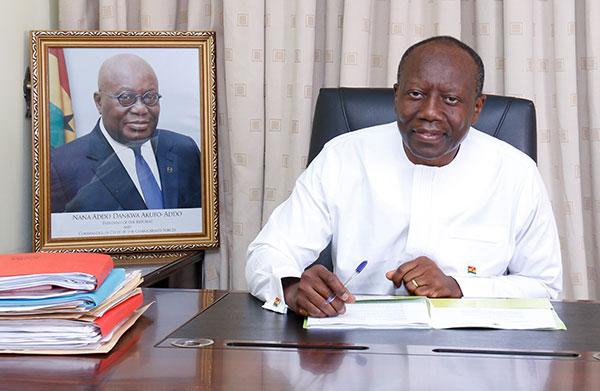
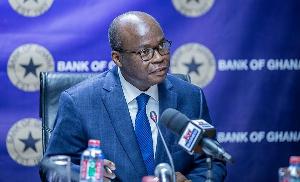

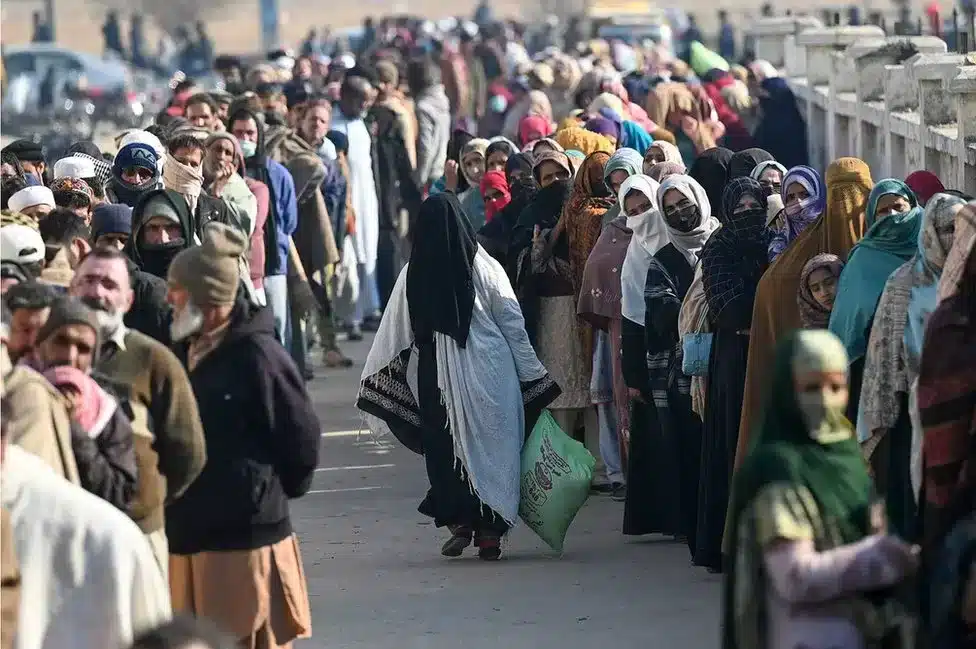
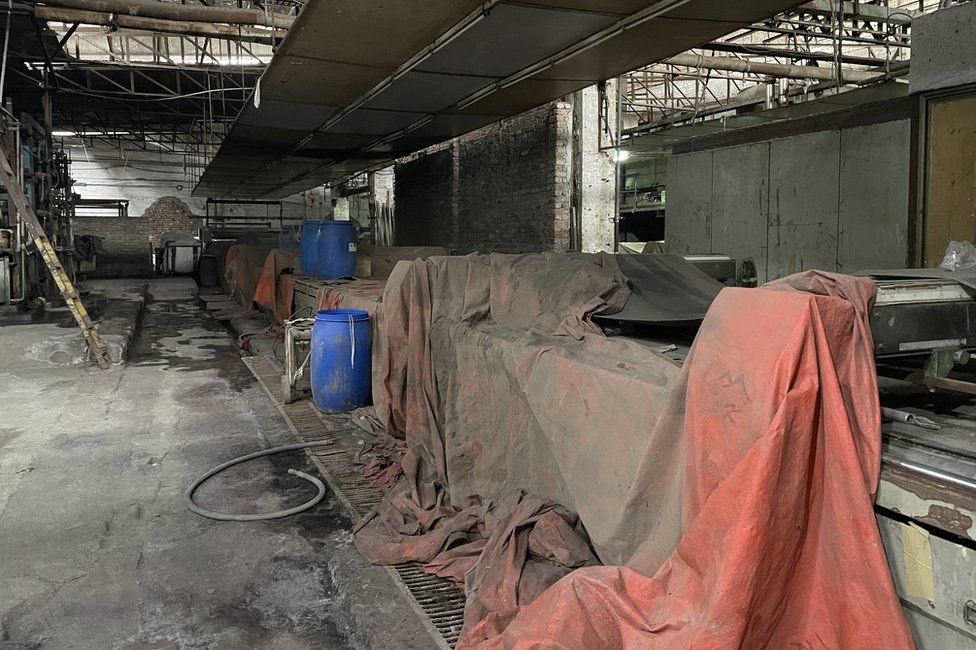
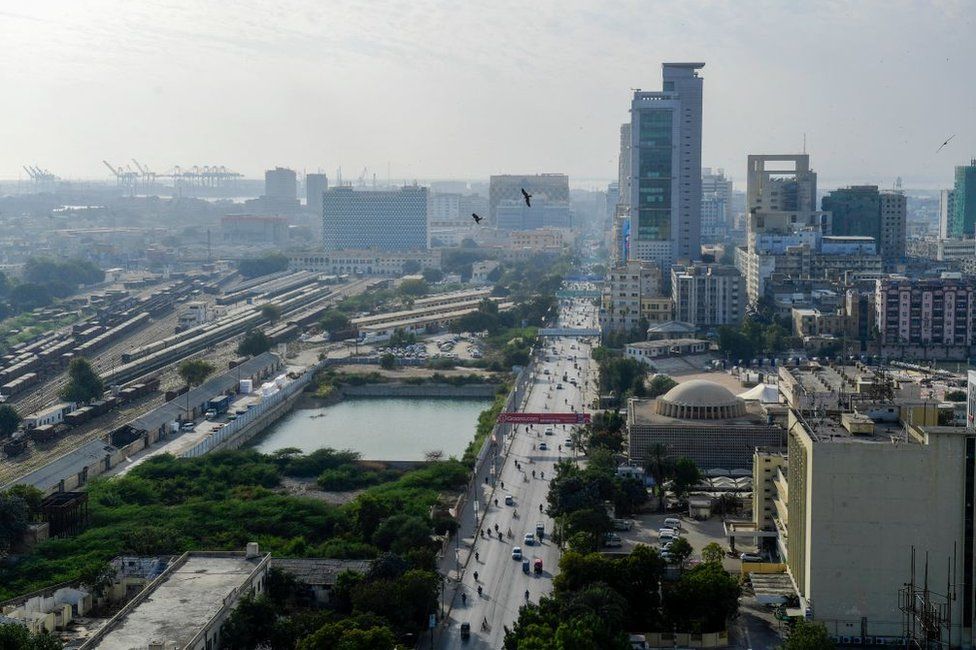
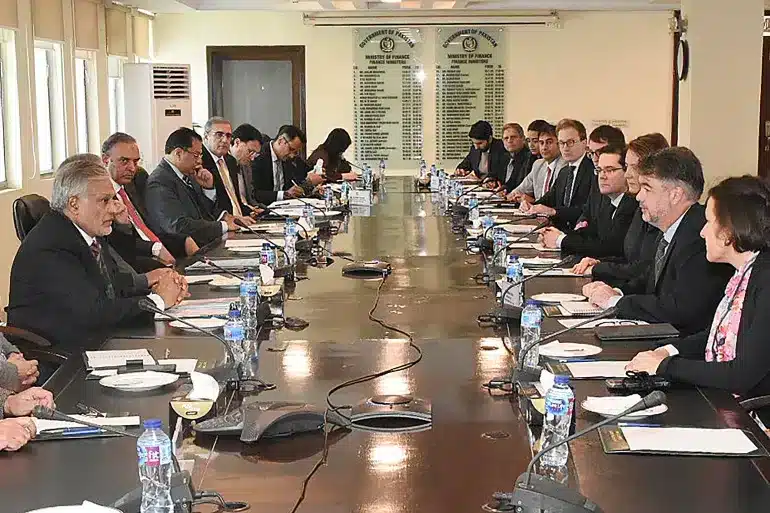
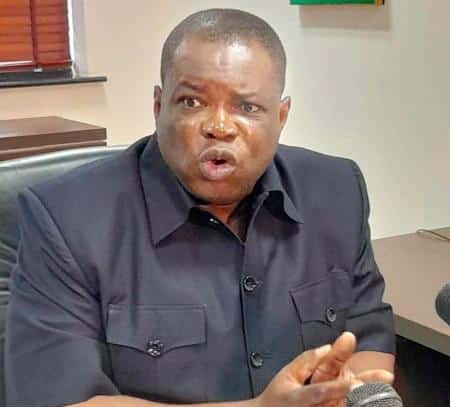
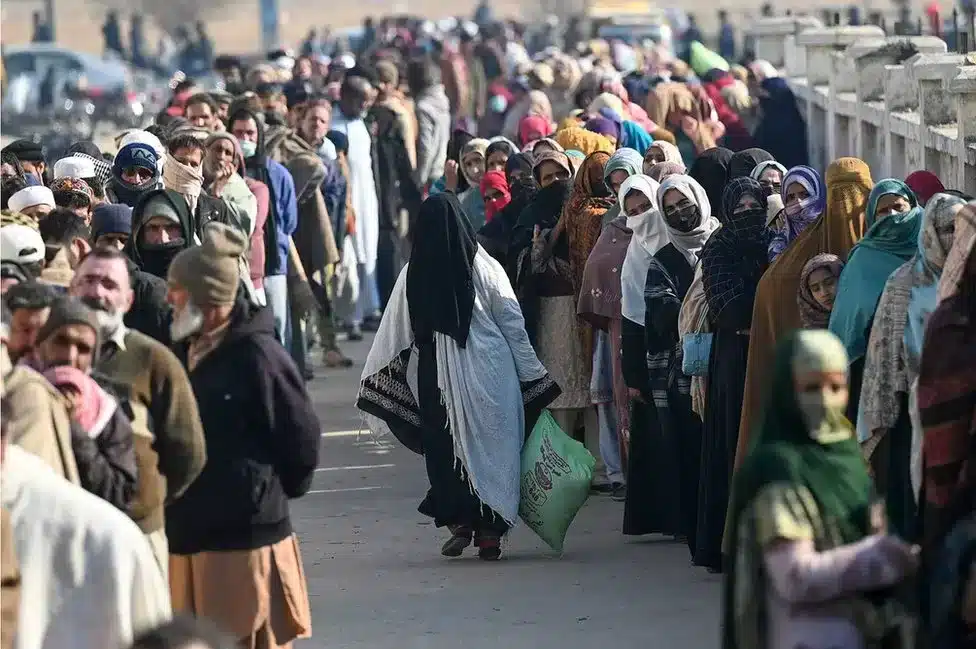
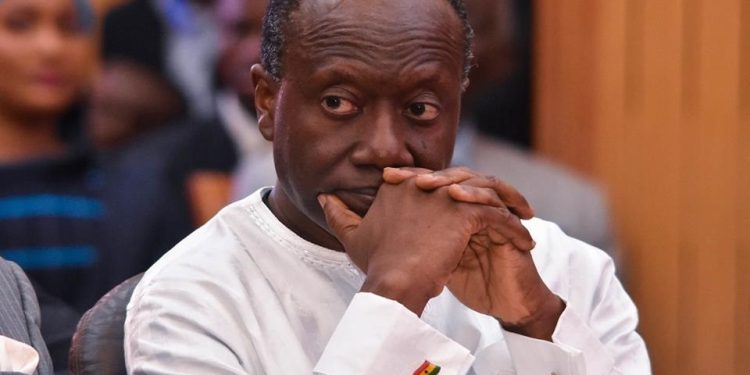
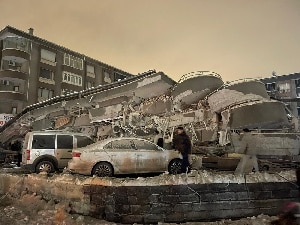

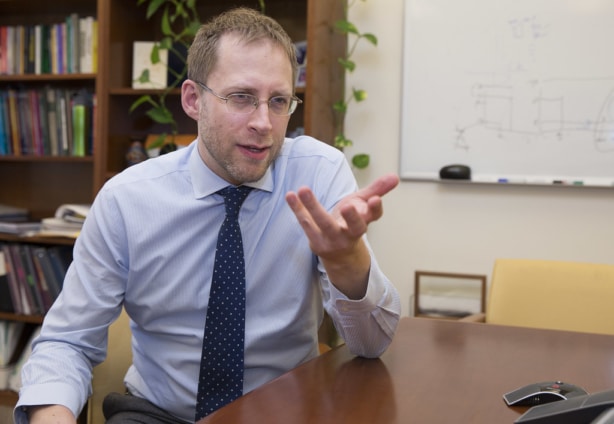




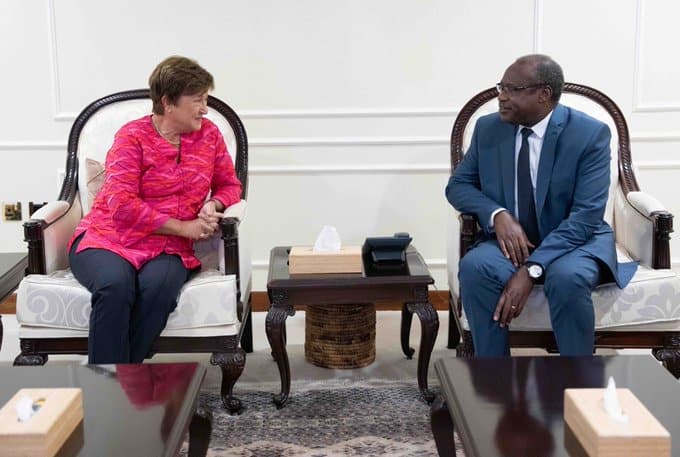

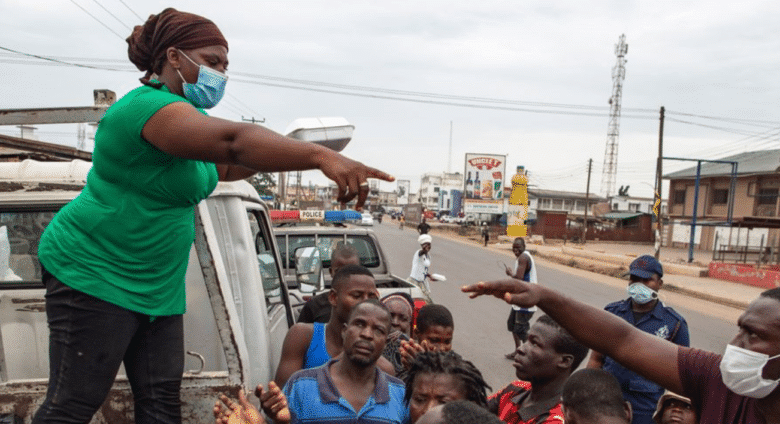

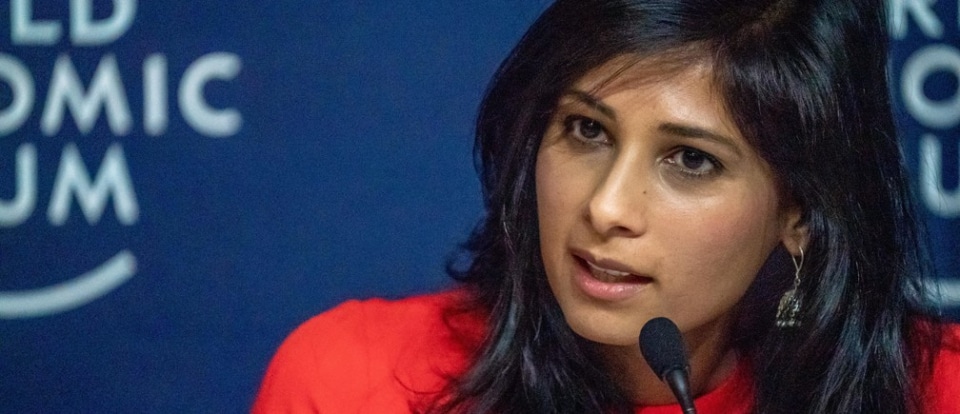

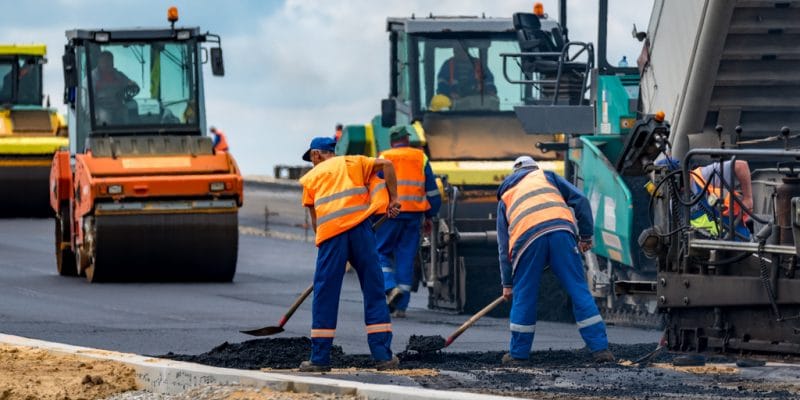
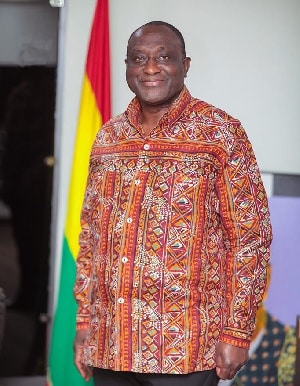
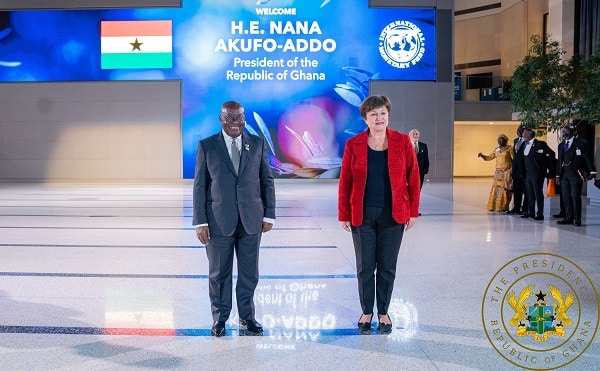

 President @NAkufoAddo. I congratulated him on