Tag: IMF

  • 38-year-old IMF ‘boy’ now telling us what to do – KKD damns Akufo-Addo gov’t 

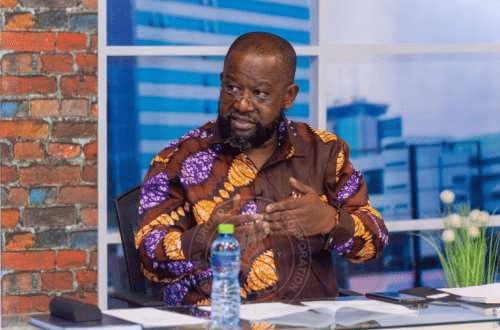
    Renowned broadcaster, Kwasi Kyei Darkwah (KKD), known for his outspoken nature, has taken a swipe at the government for returning to the IMF despite initially vowing not to return to the fund.

    Speaking on Monday, May 29, 2023, the former broadcast journalist expressed his utmost disgust at the government’s shameful return to the Bretton Woods Institution to salvage the economy. 

    He believes the government has made a mockery of itself by returning to the IMF regardless of rigorous resistance against such claims. What baffled him most was criticisms by this government (when it was in opposition) against the current opposition when the latter decided to seek support from the IMF. 

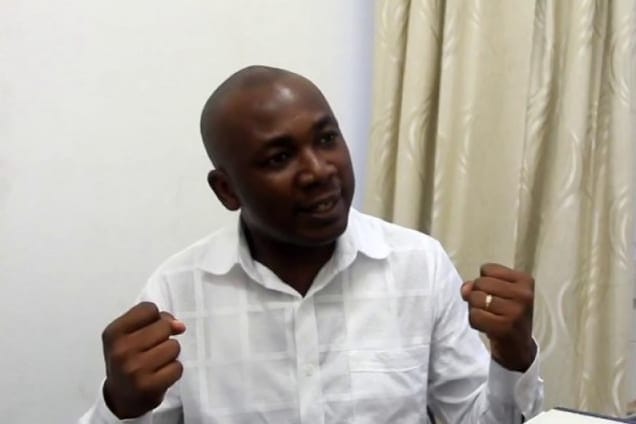
    “Right now, our hope is in the IMF. I don’t know what the 38-year-old boy from the IMF is going to tell us what to do, but my point is, who leaves his house at Ridge to go to somebody’s house at Kaneshie and says, ‘Charley, things are not going well in my home, so come and manage my home for me for the next three to five years. Who does that and still says we are brilliant? “ he said. 

    He made the remarks during a JoyNews interview on the state of affairs of the economy and other matters including Ghana’s IMF bailout. 

    During the interview, he described the current administration  as the worst in the history of the country, accusing it of plunging the country into bankruptcy. 

    “We are broke,” he said, adding that: “Sometimes when I listen to my brothers in the NPP, they act like a team that goes to get a draw with another team and they say: ‘We have won.’ 0:0. How did you win with 0:0?,” he questioned. 

    “And even worse, you get Gabby writing things like “The alternative is scary. The alternative? Dude, you are the worst!” he lashed out at the government. 

    “If anybody can’t say it, this is not about NPP, NDC, CPP or whatever. This is the worst government we have ever had.”

    Ghana has received the first tranche of the US $ 3 billion financial support it was seeking from the IMF.  The country has so far received $US 600 million.

    In order to attain the next tranche, President Akufo-Addo has disclosed that the government is undertaking rigorous expenditure rationalisation and prudent spending to meet conditions set by the International Monetary Fund (IMF).

    Speaking at the ongoing Qatar-Africa Economic Forum in Doha, President Akufo-Addo said his government is very much aware of its obligations and will live up to them.

  • The IMF agreement faces substantial challenges

    The IMF agreement faces substantial challenges

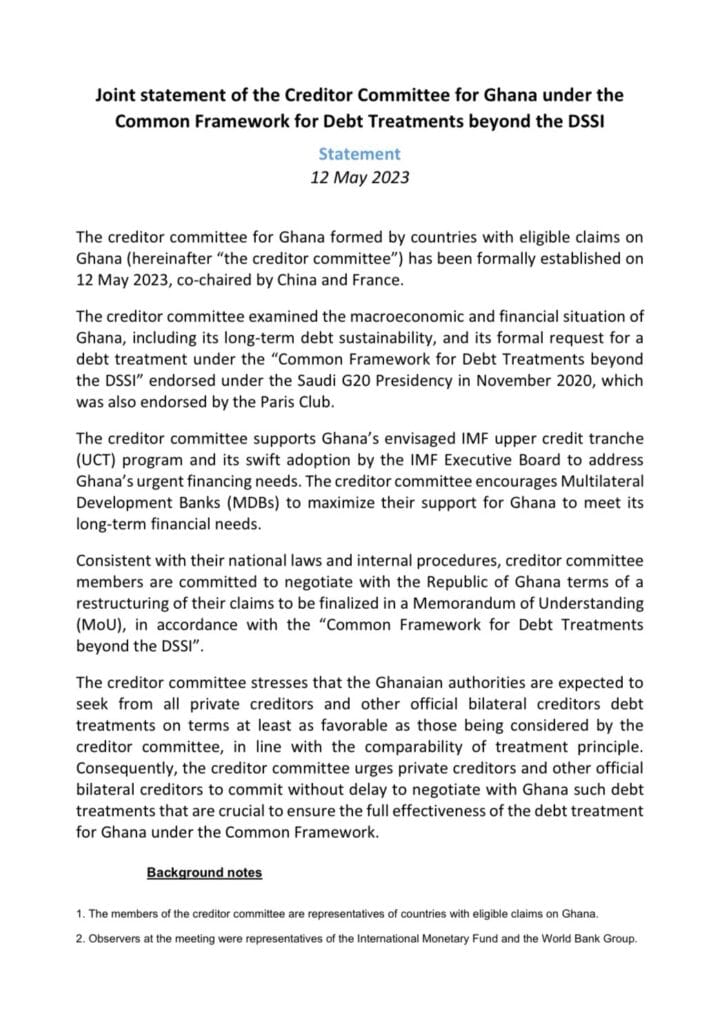
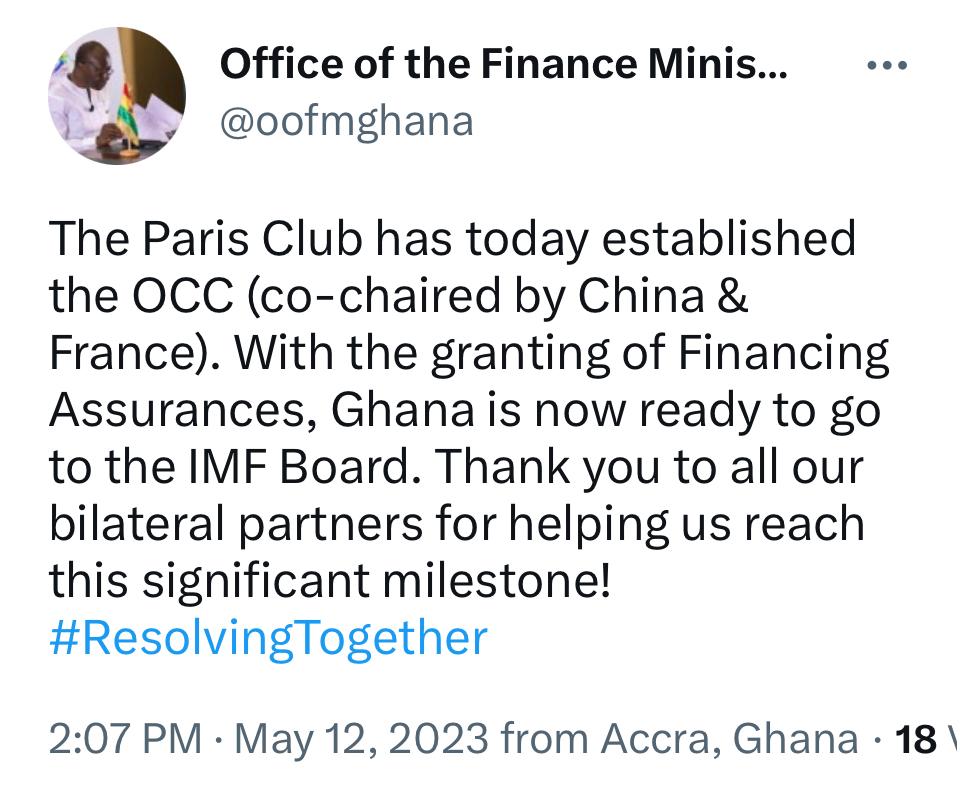
    Following a staff-level agreement achieved on December 12, 2022, the Paris Club’s development of an Official Creditor Committee (OCC) has given impetus to the country’s efforts to restructure its debt and finally get a US$3 billion facility from the International Monetary Fund (IMF).

    The OCC, which is composed of representatives from countries to which Ghana owes a debt, expressed support for the country’s proposed IMF upper credit tranche (UCT) programme and its swift adoption by the IMF Executive Board.

    In a communique last Friday, the Committee – co-chaired by China and France – also encouraged multilateral development banks (MDBs) to provide maximum support for Ghana to meet its long-term financial needs.

    Reacting to the development, Managing Director of the Fund, Kristalina Georgieva, welcomed the OCC, expressing the importance of an IMF-supported economic programme and their commitment to negotiate debt restructuring terms accordingly.

    “This statement provides the necessary financing assurances for the IMF Executive Board to consider the proposed Fund-supported programme and unlock much-needed financing from Ghana’s development partners,” she said.

    She also endorsed a call by the Official Creditor Committee for private creditors and other official bilateral creditors to commit to comparable debt treatments.

    “The Creditor Committee’s action recognises the Ghanaian authorities’ strong reform programme, which aims to restore macroeconomic stability and debt sustainability while laying the foundation for an inclusive recovery. It also signals that further progress is being made under the G20 Common Framework, demonstrating that international partners are ready to work together on helping countries resolve their debt issues. This is vital to enable countries such as Ghana to achieve sustainable growth and poverty reduction,” she added.

    However, the Head of Insights at IC Group – a securities firm, Courage Martey, in a tweet cautioned that securing financing assurance from official creditors is not the final step in debt-restructuring. The next phase will involve critical negotiations with creditor committees, wherein Ghana will present its proposed terms to bring its debt and debt service metrics to IMF targets in present value terms. The creditors may agree or disagree, but a deal must be reached before the IMF can approve the next disbursements.

    According to Martey, once financing assurance is secured and the IMF programme is approved to begin, the success of debt restructuring will determine progress on the programme and additional disbursements under the US$3billion facility. Martey added that debt restructuring is one of the torturous parts of the IMF deal and a crucial factor in Ghana’s ability to achieve debt sustainability.

    “Securing financing assurance from official creditors is not a done deal for debt restructuring. It is not the only requirement for Ghana to secure IMF board approval for the programme to start. The next phase will be critical. Actual negotiations with creditor committees will begin with government presenting its proposed terms, which will ensure it brings debt and debt service metrics to the IMF targets in present value terms,” he explained.

    “The creditors may agree or disagree but a deal needs to be agreed upon before IMF reviews can be approved for the next disbursements. Once financing assurance is secured and the IMF programme is approved to begin, the progress on the programme and additional disbursements under the US$3billion will depend on the success of debt restructuring, which is one of the torturous parts of the IMF programme based on debt restructuring,” the economist added.

    The creditor committee noted that Ghana has taken steps to address its challenging macroeconomic and financial situation, including implementing a strong reform programme. The committee expressed confidence in Ghana’s ability to successfully implement its reform program and achieve debt sustainability.

    It also urged private creditors and other official bilateral creditors to commit to negotiating such debt treatments with Ghana, which are crucial to ensure full effectiveness of the debt treatment for Ghana under the Common Framework for Debt Treatments beyond the DSSI.

  • IMF bailout won’t resolve Ghana’s challenges instantly – Akufo-Addo

    IMF bailout won’t resolve Ghana’s challenges instantly – Akufo-Addo

    President Akufo-Addo has emphasized that the bailout obtained from the International Monetary Fund (IMF) is not an immediate remedy for the country’s challenges.

    He believes it will, nonetheless, play a crucial role in restoring confidence and reopening opportunities that have been limited in recent years.

    During a national address on Sunday, the President acknowledged that the approval represents a positive step toward putting the country back on track.

    “Access to the IMF facility will not spell the immediate end of the difficulties we are in presently, but the fact that we have been able to negotiate such a deal sends a positive message to our trading partners, creditors and investors,” President Akufo-Addo stated during his May 28 address.

    Akufo-Addo further highlighted that the IMF agreement would aid in restoring confidence in the Ghanaian economy, which has been adversely affected by the COVID-19 pandemic and the conflict in Ukraine.

    “It should lead to the restoration of confidence and the reopening of opportunities that have been closed to us this past year and a half,” Akufo-Addo explained, emphasizing that it would also result in the resumption of stalled infrastructure projects.

    The President reiterated that the successful implementation of the necessary reforms to make the deal effective would require the support of the Ghanaian people.

    “We must all collaborate to ensure the success of this program,” Akufo-Addo urged. “Together, we must work towards building a brighter future for Ghana.”

  • Citizens and businesses entreated to brace themselves for tough times as IMF conditions hit

    Citizens and businesses entreated to brace themselves for tough times as IMF conditions hit

    Economist and Senior Lecturer, Wisconsin University, Rev Dr Samuel Worlanyo Mensah, has entreated Ghanaians and businesses to brace themselves for tough times ahead as IMF conditions hit.

    He said though the implementation of economic programmes under the Extended Credit Facility (ECF) would help Ghana attain macroeconomic stability, the citizenry would experience some hardships until June 2024 before enjoying some relief. 

    Ghana secured a $3 billion IMF bailout last Wednesday, May 17, and on Friday, May 19, the first disbursement of UD$ 600 million hit the country’s account. 

    The credit facility, which had been the 17th since the country’s independence in 1957, sought to put Ghana back on the path of sustainable economic growth.

    The $3 billion loan-support programme aimed at making Ghana return to single-digit inflation and attaining a revenue-to-GDP ratio of 18.5 percent by the end of 2025 as well as cover vulnerable households from the impact of electricity tariff adjustment, among others. 

    Speaking in an interview with the Ghana News Agency on the conditionality under which the Extended Credit Facility was given, Rev Dr Worlanyo

    Mensah, said tax exemptions had been cancelled and that would impact the balance sheets of companies and industries. 

    The measures, he said, included the removal of value added tax exemptions, reduction of customs exemptions, and reformation of corporate income tax by phasing out tax holidays and exemptions.

    “Increasing progressively in personal income tax is another. That means income tax will be going up,” the Senior Lecturer said. 

    Another policy action would be that Government would limit the rate at which it could increase the salaries of public sector workers with a possibility of not more than 10 percent. 

    Also, the automatical adjustment of fuel levies by exchange rate movement and inflation could adversely impact the poor and vulnerable.

    Quarterly tariff adjustment including electricity and water was another conditionality. 

    Rev Dr Worlanyo Mensah said the Government could employ only 0.5 percent of the current labour force, adding that such employment would be in three key sectors: health, education, and security with reduced quotas. 

    He said the government aimed at attaining a tax-to-GDP ratio of 18 percent before the end of the IMF programme. That he said could result in the introduction of new taxes or an upward review of current taxes 

    He also mentioned that there would likely be a second debt restructuring exercise.

  • Stalled projects set to resume following approval of IMF deal – Akufo-Addo

    Stalled projects set to resume following approval of IMF deal – Akufo-Addo

    Projects that were put on hold as a result of efforts to obtain a bailout from the International Monetary Fund (IMF), according to President Akufo-Addo, will resume shortly.

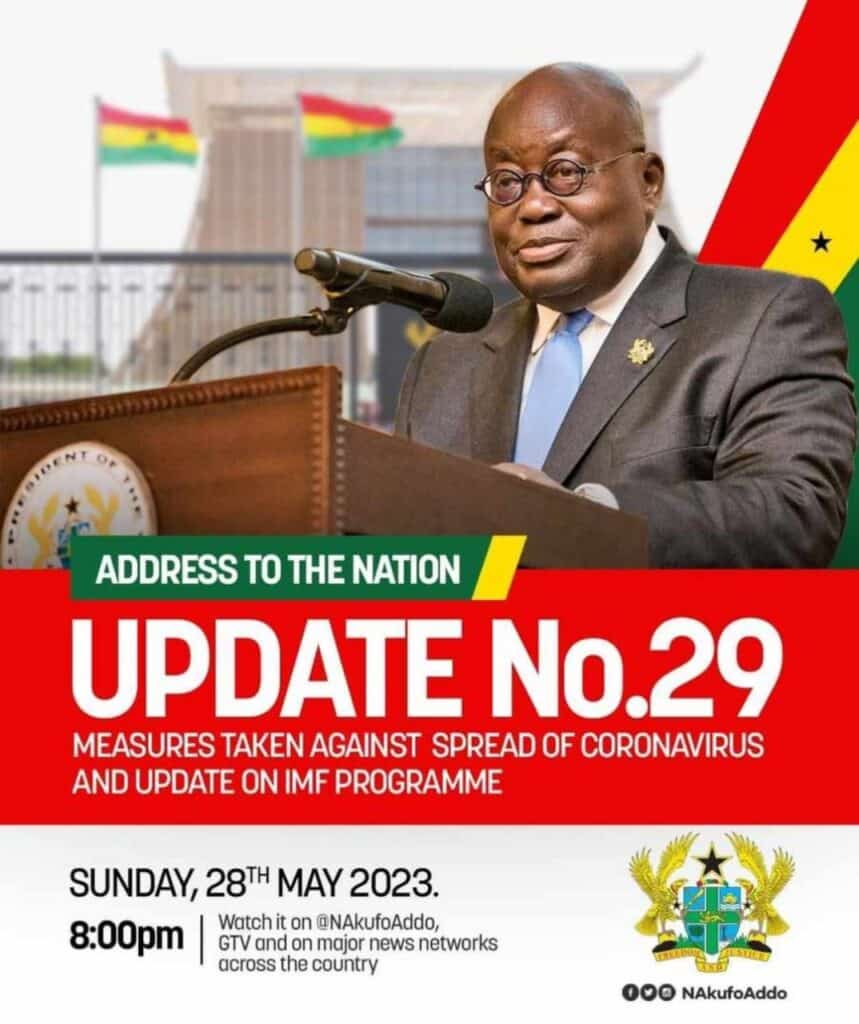
    The President gave this assurance when he addressed the nation in his 29th update on measures taken against the spread of Coronavirus and an update on the IMF programme.

    The president in his update warned that the IMF programme will not bring an immediate end to Ghana’s economic woes but said he is confident it will bring confidence to the Ghanaian economy.

    “Fellow Ghanaians, access to the IMF facility will not spell the immediate end of the difficulties we are in presently, but the fact that we have been able to negotiate such a deal sends a positive message to our trading partners, creditors and investors; a positive message that will be underpinned by the discipline, hard work and enterprise with which we execute the programme.

    “It should lead to the restoration of confidence and the reopening of avenues that had been closed to us this past year and a half. It should also lead to the resumption of many of the infrastructural projects that have stalled.”

    The Executive Board of the International Monetary Fund on May 17 approved a $3 billion credit facility to Ghana to help revive the ailing economy after months of negotiations.

    The first tranche of $600 million of the facility hit the country’s account with the reminder $2.4 billion to be disbursed over a two-year period.

  • Akufo-Addo addresses nation on IMF deal, COVID fight

    Akufo-Addo addresses nation on IMF deal, COVID fight

    President Akufo-Addo addresses Ghanaians tonight on the country’s recent agreement with the International Monetary Fund (IMF).

    Ghana has secured a $3 billion credit facility with the IMF to help recover the economy, however, introduction of additional taxes looms as government is expected to rake in more revenue and cut down expenditure.

    Also, he will speak on Ghana’s fight against the COVID-19 pandemic following the World Health Organisation’s report that the virus is no longer a public emergency health.

  • Akufo-Addo to address nation on IMF deal, new COVID-19 updates tonight

    Akufo-Addo to address nation on IMF deal, new COVID-19 updates tonight

    President Akufo-Addo will tonight at 8pm address Ghanaians on the two major issues affecting the country’s economy and the wellbeing of citizens.

    The president will provide updates on the recent $3 billion credit facility provided by the International Monetary Fund (IMF) and the COVID-19 pandemic which is no longer a public health emergency.

    Government is expected to cut down its expenditure and increase its revenues per agreements with the Fund. Already, it is alleged that some 50 tax measures are in the pipeline.

    With regards to COVID-19, all restrictions on entry points of the country have been life as the virus is no longer regarded as a public health emergency per the World Health Organisation (WHO).

    Visit our website for the livestream of the President’s address.

    Source: The Independent Ghana

  • Ivory Coast gets $3.5bn loan agreement from IMF

    Ivory Coast gets $3.5bn loan agreement from IMF

    Ivory Coast has received a $3.5-billion loan agreement from the International Monetary Fund (IMF) to help the country tackle financial challenges and assist with its economic transformation.

    The IMF announced this on Wednesday. The 40-month arrangement will “help support the country’s transformation towards upper-middle income status” over the medium term while preserving macroeconomic stability, the IMF said in a statement.

    Getting the loan in full will be contingent on the West African nation making structural changes to its economy, which is squeezed by a global downturn and the ripple effects of the war in Ukraine.

    IMF Deputy Managing Director Kenji Okamura said “Consecutive global shocks have strained Cote d’Ivoire’s public finances as well as regional reserves.”

    The program will help the country tackle the “triple shocks” of the Covid-19 pandemic, global monetary tightening, and Russia’s invasion of Ukraine, according to the statement from the IMF.

    The key target of the program’s reform agenda, meanwhile, is domestic revenue mobilization, which the IMF said was central to preserving fiscal and debt sustainability, and would help generate the “fiscal space” needed to allow for deeper economic transformation.

    The first tranche of the loan worth close to $500 million will be made immediately available to the Ivorian authorities to support the budget, the IMF said.

    Recently, the IMF approved a $3 billion loan agreement for Ghana.

  • Akufo-Addo pledges govt’s compliance for release of second tranche of $3bn IMF Bailout

    Akufo-Addo pledges govt’s compliance for release of second tranche of $3bn IMF Bailout

    President Akufo-Addo says government is undertaking rigorous expenditure rationalisation and prudent spending to meet conditions set by the International Monetary Fund (IMF).

    This he said is in order to access the second tranche of the $3 billion bailout in six months.

    The IMF board last week approved Ghana’s request for a $3 billion bailout resulting in the release of the first 600 million dollars to the Bank of Ghana.

    But subsequent releases will be hinged on Ghana meeting certain conditionalities set by the Fund which includes improvement in domestic revenue mobilisation.

    Speaking at the ongoing Qatar-Africa Economic Forum in Doha, President Akufo-Addo said his government is very much aware of its obligations and will live up to them.
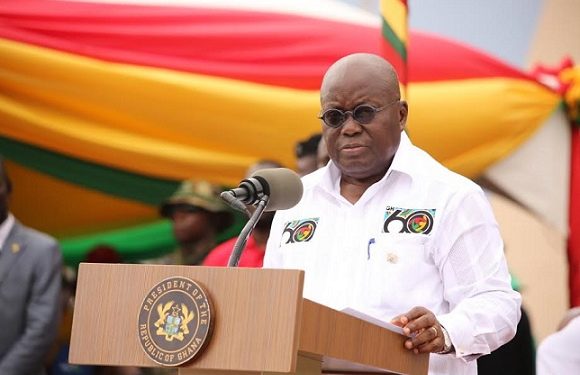
    “The global situation has not been kind to incumbent governments all over the world and I think our situation will be no different but at the same time, I believe we have enough time.

    “We have eighteen months, I am to leave office in January 2025, so 19 months from now to be able with a very disciplined approach, implement the IMF programme and reposition our economy to be able to bring some growth back and some relief back to the population.

    “…to also be able to convince them that yes, it is worth continuing the journey that my party started.”

    Touching on the benefits of the IMF bailout, President Nana Akufo-Addo said Ghana will soon return to the International Capital Market.

    Mr Akufo-Addo said this will enable his government to get the needed funding to execute its mandate. 

    According to him, the shutting of the capital market to the country has been of great worry to him and his government. 

    “We have positioned ourselves to be able to go back into the International market which had been a source of funding for us during the first three or four years of our government,” he said on Tuesday, May 23.

    Meanwhile, government says it is taking the necessary steps to review all existing flagship programmes as part of its objectives to strengthen the fiscal policy.

    This was contained in the IMF’s May 2023 country report on Ghana.

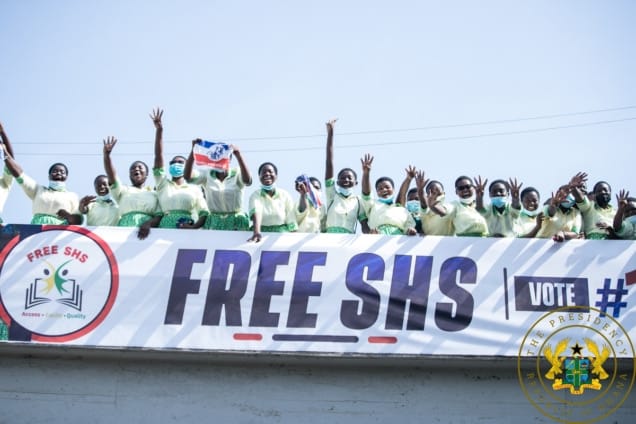
    Already, one of the flagship programmes, Free SHS has been described by the Fund as being poorly targeted, with the country’s education system producing poor learning outcomes.

  • Ghana’s IMF program approval in 10 months sets unprecedented record, Akufo-Addo says

    Ghana’s IMF program approval in 10 months sets unprecedented record, Akufo-Addo says

    President Akufo-Addo has stated that Ghana’s International Monetary Fund (IMF) bailout prorgramme which took 10 months to be completed is one of the quickest to have happened to the country.

    Speaking at the 3rd Qatar Economic Forum, the President said the country had to ensure data provided were accurate, whilst the macro indices were heading in the right direction.

    “Usually, the negotiations with the IMF take time. In fact, the 10 months which have been involved in the Ghanaian programme is one of the fastest on record”.

    “There is a whole lot of stuff that you had to go through in terms of change of data, negotiations, and making sure that the macro indices you are looking for are in the right direction. All of these may take time. Nevertheless, it is over”, he pointed out.

    He furthered that the IMF support programme will reposition the economy to regain macro stability.

    According to him, the economic indicators have started improving, citing examples such as inflation and the exchange rate.

    “Now, we believe that it [IMF programme] is going to provide us with the foundation for redirecting the economy, repositioning the Ghanaian economy firstly, to regain the macro stability that has been lost”.

    “Secondly, to be able to have better control over important details like the interest rate, inflation and then finally, also to position us to be able to be back to the international capital market which has been a source of funding for us for the first three or four years of our government”, he added.

    Last week, the Executive Board of the IMF approved a $3 billion Extended Credit Facility for Ghana, which will end in 2027.

    This was as result of assurances from country’s Creditors Committee under the G20 Common Framework last week, which includes China.

  • Prof Gyampo criticises IMF for failing to implement anti-corruption plan; describes it as ‘bogus’

    A Senior Lecturer at the University of Ghana’s Political Science Department has expressed disappointment with IMF’s conditionalities for Ghana regarding the $3 billion loan approval.

    According to Prof. Ransford Yaw Gyampo, Ghana is a highly corrupt country and the institution has provided no substantial help to check the leakages and slippages.

    Mr Gyampo thinks that an IMF that is no longer perturbed about curbing a country’s corruption cannot be taken seriously.

    “Indeed, in the fight against corruption, the talk about the continuous implementation of a National Anti-Corruption Action Plan (NACAP) that exists merely in name by the document, shows that the IMF perhaps is no longer a serious institution.”

    “This is because it doesn’t appear there will ever be serious efforts at implementing the NACAP and an IMF that does not know this is bogus,” he said.

    He also indicated that the current IMF has lost its boldness and courage unlike previous times and thinks that the IMF in recent times is just tactically encouraging African dependence on the West.

    “Otherwise, how and why were very low-hanging serious recommendations that would help us quickly turn things around, overlooked? Is the IMF ignorant that we earn just about only 5% of royalties from our gold?

    “Is the IMF not aware that we produce oil and yet earn only just about 13% of the oil revenues? Why didn’t they talk about taxing the extractive sector adequately to raise more revenue for ourselves?”

    “Why were they silent on what we must do to stop illicit financial flows? Do they come from countries whose sizes of government are as bloated as ours? Were they coerced to keep quiet about the local and international calls on our government to downsize?” Mr. Gyampo quizzed.

    He continued that if the conditionalities do not answer the above questions then they are mere propaganda and only aim at inflicting hardships on deprived people.

    “To make Africans dependent on the West; and cover up for leadership incompetence and unwillingness to sacrifice,” he lamented.

    He finally cautioned government that Labour would resist any unnecessary imposition of hardships on poor people without an evident show of sacrifice on the part of political leadership.

    “The IMF must know that the Ghanaian is intelligent enough to know when a cycle of dependence is being perpetuated and we will soon resist.”

    “If the IMF truly wants to help us, then they must be bold in telling us nothing but the truth so we can wiggle ourselves out of imposed and our self-inflicted hardship,” he said.

  • Use part of IMF funds to pay aggrieved bondholders – Former New Juaben South MP to govt

    Use part of IMF funds to pay aggrieved bondholders – Former New Juaben South MP to govt

    Dr. Mark Assibey-Yeboah, a former Member of Parliament for New Juaben South has suggested that government should allocate a portion of the $600 million received from the International Monetary Fund (IMF) to settle outstanding debts to bondholders and creditors.

    Additionally, he proposes using the funds to expand the Livelihood Empowerment Against Poverty (LEAP) program, benefiting more individuals.

    Dr. Assibey-Yeboah asserts that such payments would play a crucial role in rebuilding confidence in the financial system. Furthermore, he believes it would aid in revenue mobilization and provide protection for the most vulnerable individuals affected by rising prices and the removal of electricity subsidies.
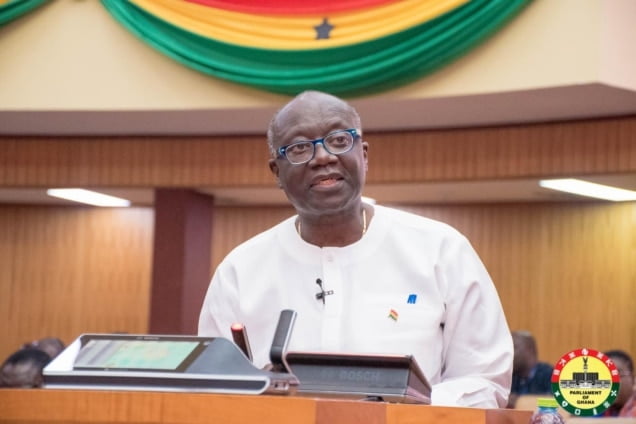
    In summary, he recommends utilizing a portion of the IMF funds for debt payments, expanding the LEAP program, and addressing the impact of subsidy removals and price increases on the less privileged segments of society.

    “With USD600 Million disbursed by the Fund, we could ringfence and apply part of the proceeds as follows:

    Payment of Coupons/Principal of Bonds (and Cocoa Bills):

    The Ministry of Finance projected an 85% Participation Rate in the Domestic Debt Exchange. This means that only 15% of individual bondholders, excluding Pension Funds and Cocoa Bills are ‘original’ bonds that have to be settled in the near term.
    The government needs to prioritise the payment of coupons/principal of the aforementioned bonds to restore confidence in the financial system.
    Currently, market players are interested primarily in 91-day Treasury Bills. Restored confidence will push investors to 182-day and 1-year Treasury Bills, giving the government some breathing space.

    Servicing of Bilateral Debt: Following the suspension of interest payments on Eurobonds and Bilateral loans, almost all critical infrastructure projects have grounded to a halt. Contractors have demobilised from site. Turnkey projects like the KATH Maternity and Children’s Block (54% completion), Eastern Regional Hospital (50% completion), Obetsebi Interchange (90% completion), Nungua Beach Road (80% completion), Takoradi PTC Interchange (85% completion), Czech-Funded Bridges (70% completion) amongst others are all being discontinued. We should resume interest payments on these critical loans. Doing so will give the contractors impetus to remobilize and go back to site, albeit, at an increased project cost.

    3. Enhanced LEAP:

    The gradual removal of ‘subsidies’ on electricity is biting the poor very hard. With food and energy inflation persisting, LEAP, our social protection program that provides cash transfers to very poor people must be enhanced and expanded,” he wrote in reaction to the receipt of the bailout cash by Government.

    The government has indicated that the money, which forms part of $3 billion expected from the IMF, will go into budgetary support to help bring down inflation according to Finance Minister Ken Ofori-Atta.

    The Government sought a bailout from the IMF last year to enable the balance of payment challenges.

  • Ghana projected to lose revenue from minerals and electricity to China – IMF

    Ghana projected to lose revenue from minerals and electricity to China – IMF

    In light of government’s inability to uphold its loan deal, the International Monetary Fund (IMF) has revealed that the Chinese government will probably be able to access Ghana’s mineral and electricity revenues.

    According to a news report by myjoyonline.com, the fund indicated that this might happen because the government of Ghana is at risk of not being able to repay four loans it acquired from the Chinese government which it collateralised with Ghana’s mineral resources and electricity sales.

    The report indicated that Ghana for the past decade acquired at least eight collateralized loans from China with different mineral resources as security against default.

    It added that as at the end of 2022, collateralized loans amount to $619 million of the $1.9 billion loan agreements Ghana has with China.

    The IMF indicated that $619 million in loans were acquired between 2007 and 2018 and they were collateralised with Ghana’s cocoa, bauxite and oil and electricity revenue.

    “Collateralized debt is any contracted or guaranteed debt that gives the creditor the rights over an asset or revenue stream that would allow it, if the borrower defaults on its payment obligations, to rely on the asset or revenue stream to secure repayment of the debt,” the IMF was quoted by myjoyonline.com.

    “Statutory funds will not be allowed to collateralize revenue streams and issue debt. No objection certificates will not be issued to any statutory fund by the governing authority in this regard,” it added.

  • 50 new taxes to be introduced by govt as part of IMF deal – Ablakwa

    50 new taxes to be introduced by govt as part of IMF deal – Ablakwa

    Member of Parliament from the North Tongu, Samuel Okudzeto Ablakwa, has predicted that government will soon introduce draconian tax measures as a result of the International Monetary Fund (IMF) deal.

    He said about 50 new tax measures are likely to be introduced per analysis.

    “The analysis we have shows that because of this (the IMF) bailout, there are going to be 50 new tax measures… income tax is coming to be progressive.

    “There is going to be quarterly tariff adjustment. So, every quarter, electricity tariffs are going to go up, can you believe that, every quarter?” the MP asked.

    Ghana has been able to secure an IMF loan of US$ 3 billion. On Wednesday, May 17, 2023, the Bretton Wood Institution approved the loan, with a $ 600 million immediate payout.

    $350 million would be disbursed every six months for the three-year programme.

    While some have described the loan as timely, others including the North Tongu MP, have expressed concerns over the conditions of the deal.

    Mr Ablakwa intimated that: “this is going to be the most painful” and “the most bitter IMF programme.”

    “I asked myself who negotiated this on behalf of Ghanaians? Does the person have a heart? Does the person care about Ghanaians?,” he asked in an interview with Metro TV.

    Additionally, he said that the deal negotiated on behalf of the people of Ghana includes an additional debt restructuring programme.

    Also, public sector employment will be restricted for the 3 years span of the IMF programme, he added.

    About the IMF deal

    On May 17, the Executive Board of the International Monetary Fund (IMF) approved a 36-month arrangement under the Extended Credit Facility (ECF) in an amount equivalent to SDR 2.242 billion (around US$3 billion, or 304 percent of quota).

    The program is based on the government’s Post COVID-19 Program for Economic Growth (PC-PEG), which aims to restore macroeconomic stability and debt sustainability and includes wide-ranging reforms to build resilience and lay the foundation for stronger and more inclusive growth.

    The program will help Ghana overcome immediate policy and financing challenges, including through its catalytic effect in mobilizing external financing from development partners and providing a framework for the successful completion of the ongoing debt restructuring.

  • Ghana Beyond Aid has become the “butt of jokes” in light of Ghana’s return to IMF – Mahama

    Ghana Beyond Aid has become the “butt of jokes” in light of Ghana’s return to IMF – Mahama

    The goal of independence, according to former President John Dramani Mahama, has become a joke by turning to the International Monetary Fund for financial assistance.

    He noted that the Ghana Beyond Aid agenda has become a slogan that has seen no actions under the Nana Akufo-Addo administration.

    John Mahama was the keynote speaker at the 7th Ghana CEOs Summit.

    He said: “Indeed our return to the IMF – cup in hand – has made our Ghana Beyond Aid policy the butt of jokes amongst many commentators in the world. It will take a resolute and committed political will to determine our own economic destiny.”

    According to him, the agenda will “require the ability to determine our own economic policies that prioritize the well-being of our citizens, and create an environment conducive for the advancement of sustainable growth and development for job creation.”

    The current flagbearer of the National Democratic Congress also took a swipe at the government over the introduction of the Income Tax Amendment Bill, Excise Duty, and Excise Tax Stamp Amendment, and Growth and the Sustainability taxes.

  • Your free SHS is not properly designed – IMF to govt

    Your free SHS is not properly designed – IMF to govt

    The International Monetary Fund (IMF) has labeled the government’s flagship Free SHS Senior High School (FSHS) program as inadequately designed.

    The Fund made this observation in its latest country report on Ghana, whose request for a $3 billion bailout it recently approved. 

    According to the report, the Free SHS programme “which covers the full cost of secondary education, has helped increase enrollment but is poorly targeted.”

    The IMF also disclosed that Ghana spends close to 4% of its GDP on education with good results in terms of enrollment but poor learning outcomes.  

    Key identified areas by the IMF which need potential improvement in education spending include strengthening primary education resources, better teacher training, and stronger performance-based funding practices.

    JoyNews’ checks reveal the Free SHS programme has enjoyed a budgetary allocation of more than GH¢11.3 billion since 2019.

    In the 2023 budget government demonstrated its commitment stating that the implementation of the Free SHS Programme remained unwavering.

    It also mentioned that the “total number of beneficiaries currently stands at 1.3 million students for the 2021/22 academic year” and this year, “government will continue with the implementation of the Free SHS Programme and continue to facilitate access to various educational items.”

    Meanwhile, President Akufo-Addo who spoke at a rally organised by the New Patriotic Party ahead of a bye-election in Kumawu on May 23, said President Mahama has been inconsistent in his position on the free SHS policy.

    According to him, the NDC flagbearer has now shifted his argument from cancelling the program to expanding it to include private second-cycle schools.

    The inconsistencies, he said, do not make former President Mahama trustworthy.

    In July 2022, Finance Minister, Ken Ofori-Atta said a review of the Free Senior High School policy remains a constant possibility.

    He explained that the Education Ministry continues to look at the policy with the aim of understanding how parents can be included in a manner that is not coercive.

    “Review is constantly a possibility on the table. And it’s just to make sure that the appropriate education is given and that wastage is eliminated and it goes to give us value for money,” Mr. Ofori-Atta told Joy Business’ George Wiafe in an interview.

  • Recovery plan for financial sector ready by end-June – IMF

    Recovery plan for financial sector ready by end-June – IMF

    A solid plan to resuscitate the nation’s financial industry is being developed by the Ministry of Finance, the Bank of Ghana (BoG), and the International Monetary Fund (IMF) and it will be unveiled by the end of June this year.

    This represents a major component of proposed structural reforms under the US$3billion Extended Credit Facility (ECF) provided by the Fund; and the initiative seeks to strengthen Ghana’s financial sector, instil market confidence, and promote increased lending to the private sector.

    The IMF is urging fiscal and monetary authorities to complete the necessary steps, including providing capital support to qualifying institutions and implementing measures to strengthen the financial sector exchange promptly.

    In a Staff Report published following the formal announcement of an Executive Board-level approval of the ECF, the IMF stressed the importance of timely action, stating: “Any capital support to qualifying institutions and other steps necessary to strengthen the financial sector exchange will be completed in a timely manner. To bolster the sector’s resilience, enhance market confidence and encourage lending to the private sector, we will develop a strategy by end-June 2023 for strengthening the financial sector and rebuilding financial sector buffers, to be accomplished by end of the programme”.

    As part of the proposed reforms, each of the nation’s 23 commercial banks will be obligated to submit reliable and time-sensitive plans to replenish capital buffers, aligning with the specified timelines outlined in the financial sector strategy. These plans will undergo evaluation by the central bank and be finalised by banks for approval by the Bank of Ghana (BoG) before end of September 2023, signifying a crucial milestone in the structural reform process.

    Speaking about the expectations for financial institutions, the statement mentioned: “Taking a forward-looking perspective and in line with our supervisory framework, individual banks will be expected to submit their credible time-bound plans to rebuild capital buffers on a phased basis in line with timelines set out in our financial sector strategy. These plans will be reviewed by the BoG and finalised by banks for BoG approval by end-September 2023”.

    Apart from banks, the regulator will also require special deposit-taking institutions (SDIs), non-bank financial institutions (NBFIs), and other regulated financial entities like securities firms and insurance firms to submit time-bound plans for recapitalization, and ensure strict adherence to those plans.

    The progress of these institutions in meeting their recapitalisation targets and timelines will be closely monitored by the relevant regulatory bodies, ensuring accountability and compliance, the Bretton Woods institution noted.

    To further ensure stability of the banking system, the BoG will conduct additional stress-tests to closely monitor vulnerabilities and guide discussions regarding adjustments to the financial sector strategy.

    The Fund’s proposed reforms have received mixed reactions among analysts. Supporters argue that strengthening the financial sector will enhance investor confidence and stimulate economic growth. However, critics express concern about the potential burden on financial institutions and the overall economy

    Nevertheless, all eyes will be on additional details regarding the GH¢15billion Financial Stability Fund. Already, the Finance Ministry has announced its readiness to disburse a total of US$750million, equivalent to approximately GH¢9billion and representing 60 percent of the targetted total.

    This is particularly aimed at offering solvency and liquidity assistance to eligible financial sector institutions that were impacted by and actively took part in the domestic debt exchange programme (DDEP).

    The lender’s ECF programme, coupled with these proposed structural reforms, is expected to provide a solid foundation for the nation’s financial sector; thus ensuring its resilience and ability to support sustainable development and economic progress.

    As the deadline approaches for development of the financial sector strategy, stakeholders across the country eagerly await further updates on the progress and implementation of these reforms – recognising their potential to shape the country’s future financial landscape.

  • IMF seeks to reduce financial losses of Ghana’s cocoa sector

    IMF seeks to reduce financial losses of Ghana’s cocoa sector

    As part of an IMF-sponsored economic reform program, the second-largest cocoa producer will have to cut its losses from the industry regulator.

    Ghana received approval this week for a three-year, $3 billion IMF bailout, with the first disbursement of about $600 million expected this week.

    Further payments will require the Ghanaian government to meet specific objectives aimed at restoring economic stability and reducing the country’s debt burden ahead of periodical IMF reviews.

  • $600 IMF support is timely – Dr Twumasi Baffour

    $600 IMF support is timely – Dr Twumasi Baffour

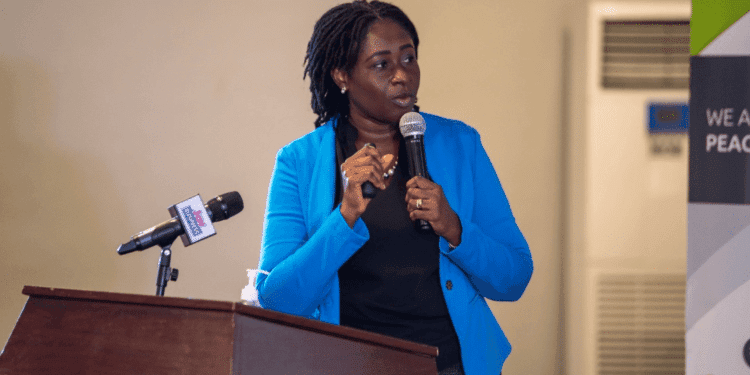
    An economist at the University of Ghana, Dr Priscilla Twumasi Baffour has reacted to the IMF bailout granted Ghana.

    She said the approval of Ghana’s $3 billion bailout request by the IMF came at the right time.

    She said the timing of the inflow of the first tranche has been perfect.

    “I believe that it is important and that the money has come at the right time. Because as of last week thereabout, we were aware that the reserve of the Central Bank was about three weeks of import cover.

    “And that meant that if nothing came in immediately, possibly it could have come in with a lot of speculations and people rushing in – the whole uncertainty around that environment is something that is not needed in economic management,” she said on JoyNews’ Newsfile on Saturday.

    Dr Baffour explained that the country has a lot of goodwill globally, in that almost everybody wants to see “the shining star of Africa” perform excellently.

    According to her, although data shows that the country turns out to perform well while under a fund-assisted programme, it begins to decline immediately after the programme expires.

    She has, however, advised that the inflow of the first tranche of the $3 billion should not call for a massive celebration but government should “take advantage of the goodwill that we have and do the right things going forward.

    Following the final approval of Ghana’s IMF programme, the first tranche of the $3 billion International Monetary Fund Extended Credit Facility (ECF) has been credited to the Bank of Ghana’s account.

    The $600 million arrived in the late afternoon of Friday, May, 19.

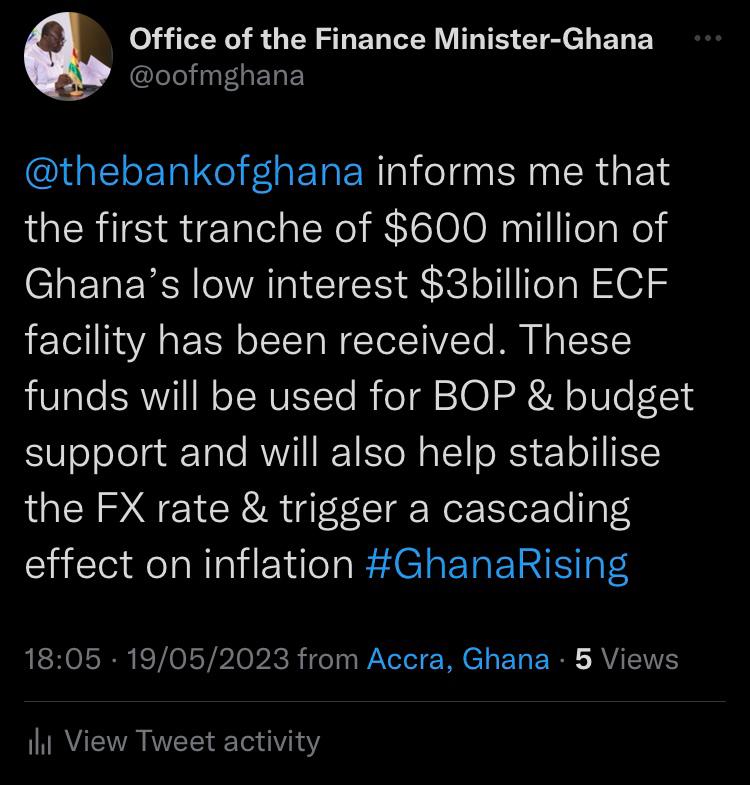
    In a tweet Finance Minister Ken Ofori-Atta stated that “The Bank of Ghana informs me that the first tranche of $600 million of Ghana’s low interest $3 billion ECF facility has been received.

    “These funds will be used for BOP [Balance of Payment] and budget support and will also help stabilise the FX rate and trigger a cascading effect on inflation.”

    Meanwhile, another tranche of funds is also expected to be disbursed by June 2023.

    This will be followed by a visit by an IMF Mission to Ghana in June 2023 to review Ghana’s programme considerations.

    Another review is expected just before the end of 2023, possibly in December 2023, before the final disbursement.

    All the funds will be paid directly into the Bank of Ghana’s account to support Ghana’s balance of payments needs.

  • Here are 10 ‘conditionalities’ in the $3 billion IMF programme Ghana got

    Here are 10 ‘conditionalities’ in the $3 billion IMF programme Ghana got

    The Executive Board of the International Monetary Fund (IMF) unanimously approved the $3 billion bailout for Ghana at a meeting held on Wednesday, May 17, 2023, in Washington, United States of America.

    $600 million out of the $3 billion loan was disbursed on the day of the approval of the bailout and $350 million would be disbursed every six months for the three-year programme.

    Two days after the approval of the IMF programme, the Nana Addo Dankwa Akufo-Addo government is being criticised for the deal it got for the $3 billion bailout.

    The Minister for Finance, Ken Ofori-Atta, and other parties who negotiated on behalf of the government of Ghana for the bailout have been described as wicked because of the agreement they settled on.

    Experts including University of Ghana don, Prof Godfred Bokpin, have stated that the deal will worsen the hardships ordinary Ghanaians are currently going through.

    Here are some of the conditions supposedly enshrined in the $3 billion bailout agreement:

    1. Removal of Value Added Tax (Vat) exemptions.

    2. Reformation of the Corporate Income Tax (CIT) by phasing out tax holidays and exemptions.

    3. Reducing Customs exemptions.

    4. Increasing progressivity in personal income taxes – income taxes will be going up.

    5. Automatically adjusting fuel levies by exchange rate movement and inflation.

    6. Quarterly tariff adjustment including electricity and water tariffs.

    7. Government can employ only 0.5 per cent of the current labour force.

    8. A limit to the rate at which the government can increase the salaries of public sector workers.

    9. A tax-to-GDP ratio of 18 per cent before the end of the three IMF programme.

    10. A second debt restructuring exercise – Domestic Debt Exchange Programme “Part II”.

  • Govt pledges to spend within limits to meet IMF’s deficit requirement

    Govt pledges to spend within limits to meet IMF’s deficit requirement

    The government will spend within limits to ensure it does not affront the deficit conditionality of the International Monetary Fund (IMF), Minister of State at the Ministry of Finance, Dr Mohammed Amin Adam, has said.

    Ghana is to receive the first tranche of $600 million from the Fund with the remainder of the total $3 billion bailout to be spread within the next few years.

    Dr Adam said the government has put measures in place to ensure fiscal discipline.

    “The minister has already set up a budget implementation standing committee which I chair, and that is supposed to ensure that whatever we spend on is approved, and whatever we spend on goes through a very rigorous process of approval so that we can keep our spending within our budget”, he told Joy News.

    He said: “If we will have any spending beyond the budget that will increase our deficit levels then we may not be able to meet the IMF requirement of deficit”.

    “We’re supposed to record about 1.5% of primary balance and to be able to do that will require very significant fiscal discipline”, Dr Amin Adam pointed out.

    He said the IMF’s condition that Ghana undergoes a front-loaded fiscal adjustment of about 5.1 percentage points, is “huge”, and “demands discipline; it demands hard work”.

    “And, so, we are sensitising every sector of government including SOEs, and this is the reason why they all now are brought under the GIFMIS including the statutory funds; they’re all brought through the GIFMIS in order to give us visibility and also to ensure that we control the spending by every agent of government”.

    Meanwhile, IMF MD Kristalina Georgieva has said “preserving financial sector stability is critical for the success” of Ghana’s comprehensive ECF-supported economic reform programme aimed restoring macroeconomic stability and debt sustainability.

    The executive board of the IMF approved Ghana’s US$3 billion bailout request to support the country’s economic recovery on Wednesday, 17 May 2023.

    In a statement, the IMF boss said: “Given the adverse impact of the domestic debt restructuring on balance sheets of financial institutions, the authorities will devise and implement a comprehensive strategy to rapidly rebuild financial institutions’ buffers and exit from temporary regulatory forbearance measures”.

    She noted: “Monetary and exchange rate policies under the programme will focus on reining in inflation and rebuilding foreign reserve buffers. The Bank of Ghana will continue tightening monetary policy until inflation is on a firmly declining path and will eliminate monetary financing of the budget. The central bank will also enhance exchange rate flexibility and limit foreign exchange interventions to rebuild external buffers”.

    “An ambitious structural reform agenda is being put in place to reinvigorate private sector-led growth by improving the business environment, governance, and productivity”.

    Also, she said: “The combination of large external shocks and pre-existing fiscal and debt vulnerabilities precipitated a deep economic and financial crisis in Ghana”.

    “In response, the authorities have launched a comprehensive reform programme to be supported by the ECF-arrangement”.

    “It is focused on restoring macroeconomic stability and debt sustainability as well as implementing wide-ranging reforms to build resilience and lay the foundation for stronger and more inclusive growth”.

    “Capacity development and continued support by development partners would be critical for the successful implementation of the authorities’ programme”.

    She added: “Fiscal consolidation is a core element of the programme”, noting: “A substantial and front-loaded fiscal adjustment has started with the 2023 budget”.

    Also, the IMF MD said: “Enhanced revenue and streamlined expenditure will be combined with policies to protect vulnerable households and create room for higher social and development spending in the medium term”.

    “With a view to fostering lasting fiscal discipline, the authorities are also advancing reforms to enhance domestic revenue mobilisation, strengthen public financial management, and tackle the deep challenges in the energy and cocoa sectors”.

    “The government has also launched a comprehensive debt restructuring, including both domestic and external debt, to place debt on a sustainable path. Effective collaboration by all parties involved would be critical”, she pointed out.

  • 1st tranche of IMF support lands into BoG account

    1st tranche of IMF support lands into BoG account

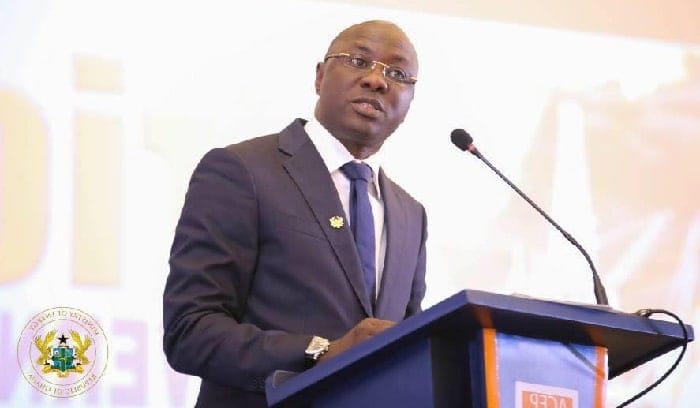
    Finance Minister, Ken Ofori-Atta, has announced that the first tranche of the $3 billion International Monetary Fund Extended Credit Facility (ECF) has been credited to the Bank of Ghana’s account.

    The $600 million inflow, according to the Minister, arrived late afternoon of Friday, May 19, 2023.

    Joy Business had earlier reported that the IMF Board will approve the “cash disbursement” as soon as it considers a request for Ghana’s Programme on Wednesday May 17, 2023.

    A tweet from the Finance Minister, Ken Ofori-Atta stated that “the Bank of Ghana informs me that the first tranche of $600 million of Ghana’s low interest $3 billion ECF facility has been received. These funds will be used for BOP [Balance of Payment] and budget support and will also help stabilise the FX rate and trigger a cascading effect on inflation”.

    $600m IMF cash credited to BoG account

    Another tranche of funds is also expected to be disbursed by June 2023.

    This will be followed by a visit by an IMF Mission to Ghana in June 2023 to review Ghana’s programme considerations.

    Another review is expected just before the end of 2023, possibly in December 2023, before the final disbursement. 

    All the funds will be paid directly into the Bank of Ghana’s account to support Ghana’s balance of payments needs.

    Ghana is expected to get about $3 billion spread over a period of three years under the IMF programme.

    Ghana’s IMF Progrmme

    Ghana secured the required financing assurance from Ghana’s Creditors Committee under the G20 Common Framework last week, which includes China.

    This came after the Managing Director of the IMF, Kristalina Georgieva, indicated that Ghana will secure the financing assurance under the G20 Common Framework

    She noted that the decision would help Ghana to unlock the much-needed financing from Ghana’s development partners.

    “I also strongly endorse the call by the Official Creditor Committee for private creditors and other official bilateral creditors to commit to comparable debt treatments,” the IMF boss added.

  • Ablakwa ‘wails’ for Ghanaians over ‘painful’ IMF deal

    Ablakwa ‘wails’ for Ghanaians over ‘painful’ IMF deal

    The Member of Parliament for North Tongu, Samuel Okudzeto Ablakwa, has expresed concern over the conditions of the International Monetary Fund (IMF) deal negotiated for the country; describing it as “painful.”

    Ablakwa, in an interview on Metro TV’s Good Morning Ghana, on Friday, May 19, 2023, described the people who negotiated the IMF deal on behalf of the people of Ghana as wicked.

    He added that the IMF programme, which was approved on Wednesday, May 17, 2023, will bring more hardship on ordinary Ghanaians.

    “This is going to be the most painful, the most bitter IMF programme. I asked myself who negotiated this on behalf of Ghanaians? Does the person have a heart? Does the person care about Ghanaians?

    “The analysis we have shows that because of this (the IMF) bailout, there are going to be 50 new tax measures… income tax is coming to be progressive.

    “There is going to be quarterly tariff adjustment. So, every quarter, electricity tariffs are going to go up, can you believe that, every quarter?” the MP asked.

    Also, Ablakwa said that the deal negotiated on behalf of the people of Ghana also includes an additional debt restructuring programme.

    He added that public sector employment will also be restricted for the 3 years span of the IMF programme.

    Background:

    The Executive Board of the IMF unanimously approved the $3 billion bailout for Ghana at a meeting Wednesday [May 17, 2023] in Washington.

    $600 million out of the $3 billion loan was disbursed on the day of the approval of the bailout and $350 million would be disbursed every six months for the three-year programme.

    Earlier, Managing Director of the IMF, Kristalina Georgieva, had expressed optimism, that the swelling goodwill that Ghana was getting from the international community, including its creditors could guarantee the approval of the loan.

    She added that her outfit was pushing the bilateral creditors to quickly provide the financial assurance needed for the board to approve the deal.

    Prior to this, Ghana had completed all prior actions necessary to receive support for its economic recovery programme, the International Monetary Fund (IMF).

  • We must know what IMF’s $600m will be used for – Gyantuah to Finance Minister

    We must know what IMF’s $600m will be used for – Gyantuah to Finance Minister

    Lawyer Kwame Gyantuah, the Chairman of the Political Affairs Committee of the Convention Peoples Party (CPP), is calling for transparency regarding the utilization of the first tranche of the International Monetary Fund (IMF) loan, as Ghana prepares to receive it today.

    The IMF recently announced the approval of a $3 billion facility aimed at revitalizing Ghana’s struggling economy, with the initial installment of $600 million expected to be disbursed to the government today, May 19, 2023.

    While the government is hopeful that this funding will positively impact the lives of many Ghanaians, the Minority in Parliament holds a differing view.

    During an interview on the Weekend Review Segment on Starr FM, Kwame Gyantuah emphasized the need for transparency and raised questions about why the government has not taken adequate measures to transform the economy.

    As the loan is set to be received, Gyantuah’s demand for clarity on the specific utilization of funds underscores the importance of accountability and ensuring that the loan is effectively and efficiently utilized for the betterment of the nation.

    “… I heard the Finance Minister when he said the IMF $600 first tranche that is coming we are going to use it for government programmes, what programmes? Like before, oh, we are using it for X, but we are doing Y. You don’t delve deep into the nitty gritty for people to understand. You have to delve into it.

    “We are getting $604 million between now and the next tranche that will come in, number one, number two, number three…this is how we will expend it, these are some of the returns we are looking. Has that been done, has that been told us? Should that transparency not start, because you say this IMF thing that is coming in is to build confidence in the economy, that confidence in the economy where should it start from? shouldn’t it start locally? why is it that we are always thinking of international and we are thinking of going back to the bond market and get loans, why?” Kwame Gyantuah asked.

  • Ghana making progress in talks with World Bank for $900m budget support – Dr. Amin Adam

    Ghana making progress in talks with World Bank for $900m budget support – Dr. Amin Adam

    Minister of State in the Finance Ministry, Dr. Mohammed Amin Adam, says Ghana is far along in negotiations with the World Bank for a $900 million budget support facility.

    According to him, the budget support facility will be disbursed over the next three years alongside the International Monetary Fund’s $3 billion facility.

    Speaking on JoyNews’ PM Express Business Edition, he said, “Once we applied for the IMF supported programme, we also started engaging with the World Bank for budget support and I’m happy to report that we’re far advanced.

    “We’re almost concluding the negotiation with the World Bank for a $900 million budget support which will be disbursed in equal installment of $300 million a year. And so for the next three year while the IMF is disbursing the $3billion the World Bank will also be disbursing $900 million, $300 million each year.”

    Ghana will be unable to access the international capital market for budget support for at least three years after its debt levels were deemed unsustainable and in high distress.

    Currently, the country has succeeded in securing an Executive Board approval from the IMF for a $3billion loan facility to be disbursed over three years.https://www.youtube.com/embed/7C5NlG20gps

    The first tranche of disbursement is expected to hit the country’s account in the coming days.

    According to D. Amin Adam, the World Bank has also committed to support the country’s Financial Stability Fund which was set up to support the local banking sector following a debt restructuring programme.

    This is to prevent a collapse of the banking sector.

    “The World Bank has also committed to support the Financial Stability Fund with $250 million and then also we’re talking to the African Development Bank to also support the fund up to about $100 million. We’re hoping that other development partners will come forth to support our economy, and not just through budget support but also the Financial Stability Fund so that we can make the domestic banking sector stronger,” he said.

  • Isaac Adongo reveals specifics of ‘conditions’ for $3 bn IMF program

    Isaac Adongo reveals specifics of ‘conditions’ for $3 bn IMF program

    Government, on Wednesday, April 17, 2023, got the approval of the board of the International Monetary Fund (IMF) for the $3 billion bailout programme it requested.

    However, details on the full agreement the IMF had with the government of Ghana have not been made public.

    The Member of Parliament (MP) for Bolgatanga Central and a member of the Finance Committee of Parliament, Isaac Adongo, has now given some details of the programme.

    Speaking in an interview on Accra FM, on Thursday, May 18, 2023, monitored by GhanaWeb, the MP urged Ghanaians to prepare for more hardship because the conditions attached to the $3 billion loan will be unbearable.

    According to him, as part of the loan agreement, the government has been asked to introduce more taxes and increase tariffs for services it provides.

    He added that the government have also been tasked by the IMF not to employ beyond 0.5 per cent of the current labour force and has also limited the rate of increase of the salaries of public sector workers within the three years of the programme.

    “The IMF has ordered the government not to go for a penny from the Bank of Ghana. And so who did Ken Ofori-Atta negotiate the bailout with on behalf of Ghana for them to come up with a programme that will make us starve?

    “The IMF said that in the three years of the programme, the government can employ only 0.5 per cent of the current labour force – not even 1 per cent for the next three years, which means unemployment will increase. They have also limited the rate at which the government can increase the salaries of public sector workers.

    “The IMF has also asked the government to increase the tax to GDP rate to 18 per cent within the three years of the programme which means that Ghanaians must prepare for more taxes,” he said in Twi.

    He added that the government has been given a bad IMF programme because it failed to engage and Ghanaians are going to suffer for it.

    The MP also said that the Minister for Finance, Ken Ofori-Atta, will announce the measures in the bailout agreement during the presentation of the mid-year budget review.

    Background:

    The Executive Board of the IMF unanimously approved the $3 billion bailout for Ghana at a meeting Wednesday [May 17, 2023] in Washington.

    $600 million out of the $3 billion loan was disbursed on the day of the approval of the bailout and $350 million would be disbursed every six months for the three-year programme.

    Earlier, Managing Director of the IMF, Kristalina Georgieva, had expressed optimism, that the swelling goodwill that Ghana was getting from the international community, including its creditors could guarantee the approval of the loan.

    She added that her outfit was pushing the bilateral creditors to quickly provide the financial assurance needed for the board to approve the deal.

    Prior to this, Ghana had completed all prior actions necessary to receive support for its economic recovery programme, the International Monetary Fund (IMF).

  • IMF’s tax mobilization recommendations will burden firms – GNCCI

    IMF’s tax mobilization recommendations will burden firms – GNCCI

    The Ghana National Chamber of Commerce and Industry (GNCCI) has voiced concern over the International Monetary Fund’s revenue mobilization recommendations to Ghana’s government under its $3 billion support package.

    According to the Chamber, should the suggestions be implemented, it will adversely affect businesses that are already burdened with numerous taxes and other unfavourable conditions.

    The Chief Executive Officer of the Chamber, Mark Badu-Aboagye indicated that at present, the country is undergoing some level of economic crisis.

    Speaking to JoyNews, he said, “Businesses in Ghana are very ready. I told you, the last time that we conducted a research, we realised that the SMEs in Ghana are growth-oriented, which means that by giving them the opportunity they can grow to become multinationals.

    However, he pointed out that, “When you introduce externalities like taxes, like high-interest rates, like levies, then you go to the bottom line and you realise that all of them are making losses, which means that, that component needs to be managed.”

    On Wednesday, May 17, the IMF in a press statement announced that its Executive Board has approved a $3 billion Extended Credit Facility (ECF)—a three-year loan programme arrangement for Ghana.

    They further stated that the decision of the board was to enable an immediate disbursement of about $600 million to Ghana. The Bank of Governor has since confirmed that the first $600 million will hit its account this Friday, May 19, 2023.

    On the back of the approval, the IMF made some suggestions to the government of Ghana on how to boost revenue mobilisation under its $3 billion support programme.

    Some of the measures they indicated as contained in the IMF’s May 2023 country report on Ghana’s request were the scrapping of tax exemptions, the adjustment of levies on fuel, and an increase in income tax.

    But Mr Badu-Aboagye who disagreed with the suggestions made by IMF said “That is where my concern is, because these conditionalities will or may worsen that aspect of support that we need to give to businesses.”

    Mr Badu-Aboagye further advised that, in the interest of both the country and businesses, Ghanaians should work together towards making the IMF deal a success.

  • IMF’s $3bn deal will have a negative impact on the vulnerable – Prof. Bokpin

    IMF’s $3bn deal will have a negative impact on the vulnerable – Prof. Bokpin

    An economics lecturer at the University of Ghana Business School (UGBS), Professor Godfred Bokpin, has stated that the authorized $3 billion International Monetary Fund (IMF) credit facility will worsen the situation for the disadvantaged.

    Speaking to the media Prof. Bokpin intimated that it is too early to celebrate the approval of the programme especially as it will likely affect the poor.

    “I don’t think that we should jubilate over this because there are painful adjustments ahead of us in order to restore macroeconomic stability. Whether we like it or not, restoring macro stability is going to come at a cost. Unfortunately, the adjustment cost in the programme will not be evenly distributed. The adverse distributional effect will impact the vulnerable more than those who actually inflicted this pain on us.

    “If you look at the IMF programme, typically, the fiscal consolidation mix takes the form of revenue enhancement and expenditure restraint, but the IMF lent its support toward government’s approach such that the problem is more revenue than expenditure or corruption or efficiency and that is problematic.”

    He further scolded the government’s reckless borrowing and spending which has brought the country thus far needing an IMF programme which demands sacrifices from businesses and households.

    “You are looking at scaling up your tax-to-GDP ratio to up to 18.2 percent by the next two or three years and that is a lot of sacrifice on the part of businesses and households. And it cannot be solely that the reason Ghana is facing this crisis is because of low revenue because that is not true. If we were efficient with the little we were able to generate, and we were able to deal with corruption, this is not where this country would have been.”

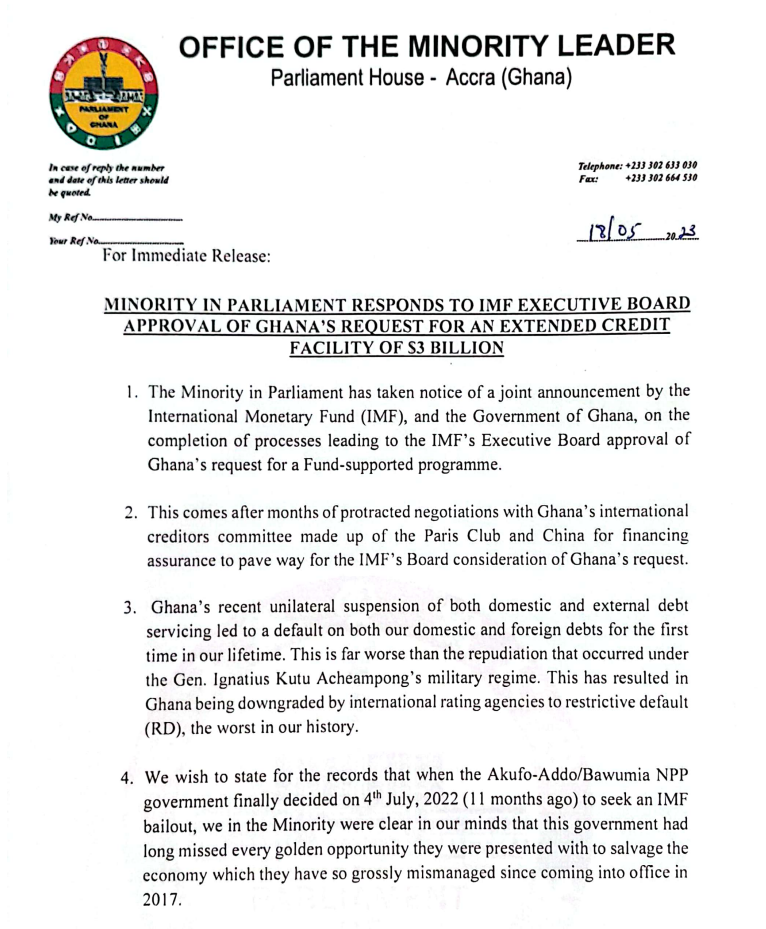
  • IMF bailout: Akufo-Addo’s ‘YentieObiaa’ stance ignored sound advice – Minority

    IMF bailout: Akufo-Addo’s ‘YentieObiaa’ stance ignored sound advice – Minority

    The Minority in Parliament has criticized the government’s stance on government management counsel

    According to them, the government has a “YentieObaa” disposition, to wit, “we will not listen to anyone”

    In a statement released by the Minority on the approval of Ghana’s $3 billion IMF bailout on May 17, 2023, it stated that it is this posture of the government that has led the country to the current financial crisis.

    “We are on record to have urged this government to seek an IMF bailout in 2021, almost two clear years ahead of this announcement date, by which time things were not this critically dire, but true to their “YentieObiaa” disposition, the Akufo-Addo/Bawumia government arrogantly ignored wise counsel.

    “The tragic events that have preceded this announcement, including the debilitating Domestic Debt Exchange Programme (DDEP) with its attendant cruel haircuts and denial of coupon payments to aged pensioners, negative impact on banks and insurance companies (as evidenced by the billions of Ghana Cedis impairments they recorded in the 2022 financial year), did not, therefore, come to us as a surprise,” parts of the statement read.

    It has therefore asked Ghanaians to brace themselves for the harsh consequences of the IMF deal approved for the country.

    The $3 billion loan facility was approved on May 17, 2023, after Ghana made the move to engage the fund in July 2022.

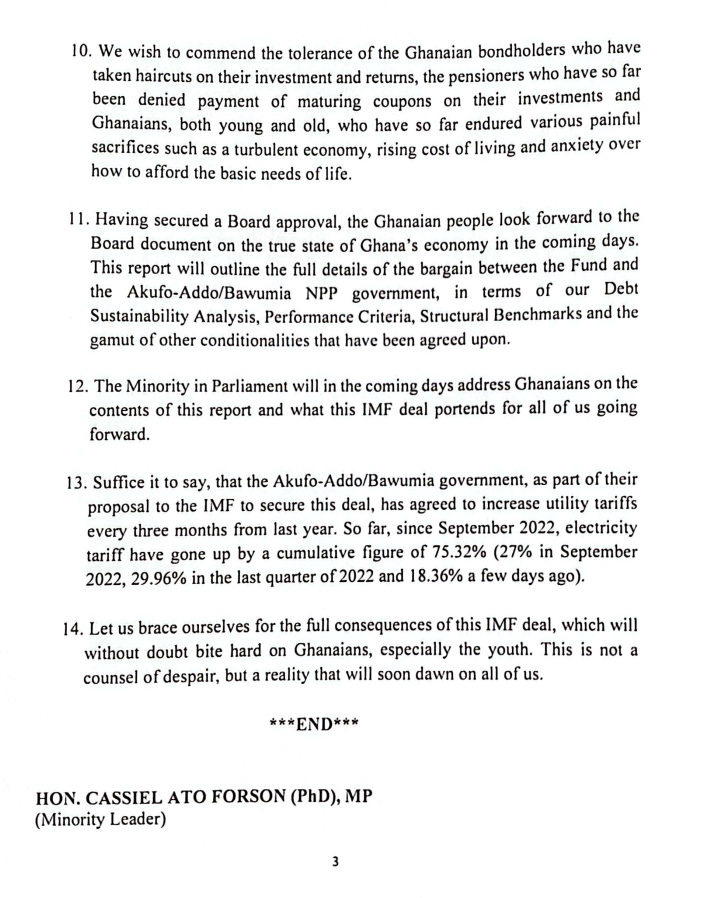
    It said “Let us brace ourselves for the full consequences of this IMF deal, which will without doubt bite hard on Ghanaians, especially the youth. This is not the counsel of despair, but a reality that will soon dawn on all of us.”

  • Minority warns Ghanaians to brace up for the complete ramifications of IMF bailout

    Minority warns Ghanaians to brace up for the complete ramifications of IMF bailout

    The Minority side in parliament is asking Ghanaians to be prepared for the shocks that will accompany the bailout secured from the International Monetary Fund (IMF).

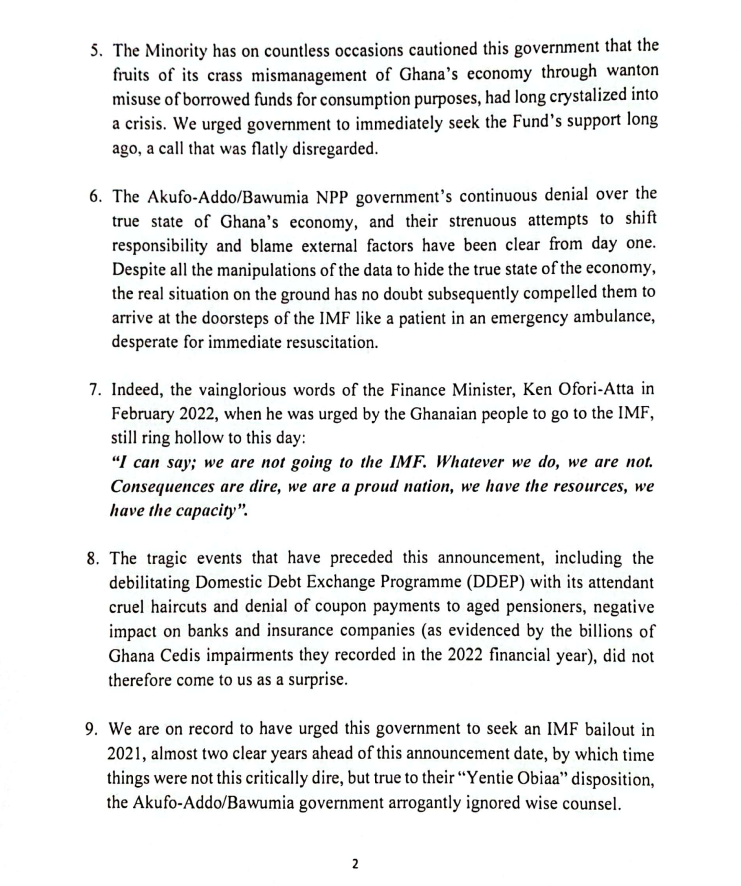
    According to the caucus, many of the conditionalities could have been avoided if government heeded their call to go to the Fund earlier in 2022.

    They made this known in a statement signed by Minority Leader, Cassiel Ato Forson.

    In a May 18 press release, he explained that his side “has on countless occasions cautioned this government that the fruits of its crass mismanagement of Ghana’s economy through wanton misuse of borrowed funds for consumption purposes, had long crystalized into a crisis.”

    “We urged government to immediately seek the Fund’s support long ago, a call that was flatly disregarded.

    Already, the IMF has identified the scrapping of tax exemptions, adjustment of levies on fuel, and an increase in income tax as some measures the Ghanaian government could implement to boost revenue mobilization under its $3 billion support programme.

    This is contained in the Fund’s May 2023 country report on Ghana’s request for the $3 billion support programme.

    On the back of these and other conditionalities, Casiel Ato Forson wants Ghanaians to be on the lookout for fallout from the arrangement and adjust accordingly.

    “Let us brace ourselves for the full consequences of this IMF deal, which will without doubt bite hard on Ghanaians, especially the youth. This is not a counsel of despair, but a reality that will soon dawn on all of us,” he concluded.

    Read full statement below:

    IMF bailout: Brace yourselves for the full consequences - Minority to Ghanaians
    IMF bailout: Brace yourselves for the full consequences - Minority to Ghanaians
    IMF bailout: Brace yourselves for the full consequences - Minority to Ghanaians

  • IMF urges govt to scrap tax exemptions and adjust fuel levies for enhanced revenue mobilisation

    IMF urges govt to scrap tax exemptions and adjust fuel levies for enhanced revenue mobilisation

    The International Monetary Fund (IMF) has proposed the scrapping of tax exemptions, adjustment of levies on fuel, and an increase in income tax as some measures the Ghanaian government could implement to boost revenue mobilization under its $3 billion support programme.

    This is contained in IMF’s May 2023 country report on Ghana’s request for the $3 billion support programme.

    Managing Director of the Fund, Kristalina Georgieva says the programme is only the first step towards restoring Ghana’s economic stability.

    “Today’s decision is also a major milestone for the G-20 common framework. The commitment by the Official Creditors Committee to help make Ghana’s debt sustainable was essential for the approval of the Funds program and it signals important progress. 

    “The decision our board has taken is the beginning of the work we will do together with the authorities of Ghana for the implementation of the programme for the benefit of the people of Ghana.”

    But the CEO of the Chamber of Commerce, Mark Badu-Aboagye, has raised concerns about the suggestions raised by the IMF.

    According to Mr Badu- Aboagye, businesses in the country are already suffering, therefore should the conditionalities by the IMF be executed, it will worsen the struggles of businesses.

    “When you introduce externalities like taxes, like high-interest rates, like levies, then you go to the bottom line and you realize that all of them are making losses, which means that this component needs to be managed. 

    “And that is where my concern is because these conditionalities will or may worsen that aspect of support that we need to give to businesses,” he emphasised.

    Eventually, Mr Badu-Aboagye advised that, in the interest of both the country and businesses, Ghanaians should work together towards making the IMF deal a success.

    Speaking on the same topic, an Economist, Professor Godfred Bokpin cautioned Ghanaians about a possible increase in taxes following the approval of Ghana’s bailout request by the IMF.

    “It may not immediately take the form of new tax handles, but there’s going to be a lot of revisions to the existing tax measures that may result in you paying more taxes and a combination of that because the goal we have set for ourselves is to increase tax to GDP ratio,” he cautioned.

    Meanwhile, the Finance Minister, Ken Ofori-Atta is pleading for support from Ghanaians to make the IMF programme implementation a success.

    “I take this opportunity to call on all Ghanaians, investors, bilateral development partners to take up the course of Ghana and support the government in the implementation of the PC-PEG [Post-COVID-19 Program for Economic Growth] backed IMF ECF programme.”

  • BoG, Finance Ministry to sign MoU on $3bn IMF loan repayment

    BoG, Finance Ministry to sign MoU on $3bn IMF loan repayment

    A Memorandum of Understanding (MoU) will be signed between the Bank of Ghana and the Ministry of Finance to outline the repayment terms for the $3 billion loan from the International Monetary Fund (IMF).

    The loan agreement includes favorable terms such as a 0% interest rate, a grace period of 5.5 years, and a final maturity period of 10 years.

    This loan falls under the Extended Credit Facility (ECF) arrangement, which spans over a period of three years between Ghana and the IMF.

    As part of the program, Ghana aims to achieve a front-loaded fiscal adjustment equivalent to 5.1 percentage points of Gross Domestic Product (GDP) within the three-year period from 2023 to 2025. This adjustment will be achieved through the Primary Balance on a commitment basis and fiscal effort.

    Finance Minister Ken Ofori-Atta emphasized that the management of debt, both domestic and external, is crucial in restoring public debt to sustainable levels by 2028 while adhering to the two binding constraints.

    They are the Public Debt (in present value terms) to GDP ratio of 55% or less; and External Debt Service to Revenue ratio of 18% or less.

    The programme will be monitored and reviewed semi-annually.

    The Finance Minister emphasised that Ghana’s Post Covid-19 Programme for Economic Growth, which is the government’s blueprint for addressing the economic crisis and underpins the IMF Programme is aimed at restoring macroeconomic stability; bringing fiscal operations and public debt to sustainable levels, supporting structural reforms and promoting strong and inclusive growth while protecting the poor and vulnerable.

    The Staff Level Agreement (SLA) was secured in record time in December 2022, six months after Ghana applied for a Fund-supported Programme.

  • BoG Act to be reviewed under new IMF deal

    BoG Act to be reviewed under new IMF deal

    Reports indicate that as part of Ghana’s International Monetary Fund (IMF) programme, revisions will be made to the Bank of Ghana (BoG) Act to enhance the independence of the central bank and address fiscal dominance.

    The amendments to the Act will introduce a stricter limit for monetary financing, establish mechanisms for monitoring and enforcing compliance, and provide a clear definition of emergency situations in which the limit can be temporarily lifted.

    To meet the requirements set by the IMF, the Bank of Ghana and the Ministry of Finance have already signed a memorandum of understanding (MoU) aimed at eliminating monetary financing during the programme, pending legislative changes.

    Additionally, an updated Safeguards Assessment is underway to support the development of further changes to the Bank of Ghana Act. This assessment will review the risks associated with the government’s gold purchase and gold-for-oil programmes.

    The debt restructuring process is expected to impact the balance sheet of the Bank of Ghana.

    A report from the IMF states that the government and the central bank will assess the effects of the restructuring and work on plans for the recapitalization of the bank with technical assistance support from the Fund.

  • IMF, Ghana reveal details of $3bn bailout deal

    IMF, Ghana reveal details of $3bn bailout deal

    Ghana’s IMF Chief, Stephane Roudet, and Finance Minister Ken Ofori-Ataa, along with other key participants are holding a press briefing to provide further insights into the $3 billion bailout deal.

    The Executive Board of the International Monetary Fund (IMF) has approved a 36-month Extended Credit Facility (ECF) arrangement for Ghana amounting to approximately 3 billion US dollars.

    The decision taken on May 17th, 2023, allowed for an immediate disbursement of about 600 million US dollars, with the remaining funds expected to be disbursed in installments every six months, subject to program reviews by the IMF Executive Board.

  • ‘Debt-distressed’ Ghana violated Debt Sustainability Analysis – IMF

    ‘Debt-distressed’ Ghana violated Debt Sustainability Analysis – IMF

    Ghana has exceeded the thresholds set in the Debt Sustainability Analysis (DSA), resulting in the country experiencing debt distress, according to the International Monetary Fund (IMF).

    In a statement titled “Request for an arrangement under the Extended Credit Facility Programme,” the IMF stated that Ghana’s debt level is not only unsustainable but also breaches the DSA thresholds.

    “Given the ongoing debt restructuring and large and protracted breaches to the Debt Sustainability Analysis (DSA) thresholds, Ghana is in debt distress, and debt is assessed as unsustainable”.

    Ghana breached Debt Sustainability Analysis leading to debt distress – IMF

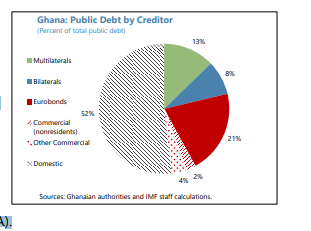
    By the end of 2022, the public debt in Ghana had risen to 88.1% of the Gross Domestic Product (GDP), with almost an equal distribution between external debt (42.4% of GDP) and domestic debt (45.7% of GDP). The International Monetary Fund (IMF) also noted that the country’s gross financing needs amounted to approximately 19% of GDP.

    “Under the proposed programmes baseline projections, which do not consider the possible outcome of the ongoing debt restructuring, the ratios of present value of public and external debt to GDP, and the ratios of external debt service to revenues and exports are and would remain above their LIC-DSF thresholds over the medium and long term”, it added.

    Additionally, the IMF has cautioned that the outlook carries significant downside risks.

    The baseline projections rely on the successful execution of the programme and prompt implementation of the government’s comprehensive debt restructuring strategies and plans to tackle the substantial amount of domestic arrears, including those owed to independent power producers (IPPs).

    Notwithstanding mitigation strategies, it said that the domestic debt exchange presents significant risks to domestic financial sector stability, adding “exchange rate, credit, and liquidity risks further add to the vulnerabilities”.

    “The authorities’ debt restructuring plans still leave a substantial need for T-bill [Treasury bills] issuance in the near term and expose Ghana to the uncertainty in domestic market conditions, though programme implementation and outreach may help mitigate financing risks. Domestic policy slippages represent a significant downside risk to the projections, further compounded by risks associated to the end-2024 general elections.”

  • More taxes to follow after IMF deal approval – Economist warns

    More taxes to follow after IMF deal approval – Economist warns

    An economist, Professor Godfred Bokpin, has urged the general public to brace themselves for an imminent tax hike, following the International Monetary Fund’s (IMF) endorsement of Ghana’s bailout request.

    In an interview with JoyNews on Wednesday, he elaborated on the reasoning behind this forecast, citing the government’s obligation to achieve a specific tax to GDP ratio during the programme evaluation.

    “There are targets that we have to meet every six months of the program review. Part of the target may include increasing our tax-to-GDP ratio to let’s say 18%. The strategy in increasing the tax revenue could negatively impact businesses if we don’t adopt optimal tax handles,” Prof Bokpin said.

    Following the International Monetary Fund’s (IMF) long-awaited approval, Ghana’s Program request for a $3 billion Balance of Payment support to restore economic stability has been granted. In an official press release, the IMF stated that this endorsement would facilitate the prompt release of approximately US$600 million to Ghana.

    “The program is based on the government’s Post COVID-19 Program for Economic Growth (PC-PEG), which aims to restore macroeconomic stability and debt sustainability and includes wide-ranging reforms to build resilience and lay the foundation for stronger and more inclusive growth,” parts of the statement read.

    Meanwhile, Professor Bokpin emphasized the necessity for Ghana to implement stringent governance measures and productivity-boosting reforms to augment the benefits derived from the International Monetary Fund.

    He asserted that the government must undertake substantial efforts to establish a sturdy macroeconomic stability in the near to medium future, particularly in light of the country’s anticipation of receiving the initial portion of the $3 billion facility from the IMF.

    “What then is important is that how do we complement gains from the IMF, short term usually, by the necessary governance productivity and enhancing reforms that Ghana needs to do?” he further quizzed.

  • Economic uncertainty to reduce with granted IMF deal

    Economic uncertainty to reduce with granted IMF deal

    The country is on the verge of entering a period of market stability and less uncertainty Following the $3 billion loan granted by the International Monetary Fund’s (IMF).

    The expected disbursement of around US$600million through the IMF programme, along with other anticipated concessional inflows, is anticipated to significantly bolster the nation’s balance of payments (BoP) position and gross foreign exchange reserves. This favourable development is projected to strengthen the cedi’s stability and prompt a corrective run.

    The cedi has already demonstrated resilience against major trading currencies, appreciating against the US$, € and £ on the retail market last week. Following news of a breakthrough in engagements with offshore creditors, the local unit opened the week on a solid note – and the corrective run is expected to continue in the weeks ahead.

    This positive trend is further supported by financing assurances from Ghana’s official creditors, granting approval of government’s request for debt treatment beyond the Debt Service Suspension Initiative (DSSI).

    The financing assurances obtained represent a significant milestone, as it paved the way for the IMF to approve Ghana’s US$3billion three-year extended credit facility.

    The approval of Ghana’s request, which was confirmeed yesterday, marks a formal commencement of the programme and associated economic and structural reforms.

    The cedi initially traded sideways at the end of last week, but gained stability following announcement of the debt relief by external creditors.

    With assistance from the central bank’s foreign exchange support, the local unit displayed stability and registered a 0.21 percent appreciation against the US$ on the retail market compared to the previous week. The domestic currency also recorded gains against the euro while remaining unchanged against the GBP.

    The US$ experienced volatility following the Federal Reserve’s interest rate hike in April 2023. Although some investors sought refuge in the US$ as a safe-haven currency, concerns arose due to the postponement of discussions regarding the US debt ceiling increase. However, the recent debt relief extended to Ghana by the Paris Club and China paved the way for approval of the IMF board-level agreement and subsequent processing of Ghana’s programme. A total disbursement of approximately US$750million is expected in the upcoming weeks, further bolstering the IMF deal’s positive market impact.

    Debt market

    The IMF approval and the positive assurances have a ripple-effect on both the bond and foreign exchange markets. Investors are likely to be more confident in Ghana’s economic prospects, leading to increased interest in the country’s bond market. This heightened investor confidence can result in lower borrowing costs for government, allowing for more sustainable debt management.

    The stability and support provided by the IMF deal and financing assurances from official creditors create a conducive environment for foreign direct investments (FDI). International investors are more likely to view Ghana as a stable and attractive investment destination, which can spur economic growth and job creation.

    The IMF programme also sets the stage for comprehensive economic and structural reforms in Ghana. Government’s commitment to these reforms demonstrates its determination to address fiscal imbalances and achieve debt sustainability. By implementing these reforms, Ghana aims to reduce its debt-to-GDP ratio to 55 percent by 2028. Such efforts can enhance the country’s macroeconomic stability and create a favourable business environment.

    Concessional funding sources from multilateral development banks and other development partners will play a crucial role in supporting the nation’s economic development. These funding options provide long-term financing at favourable interest rates, reducing the country’s reliance on short-term borrowing. As a result, Ghana’s money market yields are expected to decline in the second half of 2023, further encouraging investment and economic growth.

    The positive market sentiment resulting from the approval of the IMF deal also has broader implications for the country’s overall economic outlook. It signals to international markets and credit rating agencies that government is committed to implementing necessary reforms and improving its fiscal standing. This, in turn, can lead to improved credit ratings, lower borrowing costs, and increased access to international capital markets.

    While the IMF deal and financing assurances bring optimism to the domestic market, it is essential for government to remain committed to the agreed-upon economic and structural reforms. Maintaining a stable macroeconomic environment, fostering transparency, and ensuring efficient implementation of reforms will be critical to sustaining investor confidence and realising the programme’s full potential.

    Moving forward, Ghana will focus on negotiating terms and parameters of external debt treatment under the G20 Common Framework. Given the magnitude of fiscal imbalance and necessary adjustments to restore debt sustainability, government will aim for favourable terms; particularly for Eurobond and other commercial creditors holding a larger proportion of the total external debt.

  • FULL TEXT: Ghana’s request for $3bn bailout approved by IMF Board

    FULL TEXT: Ghana’s request for $3bn bailout approved by IMF Board

    The Executive Board of the International Monetary Fund (IMF) approved a 36-month arrangement under the Extended Credit Facility (ECF) in an amount equivalent to SDR 2.242 billion (around US$3 billion, or 304 percent of quota).

    The program is based on the government’s Post COVID-19 Program for Economic Growth (PC-PEG), which aims to restore macroeconomic stability and debt sustainability and includes wide-ranging reforms to build resilience and lay the foundation for stronger and more inclusive growth.

    The Executive Board’s decision will enable an immediate disbursement to Ghana equivalent to SDR 451.4 million (about US$600 million).

    Large external shocks in recent years have exacerbated Ghana’s pre-existing fiscal and debt vulnerabilities, resulting in a loss of international market access, increasingly constrained domestic financing, and reliance on monetary financing of the government. Decreasing international reserves, Cedi depreciation, rising inflation and plummeting domestic investor confidence, eventually triggered an acute crisis.

    The authorities have taken bold steps to tackle these deep challenges, including by accelerating fiscal adjustment. The government has also launched a comprehensive debt restructuring to address severe financing constraints and the unsustainable public debt. Securing timely debt restructuring agreements with external creditors will be essential for the successful implementation of the new ECF arrangement.

    Key policies under the authorities’ program include large and frontloaded fiscal consolidation to bring public finances back on a sustainable path, complemented by efforts to protect the vulnerable. The adjustment effort will be supported by ambitious structural reforms in the areas of tax policy, revenue administration, and public financial management, as well as steps to address weaknesses in the energy and cocoa sectors.

    Appropriately tight monetary and flexible exchange rate policies will help bring inflation back to single digits and rebuild international reserves. The program also has a strong focus on preserving financial stability and encouraging private investment and growth.

    The program will help Ghana overcome immediate policy and financing challenges, including through its catalytic effect in mobilizing external financing from development partners and providing a framework for the successful completion of the ongoing debt restructuring.

    Following the Executive Board discussion on Ghana, Ms. Kristalina Georgieva, Managing Director, issued the following statement:

    “The combination of large external shocks and preexisting fiscal and debt vulnerabilities precipitated a deep economic and financial crisis in Ghana. In response, the authorities have launched a comprehensive reform program, to be supported by the ECF-arrangement. It is focused on restoring macroeconomic stability and debt sustainability as well as implementing wide-ranging reforms to build resilience and lay the foundation for stronger and more inclusive growth. Capacity development and continued support by development partners would be critical for the successful implementation of the authorities’ program.

    “Fiscal consolidation is a core element of the program. A substantial and front-loaded fiscal adjustment has started with the 2023 budget. Enhanced revenue and streamlined expenditure will be combined with policies to protect vulnerable households and create room for higher social and development spending in the medium term. With a view to fostering lasting fiscal discipline, the authorities are also advancing reforms to enhance domestic revenue mobilization, strengthen public financial management, and tackle the deep challenges in the energy and cocoa sectors. The government has also launched a comprehensive debt restructuring, including both domestic and external debt, to place debt on a sustainable path. Effective collaboration by all parties involved would be critical.

    “Preserving financial sector stability is critical for the success of the program. Given the adverse impact of the domestic debt restructuring on balance sheets of financial institutions, the authorities will devise and implement a comprehensive strategy to rapidly rebuild financial institutions’ buffers and exit from temporary regulatory forbearance measures.

    “Monetary and exchange rate policies under the program will focus on reining in inflation and rebuilding foreign reserve buffers. The Bank of Ghana will continue tightening monetary policy until inflation is on a firmly declining path and will eliminate monetary financing of the budget. The central bank will also enhance exchange rate flexibility and limit foreign exchange interventions to rebuild external buffers.

    “An ambitious structural reform agenda is being put in place to reinvigorate private sector-led growth by improving the business environment, governance, and productivity.”

    *The authorities’ economic program, supported by the ECF-arrangement, builds on the government’s Post COVID-19 Program for Economic Growth (PC-PEG), which aims to restore macroeconomic stability and debt sustainability and includes wide-ranging reforms to build resilience and lay the foundation for stronger and more inclusive growth.

    *Securing timely debt restructuring agreements with external creditors will be essential for the successful implementation of the new ECF arrangement.

  • All you need to know about $3bn IMF-Ghana deal

    All you need to know about $3bn IMF-Ghana deal

    On May 17th, the IMF Executive Board gave its approval for a 36-month Extended Credit Facility (ECF) arrangement for Ghana, amounting to SDR 2.242 billion, which is equivalent to approximately US$3 billion.

    This financial support from the IMF will provide Ghana with the necessary resources to address its economic challenges and implement reforms over the specified period.

    The disbursement of funds will be carried out in stages, with an initial immediate disbursement of SDR 451.4 million (around US$600 million).

    Objective of the deal

    Ghana’s economic program has three key objectives: restoring macroeconomic stability, ensuring debt sustainability, and laying the foundations for higher and more inclusive growth.

    Policy priorities

    To reach Ghana’s economic program objectives a number of policy priorities have been laid out by the government:

    First, large and frontloaded measures to bring public finances back on a sustainable path. This will be done through mobilizing more domestic revenue and improving the efficiency of public spending. Importantly, the program does – and will continue to – include efforts to protect the vulnerable.

    The 2023 budget has for example doubled the benefits of the existing targeted cash transfer program, the Living Empowerment Against Poverty (LEAP) and boosted the allocations towards the school feeding program. 

    Second, to support the fiscal adjustment and enhance resilience to shocks, ambitious structural reforms will be implemented in the areas of tax policy, revenue administration, public financial management, as well as to address weaknesses in the energy and cocoa sectors.

    Third, steps are being taken to bring inflation under control – for example with the Bank of Ghana raising interest rates and eliminating monetary financing of the budget. A flexible exchange rate policy will help rebuild international reserves.

    Fourth, measures to preserve financial stability are very central to the program.

    Finally, reforms are envisaged to encourage private investment, growth, and job creation. 

    Protecting the most vulnerable

    To protect the most vulnerable from the immediate impact of the crisis, the 2023 budget has doubled the benefits of the existing cash transfer program, the Living Empowerment Against Poverty (LEAP). 

    In addition, the budgetary allocation of the Ghana School Feeding Program has been increased to compensate for the cost of inflation and make sure poor children continue to benefit from free meals at school. In the health sector, the financial resources for the National Health Insurance Scheme will be increased and made available on time to ensure the timely reimbursement of medical claims.

    Spending toward key social program will be protected and monitored through an indicative target under the program. 

    Transparency and fight corruption

    The Ghanaian authorities are committed to improve governance and transparency under the Fund-supported program. For example, the authorities have requested IMF technical assistance to conduct a Governance Corruption Diagnostic Assessment, which will be used as input into the ongoing efforts to update the National anticorruption Action Plan; they also will address weaknesses in the existing asset declaration system for public officials, by enacting a new Conduct of Public Officers Act.

    Furthermore, GRA, with support from IMF technical assistance, is developing a plan with the aim to improve the professional standards of tax administration in Ghana.

    Ghana’s next steps in the debt restructuring process

    Regarding official bilateral debt, the next step is for the Official Creditor Committee for Ghana, under the G20 Common Framework, to agree with the authorities the specific modalities of how official creditors intend to deliver debt relief consistent with Fund-program parameters.

    The authorities are also engaging with their private creditors to seek relief on their external debt.

  • Finally! Ghana clinches $3 billion IMF bailout deal

    Finally! Ghana clinches $3 billion IMF bailout deal

    The IMF Executive Board approved, on May 17th, an SDR 2.242 billion (about US$3 billion) 36-month Extended Credit Facility (ECF) arrangement for Ghana.

    This decision enabled an immediate disbursement equivalent to SDR 451.4 million (about US$600 million).

    The rest is expected to be disbursed in tranches every six months, following program reviews approved by the IMF Executive Board.

    A press briefing scheduled to take place on Thursday, May 18, will provide the opportunity for IMF Chief for Ghana, Stephane Roudet and Finance Minister Ken Ofori-Ataa to share further details of the deal.

    The press briefing will also feature key participants such as Dr Ernest Addison, Governor of the Bank of Ghana; and Tatiana Mossot, Senior Communications Officer at the IMF.

    This development comes after Ghana received necessary debt assurances from the Paris Club and China to support its request for balance of payment assistance from the IMF.

    The creditor committee, co-chaired by France and China, examined the macroeconomic and financial situation of Ghana, including its long-term debt sustainability, and endorsed its request for a debt treatment under the “Common Framework for Debt Treatments beyond the DSSI” endorsed by the Paris Club.

    In a statement, the creditor committee encouraged multilateral development banks to maximize their support for Ghana to meet its long-term financial needs.

    Kristalina Georgieva, Managing Director of the IMF welcomed the creditor’s assurances. She said, “This statement provides the necessary financing assurances for the IMF Executive Board to consider the proposed Fund-supported program and unlock much-needed financing from Ghana’s development partners.”

    Ghana reached out to the IMF in July 2022 after several months of opposing a return to the Fund. Ghana seeks to restore its economy and to do that, needs assistance from the IMF.

    Though government officials says the IMF bailout is not the panacea to the economy’s crisis, it however does form part of the measures to resolve the economic turmoil the West African country finds herself.

    Source: The Independent Ghana

  • IMF to publish details of Ghana’s program after Board approval – Finance Ministry

    IMF to publish details of Ghana’s program after Board approval – Finance Ministry

    The Minister of State at the Finance Ministry, Dr Mohammed Amin Adam, has announced that the International Monetary Fund (IMF) will publish full details of Ghana’s Economic Recovery programme submitted to the Fund for a bailout request.

    He added that the IMF will also outline the necessary conditions associated with the programme, as well as the IMF Staff report on Ghana.

    Dr Adam confirmed this to Joy Business in a yet to  be aired interview on PM Express Business Edition with host George Wiafe this Thursday May 19, 2023.

    Dr  Adam stated that government has given its consent to the IMF to release the document after the Fund approves Ghana’s programme.

    “Government is committed to transparency in everything that it does when it comes to the IMF programme and Ghanaians are going to get every detail as expected”, he said.   

    Dr Adam explained that the decision is part of government’s quest to ensure transparency after some Civil Society Organisations and observers demanded for a full disclosure of Ghana’s programme request.

     Ghana Programme

    The IMF Board is expected to sit on May 18, 2023 to consider Ghana’s programme request.

    The Board is expected to review the IMF Staff report on Ghana’s request to approve and advance about $3 billion over the three year period.

    This will happen after some conditions are met by the Government of Ghana.

    The Board is likely to undertake the exercise after Ghana meets all the pre-conditions.

    Fiscal Discipline under Ghana programme

    Dr. Adam has assured that government will not compromises on fuscal discipline.

    “The Request for an IMF programme is a cabinet decision and every government institution, ministries and agencies must fall in line with it when it comes to being discipline with our fiscal situation” he stressed.

    He stated that government is committed to checking the budget deficit.

    “We should not’s forget that the IMF programme comes with some clear benchmarks that should be before the country could get the other disbursements from the board”

    Government’s expectations 

    Mr. Adam added that government is hopeful of securing the programme on time to bring back confidence in the economy.

    “We are also hopeful that the Rating Agencies will in the coming months respond accordingly to developments in the economy and do something about Ghana’s credit ratings”.

    “We will also be working closely with the Bank of Ghana to help stabilize the Cedi” Dr Adam added.

  • IMF confident Ghana’s creditors will soon agree on debt restructuring

    IMF confident Ghana’s creditors will soon agree on debt restructuring

    One of Ghana’s top priorities is reaching an agreement with its external creditors, and the International Monetary Fund (IMF) has expressed optimism that progress will be made in restructuring the country’s external debt, particularly with the Paris Club.

    Following Ghana’s return to the IMF on July 1, 2022, due to its struggling economy, the government reached a staff-level agreement with the fund in December 2022 as part of the bailout process.

    This agreement opens the door for Ghana to secure a $3 billion Extended Credit Facility (ECF) in May 2023 to strengthen its balance of payments.

    During a press conference, Julie Kozack, Director of Communications at the IMF, stated, “We have seen strong progress toward creditors delivering on these financing assurances, and we’re hopeful that they can be delivered very rapidly.”

    She emphasized that obtaining financing assurances from official bilateral creditors is crucial for presenting the program to the Executive Board.

    In December 2022, Ghana and the IMF reached a three-year program agreement worth approximately $3 billion.

    Ghana has already successfully completed a Domestic Debt Exchange program with the involvement of key stakeholders such as the Ghana Bankers Association, the Ghana Insurers Association, and the Chamber of Corporate Trustees.

    The IMF loan program aims to support the post-COVID-19 recovery of developing countries.

    However, the Economist Intelligence Unit (EIU) has cautioned that Ghana’s approval from the IMF board may experience delays due to ongoing negotiations for external debt restructuring involving multiple stakeholders.

    The EIU also predicts that Ghana will reach restructuring agreements on its public external debt between 2023 and 2024, involving both official and private creditors.

    These agreements are expected to involve write-offs, maturity extensions, and interest rate reductions.

    Meanwhile, economist Prof. John Gatsi has expressed doubts that Ghana’s first loan tranche of US$600 million from the IMF will be approved by Wednesday, May 17, as announced by the government.

  • Ghana ready to head to IMF Board for bailout

    Ghana ready to head to IMF Board for bailout

    The Ministry of Finance has revealed that Ghana has met the necessary requirements to obtain a bail out from the International Monetary Fund (IMF) Board.

    The Paris Club and China last week announced that it would financing assurances to allow Ghana receive the facility.

    The Finance Ministry took to Twitter to announce the good news.

    “The Paris Club has today established the OCC (co-chaired by China & France). With the granting of Financing Assurances, Ghana is now ready to go to the IMF Board,” the Ministry wrote.

    The Finance Ministry further expressed appreciation to its bilateral partners for helping Ghana reach this “significant milestone!”

    Ghana struggled to get IMF Board approval despite getting a Staff-Level Agreement in place since late last December.

    A domestic debt restructuring deal dragged on for months before the external restructuring also experienced challenges.

  • Ghana likely to receive first $600m tranche of IMF bail out by Wednesday

    Ghana likely to receive first $600m tranche of IMF bail out by Wednesday

    Ghana anticipates the International Monetary Fund (IMF) to approve a $600 million loan tranche by Wednesday, enabling disbursement within a week, according to Minister of State in the Finance Ministry Mohammed Amin Adam.

    The West African country is seeking $3 billion from the IMF to strengthen its struggling economy.

    IMF Managing Director Kristalina Georgieva stated on Friday that Ghana’s official creditors have provided the required financial assurances for the IMF Executive Board to consider approving the loan.

    “We expect a deal on Wednesday. With the disbursement, there is going to be $600 million as a first tranche just immediately after the approval,” Adam said by phone, adding that Ghana hoped to receive the funds within a week of the board’s decision.

    The Minister of State in Ghana’s Finance Ministry stated that a second loan tranche of $600 million is expected to be approved following a successful first program review, likely in November or December.

    The remaining funds will be disbursed in equal tranches of $360 million after semi-annual reviews.

    These funds will bolster Ghana’s reserves and support the goal of achieving foreign reserves equivalent to three months of imports by 2026.

    Ghana, along with other smaller and riskier emerging markets such as Sri Lanka and Zambia, is confronting a debt restructuring process due to the economic challenges posed by COVID-19 and Russia’s invasion of Ukraine.

    Some $5.4 billion of debt to official creditors has been earmarked for restructuring, according to government data, as well as $14.6 billion of debt to private overseas creditors.

    Adam said he expected negotiations with both sets of creditors to go well once the IMF signs off on the loan.

    “Confidence is going to be restored and we expect that stakeholders will cooperate and will be encouraged to negotiate favourable terms with us,” he said, adding that the date for talks had not yet been set for either group.

    Ghana has also turned to the World Bank as it fights to restore macroeconomic stability and end its worst economic crisis in a generation that has fuelled protests over the soaring cost of living.

    Adam said the government was far along in talks with the World Bank to provide additional support of $900 million to be disbursed in three equal instalments of $300 million over three years.

    “We are far advanced, almost concluding negotiations,” he said.

    The World Bank has also agreed to support a financial sector stability fund with $250 million to help Ghana address the insolvency and liquidity challenges following a domestic debt exchange programme, which has affected some domestic banks.

    Adam said the government was also in talks with the African Development Bank for over $100 million for the stability fund.

  • Treasury yields to decrease by 500 basis points with IMF agreement

    Treasury yields to decrease by 500 basis points with IMF agreement

    The market anticipates a potential reduction in yields of up to 500 basis points (bps) if government can win approval from the Executive Board of the International Monetary Fund (IMF) by the end of the second quarter of this year, despite money market yields continuing to rise and rekindling investor interest in government bills.

    Optimism over the deal has received a significant boost following the formation of an Official Creditor Committee – led by China and France – by the Paris Club.

    Yields on the Treasury market instruments are expected to drop to between 15 percent and 18 percent by the end of quarter-three-2023 if the US$3billion facility is approved and disbursements begin at the midway point of 2023.

    “We see Treasury yields hovering around 20 percent to 25 percent in the near-term. If government can secure an IMF executive board approval by the end of Q2-2023, we expect yields on Treasury bills to drop significantly – between the range of 15 percent and 18 percent – by the end of Q3-2023,” Apakan Securities mentioned in its first quarter 2023 review of the market.

    “Yields on Treasury bills will continue to fluctuate in the near-term, with more upside potential. However, the real return on Treasury bills will remain negative until inflation returns to a single digit or drops below 20 percent,” it added.

    However, inflation has dropped for the fourth consecutive month to 41.2 percent in April this year; down from 45 percent the previous month. The rate peaked at 54.1 percent in December 2022 and has since been gradually slowing down, the pace of which has prompted expectations that it could reduce to under 30 percent by close of the year.

    Earlier, in first-quarter of the year, Treasury yields tumbled following government’s cost-reduction strategy amid strong demand. As Treasury yields escalated to unsustainable levels on the back of tighter financing options for government, the Treasury capitalised on the strong demand for bills to trim-off bids toward the end of quarter-one – readjusting its cost of borrowing downward.

    As a result, yields on the 91-day bill decreased from 35.36 percent in the fourth quarter of 2022 to 19.39 percent in the first quarter of 2023; while yield on the 182-day bill decreased from 35.98 percent in the fourth quarter of 2022 to 21.44 percent in the first quarter of 2023. Likewise, the yield on 364-day bills dropped from 35.89 percent in the fourth quarter of 2022 to 25.66 percent in the first quarter of 2023.

    Recent auction results highlight a consistent oversubscription of Treasury bills for the sixth consecutive week as at end of the last two weeks. Notably, the 91-day bill experienced a 31-basis-point increase – reaching 20.26 percent, while the 182-day bill rose by 12 basis points to 22.83 percent. Similarly, the 364-day bill inched up by 10 basis points to 27.36 percent.

    Sharing his thoughts on the subject with the B&FT, Economist and Research Lead at GCB Capital, Courage Kwesi Boti said: “We could end the year with a 91-day rate of 17 percent or slightly lower. Inflation is still very high and I am looking at an end-of-year rate of around 25 percent, which means we would not restore positive real returns by then; but I feel that for government to realise gains from the Domestic Debt Exchange Programme (DDEP) properly, it will have to price T-Bills significantly below the levels where they are now”.

    This comes as the average coupon on the bonds that were exchanged for new ones during the exchange was 19 percent, and after the swap it has fallen to an average of 9.1 percent.

    “For T-bills to be anything above that 9.1 percent, then we would not be making any savings: but I also accept that there is a limitation to how low it can come, given where inflation is and the risk that is associated with the sovereign. The start of the IMF programme should bring about reduced reliance on short-term borrowing, as there will be funds; and it will also unlock other concessional financings,” he further stated.

    In the first quarter of 2023, there was a significant increase in demand for Treasury bills as investors found their yields attractive and alternative investment opportunities were limited. Moreover, the bills were exempt from the DDEP.

    The amount of investment tendered by investors rose by 60 percent quarter-over-quarter (q/q) to GH¢39billion, reflecting the heightened demand for Treasury bills. To cover a gross maturing face value of GH¢24billion due across all the tenors, the Treasury sold a total of GH¢36billion. Furthermore, the Treasury’s auction target increased by 43 percent q/q to GH¢28billion in the first quarter of 2023 from GH¢19.66billion in the preceding quarter.

  • IMF Deal: Paris Club bolsters government’s effort on debt restructuring

    IMF Deal: Paris Club bolsters government’s effort on debt restructuring

    A staff-level agreement achieved on December 12, 2022, has led to the creation of an Official Creditor Committee (OCC) by the Paris Club and has bolstered the country’s efforts to restructure its debt and finally get a US$3 billion facility from the International Monetary Fund (IMF).

    The OCC, which is composed of representatives from countries to which Ghana owes a debt, expressed support for the country’s proposed IMF upper credit tranche (UCT) programme and its swift adoption by the IMF Executive Board. In a communique last Friday, the Committee – co-chaired by China and France – also encouraged multilateral development banks (MDBs) to provide maximum support for Ghana to meet its long-term financial needs.

    Reacting to the development, Managing Director of the Fund, Kristalina Georgieva, welcomed the OCC, expressing the importance of an IMF-supported economic programme and their commitment to negotiate debt restructuring terms accordingly.

    “This statement provides the necessary financing assurances for the IMF Executive Board to consider the proposed Fund-supported programme and unlock much-needed financing from Ghana’s development partners,” she said

    She also endorsed a call by the Official Creditor Committee for private creditors and other official bilateral creditors to commit to comparable debt treatments.

    “The Creditor Committee’s action recognises the Ghanaian authorities’ strong reform programme, which aims to restore macroeconomic stability and debt sustainability while laying the foundation for an inclusive recovery. It also signals that further progress is being made under the G20 Common Framework, demonstrating that international partners are ready to work together on helping countries resolve their debt issues. This is vital to enable countries such as Ghana to achieve sustainable growth and poverty reduction,” she added.

    However, the Head of Insights at IC Group – a securities firm, Courage Martey, in a tweet cautioned that securing financing assurance from official creditors is not the final step in debt-restructuring. The next phase will involve critical negotiations with creditor committees, wherein Ghana will present its proposed terms to bring its debt and debt service metrics to IMF targets in present value terms. The creditors may agree or disagree, but a deal must be reached before the IMF can approve the next disbursements.

    According to Martey, once financing assurance is secured and the IMF programme is approved to begin, the success of debt restructuring will determine progress on the programme and additional disbursements under the US$3billion facility. Martey added that debt restructuring is one of the torturous parts of the IMF deal and a crucial factor in Ghana’s ability to achieve debt sustainability.

    “Securing financing assurance from official creditors is not a done deal for debt restructuring. It is not the only requirement for Ghana to secure IMF board approval for the programme to start. The next phase will be critical. Actual negotiations with creditor committees will begin with government presenting its proposed terms, which will ensure it brings debt and debt service metrics to the IMF targets in present value terms,” he explained.

    “The creditors may agree or disagree but a deal needs to be agreed upon before IMF reviews can be approved for the next disbursements. Once financing assurance is secured and the IMF programme is approved to begin, the progress on the programme and additional disbursements under the US$3billion will depend on the success of debt restructuring, which is one of the torturous parts of the IMF programme based on debt restructuring,” the economist added.

    The creditor committee noted that Ghana has taken steps to address its challenging macroeconomic and financial situation, including implementing a strong reform programme. The committee expressed confidence in Ghana’s ability to successfully implement its reform program and achieve debt sustainability.

    It also urged private creditors and other official bilateral creditors to commit to negotiating such debt treatments with Ghana, which are crucial to ensure full effectiveness of the debt treatment for Ghana under the Common Framework for Debt Treatments beyond the DSSI.

  • Economist projects approval of IMF bailout for Ghana by Wednesday

    Economist projects approval of IMF bailout for Ghana by Wednesday

    Professor Godfred Bokpin, an economist at the University of Ghana Business School, has said that the International Monetary Fund (IMF) Board would accept Ghana’s $3 billion program by Wednesday, after the country received the Paris Club financial assurance.

    Speaking on the News 360 on TV3 Friday May 12, he said that the Paris Club financing assurance was all the Fund needed to get the deal approved for Ghana.“It is a very significant breakthrough for Ghana. Practically that written statement is all that the IMF has been waiting for this while.“The detail and all of that will be worked out later but this is enough for the IMF to consider Ghana’s programme, and I think that with this assurance which has been outstanding probably by next week Wednesday or so, Ghana could get its programme.”

    President Akufo-Addo also expressed optimism that by next week, the Board of the Fund will meet and approve the deal.Addressing members of the Ghana Catholic Bishop Conference at the Jubilee House in Accra on Friday, May 12, Mr Akufo-Addo said “Today is a very special day in the recent history of Ghana. At along last today, we have been informed that the last hurdle towards our agreement with the Fund has been overcome, which is that the Paris Club met today in Paris with the creditor’s committee co-chaired by China and has okayed and approved Ghana’s request of the IMF.“It means that hopefully, next Wednesday the Board itself will meet and give final approval.”

    He further expressed optimism that soon, Ghanaians will see massive economic recovery.“So the sacrifices that the country has to make this last year, it may be that at long last we are going to see the beginning of the recovery, with the approval of the IMF we will be in a strong position then to make other arrangements to help our economy get back,” he said.

    China and the Paris Club have asked private creditors and other official bilateral creditors to commit to Ghana’s deal without any further delay after they agreed to provide the debt assurances needed for Ghana to secure the $3bn bailout from the IMF.A press statement issued by the Paris Club on Friday, May 12 said “The creditor committee stresses that the Ghanaian authorities are expected to seek from all private creditors and other official bilateral creditors debt treatments on terms at least as favorable as those being considered by the creditor committee, in line with the comparability of treatment principle.Consequently, it added “the creditor committee urges private creditors and other official bilateral creditors to commit without delay to negotiate with Ghana such debt treatments that are crucial to ensure the full effectiveness of the debt treatment for Ghana under the Common Framework.”

    Also, a creditor committee for Ghana has been formed by countries with eligible claims to see to the quick implementation of the resolution. The creditor committee is expected to be co-chaired by China and France.

    “The creditor committee examined the macroeconomic and financial situation of Ghana, including its long-term debt sustainability, and its formal request for a debt treatment under the “Common Framework for Debt Treatments beyond the DSSI” endorsed under the Saudi G20 Presidency in November 2020, which was also endorsed by the Paris Club.”

    “The creditor committee supports Ghana’s envisaged IMF upper credit tranche (UCT) program and its swift adoption by the IMF Executive Board to address Ghana’s urgent financing needs. The creditor committee encourages Multilateral Development Banks (MDBs) to maximize their support for Ghana to meet its long-term financial needs,” the statement added.

  • IMF welcomes financing assurances from Ghana’s creditors

    IMF welcomes financing assurances from Ghana’s creditors

    The Managing Director of the International Monetary Fund (IMF), Kristalina Georgieva, has expressed her appreciation for the Official Creditor Committee for acknowledging the significance of an IMF-supported economic programme for Ghana.

    She also commended their commitment to engaging in negotiations for debt restructuring terms.

    In a positive development, Ghana’s official creditors, led by China and France, have established a committee to initiate discussions on debt restructuring. This development sets the stage for the approval of a $3 billion IMF loan for Ghana.

    Following the financial crisis, Ghana defaulted on a significant portion of its external debt in December. In February, the country successfully completed a domestic debt exchange as part of its efforts to address the crisis.

    Reacting to the creditor committee for Ghana under the G20 common framework for debt treatment, the IMF chief said, “I welcome the statement from the Official Creditor Committee for Ghana on the importance of an IMF-supported economic program, together with its commitment to negotiate debt restructuring terms accordingly.

    “This statement provides the necessary financing assurances for the IMF Executive Board to consider the proposed Fund-supported program and unlock much-needed financing from Ghana’s development partners.

    “I also strongly endorse the call by the Official Creditor Committee for private creditors and other official bilateral creditors to commit to comparable debt treatments.

    “The Creditor Committee’s action recognizes the Ghanaian authorities’ strong reform program, which aims to restore macroeconomic stability and debt sustainability while laying the foundation for an inclusive recovery.

    “It also signals that further progress is being made under the G20 Common Framework, demonstrating that international partners are ready to work together to help countries resolve their debt issues. This is vital to enable countries such as Ghana to achieve sustainable growth and poverty reduction.”

    Ghana secured a staff-level agreement with the IMF for the $3 billion support package in December. But for the money to be disbursed, the IMF executive board must formally approve it – a step that required prior financing assurances from official creditors.

    “Creditor committee members are committed to negotiating with the Republic of Ghana terms of a restructuring of their claims to be finalised in a Memorandum of Understanding,” the statement posted by the Paris Club of creditor nations on its website.

    Ghana’s finance ministry said on Twitter the government was ready to go to the IMF board. Ghana is negotiating its international debt rework under the Group of 20’s Common Framework platform.

    Its $5.4 billion debt book to official creditors has been earmarked for restructuring, according to government data. The nation is also in talks to rework $14.6 billion of debt to private overseas creditors.

    The country faces a debt overhaul after its already strained finances buckled under the economic fallout from COVID-19 and Russia’s invasion of Ukraine.

    On December 12, 2022, the IMF reached a staff-level agreement with the Ghanaian authorities on a new arrangement under the Extended Credit Facility. Board consideration of Ghana’s program request has been pending financing assurances from Ghana’s official bilateral creditors.

  • Ghana has overcome the last hurdle in obtaining IMF bailout – Akufo-Addo

    Ghana has overcome the last hurdle in obtaining IMF bailout – Akufo-Addo


    Ghana has cleared the final hurdle for accessing the $3 billion extended credit facility from the International Monetary Fund (IMF), according to President Nana Akufo-Addo.

    This progress allows Ghana to obtain the necessary balance of payments support.

    “Today, we were informed that the last hurdle toward our agreement with the IMF has been overcome,” Mr Akufo-Addo said.

    “The Paris Club met today in Paris in a meeting co-chaired by China and France and have okayed and approved Ghana’s request for an IMF programme,” he said.

    Earlier, the Finance Ministry announced the progress made in a post on Twitter.

    “The Paris Club has, today, established the OCC (co-chaired by China & France). With the granting of financing assurances, Ghana is now ready to go to the IMF Board. Thank you to all our bilateral partners for helping us reach this significant milestone!” Ghana’s finance minister Ken Ofori-Atta tweeted.

    Meanwhile, the managing director of the International Monetary Fund, Ms Kristalina Georgieva, has said: “I welcome the statement from the Official Creditor Committee for Ghana on the importance of an IMF-supported economic programme, together with its commitment to negotiate debt restructuring terms accordingly”.

    “This statement provides the necessary financing assurances for the IMF Executive Board to consider the proposed Fund-supported programme and unlock much-needed financing from Ghana’s development partners,” she said in a statement.

    Ms Georgieva noted: “I also strongly endorse the call by the Official Creditor Committee for private creditors and other official bilateral creditors to commit to comparable debt treatments.”

    She added: “The Creditor Committee’s action recognises the Ghanaian authorities’ strong reform programme, which aims to restore macroeconomic stability and debt sustainability while laying the foundation for an inclusive recovery.”

    “It also signals that further progress is being made under the G20 Common Framework, demonstrating that international partners are ready to work together to help countries resolve their debt issues.”

    “This is vital to enable countries such as Ghana achieve sustainable growth and poverty reduction”, she acknowledged.

    The IMF reached a staff-level agreement with Ghana in December last year.

    Ghana undertook a domestic debt exchange programme followed by a restructuring of its external debts with China and the Paris Club.

    The financing assurances from the Asian giant and the Club have been the only stumbling block to Ghana getting a Board approval from the IMF.

    Ghana’s economy has been in the doldrums for the past two years.

    The IMF’s extended credit facility is intended to give Ghana some credit worthiness so the country could return to the international capital market.

  • IMF bailout: Ghana receives financial assurance from Paris Club, China

    IMF bailout: Ghana receives financial assurance from Paris Club, China

    On Friday, May 12, the Paris Club announced that it has together with China agreed to provide the necessary debt assurances to support Ghana’s request for balance of payment assistance from the International Monetary Fund (IMF).

    A committee that was co-chaired by France and China as bilateral lenders was set up.

    The creditor committee examined the macroeconomic and financial situation of Ghana, including its long-term debt sustainability, and its formal request for a debt treatment under the “Common Framework for Debt Treatments beyond the DSSI” endorsed under the Saudi G20 Presidency in November 2020, which was also endorsed by the Paris Club.

    “The creditor committee supports Ghana’s envisaged IMF upper credit tranche (UCT) program and its swift adoption by the IMF Executive Board to address Ghana’s urgent financing needs. The creditor committee encourages Multilateral Development Banks (MDBs) to maximize their support for Ghana to meet its long-term financial needs,” the statement said.

    They have called upon private creditors and other official bilateral creditors to promptly commit to Ghana’s agreement without any further delays.

    “Consequently, the creditor committee urges private creditors and other official bilateral creditors to commit without delay to negotiate with Ghana such debt treatments that are crucial to ensure the full effectiveness of the debt treatment for Ghana under the Common Framework,” excerpts of the statement added. 

    Consequently, the Finance Ministry has taken to Twitter to express gratitude to all who have supported Ghana’s cause.

    “The Paris Club has today established the OCC (co-chaired by China & France). With the granting of Financing Assurances, Ghana is now ready to go to the IMF Board. Thank you to all our bilateral partners for helping us reach this significant milestone! #ResolvingTogether.”

    Ghana secures Paris Club financing assurance for $3bn IMF bailout