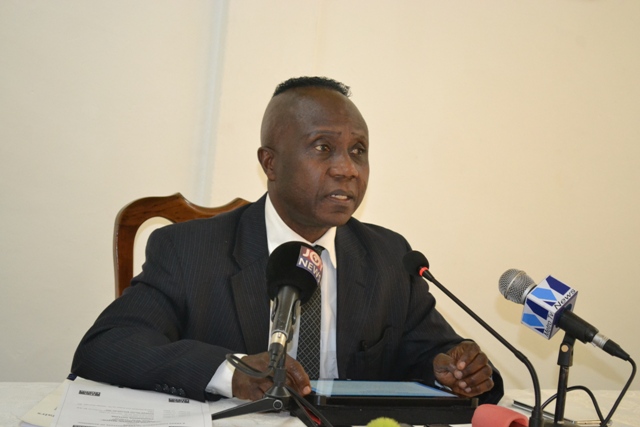
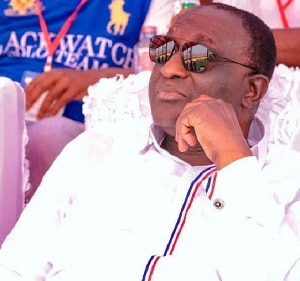
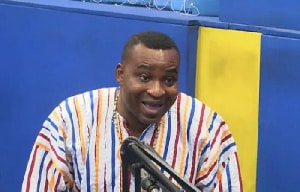
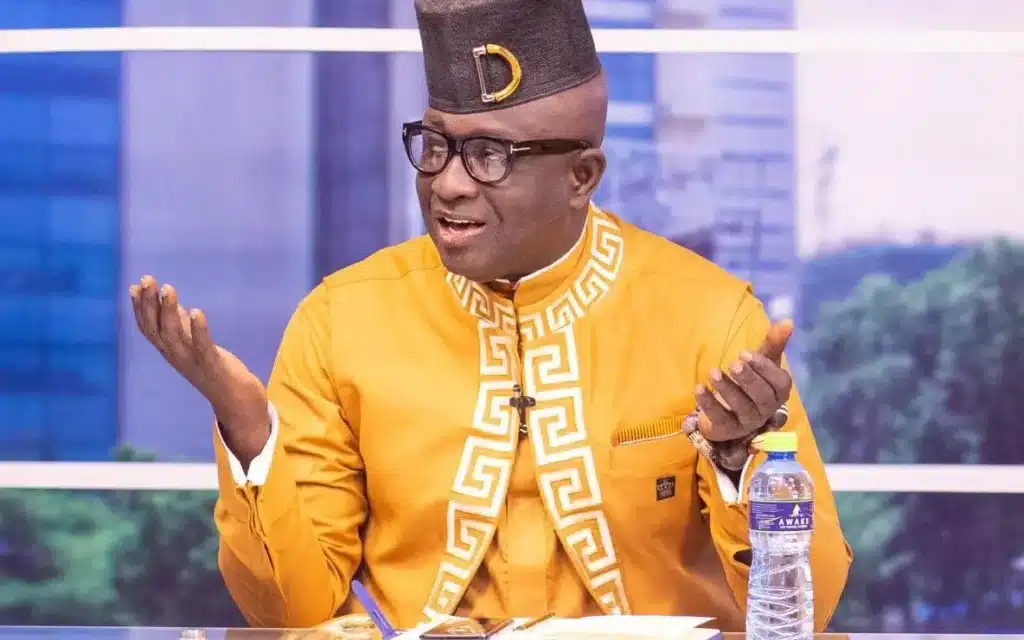
The Director-General of the National Lotteries Authority, Sammi Awuku, has expressed his approval of the actions undertaken by the Akufo-Addo administration to rejuvenate the struggling Ghanaian economy. Awuku commends the government’s implementation of significant measures, which he believes will yield positive results in the near future.
During an appearance on Metro TV’s Good Evening Ghana program on Tuesday, August 22, the former National Organiser of the New Patriotic Party noted that even the International Monetary Fund (IMF) has been impressed by the country’s economic recovery efforts. Despite acknowledging the current difficulties, Awuku, who now leads the NLA, is optimistic about the days ahead, asserting that brighter times are on the horizon.
Awuku passionately encouraged Ghanaians to rally behind the government’s efforts in order to facilitate the restoration of the economy, ultimately benefiting the entire nation.
“We have to celebrate our modest success story which became the toast of the world. But now post Covid-19, the IMF itself is shocked at Ghana’s economy recovery. It’s been faster than they expected.”
“So these builders of the economy I am confident that they will be able to take us through these difficult moments that we find ourselves,” he said.
President Akufo-Addo received accolades from Mr. Awuku for acknowledging the difficult circumstances in which the nation finds itself.
He claimed that was the sign of a moral and trustworthy leader.
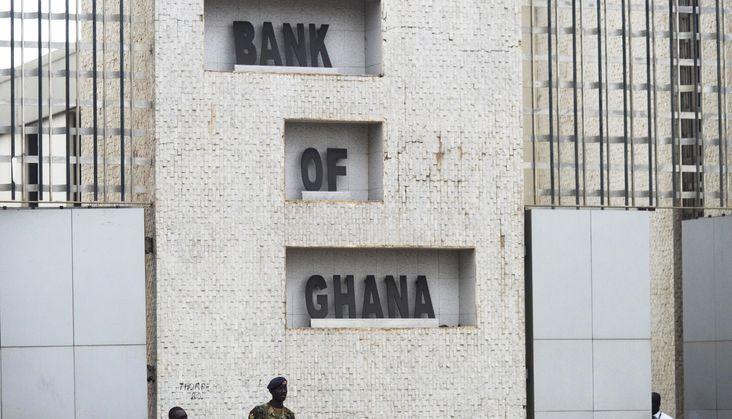
The Director of Research at the Institute of Economic Affairs (IEA), John Kwakye, says the Bank of Ghana (BoG) cannot be faulted for being forced into the government’sDomestic Debt Exchange Programme (DDEP), which resulted in the central bank’s 2022 financial loss.
He admitted that the BoG should be blamed for over-lending to the government, but insisted that the central bank cannot be faulted for taking a “haircut.”
The BoG recorded a staggering loss of GH60.8 billion within the 2022 fiscal year.
The Minority in Parliament has on a number of occasions called on the Governor of the Bank of Ghana, Dr Ernest Addison, and his deputies to resign for being reckless in the management of the central bank.
Speaking on the Point of View on Citi TV, hosted by Bernard Avle, the Director of Research at IEA, he stated, “As central bankers, financing the government’s deficit is the most inflationary thing to do. That is why the central banks set lending limits for their governments.
“What has happened in our case [BoG] is that it looks like BoG went far beyond the sealing Act of last year’s revenue of 5%. We are told that they lent almost GH44 billion, and that is the magnitude. Once you do that, you are already getting yourself into serious trouble.”
“BoG over-lent to the government, and then you bring in this DDEP, which qualifies us for the IMF programme, and the IMF compels BoG to be part of it. Out of the GH60.8 billion loss they have declared, GH53.1 billion is coming directly from DDEP. So the question is, will you fault them for that?
“We can fault them for over-lending to the government; that is the problem, but why they were being forced to be part of the DDEP is also another. That one, you can’t fault them for that”.
He further took a dig at the IMF for forcing the BoG to be part of the DDEP in order to secure the $3 billion bailout.
“I also have a problem, why did the IMF force our central bank to be part of the DDEP? Just because they wanted us to meet the requirement for the ECF”.
According to him, the government should rather be blamed for the loss incurred by the BoG for failing to cut down on its expenditure.
“The blame, I think, should be at all various levels, first the government for causing all these deficits, which require some financing. We have been calling on the government to try to live within its means,”.
The Ghana Cocoa Board (COCOBOD) has announced its intention to cease the construction of cocoa roads after the current ongoing projects are concluded.
COCOBOD had launched the Cocoa Road Programme with the aim of addressing transportation challenges related to delivering agro-inputs to cocoa farmers and facilitating the evacuation of cocoa beans.
Joseph Boahen Aidoo, the CEO, revealed during the 50th Anniversary Celebration Symposium of the Cocoa Clinic that this change in policy is a result of discussions with the European Union and the International Monetary Fund (IMF).
Both of these entities, he explained, had raised questions about COCOBOD’s involvement in road construction and suggested a focus on its core functions instead.
“The EU sent a team last year to do due diligence on sustainable production and when they came, they wanted to know why COCOBOD was involved in cocoa roads construction because it is not a core business of COCOBOD, and they insisted that we take that venture out of our equation; and, of course, the IMF is also saying the same thing”.
“They say that we can continue with what we are currently constructing and not start new ones”, Mr Boahen said.
In order to improve farmers’ access to healthcare, he also described plans for building healthcare facilities in cocoa-growing areas, noting instances of farmers having to travel far for care as motivation.
“I have had the experience where a woman, who was in labour and couldn’t deliver, had to be carried in a hammock and travelled over 28 kilometres and couldn’t survive.
“And, when we look at the countryside to see how our cocoa farmers struggle to access health delivery, you will be touched to do something; and that is why, as an institution, it is important to bring health services and facilities as close to these farmers as possible”.
Ghana Cocoa Board (COCOBOD) has announced its intention to cease the construction of cocoa roads after the ongoing projects are finished.
The Cocoa Road Programme was launched by COCOBOD with the aim of resolving transportation difficulties related to delivering agricultural inputs to cocoa farmers and streamlining the evacuation of cocoa beans.
During the 50th Anniversary Celebration symposium of the Cocoa Clinic, CEO Joseph Boahen Aidoo conveyed that this change in policy originates from discussions held with the European Union and the International Monetary Fund (IMF).
Both entities, he said, questioned COCOBOD’s involvement in road construction, urging a focus on core functions.
“The EU sent a team last year to do due diligence on sustainable production and when they came, they wanted to know why COCOBOD was involved in cocoa roads construction because it is not a core business of COCOBOD, and they insisted that we take that venture out of our equation; and, of course, the IMF is also saying the same thing”.
“They say that we can continue with what we are currently constructing and not start new ones”, Mr Boahen said.
He also outlined plans for establishing healthcare centres in cocoa-growing communities to enhance medical accessibility for farmers, citing instances of arduous journeys for healthcare as a driving factor.
“I have had the experience where a woman, who was in labour and couldn’t deliver, had to be carried in a hammock and travelled over 28 kilometres and couldn’t survive.
“And, when we look at the countryside to see how our cocoa farmers struggle to access health delivery, you will be touched to do something; and that is why, as an institution, it is important to bring health services and facilities as closer to these farmers as possible”.
Finance lecturer and economist, Professor Godfred Bokpin, known for his insightful perspectives, has offered a detailed account of how the World Bank and International Monetary Fund (IMF) intervened to prevent the Ghanaian government’s proposed $8.8 billion loan restructuring some years back.
Speaking on Peace FM’s morning show, Pro Bopkin recounted that nearly two decades ago, in 2002, the World Bank and IMF intervened to halt the government of Ghana’s efforts to restructure its debt.
“The total external debt of Ghana at the end of 2002 was US$30.5billion. Out of this, the multilateral debt, which refers to the amount Ghana owes the World Bank, IMF and other external institutions, was around US$8.8billion. And do you know what the IMF did? They said they are Lenders of Last Resort and so their debt is not up for restructuring and so the haircut did not affect them. They managed to protect their balance sheet,” he said.
He noted that these levels of losses seriously incapacitate the Central Bank from performing its functions.
The Ghana Cocoa Board (COCOBOD) has declared that it will cease its involvement in the construction of cocoa roads nationwide once the ongoing projects are completed.
Initially launched to address the logistical difficulties in supplying agro-inputs to cocoa farmers and transporting cocoa beans to Take Over Centres, the Cocoa Road Programme by COCOBOD is undergoing a shift in policy.
Speaking at the 50th Anniversary Celebration symposium of the Cocoa Clinic, the CEO of COCOBOD, Joseph Boahen Aidoo, revealed that this change is the outcome of negotiations with the European Union and the International Monetary Fund (IMF).
“Last year, the EU conducted a thorough examination of sustainable production practices. During their assessment, they raised questions about COCOBOD’s involvement in cocoa road construction, citing that it falls outside our core responsibilities. The IMF has expressed similar sentiments. Both entities recommend that we focus on our ongoing construction projects and refrain from initiating new ones.”
Nonetheless, Joseph Boahen Aidoo also unveiled COCOBOD’s intention to establish healthcare facilities within various cocoa-growing communities across the nation, aimed at enhancing healthcare accessibility for cocoa farmers.
“I have personally witnessed the plight of a woman in labor, unable to give birth, being transported over 28 kilometers in a hammock, ultimately leading to a tragic outcome. Observing the challenges our cocoa farmers endure to access healthcare in rural areas has spurred us to take action. As an organization, we recognize the importance of bringing healthcare services and facilities as close as possible to these farmers.”
The GH60 billion impairment loss reported by the Bank of Ghana in the 2022 fiscal year has been supported by the International Monetary Fund (IMF).
There is no need for concern, the Bretton Woods institution stated in a post regarding Ghana that was retrieved from its website on August 10, 2023.
It upheld the claim that the Bank of Ghana experienced losses as a result of its involvement in the government’s Domestic Debt Exchange Programme (DDEP), which is a part of initiatives to address the sustainability of debt and restore macroeconomic stability.
However, the IMF urged the Bank of Ghana to uphold its policy directives and take strict action to bring inflation under control and back to its predetermined objective of 8%.
Below is what the IMF said about BoG’s impairment loss in 2022
Why did theBank of Ghana 36+ (BoG) incur losses from the authorities’ domestic debt exchange and what are their implications?
The Ghanaian authorities’ domestic debt exchange (DDE) is a key element of their plan to restore macroeconomic stability and public debt sustainability. The BoG is participating in the DDE to share some of the burden the DDE places on government debt holders, along with banks, other financial institutions, pension funds and individuals.
The loss the BoG incurred in the process has contributed to reducing its net equity to a negative value. Importantly, however, this does not prevent the BoG from fulfilling its policy mandates and ensuring inflation gradually returns toward its 8-percent target. Indeed, central bank income is expected to be sufficient to cover monetary policy operational costs. The BoG’s net equity is expected to improve significantly over time and eventually return to positive territory.
Bank of Ghana released its full-year 2022 audited financial statements on July 28, 2023. The financial statements reported a total loss of GHS 60 billion, which has since become a matter of unfortunate politicisation.
It is noteworthy that GHS 53.1 billion of those losses were a direct result of the Government’s domestic debt restructuring exercise (phases 1 and II).
It is important to put the Bank of Ghana’s 2022 financial results in proper context with a clear statement of the problem that Ghana faced and the chronology of events in Ghana since 2019.
There was a clear mismatch between revenue inflows and expenditure financed in 2020 by exceptional support from the IMF and World Bank resources, in addition to financing from the Bank of Ghana through the issuance of the GHS10 billion COVID-19 bond.
As a result, sovereign spreads on Ghana bonds widened, signalling investor dissatisfaction with the stance of fiscal policy.
The Budget for 2022, which was read in 2021, failed to address fiscal concerns as it was even more expansionary by about 23% with a raft of revenue measures to raise financing.
As a result, the Credit Rating Agencies further downgraded Ghana’s sovereign debt rating, which blocked Ghana’s access to international capital market borrowing. This triggered a liquidity crisis, spilling over into a balance of payments crisis.
External and domestic payments needed to be made, the domestic auction was failing, and the Bank of Ghana had to step in to arrest a major economic and social crisis. In 2 months, the Bank of Ghana lost US$500 million in reserves and built significant overdraft with the government as a result of the auction failures.
It became clear that Ghana was on a path that was unsustainable, and the Government had to approach the IMF for support in July 2022. The IMF process included putting into place a credible programme of reform, which included restructuring of the total government debt to sustainable levels.
Until Staff Level Agreement with the IMF was reached in December 2022, the Bank of Ghana had to continue to provide the necessary support to keep the economy running.
In line with the provisions of the Bank of Ghana Act, (Act 612), as amended, the Bank informed the Minister of the developments in its finances. The Minister reported this to Parliament as part of his briefing to Parliament on the IMF programme and the Domestic Debt Exchange.
A major plank of the corrective action required for the IMF programme was the Domestic Debt Exchange, where the stock ofGovernment of Ghana debt was to be halved from 105% of GDP to 55% of GDP by 2028. The holders of Government debt had their debt instruments exchanged for new ones with lower interest payments and longer terms.
Despite the losses inflicted on households and banks, the threshold of 55% of GDP was not met. The Bank of Ghana was used to close the gap to enable Ghana to meet the debt threshold that qualified Ghana for the IMF programme (Bank of Ghana therefore, acted as a loss absorber). This means the Bank of Ghana had to absorb a 50% haircut on its non- marketable holdings of Government debt instruments.
This singular act led to significant impairment losses of GHS 32.3 billion to the Bank’s accounts. Impairments of marketable instruments also accounted for another GHS16.1 billion, bringing the total impairments of Government holdings to GHS48.4 billion.
As experienced by central banks globally, price and exchange rate movements led to a loss of GHS5.2 billion, while impairments of Cocobod loans amounted to GHS4.7 billion. This is the reason the Bank of Ghana reported a loss of GHS 60 billion in 2022.
Central banks are not commercial banks. This financial outcome has very little implication for the operations of the Bank of Ghana, as supported by evidence from other central banks. Technically, Central Banks cannot be insolvent or bankrupt.
Bank of Ghana assures key stakeholders and the general public that we are committed to the highest standards of prudent management, governance, and transparent accounting and audit practices.
Deputy Managing Director of the International Monetary Fund (IMF), Bo Li, left Tanzania with a clear commitment to aiding the nation in achieving its full potential for growth.
Mr. Bo commended Tanzanian officials for their efforts in carrying out the nation’s economic reform.
“I commended the authorities’ commitment to preserving Tanzania’s macroeconomic stability in a challenging global environment,” he said in a statement on August 1.
“The authorities’ swift policy response helped contain inflation and safeguard the economy against spillovers from the war in Ukraine.”
The International Monetary Fund (IMF) has urged Tanzanian authorities to implement tax reforms to boost domestic revenue mobilization. This move would create the fiscal space necessary to finance social spending and priority investments, particularly in human capital, through increased spending on education and health.
In April, the IMF completed the first review of the Extended Credit Facility (ECF) program, resulting in the release of approximately $153 million for budget support. With this disbursement, Tanzania’s total access under the program reached around $304.7 million. The three-year program, amounting to $1.04 billion, was approved by the IMF board in July 2022, with an initial disbursement of about $151.7 million.
Tanzania’s economic recovery from the pandemic has been affected by both spillovers from the war in Ukraine and domestic factors. Economic growth slowed to an estimated 4.7 percent in 2022 from 4.9 percent in 2021.
However, the outlook for 2023 is more positive, with Tanzania’s economy expected to rebound to a growth rate of 5.2 percent. This recovery is attributed to the subsiding of global commodity price shocks and an improvement in the business environment.
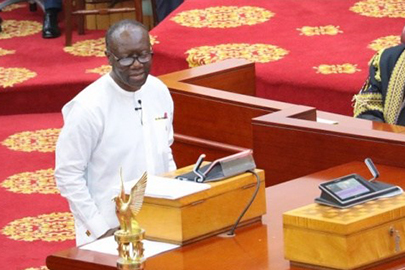
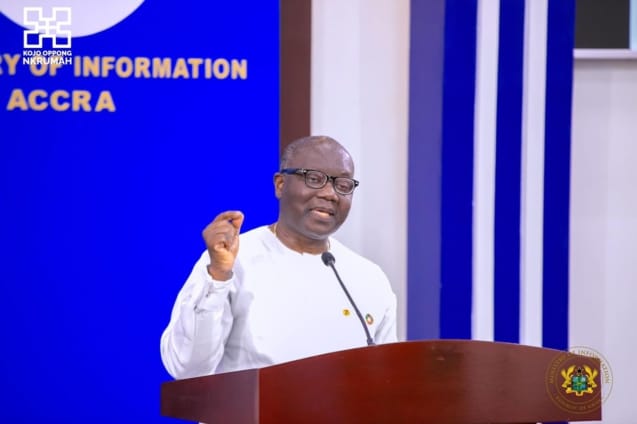
Finance Minister, Ken Ofori-Atta has stated that Ghana’s economy is displaying encouraging signs of revival.
The Minister made these remarks while delivering the 2023 Mid-Year Budget Review in Parliament on Monday, July 31, 2023.
“As I have indicated, we have made significant progress on restoring macroeconomic stability and the narrative is changing. The economy is showing signs of recovery,” he said.
He noted that “the exchange rate has stabilised, inflation has softened, and interest rates have declined since December, 2022.”
He explained to the House that the positive outcomes are a direct consequence of the dedicated execution of all the measures outlined in the 2023 Budget and the favorable sentiments stemming from the advancements made in the IMF Programme.
“Mr. Speaker, these outturns are the result of focused implementation of all the measures we presented in the 2023 Budget and the positive sentiments arising from the progress with the IMF Programme, which I will now discuss,” he noted.
The Mid-Year Budget Review is in accordance with Section 28 of the Public Financial Management Act, 2016 (Act 921). It serves as a crucial stepping stone, enabling the government to embark on a transformative economic agenda for the latter half of the year.
Earlier, the Finance Ministry explained that this year’s Mid-Year Budget Review will lay out essential programmes and policies aimed at restoring macroeconomic stability, while propelling economic growth.
Finance Minister, Ken Ofori-Atta, has expressed optimism about the country’s economic recovery after facing recent challenges.
He reported that the Ghanaian economy has shown positive signs over the past six months, and the government will not be seeking a supplementary budget.
During the 2023 Mid-Year Budget Review presented in Parliament on July 31, Ken Ofori-Atta stated, “For the first six months of the year, we continue making progress to exceed our non-oil revenue targets for the year. We have seen improvements in non-oil tax revenue collection despite some noticeable shortfalls in VAT.”
However, the Minister also acknowledged that oil revenues have fallen below expectations due to changes in global prices. As a result, the Finance Ministry will conduct a downward review of these targets and corresponding expenditures, particularly affecting the Annual Budget Funding Amount (ABFA).
“However, oil revenues have fallen short of expectations due to changes in global prices.”
“We will, therefore, undertake a downward review of the oil-related revenue as well as the corresponding expenditures to align with the under-performance of some of our revenue handles. Specifically, this will impact the Annual Budget Funding Amount (ABFA),” he added.
Despite the challenges faced, Ken Ofori-Atta urged Ghanaians to support the government’s efforts to restore the country’s economy and improve the living conditions of citizens. The government remains determined to address the economic hardships promptly.
The Finance Minister described 2022 as his toughest year in office, during which he had to make difficult yet necessary decisions to facilitate Ghana’s economic recovery.
One significant decision was seeking a bailout from the International Monetary Fund (IMF) to implement the Post-COVID-19 Programme of Economic Growth (PC-PEG).
At that time, the country was going through a period of economic uncertainties and despondency.
An economist, Dr. Ishmael Yamson, has expressed doubt that Ghana’s economy will recover in 2025, contrary to the prediction made by the World Bank.
He believes that the government is ill-prepared to implement the necessary tough structural reforms recommended by the International Monetary Fund (IMF).
Dr. Yamson also pointed out that the government lacks financial discipline and readiness to rationalize its spending.
“Unless I see it happen, fine. But for now I don’t believe it will come to pass”, he doubted.
Speaking to the media on July 27, 2023, Dr. Yamson emphasized that Ghana will need significant time to fully recover from the current economic challenges facing the country.
He also mentioned that the projected recovery relies on external developments favoring the country and the successful implementation of potentially difficult programs by the government.
The World Bank’s report titled “Price Surge: Unraveling Inflation’s Toll on Poverty and Food Security” projected that Ghana’s economy would recover to its full potential by 2025.
The report suggested that economic growth may slow down in 2023 and 2024 but is expected to recover by 2025 due to fiscal consolidation fading and the effects of macroeconomic stabilization and structural reforms becoming evident.
However, Dr. Yamson disagreed with the notion that the current economic challenges can be solely attributed to the COVID-19 pandemic and the Russia/Ukraine war.
He argued that Ghana’s debt issues were present even before the Russia/Ukraine war began and criticized the government for not being prudent with its finances.
The economist emphasized that Ghana’s current economic challenge is more related to excessive expenditure rather than a revenue issue.
Over the years, the government has continued to spend even when the necessary resources were not available to finance these expenses.
Dr. Yamson warned that expenditure control is especially critical during election years to avoid undue pressure on the economy.
“We should not forget the projection also depends on external development’s favouring the country. In addition, government must also implement some programmes, which we all know may be difficult”, he said.
Additionally, data from the Bank of Ghana indicated that funds outside the operations of commercial banks in the country increased significantly, raising concerns among some banking sector players. Dr. Yamson advised the Bank of Ghana to address this situation promptly.
Furthermore, he expressed disappointment regarding former minister Cecilia Dapaah’s decision to hoard over a million dollars in her house, as it contradicted the government’s efforts to encourage savings in banks.
This behavior is seen as worrisome and counterproductive to the government’s goal of promoting financial responsibility among the public.
Overall, Dr. Yamson’s statements highlight the challenges faced by Ghana’s economy and underscore the need for sound financial management, structural reforms, and prudent fiscal practices to achieve sustainable growth and recovery.
The World Bank and the International Monetary Fund have been accused of idly watching as Ghana borrows to unsustainable levels.
So far, there have been two accusations lodged. First, it was claimed that the World Bank participated actively in power purchasing agreements but only watched as the country negotiated several arrangements that were not in the country’s best interests.
President of the policy think tank IMANI Africa, Franklin Cudjoe, claimed that while the World Bank is actively involved in Ghana’s energy sector recovery program, the Bank’s claim that a significant portion of the nation’s debt originates from that sector is unfounded.
In a post on June 5, 2023, he wrote “It is true that some take or pay power contracts signed by the NDC were very expensive. The current government set up committees to review them. However, the terms of these contracts were extended.
“In effect, as ACEP’s Ben Boakye puts it, the same power plants the World Bank director complains about have been extended to long-term agreements without caution from the Bank”.
The World Bank in Ghana has been a very active financial supporter of Ghana’s Energy Sector Recovery Programme for the past four years. So, there you are,” he added.
An Economist Dr. Yamson has also questioned the World Bank for not cautioning Ghana enough on reckless borrowing.
”I have always said that sometimes the Fund and the Bank have to share in the blame because they themselves don’t say it as it should be said. They were aware, long time, that the government was doing things that would push this country into a crisis.”
“When we were borrowing literally every year were they not aware? All that they’ll put in their report is that excessive borrowing will lead you to debt distress, a simple sentence. And beyond that what else did they do? Did they say to government stop? Never,” he said.
An Economist, Dr. Ismael Yamsom, has urged government to exercise caution in its spending, as merely obtaining a loan from the International Monetary Fund (IMF) may not fully address the crisis it was intended to resolve.
According to Dr. Yamsom, Ghana’s major challenge lies in its expenditures consistently exceeding its revenue, leading to financial difficulties.
He emphasized that the government needs to take intentional measures during the mid-year budget review to demonstrate its commitment to reducing expenses.
Dr. Yamsom expressed his opinion that the IMF should offer support in alignment with the government’s plans rather than imposing solutions and providing excessive assistance.
“That’s why the fund is clever to say this programme is the authority’s programme and we are supporting it. So the IMF programme should only be a support to what our government should do and must do. And for me what is the problem?
“The problem has always been that we spend more than we raise in revenue. So let the government demonstrate in its budget on Monday that truly it is going to take steps, clear steps, credible steps, that it will cut expenditure and that it can be quantifiable, verifiable, and that we can all track it.
“Because if we maintain the same expenditure levels then the IMF programme can go sleep. Because you’ll give me one billion a year, how much debt and interest is government paying every year?” he was quoted by myjoyonline.com.
An economist, Dr. Ishmael Yamson, has attributed part of Ghana’s current economic situation to the World Bank and the International Monetary Fund (IMF).
He criticized these Bretton-Wood institutions for not intervening when the government engaged in excessive borrowing without repercussions.
According to him, although the annual reports from these institutions warned of potential debt distress, mere warnings were insufficient. Instead, he argued that they should have taken a more assertive stance by threatening to impose sanctions if the government did not heed their warnings.
Dr. Yamson stated that the failure of the World Bank and IMF to effectively exercise their oversight role on the country’s economy has contributed to the nation’s current debt distress situation.
“I have always said that sometimes the Fund and the Bank have to share in the blame because they themselves don’t say it as it should be said,” Dr. Yamson said on PM Express Business Edition.
“They were aware, long time, that the government was doing things that would push this country into a crisis. And I can tell you that the crisis that we have today I haven’t seen it all my life in this country. Never. If you go back and look at the statistics, here’s nothing like this before.
“Yet, every year they issue the report and they say to government but they’re not firm enough to say ‘look, we can see the trend taking you this way and we will apply sanctions if there are any such things.’
“But I believe that the Fund and the Bank have a greater responsibility also to themselves because I know they don’t want Ghana to fail. And if they don’t want Ghana to fail then they must behave in a way that pushes Ghanaian government. I mean why?
“When we were borrowing literally every year were they not aware? All that they’ll put in their report is that the excessive borrowing will lead you to debt distress, simple sentence. And beyond that what else did they do? Did they say to government stop? Never,” he said.
Member of Parliament for Kumbungu, Professor Hamza Adam, has raised eyebrows by questioning the necessity of an IMF bailout when a substantial sum of money has been discovered in the house of Cecilia Dapaah, the current Minister for Sanitation and Water Resources.
The revelations have sparked a heated debate among the public, demanding further scrutiny into the financial affairs of government officials.
Making a submission on the matter, Prof Adam, said under the laws of the state, it is illegal to retain an amount of money exceeding a specific threshold within one’s residence.
It is alleged that Madam Cecilia Dapaah had in her possession $1 million, €300,000, and an undisclosed amount of Ghana Cedis at her residence.
These monies were allegedly stolen by two house helps, for which they are standing trial at an Accra Circuit Court.
Speaking on this in an interview with the press in parliament on Friday, July 21, Prof Adam said “First of all it is illegal to keep certain money, at home particularly foreign. So an amount to the tune of millions will be shocking to the bone.
“I will appeal to all the skakeholders who matter to investigate the matter so that we will get to the bottom of the issue because it is shocking if you look at the quantum of the amount that is alleged to be found at her residence. if we got such an amount of money we didn’t need to go to the IMF.”
He added “That is also a wake-up call, which means we have to go down and investigate all ministers who are serving the country at the moment. What it simply means is that whereas everybody is dying that the stake is heating up and livelihoods are getting deteriorated others are sitting in gold mines. I am appealing to the stakeholders who matter to do further investigation.
“I think it is important the minister, as a matter of urgency, relinquishes her position as the minister, the reason being that it may interfere with the investigation process otherwise the president must compel her to resign.”
As stated in the 2023 budget announcement, Ghana’s debt levels have reached unsustainable levels, posing challenges for the country to secure a bailout from the International Monetary Fund (IMF), leading to the necessity for debt restructuring.
In December 2022, the government initiated a domestic debt exchange program, inviting bondholders to exchange their existing bonds for new ones with revised maturity dates. Despite facing strong opposition, a remarkable 85% of bondholders agreed to participate in the Invitation to Exchange.
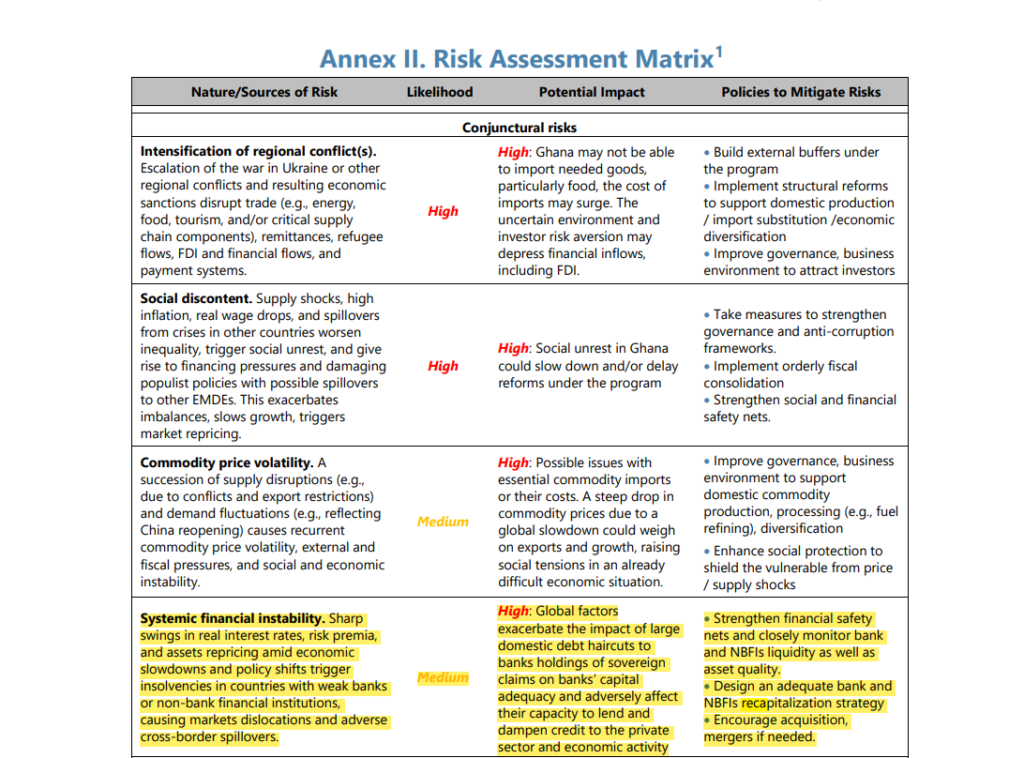
This accomplishment was crucial as it fulfilled one of the requirements set by the IMF. However, to secure the first tranche of the $3 billion loan from the IMF, the government needed to meet other conditions, including securing assurances from external creditors.
Upon receiving the necessary assurance, the IMF’s Executive Board approved the first tranche of the loan in May.
Now, in preparation for the second tranche, expected in November, the government has launched two additional debt restructuring programs, aiming to restructure bonds worth up to GH¢809 million.
The domestic debt exchange program enables the government to call for bondholders to swap their current bonds for new ones with extended maturity dates. This approach is taken because the government faces challenges in meeting both principal and interest payments for bonds that have matured or are scheduled to mature this year.
By extending the maturity dates and adjusting the interest rates for the new bonds, the government seeks to create a manageable repayment schedule and provide some breathing space to meet its payment obligations.
The two new “haircuts” are for holders of dollar bonds and holders of COCOBOD’s short-term securities i.e., cocoa bills.
See the invitations sent out by the government for the new haircuts below:
COCOBOD’S INVITATION
The Ghana Cocoa Board (COCOBOD) has, today, launched a debt securities exchange programme (the Exchange Programme) under which it is inviting holders of its short-term debt securities (the Cocoa Bills) to voluntarily offer to exchange their Cocoa Bills (representing an aggregate principal of approximately GHS 7.93 billion) for longer-term debt securities with averagely lower coupon rates to be issued by COCOBOD (the Bonds).
The Bonds will be issued pursuant to the terms of (the Programme Documents): (a) an exchange memorandum dated 14 July 2023 (the Exchange Memorandum); (b) a trust deed dated 14 July 2023 and entered into between COCOBOD (as issuer) and Consolidated Bank Ghana Limited (CBG) (as trustee for the holders of the Bonds); and (c) an agency agreement dated 14 July 2023 and entered into by COCOBOD (as issuer), CBG (as bond trustee and paying bank), and the Central Securities Depository (GH) LTD (as transfer agent, calculation agent, and registrar in respect of the Bonds).
Holders of the Cocoa Bills whose offers are accepted by COCOBOD will receive five (5) different Bonds with an aggregate principal amount (rounded down to the nearest GHS 1.00) equal to the principal amount of Cocoa Bills tendered (in addition to any accrued and unpaid interest due on such Cocoa Bills). The five (5) Bonds will mature on a one-per-year basis consecutively from (and including) 2024 to (and including) 2028. The reasons for undertaking the Exchange Programme have been explained by the chief executive of COCOBOD in a letter dated 11 July 2023 from the chief executive to all holders of the Cocoa Bills. A copy of the letter has been included in the Exchange Memorandum.
For further details regarding the Exchange Programme, all holders of the Cocoa Bills are advised to read the contents of the Programme Documents carefully and consult a dealer, investment adviser or other professional for appropriate advice before making an investment decision. Copies of the Programme Documents are available at https://projects.morrowsodali.com/CocobodDDE, https://calbank.net/CocobodDDE and the website of COCOBOD (i.e. https://cocobod.gh/CocobodDDE).
Offers may be submitted from today (i.e. 14 July 2023) until 4pm on 31 July 2023 (unless otherwise extended by COCOBOD in its sole discretion and with the prior approval of the Securities and Exchange Commission). An offer (once made) cannot be revoked or withdrawn at any time except in the limited circumstances described in the Exchange Memorandum.
This announcement is for informational purposes only and is not an invitation to exchange to any holders of the Cocoa Bills. The invitation to exchange the Cocoa Bills is only being made pursuant to the Exchange Memorandum.
COCOBOD has appointed CalBank Plc (CAL) as arrangers for the Exchange Programme.
African leaders has initiated the mid-year African Union summit, focusing on economic integration and urging international financial system reforms.
Deputy Secretary-General of the United Nations, Amina Mohamed, highlighted Africa’s disproportionate suffering amidst the ongoing global crises caused by the COVID-19 pandemic.
“Unmet commitments by the international community to financing climate action and inadequate humanitarian responses, have further aggravated the obstacles to the efforts made by Africa and its leaders, to implement Agenda 2063,” she said.
Amina Mohamed stated that the UN supports African leaders’ plea for more resources allocated to their economies through the International Monetary Fund (IMF), an institution criticized by various African leaders.
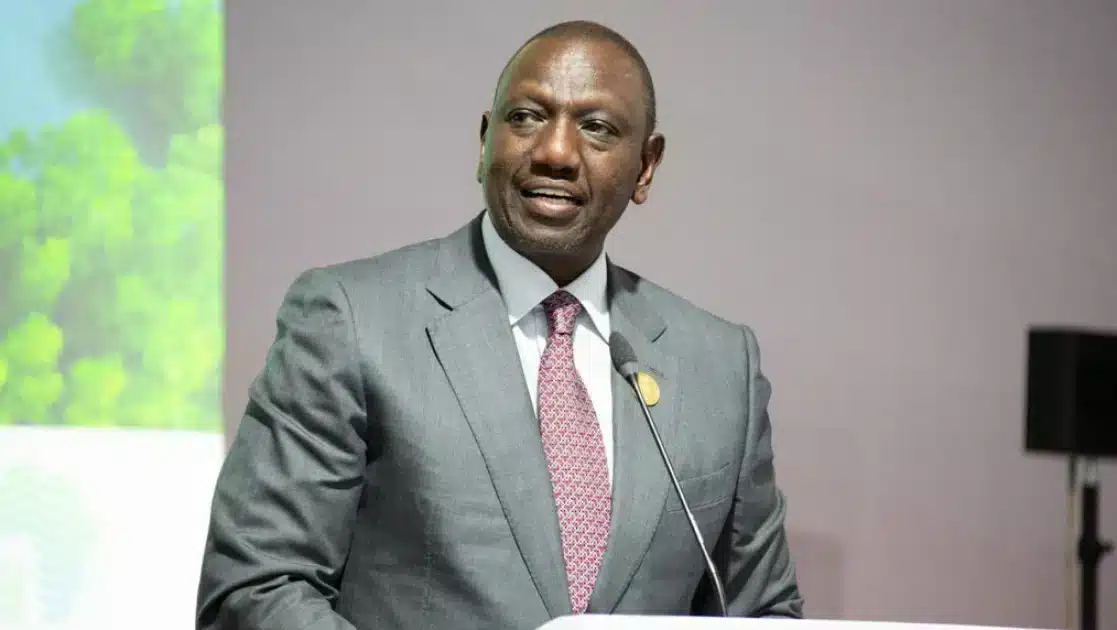
Kenyan President, William Ruto, alongside other leaders, called for reforms within the World Bank and IMF. He emphasized the unfairness of the global debt system, which burdens African countries with payment obligations eight times higher than wealthier nations due to perceived risks.
”We are not asking for charity. We must have equality in the international system,” Ruto said.
Member of Parliament for Efiduase and leader of Dr. Bawumia’s faction, Nana Ayew Afriyie, has asserted that Kennedy Agyapong is directing his criticism towards the wrong individual concerning Ghana’s re-engagement with the International Monetary Fund (IMF). Afriyie emphasized that targeting Dr. Mahamudu Bawumia on matters related to Ghana’s return to the IMF is unwarranted.
The Member of Parliament clarified that any matters pertaining to the International Monetary Fund (IMF) or the country’s economic challenges should be directed towards the Finance Minister, Ken Ofori-Atta.
He also added that Dr. Mahamudu Bawumia is a strategist because of how he was able to bounce back from cleaning dormitories, driving cabs and doing other menial jobs to become the person he is now.
“I will say that he should direct it to the Minister of Finance and when he (Bawumia) is in charge, he will take charge and take us to the promised land. We are going to the promised land. DMB is taking us there. …He (Agyapong) should attack the finance minister not him (Bawumia),” Nana Ayew Afriyie told TV3.
“He shared his experiences. When he used to clean to go to school to pay his fees; drive taxis, cabs. So, any person can be president one day. Any person’s child, regardless of where you are in this country, there is an opportunity for you to be where you have to be,” he added.
Background:
An NPP flagbearer hopeful, Kennedy Agyapong fired shots at the campaign team of Vice President Dr. Mahamudu Bawumia.
Speaking to delegates of the NPP in the Kintampo East Constituency as part of an ongoing campaign, the Assin Central MP sent a strong warning to the camp of the vice president noting that he will go on full offensive if the personal attacks directed at him do not cease.
“If NPP people don’t engage in a clean campaign, they will be in trouble because I will reply when you say something.
“For someone who claims to be a strategist, the dollar was GHC4 equivalent when we took power. Today, the dollar is GHC12. Do you think you are a strategist? Excuse me, strategist! Please,” Kennedy said.
The International Monetary Fund (IMF), has indicated that the remaining $2.4 billion bailout package for Ghana will be disbursed in installments every six months following program evaluations.
In September 2023, a team from the IMF will visit Ghana, with an expected allocation of $600 million to assist with the country’s balance of payments.
During a Question and Answer session at a recent IMF event, Julie Kozack, the Director of the IMF Communication Department, confirmed that the formal first review mission is scheduled for September 2023.
Kozack reiterated that the objectives of the IMF program for Ghana encompass three main goals: restoring macroeconomic stability, ensuring debt sustainability, and establishing the groundwork for higher and more inclusive economic growth.
The program also incorporates comprehensive reforms aimed at enhancing resilience while safeguarding the most vulnerable segments of the population.
Regarding the next steps for debt restructuring, Madam Kozack stated that it is the responsibility of the official creditor committee to reach an agreement with the Ghanaian government on the specific modalities of debt relief. Furthermore, she emphasized the importance of the authorities’ continued engagement with external private creditors to seek relief for their external debt.
She further mentioned that the government is in the final stages of restructuring its domestic debt. In June 2023, a staff team conducted a routine technical program engagement visit to Accra from June 8th to 15th. The formal first review mission is scheduled to occur in the coming fall.
Ghana obtained an IMF program in May 2025, followed by the initial disbursement of $600 million as the first installment of the Extended Credit Facility (ECF) program.
In a significant development, the World Bank has concluded an agreement to provide Ghana with $900 million in support of the country’s ongoing reforms. This substantial financial commitment highlights the bank’s commitment to assist Ghana in its pursuit of comprehensive reforms aimed at fostering sustainable development and economic growth.
The support, which is under the Development Policy Operations (DPO) for the period 2023 to 2025, is expected to front-load the first tranche to the country by November if Ghana is able to meet prior actions and present the final document to the World Bank Executive Board by the end of October this year.
At a meeting with the World Bank Managing Director for Operations, Anna Bjerde, in Accra yesterday, the Minister of Finance, Ken Ofori-Atta, stated that the government was committed to completing all prior actions by October this year.
“I would like to personally assure you that the government has prioritised the completion of all prior actions by end of August, 2023, to ensure the first DPO in the series is presented to the World Bank Board in early October,” the Finance Minister said, adding, “we count on your support for this to happen”.
During discussions in his office and at a banquet held in her honour, Mr Ofori-Atta appealed to the World Bank to front-load the DPO amount for 2023 to $500 million.
A World Bank Mission which visited the country between June 19-23 reached the agreement on the reforms to be presented to the board in October this year.
Critical
“This is critical for the International Monetary Fund (IMF)-Supported PC-PEG, for the continuous stability of the cedi and broader macroeconomic stability,” Mr Ofori-Atta said.
He added that it was the belief of the government that with the requisite resources, the country could become “the poster child for a robust, sustainable and green post-COVID economic build-back on the continent.”
The Finance Minister stressed that given the DPO’s strong emphasis on fostering resilience to economic and climate shocks, the government was being intentional about building a low carbon and climate resilient economy.
Again, he said, the focus was to protect the poor and vulnerable against the impact of “the front-loaded fiscal consolidation under the IMF-supported PC-PEG.”
The minister said the government had also developed a strategy to strengthen the financial sector and rebuild financial institutions’ buffers as one of the policy actions under the DPO.
Improvements
Mr Ofori-Atta said the World Bank had played a critical role in Ghana’s journey to achieve macroeconomic and financial stability as well as setting the economy on a path of strong sustainable growth.
Given the significant sacrifices and strong commitment demonstrated by the government and people of Ghana to ensuring macroeconomic stability and debt sustainability, the minister said the World Bank should leverage Ghana’s example and use it as a demonstration effect by scaling up its support and interventions in the country.
For its part, the government was implementing various revenue reforms and measures targeted at increasing domestic revenue from the current tax to GDP ratio of 13 per cent to between 18 per cent and 20 per cent over the medium term.
Mr Ofori-Atta cited the completion of the domestic debt restructuring three months after the launch of the programme in December 2022; securing financing assurances from the Paris Club Official Creditor Committee (OCC) on May 12, 2022 under the G20 Common Framework and securing the approval of the three-year $3 billion PC-PEG-backed IMF Programme.
Rebound
He observed that there were clear indications that the country was coming out of its economic woes as the economic indicators were beginning to improve.
For instance, Mr Ofori-Atta said the first quarter 2023 growth rebounded to 4.2 per cent, up from three per cent in quarter one of 2022, mainly on the back of 10.1 per cent growth in services and 4.8 per cent growth in agriculture.
Again, he said, inflation had declined to 42.5 per cent in June 2023 after peaking at 54.1 per cent in December 2022.
Mr Ofori-Atta said the cedi had remained relatively stable, depreciating cumulatively by about 22 per cent year-to-date compared to a depreciation of 50 per cent in November 2022. He also said the 91-day treasury bill rate had declined to around 20 per cent, down from 35.5 per cent at the end of 2022.
Climate finance
He stated that the country was focused on taking advantage of the Just Energy Transition Partnerships (JETP) to accelerate its transition to a low carbon economy.
“This would require non-debt financing support to decommission some of our legacy fossil fueled energy installations to make room for more investments in renewable energy,” he said.
He said in terms of enhancing social protection, the 2023 budget had already made specific provisions for doubling the Livelihood Empowerment against Poverty (LEAP) payment per beneficiary household from GH¢45 per month to GH¢90, with a progressive increase in the number of beneficiary households from the current 344,185 households.
“Coverage will be expanded to all 2.5 million extremely poor individuals by 2024.
We plan that by end September 2023, an indexation mechanism will be introduced in the LEAP Programme to prevent erosion of value over time,” he added.
He also said there had been increases in the budgetary allocation for the School Feeding Programme (SFP) to compensate for higher cost of meals and to ensure efficient management of the programme.
The Finance Minister also said more would be done to increase the school capitation grants and further expand the National Health Insurance Scheme (NHIS).
Achieving stability commendable
For her part, Ms Bjerde commended Ghana’s effort to restore macroeconomic stability, comparing the gloom on Ghana’s outlook a year ago and the progress thecountry had made since to get an IMF Board approval for the $3 billion facility.
The performance is seen in the indicators recorded in recent publications and the efforts towards the IMF Board’s review in November.
Ms Bjerde also acknowledged Mr Ofori-Atta’s strong voice in shaping the World Bank evolution, which she said, would continue to be significant to help the course of Ghana and Africa in general.
Any move by the government to increase taxes during the mid-year budget review will be opposed, according to the Minority Leader, Dr Cassiel Ato Forson.
According to him, the NDC MPs will ensure that the government cuts its spending rather than impoverishing Ghanaians who are already impoverished.
Speaking to the media, he argued that there is plenty of room to cut spending.
“I won’t be surprised if the government introduces new measures because if you read the MEFP, the IMF is asking for additional measures of about 1% of GDP and I don’t know where that is going to come from.”
“If I look carefully, there is a massive room for expenditure cuts, but the government obviously is indiscipline, and they don’t seem to care.”
“They want to live large on the back of the people of Ghana. So they need to cut that kind of expenditure and if I am the one in charge or responsible, I would rather go for a cut in expenditure as against a tax measure or an increase in taxation,” he added.
Ken Ofori-Atta, Finance Minister, will submit the 2023 mid-year budget review to Parliament on July 25.
This will be his first time doing so since the government agreed to an IMF arrangement.
Prior to that, industry participants have already requested the government to take advantage of the chance to eliminate some tax breaks.
Ghana’s minister of finance, Ken Ofori-Atta, has voiced confidence in Ghana’s capacity to obtain the second installment of the $3 billion IMF loan in November 2023.
Ofori-Atta expressed his confidence that Ghana will fulfill the requirements for the upcoming transfer of $600 million.
Following the IMF staff’s recent working visit to Ghana, he made the remarks.
“Between cabinet and parliament, so far, we’ve gone through the qualitative performance criteria. So, we expect that the review will go well in September to get a Staff-Level Agreement. We’ll go to the Board in November and we’re sure we can get it,” the Minister told journalists on July 11, 2023.
He added that “We had an IMF Staff visit about three weeks ago which went very well and we’re expecting that review in September.”
In May 2023, Ghana got the first installment of the IMF loan after obtaining board clearance.
The nation had satisfied the basic requirements for program approval, which included receiving financial guarantees from outside creditors and having a successful domestic debt swap scheme.
With the rapid devaluation of the cedi and rising inflation rates in mind, the $3 billion lending facility is anticipated to aid in restoring macroeconomic stability to the nation.
Former Minister of Trade and Industry and aspirant for the New Patriotic Party (NPP) flagbearer, Alan Kyerematen, has stated that Ghana could have prevented its reliance on the International Monetary Fund (IMF) by implementing his proposed ideas.
However, failure of the country to heed to his advise ended the country up at the Bretton Woods institution.
During his recent tour of Greater Accra delegates, Alan Kyerematen emphasised the potential of President’s Special Initiatives (PSI) introduced during the previous administration of John Agyekum Kuffour. He stated that if the nation had embraced this transformative concept, it could have significantly altered Ghana’s economic trajectory.
Reflecting on his contributions to the country, he expressed a sense of regret, stating, “The amount of work I have done for this country, sometimes I even feel ashamed talking about it.”
He emphasized his role in introducing the President’s Special Initiatives during President John Agyekum Kufuor’s administration and suggested that had Ghanaians embraced his ideas, the country would not have resorted to seeking assistance from the IMF, he is quoted to have said.
The strategic intent of the PSIs, according to the NPP government, was to move Ghana’s economy beyond HIPC status and reduce the country’s over-dependence on aid and donor support and a few commodity exports by finding new pillars of growth.
A total of 10 NPP presidential candidate aspirants had picked up nomination forms as of Thursday, June 1, 2023, and had paid a non-refundable nomination fee of GHC50,000.
The 10 include; Vice- President Dr Mahamudu Bawumia, a former Minister of Trade and Industry, Alan Kwadwo Kyerematen, MP for Assin Central, Kennedy Ohene Agyapong, a former Minister of Justice and Attorney General, Joe Ghartey, a businessman and energy expert Kwadwo Poku, a former Minister of Energy, Boakye Agyarko, a former NPP General Secretary, Kwabena Agyei Agyepong, a former MP for Mampong, Francis Addai-Nimoh, a former Minister of State, Dr. Kofi Konadu Apraku and a former Minister of Food and Agriculture, Dr. Owusu Afriyie Akoto.
President Akufo Addo has provided reassurance that the IMF extended credit facility program with Ghana will not impact the nursing and teacher training allowance.
In mid-May 2023, the IMF approved a 36-month arrangement worth US$3 billion for Ghana. The initial tranche of US$600 million was disbursed promptly.
However, the IMF bailout package for Ghana comes with certain conditions aimed at addressing economic challenges, ensuring fiscal discipline, and promoting sustainable economic growth.
Despite suggestions from some economists to cancel the payment of nursing and teacher trainee allowances for fiscal reasons, Senior Presidential Advisor Yaw Osafo-Maafo, speaking on behalf of President Akufo-Addo, affirmed during the 175th Anniversary and Prize Giving Day of the Presbyterian College of Education that the government had strongly safeguarded the nursing and teacher trainees allowance as a social intervention program during negotiations with the IMF.
“Teacher trainees present, I know that the difficulty in the economic landscape which has resulted in government’s signing up for a program with International Monitory Fund IMF may cause you some concern. But none of the allowances of the teaching profession will be affected with our program with IMF. There were certain things which are not to be touched and the teacher allowances was on of such protected allowance. The difficulty in prompt payment is coming from our own mobilization of resources and not the IMF once you have it you can be sure that teachers allowances and the rest of it will be honoured appropriately”.
The president reaffirmed government’s dedication to teacher education and the teaching profession, emphasizing the importance of ensuring quality education.
He also highlighted the implementation of licensing for teachers as a significant measure taken to restore dignity and enhance professionalism within the teaching profession
“The introduction of licensing examination for teachers for example was done in the utmost good fate. It is aimed at lifting the image of the profession and avoiding situation where unqualified persons could pose as teachers and in the process bring the profession into disrepute”.
He added that “it is my expectation that interventions such as the distribution of laptops and payment of continuous professional development allowance to teachers will systematically improve the capacity and morale among the teaching profession and our teachers”.
President Akufo Addo has given his assurance that the nursing and teacher training allowance in Ghana will not be impacted by the International Monetary Fund (IMF) extended credit facility program.
This statement comes after the approval of a $3 billion arrangement with the IMF, with the first tranche of $600 million already disbursed.
The IMF program aims to address economic challenges and promote sustainable growth, but concerns were raised about the possible cancellation of the nursing and teacher trainee allowance to create fiscal space.
However, President Akufo Addo has emphasized the government’s commitment to protecting this social intervention program during negotiations with the IMF.
In May 2023, the International Monetary Fund (IMF) approved a 36-month arrangement with Ghana, providing a total of US$3 billion in financial support. The first tranche of US$600 million was immediately disbursed.
However, this IMF bailout package comes with certain conditions aimed at addressing economic challenges, ensuring fiscal discipline, and promoting sustainable growth in Ghana.
Some economists have suggested that the payment of nursing and teacher trainee allowances should be cancelled to create fiscal space.
Nevertheless, Senior Presidential Advisor Yaw Osafo-Maafo, speaking on behalf of President Akufo-Addo, emphasized during a public event that the government has strongly protected the nursing and teacher trainees allowance as one of its social intervention programs during the negotiation process with the IMF.
“Teacher trainees present, I know that the difficulty in the economic landscape which has resulted in government’s signing up for a program with International Monitory Fund IMF may cause you some concern. But none of the allowances of the teaching profession will be affected with our program with IMF. There were certain things which are not to be touched and the teacher allowances was on of such protected allowance. The difficulty in prompt payment is coming from our own mobilization of resources and not the IMF once you have it you can be sure that teachers allowances and the rest of it will be honoured appropriately”.
He expressed commitment of government to the teacher education and profession to ensure quality education.
President Akufo-Addo mentioned for instance that the introduction of licensing for teachers is a step to restore dignity in the profession.
“The introduction of licensing examination for teachers for example was done in the utmost good fate. It is aimed at lifting the image of the profession and avoiding situation where unqualified persons could pose as teachers and in the process bring the profession into disrepute”.
He added that “it is my expectation that interventions such as the distribution of laptops and payment of continuous professional development allowance to teachers will systematically improve the capacity and morale among the teaching profession and our teachers”.
American economist Prof. Steve Hanke has predicted the fate of poor countries highly indebted to the IMF.
He avers that the International Monetary Fund (IMF) gets ‘hostages’ by way of poor countries that become heavily indepted to it.
His view was to dispute one advanced by Kenyan president William Ruto that the IMF had become a ‘hostage’ to rich nations.
Ruto restated a view he has recently advanced that international creditors like the IMF and World Bank were hostage to rich nations hence his call for a new multilateral lender to address climate crisis.
“Kenya’s president William Ruto says the IMF is “hostage” to rich nations. He’s got it wrong. Poor nations who become heavily indebted to the IMF become “hostages”,” he stated in reaction to Ruto’s comments as carried by the Financial Times newspaper.
A number of African countries, citing the impact of COVID-19 and the Russia-Ukraine war have applied for and received bailouts from the Washington-based lender.
Ghana, Senegal and Ivory Coast are West African countries currently under IMF programme as well as Zambia.
Ashanti Regional director of communications for the NDC, Abass Nurudeen has accused the ruling NPP of engaging in vote-buying and extravagant expenditures during the recent by-election in the Assin North constituency.
During an interview with Akoma FM on July 1, 2023, he expressed astonishment at the country’s economic challenges and criticized the NPP for their lavish spending during the election.
Nurudeen emphasized the stark contrast between the nation’s appeal for assistance from theInternational Monetary Fund (IMF) and the implementation of measures like domestic debt restructuring, which have affected pensioners’ bonds, and the government’s apparent abundance of resources for distribution in Assin North.
“A country that we said we don’t have money, so we are going to the IMF, so we are taking pensioners’ bonds, they were sharing money in Assin North,” Nurudeen exclaimed
According to him, the NPP employed various tactics to sway voters, including buying locally-made alcoholic drinks known as ‘akpeteshie’ to distribute among the electorate.
He stated that the party went as far as purchasing alcoholic beverages for drunkards to consume in exchange for votes.
“It wasn’t only two million alone, Aduana Ba, cutlasses, roofing sheets, cement bags, even ‘akpeteshie’ they were sharing for a vote, I swear to God I am a Muslim and I’m saying this, if what I am saying is a lie, God should ask me.
“When they enter a beer bar, then they will buy all the akpeteshie for the drunkards to drink, I have never seen such a thing in my life, I have videos, if they like they should deny and I will bring it out.”
He went on to highlight what he called NPP’s attempt to replicate a strategy they used in the Kumawu by-election, where they allegedly succeeded in winning over the locals through similar means.
“They thought how they were able to buy the minds of Kumawu people, they were going to use the same strategy to buy the minds of Assin North constituents.
James Gyakye Quayson has been sworn in as Member of Parliament for the Assin North constituency after the Electoral Commission declared him a winner in the election held on June 27, 2023, following the conclusion of the by-election.
According to the Electoral Commission’s announcement, James Gyakye Quayson garnered a total of 17,245 votes, representing 57.56% of the total votes cast.
His closest contender, Charles Opoku of the New Patriotic Party (NPP), received 12,630 votes, accounting for 42.15% of the votes. Bernice Enyonam Sefenu of the Liberal Party Ghana (LPG) secured 87 votes, which represented 0.29% of the overall tally.
The by-election in Assin North was held to fill the parliamentary seat left vacant following a legal battle that questioned Quayson’s eligibility to hold office due to dual citizenship concerns.
Pakistan, currently in the midst of a severe economic crisis, has reached a staff-level agreement with the International Monetary Fund (IMF) for $3 billion (£2.4 billion) in funding.
The agreement is subject to approval by the IMF’s board, following an eight-month delay in the negotiations.
The South Asian nation is confronting its most severe economic crisis since gaining independence from Britain in 1947. In an effort to secure the agreement with the IMF, Pakistan’s central bank raised its primary interest rate to a record high of 22% on Monday.
Pakistan’s economy was already grappling with significant challenges due to years of financial mismanagement. However, it has been further strained by a global energy crisis and the devastating floods that struck the country last year. These factors have pushed Pakistan’s economy to the brink.
“The economy has faced several external shocks such as the catastrophic floods in 2022 that impacted the lives of millions of Pakistanis and an international commodity price spike in the wake of Russia’s war in Ukraine,” Nathan Porter, IMF’s mission chief for Pakistan said.
“As a result of these shocks as well as some policy missteps… economic growth has stalled,” he added.
Once agreed at staff level such deals are usually granted by the IMF’s Executive Board. The board is expected to consider the agreement in the coming weeks.
“This deal gives Pakistan the economic breathing room that it so badly needs,” Michael Kugelman from the US-based Wilson Center think tank told the BBC.
“The question is if it can use this IMF deal as an opportunity to pivot from immediate relief to a long-term recovery,” he added.
In May, Pakistan experienced a staggering annual inflation rate, reaching nearly 38%, setting a new record high. The approved funding of $3 billion, to be disbursed over a span of nine months, exceeds initial expectations.
Pakistan had been anticipating the release of the remaining $2.5 billion from a $6.5 billion bailout package agreed upon in 2019, which expired on Friday.
With a population exceeding 230 million, the nation has been grappling with ongoing challenges to stabilize its economy. This year, foreign exchange reserves fell to a level covering less than three weeks’ worth of imports.
Financial markets were further unsettled by violent clashes between supporters of former Prime Minister Imran Khan and the police. Mr. Khan’s arrest on corruption charges in May was subsequently deemed illegal by the country’s Supreme Court.
Over the past year, the Pakistan rupee has undergone a significant depreciation of approximately 40% against the US dollar.
As the Chair of the Climate Vulnerable Forum’s V20 Group of Finance Ministers, Ghana has urged global leaders to establish a climate-responsive financial system in order to tackle the challenges posed by climate change.
By implementing such initiatives, the aim is to enhance the implementation of climate adaptation and mitigation measures, specifically targeting vulnerable nations.
Additionally, this will facilitate a transformation in the approach towards resolving climate-induced debt challenges faced by countries, while providing crucial support to nations seeking financial resources to enhance resilience and effectively adapt to climate-related issues.
“We must develop powerful coalitions to fight for humanity as we coordinate our efforts to respond positively to the need for the development of a fit-for-climate global financial system,” Ghana’s Finance Minister, Mr Ken Ofori-Atta said.
Mr. Ofori-Atta made these remarks during the New Global Financing Pact summit, a two-day event hosted by the French government.
“It’s critical that we scale up the innovative climate financing mechanisms and speed up climate action to ensure that we maintain the 1.5-degree Celsius temperature limit,” he said.
The V20 Chair further emphasised the importance of enhancing national accountability in addressing climate change issues for the overall global benefit.
The finance minister noted that the world needed, “the kind of leadership the world saw that led to the abolishment of apartheid, the drive behind the civil rights movement and the development of the Breton woods institutions.”
He also reiterated President Nana Addo Dankwa Akufo-Addo’s call for support for global financial system reforms as advanced by the V20 Group of Finance Ministers of the CVF through the recently launched Accra-to-Marrakech Agenda (the A2M).
The Accra-to-Marrakech Agenda is a roadmap by the V20 to work to cement an international coalition behind a fit-for-climate global financial system, culminating at the Marrakech International Monetary Fund (IMF) and World Bank Annual Meetings in Marrakech later this year.
The New Global Financing Pact summit is to reconsider the global financial architecture and ways to mobilise financial support for developing and low-income countries facing challenges, including global warming, loss of biodiversity, debt, and pandemics.
It is centred on addressing the financing required to meet the global challenges, build solidarity amongst countries and all the critical stakeholders, as governments worked collectively towards a just green transition.
The summit brought together Heads of States and government, leaders of major international organisations, representatives of global financial institutions, and private sector and civil society representatives.
At the end of the summit, there was a call for collective global effort to mobilise additional financial resources from the private sector, including multilateral development banks to support vulnerable countries.
The call for transitioning into a net-zero economy by protecting the planet through shared goods and ensuring clean air, forests and oceans through systematic transformation was also accentuated.
It was noted that there was the need to stand united in international solidarity and win the battle against poverty by alleviating the debt burden of vulnerable countries through adequate renegotiations, restructuring and repayment.
The first evaluation of Ukraine’s $15.6 billion loan program by the Executive Board of the International Monetary Fund is now complete, enabling Kyiv to promptly withdraw $890 million for budget support.
The board’s approval brings Ukraine’s withdrawals under the programme launched on March 31 to about $3.6bn so far.
The IMF said Ukrainian authorities have made “strong progress” towards meeting reform commitments under “challenging conditions,” meeting quantitative performance criteria through April and structural benchmarks through the end of June.
As part of efforts to secure the second consignment of the International Monetary Fund (IMF) deal, government through the Ministry of Finance has reached an agreement with commercial banks to restructure GHC15 billion ($1.36 billion) of domestically issued U.S. dollar bonds and cocoa bills.
This is according to a Reuters report which cited three sources familiar with the negotiations.
“They (the banks) understand that they are better off getting a restructuring because we may not be able to pay the coupon,” a finance ministry source told Reuters.
The development by Ghana to conduct a second round of domestic debt restructuring is hinged on a June timeline in order to meet an IMF conditionality deadline with plans to engage external creditors on a debt restructuring exercise.
Despite concluding the first phase of the DDEP back in February this year with about 85 percent of eligible bondholders participating, Ghana now needs to undertake new terms for another GHC123 billion ($11.18 billion).
This is to enable the country qualify for the second tranche of the $3 billion Extended Credit Facility from the International Monetary Fund.
Reuters sources familiar with the negotiations said the second phase of the DDEP will comprise of domestic dollar bonds, cocoa bills, pension funds and debt owed to the central bank.
They added that the government of Ghana and lenders have agreed to convert about GH¢6.9 billion worth of domestic US dollar bonds into two-term loans at new reduced rates.
In addition to this, Reuters reports that another GH¢8.1 billion worth of cocoa bills will be converted into a new bond at 12 percent yield, although some commercial banks are holding out for 13 percent yield.
As of February 2023, the last cocoa bill issued from the cocoa regulator, COCOBOD had a yield of 32.22 percent.
Reuters however emphasized that a request to comment on the matter by the Finance Ministry and COCOBOD was declined.
Meanwhile, the new terms of the loans have a five-year maturity, starting from 2025, according to the three sources who spoke on condition of anonymity because they are not authorised to speak publicly on the matter.
UK-based research company, Fitch Solutions, has predicted that because 2024 will be an election year, Ghana may not be able to reach the goals set by the IMF.
According to Fitch, Ghana is likely to spend above its budget, however, this will not lead to a suspension of the $3 billion IMF programme.
In the latest assessment of Ghana on June 2, 2023, titled “Positive Shift in Ghana’s Political Risk Profile Following IMF Programme Approval”, Fitch said for the last 10 years, Ghana’s total expenditure as a share of GDP increased by an average of 3.0 percentage points during election years.
Fitch however added that it is very likely that the same may happen in 2024.
“Nonetheless, higher-than-budgeted expenditure is unlikely to lead to a suspension of the IMF programme. Indeed, when public expenditure surpassed budgetary allocations in 2016 (an election year), the IMF board approved waivers for non-observance of performance criteria and decided to extend the arrangement by one year,” parts of the assessment read.
Other economic indicators including inflation and depreciation have also been projected to see some losses as the fiscal slippage will lead to dwindling investor confidence.
The resultant effect of this will be an increase in social and economic unrest.
Fitch is of the belief that IMF assistance will improve economic conditions in Ghana and therefore limit risks to social stability over the coming quarters.
It noted that the approval and receipt of the first tranche of the $3 billion IMF loan have improved the country’s reserves which have allowed the country to meet its external financing needs.
“These developments have improved sentiment towards Ghanaian assets, with the cedi having strengthened by 8.0% in May [2023], which will reduce imported inflation over the coming months. Indeed, we believe that consumer price growth will remain on a downward trajectory through 2023 and 2024, easing pressure on household finances,” Fitch added.
The US Secretary of the Treasury, Janet L. Yellen, has lauded President Akufo-Addofor his unwavering dedication to Ghana’s economic reforms.
That, she said, was of essence to boost economic growth and resiliency, particularly in the wake of the country’s progress on debt restructuring under the International Monetary Fund (IMF) programnme.
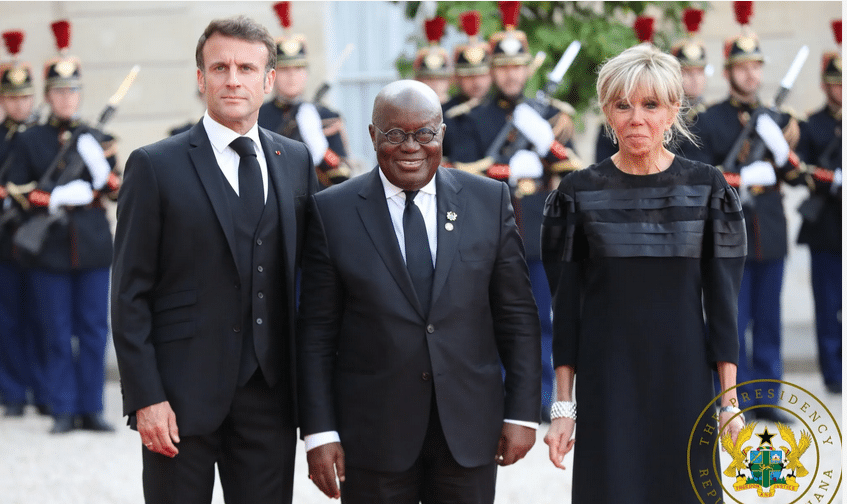
Ms. Yellen commended the President during a meeting with the latter on the sidelines of the Summit for a New Global Financial Pact, in France, on Thursday, June 22.
President Nana Akufo-Addo was one of the key global personalities invited for the Summit, organised by French President, Emmanuel Macron.
A report by Reuters on the sidelines of the meeting, monitored by the Ghana News Agency (GNA), said the two personalities discussed efforts to evolve the multilateral development banks to combat 21st Century global challenges.
They also deliberated on work to mobilise climate and infrastructure financing for Ghana and other African countries during the engagement.
The IMF, in May this year, congratulated the West African nation on the US$3 billion IMF-supported programme approved by the Executive Board.
“We stand with Ghana as it implements reforms to address the current economic and financial crisis and help build a better future for all Ghanaians,” a statement by the Fund noted.
The June 2023 Summit for a New Global Financial Pact is borne out of the cascading consequences of concurring climate, energy, health and economic crises, particularly in the most vulnerable countries.
It aims to propose solutions to finance issues that go beyond the climate question, including access to health and the fight against poverty.
The COVID-19 pandemic, the war in Ukraine and their successive consequences have reduced the fiscal and budgetary space of many countries – affecting their ability to finance their populations’ access to basic social services.
As a result, the United Nations Development Programme (UNDP) noted a decline in human development in nine out of ten countries around the world in 2022, mainly due to a drop in life expectancy and an increase in poverty.
In a statement, the French Minister of Europe and Foreign Affairs, declared the Summit would aim to “build a new contract with the North and the South”, in order to facilitate the access of vulnerable countries to the financing they needed to address the consequences of ongoing and future crises.
Issues at stake at the Summit encompass restoring fiscal space to countries facing short-term difficulties, especially the most indebted countries, as well as fostering private sector development in low-income countries.
The event also seeks to encourage investment in green infrastructure for the energy transition in emerging and developing countries, and mobilising innovative financing for countries vulnerable to climate change.
In order to provide equal access to resources, Kenya’s President William Ruto has requested that the World Bank and the International Monetary Fund (IMF) relax their strict loan requirements for African nations.
“Africa does not want anything for free. But we need a new financial model where power is not in the hands of the few,” said Mr Ruto.
Mr Ruto, who spoke when he met with Franch President Emmanuel Macron, IMF chief Kristalina Georgieva, and World Bank Group president Ajay Banga in Paris on Thursday, urged world leaders attending the New Global Financial Pact Summit to support his call.
Mr Ruto’s administration received $600m (£470m) from the IMF in the autumn and winter of 2022.
It also got $993m from the World Bank in May to help the government fund the budget.
Most African countries struggle with foreign debts due to ballooning inflation and increased borrowing.
The structure of Ghana’s Extended Credit Facility (ECF) Programme with the International Monetary Fund (IMF) suggests a potential extension, according to economist and professor of finance, Professor Godfred Bokpin.
According to the finance professor at the University of Ghana, the pathway to restoring macroeconomic stability by 2026 with the current conditionalities would require an extension of the programme for the objectives to be achieved.
Moreover, the programme, he observed, did not provide the fundamental restructuring the country needed to not enter an IMF programme in future.
“If you look at the objectives and the adjustments in the programme and when we are supposed to restore debt sustainability, and looking at the way we have managed our affairs, especially in an election year, you will almost predict with certainty that there would be an extension of the programme.”
He was speaking at the Graphic-Stanbic Breakfast meeting on the theme: “The current economic situation and you.”
Prof Bokpin noted that theprogramme had proposed a cut down on capital expenditure to restore the economy even though Ghana had a huge infrastructure deficit.
He observed that failure to improve capital expenditure over time would lead to an inability to maintain or add to the stock of infrastructure, which in the medium to long term, would impose restrictions on the growth drivers of the economy.
“If you look at how many hours it takes the average Ghanaian to get to work and the productive hours we spend in traffic, and its effect on productivity, you will have to be unique to think that this country will make if we don’t do something fundamental about this,” he said.
Ghana would, therefore, require bulk of fiscal adjustments coming from debt restructuring to maintain a primary surplus of not be less than 10 per cent to achieve a sustainable debt level within the next five years.
The country, he, however, noted, had restructured less than 50 per cent of its domestic debt.
It had a universe of eligible domestic debt of 259 billion cedis to be restructured as at the end of 2022, he explained.
So far, he said, it had only restructured 85 per cent of GHS98 billion, with more than GHS123 billion debt to be restructured.
This debt, he mentioned, included cocoa bills, Bank of Ghana overdraft extension to government, and pension fund.
As far as external debt was concerned, he said Ghana had a financing gap in terms of balance of payment of about $15 billion, while the IMF was providing US$3 billion.
That, he noted, left the country with no option than to rely on external debt restructuring.
“Ghana is looking forward to more than US$10 billion in debt relief, fresh funding from external bilateral and external commercial partners. Is that not too much to ask from somebody else?” he asked.
He called for prudent measures to manage the revenue, generated rather than introducing more taxes, which was often lost to corruption and wastage.
Mr Benjamin Boakye, Executive Director for Energy Think Tank, Africa Centre for Energy Policy, urged the government to “meet citizens halfway’’ by implementing strategic reforms in the public sector – by downsizing government, improving monitoring of procurement, and reducing waste in the energy sector.
He said the biggest crime of the country was the procurement system.
“The procurement system has been consistently reviewed but we know that corruption is so massive in our procurement process,’’ he stated.
To buttress his point, he said that a recent track of contracts awarded by the government to his outfit revealed that many governments contract above one-million dollars did not go through a competitive tendering process.
To improve accountability and advocacy to address this challenge, he charged the citizens to be critical of certain ‘’ bad decisions’’ of the government because the negative implication of those decisions were not selective.
“It is not enough to say I am minding my business because when the decisions start biting like the we experienced, you would suffer regardless of who you are, but ensuring that the government works for the people is the job of all of us,’’ he stressed.
Mr Timothy Mugodi, Head of Corporate and Investment Banking of Stanbic Ghana, advised the accumulation and building of reserve at the micro and macro- economic levels to build resilience against economic downturns.
‘’We all need to create some reserve from whatever we earn so that we can allocate a percentage of that into savings so that when we go through a troubled patch, you are able to cope,’’ he said.
Professor Godfred Bokpin, an economist and lecturer at the University of Ghana Business School (UGBS), has called for the resignation of President Akufo-Addo, citing the inability to effectively govern with a maximum of 40 ministers.
Bokpin argues that the International Monetary Fund (IMF) program secured by the country is not a definitive solution to the ongoing economic crisis. He stresses the importance of the government implementing additional measures alongside those recommended by the IMF.
The academic suggests that the government should reduce the number of ministers and consider dissolving unnecessary agencies during these challenging times.
Additionally, merging certain ministries could help curtail government expenditure.
“Why can’t we do that? If any president comes and says that he can’t do that, he should resign.
“We are not looking for perfect people to govern this country because we can’t get that here. If the president cannot govern this country with less than 40 ministers, he should step down.
“We said that government with this number of people because we don’t have the budget to sustain all of that. Collapse that, sell the V-8s,” he said.
Professor Bokpin was speaking at the Graphic Business/Stanbic Bank Business Meeting. The theme was “The Current Economic Situation and You.”
The economist also explained that the IMF is not an entity that embarks on recovering economies by itself.
According to him, the international body does not have a single case study of a country that it has transformed economically.
He explained that Ghana use to shine under the body but the country presently shows otherwise.
“This is how the IMF works. If any of us is thinking that the IMF certainly will come and transform our economy, IMF doesn’t do that.
In fact, IMF doesn’t have a single case study of a country they have transformed economically. In the time past, Ghana use to be a shining example of IMF interventions but this is where we are now.
The lecturer, therefore, indicated that the country needs to decide on specific interventions or strategies to achieve the “broad fiscal policy framework” prescribed by the IMF.
The Minister of Finance, Ken Ofori-Atta, has outlined some reforms the government is embarking on to ensure the economy returns to stable levels.
According to him major sectors of the economy like the energy and cocoa sectors will under some major reforms to reduce the losses.
He added that the reforms which are aimed at sustainably reducing losses in the energy sector, will be outlined in the updated Energy Sector Recovery Plan (ESRP), which will be approved by Cabinet by the end of June 2023.
Ofori-Atta whiles addressing a press conference on June 19, 2023, he stated it will be accompanied by, amongst others, the: i. Operationalization of a framework to guide the granting of energy sector subsidies by the end of June 2023;
ii. Implementation of an inter-utility debt settlement framework on a quarterly basis starting from June 2023; and
iii. Implementation of a mechanism to enforce the guidelines of the Cash Waterfall Mechanism (CWM) and Natural Gas Clearinghouse (NGC) by end-June 2023.
The Finance Minister who is quite optimistic about the country’s recovery added that similar reforms will be instituted in the cocoa sector as well.
He said: “Similar reforms are envisaged under the PC-PEG to revamp the Cocoa Sector and reduce/eliminate the annual losses of Cocobod and its indebtedness.
“The reforms in the Cocoa sector include the implementation of a turnaround strategy, to be approved by Cabinet by end-June 2023. This is expected to address cocoa pricing issues, Cocobod oversight challenges, introduce cost rationalisation measures, and a phase-out of quasi-fiscal spending.”
Other structural reforms to entrench fiscal discipline and bolster transparency include reforms to enhance revenue administration and tax policy, operationalization of the Human Resource Management Information System, enhancing spending controls and prevention of arrears build-up, and streamlining of earmarked funds.
In addition, Government is transitioning from Central Government reporting to General Government, and from cash to accrual reporting, the minister said.
Government to secure significant support from our multilateral partners – Finance Minister.
As part of the program funded by the International Monetary Fund (IMF), the nation has until the end of June 2023 to meet three critical requirements.
The country’s compliance with conditions which encompass fiscal operations, financial sector stability, and energy sector reforms – and similar terms by the end of September 2023 – is pivotal to unlocking the first review of the Extended Credit Facility arrangement in November 2023 and receiving subsequent tranches of financial support: the second tranche of another US$600million and five other tranches of US$360million each after the semi-annual reviews are successfully concluded.
The initial condition necessitates conducting a comprehensive stock-taking of payables across government agencies, devising a clearance plan, and implementing structural reforms to prevent future arrears.
The aim is to gain clarity on outstanding payments, ensure timely clearance and integrate commitment controls with the Government Integrated Financial Management Information System (GIFMIS). To promote fiscal discipline, sanctions under the Public Financial Management (PFM) Act will be enforced… accompanied by mechanisms to monitor expenditure beyond budgetary allocations. By June’s end, a strategy to prevent arrears’ build-up will be formulated, emphasising procurement prioritisation for approved projects and purchase orders.
The second condition focuses on fortifying the country’s financial sector and rebuilding institutions’ buffers, working in collaboration with the IMF. The Bank of Ghana (BoG) will implement strategies to address the impact of domestic debt exchange and macroeconomic challenges. Incentives for early recapitalisation, enhanced disclosure requirements and restrictions on undercapitalised banking activities will be introduced. Dividend payments by financial institutions lacking adequate capital buffers will be prohibited.
In addition, risk-based supervision will be promoted to curb excessive risk-taking, while government solvency support will encourage private capital injections and structural reforms. Recapitalisation of state-owned banks will receive priority, ensuring their future viability and a level playing field with private banks.
The third condition stipulates the publication of the updated Energy Sector Recovery Plan after Cabinet approval. The plan must encompass well-defined measures and timelines. Additionally, negotiations on power purchase agreements (PPAs) to mitigate the take-or-pay liability should be concluded. Strategies to enhance the performance of the Electricity Company of Ghana (ECG) and other state-owned enterprises (SOEs) will be formulated, along with reforms to reduce revenue shortfalls caused by subsidies. By the end of 2023, a new policy directive on the procurement of new Independent Power Producers (IPPs) will be published to alleviate the state’s commercial burden.
In a related development, an IMF team led by Stéphane Roudet recently concluded its visit to Ghana from June 8 to June 15. The discussions centred on the country’s economic progress and implementation of the IMF-supported programme approved in May 2023.
Mr. Roudet acknowledged positive signs of stability in the economy: such as decreased inflation, increased international reserves, and a more stable exchange rate. The authorities’ compliance with key commitments will be formally evaluated during the Extended Credit Facility arrangement’s first review in November.
Throughout the visit, IMF staff engaged with high-level officials including President Akufo-Addo, Vice President Mahamudu Bawumia, Finance Minister Ken Ofori-Atta, and Bank of Ghana Governor Ernest Addison. Meetings were also held with representatives from government agencies, parliament’s Finance Committee, the private sector, and civil society.
The IMF team expressed appreciation for the constructive engagement and support received from Ghanaian authorities and stakeholders during the mission.
Successful completion of the IMF-supported programme’s conditions will bolster economic foundations and enhance confidence among international investors and lenders. Acknowledgment by the IMF team of the economy’s stabilization indicates a positive trajectory for the country’s growth. However, strict adherence to the timeline and effective implementation of the required measures remain crucial for the government and its stakeholders.
From June 8 to 15, an IMF staff team led by Stéphane Roudet visited Ghana as part of its regular interaction with Ghanaian authorities and other stakeholders.
The discussions focused on recent economic developments and implementation of the Fund-supported programme approved on May 17, 2023.
At the conclusion of the visit, Mr Roudet issued a statement saying: “During the visit, we discussed recent macroeconomic developments”.
“Against a complex global economic backdrop, the Ghanaian economy is showing signs of stabilisation, with softening inflation, an increase in international reserves, and a less volatile exchange rate”, he observed.
He reported: “We also took stock of the authorities’ progress in meeting key commitments under the Fund-supported programme“, noting: “These will be formally assessed in the context of the first review of the Extended Credit Facility arrangement, which is expected to be undertaken in the Autumn”.
Mr Roudet pointed out that in discussing the progress on the debt restructuring operations, “we reiterated that timely restructuring agreements with creditors are essential to secure the expected benefits of the Fund-supported programme”.
He said: “IMF staff held meetings with President Akufo-Addo, Vice President Bawumia, Finance Minister Ofori-Atta, and Bank of Ghana Governor Addison, and their teams, as well as representatives from various government agencies, the Parliament’s Finance Committee, the private sector, and civil society”.
He said the staff “would like to express their gratitude to the Ghanaian authorities and other stakeholders for their constructive engagement and support during this mission”.
TheInternational Monetary Fund(IMF) has stated that Ghana’s economy is gradually recovering following the approval of the Fund-Supported program on May 17, 2023.
This was captured in a statement issued by the IMF after its Staff Mission led by Stephane Roudet, visited Ghana from June 8 to June 15, 2023.
The visit, according to the IMF, was part of its regulator engagements with Ghanaian authorities and other stakeholders.
Its Mission Chief, Stephane Roudet, in a statement noted that “the Ghanaian economy is showing signs of stabilisation, with softening inflation, an increase in international reserves, and a less volatile exchange rate.”
Mr Roudet noted that during their visit, the discussions focused on recent macroeconomic developments against a complex global economic backdrop.
The IMF was however quick to add that “timely restructuring agreements with creditors are essential to secure the expected benefits of theFund-supported programme.”
Issues discussed during the visit
The IMF statement also added that discussions focused on recent economic developments and implementation of the Fund-supported programme approved on May 17, 2023.
It also stated that “the Fund took stock of the authorities’ progress in meeting key commitments under the Fund-supported programme.”
The IMF maintained that these discussions were done in the context of the first first review of the Extended Credit Facility arrangement, which is expected to be undertaken in the Autumn that is November 1 2023.
It added that in discussing progress on the debt restructuring operations “we reiterated that timely restructuring agreements with creditors are essential to secure the expected benefits of the Fund-supported programme.”
Who did the IMF engage?
The IMF staff held meetings with President Akufo Addo, Vice President Dr Bawumia, Finance Minister Ken Ofori-Atta, and the Bank of Ghana Governor Dr Ernest Addison and their teams
The rest are representatives from various government agencies, the Parliament’s Finance Committee, the private sector, and civil society.
The Staff thanked the Ghanaian authorities and other stakeholders for their constructive engagement and support during this mission.
Policy Analyst and Economist, Dr. Theo Acheampong, cautions that Ghana may face difficulties in obtaining debt relief of around $10.5 billion from foreign creditors, including bilateral lenders.
According to him, experiences from Zambia and others suggest that the road ahead for the nation to secure $2.6 billion annually in debt relief for the next four years will be difficult.
The country has already submitted a proposal on debt restructuring to its official creditors.
But speaking to Africa News, Dr. Acheampong said the country may not get a favorable deal from the external creditors.
“What Ghana wants to do is over the course of the next three, four years under the IMF programme, get as much as 10 and half billion dollars of relief coming from the creditors. So more than half of the $20 billion debt is what it’s looking to get from them [external creditors] and that translates to about $2.6 billion every year that Ghana hopes to get in the form of relief or retrieve from these creditors.”
“It’s going to be a bit difficult because we’ve seen similar instances with the likes of Zambia. But there’s been a major contestation around how we treat certain creditor groups”, he explained.
He furthered that Ghana is too much exposed to Eurobonds and other commercial loans, adding, “So I think, the road ahead is going to be quite challenging in the sense that all the $2.6 billion they [creditors] need to get every year, it probably will not amount to that and this is just on the basis of some of the evidence we’ve seen with other countries that have attempted to go down this road”.
Continuing, Dr. Acheampong said “It does make it quite difficult largely because most of the commercial creditors have different obligations to their shareholders, but also because Ghana in a way defaulted on making the interest payment on a number of these debt obligations since December of last year”.
Again to him, it does make the process rather much more complicated since Ghana has already indicated that it is looking at haircuts of about 30% to 50%.
“I think that is going to be a bitter pill to swallow for a number of these commercial creditors”, he added.
Government sends proposal on debt restructuring to official creditors
The government is said to have sent a proposal on the restructuring of its external debt to its official creditors.
According to Reuters, the ‘working proposal’ is however not legally binding.
Staff from the International Monetary Fund (IMF) are scheduled to arrive in Accra this week for a mission visit aimed at monitoring the progress of Ghana’s Economic Recovery Programme.
During the visit, the IMF team will engage with various stakeholders involved in the implementation of Ghana’s programme.
This visit holds significance as it marks the first review since Ghana entered into a programme with the IMF on May 17, 2023.
However, it is important to note that this mission visit “ is not a review of Ghana’s Programme, but a regular Mission Visit to track progress of the country’s programme,” a source told Joy Business.
The mission visit to Ghana will be led by Stephane Roudet, the Mission Chief for Ghana from the Fund. As part of their visit, the team will hold meetings with key figures such as Vice President Dr. Mahamudu Bawumia, Finance Minister Ken Ofori-Atta, and representatives from the Bank of Ghana.
Furthermore, the IMF team will engage with the Finance Committee of Parliament and various interest groups. These meetings aim to ensure the participation and collaboration of all relevant parties in the implementation of the programme.
The IMF team will assess the government’s advancement in meeting the targets set for the end of June 2023. Their visit is expected to conclude by June 16, 2023.
Ghana has been grappling with a severe economic and financial crisis, characterized by an unsustainable debt burden.
The country has been significantly impacted by a combination of pre-existing vulnerabilities and external shocks, including the COVID-19 pandemic and the conflict in Ukraine.
These factors have contributed to mounting financing pressures, a devaluation of the national currency (cedi), diminishing international reserves, a slowdown in economic activity, and high levels of inflation. In view of this, the government ran to the IMF for assistance.
On May 17, 2023, the IMF Executive Board granted approval for a 36-month Extended Credit Facility (ECF) arrangement for Ghana, amounting to SDR 2.242 billion (approximately US$3 billion).
This decision paved the way for an initial disbursement of SDR 451.4 million (about US$600 million), with the remaining funds set to be disbursed in subsequent tranches every six months, subject to program reviews endorsed by the IMF Executive Board.
The International Monetary Fund (IMF) has proffered three policies including acquisitions and mergers of banks and non-banks to mitigate the possible systematic financial instability in Ghana.
These policies captured under the Risk Assessment Matrix contained in the recent IMF country report on Ghana, aim to mitigate risks and ensure the stability of the banking and Non-Bank Financial Institutions (NBFIs).
The first policy suggests strengthening financial safety nets and closely monitoring the liquidity and asset quality of banks and NBFIs.
The second policy involves designing an appropriate strategy to recapitalize banks and NBFIs. Lastly, the IMF encourages acquisitions and mergers as a means to address any necessary consolidation in the financial space.
Strengthen financial safety nets and closely monitor bank and NBFIs liquidity as well as asset quality.
Design an adequate bank and NBFIs recapitalization strategy
Encourage acquisition, mergers if needed”
According to the IMF, countries with weak banks and non-bank financial institutions are at risk of insolvencies when they experience significant fluctuations in real interest rates, risk premia, and asset prices. These fluctuations are often observed during economic slowdowns and policy changes.
The IMF emphasises that such insolvencies can have far-reaching consequences, causing disruptions in markets and unfavourable effects that extend beyond national borders.
“Sharp swings in real interest rates, risk premia, and assets repricing amid economic slowdowns and policy shifts trigger insolvencies in countries with weak banks or non-bank financial institutions, causing markets dislocations and adverse cross-border spillovers” It stressed.
Although the likelihood of this happing in tagged as MEDIUM, the Fund, however, indicated that global factors have intensified the consequences of substantial reductions in domestic debt on banks’ capital adequacy. These haircuts directly impact the banks’ holdings of sovereign claims and have adverse effects on their ability to lend. As a result, this situation hampers credit availability for the private sector and ultimately dampens economic activity – the potential impact on Ghana’s financial sector could be HIGH.
The IMF also revealed the recent Domestic Debt Exchange Programme (DDEP) in Ghana which exchanged old sovereign bonds for new ones has affected the health of the country’s financial sector. Banks and other financial institutions had invested a significant amount of money in government bonds, but now the government has reduced the interest rates and extended the time they have to be paid back. As a result, the value of these bonds has decreased, causing financial institutions to face a significant financial challenge.
“Domestic bonds were widely distributed across the financial sector in Ghana, representing the most important asset class held by commercial banks, pension funds, asset management companies, and insurance companies. Banks held 30 to 50 per cent of their total assets in government securities before the DDEP—with especially high exposures in the state-owned banks—and relied significantly on income from these securities.
The coupon reductions and maturity extensions in the recently completed DDE mean that the value of these assets will decline to about 70 per cent of the par value. This revaluation represents a significant shock to the balance sheets of these financial institutions” the report indicated.
In announcing the success of the DDEP, government indicated it was putting plans in place to establish a GH¢15 billion ($1.5 billion) Ghana Financial Stability Fund (GFSF) which will be supervised by the Bank of Ghana. The GFSF is to provide liquidity to banks that participated in the DDEP. The World Bank has committed $250 million to support the racialization plan with the remaining amount expected to be funded by government.
According to the IMF report, “government solvency support will be designed to minimize costs and moral hazard, incentivise private capital injections, foster structural reforms improving operational efficiency, and allow for an orderly, early government exit.
“When acting in its capacity as shareholder, i.e., for state-owned banks, the government will frontload any necessary recapitalizations of state-owned banks, which will be underpinned by credible plans to ensure the future viability and a level playing field with private banks.”
Ghana’s financial sector has already gone through a lot of turmoil during the 2017 banking sector clean-up which saw a reduction in the number of banks operating in Ghana from 34 to 23, whilst 347 micro-finance institutions, 15 savings and loans, and eight finance houses had their licenses revoked. This exercise cost the state about GH¢25 billion and takes a pivotal position in Ghana’s sustainable debt portfolio.
The IMF country report on Ghana has disclosed that “the fiscal cost of the financial sector recapitalization (estimated to have reached 7.1 per cent of GDP over 2017-21) has led to an increase in the government deficit and debt. Additional recapitalization costs are expected in the coming years resulting from the domestic debt restructuring envisaged in 2023—some 2.6 per cent of GDP are included in the DSA’s baseline.”
Banks operating in Ghana have up to September 2023 to provide their respective recapitalisation plans to the Bank of Ghana.
World Bank (WB) Country Director to Ghana, Pierre Frank Laporte, says Ghana’s energy sector debt is a major contributor to her debt woes.
In an interview monitored by GNA, the country director indicated that his outfit had identified certain factors that were driving the country’s debt situations.
According to Mr Laporte, one of the factors the bank has identified is the energy sector.
He said the deficiencies in the sector characterised by the tariff systems and management issues coupled with expensive power purchases by the state in addition to the transmission losses, were the major problems in the energy sector driving Ghana’s debts.
He said the mismatch between the production cost of the Independent Power Producers (IPPs) vis-à-vis how much consumers paid led to an upsurge of debts since the Government could not make financial commitments to them (IPPs).
Mr Laporte also said the Power Purchasing Agreements (PPAs) the Government had signed were expensive. In addition to the exorbitant power purchases the country was paying for energy it does not use due to the ‘’take or pay contracts.’’
‘’In the case of Ghana, those contracts that have been signed as PPAs are just expensive and the kind of PPAs signed are take or pay. You pay although you do not use it. The fact is that in the past few years, Ghana entered into an agreement at the wrong rate and the wrong price, and it has impacted the debts situation.’’
He asked the Government to pursue some reforms in the areas of tariff adjustments, addressing the transmission losses through improved infrastructure and restructuring the power purchasing agreements consistent with the energy demands of the country to reduce a significant portion of the debts.
The WB Country Director acknowledged the progress made thus far via the recent increment and subsequent approval in tariff by the Public Utility Regulatory Commission (PURC), saying much could be achieved if the intended reforms in the energy sector were implemented.
He subsequently advised the Government to take advantage of the West African Power Poll, to provide cheap electricity for its people and industry.
According to the Fitch Ranks, the energy sector is the biggest driver of the national debt as the West African Country currently owes independent power producers to the tune of $1.58 billion.
Fitch Ranks also says the country had initially reached out to the IPPs to restructure their debts in view of the External and Domestic Debt Restructuring but the companies objected to the proposal.
The World Bank is urging the government to reconsider some of the Power Purchase Agreements (PPAs) signed as part of the International Monetary Fund (IMF) bailout to help the economy recover.
According to the bank, many of the PPAs that the government signed with Independent Power Producers (IPPs) are expensive.
The Country Director of the World Bank with responsibilities over Ghana, Sierra Leone and Liberia explained that many of the country’s PPAs signed for power generation are very expensive and wrong.
Mr Pierre Frank Laporte made the call for the review of PPAs on Accra-based Joy FM’s 6:00 am news on Friday, June 2, 2023.
He said the kind of PPAs Ghana signed means the country is paying more for power generation when it is not supposed to be so.
“The fact is Ghana entered into some PPAs that were wrong. These types, in our view, were at the wrong rate and at the wrong prices,” he said. “And today the country is being billed for many of these wrong PPAs.”
He said there is a need for the government to restructure some of these contracts.
“I know that the government has started some talks with the IPPs to renegotiate some of these PPAs,” he said.
Ghana’s currency is headed for one of the greatest rallies in the world, following the West African country’s $3 billion agreement with the International Monetary Fund, which offered investors faith that the country may recover from last year’s debt crisis.
The cedi was the best performer worldwide against the dollar in the runup to the IMF deal, which was sealed mid-month. That was the latest in a series of violent swings since Ghana unilaterally suspended payments on most of its external debt in December. The currency is poised to end the month with a 5.3% advance, the fourth-biggest of about 150 currencies tracked by Bloomberg.
The hope now is that the IMF program helps the nation to bolster its finances and work its way toward regaining access to global markets. The deal, which includes an immediate disbursement of $600 million, was approved after the country completed the first part of a domestic debt exchange program.
“I see the cedi regaining stability with a predictable trajectory,” Courage Boti, an economist at GCB Capital in Accra, said. At the same time, the gains may be set to fade after the initial jump this month, he said.
The nation’s dollar securities have also outperformed in May, handing investors a return of 7.2% compared with the average loss of 0.8% for emerging and frontier peers in a Bloomberg index.
“Multilateral support should help stabilize FX reserves and the authorities have committed to ending Bank of Ghana financing of the government deficit,” said Samir Gadio, head of Africa Strategy at Standard Chartered Bank. “This may help anchor the cedi in the coming months.”
Ghana’s currency is poised for one of the strongest rallies globally after the West African nation’s $3 billion pact with the International Monetary Fund gave investors hope it can climb back from last year’s debt crisis.
The cedi was the best performer worldwide against the dollar in the runup to the IMF deal, which was sealed mid-month. That was the latest in a series of violent swings since Ghana unilaterally suspended payments on most of its external debt in December. The currency is poised to end the month with a 5.3% advance, the fourth-biggest of about 150 currencies tracked by Bloomberg.
The hope now is that the IMF program helps the nation to bolster its finances and work its way toward regaining access to global markets. The deal, which includes an immediate disbursement of $600 million, was approved after the country completed the first part of a domestic debt exchange program.
“I see the cedi regaining stability with a predictable trajectory,” Courage Boti, an economist at GCB Capital in Accra, said. At the same time, the gains may be set to fade after the initial jump this month, he said.
The nation’s dollar securities have also outperformed in May, handing investors a return of 7.2% compared with the average loss of 0.8% for emerging and frontier peers in a Bloomberg index.
“Multilateral support should help stabilize FX reserves and the authorities have committed to ending Bank of Ghana financing of the government deficit,” said Samir Gadio, head of Africa Strategy at Standard Chartered Bank. “This may help anchor the cedi in the coming months.”
Government’s decision for the country to return to the International Monetary Fund (IMF) arguably came as a shock to many Ghanaians, especially major personnel of the New Patriotic Party (NPP), according to the Ashanti Regional Chairman of the party, Bernard Antwi-Boasiako.
Prior to the government’s announcement on Ghana’s quest for IMF support in July 2022, President Akufo-Addo and his officials had initially vowed not to seek support from the fund, despite the apparent economic challenges.
10 months down the line and some NPP personnel are expressing how they truly felt about that announcement.
During a press briefing organised to mark the region’s current NPP leadership’s first-year anniversary,
Mr Antwi-Boasiako, popularly known as Chairman Wontumi, on Monday, May 29, 2023, revealed that he was just as shocked as every other Ghanaian was when the government declared its intention to return to the Bretton Woods Institution.
“The time you announced that you were going to the IMF, actually, we were surprised and confused,” he said.
However, he said he later came to realise that the President meant no evil for the country.
“Today, he has proven to us that God chose you [the President] at this difficult time for you to be a leader,” he added.
He made these remarks during a press conference organised to mark the region’s current NPP leadership’s first-year anniversary.
Among other things, he touted the achievements of the government under the leadership of President Akufo-Addo and also thanked him for allowing himself to be used as ‘a vessel to save Ghanaians.’
After several rebuttals against claims of Ghana ever returning to the IMF under the leadership of President Akufo-Addo, the government, through some officials, including Information Minister, Kojo Oppong-Nkrumah and Deputy Finance Minister, John Kumah, finally conceded and made a u-turn on its stance regarding government seeking support from the International Monetary Fund (IMF).
The Finance Minister, Ken Ofori-Atta and his Deputy, John Kumah, had on various occasions disputed assertions that the country would eventually return to the IMF. Even a few days before the announcement, the latter had categorically stated while answering questions on the floor of Parliament on behalf of the Minister for Finance, that the country was not returning to the Bretton Woods institution.
“Government has resolved to take necessary and tough measures to restore and sustain macro stability as well as promote credibility and investor confidence through the implementation of government’s fiscal consolidation and debt sustainability measures. We will continue to collaborate with the fund as we stabilise the economy for a strong recovery and revitalisation. As we speak, Ghana is not going to the IMF, but we also want to make it clear that we will continue to work with the Fund for fiscal consolidation and debt sustainability,” he said.
But to the utmost surprise of the entire citizenry, government through a statement signed by the Information Minister, Kojo Oppong Nkrumah, and dated July 1, 2022, indicated that there had already been a conversation between the IMF boss, Kristalina Georgieva and President Akufo-Addo conveying its decision to engage with Fund.
Meanwhile, Ghana has been able to secure a $3 billion bailout from the IMF over three years. It has so far received about GHS 600 million which is the first tranche of money to be disbursed following an agreement and pending fulfilments of certain terms for rest of funds to be released.
Former President John Mahama’s promise to scrap the ex-gratia when given the presidential mantle again in 2024 has sparked several controversies among many, including the Managing Director of the State Transport Corporation (STC), Nana Akomea, who has challenged the ex-president to stop taking it ahead of the elections.
Speaking on Monday, 29th May during a JoyNews interview on the current state of Ghana’s economy and other matters, including Ghana’s IMF bailout, KKD jabbed the government to prioritize the needy, not the greedy.
KKD
Pension schemes such as SSNIT and other insurance covers are enough to sustain the beneficiaries of the ex-gratia.
“Now I think ex-gratia should be scrapped… We have SSNIT. If you pay into that, depending on your profession and position, you may go home with your full salary; some get less.
“So the people who are already in the highest positions and will go home with perhaps their full salary when they go on pension are the ones who are still looking for more.
“Let’s serve the needy, not the greedy, Ghana, listen; serve the needy, not the greedy,” the cultural icon fumed.
He took a swipe at “our elders” and some laws, including some provisions of Article 71, which provides ex-gratia for retired government officials.
“We have to question our elders. Not all our elders are brilliant, and we have to accept that now. From the days of slavery until now.
And some of them looked at the exigencies at the time and put certain things into law, but not all laws make sense.
“There was a time when slavery was in law, so are we going to say it was a good law?” he noted.
KKD called ex-gratia “a bad idea” and wants a complete abolishment of it, however, through right constitutional procedures.
“The ex-gratia idea is a bad idea if the people who are taking it would stand up and say, like the former president, Mahama is saying, you know, I will speak to my people and tell them if I’m going to give you an appointment, you must accept that you will not take ex-gratia, and then they would go through the court processes and parliament.
“We need to scrap it, and we need to do that lawfully.”
Akufo-Addo
While the 1992 Constitution of Ghana does not explicitly mention the term “ex-gratia,” it has become a commonly used phrase to describe the retirement benefits provided to government employees who fall under the scope of Article 71 office holders in the constitution.
Article 71 office holders include the President, Vice President, Speaker of Parliament, Chief Justice, and Justices of the Supreme Court.
Additionally, it includes Members of Parliament (MPs), Ministers of State, political appointees, and certain public servants whose salaries are funded by the Consolidated Fund and who enjoy special constitutional privileges.
According to Article 71(1) and (2) of the Constitution, the determination of salaries and allowances for the Executive, Legislature, and Judiciary, financed by the Consolidated Fund, is the responsibility of the President.
This is made based on the recommendations of a committee, consisting of no more than five individuals appointed by the President and acting upon the advice of the Council of State.