The International Monetary Fund (IMF) has emphasized that Ghana will only gain access to approximately $600 million following a review by its Board of the country’s program.
This is contingent upon Ghana finalizing a debt restructuring agreement with external creditors, with a particular focus on discussions with China, which has proposed a new cut-off date.
Ongoing discussions with the Official Creditor Committee aim to determine an agreed-upon date for the debt restructuring process.
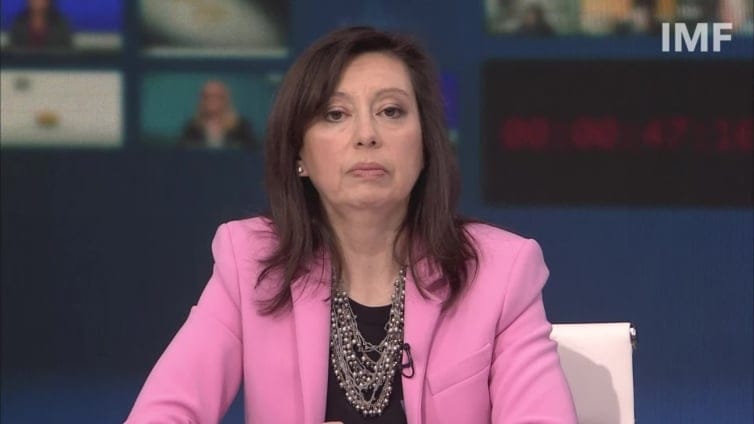
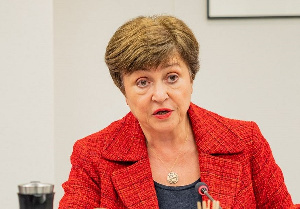
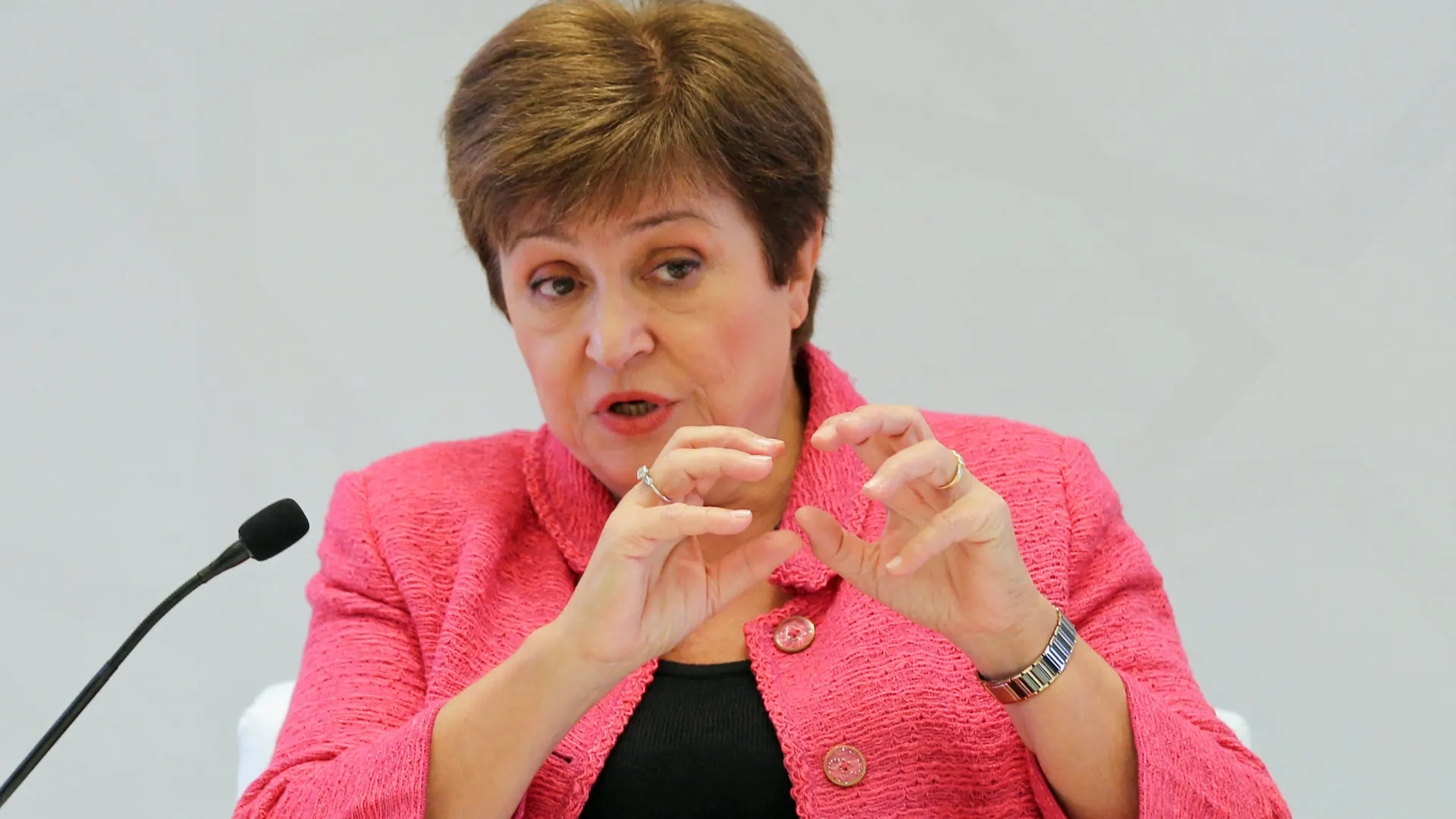
Director of the IMF’s Communications Department, Julie Kozack, stated during a press conference in Washington D.C., USA, that the Board can proceed to approve the $600 million second tranche funding once discussions with external creditors are successfully concluded, and the outcomes are presented to the Board.
“Once this review was completed by the Board, Ghana would have access to $600 million in financing”, she said.
She emphasized the importance of Ghana completing discussions with external creditors.
“To ensure timely completion of the review, official creditors and the Ghanaian authorities will need to reach agreement on a debt treatment, consistent with the objectives of the programme, and in line with the financing assurances that creditors provided in May of 2023”, she said.
She expressed optimism that both parties will reach an agreement soon.
“Discussions between the Ghanaian authorities and the Official Creditor Committee are ongoing, and we certainly hope that an agreement can be reached soon so that we can rapidly bring the program to the Board”.
Regarding Ghana’s macroeconomic indicators, Julie Kozack mentioned that growth in 2023 has demonstrated more resilience than initially anticipated.
“Inflation has come down, and the fiscal and external positions have improved”.
She added that the exchange rate volatility has declined.
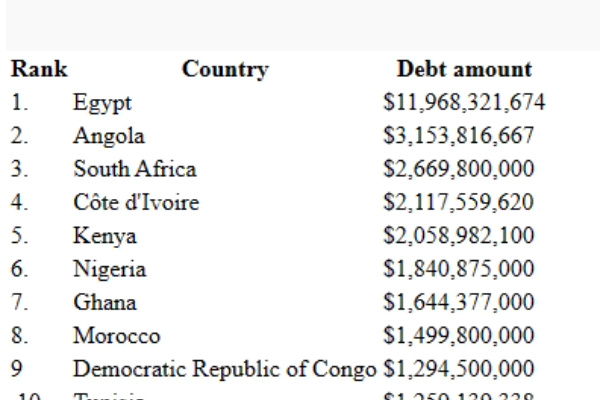
Ghana is ranked 7th among African nations with the highest debts to the International Monetary Fund (IMF), totaling $1,644,377,000.
The Fund’s official website, as of December 6, 2023, discloses the top ten African countries with the highest debts to the organization.
Egypt leads the list with a debt of $11,968,321,674, followed by Angola, South Africa, and Cote d’Ivoire with amounts of $3,153,816,667, $2,669,800,000, and $2,117,559,620, respectively. This ranking underscores the existing economic challenges confronting these nations.
The IMF plays a crucial role in providing monetary assistance to governments facing economic hardships. However, the impact of IMF loans on national economies, particularly in certain African regions where debt becomes unsustainable, raises concerns.
Typically considered a last resort, nations often seek IMF assistance during economic crises to stabilize their financial systems. These loans serve as a financial buffer, alleviating the economic challenges countries may be undergoing.
Furthermore, global financial support from the IMF can temporarily reinforce a nation’s finances until a more sustainable solution to economic issues is formulated.
In addition, an IMF loan can improve a country’s credibility among foreign investors, potentially leading to increased foreign direct investment and improved access to global capital markets.
The International Monetary Fund (IMF) has conveyed optimism regarding the ongoing negotiations between the Ghanaian government and the Official Creditor Committee.
The successful resolution of these discussions is seen as a crucial step toward convening the Board of the Fund to review Ghana’s program.
Once an agreement is reached, it would pave the way for unlocking the $600 million bailout package, which constitutes the second tranche of the $3 billion Extended Credit Facility.
“Discussions between the Ghanaian authorities and the Official Creditor Committee are ongoing, and we certainly hope that an agreement can be reached soon so that we can rapidly bring the programme to the Board, said at a press conference.
“To ensure timely completion of the review, official creditors and the Ghanaian authorities will need to reach agreement on a debt treatment, consistent with the objectives of the programme, and in line with the financing assurances that creditors provided in May of 2023”, she added.
She also stated that the government’s robust policy and reform commitments, as outlined in the three-year, $3 billion program with the IMF are beginning to yield positive results.
“On Ghana, the authorities’ strong policy and reform commitments under the three-year, $3 billion program with the IMF is starting to bear fruit. There are signs of economic stabilization. Growth in 2023 has proven more resilient than initially envisaged, inflation has come down, and the fiscal and external positions have improved”.
“Moreover, exchange rate volatility has declined. On October 6, 2023, our IMF team reached a staff-level agreement on the first review under the program, and once this review was completed by the Board, Ghana would have access to $600 million in financing”, she alluded.
“To ensure timely completion of the review, official creditors and the Ghanaian authorities will need to reach agreement on a debt treatment, consistent with the objectives of the programme, and in line with the financing assurances that creditors provided in May of 2023”, she added.
In December 2022, Ghana sought assistance from the IMF to address economic challenges, particularly related to public finances and debt management.
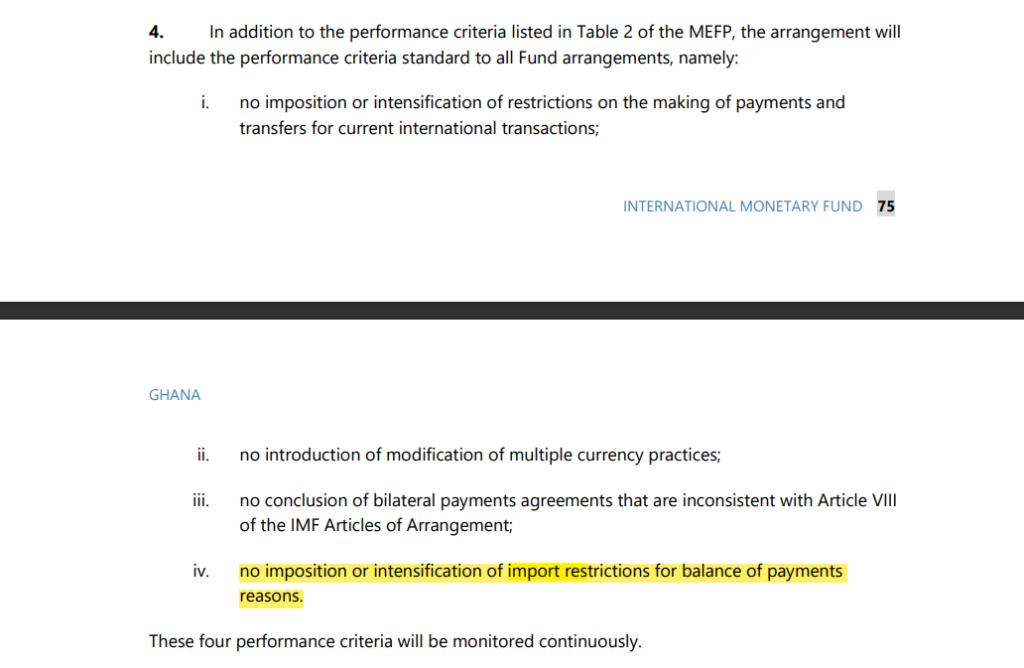
The International Monetary Fund (IMF) has communicated to the Ghanaian government that it cannot impose or escalate import restrictions for balance of payments purposes.
This agreement is part of the IMF bailout package, which commits to providing Ghana with $3 billion in support for its balance of payments between 2023 and 2026.
“No imposition or intensification of import restrictions for balance of payments reasons”, the Fund stressed on page 76 of the programme document. Amongst other things, there are four decisions the Government of Ghana cannot take while it is still under the IMF programme. These decisions align with performance criteria common to all Fund arrangements, which include:
No imposition or intensification of restrictions on making payments and transfers for current international transactions.
No introduction or modification of multiple currency practices.
No conclusion of bilateral payments agreements inconsistent with Article VIII of the IMF Articles of Arrangement.
No imposition or intensification of import restrictions for balance of payments reasons.
The Fund emphasised that these four performance criteria will be monitored continuously.
The Government of Ghana unexpectedly suspended the decision to present the Legislative Instrument (L.I.) before parliament, aiming to restrict the importation of 22 listed products.
The proposed regulation, pushed by the Trade Minister K.T Hammond, sought to place restrictions on the importation of items like rice, cement, fish, sugar, and animal stomachs known as ‘yemuadie.’
The Trade Minister hoped this regulation would boost the local currency and support the growth of domestic industries. However, the Minority in Parliament called for the withdrawal of the regulation, citing concerns about its potential impact on trade and industry.
President Nana Akufo-Addo has appealed to the International Monetary Fund (IMF) and the World Bank to help poor and vulnerable countries access cheaper loans to finance their climate action plans.
He made this call while speaking at the COP28 climate summit in Dubai, where world leaders are meeting to discuss how to tackle the global climate crisis.
Akufo-Addo said that historically, countries like Ghana and other African nations have been paying more for borrowing money than those who have more resources and wealth.
He said that this situation was unfair and unsustainable, and that it could only be reversed if the IMF and the World Bankbecame catalysts for bridging the gap between the rich and the poor.
“Become bridges for countries like my own and the vulnerable countries to be able to access that … Historically the monies that we have access to have been the most expensive monies in the world, we are the poorest people on the people and when we borrow money we pay more for it than those who have money. That is a situation that can only be reversed if the World Bank and the IMF become this catalyst for being able to access the large monies that are out there. I think that for us for what we have seen in Ghana, it is something extremely important. That is one of the important decisions that have been taken by the …. (inaudible)” he said.
Akufo-Addo also highlighted the efforts that Ghana has made to implement its climate action plan, which includes increasing renewable energy, restoring degraded lands, and promoting green jobs. He said that Ghana was committed to achieving its targets under the Paris Agreement, but that it needed more support and resources from the international community.
COP28 is the 28th annual United Nations (UN) climate meeting where governments will discuss how to limit and prepare for future climate change. The summit is being held in Dubai, in the United Arab Emirates (UAE), from 30 November until 12 December 2023.
Governor of the Bank of Ghana (BoG), Dr. Ernest Addison, has expressed expectations that the board of the International Monetary Fund (IMF) will convene before the year concludes to deliberate on the release of the second tranche of the $3 billion fund.
This comes in the wake of the successful review of the initial $600 million tranche. Dr. Addison shared this information during the Q&A session at the 115th Monetary Policy Committee (MPC) press conference held in Accra on Monday, November 27.
He said “We expect the IMF board meeting to take place before the end of the year, which should also trigger another disbursement of foreign exchange.”
During the presentation of the 2024 budget statement to Parliament on November 15, Finance Minister Ken Ofori-Atta highlighted that Ghana achieved all six Quantitative Performance Criteria (QPCs) in the first review of the IMF-supported Post-COVID-19 Programme for Economic Growth (PC-PEG).
The Minister explained that the program undergoes semi-annual assessments by the IMF, involving a staff review mission followed by approval from the IMF Executive Board.
Disbursements under the program are contingent on the successful completion of each review. The initial review involved an IMF mission assessing Ghana’s progress from September 25 to October 6, 2023.
This review covered the assessment of:
i. six (6) Quantitative Performance Criteria (PCs); ii. one (1) Monetary Policy Consultation Clause (MPCC) for inflation; iii. three (3) Indicative Targets (ITs); and iv. nine (7) Structural Reform Benchmarks (SBs) that were due at the end of September 2023.
“I am glad to inform this august house that based on the IMF’s own assessment (at the staff level) after the first review, Ghana met All six (6) of the Quantitative Performance Criteria (QPCs). The QPCs are a floor on net international reserves, ceiling on primary balance on commitment basis, ceiling on contracting non-concessional loan/guarantee, zero collateralized borrowing, and no accumulation of external debt service arrears.
“Two (2) out of the 3 Indicative Targets. The two ITs met are a floor on social spending and a floor on non-oil public revenue. The IT on zero net accumulation of payables was extended largely due to the ongoing negotiations with Energy Sector IPP on legacy debt; .
“Six (6) out of the seven (7) Structural Benchmarks due end-September 2023. The six SBs met are (a) preparation and publication of arrears clearance and prevention strategy, (b) preparation and publication of financial sector strengthening strategy, (c) preparation and publication a strategy for review of earmarked (statutory) funds, (d) preparation and publication of a medium-term revenue strategy, (e) a strategy for indexation of LEAP benefits and (f) BoG to approve capital building buffer plans for banks. The seventh SB on the preparation and publication of an updated Energy Sector Recovery Plan which was expected to be completed at the end of June 2023 was strategically completed and published on the MoF website in October 2023.
“Mr. Speaker, the outstanding performance of Ghana during the first (1st) review paved the way for Ghana to reach a Staff Level Agreement (SLA) with IMF on the 6th October 2023, a record five (5) months after the Programme was approved in May 2023.”
Former Speaker of Parliament, Rev. Prof. Aaron Mike Oquaye, asserts that Ghana will persistently seek financial assistance from the IMF unless it optimally harnesses its natural resources and prioritizes the agricultural sector.
Emphasizing that substantial investments in agriculture would lead to the development of substantial industries, he envisions a future where the nation achieves self-sufficiency and economic resilience.
“Today we are at the IMF for the 17th time, and we shall continue to go to the IMF unless we make good use of the matters of the soil, the fruits of the soil naturally given to us by our God,” Prof Oquaye said.
Speaking at the 2023 Akufo Hall National Best Farmers Lecture held at the University of Ghana in Accra, Rev. Prof. Aaron Mike Oquaye addressed the audience on the topic “Resilience, Technology, and Humanism: The Past, the Present, and the Future of the Ghanaian Farmer.”
The primary objective of the lecture was to promote agriculture as an appealing career option for the youth, aiming to transform their lives positively. Prof. Oquaye emphasized the need for substantial investments in the agricultural sector, envisioning the emergence of large-scale industries that would render the country self-sufficient and economically stable.
Drawing a comparison with India, Prof. Oquaye highlighted how India’s strategic focus on agriculture enabled the country to produce enough food to sustain its citizens and others, insulating it from the impact of conflicts in Russia and Ukraine. In contrast, Ghana’s heavy dependence on these nations for food left it significantly affected by the war, despite possessing vast arable lands.
Prof. Oquaye urged the government to recognize and support the efforts of the University of Ghana, particularly through the Akuafo Hall, in generating interest among the youth in agriculture. He emphasized the importance of self-sufficiency in food production, stating that if Ghana’s farmers could sustain the nation, it would not be vulnerable to disruptions caused by conflicts in other parts of the world.
Adding to this, Prof. Kwaku Oppong Asante, the Akuafo Hall Master, expressed the hall’s readiness to establish a Farmers Center of Excellence.
This center would oversee the guidance of students interested in pursuing farming as a business. Additionally, the hall pledged to provide office space on campus for the National Best Farmer and take charge of organizing an annual farmer’s symposium, all aimed at making farming more appealing to the youth.
Former Deputy Minister for Finance, George Kweku Ricketts-Hagan, contends that Ghana’s excessive dependence on external borrowing compelled the country to seek a bailout from the International Monetary Fund (IMF).
Mr. Ricketts-Hagan attributes the need for the bailout to Ghana’s failure to meet its debt obligations.
He points out that Ghana has significant outstanding debts, including $2 billion to the Paris Club, $3.8 billion to the Chinese government, $3.8 billion to Non-Paris Club members, $8.8 billion to the IMF, and $14.9 billion to the Eurobond market.
“This accumulation of debt positions Ghana as the leading borrower in Africa.
“We went to the IMF because we were not able to service our external and domestic debts,” he stressed.
Mr. Ricketts-Hagan pointed out that Ghana’s external debt stands at $31 billion, approximately equivalent to GHS 377 billion.
Despite implementing a domestic debt exchange program, he expressed concern that the weight of these debts continues to significantly impact the government.
During an interview on the Ghana Yensom Morning Show with Odeyeeba Kofi Essuman on Accra 100.5 FM on Friday, November 24, 2023, Mr. Ricketts-Hagan attributed the government’s return to the IMF to its insatiable appetite for borrowing.
He argued that if the government had not engaged in reckless borrowing, there would have been no need to seek another IMF deal, especially after exiting an IMF program in 2018.
The government should allocate a portion of the second tranche of $600 million from the International Monetary Fund (IMF) to finalize abandoned road infrastructure projects.
This recommendation comes from Professor Peter Quartey, the Director of the Institute of Statistical Social and Economic Research (ISSER) at the University of Ghana.
According to him, addressing the country’s infrastructure challenges and facilitating the transport of goods and services can be achieved by completing these projects.
Professor Quartey made these remarks during the ISSER’s review of the 2024 Budget Statement and Economic Policy in Accra, conducted by an 11-member team of academics from the institute, with support from adb and Stanbic Bank.
The team includes Prof. Peter Quartey, Professor Isaac Osei-Akoto, Professor Augustine Fosu, Prof. Charles Ackah, Professor Festus Ebo Turkson, Dr Ama Fenny, Dr Andrew Agyei-Holmes, Dr Richmond Atta-Ankomah, Dr Ralph Armah, Dr Naa Ama-Asante-Poku, and Dr Gloria Afful-Mensah.
Prof. Quartey emphasized that leaving the abandoned road infrastructure projects incomplete would incur higher costs.
“Road is very significant as it goes to key and production areas. So once the roads are good, you are connected and would enhance production and distribution and reduce the amount of time people spend in traffic,” he stated, as some of the economic benefits of improved road network.
According to Prof. Quartey, poor road infrastructure increased fuel consumption, caused traffic jams, pollution, and productivity delays, all of which had a significant financial cost.
Turning his focus on the budget, he said the 2024 budget was “modest since the government was making efforts not to overspend in 2024.”
He argued that the IMF program alone wouldn’t solve the country’s economic challenges, emphasizing the need for prudent spending and effective revenue mobilization.
Among several recommendations, the ISSER Director urged the government to implement measures to increase tax revenue for budget financing and development projects. Proposals included revising property rates and expanding the tax net to include informal sector workers.
With the government targeting about GH¢176.4 billion in revenue next year and planning to spend GH¢226.7 billion, much of it from domestic sources, Professor Quartey expressed concern about the government’s heavy reliance on Treasury Bills and Bonds. He warned that this approach could negatively impact the economy and crowd out the private sector.
Prof. Quartey suggested reintroducing road tolls to generate revenue for improving road infrastructure.
He also advocated for increased financial investment in the real sector, particularly agriculture, services, and industry, to create jobs and stimulate economic growth.
Highlighting the need for better implementation of the Planting for Food and Jobs 2.0 initiative, he recommended government support for the production of cereals, grains, and meat to reduce reliance on imports.
Additionally, Prof. Quartey proposed a review of the free Senior High School policy for more effective implementation.
He also called for alternative funding sources for the National Health Insurance Scheme, suggesting the creation of an Endowment Fund and private sector involvement in raising financial resources for the scheme.
As some sub-Saharan African nations, Ghana included, are on the path to economic recovery from recent shocks, the International Monetary Fund (IMF) issues a warning against prematurely relaxing stabilization policies.
In Ghana, Finance Minister Ken Ofori-Atta informed Parliament about the government’s efforts to steer the nation’s economy toward growth.
Ofori-Atta attributed the ongoing economic recovery to the swift implementation of robust fiscal and monetary measures throughout the past year and the first half of 2023.
“So far, growth in 2023 has been more resilient than expected, inflation has declined in line with the fundamentals, the fiscal and external balances have improved, and the exchange rate has stabilised,” he said when he delivered the 2024 budget statement in the House on Wednesday, November 15.
The Akufo-Addo administration is committed to upholding discipline in order to keep the economy stable, he added.
After the government finished the first review of the three-year, $3 billion International Monetary Fund External Credit Facility (IMF-ECF) program successfully, he said the country had turned the corner in terms of the economic difficulties.
“We turned the corner when we completed the IMF first review,” he told Parliament while presenting the 2024 budget statement on Wednesday, November 15.
He further assured that the government is poised to “maintain stability and keep growing. and ensure increased growth, currency stability”
“We turned the corner when inflation started declining from 54 1 in December to 35.2 in October 2023, he added. “The recovery is indeed real and is here to stay,” he further assured.
“To ensure that the coming rebound is more than just a transitory glimpse of sunshine, it is important for authorities to guard against a premature relaxation of stabilization policies, while also focusing on reforms to both claw back lost ground from the four-year crisis and also to create new space to address the region’s pressing development needs,” the IMF said.
2023 has been a difficult year for sub-Saharan Africa, with growth expected to slow for the second year in a row to 3.3%, down from 4% in 2022. IMF's @aselassie presents the analysis in the latest Regional Economic Outlook. https://t.co/LapqYnJiFBpic.twitter.com/SlBiuHtGp2
A lecturer in Finance and Economics at the University of Ghana, Dr. Patrick Asuming, has characterized Ghana’s recent programme with the International Monetary Fund (IMF) as the most costly to ordinary Ghanaians.
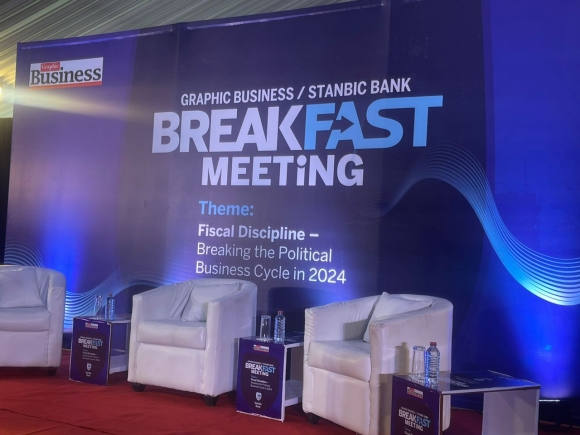
During a panel discussion at the Graphic Business/Stanbic Bank Breakfast Meeting, he expressed concerns over the sacrifices imposed on Ghanaians, describing them as unbearable and problematic.
Dr. Asuming urged the government to ensure that the country does not return to the IMF any time soon. He specifically pointed out that conditionalities such as the Domestic Debt Exchange (DDEP) have brought significant hardships to businesses and households.
“This is the most costly IMF programme for the ordinary Ghanaian by way of the nature and the level of sacrifices that we have been asked to make for the programme to come into being, for both ordinary Ghanaian households and businesses. A big part of the domestic debt exchange and the challenges and problems it has brought on to us, our senior citizens.”
The IMF Executive Board approved, on May 17th, 2023, an SDR 2.242 billion (about US$3 billion) 36-month Extended Credit Facility (ECF) arrangement for Ghana.
This decision enabled an immediate disbursement equivalent to SDR 451.4 million (about US$600 million). The rest is expected to be disbursed in tranches every six months, following program reviews approved by the IMF Executive Board.
According to the IMF, its programs in general seek to boost social spending to improve socioeconomic outcomes and help promote inclusive growth.
Meanwhile, Speaker of Parliament, Alban Bagbin, has accused the International Monetary Fund (IMF) of pressuring the Ghanaian Parliament to pass several bills, including the Affirmative Action Bill, under a certificate of urgency.
Speaker Bagbin suggested that these bills are being pushed by the IMF as part of the conditions for the disbursement of the remaining $3 billion credit facility for Ghana.
Speaking at the Speaker’s Breakfast Meeting, Mr Bagbin on Monday, November 20, asserted that Parliament would not be coerced by the IMF into passing the bills.
“Even in this budget, you can see the arm of the IMF in a lot of provisions in the budget. A critical bill like the Affirmative Action Gender Equality Bill has come to Parliament under a certificate of urgency. Please, it won’t happen; we won’t pass it under a certificate of urgency.”
“There are critical stakeholders we must consult and make sure we go together. We will not be dictated by the IMF; that one, you can be assured. This is a very critical bill that the IMF should know that we need the buy-in of the stakeholders to be able to implement it,” Alban Bagbin said.
The Affirmative Action Bill aims to promote gender equality and increase the participation of women in decision-making roles.
Speaker of Parliament, Alban Bagbin, has accused the International Monetary Fund (IMF) of pressuring the Ghanaian Parliament to pass several bills, including the Affirmative Action Bill, under a certificate of urgency.
Speaker Bagbin suggested that these bills are being pushed by the IMF as part of the conditions for the disbursement of the remaining $3 billion credit facility for Ghana.
Speaking at the Speaker’s Breakfast Meeting, Mr Bagbin on Monday, November 20, asserted that Parliament would not be coerced by the IMF into passing the bills.
“Even in this budget, you can see the arm of the IMF in a lot of provisions in the budget. A critical bill like the Affirmative Action Gender Equality Bill has come to Parliament under a certificate of urgency. Please, it won’t happen; we won’t pass it under a certificate of urgency.”
“There are critical stakeholders we must consult and make sure we go together. We will not be dictated by the IMF; that one, you can be assured. This is a very critical bill that the IMF should know that we need the buy-in of the stakeholders to be able to implement it,” Alban Bagbin said.
The Affirmative Action Bill aims to promote gender equality and increase the participation of women in decision-making roles.
The Affirmative Action Bill is a proposed legislation that seeks to provide gender parity in Ghanaian politics. The bill aims to increase women’s participation in decision-making positions by proposing that at least 40% of public offices be reserved for women.
The bill has been in parliament for over a decade but has not received the needed attention for it to become law.
The IMF Executive Board approved, on May 17th, 2023, an SDR 2.242 billion (about US$3 billion) 36-month Extended Credit Facility (ECF) arrangement for Ghana.
This decision enabled an immediate disbursement equivalent to SDR 451.4 million (about US$600 million). The rest is expected to be disbursed in tranches every six months, following program reviews approved by the IMF Executive Board.
According to the IMF, its programs in general seek to boost social spending to improve socioeconomic outcomes and help promote inclusive growth.
Ghana hopes to get a deal to lower its debt in the next week so it can get more money from a $3 billion loan program from the International Monetary Fund. Finance Minister Ken Ofori-Atta said this.
“Ofori-Atta said that a basic agreement on the restructuring details should be reached next week,” during his annual budget speech in Accra. “We think the creditor committee will make a plan with France and China to give an agreement to the IMF. ”
Ghana’s bonds that need to be paid back in 2049 dropped a little bit in value, to 41. 18 cents on the dollar.
The IMF and Ghana agreed on a plan last month for the first review of the program that began in May. The lender in Washington has said they will give West Africa $600 million more if the country’s lenders agree to specific debt conditions that were promised a few months ago.
Ghana is making changes to almost all of its $50 billion debt to make it manageable under the IMF program. The government has finished making changes to its loans within the country. The next move is to improve $13 billion in eurobonds.
Discussions are ongoing with people who have eurobonds and the government is looking at ideas from two groups about how to deal with the debt.
“He said that in the next few weeks, we will have long discussions with both groups to make sure we reach the goals set by the IMF/World Bank Debt Sustainability Framework. ” “We think things will get better by the end of the year. ”
This month, Fitch Ratings said that Ghana’s credit score got better because the government finished making changes to its debt. This saved them a lot of money.
Ofori-Atta’s budget did not include measures that voters might like because there will be an election next year.
The finance minister explained how they are going to make the economy grow, reduce prices from going up, and make the budget better next year. They said that these plans are starting to work because of the strict rules from the IMF agreement.
He predicted that the economy will grow by at least 2. 8% next year and by 5% in 2027, compared to 2. 3% in 2023 The central bank’s plans to control high prices should reduce inflation to 15% by the end of 2024. In October, the percentage was 35. 2%
“Ghana is improving and getting back on course,” Ofori-Atta said. He said Ghana is committed to keeping the economy stable by being disciplined, kind, and creative.
Other things to know about the budget:
The economy is expected to make 1 trillion cedis for the first time in 2024.
We expect the non-oil economy to grow by at least 2. 1%
Next year, it is expected that we will have a surplus of 0. 5% in our budget.
In 2024, it is predicted that the amount of foreign currency saved will be enough to pay for at least three months worth of imports.
More taxes will be added on plastic packaging, and emissions from factories and vehicles to protect the environment.
The government will look at how much money people can earn without paying taxes.
The government wants to stop charging taxes on electric buses and other public transportation vehicles for eight years.
A 5% flat tax rate will be applied to all commercial properties instead of the current 15% standard rate.
Malawi’s money lost a lot of value, so they borrowed money from the IMF to help their economy.
Mr Chakwera has told all ministers who are in other countries to come back home.
Senior government officials will now receive half the amount of money for fuel that they used to get.
Malawi’s economy has been going through tough times, with not enough petrol and diesel, and prices for things going up a lot.
On TV, Mr. Chakwera said the rules will stay until March 2024.
Some steps to save money were introduced during the Covid-19 pandemic, but they didn’t have much impact because they weren’t strictly enforced.
To help with the high cost of living, the president wants the finance minister to plan for a fair pay raise for all government workers in the next budget review.
He has decided to reduce the amount of income tax that people have to pay in the next budget. This will help workers who are earning less money.
Experts believe that lowering the value of the country’s money may have been necessary to get a loan from the IMF.
Some people are worried that if the currency loses value, prices will go up and make the financial situation in Malawi even worse than it was ten years ago.
Officials say that the bad economy is because of things outside of the country, like a really bad storm and the war in Ukraine.
Minister of Information, Kojo Oppong Nkrumah, has clarified why Ghana’s financial issues surpass the current bailout package that the government is requesting from the International Monetary Fund (IMF).
He emphasized that although Ghana was a victim of international economic difficulties, the country’s current $3 billion bailout support depended on a domestic initiative created by the government.
“Anytime I speak about the IMF, I am quick to mention that the IMF transaction is not the solution to our problems,” he said in an interview on Joy News’ The Probe programme on November 12.
He continued: “The IMF transaction is financing to underpin our PC-PEG [Post Crisis Programme for Economic Growth], which is our programme to recover from the economic challenges that we’ve had.
“The entire world has had economic challenges. In fact, I was watching a speech of the former President Mahama delivered abroad just about a week ago where he explains how the challenges in the global economy affected the Ghanaian economy.
“Everybody knows that there has been a global economic challenge and it has affected Ghana, and various countries have been developing their various plans,” he added.
The government denied in a statement released late last week that it had missed the deadline of November 1 for the release of the second tranche of US$600 million from the IMF bailout.
The minister explained: “The first review has been concluded and Ghana was successful in that review.
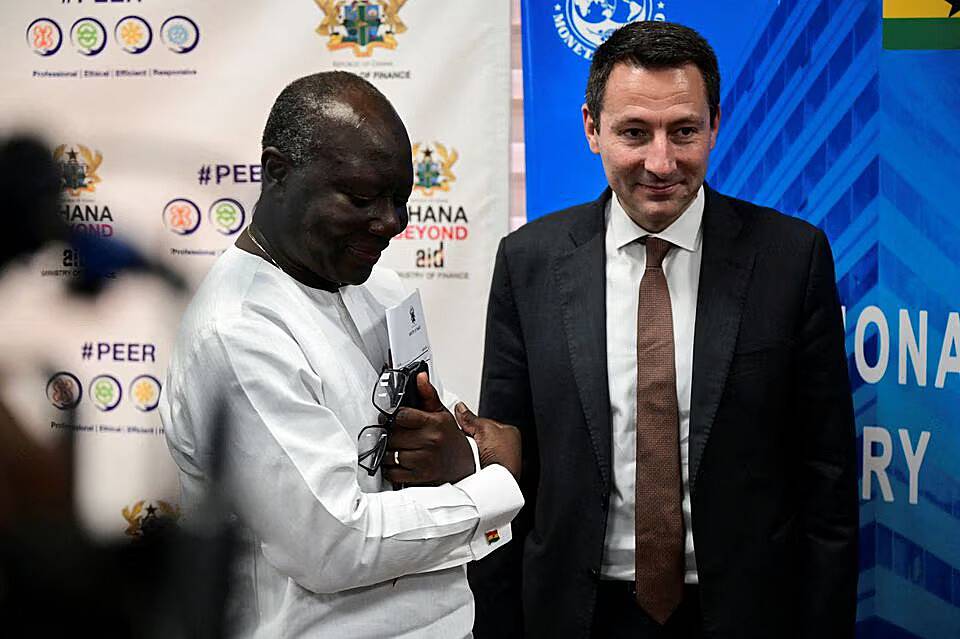
“I think at the end of that review, there was a joint conference between Ghana’s Finance Minister and the Head of the IMF team, and a staff level agreement was signed and announced to undergird our parts of the first review.
“And then it was mentioned that the staff level agreement would have to go to the IMF Executive board which board meets in the 3rd week of November to give its approval, and when that approval is given, then the second tranche would be disbursed,” he stressed.
The economy has been a hot topic in recent months due to a downturn brought on by skyrocketing inflation, declining currency value, and a general decline in the standard of living combined with high living expenses.
Before agreeing to a US$3 billion IMF loan last year, of which US$600 million as tranche one has been credited to the government account, the government repeatedly pointed the finger at the fallout from COVID-19 and the Russia-Ukraine war.
The Ministry of Finance has refuted reports that Ghana missed its November 1 deadline for the disbursement of the second tranche of International Monetary Fund (IMF) funds.
“The attention of the Ministry of Finance has been drawn to above- titled misleading publication on Myjoyonline, about Ghana missing a purported deadline of 1st November, 2023, for the disbursement of the second tranche of International Monetary (IMF) Funds,” a rejoinder by the ministry read.
According to the Finance Ministry, there is no 1st November, 2023 timeline for disbursement of the second tranche of the IMF funds as “no deadline has been set by the IMF for the second tranche disbursement,” which is due to take place after the IMF Executive Board approves the first review.
The Ministry made mention of Table 9 on page 72 of the Memorandum of Economic and Financial Policies (MEFP) published on 17th May, 2023 by the IMF referenced by MyJoyOnline.
“The November 1 stated in this table is an indicative timeline for completion of the first review, based on the observance of the end-June 2023 performance criteria,” the statement added.
The first review was successfully completed on 6th October, 2023, culminating in a Staff Level Agreement (SLA) on the same day.
“Whilst the SLA milestone is an important step towards unlocking the second tranche of $600 million under the programme, the timeline set by the Executive Board for the consideration and approval of the first review, is not 1st November, 2023 as published by Myjoyonline. The exact timeline for the Board date is determined by the IMF Executive Board,” the Ministry reiterated.
Following the clarification, the Ministry of Finance has encouraged the general public and media houses in particular, to seek the facts and truth about any information that comes to their attention, by reaching out to the Ministry for clarification whenever they are in doubt.
Meanwhile, the Ministry says Government of Ghana is making good progress in accordance with its strategic plan to engage the Official Creditor Committee (OCC) of the Paris Club; secure a Memorandum of Understanding on debt restructuring; and go before the IMF Executive Board for approval of the first review.
Member of Parliament for Bawku Central, Mahama Ayariga, has petitioned the World Bank and the International Monetary Fund (IMF) to desist from offering any assistance to the Ghana Financial Stability Fund (GFSF).
In his petition letter, Mr Ayariga noted that the Minister of Finance and Economic Planning, Mr. Ken Ofori Atta, seeks to establish a Ghana Financial Stability Fund (GFSF) using mere guidelines and putting it under the administration of an illegal and unconstitutional body known as Ghana Amalgamated Trust Plc (GAT) based on opaque and legislatively unauthorized management and disbursement mechanisms.
“It is a scheme with potential to deprive private indigenous bank owners the ownership of their assets in these banks after his mismanagement of the financial sector has rendered these banks vulnerable. And it has not been subjected to parliamentary oversight and scrutiny,” he added.
The Bawku Central MP referred the intentional bodies to a publication by the Ministry of Finance and Economic Planning (MOFEP) dated 22nd August 2023 which is said to indicate that “Government of Ghana (GoG) has established a Ghana Financial Stability Fund (GFSF). The Fund is expected to be funded by Government of Ghana and the World Bank/IMF as its major donor.”
In Mr Ayariga’s view, the said document by the Finance Ministry will seek to off load an amount of about $750 million to Ghana Amalgamated Trust (GAT) Ltd to be the main agency responsible for disbursing such funds.
He stated that the Minister of Finance in 2019 had an arrangement with GAT, which was sponsored by the Government of Ghana as a limited liability company under the Companies Act, 2016 (Act 992), as sponsors and with NTHC as trustee shareholder in GAT which arrangement allowed NTHC as trustee to hold shares in GAT on behalf of Government.
“We have contended in court that this is an unconstitutional scheme to transfer public funds to private ownership without the requisite parliamentary approval,” he added.
On 3rd March 2022, the Bawku Central MP noted that an action at the Supreme Court of Ghana to challenge the legality of GAT and the fraudulent activities of GAT and its operations in the case of Mahama Ayariga v. Attorney General & Others (Suit No. J1/20/2022) and the issue is currently pending.
He therefore finds it strange that GAT and MoFEP, knowing well that the case is still pending in court will still want to “undertake an illegality this time on a very large scale.”
Mr Ayariga indicated that the International Monetary Fund (IMF) and the World Bank will be acting in clear violation of the Constitution of Ghana of 1992 “if they lend their support to this arrangement or are in anyway party to it.”
“Article 192 of the Constitution of the Republic of Ghana states categorically that a “public corporation shall not be established except by an Act of Parliament.” Article 179 recognizes the setting up of public corporations as commercial ventures. The current arrangement by which the Government of Ghana seeks to use NTHC Ltd to hold shares in GAT for a commercial venture offends the Constitutional requirement, which vests Government with the authority to only engage in a commercial venture through the medium of a public corporation enacted by an Act of Parliament,” he added.
Former Member of Parliament for the Okaikwei North constituency, Fuseini Issah, has refuted claims made by NPP presidential aspirant and Assin Central MP, Kennedy Agyapong, suggesting that he was offered $800 million to withdraw from the race.
In an interview with Time FM, Mr Agyapong said, “Does he know the number of people who have approached me but for the love of Ghana and the delegates I have said I will never do it?
“The money they offered is $800 million, if he doesn’t know. He should ask Mr Oppong Bio, if that is what they are saying but I said no I will not step down, Ghana first.
“In 2016, you people were not able to buy pickups. How come today you are able to offer me $800 million? So I said I won’t step down…” he stated.
But Fuseini Issah believes it is highly improbable as the government, due to the economic crisis, went for a $3 billion External Credit Facility from the International Monetary Fund (IMF).
According to him, it would be unwise for the government to make such a move when it is working assiduously to see the economy recover.
“$800 million is a lot of money. This country is currently under an IMF programme. We went to the IMF for $3 billion and we are getting tranches of $600 million. Where are we going to get $800 million to give to Honourable Ken Agyapong,” Mr Issah said.
''We went to the IMF for $3B, where will we get $800M to entice him to step down.''
Meanwhile, the campaign team of Vice President Dr Mahamudu Bawumia has outrightly rejected claims by Assin Central MP, Kennedy Agyapong, that their candidate offered him $800 million to withdraw from the New Patriotic Party’s (NPP) flagbearer race slated for November 4, 2023.
Dr Gideon Boako, the spokesperson for the Vice President in a press statement noted that the Dr Bawumia, since he entered the NPP race, has not privately met Mr Agyapong and neither has he nor his camp met the Assin Central MP to “negotiate anything in respect of this contest.”
“The Vice President and his team consider this $800 million claim as absolutely ridiculous, and it shows gross disregard for the intelligence of Ghanaians,” the statement added.
According to the camp, this is so because “Dr. Bawumia is, and has always been confident that by the Grace of God, he will defeat Hon. Kennedy Agyapong quite well on November 4th” thus” has never entertained any wish for him to step down from the contest.”
“It is instructive to note that the latest allegation by Kennedy Agyapong, is a rehash of a similar allegation he made about a month ago, claiming without proof, that he was offered money to step down and be a running mate to Dr. Bawumia – a baseless claim we publicly denied on September 30, 2023.”
“The Vice President is a man noted for his modesty, and he remains committed to his life-long values of serving people with his intellect. While urging the public to disregard such outrageous lies, directed subtly at the Bawumia Campaign, we also reiterate Dr. Bawumia’s commitment to running a decent campaign devoid of personality attacks, lies, and insults to preserve the unity of our great party,” the statement added.
Managing Director of the IMF, Kristalina Georgieva, has noted that African economies faced multiple challenges throughout the year.
She highlighted that these economies were still recovering from the impact of the global pandemic, COVID-19, while simultaneously grappling with high borrowing costs and the rising cost of living.
As African nations strive to overcome their economic difficulties, the IMF remains optimistic that these economies will regain their footing in the upcoming year.
Kristalina Georgieva emphasized that the outlook for 2024 is promising, indicating a gradual strengthening of economic activity and notable growth. Additionally, there’s a positive trend of decreasing high inflation rates and narrowing fiscal imbalances.
“We had very productive discussions on Africa’s economic prospects. This year has been a difficult year for Africa. The region is still emerging from the Covid-19 pandemic and African countries have been hit by high borrowing costs (“funding squeeze”) and a cost-of-living crisis,” She said.
In Ghana, the local economy faced a significant downturn in 2020 due to the outbreak of the COVID-19 pandemic. It remained in a fragile state for an extended period, and the situation was further exacerbated by the Russia-Ukraine war.
In an effort to combat high inflation and stabilize the economy, the government announced on July 1, 2022, its decision to seek a $3 billion financial bailout program from the International Monetary Fund (IMF). Subsequently, an IMF team visited the country from July 6 to July 13, 2022, to engage with Ghanaian authorities regarding potential economic support.
A staff-level agreement between the Government of Ghana and the IMF was successfully reached in December 2022. On May 17, 2023, the IMF’s executive board granted approval for Ghana’s $3 billion loan facility.
The first installment of $600 million was received by the Bank of Ghana (BoG) on Friday, May 19, 2023. The government’s objective with the IMF program is to restore macroeconomic stability and ensure debt sustainability, among other objectives.
Ghana has reached out to theInternational Monetary Fund (IMF) seeking their assistance in tackling the issue of corruption within the country.
This request is in line with Ghana’s commitments under the $3 billion IMF programme, from which Ghana is anticipating a second installment of $600 million in November.
The IMF programme’s primary objectives are to address Ghana’s existing economic challenges and foster transparency and anti-corruption measures.
As part of this comprehensive program, the Ghanaian government has made a formal request to the IMF for technical support to conduct a corruption diagnostic assessment within its governance framework.
This assessment is crucial as it will contribute significantly to the ongoing efforts aimed at updating the National Anti-Corruption Action Plan.
Additionally, the government is set to rectify weaknesses within the current asset declaration system for public officials by enacting a new Conduct of Public Officers Act.
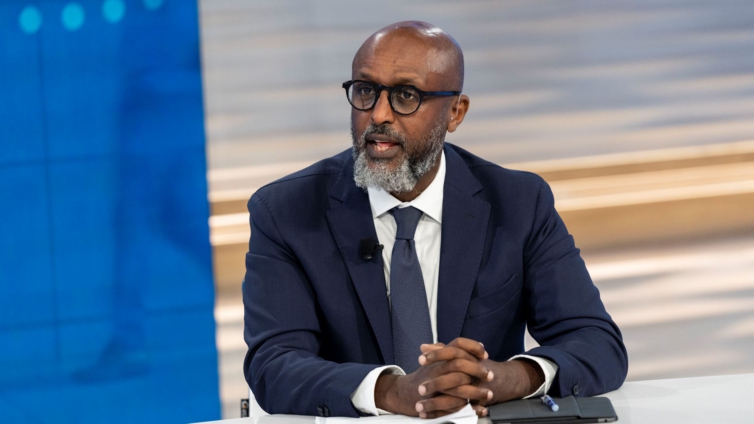
During a press briefing at the IMF-World Bank meetings in Marrakech, Morocco, the IMF’s African Department Director, Abebe Aemro Selassie, provided an update on Ghana’s progress.
He emphasized that this initiative represents Ghana’s dedication to promoting good governance and fighting corruption, as specified in the IMF programme.
Selassie stated, “On the governance diagnostic report, I think the request has been made [but] I’m not sure where we are in terms of being able to provide that, but as soon as we have the resources, we will do that. And it’s just a matter of time, I believe.”
Meanwhile, the IMF has pledged to provide all necessary support to the creditors to ensure that Ghana receives the second installment of IMF funds and can proceed with the programme.
Selassie further explained, “Action is also needed from the creditor side, and I have to tell you that, you know, whereas it took, I think, something like 9 months or more for Zambia to get the official creditor committee to be created, in Ghana’s case it was fairly rapid. So that’s what allowed us to go to the board and get the program approved. And we’re very hopeful that the ongoing discussions among official creditors will also expeditiously allow us to conclude the upcoming review. Again, the most recent Mission reached an agreement with the government on policies that are needed to tackle the most recent issues and also put in place an important budget for next year. So Ghana has done its fair share, and it’s for creditors to take steps, and we’re not going to be asking the government to do more adjustments because creditors haven’t asked either, so you know we will provide all the information necessary so creditors can move to allow us to go to the board as soon as possible.”
The Director of the African Department at the International Monetary Fund (IMF), Abebe Aemro Selassie, has indicated that Ghana has implemented the necessary measures to secure the much-discussed financing assurance from its external creditors.
He mentioned that the IMF is currently awaiting responses from the bilateral creditors.
Mr. Selassie made these remarks in response to questions from journalists after releasing Africa’s Regional Outlook Report during the Annual IMF/World Bank meetings held in Marrakesh, Morocco.
He emphasized the importance of action on the part of the creditors.
He explained,“I have to tell you that whereas it took something like nine months or more for Zambia to get the official creditor committee to be created, in Ghana’s case, it was fairly rapid.”
He further noted that “Ghana has done its fair share, and it’s for the creditors to take steps.”
Mr. Abebe Selassie revealed that the IMF will provide all necessary information for creditors to take appropriate action, allowing them to move forward and present the matter to the Board as soon as possible.
He expressed hope that ongoing discussions among official creditors would facilitate a swift conclusion to Ghana’s upcoming review, emphasizing that the recent mission had reached an agreement with the government on policies to address current issues.
“We will provide all the information necessary, so creditors can move, allowing us to go to the Board as soon as possible,” Mr. Abebe Selassie added.
Regarding Ghana’s First Programme Review and the IMF Board Meeting, it was announced on October 6 that the IMF staff had reached a staff-level agreement with Ghana on the first review of the Extended Credit Facility.
This was a result of discussions led by Mission Chief For Ghana, Stephane Roudet, to evaluate reforms and policy priorities within the context of Ghana’s three-year program under the Extended Credit Facility.
Ghana is expected to secure a Memorandum of Understanding from Bilateral External Creditors, enabling the IMF board to approve Ghana’s First Programme Review and disburse approximately $600 million in November 2023.
The IMF Mission Chief for Ghana indicated that as part of the creditor committee meetings, the IMF itself would move to approve the second tranche of $600 million once a deal is reached.
The IMF Board is scheduled to meet on Ghana’s program on November 22, according to sources knowledgeable about the country’s program in Washington, DC, USA.
Mr. Abebe Selassie described Ghana’s performance under the IMF program as satisfactory, expressing contentment with the progress made in implementing the program.
He noted that significant steps had been taken to address macroeconomic imbalances that were at the root of recent crises.
Regarding the Ghanaian government’s request for IMF support in combating corruption, Mr. Abebe Selassie acknowledged the request and indicated that once resources are available, they will provide the necessary technical assistance for governance diagnostic reports to address corruption-related matters.
Finance Minister, Ken Ofori-Atta, Leader of Ghana’s Delegation to the 2023 IMF/World Bank Annual meetings in Marrakech (Morocco), held a press conference today.
Meanwhile, Ken Ofori-Atta, has characterized the IMF-World Bank Annual Meetings as an opportunity to initiate a fresh start for the global financial structure.
Addressing a Roundtable Discussion on “IMF Policy Priorities,” Mr. Ofori-Atta urged the IMF to bolster the global financial safety net by implementing substantial reforms to the global financial framework, stressing that “we need to stretch the IMF to do more.”
An IMF spokesperson said on Thursday that Zambia, which signed a preliminary agreement in June to restructure a portion of its debt, is close to finalizing a memorandum of understanding with its creditors but it is not yet fully finalized.
“An agreement on the memorandum of understanding is almost finalized and signing is expected soon. “, said this spokesman for the institution, whose Managing Director Kristalina Georgieva had previously prematurely announced a signature.
At an earlier round table discussion organized in conjunction with the annual meetings of the International Monetary Fund (IMF) and the World Bank, which are taking place till Sunday in Marrakech (Morocco), Mrs. Georgieva announced that the deal “has finally been signed.”
The agreement had not yet been finalized, and the signature was anticipated for next week, according to a source familiar with the situation who spoke to AFP.
The G7 finance ministers urged for “the finalization of the memorandum of understanding on the restructuring of Zambia’s debt as quickly as possible” in the communiqué that concluded their talks on Thursday in Marrakech.
This marks the final step in validating the agreement in principle inked in June for the restructuring of $6.3 billion in external debt. This restructuring was one of the stipulations outlined by the IMF in its agreement detailing the aid program with Zambia, aimed at unlocking all disbursements.
Zambian Finance Minister Situmbeko Musokotwane expressed gratitude to all creditors, saying, “All our creditors have been wonderful; thank you all for giving us this opportunity.” He also reflected on the embarrassment of being mired in a debt crisis situation.
Nonetheless, he stressed that such an agreement alone is insufficient to provide the quality of life that young Africans aspire to. He emphasized the need for “better growth that creates jobs, so that we no longer have young people attempting perilous journeys across the Sahara and the Mediterranean.”
Zambia’s debt, which has ballooned in recent years, is estimated at $32.8 billion, with $18.6 billion owed to foreign creditors, particularly China, its primary lender.
In 2020, Zambia became the first African nation to default on its debt, triggered by the onset of the Covid-19 pandemic.
The former president of Zambia, Edgar Lungu, is accused of embarking on substantial infrastructure projects and overextending the country’s indebtedness to China (amounting to $4.1 billion). These projects include airports, roads, schools, factories, and even police stations in the country.
Finance Minister Musokotwane explained, “If you combine what we spend on salaries for our public servants and the servicing of this debt, it represents over 90% of the taxes collected. Now that we’ve got help, we can concentrate the money on the most vulnerable.”
Zambia had secured a $1.3 billion aid program with the IMF in August 2022 and successfully completed the first review in July, allowing the IMF to monitor the implementation of the reforms outlined in the program.
Governor of the Bank of Ghana, Dr. Ernest Addison, has proposed several actions to the International Monetary Fund (IMF) in response to the disintegrated global financial framework that is affecting countries in Sub-Saharan Africa.
During his address at the IMF-African Caucus gathering in Marrakech, Morocco, Dr. Addison urged the IMF to maintain its resolve and modify its lending strategies to align with evolving global circumstances, with the aim of better serving its susceptible member nations.
“In this context, we restate our earlier request for increased concessional financing by aligning PRGT access thresholds with those of the GRA to ensure uniformity of treatment,“ Dr Addison said.
“In addition, we call on the Fund to relax the Poverty Reduction and Growth (PRGT) eligibility criteria to foster access to adequate Fund support while reducing, suspending, or eliminating entirely surcharges for most vulnerable PRGT-eligible members facing acute debt challenges,” he added.
The Governor of the Bank of Ghana reiterated the appeal to the IMF for additional commitments from willing donors to address the shortfalls in PRGT resources.
He emphasized the vital importance of successfully concluding the ongoing 16th General Review of Quotas (GRQ) to strengthen the IMF’s financial standing while safeguarding the quota share of more vulnerable member nations.
In response to the present economic difficulties, countries in Sub-Saharan Africa have been advocating for a transformation in the global financial structure to enable greater access to international markets and increased concessional funding.
I appreciate the opportunity today to speak on behalf of my fellow Governors about making public debt useful for sustainable growth in Africa. But let me first express my deepest commiserations to the authorities and the peoples of Morocco and Libya for the recent devastating tragedies that have claimed many lives, displaced many people, and destroyed properties, while appealing for urgent support from the international community.
Madam Managing Director, African economies are faced with acute debt challenges underscored by rising social and infrastructural needs, amid spillovers from the Covid-19 pandemic, the war in Ukraine, tightening of global financing conditions, and climate-related disasters. Public debt in sub-Saharan Africa (SSA) has now reached levels last seen in the early 2000s.
The resultant increased debt service burden, together with complex creditor composition, has heightened risks to debt sustainability, to the extent that more than half of the SSA members are now in or at high risk of debt distress. Simultaneously, protracted high inflation has constricted the policy space, posing difficult policy trade-offs for many members in the region.
This challenging environment has led to another year of moderated pace of economic recovery, as SSA growth is projected to further decelerate in 2023. While members remain committed to implementing relevant policies and reforms towards enhancing fiscal discipline with the aim of restoring debt sustainability and fostering inclusive and sustainable growth in the continent, a much stronger IMF support would be crucial, amid the current challenging global environment.
Against this backdrop, I would suggest the following for consideration, Madam Managing Director:
▪ Given the fragmented global financial architecture, we urge the IMF to remain steadfast and adapt its lending toolkits to changing global conditions to serve its vulnerable membership better. In this context, we restate our earlier request for increased concessional financing by aligning PRGT access thresholds with those of the GRA to ensure uniformity of treatment.
In addition, we call on the Fund to relax the PRGT eligibility criteria to foster access to adequate Fund support while reducing, suspending, or eliminating entirely surcharges for most vulnerable PRGT-eligible members facing acute debt challenges. We also reiterate our call for additional pledges from willing donors to close the gaps in PRGT resources. We further stress the criticality of a successful completion of the ongoing 16th GRQ to reinforce IMF finances while protecting the quota share of the vulnerable members.
▪ Strengthening multilateral coordination and efficiency of regulatory framework for debt resolution in LICs, through a formidable Global Sovereign Debt Roundtable (GSDR), is paramount. While welcoming the latest developments on Zambia and Chad, we underscore the need to revamp the G20 Common Framework (CF) to ensure timely, orderly, equitable, inclusive, and transparent debt restructuring for distressed members in the region (including, Ghana, Ethiopia, and Malawi). In this regard, we call for a carefully designed debt resolution mechanism, especially, for vulnerable members with large-domestic creditors (as in the case of Ghana) to help avert domestic financial market instability.
In addition, improving debtor-creditor engagements through an enhanced GSDR while strengthening technical support to foster common understanding of all debt issues is macro-critical to bolster a swifter, proactive and systematic restructuring. We also reaffirm the request for debt standstill during times of negotiations to offer immediate relief to debtors and restate our request for multilateral debt cancellation for the most vulnerable members facing acute debt challenges.
• Furthermore, an enhanced IMF’s cooperation with MDBs/RDBs is necessary to facilitate timely provision of MDBs/RDBs’ financial assistance for members facing significant debt and growth challenges. In this context, we restate the call for new SDR allocation through the MDBs/RDBs’ (including AfDB), given their multiplier effects in achieving climate and development goals. We also request that the Fund leverages its close engagements with G20 members to advocate for better lending terms from the ongoing design and implementation of the G20 Capital Adequacy Framework (for MDBs) to avert inadvertent financing ramifications on vulnerable members in Africa.
▪ Finally, deepening the Fund’s tailored capacity development and surveillance support, in collaboration with other international partners, is crucial to addressing member-specific bottlenecks for restoring public debt sustainability, and bolstering inclusive and sustainable economic growth and development in the region.
The International Monetary Fund’s (IMF) Mission Chief for Ghana, Stéphane Roudet, has commended Ghana’s economic growth.
During an interview on Citi TV’s “The Point of View,” Mr. Roudet expressed that Ghana’s rapid economic recovery is both remarkable and heartening, as the country has exceeded the IMF’s projections for the year 2023.
He noted that the IMF’s initial projection for Ghana’s economic growth in 2023 was 1.5 percent. However, the first-half report indicates that the country’s economy is expanding at a 3 percent rate, a development he finds highly encouraging. This positive trend is expected to facilitate the smooth release of the second tranche of the $3 billion credit facility from the IMF.
“Ghana’s economic activities, I have to say, have surprised us on the outside. You will remember that in the programme, we were projecting economic growth of 1.5 percent for this year, and now we have the outcome for the first half of the year, and we are about 3 percent and so you can see that there are signs that are encouraging.”
“We were assessing that growth will be above 1.5 percent for this year and what we are seeing now is above that, so we will have to revise our growth projection in the context of this review and this is very good news because it means that in spite of the challenges that the Ghanaian economy has faced; the high inflation, the loss of market access for the government, in spite of that, the economy is resilient and growth is still around 3 percent and that very good news.“
The Ghanaian economy has attained much-needed stability as major economic indices such as inflation and the exchange rate continue to fall, restoring investor confidence, Minister for Finance, Ken Ofori-Atta, has said.
He said this at a joint press conference with the IMF on attaining a Staff Level Agreement (SLA) after the first review of the IMF-Supported Post-Covid-19 Programme for Economic Growth.
Sounding optimistic about the future of the economy, he among other things enumerated that, the GDP Growth had rebounded strongly averaging 3.2% in first two quarters compared to 3.0% in same period in 2022 mainly on the back of growth in services (avg. 6.3%) and in Agriculture (avg. 6.2%).
‘’Latest Price development in August 2023 indicated a fall in headline inflation, after consecutive upward trends since May 2023. Headline inflation dropped to 40.1 percent, from 43.1 percent in July and 42.5 percent in June 2023, respectively,” he revealed.
‘’I am pleased to announce that the progress we sought to achieve is very much on course; the stability that the Ghanaian Economy was very much in need of has been achieved. We said we have ‘Turned the Corner’ and the major economic indicators such as inflation and exchange rate continues to drop and stabilise, and there is confidence returning in the economy,’’ Mr. Ofori-Atta added.
The Minister for Finance, Ken Ofori-Atta, has characterized the IMF-World Bank Annual Meetings as an opportunity to initiate a fresh start for the global financial structure.
Addressing a Roundtable Discussion on “IMF Policy Priorities,” Mr. Ofori-Atta urged the IMF to bolster the global financial safety net by implementing substantial reforms to the global financial framework, stressing that “we need to stretch the IMF to do more.”
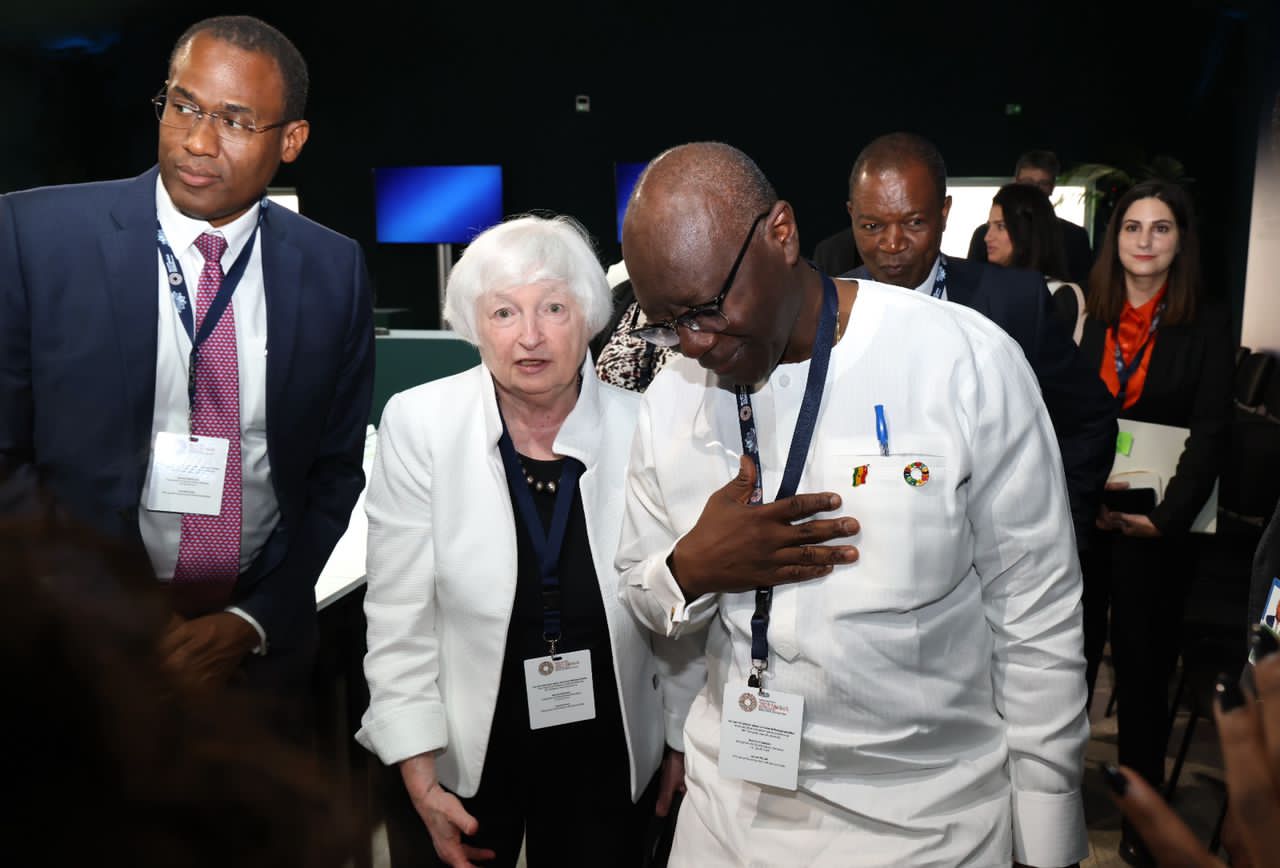
During the Roundtable, hosted by US Treasury Secretary Janet Yellen, Mr. Ofori-Atta commended the transformative leadership of IMF Managing Director Kristalina Georgieva, which has resulted in the accomplishment of significant milestones.
Mr. Ofori-Atta also advocated for an IMF that can offer substantial resources on a large scale to enhance the global financial safety net.
“The need is great. And at these Annual Meetings, the developing world is asking the international community to do all it can to advance a reform agenda that ensures institutions like the IMF have the requisite mandates, financing, and governance models to deliver transformative impact,” he said.
He called for “reform of the available tools and lending instruments of the Fund to deal with global exogenous shocks.”
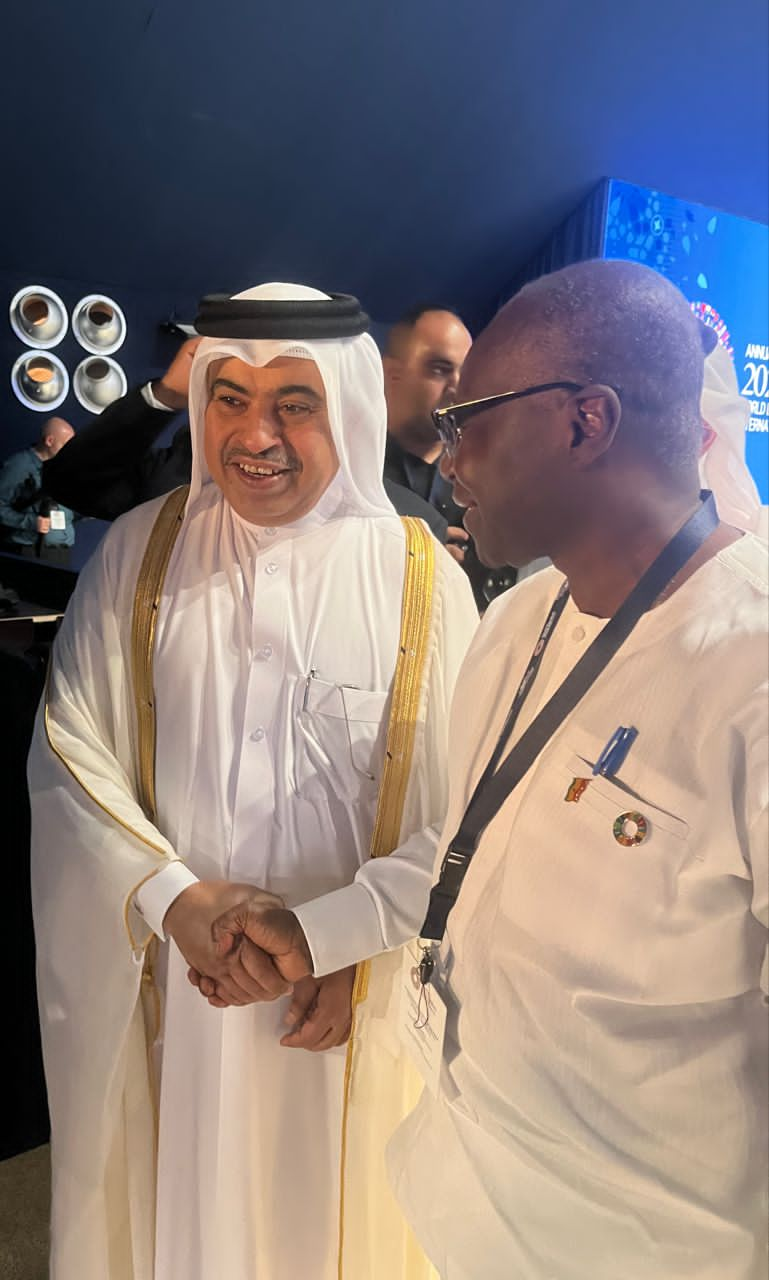
Ken Ofori-Atta exchanging pleasantries with a member of Kuwaiti Delegation after IMF High Level Event on Poverty Reduction and Growth Trust (PRGT) on 11th October 2023 in Marrakech
On Governance, Mr Ofori-Atta pushed for broad-based prosperity anchored on bold reforms to the global financial architecture, by calling for increased Sub-Saharan African representation on the IMF Executive Board, through the creation of a Sub-Saharan African seat at the IMF Executive Board Level.
The Marrakech gathering marks only the second time that Africa has hosted the Annual Meetings, the first time being fifty years ago in Kenya, in 1973.
The International Monetary Fund (IMF) predicts a decrease in Ghana’s debt-to-Gross Domestic Product (GDP) ratio, which is projected to decrease from 92.4% in 2022 to 84.9% in 2023, as indicated in its October 2023 Fiscal Monitor.
This trend is anticipated to persist over the next five years, with the debt-to-GDP ratio forecasted to be 81.5% in 2024, and subsequently at 78.8% in 2025, 75.8% in 2026, 72.8% in 2027, and 70.0% in 2028.
This shift is anticipated to occur following the expected external debt restructuring, which is expected to result in a decrease in the country’s debt.
However, the exact amount saved from the domestic debt restructuring remains unknown at this time.
Revenue-to-GDP ratio to exceed 16% in next five years
The IMF is also anticipating a steady increase in Ghana’s revenue-to-Gross Domestic Product (GDP) ratio through 2028.
In 2023, the government’s revenue-to-GDP ratio is projected to be 15.7%, slightly lower than the 15.8% recorded in 2022.
Subsequently, from 2024 to 2028, the revenue-to-GDP ratio is estimated at 16.6%, 17.3%, 18.2%, 18.2%, and 18.1%, respectively.
This represents a significant improvement compared to the rates observed over the past decade.
However, in 2023 and 2024, the country’s revenue-to-GDP ratio is expected to dip to 16% and 16.2%, respectively.
Expenditure to remain within 20-21% bracket
In contrast, the expenditure-to-Gross Domestic Product (GDP) ratio is expected to decrease from 27% in 2022 to 20.3% in 2023. Subsequently, from 2024 to 2028, the expenditure-to-GDP ratio is forecasted to be 20.7%, 20.8%, 21.2%, 20.8%, and 20.9%, respectively.
Ghana’s public debt up ¢6.3bn within 2 months to reach ¢575.5bn in June 2023
Ghana’s public debt increased by approximately ¢6.3 billion from April to June 2023, reaching ¢575.5 billion by June 2023, as reported by the Bank of Ghana. This amount is equivalent to $52.3 billion, constituting approximately 71.9% of the Gross Domestic Product (GDP). The marginal rise in the country’s total debt was primarily attributed to a slight depreciation of the cedi against the dollar during that period.
According to the September 2023 Summary of Economic and Financial Data, the debt stock was ¢473.2 billion in December 2022, accounting for about 77.5% of GDP. Subsequently, it increased to ¢547.8 billion ($50.7 billion) by the end of January 2023, followed by ¢564.1 billion ($51.2 billion) and ¢569.5 billion ($51.7 billion) in February and March 2023, respectively.
Business Consultant and Director of Operations at Dalex Finance, Joe Jackson, has characterized the state of the Ghanaian economy as critically ill, akin to being in the Intensive Care Unit (ICU).
This perspective contradicts claims that the economy has achieved stability.
Last week, Ghana achieved a staff-level agreement with the IMF, paving the way for the release of an additional $600 million as part of the $3 billion IMF bailout package.
Finance Minister Ken Ofori-Atta had portrayed this development as a sign of economic recovery and resurgence. However, during an interview with Francis Abban on GHOne TV’s State of Affairs, Joe Jackson expressed his dissenting view on the matter.
“The best analogy I can give was that somebody had a road crash, entered into a coma, was rushed to the hospital and was given some blood transfusion and now his condition is described as stable. But the person is still very sick, let’s be clear”, he said.
“Last year, we suffered bad crash and in December last year we raised up our hands and said we cannot pay [our debts] and everything was going south with us going downhill at a horrendous rate. In March we signed bailout agreement with the IMF which gave us some blood transfusions and gave us some life, but we are still in intensive care let nobody be deceived”, he added.
In response to claims that there have been improvements in macroeconomic indicators since the initiation of the IMF program, Joe Jackson contends that the extent of these improvements falls short of being deemed a significant turnaround.
“It’s like I had a BP of 180/140 and today I have come down to 160/120. The numbers are looking better than they did, but my BP is still high. That is the situation now. It is an economy with high taxation, high interest rate and high inflation with some semblance of foreign exchange stability”, he argued.
Joe Jackson adds that any level of complacency could result in a deterioration of the nation’s poor economic circumstances.
“This economy needs careful management, this economy is still in intensive care, and you cannot take your eye of the monitors for a minute. If we do, things could go south very very quickly”, he concluded.
A board approval for the distribution is contingent on the government’s ability to negotiate an MOU on the restructuring of its external obligations with creditors, according to Stephane Roudet, the head of the IMF team in Ghana.
A banking consultant, Dr. Richmond Atuahene, has proposed the inclusion of a debt limit or cap through a constitutional amendment.
He argued that this step is essential to maintain economic stability and effectively manage debt, thereby preventing a financial crisis, especially in the aftermath of an IMF program.
Regarding Ghana’s concerning debt levels, which have led the country to request its 17th bailout program from the IMF, Dr. Atuahene emphasized the need for Ghana to implement rigorous measures to increase domestic revenue.
He also recommended innovative approaches to broaden the tax base and reduce excessive borrowing.
“To prevent future debt crisis, the government and the legislature must ensure that the 1992 Constitution is duly amended and the Debt-to-GDP Ratio is explicitly enshrined,” the Banking Consultant suggested.
He continued, “To build back better post-IMF, the country would require aggressive agricultural development strategies with the private sector, over the medium-term, with view to accelerate the modernization of agriculture and ensure its linkage with industry through the application of science, technology and innovation.”
Meanwhile, the debt ceiling represents a cap on the overall borrowing capacity of the government.
The 12th edition of the Ghana Economic Forum occurs during one of the most challenging macroeconomic periods in over a decade. This situation is characterized by Ghana’s utilization of a $3 billion Extended Credit Facility (ECF) from the International Monetary Fund and the consequences of the Domestic Debt Exchange Programme (DDEP).
The theme for this year’s forum is; “Build back better: IMF support, strategies to build a sustainable economy and dynamic business environment.”
The GEF convened a gathering of financial sector experts and influential thinkers to deliberate on pivotal subjects influencing the nation’s economic terrain.
The October 2023 World Economic Outlook, has it that, future markets indicate a projected 16.5% year-on-year decline in crude oil prices, averaging $80.5, compared to the 2022 average of $96.4.
These prices are expected to continue decreasing to $72.7 by 2026. If this trend holds, it suggests that fuel prices at the pumps may remain relatively stable for the remainder of the year.
The International Energy Agency anticipates an increase in oil demand by 2023, surpassing supply levels in the latter half of the year. However, the report notes that there is significant uncertainty surrounding the price outlook.
Potential upside price risks include further production cuts by OPEC+, military tensions in the Black Sea, and insufficient investment in fossil fuel extraction.
Conversely, downside price risks could result from a global economic downturn, reduced Chinese oil demand, and a faster adoption of electric vehicles.
While fuel prices experienced a marginal increase at the beginning of the month, it is unlikely that prices will rise in the second pricing window starting on October 16, 2023. Crude oil prices saw a 4.4% increase between February and August 2023, primarily due to a rebound in July and August.
However, these prices remain well below their peak of $115 in June 2022.
On the demand side, factors such as a slower-than-expected recovery in China’s oil consumption, concerns over temporary economic downturns due to banking issues, and tighter monetary policies in major economies contributed to downward price pressures, especially in the second quarter of 2023.
Regarding supply, OPEC+ announced output cuts of 1.2 million barrels per day (mb/d) in April, along with additional voluntary cuts of 1 mb/d by Saudi Arabia and 0.3 mb/d by Russia.
These reductions were only partially offset by significant oil output growth in non-OPEC countries, notably the United States, where oil production is expected to increase by 1.1 mb/d this year.
The International Monetary Fund said that Ghana will need a debt relief agreement from its official creditors to qualify for further disbursements under a $3 billion extended credit facility program.
The Washington-based lender reached a staff-level deal with Ghana on the first review of the program that started in May, Stéphane Roudet, IMF mission chief, said in a statement Friday.
Ghana’s dollar bonds rose and were among the best performers in emerging markets. Notes maturing in 2049 gained 0.2 cents to 41.07 cents on the dollar by 2:14 p.m. in London.
To complete the review, which will give the West African nation access to another $600 million disbursement, bilateral creditors must agree on specific terms of debt treatment, in line with the financing assurances they provided five months ago, he said.
The financing assurance enabled IMF to approve Ghana’s program, with an initial $600 million disbursement.
“We’re now in the first review so we’re moving from a general commitment to a specific credit commitment on terms of debt restructuring,” Roudet said at a press conference in the capital, Accra. This will also inform the specific terms for external commercial creditors, he said.
The lender is treating Ghana like Zambia, which also has an IMF program.
Earlier this year, the IMF insisted that Zambia’s official creditor committee sign a memorandum of understanding to unlock the next disbursement, but later backed down and approved the payment after the bilateral lenders in June announced an agreement in principle to restructure $6.3 billion of debt.
“We are confident that the official creditor committee agreement will come through in time for the executive board’s approval in November,” Minister of Finance Ken Ofori-Atta said in an interview, on the sidelines of the press conference.
Ghana’s policy reform commitment under the program is bearing fruit, Roudet said. Economic growth has proven more resilient than earlier thought, fiscal and external positions have improved, the exchange rate has stabilized and the inflation rate has declined, he said.
Ghana’s inflation slowed to 40.1% in August, its lowest level in 10 months. The cedi, which weakened as much as 21% earlier this year has pared its losses against the dollar to 13%.
The country is restructuring almost all of its $50 billion debt to make it sustainable under the IMF program. It has successfully completed its domestic debt rework. The next step is to revamp about $13 billion in Eurobonds.
Ghana sought IMF help in July 2022 after its dollar bonds plunged and spending cuts failed to convince investors it will be able to repay debt.
The International Monetary Fund (IMF) has reached a staff-level agreement with Ghanaian authorities after conducting comprehensive discussions in Accra from September 25 to October 6, 2023.
The discussions centered on assessing progress in implementing reforms and policy priorities as part of Ghana’s economic program under the Extended Credit Facility.
This agreement, which is subject to approval by IMF Management and consideration by the Executive Board following the receipt of necessary financing assurances, marks a significant milestone in Ghana’s efforts to stabilize its economy.
Following the Executive Board’s review, Ghana is poised to access approximately US$600 million, augmenting the total financial support provided by the IMF to around US$1.2 billion since May 2023.
In the face of a severe economic and financial crisis, Ghanaian authorities have undertaken critical macroeconomic adjustments, successfully concluded a domestic debt restructuring operation, and initiated extensive reforms. These efforts have yielded positive results, including stronger-than-expected economic growth, reduced inflation, improved fiscal and external positions, and stabilization of exchange rates in 2023.
In line with commitments under the Fund-supported program, Ghana has demonstrated robust fiscal performance, working towards a significant reduction in the fiscal primary deficit by approximately 4 percentage points of GDP in 2023. Fiscal spending has adhered to program limits, with a focus on expanding social protection programs to support the most vulnerable segments of the population. Ghana has also met its non-oil revenue mobilization target.
To sustain these achievements, the next critical step involves securing an agreement with official creditors on debt treatment terms consistent with the IMF Executive Board-approved program parameters and debt targets. The IMF calls on official creditors to expedite this process, aligning it with the financing assurances provided in May 2023.
Throughout the discussions, meetings were held with key figures, including Vice President Bawumia, Finance Minister Ofori-Atta, and Bank of Ghana Governor Addison, along with their respective teams. The IMF team also engaged with various government agencies and stakeholders, expressing gratitude for their cooperative and transparent collaboration.
The Managing Director of the International Monetary Fund (IMF), Kristalina Georgieva, has expressed optimism regarding Ghana’s economic outlook, acknowledging a significant improvement in the country’s financial standing in recent months.
Ghana recently secured a $3 billion support package from the IMF and is presently undergoing its inaugural program review, scheduled for completion in November.
During an interview, Georgieva also highlighted the progress made by both Zambia and Ghana, both of which had faced debt defaults but are now making substantial progress under their respective IMF programs.
Furthermore, she advised Tunisia that while immediate restructuring might not be necessary, it should take swift measures to strengthen its economy.
Georgieva emphasized her strong hope for the disbursement of a $600 million second tranche of IMF funds, set for November, underlining its critical role in bolstering confidence in Ghana’s economic stability.
“Ghana is doing actually quite well. You have seen that their position has improved over the last month, and the economy is in a much better place. I would very much hope that we can have the disbursement,” she said referring to a $600 million tranche of IMF money.
Read the report of IMF’s mission team below:
IMF Reaches Staff-Level Agreement on the First Review of the Extended Credit Facility and Conducts Discussions of the 2023 Article IV Consultation with Ghana
FOR IMMEDIATE RELEASE
End-of-Mission press releases include statements of IMF staff teams that convey preliminary findings after a visit to a country. The views expressed in this statement are those of the IMF staff and do not necessarily represent the views of the IMF’s Executive Board. Based on the preliminary findings of this mission, staff will prepare a report that, subject to management approval, will be presented to the IMF’s Executive Board for discussion and decision.
IMF staff and the Ghanaian authorities have reached staff-level agreement on economic policies and reforms to conclude the first review of the 36-month ECF-supported program. Performance with respect to the program’s targets and reform objectives has been very strong.
Ghana will have access to about US$600 million in financing once the review is approved by IMF Management and formally completed by the IMF Executive Board. To ensure timely completion of the review, the country needs official creditors to quickly reach agreement on a debt treatment in line with the financing assurances they provided in May 2023.
The authorities’ strong policy and reform commitment under the program is bearing fruit, and signs of economic stabilization are emerging. Growth in 2023 has proven more resilient than initially envisaged, inflation has declined, the fiscal and external positions have improved, and the exchange rate has stabilized.
Accra, October 6, 2023: An International Monetary Fund (IMF) staff team, led by Mr. Stéphane Roudet, Mission Chief for Ghana, held meetings in Accra from September 25 to October 6, 2023, to discuss progress on reforms and the authorities’ policy priorities in the context of the first review of Ghana’s three-year program under the Extended Credit Facility. The arrangement was approved by the IMF Executive Board for a total amount of SDR 2.242 billion (US$ 3 billion) on May 17, 2023. The team also conducted the 2023 Article IV consultation.
At the end of the mission, Mr. Roudet issued the following statement:
“I’m very pleased to announce that the IMF staff and Ghanaian authorities have reached a staff-level agreement on the first review of Ghana’s economic program under the Extended Credit Facility arrangement. This staff-level agreement is subject to IMF Management approval and Executive Board consideration once the necessary financing assurances have been received. An agreement with official creditors on a debt treatment in line with program parameters would provide the needed financing assurances. Upon completion of the Executive Board review, Ghana would have access to SDR 451.4 million (about US$ 600 million), bringing the total IMF financial support disbursed under the arrangement, since May 2023, to SDR 902.8 million (about US$1,200 million).
“Faced with an acute economic and financial crisis, the authorities have adjusted macroeconomic policies, successfully completed their domestic debt restructuring operation, and launched wide-ranging reforms. These actions are already generating positive results, as growth in 2023 has proven more resilient than initially envisaged, inflation has declined, the fiscal and external positions have improved, and the exchange rate has stabilized.
“Consistent with the authorities’ commitments under the Fund-supported program, fiscal performance has been strong, and Ghana is on track to lower the fiscal primary deficit on a commitment basis by about 4 percentage points of GDP in 2023. Spending has remained within program limits. To help mitigate the impact of the crisis on the most vulnerable population, the authorities have significantly expanded social protection programs. On the revenue side, Ghana has met its non-oil revenue mobilization target. Ambitious structural fiscal reforms are bolstering domestic revenues, improving spending efficiency, strengthening public financial and debt management, and enhancing transparency.
“In light of Ghana’s compelling performance under the Fund-supported program, the critical next step is to secure an agreement with official creditors on the terms of a debt treatment consistent with the IMF Executive Board-approved program parameters and debt targets. We urge official creditors to move forward and agree on an appropriate debt treatment in line with the financing assurances they provided in May 2023.”
IMF staff held meetings with Vice President Bawumia, Finance Minister Ofori-Atta, and Bank of Ghana Governor Addison, and their teams, as well as representatives from various government agencies. The IMF team also engaged with other stakeholders. Staff would like to express their gratitude to the Ghanaian authorities and other counterparts for their continued open and constructive engagement.
The Ministry of Finance, Bank of Ghana and the International Monetary Fund (IMF) today held a news conference to address Ghana’s bailout.
Finance Minister Ken Ofori-Atta, Bank of Ghana Governor, Dr Ernest Addison and Stéphane Roudet, Mission Chief at IMF for Ghana took turns to address the press.
Ahead of the conference, Kristalina Georgieva, the Managing Director of the International Monetary Fund (IMF), has expressed a positive outlook on Ghana’s economy, acknowledging a substantial improvement in the country’s economic standing over the last month.
Georgieva expressed her strong hope for the disbursement of a $600 million second tranche of IMF funds, slated for November, underscoring its significance in fostering confidence in Ghana’s economic stability.
The Managing Director of the International Monetary Fund (IMF), Kristalina Georgieva, has expressed her strong anticipation of the upcoming disbursement of a $600 million second tranche of IMF funds, scheduled for November.
She emphasized the importance of this disbursement in instilling confidence in Ghana’s economic stability.
Georgieva acknowledged a favorable outlook for Ghana’s economy, noting significant improvements in the country’s economic performance over the past month.
“Ghana is doing actually quite well. You have seen that their position has improved over the last month, and the economy is in a much better place. I would very much hope that we can have the disbursement,” she said referring to a $600 million tranche of IMF money.
Ghana recently secured a $3 billion IMF support package and is currently undergoing its first program review, with the conclusion of the review expected in November.
During an interview, Georgieva also touched upon the advancements achieved by Zambia and Ghana, both of which experienced debt defaults but are currently making notable progress under their respective IMF programs.
Furthermore, she offered guidance to Tunisia, suggesting that although immediate restructuring may not be imperative, the country should swiftly implement measures to strengthen its economy.
Ghana, which has received a $3 billion International Monetary Fund (IMF) support package, is currently in the midst of its inaugural program evaluation, scheduled to wrap up by November, according to the Managing Director of the IMF, Kristalina Georgieva.
During a comprehensive interview, Georgieva expressed her positive outlook regarding Ghana’s economic advancements, highlighting a significant upturn in the country’s financial situation in the past month.
Additionally, in her discussion, Kristalina Georgieva commented on the progress being made by Zambia and Ghana, both of which have experienced debt defaults, within their respective IMF programs.
She also noted that while Tunisia doesn’t require a restructuring at this point, the country should take prompt actions to strengthen its economy.
“Ghana is doing actually quite well. You have seen that their position has improved over the last month, the economy is in a much better place.
“I would very much hope that we can have the disbursement,” she said referring to a $600 million tranche of IMF money that’s due to be disbursed in November.
“That is part of the confidence building that we are projecting,” she said regarding Ghana’s economic stability.
In her broader comments, Georgieva underscored the importance of tackling unsustainable debt crises as a “high-priority” issue.
She offered a defense of the G20 Common Framework for debt resolution, even in the face of criticism regarding its perceived slow response in providing relief to eligible nations.
Georgieva noted that as more countries seek assistance, the process has become more streamlined, with Chad, Zambia, Sri Lanka, and Ghana all showcasing shorter timeframes for achieving progress.
She highlighted specific examples, noting that Chad took 11 months from the initial staff-level agreement to financial assurances, Zambia accomplished this in nine months, Sri Lanka in six months, and Ghana in just five months.
“I hear lots of people saying, oh this doesn’t work,” she said.
“My question to them is, ok, you forget about it. What do you have instead?”
In the meantime, the IMF Managing Director emphasized that Egypt’s precious reserves will continue to dwindle unless the country opts for another currency devaluation. She commended other measures that Egypt, the IMF’s second-largest borrower, has taken to address its struggling economy.
Since early 2022, Egypt has devalued its currency three times, resulting in a nearly 50% depreciation against the US dollar.
Georgieva argued that delaying another devaluation is only postponing the inevitable, and the longer Egypt refrains from taking this step, the more challenging the situation will become.
“The sooner we can reach an agreement on the road map for this the better,” she said.
“The issue here is very simple. Egypt would bleed reserves protecting the pound and neither the country nor overall the environment is such that this is desirable. That’s a problem that has to be solved.”
Egypt’s net international reserves experienced a decline last year, reaching their lowest point since 2017, before showing signs of stability in recent months and reaching $35 billion in September. However, this figure remains more than one-fifth lower than its peak in 2020.
The decision to maintain the stability of the Egyptian pound has come at a cost, as it has led to a depletion of foreign exchange in the economy through a reduction in commercial banks’ net foreign assets. In August, these assets shrank by over 5%, reaching $13.1 billion, as calculated by HC Research based in Cairo.
Nevertheless, Kristalina Georgieva mentioned that progress is being made in the IMF’s assessment under Egypt’s $3 billion rescue program.
“In the last couple of days there have been some constructive engagements,” the IMF head said ahead of a speech she made in Abidjan, Ivory Coast.
“There will be more systematic work of our team with Egypt. So stay tuned. Let’s see what would come out in the next weeks.”
Egypt’s long-term foreign debt rating was downgraded late Thursday by Moody’s to Caa1 from B3, seven levels into junk.
The ratings agency cited the government’s “worsening debt affordability trend and the persistence of foreign currency shortages in the face of increasing external debt service payments over the next two years.”
The economic situation in Tunisia, another North African country facing challenges, is not as severe as some others, but it still requires immediate attention to finalize the agreements related to a $1.9 billion rescue package from the IMF, according to Georgieva.
A debt restructuring is not required as “they are not yet hanging at the cliff,” she said.
Nevertheless “the sooner the country takes some measures to strengthen their fiscal position, to strengthen their overall economic performance the better.”
Egypt and Tunisia are grappling with some of the highest bond yields globally, highlighting investor caution towards holding their debt. Egypt’s dollar notes yield an average of 18.5%, as per Bloomberg indexes, while a Tunisian bond maturing in 2025 is trading at a yield of over 40%.
Moving to the southern part of the continent, Zambia and Ghana, both countries that have experienced debt defaults, are in line to receive additional support, as stated by Georgieva.
She noted that a memorandum of understanding with Zambia’s bilateral creditors has been tentatively agreed upon and will be signed once a few remaining details are resolved.
Additionally, in recognition of the challenges faced by many of the world’s poorest nations in repaying debt, Georgieva expressed her support for the concept of suspending debt payments when countries are hit by climate-related disasters.
“I’m very much in favour of including clauses in debt, be it bonds or loans, that put debt service suspension in place. So if a natural disaster happens, the country is not forced to choose between saving lives and paying creditors,” she said.
“We all need to think about how we go about debt service in a world of more frequent and devastating climate disasters.”
The Vice President of IMANI-Africa, a policy think tank, Bright Simons, said that the government is having difficulty getting approval from an IMF team visiting the country for the second portion of a $3 billion loan that was agreed upon earlier this year.
Simon claimed in a tweet that the situation was getting worse because of arguments between the governor of the Bank of Ghana and lawmakers from the opposition. These lawmakers want Governor Ernest Addison and his deputies to step down because they believe the bank is being poorly managed.
The argument between the Central Bank governor of Ghana and the Opposition MPs, who he calls ‘hooligans,’ happened at a very bad time. The government is having trouble getting the IMF to approve the $600 million payment before they leave. This doesn’t make things easier, the person wrote on X (formerly Twitter).
The meeting was taking place during the protest, so the governor sent the director in charge of security from the Board of Governors to collect the opposition’s petition.
The Members of Parliament (MPs) refused the representative because they wanted to personally give the petition to the governor. The director had explained that Addison and his deputies were in a meeting with the IMF team at that time.
The Governor criticized the opposition MPs for their recent protest and called it “completely unnecessary”. The protest happened on October 3, 2023, and the MPs were demanding resignation.
He said he would not quit like the Minority MPs want him to.
Chairman of the National Democratic Congress (NDC), Johnson Asiedu Nketiah, has entreated the International Monetary Fund (IMF) to desist from providing loans to the current government.
He alleges that loans procured by the Akufo-Addo government are being squandered and not used for the intended purpose.
Mr Asiedu Nketiah made the comment when he addressed the hundreds of individuals who participated in the #OccupyBoG protest that was held today, October 3.
“His government is corrupt. Today, some NPP members say the part is corrupt. Don’t insult such people for there is more we haven’t heard. So we need to encourage them to reveal the information.
“We won’t go to IMF again. We have come to tell you to leave your position but you have run, going to meet the IMF. We are telling the IMF that the people they are engaging are not representing Ghanaians, they are thieves. If you give them any money, they will squander it,” he said.
During the protest, it was made public that the government was in talks with the IMF over its $3 billion deal. The Bank of Ghana Governor, Dr Ernest Addison, could not receive the petition by the protestors as he was in a meeting with the Fund.
Former Trade and Industry Minister Alan Kwadwo Kyerematen stated that Ghana had no choice but to seek assistance from the International Monetary Fund.
He claims that because Ghana’s debt levels had surged and the country’s international reserves at the Central Bank were depleted, it was critical that the country have some cushion.
“We went to the IMF, and they agreed to have a package of support for us. Part of the condition was for us to reduce our debt-to-GDP ratio from 105% to 55%. The condition to expect from you to be able to enjoy a bailout is for you to bring your debt to sustainable levels.
It was clear that as a country, we had overextended ourselves. However, if we had prioritized my recommendations for industrialization and the kinds of things I’m talking about today in my GTP, we would have laid the groundwork for a resilient economy,” he remarked.
Alan Kyerematen admitted that the Russian-Ukraine war and COVID-19 have long-term consequences for Ghana’s economy.
“These two external factors exposed the structural vulnerabilities in our economy. There are matured economies that suffered the impact of the same external shocks but were able to deal with the shock much better because they have resilient economies.
“In our case the fact that we are not exporting enough and producing enough, the fact that we end up importing all the things we can produce in this country creates a certain challenge for our economy to withstand external shocks.”
TheIMF expects Ghanaian authorities and the Official Creditor Committee to reach an agreement soon.
According to Julie Kozack, the IMF’s Director of Communications, it is critical for Ghana to complete debt restructuring talks with both domestic and external creditors.
“The next steps on debt restructuring are for the Official Creditor Committee to agree with the authorities on the specific modalities of debt relief and for the authorities to continue to engage with their external private creditors for relief on their external debt. These discussions are ongoing, and we hope that the OCC, the Official Creditor Committee, and the Ghanaian authorities will find an agreement soon. The government has recently finalized the restructuring of its domestic debt,” Julie Kozack said.
Over half of Ghana’s total debt, which includes Eurobond obligations, is attributed to external creditors, totaling approximately $52.3 billion. This underscores the vital need for the country to ensure the sustainability of its debt.
Despite being formed in May 2023, the creditor committee has not yet reached definitive decisions regarding the extent of debt reductions (haircuts) to be offered to Ghana.
Meanwhile, an IMF delegation is presently in Ghana, evaluating the nation’s economic performance. They are also preparing a report that will determine Ghana’s eligibility for the next installment of the $3 billion loan.
Ghana’s debt owed to external creditors makes up more than half of the country’s total debts, including Eurobond holders.
External debts add up to about $52.3 billion of the country’s total debts, making it a necessary requirement for the country to make its debts sustainable.
The creditor committee, which was formed in May 2023, is however yet to reach concrete conclusions on how much haircuts to give Ghana.
However, an IMF team is currently in Ghana to assess the country’s performance and also to present a report to qualify the country for the next tranche of the $3 billion loan.
The International Monetary Fund (IMF) is nudging the Ghanaian government to reach an agreement on external debt restructuring with the Official Creditor Committee.
Director of Communications at the IMF, Julie Kozack, noted during a press conference that the agreement must be done within the shortest possible time as discussions are ongoing.
“The next steps on debt restructuring are for the Official Creditor Committee to agree with the authorities on the specific modalities of debt relief and for the authorities to continue to engage with their external private creditors for relief on their external debt. These discussions are ongoing, and we hope that the OCC, the Official Creditor Committee, and the Ghanaian authorities will find an agreement soon. The government has recently finalized the restructuring of its domestic debt”, Julie Kozack said.
Ghana’s total debt, which amounts to $52.3 billion, has over half of it owned by external creditors, including Eurobond holders and certain banks. Consequently, a substantial reduction from external creditors is seen as crucial for the country’s efforts to significantly reduce its debt burden.
Both UK-based Fitch Solutions and the Economist Intelligence Unit (EIU) share the belief that Ghana will reach an agreement with the Official Creditor Committee by the end of the year, paving the way for the commencement of external debt restructuring.
An IMF Mission is presently in Accra, Ghana, to evaluate performance and engage in discussions regarding policies for the first review of the program. The objective is to present this review to the Executive Board in November 2023.
Ghana’s program encompasses three key goals: restoring macroeconomic stability, ensuring the sustainability of debt, and establishing the groundwork for increased and more inclusive economic growth. The program includes a comprehensive set of reforms aimed at enhancing resilience while safeguarding the most vulnerable segments of the population.
Regarding the sub-Saharan Africa region, Julie Kozack mentioned that the Fund will be publishing its regional economic outlook in the forthcoming weeks.
“We will be releasing that outlook and that will contain detailed information on the region. I think it’s fair to say that the region is still undergoing what we called in April [2023] the big funding squeeze. The region has been very much affected by the succession of shocks, the pandemic, the cost of living crisis, food insecurity. And in addition, the region has been affected, of course, by tightening global financial conditions, and that has led to what we’re calling the funding squeeze”.
“All of that has happened in a situation where the region is facing also, in some countries, high debt. So the challenges, of course, are very significant in Africa. But I would be remiss if I don’t also mention the opportunities in the sense that Africa is a continent with a youthful population, which presents tremendous opportunities for the region as well”.
The International Monetary Fund (IMF) has reiterated its optimism regarding the possibility of the Official Creditor Committee and the Ghanaian government reaching an agreement on external debt restructuring in the near future.
Ghana’s total debt, which amounts to $52.3 billion, has over half of it owned by external creditors, including Eurobond holders and certain banks. Consequently, a substantial reduction from external creditors is seen as crucial for the country’s efforts to significantly reduce its debt burden.
During a press conference, Julie Kozack, Director of Communications at the IMF, emphasized the importance of the Ghanaian government finalizing the restructuring of its domestic debt.
Both UK-based Fitch Solutions and the Economist Intelligence Unit (EIU) share the belief that Ghana will reach an agreement with the Official Creditor Committee by the end of the year, paving the way for the commencement of external debt restructuring.
However, IMF wants the agreement done soon.
“The next steps on debt restructuring are for the Official Creditor Committee to agree with the authorities on the specific modalities of debt relief and for the authorities to continue to engage with their external private creditors for relief on their external debt. These discussions are ongoing, and we hope that the OCC, the Official Creditor Committee, and the Ghanaian authorities will find an agreement soon. The government has recently finalized the restructuring of its domestic debt”, Julie Kozack said.
Madam Kozack also mentioned that an IMF Mission is presently in Accra, Ghana, to evaluate performance and engage in discussions regarding policies for the first review of the program. The objective is to present this review to the Executive Board in November 2023.
Ghana’s program encompasses three key goals: restoring macroeconomic stability, ensuring the sustainability of debt, and establishing the groundwork for increased and more inclusive economic growth. The program includes a comprehensive set of reforms aimed at enhancing resilience while safeguarding the most vulnerable segments of the population.
Regarding the sub-Saharan Africa region, Julie Kozack mentioned that the Fund will be publishing its regional economic outlook in the forthcoming weeks.
“We will be releasing that outlook and that will contain detailed information on the region. I think it’s fair to say that the region is still undergoing what we called in April [2023] the big funding squeeze. The region has been very much affected by the succession of shocks, the pandemic, the cost of living crisis, food insecurity. And in addition, the region has been affected, of course, by tightening global financial conditions, and that has led to what we’re calling the funding squeeze”.
“All of that has happened in a situation where the region is facing also, in some countries, high debt. So the challenges, of course, are very significant in Africa. But I would be remiss if I don’t also mention the opportunities in the sense that Africa is a continent with a youthful population, which presents tremendous opportunities for the region as well”.
The Bank of Ghana has affirmed that Ghana’s International Monetary Fund (IMF) program is delivering positive outcomes, citing improved economic indicators in recent months.
Dr. Ernest Addison, the Governor, highlighted positive trends in factors such as the exchange rate and inflation during a press briefing by the Monetary Policy Committee on September 25, 2023. He stated, “The Committee has noted the overall improvement in domestic macroeconomic conditions, with robust economic growth and a decrease in inflation in August.
These developments indicate that the policy framework established under the three-year IMF Extended Credit Facility is starting to show results.”
“Economic activity is rebounding strongly, the exchange rate is stabilising, inflation is declining, and the level of foreign exchange reserves has improved. Sustained improvement in these indicators should result in the restoration of real incomes and purchasing power,” he said.
Ghana anticipates the arrival of the second portion of the IMF loan by year-end, according to the Governor. He emphasized that “During the final quarter of the year, reserve buildup will be reinforced by anticipated funds from the cocoa syndication loan, the second installment of the IMF ECF program, and additional multilateral inflows.”
Ghana maintains its leading position among African nations as the most indebted country to the International Monetary Fund (IMF).
This ranking is the result of a significant increase in Ghana’s loans from the IMF, which surged by 35.3 percent in the second quarter of 2023.
The IMF’s Quarterly Finances report for July 2023 revealed that Ghana’s outstanding loans to the institution were valued at Special Drawing Rights (SDR) 1.689 billion as of July 31, 2023, equivalent to approximately $2.227 billion.
This latest figure represents an increase of $451 million in SDR compared to the previous figure of 1.246 billion SDR recorded as of April 30, 2023.
Ghana’s engagement with the IMF began in July 2022, and after meeting the stipulated conditions for a bailout package, the IMF disbursed the first tranche of $600 million in June 2023. This disbursement aimed to address Ghana’s balance of payments position and restore macroeconomic stability.
The IMF report also noted that Ghana’s outstanding loans represent 9.55 percent of Africa’s total, which amounts to SDR 17.68 billion. However, Ghana has repaid approximately SDR 8 million, equivalent to $10.55 million, to the IMF.
Despite its loan exposure, the IMF categorizes Ghana’s position as concessional lending with low-interest financing terms.
In the ranking of African countries most indebted to the IMF, the Democratic Republic of Congo follows Ghana, owing SDR 1.142 billion, while Kenya holds the third position with outstanding loans of SDR 1.008 billion as of July 31, 2023.
Both countries have received loan disbursements from the IMF to support their balance of payments positions, with the DR Congo receiving SDR 153 million and Kenya receiving SDR 77 million.
Ghana’s sovereign wealth fund is set to make a substantial investmentof nearly $33 million into a local lithium mine and acquire a minority interest in Atlantic Lithium, the company announced on Friday.
The Minerals Income Investment Fund (MIIF) of Ghana will procure a 6% ownership stake in Atlantic Lithium’s various projects within the country, which notably includes the Ewoyaa mine, expected to become Ghana’s inaugural lithium-producing facility. The investment amounts to $27.9 million, according to Atlantic Lithium’s official statement.
This move underscores the growing trend of heightened interest in companies involved in the production of critical electric vehicle battery materials, driven by the global shift toward clean energy solutions.
Additionally, MIIF will secure a 3.05% ownership stake in Atlantic Lithium for $5 million. This agreement also grants MIIF the opportunity to compete for the supply contract of lithium produced by the Ewoyaa project through a competitive bidding process.
“There is a competitive process (for the offtake) which MIIF will also participate in, but on a commercial level,” said Atlantic Lithium chairman Neil Herbert.
“There is an open field of chemical converters, OEMs and major trading groups,” he said.
A delegation of International Monetary Fund (IMF) staff members is set to visit Ghana starting on September 25 and continuing into the first week of October. Their purpose is to assess the advancements made in Ghana’s Economic Recovery Programme.
This visit signifies the second evaluation conducted by the IMF following the approval of Ghana’s financial assistance program on May 17. The review will assess the achievements of the targets established under the $3 billion three-year extended credit facility.
Finance Minister Ken Ofori-Atta has expressed the government’s optimism regarding the receipt of the second installment of IMF bailout funds in December. This infusion of funds is expected to strengthen the government’s balance of payments.
Speaking at the 3rd GIPC CEO’s Breakfast Meeting in Accra, Ofori-Atta stated, “The IMF team will be in Ghana from September 25th through the beginning of October. Hopefully, we will achieve a staff-level agreement during their visit, paving the way for a board meeting in November this year.”
He continued, “I believe that the mission in September will allow us to reach a successful staff-level agreement, strengthening our negotiating position.”
Additionally, Ofori-Atta has reconfirmed that Ghana is poised to receive the second installment of the IMF bailout funds in December. This disbursement will serve as vital support for the government’s balance of payments throughout 2023 and 2024.
According to the June 2023 summary of the Economic and Financial Stability Report by the Bank of Ghana, the balance of payments exhibited a deficit of $107.8 million at the end of June 2023, approximately 0.1% of GDP. It is noteworthy that this deficit is markedly lower than the one recorded during the same period in 2022.
Our forex bureau rates are provided by Afriswap Bureau De Change in Osu, Accra.
Finance Minister Ken Ofori-Atta has stated that Ghana is on course to receive the second installment of the IMF bailout funds in December, aimed at bolstering the government’s balance of payments for the years 2023 and 2024.
Speaking at the 3rd GIPC-CEO breakfast meeting held in Accra, Mr. Ofori-Atta affirmed that the government is prepared for its initial review with the IMF scheduled for November, as they anticipate the arrival of the second tranche of $600 million.
“We are ready for the mission that comes at the end of September so that we can try and get the staff level agreement, while the mission is here, and then we go to the board in November for the release of the 2nd tranche which will be $600 million. In addition to that, there are certain things we need to do with the World Bank so that we can get our DPO, which will be another $300 million. I believe that we are on course to maybe get a billion dollars to support Bank of Ghana’s balance of payment issues.”
He also expressed optimism about finalizing discussions with the Paris Club and its bilateral creditors by the end of this year.
In May 2023, Ghana received the initial portion of its $3 billion bailout package from the International Monetary Fund (IMF). This three-year extended credit facility was intended to resuscitate the country’s struggling economy.
However, in August 2023, the International Monetary Fund (IMF) issued a caution to the Bank of Ghana, underscoring the importance of adhering to its policy mandates despite the financial challenges experienced in the fiscal year ending in 2022. The IMF stressed the necessity for the central bank to implement decisive measures to steer inflation back towards its targeted rate of 8 percent.
“The loss the BoG incurred in the process has contributed to reducing its net equity to a negative value. Importantly, however, this does not prevent the BoG from fulfilling its policy mandates and ensuring inflation gradually returns towards its 8-percent target”, the IMF said in a press release.
Nonetheless, the IMF has endorsed the Bank of Ghana’s GHS 60 billion loss, asserting that the impairment, a result of the government’s Domestic Debt Exchange (DDE), was imperative to “reestablish macroeconomic stability and public sustainability.”
According to the Bank of Ghana’s June 2023 Economic and Financial Stability Report, the country’s balance of payments at the end of June 2023 registered a deficit of $107.8 million, equivalent to about 0.1% of GDP. This deficit is notably lower than the one recorded during the same period in the previous year.
Executive Secretary of the Public Utilities and Regulatory Commission, Dr. Ishmael Ackah, has clarified that the quarterly adjustments conducted by the Commission were not a requirement set by the International Monetary Fund (IMF) to obtain the $3 billion loan.
He explained that these adjustments were already in place, but their implementation had not been consistent.
Consequently, the IMF’s directive was centered on ensuring the Commission’s consistent application of these adjustments and the collection of reviewed rates.
“We used to have what was called automatic adjustment but now it is called quarterly adjustment.
“The IMF is not asking us to bring the quarterly adjustment back, no. We have it and it’s published on our website. But what they are saying is that in order not to build debt in the sector, PURC should be consistent in implementing it, so that if there are any financial gaps when we implement it, at least it helps to pay, and we won’t go into 2025 saying energy sector debt is this, and government may have to introduce taxes and so many other things,” he told JoyNews.
“Consistency helps to reduce the debt,” he added.
The Executive Secretary emphasized that even though IMF conditionalities remain in place, they are taking Ghanaians’ welfare into account.
“IMF is in town but look at June, we should have done 27% but the Board decided that that will be too much so why don’t we take 450 million out of the 27% that brought the tariff to 18% and that was what we adjusted with.
“So yes, the IMF is there, the World Bank is there but we also looked at the welfare of the Ghanaian. Yes, we don’t have to build debt, but we can’t also kill Ghanaians, so the IMF is a factor but we made the decision even before that,” Dr. Ackah said.
The Resident Representative of the International Monetary Fund (IMF) in Ghana, Dr. Leandro Medina, has expressed his approval of the Bank of Ghana’s (BoG) decision to adopt a stricter monetary policy stance and eliminate the practice of financing the budget through monetary means.
He noted that both the government and the IMF team have reached a consensus on the importance of prioritizing the avoidance of monetary financing for the budget.
“In fact, the authorities, under the IMF-supported programme, have decided to eliminate such financing; and they intend to strengthen the BoG Act to tighten the conditions under which such financing is allowed. That said, looking at 2022, we need to remember that the economy faced unprecedented challenges”, he told an Accra based newspaper.
“The large budget deficit could not be financed anymore as the government had lost access to both international and domestic capital markets. Under these circumstances, the choice was between BoG providing crucial financing to enable the government to meet its obligations or a very disruptive and possibly much more abrupt crisis”, he explained.
In reference to the impact of the Domestic Debt Restructuring on the balance sheet of the Bank of Ghana (BoG), Dr. Medina emphasized that the restructuring of the nation’s debt constitutes a crucial component of the government’s strategy to reestablish macroeconomic stability and ensure the sustainability of public debt.
“And BoG participated in the restructuring to share some of the burden the domestic debt exchange places on government debt holders, along with banks, other financial institutions, pension funds and individuals. Indeed, this contributed to reducing its net equity to a negative value, but crucially, we conducted analysis that indicated that this situation does not hinder the BoG from effectively executing its policy mandates, including the vital task of guiding inflation back to its 8-percent target in a gradual manner”.
In essence, his conclusion points towards an anticipated improvement in the net equity of the Bank of Ghana (BoG) over the course of time, leading to an eventual return to a positive financial position.