Russia’s foreign minister, Sergei Lavrov, says remarks by Ukrainian President Volodymyr Zelenskyy recommending that NATO undertake preventative strikes on Russia validate the need for a “special operation” in Ukraine.
“By doing so, (he) essentially presented the world with further evidence of the threats posed by the Kyiv regime,” Mr Lavrov said.
“This is why a special military operation was launched to neutralise them.”
For context: During an Australian think tank last night, Mr Zelenskyy said he believed strikes were necessary to preclude any use of nuclear weapons.
He did not go into detail about what kind of strikes he meant and made no reference to any need for nuclear strikes.
The Ukrainian leader also urged the world to “show strength” following the annexation of four Ukrainian regions.
He told the think tank: “The head of Russia is now carefully analysing the world’s reaction to the sham referenda he organised on Ukrainian soil and to the announcement of the annexation of our territory.
“He is interested in whether he still has the potential for escalation. If the world’s reaction is weak now, Russia will come up with some new escalation.”
Kremlin spokesman Dmitry Peskov denounced Mr Zelenskyy’s comments as “an appeal to start yet another world war with unpredictable, monstrous consequences”, according to RIA news agency.
The US president is hardly unique in saying that the risk of nuclear Armageddon is higher now than it has been since the Cuban missile crisis, or as it is known in Russia, the Caribbean crisis.
Anyone who has thought for more than five seconds about Vladimir Putin‘s nuclear threats given the geopolitical state of play would conclude the same and indeed it is a staple comment across Russian state TV.
And though the Russian president’s assertion that “this is not a bluff” is the kind of statement you make when you’re bluffing, Russia’s nuclear arsenal should be taken seriously. That is why it’s there.
Clearly, US officials are which is why they have reportedly been making firm comments behind closed doors to their Russian counterparts that a nuclear strike is the worst of all possible ideas and that retaliation would be decisive.
At their core, the power of nuclear weapons lies in their ability to persuade the opposing party to do or not to do something, that is the very nature of deterrence.
Actually putting them to use in any capacity, tactical or strategic, has undeterminable benefits and escalation risks which are in all likelihood impossible to control and potentially catastrophic for all concerned.
At a very basic level – the wind might blow in Russia’s direction, Vladimir Putin would lose his friends in China and India, and a Western conventional retaliatory strike might knock out the Russian infrastructure President Putin needs to keep his country going and his people on side.
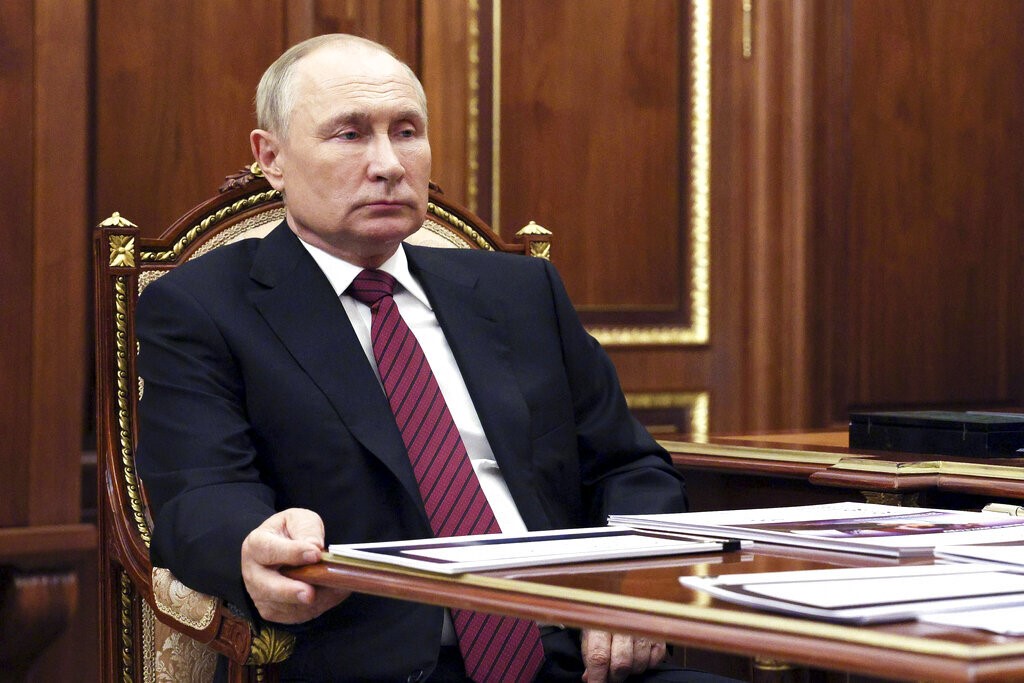
The question is whether Vladimir Putin, who celebrates his 70th birthday today, is thinking rationally about any of that.
Russia’s nuclear doctrine allows for a first-strike nuclear attack only if the very existence of the state is deemed at risk. It is a high bar.
Russia seems to have preferred not to make too big a deal out of it. Although these illegitimate annexations mean Russia can claim these territories as its own and therefore that any Ukrainian attack is a strike on the Russian state, it is a stretch to claim that as existential and a road that Russia has so far chosen not to travel.
Nor does Russia appear to have moved to take any of its nuclear warheads out of central storage and unite the payload with the means of delivery. So far, its nuclear threats are just that – threats. There is still a long way to go in the way of signalling and warnings before we reach actual Armageddon.
And although Russia may be losing ground on the battlefield, it does still have other options beyond continuing to hammer it out in Donbass and Kherson.
Why hasn’t it taken out targets in Kyiv, for example, since the early days of the war? What about other forms of hybrid warfare, (continuing to) target energy infrastructure in Ukraine and beyond? Vladimir Putin is a master of those dark arts. A nuclear strike, one would hope, would be his weapon of last resort.
The talk now in Russia is moving increasingly toward the Kremlin’s willingness to talk. The proposition seems to be – let’s discuss ending this now with Russia claiming a huge chunk of Eastern Ukraine as its own and there is the threat of tactical nuclear weapons if you don’t or if NATO troops get involved.
Ukraine’s president is understandably not convinced. Volodomyr Zelenskyy wants his country back, whole. He is not the one thinking about potential off-ramps for Vladimir Putin, he’s thinking about winning.
Which is why it is so important that the US president is. As Joe Biden put it in comments overheard by reporters, he’s trying to figure out where Mr Putin finds a way out where he “does not only lose face but lose significant power within Russia”.
The trouble is it is incredibly hard to determine what that is and by raising the rhetorical stakes, Vladimir Putin appears to be backing himself increasingly into a corner. The prospects are deeply worrying.
In an interview with Sky News, a Russian lawmaker and TV host Evgeny Popov insisted Russia would never makethe first strike.
“Using a nuclear weapon in the 21st century is an insane decision. We are not insane and we hope you are not either,” he said.
The US says Russian mercenaries are exploiting natural resources in the Central African Republic, Mali, Sudan to fund Moscow’s war in Ukraine.
Russia has rejected the charge as “anti-Russian rage”, Reuters news agency reports.
US Ambassador to the United Nations, Linda Thomas-Greenfield, said Russia’s shadowy Wagner mercenary group was using the “ill-gotten gains” to “fund Moscow’s war machine in Africa, the Middle East, and Ukraine”.
“Make no mistake: people across Africa are paying a heavy price for the Wagner Group’s exploitative practices and human rights violations,” she told a UN Security Council meeting on the financing of armed groups through illicit trafficking of natural resources.
Russia denies any links to Wagner.
The group has been active in Libya since 2016, where it supported General Khalifa Haftar’s advance on the official government in Tripoli in 2019.
In 2017, the Wagner Group was invited into the Central African Republic (CAR) to guard diamond mines. It is also reported to be working in Sudan, protecting gold mines.
According to Berit Reiss-Andersen, chair of the Norwegian Nobel Committee, the judges sought to recognise “three exceptional supporters of human rights, democracy, and peaceful coexistence.”
Ales Bialiatski, a jailed human rights advocate from Belarus, Memorial, a Russian advocacy organisation, and the Center for Civil Liberties in Ukraine have all received the Nobel Peace Prize.
The winners were announced in Oslo by Berit Reiss-Andersen, chair of the Norwegian Nobel Committee.
She said the judges wanted to honour “three outstanding champions of human rights, democracy, and peaceful coexistence in the neighbour countries Belarus, Russia, and Ukraine”.
She added: “Through their consistent efforts in favour of human values and anti-militarism and principles of law, this year’s laureates have revitalised and honoured Alfred Nobel’s vision of peace and fraternity between nations, a vision most needed in the world today.”
The award traditionally recognises the work of groups and activists seeking to prevent conflict, tackle hardship, and protect human rights.
Last year’s winners have faced a difficult time since receiving the prize.
Journalists Dmitry Muratov of Russia and Maria Ressa of the Philippineshave been fighting for the survival of their news organisations and defying government efforts to silence them.
They were honoured last year for “their efforts to safeguard freedom of expression, which is a precondition for democracy and lasting peace.”
A week of Nobel Prize announcements kicked off on Monday with Swedish scientist Svante Paabo receiving the award in medicine for unlocking secrets of Neanderthal DNA that provided key insights into the immune system.
Frenchman Alain Aspect, American John F Clauser, and Austrian Anton Zeilinger had shown that tiny particles can retain a connection with each other even when separated, a phenomenon known as quantum entanglement, that can be used for specialised computing and to encrypt information.
The Nobel Prize in chemistry was awarded on Wednesday to Americans Carolyn R Bertozzi and K. Barry Sharpless, and Danish scientist Morten Meldal for developing a way of “snapping molecules together” that can be used to explore cells, map DNA and design drugs that can target diseases such as cancer more precisely.
French author Annie Ernaux won this year’s Nobel Prize in the literature on Thursday.
The panel commended her for blending fiction and autobiography in books that draw on her experiences as a working-class woman to explore life in France since the 1940s.
The 2022 Nobel Prize in economics will be announced on Monday.
The prizes carry a cash award of 10 million Swedish kronor (around £800,000) and will be handed out on 10 December.
The money comes from a bequest left by the prize’s Swedish creator who invented dynamite.
Local media has announced that two Russian men were caught after travelling 300 miles to Alaska via the Bering Strait.
Authorities on St Lawrence Island found the two men in a small boat near the city of Gambell on Tuesday, Alaska News Source claims.
They allegedly told locals they were “fleeing the Russian military”.
A statement from the State Senator’s office said: “Given current heightened tensions with Russia, Senator Sullivan then called the Secretary of the Department of Homeland Security (DHS) and spoke to him as well as another senior DHS official.
“Since those calls, Customs and Border Protection is responding and going through the process to determine the admissibility of these individuals to enter the United States.”
The man claimed they had set sail from Egvekinot in northeastern Russia hours earlier.
Governor Mike Dunleavy said on Wednesday that the men had been detained.
Russian President Vladimir Putin last month ordered a partial mobilisation for the war in Ukraine, sparking a mass departure of menof fighting age.
Upwards of 260,000 people have fled the country since.
During a meetingin Prague, Liz Truss had a conversation with Petr Fiala, her Czech counterpart.
The pair met ahead of the European Political Community’s inaugural summit.
A Downing Street spokesperson said: “The Prime Minister met the Czech Prime Minister Petr Fiala in Prague this morning.
“The prime minister thanked Prime Minister Fiala for hosting today’s gathering of European leaders, welcoming the important opportunity to discuss regional issues like energy security and migration.
“The leaders were in strong agreement on the importance of like-minded European democracies presenting a united front against Putin’s brutality.
“They discussed the UK and Czech Republic’s early supportfor Ukraine’s defence and the need to continue military aid, help on reconstruction, and sanctions on Putin’s regime.
“The prime minister and Prime Minister Fiala also noted opportunities for our countries to work together to secure long-term energy supplies, including cooperation on nuclear and renewables.
“Both leaders welcomed the prospect of the United Kingdom resuming participation in the North Seas Energy Cooperation group. The prime minister looked forward to work progressing at pace on developing next-generation energy interconnectors in the region.”
Following Moscow’s illegitimate annexation of four areas of Ukraine during its months-long conflict, EU member states agreed Wednesday to impose a price cap on Russian oil as well as further sanctions, according to EU officials.
Diplomats struck the deal in Brussels that also includes curbs on EU exports of aircraft components to Russia and limits on steel imports from the country, according to an official statement from the Czech rotating EU presidency.
The 27-nation bloc will impose a ban on transporting Russian oil by sea to other countries above the price cap, which the Group of Seven wealthy democracies wants in place by Dec. 5, when an EU embargo on most Russian oil takes effect. A specific price for the future cap has yet to be defined.
A deal on the price cap was not easy to reach because several EU countries were worried it would damage their shipping industries. More details about the sanctions will be published as soon as Thursday.
“We have moved quickly and decisively,” von der Leyen said as she welcomed the deal. “We will never accept Putin’s sham referenda nor any kind of annexation in Ukraine. We are determined to continue making the Kremlin pay.”
The new sanctions also include an “extended import ban” on goods such as steel products, wood pulp, paper, machinery and appliances, chemicals, plastic, and cigarettes, the Czech presidency said.
A ban on providing IT, engineering, and legal services to Russian entities will also take effect.
The package, which will also include new criteria for sanctions circumvention, builds on already-unprecedented European sanctions against Russia as a result of its invasion of Ukraine in February.
EU measures to date include restrictions on energy from Russia, bans on financial transactions with Russian entities, including the central bank, and asset freezes against more than 1,000 people and 100 organizations.
Even as his troops faced more blows, Russian President Vladimir Putin signed the necessary documents to seize four regions of Ukraine.
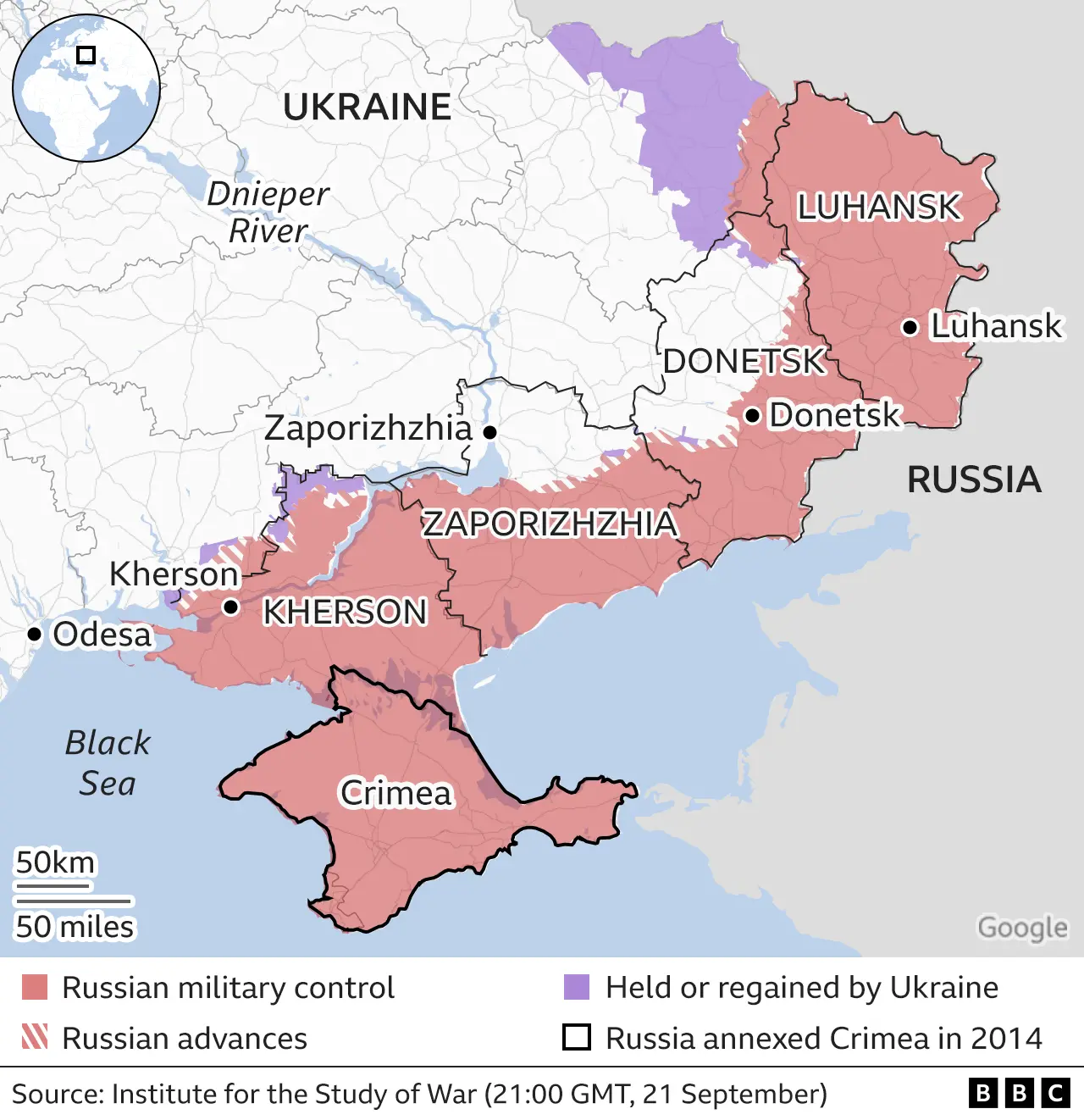
The documents state that the Luhansk, Donetsk, Zaporizhzhia, and Kherson areas have been “admitted into the Russian Federation.”
But in two of those areas – Luhansk and Kherson – Ukraine said it has been retaking more villages.
Mr Putin also signed a decree to formalise Russia’s seizure of the nuclear power plant in Zaporizhzhia.
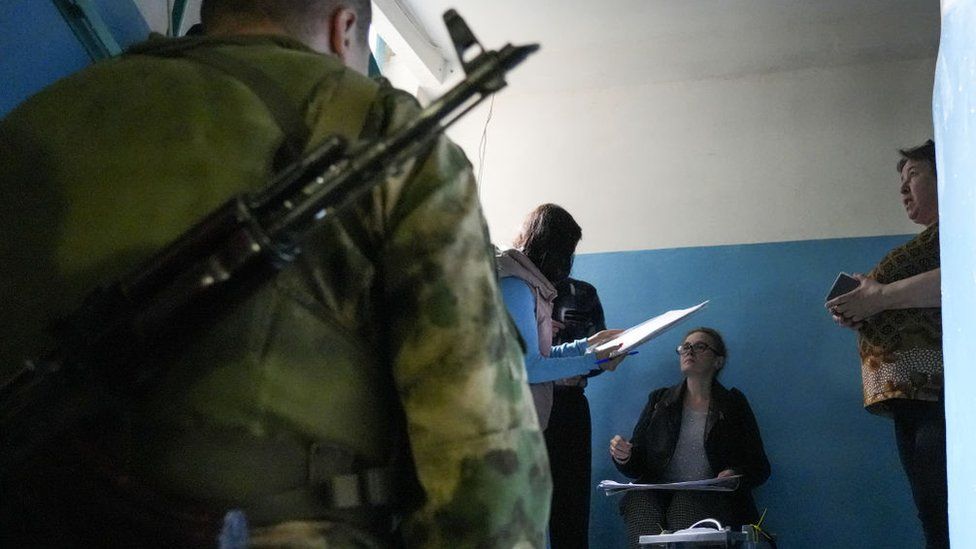
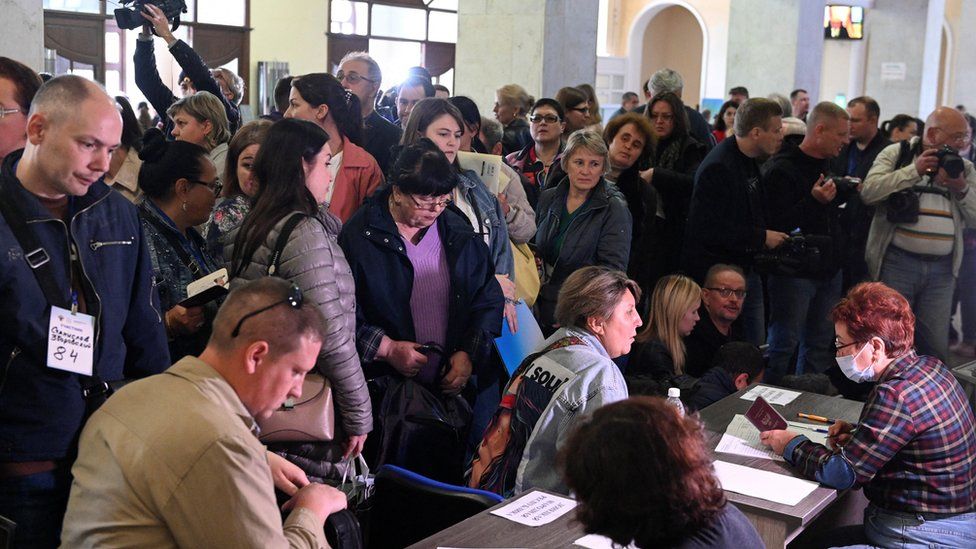
Last Friday, the Russian leader held a grand ceremony in the Kremlin, where he signed agreements with the Moscow-installed leaders of the four regions.
The move followed self-proclaimed referendums in the areas, denounced as a “sham” by the West.
Serhiy Haidai, Ukrainian governor of Luhansk, told the BBC on Wednesday that six villages in the region had been recaptured.
And President Zelensky later said Ukraine had liberated three more villages in the southern region of Kherson.
That followed a series of gains in Kherson the previous day, including the strategically key village of Davydiv Brid.
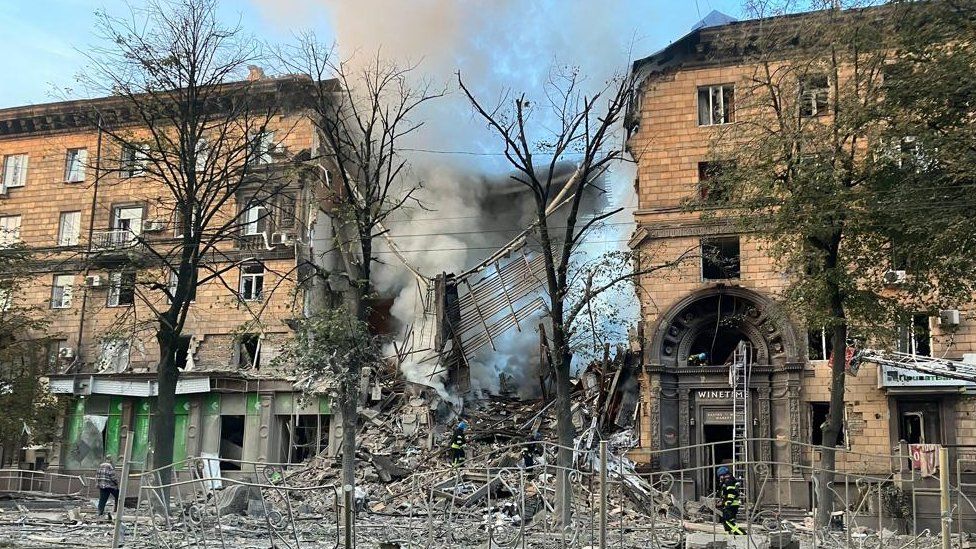
Meanwhile, the southern city of Zaporizhzhia was rocked by a series of huge explosions an hour or so before dawn.
Local authorities say seven Russian missiles hit residential buildings and that people are under the rubble. There has been no information on casualties so far.
The BBC’s Paul Adams, who is in the city, says rescue workers are combing through the shattered remains of an elegant five storey apartment building in the middle of the city.
Image caption, Zaporizhzhia was rocked by a series of huge explosions an hour or so before dawn on Thursday
Kremlin spokesman Dmitry Peskov said Russia would retake any territory that had been lost to Ukrainian forces.
Facing questions over the recent losses, he told reporters: “There is no contradiction here. They will be with Russia forever, they will be returned.”
In a speech to teachers on Russian teachers’ day, Mr Putin said he would “calmly develop” the annexed territories.
But Andrey Kartopolov, the chairman of the State Duma defence committee, told state media that Russia needed to stop lying about what was happening on the battlefield, saying that Russians were not stupid.
Russia is still working to mobilise reservists, after Mr Putin announced a call-up last month of 300,000 people who had completed compulsory military service.
But Mr Putin has rowed back on which groups will be affected, after strong opposition and protests in Russia against the move.
He has signed a decree exempting several categories of students, including first-time students at accredited institutions, and certain types of postgraduate students – such as those in the field of science.
In another move, President Putin has signed a decree to formalise Russia’s seizure of the nuclear power plant in one of the annexed regions – Zaporizhzhia – which has been occupied by Russian troops since the early days of the war.
Russia says the plant – Europe’s largest nuclear facility – will be operated by a new company, but Ukraine’s nuclear operator has dismissed the move as “worthless”.
Rafael Grossi, the head of the UN’s nuclear watchdog, the IAEA, has said he will hold consultations with the two sides following the development.
Boxers from the two nations were banned from competition in March following Russia’s invasion of Ukraine.
The International Boxing Association’s president is Russian Umar Kremlev and it counts Russian state-backed energy giant Gazprom among its chief sponsors.
In a statement, it said it “strongly believes that politics shouldn’t have any influence on sports”.
Adding it remained “politically neutral and independent”, the IBA – formerly known as the AIBA – added: “IBA calls for peace and remains a peacemaker in any conflicts. Moreover, the IBA has obligation to ensure equal treatment towards the athletes and competition officials, regardless of their nationality and residence.
“Both Russian and Belarus teams will be able to perform under their flags, and the national anthems will be played in case they win a gold medal.
“According to the decision, the technical officials of Russia and Belarus will also be back in the competitions.”
On Friday, the IBA suspended the Ukrainian boxing federation after it had written to IBA members calling for Kremlev to resign or be voted out of office.
The IBA does not recognise Kyrylo Shevchenko as the Ukrainian federation’s president, insisting it is Volodymyr Prodyvus, an ally of Kremlev who left Ukraine after the Russian invasion.
Two days later, IBA delegates voted to reject a proposal to hold new presidential elections, with the International Olympic Committee (IOC) saying it was “extremely concerned” by the result.
The IBA was stripped of involvement in last year’s Tokyo Olympics because of governance, finance, refereeing and ethical issues, while it will also not be involved in the running of qualification events or competitions at the Paris 2024 Games.
Boxing was left off the initial list of sports for the 2028 Games.
The government is considering an ambitious move to establish a fertiliser company capable of meeting the fertiliser demand of the entire African continent, President Akufo-Addo has said.
According to the President, the global shortfall in the supply of fertiliser caused by Russia’s invasion of Ukraine presented an opportunity for Ghana to position itself to produce fertilisers for local consumption and for export to other parts of the continent.
In a meeting with the Norwegian Ambassador at the Jubilee House in Accra yesterday, President Akufo-Addo said discussions were ongoing to determine how the country could take advantage of the opportunity.
The Norwegian Ambassador, Ingrid Mollestad, visited the President with a delegation from Yara International, a Norwegian chemical company that produces, distributes, and sells nitrogen-based mineral fertilisers.
The discussion centred on Yara International’s support for about 100,000 small-holder Ghanaian farmers with fertilisers to the tune of US$20 million to improve crop production in Ghana.
President Akufo-Addo appealed to the Norwegian company to consider partnering with the government to establish a fertiliser plant to serve the continent.
“Our main concern is to be able to make these fertilisers here ourselves. Plans are ongoing to establish a fertiliser facility here in Ghana. It will make a lot of sense in terms of the West African market and larger African market.”
“It would be great to involve you as partner in that exercise because it will make a lot of sense for us to make a big facility here in Ghana to supply our needs and at the same time the regional and continental market,” he said
President Akufo-Addo expressed the commitment to work to ensure that the vision became a reality for the country.
He thanked the Norwegian company for the support and invited the ambassador to work with the government to consider other areas of partnership and cooperation.
“We appreciate the gesture and your involvement in Ghana,” he said and commended the company for developing a model to track the movement of fertiliser to prevent corruption in the distribution of the fertilisers.
Ms Mollestad, on her part, reiterated Norway’s commitment to ensuring food security in Ghana, and Africa.
“We are committed to doing our utmost on the continent for food security and producing sustainable food for the continent,” she said.
She expressed delight that Yara, the biggest producer of fertiliser in the world, had decided to support Ghana to improve crop production and food security.
Liz Truss says, one of the reasons we are facing this global crisis is because, collectively the West failed to do enough.
“We became complacent. We did not spend enough on defence. We became too dependent on authoritarian regimes for cheap goods and energy,” she tells the crowd in Birmingham.
She goes on to say the country “did not stand up to Russia early enough” but “we will ensure this never happens again.”
“So we are taking decisive action to reinforce our energy security,” Ms Truss says.
“We are opening more gas fields in the North Sea and delivering more renewables and nuclear energy.
“That is how we will protect the great British environment, deliver on our commitment to net zero, and tackle climate change.
“We are also taking decisive action to strengthen our borders by beefing up our Border Force and expanding the Rwanda scheme.
Ms Truss also says Vladimir Putin’s “illegal annexation of Ukrainian territory is the latest act in his campaign to subvert democracy and violate international law”.
“We should not give in to those who want a deal which trades away Ukrainian land,” she adds.
EU member countries have agreed on another round of sanctions against Russia over its aggression against Ukraine, the Czech EU presidency said on Wednesday.
We have just reached a political agreement on new sanctions against Russia – a strong EU response to Putin’s illegal annexation of 🇺🇦 territories. Written procedure follows, sanctions enter into force on publication in the Off. Journal. #EU2022CZ#COREPERII
Edita Hrda, permanent representative of the Czech Republic to the EU, said the sanctions were in response to Russia’s annexation of four regions in Ukraine, which the West has deemed illegitimate.
This morning we reported that Vladimir Putin had signed laws absorbing four Ukrainian regions into Russia.
A Ukrainian commander has been seen driving a captured Russian tank as the army continues to make rapid advances into previously held Russian territory.
In the video – shared on the official Twitter account for Ukraine’s defence – Colonel Pavlo Fedosenko, commander of the 92nd Mechanised Brigade, is seen smiling as he drives the Russian tank.
The video said he captured the tank “personally”.
Sky News has been unable to verify the claims made by the account – however, the vehicle does appear to be a T-90, a third-generation Russian main battle tank.
It is also not the first enemy tank to be captured by advancing forces; in recent weeks a number of T-72 and T-80 tanks have been added to the Ukrainian arsenal.
Colonel Pavlo Fedosenko, Hero of Ukraine, Defender of Kharkiv, commander of the 92nd Mechanized Brigade is driving modern russian T-90A tank captured by the #UAarmy.
russian lend-lease continues. pic.twitter.com/v0XLDVf6f9
His father Rob described him as a “private young man of drive, purpose, and conviction”.
He went on: “Though we are deeply saddened at his death, we are enormously proud of his courage and determination and his selflessness in immediately enlisting to support Ukraine.
“Rory was never political but he had a deep sense of right and wrong and an inability to turn the other way in the face of injustice.”
The International Legion for the Defence of Ukraine said that while conducting operations, Mr Mason’s unit came under attack.
A spokesman said in a statement:“Our brother in arms, Rory Mason, has taken part in the Kharkiv counteroffensive with his unit and was killed in action.
“Rory’s memory will live on in his unit, in the legion and the armed forces of Ukraine.”
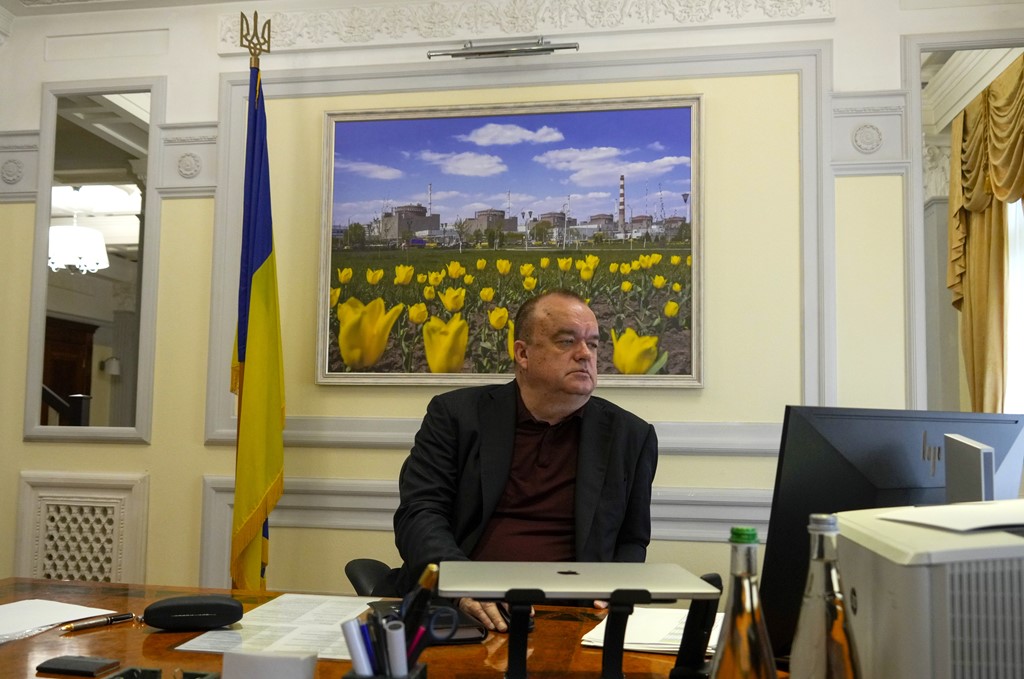
Workers from the Zaporizhzhia nuclear power plant have recounted their fears of being abducted and tortured by Russian forces occupying the facility and the city of Enerhodar.
Ukrainian officials say the Russians have sought to intimidate the staff into keeping the plant running, through beatings and other abuse, and to punish those who express support for Kyiv.
Enerhodar’s exiled mayor Dmytro Orlov estimated that more than 1,000 people, including plant workers, were abducted from Enohodar, and an estimated 100-200 remain abducted.
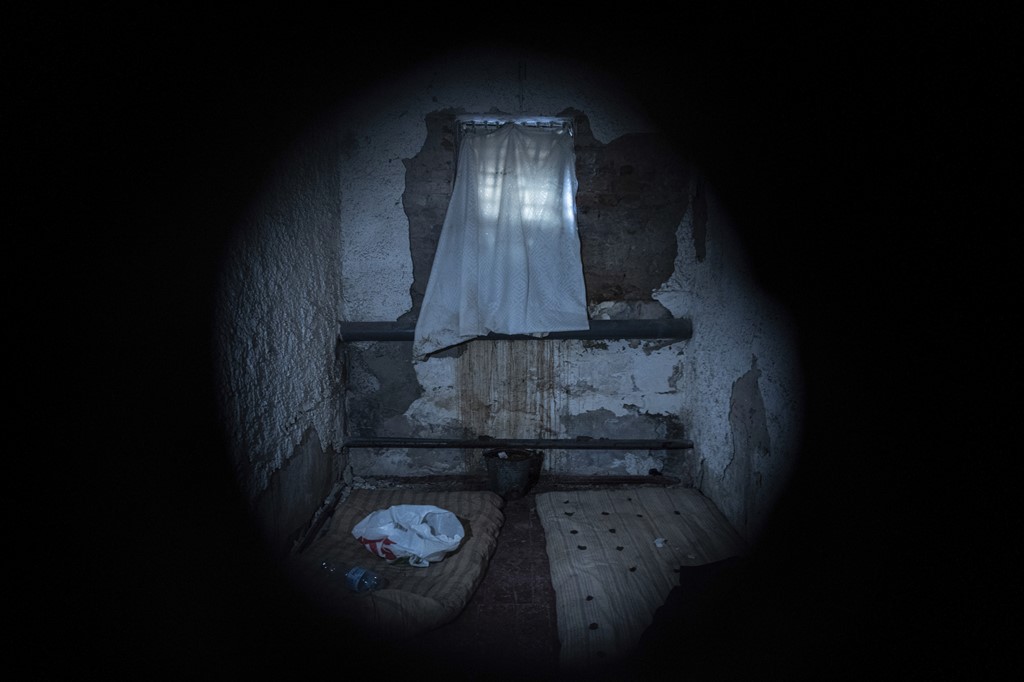
Mr Orlov alleged they were tortured at various locations in Enerhodar, including at the city’s police station and in basements elsewhere.
“Terrible things happen there,” he said.
“People who managed to come out say there was torture with electric currents, beatings, rape, shootings… some people didn’t survive.”
He was freed on Monday after being forced to make false statements on camera, according to Petro Kotin, head of Energoatom, Ukraine’s state nuclear company.
Mr Kotin said: “I would say it was mental torture.
Petro KotinAP
“He had to say that all the shelling on the Zaporizhzhia nuclear power plant was made by Ukrainian forces and that he is a Ukrainian spy… in contact with Ukrainian special forces.”
Mr Orlov, who spoke to Mr Murashov after his release, said the plant official told him he had spent two days “in solitary confinement in the basement, with handcuffs and a bag on his head. His condition can hardly be called normal”.
Shelling and damage near the site have raised international alarm over the plant’s safety, as both Russia and Ukraine blame each other for the shelling.
Anatoly Antonov, the Russian ambassador to the US, referred to it as an “urgent threat” to Moscow and labelled the US as “a participant in the battle.”
Earlier, the US announced another $625m (£547m) in military aid to Ukraine.
Advanced US weaponry has been credited with helping Ukraine build momentum against occupying Russian forces.
Ukrainian troops have made significant advances in the country’s northeast and south in recent weeks.
The latest US hardware includes another four of the high-precision Himars multiple rocket systems.
In all, Washington has committed nearly $17bn in military support for Kyiv since Russian President Vladimir Putin invaded Ukraine on 24 February.
In a statement on Thursday, Mr Antonov warned that the US decision “to continue pumping the Kyiv regime with heavy weapons only secures Washington’s status as a participant of the conflict”.
He said this would result in “protracted bloodshed and new casualties”.
After suffering a string of major defeats on the battlefield in Ukraine in recent weeks, Russia has vowed to defend itself with all means available – not ruling out the use of its nuclear weapons.
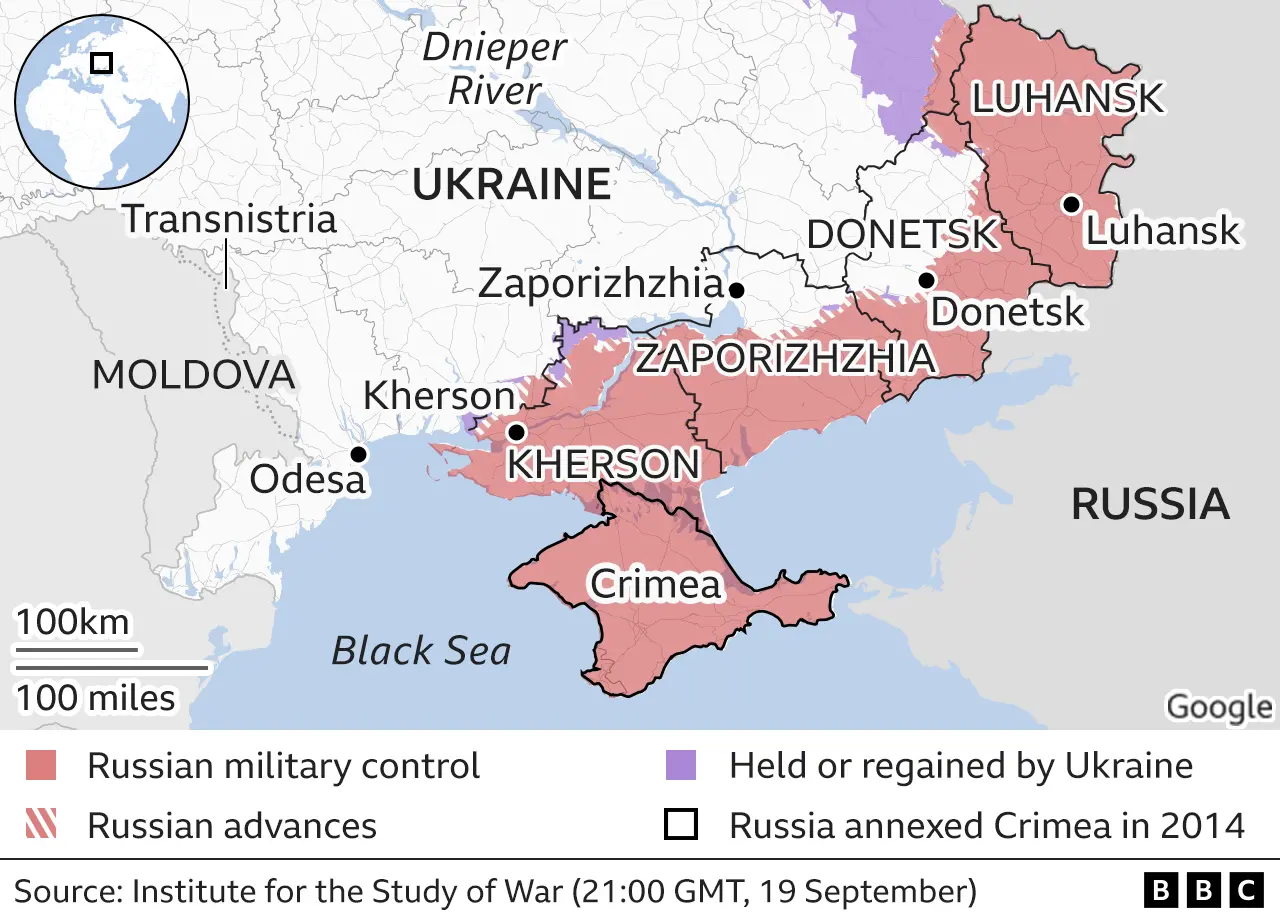
Moscow is also pushing ahead with its annexation attempts of four Ukraine regions: Donetsk and Luhansk in the east, and Kherson and Zaporizhzhia in the south.
However, Russia does not fully control any of the regions, and Ukrainian troops have been making rapid advances in the Kherson region in recent days.
Mr Antonov’s warning comes shortly after US President Joe Biden and Vice-President Kamala Harris discussed further military co-operation with Ukraine’s President Volodymyr Zelensky.
In a statement, the White House stressed that “the United States will never recognize Russia’s purported annexation of Ukrainian territory.
“President Biden pledged to continue supporting Ukraine as it defends itself from Russian aggression for as long as it takes.”
The statement said the new military aid package included “Himars, artillery systems and ammunition, and armoured vehicles”.
The US-made HIMARS -High Mobility Artillery Rocket System – has been used to hit Russian targets such as command posts and ammunition depots.
More losses for Russia in Ukraine, this time around in Kherson – Ukraine’s long-telegraphed Kherson counter-offensive is making some headway along the western banks of the Dnipro river, between the villages of Zolota Balka and Dudchany around 100km north of Kherson.
Russia’s Ministry of Defence admitted on Monday that the Ukrainians had broken through Russian lines at Zolota Balka and Oleksandrivka but that the Russians had taken up pre-prepared defensive positions and were continuing to inflict “massive fire on the enemy”.
Our warriors from @ng_ukraine reported that the village of Zolota Balka, Kherson region, has been liberated.
russians control less territories in Ukraine each day. pic.twitter.com/zPTOsafHmv
Just four days after Russia declared all this territory theirs, it doesn’t look good for them. Plus Russian losses are appearing in the public domain, in a way that one month ago they would not have done. Russian military bloggers are documenting Russian setbacks in expanding groups of followers.
The likes of Ramzan Kadyrov, who incidentally has just announced he’ll be sending his three teenage sons to fight (including his 14-year-old), has poured criticism on the Russian military command in charge of the Lyman debacle, as has Evgeny Prigozhin who recently revealed himself to nobody’s great surprise as head of the Russian mercenary group, Wagner.
Pundits on state TV are expressingconcern at the dire state of affairs. Could this open Pandora’s box for the Kremlin, criticism which gathers pace and which it cannot control, triggering a slow unraveling?
Perhaps. It could also, intentionally or not, serve a purpose for Vladimir Putin. If his nuclear bluffs are to be taken seriously and given Russian capabilities it would be foolish not to, he needs to present a case to his people that the nuclear option is – at some point – justified.
He and his propagandists are pitching this as anexistential battle against the military might of the collective West, out to destroy and dismantle Russia.
A nuclear strike is an abhorrent option in any scenario but it makes no sense if you’re winning. With Russia losing ground though, and the outlook increasingly bleak, it might become more appealing as Vladimir Putin sees his options shrink.
DISCLAIMER: Independentghana.com will not be liable for any inaccuracies contained in this article. The views expressed in the article are solely those of the author’s, and do not reflect those of The Independent Ghana
Source: Skynews By Diana Magnay, Moscow correspondent
More territory has been retaken by Ukrainian forces in regions that Russia illegally annexed, with Kyiv’s soldiers moving closer to Kherson in the south and consolidating gains in the east.
Officials from Russia who had been deployed in Kherson acknowledged the advance but claimed that Moscow’s men had dug in.
In the east, Ukrainian forces pushed into the Russian-held Luhansk region.
Speaking during his nightly address, President Zelensky said “fierce fighting continues in many areas”, but he did not give details. The progress of Ukraine’s counterattacks have been closely guarded and reporters have largely been kept away from the front lines.
But in the south, Vladimir Saldo, the Russian-installed leader in the Kherson region, admitted that Ukrainian forces had broken through near Dudchany, a town on the Dnipro river about 30km (20 miles) south of the previous front line. The river is called Dnieper by Russians.
“There are settlements that are occupied by Ukrainian forces,” Mr Saldo said. Some Russian reports say the Ukrainians have now taken Dudchany.
A Russian defence ministry spokesman, Igor Konashenkov, said “numerically superior” Ukrainian tanks had “driven a deep wedge” south of Zolota Balka, a village that marked the previous front line on the Dnipro. He claimed the Russians had killed about 130 Ukrainian troops in that fighting.
According to Mr Saldo, two Ukrainian battalions tried to reach the Kakhovka hydroelectric power station, about 70km (44 miles) east of Kherson. The power station is in the port city of Nova Kakhovka.
Meanwhile, in the east Kyiv’s troops have continued an advance that has seen them slowly making inroads into Luhansk, a province annexed by Moscow last week and previously under almost complete Russian control.
On Saturday Ukrainian forces recaptured the important hub town of Lyman in the east, lying near the Luhansk regional border. Russia’s military had turned Lyman into a logistical base.
Russia’s proxy forces in Luhansk said Ukrainian troops had pushed a few kilometres into the Luhansk region. Reports suggest that the Ukrainians are moving towards the Russian-held towns of Kremenna and Svatove in Luhansk, with some pro-Kremlin bloggers suggesting that Russian forces have again been ordered to retreat.
Kherson and Luhansk are among four regions which Russian President Vladimir Putin has declared to be part of Russia, following so-called referendums denounced as fraudulent by Kyiv and its Western allies. Russia does not fully control any of the four regions.
On Monday, Kremlin spokesperson Dmitry Peskov attracted ridicule online after he admitted that Russia was still deciding which areas it had “annexed”, suggesting that Moscow does not know where its self-declared borders are.
Mr Peskov claimed the entirety of Luhansk and Donetsk regions were part of Russia, but said the Kremlin will “continue consultations with the population regarding the borders of the Kherson and Zaporizhzhia regions”.
Kyiv has vowed to retake all the territory annexed by Russia, including Crimea, seized by Russian troops in 2014.
The Russian defence ministry says reservists drafted into the army under Mr Putin’s mobilisation order last month are now undergoing intensive combat training in the Russian-controlled Luhansk and Donetsk regions. The Kremlin plans to call up about 300,000 reservists – though Mr Putin did not set an upper limit.
The International Energy Agency (IEA) has announced that theworld’s natural gas markets will likely remain constrained well into 2023 as Russia limits supplies and Europe reduces consumption in the face of high costs and energy-saving initiatives.
Global gas consumption is expected to drop by 0.8 percent in 2022 – the result of a record 10 percent contraction in Europe and static demand in the Asia-Pacific – and grow just 0.4 percent next year, the IEA said in its quarterly gas market report on Monday.
Still, the market outlook is subject to a “high level of uncertainty” due to Russia’s future actions and the economic effect of high energy prices over time, the IEA said.
“Russia’s invasion of Ukraine and sharp reductions in natural gas supplies to Europe are causing significant harm to consumers, businesses, and entire economies – not just in Europe but also in emerging and developing economies,” said Keisuke Sadamori, the IEA’s director of energy markets and security.
“The outlook for gas markets remains clouded, not least because of Russia’s reckless and unpredictable conduct, which has shattered its reputation as a reliable supplier. But all the signs point to markets remaining very tight well into 2023.”
Russia’s supply of gas to Europe has dwindled to a trickle since the shutdown of the Nord Stream 1 last month and the recent discovery of leaks in the pipeline.
Moscow has threatened to sanction Ukrainian energy firm Naftogaz, one of the last remaining Russian gas supply routes to Europe, a move that would exacerbate energy shortages coming into winter.
Europe has offset the decline in Russian gas supplies by importing LNG and using alternative pipeline supplies from producers such as Norway.
The IEA said it expected Europe’s LNG imports to increase by more than 60 billion cubic metres this year, keeping the market under pressure for the short to medium term.
However, China’s new LNG contracts since 2021 and a colder-than-average winter could cause additional demand from Northeast Asia, the Paris-based intergovernmental organization said.
An investigation by the Associated Press has revealed that Russian tortureof residents and soldiers alike in the eastern Ukrainian city of Izium was random, pervasive, and completely routine.
In the Kharkiv region, the agency found 10 locations of Russian torture and met with 15 survivors as well as two families whose loved ones vanished. Two of the men were frequently taken and mistreated.
One battered, unconscious Ukrainian soldierwas displayed to his wife to force her to provide the information she simply didn’t have.
The AP also confirmed eight men killed under torture in Russian custody, according to survivors and families. All but one were civilians.
AP
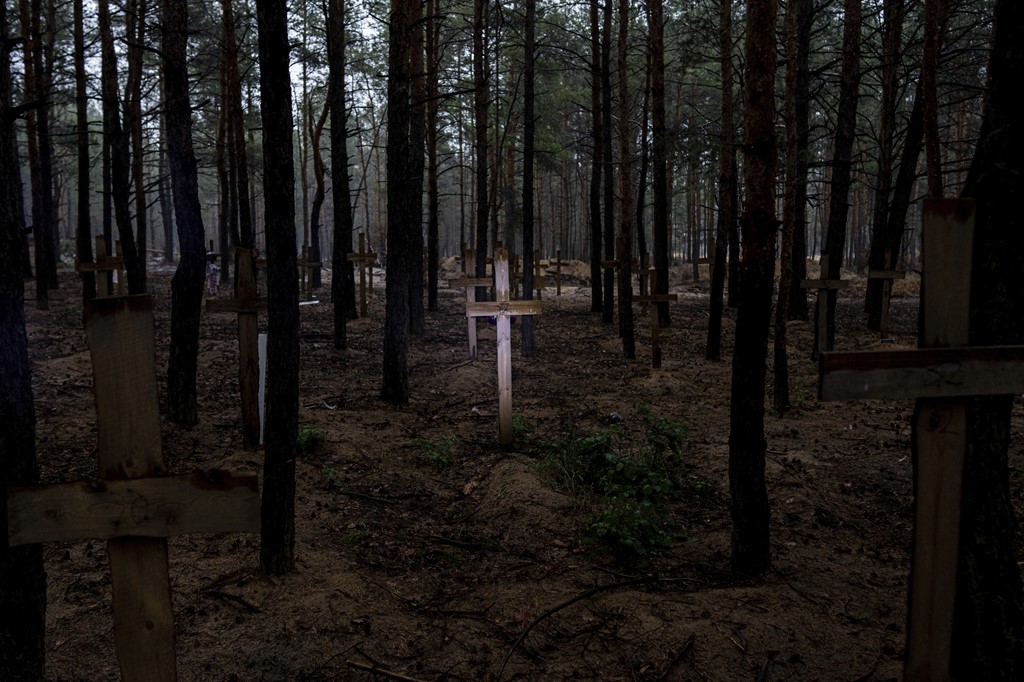
At a mass grave site created by the Russians and discovered in the woods of Izium, at least 30 of the 447 bodies recently excavated bore visible marks of torture — bound hands, close gunshot wounds and broken limbs, according to the Kharkiv regional prosecutor’s office.
Those injuries corresponded to the descriptions of the pain inflicted upon the survivors.
Ukrainian intelligence officers said women were held in a garage near Russian soldiers’ quarters where they were raped regularly.
AP
A physician who treated hundreds of Izium’s injured during the Russian occupation said people regularly arrived with injuries consistent with torture, including gunshots to their hands and feet, broken bones, and severe bruising.
“Even if people came to the hospital, the silence was the norm,” chief Dr. Yuriy Kuznetsov said.
Torture in any form during an armed conflict is a war crime under the Geneva Conventions, whether of prisoners of war or civilians.
These guys are steadily retaking Ukrainian territory on the eastern front, and despite their exhausted appearance, they can smell victory, according to Sky’s special correspondent Alex Crawford.
They have a lot of self-assurance and confidence right now. They are eager to retake more, too.
I asked the soldiers: “How confident are you about retaking Severodonetsk, Lysychansk?”
One replied: “100%. This is Ukraine.”
Lyman is their biggest win on the battlefield in weeks and the first since President Vladimir Putin declared this Russian territory.
So tearing down the Russian flags inside Lyman is delivered with particular relish.
Pic: Reuters
Seizing Lyman it is hoped will be the launchpad to reclaim even more land in the east.
The Ukrainians have been celebrating with their foreign friends who have fought alongside them.
Now they’re pushing forward. The road to Lyman is littered with the discards of fierce fighting but the Ukrainians say they have also surrounded their enemy in parts of Lysychansk nearly 60km (37 miles) away.
A soldier said: “Now they are on the Lysychansk plant. They are surrounded, they will be pushed back and the road to Lysychansk will be opened.”
Neighbouring towns, like Siversk, have suffered badly in the fight to retake Lyman – with house after house destroyed. Those still here are just clinging to hope.
A local man said: “I want peace. I want that my parents will be alive. I want that my wife will be alive. Nothing more.”
But Russians are still close enough to instill much fear.
The Ukrainians have blown up bridges into Bakhmut to slow down any Russian advance
Forty minutes south, the ferocity of the Russian assault is stark in Bakhmut. This was the Ukrainians’ key military hub for the east, now blasted to bits and a virtual ghost town.
There are enormous craters that have utterly changed the geography around here and ripped the heart out of the town.
The holdouts move around in a war-torn haze – weary and tearful.
Irina said: “These borders that they’re trying to change. It’s for those who divide. They divide big money between them and they don’t care about us people, the people who are living here. I’m sorry because a lot of my friends died. Big politics is filthy.”
Irina
Victory tastes very different depending on where you are.
The Russians are still on the edges of Bakhmut fighting and making their presence very much felt.
I asked a local man: “Did you think the Russians were close to coming in?”
He replied: “You understand maybe for a little while they will succeed, but everyone wants the opposite. But here there are a lot of collaborators, a lot, and they are saying a lot of terrible things.
“I start arguing with them, which I shouldn’t do, because God forbid if they do come here, those people will be first who betray.”
Why is France’s contribution to the war effort in Ukraine so minimal if it aspires to lead Europe into a new era of military independence?
Some of the nation’s leading strategic thinkers are pressing President Emmanuel Macron to decide quickly whether to send more armaments to Kyiv, and they are asking him this hard question.
Recent analysis conducted on the ground in Poland and Ukraine shows that the French share of foreign arms deliveries is less than 2%, way behind the US on 49%, but also behind Poland (22%) and Germany (9%).
“I was concerned about the reliability of the statistics which showed France low on the list of contributing countries,” says François Heisbourg, who is perhaps France’s most influential defence analyst.
“So I went out to the main distribution hub in Poland to see how much in tonnage was actually being delivered, rather than just promised.
“Unfortunately the figures bore out my fears. France is way down the list – in the ninth position.”
The official reaction to this in Paris is: “Yes, but…”
Yes, the aid statistics are unflattering, but there are other factors at work.
First, defense officials say the true measure of military help is quality, not quantity. Some countries are delivering masses of outdated equipment. France has given 18 Caesar self-propelled artillery units, which are now celebrated along the Ukrainian front line.
France, they add, is like other Western countries in having run down military stocks as part of the post-Cold War peace dividend
Ukraine’s Caesars are fully one-quarter of France’s entire mobile artillery. It cannot offer much more without making itself vulnerable in regions where it is already committed, like the Sahel and the Indo-Pacific.
“It might look like we are behind other countries, but France has every intention of playing its part,” says Gen Jérome Pellistrandi, editor of the National Defence Review.
These arguments are not without merit, says Mr Heisbourg. The problem is that by not being more present in the theatre, France risks writing itself out of the plot.
“When I was in Kyiv, everyone was very polite. I had no sense that the Ukrainians disapproved of us,” he says. “In a way, it was worse. I had the distinct feeling we were becoming irrelevant.”
For Mr Heisbourg the equation is simple. Ukraine will talk to countries that it knows are likely to deliver the weapons it needs. France at the moment is not one of them.
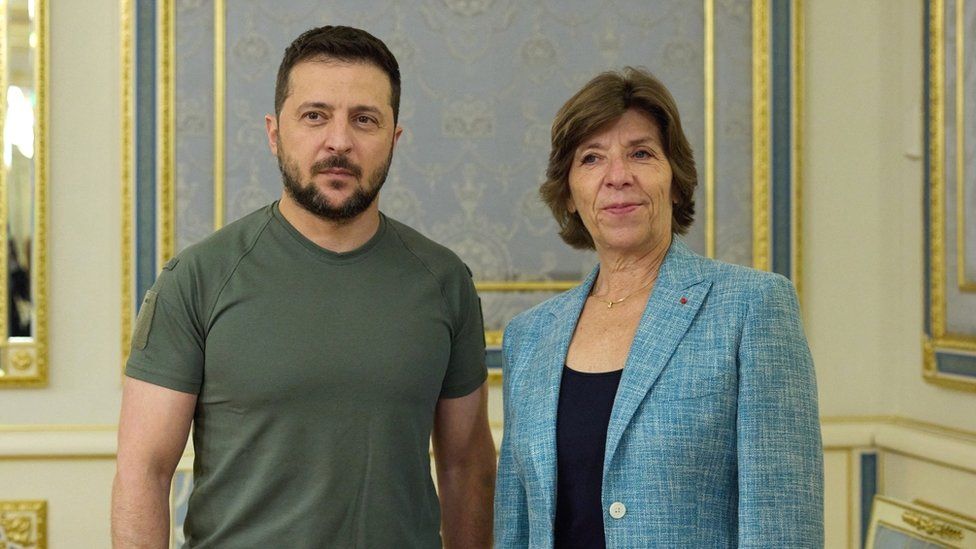
IMAGE SOURCE,REUTERS Image caption, French Foreign Minister Catherine Colonna discussed the supply of defence equipment with President Zelensky in Kyiv
But there is another danger for France. Its relative absence in Ukraine undermines its bid for leadership in the cause of European defence.
Already many countries of eastern Europe are wary of President Macron, who they believe was far too indulgent towards Russia’s Vladimir Putin in the first months of the war. A narrative has taken root according to which France still feels ambivalent about an outright Ukrainian triumph.
For Pierre Haroche, who lectures on international security at the Queen Mary University of London, this narrative is unfair – and is not the reason for France’s low levels of arms deliveries to Ukraine.
However, he is firm of the view that France should beef up its contribution as early as possible, in order to reassure eastern European countries like Poland that “we are all on the same page”.
“France’s goal of strategic autonomy for Europe is focused primarily on building up our defence industries via joint procurement. But if you want joint procurement, you have to demonstrate to other countries that you have the same vision about our common security,” he says.
“In order to make our objective of European co-operation viable, we need to show eastern European countries thatco-operating with France and buying the idea of strategic autonomy is not a strategic risk.”
Dr Haroche is calling for France to send 50 Leclerc main battle tanks. Mr Heisbourg would prefer air defense systems, which he says Ukraine is more in need of.
“It is like a fire extinguisher,” says Dr Haroche. “If there is a fire in a neighbour’s house it is better to offer your extinguisher straightaway, and not wait till the fire reaches your own home.
“It’s not just generosity. It’s also for your own protection.”
Russia has withdrawn its troops from the strategic Ukrainian town of Lyman, in a move seen as a significant setback for its campaign in the east.
The retreat came amid fears thousands of soldiers would be encircled in the town, Russia’s defence ministry said.
Recapturing Lyman is of strategic significance for Ukraine.
The town had been used as a logistics hub by Russia, and could give Ukrainian troops access to more territory in the Donetsk and Luhansk regions.
Video footage shared online showed Ukrainian soldiers waving their national flag on the outskirts of the town.
Although the blue and yellow colours were flying in Lyman again, fighting was “still going on” there, President Volodymyr Zelensky said in his evening video address.
However, he gave no further details.
The battlefield setback prompted the Chechen leader and hardline Moscow ally, Ramzan Kadyrov, to comment that Russia should consider using low-yield nuclear weapons in the face of such defeats.
Lyman is in Donetsk – one of four partially-occupied Ukrainian regions which Russia declared it was annexing on Friday. Ukraine and its Western allies have dismissed the move as an illegal land-grab.
An adviser to Ukraine’s defence minister earlier told the BBC that recent gains around Lyman – following days of intense fighting – represented a “considerable success”.
Russian fighters had been given the chance to surrender, Yurik Sak said, and would face better treatment as prisoners of war than from the Russian military leadership.
Shortly afterwards, the Kremlin said it was withdrawing its forces from the town, using its Soviet-era name of Krasnyi (Red) Lyman, acknowledging that the Ukrainians had “significant superiority in forces” in the area.
Military analysts say that Kyiv currently has momentum in the war, and it has vowed to forge ahead with a counter-offensive to reclaim all territory under occupation.
In a speech on Friday, Mr Zelensky said efforts to “liberate our entire land” would act as proof that international law could not be violated.
After a significant fresh defeat on the battlefield, Ramzan Kadyrov, the leader of Russia’s Chechnya region, suggested on Saturday that Moscow might use a low-yield nuclear weapon in Ukraine.
As Russia confirmed the loss of its stronghold of Lyman in eastern Ukraine, Kadyrov slammed top commanders for their failings and wrote on Telegram: “In my personal opinion, more drastic measures should be taken, right up to the declaration of martial law in the border areas and the use of low-yield nuclear weapons”.
He was speaking a day after President Vladimir Putin proclaimed the annexation of four Ukrainian regions – including Donetsk, where Lyman is located – and placed them under Russia’s nuclear umbrella, saying Moscow would defend the lands it had seized “with all our strength and all our means”.
Russia has the world’s largest atomic arsenal, including low-yield tactical nuclear weapons that are designed to be deployed against opposing armies.
Other top Putin allies, including former president Dmitry Medvedev, have suggested that Russia may need to resort to nuclear weapons, but Kadyrov’s call was the most urgent and explicit.
The influential rulerof the Caucasus region of Chechnya has been a vocal champion of the war in Ukraine, with Chechen forces forming part of the vanguard of the Russian army there. Kadyrov is widely believed to be personally close to Putin, who appointed him to govern restive Chechnya in 2007.
Russian trolls have come up with a new way of triggering Europeans dealing with inflated gas prices – broadcasting cheap Russian gas burning 24/7 on video streaming platforms like Twitch.
It all started on September 11, when a new Twitch channel aptly named “russiangas1” started broadcasting. The premise was simple – a phone aimed at a stove top with all four burners turned on broadcasting gas being burned 24/7. And if that wasn’t enough, the streamer decided it would be a good idea to show just how cheap burning all that gas would be for them – 1.44 euros per month ($1.35) – at a time when gas prices in Europe are higher than they’ve ever been. A thermometer constantly showed the audience how nice and warm it was in the room, and a digital clock showed that the video was live and not on a loop.
For the first three days, the russiangas1 Twitch channel had no viewers at all, but then someone found it, spread the word and by September 17, it had already gone viral, getting mixed reactions from the general public. However, its fame would turn out to be its downfall, as on the morning of September 21, the channel had already become inaccessible, apparently as a result of a Twitch ban.
Apparently, Twitch considered the content “inflammatory”, and that the broadcast was intended as a provocation to show how cheap gas is in Russia at a time when most Europeans are still trying to figure out how they’ll stay warm this winter.
But it turns out that russiangas1 was only the start of this troll operation. After its ban, at least two other Twitch channels broadcasting the exact same thing appeared on Twitch, and they have yet to be banned by the streaming platform. And even if they do, the cat’s out of the bag now, other channels will probably take their place.
Turkey’s foreign ministryhas said it rejects Russia’s annexation of four regions in Ukraine, adding the decision is a “grave violation” of international law.
Turkey, a NATO member, has conducted a diplomatic balancing act since Russia invaded Ukraine on February 24.
Ankara opposes Western sanctions on Russiaand has close ties with both Moscow and Kyiv, its Black Sea neighbours. It has also criticised Russia’s invasion and sent armed drones to Ukraine.
The Turkish ministry said on Saturday it had not recognised Russia’s annexation of Crimea in 2014, adding that it rejects Russia’s decision to annex the four regions, Donetsk, Luhansk, Kherson, and Zaporizhia.
The director-general of Ukraine’s Russian-occupied Zaporizhzhia nuclear power plant has been detained by a Russian patrol, according to Energoatom, the state agency in charge of the plant.
Ihor Murashov was detained on his way from Europe’s largest nuclear plant to the town of Enerhodar at about 4 pm (13:00 GMT) on Friday, the company said in a statement.
“He was taken out of the car, and with his eyes blindfolded he was driven in an unknown direction,” it said.
Ukraine has submitted an application for accession to NATOunder an accelerated procedure, President Volodymyr Zelenskiy said in an address on September 30.
The announcement came after meetings of Ukraine’s top military and security councils and after Russian President Vladimir Putin signed decrees to formally seize four Ukrainian territories partially occupied by Moscow.
Commenting on Putin‘s statements about occupied or partially occupied regions of Ukraine “joining Russia,” Zelensky said Russia is “trying to steal what does not belong to it.”
“We have a solution. First, only the path of strengthening Ukraine and expelling the occupiers from our entire territory will restore peace. We will go this way,” he said.
NATO Secretary-General Jens Stoltenberg says Russia’s recent actions on the war in Ukraine represent “the most serious escalation” since Moscow launched its invasion in February.
Stoltenberg cited Russian President Vladimir Putin’s partial military mobilization, his “irresponsible nuclear saber-rattling,” and decrees signed on September 30 illegally annexing more Ukrainian territory.
Speaking at a news conference in Brussels, Stoltenberg condemned the Russian “land grab” of four Ukrainian provinces in decrees signed by Putin earlier at a Kremlin ceremony. He said the move was “illegal and illegitimate,” calling it the “largest attempted annexation of European territory by force since World War II.”
NATO allies “do not, and will not, recognize any of this territory as part of Russia,” he said.
Putin’s move is a sign of weakness, Stoltenberg said, adding that the Russian leader has “utterly failed” in his strategic objectives.
He also said that Russia faces “severe consequences” if it uses nuclear arms in Ukraine, and reaffirmed NATO’s “unwavering support” for Ukraine’s independence, sovereignty, and territorial integrity.
He said Ukraine has the right to retake Ukrainian territory, and NATO allies support Ukraine’s right to choose its own path.
If Russia were to win in Ukraine, he said it would be catastrophic for the country and dangerous for NATO.
But he remained noncommittal on Ukrainian membership in NATO, which President Volodymyr Zelenskiy said Ukraine will immediately seek on an expedited basis. Stoltenberg said it is a decision that requires a consensus of all 30 allies, and the focus should remain on helping Kyiv’s war effort.
Source: Radio Free Europe via Reuters, AFP and dpa
While Major Jamie Lee Henry’s husband, Anna Gabrielian, is a Russian speakerconnected to Johns Hopkins Hospital, she also held secret security clearance.
They are accused of giving confidential information to a covert FBI agent acting as a member of the Russian Embassy.
The FBI discovered Gabrielian had offered his services to Russia through its embassy in Washington, according to the Justice Department.
It is alleged that Gabrielian met the undercover agent in a hotel room last month – and said: “she was motivated by patriotism toward Russia to provide any assistance she could to Russia, even if it meant being fired or going to jail”.
Gabrielian told the agent that she had reached out to the Russian Embassy by email and phone, offering Russia assistance from both her and her spouse Henry, the indictment says.
The indictment refers to Henry as male – but in 2015, they went public as thefirst openly transgender Army officer.
Marcia Murphy, a spokeswoman for the US attorney’s office in Baltimore, said Henry referred to himself as a male in interactions with the undercover FBI agent.
It is also alleged that Henry had looked into volunteering to join the Russian army after the conflict in Ukraine began, but Russia wanted people with combat experience and Henry did not have any.
“The way I am viewing what is going on in Ukraine now is that the United States is using Ukrainians as a proxy for their own hatred toward Russia,” Henry allegedly added.
Gabrielian did express concern about her children, demanding they have a “nice flight to Turkey to go on vacation because I don’t want to end in jail here with my kids being hostages over my head”.
On 31 August, the FBI agent met Gabrielian and Henry at a hotel in Maryland, near Washington DC.
Gabrielian gave the agent medical information about the spouse of a person employed by the Office of Naval Intelligence – and highlighted a medical issue that Russia could exploit, the indictment claims.
Henry allegedly provided information on at least five individuals who were patients at Fort Bragg, including a retired Army officer, a current Department of Defence employee, the spouse of a US Army veteran, and two spouses of deceased US Army veterans.
Court records say Gabrielian and Henry have been arrested – it was unclear whether they have lawyers.
A “so-called referendum” conducted by Russia in Ukrainian territory has been denounced by Joe Biden as a “shameless and transparent endeavor by Russia to acquire parts of neighboring Ukraine.”
The US president made the comments during a White House summit with Pacific Island nations.
Mr Biden said the results of Russia’s “referendums” “were manufactured in Moscow”.
He added “the United States will never, never, never recognise Russia’s claims on Ukraine sovereign territory.
The US and its allies have promised to adopt even more sanctions than they’ve already levied against Russia and to offer millions of dollars in extra support for Ukraine.
UK intelligence has gathered that newly recruited Russian reserve troopshave been instructed to procure their own combat first aid supplies.
Female sanitary pads have been recommended to soldiers arriving at the front lines as a cost-effective alternative, which is just another indication of the problems hindering Kremlin forces.
The UK Ministry of Defence said on Twitter: “Medical training and first-aid awareness is likely poor.
“Some Russian troops have obtained their own modern, Western-style combat tourniquets but have stowed them on their equipment using cable-ties, rather than with the Velcro provided – probably because such equipment is scarce and liable to be pilfered.
“This is almost certain to hamper or render impossible the timely application of tourniquet care in the case of catastrophic bleeding on the battlefield.”
The MoD said this shortage of medical equipment is almost certainly contributing to a “declining state of morale and a lack of willingness to undertake offensive operations” in many units in Ukraine.
Latest Defence Intelligence update on the situation in Ukraine – 30 September 2022
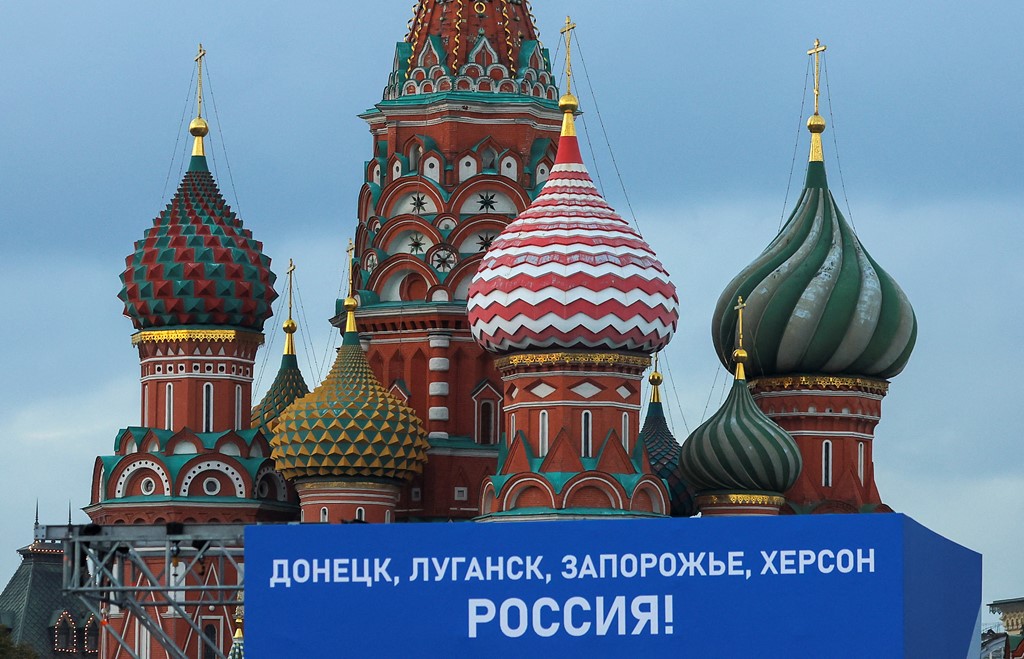
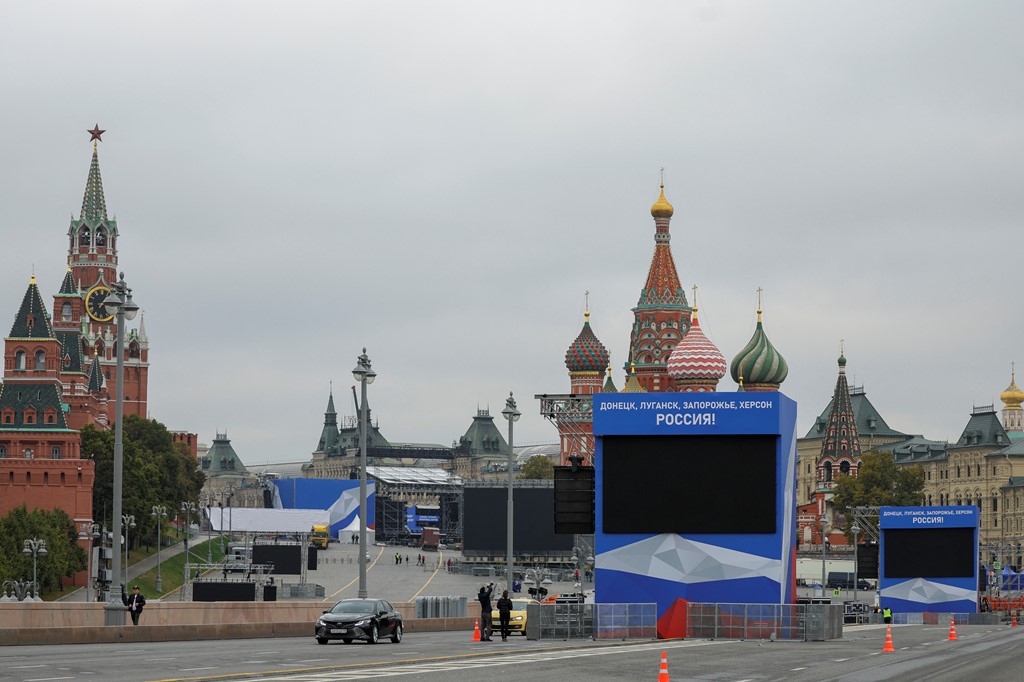
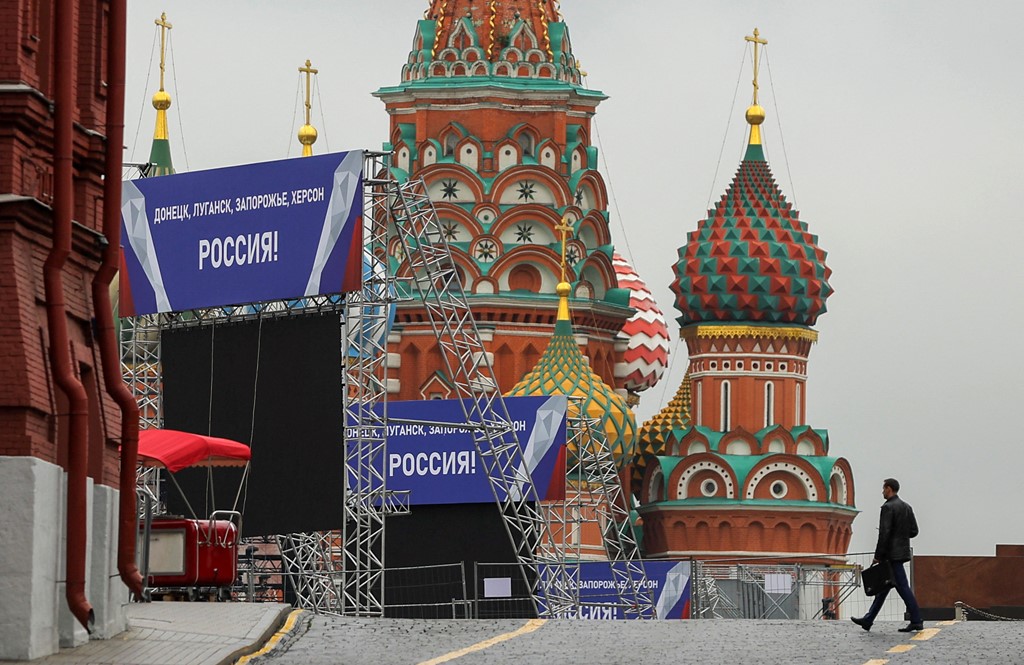
In Moscow’s Red Square, arrangements are being made for a large event that will formally ratify Russia’s takeover of four regions of Ukraine.
The area has been closed to visitors and tourists for the works and a stage, giant video screens, and billboards can be seen that read, “Donestsk, Luhansk, Zaporizhzhia, Kherson – Russia”, declaring the inclusion of the regions into Russian territory.
A pop concert is also planned on Red Square.
Vladimir Putin’s spokesman Dmitry Peskov has said the Russian president will sign accession documents in an ornate Kremlin hall, give a speech, and meet leaders of the self-styled Russian-backed Donetsk People’s Republic and Luhansk People’s Republic as well as the Russian-installed leaders of the parts of Kherson and Zaporizhzhia that Russian forces occupy.
Mr Peskov did not say whether Mr Putin will attend the Red Square celebration, as he did a similar event in 2014 after Russia proclaimed it had annexed Ukraine’s Crimea region – however, the Russian leader is widely expected to be there.
In a move that follows a plodding and predictable script Russia will recognise the four territories it has occupied and captured in conquest.
Under the country’s 1993 constitution there needed to be a popular vote for this to happen – hence the hurried fake referenda.
Like other autocratic police states, pseudo- legalism is of the utmost importance in Russia – we’ll hear a lot more turgid legal language today as a way of giving this international outrage a veneer of legitimacy.
Moving to annex Russia has overturned centuries of convention – that you don’t steal land with force.
Putin is also returning Europe to a period pre-WW2.
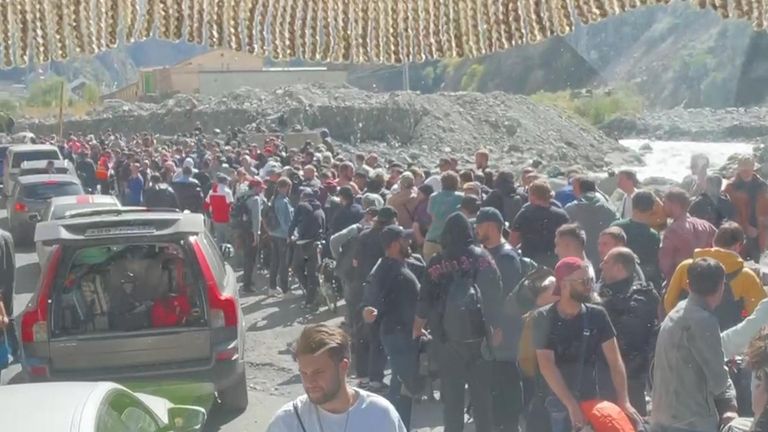
Russia has lost as many citizensin the last week as it has throughout the whole battle. Children cannot be nurtured in a nation that sends soldiers to murder against their choice, a young mother crossing into Georgia told Sky News.
Vladimir Putin has for seven months insisted his invasion of Ukraine was only a special military operation.
That way he hoped the conflict would seem distant and contained to the broad Russian public.
With his military suffering setback after setback, a week ago he announced the mobilization of hundreds of thousands of reservists. But even that was qualified.
It was a partial mobilization and so far the bulk of men being drafted are said to be from areas far from Moscow and in the Russian federation’s autonomous republics.
He will have hoped again that the bulk of ethnic Russians will still not feel directly affected by this latest escalation.
But it is not working out that way, it seems, not for hundreds of thousands of Russians across the country.
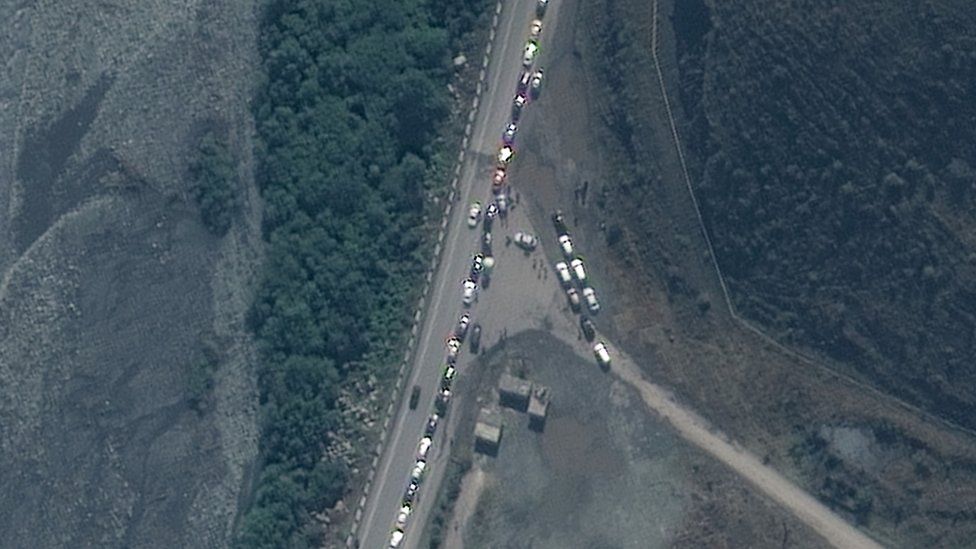
They’ve felt so strongly about his latest moves that they have left their homes and everything in them and made the long and difficult journey out of Russia. To Georgia, or to Mongolia and Kazakhstan or Finland, where so many Russians have crossed that the authorities have now closed the border to them.
As many have left in the past week as in the entire conflict. One young mother crossinginto Georgia told Sky News that she cannot raise children in a country that sends men to kill against their will.
Others are less prepared to talk to news crews when they cross. Many of them are from those autonomous republics.
Areas such as Dagestan, in the North Caucasus, Buryat far to the east, and Chechnya have suffered a disproportionately high amount of casualties in the Ukraine war and suspect the new mobilization will mean an unfair number of their men are forced to join up.
Startling levels of unrest
There has been an unprecedented level of unrest in these republics in the last week. We have seen startling videos online of men headbutting policemen and kickboxing them in mass brawls.
And in deeply conservative Islamic areas of Russia, women have been so angry they have taken to the streets to chant “No more war” against the police.
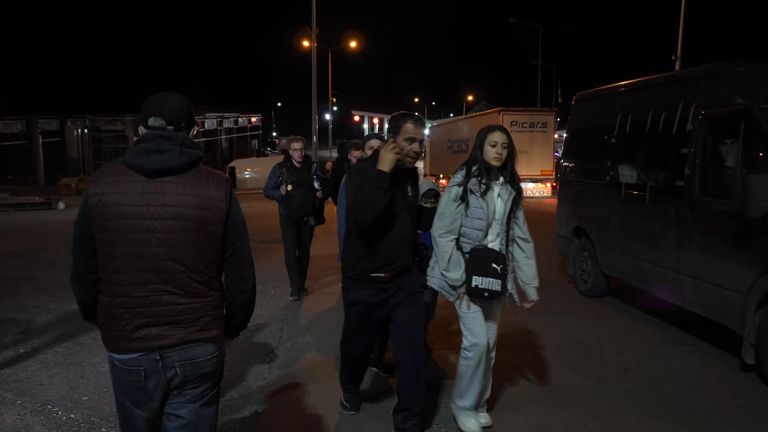
We were able to talk to a few men anonymously who come from these areas.
One from Dagestan would not show his face on camera but said the situation there was getting worse. Young men, he said, were being forced into minibusses and sent for military training. He was getting out of Russia while he could.
Another man from Chechnya said zthat since Mr Putin’s mobilisation order “the mood of younger Chechens worsened. Everybody is trying as fast they can to leave the Chechen territory, fearing they’ll be mobilised.”
He questioned the Kremlin’s logicin forcing men to fight against their will.
“I don’t think they’ll try hard because many of us think this isn’t our war and that Russia is an aggressor. This is not defending the interests of their motherland.”
He had been working hard to get Chechen men across the border.
‘I don’t really understand’
We filmed our interview at night and obscured his identity to avoid retribution by Chechen authorities back home against members of his family. Chechnya has been subject to brutal repression since its subjugation by Russia in two conflicts.
He said Russia was fighting a war and there was no other way of describing it.
So did another man who approached us under cover of darkness. A military veteran, he had fought for Russia and served four years, he said, but had just crossed the border to avoid being called up.
Mr Putin’s announcements showed Russia was notfighting a limited military operation, he said.
“I really don’t understand why I should go,” he told us. “This is not our territory. The fact they’re trying to mobilise this many people means it’s the start of something very serious.”
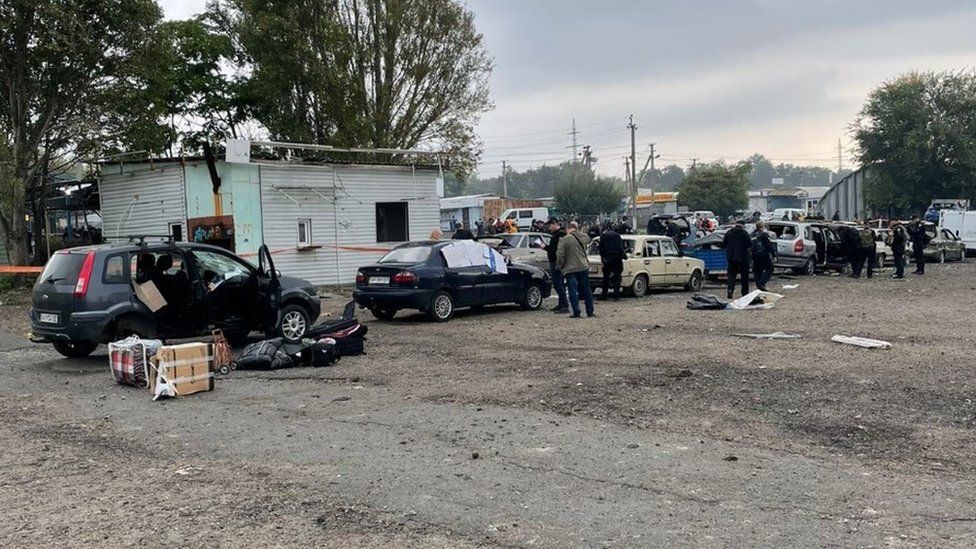
Local authorities report that a Russian missile attack on a humanitarian convoy in south Ukraine resulted in at least 23 deaths and several injuries.
In the city of Zaporizhzhia, a sizable crater next to a line of automobiles bears witness to the attack’s brutality. Windscreens and windows have been broken.
The BBC observed six apparently civilians dead lying at the scene. Coats and luggage were all over the runway.
One shocked survivor told the BBC she heard at least three explosions.
Reacting to the attack in the early hours of Friday on the outskirts of the regional capital of the Zaporizhzhia region, Ukrainian President Volodymyr Zelensky said Russia was a “state-terrorist”.
He said Russia launched 16 rockets on the city and vowed to punish perpetrators for “every lost Ukrainian life”.
Meanwhile, a Russian-installed local official blamed Ukraine for the attack.
The convoy was hit as people were preparing to travel to the Russian-occupied part of the region to pick up their relatives and also deliver humanitarian aid.
Near the missile’s impact crater, the BBC spoke to Kateryna Holoborod, who sat on her suitcase in a state of shock.
‘We arrived in a line, to join a column going towards Kherson,” she said.
“We dropped to the ground. Then the second one hit in the centre of the queue. There was glass everywhere, and people screaming and running. I don’t remember much.
“It was very scary. I then got up to see what happened, and help the injured. I tried to help an injured young man when the third explosion happened.”
Image caption, Ukraine said the attack was “another terrorist act” by Russia
The attack comes as Russian President Vladimir Putin is preparing for a signing ceremony in Moscow to annex Zaporizhzhia along with Ukraine’s Donetsk, Luhansk, and Kherson regions.
The move follows self-styled referendums in the eastern and southern regions, which have been condemned by Ukraine and the West as a sham.
Russia invaded Ukraine on 24 February, and Moscow currently controls the majority of the Zaporizhzhia region, including Europe’s biggest nuclear power plant there – but not the regional capital.
Moscow-installed regional official Vladimir Rogov blamed “Ukrainian militants” for the Zaporizhzhia attack, Russian state-run media reported.
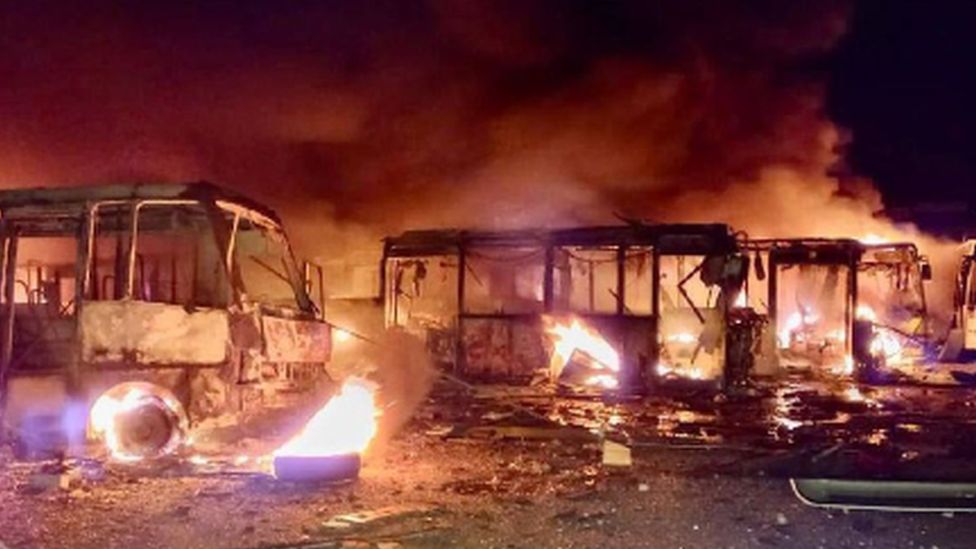
IMAGE SOURCE,DNIPROPETROVSK REGIONAL ADMINISTRATION Image caption, A Ukrainian transport company in Dnipro was hit in overnight Russian strikes, local officials said
In a separate development, one person was killed and five injured in overnight Russian strikes by Iskander missiles on the central city of Dnipro, about 70km (43 miles) north of Zaporizhzhia, local officials said.
They said a transport company was targeted, and as many as 52 buses were burnt and another 98 damaged.
Several high-rise buildings, offices and a shop were also hit.
At least 23 people have been killed and dozens more injured in a Russian missile strike on a humanitarian convoy in south Ukraine, local officials say.
The BBC saw half a dozen bodies lying at the scene, apparently civilians. Baggage and coats strewed the tarmac.
A Russian-installed local official blamed Ukraine for Friday’s attack.
The convoy was hit in the early hours of Friday as people were preparing to travel to the Russian-occupied part of the region to pick up their relatives and also deliver humanitarian aid.
“The enemy launched a rocket attack on the outskirts of the regional centre,” Zaporizhzhia regional head Oleksandr Starukh said in a post on social media, describing it as “another terrorist act” by Russia.
Near the missile’s impact crater, the BBC spoke to Kateryna Holoborod, sat on her suitcase in a state of shock.
‘We arrived in a line, to join a column going towards Kherson,” she said.
“We got out to see what number we had in the queue. Then the first rocket hit, behind the wagons.
“We dropped to the ground. Then the second one hit in the centre of the queue. There was glass everywhere, people screaming and running. I don’t remember much.
“It was very scary. I then got up to see what happened, help the injured. I tried to help an injured young man when the third explosion happened.”
Image caption, Ukraine said the attack was “another terrorist act” by Russia
The attack comes as Russian President Vladimir Putin is preparing for a signing ceremony in Moscow to annex Zaporizhzhia along with Ukraine’s Donetsk, Luhansk and Kherson regions.
The move follows self-styled referendums in the eastern and southern regions, which have been condemned by Ukraine and the West as a sham.
Russia invaded Ukraine on 24 February, and Moscow currently controls the majority of the Zaporizhzhia region, including Europe’s biggest nuclear power plant there – but not the regional capital.
Moscow-installed regional official Vladimir Rogov blamed “Ukrainian militants” for the Zaporizhzhia attack, Russian state-run media reported.
Compared to its accomplishments in the northeast, Ukraine’s progress in the southern regions of Kherson and Zaporizhzhia has been far more constrained.
As both Russia and Ukraine try to advance, front-line positions are frequently fired upon.
Abdujalil Abdurasulov of the BBC was able to visit the front lines in Kherson, where Ukrainian men have been warned that they may be recruited to fight for the Russian army.
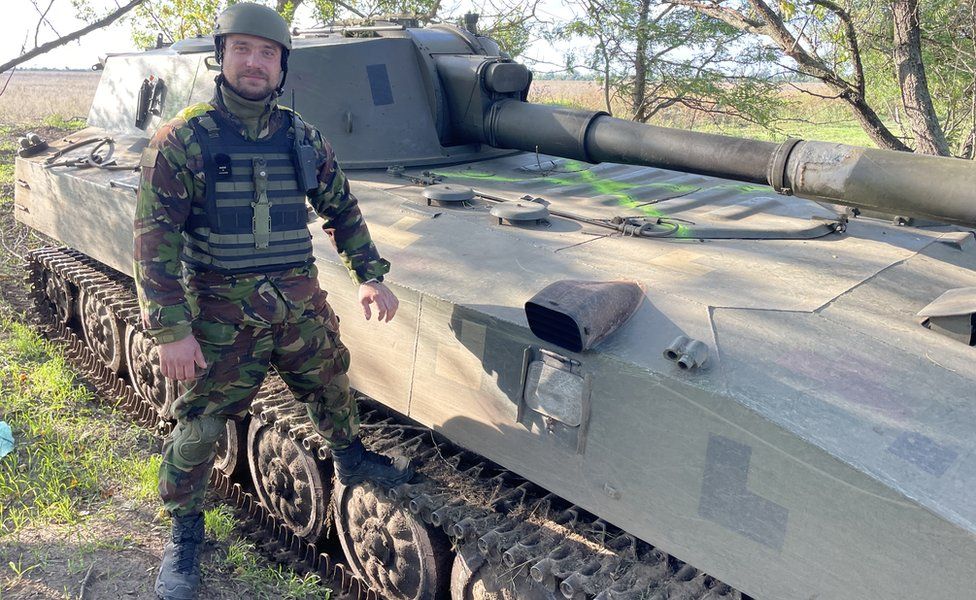
An old Soviet self-propelled howitzer called Gvozdika or “Carnation” is rolled out in an open field and put into position. Its barrel tilts up. “Fire!” comes the command.
The gunners hastily move away after the last shot, acting quickly.
Although the advance of Ukrainian forces in the south is very slow, their artillery units remain busy.
Stus, commander of the gunners, explains that the Russians target his infantry and they respond in order to silence them.
Their job is very much felt at the front line. Soldiers walk across the vast field under the cover of a line of trees. They pay no attention to the sound of missiles flying above their head nor the thud of explosions. The fighters say a Russian observation post is 500m away and they might be within the range of small arms.
The Ukrainians move quickly to reach a destroyed farm building that they took back just a week ago. Now, they are digging trenches and carrying sandbags in order to fortify their new position.
Image caption, Stus, commander of the gunners, says troops “shouldn’t underestimate our enemy”
But Ukraine’s advancement in the south is moving slowly.
All talk about counter-offensive here helps to deceive Russians and achieve gains in the East, laughs Vasyl, a deputy commander of the regiment.
“But we have some success here as well. We continue liberating villages with small steps but it’s very difficult – every victory we have is covered with blood,” he adds.
Many Ukrainians who remain behind the Russian front line, in the occupied territories, are anxiously waiting for this counter-offensive.
“We’re euphoric when Ukraine hits the occupied territories,” says Iryna, a resident of Melitopol in the south. “It means that Ukraine has not forgotten us. We all know that living near military infrastructure and buildings is not safe, so most civilians have moved out from those locations.”
But for people in the occupied territories, the longer they wait, the harder it is to survive. Many believed that the counter-offensive would happen in August. But when that didn’t happen, people started to flee to Ukrainian-controlled territories and areas further to the West.
Among them was Tatyana Kumok from Melitopol. The Israeli citizen was visiting her hometown when the Russian invasion started in February. She stayed in the city and distributed aid to residents but in September, she and her family decided to leave. One of the main reasons for leaving was Russia’s promise to hold a so-called referendum.
“As soon as it’s done, the Russians will introduce new bans according to their laws and try to legitimize the occupation,” she says.
With the city turned into a giant military base, she says it is clear that Russian troops won’t abandon the city easily.
“It was obvious the city won’t be liberated this fall,” she adds.
IMAGE SOURCE, TATYANA KUMOK Image caption, Tatyana Kumok, and her family fled Melitopol just before Russia decided to hold a so-called referendum
Even a silent resistance to Russian occupation is getting dangerous now.
In September many families were forced to send their children to Russian-administered schools even though their children would be exposed to the Kremlin’s propaganda.
“If you don’t send your child to school, it’s a litmus test for you – it means you have pro-Ukrainian views,” explains Ms Kumok. “I know parents who had to tell their seven-year-old child not to talk about things discussed at home with anyone at school. Otherwise, the child could be taken away. That was really awful.”
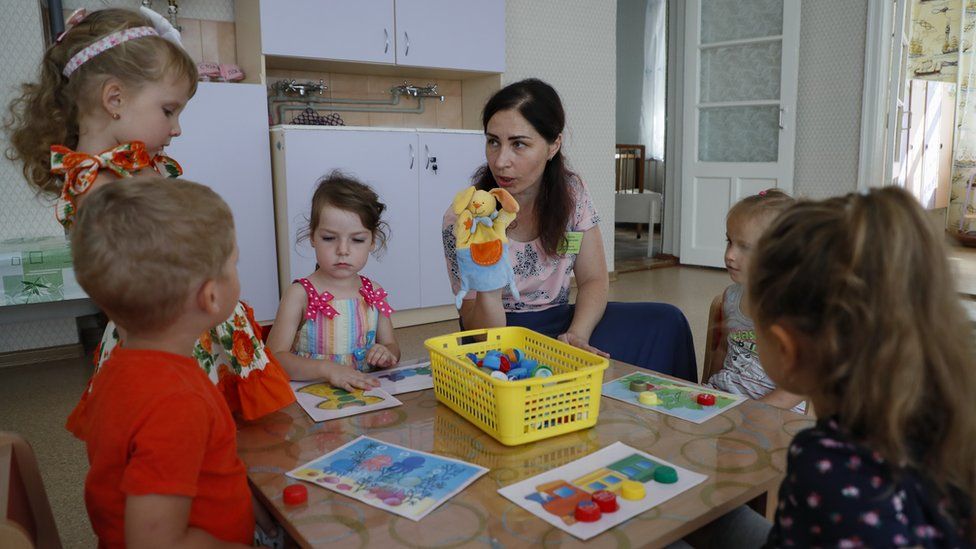
IMAGE SOURCE, EPA Image caption, Children at a newly opened nursery in Russian-occupied Berdyansk of Zaporizhia region
The crackdown on people who do not support Russian rule is rising.
“There is a sharp increase of arrests since August following the successful Ukrainian air strikes,” says Bohdan who is still living in Kherson. He spoke with the BBC via a messenger app and his real name is not being revealed for his safety.
Bohdan says that earlier detentions were based on a list of names that the Russian military had. But now anyone can be arrested and thrown into a basement for interrogation.
Russian soldiers recently came to the house of Hanna (not her real name) in Nova-Kakhovka, a city in the Kherson region, to check who was living there.
“They didn’t go inside the house but it was still scary. I don’t even walk with my phone now,” she said via a messenger app.
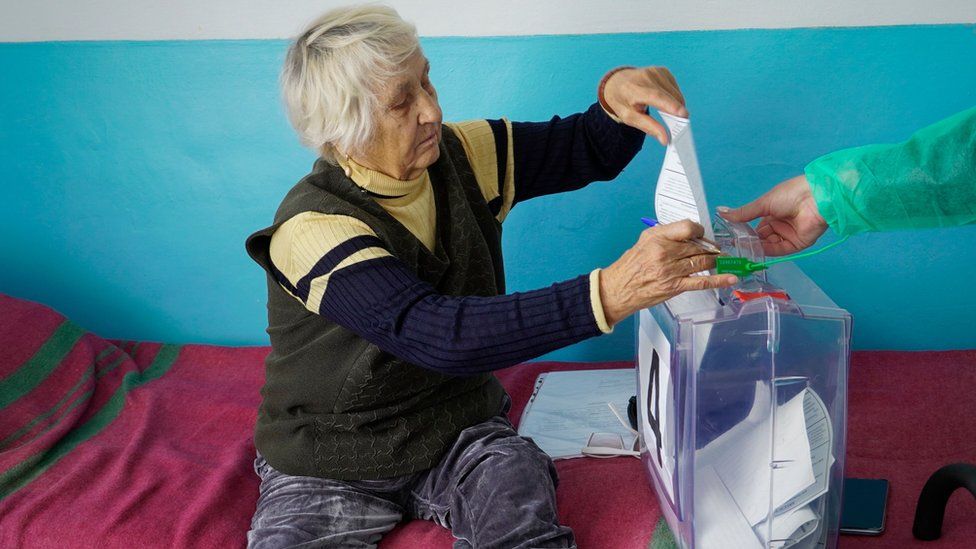
IMAGE SOURCE, EPA Image caption, A woman in Russian-occupied Zaporizhzhia casts her ballot during voting in a so-called referendum
The self-styled referendum is bringing a new threat to the local population – mobilization. Many men could be drafted to fight for the Russian army.
Russian soldiers are already going house to house in some villages and writing down the names of male residents, local residents say. They claim soldiers have told them to be ready for a call-up after the referendum.
Men aged 18-35 are reportedly not allowed to leave the occupied territories anymore.
Iryna left on 23 September, the first day of the so-called referendum, with her husband and two children. They wanted to stay in order to look after her paralysed 92-year-old grandmother.
“But when Putin announced the call-up, and we already knew about the referendum, it was clear there would be a mass mobilization and men would be detained right on the street irrespective of their age,” she says.
“We could survive without gas and electricity, we could find solutions for that. But not for this. That was our red line,” says Iryna.
Image caption, Vasyl, a deputy commander in the Ukrainian army says “every victory we have is covered with blood”
The Russian call-up will pose more challenges for the Ukrainian counter-offensive.
It will certainly escalate the war and more people will die, Ukrainian soldiers say.
“We shouldn’t underestimate our enemy,” says Stus, commander of the gunners. “Those newly recruited Russian soldiers will have guns and grenades, so they will pose a threat, which we will have to eliminate”.
As the gunners wait for new tasks with their howitzer hidden in the bushes, Russian troops hit a nearby Ukrainian village with Grad missiles. The gunners are silent as they listen to the series of explosions.
That terrifying sound was just another reminder that the success of the Ukrainian troops willdepend on how quickly they can make Russian artillery and rocket launchers go silent.
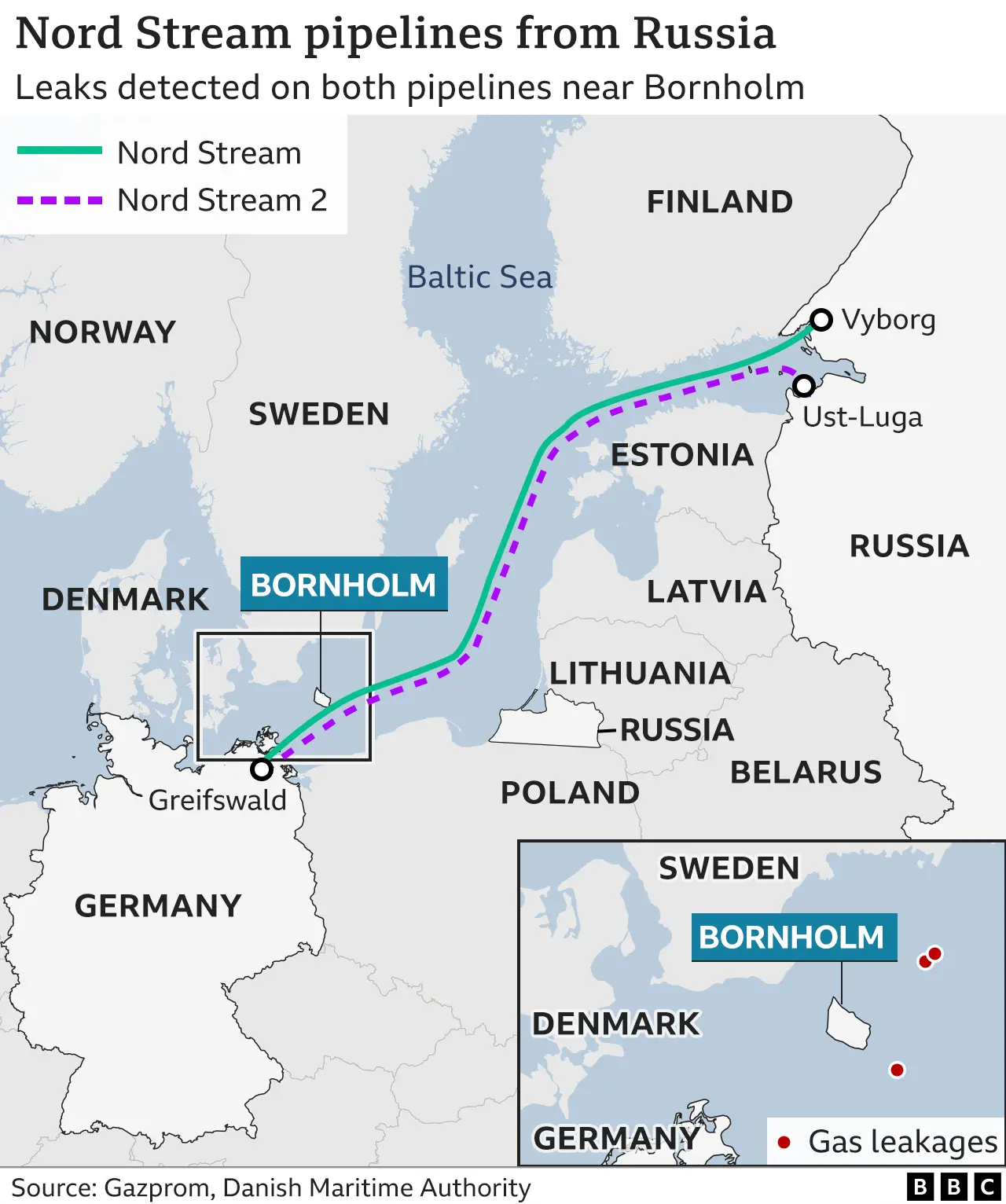
Most European lawmakersappear to believe that Russia was responsible for these explosions. Threats to react are frequent in the furious speech.
For one thing, proving, beyond doubt, that this was a Russian attack will prove challenging. The evidence is at the bottom of the sea, for a start. The waters are very turbulent and there is a huge amount of methane rushing from bottom to top. We won’t get definitive answers quickly, so expect lots of speculation, veiled threats, and strong words.
Russia has, obviously, denied any involvement in blowing up its own pipelines and joined calls for an investigation, saying that the explosions have cost it a fortune in lost gas reserves.
But this does look, on the face of it, like a classic example of how Team Putin likes to unsettle the wider world – through unpredictable acts to disrupt and cajole – the Salisbury poisonings in the UK, for example, or explosions in Bulgaria, Moldova, and the Czech Republic.
If energy infrastructure is now a target, then European navies will have to respond. Already Norway has said it “will raise preparedness” around oil and gas installations – a couple of months ago, the Royal Navy said it had trailed Russian submarines as they traveled south from the Arctic along the Norwegian coastline.
Norway could be an important factor in this story – a new pipeline, linking it to Poland, was opening at almost the same time as these explosions happened. The pipeline will help Poland wean itself away from Russian energy supplies – cutting further Russia’s gas revenue.
So (if Russia was behind this) it could be simply a symbolic gesture to warn the world that Moscow’s reach cannot be underestimated.
Or it could be something much more sinister – the first step in an assault against Europe’s undersea infrastructure – energy and communication links that do much to sustain the continent’s day-to-day life. Is that a genuine threat? Outside the Kremlin, nobody really knows.
Ultimately, it would be one thing for Russia to be accused of blowing up its own pipeline. But if it were now to menace infrastructure belonging to EU countries – that would be a lot more inflammatory.
The EU condemned the “illegal” annexation elections that Russia held interritories of occupied Ukraine. Canada announced it would enact further sanctions in response to Russia’s “fake” referendums.
The European Union on Wednesday criticized the “illegal” annexation votes Russia held in four occupied regions of Ukraine and their “falsified” results, the bloc’s foreign policy chief Josep Borrell said.
“EU denounces holding of illegal ‘referenda’ and their falsified outcome,” Borrell wrote on Twitter.
“This is another violation of Ukraine’s sovereignty and territorial integrity, amidst systematic abuses of human rights,” he said.
Meanwhile, European Council President Charles Michel also tweeted: “Sham referenda. Sham results. We recognize neither.”
On Tuesday, the EU spokesman Peter Stano announced the bloc would slap sanctions on organizers of the “illegal” vote.
Since Russia’s invasion of Ukraine in February, the EU has implemented six rounds of sanctions targeting Russian individuals, entities, good exports, and technology and banking as well as an embargo on most Russian oil and coal exports.
The US Secretary of State Antony Blinken said he thought the leaks would “not have a significant impact on Europe’s energy resilience”. Neither pipeline is transporting gas at the moment, although they both contain gas.
Mr Blinken did not directly accuse Russia – but said it would be in “no-one’s interest” if they were caused deliberately.
The president of the European Council, Charles Michel, echoed Ms von der Leyen’s message.
“Nord Stream sabotage acts appears to be an attempt to further destabilise energy supply to [the] EU,” he said on Twitter.
The Danish energy minister, Dan Jorgensen, said the leaks were likely to last for at least a week, until the gas escaping from the pipes runs out. The investigation would begin after that.
The operators of Nord Stream 2 warned of a loss of pressure in the pipeline on Monday afternoon. That led to Danish authorities saying ships should avoid the area near the island of Bornholm.
Then on Tuesday, the operator of Nord Stream 1 said the undersea lines had simultaneously sustained “unprecedented” damage in one day.
The Nord Stream 1 pipeline – which consists of two parallel branches – has not transported any gas since August when Russia closed it down. It blamed the closure on maintenance – the EU said it was trying to weaponise Europe’s gas supply.
Nord Stream 1 stretches 745 miles (1,200km) under the Baltic Sea from the Russian coast near St Petersburg to north-eastern Germany. Its twin pipeline, Nord Stream 2, was halted after Russian invaded Ukraine.
A Kremlin spokesperson, Dmitry Peskov, said he was “extremely concerned” about the leaks, adding that the possibility of a deliberate attack could not be ruled out.
Seismologists reported underwater blasts before the leaks emerged. Denmark’s Defence Command has released footage of the leaks which shows bubbles – the largest is 1km (0.6 miles) in diameter – at the surface of the Baltic Sea.
“There is no doubt that these were explosions,” said Bjorn Lund of Sweden’s National Seismology Centre.
On Tuesday, Ukraine’s presidential adviser Mikhaylo Podolyak said the leak was “nothing more than a terrorist attack planned by Russia and an act of aggression towards the EU”.
66,000 Russiansentered the EU in the previous week, a 30% rise, according to the border control organization for the Bloc. In the meanwhile, despite Moscow’s warnings, the US will not change its nuclear stance.
The European Union’s Frontex border control agency said 66,000 the EU in the past week.
This represents a 30% increase compared with the previous week, according to the agency. It said that most of the crossings were occurring at the Finnish and Estonian sections of the border.
According to Frontex, most arrivals had visas, residence permits, or dual citizenship.
Frontex predicted that illegal border crossings could increase if the Kremlin decides to close Russia’s borders for potential conscripts.
Thousands of military-age men have been leaving Russia since President Vladimir Putin announced a “partial” mobilization last week.
A yacht associated with a Russian oligarch has been searched by investigators as part of a money laundering investigation. The yacht is the largest recreational boat in the world in terms of tonnage.
More than 60 police officers raided a luxury yacht in northern Germany tied to a Russian businessman accused of breaching sanctions and money laundering, Frankfurt prosecutors said Tuesday.
Authorities identified the suspect only as a 69-year-old Russian businessman but did say he was the target of the same investigation last week.
At that time, police raided a lakeside villa registered to Alisher Usmanov — a close ally of Vladimir Putin’s. They also searched 24 other properties connected to him in the German states of Baden-Württemberg, Bavaria, Hamburg, and Schleswig-Holstein.
Prosecutors say they are investigating the funneling of several million euros acquired in illegal activities, including tax evasion. In a statement, they said this involved an “extensive and complex network of companies and corporations.”
They said the yacht raid was also carried out to comply with a request for help from the US Justice Department, which has launched a probe of its own.
In a statement on Monday, representatives of Usmanov called the charges “baseless and defamatory.”
Who is Alisher Usmanov?
The UK’s Sunday Times newspaper ranked Usmanov at No. 6 in a list of the world’s richest people in 2021. He was one of the dozens of Russian billionaires to be hit by Western sanctions after Russia invaded Ukraine.
He is possibly best known for his metals and mining interests, for owning the Kommersant publishing house in Russia, and for owning Russia’s second-largest mobile phone operator, Megafon. He also was formerly a major stakeholder in Premier League football giants Arsenal.
Usmanov is said to be worth an estimated net of $16.2 billion (€16.9 billion). He has 49% economic interest and 100% voting rights in the global conglomerate and holding company USM.
While the United States has blocked his personal assets, it has kept companies controlled by him off its list of sanctions in a bid not to drive up commodity prices. He is thought to presently be living in his native Uzbekistan.
The Official Journal of the European Union describedUsmanov in March as a “pro-Kremlin oligarch with particularly close ties to Russia’s President Vladimir Putin.”
But Usmanov disputes this. Along with former Chelsea Football Club owner Roman Abramovich, he is one of the oligarchs appealing his inclusion on the EU sanctions lists, at the bloc’s General Court.
The yacht that was searched — the “Dilbar” — is the world’s largest yacht by tonnage and is officially owned by Usmanov’s sister.
The 155-meter (500-foot) vessel was named after Usmanov’s mother. It is valued at some $600 million and was previously docked in a Hamburg shipyard since October 2021 for repairs. The vessel is now moored in the northern port city of Bremen.
Russia is to open an army enlisting centre on the border with Georgia, where massive queues have formed as Russian men try to flee the country to avoid being sent to fight in Ukraine.
Officers at the Verkhniy Lars crossing will be tasked with serving summons to “citizens of the mobilisation age”, the authorities say.
Recent satellite images have shown queues going for miles from Russia.
They are hungry and sleep deprived – but relieved to have reached safety, Rayhan Demytrie says. People have been coming in groups of walkers, dragging their suitcases behind them. Others have arrived in car or on bikes.
One man, Ilya, showed our correspondent a polaroid of his baby daughter Arisha. He said he wanted to see her grow up, and not die in the senseless war in Ukraine.
Dima and Zhenya, two brothers in their early 20s, said they had travelled for days from Bashkiria – Russia’s republic about 1,500km (932 miles) east of the capital Moscow.
Dima asked for a hotspot to call his mother. On the other end of the line there was a sigh of relief.
Another young man from Moscow said the reason he was fleeing was because of the man in the Kremlin, President Vladimir Putin.
Everyone says the same thing: they disagree with the war – but the extent of repression in Russia makes them powerless, our correspondent says.
The interior ministry of Russia‘s North Ossetia republic, where the Verkhniy Lars crossing is, said 60 of its personnel had already been deployed there, describing the situation as “extremely tense”.
It added that the army enlisting centre would be opened “in the nearest future”.
Image source, Maxar TechnologiesImage caption, Traffic jam near Russia’s border with Georgia, 25 September 2022
Long queues have also been reported on Russia’s border crossings with Mongolia and Kazakhstan.
Kazakhstan’s President Kassym-Jomart Tokayev vowed on Tuesday to protect the safety and welfare of Russians fleeing a “hopeless situation”.
The Russian defence ministry on Tuesday said it would not seek the extradition of Russian nationals travelling abroad to avoid being drafted into the army.
President Putin announced what he described as a partial mobilisation on 21 September, with Defence Minister Sergei Shoigu later saying 300,000 reservists would be called up.
But reports in opposition Russian media suggested that up to one million people could be called up, pointing out that the actual number of those who would be enlisted was classified.
A number of military experts in the West and Ukraine say Mr Putin’s decision to call up reservists shows that Russian troops are failing badly on the battlefield in Ukraine – more than seven months after Moscow launched its invasion.
“There are cases when the decree is violated,” Mr Putin’s spokesman Dmitry Peskov said, adding that “all the errors will be corrected”.
On Tuesday, Sergei Baranovsky, the top official responsible for war mobilisation efforts in the extreme north-eastern Magadan region, was sacked.
Multiple reports – backed by footage on social media – say people with no military experience, or who are too old or disabled, are being called up.
Since the mobilisation announcement, more than 2,000 people have been detained at protests across Russia.
“We are deeply disturbed by the large number of people who have reportedly been arrested,” UN rights office spokeswoman Ravina Shamdasani said on Tuesday.
In one of the most shocking and widely-discussed incidents, a man shot and critically injured an army recruitment officer in the Siberian city of Ust-llimsk on Monday.
Nord Stream 2 – the controversial gas pipeline from Russia – has begun leaking in the Baltic Sea, endangering naval traffic, Denmark has warned.
It set up a prohibitive zone within five nautical miles (9km) of the pipeline near the Bornholm island.
The Danish energy ministry said it had acted after being informed about a pressure drop in the now-defunct undersea pipeline earlier on Monday.
Operating company Nord Stream 2 AG said the drop happened overnight.
“The Nord Stream 2 landfall dispatcher registered a rapid gas pressure drop on Line A of the Nord Stream 2 natural gas pipeline,” it said in a statement, adding that it was investigating the matter.
The company’s majority shareholder is Russia’s state-owned Gazprom giant.
“The incident is not expected to have consequences for the security of Danish gas supply.”
Nord Stream 2 had been built to deliver gas from Russia to Germany and other European nations, but the multi-billion euro project was halted after Russia invaded Ukraine in February.
However, gas had already been pumped into the pipe, and there are now concerns that large amounts of it could be released into the atmosphere.
Nord Stream 1 – a parallel gas pipeline – has been shut for several weeks, with Gazprom saying it was carrying out maintenance work to fix an earlier leak.
The European Union accuses Russia of using its gas supplies to blackmail Europe because of its war in Ukraine, but Moscow denies this.
Energy prices have soared since Moscow invaded Ukraine and scarce supplies could push up costs even further.
There are growing fears families in the EU will be unable to afford the cost of heating this winter.
Europe is now attempting to wean itself off Russian energy in an effort to reduce Moscow’s ability to finance the war, but the transition may not come quickly enough.
Tens of thousands of people are trying to find shelter in Kazakhstan as many leave Russia in response to the announcement of a partial troop enlistment order, according to officials.
The sudden influx of Russians, almost 100,000, have crossed the border since the mobilisation announcement, the government said, has left hotels and hostels full and rent skyrocketing.
Kazakh President Kassym-Jomart Tokayev, whose administration has refused to support what Russia calls a “special military operation” in Ukraine, urged patience and tolerance.
“A lot of people from Russia have come here over the last few days,” he said in a speech on Tuesday.
“We must take care of them and ensure their safety. This is a political and humanitarian matter,” Tokayev said.
Kazakhstan, home to a significant ethnic Russian minority and where the Russian language is spoken widely, does not require Russians to have a visa or a passport to enter the country.
In the eastern city of Vladivostok, Japan has accused Russian security forces of blindfolding and restraining one of its officials.
Motoki Tatsunori, its consul in the city, was freed from custody on Tuesday after being accused of espionage – and given 48 hours to leave Russia.
Moscow alleges he received secret information about its cooperation with an unnamed Asian country.
Japan denies the allegation and is demanding a formal apology.
Russia’s FSB security service said it had detained Mr Tatsunori on Monday for soliciting information about “the impact of Western sanctions” on Moscow after its invasion of Ukraine in February.
“A Japanese diplomat was detained red-handed while receiving classified information, in exchange for money, about Russia’s co-operation with another country in the Asia-Pacific region,” the agency said in a statement.
But Japan said the detention of its consul for political affairs violated the Vienna Convention on diplomatic relations and had been carried out in “an intimidating manner”.
“The official was blindfolded, with pressure applied to both his hands and head so he was unable to move while being detained, and then he was questioned in an overbearing way,” chief cabinet secretary Hirokazu Matsuno told reporters.
He said Japan “strongly protests these unbelievable acts” and confirmed that the diplomat would leave Russia by Wednesday after being declared persona non grata.
Japan opposes the Russian invasion and is considered a hostile country by Russia – along with the US, UK, and other countries which support Ukraine.
Tuesday marks the penultimate day of a vote for regions of Ukraine controlled by Russia, which the government in Kyiv and its Western allies call a fraud.
Nearly four million people from the eastern regions of Donetsk and Luhansk, and the southern regions of Kherson and Zaporizhzhia, are being asked to attend polling stations and vote in so-called referendums on joining Russia.
This follows four days of early voting during which allegations of intimidation multiplied as election officials went house to house accompanied by armed guards.
If Russia absorbs these regions, making up about 15% of Ukraine’s territory, it could take the war to a new and more dangerous level, with Moscow portraying any attempt by Ukraine to regain them as an attack on its sovereign territory.
There is now speculation that Russian President Vladimir Putin may announce the four regions’ annexation in a speech to a joint session of Russia’s parliament on Friday.
In March 2014 he announced that Ukraine’s Crimea Peninsula had been annexed just a few days after a likewise unrecognised referendum was held.
‘At gunpoint’
Were the guns there to protect you as you voted, or to cow you into voting? That was a question passing through people’s minds in recent days as election officials escorted by soldiers come to knock on their doors.
Serhiy Haidai, the governor-in-exile of the Luhansk region, accused the separatist authorities there of taking down the names of people who voted against joining Russia or who refused to vote at all.
Talking separately to the Associated Press news agency, he suggested the Russians were using the process as a pretext to search homes for men they could mobilise as soldiers as well as checking for “anything suspicious and pro-Ukrainian”.
One woman described for BBC News how her parents had voted in the city of Melitopol in the Zaporizhzhia region.
Two local “collaborators” had arrived with two Russian soldiers at their flat to give them a ballot paper to sign, she said.
IMAGE SOURCE, GETTY IMAGES Image caption, Soldiers are escorting electoral workers going door to door in Donetsk
“My dad put ‘no’ [to joining Russia],” the woman said. “My mum stood nearby and asked what would happen for putting ‘no’. They said, ‘Nothing’. Mum is now worried that the Russians will persecute them.”
Another woman in the embattled town of Enerhodar, where the Zaporizhzhia nuclear power station is located, told the BBC: “You have to answer verbally and the soldier marks the answer on the sheet and keeps it.”
Ukrainian journalist Maxim Eristavi tweeted to say that his family had been “forced to vote at gunpoint” in southern Ukraine.
“They come to your house,” he wrote. “You have to openly tick the box for being annexed by Russia (or for staying with Ukraine if you feel suicidal). All while armed gunmen watch you.”
Petro Kobernik, who left Kherson just before the voting began, told AP in an interview by phone: “The situation is changing rapidly, and people fear that they will be hurt either by the Russian military, or Ukrainian guerrillas and the advancing Ukrainian troops.”
The vote on paper
The questions on the ballot papers (there is no digital voting) differ according to region.
This is because pro-Russian separatists have been running parts of Donetsk and Luhansk since 2014 when they held unrecognized independence referendums.
Voters, there are being asked whether they “support their republic’s accession to Russia as a federal subject”.
In the parts of Kherson and Zaporizhzhia occupied by Russian forces since the invasion in February, people are being asked if they “favour the region’s secession from Ukraine, creation of an independent country and subsequent accession to Russia as a federal subject”.
The ballot papers there are printed in both Ukrainian and Russian whereas in the eastern regions they are printed in Russian only.
Voting was spread over five days to allow for ballots to be “organized in communities and in a door-to-door manner for security reasons”, Russian state news agency Tass reports.
Refugees now scattered across Russia can vote in as many as 200 polling stations there.
Not only have Ukrainian forces been pushing the Russians and their separatist allies back in both the east and south, but attacks on figures associated with the Russian occupation have mounted.
IMAGE SOURCE, REUTERS Image caption, People voted at a polling station in the Russian city of Rostov-on-Don
Former Ukrainian MP Oleksiy Zhuravko, who championed the Russian invasion, was killed along with another person in a missile attack on a hotel in Kherson on Sunday.
Reports say that Russian journalists who were also staying at the hotel escaped uninjured.
In the city of Berdyansk in the Zaporizhzhia region, the deputy head of the city administration and his wife who headed the city election commission were killed in an attack a week before the referendum.
Members of a guerrilla group called the Yellow Band have spread leaflets threatening anyone who votes and urging others to send photos and videos of anyone who does in order to track them down later, AP reports.
The guerrillas have also sent around phone numbers of election commission chiefs in the Kherson region, asking activists to “make their life unbearable”, the agency reports.
Ukraine has threatened anyone organizing or supporting the so-called referendums with eventual criminal prosecution, saying they face up to 15 years in prison if convicted.
International outcry
Even Serbia, which has close ties with Moscow and is one of the few European countries not to join sanctions on Russia, has announced it will not recognise the results of the voting.
Foreign Minister Nikola Selakovic said that to do so would be “completely contrary” to his country’s policy of “preserving territorial integrity and sovereignty and… commitment to the principle of inviolability of borders”.
But in the face of international opposition, Russia’s Foreign Minister, Sergei Lavrov, insisted that the votes were “the expression of the will” of the people who lived in the regions.
Nord Stream 2 – the controversial gas pipeline from Russia – has begun leaking in the Baltic Sea, endangering naval traffic, Denmark has warned.
It set up a prohibitive zone within five nautical miles (9km) of the pipeline near the Bornholm island.
The Danish energy ministry said it had acted after being informed about a pressure drop in the now-defunct undersea pipeline earlier on Monday.
Operating company Nord Stream 2 AG said the drop happened overnight.
“The Nord Stream 2 landfall dispatcher registered a rapid gas pressure drop on Line A of the Nord Stream 2 natural gas pipeline,” it said in a statement, adding that it was investigating the matter.
In its statement, the Danish energy ministry said: “There are no security risks related to the leak outside of the prohibitive zone.
“The incident is not expected to have consequences for the security of Danish gas supply.”
Nord Stream 2 had been built to deliver gas from Russia to Germany and other European nations, but the multi-billion euro project was halted after Russia invaded Ukraine in February.
However, gas had already been pumped into the pipe, and there are now concerns that large amounts of it could be released into the atmosphere.
Nord Stream 1 – a parallel gas pipeline – has been shut for several weeks, with Gazprom saying it was carrying out maintenance work to fix an earlier leak.
The European Union accuses Russia of using its gas supplies to blackmail Europe because of its war in Ukraine, but Moscow denies this.
Energy prices have soared since Moscow invaded Ukraine and scarce supplies could push up costs even further.
There are growing fears families in the EU will be unable to afford the cost of heating this winter.
Europe is now attempting to wean itself off Russian energy in an effort to reduce Moscow’s ability to finance the war, but the transition may not come quickly enough.
Tuesday is the final day of a ballot for Russian-held regions of Ukraine which the government in Kyiv and its Western allies dismiss as a sham.
Nearly four million people from the eastern regions of Donetsk and Luhansk, and the southern regions of Kherson and Zaporizhzhia, are being asked to attend polling stations and vote in so-called referendums on joining Russia.
This follows four days of early voting during which allegations of intimidation multiplied as election officials went house to house accompanied by armed guards.
The votes, called with just a few days’ notice, serve a deadly serious purpose as they will be used by the Kremlin to legitimise its invasion aims.
If Russia absorbs these regions, making up about 15% of Ukraine’s territory, it could take the war to a new and more dangerous level, with Moscow portraying any attempt by Ukraine to regain them as an attack on its sovereign territory.
There is now speculation that Russian President Vladimir Putin may announce the four regions’ annexation in a speech to a joint session of Russia’s parliament on Friday.
In March 2014 he announced that Ukraine’s Crimea Peninsula had been annexed just a few days after a likewise unrecognised referendum was held.
‘At gunpoint’
Were the guns there to protect you as you voted, or to cow you into voting? That was a question passing through people’s minds in recent days as election officials escorted by soldiers come to knock on their doors.
Serhiy Haidai, the governor-in-exile of Luhansk region, accused the separatist authorities there of taking down the names of people who voted against joining Russia or who refused to vote at all.
“Representatives of the occupation forces are going from apartment to apartment with ballot boxes,” he said, quoted by Reuters news agency. “This is a secret ballot, right?”
Talking separately to the Associated Press news agency, he suggested the Russians were using the process as a pretext to search homes for men they could mobilise as soldiers as well as checking for “anything suspicious and pro-Ukrainian”.
One woman described for BBC News how her parents had voted in the city of Melitopol in Zaporizhzhia region.
Two local “collaborators” had arrived with two Russian soldiers at their flat to give them a ballot paper to sign, she said.
IMAGE SOURCE,GETTY IMAGES Image caption, Soldiers are escorting electoral workers going door to door in Donetsk
“My dad put ‘no’ [to joining Russia],” the woman said. “My mum stood nearby, and asked what would happen for putting ‘no’. They said, ‘Nothing’. Mum is now worried that the Russians will persecute them.”
Another woman in the embattled town of Enerhodar, where the Zaporizhzhia nuclear power station is located, told the BBC: “You have to answer verbally and the soldier marks the answer on the sheet and keeps it.”
Ukrainian journalist Maxim Eristavi tweeted to say that his family had been “forced to vote at gunpoint” in southern Ukraine.
“They come to your house,” he wrote. “You have to openly tick the box for being annexed by Russia (or for staying with Ukraine if you feel suicidal). All while armed gunmen watch you.”
Petro Kobernik, who left Kherson just before the voting began, told AP in an interview by phone: “The situation is changing rapidly, and people fear that they will be hurt either by the Russian military, or Ukrainian guerrillas and the advancing Ukrainian troops.”
The vote on paper
The questions on the ballot papers (there is no digital voting) differ according to region.
This is because pro-Russian separatists have been running parts of Donetsk and Luhansk since 2014 when they held unrecognised independence referendums.
Voters there are being asked whether they “support their republic’s accession to Russia as a federal subject”.
In the parts of Kherson and Zaporizhzhia occupied by Russian forces since the invasion in February, people are being asked if they “favour the region’s secession from Ukraine, creation of an independent country and subsequent accession to Russia as a federal subject”.
The ballot papers there are printed in both Ukrainian and Russian whereas in the eastern regions they are printed in Russian only.
Voting was spread over five days to allow for ballots to be “organised in communities and in a door-to-door manner for security reasons”, Russian state news agency Tass reports.
Refugees now scattered across Russia can vote in as many as 200 polling stations there.
The vote is being heavily guarded by Russian or Russian-backed security forces, and with reason.
Not only have Ukrainian forces been pushing the Russians and their separatist allies back in both the east and south, but attacks on figures associated with the Russian occupation have mounted.
IMAGE SOURCE,REUTERS Image caption, People voted at a polling station in the Russian city of Rostov-on-Don
Former Ukrainian MP Oleksiy Zhuravko, who championed the Russian invasion, was killed along with another person in a missile attack on a hotel in Kherson on Sunday.
Reports say that Russian journalists who were also staying at the hotel escaped uninjured.
In the city of Berdyansk in Zaporizhzhia region, the deputy head of the city administration and his wife who headed the city election commission were killed in an attack a week before the referendum.
Members of a guerrilla group called the Yellow Band have spread leaflets threatening anyone who votes and urging others to send photos and video of anyone who does in order to track them down later, AP reports.
The guerrillas have also sent around phone numbers of election commission chiefs in Kherson region, asking activists to “make their life unbearable”, the agency reports.
Ukraine has threatened anyone organising or supporting the so-called referendums with eventual criminal prosecution, saying they face up to 15 years in prison if convicted.
International outcry
Even Serbia, which has close ties with Moscow and is one of the few European countries not to join sanctions on Russia, has announced it will not recognise the results of the voting.
Foreign Minister Nikola Selakovic said that to do so would be “completely contrary” to his country’s policy of “preserving territorial integrity and sovereignty and… commitment to the principle of inviolability of borders”.
But in the face of international opposition, Russia’s Foreign Minister, Sergei Lavrov, insisted that the votes were “the expression of the will” of the people who lived in the regions.
He confirmed that if the four regions joined Russia they would have the same protection as any other part of its territory, including protection with nuclear weapons.
The White House says the US will never recognise “Ukrainian territory as anything other than part of Ukraine”.
In its view, the referendums are a “sham – a false pretext to try to annex parts of Ukraine by force in flagrant violation of international law”.
The UK has responded with new sanctions targeting top Russian officials involved in enforcing the votes among others.
Denmark’s energy agency has ordered ships to keep five nautical miles away from Bornholm in response to the midnight leak. The leak was regarded as “dangerous for ship traffic.”
A gas leak from the defunct Russian-owned Nord Stream 2 pipeline has led the Danish authorities to issue a warning to ships in the Baltic Sea.
Following the overnight leak, Denmark’s energy agency has asked ships to stay five nautical miles clear of the island of Bornholm.
It described the leak as being “dangerous for ship traffic”.
The German government and local law enforcement officials are also workingto find out what caused pressure in the pipeline to plummet suddenly.
“We are currently in contact with the authorities concerned in order to clarify the situation,” said a statement from the German economy ministry.
“We still have no clarity about the causes and the exact facts.”
Nord Stream 2’s operator said pressure in the pipeline, which had some gas sealed inside despite never becoming operational, dropped from 105 to seven bars overnight.
The pipeline has been one of the flashpoints in an escalating energy war between Europe and Moscow since Russia’s invasion of Ukraine in February has sent gas prices soaring.
Intended to double the volume of gas flowing from St Petersburg under the Baltic Sea to Germany, it had just been completed and filled with 300 million cubic meters of gas when Germany canceled it days before the invasion.
European countries have resisted Russian calls to allow the Nord Stream 2 pipeline to operate and accused Moscow of using energy as a weapon.
Russia denies doing so and blames the West for gas shortages.