White House national security spokesman John Kirby says, the United States has information that suggests North Korea is clandestinely supplying Russia with a “significant” amount of artillery shells for use in Ukraine.
North Korea was trying to conceal the shipments by routing them through nations in the Middle East and North Africa, Kirby said in a virtual briefing.
“Our indications are that the DPRK is covertly supplying, and we are going to monitor to see whether the shipments are received,” Kirby said, referring to the country by the acronym of its official name, adding that the US would consult with the United Nations on accountability issues over the shipments.
“It is not an insignificant number of shells, but we don’t believe they are in such a quantity that they would change the momentum of the war,” he said.
North Korea said in September that it had never supplied weapons or ammunition to Russia and has no plans to do so.
President Vladimir Putin has threatened to walk away from the Ukraine grain deal again if Kyiv breaches the security guarantees that Moscowclaims it has provided.
“Russia retains the right to leave these agreements if these guarantees from Ukraine are violated,” Putin said in televised comments hours after Russia announced it was rejoining the deal.
Moscow said it had received assurances from Kyiv that it would not use the secure shipping corridor or its designated Ukrainian ports for attacks against Russia.
Putin affirmed the receipt of those commitments and said that if Russia withdrew once more because of Ukrainian breaches, it would substitute the entire volume of grain destined for the “poorest countries” for free from its own stocks.
But, in a nod to Turkey’s influence, as well as what he called its “neutrality” in Russia’s conflict with Ukraine, Putin added: “In any case, we will not in the future impede deliveries of grain from Ukrainian territory to the Turkish Republic.”
Ghana’s Eastern neighbour, Togo spends $20 million every month to ensure the prices of essential goods are stable to protect consumers.
Amid the double whammy of Covid-19 and Russia’s invasion of Ukraine, Togo has been able to keep single digits with both headline and food inflation rates for September pegged at 7.90% and 8.60%, respectively.
According to Togo’s President, Faure Gnassingbe, who was speaking at the 2022 Qatar Economic Forum in Doha, the government is spending $20 million a month to cap prices of basic goods such as wheat, corn and fuel in their economy valued at $8.5 billion.
The President admitted, “That’s not sustainable for our finances so we are trying to set up a new strategy for the mid-and long-term.”
The West African nation is also taking steps to substitute essential imports and reduce emerging spending to curb inflation. For example, the state plans to urge bakers to mix wheat with locally-grown cassava to cut the import bill. At the same time, drivers of petrol-fueled motorbikes, the most widely used form of transportation, are also expected to switch to electric vehicles gradually.
Elsewhere in West Africa
Although Togo’s headline inflation has gone up by more than tenfold, countries like Cote D’Ivoire have seen inflation move from a negative rate of 1.1% in 2019 to 6.3%. Senegal’s inflation rose from 1.8% in 2019 to the prevailing rate of 11.9%. In Ghana, inflation has skyrocketed from 7.1% [pre-Covid] to 37.2% for September 2022.
In his recent address to the nation, President Akufo-Addo admitted that “the whole world has been taken aback by the speed with which inflation has eaten away people’s incomes. Economies, big and small, have experienced, over this year alone, the highest rise in cost of living over a generation…”.
He emphasised that “between the end of 2019 and now, inflation in Ghana has increased by five-fold, in Togo by sixteen-fold, by eleven-fold in Senegal, and by seven-fold in Cote d’Ivoire.”
President Vladimir Putin has said Russia is suspending – but not ending – its participation in a deal that allows safe passage to vessels carrying Ukrainian grain exports.
Moscow pulled out of the UN-brokered agreement on Saturday, alleging that Ukraine had used a safety corridor in the Black Sea to attack its fleet.
The UN says there were no ships inside the corridor that night.
Ukraine has not claimed responsibility for the attack.
Ukrainian President Volodymyr Zelensky said the deal would be honoured and accused Russia of “blackmailing the world with hunger” – a claim Russia denies.
Despite the fallout, 12 ships containing 354,500 tons of food, including grain, left Ukraine’s Black Sea ports on Monday, Ukraine’s infrastructure ministry said. This constituted a record volume of exports since the grain deal began, said a spokesperson for Odesa’s military administration quoted by Reuters.
One of the vessels carrying 40,000 tons of grain was destined for Ethiopia, where “the real possibility of mass starvation” existed, the infrastructure ministry added.
After Russia invaded Ukraine in February, its navy imposed a blockade on Ukraine’s Black Sea ports, trapping about 20 million tonnes of grain meant for export inside the country, along with other foodstuffs such as maize and sunflower oil.
But in July, a deal between Ukraine and Russia was brokered by Turkey and the UN, agreeing to resume grain exports through the Black Sea ports.
On Monday, however, President Putin said the deal was being suspended, citing the “massive” drone attack on its fleet in Crimea that he alleged Kyiv was responsible for.
He said maritime safety must be ensured and that implementing grain exports under such conditions were too risky.
“Ukraine must guarantee that there will be no threats to civilian vessels,” Mr Putin said in a televised address.
Kyiv has not admitted responsibility for the attack, saying Moscow had long planned to abandoned the internationally-brokered deal and used the attack as a pretext to do so.
“In conditions when Russia is talking about the impossibility of guaranteeing the safety of shipping in these areas, such a deal is hardly feasible, and it takes on a different character – much more risky, dangerous and unguaranteed,” Kremlin spokesman Dmitry Peskov said.
Russia’s withdrawal from the deal has been condemned by the US, who said Moscow was “weaponising food”.
The EU’s foreign policy chief, Josep Borrell, has urged Russia to reverse its decision, saying jeopardising the export of grain and fertilisers would impact the global food crisis.
The Russian ambassador to the US has rejected accusations that his country was exacerbating a global food crisis, saying it was unfair to criticise Russia.
The suspension comes as Russia says it has expanded its evacuations of the occupied Kherson region, despite stating over the weekend that these had come to an end.
Bosnia and Herzegovina have postponed their upcoming friendly with Russia amid widespread criticism, including from their own players.
Bosnia announced in September they would face Russia in Saint Petersburg on November 19, a day before the World Cup gets under way in Qatar.
The game would have been Russia’s first against a European side since being banned from all FIFA and UEFA competitions following the country’s invasion of Ukraine in February.
However, following complaints from Miralem Pjanic and Edin Dzeko, Bosnia’s Football Association (NFSBIH) has announced the match will no longer go ahead next month.
Prijateljska utakmica „A“ reprezentacija Bosne i Hercegovine i Rusije koja je trebala biti odigrana 19. novembra u Sankt Peterburgu neće biti odigrana u tom terminu.https://t.co/Bjg6uNdjq0pic.twitter.com/taMqC56tX0
“The friendly between Bosnia and Herzegovina and Russia, which was supposed to be played on November 19, will not be played at that time,” Monday’s statement read.
“At today’s session of the executive board of the Football Association of Bosnia and Herzegovina, the match planned for November 19 was postponed.
“President of NFSBIH, Mr. Vico Zeljkovic, stated that the playing of this friendly match will be extended for some future date.”
Bosnia failed to reach the World Cup after finishing fourth in their qualification group, while Russia were blocked from taking part in March’s play-offs as a result of the war in Ukraine.
Russia’s only match since last November was a 2-1 friendly win against Kyrgyzstan in Bishkek in September.
French media, ‘le10sport’ has predicted Ghana’s World Cup opponent South Korea will not progress from the group at the mundial.
The biggest soccer mundial will be staged in the Asian country between November and December, where 32 countries will battle it out for the covetous trophy.
Ghana, who are returning to the global showpiece after missing out in Russia 2018 has been housed in Group H against Portugal, Uruguay and South Korea.
The Black Stars will begin their campaign against Portugal on November 24 before facing South Korea in their second game.
Twenty days to the start of the tournament, the French Media has anticipated the Asian powerhouse will not progress from the group stage.
‘le10sport’ said, “Korea showed a very good performance by defeating Germany in the 2018 World Cup in Russia. In particular, there is Tottenham star Heung-Min Son.” He said, “Korea took the defending champion Germany in the last World Cup and saw Heung-Min Son as the main points.
In particular, Son Heung-min was evaluated, “Tottenham’s striker maintains good form and has shown his class several times in Europe.”
However, “Korea can expect good results against Ghana and Uruguay, but realistically, it is not enough to dream of reaching the round of 16. It is highly likely that they will be eliminated in the group stage.”
A Ukrainian official has reacted strongly to Russia’s decision to withdraw from the Black Sea grain deal.
Government official Oleg Nikolenko said: “Don’t let Russia starve the world”.
Global prices for wheat have increased by 5% following Russia’s suspension of the grain deal. Millions in Africa and Asia will face malnutrition and hunger because of Moscow’s cruelty. Ukraine wants to continue grain exports to those in need. Don’t let Russia starve the world.
It comes as wheat and other wholesale food costs have risen sharply after Russia withdrew from the export deal which is designed to ensure crucial supplies flow from Ukraine.
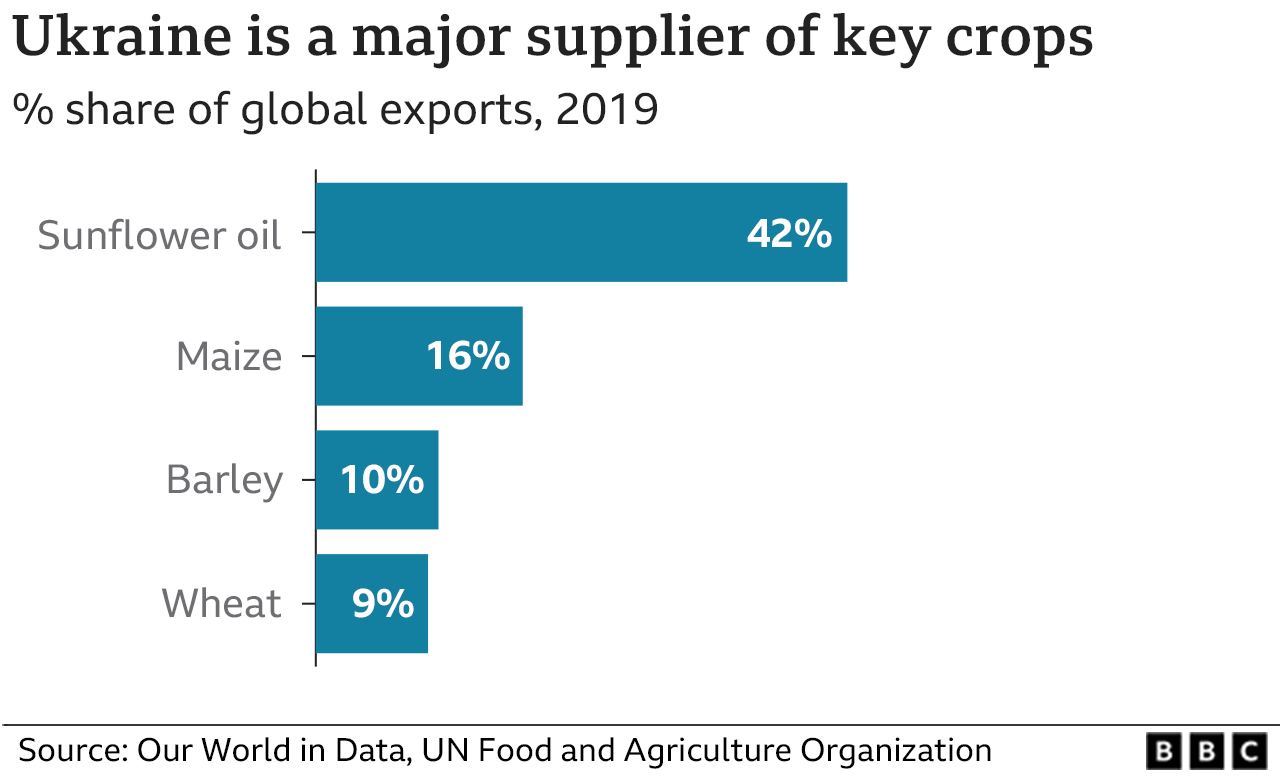
Ukraine and Russia account for 30% of global wheat supplies.
A deal with Vladimir Putin’s government had been struck, brokered by the UN, in July to allow shipments from Ukraine.
A Ukrainian MP has said recent Russian attacks on energy infrastructure are making it “harder” for Ukrainians, but added that “no one is complaining”.
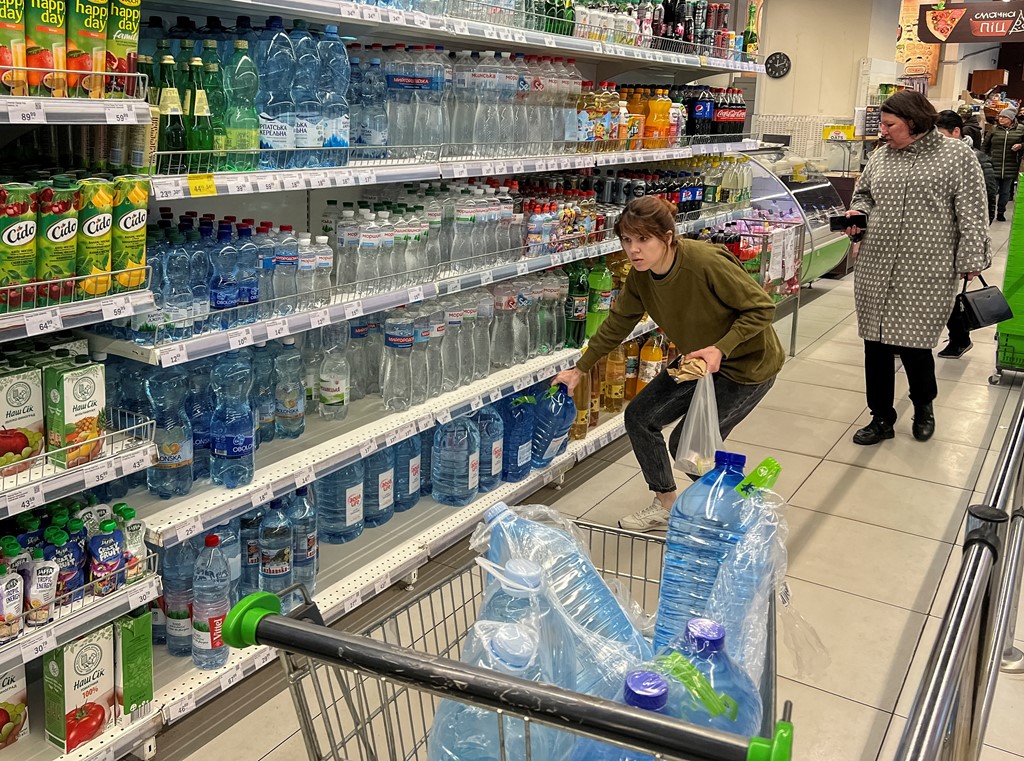
Kira Rudik told Sky News: “There are no military targets in these objects Russia is attacking, Putin is attacking them just to make sure it is harder for us to survive winter. Today, people are figuring out how to get water for themselves and their families.
“We were ready for spending a couple of days without electricity and heat, but we were not ready to spend days without running water and this is what may happen.”
She added that while Ukrainians are working to restore damaged sites, she claimed Russia waits for them to be restored and targets them again.
Ms Rudik added that people are preparing to supply water for themselves and using local sources.
“People are supporting each other, but it’s getting harder and harder in Kyiv and other major cities in Ukraine.”
Moscow withdrew from the Black Sea agreement after accusing Ukraine of carrying out a drone attack in Crimea.
Western governments are urging Russia to reverse its decision to withdraw from an UN-brokered grain deal, which undermines efforts to alleviate the global food crisis, with Ukraine claiming Moscow planned the move well in advance.
In July, Russia and Ukraine signed a deal brokered by Turkey and the United Nations under which Moscow allowed grain ships to leave Ukrainian Black Sea ports. The agreement, which had already allowed the export of over 9 million tonnes of Ukrainian grain, was set to be renewed on November 19.
UN Secretary-General Antonio Guterres on Sunday expressed “deep concern” as Ukraine’s maritime grain exports were halted.
“The Secretary-General continues to engage in intense contacts aiming at the end of the Russian suspension of its participation in the Black Sea Grain Initiative,” Guterres’ spokesman said.
“The same engagement also aims at the renewal and full implementation of the initiative to facilitate exports of food and fertilizer from Ukraine, as well as removing the remaining obstacles to the exports of Russian food and fertilizer.”
Moscow suspended its participation in the deal on Saturday, effectively blocking shipments from Ukraine, one of the world’s top grain exporters, in response to what it called a major Ukrainian drone attack earlier in the day on its Black Sea Fleet headquarters near the port of Sevastopol in Russian-annexed Crimea.
“Russia’s decision to suspend participation in the Black Sea deal puts at risk the main export route of much-needed grainand fertilisers to address the global food crisis caused by its war against Ukraine,” European Union foreign policy chief Josep Borrell said on Twitter on Sunday.
“The EU urges Russia to [reverse] its decision.”
Russia’s decision to suspend participation in the Black Sea deal puts at risks the main export route of much needed grain and fertilisers to address the global food crisis caused by its war against Ukraine.
Missile debrislanded in the northern Moldovan village of Naslavcea on Monday morning after a Russian fusillade was intercepted by air defences in neighbouring Ukraine, according to a statement from Moldova’s interior ministry.
No one was hurt, but the windows of several homes in Naslavcea, which borders Ukraine, were shattered, according to the ministry.
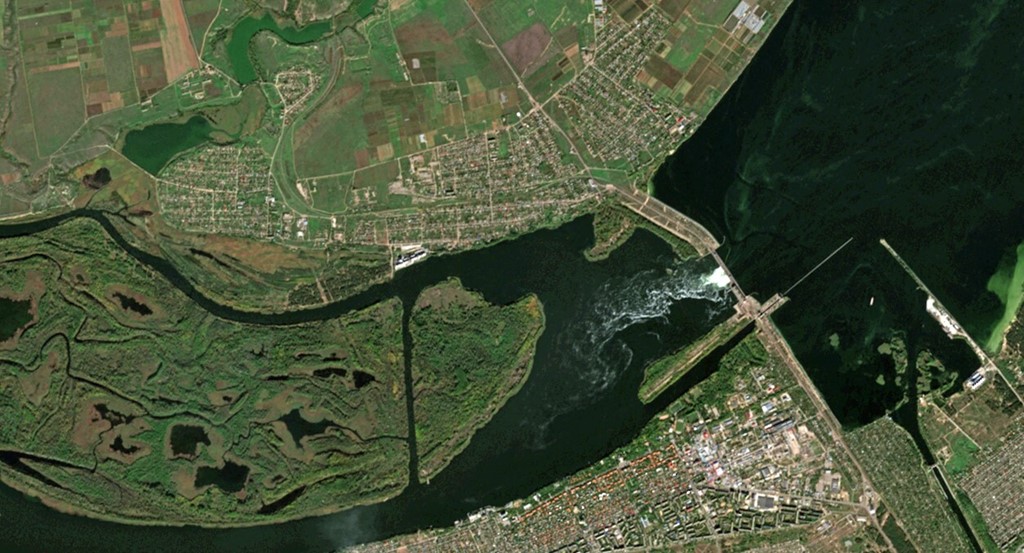
Nicu Popescu, Moldova’s foreign minister, said the Russian attack had targeted a Ukrainian dam on the Nistru River that runs through the two countries.
“Attacks on water infrastructure and ensuing stress on the river could put the entire region in danger of floods,” he tweeted, condemning Russian aggression against Ukraine “in the strongest possible terms”.
This morning a part of a Russian missile shot down by Ukrainian air defences landed in the Moldovan village of Naslavcea on the Ukrainian border.
There were no casualties; the shock wave shattered windows of several residential houses.
President Recep Tayyip Erdogan says Turkeyis determined to “serve humanity” and move forward with the UN-brokered Black Sea grain export deal after Moscow withdrew from the initiative over the weekend.
“Even if Russia behaves hesitantly because it didn’t receive the same benefits, we will continue decisively our efforts to serve humanity,” Erdogan said in a televised address.
“Our effort to deliver this wheat to countries facing the threat of starvation is evident. With the joint mechanism that we established in Istanbul, we contributed to the relief of a global food crisis,” the Turkish leader added, noting the deal had already provided 9.3 million tonnes of food to world markets.
Russia has warned that it would be “risky” for Ukraine to continue exporting grain via the Black Sea after Moscow suspended its participation in an initiative to facilitate shipments.
“In conditions when Russia is talking about the impossibility of guaranteeing the safety of shipping in these areas, such a deal is hardly feasible, and it takes on a different character – much more risky, dangerous and unguaranteed,” Kremlin spokesman Dmitry Peskov told reporters.
Peskov said Russian contacts with Turkey and the United Nations, who brokered the grain export deal in July, were continuing. He declined to comment when asked what needed to happen, from Russia’s point of view, for the deal to be resumed.
Ukrainian officials have reported that Russia has launched massive missile strikes across Ukraine, including the capital Kyiv, causing power and water outages.
At least two explosions have been reported in Kyiv. One resident told the BBC that his neighbourhood was now without power.
According to local authorities, critical infrastructure facilities in the northeastern city of Kharkiv were hit.
The strikes follow Russia’s accusation that Ukraine was responsible for a drone attack on its Black Sea Fleet in annexed Crimea.
On Monday morning, missile strikes were also reported in the central Vinnytsia region, as well as Dnipropetrovsk and Zaporizhzhia in the southeast, and Lviv in western Ukraine.
A facility at the Dnipro hydroelectric power plant in the Zaporizhzhia region was also reportedly hit.
In Kyiv, a facility that powers 350,000 apartments was damaged, with engineers urgently deployed to restore the supply.
Residents in the regions under attack were urged to remain in shelters, amid fears more strikes could follow.
Ukraine’s Air Force spokesman Yuriy Ihnat told Ukrainian TV that Russia had used its strategic bombers to carry out its “massive” strikes.
Andriy Yermak, the head of President Volodymyr Zelensky’s office, said that “Russian losers are continuing to fight against peaceful objects”.
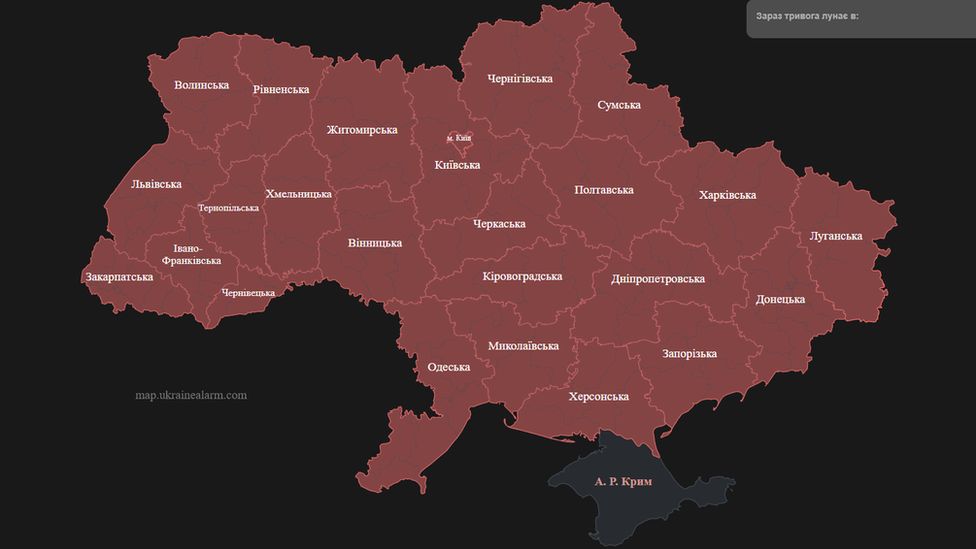
IMAGE SOURCE, UKRAINE’S DIGITALISATION MINISTRY Image caption, All of Ukraine’s regions – except for the annexed Crimea in the south – were marked in red as being under air attack on Monday morning
Russia has so far made no public comments on the reported latest strikes.
On Saturday, one Russian warship was damaged in the port city of Sevastopol in a drone attack, the Russian defence ministry said. It also accused British specialists of having trained the Ukrainian soldiers who then carried out the strikes in Crimea – Ukraine’s southern peninsula, annexed by Russia in 2014.
Moscow provided no evidence to back its claims.
Ukraine has not commented on the issue, while the UK defence ministry said Russia was “peddling false claims on an epic scale“.
TASS has indicated that Russia has suspended its participation in a grain export deal following overnight attacks on ships in Crimea.
The UN-mediated agreement, signed in July, allowed shipments of Ukrainian grain to be exported from blockaded ports.
“Taking into account… the terrorist act by the Kyiv regime with the participation of British experts against the ships of the Black Sea Fleet and civilian vessels involved in ensuring the security of the “grain corridor”, the Russian side suspends participation in the implementation of agreements on the export of agricultural products from Ukrainian ports,” the ministry said in a statement.
It earlier said the drone attacks were mostly repelled, although a ship received minor damage.
Social media videos purport to show fires and black smoke in the Bay of Sevastopol.
A UN spokesperson has said they are in touch with Russian authorities and that all sides should refrain from doing anything to imperil the deal.
In the last few minutes, Russia’s agriculture minister Dmitry Patrushev said only 3% of the food exported under the UN-brokered deal had gone to the poorest countries – and that Moscow intends to supply 500,000 tonnes of grain to these nations over the next few months.
On Wednesday, UN aid chief Martin Griffiths said he was “relatively optimistic” the deal would be extended beyond mid-November.
Russia has slammed the United States for making false claims about Moscow’s decision to withdraw from a grain export deal mediated by the United Nations.
Russia’s defence ministry said Ukraine used 16 drones to attack its Black Sea Fleet near Sevastopol on the Russian-annexed Crimean peninsula early Saturday, and that British navy “specialists” assisted in coordinating the “terrorist” attack.
Anatoly Antonov, the Russian ambassador to the US, said on Telegram: “Washington’s reaction to the terrorist attack on the port of Sevastopol is truly outrageous.
“We have not seen any signs of condemnation of the reckless actions by the Kyiv regime.”
Mr Antonov added: “All the indications that the British military specialists were involved in organising the massive strike with the use of drones, are disregarded.”
The UK has dismissed Russia’s claims as false, while US President Joe Biden denounced Russia’s decision on the grain deal as “purely outrageous” and said it would increase starvation.
The UK has hitback after Moscow accused a Royal Navy unit of causing explosions along a key gas pipeline between Russia and Europe.
It said Russia had made the “false claims of an epic scale” to “detract from the disastrous handling of the illegal invasion of Ukraine”.
To detract from their disastrous handling of the illegal invasion of Ukraine, the Russian Ministry of Defence is resorting to peddling false claims of an epic scale
This invented story, says more about arguments going on inside the Russian Government than it does about the west
It also mentioned “arguments going on inside the Russian government”, referring to reports of disquiet among Vladimir Putin’s top officials over the war situation.
British military experts have said Russia’s claim is a “straight lie” and that the navy would not have the means to carry out such an attack.
Because of Russian attacks on energy infrastructure, Ukrainian authorities have warned residents in Kyiv to expect longer power outages lasting more than four hours.
Rolling blackouts are affecting not only Kyiv but also Ukraine’s central regions, including Dnipro.
According to President Volodymyr Zelensky, approximately four million people have been affected, but “the shelling will not break us.”
This month Russia launched dozens of missiles and Iranian-made drones.
Ukraine’s energy infrastructure is being pounded by the air attacks – Mr Zelensky says about a third of the country’s electric power stations have been destroyed.
The Kyiv region has lost 30% of its power capacity, the private energy company DTEK says, meaning “unprecedented” power cuts will be necessary.
“Unfortunately the scale of restrictions is significant, much larger than it was before,” said DTEK director Dmytro Sakharuk.
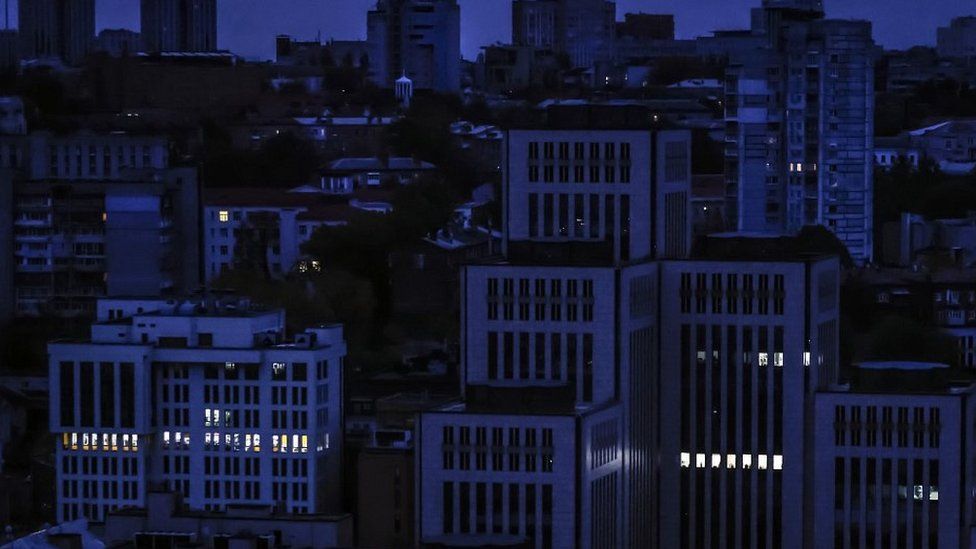
The power cuts have meant curbs on the use of street lights and electric-powered public transport, besides the discomfort in people’s homes.
IMAGE SOURCE,EPA Image caption, The scene in Dnipro as street lighting is switched off
The EU and other international allies of Kyiv have condemned the deliberate targeting of civilian infrastructure – attacks that Ukraine sees as war crimes.
Ukraine’s second city Kharkiv, heavily damaged by Russian shelling, also faces long power cuts, along with the central cities of Zhytomyr, Poltava and Chernihiv.
Russia stepped up its missile attacks on Ukraine’s power stations and other civilian infrastructure in retaliation for the 9 October bombing of the Kerch Bridge – a key link to Russian-annexed Crimea.
President Vladimir Putin called that blast a Ukrainian “act of terrorism”. The bridge is a symbol of his campaign to incorporate large swathes of Ukraine into Russia.
A power station employee called Pavlo, quoted by AFP news agency, said “we are confronted by such damage for the first time”. The unnamed plant had twice been targeted by missiles and then by an Iranian-made “kamikaze” drone.
He said repairs had been underway for more than two weeks, but “there are difficulties in that the equipment that has been damaged is unique – it’s hard to find the same parts”.
In other developments:
Russia said it had mobilized 300,000 reservists – the target number set by defence minister Sergei Shoigu. He said 41,000 of those called up had already been deployed to the battlefield in Ukraine
Russia also said it had completed an operation to move thousands of civilians out of occupied Kherson, ahead of an expected battle with Ukrainian forces for the strategic southern city
President Zelensky accused Russia of dismantling medical facilities in Kherson – removing “equipment, ambulances, just everything” – and pressurising doctors to move to Russia
Chechen leader and Putin ally Ramzan Kadyrov admitted that a Chechen unit had suffered “big losses” – 23 fighters killed and 58 wounded in a Ukrainian artillery attack
UN Secretary-General Antonio Guterres has urged all parties to renew the grain export deal, which is due to expire next month. Russia has suggested it might not renew the deal. The agreement allowed Ukraine to resume exports in the Black Sea which had been blockedwhen Russia invaded.
Russia saysonly 3 percent of food exported from Ukraine under a deal that allowed its grain shipments to resume has gone to the world’s poorest countries. It says Western nations have received half.
“The geography of the recipients of these cargoes has turned out to be completely inconsistent with the initially declared humanitarian objectives,” Russia said in a statement.
“Needy states such as Somalia, Ethiopia, Yemen, Sudan, and Afghanistan have received just 3 percent of the food, mostly from the World Food Programme,” it said.
Since the signing of the UN-backed Black Sea Grain Initiative in July in Turkey, several million tonnes of corn, wheat, sunflower products, barley, rapeseed, and soya have been exported from Ukraine.
But President Vladimir Putin and other Russian officials have since complained that there are serious problems with the deal, raising fears that Moscow could block those exports unless its demands are met.
The US willprovide a new $275m military assistance package for Ukraine to help it battle Russia’s invasion, the Pentagon has announced.
The package includes ammunition for Himars precision rocket launchers, various types of 155 mm artillery rounds, anti-armor systems, small arms ammunition, and four satellite communications antennas, Deputy Pentagon Press Secretary Sabrina Singh told journalists.
“We’re seeing Ukrainian infrastructure and electrical grids being targeted by the Russians and these antennas provide an additional capability on the ground at a critical time when Ukraine’s infrastructure is being hit,” Singh said.
This month, Russia resumed strikes on Kyiv, targeting critical infrastructure and forcing Ukraine to implement rolling blackouts.
According to Mr Klitschko, the city’s electricity deficit currently ranges between 20% and 50%.
It is, therefore, still operating in an emergency capacity.
Ukraine’s main power supplier, Ukrenergo, said it hopes to eliminate the shortages within two to three weeks – if there are no further strikes.
Mr Klitschko said: “The city is doing everything possible to save electricity consumption. In particular, trolleybuses have been replaced by buses on many routes of communal public transport.
“At the same time, the capital is not going to stop the metro. Once again, I call on the citizens of Kyiv and businesses to reduce electricity consumption!
“The risk of a major blackout, when a lack of electricity can lead to even greater consequences and an even greater shutdown, there is.”
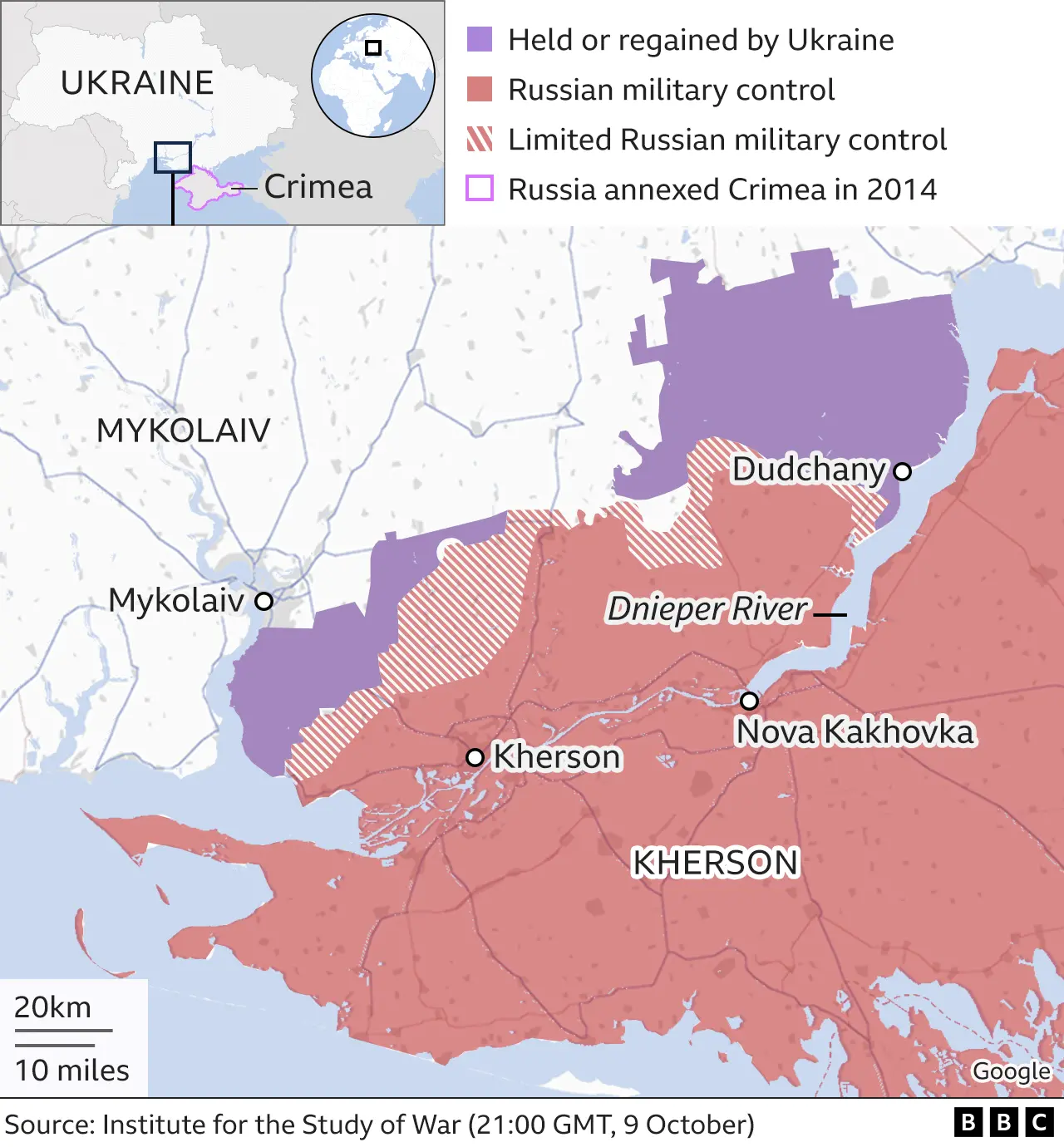
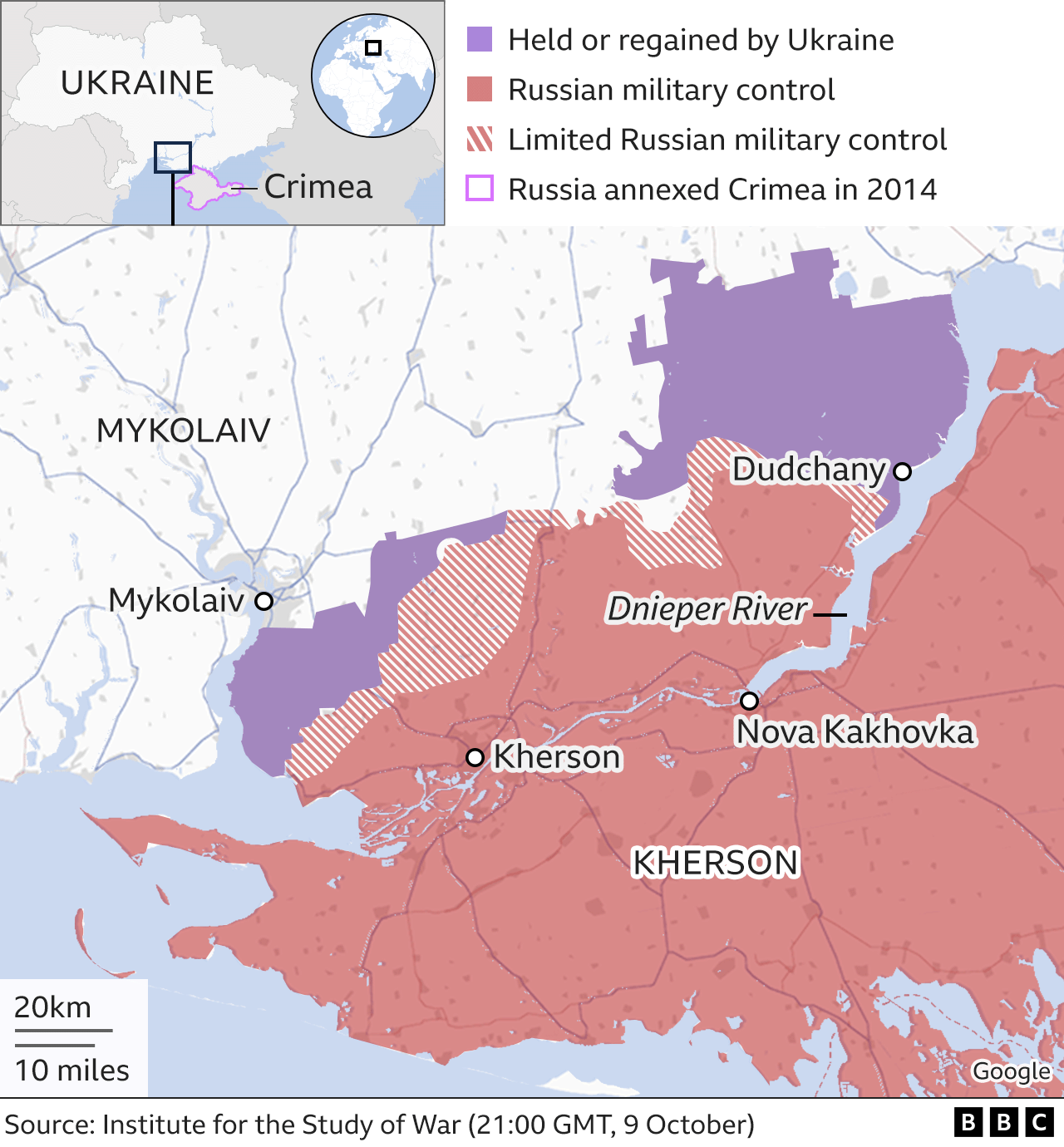
Russian officials say they have completed an operation to move civilians out of the southern city of Kherson ahead of an expected battle with Ukrainian forces.
At least 70,000 civilians are said to have crossed the Dnipro river, in what Ukraine has called forced deportations.
“We’re preparing Kherson for defence,” said Russian militia commander Alexander Khodakovsky.
“We’re taking the civilian population out, in many ways untying our hands.”
Ukraine’s southern Kherson region was one of four areas of Ukraine annexed by Vladimir Putin last month, despite Russia not having total control of any of them.
Kherson city was captured shortly after Russia’s invasion last February but in recent weeks Ukrainian forces have steadily recaptured territory on the west or right bank of the Dnipro. The front line is 30km (18 miles) away from the city, according to Ukrainian officials.
Russian-installed officials have warned of an assault on the regional capital in the near future. However, Ukraine’s defence minister, Oleksii Reznikov, has described the counter-offensive as really difficult because of the tough terrain and rainy weather which make it harder to use fighting vehicles with wheels.
The man installed by Russia’s occupying authorities in annexed Crimea, Sergei Aksyonov, posted pictures of the bank of the Dnipro on Thursday night, during a visit with a leading figure in the Kremlin, Sergei Kiriyenko.
“The work on organising the departure of residents has been completed,” he announced. Occupying authorities say they have been moved to “safe regions of Russia”, which include other areas of Ukraine under Russian control but also, reportedly, Russia itself.
The deportation or transfer of civilians by an occupying power inside or outside the occupied territory is considered a war crime.
Another Russian-appointed official admitted that many civilians had stayed. Vladimir Saldo, installed by the Russians as governor of Kherson, said 150-170,000 people were still in and around the city on the right bank of the Dnipro river. The pre-war population of the city alone was some 300,000.
One resident told the BBC last week that no-one was going anywhere and that Russian soldiers were worried how they could survive in Kherson city.
One of the most hardline backers of the war, Chechen leader Ramzan Kadyrov, admitted that a Chechen unit had suffered “big losses” in the region this week. He said 23 fighters were killed and 58 others were wounded in a Ukrainian artillery attack, but went on to claim that his forces had killed many more Ukrainians.
Ukraine’s regional leader in Kherson, Serhiy Khlan, said Kadyrov’s men were being replaced by soldiers recently called up as part of President Putin’s mobilisation drive across Russia. Fields around the regional capital were being mined, he said, and the new recruits were now acting as Russia’s first line of defence.
Ahead of any battle for Kherson city, Ukrainian officials have suggested that Russia has withdrawn its occupying authority to the town of Henichesk, some 200km to the south-east.
Ukrainian military spokeswoman Natalya Humenyuk said the Russians were trying to hold on to the right bank of the Dnipro, but the fact they were preparing to defend the other side of the river too was a “telling sign they understand. the real situation – that they are unlikely to hold on to the right bank”.
President Volodymyr Zelensky says Russiahas launched more than 30 drone attacks on Ukraine in just two days.
He added that in total, Moscow had also carried out some 4,500 missile strikes and over 8,000 air raids.
Speaking from Kyiv and standing beside what appeared to be a downed Iranian Shahed drone, Mr Zelensky pledged to “clip the wings” of Moscow’s air power.
Western officials believe Iran has supplied a large number of drones to Russia, but Moscow and Tehran deny it.
It comes as US Secretary of State Antony Blinken called Russia’s aggressive use of drones “appalling”.
The top US diplomat accused Russian commanders of using the devices to “kill Ukrainian civilians and destroy the infrastructure they rely on for electricity, for water, for heat” during a visit to the Canadian capital Ottawa.
“Canada and the United States will keep working with our allies and partners to expose, to deter, and to counter Iran’s provision of these weapons,” Mr Blinken said.
In recent weeks, Russian attacks have targeted Ukraine’s civilian infrastructure, damaging the country’s electricity and water supply just as temperatures begin to drop.
Western countries say Iran is supplying its domestically developed drones to Moscow and that Iranian military experts are on the ground in Russian-occupied Crimea to provide technical support to pilots.
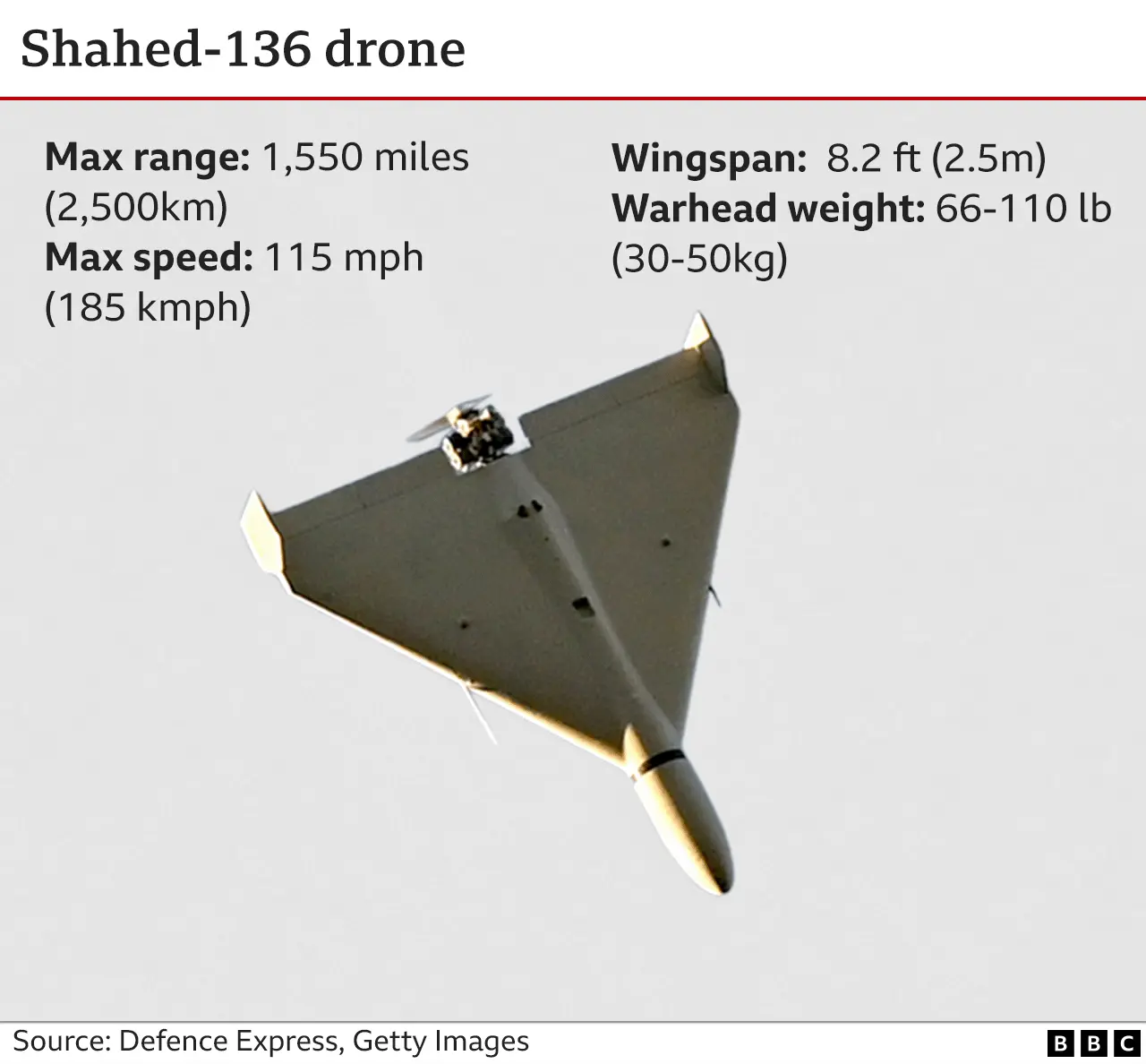
Kyiv has identified the drones used in some attacks on its infrastructure as Iranian Shahed-136 drones. They are known as “kamikaze” drones because they are destroyed in the attack – named after the Japanese fighter pilots who flew suicide missions in World War Two.
Ukraine says around 400 drones have already been used by Russia, from a total order of roughly 2,000 weapons.
But Tehran has repeatedly denied that it has struck any arms deal with the Kremlin, and Moscow also denies using Iranian drones.
On Wednesday, Iran’s Foreign Minister Hossein Amir-Abdollahian called the accusations “baseless” and urged Ukraine to “present any evidence supporting the accusations”.
“If… it becomes clear to us that Russia has used Iranian drones in the war against Ukraine, we will definitely not be indifferent about this issue,” he added.
Tehran’s regional adversary, Israel, has also attacked Iran over the alleged exports. During a meeting with US President Joe Biden at the White House on Thursday, President Isaac Herzog slammed the regime’s activities.
“The fact that Iran, following its activities in killing its own citizens, in working towards nuclear weapons endlessly, endangering the entire world and the region — and now killing innocent civilians in Ukraine, clearly that gives you a picture of what Iran is all about,” Mr Herzog said.
Prior to the visit, he had pledged to share “proof” with Mr Biden that Iran was supplying the weapons.
Meanwhile, US officials have said they will supply Ukraine with an additional $275m (£237m) of military aid, according to the Associated Press.
The assistance is expected to be used to restock ammunition for Ukrainian artillery systems, including the HIMARS launchers that Kyiv’s forces have used to great effect.
On the ground, fighting has slowed in recent days, with a much anticipated Ukrainian advance on the southern city of Kherson stalled due to poor weather.
Russia‘s President Vladimir Putin on Thursday accused the Western nations of escalating the ongoing conflict in Ukraine, and accused them of eroding the principles of collective security, with the substitution of international law for the so-called rules-based order.
Speaking at the 19th meeting of the Valdai International Discussion Club in a forum themed The World After Hegemony: Justice and Security for All, Putin launched a scathing attack on the “so-called West” for attempting to instate one “hegemonic” rule.
‘They’re fuelling the war in Ukraine..’: Putin
The Russian President slammed the western nations for trying to escalate the war in Ukraine. “They’re fueling the war in Ukraine,” said the head of the Russian Federation, adding that they have been fueling tensions around Taiwan, destabilizing the world food and roiling the energy markets. “As far as the last one is concerned, it is not deliberate, [I] don’t doubt that,” Putin said at the meeting. Russia’s leader noted that energy and food security was impacted globally due to a number of systematic errors committed by the Western authorities, referring to crippling sanctions imposed on the Russian Federation in response to its invasion.
Putin accused the West of playing a “dangerous” game as he asserted that the dominion of the world “is precisely what the West has decided to stake in this game. But this game is a dangerous, dirty, and bloody one.” He further iterated that such acts contest the “sovereignty of peoples and nations, their identity and uniqueness and have no regard whatsoever for the interests of other countries.” He furthermore stated that humanity, which stands at a crossroads, has two options – “either continue to ‘accumulate all of the problems that are certain to crush all of us’ or nations can work together ‘to find solutions.’”
Russia earlier accused the “nuclear US-UK-France troika” – the nuclear alliance of NATO, of waging a proxy-war strategy against Moscow by bringing weapons into Kyiv, and expanding the alliance to its eastern flank, posing a grave threat to Russia’s national security. In a statement made at the Military Security and Arms Control summit in Vienna, Moscow lambasted US’ Democratic majority leader Steny Hoyer for “openly declaring that the US is in a state of war with Russia”. Hoyer (D-Md.) was arguing on the House floor about the ongoing inflation of energy costs due to Russia’s war.
The Kremlin also previously refuted the United States’ narrative of it waging a “nuclear war” saying that such a conflict “must never be fought” and that any military conflict between nuclear powers “must be avoided as declared by P5 countries”.
Moscow accused the West of flaring the Ukraine conflict by supplying weapons to Ukraine to kill Russian commanders and its military forces.
The controversial Russianban on promoting so-called “gay propaganda” appears to be expanding to include all adults.
The move is a toughening of an existing 2013 law that makes providing LGBT information to children a criminal offense.
Those found guilty face heavy fines for promoting what Russia refers to as “non-traditional sexual relations.”
The initial approval of the extension was voted through by the Russian State Duma unanimously.
Earlier this week, officials had urged politicians in Russia’s lower house of parliament to enact the extension – portraying it as part of a broader battle over civilisational values with the West and linking it to the decision to invade Ukraine.
Under the proposal, information about “non-traditional lifestyles” or “the rejection of family values” would be considered legally the same as pornography, the promotion of violence, or stoking racial, ethnic, and religious tensions.
It also bans the “propaganda of paedophilia” – which the Russian government often conflates with being gay.
Another element of the extensions prohibits information that might “cause minors to desire to change their sex”, a reference to transgender people.
If enacted, the law would allow any information on the internet discussing LGBT topics to be blocked and films deemed to contain positive depictions of being gay to be banned
Human rights campaigners and LGBT groups say the extension means that any act or public mention of same-sex couples is functionally being criminalised.
The wide-ranging ban also extends to advertising and books – both non-fiction and literature – raising censorship concerns from publishers, who have warned of the risk that it could even affect classics of Russian literature.
The law sets out fines of between 50,000 roubles (£705; $815) and 400,000 roubles, while non-Russians who violate the ban face expulsion from the country.
The bill has broad support but will first be approved by the upper house of the Russian parliament, the Federation Council before it is ratified by President Vladimir Putin.
On Monday, politicians in the Duma heard claims from one of the law’s key backers that the information about LGBT people being shared with Russians was part of a “hybrid war” being waged by the West against the country.
Alexander Khinshtein, the head of the parliament’s information committee, said Russian soldiers fighting as part of the invasion of Ukraine were there to protect traditional Christian values.
But he saved some of his most trenchant criticism of the West for railing against the cartoons South Park and Peppa Pig.
He presented his colleagues with screenshots of the TV programmes that he claimed were part of a war being “waged against our society”, directing his ire at the episode of Peppa Pig in which Penny the Polar Bear appears with two mothers as a particularly egregious example of this so-called propaganda.
Khinshtein, an MP from Mr. Putin’s United Russia Party, told the Duma that the “special operation” – what the Russian government insists on calling its war in Ukraine – is happening “not only on the battlefield but also in the minds and souls of people”.
His rhetoric follows that of the Russian president, who has made being anti-gay a cornerstone of his domestic agenda and authoritarian rule.
In a speech annexing four Ukrainian territories last month, Mr Putin ranted about families with a “parent number one and a parent number two” – in what has been interpreted as a criticism of same-sex families.
The head of Russia’s Orthodox Church, Patriarch Kirill,has also backed the new legislation. He has portrayed Russia’s war in Ukraine as a battle between those who support pro-Western gay pride events, and those who reject them.
Ukraine has increased the number of forces deployed in northern regions near Belarus to counter any potential renewed Russian attack across the border, according to the country’s general staff.
“At the current time, the creation of a strike force [in Belarus] is not observable. [But] there are and will be threats. We are reacting, we have already increased our troops in the northern direction,” Oleksii Hromov, deputy head of the general staff’s main operations directorate, told a regular news briefing.
Belarus is a close ally of Russia and has previously allowed Moscow’s forces to use its territory as a springboard to attack Ukraine.
Earlier this month, Belarusian President Alexander Lukashenko said Belarus and Russia would deploy a joint military task force near Ukraine in response to what he claimed was a clear threat to his country from Kyiv and its backers in the West, without providing evidence for the assertion.
Mercedes-Benz has announced its intention to exit the Russian market and sell shares in its industrial and financial services subsidiaries to a local investor, making it the latest carmaker to do so.
Japan’s Nissan this month took a $687m loss in handing over its business in Russia to a state-owned entity for 1 euro, mirroring an earlier move by Renault, which sold its majority stake in Russia’s Avtovaz for 1 rouble.
Now shares in Mercedes’s local subsidiaries are expected to be sold to the car dealer chain Avtodom.
Mercedes stopped manufacturing in Russia in early March.
White House has reported that US President Joe Biden and UK Prime Minister Rishi Sunak have agreed to work together to support Ukraine.
They first spoke just hours after Sunak became Britain’s third prime minister this year.
The two leaders also reaffirmed the “special relationship” between the US and the UK, and said they would work together to advance global security and prosperity, the White House said in a read-out of the conversation.
“The leaders agreed on the importance of working together to support Ukraine and hold Russiaaccountable for its aggression,” the statement said.
The Kremlin says it keeps the door open for talks on a possible prisoner swap with US basketball star Brittney Griner but reiterated that discussions must be kept strictly confidential.
Kremlin spokesman Dmitry Peskov was asked if Griner could be freed as part of a prisoners swap with Washington and said, “We always say that any contacts about possible exchanges can only be conducted in silence under a tight lid on any information.”
On Tuesday, Russian courts rejected Griner’s appeal against her nine-year sentence for drug possession.
Russia’s air strikes on civilian infrastructure raise the cost of Ukraine’s recovery, which will require nearly $4 billion per month to maintain power and water supplies, according to the International Monetary Fund’s chief.
In an interview with Reuters, IMF managing director Kristalina Georgieva said the organisation was focused on keeping Ukraine afloat while working on a longer-term plan.
“We still hope that we can stay within these parameters of 3-4 billion, but what changed since we had this discussion in Russia’s terrible bombing of civilian infrastructure,” she said.
“Just to get electricity back and water supply back we are moving towards the upper range of 4 billion…Just imagine a worst-case scenario.”
Georgieva also signalled that China should be allowed to join an international platform that the European Commission wants to set up this year for Ukraine.
Norway’s security services say they have arrested a university lecturer accused of spying for Russia.
The man was arrested on his way to work by Oslo’s internal security agency, the PST after he was identified as a “threat to fundamental national interests.”
The suspect, said to be in his 30s, had posed as a Brazilian academic, but officials say he is actually Russian.
Moscow’s embassy in Oslo told local media it was unaware of the man’s identity.
Norwegian officials said the man had worked as a researcher at the University of Tromso in the north of the country since 2021. His lawyer told local media that he denies the allegations.
But the PST’s deputy chief, Hedvig Moe, told reporters that investigators had become concerned that the man “may have acquired a network and information about Norway’s policy” in the north of the country.
“Even if this … is not a threat to the security of the kingdom, we are worried it could be misused by Russia,” she added. She declined to say what had prompted the arrest, simply saying “that it was was the right point to stop the activity he was involved in”.
Officials believe the suspect was working in Norway as part of Russia’s so-called “illegals” programme.
First operated by the KGB during the Cold War, and revived in recent years by President Vladimir Putin, Russia’s intelligence agencies craft fake identities, or “legends”, for spies before deploying them to foreign countries.
“Typically illegal agents are talent scouts recruiting agents for later, and preparing the ground for other spies to do traditional intelligence work,” Ms Moe said. “It is a long-term project to have an illegal agent. It costs a lot of money. Major state actors only use them and it is known Russia has used them in the past.”
The man has not been officially identified, but local media reported that his social media accounts showed he had won a masters from the University of Calgary’s Centre for Military, Security and Strategic Studies in 2018.
The suspect arrived in Norway in December last year to work on a research group that worked with Norwegian government agencies on “hybrid threats” linked to “Arctic Norway”.
The group’s head said the man was working as an unpaid researcher, which was unusual but not unprecedented.
“He first contacted me in autumn last year… We assessed him like we would other researchers. One of his references was a professor I knew very well,” said Gunhild Hoogensen Gjoerv, a professor of security studies at the University of Tromso.
“He was a really lovely guy, very good at his job,” she said. “We had no reason to suspect him of being anything else than what he said he was.”
She told the Guardian that while the man did not have access to classified information, he did “get an understanding and insights into the sort of discussions and debates that we are having about security”.
In recent weeks, Norway’s security services have arrested several Russian citizens accused of working for Russia as spies. Eight people have been arrested for flying drones near, or taking pictures of, critical infrastructure.
The country – a key Nato member that has replaced Russia as the biggest gas supplier to Europe – has been concerned by sightings of drones near critical oil and gas infrastructure.
Per a report from the Associated Press, Griner’s appeal in response to her nine-year sentence was rejected in Russian court on Tuesday. Thus, the sentence will be upheld, although the Moscow court in question is reported to have also said that the length of the sentence “will be recalculated” to include the time she spent detained before going to trial. Bloomberg writes that the 32-year-old will soon “leave pre-trial detention near Moscow and be sent to serve her prison term in a penal colony elsewhere in Russia.”
In August, Griner’s legal team filed an appeal following a conviction earlier that month in connection with the possession of a small amount of hash oil. In a statement shared in response to Griner’s conviction, President Joe Biden said this move by the Russian court marked an “unacceptable” development.
“Today, American citizen Brittney Griner received a prison sentence that is one more reminder of what the world already knew: Russia is wrongfully detaining Brittney,” Biden said at the time.
The U.S. government has maintained this stance throughout coverage of Griner’s detainment, which began with her arrest at a Moscow airport in February. Prior to the detainment, Griner had played for the region’s UMMC Ekaterinburg team.
Griner’s detainment has remained a source of global criticism, as have the larger issues surrounding it. At one point, Dennis Rodman had plans to travel to Russia to offer assistance in securing Griner’s release. However, later that same month, it was reported that Rodman would actually not be making such a trip.
Breanna Stewart, meanwhile, has been among the fellow athletes who have pushed for Griner’s release. In a post shared to Twitter on Monday, the Seattle Storm player noted how long Griner had already been detained at that point, tagging President Biden and Vice President Kamala Harris in the process.
It has been 249 days since our friend, Brittney Griner, has been wrongfully detained in Russia. It is time for her to come home. @WhiteHouse@potus@vp , we are paying attention and we are counting on you. #WeAreBG
German Chancellor Olaf Scholz and French President Emmanuel Macron will no doubt be beaming when they meet in Paris to discuss future European cooperation.
But, behind the smiles, both sides are aware that the EU’s central relationship is under strain like never before.
On a variety of issues, including defence, energy, business assistance, and EU expansion, the two countries are currently pulling in opposite directions.
And underlying everything is a fear fast becoming an obsession in Paris.
The French concern is that the war in Ukraine has ripped up Europe’s geostrategic rule book, leaving Germany enhanced and pushing France to the Western side-lines.
Symbolic of the rift was the cancellation of what had been until now a routine set-piece of Franco-German friendship – the regular joint meeting of the two countries cabinets.
After a pause for Covid, these encounters were meant to resume at Fontainebleau on Wednesday. But faced with a glaring lack of common ground – as well, according to France, as the studied uninterest of several German ministers – it was agreed to call the session off.
Mr Scholz’s arrival for a bilateral summit with the French president is an attempt to minimise the differences, but no one is deceived.
Lamenting what it called the “glacial” state of cross-Rhine relations, Le Figaro newspaper said in an editorial that it was “the result of a profound geostrategic change – a continental shift that started a long time ago and which is destined to transform the face of Europe”.
The essence of this shift – according to French analysts – is the awakening of the slumbering giant that is Germany and its dawning realisation that it must shift for itself in an increasingly dangerous neighborhood.
For France, this is bad news because it casts doubt on a central assumption of the last half century: that by walking lockstep with Germany, France can not just restrain its richer and stronger neighbour, but also project its own vision of European unity.
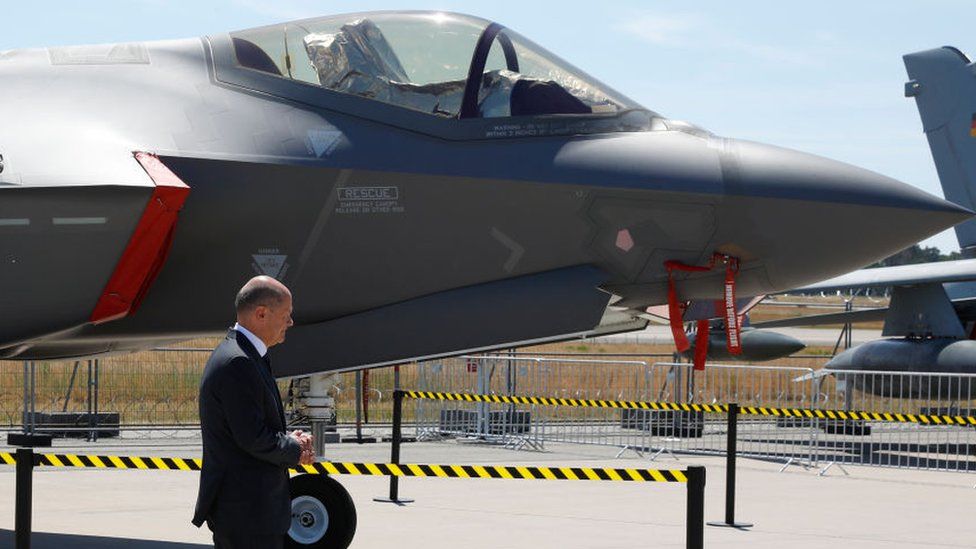
IMAGE SOURCE,GETTY IMAGES Image caption, Earlier this year the German chancellor decided to buy F35 fighter jets
On re-arming, Germany has shown a clear preference for US kit – like F-35 fighter jets and Patriot air-defence systems – and seems content to leave once-vaunted European defence initiatives on hold.
Stung by criticism that it was suckered by Russia’s Vladimir Putin, Germany appears anxious to reassure its eastern neighbours by promoting itself as the European arm of Nato, rather than – as France would like it – a partner in EU defence.
On energy, Germany is against a cap on gas prices, which France wants. It also wants France to authorise a new pipeline to carry gas – and eventually green hydrogen – from Spain. But France refuses.
And then there is Germany’s decision to offer €200bn (£170bn) in state aid to businesses and households to get them through the energy crisis.
For France, this will create severe economic distortions because other European countries will be unable to compete with that level of subsidy. Germans reply that France is hardly in a position to give lessons about the iniquity of state aid.
In an article titled “The late Franco-German couple”, veteran French commentator Nicolas Baverez said France had only itself to blame for letting itself be eclipsed by Germany over the years.
What has happened now with the Ukraine war, he said, merely revealed the imbalance that was already there. “While France is content to talk about sovereignty, Germany exercises it,” he wrote.
A group of left-wing Democrats in the United States Congresshas withdrawn a letter calling for a negotiated settlement to the Ukraine conflict.
According to the Progressive Caucus, the message was misinterpreted as aligning with the Republican Party’s growing reluctance to continue sending aid to Kyiv.
Chairwoman Pramila Jayapal stated that it was written “months ago” and that it was released without being “vetted.”
The memosparked intra-party backlash before the US midterm elections next month.
The letter to the White House was made public on Monday and was signed in June by 30 of President Joe Biden’s fellow Democrats in the House of Representatives.
Its call for the US to negotiate directly with Russia was seen as undermining the Biden administration, which has repeatedly said Moscow is not interested in diplomacy.
White House officials said in response that diplomacy is only possible when all sides are prepared to negotiate, and that is not currently the case.
Massachusetts Democratic congressman Jake Auchincloss denounced the letter as “an olive branch to a war criminal who’s losing his war”, in reference to Russian President Vladimir Putin.
Another Progressive Caucus member, Ruben Gallego, responded: “Russia doesn’t acknowledge diplomacy, only strength.
“If we want Ukraine to continue as the free and democratic country that it is, we must support their fight.”
Ms Jayapal, a Washington state congresswoman, said on Tuesday that she still supported an end to the war “with diplomacy”.
She said the timing of the letter’s release meant it had “been conflated with [Republican] opposition”.
Ms Jayapal continued: “It is a distraction at this time.”
She accused Republicans of planning to withdraw financial and military support for Ukraine if they win a majority in Congress next month.
Republican congressman Kevin McCarthy warned earlier this month that if his party takes power in November there will be no “blank cheque” for Ukraine.
Other signatories to the letter included New York congresswoman Alexandria Ocasio-Cortez, a leading figure in the party’s socialist wing, and Maryland congressman Jamie Raskin, who has taken a lead role in the Democrats’ efforts to investigate former President Donald Trump.
Mr Raskin disavowed the letter on Tuesday in a statement condemning Russia as “a world centre of antifeminist, antigay, anti-trans hatred”. He praised the Ukrainian armed forces for recruiting women and “sexual minorities”.
Ms Ocasio-Cortez has faced pressure over Ukraine at recent public appearances.
One heckler at a town hall-style event accused her of voting for nuclear war with Russia and China, shouting: “Why are you playing with the lives of American citizens?”
South Africa says it will allow a sanctioned Russian oligarch to dock his superyacht in Cape Town.
The $521m (£472m) vessel, which belongs to Alexei Mordashov – an ally of Russian leader Vladimir Putin – left Hong Kong earlier this week.
South African opposition leaders had urged the government to seize the 465ft long (141m) yacht called The Nord.
But a spokesman for President Cyril Ramaphosa said he saw “no reason” to comply with Western sanctions.
“South Africa has no legal obligation to abide by sanctions imposed by the US and EU,” Vincent Magwenya told reporters in Pretoria on Tuesday.
“South Africa’s obligations with respect to sanctions relate only to those that are specifically adopted by the United Nations,” Mr Magwenya added, noting that Mr Mordashov is not under any UN-sponsored sanctions.
Western countries and their allies have imposed sanctions on more than 1,000 Russian individuals and businesses in response to Russia’s invasion of Ukraine.
Like many other African countries, Mr Ramaphosa’s government has so far avoided directly criticising Russia, abstaining in several UN votes that have expressly condemned the war. Pretoria has also called for a negotiated settlement to end the conflict.
On Monday, Cape Town Mayor Geordin Hill-Lewis – a member of the opposition Democratic Alliance party – urged officials to block the superyacht’s entry, writing on Twitter that there could be “no place in our city for accomplices to, and enablers of, Putin’s war”.
“It must be said that so far, our country’s foreign policy conduct in relation to Russia’s illegal, imperialist war has been nothing less than shameful,” Mr Hill-Lewis added in a further statement. “Here is an opportunity to correct some of those errors of judgement and stand up for what is clearly right.”
It is unclear whether Mr Mordashov is actually onboard the vessel. Speaking to local media on Sunday, Mr Hill-Lewis suggested that the billionaire was travelling on his yacht.
But last week a spokesperson for the oligarch told Bloomberg News that he had been in Moscow since his yacht arrived in Hong Kong.
Hong Kong’s government recently offered similar justifications when refusing to prevent the entry of the superyacht, with Chief Executive John Lee saying the city would be accountable to UN sanctions but not “unilateral” ones imposed by “individual jurisdictions”.
Prior to the war, Mr Mordashov was Russia’s wealthiest man. The 57-year-old built a fortune of some $29.1bn (£25.92bn) through his steel and mining company Severstal.
Early in the conflict he was targeted by extensive Western sanctions due to his links with Mr Putin. But the billionaire has questioned the value of the moves, saying he had no involvement in Russian politics and maintains little influence with the Kremlin.
Mr Mordashov has already lost one of his smaller vessels, the 215ft Lady M, to Western sanctions after it was seized by Italian police in March.
But The Nord is believed to be his biggest yacht asset. The vessel is larger than a football field and is described as one of the world’s most extravagant boats, according to Forbes.
Shortly after the outbreak of the conflict in Ukraine, the yacht – which features two helicopter pads, a swimming pool and a cinema – left the Seychelles for the far-eastern Russian port of Vladivostok. The move was seen as a bid to avoid the fate of the Lady M.
But experts say owners like Mr Mordashov face serious issues finding international ports capable of maintaining superyachts. Most are in Europe, where the vessels would be instantly seized.
Russian forces have repelled Ukrainian attacks in the southern Kherson region and eastern Luhansk area, the Kremlin’s defence ministry claimed today.
As Ukrainian troops continue with their counteroffensive in the east, Russian-installed officials have been evacuating thousands of civilians from Kherson across the Dnipro river.
Kherson’s regional capital is the only big city Russia has captured intact since the start of the invasion.
And the province controls the gateway to Crimea, which Russia seized and claimed to annex in 2014.
On Monday, pro-Russian authorities in the region announced that men who stayed in the area would have the option of joining a military self-defence unit.
However, Kyrylo Budanov, Ukraine’s military spy chief, told the Ukrainska Pravda media outlet: “They are creating the illusion that all is lost.
“Yet at the same time, they are moving new military units in and preparing to defend the streets of Kherson.”
A Russian courtis hearing Brittney Griner’s appeal against her nine-year prison sentence for drug possession and smuggling.
Today, three judges preside over the appeals court in Krasnogorsk, near Moscow, while Griner participates via video link from a detention centre in the town of Novoye Grishino, also near Moscow.
Her lawyers, Maria Blagovolina and Alexander Boykov have previously said they expect a decision on Griner’s appeal to be issued later today.
Griner was arrested on 17 February at a Moscow airport with vape cartridges containing cannabis oil, which is banned in Russia.
She was jailed for nine years on 4 August after she pleaded guilty to her conviction for drug possession and trafficking but said she had made an “honest mistake” and had not meant to break the law.
Yesterday, US state department spokesperson Ned Price said that Washington was working to free Griner and former US Marine Paul Whelan, serving 16 years in jail after being convicted of spying, and that there had been “active discussions, including in recent days”.
Western governmentshave expressed worry about the scale of nuclear bluster from senior Russian officials, including President Putin, over Ukraine, particularly in the aftermath of the February incursion.
How does Moscow react to charges it is engaging in such rhetoric and threats?
I asked one of Russia’s most powerful officials, Sergei Naryshkin, head of the SVR Foreign Intelligence Service, to respond to international criticism.
He denied any Russian nuclear rhetoric, even though there’s been plenty.
Mr Naryshkin pointed the finger back at the West.
“Will you state categorically that Russia will not use nuclear weapons in Ukraine or engage in other provocative actions, such as exploding a dirty bomb, or blowing up a dam?” I asked Mr Naryshkin.
Russia’s spy chief didn’t answer the question directly. “We are, of course, very concerned about Western rhetoric about the possibility of using nuclear weapons,” Sergei Naryshkin responded.
“Yesterday Russia’s defence minister talked by phone with his colleagues from Turkey, the US, and France. He told them about the possible plans of the Ukrainian leadership to use a so-called ‘dirty nuclear bomb’,” Mr Naryshkin continued.
“But there is no evidence to back up that claim,” I pointed out.
On Sunday the UK, US, and French governments issued a joint statement on the Russian government’s claims. They rejected what they called “Russia’s transparently false allegations” against Kyiv, adding: “The world would see through any attempt to use this allegation as a pretext for escalation. We further reject any pretext for escalation by Russia.”
I was speaking to Sergei Naryshkin at the opening of an exhibition at the Russian Army Museum.
It is a sobering experience – an exhibition that transports you back to a time when the world was on the edge of nuclear Armageddon.
It marks the 60th anniversary of the Cuban Missile Crisis. On the wall,there is a giant photograph of Soviet leader Nikita Khrushchev and US President John F Kennedy. There are images of the Soviet missiles Moscow sent to Cuba, which the Kennedy White House demanded the Kremlin remove.
In the eyes of Vladimir Putin’s Russia, what are the lessons of the Cuban Missile Crisis?
“The lesson of the Cuban Missile Crisis is that political leaders must find the inner strength to reach compromises to resolve global problems,” Sergei Naryshkin told me.
It’s true that Kennedy and Khrushchev compromised to end a potentially devastating crisis. Khrushchev removed nuclear missiles from Cuba; Kennedy promised to remove American missiles from Turkey.
But six decades on, there is no sign that Russia’s current leader, Vladimir Putin, is prepared to compromise. Once more there is concern about a possible nuclear conflict.
And yet the war in Ukraine is very different from the Cuban Missile Crisis.
Back in February the Kremlin leader invaded a neighbouring country, a sovereign state; the war has been raging for eight months. Despite major setbacks on the battlefield, President Putin still seems determined to secure some kind of victory, both over Ukraine and against the West.
The European Union will send Kyiv 1.5 billion euros each month in 2023 to assist Ukraine in its struggle against Russia’s invading soldiers, according to the bloc’s leader.
European Commission President Ursula von der Leyen said that the EU had given Ukraine 19 billion euros this year. “It is very important for Ukraine to have a predictable and stable flow of income,” she said, adding that Kyiv estimated its monthly needs at 3-4 billion euros “for the basics.”
The EU chief told a news conference the EU would finance 1.5 billion euros per month of that, with the rest expected to come from the United States and international institutions.
“That will give a total of 18 billion for the next year – an amount Ukraine can count on and where there is a stable and reliable, predictable flow of income.”
At least 15 EU countries seek a price cap in response to popular outrage over rising living costs, but Germany is adamantly opposed.
Despite hours of squabbling, European Union leaders have failed to achieve an agreement on a proposal to help protect their citizens from rising energy prices.
The group’s leaders emerged from their second summit in as many weeks at about 2 am in Brussels (00:00 GMT) with a “roadmap” to agreeing on a set of measures to lower energy bills, which have soared as a result of Russia’s invasion of Ukraine.
While the announcement of the summit text made a public show of unity among the 27 member states, the absence of any decision on capping gas prices indicated negotiations would remain difficult.
“We do now have a very good and solid roadmap to keep on working on the topic of energy prices,” European Commission President Ursula von der Leyen told reporters in the early hours of Friday morning.
No timeframe was given on when a decision on price caps would be made, with EU energy ministers due to meet in Luxembourg on Tuesday for further discussions.
The published text calls on the European Commission and EU countries to find ways to shield consumers from the high prices “while preserving Europe’s global competitiveness… and the integrity of the Single Market”.
“There is a strong and unanimously shared determination to act together, as Europeans, to achieve three goals: lowering prices, ensuring the security of supply, and continuing to work to reduce demand,” said meeting host Charles Michel, the EU Council president.
The EU has been squabbling for months over which joint initiatives to adopt in negotiations made more challenging by the varying energy mixes in each country.
At least 15 EU states want a cap on gas prices amid growing public anger over the cost of living in countries including France and Belgium.
But Germany, the EU’s biggest economy, has resisted the call, arguing a cap risked freezing Europe out of the gas market and reducing incentives for energy saving.
Chancellor Olaf Scholzsaid the meeting outcome was a “good signal of solidarity” but there was frustration among other leaders.
Before the war, the EU got 40 percent of its gas from Russia, but in July it agreed to cut Russian gas usage by 15 percent. The move prompted Moscow to cut supplies, further contributing to the rise in prices. European gas prices reached a record high of more than 343 euros ($335) per megawatt-hour in late August.
“We are asked to show solidarity in sharing energy, but there is no solidarity on our calls for containing prices,” Italy’s outgoing Prime Minister Mario Draghi told his peers, an EU official familiar with the closed-door discussions told the Reuters news agency.
Prime Minister Alexander de Croo of Belgium, which exports gas to neighbouring Germany, shared similar sentiments.
“Solidarity should not just be on supply — it should also be on prices,” he told the gathering, according to the official.
French President Emmanuel Macron, who had gone into the summit saying Germanywas isolating itself, expressed satisfaction with the result.
“The next two or three weeks will allow the commission to come up with these mechanisms” to be implemented.
He said it sent a “very clear signal to the markets of our determination and our unity”.
Following Liz Truss’s announcement that she was going to step down as prime minister, the Kremlin said it did not expect Britain to choose its new leader with “political wisdom.”
Asked about the possible return of Boris Johnson to the top post, Kremlin spokesman Dmitry Peskov said: “We do not expect insight and political wisdom from anyone in the countries of the collective West, let alone Britain. Especially in Britain, where people do not choose the person at the head of the executive branch, who appears as a result of internal party shake-ups.”
Former prime minister Boris Johnson, an outspoken supporter of Ukraine, was ousted in July after a wave of scandals.
At the time, Russian media and officials celebrated the news of his departure.
Russia has likewise warmly welcomed news of Truss’s imminent departure.
Elon Musk, the inventor of Tesla, has become increasingly significant in discussions about the Ukraine conflict, amid new accusations that he has communicated with Vladimir Putin.
He drew severe criticism after proposing a peace plan in which Ukraine ceded Crimea to Russia.
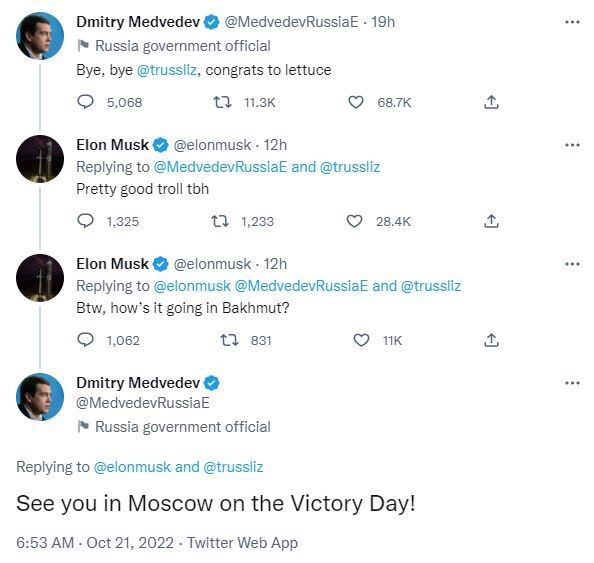
His latest intervention involves a somewhat bizarre Twitter exchange with former Russian prime minister, senior Kremlin official, and prominent Putin ally Dmitry Medvedev.
Musk had complimented Mr Medvedev on a “pretty good troll” after he ridiculed outgoing prime minister Liz Truss.
He then asked the deputy chairman of the Security Council of Russia about it the current situation in Bakhmut, which has faced intense Russian shelling over recent days.
Mr Medvedev concluded (for now at least) the seemingly friendly discussion by suggesting he would see Musk “in Moscow on the Victory Day”.
Ukraine’s foreign minister says he has spoken with Israeli Prime Minister Binyamin Netanyahu about the harm inflicted by “Russian missiles and Iranian-made drones.”
Ukrainian and Israeli officials met to discuss Kyiv’s request for Israeli air defence support, just days after Russia purportedly used Iranian “kamikaze” drones in a new wave of air strikes on war-torn Ukraine.
Ukrainian foreign minister Dmytro Kulebasaid on Thursday he had spoken on the phone to Israeli Prime Minister Yair Lapid and “discussed in detail” the provision of air and missile defense systems and technology.
“I informed him [about the] unspeakable suffering, loss of life, and destruction caused by Russian missiles and Iranian-made drones,” he tweeted.
I spoke to Israeli Prime Minister @YairLapid and informed him on unspeakable suffering, loss of life, and destruction caused by Russian missiles and Iranian-made drones. We discussed in detail Ukraine’s request for Israel to provide air and missile defense systems and technology.
Lapid’s office said in a statement on Thursday that the Israeli prime minister had expressed “deep concern” over the military ties between Russia and arch-foe Iran.
Ukraine this week accused Russia of using four Iranian-made drones to bomb Kyiv and said its air defences have shot down 223 Iranian drones since mid-September.
The Kremlin said it had no knowledge of its army using Iranian drones in Ukraine and Tehran said the claims that it is providing Russia with weapons are “baseless”.
European Union countries, however, said they had found evidence supporting Kyiv’s claim and on Thursday adopted sanctions on Iran over its provision of drones to Russia.
The phone call between Kuleba and Lapid came two days after Ukraine stepped up appeals for Israeli help with air defence systems to intercept Iranian drones and ballistic missiles.
In the request, Ukraine also demanded that Israel train its forces in operating the systems, Axios reported.
Israel has walked a delicate diplomatic line since the start of the Russian invasion in late February, seeking to preserve ties with Moscow.
While condemning Russia’s move, it has limited its assistance to humanitarian relief, citing a desire to ensure the well-being of Russia’s Jews and to continue cooperation with Moscow over war-ravaged neighbour Syria.
On Wednesday, Israeli defence minister Benny Gantz reiterated Tel Aviv’s position that it would not sell weapon systems to Ukraine.
According to a statement by his office, however, Gantz had asked Ukraine “to share information about their needs for air defence alerts”.
Israel would be able to “assist in the development of a life-saving civilian early-warning system”, the statement said. Ukraine’s ambassador had asked for systems that would shoot down the drones instead.
Russia warned on Monday that an Israeli move to bolster Kyiv’s forces wouldseverely damage relations between Moscow and Tel Aviv.
Ukraine’s national energy company has urged citizens to “charge everything” by 07:00 (04:00 GMT) Thursday because of expected power cuts caused by Russian missile strikes.
Energy plants were hit by Russian missiles again on Wednesday – part of a wave of such strikes since 10 October.
Outages of up to four hours at a time will affect the whole country on Thursday, grid operator Ukrenergo said.
It comes as Russia declares martial law in areas of Ukraine it has annexed.
Heightened security measures have also come into force in Russia – mostly areas along the Ukraine border.
In preparation for the blackouts, Ukrenergo has appealed to Ukrainians to stock up with water and ensure they have “warm socks and blankets and hugs for family and friends”.
Phones, power banks, torches and batteries need to be charged, it urged.
As much as 40% of Ukraine’s energy infrastructure has been seriously damaged, according to Oleksandr Kharchenko, an adviser to the energy minister.
President Volodymyr Zelensky said three energy facilities had been destroyed on Wednesday and energy companies were preparing for “all possible scenarios” for winter. He was due to address a summit of EU leaders, who are trying to reach an agreement on bringing down gas prices.
Serious damage was reported to power facilities in Kryvyi Rih in central Ukraine and Burshtyn in the west. Ukrenergo said there had been more attacks in the past 10 days than in the whole preceding period since Russia’s invasion on 24 February.
Ukrenergo said it would use “controlled, calculated consumption restrictions” and warned power cuts may occur throughout Ukraine from 07:00 to 22:00. It advised citizens to check the regional network operators’ websites to see how it would apply to them.
Sporadic power cuts have already affected parts of the capital Kyiv and many of Ukraine’s regions. Russian missiles have damaged infrastructure all across Ukraine, including cities like Lviv in the west – a long way from the fighting.
Authorities have urged Ukrainians to reduce their power use in the evenings.
“We do not rule out that with the onset of cold weather, we will ask for your help more often,” Ukrenergo said.
Western leaders have condemned the infrastructure strikes.
“Russia’s attacks against civilian infrastructure, especially electricity, are war crimes,” tweeted EU Commission President Ursula von der Leyen.
“Cutting off men, women, children of water, electricity and heating with winter coming – these are acts of pure terror.”
Martial law
Russia is now implementing martial law in areas of Ukraine that it recently annexed – Kherson and Zaporizhzhia in the south and Donetsk and Luhansk in the east.
The Kremlin claims those regions are now part of Russia – a claim internationally rejected and condemned.
Martial law means tighter security checks and restrictions on movement in the areas affected. But the war has already curbed the rights and freedoms of Ukrainians under occupation.
Additionally, while it was decreed by President Vladimir Putin on Wednesday – the Russian military does not fully control those four regions, so what martial law will mean in reality is yet to be seen.
Heightened security measures are also coming into force across Russia – there will be new restrictions on movement in regions along the Ukrainian border, notably Bryansk, Belgorod and Krasnodar. The same applies to Crimea, which was annexed by Russia in 2014.
US President Joe Biden said Vladimir Putin was running out of options in Ukraine.
“It seems his only tool available to him is to brutalise individual citizens in Ukraine to try to intimidate them into capitulating,” he said.
Russia is moving tens of thousands of civilians and Russian-appointed officials out of the Kherson region, as advancing Ukrainian troops close in on the regional capital. Russia says people on the west bank of the River Dnieper (called Dnipro by Ukrainians) are especially at risk from Ukrainian shelling.
The region’s Moscow-installed head, Vladimir Saldo, said all Russian-appointed departments and ministries would cross the river, along with some 50-60,000 civilians.
But Ukrainian officials have questioned whether large numbers of people are actually being evacuated, suggesting that images of a crowd assembled by the river are largely for show.
Ukraine has called on residents to ignore the Russian move.
The transfer or deportation of civilians by an occupying power from occupied territory is considered a war crime.
The commander of Russian forces in Ukraine says the situation in the southern city of Kherson is “difficult” and residents are to be evacuated.
General Sergei Surovikin said Ukrainian troops using Himars rockets were hitting the city’s infrastructure and housing. He spoke on Russian state TV.
“The Russian army will above all ensure the safe evacuation of the population” of Kherson, he said.
His rare admission of big problems was echoed by a top local official.
Russian-installed regional official Kirill Stremousov warned Kherson residents that “in the very near future” Ukrainian troops would launch an assault on the city.
“Please take my words seriously – I’m talking about evacuating as quickly as possible,” he said on the Telegram messaging service. He added that people on the River Dnieper’s west bank (called Dnipro in Ukraine) were most at risk.
This was confirmed by regional governor Vladimir Saldo, who was also appointed by Russia. Four towns on or near the west bank were to be evacuated in what he called an “organised, gradual displacement” of civilians.
Kherson was the first big city to fall to the Russians, back in February.
Ukrainian forces have been steadily retaking nearby territory for the past few weeks. They have pushed as far as 30km (19 miles) south along the Dnieper, threatening to trap Russian troops.
“As a whole the situation in the special military operation zone can be described as tense,” Gen Surovikin said.
Kherson is the only Ukrainian regional capital to have been captured by the Russians in their invasion. The Kremlin now claims Kherson and three other Ukrainian regions to be part of Russia – a claim rejected internationally.
Infrastructure damage
Gen Surovikin, who has a reputation for harsh methods, said Ukraine’s volley of rockets had damaged Kherson’s Antonivsky Bridge and the Kakhovka hydroelectric dam, blocking traffic along those key arteries.
That had created supply problems for essential services, namely food deliveries, water and electricity, he said.
Vladimir Saldo accused Ukrainian forces of building up for a large-scale offensive and planning to destroy the Kakhovka dam, flooding the area.
There is no evidence of that and the BBC has been unable to verify the level of hardship in Kherson.
The general also said the Ukrainians were launching constant attacks across a wide front – in the areas of Kupiansk and Lyman in the east and, in the south, on the Mykolaiv-Krivyi Rih front.
Mr Saldo said on Wednesday that the evacuation would involve some 50-60,000 civilians over a six-day period, Tass news agency reported. If Russia forces people to leave their homes it could constitute a war crime, under the UN’s definition.
Image source, AFP/ Image caption, Kherson is a major economic hub, with port facilities and various industries
In March, Ukraine said Russia illegally deported thousands of people to its territory from Mariupol, a city devastated by Russian shelling.
Under its definition of war crimes the UN includes: “The transfer, directly or indirectly, by the occupying power of parts of its own civilian population into the territory it occupies, or the deportation or transfer of all or parts of the population of the occupied territory”.
The Russian State Duma – the lower house of parliament – discussed plans on Tuesday for transferring Kherson residents to Russia. Deputy Prime Minister Marat Khusnullin said they would be offered new homes anywhere in Russia, and the government would provide financial assistance.
According to Russia’s Vremya TV news, each family member will get 100,000 roubles (£1,433; $1,626) to replace household goods they were forced to abandon.
Kherson’s pre-war population was nearly 300,000, but Ukrainian officials estimate that about half that number have fled the city.
Gen Surovikin is the new commander of Russia’s war in Ukraine – what the Kremlin calls a “special military operation”.
He is nicknamed General Armageddon and is a veteran of Russia’s wars. In Syria he oversaw Russian bombing raids that killed many civilians. He has also commanded troops accused of human rights abuses in Chechnya.
Gen Surovikin was speaking on a day of further Russian drone and missile strikes on Kyiv and other Ukrainian cities, many of them targeting Ukraine’s electricity supply. Parts of Kyiv now have no power or running water.
Ukraine’s President Volodymyr Zelensky said that 30% of his country’s power stations had been destroyed in the past eight days.
Tens of thousands of civilians and Russian-appointed officials are being moved out of Ukraine’s southern Kherson region ahead of a Ukrainian offensive, says the Russia-installed local leader.
Vladimir Saldo said all Russian-appointed departments and ministries would cross the Dnieper river.
Some 50-60,000 civilians would also leave in an “organised, gradual displacement”, he said earlier.
Ukraine has called on residents to ignore the Russian move.
The head of Kherson’s regional administration said Russia wanted to take civilians hostage and use them as human shields. The transfer or deportation of civilians by an occupying power from occupied territory is considered a war crime.
In a separate development, Russia’s Vladimir Putin said he had signed a decree imposing martial law on four Ukrainian regions, including Kherson, which Moscow annexed last month in a move rejected as illegal by the international community.
He told Russia’s Security Council that it would give regional leaders additional powers to maintain social order and safeguard important facilities.
Russian TV footage on Wednesday showed a number of people gathering near the west bank of the Dnieper. As they queued for boats, it was not clear how many were leaving.
One Kherson resident told the BBC’s World Service that she was not going anywhere until Kherson was liberated by Ukrainian troops: “People are not panicking, nobody wants to be evacuated.”
She said that Russian soldiers were now worried how they could survive in the city. “There are plenty of them here; they are dressed as civilians. We can see them – they are different to Kherson people. They walk in groups, their hair is cut short, they are dressed mainly in black.”
Ukrainian presidential adviser Mykhailo Podolyak pointed out it was less than a month since Russia had held a ceremony to annex Kherson: “Reality can hurt if you live in a fictional fantasy world.”
Late on Monday, Russia’s new military commander in Ukraine, Gen Sergei Surovikin, had described the situation in Kherson city, the regional capital, as difficult.
A Russian-installed official, Kirill Stremousov, warned Kherson residents that Ukrainian forces would launch an assault on the city “in the very near future”. “No-one is going to retreat, but we also want to save your life. Please move as quickly as possible to the left bank,” he added.
IMAGE SOURCE,GETTY IMAGES
Image caption, Ukraine said recently it had recaptured more than 400 sq km of territory in less than a week
Mr Saldo, who was appointed governor of the region by Moscow, told Russian TV that no-one was about to surrender, but it was “undesirable” for residents to remain in a city facing military action. “In the past two days, more than 5,000 people have left Kherson,” he was quoted as saying.
The head of Ukraine’s presidential office said Moscow was trying to intimidate residents with fake news that Ukraine’s military was shelling their city. “It is a fairly primitive tactic, taking into account that the AFU [Armed Forces of Ukraine] do not shell cities,” Andriy Yermak wrote on Telegram.
Earlier this month, Kherson’s exiled deputy mayor said only 100,000 residents remained in Kherson city of the pre-war population of 320,000, with many fleeing Russia’s occupation.
The mayor of Russian-occupied Melitopol, Ivan Fedorov, warned that Kherson’s civilians were facing enforced deportation and being deprived of their homes so that Russia could populate the city with “soldiers and traitors”. Last month, Ukraine said 2.5 million people had been forcibly deported from Ukraine to Russia.
The Russian-appointed governor accused Ukraine of building up for a large-scale offensive and planning to destroy the Kakhovka dam on the River Dnieper, flooding the area.
Kherson was the first major city to fall to Russian forces when they invaded Ukraine in February. However, in just a few weeks, the Ukrainian military has recaptured territory in the north of the region and pushed as far as 30km (19 miles) south along the Dnieper, threatening to trap Russian troops.
Ukrainian officials said last week that 400 sq km (155 sq miles) of territory had been regained in less than a week. Russian forces have also been hit by damage to the bridge linking annexed Crimea to Russia. An explosion earlier this month has severely affected Russia’s ability to resupply its troops.
Estonian lawmakers blasted Moscow’s illegal acquisition of Ukrainian territory and labeled Russia a “terrorist regime.”
The statement received 88 votes from the 101-member legislature, with 10 MPs missing and three abstaining.
The statement said the Estonian parliament “declares Russia a terrorist regime and the Russian Federation a country that supports terrorism.
“(President Vladimir) Putin’s regime, with its threats of a nuclear attack, has turned Russia into the biggest danger to peace both in Europe and in the whole world,” it said.
A UN investigation determined that Russian forces were responsible for the “vast majority” of human rights breaches in Ukraine during the early weeks of the conflict, including potential war crimes against civilians.
The Independent International Commission of Inquiry on Ukraine found that Russian forces had indiscriminately shelled areas they were trying to capture and “attacked civilians trying to flee”.
It also found abuses committed by Ukraine, including two cases of people who were out of action who were shot, wounded, or tortured.
“Russian armed forces are responsible for the vast majority of the violations identified, including war crimes,” the Council said in the report.
“Ukrainian forces have also committed international humanitarian law violations in some cases, including two incidents that qualify as war crimes.”