A man has been sentenced to 21 years in prison for shooting and injuring Lady Gaga’s dog walker during a dog theft.
James Howard Jackson entered a no contest plea, which is similar to a guilty plea, to attempted murder.
According to the court, Ryan Fischer was walking the singer’s three French bulldogs in Hollywood in February 2021 when Jackson shot him in the chest.
Mr Fischer stated that following the attack, he had to have a portion of his lung removed.
According to CBS News, he attended Monday’s court hearing and stated that the shooting changed his life forever.
The Los Angeles County District Attorney’s Office called the attack “a cold-hearted violent act”.
Several other charges Jackson faced were dismissed as part of a plea deal.
Jackson and one of four other accomplices took two of the dogs, Koji and Gustav, following the shooting.
A third bulldog, Miss Asia, ran away and was later found by police.
At the time, police said that they thought the dogs were targeted because of their breed – and not because of who their owner was.
The two stolen dogs were returned unharmed two days later after Gaga offered a $500,000 (£359,000) reward.
One accomplice, Harold White, pleaded guilty on Monday to breaking the law that prevents former convicts from possessing firearms. He is due to be sentenced next year.
White’s son, Jaylin Keyshawn White, and Lafayette Shon Whaley both pleaded guilty last year to second-degree robbery and were sentenced to four and six years in prison respectively.
The person who returned the dogs, Jennifer McBride, was later charged with being an accessory to attempted murder and her case remains pending, according to the District Attorney’s Office.
Jackson’s day in court was delayed after he was wrongly released from prison in April in what the US Marshals Service described at the time as a “clerical error”. He was re-arrested the same month.
The Reserve Bank of Australia (RBA) has raised interest rates to a decade high, putting mortgage holders under even more strain as it seeks to calm soaring prices.
The RBA raised the benchmark rate, which determines how much commercial banks charge for loans, by a quarter percentage point to 3.1 percent on Tuesday.
The increase, combined with six previous increases since May, adds more than $1,000 Australian dollars ($672) to the monthly cost of an average mortgage.
The move follows a smaller-than-expected quarter-percentage-point increase in October, which deviated from counterparts such as the United States Federal Reserve’s aggressive stance.
According to RBA Governor Philip Lowe, inflation remains too high at 6.9 percent, far above the target range of 2-3 percent.
“Global factors explain much of this high inflation, but strong domestic demand relative to the ability of the economy to meet that demand is also playing a role,” Lowe said in a statement.
Lowe said he expected inflation to rise to 8 percent during the final quarter before easing next year.
“The board expects to increase interest rates further over the period ahead, but it is not on a pre-set course,” he said. “It is closely monitoring the global economy, household spending and wage and price-setting behaviour.”
He added that the central bank remains “resolute in its determination to return inflation to target” and will do “what is necessary to achieve that”.
The RBA noted that the labour market remains tight, with unemployment at 3.4 percent in October — the lowest since 1974 — and many firms struggling to hire workers.
Still, there are signs the rate hikes are already cooling the economy.
Australia’s inflation slowed to 6.9 percent in October, while home prices fell for a seventh straight month in November, a drag on household wealth that could curb consumer confidence and consumption over the months ahead.
BBC Persian ha reported that one of the six people sentenced to death in connection with the current anti-government protests in Iran has been subjected to mock executions three times in prison.
Last month, a Revolutionary Court in Tehran found Sahand Noormohammadzadeh, 26, guilty of “enmity against God.”
He was accused of setting fire to a bin and obstructing traffic, both of which he denied.
According to the source, Noormohammadzadeh was “asked to go on a chair blindfolded to be hanged” prior to his trial.
Cruel or degrading treatment of people in custody is prohibited under international human rights law.
Iran’s judiciary has announced that six defendants have so far been sentenced to death for either “enmity against God” or “corruption on earth” in connection to the protests.
It has not disclosed their identities, but Sahand Noormohammadzadeh’s lawyer confirmed in a video statement on Saturday that he was one of them.
The judiciary’s Mizan news agency reported last month that Noormohammadzadeh was on trial before a Revolutionary Court for “[acts of] vandalism and arson of public property with the aim of causing disruption to the country’s peace and order and confronting the Islamic government”.
Prosecutors accused him of “participating in riots” in Tehran on 23 September and blocking a highway by “tearing down the highway railings and setting fire to rubbish cans and tires”, according to Mizan.
They showed the court a video showing a man wearing a mask, who they alleged was Noormohammadzadeh, placing the railing between two lanes. The video also shows the same man pushing a burning rubbish bin on to the road.
Noormohammadzadeh maintained his innocence in court, while his lawyer said there was no evidence that his client was the masked man, Mizan reported.
It is not clear whether prosecutors submitted to the court a letter of apology signed by Noormohammadzadeh following his arrest.
BBC Persian’s source said he was told falsely by interrogatorsthat his mother had suffered a heart attack and that he would need to sign the letter if he wanted to talk to her before she died.
A lawyer in Tehran said such a letter was considered an admission of guilt.
Following Noormohammadzadeh’s conviction, Amnesty International expressed grave concern that he and the other defendants sentenced to death had been subjected to “sham” trials.
The death sentences handed to Noormohammadzadeh and the five other defendants can be appealed against, but judiciary chief Gholamhossein Mohseni Ejei said on Monday that the executions would happen soon.
Iranian authorities have cracked down violently on the protests that erupted after the death in custody of Mahsa Amini, a 22-year-old woman who was detained by morality police in mid-September for allegedly wearing her hijab, or headscarf, “improperly”.
More than 470 protesters, including 64 children, have been killed, while 18,200 others have been arrested, according to the Human Rights Activists’ News Agency (HRANA). It has also reported the deaths of 61 security personnel.
Many of those arrested have allegedly been subjected to torture and other ill-treatment in custody.
Arshia Emamgholizadeh, a 16-year-old boy, took his own life last week, six days after he was released from prison.
He was arrested in the north-western city of Tabriz and accused of “turban tossing” – a new trend among young protesters that involves sneaking up behind a Shia Muslim cleric on a street and knocking his turban off his head before running off.
“Arshia said he was given pills in prison and was beaten,” a source close to the family told BBC Persian. It is not known what the pills were.
Arshia did not leave a note and a video showed his mother crying over his grave and saying: “You were not suicidal, what did they do to you in prison?”
Police in Spain arrested 30 people on suspicion of smuggling cannabis disguised as aid for Ukraine.
Those detained in Andalusia included Ukrainians, Spaniards, Germans, and Moroccans.
According to police, the drugs originated in the southern region, were packaged in cardboard boxes, and were transported in convoys across several countries.
The seizure comes just a month after Spanish authorities announced the largest cannabis haul ever discovered in the country.
The Guardia Civil police force said in a statement on Monday that they became suspicious after identifying a group of Ukrainians on the Costa del Sol collecting cannabis and storing it in a flat in Mijas, near Malaga.
The drugs were packed in vacuum bags and placed in cardboard boxes on vans registered in Ukraine, which proceeded to travel “as a solidarity convoy so they could pass under the radar of police and border controls”, it said.
In raids in Malaga province and in the southern cities of Granada, Cordoba and Seville, police seized nearly €800,000 (£690,000; $847,000), six guns and 2,500 cannabis plants.
Thousands of people across Europe have been involved in efforts to alleviate the suffering of Ukrainian civilians since Russia launched an invasion of its neighbour on 24 February.
Glencore has agreed to pay $180 million to the Democratic Republic of the Congo (DRC) to settle corruption allegations, the latest payment in a string of graft cases it has faced around the world.
The Anglo-Swiss mining company announced on Monday that the agreement with DRC covers “all present and future claims arising from any alleged acts of corruption” committed by the Glencore Group between 2007 and 2018.
It comes months after Glencore announced settlements with authorities in the United States, the United Kingdom, and Brazil totaling $1.5 billion to resolve all allegations of corruption and market manipulation.
The US Justice Department said in May that Glencorepaid more than $100m to intermediaries over 10 years, “intending that a significant portion of these payments would be used to pay bribes to officials” in Nigeria, Cameroon, Ivory Coast, Equatorial Guinea, Brazil, Venezuela and Congo.
In DRC, Glencore acknowledged that it paid $27.5m to third parties with the goal that a portion be used to bribe Congolese officials to secure improper business advantages, according to the Justice Department.
“Glencore is a long-standing investor in the DRC and is pleased to have reached this Agreement to address the consequences of its past conduct,” Chairman Kalidas Madhavpeddi said in a statement on Monday.
The company “looks forward to continuing to work with the DRC authorities and other stakeholders to facilitate good governance and ethical business practices in the country,” he added.
Last month, a British court ordered Glencore to pay more than 280 million pounds ($341m) for using bribes to bolster its oil profits in five African countries.
It pleaded guilty in June after an investigation launched by the United Kingdom’s Serious Fraud Office in 2019 found it paid bribes worth a combined $29m to gain access to oil in Cameroon, Equatorial Guinea, Ivory Coast, Nigeria and South Sudan.
A body-cam footage captures Mary O’Connor and her husband being stopped last month near their gated community by a Pinellas County sheriff’s deputy.
“I’m hoping you’ll just let us go tonight,” she said as she identified herself, flashed her badge, and told the deputy.
On Monday, Tampa’s mayor stated that the police chief violated ethics rules.
“Tampa Mayor Jane Castor has requested and received the resignation of Police Chief Mary O’Connor,” the mayor said in a statement released by her office, adding that she violated policies on “standard of conduct” and “abuse of position or identification”.
Video released last week shows the 12 November incident in a suburb outside of Tampa, Florida’s third largest city.
Mrs O’Connor explains that she’s going to pick up food, and that she doesn’t normally drive the car on public streets.
She then asks the deputy if his body-cam is on. When he says it is, she tells him, “I’m the police chief in Tampa.”
The deputy is heard telling her they have “a lot of problems with golf carts around here”. She is seen handing him her business card before being let go without a ticket.
In an apology last week, Mrs O’Connor said she understood how “this matter could be viewed as inappropriate, but that was certainly not my intent”.
Mayor Castor’s statement on Monday said that the police chief was expected to lead by example and be held to “high standards for ethical and professional behaviour.”
“That clearly did not happen in this case,” she said calling it “unacceptable for any public employee, and especially the city’s top law enforcement leader, to ask for special treatment because of their position.”
Mrs O’Connor was sworn into office in March after serving for 22 years on the city’s police force.
In 1995 she was fired as an officer after being arrested for attacking deputies during a traffic stop before being re-hired the following year.
Qatari broadcaster says , the evidence presented refutes Israeli claims that the Palestinian journalist was killed in a crossfire.
The Al Jazeera Media Network has asked the International Criminal Court (ICC)to investigate and prosecute those responsible for the death of veteran Palestinian-American journalist Shireen Abu Akleh.
Abu Akleh, a 25-year Al Jazeera television correspondent, was killed by Israeli forces on May 11 while covering an Israeli military raid on a refugee camp in Jenin, in the northern occupied West Bank.
The 51-year-old Jerusalem native and US citizen was a well-known and respected journalist who gave Palestinians a voice through her coverage of Israel’s occupation.
‘A wider pattern’
The request includes a dossier on a comprehensive six-month investigation by Al Jazeera that gathers all available eyewitness evidence and video footage as well as new material on the killing of Abu Akleh.
The request submitted to the ICC is presented “in the context of a wider attack on Al Jazeera, and journalists in Palestine”, said Rodney Dixon KC, a lawyer for Al Jazeera, referring to incidents such as the bombing of the network’s Gaza office on May 15, 2021.
“It’s not a single incident, it’s a killing that is part of a wider pattern that the prosecution should be investigating to identify those who are responsible for the killing, and to bring charges against them,” he said.
“The focus is on Shireen, and this particular killing, this outrageous killing. But the evidence we submit looks at all of the acts against Al Jazeera because it has been targeted as an international media organisation.
“And the evidence shows that what the [Israeli] authorities are trying to do is to shut it up,” Dixon told Al Jazeera.
Al Jazeera hopes the ICC prosecutor “does actually start the investigation of this case” after the network’s request, Dixon said. The network’s request complements the complaint submitted to the ICC by Abu Akleh’s family in September, supported by the Palestinian Press Syndicate and the International Federation of Journalists.
A new documentary by Al Jazeera’s Fault Lines shows how Abu Akleh and other journalists, wearing protective helmets and bulletproof vests clearly marked with the word “PRESS”, were walking down a road in view of Israeli forces when they came under fire.
Abu Akleh was shot in the head as she tried to shield herself by a carob tree. Al Jazeera producer Ali al-Samoudi was also shot in the shoulder.
The new evidence submitted by Al Jazeera shows “Shireen and her colleagues were directly fired at by the Israeli Occupation Forces (IOF)”, Al Jazeera Media Network said in a statement on Tuesday.
The statement added the evidence overturns claims by Israeli authorities that Shireenwas killed in crossfire and that it “confirms, without any doubt, that there was no firing in the area where Shireen was, other than the IOF shooting directly at her”.
“The evidence shows that this deliberate killing was part of a wider campaign to target and silence Al Jazeera,” the statement said.
Next steps
Lina Abu Akleh, who has campaigned for justice for her aunt through media work and meetings with lawmakers in the US, where her aunt was a citizen, hopes Al Jazeera’s request will push the ICC to launch an independent investigation.
Walid al-Omari, the Al Jazeera bureau chief in Jerusalem and a friend and colleague of Abu Akleh said that it is critical to keep the case alive in public opinion. “We don’t think Israel should escape from accountability.”
Once the ICC has reviewed the evidence it will decide whether it will investigate Abu Akleh’s killing as part of ongoing investigations.
In 2021, the ICC decided it has jurisdiction over the situation in the occupied Palestinian territory. Al Jazeera’s submission requests that the killing of Abu Akleh become part of this wider investigation.
“We’re making a request for an investigation that leads to charges being brought and those responsible being prosecuted,” said Dixon.
Investigations carried out by the United Nations, Palestinian and Israeli human rights organisations, and international news outlets concluded that Abu Akleh was killed by an Israeli soldier.
The Abu Akleh family has called for a “thorough, transparent investigation” by the US FBI and Department of State to reveal the chain of command that led to the death of a US citizen.
“In short, we would like [US President] Biden to do in Shireen’s case what his and previous US administrationshave failed to do when other American citizens were killed by Israel: Hold the killers accountable,” Lina Abu Akleh wrote in Al Jazeera in July.
In November the US announced an FBI probe into the killing of Abu Akleh, news welcomed by her family.
But, Dixon cautioned, this probe should not be a reason for the ICC not to act.
“They can they can work together with … the FBI, so that this case doesn’t fall between the cracks, and that those responsible are identified and put on trial.”
Debunking shifting narratives
The Fault Lines documentary also looks closely at Israel’s shifting narratives.
Israel initially falsely blamed armed Palestinians for Abu Akleh’s death, but in September said there was a “high probability” an Israeli soldier “accidentally hit” the journalist but that it would not launch a criminal investigation.
Hagai El-Ad, director of Israeli human rights organisation B’Tselem, which swiftly debunked the false claim by Israel that a Palestinian gunman was responsible for Abu Akleh’s death, told Fault Lines: “They’re also very used to getting away with lying about killings of Palestinians both in the public arena and in the legal arena.”
“The reason why Al Jazeera made this request is because the Israeli authorities have done nothing to investigate the case. In fact, they’ve said that they will not investigate, that there’s no suspicion of a crime,” said Dixon.
Al Jazeera Media Network calls the killing a “blatant murder” and a “heinous crime”.
“Al Jazeera reiterates its commitment to achieving justice for Shireen and to exploring all avenues to ensure that the perpetrators are held accountable and brought to justice,” said the Network.
The FBI is investigating after two power plants in North Carolina were damaged by gunfire, leaving tens of thousands without power.
Since the attack on Saturday evening, no motive or suspect has been identified, but police have stated that it was deliberate.
According to officials, 35,000 people in Moore County are without power, and the damage could take several days to repair.
On Tuesday, a state of emergency has been declared, and schools will be closed for the second day in a row.
The declaration of emergency includes a countywide overnight curfew that will expire on Friday afternoon.
“This kind of attack raises a whole new level of threat,” North Carolina Governor Roy Cooper said in a briefing on Monday, adding that protecting critical infrastructure must be a “top priority”.
The two substations are located around five miles apart (8km), and in one case a gate was breached to access the facility.
“The person, or persons, who did this knew exactly what they were doing,” Sheriff Ronnie Fields said at a news conference on Sunday. “We don’t have a clue why [they targeted] Moore County.”
He said the FBI was working with local authorities to determine who was responsible, adding that someone pulled up and “opened fire on the substation, the same thing with the other one”.
“It wasn’t random,” he said.
It could take until Thursday to restore power, officials say, as the damage to the two substations is significant. Around 45,000 people were initially affected by the outage.
“We are looking at a pretty sophisticated repair with some fairly large equipment and so we do want citizens of the town to be prepared,” Jeff Brooks, a spokesman for the local energy company Duke Energy, said at the news conference.
IMAGE SOURCE,REUTERS Image caption, Apparent bullet holes were seen at the damaged substations following the attack on Saturday evening
A fire chief, Mike Cameron, said there were several road accidents when the power went out including a four-vehicle pile up. “The car wreck was totally because the stop lights were out,” he told the Charlotte Observer newspaper.
A major hospital switched to using generator power, while water and sewage services are also running on back-up generators.
Federal officials are concerned about copy cat attacks. In Washington, White House National Security Council spokesman John Kirby said they were carefully watching developments in the investigation.
Temperatures hit a low of 32F (0C) on Monday morning, and the county opened an emergency shelter at a sports complex for those in need.
Grocery stores in the region were open, and running on generators on Monday, according to the local newspaper The Pilot.
Some local restaurants were giving away perishable goods as their freezers stopped working, the paper reported.
It is unclear how long schools in the county will remain closed, with officials saying decisions on openings will be made on a day-by-day basis.
While a suspect has not been identified and the motive in unclear, Sheriff Fields addressed social media rumours that the vandalism was an attempt to stop a drag show from taking place.
“[Investigators] have not been able to tie anything back to the drag show,” he said. The event had been scheduled for 19:00 on Saturday, which is around the same time the power went out.
According to the rights group, it is publicising the attack to raise awareness of the dangers that civil society faces.
Amnesty International’s Canadian office says its English-language unit was the target of a “sophisticated” hacking attempt that it believes is associated with China.
The digital security breach was discovered on October 5 when suspicious activity was detected on Amnesty’s IT infrastructure, according to a statement issued by Amnesty International Canada on Monday.
It also stated that it took immediate action to protect the systems and investigate the source of the attack.
“As an organization advocating for human rights globally, we are very aware that we may be the target of state-sponsored attempts to disrupt or surveil our work. These will not intimidate us and the security and privacy of our activists, staff, donors, and stakeholders remain our utmost priority,” Ketty Nivyabandi, secretary general of Amnesty International Canada, said in a statement.
The preliminary results of the investigation indicated the breach was perpetrated using tools and techniques associated with specific advanced persistent threat groups (APTs), Amnesty said.
Forensic experts with international cybersecurity firm Secureworks later established that “a threat group sponsored or tasked by the Chinese state” was probably behind the attack.
The forensic audit’s conclusion is based “on the nature of the targeted information as well as the observed tools and behaviors, which are consistent with those associated with Chinese cyberespionage threat groups,” it added.
A report released in August by cybersecurity firm Recorded Future said a hacking group known as RedAlpha, suspected of acting on behalf of the Chinese government, had conducted a years-long espionage campaign against numerous governments, think tanks, news agencies and nongovernmental organisations (NGOs), including Amnesty.
Last year, the United States, United Kingdom and their allies accused actors affiliated with the Chinese government of a cyberattack on Microsoft Exchange, and blamed the Chinese government for a broad array of “malicious cyber activities”.
Amnesty said it had decided to speak publicly about the attack as a warning to other human rights defenders on the rising threat of digital security breaches to their work
“This case of cyberespionage speaks to the increasingly dangerous context which activists, journalists, and civil society alike must navigate today,” Nivyabandi said. “Our work to investigate and denounce these acts has never been more critical and relevant. We will continue to shine a light on human rights violations wherever they occur and to denounce the use of digital surveillance by governments to stifle human rights.”
Amnesty said no evidence had been found that any donor or membership data had been taken.
Thousandsgathered to protest the economy and rising inflation in the midst of a corruption scandal.
Thousands of people braved subzero temperatures in Mongolia’s capital to protest alleged corruption in the country’s coal industry and skyrocketing inflation, with some later attempting to storm the government house.
Protesters, many of them young people, gathered in Ulaanbaatar’s central Sukhbaatar Square on Monday in -21C (-6F) temperatures, demanding “justice” against corrupt officials and the dissolution of the country’s parliament.
“Help us our country is collapsing,” read one placard. Some herders also travelled to the city to take part in the rallies.
Protesters are frustrated with the country’s ailing economy, with inflation soaring to 15.2 percent in the wake of Russia’s invasion of Ukraine and closed borders affecting trade with neighbouring China.
People are “suffering incredibly economically,” Jana Zilkova, country director for the aid group Caritas Czech Republic in Ulaanbaatar, told Al Jazeera.
Whistleblower claims that a group of legislators with ties to the coal industry had stolen billions of dollars have added to the discontent.
“People are upset and angry over this case because they were promised the wealth of the country would be shared with them,” Zilkova added.
The police tried to break up the demonstration at 9pm local time (13:00 GMT) but some protesters tried to force their way intothe government building, knocking down barriers and breaking windows, according to local media reports. Police intervened and most protesters had left the square a couple of hours later.
Last month, Mongolia’s anti-corruption authority announced that more than 30 officials — including the chief executive of the state-owned coal mining company Erdenes Tavan Tolgoi — were under investigation for embezzlement.
The firm controls the Erdenes Tavan Tolgoi deposits, which contain 7.5 billion tonnes of coking coal — an essential ingredient in the steelmaking process and a key component of Mongolia’s state budget revenue. It is yet to comment on the allegations.
Protesters in #Mongolia are trying to storm the Government House. The road to the prime minister’s residence has already been blocked by police.
According to media reports, protests in the country erupted after reports that officials had stolen large quantities of coal. pic.twitter.com/SlzsVMh3wS
The implicated legislators are alleged to have leveraged their ownership of coal mines and companies that transport coal across the border into China to make illegal profits.
Mongolia sends 86 percent of its exports to China, with coal accounting for more than half the total. A quarter of the country’s gross domestic product (GDP) comes from mining.
Monday’s rally came a day after several hundred protesters gathered in the capital, according to the US embassy in Ulaanbaatar.
Protesters attempted to march on Ikh Tenger, the official residence of the President and Prime Minister, “where they were stopped by a police barricade,” the embassy said.
South Africa’s President Cyril Ramaphosa is fighting back after being politically harmed by allegations that he hid a large sum of foreign currency in a sofa on his game farm and then covered it up.
He has rallied his governing African National Congress (ANC) to back him in parliament, while his high-powered legal team is attempting to overturn a panel of legal experts’ damning findings against him in the biggest scandal to rock his presidency.
Former spy chief Arthur Fraser is Mr Ramaphosa’s accuser, and his allegations against the president appear to be straight out of a John le Carré novel – except that they are contained in statements he made to law-enforcement agencies and have been included in the panel’s report, which parliament will consider.
Mr Fraser alleged that a close aide of Mr Ramaphosa, Bejani Chauke, brought “large sums” of US dollars from Saudi Arabia, Egypt, Morocco, and Equatorial Guinea, and, adding to the intrigue, he alleged that the aide hid the money in a couch at his home in a plush suburb in South Africa’s main city Johannesburg, before taking the cash to Mr Ramaphosa’s game farm with his “full knowledge and acquiescence”.
But in a nightmare for the president, robbers, allegedly working in cahoots with one of his employees, stole what is “speculated” to be somewhere between $4m (£3.3m) and $8m.
That is small change compared to the spymaster’s other allegation – that a whopping $20m was “moved” to a South African citizen, whom he named, after he asked police to investigate the president.
While some would dismiss Mr Fraser’s claims as nothing more than a good bed-time read, they have given Mr Ramaphosa a huge political and legal headache, as about eight bodies – including the central bank – became involved in investigations.
Mr Ramaphosa has denied any wrongdoing, and the panel – led by a former chief justice – said it could not “verify” the allegations, while “the President has rightly criticised the evidence contained in Mr Fraser’s statements as full of hearsay”.
Mr Chauke had also denied the allegations.
What Mr Ramaphosa did admit was that $580,000 had been stolen from his farm in February 2020.
While Mr Fraser alleged that this was part of the cash previously stashed in Johannesburg, the president gave a completely different version of events – that his lodge manager had sold 20 buffaloes to a Sudanese businessman on Christmas Day 2019,and this was the money stolen.
But in a blow to Mr Ramaphosa, the panel said there was “substantial doubt” that this sale took place, noting that neither the lodge manager nor the Sudanese national had confirmed this is what happened.
“We think that the President has a case to answer on the origin of the foreign currency that was stolen, as well as the underlying transaction for it,” the panel added.
It also questioned whether only $580,000 was stolen, saying the information at its disposal suggested that an apprehended suspect had confessed to stealing $800,000, while an investigator, in an audio clip, mentioned an amount of “20 million”.
“Whether the investigator was referring to US$ or ZAR [South African rand] this amount is far more than $580,000 that was alleged to have been hidden inside the sofa [at the president’s farm],” the panel said.
IMAGE SOURCE,GETTY IMAGES Image caption, South Africa’s president is seeking re-election as the governing ANC’s leader later this month
The panel said that in another “troubling feature”, the theft was neither reported to local police as an “ordinary crime” nor to the Directorate for Priority Crime Investigation (DPCI), the police unit responsible for stamping out money-laundering and organised crime in South Africa.
The panel said this was despite the fact that, in its view, the president, as the farm’s owner, was required by the Prevention and Combating of Corrupt Activities Act to report it to the DPCI.
It believed there were grounds for an impeachment committee of parliament to investigate whether or not Mr Ramaphosa had committed a “serious” violation of the Act, which, the panel noted, imposes a fine or a prison sentence on anyone who fails to report a theft of more than 100,000 rand that they become aware of.
“A person who keeps huge sums of illicit money concealed at his or her house is unlikely to report the theft of such money for fear of being discovered that he or she is involved in money laundering,” the panel said.
“For this reason, the legislature considered it prudent to require any person who has knowledge of the commission of the offence of theft to report it,” the panel added.
The panel also concluded that the head of Mr Ramaphosa’s bodyguard unit, Gen Wally Rhoode, put together a team that “surreptitiously” investigated the theft, tracking down suspects in Cape Town and across the border in Namibia.
Despite this, no-one has been prosecuted or convicted of the theft, the panel’s report said, adding: “All of this occurs amid accusations of torture and bribery of the suspects to buy their silence.”
The panel also said that the information before it suggested that Mr Ramaphosa had sought the help of his Namibian counterpart, Hage Geingob to apprehend a suspect, and Gen Rhoode had travelled to Namibia as part of the investigation.
The panel said it had noted that Mr Geingob’s office issued a press statement earlier this year denying any wrongdoing on the Namibian leader’s part, but “significantly” it did not deny that President Ramaphosa had approached him.
“Nor does it deny that the request was acceded to,” the panel added.
IMAGE SOURCE,GETTY IMAGES Image caption, Mr Ramaphosa, 70, became president in 2018 on a promise to fight corruption
In another damaging blow to Mr Ramaphosa, the panel went on to say that the South African leader “abused his position as Head of State to have the matter investigated and seeking the assistance of the Namibian President to apprehend a suspect”.
As if that was not enough, the panel said it appeared that Mr Ramaphosa had “thrust himself into a situation where there was a conflict of interest between his official responsibilities as the Head of State and as businessperson involved in cattle and game farming” and he had “acted in a manner that was inconsistent with his office”.
As a result, the panel felt there were sufficient grounds for parliament to establish an impeachment committee – which would have the power to subpoena witnesses, and documents – to carry out further investigations, before deciding whether or not the president should be removed from office for endangering “our constitution and the rule of law”.
“The authority to impeach is deeply rooted in the principle of accountability,” it said.
However, Mr Ramaphosa has challenged the panel’s report in South Africa’s highest court, the Constitutional Court, with his lawyers describing it as “unlawful” and saying it should be annulled.
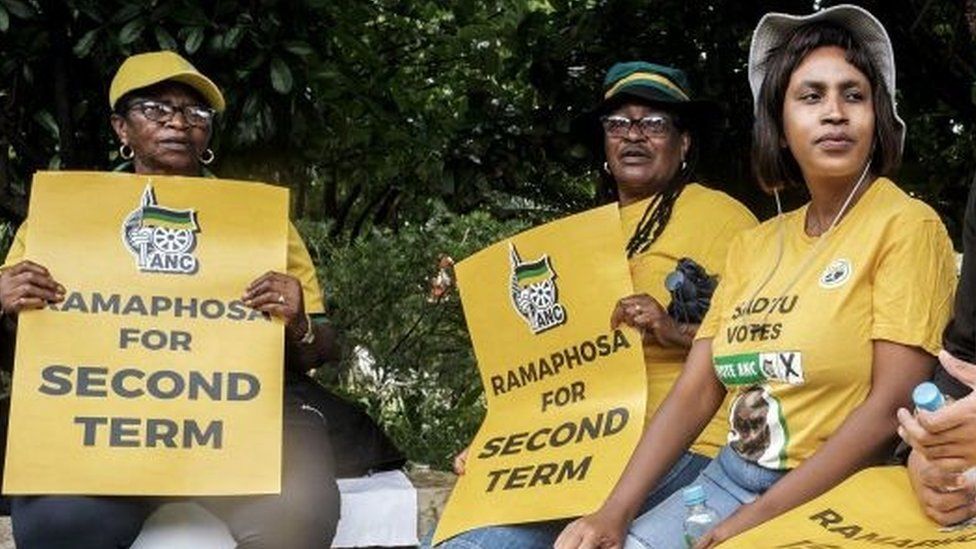
And in a sign of his strong position in the ANC as he seeks a second term as party leader later this month, its top leadership body has ordered its MPs, who form a majority in parliament, to vote against the report’s adoption because of the court case.
The law states that a president can be impeached only if his alleged violations of the constitution and law are “serious”.
Mr Ramaphosa’s many supporters will be hoping that South Africa’s most senior judges rule in his favour, and, at most, he is accused of minor transgressions.
As for the stolen money, its current whereabouts are unclear.
Namibian police reported – according to the panel – that they had identified bank accounts, lodges, houses and vehicles suspected to have been purchased with the proceeds of the crime, while Mr Fraser alleged that Gen Rhoode had “seized” cash in Namibia, although the president’s main bodyguard has “emphatically denied that he investigated the theft of money”.
Actress Kirstie Alley, best known for her role in the comedy series Cheers in the 1980s and 90s, has died of cancer at 71, according to a family statement.
“We are sad to inform you that our incredible, fierce and loving mother has passed away, ” her children wrote.
Alley won an Emmy award for her role as a pub manager on the popular TV series.
The native of Wichita, Kansas has also appeared in the films Star Trek II: The Wrath of Khan, Drop Dead Gorgeous, and the Look Who’s Talking series.
The family statement did not specify what cancer she had, but said it was “only recently discovered”.
“She was surrounded by her closest family and fought with great strength, leaving us with a certainty of her never-ending joy of living and whatever adventures lie ahead,” it continued.
“As iconic as she was on screen, she was an even more amazing mother and grandmother.”
They also praised her “zest and passion for life, her children, grandchildren and her many animals, not to mention her eternal joy of creating”.
John Travolta, who co-starred with her in the Look Who’s Talking series, took to Instagram to pay his respects
“Kirstie was one of the most special relationships I’ve ever had. I love you Kirstie,” he wrote alongside a photo of her.
“I know we will see each other again.”
IMAGE SOURCE,GETTY IMAGES Image caption, The cast of NBC’s Cheers
On Cheers, the beloved NBC sitcom about a bar in Boston, she played character Rebecca Howe opposite actor Ted Danson.
She appeared in 147 episodes after joining the show at the height of its popularity and continued to appear until its end in 1993.
In 1993, she won a second Emmy for best lead actress, this time for a CBS TV movie called David’s Mother.
The UK is “sleepwalking” into a food supply crisis, according to the National Farmers Union (NFU), and the government must intervene to assist farmers.
Tomato and other crop yields are expected to fall to record lows this year, with potential supply issues ahead, as seen with eggs.
Farmers were under severe strain as a result of rising fuel, fertiliser, and feed costs, according to the report.
The government, however, stated that the UK has a “highly resilient food supply chain.”
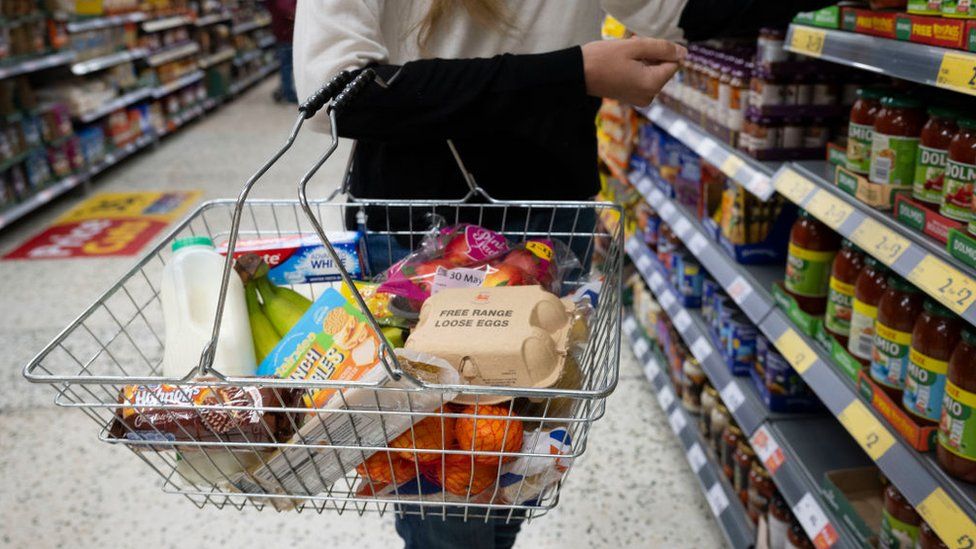
Some supermarkets are restricting egg sales after farmers reduced or ceased production due to rising costs, a situation exacerbated by the Avian flu outbreak.
The NFU, on the other hand, warned that food producers in other areas were now facing difficulties.
It said yields of energy-intensive crops like tomatoes, cucumbers and pears were likely to hit their lowest level this year since records began in 1985.
It also said milk prices were likely to fall below the cost of production, while beef farmers were considering reducing the number of cows they breed.
Rising costs were to blame, it said, with fertiliser prices for farmers more than tripling since 2019 and the cost of feed and diesel up by 75%.
Wholesale gas prices have also jumped more than six-fold in that time, and businesses importing food items from Europe have faced extra red tape and checks because of Brexit.
“Shoppers up and down the country have for decades had a guaranteed supply of high-quality affordable food produced to some of the highest animal welfare, environmental and food safety standards in the world,” said NFU president Minette Batters.
“But British food is under threat… at a time when global volatility is threatening the stability of the world’s food production, food security and energy security.”
“I fear the country is sleepwalking into further food supply crises, with the future of British fruit and vegetable supplies in trouble,” she added.
But Andrew Opie, director of food and sustainability at the British Retail Consortium, said that retailers were used to managing pressures across their supply chains.
“Supermarkets source, and will continue to source, the vast majority of their food from the UK and know they need to pay a sustainable price to farmers,” he said, although they are facing additional costs.
Costs challenge
The war in Ukraine and the coronavirus pandemic have driven up the price of food, energy and fuel over the last year, affecting consumers and businesses alike.
Grocery prices are rising at their fastest rate for 45 years, the latest official figures show, with the cost of staples such as milk, cheese and eggs surging.
Steve Dresser, the boss of Grocery Insight, told the BBC that the big challenge comes from consumer appetite.
“[The] customer’s focus is on saving money and local foods generally come at a higher prices, which can be difficult,” he said.
He said that rising prices meant farming “has taken a real battering this year”, and added that “food security is increasingly important, as we saw during lockdown restrictions and indeed the period afterwards that led to empty shelves.”
“It’s clear that we facing real challenges in our supply chain and as a nation, we should be looking to back our farming community, especially as Brexithas made things harder around importing foods.”
IMAGE SOURCE,GETTY IMAGES
The NFU also called on the government to do more to help farmers who have been pushed out of business since the pandemic hit.
It said there were currently 7,000 fewer registered agricultural businesses in the UK than in 2019.
The NFU wants the government investigate whether an “exceptional market conditions” declaration should be made under the 2020 Agriculture Act, given the disruption egg producers and UK consumers are facing.
This would enable the Department for Environment, Food and Rural Affairs (Defra) to provide support to egg producers whose livelihoods are under threat.
It also wants ministers to lift a cap on seasonal overseas workers and establish a new “food security” target, which would include an obligation to monitor and report on domestic food production levels.
A Defra spokesman said: “Our high degree of food security is built on supply from diverse sources; strong domestic production as well as imports through stable trade routes.”
He added that the government is in touch regularly with farmers and that the food and farming minister will meet with businesses in the egg industryon 6 December.
Meta has threatened to take down news content from Facebook in the United States.
It opposes a new law that would give news organisations more negotiating power over fees for content shared on Facebook.
Last year, a similar law in Australia caused news on Facebook to be temporarily suspended.
Meta claims that their platform does, in fact, increase traffic to struggling news outlets.
It says publishers put their content on Facebook because “it benefits their bottom line.”
The legislation, known as the Journalism Competition and Preservation Act (JCPA) was introduced in Congress by Minnesota Senator Amy Klobuchar and has bipartisan support.
Media companies argue that Meta generates huge sums of money from news articles shared on the platform.
Local news in particular struggled during the pandemic, as Meta made huge profits.
However Meta argues that this narrative is wrong. Instead, it says, Meta drives traffic to news sources.
Meta spokesperson Andy Stone said: “If Congress passes an ill-considered journalism bill as part of national security legislation, we will be forced to consider removing news from our platform altogether”.
Meta also argues that sharing news on Facebook accounts for only a fraction of its revenue.
A similar Australian law, which took effect in March 2021, led to a brief shutdown of Facebook news feeds in the country.
The company quickly reversed the decision after wide-ranging criticism – brokering a deal with the Australian government.
In a statement about Australia’s proposed law last year, a spokesperson for Meta said, “for Facebook, the business gain from news is minimal. News makes up less than 4% of the content people see in their News Feed.”
The US legislation is part of a larger set of laws aimed at tackling the dominance of Big Tech.
Supporters of the JCPA say social media will become America’s “de facto local newspapers” if the act doesn’t pass.
Matt Stoller, Director of Research at the American Economic Liberties Project, said media outlets were being “eaten alive” by Meta.
Jiang, who took power following the 1989 Tiananmen Square protest crackdown, will be remembered for guiding the country through a decade of burgeoning economic growth and prosperity.
He oversaw significant events such as China’s admission to the World Trade Organization and the British handover of Hong Kong to the Chinese.
According to the Chinese Communist Party, he died last Wednesday of leukaemia and multiple organ failures. He was 96.
President Xi Jinping delivered the eulogy in a near hour-long ceremony in the Great Hall of the People, where he “Comrade Jiang’s” decisive leadership.
“He had the extraordinary courage to make bold decisions and the great courage to carry out theoretical innovation at critical moments,” he told a packed hall of dignitaries in black suits.
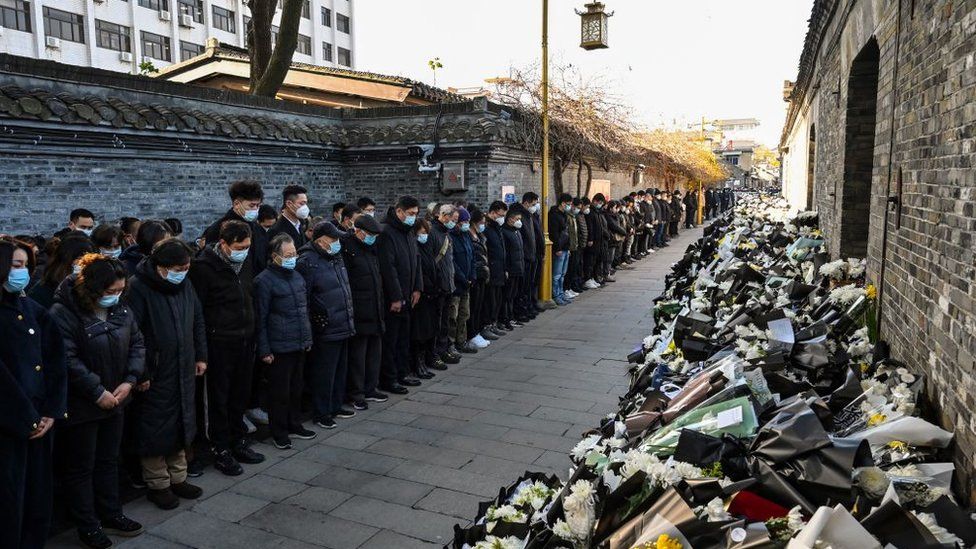
IMAGE SOURCE,GETTY IMAGES Image caption, Mourners observed three minutes of silence outside Jiang’s former home in Yangzhou, in Jiangsu province
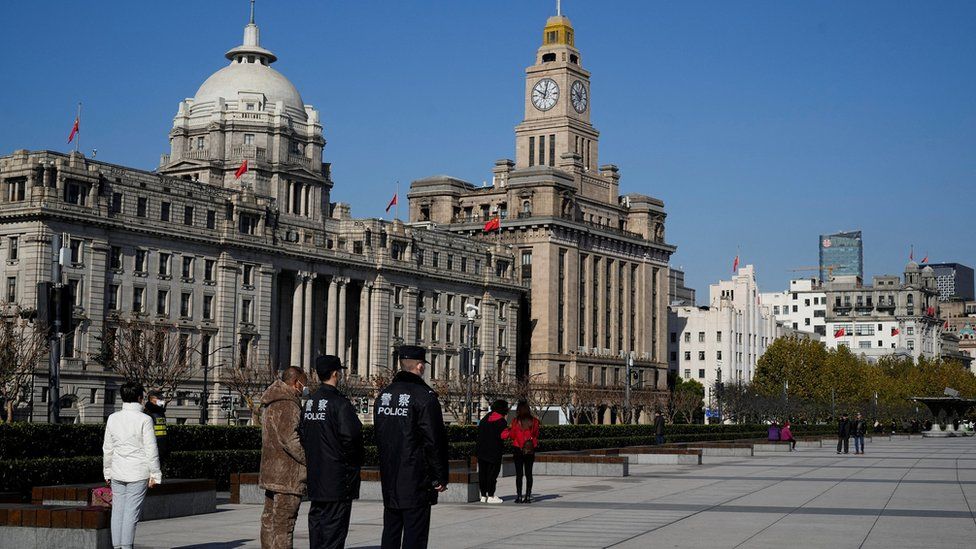
IMAGE SOURCE,REUTERS Image caption, Some people on Shanghai’s streets also observed the silence. However observers said that life largely went on as normal
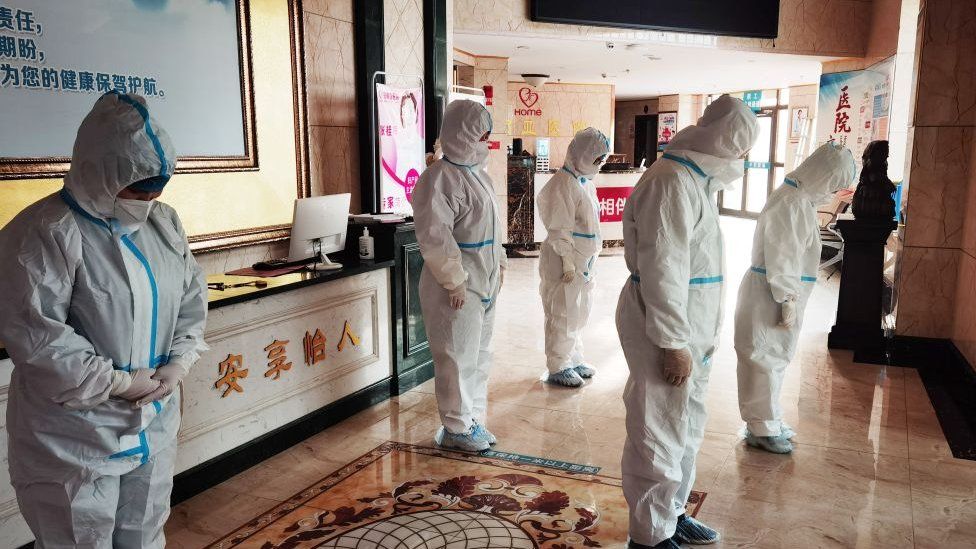
IMAGE SOURCE,GETTY IMAGES Image caption, Covid testing workers held a silence in Bazhou in China’s western Xinjiang region
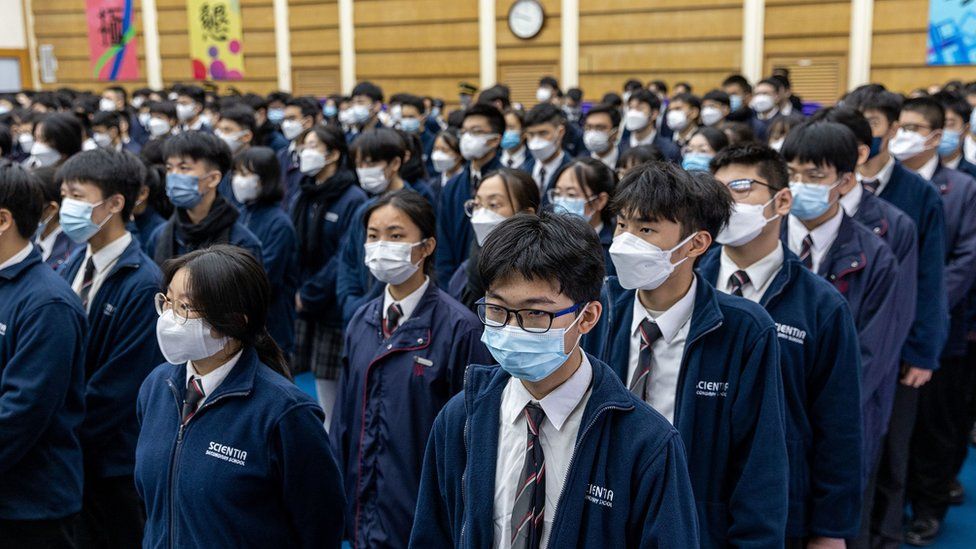
IMAGE SOURCE,EPA Image caption, In Hong Kong, students observed a silence at school assemblies
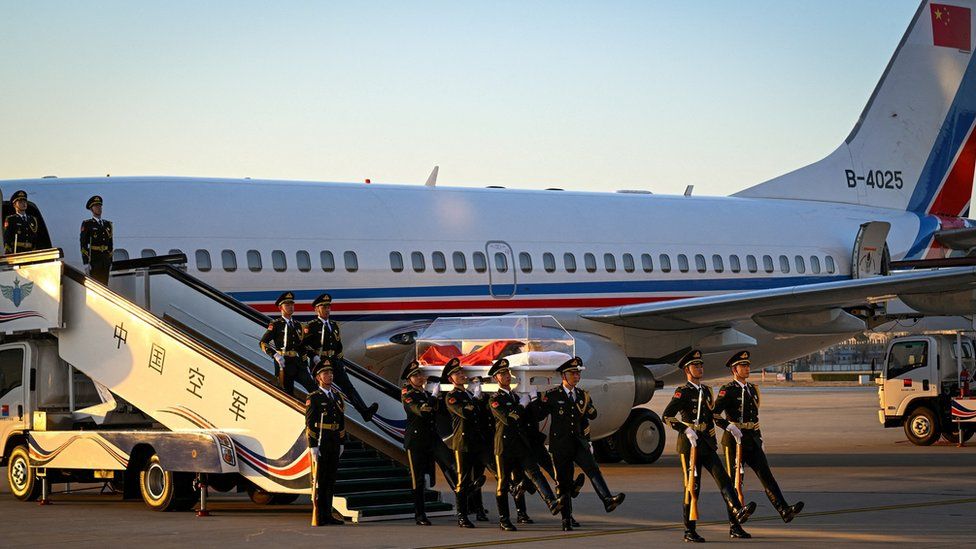
IMAGE SOURCE,XINHUA Image caption, Jiang died in Shanghai. On Monday, a plane carrying his glass coffin arrived in Beijing for the formalities
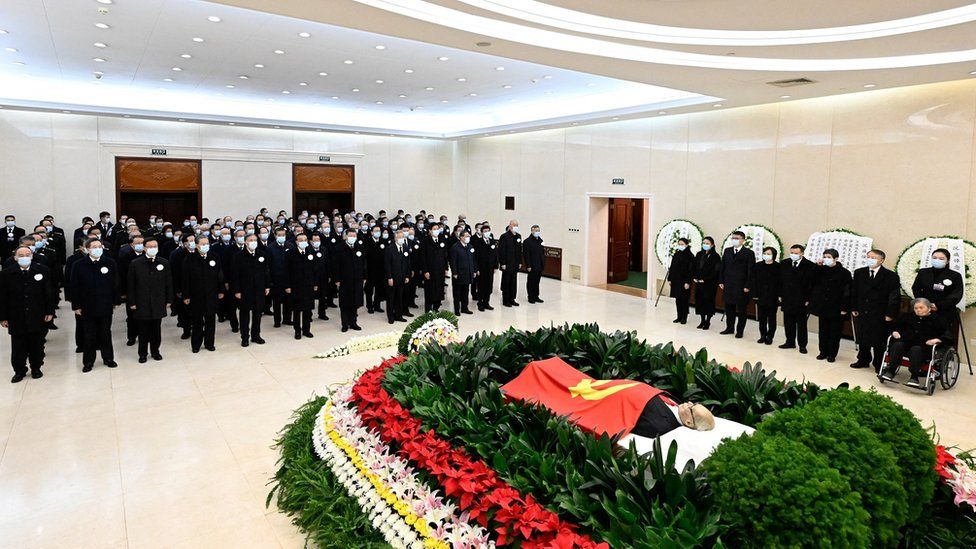
IMAGE SOURCE,XINHUA Image caption, Chinese President Xi Jinping and other party leaders paid their final respects to Jiang in a smaller ceremony at a Beijing hospital on Monday. He was cremated later that day.
Indonesia is about to change its criminal code, making sex outside of marriage punishable by up to a year in prison, a move that critics say will limit freedoms and police morality.
Indonesia is on the verge of ratifying major changes to its criminal code that would criminalise extramarital sex and make it illegal for unmarried couples to live together.
If officials ratify sweeping changes to the country’s criminal code on Tuesday, people who have sex outside of marriage could face up to a year in prison.
In addition to criminalising adultery, the revised code would prohibit unmarried couples from cohabiting.
The law, if passed, would apply to Indonesian citizens and foreigners alike, including tourists to the hotspots of Bali and the islands off Lombok.
Insulting the president and spreading views counter to the secular national ideology, known as the Pancasila, will also be outlawed.
Legal experts and civil society groups say the changes are a “huge setback” for the southeast Asian nation.
“The state cannot manage morality. The government’s duty is not as an umpire betweenconservative and liberal Indonesia,” said Bivitri Susanti, a law expert from the Indonesia Jentera School of Law.
Deputy speaker of the House of Representatives, Sufmi Dasco Ahmad, and Bambang Wuryanto, head of the parliamentary commission overseeing the revision, told Reuters that parliament would hold a plenary session on Tuesday to ratify the new code.
Previous plans to ratify the new draft code in September 2019 were brought to a halt by nationwide demonstrations. Tens of thousands of protesters took to the streets and the protests turned violent, with police dispersing crowds using tear gas and water cannons.
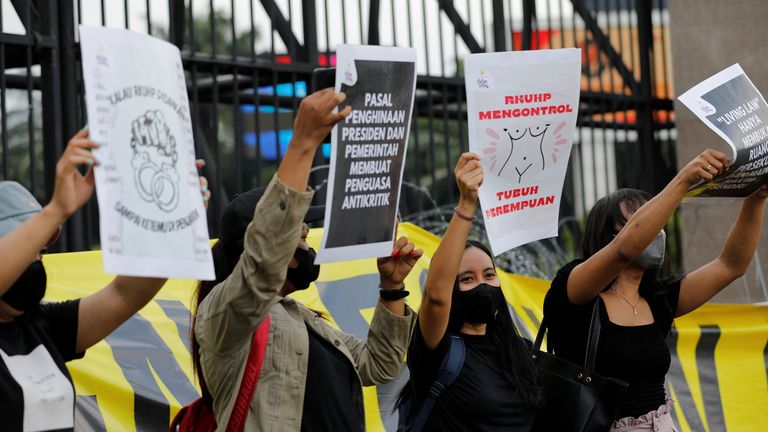
Image: People protest against new laws in Indonesia banning adultery.
The revisions to the code, which dates back to the colonial era, have been decades in the making. While the changes have sparked mass protests in recent years, the response has been considerably more muted this year.
Daniel Winarta, a University of Indonesia student, was among a small crowd of protesters that gathered outside parliament in the capital of Jakarta on Monday.
“On cohabitation, for example, it’s clearly a private matter,” he said. “We will keep rejecting this.”
Indonesia’s population is predominantly Muslim, with sizeable groups of Hindus, Christians and people of other faiths. Most Indonesian Muslims practice a moderate version of Islam, but recent years have seen a rise in religious conservatism that has crept into politics.
Under the revised code, only close relatives such as a spouse, parent or child can report complaints related to extramarital sex or cohabiting.
Only the president can file a complaint about being insulted, but such a crime will carry a three-year jail sentence.
It will take three yearsafter the code is ratified for it to come into effect to give the government time to draft related regulations.
The world’s largest EV manufacturerintends to launch the ATTO 3 sports utility vehicle in Japan in January.BYD Co’s Japanese division has announced that it will begin selling its first battery electric vehicles (BEVs) in the country early next year, as the world’s largest EV manufacturer accelerates its plan to sell or make its vehicles available in major markets.
BYD, in which Berkshire Hathaway has a stake, has announced that it will launch an electric sports utility vehicle, the ATTO 3, in Japan on January 31. The car will cost 4.4 million yen ($32,735) and has a cruising distance of 485km (301 miles).
BYD’s Japan chapter is planning to introduce two more models by the end of 2023 and more than 100 dealerships in Japan by the end of 2025, the company said.
Gasoline-electric hybrid models remain more popular than BEVs in Japan. However, the share of battery-driven vehicles is expected to grow, partly due to non-Japanese automakers like BYD and Volkswagen making their way into the market.
BYD’s Japan division is planning to set up tentative retailers in 22 cities starting late January but is eager to cover all 47 prefectures, said Atsuki Tofukuji, BYD Auto Japan Inc chief executive.
“We hope that we can make our presence felt little by little as we work toward carbon neutrality and as our customers demand a variety of choices,” he said.
Japanese automakers have recently been criticised by activists and green investors, who accuse them of not embracing BEVs fast enough.
Toyota Motor Corp began selling its first mass-produced fully electric vehicle, the bZ4X, in May as lease-only in its domestic market, charging 106,700 yen ($792.28) per month for the first four years in a 10-year contract. However, it was forced to recall the model less than two months later due to safety concerns. It began producing again in October.
Just a year into its $38bn EV plan, Toyota is already considering starting again to better compete in a market growing beyond the automaker’s projections, Reuters reported in October.
President says peace talks have led to an agreement to allow the Indigenous Embera community to return to its lands.
Colombia has reached an agreement in peace talks with the ELN rebel group to allow the Indigenous Embera community to return to its lands in the west of the country, President Gustavo Petro said.
The pact is the first significant success achieved at peace negotiations taking place between the government and the left-wing National Liberation Army (ELN), the country’s largest remaining rebel group.
The talks, aimed at ending the country’s decades-long conflict, resumed last month in Venezuela after being suspended in 2019.
“The first point of agreement that we reached with the ELN – in barely a week of these dialogues – is the return of the Indigenous Embera people … to their reservations,” Petro said on Saturday in a public appearance in Dabeiba, a town in northwestern Colombia.
Petro did not say when the Embera would return to their lands in the departments of Choco and Risaralda in western Colombia. They had fled violence between drug gangs, outlawed right-wing armed groups and the ELN.
Many of the displaced Embera now live in Colombia’s capital and hold highly visible protests in parks, clashing frequently with police.
As of Saturday, ELN delegates to the talks had not made any statements directly related to the humanitarian agreement on the Embera.
Embera Indigenous people clash with riot police while fighting for the right to the land they say belongs to them, in Bogota, Colombia [File: Harry Furia Grafica/Reuters]
‘Total peace’
The push for peace negotiations came from Colombia’s new first-ever left-wing President Gustavo Petro, who was a former member of the M-19 rebel movement.
After taking office in August, the president engaged the ELN as part of his “total peace” policy and the negotiations resumed even though no ceasefire between the two parties has been reached yet.
Nevertheless, the ELN had pledged to allow “humanitarian relief processes” as part of a peace talks framework its leaders signed with the government of then-President Juan Manuel Santos in 2016.
That year, Santos signed a historic peace deal with Colombia’s largest and oldest rebel group, the FARC. The FARC and the ELN operated in different parts of the country.
Previous attempts at negotiations with the ELN, which accounts for approximately 2,500 combatants according to peace-building civic group Indepaz, have not advanced partly because of dissent within its ranks.
ELN leaders say the group is united, but it is unclear how much sway negotiators hold over active units. The group is primarily active in the Pacific region and along the 2,200km (1,370-mile) border with Venezuela.
A judge tells the former Tory MP he has “no doubt” his original trial was fair and his conviction was safe.
The former MP Imran Ahmad Khan has lost an appeal against his conviction for sexual assault.
Khan, who was Conservative MP for Wakefield from 2019 until his resignation in April, was jailed for 18 months in May after he was found guilty of assaulting a 15-year-old boy at a house in 2008.
He had denied the allegation.
The 49-year-old challenged his conviction at the Court of Appeal last month.
The appeal was rejected on Monday, with judge Michael Sweeney saying he had “no doubt” that Khan’s trial was fair and his conviction was safe.
Khan’s lawyers had argued that the guilty verdict was “unsafe” because the case against him was “weak” and was bolstered by “bad character evidence” from a man who alleged he had been sexually assaulted as an adult by Khan in Pakistan in 2010.
They also argued his jail term was too long for the offence and should have been suspended.
Both appeals were dismissed by three senior judges.
During the original trial, the jury heard Khan forced the teenager to drink gin and tonic at a party before he dragged him upstairs, pushed him on to a bed and asked him to watch pornography before the attack.
The victim, now 29, told Southwark Crown Court that Khan touched his feet and legs and the former MP came within “a hair’s breadth” of his privates as he tried to sleep in a top bunk bed.
He told the court “it all came flooding back” when Khan stood as a Conservative in the December 2019 general election.
He said he was not “taken very seriously” when he made the allegation to the Conservative Party press office days before Khan was elected as MP for Wakefield.
He made a complaint to the police days after Khan helped the party hold on to power by taking the seat from Labour with a majority of more than 3,000.
Passing sentence in May, Mr Justice Jeremy Baker said: “The only regret you feel is towards yourself for having found yourself in the predicament you face as a result of your actions some 14 years ago.”
Khan, the judge said, had displayed a “significant degree of brutality” in the lead-up to the assault, as he dragged his victim upstairs and threw him on to a bed at a house in Staffordshire in January 2008.
An eyewitness to the flood said that some of the 30-plus congregants were standing on rocks in the river on Saturday when a torrent of water surged through.
In South Africa, nine people were killed and eight others were missing after a flash flood in a river swept away worshippers attending a church ceremony.
An eyewitness said that some of the more than 30 congregants were standing on rocks in the river on Saturday when a torrent of waterrushed through.
According to the witness, the pastor was saved after clinging to an overhanging tree branch while being carried away.
On Sunday, rescuers resumed their search in Johannesburg’s Jukskei River. During South Africa’s rainy season, it is notorious for flooding.
The search operation involves the police and fire service as well as specialist aquatic rescue teams.
After recovering two bodies on Saturday they have so far found seven more on Sunday, Robert Mulaudzi, spokesman for the City of Johannesburg Emergency Management Services, told reporters.
Victor Ncube, who had been taking part in the church service, told the local news station eNCA that he managed to pull five people out of the river who had been swept 100 metres downstream.
Others had been carried too far down the river for him to try to save them, he said.
Of the 33 who had been at the service, eight are still unaccounted for, officials say.
Despite the public bonhomie during the French president’s US visit last week, they don’t see eye to eye on China.
The world is not divided between “democracies and autocracies”. Washington’s approach to China is dangerously confrontational. The Ukraine conflict is about getting Russia to the negotiating table. Unilateral sanctions are not legitimate. The United States is instigating a trade war against Europe. NATO should stop opposing European defence.
To say that France doesn’t see eye-to-eye with the US on most topics would be a serious understatement. Yet, during last week’s high-profile state visit by French President Emmanuel Macron to “his friend Joe” in Washington, both partners put on a great act, giving the impression they were living in the land of milk and honey.
President Biden should be credited for pulling out all the stops. He arranged for “his friend Emmanuel” to have the first state visit of his presidency, a distinctive honour for France. Amidst much pomp and regalia, we were carefully treated to long displays of chumminess between the two leaders, including effusive backslapping and a friendly dinner outing in DC with their spouses.
At a joint press conference, Biden even seemed to have made efforts to curb his notorious propensity for droning on out of consideration for Macron’s time in the limelight.
There were also a couple of meatier morsels for French diplomats to go home with as proof that they had held the line of being “allied but non-aligned” with the US, and that they had pushed Washington in the right direction. Biden stated that he would be ready to meet with Vladimir Putin to end the Ukraine conflict, a reversal of his earlier position and a nod to Macron’s efforts to keep diplomatic channels open with Russia’s leader. Since then, the White House has signalled that the conditions were “just not at a point” for such a meeting to take place yet.
The US president promised to look at what he called “glitches” in his signature multi-billion Inflation Reduction Act (IRA), which significantly hurts the European electric vehicle industry through “buy American” restrictions and massive state subsidies to US companies. A day earlier, the French president had denounced the package as “super aggressive” and posing the risk of nothing less than “fragmenting the West”.
Their joint communiqué painstakingly listed the two countries’ shared positions on everything from Ukraine and the security of Europe to Iran, the Middle East, climate change, “the importance of African voices in multilateral fora” and a commitment to strengthening the global financial architecture.
But there was one notable omission: How to deal with China, which Biden has identified as the biggest threat to US interests and security.
“China represents the most consequential challenge to the global order and the United States must win the economic arms race with the superpower if it hopes to retain its global influence,” the current US National Security Strategy states. If that’s indeed the case, surely it should figure in a statement meant to demonstrate the closeness between Washington and Paris?
Except, the approaches of the two countries couldn’t be further apart.
While the joint communiqué does mention “China’s challenge to the rules-based international order”, it only states that the two countries have pledged to “coordinate their concerns” – an indirect acknowledgement that they are currently anything but coordinated. This shouldn’t come as a surprise.
Paris has always been highly suspicious of the Biden doctrine that defines the present era fundamentally as “a contest between democracies and autocracies”. Viewed from France, this black-and-white framework is seen as overly ideological, geopolitically inapplicable and transparently self-serving. “A lot of people would like to see that there are two orders in this world,” Macron stated during a trip to the G20 in Indonesia last November. “This is a huge mistake, even for both the US and China. We need a single global order.”
It is no secret that France and several other European countries have been less than enthralled by what they perceive as Washington’s overly aggressive stance towards China, including the escalatory rhetoric about a possible conflict in the Taiwan Strait.
It’s not that France has any illusions about the inescapability of the rivalry between the world’s two biggest economies, or about China’s hegemonist moves in the Indo-Pacific in recent years. But Paris believes that differences should be managed within the existing multilateral framework, and aimed at lowering, not heightening, tensions.
At the G20 summit, the French president stressed that China had clearly distanced itself from Russia over time and could play an important mediating role in the Ukraine conflict. He also stressed that Beijing was committed to the existing world order and that President Xi Jinping shared his commitment to the United Nations – a transparent rebuke to the US position that systematically casts Beijing as a revisionist power intent on displacing the West.
The following day in Bangkok, Macron’s comments were even more pointed: “We are in the jungle and we have two big elephants, trying to become more and more nervous,” he told the audience. “If they become very nervous and start a war, it will be a big problem for the rest of the jungle.”
France has long been a proponent of a multipolar order in which big powers balance each other and agree to play by common rules. This suits both its traditional Gallic diffidence towards US hegemony and France’s self-perception as a “middle power with global influence”, according to the famous expression coined by Hubert Védrine, a former foreign minister. “We don’t believe in hegemony, we don’t believe in confrontation, we believe in stability,” Macron had told his Asian audience last month.
To Washington’s ears, it may have sounded self-serving, but the reality is that for most of the world, this is a much preferable alternative to a new cold war between two economic and military hegemons.
The public show of bonhomie between Biden and Macron can’t hide those deeper tensions. Their teams have hailed the French president’s visit to Washington as a success. But in terms of addressing the biggest risk factor in international relations – the possibility of escalation between the US and China – the results were of a far more modest kind: the big nothing burger.
DISCLAIMER: Independentghana.com will not be liable for any inaccuracies contained in this article. The views expressed in the article are solely those of the author’s, and do not reflect those of The Independent Ghana
In a new trailer for Netflix’s Harry and Meghan series, Prince Harry speaks of “leaking and… planting of stories” as part of a “dirty game.”
In an apparent reference to his wife, Meghan, and mother, Princess Diana, he describes the “pain and suffering of women marrying into this institution.”
The topic of race is brought up, with one commentator describing the couple’s experience as : “It is all about hatred. It all about race.”
The series will be available on Thursday.
A further three episodes of the Duke and Duchess of Sussex’s account of royal life will follow on 15 December. It has a 15 age rating, with Netflix’s listing saying it deals with “discrimination”.
The latest trailer shows a series of hard-hitting comments, which show no sign of any olive branches to the Royal Family.
Instead there is a commentary that claims “there was a war against Meghan to suit other people’s agendas”.
Over an image of senior royals on the Buckingham Palace balcony, Prince Harrysays: “There’s a hierarchy of the family. You know there’s leaking, but there’s also planting of stories.”
Prince Harry and Meghan, who are no longer “working royals”, were not allowed on to that symbolic balcony for late Queen’s Platinum Jubilee.
In the previous trailer there was a noticeable image of Catherine, Princess of Wales, looking very stony-faced and this latest teaser includes another austere picture of her, alongside Camilla, the Queen Consort, and Sophie, the Countess of Wessex.
The trailer for the six-part series shows a quickfire narrative of the couple’s difficult relationship with the royals, the media and the public – which ended with Prince Harry and Meghan moving to the US.
It begins with Meghan being warmly received by the public – treated like a “royal rock star”.
But then it suggests “everything changed”, with Prince Harry talking of leaks and planted stories and with a commentator referring to “hatred” and “race”.
The trailer links Meghan’s experience to the pressure faced by Princess Diana using images of the intense press attention surrounding her – with Meghan saying “I realised, they’re never going to protect you”.
“We know the full truth,” says Prince Harry at the end.
Last week, a teaser for the season was released at the same time as Prince Harry’s brother, the Prince of Wales, was in the US to present his Earthshot environmental prize.
The documentary is said to offer an insight into what the couple describe as the inside story of why they stepped back from their royal duties.
Prince Harry and Meghan formally stepped down as senior royals in March 2020.
A year later, during an interview with US talk show host Oprah Winfrey,Meghan said life within the Royal Family became so difficult at times she “didn’t want to be alive anymore”.
The trailer for the upcoming documentary comes against a backdrop of a royal race row following comments to a black British guest at Buckingham Palace.
Lady Susan Hussey, Prince William’s godmother and lady-in-waiting to the late Queen, stood down from her honorary duties last week after Ngozi Fulani, the founder of the charity Sistah Space, described how she had been repeatedly asked where she “really” came from at a reception.
A spokesman for Prince William responded to the row by saying that “racism has no place in our society”.
Despite Westernsanctions and an expected drop in oil and gas revenues, Russia has enough money to continue its aggression Ukraine.
The Russian army launched a full-scale invasion of Ukraine nine months ago. What was supposed to be a quick military operation to destabilise the Ukrainian government has turned into a protracted war that has claimed the lives of tens of thousands of military and civilian personnel.
Although the war is being fought on Ukrainian territory, which is suffering the greatest human and material losses, Russia has also faced severe economic challenges.
The European Union, the United States and their allies have imposed a series of sanctions on Moscow, targeting government officials, imports and exports, heavy industry and oil and gas revenues.
Many experts believe the sanctions will significantly affect the Russian economy and thus force the Kremlin to halt its war of aggression. However, my analysis of the Russian state budget shows that such assumptions do not reflect reality. Moscow will not experience significant economic constraints in the short term that could force it to change its policy.
Sanctions and windfall profits
Economic sanctions imposed by Western countries have led to an economic decline in Russia, but perhaps not as big as many expected. According to the Russian government, in 2022, the GDP will fall by about 2.9 percent and the Central Bank says it will fall by 3 to 3.5 percent, or half of what some experts calculated back in March.
Shortly after the sanctions were imposed, Russia faced a surge in inflation. Consumer prices rose by 10 percent in the eight weeks after the invasion, but by May, they levelled off.
The Russian rouble also dipped significantly in February and March from 75 roubles for a dollar to 135, pushing up inflationary expectations and increasing panic among the general population. Realising the danger of continued devaluation, the Russian authorities imposed severe financial and currency restrictions on current and capital transactions. The rouble eventually fell to 50 for a dollar and stabilised at 60.
The Western sanctions, alongside falling demand, also led to a significant reduction in imports to Russia; they fell by 23 percent and 14 percent in the second and third quarters of 2022, respectively. This, in turn, has resulted in a 20 percent fall in budget revenues related to imports – including taxes and customs duties – in the first 10 months of the year.
The confrontation with the West over the war in Ukraine also affected Russia’s hydrocarbon exports, which in 2021 accounted for nearly 50 percent of total exports and 45 percent of federal budget revenues. Even before the Russian invasion, Gazprom had started reducing its gas supply to Europe in 2021, which resulted in a price spike.
In April, President Vladimir Putin signed a decree requiring payments for Russian gas by European companies to be made in roubles only. A number of European countries refused to comply and gas supplies to them were halted. In April and May, the flow of Russian gas through the Ukrainian pipeline system and the Yamal-Europe pipeline via Poland was also disrupted. Then sabotage of the Nord Stream pipeline cut off gas to Germany in September.
Thus, by mid-November, Gazprom’s exports to Europe (including Turkey) decreased by 43 percent. The company – Russia’s biggest gas exporter – cut production by nearly 20 percent.
But this did not lead to a fall in revenue; on the contrary, Gazprom and the federal budget have seen a windfall in profit due to the sharp rise in gas prices. In August, at the peak of this trend, gas prices were up 460 percent year on year.
Gazprom’s profits increased so much that the government introduced a temporary tax on its revenues from September to November, bringing 1.248 trillion roubles ($20bn) into the state coffers.
The situation in the oil sector has been similar. The EU’s plan to introduce restrictions on imports of Russian oil and petroleum products forced Russian companies to look for new consumers and agree to a significant discount on the price – as high as 25 percent.
However, due to high oil prices, reaching $120 in the spring and summer, the price of Russian oil was still higher than in 2021, even with the discount.
Overall, in the first 10 months of 2022, Russia saw a 34 percent increase in budget revenues from hydrocarbon production and exports compared with 2021.
The cost of war
While high prices of hydrocarbons have resulted in high revenues, the Russian budget has also seen a sharp increase in military expenditures this year.
In mid-September, the Ministry of Finance reported that by the end of the year, defence spending would increase by 31 percent from 3.573 trillion to 4.679 trillion roubles ($57bn to $74bn). This includes the additional 600 to 700 billion roubles ($10 to 11bn) that the defence ministry is spending on purchases and repair of weapons this year.
Another item on the federal budget that saw an extraordinary increase in 2022 is “General National Issues”; it jumped by 50 percent to 2.629 trillion roubles ($42bn). Expenses under this title normally come from administrative activities of all branches of the government. If one supposes that the excess funds in this item are related to the war, then that’s an additional 869 billion roubles ($13.8bn) of defence spending.
Federal spending for the security apparatus has also increased by more than 19 percent compared with 2021 to 2.788 trillion roubles ($44.5bn). Some of these extra funds are allocated to the Russian National Guardwhose forces are actively involved in supporting the Russian occupation regime in Ukraine.
Shortly after the planned budget was released, the Kremlin announced “partial mobilisation”. As a result, some 318,000 persons were drafted into the army, which will require an additional increase in defence spending, by at least 372 billion roubles ($6bn) to pay for their salaries and other expenses till the end of the year.
The 2023 budget was drafted by the government and submitted to the parliament before the presidential decree on mobilisation thus it would not be a surprise if the actual military expenditures for both 2022 and 2023 are higher than what was officially announced. In any case, even with these numbers, Russia’s military spending in 2022 will exceed 5 percent of GDP, which is unprecedented.
Still, the windfall earnings from oil and gas are compensating to a certain extent war-related spending. Thus, Russia will end this year with a deficit of 0.9 percent of GDP or about $15bn.
Because the external debt financing markets are closed for Russia after the introduction of the Western sanctions and the potential for domestic borrowing is limited, the deficit will be financed, mainly, from accumulated reserves, as Russian Prime Minister Mikhail Mishustin has announced.
In October, the fund held some 10.7 trillion roubles ($171bn); the liquid part of it, which can be used for such payments, amounted to 7.5 trillion roubles ($120bn) – more than enough to pay for the 2022 deficit.
A challenging 2023
In the 2023 budget, the government has put in a 6.5 percent increase in defence spending, which amounts to compensating for inflation. This assumes that war expenditure will not grow next year.
I have some doubts regarding this assumption. The expenses for the additional mobilised troops were not included in the 2022 budget, which, along with the possible delay in payments of compensation to the families of war casualties, will likely force the government to revise this number.
Moreover, defence minister Sergey Shoigu announced a 50 percent increase in military procurement for next year and he did so after the State Duma passed the 2023 budget. I do not see space for this in the budgetary figures.
Revenues, like spending, also cannot be easily foreseen for 2023. The windfall profits from hydrocarbons inspired some optimism in the Kremlin, which was reflected in the estimates the government put forward of economic growth resuming in the first quarter of next year.
Many experts do not share the government’s optimism. Even the official forecast of the Bank of Russia suggests that Russian economic growth will resume in the second half of 2023.
A key unknown in next year’s budget is also the revenue from hydrocarbons, specifically oil. The EU stopped imports of Russian crude oil on December 5 and will halt the purchase of Russian oil products on February 5. The Union, along with G7 and Australia, is also imposing a price cap of $60 on Russian oil.
As a result, it is unlikely that Russia will be able to increase oil exports next year to match pre-war levels. The average price of Russian export oil in 2021 was $69 per barrel. The current rouble-dollar exchange rate is 15 percent higher than the 2021 average, which is likely to continue into the new year. These factors may reduce 2023 budget revenues from hydrocarbon production and exports by 15 to 20 percent ($22bn to $29bn) of 2021 levels.
In response to the expected drop in revenues, the government has announced an increase in taxes on oil and gas companies as well as on metal and coal producers. These could bring in enough revenue to compensate for up to 75 percent of the revenue reduction.
Thus, the risk of not reaching the planned revenues in 2023 remains, but it will be limited to 5-6 percent of total budget revenues, according to my estimates.
Enough money for the war, unfortunately
Although the budget is planned under high uncertainty, it cannot be called unstable. Under different circumstances, its revenues may turn out above or below the planned level. Still, the scale of this deviation, according to my assessment, does not exceed 1 percent of GDP ($17.2bn) in either direction.
Consequently, even if revenues are lower, the budget deficit would not exceed 3 percent of GDP ($52bn), which can be entirely financed from reserves (currently at $120bn).
At the same time, there seems to be no opportunity or desire on the part of Western countries to intensify sanctions pressure on Russia. This means the Russian budget would not face any sanctions-related shocks in 2023.
With all of this in mind, I do not foresee any major financial constraintsthat could force the Kremlin to radically change its aggressive policy towards Ukraine.
DISCLAIMER: Independentghana.com will not be liable for any inaccuracies contained in this article. The views expressed in the article are solely those of the author’s, and do not reflect those of The Independent Ghana
The North’s forces fired about 130 artillery rounds into a border area at the same time in what it called a “tit-for-tat” manoeuvre.
North Korea launched an artillery barrage into a maritime buffer zone, the latest in a series of provocative military moves that have enraged South Korea.
The South’s Joint Chiefs of Staff said in a statement on Monday that about 130 artillery rounds were fired simultaneously at 14:59pm (05:59 GMT) from two separate sites, one on North Korea’s east coast and one on the west coast.
The North Korean military said it was a warning against ongoing South Korean artillery exercises near the inland border town of Cheorwon, and blamed the South for the escalation of tensions.
Seoul’s military said the barrage was a “clear violation” of the 2018 agreement between the North and the South that established the buffer zone in a bid to reduce tensions.
It said none of the shells crossed the Northern Limit Line, the de facto maritime border between the two countries.
The military said it had issued “several warnings” over the barrage, without giving any further details.
“Our military is strengthening its readiness posture in preparation for emergencies while tracking and monitoring related developments under close cooperation between South Korea and the United States,” it added.
North Korea’s military said it fired artillery rounds as a “tit-for-tat” warning in response to South Korea firing dozens of projectiles earlier in the day, state-run KCNA news agency reported.
“We severely warn the enemy side to be prudent, not kindling the flame of escalation of tension unnecessary in the area around the front,” an unidentified spokesperson was quoted as saying.
Doubled down
At a summit in Pyongyang in 2018, former South Korean President Moon Jae-in and the North’s leader Kim Jong Un agreed to establish buffer zones along land and sea boundaries in a bid to reduce tensions.
But since talks collapsed in 2019, Kim has doubled down on his banned weapons programmes, and experts say he may now be testing South Korea by violating the buffer zone agreement.
Pyongyang has fired artillery into the buffer zone repeatedly in recent months.
It has also conducted a record-breaking blitz of missile launches in recent weeks, including its newest intercontinental ballistic missile (ICBM) last month, the most powerful such test by the nuclear armed country yet.
Pyongyang, which is banned from testing ballistic missiles by UN Security Councilresolutions, has repeatedly claimed its weapons tests are a legitimate response to Washington’s moves to boost the protection it offers to allies Seoul and Tokyo.
Officials and analysts in Seoul and Washington say the launches may build up to a seventh nuclear test.
North Korean state media said last week that leader Kim has called for a major political conference before the end of the year, at which he is expected to address increasingly tense relations with Washington and Seoul over the expansion of North Korea’s nuclear and missile programmes.
The trial is expected to last seven months, with the judgement delivering its verdict after hearing from approximately 370 witnesses.
Ten men are on trial in Belgium on charges of involvement in two suicide bombings that killed 32 people and injured over 300 in Brussels in 2016.
The ISIL (ISIS) armed group claimed responsibility for the attacks, in which three of the group’s alleged perpetrators – Khalid el-Bakraoui, Ibrahim el-Bakraoui, and Najim Laachraoui – were killed.
Presiding Judge Laurence Massart will confirm the identities of all parties to the case, including the defendants and lawyers representing approximately 1,000 people affected by the attacks, on Monday.
She will then address the jury, selected from a pool of 1,000 Belgians last week in a process lasting 14 hours.
The event will take place at the Court of Assizes – the one which deals with the country’s biggest criminal cases and was also NATO’s former headquarters in Belgium.
Link to Paris attacks
The Brussels bombings trial has clear links to the French trial over the November 2015 Paris attacks.
Six of the Brussels bombings accused were sentenced to jail terms of between 10 years and life in France in June, but the Belgian trial will be different in that it will be settled by a jury, not judges.
People pay their respects at the monument for the victims of the 2016 suicide bombings in central Brussels [File: Yves Herman/Reuters]
The twin bombings at Brussels Airport and a third bomb on the city’s metro on March 22, 2016 killed 15men and 17 women – Belgians, Americans, Dutch, Swedish, British, Chinese, French, German, Indian, Peruvian and Polish, many based in Brussels, the home to EU institutions and military alliance NATO.
Nine men are charged with multiple murders and attempted murders in a “terrorist” context, with potential life sentences, and all 10 with participating in the activities of a “terrorist group”.
They include Mohamed Abrini, who prosecutors say went to the airport with two suicide bombers but fled without detonating his suitcase of explosives, and Osama Krayem, a Swedish national accused of planning to be a second bomber on the Brussels metro.
Salah Abdeslam, the main suspect in the Paris trial, is also an accused, along with others prosecutors say hosted or helped certain attackers.
One of the 10, presumed killed in Syria, will be tried in absentia.
In accordance with Belgium court procedure, the defendants have not declared whether they are innocent or guilty.
Prosecutors are expected to start reading from the 486-page indictment on Tuesday before hearings of about 370 experts and witnesses can begin.
The trial is expected to last seven months and is estimated to cost at least 35 million euros ($36.9m).
An EU embargo on Russian oiland a transit fee hike to use the Bosphorus Strait are reviving a shelved pipeline plan.
A European Union embargo on Russian oil that takes effect on Monday has led Greece and Bulgaria to talk about reviving a long-defunct oil pipeline project that bypasses the Bosphorus Strait.
The pipeline would run 280km (about 174 miles) from the port of Alexandroupolis on the Aegean Sea to the port of Burgas on the Black Sea, and might continue as far north as the port of Constanza in Romania, Bulgaria’s Energy Minister Roman Hristov told Al Jazeera.
“We have a two-year derogation [from EU sanctions] to buy Russian oil, but after that, we will face problems because of the hike in transit fees through the Bosphorus,” Hristov said in answer to a question from Al Jazeera at an energy conference in Athens.
So, we have begun discussing the revival of the Burgas-Alexandroupolis pipeline, and its extension north to the ports of Varna and Constanza,” he added.
“We support the project,” said Greek Energy Minister Kostas Skrekas in a statement. Neither minister agreed to answer further questions.
The EU move disrupts tanker trade from Russia’s oil export terminal at Novorossiysk on the Black Sea’s east coast to EU ports on its west coast.
Other suppliers
Refineries at Burgas and Constanza can still buy oil from Kazakhstan and Azerbaijan.
A Kazakh oil pipeline ends at the Caspian Pipeline Consortium (CPC) Terminal near Novorossiysk, and an Azeri oil pipeline terminates at Georgia’s Supsa further south.
But it is not enough to satisfy their needs, especially when Ukraine’s needs are taken into account.
The deficit is filled by additional volumes from other sources that are shipped into the Black Sea through the Bosphorus Strait.
The original Burgas-Alexandroupoli pipeline idea, first aired in 1993, was to flow south, exporting crude oil from the Black Sea to the Mediterranean and beyond.
“The real problem was delays and bottlenecking at the strait. This is very easy to overcome with a pipeline,” said Mike Myrianthis, a Greek oil industry veteran who was involved in the project at the time.
“We wanted to be tied to a major producer for long-term supply … There was a very good relationship with Russia then,” he told Al Jazeera. “I remember we were talking about a second, parallel pipeline.”
In 2007, Greece, Bulgaria and Russia signed a political agreement to build the pipeline, with Russia promising to provide 35,000-50,000 tonnes of oil a year to fill it.
A 650,000-tonne tanker farm in Alexandroupolis would ensure a constant supply to ships.
But Bulgaria pulled out of the project in 2010, citing environmental concerns. Industry insiders tell Al Jazeera it was US opposition to dependence on Russian oil that scuppered the project.
But Russia would not benefit from the north-flowing pipeline, and the idea has acquired new urgency with Western sanctions on Russian oil, which the International Energy Agency assumes to be permanent.
Last October, Turkey added impetus to the pipeline when it hiked transit fees for tankers using the Bosphorus Strait fivefold to $4 per tonne of oil, adding about half a percentage point to current oil prices.
Turkey would raise its income from transit fees from $40m to $200m a year, according to the Daily Sabah newspaper.
Turkey has its own plan to bypass the congested Bosphorus with a waterway running west of it. President Recep Tayyip Erdogan proposed Canal Istanbul amid great fanfare in 2011, but construction has not yet begun.
Geopolitical contest
Until the war in Ukraine, oil and gas pipelines flowed south from Russia through Ukraine and the Balkans.
The Ukraine war has thrown Greece and Turkey into geopolitical competition, as Alexandroupolis has begun to reverse these energy flows, while Turkey is becoming Russia’s new southern conduit.
“The idea is to create a north-south pipeline axis for gas and oil, which will also be reinforced by rail transport. All this network is ultimately meant to end up in Ukraine so even that country can be supplied from the south,” said Myrianthis.
In this contest, Greece’s region of Western Thrace has already become an important alternative to the Bosphorus.
A 2019 defence agreement has allowed the United States to use the port of Alexandroupolis as a logistics base to ship supplies and reinforcements to forward NATO members Bulgaria and Romania, and weapons into Ukraine itself.
The border of Romania with Moldova and Ukraine is only a day away from Alexandroupolis by rail, a faster transit than through the Bosphorus, and a more dependable one since Turkey announced it was closing the strait to all military traffic in response to the war in Ukraine.
Last May, Russia cut gas flows to Bulgaria, ostensibly because it refused to pay in roubles.
Greece has since become Bulgaria’s sole source of gas, which travels from Azerbaijan across Turkey and northern Greece through the Trans-Adriatic Pipeline (TAP).
A member of the staff stands over a part of the Interconnector Greece-Bulgaria (IGB) gas pipeline [File: Alexandros Avramidis/Reuters]
An Interconnector Greece Bulgaria (IGB), operational since October, siphons off a billion cubic metres a year from TAP to the Bulgarian gas network.
By the end of 2023, Alexandroupolis will acquire a floating storage and regasification unit (FSRU) to import liquefied natural gas (LNG), and the IGB pipeline will be extended 28km (about 17 miles) south to reach it, further eroding the Russian gas monopoly in Southeast Europe.
There is talk of a second IGB pipeline being built parallel to the first, and of at least two more FSRUs.
Greece-North Macedonia pipeline
Greece is in discussions with North Macedonia to build a separate gas pipeline to that country.
Greece, which plans to export 8.5 billion cubic metres of gas to the Balkans by 2025, is fast becoming the main supplier of non-Russian gas to the region.
The Burgas-Alexandroupolis oil pipeline would add another dimension to its role as a provider of energy security.
Turkey, too, has acquired geopolitical weight as Russian energy is gradually dislodged from Eastern Europe. Three Russian gas pipelines already enter Turkey.
At a meeting with Erdogan in Astana, Kazakhstan on October 13, Russian President Vladimir Putin announced he was prepared to build a fourth, turning Turkey into an export hub for Russian gas.
“If there is an interest in Turkey and our potential buyers in other countries, [we] could consider building another gas pipeline system and creating a gas hub in Turkey for sales to other countries, to third countries, primarily, of course, to European ones, if they are, of course, interested In this,” Putin was reported as saying.
The new legislation will also allow workers to work for multiple employers by removing exclusivity clause restrictions.
Workers in the United Kingdom will soon be able to request flexible working from their first day on the job, thanks to new government plans.
Employees will no longer be required to wait 26 weeks before requesting flexible working arrangements under legislation currently being debated in parliament.
Before rejecting a request, employers must consult with employees and discuss alternative options. The time limit for employers to respond to a request has also been reduced, from three to two months.
Such flexible work arrangements can include working altered hours, job sharing or working remotely. Two requests can be made within a 12-month period as part of proposals.
Under the existing legal framework, employees must set out theeffects of the requested flexible working arrangement to their bosses. But this is also to be removed by the proposed legislation.
The move comes as the government responds to the making flexible working the default consultation, set up last year to reform flexible working regulations.
It’s hoped the proposals will make for happier, more productive workers.
Clauses which limit workers doing jobs for multiple employers are also to be prohibited for low paid workers.
So-called exclusivity clauses are to be removed for an estimated 1.5 million workers with a guaranteed weekly income at or below £123, the lower earnings limit. When implemented, the legislation will allow workers to take up multiple short-term contracts.
It’s hoped this will particularly benefit students or people with caring responsibilities who need more flexibility over where and when they work.
It’s also hoped the measures could add more workers to the employment market and make it easier for employers to hire staff as the number of jobs outstrips the number of available workers.
There has been an increase in “economic inactivity” since the pandemic as the number of people neither working nor seeking work has risen to more than nine million people, one-in-five working age adults.
A mental health crisis is also causing workers to drop out of the labour market and fuelling staff shortages.
South Africa’s opposition Democratic Alliance (DA) party plans to introduce a motion in parliament calling for an early election as President Cyril Ramaphosa deals with a controversy that could cost him his job.
The president is accused of kidnapping the thieves and paying them to keep quiet in order to cover up a $4 million robbery on his property in 2020. He maintains that he did nothing wrong.
The nation’s parliament will review a report on the scandal and decide whether or not to initiate the impeachment process next week.
DA leader John Steenhuisen said the country cannot leave it up to the ruling party to “choose the future of our country” – referring to the upcoming ANC conference where Ramaphosa will seek a second term as the leader of the ruling party.
John Steenhuisen
“The party of Nelson Mandela has become a cess pit of corruption, greed and dishonesty from top to bottom,” said Steenhuisen.
He noted that in order to call for an early election, the resolution for dissolution of the government would require a simple majority of 50% plus one in the national assembly.
Coming two weeks before the ANC holds its crucial conference, where it is due to elect new leadership. The president has also cancelled a scheduled question-and-answer session in parliament Thursday afternoon, his office said.
The president’s written request to cancel said that “implications for the stability of the country required that the President take the time to carefully consider the contents of the report and the next course of action to be taken”, parliamentary authorities said.
The three-person panel set up in September to probe the alleged cover-up of a theft at Ramaphosa’s farmhouse said that the information it gathered shows that Ramaphosa possibly committed serious violations and misconduct.
These include not reporting the theft directly to the police, acting in a way inconsistent with holding office and exposing himself to a clash between his official responsibilities and his private business.
The Borno State Government said yesterday that 90% of die-hard Boko Haram insurgents were dead, and it attributed the sect’s mass surrender to the death of their leader, Ibrahim Shakau, as well as military operations.
This comes as military authorities announced yesterday that 1,952 terror suspects were being investigated in the North-east, with 900 of them set to go on trial in January.
But taking journalists round the Hajj Camp in Maiduguri, which housed 14,804 repentant insurgents and families, Special Adviser on Security to the Borno State government, Brig.Gen Abdulrasaq Ishaq (rtd), said about 90 per cent of die-hard Boko Haram insurgents had died.
He equally explained that of the number housed in the three camps, married males were 3,472, single males 1,773, spouses, 4,438, male children, 2,691 and female children 2,497, noting that 5000 fighters and their families were living in the three camps as well.
On his part, the Theatre Commander, Operation Hadin Kai, Maj Gen Christopher Musa, while speaking in Maiduguri, said 82,237 insurgents and their families had surrendered so far, out of which 16,577 were active male fighters, 52,44 men, women and 96 children.
He stated that of the 276 kidnapped Chibok girls, 57 escaped, 117 were released while 11 were rescued this year.
Eleven of the Chibok girls, who recently escaped captivity now have 25 children, adding that, in all, 180 girls were out of captivity while 96 remained in captivity.
Addressing newsmen too at the Joint Investigation Center, Operation Hadin Kai, Captain Adeniyi Oluwagbenga, said 1,952 combatants were in detention, including 23 females and 11 children.
He affirmed that 900 Boko Haram members would go on trial in Niger State while 323 were sent to Operation Safe Corridor in Gombe State for rehabilitation.
He further explained that the trial of the suspects was moved to Niger State following the difficulty in accessing witnesses while some lawyers refused to go to Maiduguri for the trial.
“Most suspects are awaiting prosecution. The Attorney-General of the Federation (AGF), has assured that by January, more than 900 of them will be moved to Niger State for prosecution. Some lawyers refused to come to Maiduguri for trial hence it can’t be held in Maiduguri,” he said.
In a separate interview, the Borno State Commissioner for Women Affairs, Zoyara Gambo, said the 11 Chibok Girls, who recently escaped captivity had 25 children, adding that government was already taking care of the young mothers.
In a chat with some of them, the young mothers expressed their desire to return to school like some of their colleagues.
“We want to go back to school like others. We are not happy,” they said.
The government should make social media firms enforce age limits to help tackle their impact on children’s mental health,actress Kate Winslet has said.
Speaking to the BBC’s Sunday with Laura Kuenssberg, she said parents feel “utterly powerless” about how to help their children navigate social media.
Winslet said security checks could be more rigorous and those in power “should step up” to protect children.
She was speaking ahead of the launch of her new Channel 4 film I Am Ruth.
The feature-length drama sees Winslet playing opposite her real-life daughter Mia Threapleton as the mother of a teenager whose mental health begins to suffer as she becomes increasingly consumed by the pressures of social media.
Winslet said the decision to focus on children’s mental health followed a conversation with the film’s creator Dominic Savage about how parents can help “when they can clearly see there’s a problem”.
But she said that the drama had to be about more than a child obsessed with their phone.
It had to cover “what’s actually going on with that phone, how it impacts on their self-esteem, how it impacts on eating habits, their mental state in terms of thinking about things like self-harm,” Winslet said.
In the two-hour drama, to be shown on Channel 4 on Thursday 8 December, Winslet plays Ruth who is a single mother of two, including 17-year-old Freya.
The film shows Freya becoming less communicative and falling behind at school as she retreats further into herself as her relationship with social media becomes increasingly destructive.
The world of social media is “frightening to parents because we don’t really know what’s there”, Winslet said.
“We don’t know really what’s going on in their friendship groups anymore because so much of it is actually built on phones, inside phones.
“This world that you can burrow deeper and deeper into it, and it becomes darker and trickier and much, much harder for children to navigate.
“I think because people, young children, are having phones at a much earlier age, they’re able to access things that emotionally they’re just not equipped or sophisticated enough to know how to process.”
IMAGE SOURCE,JOSS BARRETT /ME+YOU PRODUCTIONS/CHANNEL 4 Image caption, Mia Threapleton, Winslet’s real-life daughter, plays teenager Freya
Asked whether she thought there should be more legal regulation of social media, Winslet said she struggled with social media and its impact on teenage mental health.
“I do wish that our government would crack down on it. I do wish that there would be certain platforms that were banned before a certain age. I wish that security checks would be much more rigorous,” she said.
She said there should be “more protection and accountability” because parents “are left flailing”.
“I just think that the people who know that they could do better to protect our children should just be doing that. Whoever those people are, they know who they are, they should just step up and do better,” she said.
Winslet’s comment come as the government is accused of watering down legislation aimed at regulating internet content.
In the past week, ministers have dropped plans from the Online Safety Bill which would require technology firms to take down legal but harmful material.
Ian Russell, the father of teenager Molly Russell, who ended her life after viewing suicide and self-harm content online, said the bill had been watered down and the decision might have been made for political reasons to help it pass more quickly.
In a statement, Culture Secretary Michelle Donelan told BBC News that “unregulated social media is hurting our children and it must end”.
She added that the “strengthened Online Safety Bill” she is bringing back to Parliament “will allow parents to see and act on the dangers sites pose to young people”.
“Young people will be safeguarded, criminality stamped out and adults givencontrol over what they see and engage with online,” Ms Donelan said.
Tory peer Lord Norton has urged caution over “Big Bang reform” to parliament’s second chamber after suggestions it should be replaced with electedrepresentatives.
Sir Keir Starmer has pledged to abolish the House of Lords in his first term if he were to be elected prime minister.
Speaking to Sky News, the Labour leader confirmed his party “do want to abolish the House of Lords”, adding that he does not think anybody could “defend” the institution.
Sir Keir told Kay Burley: “It’s one of the recommendations, as you know, in today’s report.
“What we’re going to do after today is now consult on those recommendations, test them, and in particular, look at how can they be implemented.”
Asked if it is his hope that the House of Lords will be abolished within his first term as PM, Sir Keir replied: “Yes, I do.
“Because what I asked when I asked Gordon Brown to set up the commission to do this, I said what I want is recommendations that are capable of being implemented in the first term.”
He added: “We’re going to get one shot at fixing our economy and fixing our politics and I want to make sure we get it exactly right.”
But Tory peer Lord Norton has urged caution over proposed reform to parliament’s second chamber after suggestions it should be replaced with elected representatives.
“One has to be wary of some Big Bang reform, grand reform, which often takes the form of displacement activity – the nation’s got problems, people must come up with constitutional reform because it’s a fairly simple, straightforward proposal, rather than actually getting down to the real issues,” he told Times Radio.
The proposal forms part of Labour’s blueprint for a “New Britain”, outlined in the report of its commission on the UK’s future – headed by former PM Gordon Brown.
Unveiling the report at a joint press conference with Sir Keir in Leeds, Mr Brown said the work is proposing “the biggest transfer of power out of Westminster and Whitehall” that “our country has seen”.
‘Government has run out of road’
The report on the UK’s future, commissioned two years ago, also makes the following recommendations
• Handing new economic, taxation and law-making powers to mayors and devolved governments
• Sweeping constitutional reform in an attempt to “clean up politics”
• Banning almost all second jobs for MPs
• Moving 50,000 civil servants – 10% of the workforce – out of London.
• Developing 300 “economic clusters” around the country – from precision medicine in Glasgow to creative media in Bristol and Bath – with the aim of doubling growth in the UK.
• Extra powers for Scotland and Wales, with restored and strengthened devolution in Northern Ireland.
• A new culture of co-operation between the UK government, England’s regions, Scotland, Wales and Northern Ireland
Elsewhere in his morning broadcast media round, Sir Keir said he does not want to abolish private schools, but argued their existing tax breaks cannot be “justified”.
He also said he does not believe returning to the single market would boost the UK’s economic growth – but added that he believes there is a case for a “better Brexit”.
Meanwhile, probed on whether former Labour leader Jeremy Corbyn could be readmitted to the party, Sir Keir told BBC Radio Four’s Today programme: “I don’t see the circumstances in which he will stand at the next election as a Labour MP.”
Mr Corbyn had the whip removed over his response to the scathing Equality and Human Rights Commission (EHRC) report into antisemitism in the party.
A government source said: “This report highlightswhat we already know about Labour – that while the government is focusing on the major issues people care about, Keir Starmer is playing politics with topics only relevant in Westminster.”
Radio France Internationale (RFI) has condemned the suspension of its broadcasts by Burkina Faso’s military government, calling accusations that it had aided “a desperate manoeuvre of terrorist groups” completely unfounded.
RFI’s management stated in a press release that the cut-off occurred without prior notice and without following the procedures outlined in the station’s broadcasting agreement with Burkina Faso’s Superior Council of Communication.
“The France Médias Monde Group will explore all avenues to restore RFI’s broadcasting, and recalls its unwavering commitment to the freedom to inform and to the professional work of its journalists,” the press release said.
Burkina Faso on Saturday ordered the immediate suspension of Radio France Internationale (RFI) broadcasts, accusing it of putting out a “message of intimidation” attributed to a “terrorist chief”.
It is the second West African country under military rule, after Mali, to take RFI off the airwaves this year.
RFI had contributed to “a desperate manoeuvre of terrorist groups” to dissuade thousands of Burkinabe citizens mobilised for the defence of the country, said Burkinabe government spokesman Jean Emmanuel Ouedraogo.
At the beginning of the week, the Al-Qaeda-affiliated Support Group for Islam and Muslims threatened in a video to attack villages defended by the pro-government VDP militia in Burkina Faso.
The VDP are civilian volunteers given two weeks’ military training to work alongside the army carrying out surveillance, information-gathering or escort duties.
The government had already, on November 3, protested the contents of the French broadcaster’s reports, said the government statement.
“Considering everything that has happened before, the government has decided on the immediate suspension, until further notice, of the broadcasting of Radio France Internationale’s programmes.”
The government also accused RFI of having relayed “misleading information” suggesting the leader of the Burkinabe junta, Captain Ibrahim Traore, had said there had been an attempted coup against him.
In Burkina Faso, RFI is broadcast on five FM relays, shortwave, free-to-air on several satellites and via some 50 partner radio stations.
It is followed each week by more than 40 percent of the population.
Wagdi Salih, a well-known Sudanese politician, was released from prison just one day before his civilian coalition was set to sign a first agreement with the military to end a political deadlock caused by an October 2021 coup.
Following the ouster of former Sudanese President Omar al-Bashir in 2019, leftist politician Salih was in charge of an anti-corruption commission and was released on Sunday at a police station in the nation’s capital Khartoum.
Wagdi Salih
The generals who had been co-ruling with the civilian Forces of Freedom and Change (FFC) until they staged their takeover attacked the committee, stalling the transition that was supposed to lead to democratic elections.
Salih and a policeman who had been on the committee were both released. His October arrest was seen as “purely political” by his FFC coalition.
Since the coup, Sudan has been without a prime minister, and its already-in-crisis economy has stagnated as a result of the suspension of billions of dollars in international financial aid.
The military and the FFC declared on Friday that they intended to sign a framework agreement for a civilian-led transition that would start after a final pact is inked, along with other groups.
The United Nations, the US, Saudi Arabia, and the United Arab Emirates, among others, have helped to organise talks.
Salih has been taken into custody by the authorities previously. Security incarcerated him forcibly in the capital city of Khartoum in February.
Ekpe Ogbu, the state of Benue’s housing and urban development commissioner, has been kidnapped.
The Commissioner was kidnapped around 4 p.m. on Sunday at the notorious Adankari Junction on the Otukpo-Ado Road.
On Sunday night, Colonel Paul Hemba, Governor Samuel Ortom’s security advisor, confirmed the incident to reporters.
Governor Samuel Ortom
He said that while rescue efforts have started and the police in Otukpo have found the Hilux vanthe victim was riding in, no contact has been made with the kidnappers.
With at least three instances of kidnappings there, the Adankari Junction has turned into a hotspot for kidnapping activity.
At the intersection on different days in the past, a priest, a professor from Benue State University, and an elected official from Otobi were all abducted.
After being freed, the victims said the abductors were armed herdsmen terrorising the area’s residents and commuters.
Meanwhile, Troops of Operation Whirl-Stroke (OPWS) covering Benue, Nasarawa and Taraba states respectively Sunday proclaimed the arrest of two notorious kidnappers who have been terrorising residents of Zaki-Biam in Ukum Local Government Area of Benue State and rescued some kidnapped victims.
West Africa’s leaders on Sunday agreed to establish a regional peacekeeping force to intervene against jihadism and to help restore constitutional order in a region that has seen several coups over the last two years.
During an annual summit in the Nigerian capital of Abuja, President of the ECOWAS commission, Omar Alieu Touray said leaders of the Economic Community of West African States (ECOWAS) have decided to act to “take care of our own security in the region”
“The leaders are determined to establish a regional force that will intervene in the event of need, whether this is in the area of security, terrorism (or to) … restore constitutional order in member countries, ” a communique from the leaders said.
Mali, Guinea and Burkina Faso have been hit by military coups in the last two years.
The three countries have been suspended from the decision-making bodies of ECOWAS.
Many countries, including Mali, Burkina Faso and Niger, and southwards to the Gulf of Guinea are also ridden with a wave of jihadism
Their national militaries and security agencies have so far been unable to control the jihadist forces operating across borders, and have been cooperating with external actors such as the UN, France and Russia.
The 15-member political and economic bloc is yet to provide more details on how the force would be constituted but added that the region’s defense chiefs would convene next month to chalk out how it would operate.
On Sunday, the West African leaders also told Mali’s ruling junta to release, by the end of this month, 46 Ivory Coast troops it has held since July.
Ivory Coast says the troops were sent to provide backup for the UN peacekeeping mission in Mali, MINUSMA, and are being unfairly detained.
If the soldiers were not released, ECOWAS leaders said they “reserve the right and they have taken the decision to take certain measuresbut they would appeal and call on the authorities of Mali to release the soldiers.”
Indonesia’s Mount Semeru volcano has erupted, spewing ash into the sky and forcing evacuations on the country’s main island, Java.
The volcano’s warning level was raised to the highest level, indicating that its activity had increased.
Although no injuries have been reported, nearly 2,000 people have been evacuated from the area surrounding the volcano.
As “hot avalanches” of lava poured from Semeru, people were advised to stay at least 8 kilometres (5 miles) away.
The threat level has been raised from three to four, which means the danger now threatens people’s homes, according to a spokesman for Indonesia’s Center for Volcanology and Geological Hazard Mitigation (PVMBG).
According to the organisation, a bridge that was being rebuilt following a previous eruption had been severely damaged.
Volcanic ash mixed with monsoon rain was falling on nearby villages and 1,969 people, including children and seniors, had been evacuated, the National Disaster Mitigation Agency (BNPB) said.
At least six villages had been affected, it added.
IMAGE SOURCE,REUTERS Image caption, Residents of six villages were evacuated by rescuers
Videos of the event showed the sky turning black as a massive plume of ash blocked the sunlight.
Japan issued a tsunami warning for its southernmost islands after the eruption, but meteorologists said no tidal changes had been observed.
Mount Semeru, in East Java province, began erupting at about 02:46 local time (19:46 GMT), authorities said.
Indonesia sits on the Pacific “Ring of Fire” where tectonic plates collide, causing frequent volcanic activity as well as earthquakes.
Semeru – also known as “The Great Mountain” – is the highest volcano in Java at 3,676m (12,060ft) and one of the most active. Its last erupted exactly one year ago, killing at least 50 people and leaving streets filled with mud and ash.
The eruption also follows a series of earthquakeson the west of Java island, located about 640 km (400 miles) east of Indonesia’s capital Jakarta, including one last month that killed more than 300 people.
On Monday, the construction phase of one of the great scientific projects of the twenty-first century begins.
When completed in 2028, the Square Kilometre Array (SKA) will be the world’s largest radio telescope.
The facility, which will be located in South Africa and Australia and will have its headquarters in the United Kingdom,will address the most pressing questions in astrophysics.
It will conduct the most exact tests of Einstein’s theories and even look for extraterrestrials.
Delegations from the project’s eight countries are attending ceremonies in Western Australia’s remote Murchison shire and South Africa’s Northern Cape’s Karoo.
When the celebrations are over, the bulldozers will arrive.
“This is the moment it becomes real,” said Prof Phil Diamond, director general of the Square Kilometre Array Organisation.
“It’s been a 30-year journey. The first 10 years were about developing the concepts and ideas. The second 10 was spent doing the technology development. And then the last decade was about detailed design, securing the sites, getting governments to agree to set up a treaty organisation (SKAO) and provide the funds to start,” he told BBC News.
IMAGE SOURCE,SKA Image caption, The telescope is being built in areas already used for radio astronomy
The initial architecture of the telescope will incorporate just under 200 parabolic antennas, or “dishes”, as well as 131,000 dipole antennas, which look a little like Christmas trees.
The aim is to construct an effective collecting area measuring hundreds of thousands of square metres.
This will give the SKA unparalleled sensitivity and resolutions as it probes targets on the sky.
The system will operate across a frequency range from roughly 50 megahertz to, ultimately, 25 gigahertz. In wavelength terms, this is in the centimetres to metres range.
This should enable the telescope to detect very faint radio signals coming from cosmic sources billions of light-years from Earth, including those signals emitted in the first few hundred million years after the Big Bang.
The telescope should be able to detect hydrogen’s presence even before great clouds of it collapsed to form the first stars.
“The SKA is going to contribute to so many areas of astronomy,” said Dr Shari Breen, the observatory’s head of science operations.
“One would be these ‘fast radio bursts’ that have been detected. These things output the equivalent of an entire year’s worth of energy from our Sun in just a fraction of a second. And we have no idea what they are. How is that possible? Hopefully the SKA will have an answer.”
The telescope is being built in areas already used for radio astronomy on a smaller scale.
To expand these sites, however, has required various land agreements, with farmers in the Karoo; and with the Wajarri Yamaji, the Aboriginal title holders in the Murchison.
The Wajarri community have organised Monday’s celebration to inaugurate the SKA.
Various procurement contracts will be announced around the ceremonies.
These will take the total financial outlay to date to just under €500m (£430m) – out of an expected final construction budget of €2bn.
IMAGE SOURCE,SKA Image caption, The low-frequency antennas for Australia look like Christmas trees
The first major milestone should come in 2024, when four dishes in Australia and six antenna stations in South Africa are made to work seamlessly together as a basic telescope. This proof-of-principle moment will then trigger the array’s full roll-out.
By 2028, the SKA will have an effective collecting area of just under 500,000 square metres. But the set-up is such that it can continue growing, perhaps up to the much desired one million square metres, or one square kilometre.
One way this could happen is if more and more countries join the organisation and provide the necessary funds.
The current members are: South Africa, Australia, the UK, China, Italy, Netherlands, Portugal and Switzerland. These countries have ratified the treaty.
France, Spain, and most recently Germany, have got themselves on to the accession path.
Canada, India, Sweden, South Korea and Japan have indicated their intention to join at some point.
“And we’re actually in the process of talking to other countries as well, to see what interest they might have in joining the observatory,” said Prof Diamond.
Recent mass layoffs at big US tech firms have plunged into uncertainty several Indians working on non-immigrant visas such as the H1-B. Surbhi Gupta, a product manager at Meta who was among those affected, spoke to California-based journalist Savita Patel about how it took her time to accept it, the uncertainties that H1-B visa holders deal with, and what she plans to do next.
It was my mum’s birthday. I was staying up late to wish her and that’s when I started getting messages from my friends about layoff announcements. They were all anxious.
At around 6am here, I received an email that I’d been let go. I had joined Meta earlier this year as a product manager. My team was shocked because I’d been performing really well.
It went against my motto, work is worship, instilled early by my favourite teacher at school. Initially, it felt like the Titanic sinking because I was losing access to things one by one – workplace, then email, then laptop. But I was pleasantly overwhelmed and surprised in a positive way by my network on LinkedIn. Many colleagues, ex-colleagues and friends reached out in a very supportive way, making introductions and referrals. It made me feel like I have so many people in this country who care for me, made me feel like I belong to this country.
IMAGE SOURCE,PHOTO COURTESY: SURBHI GUPTA Image caption, Ms Gupta says she’s in touch with many companies and is exploring all options
My last day at Meta is in January and my H1-B visa [a non-immigrant visa that allows firms in the US to hire foreigners for up to six years] allows me to stay in the US for another 60 days, so early March is the deadline for me to find another job.
The job search is going to be difficult now as hiring will be slow in December because of the holidays. But I’m very focused. I am in touch with multiple companies and exploring options.
What I’ll miss most about Meta is the workplace and my colleagues. Being at Meta meant not only being able to build an amazing product for millions of people, but also being able to participate in fireside chats and growth and learning opportunities. As a product manager, it would have been rewarding to see the project I was working on go further.
My parents taught me to never give up in life. They tell me to stay strong because I’m a person who can convert problems into opportunities. They tell me ‘aur kuch accha mil jayega’ [you’ll find something better].
But my ability to work and stay in the US depends on my H1-B visa. I moved to the US in 2009 and I have worked very hard to build my career on my own strength and intellect. I have worked in prominent companies like Tesla, Intuit, etc., built great products, got top ratings, paid taxes, and contributed to the US economy for more than 15 years, but I feel that I am in the same place as far as permanent residency goes because of the limitations of the H1-B. I was crowned Miss Bharat California [a beauty pageant] by my idol, Bollywood actress Sushmita Sen. I have walked the ramp at New York Fashion Week. I have my own podcast.
We face unnecessary stress because the US has a country cap which takes forever for Indian H1-B holders to get a green card (permanent residency). Even though I am in the green card queue, when I track my status, I sometimes get a wait-time of two decades, and at other times, 60 years.
Our personal life suffers because of the uncertainty. Buying a home has been a question mark in my mind – do I invest in a home and then what if I have to leave. In spite of having gone ahead with the YC [Y Combinator is an American technology start-up accelerator], I can’t start a company even though I have a great idea because I don’t have a green card.
IMAGE SOURCE,PHOTO COURTESY: SURBHI GUPTA Image caption, Ms Gupta was crowned Miss Bharat California by her idol Sushmita Sen
I travelled to 30 countries before turning 30 years old, but now I’m unable to travel much, even though it’s my dream to travel the world, because I’m nervous about facing problems while trying to get my H1-B visa re-stamped. I have heard from my friends who work at great companies like Google and PayPal about getting stuck abroad.
I have even curtailed my travels home to India. A few years back, I got stuck in India. I had gone to attend a wedding and I had to get my H1-B visa stamped. But that took several months as it went into random administrative processing and I wasn’t even sure when it would come through. The uncertainty and the wait caused problems in my marriage. The visa issues had a very big role in my marriage. It was not the only reason, but it became one of the major reasons for the break-up of my marriage. I also had to drop out of a semester at New York University, where I was studying at the time, because I didn’t know when I would be able to return to the US. Why do people on H1-Bs have to deal with this?
I have not met my parents since the Covid-19 pandemic because they haven’t been able to come to visit me for three-and-a-half years. They are elderly, and don’t keep too well. I constantly think – if my parents need support, will I be able to go to help them? Nobody realises how it impacts our life.
But despite whatever has happened, I believe this experience too has a silver lining. Spirituality is a significant part of my life. I am a believer and follower of Sadhguru ji [as followers refer to Indian yoga guru Jaggi Vasudev]. He says that we should not be identified only by or limit our identity to our professional role. In Silicon Valley, the most frequently asked question is – Which company do you work for? But I am still me, not just a product manager. Everyone should realise that they are more than just the company they work for.
DISCLAIMER: Independentghana.com will not be liable for any inaccuracies contained in this article. The views expressed in the article are solely those of the author’s, and do not reflect those of The Independent Ghana
After a six-month mission aboard China’s space station, three Chinese astronauts have returned to Earth.
They launched into space on June 5 to oversee the final stages of the Tiangong space station’s construction, which was completed in November.
On Sunday, the crew of the Shenzhou-14 spacecraft landed in China’s autonomous region of Inner Mongolia.
The mission was declared a “complete success” by China’s space agency.
In audio broadcast by state broadcaster CCTV, Commander Chen Dong and teammates Liu Yang and Cai Xuzhe said they were feeling fine after landing.
Staff at the landing site assisted the crew as they exited the exit capsule, which landed shortly after 20:00 local time, about nine hours after docking with the space station.
Ms Yang, China’s first female astronaut, said she had an unforgettable memory in the space station and “is excited to return to the motherland,” Xinhua state news agency reported.
While in space, the three astronauts oversaw the arrival of the second and third modules for Tiangong and carried out three spacewalks to check and test the new facilities.
IMAGE SOURCE,GETTY IMAGES Image caption, Liu Yang, who took part in the mission, is China’s first female astronaut
A new crew of three Chinese astronauts arrived at the space station to make its first in-orbit crew handover on Wednesday.
The new crew lifted off in the Shenzhou-15 spacecraft from the Jiuquan Satellite Launch Centre in the Gobi Desert in north-west China.
They will live on the station for six months. It will be the second permanently inhabited space outpost, after the Nasa-led International Space Station from which China was excluded in 2011.
It is the last of 11 missions required to assemble the station that is expected to operate for around a decade and run experiments in near-zero gravity.
The new crew will focus on installing equipment and facilities around the space station, a spokesperson for the China Manned Space Administration said.
China is only the third country in history to have put both astronauts into space and to build a space station, after the Soviet Union and the US.
IMAGE SOURCE,GETTY IMAGES Image caption, Chinese astronauts completed the first in-orbit handover at the Tiangong space station
Tiangong space station, or “Heavenly Palace”, is China’s new permanent space station. The country has previously launched two temporary trial space stations, named as Tiangong-1 and Tiangong-2.
Over the next decade of the Tiangong’s operation, it is expected China will launch two crewed missions to the station each year.
China has opened the selection process for astronauts for future missions to applicants from the “special administrative regions” of Macau and Hong Kong, who have previously been excluded.
China put its first satellite into orbit in 1970 – as it went through massive disruptions caused by the Cultural Revolution.
In the past 10 years, China has launched more than 200 rockets.
It has already sent an unmanned mission to the Moon, called Chang’e 5, to collect and return rock samples. It planted a Chinese flag on the lunar surface – which was deliberately bigger than previous US flags.
The EU’s chief says the bloc must address “distortions” caused by a $430 billion (£349 billion) US plan to incentivize climate-friendly technologies.
The US Inflation Reduction Act (IRA) has been criticised by some EU members, raising concerns about a trade war.
There are fears that tax breaks will entice EUfirms to leave, putting European firms at a disadvantage.
President of the European Commission Ursula von der Leyen stated that the EU should “adjust our own rules.”
“Competition is good … but this competition must respect a level playing field,” she said during a speech in Belgium.
Under the IRA, American consumers will get incentives to purchase new and second-hand electric cars, to warm their homes with heat pumps and even to cook their food using electric induction.
US President Joe Biden has called it the most “aggressive action” his country has taken to tackle the climate crisis.
But European allies perceive it as anti-competitive and a threat to European jobs, especially in the energy and auto sectors.
Ms von der Leyen said the EU had to work with the US “to address some of the most concerning aspects of the law”.
She added that the EU must also “adjust” its own rules on state aid to spur public investment in the environmental transition.
The new legislation was raised during French President Emmanuel Macron’s trip to Washington to meet Mr Biden this week.
The US president said there could be “tweaks” made to make it easier for European firms to benefit from the subsidies package.
“I never intended to exclude folks who were cooperating with us. That was not the intention,” Mr Biden said.
“We’re back in business, Europe is back in business. And we are going to continue to create manufacturing jobs in America, but not at the expense of Europe.”
In an interview with the BBC’s US partner CBS News released on Sunday, Mr Macron said the issue was “fixable”, and his discussion with Mr Biden was “frank and fruitful”.
He said weakening Europe’s industry was “not the interest of the U.S. administration and even the U.S. society”.
After reporting the attack to police, a woman who had been injected with morphine in a nightclub had to wait five months for test results.
Becca Collins, 20, stated she was spiked on 30 October 2021 during a night out in Maidstone, Kent.
She didn’t find out until she followed up on her report at the end of March.
Kent Police has apologised for the delay and stated that it intends to learn from the incident.
Ms Collins was assaulted while visiting a club.
Ms Collins was attacked during a visit to a club.
“After 12 o’clock I don’t remember any of the night,” she said, “the next thing I remember is waking up in my brother’s apartment the next morning.
“I felt really unwell, more than just a hangover.
“I thought this has to be more than just alcohol, and I went to have a bath and noticed the markon my leg that would indicate a needle.”
She reported the incident to Kent Police two days later.
IMAGE SOURCE,BECCA COLLINS Image caption, Becca Collins discovered a needle mark on her thigh after a night out
After hearing nothing, she contacted officers in March and discovered the test results, which showed she had traces of morphine in her system, had been sent to the police on 18 January.
The results had not been passed on to her or to the officer investigating her case.
“Initially the police were helpful,” she said, “they passed it over to their team in Tonbridge allocated to deal with spikings, but I think after they realised they wouldn’t be able to put any evidence on someone they did give up on the case.”
The force said it was not unusual for samples to take a number of months to be processed, adding they acknowledged there was some delay in notifying Ms Collins.
Kent Police said it would review the circumstances to identify any opportunities to learn and improve.
Oil prices have risen after major producers agreed to maintain output cuts and the G7 and its partners agreed to cap Russian oil prices.
On Monday morning, Brent crude rose from 0.6% to above $86 per barrel.
The G7 agreed on Friday to cap the price of Russian oil at $60 per barrel in order to put pressure on Russia over its invasion of Ukraine.
Meanwhile, the oil producers’ group Opec+ stated over the weekend that it would maintain its output-cutting policy.
Opec+ is a group of 23 oil-producing nations, including Russia, that meet on a regular basis to decide how much crude oil to sell on the global market.
“This decision by Opec+ to keep the quota where it is… is by itself an implicit sort of support to the oil market,” Kang Wu of S&P Global Commodity Insights told the BBC.
Analysts said oil prices had also been boosted by the easing of Covid restrictions in some Chinese cities, which could lead to an increase in demand for oil.
More cities in China, including Urumqi in the north west, have said they will loosen curbs after mass protests against the country’s zero-Covid policy.
Price cap
In a joint statement last week, the G7 and Australia said the $60 cap on Russian oil would come into force on Monday or “very soon thereafter”.
They said the measure was meant to “prevent Russia from profiting from its war of aggression against Ukraine”.
The price cap means only Russian oil bought for less than $60 a barrel will be allowed to be shipped using G7 and EU tankers, insurance companies and credit institutions.
This could make it difficult for Moscow to sell its oil at a higher price, because many major shipping and insurance companies are based within the G7.
Russia has said it will not accept the price cap, and has threatened to stop exporting oil to countries adopting the measures.
IMAGE SOURCE,GETTY IMAGES
Jorge Leon, senior vice-president at Norwegian energy consultancy Rystad Energy, told the BBC’s Today programme that oil prices could increase as a result.
“Russia has been very clear that they will not sell crude (oil) to anybody signing up to the price cap,” he said.
“So probably what’s going to happen is that we will see some disruptions in the coming months and therefore probably oil prices are going to start increasing again in the coming weeks.”
The G7 is an organisation of the world’s seven largest so-called “advanced” economies, which dominate global trade and the international financial system. They are Canada, France, Germany, Italy, Japan, the UK and the United States.
Supply fears
Prices of oil and gas have soared on concerns that Russia’s invasion of Ukraine could hit supply.
Russia is the world’s second top producer of crude oil after Saudi Arabia, and supplies around a third of Europe’s needs.
US Treasury Secretary Janet Yellen said the price cap would further constrain Russian President Vladimir Putin’s finances and “limit the revenues he’s using to fund his brutal invasion” while avoiding disrupting global supplies.
However, Ukraine President Volodymyr Zelensky called the cap “a weak position” that was not “serious” enough to damage to the Russian economy.
An EU-wide ban on Russian crude oil imported by sea will also take effect on Monday.
Although the measures will most certainly be felt by Russia,the blow will be partially softened by its move to sell its oil to other markets such as India and China, who are currently the largest single buyers of Russian crude oil.
Telecoms security boss Jeff Kuo says that fighting mobile phone fraud is a constant battle, and that Taiwan is on the front line.
“This is like a miniature of the world, here in Taiwan, where we see all kinds of fraud in advance,” says Mr Kuo. “We can use this knowledge to protect other countries, because we can see what is going to happen first.”
Mr Kuo is boss of Taiwanese firm Gogolook, which owns Whoscall, one of the most popular spam blocking apps on the island, and across East Asia in general.
It says its artificial intelligence powered software constantly trawls more than 1.6 billion telephone numbers, both Taiwanese ones, and also ones from across Asia and other parts of the world, to block messages and calls from likely fraudsters.
IMAGE SOURCE,GOGOLOOK Image caption, Gogolook works with Taiwanese anti-fraud officials
Working with Taiwan’s Criminal Investigation Bureau’s (CIB’s) “165 Anti-Fraud Program”, Whoscall blocked more 52.3 million scam messages, and 13.1 million scam calls, last year in Taiwan alone.
But why is Taiwan such a hotbed for telecoms fraud? Mr Kuo says the island’s small population of 23.5 million makes it a prefect “practice ground” for organised criminals, both Taiwanese gangs and those from mainland China and elsewhere. They try out a new phone scam in Taiwan, and if it works there then they can expand it out across Asia and then globally.
“[For example], we provide Apple with a lot of evidence… until they realise there is a serious problem,” says Mr Kuo. “A problem that is not only going to spread out in Taiwan, but also in Asia Pacific, and if they don’t take care of it, very soon it will be in Europe and the US.”
CIB telecoms fraud investigator Jean Hsiao Ya-yun tells the BBC that another reason why so many new scams originate on the island is the very fact that Taiwan is one of Asia’s top manufacturers of high-tech technology. She says this level of technical expertise is shared by Taiwanese scammers.
Ms Hsiao adds that the coronavirus pandemic was a boom time for scammers as millions of people were stuck at home, and, therefore, more reliant upon their phones.
“And the Taiwan stock market was very high at the time, so many people earned a lot of money,” she says, adding that this led to a big rise in investment scams.
“Scammers would [for example] give advice on app pages, or they would start a chat group saying that they can tell you when a stock is going to rise, and they can share this intel if you join their group.”
The scammers would then ask for money for the information. Other such investment scams would see people receiving phone message from friendly strangers offering loans at very low rates.
Such is the extent of the criminal networks behind the scamming that some Taiwanese gangs have opened up operations overseas. Ms Hsiao points to one case from 2020 when 92 Taiwanese people were arrested in Montenegro.
In other cases, Taiwanese people are lured overseas to countries such as Cambodia under the false promise of high wages. There they are forced to work against their will as telephone fraudsters, as the BBC reported in September.
Mr Kuo admits that there is a “weapons race” between anti-fraud firms like his, and the fraudsters. And while Whoscall and similar apps block millions of messages and phone calls, some still get through.
Anyone who has lived in Taiwan, regardless of age or nationality, is familiar with one method used by fraudsters – burst dialling. Answering an unknown number leads to you hearing a brief dialling sound, and then a pre-recorded message starts playing.
These calls are made by auto-dial systems capable of making hundreds a minute. It’s an effective way for the fraudsters to find the working numbers of people who are prepared to answer their phone despite not knowing who is ringing them.
IMAGE SOURCE,GETTY IMAGES Image caption, Gogolook says it warns US giant Apple about new phone fraud scams
Taiwanese cyber security expert TonTon Huang says that once such a person has been found, scammers call back.
“If [they find] the number is used by someone, they will sell the active phone data, or tell you that you need to pay a loan, insurance payment, or remit money,” he says. “The most common one seems to be about instalment payments, like you shopped online and you need to pay in instalments or something.”
While scammers are often looking for older people who might not be familiar with technology or keep up with scam trends, the CIB’s Ms Hsiao says they still dupe plenty of young adults as well.
Earlier this year, a 20-something Taiwanese YouTuber Edison Lin posted a video on the platform in which he emotionally revealed that he had been a victim of telephone fraud.
He had been conned out of $13,000 [£12,600] by two fraudsters working together.
Mr Lin said it happened after he was called by someone pretending to an employee of a restaurant he had visited a few months earlier. The man told him that he had accidently been overcharged by $380, and that he would be offered assistance to get the money back.
After Mr Lin had ended that call he was soon telephoned again, this time by the other fraudster pretending to from his bank.
“When the [fake] clerk from E.Sun Bank called, he knew the whole story, he told me how to get compensation from E.Sun,” Mr Lin said in his video. “His professionalism made me think he was really a bank clerk.
“Before long we were talking back and forth for half an hour… and I noticed one of them was transferring [my] money… I still haven’t paid off the debt.”
Prof Sandra Wachter, a senior research fellow in AI at Oxford University, is a global expert on the use of AI software systems.
She says AI can be an effective tool in defending against telecoms and other tech-based fraud, but that the general public also needs to be better educated about the risks.
IMAGE SOURCE,SANDRA WACHTER Image caption, Prof Wachter says technology can only do so much to protect people from fraud
“Technology is being used to scale-up fraud attempts… it allows scammers to cast a wider net and work more efficiently,” she says. “At the same time, some people might be more gullible and vulnerable to deceit because texting or calls seem legitimate, especially if executed in convincing and sophisticated ways.
“Since fraud is scaling up, the strategy to combat these attempts must too scale up and so it makes sense to deploy AI software for this purpose.
“The question is how effective these attempts are, and if we will be able to fully stop this behaviour? And the answer is, probably not, but we can curb it temporarily. Digital literacy and education can help people not to fall into the trap. AI can help to detect these scams and intervene.”
Back at spam-blocking app Whoscall, Jeff Kuo agrees, saying fighting fraudsters “may be never-ending, but so is our determination to sharpen our skills and stand up”.
The remainsof the last known Tasmanian tiger, thought lost for 85 years, have been discovered in an Australian museum’s cupboard.
In 1936, the thylacine died in captivity at Hobart Zoo, and its body was donated to a local museum.
But what happened to its skeleton and skin after that remained a mystery.
The Tasmanian Museum and Art Gallery lost track of the remains, which were thought to have been discarded.
According to new research, they were always at the museum, preserved but not properly catalogued.
“For years, many museum curators and researchers searched for its remains without success, as no thylacine material dating from 1936 had been recorded,” said Robert Paddle, who published a book in 2000 on the extinction of the species.
“It was assumed its body had been discarded.”
But he and one of the museum’s curators found an unpublished taxidermist’s report, prompting a review of the museum’s collections.
They found the missing female specimen in a cupboard in the museum’s education department.
It had been taken around Australia as a travelling exhibit but staff were unaware it was the last thylacine, curator Kathryn Medlock told the Australian Broadcasting Corporation.
“It was chosen because it was the best skin in the collection,” she said.
“At that time they thought there were still animals out in the bush.”
Thousands of people have demonstrated across the Democratic Republic of Congo against the M23 rebel group, one of dozens fighting in the country’s east.
The Catholic Church encouraged people to take to the streets, and much of the rage was directed at Rwanda, which DR Congo accuses of supporting the M23 rebels, and something that Kigali denies.
People marched for peace after leaving Sunday services across the country.
The Catholic Church wields enormous power in the country. Some church leaders are urging Western countries to take a tougher stance against Rwanda’s government for its support for the M23 rebels.
Banners at protests in Kinshasa opposed the balkanisation of DR Congo and spoke of the hypocrisy of the international community.
Regional talks have been taking place to try to stop the violence.
Several East African countries are sending in troops but in the past the involvement of multiple armies has only complicated the conflict in the mineral-rich eastern DR Congo.
It was a night of disappointment for Senegalat the World Cup in Qatar on Sunday after they lost 3-0 to England at the knockout stage.
The Teranga Lions were without their key players which proved to be a blow to them as the England midfield dominated play.
England will meet France in the quarter-finals on Saturday.
In a tweet, Senegalese President Macky Sall expressed satisfaction with the team’s performance at the tournament.
He said: “Dear Lions, You have not failed. And you played without Sadio [Mane], [Cheikhou] Kouyate and [Idrissa] Gana. You are among the top 16 teams in the world and England were a strong opponent.”
Talisman Sadio Mane expressed similar sentiments on Twitter.
“The people are very proud of your journey which has warmed the hearts of the supporters, defending the national flag with dignity.”
He added: “The learning continues. We will go in search of other trophies.”
An essential train link between Nigeria’s capital, Abuja,and the northern city of Kaduna is set to reopen on Monday, nine months after it was shut down.
Last March, gunmen mined the track, forcing a train carrying over 360 passengers to come to a stop.
At least eight passengers were killed, and dozens more were abducted.
The link was popular with passengers who were afraid of travelling by road.
The Nigeria Railway Corporation is introducing new security measures, including surveillance devices to monitor the tracks and the trains.
Passengers will also have to provide their national identification number.
The government said the train attack was carried out by the Islamist militant group Boko Haram.
Over the weekend, a group of doctors in Uganda caused a stir by kneeling before long-term President Yoweri Museveni and asking him to run for a seventh term.
The 78-year-old ruler has ruled since 1986. The next general election is scheduled for 2026.
According to media coverage of the event, the doctors from the Uganda Medical Association (UMA) were attending a patriotism symposium in Kampala when they were led by their leader to kneel before the president.
Nile Post news site reported that UMA boss Dr Samuel Odongo Oledo praised the president in his speech for transforming the country’s health system and improving the welfare of medical workers.
He went ahead to ask President Museveni to vie again in 2026 as a presidential candidate, the NTV television station reports.
VIDEO: Uganda Medical Association (UMA) members led by their President Dr Samuel Odongo Oledo on Saturday knelt before President Museveni and asked him to stand again in 2026 as a presidential candidate #NTVNewspic.twitter.com/BkldMbKEwB
The gesture sparked controversy on social media, with many accusing the group of being subservient to politicians.
But in a tweet, the UMA distanced itself from the gesture, saying it did not “represent modus operandi of the association”.
It said: “Uganda Medical Associationhas always engaged with the president through formal, professional ways including appreciating him through our annual awards.”
Iran’s morality police,tasked with enforcing the country’s Islamic dress code, are being disbanded, according to the country’s attorney general.
Mohammad Jafar Montazeri made the remarks, which have yet to be confirmed by other agencies, at an event on Sunday.
Protests in Iran have raged for months over the death of a young woman in custody.
The morality police detained Mahsa Amini for allegedly violating strict head covering rules.
Mr Montazeri was asked at a religious conference if the morality police were being disbanded.
“The morality police had nothing to do with the judiciary and have been shut down from where they were set up,” he said.
Control of the force lies with the interior ministry and not with the judiciary.
On Saturday, Mr Montazeri also told the Iranian parliament the law that requires women to wear hijabs would be looked at.
Even if the morality police is shut down this does not mean the decades-old law will be changed.
Women-led protests, labelled “riots” by the authorities, have swept Iran since 22-year-old Amini died in custody on 16 September, three days after her arrest by the morality police in Tehran.
Her death was the catalyst for the unrest but it also follows discontent over poverty, unemployment, inequality, injustice and corruption.
‘A revolution is what we have’
If confirmed, the scrapping of the morality police would be a concession but there are no guarantees it would be enough to halt the protests, which have seen demonstrators burn their head coverings.
“Just because the government has decided to dismantle morality police it doesn’t mean the protests are ending,” one Iranian woman told the BBC World Service’s Newshour programme.
“Even the government saying the hijab is a personal choice is not enough. People know Iran has no future with this government in power. We will see more people from different factions of Iranian society, moderate and traditional, coming out in support of women to get more of their rights back.”
Another woman said: “We, the protesters, don’t care about no hijab no more. We’ve been going out without it for the past 70 days.
“A revolution is what we have. Hijab was the start of it and we don’t want anything, anything less, but death for the dictator and a regime change.”
Iranian state media pushed back on the claim the country’s morality police is being disbanded, according to CNN.
State television channel Al-Alam reportedly said foreign media were portraying Mr Montazeri’s comments as “the Islamic Republic retreating from the issue of hijab and modesty and claim that it is due to the recent riots”.
“But no official of the Islamic Republic of Iran has said that the Guidance Patrol has been shut.”
US Secretary of State Antony Blinken said the abolition of Iran’s morality police could be “a positive thing” and praised the “extraordinary courage of Iranian young people, especially women, who’ve been leading these protests”.
Blinken said: “If the regime has now responded in some fashion, to those protests, that could be a positive thing.”
Iran has had various forms of “morality police” since the 1979 Islamic Revolution, but the latest version – known formally as the Gasht-e Ershad – is currently the main agency tasked enforcing Iran’s Islamic code of conduct.
They began their patrols in 2006 to enforce the dress code which also requireswomen to wear long clothes and forbids shorts, ripped jeans and other clothes deemed immodest.
Donald Trump has proposed the “termination” of the United States Constitution, spurring a sharp rebuke from the White House as the former president revisits debunked conspiracy theories about the 2020 election, which he lost.
Mr Trump took to his social media platform two years ago to declare himself “the rightful winner” after steering largely clear of his election defeat in a speech on November 15 when announcing his intention to run for president again in 2024.
He stated that it was time to “throw out” the results of the 2020 presidential election or hold a “new election.”
“A Massive Fraud of this type and magnitude allows for the termination of all rules, regulations, and articles, even those found in the Constitution,” Mr Trump wrote in a post on Truth Social.
“Our great ‘Founders’ did not want, and would not condone False & Fraudulent Elections!”
Later on Saturday, White House spokesman Andrew Bates slammed Mr Trump’s statement, calling the US Constitution a “sacrosanct document”.
Mr Trump announced on November 15 that he’d be running for president for a third time, almost two years ahead of the 2024 election.(AP: Andrew Harnik)
“Attacking the constitution and all it stands for is anathema to the soul of our nation and should be universally condemned,” Mr Bates said.
“You cannot only love America when you win.”
In a subsequent post on Truth Social, Mr Trump doubled down on his comments and distanced himself further from leadership within his own Republican Party, baiting Senate Minority Leader Mitch McConnell to weigh in.
“I wonder what Mitch McConnell, the RINOS (Republicans in name only), and all of the weak Republicans who couldn’t get the Presidential Election of 2020 approved and out of the way fast enough, are thinking now?” Mr Trump wrote.
Mr Trump dined with rapper Kanye West and White supremacist Nick Fuentes at Mar-a-Lago on November 22. (AP Photo: Pablo Martinez Monsivais)
Mr McConnell has infuriated the former president by indirectly criticising him after hosting a dinner on November 22 at his Mar-a-Lago resort with rapper Kanye West — who had made a series of anti-Semitic remarks — and Holocaust-denying White nationalist Nick Fuentes.
Mr Trump has since denied inviting Mr Fuentes or being aware of his background, saying that Mr Fuentes just followed Mr West — now known by the name of Ye — into the resort as an extra guest.
At the dinner, Mr West reportedly berated Mr Trump for not doing enough to help the January 6 rioters who wanted to stop then vice-president Mike Pence from certifying the 2020 election results that would confirm Joe Biden as the 46th US president.
Nine days later — last Thursday — Mr Trump came out vigorously in support of those convicted in the attacks on the US Capitol in a message to a right-wing political group.
In a video played at a fundraiser held by the Patriot Freedom Project, Mr Trump said the January 6 rioters were being dealt with “very unfairly” by the courts.
“People have been treated unconstitutionally in my opinion and very, very unfairly, and we’re going to get to the bottom of it,” he said in the video, shot in his office in front of a framed photo of him and North Korean leader Kim Jong Un.
In a September interview, Mr Trump said that he would consider issuing pardons and providing an official apology to January 6 defendants if re-elected president and was “financially supporting” those involved.
Kanye West, seen here at the White House in 2018, reportedly urged Mr Trump to do more for the January 6 defendants.(AP: Evan Vucci)
According to this year’s January 6 hearings held by Congress, Trump supporters acted violently after believing “the big lie” that the 2020 election was “stolen”, despite a lack of evidence and a multitude of failed legal challenges.
Mr Trump’s posts came after Twitter’s new owner, Elon Musk, announced that he would show how the social media platform had suppressed “free speech” in the run-up to the 2020 election by favouring the Democratic Party in blocking explosive content.
That included reports of damaging material found on the laptop of Hunter Biden, the once-wayward son of the current US president, as first reported by the Rupert Murdoch-owned New York Post.
What really happened with the Hunter Biden story suppression by Twitter will be published on Twitter at 5pm ET!
Republicans hope that fresh revelations about Hunter Biden’s possible former links to Ukraine and his other salacious activities could give them a political edge when they retake the House of Representatives in early 2023, possibly leading to congressional hearings.
But the Republican Party’s underwhelming performance in last month’s midterm elections — it narrowly won the House but was unable to retake control of the Senate because of the flop of so-called MAGA candidates — has weakened Mr Trump’s once unchallenged position as conservative kingmaker.
Some of the losing candidates — including former TV anchor Kari Lake who was beaten by Democrat Katie Hobbs in the Arizona Governor race — have followed the Trump playbook by refusing to concede defeat while claiming widespread election fraud without evidence.
Mr Trump is also fighting multiple legal challenges on state and federal levels, including an investigation into why he took classified government documents to his Florida property after leaving the White House in January 2021.
He also saw the US Supreme Court last week reject his request to block a congressional committee from obtaining his federal income tax returns, which promise to inflict more political damage in the final days of the Democrat-held House.
Even so, an Emerson College poll released on November 22 gave Mr Trump a 30-percentage-point lead over his potential challenger Ron DeSantis — the Florida governor — in a hypothetical 2024 Republican primary.
But he trailed Mr Biden by 4 points in a possible presidential election rematch in 2024 when Mr Trump would be 78 years old and Mr Biden would be turning 82.