Malawihas reduced malaria deaths by half, from 23 deaths per 100,000 in 2016 to 12 deaths per 100,000 in 2021, according to ministry of health officials.
Dr. Charles Mwansambo, Secretary of Health, announced the extension of vaccination spots at a launch in Mchinji.
“We have reduced malaria mortality through mass and routine distribution of nets, indoor residual spraying, and case management, among other things.”
“For this reason, we have added another intervention (malaria vaccination exercise) we have launched today which on its own can reduce malaria disease by 33 percent.
“However, all these measures need to be followed so that we can eliminate the disease by 2030,” Mwansambo said.
The project is being promoted and funded by the Malawi Government in conjunction with UNICEF, WHO, PATH, and others.
At least 330,000 under-five children in 11 districts will benefit from the exercise. WHO recommended wide vaccination against the infective disease in African countries after a successful pilot phase in Ghana, Malawi, and Kenya.
The documents tagged, “The 2021 Malaria Indicator Survey Report,” as well as the Advocacy, Communication and Social Mobilisation (ACSM) Strategy and Implementation Guide,” was formally unveiled by the Federal Ministry of Health in Abuja.
Minister of Health, Dr. Osagie Ehanire, who flagged off the programme said the 2021 NMIS report provided the country and partners the necessary baseline information with which the achievements of the current anti-malaria intervention effort would be benchmarked.
The trailer for Harry and Meghan’s new documentary series has been released.
The one-minute preview, released by Netflix, features previously unseen black and white photographs of the couple set to music.
They are heard being asked “Why did you want to make this documentary?” to which Harry replies: “No one sees what’s happening behind closed doors.”
He adds: “I had to do everything I could to protect my family” before Meghan is seen wiping away tears.
The trailer ends with Meghan saying: “When the stakes are this high, doesn’t it make more sense to hear our story from us?”
Images of William and Kate with Harry and Meghan at the Commonwealth Day service in 2020, the Sussexes’ final public appearance as senior working royals, feature among the images.
There are also joyful pictures of the couple kissing while Meghan sits on a kitchen counter, as newlyweds dancing at their wedding, cuddling in a photobooth, and Meghan cradling her baby bump.
But the duchess is also pictured in sadder moments, wiping away tears and sitting with her hands covering her face.
Image: Meghan and Harry. Pic: Netflix
Netflix describes the documentary, titled Harry & Meghan, as a “global event” and says it is “coming soon” – reports say it will land on 8 December.
It says the show “explores the clandestine days of their early courtship and the challenges that led to them feeling forced to step back from their full-time roles in the institution”.
It features commentary from friends, family and royal historians.
It adds: “The series does more than illuminate one couple’s love story, it paints a picture of our world and how we treat each other.”
Harry and Meghan signed lucrative deals – thought to be worth well over £100m- with Netflix and Spotify after quitting the monarchy and moving to the US.
An auction house in Belgiumwas forced to cancel the sale of three skulls of Africans killed during the colonial period in what is now modern Democratic Republic of Congo.
The skulls – belonging to people killed between January 1893 and May 1894 – were put up for sale by Vanderkindere auction house in Brussels.
It has sparked anger in the country and on social media with human rights organisations calling it “dehumanising and racist”.
The rights group called Collectif Mémoire Coloniale et Lutte contre les Discriminations (CMCLD) has called for a rally in Brussels to denounce the sale, and for the human skulls to be seized by the authorities and “conserved in an appropriate way and with dignity”.
The auction house has now cancelled the sale and apologised.
“We do not in any way condone the suffering and humiliation suffered by the peoples who were victims of these colonial acts,” Vanderkindere said.
The auction house added: “Once again, we express our deepest regrets to anyone who has been hurt and injured by the sale of this lot.”
Human rights groups warned that such a sale could have taken place because there is no law in the country against it.
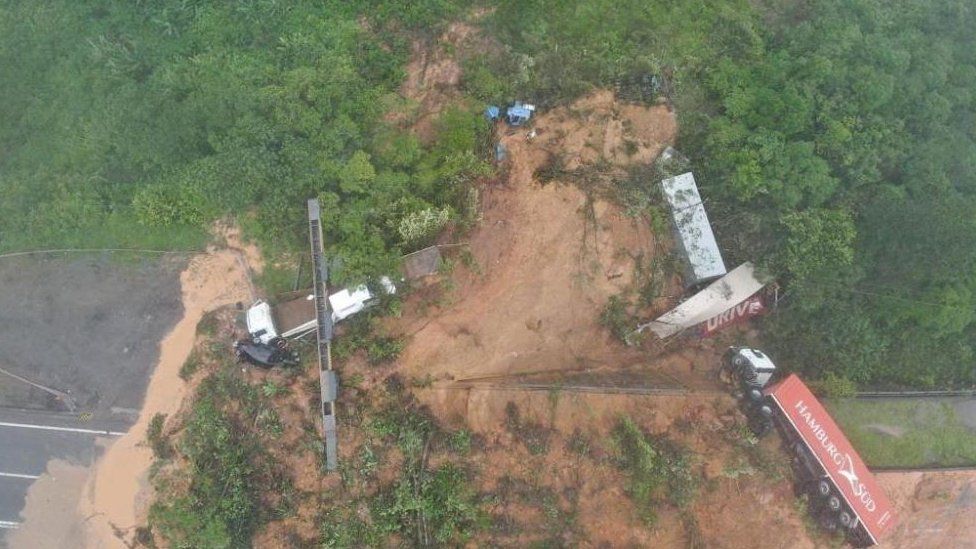
A landslide on a southern Brazilian highway has killed at least two people and left dozens missing.
Authorities said a torrent of mud fell on the BR-376 highway in the state of Paraná, damaging more than 21 vehicles.
Rescue workers on the scene said the search was complicated by bad weather and the remote location.
A thermal camera is being used by firefighters to locate possible survivors. Up to 30 people are still believed to be missing.
IMAGE SOURCE,REUTERS Image caption, At least 15 cars and six lorries were engulfed in the mudslide.
Aerial footage shows one lorry precariously hanging over the side of a bridge. Rescue workers found the body of its driver, who was identified as 62-year-old João Pires.
A relative said he had worked as a lorry driver for most of his life and was well acquainted with the road where the accident happened.
Another lorry driver whose cab was buried in the mud was rescued with only minor injuries. José Altair Biscaia, 43, recorded a video of himself on his phone as he was trapped.
“I’m alive, thank God. I’m in the middle of the mud, just in a little corner which is left of the lorry. I’m full of cuts. but I’m alive,” he can be heard saying in the footage.
The inside of his cab looks mangled and there are blood stains. Outside the window there appears to be a wall of solid mud.
So far, six survivors have been located. Among them is the mayor of the coastal town of Guaratuba, Roberto Justus.
In a video uploaded to social media after his rescue, Mr Justus said it was “a miracle” he was alive.
“It was horrible,” he said. “The mountain just fell on top of us. It swept away every last car.”
He told local radio station Rádio Gaúcha that he and his driver, Cláudio Margarida, had broken the windows of their car to get out.
“A sea of mud, trees, branches hit the door of the car. I was on the passenger seat and the impact was such that our car was lifted. The mud kept coming and coming and lifting us until we were on top of the vehicles on the opposite carriageway,” he recalled.
The mudslide was triggered by days of heavy rain in Paraná.
Landslides are not uncommon in Brazil and hillside communities are often swept away when sodden mountainsides collapse.
In February, more than 200 people were killed in landslides in the town of Petrópolis in Rio state.
Americans are fearing that Russia’s invasion of Ukraine could lead to a knock-on effect in Europe and possibly influence China to do something similar in Taiwan, the Wall Street Journal reported.
According to a national defence survey, while Americans support the US government sending weapons and providing financial support for Kyiv, they have less trust in their military leadership.
In total, the survey found that 57 percent of respondents said the US needs to continue supporting Ukraine, while 33 percent said they should focus on domestic issues and avoid angering Russia.
The U.S.has sent more than $19 billion in military aid to Ukraine this year, which 39% of Americans said was the right amount.
Despite high daily case numbers, Chinahas signalled a shift in its Covid stance by moving to relax some virus restrictions.
On Thursday, dozens of districts in Shanghai and Guangzhou, both of which have seen an increase in cases, were released from lockdown.
The country’s vice-premier also declared that it was in a “new situation.”
It comes as China faces widespread opposition to its zero-Covid policy.
The unrest was triggered by a fire in a high-rise block in the western Xinjiang region that killed 10 people last week. Many Chinese believe long-running Covid restrictions in the city contributed to the deaths, although the authorities deny this.
It led to days of widespread protests across various cities, which have since ebbed amid heavy a heavy police presence.
Restrictions in major cities like Guangzhou were abrupted lifted on Wednesday, hours after the city saw violent protests that resulted in clashes between police and protesters.
A community in the capital Beijing also allowed Covid cases with mild symptoms to isolate at home, according to a Reuters report – a far cry from protocols earlier this year which saw entire buildings and communities locked down, sometimes as a result of just one positive case.
Other major cities like Shanghai and Chongqing also saw some rules relaxed.
It comes as one of China’s most senior pandemic officials, vice-premier Sun Chunlan, said the virus’ ability to cause disease was weakening.
“The country is facing a new situation and new tasks in epidemic prevention and control as the pathogenicity of the Omicron virus weakens, more people are vaccinated and experience in containing the virus is accumulated,” she said, according to a Reuters report.
This comes in stark contrast to an earlier message from authorities that the country needed to maintain a strict zero-Covid policy.
Former state media editor Hu Xijin, who now offers pro-Communist Party comments on Twitter, insisted the moves showed China was now “speeding up to cast aside large-scale lockdowns”.
Following the lifting of lockdown measures in many parts of Guangzhou, Lijin Hong, an associate professor at Sun Yat-sen University, said it would “take a while for the city to recover. Yet is is awesome to see Guangzhou city again.”
China has in recent days recorded its highest number of daily Covid cases since the pandemic began – with more than 36,000 cases recorded on Wednesday.
However, the numbers are still tiny for a country of 1.4 billion people and officially just over 5,200 have died since the pandemic began.
That equates to three Coviddeaths in every million in China, compared with 3,000 per million in the US and 2,400 per million in the UK, although direct comparisons between countries are difficult.
The United Nationsand its partners have launched an unprecedented $51.5 billion aid appeal for 2023, with tens of millions more people expected to require humanitarian assistance.
According to the UN Global Humanitarian Overview, an additional 65 million people will require assistance next year, bringing the total to 339 million across 68 countries.
That is more than 4% of the world’s population, or roughly the population of the United States.
“It’s a phenomenal number and it’s a depressing number,” UN Emergency Relief Coordinator Martin Griffiths told reporters in Geneva on Thursday, adding that it meant “next year is going to be the biggest humanitarian programme” the world has ever seen.
“Humanitarian needs are shockingly high, as this year’s extreme events are spilling into 2023,” Griffiths said, citing the war in Ukraine and drought in the Horn of Africa.
“For people on the brink, this appeal is a lifeline.”
More than 100 million people have been driven from their homes as conflict and climate change heighten a displacement crisis.
The overlapping crises have already left the world dealing with the “largest global food crisis in modern history”, the UN warned.
It pointed out that at least 222 million people across 53 countries were expected to face acute food shortages by the end of this year, with 45 million of them facing the risk of starvation.
“Five countries already are experiencing what we call famine-like conditions, in which we can confidently, unhappily, say that people are dying as a result,” Griffiths said.
Those countries – Afghanistan, Ethiopia, Haiti, Somalia and South Sudan – have seen portions of their populations face “catastrophic hunger” this year, but have not yet seen countrywide famines declared.
Meanwhile, nine months of war between Russia and Ukraine have disrupted food exports and about 45 million people in 37 countries are currently facing starvation, the report said.
This year’s appeal represents a 25 percent increase compared with last year.
But donor funding is already under strain with the multiple crises. The UN faces the biggest funding gap ever, with its appeals funded only about 53 percent in 2022, based on data through to mid-November.
“Humanitarian organisations are therefore forced to decide who to target with the funds available,” a UN statement said.
In a rape case involving US actor Danny Masterson, a jury in Los Angeles was unable to reach a decision.
Mr Masterson, best known for his role in the sitcom That 70s Show, was accused in the early 2000s of raping three women at his Hollywood home.
He had denied the charges, claiming that he was being persecuted because he was a member of the Church of Scientology.
The Los Angeles County District Attorney’s Office stated that it was considering its next steps in the case.
Mr. Masterson’s lawyers did not immediately respond to an Associated Press request for comment.
A retrial has been scheduled for March.
Mr Masterson, 46, was charged in 2020 with raping three women, who were all in their 20s, between 2001 and 2003.
The accusations were made in 2017, during the #MeToo movement which saw many Hollywood stars accused of sexual assault.
As a result, Mr Masterson was written out of the Netflix show The Ranch. He responded by saying that he had not been charged or convicted of a crime, and that in the climate at the time “it seems as if you are presumed guilty the moment you are accused”.
If convicted, he could face 45 years to life in prison.
Deliberations in the case began in mid-November, but soon reached a deadlock which could not be resolved.
In a statement, the attorney’s office said: “While we are disappointed with the outcome in this trial, we thank the jurors for their service.” It added: “We also want to give our heartfelt appreciation to the victims for bravely stepping forward and recounting their harrowing experiences.”
Two of the women involved in the case alleged that the Church of Scientology, to which they and Mr Masterson belonged, had discouraged them from reporting the alleged rapes.
The Church has strongly denied pressurising victims.
The charges came after a three-year investigation by the Los Angeles Police Department. Prosecutors did not file charges in two other cases because of insufficient evidence and the statute of limitations expiring.
Mr Masterson played the role of Steven Hyde in That 70s Show between 1998 and 2006, alongside Ashton Kutcher and Mila Kunis.
Elon Muskhas stated that he and Apple CEO Tim Cook have “resolved the misunderstanding” regarding Twitter’s possible removal from the app store.
On Monday, Mr Musk accused Apple of threatening to remove the platform from its app store and announced that the company had halted the majority of its advertising on the site.
However, the Twitter CEO stated on Wednesday, “Tim was clear that Apple never considered doing so.”
He did not specify whether Apple’s advertising was discussed during the meeting.
The meeting between the two tech titans comes as many businesses have stopped spending on Twitter due to concerns about Mr Musk’s content moderation plans for the site – a major setback for the company, which relies on such spending for the majority of its revenue.
Entering a feud on Monday, Mr Musk accused Apple of “censorship” and criticised its policies, including the charge it levies on purchases made on its app store.
“Apple has mostly stopped advertising on Twitter. Do they hate free speech in America?” he said.
But he later told his followers he was meeting with Mr Cook at Apple’s headquarters, adding: “Good conversation. Among other things, we resolved the misunderstanding about Twitter potentially being removed from the App Store. Tim was clear that Apple never considered doing so.”
News of the meeting with Apple came after Mr Musk was told he faced “huge work ahead” to bring Twitter into compliance with new European Union rules on disinformation or face a possible ban.
EU commissioner Thierry Breton made the comments in a meeting with Mr Musk on Wednesday, saying the social media site would have to address issues such as content moderation, disinformation and targeted adverts.
Approved by the EU earlier this year, the Digital Services Actis seen as the biggest overhaul of rules governing online activity in decades, imposing new obligations on companies to prevent abuse of their platforms.
Major companies are expected to be in compliance with the law some time next year.
If firms are found to be violation, they face fines of up to 6% of global turnover – or a ban in the case of repeated serious breaches.
In a statement after the meeting, Mr Breton said he welcomed Mr Musk’s assurances that he would get Twitter ready to comply.
“Let’s also be clear that there is still huge work ahead, as Twitter will have to implement transparent user policies, significantly reinforce content moderation and protect freedom of speech, tackle disinformation with resolve, and limit targeted advertising,” he said.
“All of this requires sufficient AI [Artificial Intelligence] and human resources, both in volumes and skills. I look forward to progress in all these areas and we will come to assess Twitter’s readiness on site.”
The EU plans to conduct a “stress test” in 2023 ahead of a wider audit, his office said.
Since his $44bn takeover of Twitter last month, Mr Musk has fired thousands of staff, reinstated formerly banned users such as Donald Trump and stopped enforcing other policies, such as rules aimed at stopping misleading information on coronavirus.
The moves have alarmed some civil rights groups, who have accused the billionaire of taking steps that will increase hate speech, misinformation and abuse.
In a blog post on Wednesday, Twitter said none of its policies had changed, but that it was experimenting in an effort to improve the platform more quickly and would rely more on steps to limit the spread of material that violate its rules – offering “freedom of speech but not freedom of reach”.
“Our trust & safety team continues its diligent work to keep the platform safe from hateful conduct, abusive behavior, and any violation of Twitter’s rules,” the company added.
“The team remains strong and well-resourced, and automated detectionplays an increasingly important role in eliminating abuse,” it said.
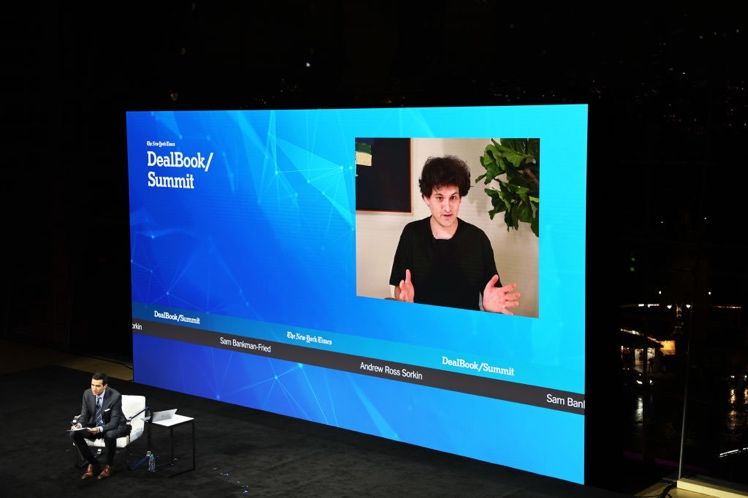
Sam Bankman-Fried, the former CEO of the defunct cryptocurrencyexchange FTX, has denied any wrongdoing.
In his first public appearance since the collapse, the man nicknamed the “King of Crypto” told The New York Times that he had a “bad month” and had almost no money left.
FTX, which was once valued at $32 billion (£26.5 billion), collapsed last month.
Many investors have been unable to withdraw funds from the now-defunct global exchange.
Mr Bankman-Fried, 30, also stated that his lawyers advised him not to speak publicly, but he disregarded their advice.
He denied having moved any personal money out of FTX himself – saying he now has “close to nothing.”
Speaking from The Bahamas, he said he had one credit card left which had around $100,000 of debt on it.
In the interview he said he had not deliberately misled investors, adding: “I didn’t ever try to commit fraud.”
However, asked several times about details of money movements between FTX and other entities, including the trading firm he owned, Alameda Research, he at times seemed sketchy in detail.
He also said the company had indulged in “greenwashing” where firms engage in environmental projects for publicity.
Mr Bankman-Fried was once viewed as a young version of legendary US investor Warren Buffet, and as recently as late October had a net worth estimated at more than $15bn.
However, he says, he underestimated the sheer amount of cash needed to cover FTX customers’ withdrawals – leading to a run on the exchange.
FTX declared bankruptcy soon after. Mr Bankman-Fried stepped down as CEO on 11 November.
According to a court filing earlier this month, FTX currently owes its 50 largest creditors almost $3.1bn.
Mr Bankman-Fried had become well known in Washington DC as a political donor, supposedly supporting pandemic prevention and improved crypto regulation.
But in his talk with Times reporter Andrew Ross Sorkin, Mr Bankman-Fried confessed much of his Washington DC work had been PR “masquerading as do-gooderism.”
IMAGE SOURCE,GETTY IMAGES Image caption, Sam Bankman-Fried was speaking from the Bahamas
Mr Bankman-Fried said for now he was not concerned about potential criminal or civil liability.
“There’s a time and a place for me to thinkabout myself and my own future,” he said after starting and stopping several times. “I don’t think this is it.”
When asked if he had been truthful in his responses, Mr Bankman-Fried said he was as truthful as he knowledgeably could be. “I don’t know of times when I lied,” he said.
Though he did not provide evidence to support it, SBF said he believed FTX US was solvent and could in fact pay back American investors.
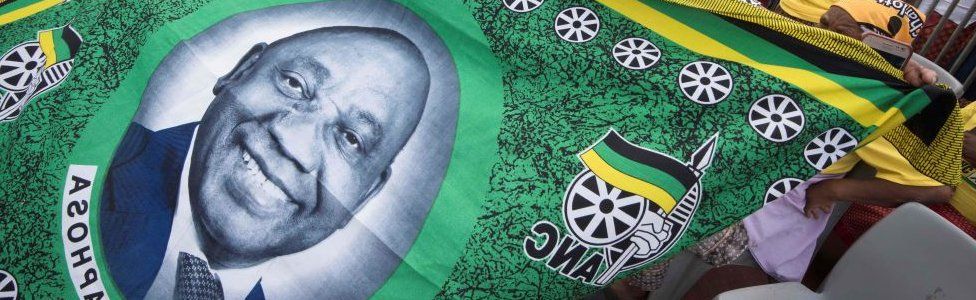
The president is accused of covering up a $4 million (£3.3 million) theft from his farm in 2020, including kidnapping and bribing the burglars.
According to a leaked report from an independent panel, Mr Ramaphosa abused his position and may have violated an anti-corruption law.
He has denied wrongdoing and stated that the money was earned by selling buffalo.
The panel’s findings have been delivered to parliament, which will review them and decide whether to initiate impeachment proceedings next week.
Mr Ramaphosa is less than a month away from a conference which will decide if he can run for a second term with his party, the African National Congress (ANC), in 2024. The incident could be particularly damaging as Mr Ramaphosa ran for office on an anti-corruption ticket.
The ANC will hold a meeting with its executive on Thursday, where it is expected that the issue will be discussed.
The Farmgate scandal erupted in June, when a former South African spy boss, Arthur Fraser, filed a complaint with police accusing the president of hiding a theft of $4m from his Phala Phala farm in the north-east of the country in 2020.
Mr Fraser, who is a close ally of former President Jacob Zuma, alleged that the money could have been the proceeds of money-laundering and corruption, and accused the president of kidnapping and bribing the burglars.
Holding such a large amount of money in dollars could violate foreign exchange control laws.
Mr Ramaphosa has confirmed a robbery, but said the amount stolen was less than that alleged, and denied attempting to cover it up.
Some $580,000 which had been paid in cash for buffalo was stolen from under sofa cushions in the farmhouse, he said.
“I did not ‘hunt’ for the perpetrators of the theft, as alleged, nor did I give any instructions for this to take place,” he wrote in a submission to the panel’s report, according to AFP news agency.
The panel concluded that there were many unanswered questions, calling it a “very serious matter”.
Little information was kept about the man who supposedly paid the money for buffalo,it said, adding that he had still not collected the animals two and a half years later.
The panel also said it was strange that the money had been kept hidden in a sofa, rather than in a safe until it could be lodged in a bank account.
“We think that the president has a case to answer on the origin of the foreign currency that was stolen, as well as the underlying transaction for it,” the report said. It added: “The president abused his position as head of state to have the matter investigated and seeking the assistance of the Namibian president to apprehend a suspect.”
Namibian president Hage Geingob has previously denied any involvement in the incident.
Seven things about Cyril Ramaphosa:
IMAGE SOURCE,AFP
Born in Soweto, Johannesburg, in 1952
Detained in 1974 and 1976 for anti-apartheid activities and launched the National Union of Mineworkers in 1982
Chairman of the National Reception Committee which prepared for Nelson Mandela’s release from prison in 1990
Became an MP and chairman of constitutional assembly in 1994
Moved full-time into business in 1997, becoming one of South Africa’s richest businessmen
On Lonmin board during 2012 Marikana massacre
Elected ANC leader in 2017 and on 15 February 2018 became president after the resignation of Jacob Zuma
Almost 1,000 people sleep in giant heated tents on an old airfield on Berlin’s outskirts. The German capital is struggling to house Ukraine’s refugees properly.
As winter deepens and Russia continues to attack Ukraine’s energy infrastructure, authorities here are rushing to build more emergency shelters in preparation for the arrival of up to 10,000 more people.
According to the most recent figures, a million Ukrainians have fled to Germany since the beginning of the war.
This has brought back memories of 2015 and 2016, when a comparable number of people sought asylum in the United States.
Germany, as before, extended a warm welcome. However, there are growing concerns about how to best accommodate such a large population.
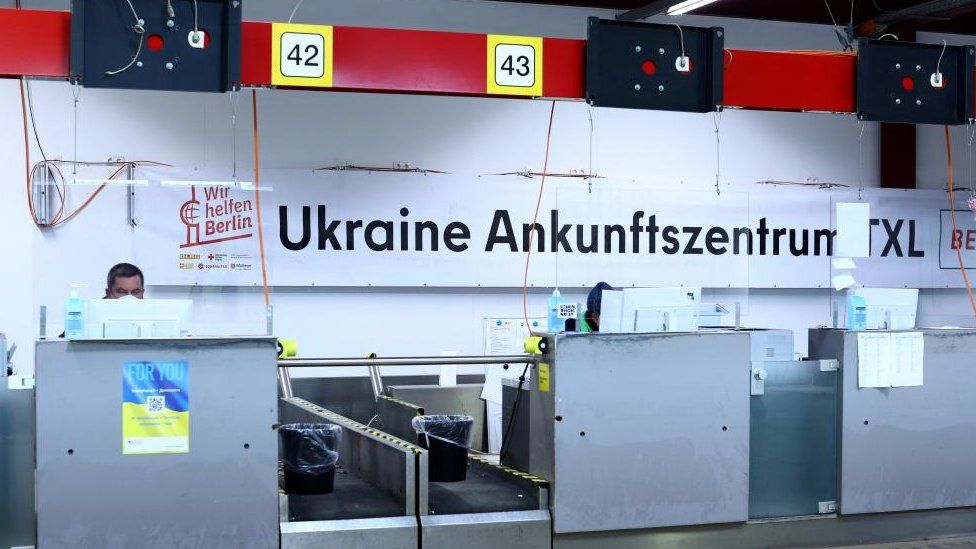
In Berlin, around 100 Ukrainians arrive every day at the city’s main reception centre for refugees which is sited in a terminal at a converted former airport.
Workers in brightly coloured tabards lead them past defunct baggage carousels to the old departure halls which are now filled with crowded trestle tables.
There’s food here, medical aid and a bed for a few nights.
It’s designed to be temporary; strangers sleep in bunks in shared cubicles or tents.
But many of the people here will stay longer; it’s getting harder to find permanent accommodation in a city where the rental market is under pressure, and sending people on to other parts of Germany is getting harder too.
IMAGE SOURCE,REUTERS Image caption, Germany is now housing many refugees at Berlin’s former Tegel airport
Despite the logistical difficulties, there’s a relaxed atmosphere in the centre.
Ms Tümmler and her colleagues appear committed to making life as easy and comfortable as possible for the people here.
They’re trying to adapt to the needs of longer-term guests. They’ve bought washing machines, they’re trying to provide some entertainment, and they’re extending the educational facilities for the 300 children on site, some of whom are home-schooling via video link to their Ukrainian schools.
They have learnt, they say here, from the experience of 2015.
But their positivity is not mirrored elsewhere.
One politician from northwest Germany recently used an editorial in a national newspaper to warn that communities like his were “massively challenged” by numerous Ukrainian refugees as well as a growing influx of asylum seekers.
The number of people seeking asylum has indeed risen, fuelled largely by people from Syria and Afghanistan.
Getty Images
I expect tens, if not hundreds of thousands more Ukrainian women and children… already more migrants are living in many communities than in the year of the 2015-16 refugee crisis
Frederik Paul said he was reminded of the atmosphere during the migrant crisis when an initially warm welcome gave way to a bitter national debate over how much support Germans could and should offer to those seeking asylum.
He echoed comments made earlier in the year by Martina Schweinsburg, a district councillor from Thuringia, who said her area had relied on private landlords to house Ukrainians – mainly women, children and elderly people at first – but were now reluctant to do so.
“Our capacities are exhausted,” she said. “Our backs are against the wall.”
The mood is darkening; the authorities recorded 65 attacks on refugee accommodation so far this year, a significant increase on 2021.
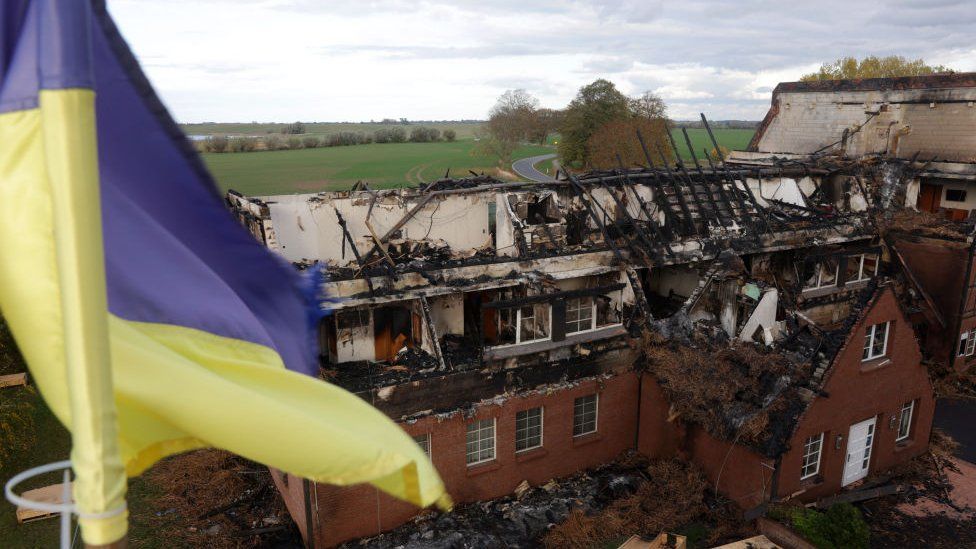
IMAGE SOURCE,GETTY IMAGES Image caption, This hotel sheltering Ukrainian refugees was burned down in a suspected arson attack last month
And a recent survey for the national broadcaster found that concerns about immigration had increased in the last year: 53% of those asked were concerned that too many people were coming to Germany, up by 11% from September 2021.
Those fears and that social division are exactly what Russia’s Vladimir Putin hassought to exploit in his latest campaign to render Ukraine uninhabitable and drive yet more of its citizens into Europe.
That will test the tolerance of this German government, which came to power with a far more liberal attitude towards refugees than its predecessor.
How this country, itself much changed by the experience of the migrant crisis, reacts will matter.
On Wednesday, Russia’s upper house of parliament unanimously voted to strengthen a contentious law prohibiting what the bill refers to as “LGBT propaganda,” making it applicable to Russians of all ages.
After being passed by the Federation Council, the bill must be signed into law by Russian President Vladimir Putin. On November 24, it was approved by the State Duma, Russia’s lower house of parliament.
The proposed law prohibits all Russians from promoting or “praising” homosexual relationships or publicly implying that they are “normal,” as well as “propaganda” of paedophilia and gender reassignment in advertising, books, and films.
The original version of the law, passed in 2013, prohibited “propaganda of non-traditional sexual relationships” among minors. It is now being applied to adults by Russian legislators.
Individuals who spread what the bill calls “LGBT propaganda” or attempt to do so, will be fined up to 400,000 rubles ($6,600). Legal entities can be fined up to 5 million rubles ($82,100). Foreigners can be arrested for up to 15 days or deported, according to the text of the bill.
“The louder they squeal in the West, the more we will be sure that we are on the right track. This topic should become a sin in Russia like it is in many of our religions,” said one of the Senators, Taimuraz Dzambekovich, before voting for the bill to pass.
The bill says that materials published online that include information about pedophilia, sex changes or so-called LGBT propaganda will be included in the list of websites that will be monitored or blocked by Russia’s Internet watchdog Roskomnadzor.
As a result of the hijacking of an eight-ton truck carrying exam papers at the R21 in Gauteng, some students will have to write replacement papers for two subjects.
The delivery was intended for Limpopo technical vocational education and training colleges.
An education official confirmed that engineering question papers were in the vehicle, which was later discovered abandoned in Delmas, Mpumalanga.
The affected subjects are part of engineering studies. Students sitting their N6 are due to write the technical subject “power machine” on Thursday while those doing their N5 will write “strength of materials and structures” on Friday.
The truck had left a depot in Kempton Park and was en route to Limpopo through the R21 when it was hijacked at around 2am on Tuesday. Students across the country would have to write replacement papers for the two subjects as a result of the hijacking.
Mpumalanga police spokesperson Brig Selvy Mohlala said they were verifying with the courier company the consignment that was being carried in the vehicle.
“I cannot confirm whether the parcels were exam papers. The hijacked truck was recovered with some items and we were told some items were missing. We were told the cargo was destined for Limpopo.”
DA spokesperson for education in Mpumalanga Jane Sithole said after discovering the suspected hijacked truck, police found it contained exam papers.
“The police called DA councillors in the area to request contact numbers for the Mpumalanga education department and their counterparts in Gauteng.”
Sithole said Diana Bath, a councillor in the Victor Khanye local municipality, called the Gauteng education department.
“She found the truck was from Gauteng and was on its way to deliver exam papers in Limpopo. The DA is concerned that in this technological era, exam papers continue to be transported in trucks, exposing them to hijacking.”
A spokesperson from higher education department, Ishmael Mnisi confirmed the incident on Tuesday morning. The truck was “carrying some freight, however not only TVET question papers”.
“The vehicle and some freight was recovered and the matter is with law enforcement agencies.”
Mnisi who confirmed that the exam papers were destined for Limpopo, said the TVET exams would not be affected by the incident “as alternative measures are in place for Thursday and Friday’s exams”. Mnisi did not indicate what the alternative measures are.
In a video statement released two days after her arrest, Farideh Moradkhani, a niece of Iran’s Supreme Leader Ayatollah Ali Khamenei, called on foreign governments to cut ties with the Iranian regime.
According to a tweet from her brother Mahmoud Moradkhani, Farideh Moradkhani, a well-known rights activist who opposes the Iranian regime, was arrested on Wednesday when she went to the prosecutor’s office to serve a court order.
Farideh Moradkhani, in a video statement shared by her brother two days later, urged people around the world to implore their governments to cut ties with the Iranian regime amid nationwide protests, and to “stop any dealings with this regime.”
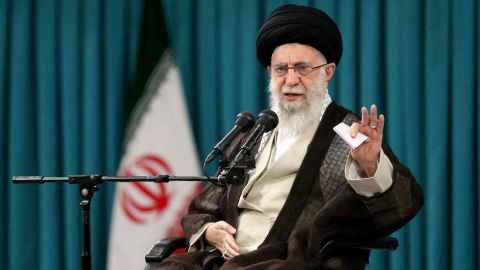
Iran’s Supreme Leader Ayatollah Ali Khamenei speaks during a meeting with a group of students in Tehran, Iran, on November 2. West Asia News Agency/Reuters
“Oh, free people, be with us and tell your governments to stop supporting this murderous and child-killing regime. This regime is not loyal to any of its religious principles and does not know any laws or rules except force and maintaining its power in any possible way,” she said.
“Now in this critical moment in history, all of humanity is observing that Iranian people, with empty hands, with exemplary courage and bravery are fighting with the evil forces,” she said. “At this point in time, the people of Iran are carrying the burden of this heavy responsibility alone by paying with their lives.”
Farideh Moradkhani said Iranians were at war with governments who support the Iranian regime, and called on democratic countriesto recall their representatives from Iran and expel the representatives of Iran from their own countries.
“What is urgently needed is not to support this regime that killed thousands of Iranians in four days in November 2019 while the world was only watching,” she added.
Farideh and Mahmoud Moradkhani are the children of Ali Tehrani, a cleric and longtime opposition figure who was married to the supreme leader’s sister Badri Hosseini Khamenei. Tehrani died last month.
In a statement shared on Thursday, Human Rights Activists news agency (HRANA) confirmed Farideh Moradkhani’s arrest on Wednesday and said she was “imprisoned after an appearance at Evin courthouse to serve her 15-year sentence.”
HRANA had previously reported that she was last arrested by security forces in January this year, and released on bail “until the end of legal proceedings.” Farideh Moradkhani has been detained on previous occasions “due to her civil activities”, according to HRANA.
CNN cannot independently verify when Farideh Moradkhani recorded the video statement shared by her brother on YouTube on Friday, and has reached out to Mahmoud Moradkhani for clarification.
Iran’s ongoing protest movement was initially sparked by the death of 22-year-old woman Mahsa Amini in the custody of Iran’s morality police in September.
The unprecedented national uprising has taken hold of more than 150 cities and 140 universities in all 31 provinces of Iran, according to United Nations High Commissioner for Human Rights Chief Volker Turk.
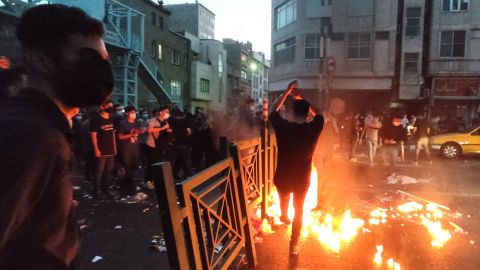
Iranian demonstrators taking to the streets of the capital Tehran on September 21 during a protest for Mahsa Amini. AFP/Getty Images
More than 14,000 people, including children, have been arrested in connection with the protests, according to Turk. He said that at least 21 of them currently face the death penalty and six have already received death sentences.
The violent response of Iran’s security forces toward protesters has shaken diplomatic ties between Tehran and Western leaders.
Over the weekend, Khamenei praised the country’s Basij paramilitary force for its role in the deadly crackdown on anti-regime protesters.
Meeting with Basij personnel in Tehran on Saturday, Khamenei described the popular protest movement as “rioters” and “thugs” backed by foreign forces and praised “innocent” Basij fighters for protecting the nation.
The Basij is a wing of Iran’s Revolutionary Guard and has been deployed to the streets as protests have swelled.
Officials have revealed that an explosion occurred on Wednesday at Ukraine’s embassy in Madrid, injuring one Ukrainian employee who was handling a letter addressed to the country’s ambassador to Spain.
According to Spain’s foreign ministry, the individual was slightly injured and is being treated at a hospital, while police are investigating.
It was later revealed that the envelope was intended for Kyiv’s ambassador to Spain, Serhil Pohoreltsev.
In response, Ukraine has increased security at all of its embassies.
Oleg Nikolenko, a spokesperson for Ukrainian Foreign Minister Dmytro Kuleba, said the life of the injured employee “is not at risk,” and descsribed the staffer’s position as “commandant.”
Police say it is too early to know whether the explosion took place when the embassy worker tried to open an envelope, or simply move it. Nikolenko said no one else had been injured, and that Kuleba “has issued an urgent instruction to step up security at all Ukrainian embassies abroad” following the incident.
“Whoever is behind this explosion they will not succeed in intimidating Ukrainian diplomats or stopping their daily work to strengthen Ukraine and to counter Russian aggression,” Nikolenko quoted Kuleba as saying.
Spanish Foreign Affairs Minister Jose Manuel Albares spoke to Ambassador Pohoreltsev after the incident, Madrid said. The person injured was a Ukrainian worker, according to the statement.
Spain, a NATO country, has sent military equipment to Ukraine to help its armed forces fight Russia’s invasion.
An Algerian court sentenced 49 people to death for lynching an innocent good Samaritan painter.
Djamel Ben Ismail was dragged into the main square of the Algerian village of Larbaa Nath Irathen and attacked by locals who wrongly accused him of starting devastating wildfires – apparently because he was not from the area – but the 38-year-old had actually travelled to the Kabylie region, 200 miles from his home, to help battle the blazes of August 2021, tweeting that he was going to “give a hand to our friends”
His murder shocked the country, particularly after graphic images were shared on social media.
A mammoth high-security trial involved more than 100 suspects, with most found guilty of playing a part in Mr Ben Ismail’s killing.
Those given the death penalty are likely to face life in prison instead because Algeria has had a moratorium on executions for decades.
Some 38 others were sentenced to between two and 12 years in prison, said lawyer Hakim Saheb, from a collective of volunteer defence lawyers at the trial.
After arriving in Larbaa Nath Irathen and being wrongly accused, police said Mr Ben Ismail was dragged out of a police station, where he was being protected, and attacked.
Among those on trial were three women and a man who stabbed his inanimate body before he was burnt.
Police said photographs posted online helped identify the suspects.
Mr Ben Ismail’s family asked why those filming did not save him instead.
The movement’s leader, Ferhat M’henni, based in France, was among them.
Algerian authorities accused MAK of ordering the fires.
Defence lawyers said confessions were coerced under torture and called the trial a political masquerade aimed at stigmatising Kabylie.
At the time of the fires, the region was the last bastion of the “Hirak” pro-democracy protest movement, which helped bring down long-serving president Abdelaziz Bouteflika.
Hundreds of Algerian citizens have been jailed for trying to keep the Hirak movement alive, with marches banned by Algeria’s army-backed government.
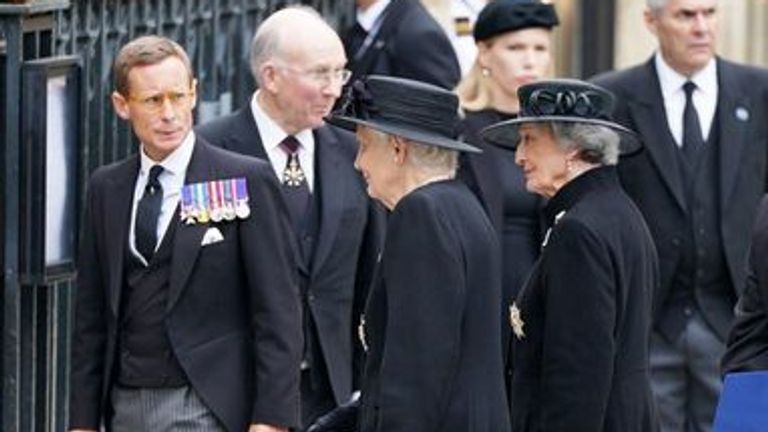
Lady Susan Hussey, 83, has “profoundly apologised for the hurt caused” and “stepped down from her honorary role with immediate effect,” according to a spokesperson.
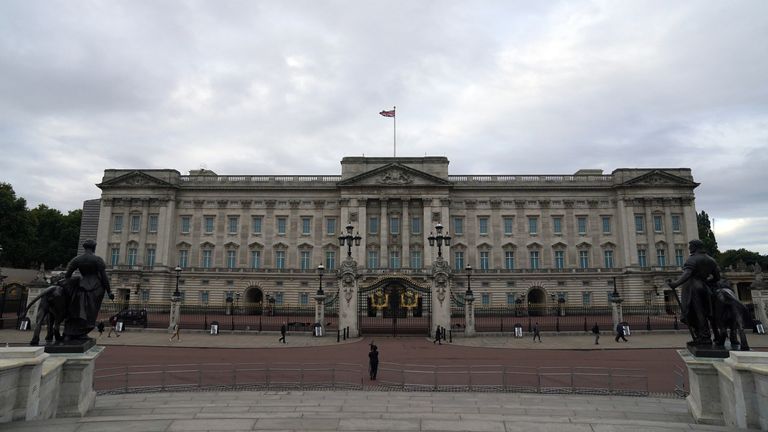
The godmother of Prince William has resigned from her position at Buckingham Palace after making “unacceptable” remarks at a reception hosted by the Queen Consort.
Lady Susan Hussey, 83, resigned after asking Ngozi Fulani, CEO of Sistah Space, where she “really came from” at a palace reception on Tuesday.
A spokesperson for her godson, the Prince of Wales, said the news was “really disappointing.”
“Obviously, I wasn’t there, but racism has no place in our society. The comments were unacceptable, and it is right that the individual has stepped aside with immediate effect,” the Kensington Palace spokesperson said.
Ms Fulani, who is black, works as an advocate for survivors of domestic abuse and described the exchange as a “violation”.
She wrote on Twitter that Lady Hussey, who she refers to as ‘Lady SH’, “approached me, moved my hair to see my name badge” and then insisted on asking her “what part of Africa are you from”.
Despite her saying she is British, the aide said: “I can see I am going to have a challenge getting you to say where you’re from.”
It comes after Meghan, Duchess of Sussex, claimed last year that a member of the royal household raised concerns about what colour skin her son Archie would have before he was born.
The palace responded by saying that “issues raised, particularly that of race” were “concerning” and the matters would be addressed privately.
Buckingham Palace said of Tuesday’s events: “We take this incident extremely seriously and have investigated immediately to establish the full details.
“In this instance, unacceptable and deeply regrettable comments have been made. We have reached out to Ngozi Fulani on this matter, and are inviting her to discuss all elements of her experience in person if she wishes.
“In the meantime, the individual concerned would like to express her profound apologies for the hurt caused and has stepped aside from her honorary role with immediate effect.
“All members of the household are being reminded of the diversity and inclusivity policies which they are required to uphold at all times.”
Image: Ngozi Fulani (centre left) and the Queen consort (centre) at the palace on Tuesday
In an interview with LBC, Ms Fulani said “nobody from the palace has spoken to me”, but she would be “happy to have a conversation to bring about a positive solution”.
Reflecting further, she said: “To be honest I wish that the lady could be spoken to and know the damage she has caused and preferably not be front-facing.
“But for her to resign, that has nothing to do with me. I don’t feel good about that. She’s an elder and in my culture we respect elders.
Lady Hussey was married to Marmaduke Hussey, former chairman of the BBC’s board of governors and was one of the Queen’s closest confidants and ladies in waiting for more than 50 years.
Despite strict COVID restrictions, she accompanied Her Majesty to Prince Philip’s funeral.
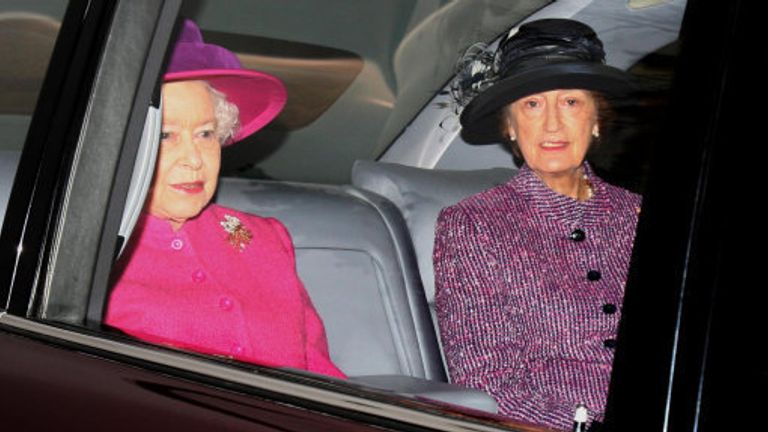
Image: The Queen and Lady Hussey in 2011
Image: Lady Hussey (right) attends the Queen’s funeral at Westminster Abbey
Ms Fulani said the incident left her with “mixed feelings” about the event on stopping violence against women and girls, where other guests included Ukraine’s first lady Olena Zelenska and Jordan’s Queen Rania.
Responding to messages of support, she added that being unable to report the issue or tell the Queen Consort about it added to her distress.
“There was nobody to report it to. I couldn’t report it to the Queen Consort, plus it was such a shock to me and the other 2 women, that we were stunned to temporary silence,” she wrote.
“I just stood at the edge of the room, smiled & engaged briefly with who spoke to me until I could leave.”
Mandu Reid, leader of the Women’s Equality Party, who was stood next to Ms Fulani and witnessed the exchange, said she was “stunned”.
She told Sky News: “It was really uncomfortable. If Ngozi was a white woman there is no way that line of questioning would have taken place. It’s not what you expect.”
“We weren’t gate crashers, but we were made to feel almost like trespassers.”
Asked if she was reassured by Lady Hussey stepping down and apologising, she said no – and that the royals need to “step up” and acknowledge that “institutional racism is part of the culture”.
Based in Hackney, east London, Ms Fulani’s organisation Sistah Space is a support organisation for women of African and Caribbean heritage affected by abuse.
It said in a statement: “We at Sistah Space would like to raise awareness about this issue rather than shame anotherindividual.”
Domestic abuse is one of the key causes championed by the Queen Consort since she became part of the Royal Family.
Few things are more iconically French than the humble baguette.
After all, the country is said to produce 16 million people per day.
Nonetheless, the baguette has been on the decline in recent years, as traditional bakeries compete with the rise of large supermarkets and the growing popularity of sourdough.
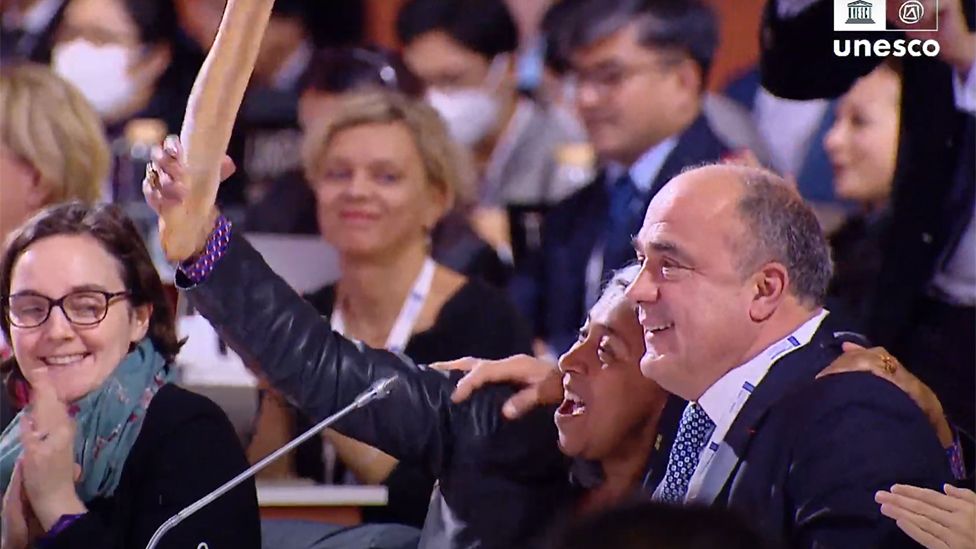
But now there’s reason to rejoice, as Unesco has added the baguetteto its list of “intangible cultural heritage.”
The body announced it had added “artisanal know-how and culture of baguette bread” to its list of 600 other items, joining things like traditional tea making in China and a Korean mask dance known as “talchum” – both also included for the first time in 2022.
Its inclusion “celebrates the French way of life”, Unesco chief Audrey Asoulay said, adding: “The baguette is a daily ritual, a structuring element of the meal, synonymous with sharing and conviviality.
“It is important that these skills and social habits continue to exist in the future.”
‘Envied around the world’
The exact provenance of the baguette is not known: some suggest the bread was ordered by Napoleon because it would be easier for soldiers to carry, while others suggest it came along later – an easy bread for workers to tear and share without the need of a knife in Paris. Others still credit an Austrian baker in the 1830s for its shape.
However, the baguette as we know it today was only officially named just over 100 years ago, in 1920. It was then that strict rules about what classed as a baguette were put in place – standardised at 80cm (30ins) and 250g (8oz). It even had a fixed price until 1986.
By the middle of the 20th Century, the baguette had won over the country. But since 1970, 400 artisanal bakeries have closed down each year, with the total number across France dropping from 55,000 to 35,000 today, according to news agency AFP.
And yet it remains key to French identity, with President Emmanuel Macron saying the baguette was “envied around the world”. Mr Macron – who has long fought to get the baguette added to the list – noted after the announcement that the baguette was “250 grams of magic and perfection in our daily lives”.
IMAGE SOURCE,UNESCO Image caption, The French delegation celebrated the announcement by waving baguettes in the air
“The baguette is flour, water, salt, yeast – and the know-how of the craftsman,” Dominique Anract, president of the baker’s federation, said in a press release.
Parisian baker Priscilla Hayertz acknowledged to AFP that it was “a basic product” but one “that affects all socio-cultural categories, whether you’re rich, poor… it doesn’t matter, everyone eats baguettes”.
The European Union (EU)has expressed its commitment to expand cooperation with Africa in a range of aspects, including energy, food, and migration.
Following their 11th Commission-to-Commission meeting, co-chaired by European Commission President Ursula von der Leyen and African Union Chairperson Moussa Faki Mahamat, the EU and the African Union issued a joint statement, noting that the ongoing conflict in Ukraine had harmed the economies of Europe and Africa. It was noted that current conflicts and tensions have exacerbated global food and energy security.
“Africa and Europe are bound by geography and a common destiny. Through sustainable investments worth at least €150 billion, the Global Gateway Africa-Europe Investment Package is the EU’s positive and substantial offer, which will help strengthen the continent’s resilience,” said von der Leyen.
Talking about the need to expand cooperation between the European Union and Africa, Mahamat, for his part, said: “We value our strategic partnership with the European Union and its active support to Agenda 2063. The destinies of our two continents are interlinked and we want to continue building a partnership of equals for the benefit of sustainable development for all.”
Aminu Adamu, an undergraduate of the Federal University, Dutse, Jigawa State who was detained by security officials over a post on Twitter alleging that the wife of President Muhammadu Buhari, Aisha Buhari, “was feeding fat on poor people’s money,” has been remanded at Suleja Prison in Niger State.
While addressing press men, his lawyer, CK Agu said the student was charged to a court in Abuja.
Nigeria’s President Muhammadu Buhari and his wife, Aisha Buhari
“Even in the court session yesterday, we notified the judge about the efforts made to have him released on bail, but we did not receive any reply from the police. We applied to the court to release the student on bail on health grounds and the fact that he will sit for the exam on 5, December. The court has ordered the police to provide the bail application before it for consideration between Tuesday and Wednesday,” Agu was quoted to have said.
Earlier, the Executive Director, Human Rights Writers Association of Nigeria, Emmanuel Onwubiko, said Aminu’s arrest showed the level of rot in Nigeria’s security system.
He said, “It is a very sad development. Whether it was the DSS or police that arrested the guy, it shows that the government has continued to deploy security assets to chase after gossip. They go to websites and social media in search of those gossiping about the President, his wife and his children, to arrest them.”
This week, Dwayne Johnson made an unexpected appearance at a Hawaii 7-Eleven. But he wasn’t there to get a quick drink; he was there to make amends for his childhood sins.
If the Rock casually walking into a 7-Eleven wasn’t strange enough, things got even stranger when the superstar presented hundreds of Snickers bars at the counter.
It turns out that the Rock didn’t buy all that candy because he loves snickers, but instead because he wanted to right his wrongdoings as a teenager when he was a local resident of the Island. The”Black Adam” actor revealed that he used to steal a Snickers bar every day when he was 14 before his gym sessions and use them as pre-workout.
His family was “broke as hell”, hence why he couldn’t muster up enough change buy the sweet treat. “I finally exorcised this damn chocolate demon that’s been gnawing at me for decades”, said a relieved Rock on his Instagram.
I finally exorcised this damn chocolate demon that’s been gnawing at me for decades
Luckily the clerk of the store saw the funny side, despite having to count the huge pile of chocolate bars presented to him by the actor. Johnson also paid for all the food and drinks of those customers that were in the store at the time.
The gesture certainly makes up for the Rock’s bad teenage habits. “We can’t change the past and some of the dumb stuff we may have done, but every once in a while, we can add a little redeeming grace note to that situation – and maybe put a big smile on some stranger’s faces”, he said.
Authorities announced on Tuesday that Janusz Walus, the man responsible for the death of South African anti-apartheid leader Chris Hani over three decades ago, was stabbed in prison and is currently being treated.
This week, the South African Constitutional Court granted parole to Walus, a 69-year-old Polish national who was about to be released. Protests and harsh condemnation of the decision could be heard across the country.
The agency said that another prisoner from the same housing unit was responsible for stabbing him, but it gave no more information about the incident or the person who did it.
In 1993, Walus shot Hani outside the home of the anti-apartheid activist, who was a senior member of the then-ruling African National Congress and the head of the South African Communist Party at the time.
After decades of white minority rule under apartheid, his death sparked widespread unrest that put South Africa’s transition to multiracial democracy in jeopardy.
In 1981, he left the then-communist Poland and settled in South Africa, where he got involved in far-right activities.
Aaron Motsoaledi, the minister of home affairs of South Africa, gave Walus permission to live there on Monday so that he may complete his parole there.
Workers across the ambulance services and some NHS trusts have voted to take industrial action over the government’s 4% pay award, which the GMB has described as another “massive real-terms pay cut”.
More than 10,000 ambulance workers have voted to strike in England and Wales, the GMB union has announced.
It said: “No one in the health service takes strike action lightly – today shows just how desperate they are.”
Paramedics, emergency care assistants, call handlers and other staff are set to walk out in nine trusts:
South West Ambulance Service
South East Coast Ambulance Service
North West Ambulance Service
South Central Ambulance Service
North East Ambulance Service
East Midlands Ambulance Service
West Midlands Ambulance Service
Welsh Ambulance Service
Yorkshire Ambulance Service
The industrial action is set to take place before Christmas, with the union planning to meet reps in the coming days to discuss potential dates.
The GMB said workers across the ambulance services and some NHS trusts have voted to strike over the government’s 4% pay award, which it described as another “massive real-terms pay cut”.
“Ambulance workers – like other NHS workers – are on their knees,” said the union’s national secretary, Rachel Harrison.
“Demoralised and downtrodden, they’ve faced 12 years of Conservative cuts to the service and their pay packets, fought on the front line of a global pandemic and now face the worst cost of living crisis in a generation.”
What other strikes are due to take place?
The strike comes after the UK’s biggest trade union, Unison, announcedthousands of its ambulance workers in England also intend to take industrial action before Christmas.
Up to 100,000 nurses from the Royal College of Nursing are also set to stage a mass walkout in December – one of the busiest months for the NHS.
Thearmy has already been placed on stand by in case it is needed to fill the roles of NHS workers while strikes are taking place.
Several strikes are also taking place across other sectors, with Eurostar security staff announcing earlier on Wednesday that they will be taking part in a walkout next month in a dispute over pay.
The member of royal staff has expressed her “profound apologies for the hurt caused” and has “stepped aside from her honorary role with immediate effect”, a spokesperson said.
A member of the Buckingham Palace household has resigned after “unacceptable” comments were made at a reception held by the Queen Consort.
Ngozi Fulani, chief executive of Sistah Space, said she was asked by the household member where she “really came from” during an event at the palace on Tuesday.
Ms Fulani, who is black, works as an advocate for survivors of domestic abuse and described the exchange as a “violation”.
She wrote on Twitter that the woman “approached me, moved my hair to see my name badge” and then insisted on asking her “what part of Africa are you from”.
Despite her saying she is British, the member of staff said: “I can see I am going to have a challenge getting you to say where you’re from.”
It comes after Meghan, Duchess of Sussex, claimed last year that a member of the royal household raised concerns about what colour skin her son Archie would have before he was born.
The palace responded by saying that “issues raised, particularly that of race” were “concerning” and the matters would be addressed privately.
Buckingham Palace said of Tuesday’s events: “We take this incident extremely seriously and have investigated immediately to establish the full details.
“In this instance, unacceptable and deeply regrettable comments have been made. We have reached out to Ngozi Fulani on this matter, and are inviting her to discuss all elements of her experience in person if she wishes.
“In the meantime, the individual concerned would like to express her profound apologies for the hurt caused and has stepped aside from her honorary role with immediate effect.
“All members of the household are being reminded of the diversity and inclusivity policies which they are required to uphold at all times.”
‘Treated almost like tresspassers’
Ms Fulani said the incident left her with “mixed feelings” about visiting the palace and the experience will “never leave” her.
Responding to messages of support, she added that being unable to report the issue or tell the Queen Consort added to her distress.
“There was nobody to report it to. I could’nt (sic) report it to the Queen Consort, plus it was such a shock to me and the other 2 women, that we were stunned to temporary silence,” she wrote.
“I just stood at the edge of the room, smiled & engaged briefly with who spoke to me until I could leave.”
Mandu Reid, leader of the Women’s Equality Party, who was next to Ms Fulani and witnessed the exchange, claimed they were treated almost like “trespassers”.
She said: “We really felt ‘oh, okay, we’re being treated almost like trespassers in this place’. We’re not being treated as if we belong, we’re not being embraced as if we are British.”
Ms Reid described the exchange as “grim” and like an “interrogation”, adding: “She was really persistent. She didn’t take Ngozi’s answers at face value.”
Based in Hackney, east London, Ms Fulani’s organisation Sistah Space is a support organisation for women of African and Caribbean heritage affected by abuse.
They said in a statement: “We at Sistah Space would like to raise awareness about this issue rather than shame another individual.”
Domestic abuse is one of the key causes championed by the Queen Consort since she entered into the Royal Family.
Iran’s anti-government protesters have been celebrating the national football team’s elimination from the World Cup after their 1-0 loss to the United States.
On Tuesday night, videos showed people dancing in the streets and honking car horns in Tehran and other cities.
Many Iranians refused to cheer on their national football team in Qatar, seeing it as a symbol of the Islamic Republic.
The state-run media blamed hostile forces both inside and outside Iran for putting undue pressure on the players.
In an apparent show of solidarity with the protesters, the players did not sing the national anthem before their first game, a 6-2 defeat by England.
They did, however, sing during the Wales game, which they won 2-0, and during the politically charged match against the United States.
Some protesters saw that as a betrayal of their cause even though there were reports that the team came under intense pressure from Iranian authorities.
The unrest started 10 weeks ago following the death in custody of Mahsa Amini, a 22-year-old woman arrested by morality police in Tehran for allegedly violating the strict rules requiring women to cover their hair with a hijab.
Authorities have responded to what they have portrayed as foreign-backed “riots” with a violent crackdown in which human rights activists say at least 450 people have been killed, including 60 children. More than 18,000 others are reported to have been arrested.
A video posted online on Tuesday night appeared to show dozens of people celebrating the Iranian football team’s loss at a square in Mahsa Amini’s home city of Saqqez, in the country’s north-west. They can be heard cheering and waving headscarves before fireworks are set off.
خوشحالی مردم سقز در محله کریمآباد بعد باخت تیم ایران مقابل آمریکا
The BBC is not responsible for the content of external sites.View original tweet on Twitter
BBC Persian also received similar videos from several other cities in the predominantly Kurdish region, where dozens of protesters have reportedly been killed by security forces in recent weeks.
Crowds were filmed dancing to music in Sanandaj, an epicentre of the unrest, while in Kermanshah and Marivan they were heard chanting “Woman, life, freedom” – one of the main slogans of the protests.
In Tehran, students at Imam Sadiq University gathered outside a hall of residence and chanted “Death to the dishonourable” – an adjective protesters have used against security forces and which was shouted by fans inside the stadium during Iran’s match against England.
The opposition activist collective 1500tasvir posted videos that it said showed security forces opening fire at protesters celebrating in the south-western city of Behbahan and beating a woman in Qazvin, near Tehran.
There was also a confrontation between opponents and supporters of the government outside the Al Thumama Stadium in Qatar after Tuesday’s match.
Danish journalist Rasmus Tantholdt filmed several men carrying Iranian flags shoving a man wearing a T-shirt saying “Woman, life, freedom” in English. A woman with him is then heard complaining that she attacked and asking for help to leave the stadium safely.
Another video obtained by BBC Persian showed a male protester being violently arrested by security guards outside the stadium while shouting “Woman, life, freedom”.
State-affiliated media in Iran meanwhile praised the national football team despite their failure to qualify for the World Cup’s knockout stages.
The conservative Farhikhtegan newspaper said “we are proud of Iran”, while the Revolutionary Guards-linked daily Javan said the team had “won the real game: the game of uniting people’s hearts”.
Keyhan, whose editor is appointed by the supreme leader, said the team had gone into the tournament under “the most unfair conditions”, with pressure from “mercenaries at home and abroad”.
Before the match, the hard-line Tasnim news agency rejected a report by CNN, which cited an unnamed security source as saying that the Revolutionary Guards had threatened the families of the Iranian players with “imprisonment and torture” if they did not “behave”.
Afghanistan’s Taliban regime has announced that at least ten people were killed when a bomb exploded near a religious school in northern Afghanistan.
The blast is said to have occurred as people were leaving congregational prayers, and a doctor at the local hospital said most of the victims were students at the school.
“All of them are children and ordinary people,” one doctor was quoted by AFP as saying.
Interior ministry spokesperson Abdul Nafee Takkur said the Taliban’s security forces were investigating the attack, and vowed to “identify the perpetrators and punish them for their actions”.
Afghanistan has been rocked by dozens of blasts since the Taliban seized power last year, mostly claimed by the local offshoot of the Islamic State group.
A well-known Australian crocodile wrangler has been charged in connection with a helicopter crash that killed his friend and reality TV co-star.
Matt Wright, also known as the Outback Wrangler, is accused of perverting the course of justice, destroying and fabricating evidence, interfering with witnesses, and illegal entry.
He is the third person charged in the February crash that killed Chris “Willow” Wilson.
Mr Wright strongly denies any wrongdoing.
Mr Wilson, 34, was suspended from the helicopter in a sling collecting crocodile eggs when the crash occurred in a remote area of the Northern Territory (NT). He was killed, and the pilot was severely injured.
Mr Wright was not on board but was among the first on the scene in Arnhem Land, about 500km (310 miles) east of Darwin.
He is best known globally as the star of National Geographic’s Outback Wrangler and Netflix’s Wild Croc Territory reality shows. The 43-year-old also owns several local tourism businesses and has been a tourism ambassador for Australia.
After a court granted Mr Wright bail on Wednesday, his lawyer read a statement to the media, saying his client maintained his innocence.
“Matt Wright strenuously denies these charges and will be defending them,” he said.
“He is naturally disappointed that the charges have been laid as a result of what was a tragic accident that took the life of Matt’s closest friend Chris Wilson.”
The case will return to court in January.
Netflix is under pressure from Mr Wilson’s widow to cancel Mr Wright’s show, The Australian newspaper has reported, but the company has declined to comment.
A former high-ranking police officer and another helicopter pilot have been charged with similar offences over the crash.
HSBChas announced plans to shut a further 114 UK branches.
The UK-based but mainly Asia-focused bank said the sites affected would be shut from April next year.
The decision, as the wider banking sector has consistently claimed over many years, is the result of the surge in online banking which has led to declining demand for over-the-counter transactions.
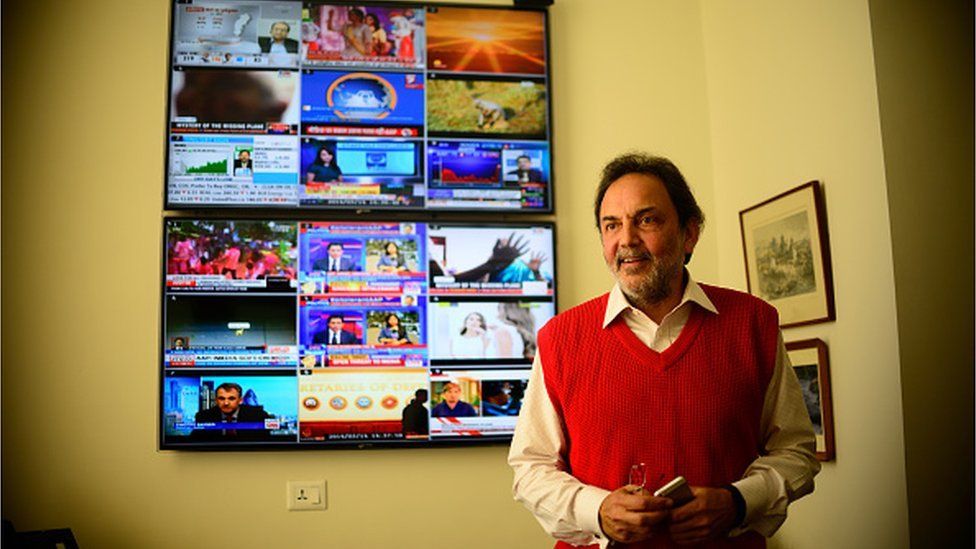
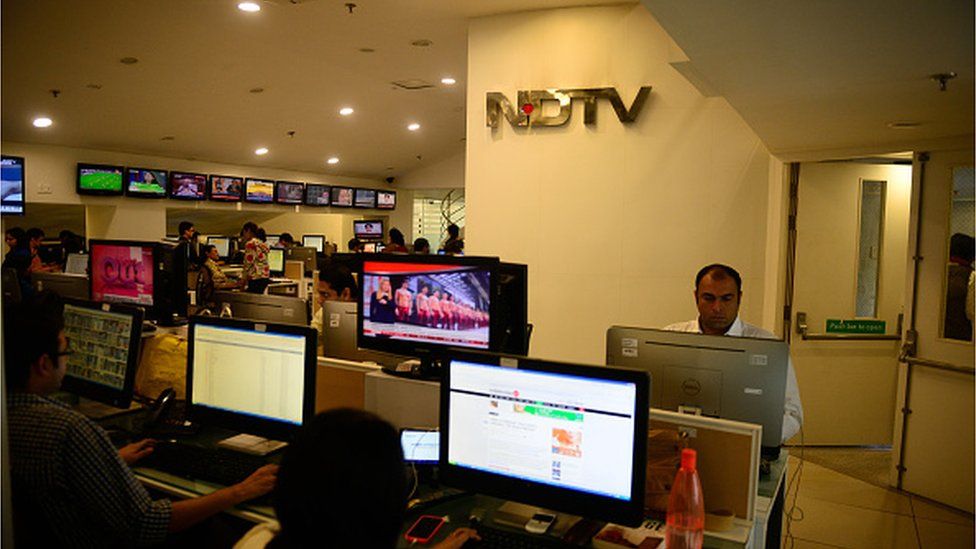
The founders of leading Indian news network New Delhi Television (NDTV), Radhika and Prannoy Roy, have resigned as directors of a group promoting their company, bringing a conglomerate led by Gautam Adani, one of the world’s richest men, closer to acquiring the media firm. The BBC investigates what this means for the future of Indian television news.
Radhika Roy once said that the creation of NDTV with her broadcaster husband Prannoy Roy was a “happy accident.”
In November 1988, the Roys launched NDTV with a single show, The World This Week, on the bland state-run Doordarshan with “no grand plan” in mind and “certainly no idea” that it would grow from being a producer of a weekly world news show to India’s first 24/7 news network and independent news broadcaster.
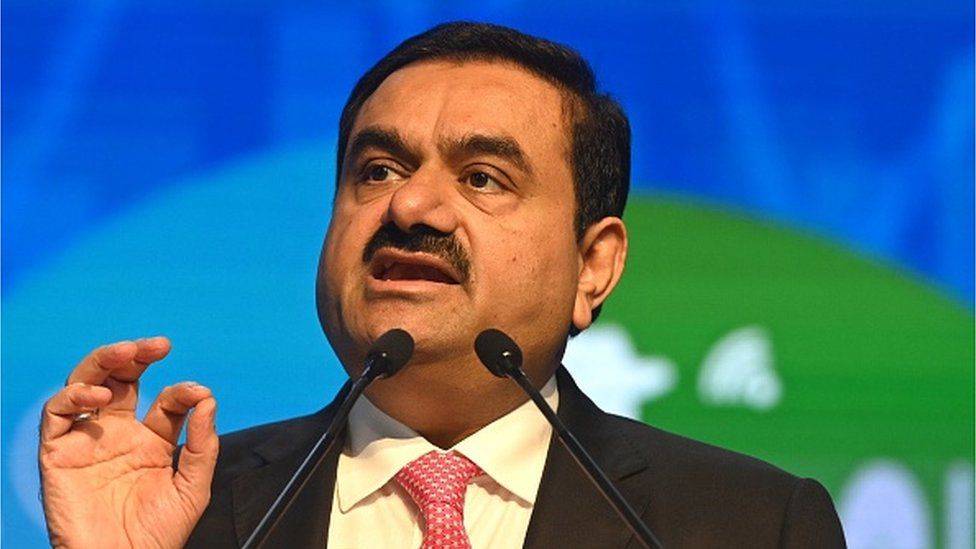
More than three decades later, the couple’s news channel is changing hands. Gautam Adani, the third richest man in the world – behind Elon Musk and Jeff Bezos – is set to buy NDTV in one the world’s most tumultuous media markets.
Mr Adani, a 60-year-old billionaire who runs a port-to-energy conglomerate, is seen by many as someone close to Prime Minister Narendra Modi and his government. Truth to tell, his “relationship with political and social leaders, across all types of party lines, have made him acceptable to every government,” according to RN Bhaskar, author of a recently published biography of the tycoon.
In March, Mr Adani’s new company AMG Media Networks Limited bought a minority stake in Quintillion, a digital business news company. “The Quintillion investment is too meagre to demandMr Adani’s attention. So, does he have bigger plans?” wondered Mr Bhaskar in his book.
IMAGE SOURCE,AFP Image caption, Gautam Adani, the world’s third richest man, bought a small stake in a digital business media company earlier this year
Now we know. With revenues of around $51m and a modest profit of $10m, NDTV may not be a lucrative buy for Mr Adani, whose sprawling group has a market capitalisation of $260bn.
But NDTV is India’s best-known network that pioneered data-driven vote analysis, morning shows, and a host of tech and lifestyle programmes on TV. Today, it has a robust online presence, claiming some 35 million followers across platforms.
NDTV, the Adani group believes, is “the most suitable broadcast and digital platform to deliver on our vision”. Mr Adani has offered some clues about what the vision is. “Why can’t you support one media house to become independent and have a global footprint? India does not have one single [outlet] to compare to Financial Times or Al Jazeera,” he told the Financial Times.
Critics of the sale are more sceptical. Many regard NDTV as one of India’s few independent news networks, which has stayed away from the shouty jingoism of many of its peers. A study by Oxford University and the Reuters Institute for the Study of Journalism found that 76% of respondents trust information from NDTV.
Mr Adani’s takeover has sparked concerns that this would hurt its editorial integrity. Despite the diversity of media choices, independent journalism in India doesn’t appear to be in fine fettle: the country dropped to 150 of 180 countries ranked in Paris-based Reporters Without Borders’ World Press Freedom Index this year, its lowest position ever. Mr Modi’s ruling Bharatiya Janata Party (BJP) rejects the findings, saying the index adopts a methodology that is both “questionable and non-transparent”.
IMAGE SOURCE,GETTY IMAGES Image caption, Prannoy Roy and his wife Radhika founded NDTV 34 years ago
The diversity of media also masks the concentration of ownership, say experts. Four daily newspapers, for example, share three quarters of the readership in Hindi, according to Reporters Without Borders. Billionaire Mukesh Ambani, who owns a $220bn retail-to-refining conglomerate, also controls Network18, one of India’s largest media companies. Companies owned by Mr Adani and Mr Ambani generate revenues equivalent to 4% of India’s GDP.
The takeover of NDTV is also symbolic of the troubles plaguing the news business in India, says Vanita Kohli-Khandekar, a media specialist. India has more than 400 news channels in a market that is mostly privately owned and in regional languages. News channels mopped up an estimated 8% of the $423m that TV advertising got in 2021.
“News is one of the toughest business to be in, anywhere,” says Ms Kohli-Khandekar. “In India, TV news is one of the most unprofitable, politically perilous and dodgy businesses to be in.” Just “two to three companies” make money from time to time, she adds.
Since people are largely not willing to pay for news, advertising accounts for a bulk of revenues for the channels. Many believe the credibility of networks has waned: many have been accused of fiddling with ratings and what an expert called the “grotesque tabloidization” of news, and partisan coverage.
IMAGE SOURCE,GETTY IMAGES Image caption, NDTV pioneered a lot of TV news programming in India, including election analysis
NDTV’s own financial woes began during an economic downturn more than a decade ago when it had to borrow $44m from a company controlled by Mr Ambani’s Reliance Industries to refinance existing debts. “NDTV has struggled long and hard and it seems to be losing the fight. For the business of journalism it seems like a defeat,” says Ms Kohli-Khandekar.
Time will tell whether the editorial content and tenor of the network will change under the new ownership. At a time when TV news is polarised, NDTV was “more left-of-the centre and did stories critical of the government which most others were not taking up,” says Shailesh Kapoor of Ormax Media, a media consultancy. “Will they now soften their stand and move to a more neutral position because of editorial restrictions?”
Mr Adani believes there’s nothing to fear. “Independence means if government has done something wrong, you say it’s wrong,” he told Financial Times. “But at the same time, you should have courage when the government is doing the right thing. You have to also say that.”
Jiang Zemin, China’s former leader who came to power following the Tiananmen Square protests, died at the age of 96.
On Wednesday, he died shortly after 12:00 p.m. local time (04:00 GMT), according to state media.
Jiang presided over a period when China opened up on a grand scale and experienced rapid growth.
His death comes at a time when China is witnessing some of the most serious protests since Tiananmen Square, with many demonstrating against Covid restrictions.
According to a Chinese Communist Party statement, he died from leukaemia and multiple organ failure.
It added that he was recognised “as an outstanding leader with high prestige” and “a long-tested Communist fighter”.
State media outlets, including the Global Times and the Xinhua news agency, turned their websites black and white in tribute.
Jiang rose to power after the bloody 1989 crackdown on protestors in and around Beijing’s Tiananmen Square, which led to China being ostracised internationally.
The event sparked a bitter power struggle at the top of the Communist Party between hard-line reactionaries and reformers.
It led to Jiang, who had originally been seen as a plodding bureaucrat, being elevated to high office. He was chosen as a compromise leader, in the hope he would unify hardliners and more liberal elements.
Under his stewardship, a formidable economy was forged, the Communists tightened their grip on power, and China took its place at the top table of world powers.
He oversaw the peaceful handover of Hong Kong in 1997, and China’s entry into the World Trade Organization in 2001 which intertwined the country with the global economy.
But political reforms were also put to one side and he crushed internal dissent while pursuing a hardline stance on Taiwan. He was criticised for the heavy-handed crackdown on the religious sect Falun Gong in 1999, which was seen as a threat to the Communist Party.
He was also keen to ensure that his position within the Communist Partywas secure, and came up with his own political ideology – the Three Represents theory – in an attempt to modernise the party.
During his time in power, Jiang sought to strengthen ties with the US, visiting the country several times and offering then-president George W Bush co-operation in Washington’s “war on terror” following the 9/11 attacks.
In a country not known for its flamboyant leaders, he was seen as having a more colourful personality than his successors. He memorably crooned Elvis Presley at a global summit, and went for a swim off the Hawaiian coast.
In his later years he withdrew from government and was rarely seen in public. But even as he became less conspicuous, online he became an unlikely subject of viral internet memes.
Many Chinese affectionately caricaturised his signature large spectacles, and likened his appearance to a toad. Young fans called themselves “toad worshippers”.
Jiang’s successors as president, Hu Jintao – who was conspicuously removed from the CCP conference last month – and Xi Jinping, are scheduled to attend his funeral, according to a letter released by the state backed Global Times.
But the letter added that foreign leaders and governments will not be invited to the event. The funeral committee said the decision was in keeping with what it called “China’s practice”.
In a divorce settlement, Kanye West was ordered to pay Kim Kardashian$200,000 (£167,000) per month in child support.
Their four children will be shared between the former rapper and reality TV star.
After eight years with West, who has legally changed his name to Ye, Kardashian filed for divorce in 2021.
It comes after several companies severed ties with Ye due to controversies such as antisemitic remarks.
In March, both parties were declared legally single, with Kardashian also dropping the “West” from her surname.
In court documents filed on Tuesday, issues concerning the division of property and custody of their children were resolved.
The two parties should consult with each other on majordecisions about their children’s welfare, the documents state.
Expenses for the children’s security, school and college will be shared.
In addition, Ye is expected to pay $200,000 a month in child support – which the New York Post reported is because the children will spend the majority of their time with Kardashian.
The couple have four children: North, 9, Saint, 6, Chicago, 4, and Psalm, 3.
In several statements submitted earlier, Kardashian, 42, had said she “very much” wanted the marriage to be ended, adding that this would “help Kanye to accept” that the relationship was over.
Ye, 45, had previously fought against the separation.
He has faced controversy in recent months, and has been dropped by several brands, including Adidas, Gap and Balenciaga.
The rapper provoked widespread criticism earlier this year after attending Paris Fashion Week wearing a t-shirt bearing a “White Lives Matter” slogan – a phrase often used by white supremacists.
He then claimed his critics were being paid by a secret cabal of Jewish people, a common trope of antisemitism.
Earlier this week, Ye announced his intention to run for US president in 2024.
He previously ran in 2020, but gained just 70,000 votes.
The Duchess of Sussexfaced “disgusting and very real” threats while working as a royal, according to the outgoing Metropolitan Police assistant commissioner.
Neil Basu stated that he could understand Meghan feeling “under threat all the time.”
People have been charged in connection with the threats, he told Channel 4 News.
Prince Harry, who will move to California with Meghan in 2020, stated last year that he did not feel safe in the UK.
The couple have often spoken about the abuse they received before they left and how it affected their mental health. As early as 2016, after the couple went public with their relationship, Prince Harry issued a statement attacking social media trolls for targeting Meghan.
Neil Basu – the former head of counter-terrorism policing in England – was speaking to Channel 4 News in his final interview as assistant commissioner.
“If you’d seen the stuff that was written and you were receiving it, the kind of rhetoric that’s online, if you don’t know what I know, you would feel under threat all of the time,” he said.
When asked if there had been genuine threats to Meghan from the far-right, he added: “Absolutely.
“We had teams investigating it. People have been prosecuted for those threats.”
He said he had previously spoken publicly about the threat of “extreme right-wing terrorism”, saying it was the “fastest growing” threat that he dealt with.
“When I started in counter-terrorism in 2015, it was about 6% of our total workload. When I left 15, 16 months ago, it was over 20% of our workload.”
Mr Basu, who is Britain’s most senior officer of colour, was also in charge of royal protection.
He added: “I speak about race because I know something about race because I’m a 54-year-old mixed-race man.”
Mr Basu also criticised the government during his interview, saying he found “some of the commentary coming out of the Home Office inexplicable”.
He had been asked about comments by Home Secretary Suella Braverman saying that it was her “dream” to see asylum seekers removed to Rwanda under the government’s policy.
“It is unbelievable to hear a succession of very powerful politicians who look like this talking in language that my father would have remembered from 1968. It’s horrific.”
In response to his comments, a Home Office spokesman said: “The Home Secretary expects forces to take a zero tolerance approach to racism within their workplace.
“But the Home Secretary is also very clear about the need to manage our borders effectively and have an asylum system that works for those in genuine need, as are the British people.”
The Duke and Duchess of Sussex stepped down as senior members of the Royal Family in 2020 to carve out their own path in the US.
After leaving the Royal Family, Meghan gave an Oprah interview in which she revealed she felt suicidal while a serving royal.
Former US ambassador to NATO, Robert Hunter, has expressed concern about the amount of military aid being provided to Ukraine by NATO members.
“It’s surprising that the alliance led by the US hasn’t done more so far in terms of anti-drone and anti-missile defences,” Hunter said from Washington DC to Al Jazeera.
Hunter stated that it was clear throughout the autumn that, while the Ukrainians would continue to fight a “valiant fight,” Russia would try to gain an advantage by targeting Ukraine’s sources of power and heat.
In response to Ukraine’s foreign minister’s earlier appeal at a meeting of NATO foreign ministers in Bucharest, Hunter said, “Faster, faster, faster, has to mean immediately, not something to be talked about and maybe done in a few months.”
The former US envoy said that steps could have been taken to counter the destruction Russia was doing in Ukraine instead of just repairing the damage.
“The US and the NATO, quite frankly, are failing Ukraine.”
People wait in line to collect water, in Kyiv, Ukraine, Thursday, Nov. 24, 2022. Residents of Ukraine’s capital clutched empty bottles in search of water and crowded into cafés for power and warmth, switching defiantly into survival mode after new Russian missile strikes a day earlier plunged the city and much of the country into the dark. [Evgeniy Maloletka/AP]
After four months of staying in state housing, the Polish governmentintends to charge Ukrainian refugees for food and housing.
Since Russia’s invasion of Ukraine on February 24, more than a million Ukrainian refugees sought refuge in Poland, Ukraine’s western neighbour, relying on the generosity of strangers who opened their homes and government aid.
However, resources are running out, and refugees are having a more difficult time finding housing and receiving assistance, as Poland faces a cost-of-living crisis and budget constraints.
“Citizens of Ukraine who stay in Poland in collective accommodation centres will participate in the costs of housing and meals,” the government said in a statement.
Those staying in such accommodation, for example, government-funded hotel rooms or school dormitories, longer than 120 days will have to cover 50 percent of the cost up to 40 zlotys ($8.87) per day, per person.
After 180 days, it would be 75 percent of the cost up to 60 zlotys ($13.27). Those unable to work because of their age or disability would be excluded, as would pregnant women, according to the plan.
The government wants the new rules to apply from March 1, 2023. The bill will go to parliament, where it is expected to pass.
Hong Kong‘s leader requests Beijing’s assistance in his attempt to prevent foreign lawyers from working on national security cases.
After the territory’s top court rejected the government’s attempt to prevent a British barrister from representing jailed media tycoon Jimmy Lai, Hong Kong’s leader John Lee has asked Beijing to rule on whether foreign lawyers can work on national security cases.
Lee said at a press conference on Tuesday that he expected China’s National People’s Congress Standing Committee (NPCSC) to rule on the case “as soon as possible,” but he did not say whether the decision would come before Lai’s trial began on Thursday.
His request for Beijing’s intervention will mark only the sixth instance of China’s top legislative body weighing into legal matters in Hong Kong, a former British colony that, under a “one country, two systems” arrangement, is supposed to have judicial independence from Beijing.
The Court of Final Appeal on Monday dismissed the government’s bid to block British barrister Timothy Owen from the trial and impose a “blanket ban” on foreign lawyers working on national security cases.
But Lee argued that Beijing’s intervention was necessary in part because a foreign lawyer might divulge state secrets or be compromised by a foreign government.
“There is no effective means to ensure that a counsel from overseas will not have a conflict of interest because of his nationality,” Lee told reporters on Monday. “And there is also no means to ensure he has not been coerced, compromised or in any way controlled by foreign governments, associations or persons.”
Beijing imposed the sweeping national security law on Hong Kong in June 2020 after sometimes-violent protests rocked the city for months the year before. The legislation — which punishes acts of secession, subversion, terrorism, and collusion with foreign forces with up to life in prison — has been widely condemned by Western governments and human rights groups.
National security cases
Lai, one of the most prominent Hong Kong critics of China’s Communist Party leadership, including Xi Jinping, faces two counts of conspiracy to commit collusion with foreign countries, as well as a sedition charge linked to his Apple Daily newspaper that was forced to close in June 2021 after a police raid and a freeze on its assets.
The 74-year-old, who was arrested in December 2020, is already serving a 20-month prison sentence for his role in unauthorised assemblies. He is also expecting a sentencing over his fraud conviction next month.
Owen is a London-based legal veteran who specialises in criminal and human rights law.
Hong Kong uses the same common law jurisdiction as the United Kingdom.
Some legal experts warned the appeal to Beijing would erode public confidence in Hong Kong’s judicial independence.
“What we’ve seen with interpretations is basically, ‘Heads I win, tails you lose,” Alvin Cheung, an assistant law professor at Queen’s University in Canada, told the Reuters news agency.
Cheung was part of a group that drafted a legal analysis in May, signed by Britain’s former Justice Secretary Robert Buckland and retired Australian high court judge Michael Kirby, that identified NPCSC interpretations as one of the main threats to Hong Kong’s rule of law.
“The NPCSC is a political (and undemocratic) body whose proceedings take place behind closed doors, with no participation from the parties at suit. Its decisions are actuated by political considerations rather than legal evaluation and contain little to no reasoning,” the legal opinion read.
Apart from having overseas judges in the city’s courts, lawyers from other common law jurisdictions are allowed to work within Hong Kong’s legal system, especially when their expertise is needed for some cases.
Last month, the lower court granted approval for Owen to represent Lai, saying it was in the public interest to have an eminent overseas specialist involved at the trial. And on Monday, the Court of Final Appeal gave a final ruling on the matter, rejecting the Department of Justice’s application on technical grounds.
The panel of three judges on the top court — Chief Justice Andrew Cheung, Roberto Ribeiro and Joseph Fok — in a written judgement, criticised the Department of Justice for “raising undefined and unsubstantiated issues said to involve national security which were not mentioned or explored in the Courts below”.
But they left open the overarching question of whether barristers from overseas should in principle be excluded from national security cases.
Legal experts and rights groups on Monday expressed concern over Lee’s decision to ask Beijing to intervene.
Lee’s move “is in practice making of a new rule rather than an interpretation of an existing law,” said Professor Johannes Chan Man-mun, the former dean of the Faculty of Law at the University of Hong Kong. “There are far-reaching implications in any such interpretation which may severely compromise Hong Kong as an international city,” he told the South China Morning Post.
Reporters Without Borders also criticised Lee’s move, urging Hong Kong’s government toallow Lai a representation of his own choosing.
A New York City man has been arrested for manufacturing and possessing more than a dozen ghost guns after he shared an image of his 7-year-old son wielding two of the firearms, prosecutors say.
Cory Davis, 41, is now facing multiple charges after New York Citypolice officers recovered 14 of the privately assembled weapons in two of his apartments, including “10 semi-automatic pistols and two assault weapon-style pistols,” according to the Manhattan District Attorney’s Office.
“The allegations make it evident that by manufacturing these weapons, Davis put not only the public, but a child in serious peril,” District Attorney Alvin Bragg said in a statement. “Using one’s child as a prop to showcase homemade, illegal weapons is inexcusable and extremely dangerous. The proliferation of ghost guns in our city cannot continue.”
Bragg’s office says “an investigation was prompted after Davis sent a photo of his 7-year-old son holding two firearms to family and friends” in a group chat, “which was then provided to law enforcement.
“In addition to the 14 firearms, investigators recovered 400 rounds of ammunition, a high-capacity magazine, and nearly two dozen other magazines, as well as tools and parts for constructing ghost guns,” it added.
Davis has been charged with one count of criminal possession of a weapon in the first degree, 16 counts of criminal possession of a weapon in the second degree, three counts of criminal possession of a weapon in the third degree, and 14 counts of criminal possession of a firearm.
“Stopping the proliferation of ghost guns is integral to the NYPD’s comprehensive strategy to keep these illegal weapons from harming our communities,” Police Commissioner Keechant Sewell said in a statement. “These untraceable weapons shoot real bullets, hurt real New Yorkers, and cause real harm – and our fight against them will continue with vigor.”
The attorney’s office also said Davis, “has been purchasing gun parts and accessories from several different websites since June of 2020.”
“His online purchasing history included training tools, simulators, and concealable holsters,” the office added.
The Nigeria Police Force’s, Enugu Command has arrested Odoh Emmanuel, a 23-year-old native doctorwho allegedly shot and killed one Onunze Benedict while testing a gunshot amulet.
According to a statement issued on Tuesday by the Command’s spokesman, Daniel Ndukwe, the suspect, who is from Umuaram village in Ikem community in the state’s Isi-Uzo Local Government Area, committed the offence on November 16, 2022.
According to the statement, the suspect was apprehended around 11 p.m. on November 16 by Isi-Uzo Police Division personnel.
According to Ndukwe, the suspect confessed to using a locally-made single-barreled gun to shoot and kill the victim in his shrine in Umuaram, while testing the charm meant to protect him from gunshots.
“The gun has been recovered, while further investigation is ongoing at the Homicide Section of the State CID Enugu,” the police spokesperson said.
Meanwhile, Ndukwe in the statement revealed that the command has arrested another 16 suspects for conspiracy, armed robbery, car-jacking, abduction and unlawful possession of firearms.
The statement partly read: “Acting on credible information, Police Operatives serving in 9th Mile Police Division of the Command, on 24/11/2022 at about 3.20pm, arrested six (6) male suspects in a building along Nsukka/Makurdi Highway, 9th Mile in Udi LGA, and recovered in their unlawful possession, one (1) locally-fabricated double-barreled pistol with one (1) live cartridge.
“They include: Anigbo Stephen aged 23, Iyere Promise aged 28, Charles Onoh aged 24, Obinna Joseph aged 19, Charles Obilor aged 25 and Ede Chibuike aged 24.
“Ongoing investigation into the case at the Anti-Robbery Section of the State CID Enugu, has revealed that the sextet, three (3) of whom are linked to a similar case earlier reported, were perfecting plans to commit felonious crimes before they were apprehended.
“In another development, the following male suspects: Everest Ayokalam aged 48, Anayo Akakem aged 33, Iwuanyanwu Kelechi aged 32, Uchenna Iwuoha (a.k.a “Uchewinde”) aged 47 and Gospel Chimankpa Nnorom aged 32, all of Imo State, involved in the case of conspiracy, armed robbery, abduction and attempted murder, have been arraigned in court and remanded accordingly.
“They were arrested at Ikeduru in Imo State on 12/11/2022, through the concerted efforts of Police Operatives serving in Isi-Uzo Police Division of the Command and their counterpart in Imo State Command, after acting on credible information/intelligence.
“The suspects and others at large, armed with machetes and other weapons, had on 09/11/2022 at about 3 am, abducted at Umuhu in Isi-Uzo LGA (a border community between Enugu and Ebonyi States), the driver and conductor of a Sino Truck, said to be loaded with 900 bags of cement and en route to Abakaliki, Ebonyi State.
“They took them to the forest, beat up and tied them to a tree, and thereafter made away with the truck and bags of cement therein. The suspects confessed to the crime, while the truck was recovered alongside 789 bags of the cement from the warehouse of Everest Ayokalam (the receiver of the robbed exhibits).
“Also, on 05/11/2022 at about 4 am, a combined team of Police Operatives drawn from Awkunanaw Police Division, Operation Restore Peace and Safer Highway Patrol, with assistance from Neigbourhood Watch Group, arrested one Kasie Ani (male) aged 25, Tochukwu Igwe (male) aged 25, Felix Maduakonam (male) aged 24, Chidera Okoye (male) aged 21 and Jennifer Nwafor (female) aged 17.
“Their arrest is sequel to the Team’s swift response to a distress call alleging that the suspects blocked the road at the Garriki axis of Enugu/Port-Harcourt Expressway and were robbing travelers. The four (4) male suspects were consequently arrested and the victims rescued, while the female suspect was arrested thereafter, for harbouring one of the male suspects.
“Exhibits recovered from the suspects includes: three (3) mock guns that they used in the criminal operation, twenty-one (21) pieces of wrappers, clothes, phones, ATM cards and other valuables belonging to their victims.
“The arraignment of all the suspects yet-to-be arraigned shall be done once investigations are concluded.”
Also according to the statement, the state police commissioner, Ahmed Ammani, urged the personnel to remain focused on the fight to flush unrepentant criminal elements out of the state, while soliciting the continued support and cooperation of its residents.
NATO foreign ministers met in Bucharest in Romania to work out how to keep millions of Ukrainian civilians safe and warm and sustain Kyiv’s military through winter.
“Russia does not have a veto” on countries joining the security alliance, he said in reference to the recent entry of North Macedonia and Montenegro.
The former Norwegian prime minister said Russian President Vladimir Putinwill also “get Finland and Sweden as NATO members soon”, after they applied for membership in April over concerns Russia might target them next.
“We stand by that, too, on membership for Ukraine,” he added.
It came as NATO foreign ministers met in Bucharest in Romania to pledge to step up support for Ukraine and help repair its energy infrastructure as Russian strikes knock out power supplies and heating for millions.
“Russia’s aggression, including its persistent and unconscionable attacks on Ukrainian civilian and energy infrastructure, is depriving millions of Ukrainians of basic human services,” the foreign ministers said in a statement.
“We will continue and further step up political and practical support to Ukraine as it continues to defend its
sovereignty and territorial integrity… and will maintain our support for as long as necessary,” the statement added.
UK Foreign Secretary James Cleverly said Russia was targeting energy infrastructure to “freeze” Ukrainians into submission.
“We have seen Vladimir Putin attempting to weaponise energy supplies right from the very start of this conflict,” he said before the meeting.
Image:Romanian Foreign Minister Bogdan Aurescu, British Foreign Secretary James Cleverly and NATO Secretary-General Jens Stoltenberg in Bucharest
Call for Patriot missiles and power transformers
Ukraine’s foreign minister called for NATO members to supply it with air defence systems and transformers.
“We need air defence, IRIS, Hawks, Patriots, and we need transformers,” Dmytro Kuleba said on the sidelines of the meeting, identifying various Western air defence systems.
“If we have transformers and generators, we can restore our energy needs. If we have air defence systems, we can protect from the next Russian missile strikes. In a nutshell: Patriots and transformers is what Ukraine needs the most.”
Focus on defeating Russia
Ukraine is unlikely to join NATO anytime soon, as Russia has annexed the Crimean Peninsula, and troops and pro-Moscow separatists hold parts of the south and east, meaning it is unclear what the country’s borders would look like.
Many of NATO’s 30 members believe the focus should now be on defeating Russia and Mr Stoltenberg warned any attempt to move ahead on membership could divide them.
“We are in the midst of a war and therefore we should do nothing that can undermine the unity of allies to provide military, humanitarian, financial support to Ukraine, because we must prevent President Putin from winning,” he said.
The two-day meeting in Romania, which shares NATO’s longest land border with Ukraine, will likely see NATO make new pledges of non-lethal support to Ukraine including fuel, generators, medical supplies, winter equipment and drone-jamming devices.
Individual nations are also likely to announce new shipments of military equipment to Ukraine, such as air defence systems and ammunition, but NATO as an organisation will not make such a commitment to avoid being dragged into a wider war with nuclear-armed Russia.
Abwbaker is the first suspect arrested in the United Kingdomafter 31 migrants drowned when their boat deflated and sank just two hours after leaving France.
He is the first suspect to be apprehended in the UK after 31 migrants drowned two hours after leaving France when their boat deflated and sank in darkness.
Due to emergency phone calls, it was unclear whether the lifeboat was in French or British waters.
The next day, 27 bodies were found, two people survived, and four are still missing.
He is the first suspect to be apprehended in the UK after 31 migrants drowned two hours after leaving France when their boat deflated and sank in darkness.
Emergency telephone calls led to confusion about whether the dinghy was in French or British waters.
A total of 27 bodies were recovered the next day, two people survived and four are still missing.
Soon after the tragedy, French authorities arrested five suspects and held fifteen more in June this year.
Abwbaker, whose photo has been blurred by the NCA due to legal concerns, is set to appear at Westminster magistrates on Wednesday morning on a French extradition warrant.
“This is a significant arrest, and comes as part of extensive inquiries into the events leading to these tragic deaths in the Channel,” said the agency’s deputy director Craig Turner.
This is what remained of the boat that capsized in the Channel
“The individual detained today is suspected of having played a key role in the manslaughter of those who died.”
He added: “Working closely with our French partners, we are determined to do all we can to get justice for the families of those whose lives were lost, and disrupt and dismantle the cruel organised criminal networks involved in people smuggling.”
Home Secretary Suella Braverman has said her thoughts are with the “families of those who tragically lost their lives” and thanked investigators for their “tireless work”.
The United Kingdom has summoned the Chinese ambassador in London for a rebuke after the arrest and alleged assault of a BBC journalist covering protests against Beijing’s zero-COVID-19 policy.
Zheng Zeguang was called in to the foreign office on Tuesday after the incident involving Ed Lawrence in Shanghai, which Foreign Secretary James Cleverly called “deeply disturbing”.
“It is incredibly important that we protect media freedom,” Cleverly told reporters at a NATO meeting in Romania, confirming Zheng had been summoned.
“It’s incredibly important that journalists are able to go about their business unmolested and without fear of attack,” the foreign minister said.
Lawrence was hauled away by police on Sunday evening while filming a protest against COVID restrictions, one of many that have rocked China in recent days.
The BBC said he was assaulted by police before being released several hours later.
China hit back against British criticism of the journalist’s treatment and Downing Street’s urging that police show respect towards the COVID protesters.
“The UK side is in no position to pass judgement on China’s COVID policy or other internal affairs,” an embassy spokesperson said before Zheng was summoned, noting Britain’s high pandemic death rate.
The government in London this month also expressed concern over reports that Beijing has been operating undeclared police outposts in foreign countries, including Britain.
A senior Chinese diplomat was summoned to the foreign office last month after his consulate colleagues in Manchester in northwest England were accused of beating up a Hong Kong pro-democracy protester.
The incidents have fuelled political pressure on the new government of Prime Minister Rishi Sunak to get tough with China.
But Sunak is treading a fine line between defending freedoms and antagonising the world’s second-biggest economy.
In a speech on Monday, he described the “golden era” of UK-China relations declared by former Prime Minister David Cameron as “over”.
But Sunak also called for “robust pragmatism” in dealing with Britain’s competitors, disappointing critics who want him to go further in confronting Beijing.
Changes on the business front
Separately on Tuesday, the UK removed the Chinese nuclear firm CGN from construction of its new Sizewell C nuclear power station, which will now be built only with French commercial partner EDF.
That decision was taken after UK government departments were ordered last week to stop installing Chinese-made surveillance cameras at “sensitive sites”.
The week before, a Chinese company was ordered to sell most of its majority stake in Britain’s biggest semiconductor maker, Newport Wafer Fab.
A spokesman for Sunak declined to say if national security factors drove the decision on CGN.
But he told reporters: “Certainly we think it’s right that the UK has more energy security, energy independence.”
An iconic Portland, Oregon, ice cream business is threatening to move its headquarters from the city over rampant crime, which store owners say puts their employees at risk.
“If we can’t make it safe, I can’t stay here,” Salt & Straw co-founder Kim Malek said last week, according to Oregon Live. “It’s just not responsible of me to put my team in that position.”
Malek said she wants to work with city and county leaders to address widespread drug use, homeless encampments and violence, but will be forced to leave if the concerns are not addressed.
“It’s really hard for a lot of people right now,” Malek said. “I’m not here to point fingers. I want to be part of the solution.”
Ice cream with spoon at Salt & Straw ice cream shop in San Ramon, California, July 16, 2021. (Photo by Smith Collection/Gado/Getty Images / Getty Images)
“Our intention is to work through this,” she added. “I cannot stay here if we don’t.”
Salt & Straw was established in 2011 and was soon ranked as having some of the best ice cream in the U.S. The company has since opened store locations in Los Angeles, Miami and other cities and also ships orders to customers nationwide.
In the latest blow to the business, an RV burst into flames near Salt & Straw’s headquarters last Monday, Oregon Live reported, shutting down power to the ice cream parlor and other nearby businesses.
Interior of Salt & Straw ice cream shop in San Ramon, California, July 16, 2021. (Photo by Smith Collection/Gado/Getty Images / Getty Images)
A musician named Thomas Lauderdale sounded the alarm on the fire and other issues plaguing the area in an email to two dozen county and city leaders. He also noted in the email that a Salt & Straw employee recently had a gun pointed at their head, Oregon Live reported.
Counter with trays of artisan ice cream at Salt & Straw ice cream shop in San Ramon, California, July 16, 2021. (Photo by Smith Collection/Gado/Getty Images / Getty Images)
“Their lease is up in April, and although it will cost them millions and millions to relocate, they are at a breaking point, and are planning to move out of state,” Lauderdale wrote. “This is less a homeless issue; it is a health and public safety and drug issue. The schizophrenia we’re seeing, the violence, the fires … this is drug fueled, and it needs to be addressed immediately.”
Other businesses have recently closed or packed up locations in Portland due to crime, including clothing shop Rains PDX, which posted a blistering message to its front door about how the city is in “peril.”
“Our city is in peril,” the message reads. “Small businesses (and large) cannot sustain doing business, in our city’s current state. We have no protection, or recourse, against the criminal behavior that goes unpunished. Do not be fooled into thinking that insurance companiescover losses. We have sustained 15 break-ins … we have not received any financial reimbursement since the 3rd.”
Peace talks with rebels in Ethiopia’s restive Oromia region have been ruled out by the Ethiopian government. Federal negotiators sat down and struck a deal with the Tigray People’s Liberation Front (TPLF) to end the two-year-long civil war in the north.
The Oromo Liberation Army (OLA), which is also fighting the federal government, once allied with the TPLF.
However, Hailu Adugna, a spokesman for the Oromia regional government, has since told local media that the government has no plans to meet with a group “that has no chain of command or political agenda.”
An OLA spokesperson has denied the claim and stated that the organisation will continue to fight.
The rebels in Oromia have been accused of being involved in a number of deadly attacks, which it denies.
The authorities say that despite there being no talks they will continue to receive OLA youth who have opted to lay down their arms.
The situation in Oromia, the home region of Prime Minister Abiy Ahmed, has been overshadowed by the war in Tigray, but attacks by different armed groups have continued unabated.
The authorities have been blamed for not protecting civilians.
The OLA is a splinter group of the Oromo Liberation Front, which is now a legally registered political party. As well as making an alliance with the TPLF, the OLA has also made deals with other rebels in the western part of the country to put pressure on Mr Abiy’s government.
The OLA says it is fighting to secure full autonomy for the Oromo people and has been labelled a terrorist organisation by the government.
The vehicleswere rented by the Secret Service to protect Biden and his family during the Thanksgiving holiday.
President Biden’s rented Secret Service vehicles caught fire in a parking lot one day after he returned from his Nantucket vacation.
Last week, Biden and his family spent Thanksgiving on the posh Massachusetts island of Martha’s Vineyard. According to footage obtained first by the Nantucket Current, the Secret Service rented five vehicles from Hertz to transport the president and his family, and all five of them caught fire in the parking lot.
Firefighters can be seen spraying the smouldering remains of one vehicle’s engine block. A Chevy Suburban, Ford Explorer, Infiniti QX80, Ford Expedition, and a Jeep Gladiator were among the five vehicles.
The vehicles were parked at the Nantucket airport and the blaze reportedly spread to just 40 feet away from the facility’s jet fuel tanks. It is currently unknown what caused the fire. Fox News reached out to the White House for information but they did not immediately respond.
A tow truck pulls away one of the vehicles rented by the Secret Service to protect President Biden in Nantucket.
“At approximately 5:22 am Airport shift staff observed an active fire in the rental car overflow area through the Airport’s Closed Circuit Television System,” the airport said in a statement to the Current. “Staff activated the Alert system and responded to the fire in Airport-3, where they were met by responding units from Nantucket Fire Department and Nantucket Police Department.”
A firefighter sprays down the smoldering remains of an engine block from a vehicle that burst into flames ((Credit: Nantucket Current. MUST tag @ACKCurrent when used online))
“Combined fire resources responded and contained the fire. Several vehicles were damaged. The Airport is currently coordinating with rental car agencies and agency partners to ensure scene safety, There is no longer an active fire at this time: the Airport is open, and aeronautical operations are not affected,” the statement continued.
Biden spent the Nantucket weekend celebrating the holiday with his family, telling reporters that they were not having any discussions about a potential presidential run in 2024.
Several vehicles rented by the Secret Service to protest President Biden in Nantucket burned on Monday. ((Credit: Nantucket Current. MUST tag @ACKCurrent when used online))
The Bidens stayed at a waterfront compound along Nantucket Harbor. The family members on the trip included Ashley and Hunter Biden. The family has a more than 40-year tradition of spending Thanksgiving on the island.
The getaway was the first vacation for the Biden family since they went to another secluded East Coast island in August, when the President, first lady, and Hunter Biden all flew on Air Force One to Kiawah Island in South Carolina.
US President Joe Biden watches a Christmas tree lighting ceremony with (R-L) First Lady Jill Biden, son Hunter Biden, grandson Beau, and daughter-in-law Melissa Cohen in Nantucket, Massachusetts, on November 25, 2022. – The President is spending the Thanksgiving holiday with his family in Nantucket. (MANDEL NGAN/AFP via Getty Images)
Outings around major holidaysand in the late summer are not uncommon for U.S. presidents. Presidents George W. Bush, Barack Obama, and Donald Trump all took similar vacations throughout their time in office. Bush would often spend the time at his Texas ranch, while Obama and Trump both preferred golf resorts in New England.
A Colombian judge known for sharing racy photos on her Instagram page has been suspended for three months after appearing on a virtual Zoom meeting while half-naked and smoking a cigarette in bed.
In a 33-second clip circulating on social media, the 34-year-old judge, Vivian Polanía, can be seen lounging in bed, appearing half-awake while taking a drag from a cigarette. At one point in the hearing, a prosecutor tells Polanía that her camera is on, and she immediately turns it off as the hearing continues, local media reported.
En un video que circula por WhatsApp se ve a la jueza Vivian Polanía (trabaja en el Palacio de Justicia de Cúcuta) atendiendo una diligencia judicial en su cama, semidesnuda y fumando. No sé si esto pueda acarrearle alguna sanción, pero al menos el escándalo ya está servido. pic.twitter.com/9rgNx4C6pV
The virtual court hearing centered around debates over whether a man charged in a 2021 car bombing should be granted bail.
One of the solicitors on the call reported Polanía’s alleged impropriety to Colombia’s National Commission of Judicial Ethics.
The commission said in a written ruling that Polanía’s suspension will remain in effect until February 2023, Spanish-language outlet Infobae reported.
“It is a duty of this commission to avoid repeating the judge’s contempt for the investiture of her position and the contempt she showed with her peers in the public prosecutor’s office, the prosecution and the defense,” the commission wrote.
A Colombian judge has faced disciplinary proceedings in the past over her racy Instagram photos. (Instagram/@vivianpolaniaf3)
“We find no justification for the judge to have presented herself in such deplorable conditions when she had the facilities of her own home and all the amenities necessary to prepare for a public hearing appropriately and with the respect such a hearing deserved.”
Fox News Digital has reached out to Polanía for comment.
Responding to the incident, Polanía told a local radio station she was laying in bed during the hearing because she was suffering from an anxiety attack, according to the Spanish-language outlet El Pais.
She further alleged that she’d been threatened with disciplinary proceedings in the past because of her online conduct.
“You never know when you’re going to have an anxiety attack. I always wear my gown,” she reportedly said, adding that she “had low blood pressure.”
The Ashanti Regional Director of the National Service Secretariat (NSS), Alex Opoku-Mensah has made an unqualified apology for verbally assaulting a nurse at the Manhyia Hospital.
The Nurse corrected his daughter’s wrongful prescription for a two-year-old convulsion patient.
Mr Opoku-Mensah stated on Facebook that the method he used to deal with the conflict between his daughter, a doctor, and the nurse “has never been my style.”
He attempted to mediate the dispute between the two because he considered the nurse involved to be his daughter as well.
He was therefore remorseful of his behaviour.
“I do apologise for any mishap and assure all, there shall not be a repetition of such,” he promised.
On Monday morning, Mr Opoku Mensah was reported to have barged into the surgical ward of the hospital, where his daughter is currently serving as a house officer, to verbally abuse and threaten the nurse.
According to eyewitnesses, the medical officer prescribed the wrong dosage for a two-year-old convulsion patient.
The nurse upon noticing the medical blunder called on the young doctor to rectify the wrongful medication.
However, sources say the house officer took offence and reported the issue to her father who later visited the health facility to angrily insult the nurse.
“The Public Services Commission and Government for that matter should sack the said Regional Director immediately because he is not fit for the director position he holds in public service.
“He had absolutely no right to enter Manhyia hospital and verbally abuse and threaten the nurse in question who was on duty at the time,” the statement read.
The nurses threatened that they will call upon their members at the facility to boycott their duties if Mr. Opoku-Mensah is not sacked within the next 72 hours.
The boil orderhad been in effect in the nation’s fourth-largest city since Sunday.
On Tuesday, Houston officials lifted an order requiring more than 2 million people in the nation’s fourth-largest city to boil their tap water before drinking or using it.
The boil order had been in effect since Sunday, when pressure dropped due to a power outage at a purification plant.
The order caused businesses and schools to close, including the Houston Independent School District, which cancelled classes on Monday and Tuesday. However, the order was revoked by the city shortly before 7 a.m. Tuesday.
The city said water quality samples sent to the Texas Commission on Environmental Quality confirmed the tap water meets regulatory standards and is safe to drink.
People shop for bottled water after a boil water notice was issued for the entire city of Houston on Sunday. VIA ASSOCIATED PRESS
At a news conference Monday, Mayor Sylvester Turnersaid the city issued the notice, which affects all of Houston and some adjacent areas, in an “abundance of caution” after two transformers — a main one and its backup — “uniquely and coincidentally” failed at a water plant. The problem affected the plant’s ability to treat and pump water into the transmission system, resulting in low pressure.
Because the issue was within the plant’s system, backup power generators would not have made a difference, Turner said. Since the transformers were down, they couldn’t transmit power to the plant.
The power system at the water plant undergoes regular maintenance, Turner said, but he did not give a timeline for how often. The mayor said he has ordered a diagnostic review of the system to understand how the problem was possible and how it can be prevented.
Sixteen sensors marked dips under the minimum pressure levels required by the Texas Commission on Environmental Quality, 14 of them for only 2 minutes and two of them for nearly 30 minutes, Turner said.
Typically, there is enough pressure for water to flow out of leaky pipes. When pressure is lost, however, contamination like bacteria sitting near pipes can be sucked into the system, creating a health risk.
“If someone is not ready, I would absolutely respect that and allow them their space to not be ready,” the actor said in an interview.
Actor Will Smith said he understands why people might not want to see his upcoming movie.
Smith won the Best Actor Oscar earlier this year for his role in “King Richard,” but garnered more attention that night for slapping comedian Chris Rock, who made a joke onstage about Smith’s wife, Jada Pinkett Smith.
As a result, he was banned from attending the Oscars for the next decade ― even though it’s possible he could be nominated and even win an award.
“Emancipation,” Smith’s first film since the slap, opens in theaters Dec. 2 before streaming on Apple TV a week later.
The film is loosely based on the life of an enslaved man named Gordon, whose scarred back was photographed in 1863 and was famously used by abolitionists to show the public just how brutal slavery was.
“Emancipation” is getting some Oscar buzz, but Smith said he understands if filmgoers have second thoughts about watching it considering his behavior at the last ceremony.
“I completely understand that if someone is not ready, I would absolutely respect that and allow them their space to not be ready,” Smith told film critic Kevin McCarthy in an interview clip posted on social media.
Smith said that he hopes the reaction to the slap doesn’t affect the film’s chances of success or the award opportunities for the other people who worked on the film.
“My deepest concern is my team — [director Antoine Fuqua] has done what I think is the greatest work of his entire career,” Smith said.
“I’m hoping that the material, the power of the film, the timeliness of the story — I’m hoping that the goodthat can be done — will open people’s hearts at a minimum to see and recognize and support the incredible artists in and around this film,” he said.
You can watch the full clip below.
“I completely understand that if…someone is not ready, I would absolutely respect that and allow them their space to not be ready…My deepest hope is that my actions don’t penalize my team.”
Prosecutors saidfive Connecticut police officers were arrested and charged in connection with the paralysis of a Black man while in their custody.
Richard “Randy” Cox was arrested on June 19 on charges of illegal possession of a handgun and other offences. A handcuffed Cox was being transported to prison in the back of a police van without seatbelts when he was thrown headfirst into the metal partition inside the vehicle as a result of the driver coming to a sudden stop.
When the officers arrived at the detention facility and learned of his injuries, they attempted to move him in a wheelchair before dragging him into the building.
Video of the incident shows the seemingly exasperated officers roughly handle the injured Cox while making remarks that their detainee was being difficult by resisting to move. Near the end of the recording, one of the officers states they saw Cox blow a kiss as he was being dragged by his arms into a cell.
“He is perfectly fine,” the officer is heard saying.
Officers Oscar Diaz, 54; Jocelyn Lavandier, 35; Ronald Pressley, 56; Luis Rivera, 40; and Sgt. Betsy Segui, 40, were arrested Monday by Connecticut State Police on warrants charging them with second-degree reckless endangerment and cruelty to persons violations, New Haven State’s Attorney John Doyle Jr. announced in a statement.
The charges follow an investigation by the State Police Central District Major Crime Unit that was ordered by Doyle on the day of the incident.
“The City of New Haven is committed to accountability for all individuals involved in this tragic incident,” New Haven Mayor Justin Elicker said in a statement. “What happened to Randy was unacceptable, and we will work to make sure something like this never happens again.”
Cox filed a $100 million lawsuit against the city and the five police officers in September, which was followed the next month by the charges against him being dropped.
“While today’s news that these officers will face some accountability is an important first step towards justice for Randy, we know there is more work to be done on his behalf,” civil rights and personal injury attorney Ben Crump, who is representing the Cox family, said in a statement. “We will continue to fight for him throughout this process, and stand beside him as he navigates the long road toward recovery.”
In response to the incident, the New Haven Police Department adopted new polices and standard operational procedures overseeing the transportation of individuals in police care as well as regarding detention facilityoperations and those who may need medical assistance.