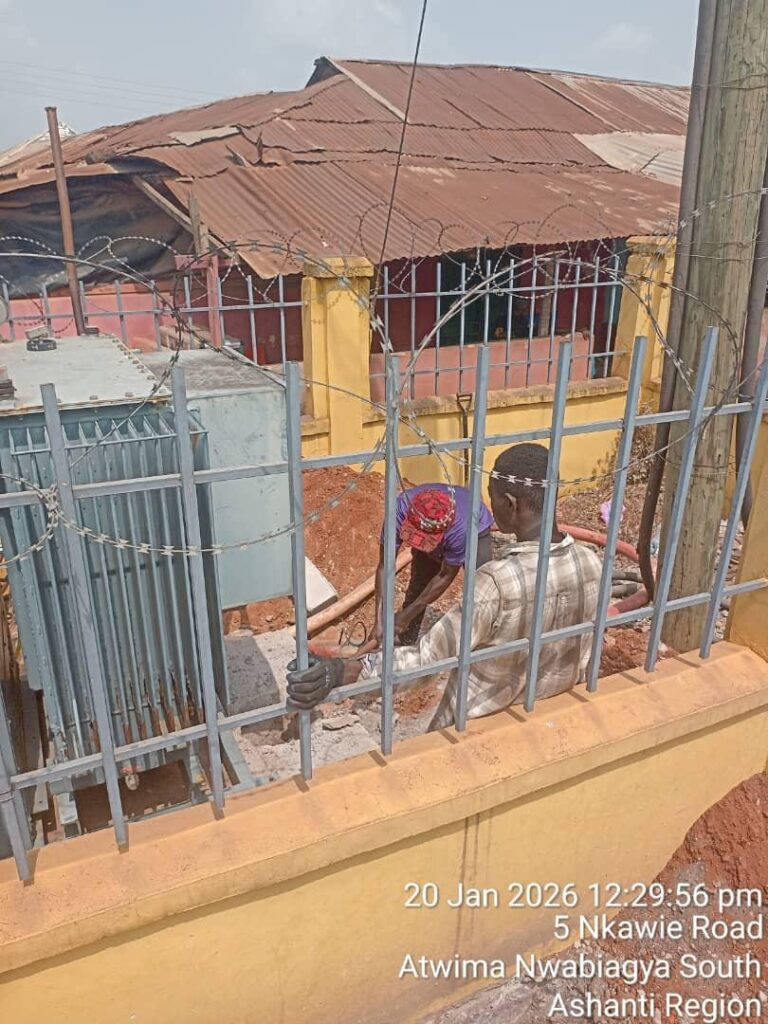
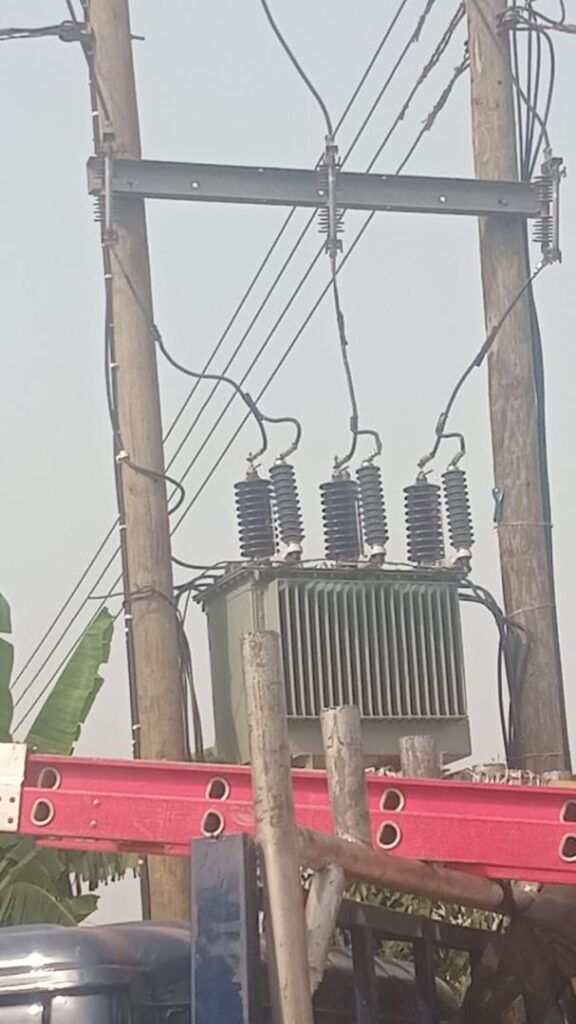
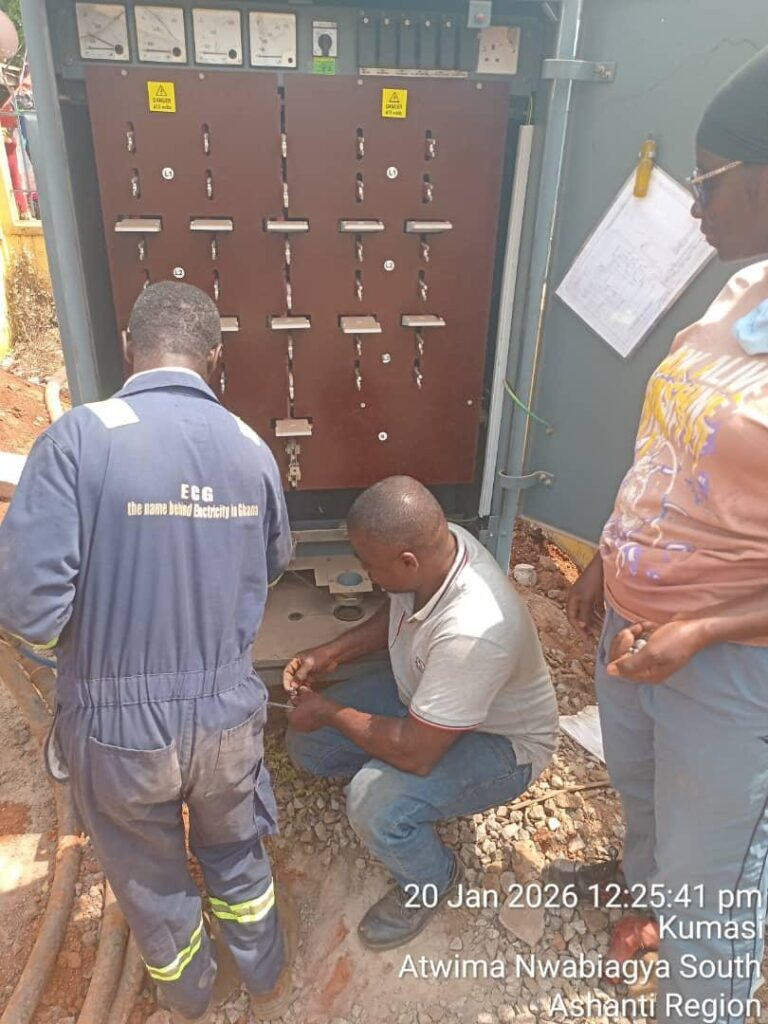
The Ghana Grid Company (GRIDCO) and the Electricity Company of Ghana (ECG) have announced an emergency maintenance exercise across Accra, Volta and the Central Region for Wednesday, May 20.
The country’s electricity transmission operators announced the planned exercise in a notice on May 19, noting that engineers are set to embark on upgrades that will lead to temporary power outages.
GRIDCO and ECG said that there would be outages across the affected areas that will happen at different times. The duration wasn’t specified as ECG explained that it would be determined by the works to be carried out at each location.
They also revealed that an emergency maintenance is being undertaken at the Aflao Bulk Supply Point.
In the Accra East Region, a planned maintenance operation will run from 9:00 am to 5:00 pm, affecting Dzen Ayor, Ability, Haatso Trotro Station, Agbogba Junction, 37, and surrounding areas. The eight-hour outage will impact one of Accra’s busiest transport hubs.
In the Accra West Region, a planned maintenance exercise will run from 9:00 am to 5:00 pm, affecting Broadcasting, New Bortianor, Adanseman, Cassava Farms, Mr Obeng, Oshieyie, and surrounding areas.
In the Tema Region, a planned maintenance operation will run from 9:00 am to 3:00 pm, affecting Sackey, Bediako, High Tension, Golf City, Bright Star School, Jericho, Roman Down, Underbridge Market, State School for the Deaf, Adjei Kodjo, Kanawu, Community 22, Michell Camp, and surrounding areas. The six-hour outage will impact educational institutions, including a state school for the deaf, and residential communities.
In the Central Region, a planned maintenance operation will run from 9:00 am to 4:00 pm, affecting parts of Apam Junction, Apam Township, Mumford, Gomoa Dago, Ankamu Junction, Gomoa Ajumako, Gomoa Akwakrom, Gomoa Nkransh, Gomoa Obokrom, Gomoa Kumasi, Gomoa Enyame, Gomoa Dankyie, Gomoa Koforidua, Gomoa Dawurampong, Gomoa Nduam, Gomoa Wassa, Gomoa Nkran, Gomoa Esikuman, Gomoa Debiso, Gomoa Darman, Gomoa Abonko, Gomoa Lome, Gomoa Ogun, and surroundings.
In the Volta Region, GRIDCo will undertake emergency maintenance works at the Aflao Bulk Supply Point from 8:30 am to 4:00 pm, affecting Denu, Aflao, Ave Towns, Hedzranawo, Havedzi, Kedzi, Adina, Agavedzi, Keta, Afiadenyigba, Atiteti, Tsavanya, Anlo, Nakyikope, Abor, part of Akatsi, Dzodze, and surrounding areas.
According to the power supply company, this work follows multiple network faults on Tuesday, May 19. In the Accra East Region, a fault on the Taifa Burkina Feeder disrupted power to Taifa Police Station, Taifa Mr Agyei, Taifa Burkina, Taifa Oboohene, and surrounding areas.
In the Tema Region, a separate network fault affected Doryumu, Wildlife Gate, Eastern Quarries, Twin Quarries, Recycling, Inzag, Shai Hills Military Training Camp, Bright Cement, Mawu be ji be, City Escape, Miotso, Potters City, Prampram Township, Abia, Kpoi Ete, and surrounding areas.
In its public notices, the ECG and GRIDCo extended their apologies to all affected customers, acknowledging the inconvenience caused by both the scheduled maintenance and the unplanned faults.
The company reassured the public that engineers are working diligently to resolve all network issues while emphasising that the planned exercises are necessary to ensure the long-term robustness of the power network across the regions.
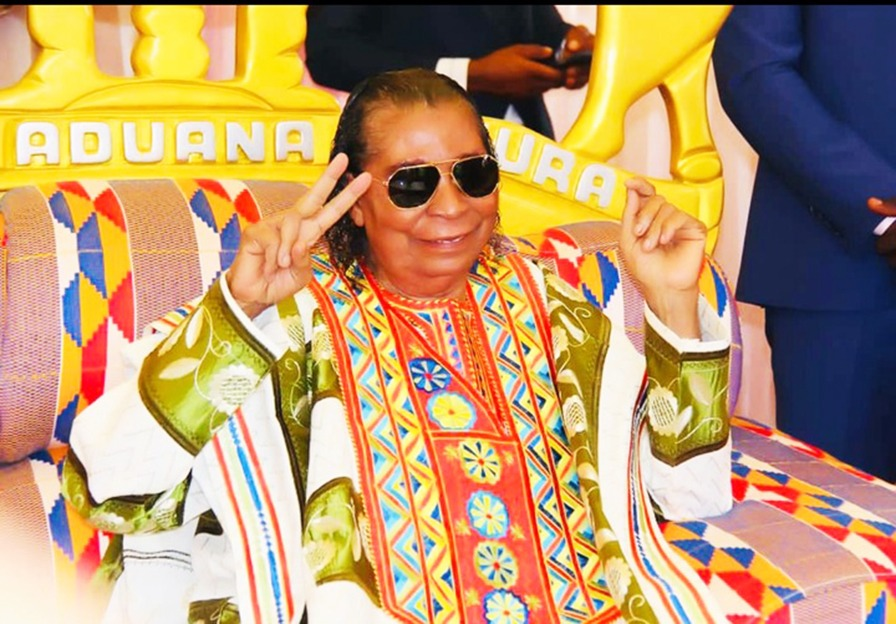
The Kantanka family has announced July 30 as the date for the burial of renowned inventor, industrialist and founder of the Kristo Asafo Mission, Kwadwo Safo.
In a formal statement issued by the family head, Head of the Kantanka Family, Sarah Adwoa Safo, together with the Kristo Asafo Mission and the Funeral Planning Committee, the funeral will be held in a three-day programme to honour the inventor.
The burial service is scheduled to be held at Gomoa Mpota, a town located in the Central Region of Ghana, along the Winneba–Kasoa highway.
Following the 3-day programme a national farewell ceremony will be held at Independence Square on Friday, 31 July, which will see the presence of dignitaries, traditional leaders, church members, industrialists, and admirers from across Ghana and beyond.
The final rites will conclude with a thanksgiving service on Saturday, 1 August 2026, at Jackson Park in celebration of his life and legacy.
Death of Apostle Safo
Apostle Dr Kwadwo Safo, popularly known as “Kantanka,” passed away on September 11, 2025, at the age of 77. The renowned Ghanaian industrialist, technologist, philanthropist and founder of the Kristo Asafo Mission was reported to have died peacefully, according to a statement issued by his family and signed by his daughter, former Dome-Kwabenya MP Sarah Adwoa Safo. The family described him as a visionary innovator and one of Ghana’s foremost technological icons whose contributions to agriculture, industry and philanthropy left a lasting impact on the country.
Life of Apostle Safo
Born on August 26, 1948, in Bom (near Kensere) in the Ashanti Region, Apostle Prof. Dr. Ing. Kwadwo Safo Kantanka was a revered man of God. His parents were Opanin Yaw Safo and Obaapanin Yaa Amoanimaa. He died at the age of 77.
His son, Kwadwo Safo Kantanka Jr., is the CEO of Kantanka Group, a pilot, and an entrepreneur. His daughter, Sarah Adwoa Safo, is a politician, lawyer, and former MP and Gender Minister. His other children include Joche Safo (lawyer), Monarch Safo, among others.
Apostle Kantanka gained recognition as a practical, self-taught innovator in electronics and mechanics. He studied engineering at the Ghana Technical Works Institute, now the Kumasi Technical University. At VALCO and West African Metals, he trained as a welder for three years. He also received honorary academic titles, including an Honorary Professorship (Emeritus) from Alfred Nobel University, Ukraine, in 2019, and an Honorary Doctor of Laws from the University of Ghana in 1999.
He went on to establish Ghana’s largest indigenous technology conglomerate, spanning automotive manufacturing, electronics, agriculture, and pharmaceuticals. In 1994, he founded a Ghanaian-based automotive company that designs, manufactures, assembles, and sells luxury cars. The company produces vehicles tailored to African conditions, such as the Onantefo and pickups like the Omama. Some of his vehicles feature voice-activated systems and remote ignition.
Beyond automobiles, he built impressive futuristic machines, many of which were exhibited at the Apostle Safo Technology Research Centre in Gomoa Mpota. He also established a religious movement, Kristo Asafo, an independent church, which began as a prayer group in 1969 and was transformed into a Church on 3rd February 1971.
The church is a member of the Sabbath Association of Ghana. Within the church, both members and non-members have acquired diverse skills across different professions and trades, including carpentry, welding, and mechanics.
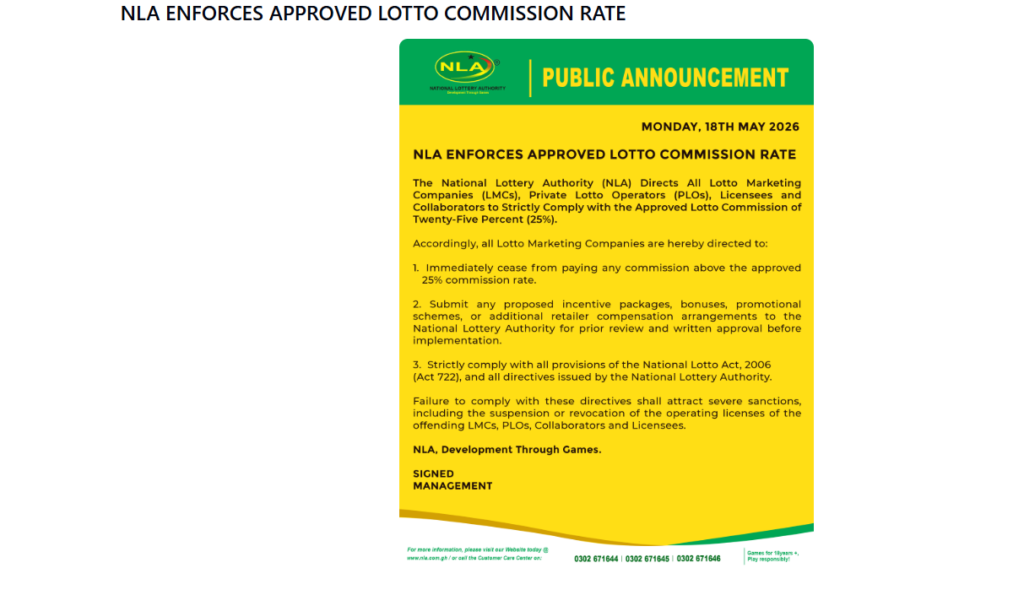
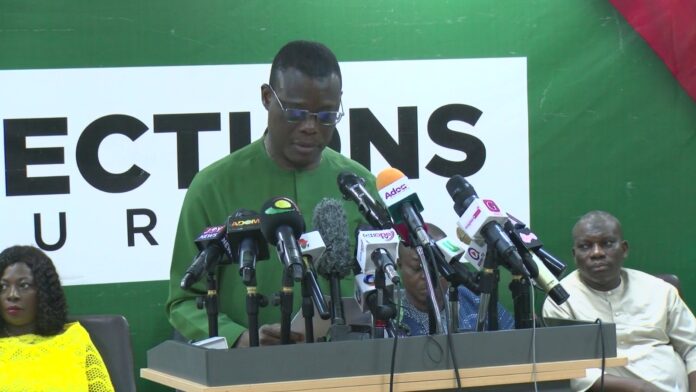
All Lotto Marketing Companies, Private Lotto Operators, collaborators and licensees risk losing their licenses completely or face suspension if they fail to comply with the approved 25% commission rate for retailers and agents, the National Lottery Authority (NLA) has warned.
The state lottery operator issued this warning in a formal notice dated May 18th, directing all operators to completely put a stop to overpaying the approved rate in the guise of incentives and bonuses.
It warned all concerned bodies to “immediately cease from paying any commission above the approved 25% commission rate. Submit any proposed incentive packages, bonuses, promotional schemes, or additional retailer compensation arrangements to the National Lottery Authority for prior review and written approval before implementation”.
According to the Authority, “any commission payment above the approved 25% is illegal.”
The NLA explained that the current 25% commission took effect in August 2024 after a review aimed at improving the sustainability of the lottery business.
It stressed that any additional payment linked to retailer compensation falls under its regulatory oversight.
It also warned that failure to comply could lead to sanctions, including suspension or revocation of operating licences.
“Strictly comply with all provisions of the National Lotto Act, 2006 (Act 722), and all directives issued by the National Lottery Authority. Failure to comply with these directives shall attract severe sanctions, including the suspension or revocation of the operating licenses of the offending LMCS, PLOS, Collaborators and Licensees,” the statement added.
About the National Lotto Act, 2006 (Act 722)
The Act establishes the National Lottery Authority (NLA), gives it exclusive rights to operate and regulate lotteries, and sets out licensing, commission rules, offences, and penalties, including suspension or revocation of licences for non‑compliance.
Section 4(1) states that no person or entity other than the Authority could operate any form of lottery. Sections 5 to 14 set out the licensing framework for Lotto Marketing Companies, covering applications, renewals and operational responsibilities, while Section 11 empowered the Authority to suspend or revoke licences where operators breached licensing conditions.
The Act further outlined rules governing lottery draws, prize payments and winnings under Sections 23 to 27, while creating offences related to fraud, manipulation and other unlawful practices. Section 28 established commission arrangements for lottery agents and retailers, and Sections 32 and 33 created the Lotto Account, with any deficits charged to the Consolidated Fund.
In addition, Sections 34 to 37 defined the structure, functions and governance of the NLA, including the establishment of its governing board. Section 53 empowered inspectors to enter premises and seize items relevant to investigations, while Section 55 authorised the Minister responsible for the sector to make regulations for the implementation of the Act.
Ablekuma North has emerged as the overall best-performing district in the Multidimensional Poverty Index, according to the latest Multidimensional Poverty Index (MPI) rankings released by the Ghana Statistical Service (GSS).
The MPI listed many districts in the Greater Accra and Ashanti regions as the best-performing districts in Ghana between 2021 and 2025, citing improvements in living conditions, education, healthcare, and employment.
The report says among all the districts, Ablekuma North Municipal emerged as the overall best-performing district, recording an average poverty headcount of 8.5 percent over the five-year period and consistently maintaining a place among the top ten best-performing districts each year.
Ablekuma West Municipal came second with an average poverty incidence of 8.6 percent, while Korle Klottey Municipal recorded 8.8 per cent.
La Dade-Kotopon Municipal and Tema West Municipal also ranked among the country’s top-performing districts, highlighting the dominance of urban municipalities in reducing multidimensional poverty.
Other districts that featured prominently in the rankings include Ayawaso Central Municipal, Ayawaso West Municipal, Krowor Municipal, Ledzokuku Municipal, and Asokwa Municipal.
A major highlight reported by the GSS in its findings is the vast disparity in living conditions between urban and rural Ghana. Per the findings, several municipalities in Greater Accra consistently recorded low poverty levels, while districts in the northern parts of the country continued to experience higher deprivation rates.
The report also revealed that Ayawaso North Municipal recorded the lowest multidimensional poverty incidence nationwide in 2025, at 5.5 per cent.
Officials of the Ghana Statistical Service said the rankings provide critical data for policy planning, investment targeting, and social intervention programmes aimed at reducing poverty across the country.
The report further noted that improvements in access to education, healthcare, sanitation, electricity, and employment opportunities contributed significantly to the strong performance of the top-ranked districts.
Meanwhile, Findings from the Ghana Statistical Service’s Mobile Vulnerability Analysis and Mapping (mVAM) survey indicated that one in three households in the country was facing food pressure.
According to the survey, although most households appeared food secure, many were increasingly struggling behind the scenes to cope.
However, most people were managing to eat adequately. The report indicated that about 91 percent of Ghanaians maintained acceptable food consumption levels, citing overall stability in the country.
Consequently, the report stated that “these patterns highlighted the importance of looking beyond national averages to understand disparities and emerging risks.”
Households were increasingly reducing portion sizes, switching to cheaper foods, and borrowing money, clear signs of pressure on livelihoods.
Another cause for concern highlighted in the report was that about 25 percent of households had adopted coping strategies, including selling productive assets and cutting spending on health and education.
“Even where food consumption appeared stable today, many households were under pressure and were drawing down their ability to cope tomorrow,” the report warned.
The data also revealed sharp regional disparities, with the North East, Northern, Upper East and Upper West regions recording significantly higher levels of vulnerability than the southern parts of the country.
Beyond geography, the report identified education, livelihood type and access to markets as key drivers of food insecurity.
Also, social protection from the government is low, citing that only 1.5 percent of households reported receiving any form of assistance. The report emphasises that timely, targeted interventions are critical to prevent conditions from worsening.
“This report is not just a presentation of data. It is a call to act,” the GSS stressed.
It added that while many households are coping for now, the growing reliance on survival strategies could deepen vulnerability if left unaddressed.
“Without timely and coordinated action, these pressures can deepen into more severe food insecurity,” the report cautioned.
The Ghana Statistical Service urged policymakers to prioritise vulnerable populations and ensure that data-driven interventions reach those most at risk.
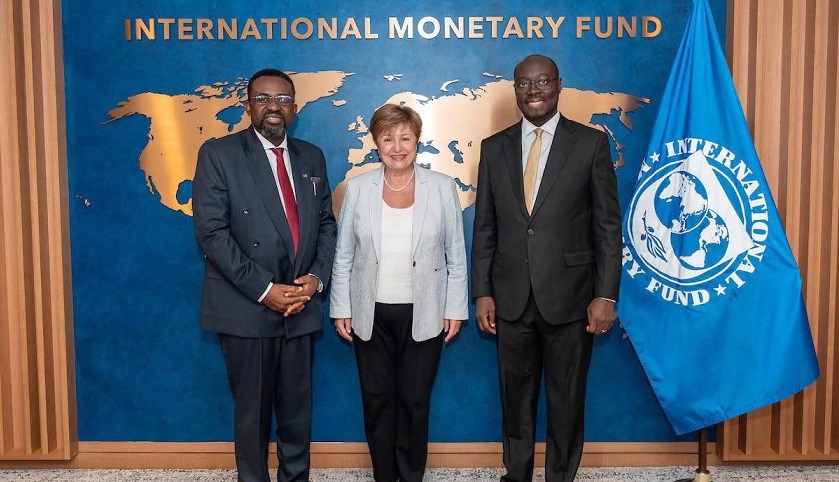
Ghana will adopt the proposed Policy Coordination Instrument (PCI) with the International Monetary Fund into the country’s monetary policy framework, Governor of the Bank of Ghana, Dr Johnson Pandit Asiama, has announced.
Speaking at the opening of the 130th Monetary Policy Committee (MPC) meeting in Accra on Monday, May 18, Dr Asiama said the non-financing programme is intended to strengthen economic discipline, reinforce inflation targeting and improve interest rate transmission across the economy.
“The non-financing programme would reinforce inflation targeting, improve interest rate transmission and strengthen the BoG’s balance sheet over the medium term following recent losses,” he said.
“The PCI will also focus on strengthening the BoG’s balance sheet over the medium term by limiting quasi-fiscal activities and improving transparency and oversight of the Domestic Gold Purchase Programme (DGPP).”
According to the Governor, Ghana’s economy has shown significant improvement in recent weeks despite challenges in the external environment, making the PCI a “credible next step” to sustain growth and maintain policy credibility.
“The Ghanaian economy has improved meaningfully since our last meeting in March 2026. Since the end of March, the picture has been one of a domestically resilient economy navigating an increasingly difficult external environment. The PCI represents a considered and credible next step in Ghana’s institutional engagement with the international financial architecture,” he added.
Detailing the difference between the Extended Credit Facility (ECF) and the PCI, Mr Asiamah noted that while the former focused on providing monetary support, the latter is a non-financing arrangement focused on technical support, policy credibility and helping Ghana attract funding from private investors and development partners.
Dr. Asiama said the three-year programme, which was awaiting IMF Executive Board approval, was structured around six pillars, including sustaining growth-friendly fiscal adjustment, safeguarding debt sustainability and strengthening monetary and exchange rate policy frameworks.
The other pillars, he said, included strengthening fiscal transparency and governance, particularly in state-owned enterprises and quasi-fiscal activities, reinforcing financial sector stability and promoting economic diversification and inclusive growth.
Dr Asiama said the PCI would help preserve gains achieved under the ECF programme while signalling the benefits of IMF engagement and reducing Ghana’s financial dependence on IMF resources.
He continued that despite the complexities and challenging global macroeconomic conditions,
Despite challenges in the external environment, Dr Asiama said the economy remained resilient amid increasingly difficult global macroeconomic conditions.
He said the ongoing conflict in the Middle East had become a major external risk since the 129th MPC meeting, with its economic consequences now evident in global data.
“The closure of the Strait of Hormuz has triggered a sustained surge in global energy prices. The IMF has revised its 2026 global growth projection downward to 3.1 per cent from an initial estimate of 3.3 per cent, citing the adverse demand and supply effects of the conflict,” he stated.
Dr Asiama said the government’s plan to raise US$1 billion through local-currency bonds to finance cocoa purchases for the 2026/27 crop season would help reduce reliance on dollar funding and foreign lenders, adding that the temporary reduction in regulatory margins on petroleum products would help cushion the direct impact of rising crude oil prices on domestic inflation.
About the regulatory reduction in fuel prices
The Government of Ghana announced an extension of its intervention at the fuel pumps. On April 16, the government introduced a temporary relief measure, absorbing GH¢2.00 per litre on diesel and GH¢0.36 per litre on petrol, which had been scheduled to end on May 15.
The intervention became necessary after prices surged due to geopolitical tensions in the Middle East and disruptions at the Strait of Hormuz, which raised international crude oil benchmarks and premiums.
After the intervention expired on Thursday, the Chamber of Petroleum Consumers (COPEC) petitioned the government to extend the measure, arguing that the conditions which prompted it persisted.
Consequently, the government, in a statement issued by the Ministry of Energy and Green Transition and dated May 15 under the signature of the Ministry’s Spokesperson and Head of Communication, Richmond Rockson Esq., said that following a Cabinet meeting chaired by President John Dramani Mahama, which reviewed developments on the international oil market and the impact of global price volatility on domestic fuel costs, it had heeded COPEC’s call by extending the intervention, although with some adjustments.
Under the April intervention, the government absorbed GH¢2.00 per litre on diesel and GH¢0.36 per litre on petrol.
However, under the latest review announced in a formal notice yesterday, the government said it would absorb GH¢1.07 per litre on diesel effective May 16, stating that the move was aimed at cushioning consumers against rising prices on the international market.
“Following the latest review, the Government has decided to intervene in the price of diesel by absorbing GH¢1.07 per litre effective May 16, 2026. This decision is necessary to ensure the sustainable distribution of petroleum products across the country while continuing to provide relief to consumers,” parts of the statement read.
The statement added that the intervention would remain in place for two pricing windows and would be subject to review after June 15 by Cabinet and the National Petroleum Authority (NPA), depending on global oil market trends and fiscal space.
“This intervention is expected to last for a period of two pricing windows, subject to review,” the statement added.
Government spokesperson Felix Kwakye Ofosu has defended the government’s delay in appointing a new Defence Minister since the passing of the former Minister Dr Edward Omane Boamah, who tragically died in a military helicopter crash on August 6.
Five months after his passing, the President announced Finance Minister Dr Cassiel Ato Forson on December 29, during the inauguration of the Defence Ministry’s nine‑member Advisory Board in Accra, to take on the role temporarily until after the festivities, where a new person will be announced.
However, five months into 2026, a new Minister hasn’t been appointed.
Responding to these concerns about the status of the Ministry, during an appearance on JoyNews’ PM Express on Monday, May 18, Mr Kwakye-Fosu indicated that, eventhough the timeline given by the president has elapsed, the sector remains in safe hands and is running as it should with major boost underway due to the unprecedented vacancy.
He said, “But I think that by and large, we have held the fort, and the government has functioned effectively. There’s not been any lapses, as far as I know, in terms of Ghana’s defence architecture.”
After being reminded about the President’s delay in announcing a new Minister despite his promise to do so after the festivities, the Abura Asebu-Kwamankese MP said the decision rests solely with the President.
“Any day that the president communicates to me that he has appointed a defence minister, I’ll make it known to you,” he said.
Mr Kwakye Ofosu argued that conditions within the sector were improving, citing ongoing military retooling and equipment acquisition efforts.
“Indeed, things appear to be improving on that front because they are acquiring additional firepower in terms of their equipment and retooling, and all that is going quite well,” he said.
On his part, the Finance Minister’s role in an acting capacity has now helped speed funding for procurement processes.
“Perhaps it helps that the man who has to bankroll (Dr Ato Forson) is also the one who is in the acting capacity at the Defence Ministry. So everything is on track,” he noted.
Pressed further on why the President had still not nominated anyone despite the unusual delay, Mr Kwakye Ofosu again defended the arrangement and dismissed concerns about instability at the ministry.
“So, what is the exact problem at the Defence Ministry?“I want to stress that the Defence Ministry continues to be in safe hands and it continues to be in experienced hands, and it is running smoothly,” he said.
He reiterated that the President would act when he considered it necessary.
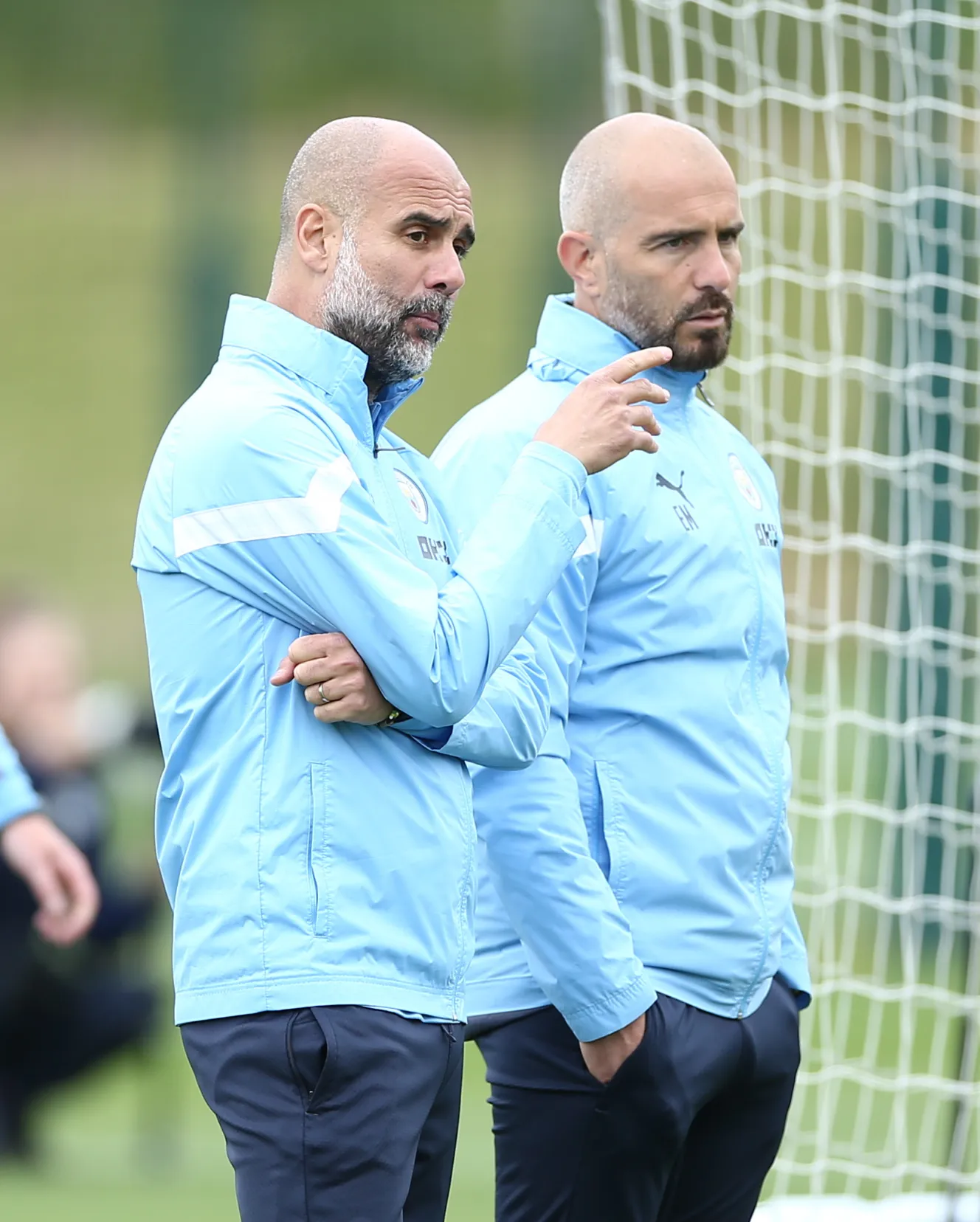
A BBC report has suggested that former Chelsea manager Enzo Maresca will succeed him after his exit at the end of the campaign.
This comes after the British media company reported on Monday, May 18, that the long-time Man City boss will part ways with the Premier League giants after this Sunday’s home game against Aston Villa at Etihad Stadium, their final game of the season.
According to reports, former Chelsea head coach Maresca has thrived as the frontrunner in the race for a new coach to replace the legendary Spaniard for the 2026-27 season.
Engagements are already underway as Man City is reported to have been preparing for Pep’s exit for about 6 months now.
Maresca has reportedly shown interest in the job, and talks are already at the advanced stage. He will be announced soon after talks are finalised as Guardiola’s successor in due course.
Guardiola said previously: “One of the best managers in the world, Enzo Maresca, I know him quite well, but the job he has done at Chelsea does not get enough credit.
“Winning the Club World Cup, Conference League, and qualification for the Champions League in a league that is so tough with a young team. It is exceptional.”
About Maresca
Enzo Maresca is a 46-year-old Italian coach and former professional midfielder. During his playing career, he represented clubs such as Juventus, Sevilla, and Olympiacos, gaining a reputation for his tactical intelligence on the pitch.
After retiring, Maresca transitioned into coaching and began his managerial journey with Manchester City’s Elite Development Squad in 2020, where he guided them to the Premier League 2 title. He later took charge of Parma in 2021 before returning to City as Pep Guardiola’s assistant during the 2022–23 season, a campaign that culminated in the club’s historic treble.
Maresca then moved into senior management roles, leading Leicester City to Championship victory and promotion, before joining Chelsea. At Stamford Bridge, he added the UEFA Conference League and Club World Cup to his résumé before departing in January 2026.
Maresca’s connection with Pep Guardiola is both professional and philosophical. As Guardiola’s assistant during the treble-winning season, he played a crucial role in implementing the tactical principles that define Pep’s style, particularly positional play and high pressing.
Guardiola himself praised Maresca as “one of the best managers in the world,” a testament to the Italian’s influence and ability. Much like Mikel Arteta before him, Maresca is seen as a natural heir to Guardiola’s footballing philosophy, blending his own ideas with Pep’s blueprint for success.
Transition at Manchester City
After a decade of dominance, Pep Guardiola is stepping down from Manchester City, leaving behind a legacy of 20 trophies, including six Premier League titles and the 2023 treble. His departure marks the end of an era, but the club has moved swiftly to secure continuity.
Maresca has reportedly reached a verbal agreement with City on a three-year contract, positioning him as Guardiola’s successor. Official confirmation is expected after City’s final game of the season against Aston Villa. While other names, such as Vincent Kompany, were considered, Maresca’s prior ties to the club and Guardiola’s endorsement made him the clear favourite to take the reins.
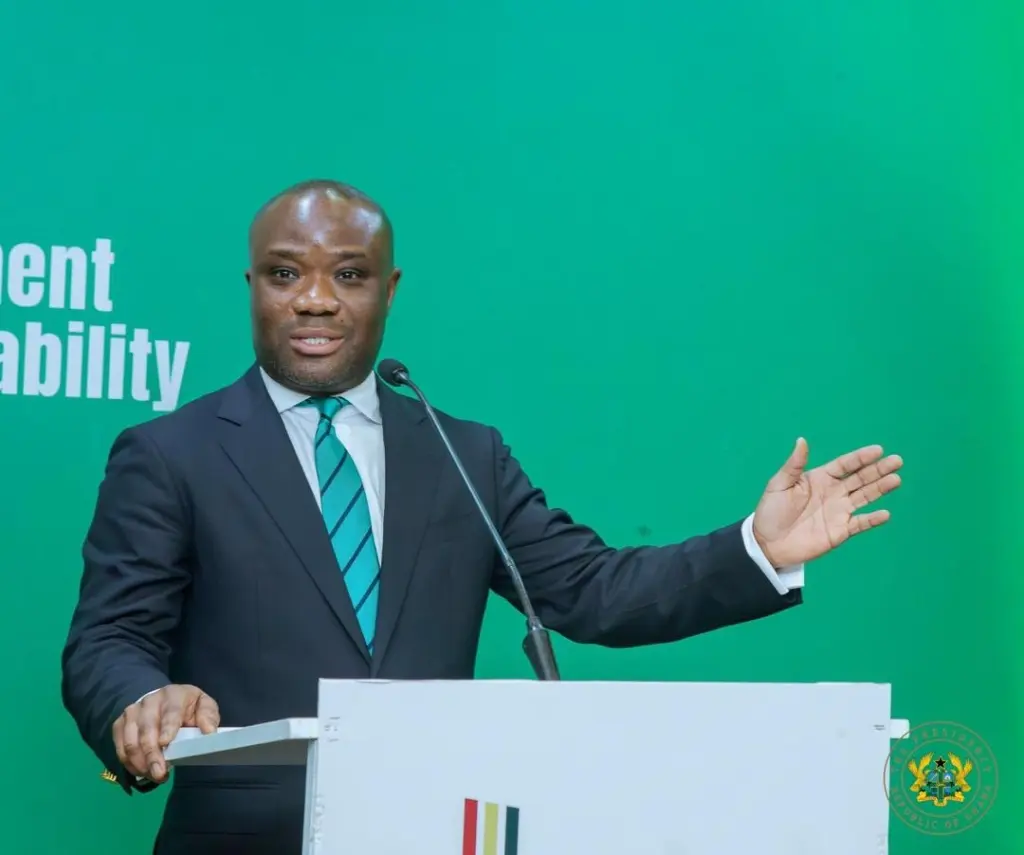
Ghana will not return to the international capital market this year, Finance Minister Cassiel Ato Forson has said, following the country’s exit from its three-year Extended Credit Facility programme with the International Monetary Fund (IMF).
While Ghana will still maintain close ties with the global lender, Dr Forson indicated that the government has no immediate plans to seek another bailout arrangement or raise fresh Eurobond debt from the international market.
Instead, the government plans to adopt what it describes as a non-financing IMF instrument known as the Policy Coordination Instrument, a framework designed to support policy credibility and macroeconomic discipline without direct financial support from the Fund.
At a joint press conference with the IMF mission in Accra, Dr Forson stressed that the John Dramani Mahama administration is prioritising fiscal stability over aggressive external borrowing despite improving investor sentiment towards Ghana.
“We are not in a hurry to go to the international capital markets, and if we find a need to go to the international capital markets, we will accordingly inform the people of Ghana.”
The Finance Minister disclosed that the government’s 2026 budget assumptions do not include any external commercial borrowing, effectively taking a Eurobond issuance off the table for the year.
“One thing is for sure: the 2026 budget never assumed that we are going to the international capital markets for any form of financing, so it is off the table for at least this year.”
Dr Forson, however, left the door open for a possible return to the market in the medium term, insisting that future decisions would depend on financing conditions and government priorities.
Ghana has remained locked out of the international debt market since 2022 after losing access amid soaring debt levels, rapid currency depreciation and worsening investor confidence, which eventually forced the country into debt restructuring negotiations with both domestic and external creditors.
“In the medium term, it will depend on what the government seeks to do, so I can assure you that we are not in a hurry to go back to the international capital markets.”
The government’s decision to opt for a Policy Coordination Instrument instead of a successor bailout programme also suggests confidence among authorities that Ghana may have moved beyond the emergency phase of its economic crisis.
Under the instrument, the IMF will continue to monitor and assess macroeconomic reforms without disbursing financial support.
For his part, IMF Mission Chief to Ghana, Ruben Atoyan, maintained that any decision on whether Ghana returns to the international capital market ultimately rests with the government.
“In terms of access to the capital market, it is a sovereign decision for Ghana.”
Earlier, a report by JoyBusiness suggested that a team from the IMF was expected to conclude the final review of Ghana’s Extended Credit Facility programme on Friday, May 15.
The Accra-based media house indicated that, according to sources familiar with the engagement, the team under the leadership of Ruben Atoyan had been in Ghana since April 29 for a two-week sixth review mission.
According to JoyBusiness checks, the IMF-Ghana engagements were on track, with discussions progressing well despite the country’s recent worsening energy sector and fiscal pressures highlighted in the Central Bank’s annual audit report.
While the IMF appeared satisfied with measures taken by the government regarding state-owned banks, it reportedly raised concerns about a particular private commercial bank, an issue that is yet to be resolved.
It is not yet clear whether the mission will set prior actions for the government before the team leaves to prepare its report for board consideration in August this year.
Last year, the Ministry of Finance officially informed the public that the Government of Ghana had successfully effected a payment of US$349,523,674.56 in respect of Eurobond debt service obligations on Wednesday, July 3.
Since the conclusion of Ghana’s Eurobond debt restructuring in October 2024, the government of Ghana has cumulatively serviced US$1,174.64 million in Eurobond debt payments.
In October 2024, the government made an initial payment of US$475.60 million, covering obligations due under the restructuring agreement, including the first post-restructuring debt service.
This was followed by a US$349.52 million payment in January 2025. Now, in July 2025, a further US$349.52 million has been paid.
This brings Ghana fully up to date on all scheduled Eurobond debt service obligations for 2025. Looking ahead to 2026, a total debt service of US$1,409.06 million is scheduled.
This timely payment reaffirms Ghana’s commitment to macroeconomic stability, prudent debt management, and constructive engagement with external creditors.
It is also expected to positively influence Ghana’s credit ratings trajectory in the months ahead, as it demonstrates continued discipline in debt servicing post-restructuring.
Additionally, it is likely to boost investor confidence in Ghana’s sovereign credit profile and economic recovery programme, while supporting foreign exchange market stability, given that the payment has been incorporated into the Bank of Ghana’s reserves and liquidity management strategy.
With 98% participation from bondholders, Ghana was able to restructure $13 billion in Eurobond debt, paving the way for the continuation of payments last year. Regular coupon payments commenced in January 2025. The Finance Minister at the time (2024), Dr. Mohammed Amin Adam, announced the creation of a Sinking Fund to alleviate the fiscal pressure of the repayments.
Meanwhile, the government of Ghana has brought to an end the series of engagements with China geared towards enhancing the debt restructuring efforts.
Minister for Finance, Dr Cassiel Ato Forson, who described the meetings as helpful and a big step forward in solving the country’s debt problems, revealed this information in a post on social media on Tuesday, July 1.
According to him, these talks are part of the government’s efforts to fix the economy, reduce the country’s debt burden, and ensure that the lives of ordinary Ghanaians are protected.
Dr. Forson added that the progress made in China puts Ghana in a stronger position to complete this difficult process and build a more stable and inclusive economy.
In April this year, the sector minister announced Ghana’s preparedness to conclude bilateral agreements for the restructuring of its $5.1 billion official bilateral debt by June, a goal that Finance Minister Dr. Cassiel Ato Forson had described as “ambitious.”
This followed the signing of a Memorandum of Understanding (MoU) with the Official Creditor Committee (OCC) on January 28.
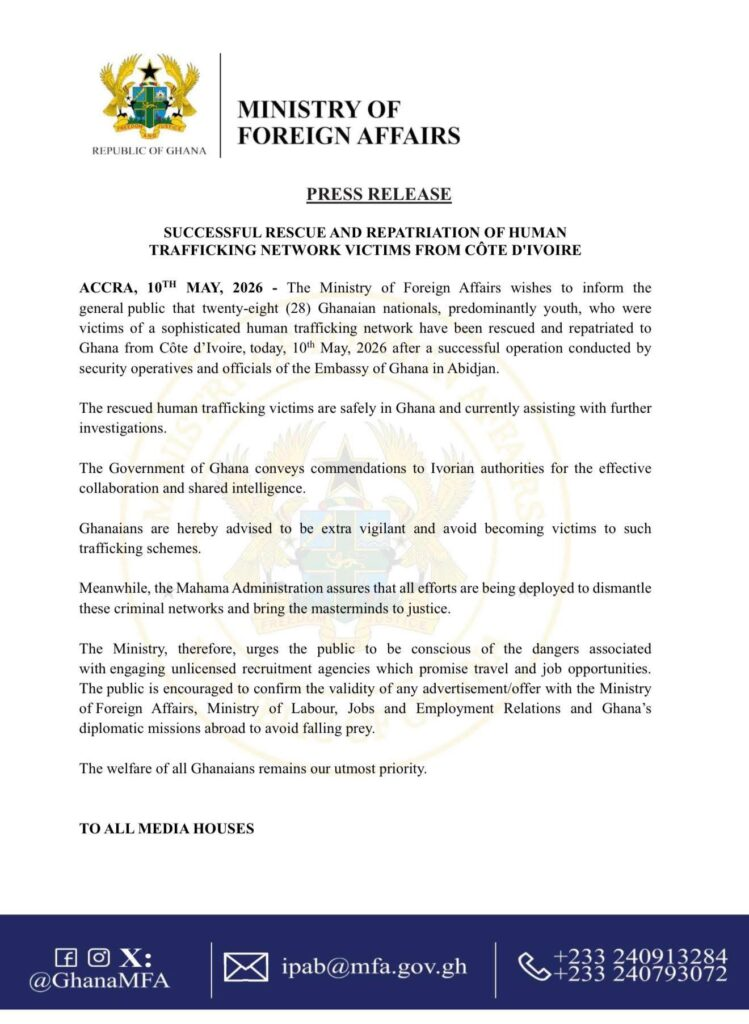
Seven suspected stowaways from a crude oil tanker operating off the Tema coast have been rescued by the Ghana Navy.
This comes after the tanker issued an alert over the presence of the suspects in its rudder trunk.
News of the rescue was announced by Commodore Solomon Asiedu-Larbi, Flag Officer Commanding the Eastern Naval Command, at a press conference held at the Naval Base in Tema on Saturday, May 16.
The tanker, identified as MT Cap Felix, was said to be operating about 200 nautical miles south of Tema Harbour at the time the stowaways were found.
According to the Flag Officer, the Navy quickly responded to the alert and deployed the Navy Ship Achimota around 7 p.m. the same day under the command of Commander Ishmael Kofi Quansah to intercept the vessel at sea.
He said the ship reached the tanker and safely rescued the suspects, all males, from the rudder trunk.
He explained that the suspects are reportedly from a Ghanaian community in Côte d’Ivoire and boarded the tanker while it was anchored in Ivorian waters.
The suspects are currently in the custody of the Ghana Ports and Harbours Authority (GPHA), the Ghana Immigration Service and the Marine Police for profiling while further investigations continue, after which they will be handed over to the Ghana Police Service.
He further explained that MT Cap Felix is a Belgian-flagged crude oil tanker with a gross tonnage of about 82,000 tonnes and IMO number 9380738, adding that its last port of call before the incident was Abidjan in Côte d’Ivoire.
The Government of Ghana has announced an extension of its intervention at the fuel pumps. On April 16, the government introduced a temporary relief measure, absorbing GH¢2.00 per litre on diesel and GH¢0.36 per litre on petrol, which was scheduled to end on May 15.
The intervention became necessary after prices surged due to geopolitical tensions in the Middle East and disruptions at the Strait of Hormuz, which raised international crude oil benchmarks and premiums.
After the intervention expired on Thursday, the Chamber of Petroleum Consumers (COPEC) petitioned the government to extend the measure, arguing that the conditions which prompted it persist.
Consequently, the government, in a statement issued by the Ministry of Energy and Green Transition and dated May 15 under the signature of the Ministry’s Spokesperson and Head of Communication, Richmond Rockson Esq., said that following a Cabinet meeting chaired by President John Dramani Mahama, which reviewed developments on the international oil market and the impact of global price volatility on domestic fuel costs, it had heeded COPEC’s call by extending the intervention, although with some adjustments.
Under the April intervention, the government absorbed GH¢2.00 per litre on diesel and GH¢0.36 per litre on petrol.
However, under the latest review announced in a formal notice yesterday, the government will now absorb GH¢1.07 per litre on diesel effective May 16, stating that the move is aimed at cushioning consumers against rising prices on the international market.
“Following the latest review, the Government has decided to intervene in the price of diesel by absorbing GH¢1.07 per litre effective May 16, 2026. This decision is necessary to ensure the sustainable distribution of petroleum products across the country while continuing to provide relief to consumers,” parts of the statement read.
The statement added that the intervention would remain in place for two pricing windows and would be subject to review after June 15 by Cabinet and the National Petroleum Authority (NPA), depending on global oil market trends and fiscal space.
“This intervention is expected to last for a period of two pricing windows, subject to review,” the statement added.
About the Middle East tensions and their effect on the global market
The ongoing tensions reportedly led to the closure of the Strait of Hormuz, a critical global oil shipping route. The tensions between Iran, the United States and Israel have also been linked to reports about the death of Iran’s Supreme Leader, Ali Khamenei.
Ayatollah Ali Khamenei was reportedly killed in strikes allegedly carried out by the United States and Israel. The development is said to be significantly affecting travellers from Ghana to Asia, Europe and North America, as Dubai serves as a major transit hub through the United Arab Emirates.
Before the intervention, petrol and diesel were selling at GH¢13.30 and GH¢17.10 per litre respectively at the pumps. In a social media post on Tuesday, March 31, GOIL announced that it had increased petrol prices to GH¢13.30 per litre from GH¢12.24 and diesel prices to GH¢17.10 from GH¢15.69.
Star Oil also increased petrol prices from GH¢12.19 to GH¢13.49 per litre, while diesel prices rose from GH¢14.25 to GH¢17.97. The adjustment followed a new price floor announced by the National Petroleum Authority on March 30, directing Oil Marketing Companies (OMCs) to implement the changes from Wednesday, April 1.
On Monday, March 16, petroleum product prices at the pumps also increased following an adjustment by the NPA for the second pricing window of the month.
As a result, petrol, previously priced at GH¢10.46 per litre, rose to GH¢11.57. The price floor for diesel increased from GH¢11.42 to GH¢14.35 per litre, while LPG rose from GH¢9.38 to GH¢10.67 per kilogramme.
Meanwhile, Ghana’s petroleum sector recorded a decline in the second half of 2025.
Data from the Bank of Ghana (BoG), contained in the Central Bank’s Semi-Annual Report on the Petroleum Holding Fund (PHF) released on Tuesday, February 3, showed total receipts of US$399.65 million, significantly lower than returns recorded during the same period in 2024.
The report explained that the amount represented combined inflows from crude oil liftings and petroleum-related taxes. However, it fell below the US$369.25 million realised from crude oil liftings alone in the second half of 2024, pointing to weaker overall sector performance.
“The total amount received into the PHF account for H2 2025 was US$399.65 million (crude oil lifting total of US$198.25 million and other total income of US$201.40 million),” the report stated.
The report further indicated that revenue between July 1 and December 31, 2025, came from two main sources. Crude oil liftings from the Jubilee and Sankofa Gye Nyame (SGN) fields generated US$198.25 million following the lifting of two Jubilee cargoes and one SGN cargo by the Ghana Group, represented by the Ghana National Petroleum Corporation (GNPC).
Ghana also earned US$201.40 million from petroleum-related taxes and interest during the period. The bulk of this amount, US$198.09 million, came from corporate income taxes, while US$3.31 million was earned as interest on the Petroleum Holding Fund.
The BoG further explained that revenue from the 25th cargo from the TEN field, valued at US$60.79 million, was not included in the report because the funds had not been received by the end of 2025, although they were expected in November.
Although Ghana received less new revenue from oil during the period, it still spent and distributed a total of US$493.40 million. The shortfall was cushioned by savings accumulated by the government from previous years.
According to the report, the government used about 57.8% of the total US$493.40 million, amounting to US$285.06 million, to fund projects and programmes through the national budget.
About 23.5%, representing US$115.99 million, was saved to stabilise the economy during difficult periods, while US$49.71 million was reserved for future generations. Another US$42.63 million was allocated to the Ghana National Petroleum Corporation to support its operational and investment costs.
The National Democratic Congress (NDC) has announced that it will rename its headquarters after its late founder, the late former President Jerry John Rawlings.
This was confirmed by the party’s General Secretary of the National Democratic Congress (NDC), Fiifi Fiavi Kwetey, during a media briefing where he was officially announcing activities for the NDC Month of June 2026, citing that the annual observance is dedicated to reflection, remembrance, recommitment and renewal of the ideals upon which the party was founded.
He indicated that the headquarters will now be known as “Rawlings House” as part of activities marking the 2026 NDC Month celebration.
Mr Kwetey said, “The National Democratic Congress has declared the month of June every year as NDC Month, a period dedicated to reflection, remembrance, recommitment and renewal of the ideals that gave birth to our great Party and continue to shape our collective political tradition. This year’s NDC Month begins today, the 15th of May 2026, a date of profound historical significance.
May 15 represents an important precursor to the political evolution that birthed the Provisional National Defence Council (PNDC) and, subsequently, the National Democratic Congress. It is therefore fitting that we commence this national observance from today, as we retrace the path of sacrifice, patriotism, accountability and social justice that has defined our political tradition.”
Mr Kwetey noted that the theme for this year’s celebration, “Strengthening State Institutions: Lessons from the June 4, 1979 Uprising,” reflects the party’s commitment to accountability, integrity, discipline and social justice.
“The June 4 uprising was not merely an event in history. It represented a demand for integrity in public life, accountability in governance, discipline in leadership, social equity and responsible stewardship of state resources,” he stated.
He said the values and lessons of the June 4 uprising are still influencing the current government led by President John Dramani Mahama. According to him, the government’s “Reset Agenda” is focused on restoring people’s trust in state institutions and improving democracy and good governance in the country.
Mr Kwetey praised the late president as a courageous and patriotic leader whose role in Ghana’s democracy and social justice remains unmatched.
“President Rawlings devoted his life to the empowerment of ordinary Ghanaians, the strengthening of democratic governance and the pursuit of social justice. His legacy continues to inspire generations within the NDC and beyond,” he emphasised.
A host of activities will be held nationwide during the month-long celebration, the General Secretary said.
On June 3, a public lecture will be held in the Banda Constituency on the impact of the June 4 uprising.
accountable governance, and the importance of the event to the people of the area.
According to him, June 4 will be marked with a ceremonial flag raising, wreath laying, lighting of the perpetual flame and a grand durbar involving chiefs and people of the Bono Region to symbolise remembrance, national unity and democratic accountability.
He further disclosed that June 10 will be observed as NDC Day with activities centred on revisiting the ideological foundations of the party and encouraging participation in democratic governance, particularly among women and the youth.
Mr Kwetey stated that June 19 will also be observed as Cadres Day in Kumasi under the theme, “Ensuring Transparent Governance: The Role of Cadres.” He explained that the event will provide an opportunity to reflect on the responsibility of cadres and activists in promoting democratic accountability and grassroots political organisation.
He added that the climax of the celebration will take place on June 22 during Founder’s Day, where the party headquarters will officially be named “Rawlings House” alongside the unveiling of a bust in honour of former President Rawlings.
“These activities are not intended merely as ceremonial observances. They are opportunities for political education, national reflection and patriotic renewal,” he said.
Mr Kwetey called on party supporters, cadres, sympathisers, and Ghanaians across the country to actively participate in all activities lined up for the celebration.
“Together, let us keep alive the spirit of June 4. Together, let us deepen the Reset Agenda. And together, let us continue working toward a more just, accountable and prosperous Ghana,” he concluded.
They’re on every plate. In school lunchboxes, at kids’ parties, in chop bars from Accra to Kumasi. Chicken franks and sausages have become the easy win for busy parents and picky eaters.
Kids love them. Adults love them. They’re fast, cheap, and “everybody eats it.”
But here’s the part we don’t talk about at the table: what it’s doing to your child’s health.
What’s actually in that sausage?
Chicken franks are highly processed meat. To keep them cheap, shelf-stable, and bright pink, manufacturers load them with:
Nitrates and nitrites – Preservatives that keep the meat from spoiling. The World Health Organisation classifies processed meat with these additives as a Group 1 carcinogen. That’s the same category as tobacco. Regular intake is linked to higher rates of colorectal cancer and heart disease.
Excess salt, sugar, and fat – One sausage can have up to 30% of a child’s daily sodium limit. Too much sodium early on sets kids up for hypertension later.
Artificial dyes and flavour enhancers – Colours like Red 40, Yellow 5, and Yellow 6 are added to make them look appealing. Studies have linked these dyes to hyperactivity, allergies, and attention issues in children.
Bacteria risk – Even though they’re sold “pre-cooked,” poor packaging and handling can lead to contamination with Salmonella and Listeria. Kids’ immune systems are still developing, so foodborne illness hits them harder.
It’s not just about cancer
According to Consultant Dietitian, Wise Chukwudi Letsa,
“Sausages are calorie-dense but nutrient-poor. That’s a fast track to childhood obesity, and obesity in childhood is one of the strongest predictors of obesity in adulthood.
Once a child is obese, the risk of Type 2 diabetes, high blood pressure, and other non-communicable diseases goes up dramatically. We’re seeing these diseases show up earlier in Ghana than ever before”
So what do you do?
I’m not saying you need to ban everything and never let your child taste a sausage again. But you do control what comes into your home.
Stop treating it as an everyday food. If you serve it, make it occasional, not weekly. Think “treat,” not “protein.”
Make your own. Blend lean chicken, beef, or fish at home with natural spices and herbs. It takes 20 minutes, and you control what goes in. No dyes, no excess salt, no hidden additives.
Swap to whole proteins. Grilled or boiled lean meat, fish, eggs, beans, and groundnuts give kids the protein they need without the chemical load. Fry them less. Steam, grill, or boil more.
Train early. Proverbs 22:6 says, “Train up a child in the way he should go.” Kids don’t ask for sausages on their own. We introduce them to it. We can also introduce them to better options.
The hard truth
No child is asking you to risk their future for convenience. As parents, the choice is ours. It’s easier to grab a pack of franks on the way home. It’s harder to prep real food. But one choice builds health. The other builds risk.
You don’t need to be perfect. You just need to be intentional.
Start this week: Replace one sausage meal with grilled fish or lean meat. See how your kids respond. You might be surprised.
Your child’s future health is being decided in your kitchen today. Choose like it matters, because it does.
DISCLAIMER: Independentghana.com will not be liable for any inaccuracies contained in this article. The views expressed in the article are solely those of the author and do not reflect those of The Independent Ghana
Management of the University of Ghana (UG) has responded to concerns raised by the public regarding the publication of the names of students involved in examination malpractice, explaining that the act is in accordance with the school’s principles.
Speaking during an interview with Citi News, Director of Academic Affairs, Lydia Anowa Nyarko Danquah, indicated that the move is aimed at protecting the integrity of the institution and also serving as a deterrent to others.
She shot down claims that the publication of the students’ names was intended to shame them.
However, she revealed that it is a policy that has been in effect long before the recent publication of the list of offending students.
“This is university policy; we do it every year. We have a process to sanction students who commit malpractices during exams. We want to discourage that because it goes against the university’s image and against the value of the certificate you receive as a student when you graduate.
“It is not like we want to punish or shame people for evil reasons. We just want to discourage it,” she said.
Her remarks come after the Office of the school’s Registrar released a list of students found guilty of examination malpractice on Wednesday, May 13. The announcement detailed the sanctions imposed, including Grade Z (failure of the entire semester’s examinations) and Grade X (failure in specific courses).
According to the University, 32 students, both undergraduate and graduate, were caught.
Nature of the offenses
Some of the students were caught in possession of unauthorised materials, and others were also caught using mobile phones, including one case involving ChatGPT access during the exams. Some, on the other hand, were caught copying from notes or devices, exposing answer booklets for other candidates to copy.
Meanwhile, students of the University of Ghana have expressed mixed reactions to the move.
While some believe the directive will deter students from engaging in malpractice, others argue that, despite its intentions, the policy could subject affected students to psychological distress and stigma.
“Even though I think the university has good intentions for publishing the names, I also think that it exposes the students to a certain level of mental trauma,” a student said.
“I think it’s high time we dealt with people who engage in such behaviour because examinations have rules. I don’t think the university is wrong,” another noted.
Meanwhile, last year, as part of efforts to enforce academic discipline, the University of Ghana (UG), Legon, announced the dismissal of all students who obtained a Cumulative Grade Point Average (CGPA) below 1.0 at the end of the 2024/2025 academic year.
The dismissal was announced in an official statement dated October 2 and signed by Mrs. Lydia Anowa Nyarko-Danquah, Director of Academic Affairs, with reference number AA.0IE/10-25. UG explained that the move was in line with its academic regulations.
The decision was based on Section 9.26 of the University Regulations for Junior Members (2017), which stated that “A student who at the end of any academic year has a Cumulative Grade Point Average (CGPA) below 1.00 shall be withdrawn from the University.”
The regulations further clarified that there would be no probation for students who failed to meet the academic benchmark.
As a result, students who failed to achieve the minimum CGPA requirement were considered not to be in good academic standing and were required to withdraw from their respective programmes with immediate effect.
The affected students were given until the end of November 2025 to confirm their withdrawal from the institution through their official UG email addresses.
The University did not explicitly state the penalty for students who failed to comply with the directive, but noted that, for some programmes, withdrawal letters would also be issued directly by the relevant schools or departments.
The introduction of new airport infrastructure levies in Ghana effective April 1, 2026, represents a policy decision that sits at the intersection of development ambition and economic sensitivity.
On the surface, the rationale is compelling. Modern airport infrastructure is a strategic national asset. It enhances Ghana’s image, boosts tourism, improves safety standards, and positions the country as a regional aviation hub. In a global economy where connectivity defines competitiveness, investment in aviation infrastructure is essential.
However, the mechanism chosen to finance this ambition raises important concerns, particularly when examined through the lens of youth mobility, diaspora engagement, and broader economic impact.
The immediate effect of the levy is a direct increase in the cost of travel to and from Ghana. For international travellers, especially those from the diaspora in places like the United Kingdom, an additional $100 on intercontinental tickets is not insignificant.
Air travel is already price-sensitive, and Ghana competes with multiple destinations across Africa and beyond for diaspora visits, tourism, and business travel. When costs rise, travellers often adjust their behaviour rather than absorb the increase. This is a well-documented principle in aviation economics: demand for air travel is elastic, particularly in leisure and diaspora segments.
From a youth perspective, the implications are even more significant. Young Ghanaians in the diaspora, students, early-career professionals, and young families, are among the most price-sensitive travellers.
These are individuals still building financial stability, yet they remain a key demographic for sustaining long-term cultural and economic ties with Ghana.
Rising travel costs risk weakening that connection. Visits home may become less frequent, shorter, or postponed altogether. Over time, this has implications for identity, remittance flows, and investment behaviour.
Comparatively, global best practices show that while airport development is often supported through user charges, successful aviation hubs carefully balance these fees to remain competitive.
Airports such as Dubai, Istanbul, and Kigali have pursued aggressive infrastructure expansion, but they also implement policies that encourage passenger growth. In many cases, governments absorb a significant portion of infrastructure financing or structure fees in ways that do not discourage travel. The underlying logic is simple: higher passenger volumes generate greater overall economic benefit than high charges on fewer travellers.
In contrast, Ghana’s current approach risks prioritising short-term revenue collection over long-term traffic growth. If fewer people travel, the downstream effects are substantial.
Reduced arrivals mean lower spending in hospitality, transportation, retail, and tourism services. Hotels experience reduced occupancy, local businesses lose customers, and informal sector operators—from taxi drivers to market traders- see declining incomes.
The aviation levy, therefore, cannot be viewed in isolation, as its effects ripple across the wider economy.
There is also a competitiveness dimension. Ghana has positioned itself within West Africa as a preferred destination for conferences, cultural tourism, and diaspora return initiatives such as “Year of Return” and “Beyond the Return.”
These initiatives succeeded partly because they reduced barriers and encouraged travel. Higher costs risk eroding that competitive advantage, particularly when alternative destinations offer similar experiences at lower overall travel costs.
That said, the policy’s objective should not be dismissed. The need for modern, efficient, and scalable airport infrastructure is undeniable. The challenge is not whether to invest, but how to finance that investment in a way that aligns with broader economic goals.
A more balanced approach would involve phased or tiered implementation of levies, allowing the market to adjust gradually rather than imposing sudden cost increases.
Additionally, the government could explore blended financing models that combine public investment, private sector participation, and concessional funding to reduce the burden on travellers. Transparency is also critical. When citizens and the diaspora clearly understand how funds are used and see tangible improvements, acceptance of incremental costs increases.
Another consideration is differentiating between traveller categories. Incentives or reduced levies for students, young professionals, and frequent diaspora travellers could help maintain engagement with younger demographics.
Similarly, policies that encourage airline competition and increased route availability could help offset higher charges through lower base fares.
From a youth advocacy standpoint, this issue presents an opportunity for constructive engagement. The role of a youth organiser, particularly within the NPP-UK context, is not only to echo policy positions but to assess their impact on young people and propose workable alternatives.
This means advocating for policies that strengthen connectivity without excluding the very demographic that will shape Ghana’s future.
Ultimately, the issue is one of balance. Ghana must invest in its future, but it must do so in a way that keeps doors open, financially and socially, for its youth and diaspora.
If travel becomes a luxury rather than a bridge, the country risks losing not only visitors but long-term partners in development.
Positioning the debate this way is not about opposition, but about ensuring that infrastructure development is inclusive and that economic policy reflects the interconnected realities of travel, youth engagement, and national growth.
DISCLAIMER: Independentghana.com will not be liable for any inaccuracies contained in this article. The views expressed in the article are solely those of the author, and do not reflect those of The Independent Ghana
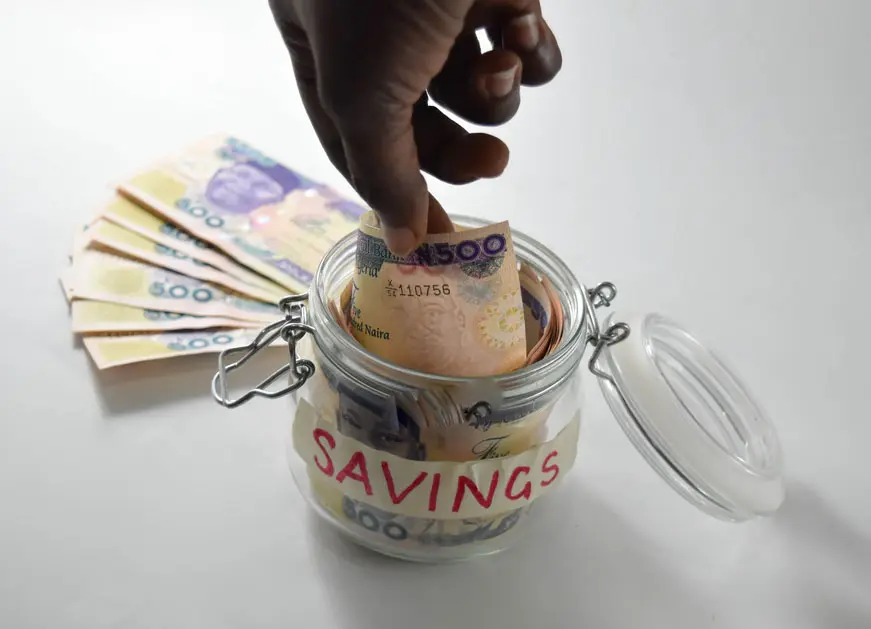
A concerning report from the 2025 Financial Wellness Monitor by Old Mutual has revealed that, although more working Ghanaians recognise the importance of saving for retirement, many still struggle to do so effectively.
According to the report, a remarkable 92 percent of the working population in Ghana is aware of retirement savings and acknowledge the need to; however, just about 33 percent of them have taken concrete steps toward retirement planning.
Findings from the report reveal that despite the recent signs of economic recovery, many people remain unprepared, with no long-term or stable plan for their retirement money needs and potential emergencies.
According to the report, three out of every four working Ghanaians believe they have not saved enough for retirement, highlighting growing concerns over future financial security.
Also, 74% of respondents are uncertain about their retirement savings, with concerns about having sufficient funds after retirement, an 18 percentage-point increase since 2023. The uncertainty cuts across income levels.
The report pointed out some behavioural challenges in the saving culture of Ghanaians, citing that even with people who earn above GHS 3,000 monthly, nearly two-thirds remain uncertain about their long-term financial security.
52% also expressed fears of the collapse of financial institutions such as pension providers, highlighting a low trust in financial institutions.
Another 55 percent expect family support during old age, while 32% cite limited income as the main obstacle to saving consistently.
Retirement planning also ranks relatively low among financial priorities, coming seventh behind immediate concerns such as emergency funds, education and business investments.
The study also found a decline in investment culture among Ghanaians, as confidence in it has dwindled, citing a 7% drop, with fewer people setting financial goals or tracking their finances.
Access to professional financial advice also remains limited, with just 13% of the working population making use of financial advisers despite about 60% acknowledge the importance of professional financial guidance. On the other hand, almost half of the respondents say they do not know where to seek reliable financial advice.
Retirement planning continues to take a back seat, ranking seventh among savings priorities behind more immediate needs like emergency funds, education, and business investment.
While some households are improving their financial conditions by reducing debt and adjusting spending habits, the report warns that many of these gains remain short-term.
Continued reliance on informal savings systems and inadequate retirement planning could leave many households exposed to future economic shocks.
Meanwhile, Director-General of the Social Security and National Insurance Trust (SSNIT), Kwesi Afreh Biney, last year, 2025, assured the public of the Trust’s viability and commitment to fulfilling its obligations as the country’s main social security fund.
Kwesi Afreh Biney mentioned this during an appearance on Citi TV’s Breakfast show on Thursday, October 30.
Around October last year, the Trust’s financial health and management efficiency were under heavy scrutiny. This was after multiple investigations and Right to Information (RTI) disclosures revealed that SSNIT had tied up over GH¢1.8 billion in underperforming or mismanaged real estate projects, which included commercial properties valued at GH¢1 billion, residential projects exceeding GH¢500 million, and land banks with questionable strategic value, sparking fears that poor returns could threaten the fund’s long-term sustainability. These fears, according to reports, still linger in the minds of some Ghanaians.
But Mr Biney has dispelled these public doubts, reaffirming the Trust’s commitment to social protection and economic stability. He acknowledged the shortfalls in the scheme and the challenges he inherited from the previous administration; however, he revealed that his outfit has worked on a three-year strategy to address these issues.
“The institution remains strong. There were challenges, but there were opportunities in there. I inherited challenges and positives, but we worked together to define a strategy for what the future will look like. This is a defined benefit scheme, so it’s one that we have to pay. It’s what the government even has to guarantee as well. So there’s nothing like the trust will fail, for which reason people’s pensions will be in jeopardy? No, he added.
As proof of the Trust’s competence, he stated that SSNIT has made a payment of about five billion Ghana Cedis (GH¢5 billion) in pensions this year.
SSNIT, Ghana’s statutory public trust responsible for administering the country’s basic national pension scheme, mostly make payments on the 20th of every month.
“What I will say is that we have successfully paid pensions since 1965. In 1965, only three pensioners were being paid. Today, we pay over 257,000 pensioners each month. This year alone, we paid in excess of five billion cedis in pensions. Is it sustainable? The trust will continue to evolve, we will continue to make it stronger, and we’ll put in systems to ensure that we never fail,” he noted.
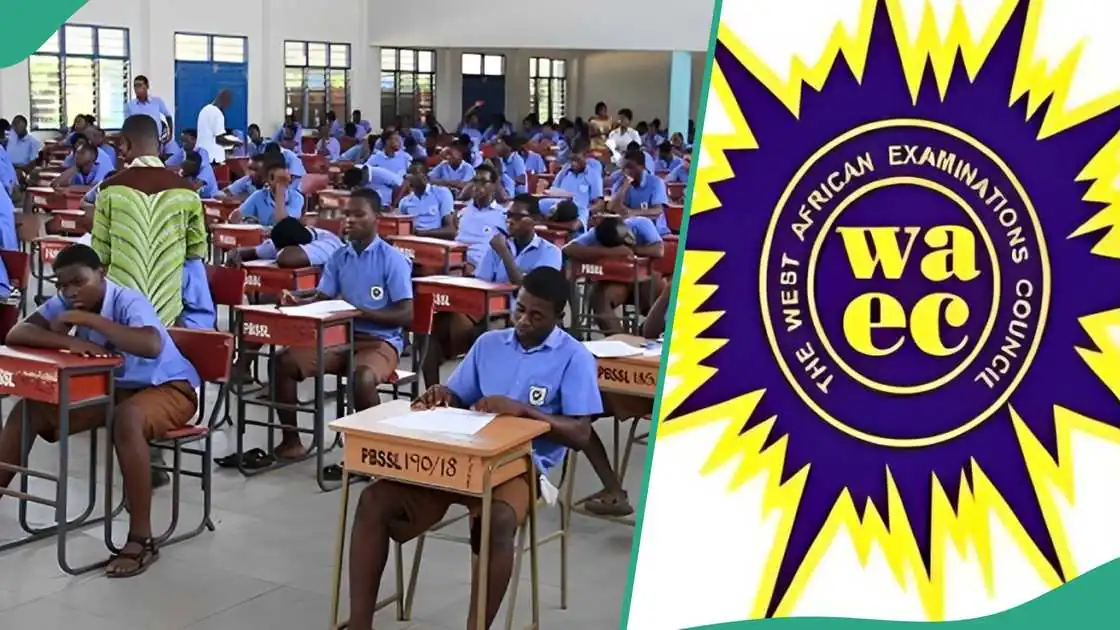
The examination results of candidates who sat for this year’s Basic Education Certificate Examination (BECE) will be released a month earlier than in previous years, according to the West African Examinations Council (WAEC).
The examination body said that, instead of August, candidates are expected to receive their results by the end of July.
In an interview with Adom News, WAEC’s Head of Public Affairs, John Kapi, highlighted the council’s commitment to ensuring a smooth and credible marking process to meet the promised timeline.
WAEC said it is currently collating scripts from all regions across the country for onward distribution to the various marking centres as part of the processes leading to the release of the results.
“Candidates who sat for the 2026 BECE are expected to receive their results by the end of July. We are currently collating scripts from all regions across the country for onward distribution to the various marking centres. WAEC is committed to ensuring a smooth and credible marking process to meet the timelines promised,” he said.
Mr. Kapi also revealed that forty-four (44) teachers, invigilators, and supervisors have been arrested for engaging in and aiding examination malpractice. He stressed that the act remains a criminal offence, adding that the suspects are being processed for prosecution, and reiterated that WAEC will not tolerate such acts.
“Seven out of the 44 suspects arrested have already been charged and arraigned before the courts, while investigations into the remaining cases are ongoing,” he added.
Mr. Kapi reiterated WAEC’s commitment to protecting the credibility of public examinations and ensuring that deserving candidates are rewarded fairly based on merit.
Meanwhile, Education think tank Africa Education Watch has reiterated calls for a restructuring of the Basic Education Certificate Examination (BECE), describing the current one as “torture”.
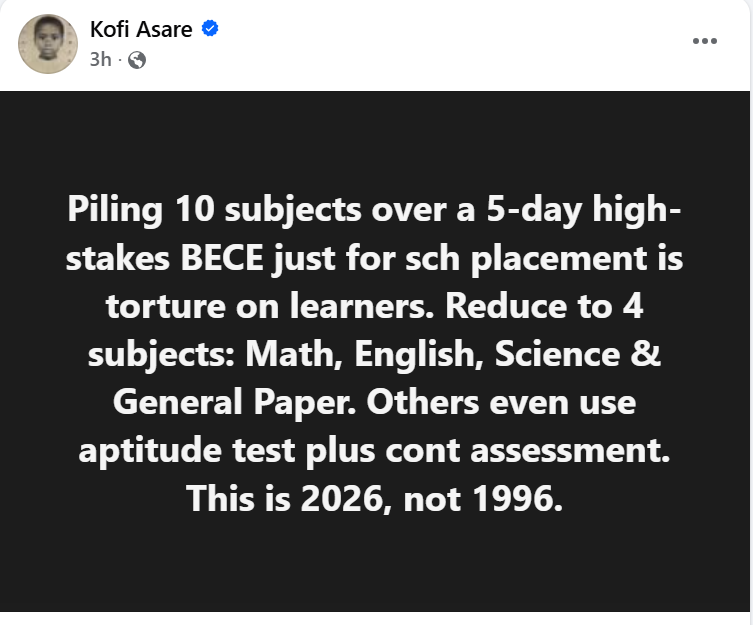
Taking to his official Facebook page on Thursday, May 7, the Executive Secretary of Africa Education Watch, Kofi Asare, slammed the system as archaic, questioning the logic behind examining candidates in 10 subjects over 5 days to determine their school placements, proposing that the number of examinable subjects be reduced to four core areas.
“Piling 10 subjects over a 5-day high-stakes BECE just for sch placement is torture on learners. Reduce to 4 subjects: Math, English, Science & General Paper” parts of his statement read.
He went on to recommend the adoption of aptitude tests and content assessments as alternatives to the traditional means used over the years.
“ Others even use an aptitude test plus a content assessment. This is 2026, not 1996,” he added.
According to him, the arrangement is outdated and does not reflect modern assessment systems used in other countries, where aptitude tests and continuous assessment are incorporated into placement processes.
His comments come amid the ongoing 2026 Basic Education Certificate Examination, during which more than 10 students and invigilators have reportedly been arrested over examination malpractice.
The nationwide examination, organised by the West African Examinations Council, is expected to run until May 11, with 620,141 candidates from 20,395 schools participating.
Other stakeholders remarks on BECE
Aside from Africa Education Watch, several individuals, institutions, and other stakeholders have also called for an overhaul of the BECE system. A lecturer at the University of Ghana, Dr Benjamin Otchere-Ankrah, has been particularly vocal on the issue over the years.
During an interview yesterday, he reiterated his call for a transition away from what he described as a “cruel” system towards one that offers flexibility and gives students ample time to rest and engage in group discussions after each paper. He further suggested extending the examination period from five to ten days, with one paper written per day.
He referred to the examination schedule of University students in Legon, where students are given about three weeks to write about five to seven papers.
Considering the age of the BECE candidates, Dr Otchere suggested that such loads on the 13-15-year-old students are overwhelming and tiring, which tends to negatively affect the performance of the students.
Telecommunication companies are incurring higher costs due to the increasing rate of fibre cuts across the country, the Ghana Chamber of Telecommunications has revealed.
According to the Chamber, the number of fibre cuts recorded annually has surged by about 1,900%, rising from roughly 400 cases per year during the early stages of network deployment to more than 8,000 cases currently.
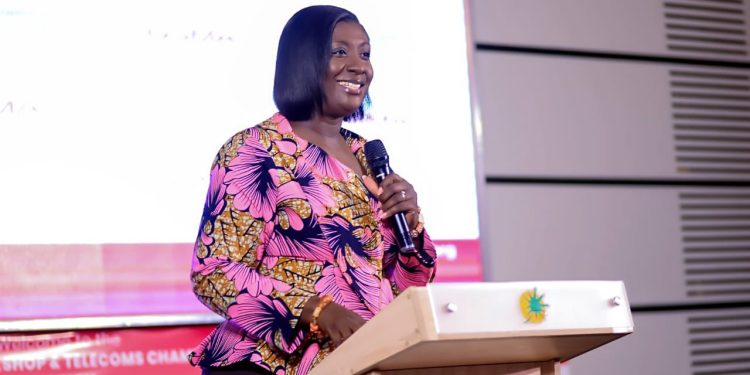
Speaking to the media on the sidelines of the Chamber’s 15th anniversary soft launch, the Chief Executive Officer of the Chamber, Sylvia Owusu-Ankomah, said the financial and operational pressure caused by the frequent fibre cuts is forcing telecom operators to divert resources into repair works instead of network expansion and service improvement.
She attributed the rising exposure of fibre infrastructure partly to the rapid expansion of telecommunications networks over the years. She maintains that fibre cuts remain one of the biggest threats to network stability and service reliability in Ghana.
“We are experiencing over 8,000 cuts per annum when it comes to fibre cuts, which is increasingly a strain on our operators’ resources. Resources and investment that could have been used to ensure new rollouts, you find them using it to ensure they are meeting their quality obligations by repairing those fibre cuts.
“So we want to make sure that the 15-year journey counts for something, and so one of the key milestones, as I said, we want to stop the conversation around fibre cuts and get more progressive as a country,” she remarked.
Consequently, she recommended the strict implementation of the “dig once” policy, which was approved by Ghana’s Cabinet in November 2025 to cut costs, reduce fibre cuts, and speed up broadband rollout.
The “dig once” policy means that whenever new roads are built, fibre‑optic ducts and chambers are installed at the same time, so telecom companies don’t have to dig up the roads later to lay cables.
The Chamber says the policy could help make telecom networks more reliable because operators would be able to run their fibre cables through protected underground pipes, reducing the chances of the cables being damaged or cut.
The industry is also looking to government support to accelerate the implementation of the policy, following indications that discussions on the proposal are already at the cabinet level.
The Chamber continued that resolving the challenge of fibre cuts is expedient in maintaining the country’s network quality and supporting future digital expansion in Ghana’s communications sector.
“This [fibre cuts] has been a plague of the industry for quite a while, and we believe Ghana has matured enough to put a stop to it. That is why, for us, the “dig once” policy needs to come to life this year,” Sylvia Owusu-Ankomah added.
Telcos lost $9.2m to over 5,600 fibre cable cuts in 2024
In 2024, the telcos experienced significant setbacks, with over 5,600 fibre-optic cable cuts reported, costing the sector an estimated US$9.2 million, or over GH¢138 million.
CEO of the Ghana Chamber of Telecommunications, Dr Kenneth Ashigbey, disclosed these troubling figures at the 24th edition of the Chamber’s Knowledge Forum, held in Accra.
During his address, Dr. Ashigbey explained that the damage from these fibre cuts went beyond financial loss.
He pointed out that the repercussions were far-reaching, affecting not only telecommunications companies but also small businesses, banking services, emergency communications, and even the delivery of education.
“This destruction costs the telecom companies, small businesses, banking services, emergency communication, education delivery, among others,” he remarked. The restoration efforts, which lasted over 432 days in total, further compounded the strain on the sector.
He noted that the average cost for each fibre optic cut was approximately US$23,000, underscoring the heavy financial burden on the industry.
Dr. Ashigbey also expressed concern about the repeated nature of the damage. He explained that fibre cuts often occurred at the same locations multiple times, extending the repair period and worsening the disruption of essential services.
Road construction emerged as the primary cause of these fibre optic disruptions, responsible for 20.68 percent of the incidents.
Theft and vandalism, driven by the mistaken belief that copper is embedded in the cables, accounted for 13.98 percent of the damage.
Additionally, activities by private developers, broken ports, drain construction, fires, farming, flooding, and accidental damage by utility companies like Ghana Water and the Electricity Company of Ghana (ECG) also contributed to the widespread fibre cuts.
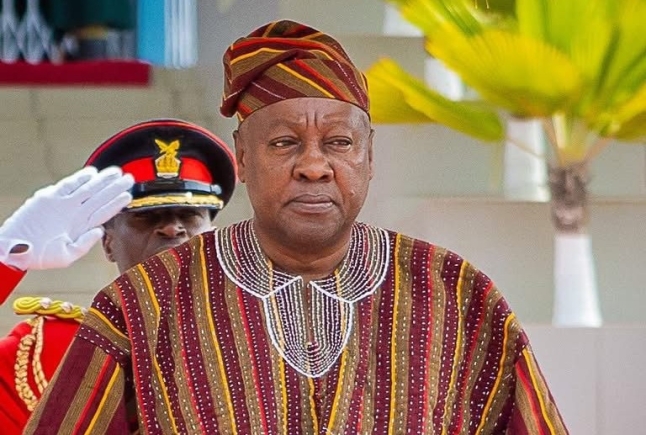
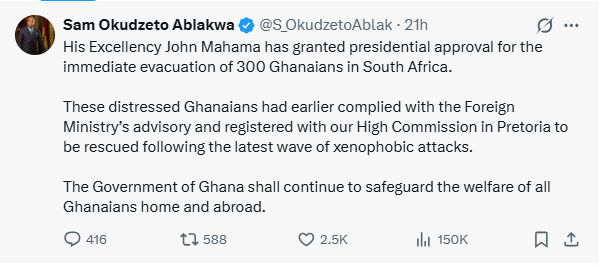
President John Mahama has approved the immediate evacuation of 300 Ghanaians in South Africa following the renewed violent xenophobic tensions launched against foreigners.
This was announced by the Foreign Affairs Ministry in an X post yesterday, Tuesday, May 13, after Ghana’s High Commissioner to South Africa, Benjamin Anani Quashie, indicated that growing fears among Ghanaians living in South Africa are gradually informing their decision to return home following the renewed violent xenophobic tensions launched against foreigners.
“His Excellency John Mahama has granted presidential approval for the immediate evacuation of 300 Ghanaians in South Africa. These distressed Ghanaians had earlier complied with the Foreign Ministry’s advisory and registered with our High Commission in Pretoria to be rescued following the latest wave of xenophobic attacks”, the statement noted.
He went on to assure the public of the government’s commitment to safeguard the lives of Ghanaians anywhere around the world.
“The Government of Ghana shall continue to safeguard the welfare of all Ghanaians, at home and abroad”, he added.
High Commissioner of the plight of Ghanaians in South Africa now, govt measures
Mr Benjamin Anani Quashie, indicated that many have lost their businesses and livelihoods.
Speaking on PM Express on Monday, May 11, Mr Quashie said Ghana’s mission in South Africa has already received requests from more than 200 Ghanaians seeking voluntary repatriation.
“We have already received requests from more than 200 Ghanaians who want to voluntarily return home. Many of them have lost their businesses and livelihoods, and the fear of renewed xenophobic attacks is pushing them to seek repatriation,” Mr Quashie noted.
The development comes after Ghanaian national, Emmanuel Akowuah Asamoah, who appeared in a viral video linked to recent xenophobic attacks, returned to Ghana and was offered a job by businessman and millionaire, Ibrahim Mahama.
“Fortunately, Mr Ibrahim Mahama has decided to offer him employment, which he has gladly accepted.”
He added that the gesture by Mr Mahama was to encourage young Ghanaians living abroad in hardship.
“Mr Ibrahim indicated to him that he wants him to be an ambassador so that other Ghanaians in other countries can look up to him and say, when they sacked him from one country, he got back to Ghana, and he was helped and was able to make a difference in his life.”
Consequently, preparations are underway for a massive repatriation exercise by the government, where travel costs and documentation for those without passports will be absorbed by the government, as it intends to ensure the safety of all Ghanaians back home.
“So we’ve been asked by the Minister to gather the names of the Ghanaians. After this evening, we have close to about 200-and-something people who want to come back home.
The ministry is going to take up the cost so that we can ensure that we bring them back home. We don’t want to leave any Ghanaian at the mercy of any other national. Ghanaians are valued in Ghana,” he stressed.
Given the tensions in South Africa, Mr Quashie warned that the number of people seeking repatriation could rise sharply.
When the attacks started in SA and why ?
News of the xenophobic attacks surfaced after videos of nationals were captured attacking foreign nationals showing harassment and intimidation of foreign nationals, including Ghanaians over economic strain including the over 40% unemployment, housing ptrssures, misinformation including reports of foreign nationals taking over SA markets while groups like Operation Dudula and “Put South Africa First” campaigns openly demand foreigners leave, documented or not.
Is this the first time xenophobic attacks are happening in SA?
The recent xenophobic attacks on foreigners by South AFrican nationas isn’t the first. SA has a history of violent xenophobic attacks dating as far back as 1998.
In 1998, three foreign nationals were killed in Johannesburg. Two years later, seven more were killed in Cape Town.
After a long quiet in the attacks, the worst in SA’s history happened in 2008 when sixty‑two (62) people lost their lives, 1,700 were injured, and about 100,000 were displaced nationwide cementing xenophobia as a recurring national crisis.
In 2015, violence flared again after inflammatory remarks by the Zulu King. The unrest spread across the country, forcing the government to deploy the military to restore order.
By 2019, riots erupted in Durban and Johannesburg, with Nigerian‑owned businesses being specifically targeted.
More recently, between 2022 and 2025, smaller but persistent flare‑ups were linked to vigilante movements such as Operation Dudula. These included blocking foreigners from accessing health facilities in Gauteng and KwaZulu‑Natal, reflecting how xenophobia had become embedded in everyday life.
Popular Alex Ekubo has reportedly died at the age of 40 after battling liver cancer for some time.
News of his passing surfaced on social media on Tuesday, May 12, with colleagues and fans paying tribute by sharing fond memories and expressing shock over his death.
Several Nollywood stars have since taken to their social media pages to mourn the actor, describing him as talented, lively, and supportive within the industry.
Among those who confirmed the development were Funke Akindele, Bolanle Ninalowo, and Godwin Nnadiekwe.
In an emotional post shared on her Instagram story, Funke Akindele wrote an emotional post on her Instagram story, telling how she made efforts to meet him again, but couldn’t reach him.
“Hmmmmmm. Rest in peace, Alex. I tried to reach out to see you one more time, but I guess you knew best. May your kind soul rest in peace, Alex.‘Ore mi’, like you fondly called me, I will always remember and cherish the good times we shared. Rest in Peace, Alex.”
Ninalowo also reacted to the news from the United States, posting: “Rest on, Alex. May God heal your family and us all.”
Nnadiekwe described the news as heartbreaking, saying he was struggling to come to terms with the actor’s death.
“I’m struggling to find the words. This news has truly broken me. Nollywood has lost a rare soul, and I’m lost for words because this wasn’t the plan, Alex Ekubo. To think you already prepared your Will, it’s heartbreaking. I can’t quite describe it. Rest well, my friend,” he wrote.
As of the time of filing this report, Ekubo’s family had not officially released a statement confirming the circumstances surrounding his death.
The actor’s death comes weeks after concerns about his health resurfaced online following his first public appearance after months away from social media.
Ekubo, known for his roles in several Nollywood productions, had not posted on Instagram since December 30, 2024, prompting speculation among fans about his wellbeing.
A recent viral video showing the actor interacting with children drew further attention after viewers noticed that he appeared slimmer and subdued.
Ghana has, for the first time in over a decade, secured live broadcast rights for the 2026 FIFA World Cup following successful government-backed arrangements and a nationwide fundraising initiative.
The last time Ghana secured such broadcast rights was in 2014, with GBC leading coverage when Brazil hosted the tournament.
This was confirmed by the Minister for Sports and Recreation, Kofi Adams, while speaking during the presentation of a GH¢5 million donation from GCB Bank to the Black Stars support campaign.
According to the Buem MP, the broadcast rights cover a few selected media platforms nationwide.
“Through the support of government and fundraising efforts, we have been able to secure broadcast rights to telecast the World Cup matches live on some media stations,” he said.
Times Ghana has secured broadcast rights in World Cup history
In 2010, when the 2010 FIFA World Cup was hosted in South Africa, the Ghana Broadcasting Corporation, together with private partners, secured the rights and broadcast the matches live. This was historic because Ghana reached the quarterfinals, its best performance to date.
By 2014, during the 2014 FIFA World Cup, Ghana again secured broadcast rights, with GBC leading nationwide coverage.
In 2018, despite Ghana not qualifying for the tournament in Russia, broadcast rights were limited, and only selected pay-TV platforms carried the matches.
For the 2022 FIFA World Cup, Ghana qualified, but the country did not secure full nationwide broadcast rights. Coverage was mainly available through pay-TV providers such as SuperSport and DStv, leaving many fans without free access.
Ghana-Mexico friendly ahead of the main tournament
Meanwhile, Black Stars head coach Carlos Queiroz has released the official 23-man squad for the international friendly against Mexico on May 22.
The selection marks Queiroz’s first squad announcement since taking charge in April 2026 and features a mix of European-based stars, domestic Ghana Premier League talents, and key returnees.
See the full list below.
The goalkeepers are Solomon Agbasi (Accra Hearts of Oak SC), Paul Reverson (Ajax FC), and Gidios Aseako (Dreams FC).
The defenders include Oscar Oppong (Granada), Ebenezer Adade (Dreams FC), Ebenezer Annan (St Etienne), Manu Duah (San Diego FC), Nathaniel Adjei (Lorient), Razak Simpson (Nations FC), Dacosta Antwi (Anderlecht Futures), and Ebenezer Abban (Heart of Lions).
The midfielders are Emmanuel Edjei (Dundee United), Abdul Aziz Issah (Barcelona B), Augustine Boakye (St Etienne), Majeed Ashimeru (La Louviere), Rak-Sakyi Jesurun (Stoke City), and Salim Adams (Medeama SC). Majeed Ashimeru returns following a long injury layoff.
The forwards/wingers include Daniel Agyei (Kocaelispor), Felix Afena-Gyan (Amedspor), Ibrahim Osman (Birmingham City), Prince Amoako (Nordsjaelland), Francis Amuzu (Gremio), and Joseph Opoku (Zulte-Waregem). Felix Afena-Gyan returns for the first time since May 2025.
The squad notably excludes veteran mainstays like Thomas Partey and Jordan Ayew, as Queiroz uses this final pre-tournament window to evaluate squad depth before Ghana’s opening match against Panama at the 2026 FIFA World Cup on June 17.
Ghana, preparing for their fifth appearance at the World Cup, have been drawn in Group L. The Black Stars will open their campaign against Panama on June 17, before facing England on June 23 and Croatia on June 27.
After successive group-stage exits in Brazil 2014 and Qatar 2022, Queiroz faces the challenge of restoring belief and guiding the team to a more competitive show on football’s biggest stage.
Charles was more than a brother to me; he was a beacon of hope, a rising star in Ghana’s engineering community, and a gentle soul whose laughter filled our home.Ghana Business Insights
At just twenty-nine, he had already carved a path of excellence at Promasidor Ghana Limited, where his colleagues admired his diligence and creativity. He was the kind of person who believed that Ghana could rise to greatness through innovation, discipline, and compassion.
His sudden death on February 6, 2026, was not simply a family tragedy– it was a national wound. It was not fate that claimed him, but failure.
Failure of a system meant to protect life. Failure of institutions entrusted with care. Failure that must never be allowed to repeat itself.
What happened that night
On that fateful evening, Charles was struck in a hit-and-run near the Kwame Nkrumah Circle Overpass in Accra.
The injury was grave but not unsurvivable: a deep wound to his arm that caused severe bleeding. With timely intervention– bleeding control, intravenous fluids, or transfusion– his life could have been saved. Instead, Charles became a victim of Ghana’s notorious “no-bed syndrome.”
At the Police Hospital, he was denied admission.
At Ridge Hospital, the same refrain: no bed.
At Korle Bu Teaching Hospital, Ghana’s premier referral center, he was again turned away.
Ambulances ferried him from one facility to another, searching for space, while his life ebbed away. Charles died in the ambulance not from the accident, but from neglect and avoidable death caused by systemic dysfunction.
Charles’ death was not an isolated incident. It was the latest in a long line of tragedies that exposed the fragility of Ghana’s emergency healthcare system.
No-Bed Syndrome
Hospitals across Accra routinely turn patients away, citing lack of beds. The Greater Accra Region, home to over six million people, has only about 200 emergency beds. This mismatch between demand and capacity is catastrophic.
Poor Coordination
Ambulances shuttle patients from hospital to hospital, wasting precious minutes. There is no centralized system to track bed availability or coordinate emergency admissions.
Funding Barriers
Patients often face delays because of upfront payment requirements. In emergencies, every second counts, yet financial bureaucracy stands between life and death.
Staffing Shortages
Emergency physicians and nurses are too few. Overworked staff struggle to cope, leading to lapses in care and burnout.
Policy Gaps
Ghana lacks a comprehensive national emergency response framework. Hospitals operate in silos, with little integration or accountability.
Dr. Nsiah-Asare, a former Presidential Advisor on Health, declared bluntly: “The system killed him.”
The Ghana Medical Association (GMA) issued urgent calls for reform, warning that without change, more lives would be lost.
Abass Nurudeen, CEO of the Social Investment Fund, urged that Charles’ death be a turning point: “We cannot allow this tragedy to fade into silence. It must awaken us to action.”
A government committee later confirmed what we already knew: Charles’ death was avoidable. Negligence and systemic failure were to blame.
Families left behind
Behind every statistic is a story. For my family, Charles’ death was a shattering blow. My mother’s tears, my siblings’ grief-all are scars that will never fade.But beyond us, countless families across Ghana have faced similar heartbreak.Ghana Business Insights
Mothers losing children to treatable injuries. Fathers dying from strokes because ambulances arrived too late. Young lives were extinguished because hospitals turned them away.
Charles’ story is their story too. His death is a mirror reflecting the pain of a nation.
What Must Change
If Charles’ death is to mean anything, it must drive reform. Ghana cannot afford to let this tragedy pass without transformation.
National Electronic Bed Management System
Hospitals must be digitally linked, with real-time updates on bed availability. No patient should be shuttled from one hospital to another blindly.
Emergency Care Fund
The first 24 hours of emergency care should be free, funded by the state. No life should be lost because a family cannot pay up front.
Expansion of Emergency Capacity
Invest in more emergency beds, trauma centers, and critical care units—especially in high-density regions like Accra.
Workforce Development
Train and retain more emergency physicians, nurses, and paramedics. Incentivize specialization in emergency medicine.
Integration of Military Facilities
The Ghana Armed Forces Critical Care Hospital should be fully integrated into the national emergency response system, providing additional capacity.
Accountability and Oversight
Negligence must carry consequences. Hospitals and staff must be held accountable when preventable deaths occur.
A Call to Action
Charles lived a life of promise. He believed in Ghana’s potential. His death must not be in vain.
As his sister, I carry both grief and resolve. Grief for the brother I lost. Resolve to ensure that his story changes the system that failed him.
This is not just about Charles. It is about every Ghanaian who deserves timely, compassionate, and competent emergency care.
It is about building a healthcare system that values life above bureaucracy, compassion above excuses, and humanity above neglect.
From Grief to Advocacy
We cannot bring Charles back. But we can honor him by fighting for change.
His death must mark the beginning of a new chapter in Ghana’s emergency healthcare– a chapter where no family is turned away, no patient is left untreated, and no life is lost to preventable neglect. Charles’ story is a human interest story, yes.
But it is also an investigative commentary and an advocacy call. It is a reminder that behind every policy failure lies a human life. And it is a charge to all of us– government, professionals, citizens– to rise and build a system worthy of our people.
“Charles was more than a statistic. He was my brother. His death must awaken Ghana to the urgency of reform. For his sake, and for the sake of all who come after him, we must act.”
DISCLAIMER: Independentghana.com will not be liable for any inaccuracies contained in this article. The views expressed in the article are solely those of the author, and do not reflect those of The Independent Ghana
The Ghana Commercial Bank (GCB) has contributed GH¢5 million to the Ministry of Sports and Recreation to support the Black Stars as they prepare for the 2026 FIFA World Cup.
The handing over ceremony, which took place at the bank’s headquarters in Accra, attracted officials from GCB Bank and the Sports Ministry.
Speaking at the ceremony, the Chairman of the Bank Board, Joshua Alabi, highlighted the role of sports in reflecting a country’s identity, pride and the need to invest in it to position it well on the global stage.
“Football unites the country, and supporting the national team goes beyond banking. It is about investing in hope, resilience and national representation on the global stage,” he said.
Prof. Alabi added that Ghana’s participation in major international tournaments such as the World Cup offers an opportunity to project the country positively while improving logistical and welfare support for the team.
Receiving the donation, Minister for Sports and Recreation, Kofi Adams,thanked the bank, describing the gesture as “timely and deeply valued” as they go a long way to boost the confidence of the players.
He noted that corporate backing remains crucial to the growth of the sector and commended the bank for being among the early institutions to respond to the fund’s call for support.
“The support from GCB Bank is timely and deeply valued. The Black Stars represent the hopes of the nation, and collaborations like this strengthen our ability to prepare and compete with confidence. This contribution stands out as the most substantial support from a financial institution towards Ghanaian sports in recent times,” it noted.
According to him, training provided by GCB for personnel managing the fund would also enhance its efficiency and long-term impact.
The Minister further praised the bank’s nationwide presence, describing its support as a strong example of how corporate Ghana can contribute to sports development and the promotion of national pride.
“The support and capacity building provided give confidence that the fund will be well managed and deliver its intended purpose. Corporate backing remains crucial to the growth of the sector, and GCB Bank has shown leadership by being among the earliest institutions to respond to the sports fund”, he added.
Thursdays set aside for World Cup pledges
In late April, the government announced that every Thursday is designated as a day for receiving pledges and informing the public about the fundraising drive to sponsor the Ghana Black Stars for the 2026 World Cup.
“Every Thursday, we will meet here to receive contributions, allowing those who are yet to fulfil their pledges to do so,” Mr Ampem said.
Speaking at a brief ceremony held at the Ministry of Finance in Accra to acknowledge the contributions made toward Ghana’s official 2026 World Cup Fundraising Account and encourage more support from other bodies, Deputy Finance Minister Thomas Nyarko Ampem highlighted that the move forms part of the government’s commitment to ensuring transparency and accountability in the fundraising drive.
Mr Thomas Nyarko Ampem indicated that all contributions were paid into the official 2026 World Cup Fundraising Account at the Bank of Ghana.
KGL Group contributed GHC5 million, representing half of its GHC10 million pledge. Serene Insurance donated GHC2 million in cash and provided a GHC20 million insurance package.
Icon Energy and Jewel Energy each gave GHC1 million, while Erata Motors donated GHC200,000 and PayAngel contributed GHC100,000. Alex Okyere of KAF Company Limited made a personal donation of GHC240,000.
“We are grateful to all of you for your love for the Black Stars. Even though the first two friendly matches did not go well, we remain optimistic that the team will make us proud at the World Cup,” he said.
The fundraising initiative, launched in March 2026 by President John Dramani Mahama, seeks to raise $30 million for the tournament.
He urged corporate bodies and individuals to support the initiative.
“We urge corporate bodies and individuals to support the initiative,” he added.
An amount of $10m was raised at the launch of Black Stars’ fundraising campaign organised on Monday, March 23, ahead of the World Cup qualifiers.
This information was disclosed by the Deputy Finance Minister and Chairman of the Fundraising Committee, Thomas Nyarko Ampem.
“The fundraising target is $30 million, and if you listen to the pledges and donations, on day one of the launch, we got about $10 million. We are going to put together other events, and we believe that the contributions that are coming in from the short code as well,” he said.
The launch event was attended by high-profile individuals, including President John Dramani Mahama, Sports Minister Kofi Adams, and Ghana Football Association President Kurt Okraku.
Following a seven‑day strike notice issued by the Workers of the National Identification Authority (NIA) on Wednesday, May 6, the association have begun its indefinite industrial action today, Tuesday, May 13 citing a delay in the implementation of a migration report affecting staff salaries, promotions and job placements.
The strike action was contained in a formal notice addressed to the workers and issued by the Public Services Workers’ Union (PSWU) of the Trades Union Congress (TUC), which attributed the union to a nearly two-year period of stalled processes despite earlier approvals.
The notice ordered workers to stay away from work until their demands are met.
“On Wednesday, May 13, 2026, no member shall report to work. You will rise from your beds and return to them, until further notice, and until our just demands are met.”
“Let there be no misunderstanding: this strike will remain in force until our collective voice is heard and our conditions are addressed,” parts of the statement read.
According to the union, the delay in the implementation of the Scheme of Service for NIA staff was approved in July 2024, with the migration exercise, i.e., moving staff onto a new salary and placement structure, taking effect in December of the same year.
The “Scheme of Service” for NIA staff is a formal human resource policy document approved in July 2024 that defines how employees of the National Identification Authority (NIA) are recruited, classified, promoted, remunerated, and developed. It is essentially the framework that aligns staff salaries, job placements, promotions, and career progression with their qualifications, experience, and responsibilities.
However, 22 months on, there has been no sign of an imminent implementation, leaving workers on improper salary scales and without expected promotions.
PSWU General Secretary Bernard Adjei, in an earlier notice addressed to the National Labour Commission (NLC) and NIA management, described the delay as unfair and frustrating for affected staff.
He explained that although management of the Authority has engaged stakeholders and provided assurances over time, those discussions have not translated into action.
“We have consistently engaged management and all relevant stakeholders to resolve this matter, but the necessary approvals for implementation have not been granted,” the union noted.
Mr Adjei further warned that the continued delay risks disrupting industrial harmony within the Authority.
The union said the decision to embark on a strike followed extensive internal consultations, leaving leadership with no option but to proceed. It has therefore insisted that unless the migration report is implemented, the industrial action will continue without further notice.
Copies of the strike notice were sent to the Ministry of Finance, the National Security Coordinator, the Fair Wages and Salaries Commission and PSWU-NIA divisional leadership.
The strike is expected to significantly affect the operations of the NIA, which is responsible for issuing the Ghana Card and managing the national identity database.
The 2026 West African Senior School Certificate Examination (WASSCE) starts today, with Oral English marking the start of the exams.
Ghanaian candidates, joining the rest of the West African candidates, write the WASSCE, marks the first time in about six (6) years.
In December last year, the Ghana Education Service (GES) announced that Ghana would rejoin the international West African Senior School Certificate Examination (WASSCE), starting from the May/June 2026 examination cycle.
This was after, in 2020, the Akufo-Addo-led administration introduced the “Ghana-only WASSCE” under the then Education Minister, Yaw Osei-Adutwum. In the last five years, Ghanaian Senior High School candidates sat a localised version of the West African Senior School Certificate Examination (WASSCE), separate from the international May/June exams written by Nigeria, Sierra Leone, Liberia, and The Gambia.
Also, it was reported that, due to COVID-19, which became a global plague, Ghana adjusted its exam calendar to fit its own reopening schedule for schools, which differed from other WAEC member countries.
At the time, the government explained that the move was to deal with cross-border leakages of exam papers, which were undermining credibility. By isolating Ghana’s exam, they could better control distribution and monitoring.
However, following the release of the 2025 provisional results by the education regulator, GES announced in a statement dated December 1, explaining facts surrounding the 2025 WASSCE results.
Consequently, this year, Ghana joins the over 1 million students to sit for the exams. According to West African Examinations Council (WAEC), a total of 509,862 candidates are expected to sit for this year’s examination nationwide. The candidates comprise 225,274 males and 284,588 females.
The 2026 examination process had already begun earlier with practical and project work in subjects such as Visual Arts and Home Economics.
Although Ghanaian candidates have in recent years written Oral English as a standalone paper, this year’s exercise is being conducted simultaneously across all member countries of the Council.
2025 WASSCE performance Ghana
WAEC released the provisional results of the 2025 West African Senior Secondary Certificate Examination (WASSCE) on Saturday, November 29.
The results show a massive surge in outright failure rates (Grade F9) across all four core subjects compared to the 2024 performance.
According to the provisional results released by WAEC, the percentage of students who failed Social Studies increased steeply from 9.55% in 2024 to 27.50% in 2025, representing a 188% increase.
The other core subjects, that is, Integrated Science and English Language, also saw a doubling of their previous failure rates.
For Integrated Science, the failure rate increased by 8.93%; that is, the 2024 rate was 7.12%, and in 2025 it increased to 16.05%.
The failure rate for the English Language also rose from 5.88% in 2024 to 12.86% in 2025. Core Mathematics recorded the sharpest decline, with the proportion of candidates who failed rising from 6.10% in 2024 to an alarming 26.77% in 2025, more than four times higher.
Consequently, only 48.73% of candidates achieved grades A1 to C6, a steep drop from the 66.86% recorded in 2024. In absolute terms, 209,068 candidates passed Core Maths, while 114,872 (26.77%) failed outright with an F9. Put simply, for every four students who sat for the exam, one failed Core Mathematics.
The core subjects are foundational: English, Mathematics, Integrated Science, and Social Studies are the backbone of Ghana’s education system. Failure in these means students lack the basic skills needed for higher education or employment.
The failure of core subjects by candidates this year comes with several major concerns, including career opportunities, social consequences, and the likely impact on the country’s economy.
Concerns are mounting over the ability of Ghana’s Free SHS/TVET programme to absorb all students expected to qualify from the 2025 Basic Education Certificate Examination (BECE), as pressure on existing school infrastructure continues to grow.
A new policy brief released by Africa Education Watch projects that out of the nearly 620,000 candidates who sat for this year’s BECE, about 607,000 could qualify for placement into senior high and technical/vocational institutions.
However, the group warns that current school capacity may be insufficient to accommodate all successful candidates, potentially leaving an estimated 72,000 students without placement if urgent corrective measures are not implemented.
The report identifies a declining transition rate as one of the major warning signs. According to the organisation, transition efficiency has dropped from 92 per cent in 2024 to 82 per cent in 2025, increasing fears of mounting congestion within the placement system.
It cautions that “declining transition efficiency… could generate an effective placement deficit of approximately 72,000 qualified candidates if immediate policy interventions are not undertaken.”
Eduwatch attributes the emerging challenge to several structural issues, including reduced enrolment space following the gradual phase-out of the Double Track system in some schools, uneven distribution of vacancies across regions, and disparities between student preferences and available placements.
The organisation also noted that ongoing efforts to integrate private senior high schools into the Free SHS programme have so far yielded limited results, failing to significantly reduce pressure on public institutions.
According to the policy brief, the situation could expose deep weaknesses within Ghana’s secondary education system during the 2026 admissions cycle if authorities fail to act swiftly.
To avert the looming crisis, Eduwatch is urging the government to fast-track the expansion of boarding infrastructure, complete delayed school projects, and improve the efficiency of the placement process before placements begin in August.
It further called for stronger collaboration with private schools to create additional spaces for students, warning that inaction could lead to what it describes as the worst transition bottleneck in the history of Ghana’s secondary education system.
Earlier this month, EduWatch reiterated calls for a restructuring of the Basic Education Certificate Examination (BECE), describing the current one as “torture”.
Taking to his official Facebook page on Thursday, May 7, the Executive Secretary of Africa Education Watch, Kofi Asare, slammed the system as archaic, questioning the logic behind examining candidates in 10 subjects over 5 days to determine their school placements, proposing that the number of examinable subjects be reduced to four core areas.
“Piling 10 subjects over a 5-day high-stakes BECE just for sch placement is torture on learners. Reduce to 4 subjects: Math, English, Science & General Paper” parts of his statement read.
He went on to recommend the adoption of aptitude tests and content assessments as alternatives to the traditional means used over the years.
“ Others even use an aptitude test plus a content assessment. This is 2026, not 1996,” he added.
According to him, the arrangement is outdated and does not reflect modern assessment systems used in other countries, where aptitude tests and continuous assessment are incorporated into placement processes.
His comments come amid the ongoing 2026 Basic Education Certificate Examination, during which more than 10 students and invigilators have reportedly been arrested over examination malpractice.
The nationwide examination, organised by the West African Examinations Council, is expected to run until May 11, with 620,141 candidates from 20,395 schools participating.
Other stakeholders remarks on BECE
Aside from Africa Education Watch, several individuals, institutions, and other stakeholders have also called for an overhaul of the BECE system. A lecturer at the University of Ghana, Dr Benjamin Otchere-Ankrah, has been particularly vocal on the issue over the years.
During an interview yesterday, he reiterated his call for a transition away from what he described as a “cruel” system towards one that offers flexibility and gives students ample time to rest and engage in group discussions after each paper. He further suggested extending the examination period from five to ten days, with one paper written per day.
He referred to the examination schedule of University students in Legon, where students are given about three weeks to write about five to seven papers.
Considering the age of the BECE candidates, Dr Otchere suggested that such loads on the 13-15-year-old students are overwhelming and tiring, which tends to negatively affect the performance of the students.
Liverpool is set to offer a memorial to the late forward, Diogo Jota and his brother Andre Silva. The two died in a car crash in Spain on July 3, 2025, when their Lamborghini veered off the A‑52 motorway near Palacios de Sanabria (Zamora) and burst into flames in the early hours of Thursday, July 3, at approximately 12:35 a.m. local time.
And the Premier League giants, in a planned memorial to the brothers, have released images of a sculpture that features a flowing heart design, a nod to the Portugal international’s goal celebration, the two brothers’ shirt numbers, 20 and 30, plus the lyrics to Jota’s song, which is sung by Liverpool fans in the 20th minute at every game.
Liverpool say the sculpture will feature personal touches referring to Diogo Jota’s life
Titled ‘Forever 20’, the club says, externalit celebrates Jota and Andre Silva’s “lives, their bond, and the love and respect felt by family, team-mates and supporters across the world”.
The memorial, which will be located at Anfield on 97 Avenue, has recycled the physical tributes left outside Anfield by fans paying their respects and incorporated them into the stone plinth
Liverpool have not yet announced when it will be unveiled, but will reveal the date in the future.
Liverpool retires Jota’s number
Liverpool formally announced that they would retire the number 20 shirt in honour of late forward Diogo Jota.
The Reds announced this on their X platform yesterday, Friday, July 11, after consulting with Jota’s wife Rute Cardoso and his family, which means the Portugal international “will forever be Liverpool’s number 20”.
The decison comes after the tragic car crash that claimed the lives of the Portuguese star and his brother, Andre Silva who died near Zamora, Spain, on in the early hours of Thursday, July 3, at approximately 12:35 a.m. local time.
In a statement released by Liverpool, it noted that the number “will be retired in honour and memory of Diogo across all levels”, including the women’s team and throughout the academy.
They added: “The move is recognition of not only the immeasurable contribution our lad from Portugal made to the Reds’ on-pitch successes over the last five years, but also the profound personal impact he had on his team-mates, colleagues and supporters and the everlasting connections he built with them.”
Marking their 20th top-flight crown, they reiterated their commitment to retiring the jersey. And in a video shared on X at 20:20 BST on Friday they wrote,
“As a club, we were all acutely aware of the sentiment of our supporters – and we felt the same way,” said Fenway Sports Group’s chief executive of football, Michael Edwards.
“It was vitally important to us to involve Diogo’s wife, Rute, and his family in the decision and to ensure they were the first to know of our intention. I believe this is the first time in Liverpool’s history that such an honour has been bestowed upon an individual. Therefore, we can say this is a unique tribute to a uniquely wonderful person.
“By retiring this squad number, we are making it eternal – and therefore never to be forgotten.”
The 20th top-flight crown means that a football team has won its national top division league title for the 20th time in its history.
Jota’s stint with Liverpool Jota joined Liverpool from Wolves on September 19, 2020, in an alleged £41 million deal potentially rising to £45 million with add-ons and scored 65 goals in 182 appearances for the club.
He played for Liverpool for almost five years in a deal that was set to expire in 2027.
In 182 appearances, he notched 65 goals and provided 26 assists across all competitions. His final match was on May 25, 2025, and his last goal came on April 2, 2025, in a Merseyside derby win over Everton.
He also helped them win the FA Cup and League Cup in 2022, also winning the latter in 2024, and the Premier League title last season.
The government has borrowed GHC 120bn from the Treasury bill market in the first quarter of 2026 (January to April) after investors offered GH¢ 181.5 billion, as stated in the Bank of Ghana’s (BoG) official auction data released on Tuesday, May 12.
Government borrowing the GHC 120bn instead of the total amount offered reflects a measured borrowing strategy, with the Treasury balancing financing needs against the need to contain borrowing costs amid evolving liquidity conditions.
According to the data, the T-bill market recorded two different phases, with the first phase, that is, January to mid-March, seeing strong investor demand, which drove 11 consecutive oversubscribed auctions.
The highest demand came in mid-February, when investors offered about GH¢22.67 billion even though the government only planned to borrow GH¢6.42 billion.
However, demand weakened from late March through April as yields compressed sharply. The market recorded six consecutive undersubscribed auctions, most notably Tender 2002, where bids tendered of GHS5.31bn fell short of the GHS7.57bn target by nearly 30%.
Consequently, investors changed the kind of T-bills they were buying. Many shifted their focus to the 364-day bill. In particular, a record GH¢15.18 billion was offered by investors in January for the one-year bill.
However, by April, investors’ preference had dropped by 79.4%, marking a monetary drop in GH¢3.12 billion interest for the 364‑day bill as they had lost interest in locking up their money for a whole year when returns were lower.
In the last Treasury bill auction in April, most investors preferred the short-term 91-day bill. It received GH¢2.8 billion in bids, and the government accepted almost all of it, GH¢2.7 billion.
The 182-day bill received GH¢717.6 million in bids, with GH¢664.4 million accepted, while the 364-day bill attracted GH¢960.1 million, but the government accepted only GH¢522.5 million.
In the final auction of April, demand was concentrated in the 91-day bill, which attracted GHS2.8billion in bids, of which GHS2.7 billion was accepted. The 182-day bill recorded GHS717.6million in bids, of which GHS664.4million was accepted, while the 364-day bill attracted GHS960.1million, of which only GHS522.5 million was accepted.
Interest Rates and Yield Movements The big drop in interest rates/returns was one of the main reasons people changed how much they wanted to invest in T-bills. Earlier in the year, investors could earn about 11.12% on a 3-month T-bill and 12.93% on a 1-year T-bill. By late April, the returns had dropped a lot: the 3-month T-bill paid only 4.92%, and the 1-year T-bill paid 10.20%. Because the returns became lower, T-bills were no longer as appealing to investors, especially toward the end of the three months.
The data indicate that the government leveraged strong liquidity conditions in the first quarter to front-load borrowing at relatively higher rates. As yields declined and demand softened, the Treasury adopted a more disciplined issuance strategy, frequently accepting bids below the total bids submitted.
The sizeable bid rejections in April point to a clear cost-management strategy, with the Treasury prioritising lower borrowing costs over meeting full auction targets.
Meanwhile, in 2025, banks invested more in treasury bills than in 2024. This is according to the Bank of Ghana’s January 2026 Monetary Policy Report.
According to the BoG, its share increased from 40.3% in December 2024 to 62.3% in December 2025, whereas the share of long-term securities declined from 59.3% in December 2024 to 37.2% in December 2025, marking a 37.3% year-on-year decline.
This was in line with the growth moderation recorded during the reference period. The report also stressed that the share of equity investments remained negligible but increased marginally from 0.4% percent in December 2024 to 0.5% in December 2025.
Meanwhile, the share of deposits in banks’ liabilities and shareholders’ funds decreased to 72.8% in December 2025 from 75.1% in December 2024, reflecting the slowdown in deposit growth in 2025.
The increase in borrowings, however, translated into an increased share of 8.5% in December 2025 from 7.6% in December 2024.
The proportion of shareholders’ funds in banks’ total funding also improved to 13.1% in December 2025 from 10.8% a year earlier, while the share of other liabilities declined from 6.3% to 5.4% during the same comparative period.
Investor interest and confidence in government treasuries remain high as the treasury bill auction exceeds the target by over 60%.
In auction results posted by the Bank of Ghana, the government accepted GH¢12.8 billion in bids at the latest auction, above its GH¢9.8 billion target, although investors submitted bids worth GH¢15.9 billion.
The reports also show that the majority of investors preferred the 364-day (one-year) treasury bill, for which they offered about GH¢7.4 billion, making up nearly half of all the money investors offered.
Out of this amount, the government accepted just over GH¢5.0 billion.
Growing fears among Ghanaians living in South Africa are gradually informing their decision to return home following the renewed violent xenophobic tensions launched against foreigners.
This was confirmed by Ghana’s High Commissioner to South Africa, Benjamin Anani Quashie, who indicated that many have lost their businesses and livelihoods.
Speaking on PM Express on Monday, May 11, Mr Quashie said Ghana’s mission in South Africa has already received requests from more than 200 Ghanaians seeking voluntary repatriation.
“We have already received requests from more than 200 Ghanaians who want to voluntarily return home. Many of them have lost their businesses and livelihoods, and the fear of renewed xenophobic attacks is pushing them to seek repatriation,” Mr Quashie noted.
The development comes after Ghanaian national, Emmanuel Akowuah Asamoah, who appeared in a viral video linked to recent xenophobic attacks, returned to Ghana and was offered a job by businessman and millionaire, Ibrahim Mahama.
“Fortunately, Mr Ibrahim Mahama has decided to offer him employment, which he has gladly accepted.”
He added that the gesture by Mr Mahama was to encourage young Ghanaians living abroad in hardship.
“Mr Ibrahim indicated to him that he wants him to be an ambassador so that other Ghanaians in other countries can look up to him and say, when they sacked him from one country, he got back to Ghana, and he was helped and was able to make a difference in his life.”
Consequently, preparations are underway for a massive repatriation exercise by the government, where travel costs and documentation for those without passports will be absorbed by the government, as it intends to ensure the safety of all Ghanaians back home.
“So we’ve been asked by the Minister to gather the names of the Ghanaians. After this evening, we have close to about 200-and-something people who want to come back home.
The ministry is going to take up the cost so that we ensure that we bring them back home. We don’t want to leave any Ghanaian at the mercy of any other national. Ghanaians are valued in Ghana,” he stressed.
Given the tensions in South Africa, Mr Quashie warned that the number of people seeking repatriation could rise sharply.
“It will definitely go up more than what we have seen.”
According to him, approximately 20,000 Ghanaians currently live in South Africa, working across different sectors including mining, healthcare, and academia, with many doing very well for themselves.
However, the recent attacks have instilled fear, particularly in those who own and run businesses.
They fear their many years of hard work could become a waste overnight due to the attacks.
“Some of them are doing very well… some are working in the mines. Some are working in hospitals. Some are lecturers here and there. So these are people who believe that, over the years, they struggled, put up a business, xenophobic attacks happen, and they lose everything,” he continued.
He said many now prefer returning home to rebuild their lives.
“So they are saying that this time around, they want to come home and start life all over.”
The High Commissioner said discussions are ongoing with businesses in Ghana to help absorb returnees into jobs and ease their reintegration into society.
Meanwhile, on April 30, Ghana’s High Commissioner to South Africa, Benjamin Quashie, revealed that no Ghanaian has lost his or her life in the ongoing xenophobic attacks.
His remarks follow speculation that some Ghanaians may have been killed in ongoing attacks in parts of South Africa, after videos showing locals targeting foreigners went viral online around April 22-27.
During an interview with Joy News PM Express Show with Evans Mensah on Wednesday, April 30, Mr Quarshie cited that according to official data presented to his outfit by South African authorities, no Ghanaian has lost their life.
“So the current xenophobic actions that are going on, nobody has lost their lives. The statistics are there; they’ve given it to us,” he stated.
He went on to further address a video which went viral, capturing a Ghanaian man who had been reportedly killed in East London. According to him, investigations conducted by his outfit showed that the man was attacked and fatally stabbed by armed robbers, stressing that his death was unrelated to a xenophobic violent attack.
“In fact, there was a story going round about a Ghanaian who had lost his life in East London… We went there yesterday on the instructions of the Foreign Affairs Minister. We got to find out that the gentleman was stabbed to death by armed robbers, and it happened three weeks ago,” he said.
He disclosed that the case came to the authorities’ attention only weeks later.
“They just left his body there, and we only got to know after three weeks that the citizen had been stabbed to death,” he added.
According to him, the Ghanian government has stepped in, calling for a thorough investigation into the fatal attack and halting an attempted mass burial until a full probe is completed.
A report from JoyBusiness suggests that a team from the International Monetary Fund (IMF) is expected to conclude the final review of Ghana’s Extended Credit Facility programme on Friday, May 15.
The Accra-based media house indicated that it picked up from sources familiar with the engagement. Per reports, the team under the leadership of Ruben Atoyan has been in Ghana since April 29, for the two-week sixth review mission.
According to JoyBusiness checks, the IMF-Ghana engagements are on track with everything progressing well amid the country’s recent worsening energy sector and fiscal pressures, which were highlighted in the Central Bank’s annual audit report.
While the IMF appears satisfied with the measures taken by the government regarding state-owned banks; it, however, raised concerns about a particular private commercial bank that is yet to be resolved.
It is not yet clear whether the mission will set prior actions for the government before the team leaves to prepare its report for board consideration in August this year.
Why is the IMF in Ghana?
The mission is assessing Ghana’s overall performance since the fifth review late last year to ascertain whether delayed targets and structural reforms have been completed or are close to completion.
The IMF mission is expected to focus on reforms and debt management in Ghana’s energy sector, as well as government spending priorities, especially allocations for social protection. Discussions will also centre on key prior actions required under the programme’s sixth review. Meeting these conditions is necessary for Ghana to access the final tranche of IMF support and complete the programme. The team is also expected to assess progress in resolving long-standing challenges in the banking and financial sector.
Finance Minister Ato Forson on the Sixth Review
Reflecting on the journey of Ghana’s recovery since the start of the programme in 2022, when the country was plunged into economic crisis, Finance Minister Cassiel Ato Forson stated, “It has been a long, demanding, but ultimately transformative journey,” citing that Ghana’s partnership with the IMF has positioned the country on a path of economic stability, fiscal discipline, and renewed investor confidence.
He expressed appreciation to the IMF on behalf of the President and the people of Ghana, describing the progress as significant and anchored on discipline and difficult policy decisions taken in the national interest.
While acknowledging the gains, Dr Forson said the government remains focused on sustaining momentum and consolidating the recovery.
He said the next phase of the programme would prioritise policies that unlock private sector growth at scale and translate macroeconomic stability into tangible outcomes for citizens.
“We must ensure that stability translates into more investment, more jobs, and more opportunities for all,” he said.
He added that the true test of the recovery lies beyond headline economic indicators.
Programme performance and outlook
Ghana’s 36-month Extended Credit Facility arrangement was approved in May 2023, with access of 303.8 per cent of quota, equivalent to SDR 2.2419 billion, or about US$3 billion.
In its latest economic outlook, the IMF maintained Ghana’s 2026 growth projection at 4.8 per cent, slightly above the 4.6 per cent forecast for Sub-Saharan Africa.
This comes against a revised global growth forecast of 3.1 per cent, reflecting rising energy costs and geopolitical tensions.
The Fund also projects Ghana’s inflation to decline to 7.9 per cent in 2026, slightly below government expectations, assuming current disinflation trends continue.
Inflation is expected to remain in single digits through 2026 and 2027.
President Mahama’s earlier remarks on Ghana-IMF deal
President John Dramani Mahama reaffirmed that Ghana will exit the IMF by the first quarter of the year.
This comes after he hinted at an exit in January in his New Year’s message. President Mahama said the government is preparing to exit the IMF programme while safeguarding Ghana’s economic credibility, highlighting that the reforms over the past year have strengthened macroeconomic indicators enough to support a gradual withdrawal.
He said, “We are beginning the process of exiting the IMF programme with dignity, not as supplicants, but as partners.”
Speaking at the Ghana-Zambia Business Dialogue in Lusaka on Friday, February 6, President Mahama confirmed that Ghana is on course to complete its International Monetary Fund (IMF) programme by April 2026, citing improvements in key economic indicators.
Mahama stressed that the stabilising economy positions Ghana to expand trade and investment, particularly under the African Continental Free Trade Area.
“These gains provide a solid foundation for Ghana’s development agenda, which focuses on five strategic pillars: industrialisation and value addition; export-led growth; modern infrastructure development; strong support for MSMEs, women, and youth entrepreneurs; and a predictable, transparent, investor-friendly business environment,” he said.
Access to basic healthcare across many rural communities in Ghana remains a daily struggle, and for two young medical doctors, the urge to bridge the gap became a shared responsibility. The challenges were not mere statistics but lived realities that inspired the groundbreaking medicinal innovation that is now gaining nationwide attention.
Bora marks a defining moment in time where traditional medicine is backed by scientific evidence. The journey began not in laboratories, but in underserved communities of rural Ghana where trust for orthodox medicine was shaken by insurmountable traditional beliefs and financial constraints.
Working through Community-based Health Planning Service (CHPS) compounds and outreach programs, the doctors encountered patients who, despite receiving prescriptions often left the prescriptions unused—tucked under pillows due to skepticism, misinformation and to a large extent lack of affordability.
Facing this stark reality, these doctors adopted an ethnographic approach, immersing themselves in the lives and beliefs of the people they served, and what they discovered was a deep-rooted reliance on traditional remedies as well as a growing need for healthcare solutions that were both economically feasible and culturally acceptable. An experience that marked the foundation of a new path, one that would merge scientific rigour with traditional confidence.
Match Made by The gods
The talented young doctors are the founders of the African Rural Doctors Association, an initiative that gives back to underserved communities with a focus on maternal and child health. A rigorous journey focused on understanding the minds and medical challenges of the rural communities they served. After numerous consultations and discussions, they joined forces with another group of talented young men emerging on Ghana’s herbal pharmaceutical scene (UHARA Pharmaceutical Company Ltd), and with a great team spirit, they put together a conglomerate of ideas that set forth research into an age-old, tested Ghanaian traditional formulation passed down generations by ancestral folklore apprenticeship in plant-based medicine.
The aim was to understand the exact constituents and active ingredients of the formulation in order to develop measurable, reproducible as well as appropriate proportions of each active ingredient to yield dose calculation towards a desired therapeutic effect.
Further studies were to be considered for drug safety via metabolism, pharmacokinetics as well as pharmacodynamics with target organs for excretion, paying attention to drug toxicity, cytochrome enzyme interactions in relation to other chemical compounds, adverse drug reactions and side effects.
From Tradition to Laboratory
A team of six young and intelligent comrades embarked on a mission to scientifically validate a Ghanaian heritage of herbal medicine that had been used informally for decades. Their goal was not to replace orthodox medicine, but to make a formal statement that complements it as an alternative, especially in areas it struggled to reach. Samples of their formulation were submitted to The Centre for Plant Medicine Research in Mampong Akuapem, where laboratory analysis confirmed the presence of beneficial phytochemicals such as saponins, triterpenes, flavonoids, and phytosterols.
Further testing declared the formulation safe, non-toxic, and free from significant microbial contamination.
At the heart of Bora Herbal Capsules is a carefully balanced blend of three medicinal plant-based molecules long used in African folklore medicine:
● Alstonia Boonei: Known for its anti-inflammatory, pain-relieving, and antimalarial properties.
● Rauwolfia Vomitoria: Recognized for its blood pressure-lowering and calming effects.
● Paullinia Pinnata: Valued for its antimicrobial, antioxidant, and tissue-healing effects.
Together, these botanicals form a synergy that targets inflammation, improvement of circulation, and support of the body’s natural healing processes.
Target of Commonly Neglected Conditions
Bora Herbal Capsules have been developed specifically for conditions that significantly impact quality of life, yet are under-treated in rural settings. For women suffering from dysmenorrhea (menstrual pain), the capsules help reduce uterine cramps, pelvic inflammation, and overall discomfort. For individuals dealing with haemorrhoids, the formulation addresses pain, swelling, itching and bleeding, whilst promoting tissue healing. Clinical guidance recommends a dosage of 1000mg orally twice daily, with specific timing depending on the condition being treated.
Safety and Responsible Use
On October 31, 2025, Ghana’s Food and Drugs Authority officially certified the product—Bora Herbal Capsules—as safe and effective for the treatment of haemorrhoids and dysmenorrhea (menstrual pain).
Whilst the product has been approved as safe, medical experts emphasize the importance of proper usage. Considering side effects such as dizziness, stomach discomfort, and drowsiness occurring due to certain potent plant compounds—particularly those in Rauwolfia Vomitoria. Patients are advised to use the medication under professional guidance especially in patients taking antihypertensives and antidepressants. The capsules are not recommended for pregnant or breastfeeding women, individuals with severe low blood pressure, or those with a history of depression and Parkinson’s disease. Avoid use with chemotherapeutic agents and blood thinners.
A New Chapter in African Medicine
Bora Herbal Capsules represent more than just a pharmaceutical product—it symbolizes a shift in how healthcare can be delivered in Africa. By blending traditional evidence with modern scientific validation, the initiative offers a model for developing culturally acceptable, affordable and accessible treatments.
For the six talents behind this innovation, rural medicine continues to evolve, and Bora stands as a testament to what is possible when scientific research backs tradition on a mission that remains clear: that when a herbal product is to be considered, it must go through necessary channels to ensure safety as well as its therapeutic effects and mostly cost-effective for the target population.
Accolades: ● Founding members of UHARA Pharmaceutical Company Ltd., Dr Derrick Kofi Denteh, Mr Desmond Denteh, Mr Daniel Blessing Soglo, Mr Prosper Boadu, Dr Seth Effah Agyei
● Founders of the African Rural Doctors Association; Dr Mark Adjetey Abban MD, MBChB, Dr Seth Effah Agyei, MD, MBChB.
Author: Dr. Mark Adjetey Abban MD, MBChB.
DISCLAIMER: Independentghana.com will not be liable for any inaccuracies contained in this article. The views expressed in the article are solely those of the author’s, and do not reflect those of The Independent Ghana
The One Million Coders programme is set for a massive boost as government’s delivers 8,500 laptops to centres nationwide as part of efforts to improve access to digital skills.
Speaking during an appearance on Joy Super Morning Show on Monday, May 11, Director of Research and Innovation (GI-KACE) and Member of the OMCP Implementation Committee Fred Yeboah revealed that the devices are intended to support trainees who may not own laptops or have reliable internet access.
However Mr Yeboah clarified that, the laptops were not to be given to individuals but to enhance the infrastructure at the respective centeres nationwide.
“We have already distributed 8,500 laptops.These laptops are meant for the centres that are used for the training,” he explained.
According to him, all 158 centres currently participating in the initiative have been equipped with the devices, while internet connectivity is also being deployed to support online learning.
The One Million Coders Programme, a flagship digital skills initiative by the government, seeks to train thousands of Ghanaians in technology-related fields as part of efforts to tackle youth unemployment and strengthen the country’s digital economy.
Given the varying backgrounds of the participants, Mr Yeboah indicated that, different study and training modules has been adopted to serven everyone.
Mr Yeboah said the programme uses different learning models to accommodate participants from varying backgrounds and locations.
He explained that some courses are self-paced and can be completed using personal devices such as mobile phones, tablets, or laptops, while others require trainees to attend designated centres for online or face-to-face instruction.
“For all the 158 centres that I’ve mentioned, all of them have been provided with laptops,” he stated.
The GI-KACE official added that 16 centres — one in each region — have also been selected to pilot face-to-face instruction with dedicated trainers on site.
In early January, the Ministry of Communication, Digital Technology and Innovation, Sam George announced a partnership with the Ministry of Education to roll out one of the government-led technology training programmes, the One Million Coders in 100 constituencies by Q1 (First Quarter) in 2026.
Sector Minister Samuel Nartey George made this known during a visit by Vice President Prof. Naana Jane Opoku-Agyemang to the ministry on Thursday, January 22. He said the partnership aims to train at least 400,000 young people in the targeted constituencies, with the initiative expected to be extended to selected tertiary institutions, enabling university students to benefit from digital skills training.
“We’re hopeful that this year, in partnership with the Ministry of Education, we’ll roll this out in 100 constituencies by the end of the first quarter, and in at least four of the traditional universities, so that our university students can also take advantage. The target is to train at least 400,000 people this year under the One Million Coders programme,” he said.
Given the financial cost involved and the state of the government’s coffers, the Prampram Member of Parliament (MP) revealed that he has engaged several technology companies to support the programme, particularly in funding and technical training.
“Given the financial constraints, we decided to reach out to Big Tech to support the President’s flagship programme, and it has been very well received,” he stated, adding that agreements have already been reached with companies including Google, MTN, Huawei, and Telecel, with discussions ongoing with Microsoft, Oracle, and Amazon.
According to the minister, the collaborations are intended to ensure that beneficiaries of the One Million Coders programme receive internationally certified training from leading global technology companies.
“We’ve signed partnership agreements with Google. We’ve signed partnership agreements with MTN, Huawei, and Telecel. As we speak, we are in conversations with Microsoft, Oracle, and Amazon to also sign technical training arrangements so that the beneficiaries of the 1 million coders program are undertaking these internationally certified programs by these Big Tech companies,” he added.
The Foreign Affairs Ministry has announced the rescue of twenty-eight (20) Ghanaians from a human trafficking syndicate in Côte d’Ivoire. The Ministry announced this in a formal notice dated Monday, May 11, citing that the recuse follows a high-level security operation carried out by the Ghana Embassy in Abidjan.
According to the Ministry, most of these victims were youth. The statement indicated that currently the victims have been transported to Ghana and are assisting with investigations in Ghana, after their rescue
“The Ministry of Foreign Affairs wishes to inform the general public that twenty-eight (28) Ghanaian nationals, predominantly youth, who were victims of a sophisticated human trafficking network, have been rescued and repatriated to Ghana from Côte d’Ivoire, today, 10 (dh) May, 2026, after a successful operation conducted by security operatives and officials of the Embassy of Ghana in Abidjan.
The rescued human trafficking victims are safely in Ghana and currently assisting with further investigations”, the statement read.
It went on to commend the Ivorian security operatives for their swift action and collaboration in tracking these traffickers while advising Ghanaians to be extra cautious in order not to victims to such traffickers over pretenses in quest for greener pastures.
“Ghanaians are hereby advised to be extra vigilant and avoid becoming victims of such trafficking schemes.
The Ministry, therefore, urges the public to be conscious of the dangers associated with engaging unlicensed recruitment agencies which promise travel and job opportunities. The public is encouraged to confirm the validity of any advertisement/offer with the Ministry of Foreign Affairs, Ministry of Labour, Jobs and Employment Relations and Ghana’s diplomatic missions abroad to avoid falling prey”, the statement added.
The Foreign Affairs Minister also assured the public about the government’s commitment to ensuring the safety of all Ghanaians.
“The welfare of all Ghanaians remains our utmost priority”, it added.
Parts of the Ashanti Region that were experiencing outages and low current supply are now set to enjoy a reliable power supply, following the Electricity Company of Ghana (ECG), under its Ashanti West operational zone, which has announced the installation of thirty-seven (37) new transformers.
The move forms part of the government’s efforts to enhance power supply within the Greater Kumasi Metropolis.
So far, the new transformers have been commissioned in various communities across the metropolis, including Ahinsan, Abuakwa, Adum, Danyame, Kokoben, Bibiani, Suame, and the Offinso District in the Ashanti Region.
Other beneficiary communities include the Trede SHS area, Kodie Apagya, Kayera, Nkwaie Pakala, Hemang, Bantama Race Course Market, Ampabame No. 2 Cemetery, Ntiribuoho, Pakyi No. 1, Brofoyedru, Ampatia Pentecost, Esaaso, Ehyen New Site, Agric Nzema, Otumfuo Last Stop, Bodwesango, Mpasatia, Buoho, Adiebeba, Apatrapa Endurance, Bronikrom, Asubonteng, Kokoso Assemblies of God Church area, and Edwenase near the Goil filling station, among others.
The upgrade in power supply capacity by the government transcends beyond replacing and adding more transformers to serve the growing populace, but also includes the extension of some high-tension and low-voltage lines, which will cost GH₵10,944,456.02.
Speaking during the commissioning of the transformers, the Regional General Manager for ECG Ashanti West, Ing. George Amoah, indicated that the transformers nearing full capacity had occasionally contributed to localised outages, including low voltage and phase outages.
“Every transformer has its capacity and the maximum electricity load it can carry. For instance, if the rating or size of a transformer is 200kVA and can carry a load of 267A, the electricity load should not exceed that capacity.
“Once we identified transformers reaching full capacity or operating above 70 per cent, we upgraded some from 100kVA to 200kVA, 200kVA to 315kVA, and in some locations commissioned two 315kVA transformers to meet the increasing demand,” he explained.
Also, ECG says to ensure the transformers are working effectively, routine checks on them are slated for day and night to assess the integrity of existing transformers and monitor load readings.
Regional Engineer for ECG Ashanti West, Ing. Emmanuel Osei Amoako, described the upgrade as a step in the right direction towards providing a reliable and quality power supply to support economic growth.
“Kumasi, and for that matter, the Ashanti Region, is growing at a faster rate with increasing demand. These new transformers will help meet the growing electricity demand in the areas where they were installed, while we continue to invest heavily in electricity infrastructure to improve power supply in the region,” he said.
Mr Osei Amoako continued that his outfit has replaced obsolete transformers with 36 distribution ones in areas including Twedie, Patasi Police Depot, Afia Kobi SHS, Denkyemuoso White House, and Ampabame Hills.
He added that ECG is also undertaking other projects across the region to improve service delivery.
“We have also received approval to install an additional 35 new distribution transformers to upgrade other transformers and distribution lines identified as reaching full capacity to improve power supply in the region,” he said.
Management of the company has cautioned the public against unlawful interference with ECG infrastructure and urged residents to report any suspected illegal activities affecting the company’s network.
Shakira has shared an electrifying tune, a teaser of her official song for the 2026 FIFA World Cup.
She shared a one-minute snippet of the song on her official Instagram page on Thursday, May 7, with the full release set for May 14, noting that it features Nigerian singer Burna Boy.
The 49-year-old, behind hits such as Whenever, Wherever and Hips Don’t Lie, teased “Dai Dai” on Thursday as the anthem for this summer’s tournament in the US, Mexico, and Canada.
Shakira returns with “Dai Dai” about sixteen years after her first World Cup anthem, following Waka Waka (This Time for Africa) for the 2010 tournament in South Africa.
She also had the second theme song for the 2014 tournament with La La La (Brazil 2014), which she performed at the closing ceremony in Rio de Janeiro.
Shakira, who has two sons from a former relationship with ex-Spain and FC Barcelona defender Gerard Piqué, also sang Hips Don’t Lie at the 2006 closing ceremony in Germany.
Her country, Colombia, will play in the 48-team tournament, which runs from June 11 to July 19.
About the World Cup and its ticketing system
In January this year, a global statement shared by FIFA indicated that over half a billion ticket requests had been made from across the world for the upcoming World Cup in June.
The statement, shared by the football governing body on Wednesday, January 14, noted that “more than half a billion ticket requests were submitted during the Random Selection Draw ticket sales phase, which ran from Thursday, December 11, 2025, to Tuesday, January 13, 2026.”
FIFA said it received approximately 15 million ticket requests daily over the month-long application window, marking a new record in the history of football.
“With each application validated by unique credit card data, fans placed an average of 15 million ticket requests per day over the 33-day application window, setting a new benchmark for demand in the history of world sport,” parts of the statement said.
Out of the over 500 million ticket requests, the majority came from Germany, England, Brazil, Spain, Portugal, Argentina, and Colombia, aside from the host countriesthe United States, Mexico, and Canada.
It added that “the most coveted match in this sales phase was Colombia v. Portugal on Saturday, June 27, in Miami. The top five was completed by Mexico v. Korea Republic in Guadalajara on Thursday, June 18; the final in New York/New Jersey on Sunday, July 19; the tournament’s opening match between Mexico and South Africa in Mexico City on Thursday, June 11; and the round-of-32 match in Toronto on Thursday, July 2,highlighting the exceptional appeal of both marquee fixtures and knockout-stage encounters across all three host nations.”
Given the overwhelming demand, FIFA President Gianni Infantino expressed his excitement and gratitude to fans around the world.
“Half a billion ticket requests in just over a month is more than demand,it’s a global statement. On behalf of FIFA, I would like to thank and congratulate football fans everywhere for this extraordinary response,” he said.
German manufacturer Adidas, which has been designing World Cup balls since the 1970 tournament, in October last year once again produced the official match ball for the upcoming FIFA World Cup.
Named Trionda, the ball was officially unveiled on Thursday, October 2, during a global launch event at Brooklyn Bridge Park in New York City. The presentation, hosted jointly by FIFA and Adidas, showcased the ball’s design, technology, and symbolic meaning.
FIFA President Gianni Infantino, during the unveiling of the ball, said, “The official match ball for the FIFA World Cup 26 is here, and it’s a beauty! I am delighted and proud to present the Trionda.”
Trionda, originating from Spanish, is interpreted as “tri” (three) and “onda” (wave), signifying the three host countries of the global tournament. The ball features an aesthetic design representing all three host nations, Canada, Mexico, and the USA, with red panels bearing maple leaves for Canada, green panels with eagle motifs for Mexico, and blue panels with stars for the USA. It also has a central triangle formed by the panel seams, symbolising unity
The Committee appointed by the government to probe the circumstances leading to the death of 29-year-old engineer with Promasidor Ghana Limited, Charles Amissah, who lost his life on February 6, after he was knocked down in a hit‑and‑run incident near the Kwame Nkrumah Circle Overpass in Accra has presented the findings from the investigations.
According to the investigation report, it has been concluded that he died from medical neglect and denial of emergency care after being turned away by three major hospitals in Accra including Korle-Bu, Ridge hospital and
After he was knocked down, he was taken in an ambulance where paramedics managed to stabilize his condition however after being denied medical care by three major medical facilities including Police Hospital, the Greater Accra Regional Hospital (Ridge Hospital) and the Korle Bu Teaching Hospital.
The report indicated serious failures in emergency response and patient management at these facilities.
The committee chaired by Professor Agyeman Badu Akosa, Amissah, stated that all three hospitals failed to properly triage and initiate emergency interventions, contributing significantly to his death.
Brazilian international, Neymar Jr., has apologised for his behaviour towards the son of ex-Man City forward Robinho and Santos teammate, Robinho Jr., after he slapped the teenager during a training session on Sunday, May 3, at the Rei Pelé Training Centre in Brazil.
According to reports, the club opened an investigation into the incident after the teenager reported the assault. He struck Robinho Jr. after he reportedly dribbled past him.
They have now cleared the air and said on Tuesday the incident at the Rei Pele Training Centre was “all sorted”.
However, speaking during a post‑match media briefing at the Rio Parapiti Stadium in Pedro Juan Caballero, Paraguay, immediately after Santos’ 1–1 Copa Sudamericana draw against Deportivo Recoleta, Neymar admitted that, “I crossed the line”, adding that “if you want an apology in front of the media, here it is.
“I did overreact, yes, in the way I reacted. It could have been different, but I ended up losing my head. Everyone makes mistakes. It was my mistake, his mistake, and I made a slightly bigger mistake. He’s a boy I like very much, for whom I have a special affection. It happens in football – you argue with your friend, your brother. That’s football, it’s part of the game.”
Robinho Jr said Neymar “realised straight away that he’d gone too far” and apologised “several times” for the altercation.
“It was a situation that upset me because [Neymar] has been my idol since I was a child. People around us say a lot of things that aren’t true, and it’s sad to see it blow up to this level. But I’m fine, I like him a lot. We’ve already talked, and it’s all sorted.”
Neymar celebrates goal with Robinho Jr after incident
Brazil’s all-time leading goalscorer with 79 goals celebrated his goal for Santos during Tuesday’s 1-1 draw with Recoleta in the Copa Sudamericana by hugging substitute Robinho Jr, who is the son of his former Brazil team-mate, and ex-Manchester City and Real Madrid attacker, Robinho.
Neymar joins Santos Neymar returned to Santos in January on a 6-month contract, after ending his contract with Al-Hilal following mutual consent by both parties.
Upon joining Santos, Neymar took a massive pay cut, from earning €1.5 million per week tax-free at Al-Hilal to taking a base salary of about £32,500 per week.
Brazil forward Neymar says he is not ready to quit football as long as his love for the game continues to drive him.
Around June this year, Neymar came under heavy criticism for his consistent injury struggles. Some pundits called for his resignation from football. However, in response, he noted that he will quit only when he feels he can ‘no longer perform’ as he wants to, he told his wife, Bruna Biancardi, who asked him why he continues playing professionally, during a family and friends interview he hosted.
The Ghana Football Association (GFA) has announced Accra Hearts of Oak goalkeeper Benjamin Asare as the replacement for Gidios Aseako for the friendly against Mexico slated for Friday, May 22.
“Hearts of Oak goalkeeper Benjamin Asare has been drafted into the Black Stars squad ahead of the upcoming international friendly against Mexico. The 33-year-old shot-stopper replaces Gidios Aseako in the squad…Asare has steadily built his reputation as one of the top goalkeepers in the Ghana Premier League through a series of impressive performances for Hearts of Oak”, parts of the statement read.
His appearance in the Mexico friendlies will mark his 12th cap as he is set to travel with the Black Stars for the game.
Benjamin Asare made his Ghana debut against Chad in March 2025, following consistent performances for Accra Hearts of Oak in the Ghana Premier League.
“His consistency earned him a first senior national team invitation last year, and he went on to make his debut for Ghana against Chad in March 2025. The shot-stopper has since accumulated 11 appearances for the national team, establishing himself as a reliable option between the posts”, he continued.
Black Stars head coach Carlos Queiroz has released the official 23-man squad list for the international friendly against Mexico on May 22.
This selection marks Queiroz’s first squad announcement since taking charge in April 2026 and features a mix of European-based stars, domestic Ghana Premier League talents, and key returnees.
See the full list below.
The goalkeepers are Solomon Agbasi (Accra Hearts of Oak SC), Paul Reverson (Ajax FC), and Gidios Aseako (Dreams FC).
Defenders also include Oscar Oppong (Granada), Ebenezer Adade (Dreams FC), Ebenezer Annan (St Etienne), Manu Duah (San Diego FC), Nathaniel Adjei (Lorient), Razak Simpson (Nations FC), Dacosta Antwi (Anderlecht Futures), and Ebenezer Abban (Heart of Lions).
Midfielders are Emmanuel Edjei (Dundee United), Abdul Aziz Issah (Barcelona B), Augustine Boakye (St Etienne), Majeed Ashimeru (La Louviere), Rak-Sakyi Jesurun (Stoke City), and Salim Adams (Medeama SC) and Majeed Ashimeru who returns following a long injury layoff.
The Forwards/Wingers include Daniel Agyei (Kocaelispor), Felix Afena-Gyan (Amedspor), Ibrahim Osman (Birmingham City), Prince Amoako (Nordsjaelland), Francis Amuzu (Gremio), Joseph Opoku (Zulte-Waregem) and Felix Afena-Gyan, who returns for the first time since May 2025.
The squad notably excludes veteran mainstays like Thomas Partey and Jordan Ayew, as Queiroz uses this final pre-tournament window to evaluate depth before Ghana’s 2026 FIFA World Cup opener against Panama on June 17.
Madina Divisional Police Command has arrested a 60–year-old man after he allegedly tied his teenage son to a quad bike, dragging him along a tarred road at North Legon in Accra, sustaining multiple injuries.
The suspect, identified as Eric Mantey, was arrested after the incident near the Adonai Church area on May 3.
Mr Mantey indicated that he acted out of anger after the victim reportedly disregarded his instructions not to go out to play football with friends Supt. Obeng confirmed to journalists adding that the suspect admitted during interrogation that he acted out of anger over his son’s behaviour.
“He stated that he acted out of anger over the victim’s behaviour,” she said.
She further went on to desist from violent menthods when discilpining children and encouraged the public to report cases of child abuse to the police and other appropriate authorities.
Speaking in a press briefing, on Thursday, May 7 the Head of Public Affairs at the Police Headquarters, Superintendent Juliana Obeng confirmed that , the victim, a 16-year-old boy and son of the suspect was confronted by his father after which he allegedly tied him to the quad motorbike before driving off.
The boy reportedly fell onto the tarred road and was dragged for several minutes until some residents intervened and stopped the suspect. He sustained multiple injuries and was rushed to the hospital for treatment.
The police had apprehended a 31-year-old woman following her alleged severing of her 9-year-old daughter’s toe as punishment for returning home late.
According to reports, the suspect, identified as Vivian Anto of Sefwi Proso, was assisting police with investigations into the incident, which had shocked residents of the Juaboso District.
A situational report received by the police indicated that, at around 4:20 p.m. on April 3, a relative named Stephen Anto reported the incident approximately seven hours after it had occurred.
Police said the suspect allegedly used a pair of scissors to sever the right index toe of the child, identified as Diana Boakye. The victim was rushed to the Kofikrom SDA Hospital, where she was on admission and was responding to treatment.
Police officers confirmed the injury during an examination upon their visit to the facility.
According to investigators, the severed toe was retrieved and was being kept as evidence as part of ongoing investigations.
Police indicated that the suspect would be arraigned before court after the Easter break, as further inquiries continued.
Meanwhile, in November the previous year, the Criminal Investigations Department (CID) of the Ghana Police Service had arrested a man captured in a viral Facebook video physically assaulting a woman believed to be his wife at their residence in Ofankor, in the Ga East Municipality.
The suspect, identified as John Odartey Lamptey, was arrested on Monday, November 17, 2025, at the family residence.
According to a statement signed by the Public Relations Officer, Chief Inspector Brigitte Babanawo, on November 18, two of the suspect’s siblings attempted to attack a female tenant due to their suspicion that she had recorded the incident that had drawn the attention of authorities.
“Following his arrest, two of his siblings, Grace Kushie Lamptey and Louis Odartey Lamptey, who attempted to attack a female tenant they suspected of recording and circulating the video, were also arrested, and the tenant was rescued to ensure her safety,” part of the statement said.
The Ministry of Gender, Children, and Social Protection has strongly condemned the violent assault, describing it as an act that infringes on the victim’s rights and is highly punishable by law.
In a statement, the Ministry stressed that no individual has the right to subject another person to any form of abuse under any circumstances.
“The Minister has also reached out to the Ghana Police Service to ensure that a thorough investigation is conducted and justice is served. We also encourage eyewitnesses with vital information to assist law enforcement agencies immediately,” part of the statement read.
The government has fulfilled its pledge to donate to the Ghana Medical Trust Fund, also known as Mahama Cares, following salary deductions from President John Dramani Mahama and his appointees.
Minister of State in charge of Government Communications, Felix Kwakye Ofosu, in a Facebook post on Thursday, May 7, announced that the Controller and Accountant-General had formally notified the government of the transfer of GH¢6.1 million to the Fund.
“The Controller and Accountant-General has formally notified Government that he has deducted and transferred a total of GH¢6.1 million to the Fund pursuant to the President’s directive,” he said.
According to him, the deductions were made in line with directives issued by President Mahama during the launch of the Ghana Medical Trust Fund last year.
“At the launch of the Ghana Medical Trust Fund (Mahama Cares) last year, President Mahama pledged to donate six months of his salary to the Fund,” Mr Kwakye Ofosu stated.
He continued that later on, President Mahama encouraged all political appointees to donate one month of their salaries to support the initiative.
Under Article 286 of the 1992 Constitution of Ghana, public office holders are required to declare their assets and liabilities to the Auditor‑General within 6 months of assuming office. However, at the launch of the fund, President Mahama ordered that all public office holders declare their assets or risk forfeiting their salaries for the next three (3) months to the fund.
“Subsequently, he encouraged his appointees to donate one month’s salary each to the Fund. He then ordered appointees who defaulted on his first deadline for Asset declaration to forfeit 3 months’ salary to be donated to the Fund”, Mr Ofosu continued.
He added that, plans were being finalised to transfer the final tranche, which would include deductions from appointees who defaulted on the asset declaration directive.
“He is currently making arrangements to transfer the final tranche, which will cover the Asset declaration defaulters”, he noted.
About Mahama Cares
The “Mahama Cares” initiative, officially known as the Ghana Medical Care Trust Fund, was launched by the government on April 29, 2025, at the University of Ghana Medical Centre to provide financial support for individuals suffering from chronic diseases such as cancer, kidney failure, and heart conditions. This initiative, introduced by President John Dramani Mahama, aims to ease the financial burden of treatment and improve access to healthcare for affected individuals.
In July 2025, Parliament passed the Ghana Medical Trust Fund Bill under a certificate of urgency and approved GH¢2.9 billion to back the initiative.
The initiative addresses a significant gap in the National Health Insurance Scheme (NHIS), which does not cover many specialised treatments. To guide the fund’s operations, the government has inaugurated the Mahama Cares Technical Taskforce, a team of experts responsible for developing policies, creating a funding structure, and setting eligibility criteria for beneficiaries. The task force is chaired by Reverend Professor Emeritus Seth Aryeetey, a former provost of the College of Health Science.
Kwabena Mintah Akandoh, in late April last year, donated three months of his salary to the Ghana Medical Trust Fund, also known as Mahama Cares, joining a wave of public and government support for the initiative.
His pledge came on the heels of John Dramani Mahama’s commitment to donate half of his annual salary to the fund, which aimed to provide financial assistance to Ghanaians suffering from chronic and life-threatening conditions, including cancer, kidney failure, and diabetes.
Speaking on Asempa FM’s Ekosiisen on Tuesday, April 29, Mr Akandoh revealed the fund has already begun receiving support from individuals across the country.“I was surprised that some people offered to voluntarily donate money to the initiative. I can recall a pensioner, Prof Ayittey, generously contributing a substantial amount of 1,000 dollars to support the cause,” he said.
Education think tank Africa Education Watch has reiterated calls for a restructuring of the Basic Education Certificate Examination (BECE), describing the current one as “torture”.
Taking to his official Facebook page on Thursday, May 7, the Executive Secretary of Africa Education Watch, Kofi Asare, slammed the system as archaic, questioning the logic behind examining candidates in 10 subjects over 5 days to determine their school placements, proposing that the number of examinable subjects be reduced to four core areas.
“Piling 10 subjects over a 5-day high-stakes BECE just for sch placement is torture on learners. Reduce to 4 subjects: Math, English, Science & General Paper” parts of his statement read.
He went on to recommend the adoption of aptitude tests and content assessments as alternatives to the traditional means used over the years.
“ Others even use an aptitude test plus a content assessment. This is 2026, not 1996,” he added.
According to him, the arrangement is outdated and does not reflect modern assessment systems used in other countries, where aptitude tests and continuous assessment are incorporated into placement processes.
His comments come amid the ongoing 2026 Basic Education Certificate Examination, during which more than 10 students and invigilators have reportedly been arrested over examination malpractice.
The nationwide examination, organised by the West African Examinations Council, is expected to run until May 11, with 620,141 candidates from 20,395 schools participating.
Other stakeholders remarks on BECE
Aside from Africa Education Watch, several individuals, institutions, and other stakeholders have also called for an overhaul of the BECE system. A lecturer at the University of Ghana, Dr Benjamin Otchere-Ankrah, has been particularly vocal on the issue over the years.
During an interview yesterday, he reiterated his call for a transition away from what he described as a “cruel” system towards one that offers flexibility and gives students ample time to rest and engage in group discussions after each paper. He further suggested extending the examination period from five to ten days, with one paper written per day.
He referred to the examination schedule of University students in Legon, where students are given about three weeks to write about five to seven papers.
Considering the age of the BECE candidates, Dr Otchere suggested that such loads on the 13-15-year-old students are overwhelming and tiring, which tends to negatively affect the performance of the students.
BECE began on Monday, May 4
The 2026 BECE began on Monday, May 4, with a total of 619,985 candidates nationwide expected to sit for the examination. The exams started on Monday, May 4, to Monday, May 11, with two papers scheduled daily at 9:00 a.m. and 1:00 p.m.
At the regional level, a total of 58,412 candidates are expected to sit the exams in the Bono, Bono East, and Ahafo Regions. The Bono Region recorded the highest number with 24,983 candidates, followed by Bono East with 20,865, and Ahafo with 12,564.
Beyond these three regions, the Northern Region has 37,111 candidates, while the Western Region registered 45,116 candidates. Altogether, the Ghana Education Service confirmed a national total of 620,141 candidates, comprising 304,349 boys and 315,792 girls.
The West African Examinations Council (WAEC) has issued a stern warning to candidates and stakeholders ahead of the 2026 BECE, declaring that any form of malpractice will attract severe consequences.
According to WAEC, protecting the credibility of the examination remains the Council’s top priority.
“Examination malpractice not only undermines academic integrity but also constitutes a direct violation of WAEC’s legal and regulatory framework,” Bono, Ahafo, and Bono East Regional Controller of WAEC, Daniel Nii Dodoo, told GBC News in an interview.
Education Minister announces reforms
The Minister for Education, Haruna Iddrisu, announced that, in the coming days, the BECE will be restricted to learners who have progressed to Junior High School (JHS) Form 3.
Addressing the media on Thursday, April 2, he said the government’s intention is to overhaul the country’s basic education system and improve learning outcomes.
The Minister explained that some non–JHS 3 students are insufficiently prepared for the demands of the examination, resulting in poor performance. He added, “We have also decided that there are students who leap early, not yet in JHS 3, but who attempt to write BECE. That is unacceptable per the GES and WAEC guidelines.”
According to him, the West African Examinations Council (WAEC) and the Ghana Education Service (GES) frown upon allowing non–JHS 3 learners to sit for the final-year examination.
“That is why we are seeing a reflection of poor quality, because the student is not up to the task but forces himself to write BECE even when he is in Primary Six or JHS 1 or 2,” he noted.
The Ghana Association of Banks (GAB) has reported a 0.30% decline in the Ghana Reference Rate (GRR). The rate, which was 10.06% in April, has dipped marginally to 10.03% in May.
This marks a slow but steady easing in the country’s borrowing conditions, reflecting a continued downward trajectory in benchmark lending indicators following sharper declines earlier in the year.
GAB reported the May 2026 GRR decline through an official press release issued on Wednesday, May 6, 2026, signed by its Chief Executive Officer, John Awuah, where it stated that the new rate was scheduled to take effect from May 6.
However, the immediate impact on commercial lending rates is likely to remain limited.
The GRR serves as the base benchmark for pricing loans in Ghana’s banking sector and is calculated using a weighted formula that includes Treasury bill rates, the average interbank rate, and the Monetary Policy Rate set by the Bank of Ghana.
The GRR serves as the base benchmark for pricing loans in Ghana’s banking sector and is calculated using a weighted formula that includes Treasury bill rates, the average interbank rate, and the Monetary Policy Rate set by the Bank of Ghana.
GRR rate downward trend since January to May
Between January and May 2026, the Ghana Reference Rate (GRR) recorded a sustained downward trend. The rate fell from 15.58% in January to 14.58% in February, representing a 6.42% decline. It then dropped sharply to 11.71% in March, a 19.68% decline compared to February. In April, the GRR eased further to 10.06%, marking a 14.09% decline from March.
By May, the rate dipped marginally again to 10.03%, a 0.30% decline from April. Overall, this reflects a cumulative fall of 5.55 percentage points (–35.6%) over the five months, signalling a steady easing of borrowing conditions in Ghana’s financial sector.
Analysts project that the gradual decline would make room for banks to adjust lending rates, potentially improve access to credit, particularly for small and medium-sized enterprises and support a recovery in private sector investment.
However, the pace of transmission to actual loan pricing will depend on several factors, including borrower risk profiles, banks’ cost of funds and internal credit risk frameworks.
As a result, any reduction in lending rates is likely to be phased, reflecting loan repricing cycles and prevailing market conditions.
BoG records GHC 1.64bn as loan losses in 2025
Banks in Ghana are still grappling with customers not repaying loans on time, or in some cases defaulting altogether, with a recent report from the Bank of Ghana (BoG) affirming that the challenge persists.
This was deduced after the central bank published its Domestic Money Banks (DMBs) Income Statement, i.e., the annual financial report that the BoG publishes to show how Ghana’s commercial banks performed over the year.
According to the statement, Banks in Ghana wrote off GH¢1.64 billion in 2025, marking a reduction of 57.1% in 2024.
Given the history of the banking sector’s Non-Performing Loans (NPL), the banks made a provision of GH¢3.82 billion as bad debt in 2024. The total provision was made for loan losses, depreciation & others.
According to the January 2026 Banking Developments Report, the asset quality risks of banks remained elevated in December 2025, although the industry’s Non-Performing Loans (NPL) ratio declined to 18.9% in December 2025, from 21.8% in December 2024.
Similarly, the NPL ratio adjusted for the fully provisioned loan loss category declined from 8.5% to 5.0% during the same comparative period.
The NPL stock, however, increased by 0.8% to GH¢21.0 billion in December 2025 compared with a growth of 31.4% recorded in December 2024.
A decomposition of the NPLs showed that the private sector emerged as the leading contributor, due to its dominant share of total credit. The statement also noted that the proportion of NPLs attributable to the private sector increased to 97.5% in December 2025, from 96.2% in December 2024, marking a 1.35
% while that of the public sector declined to 2.5%, from 3.8% a year earlier.
Amid the private sector’s poor performance in paying back its loans, the Bank of Ghana (BoG), in its statement, indicated that there has been an improvement in the percentage of bad loans in the banking industry year-on-year.
Accordingly, the NPL ratios in the construction and agriculture, forestry and fishing sectors increased from 29.8% and 38.0% to 30.7% and 46.3%, respectively. All other sectors recorded improvements in asset quality during the review period.
The three-member committee that was tasked with investigating the death of 29-year-old engineer with Promasidor Ghana Limited, Charles Amissah, died from medical neglect rather than the injuries he sustained in a road accident.
On February 6, Charles Amissah was knocked down in a hit‑and‑run incident near the Kwame Nkrumah Circle Overpass in Accra.
Addressing the press in a conference on Wednesday, May 5, Chairman of the committee, Prof. Agyeman Badu Akosa, revealed that following findings from his autopsy, it can be confirmed that Mr Amissah could have survived if he had received timely medical attention.
“And the pathology confirms a slow death from medical neglect, and was not from the instant trauma. What it means is that if at any of these facilities, there had been medical intervention, Charles Amissah could have survived,” he said.
He explained that the cause of death was excessive blood loss resulting from a severe injury to the upper arm.
“Charles Amissah died of exsanguination, excessive loss of blood, due to an upper right arm bone and soft tissue injury, causing damage to the adductor,” he added.
He was first attended to by personnel from the National Ambulance Service, but later struggled to access emergency care. Reports indicate that he was turned away by several health facilities, including the Police Hospital, Ridge Hospital and the Korle Bu Teaching Hospital, reportedly due to a lack of available beds.
He died while still being transported for care, triggering widespread public outrage and renewed scrutiny of the country’s emergency response system.
The incident led to the formation of a committee to investigate the circumstances surrounding his death, particularly concerns about delays in treatment and gaps in emergency care.
The findings have intensified calls for reforms in Ghana’s emergency healthcare system, particularly in ensuring timely access to critical care for accident victims.
Charles Amissah was alive after the accident but was transferred between several hospitals in Accra without receiving proper emergency care. He was moved from the Police Hospital to the Greater Accra Regional Hospital, then to Korle Bu Teaching Hospital, and a referral to the University of Ghana Medical Centre (UGMC) was considered but never completed. He died after about 118 minutes of continuous transfers.
About two months ago, government announced that it was set to establish a National Command Centre as part of efforts to significantly reduce emergency response time and improve patient outcomes across Ghana’s healthcare system.
Board Chairman of the Korle Bu Teaching Hospital, Prof. Titus Beyuo, said the proposed centre will enable real-time coordination of emergency cases, ensuring patients are directed to hospitals with available beds instead of overcrowded facilities.
He disclosed the plan amid growing concerns about congestion at major referral hospitals, particularly Korle Bu Teaching Hospital, which continues to receive a high volume of emergency cases.
Speaking on the Joy Super Morning Show on Tuesday, March 24, Prof. Beyuo explained that the command centre forms part of a broader emergency patient management system being developed to streamline care delivery nationwide.
“We need the ambulance service to relocate their call centre to this national command centre. We need to get physicians and other people at the command centre who will do an online sorting of patients and redirect them,” he explained.
The initiative is expected to transform how the National Ambulance Service operates, as ambulance teams will no longer send patients automatically to facilities like Korle Bu Teaching Hospital or Komfo Anokye Teaching Hospital without confirming bed availability.
Manchester City have spoken out against racist abuse aimed at Antoine Semenyo and Marc Guéhi after their 3-3 draw with Everton on Monday, May 4.
Management of the club, in a formal statement shared on Tuesday, May 5, commended the Everton police for their swift action after it was announced that the Semenyo abuser had been apprehended.
“Manchester City strongly condemns the racist abuse directed towards Antoine Semenyo at yesterday’s match. We welcome the swift action taken by Everton and the police to identify the individual responsible”, parts of the statement read.
They also expressed their displeasure over racist attacks targeting England international defender Marc Guéhi on social media after the draw. Man City expressed their support to their players, highlighting their zero tolerance for any form of discrimination in all games.
“We are also incredibly disappointed to hear that Marc Guéhi was subject to a series of vile racist social media posts last night. We will continue to offer our full support to both Antoine and Marc and never accept discrimination of any kind in our game,” the statement added.
Meanwhile, the police have apprehended the 71-year-old Everton fan from Nottinghamshire, who reportedly racially abused Antoine Semenyo on a “racially aggravated public order offence”.
The just-ended Man City-Everton game, which happened on May 5 at the Hill Dickinson Stadium, marks the third time in this Premier League season that Black Stars forward Antoine Semenyo has been subjected to racist abuse.
Similar incidents of racism targeted at Semenyo
Ghana international forward Antoine Semenyo last month reported fresh racial abuse targeting him on social media. The Man City player showcased a stunning display during his side’s match against Chelsea at Stamford Bridge in London on Sunday, April 12, marking the second time in the 2025/26 English Premier League season.
Semenyo, who completed the full 90 minutes, later shared a post on Instagram celebrating the victory but was met with a racially abusive comment.
Responding to the abuse, he wrote: “It’s started again…”, referencing a previous incident in December 2025 during his spell at AFC Bournemouth, when he was targeted following a 4-2 defeat to Liverpool.
The incident has reignited concerns about the persistent problem of online racism in football, despite ongoing anti-discrimination campaigns across the sport.
Meanwhile, the Ghana international was subjected to racist abuse during a clash on Friday, August 15, against Liverpool.
During the first half of the Premier League opener, Semenyo was preparing to take a throw-in when a 47-year-old man made an offensive comment at him. According to reports, Semenyo asked the man to repeat what he said; he did and even threw gum at him.
Semenyo immediately reported the incident to referee Anthony Taylor, who paused the match in the 28th minute. The suspect was subsequently seen leaving the stadium with police and was later held in custody for a racially aggravated public order offence, according to Merseyside Police on Monday.
He was, however, granted bail on the condition that he does not attend any regulated football match in the UK and is prohibited from going within one mile of any designated football stadium. A police investigation into the incident is ongoing.
Reacting to the incident, FIFA President Gianni Infantino, in an official statement issued on Sunday, August 17, said the sport has zero tolerance for discrimination and any form of abuse, praising Antoine’s resilience and strong display despite the emotional distress.
“It is absolutely unacceptable to see the racist abuse aimed at AFC Bournemouth’s Antoine Semenyo, which led to a stoppage of their Premier League match against Liverpool FC at Anfield last night. Football has no place for racism or any form of discrimination. Antoine’s courage and performance on the pitch, despite such adversity, is a powerful example of strength and dignity for players worldwide,” parts of the statement read.
Police have apprehended a 71-year-old Everton fan from Nottinghamshire, who reportedly racially abused Antoine Semenyo. He is reported to have been arrested on a “racially aggravated public order offence”.
The just-ended Man City-Everton game, which happened on May 5 at the Hill Dickinson Stadium, marks the third time in this Premier League season that Black Stars forward Antoine Semenyo has been subjected to racist abuse.
According to reports, fans and stewards drew authorities’ attention to the fact that racist remarks had been directed at the player.
Both Everton and Manchester City have since condemned the incident and say they are cooperating with authorities as investigations continue.
Semenyo’s teammate, Marc Guéhi, was also subjected to racist abuse online after conceding possession to Thierno Barry, which led to an Everton goal.
“We welcome the swift action taken by Everton and the police to identify the individual responsible. We are also incredibly disappointed to hear that Marc Guéhi was subject to a series of vile racist social media posts last night,” a section of Man City’s statement read.
Similar incidents of racism targeted at Semenyo
Ghana international forward Antoine Semenyo last month reported fresh racial abuse targeting him on social media. The Man City player showcased a stunning display during his side’s match against Chelsea at Stamford Bridge in London on Sunday, April 12, marking the second time in the 2025/26 English Premier League season.
Semenyo, who completed the full 90 minutes, later shared a post on Instagram celebrating the victory but was met with a racially abusive comment.
Responding to the abuse, he wrote: “It’s started again…”, referencing a previous incident in December 2025 during his spell at AFC Bournemouth, when he was targeted following a 4-2 defeat to Liverpool.
The incident has reignited concerns about the persistent problem of online racism in football, despite ongoing anti-discrimination campaigns across the sport.
Meanwhile, the Ghana international was subjected to racist abuse during a clash on Friday, August 15, against Liverpool.
During the first half of the Premier League opener, Semenyo was preparing to take a throw-in when a 47-year-old man made an offensive comment at him. According to reports, Semenyo asked the man to repeat what he said; he did and even threw gum at him.
Semenyo immediately reported the incident to referee Anthony Taylor, who paused the match in the 28th minute. The suspect was subsequently seen leaving the stadium with police and was later held in custody for a racially aggravated public order offence, according to Merseyside Police on Monday.
He was, however, granted bail on the condition that he does not attend any regulated football match in the UK and is prohibited from going within one mile of any designated football stadium. A police investigation into the incident is ongoing.
Reacting to the incident, FIFA President Gianni Infantino, in an official statement issued on Sunday, August 17, said the sport has zero tolerance for discrimination and any form of abuse, praising Antoine’s resilience and strong display despite the emotional distress.
“It is absolutely unacceptable to see the racist abuse aimed at AFC Bournemouth’s Antoine Semenyo, which led to a stoppage of their Premier League match against Liverpool FC at Anfield last night. Football has no place for racism or any form of discrimination. Antoine’s courage and performance on the pitch, despite such adversity, is a powerful example of strength and dignity for players worldwide,” parts of the statement read.
Black Stars head coach Carlos Queiroz has released the official 23-man squad list for the international friendly against Mexico on May 22.
This selection marks Queiroz’s first squad announcement since taking charge in April 2026 and features a mix of European-based stars, domestic Ghana Premier League talents, and key returnees.
See the full list below.
For the goalkeepers, they are Solomon Agbasi (Accra Hearts of Oak SC), Paul Reverson (Ajax FC), and Gidios Aseako (Dreams FC).
Defenders also include Oscar Oppong (Granada), Ebenezer Adade (Dreams FC), Ebenezer Annan (St Etienne), Manu Duah (San Diego FC), Nathaniel Adjei (Lorient), Razak Simpson (Nations FC), Dacosta Antwi (Anderlecht Futures), and Ebenezer Abban (Heart of Lions).
Midfielders are Emmanuel Edjei (Dundee United), Abdul Aziz Issah (Barcelona B), Augustine Boakye (St Etienne), Majeed Ashimeru (La Louviere), Rak-Sakyi Jesurun (Stoke City), and Salim Adams (Medeama SC) and Majeed Ashimeru who returns following a long injury layoff.
The Forwards/Wingers include Daniel Agyei (Kocaelispor), Felix Afena-Gyan (Amedspor), Ibrahim Osman (Birmingham City), Prince Amoako (Nordsjaelland), Francis Amuzu (Gremio), Joseph Opoku (Zulte-Waregem) and Felix Afena-Gyan, who returns for the first time since May 2025.
The squad notably excludes veteran mainstays like Thomas Partey and Jordan Ayew, as Queiroz uses this final pre-tournament window to evaluate depth before Ghana’s 2026 FIFA World Cup opener against Panama on June 17.
Phil Foden has extended his contract with Man City FC, sources say. His current contract with the club was expected to end next year; however, it is reported that he has extended his stay at Etihad Stadium, with the new deal set to expire in 2030, including an option for an additional 12 months.
Sources close to both Foden and the club insist the details still need to be completed, but it’s considered a formality.
His last contract, before the recent reported extension, which he signed in October 2022, was worth about £71.8 million over five years (roughly £225,000 per week) and £2.6 million per year.
The 25-year old Brit Foden has been part of City’s set-up since he was four, where he joined the academy of his club and has already made more than 350 first-team appearances. He made his debut as a senior team member in 2017 at age 17.
Sources close to Foden insist he never thought about leaving City, despite losing his place in Pep Guardiola’s team this season.
He hasn’t started a Premier League game since March and is in danger of missing out on a place in England’s World Cup squad.
Achievements
Phil Foden has bagged six Premier League titles, two FA Cups, five Carabao Cups, and one UEFA Champions League. Premier League Player of the Season (2023/24), PFA Players’ Player of the Year (2024).
Ghanaian pilgrims who left Ghana on May 1 have arrived safely in Mecca, the Pilgrims Affairs Office of Ghana (PAOG) has confirmed.
The Authority confirmed this through its Communications Directorate. The announcement was made in Mecca after the pilgrims completed a three‑day stay in Madina.
Before they arrived in Madina ( one of the holiest cities in Islam, after Mecca), the Board had already deployed a team to receive the pilgrims as they were expected to rest there before proceeding to Mecca.
They were received and commuted to their respective hotels to rest and prepare for the Hajj rites in the coming days.
The pilgrims left for Mecca from Tamale at about 11:30 a.m. on Friday and touched down at 4 p.m. GMT.
So far, five batches of pilgrims have departed Tamale for the Kingdom of Saudi Arabia to participate in the annual Islamic ritual.
In all, a total of 6000 pilgrims are expected to depart from Ghana in 18 different flights from May 1 to May 18, 2026.
No issues or challenges so far
The Director of Communications for PAOG, Mohammed Amin Lamptey, confirmed that all pilgrims are in good health and without any complications, attributing the smooth transition to deliberate measures implemented by authorities to ensure their well-being.
He further assured families of the pilgrims back hom eof the safety of their relatives throughout their stay in Saudi Arabia.
Mr Lamptey added that an advance team had been dispatched to Saudi Arabia to receive the pilgrims both in Madina and Mecca.
He said, “this year, we have enhanced our communication systems to ensure that sensitive information is handled accurately and shared appropriately”.
Meanwhile, in February, the Board announced that it had closed all operational activities needed to prepare pilgrims for this year’s pilgrimage. The operational activities include completing key administrative processes, such as payments, documentation, and passport submissions.
The pilgrimage coordinators, in a formal press release on Wednesday, February 18, with the title “Pilgrims Affairs Office of Ghana officially closes 2026 Hajj arrangements with immediate effect,” noted that the closure of the arrangements is to relieve organisers of pressure from the high volume of applications and operational demands, ensuring that all processes leading up to this year’s Hajj could be completed efficiently.
Parts of the statement read, “The Administration of the Pilgrims Affairs Office of Ghana (PAOG) wishes to officially announce the closure of its activities regarding the 2026 Hajj arrangements to ease the immeasurable pressure on administrators.
All operational processes leading to this year’s Hajj, including payments, documentation, and submissions, have been duly concluded, barring any unforeseen circumstances.”
On visa arrangements and issuance, PAOG noted that only prospective pilgrims who submitted all required documents and passports on time will be considered, emphasising that early payment and medical screening are key to ensuring a smooth and efficient 2026 Hajj exercise.
“We wish to emphasise that only prospective pilgrims who submitted their passports and all required documents within the stipulated time frame were considered for the visa process. Visa processing could not commence without full compliance with the documentation requirements. It is important to note that early payment, effective medical screening, and timely passport submission significantly contribute to a smoother, more efficient process for the 2026 Hajj exercise”, the statement added.
PAOG also reminded pilgrims to complete all medical screening in the selected regions nationwide, noting that remaining screening for both Greater Accra and Kumasi is slated for the next three days. It also highlighted the lessons it has learned from this year’s travel arrangements and logistics handling, among other things, which they believe will help reshape and create a smooth run for the subsequent year’s processes.
“Medical screening has been completed in the selected regions and centres. The remaining screenings for the Ashanti and Greater Accra Regions are scheduled for February 22 and 28, respectively. We further wish to state that lessons learned from this year’s operations will strengthen future Hajj arrangements to ensure greater efficiency, transparency, and improved service delivery”, the Hajj organisers said.
Also, “…prospective pilgrims under special arrangements (Protocol) are reminded to submit their passports as soon as possible to complete the process. They are also required to participate in the medical screening in Kumasi or at the Hajj Village in Accra.
Former Finance Minister and Ranking Member on Parliament’s Finance Committee, Dr Mohammed Amin Adam, has formally written to the International Monetary Fund (IMF) on the heavy loss incurred by the Bank of Ghana (BoG).
This comes after the Central Bank released its audited 2025 financial statements on May 1, which revealed a GH¢15.3 billion net loss and the negative equity of about GH¢93.8 billion, sparking wild reactions from Parliament, civil society, and analysts.
In a detailed letter to the International Monetary Fund Ghana Mission Chief under the Extended Credit Facility (ECF) programme in Washington, D.C., Mohammed Amin Adam raised concerns about the heavy implications the Bank of Ghana’s losses could have on the country’s fiscal stability, warning of what he described as “material implications” for Ghana’s “macroeconomic stability, fiscal outlook, and post-programme policy credibility.”
He highlighted concerns, their implications, and suggested recommendations the IMF should consider in its engagements with the Government of Ghana and the Bank of Ghana.
As the IMF’s ECF programme with Ghana nears its end, Mr Amin Adam highlighted the need to sustain the gains from the programme; however, suggesting that the BoG’s recent report appears to suggest otherwise, hence the need for recommendations offered in the letter to the global lender.
“As the programme comes to an end, it is imperative that greater attention is paid to safeguarding the durability of these gains. However, the publication of the 2025 financial statements of the Bank of Ghana has raised deep concerns, and I would like to draw the Fund’s attention to significant fiscal, monetary, and governance risks arising from the statements, and to propose recommendations for strengthening fiscal-risk management, central bank balance sheet repair, and post-programme policy sustainability”, parts of the statement read.
Dr Adam, in seven itemised points, drew the IMF’s attention to key concerns in the Central Bank’s audit statements.
Firstly, it addressed BoG’s deepening negative equity (BoG’s liabilities are greater than its assets) and the worsening of the country’s already weak balance sheet.
“First, the Bank of Ghana remains in a severe negative equity position. Group negative equity increased from GH¢58.62 billion in 2024 to GH¢93.82 billion in 2025, while the Bank’s own negative equity increased from GH¢61.32 billion to GH¢96.28 billion. This indicates that meaningful balance sheet repair has not yet commenced in substance, and that the Government remains exposed to a large and growing recapitalisation obligation”.
He also addressed BoG’s rising loss despite an increase in its operating income, citing that “the Bank’s reported loss worsened despite increased operating income. The Bank recorded a loss of GH¢15.63 billion in 2025, compared with GH¢9.49 billion in 2024. This deterioration occurred even though operating income increased, largely because operating expenses, particularly open market operation costs, revaluation losses, exchange losses, and gold-related losses, remained elevated. It should also be noted that an analysis based on comprehensive income suggests that the full impact on the Bank’s capital position is more severe than what is reflected in the profit and loss account alone.
While the Bank recorded a loss of GH¢9.49 billion in 2024, this was offset by GH¢13.5 billion of positive other comprehensive income, resulting in a net comprehensive gain of GH¢4.02 billion. In contrast, in 2025, the Bank recorded both a larger loss and a significant negative reserve movement, resulting in a total comprehensive loss of GH¢34.95 billion. This gets to GH¢44 billion when net gains from the sale of gold are added”.
Another concern addressed by Mr Adam is the surge in Open Market Operation costs, which nearly doubled from GH¢8.60 billion in 2024 to GH¢16.73 billion in 2025. He believes that “This implies that monetary policy implementation continues to carry a very high quasi-fiscal cost, with OMO expenses constituting a substantial share of operating income. Without the one-off gain from the sale of gold reserves, OMO costs would have exceeded the Bank’s operating income, raising serious questions about the sustainability of current policy operations”.
Policy solvency issues were also highlighted as the former Minister raised questions about the Bank’s positive policy solvency position of GH¢5.5 billion. This figure requires careful interpretation, suggesting that underlying risks may still exist, citing that “…this calculation includes a GH¢9.57 billion net gain from the sale of refined gold. Without this one-off gain, the underlying policy solvency position appears materially weaker and potentially negative. This raises concerns that the apparent improvement in policy solvency may not reflect a fundamental strengthening of operations, but rather the impact of non-recurring income”.
Gold-related activities raise volatility concerns after recording mixed results, GH¢9.57 billion in gains from refined gold sales against GH¢9.05 billion in net losses on gold deals.
“Fifth, gold-related activities introduce volatility and transparency risks. The Bank recorded a GH¢9.57 billion gain from the sale of refined gold, while also recording GH¢9.05 billion in net losses on gold deals. The accounts further show a sharp increase in gold-related receivables and liabilities, suggesting complex and potentially recurring operational exposures. These developments warrant careful scrutiny to determine whether they reflect temporary transactions, structural policy tools, or quasi-fiscal operations with broader fiscal implications. The economic net benefit of the gold programme is therefore significantly smaller than the headline gains suggest,” parts of the letter highlighted.
Recommendations
Dr Amin Adam is urging the IMF to ensure a transparent and structured recapitalisation plan for the Bank of Ghana, with clear details on funding, timelines, and a path to restoring positive equity, backed by parliamentary oversight. He also calls for the Bank’s financial position to be fully integrated into government fiscal-risk planning, recognising its negative equity as a potential burden on public finances.
He further recommends improving transparency and accountability, including clearer reporting on quasi-fiscal operations, gold transactions, and a consistent policy solvency measure that excludes one-off gains. In addition, he stresses the need to resolve outstanding issues such as the treatment of the Domestic Debt Exchange Programme in official accounts and to conduct an independent review of non-standard accounting practices.
Dr Amin Adam also emphasises the importance of maintaining strict limits on central bank financing of government, warning against policies that could undermine economic stability. Finally, he proposes the creation of a post-programme fiscal-risk dashboard, to be published regularly, to track key financial risks and improve transparency in economic management.
The latest report from the World Bank has forecast a possible surge in fertiliser prices, citing energy market shocks, geopolitical tensions, and natural gas dependency in fertiliser production.
This prediction was contained in the April 2026 edition of the World Bank’s Commodity Markets Outlook, which mentioned the potential surge in prices of fertilisers, which could lead to increased food production costs and heighten food inflation risks in Sub-Saharan Africa, including Ghana.
The report projected a 30.7 percent increase this year, 2026, with an expected decrease next year, 2027, as supply conditions improve.
Fertiliser prices could significantly increase production costs for farmers globally, the report said. In sub-Saharan Africa, farmers are mostly dependent on fertilisers for crop yield and to increase food supply.
A hike in the price of the commodity will affect farmers’ ability to purchase adequate inputs for farming.
For countries such as Ghana, which depend largely on imported fertiliser to support agricultural production, the projected increase could place additional pressure on food prices and household spending.
The World Bank notes that although fertiliser prices are expected to decline in 2027, the near-term increase could still contribute to higher food inflation and food security concerns, particularly in low-income economies across Africa.
In the same report, the World Bank warned that Ghana and other growing economies’ inflation will see a sharp increase in 2026, linked to higher global energy prices and supply disruptions caused largely by the Middle East tensions.
According to the report, “Consumer price inflation in emerging markets and developing economies is projected to rise to about 5.1 percent in 2026, reversing earlier expectations that inflation would ease this year.”
Due to the Middle East tensions leading to shortfalls in both oil and gas supplies, this tends to largely affect prices of several other commodities, including food, fertilisers and metals. Citing the huge surge in Brent oil prices, which crossed $100 per barrel from about $65–$86 per barrel, marking an increase of nearly 20%, this has impacted the market, which is likely going to put pressure on households of a growing economy.
“With both oil and natural gas prices having soared amid supply shortfalls, average energy prices are forecast to increase by 24 percent in 2026. The Brent oil price is expected to average $86 per barrel, an upward revision of $26 since January. However, the supply shocks brought about by the war are broad-based. Prices for fertilisers are projected to soar, and prices of food commodities and base metals are also projected to increase”, parts of the report said.
The report also noted that average base metals like copper and gold are expected to record their highest price ever, with projections that they could rise even more than expected, rather than fall.
“Average base metals and precious metals prices are both projected to reach all-time highs. Average base metals and precious metals prices are both projected to reach all-time highs. Risks to the commodity price projections are tilted firmly toward higher prices”, a citation of the report indicated.
Under a scenario where oil prices rise sharply due to prolonged geopolitical tensions, inflation in emerging economies could climb to between 5.3 and 5.8 percent in 2026.
Average base metals and precious metals prices are both projected to reach all-time highs.
Higher energy costs are expected to slow real income growth and weaken consumer demand in many emerging economies, while also raising operational costs for businesses.
The World Bank notes that central banks in many developing economies may respond to rising inflation by maintaining tighter monetary policy, which could further affect borrowing costs and investment activity.
The outlook highlights the vulnerability of emerging markets to global commodity shocks, particularly for economies that rely heavily on energy imports.
Qualifying for the Champions League is now a near-impossible dream for a Chelsea side whose season is ending in disarray.
Monday’s 3-1 home defeat by Nottingham Forest leaves the managerless Blues ninth in the Premier League as their campaign continues to collapse.
Joao Pedro’s stoppage-time overhead kick did save Chelsea the humiliation of losing six matches in a row without scoring for the first time in their history, but it was scant consolation.
The defeat means the Blues have now lost six consecutive league games for the first time since November 1993 – and just the fourth time ever.
It is just the second time they have lost four successive home matches, and the first time since 1978.
Large numbers of home fans piled out of Stamford Bridge long before the final whistle, while those who remained left the home side in no doubt about their anger with loud jeers.
Chelsea, now led by interim boss Calum McFarlane after Liam Rosenior’s dismissal, are an insurmountable 10 points behind fifth-placed Aston Villa – the last spot that guarantees Champions League football – with just three games left.
Should Villa win the Europa League and finish fifth, a sixth-placed finish would be enough, but even Chelsea’s four-point gap to that spot looks tough to bridge given their form.
Ex-Liverpool defender Jamie Carragher told Sky Sports: “It’s shocking and it comes from the top, that’s where it starts from. There were five or six really top players on that pitch today and they’ve been beaten by Nottingham Forest’s B team.
“If you think less than 12 months ago [Chelsea] were taking PSG to the cleaners. There’s no connection between the players and the staff, the players and the supporters.
“There’s absolutely nothing there and it looks like a broken football club right now.”
Former Chelsea goalkeeper Mark Schwarzer added on BBC Radio 5 Live: “Chelsea are running out of excuses now.
“Chelsea did not look like a side who have something so big [the FA Cup final] on the horizon and that is what is so disappointing.
“They were outfought and there was a lack of desire. The players have to start taking responsibility.”
Qualifying for the Champions League was always the target for owners BlueCo this season, so how costly could missing out prove?
What’s the cost?
Whoever Chelsea appoint as their next head coach – with former Real Madrid manager Xabi Alonso, Bournemouth boss Andoni Iraola and Fulham’s Marco Silva among those in contention – will have to navigate the forthcoming transfer window astutely.
In their recently published 2024-25 accounts, Chelsea reported a Premier League‑record £262m pre‑tax loss despite bringing in £490.9m in revenue – the club’s second highest ever.
Following their triumph in last year’s Club World Cup and a now rare season in the Champions League, Chelsea are predicting revenues will increase to £700m in next year’s accounts.
However, forward Cole Palmer said in an interview this month that “everything changes” without Champions League football.
Chelsea earned approximately £78.9m in prize money for reaching the last 16 of European club football’s premier competition this season compared to about £15m for winning the Conference League in 2025.
A conservative estimate would suggest those Champions League earnings rise beyond £100m when ticketing, hospitality and sponsorship revenue are included.
Accounts from parent company 22 Holdco Limited show transfer activity is a major factor behind the substantial losses, and the success of the men’s team is a “clear driver” of revenues – while Chelsea are reliant on owner funding and loans to subsidise the club, which has long-term implications.
In the short term, Chelsea are bound by their Uefa settlement agreement after breaching their football earnings and squad cost rules in 2023-24.
The regulations stipulate Chelsea cannot record losses of more than than £52.2m once certain Uefa allowances are applied when filing their accounts at the end of June.
Any loss beyond that threshold would result in a fine of up to £17.4m, while losses exceeding £69.7m would trigger a one‑season ban from European competition, provided they qualify within three seasons following the breach.
That pressure continues into the 2028-29 season, with Uefa constantly monitoring Chelsea’s situation.
“Chelsea have avoided Premier League sanctions through the use of related party transactions [in the past], which involves selling hotels and the women’s team to other companies owned by 22 Holdco,” football finance expert Kieran Maguire told BBC Sport.
“At a group level, these transactions are excluded which helps explain why 22 Holdco, which also owns both the women’s team and Strasbourg, recorded a bigger pre-tax loss of £701m in 2024-25 compared to Chelsea FC Holding’s loss of ‘just’ £262m.
“Such intra-group transactions are allowed in the Premier League cost control rules, but are specifically excluded from Uefa’s rules. This is why Chelsea are under Uefa’s sanctions at present but not from the Premier League.”
Chelsea may have won the football lottery twice but, this time, the return on investment under owners Todd Boehly and Clearlake Capital is being questioned.
Chants of “we don’t care about Clearlake, they don’t care about us, all we care about is Chelsea FC” are increasingly becoming the anthem of a turbulent season.
Not A Project CFC, a growing but still fringe protest group, are planning two further protests. The first will take place on the steps of Wembley Way before the FA Cup final against Manchester City. A second protest to take place inside Stamford Bridge, where fans are asked to turn their backs in the 22nd minute of the final home game vs Tottenham.
There have also been previous chants of “Roman Abramovich” but those recollections are rose-tinted, particularly towards the end of the Russian oligarch’s reign, where Chelsea were widely regarded as a cup team and had lagged behind their rivals in terms of revenues.
The £490.9m turnover last season was Chelsea’s second highest on record but still lagged well behind their rivals in the so-called ‘big six’. That gap needs to be bridged as debt grows within the parent company.
Inside Chelsea they say debt is part of a highly-structured investment approach, common in elite sport, and there is a long-term plan for sustainability.
Still, Chelsea spent the most on agents’ fees and the third most on both transfers and wages last season, despite a reduction in overall spending following the unprecedented outlay in the early BlueCo years.
The cost remains evident through a league-high ‘amortisation’ bill – where they have spread transfer fees across the length of a contract up to five years – of more than £200m.
What has been squandered by this ownership is the strong Profit and Sustainability Rules (PSR) position they inherited. More than £1.5bn has been spent on talent, but the return in terms of consistent success in the Premier League has yet to materialise.
Chelsea are looking to add some experience to their squad at the end of the season, but more drastic decisions are not being discussed openly, with mid-campaign decisions to be avoided, especially with an FA Cup final still to come.
Yet, club sources have also stressed that accountability across the organisation is embedded through annual reviews and could draw in anyone at any level should poor performance be identified.
The possibility of star players such as Palmer, Moises Caicedo and Levi Colwill being sold is constantly denied by the club, but some player sales have always been necessary, since Abramovich and into the BlueCo era, to balance the books.
“Chelsea have always been very successful in terms of player sales, which have generated substantially more money for the club than ticket sales over the last decade,” Maguire said.
“The 22 Holdco business model is similar to that of a hedge fund in that signing young players on long-term contracts can be profitable and reduces the chances of players leaving on a Bosman deal for no fee.”
However, everything is threatened, even attracting a new high-profile manager, without Champions League football.