Executive Director of Revenue Mobilisation Africa, Geoffrey Kabutey Ocansey, has openly criticized the Nana Addo Dankwa Akufo-Addo government for the recurrent power disruptions known as dumsor in Ghana.
During a recent interview on Citi TV’s Breakfast Daily show, Ocansey expressed his disappointment, particularly regarding the absence of a clear timetable for the power outages, leaving citizens unaware of when to expect electricity interruptions.
He contrasted this with the previous administration under John Dramani Mahama, which, despite facing criticism from the ruling New Patriotic Party (NPP), provided a schedule for dumsor, allowing citizens to plan their activities accordingly.
Ocansey’s comments were prompted by remarks attributed to Kwadwo Nsafoah Poku, an energy policy expert and former NPP flagbearer hopeful, who reportedly suggested the challenge of devising a timetable for the ongoing power cuts.
In a tone of incredulity, Ocansey criticized Poku’s statement, indicating it demonstrated a combination of arrogance and ignorance.
He emphasized the importance of informed decision-making in addressing critical issues like the energy crisis, emphasizing the need for expertise to guide policymaking rather than relying on unfounded assertions.
“I quoted something yesterday on my Facebook wall; ‘arrogance deeply planted in ignorance is a pathetic state’. And I’ll quote it again, ‘arrogance deeply planted in ignorance is a pathetic state’. You are arrogant, yet you know next to nothing about what you’re saying.
“I was listening to one of the experts on energy on Citi FM and everybody who listened on Saturday was wowed by the gentleman’s mindset. I mean, that level of thinking, that is where you see this thinking problem.
“The gentleman tells me that actually, it’s difficult to plan a timetable. Okay, so the incompetent person was able to bring up a timetable but those who are ‘the men’… the men who arrived to save the situation, cannot plan just a common timetable. What do we call them?” Ocansey remarked, emphasizing the irony of the situation.
There is growing frustration among Ghanaians regarding the government’s handling of the energy crisis, with calls for more effective and transparent measures to address the issue.
The education of Enock Biney, a 13-year-old boy with monodactyly, a condition characterized by having only one finger or toe on each hand or foot, faces uncertainty.
Despite his eagerness to pursue education, Enock, born with one finger on each hand, currently resides in a mission house without access to schooling.
Mary Biney, Enock’s mother, revealed in an interview with TV3’s Portia Gabor that she has been compelled to switch her son’s schools three times due to his condition.
“People use my son’s conditions to mock me. Some of them say ‘Your son’s hand is like a pen’… I have gone through all of this and I’m stronger now.
“I have had to change his school three times because some of the students were afraid of him. When I took him to a private school, the teachers said that my son distracted the students during teaching because they kept playing with his hands. Another school gave back his school fees because some of the students were afraid of my son,” the mother said in Twi with tears rolling down her cheeks.
Enock Biney expressed his desire to attend school, but his mother has advised him to wait.
He recounted instances when his classmates teased him for having only two fingers.
“Some of my mates used to tease me a lot. They say I have only one finger on each of my hands.
“I want to go to school but my mum says I should wait; she needs to get money before I can continue my education,” he said.
Watch the interview below:
Mary Biney gave birth to a baby with just two fingers. 13 years on, she’s had to change her son’s school several times because of stigma.
Portia Gabor tells the story of the boy with two fingers whose education is at risk just because of his disability.#News360pic.twitter.com/QMq03OoCC4
A 38-year-old taxi driver was reportedly fatally stabbed at the F2 Hotel in Akom, located in the Afigya Kwabre North District of the Ashanti Region.
The victim, identified as Afrifa, was allegedly attacked by unidentified assailants around 3:30 a.m. on Sunday, April 21, 2024.
According to eyewitnesses, Afrifa intervened to assist a young man who was being assaulted by the group, resulting in his own stabbing.
Former Assembly member for the area, Mr. Oteng, disclosed in an interview with OTEC News reporter Jacob Agyenim Boateng that Afrifa had gone to the hotel to pick up a customer.
“I was told Afrifa had a call from one of his customers who hired his service to the hotel for a program to pick them up from the place at that particular time
“On his arrival at the hotel’s premises, he came across a young guy who had been attacked by some perpetrators. He decided to rescue the victim, but unfortunately, one of the unknown gang men stabbed him in the chest with a sharp object,” he said.
The ex-Assembly member mentioned that the taxi driver passed away upon reaching Saint Patrick Hospital.
However, he disclosed that the Boaman District Police Command has apprehended one individual believed to be involved in the gang and is presently aiding in the investigation.
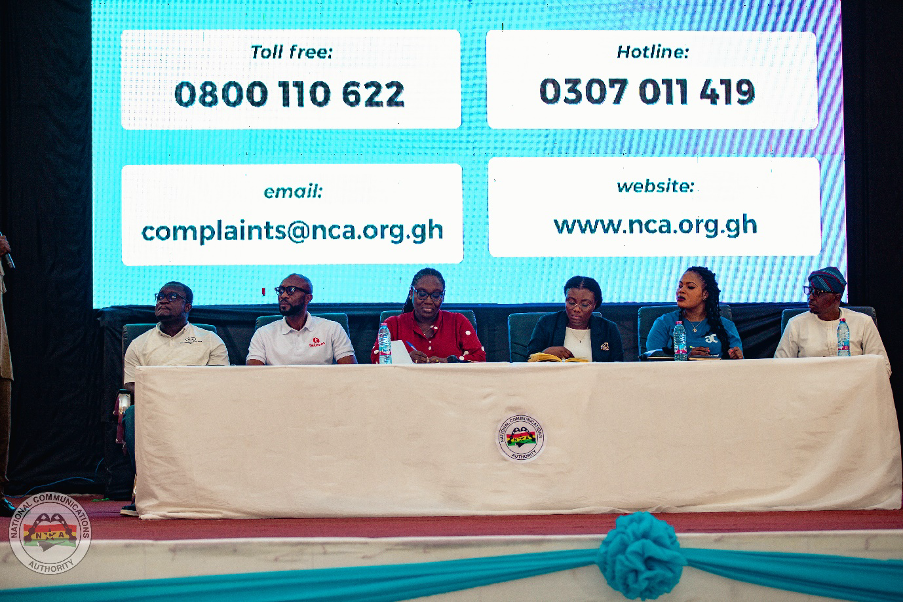
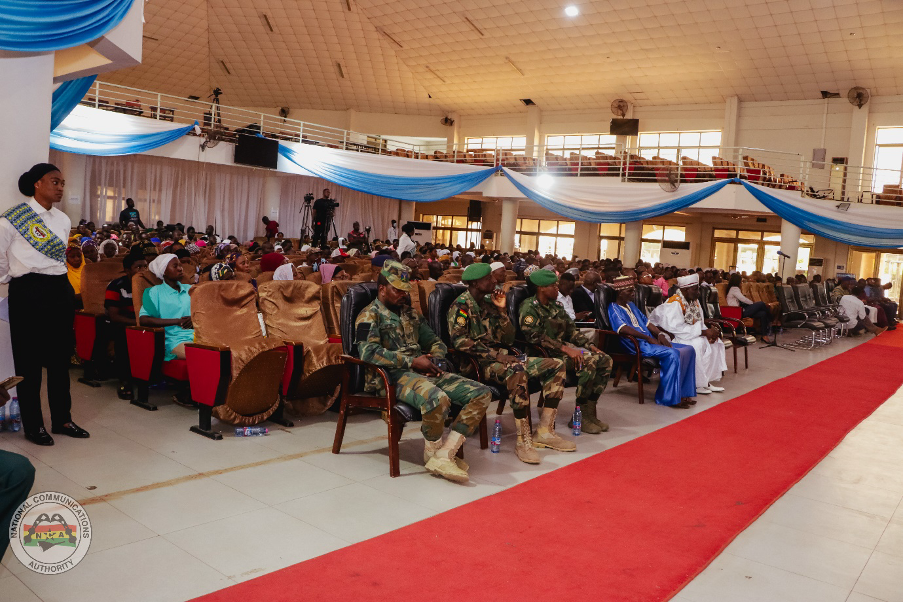
The National Communications Authority (NCA) organized a Consumer Forum at the UDS Auditorium in Tamale on April 17, 2024.
Aligned with the Authority’s mandate outlined in Section 26 of the Electronic Communications Act, 2008 (Act 775), the event aimed to engage consumers to gauge their opinions on Service Providers’ performance.
Under the theme “Safeguarding Consumer Rights through Effective Communication,” the Forum promoted dialogue and collaboration among consumers, Service Providers, the NCA, and relevant stakeholders in the industry.
Discussions covered topics such as Quality of Service, SIM Card Registration, Money Doubling schemes on Television (egregious content), Mobile Money fraud, recent internet disruptions, and Mast and Towers issues.
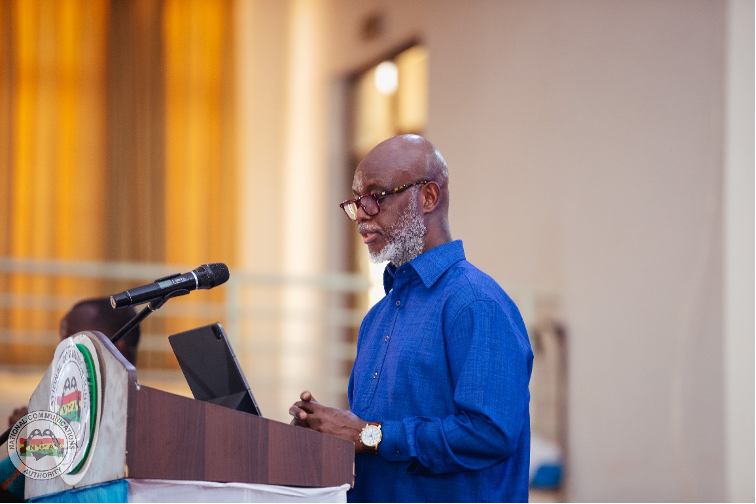
Dr. Joe Anokye, Director General of the NCA, emphasized the NCA’s commitment to upholding consumer rights and its complaints management channels for consumer complaint resolution.
He highlighted the Authority’s proactive measures, including periodic surveys to understand consumer perceptions, views, and expectations.
Dr. Anokye expressed optimism that the draft Quality of Service (QoS) Regulations, once passed, will be a game changer, further demonstrating the NCA’s commitment to ensuring consumers receive the service quality they deserve.
Dr Anokye further addressed the recent internet outage and pointed out that it was “the Authority’s foresight that ensured that Ghana did not experience a total outage of internet services”.
He also revealed that to avoid or better manage such unforeseeable occurrences, the Authority is engaging various stakeholders in the ecosystem to pick up lessons and develop the necessary strategies.
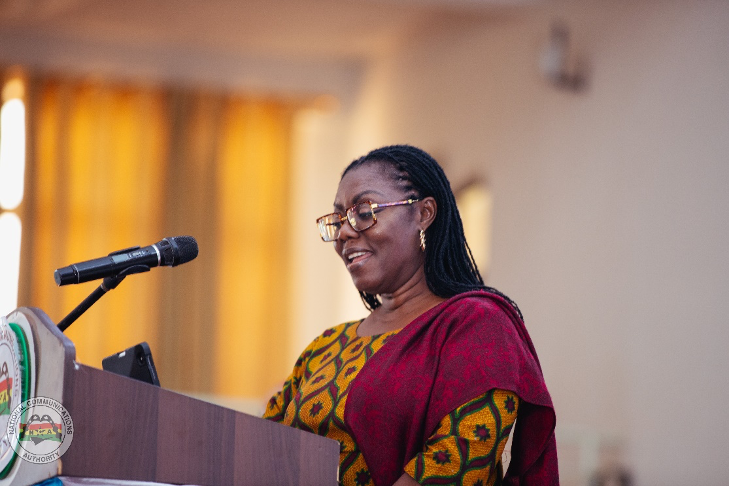
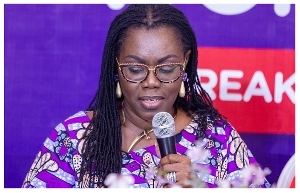
Minister for Communications and Digitalisation, Ursula Owusu-Ekuful
The Minister for Communications and Digitalisation, Ursula Owusu-Ekuful, in her keynote address, highlighted government’s commitment and initiatives aimed at bridging the digital divide and ensuring that “every Ghanaian has access to affordable and reliable communication services”.
Notable among them include the Rural Telephony Project, ECOWAS Roaming, SIM Registration and Technology Neutrality.
She also hinted that Ghana will deploy 5G before the end of the year and announced that within the next few weeks, the NCA will announce the modalities for the deployment.
The Hon. Minister seized the opportunity to caution entities and individuals who deal with pre-registered SIMs as well as individuals who use their Ghana Cards for the registration of SIMs for others to cease immediately.
She finally commended the NCA for its commitment towards consumer protection and assured the general public that under the auspices of her Ministry, “the NCA will endeavour to seek and implement forward-looking measures that will safeguard the use and adoption of digital solutions”.
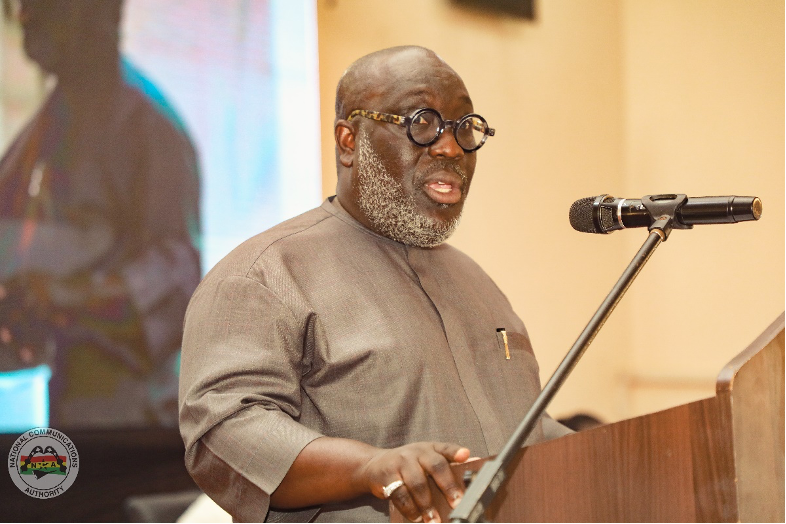
Okatakyie Ababio Boakye Danquah II, Board Chairman of the NCA
Okatakyie Ababio Boakye Danquah II, Board Chairman of the NCA, closed the Forum by expressing his gratitude to participants for their opinions, insights, concerns, and recommendations shared at the event.
“It is evident that by coming together, we can demand accountability from Service Providers and bring about positive change.
“Let us maintain the energy generated here today and keep pushing for transparency, integrity and justice in consumer affairs”, he said.
He entreated participants to educate others and not to hesitate to channel their issues to their Service Providers and the NCA.
“Remember, our collective voice is powerful, and by remaining vigilant and informed, we can safeguard the rights of consumers in the telecoms space”, he added.
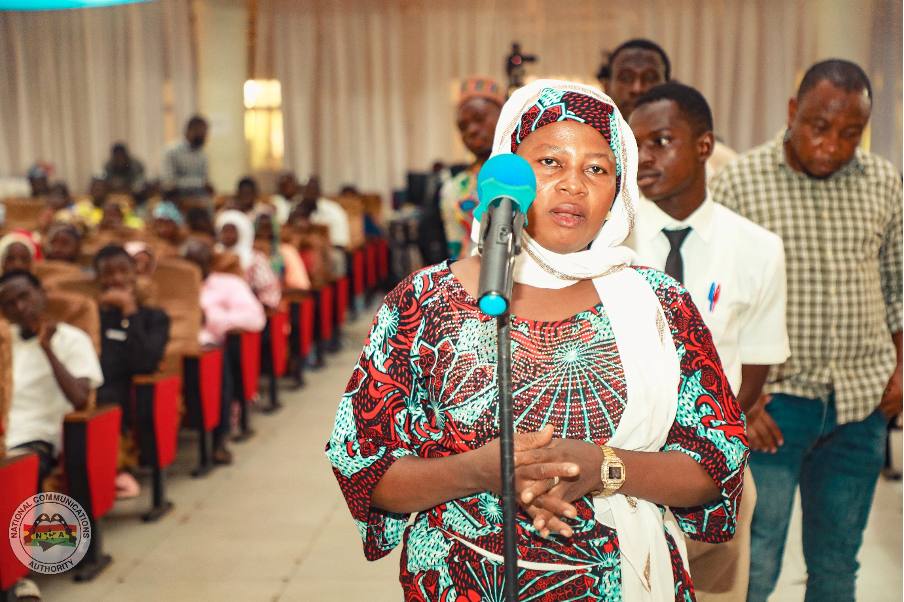
Present at the Forum were representatives from MTN, AT, Telecel, Bank of Ghana and GIFEC who provided answers to the audience’s questions
Participation at the Forum cut across the various sectors including academia, security agencies, artisans, religious organisation and market vendors.
Additionally, stakeholders such as Mobile Network Operators (MNOs), National Media Commission, Ghana Investment Fund for Electronic Communications (GIFEC), Bank of Ghana (BoG) and Consumer Advocacy Groups were in attendance.
Consumers and the general public are hereby assured that the Authority in its quest to ensure that consumers are empowered to make informed decisions and safeguarded against unfair practices, looks forward to hosting another Forum within the year; the details for the next Forum will be communicated in due course.
Cross-section of participants at the eventThe questions from consumers came in thick
Francis Asenso-Boakye, Minister for Roads and Highways, reaffirms government’s dedication to enhancing road infrastructure in Kumasi, urging local support for speedy completion.
During an inspection of road projects in the Kwadaso Municipality, Asenso-Boakye, also Bantama’s Member of Parliament, emphasized community backing to expedite road construction.
The inspection covered various routes including Tanoso market to Pokukrom, Tanoso to Takyiman, Tanoso to Topre, Anhwiakwanta to Kessben, Lazab to Nwamase, and ongoing Kwadaso to Trabuom construction.
Aims included evaluating road conditions and identifying development needs.
Asenso-Boakye, speaking to the Ghana News Agency afterward, expressed contentment with contractors’ progress.
Upon completion, these roads will alleviate commuting stress for locals, reflecting President Akufo-Addo’s commitment to nationwide infrastructure enhancement.
Contractors are urged to hasten efforts for timely completion.
MP Prof. Kingsley Nyarko highlighted the economic boost upon road completion, urging patience and solidarity from drivers and constituents to facilitate constituency development.
NEK Umwelttechnik AG (NEK) has been actively developing six large-scale onshore wind farms in the Greater Accra Region of Ghana over the past few years, all of which are now ready for implementation.
These projects collectively aim to install approximately 1,300 MW of capacity, offering the potential to generate around 3,400 GWh of renewable electricity annually.
This significant output will contribute to meeting the growing demand for electricity in Ghana and help address issues like “dumsor.”
In line with its commitment to providing sustainable energy solutions, NEK has recently established a new renewable energy platform in Accra named Anansi Green Energy Ltd. (Anansi). Anansi is dedicated to delivering affordable, clean, and uninterrupted electricity to consumers across Ghana.
Anansi’s focus extends beyond wind energy; it plans to expand its portfolio to include solar and biomass plants in addition to taking over NEK’s existing wind farms.
The establishment of Anansi is a strategic move aimed at maximizing the potential of renewable energy sources in Ghana while ensuring reliability and affordability for consumers.
Anansi Green Energy Ltd. (Anansi) Sets Stage for Renewable Energy Expansion in Ghana.
The platform will function as a direct supplier of green electricity to industrial off-takers, serving as a “captive” industrial power generator. It is envisioned that in the future, Anansi will play a pivotal role in positioning Ghana as a renewable energy hub for West Africa.
This includes the potential to export renewable energy to neighboring countries via the existing WAPP network, further expanding its reach and impact across the region.
A lot of interested customers
Anansi is now starting to discuss terms with several interested customers for the delivery of green electricity. The future demand both in the country and in surrounding markets for green energy will likely grow significantly.
Although there will always be a need for baseload energy capacity in the planning of any energy sector, both for environmental and indeed affordability reasons it will be essential to create a structure through which renewable energy can be developed, without relying on the public sector.
Mining companies, the concrete sector, steel manufacturers, but also other industries and the mobility sector will demand cheap and green electricity, which can be delivered by Anansi in the very near future.
No competition to VRA or ECG and no reliance on Government of Ghana
Anansi will not become a competitor to ECG, VRA, or NEDCo – nor will it be necessary for Anansi to have the traditional “take or pay” PPA with ECG or any support from the Government of Ghana. Anansi will be able to implement its projects without any reliance on the public sector at all. Indeed, the intent will be that Anansi will have, as its partners, VRA/ECG in providing baseload capacity to its customers.
Green Energy as a Megatrend
Green energy is enjoying unanimous support and gaining political and business momentum around the globe. The global energy sector is in the midst of a transformation. The global energy transition is now well underway, with ever-increasing clean energy investment and momentum for net-zero targets by mid-century. Energy security and sustainability nowadays go hand in hand and are top of the agenda for many governments worldwide.
Africa is no exception, with the continent facing rapidly growing energy demand, critical energy access gaps, and an imperative for development. Africa’s imperative to accelerate its socio-economic development in a resilient and sustainable way could immensely benefit from accelerating clean energy deployment, as was stated at the COP28 summit last December.
Failing to accelerate the development of renewables poses major threats to the continent already suffering the most from the impacts of climate change. Yet, while global renewable energy investments are reaching record-high levels, renewables are still critically underfunded in Africa, signaling urgent work ahead. This also applies for Ghana: Ghana’s energy outlook shows an exponential soaring of future energy demand.
Thermal generation continues to require high-cost fuel and remains subject to the risks inherent in the ability for such fuel to be continuously delivered. Ghana will require accelerated development of renewable energy, but it will not be able to do so if there remains a reliance on typical grid-connected IPPs with ECG as the sole off-taker and with full Government backing. It is not possible or reasonable for the public sector itself to assume such risks going forward.
A different rule book now needs to be written, and Anansi has the potential to provide that new way forward right away.
VALCO modernization and expansion plans
Volta Aluminum Company Limited (VALCO) has announced its plan to expand operations and seek a strategic partner which would be prepared to invest around USD 600 million to revamp its operations. The goal is to reposition VALCO in a way that retrofitting will transform it from a loss-making entity into a best-in-class, profit-making and shareholder value-maximising entity, thus become the ultra-modern and best smelter in Africa.
With the projection of the building of 4 operating bauxite mines and 2 refineries under the IAI Masterplan as well as the revival of the downstream sector, the modernisation and expansion of the VALCO smelter is timely, thus creating a new VALCO with much more significance than ever before.
However, such plans require a lot of additional electricity, which at least for the time being is not available in Ghana. It is estimated that at the end of the retrofitting and extension program, VALCO will require more than 1,000 MW of installed electrical power. “Where do we take this from?”
The volume of green electricity required by VALCO will be significant with the realistic and probably only solution being the electricity capable of being produced by Anansi. Anansi will look forward to creating a partnership with VALCO and VRA, which could allow VALCO to attract international investment which will require such available green electricity and will also otherwise allow VRA to significantly expand its operations.
Green Energy, Green Hydrogen and E-Mobility
Green energy from NEK’s wind farms, as well as other solar plants and biomass facilities through Anansi will provide the cheapest generation costs for electricity in Ghana. While fossil power plants produce energy at approximately 15 US Cents per kWh, NEK’s wind farms will produce energy for less than 8 US Cents per kWh in current pricing. There are possible further savings to these costs as well through the application of carbon credits.
The renewable projects to be developed by Anansi will be long-term and allow for certainty as to the all-in cost of energy as there will be no relevance or risk for possible fuel price shocks going forward. The available wind and solar irradiation will remain free, and Anansi’s customers will be able to benefit from such.
In addition to green energy, Ghana should consider developing a ‘Green Hydrogen and Green Fuels’ and an ‘E-Mobility’ policy. The Government should consider key strategies and relevant road maps for the development of the “energy carrier” in the future.
Green hydrogen and electric vehicles will need significant renewable resources to be available, otherwise, they cannot be called green. A strong political signal will trigger huge investments from abroad in the energy sector of Ghana and business activities relating to these future markets. The key to doing so is the implementation of renewable energy projects.
Outlook
Due to the heavily increasing demand for cheap and clean electricity in Ghana and abroad, much more renewable energy even than that capable of being produced in NEK’s planned 6 onshore windfarms, and the other planned Anansi solar projects and biomass facilities will be required within the next 5 – 10 years.
However, land for such further projects may also become a scarce asset, especially in populated areas. This is one of the reasons why NEK has decided to start the development of two (2) large offshore wind and solar facilities off the coast of Anloga and Ningo.
These offshore wind and solar parks will have an installed capacity of approximately 3,100 MW and will generate more than 7,500 GWh of clean and reliable power per year. These installations do not require any fuel, LNG, gas, oil, or other fossil, outdated energy sources – the “fuel” is the wind and the sun, which are never-ending, homemade, and always coming back to Ghana for free.
Anansi Green Energy will play a huge role in the delivery of much needed green energy for Ghana already in the very near future. Now is the time for Anansi to create its positive green web in delivering sustainable and affordable energy to its customers, making Ghana a renewable energy hub in West Africa.
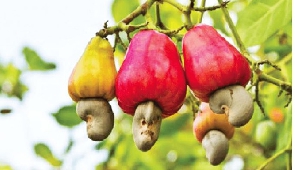
CEO of the Tree Crops Development Authority (TCDA), William Agyapong Quaittoo, has highlighted the forthcoming revitalization of the cashew industry following the organization’s receipt of a loan from the World Bank.
Of the $100 million loan yet to be secured, Quaittoo revealed that $60 million will be allocated to bolstering the cashew sector.
Addressing attendees at the 6th Consultative International Cashew Council in Accra, Quaittoo expressed concern over the country’s low cashew nut production.
He stressed the need for farmers to increase cashew processing from 10 percent to 50 percent, emphasizing the importance of this endeavor.
To facilitate this transition, the CEO outlined plans to establish cashew factories in key areas such as the Bono, Bono-East, Savannah, and Oti regions.
“Government has allowed Tree Crops Development Authority to take a World Bank loan of $100 million, out of which $60 million will be invested in cashew. Also, 70 per cent of the $60 million will be invested in cashew processing,” William Agyapong Quaittoo stated.
He added that, “The feasibility study is being done and soon we will see the establishment of various cashew factories in catchment areas such the Bono, Bono-East, Savannah and Oti regions and other places. It spans about eight regions.”
Mr Quaittoo said measures were being taken by the Tree Crops Development Authority to ensure Ghana’s cashew regained its status as the best on the market.
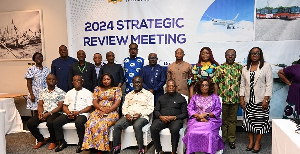
The Ministry of Transport convened its 2024 strategic review session in Cape Coast, the capital of the Central Region.
This gathering provided an invaluable platform for the Transport Ministry and its affiliated agencies to assess their programs and projects, review their implementation progress, address challenges, and chart a way forward.
The overarching aim of the strategic review meeting was to ensure that the sector’s initiatives align with the national vision outlined in the President’s Coordinated Programme of Economic and Social Development Policies.
Dr. Evans Aggrey-Darkoh, Head of the Ghana Civil Service, urged civil servants to embrace technological advancements in the transportation sector as part of effective governance.
He urged agencies within the Ministry of Transport to prioritize professionalism, sustainability, service excellence, accountability, and the adoption of best practices to propel sectoral growth.
Juliana Marigold Assan, the Central Regional Minister, emphasized the pivotal role of the transport sector in every facet of human life and the socio-economic advancement of Ghana.
“Transport, as we are aware, controls the economic outcome of every country as it is essential for the movement of goods and services in terms of our land, sea, air and all, facilitating trade and commerce. Transportation systems enable businesses to access markets, deliver products to customers and service raw materials,” she said.
Transport Minister Kwaku Ofori Asiamah delineated several accomplishments within the maritime sector.
“We have constructed a new liquid bulk terminal at Takoradi port, constructed a multipurpose terminal at Takoradi port of which phase 1 has been completed. The operation will commence around July. We have completed a construction of a four berth dedicated container terminal at Tema Port, MPS, installed 16 state of the art ship-to-shore cranes and 3 rubber tyre gantry cranes as part of the retooling through the MPS terminal, constructed 12 fish landing sites along the coast, constructed a fishing port for Elmina, constructed the James town fishing port which is nearing completion, we are about 93%,” he stated.
He continued that “we are developing the Boankra Integrated Logistics terminal which is ongoing, removed tree stumps along the navigable path of the Volta lake, completed an assessment study on the Volta lake, acquire a total of 7 high speed patrol and rescue boat for surveillance and monitoring of Ghana territorial waters, acquired trash skimmers to remove rubbish and materials from water bodies and protect sea life.”
He encouraged the agencies to innovate to meet the changing needs of stakeholders and navigate the complexities of the industry.
“It is important that you continuously strive to improve and innovate our respective force of endeavour. This means staying up to date with the latest industry trends, understanding the needs and demands of the people and fostering culture of collaboration, accountability and excellence,” he said.
The 2024 strategic meeting of the Ministry of Transport saw the attendance of Board Chairpersons and Agency Heads from organizations such as the Ghana Ports and Harbours Authority, Ghana Shippers’ Authority, Driver and Vehicle Licensing Authority, and Ghana Maritime Authority, among others.
Chief Executive Officer of Independent Power Generators Ghana, Dr. Elikplim Kwabla Apetorgbor, has expressed concerns regarding the privatization of the Electricity Company of Ghana (ECG), suggesting that it could jeopardize accessibility and affordability.
He elaborated that private ownership of ECG might result in unstable power supply, thereby disrupting business operations.
In a statement obtained by the media , Mr. Apetorgbor remarked, “Privatisation may risk the accessibility, affordability, and stability of electricity services, crucial for national development.”
His remarks follow Asantehene Otumfuo Osei Tutu II’s call for the government to consider privatizing selected public entities such as the Electricity Company of Ghana and Volta River Authority, aiming to spur industrial growth and attract investment in Ghana.
Speaking at the inauguration of a 430-kilometer natural gas pipeline by Genser Energy, Otumfuo Osei Tutu II advocated for private sector management of these firms, citing greater efficiency and effectiveness.
In response, Mr. Apetorgbor cautioned against the privatization of enterprises, noting that it often prioritizes profit maximization over public service.
He expressed concern that privatized companies might concentrate on affluent areas while neglecting rural and low-income communities, potentially resulting in tariff hikes that disproportionately affect consumers with limited purchasing power.
Consequently, he urged the government to concentrate on strengthening and retaining the Electricity Company of Ghana, emphasizing the importance of accountability, equitable access, and strategic governance control over this national asset.
Executive Secretary of the National Labour Commission (NLC), Ofosu Asamoah, has revealed that there’s a significant level of mistrust between labor unions and the government.
Mr. Asamoah highlighted that this ongoing tension often culminates in industrial strikes against the government, despite assurances to address labor unions’ demands.
In an interview with TV3, he emphasized that the composition of the NLC ensures impartiality towards any political party in power, eliminating bias.
Ofosu Asamoah said, “There is a high level of mistrust between Labour Unions and government. The composition of the NLC makes it nearly impossible to be biased towards any party.”
In November last year, Organised Labour proposed a 75% increase in base pay for 2024, initiating negotiations with the government.
Subsequently, reports indicated that Organised Labour agreed to a 60% base pay increment during negotiations.
After two days of negotiation, the labor union secured a 23% raise in the base pay for 2024.
It’s anticipated that this increase will be adjusted upwards by an additional 2% from July 2024 to December 2024.
This adjustment will result in a total increase of 25% for the year.
The Minister of Communications and Digitalisation, Ursula Owusu-Ekuful, has stated that efforts are in progress to formulate local content legislation for the telecommunications sector.
“We are in the process of passing local content legislation for the telecommunications sector and have directed that certain categories of managed services in the telecom sector should be reserved for local Ghanaian companies only,” she noted.
She mentioned that the initiative is geared towards strengthening the country’s capacity to oversee its digital infrastructure, applications, and services autonomously, diminishing dependence on expensive foreign consultants and contractors.
The minister emphasized the existence of proficient local alternatives, emphasizing the potential for sustainable growth and development within the sector.
“That is the only way to build our capacity to manage our own digital infrastructure, applications and services. We have to wean ourselves of unhealthy dependence on expensive foreign consultants and contractors when we have competent local alternatives.
“Many of these foreign companies outsource their contracts to local entities and pocket the huge profits… of course, those who benefit from the current system and their collaborators will protest that we must put the interest of the country and our collective development first instead of some misguided, short-term, individual benefit,” she noted.
Support for indigenous companies
The minister revealed this during the formal inauguration of Dynamic Data Solutions Limited (dds55), an information communication technology company, in Accra.
She emphasized the importance of backing indigenous companies, especially in the realm of information technology (IT).
She emphasized that the advancement of the nation depends not solely on foreign investments and multinational corporations, but also on the advancement and empowerment of local enterprises.
In pursuit of this objective, she expressed that besides intentional government policies to supplement their endeavors, there must be a collective change in attitude towards quality and acceptance, as well as encouragement for local products, to strengthen indigenous businesses.
“We must rewire our collective mindset. The notion that anything Ghanaian is inferior while everything foreign is superior must be challenged. Let us champion our own, not just in words but also in our choices, preferences and spending habits. If we do not support made-in-Ghana goods and companies, how can we expect others to do so?
“Also, we recognise that quality may not be top-notch initially. However, we must exhibit healthy tolerance and patience. Supporting local industries means nurturing their growth. It is not mediocrity; it’s confidence-building for our Ghanaian businesses,” the minister explained.
“Remember the ‘Buy Made-in-Ghana’ campaign? It’s time to breathe new life into it. Let us consciously choose Ghanaian services and products – whether it’s clothing, food or technology. By doing so, we create demand, encourage innovation and strengthen our economy,” she concluded.
The Ghana Revenue Authority’s Customs division has refuted rumors alleging that Ghana is losing transit cargos to neighboring countries like Togo and Ivory Coast.
During an episode of the “Eye on Port” show on Metropolitan Television in Accra, Gerald Agbettor, Chief Revenue Officer and Officer in Charge of Transit at the Customs division of GRA, affirmed that Ghana is not experiencing losses in transit cargoes. He emphasized that customs declaration data indicates growth in the volume of transit trade in the country.
Agbettor reported that the transit trade volume for January to March 2024 increased by 136,000 metric tons compared to the same period in 2023, rising from 308,000,000 metric tons to 444,000,000 metric tons in 2024.
“Some time ago, I joined the chorus, especially transit business from the ports to the hinterlands, they say that Ghana is losing the transit trade to other places. By my background, I was able to have access to the data manifest and when I went through it, I saw transhipment to Benin, transhipment to Togo, and it became alarming. But the fact that it is transhipment on the manifest to Togo and Benin does not mean we are losing transit trade to them,” he explained.
The Officer in charge of Transit also disclosed that the rate of diversion in Ghana is low. However, he urged that security be tightened at the various ports and transit terminals in order to facilitate fair trade.
Additionally, the Chief Revenue Officer praised the Ghana Ports and Harbours Authority for saving the Customs division of GRA GH¢90 million in their efforts to reduce diversion rates at the port.
He further acknowledged Ghana Link’s significant contribution, as they provided dedicated monitoring devices for house-to-house containers moving from transit terminals to transit parks.
“It is not really rampant, but it does not mean security should be relaxed, it should rather be tightened. A meeting was recently held with stakeholders to gather data from them so it can be used to best serve customers,” he said.
Eric Adiamah, a Council member of the Ghana Institute of Freight Forwarders and a panelist on the show, concurred with the Chief Revenue Officer that transit operations in Ghana were flourishing. He asserted that the Port of Tema is the top choice among landlocked countries along the West African coast.
However, he disclosed that Ghana was experiencing some loss of transit volume to neighboring countries due to regulations and the high cost associated with transit operations, despite the Port of Tema offering quality services in terms of safety and security.
“Transit business is thriving well. Only problem we see as operators of transit business is the cost of doing the business. The volumes as my brother has said are from data I have no access to, but on the ground what we know is that we are losing some volumes to neighbouring countries like Lomé. Meanwhile, between Togo port and Tema Port, when it comes to security and quality of service, the Port of Tema is way ahead, he said.
Mr. Adiamah expressed that the regulations overseeing transit trade are adequate to manage the diversion of transit cargo at the ports.
He encouraged the GRA Customs division to strengthen its operational partnerships with freight forwarders to dissuade them from engaging in transit diversion.
To deter others, he recommended that individuals caught for transit diversion offenses should face the full consequences of the law.
“If the rules provided by the books are followed to the latter, monitored by customs and all the authorities, the rules as they stand now are enough to do the business. The new things they are bringing up, will not improve anything, they will not stop diversion, it will only worry people who do legitimate business,” he averred.
The Officer in charge of transit explained that section 95, ACT 891, 2015, (6) of the Customs Act allowed for escorts for high risked goods under transit when the Commissioner deems it so.
“There were suspicions that some high risk goods were likely to be diverted and because of that, we have to place escorts on them. So, it is not the entirety of the whole transit trade. High risk goods like rice, tomato paste, cooking oil, vegetable oil, ethanol, alcohol, diapers are being brought in more, hence, the directives from the Commissioner and Commissioner General that we should ensure that we put escort on them,” he explained.
Minister of Finance, Dr. Mohammed Amin Adam, has stressed the country’s progress towards economic stabilization, citing substantial strides and a resilient recovery.
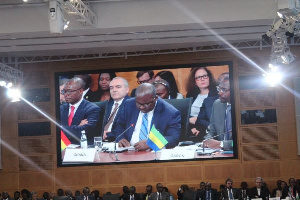
Addressing reporters at a press conference after the Spring Meetings in Washington on Sunday, April 21, 2024, Dr. Adam highlighted Ghana’s significant advancements in fiscal management.
Pointing out key indicators, Dr. Adam mentioned that Ghana’s primary deficit, which was 4.3 per cent of the Gross Domestic Product (GDP) at the close of 2022, saw a notable reduction to just 0.3 per cent by the end of 2023, marking a remarkable four-percentage point decrease.
Looking forward, Dr. Adam expects further enhancements, projecting a surplus of 0.5 per cent of GDP by the end of the current year and a rise to 1.5 per cent of GDP by the subsequent year.
He indicated: “Progress is good, recovery is strong, and we are heading very quickly to stabilization which is what we need to generate growth.”
The Centre for Scientific and Industrial Research (CSIR) has initiated a project named the Maximizing Gains from Cashew Production for Youth Development Project (MA-Cash) to enhance the processing of cashew fruits.
MA-Cash aims to advance research on efficient methods of processing cashew by-products and enhancing their consumer acceptability.
This 18-month project will focus on the Bono and Bono East regions of Ghana.
CSIR will collaborate with various stakeholders and partners to execute the project.
These stakeholders and partners comprise six farmer groups, the Institute of Industrial Research, and Opportunity International Savings and Loans Limited.
The CSIR launched the MA-Cash project during an Inception Workshop held at its head office in Accra.
According to a report from the Bono Regional Ministry, approximately 900,000 metric tons of cashew fruits are wasted annually.
The regional ministry attributes this wastage to factors such as the lack of processing materials, fragmented value chains, price fluctuations, and poor farm management practices.
Professor Charles Tortoe, Director of CSIR, expressed that the implementation of the project would escalate cashew processing activities in Ghana.
He highlighted that MA-Cash would mitigate post-harvest losses of cashew fruits and enhance their processing into various products, including juices, concentrates, and beverages.
“It may interest you to know that CSIR and the Food Research Institute’s (FRI) efforts to apply research findings to problems pertaining to cashew fruit waste, poverty alleviation, and youth-led sustainable economic growth have led to the development of the MA-Cash project.
We expect the project to reduce waste, enhance the quality of processed cashew fruits and by-products, and improve cashew yields through agrobiodiversity. We expect the project to increase income for youth groups who are successfully running their cashew businesses,” he said.
Dr. Emmanuel Kyereh, a food scientist at the Food Research Institute (FRI), highlighted that the MA-Cash project extends beyond the mere processing of cashew fruits. It encompasses various facets, particularly youth support programs.
He emphasized that the project would significantly contribute to enhancing the economic potential of cashew fruits. This is crucial as the economic benefits of cashew nuts have already been maximized and realized.
Mr. Francis Owusu Ansah, Chief Business Officer for Opportunity International Savings and Loans, underscored the vital role financial institutions play in implementing the project.
He outlined the financial institution’s responsibility, which involves addressing the financial aspect of the project by providing necessary support to businesses operating within the cashew fruit value chain.
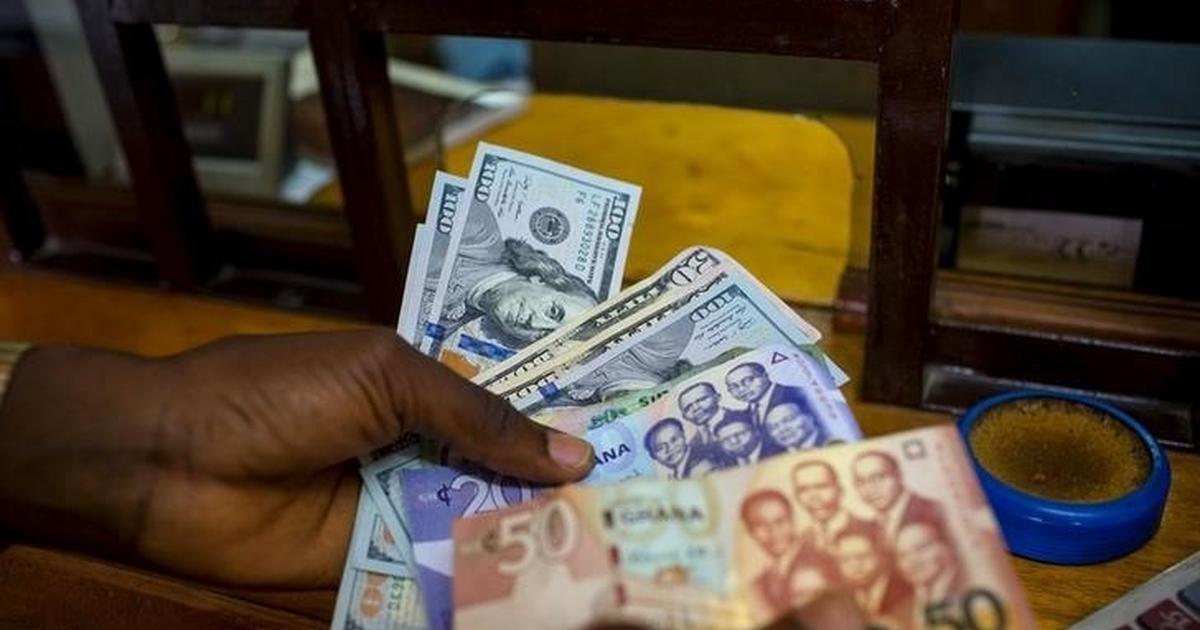
Today, April 22, 2024, the Interbank forex rates provided by the Bank of Ghana indicate that the Ghana Cedi is exchanging against the US Dollar at a buying rate of 13.0472 and a selling rate of 13.0602.
Meanwhile, at a Forex bureau located in Accra, the US Dollar is purchased at a rate of 13.60 and sold at 13.95.
In terms of the Pound Sterling, the Cedi is valued at a buying rate of 16.1563 and a selling rate of 16.1738.
At the same Forex Bureau in Accra, the Pound Sterling is bought at 16.60 and sold at 17.10.
Regarding the Euro, it is priced at a buying rate of 13.8919 and a selling rate of 13.9046.
At the Accra Forex Bureau, the Euro can be bought at 14.00 and sold at 14.50.
For the South African Rand, the buying rate stands at 0.6819 and the selling rate at 0.6821.
At a forex bureau in Accra, the South African Rand is bought at 0.40 and sold at 1.10.
As for the Nigerian Naira, it is listed with a buying rate of 87.7713 and a selling rate of 88.8323.
At the Accra forex bureau, the Nigerian Naira is bought at a rate of 9.00 Naira for every 1 Cedi and sold at 14.00.
Lastly, for the CFA Franc, it is trading at a buying rate of 47.1755 and a selling rate of 47.2187.
At the Accra forex bureau, the CFA Franc is bought at 20.50 CFA for every 1 Cedi and sold at a rate of 22.50 CFA for every 1 Cedi.
Note that these rates may differ at a forex bureau near you. Our forex bureau rates are provided by Afriswap Bureau De Change in Osu, Accra.
Our forex bureau rates are provided by Afriswap Bureau De Change in Osu, A ccra.
The Ghana Chamber of Bulk Oil Distributors (CBOD) has moved to calm the concerns of consumers regarding potential astronomical increases in fuel prices by the end of April 2024.
Assuring the public, the Chamber emphasized that their assessment of the various factors influencing pump prices, particularly the exchange rate, has shown stability in the past week.
They further stated that this stability is not likely to significantly impact the prices of petrol, diesel, and Liquefied Petroleum Gas (LPG).
Addressing reporters in Accra, Dr. Patrick Kwaku Ofori, CEO of CBOD, refuted reports suggesting that petrol and diesel prices could soar to at least GH¢18 per litre by the following week.
“Despite the fear mongering that the dollar was going to close at GHS 14, to be fair, it has been relatively stable, which is far better than what happened the previous weeks.
“Now the price is GH¢14.99 (per litre). It’ll get to GH¢18 (per litre) unless the dollar hits maybe GHS15 but I can’t foresee the dollar hitting even GHS14 by even next week,” he said.
Dr. Ofori urged both the public and “energy experts” to refrain from making uninformed projections that could incite fear among consumers and impact investments in the sector.
Expressing concern over the effect of such speculation on consumer behavior and the volatility of pump prices, he announced the Chamber’s intentions to conduct training courses for journalists. These courses would cover the components of fuel pricing, market dynamics, and other informative topics aimed at reducing misinformation surrounding fuel pricing.
“We should be guided with some of our utterances. Forex commodities are sensitive to key elements within the sector and the economy. When people make certain speculations that are projections, we need to probe further,” he said.
Fuel prices, which had maintained relative stability for several months, experienced successive increases over the past four weeks. Analysts attribute this trend to a surge in international prices and the depreciation of the Cedi against the US Dollar.
At present, petrol and diesel are priced at an average of GHS14.99 and GHS14.80 per litre, respectively, at fuel stations.
Dr. Ofori highlighted that the performance of the Cedi against the Dollar and fluctuations in international markets were the primary factors influencing recent fuel price hikes.
He also mentioned that the Chamber is actively seeking innovative solutions to improve access to foreign exchange and alleviate pressure on the Cedi.
Contrary to assumptions that bulk oil distributors profit from fuel price increases, Dr. Ofori clarified that sometimes, Bulk Distribution Companies (BDCs) incur losses if their forex market projections exceed expectations.
Assessing the situation on the international market, he expressed concerns about potential impacts on global fuel prices if tensions in the Middle East, particularly between Israel, Iran, and Gaza, escalate further.
“We do not want the situation to escalate. Once it escalates, we should be certain that oil prices will go up,” he said.
An assessment of heavy metal and pathogen levels in vegetables cultivated with water from specific urban areas of the Greater Accra Metropolis has unveiled potential health hazards associated with mercury and faecal coliforms.
Published in April 2024, the study titled ‘Analysis of Heavy Metals and Pathogen Levels in Vegetables Cultivated Using Selected Water Bodies in Urban Areas of the Greater Accra Metropolitan Area (GAMA)’ delves into the concentrations of heavy metals and faecal coliform in lettuce and bell pepper grown using open-surface wastewater from drains and constructed reservoirs across various locations within GAMA.
To conduct the study, researchers utilized a combination of methods, administering questionnaires to 67 vegetable farmers and collecting vegetable samples from three urban farm sites – Haatso, Dzorwulu, and the Weija Irrigation Scheme site (WISS) – for subsequent laboratory analysis.
The concentrations of lead (Pb), mercury (Hg), and cadmium (Cd) were determined through atomic absorption spectroscopy following microwave digestion of the vegetables. Additionally, the total faecal coliform was quantified using the MacConkey-Endo broth method.
Findings from all three sites indicated that the concentrations of Cd (≤0.001 μg/mg) and Pb (≤0.005 μg/mg) in lettuce complied with the permissible levels set by the World Health Organization (WHO). However, the levels of Hg (≥0.309 μg/mg) and faecal coliform (>5 count/100 ml) in the vegetables from all three sites exceeded the WHO permissible limits.
The study concludes that consumers of vegetables from such urban farms are at risk of health issues associated with mercury and faecal coliforms.
Upon contacting a team member of the study, Alan Gbeasor, he informed the B&FT that the phenomenon is a significant concern. The study underscores the urgency to intensify education regarding the health risks associated with consuming vegetables grown from open-surface water sources in the observed sites. Furthermore, it advocates for the enforcement of existing phytosanitary standards to bolster food safety and the quality of urban vegetables.
Conventional practice
Open-surface water sources have commonly been employed to irrigate vegetable farms in urban areas and cities.
However, these sources frequently harbor unchecked levels of hazardous contaminants, presenting health risks, particularly when utilized for growing vegetables intended for consumption.
Yet, data regarding the presence of heavy metals and faecal coliform bacteria in such vegetables at specific locations, notably within the Greater Accra Metropolitan Area (GAMA) of Ghana, remains limited.
Urbanisation causing water scarcity
The swift pace of urbanization, standing at 56.7 percent in the country, coupled with erratic rainfall patterns leading to freshwater scarcity, has forced numerous small-scale farmers to turn to polluted or contaminated wastewater sources for their urban vegetable cultivation.
This shift not only sparks concerns regarding the quality of agricultural yields but also gives rise to potential food safety and health hazards for urban families reliant on these vegetables in the Greater Accra Metropolitan Area.
As per the 2024 Mordor Intelligence Report, the country’s vegetable market share is valued at US$0.95 billion, with projections indicating a climb to US$1.2 billion by 2029.
A senior IMF official has stated that the lack of a finalized debt restructuring deal between Ghana and its commercial creditors is not expected to prevent the disbursement of the impending second tranche of funds (US$360 million) under the US$3 billion Extended Credit Facility program.
Ghana successfully completed the second review under its IMF program in April, which clears the way for the release of an additional US$360 million.
Abebe Aemro Selassie, Director of the IMF’s African Department, provided an update on Ghana’s ongoing debt restructuring talks and their implications for the next disbursement from its US$3 billion extended credit facility during the release of the Regional Economic Outlook for sub-Saharan Africa.
“To be clear, they (Ghana’s creditors) have provided financing assurances, though, and that remains in effect. And so, we are not envisaging that it will be an issue for our ability to conclude the next review and provide the disbursement that’s pending,” Mr. Selassie stated.
“As we noted, we have reached staff level agreement and that’s by far the most important component for the review,” he added.
However, he emphasized the importance of securing agreements with bilateral and commercial creditors that align with the terms agreed upon in January 2024 for continued advancement.
“As of now, there is no MoU with bilateral creditors, but we know that there have been intense discussions in recent weeks and those are continuing and we are very hopeful that there will be agreement with bilateral official creditors,” he explained.
Regarding private creditors, including holders of Ghana’s Eurobonds, Mr.Selassie revealed that while the government had shared proposed restructuring terms with the IMF, “the government has decided that they would not pursue this deal just yet”.
He was optimistic that a resolution could be reached, saying: “Again, I think we’re very hopeful that there will be movement, and that they can reach agreement consistent with the programme parameters, helping lower Ghana’s debt burden at the right level and avoiding, of course, people of Ghana having to make too much sacrifice”.
“As of now, there is no MoU with bilateral creditors, but we know that there have been intense discussions in recent weeks and those are continuing and we are very hopeful that there will be agreement with bilateral official creditors,” he explained.
Regarding private creditors, including holders of Ghana’s Eurobonds, Mr.Selassie revealed that while the government had shared proposed restructuring terms with the IMF, “the government has decided that they would not pursue this deal just yet”.
He was optimistic that a resolution could be reached, saying: “Again, I think we’re very hopeful that there will be movement, and that they can reach agreement consistent with the programme parameters, helping lower Ghana’s debt burden at the right level and avoiding, of course, people of Ghana having to make too much sacrifice”.
The Ministry of Finance has acknowledged reaching an interim agreement with bondholders, though adjustments are required to meet the IMF’s debt sustainability goals. With a target of reducing external debt payments and interest costs by US$10.5 billion between 2023 and 2026, the government is focused on aligning strategies to achieve this aim.
Dr. Mohammed Amin Adam, the Finance Minister, stressed at a recent press conference that the government is determined “to achieve an agreement acceptable to all parties while adhering to the sustainability targets outlined in its IMF-supported economic programme”.
The ministry highlighted the country’s more ‘assertive approach’ over the past two months in talks with commercial creditors and Eurobond holders, while reiterating the importance of staying within the parameters of the IMF programme.
Mr. Selassie underscored the significance of concluding a debt restructuring deal, stating: “Why debt relief agreement is important is that it can bring about a bit more certainty in terms of the outlook for public finances. It also engenders some confidence in economies”.
The IMF official was, however, circumspect on providing a timeline, saying: “The negotiations take time and I am not sure I can give a timeline. This is something that is between Ghana and its creditors.”
The debt talks are occurring against a backdrop of increasing financial strains across sub-Saharan Africa, according to the latest Regional Economic Outlook report. The report warns that the region’s governments “continue to grapple with financing shortages, high borrowing costs and roll-over risks amid persistently low domestic resource mobilisation.”
It estimates that gross external financing needs for low-income countries will exceed US$70billion annually over the next four years. “The financing challenges are forcing countries to cut essential public spending and redirect development funds to debt service, thereby endangering growth prospects for future generations,” the report lamented.
While expressing optimism about Ghana’s restructuring process, Mr. Selassie acknowledged that debt negotiations are always “a very painful exercise, first and foremost, of course, for the debtor country; but also creditors”.
Ghana’s once-struggling economy has made significant strides and appears to have weathered its most challenging phase, as per the International Monetary Fund’s (IMF) Mission Chief for the country, Stéphane Roudet,
Roudet conveyed confidence that Ghana is now firmly headed towards complete recovery, contingent upon the government’s unwavering dedication to rigorously executing the IMF program.
“If the government continues to implement the IMF program the way it has been done over the past year, then we can say that we have now seen the worst for Ghana’s economy,” Roudet stated, allaying fears of potential shocks from global economic developments derailing the recovery process.
The IMF representative brushed aside worries about the potential short-lived nature of the current economic resurgence, emphasizing that achieving complete macroeconomic stability depends on the diligent implementation of the program by the government.
Notably, Roudet disclosed that Ghana has surpassed expectations in its performance under the program, leading the IMF to revise its growth projection for 2024 upward.
“Ghana is overperforming under the IMF program, and that is good. Ghana’s program is delivering on its promises and, in fact, it is over-delivering,” he confirmed.
Roudet pointed out several encouraging signs, such as inflation figures at the end of 2022 surpassing projections, an unexpected growth path, and the government’s achievements in generating necessary revenue.
Additionally, he praised the Bank of Ghana for its actions to manage inflation and noted the country’s strengthening external and fiscal positions.
‘Everything is moving in the right direction, and this is something that was not considered at the beginning of the IMF program.”
The Mission Chief attributed Ghana’s commendable performance to its steadfast commitment and seriousness in implementing the program, expressing confidence that the country’s growth potential could average 5% in the medium term.
However, Roudet cautioned that fully restoring confidence in Ghana’s economy, as perceived by rating agencies, development partners, and domestic stakeholders, will depend on the continued steadfast implementation of the IMF program going forward.
As the IMF prepares to launch its Regional Economic Outlook, Roudet revealed that previous projections were based on “old assumptions,” suggesting that Ghana should anticipate revised, more favorable numbers reflecting the economy’s better-than-anticipated performance.
Nollywood actor Yul Edochie has proposed that seeking support or guidance from one’s hometown or ancestral roots can be crucial at times.
He suggests that even fervent prayers may not always yield solutions to one’s problems.
However, by visiting their hometowns and posing the necessary questions, individuals can often find the right answers.
This, he believes, increases their likelihood of overcoming recurring challenges and attacks of various kinds.
He wrote on Instagram ” Prayer is good, But sometimes the answer to your problems lies in your village. Go home and ask questions. For some families, death has become a recurring thing. They have prayed for so long yet nothing has changed. Go to your village and ask questions. Do some consultations. Many anwers lies there.”
Ghanaian socialite and advocate for mental health, Abena Korkor, has stirred emotions on social media with her revelations about her past relationship with son of Archbishop Duncan Williams, Joel Duncan Williams.
In a candid disclosure, Abena Korkor shared that her struggles with mental health prevented her from marrying Joel Duncan Williams, despite her desire to do so.
She attributed her difficulties to familial issues, citing nepotism and her family background as factors that contributed to the loss of her life partner.
Her candid confession has elicited widespread sympathy and prayers from social media users, who are moved by her plight and hope for her recovery.
Abena Korkor’s recent behavior on social media suggests that she may be experiencing a mental health episode or breakdown.
Videos have surfaced showing her appearing disheveled and wandering aimlessly.
Additionally, she has been sharing more personal secrets, indicating a lack of restraint in her current state.
In the midst the fervent speculation swirling around the selection of a running mate for the ruling New Patriotic Party (NPP), attention has consistently turned towards Minister for Education, Dr. Yaw Osei Adutwum, as a formidable contender.
He finds himself among a roster of distinguished individuals including Dr. Matthew Opoku Prempeh, Chief of Staff Akosua Frema Osei-Opare, and EPA boss, Henry Kwabena Kokofu.
Yet, with Vice President and NPP presidential candidate, Dr. Mahamudu Bawumia, yet to issue an official statement regarding his choice for the December 7 elections, an air of uncertainty persists.
During an interview on Peace FM’s ‘Kokrokoo’ morning show with Kwami Sefa Kayi, Dr. Adutwum was directly pressed on his interest in joining forces with Bawumia as a running mate.
“We’re told you will be his (Bawumia) running mate. Is it true?” queried Sefa Kayi.
In response, Dr. Adutwum vehemently denied any knowledge of being chosen as Bawumia’s running mate.
“Respectfully, I am not the one going to appoint myself… I have no idea but what I know is that the president placed Ghana’s education in my charge and that is what I am committed to, so that the president does not regret appointing me a minister,” he said.
The host pressed him saying “you are saying his vice will be president and the one that will be his vice could be Yaw Adutwum. Is that true?” to which the minister retorted saying “I don’t know about that.”
Sefa Kayi pushed further asking “but are you interested?”
Dr. Adutwum responded by emphasising that his focus remains on being the best education minister the world has ever known.
Alluding to his time back in the US as a teacher, he recalled how he attended a workshop for superintendents and when asked why he was at the workshop, he responded by emphasising his dream of becoming a teaching superintendent in the future.
“I want to be the best education minister in the world. Once I am the best education minister in the world and someone who is flagbearer sees it and asks me to become his running mate, fine. But currently, I want to be the best education minister in the world…” he noted.
An aspirant vying for the parliamentary primaries of the governing New Patriotic Party (NPP) in the La Dadekotopon Constituency, Joseph Addo, has successfully submitted his nomination.
Mr. Addo, a first-time contestant for the seat, filed his nomination amidst cheers and enthusiasm from his supporters at the Regional Party Office in Accra.
While the La Dadekotopon seat has been historically challenging for the NPP, the resignation of Dr. Gerald Tetteh Nyanyofio as the parliamentary candidate earlier this year prompted the organization of a new contest to select a candidate for the December 2024 polls.
Speaking to the media following the submission of his forms, Joseph Addo expressed confidence in winning the upcoming primaries and ultimately securing the seat for the NPP in the general elections.
“My motivation to contest as a parliamentary aspirant of the ticket of the NPP is that I know I can do the job better. Mostly of my supporters are the youth of La who have been neglected by previous MPs in the constituency. They are backing me now because they know I can help them and in fact I have helped a lot of them,” he said.
Joseph Addo also highlighted some of his contributions to constituents in La, despite operating behind the scenes.
He mentioned facilitating the employment of several youth in various state security institutions and securing employment for others in the civil service.
The NPP’s National Executive Committee, during its meeting on April 9, 2024, announced the commencement of nominations for parliamentary primaries in two constituencies: Akan and La Dadekotopon.
This decision follows the resignation of Dr. Joseph Gerald Tetteh Nyanyofio in the La Dadekotopon constituency and the passing of Ambassador Rashid Bawa in the Akan constituency.
Justin Kodua Frimpong, the General Secretary of the NPP, indicated that the party would soon release guidelines for the primaries in these constituencies.
Quables has exposed the underlying tensions within DWP Academy, uncovering undisclosed disagreements and conflicts among certain members of the dance ensemble.
Months following the controversial departure of Dancegod Lloyd, a co-founder of DWP, lead dancer Afronitita has also announced her exit from the renowned Ghanaian dance group.
The dancer, known by her real name Danita Akosua Adomaah Yeboah, cited personal aspirations as her reason for leaving the group. However, Quables, DWP’s manager, has revealed a new perspective, suggesting that internal disputes compelled Afronita’s departure.
During an interview with Kwadwo Sheldon, he pointed a finger at Afronita’s mother, alleging that she played a pivotal role in her daughter’s decision to leave the group.
Talking about Dancegod Lloyd and Afronita, he said “they never signed the contract” to be part of the group. “They didn’t want to sign, so I told myself I would not even do it again, but I literally took the girl as my sister,” Quables added.
During the interview, he continued, “her mum told me that people tell her this is what a manager is supposed to do and I have bought clothes for her daughter only once. I am like I am not supposed to be buying clothes for your daughter.”
The remark has stirred a range of diverse reactions online, catching many by surprise. Take a look at the video below and share your thoughts.
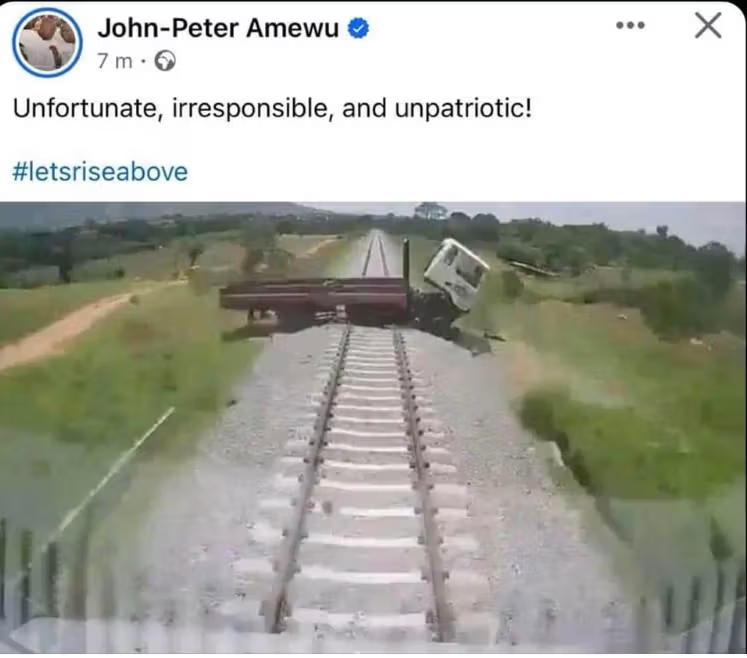
Minister for Railways Development, John Peter Amewu, has verified that the image posted on his social media accounts, allegedly depicting the Tema-Mpakadan railway train accident scene, was fabricated.
Speaking in an interview with Joy FM’s Midday News on Friday, April 19, John Peter Amewu, the Minister for Railways Development, clarified that the photo shared on his social media platforms was digitally altered, showing a vehicle placed on a railway line, unrelated to the actual train accident scene.
Amewu promptly clarified that he does not personally manage his social media pages and revealed that he had not even seen the image in question.
“The picture I saw on social media was a photoshop”
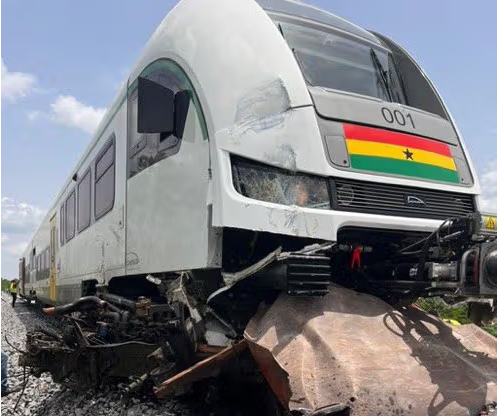
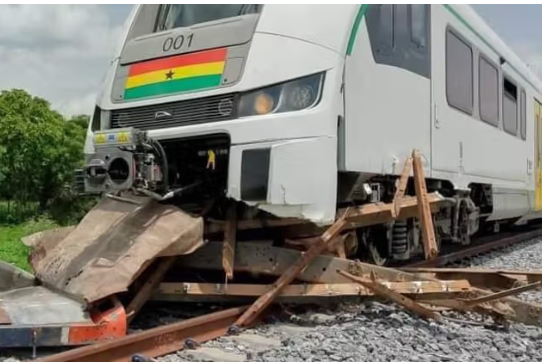
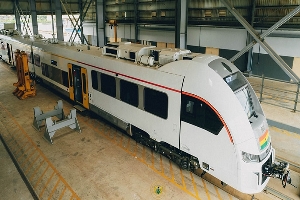
Ghana’s recently acquired train from Poland was involved in an accident during a test run on the Tema-Mpakadan railway route on Thursday, April 18, 2024.
The train collided with a Kia truck parked on the railway, causing damage to its front section. Amewu stated later that there were no casualties, despite the presence of passengers and inspectors aboard the train.
“The engineers are currently working on it. The train has been brought back to the workshop. The Kia driver himself has reported himself to the police station, but the conduct of the driver as of now cannot be well explained,” the Railways Minister said on Citi FM’s Eyewitness News. “And the good thing is that all the passengers and the inspectors on board the train, none of them got injured, and we are currently in the process of assessing the damage to the train. Technically, I would say the train is still in very good form. Nothing in terms of electrical or the engine has been affected, except the front that got slightly damaged.”
Earlier this month, the first shipment of trains assembled in Poland arrived at the Tema Port, aimed at enhancing railway transportation in Ghana. The country is set to receive a total of 12 modern trains from Poland, expected to commence operations in May, thereby improving railway transportation nationwide.
Meanwhile, Abel Dzidotor, the driver involved in the tragic train accident, has been sentenced to six months in jail. Dzidotor admitted guilt to three of the four charges leveled against him, including inconsiderate driving, causing unlawful damage, and unauthorized stopping, leading to his conviction.
For the charge of careless and inconsiderate driving, Dzidotor received a sentence of 100 penalty units or a potential 20-month prison term if not paid. He was also sentenced to 20 penalty units for unauthorized stopping, equivalent to a five-month jail term if unpaid. Additionally, Dzidotor admitted guilty to causing unlawful damage, resulting in a six-month sentence of hard labour.
However, Dzidotor pleaded not guilty to the fourth charge of failing to produce a driver’s license, claiming it was inside the damaged vehicle. He has been instructed to present it to the court by May 9, 2024, under the threat of potential consequences.
The Ghana Police Service arrested Dzidotor after preliminary investigations indicated that he had left his Hyundai truck unattended on the railway line, leading to a collision with the newly imported train from Poland during a test run. The police statement suggested that Dzidotor had gone to deliver cement blocks and his truck became stuck on the rail after he failed to navigate a pass-through under the bridge.
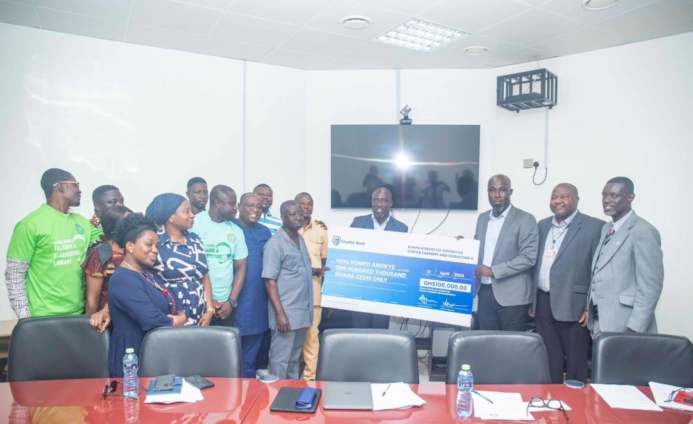
More corporate entities and individuals are lending their support towards the complete refurbishment of the main blocks of the Komfo Anokye Teaching Hospital (KATH).
The latest contributors to the project include Kuapa Kokoo and the Ghana Association of Garages Zone 13, who have generously donated GH₵100,000 and GH₵20,000 respectively to the Heal KATH Project.
As a crucial healthcare referral center serving 12 regions of Ghana, the hospital’s infrastructure and medical facilities are in a state of decline, necessitating urgent renovations.
During a brief presentation ceremony, Professor Otchere Addai Mensah, the Chief Executive Officer of KATH, emphasized the importance of expediting the project to enhance healthcare services for patients.
“KATH has always been the primary healthcare facility for a lot of Ghanaians and for that reason, the board of the project will seek to support this project to achieve its intended purpose,” he said.
Prof. Mensah reiterated the hospital’s dedication to delivering top-notch medical care and pledged transparent financial management for every donation towards the hospital project.
“With a rich history of providing quality services, the board of Heal Komfo Anokye Project will account for any contributions to ensure transparency.
“We are committed to the enhancement of healthcare infrastructure whenever necessary, and ensuring accessible and high-quality healthcare services to the people of Asanteman,” he said.
Chairman of the Ghana Association of Garages Zone 13, Eric Ahen and the National President of Kuapa Cocoa Farmers and Marketing Union, James Agyekum Kwarteng led a delegation to make the donation at the hospital.
Prof Mensah on behalf of the board of the project expressed his profound appreciation to the group.
Although the project has realised 50 per cent of its targeted amount for refurbishment, more hands are needed to support the Asantehene in revamping the hospital named after Asante’s revered priest.
The Kwame Nkrumah University of Science and Technology (KNUST) has signed a Memorandum of Understanding with the Valco Trust Fund and Bekwai Municipal Hospital to develop a student hostel.
This collaboration aims to tackle accommodation issues encountered by clinical students during their rotations at the Bekwai Municipal Hospital.
During the event, Prof. Christian Agyare, the Provost of the College of Health Sciences at KNUST, conveyed appreciation for the partnership and stressed the significance of offering sufficient accommodation for students to enrich their academic journey.
“We possess the necessary resources and intend to send our clinical students to Bekwai Municipal Government Hospital over the next three years. However, accommodation shortages at the hospital have posed a challenge. To address this issue, we initiated discussions for a Memorandum of Understanding (MOU) with the hospital. This MOU serves to assure them of our commitment to sending students there, prompting our collaboration on its draft over the past eighteen months,” he said.
The upcoming project, slated to begin in a few months, will be located near the Bekwai Municipal Hospital campus, offering convenient access for students.
Additionally, the initiative will feature a 100-seat lecture hall along with office spaces.
Kelvin Kwaku Yeboah, the Executive Director of Valco Trust Fund, underscored that the facility’s purpose extends beyond student housing, serving as a tribute to Asantehene, Otumfuo Osei Tutu II.
Furthermore, he mentioned plans to engage a professional facility management company to ensure the proper upkeep of the public facility.
“We intend to honor Otumfuo’s 25th anniversary by recognizing his contribution to our hostel facility at Komfo Anokye. To avoid past issues, we’ll engage a professional facility management company. It’s clear that as public officials, we struggle with maintaining public buildings, and we’re determined to prevent a recurrence,” he mentioned.
Dr. Frank Serebour, the Medical Superintendent of Bekwai Municipal Hospital, underscored the difficulties involved in establishing new medical schools and emphasized the significance of a centralized teaching system between the University and its affiliated institutions.
“Schools like Sunyani Medical School can send their students to KNUST for the same lecturers to train them and ensure that we have quality products. This approach will allow for consistent training and assurance, enhancing the medical education landscape,” he noted.
He suggested a phased expansion of the centralized teaching sites to accommodate a larger number of prospective medical practitioners.
He contends that this approach would address existing challenges in medical education and guarantee the provision of top-tier healthcare services.
“I think this is a good thing and i believe that once this is done, other teaching sides should also be considered and gradually we can expand so that we can have more people who want to pursue medical education,” he said.
Member of Parliament for Asante Bekwai, Mr Osei Owusu also welcomed the initiative.
“For me this is a dream come true. Today is a major event for me and I’m happy that we are going to Bekwai,” he said.
A renowned relationship expert, Counselor Adofoli, has suggested that the well-known musician Shatta Wale should contemplate adding a mental health professional to his management team.
This recommendation arises from concerns regarding the artist’s frequent public outbursts.
Counselor Adofoli emphasized Shatta Wale’s pattern of emotional unpredictability, especially evident during tense occasions like the VGMA awards ceremony and conflicts with Charterhouse Productions, as instances where improved emotional regulation could have been advantageous.
The relationship expert proposed that Shatta Wale’s close associates might avoid addressing delicate matters to prevent upsetting him, highlighting the potential benefits of having a counselor, therapist, or psychologist as part of his team.
“Some people…don’t know how to handle their emotions in stressful situations, and so they lash out publicly.”
“Those close to him and on his team likely avoid saying things that might upset him,… “That’s why having a counselor, therapist, or psychologist on his team would be beneficial.” Counselor Adofoli explained.
The suggestion arises against the backdrop of escalating acknowledgment of mental health challenges within the entertainment sector, underscoring the expanding realization of the significance of emotional wellness for personalities in the public eye.
The criticism was prompted by a recent episode during Shatta Wale’s performance at Sallahfest, where he directed insults at Stonebwoy for not attending the event. Shatta Wale’s remarks, which included ridiculing Stonebwoy’s gait, triggered broad condemnation following the circulation of videos capturing the incident on social media.
After a 47-year-old massage session in Quarteira, a town in the Algarve region, Portugal a 71-year-old British pensioner reported an alleged sexual assault to the police.
A spokesperson for Portugal’s Policia Judiciaria police force confirmed the arrest of a 47-year-old man in the Loule municipality, which includes Quarteira, stating, “Last Friday, the Polícia Judiciaria arrested a 47-year-old man strongly suspected of raping a 71-year-old foreign national at a massage center in the municipality of Loule.”
“The purported victim reported the incident, which the police discovered allegedly took place following a massage session.
As a result of the investigation led by the PJ’s Southern Directorate, officers collected significant evidence.
A source familiar with the ongoing investigation stated, ‘We are awaiting medical reports to fully understand the situation.’
“The purported victim reported the incident, which the police discovered allegedly took place following a massage session.
“As a result of the investigation led by the PJ’s Southern Directorate, officers collected significant evidence.
“A source familiar with the ongoing investigation stated, ‘We are awaiting medical reports to fully understand the situation.’
The unidentified man has appeared in court and was granted bail, under the condition of weekly check-ins and a prohibition on contacting the alleged victim or her family.
A media personality, Nana Romeo, has expressed the view that a woman should not become overly close with her partner’s family unless they are married.
He argued that when a woman tries to bond with her boyfriend’s family, she may unintentionally disclose personal information that could strain her relationship with him.
While emphasizing the significance of a woman building a positive relationship with her partner’s family, he advised against being excessively open, particularly before marriage.
“Every woman should heed this advice seriously. If you’re in a relationship with a man who hasn’t married you, be cautious about getting too close to his family. Otherwise, you might inadvertently create problems for yourself.” Nana Romeo said.
He continued, “There’s a saying that blood is thicker than water. You might think you’re being amicable to win the family’s favour by discussing matters that aren’t meant for them, only for them to later disapprove and advise the man against you.”
“If a man doesn’t genuinely care for you, the nature of your relationship with his family won’t affect his decision,” he added.
The Anambra State Government apprehended a 40-year-old man named Anietie Tim for allegedly assaulting a 14-year-old girl in the Onitsha area.
The arrest followed the suspect’s evasion of authorities from the Anambra State Ministry of Women Affairs and Children’s Welfare.
In a statement on Thursday, April 18, 2024, Commissioner for Women Affairs, Mrs. Ify Obinabo, disclosed that the incident occurred in 2022, and since then, the suspect had been avoiding arrest with the assistance of some military personnel at the Barrack where he resides.
“The suspect, Anietie Tim, from Eninan AkwaIbom in his defense said he never knew his victim was an under age and went further to say that she was the one that tempted him and he responded because he’s a man with blood flowing through his veins.
Mr. Tim further clarified that prior to the incident, he had been establishing a friendship with his 14-year-old victim, who, as he claimed, was consistently neglected at home.
“He will face trial at the Children, Sexual, and Gender-Based Violence Magistrate court in Awka to address his wrongdoing,” stated the release.
Widow of the late NPP politician John Kumah, Rev. Lilian Kumah, has opened up about her decision not to pursue her husband’s position.
In a sermon, Lilian Kumah shared her perspective, emphasizing her commitment to God and finding joy in her chosen path.
As a mother of four, she preached about life choices and the significance of knowing one’s direction.
This revelation sheds light on why Lilian Kumah declined to vie for her late husband’s seat. Despite expectations from many that she would enter the political arena, she opted to step aside, allowing others the opportunity to pursue it.
Subsequently, NPP politician Kwabena Boateng emerged victorious in the Ejisu primaries, setting the stage for an upcoming by-election.
The National Petroleum Authority (NPA) is advocating for the adoption of the Cylinder Recirculation Model (CRM) for users of Liquefied Petroleum Gas (LPG) in the Upper East Region.
This government initiative aims to provide enhanced and cost-effective services to consumers.
Under the CRM, LPG cylinders will be filled and stored at exchange points conveniently located near users.
Customers will only need to pay for the gas content and exchange their empty cylinders or register to receive filled cylinders if they don’t own one.
The NPA highlights several benefits of the CRM, including mitigating risks associated with LPG operations, increasing accessibility by bringing services closer to users, improving efficiency in the LPG value chain, and generating more opportunities for individuals.
Bashiru Natogma, the Upper East Regional Manager of NPA, emphasized the importance of this new model during a sensitization session held in Bolgatanga.
He explained that exchange points designated by the authority will facilitate the exchange of empty cylinders for filled ones across all communities.
“This is not going to be limited to some particular areas, but it would be opened up everywhere in our communities, so those days that one would have to travel a long distance with the cylinder to be filled would no longer be the case because we are going to ensure that all the communities in this region have the exchange points,” he stated.
Obed Kraine Boachie, Head of Gas overseeing Commercial Regulation at the NPA, emphasized that the new model has promptly addressed barriers to LPG usage. This is because individuals are no longer required to own a cylinder to access LPG.
“Under the CRM, we are saying that a bottling plant would buy the cylinders, unlike now, when you would have to buy the cylinder, the bottling plant would procure the cylinders, so for you as a consumer, when you go and register, you will get a cylinder without having to buy one before you can use LPG,” he stated.
He also mentioned that discussions were underway between the Authority and the government to explore the possibility of reducing taxes on LPG to enhance affordability.
Sarah Yakubu, an Assistant Programmes Officer from the Environmental Protection Agency (EPA) in the Upper East Region, acknowledged that promoting the use of LPG aligns with environmental conservation efforts, as it can contribute to a reduction in deforestation.
She encouraged the public to embrace the policy.
Bright Akobanyam, the Upper East Regional Safety Officer at the Ghana National Fire Service, urged the public to exercise caution when dealing with fire to prevent its detrimental impact on lives and property.
The Liquefied Petroleum Gas Marketers Association disclosed that LPG usage in Ghana decreased by 9% in the first quarter of 2024.
The Association attributed this decline to the raised taxes on the commodity, leading to price hikes.
Vice President Gabriel Kumi expressed concern that the additional tax would exacerbate the challenges already faced by the LPG sector.
“Those buying LPG has reduced, if you look at first quarter of 2024, as compared to 2023, we have dropped by 9%, the imposition of the $80 tax on LPG will worsen the situation. The price of Gas has increased again. Gas is one commodity that if you impose tax by one percent it goes a long way to push people out of using it. From 1st April to 15th April the figures we are picking in terms of consumers is not encouraging at all. Something needs to be done immediately by reducing the price of gas,” Gabriel Kumi said in an interview on New York-based Adinkra FM.
Gabriel Kumi declared that the National Petroleum Authority’s decision to impose an extra $80 per metric ton (MT) for Bottling Plant and Cylinder Investment Margins lacks justification.
He revealed that his association has formally requested the government to rescind the tax, warning that they will take further action if the government does not respond.
The Securities and Exchange Commission (SEC) in Ghana is urging small and medium-scale enterprises (SMEs) and entrepreneurs to embrace investments to support their growth endeavors.
SEC believes that attracting investments can empower SMEs to unlock their full potential and address unemployment challenges within the country.
Reverend Daniel Ogbarmey Tetteh, Director General of SEC, underscored the role of venture capital and private equity in providing accessible funding avenues for SMEs, aligning with Ghana’s priority of fostering job creation and resilient businesses.
Addressing participants at the annual conference of the Ghana Venture Capital and Private Equity Association, Reverend Tetteh emphasized the importance of SMEs maintaining accurate financial records to attract potential investors.
He also stressed the necessity for enhanced education among SMEs to encourage openness and transparency in their business operations, thereby enhancing their appeal to prospective investors.
“The good news is that we have venture capital and private equity firms who have been successful in raising money and I will tell you that are looking for good deals if I say good deals, good investment opportunities to channel the funds.
“If you want to grow and expand, you need to pay the price of opening up, and being transparent because for an investor to bring money to the table, he needs to have an idea of how you are going about, running your business model. So I think we just need to get more education for SMEs to be more comfortable.
The Ghana Venture Capital and Private Equity Association intends to launch training programs aimed at bolstering SMEs’ appeal to potential investors.
According to CEO Hannah Acquah, entrepreneurs require investment readiness training to equip themselves for funding opportunities and partnerships within the industry.
“There’s always an opportunity to finance your projects. It’s all about meeting the right stakeholders like members of the Ghana Venture Capital and Private Equity Association, who can structure your business to enable you to get financing for your product.”
“A lot of SMEs need investment readiness training. If we are preparing ourselves, structuring ourselves to enable us to get ready to invest in entrepreneurs, entrepreneurs on the other hand need to prepare themselves.”
Governor of the Bank of Ghana (BoG), Dr. Ernest Addison, has urged the International Monetary Fund (IMF) to maintain its zero-interest-rate loans for Ghana and other low-income countries (LICs) via the Poverty Reduction and Growth Trust (PRGT).
During the 2024 African Consultative Group (ACG) meeting at the ongoing IMF/World Bank Group Spring Meetings in Washington, US, Dr. Addison stressed the necessity of continuing concessional financing for LICs.
He emphasized that such financing would complement monetary policies, aiding in curbing inflationary pressures and bolstering economic recovery and resilience in low-income nations.
Furthermore, Dr. Addison advocated for replenishing the Catastrophe Containment and Relief (CCRT) resources to provide grant support to vulnerable members in regions prone to shocks.
He reiterated the call for improvements to the G20 Common Framework and utilizing the Global Sovereign Debt Roundtable (GSDR) to facilitate transparent and fair debt resolution, including debt cancellation for the most vulnerable members.
Dr. Addison underscored the importance of better coordination between the IMF’s LICs facilities review and the World Bank’s IDA21 replenishment efforts to offer comprehensive support to LICs.
Encouraging African governments to boost domestic financing, Dr. Addison highlighted its necessity amid ongoing economic recovery and resilience efforts on the continent.
He stressed that while African countries confront multifaceted challenges and a sluggish post-pandemic recovery, relying solely on domestic adjustment policies without adequate financing would yield limited outcomes.
The IMF’s April 2024 Fiscal Monitor indicates Ghana’s Debt-to-GDP ratio will consistently decrease until 2029.
Projections, as per a Joy Business report, foresee the ratio dropping to 69.7% by 2029, with estimates for preceding years: 83.6% in 2024, 80.9% in 2025, 77.9% in 2026, 74.9% in 2027, and 72.0% in 2028.
Earlier IMF assessments highlighted Ghana’s improving fiscal economy, attributed to government policies focusing on stability, sustainability, and inclusive growth, as noted by Stephane Roudet, Mission Chief for Ghana.
Roudet emphasized the government’s commitment to fiscal discipline, evidenced by improvements in the fiscal primary balance and expansion of social protection programs.
Ghana also met non-oil revenue mobilization targets and implemented structural fiscal reforms to bolster domestic revenues and enhance transparency.
Moreover, Ghana secured a Memorandum of Understanding (MoU) from bilateral creditors on debt restructuring, aiming to alleviate financial burdens and save costs alongside domestic debt restructuring efforts.
A World Economic Forum study has brought to light concerning statistics: in 2021, nearly 23.8 million tonnes (MT) of seafood, equivalent to 14.8 percent of the global production, went to waste, amid escalating worries about food security issues.
Projections indicate that by 2030, the global consumption of aquatic foods will reach a staggering 181 million metric tonnes (MT).
This surge in demand, driven by recognition of the nutritional benefits of seafood, intensifies international apprehensions regarding seafood loss and waste (FLW), prompting calls for concerted mitigation efforts.
Investigations into global aquatic FLW have identified various stages within the aquatic food value chain as culprits.
These include fish discarded at sea, fish processing on land, retail, and food services (encompassing sales and consumption in hotels, restaurants, and catering establishments – HORECA), as well as household consumption.
While the first four stages contribute to food loss, the final stage – household consumption – is classified as food waste.
This category notably arises from consumers purchasing or cooking more than they require and subsequently disposing of unconsumed food.
The United Nations Food and Agriculture Organization (FAO) defines food loss as “food that has unavoidably become unfit for human consumption, leading to a decrease in the quantity or quality of food”. Food waste is defined as “the removal of food that is still fit for human consumption by choice due to spoilage or food expiration”.
The report highlights the primary drivers of aquatic food loss and waste (FLW) along the value chain, revealing that globally, the most significant contributors are processing on land and discards from wild-capture fishing, accounting for 21.55% and 11.79% respectively. In contrast, food service constitutes the lowest percentage at 4.65%.
Furthermore, the analysis indicates that the percentage of total edible loss varies across continents. Asia records the highest at 37%, followed by Europe with 31.81%, while Oceania experiences less than 2% of edible aquatic food loss in 2021. Africa ranks fourth with 10.41%.
Comparative analysis between lower/middle income and higher income nations reveals distinct patterns: in lower/middle income countries, most aquatic FLW occurs during post-harvest and processing, while higher income nations generate large proportions of FLW during consumption. The former’s loss is primarily attributed to poor handling techniques, financial constraints limiting technological advancements, and insufficient cold storage and transportation facilities, while consumer attitudes towards waste play a significant role in higher income countries.
Recognizing the significant magnitude of global aquatic FLW, the analysis suggests several interventions to tackle the issue, including by-product utilization, investment in skills and knowledge, adaptation to market trends and diversification, adoption of emerging technologies, enhancement of infrastructure, industry collaboration, and development of robust policy and regulatory frameworks.
By-product utilization emerges as the most rational approach to reduce aquatic FLW, as aquatic foods by-products serve as valuable raw materials for various purposes, including aquacultural and agricultural feeds, compost, fertilizers, and biofuel. Additionally, they have promising applications in pharmaceuticals, cosmetics, and biodegradable materials.
Furthermore, incorporating cutting-edge technologies like blockchain, artificial intelligence (AI), big data analytics, and 3D printing offers novel potential for more effective assessment and relief of aquatic FLW.
Encouraging collaboration across different scales and stages of the value chain is also recommended, as it promotes a culture of collective responsibility for waste reduction.
Ghanaian songstress, Irene Logan, marks the end of her singlehood with a delightful surprise bridal shower.
Organized by her friends, the lavish event warmed the hearts of many on social media, capturing Irene in a moment of sheer joy and excitement.
Dressed in elegance and radiating happiness, Irene dazzled with flawless makeup, complementing her radiant smile as she posed for the cameras and indulged in a delectable slice of cake.
On April 19, 2024, the Interbank forex rates provided by the Bank of Ghana indicate the following currency exchange rates:
The Ghana Cedi is trading against the dollar at a buying price of 13.0035 and a selling price of 13.0165.
Against the Pound Sterling, the Cedi is trading at a buying price of 16.2011 and a selling price of 16.2186. The Euro is trading at a buying price of 13.8589 and a selling price of 13.8727.
The South African Rand is trading at a buying price of 0.6789 and a selling price of 0.6793.
The Nigerian Naira is trading at a buying price of 86.1699 and a selling price of 90.0023. For the CFA, it is trading at a buying price of 47.2840 and a selling price of 47.3311.
At a Forex Bureau in Accra, these are the observed rates:
Dollar is being bought at a rate of 13.55 and sold at 13.90. Pound Sterling is being bought at a rate of 16.50 and sold at a rate of 17.00. Euro is being bought at a rate of 14.00 and sold at 14.50.
South African Rand is being bought at a rate of 0.40 and sold at a rate of 1.10. Nigerian Naira is being bought at a rate of 9.00 Naira for every 1 Cedi and sold at a rate of 14.00.
CFA is being bought at a rate of 20.50 CFA for every 1 Cedi and sold at a rate of 22.50 CFA for every 1 Cedi.
Note that these rates may differ at a forex bureau near you. Our forex bureau rates are provided by Afriswap Bureau De Change in Osu, Accra.
Our forex bureau rates are provided by Afriswap Bureau De Change in Osu, Accra.
The Ghana National Association of Poultry Farmers (GNAPF) is advocating for a $100 million infusion of capital to revitalize the industry.
According to the association, these funds would be allocated to the acquisition of modern technology and services, including hatchery, feed production, processing, and marketing.
Mr. Victor Oppong Adjei, President of GNAPF, made these remarks during an interview with the Ghana News Agency at a day-long event focused on optimizing the poultry value chain in Ghana.
Highlighting the sector’s significant contribution to the economy, Mr. Adjei emphasized the need for investment to bolster its potential.
The event, a pioneering initiative, was jointly organized by the Economic and Trade Mission in partnership with GNAPF.
It aimed to foster dialogue among stakeholders in the poultry industry to address issues of common interest and benefit.
The event, which was under the theme “Optimizing Ghana’s Poultry Value Chain by Exploring Israeli Poultry Solutions,” introduced participants to novel Israeli technologies that can improve chicken production in Ghana.
Mr. Adjei highlighted challenges encountered by the sector, including high feed costs, insufficient availability of day-old chicks, and limited infrastructure.
“Before the COVID fee cost was GHC 1500 but now it GHC 7,000. This is because prices of main ingredients have shot up, “he said.
Mr. Adjei advocated for government adoption of a policy either to raise tariffs on imported poultry products or to decrease the quantity allowed into the country.
“The imported chicken comes in large quantities in excess of 500 metric tonnes. The price is so low and if our local poultry is left to compete with the imported it will be disastrous. We are producing at a very high cost,” he said.
Madam Shlomit Sufa, Israel’s Ambassador to Ghana, Liberia, and Sierra Leone, described the advancement of Ghana’s poultry industry as a shining example of economic resilience.
“Through innovation, technology, and dedication, Israel has transformed its poultry sector into a global leader, contributing significantly to food security and economic growth. The industry stands as a testament to our nation’s capacity to turn challenges into opportunities, leveraging creativity and ingenuity to achieve success against all odds,” she said.
Madam Sufa highlighted the industry’s global standing, noting its position among the world’s top poultry producers and exporters. Specifically, she mentioned that it ranks among the top five egg producers worldwide and the sixth-largest chicken producer.
Israeli advancements, she emphasized, cover a wide range of areas, including breeding and genetics, precision farming techniques, biosecurity measures, renewable energy integration, and vertical integration and value chain development. These advancements collectively contribute to the remarkable efficiency of the poultry industry.
“As we look to the future, Israel remains committed to fostering partnerships and collaborations that promote shared progress,” she said.
In Ghana, poultry production holds considerable economic importance, representing around 14 percent of the agricultural gross domestic product. It plays a crucial role in driving economic growth and generating employment opportunities.
Furthermore, it serves as a vital source of income for many small-scale farmers and entrepreneurs across the country.
Entrepreneurs, the hard-working backbone of business, often find their growth prospects stunted by visa rejections, particularly depending on their region of origin.
This impediment not only limits the expansion of African businesses but also fosters a reliance on domestic markets, hindering economic advancement.
Beyond economic pursuits, Africans seeking travel for leisure, education, or simply visiting purposes also encounter visa rejections, exacerbating feelings of isolation and exclusion. To address this issue, governments must prioritize visa liberalization, streamline application procedures, and combat discriminatory practices.
This raises the question: which African countries are most affected by visa complications?
According to a recent report by Henley and Partners, ranking the 10 countries in the world with the highest Schengen visa rejection rates, “Africa accounted for seven of the top ten countries with the highest Schengen visa rejection rates in 2022.”
“Globally, the absolute number of Schengen visa applications decreased from 16.7 million in 2014 to 7.6 million in 2022, representing a decline of almost 9 million applications. In other words, the global number of Schengen visa applications declined by nearly 54.7%,” the report reads.
However, “African visa applicants face more severe restrictions compared to applicants from other regions, resulting in a disproportionately high rejection rate. In 2022, Africa topped the list of rejections with 30% or one in three of all processed applications being turned down, even though it had the lowest number of visa applications per capita,” the report adds.
With that said here are the 5 African countries with the highest Schengen visa rejection rates.
1. Algeria / 392,053 / 179,409 / 45.8%
2. Guinea-Bissau / 7,990 / 3,611 / 45.2%
3. Nigeria / 86,815 / 39,189 / 45.1%
4. Ghana / 42,124 / 18,363 / 43.6%
5. Senegal / 56,866 / 23,683 / 41.6%
Guinea and Mali, the remaining two countries on the list, have rejection rates of 40.6% and 39.9%, respectively.
Kenya’s government dispatched a team to probe the helicopter crash that claimed the life of military chief General Francis Ogolla and nine additional individuals.
The cause of the crash remained shrouded in uncertainty.
General Ogolla was one of 12 occupants aboard the military aircraft when it went down on Thursday afternoon shortly after departure in the northwest region of the country.
The bodies of the deceased were airlifted to Nairobi, while the two survivors received medical attention at a hospital.
In response to the tragedy, President William Ruto declared three days of national mourning, acknowledging the profound sorrow felt across the nation.
General Ogolla was appointed as Kenya’s Chief of Defence Forces in April of the previous year. Mr. Ruto characterized him as a valiant officer who had perished in the line of duty.
“Our motherland has lost one of her most valiant generals, gallant officers, service men and women,” Mr Ruto told the nation.
According to the Kenyan defense ministry’s website, General Ogolla commenced his service in the Kenya Defence Forces on April 24, 1984. He was set to commemorate 40 years in the military the following week. Beginning his journey as a 2nd lieutenant in the country’s air force, he underwent training as a fighter pilot with the US Air Force, as noted by the ministry. In 2018, he ascended to the position of commander of the air force.
The other individuals tragically lost in the crash were identified as Brigadier Swale Saidi, Colonel Duncan Keittany, Lieutenant Colonel David Sawe, Major George Benson Magondu, Captain Sora Mohamed, Captain Hillary Litali, Senior Sergeant John Kinyua Mureithi, Sergeant Cliphonce Omondi, and Sergeant Rose Nyawira.
Moussa Faki Mahamat, Chair of the African Union Commission, extended the organization’s “thoughts and prayers” to Kenya’s president, government, and people in the wake of the “tragic helicopter accident.”
The officers had journeyed to Kenya’s North Rift region, a area plagued by banditry, with a mission to reopen schools shuttered due to bandit attacks. Additionally, they had visited military personnel deployed to stabilize the region.
In June 2021, at least 10 soldiers lost their lives when their helicopter crashed during landing near the capital, Nairobi.
Ghana’s Railways Development Minister, John Peter Amewu, has provided insights into an accident that involved one of the country’s newly acquired trains from Poland.
According to him, the train collided with a parked Kia truck on the railway during a test run.
Fortunately, there were no casualties reported.
This incident occurred on the Tema-Mpakadan railway route, near kilometer 76 from Tema, around 12:15pm. The trains, recently assembled in Poland, are aimed at enhancing railway transportation in Ghana.
Scheduled to commence operations by May, but the accident prompted a closer examination of the trains’ readiness for public service.
“Today, unfortunately, around 12:15pm, the Ministry in collaboration with our foreign engineers and the Ghana Railway Development Authority conducted a test run from kilometer zero which is at the workshop in Tema towards kilometer 98 at Mpakadan.”
“On approaching kilometer 76, [there was] a Kia truckparked right across the rail line, you know, stationary. As the train approached, the driver tried to apply the static state to enable the train to halt. But because it was very close to the Kia truck, it was unable to and therefore run straight into it.”
Additionally, the Minister clarified that apart from damage to the front of the train, there were no other significant issues. He mentioned that engineers are presently engaged in repairing the train.
“The engineers are currently working on it. The train has been brought back to the workshop. The Kia driver himself has reported himself to the police station, but the conduct of the driver as of now cannot be well explained,” the Minister said.
“And the good thing is that all the passengers and the inspectors on board the train, none of them got injured and we are currently in the process of assessing the damage to the train. Technically, I would say the train is still in very good form. Nothing in terms of electrical or the engine has been affected, except the front that got slightly damaged.
“The Polish engineers who were assembling the train are in charge and expected to be handed over to government. The government had not yet taken complete ownership of the train. So we are hoping that the insurance company will work on it as quickly as possible for us to put the train back on the line.”
Altogether, Ghana anticipates the arrival of 12 cutting-edge trains from Poland, aiming to enhance railway transportation across the nation.
In Kwahu-Tafo, a community in the Eastern Region, a young woman shared her account after reportedly being abducted by dwarfs.
Initial reports stated that she vanished for six months and was discovered under mysterious circumstances on the outskirts of town on April 15, 2024.
Locals suspect she was taken by dwarfs. A spiritualist, Nana Kwame Mframa, conducted rituals at the site where she reappeared before she was escorted home.
Now, the young woman has affirmed that she was indeed transported to another realm by dwarfs.
In a video circulating widely on social media, the abducted woman expressed that the world she entered was enchanting, and she harbored no desire to return to our world.
“When I gained consciousness, I realized I was at a different place – the place was very beautiful. The place was even more beautiful than this world. The people who live there are just like humans, just that some of them are short like genies while others are very tall.
“After I gained consciousness, I cried for two months. I became like a source of entertainment for them, when they touched me and I cried they became happy. But after I stopped crying, they sat and stared at me quietly,” she said in Twi.
She added, “The place was very beautiful, it is in a very huge stone, I wish I was not brought back. Where we slept was amazing… I don’t even know how to describe it”
Nana Kwame Mframa, the spiritualist, cautioned her to follow all the directives provided by the dwarfs to evade potential repercussions from them.
Gospel Singer Erico recounted a story in which his “small boy,” a young companion he lives with, exposed him to his partner abroad.
He confessed to yielding to temptation by inviting another lady into his bedroom.
While the lady was present in his home half naked, his “small boy” decided to livestream the scene via WhatsApp while his partner overseas quietly watched.
“My partner lives abroad, and I reside in Ghana. On one occasion, I gave in to temptation and welcomed a lady into my home. Much to my dismay, the boy I live with, whom I’ve cared for like a child, used this opportunity to betray me. Sadly, I fell into the trap, but I’ve sought forgiveness through prayer. As I interacted with the lady at home, he covertly placed his phone in his front pocket. The boy then encouraged my partner to stay silent on the phone while he secretly recorded our interaction via a live WhatsApp call, catching us in a compromising situation.”
Erico later discovered that his partner overseas had been communicating with his “small boy” all along, as well as sending him money.
Ghana’s Railways Development Minister, John Peter Amewu, has provided insights into an accident that involved one of the country’s newly acquired trains from Poland.
According to him, the train collided with a parked Kia truck on the railway during a test run.
Fortunately, there were no casualties reported.
This incident occurred on the Tema-Mpakadan railway route, near kilometer 76 from Tema, around 12:15pm. The trains, recently assembled in Poland, are aimed at enhancing railway transportation in Ghana.
Scheduled to commence operations by May, but the accident prompted a closer examination of the trains’ readiness for public service.
“Today, unfortunately, around 12:15pm, the Ministry in collaboration with our foreign engineers and the Ghana Railway Development Authority conducted a test run from kilometer zero which is at the workshop in Tema towards kilometer 98 at Mpakadan.”
“On approaching kilometer 76, [there was] a Kia truckparked right across the rail line, you know, stationary. As the train approached, the driver tried to apply the static state to enable the train to halt. But because it was very close to the Kia truck, it was unable to and therefore run straight into it.”
Additionally, the Minister clarified that apart from damage to the front of the train, there were no other significant issues. He mentioned that engineers are presently engaged in repairing the train.
“The engineers are currently working on it. The train has been brought back to the workshop. The Kia driver himself has reported himself to the police station, but the conduct of the driver as of now cannot be well explained,” the Minister said.
“And the good thing is that all the passengers and the inspectors on board the train, none of them got injured and we are currently in the process of assessing the damage to the train. Technically, I would say the train is still in very good form. Nothing in terms of electrical or the engine has been affected, except the front that got slightly damaged.
“The Polish engineers who were assembling the train are in charge and expected to be handed over to government. The government had not yet taken complete ownership of the train. So we are hoping that the insurance company will work on it as quickly as possible for us to put the train back on the line.”
Altogether, Ghana anticipates the arrival of 12 cutting-edge trains from Poland, aiming to enhance railway transportation across the nation.
Railways Development Minister John Peter Amewu has verified that there were no injuries in the incident concerning Ghana’s recently procured train from Poland.
During a test run on the Tema-Mpakadan railway route on Thursday, April 18, 2024, the train was involved in an accident.
It collided with a Kia truck parked on the railway, causing damage to its front.
Despite carrying passengers and inspectors, there were no casualties reported, as confirmed by Peter Amewu.
Additionally, he stated that the driver of the Kia truck involved in the accident has voluntarily reported to the police.
“The engineers are currently working on it. The train has been brought back to the workshop. The Kia driver himself has reported himself to the police station, but the conduct of the driver as of now cannot be well explained,” the Railways Minister said on Citi FM’s Eyewitness News.
“And the good thing is that all the passengers and the inspectors on board the train, none of them got injured and we are currently in the process of assessing the damage to the train.
“Technically, I would say the train is still in very good form. Nothing in terms of electrical or the engine has been affected, except the front that got slightly damaged.”
Earlier this month, the initial set of trains, manufactured in Poland, docked at the Tema Port, aiming to enhance railway transportation in Ghana.
A total of 12 modern trains are anticipated from Poland, slated to improve railway services across the country. These state-of-the-art trains are scheduled to commence operations by May, marking a significant advancement in Ghana’s railway sector.
The Food and Drugs Authority (FDA) cautions the public against using calcium carbide for ripening food, citing its hazardous nature.
“The FDA wishes to seize the occasion to strongly caution traders and the public against the use of calcium carbide for ripening fruits or food processing because it is carcinogenic and hazardous both to the consumer and the handler,” a statement issued by the Authority on April 17, and copied to the Ghana News Agency said.
In response to a social media video advocating the use of calcium carbide for ripening mangoes, the FDA issued a statement warning against its hazardous nature.
The video purported to educate viewers on distinguishing chemically ripened mangoes from naturally ripened ones using a “floating test.”
Conducting a survey at major markets and sales points nationwide, the FDA found no sampled mangoes containing calcium carbide. The survey and testing are ongoing.
While cautioning against relying on the “floating test” depicted in the video to discern ripening methods, the FDA stressed it lacked scientific validation.
The floating of fruit could stem from various factors like pest infestation, such as fruit flies and mango moths, the FDA noted, urging the public to disregard the test.
Furthermore, the FDA encouraged reporting any instances of chemical fruit ripening for necessary action.