Author: Amanda Cartey

  • 20+ tips on how to win a girl’s heart

    20+ tips on how to win a girl’s heart

    Starting a conversation with any woman may be simple, but capturing her interest and winning her over is challenging.

    To captivate a woman’s attention, you need to master the art of light-hearted flirtation, break through the initial barriers of conversation, and deepen your connection with her.

    Additionally, it’s essential to adapt your approach based on the individual you’re interacting with. Discover the top strategies for charming a woman.

    Introduction: Understanding Rizzing

    Rizzing is more than just a casual conversation; it’s about building a genuine connection with someone you admire. This guide will explore the art of rizzing and how to effectively engage with a girl you’re interested in, whether it’s in person, over text, or on social media platforms like Snapchat.

    How to Rizz a Girl: A Comprehensive Guide

    Learn various techniques and strategies to rizz a woman and capture her interest. Whether you’re interacting with her in person or through digital channels, these tips will help you make a memorable impression and foster a meaningful connection.

    Rizzing in Person: Mastering the Art of Conversation

    Engage in genuine and respectful dialogue with the girl you’re interested in. Use thoughtful compliments, maintain confident body language, and inject humor into your interactions to create a comfortable and enjoyable atmosphere.

    Thoughtful Compliments: Learn how to give sincere compliments that highlight her unique qualities and make her feel valued and appreciated. Avoid generic compliments and instead focus on specific traits or attributes that set her apart.

    Eye Contact and Body Language: Use eye contact and relaxed body language to convey confidence, interest, and engagement in the conversation. Strike a balance between maintaining eye contact without making her feel uncomfortable and use open and welcoming gestures to create a positive environment.

    Humor: Inject humor into your conversations to lighten the mood and showcase your personality. However, be mindful of the type of humor you use and ensure it’s appropriate and respectful.

    Share Your Passions:

    Sharing what makes you feel vibrant is an excellent method to capture a girl’s attention and pique her interest in you. Discuss your ambitions, interests, and successes in a lighthearted manner.

    This will demonstrate your strength and determination. It will additionally offer the girl a sense of your ideals, building excitement about your life ambitions. Avoid talking exclusively about yourself because it would be tedious to her.

    Assess her personality

    Traits and personality are the best way to know if you like a girl. Discover her passions, beliefs, hobbies, and style. Understanding your girl’s love language is vital because it will allow you to tailor your rizz game to her interests and develop a closer connection with her.

    Because each girl has her personality and preferences, what works well for one may not be practical or appropriate for another.

    Show kindness

    Kindness may be your most potent tool for rizzing a female. However, remember to balance kindness with a sense of humour, confidence, and light teasing. Girls appreciate it when a man understands them and genuinely empathises with their emotions and feelings.

    Before flirting, wait for an ideal time to reaffirm her feelings. This will improve your rizz and allow you to bond better with your possible mate.

    Groom to impress

    Looks frequently influence initial impressions; thus, paying attention to how you dress can be crucial in rizzing up a woman. Dressing to impress does not necessarily include wearing the most costly garments; rather, it entails being tidy, nicely groomed, and selecting clothes which fit well and complement your style.

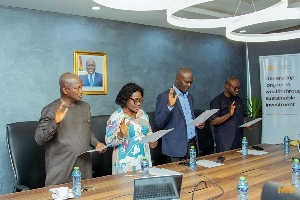
    How to rizz a girl up over text

    Have you gotten a girl’s phone number and wish to know her better? There are numerous ways to send entertaining texts that can pique her interest and entice her to respond. Here, you’ll discover how to commence a conversation, hold it going, and even land a date.

    Text her within 24 hours of meeting her

    Following up on her within the first 24 hours indicates that you are interested in her. While it is customary to wait three days, there is no guilt in texting earlier. In reality, the female you admire will most likely be impressed by your eagerness to contact her.

    Recall the time you met

    Talking about your encounter can help put her in a good mood. Explain how you met if you encountered her in person and swapped phone numbers. Meeting someone who piques your attention is a pleasant event, and reliving it via text can rekindle that emotion.

    Compliment her

    Meaningful, heartfelt praise may brighten anyone’s day! Text her kind words that will make her feel extra special. Instead of providing a general compliment that may apply to anyone, be precise and sincere so she sees you’re thinking about all the traits you admire the most about her.

    Wish her a good morning and good night

    A man is reacting to his smart phone
    Sending goodnight texts strengthens your bond and ensures you go to bed thinking of each other. Photo: Tim Roberts
    Source: Getty Images

    Sending goodnight texts strengthens your bond and ensures you go to bed thinking of each other. Likewise, send a good morning text to wish her a positive start to the day and demonstrate that she has been the first person on your mind when you wake up.

    Refer to her interests

    Show that you absorb her responses by talking about her favourite things. Girls adore being heard and love it when you recall what they say. Mention small facts you uncover days or weeks after she discusses them with you, such as a workplace issue, her favourite movie, or her pet’s name.

    Use correct grammar

    Proper grammar creates a positive impression and demonstrates your maturity. Poor language may give the lady the impression that you are not adding effort to your messages, even if you only attempt to appear relaxed and casual. It’s best to start with grammatically acceptable content and then mimic her style later, assuming she approves a few shortcuts.

    Maintain a positive attitude

    Avoid grumbling or ranting about unpleasant issues until you know each other better. Make all of your messages to the girl sound energetic and pleasant! After all, when trying to attract a female, it’s better to lift her spirits rather than lower them.

    How to rizz up a girl on snap chat

    Establishing chats with girls on Snapchat is surprisingly simple. While not everybody will answer your texts or snaps, those who do are worth your effort.

    Try sharing a Snap about a topic you know she’ll be fascinated by. It might be her favourite food, pastime, TV show, or activism. If it’s enough to get her to talk to you or ask you a query, then it’s game time.

    Chat with pictures

    Chatting with pictures is an entertaining and clever idea. Everything you transmit to each other should be images and picture messages. Effortless communication makes for an enjoyable interaction.

    Respond to her story

    Young man at home reading messages on smart phone
    Establishing a convo with a girl on Snapchat is surprisingly simple. Photo: Westend61
    Source: Getty Images

    Responding to her story is the simplest way to start chatting with a girl. When she publishes something new, leave a message or contact her personally. She will answer if she is interested in you, and you can chat with her.

    Once you’ve started speaking and bantering between yourselves, it’s entirely acceptable to use those humorous filters and send odd, amusing photos to your girl crush. Remember what is entertaining and socially acceptable when learning to rizz on Snapchat.

    Tease a little

    You can write a DM to tease them if they share a photo. You might compliment their appearance or express your admiration for their chosen filter. It demonstrates that you are paying attention to what they are posting and is a fun way to goof around.

    Try video snaps

    Videos are significantly more interactive than images or ephemeral texts. You can elevate your Snapchat flirtation to new heights with a brief video. Lip sync to your favourite song or showcase your dog or cat doing something humorous.

    Ask questions

    Flirting is more than pictures and lovely comments; you must engage in a genuine discussion. Without that, how would you get acquainted with each other and decide whether or not to meet up in person? Amid all the image messaging, make sure that you pose some essential queries.

    How to rizz a girl up with pick-up lines

    Young man and woman laughing in speedboat enjoying summer on sunny day
    Boosting up your rizz approach will leave an impression. Photo: Klaus Vedfelt
    Source: Getty Images

    Boost your rizz approach with funny and flirtatious lines to leave an impression. Here is how to be flirty with a girl using pick-up lines.

    Are you a campfire? Because you’re making my heart light up.

    Something must be wrong with my eyes because I can’t take them off you.

    Are you my dream girl? Because you’re exactly how I imagined her to be.

    I may not be a cashier, but you sure have a few things I’d like to check out!

    Are you a magician? Because whenever I look at you, everyone else disappears.

    What’s your favourite drink? I’d like to know what to buy you on our first date.

    Is your license suspended from driving all these guys crazy?

    Is your name Google? Because you have everything I’ve been searching for.

    Is your name Netflix? Because I could watch you all day.

    What does it mean to rizz a girl up?

    Rizz, short for charisma, refers to a person’s capacity to attract romantic attention. It can be described as the ability to flirt or charm with a possible partner through pick-up lines and casual conversation.

    Can girls have rizz?

    Rizz is commonly connected with heterosexual men’s characteristics, such as being bold and confident while romantically approaching women. However, ladies can also have rizz, which is all about confidence.

    Above is a complete guide on how to rizz a girl. Learning the skill of rizzing up a girl requires more than simply charisma. It requires empathy, compassion, and a real commitment. You can make her day and create a lasting impression by being mindful, courteous, and kind, with a sense of humour and boldness.

    Yen.com.gh recently released a guide on how to open a wine bottle without a corkscrew. Stoppers may be recalcitrant, but that should not prevent you from enjoying a bottle of wine. Unlocking any wine bottle will be much much simpler with the proper tools.

    It’s time for wine, and you’ve chosen the perfect wine bottle. However, the closure is constructed of cork, and you don’t have a corkscrew. This article includes valuable tips for unlocking a wine bottle without a corkscrew.
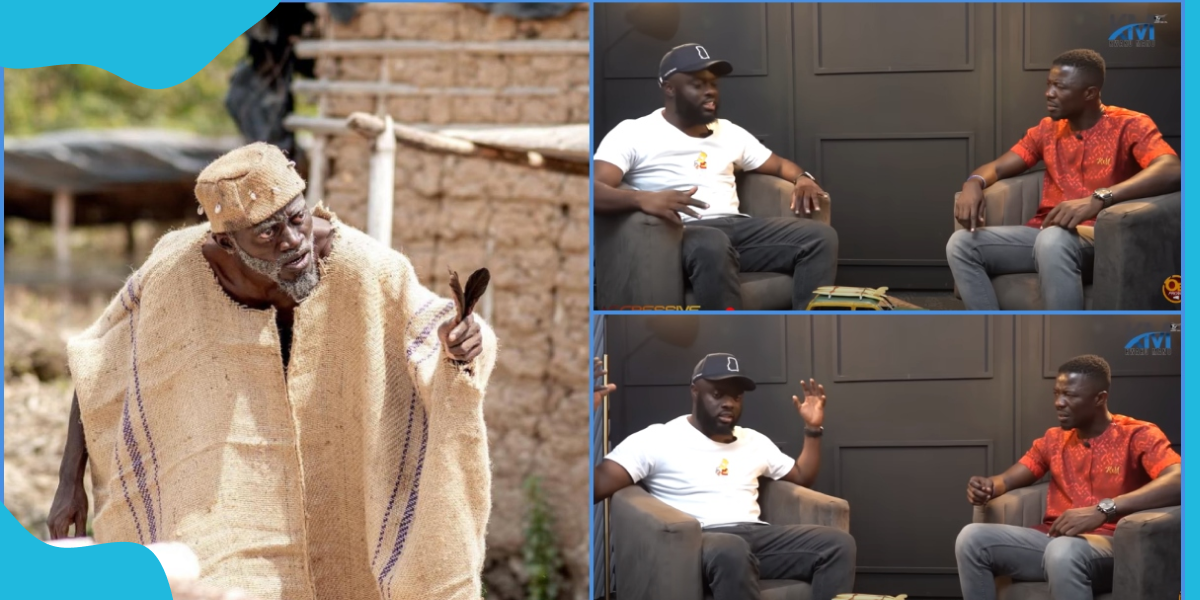
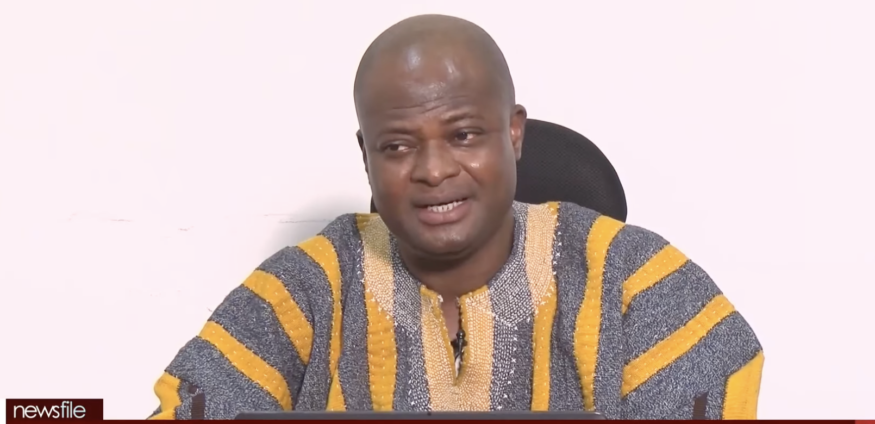
    1. Fans accuse Kwaku Manu of betraying LilWin after interview with Kwadwo Sheldon

      Fans accuse Kwaku Manu of betraying LilWin after interview with Kwadwo Sheldon

      Ghanaian actor and comedian Kwaku Manu hosted a highly anticipated interview with social media influencer and YouTuber Kwadwo Sheldon.

      The interview followed Sheldon’s public dispute with actor Lil Win regarding the latter’s movie trailer, “A Country Called Ghana.”

      Expected to provide insights into the ongoing feud, the interview took an unexpected turn, drawing accusations of betrayal against Kwaku Manu from fans.

      Some online users criticized him for allegedly remaining passive as Sheldon directed harsh criticism towards Lil Win, a fellow colleague and former friend.

      Tensions soared during the interview, with Sheldon visibly angered as he reacted to a video in which Lil Win threatened him and mocked the shape of his head.

      The conflict stemmed from Sheldon’s initial criticism of Lil Win’s movie trailer, sparking a heated disagreement. Matters escalated when Lil Win responded with a threatening video directed at Sheldon.

      The interview with Manu became fiery, with Sheldon defending his critique and expressing his frustration over Lil Win’s threats.

      Watch video below:

    2. Stuck oil vessel: NPA assures completion of evacuation exercise today

      Stuck oil vessel: NPA assures completion of evacuation exercise today

      The National Petroleum Authority (NPA) has dismissed any chance of water contamination due to an oil spill from a vessel that broke down in the sea near Old-Ningo.

      The vessel, transporting more than one million liters of crude oil, reportedly had to dock urgently in the Prampram area instead of its intended destination, the Tema port, because of technical issues.

      Since Sunday, the NPA, Customs Preventive Service, National Security, and other stakeholders have been working urgently to remove crude oil from the vessel without causing any spillage.

      However, Abdul-Kudus Mohammed, the Public Relations Officer of the NPA, reassures JoyNews that there is no need for concern.

      “I understand that there could be some possible droppings of it into the water but my information is that it is not of a certain proportion that could be a cause for worry.

      “For now, our remedy is around the organisation to cart the fuel from the vessel to the refinery.”

      He also assured that the four-day evacuation exercise should be completed today.

      “Hopefully by close of day, we should be able to fully evacuate the crude oil on the vessel meant for Akwaaba Refinery

      “if we are not able to do that late into the night then we can finish sometime tomorrow morning. But the hope is that we should be able to evacuate all of the crude oil from the vessel,” he said.

    3. Ghanaian lawyers are not living by Kwame Nkrumah’s standard for law in Ghana – Prof Atuguba

      Ghanaian lawyers are not living by Kwame Nkrumah’s standard for law in Ghana – Prof Atuguba


      Dean of the University of Ghana School of Law, Professor Raymond Atuguba, has criticizes lawyers in the country, highlighting what he perceives to be a deviation from the principles set forth by Ghana’s first president, Dr. Kwame Nkrumah.

      According to Professor Atuguba, Dr. Nkrumah advocated for Ghanaian lawyers to be multidisciplinary and to prioritize serving the needs of society.

      However, he believes that lawyers in Ghana have strayed from this principle.

      In an interview on JoyNews’ AM Show, Professor Atuguba expressed his concern that Ghanaian lawyers are more focused on serving the interests of specific groups rather than fulfilling the broader societal role as envisioned by Dr. Kwame Nkrumah.

      He emphasized that these groupings are not aligned with the vision Dr. Nkrumah had for Ghanaian lawyers, which was centered around serving the greater good of the nation.

      “Dr Kwame Nkrumah wanted lawyers to use their skills to aid in the construction of the developmental state. Secondly, Dr Kwame Nkrumah had a vision of law that was multidisciplinary. So in that speech he delivered on January 4, 1962, he said that the law does not exist in a vacuum but exists in a social environment and so he wanted lawyers who were talented and multidisciplinary to aid the development and problem-solving backed my critical thinking but the Ghanaian lawyers have strayed away from these principles,” he said.

      Professor Atuguba’s critique arises from a perceived disparity between the present conduct of lawyers in Ghana and the fundamental principles Dr. Nkrumah aimed to establish within the nation’s legal profession.

    4. Works and Housing Ministry seeks investor proposals to revive Saglemi Housing Project

      Works and Housing Ministry seeks investor proposals to revive Saglemi Housing Project

      The Ministry of Works and Housing has issued a call for investors to submit proposals aimed at revitalizing the Saglemi Affordable Housing Project, an initiative designed to provide 1,506 housing units in the Greater Accra Region.

      This initiative aims to involve experienced and reputable local and international entities or investors to efficiently complete and operationalize the project, thereby contributing to addressing the housing deficit.

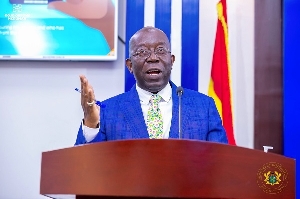
      During a press briefing in Accra, Minister Kojo Oppong Nkrumah emphasized that the invitation marked the government’s shift away from direct involvement towards “a model that leveraged private sector innovation, expertise, and capital.”

      “The government invites innova­tive proposals that present a balanced approach to achieving the project’s socio-economic importance and ensuring its financial feasibility for potential private sector participants,” he said.

      “This strategic move aims to harness the private sector’s capabili­ties to maximise resources, expedite completion and efficiently realise our housing objectives,” he added.

      Prospective investors must possess experience in large-scale housing projects, substantial financial resources, the ability to secure funding for the project’s completion and beyond, and be prepared to demonstrate technical competency and managerial capability to deliver such projects.

      Additionally, only limited liability companies are eligible to bid.

      During an overview of the project’s progress, Mr. Foster Osae-Akonnor, a member of the technical working group committee set up by the sector ministry, reported that a total of 1,506 housing units were at various stages of completion. These units constitute the initial phase of the housing project, laying the foundation for comprehensive community development.

      Mr. Osae-Akonnor explained that a total of 2,172.5 acres were acquired for the project, of which 651.75 acres had been developed. This developed land encompasses the housing units and associated infrastructure currently in place.

      The Saglemi Housing Project, launched in 2012 to provide housing units for a master-planned community, aimed to address the affordable housing needs of Ghanaians. However, the project became controversial after a change in government, with former Minister of Works and Housing Samuel Atta Akyea claiming that the agreement was botched due to alleged embezzlement by former government officials.

      Reportedly, out of the proposed 5,000 housing units, only 668 were completed. The Attorney General asserted that the completed houses were uninhabitable and questioned discrepancies in the project’s cost, stating that while $64 million was spent, it was initially projected to cost about $196 million.

      Alhaji Collins Dauda, Dr. Kwaku Agyeman-Mensah, former Ministers of Works and Housing, Alhaji Ziblim Yakubu, the Chief Director at the ministry from 2009 to 2017, Andrew Clocanas, the Executive Chairman of Construtora OAS, the Brazilian company responsible for constructing the affordable housing project at Saglemi, and Nouvi Tetteh Angelo, a Director of RMS, the Engineering, Procurement, and Construction (EPC) consultancy subcontractor, faced 52 counts of criminal charges for allegedly causing financial loss to the state.


    5. Video: Mahama’s ‘beautiful’ son spotted chilling with a lady at a party

      Video: Mahama’s ‘beautiful’ son spotted chilling with a lady at a party


      One of the sons of former President John Dramani Mahama, Sharaf Mahama, has caused a stir among many admirers after a video surfaced showing him socializing with an attractive young lady.

      The viral video captured the charming young man and the lady enjoying each other’s company at an event, appearing to have a delightful time together.

      Sharaf Mahama, son of John Mahama, seen in the company of an attractive lady. Photo credit: NPP Projects

      Sharaf Mahama was dressed casually in a simple long-sleeved shirt paired with trousers, complemented by a stylish wristwatch.

      The lady, adorned in an elegant long red dress, appeared to relish the company of the former president’s son, exuding constant smiles throughout the interaction.

      At one point, she graciously shared her drink with him, further indicating their shared enjoyment of the occasion.

    6. U.S. Embassy, Emerging Public Leaders launch PEACE program to enhance public safety sector in Ghana

      U.S. Embassy, Emerging Public Leaders launch PEACE program to enhance public safety sector in Ghana


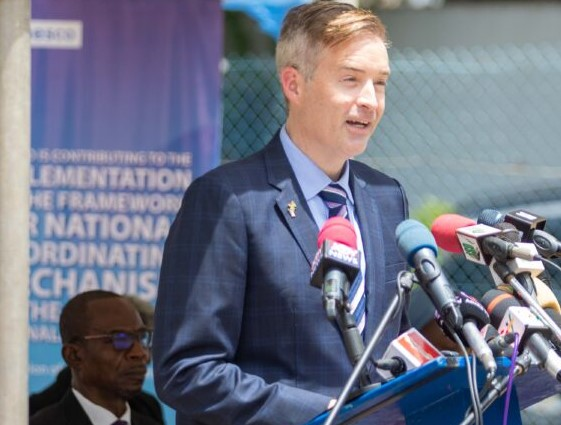
      This week, the U.S. Embassy, in collaboration with Emerging Public Leaders, commenced training sessions for public servants in Ghana’s public safety sector.

      The program, titled Professionals Engaged Against Conflict & Endangerment (PEACE), is facilitated by Emerging Public Leaders based in Ghana. Over the course of one year, it aims to offer professional development and leadership training to 25 public servants.

      Aligned with the United States Strategy to Prevent Conflict and Promote Stability, the initiative prioritizes enhancing the delivery of government services in Northern Ghana.

      “One of the best ways to prevent conflict and support peace is to improve the delivery and reach of public services. 

      “That’s one reason why we’re investing in our partnership with Ghana’s public servants,” said U.S. Embassy Press Attaché Kevin Brosnahan at this week’s launch.

      The initiative kicked off in March 2024, offering online professional development and training sessions to over 100 public safety professionals across various ministries and government bodies.

      From this group, 25 outstanding public servants have been chosen for the prestigious year-long PEACE fellowship. Throughout the program’s duration, they will delve into security-civilian relations best practices, aiming to bolster public safety and security. Their focus will include fostering trust and rapport within local communities and proactively mitigating conflict in Ghana’s Upper East, North East, and Northern regions.

      Among the participants are personnel from essential services such as the Ghana Police Service, Ghana Ambulance Service, Ghana Immigration Service, and Ghana Fire Service, hailing from the aforementioned regions.

      Collaborating in this endeavor are the Foundation for Security and Development in Africa (FOSDA) and the Ministry of Interior, serving as program partners.

      This initiative aligns with the broader U.S. Strategy to Prevent Conflict and Promote Stability, a multi-year effort spanning Coastal West Africa. Through this strategy, the U.S. government aims to foster social cohesion, promote inclusive economic growth, and advocate for accountable governance, particularly within vulnerable communities, to proactively deter conflicts.

    7. Ghana’s external debt rework: Deal or no deal?

      Ghana’s external debt rework: Deal or no deal?

      Ghana is ‘dollar hungry’ as it begins another round of complex debt rework exercise, a key step in obtaining financing assurances to support its Extended Credit Facility Programme being supervised by the IMF.

      The country’s prolonged economic crisis means the West African nation must cut about $10.5 billion of external debt which exceeds $30 billion. Debt rework headache for the Black Star of Africa comes in two forms: bilateral and commercial.

      An agreement in principle with bilateral creditors in January 2024 was enough to meet the needed financing assurance to unlock the second disbursement of $600 million under the $3 billion IMF programme. Ghana has so far drawn $1.2 billion for the package and is hoping to secure additional financing.

      In fact, Ghana has begun another debt restructuring dance toward securing the third tranche of $360 million after reaching an IMF Staff-Level Agreement.

      Beyond this agreement, there’s a big hurdle for the West African nation to cross as it works towards obtaining key financing assurances from its external bilateral creditors.

      With this condition in full swing, it means Ghana has not yet completed the second review to trigger the release of the $360 million.

      The Fund has stressed that to ensure the timely completion of the review, Ghana and its official bilateral creditors need to reach an agreement on a Memorandum of Understanding for a debt treatment consistent with the agreement in principle reached in January 2024. The key focus is getting MoUs signed with Ghana’s Official Creditor Committee but also keeping an eye on the commercial creditors.

      Official sources say Ghanaian authorities have been in a debt rework negotiation with its international bondholders since March 2024. Talks have taken a different turn after the IMF indicated that the deal Ghana reached with its external bondholders would not fit its debt sustainability parameters, which set out how much debt it thinks Ghana can afford. A regrouping was done right after the big rejection as Accra’s original request of up to 40% haircut on commercial bonds keeps reducing making it difficult to meet the Fund’s acceptable threshold.

      The bondholders are now in two groups – The first is the “international” group of Western asset managers and hedge funds and another one includes regional African banks. The regional African bondholder group has also rejected part of the proposed rework, including an option to retain the original value of the bonds with a longer maturity and lower coupon.

      Currently, Ghana has not secured any concrete deal with specific MoUs detailing the amount of release being dished out and that has really complicated negotiations for the West African as it races to quench its forex thirst.

      Well, the IMF’s message to Ghana is very simple, if you want $360 million in forex support, then talk to your external creditors to give you the needed financing assurances in line with the programme outlines. Without this, it will be very difficult for Ghana to withdraw the scheduled $360 million. If Ghana presents any half-baked debt rework deal to the Fund, it will surely reject it!

      But there’s a glimmer of hope on the horizon for countries like Ghana facing debt crises, as the IMF steps into the debt restructuring arena to provide assistance.

      The IMF’s executive board has supported a crucial change that grants it more flexibility to aid nations in crisis, even while ongoing debt renegotiations with major creditors like China are underway.

      This change focuses on reforming the IMF’s Lending Into Official Arrears (LIOA) policy, which determines when it can lend to a country owing money to another IMF member. The IMF announced late on Tuesday that its board has approved “reforms to enhance the IMF’s ability to support countries undergoing debt restructurings.”

      A significant revision allows the IMF to lend to a country without a debt agreement with one or more of its bilateral creditors, provided that additional safeguards are in place.

      The IMF emphasized the lengthy process for countries like Chad, Zambia, Sri Lanka, and Ghana to secure creditor assurances following defaults, showcasing the need for further progress.

      In its statement, the IMF stressed how it had taken Chad 11 months to move from its initial IMF “staff-level agreement” following its default to securing the creditor assurances needed for approval of IMF financing. In the case of Zambia, talks took 9 months to reach this milestone, Sri Lanka six months, and Ghana 5 months, but more progress is needed.

      This proposal from the IMF Executive Boardpresents a promising outlook for Ghana down the line. However, for immediate support from the International Monetary Fund and its allies, Ghanaian authorities must seize this moment to finalize agreements with external creditors before the conclusion of the ongoing Spring Meeting in Washington DC.

      Whatever the case, Ghana will be hoping to leave Washington with a deal in hand!

      About the writer:

      Isaac Kofi Agyei is a Data & Research Analyst/Journalist at JoyNews based in Accra, where he covers mostly finance, economics, banking, and politics across Ghana and West Africa, from detailed analytical reports on all key issues to debt crises to IMF programmes. He also serves as the data and research correspondent for SBM Intelligence, an Africa-focused market/security leader in strategic research, providing actionable analyses of West Africa’s socio-political and economic landscape. With his solid academic background in economics and statistics and additional training from credible institutions such as the UNDP, Afrobarometr, Ghana Statistical Service, and a host of others, Isaac has honed his skills in effective data storytelling, reporting, and analysis.

      Source: Myjoyonline.com

    8. Sierra Leone faces prolonged blackouts due to $48m unpaid electricity bills

      Sierra Leone faces prolonged blackouts due to $48m unpaid electricity bills

      For weeks, Sierra Leone’s capital, Freetown, and other urban centers have been shrouded in darkness owing to overdue electricity payments to power providers. This situation has severely disrupted daily life, leading to operational challenges even in major hospitals.

      Karpowership, the Turkish vessel that serves as the primary electricity supplier for Freetown, has effectively halted power distribution due to an outstanding bill of approximately $48 million (£38 million). Despite assurances from the finance minister to settle the debt, Karpowership has reduced electricity supply from 60 megawatts to just six megawatts, solely catering to essential services.

      Additionally, CLSG, an Ivorian power supplier, has substantially decreased its supply to southeastern cities such as Bo, Kenema, and Koidu due to unpaid arrears. Their supply has dwindled from 32 megawatts to 10, though the exact amount owed by the state remains unclear.

      The third major electricity source, the state-owned hydroelectric dam in Bumbuna, primarily serves the northern city of Makeni and adjacent areas. However, due to the dry season’s peak, water levels have plummeted, leading to a significant reduction in supply, currently standing at only six megawatts.

      Reports suggest that less than two megawatts from the hydro dam currently reaches Freetown, according to a source at the state-owned electricity distribution company (EDSA). However, Finance Minister Sheku Ahmed Fantamadi Bangura, who could provide further insights, is unavailable for comment as he is out of the country.

      Sierra Leoneans have vented their frustrations on social media, with many expressing anger over the persistent power outages. Joseph Kargbo, a resident in an eastern suburb of Freetown, lamented going without electricity for six days.

      Karpowership, a major player in floating power plant operations globally, has adopted a stringent stance against non-payment. In October last year, it cut power to Guinea-Bissau’s capital due to outstanding bills, plunging the city into darkness.

    9. Tunisia: Journalist, Mohammed Boughalleb sentenced to 6 months in prison for defamation

      Tunisia: Journalist, Mohammed Boughalleb sentenced to 6 months in prison for defamation

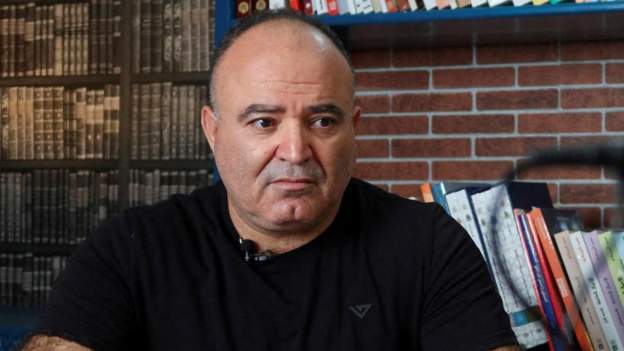
      A Tunisian court has handed down a six-month prison sentence to a well-known journalist for defaming a civil servant, as reported by his lawyer.

      According to both Mohammed Boughalleb’s brother and his attorney, he was charged with insulting a public official. Boughalleb was apprehended in Tunis last month following a complaint from the official, who is employed in the ministry of religious affairs.

      Reports indicate that the official accused Boughalleb of damaging her reputation and honor through Facebook posts and local media outlets. Boughalleb, recognized as a radio journalist, has been noted for his outspoken criticism of President Kais Saied.

      Zied Dabbar, the head of the national journalists’ union, condemned the incident as the latest effort by the state to intimidate journalists. Additionally, Reporters Without Borders, an international media organization, has cautioned about increasing constraints on journalists in Tunisia.

    10. Sentencing former MASLOC CEO in absentia, a glare miscarriage of justice – Edem Agbana

      Sentencing former MASLOC CEO in absentia, a glare miscarriage of justice – Edem Agbana

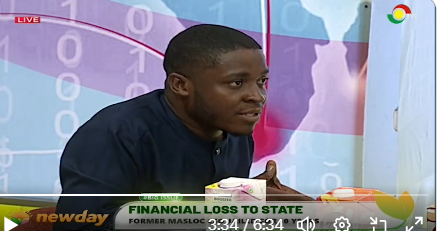
      National Democratic Congress (NDC) parliamentary candidate for the Ketu North constituency, Edem Agbana, has condemned the sentencing of former CEO of the Microfinance and Small Loans Centre (MASLOC), Sedina Christine Tamakloe Attionu, to 10 years imprisonment for causing financial loss to the state.

      Agbana described the sentence as a miscarriage of justice and a blow to the justice delivery system because it happened in her absence.

      In a panel discussion on TV3, April 17, 2024, he emphasized that while the NDC does not condone misconduct by public officials, it advocates for fair and lawful proceedings.

      Adding that Article 19(3) of the 1992 Constitution, stipulates that criminal proceedings must take place in the presence of the accused.

      “Our (NDC) position is that where we are today with the facts available to us, what happened in court yesterday was a glaring miscarriage of justice and a dent … on our justice delivery system.”

      “Article 19(3) of our 1992 constitution provides that during criminal proceedings or trials, it must be done in the presence of the accused, and in the present case, the basic understanding of law means either physically and also must be present or mentally. It means the person must be able to follow the proceedings fully.”

      “But in this case, Madam Sedina Christine Tamakloe Attionu followed or was going to court religiously until she felt sick and her lawyers sought permission from the court for her to travel abroad for medical attention,” he added.

      Edem asserts that the court has been unfair to the accused, who sought permission to be absent from court, yet the court proceeded to pass a sentence in her absence.

      Sedina Christine Tamakloe Attionu and the former Chief Operating Officer of MASLOC, Daniel Axim, have been sentenced for their involvement in various crimes.

      Attionu has been sentenced to 10 years imprisonment, while Axim will serve five years with hard labor.

      They were convicted on 78 counts including causing financial loss to the state, stealing, conspiracy to steal, money laundering, and causing loss to public property, all in violation of the public procurement law.
      The trial, which began in 2019, saw the state presenting six witnesses. Notably, Attionu was tried in absentia as she absconded after obtaining permission from the Accra High Court to seek medical treatment abroad.

    11. 4 ex-Malawi officials banned from entering US due to corruption allegations

      4 ex-Malawi officials banned from entering US due to corruption allegations

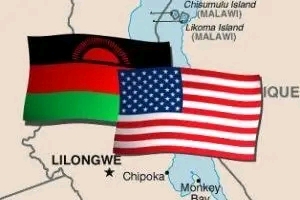
      The United States has imposed an entry ban on four former senior Malawian officials due to corruption allegations.

      Among those barred from entering the US are former police chief George Kainja, former solicitor general and secretary of justice Reyneck Matemba, former director of public procurement and disposal of assets John Suzi-Banda, and former police service attorney Mwabi Kaluba.

      The State Department designated these individuals “as generally ineligible for entry into the United States, due to their involvement in significant corruption.”

      Notably, Mr. Matemba also served as the immediate former head of the Malawi Anti-Corruption Bureau.

      The ban extends to the spouses of the ex-officials as well. According to a statement released on Wednesday, these banned officials were implicated in abusing their public positions by accepting bribes and other incentives from a private businessperson.

      This was allegedly in exchange for awarding a government procurement contract for the Malawi Police Service.

      In addition to the US ban, the former officials are also facing charges in Malawi.

      They were named on a list of more than 80 prominent Malawians accused by the anti-graft body of engaging in corrupt dealings with a British businessman, Zuneth Sattar. Despite the allegations, all four former officials and Mr. Sattar deny any wrongdoing.

    12. Central African Republic and France agree to boost bilateral cooperation

      Central African Republic and France agree to boost bilateral cooperation

      The Central African Republic and France have agreed upon a roadmap to enhance bilateral cooperation, seeking to mend strained ties.

      This agreement follows a meeting held in Paris on Wednesday between CAR President Faustin-Archange Touadera and French President Emmanuel Macron.

      President Touadera’s visit to France, his second in over six months, signifies increasing efforts from both nations to improve relations.

      These ties had been strained when the CAR government began heavily relying on military and political support from Russia.

      Although the specifics of the agreement are yet to be fully disclosed, the roadmap aims to establish a constructive partnership framework that upholds the state’s sovereignty, as stated in a joint announcement by both countries.

      Additionally, it aims to contribute to stability, foster national unity, and promote the economic and social progress of the CAR.

      Despite France’s condemnation of alleged human rights violations by the Russian paramilitary group Wagner in its former colony, French influence in the CAR has diminished.

      This cooperation opportunity might offer France a chance to repair its reputation in the CAR, where anti-French sentiments have grown in recent years.

    13. Sir Sam Jonah calls on Ghanaian journalists to champion integrity in their line of duties

      Sir Sam Jonah calls on Ghanaian journalists to champion integrity in their line of duties

      Sir Sam Jonah has emphasized the critical role of Ghanaian journalists in upholding democracy, stressing their duty to truth, independence, and accountability.

      He asserts that despite challenges, journalists must prioritize objectivity, patriotism, and independence.

      Speaking at the launch of the Ghana Journalists Association’s 75th Anniversary, Jonah acknowledges the media’s historical significance and advocates for its role in shaping society.

      He warns against media polarization, partisanship, and influence from political patronage, which he believes jeopardizes media independence.

      “The once united front of objectivity and patriotism appears, to some, fragmented by the divides of partisanship and the shadows of materialism,” Sam Jonah remarked.

      He underscored the significance of media vigilance, especially during critical junctures like elections. Referencing historical instances, Sam Jonah underscored journalists’ sacrifices for truth and justice, urging contemporary practitioners to maintain integrity and responsibility. He also reiterated their vital function in holding authority accountable.

      “Your role as the Fourth Estate is a cornerstone of our democracy, and your duty to hold power to account has never been more critical. The influence you wield is powerful, with the ability to frame political discourse and influence public opinion, making it imperative that this power is exercised with the utmost responsibility and ethical rigor. As we move forward, let us remember the sacrifices made by those who came before us, journalists who laid down their lives for the pursuit of truth and justice. It is upon their legacy that the future of Ghanaian journalism will be built—a future where truth prevails over sensationalism, integrity over corruption, and where the pen remains mightier than the sword in the fight for democratic integrity and national unity,” he said.

      He further tackled particular hurdles confronting Ghanaian journalism, notably the perceived underreporting on urgent matters like illegal mining (galamsey). He urged journalists to persevere in seeking the truth, despite external influences.

      “As we stand on the precipice of yet another electoral milestone, in my view, the most consequential, the echoes of past violence, the whispers of disenfranchisement looms and I don’t think anyone needs reminding that the conduct of the electoral exercise together with its outcome is so important that the nation cannot afford bias and unprofessional coverage of it by members of your profession. I wish I could be confident that the coverage will be professional but am afraid I can’t, given the largely unserious way in which another important national issue- the most egregious abuse of the rights of millions whose livelihood has been decimated completely by galamsey operations, has been treated by your profession. I don’t know whether you are exhausted and indeed frustrated by the shameful lack of decisive action from the authorities to your interventions. All I know is that your association’s pen which is your weapon has gone eerily silent on this all important matter.”

      While he regretted that galamsey doesn’t make the headlines anymore, he said “the country is experiencing the ravages of this terrible phenomenon every day. The alarming increase in children born with deformities, the epidemic of kidney and liver diseases, and the alarming mortality rates in the areas affected by galamsey activities” appear not to merit the sustained concern of journalists.

      “What a shame, what a pity! As Journalists the times we live in beckon you to remember your purpose, power and your responsibility. The price of the continued silence is too grave to fathom.”


      In his address, Sam Jonah invoked the timeless message of Ephraim Amu’s composition, “Yen Ara Asase Ni,” encouraging journalists to embody patriotism, stewardship, and unity.

      He emphasized the significance of upholding principles of good governance, justice, and accountability within the Ghana Journalists Association (GJA), underscoring the pivotal role of truth in shaping the nation’s future.

      The GJA’s celebration revolves around the theme: “75 years of excellence in Journalism: Past, Present, and the Future”.

    14. National Peace Council urges religious leaders to avoid divisive comments ahead of 2024 election

      National Peace Council urges religious leaders to avoid divisive comments ahead of 2024 election


      The National Peace Council has called upon religious leaders to prioritize and advocate for peace in the lead-up to the December 2024 general elections.

      Highlighting the vital role of the church in nation-building and upholding the peace and stability of the nation, the Council emphasized the responsibility of religious leaders in fostering harmony among citizens.

      Addressing attendees at the annual Minister’s Conference of the Ghana Baptist Church, the Chairman of the Council, Rev Dr Ernest Adu-Gyamfi, urged religious leaders to refrain from making inflammatory remarks that could provoke electoral unrest.

      He encouraged church leaders to utilize their platforms to promote unity among members of the Christian community.

      He encouraged church leaders to utilize their platforms to foster unity among members of the Christian community.

      “Every minister of the gospel will understand that we have a responsibility to protect the peace, stability, and unity of our country and that whatever we do in this country, we must ensure that we maintain the peace, stability, and cohesion of our country.

      “If 72 per cent of us are Christians, then I expect that a lot of these people will be in the churches and therefore pastors have a responsibility through their pulpit to educate church members.

      “Let’s avoid insults, cutting down people, and those things that reduce people to nothing, and ensure that at the end of all these elections, Ghana will be peaceful and intact. Be careful what you say, how you say it, and the environment in which those things are said,” Rev Dr Adu-Gyamfi stated.

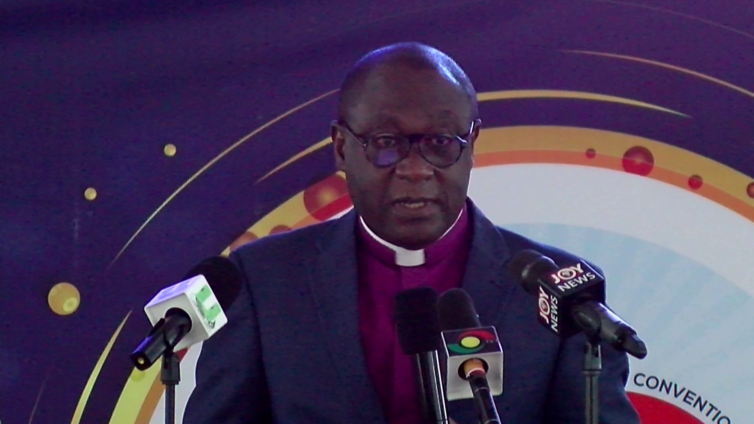
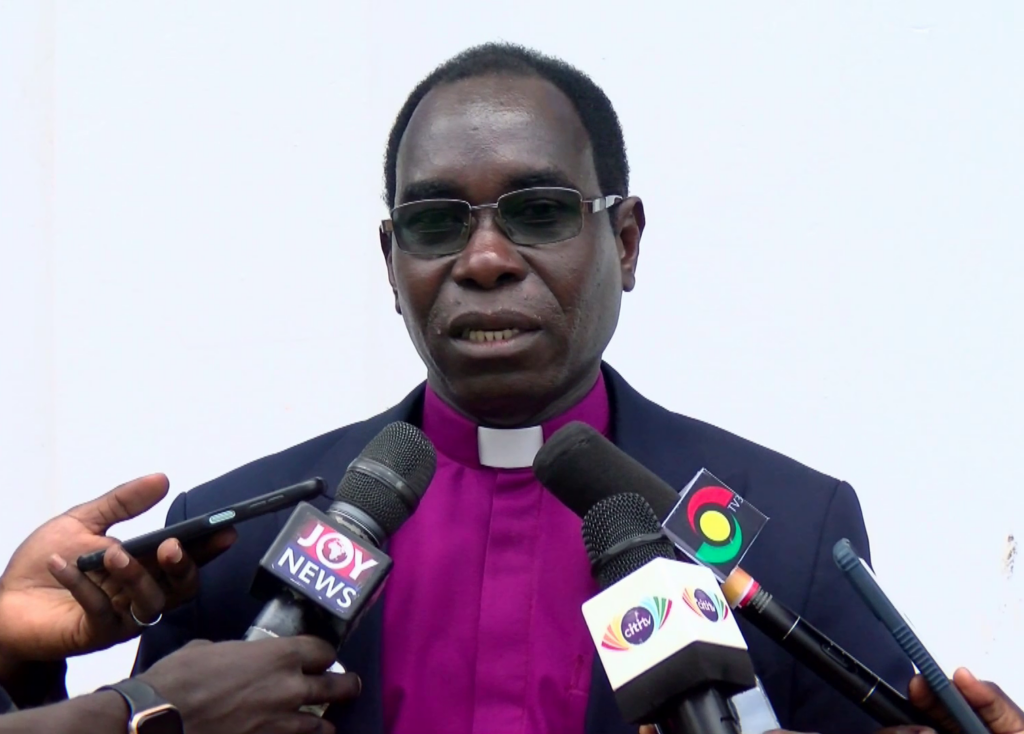
      President of the Ghana Baptist Convention, Rev Dr Charles Owusu Ampofo

      For his side, the President of the Ghana Baptist Convention, Rev Dr Charles Owusu Ampofo charged political leaders and the government to uphold the statute of truthfulness and accountability.

      “We model our political leaders, those who make decisions for our nation and so we preach to them when things are not good, we send them messages. On occasions like this, we speak to them through this media for them to know that Ghana belongs to all of us.

      “It doesn’t belong to the incumbent, it doesn’t belong to the opposition. We are all Ghanaians and so public figures in general should be truthful in the work they do and keep faith to the citizens of this nation,” he said.

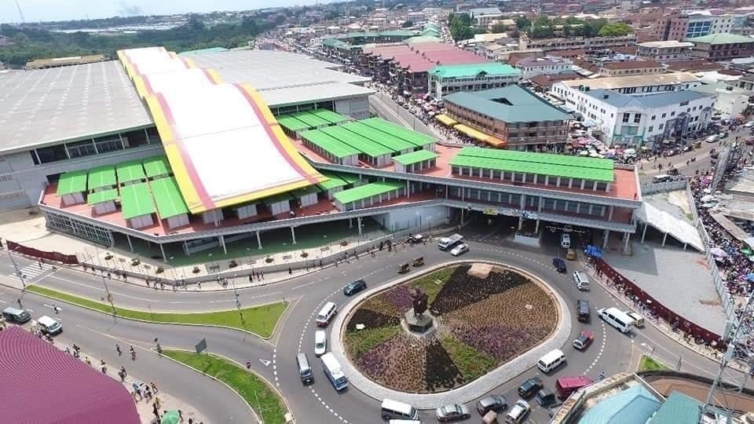
    15. Traders at Kejetia market call for individual prepaid meters to avoid disconnections

      Traders at Kejetia market call for individual prepaid meters to avoid disconnections

      Traders at the Kejetia Market are advocating for the installation of individual power meters to ensure uninterrupted power supply for their businesses.

      This plea follows a recent incident where the market experienced a blackout for over three days due to disconnection by the Electricity Company of Ghana (ECG) over a GH¢70 million debt.

      Currently, the traders are reliant on a generator set, but it only provides power for common areas, leaving individual stalls without electricity.

      President of the Federation of Kumasi Traders, Nana Akwasi Prempeh, expressed the frustration of many traders, who regretted operating in the market due to frequent power outages.

      “People are suffering. A lot of the traders are even giving up on why they came to the market to rent shops because it was anticipated that the new Kejetia market would be a new facility, unlike the old central market.

      So we thought that we were going to have everything smoothly [and] things were going to run perfectly.

      “But unfortunately, when it comes to this electricity system in the market, it is causing a lot of disturbances in the market because before we could say jack, every three to four months, ECG disconnects power,” he said.


      Market management issued the initial set of private power meters to traders in March.

      Despite this, traders are adamant about obtaining additional individual meters to address the market’s power issues.

      Mr. Prempeh emphasized that the nature of market operations requires each shop to have its own meter.

      “Because of the bulk meter and looking at the nature of the work we do there, give each shop a meter,” he said.

    16. Supremo Wood Processing Limited to lay off over 600 workers due to illegal timber operators

      Supremo Wood Processing Limited to lay off over 600 workers due to illegal timber operators


      Supremo Wood Processing Limited, a timber firm located near Mim in the Asunafo North district of the Ahafo region, is facing imminent closure, putting over 600 workers at risk of losing their jobs.

      The management has decided to shut down operations due to persistent threats from illegal timber operators encroaching on the company’s forest concessions. These operators have taken over forest reserves in Juaboso, Goaso, Dormaa, and Bechem districts, making it challenging for Supremo Wood Processing Limited to obtain the necessary timber for its activities.

      Established in 2017 and equipped with sawmills, plywood, and furniture departments, the company holds all required operational documents. However, the encroachment by illegal operators has severely hampered its operations.

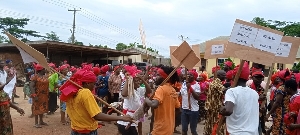
      In a bid to draw government attention to their plight, the workers staged a peaceful protest on Tuesday, April 16, 2024. Clad in red attire and bands, they held placards bearing messages such as ‘We need our jobs’, ‘Forest Commission wake up’, ‘Our future is at stake’, and ‘We need Military Support’.

      Francis Asare, the General Manager of Supremo Wood Processing Limited, addressed the media, highlighting the challenges faced by the company. He lamented that the workers are constantly chased away by armed encroachers, making it impossible to access the forests for raw materials.

      As a result, the company is struggling to sustain its operations and is on the brink of closure if immediate action is not taken to address the illegal encroachment and ensure access to timber reserves.

      “We cannot pay salaries to the workers when business is not running, there is no money. The best decision is to close down the factory,” he clarified.

      He noted that there have been occasional clashes between the intruders and the company’s staff, with the latest incident happening on Thursday, March 29, 2024, resulting in five injuries.

      Francis Asare appealed to the Forestry Commission for military assistance to deter unauthorized chainsaw operators, allowing them to procure raw materials for operations and sustain the company’s operations.

      “If the company runs out of raw materials, it will result in its closure; leading to the sacking of over 600 staff members. We plead with the Forestry Commission to assist us with military protection to allow us to peacefully work,” he begged.

      “We are also appealing to the Ahafo Police Regional and District Commands to protect the lives of the workers who have been receiving death threats from the encroachers,” the manager said.

      James Afriyie, the Forestry Coordinator, informed the media that the illegal timber operators sometimes appear at the company’s premises, issuing warnings against further entry into the forests.

      Felicia Amoah, a mother of five who works at the Plywood Department, told Otec News “If the company laid me off, how will I survive with my kids? I beg the authorities responsible for the company’s protection to intervene.”

    17. Sir Adjaye National Cathedral architect attacked by armed robbers in Ghana

      Sir Adjaye National Cathedral architect attacked by armed robbers in Ghana


      The businessman and architect behind the National Cathedral project, David Adjaye, has been robbed of valuables totaling $85,000 in Accra.

      The accused, Yahuza Osumanu, who faces 26 charges of robbery and money laundering at High Court Criminal Division 5, allegedly stole Mr. Adjaye’s possessions during one of his operations.

      According to the prosecution, on December 11, 2023, Yahuza held Mr. Adjaye at gunpoint in Ridge and took his Rolex watch and a Panerai watch valued at $70,000 and $15,000 respectively.

      “On the December 11, 2023, the Papa 51 police patrol team received information about a robbery incident at Ridge. On receipt of the information, the patrol team proceeded to the crime scene.”

      “When they arrived at the scene, they met the complainant, Margaret Alice Shaw, who informed them that she was lying on her bed when the, accused person entered her room, pointed a gun at her, and instructed her to hand over all her money and valuables to him.”

      “She told the police that the accused person ransacked her room and made away with a Rolex watch valued at USD$70,000, a Panerai watch valued at USD$15,000 belonging to her son-in-law, David Adjaye,” Prosecution team presents brief fact of the case.

      Additionally, the prosecution informed the court that Yahuza Osumanu successfully robbed the former Second Lady, Matilda Amissah-Arthur, of various currencies, including GH¢3,000, USD$2,200, and €50, along with a gold watch and necklace valued at GH¢20,000 and GH¢5,000 respectively.

      The accused also allegedly robbed two others at gunpoint of their valuables.

      Although he pleaded not guilty to all charges, the accused has been remanded by the court. The court has instructed the prosecution to file the complete set of their disclosures, and the case has been adjourned to May 2, 2024.

      He has been implicated in a string of residential robberies in areas including the Airport Residential Area, Cantonments, Tesano, and Ridge, all located in the Greater Accra Region.

    18. Nigerian socialite Cubana Chief Priest charged for throwing banknotes in the air

      Nigerian socialite Cubana Chief Priest charged for throwing banknotes in the air


      Nigerian socialite and businessman, Cubana Chief Priest, faces charges for mishandling banknotes.

      Pascal Okechukwu, known as Cubana Chief Priest, denied three counts of banknote abuse in court.

      Authorities allege he tossed money at social gatherings, violating currency regulations.

      This behavior is considered illegal as it exposes banknotes to damage.

      “Spraying” cash, a customary gesture at Nigerian festivities, is the practice in question.

      The Economic and Financial Crimes Commission (EFCC) is leading the crackdown on currency misuse.

      Okechukwu is accused of tampering with 500 naira notes at events in Lagos.


      Following his appearance at Lagos’ Federal High Court, Okechukwu secured bail for 10 million naira ($8,600; £6,970).

      Addressing his five million Instagram followers from the federal court, he expressed gratitude for their support.

      Meanwhile, popular internet personality Bobrisky received a six-month prison sentence for a similar offense just two weeks prior.

      The judge emphasized that defacing currency tarnishes the nation’s reputation.

      Actress Oluwadarasimi Omoseyin faced a similar fate in February for mishandling new naira notes.

      The EFCC disclosed ongoing investigations into several celebrities accused of currency abuse, noting their cooperation with authorities.


      The agency announced that 200 individuals nationwide are slated for prosecution, with 24 already convicted.

    19. 40 toddlers hospitalized after mistaking rat poison for sweets

      40 toddlers hospitalized after mistaking rat poison for sweets


      More than 40 toddlers in South Africa were hospitalized on Monday after mistakenly ingesting rat poison, which they thought was candy.

      Regional health authorities in Gauteng reported that upon medical examination, 17 toddlers were admitted for overnight observation, while the remaining 24 were discharged in satisfactory condition.

      Additionally, a group of 10 individuals, including eight children, were referred to a different hospital in the same province on the same day.

      Health officials have noted an alarming increase in food poisoning cases, with a total of 863 incidents reported since last October.

      They are advising parents and guardians to be more vigilant in protecting children and recommend that anyone experiencing symptoms of food poisoning, such as nausea, diarrhea, vomiting, and stomach aches, seek immediate medical attention at the

    20. Probe politician who forced woman to shake his hands – Muslim Lawyers in Kenya demand

      Probe politician who forced woman to shake his hands – Muslim Lawyers in Kenya demand


      The Kenya Association of Muslim Lawyers is calling for an investigation into allegations of harassment against a politician who appeared to pressure a woman into shaking his hand.

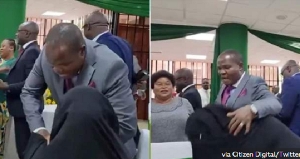
      In a widely circulated video from an office birthday party, Ken N’gondi, the Speaker of Nairobi’s County Assembly, is seen apparently insisting that a female Muslim colleague shake his hand. He is also observed placing his hand on her shoulder when she stands up.

      Mr. N’gondi has not issued a statement regarding the video.

      Various news outlets and social media commentators have highlighted that devout Muslim women typically refrain from shaking hands with male acquaintances.

      Many observers note that the woman in the video appears uncomfortable, and Muslim lawyers have described the incident as sexual and physical assault.

      They are calling for accountability and urging the police to press criminal charges against Mr. N’gondi.

    21. Severe flooding kills 11 in Kenya

      Severe flooding kills 11 in Kenya

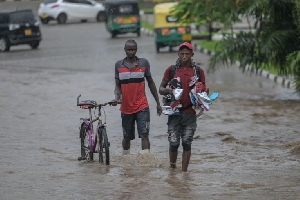
      Heavy rainfall in Kenya, including the capital Nairobi, has led to widespread flooding. The deluge has claimed the lives of at least 11 individuals and displaced over 17,000 others.

      Since the onset of the rainy season in mid-March, homes and agricultural lands have suffered extensive damage.

      The affected populace is urgently requesting government aid, as they face the looming threats of hunger and disease.

      The Kenya Red Cross is actively assisting displaced individuals and advising residents in low-lying areas to seek refuge. The rainfall is expected to persist until early next week.

    22. Cyber Security Authority ranks Ghana 8th country with social media presence

      Cyber Security Authority ranks Ghana 8th country with social media presence


      Director General of the Cyber Security Authority, Dr. Albert Antwi-Boasiako, highlighted Ghana’s 8th position in global social media presence based on data from the Global Research Platform.

      He noted that as of January 2024, over 24 million Ghanaians were connected to the internet, with more than 7 million actively engaged on social media.

      Additionally, 22,000 cases of child social abuse were reported. Dr. Antwi-Boasiako emphasized the need for collaboration between the government and cybersecurity institutions to detect, prevent, and prosecute offenders involved in malicious cyber activities to safeguard the online space.

      “Global Research Platform, as at January 2024, estimated more than 24 million Ghanaians were connected to the internet and more than 7 million were active on social media. Currently, Ghana is ranked the 8th country with active social media presence,” he said.

      The Director General of Cybersecurity Authority added that, “20% of children engage in the practice of taking pictures of themselves and sharing them with their close friends. Those images were later exploited for blackmailing purposes.”

      Speaking at the launch of the 2024 National Cybersecurity Challenge in Accra on Wednesday, April 17, 2024, he pointed out that the exercise aims at promoting cybersecurity awareness among senior high schools by providing them with firsthand experience in identifying and mitigating digital threats; especially child online sexual exploitation and abuse.

      70 senior high schools across the 16 regions of the country will partake in the third edition of the National Cybersecurity Challenge.

      This year’s challenge is on the theme, “Empowering young minds, creating opportunities, promoting a safer digital Ghana.”

    23. Armed robbery incident kills Sunyani UENR student

      Armed robbery incident kills Sunyani UENR student


      A group of approximately 80 Renewable Engineering students from the University of Energy and Natural Resources (UENR) were ambushed by armed robbers, resulting in the death of one student who was shot.

      The students had just completed a field trip to the Bui Dam late last night when the tragic attack occurred.

      During the incident, the students were robbed of their money, phones, and laptops.

      Meanwhile some students were subjected to sexual and physical assault.

      Watch video footage below:

    24. GRA initiates awareness programs on annual income tax returns

      GRA initiates awareness programs on annual income tax returns

      The Ghana Revenue Authority designates April as Tax and Good Governance Month to inform and encourage taxpayers about filing their income tax returns and paying taxes.

      During this period, the GRA hosts seminars, workshops, and tax clinics to educate taxpayers about their responsibilities and the benefits of filing returns.

      Dr. Martin Kolbil Yamborigya, Assistant Commissioner and Head of Audit for the Large Taxpayer Office, emphasized the importance of raising awareness and reminding taxpayers of their filing obligations during a program for public sector workers.

      “We also educate them to understand that filing their tax return is not just for you to pay tax, but it also affords you or gives you the opportunity to claim certain benefits,” he said.

      He mentioned potential taxpayer benefits like child education, marital, and mortgage relief.

      “When you file your returns, you have access to that When you file your returns, you also have the opportunity to even claim an overpayment, assuming that as a result of this relief that you are enjoying, the taxes that you paid during the year is more than what you should have paid,” Dr Yamborigya said.

      “You will be in an overpayment position and then the law requires that when you have overpaid your tax, then the Commissioner General is supposed to refund that to you within 60 days after the overpayment has been established.”

      He emphasized that filing returns was mandatory, with penalties including fines and imprisonment for non-compliance.

      However, to incentivize voluntary compliance, Section 74 of the Revenue Administration Act was revised. It permits taxpayers to self-disclose accurate information to the Commissioner-General, potentially waiving penalties.

      “So we want to encourage people and this is something that is not just like a one-off amnesty. It is something that was incorporated into the law that at any time a taxpayer can always take advantage of that,” he said.


      Dr. Martin also urged individuals earning income abroad to voluntarily disclose and pay applicable taxes in Ghana, potentially avoiding penalties.

      Meanwhile, Dominic Adamnor Nortey, Chief Revenue Officer, clarified that taxing resident Ghanaians on foreign income wasn’t a recent imposition. He noted the law’s existence since 2016, mandating individuals in Ghana to declare all incomes earned, both domestically and internationally, for taxation.

      He added that enforcement of this law is now feasible due to the GRA’s enhanced information capabilities.

      “We don’t start anything when you don’t have the basis of getting information on people’s income outside. So, now that we have signed an agreement with about 170 countries where we exchange information, now we have information enough to believe that we can drive that aspect of the law and implement it successfully,” Mr Nartey said.

      “The Act is clear that anyone who earns income, whether small, big or whatever it is, you have to pay tax on it,” he said, adding that he had nothing to do with VAT at all.

    25. I declined sitting allowances and board fees due to conflict of interest – Former SSNIT boss

      I declined sitting allowances and board fees due to conflict of interest – Former SSNIT boss


      Former Director-General of the Social Security and National Insurance Trust (SSNIT), Dr. John Ofori-Tenkorang, has disclosed that he never accepted sitting allowances or board fees during his seven-year tenure.

      He stated that he declined all such allowances due to potential conflicts of interest.

      “As a member of the Board of Trustees, I’m entitled to sitting allowances each time I attend a Board Meeting or a Subcommittee meeting.

      “That is my entitlement, enshrined in law. But I saw a conflict because I, by and large, determine how many meetings to have in a particular month.

      “And if each time I call for a meeting, I get paid, then as you can imagine, something that can be done in one meeting may spill into 2 or more meetings, because I’ll get paid more.

      “Therefore, because of this conflict that I saw, I have not collected one pesewa in board fees and sitting allowances during my 7-year tenure as the head of this institution,” 3news.com quoted him to have said during his farewell address to the SSNIT staff on April 15, 2024.

      Dr. Ofori-Tenkorang emphasized his dedication to maintaining transparency and ethical standards within the organization.

      “I have made my fair share of personal sacrifices for the Trust,” he emphasized.

      President Nana Addo Dankwa Akufo-Addo on Wednesday, April 9, terminated the appointment of Dr. Ofori-Tenkorang and handed over the affairs of SSNIT to Kofi Bosompem Osafo-Maafo, the son of the former senior minister, Yaw Osafo-Maafo.

      Dr. Martin also urged individuals earning income abroad to voluntarily disclose and pay applicable taxes in Ghana, potentially avoiding penalties.

      Meanwhile, Dominic Adamnor Nortey, Chief Revenue Officer, clarified that taxing resident Ghanaians on foreign income wasn’t a recent imposition. He noted the law’s existence since 2016, mandating individuals in Ghana to declare all incomes earned, both domestically and internationally, for taxation.

      He added that enforcement of this law is now feasible due to the GRA’s enhanced information capabilities.

    26. Internal Audit Agency lauds MIIF’s growth, anticipates enhanced value with new committee

      Internal Audit Agency lauds MIIF’s growth, anticipates enhanced value with new committee

      Director General of the National Internal Audit Agency, Dr. Eric Oduro Osae, asserts that the Minerals Income Investment Fund (MIIF) is positioned to become Africa’s premier minerals sovereign fund.

      This declaration came as he inaugurated the Fund’s Audit Committee at the MIIF Head Office in Accra.

      MIIF, recognized as potentially the fastest-growing minerals sovereign fund globally, was conceptualized by the Government in 2018 and subsequently established through the Minerals Income Investment Fund Act 2018 (Act 978).

      The primary mandate of MIIF is to collect mineral royalties on behalf of the government, oversee government equity interests in large-scale mines, and manage budgetary risks stemming from international commodity price fluctuations.

      Dr. Oduro Osae notes that with the inauguration of its Audit Committee, MIIF is better equipped to serve Ghanaian interests, supported by the robust legal framework governing the audit process of public sector entities. This framework, outlined in the Public Financial Management Act 2016 (PFM Act 921), assigns the Audit Committee a threefold responsibility.

      In accordance with Section 86 (1) of the PFM Act, 2016, the Public Financial Management Regulations, 2019 (L.I. 2378), the Public Procurement Act, 2003 (Act 663) as amended, and the Guidelines for Effective Functioning of Audit Committees, among other relevant financial laws, the Audit Committee is mandated to fulfill reporting, advisory, and support roles to enhance value for the people of Ghana. MIIF CEO, Mr. Edward Nana Yaw Koranteng, emphasizes that the establishment of the Internal Audit Committee strengthens the Fund’s corporate governance, crucial for establishing a world-class sovereign wealth fund.

      Dr. Oduro Osae outlines the mandatory duties of the Audit Committee, including the preparation of annual reports and statements of implementation, to be submitted to the Minister for Finance, Office of the President, Auditor-General, Public Accounts Committee (PAC) of Parliament, and the Director-General of the Internal Audit Agency.

      “The reason for all of the above is to ensure that public funds are spent judiciously and well, and the features of accountability and the management of risk are ever present in what MIIF does” said Dr. Eric Oduro Osae.

      Experienced Composition

      The recently established Audit Committee of MIIF is composed of five executives possessing extensive C-suite expertise in public sector financial management. Leading the committee is John Fiam-Coblavie, a seasoned auditor and chartered accountant with over twenty years of experience in the financial sector.

      Among the committee members is Madam Christiana Sakyibea Dei, whose distinguished career in the public sector includes roles at the Ministry of Fisheries and various Audit Committees. She is also a Chartered Accountant with a wealth of experience spanning two decades.

      Other members include Mr. Hayford Amoh and Mrs. Felicia Ashley, both representing the Ministry of Finance, as well as Mr. Emmanuel Nii Dowuona, nominated by the Internal Audit Agency, and Mercedes Maud Naa Dei Ashie, a chartered accountant with more than 12 years of internal audit experience, serving as Head of Internal Audit for the Minerals Income Investment.

      MIIF’s Growth Trajectory

      Since 2019, MIIF has experienced rapid growth, with its Assets Under Management (AUM) estimated at around US$125 million.

      By June 2024, pending validation by an independent international audit firm, MIIF’s AUM is projected to soar to approximately S$1.5 billion.

      Edward Nana Yaw Koranteng the Chief Executive Officer of MIIF said, “ one of our objectives is to benchmark the best sovereign funds in the world on all fronts including corporate governance principles. We are incorporating best practice for the most high-performing sovereign funds in the world towards our vision to create one of the leading sovereign wealth funds in the world.”

    27. IMF forecasts Ghana’s economic growth rate to reach 4.4% in 2025

      IMF forecasts Ghana’s economic growth rate to reach 4.4% in 2025


      Ghana’s economic outlook for 2025 is promising, with a projected robust growth rate of 4.4 percent, as forecasted by the International Monetary Fund (IMF).

      This prediction marks a significant increase from the previously projected growth rate of 2.8 percent for 2024.

      The IMF announced this forecast during its latest April World Economic Outlook at the ongoing IMF-World Bank Spring Meetings in Washington DC, USA, underscoring growing optimism about Ghana’s economic trajectory.

      Notably, Ghana’s projected economic growth rate for 2025 surpasses that of some of its counterparts in Sub-Saharan Africa, signaling positive signs of recovery from the economic impacts of unsustainable debt levels, inflationary pressures, and currency volatility following the COVID-19 pandemic.

      However, the IMF anticipates a decline in Ghana’s current account balance, projected at -2.2 percent. Despite this, the IMF maintains a positive outlook for Ghana’s economy, anticipating a rebound in 2025.

      In December 2022, Ghana faced one of its severest economic downturns, defaulting on payments for most of its external debt totaling $30 billion. Consequently, the country was excluded from international capital markets and turned to domestic treasury bill markets for borrowing.

      Under its 17th IMF bailout program, Ghana recently reached a staff-level agreement with the IMF Mission team on April 13, 2024, for a second review, paving the way for a third installment of bailout funds amounting to $360 million.

      During a joint press conference held in Accra, IMF Mission Chief to Ghana, Stephane Roudet, urged Ghanaian authorities to negotiate a deal with commercial and bilateral creditors for the IMF Management and Executive Board to approve the next disbursement.

    28. All to know about Ghana’s new foreign income tax

      All to know about Ghana’s new foreign income tax


      The Ghana Revenue Authority (GRA), acting on behalf of the government, has introduced new compliance measures aimed at taxing the foreign incomes of resident Ghanaians. This initiative serves as a substitute for the suspended 18 percent Value Added Tax (VAT) on electricity.

      According to the GRA, the strict enforcement of the foreign income tax is seen as a viable alternative to the unpopular VAT on electricity.

      It is anticipated to generate approximately GH¢1.8 billion in revenue.

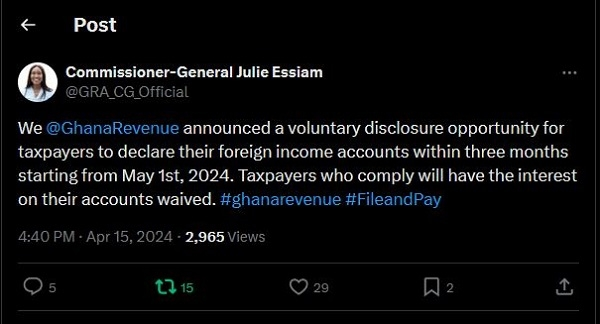
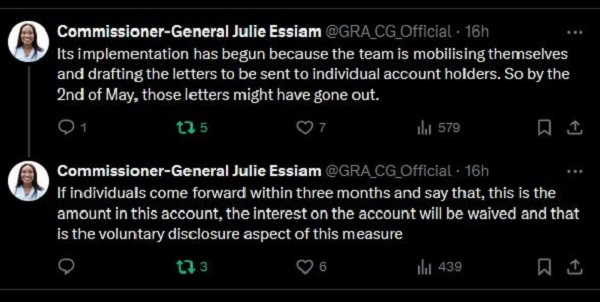
      In response to this development, resident Ghanaians are granted a three-month period starting from May 1, 2024, to voluntarily disclose their foreign income. Those who comply within this timeframe will receive an exemption from interest charges on their accounts.

      Now, what exactly does the foreign income tax entail, and which groups of Ghanaians will it affect?

      About the ‘Foreign Income Tax’

      To begin with, the foreign income tax isn’t a novel taxation policy. Despite its existence, it remains unfamiliar to many Ghanaians due to the lenient enforcement by successive governments.

      Established in 2015 under the Income Tax Act (Act 896), this tax aims to levy incomes earned by Ghanaians from overseas sources.

      The GRA defines foreign income as “income you receive for services you perform in a foreign country in a period during which your tax home is in a foreign country and you meet either the required residence test or the physical presence test”. That is the income a Ghanaian earns for services while living and working in a foreign country.

      According to the act, “The foreign income of a resident person is taxable except, where the employment income of the resident individual is from a foreign source and derived from a non-resident employer”.

      Another category of Ghanaian residents who would not attract the foreign income tax is “where a resident person is an employer and the individual is present in a foreign country for at least one hundred and eighty-three (183) days continuous”.

      George Ankomah, a senior tax partner at Deloitte, provided insights during an interview with JoyNews, elucidating on Ghana’s foreign income tax. According to Ankomah, this tax “has to do with Ghanaians who have incomes that are earned outside Ghana and the requirements under the income tax law which was passed way back in 2015, is that once you are a resident of Ghana, your global income is taxable in Ghana”.

      Furthermore, Ankomah emphasized that Ghanaians earning foreign income wouldn’t be obligated to pay the foreign income tax if their income declaration reveals that they pay more taxes in the countries where they work than what they are required to pay in Ghana.

      What the Foreign Income Tax covers:

      Now let us take a look at the types of foreign income of resident Ghanaians which would attract the tax.

      According to PwC Ghana, resident Ghanaians are taxed on their worldwide income, including their foreign income gained from:

      1. Remuneration from any employment, including salaries, allowances and other benefits.

      2. Gains or profits from trade, business, profession, or vocation.

      3. Gains from realization of assets and liabilities.

      4. Gifts.

      5. Dividends.

      6. Any charge or annuity.

      7. Royalties, premiums, and any other profits arising from property.

      8. Receipts, including royalties or periodic or deferred payments, of any kind derived from any transaction wherever and whenever made, affecting directly or indirectly, and/or from any natural resources in Ghana, and notwithstanding whether the receipts are paid within or outside Ghana.

      How much foreign income you would be taxed depending on your income:

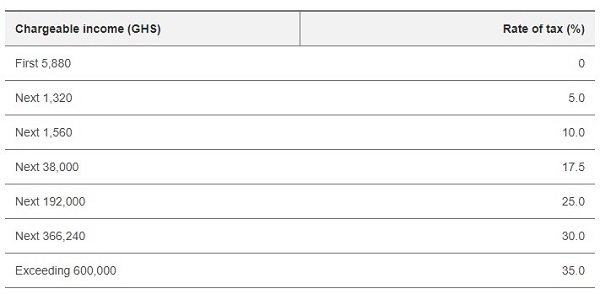
      According to PwC Ghana, residents Ghanaians are subject to graduated personal tax rates with rates ranging from 0% to 35%. Annual income up to GH₵ 5,880 is taxed at 0%. Any income in excess of GH₵ 600,000 is taxed at 35%.

      Below is a schedule of taxes provided by PwC:

      Nonresident individuals pay taxes on their employment income at a rate of 25%.

      Benefits of paying foreign income tax:

      Another thing not known to most Ghanaians is that taxpayers, including those who pay foreign income tax, are eligible for tax credits – foreign tax credit.

      The tax law states, “A resident person other than a partnership may claim a foreign tax credit in respect of tax paid to a foreign country. A person may relinquish a foreign tax credit and claim it as a deduction”.

    29. Trust Bawumia to stabilize the cedi when he becomes president – Richard Ahiagbah to Ghanaians

      Trust Bawumia to stabilize the cedi when he becomes president – Richard Ahiagbah to Ghanaians


      Director of Communications for the New Patriotic Party (NPP), Richard Ahiagbah, is advocating for Vice President Dr. Mahamudu Bawumia as a presidential candidate for the upcoming December 2024 elections in Ghana.

      Ahiagbah emphasized Bawumia’s capability to enhance stability in the Ghanaian Cedi, highlighting his proposal to leverage the nation’s natural resources, especially gold, to support the currency.

      He voiced his trust in Bawumia’s leadership potential to steer Ghana towards economic stability.

      “Be Bold with Bawumia. He will use our gold to back the cedi to make it stable. This is a Bold solution to stabilize the cedi.

      “Depreciation will be a thing of the past because the cedi will be sufficiently stable under Bawumia. I pledge to be bold with Bawumia. Have you?” he said in a Twitter post on April 16, 2024.

      Richard Ahiagbah, the Director of Communications for the New Patriotic Party (NPP), is advocating for Vice President Dr. Mahamudu Bawumia as a presidential candidate for the upcoming December 2024 elections in Ghana.

      Ahiagbah emphasized Bawumia’s capability to enhance stability in the Ghanaian Cedi, highlighting his proposal to leverage the nation’s natural resources, especially gold, to support the currency.

      He voiced his trust in Bawumia’s leadership potential to steer Ghana towards economic stability.

    30. MASLOC CEO will be in Ghana to face Judgement – Deputy AG assures Ghanaians

      MASLOC CEO will be in Ghana to face Judgement – Deputy AG assures Ghanaians

      Ghana’s Deputy Attorney General, Alfred Tuah-Yeboah, has announced the commencement of legal action to repatriate Sedina Tamakloe Attionu, former CEO of MASLOC (Microfinance and Small Loans Centre), back to Ghana for trial.

      Sedina Tamakloe Attionu, currently residing abroad due to reported medical reasons, has been sentenced in absentia to ten years in prison with hard labor.

      The Deputy Attorney General confirmed that extradition proceedings for Attionu are underway, highlighting that the recent court decision will facilitate the legal process.

      Addressing the media after the verdict on April 16, 2024, Tuah-Yeboah stated,”We started the process, and with the judgment that is going to speed up the process. Ghana, we have various laws, you can stay away….rest assured that she will be brought down to face judgment.”

      Alongside former MASLOC Chief Operating Officer Daniel Axim, she received a sentence of five years with hard labor.

      Both individuals were convicted on 78 charges, including causing financial loss to the state, theft, conspiracy to steal, money laundering, and violating public procurement laws.

      The trial of both defendants has been ongoing since 2019.

      As reported by citinewsroom.com, the state presented six witnesses. Sedina Tamakloe was tried in absentia after she left the country for a medical examination, having obtained permission from the Accra High Court.

      Background:

      The prosecution alleged that the defendants misappropriated GH¢3.19 million during their time at MASLOC, causing a deliberate financial loss of GH¢1.97 million to the state. They were also accused of unauthorized commitments, resulting in GH¢61.74 million in financial obligations for the government.

      Furthermore, the charges included GH¢22.15 million in public property loss, improper payment of GH¢273,743, and laundering GH¢3.7 million.

      In a significant turn, the court approved the prosecution’s request to proceed with Attionu’s trial in absentia on February 24, 2023. This decision followed Attionu’s permission to travel to the United States for medical treatment in 2021, from which she did not return.

      Before the trial in absentia, on January 24, 2023, the court directed former Ghana National Petroleum Corporation (GNPC) CEO Alex Mould and actor Gavivina Tamakloe to post a GH¢5 million bail bond to the state due to their failure to produce Attionu, for whom they had acted as sureties.

      According to the prosecution, in 2017, the Economic and Organised Crime Office (EOCO) investigated fraudulent disbursements of MASLOC funds involving Attionu and Axim.

      The investigations revealed that in June 2014, MASLOC invested GH¢150,000 in Obaatanpa Micro-Finance Company Limited, a licensed Tier II microfinance company in Ejura, Ashanti Region.

      Attionu later offered an additional GH¢500,000 investment to Obaatanpa, resulting in MASLOC issuing a GH¢500,000 Agricultural Development Bank (ADB) cheque to Obaatanpa on July 24, 2014.

      Upon receiving the cheque, Attionu allegedly demanded a 24% interest rate from Obaatanpa. When Obaatanpa declined, Attionu requested a cash refund. Obaatanpa complied, returning GH¢500,000 in cash to Attionu on August 28, 2014.

      Despite acknowledging the refunded amount in a letter dated August 28, 2014, investigations found no record of repayment in MASLOC’s records. Allegations suggested Attionu had appropriated the GH¢500,000 for personal use.

      Furthermore, in 2015, MASLOC demanded interest payments on the principal investment from Obaatanpa despite the previous refund. Subsequent investigations revealed discrepancies, indicating Attionu’s misappropriation of funds.

    31. Price for I litre petrol nearing GHS15, GHS14.80 for diesel

      Price for I litre petrol nearing GHS15, GHS14.80 for diesel


      Some Oil Marketing Companies (OMCs) in the nation have initiated upward adjustments to petroleum product prices for April 2024’s second pricing window.

      This entails consumers facing additional charges at fuel stations for various petroleum products.

      Despite a recent increase in commodity prices on April 4, 2024, following the National Petroleum Authority (NPA) reversing its decision to suspend the Price Stabilization and Recovery Levy (PSRL) on petroleum product price structures, OMCs are still raising prices.

      Presently, GOIL is retailing petrol at GH¢14.99 per litre, and diesel is priced at GH¢14.80.

      The state-owned OMC’s price revision came into effect on Tuesday, April 16, 2024.

      This recent development is anticipated to affect the prices of goods and services, already at record levels, and contribute to inflationary pressures, which stood at 25.8 percent in March of this year.

      It is anticipated that other OMCs operating in the nation will adjust their prices in the coming hours or days.

    32. FULL TEXT: Dr. Ernest Addison’s presentation at 2024 ACG Meeting involving IMF Managing Director Kristalina Georgieva

      FULL TEXT: Dr. Ernest Addison’s presentation at 2024 ACG Meeting involving IMF Managing Director Kristalina Georgieva

      I appreciate the opportunity today to speak on behalf of my fellow Governors about “Bolstering Africa’s Financing through the Overlapping Crises and Beyond.”

      Let me first express my heartfelt gratitude to the Managing Director, Madam Kristalina Georgieva, for your excellent leadership, and your strong support for Africa. Madam MD, Africa continues to face complex challenges against the backdrop of successive shocks, manifesting in a subdued post-pandemic recovery, elevated debt distress, and a persistent funding squeeze, that have amplified income divergences and undermined the achievement of sustainable and inclusive growth.

      My colleague Governors, our domestic adjustment policy efforts without adequate financing can only yield limited results, in the context of the complex domestic and external environment.

      As such, stronger support from the development partners, including the IMF, remains paramount. Considering the low catalytic effect of Fund financing, many of our countries view the countercyclical role of Fund financing as indispensable.

      To this end, Madam Managing Director, we highlight the following points for your consideration:

      First, we view continued pragmatism and agility of IMF’s policies to changing global conditions as paramount to better serve its vulnerable members.

      To this end, we underline the necessity for the upcoming comprehensive review of LICs facilities to maintain the PRGT’s concessionality and promote higher access to reverse erosion amplified by the global inflationary episode. We also underscore the criticality of replenishing the CCRT resources envelope to offer grant support to our most vulnerable members in this shock-prone world.

      Considering the expiry of the Food Shock Window amidst a food crisis triggered by the El Nino phenomenon, Fund emergency financing alongside augmentations in program countries would be important to close climate induced financing gaps. In this regard, we call for intensified fundraising efforts under the second phase of the resource mobilization initiatives.

      Second, we call for meaningful collaboration between the IMF and the World Bank to better align their support to LICs. In this regard, we stress the need for coordination of the IMF’s LIC Facilities Review with the World Bank’s IDA21 replenishment efforts to support LICs in a holistic manner.

      Third, we stress the need to keep all financing options on the table, including the use of the Fund’s internal resources. In view of the recent multiple shocks and a crisis like no other, now is the opportune time for a modest gold sale, particularly when gold prices are still favorable.

      Finally, we restate our request for further enhancements to the G20 Common Framework while leveraging the Global Sovereign Debt Roundtable (GSDR) to promote rapid, transparent, and equitable resolution of debt as well as facilitate debt cancellation for the most vulnerable members. The review of the Fund’s internal debt policies is welcome, but we stress the need to ensure that the changes are impactful and achieve their intended purpose.

      Thank you, Chair and Madam Managing Director.

    33. Today in History: Traders express preference for treasury bills over importing goods

      Today in History: Traders express preference for treasury bills over importing goods

      In April 2022, President of the Automobile Dealers Association of Ghana, Eric Kwaku Boateng, stated that many traders had opted to invest in treasury bills rather than engage in imports.

      Boateng highlighted that the considerable taxes imposed on imports had deterred numerous traders. “say they will not import any other goods if they finish selling their old stock. We are all going to keep our monies in the bank and invest in stocks and treasury bills. These investments will rather bring us a profit and we can enjoy that over the losses we are making in the import business.”

      Read the full story originally published online on April 15, 2022

      President of the Automobile Dealers Association of Ghana, Eric Kwaku Boateng, has revealed that most traders in the import business have pledged to withdraw from the trade if the cost of doing business keeps rising.

      According to him, the high taxes charged on imports have seen a lot of traders “say they will not import any other goods if they finish selling their old stock. We are all going to keep our monies in the bank and invest in stocks and treasury bills. These investments will rather bring us a profit and we can enjoy that over the losses we are making in the import business.”

      He disclosed the government has refused to listen to businessmen and importers over the high taxes and tariffs charged at the ports, subsequently passing the e-levy into law.

      “The government is refusing to listen to us when we advise them on issues. Former President Kufuor is the only one who stands out when we talk about governance. He was a listening President and made sure taxes were low, focusing on helping businesses thrive but not this government.”

      Sampson Asaki Awingobit, Executive Secretary to the Importers and Exporters Association of Ghana, added that the benchmark value “has put pressure on us and it has not been easy from the trader’s point of view.”

      He disclosed the government for the past 6 years has introduced tax components that have become unbearable for the business community.

      In an interview with Samuel Eshun on the Happy Morning Show, Sampson Asaki Awingobet said, “The gov’t abolished some taxes in 2017 but a year or two later the 1 percent special levy was reintroduced, the financial sector recovery levy was brought back. There has also been the introduction of the COVID-19 levy. GetFund and NHIL have been carved out of VAT to stand alone. On top of mind, these are some of the things which have caused an increase in the cost of duties.”

      The businessman explained that charges from terminal operators, shipping line local handling charges, and others have increased the cost of doing business in Ghana. To him, these taxes will ultimately force the center of the business community to fold.

      “The freight charges are so high that when you go the market, you’re told the prices of goods and services are high. You can go to the market today and by tomorrow the cost of the same item would’ve soared.”

    34. TGMAs snub did not get to me anyway – Amerado

      TGMAs snub did not get to me anyway – Amerado


      Ghanaian rapper Amerado has responded to the news that the original version of his hit track, ‘Kweku Ananse,’ has been nominated for Highlife Song of the Year and Popular Song of the Year at the TGMAs.

      Previously, in March 2024, after the nominee list for this year’s Telecel Ghana Music Awards was announced, Amerado raised concerns to the TGMA board when his song ‘Kwaku Ananse’ was not included in the Most Popular Song of the Year category.

      Following a one-week review, the TGMA board decided to nominate ‘Kweku Ananse’ in both the Highlife Song and Most Popular Song of the Year categories, replacing the remix with the original version.

      Discussing this development in an interview with Hitz FM on April 16, Amerado shared his initial feelings of indifference upon learning that the song was not initially nominated for the most popular song at the TGMAs.

      “When I found out I wasn’t on the nomination list, especially for the most popular song, I was a bit indifferent… But when I went online and people were all over the place fighting for me, it felt awkward at first because I’ve tasted losses throughout my career and I’ve tasted some wins as well. So I just learn from whatever happens to me and then I move on,” he said.

      Amerado expressed appreciation for the revised nominations, viewing it as a chance to elevate his artistry to new heights. Nonetheless, he believed that the song deserved recognition in the Songwriter of the Year category.

      “On my pages, I asked why I wasn’t nominated, and now my answer is here. I am pleased with all my nominations except for Songwriter of the Year, I think it should have made the cut, but then it’s fine. As I said earlier, I’ll just keep working harder and harder,” he said.

    35. Video: Man offers himself up for sale to alleviate poverty

      Video: Man offers himself up for sale to alleviate poverty


      In a poignant manifestation of poverty’s harsh grip, a Ghanaian man has resorted to an extreme measure by offering himself for sale.

      The heart-wrenching story unfolded during an interview with Kofi TV, where the visibly weary man shared his frustrations.

      With palpable anguish, he revealed how poverty had become unbearable, forcing him to consider drastic actions. While he struggles in the urban sprawl of Accra, his children remain in his native village, underscoring the painful separation caused by his dire circumstances.

      The interview clip circulating on social media platforms has evoked a wave of sympathy and offers of help from concerned individuals.

      His candid account has sparked discussions about the systemic issues of poverty and inequality plaguing communities in Ghana.

      As the video gains traction, it serves as a stark reminder of the harsh realities endured by those trapped in poverty’s cycle. While gestures of empathy pour in, it highlights the pressing need for comprehensive societal interventions to address poverty’s root causes and offer sustainable livelihoods.

      Amidst the support, the man’s plea resonates as a call to action, urging communities and policymakers to intensify efforts toward a more equitable and inclusive society where no one feels compelled to sacrifice their dignity in exchange for relief from poverty’s burden.

    36. Govt faces potential $3.6bn judgment debt over cancelled Boankra terminal contract – Ablakwa alleges

      Govt faces potential $3.6bn judgment debt over cancelled Boankra terminal contract – Ablakwa alleges

      Samuel Okudzeto Ablakwa, the Member of Parliament for North Tongu, has raised concerns about a looming $3.6 billion judgment debt facing the Ghanaian government.

      This debt arises from the cancellation of a contract for the construction of the Boankra Integrated Logistics Terminal (BILT) in the Ashanti Region.

      Ablakwa alleges that the Minister for Transport, Kwaku Ofori Asiamah, disregarded a parliamentary resolution for the construction of the $330 million terminal. Moreover, Asiamah terminated the concession agreement without seeking approval from parliament.

      The MP shared these claims in a post on X on Tuesday, April 16, 2024. He asserts that the transport minister failed to justify his actions to the Attorney General, even after being asked to respond to a petition regarding the deal. As a result of Asiamah’s actions, the country now faces the threat of a $3.6 billion judgment debt.

      “The President’s sod cutting came after Parliament on the 14th of August, 2020 approved by resolution a Build, Operate and Transfer (BOT) Concessionary Agreement between the Government of Ghana and Ashanti Port Services Limited (a consortium of Afum Quality Ltd Ghana and DSS Associates of South Korea) for an amount of US$330,000,000.00 for the development of the Boankra Integrated Logistics Terminal.

      “Documents I have intercepted from multiple official sources reveal that this parliamentary resolution has been flagrantly and violently flouted, particularly, by the Minister responsible for Transport, Hon. Kwaku Ofori Asiamah,” he said.

      The MP added, “The transport minister after unanimously altering the parties to the parliamentary resolution without recourse to Parliament has subsequently proceeded to terminate the concession agreement, also without the consent nor approval of Parliament. This termination supposedly took effect from 5th August 2023.”

      Ablakwa further claimed that Ofori Asiamah, without parliamentary approval, transferred the $330 million Boankra terminal contract to another company, Justmoh Construction Limited.

      “The intercepted documents in my possession also confirm that the Transport Minister has in addition to all his rambo-style illegalities ensured that payment of a colossal US$33,300,000.00 equivalent to a staggering GHS449.5million has been made under extremely dubious circumstances to the Minister’s handpicked company — Justmoh Construction Limited.”

      He added, “Further investigations reveal that Justmoh was selected and paid over GHS400 million without regard to the procurement laws of Ghana.”

      The MP disclosed alleged documents regarding the termination of the contract and the subsequent re-award for the terminal’s construction.

      View the MP’s full post plus the documents below:

      THE BOANKRA LOOTING DISASTER AND THE LOOMING US$3.6BILLION JUDGEMENT DEBT
      [PART 1]

      Why is the Akufo-Addo/Bawumia government engaged in another round of sleazy recklessness which would potentially saddle Ghana with a scary judgement debt of some US$3.6billion?

      On the 5th of November, 2020, President Nana Addo Dankwa Akufo-Addo cut sod for construction of the $330 million Boankra Integrated Logistics Terminal (BILT) in the Ashanti Region.

      The President at the sod cutting assured the nation, including His Royal Majesty, Otumfuo Osei Tutu II who was the special guest of honour that the Boankra project will be completed in 2023.

      The President’s sod cutting came after Parliament on the 14th of August, 2020 approved by resolution a Build, Operate and Transfer (BOT) Concessionary Agreement between the Government of Ghana and Ashanti Port Services Limited (a consortium of Afum Quality Ltd Ghana and DSS Associates of South Korea) for an amount of US$330,000,000.00 for the development of the Boankra Integrated Logistics Terminal. (See parliamentary resolution attached).

      Documents I have intercepted from multiple official sources reveal that this parliamentary resolution has been flagrantly and violently flouted, particularly, by the Minister responsible for Transport, Hon. Kwaku Ofori Asiamah.

      The Transport Minister after unanimously altering the parties to the parliamentary resolution without recourse to Parliament has subsequently proceeded to terminate the concession agreement, also without the consent nor approval of Parliament. This termination supposedly took effect from 5th August, 2023. (See confirmation of Minister’s termination attached).

      The Minister for Transport’s preference for a company known as Justmoh Construction Limited which is unknown to Parliament under the approved BILT resolution is most bizarre.

      All parties have informed me, without contradiction, that Justmoh Construction Limited was a direct imposition by the Transport Minister. I have seen board minutes to this effect.

      The stark irony is that this is the same government currently prosecuting the Hon. Collins Dauda, Hon. Dr. Kweku Agyeman-Mensah and others for allegedly reviewing a parliamentary resolution on the Saglemi Housing Project without an amendment or approval by Parliament.

      Why is the Transport Minister, regardless of ongoing prosecutions of political opponents, unilaterally amending and disregarding a parliamentary resolution with utter impunity?

      Tomorrow is indeed pregnant.

      The intercepted documents in my possession also confirm that the Transport Minister has in addition to all his rambo-style illegalities ensured that payment of a colossal US$33,300,000.00 equivalent to a staggering GHS449.5million has been made under extremely dubious circumstances to the Minister’s handpicked company — Justmoh Construction Limited. (More details on this in Part 2)

      Further investigations reveal that Justmoh was selected and paid over GHS400 million without regard to the procurement laws of Ghana.

      Indeed, the Transport Minister concedes in his termination confirmation letter of November 21, 2023 that he will now ensure “Ghana Shippers takes the necessary processes to regularize the re-engagement” of Justmoh.

      As could be predicted, these grave violations have now become the subject of fierce internal wrangling with the parties (Ashanti Port Services Limited and the Minister’s Justmoh Construction Limited) currently slugging it out at Arbitration.

      Further checks establish that the Transport Minister has been unable to justify his actions as a request from the Attorney General to him to respond to a petition against the Transport Minister’s conduct dated December 19, 2023 remains contemptuously ignored. (See Attorney General’s letter attached).

      Meanwhile, it has also emerged through additional documentation I am reviewing that the preparatory works carried out by the Transport Minister’s handpicked company, Justmoh, do not guarantee value for money. Consistent with the pattern of inflationary opaque costing under this administration, US$36,222,140.64 is the bill for payment with even more payments being requested. (This latest “create, loot and share” scheme will be explored in much detail later).

      Work on the strategic Boankra Integrated Logistics Terminal (BILT) project has now come to a halt because of the self-inflicted mess created by the Akufo-Addo/Bawumia government. (See letter from Justmoh’s lawyers confirming challenges with continuing the project, as attached).

      Field inspection confirms that all works on the Boankra site have come to a halt.

      Instead of Ghana and the good people of the Ashanti Region finally accomplishing the long-awaited dream of Boankra to spur industrialization and job creation, we are ending up with an abandoned project, avoidable litigation and a looming judgement debt of US$3.6billion as Ashanti Port Services Limited is demanding. A totally avoidable massive financial loss to the state.

      NPP insiders familiar with this latest scandal say the Boankra Looting Disaster just like the infamous Akufo-Addo’s Cathedral Project missed out and were not trackable by government’s recently launched performance tracker because of the embarrassing levels of shadiness, arm-twisting and greed; and this is despite the President’s promise before the venerable Otumfuo of a 2023 completion.

      What at all can this government get right?

      On Thursday, I shall be back with Part 2.

      For God and Country.

      Ghana First.

    37. Absence of National Cathedral in performance tracker biggest omission – Alex Segbefia asks

      Absence of National Cathedral in performance tracker biggest omission – Alex Segbefia asks

      Former Health Minister, Alex Segbefia, has raised concerns about the government’s failure to include the National Cathedral in the recently unveiled performance tracker.

      During a discussion on JoyNews’ PM Express, Mr. Segbefia criticized the document for its notable discrepancies and omissions, questioning its accuracy and transparency.

      While stressing the importance of accountability in governance, Mr. Segbefia emphasized the need for accuracy and transparency in such documents.

      “… Even on infrastructure, the biggest omission is the National Cathedral. Where is it? Government money has been invested into the national cathedral, so why is it not on the performance tracker?” he quizzed.

      The ex-Minister highlighted inconsistencies in the performance tracker, indicating a lack of thoroughness in its compilation.

      However, he attributed these discrepancies to negligence rather than deliberate oversight.

      “There are things there that should never have been there because they are non-existent. And there is the issue of projects that were not done by the government. They were done by NGOs, private companies, and alumni but they are in the performance tracker even though it didn’t cost the government a dime.

      “Then we have things the NPP sees as commendable but we think are just too petty. So if you give out jerseys or build a speed ramp, we don’t expect to see this. So when you look at them, you realise that the tracker sways towards more politics than governance,” he said on Monday.

      He condemned its omission of crucial indicators like the Press Freedom Index and the Corruption Index, which he considered vital for a comprehensive assessment of the nation’s performance.

      “It didn’t capture the Corruption Index even though it was a campaign tool the NPP used heavily when they were in opposition to get into power. If you are tracking, track everything that is happening in the country holistically. If it is just on infrastructure issues then let us know,” he said.

      In response to the Minister, Presidential Staffer Dennis Miracles Aboagye acknowledged the shortcomings of the tracker, stating that it is still a work in progress.

      He emphasized that all feedback is appreciated and will be addressed appropriately.

      “This is a tracker, which means it is a living document, it is updated by the minute, hour, and day. There is absolutely nothing wrong if he thinks there is something that should be in the tracker that isn’t, it can be considered.

      “We shouldn’t make it look like it is a big deal if someone identifies that the cathedral or something is not on the tracker. It can be worked on,” he stated.

    38. ECG board members to cough up Ghc5.87m in fine over “dumsor” – Report

      ECG board members to cough up Ghc5.87m in fine over “dumsor” – Report


      A report by the media indicated that the Public Utilities Regulatory Commission (PURC) has penalized the Electricity Company of Ghana (ECG) with a fine of GH¢36,000 for failing to provide all bank and investment account information to the Commission.

      Despite repeated requests with deadlines of March 25, March 27, and April 2, 2024, the information provided by ECG was deemed incomplete, resulting in the imposition of the penalty.

      Additionally, ECG has been fined a significant amount of GH¢5,868,000.00 for its failure to comply with the 3-day statutory notice requirement for planned outages.

      The responsibility for paying this fine has been shifted to the board members who served from January 1 to March 18, 2024.

      They are required to pay the fine into a dedicated fuel account jointly controlled by the Ministry of Energy and the Ministry of Finance by May 30, 2024.

      Furthermore, ECG has been directed to settle its outstanding obligations under the Cash Waterfall Mechanism, totaling GH¢446,283,706.29, to Category B beneficiaries by April 30, 2024.

      Failure to make this payment will result in consequences for both the board members and management, as per the report.

    39. Cybersecurity threats influenced by Lack of awareness – Dr Antwi-Boasiako

      Cybersecurity threats influenced by Lack of awareness – Dr Antwi-Boasiako

      Director General of the Cyber Security Authority, Dr. Albert Antwi-Boasiako, emphasized the necessity for the government and institutions across the ECOWAS sub-region to enhance awareness of cybersecurity.

      He highlighted that until this issue is tackled, addressing cyberattacks and threats will remain challenging.

      During a media briefing at the West African Regional CSIRTS Symposium in Accra on Tuesday, April 16, 2024, Dr. Antwi-Boasiako urged institutions to fortify their cyberspace through investment, rather than waiting for an attack that could compromise the confidentiality, integrity, and accessibility of information.

      He said, “The biggest challenge we have is the lack of awareness that the threat even exists and I say it is because once you don’t have visibility, it becomes difficult for you to even take steps to address them….”

      “We’ve seen institutions only step up their investment in cybersecurity after they have been attacked. That is not a good way to go, I believe once we increase awareness across board, institutions, government will gradually put in necessary investment in preventing cyber attacks that could undermine the confidentiality, integrity and availability of information,” the Director General of Cyber Security Authority stated.

      Dr. Antwi-Boasiako also highlighted that the Cyber Security Authority is collaborating with the central bank, the Bank of Ghana, to create a security operating system aimed at purifying the nation’s cyberspace.

      He elaborated that cyber crises or attacks can jeopardize the confidentiality and accessibility of digital services.

      The Director General of the Cyber Security Authority emphasized that the convening of various CSIRTS representatives in Ghana aimed to foster collaboration and address prevalent trends in the cyber domain with appropriate solutions.

    40. Tips to consider when texting someone the first time

      Tips to consider when texting someone the first time

      When initiating a text conversation with someone new, it’s crucial to leave a positive impression.

      Whether you’re networking professionally, engaging in online dating, or simply making a new friend, your initial communication sets the tone for future interactions.

      Consider the following tips and etiquette to ensure your first message paves the way for ongoing conversation.

      Introduction Initiating a text conversation with a new acquaintance may seem intimidating. The key is to be clear, respectful, and captivating.

      Your aim is to pique interest and establish rapport without overwhelming the recipient.

      Things to do when texting someone for the first time

      Start with a proper greeting

      Personalize: Use their name if you know it. A personalized greeting helps make your message feel more tailored and less generic.

      Be Polite: A simple “Hello [Name],” can go a long way in setting a friendly tone.

      Introduce yourself

      Context is Key: Remind them of who you are and where you met or how you got their number. For instance, “Hi [Name], this is [Your Name] from the conference last week.”

      Keep it brief and clear

      Conciseness: Your initial message should be brief but informative. Avoid overwhelming them with too much information or multiple questions in one text.

      Have a clear purpose

      State Your Intentions: Let them know why you’re reaching out. Are you asking for a favor, hoping to set up a meeting, or just wanting to chat? Clarity will help guide the conversation smoothly.

      Use proper language and grammar

      Professionalism: Even in informal settings, using proper spelling, punctuation, and grammar can make a good impression. Avoid slang and abbreviations until you understand their texting style.

      Be mindful of timing

      Considerate Timing: Don’t text too early in the morning or too late at night. Aim for appropriate times when they are likely to be free to respond.

      End with a question or call to action

      Engagement: Encourage a response by ending your message with a question related to your purpose or a simple call to action, like “Let me know what you think!”

      Observe texting etiquette

      Double texting: Avoid sending multiple messages if they haven’t replied to your first. Give them some time to respond.

      Read receipts: Be aware that some people might feel pressured if they know you can see they’ve read your message. Keep the conversation relaxed.

      Texting someone for the first time is about balance: being polite yet direct, and friendly yet respectful. By following these guidelines, you’ll be more likely to receive a positive response, and potentially build a fruitful connection.

      The goal of your first message is to open a line of communication, so keep it welcoming and straightforward.

    41. Govt allocates GHC26m to institutional suppliers for Free SHS program

      Govt allocates GHC26m to institutional suppliers for Free SHS program

      Government has allocated GHC26 million to institutional suppliers tasked with providing school uniforms, physical education kits, and stationery for the Free Senior High School program.

      According to a statement from the Ministry of Education on Monday (April 15), this fund release underscores the government’s dedication to facilitating the seamless operation of educational institutions.

      “The Ministry of Education is pleased to announce the disbursement of GHC26 million to institutional suppliers responsible for the supply of school uniforms, physical education kits, stationary, etc as part of the Free Senior High School programme,” it stated.

      “This allocation emphasizes the government’s commitment to promoting quality education and ensuring the efficient functioning of educational institutions.”

      The Ministry of Education further affirmed its commitment to ensuring the smooth, timely, and effective distribution of resources to enhance and maintain the quality of education in Ghana.

    42. All you need to know about people who don’t desire sex at all

      All you need to know about people who don’t desire sex at all

      It varies significantly among individuals and is crucial to understand for acknowledging and respecting the various manifestations of human sexuality. Here’s a primer on asexual individuals.

      Definition

      Asexual (Ace): Someone who does not experience sexual attraction to others, although they might still participate in romantic relationships. Asexuality is not a choice or a condition, but rather a natural orientation, much like other sexual orientations.

      Spectrum of asexuality

      Asexuality is not a monolithic experience; it exists on a spectrum that includes different identities, such as:

      Graysexual: Individuals who might only experience sexual attraction under specific circumstances.

      Demisexual: Those who only experience sexual attraction after forming a deep emotional bond with someone.

      Both of these identities fall under the broader umbrella of the asexual spectrum, emphasizing the variety in people’s experiences with sexual attraction.

      Common misconceptions

      Asexuality is often misunderstood. Here are some common misconceptions:

      Lack of sexual activity: Being asexual does not necessarily mean abstaining from sex. Asexual people may have sex for various reasons, including to please a partner or to have children.

      A temporary phase: Asexuality is not something that necessarily changes over time. It’s a valid orientation, not a phase or something that a person will “overcome.”

      Result of trauma or health issues: While these factors can influence sexual desire, asexuality itself is not caused by them. It is a legitimate orientation, not a disorder or a consequence of trauma.

      Romantic relationships

      Asexual people might still engage in romantic relationships, and these relationships are as varied as those of sexually active people. Asexual people might identify as:

      Heteroromantic: Romantic attraction to people of a different gender.

      Homoromantic: Romantic attraction to people of the same gender.

      Biromantic or Panromantic: Romantic attraction to multiple or all genders.

      Challenges faced

      Asexual people often face certain social and psychological challenges, such as:

      Invisibility: Asexuality is less well-known and often isn’t included in discussions about sexual orientation.

      Invalidation: Common societal expectations about relationships and sex can lead to the invalidation of asexual identities.

      Pressure: There can be pressure to conform to societal norms, which may lead to stress or anxiety for asexual individuals.

      Advocacy and community

      The asexual community has grown, especially with the rise of social media and online platforms, which provide spaces for asexual people to connect, share experiences, and advocate for recognition and rights.

      Asexual Visibility and Education Network (AVEN) is one prominent organization that plays a crucial role in educating people about asexuality and providing resources and support for asexual individuals.

      Asexuality is a complex and legitimate orientation, encompassing a wide range of experiences. Recognizing and respecting asexual identities is crucial in fostering an inclusive society where all forms of sexual orientation are acknowledged and valued.

      As awareness grows, so does understanding, leading to greater acceptance and support for asexual people in both personal and public spheres.

    43. GRA gives 3 months ultimatum to taxpayers to declare their foreign income accounts

      GRA gives 3 months ultimatum to taxpayers to declare their foreign income accounts

      The Ghana Revenue Authority (GRA) has introduced a voluntary disclosure opportunity for taxpayers to declare their foreign income accounts within a three-month period, commencing on May 1, 2024.

      Under this initiative, taxpayers who adhere to the directive will benefit from waived interest on their accounts.

      Julie Essiam, the Commissioner-General of the GRA, announced the commencement of the implementation of the tax declaration policy on foreign income accounts through a series of posts shared via X on April 15.

      Essiam further stated that GRA teams are actively preparing letters to be sent to individual account holders as part of this initiative.

      “So, by May 2, 2024, those letters might have gone out,” Julie Essiam wrote via X.

      She added, “If individuals come forward within three months and say that, this is the amount in this account, the interest on the account will be waived and that is the voluntary disclosure aspect of this measure.”


      The recent action taken by the government’s revenue agency comes in the wake of an announcement by the Commissioner-General on April 13, 2024, regarding a fresh compliance strategy aimed at monitoring the foreign earnings of resident Ghanaians.

      This new initiative is intended to supplant the temporarily suspended Value Added Tax (VAT) on electricity and seeks to establish a consistent revenue stream beyond the year 2024.

      The Commissioner-General of the GRA emphasized that while this measure is not novel, it has existed within the legal framework for some time, albeit without effective implementation.

      “So, the measure that we put in place is a compliance measure on foreign income of resident Ghanaians.

      “This measure is already in the law, as the minister said, so it is not a new measure. The difference is that its implementation and application have not been implemented effectively,” the GRA Commissioner-General said in her brief remarks at the joint IMF, BoG and Ministry of Finance presser held in Accra on April 13, 2024.

      Julie Essiam added that “The GRA, with support from the Organization for African, Caribbean, and Pacific States (OACD), has refined the processes and structures to ensure effective implementation.

      “So for us to implement this measure, we have, with the aid and assistance of the OACD, gone through sustainable processes and structures to ensure that when we implement this measure, the sustainability of this measure is going to go beyond 2024 in our revenue numbers.

      “So this is the measure that, together with the Government of Ghana and our mother ministry, the Ministry of Finance, is going to take place or is going to replace the VAT on electricity.”

    44. FDA implements measures to prevent entry of rejected Johnson & Johnson children’s cough syrup into Ghana

      FDA implements measures to prevent entry of rejected Johnson & Johnson children’s cough syrup into Ghana


      The Food and Drugs Authority (FDA) has implemented measures to prevent the smuggling of a batch of children’s cough syrup produced by Johnson & Johnson into Ghana.

      Authorities in six African countries have recalled a batch of children’s cough syrup manufactured by Johnson & Johnson in 2021. This action follows a warning from Nigeria’s drug agency about elevated levels of a toxic and potentially lethal substance.

      Tanzania and Zimbabwe’s drug regulators are the most recent to recall the syrup as a precautionary measure. However, Zimbabwe’s Medicines Control Authority stated that there is no record of the syrup being imported into the country.

      In response to this development, the FDA issued a statement on Friday (April 12), stating that their surveillance indicates that the contaminated syrup in question is not present in Ghana. This conclusion was reached after reviewing importation data from 2021.

      “The FDA hereby assures the public that LOT No. 329304 is not available on our market, having reviewed all the data on the importation of the product to Ghana from 2021.

      “Ongoing market surveillance efforts across the country so far confirm the absence of the lot in Ghana. The Authority has also heightened its surveillance activities at the ports with the view to prevent entry of LOT No.329304 onto the Ghanaian market.”

      “The public is hereby cautioned to look out for the affected lot of Benylin Paediatric Syrup and report to any offices across the country,” the FDA statement said.

      Below is the full statement: 

    45. Uganda: Protest in Kampala over tax invoicing system enforcement

      Uganda: Protest in Kampala over tax invoicing system enforcement

      Local media in Uganda’s capital, Kampala, report that numerous traders closed their shops on Tuesday in response to the implementation of a controversial tax invoicing system.

      Many business owners fear that the new system will complicate their operations and increase their tax burdens. They also cite the high cost of the software as a significant concern.

      The Electronic Fiscal Receipting and Invoicing System (EFRIS) was introduced by the tax authority in January 2021 to monitor sales and taxes in real-time. However, its enforcement among small-scale traders has only recently begun, sparking protests.

      Last week, traders in Kampala and other major cities staged two-day protests against the implementation of the system.

      Despite the traders’ objections, Uganda’s Revenue Authority has proceeded with the system, arguing that its adoption will reduce tax evasion and streamline the tax filing process for businesses.

    46. 9 women arrested for allegedly booing first lady of Zimbabwe released

      9 women arrested for allegedly booing first lady of Zimbabwe released

      Local media in Zimbabwe report that nine women, who were arrested for allegedly booing the first lady, have had their charges dropped.

      According to presidential spokesperson George Charamba, the charges were withdrawn on the instructions of First Lady Auxillia Mnangagwa.

      “Both the first lady and police commissioner general agreed the officers on the ground overreacted,” Mr Charamba was quoted as saying.

      The women, aged between 19 and 49, were reportedly accused of booing Mrs. Mnangagwa after not receiving food and clothing handouts she was distributing at a charity event in the eastern Manicaland province last Wednesday.

      “Prosecutors charged that the women, who were seated on the ground stood up and started booing the first lady while she was making her closing remarks during her address intending to disrupt her speech and show disgruntlement that they had not received anything from her,” the Zimbabwe Lawyers for Human Rights (ZHLR), who represented the women in court, said.

      They had been accused of “unlawful, abusive and insulting” behaviour towards the first lady and were subsequently charged with disorderly conduct, ZHLR added.

      The organisation said the women denied the charges, arguing that they had been arrested for leaving the event while the first lady was still speaking.


      The organization stated that the women refuted the allegations, contending that they were arrested for departing the event while the first lady was still addressing the audience.

    47. Letshego Ghana issues GHS100m bond on Ghana Stock Exchange

      Letshego Ghana issues GHS100m bond on Ghana Stock Exchange


      Letshego Ghana Savings and Loans Plc, known as “Letshego Ghana” or “the Issuer,” achieved a successful listing of its latest Bond on the Ghana Stock Exchange on March 20, 2024, valued at GHS100 million.

      This marks the inaugural issuance under the expanded GHS500 million Medium-Term Note Programme of the inclusive finance brand. It underscores the company’s dedication to bolstering the growth of local capital markets and broadening its funding sources by tapping into local capital and investors.

      Despite the challenging macroeconomic climate, characterized by relatively high interest rates, Letshego Ghana’s bond received a strong response from a diverse investor base, including banks, pension funds, asset managers, and insurance schemes.

      The issuance attracted approximately ninety-four (94) bids, with around 16% coming from new investors. The order book peaked at GHS141 million at the close of the offer, indicating an oversubscription of 1.41 times, reflecting positively on investor interest.

      Overall, the success of this issuance reaffirms Letshego Ghana’s position as a trusted corporate bond issuer in Ghana’s vibrant capital market. It also underscores the increasing importance of domestic capital markets as an alternative funding avenue for corporate entities.

      The transaction saw the 2-year fixed-rate note priced at 22%, while the 4-year floating-rate note was priced at the 182-day T-bill rate plus a margin of 100 basis points. This marks the Issuer’s return to the capital markets since 2021, showcasing Letshego Ghana’s robust credit profile and ability to provide suitable and inclusive financial services to individuals and small businesses nationwide.

      Commenting the bond issuance, Country Chief Executive Officer of Letshego, Nii Amankra Tetteh, noted, “This successful funding round is a testament to the confidence and trust placed in the Letshego Ghana brand by our investors. With this funding injection, we can provide increased access to inclusive finance solutions for more Ghanaians and demonstrate economic and social impact in communities across Ghana, through productive lending. We appreciate the ongoing support of our investors, who remain valuable partners as we fulfil our brand purpose to improve more lives in Ghana.”

      Letshego Ghana’s Chief Finance Officer, Poelo Mkpayah added, “The success of this bond issuance evidences the company’s strong financial and business fundamentals. Letshego Ghana remains committed to maintaining global standards in corporate governance while delivering long term sustainable value for all our stakeholders.”

      Stanbic Bank Ghana Ltd and Black Star Brokerage Limited acted as joint lead arrangers and cosponsoring brokers for the issue.

    48. Elon Musk’s Starlink satellite internet service to cease operations in South Africa by April 30

      Elon Musk’s Starlink satellite internet service to cease operations in South Africa by April 30

      The local media has reported that Elon Musk’s Starlink satellite internet service is ceasing operations in South Africa.

      Starlink has informed its South African users that internet access will cease by the end of the month, as the service is not registered in the country, as reported by privately owned News 24 website.

      This announcement follows shortly after Starlink notified its users in Zimbabwe of the discontinuation of services, following a directive from the communications regulator, citing lack of authorization.

      Starlink also terminated services in the Democratic Republic of Congo last month, following directives from the country’s regulators.

      The service has additionally faced a ban in Botswana, as local authorities rejected its license application.

      Despite its costliness, some Africans have chosen to install Starlink due to its provision of a more dependable internet connection compared to many local alternatives, particularly in remote rural areas.

    49. IES analysis show decrease in LPG consumption as prices increase

      IES analysis show decrease in LPG consumption as prices increase


      A recent regression analysis by the Institute for Energy Security (IES) has unveiled a troubling pattern of decreasing Liquefied Petroleum Gas (LPG) usage within the country’s downstream petroleum industry.

      Covering the period from January 2020 to December 2023, with an extension into April 2024, the study sheds light on various hurdles confronting both consumers and policymakers.

      According to the IES, there was a notable decline in LPG consumption, around 4.47 percent, from January 2020 to December 2023.

      This marks a sharp contrast to the previous four-year period, which experienced a growth of approximately 6.43 percent.

      Monthly consumption figures displayed significant fluctuations, with November 2020 registering the peak at 35,298,600 kilograms, while April 2023 saw the lowest consumption at 21,146,427 kilograms.

      The IES analysis indicates that escalating prices played a significant role in the overall 4.47 percent consumption decline from January 2020 to December 2023.

      The study revealed a substantial hike in the ex-pump price per kilogram of LPG, more than doubling from Gh¢5.81 to Gh¢12.57 between January 2020 and December 2023.

      This price surge was particularly notable in the initial four months of 2024, witnessing one of the sharpest increases, at 30 percent, since October 2022, soaring to Gh¢16.11 per kilogram in April.

      With the study’s Coefficient of Determination (R² = 0.1647), it’s evident that approximately 16.47 percent of the variability in LPG consumption can be explained by pricing fluctuations, suggesting the presence of other influential factors not accounted for in the model.

      “External factors that explain the variation in LPG consumption data in Ghana includes reduced purchasing power of consumers due to worsened economic condition, Cedi’s depreciation, a ban on new LPG outlets which could impact negatively on accessibility, and introduction of government policies,” the study captured.